
The walls of your home tell a story. They frame your daily life and set the mood for every moment. Vintage wall designs bring history, character, and soul into modern living spaces. These treatments transform ordinary rooms into curated environments rich with personality and charm.
Vintage aesthetics have experienced a remarkable resurgence in interior design. Homeowners increasingly seek authentic materials and time-worn finishes that synthetic alternatives cannot replicate. The appeal lies in the genuine patina of aged materials and the craftsmanship of bygone eras. From salvaged architectural elements to antique textiles, vintage wall treatments offer endless possibilities for creating spaces that feel collected over time rather than decorated in an afternoon.
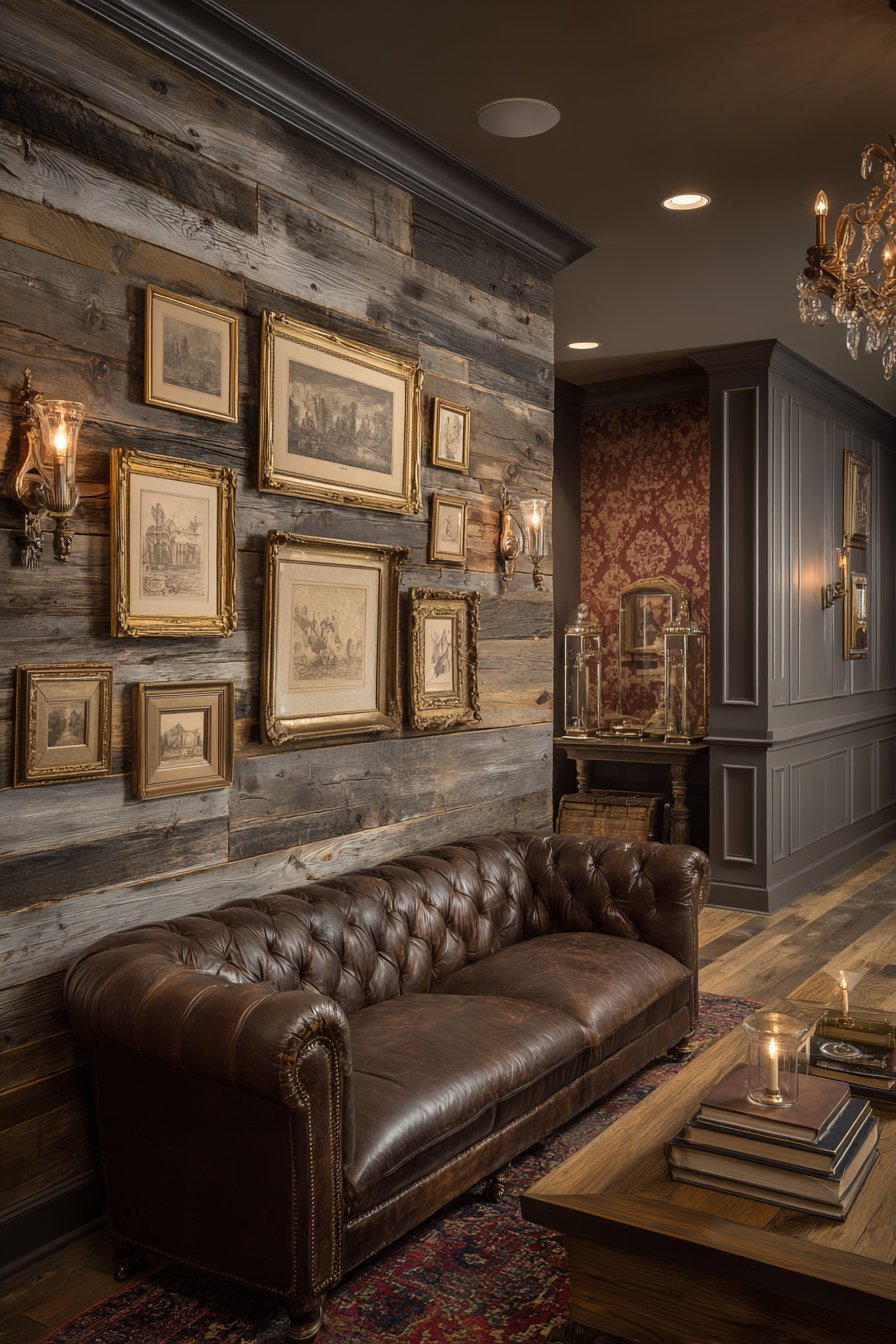
This comprehensive guide explores twenty distinctive vintage wall design concepts. Each approach celebrates different materials, techniques, and historical periods. Whether you’re drawn to Victorian elegance, industrial salvage, or rustic farmhouse charm, these ideas provide practical inspiration. The designs range from gallery wall arrangements to architectural repurposing, offering solutions for every room and aesthetic preference.
1. Eclectic Gallery Wall with Antique Picture Frames
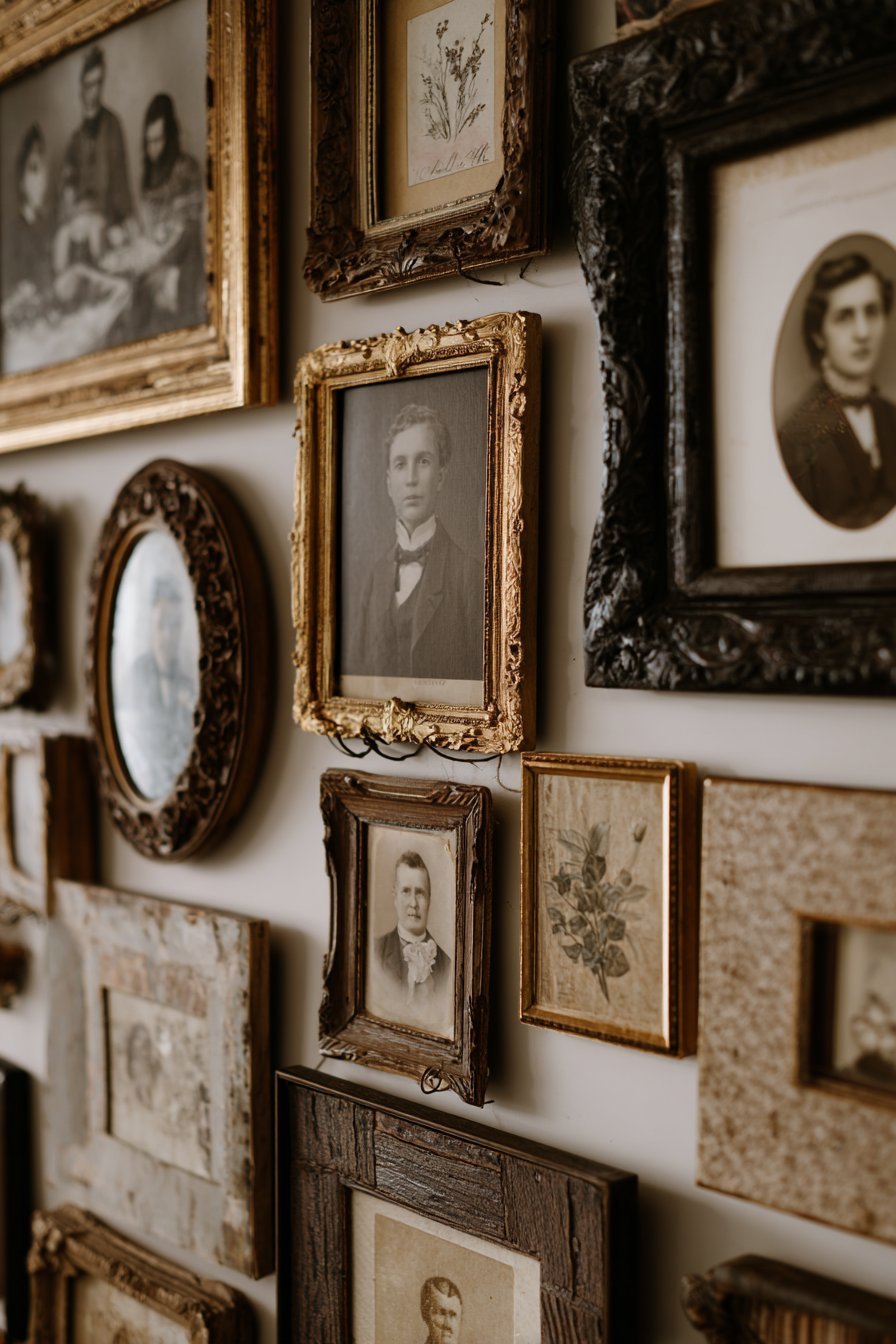
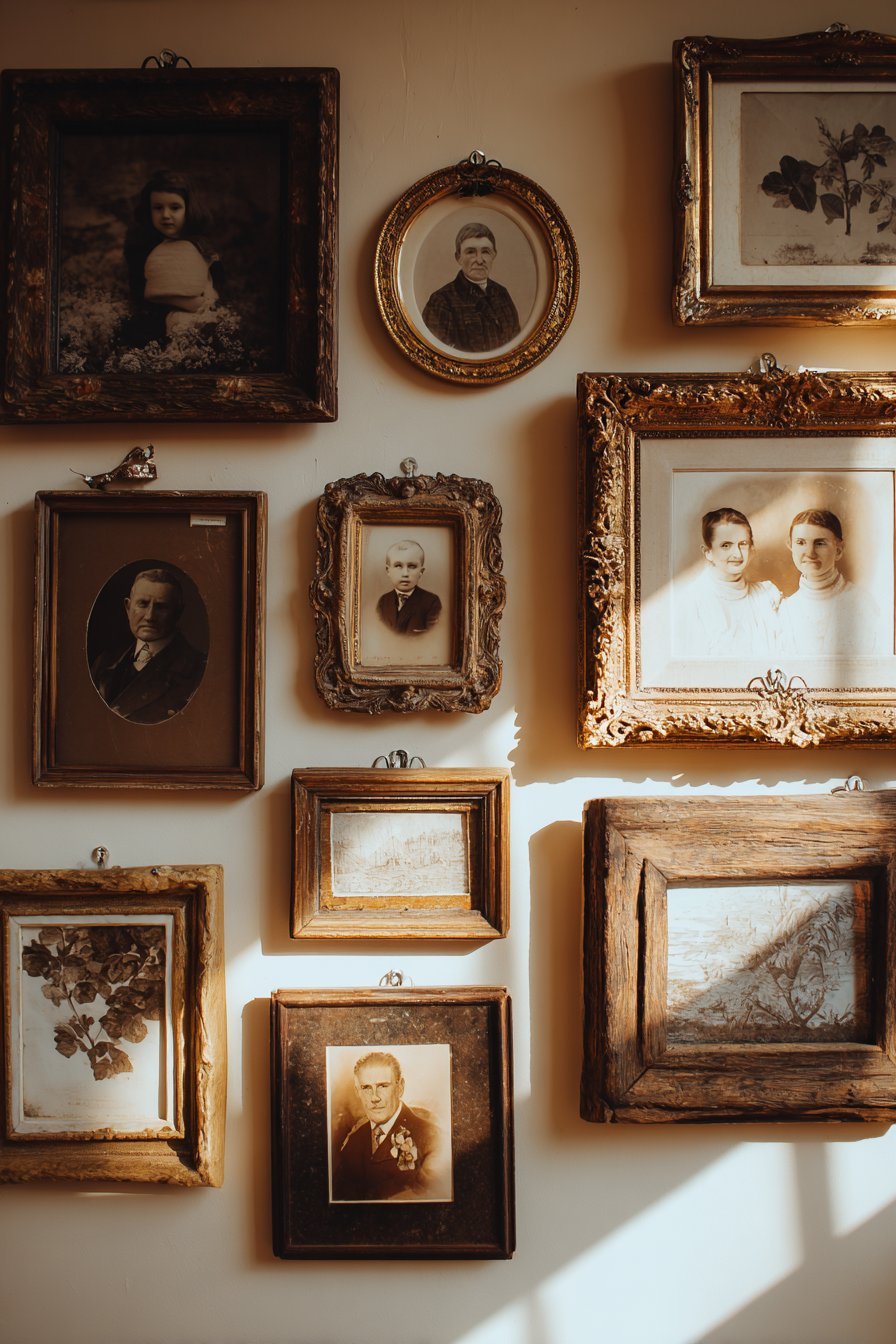
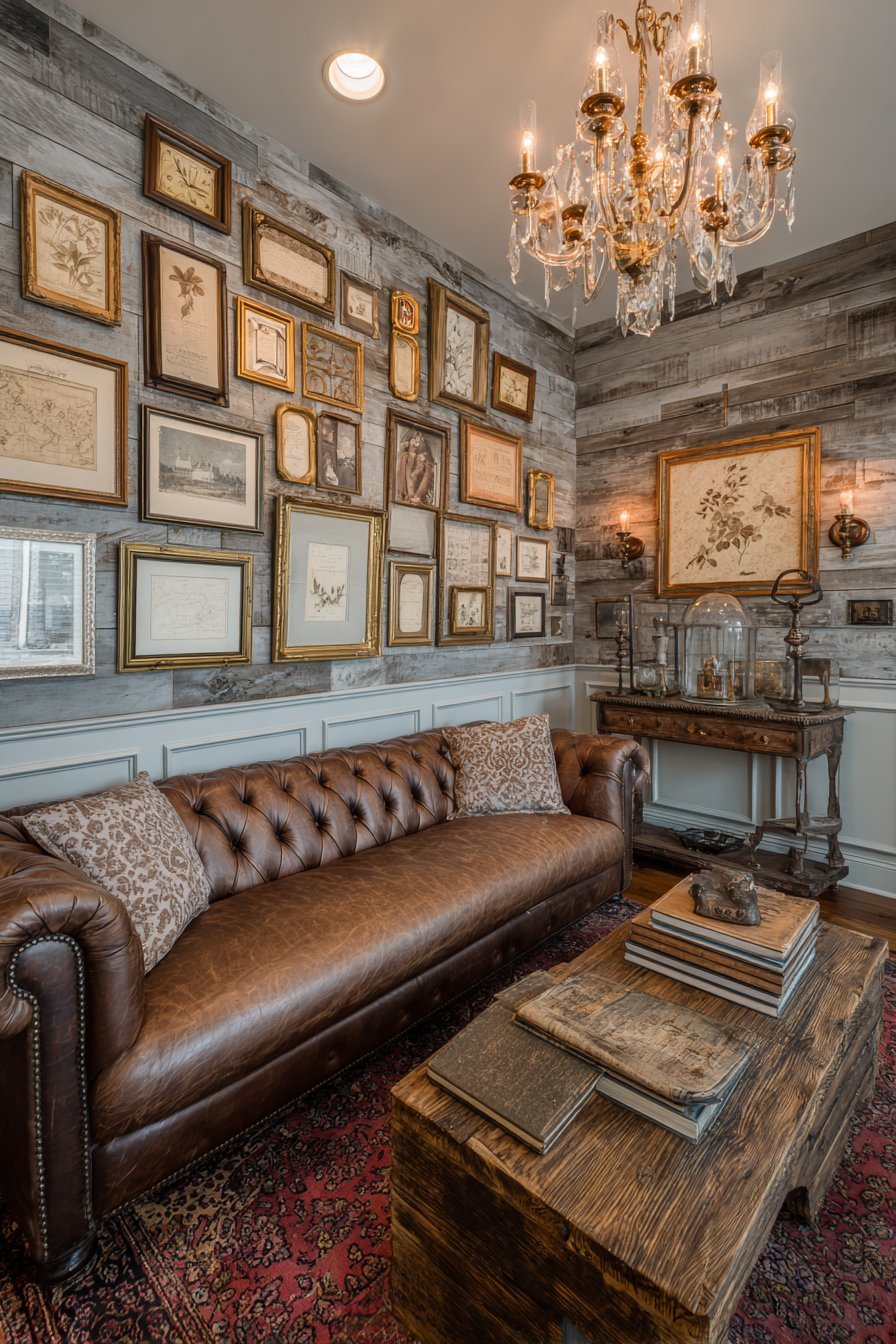
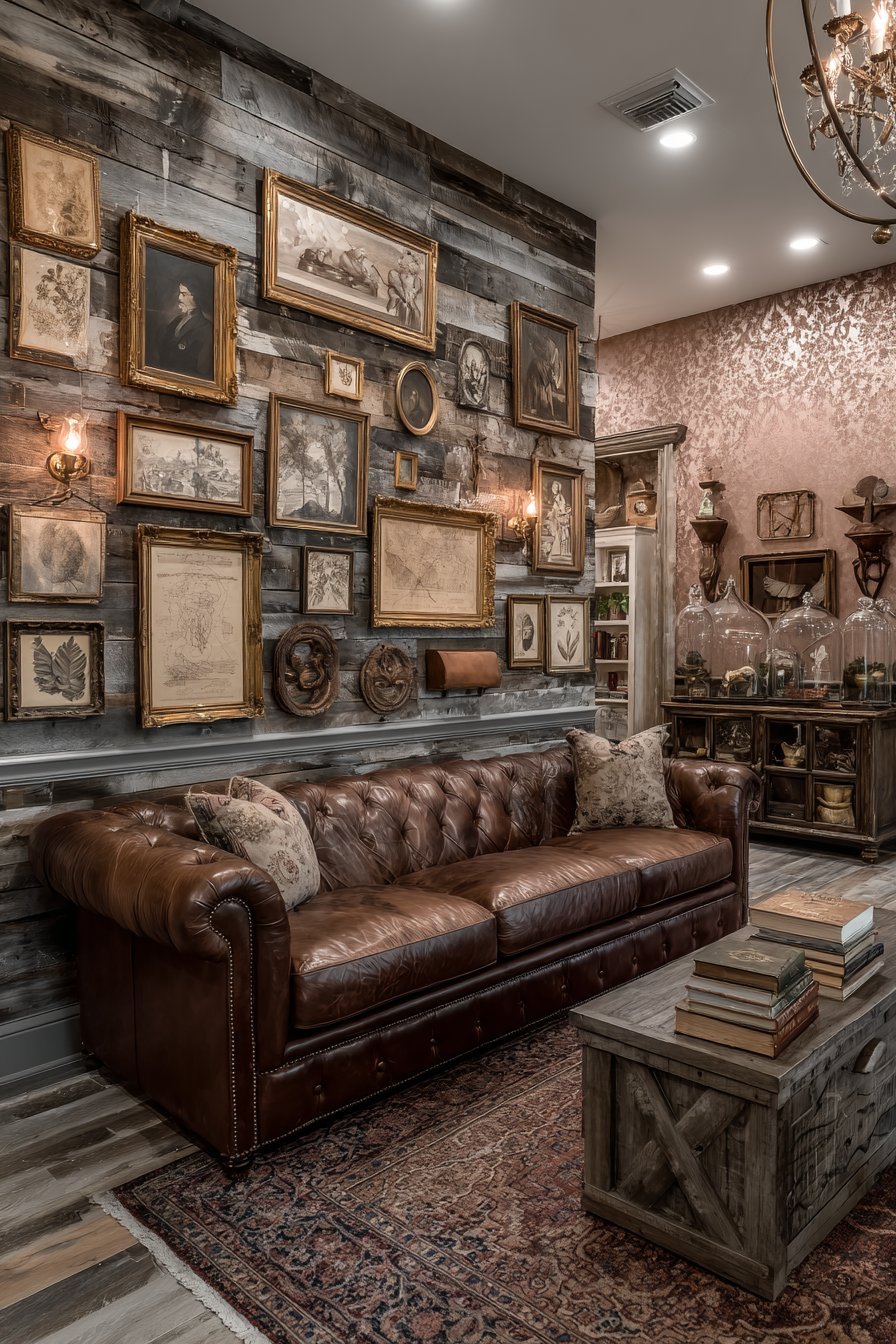
An eclectic gallery wall transforms a blank surface into a captivating focal point. Authentic antique picture frames in varying sizes create visual interest through their diverse patinas. Ornate gold gilt frames contrast beautifully with weathered wood finishes. The organic salon-style layout feels curated rather than overly planned.
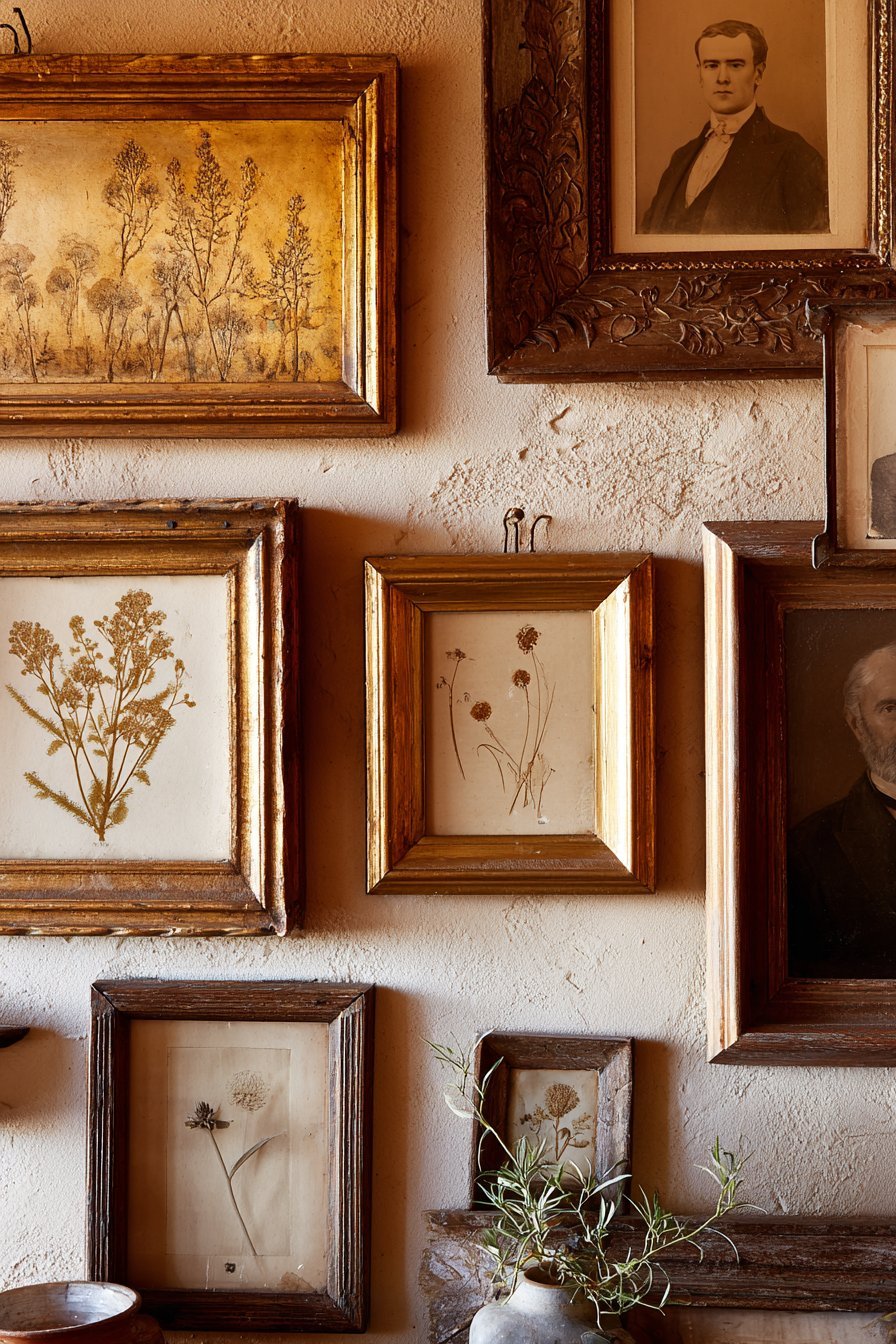
Sepia-toned family portraits and botanical prints from the early 1900s add historical depth. The aged brass picture hooks and visible wire hangers enhance period authenticity. These small details matter significantly in vintage design. Natural afternoon light creates subtle shadows across the carved frame details. The dimensional quality becomes apparent as light shifts throughout the day.
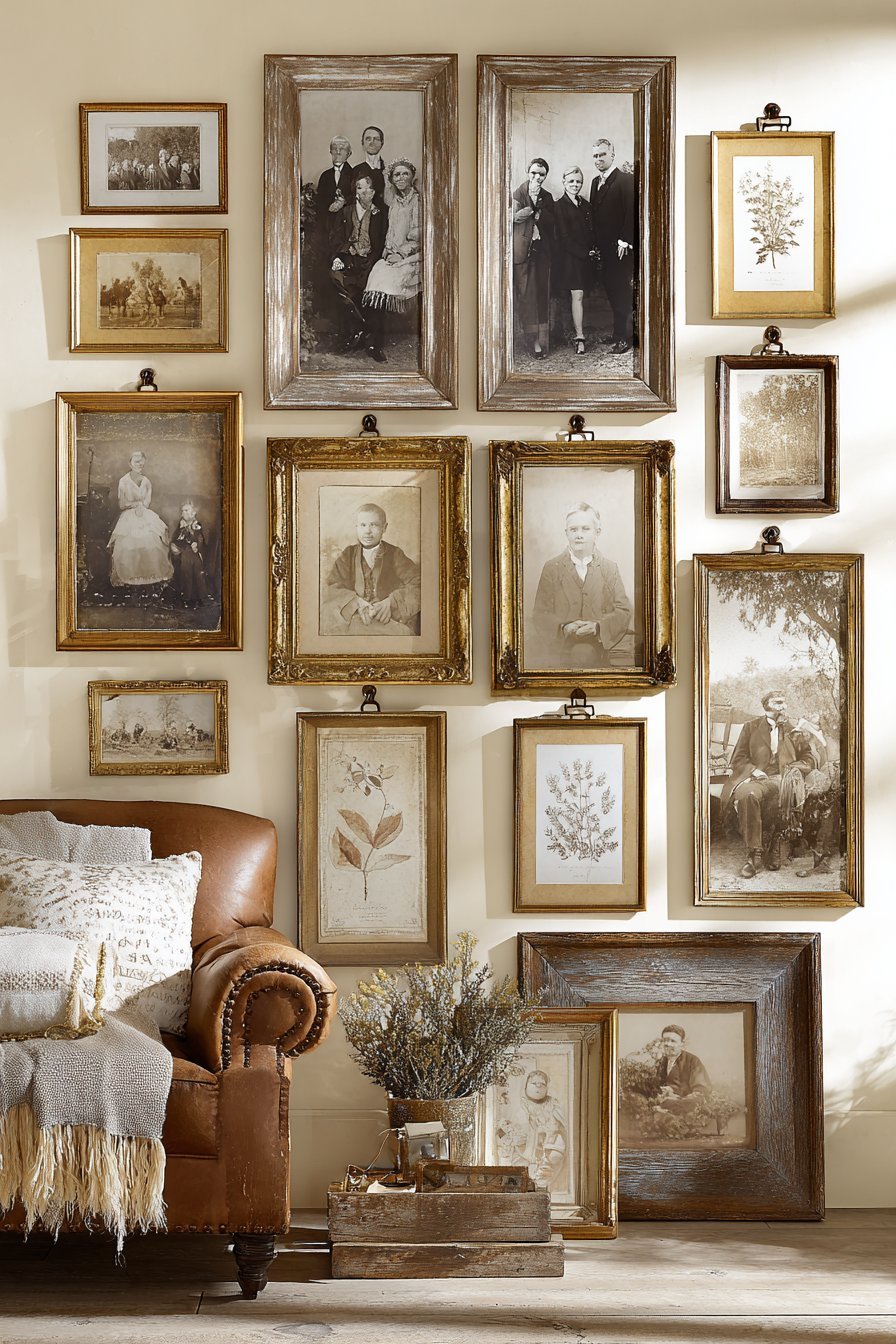
The beauty of this approach lies in its flexibility and personalization. Each frame tells its own story through surface wear and aging characteristics. The arrangement works equally well in living rooms, hallways, or dining spaces. The key is maintaining balance while embracing asymmetry and varied frame styles.
Key Design Tips:
- Source frames from antique shops, estate sales, and flea markets for authentic patina
- Mix frame materials including gilt, weathered wood, and painted finishes
- Arrange frames on the floor first to perfect the layout before hanging
- Include varied artwork from family photos to botanical prints for personal connection
- Use brass or copper hanging hardware for period-appropriate details
- Allow natural light to highlight the dimensional carved details and frame textures
2. Reclaimed Barn Wood Accent Wall
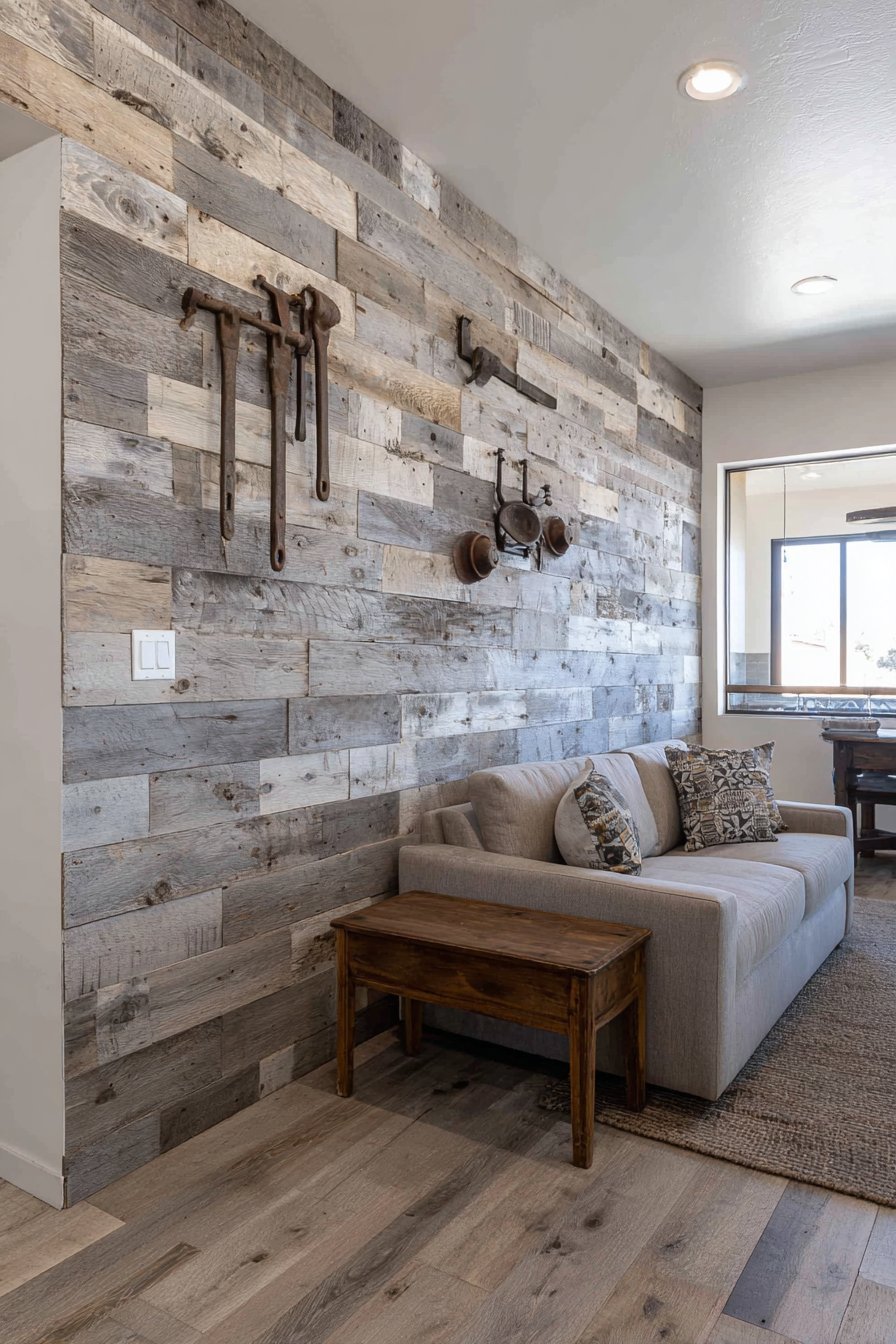
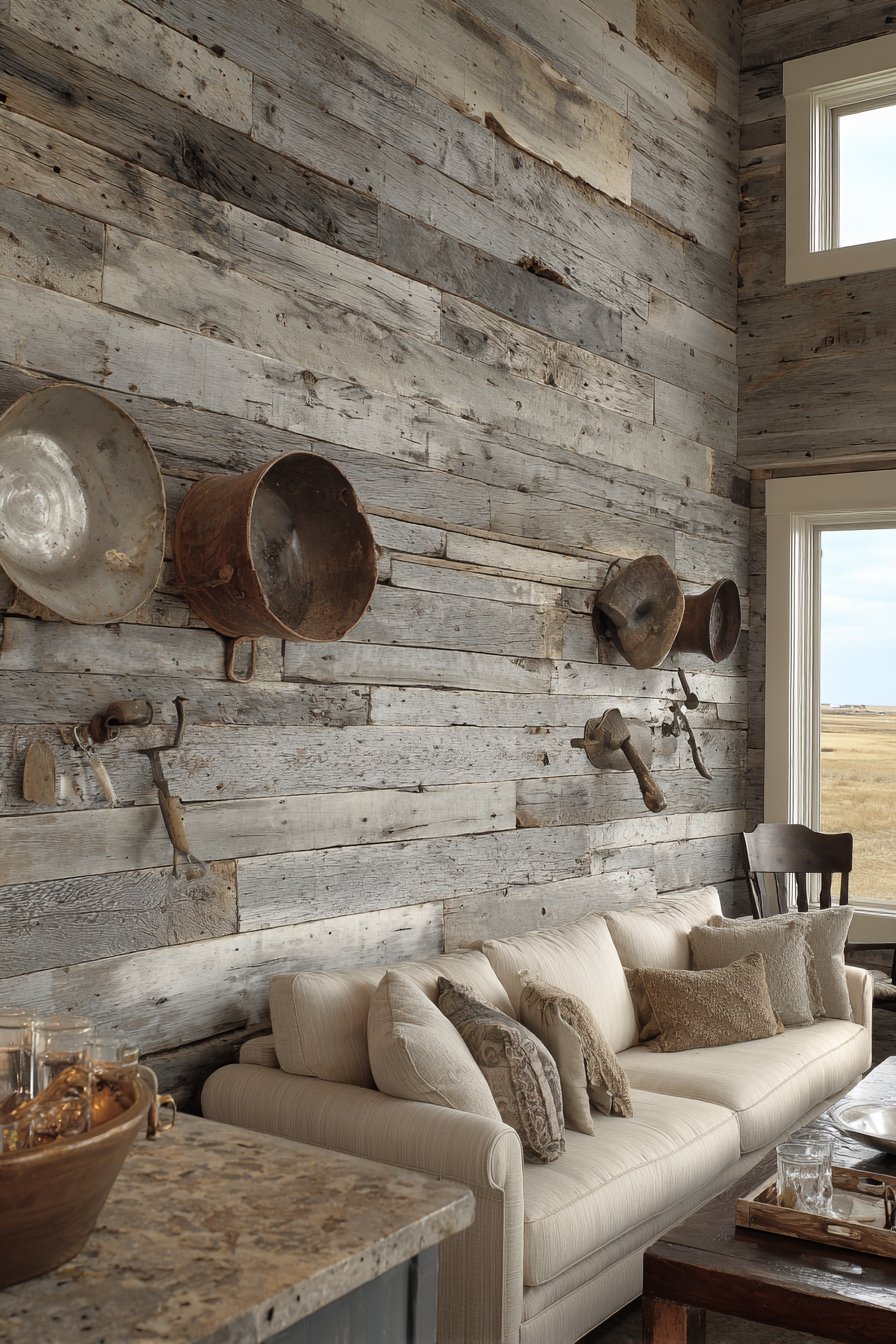
Reclaimed barn wood brings outdoor ruggedness into interior spaces with remarkable warmth. Horizontal plank installation creates clean lines that complement traditional and contemporary settings. The weathered grey and brown tones develop naturally over decades of exposure. Visible knots, nail holes, and wear patterns authenticate the material’s history.
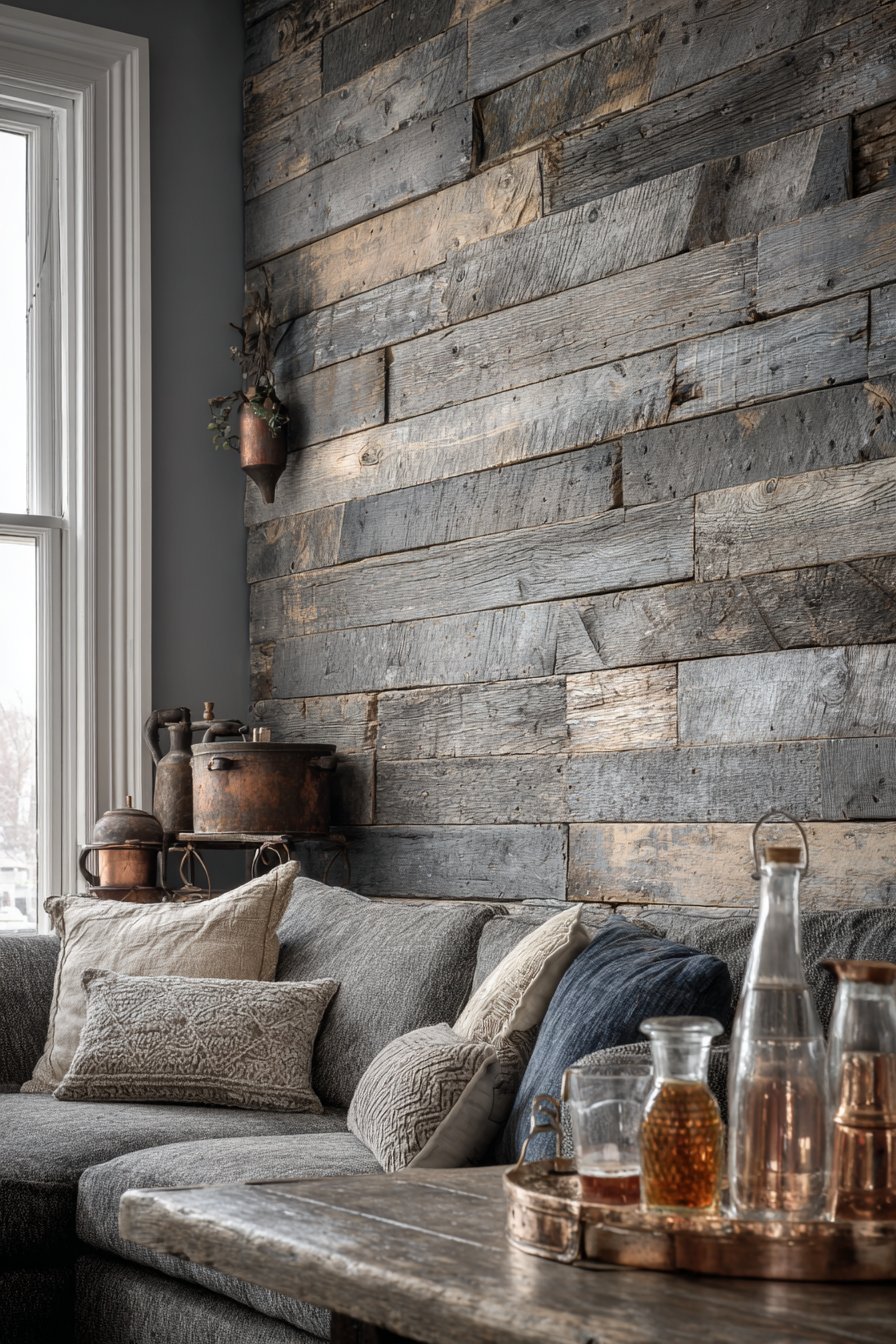
Antique copper molds and vintage kitchen implements mounted on the wood create three-dimensional interest. These functional objects become sculptural art against the rustic backdrop. The textural contrast between smooth metal and rough wood enhances visual appeal. Soft natural lighting from nearby windows emphasizes every surface variation.
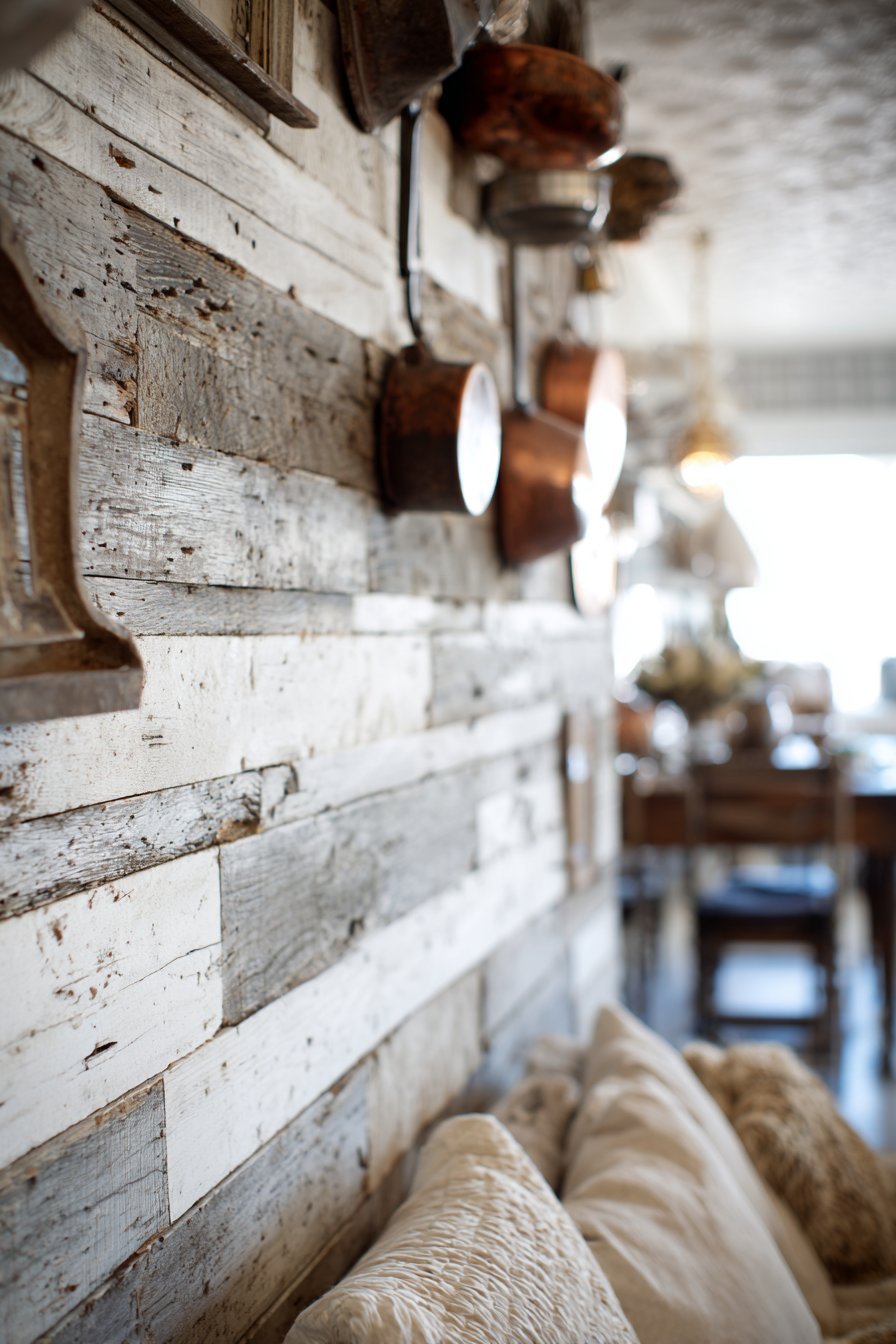
This wall treatment works particularly well behind seating areas or as bedroom headboards. The neutral color palette coordinates with virtually any decorating scheme. The material’s durability ensures this investment remains beautiful for generations. Proper sealing protects the wood while maintaining its authentic aged appearance.
Key Design Tips:
- Source authentic barn wood from architectural salvage companies for genuine weathering
- Install planks horizontally for a more contemporary feel or vertically for rustic charm
- Seal the wood properly to prevent dust and debris while preserving texture
- Mount vintage implements using appropriately aged hardware like iron hooks
- Consider the wood’s color variation when planning furniture and textile colors
- Use directional lighting to emphasize the dimensional texture and natural grain patterns
3. Victorian-Era Wallpaper with Period Molding
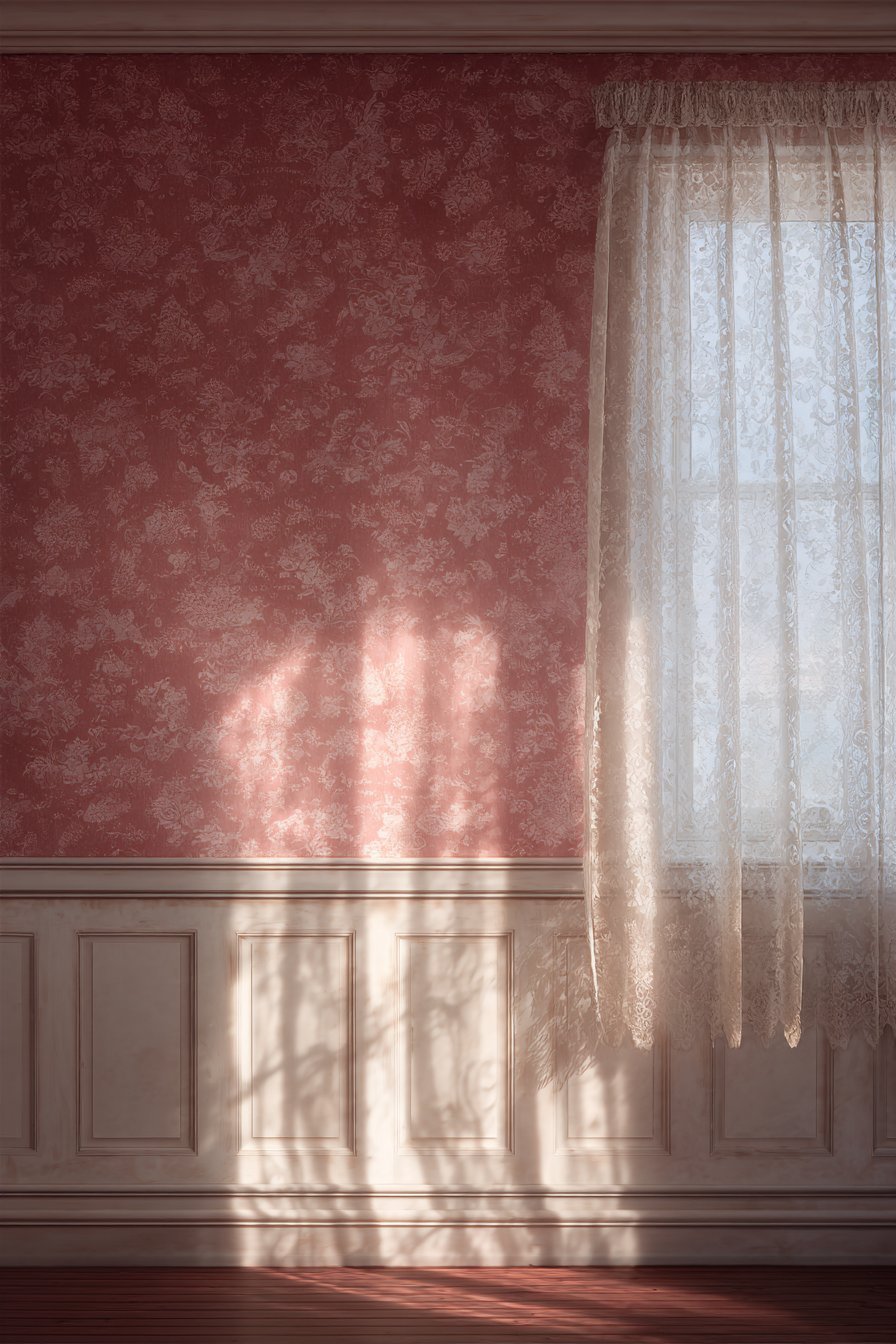
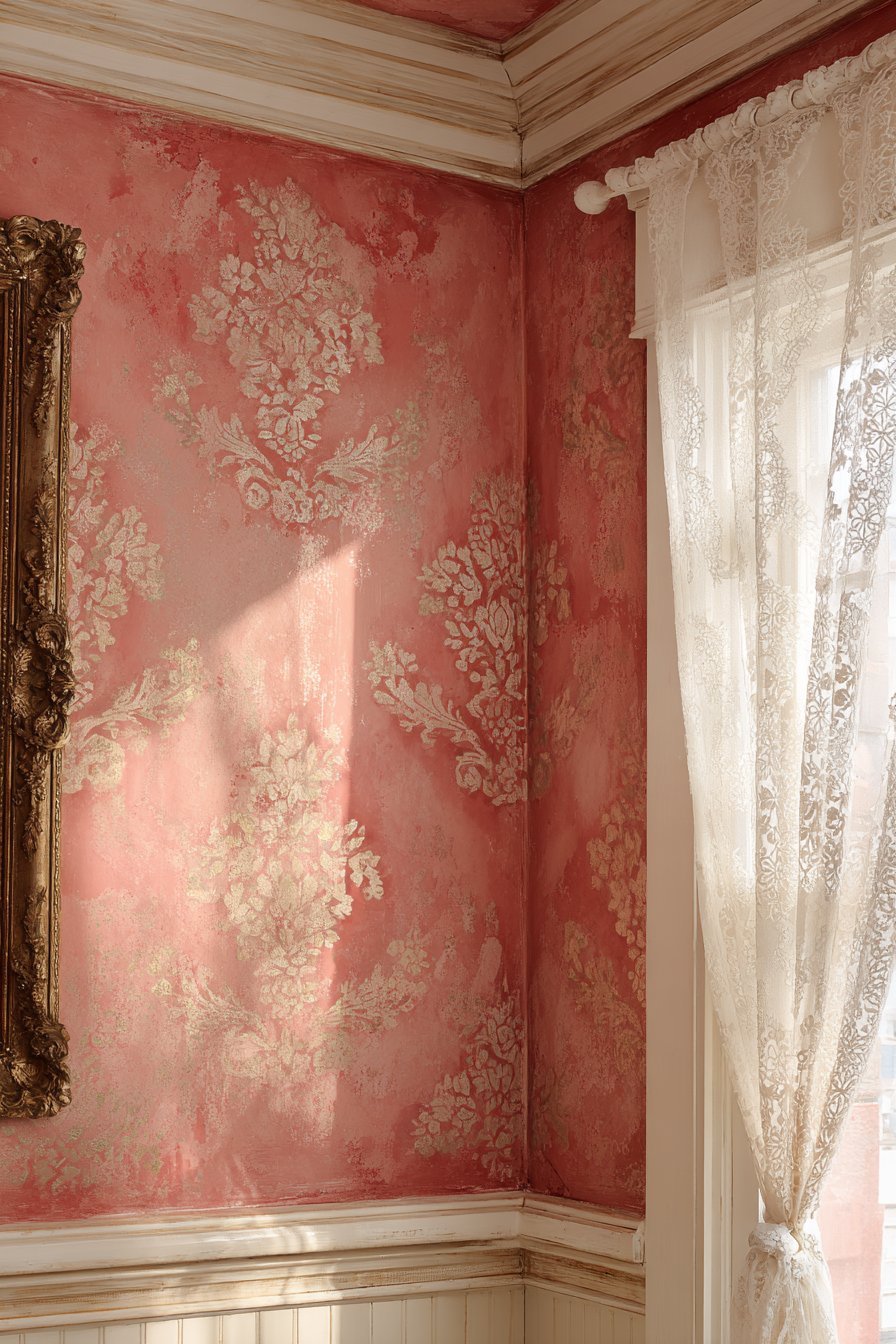
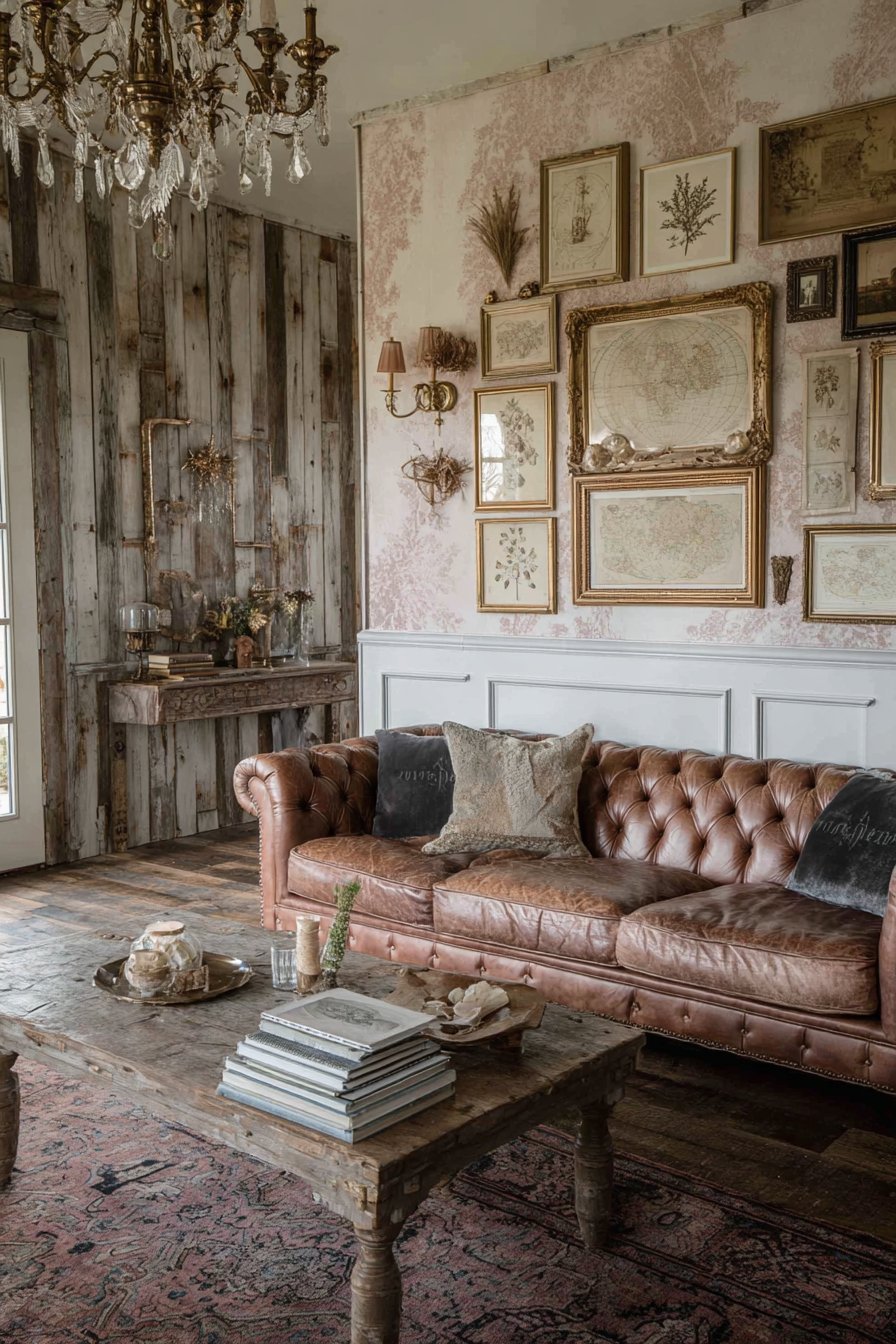
Victorian-era wallpaper reproduction brings formal elegance to modern interiors. Dusty rose damask patterns with subtle metallic gold undertones create sophisticated ambiance. The traditional repeating floral motifs showcase the intricate design work of historical periods. Period-accurate color aging and texture variations enhance authenticity.
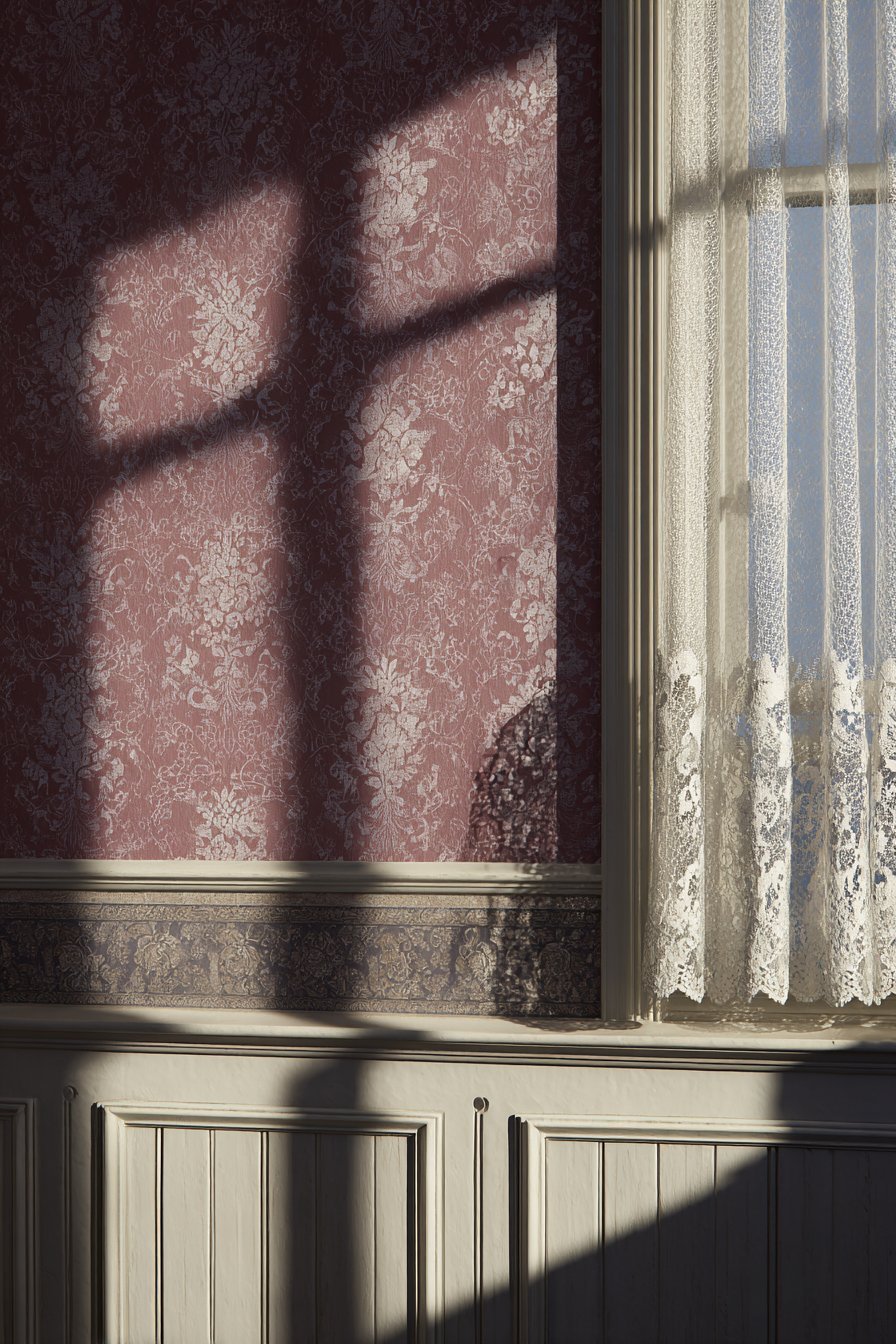
Crown molding painted in antique white frames the upper wall edge beautifully. A chair rail in coordinating finish divides the wallpapered section from wainscoting below. This traditional wall treatment adds architectural interest to rooms lacking original details. Natural daylight filtering through lace curtains creates soft shadows across the dimensional pattern.
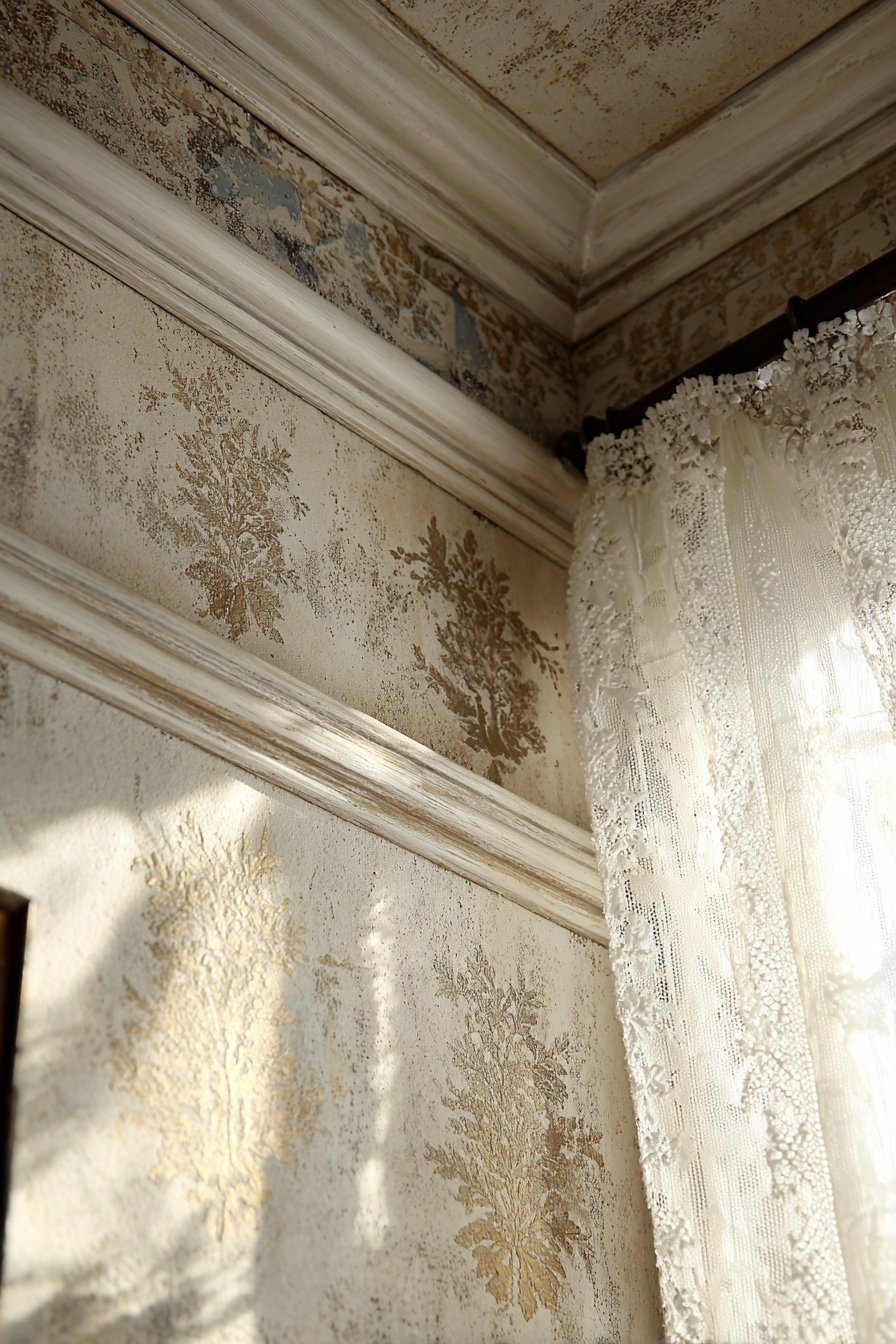
The layered approach of wallpaper, molding, and wainscoting exemplifies Victorian design principles. This combination works particularly well in dining rooms, bedrooms, and formal living spaces. The sophisticated palette creates rooms that feel both elegant and welcoming. Quality reproduction wallpaper ensures longevity and proper scale for modern ceiling heights.
Key Design Tips:
- Choose reproduction wallpaper from companies specializing in historical patterns
- Install crown molding and chair rails before wallpaper application for clean edges
- Use paste specifically formulated for traditional wallpaper materials
- Paint moldings in coordinating antique white or cream for authentic period appearance
- Consider wainscoting below the chair rail for complete Victorian wall treatment
- Filter natural light with lace curtains to protect wallpaper from direct sun damage
4. Asymmetrical Antique Mirror Collection
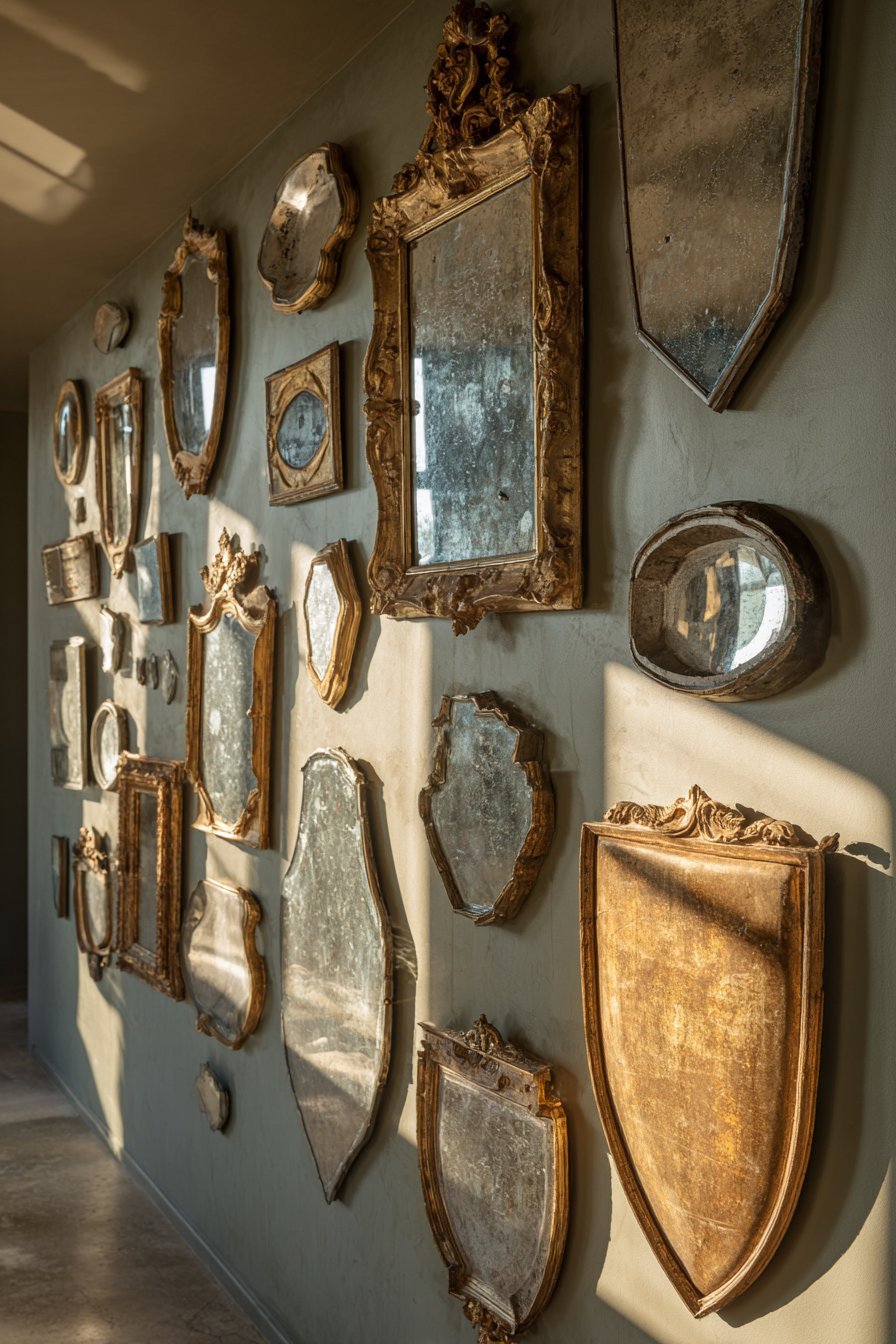
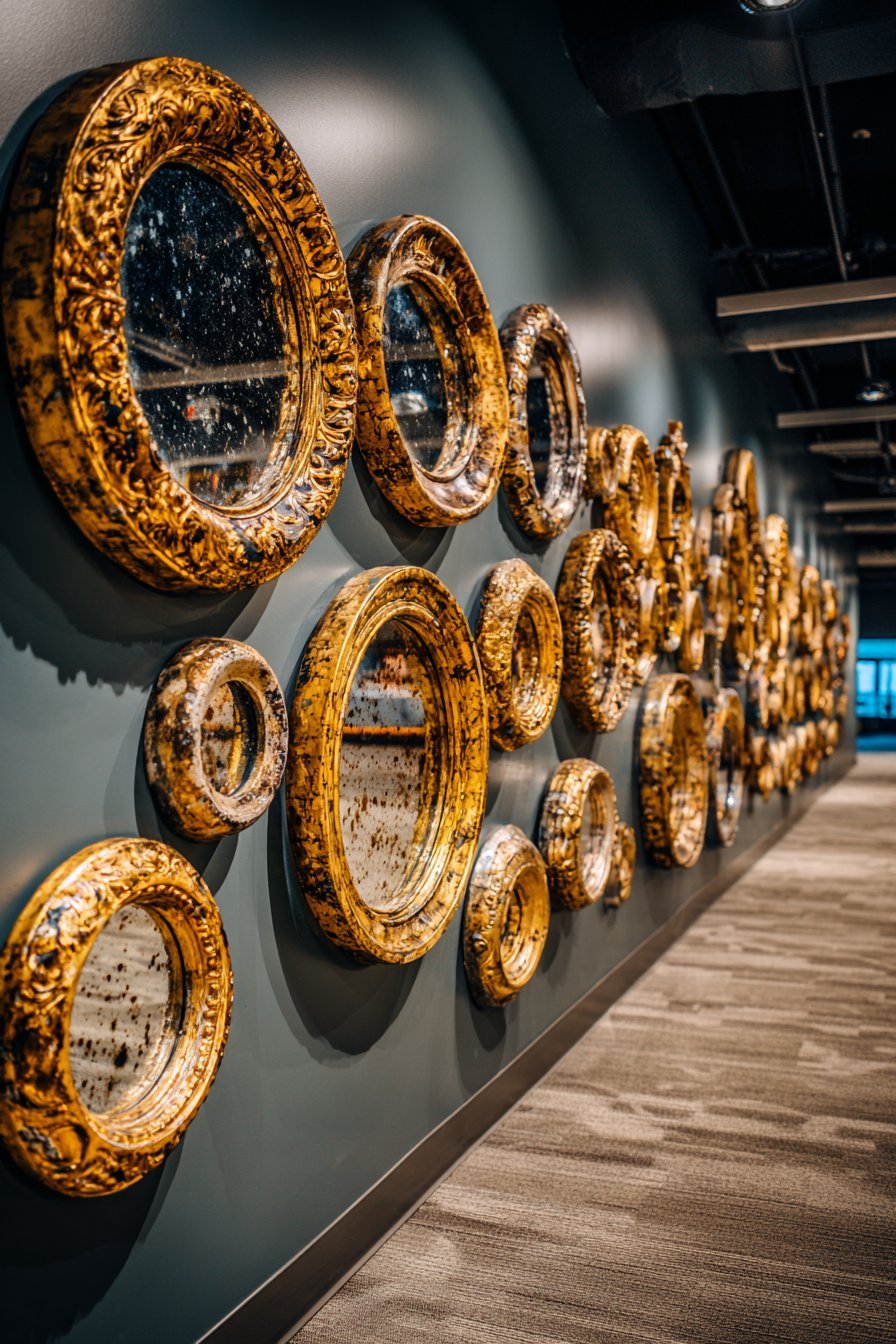
An asymmetrical mirror collection creates dramatic visual impact through varied shapes and sizes. Small convex bullseye mirrors contrast with larger ornate French-style frames. The foxed silvering on antique mirrors shows characteristic dark spots and mercury backing deterioration. These imperfections authenticate the mirrors’ age and add mysterious charm.
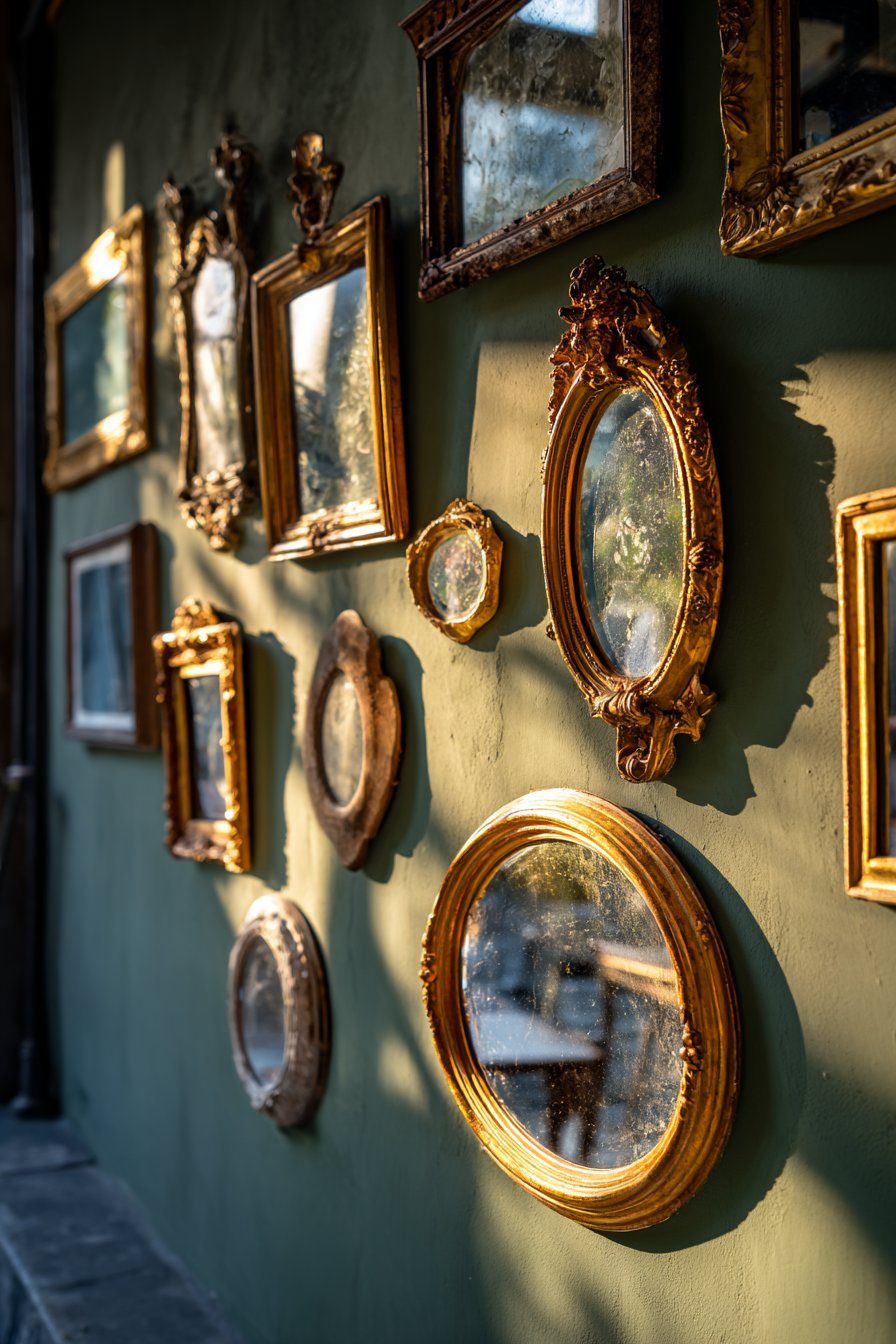
Each frame exhibits genuine patina with chipped paint and tarnished gilt. Subtle structural wear tells the story of decades of use and moves. The sage green wall color provides sophisticated contrast for the metallic finishes. Golden hour lighting reflects through the mirrors, creating atmospheric patterns across the wall.
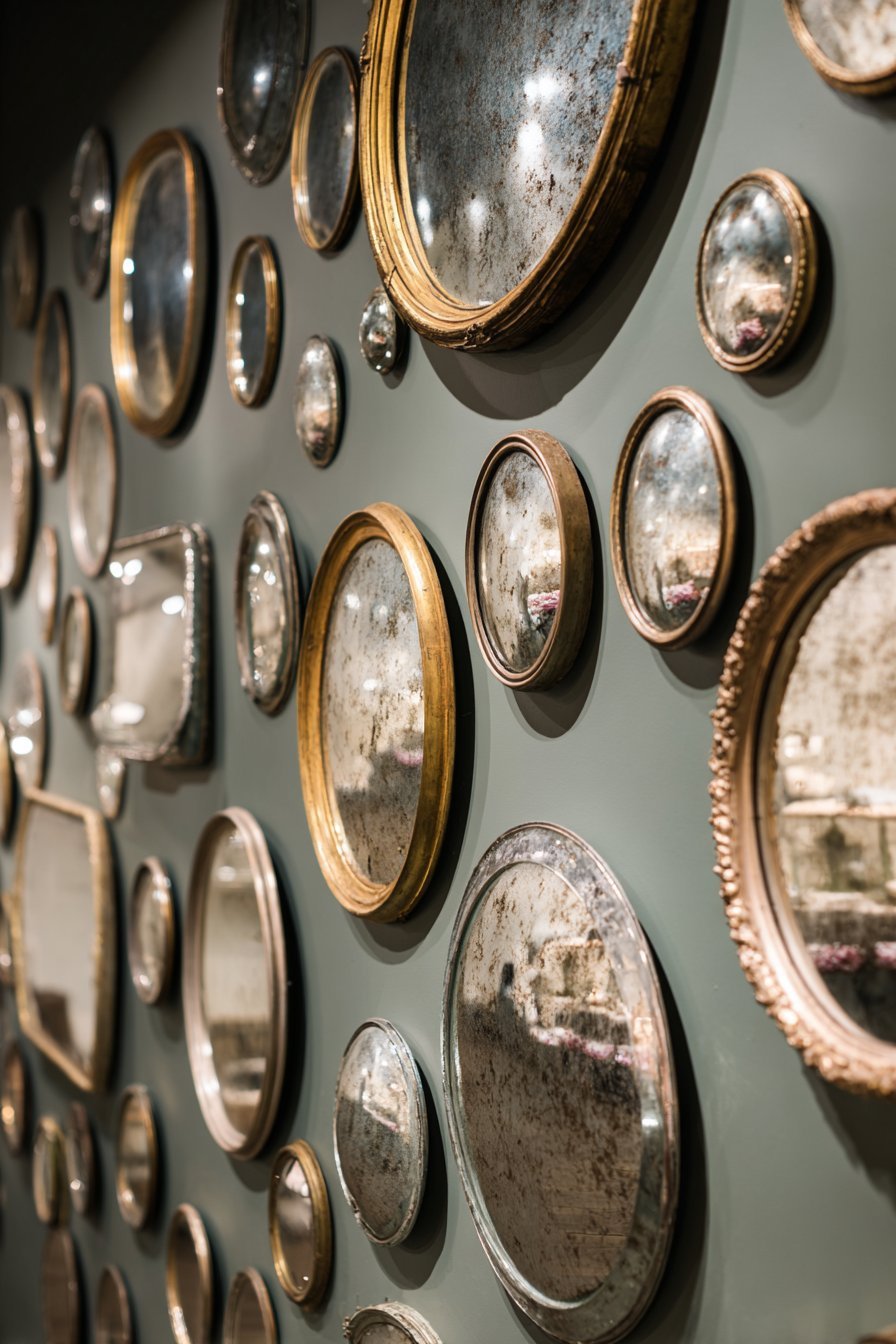
This approach transforms mirrors from purely functional objects into sculptural art. The reflective surfaces also enhance natural light distribution throughout the room. Strategic placement can make spaces feel larger while adding vintage character. The collection grows organically over time as you discover new pieces.
Key Design Tips:
- Collect mirrors gradually from antique shops to ensure authentic aging and varied styles
- Choose a wall color that complements the predominant frame finishes in your collection
- Arrange mirrors with largest pieces first, then fill in with smaller mirrors
- Leave the foxed silvering intact for authentic vintage character and mysterious reflections
- Position mirrors to reflect natural light and interesting architectural features
- Use traditional picture hanging wire and hooks rather than modern mounting hardware
5. Lime-Washed Exposed Brick Wall
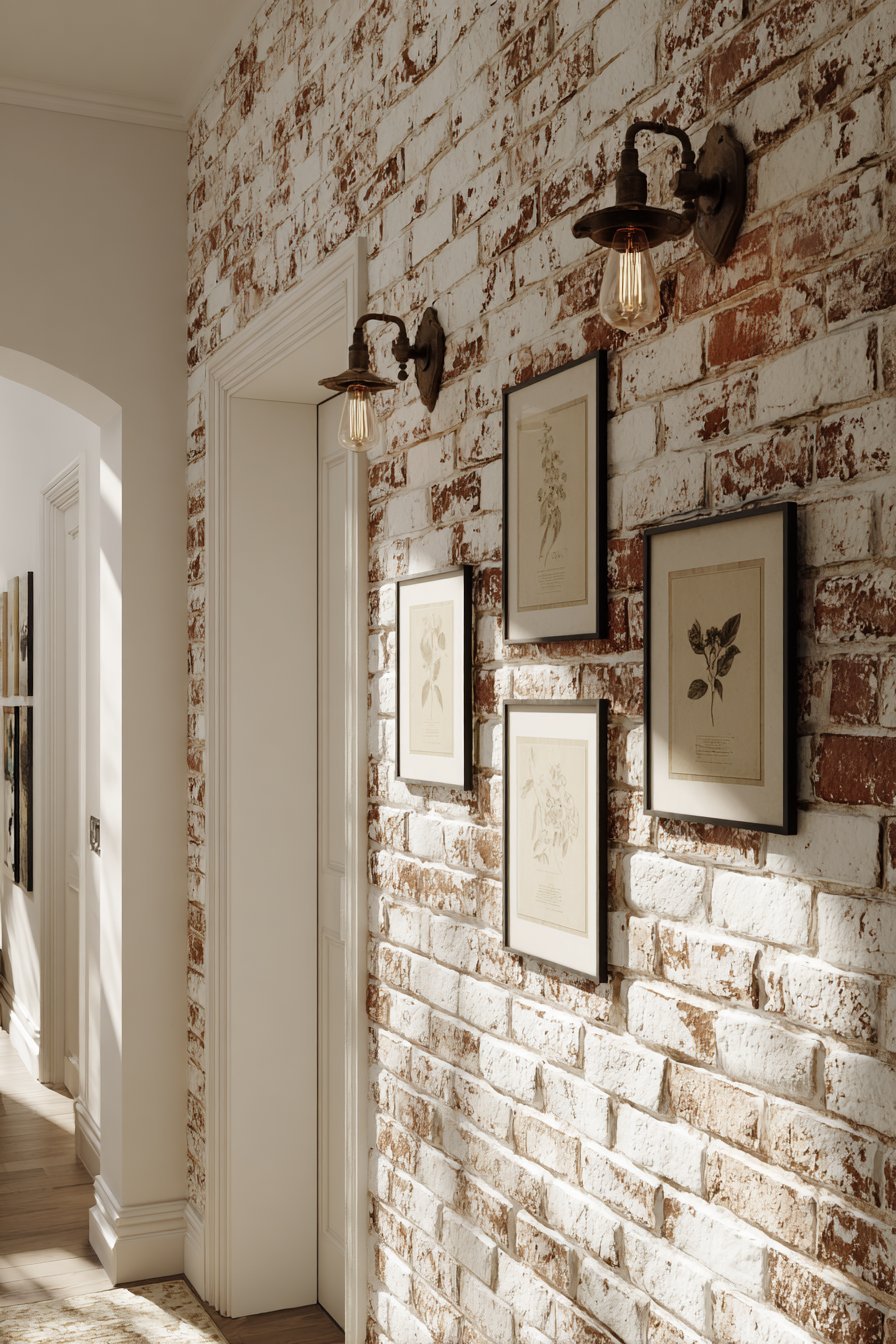
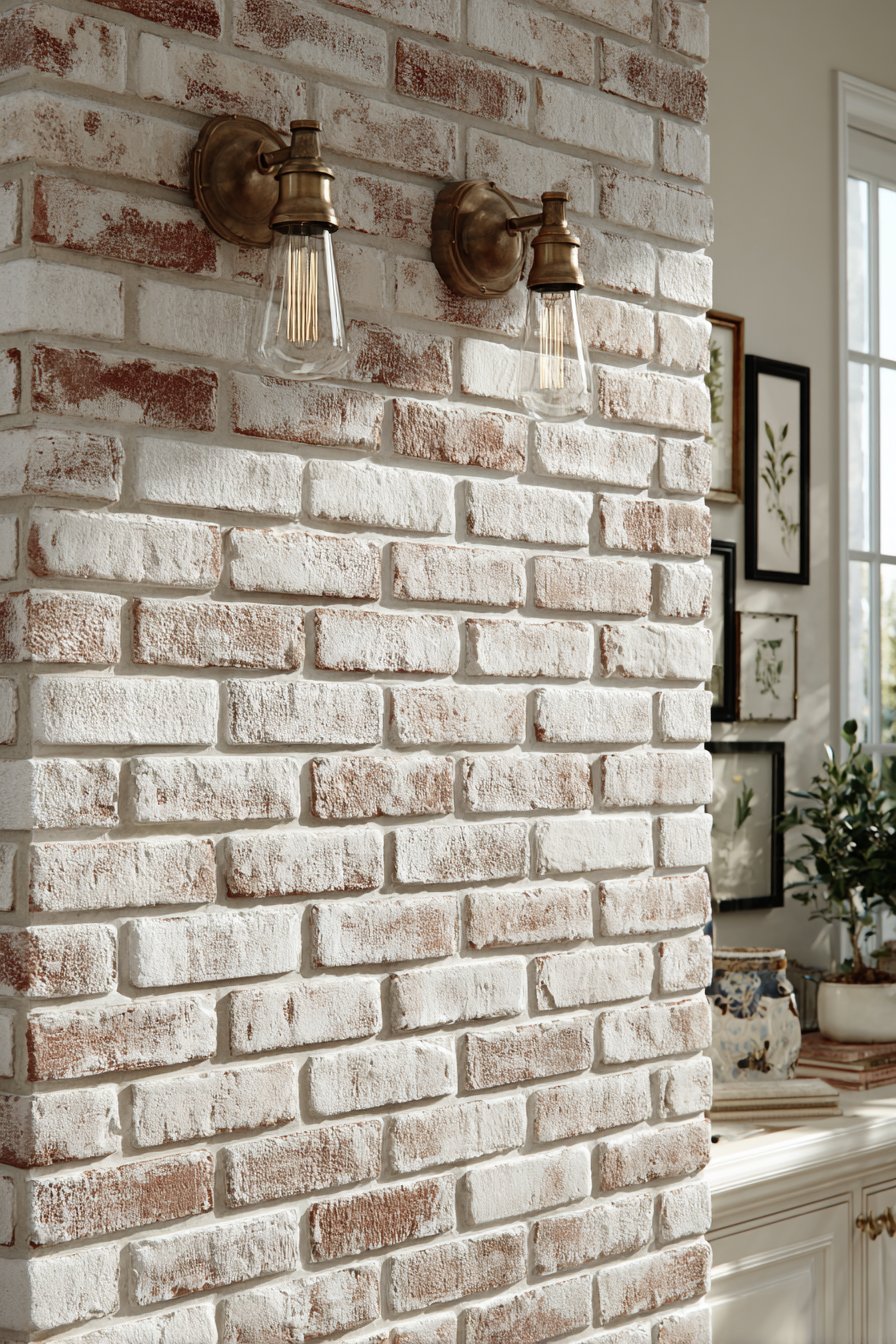
Exposed brick painted in soft white lime wash creates sophisticated industrial charm. The technique allows natural terracotta color and texture to show through subtly. Intentional variations in coverage create an organically weathered appearance. Heavier pigment in mortar lines and lighter coverage on brick faces adds dimensional interest.
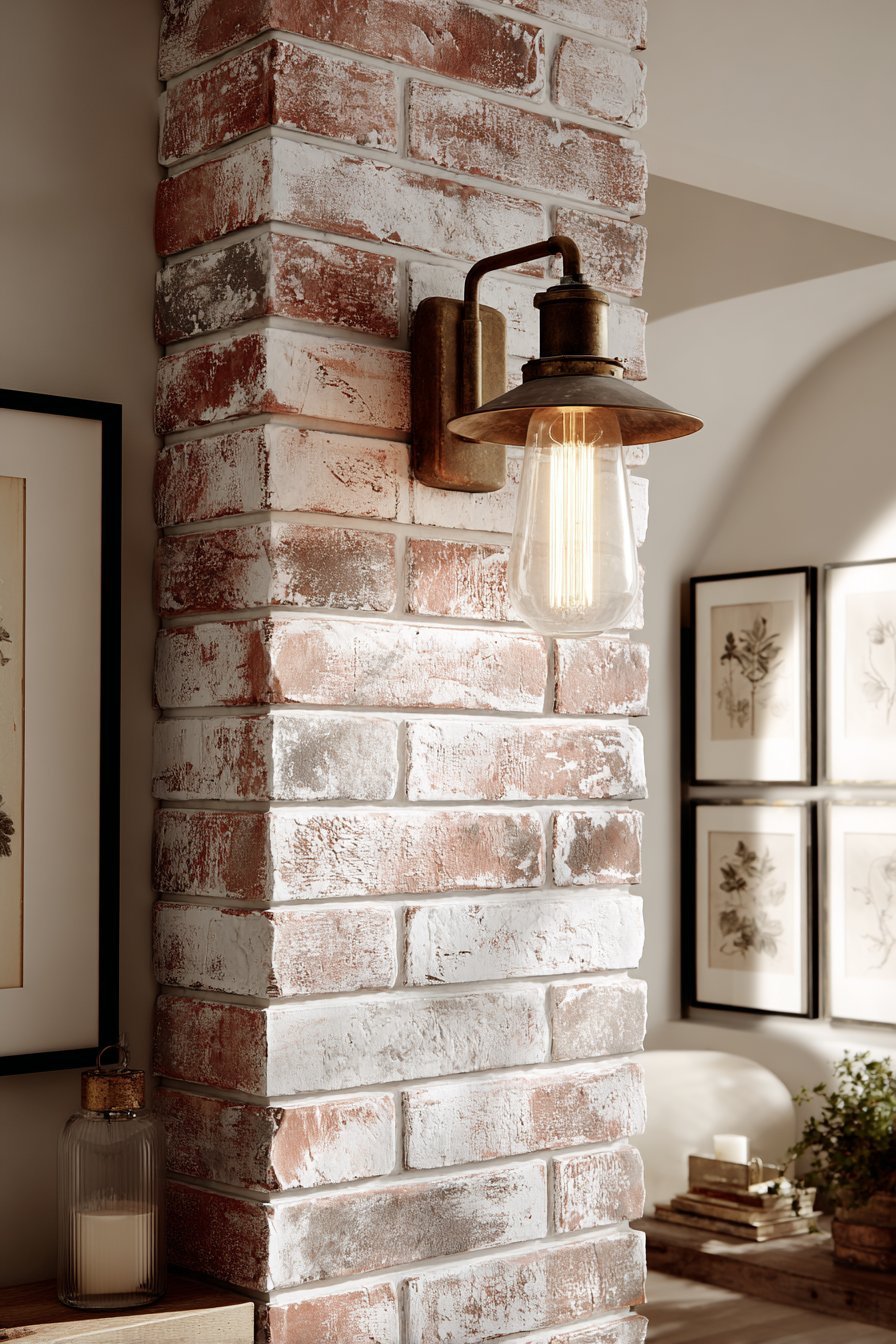
Antique iron wall sconces with Edison-style filament bulbs provide period-appropriate lighting. Vintage botanical prints in simple black frames complement the textured backdrop. The combination of rough brick and delicate artwork creates appealing contrast. Natural morning light emphasizes the dimensional quality through the translucent paint finish.
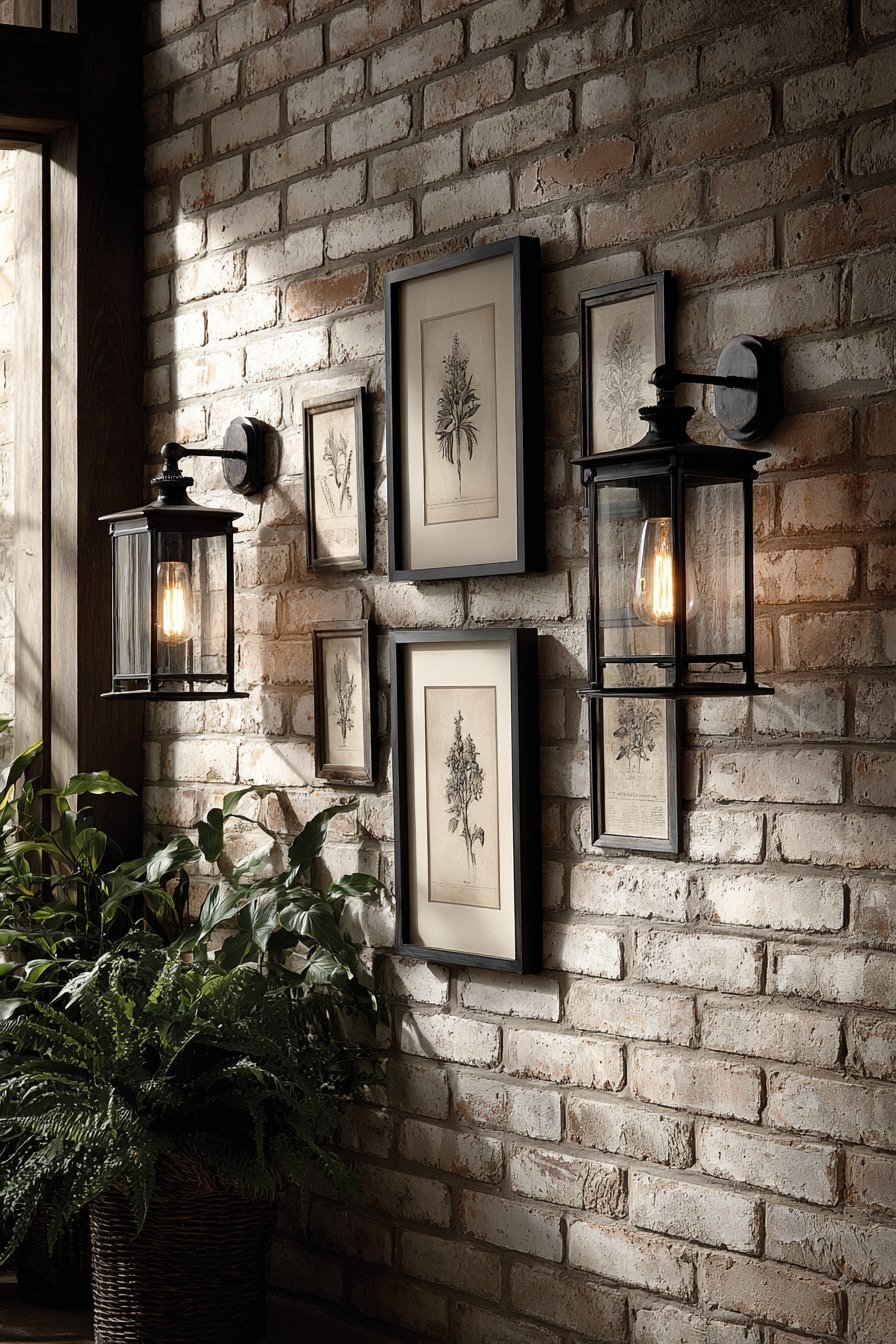
This wall treatment suits both residential and commercial spaces seeking vintage character. The lime wash technique is reversible and allows brick to breathe properly. Unlike solid paint, it develops beautiful patina as it ages naturally. The neutral palette works with virtually any decorating style from industrial to farmhouse.
Key Design Tips:
- Use authentic lime wash rather than latex paint for breathable, authentic finish
- Apply with a brush using varied strokes to create organic, uneven coverage
- Allow more pigment to settle in mortar lines for dimensional emphasis
- Install period iron sconces with Edison bulbs for authentic vintage lighting
- Frame botanical prints simply to avoid competing with the textured wall
- Protect floors during application as lime wash drips easily during the process
6. Mounted Persian Rug as Textile Art
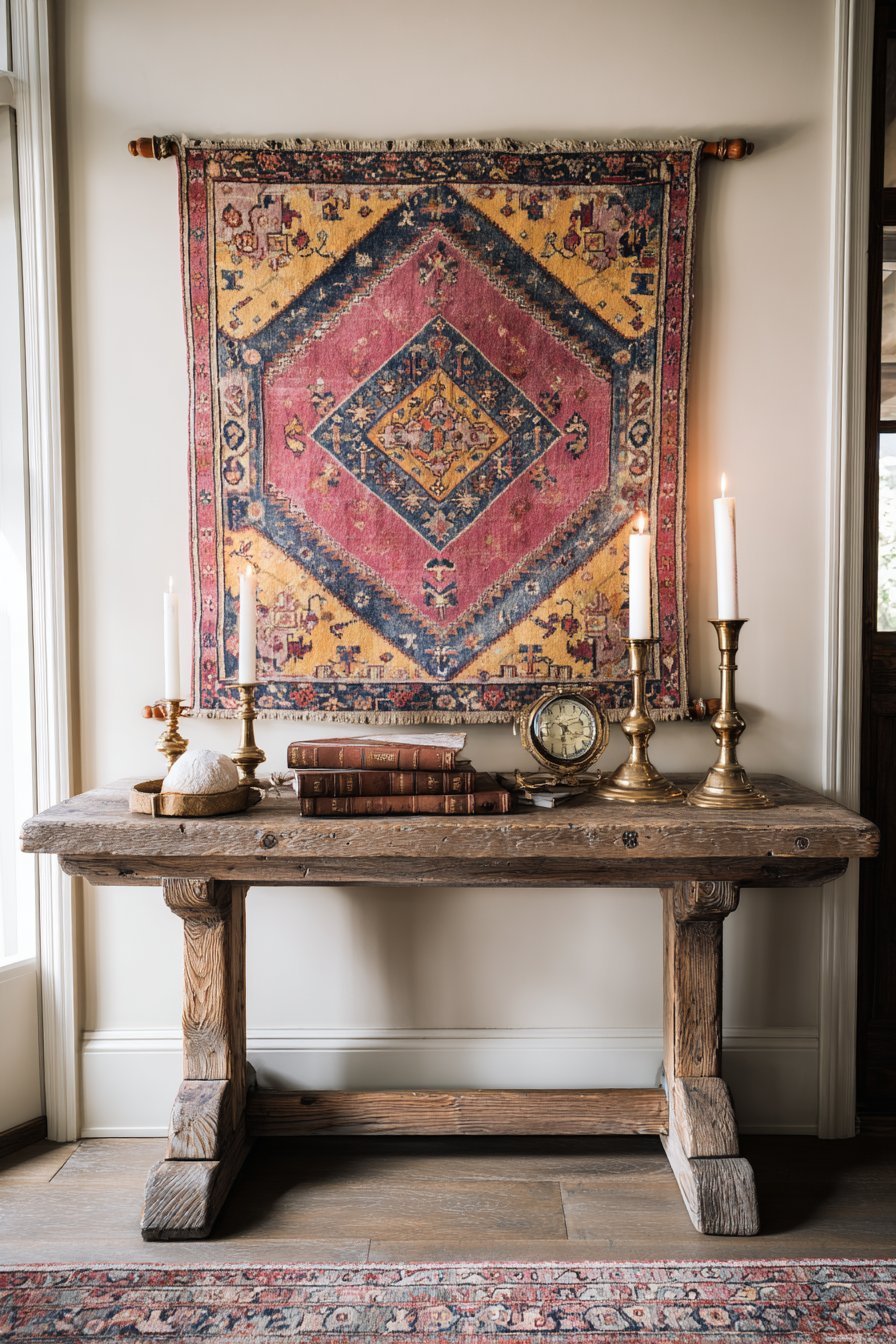
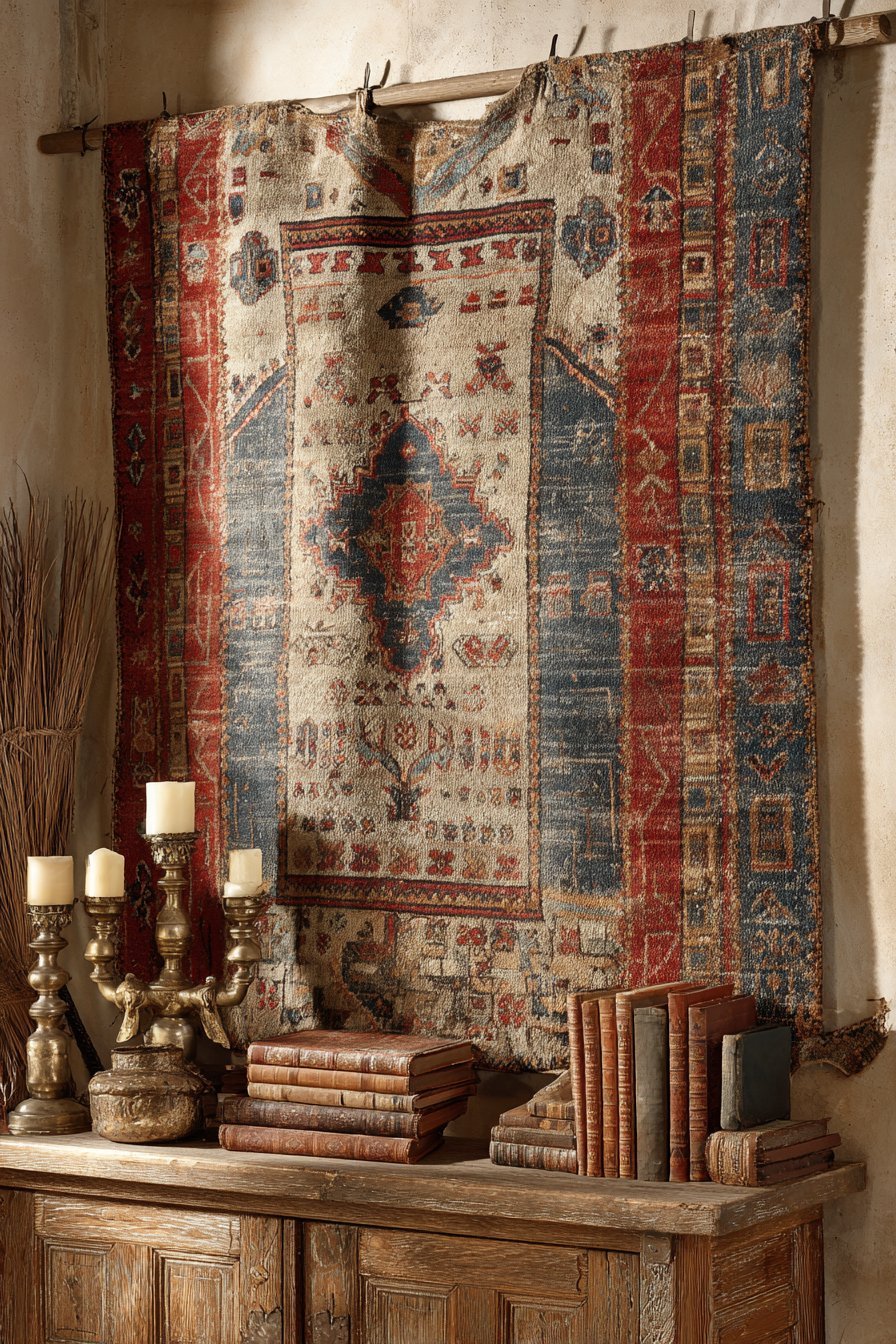
An antique Persian rug mounted as wall art creates an unexpected focal point. Faded jewel tones in traditional geometric patterns provide rich color. Visible wear adds character and authenticates the textile’s age and origin. The mounting rod system preserves the textile while creating striking visual impact.
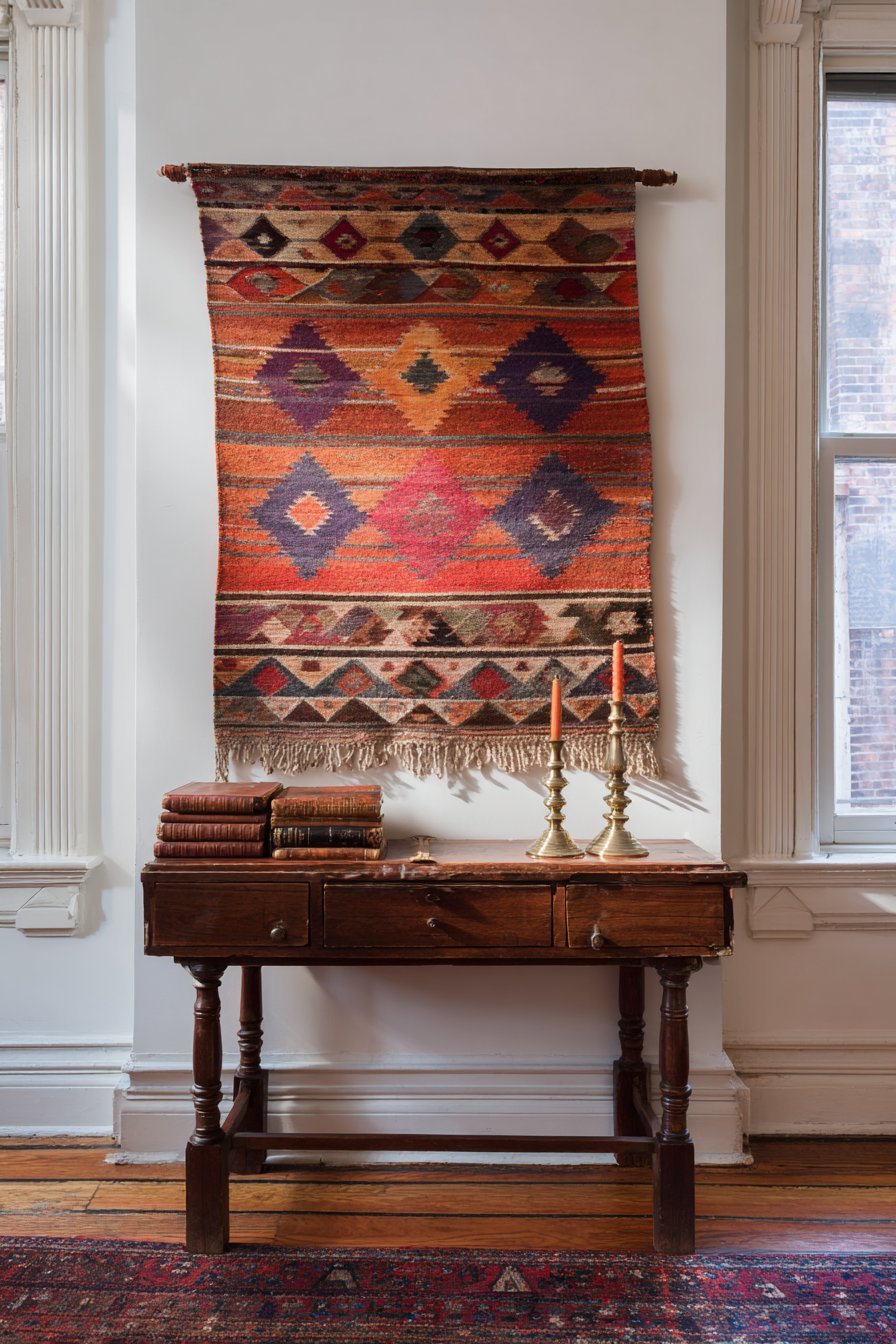
Complementary vintage brass candlesticks and aged leather-bound books complete the vignette below. The console table styling enhances the curated aesthetic. Soft natural lighting from an adjacent window highlights subtle color variations. The hand-knotted wool’s texture becomes apparent in changing light conditions.
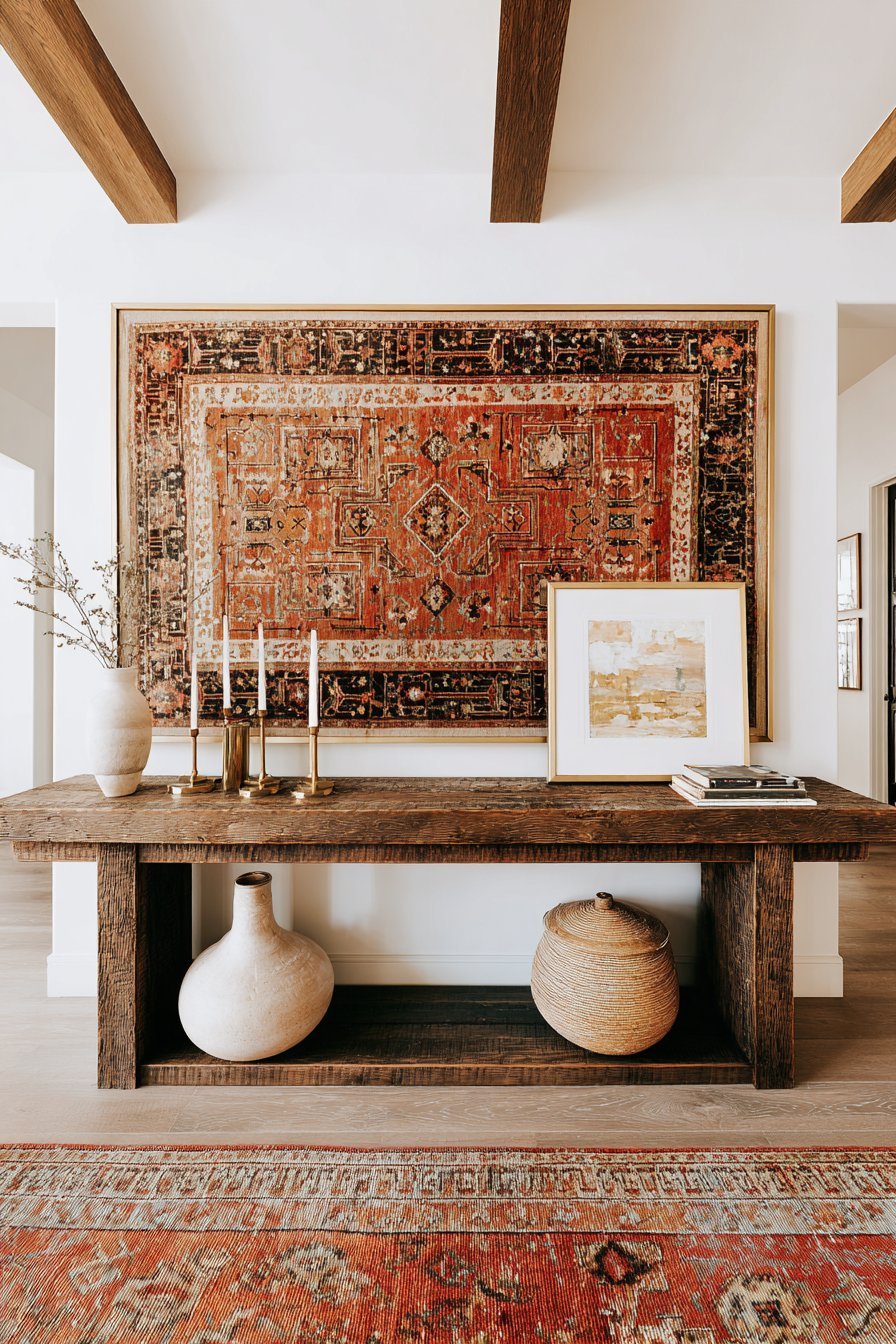
This approach preserves valuable textiles while displaying them prominently. Wall mounting protects rugs from foot traffic and furniture wear. The dimensional textile adds warmth that flat artwork cannot achieve. The installation works particularly well above consoles, beds, or in dining rooms.
Key Design Tips:
- Choose rugs with some wear for affordability while ensuring structural integrity
- Use a wooden rod system with fabric sleeve sewn to the rug’s back
- Position away from direct sunlight to prevent further color fading
- Coordinate console styling with the rug’s colors using vintage accessories
- Ensure proper wall anchoring to support the textile’s weight safely
- Rotate displayed rugs periodically to prevent uneven light exposure and aging
7. Gothic Architectural Salvage Window Frame
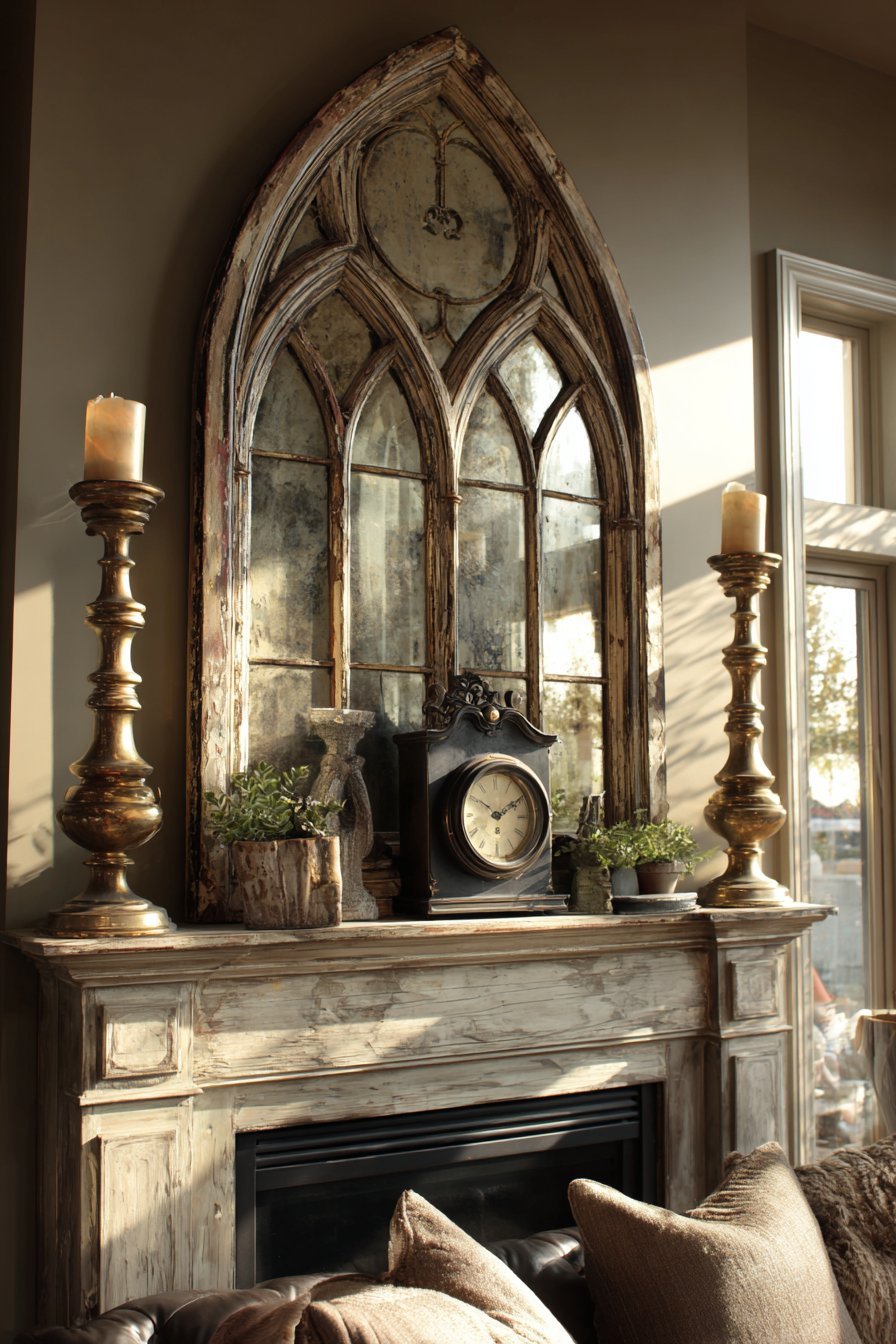
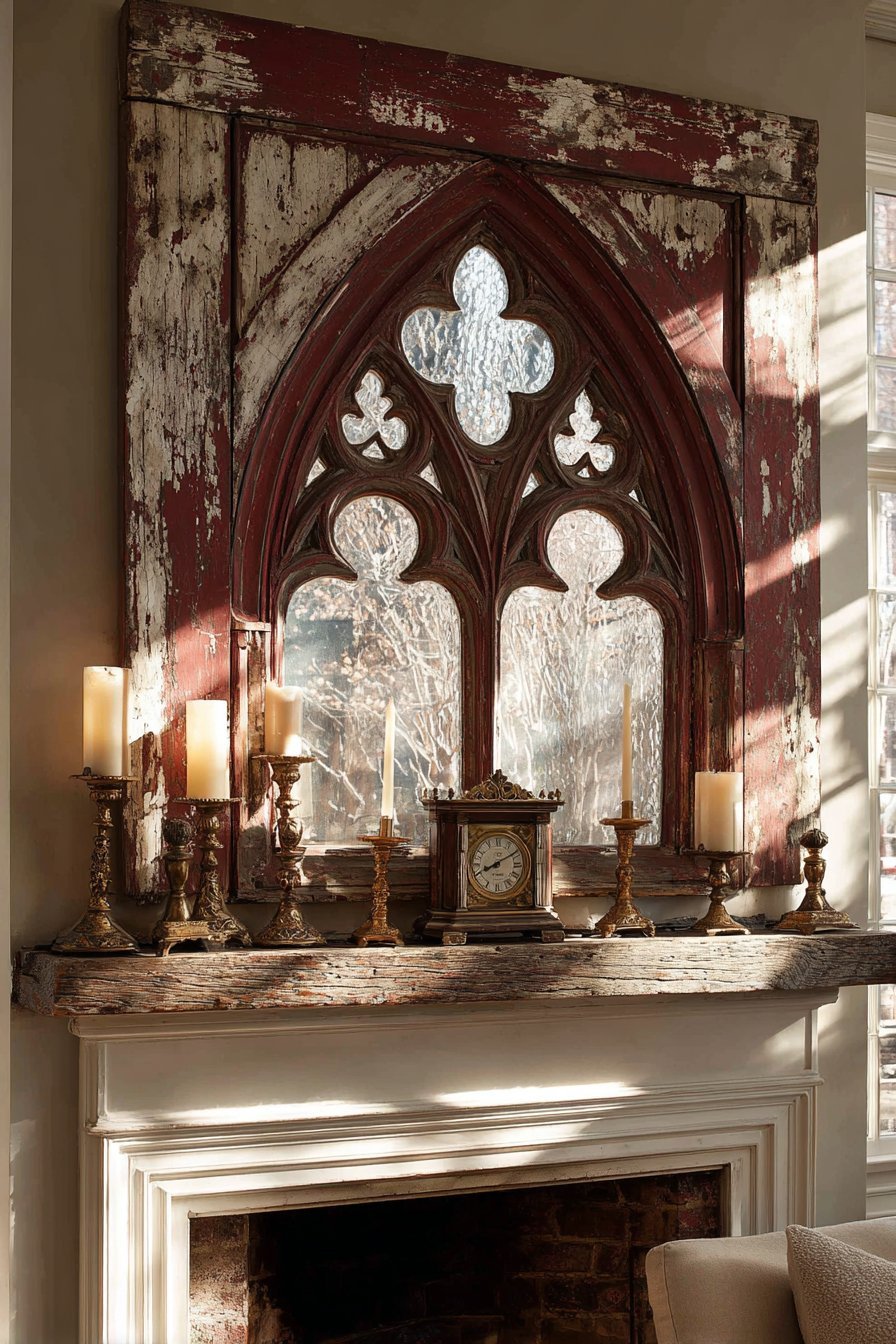
A Gothic-style arched window frame with original wavy glass creates architectural drama. The weathered wood frame reveals authentic paint layers from burgundy to cream. Decades of repainting history show through intentional distressing and wear. This salvaged element brings historical gravitas to contemporary interiors.
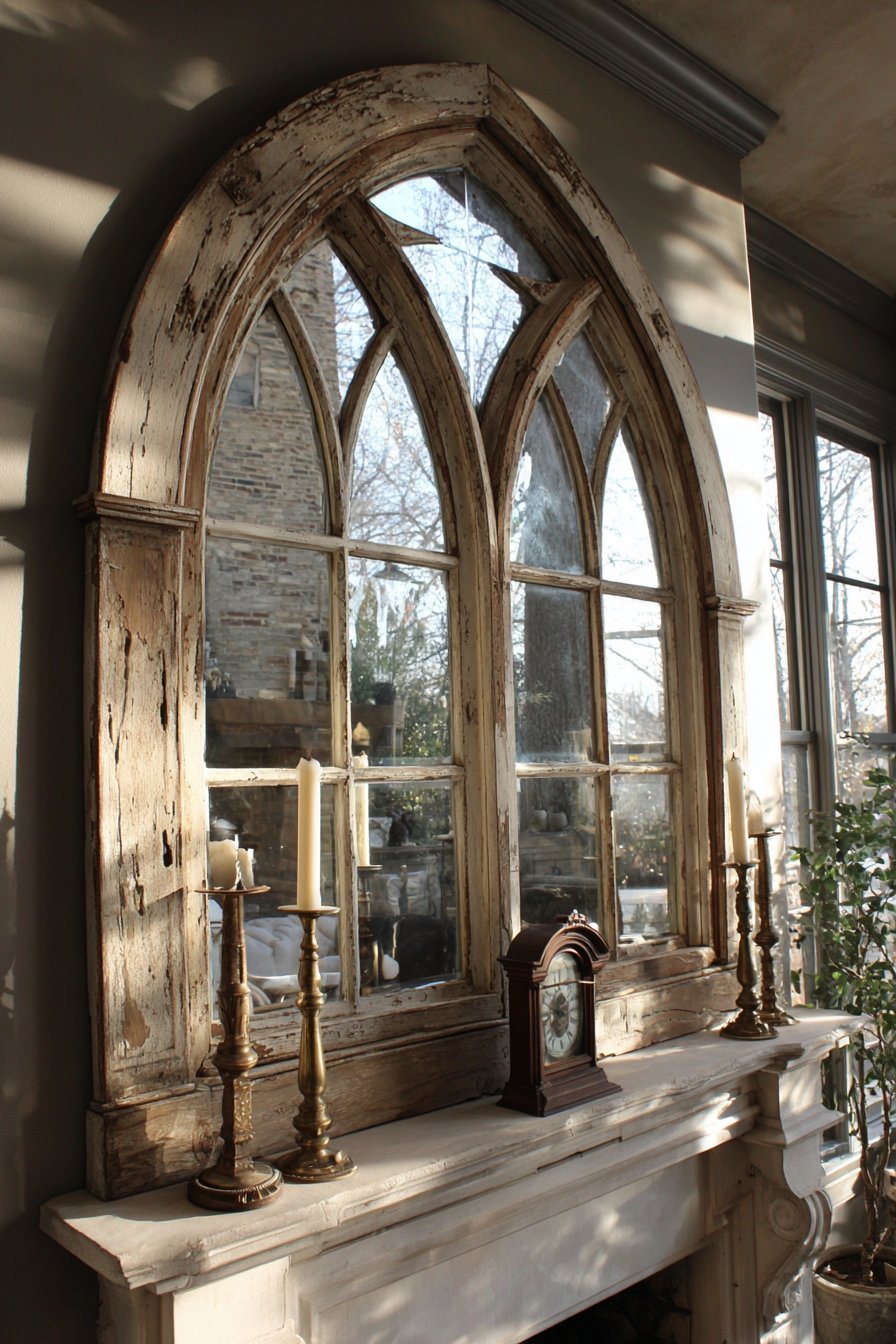
Positioned above a traditional fireplace mantel, the Gothic arch draws the eye upward. Antique brass candlesticks and a vintage clock on the mantel enhance the period aesthetic. Natural light from a side window creates dramatic shadows through the arch. The texture of aged wood and original glass imperfections becomes more pronounced.
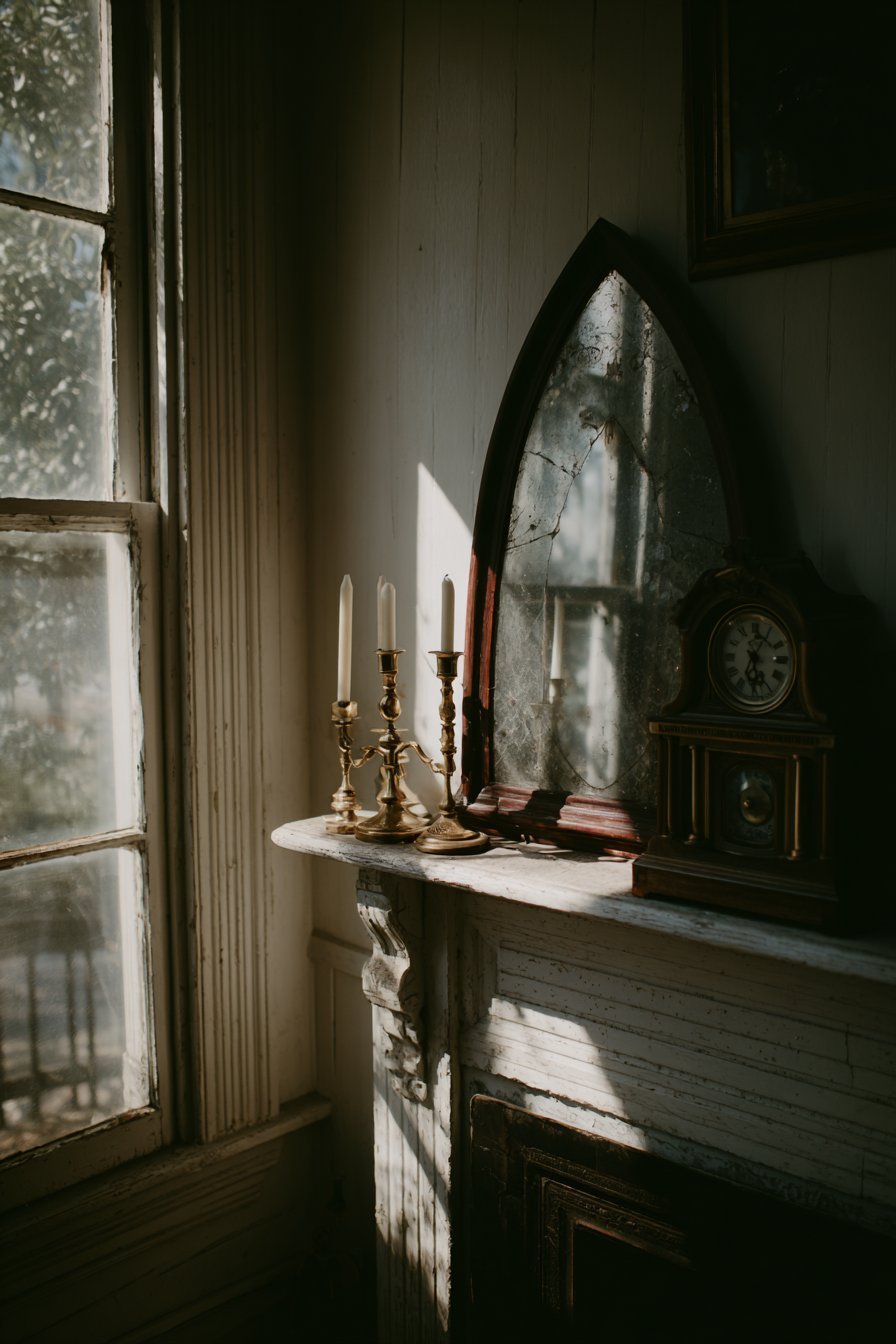
Architectural salvage pieces add instant character that new construction cannot replicate. The Gothic arch introduces vertical emphasis and religious architecture references. This approach works beautifully in living rooms, dining spaces, or as bedroom focal points. The weathered finish requires no maintenance while providing maximum visual impact.
Key Design Tips:
- Source architectural salvage from demolition companies and specialized salvage yards
- Preserve original glass panes for authentic wavy texture and light diffusion
- Leave paint layers visible to showcase the piece’s history and aging
- Mount securely to studs given the weight of wooden frames with glass
- Style the mantel below with coordinating antique accessories for cohesive design
- Use the arch to frame other design elements like mirrors or artwork behind it
8. Blue and White Transferware Plate Wall
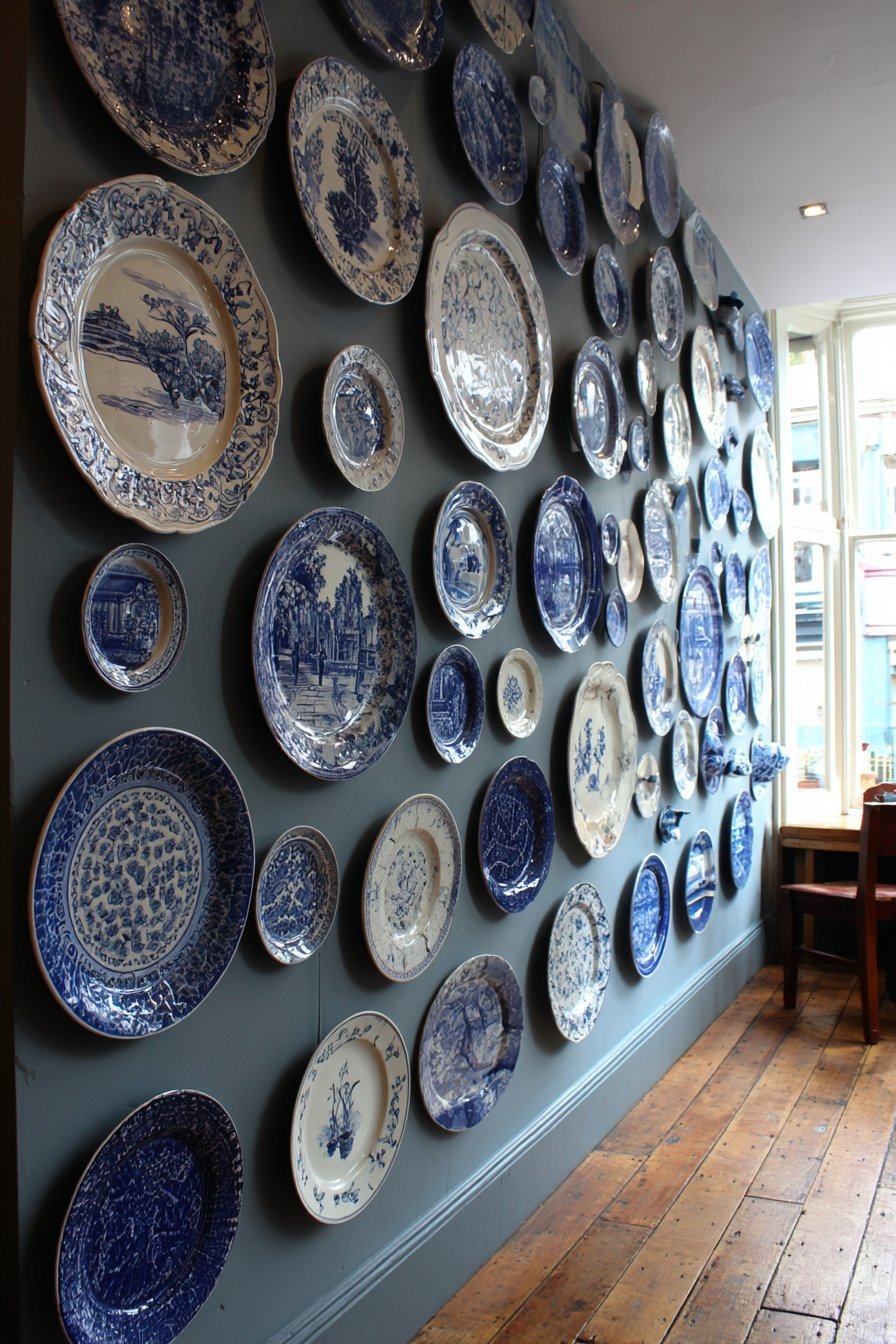
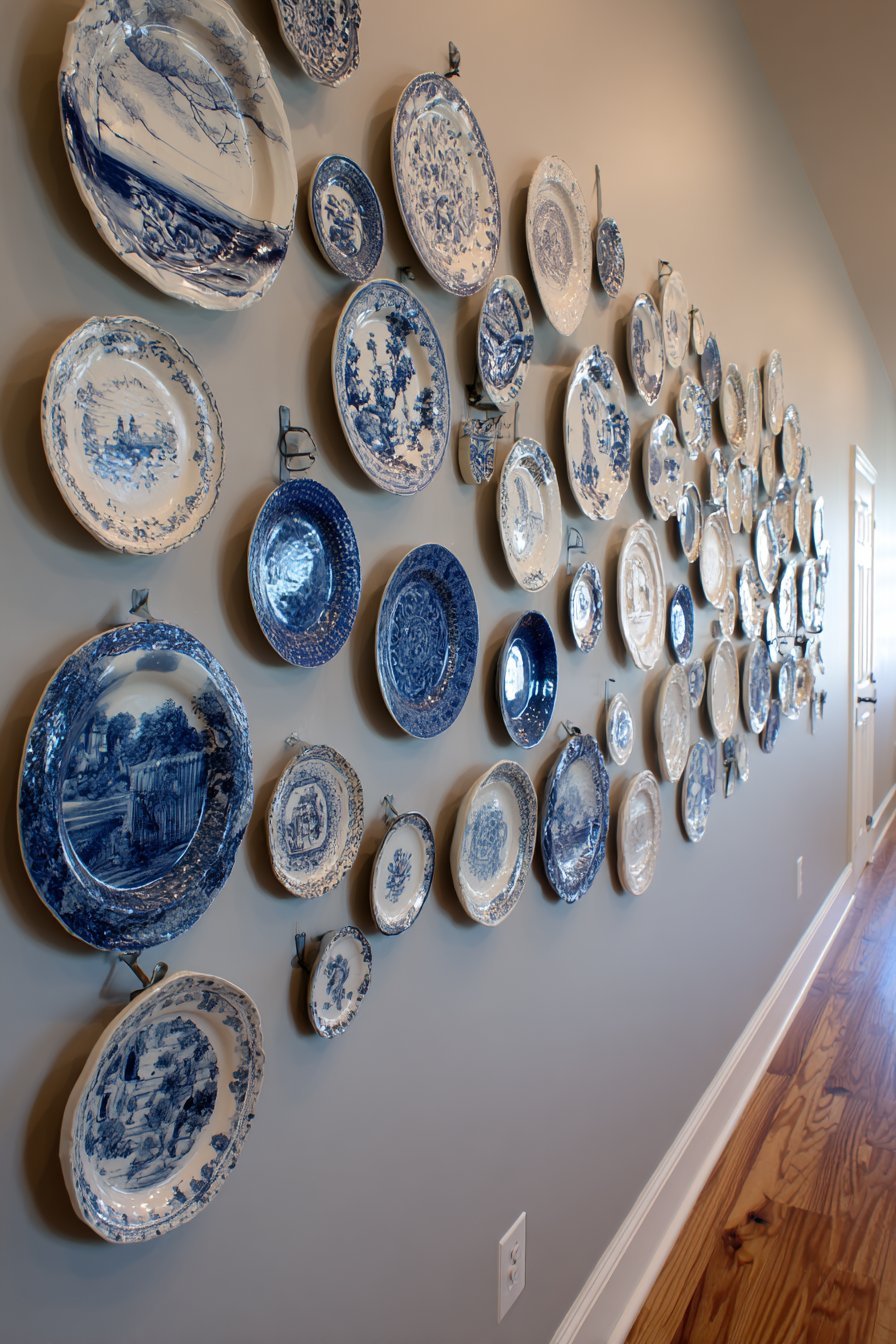
A curated collection of antique plates in blue and white transferware patterns creates classic elegance. Various sizes from small saucers to large serving platters offer dimensional variety. Authentic crazing in the glaze authenticates age and proper firing techniques. Hand-applied patterns show slight variations that machine production cannot replicate.
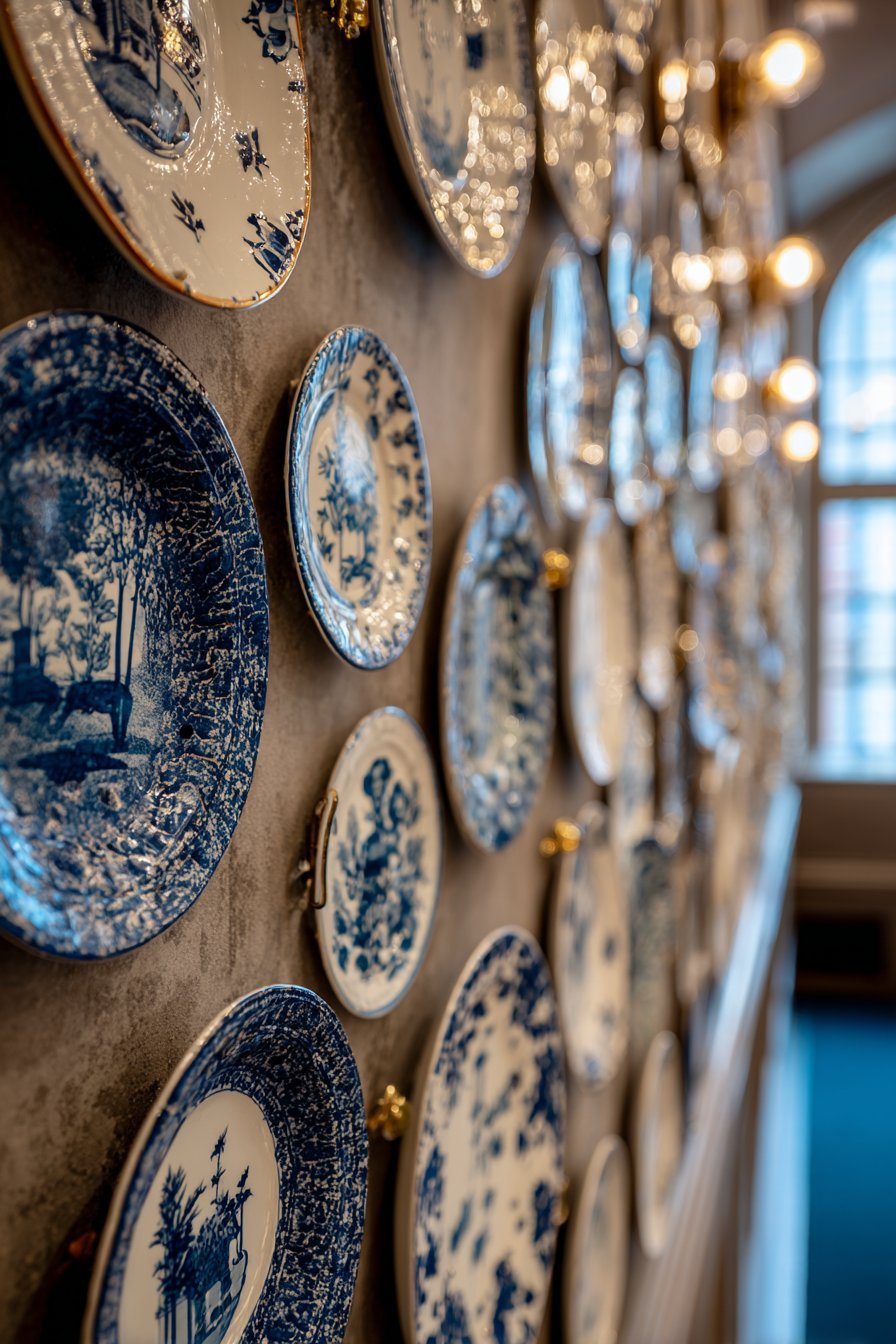
Traditional plate hanging hardware mounts each piece securely and appropriately. The graduated size pattern creates visual flow and organized beauty. A warm grey wall complements the blue tones without overwhelming them. Natural daylight creates subtle reflections on glazed ceramic surfaces while emphasizing dimensional relief patterns.
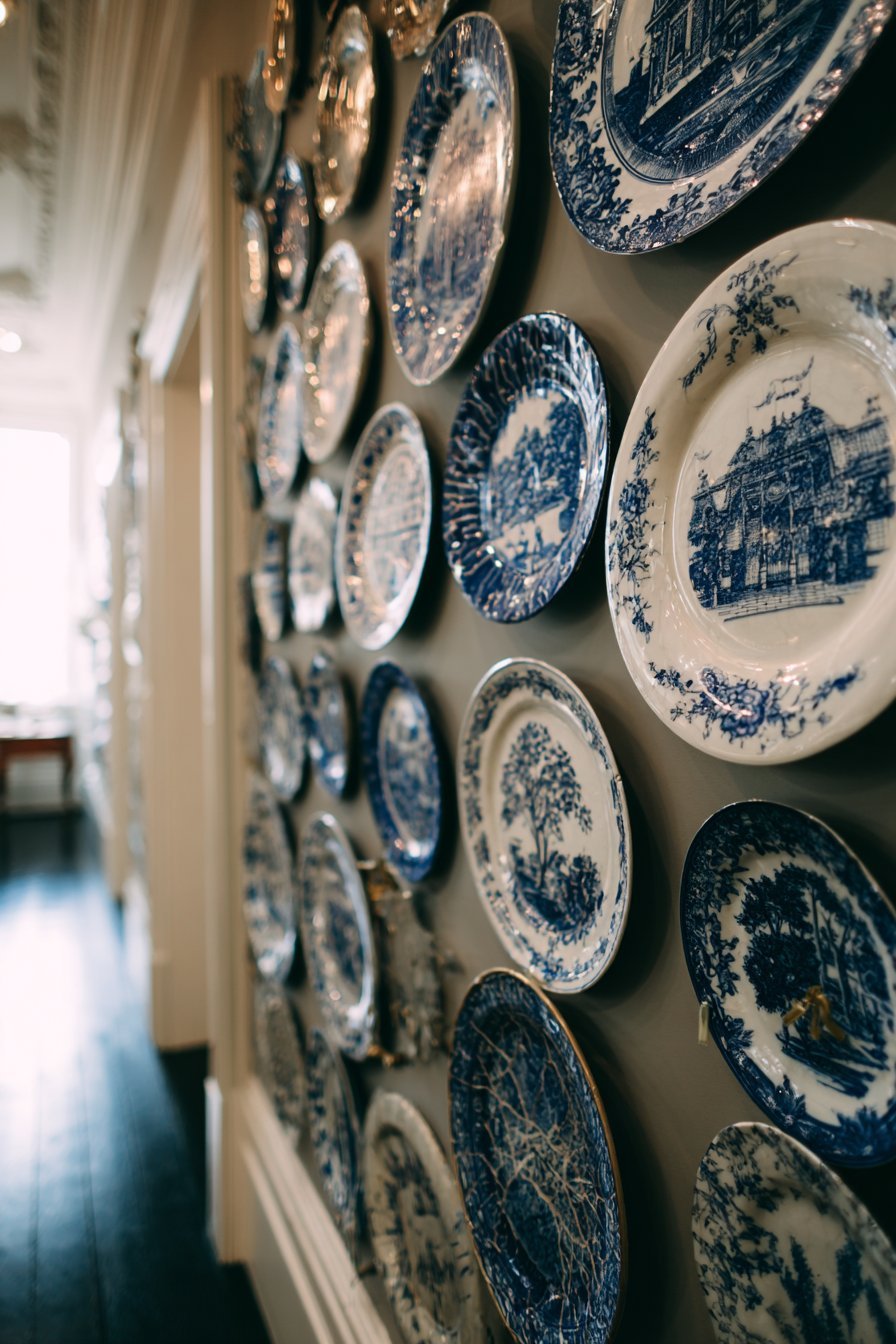
This traditional display method has endured for centuries in formal dining spaces. The collection can grow gradually as you discover special pieces. Each plate tells a story through its pattern, origin, and previous use. The cohesive color scheme unifies pieces from different manufacturers and periods.
Key Design Tips:
- Collect plates gradually to ensure pattern variety while maintaining color consistency
- Use traditional spring-loaded plate hangers designed for antique ceramics
- Arrange plates by size in graduated patterns or clustered groupings
- Choose wall colors that enhance rather than compete with the blue tones
- Position the display away from high-traffic areas to prevent accidental damage
- Clean plates gently before mounting to showcase the glaze and pattern details
9. Hand-Painted Scenic Mural Wall
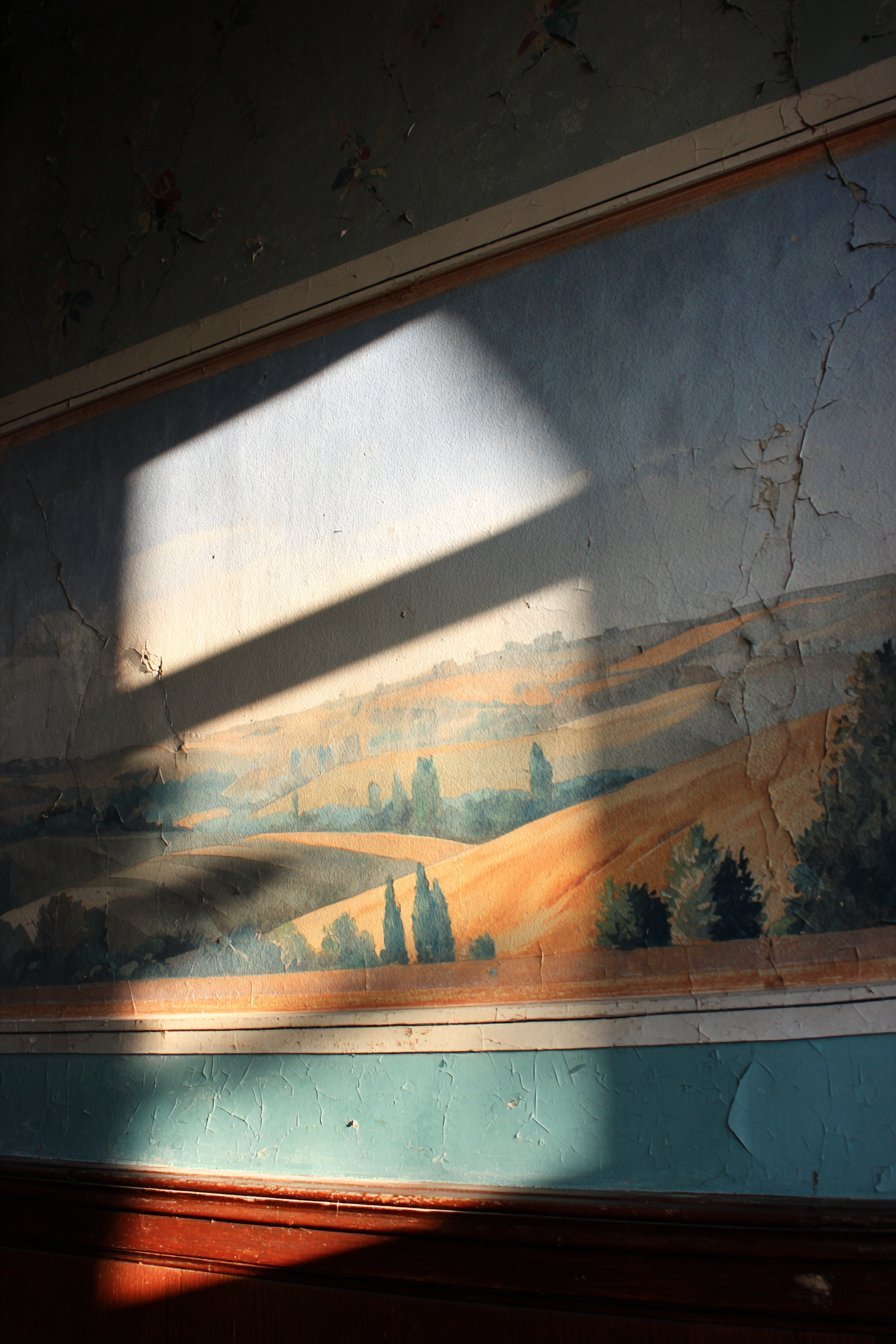
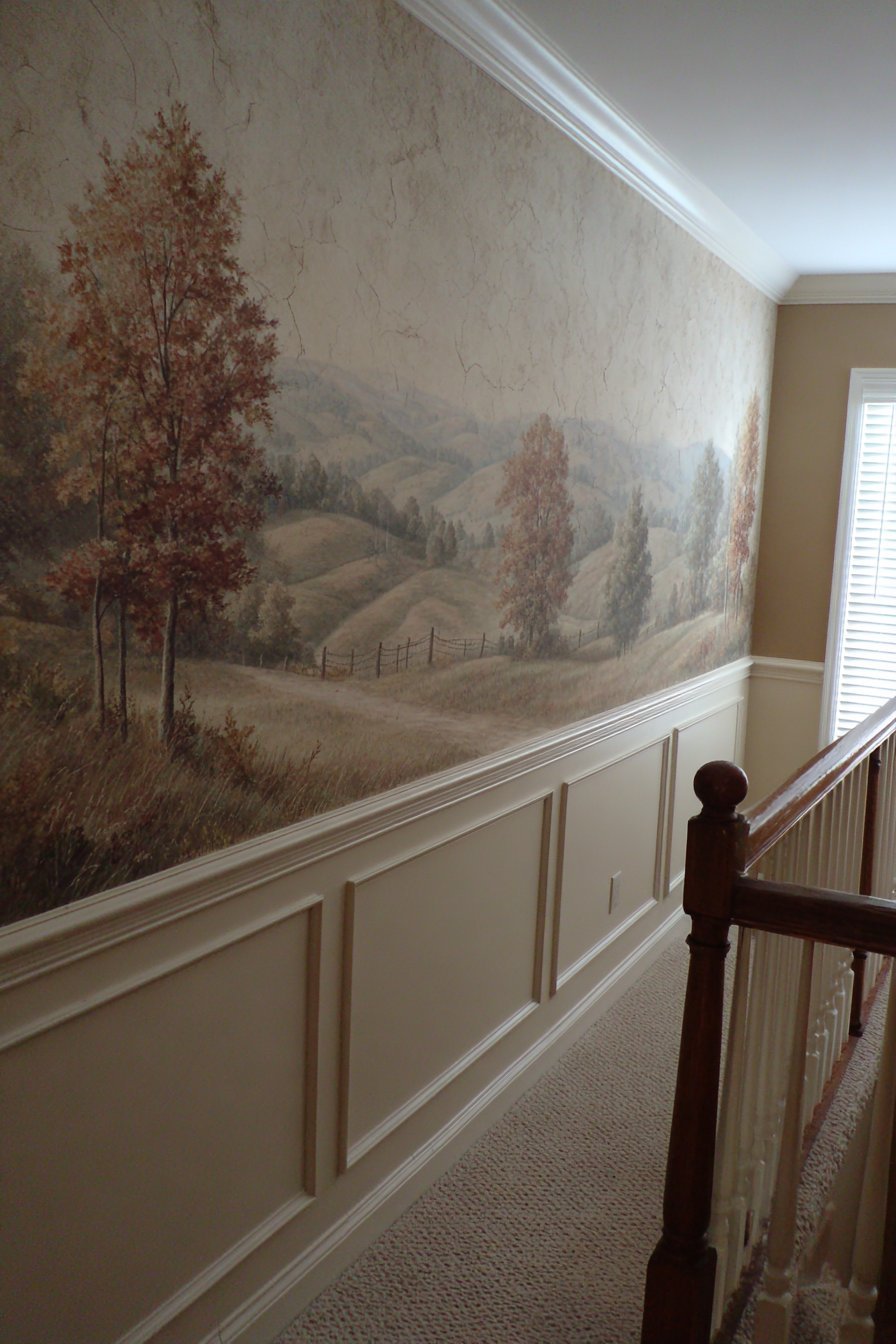
Hand-painted murals in early 20th-century scenic wallpaper style create artistic ambiance. Pastoral landscapes with rolling hills and distant trees evoke peaceful countryside settings. Muted earth tones integrate seamlessly with traditional and transitional interiors. Subtle aging effects with slightly faded pigments enhance authentic vintage appearance.
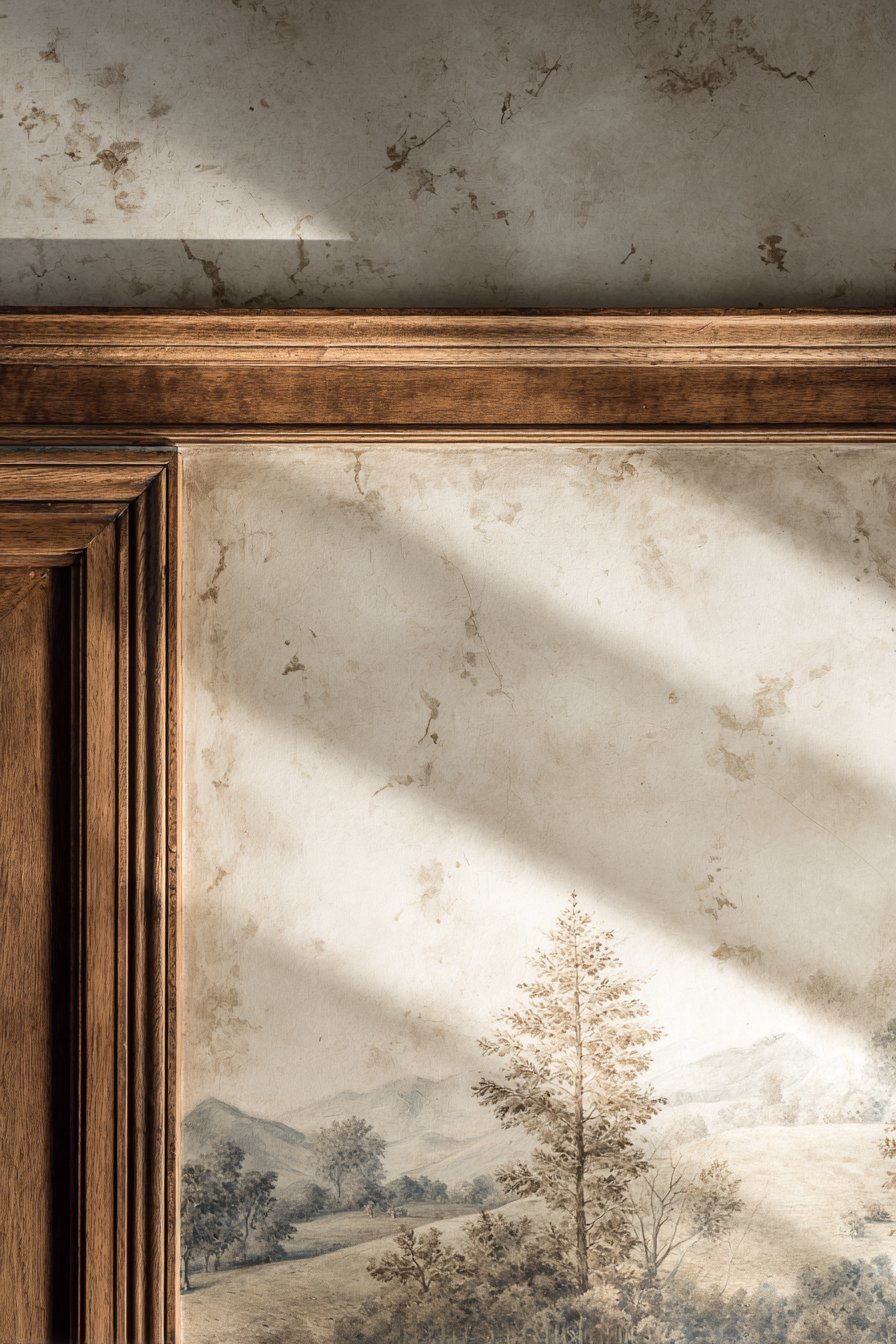
Fine crackling in select areas adds believable character without compromising structural integrity. Period-appropriate wooden picture rail molding painted in antique cream frames the composition. Soft morning light filters across the mural, creating natural shadows. The hand-painted brushwork becomes more apparent in varied lighting conditions throughout the day.
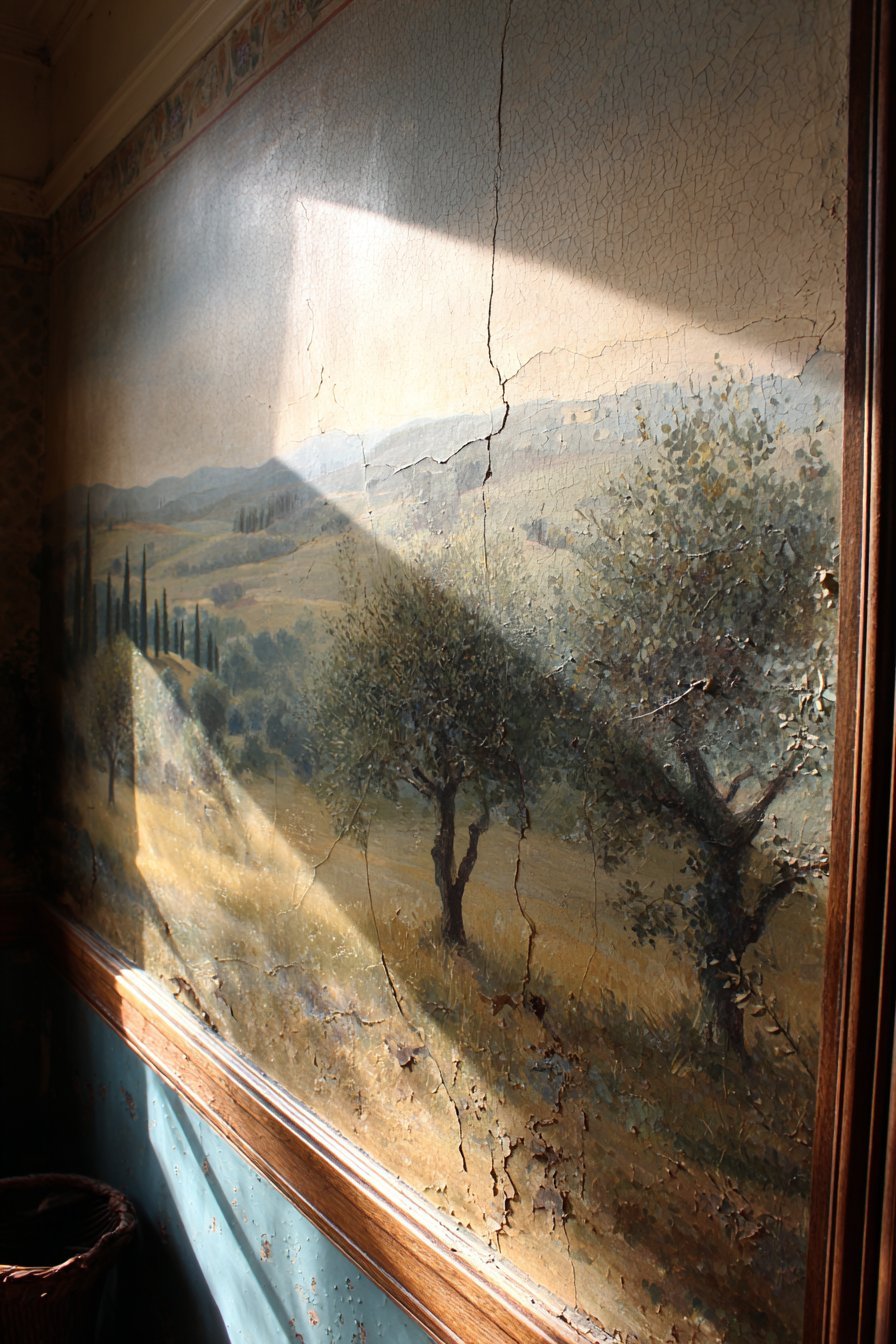
This custom approach transforms walls into artwork while maintaining architectural context. Unlike wallpaper, murals can incorporate specific room dimensions and architectural features. The technique works particularly well in dining rooms, bedrooms, and formal living spaces. Professional execution ensures the mural ages gracefully while maintaining its artistic integrity.
Key Design Tips:
- Hire experienced muralists specializing in historical painting techniques and styles
- Choose pastoral or botanical themes that coordinate with existing architectural details
- Request subtle aging effects like faded pigments and fine crackling for authenticity
- Install picture rail molding before painting to frame the mural properly
- Use matte finish paints to avoid sheen that appears too contemporary
- Consider room lighting when planning mural colors and landscape orientation
10. Distressed Milk Paint Shiplap Wall
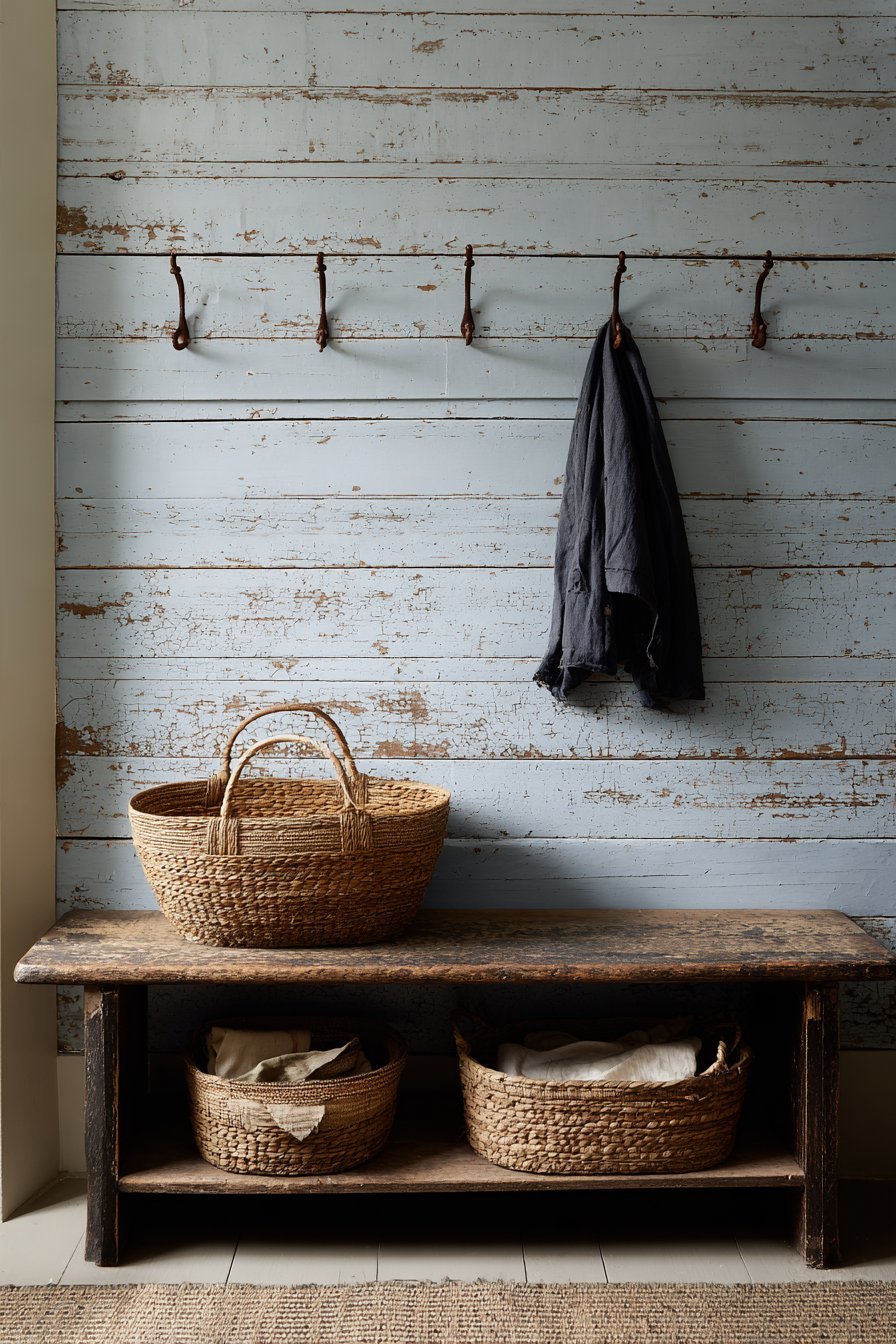
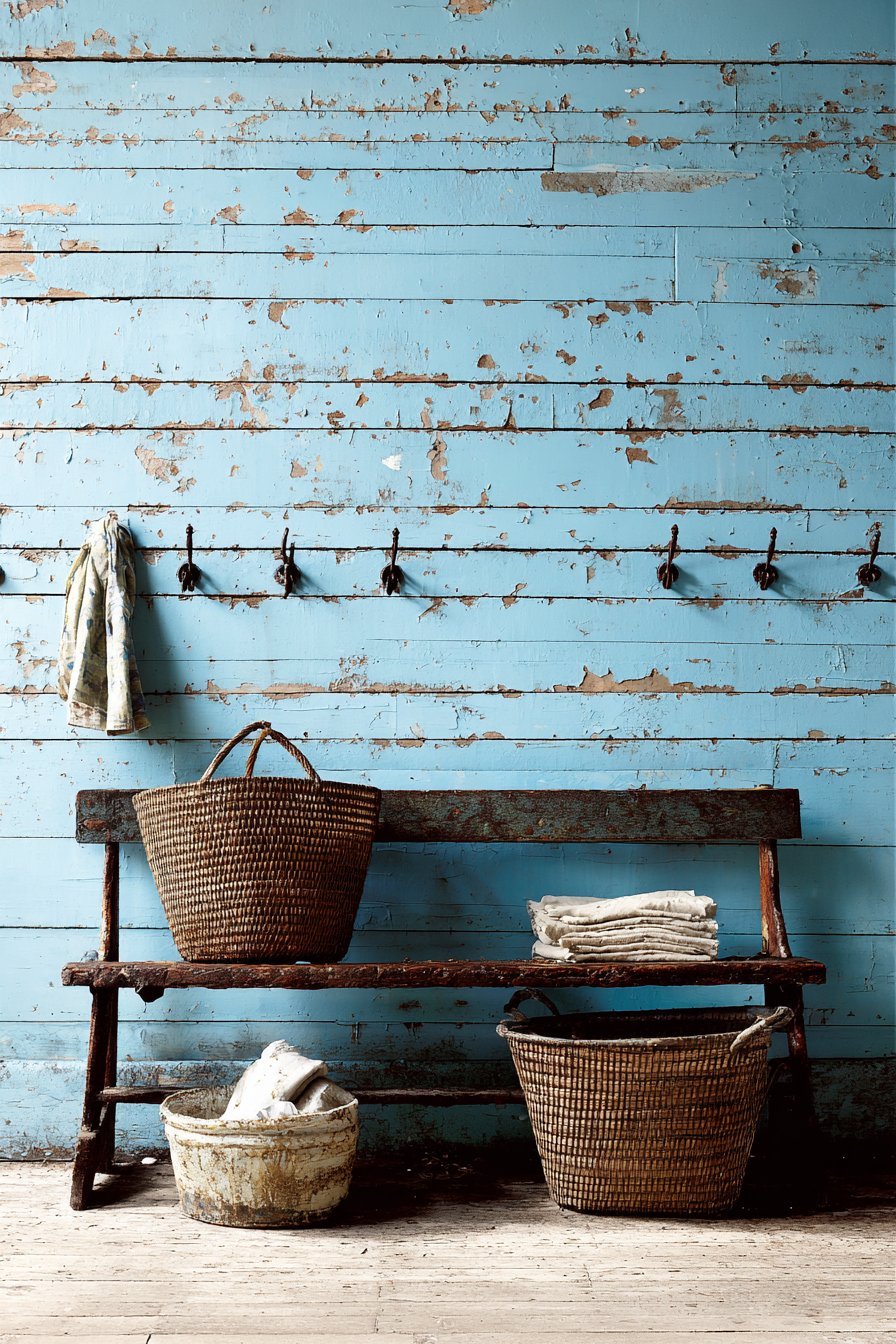
Authentic shiplap painted in historically accurate milk paint creates farmhouse charm. Robin’s egg blue with intentional distressing reveals underlying wood grain beautifully. Antique iron coat hooks provide functional storage while maintaining period character. A vintage wooden bench below holds woven baskets and folded linens.
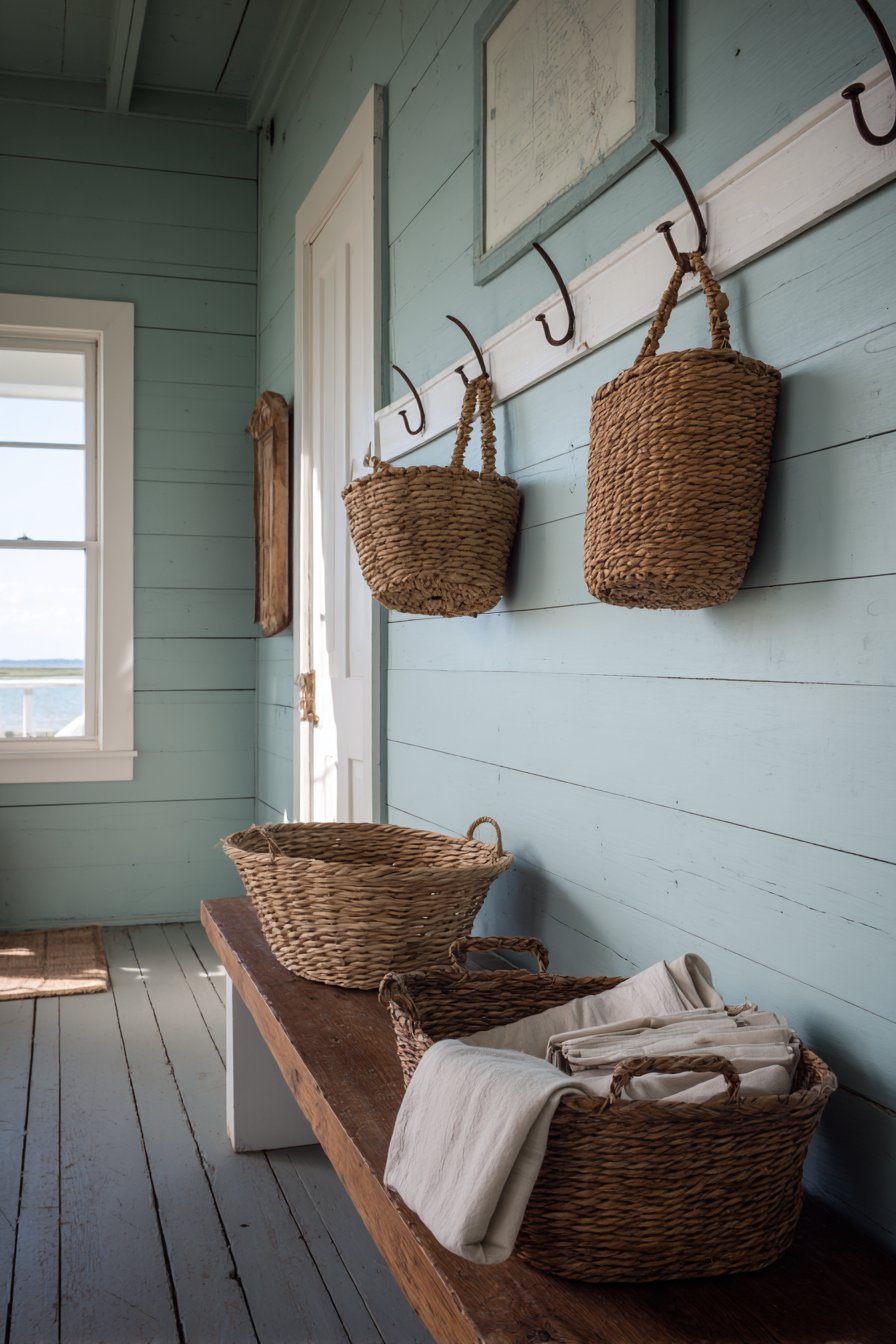
The milk paint shows realistic wear patterns at edges and high-traffic areas. Subtle color variations throughout enhance the authentic aged appearance. Natural light from an adjacent room highlights the horizontal plank texture. The painted finish develops additional patina naturally over time with use.
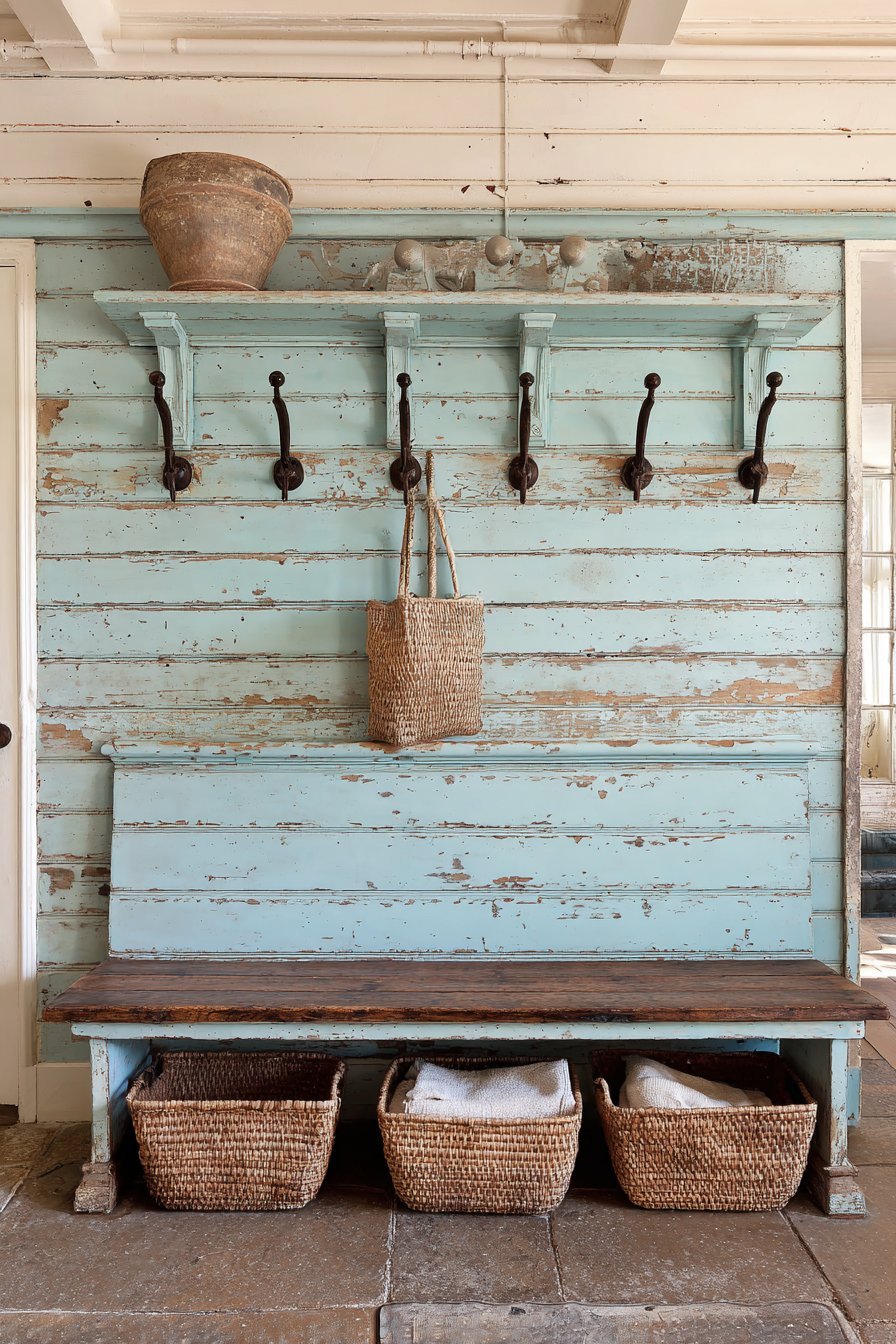
This practical wall treatment suits mudrooms, entryways, and laundry spaces beautifully. The distressed finish hides new damage while looking intentionally aged. Milk paint’s matte finish differs noticeably from modern latex sheens. The combination of function and aesthetic appeal makes this approach particularly valuable.
Key Design Tips:
- Use authentic milk paint rather than chalk paint for historically accurate finish
- Apply paint thinly and distress edges with sandpaper after drying
- Install shiplap horizontally for cleaner lines and easier installation
- Mount antique iron hooks at appropriate heights for practical daily use
- Include color variations by layering paint colors and selective distressing
- Seal the finish with clear wax to protect while maintaining matte appearance
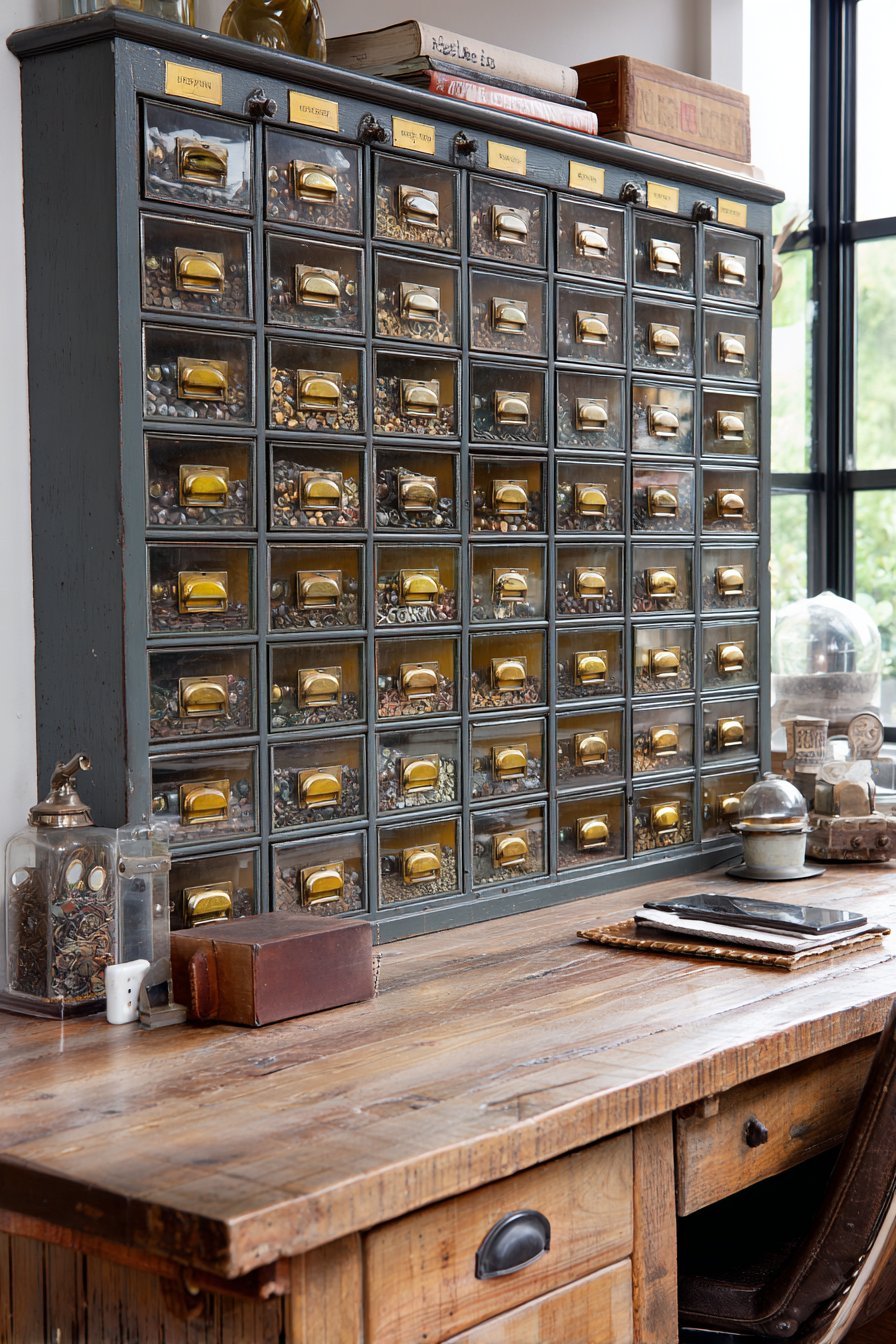
11. Antique Apothecary Cabinet Display Wall
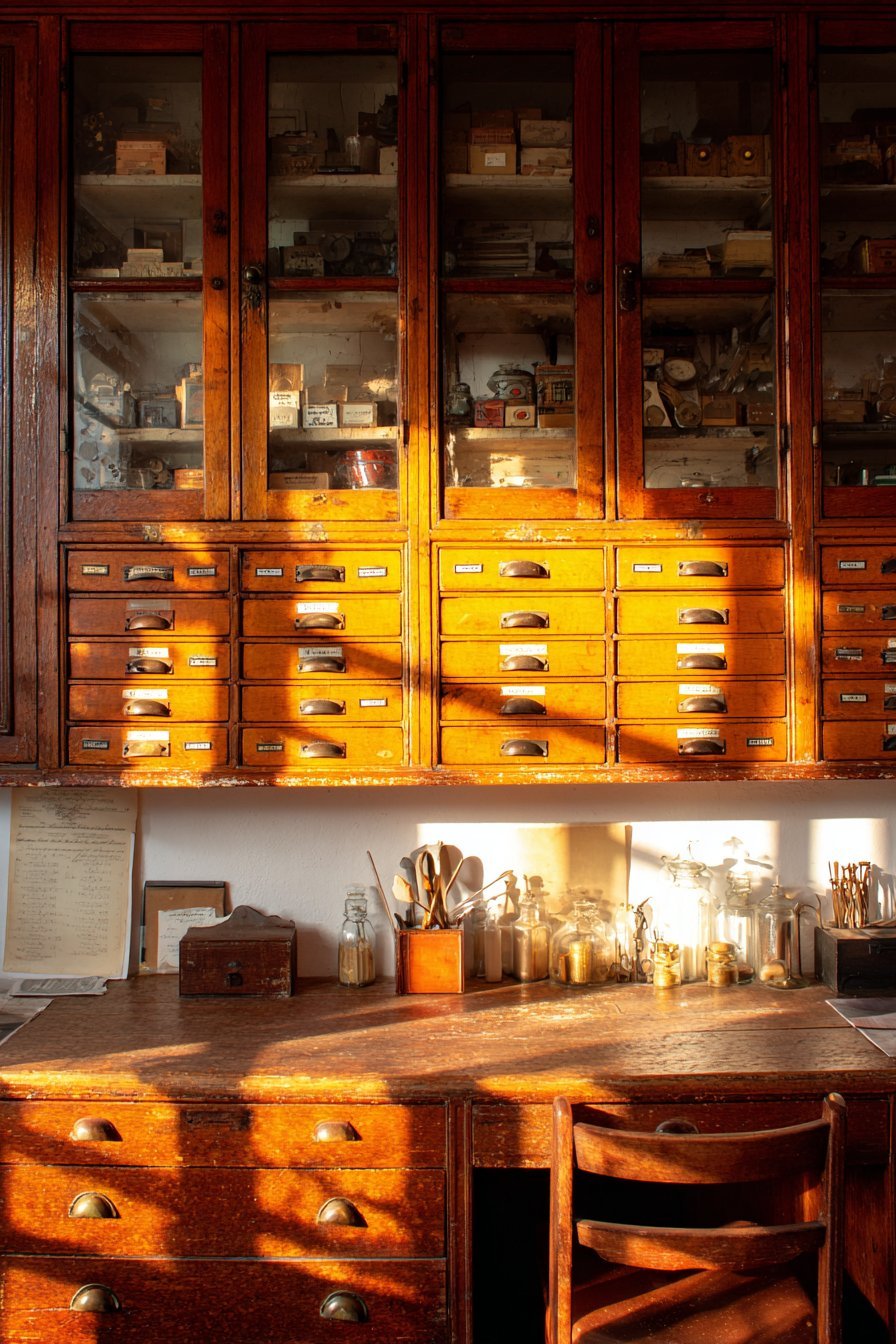
An antique apothecary cabinet mounted on the wall creates functional vintage storage. Original glass-front drawers display collections of vintage buttons, old keys, and small curiosities. Aged brass hardware and slightly yellowed label holders authenticate the piece’s age. Wood showing decades of handling exhibits beautiful patina development.
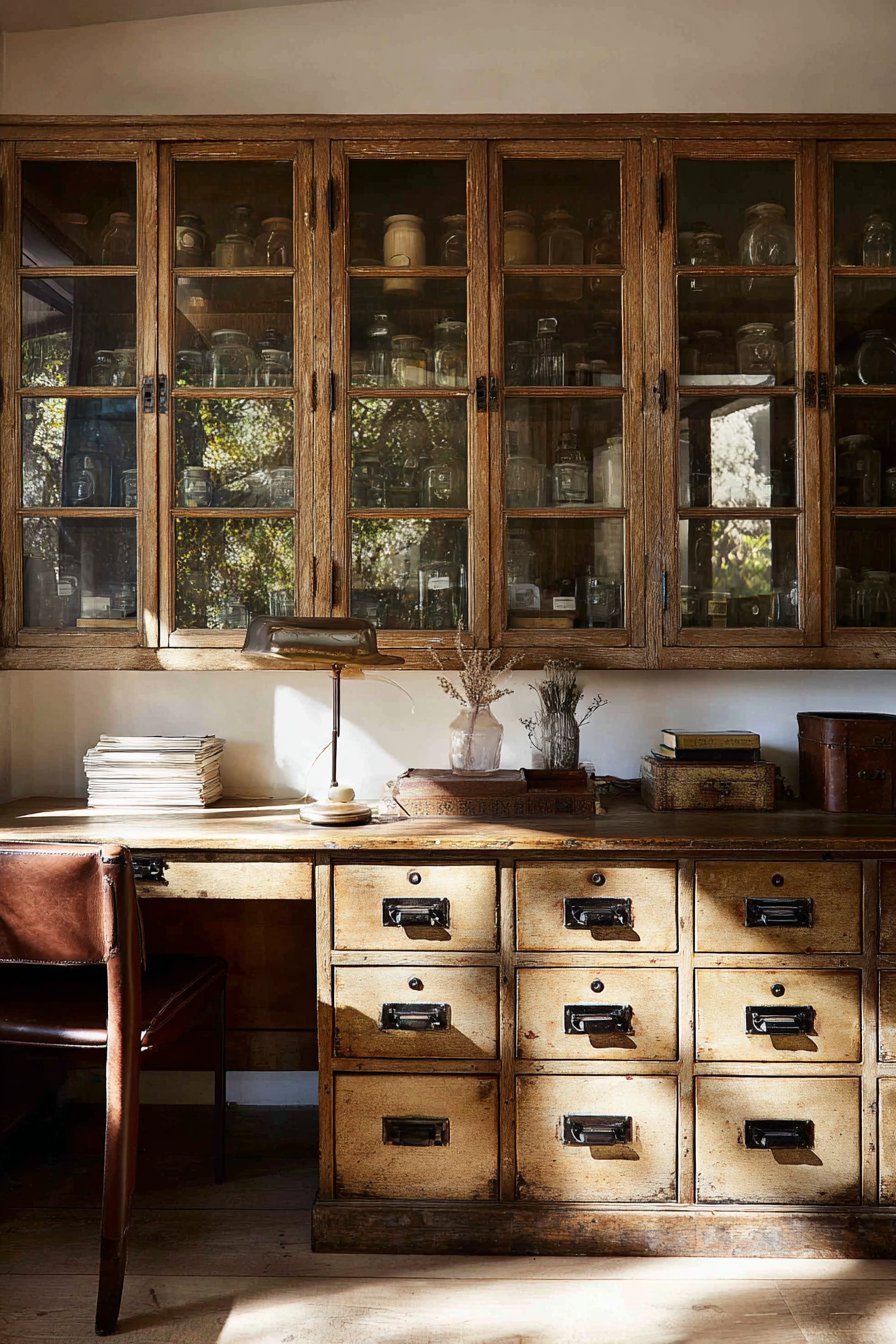
Positioned above a simple wooden desk, the cabinet enhances home office vintage character. Vintage leather desk accessories complement the apothecary cabinet’s aesthetic. Warm afternoon light through nearby windows creates gentle highlights on glass drawer fronts. Shadows emphasize the cabinet’s dimensional depth and drawer construction details.
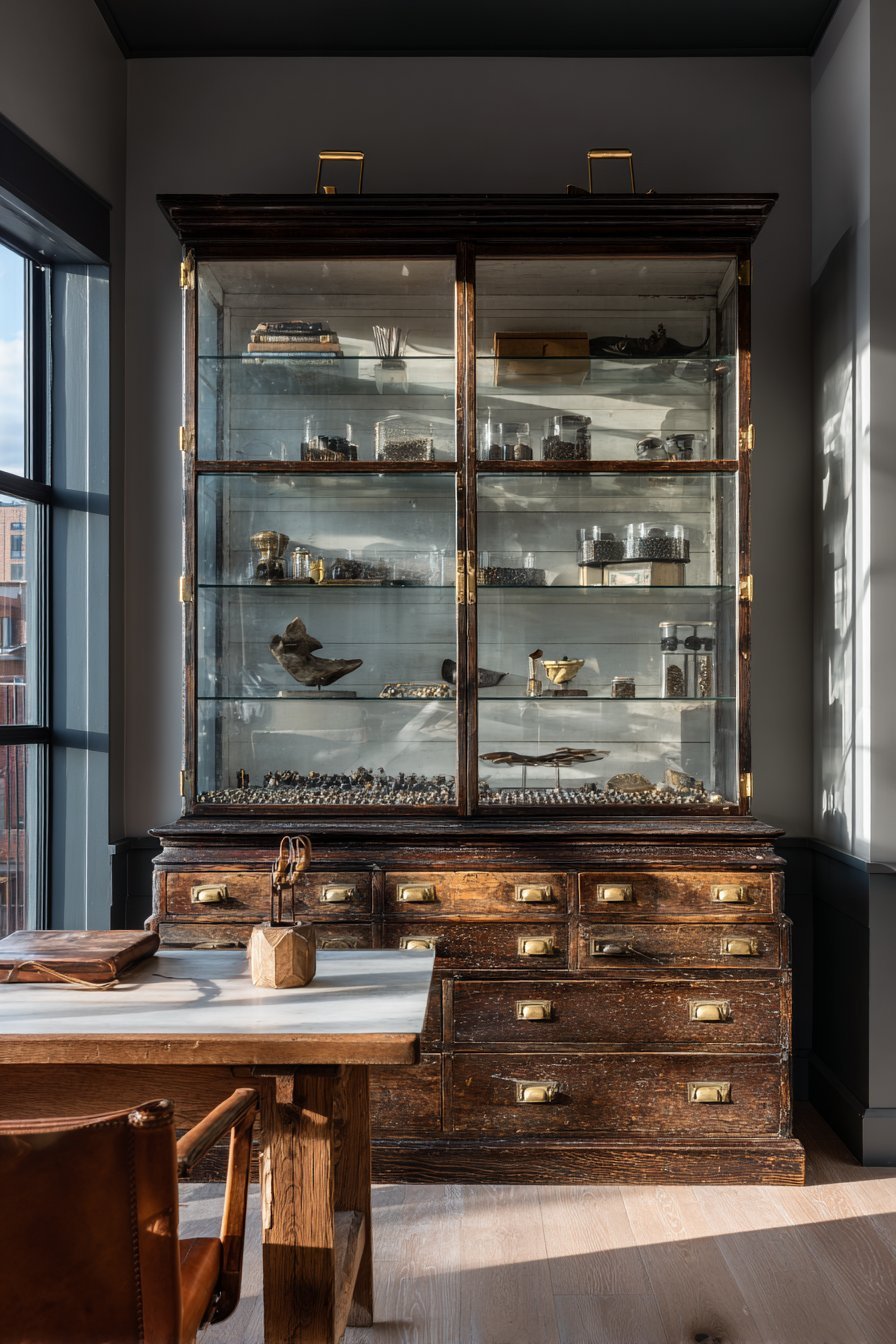
This approach combines storage, display, and decorative appeal in one statement piece. The organized compartments satisfy both aesthetic and practical needs. Collections become curated displays rather than hidden clutter. The cabinet’s history as utilitarian storage adds authenticity to its decorative purpose.
Key Design Tips:
- Source authentic apothecary cabinets from architectural salvage and antique dealers
- Mount securely to wall studs given the cabinet’s weight when filled
- Curate drawer contents by theme, color, or material for visual coherence
- Clean glass fronts thoroughly to showcase collections without glare or smudging
- Position desk lighting to avoid harsh reflections on the glass drawer panels
- Keep original hardware and labels intact for maximum authenticity and value
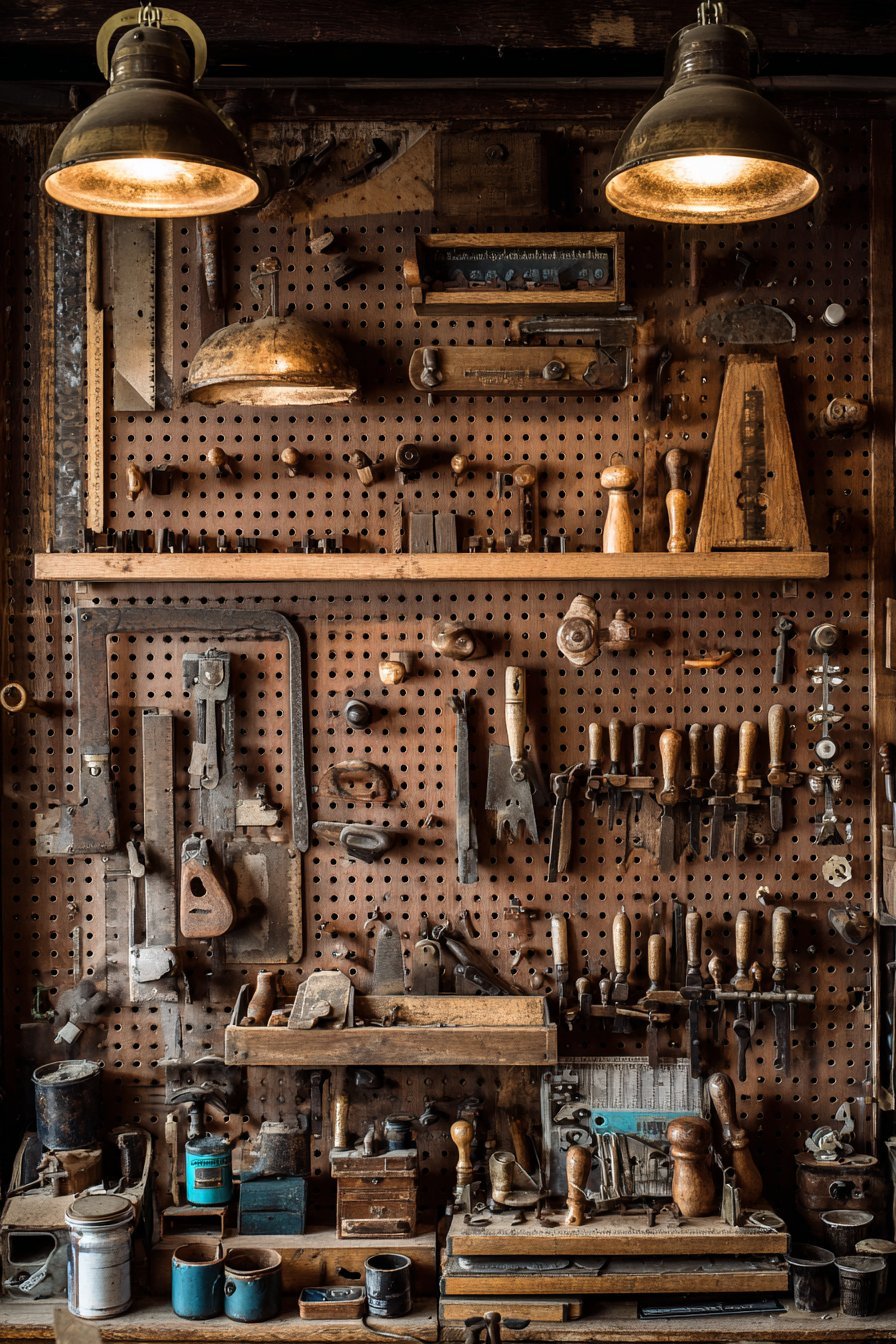
12. Vintage Tool Pegboard Workshop Display

A collection of antique hand tools mounted on traditional barn red pegboard creates industrial charm. Wood planes, levels, and measuring instruments show authentic patina on metal surfaces. Smooth wear on wooden handles evidences years of skilled use. The organized arrangement balances decorative appeal with functional accessibility.
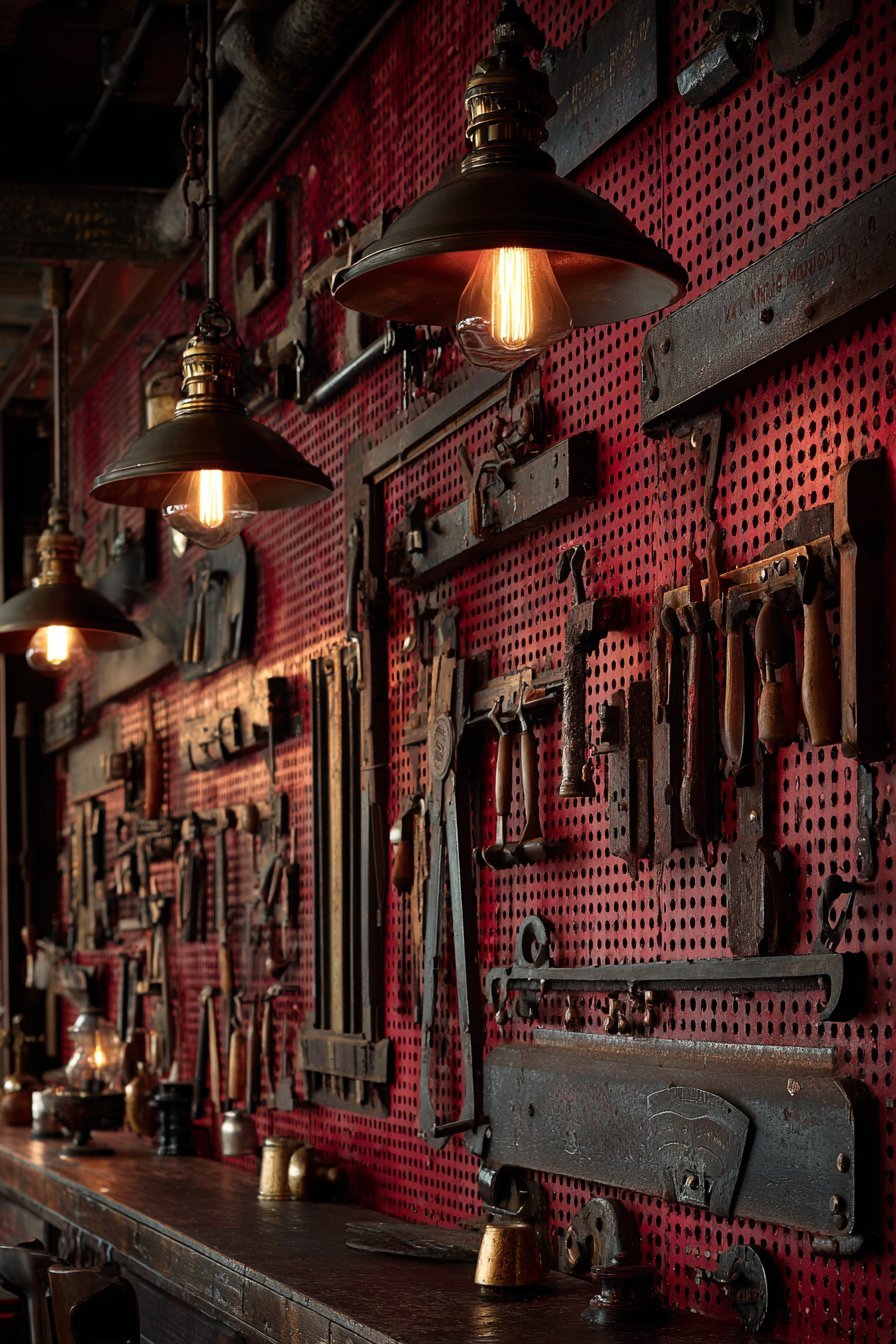
Industrial-style pendant lights with aged brass shades illuminate the display effectively. The combination of natural and artificial light creates highlights on metal tool surfaces. The pegboard’s texture and aged paint finish provide depth and visual interest. This display celebrates craftsmanship and the beauty of well-made utilitarian objects.
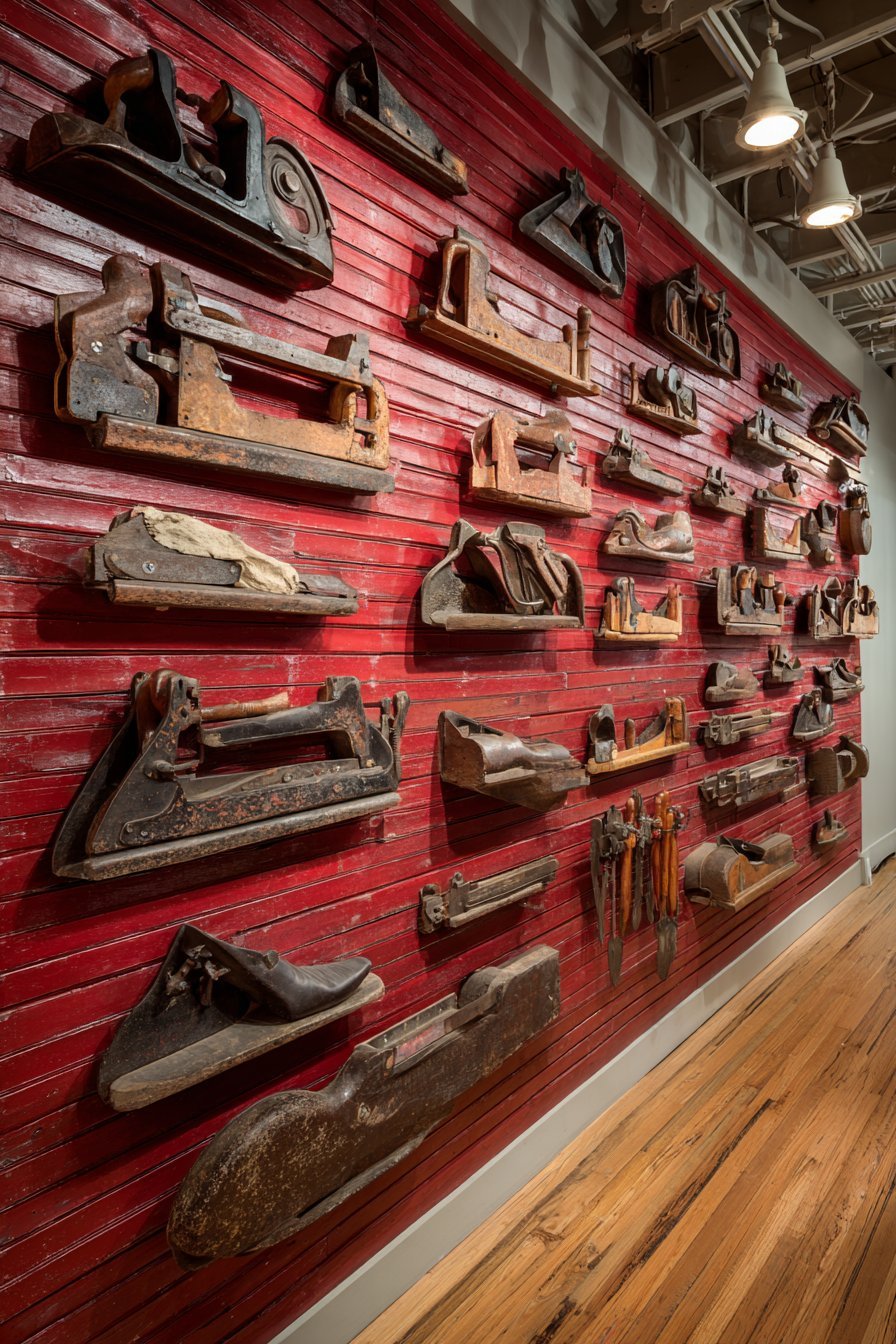
This approach works particularly well in workshops, home offices, and masculine spaces. The tools become sculptural art while remaining potentially functional. The organized display system allows easy additions to the collection. The industrial aesthetic coordinates with both vintage and contemporary design elements.
Key Design Tips:
- Collect authentic vintage tools from flea markets and estate sales
- Paint pegboard in traditional barn red or leave original paint finish
- Arrange tools by type, size, or function for organized visual appeal
- Include industrial pendant lighting to highlight metallic tool surfaces
- Leave tool patina intact rather than polishing for authentic vintage appearance
- Ensure pegboard mounting is secure enough to support the tool weight
13. Repurposed Tin Ceiling Tiles Accent Wall
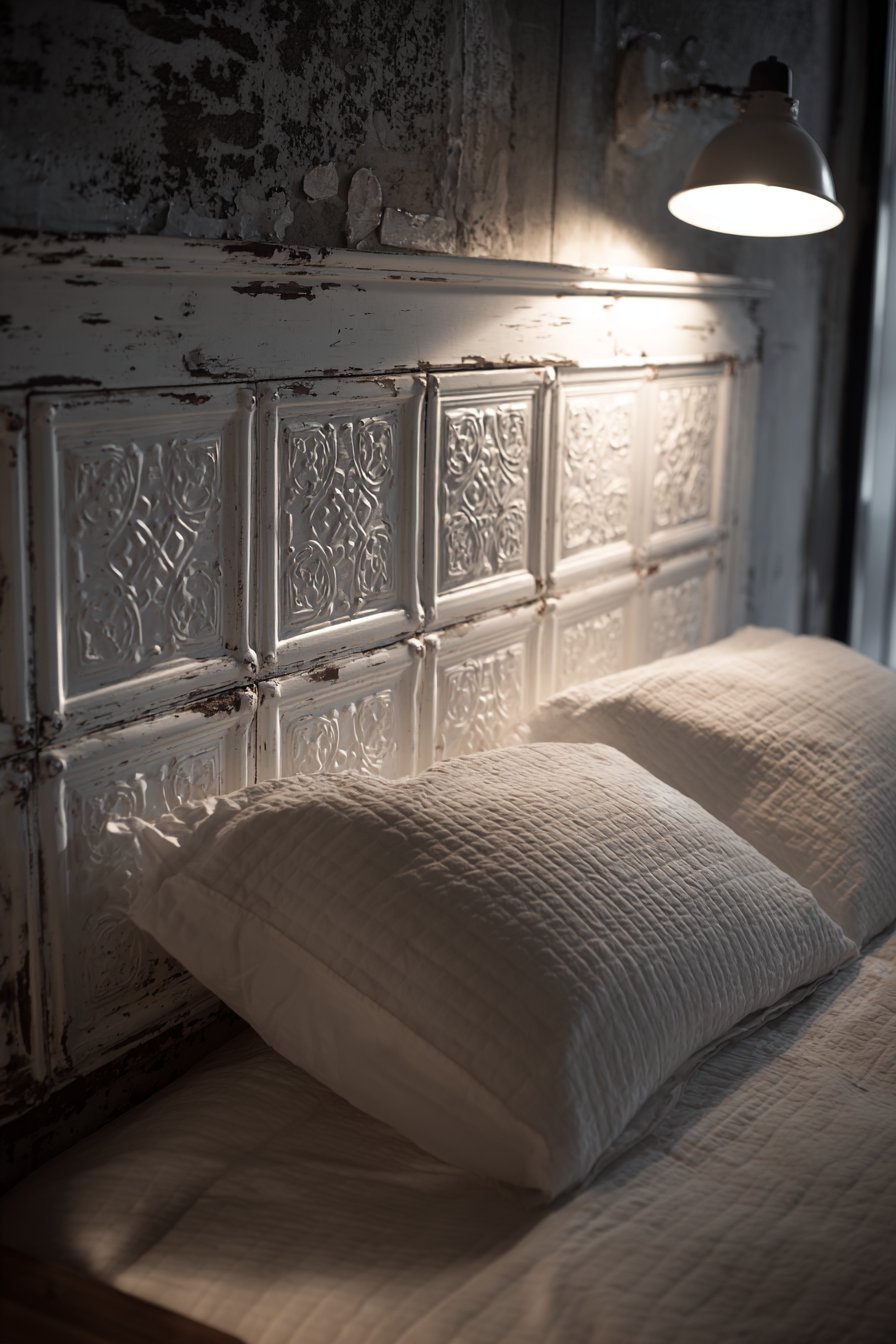
Salvaged tin ceiling tiles from early 1900s buildings create unique textured walls. The embossed metal displays original paint with intentional rust spots and dings. Geometric pressed patterns create dimensional shadows under varying light conditions. Mounted on a frame system, tiles appear cohesive while preserving individual character.
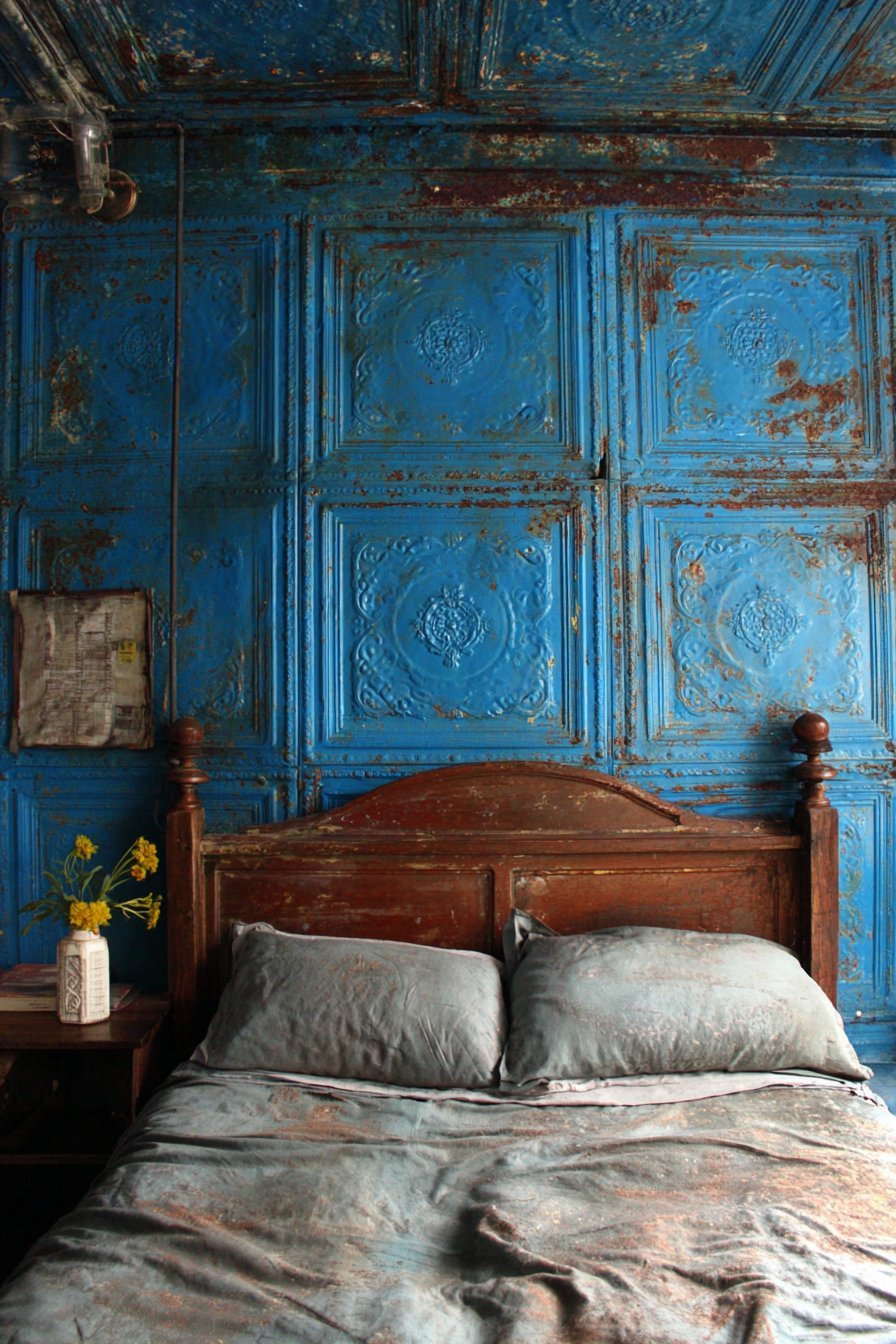
This application works beautifully behind bedroom headboards as dramatic focal points. Soft bedroom lighting emphasizes metallic surface variations and three-dimensional relief patterns. The tiles’ history as architectural elements adds layers of meaning. The reflective quality subtly enhances room illumination without being overtly shiny.
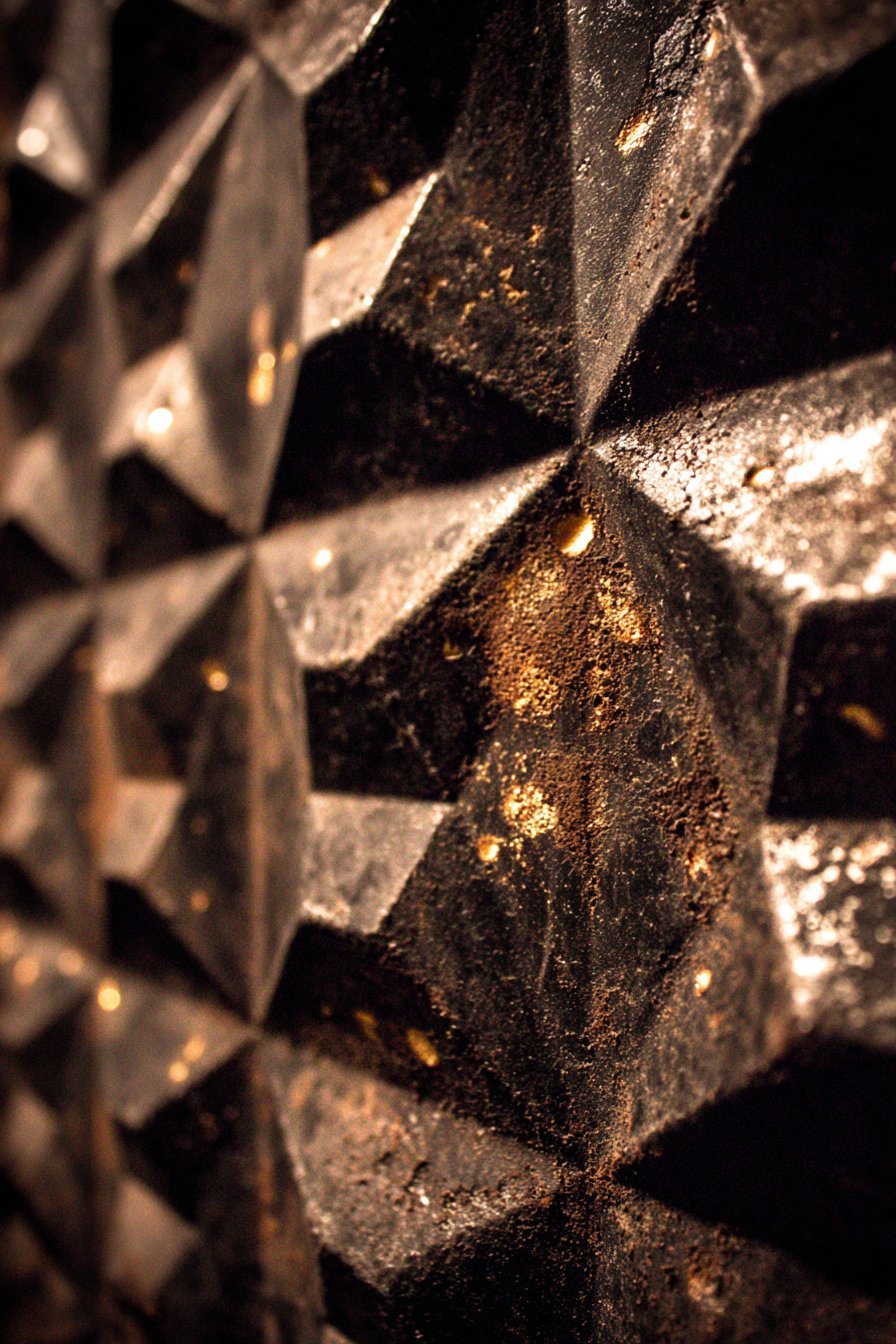
Repurposing architectural salvage demonstrates sustainable design practices while adding authentic character. The dimensional patterns add visual interest that flat surfaces cannot achieve. The metallic finish coordinates with vintage lighting fixtures and hardware. This creative reuse transforms ceiling elements into striking wall features.
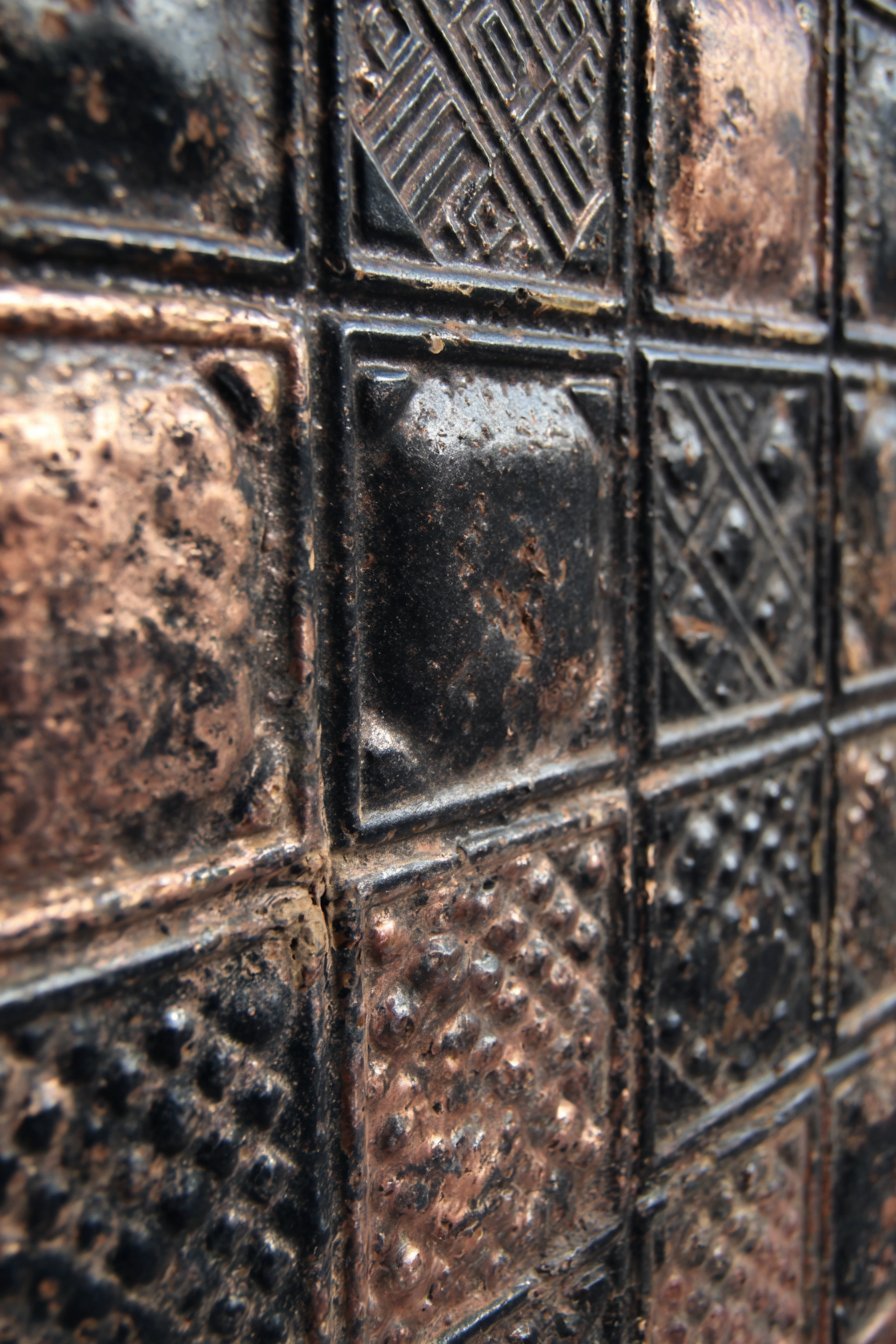
Key Design Tips:
- Source tin ceiling tiles from architectural salvage companies specializing in vintage buildings
- Mount tiles on plywood backing for easier installation and structural stability
- Preserve original paint and rust spots for authentic aged appearance
- Position behind headboards or as accent walls for maximum visual impact
- Use subtle lighting to create shadow play across the embossed patterns
- Seal the metal surface to prevent further oxidation while maintaining patina
14. Antique Botanical Prints Grid Display
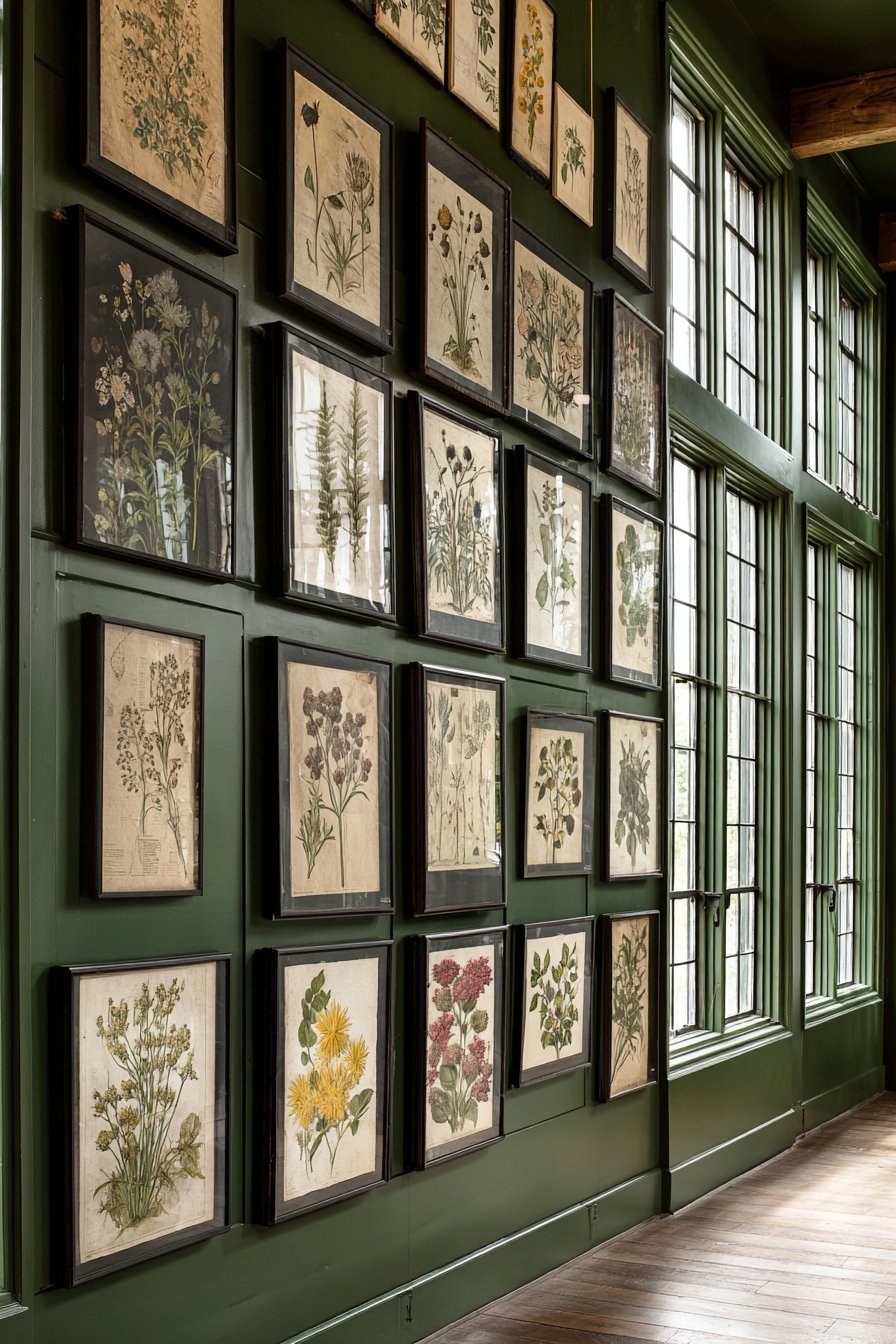
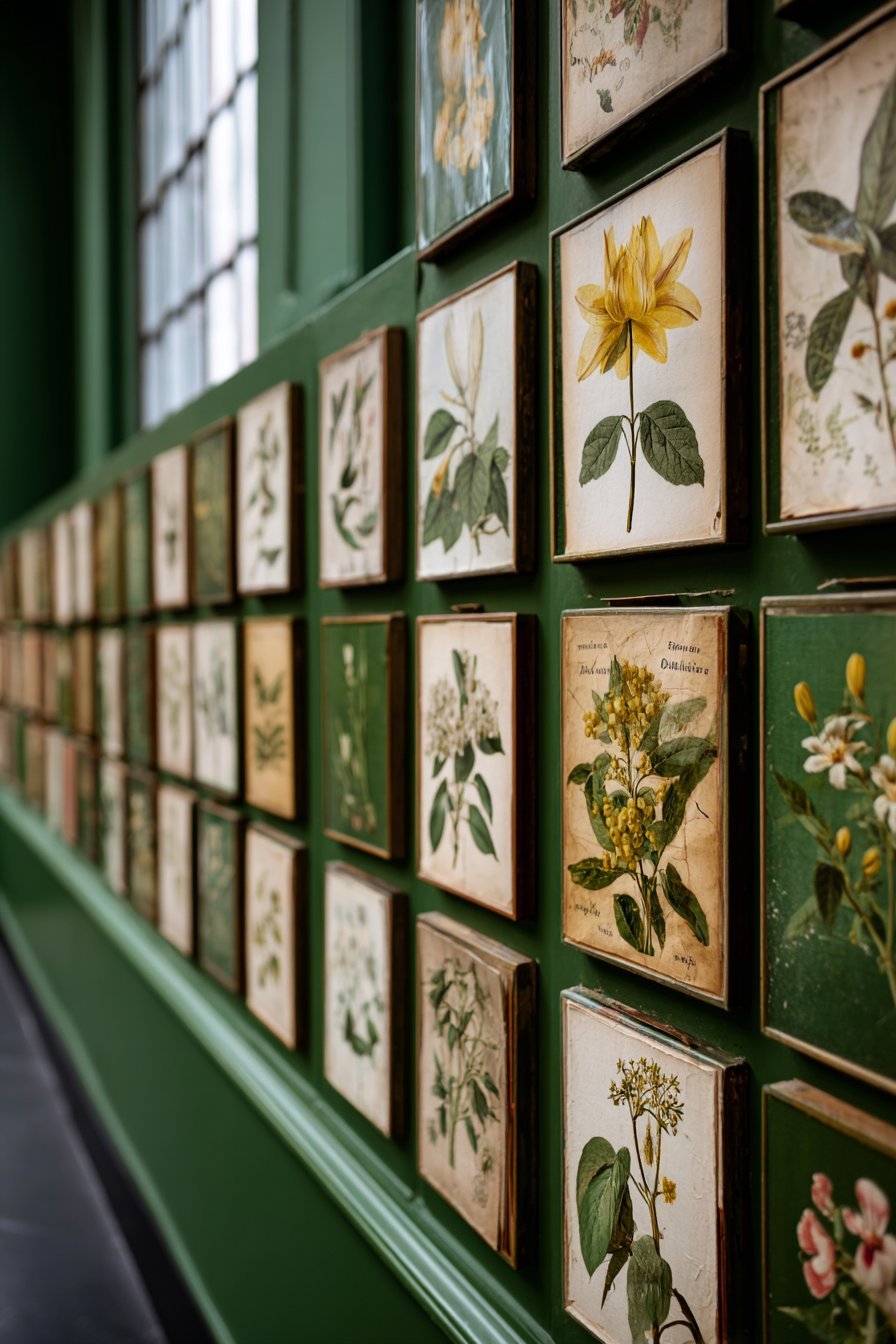
Antique botanical prints in original frames create scholarly collection aesthetics. Foxed paper and faded watercolors authenticate the prints’ age. Each piece displays natural yellowing, occasional spots, and slightly warped paper. The uniform grid hanging style creates order while celebrating individual variations.
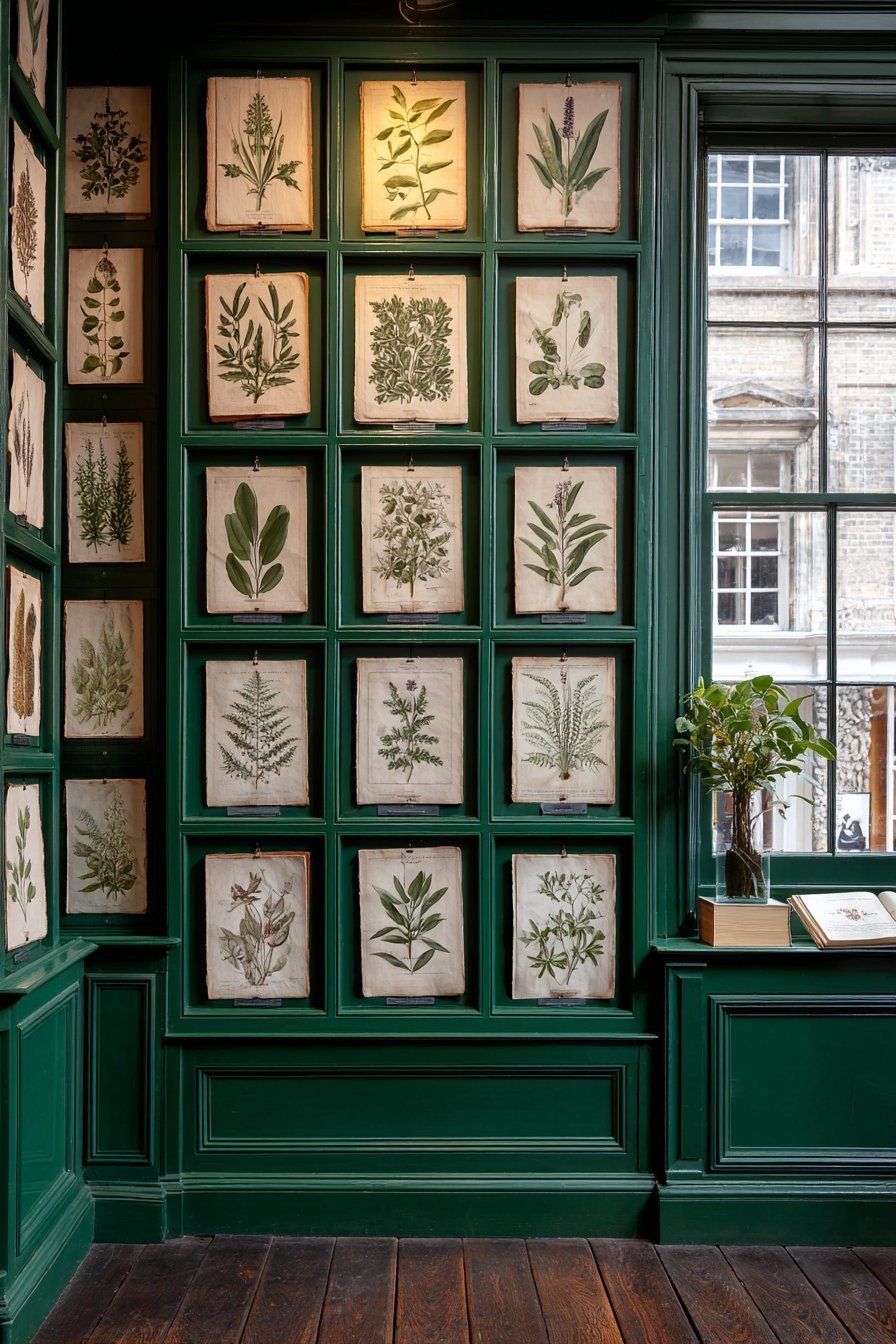
Deep forest green library walls provide dramatic contrast for the aged paper. Natural light from tall windows illuminates without overexposing delicate materials. The consistent frame spacing and alignment create formal elegance. The collection evokes natural history museums and Victorian scientific illustration traditions.
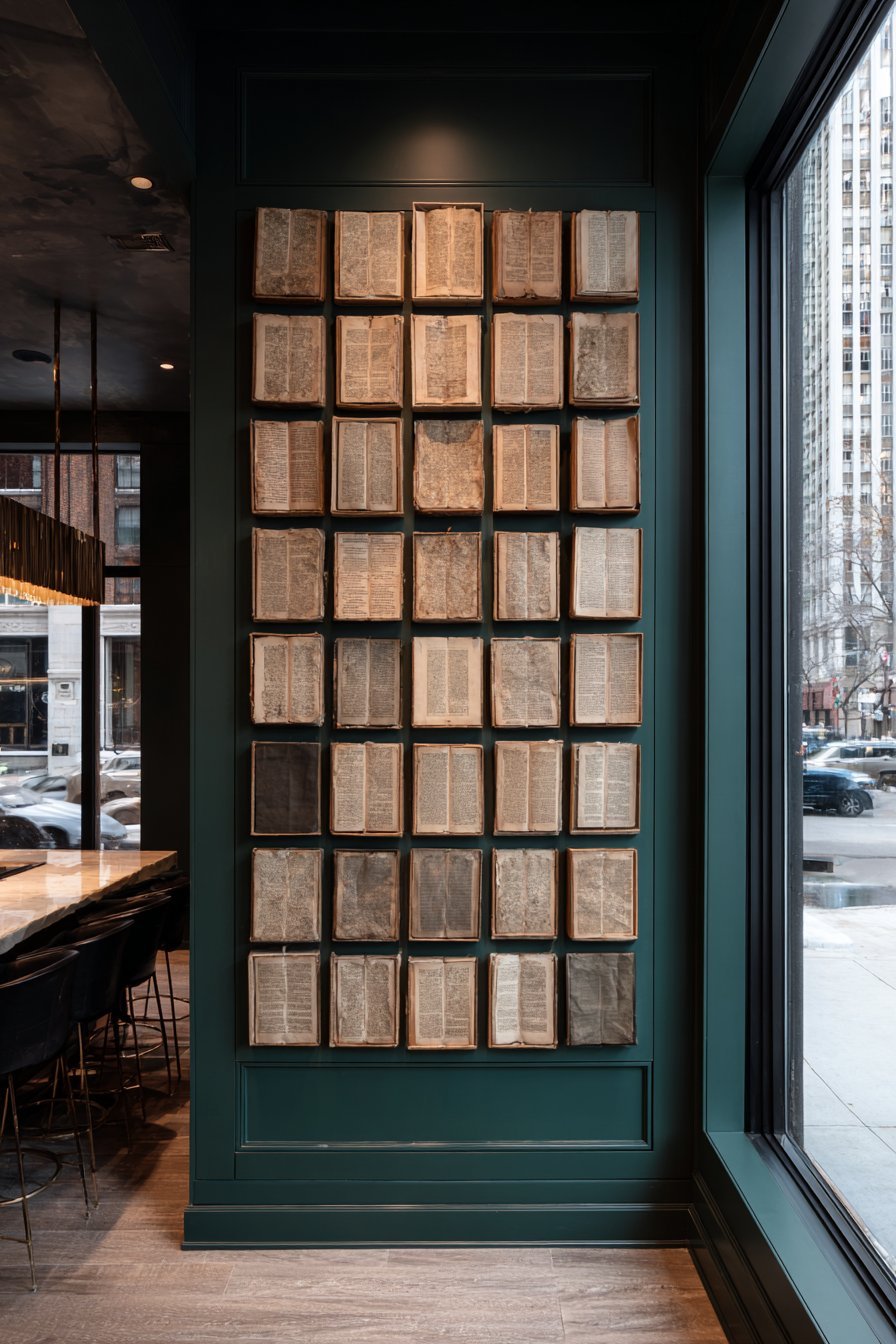
This display method suits libraries, studies, and formal dining rooms particularly well. The botanical subject matter adds organic elements to structured arrangements. The grid format simplifies installation while creating maximum visual impact. The authentic aging requires no enhancement or artificial distressing.
Key Design Tips:
- Source authentic botanical prints from antique print dealers and estate sales
- Leave prints in original frames to preserve authenticity and proper aging
- Arrange in precise grid patterns using level and careful measurements
- Choose deep wall colors like forest green or burgundy for dramatic contrast
- Position away from direct sunlight to prevent further fading and damage
- Resist the urge to replace foxed paper or restore faded colors
15. Large-Scale Antique Map Focal Point
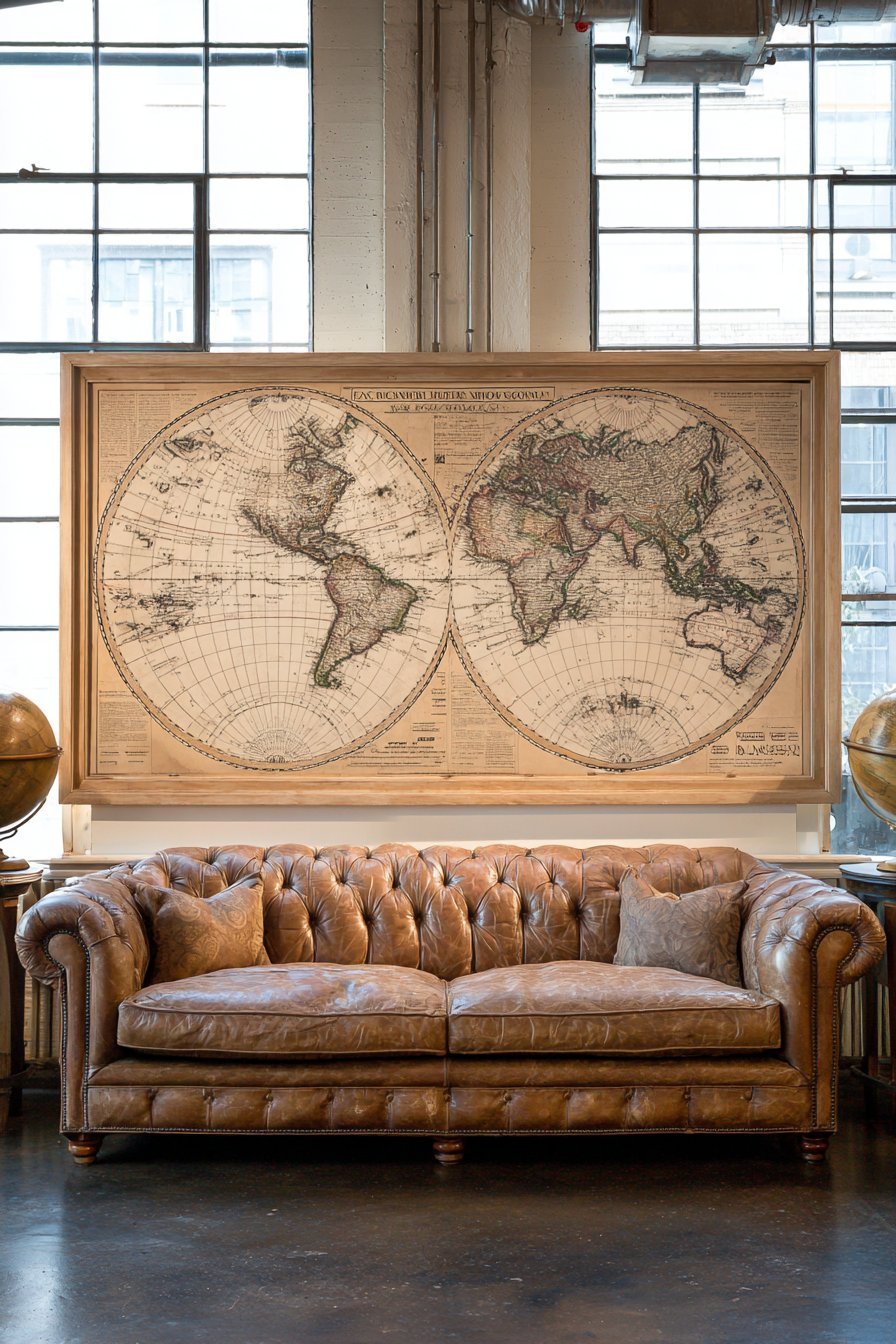
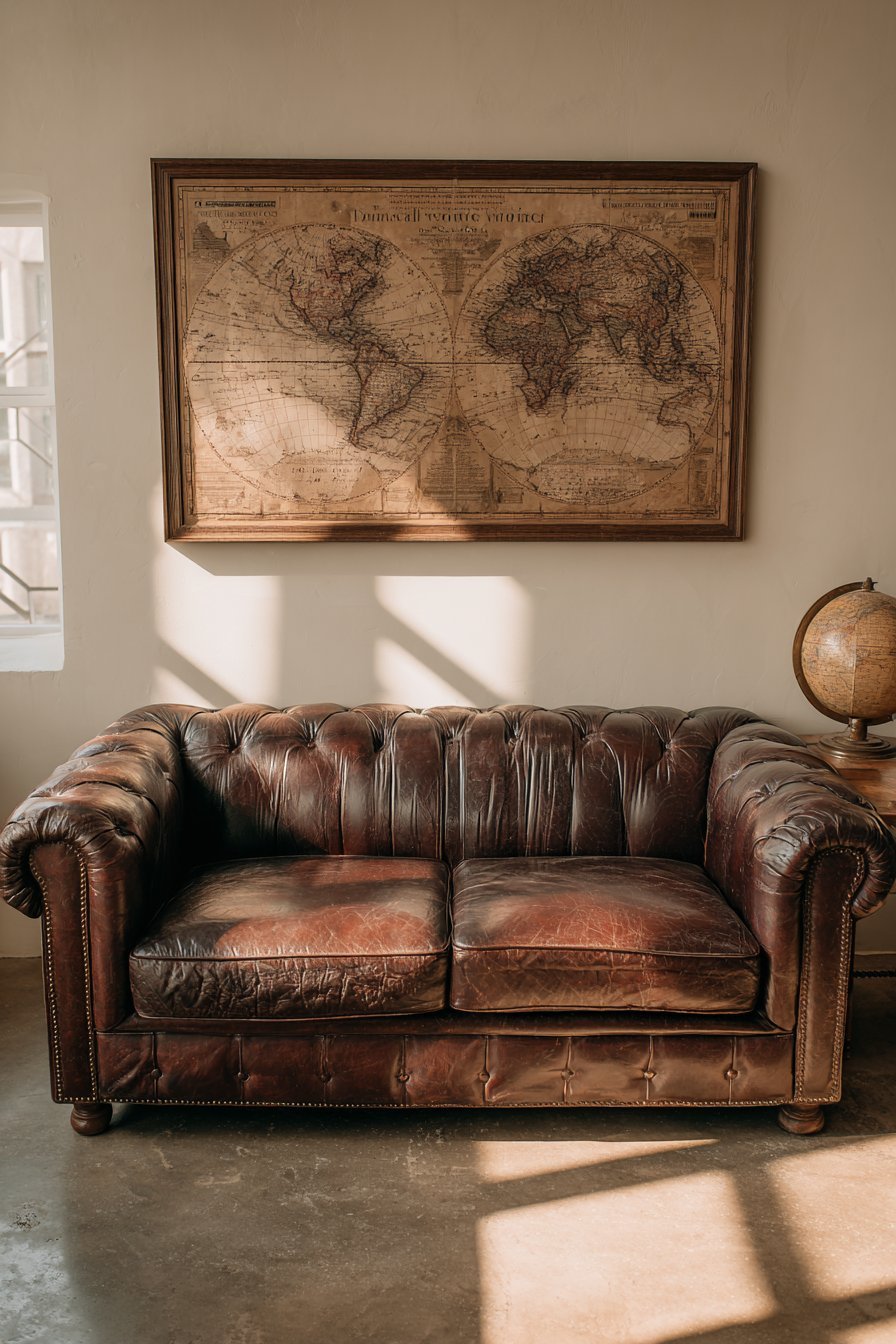
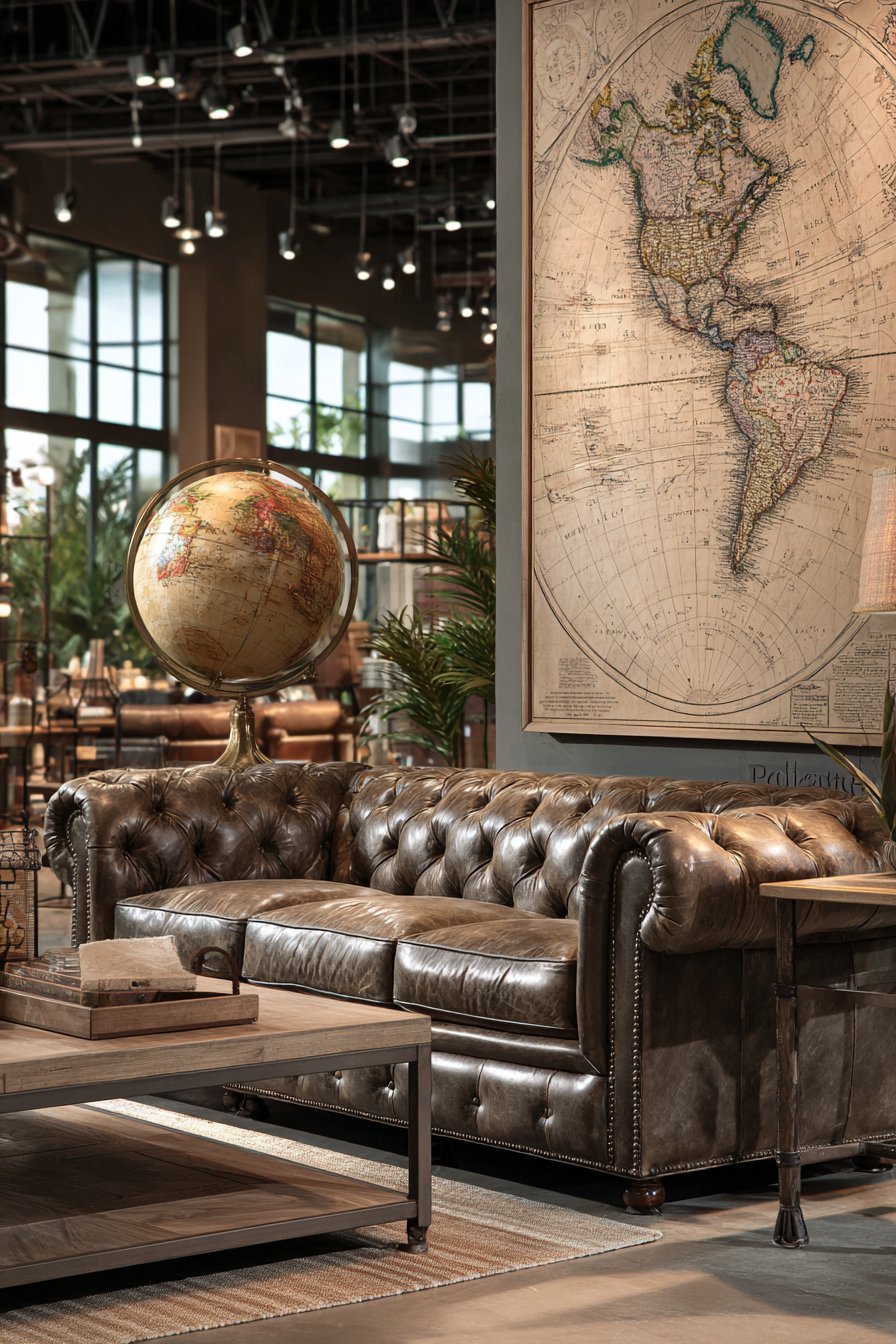
A large-scale antique map under glass creates sophisticated focal point appeal. Hand-colored geographical features with period typography showcase historical cartography. Aged paper displays natural discoloration, creasing, and slightly faded ink colors. The warm sepia tones characteristic of century-old paper add nostalgic warmth.
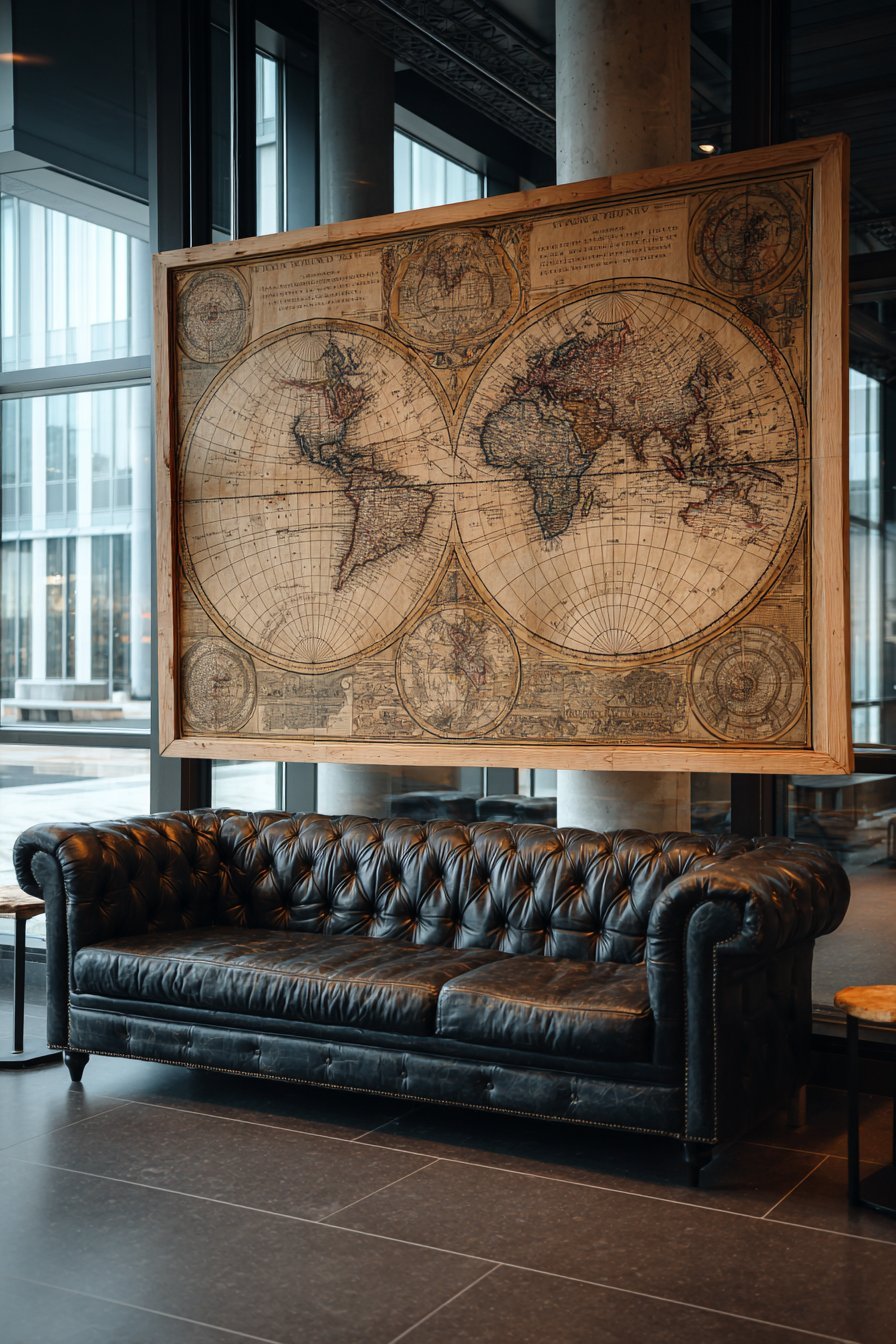
Positioned above a vintage leather Chesterfield sofa, the map anchors a study’s design. A coordinating antique globe on the side table reinforces the cartographic theme. Soft natural lighting from library windows illuminates without causing glass glare. The paper’s texture and aged characteristics become focal points of conversation.
Maps serve both decorative and educational purposes in interior design. The large scale commands attention and provides geographical context. Protective glass preserves delicate paper while allowing clear viewing. This approach particularly suits libraries, home offices, and traditional living spaces.
Key Design Tips:
- Select maps featuring regions meaningful to your family history or travels
- Frame under UV-protective glass to prevent further deterioration and fading
- Mount in simple wooden frames that don’t compete with the map’s details
- Position to avoid direct sunlight that could cause additional paper damage
- Coordinate with globes and other cartographic elements for thematic coherence
- Consider framing with archival materials to preserve valuable historical documents
16. Eclectic Vintage Advertising Sign Collection
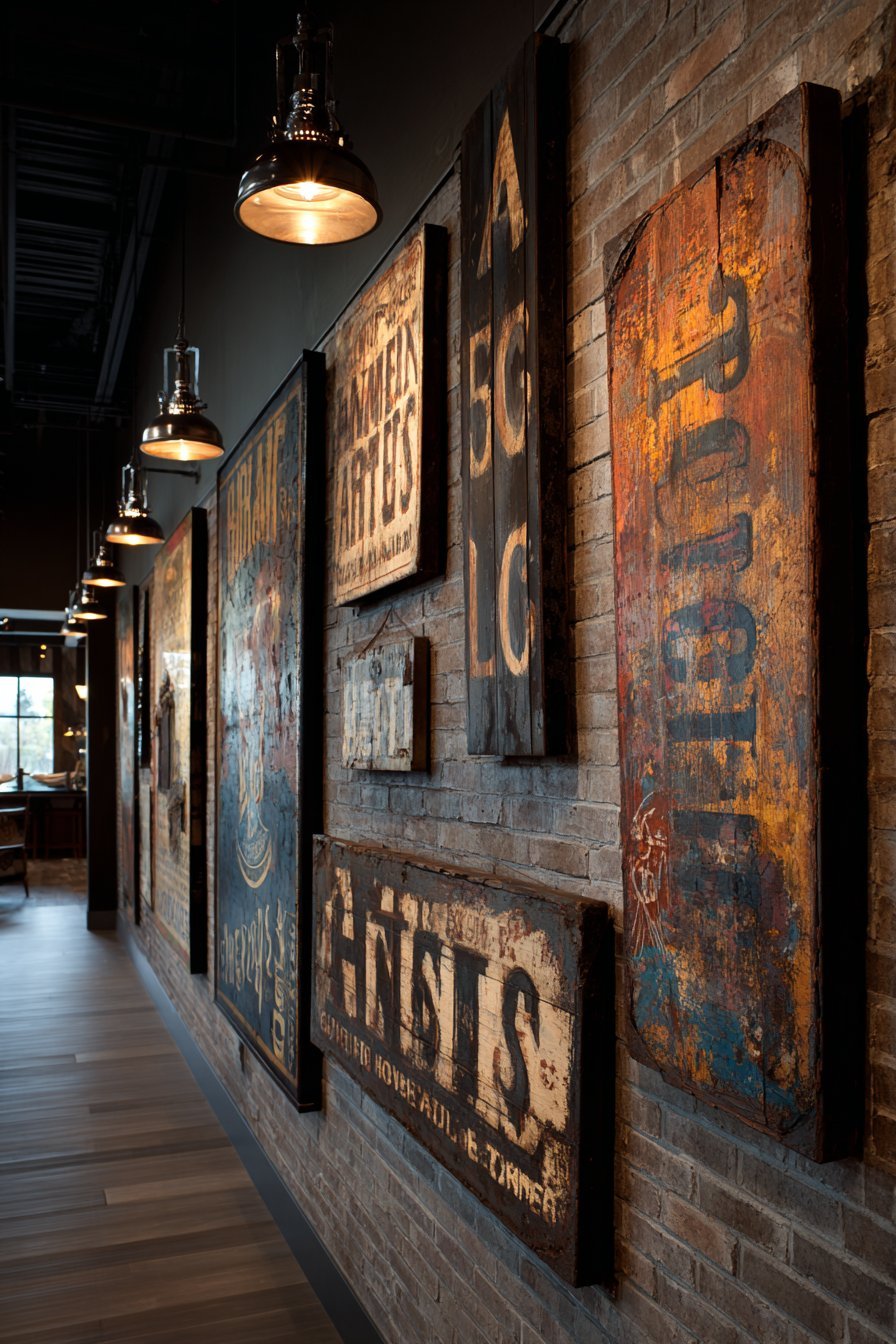
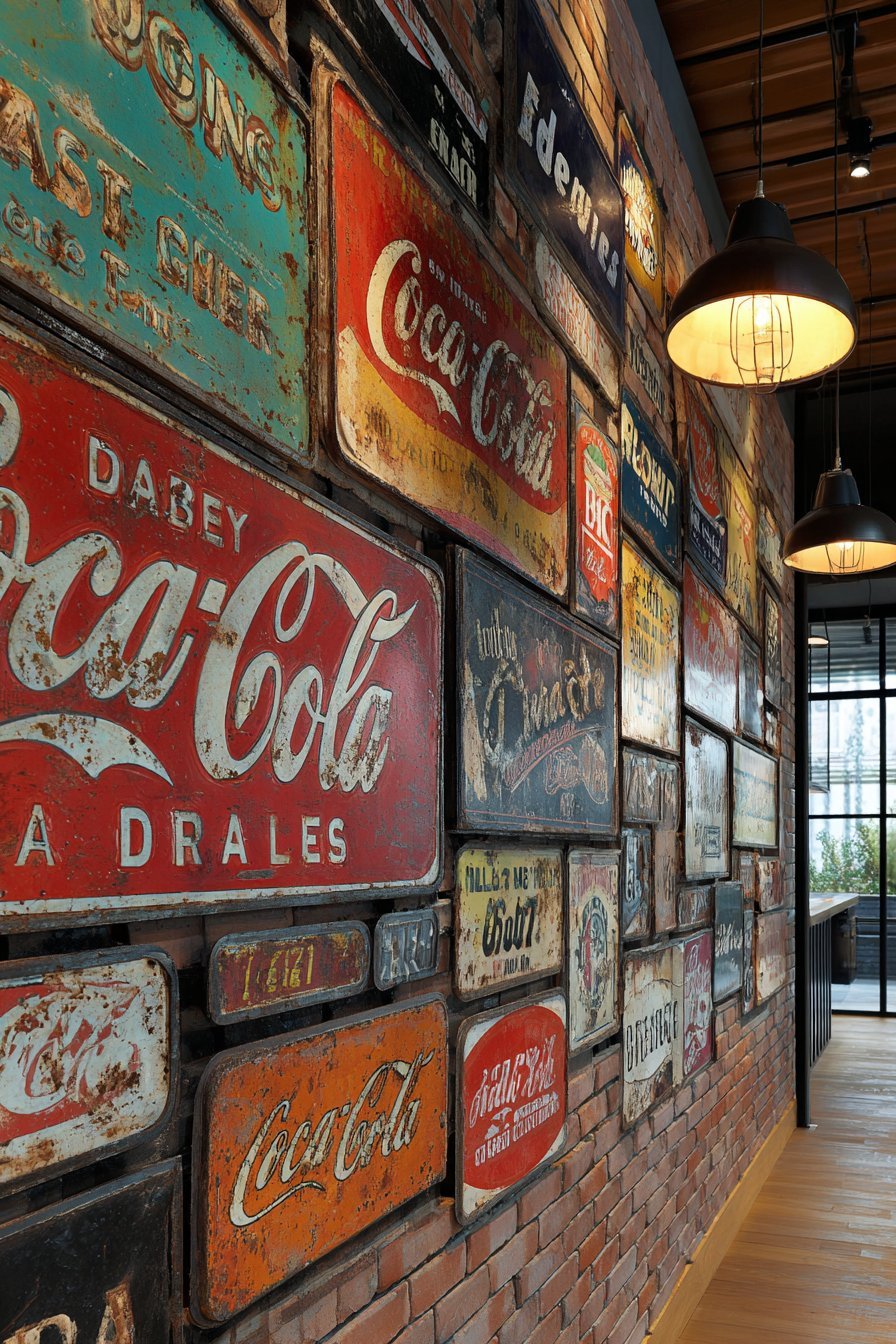
A collection of antique advertising signs in varied materials creates eclectic visual interest. Painted tin, weathered wood, and porcelain enamel each bring distinct textural qualities. The signs show authentic aging with rusted edges and chipped enamel. Faded paint and surface wear evidence decades of outdoor display.
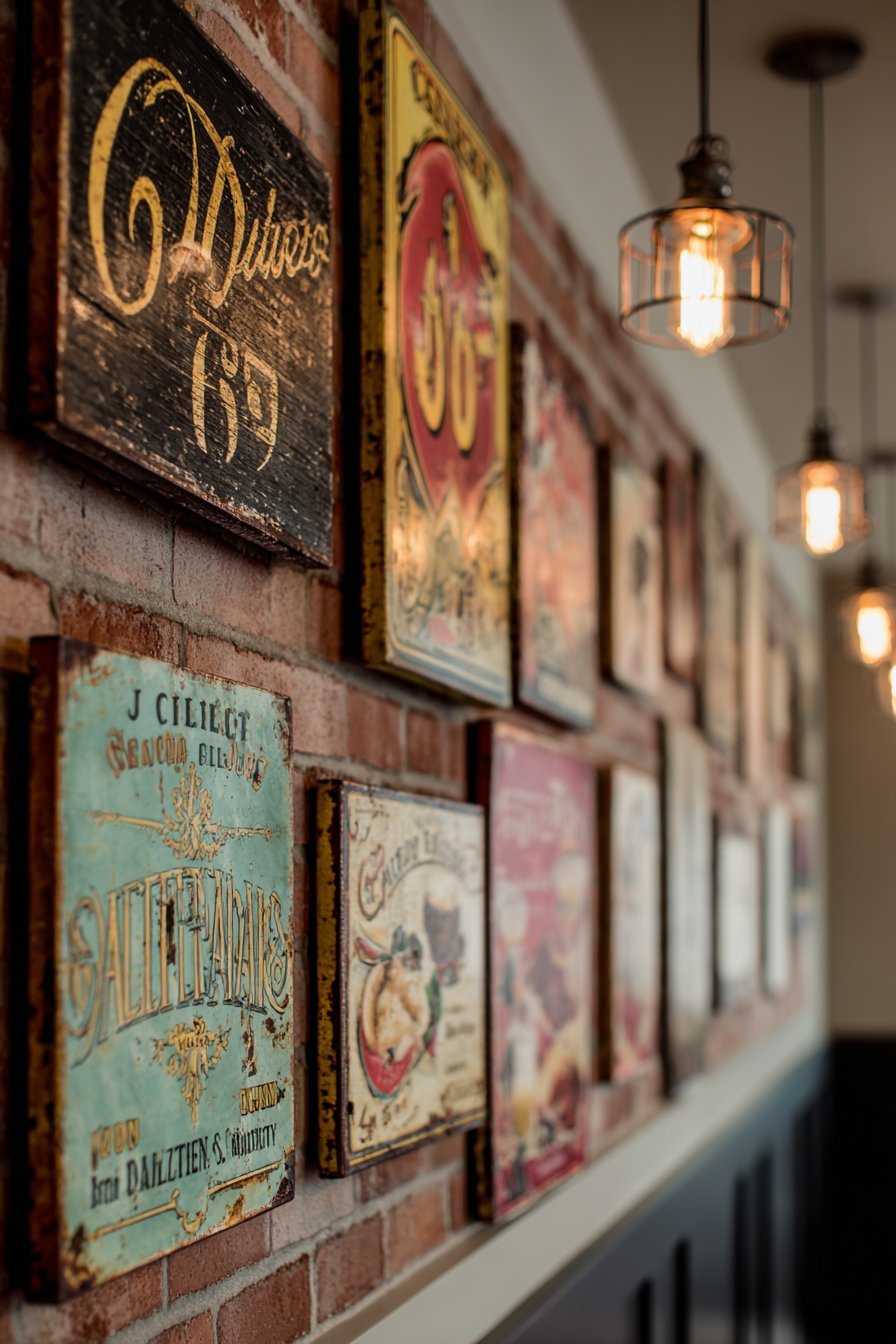
Typography styles range from Victorian ornate scripts to bold early 20th-century sans-serifs. Arranged asymmetrically on a brick wall, the signs feel casually collected. Natural kitchen lighting combines with vintage industrial pendants for varied illumination. The metal and wood surfaces reflect light differently, creating dynamic visual texture.
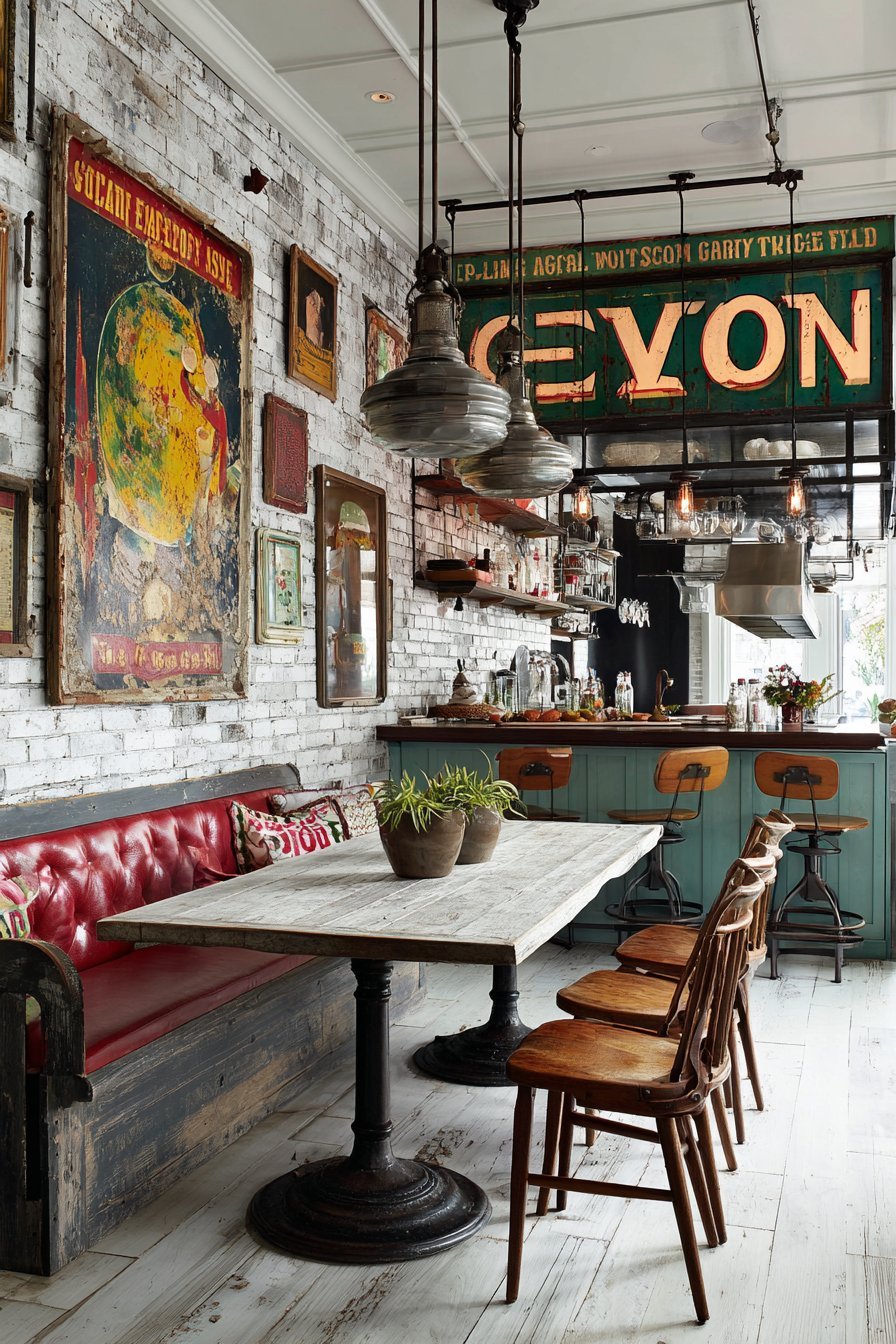
This approach celebrates advertising art history while adding personality to kitchens and dining spaces. Each sign represents a specific product, era, and design sensibility. The collection can grow organically as interesting pieces are discovered. The weathered finishes require no maintenance while providing authentic vintage appeal.
Key Design Tips:
- Collect signs from antique malls, flea markets, and online vintage dealers
- Mix materials including tin, wood, and porcelain enamel for textural variety
- Arrange asymmetrically rather than in rigid grids for organic collected feel
- Leave rust, chips, and fading intact as authentic aging indicators
- Include varied typography styles representing different advertising eras
- Mount securely using appropriate hardware for each sign’s weight and material
17. Reclaimed Door Wainscoting Installation
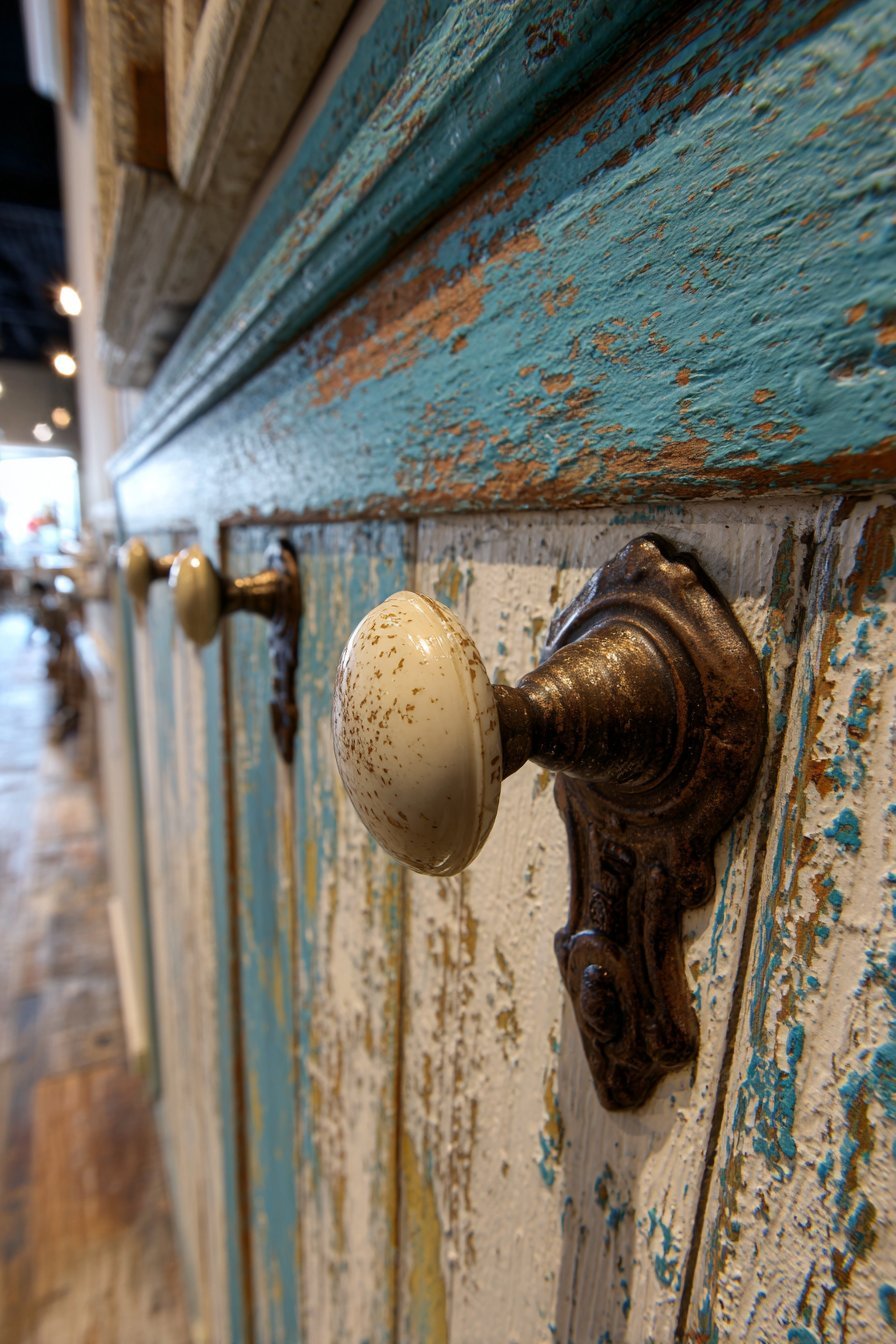
Reclaimed wooden doors with original hardware create unique wainscoting installations. Paint layers from cream to sage green show intentional distressing. Previous color layers reveal decades of repainting history. Original porcelain door knobs and brass hinges remain attached as dimensional details.
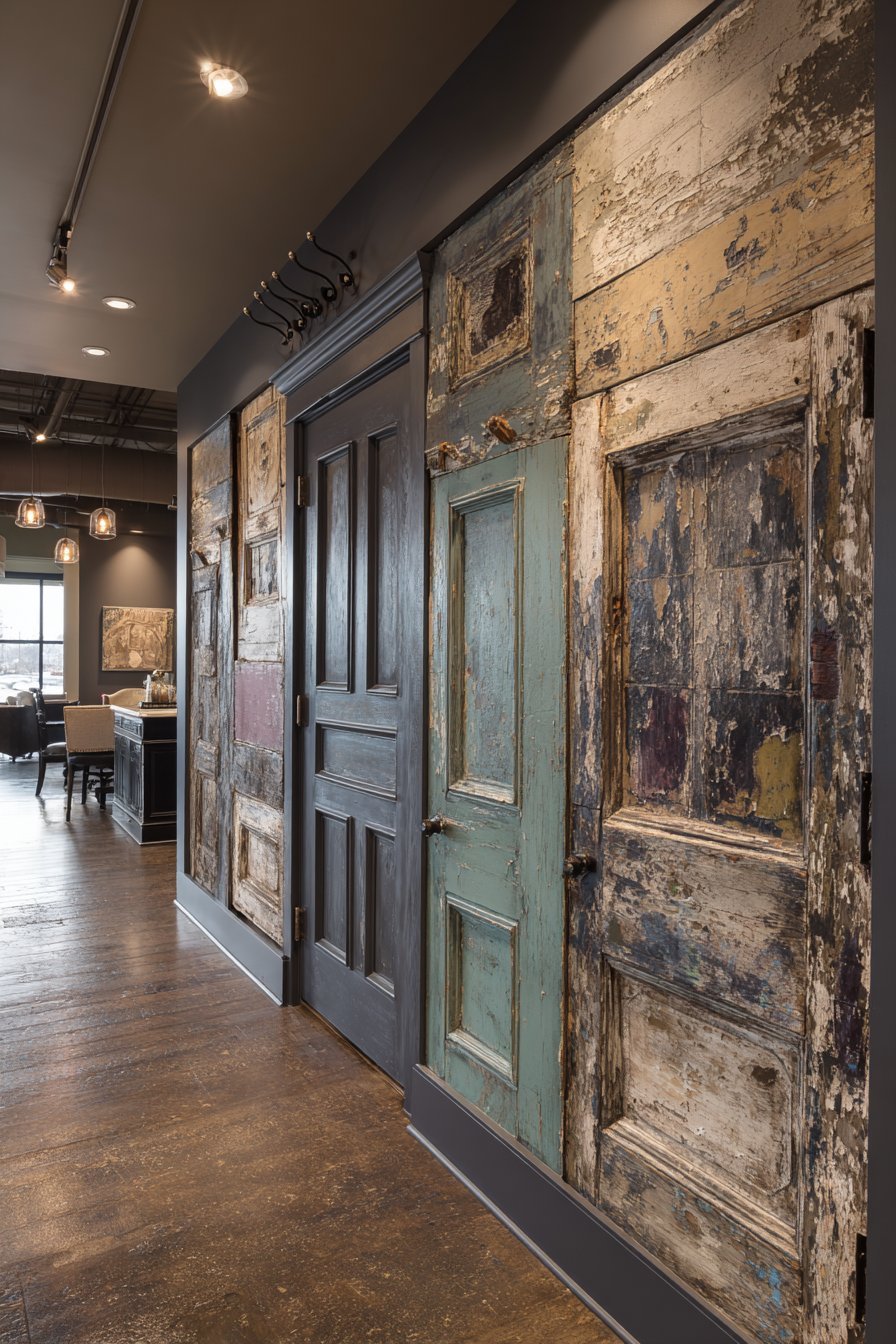
Mounted vertically in entryways, the doors create striking first impressions. A vintage coat rack extends from one door panel, adding practical functionality. Natural entryway lighting emphasizes varied textures of aged paint and worn wood grain. Glass panel inserts add reflective interest and historical authenticity.
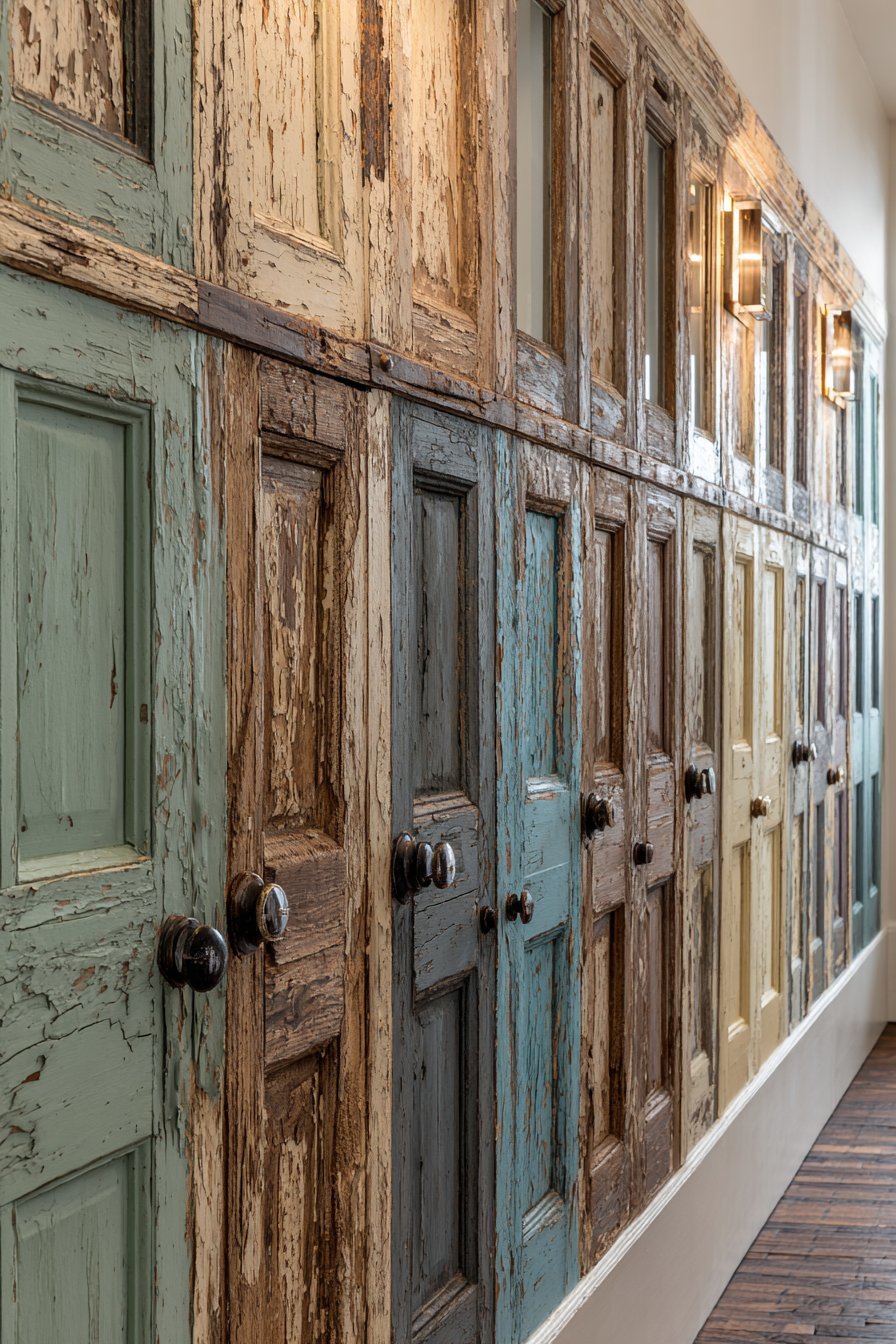
This creative architectural salvage application demonstrates sustainable design innovation. The doors’ history as functional elements adds meaning to their decorative purpose. The varied paint colors create visual interest without additional decoration. This installation balances form and function masterfully.
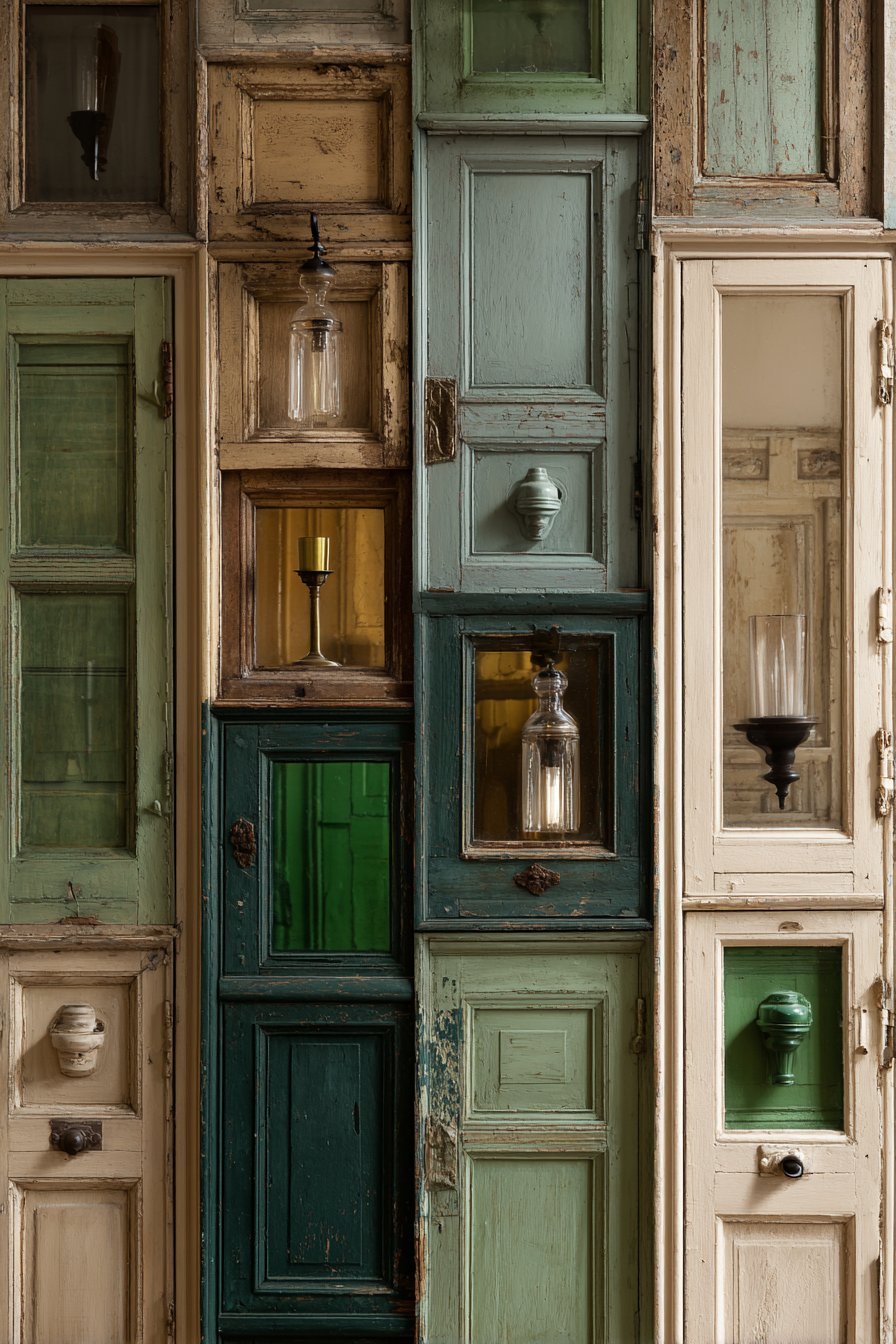
Key Design Tips:
- Source vintage doors from architectural salvage yards and renovation projects
- Mount vertically on wall framing with secure blocking behind each door
- Preserve original hardware, paint layers, and glass panels for authenticity
- Install doors at appropriate wainscoting height, typically 36-48 inches
- Add functional elements like coat racks for practical entryway use
- Seal the wood to prevent further deterioration while maintaining aged appearance
18. Antique Quilt Textile Art Display
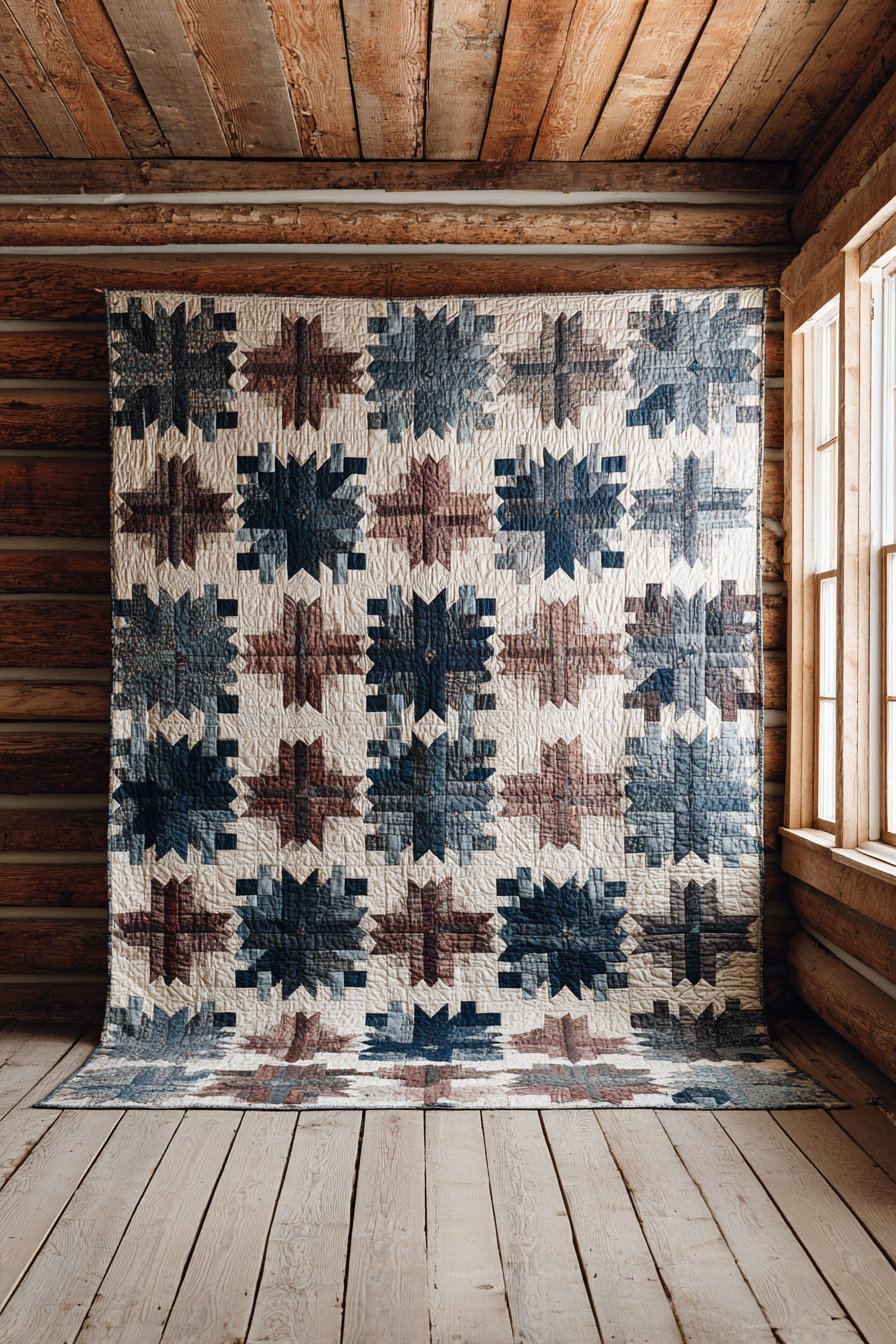
An antique quilt mounted as textile art brings handcraft tradition to bedroom walls. Classic log cabin patterns in faded calicos showcase historical fabric prints. Visible hand-stitching and slight fabric wear authenticate age and handmade origins. The muted color palette of dusty pinks, faded blues, and cream creates softness.
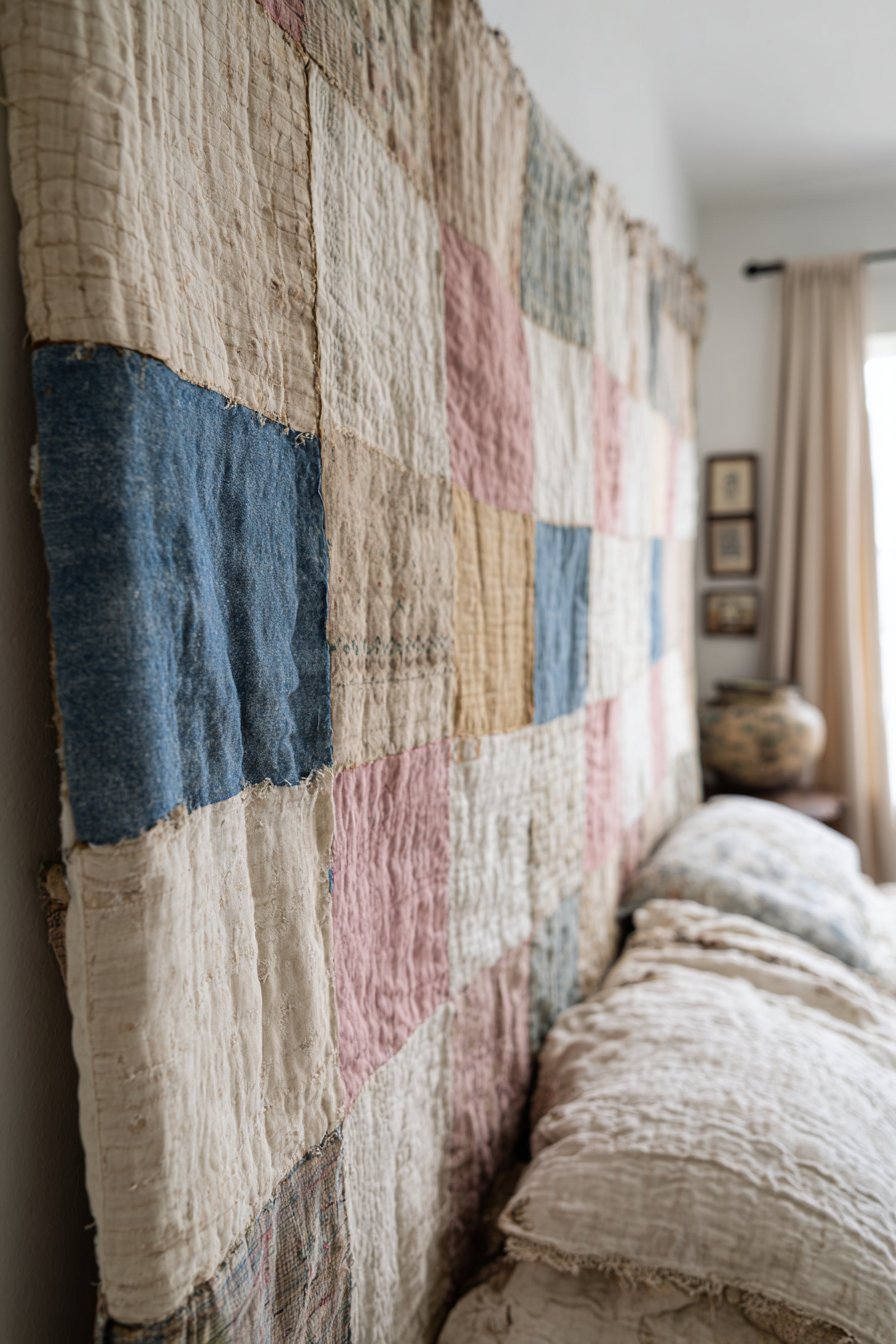
Traditional hanging sleeve method properly supports the textile’s weight and preserves its structure. Natural morning light illuminates without causing damage to delicate fabrics. The dimensional quilting stitches and fabric texture variations become apparent in changing light. The quilt’s imperfections tell stories of its maker and previous use.
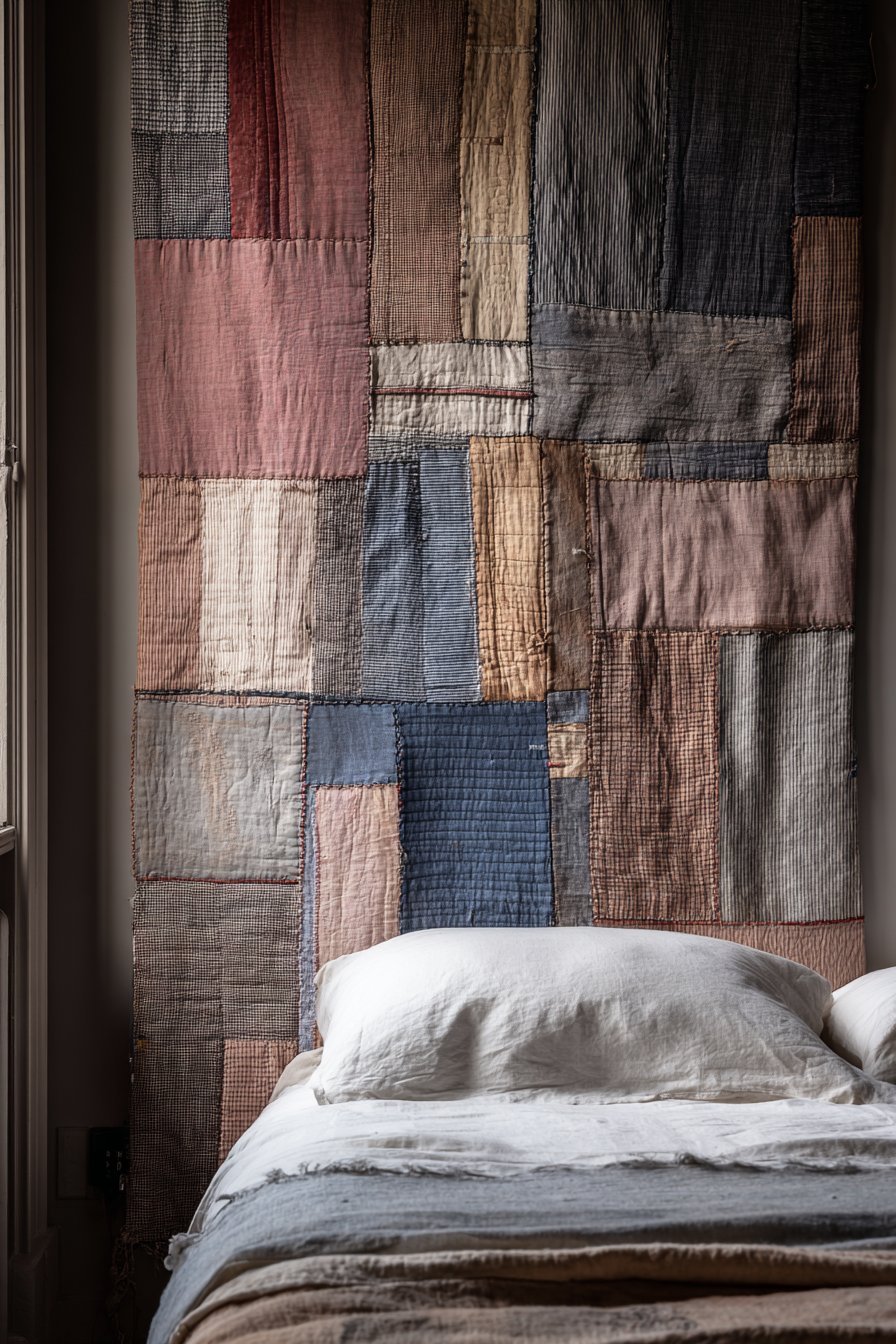
This approach preserves family heirlooms while displaying them prominently. Wall mounting protects textiles from bed use and laundering wear. The handcraft tradition represented adds warmth and personal history. The installation celebrates domestic arts and female craftsmanship traditions.
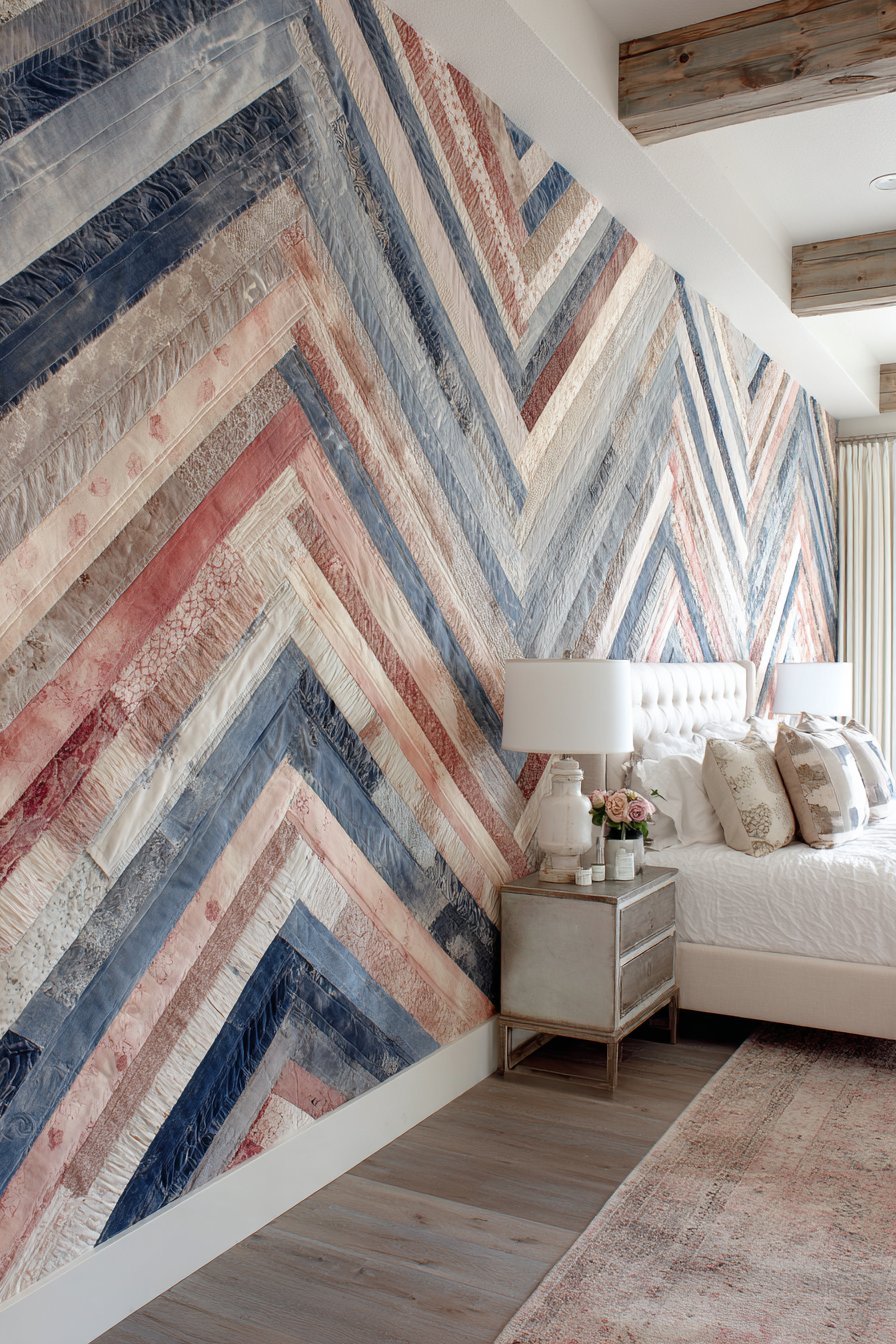
Key Design Tips:
- Use traditional hanging sleeve sewn to the quilt’s back edge
- Mount on a wooden dowel or rod attached securely to wall studs
- Position away from direct sunlight to prevent fabric fading and deterioration
- Choose quilts with structural integrity despite visible wear and fading
- Rotate displayed quilts seasonally to prevent uneven light exposure
- Consider the quilt’s colors when planning room paint and bedding coordination
19. Architectural Corbel and Bracket Collection
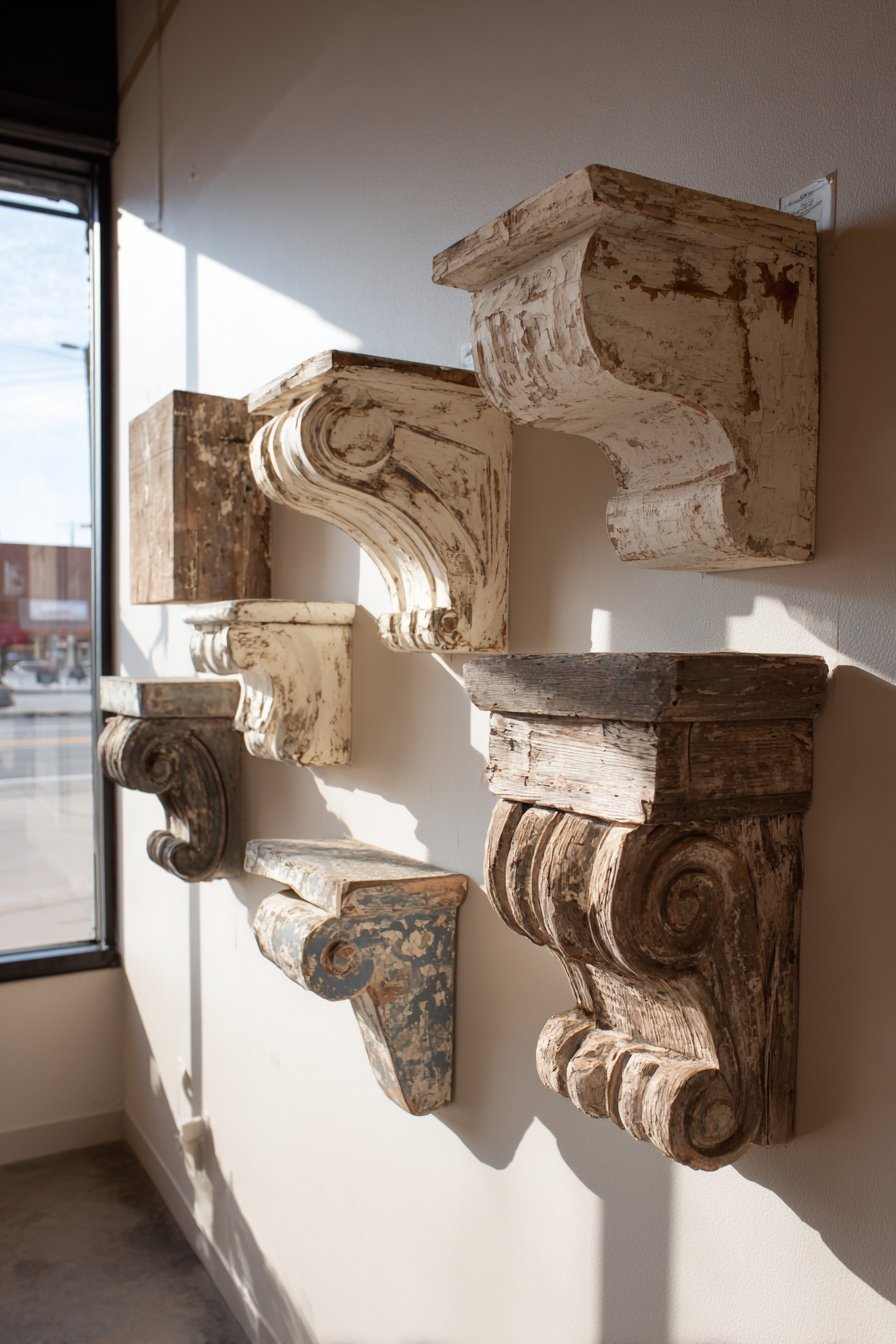
A collection of antique wooden corbels and brackets becomes sculptural wall art. Varying sizes and carved details represent different architectural periods. Original paint remnants in cream, grey, and soft blue layer beautifully. Natural wood shows through worn areas, revealing the material’s quality and age.
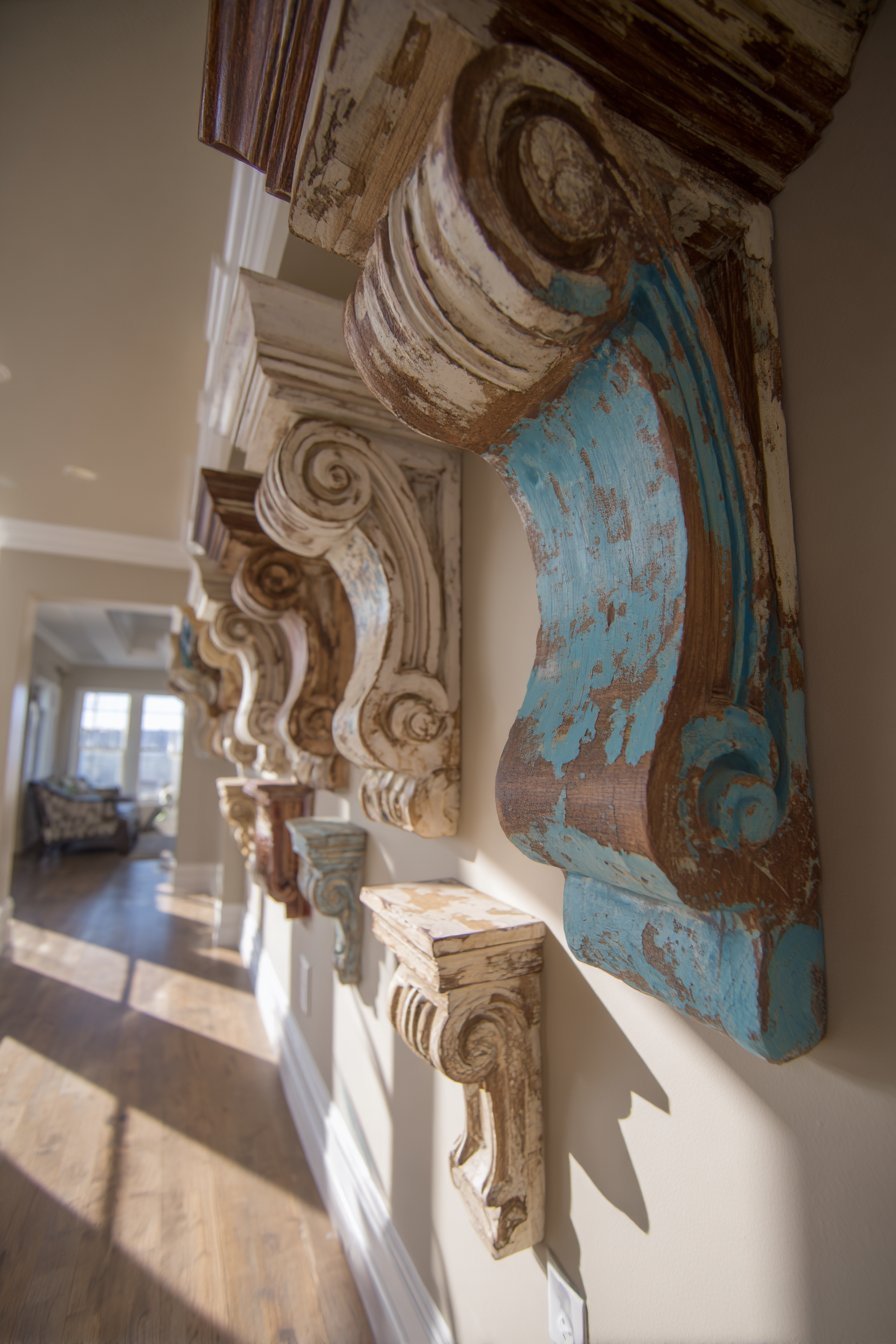
Carved patterns range from simple curves to ornate scrollwork. Arranged in a staggered pattern on neutral linen walls, the pieces create dimensional interest. Directional natural light from adjacent windows emphasizes three-dimensional carved details. The aged wood’s surface texture becomes more pronounced in angled lighting.
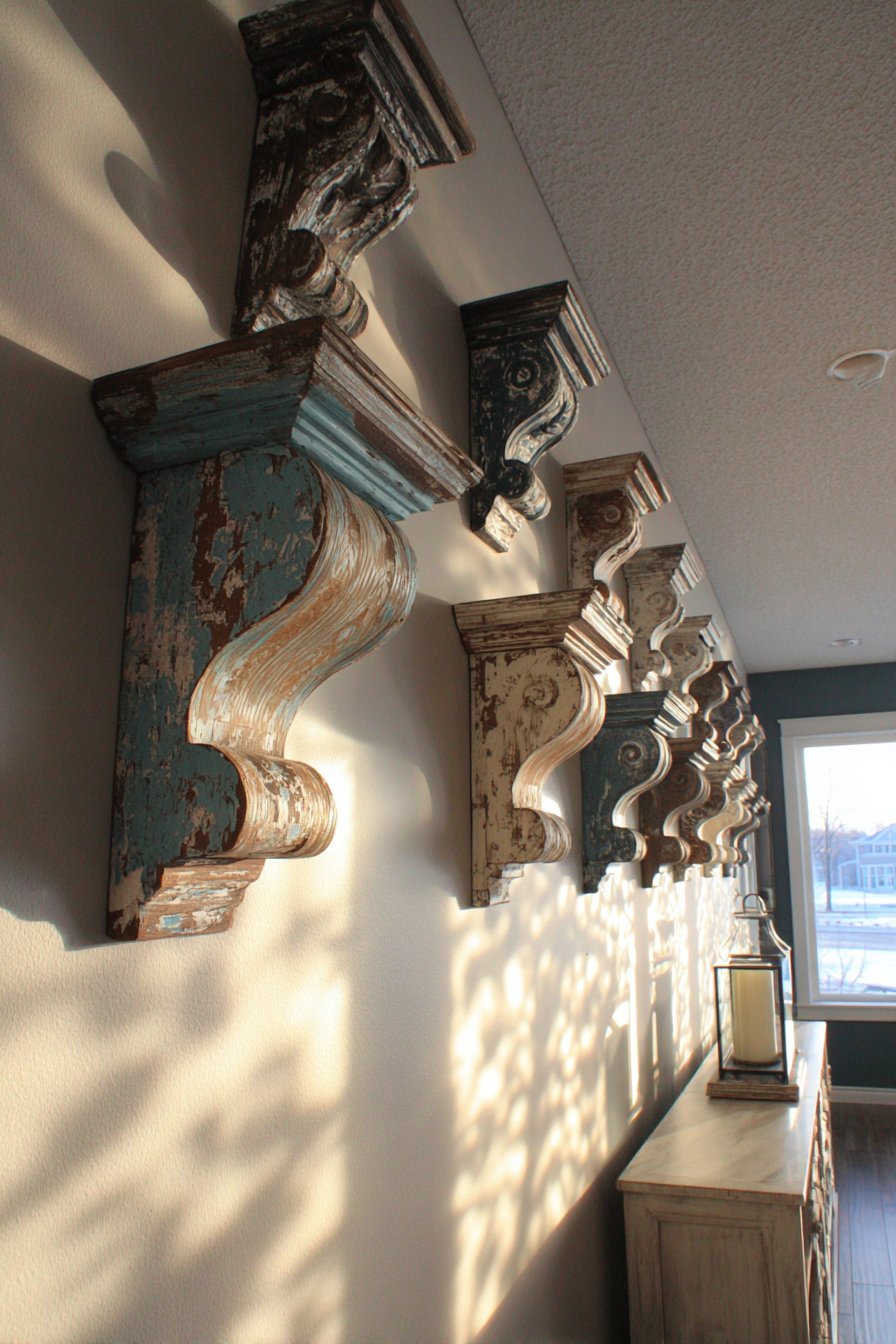
This display celebrates architectural craftsmanship and building traditions. The corbels become art while retaining their structural elegance. The collection can expand gradually as interesting pieces are discovered. The neutral backdrop allows the carved details to remain focal points.
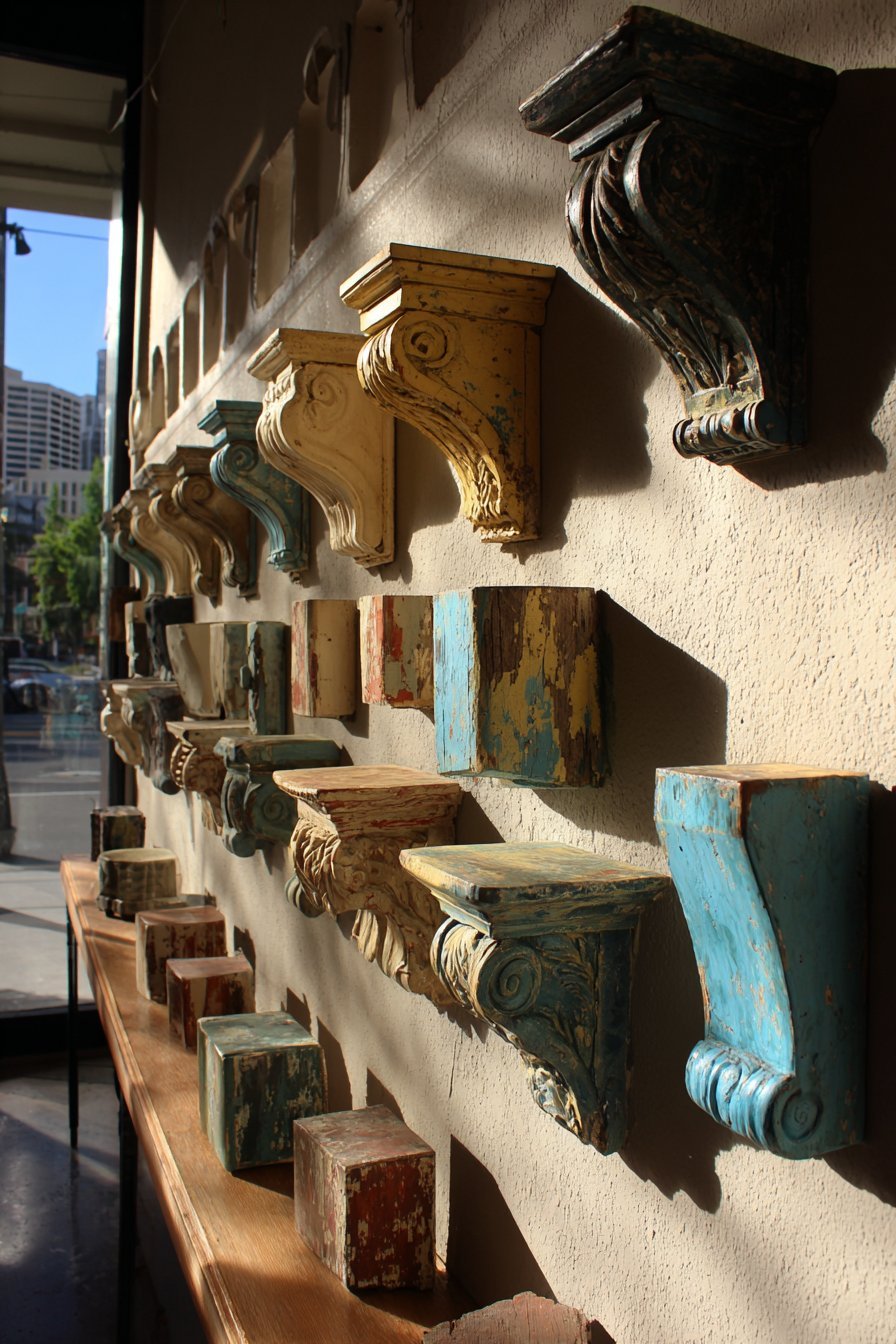
Key Design Tips:
- Source corbels from architectural salvage yards specializing in vintage buildings
- Choose pieces with varied carving styles and sizes for visual interest
- Preserve original paint layers rather than stripping or refinishing
- Arrange on neutral walls that complement rather than compete with carved details
- Mount securely using appropriate hardware for each corbel’s weight and size
- Use directional lighting to create dramatic shadows emphasizing dimensional carving
20. Shadow Box Curiosity Display Gallery
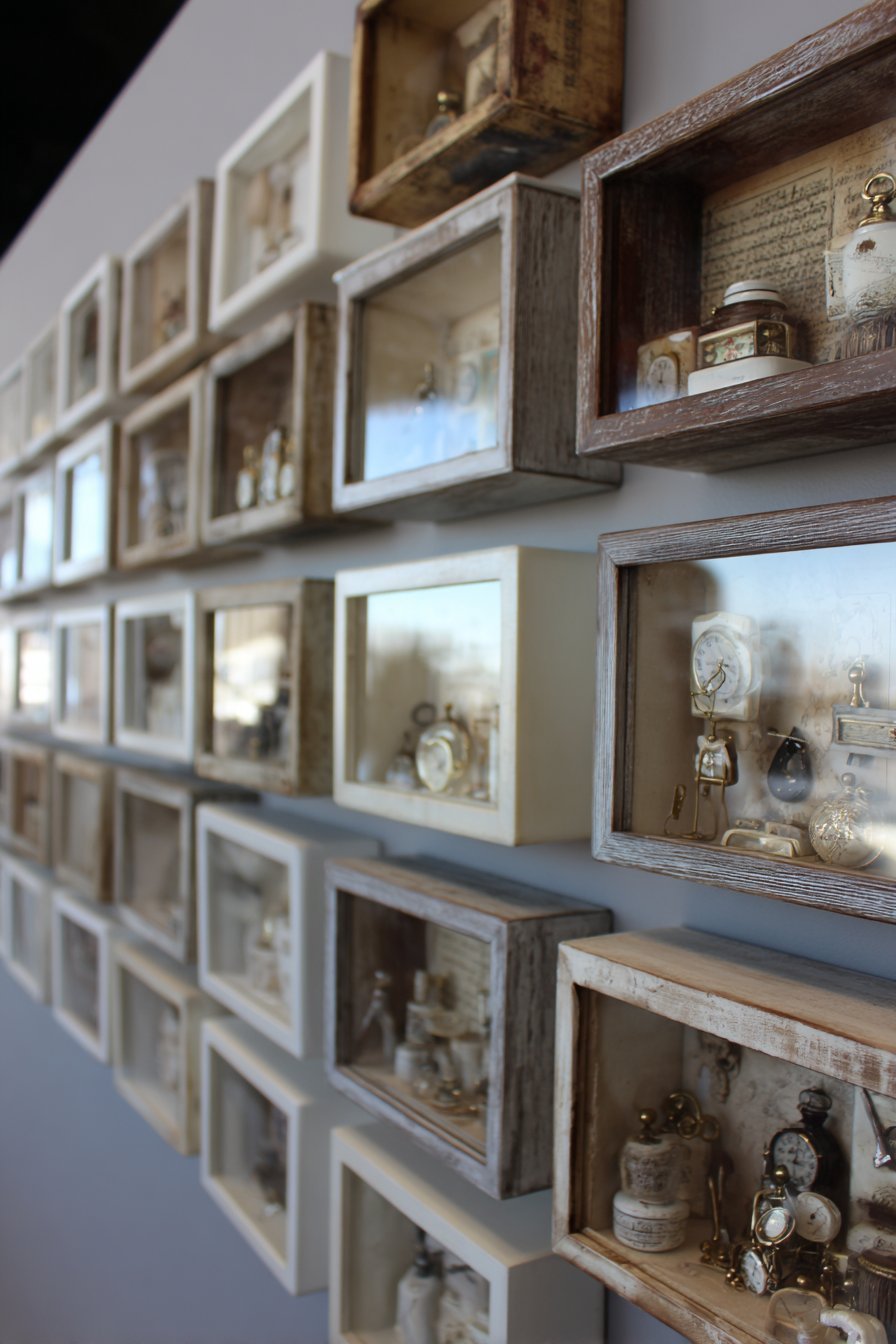
Shadow box displays featuring antique curiosities create museum-quality wall installations. Pocket watches, vintage keys, old spectacles, and small porcelain figurines arrange thematically. Wooden boxes with glass fronts protect while showcasing authentic patina. Linen-covered backings in aged ivory provide neutral backgrounds for varied objects.
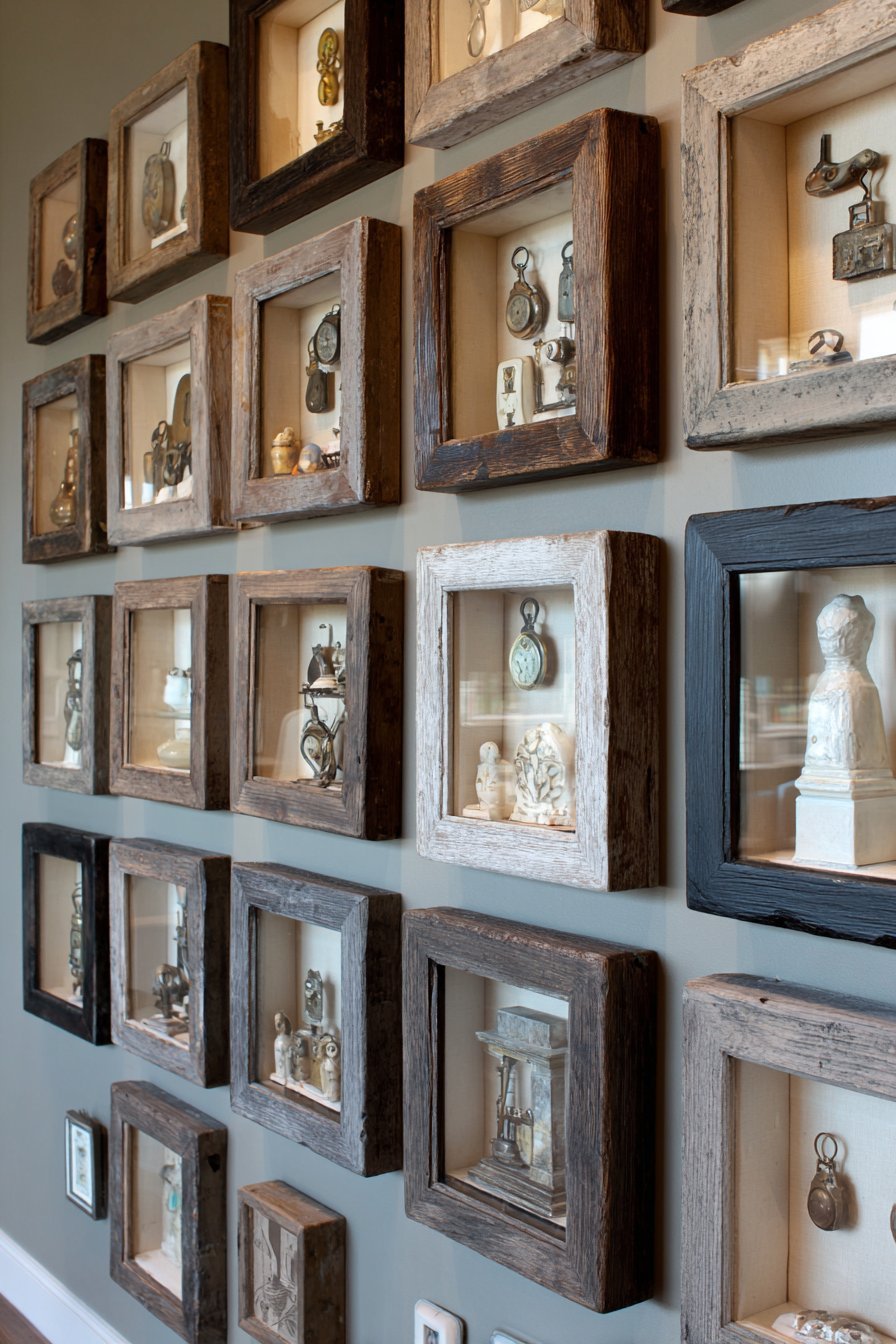
Each shadow box contains themed collections showing careful curation. Authentic patina on metal objects and crazing on ceramic pieces authenticate age. Organized grid patterns on putty grey walls create formal elegance. Museum-quality picture lights illuminate each box without glare while natural light provides ambient illumination.
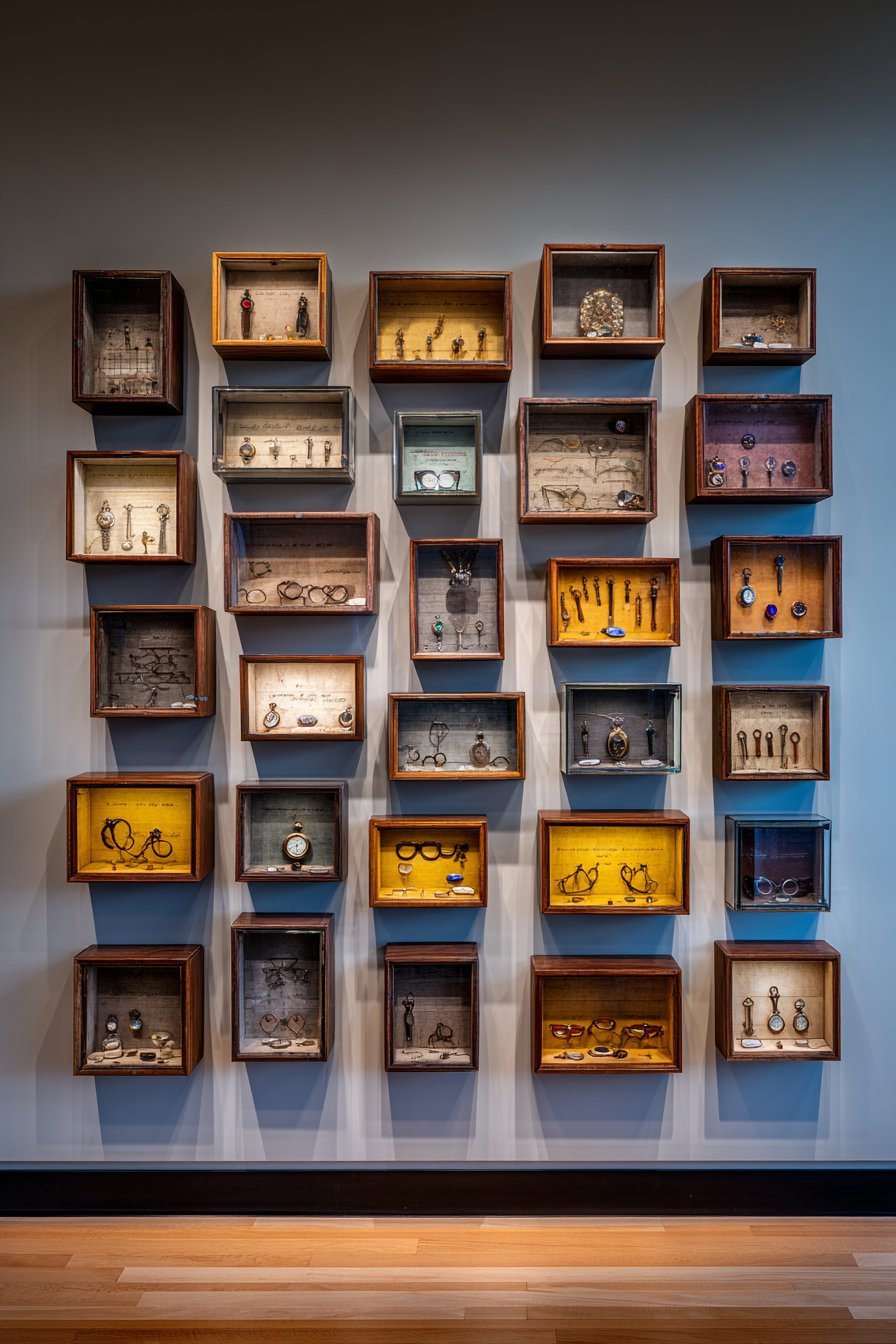
This collector’s display method protects valuable small objects while creating visual impact. The themed boxes allow focused collection building over time. The formal presentation elevates everyday objects to art status. The installation demonstrates curatorial skills and appreciation for material culture history.
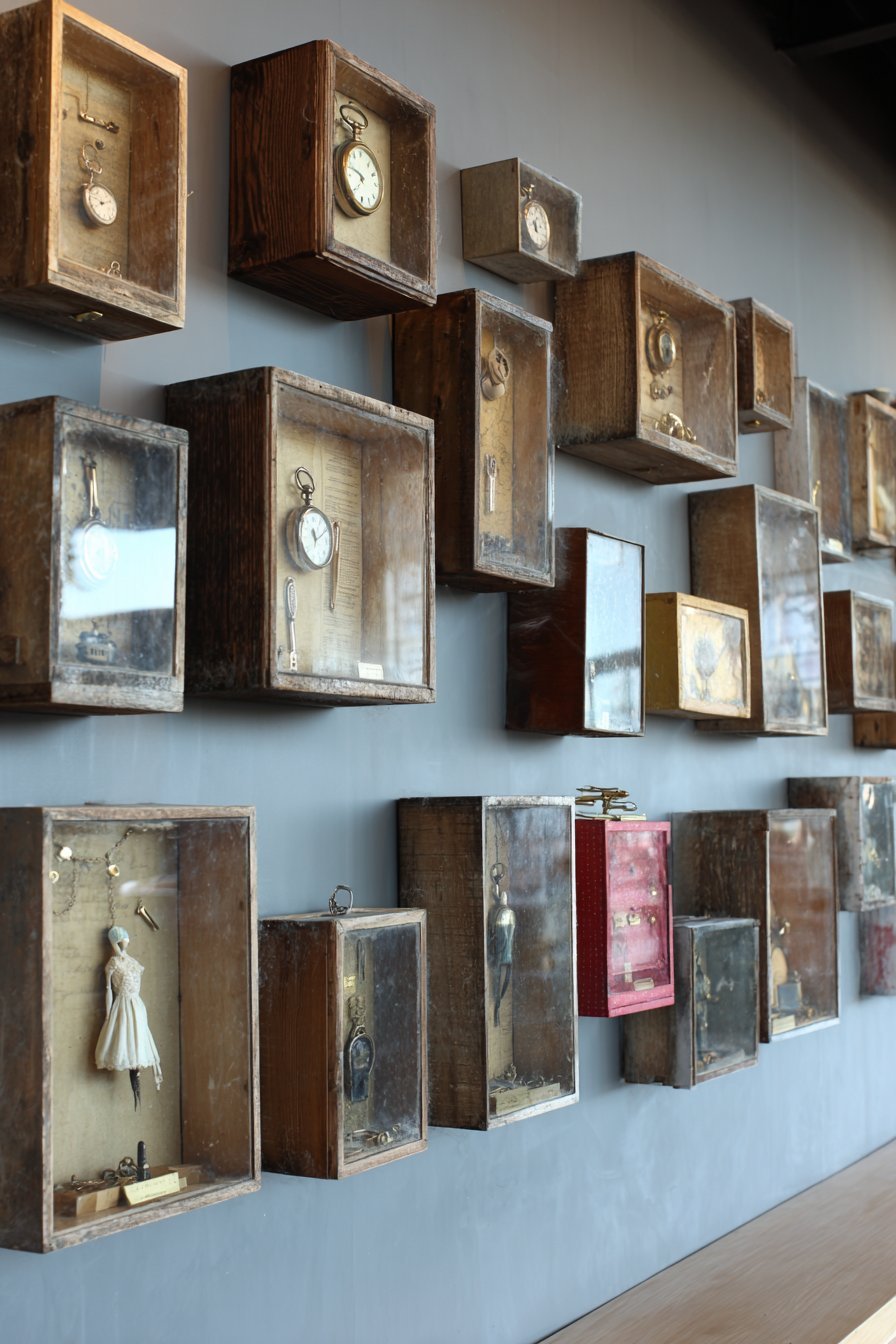
Key Design Tips:
- Create themed shadow boxes organized by object type, era, or material
- Use linen or fabric backing in neutral tones to showcase objects
- Arrange boxes in precise grid patterns for formal presentation aesthetic
- Install adjustable picture lights above each box for focused illumination
- Choose objects with visible patina, crazing, or wear for authentic vintage appeal
- Secure boxes firmly to walls and ensure glass fronts are clean and clear
Why These Vintage Wall Designs Are the Best
These vintage wall design approaches represent the finest methods for adding authentic character to contemporary interiors. Each concept demonstrates thoughtful integration of historical materials with modern living requirements. The designs showcase remarkable versatility, adapting to different architectural styles and personal aesthetics.
The incorporation of genuine antique elements and salvaged materials promotes sustainability while achieving unparalleled visual impact. These authentic pieces bring history and craftsmanship that reproduction items cannot replicate. The aged patinas, worn surfaces, and accumulated imperfections tell stories that resonate emotionally with viewers.
Color theory principles evident throughout these designs create harmonious environments. Muted vintage tones complement contemporary color palettes while maintaining historical authenticity. The layered approach of combining multiple materials and textures adds depth impossible to achieve with single-material applications. Natural and artificial lighting work together to emphasize dimensional qualities and surface variations.
Spatial considerations make these designs successful across room sizes and configurations. Gallery walls adapt to small or large surfaces through flexible arrangements. Architectural salvage pieces create focal points without overwhelming compact spaces. The designs balance aesthetic appeal with practical durability, ensuring walls remain beautiful through daily use.
Material choices reflect both design excellence and practical longevity. Reclaimed wood, antique textiles, and salvaged metals develop additional character over time rather than showing wear negatively. The quality construction of historical pieces ensures structural integrity that supports long-term installation. These timeless approaches avoid trendy elements that quickly appear dated.
Conclusion
These vintage wall design concepts demonstrate how authentic materials and historical elements transform ordinary spaces into character-rich environments. The key takeaways include sourcing genuine antique pieces, preserving original patinas and wear, and thoughtfully integrating salvaged materials with contemporary needs. Each approach balances aesthetic beauty with practical functionality.
Successful vintage wall design requires patience in sourcing authentic materials and careful attention to installation details. Start by identifying which historical periods and material types resonate with your personal aesthetic. Collect pieces gradually to ensure quality and authenticity. Your walls can become curated galleries that reflect your appreciation for craftsmanship, history, and timeless design principles.
