
Vertical wall decor transforms ordinary rooms into extraordinary spaces through strategic design choices. The upward emphasis creates visual interest while maximizing perceived height. This approach works beautifully across all interior styles and room types.
Modern homes increasingly embrace vertical design elements for both aesthetic and practical reasons. These installations draw the eye upward, making ceilings appear higher and rooms feel more spacious. The vertical orientation offers endless possibilities for personal expression and functional storage solutions.
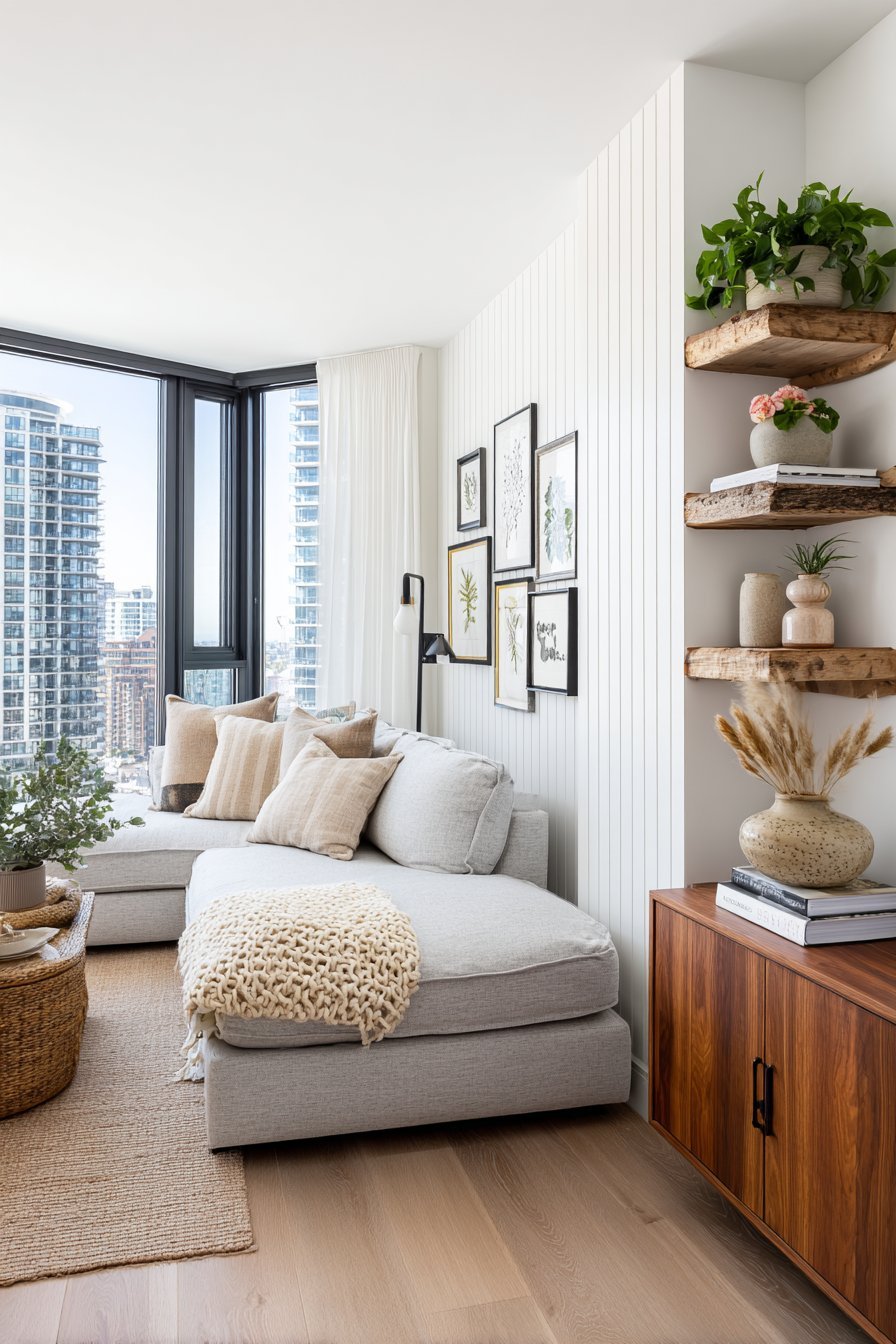
This comprehensive guide explores twenty distinctive approaches to vertical wall decor. Each design demonstrates unique material combinations, spatial arrangements, and stylistic interpretations. From gallery walls to architectural treatments, these concepts provide inspiration for every room in your home.
1. Dramatic Botanical Gallery Wall
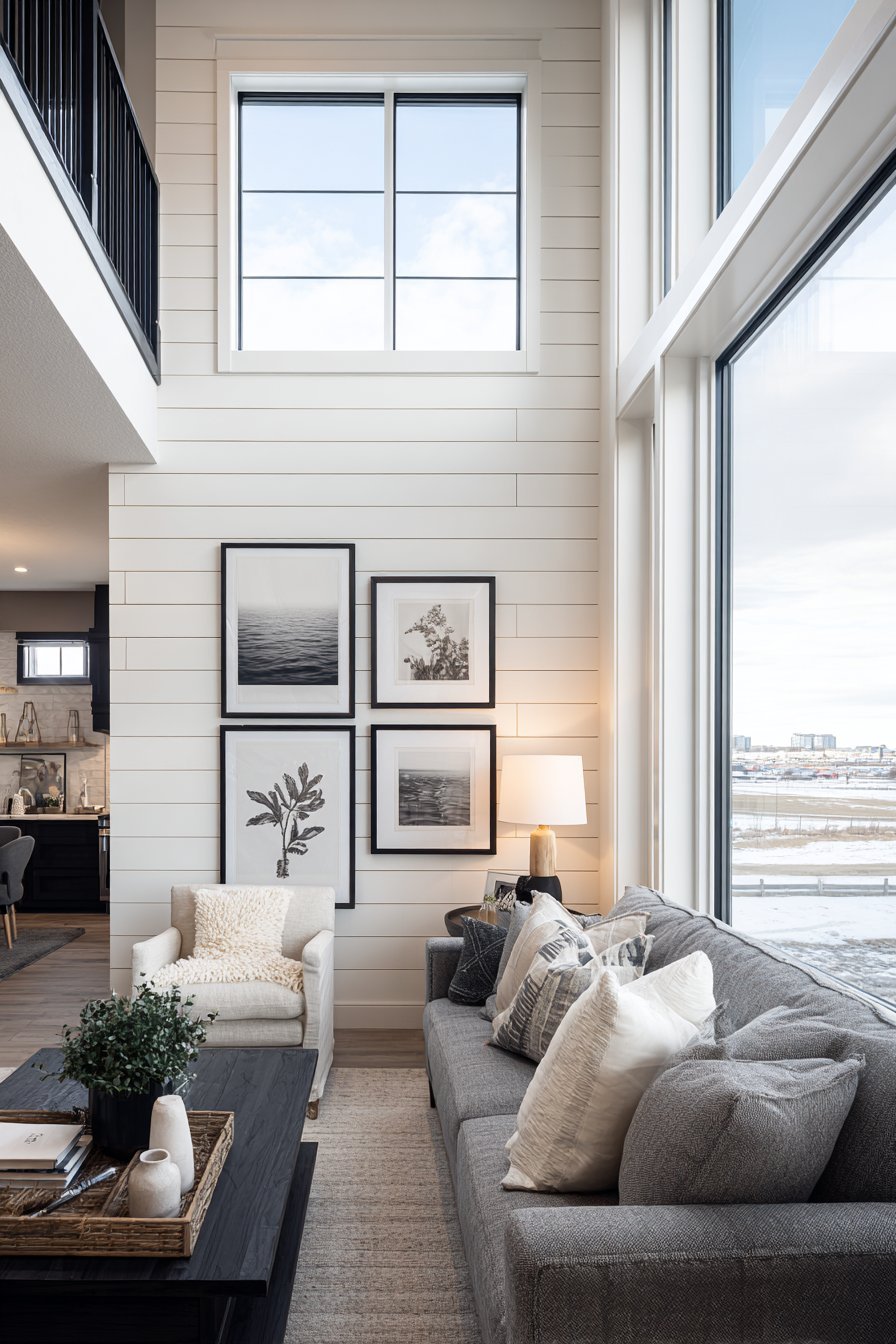
A modern living room showcases the power of vertical arrangement through botanical prints. Black frames create strong visual lines against white shiplap walls. The floor-to-ceiling column draws attention upward instantly. Natural morning light illuminates each carefully selected print.
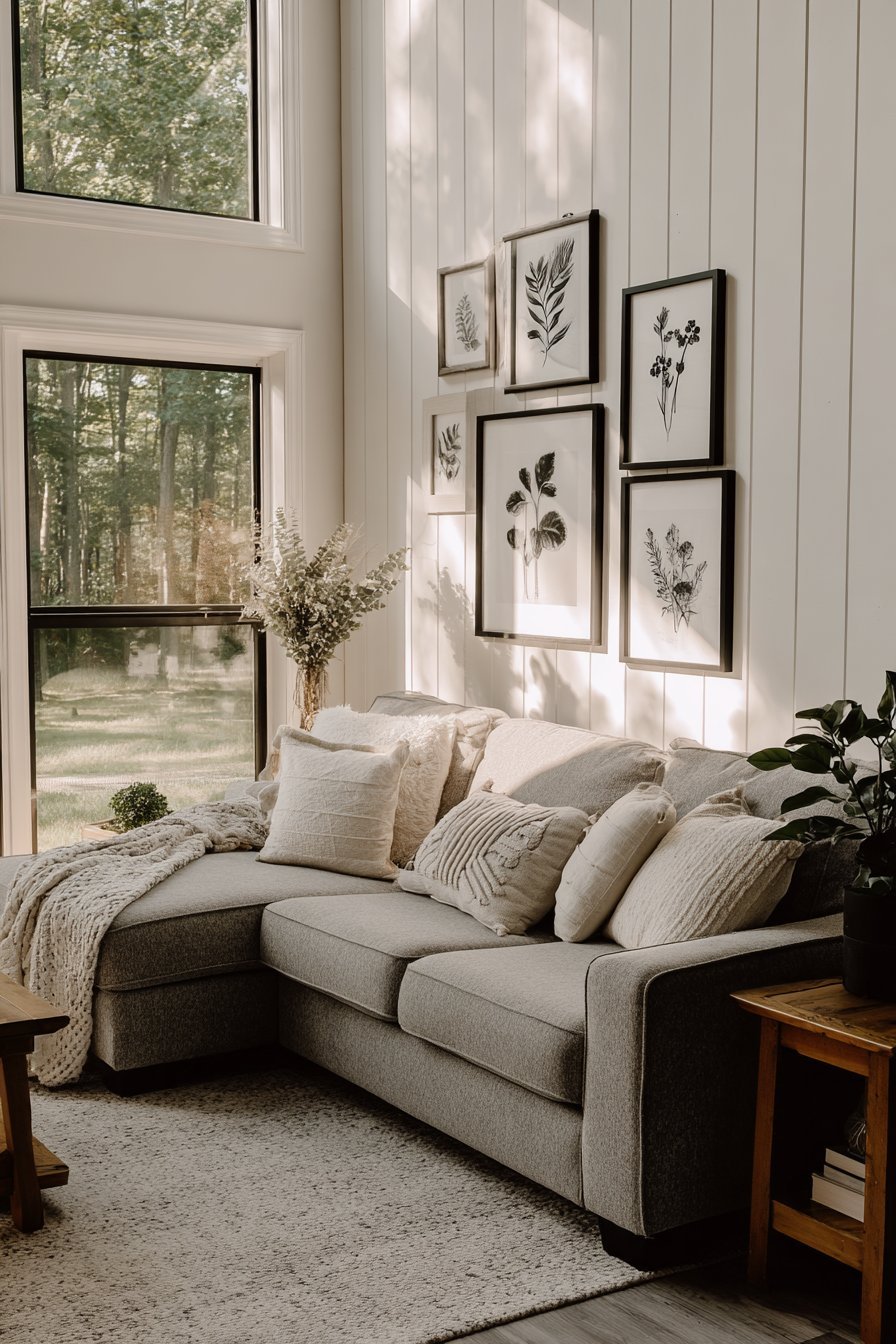
The gallery wall employs frames of slightly varying sizes. This creates dynamic interest while maintaining cohesive spacing throughout. The vertical arrangement emphasizes architectural height beautifully. Gray linen upholstery provides neutral grounding for the dramatic wall display.
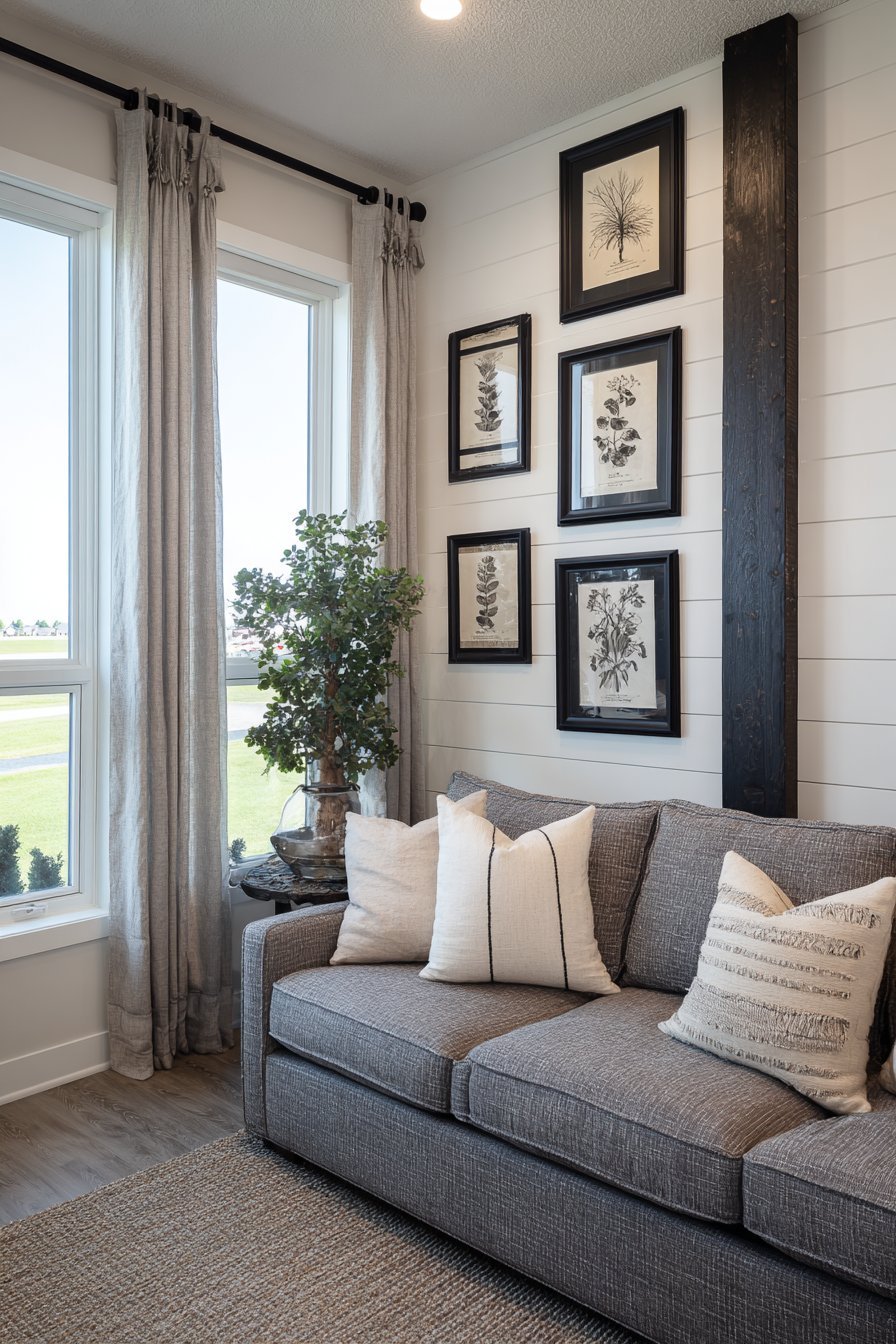
Strategic placement beside large windows maximizes natural light interaction. The botanical subjects connect indoor spaces with nature effortlessly. White shiplap texture adds subtle dimension to the backdrop. This design proves that vertical arrangements need not overwhelm to make impact.
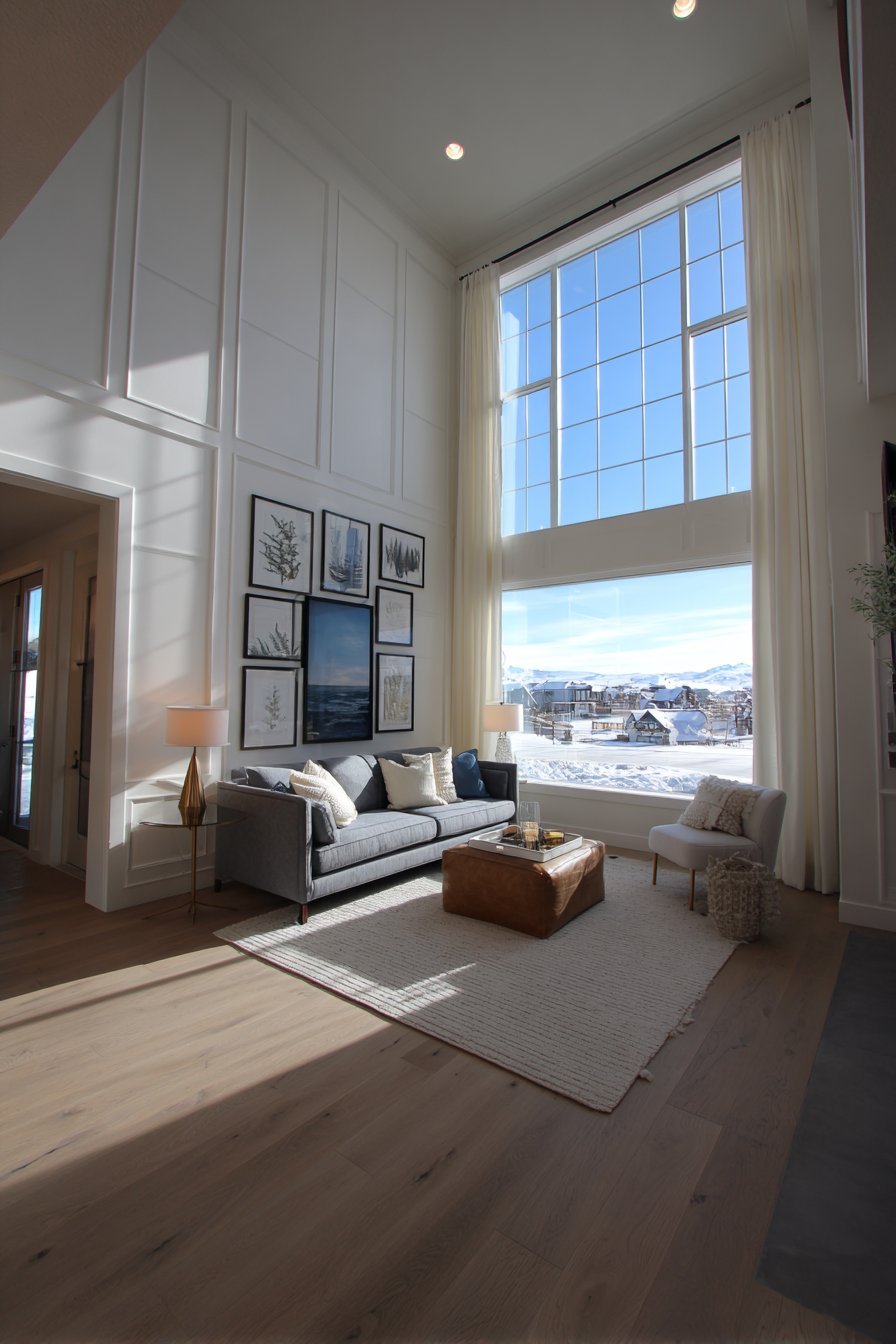
The proportional balance between furniture and wall art demonstrates thoughtful planning. Wide-angle views reveal how vertical elements enhance spatial perception. Morning light creates shifting shadows that animate the display throughout the day.
Key Design Tips:
- Maintain consistent spacing between frames for professional appearance
- Choose black frames against white walls for maximum contrast
- Position vertical arrangements near windows to maximize light interaction
- Vary frame sizes slightly while keeping overall proportions balanced
- Select botanical prints that complement existing color schemes
2. Ascending Wooden Shelf Display
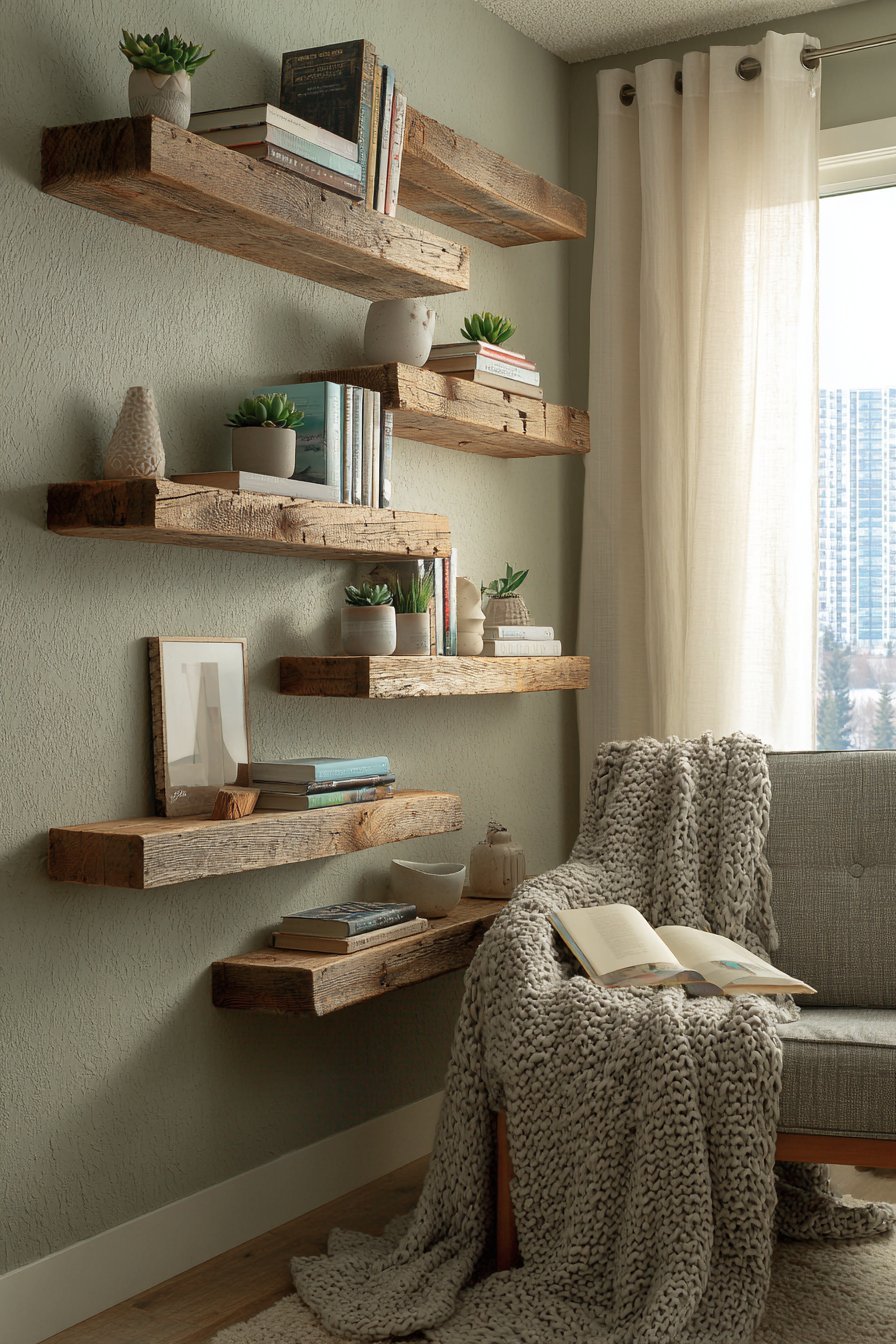
Reclaimed wooden shelves mounted in staggered vertical pattern create functional art. Each shelf displays curated collections of books and natural objects. The ascending arrangement against sage green walls adds dynamic movement. A comfortable reading chair below completes this cozy vignette.
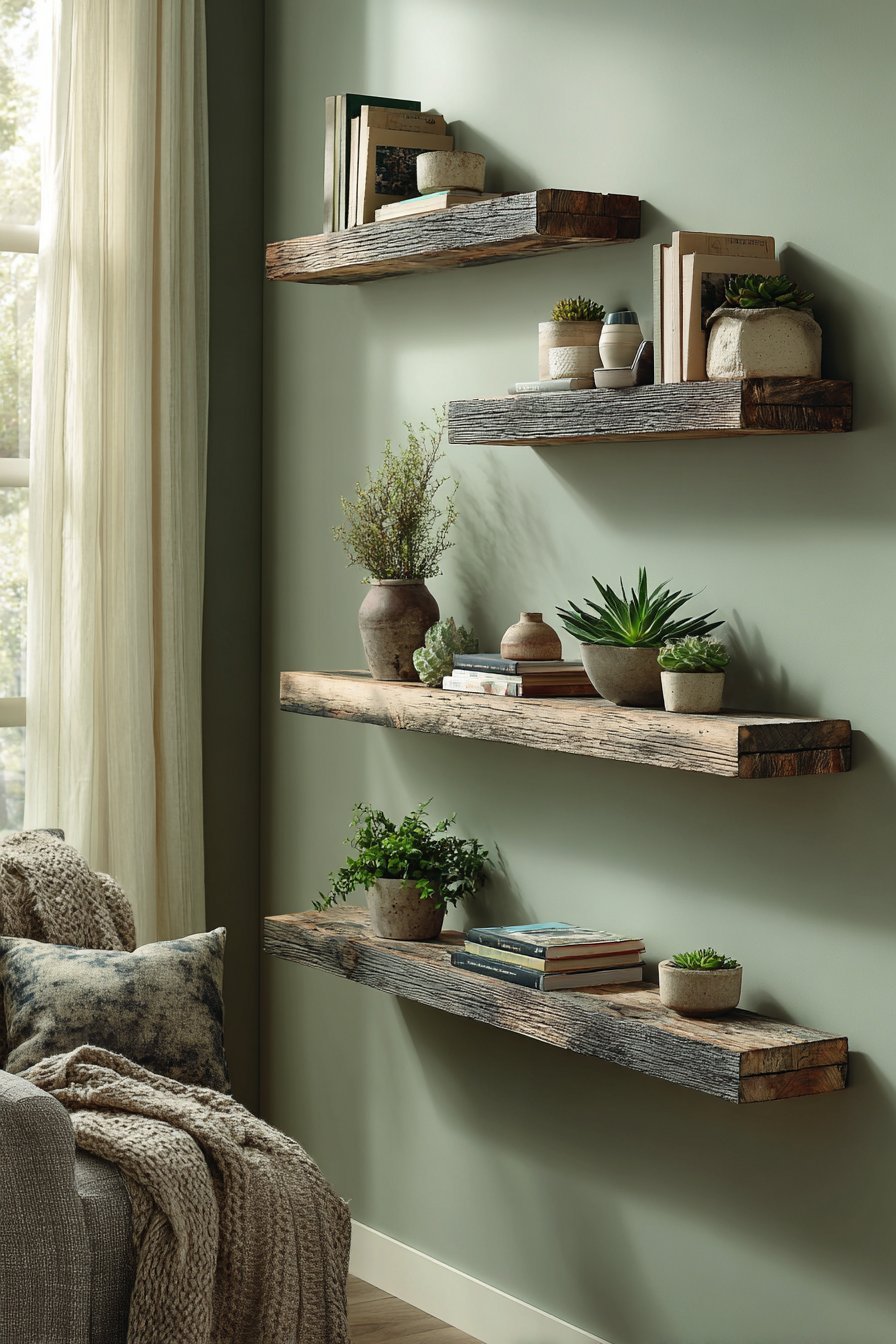
The varied wood grain textures provide organic visual interest. Small potted succulents introduce living elements to the display. Ceramic objects in neutral tones maintain the calm aesthetic. Soft natural lighting emphasizes the wood’s authentic character beautifully.
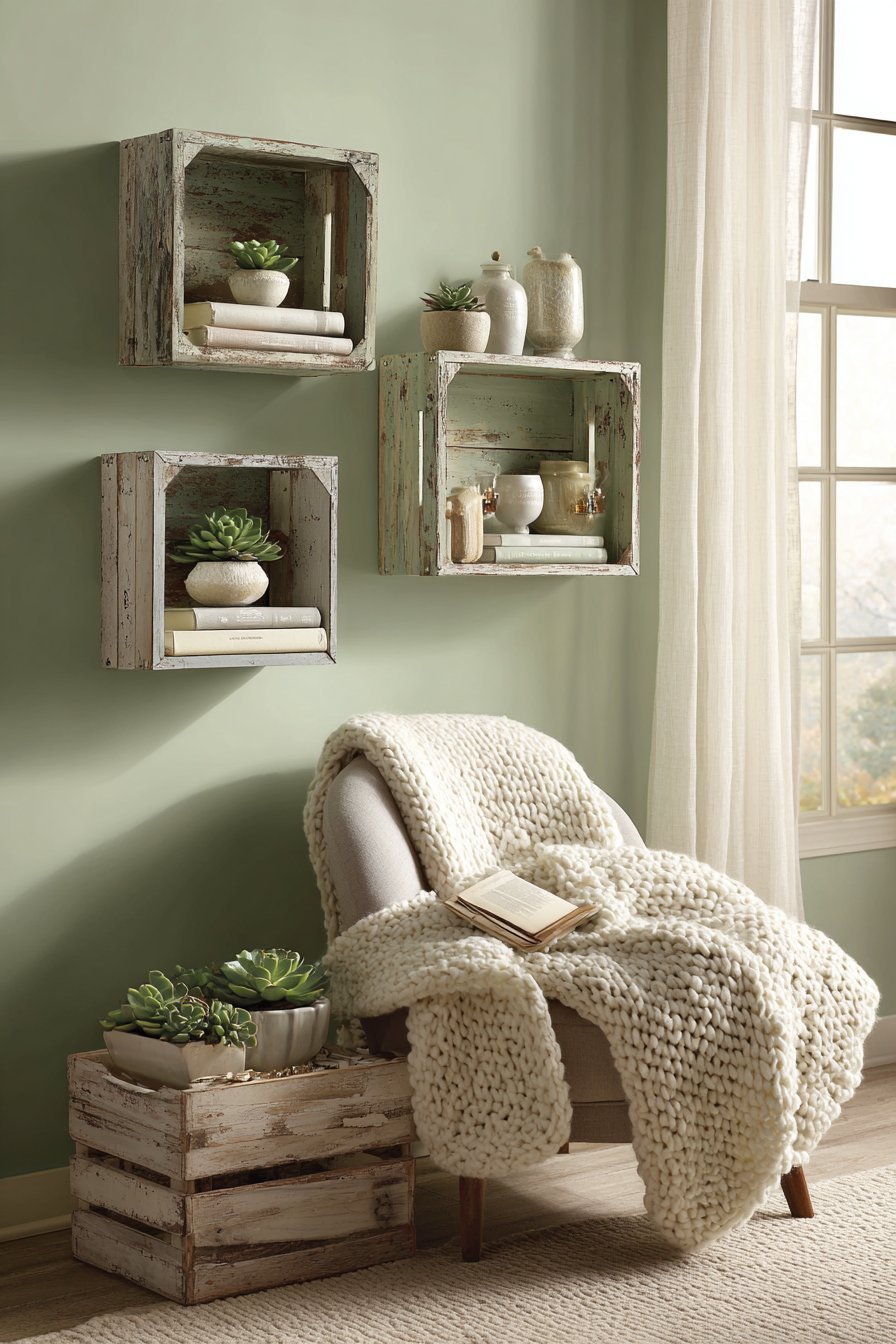
This design demonstrates how vertical arrangements serve dual purposes. The shelving provides practical storage while creating architectural interest. The staggered placement guides the eye upward naturally. Sheer linen curtains filter light for gentle illumination throughout the day.
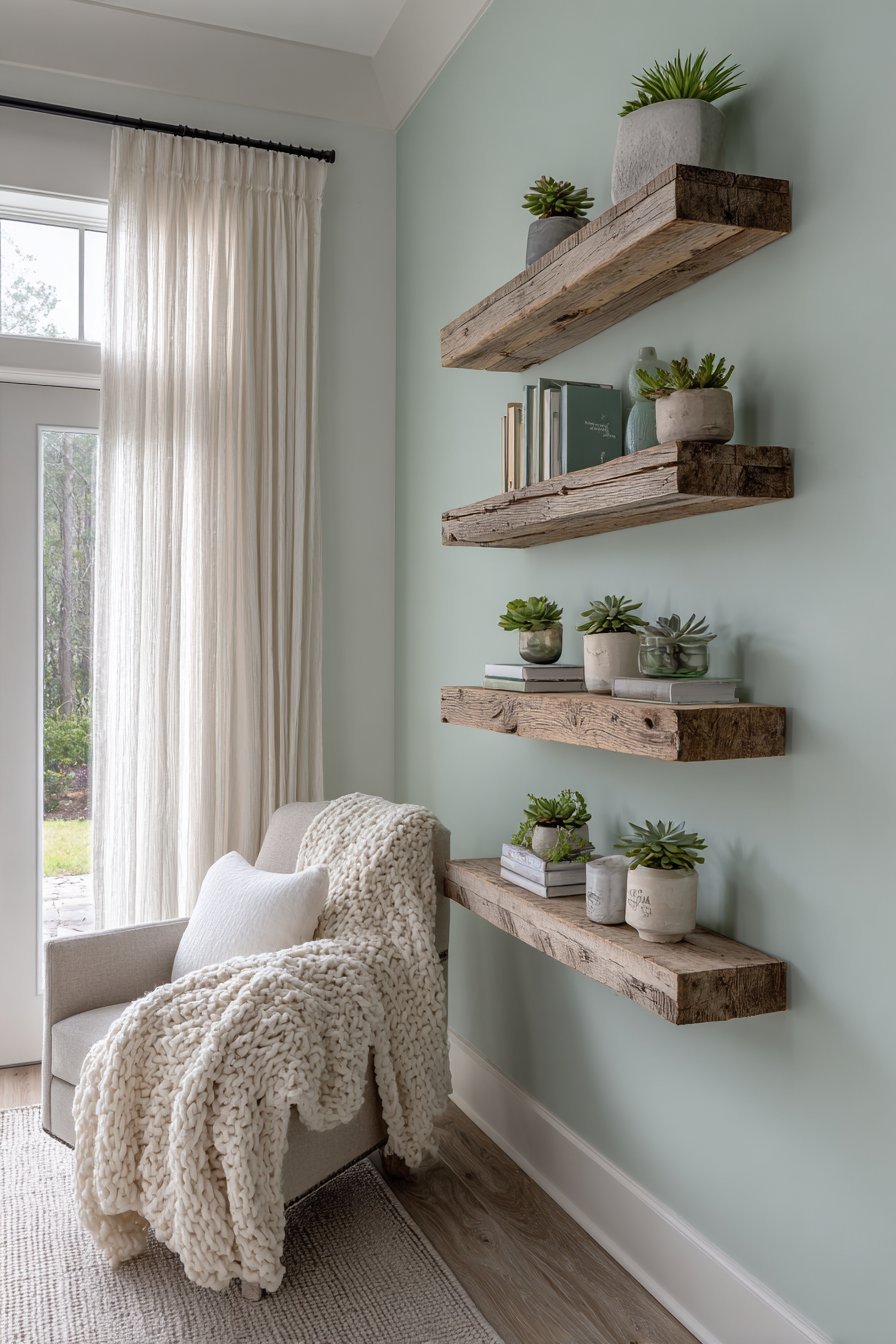
Professional styling shows restraint in object selection. Each displayed item earns its place through careful curation. The sage green backdrop enhances rather than competes with the display.
Key Design Tips:
- Use reclaimed wood for authentic character and sustainability
- Stagger shelf placement to create ascending visual flow
- Limit displayed objects to avoid cluttered appearance
- Choose accent wall colors that enhance rather than overwhelm
- Position shelving near natural light sources for best effect
3. Minimalist Decorative Ladder
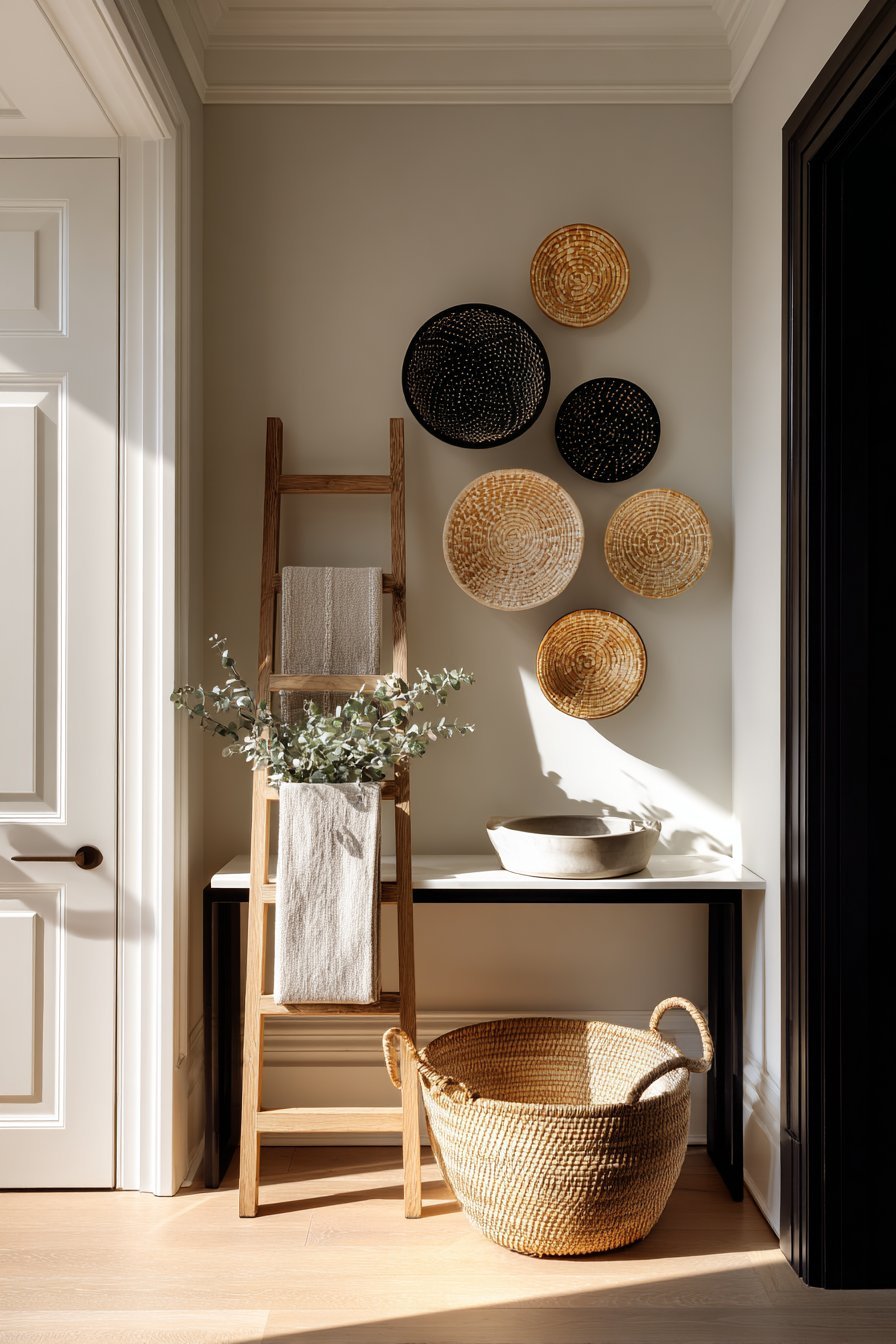
A Scandinavian-style entryway features a full-length wooden ladder leaning gracefully. Woven baskets and neutral textiles drape across the rungs. The vertical element adds practical storage to narrow spaces. Light oak flooring complements the natural wood beautifully.
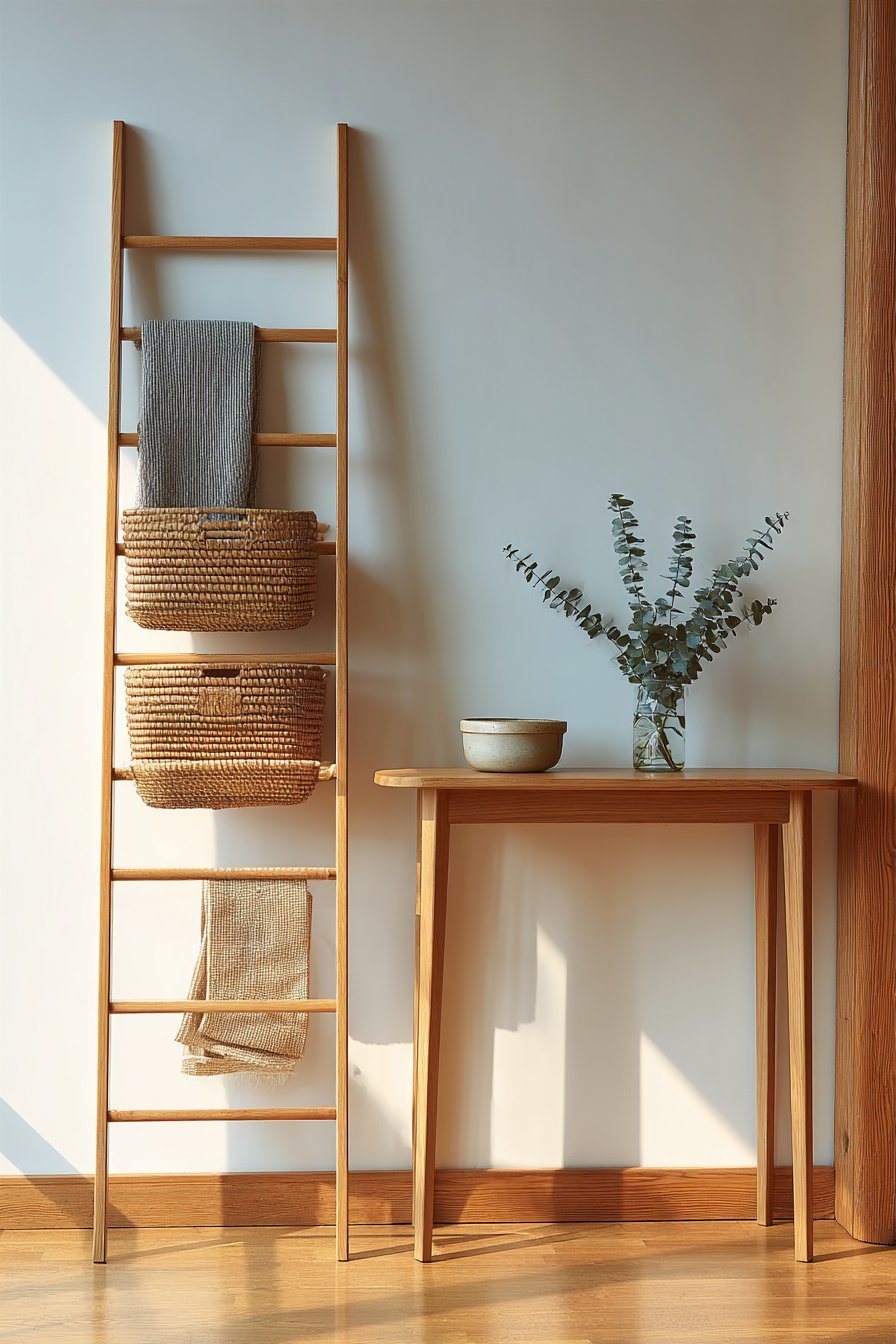
This design maximizes vertical space in constrained areas effectively. The ladder provides multiple levels for display and storage. A simple console table at the base anchors the arrangement. Fresh eucalyptus in a ceramic bowl adds organic freshness.
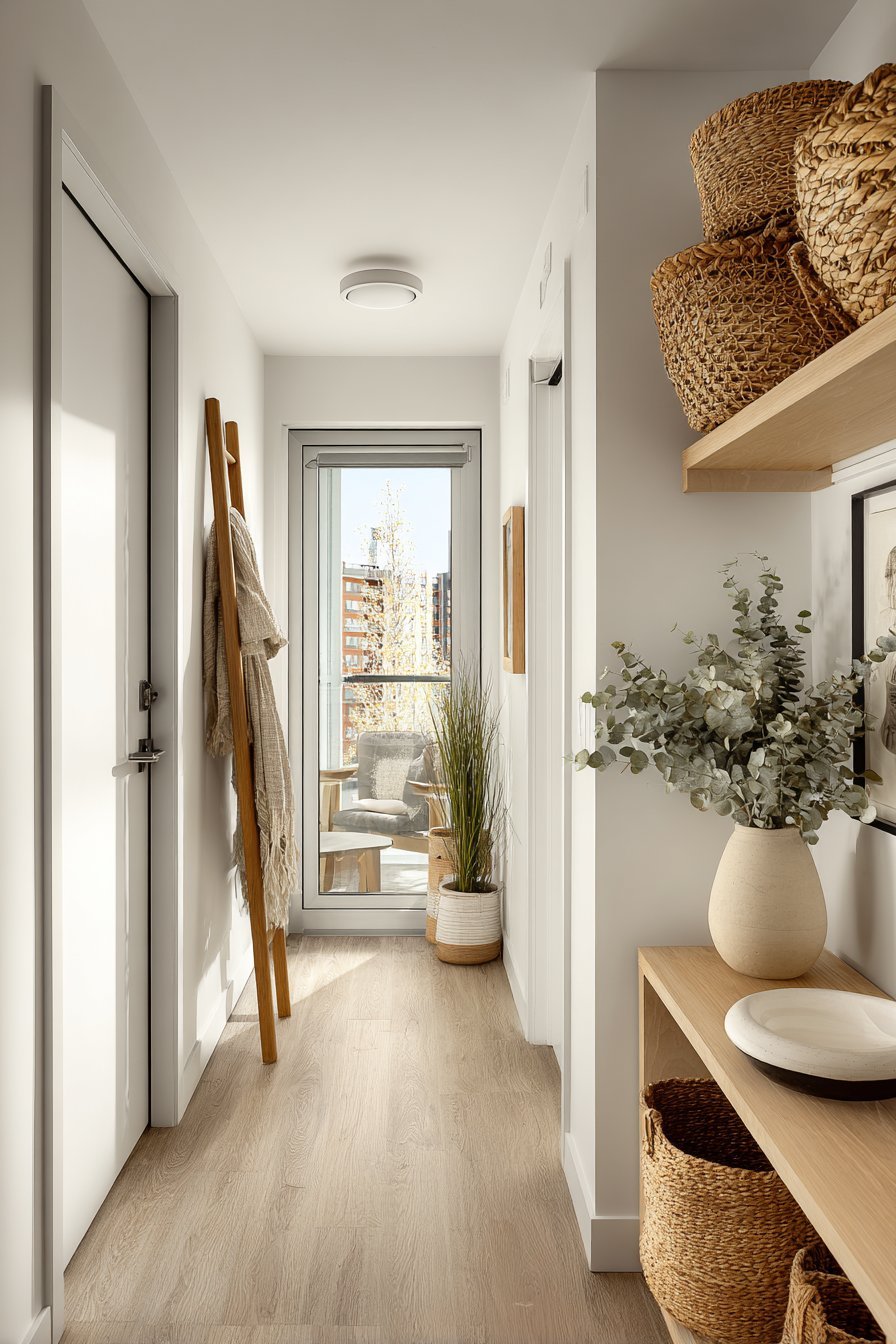
Soft diffused daylight from nearby windows highlights the minimalist aesthetic. The functional design maintains visual lightness despite practical storage capacity. Natural materials throughout create cohesive warmth. This approach proves that vertical elements enhance functionality without sacrificing style.
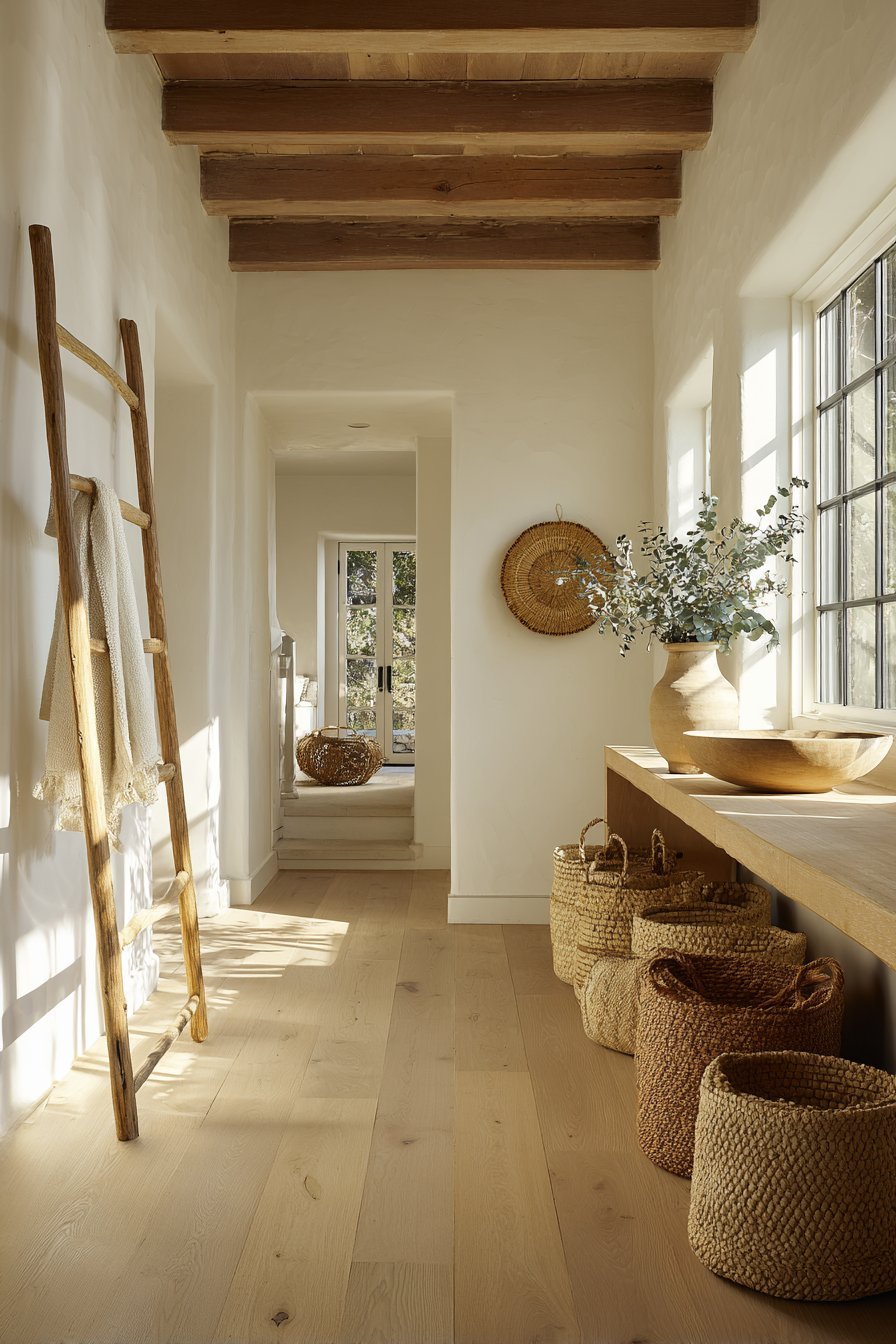
The leaning angle creates visual interest while remaining stable. Neutral tones ensure versatility across changing seasonal decor. Professional photography captures how vertical emphasis transforms narrow spaces.
Key Design Tips:
- Select ladders with attractive wood grain for decorative impact
- Use woven baskets for concealed storage while maintaining aesthetics
- Position ladders securely to prevent tipping hazards
- Keep color palette neutral for maximum versatility
- Add fresh greenery for natural vitality
4. Oversized Abstract Canvas Statement
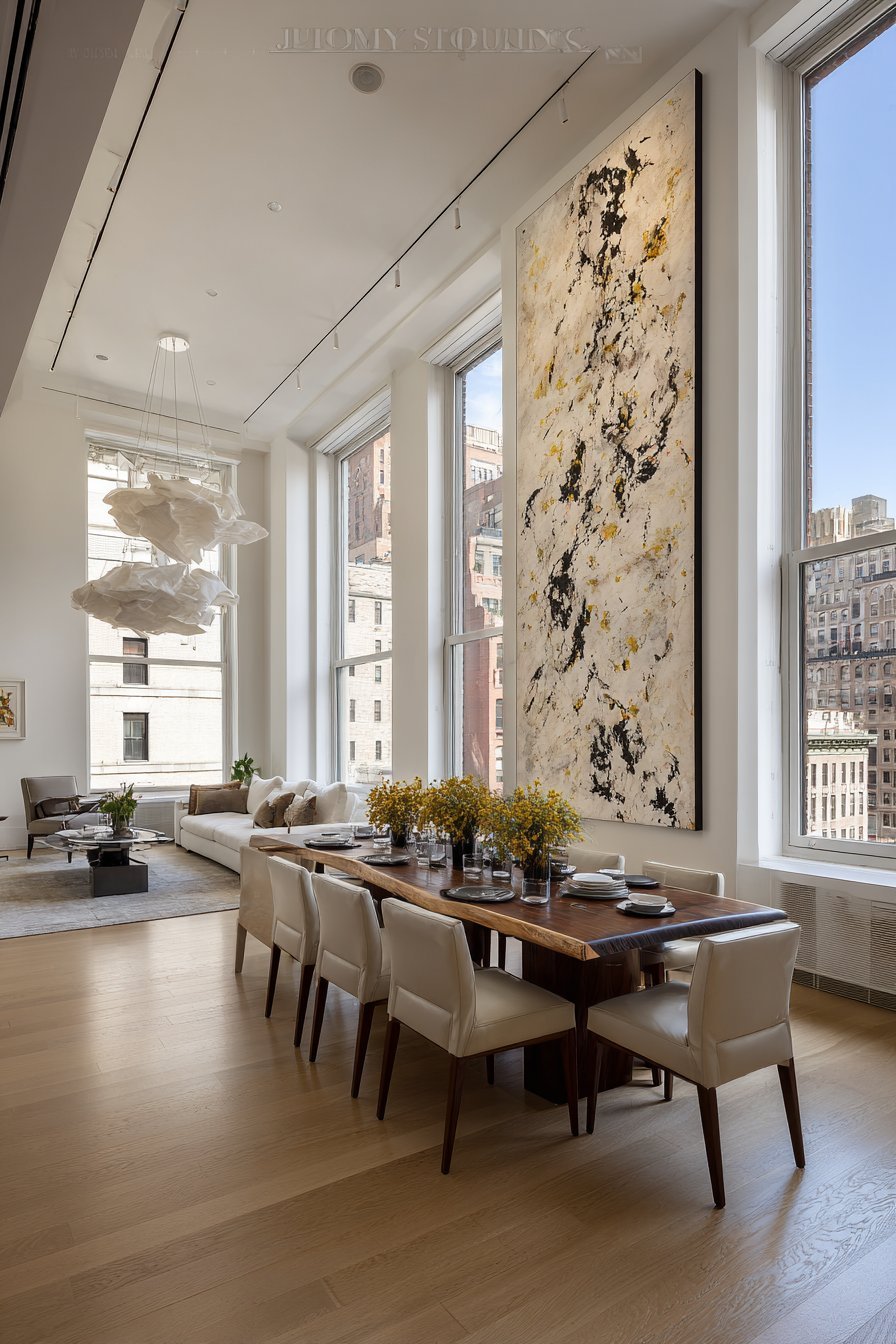
Contemporary dining spaces benefit from floor-to-ceiling artwork installations. An oversized abstract canvas in muted earth tones commands attention immediately. The vertical orientation anchors the dining area with bold sophistication. Live-edge walnut furniture provides organic contrast to the modern art.
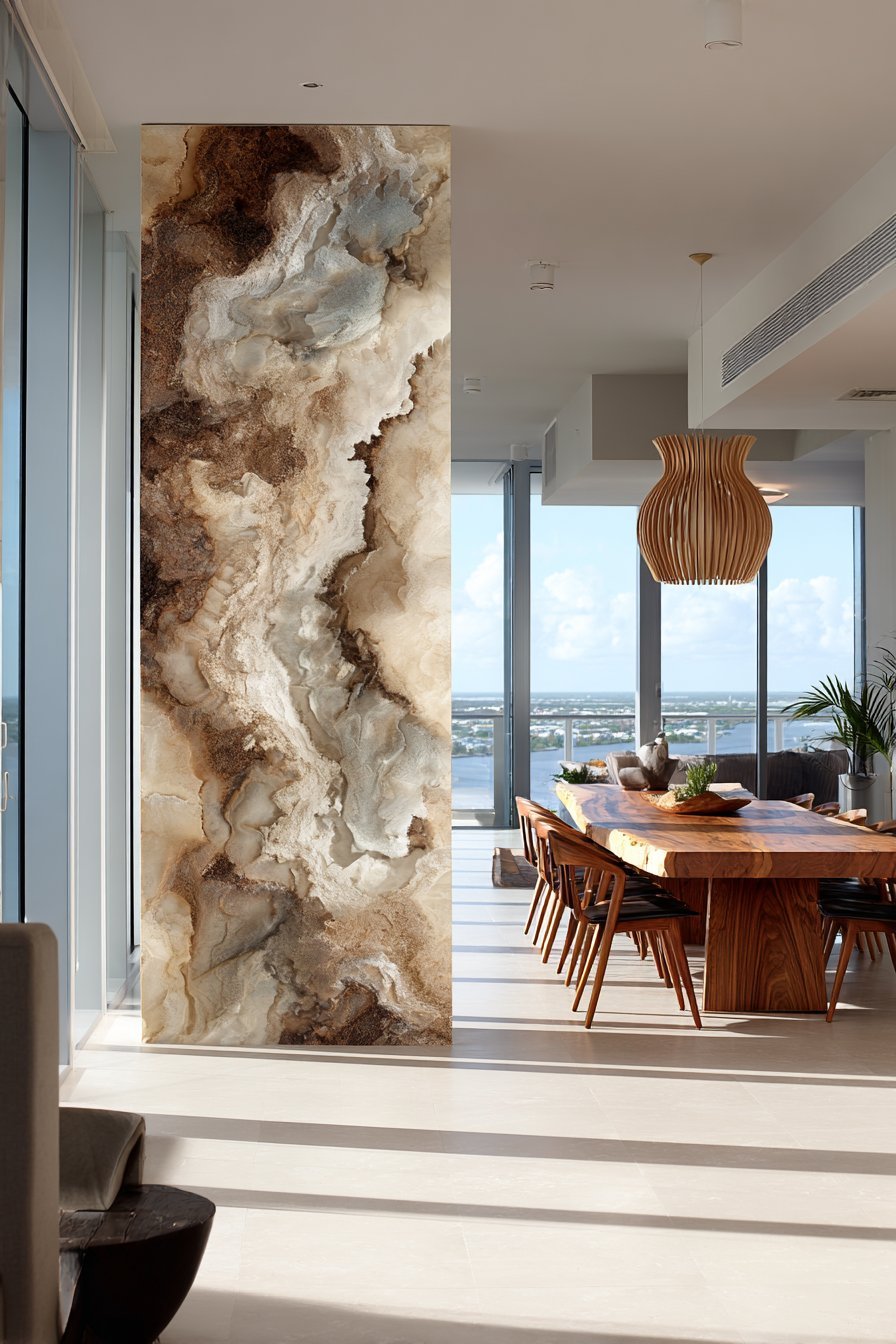
Natural light from large windows creates subtle highlights on canvas texture. Mid-century modern chairs complement the contemporary aesthetic beautifully. A sculptural pendant light adds vertical interest from above. The scale relationship between art and furniture demonstrates professional design thinking.
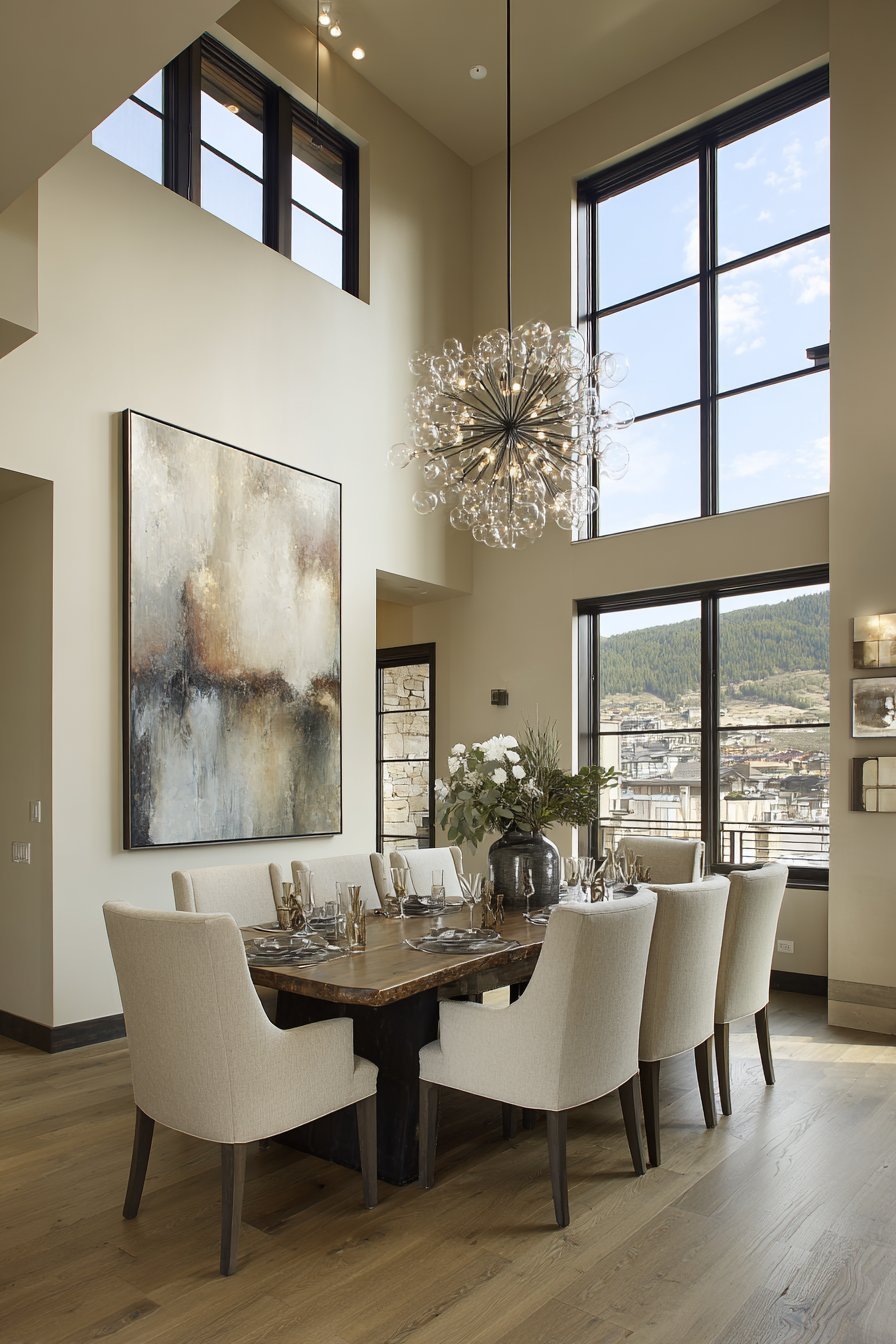
This approach transforms dining areas into gallery-like experiences. The vertical artwork draws focus while maintaining sophisticated restraint. Earth tone palettes create calm environments conducive to dining. The canvas texture adds tactile dimension to the visual statement.
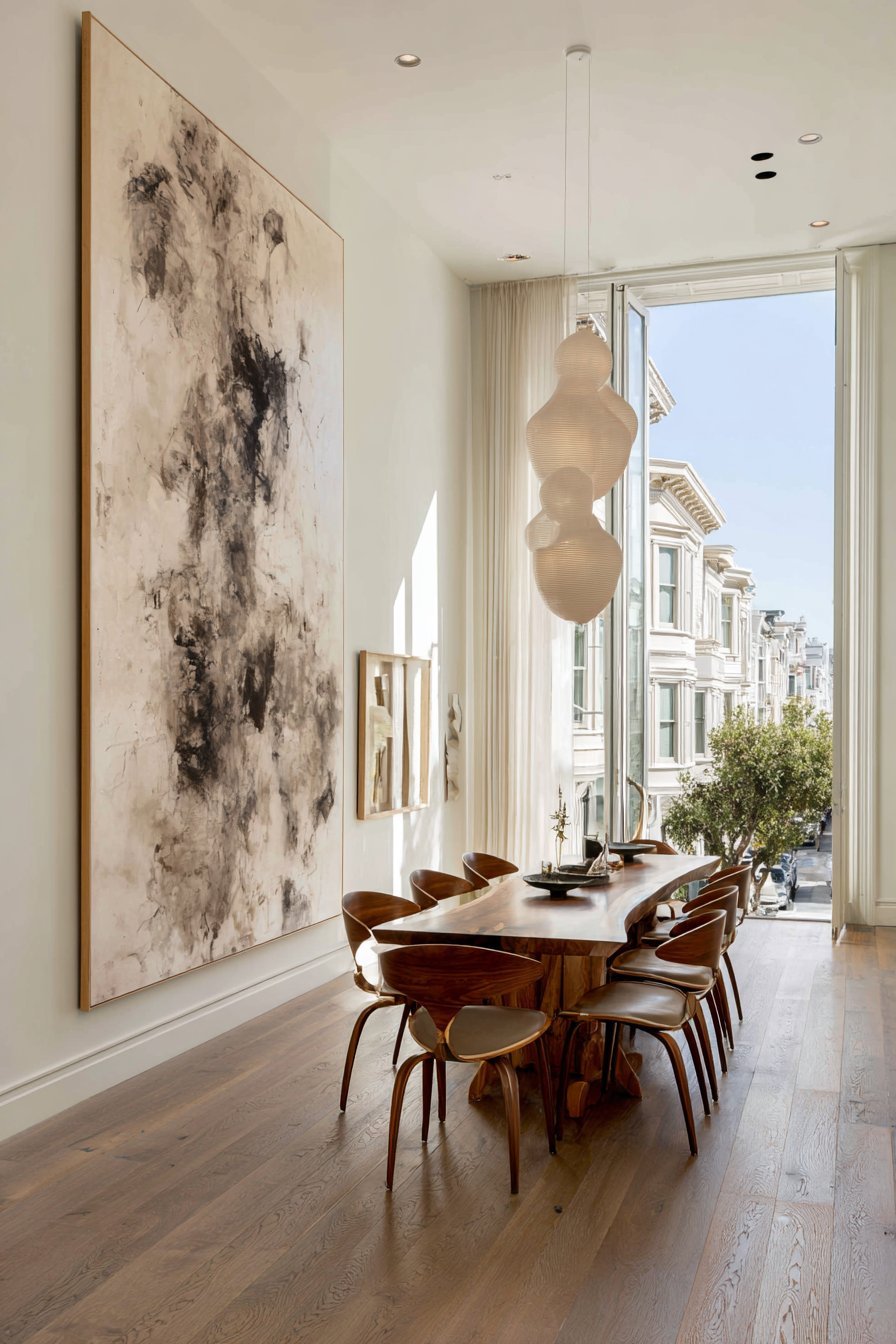
Balanced exposure in photography reveals how natural light interacts with artwork. The vertical emphasis enhances perceived ceiling height dramatically. Professional installation ensures proper weight distribution and secure mounting.
Key Design Tips:
- Choose oversized artwork that reaches from floor to ceiling for maximum impact
- Select muted earth tones for sophisticated rather than overwhelming presence
- Position dining furniture to create proper viewing distance from artwork
- Ensure secure mounting for large-scale pieces through professional installation
- Use natural light to highlight canvas texture and color variations
5. Vintage Cutting Board Collection
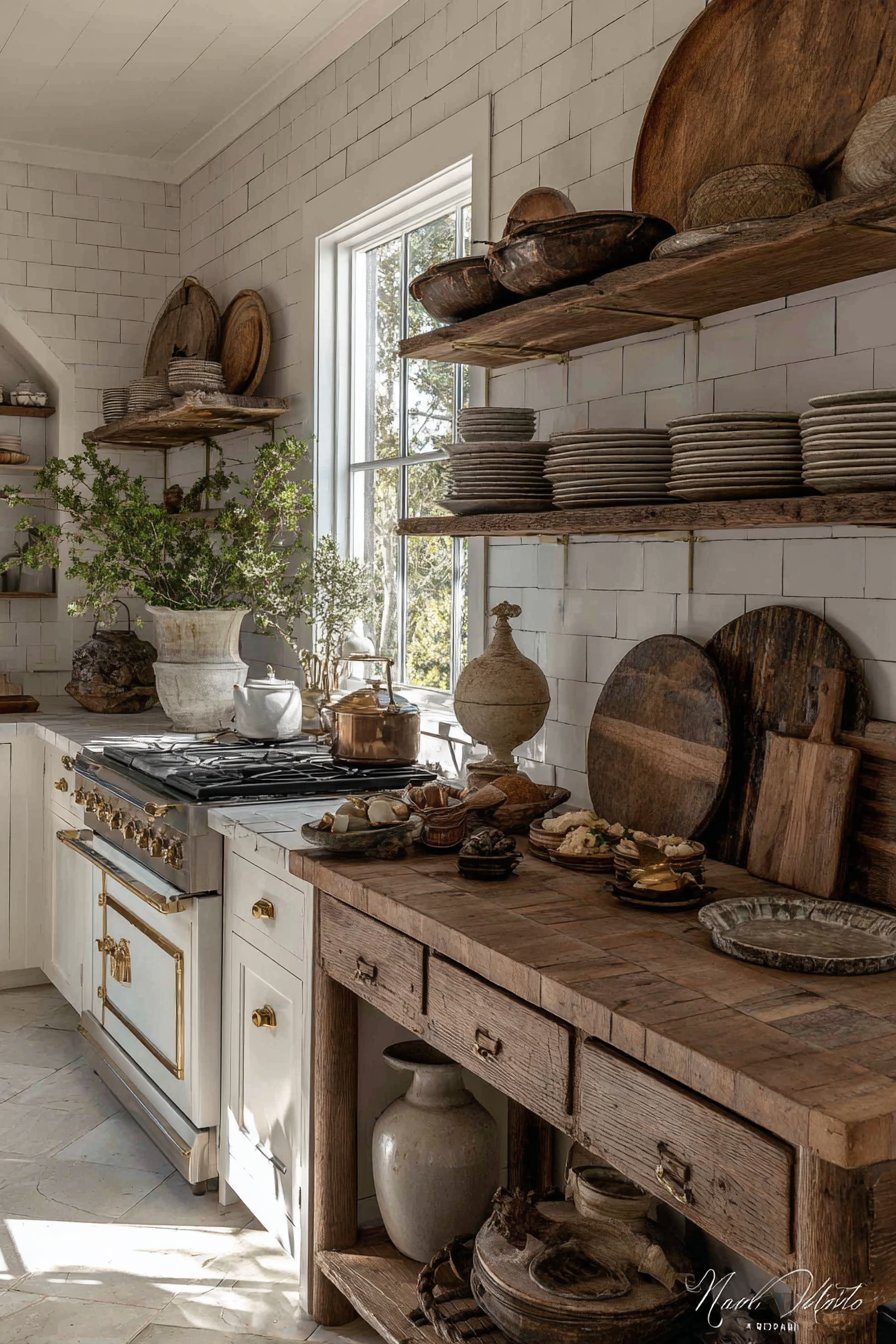
A farmhouse kitchen displays wooden cutting boards vertically beside the range. The ascending arrangement showcases varied sizes and wood tones. This rustic charm combines aesthetic appeal with practical accessibility. White subway tile and butcher block countertops frame the display perfectly.
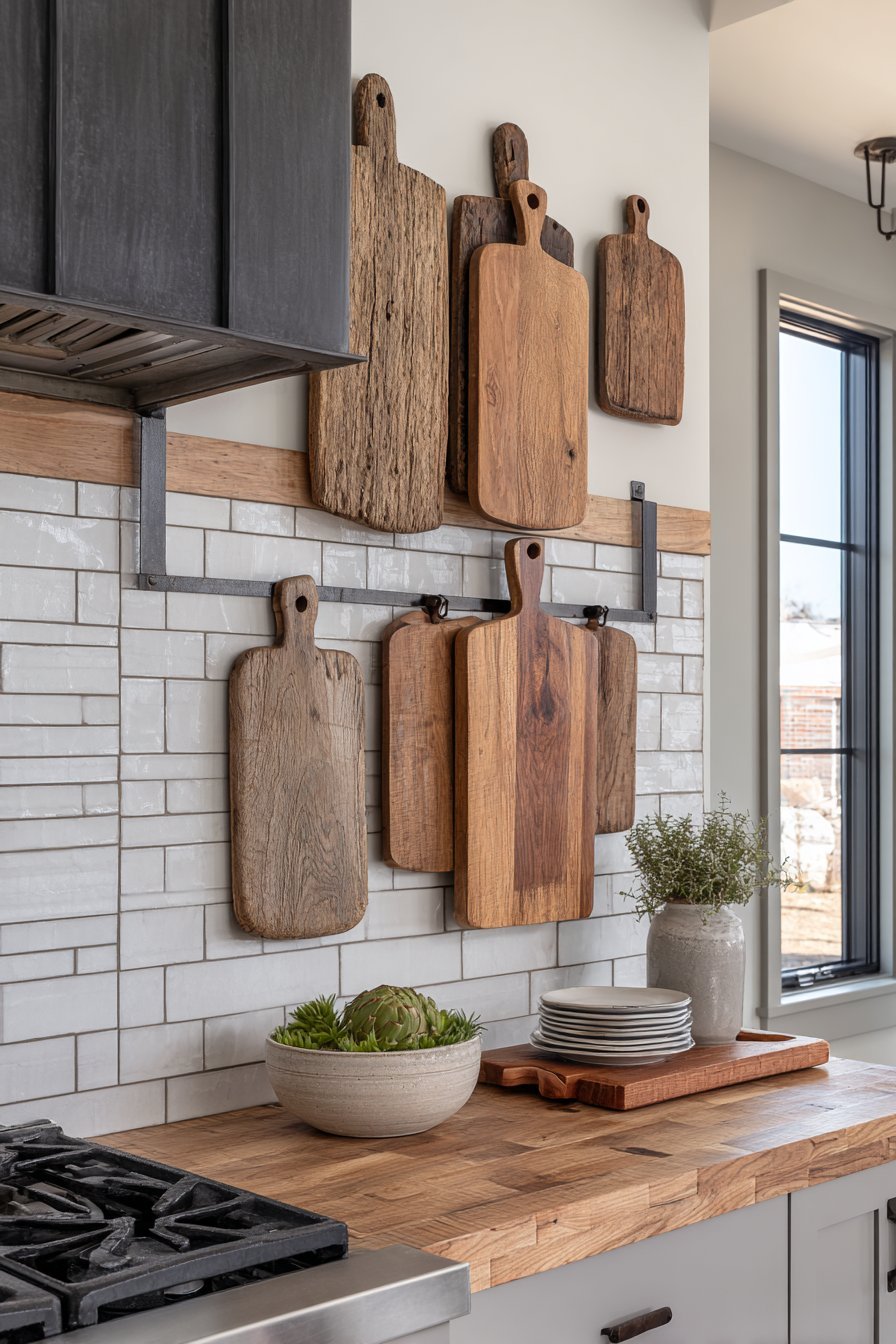
Brushed brass hardware adds subtle metallic warmth throughout. Open shelving continues the farmhouse aesthetic naturally. Natural daylight streaming through windows highlights authentic wood grain variations. The vertical composition demonstrates thoughtful space planning.
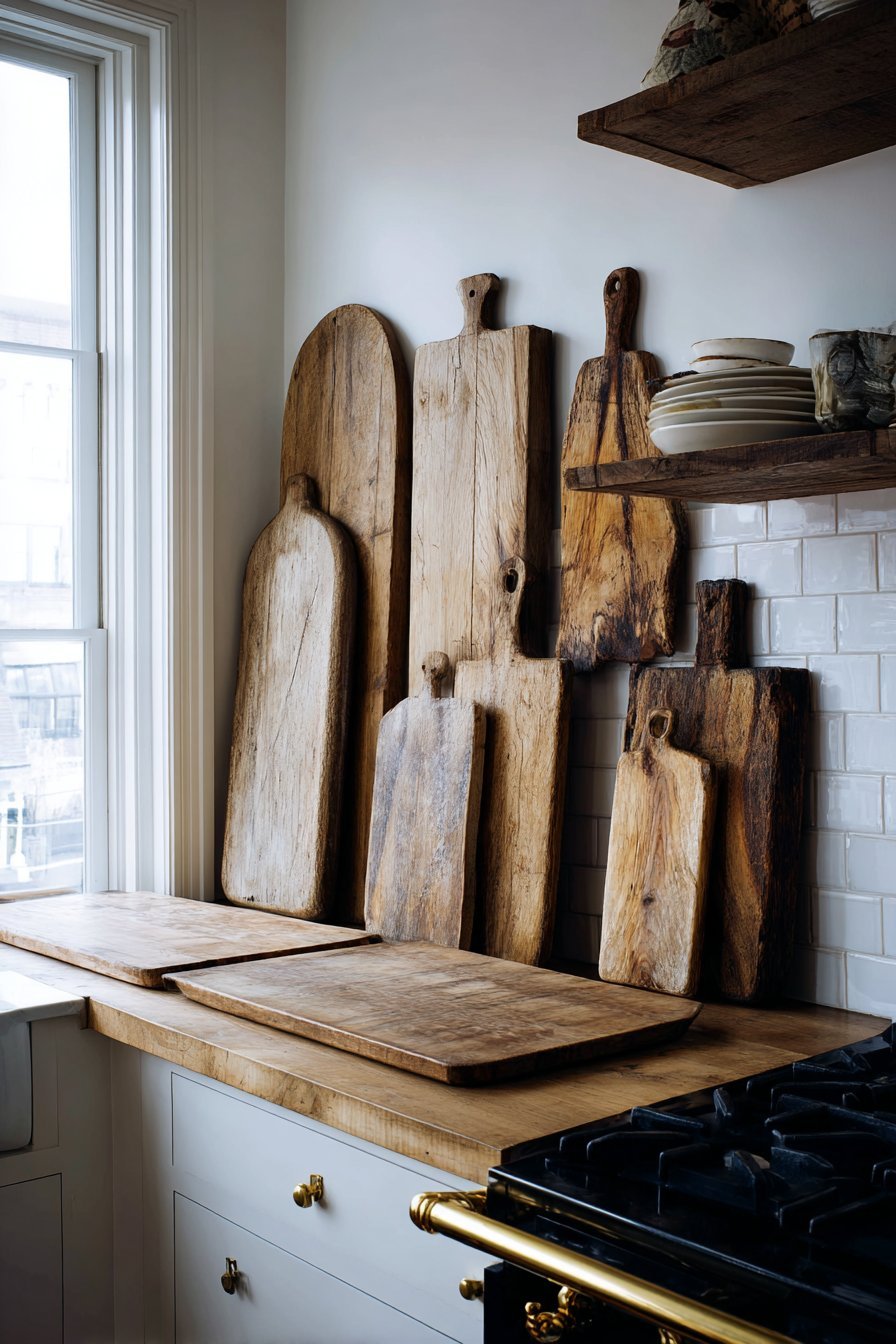
This design celebrates functional objects as decorative elements. Vintage pieces bring history and character to modern kitchens. The vertical arrangement keeps frequently used items within easy reach. Professional styling shows how practical needs and beauty coexist harmoniously.
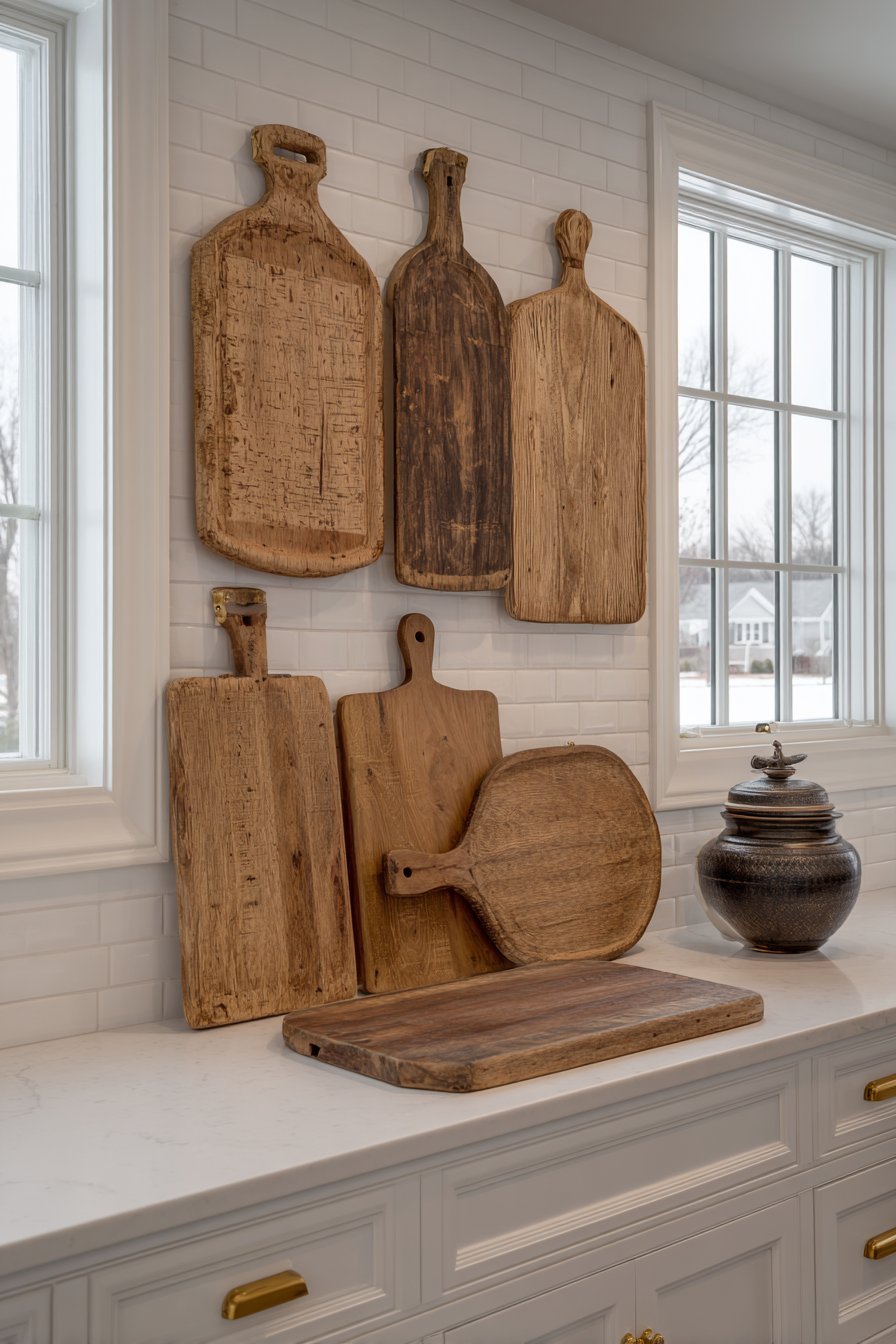
Wood tone variations create visual interest without additional decoration needed. The arrangement against white backgrounds allows natural beauty to shine. This approach proves that everyday objects become art through thoughtful display.
Key Design Tips:
- Collect cutting boards with varied wood tones for visual interest
- Arrange pieces in ascending order to create upward flow
- Position displays near cooking areas for practical accessibility
- Clean and condition wood regularly to maintain beautiful patina
- Mix vintage and new pieces for layered character
6. Cascading Macramé Wall Hangings
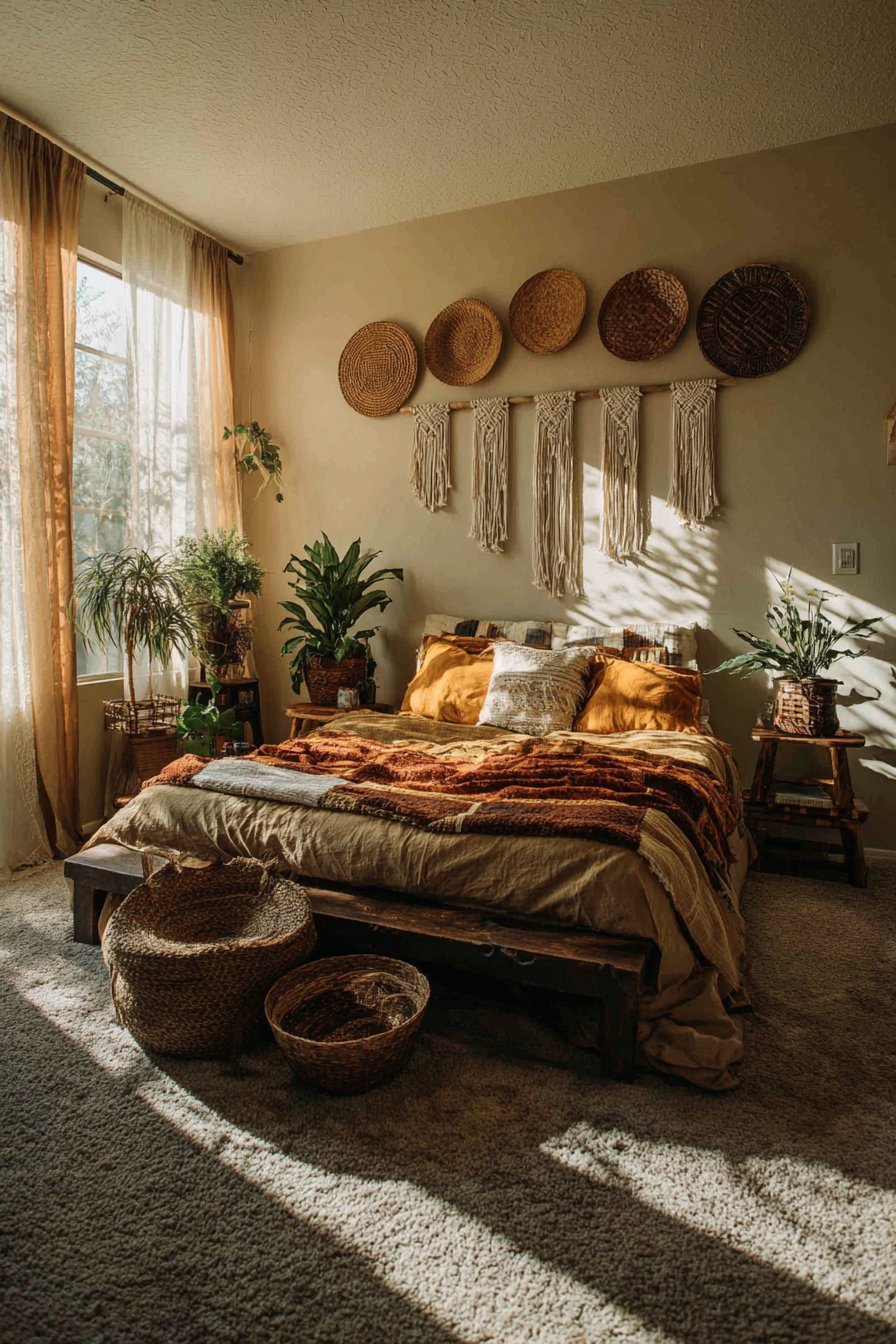
Bohemian bedrooms embrace vertical textile art through macramé installations. Handwoven wall hangings in varying lengths cascade above the bed. Natural cotton fibers add texture and visual height simultaneously. The layered arrangement creates organic movement and depth.
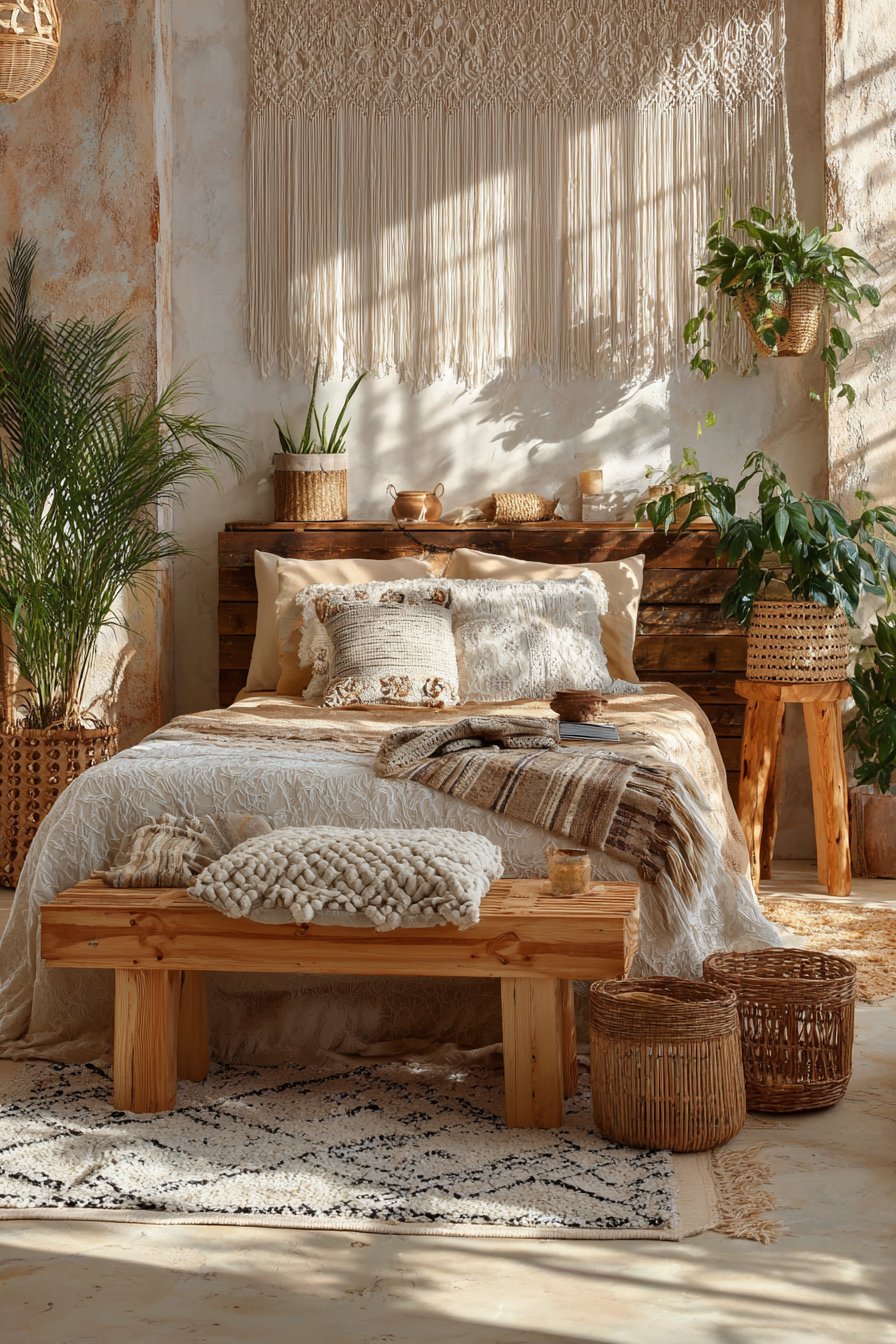
Low platform beds with earthy textiles anchor the design below. Flanking plants on wooden stands continue the natural theme. Soft morning light filters through gauzy curtains beautifully. Gentle shadows emphasize the textured wall hangings throughout the day.
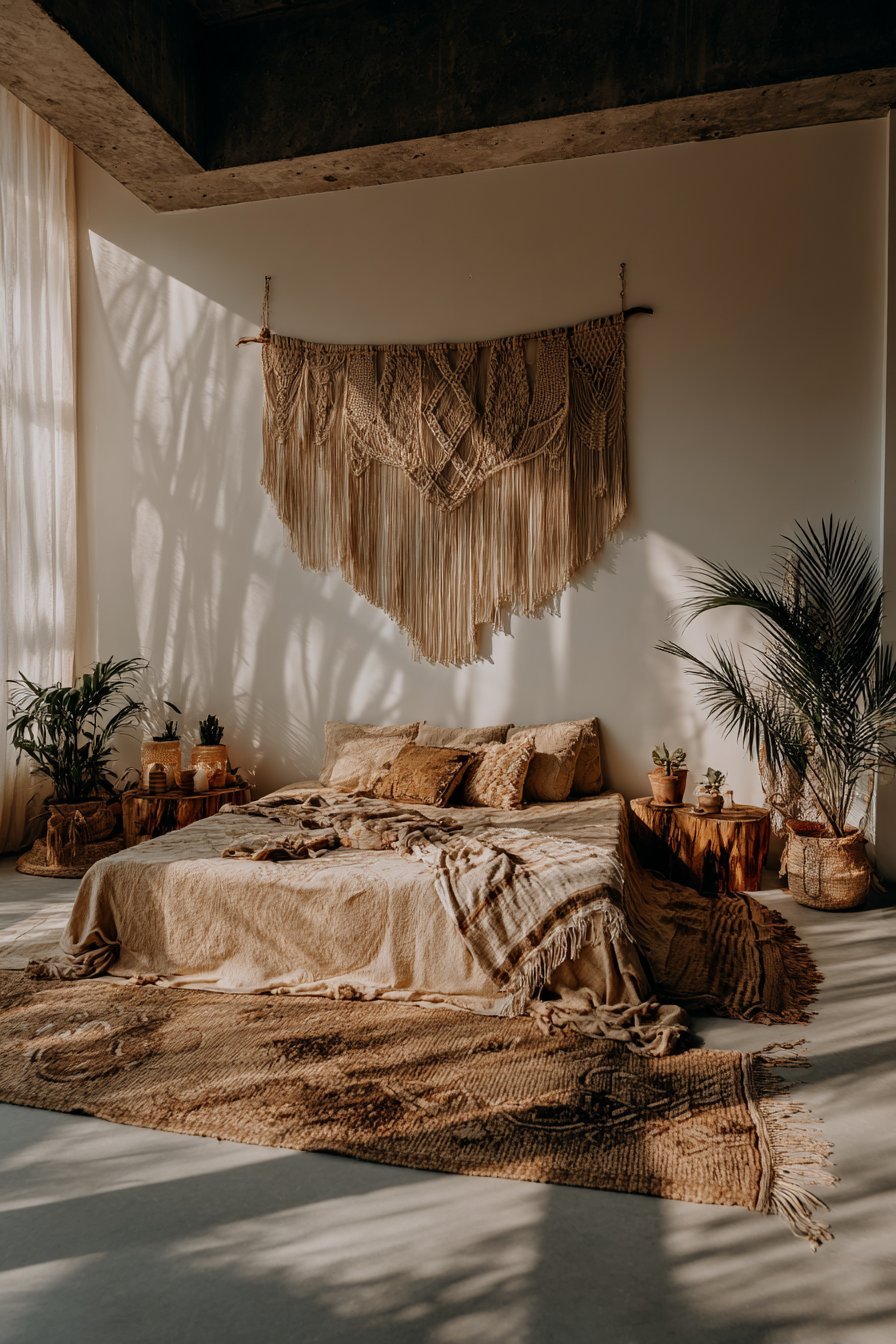
This design demonstrates how soft materials create vertical impact. The handwoven quality adds artisanal authenticity to the space. Varying lengths prevent uniformity while maintaining cohesive aesthetic. The organic textures throughout create serene sleeping environments.
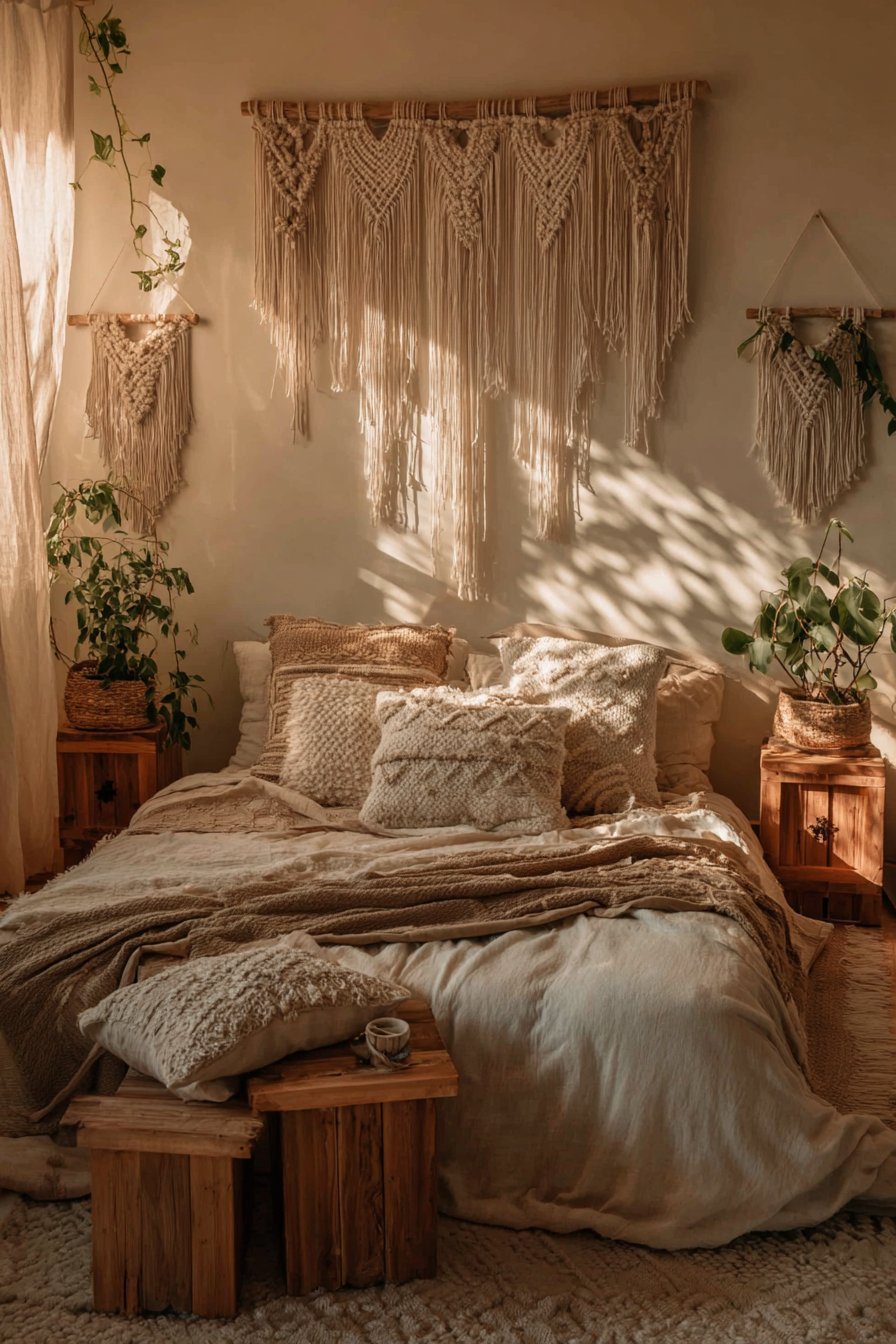
Professional photography captures the interplay between natural fibers and filtered light. The vertical emphasis draws attention while maintaining relaxed ambiance. This approach proves that vertical arrangements need not feel formal or rigid.
Key Design Tips:
- Choose macramé pieces in varying lengths for cascading effect
- Use natural cotton fibers for authentic bohemian aesthetic
- Position above beds for maximum visual impact
- Allow pieces to hang freely without excessive styling
- Complement with plants and natural textiles throughout room
7. Wire Grid Organization System
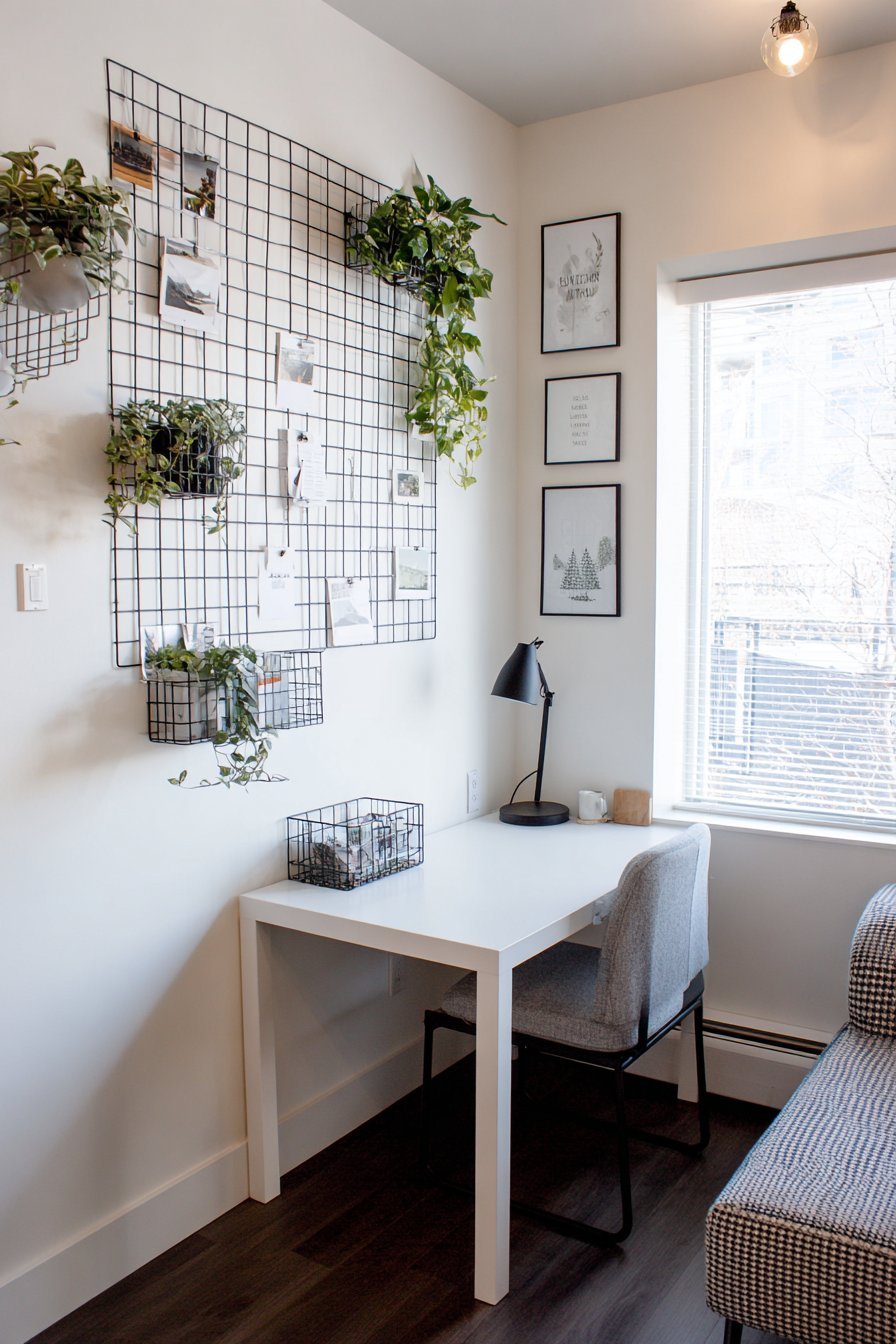
Minimalist home offices benefit from vertical wire grid installations. Black metal grids mounted floor-to-ceiling provide functional display space. The clean vertical lines maintain minimalist aesthetic while organizing papers. Simple white desks below create crisp contrast with black grids.
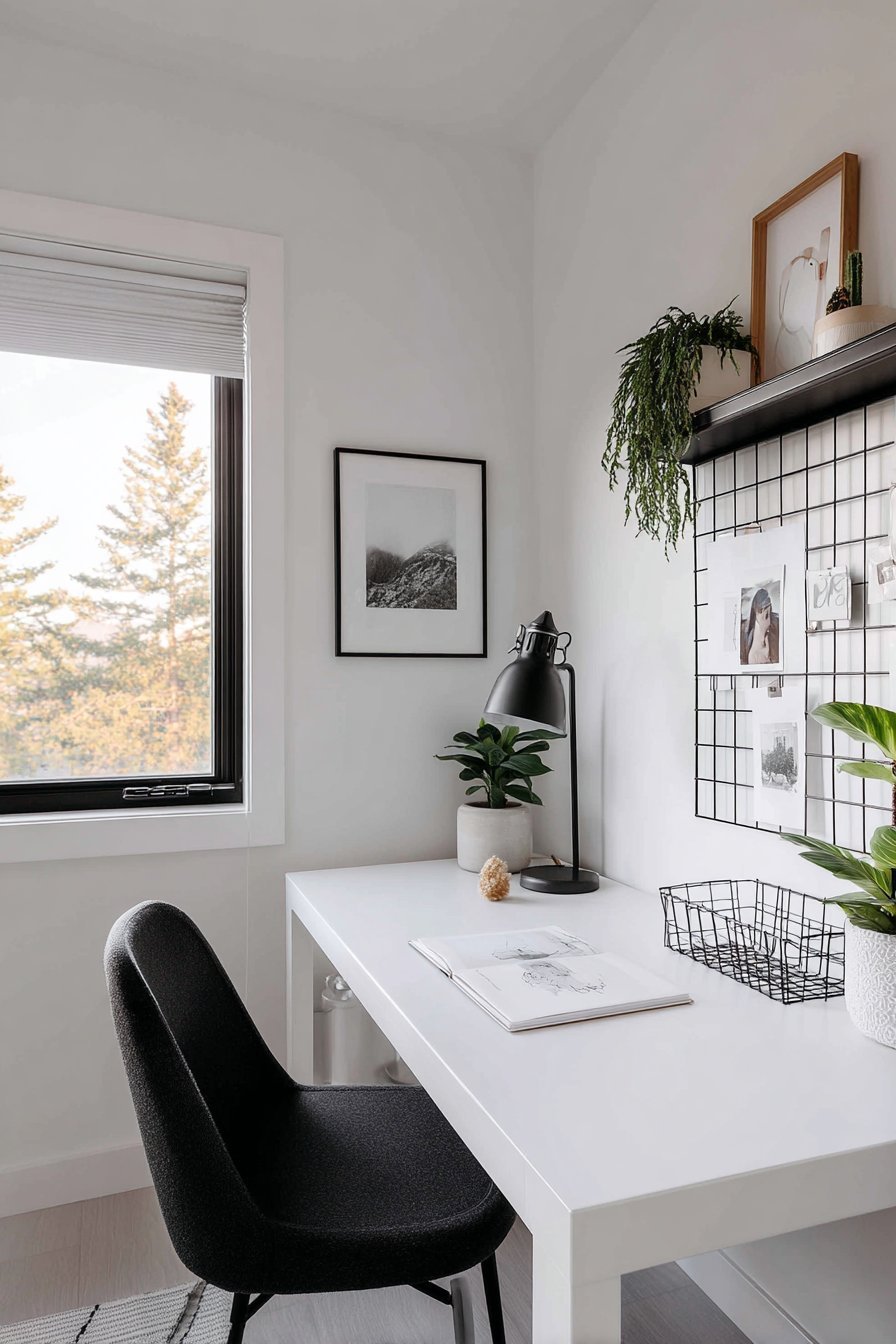
Natural light from side windows highlights the vertical organization beautifully. Small potted plants add organic softness to geometric lines. Wire mesh desk organizers continue the material consistency. The airy design prevents visual clutter despite practical storage capacity.
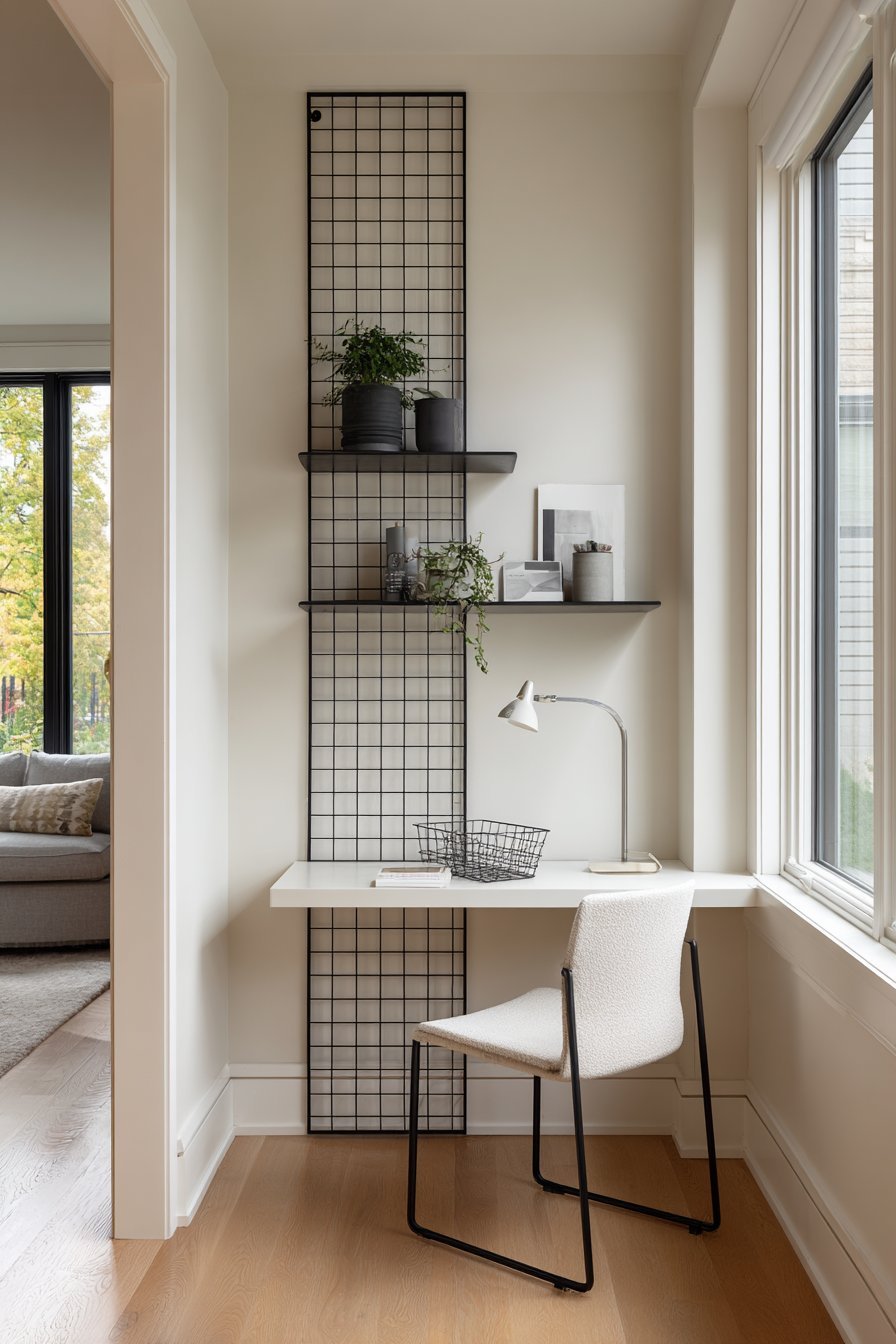
This approach demonstrates how vertical organization enhances productivity spaces. The grid system allows flexible arrangement as needs change. Inspiration photos and important papers remain visible yet organized. Professional interior design shows how function and aesthetics merge seamlessly.
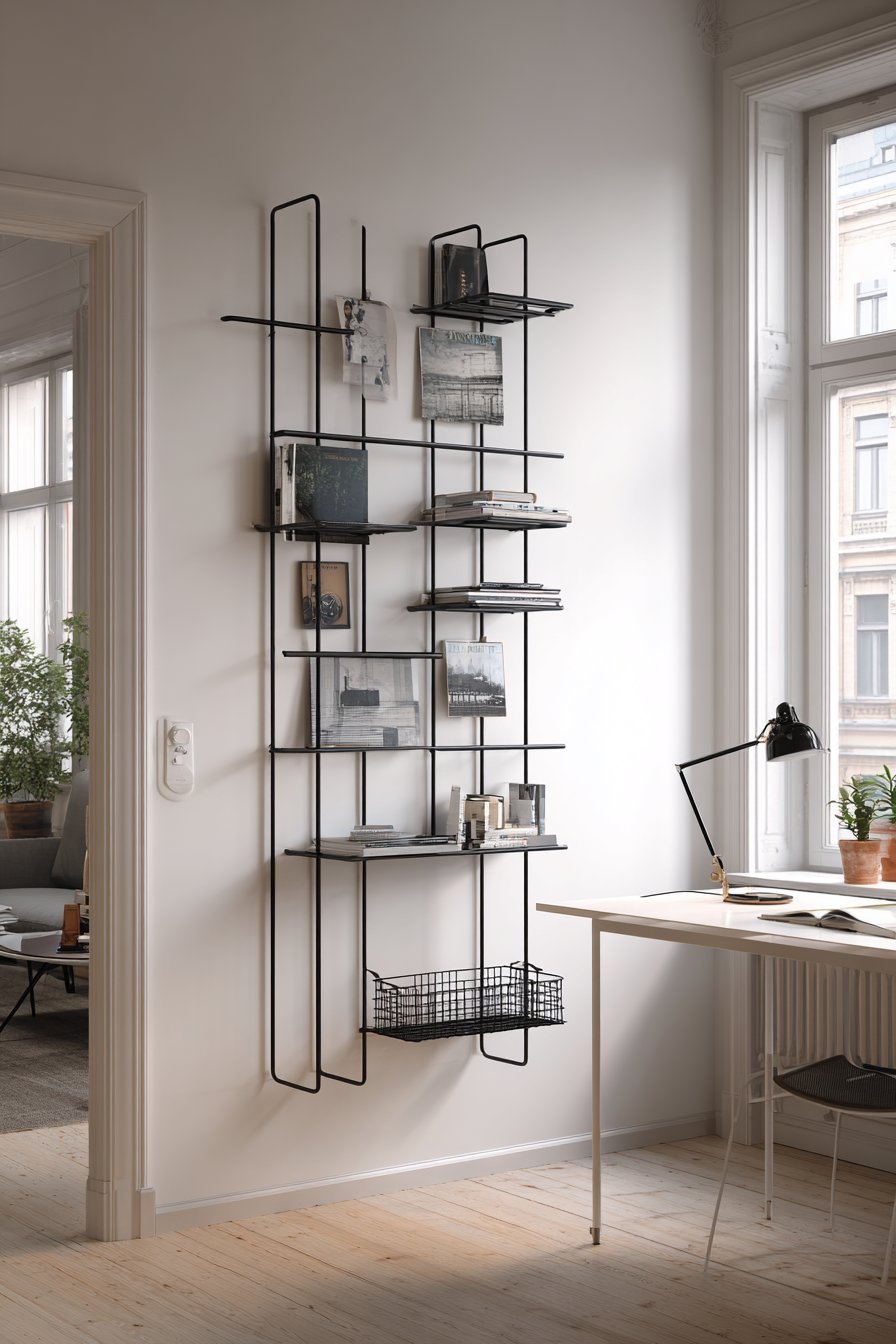
Balanced exposure captures the room’s uncluttered feel effectively. The vertical structure creates architectural interest in otherwise plain walls. This design proves that practical solutions can be visually striking.
Key Design Tips:
- Install floor-to-ceiling for maximum vertical impact and utility
- Choose black metal against white walls for graphic contrast
- Keep displayed items minimal to maintain clean aesthetic
- Use clips that match grid finish for cohesive appearance
- Position near natural light to reduce shadows and improve visibility
8. Nautical Oar Collection
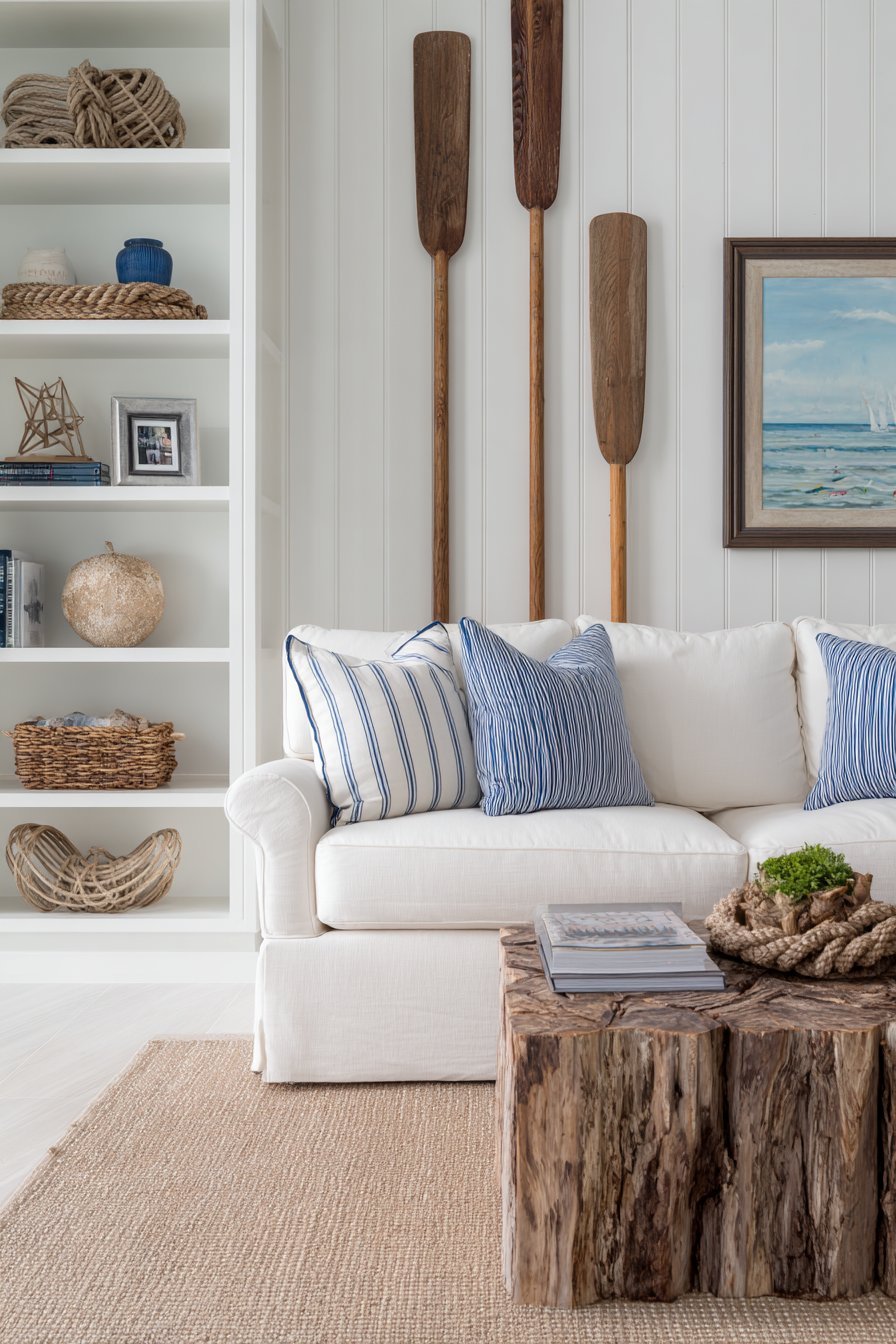
Coastal living rooms incorporate weathered wooden oars as vertical statements. Vintage nautical rope arranged vertically adds authentic maritime character. Built-in white shiplap shelving provides backdrop for the display. The vertical elements draw eyes upward while establishing theme.
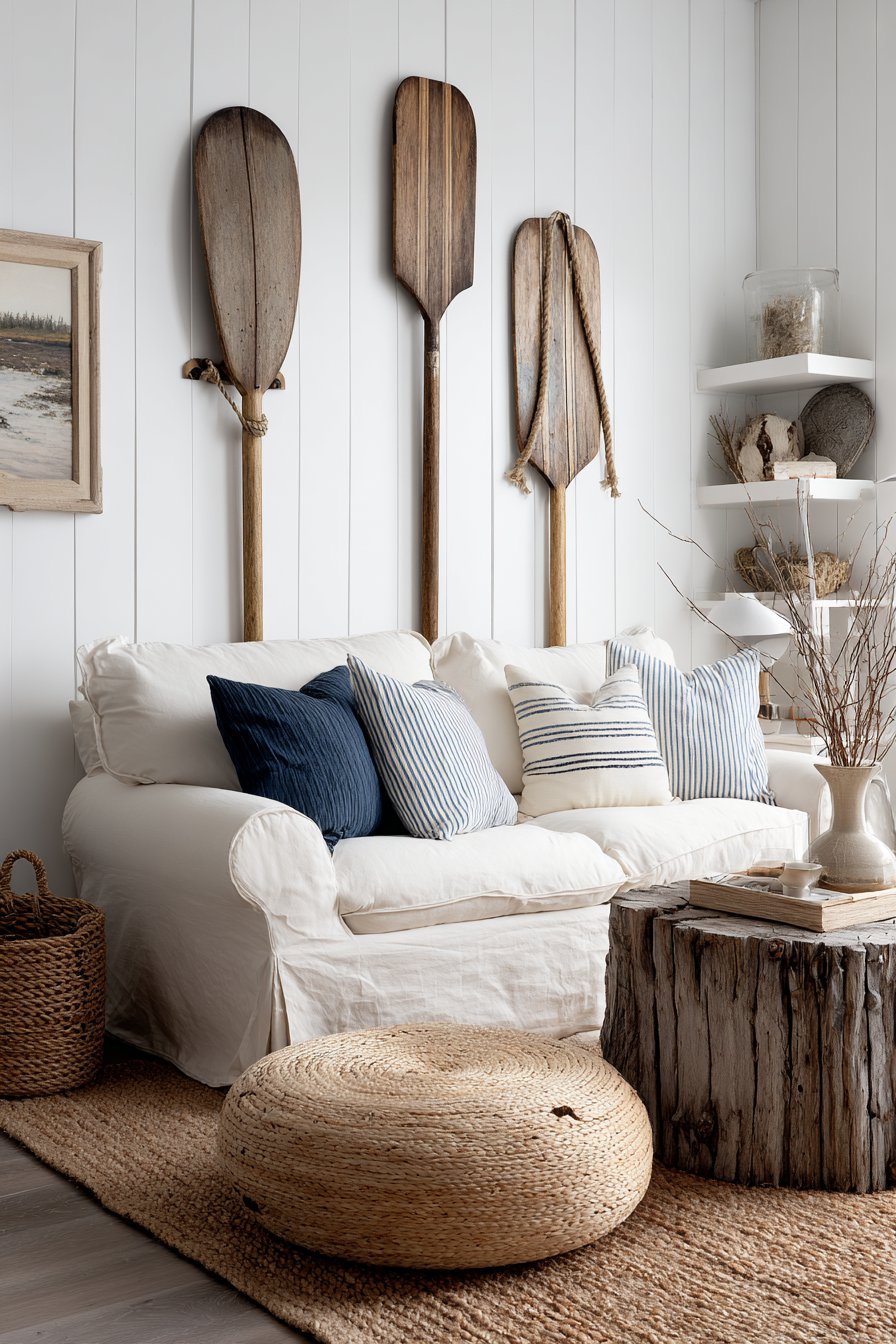
Natural linen slipcovers on sofas maintain relaxed coastal aesthetic. Blue and white striped pillows reinforce the maritime theme subtly. Jute area rugs and driftwood tables complete the authentic look. Soft natural lighting captures weathered wood textures beautifully.
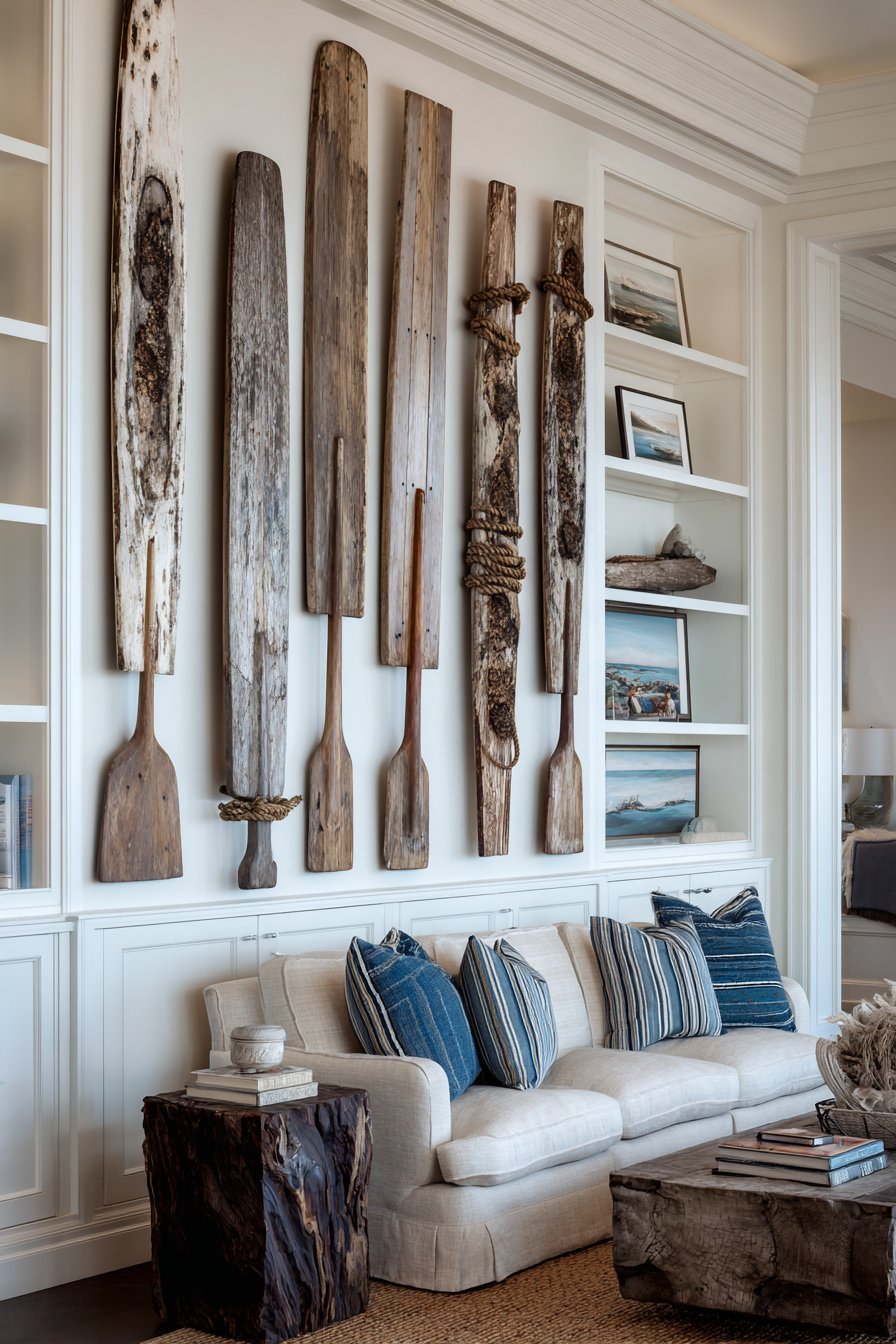
This design celebrates vertical elements with historical significance. The oars add height while telling coastal stories. Professional styling shows restraint in theme execution. Weathered finishes provide character without overwhelming the space.
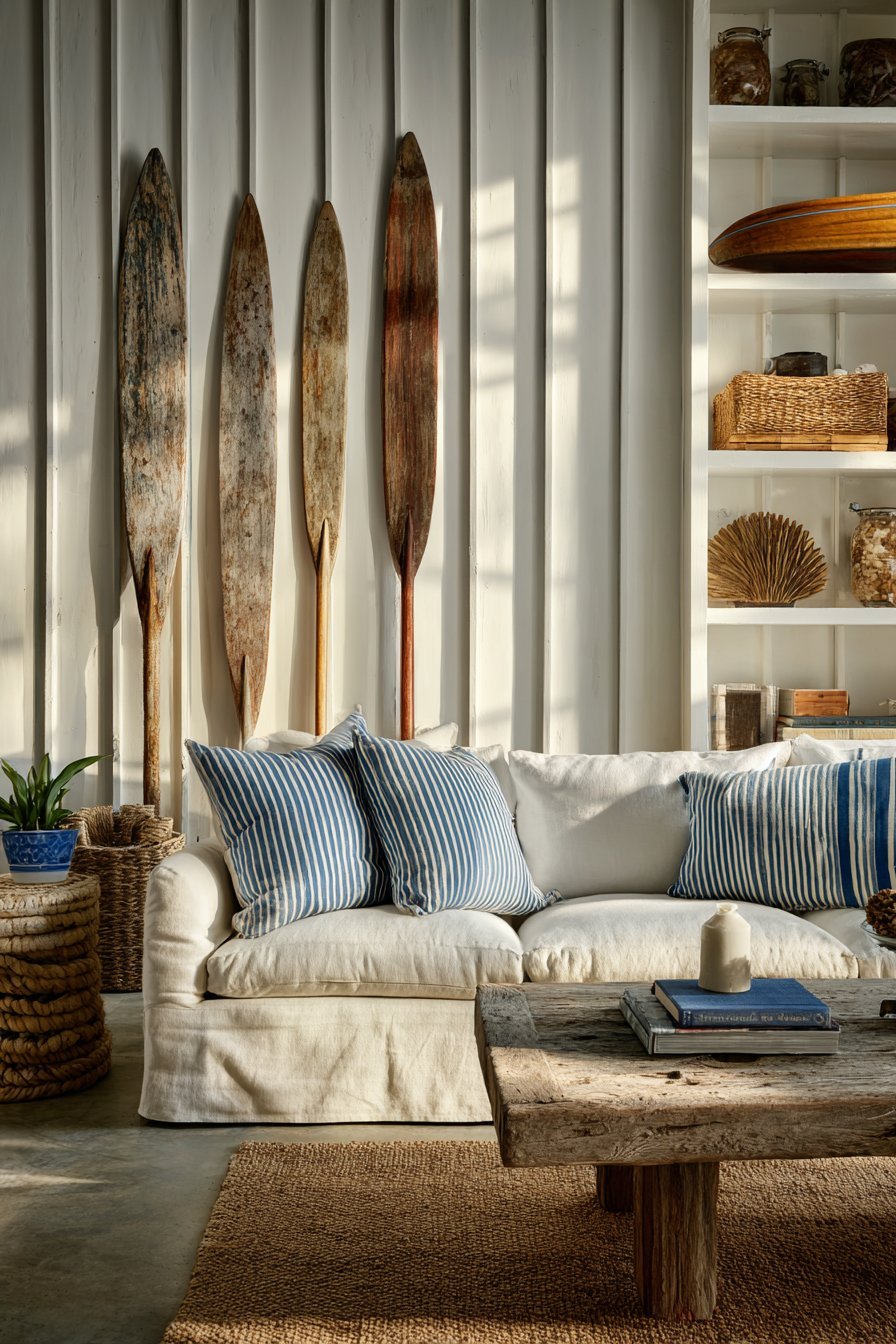
Photography emphasizes texture variations in wood and natural fibers. The vertical arrangement enhances perceived room height effectively. This approach proves that thematic elements succeed through authentic material choices.
Key Design Tips:
- Source authentic vintage oars for genuine weathered character
- Arrange vertically beside shelving for balanced composition
- Limit nautical elements to avoid overly themed appearance
- Choose natural fibers throughout for cohesive coastal aesthetic
- Allow weathered wood to show authentic age and patina
9. Industrial Pipe Shelving Tower
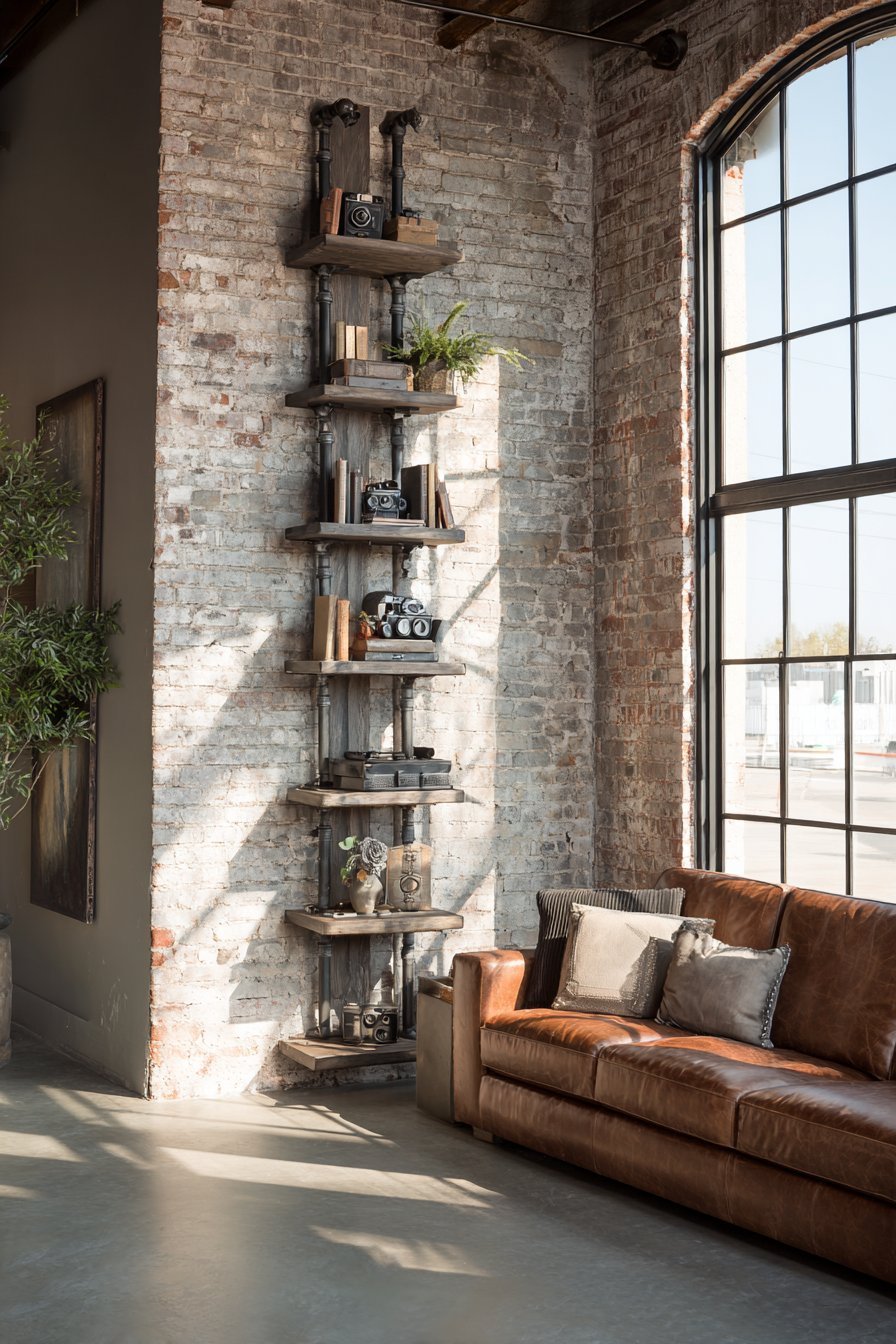
Industrial loft spaces embrace exposed metal pipe shelving configured vertically. The vertical column design displays books and vintage objects artfully. Black metal pipes create architectural interest against exposed brick walls. The industrial aesthetic remains consistent through material choices.
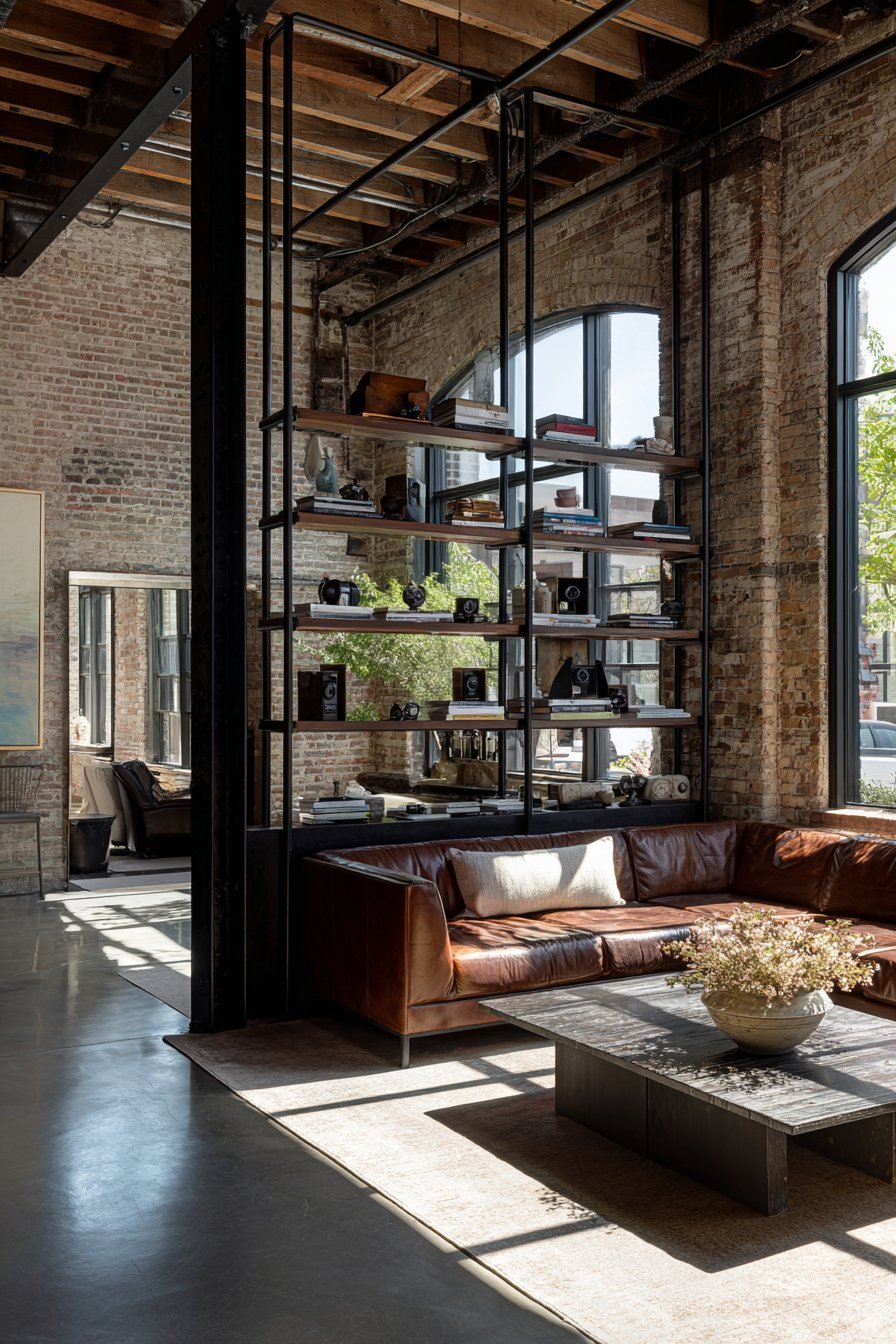
Cognac leather sofas provide rich tonal contrast to metal and brick. Reclaimed wood coffee tables continue the authentic material story. Large factory-style windows flood spaces with dramatic natural light. Shadows on textured brick emphasize vertical industrial elements beautifully.
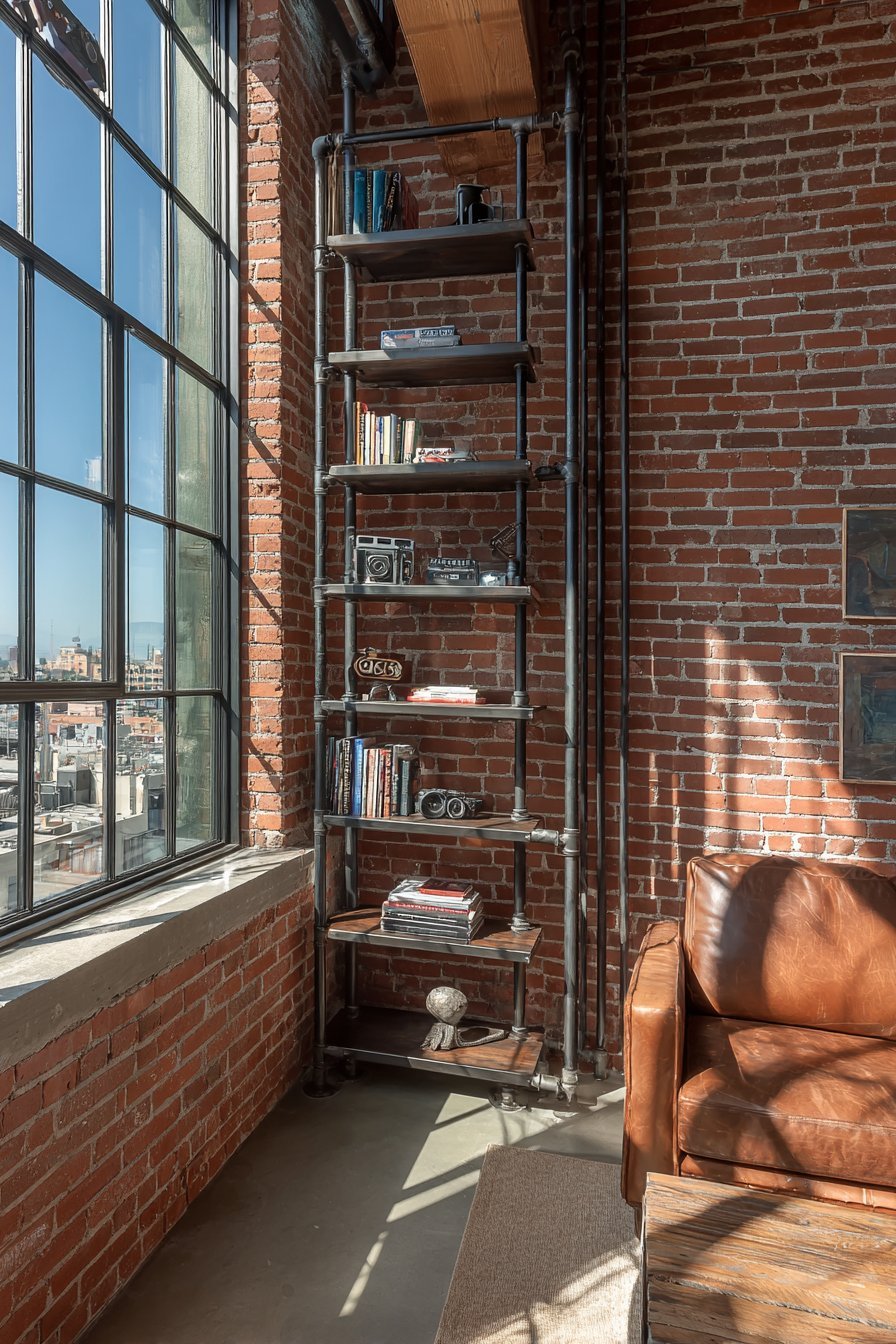
This design demonstrates how vertical arrangements suit industrial aesthetics perfectly. The pipe configuration adds storage without conventional shelving appearance. Professional styling shows curated collections rather than cluttered displays. Material combinations create authenticity through honest expression.
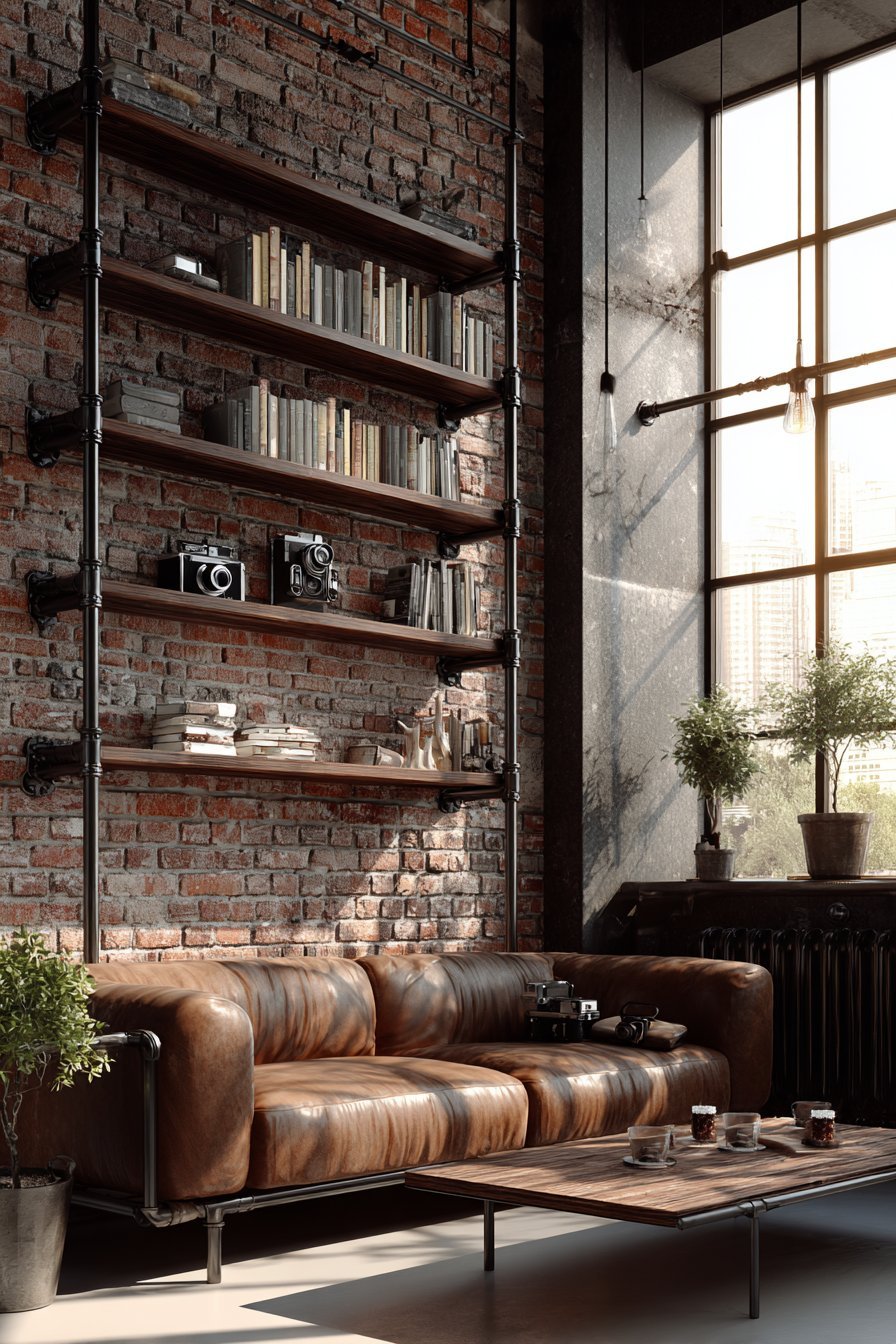
Wide-angle photography captures vertical emphasis in architectural context. The industrial elements enhance rather than compete with existing features. This approach proves that vertical storage solutions can be sculptural.
Key Design Tips:
- Use authentic metal pipes rather than decorative alternatives
- Configure vertically to maximize height and visual impact
- Display curated collections to avoid cluttered appearance
- Allow brick and pipe to show authentic wear
- Position near large windows to create dramatic light and shadow play
10. Vertical Wood Accent Wall
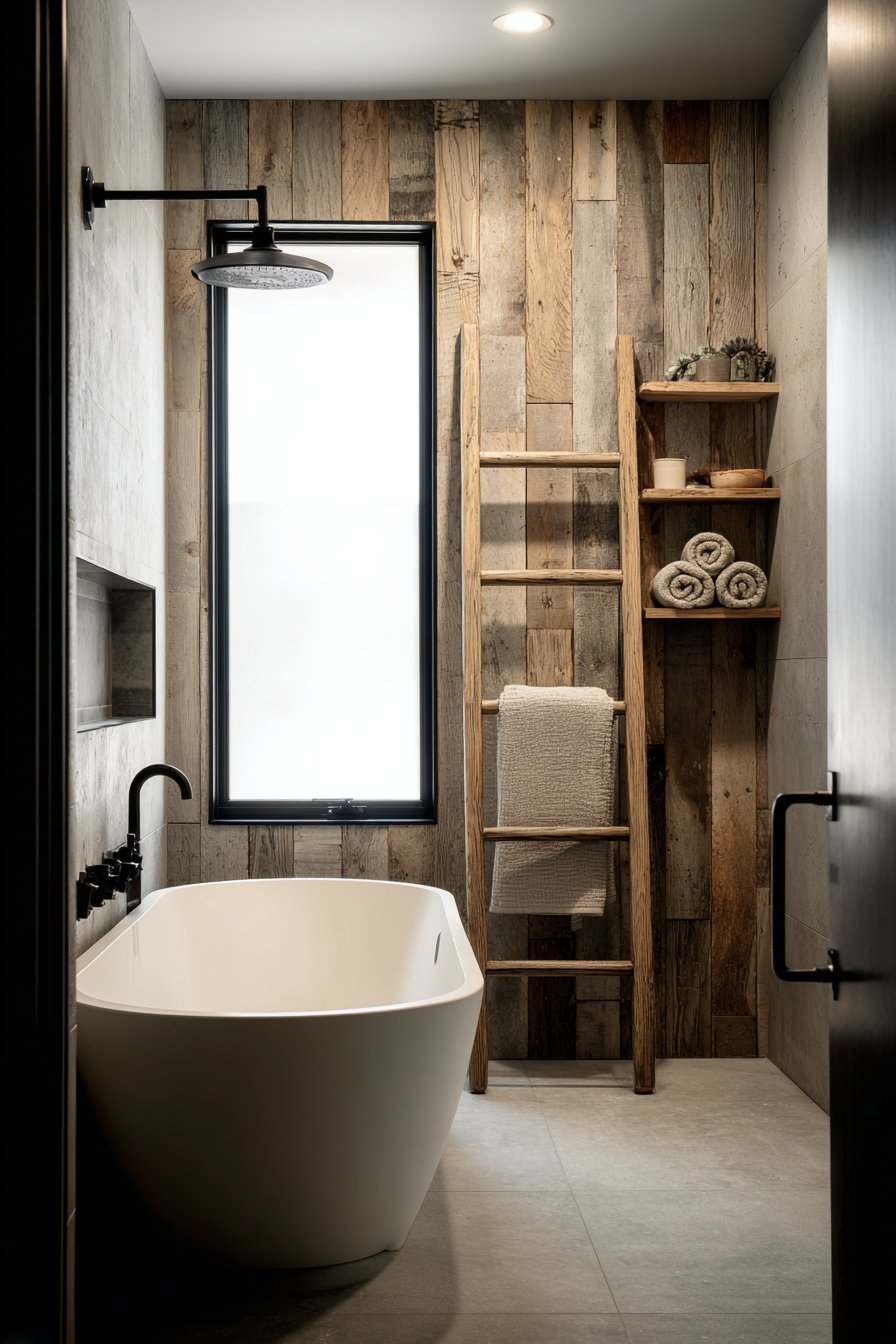
Transitional bathrooms feature narrow vertical planks of reclaimed barn wood. Floor-to-ceiling installation behind freestanding tubs creates warmth. The vertical pattern emphasizes height in neutral spaces. Matte black fixtures provide contemporary contrast to rustic wood.
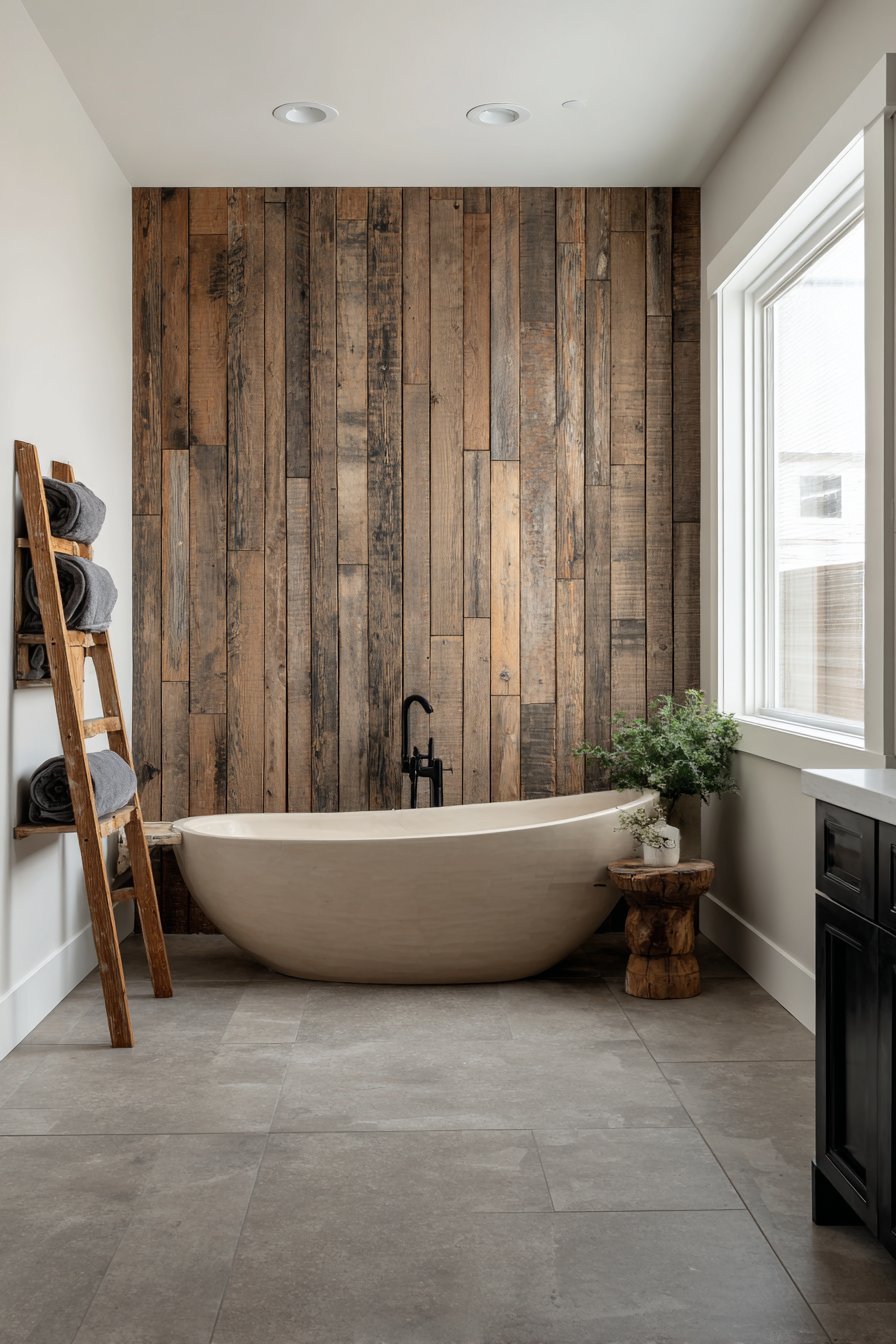
Concrete-look porcelain tiles add modern industrial touches. Small ladder shelves in matching wood hold rolled towels functionally. Frosted windows provide natural light while maintaining privacy. Wood grain variations become focal points through vertical emphasis.
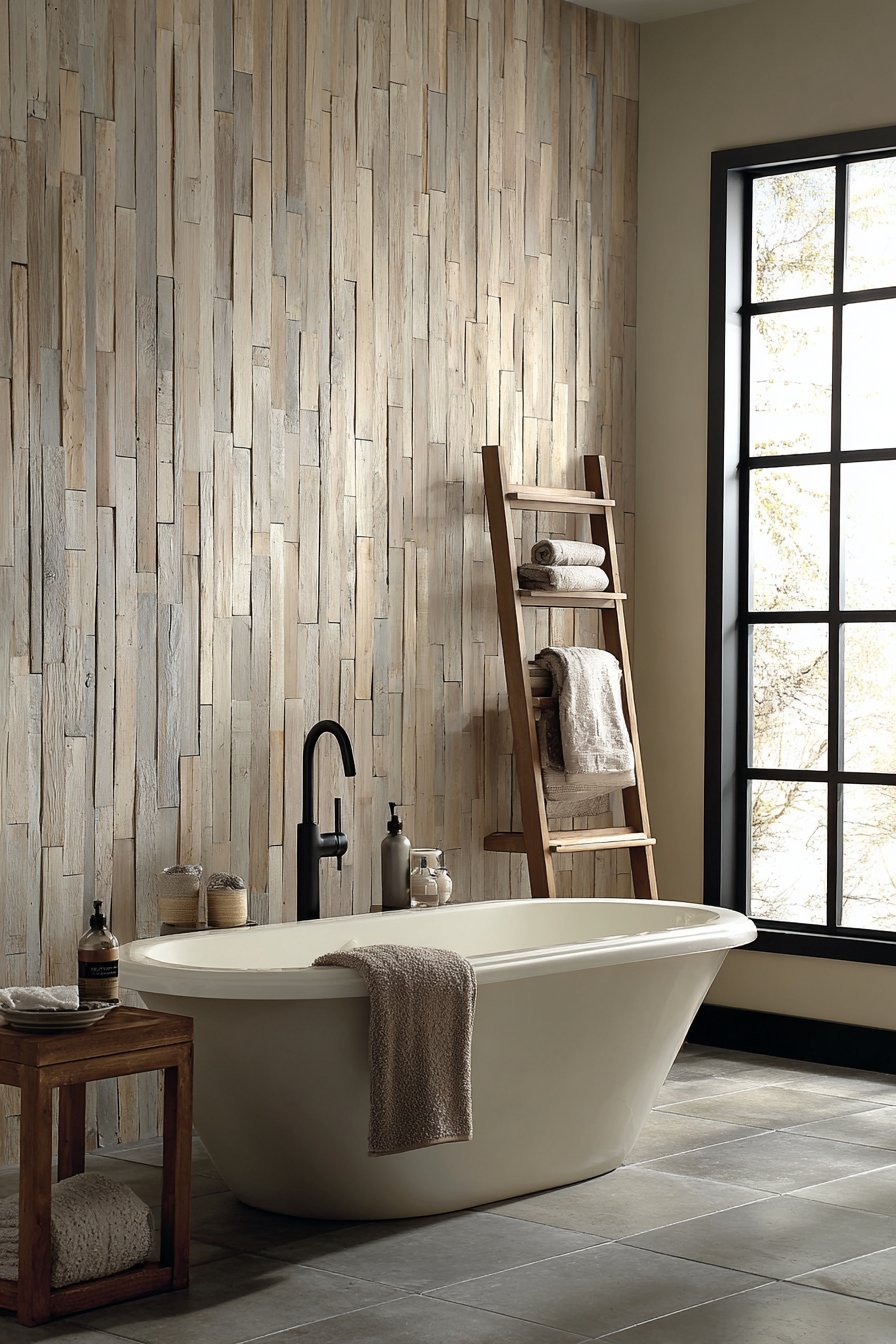
This design balances rustic and modern elements through material contrast. The vertical wood pattern adds warmth without overwhelming clean lines. Professional installation ensures proper moisture protection in bathroom environments. Balanced lighting reveals sophisticated material combinations.
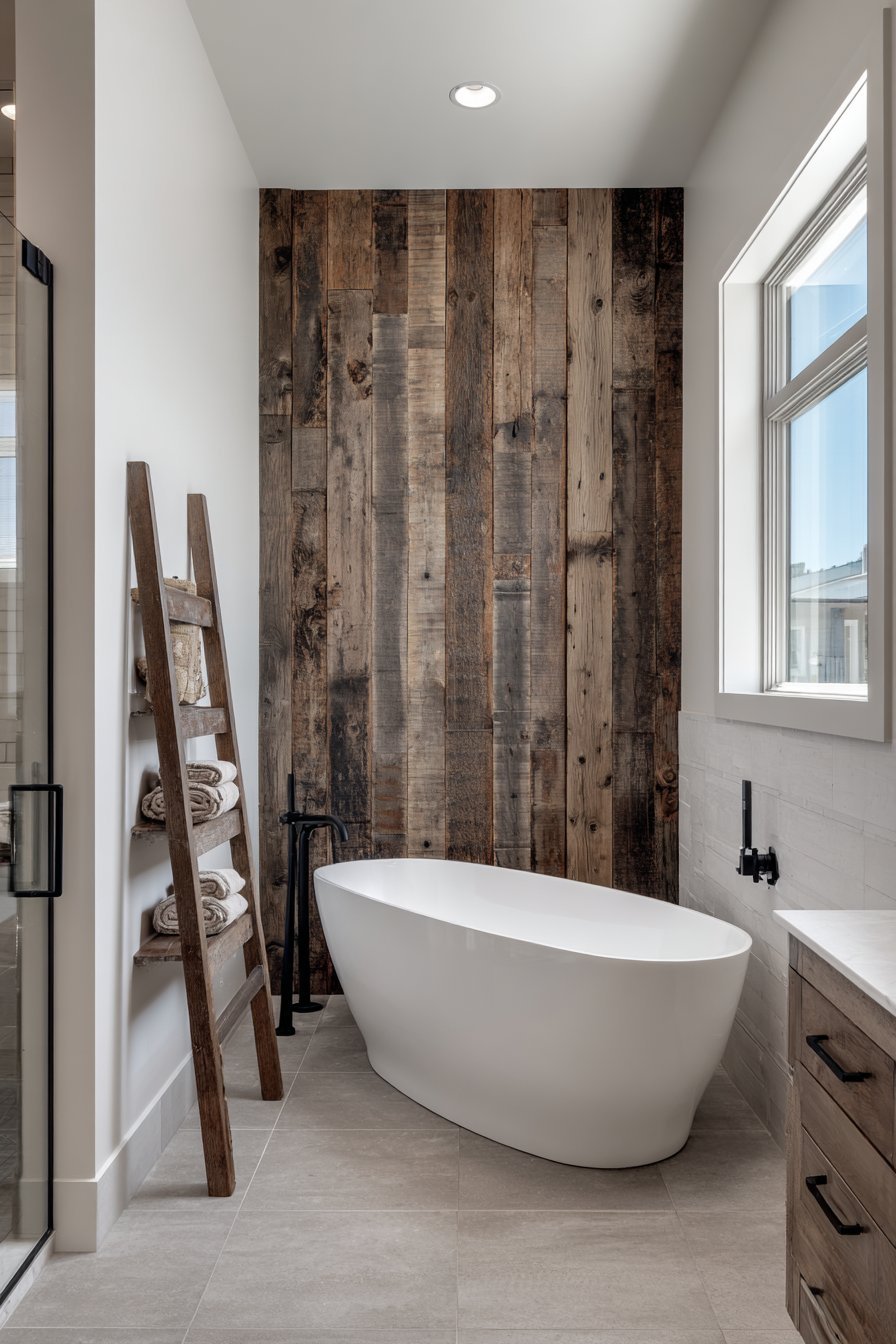
Photography captures how vertical orientation transforms simple materials. The wood accent wall becomes architectural feature rather than mere decoration. This approach proves that vertical patterns enhance perceived dimensions dramatically.
Key Design Tips:
- Select reclaimed wood treated for bathroom humidity exposure
- Install vertically to maximize height perception
- Balance rustic wood with modern fixtures for transitional style
- Ensure proper moisture barriers behind wood installations
- Use natural light to highlight wood grain variations
11. Watercolor Animal Nursery Gallery
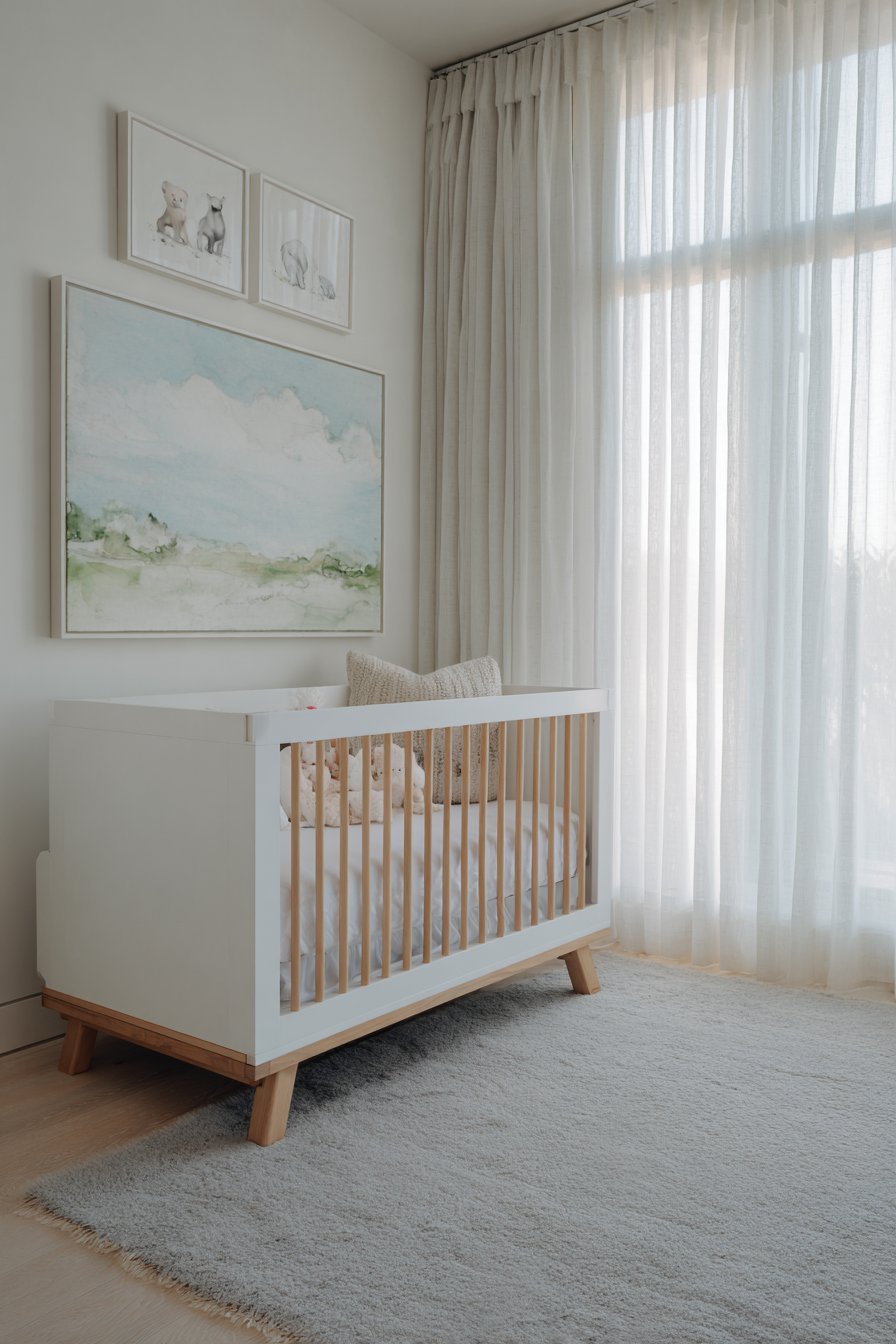
Modern nurseries feature three large canvas prints arranged vertically. Gentle watercolor animals create soothing focal points above cribs. The vertical column maintains calm atmosphere while adding visual interest. White convertible cribs with natural wood legs anchor the design below.
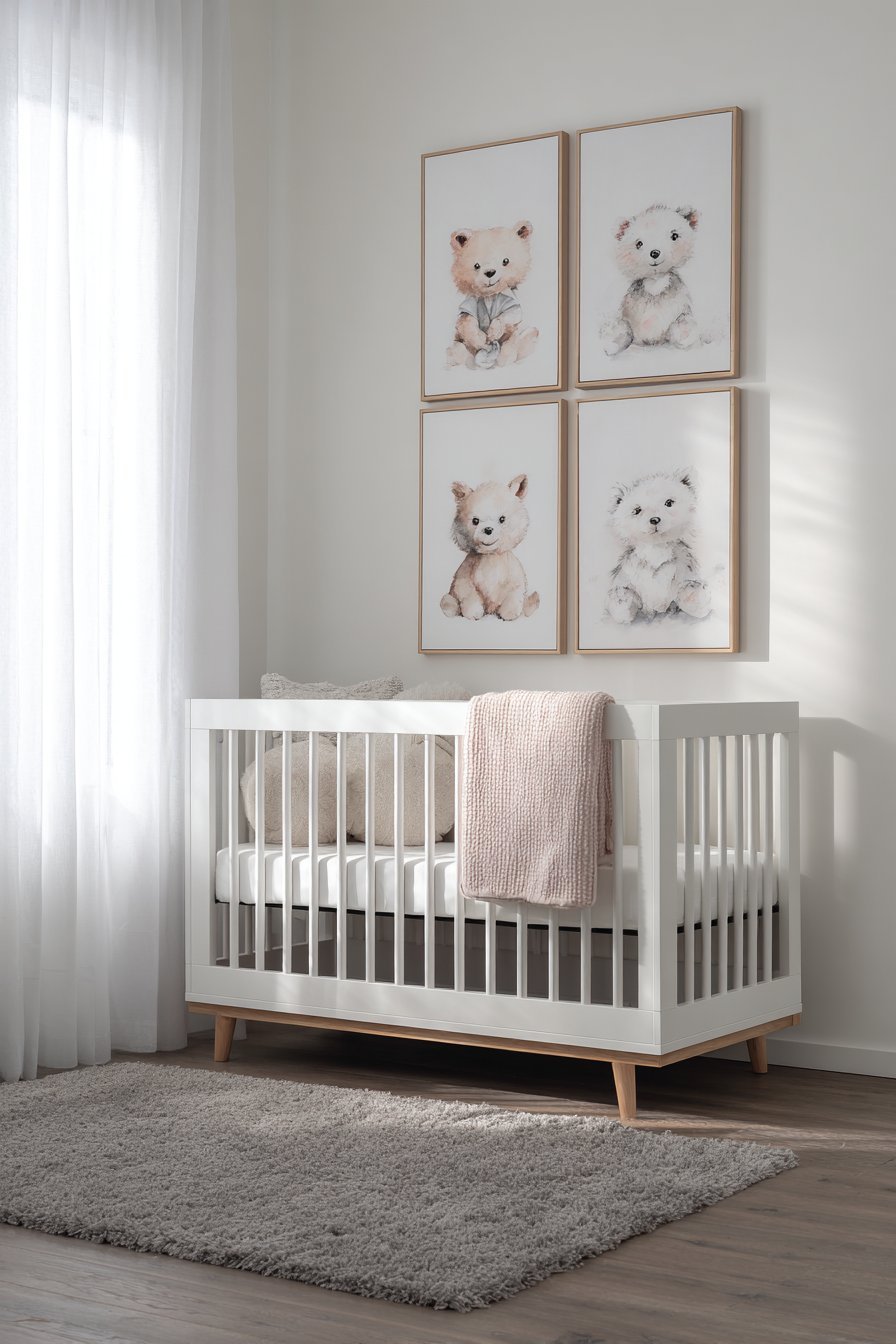
Plush gray area rugs provide soft landing surfaces. Sheer white curtains filter natural light for gentle illumination. The vertical arrangement creates focus without overstimulation. Subtle material textures throughout maintain serene environments.
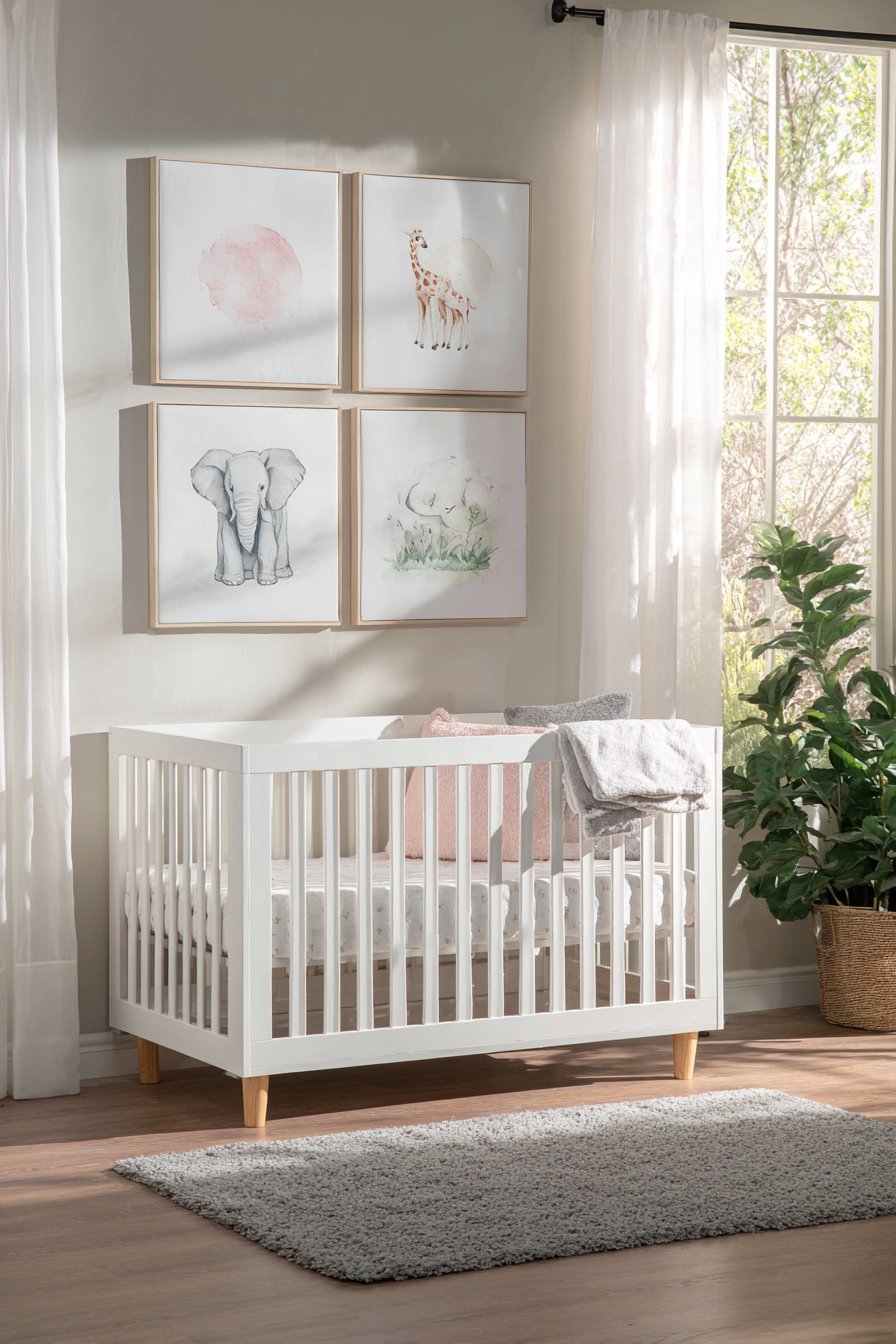
This design demonstrates how vertical arrangements suit nursery spaces perfectly. The canvas prints remain at appropriate scale for young viewers. Professional photography captures calming color palettes and soft lighting. Material choices prioritize safety and comfort throughout.
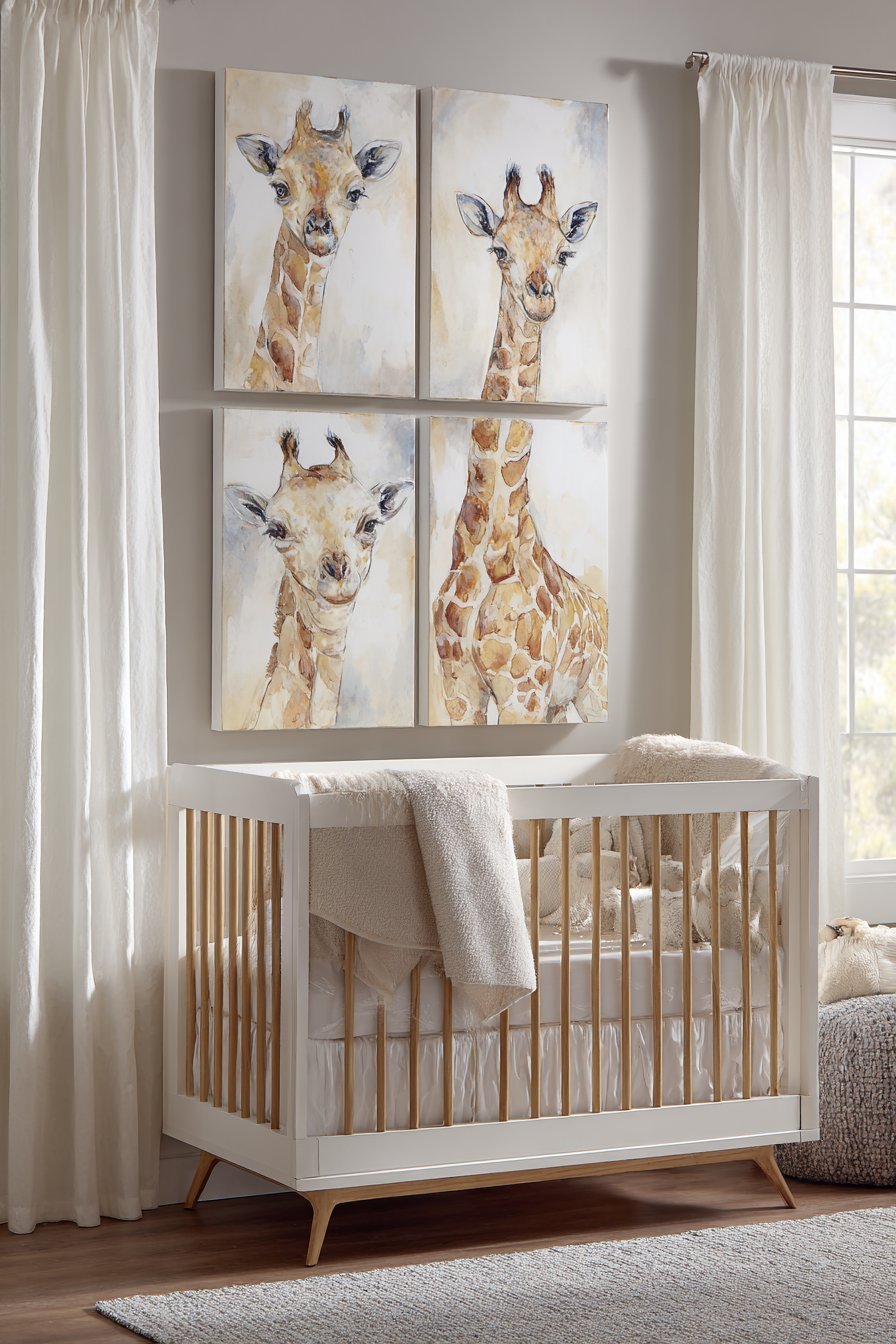
Natural light interaction with artwork creates changing displays throughout the day. The vertical emphasis draws attention to art rather than cluttered walls. This approach proves that vertical arrangements can be soothing rather than stimulating.
Key Design Tips:
- Choose gentle watercolor art for calming effect in nurseries
- Arrange three prints vertically for balanced composition
- Position above cribs at safe viewing height
- Filter natural light with sheer curtains for soft illumination
- Maintain neutral palette to support peaceful sleeping environment
12. Ascending Mirror Stairwell
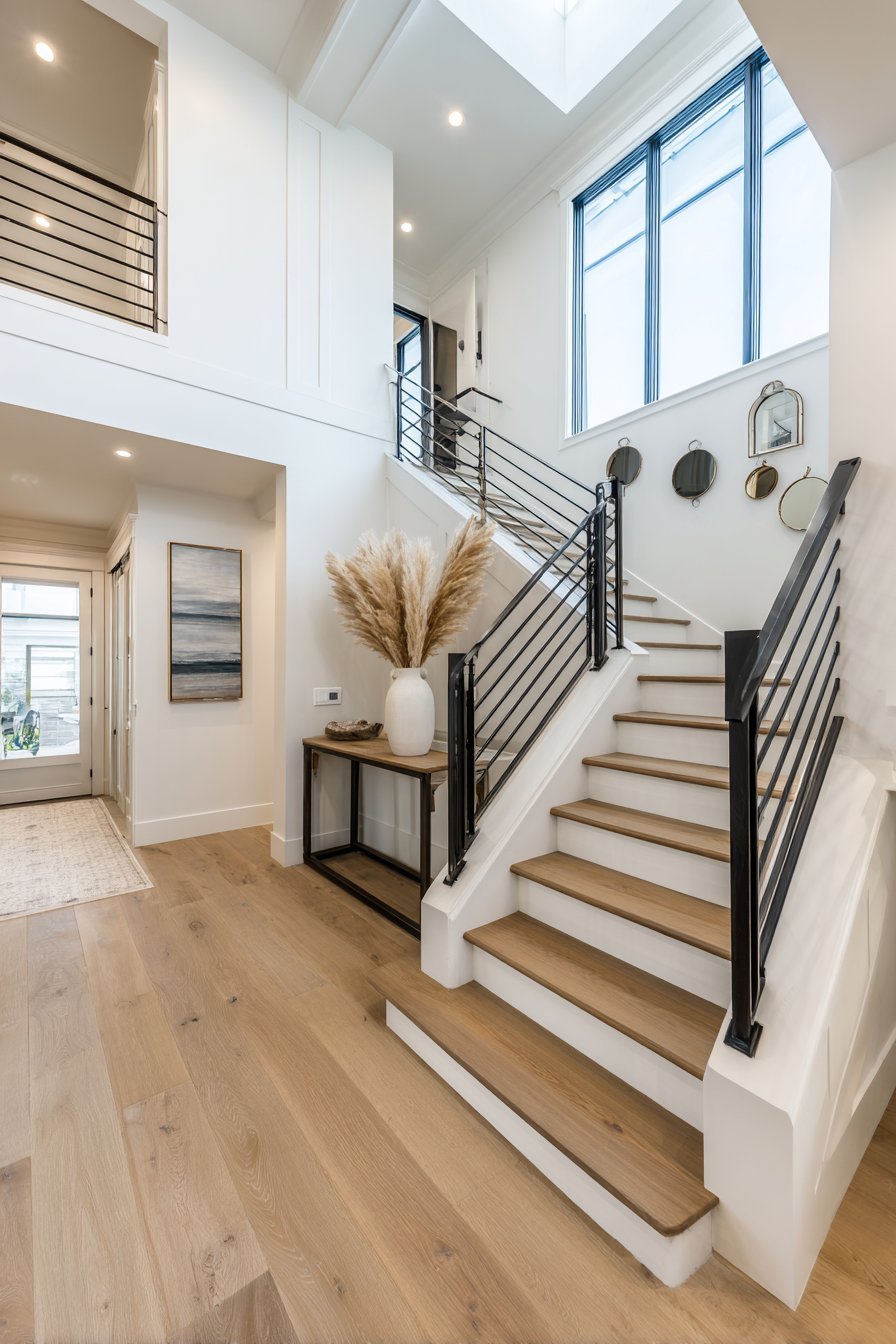
Contemporary stairwells feature round mirrors in varied sizes ascending vertically. The arrangement follows staircase angles naturally. Mirrors reflect natural light throughout vertical spaces. White walls with subtle texture frame the display beautifully.
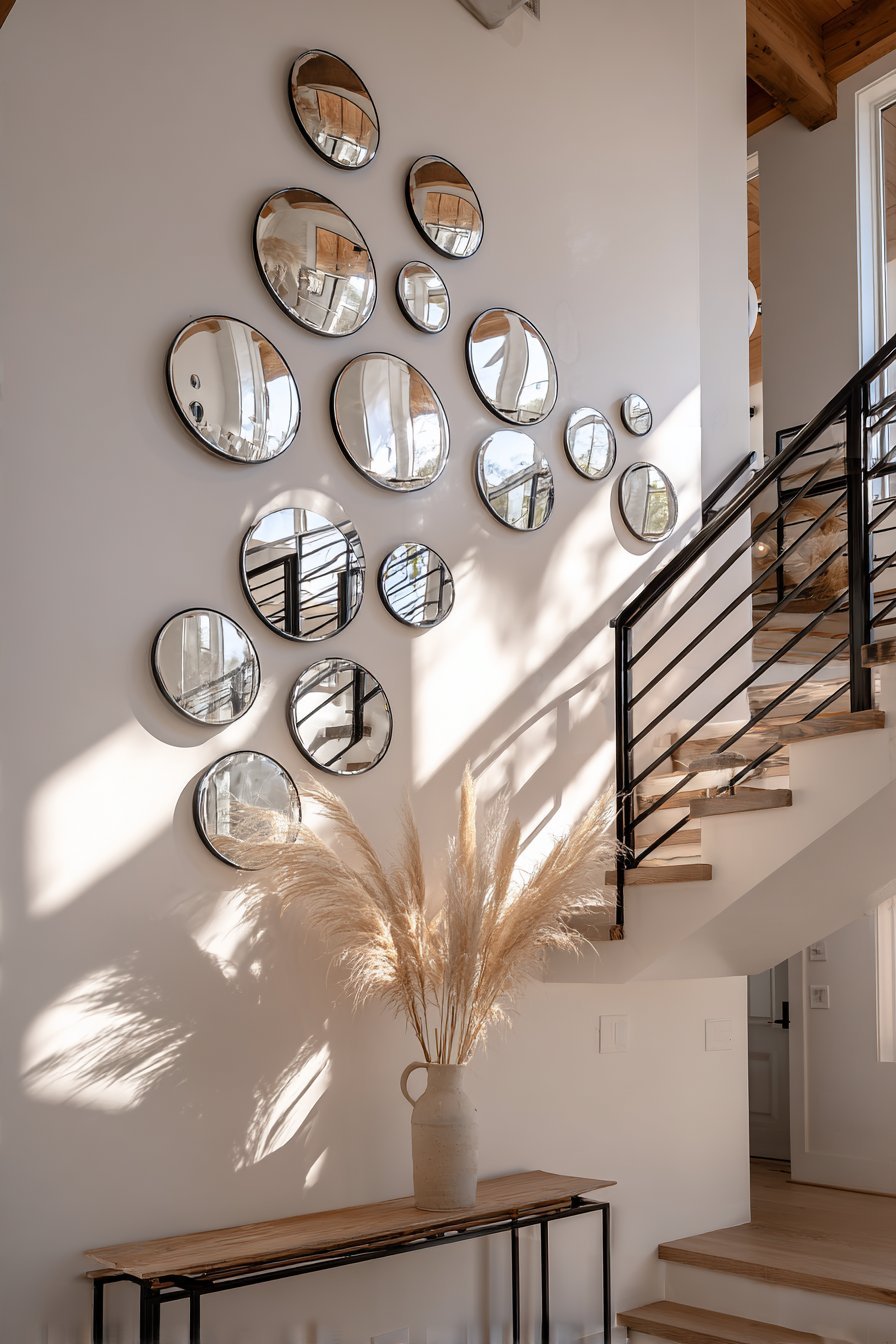
Light oak stair treads with black metal railings provide material contrast. Narrow console tables at the base hold simple ceramic vases. Dried pampas grass adds organic softness to geometric mirrors. Natural light from skylights enhances reflective qualities dramatically.
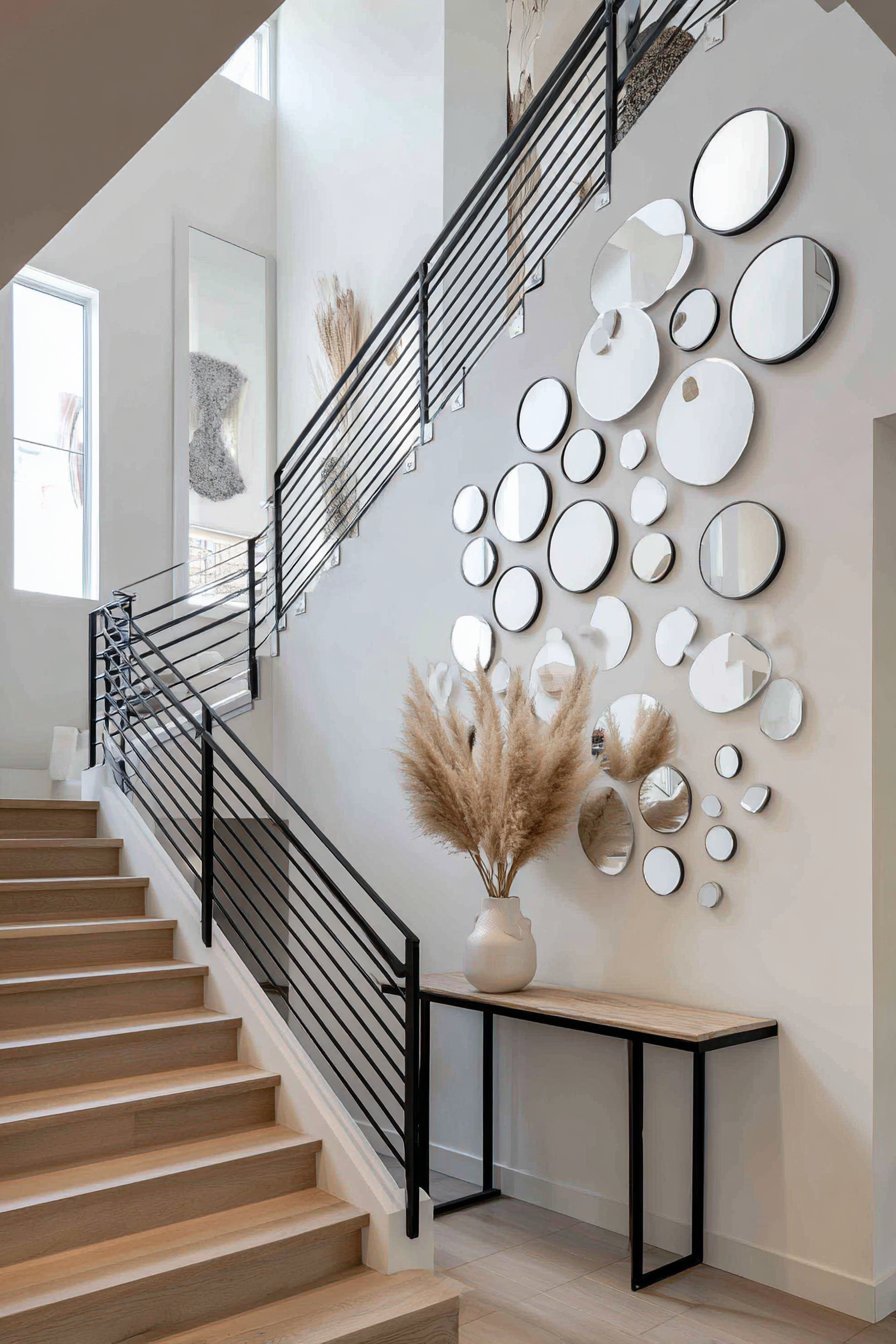
This design demonstrates how mirrors amplify light and space vertically. The ascending arrangement creates dynamic movement up staircases. Professional installation ensures secure mounting on angled walls. Size variations prevent monotony while maintaining cohesive aesthetic.
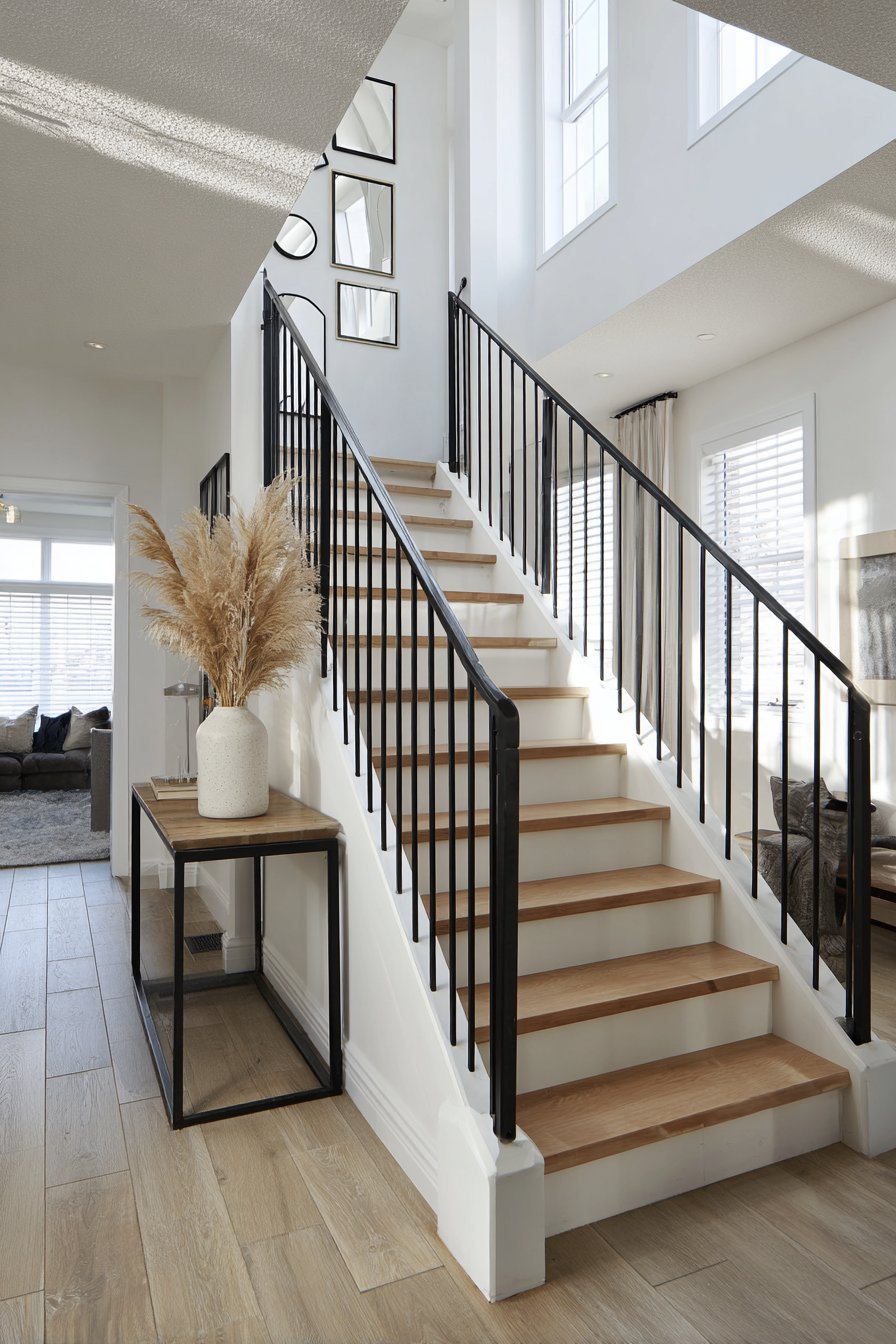
Wide-angle photography captures how natural light interacts with mirrors throughout the day. The vertical flow guides movement up stairs naturally. This approach proves that functional elements can be sculptural installations.
Key Design Tips:
- Vary mirror sizes to create dynamic ascending rhythm
- Follow staircase angle for natural vertical flow
- Ensure secure mounting on angled walls through professional installation
- Position to maximize natural light reflection from skylights
- Keep frames consistent for cohesive appearance despite size variations
13. Vintage Window Frame Statement
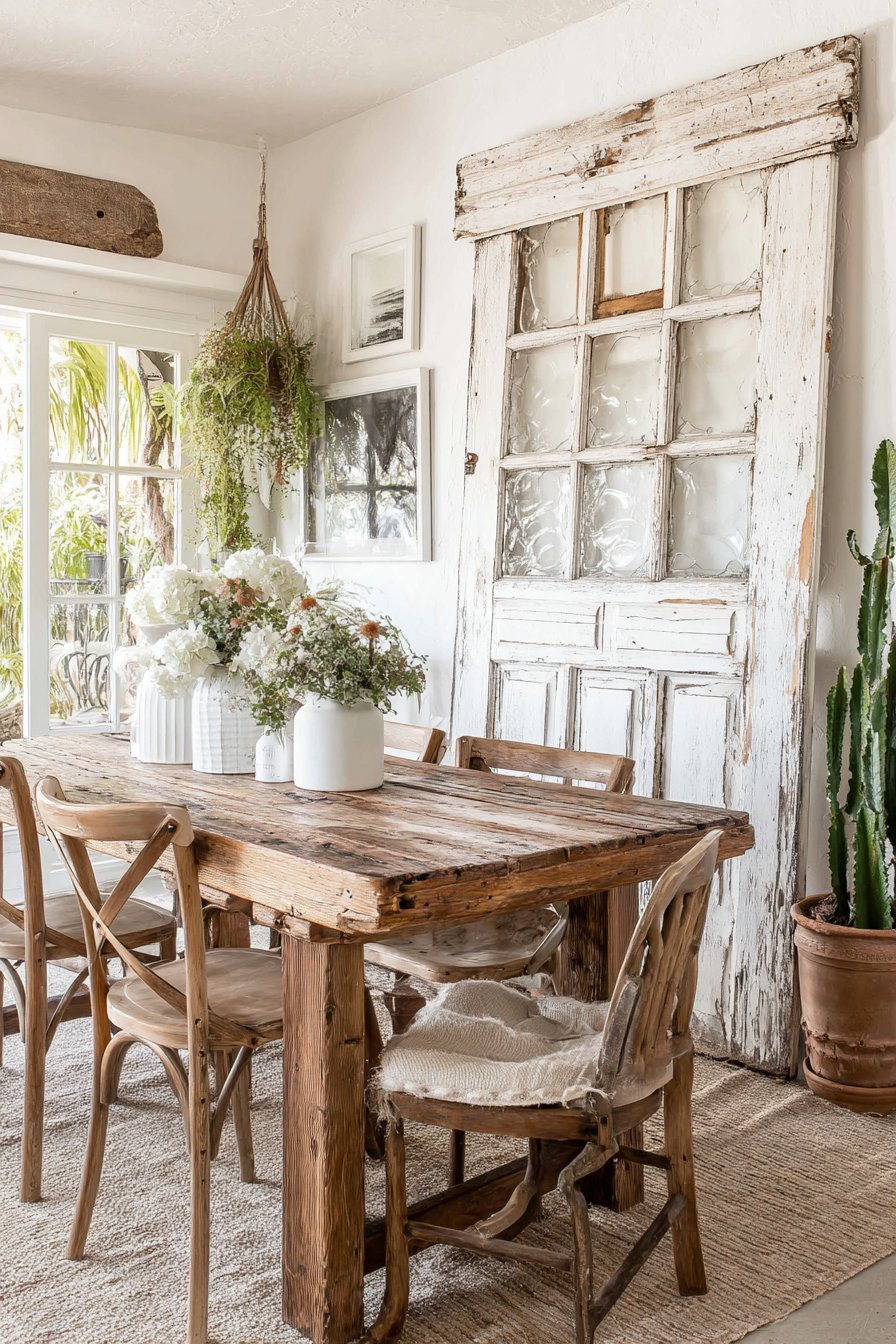
Rustic dining rooms feature tall vintage window frames mounted vertically. Original wavy glass and weathered white paint show authentic age. The vertical architectural element adds character and height simultaneously. Farmhouse tables in reclaimed wood anchor the design below.
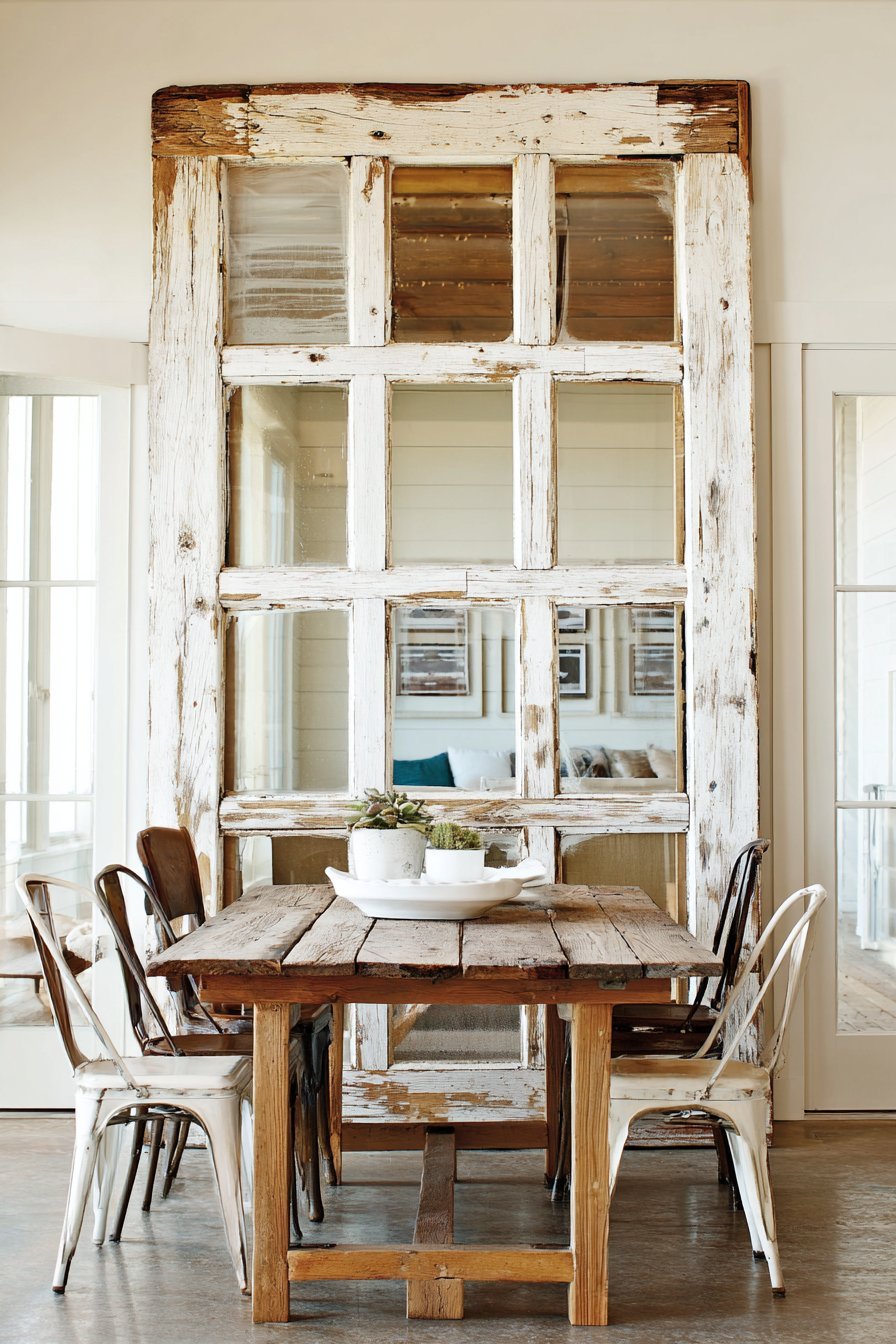
Mismatched vintage chairs provide eclectic charm around tables. Simple white ironstone creates understated tablescapes. Natural light from actual windows creates interesting reflections in antique glass. Professional photography emphasizes authentic patina and aged materials.
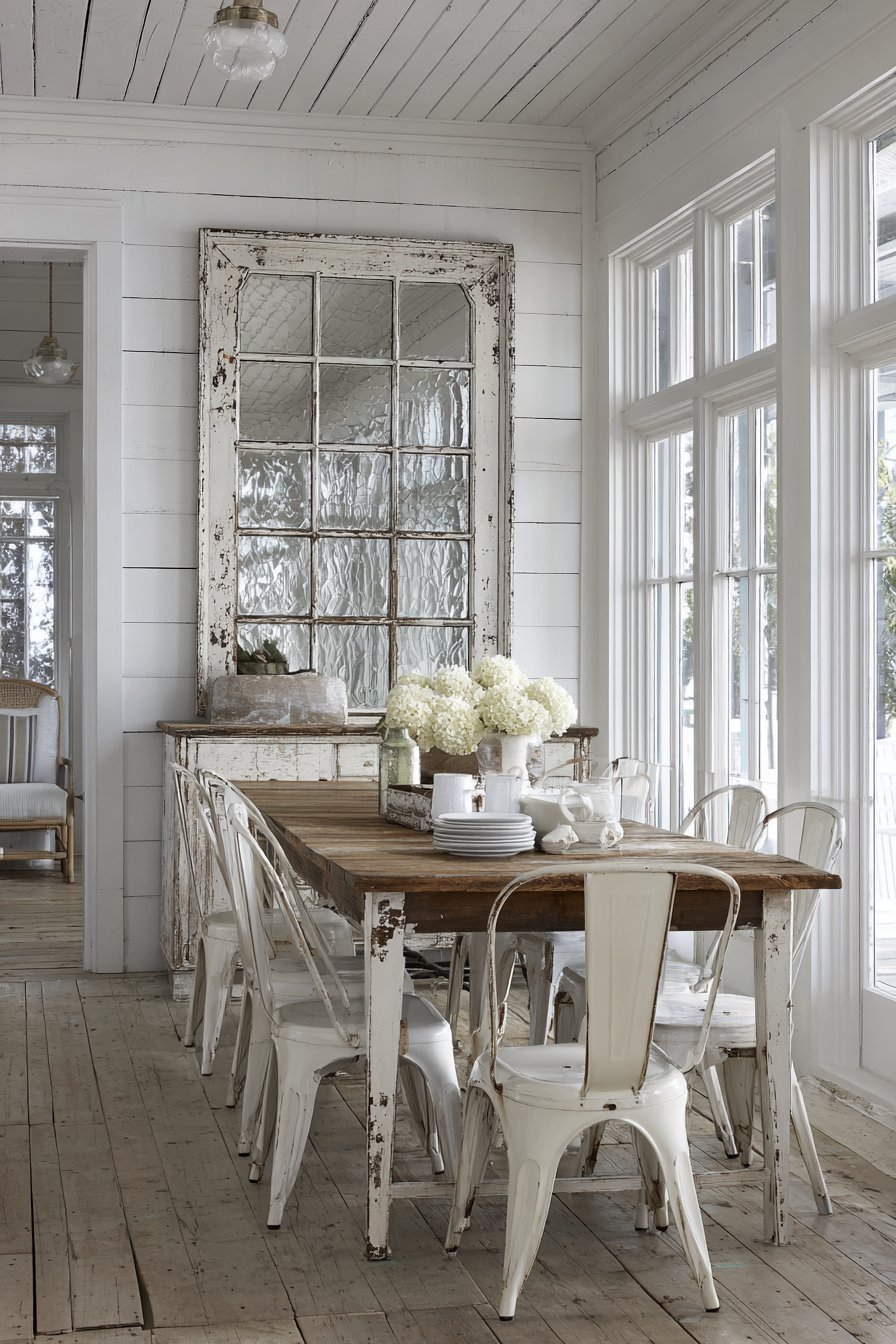
This design celebrates architectural salvage as vertical art. The window frame adds history without requiring additional decoration. Weathered paint shows character through natural aging processes. Material authenticity creates environments rich with story and texture.
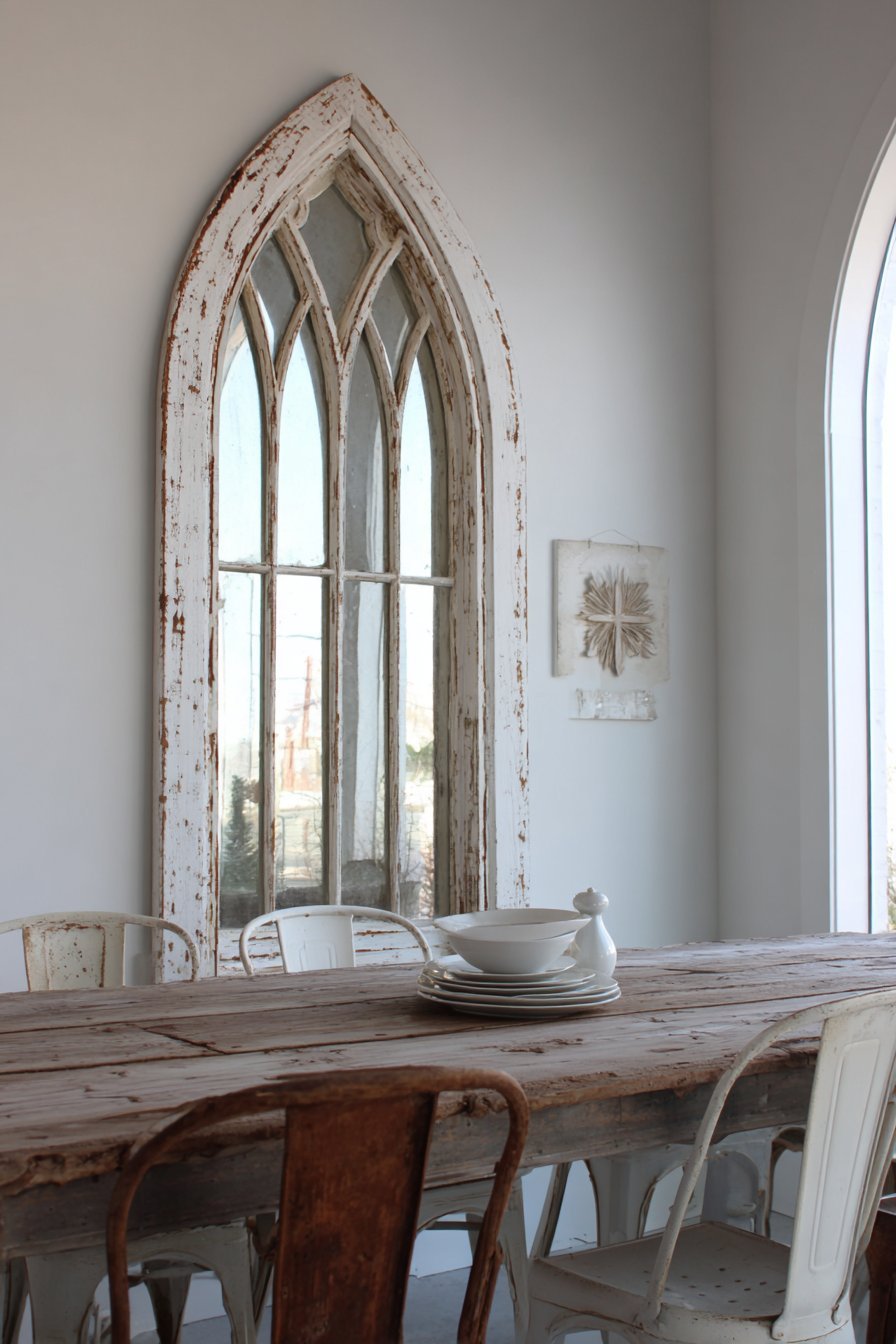
Reflections in wavy glass add unexpected visual interest throughout the day. The vertical element draws attention while maintaining rustic simplicity. This approach proves that architectural elements become art through thoughtful placement.
Key Design Tips:
- Source authentic vintage windows with original glass intact
- Mount securely to support glass weight safely
- Position to catch natural light for reflective interest
- Allow weathered paint to show authentic age
- Balance ornate vintage pieces with simple surrounding decor
14. Mid-Century Walnut Slat Panels
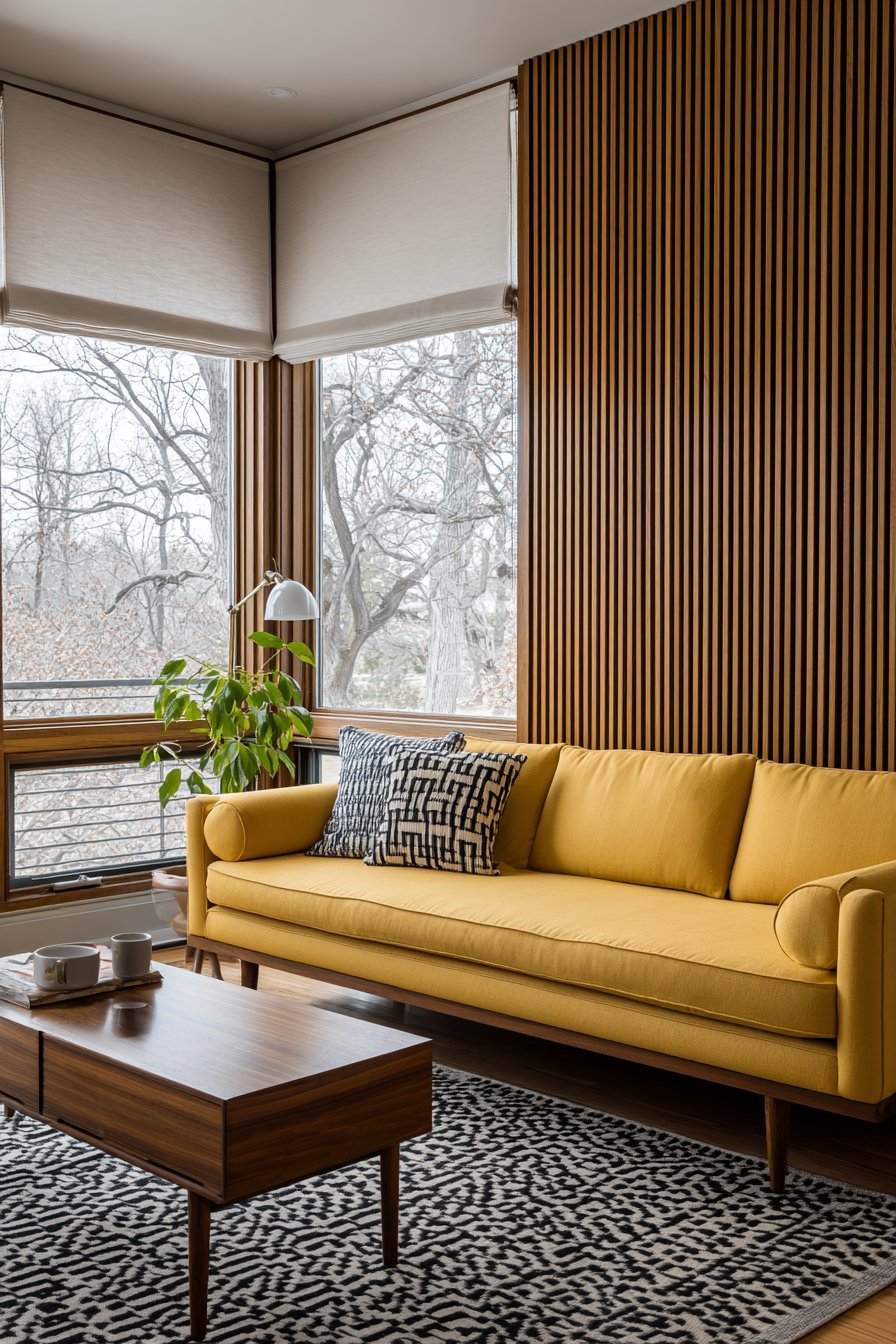
Mid-century modern living rooms feature vertical walnut slat panels. Three panels mounted with subtle gaps create architectural texture. The vertical installation adds warmth while honoring design principles. Low-profile sofas in mustard yellow provide period-appropriate color.
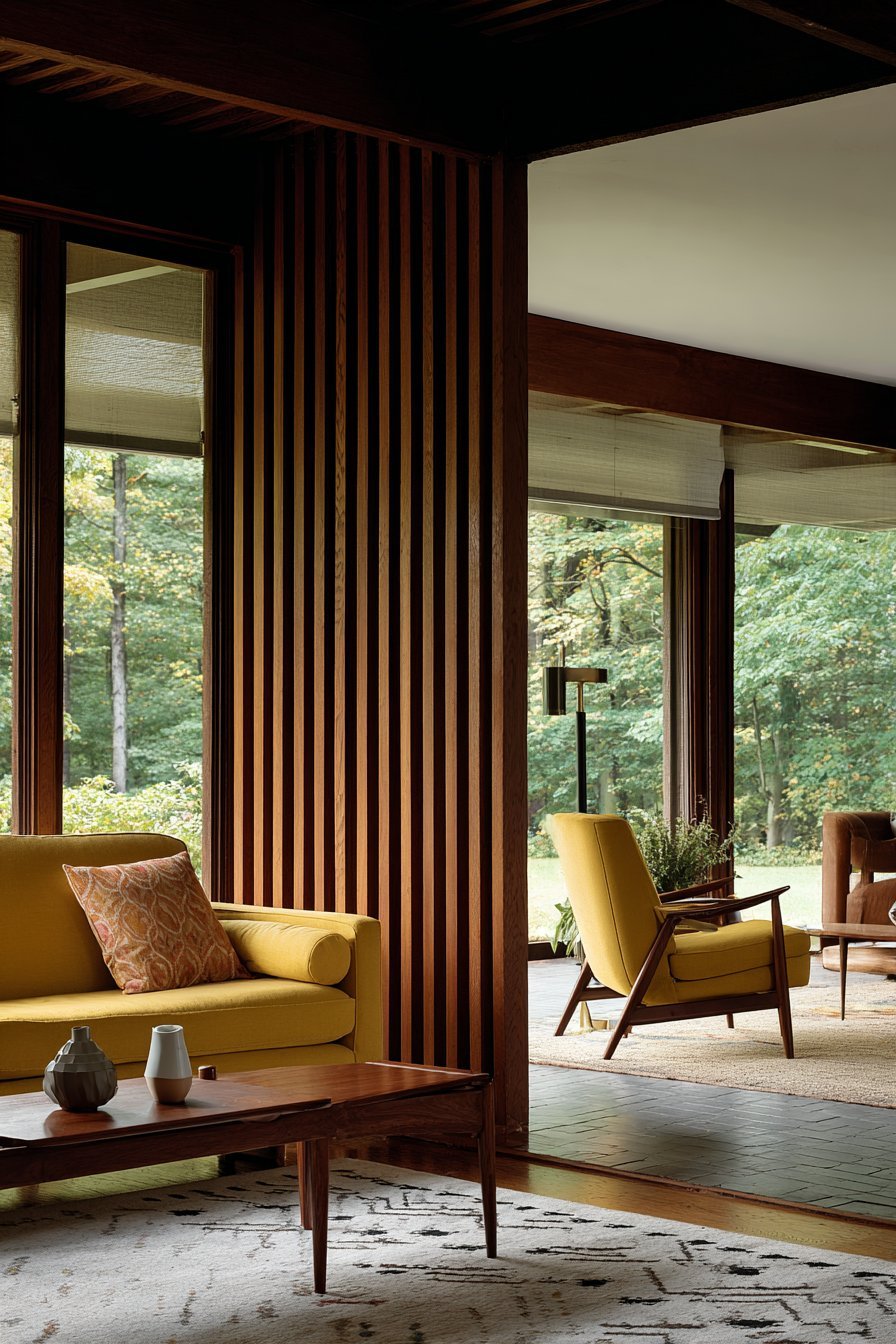
Teak coffee tables and geometric area rugs complete the aesthetic. Large windows with simple roller shades flood spaces with natural light. Wood grain in vertical panels becomes focal point through careful placement. Professional photography captures clean lines and authentic materials.
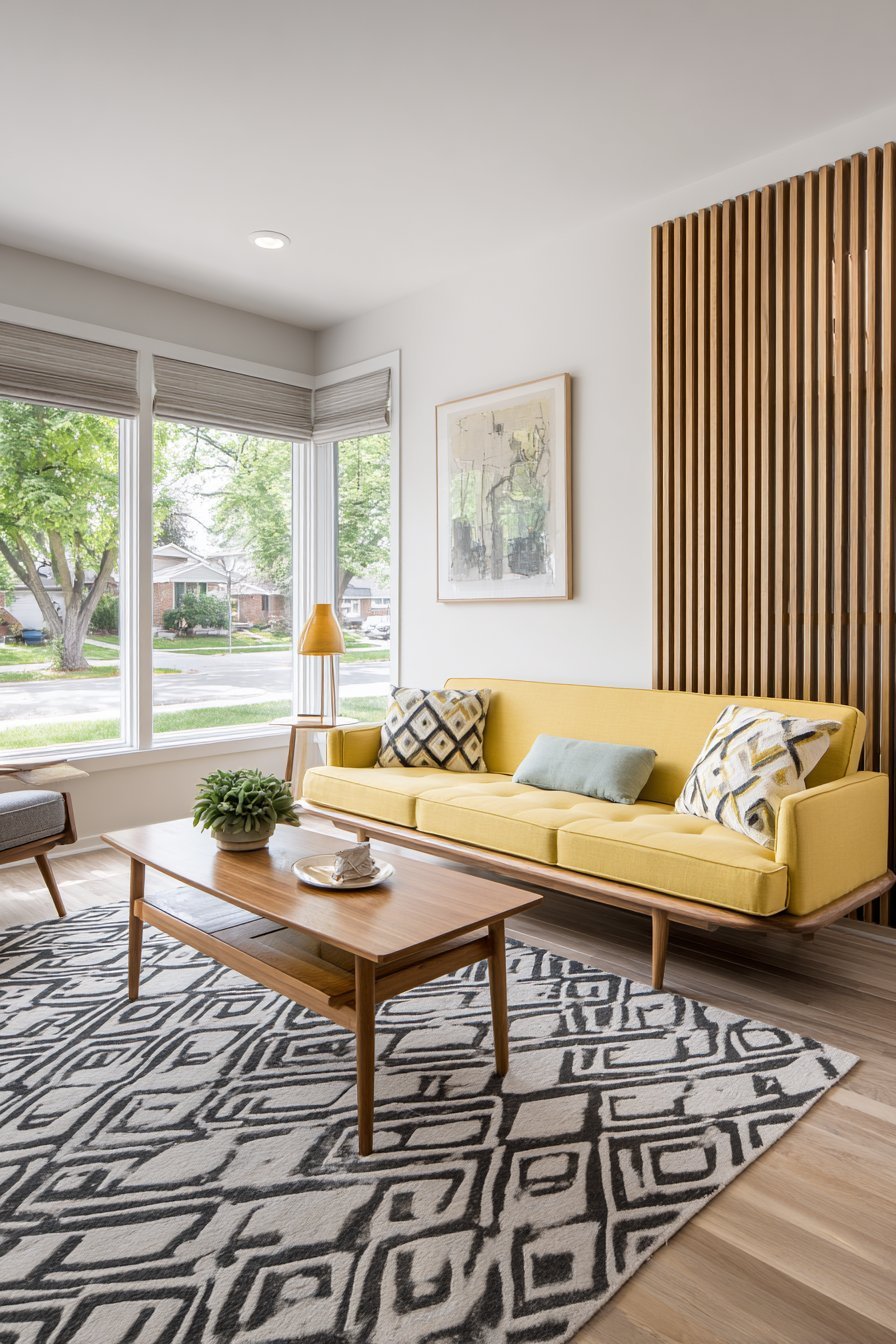
This design demonstrates how vertical panels enhance mid-century spaces. The slat installation creates dimension without heavy ornamentation. Natural wood variations provide visual interest through honest material expression. Balanced lighting reveals authentic mid-century aesthetic principles.
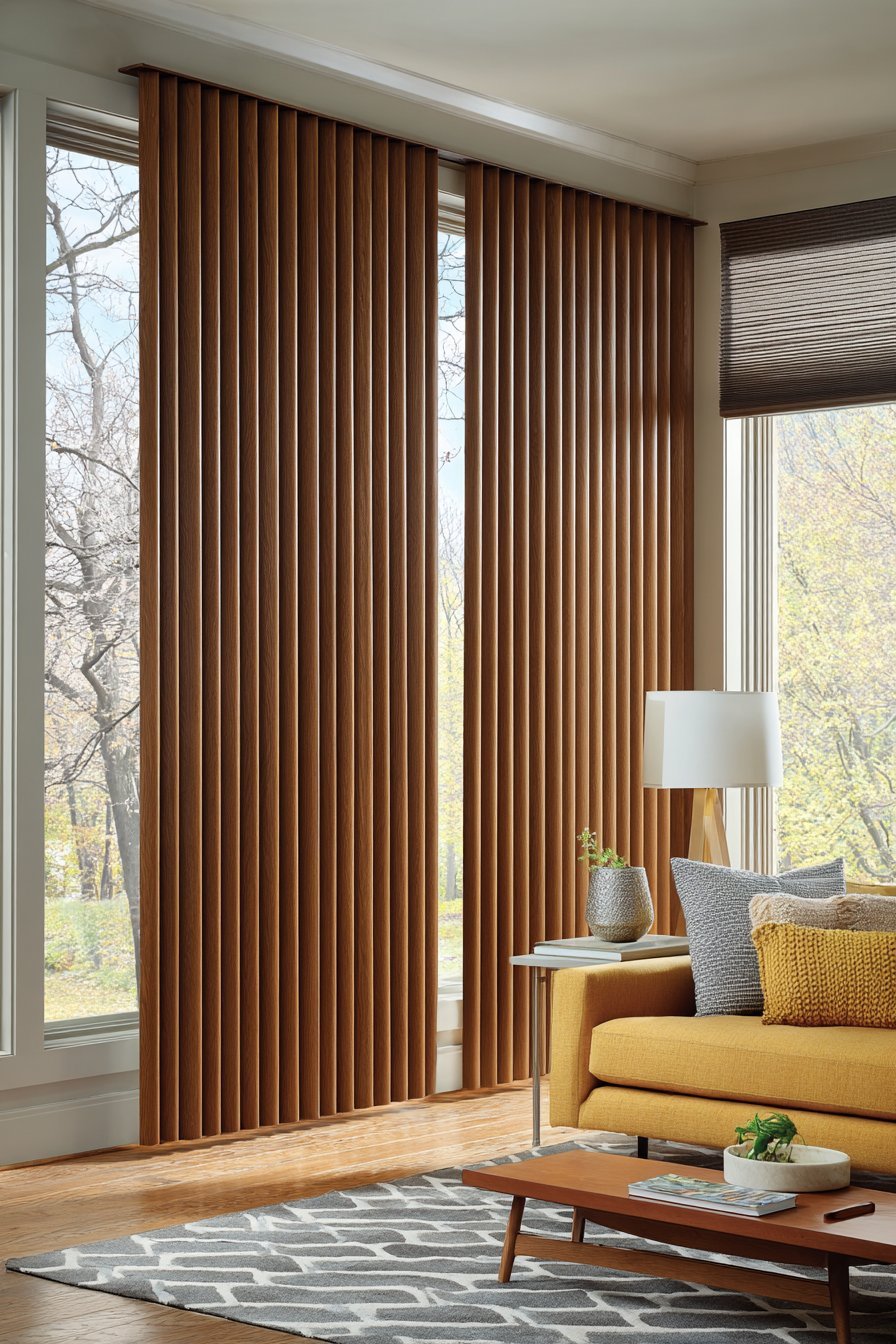
The vertical emphasis maintains period-appropriate proportions and scale. Gap spacing between panels creates shadow play throughout the day. This approach proves that vertical elements succeed through material quality and craftsmanship.
Key Design Tips:
- Choose walnut for authentic mid-century material selection
- Mount panels with consistent gaps for shadow play
- Position near large windows to highlight wood grain
- Keep surrounding decor minimal to emphasize vertical installation
- Select furniture in period-appropriate styles and proportions
15. Distressed Shutter Symmetry
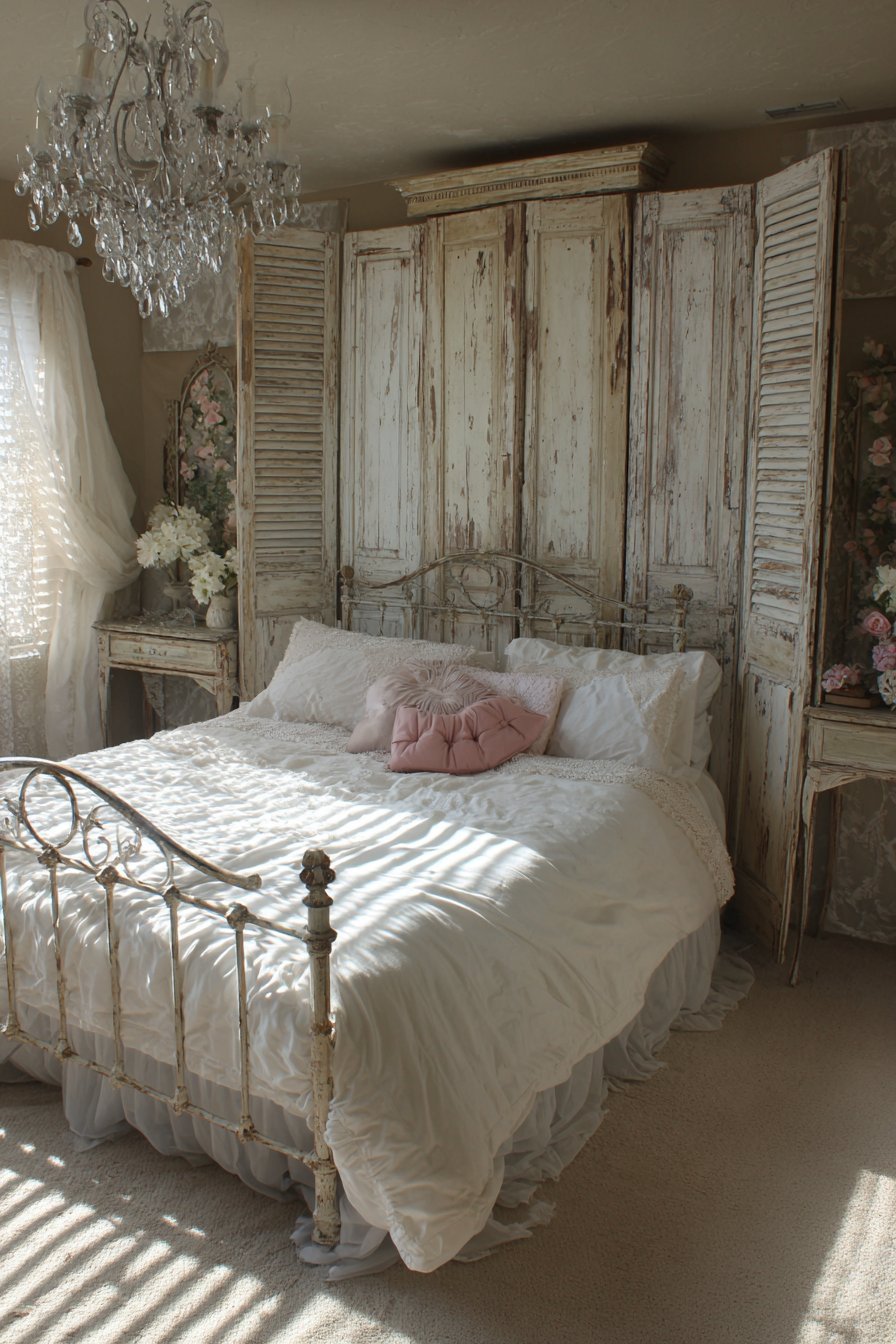
Shabby chic bedrooms feature vintage shutters painted distressed white. Mounted vertically on either side of beds as architectural elements. The vertical shutters add romantic cottage charm and perceived height. Wrought iron bed frames with white vintage linens create focal points.
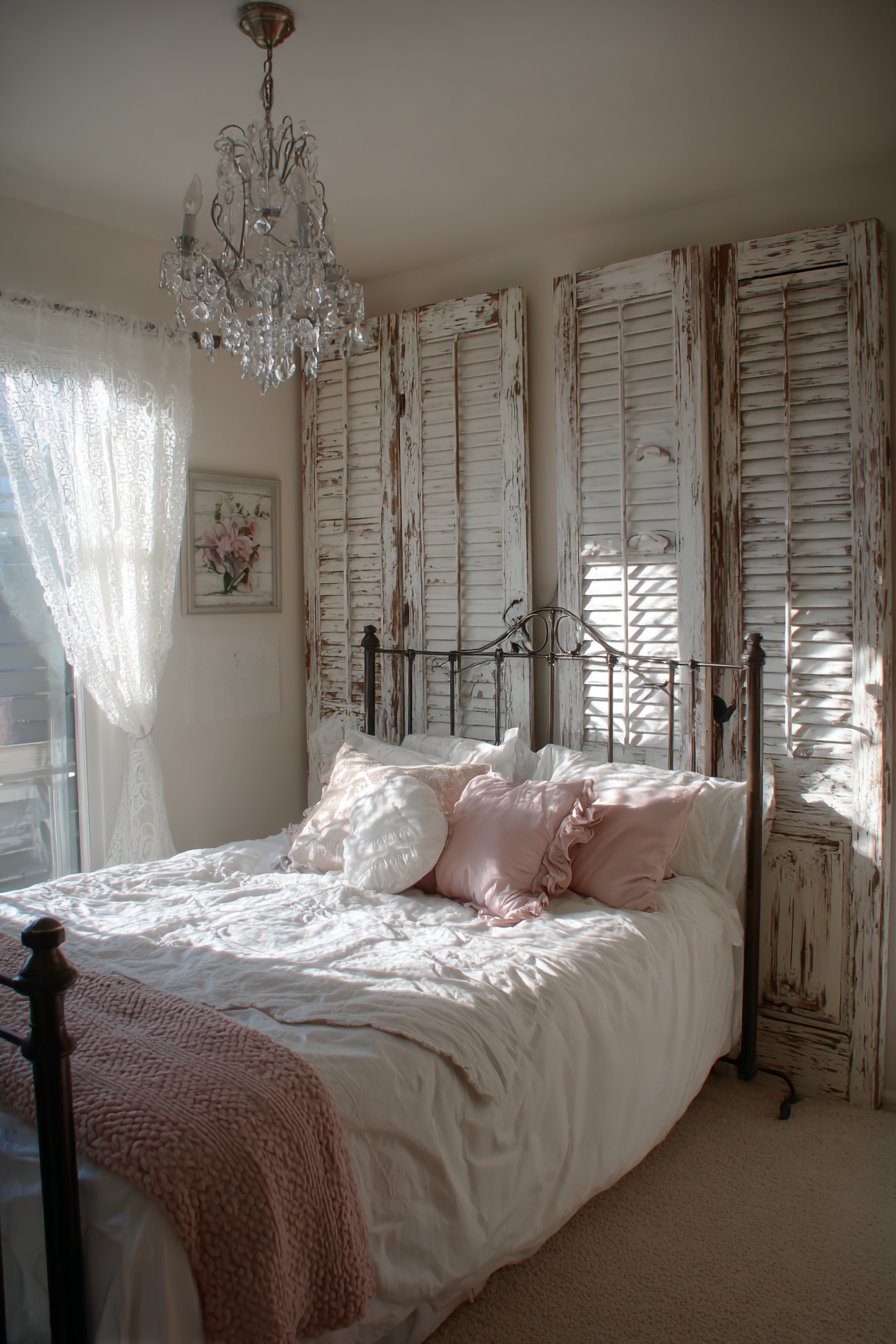
Soft pink accent pillows add feminine touches throughout. Crystal chandeliers and lace curtains complete the romantic aesthetic. Morning light creates delicate shadows through shutter slats. Professional photography captures gentle ambiance and distressed paint details.
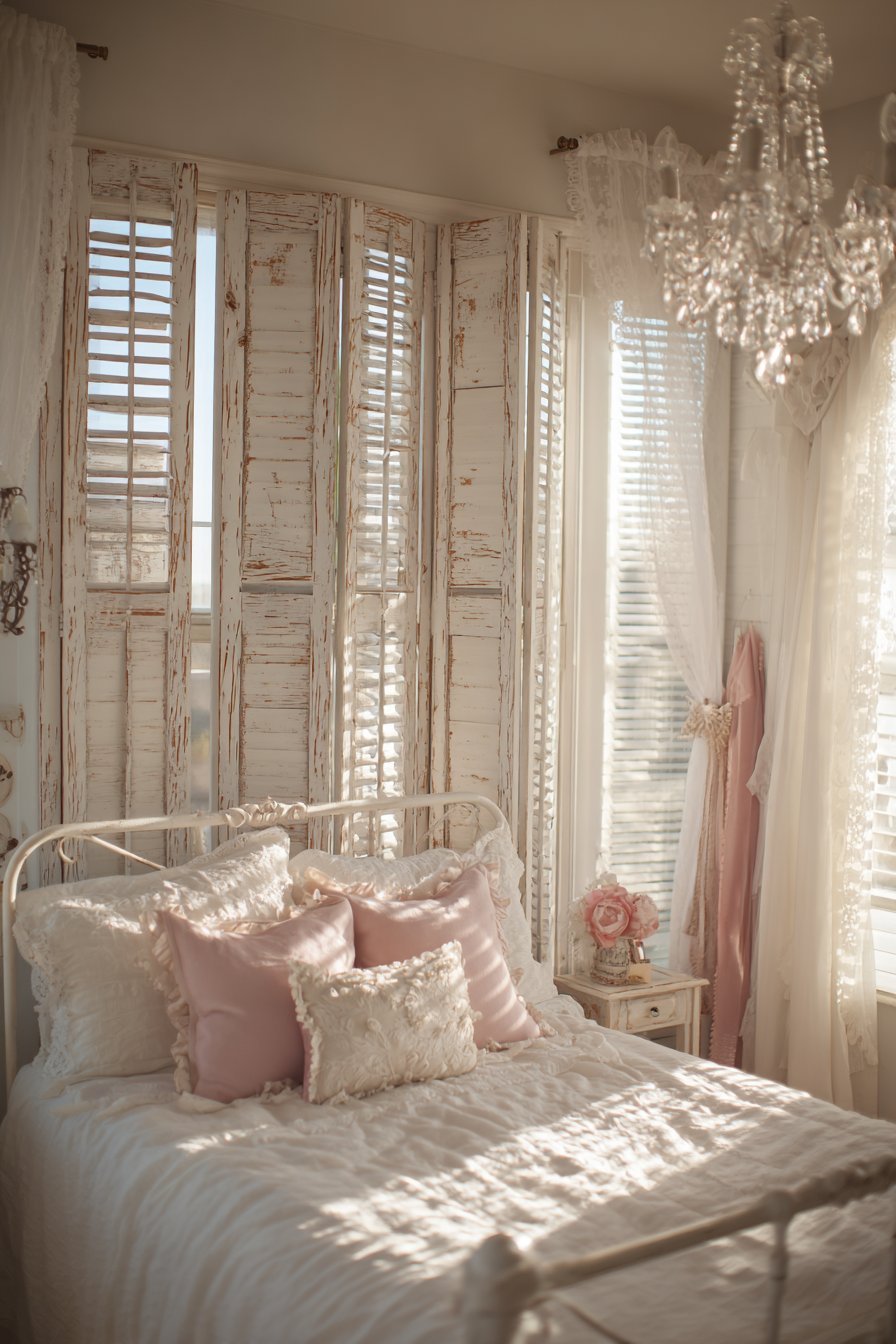
This design demonstrates how architectural elements become decorative features. The vertical shutter placement creates symmetrical balance. Distressed paint shows character through intentional aging techniques. Soft materials throughout maintain feminine romantic atmosphere.
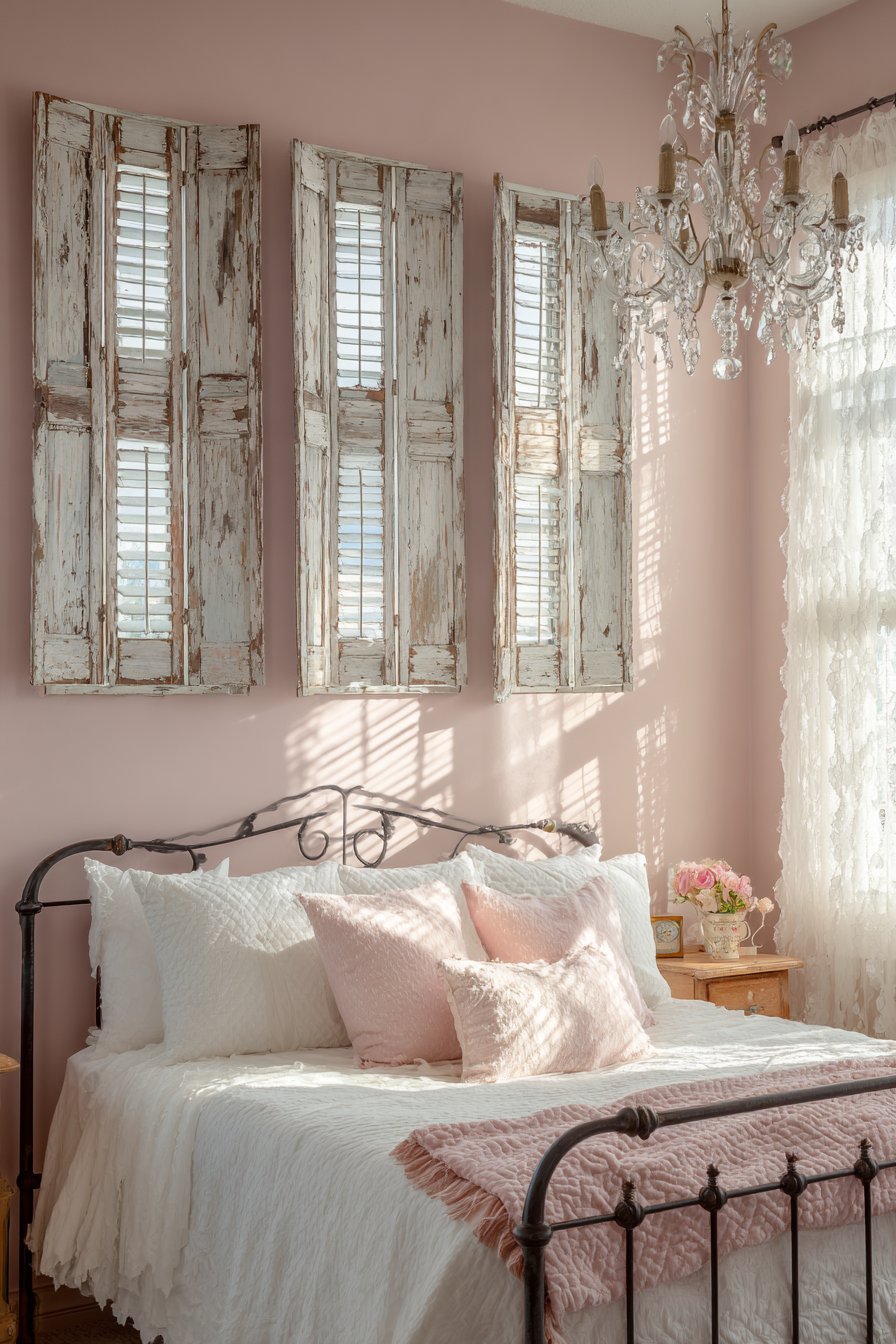
Natural light filtering through shutters creates changing patterns throughout the day. The vertical emphasis frames beds while adding architectural interest. This approach proves that symmetrical vertical elements create calm balanced environments.
Key Design Tips:
- Source or create authentically distressed paint finishes
- Mount symmetrically on either side of bed for balanced composition
- Choose shutters with functional slats for light filtering
- Complement with soft romantic textiles throughout room
- Allow morning light to create shadow patterns through slats
16. Elongated Hexagonal Tile Pattern
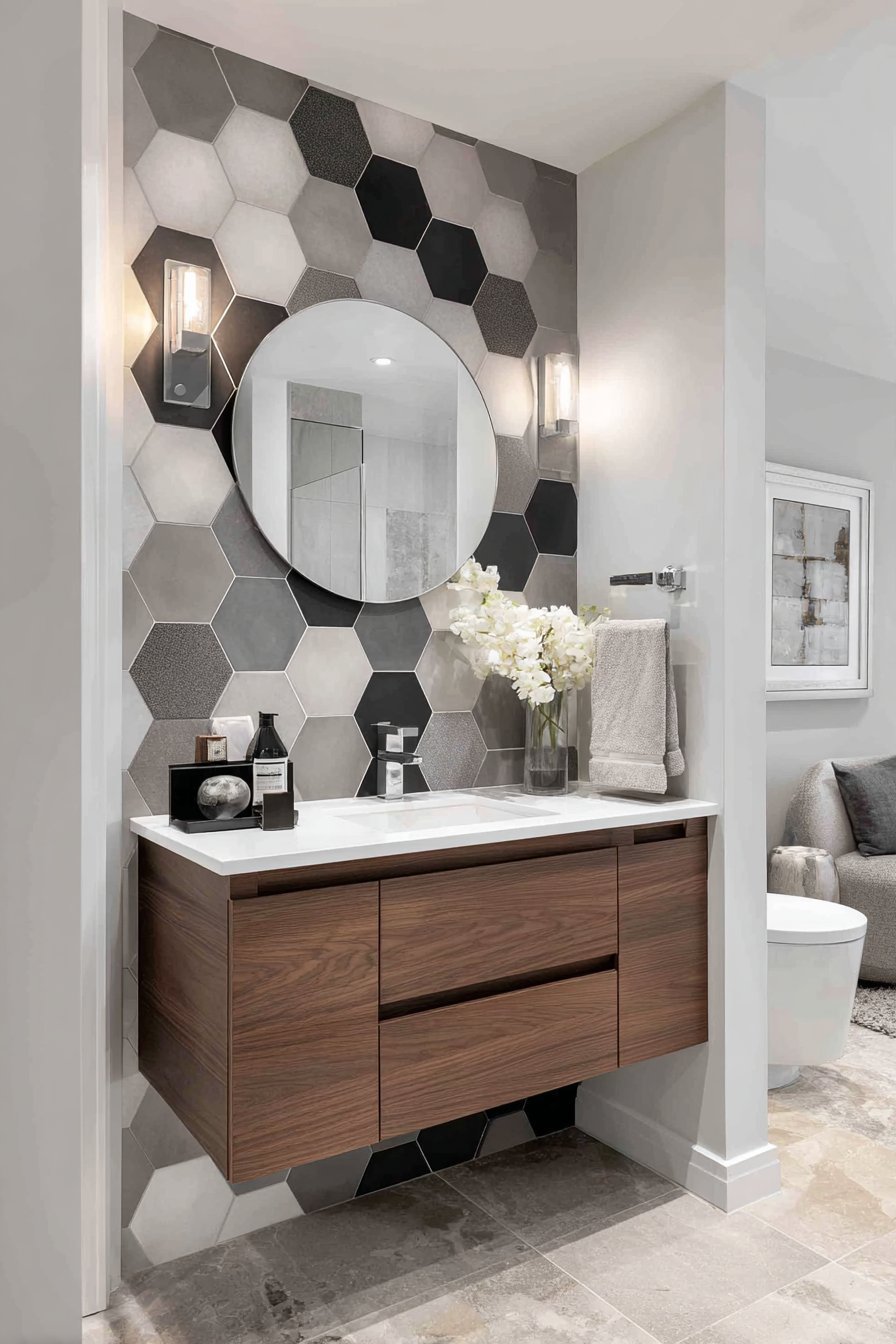
Contemporary powder rooms feature elongated hexagonal tiles arranged vertically. Floor-to-ceiling installation behind vanities creates sophisticated height. Soft gray tiles with white grout emphasize vertical orientation. Floating vanities in white oak provide natural warmth below.
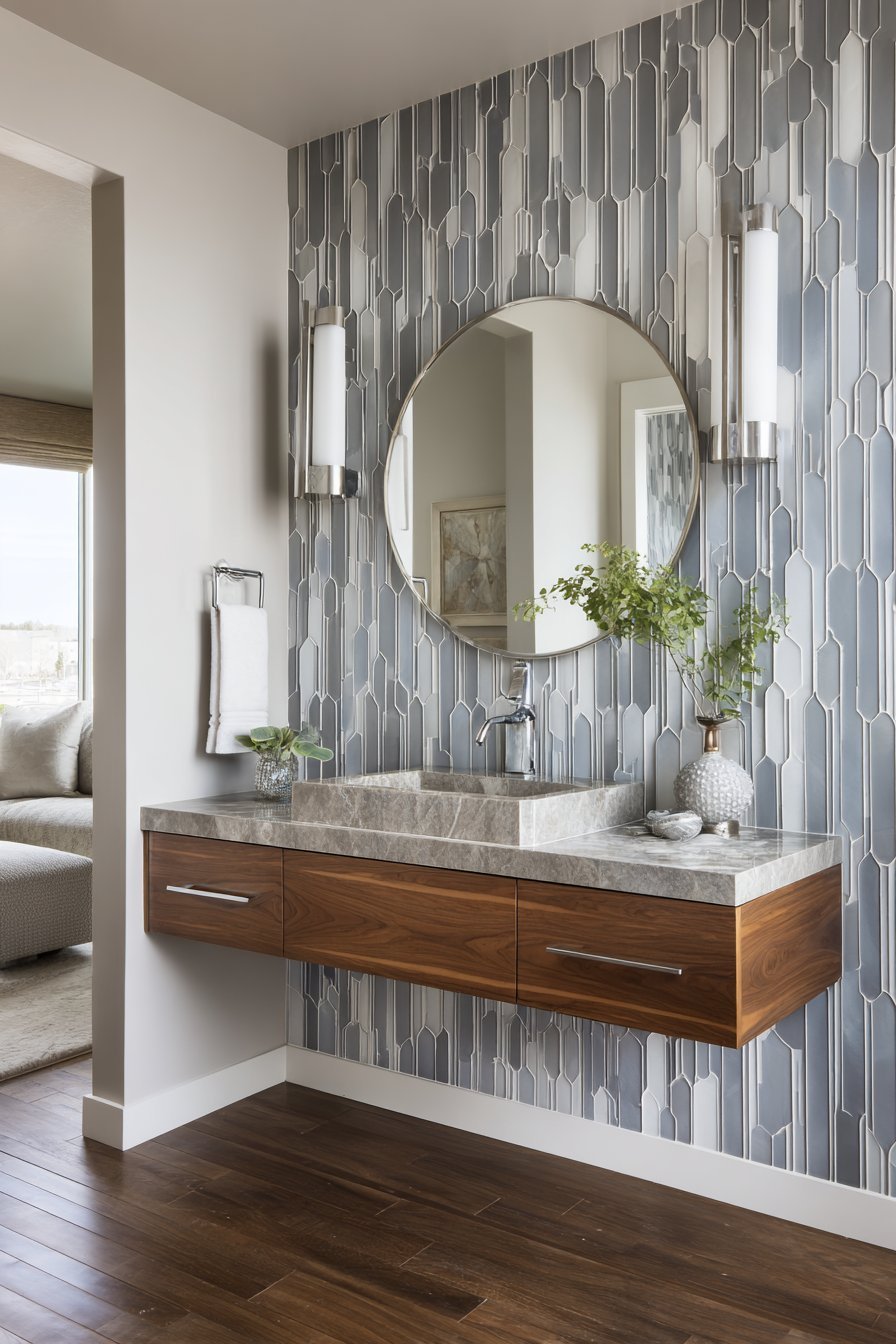
Round mirrors and modern sconce lighting complete clean aesthetic. Natural stone flooring provides textural contrast to smooth tiles. Balanced lighting emphasizes vertical tile pattern effectively. Professional photography captures how patterns enhance perceived dimensions.
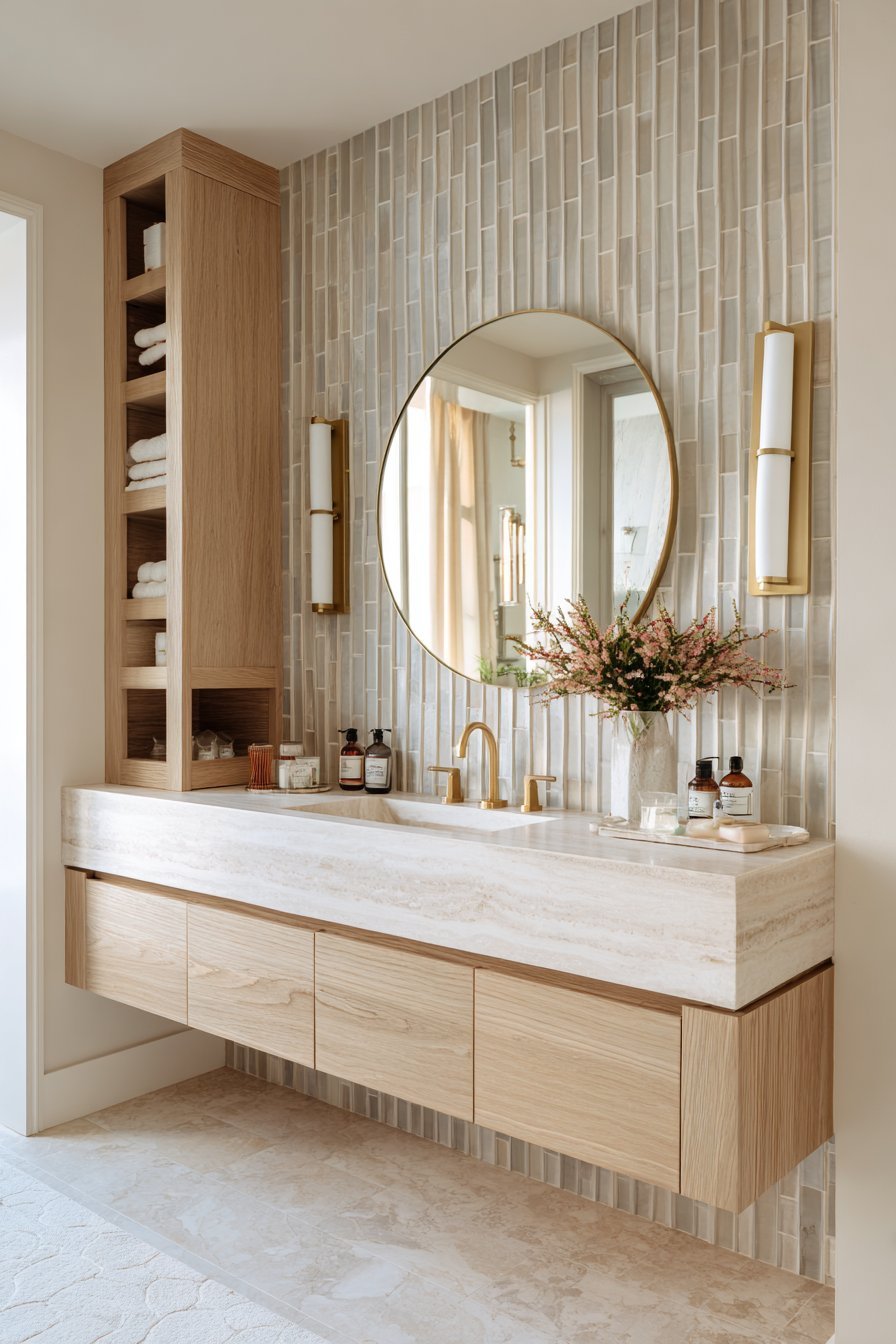
This design demonstrates how tile orientation affects spatial perception. The vertical arrangement makes compact bathrooms feel taller. Gray tones maintain sophistication without overwhelming small spaces. Material combinations create visual interest through texture contrasts.
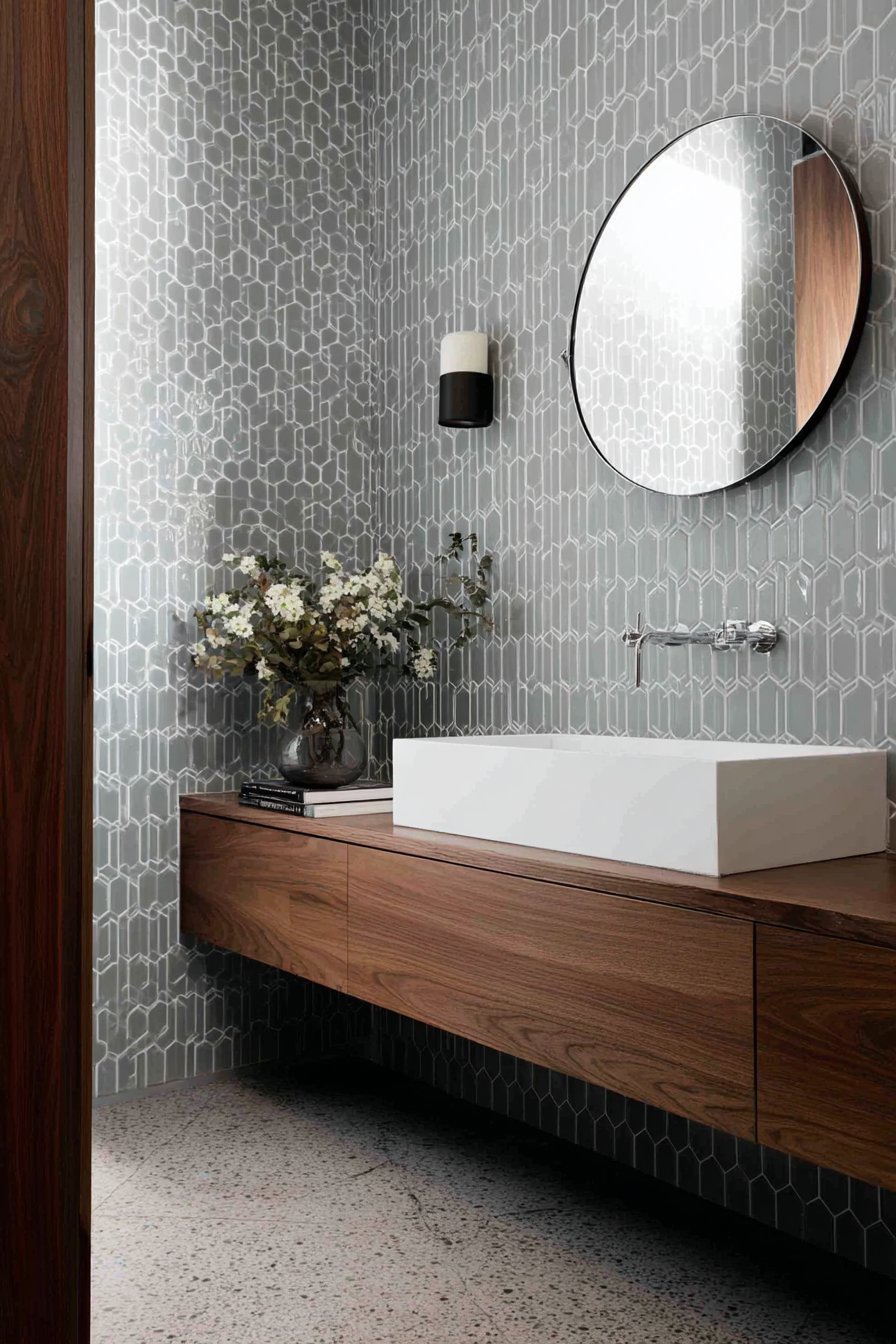
The elongated tile shape naturally emphasizes vertical movement. White grout lines create graphic pattern against gray tiles. This approach proves that simple material choices create dramatic effects through strategic orientation.
Key Design Tips:
- Install tiles vertically to maximize height perception in small spaces
- Choose elongated shapes that naturally emphasize vertical orientation
- Use light grout to create visible pattern definition
- Extend pattern from floor to ceiling for maximum impact
- Balance patterned walls with simple floating vanities
17. Creative Ladder Photo Display
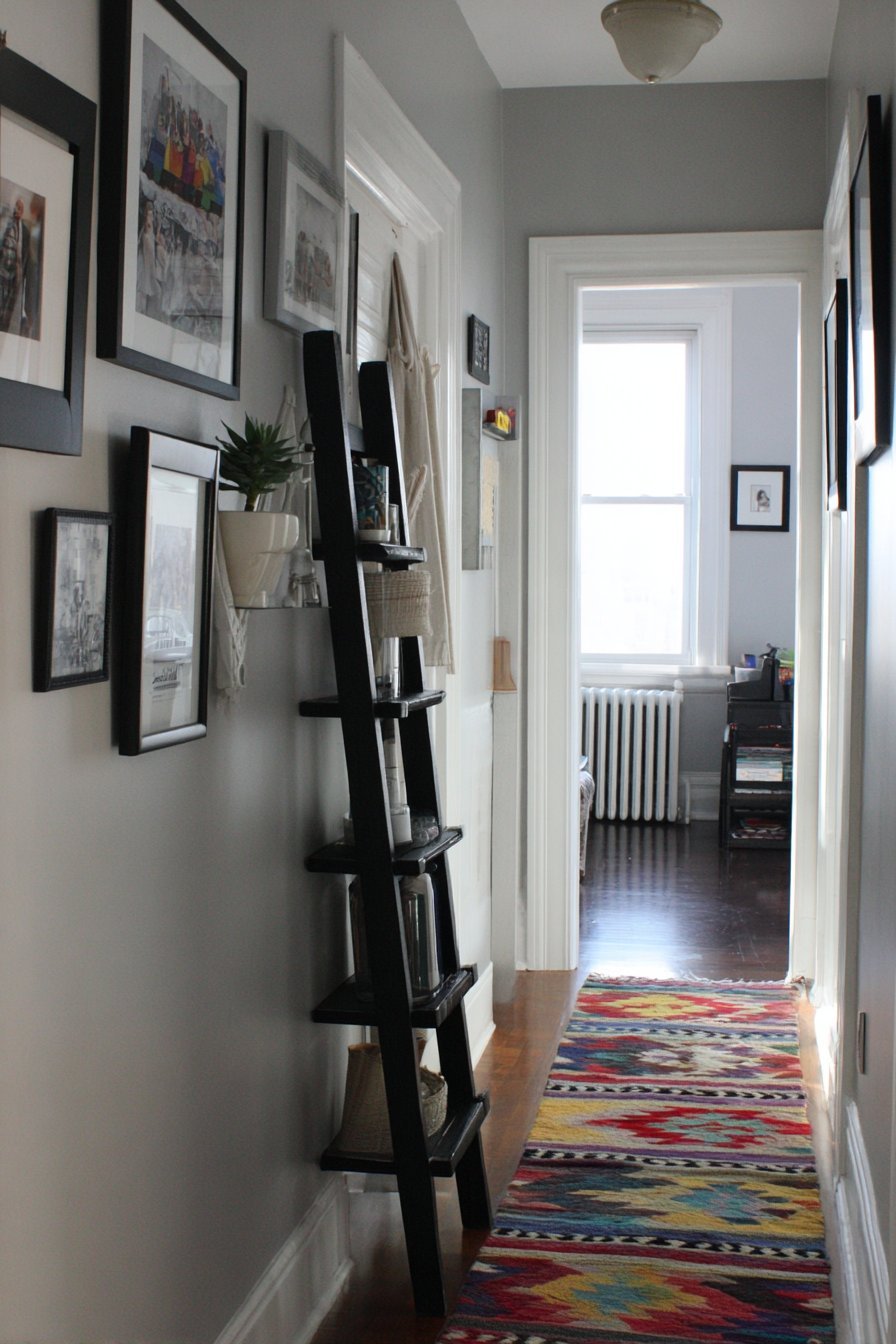
Eclectic hallways feature vintage ladders painted matte black. Mounted horizontally with rungs creating vertical divisions for displays. The vertical arrangement adds personality to narrow spaces. Framed family photos, small planters, and decorative objects hang from rungs.
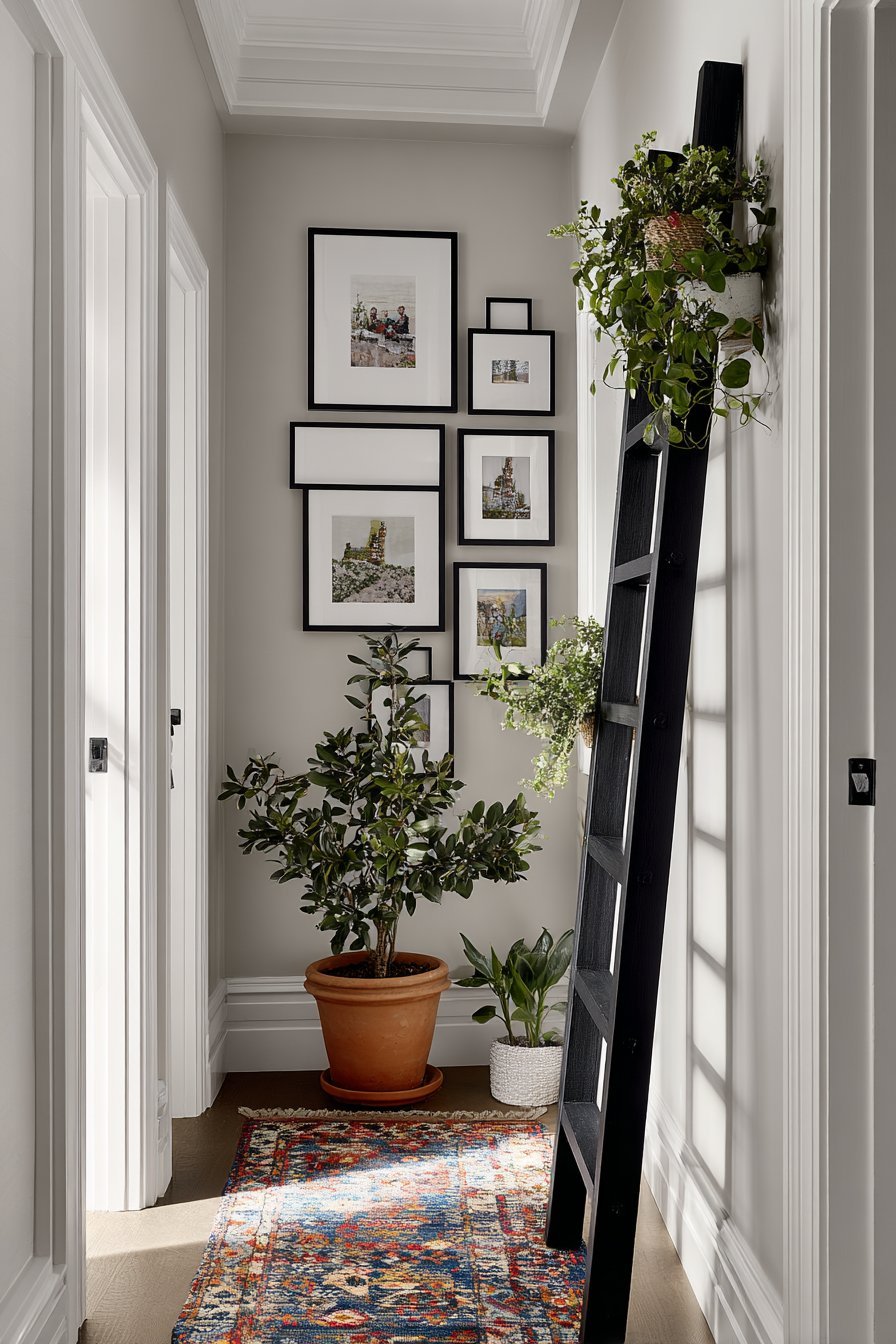
Light gray walls provide neutral backdrop for creative displays. Colorful runner rugs add pattern below the installation. Natural light from nearby doorways illuminates the vertical display. Professional photography captures inventive vertical space utilization.
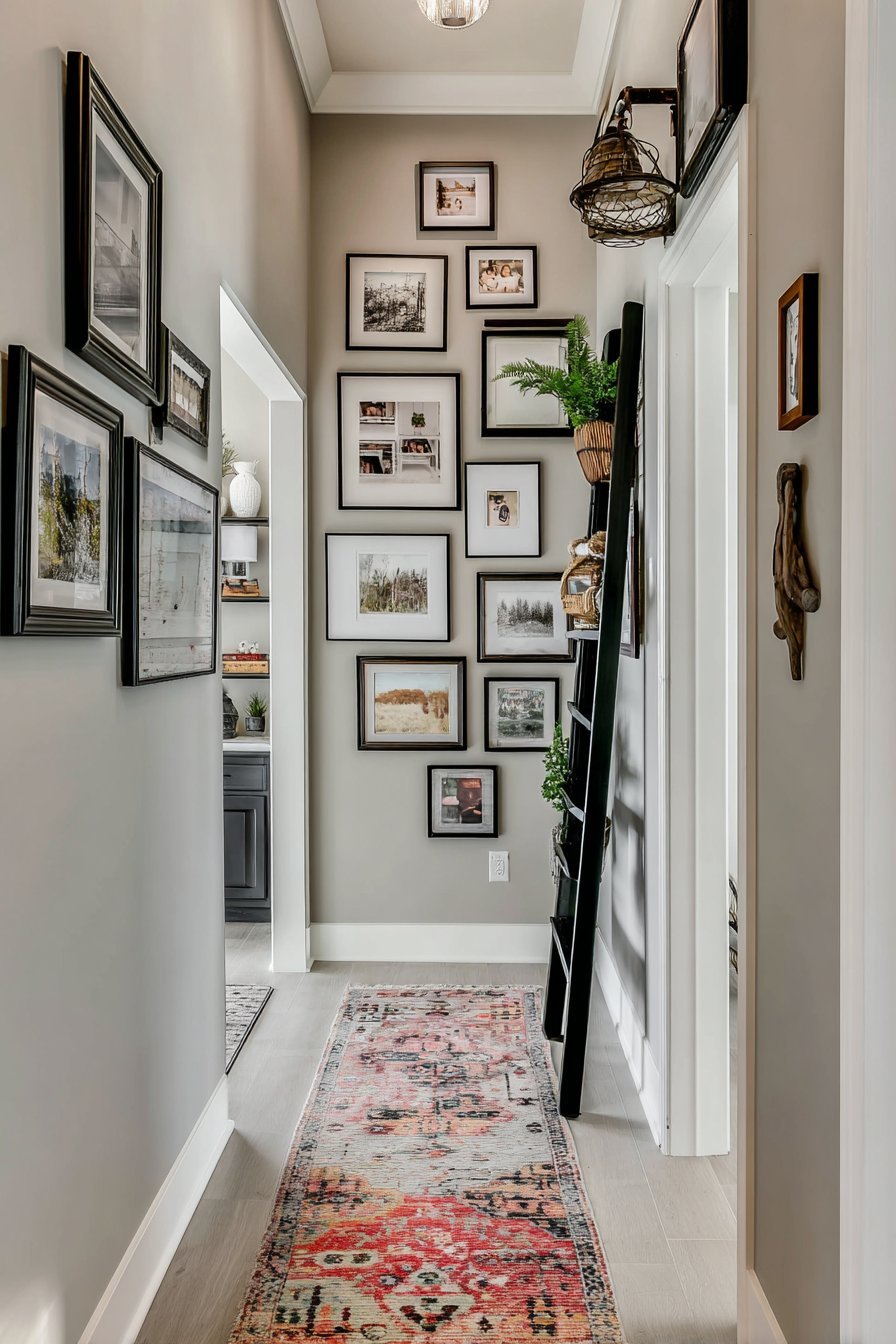
This design demonstrates creative repurposing of architectural elements. The ladder rungs provide multiple levels for vertical arrangement. Personal touches create meaningful displays throughout homes. The horizontal ladder creates vertical opportunities through clever thinking.
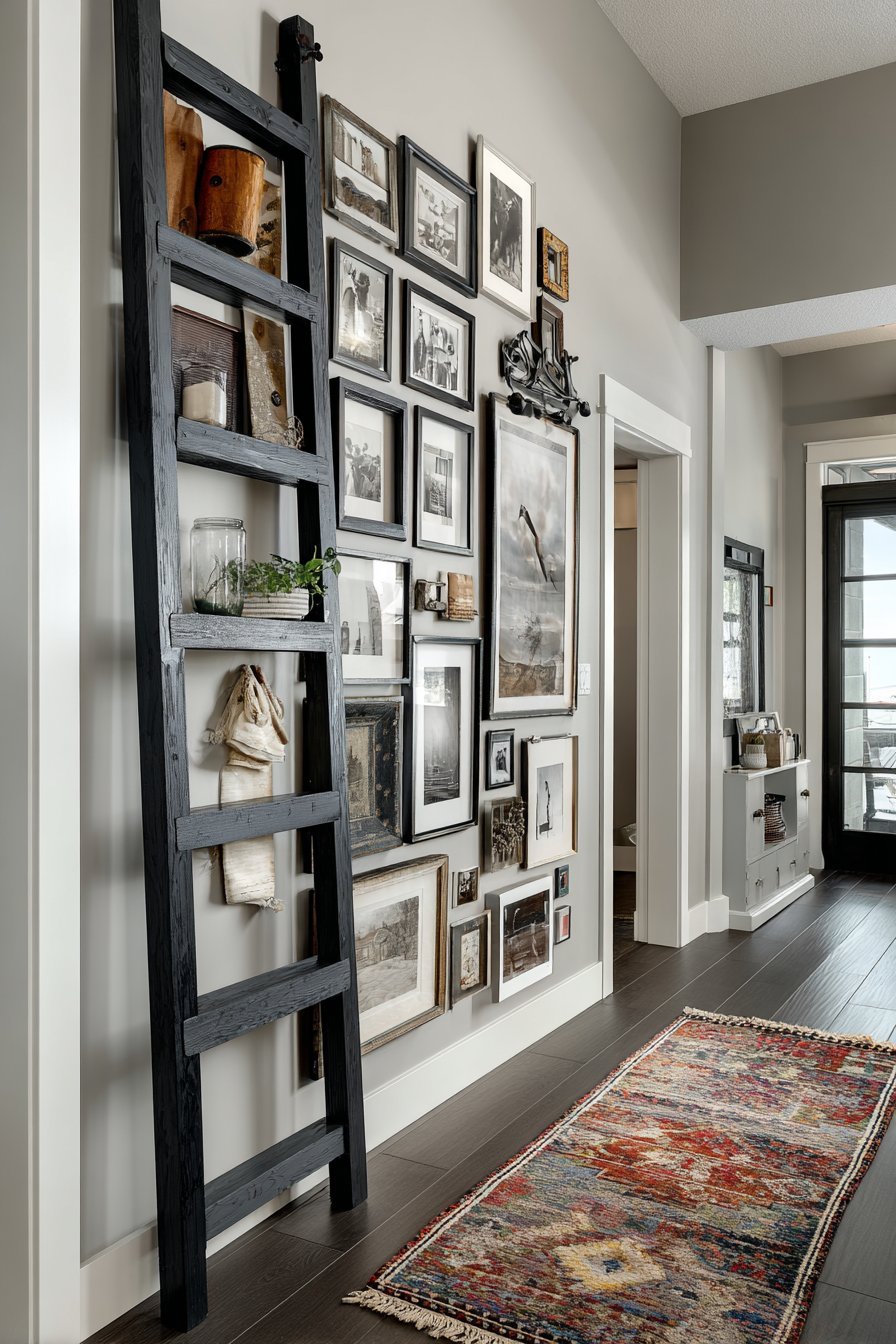
Curated objects tell personal stories through thoughtful selection. The matte black paint creates modern contrast against gray walls. This approach proves that vertical displays succeed through creative material repurposing.
Key Design Tips:
- Paint vintage ladders in modern finishes for updated appearance
- Mount securely to support weight of displayed objects
- Rotate displayed items seasonally to maintain fresh appearance
- Mix photos with three-dimensional objects for visual variety
- Position in hallways to maximize visibility and impact
18. Slender Ceramic Vase Arrangement
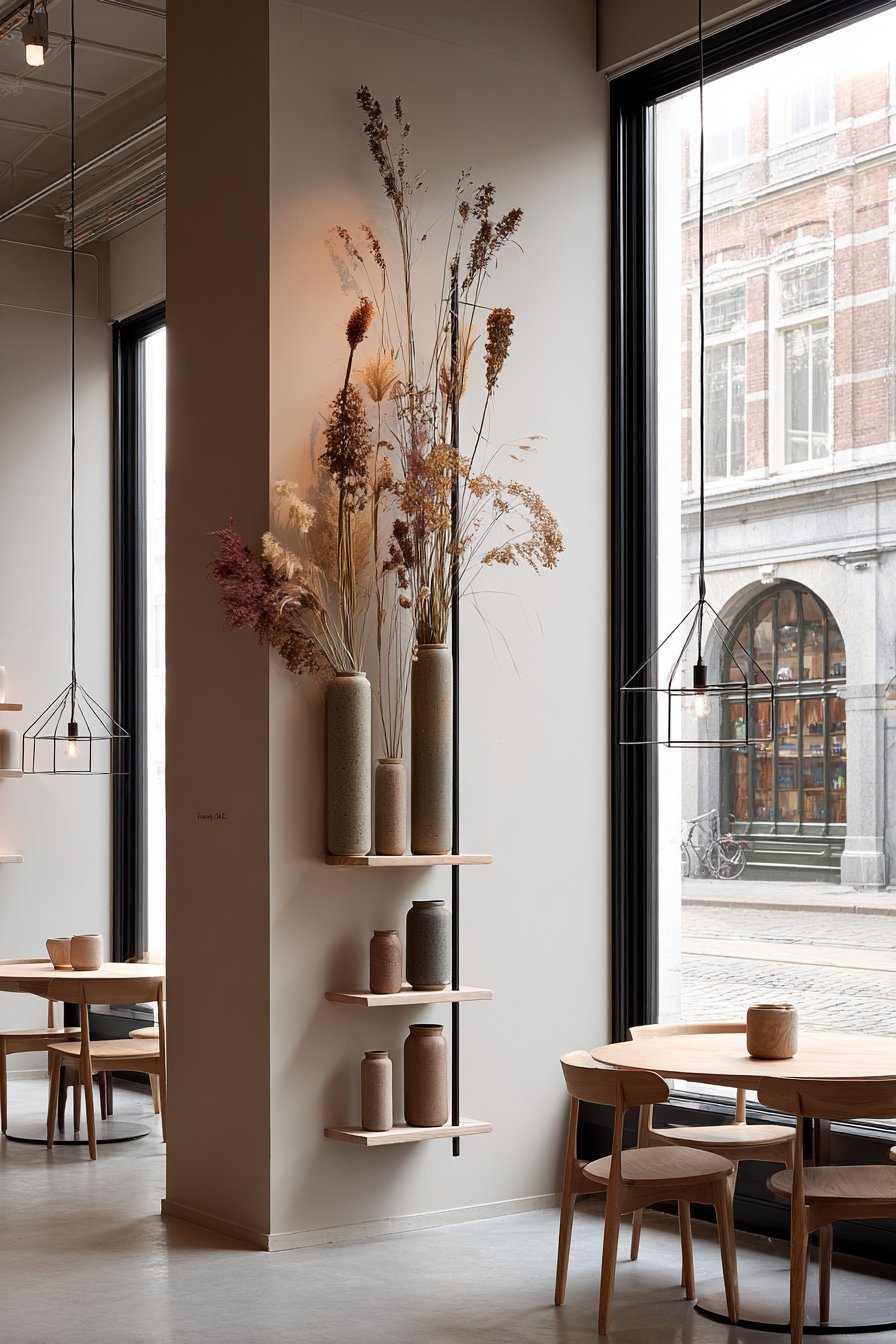
Scandinavian dining areas feature tall slender ceramic vases vertically. Narrow floating shelves support vases in muted tones. Dried botanical stems extend vertically upward for organic elegance. The arrangement adds height without overwhelming minimalist spaces.
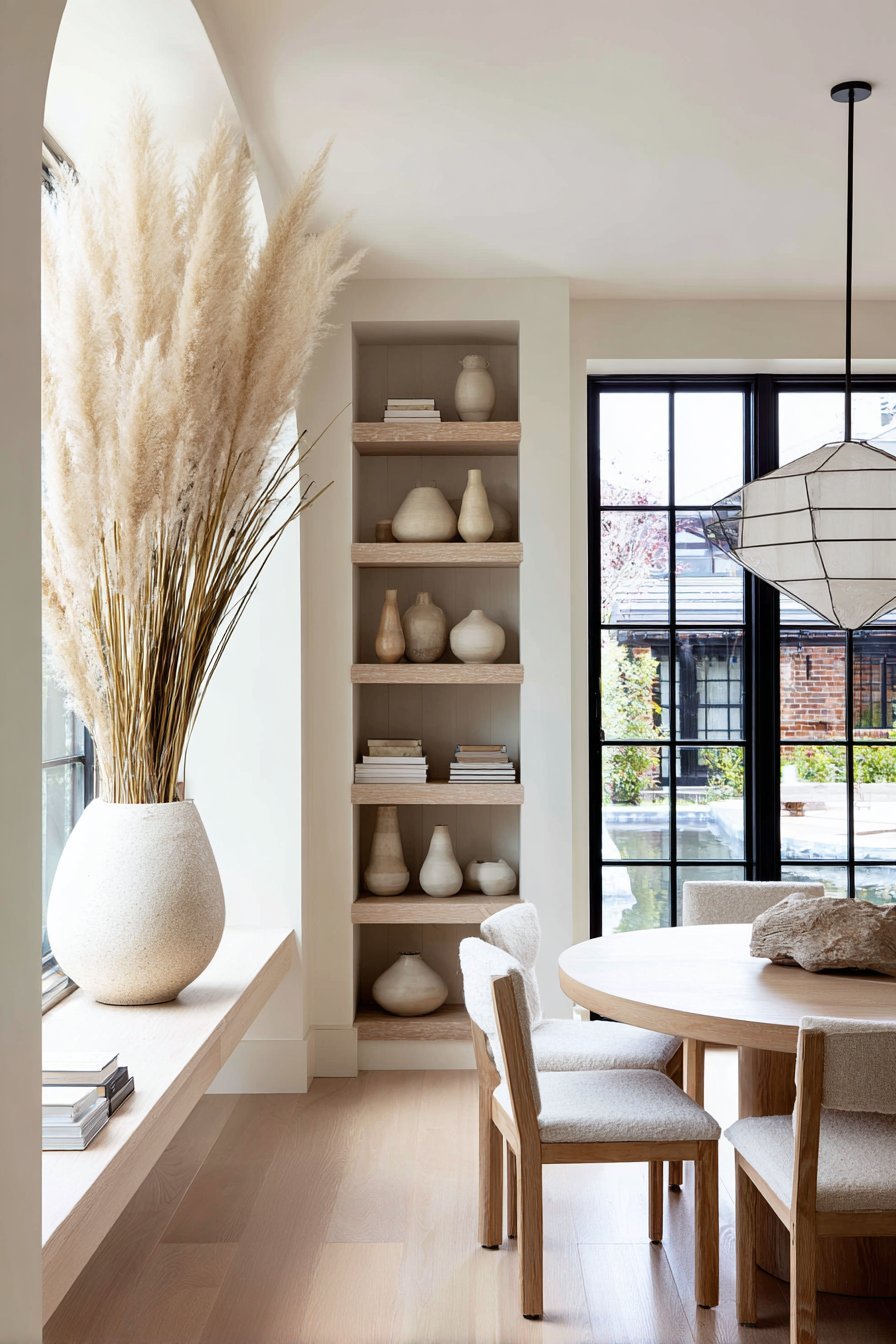
Round dining tables in light oak maintain Nordic simplicity. Modern chairs and geometric pendant lights complete the aesthetic. Natural light from large windows illuminates vertical botanical displays. Professional photography captures serene Nordic material textures.
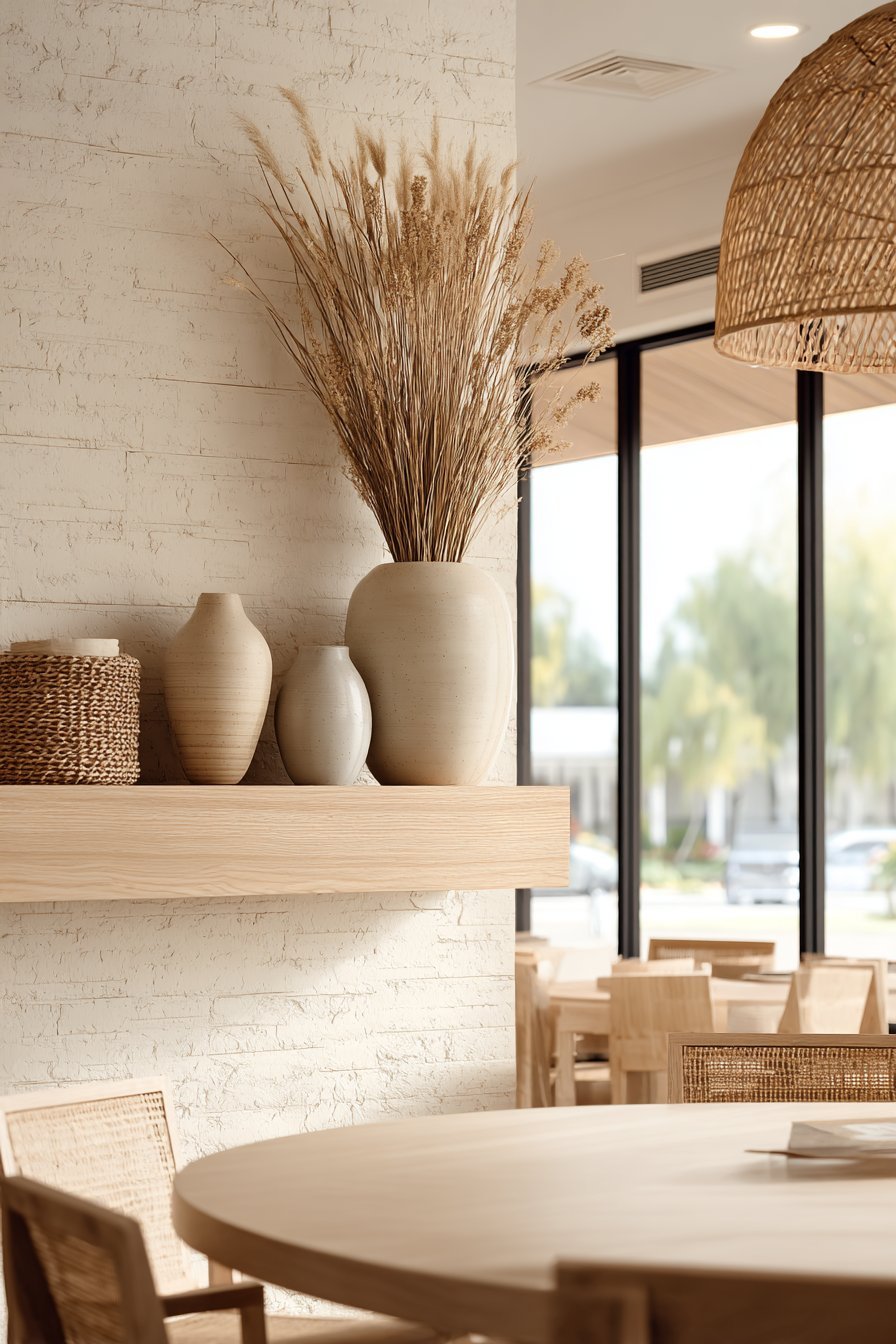
This design demonstrates how vertical arrangements suit minimalist aesthetics. The slender vases provide height through elegant proportions. Dried botanicals add organic elements without maintenance requirements. Material restraint creates calm uncluttered environments.
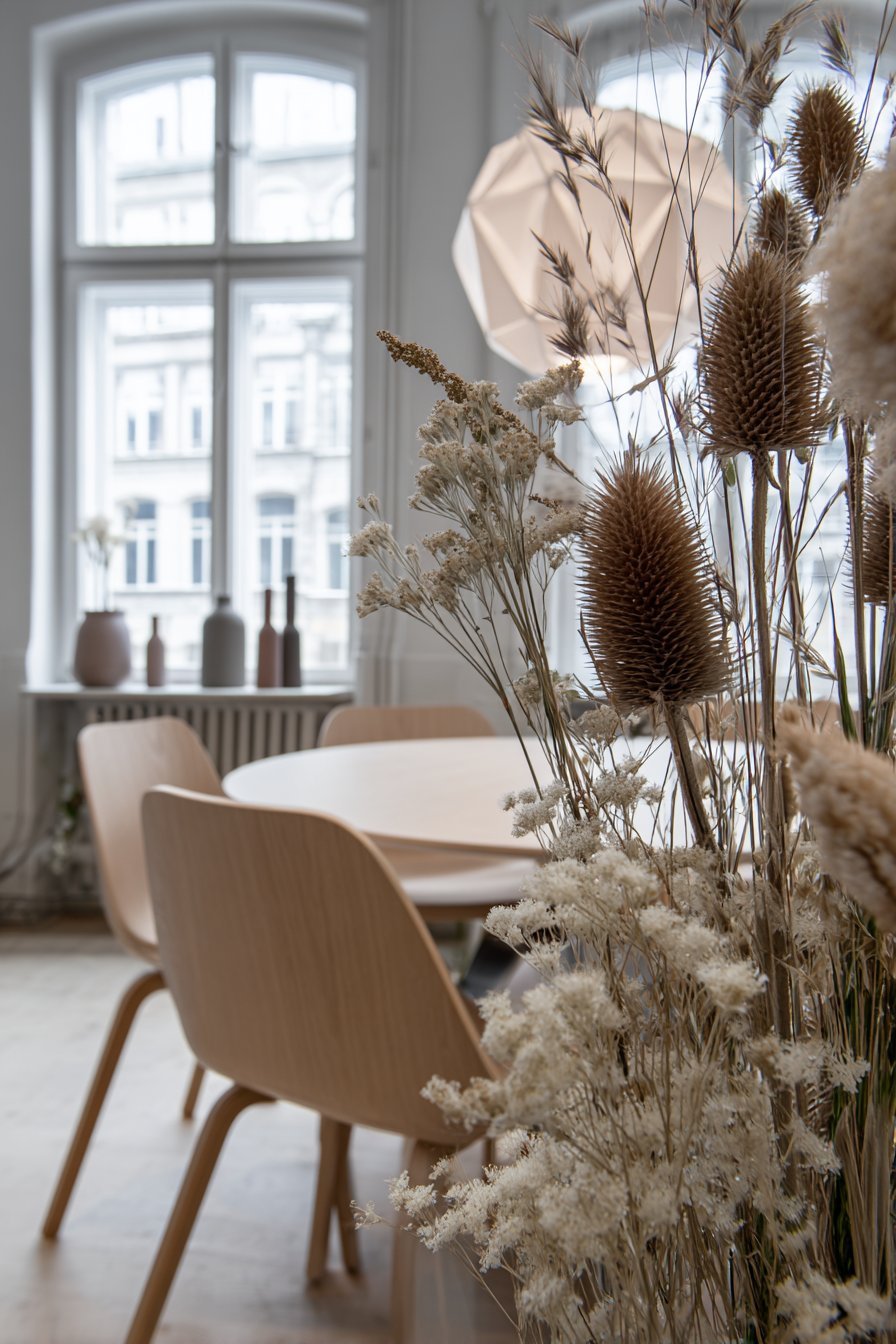
Natural light interaction with ceramics creates subtle highlights throughout the day. The vertical emphasis maintains Nordic principles of simplicity and function. This approach proves that minimal elements create maximum impact through careful selection.
Key Design Tips:
- Choose slender vase proportions to emphasize vertical orientation
- Select muted ceramic tones for Nordic aesthetic
- Use dried botanicals for low-maintenance vertical interest
- Keep floating shelves narrow to maintain minimalist appearance
- Position near large windows to maximize natural light interaction
19. Preserved Tropical Leaf Collection
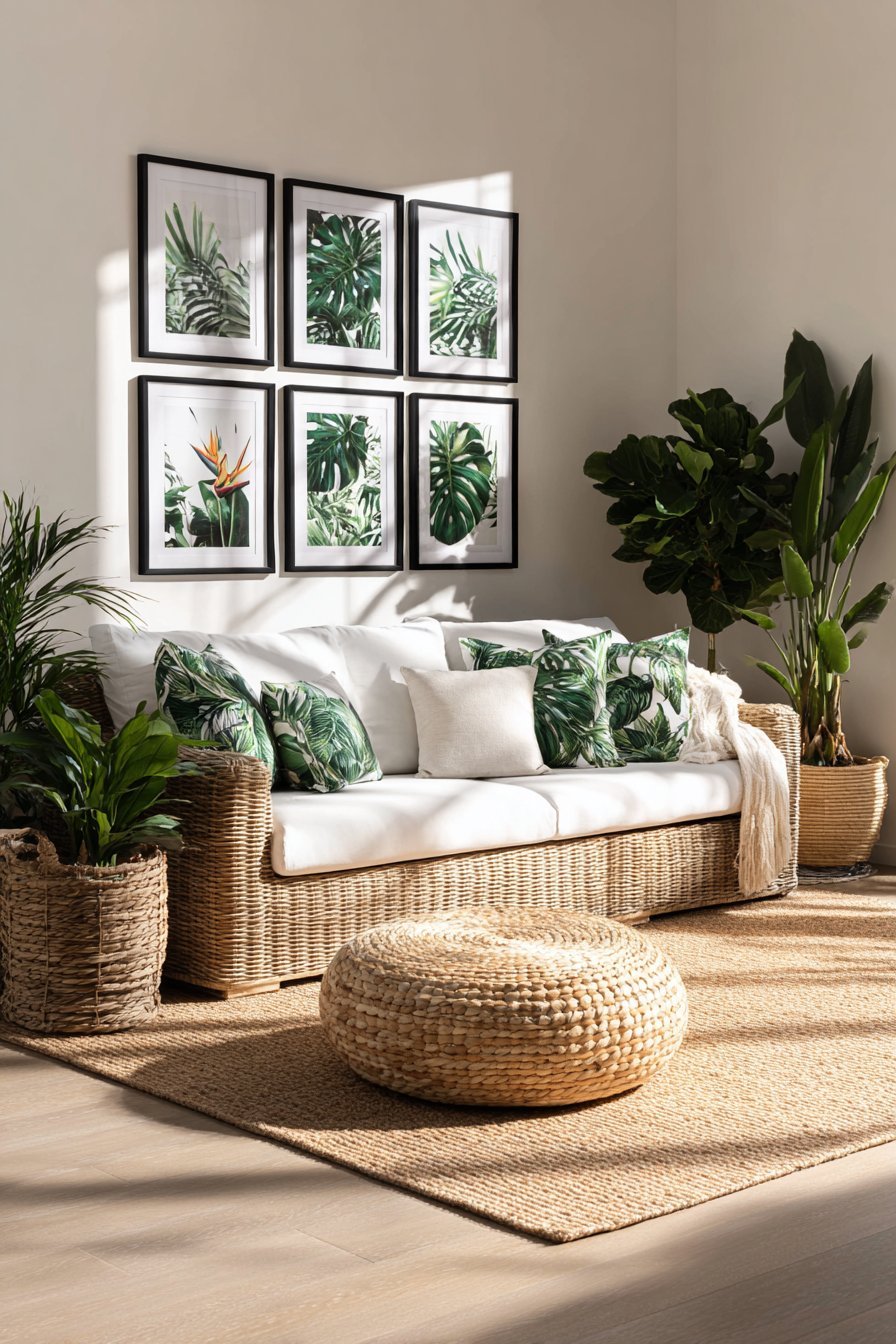
Tropical-inspired living rooms feature large preserved leaves mounted vertically. Monstera and bird of paradise leaves in simple black frames. The vertical botanical column brings organic drama and height. Rattan sofas with white cushions maintain relaxed aesthetic below.
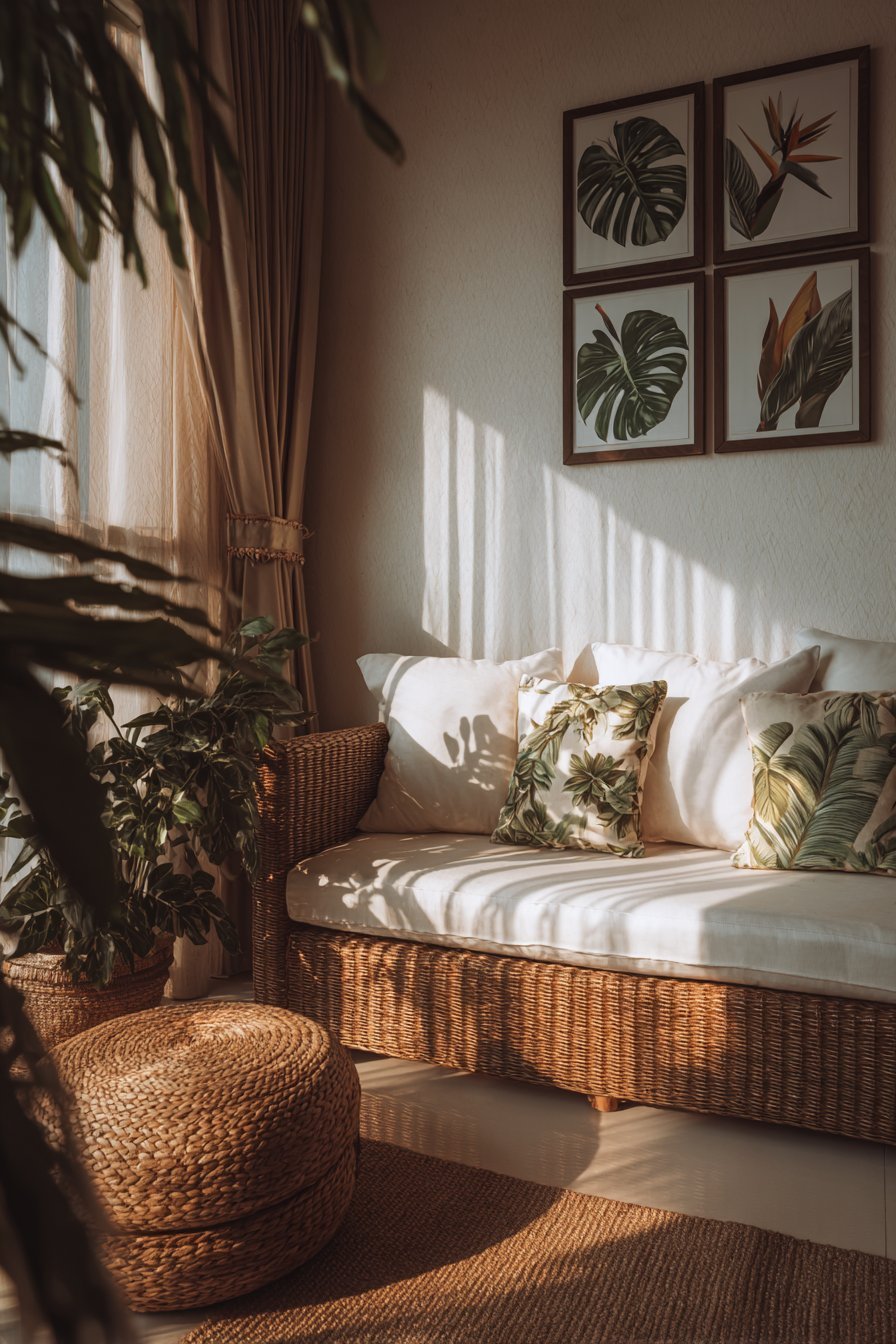
Tropical print pillows and woven jute poufs complete the look. Natural fiber area rugs continue the organic material story. Warm natural light creates shadows emphasizing leaf veining details. Professional photography captures vertical botanical focus and texture interaction.
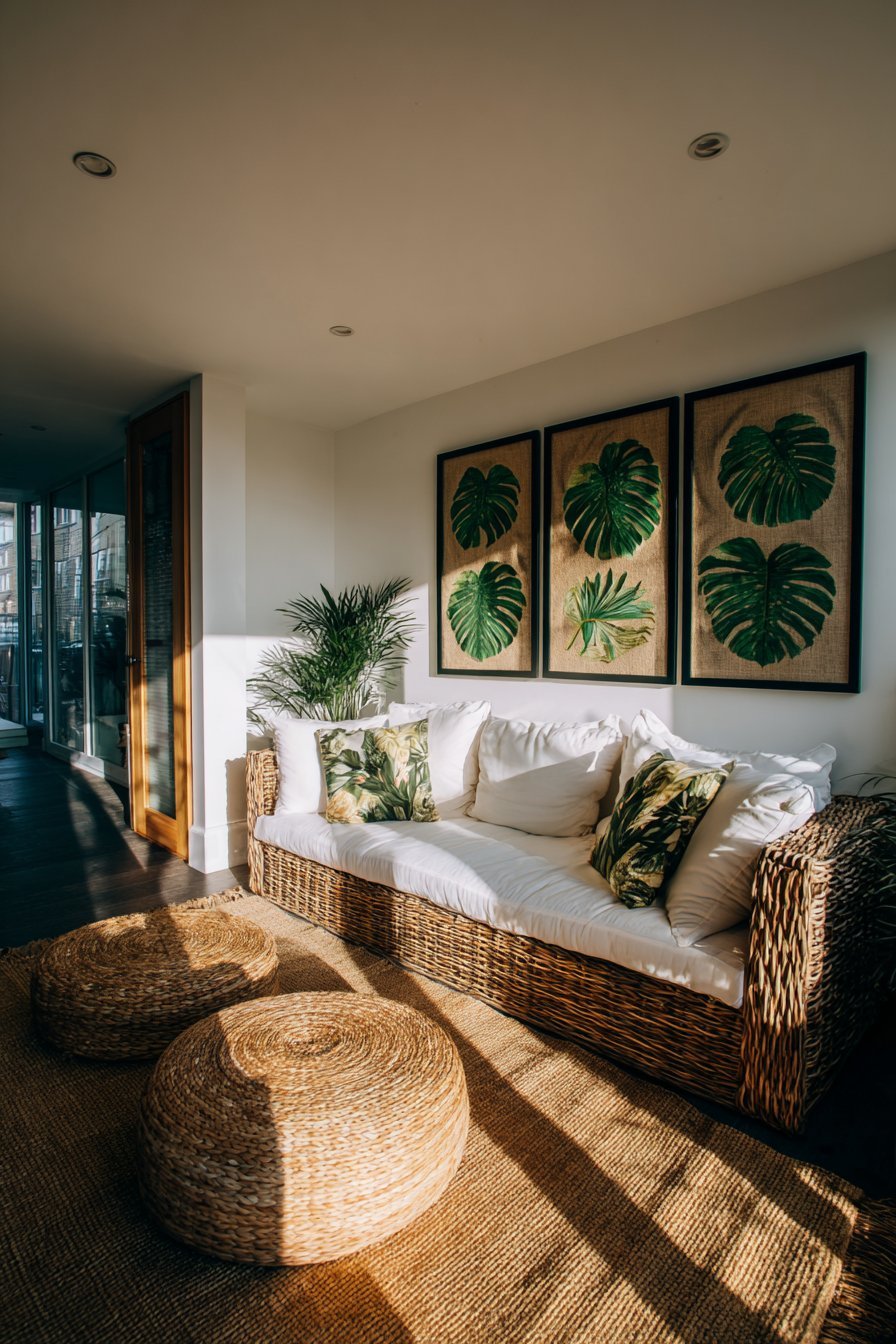
This design demonstrates how botanical elements create vertical statements. The preserved leaves maintain beauty without living plant maintenance. Simple black frames prevent competing with organic subjects. Material combinations create cohesive tropical atmosphere throughout.
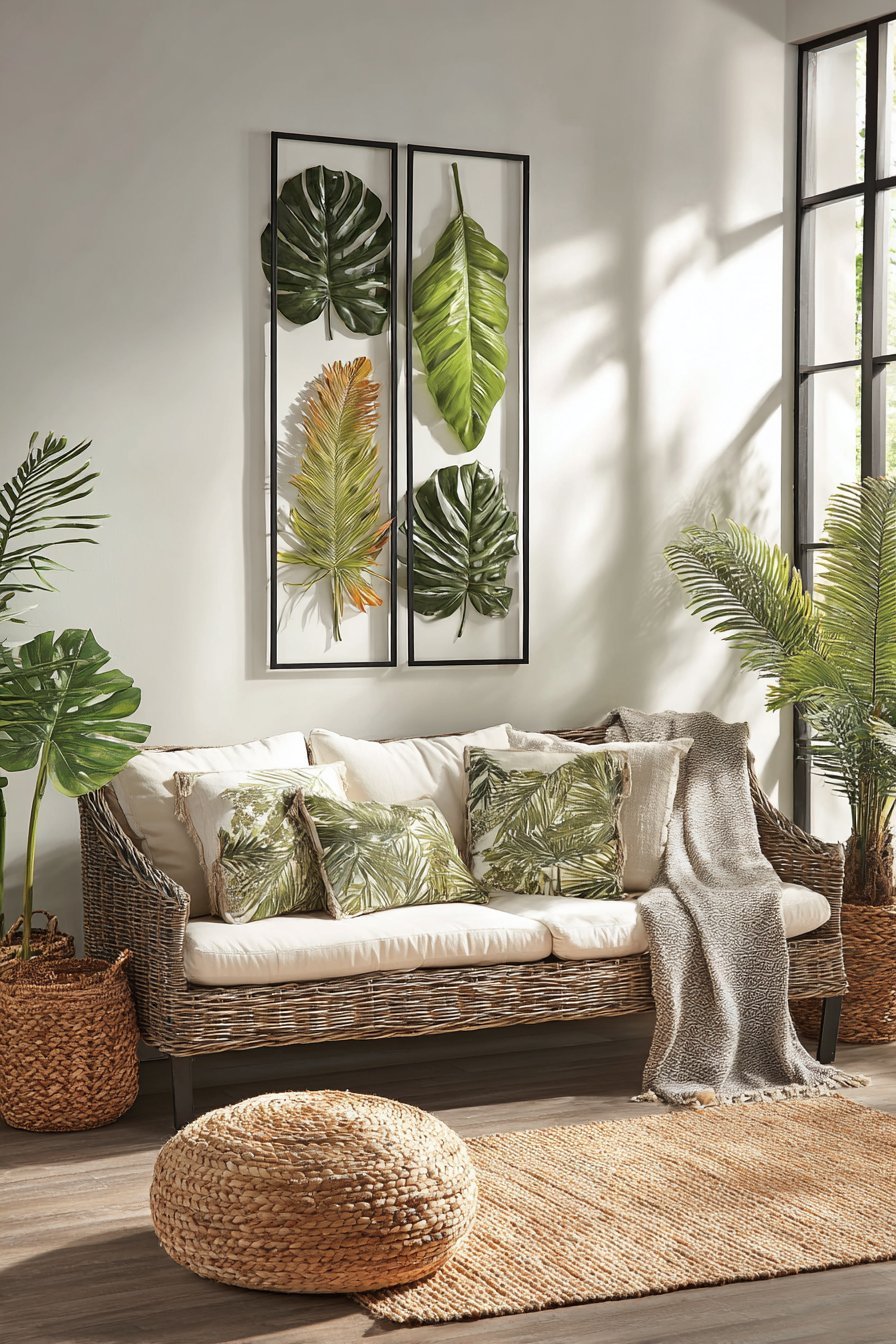
Natural light reveals intricate leaf structure and veining patterns. The vertical arrangement brings nature indoors through preserved specimens. This approach proves that botanical displays succeed through simple presentation and quality specimens.
Key Design Tips:
- Choose large dramatic leaves for maximum vertical impact
- Preserve leaves professionally to maintain color and structure
- Use simple frames that don’t compete with botanical subjects
- Arrange vertically to emphasize natural growth patterns
- Position to catch natural light highlighting leaf details
20. Board-and-Batten Architectural Treatment
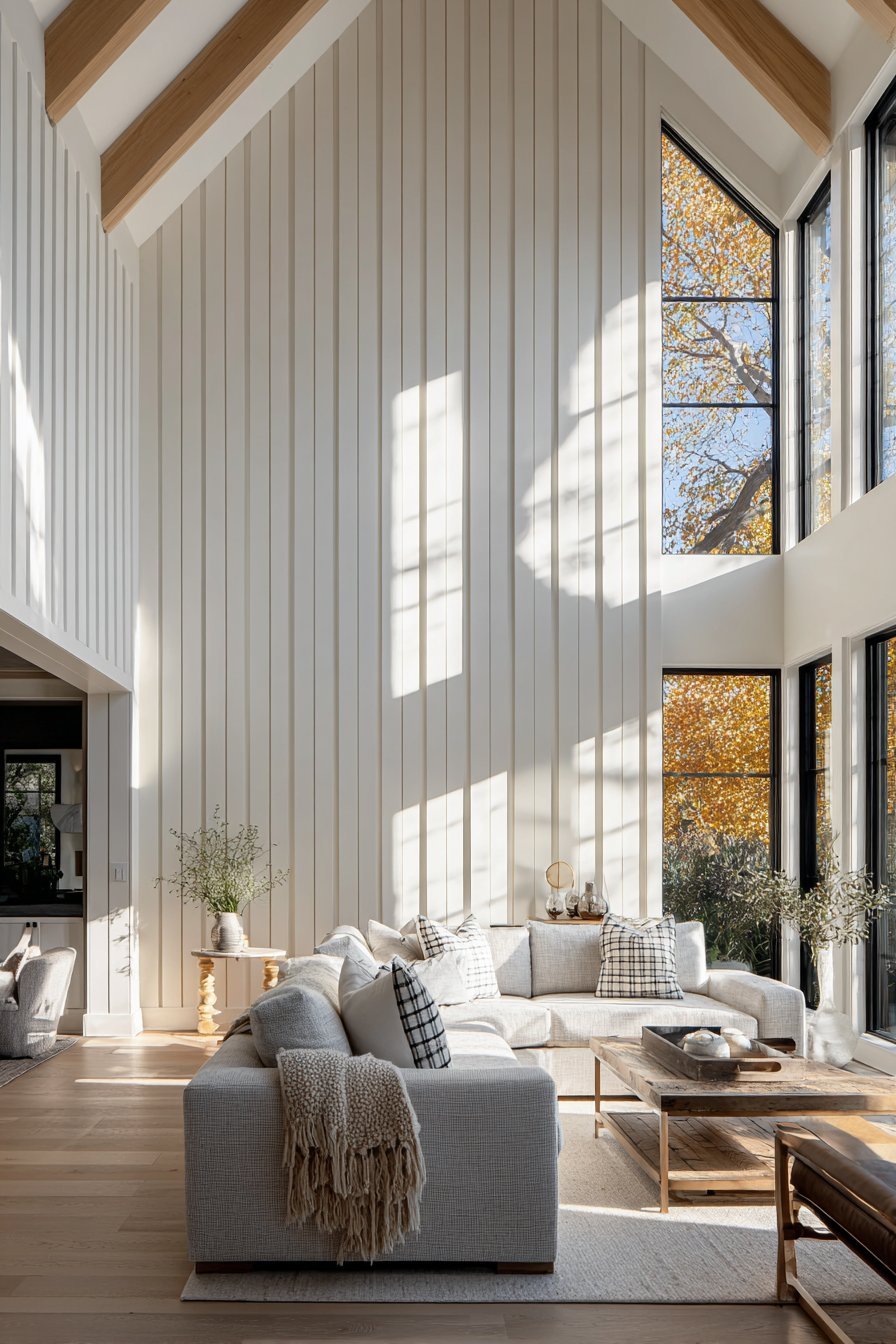
Modern farmhouse living rooms feature vertical board-and-batten walls. Soft white paint with subtle shadows emphasizes vertical lines. Floor-to-ceiling installation adds architectural interest and perceived height. Gray sectional sofas with linen texture face the architectural feature.
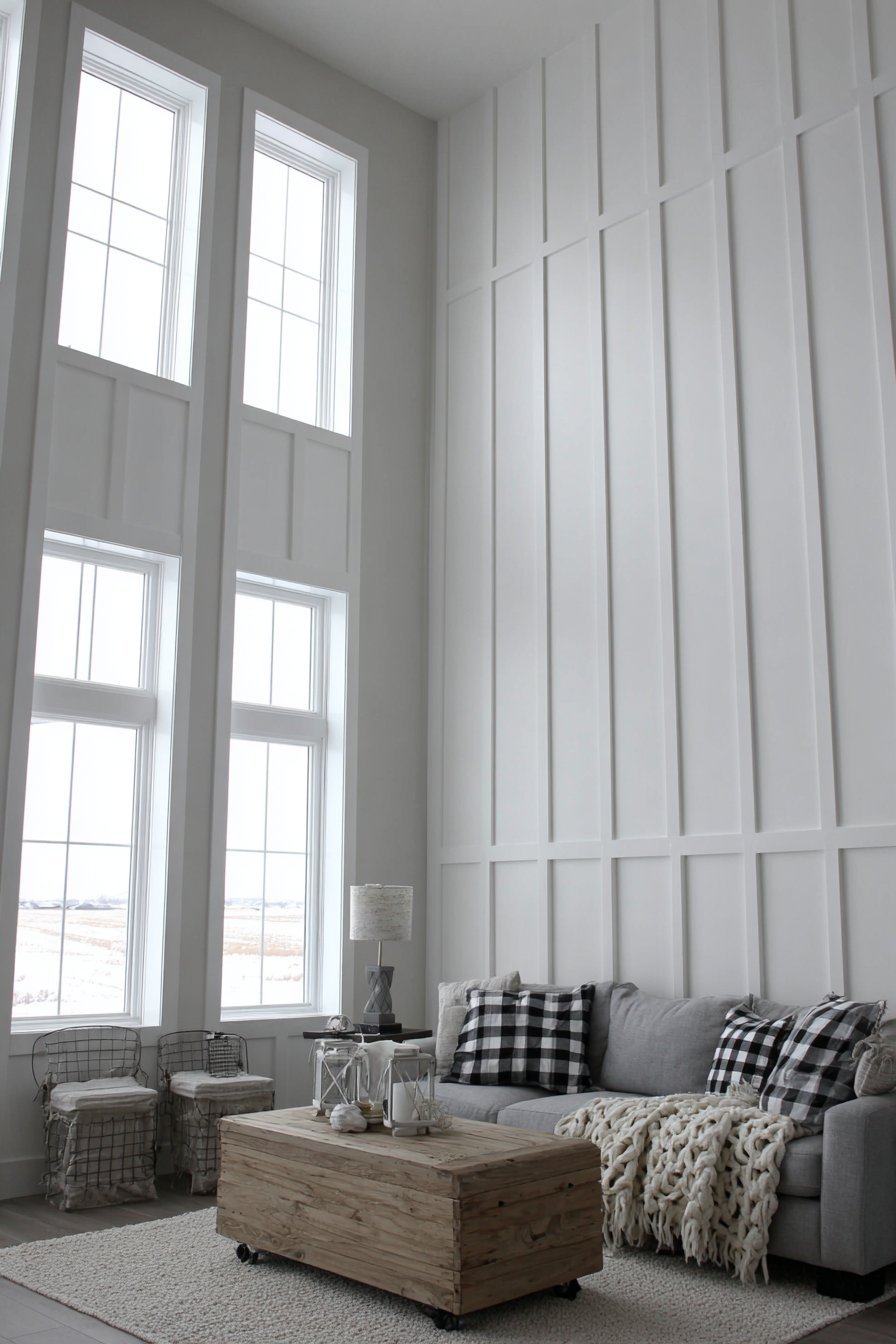
Buffalo check pillows and chunky knit throws provide farmhouse touches. Reclaimed wood coffee tables and galvanized metal accents complete the aesthetic. Natural daylight highlights vertical shadow lines from board-and-batten detail. Professional photography captures cozy layered farmhouse style.
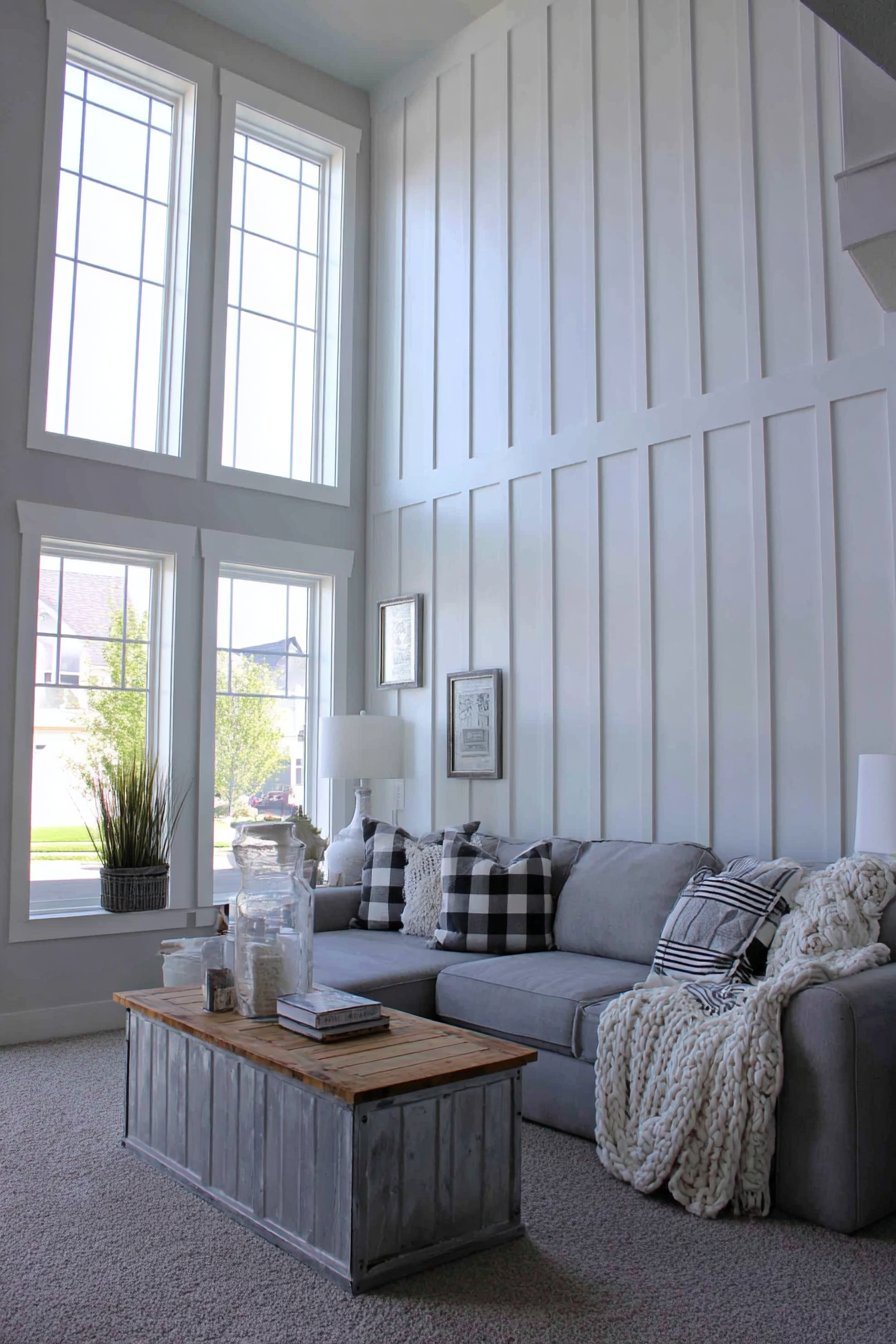
This design demonstrates how architectural treatments create vertical emphasis. The board-and-batten installation adds dimension through shadow play. White paint maintains brightness while creating texture through vertical elements. Material combinations balance rustic and refined throughout.
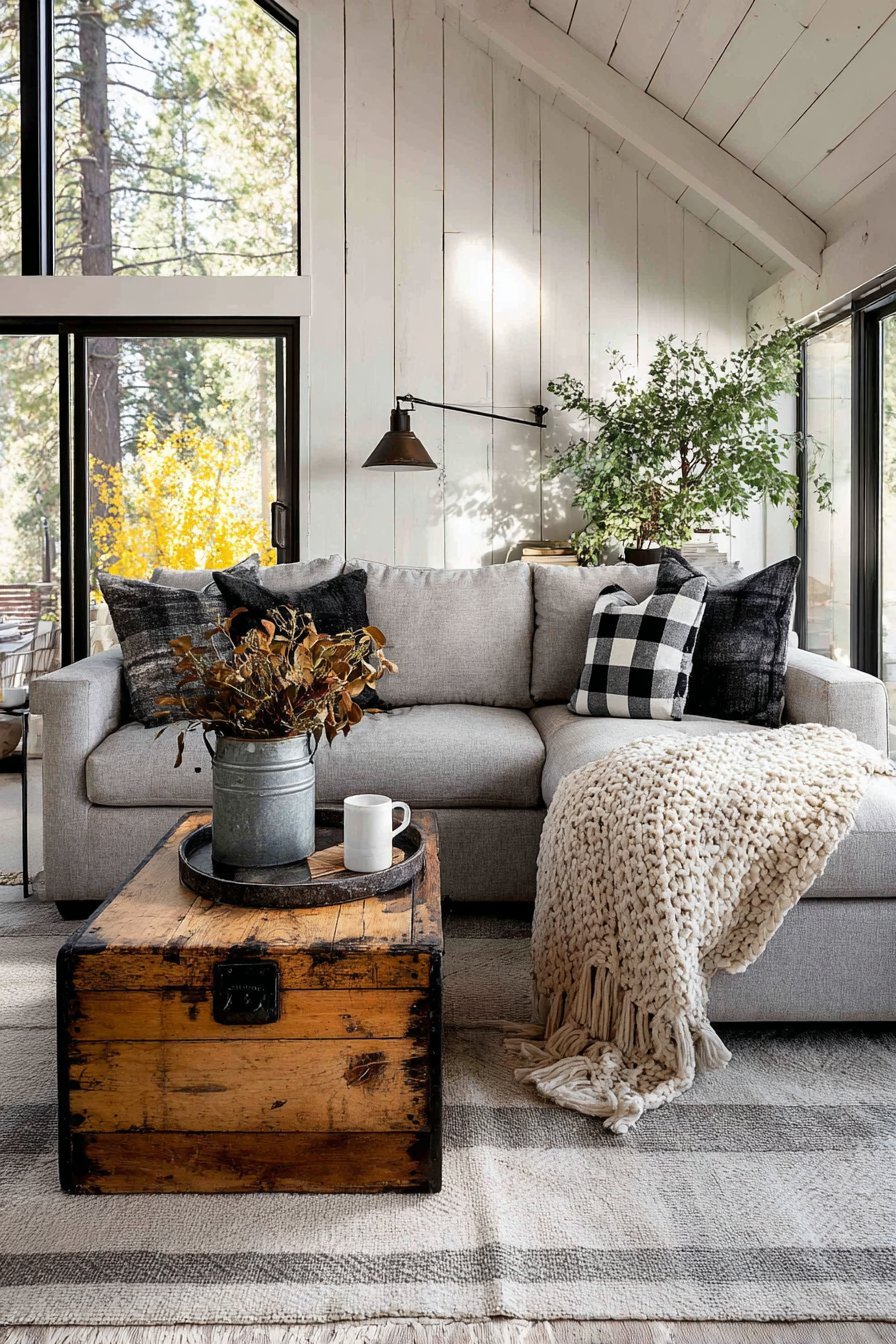
Natural light creates changing shadow patterns throughout the day. The vertical lines draw eyes upward making rooms feel taller. This approach proves that architectural treatments become focal points through simple paint and millwork.
Key Design Tips:
- Install board-and-batten from floor to ceiling for maximum effect
- Paint in soft white to emphasize shadows rather than color
- Position opposite main seating to create focal wall
- Allow natural light to create shadow play highlighting vertical lines
- Balance architectural detail with simple surrounding finishes
Why These Vertical Wall Decor Designs Are the Best
These vertical wall decor designs represent thoughtful approaches to maximizing spatial perception and visual interest. Each concept demonstrates how upward emphasis transforms room proportions while adding functional and aesthetic value. The versatility across design styles proves that vertical arrangements succeed in traditional, contemporary, minimalist, and eclectic spaces equally.
Material choices play crucial roles in vertical design success. Natural wood brings warmth and organic texture that softens vertical lines. Metal elements provide industrial character while maintaining structural integrity. Textiles add softness that prevents vertical arrangements from feeling too rigid or formal. These material considerations ensure designs feel balanced rather than overwhelming.
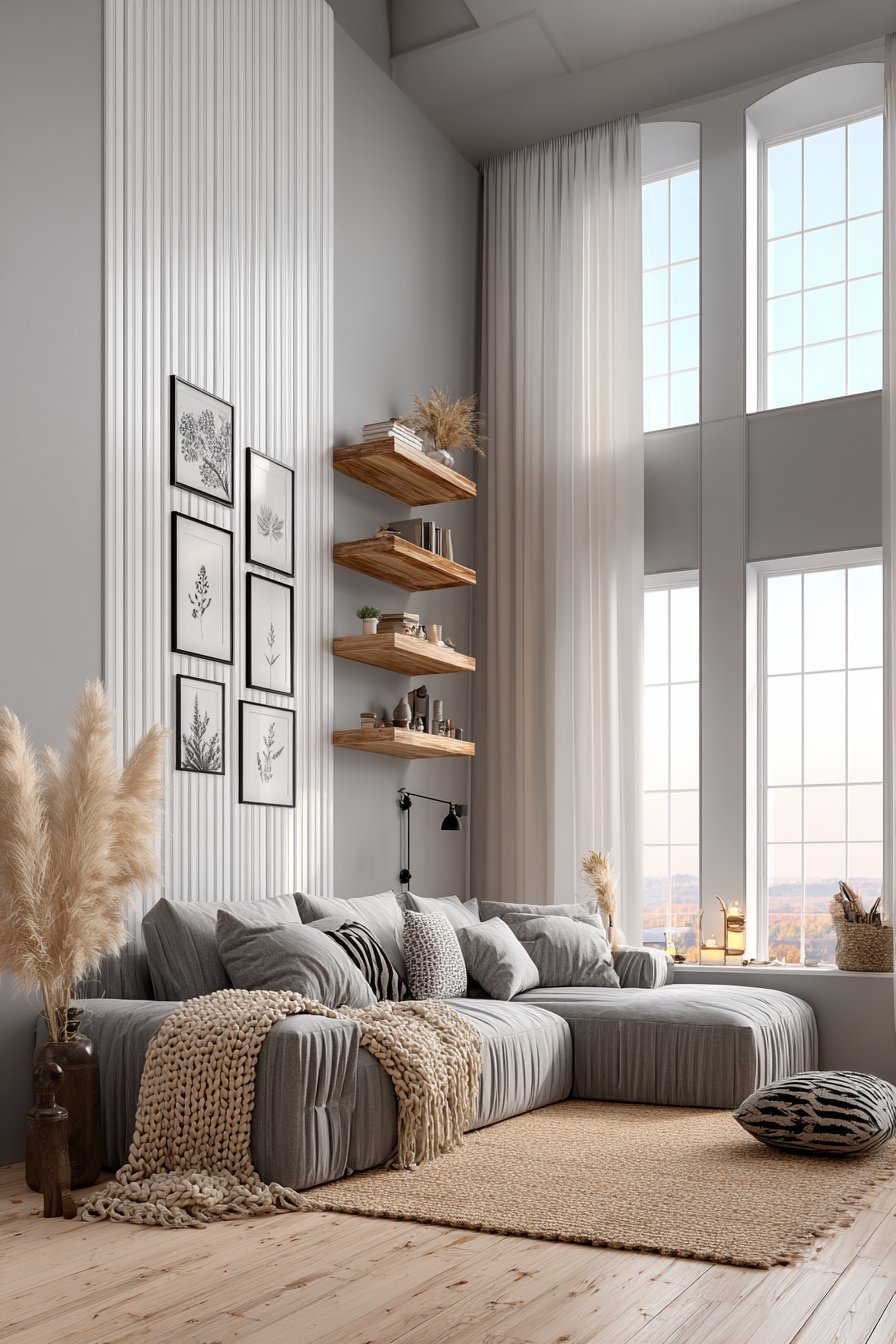
Color theory significantly impacts vertical design effectiveness. Light neutral palettes prevent vertical elements from visually compressing spaces. Dark accent colors create dramatic focal points that draw attention upward. The contrast between elements and backgrounds determines visual impact and spatial perception. Strategic color application enhances rather than fights against vertical emphasis.
Practical considerations ensure these designs succeed long-term. Secure mounting prevents safety hazards while supporting substantial weight. Appropriate scale relationships between vertical elements and surrounding furniture maintain proportional balance. Accessibility for maintenance and seasonal updates keeps displays fresh and relevant. These functional aspects support aesthetic goals through thoughtful planning.
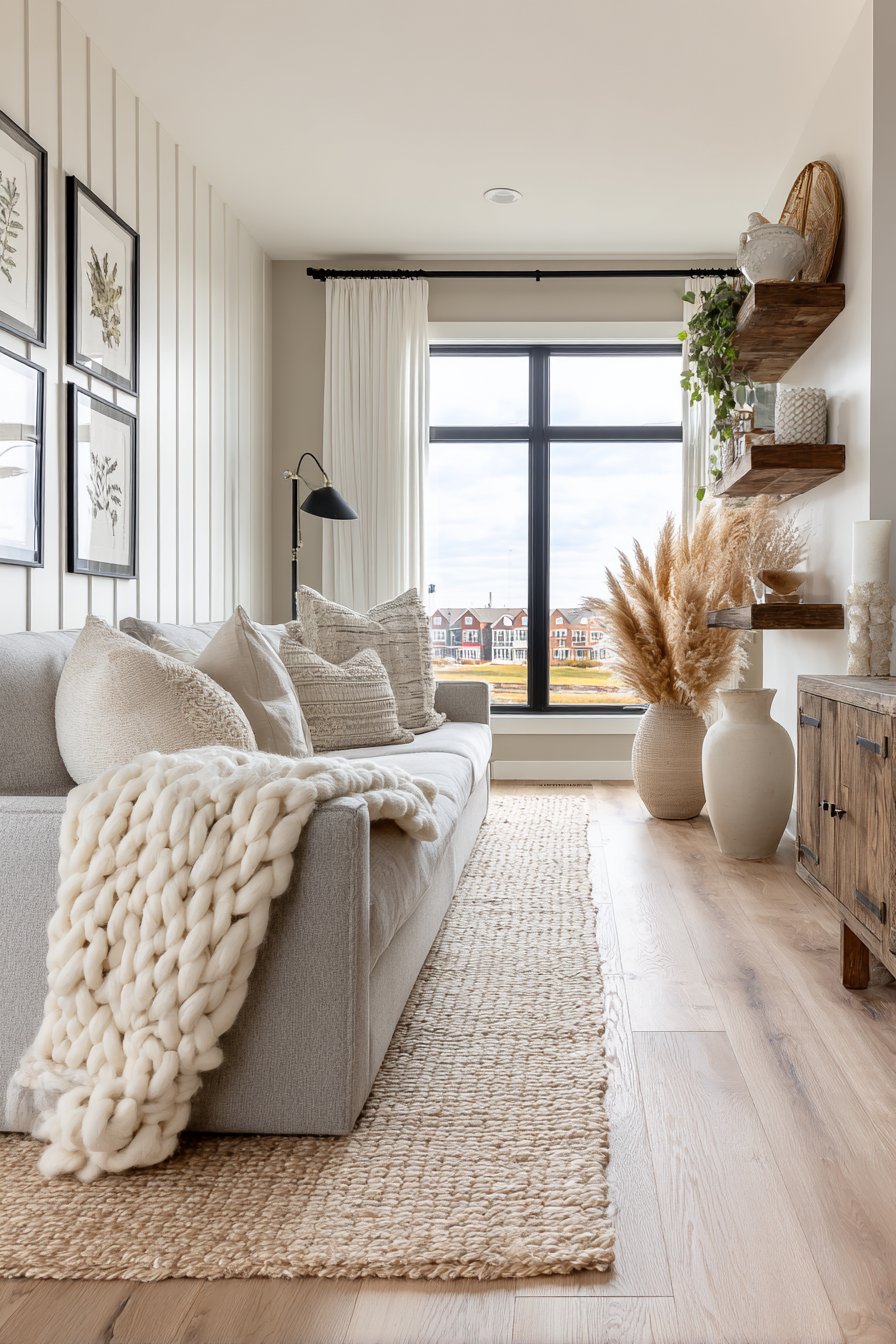
Spatial adaptations make vertical designs accessible across room sizes. Small spaces benefit from vertical emphasis that creates height perception. Large rooms use vertical elements to fill walls without horizontal sprawl. The flexibility allows personalization while maintaining design principles. This adaptability explains why vertical arrangements remain popular across diverse homes.
Conclusion
Vertical wall decor transforms spaces through strategic upward emphasis and thoughtful material selection. These twenty designs demonstrate diverse approaches from gallery walls to architectural treatments. Each concept proves that vertical arrangements enhance perceived height while adding character and functionality.
The key takeaways emphasize quality materials, secure installation, and proportional balance. Natural materials bring warmth while metal and glass add contemporary edge. Professional mounting ensures safety while proper scale maintains visual harmony. These principles guide successful vertical design implementation.
Experiment with vertical arrangements in your own spaces starting small. A simple gallery wall or floating shelf system provides manageable entry points. As confidence grows, explore architectural treatments or custom installations. Your walls await transformation through vertical design thinking.
