
Creating a distinctive living room begins with thoughtful wall design that transforms ordinary spaces into extraordinary sanctuaries. The walls of your living room serve as the canvas for personal expression and architectural interest. Beyond simple paint colors, unique wall treatments add depth, texture, and character that define the entire room’s atmosphere.
Modern homeowners increasingly seek innovative wall solutions that reflect individual style while enhancing functionality. From three-dimensional geometric installations to natural fiber artworks, the possibilities for creative wall design continue to expand. These distinctive treatments elevate living spaces from mundane to magnificent, creating focal points that captivate guests and inspire daily living.
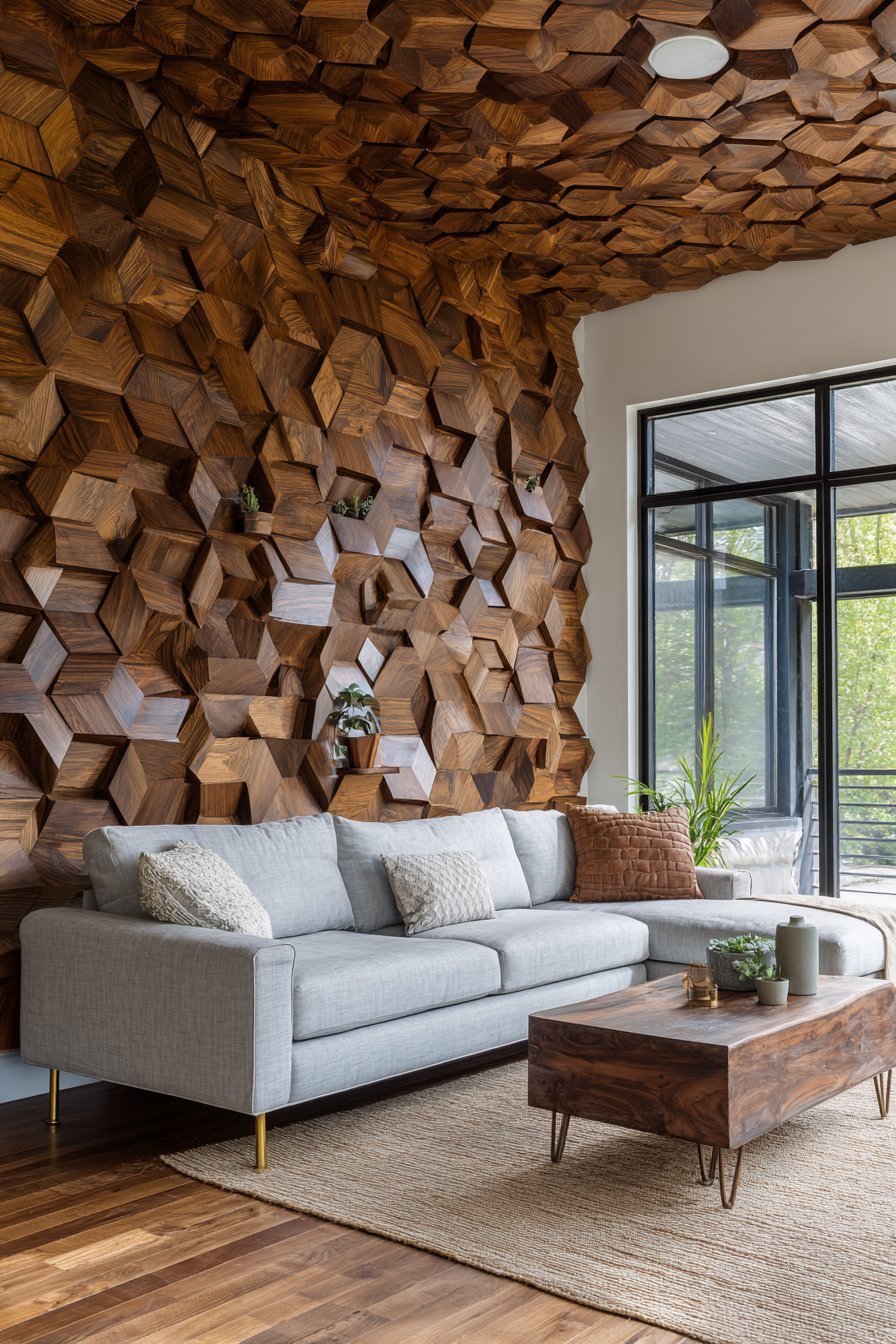
The designs featured in this article span diverse aesthetic approaches, from minimalist Scandinavian elegance to maximalist bohemian richness. Each concept demonstrates how strategic wall design transforms the entire room’s character. Whether you prefer natural materials, industrial finishes, or artistic installations, these ideas provide inspiration for reimagining your living room walls.
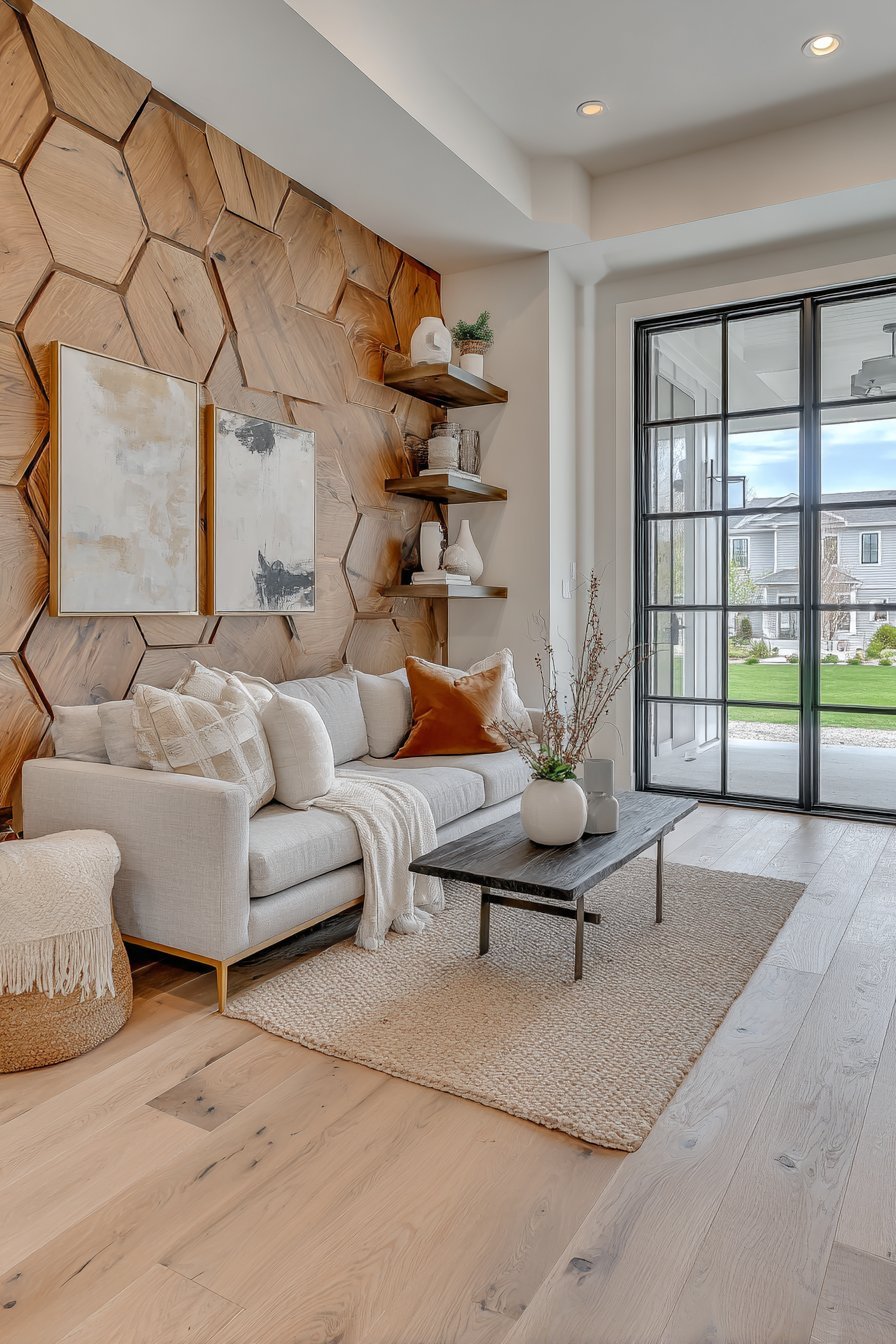
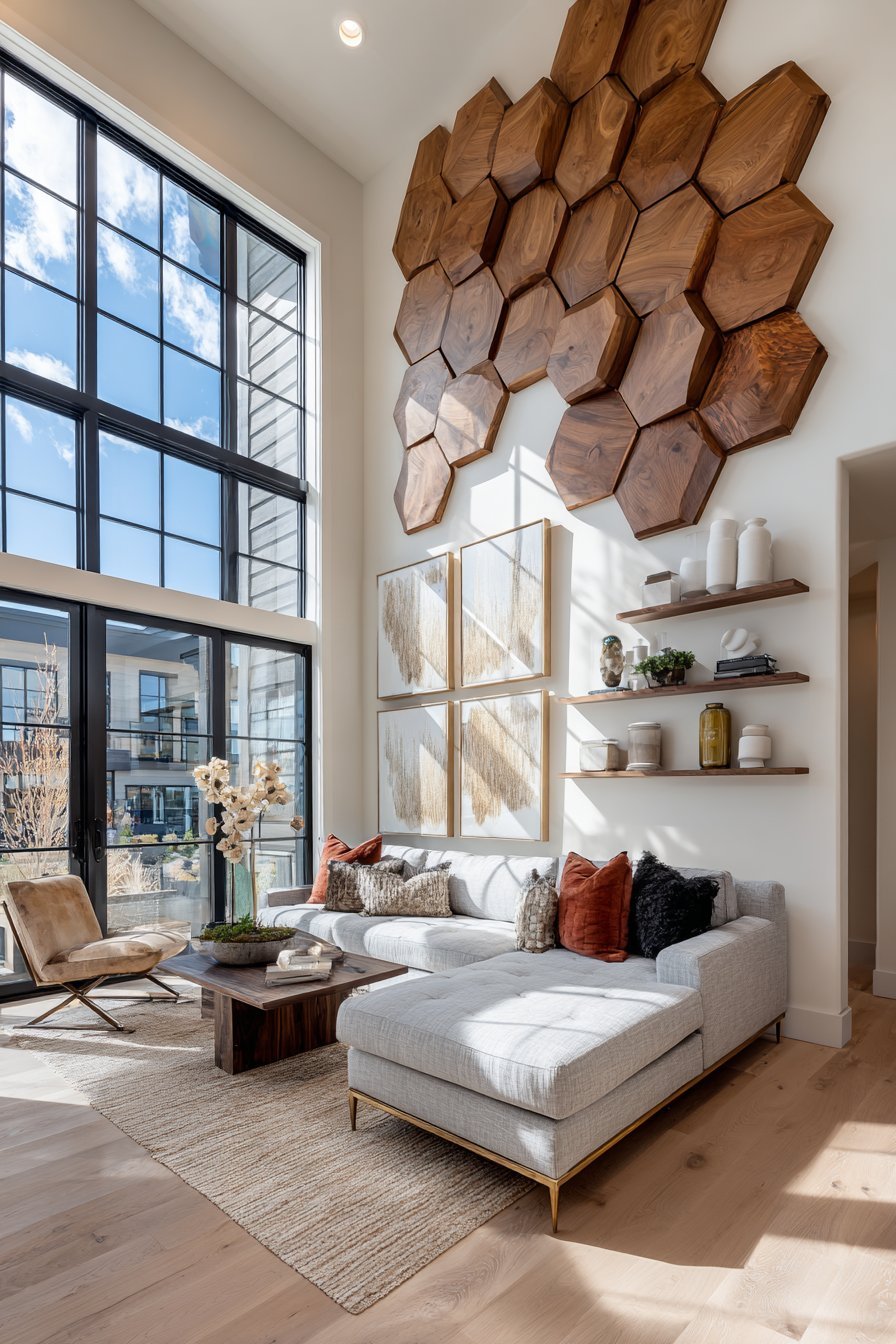
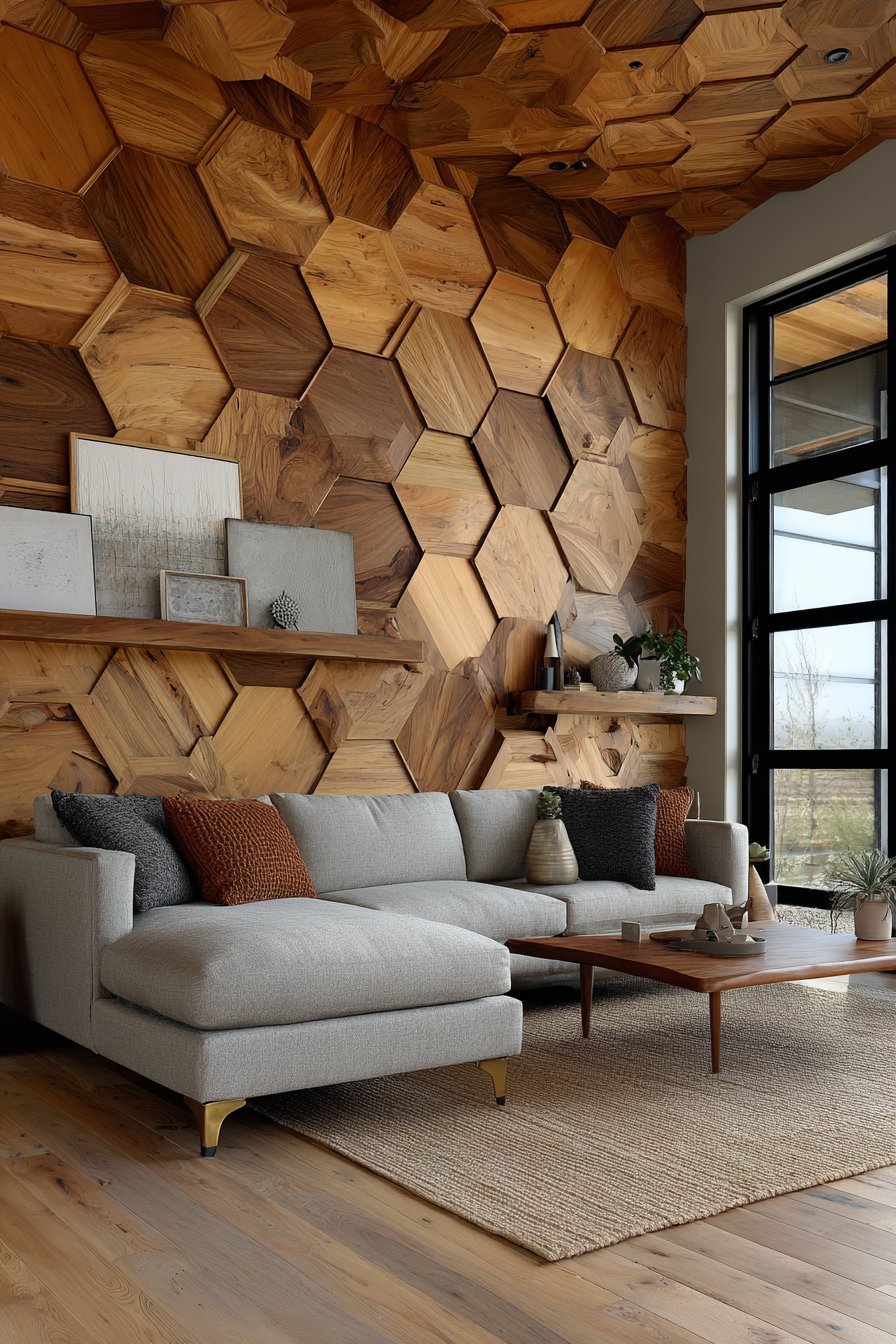
1. Dramatic Three-Dimensional Geometric Wood Installation
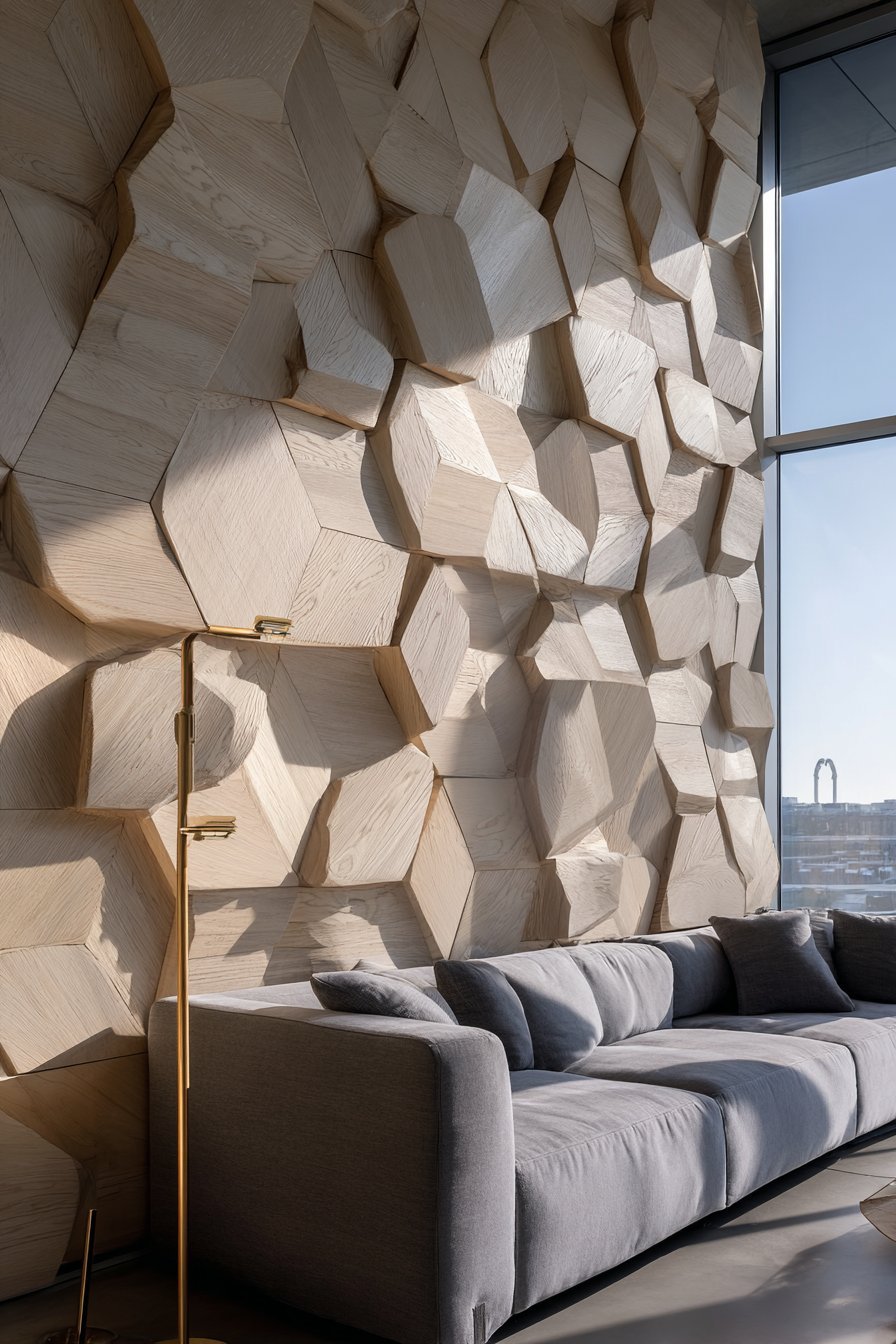
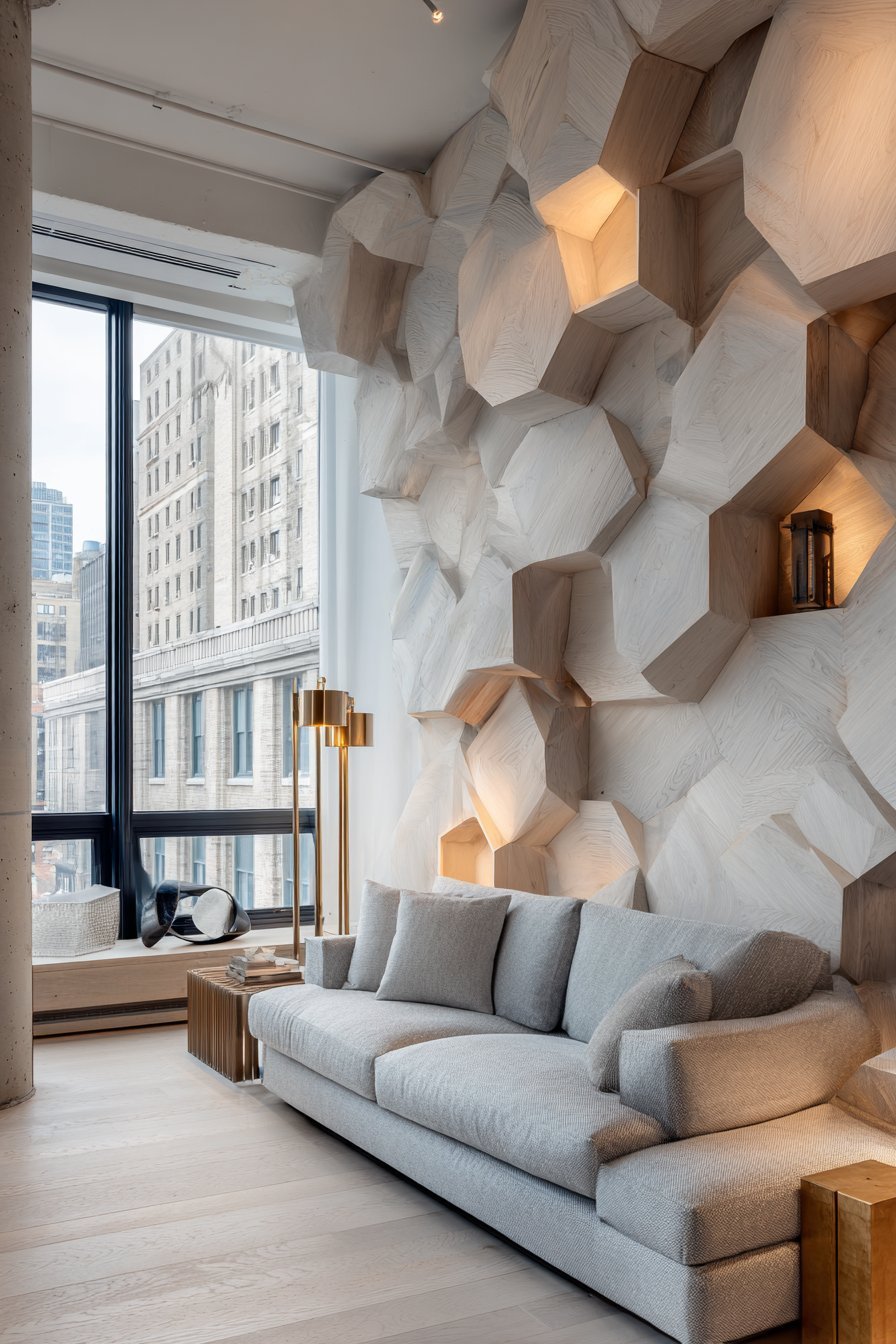
A contemporary living room achieves remarkable visual impact through an interlocking hexagonal wooden panel installation. White oak panels with visible natural grain create dynamic shadow play throughout the day. The panels cluster organically across the focal wall, extending from floor to ceiling. Each hexagon varies in depth by three to six inches. This dimensional variation creates constantly shifting light patterns.
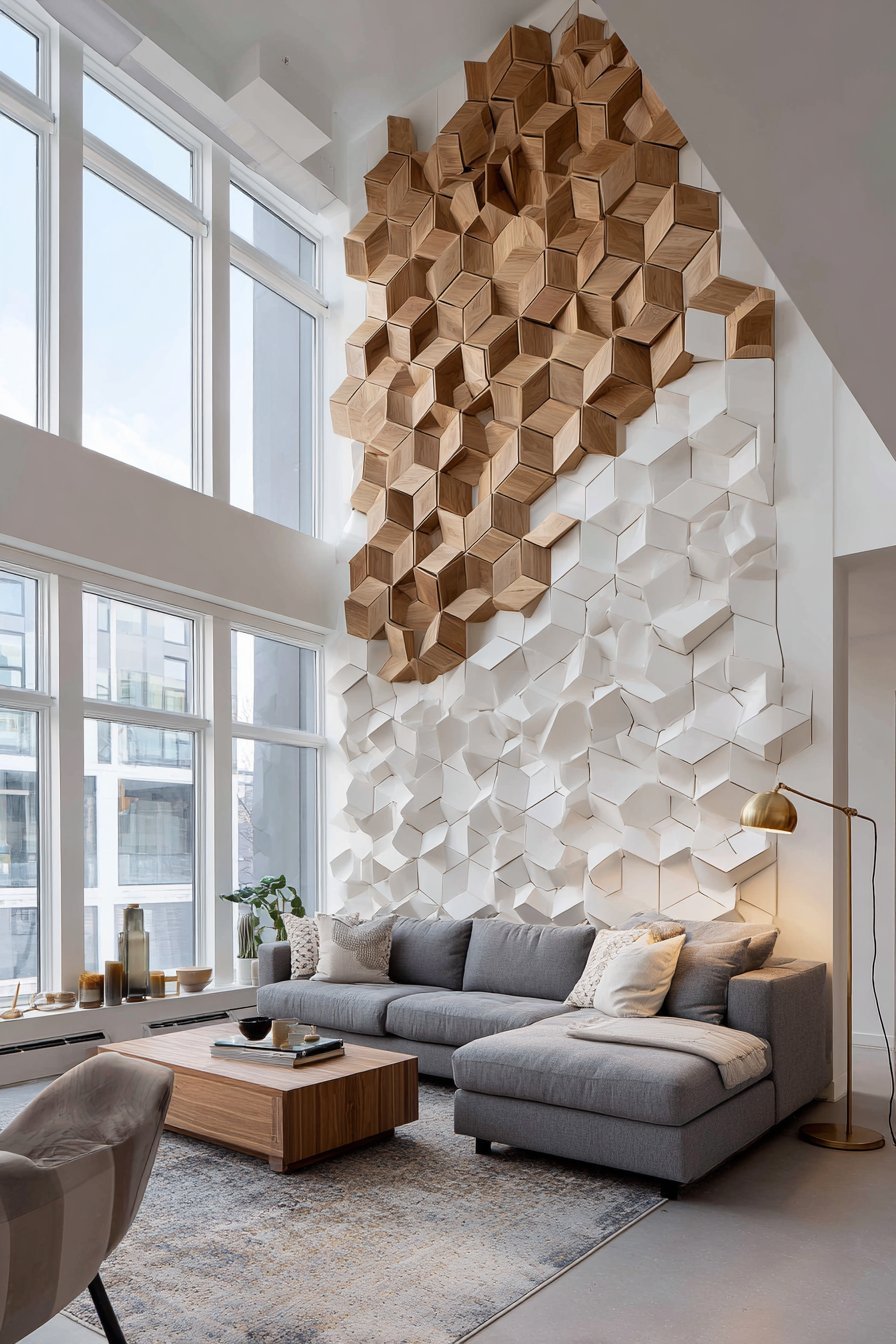
The modern grey sectional sofa faces this architectural masterpiece directly. Brass floor lamps provide warm accent lighting that enhances dimensional effects during evening hours. Natural afternoon light floods through large windows, highlighting texture and depth. The interplay between natural and artificial illumination reveals new details as daylight shifts.
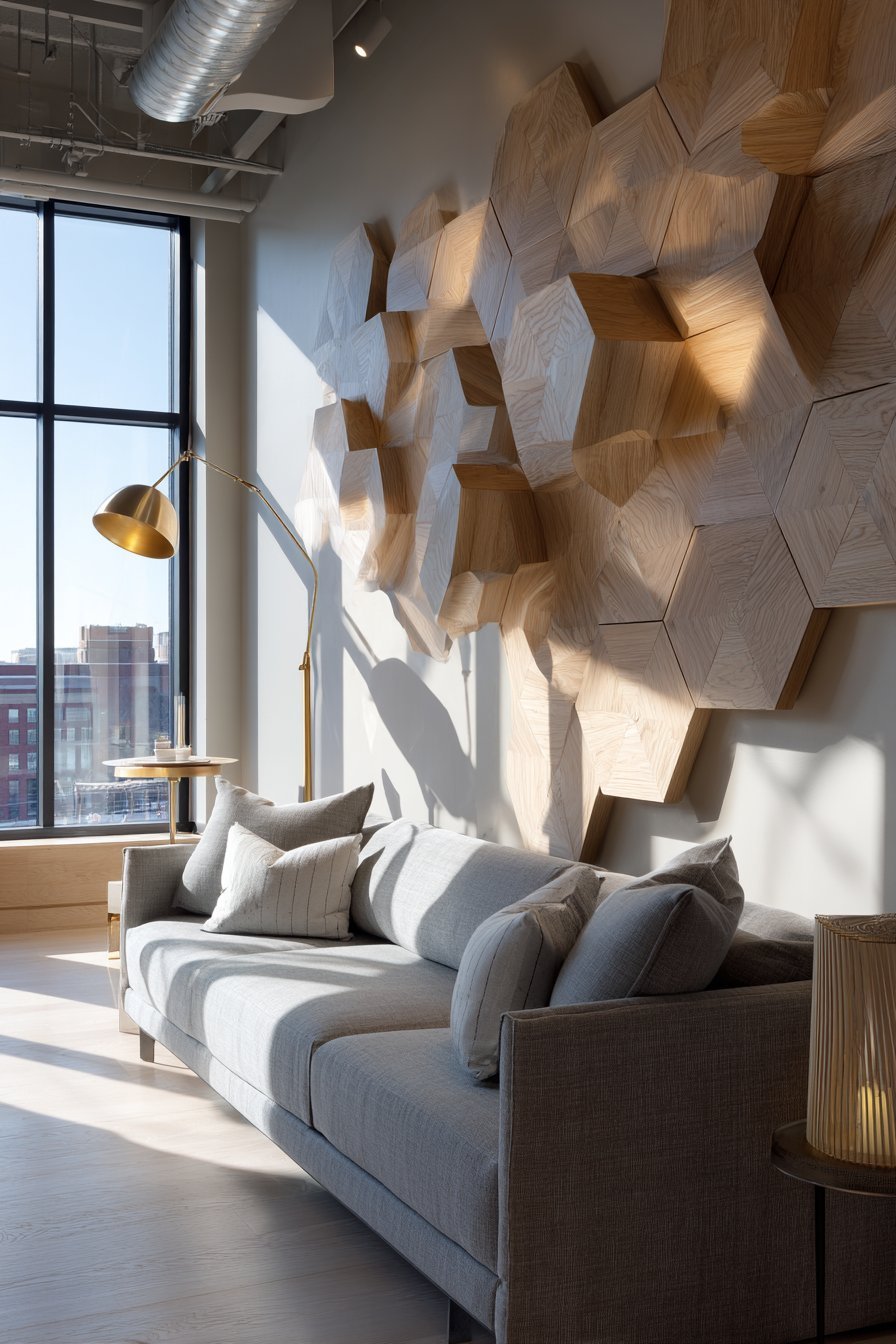
This design approach transforms a flat surface into sculptural art. The white oak’s natural grain patterns add organic warmth to geometric precision. The varying depths create visual interest from every viewing angle. Shadows deepen and lighten as the sun moves across the sky. This living wall becomes a dynamic element that never appears static.
Key Design Tips:
- Select wood species with prominent grain for maximum visual texture
- Arrange hexagons in organic clusters rather than rigid grids
- Install panels with varying depths between three to six inches
- Position lighting to emphasize dimensional qualities during evening hours
- Maintain natural wood finish to showcase authentic material beauty
- Consider professional installation for structural integrity
2. Horizontal Gradient Reclaimed Wood Feature Wall
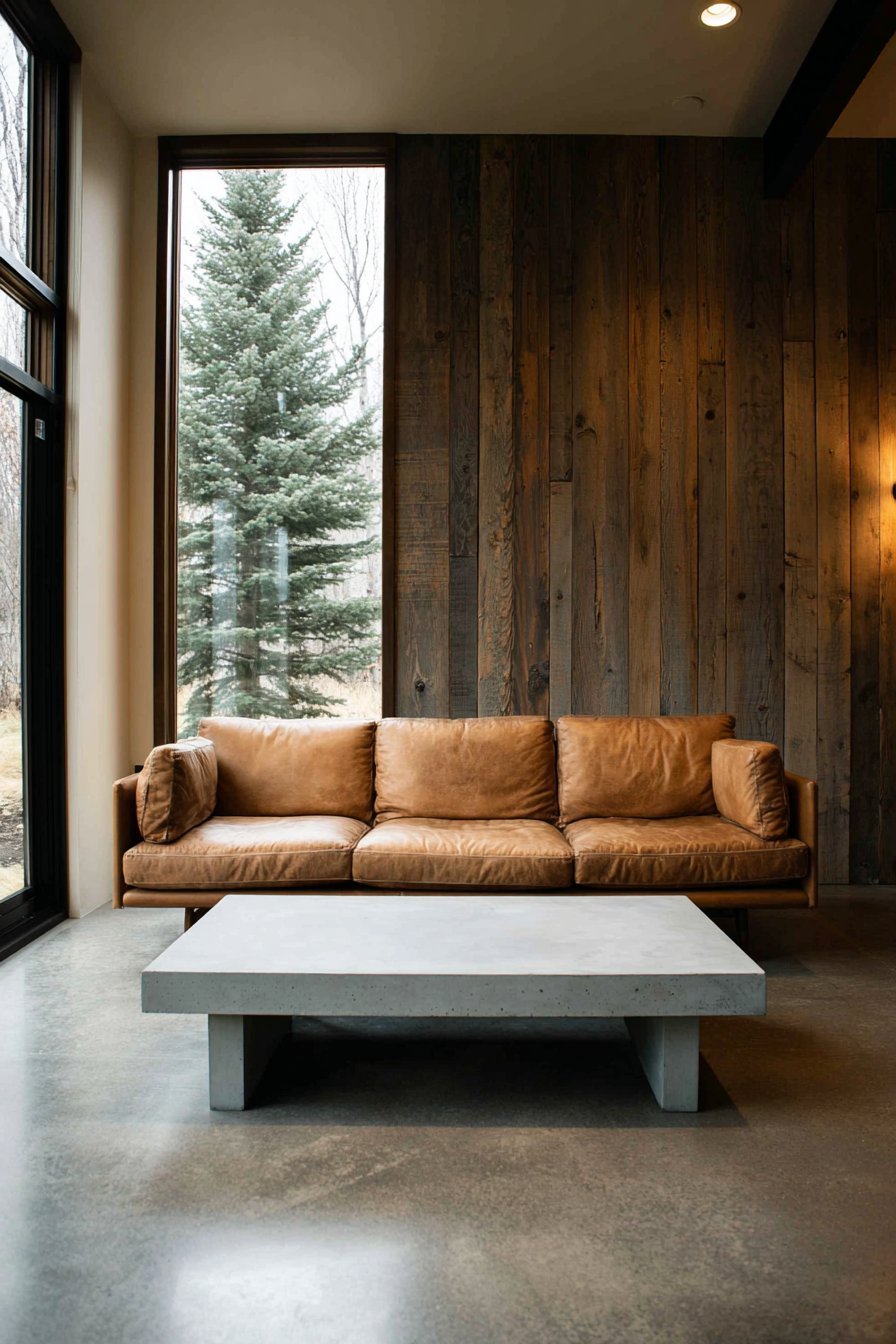
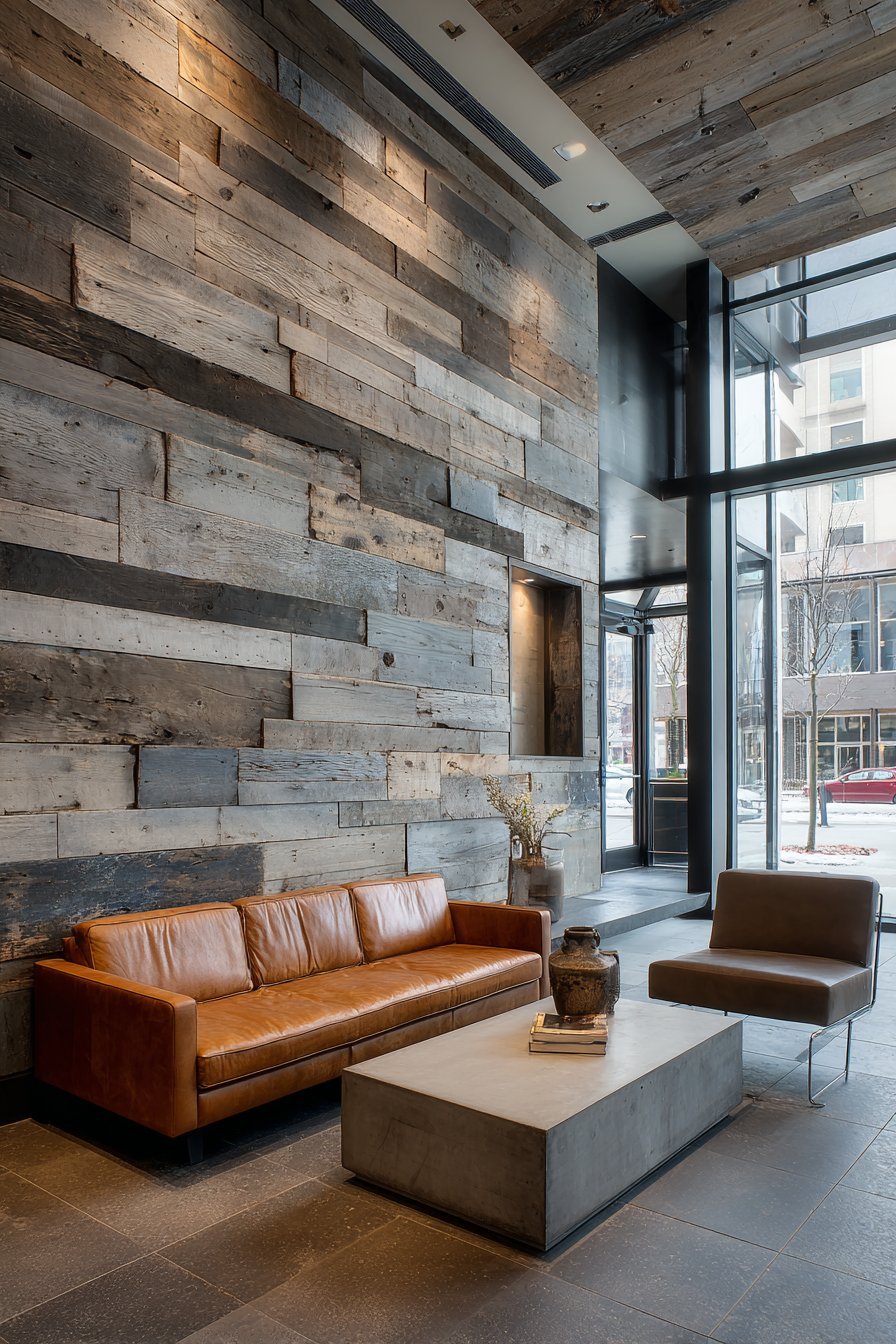
Reclaimed wood planks create a sophisticated gradient wall treatment in this minimalist living room. Dark walnut planks begin at floor level, gradually transitioning to light ash at the ceiling. Each plank displays authentic weathering and natural color variations. The horizontal installation emphasizes the room’s width while drawing eyes upward. This subtle ombre effect adds visual height to standard ceiling dimensions.
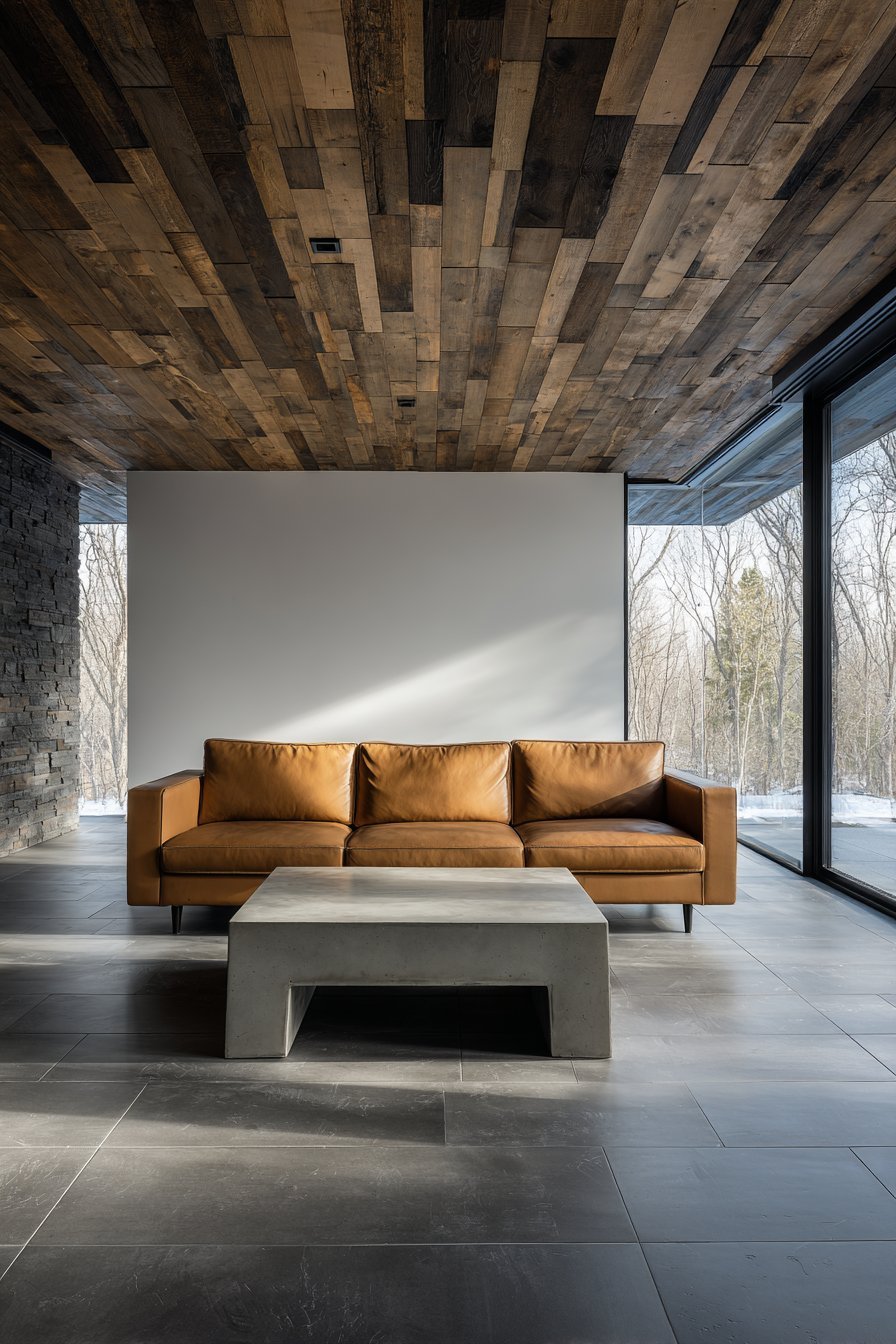
The low-profile leather sofa in caramel tones provides comfortable seating without competing for attention. A simple concrete coffee table centers the space with industrial minimalism. Morning light through floor-to-ceiling windows illuminates wood grain textures beautifully. The gradient effect appears more pronounced in direct sunlight.
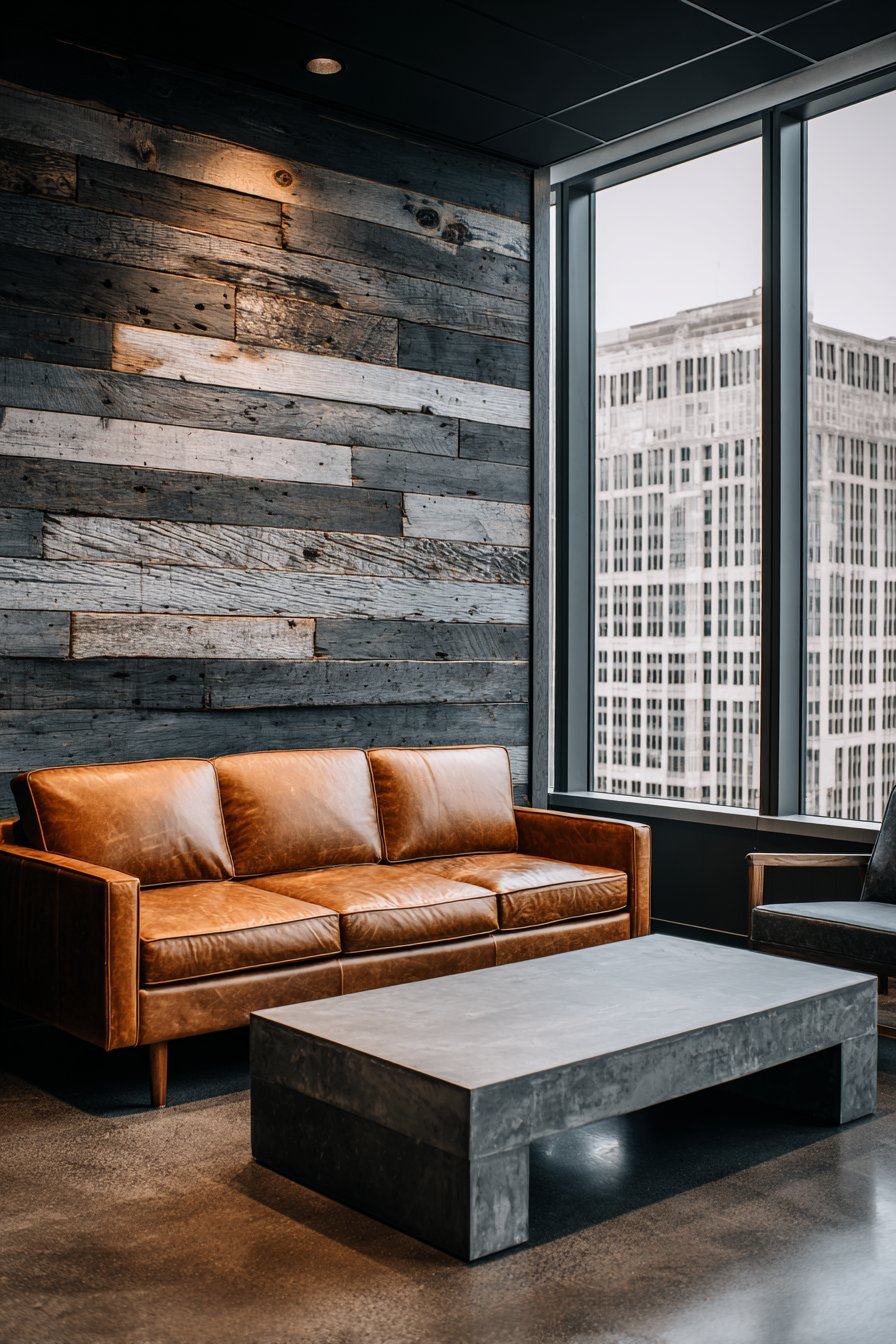
This design celebrates sustainable material choices while creating sophisticated visual interest. The reclaimed planks carry histories visible in their weathered surfaces. Color transitions feel organic rather than forced. The horizontal orientation makes smaller rooms feel more spacious. Natural imperfections in the wood add authentic character that new materials cannot replicate.
Key Design Tips:
- Source reclaimed wood with varied natural patinas for smooth color transitions
- Install planks horizontally to maximize room width perception
- Arrange wood pieces from darkest at bottom to lightest at top
- Seal wood properly to preserve weathered character while protecting surfaces
- Position furniture to complement rather than block the gradient effect
- Allow natural light access for optimal color display
3. Intricate Macramé Fiber Art Installation
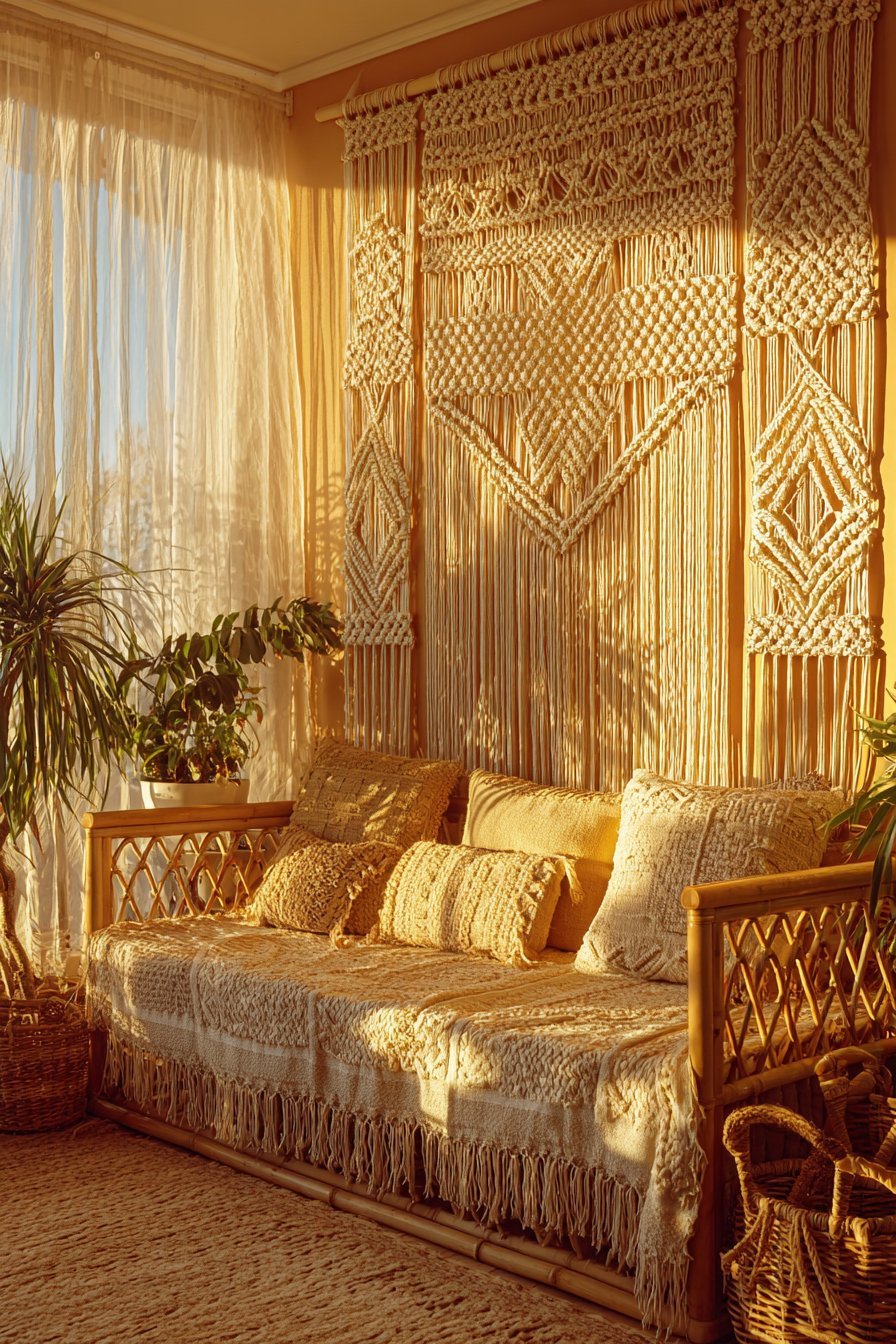
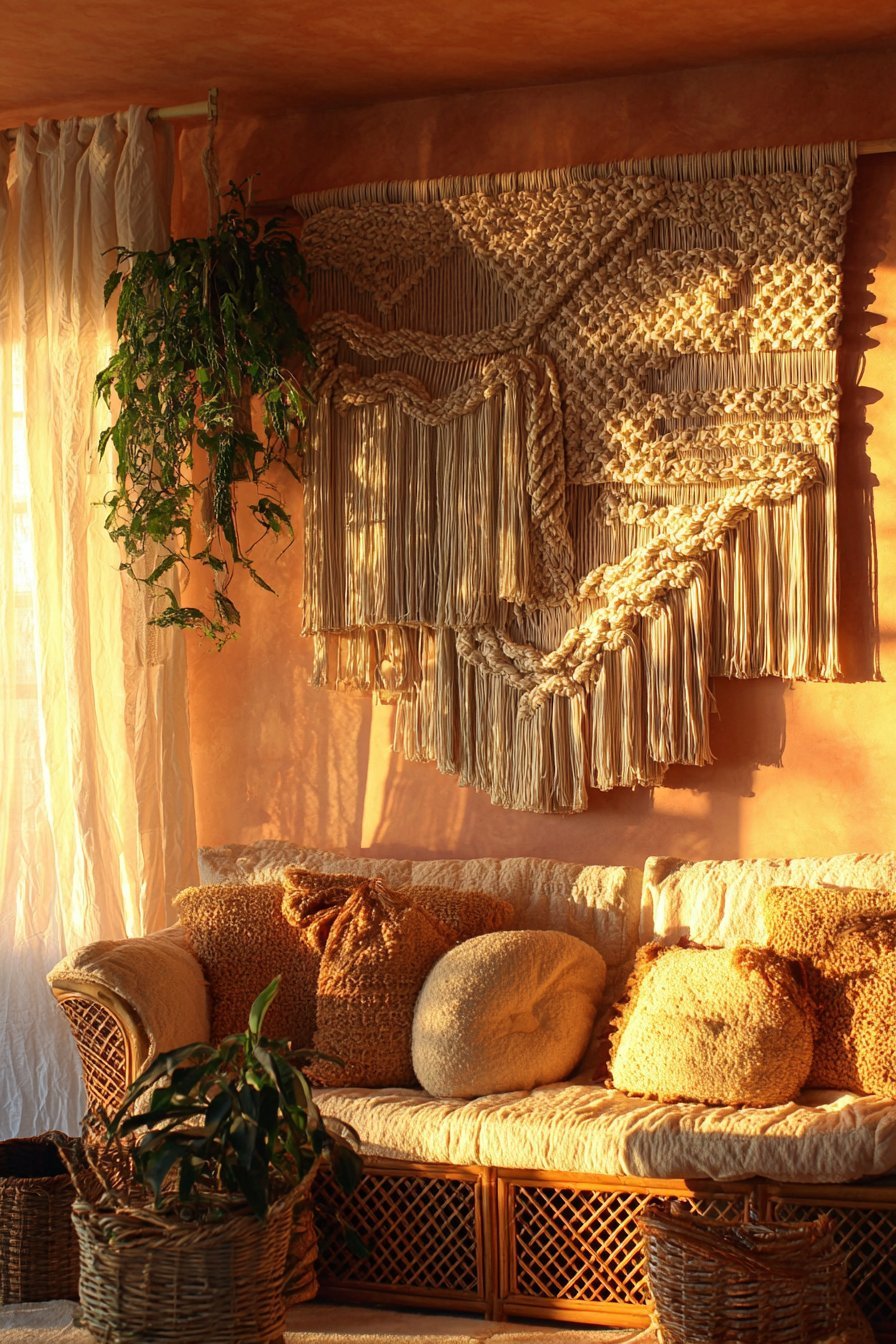
Bohemian style flourishes in this living room featuring an elaborate macramé wall hanging. Natural cotton rope in cream tones creates geometric and organic patterns across eight feet of width. The piece extends six feet vertically, commanding attention as the room’s centerpiece. Against a warm terracotta painted wall, the dimensional knotwork creates striking contrast. Complex patterns demonstrate the artisan’s skill and patience.
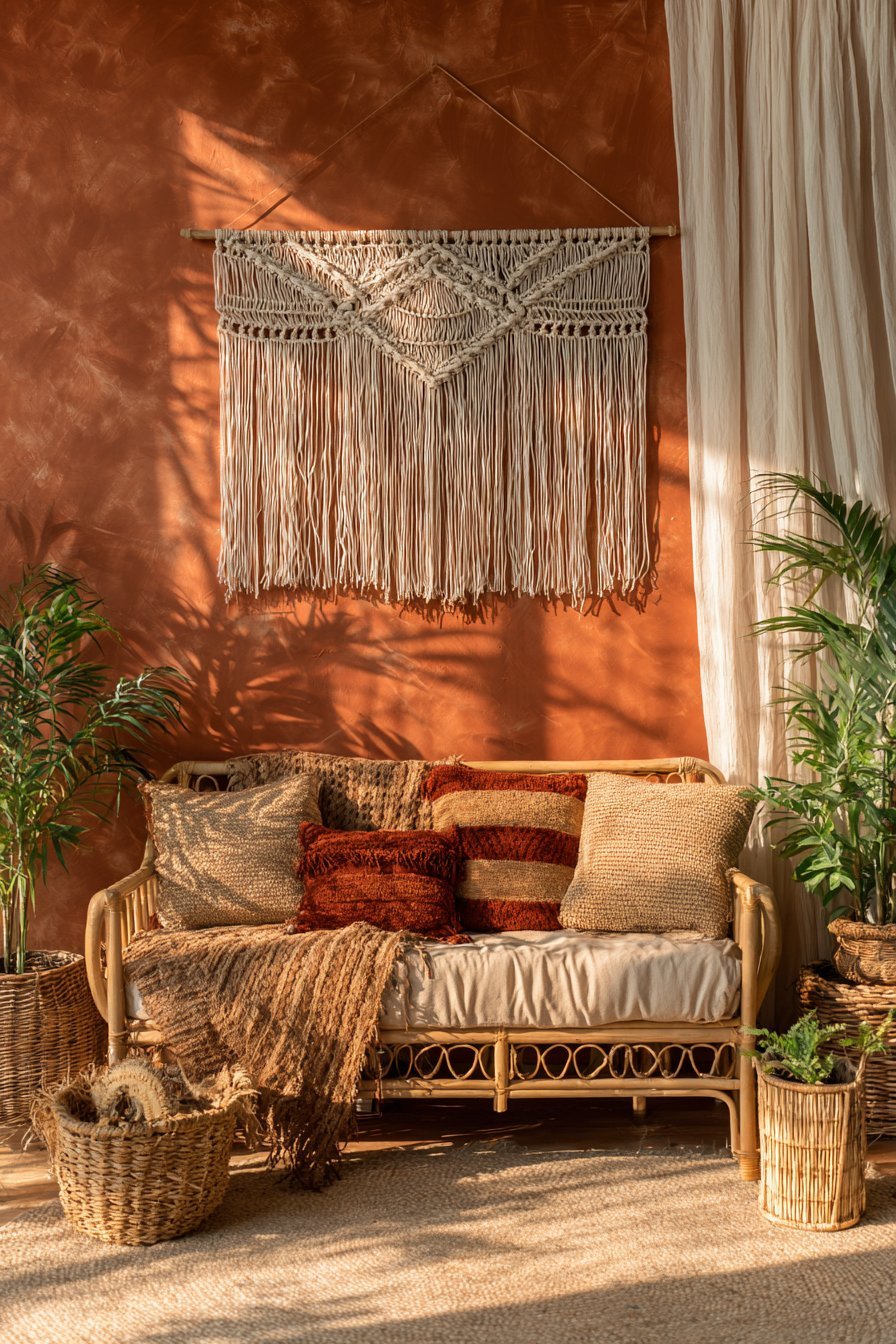
A low vintage rattan sofa anchors the seating area with complementary natural textures. Textured cushions and woven baskets continue the handcrafted aesthetic throughout the space. Trailing plants add living elements that enhance the bohemian atmosphere. Golden hour sunlight filters through sheer linen curtains, creating soft shadows that emphasize three-dimensional qualities.
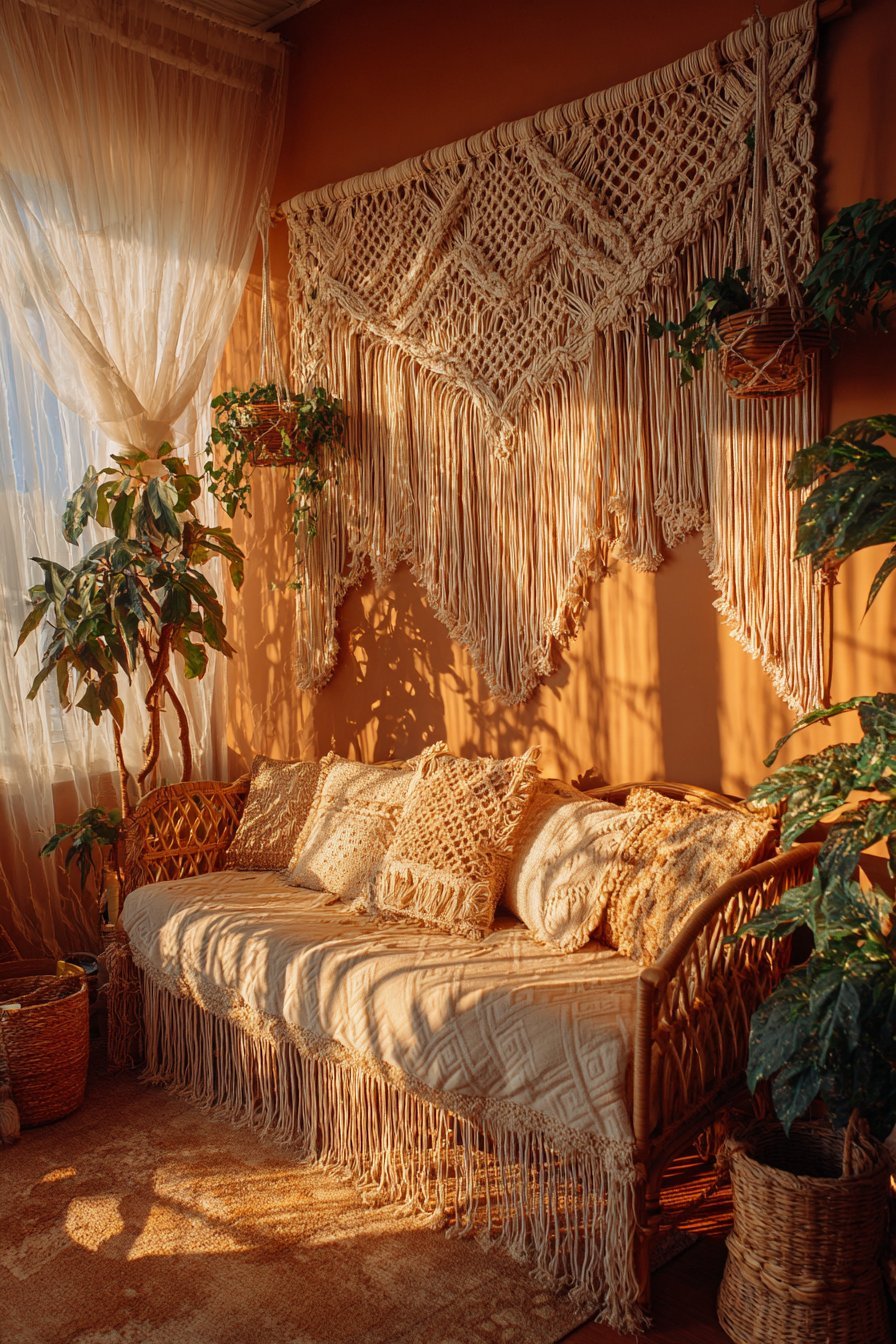
This design approach celebrates slow craft traditions and natural materials. The handwoven textile adds warmth and softness to hard architectural surfaces. Each knot contributes to the overall pattern while displaying individual craftsmanship. The neutral color palette allows the texture to become the primary design element. This treatment brings organic movement to static walls.
Key Design Tips:
- Commission custom pieces sized specifically for your wall dimensions
- Choose natural fiber materials like cotton, jute, or hemp
- Paint background walls in complementary warm tones for enhanced contrast
- Position near natural light sources to maximize shadow play
- Incorporate complementary textiles throughout the room for cohesive design
- Consider the piece’s weight and proper mounting hardware requirements
4. Sophisticated Ombré Exposed Brick Treatment
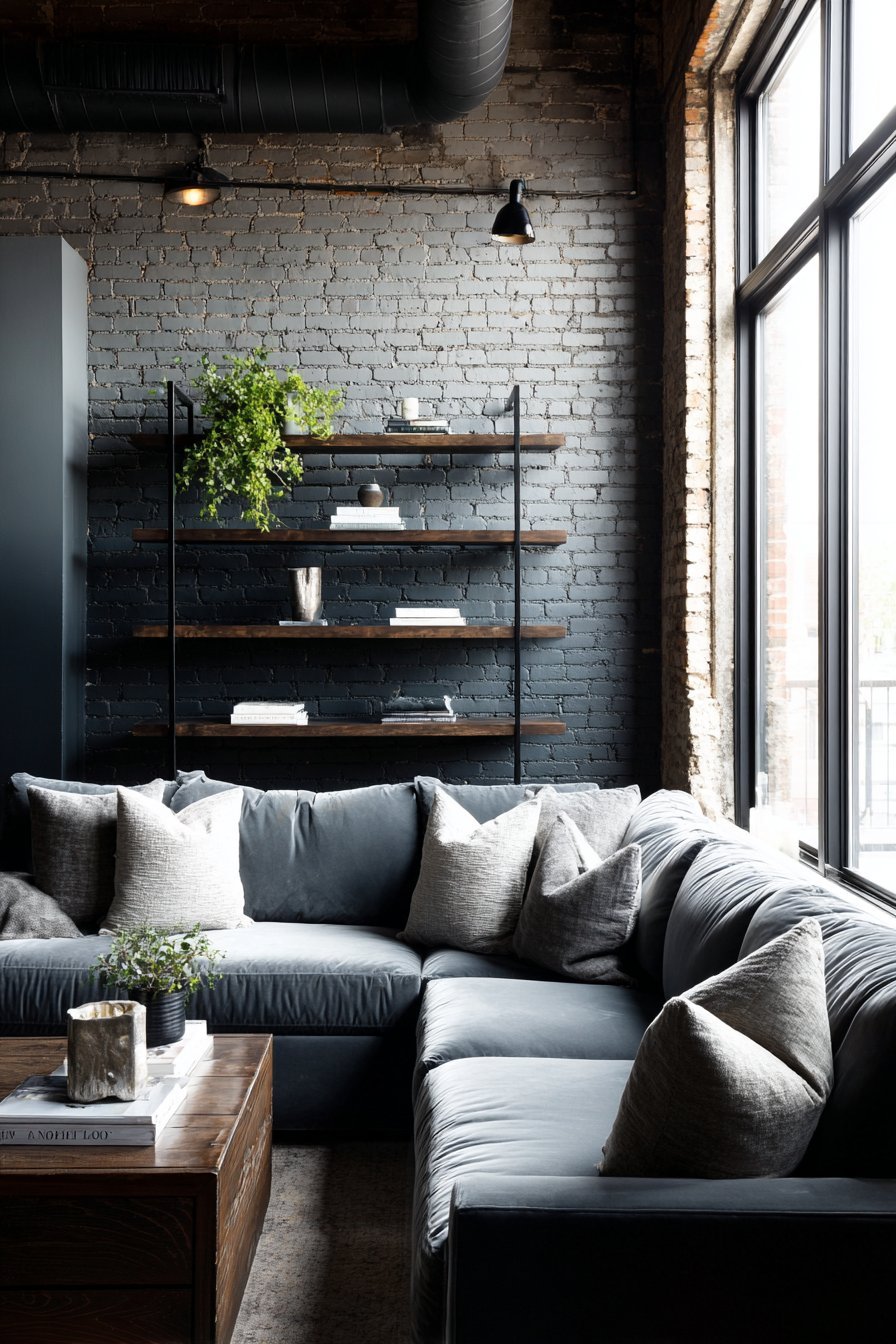
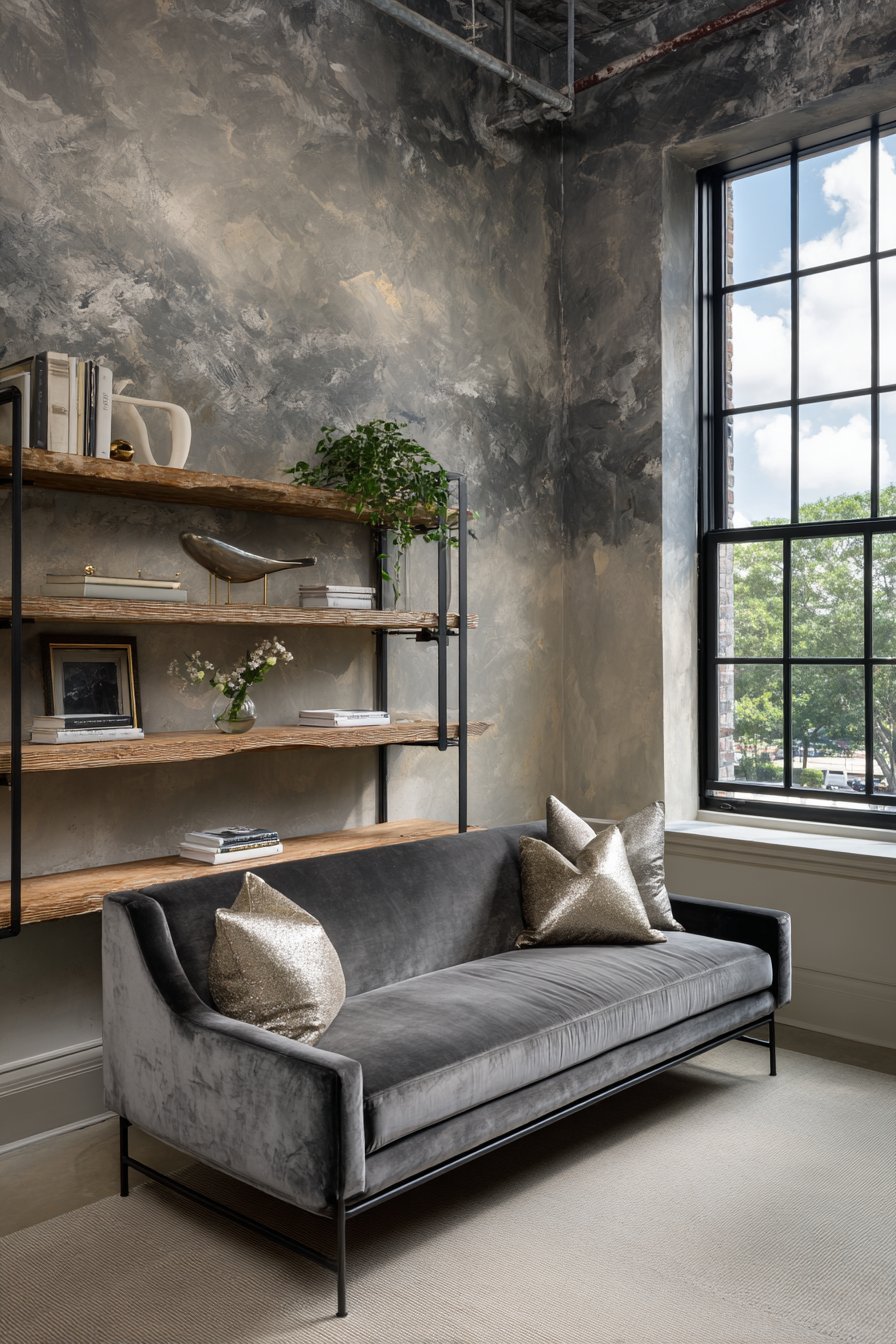
Industrial character meets refined artistry in this modern living room with painted brick walls. Exposed brick receives a sophisticated ombré treatment transitioning from deep charcoal at the base to soft dove grey at the crown. The brick texture remains visible through the paint application. This preservation maintains authentic architectural character while introducing contemporary color sophistication.
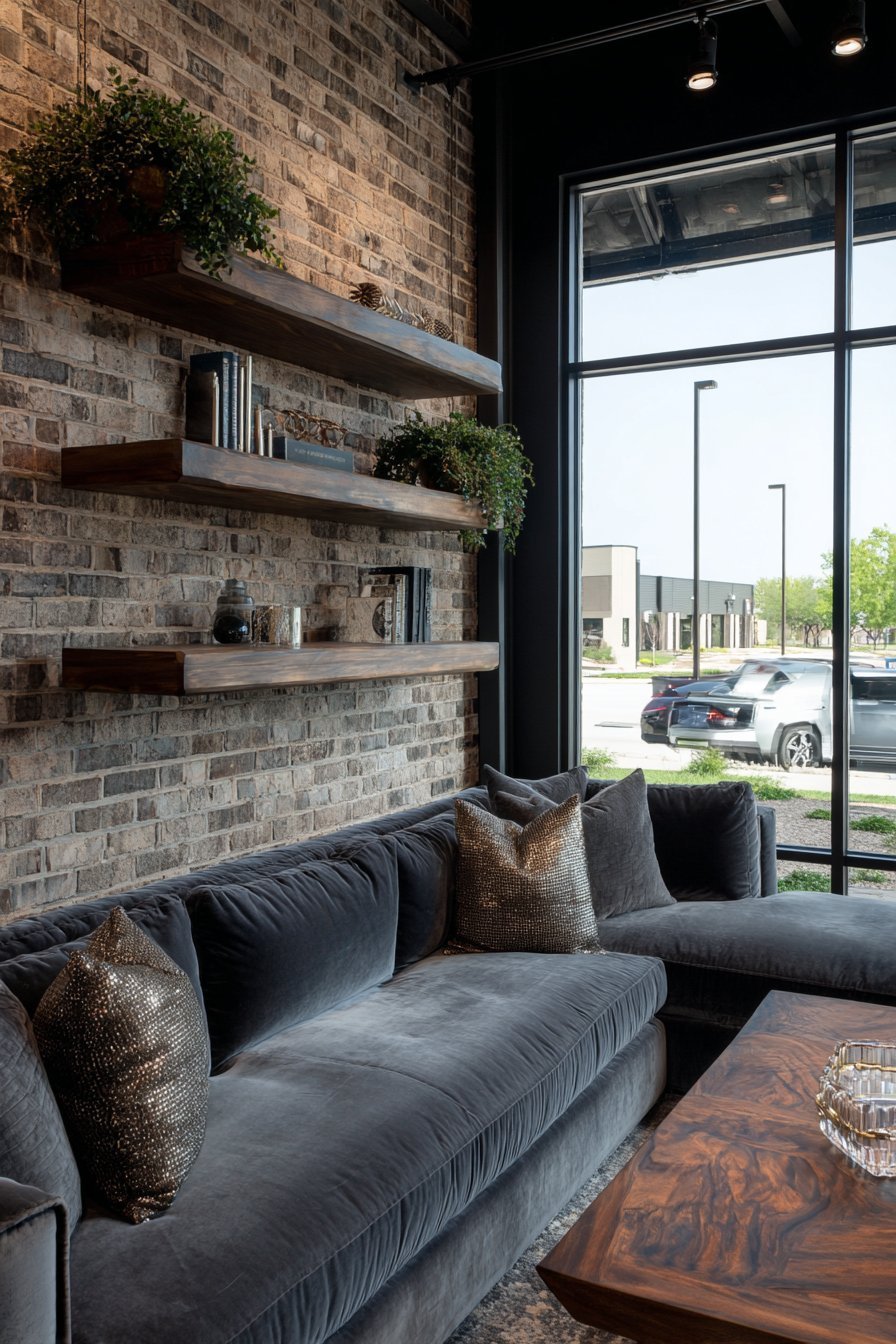
A contemporary grey velvet sofa faces the treated brick wall directly. Metallic accent pillows add subtle glamour to the industrial foundation. Black metal shelving with live edge wooden shelves mounts against the brick, displaying curated objects and greenery. Natural light from tall factory-style windows highlights the gradient effect and dimensional brick texture.
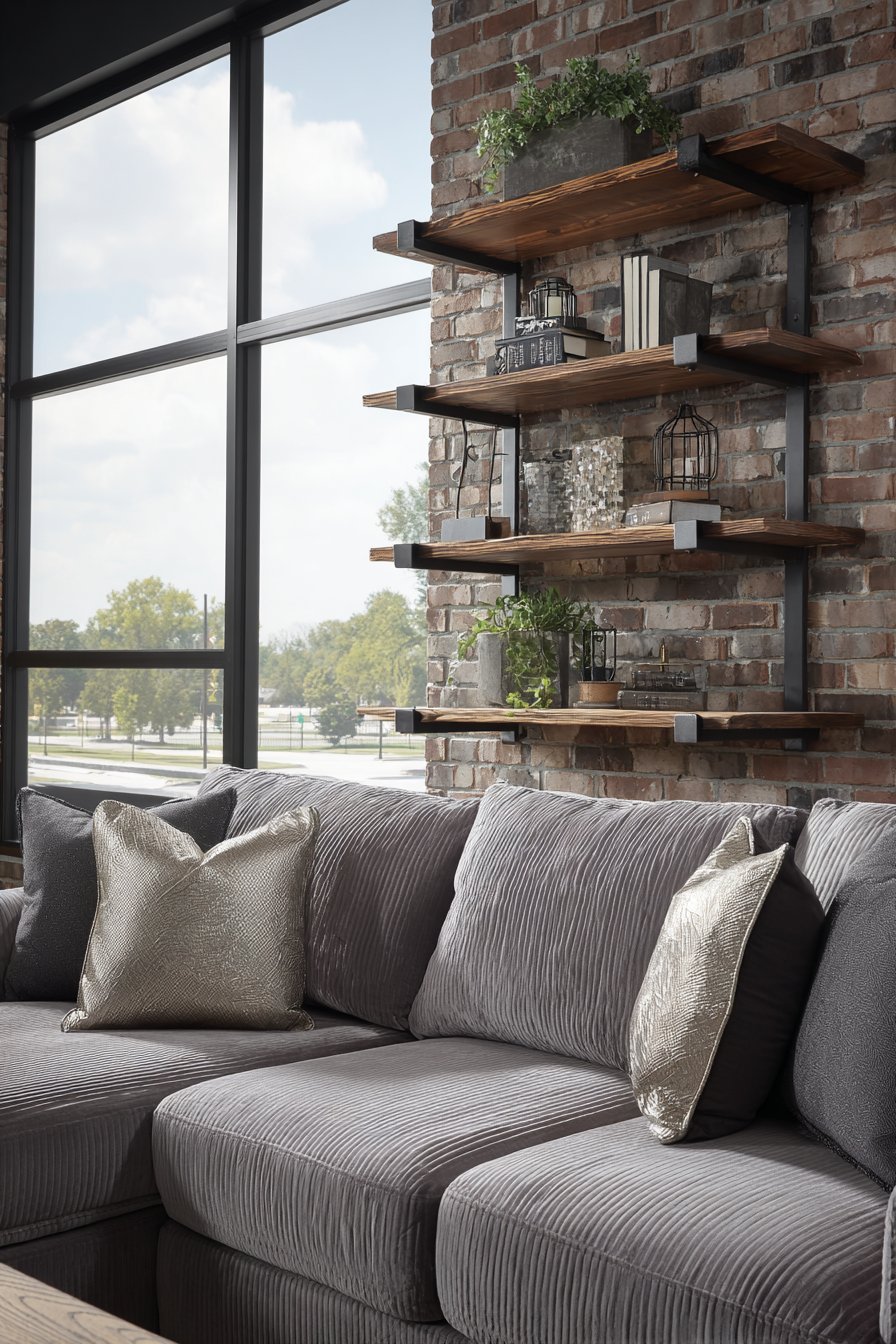
This design successfully balances raw industrial elements with refined contemporary aesthetics. The ombré effect adds intentional artistry to functional architecture. Visible brick texture prevents the treatment from appearing flat or generic. The color transition creates vertical visual interest that draws eyes upward. This approach preserves historical character while updating the overall aesthetic.
Key Design Tips:
- Use high-quality paint suitable for masonry surfaces
- Apply paint in thin layers to maintain brick texture visibility
- Blend colors gradually for smooth ombré transitions
- Start with darker tones at bottom progressing to lighter shades above
- Seal painted brick to protect finish and ease future cleaning
- Incorporate industrial-modern furniture to complement the aesthetic
5. Vertical Wooden Slat Partition Design
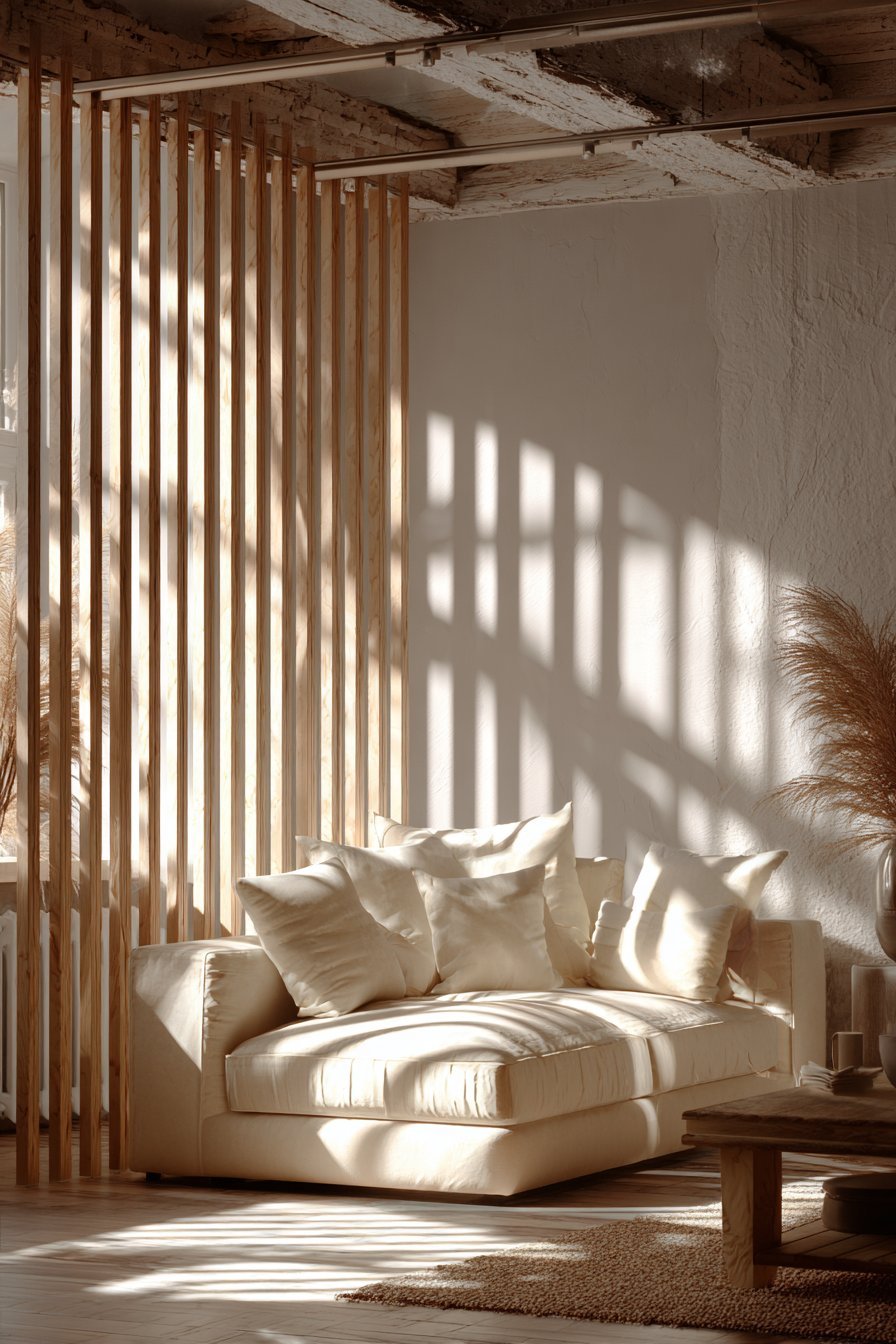
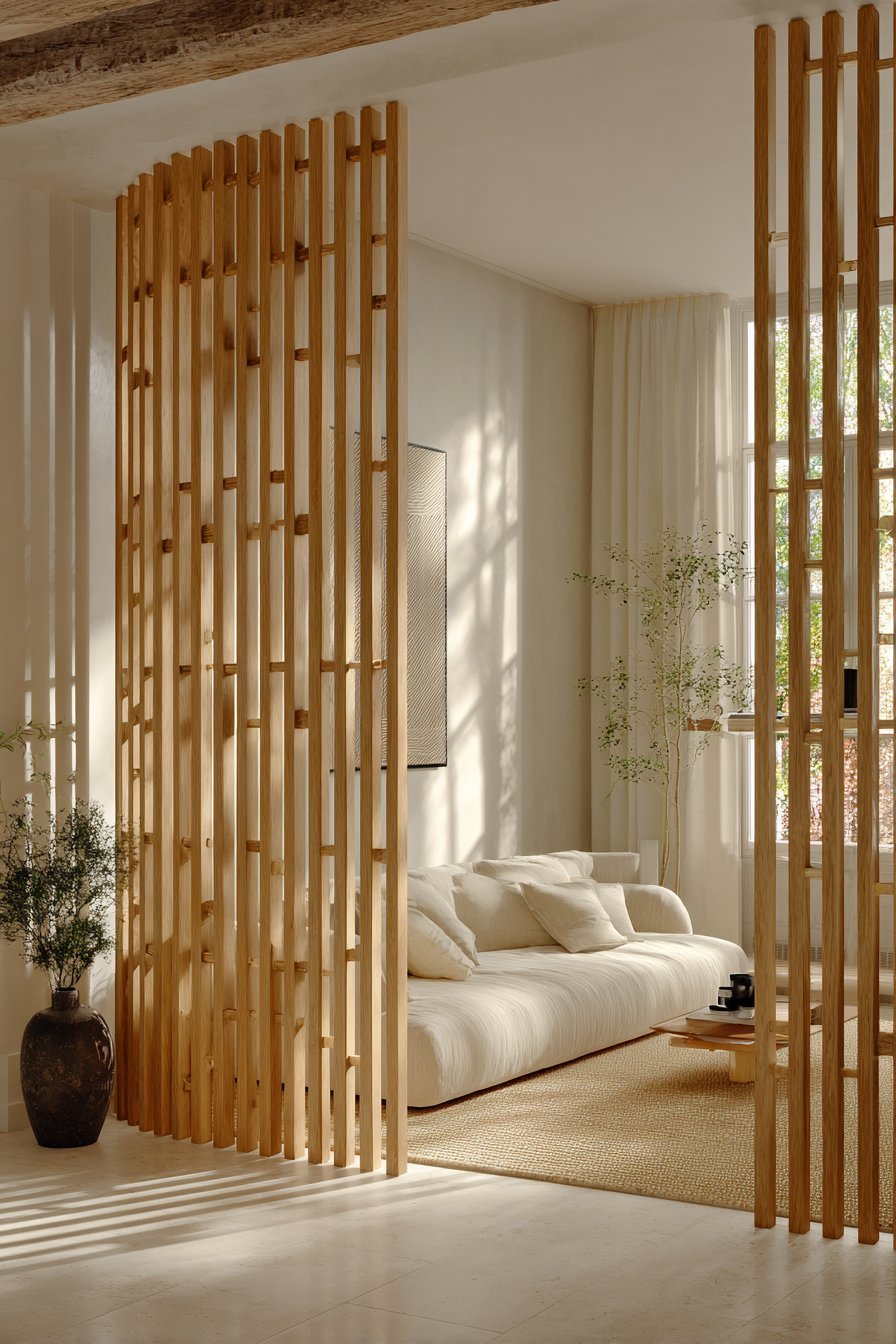
Scandinavian simplicity shines in this living room featuring a vertical wooden slat partition. Light oak slats spaced three inches apart extend from floor to ceiling. The semi-transparent design allows light to filter through while providing visual separation. Subtle LED strip lighting behind the slats creates warm ambient glow during evening hours. This functional art piece serves both practical and aesthetic purposes.
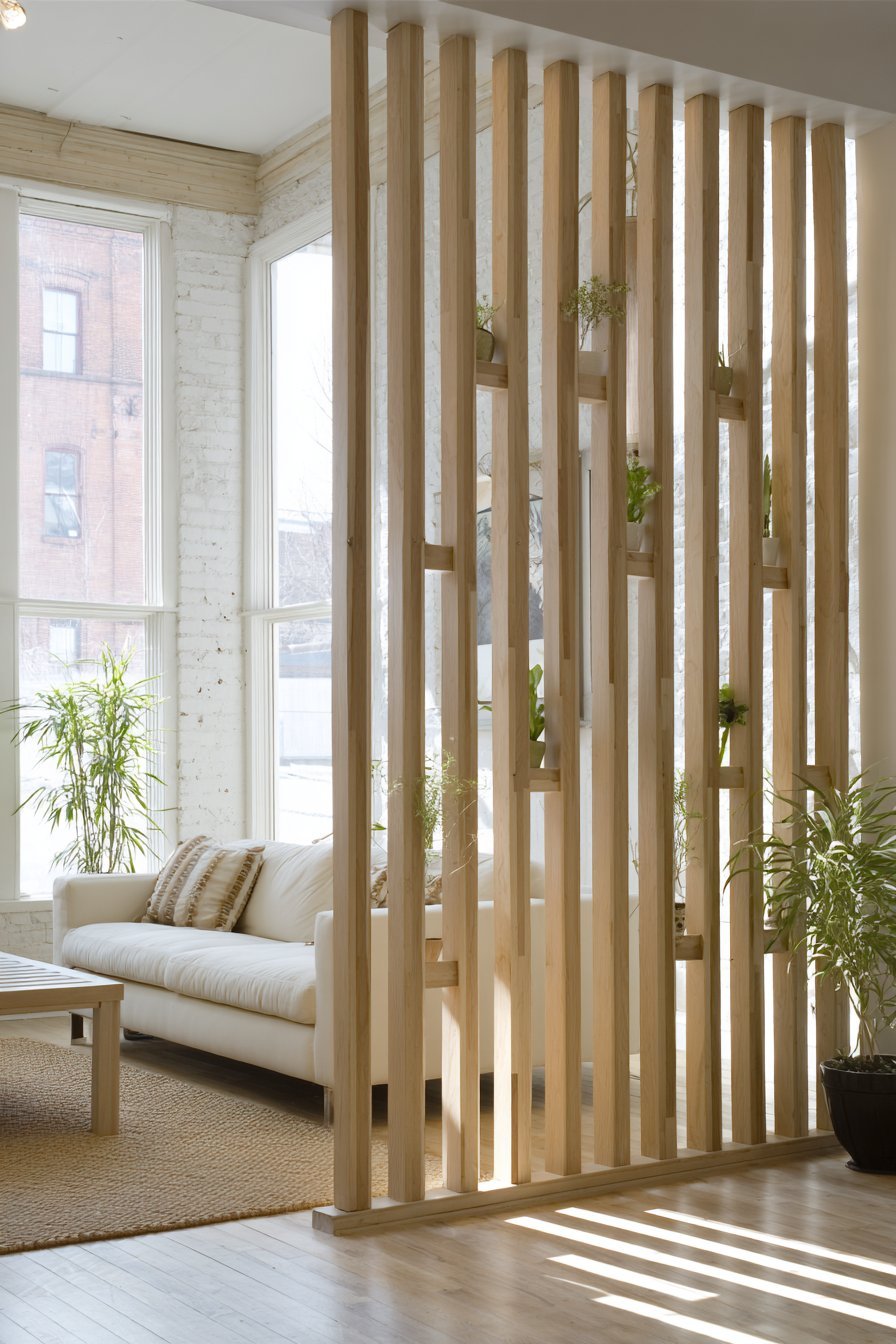
A cream linen sofa and natural fiber rug define the main seating area with understated elegance. The slatted wall adds architectural depth without visual heaviness. Morning light streams through nearby windows, creating beautiful linear shadow patterns across adjacent surfaces. The interplay between light and shadow changes throughout the day.
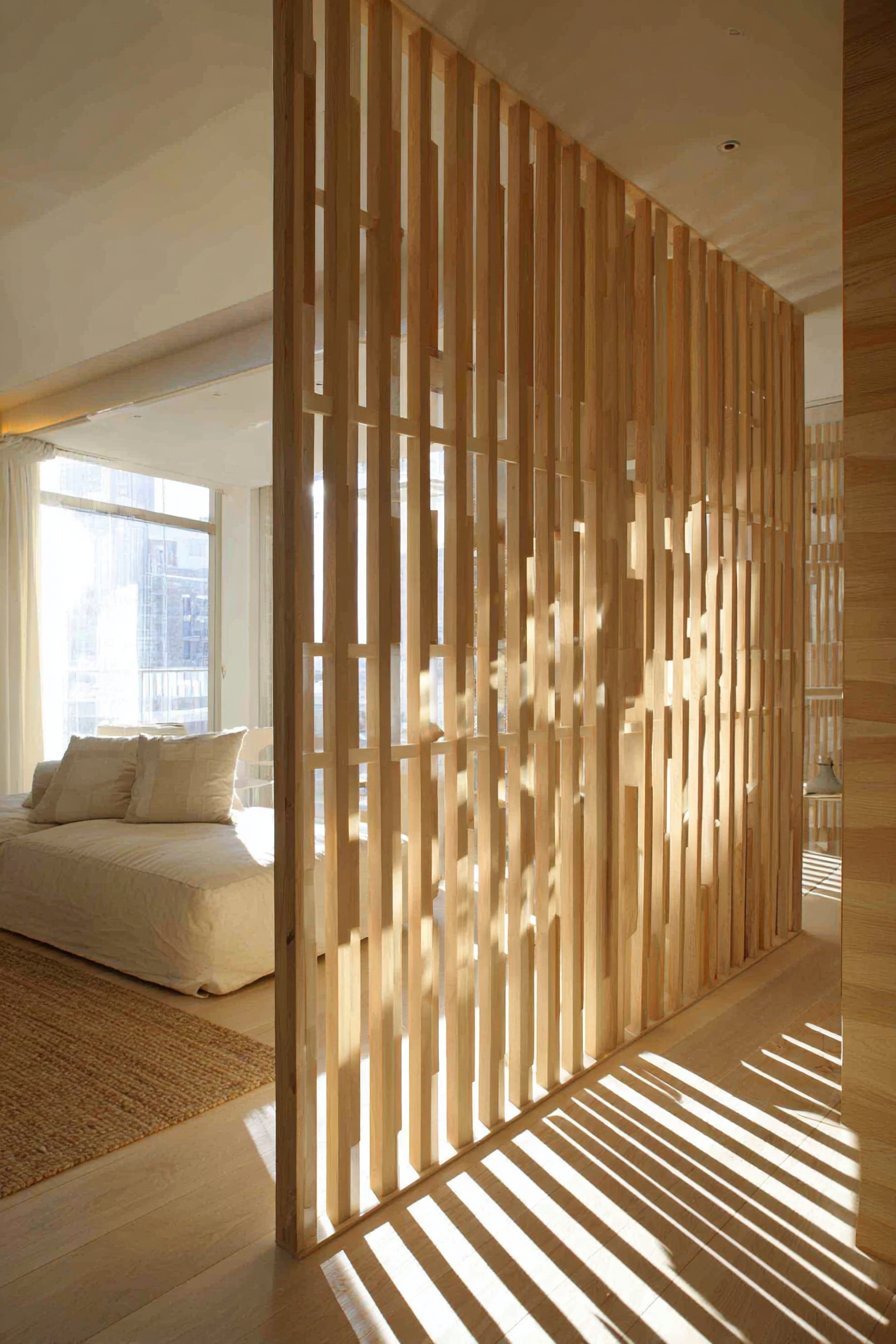
This design demonstrates how functional elements can serve as artistic features. The vertical orientation emphasizes ceiling height and creates elegant proportions. Spacing between slats maintains openness while defining separate zones. The natural wood finish aligns with Scandinavian design principles. This treatment adds interest without overwhelming the minimalist aesthetic.
Key Design Tips:
- Choose light wood species like oak, ash, or birch for Scandinavian authenticity
- Maintain consistent three-inch spacing between slats for optimal visual effect
- Install LED strip lighting behind slats for evening ambiance
- Ensure floor-to-ceiling installation for maximum impact
- Finish wood with clear sealant to preserve natural color
- Position strategically to create room division without blocking light flow
6. Living Moss Biophilic Wall Art
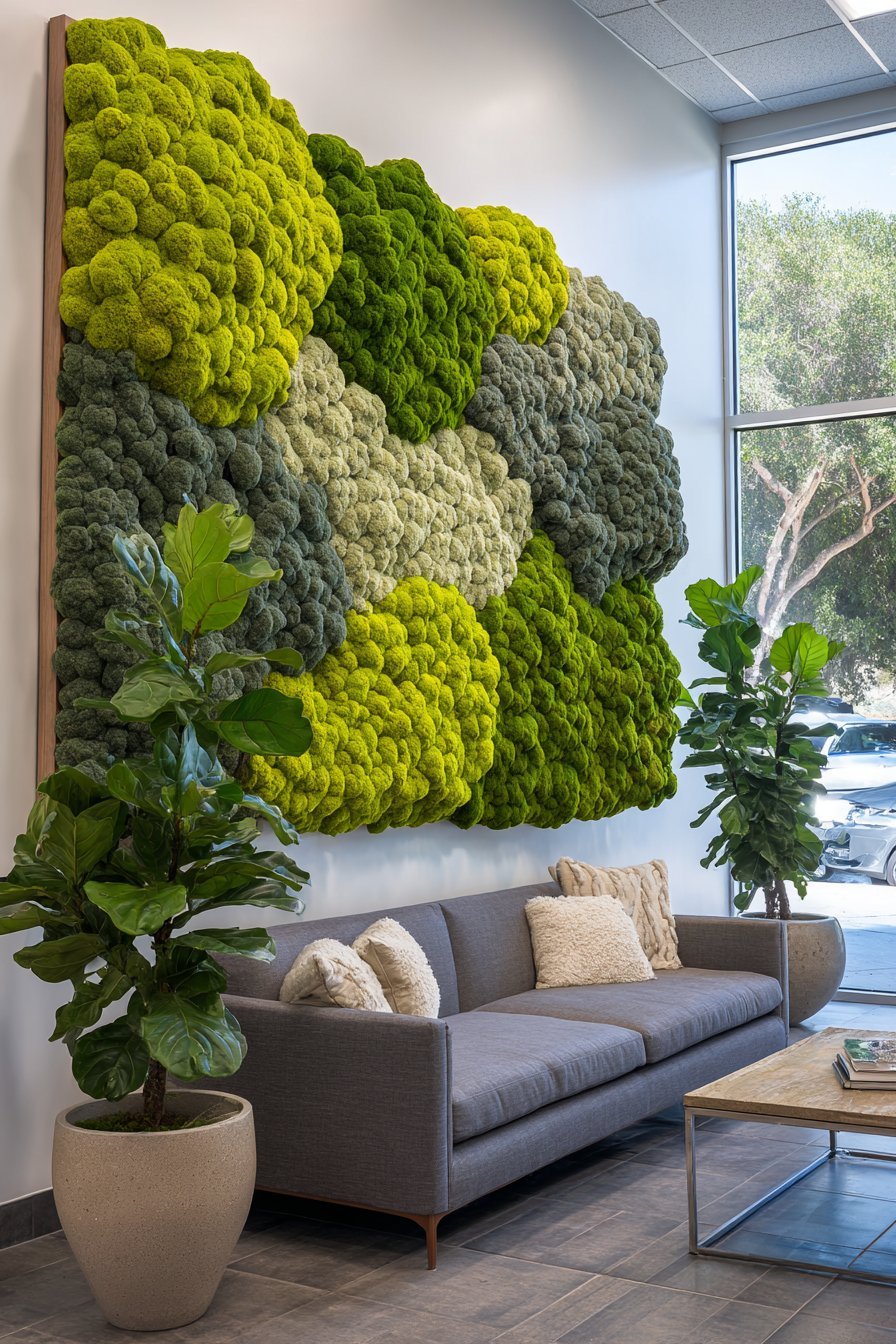
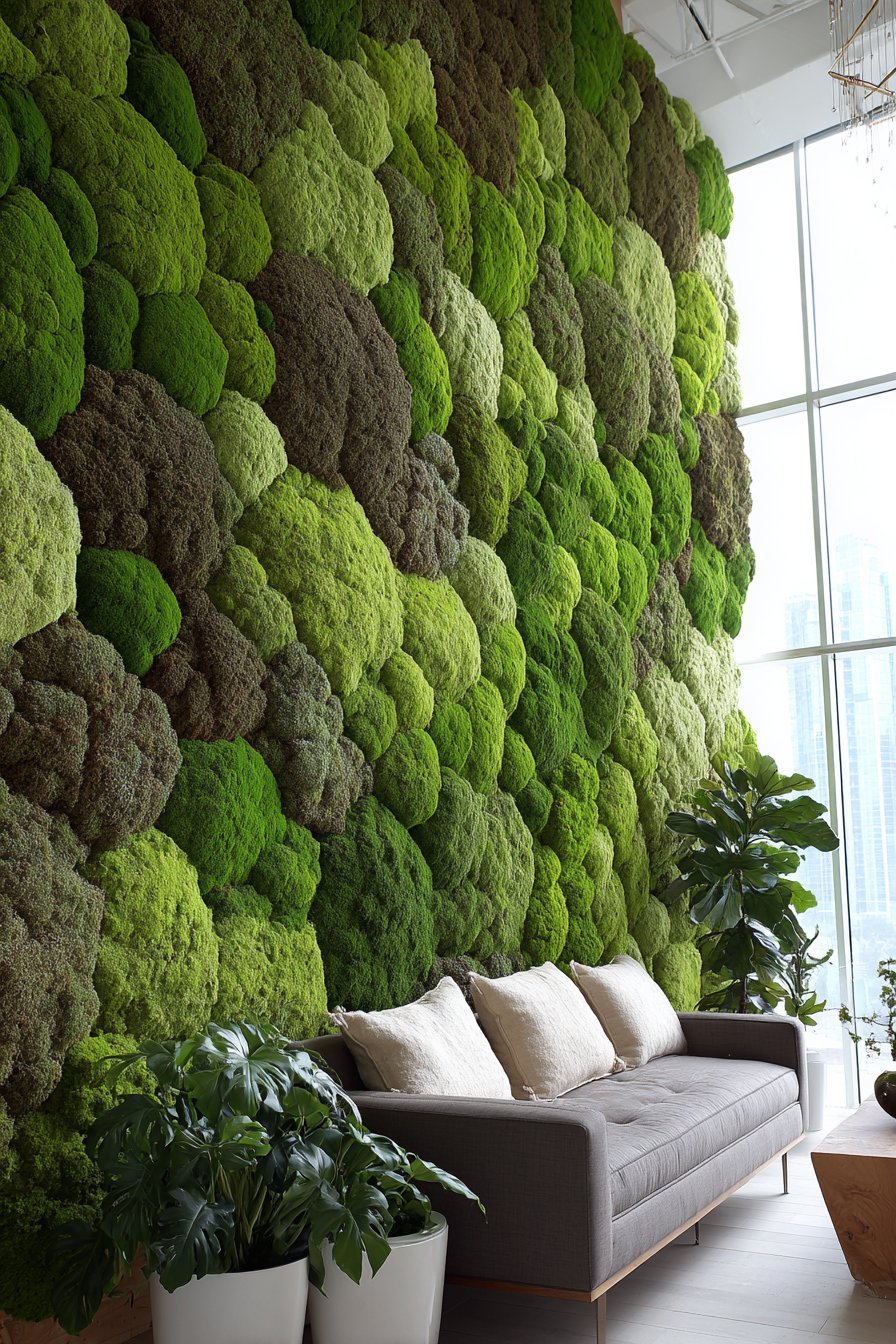
Biophilic design reaches new heights in this contemporary living room with preserved moss panels. Reindeer moss in varying shades of sage green, forest green, and natural grey creates textured wall art. The abstract organic pattern measures six feet by four feet. Custom wooden frames contain the moss against a white gallery wall. This living art installation brings nature indoors without maintenance requirements.
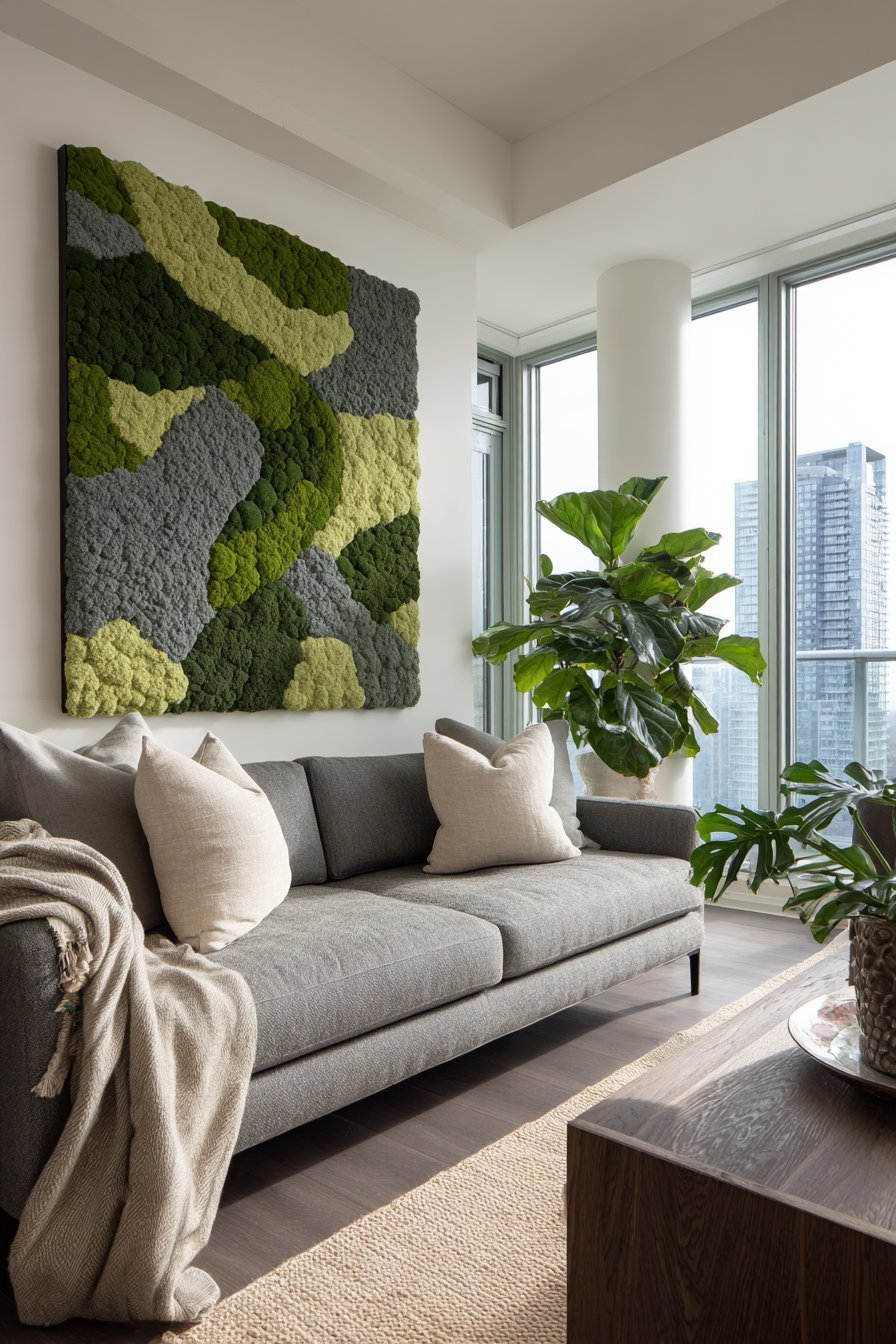
A modern grey sofa with natural linen throw pillows faces the installation directly. Potted fiddle leaf fig and monstera plants reinforce the biophilic theme throughout the space. Natural daylight from large windows illuminates varied moss textures without harsh shadows. The installation provides visual interest while improving perceived air quality and acoustics.
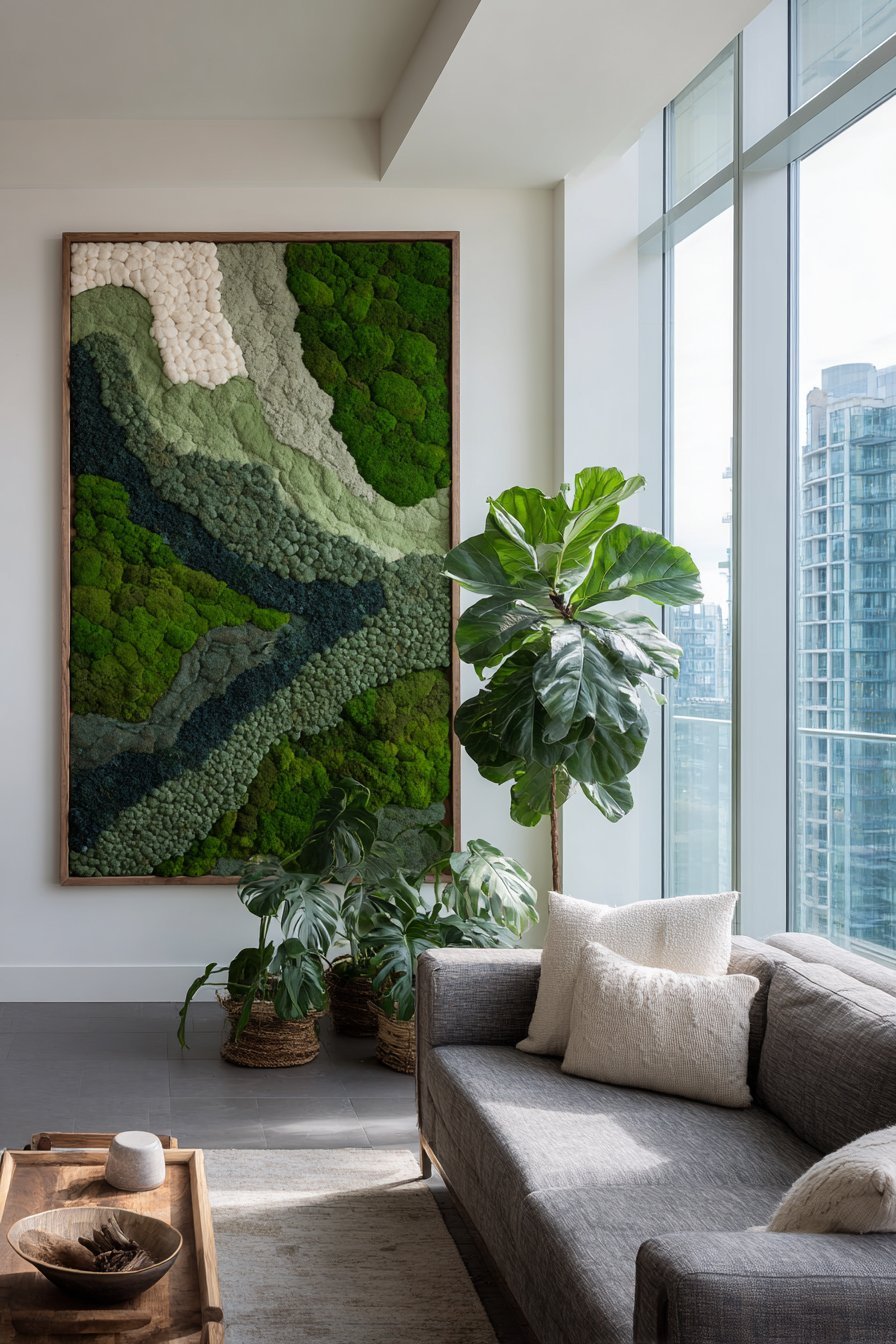
This design approach satisfies the human need for natural connection within built environments. Preserved moss requires no watering or sunlight, maintaining its appearance indefinitely. Color variations create depth and visual interest within the organic medium. The textured surface adds tactile dimension to smooth wall surfaces. This treatment demonstrates sustainable design that brings outdoor beauty inside.
Key Design Tips:
- Use preserved rather than living moss for maintenance-free installations
- Combine multiple moss varieties for color and texture variation
- Frame installations professionally with moisture-resistant materials
- Position away from high-humidity areas despite preservation treatment
- Complement with additional plants for cohesive biophilic design
- Consider acoustic benefits when planning room functionality
7. Geometric Cork Tile Chevron Pattern
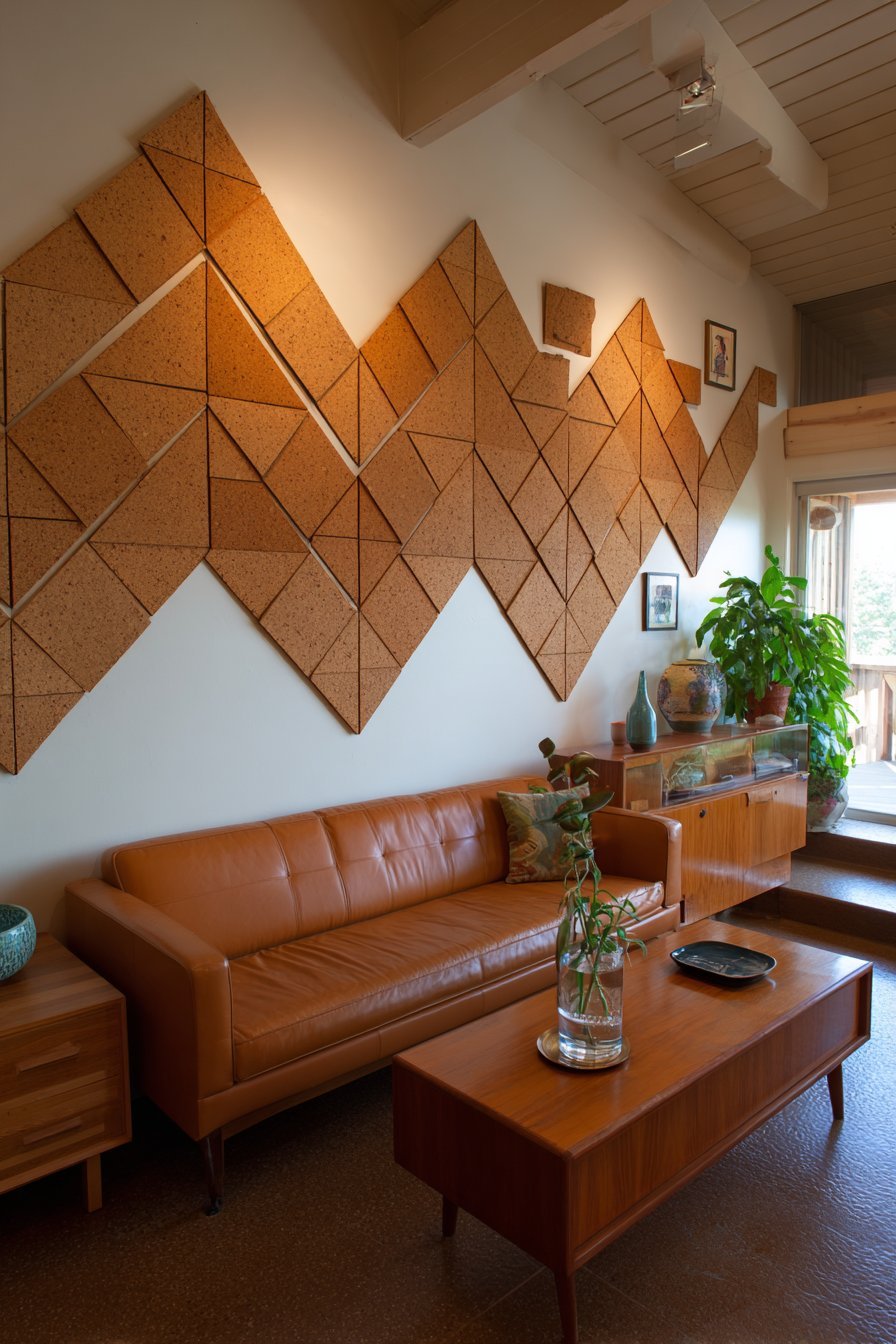
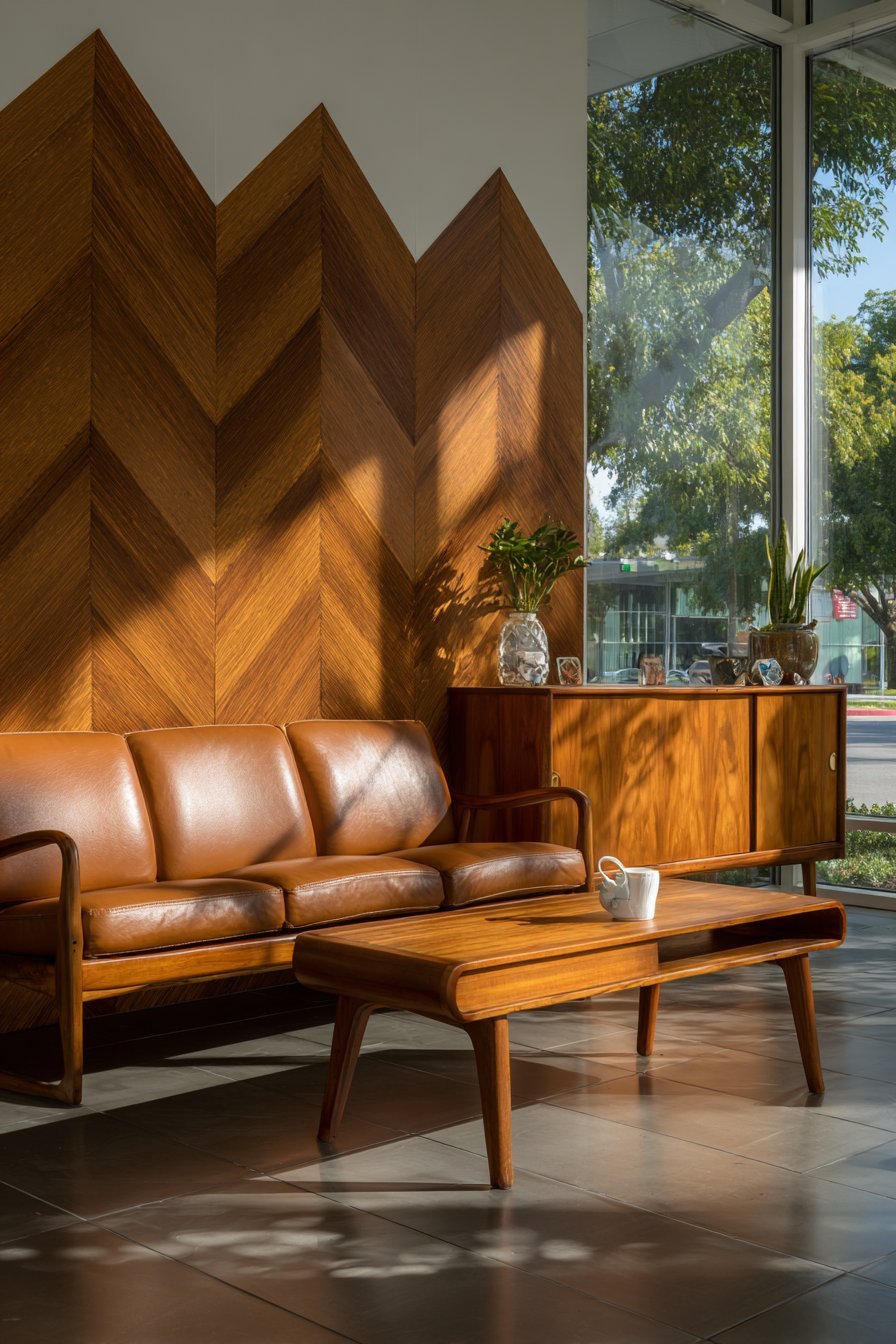
Mid-century modern aesthetics inspire this living room featuring geometric cork tile installation. Natural cork tiles in warm honey tones arrange in dynamic chevron patterns. The cork provides both visual interest and practical acoustic dampening. Installation spans the main wall behind a teak credenza. Organic texture and subtle color variations appear in each tile.
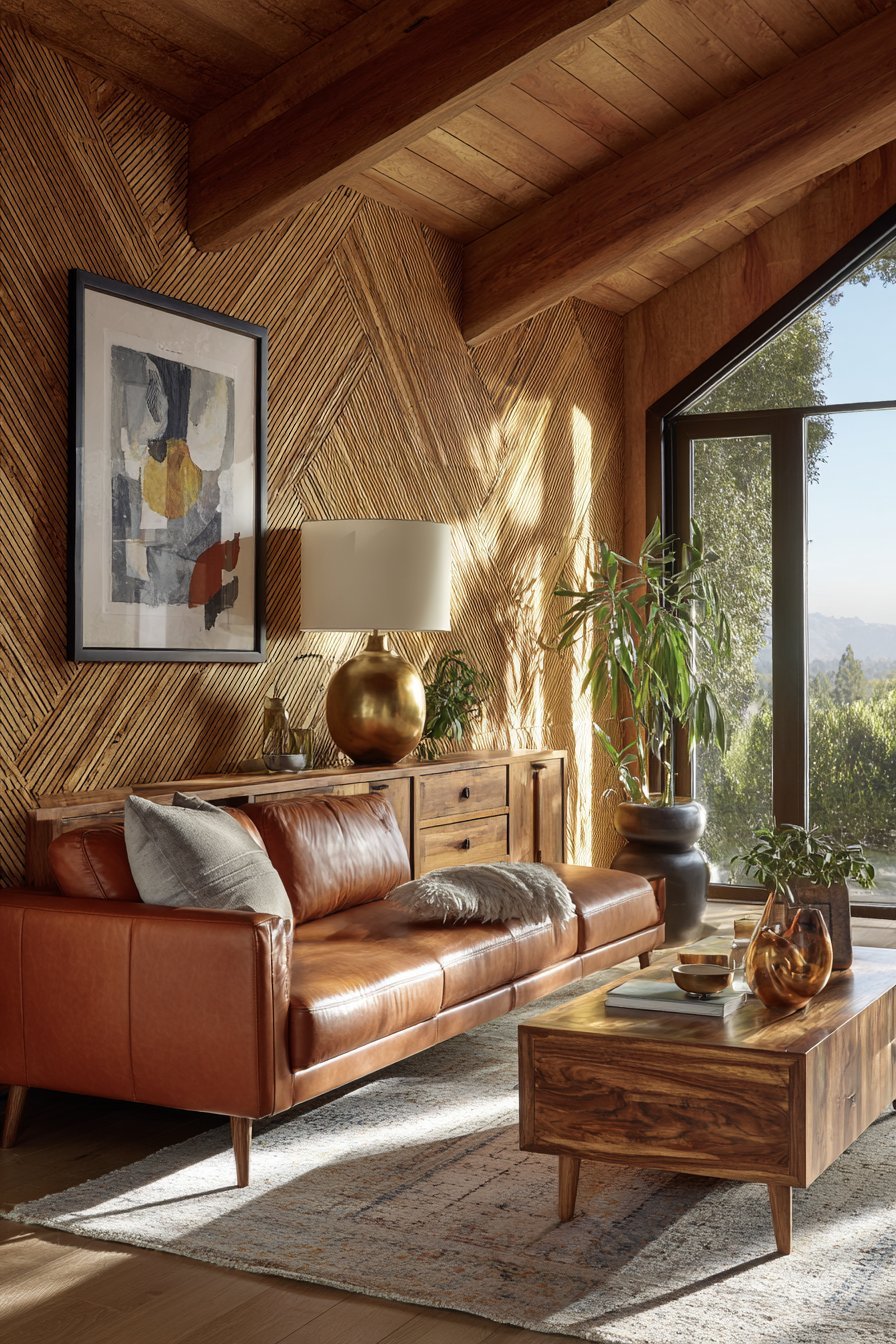
A caramel leather sofa and walnut coffee table complete the vintage-inspired aesthetic. Cork’s natural grain creates visual warmth without pattern overwhelm. Soft afternoon light highlights the cork’s texture and precise geometric arrangement. The chevron pattern adds movement while maintaining mid-century simplicity.
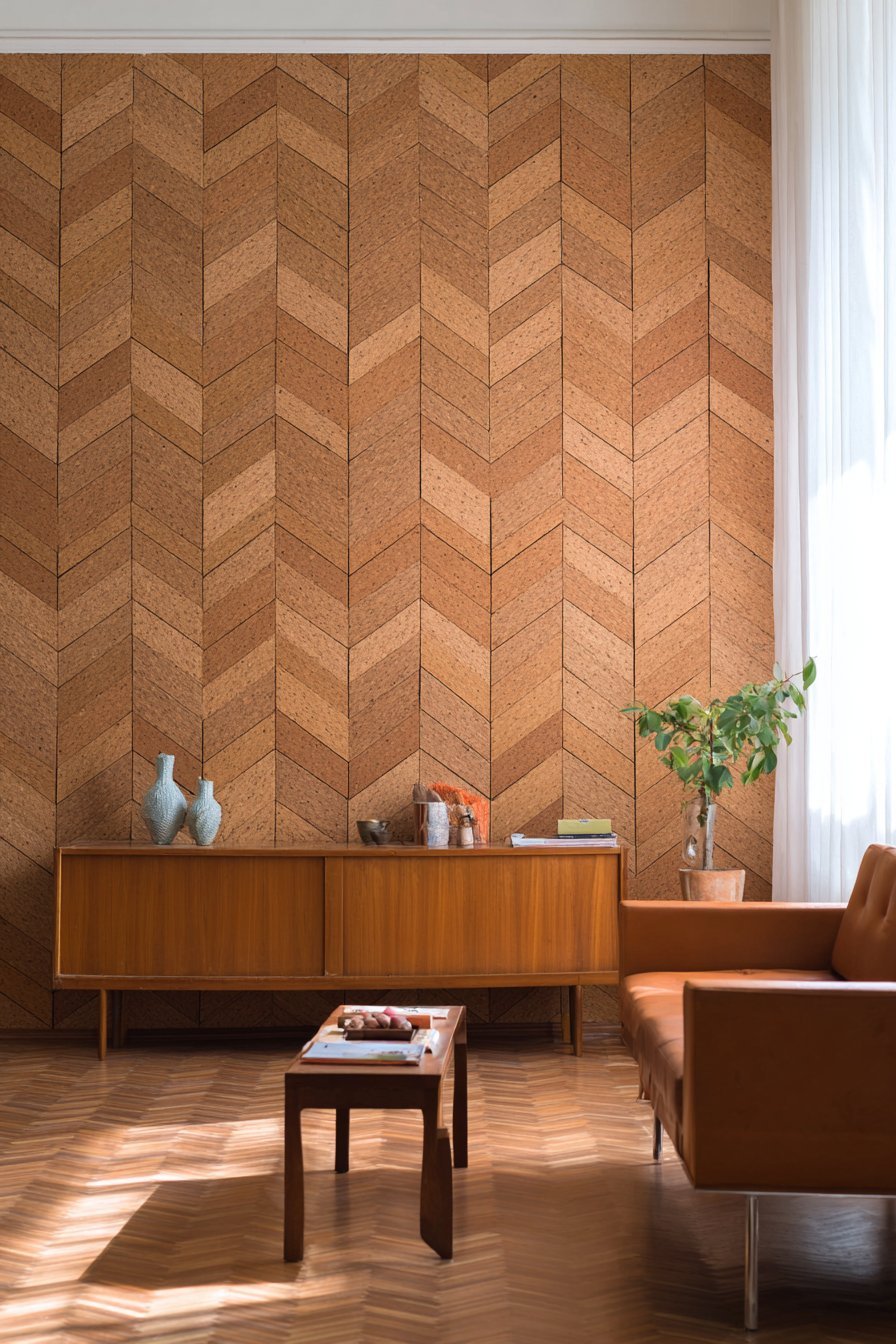
This design celebrates natural materials while providing functional benefits. Cork absorbs sound, making living spaces more acoustically comfortable. The chevron pattern adds contemporary edge to classic material. Natural variations in cork texture prevent monotony despite pattern repetition. This treatment demonstrates how eco-friendly materials can create sophisticated design statements.
Key Design Tips:
- Select high-quality cork tiles with consistent thickness for professional installation
- Arrange in chevron or herringbone patterns for maximum visual impact
- Use adhesive specifically formulated for cork tile application
- Seal cork surface to protect from moisture and simplify cleaning
- Combine with mid-century furniture for authentic period aesthetic
- Appreciate acoustic benefits in media rooms and conversation spaces
8. Curated Decorative Plate Gallery Wall
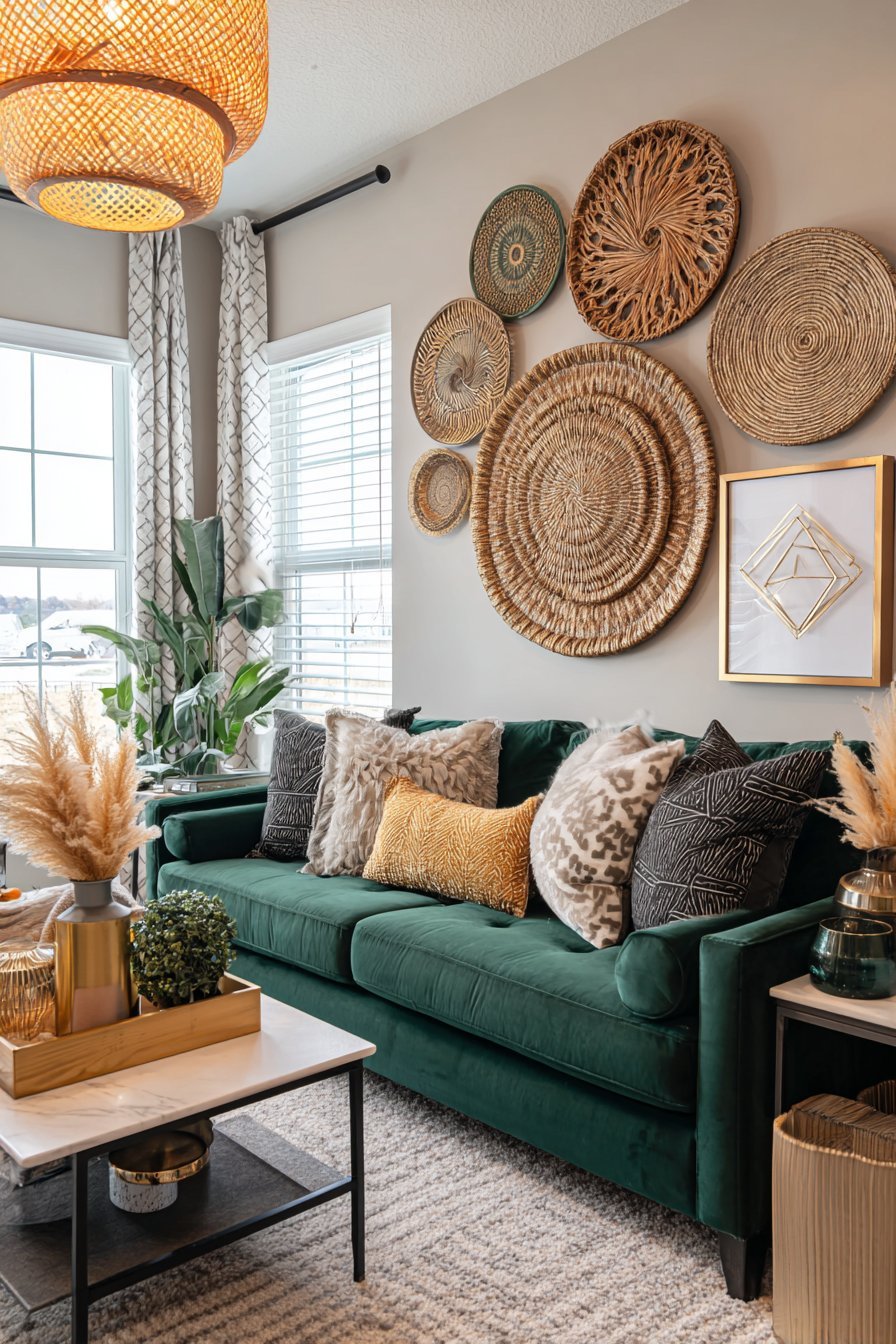
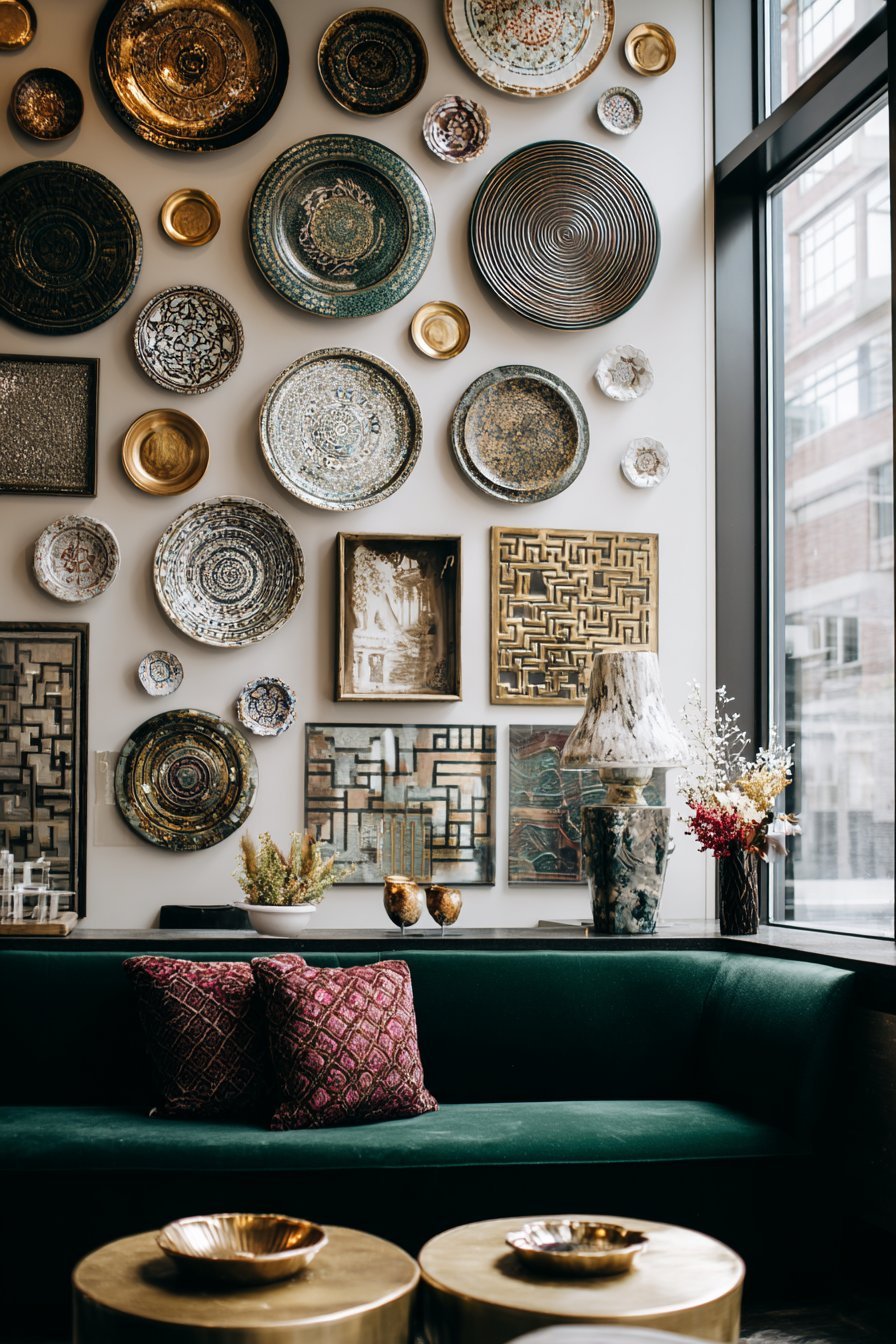
Maximalist expression flourishes in this living room with overlapping decorative plate arrangements. The collection includes vintage ceramic plates, brass chargers, hand-painted porcelain, and modern geometric designs. Varying sizes and patterns create visual flow despite eclectic mixing. Thoughtful arrangement transforms individual pieces into cohesive gallery art.
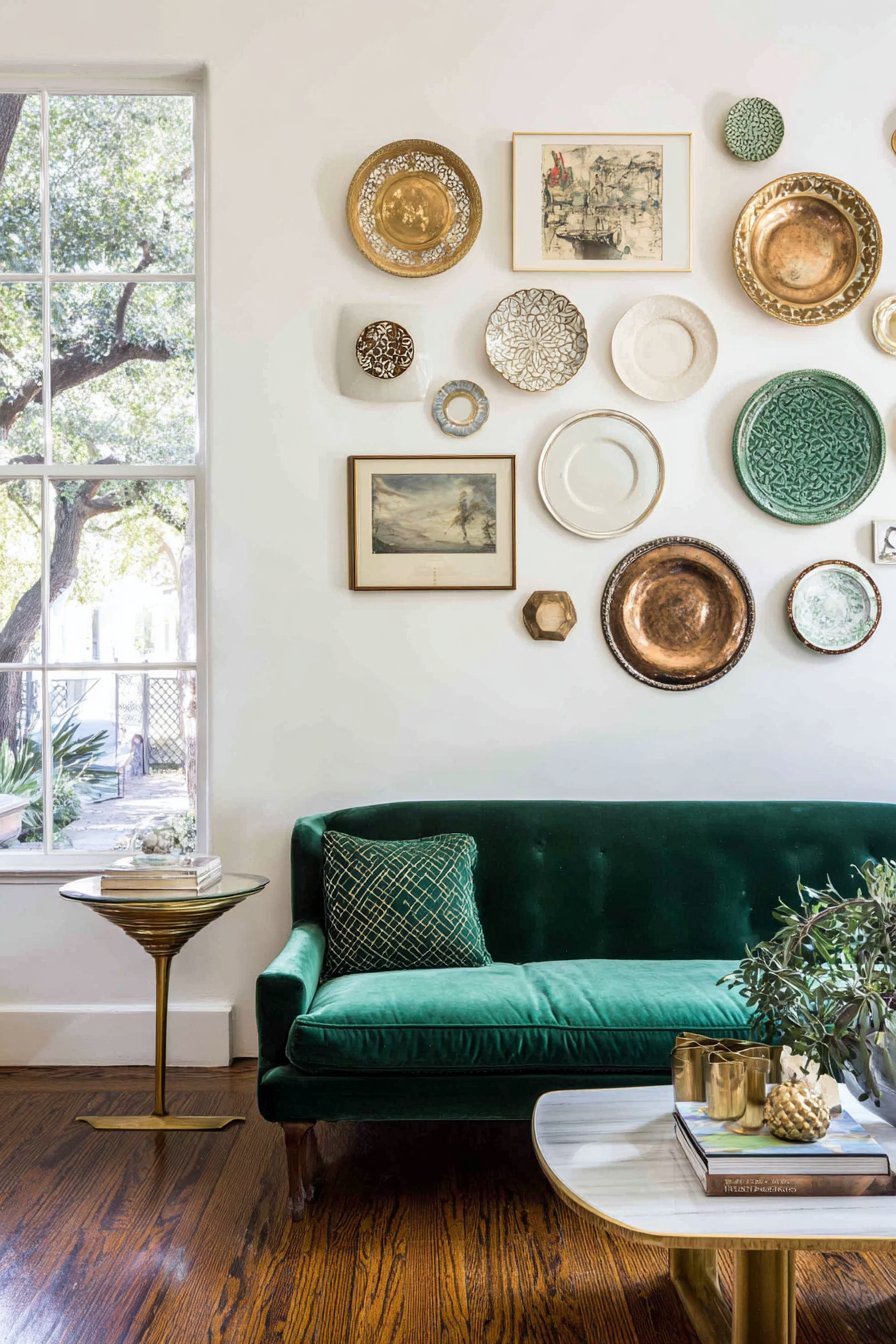
A jewel-toned velvet sofa in emerald green anchors the seating area below the plate display. Brass accent tables echo metallic elements in the wall arrangement. Natural light from nearby windows creates subtle reflections on metallic plate surfaces. The complexity requires careful curation but delivers bold personality.
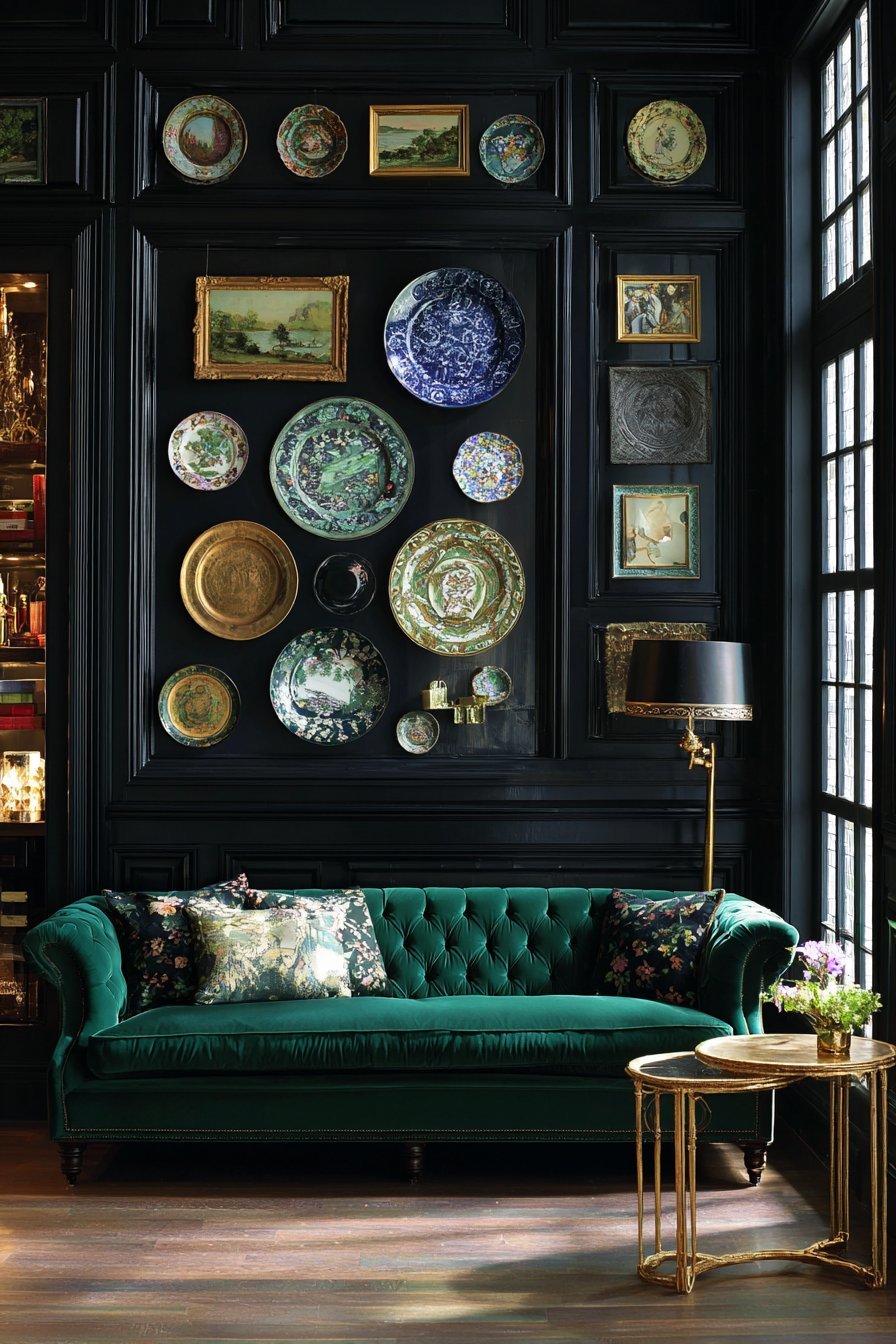
This design approach celebrates collected treasures and global aesthetics. Each plate tells its own story while contributing to the overall composition. The three-dimensional quality adds depth beyond traditional artwork. Reflective surfaces catch and play with light throughout the day. This treatment works best in spaces that embrace bold, layered design.
Key Design Tips:
- Collect plates gradually to ensure quality and meaningful selections
- Arrange on floor first to perfect composition before wall mounting
- Use professional plate hangers rated for each piece’s weight
- Mix finishes including ceramic, porcelain, brass, and painted surfaces
- Create visual flow through strategic size and color placement
- Leave adequate spacing between plates for individual appreciation
9. Organic Driftwood Horizontal Installation
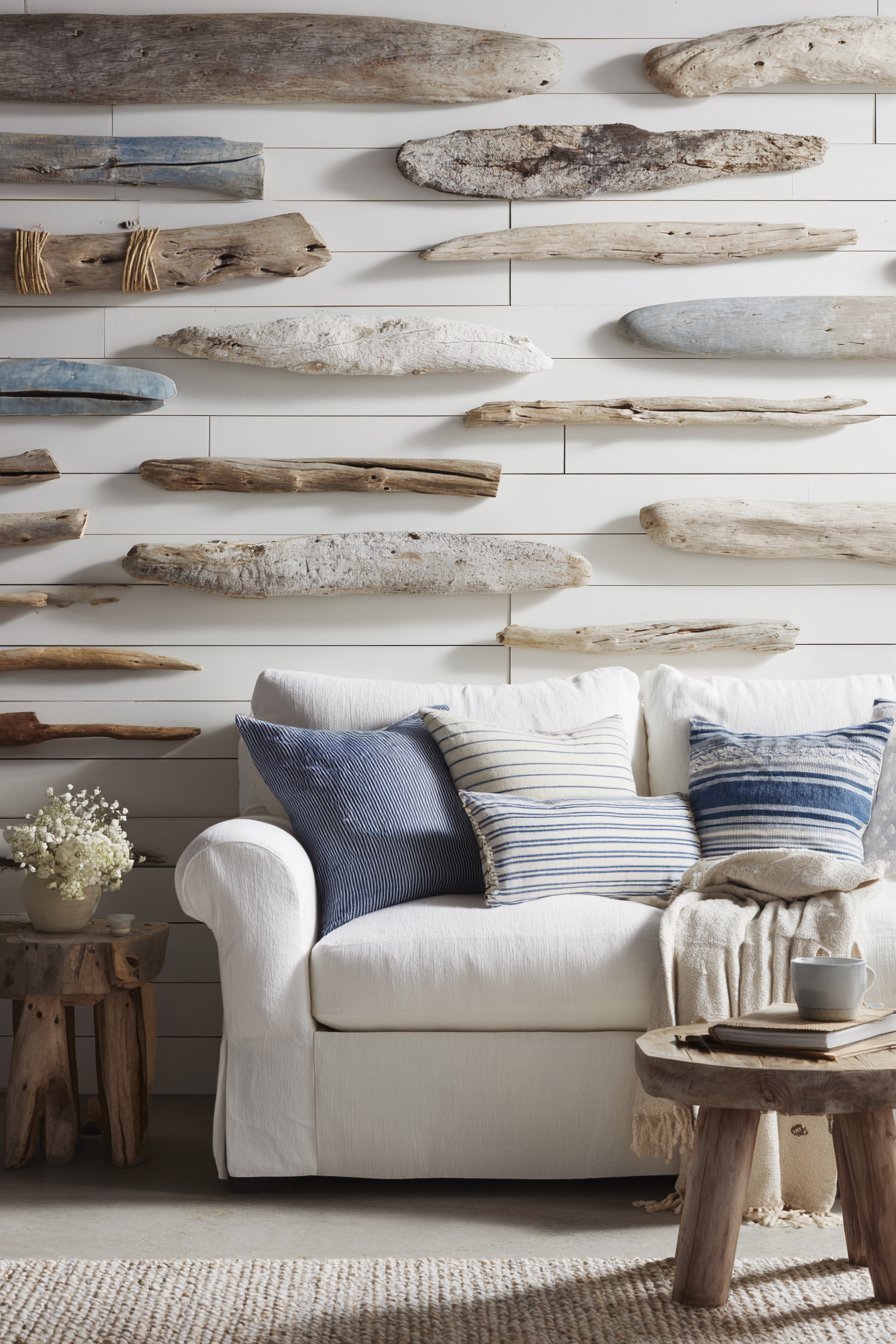
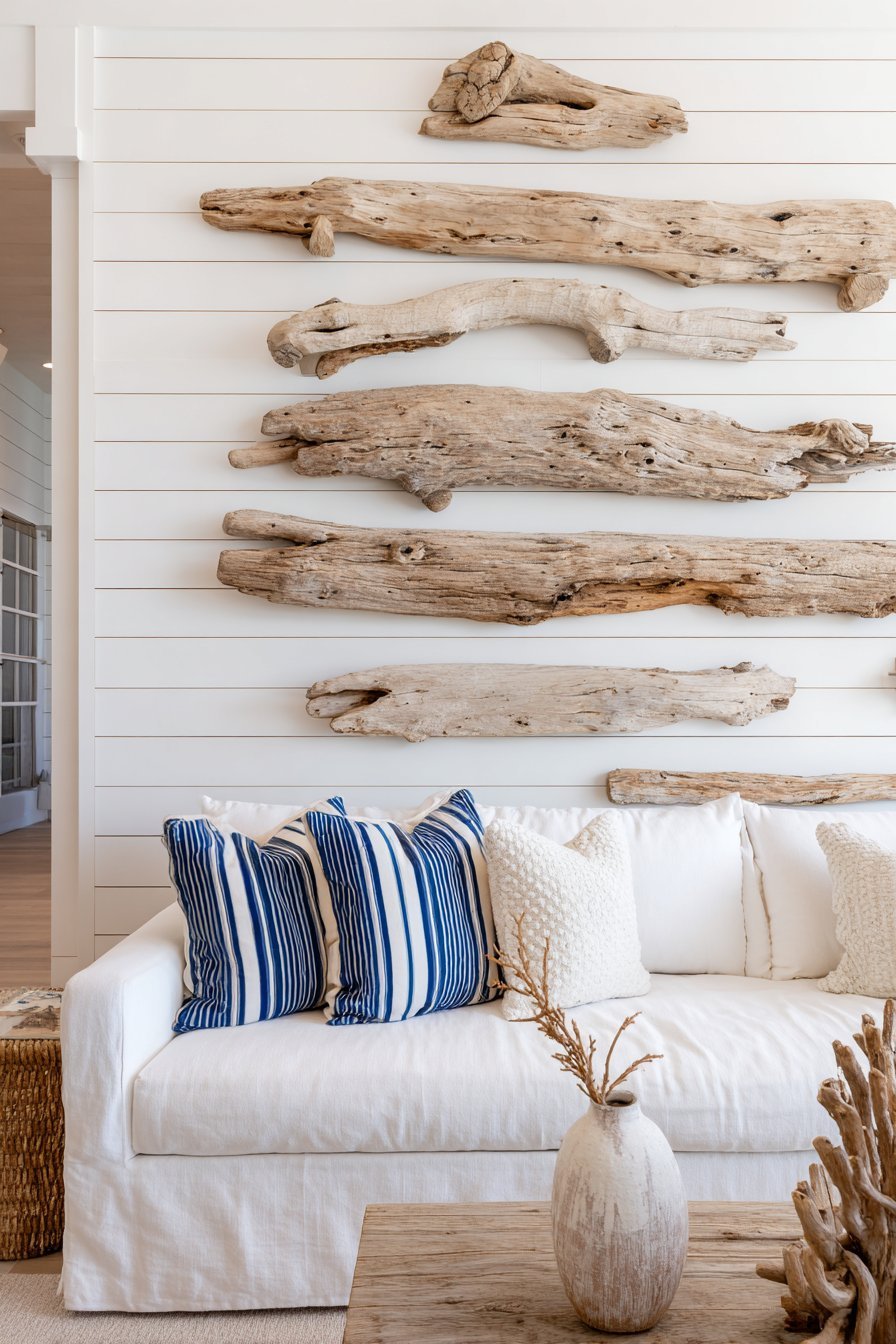
Coastal aesthetics inspire this living room featuring horizontally mounted driftwood pieces. Weathered wood in natural grey and blonde tones comes from authentic beach collection. Intentional spacing allows white shiplap wall to show between pieces. Each piece displays sun-bleaching, salt weathering, and natural wear patterns. The organic shapes and silvery patina create relaxed coastal elegance.
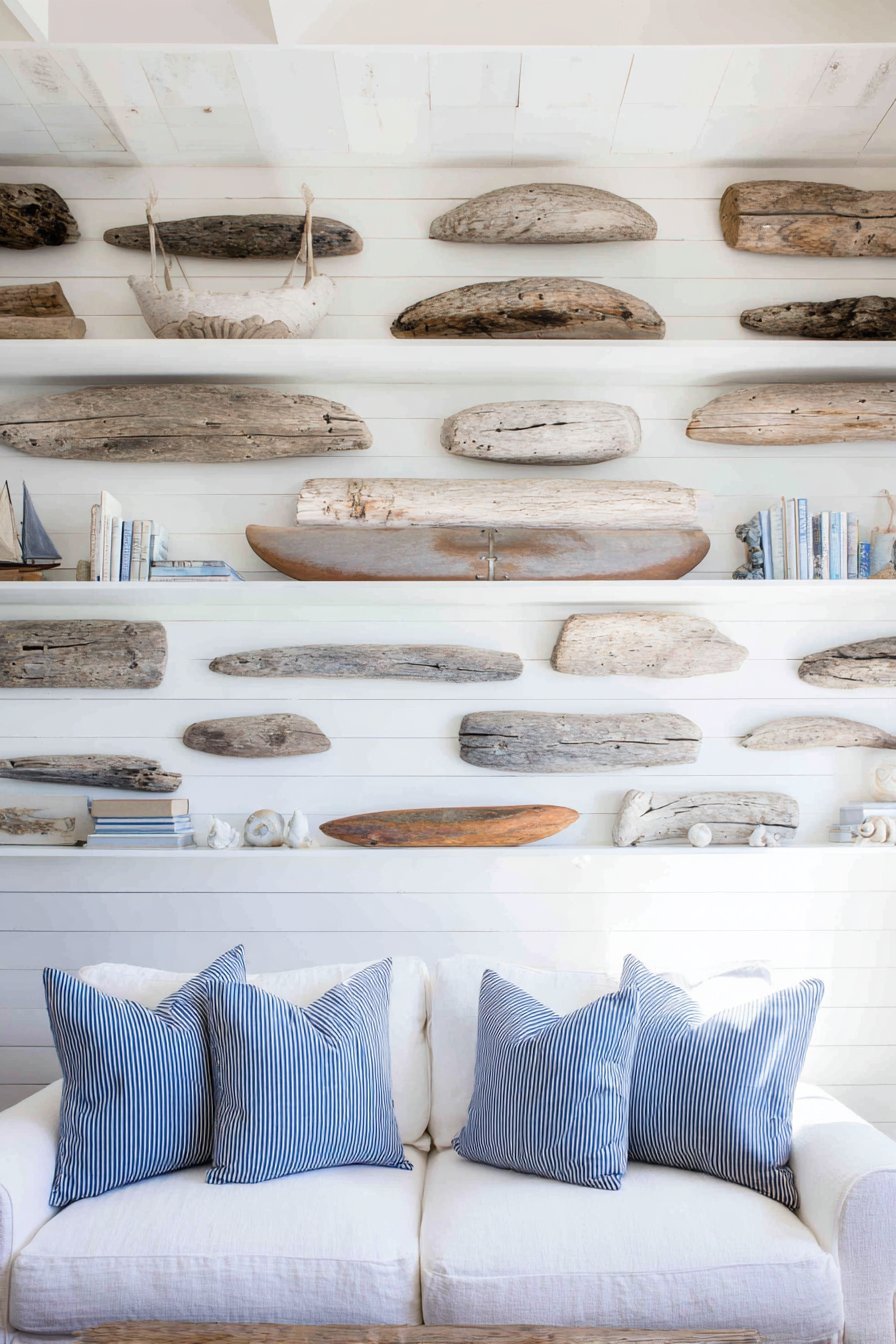
A white linen slipcovered sofa faces the wall, styled with blue and white striped pillows. Bright coastal light floods the space, highlighting driftwood’s unique characteristics. The horizontal orientation emphasizes room width while maintaining organic irregularity. Natural imperfections become design features rather than flaws.
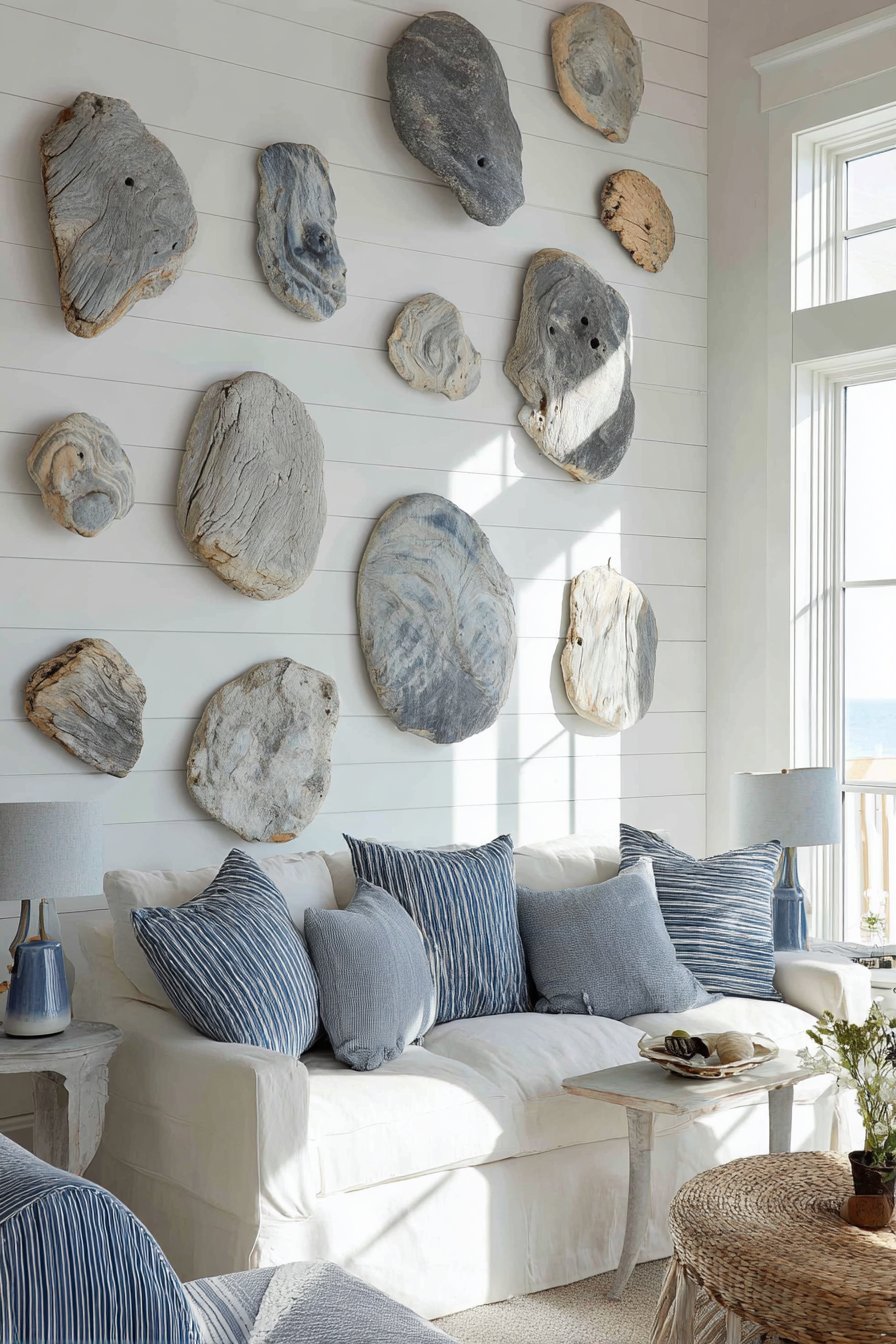
This design celebrates found natural materials and coastal living. Each driftwood piece carries unique character shaped by ocean elements. The installation connects indoor spaces to coastal environments. Spacing prevents visual heaviness while maintaining impact. This treatment brings outdoor beauty inside without feeling contrived.
Key Design Tips:
- Collect driftwood personally or source from reputable coastal suppliers
- Clean and seal wood to prevent pest issues while preserving patina
- Mount with hidden hardware to maintain organic floating appearance
- Vary piece sizes while maintaining horizontal orientation consistency
- Position against light backgrounds for maximum contrast
- Combine with coastal color palettes in blues, whites, and natural tones
10. Dimensional Plaster Relief Panels
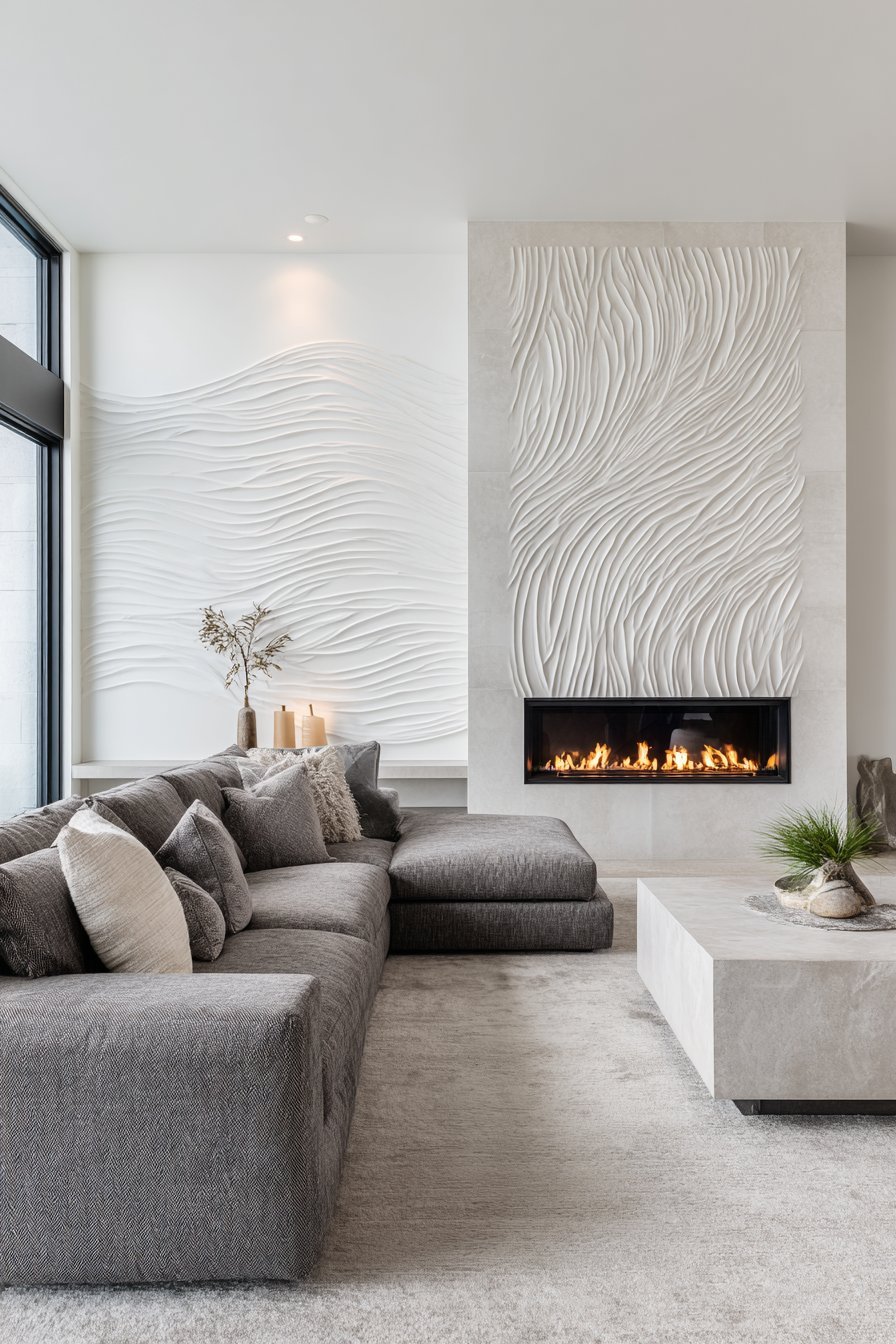
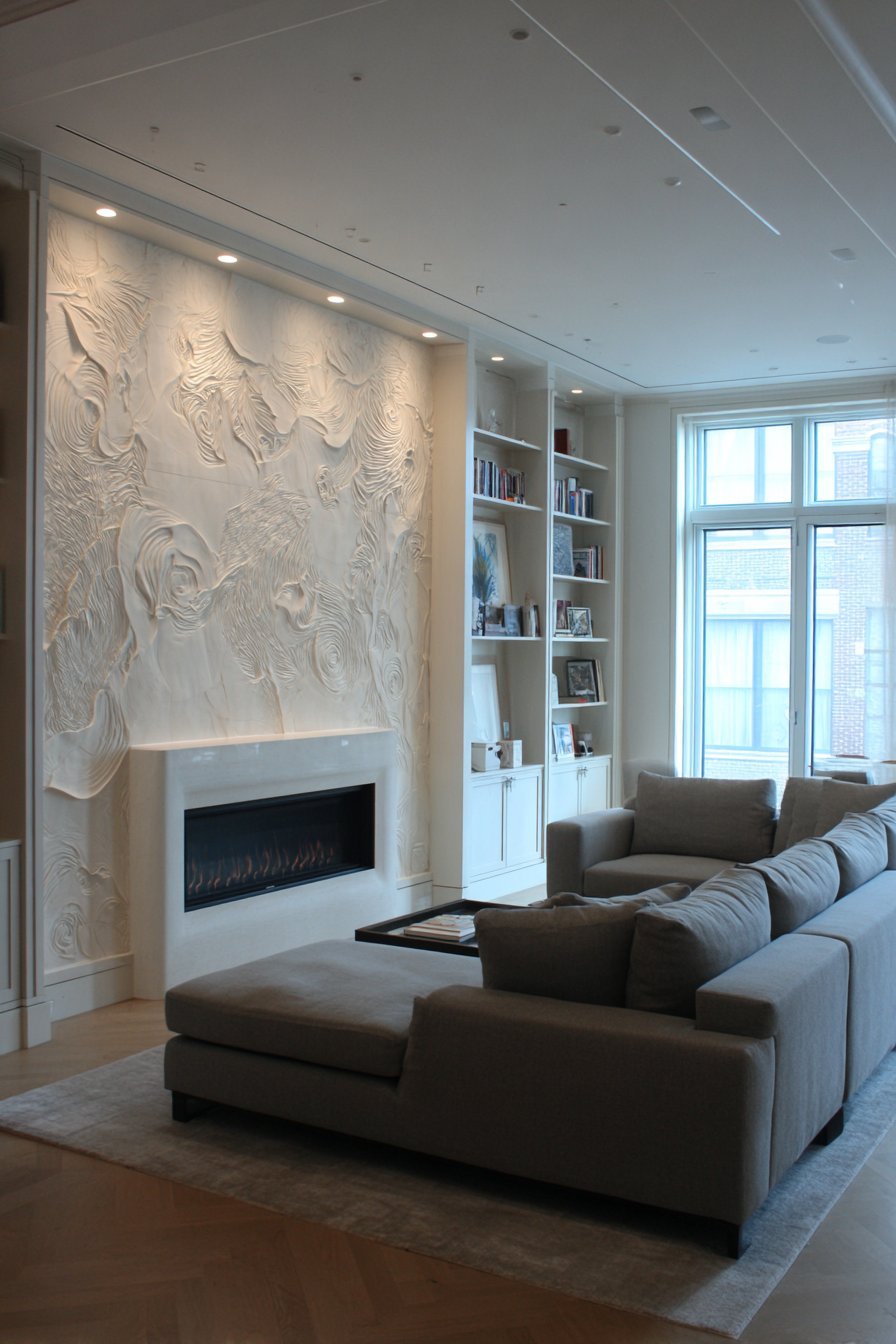
Transitional sophistication defines this living room with hand-applied textured plaster panels. Abstract organic patterns create subtle three-dimensional relief. Soft warm white paint allows shadow play to define the design. The treatment covers the full wall behind a grey linen sectional sofa. Recessed lighting from above casts gentle shadows that emphasize texture.
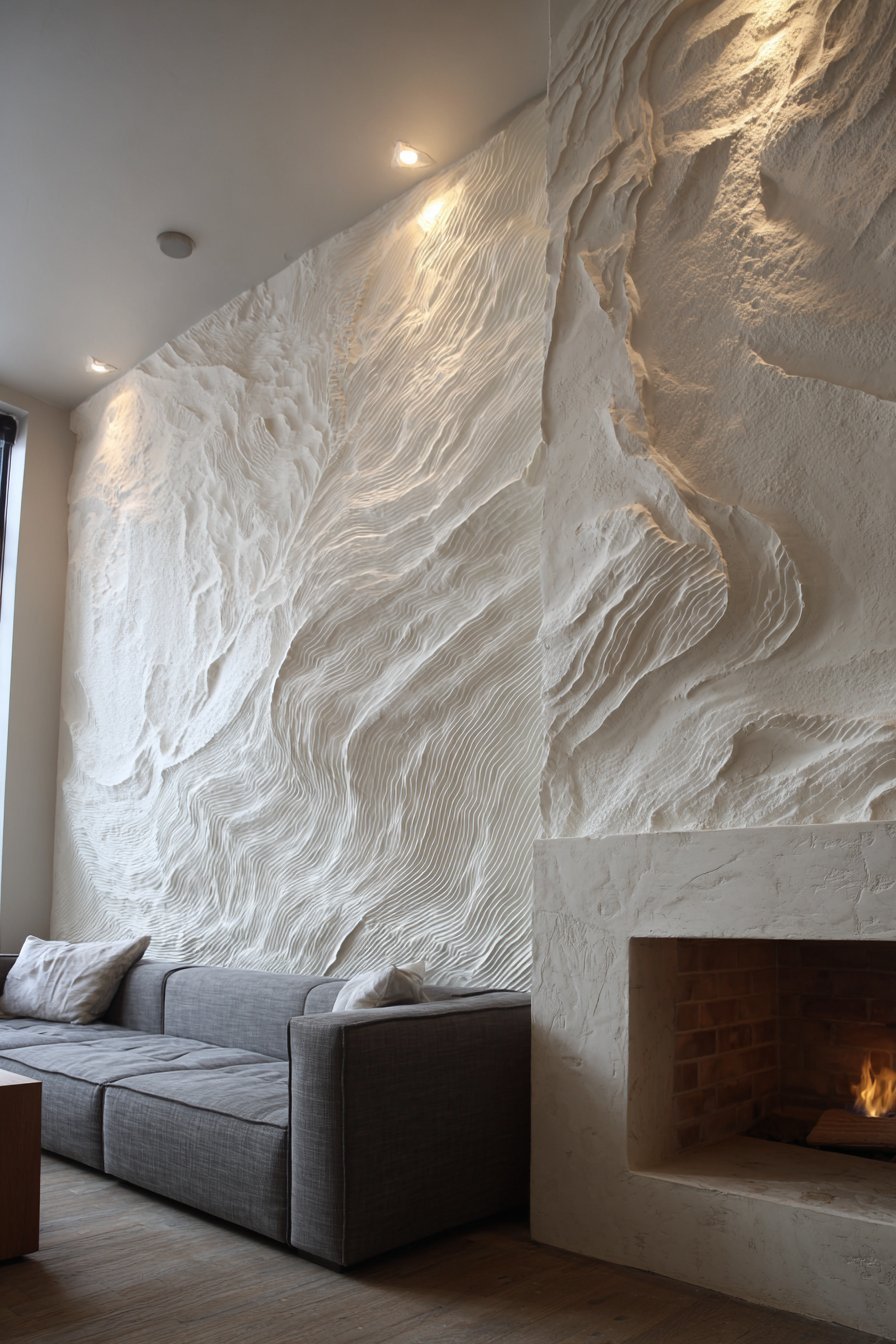
The plaster extends from built-in shelving to the fireplace surround, creating unified architectural interest. Natural and artificial light interact beautifully with the dimensional surface. The relief patterns add visual interest without color or bold pattern. This sophisticated approach suits traditional and contemporary aesthetics equally.
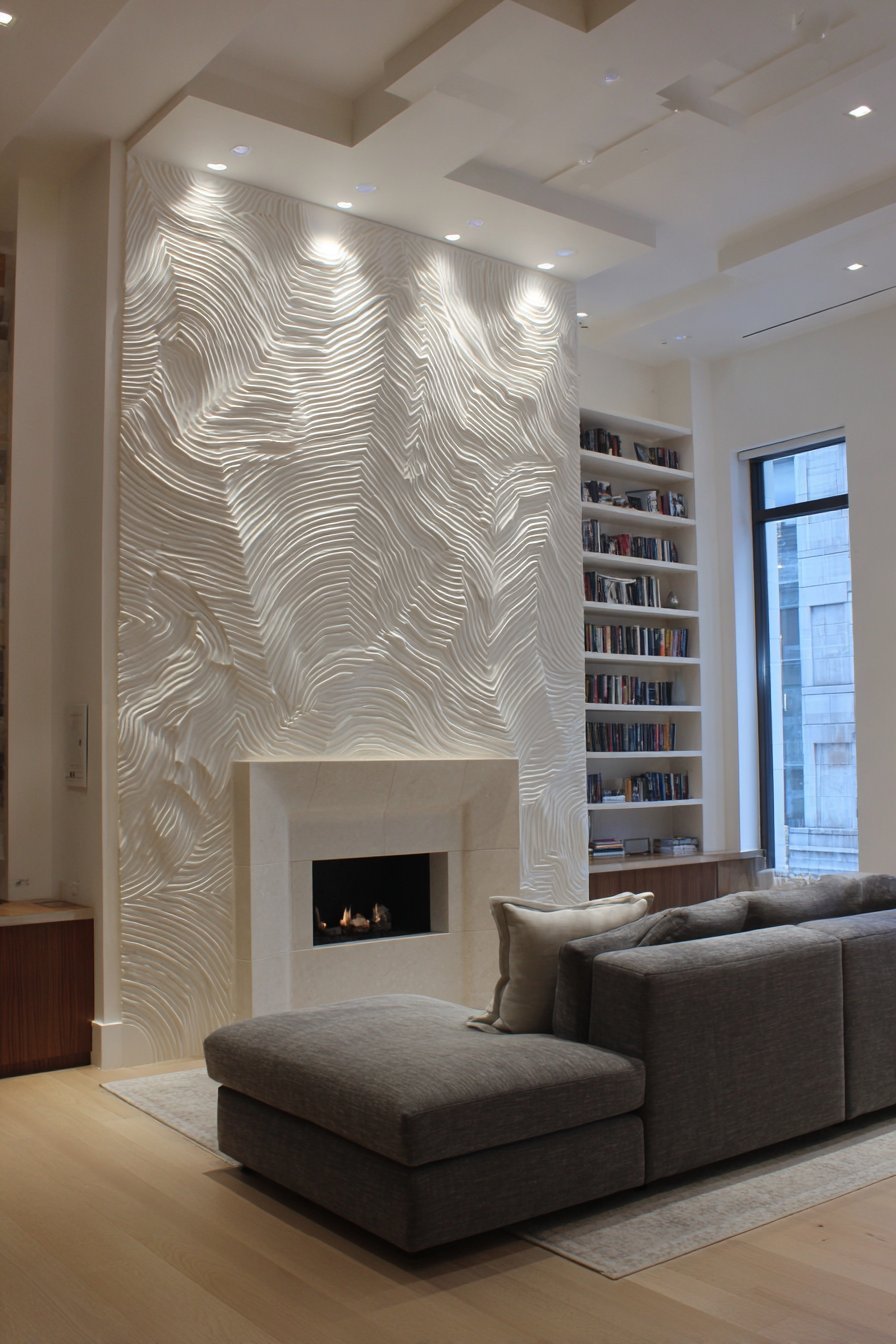
This design demonstrates how texture creates interest beyond color or pattern. Hand-applied plaster ensures unique, unrepeatable results. The dimensional quality changes appearance throughout the day as light shifts. Subtle variations prevent visual monotony across large surfaces. This treatment adds luxury through craftsmanship rather than expensive materials.
Key Design Tips:
- Hire skilled artisans experienced in decorative plaster application
- Choose abstract organic patterns for timeless appeal
- Paint in neutral tones to emphasize texture over color
- Install recessed or directional lighting to highlight dimensional qualities
- Extend treatment across significant wall sections for maximum impact
- Consider this option for creating subtle luxury in refined spaces
11. Acoustic Fabric Panel Grid Arrangement
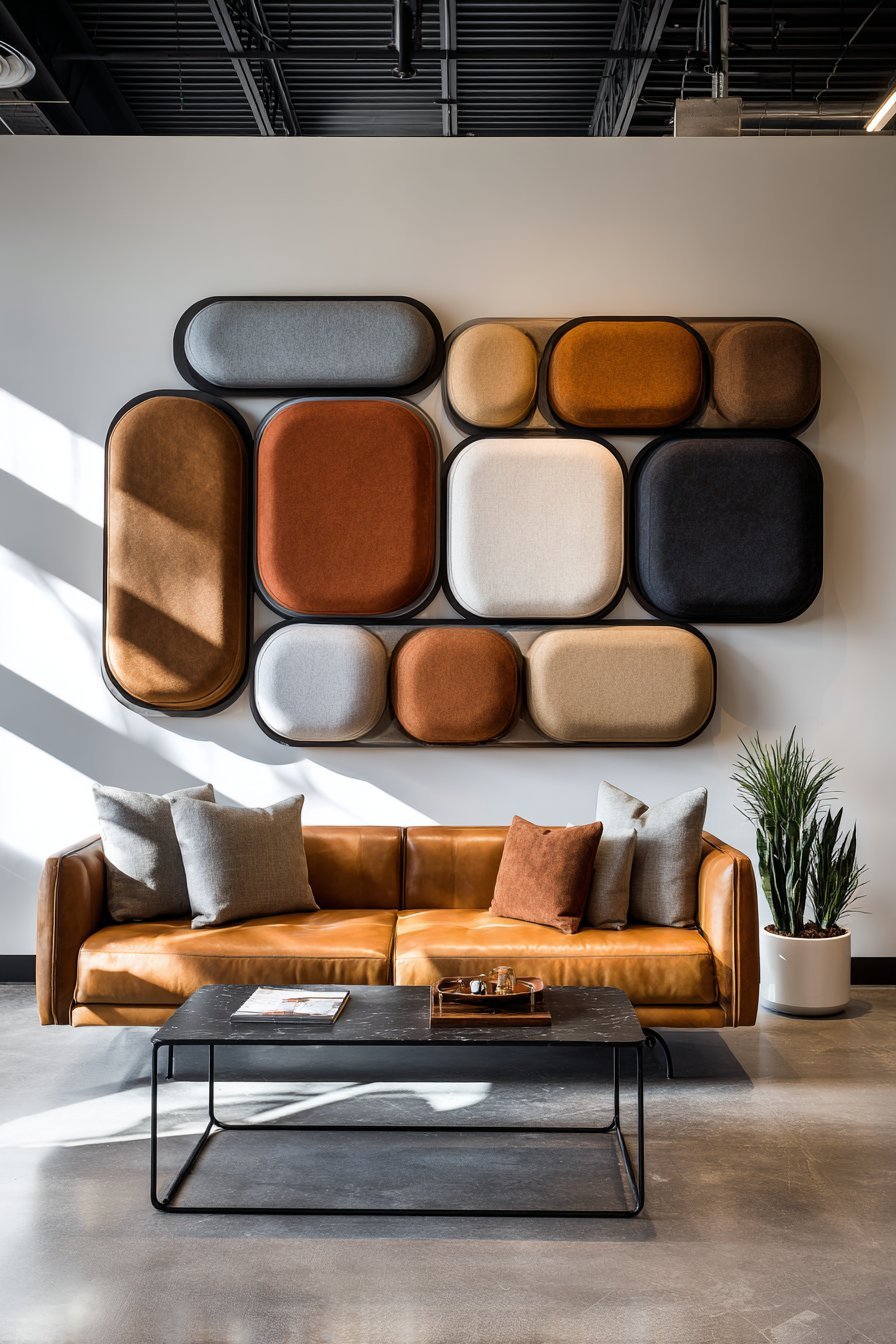
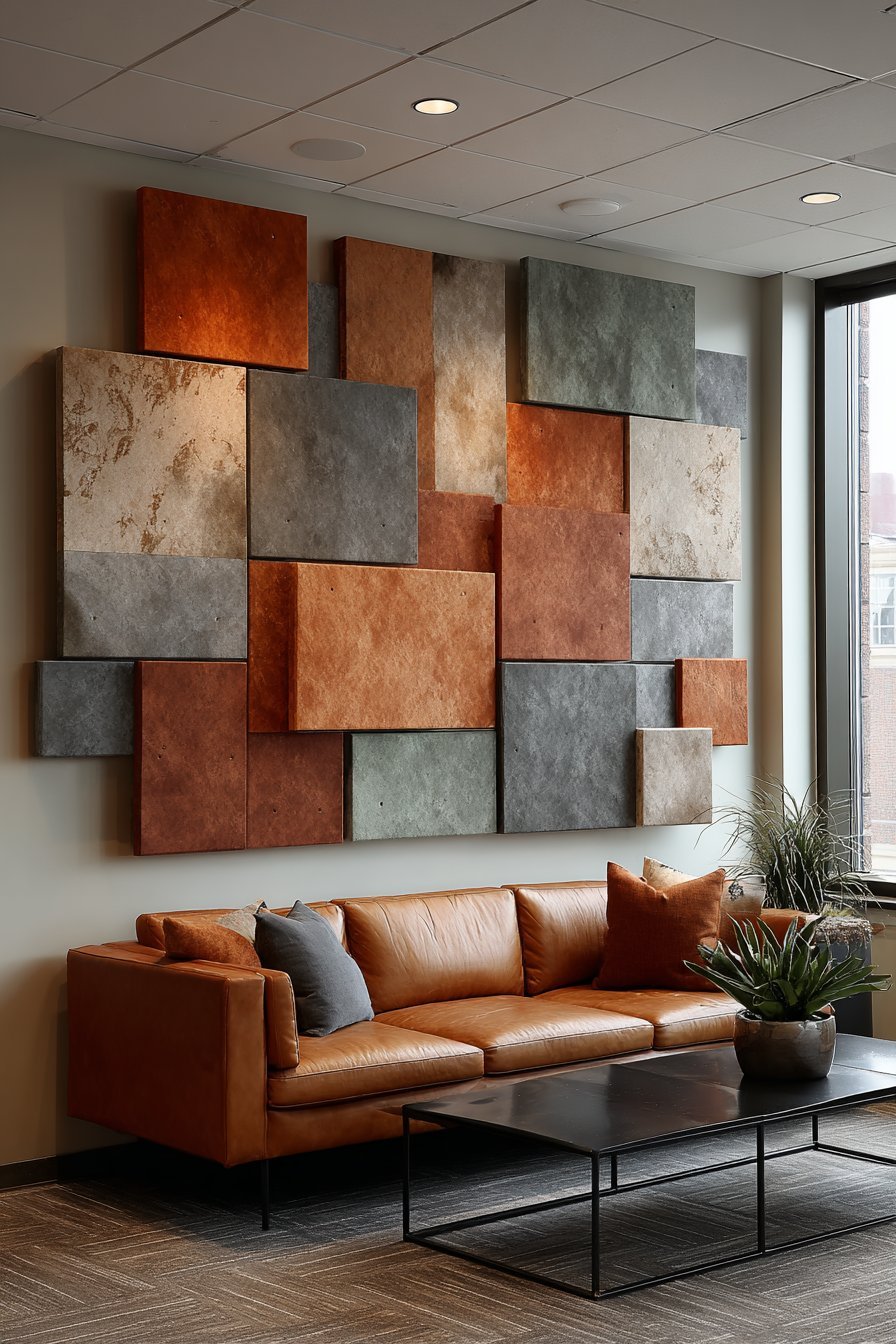
Contemporary functionality meets visual sophistication in this living room with acoustic fabric panels. Large-scale panels in earth tones arrange in asymmetric grids. Rust, terracotta, sand, and charcoal create striking visual impact while dampening sound. Fabric-wrapped panels display subtle texture variations. Floating hardware creates small shadow gaps for dimensional effect.
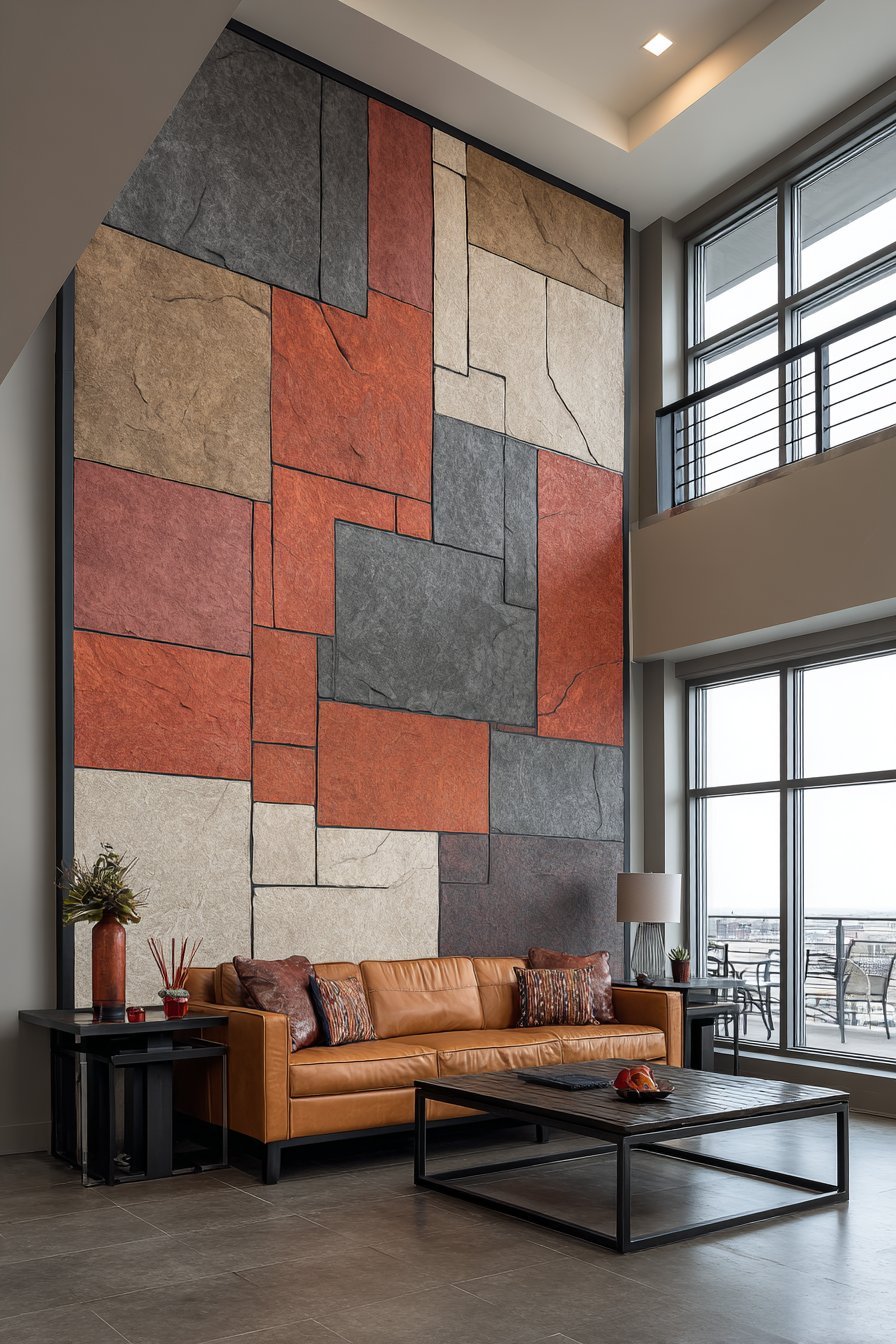
A cognac leather sofa and black metal coffee table anchor the modern aesthetic. Natural light from clerestory windows highlights fabric textures and color relationships. The panels serve dual purposes: artistic wall treatment and acoustic improvement. The asymmetric arrangement prevents rigid institutional appearance.
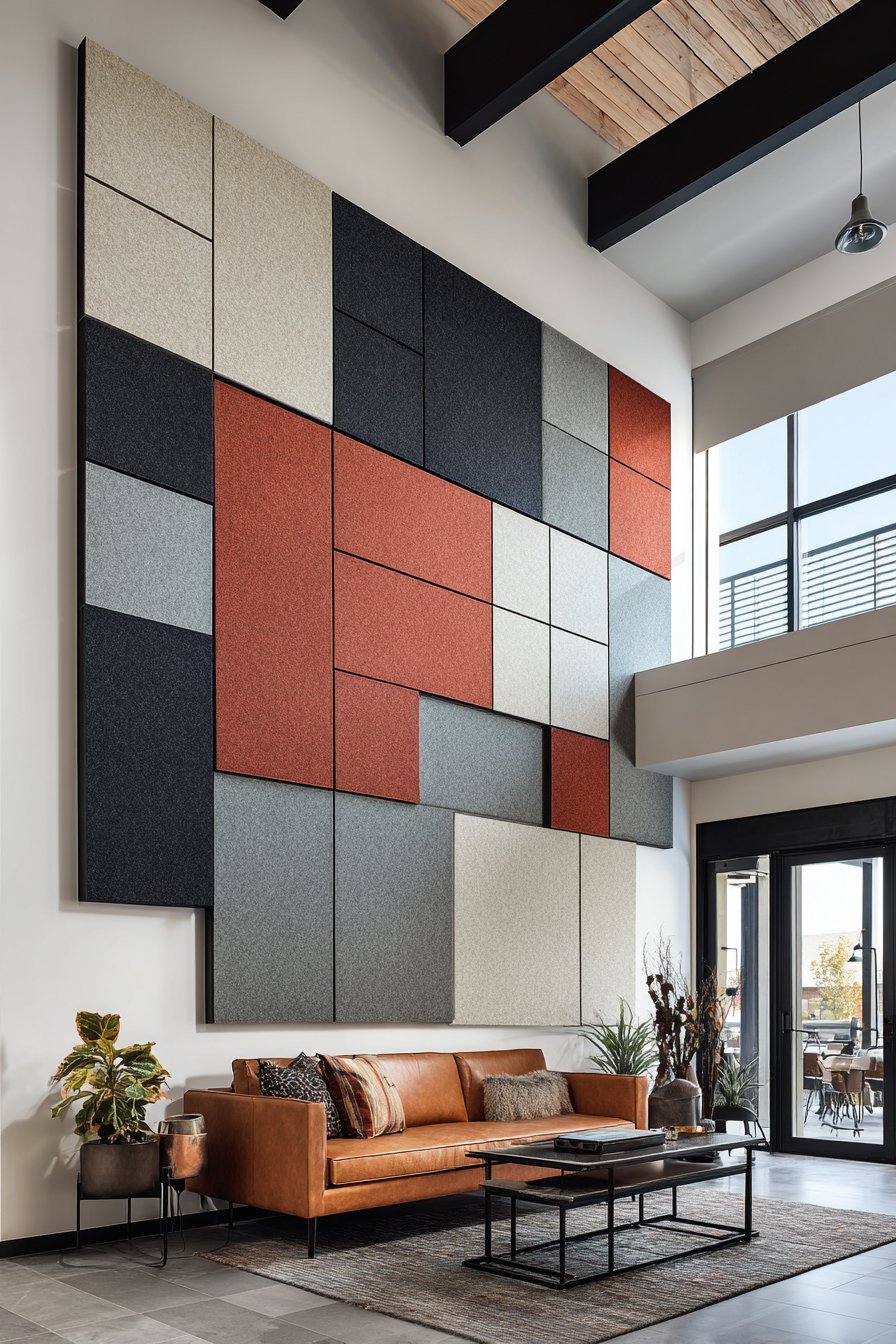
This design addresses both aesthetic and functional considerations simultaneously. Acoustic panels reduce echo and improve sound quality in living spaces. The color palette adds warmth without pattern complexity. Floating installation creates shadows that enhance dimensional perception. This treatment demonstrates thoughtful design that solves practical problems beautifully.
Key Design Tips:
- Select acoustic panels with both sound-dampening and aesthetic qualities
- Arrange in asymmetric grids for contemporary rather than corporate appearance
- Choose earth tone color palettes for warmth and sophistication
- Install with floating hardware to create dimensional shadow gaps
- Position strategically for optimal acoustic benefits in conversation areas
- Combine with leather and wood furniture for balanced material palette
12. Geometric Reclaimed Barn Wood Pattern
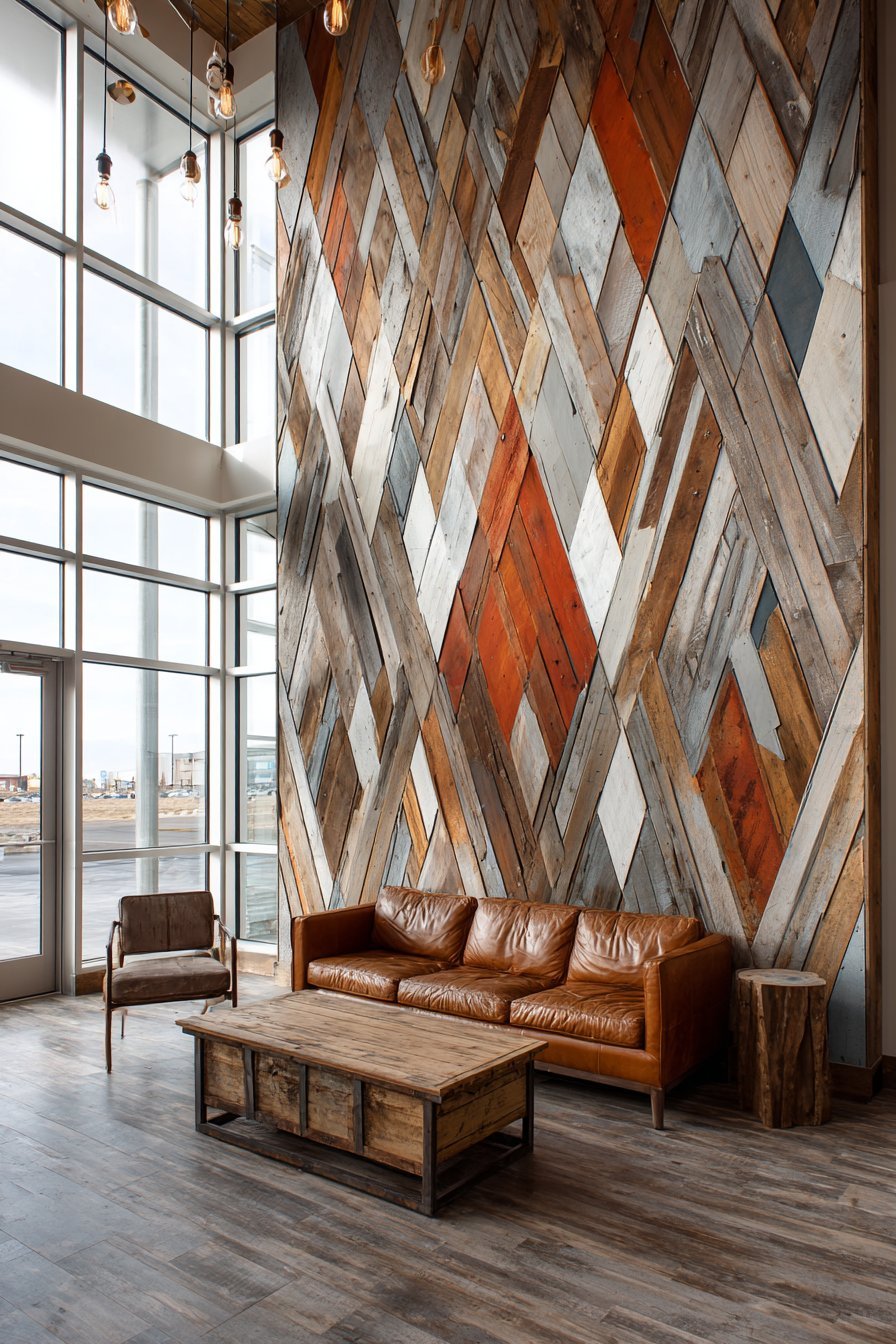
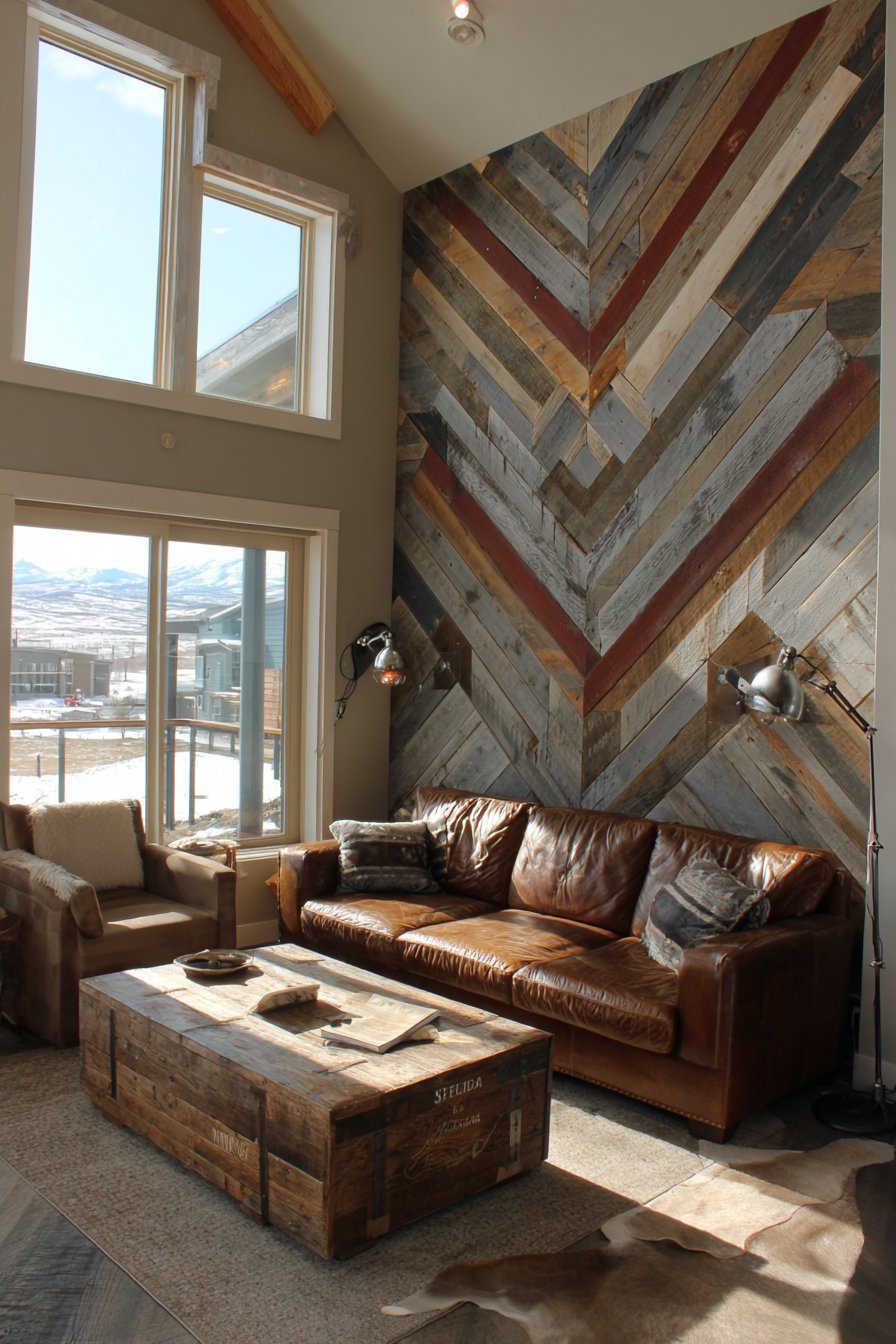
Rustic modern design shines in this living room with barn wood arranged in diamond patterns. Reclaimed planks in weathered grey, brown, and faded red create harlequin geometry. Precise cutting and arrangement showcase craftsmanship and material character. Each diamond displays different wood aging characteristics. The pattern brings structure to rustic materials.
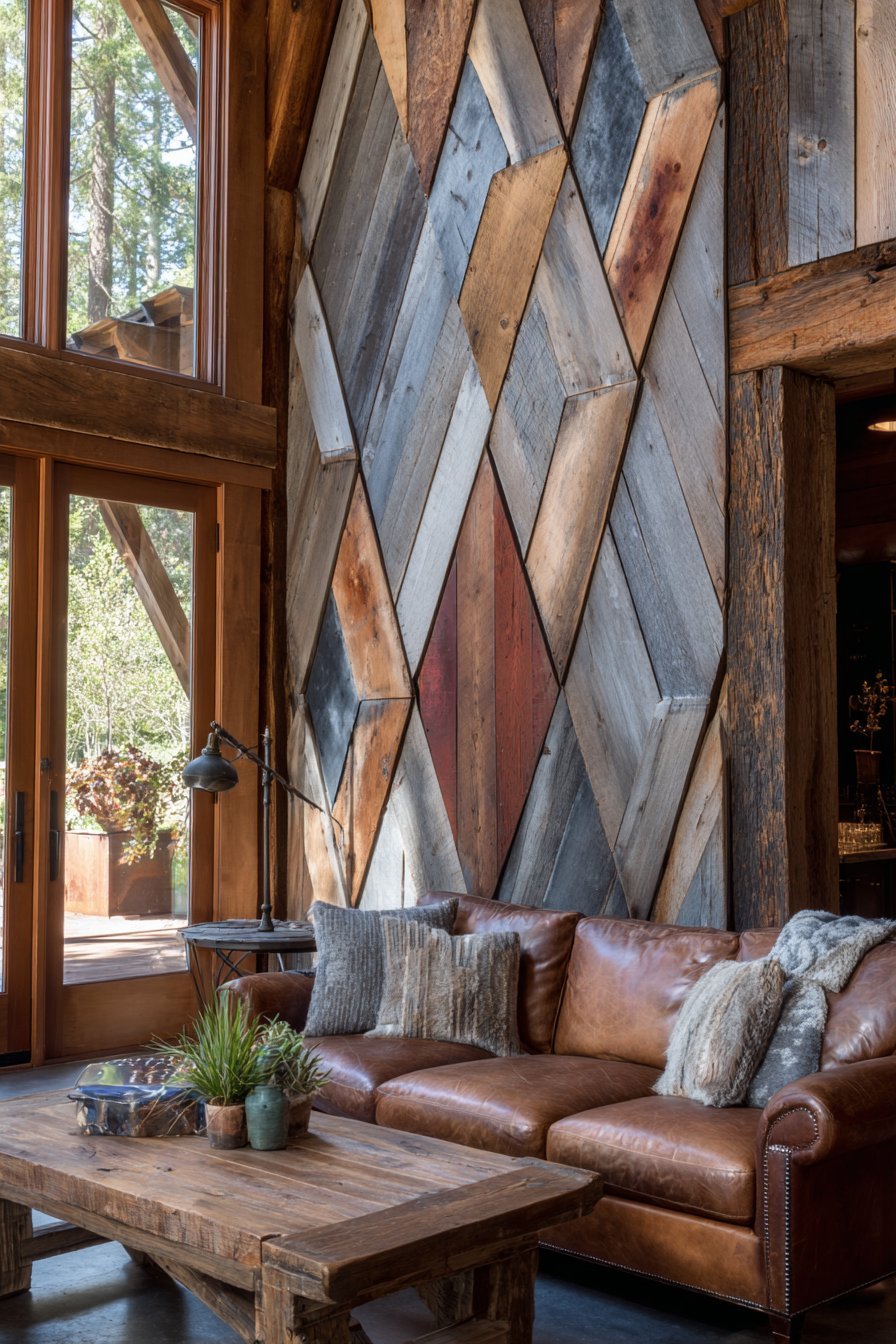
A distressed leather sofa in warm brown faces the installation comfortably. Chunky wooden coffee table and vintage industrial lighting continue the rustic aesthetic. Morning light through large windows emphasizes varied wood tones and natural patina. The geometric precision balances rustic material irregularity.
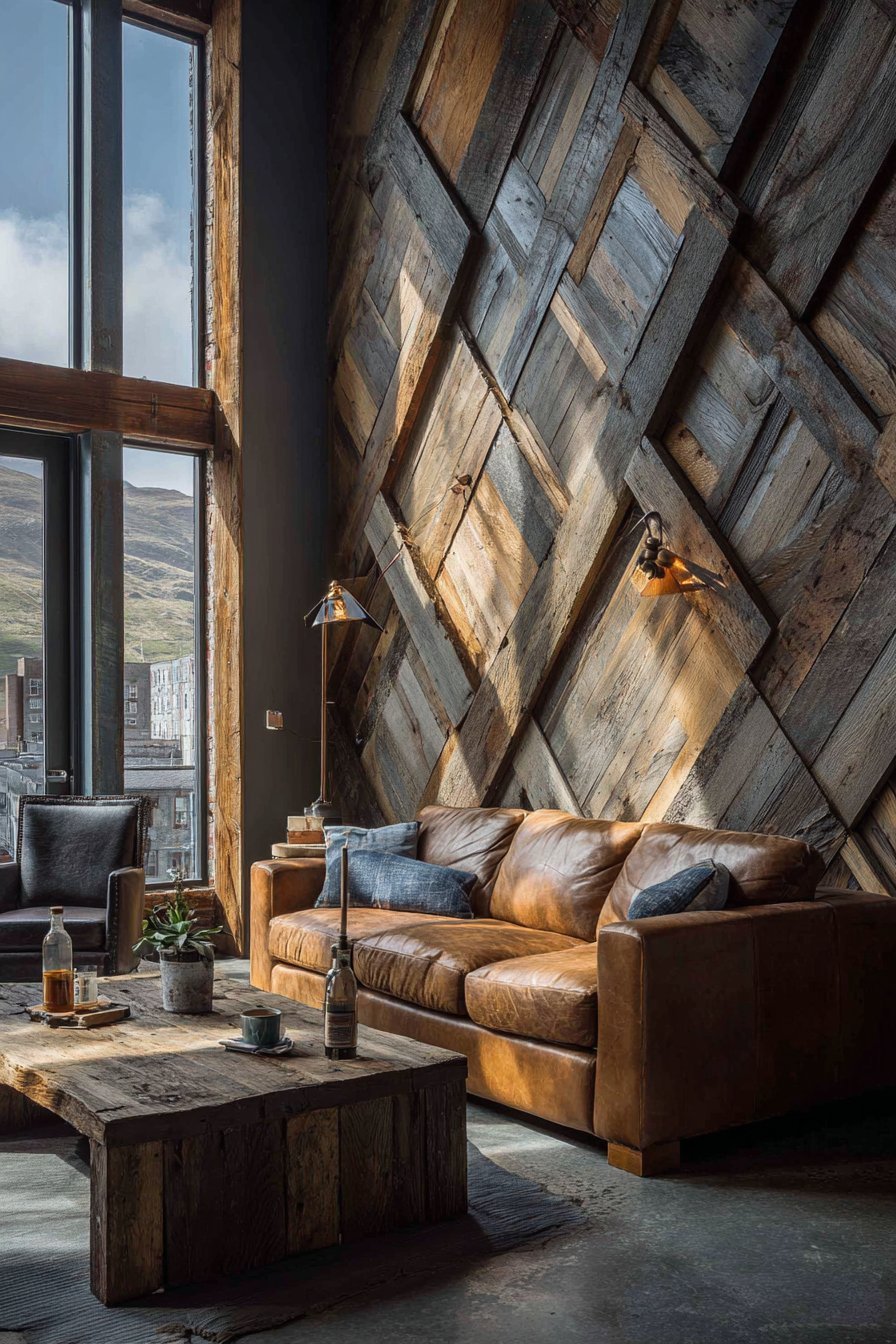
This design celebrates agricultural heritage through repurposed materials. Each barn wood piece carries history visible in its weathering. The diamond pattern adds contemporary edge to vintage materials. Color variations within the pattern create visual interest without additional decoration. This treatment honors material history while creating fresh design.
Key Design Tips:
- Source authentic barn wood with varied weathering for color diversity
- Cut pieces precisely for crisp geometric pattern execution
- Arrange to showcase different wood colors within pattern repetition
- Seal wood to preserve character while protecting surfaces
- Combine with leather and industrial elements for cohesive rustic-modern aesthetic
- Install with attention to pattern alignment for professional appearance
13. Floating Wooden Box Sculptural Display
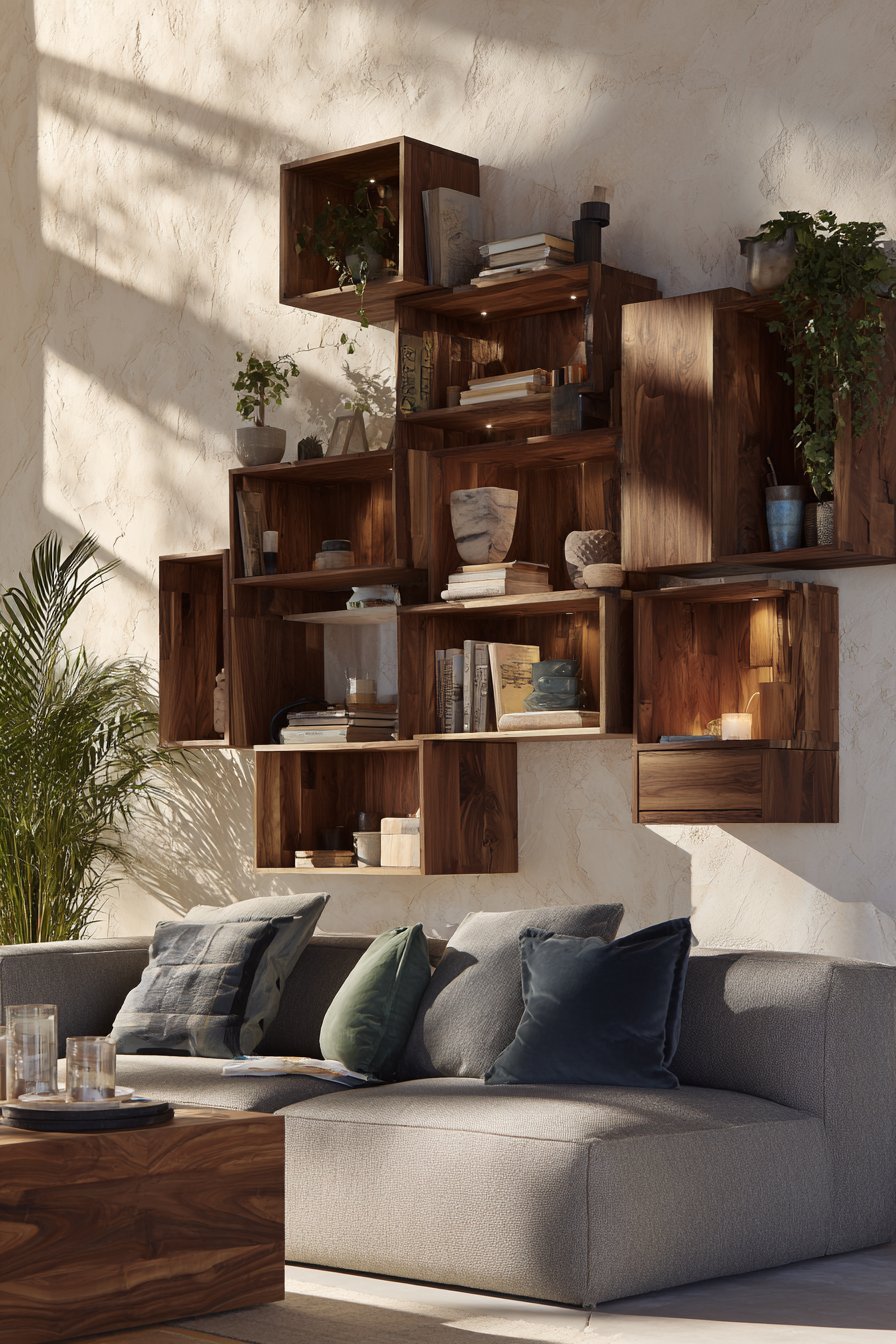
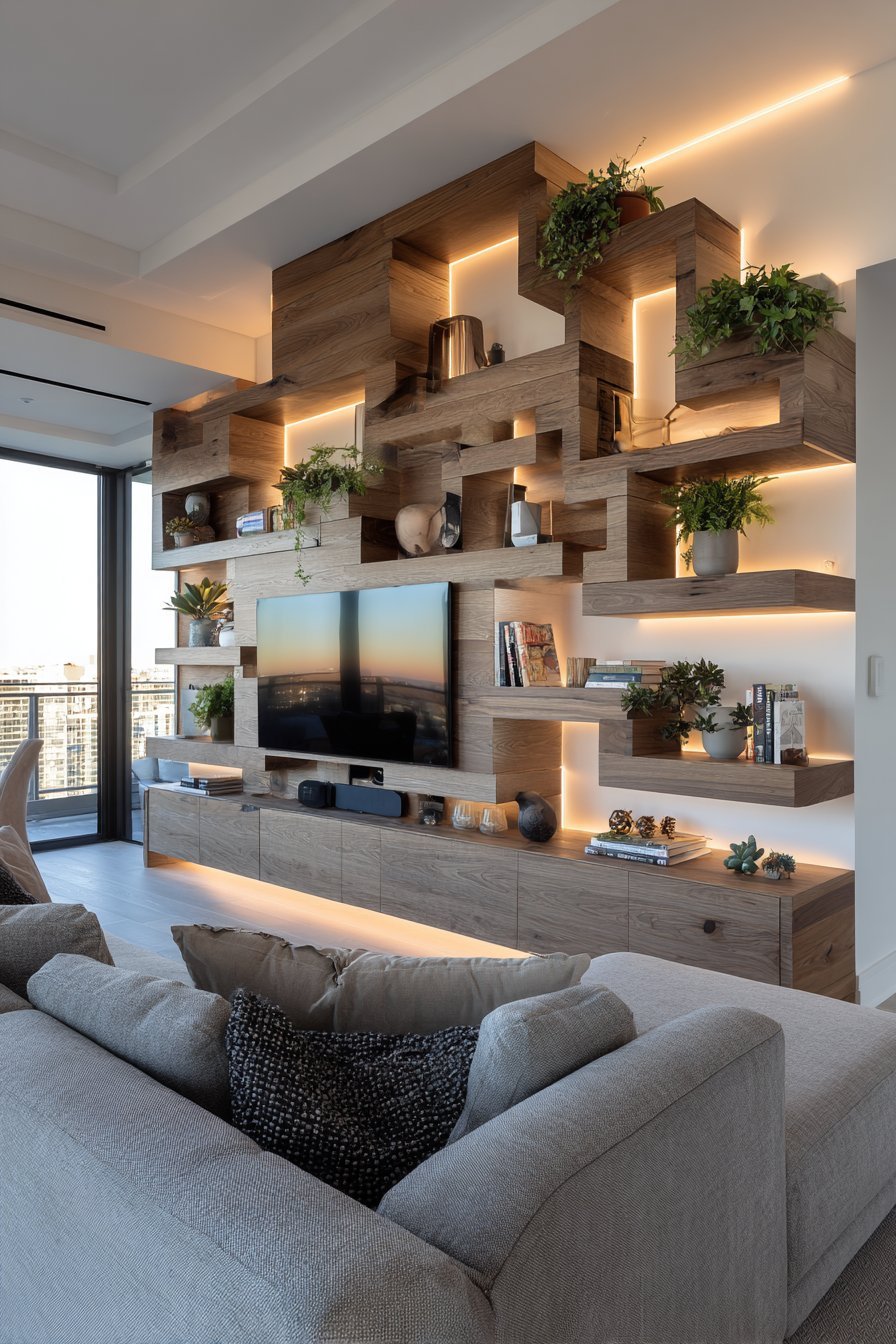
Modern eclecticism takes form in this living room with three-dimensional floating box installation. Natural walnut boxes with open fronts mount at varying depths. The sculptural arrangement creates dynamic shadow play while providing functional display space. Books, plants, and decorative objects fill select boxes. Asymmetric arrangement extends across eight feet above a low-profile grey sofa.
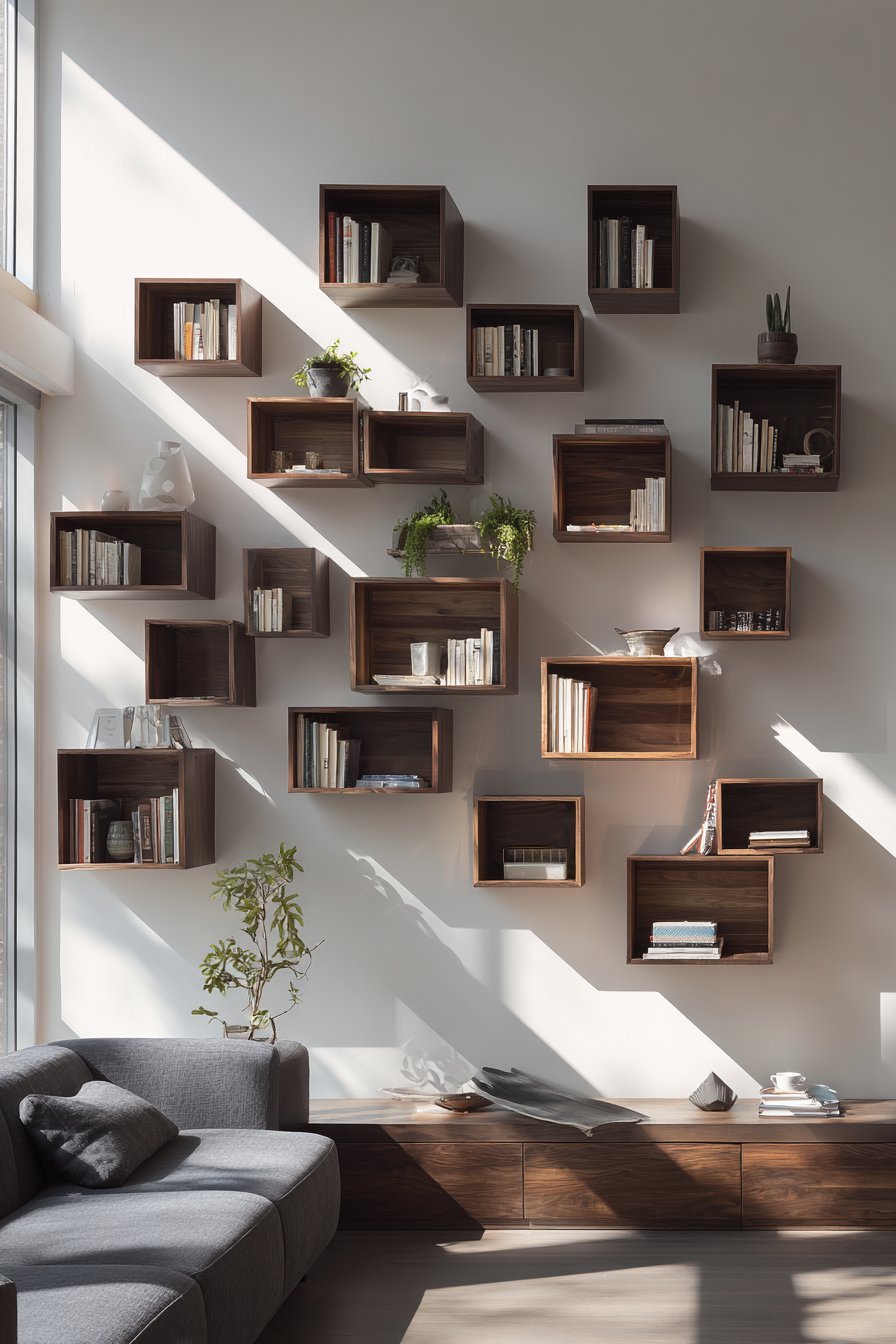
Integrated LED lighting within select boxes adds warm ambient illumination during evening hours. Natural afternoon light creates interesting shadows between protruding boxes. The varying depths transform a flat wall into architectural sculpture. Functional storage combines with artistic installation seamlessly.
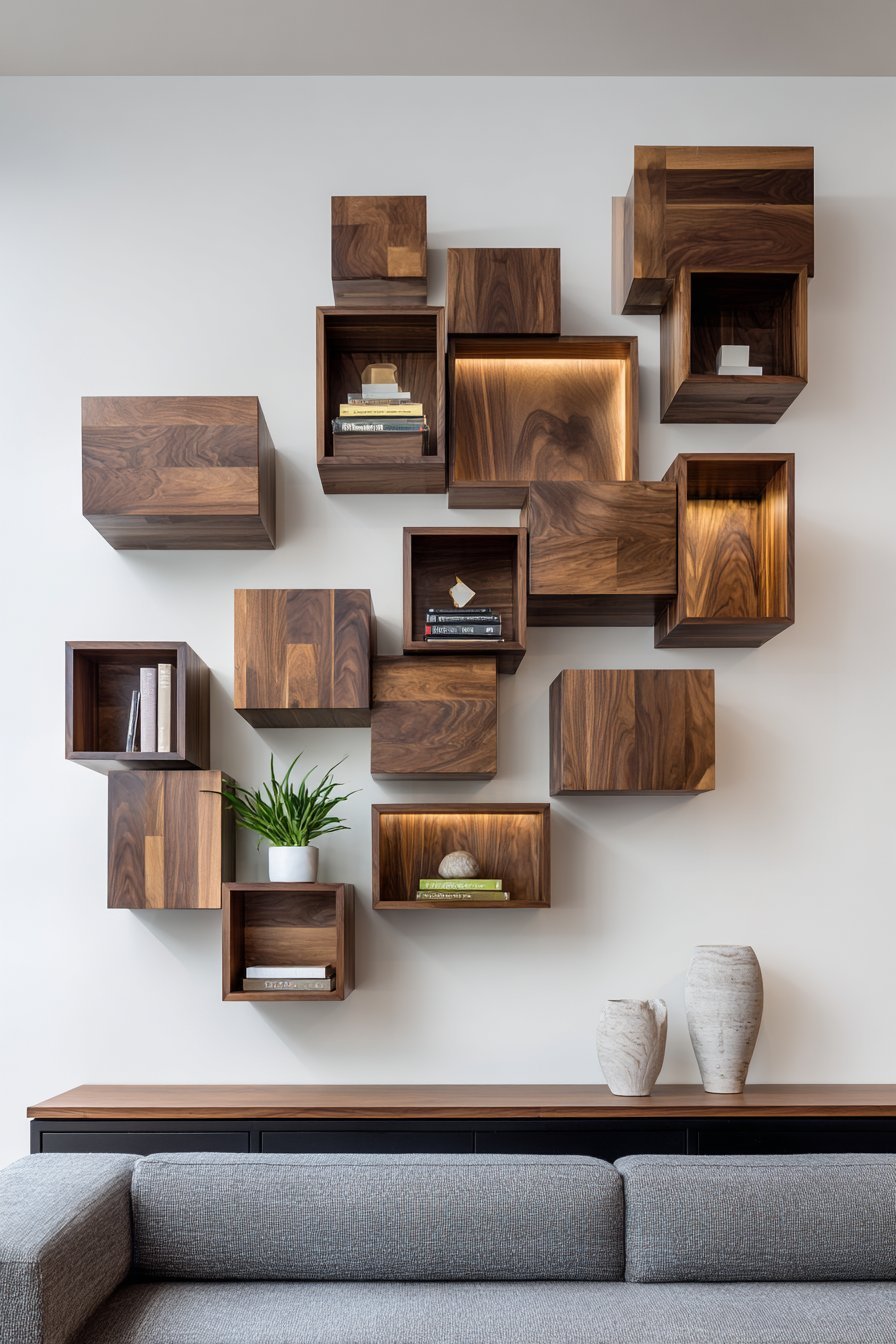
This design merges art with practicality in contemporary living spaces. The dimensional boxes create constantly changing shadows as light shifts. Open fronts allow personal styling through displayed objects. The walnut finish adds warmth to modern minimalism. This treatment demonstrates how functional elements can become primary design features.
Key Design Tips:
- Build or purchase boxes in varying sizes for visual interest
- Mount at different depths to create sculptural dimensional effect
- Integrate LED strip lighting in select boxes for ambient illumination
- Arrange asymmetrically for contemporary rather than rigid appearance
- Style with curated objects that complement rather than clutter
- Ensure proper structural support for weight of boxes and contents
14. Natural Fiber Handwoven Textile Wall Hanging
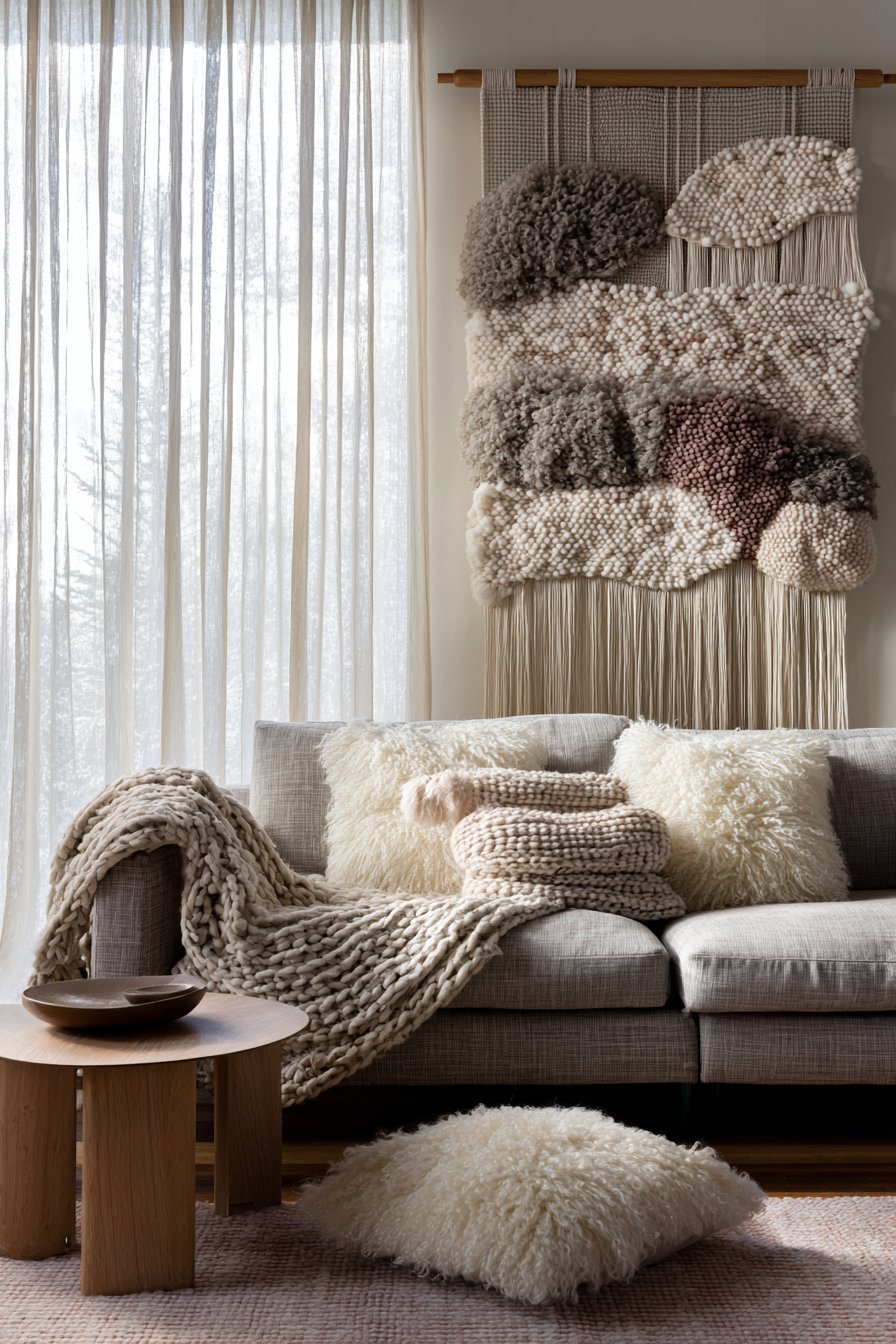
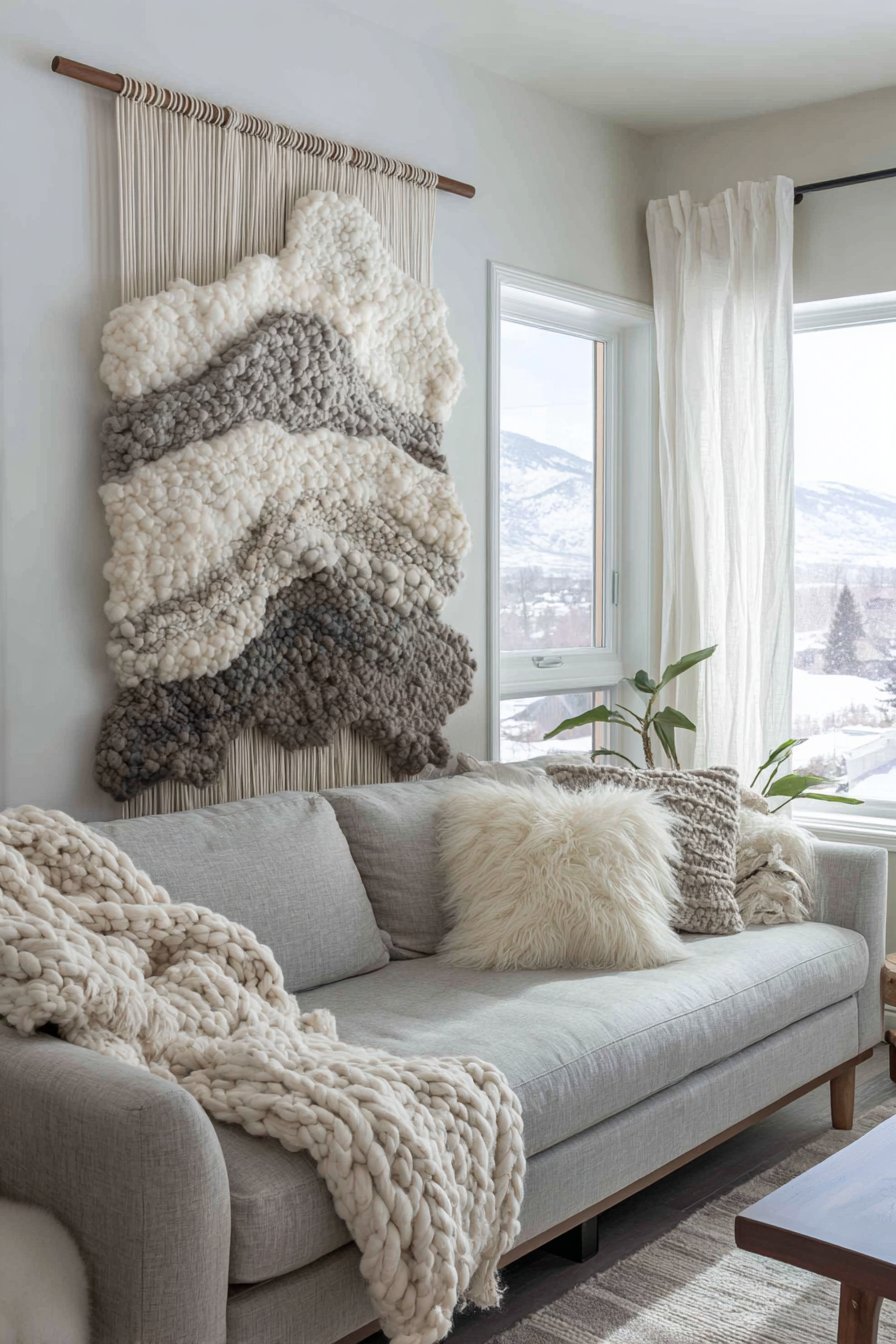
Scandinavian-inspired simplicity celebrates craft in this living room with large-scale textile art. Handwoven wool in natural undyed colors displays varying textures from smooth to dimensional loops. Cream, natural grey, and soft brown create subtle organic patterns. Simple wooden dowels provide mounting at top and bottom. The textile commands attention through texture rather than bold color.
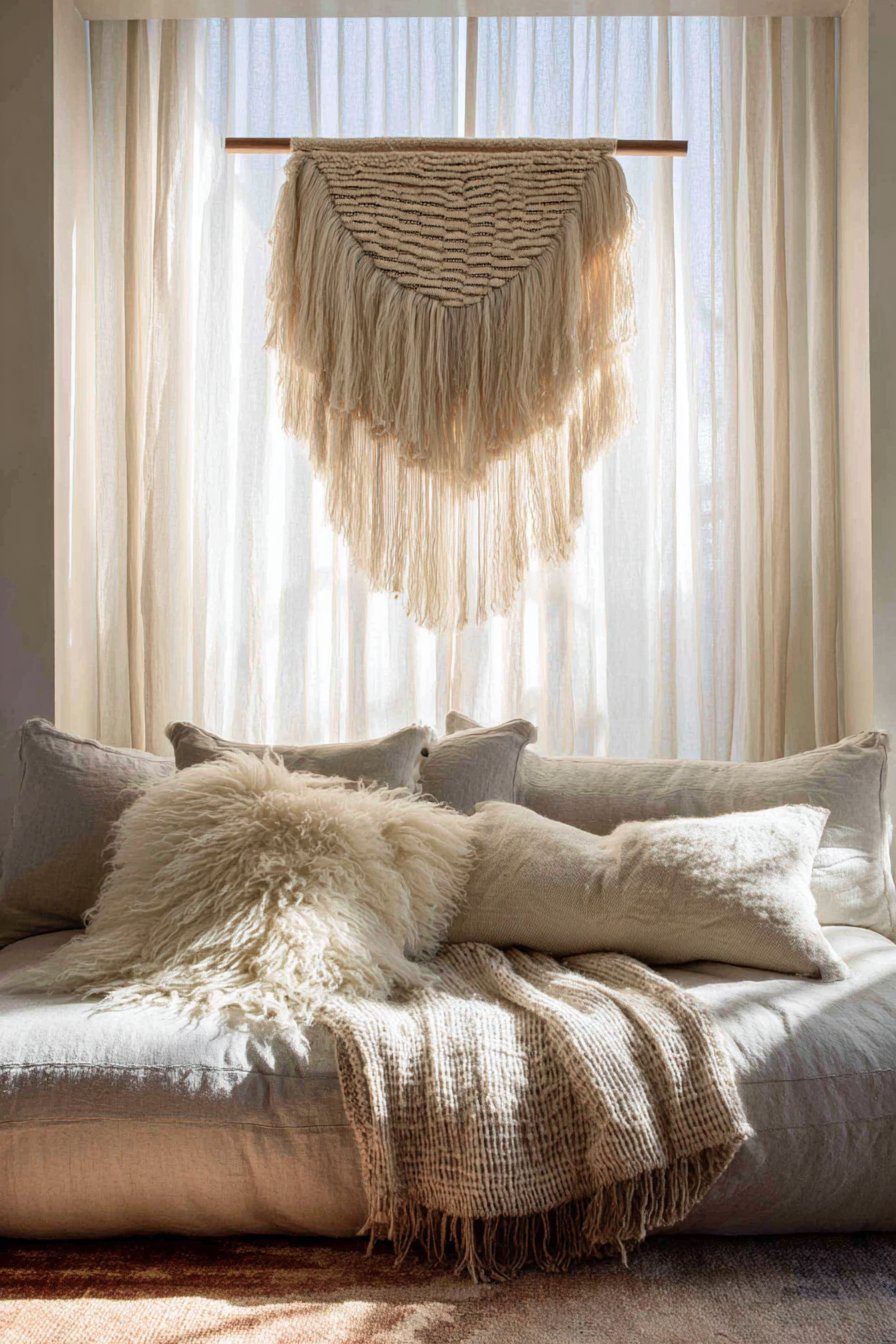
A light grey linen sofa sits below, styled with chunky knit throws and sheepskin pillows. Natural fiber aesthetic continues throughout the space cohesively. Soft diffused morning light through sheer curtains illuminates textile texture variations. The handcrafted quality adds warmth to minimalist surroundings.
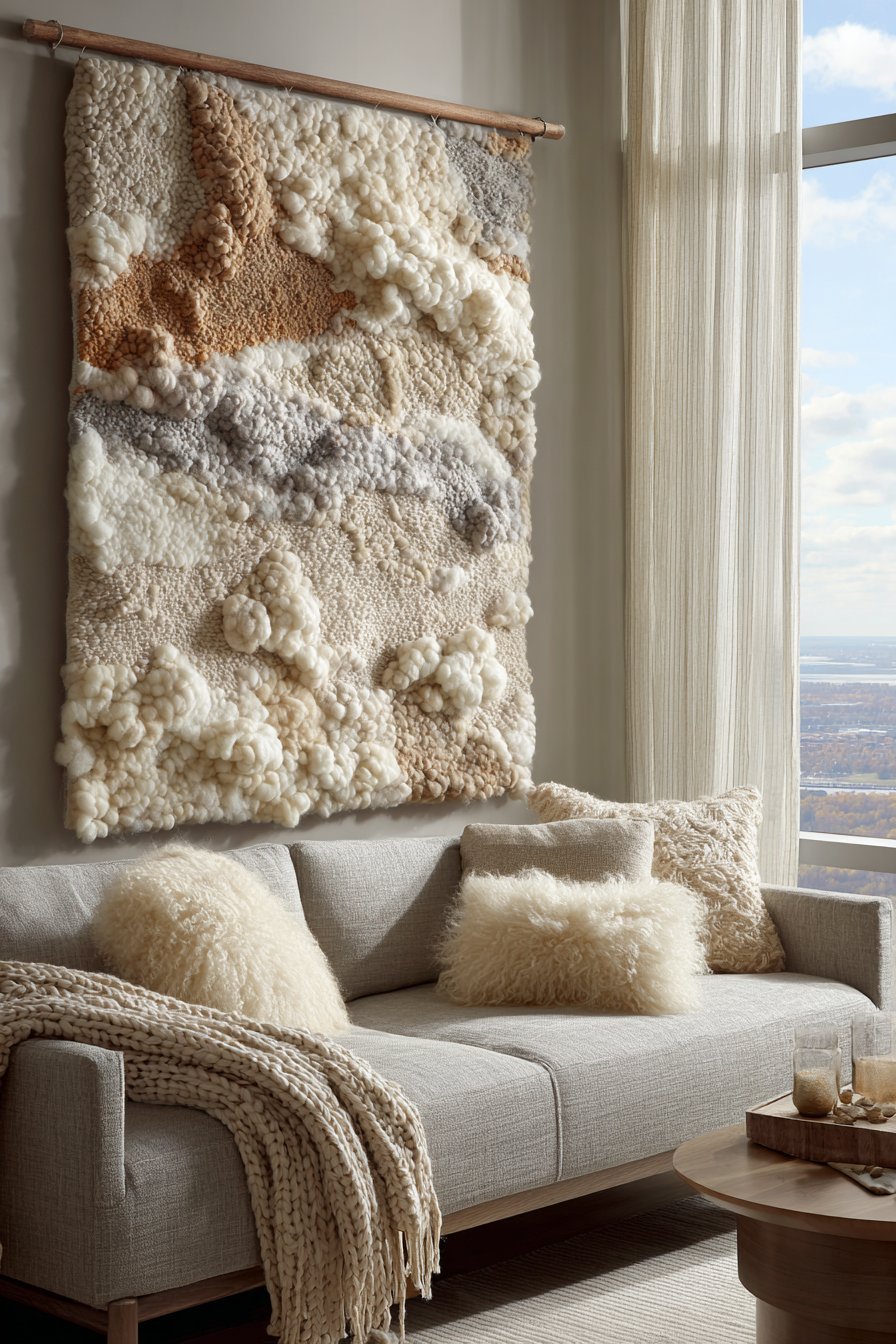
This design honors traditional craft within contemporary contexts. The handwoven textile displays human touch absent in mass production. Natural fiber materials align with sustainable design principles. Texture variations create visual interest within neutral palette. This treatment brings tactile warmth to clean-lined modern spaces.
Key Design Tips:
- Commission or purchase handwoven pieces from skilled textile artists
- Select natural undyed fibers for authentic Scandinavian aesthetic
- Choose pieces with varying weave textures for dimensional interest
- Mount with simple wooden dowels to complement craft aesthetic
- Coordinate with natural fiber furnishings throughout the room
- Position near natural light to showcase texture variations
15. Backlit Translucent Resin Nature Panels
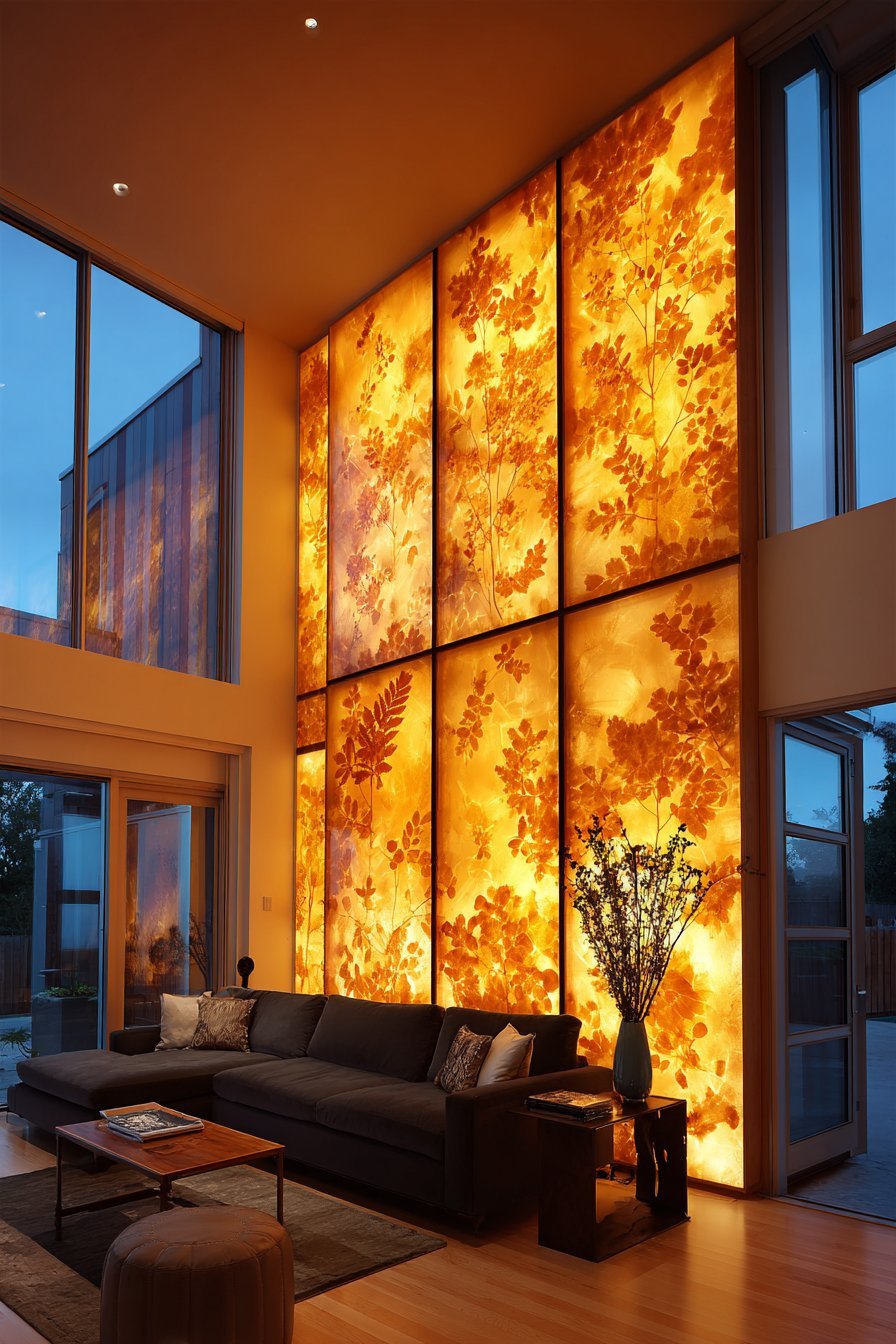
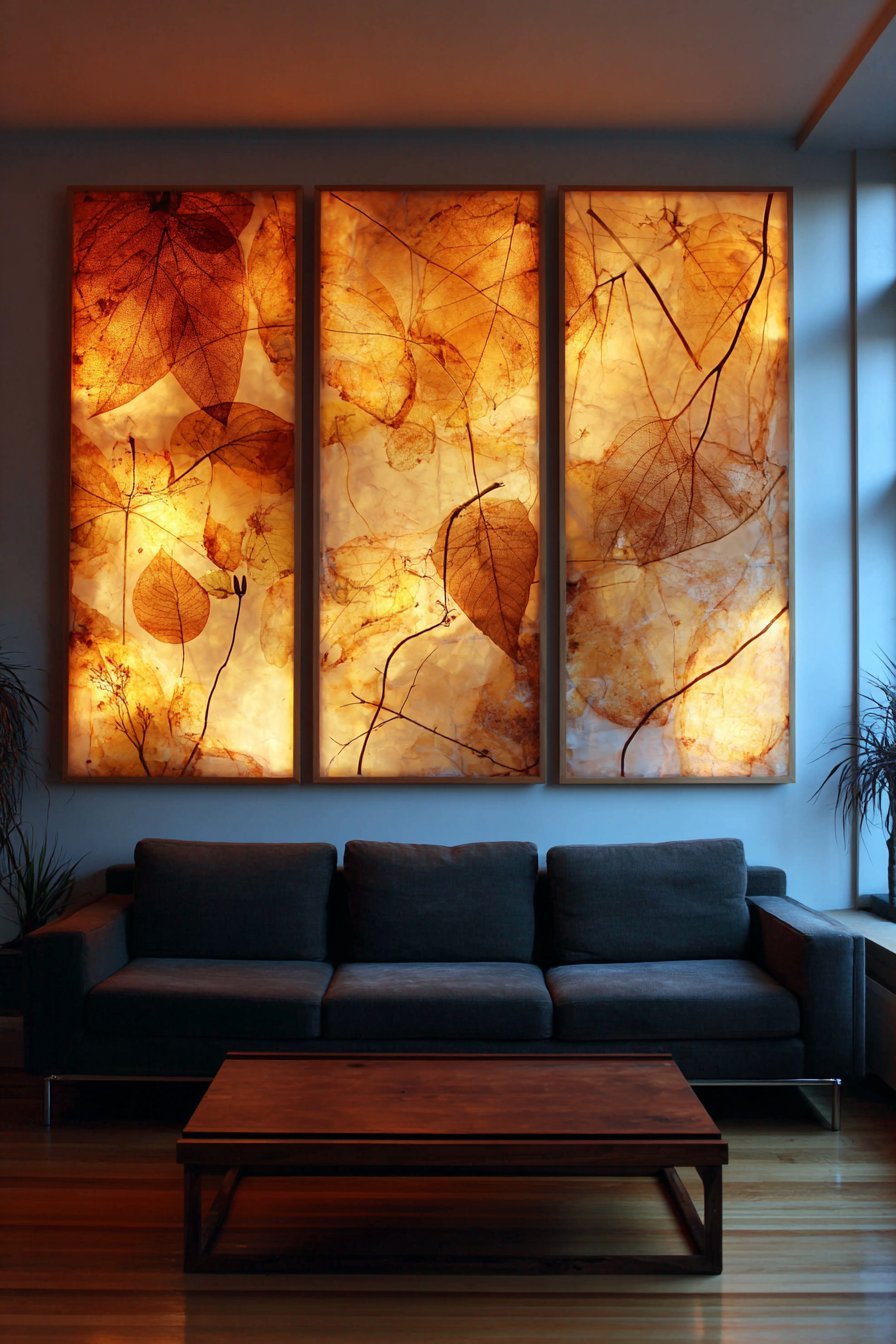
Contemporary innovation meets organic beauty in this living room with backlit resin panels. Translucent amber resin embeds pressed leaves, flowers, and delicate branches. Three large custom panels create glowing organic art when illuminated. LED strips mounted behind transform the panels into light sources. Each panel measures four feet by six feet in triptych arrangement.
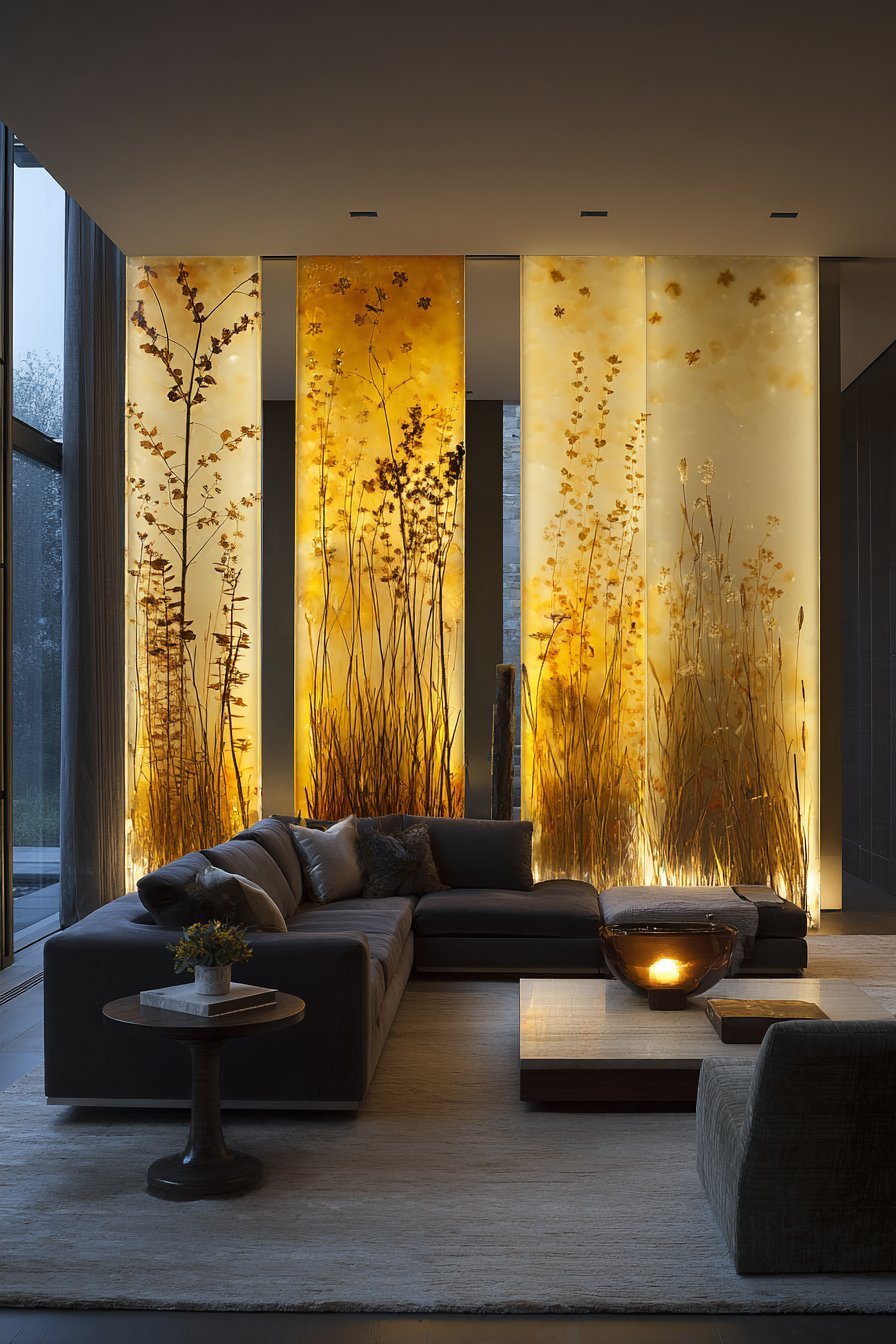
A modern charcoal sofa faces the installation directly. Evening photography showcases the backlit effect with balanced exposure. The glowing panels provide both artwork and ambient lighting simultaneously. Natural elements preserved in resin create organic patterns throughout.
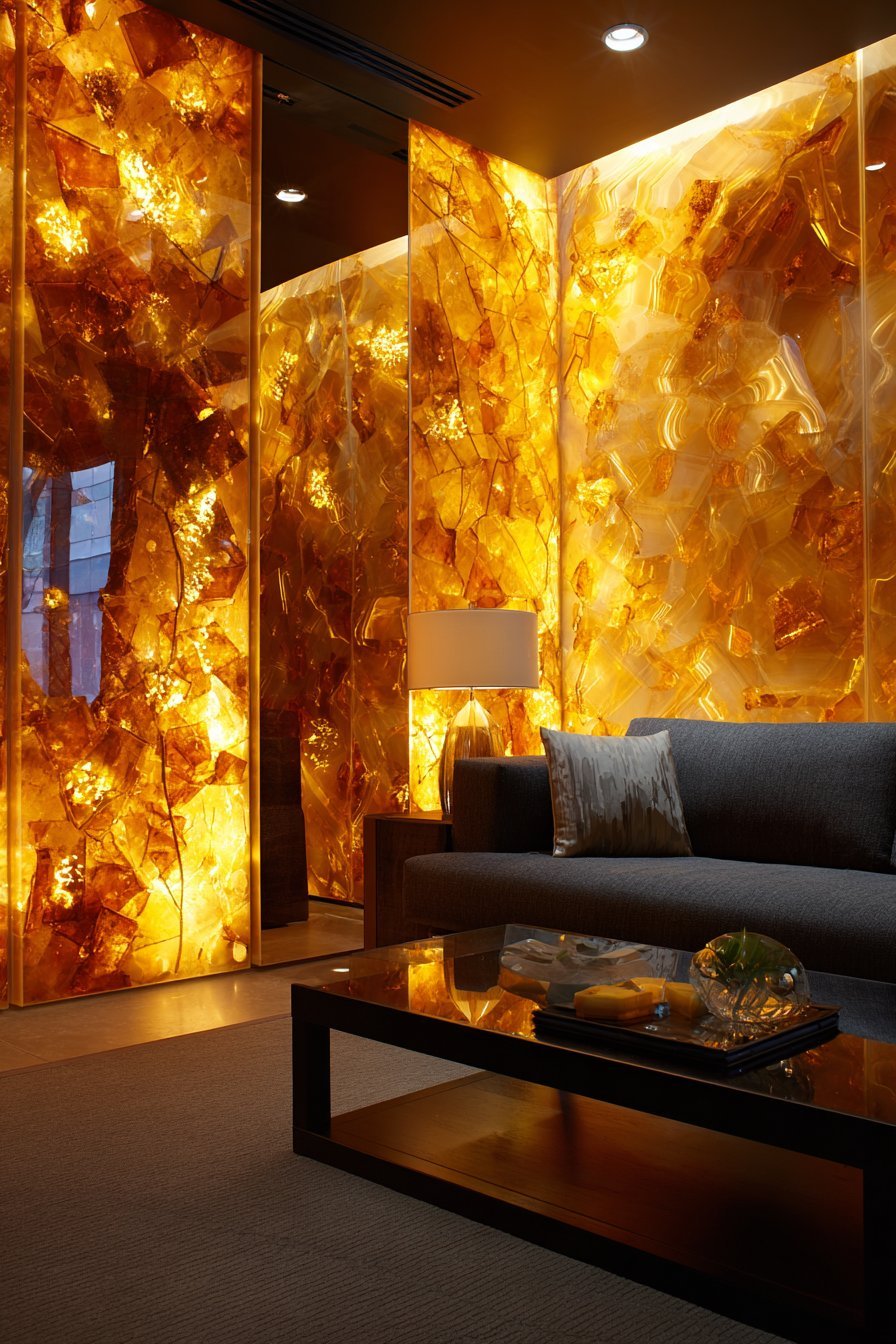
This design combines modern materials with natural elements innovatively. The backlit effect transforms static art into dynamic light installation. Preserved natural elements maintain organic connection within contemporary execution. The warm glow creates inviting ambiance during evening hours. This treatment demonstrates how technology can enhance natural beauty.
Key Design Tips:
- Commission custom resin panels with professionally embedded natural elements
- Install LED strip lighting with dimmer controls for adjustable ambiance
- Choose warm amber resin tones for inviting glow quality
- Arrange multiple panels in triptych format for maximum impact
- Position as both art installation and functional ambient lighting
- Consider this option for creating dramatic evening atmosphere
16. Vintage Mirror Collection Gallery Wall
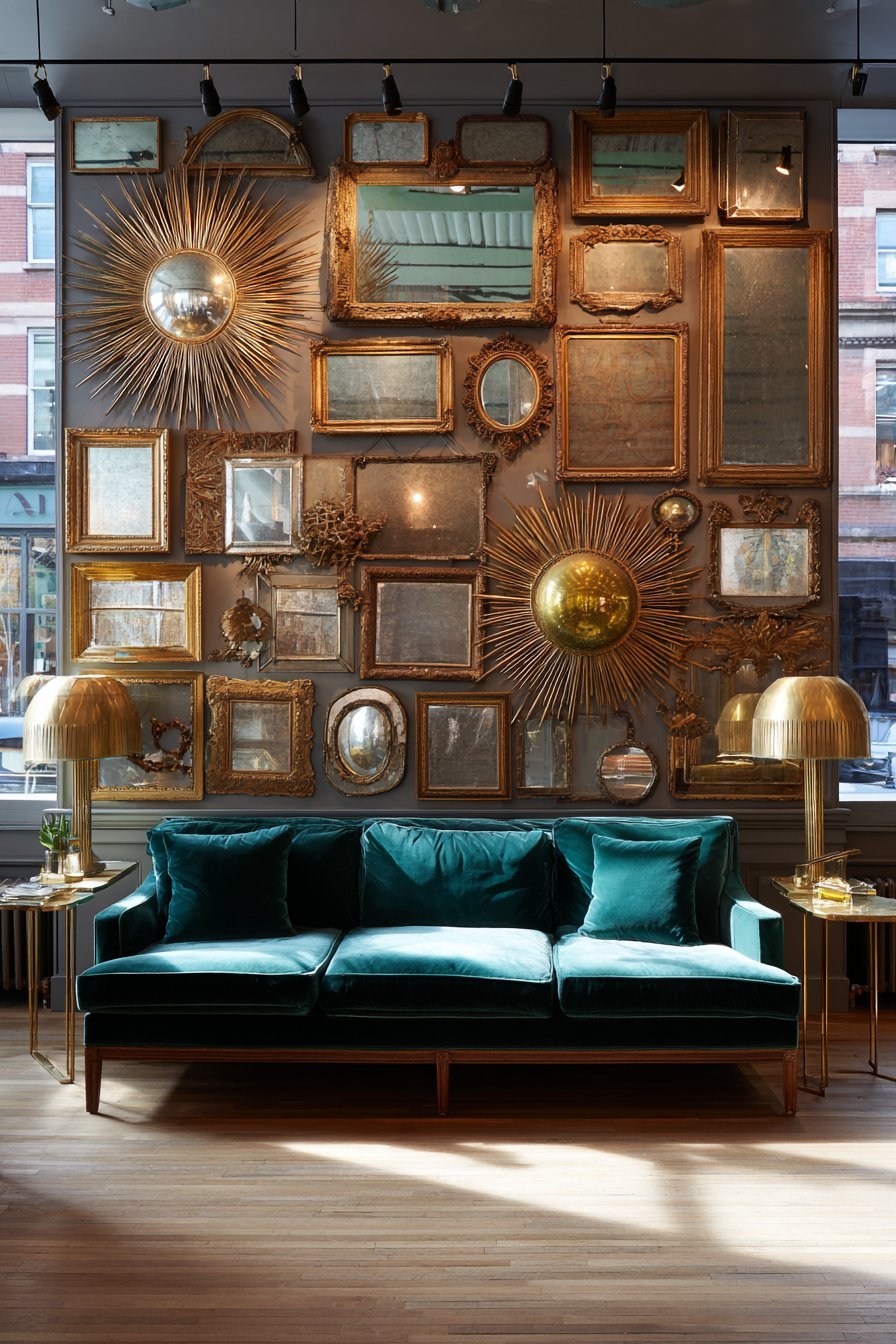
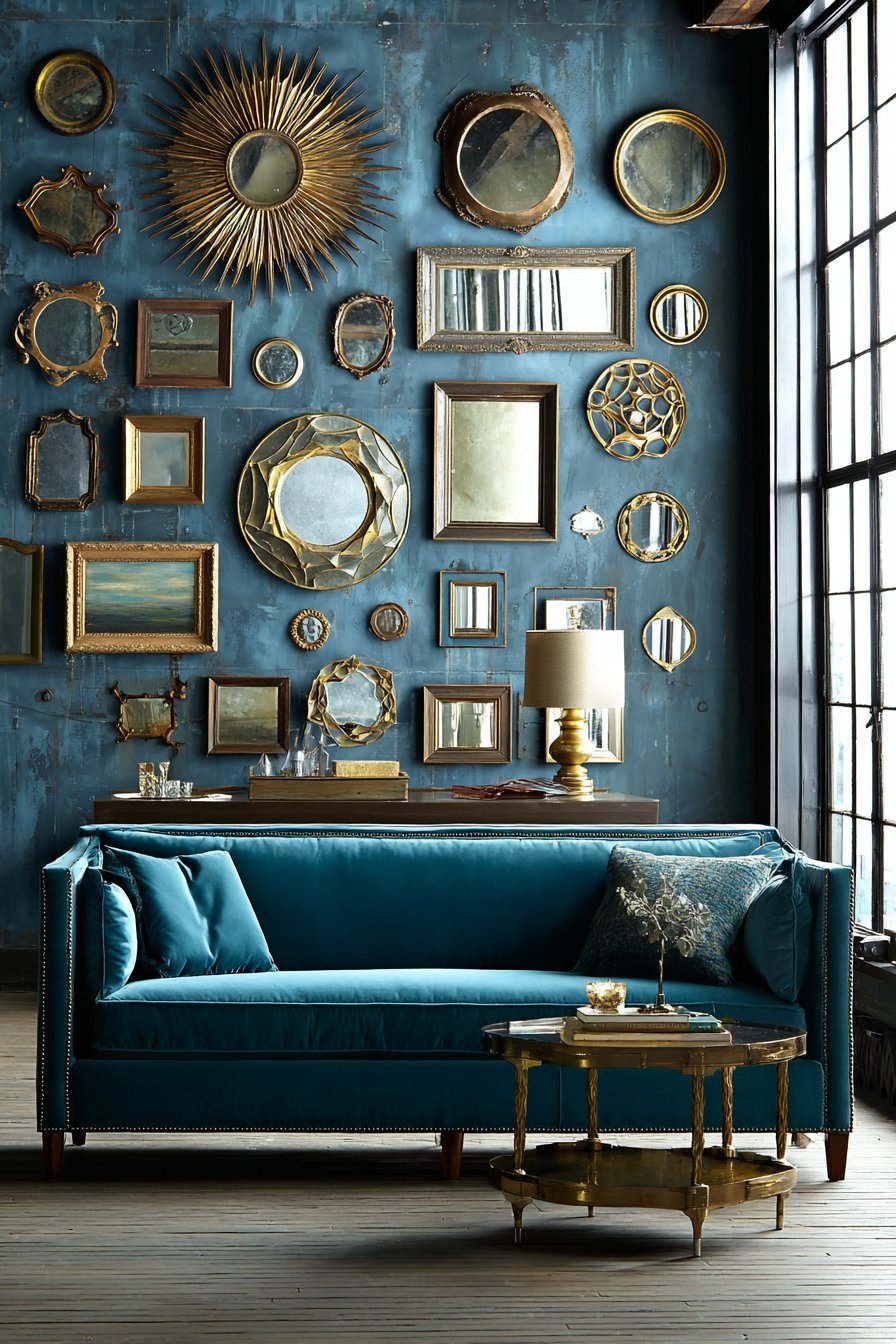
Maximalist expression reaches peak sophistication in this living room with curated vintage mirrors. Varying sizes, shapes, and frame styles create elaborate gallery arrangements. Ornate gilded baroque mirrors mix with simple wooden frames, sunburst designs, and geometric Art Deco pieces. Authentic aging appears in frame patina and subtle silvering imperfections. Visual interest multiplies through reflection and frame diversity.
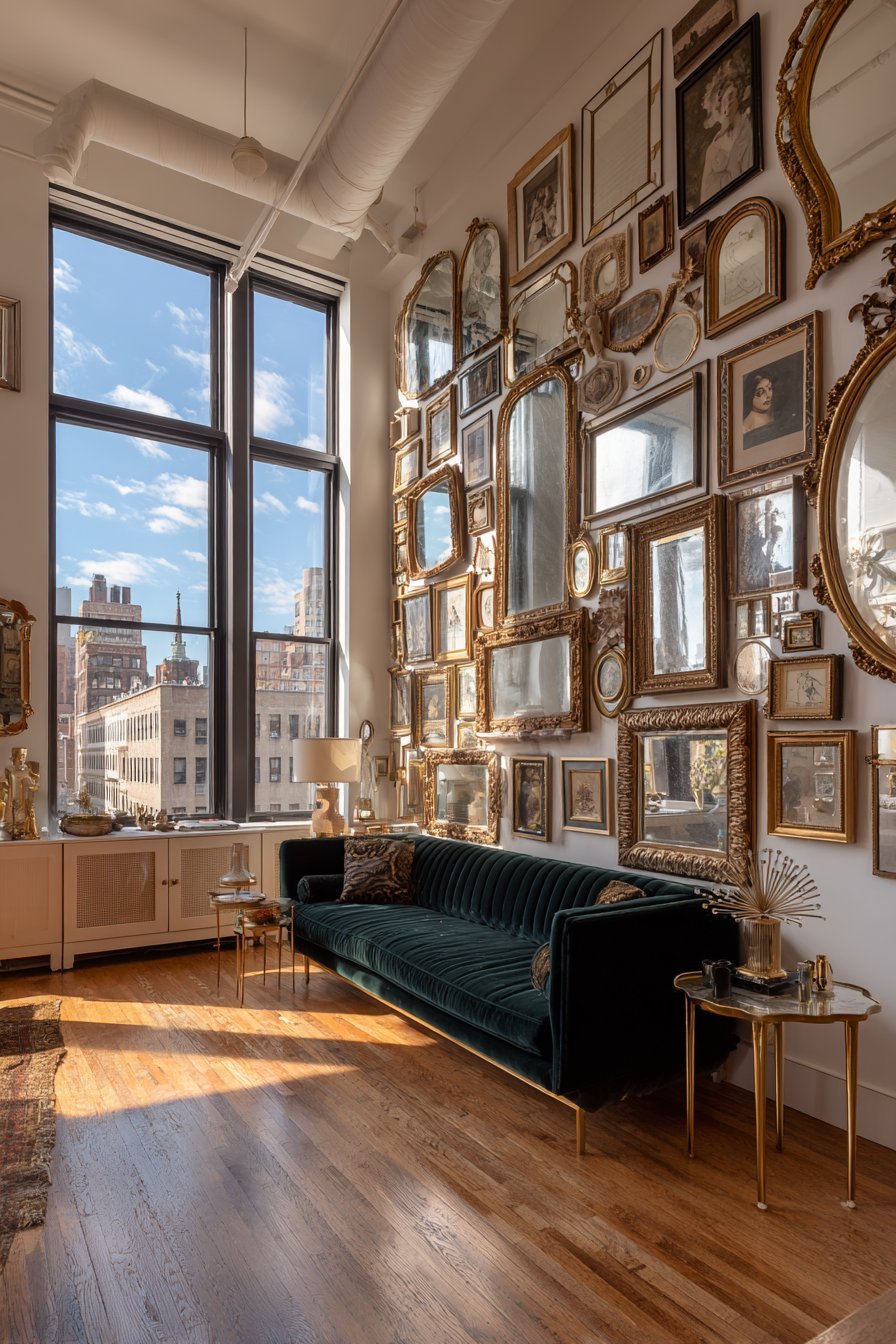
A velvet sofa in deep teal anchors the space below the mirror collection. Brass accent furniture catches and reflects light from multiple mirror surfaces. Natural light from large windows creates dynamic reflections throughout the day. The complexity requires careful curation but delivers bold personality.
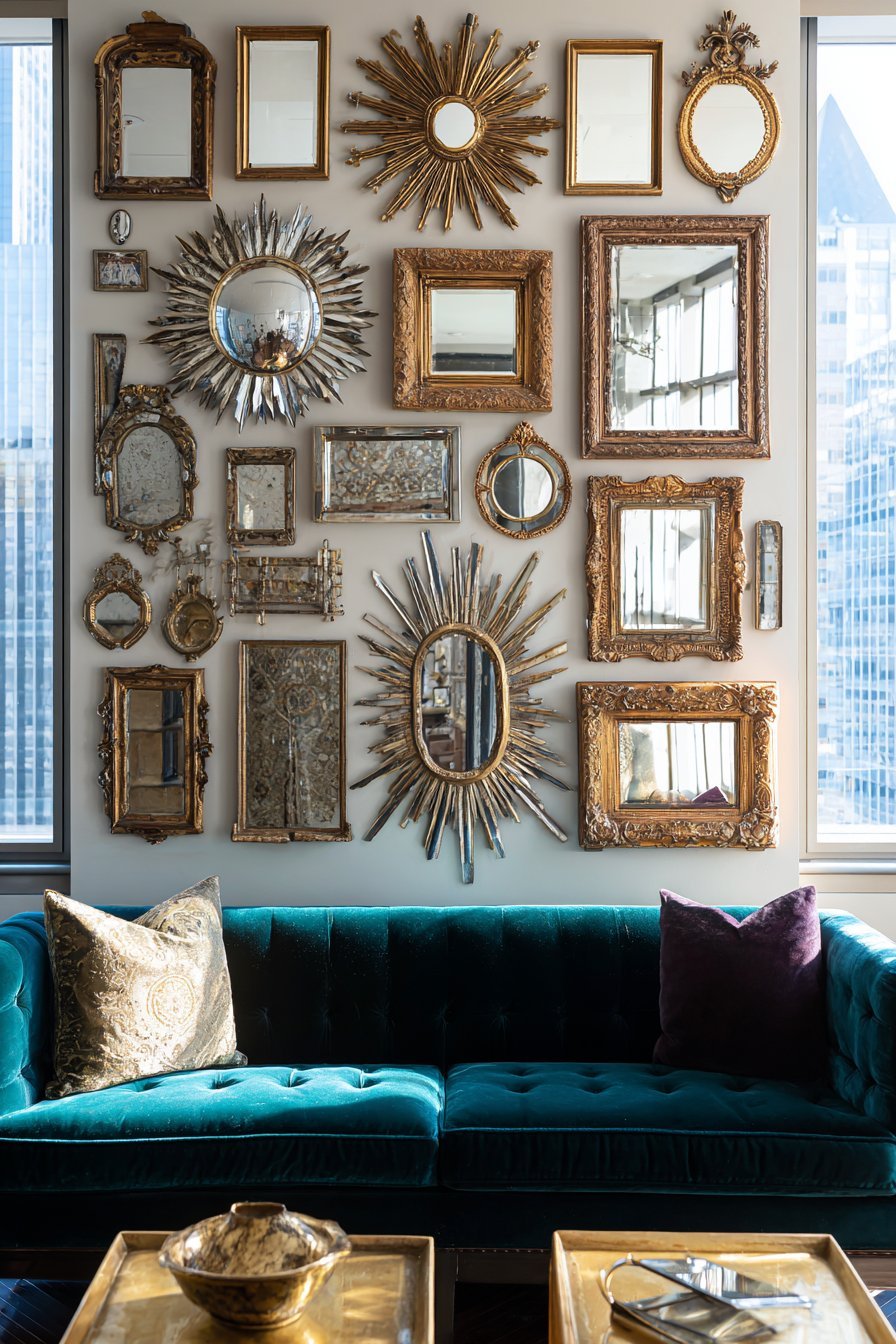
This design celebrates collected treasures and antique appreciation. Each mirror reflects both literal light and historical character. The varied frames provide visual interest beyond the reflective surfaces. Light multiplication makes spaces feel brighter and more expansive. This treatment works best in spaces embracing layered, collected aesthetics.
Key Design Tips:
- Collect mirrors gradually from antique shops and estate sales
- Mix frame styles including baroque, Art Deco, sunburst, and simple designs
- Arrange on floor first to perfect composition before hanging
- Clean antique mirrors gently to preserve authentic silvering patina
- Position opposite or adjacent to windows for maximum light reflection
- Ensure varied sizes from small accent pieces to larger statement mirrors
17. Live Edge Wood Slab Feature Wall
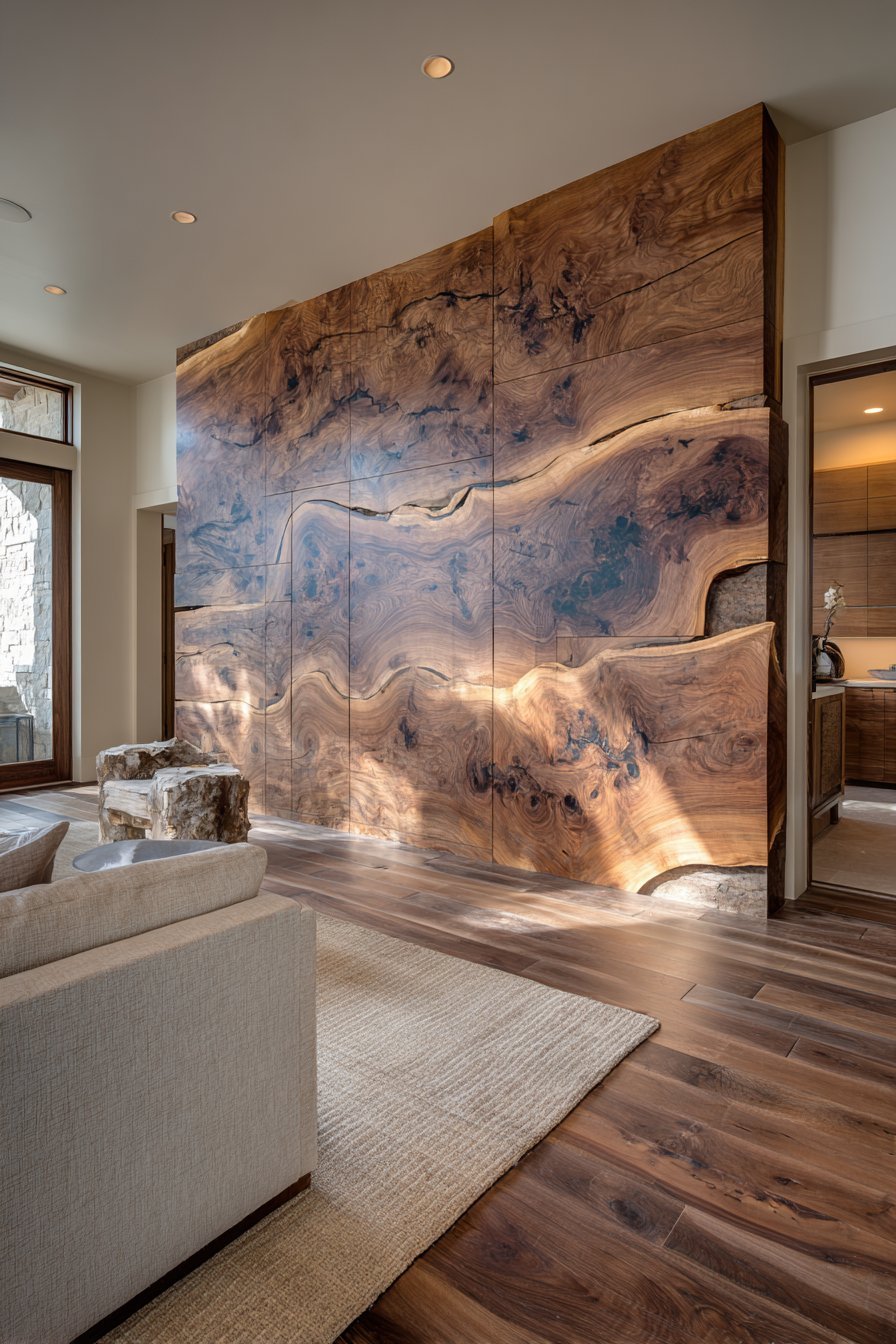
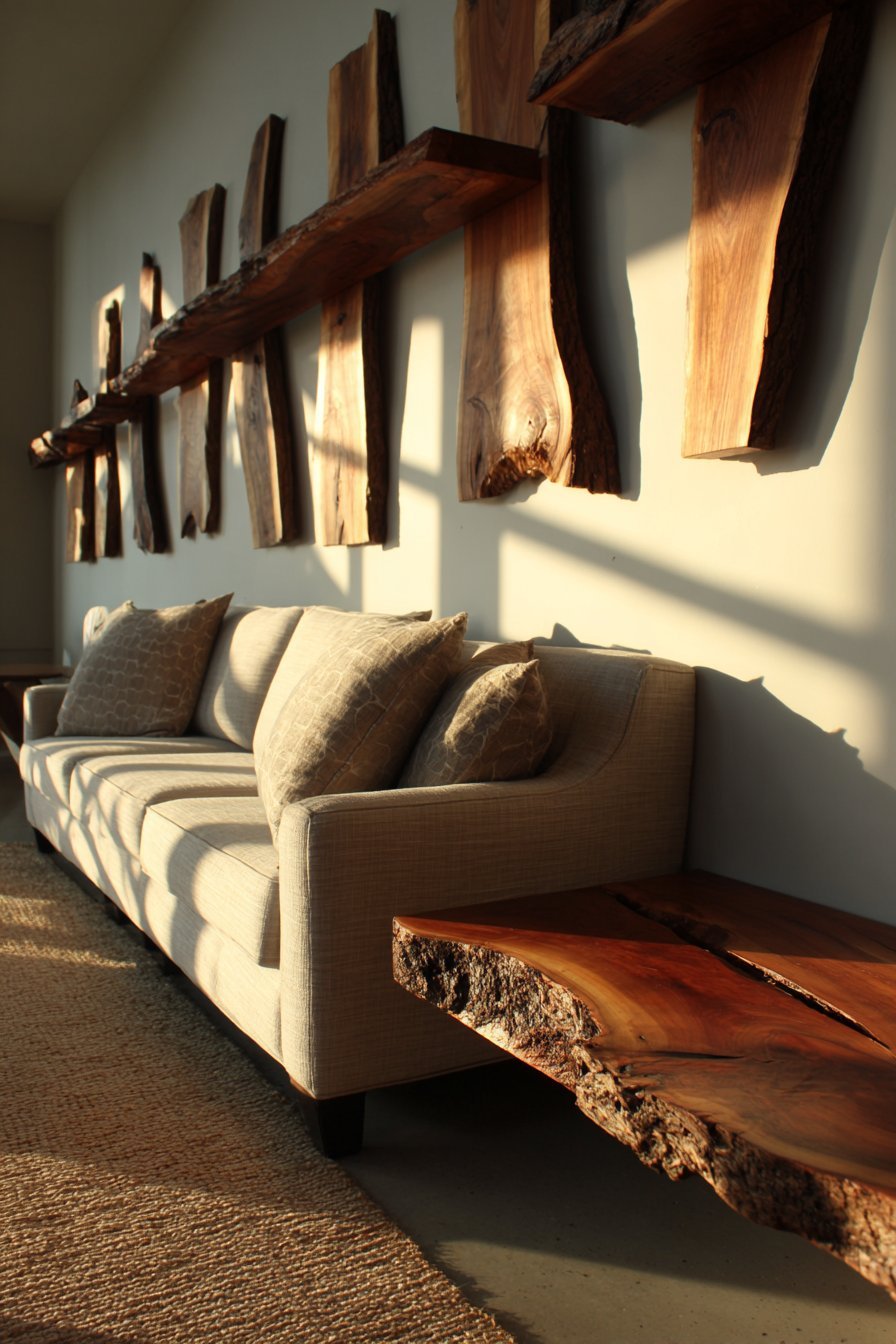
Modern organic design celebrates natural materials in this living room with live edge wood slabs. Three substantial walnut slabs with intact bark edges mount horizontally with floating hardware. Each slab extends approximately eight feet in length, varying from twelve to eighteen inches in width. Natural voids, knots, and spalting add authentic character. Pronounced grain patterns create organic visual interest.
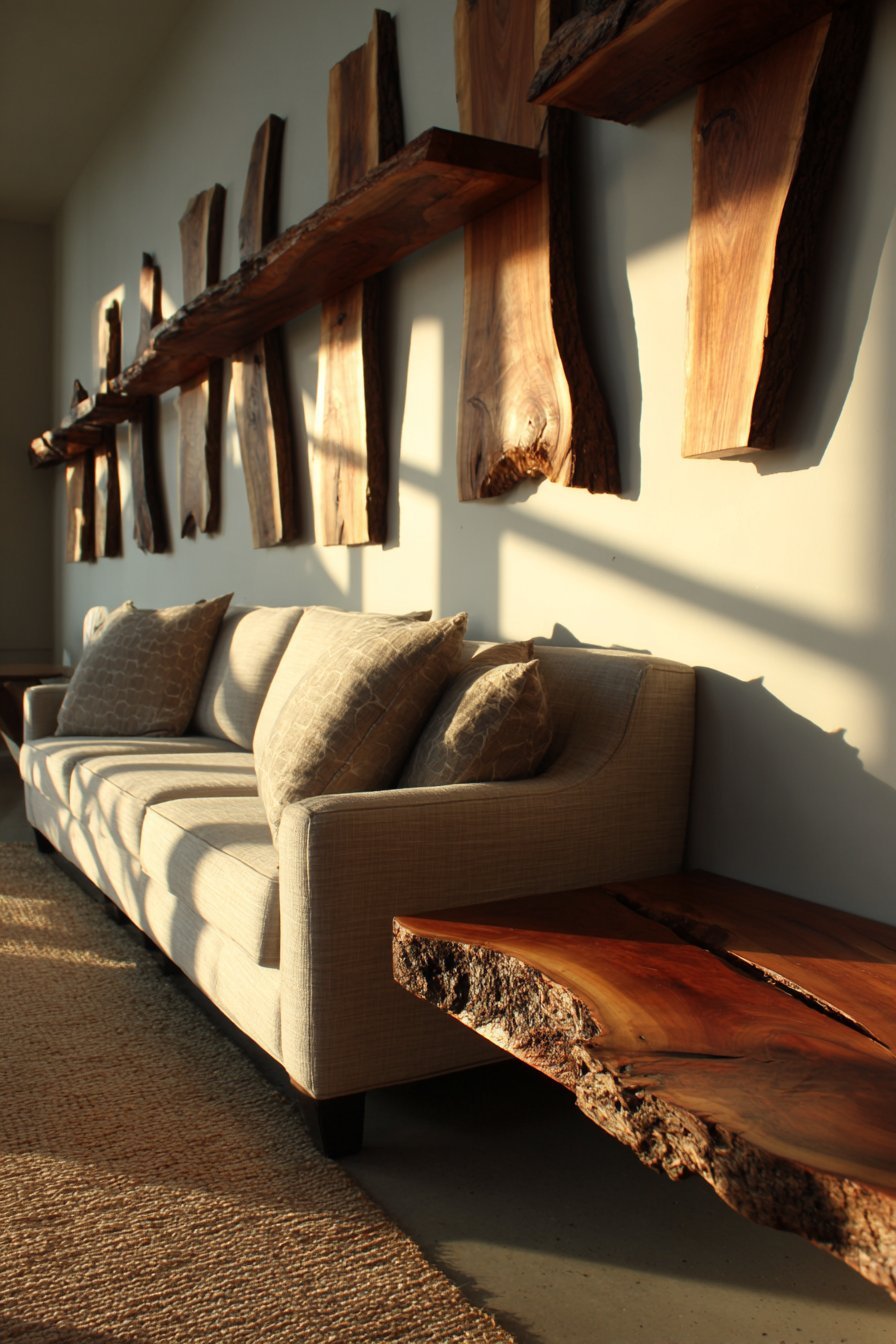
A neutral linen sofa and natural fiber rug complement the organic aesthetic throughout. Warm afternoon light highlights wood’s rich tones and natural edge details. The live edges preserve the tree’s original form. This connection to nature creates grounding within modern interiors.
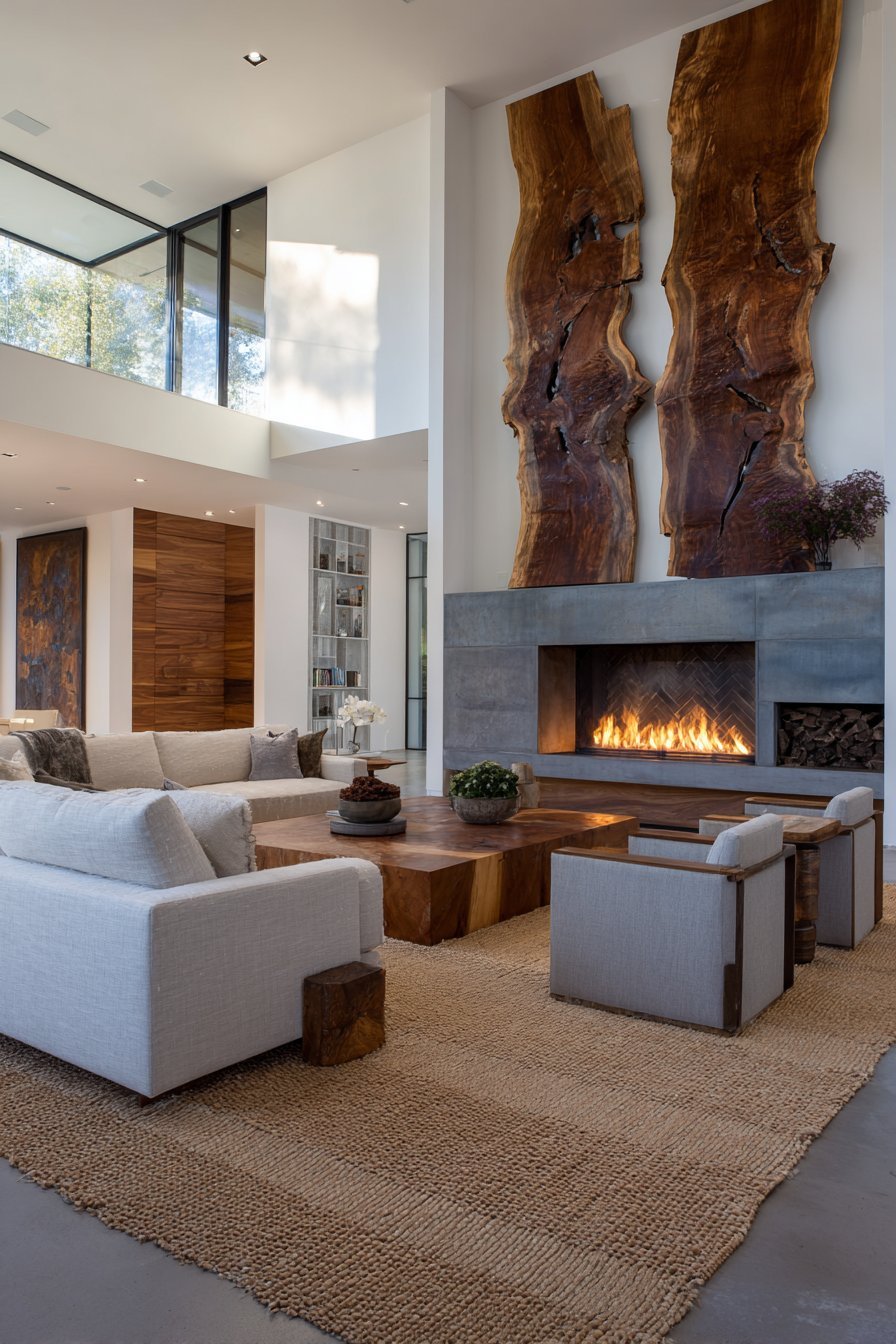
This design honors natural materials by showcasing their unaltered beauty. Live edges maintain trees’ organic forms within refined spaces. Substantial wood slabs make bold statements through their inherent character. Natural imperfections become valued design elements. This treatment brings forest beauty into contemporary living spaces.
Key Design Tips:
- Source substantial live edge slabs from specialized wood suppliers
- Choose wood species with rich grain patterns like walnut or oak
- Install with hidden floating hardware for clean mounting appearance
- Seal wood properly to preserve while allowing natural aging
- Maintain bark edges where stable or remove if showing damage
- Position with adequate lighting to showcase grain and edge details
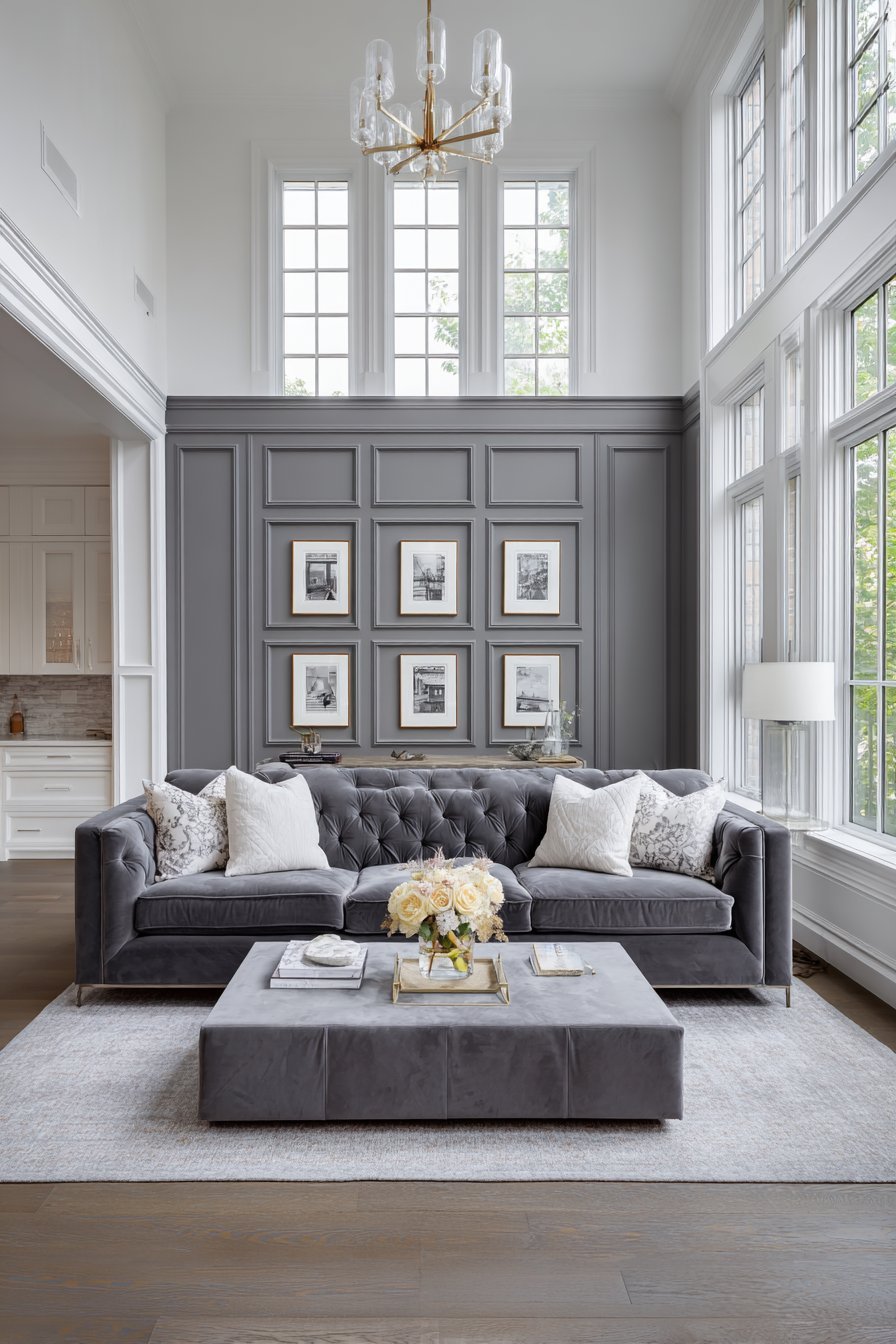
18. Two-Tone Picture Frame Molding Treatment
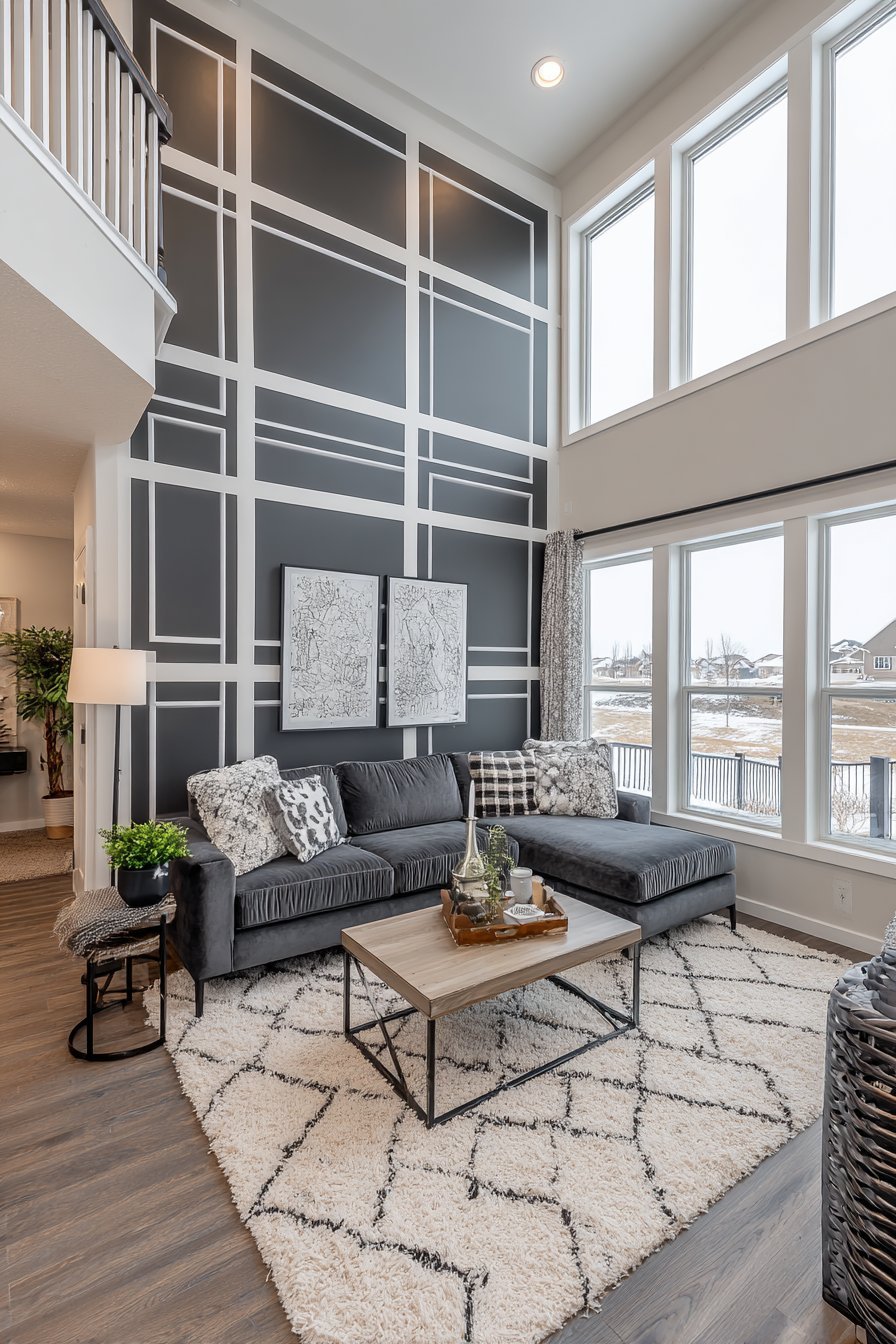
Transitional elegance defines this living room with contrasting picture frame molding. Deep charcoal grey fills framed panels while bright white covers molding and surrounding walls. The geometric grid creates sophisticated definition without pattern or texture. Each frame measures approximately thirty by forty inches. Crown molding and baseboards echo white trim work throughout.
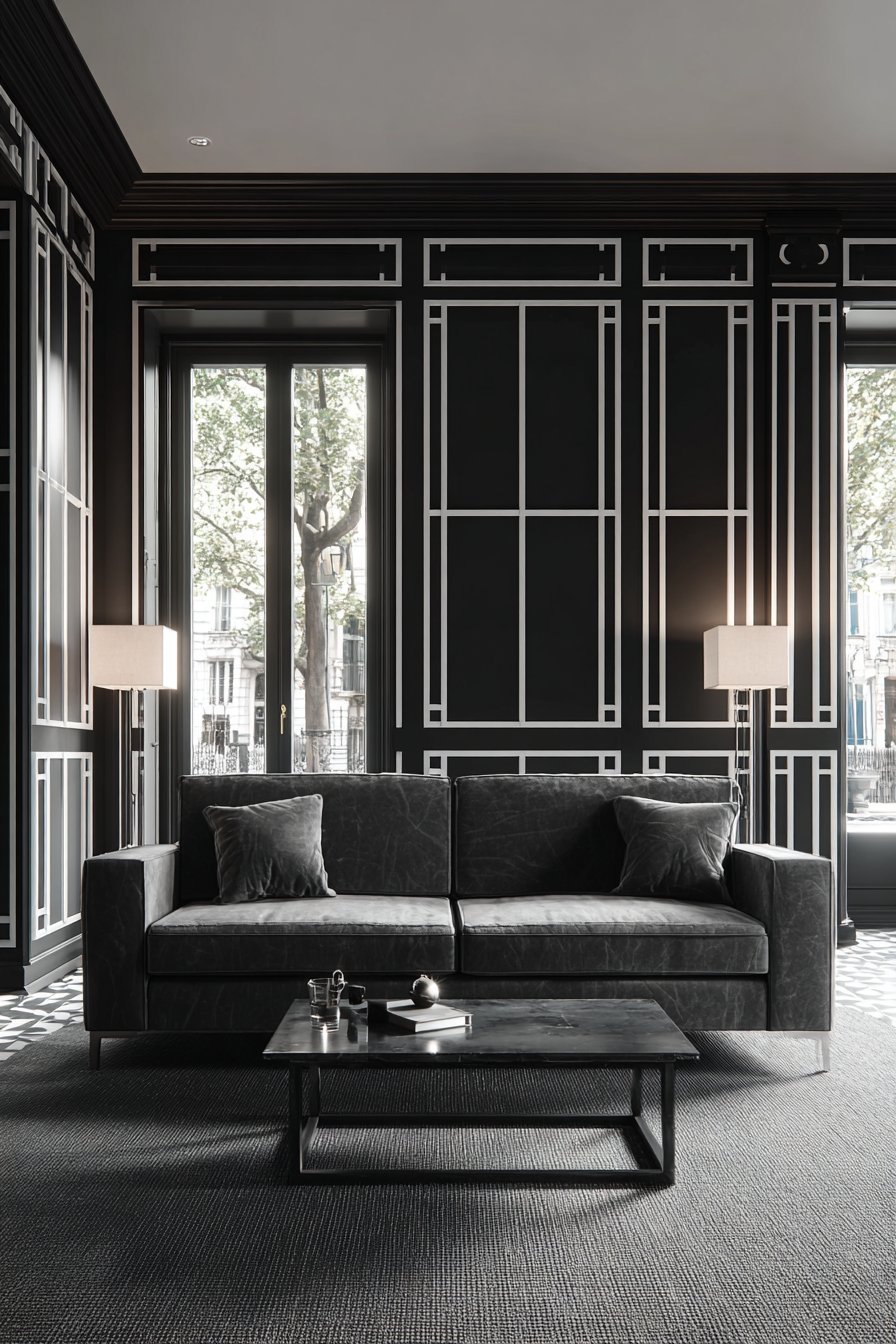
A grey velvet sofa sits perfectly against the refined wall treatment. Natural light from tall windows emphasizes crisp lines and tonal contrast. The classical architectural detail suits both traditional and contemporary furnishings. This timeless approach adds elegance through proportion and contrast.
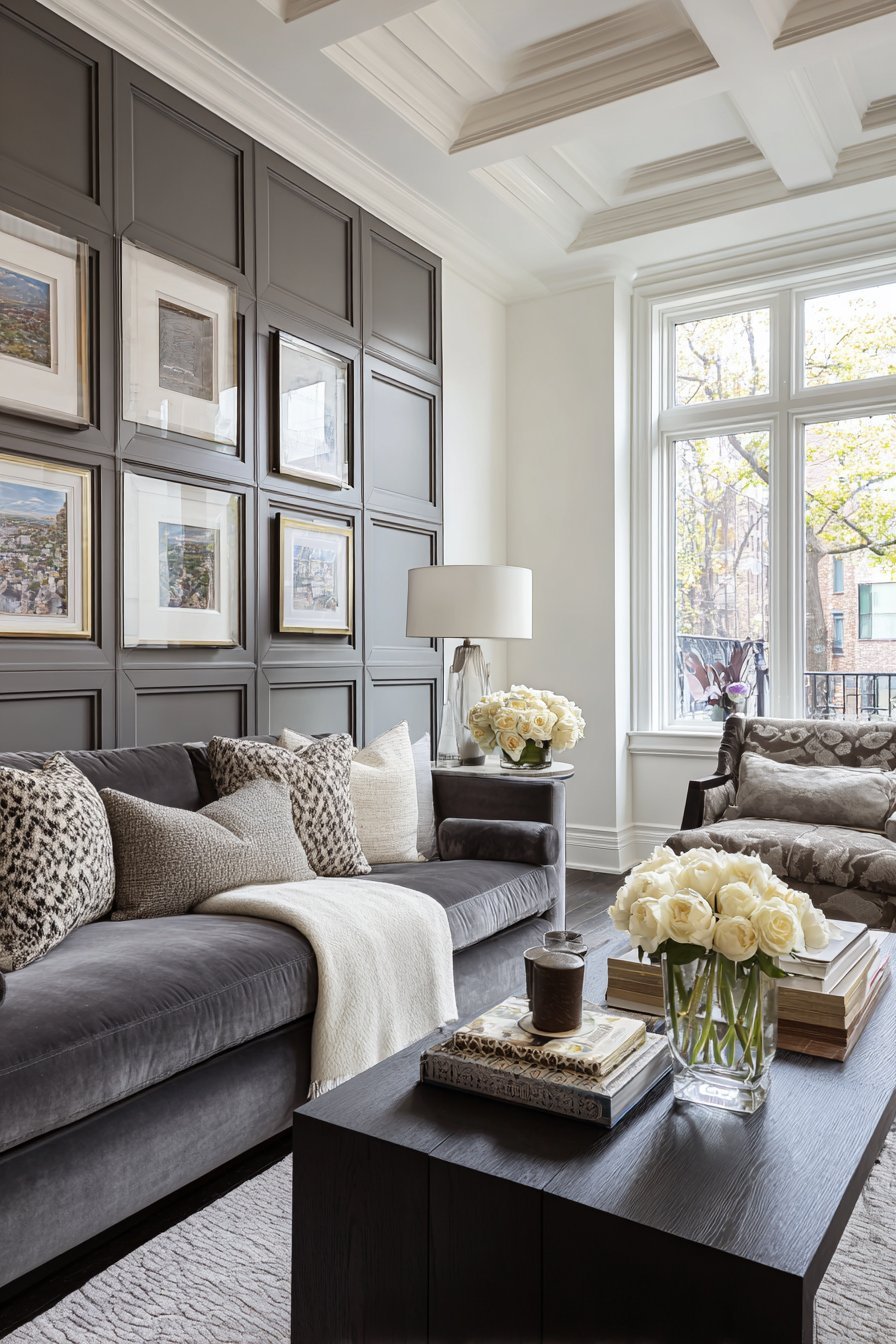
This design demonstrates how paint and molding create architectural interest affordably. The two-tone treatment adds depth without texture or pattern complexity. Classical proportions bring refined elegance to any space. The neutral palette allows furniture and accessories to provide color. This treatment suits those seeking subtle sophistication over bold statements.
Key Design Tips:
- Install picture frame molding in proportional geometric grid patterns
- Paint panel interiors in deep sophisticated tones like charcoal or navy
- Use crisp white or off-white for molding and surrounding walls
- Maintain consistent frame sizes for classical proportion
- Ensure molding installation is level and corners are perfectly mitered
- Combine with crown molding and baseboards for complete architectural cohesion
19. Industrial Weathered Steel Metal Panels
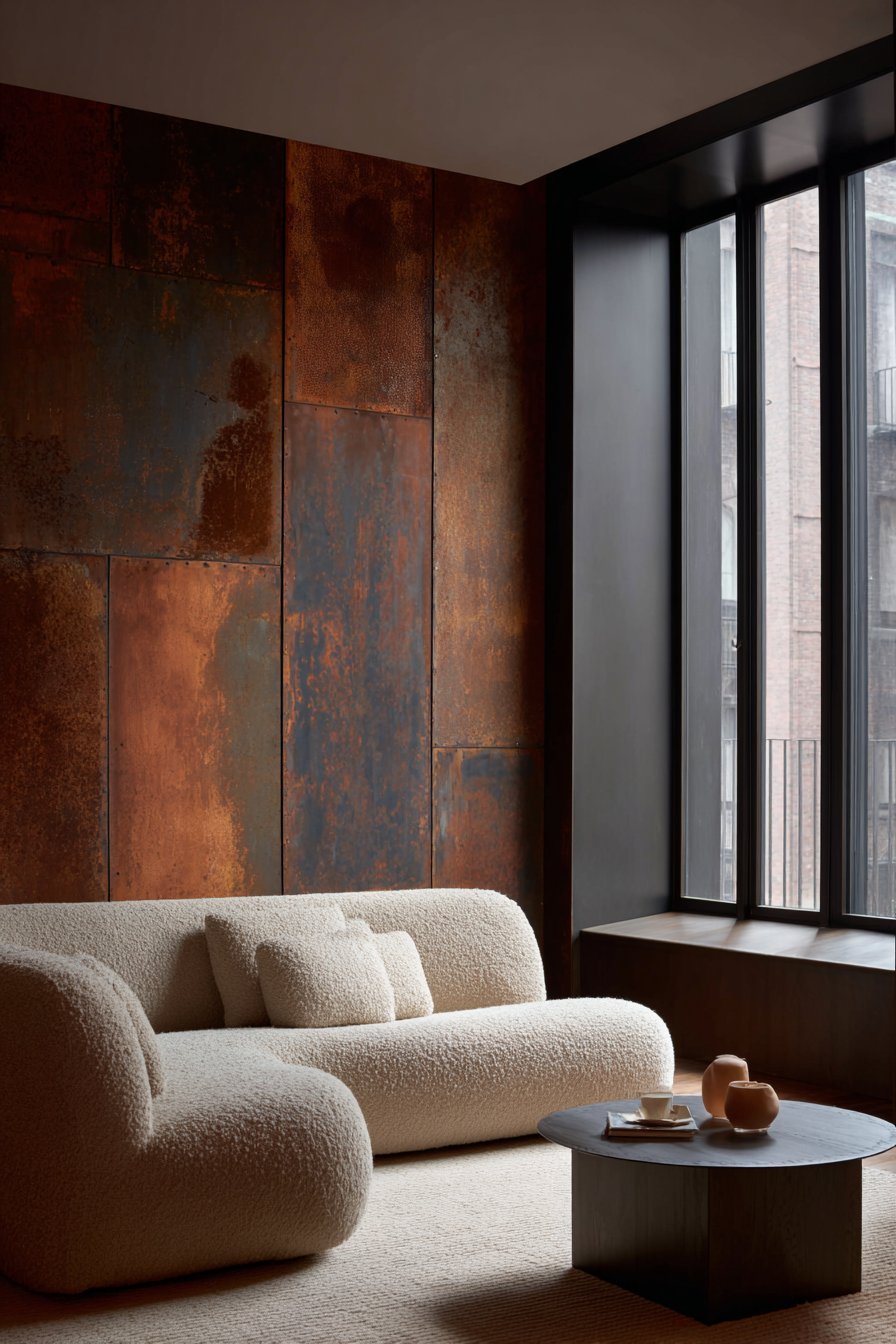
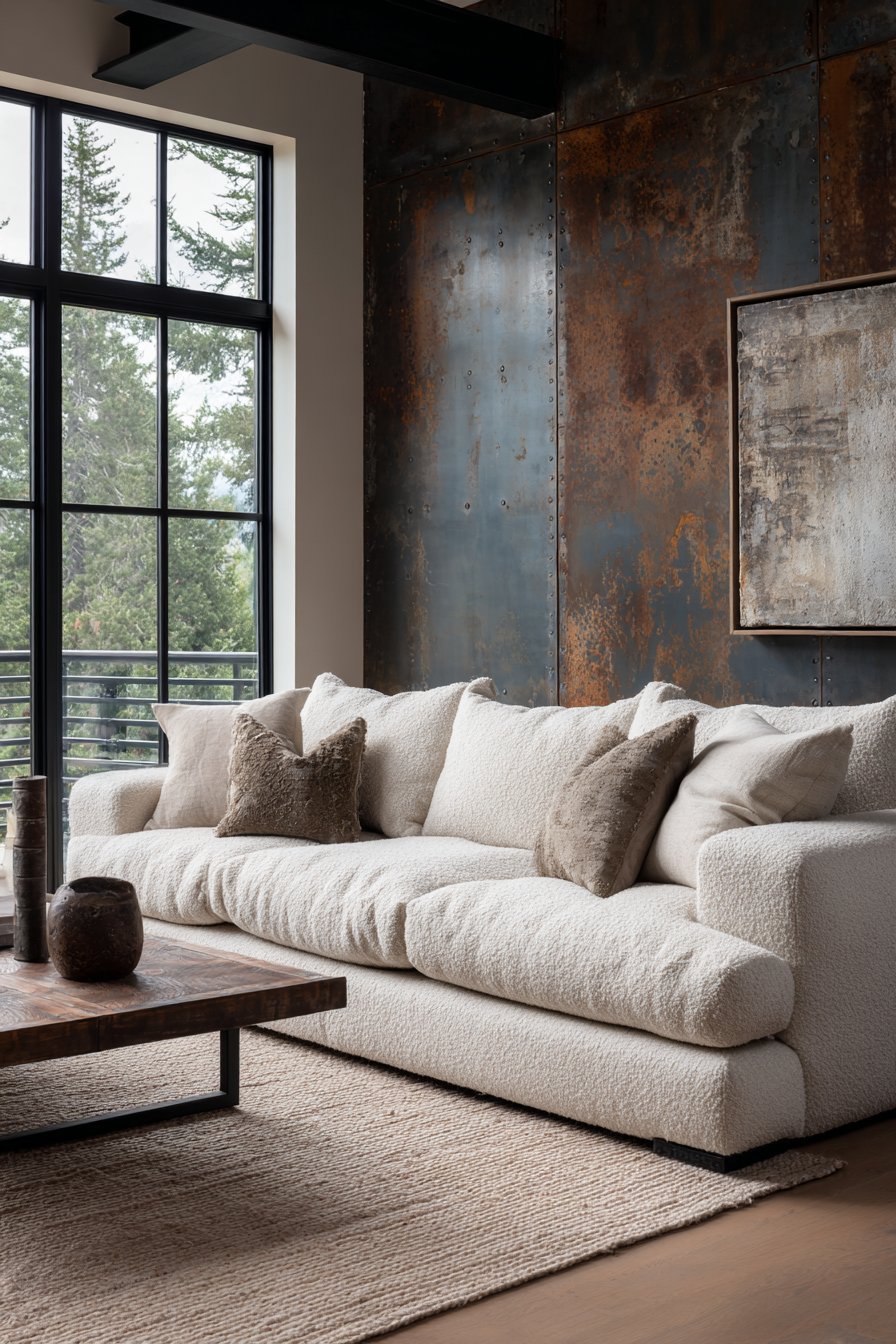
Contemporary industrial design celebrates raw materials in this living room with weathered steel panels. Large rectangular steel sheets display authentic rust patina and surface oxidation. Visible bolt hardware enhances industrial authenticity. Organic rust patterns in burnt orange, deep brown, and charcoal create natural art. The raw finish contrasts beautifully with refined soft furnishings.
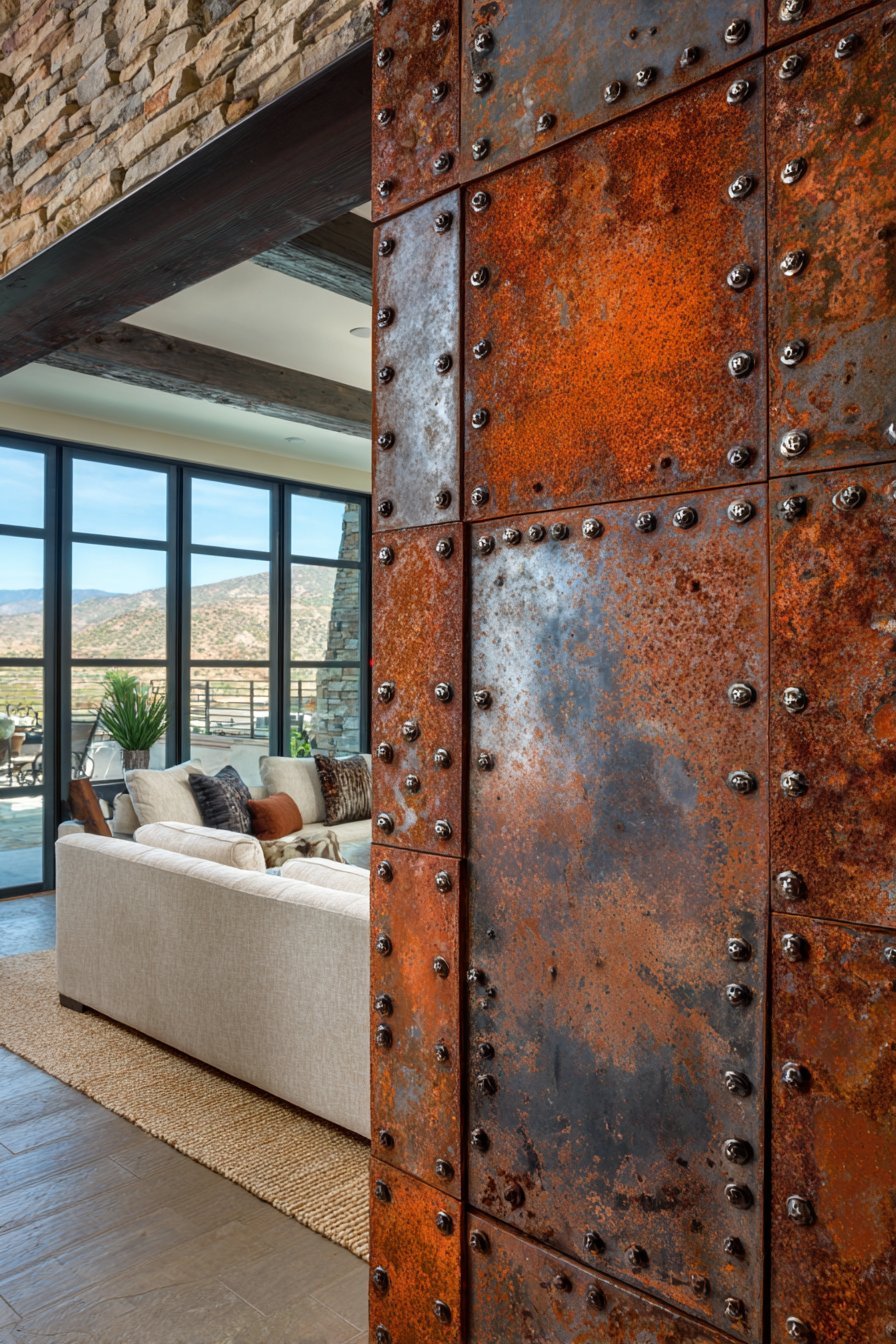
A cream bouclé sofa and natural wool rug provide textural softness against industrial hardness. Black metal-framed windows offer architectural cohesion with the steel installation. Soft diffused light reveals metal’s textured surface and varied patina colors. The material authenticity grounds the contemporary aesthetic.
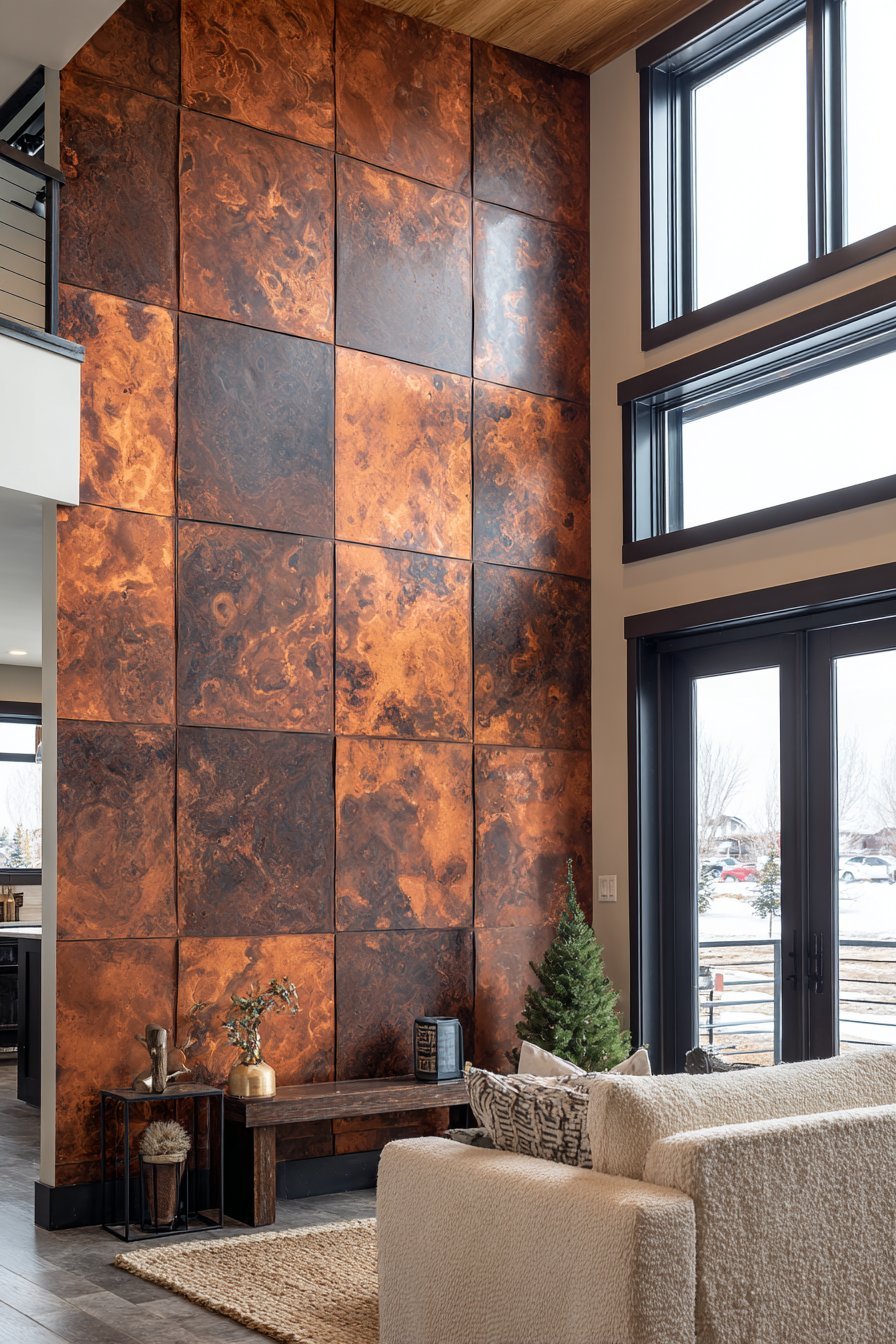
This design celebrates industrial materials as refined design elements. Controlled rust patina creates organic color variations impossible to replicate artificially. The contrast between rough industrial metal and soft furnishings creates sophisticated tension. Visible hardware emphasizes honest material use. This treatment demonstrates how industrial elements can create warm, inviting spaces.
Key Design Tips:
- Source weathered steel panels with authentic patina rather than artificial finishes
- Seal rust patina to prevent continued oxidation and surface transfer
- Install with visible bolt hardware for industrial authenticity
- Contrast with soft textured furnishings for sophisticated material balance
- Position with adequate lighting to reveal surface texture details
- Consider rust color variations when selecting complementary furnishing tones
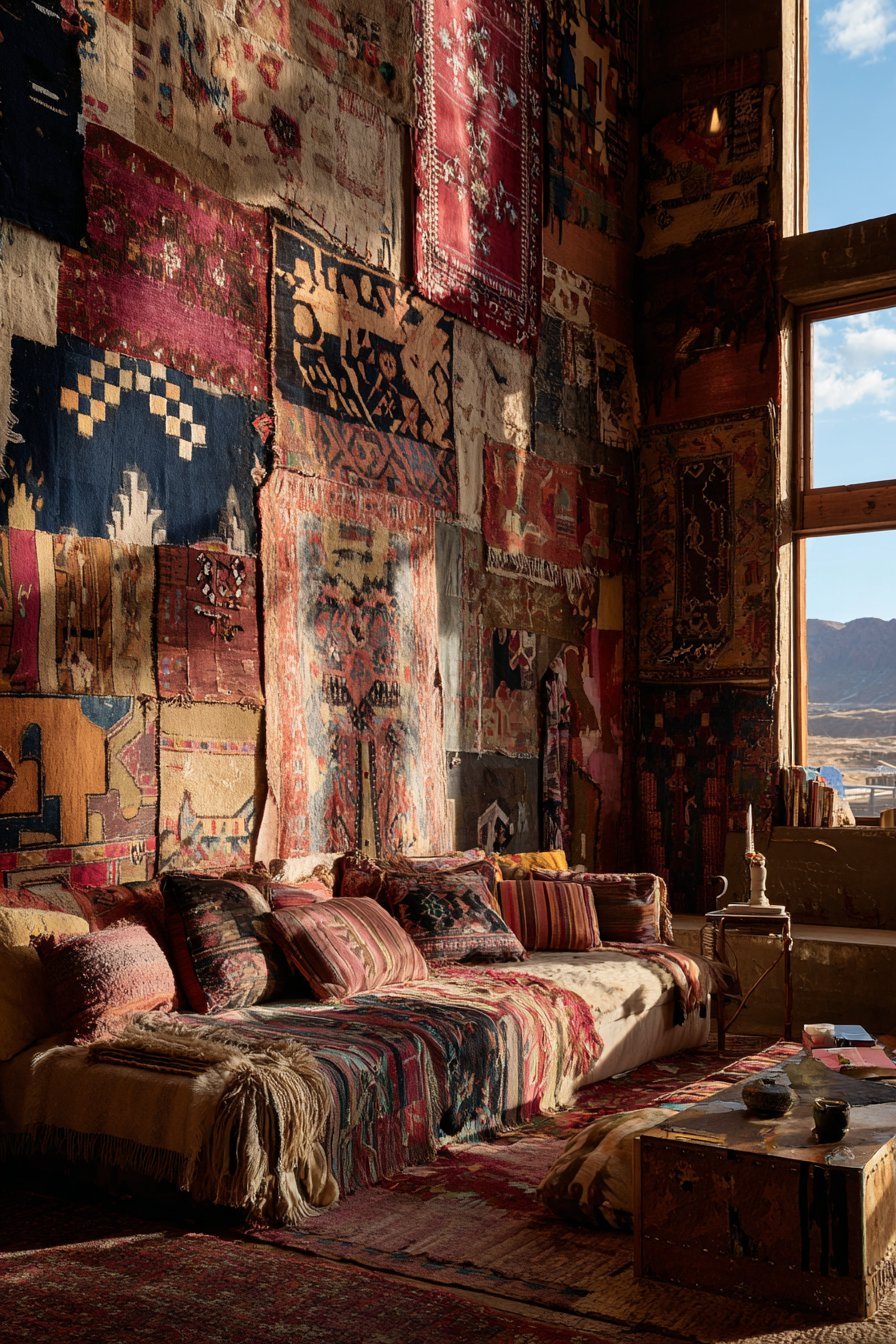
20. Layered Vintage Textile Collage Wall
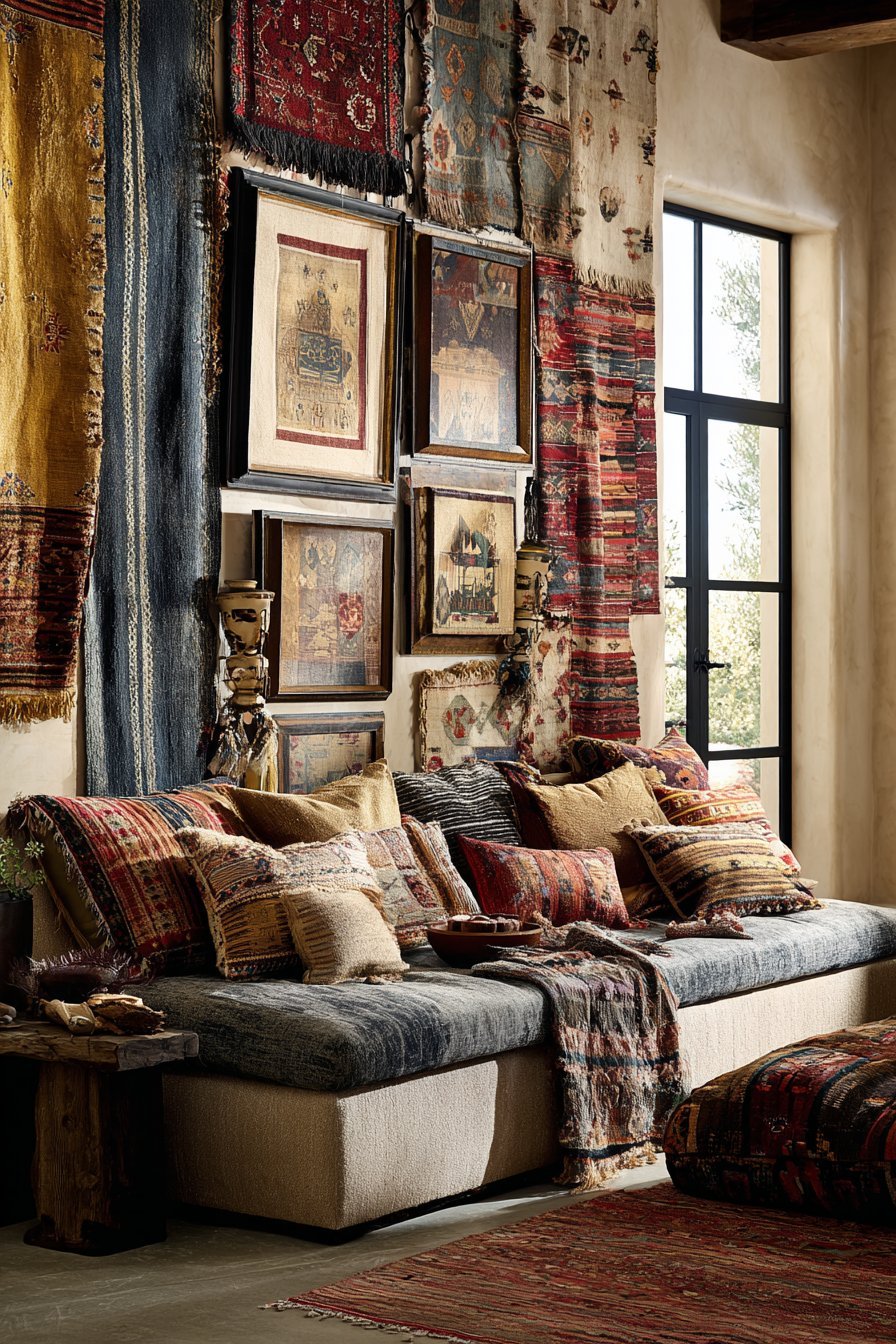
Bohemian richness flourishes in this living room with layered textile fragments. Persian carpet pieces, suzani embroidery, vintage kilim sections, and hand-blocked Indian textiles overlap on neutral linen backing. Warm jewel tones of burgundy, gold, indigo, and rust create rich color tapestry. Each textile displays authentic wear, faded areas, and natural patina. The collage celebrates textile traditions from multiple cultures.
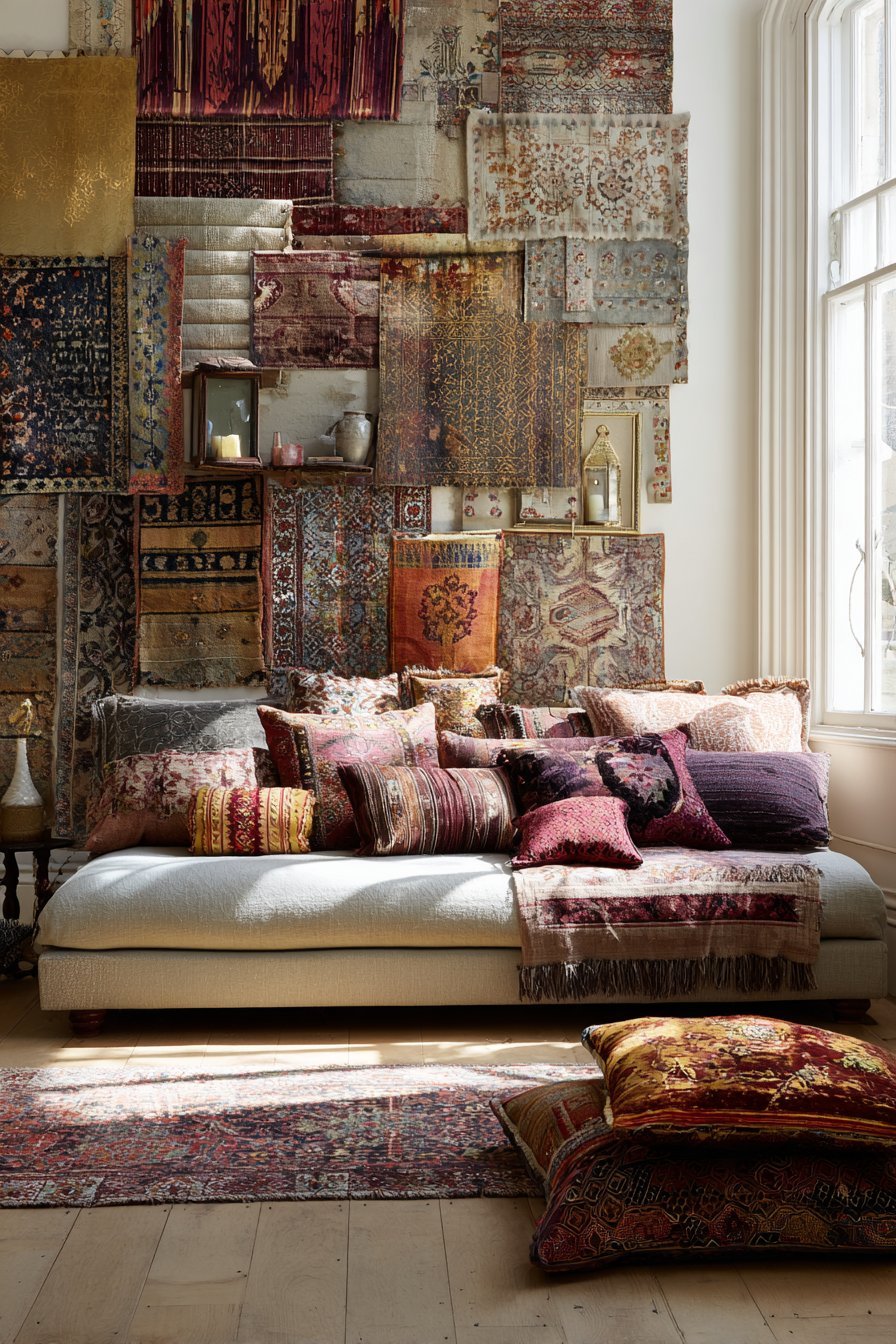
A low-profile sofa with layered pillows and throws continues textile-rich aesthetic throughout the space. Golden hour light through windows creates warm illumination enhancing textiles’ rich colors. The layered arrangement creates depth through overlapping elements. Cultural richness displays in every textile pattern and color combination.
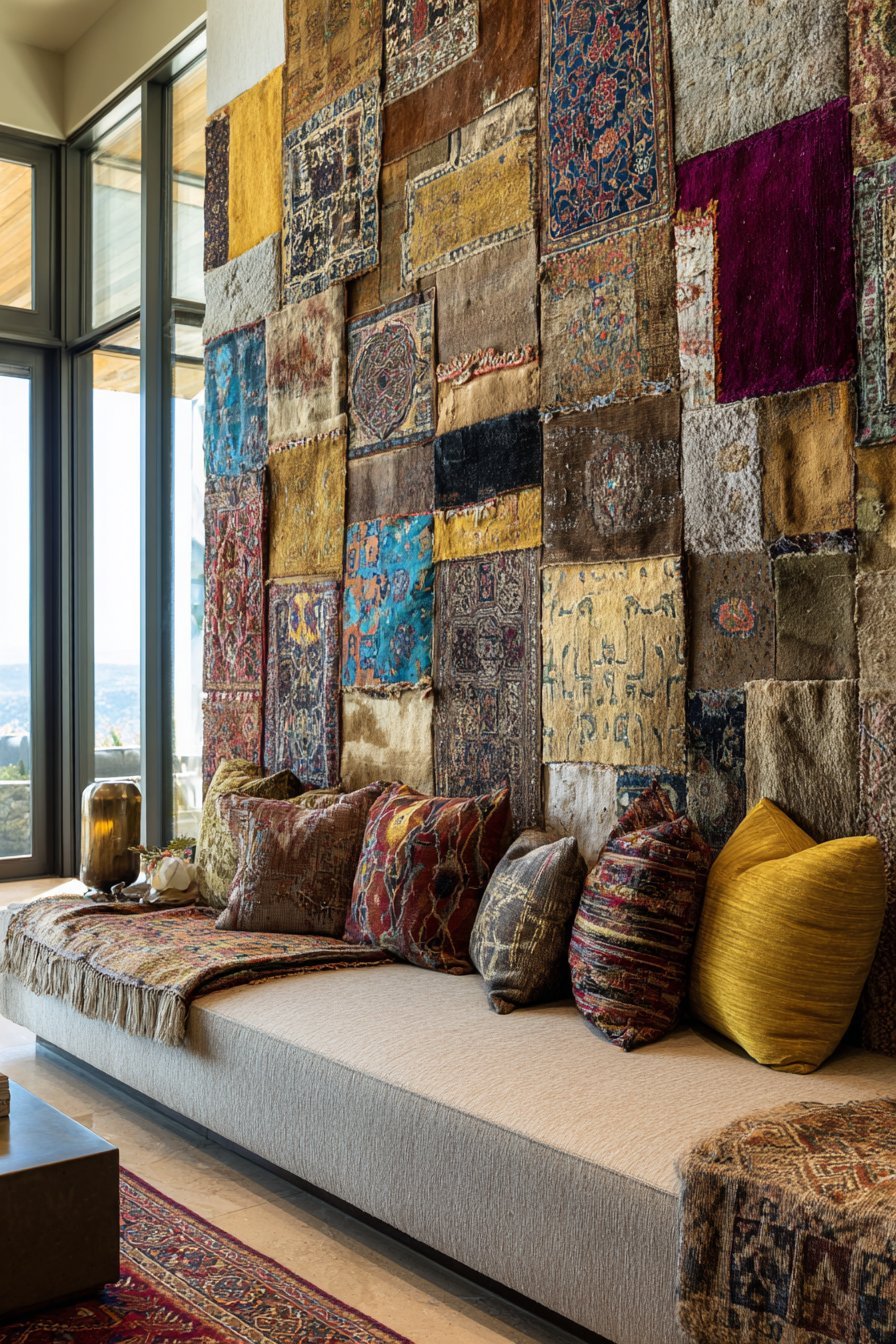
This design honors global textile traditions through curated collection. Each fragment carries cultural history visible in its patterns. The layered approach creates depth impossible with single textiles. Authentic wear patterns add character that new textiles lack. This treatment suits those who appreciate handcrafted textiles and global aesthetics.
Key Design Tips:
- Collect vintage textile fragments from antique shops and specialty dealers
- Layer pieces on neutral backing fabric before wall mounting
- Combine textiles from various cultural traditions for rich eclectic aesthetic
- Embrace authentic wear and fading as character rather than flaws
- Secure properly to backing fabric to prevent damage while displaying
- Position away from direct sunlight to preserve colors despite previous fading
Why These Unique Wall Design Ideas Are the Best
These wall treatments represent the finest approaches to creating distinctive, memorable living spaces. Each design concept demonstrates thoughtful consideration of materials, craftsmanship, and spatial impact. The variety spans minimalist to maximalist aesthetics, ensuring options for diverse personal styles.
Natural materials like reclaimed wood, live edge slabs, and natural fibers bring organic warmth and sustainable choices. These elements connect interior spaces with nature while showcasing authentic material beauty. The dimensional installations create dynamic shadow play that changes throughout the day, ensuring walls never appear static.
Texture plays crucial roles in successful wall design, from smooth plaster relief to rough weathered steel. Varied textures create visual interest while adding tactile dimension to flat surfaces. The acoustic benefits of materials like cork and fabric panels demonstrate how aesthetic choices can solve practical problems.
Color theory applications appear throughout these designs, from subtle wood tone gradients to bold jewel-toned textile collages. Successful color choices consider natural lighting conditions and existing furnishings. The most effective designs balance bold statements with cohesive room integration.
Versatility remains key to lasting design success. These treatments adapt to various room sizes, ceiling heights, and architectural styles. Whether addressing small apartments or expansive open-concept homes, dimensional wall treatments create focal points without overwhelming spaces.
Durability and maintenance considerations ensure these designs remain beautiful over time. Properly sealed wood, protected textiles, and preserved natural elements maintain their character through years of enjoyment. Quality materials and professional installation justify initial investments through lasting impact.
The fusion of art and function distinguishes superior wall treatments from purely decorative choices. Floating boxes provide storage, acoustic panels improve sound quality, and backlit resin creates ambient lighting. These dual-purpose solutions maximize value while maintaining aesthetic excellence.
Conclusion
These unique wall design ideas demonstrate that living room walls offer limitless potential for creative expression. From three-dimensional wood installations to layered textile collages, each approach transforms ordinary walls into extraordinary focal points. The key takeaways include the importance of material authenticity, dimensional texture, and thoughtful lighting integration.
Successful wall design balances personal style with practical considerations like durability and maintenance. Natural materials bring sustainable beauty while dimensional treatments create constantly changing visual interest. Quality craftsmanship ensures these investments remain beautiful for years to come.
Start your wall transformation journey by identifying which aesthetic resonates most strongly with your personal style. Consider your room’s natural lighting, existing furnishings, and long-term design goals. Whether you choose a single dramatic installation or multiple coordinated treatments, these ideas provide inspiration for creating living rooms that truly reflect your unique vision.
