
Creating a toddler girl room requires thoughtful planning that balances safety, functionality, and imagination. This crucial developmental stage demands spaces that encourage independence while providing comfort and security. The right design supports your child’s growth through accessible storage, creative play areas, and calming sleep environments.
Toddler rooms differ significantly from nurseries in their functional requirements. As children become more mobile and curious, their spaces must adapt accordingly. These designs celebrate this transition with age-appropriate furniture, stimulating learning corners, and whimsical elements that spark creativity. From Montessori-inspired layouts to princess themes executed with subtle elegance, each concept addresses the unique needs of toddlers.
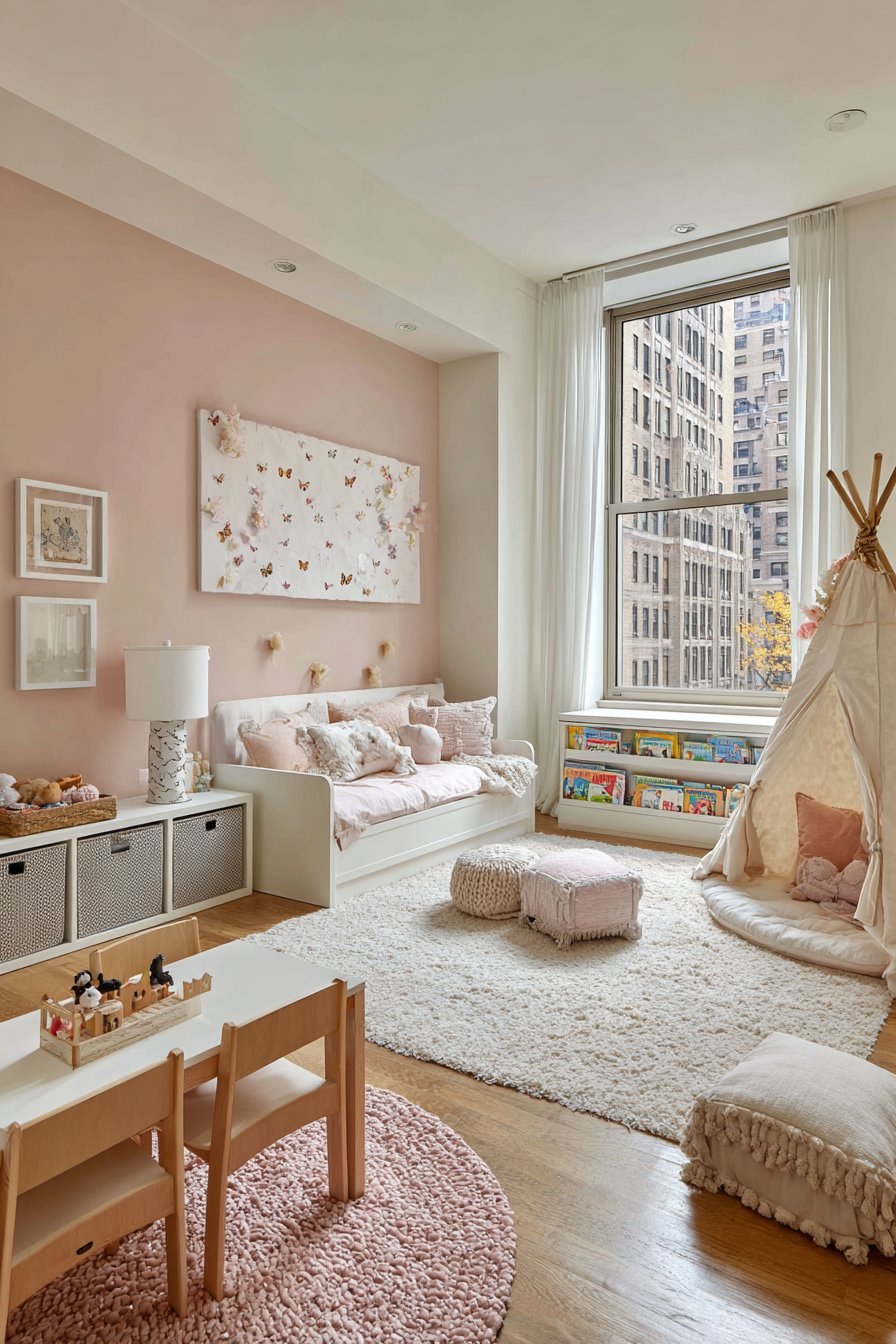
The following designs showcase diverse approaches to toddler girl room creation. Whether you’re working with compact spaces or generous square footage, these ideas demonstrate how to create environments that nurture development. Natural materials, soft color palettes, and child-centered design principles unite these concepts into practical, beautiful solutions for your growing daughter.
1. Blush Pink Sanctuary with Floor-Level Sleeping

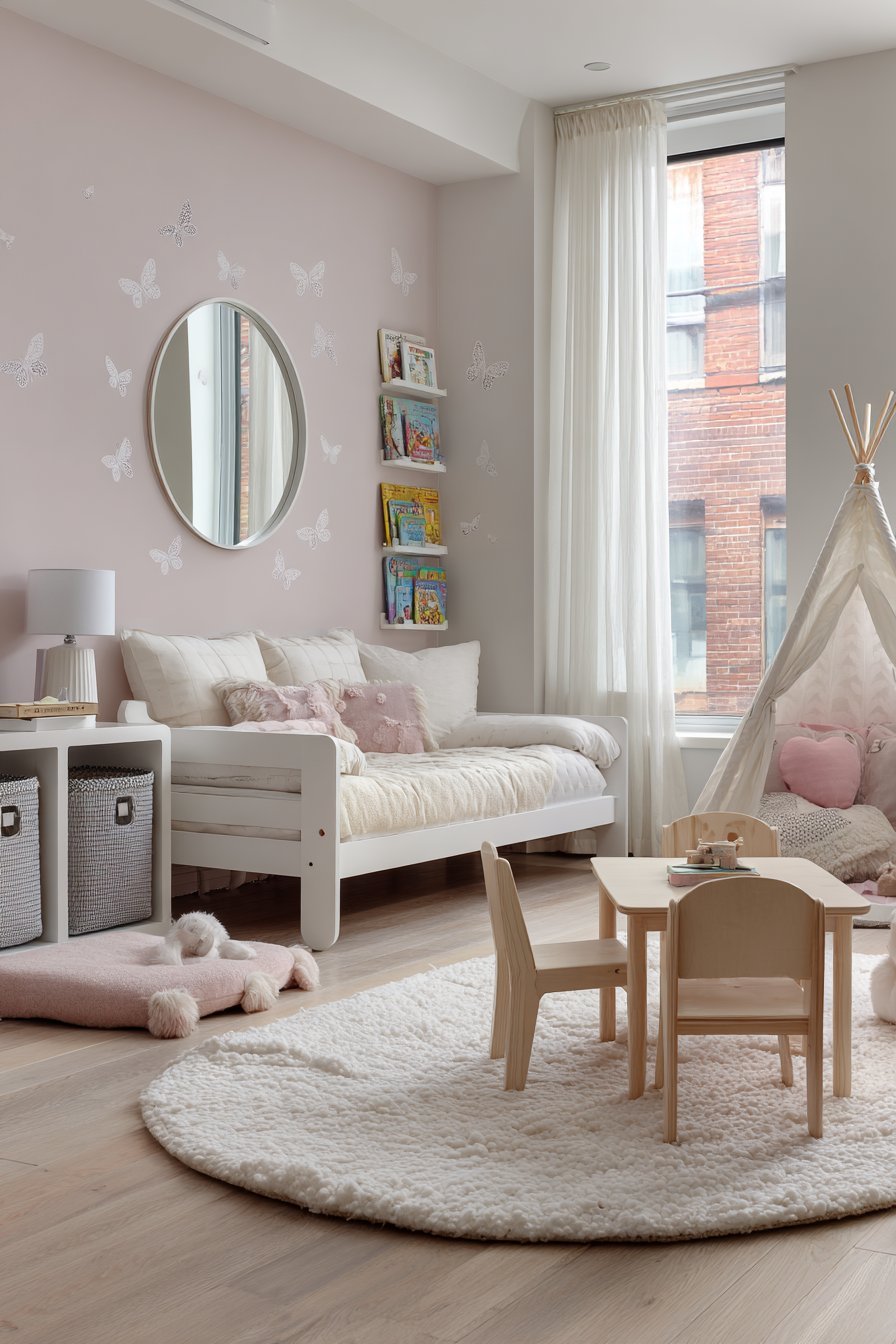
A low-profile white wooden toddler bed with protective side rails creates the foundation of this gentle design. The bed rests against a soft blush pink accent wall that soothes without overwhelming. This color choice promotes calmness during bedtime routines. The positioning allows easy access for independent climbing in and out.
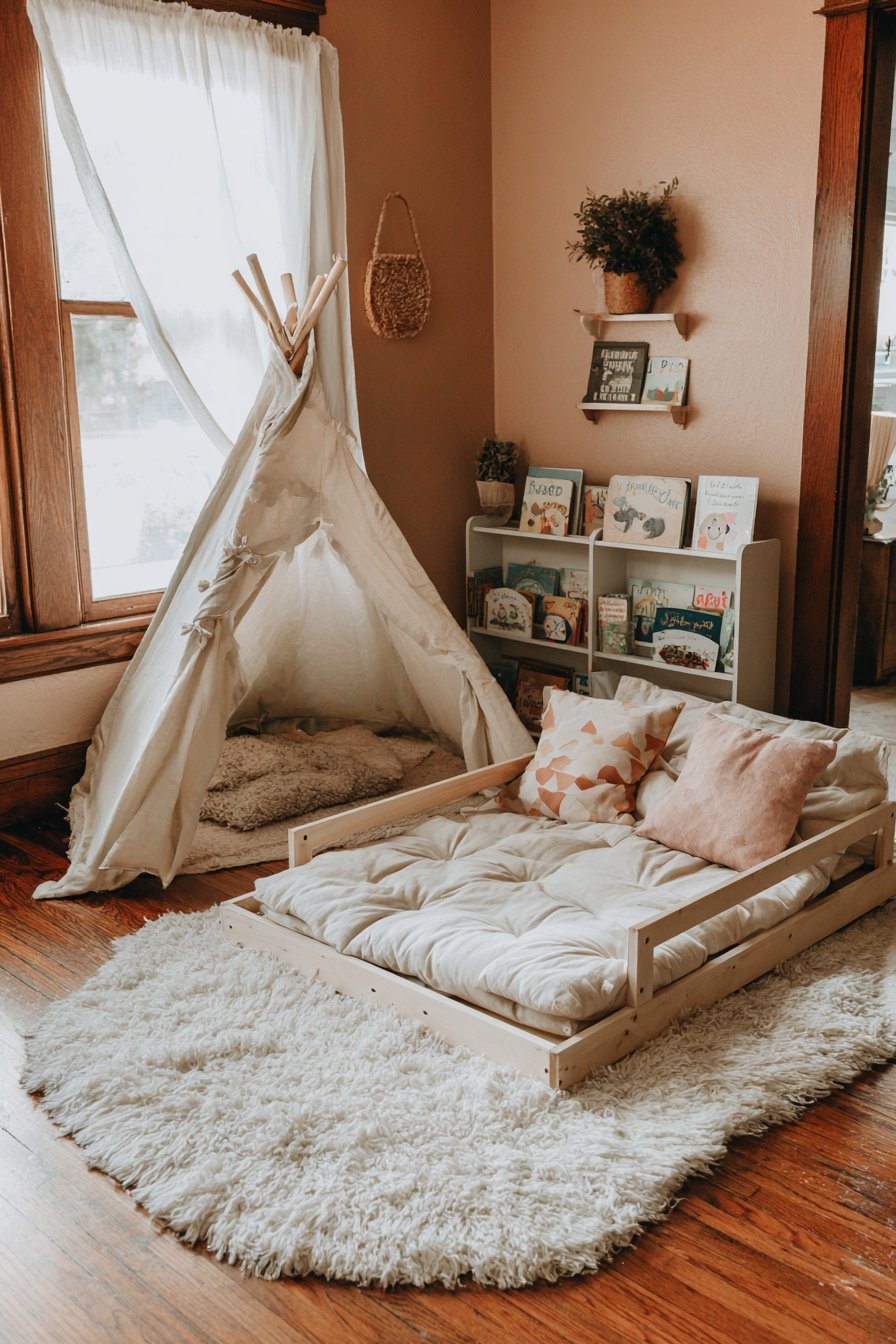
The reading nook features a canvas teepee tent in natural fabric adorned with pink triangle patterns. Floor cushions surround the tent, creating an inviting literacy corner. A low white bookshelf displays picture books at toddler-accessible height. This arrangement encourages independent book selection and promotes early reading habits.

Natural oak flooring provides warmth and durability throughout the space. A plush cream shag rug defines the play area with soft texture underfoot. The combination creates distinct zones for sleeping, reading, and active play. Wide windows allow natural lighting to highlight the gentle color palette.

Key Design Tips:
- Position beds against walls for security while maintaining accessibility
- Choose protective side rails that prevent falls without feeling cage-like
- Create distinct zones using area rugs to define different activity spaces
- Install bookshelves at heights between 24-30 inches for toddler reach
- Select neutral flooring that coordinates with changing decor preferences
2. Organized Storage Solutions at Child Height

A cube organizer system forms the backbone of this practical design approach. Fabric bins in coordinating pink, white, and grey patterns fill the cubes. The open shelving stands at toddler height for easy toy access. The top surface displays decorative elements alongside a small lamp for ambient lighting.
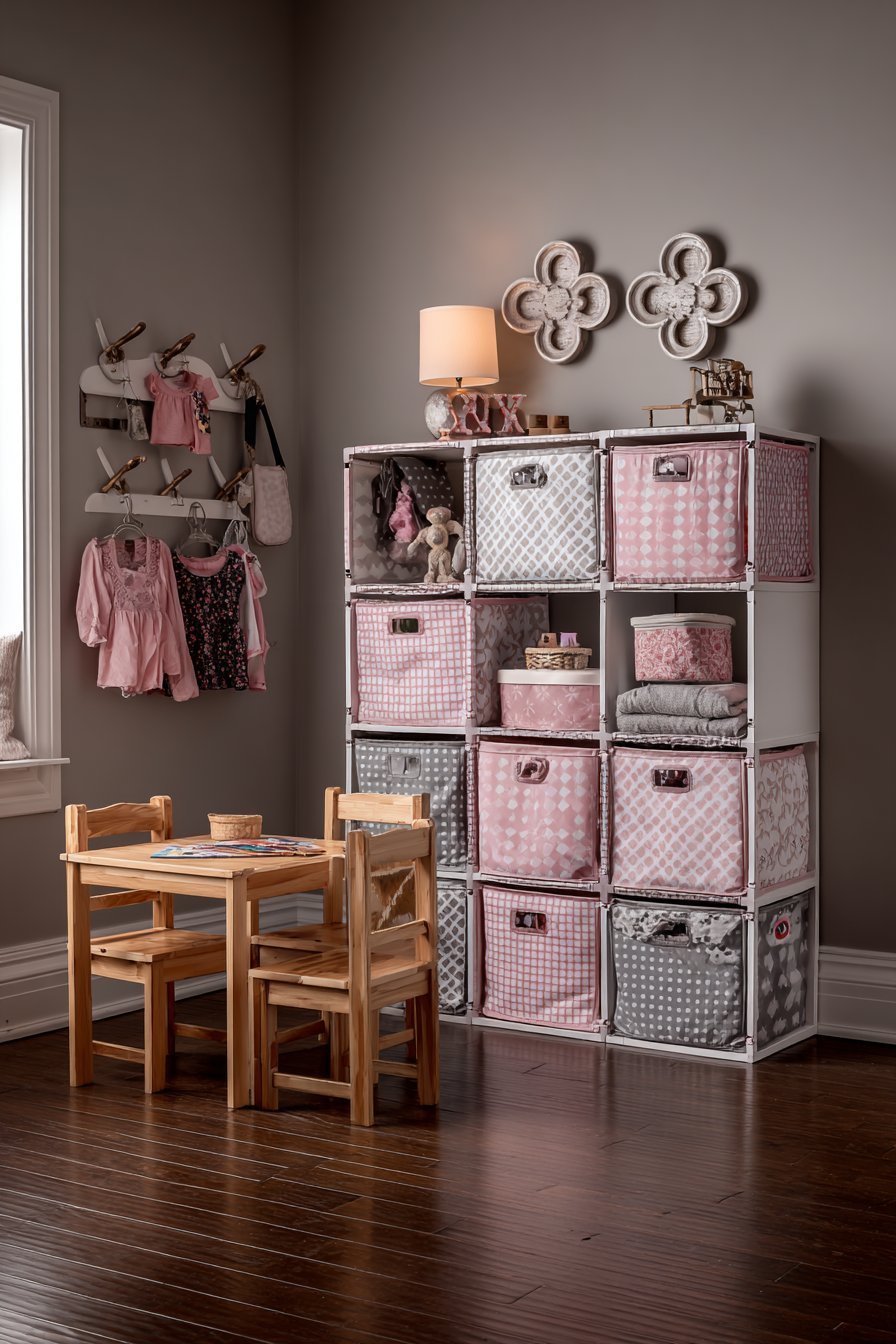
Wall-mounted hooks shaped like flowers add whimsical functionality to the space. These hooks hold dress-up clothes and bags at child-accessible height. The placement encourages independence in selecting outfits and cleaning up after play. A small wooden table with two chairs provides dedicated space for arts and crafts activities.

The organizational system teaches valuable life skills through accessible design. Children learn to return items to their designated spaces independently. Color-coded bins help toddlers identify where specific toys belong. This setup reduces frustration during cleanup time while building responsibility.

Key Design Tips:
- Place storage units between 18-36 inches high for optimal toddler access
- Use color-coded bins to help children remember where items belong
- Install wall hooks at 30-inch height for dress-up accessibility
- Choose fabric bins over hard containers for safety during play
- Include dedicated craft space with washable surfaces for creative activities
3. Whimsical Woodland Theme with Nature Elements

Hand-painted wall decals of friendly forest animals transform a pale mint green accent wall. Deer, rabbits, and birds create an enchanting woodland scene. The gentle imagery stimulates imagination without causing overstimulation before sleep. The soft mint background coordinates beautifully with natural wood elements.
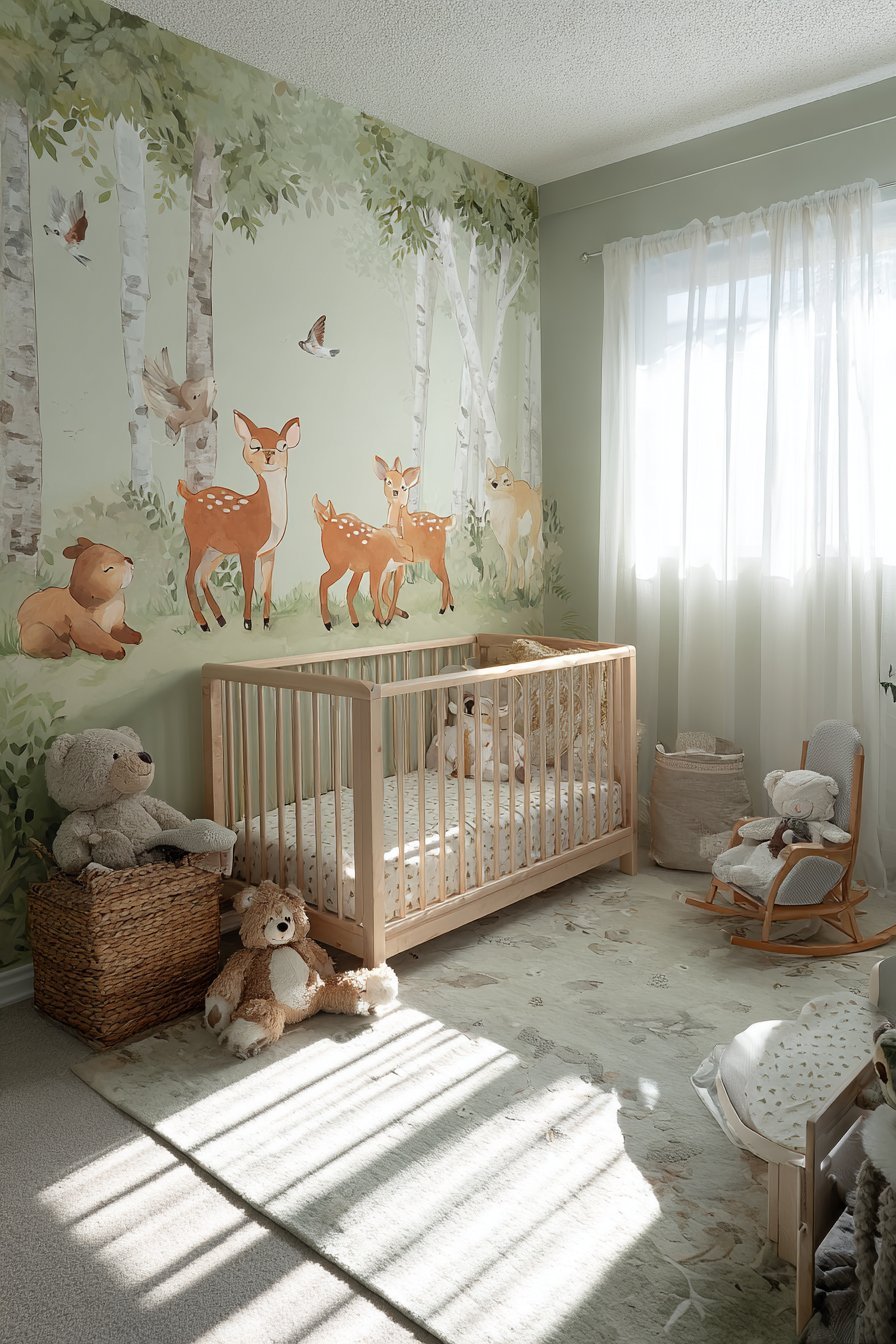
A natural wood crib converted to toddler bed anchors the sleeping area. Organic cotton bedding in cream with subtle leaf patterns continues the nature theme. The conversion extends furniture life while maintaining familiar sleeping arrangements. A woven seagrass basket stores stuffed animals beside a small upholstered rocking chair.

Morning light filters through sheer white curtains, creating gentle shadows throughout the space. The peaceful atmosphere supports both active play and restful sleep. Natural materials including wood, cotton, and seagrass provide tactile variety. This sensory-rich environment supports developmental exploration.

Key Design Tips:
- Choose wall decals over paint for flexibility as preferences change
- Convert cribs to toddler beds for cost-effective transitions
- Select organic cotton bedding to minimize chemical exposure
- Incorporate natural materials for varied tactile experiences
- Use sheer curtains to maintain natural light while ensuring privacy
4. Vertical Space Maximization for Compact Rooms

Wall-mounted shelving displays books and decorative items above the changing table area. This vertical approach maximizes limited square footage efficiently. The white Jenny Lind style toddler bed features charming spindle details. Coral and white striped bedding adds cheerful pattern without overwhelming the small space.
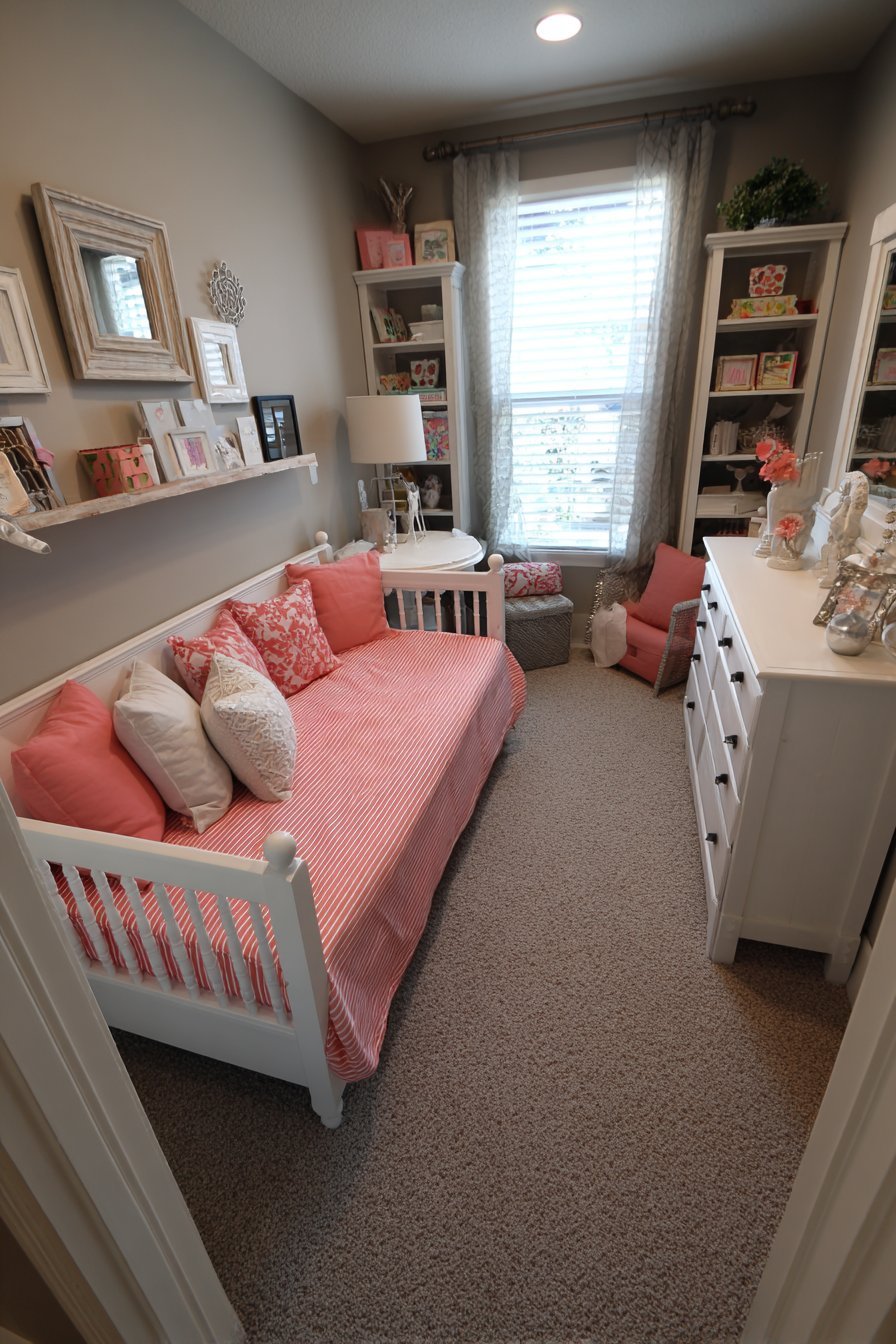
A narrow dresser with six drawers provides substantial clothing storage. The vertical orientation saves floor space while offering capacity. A full-length safety mirror mounted at low height encourages self-awareness and independence. The mirror reflects natural daylight, making the compact room feel more spacious.
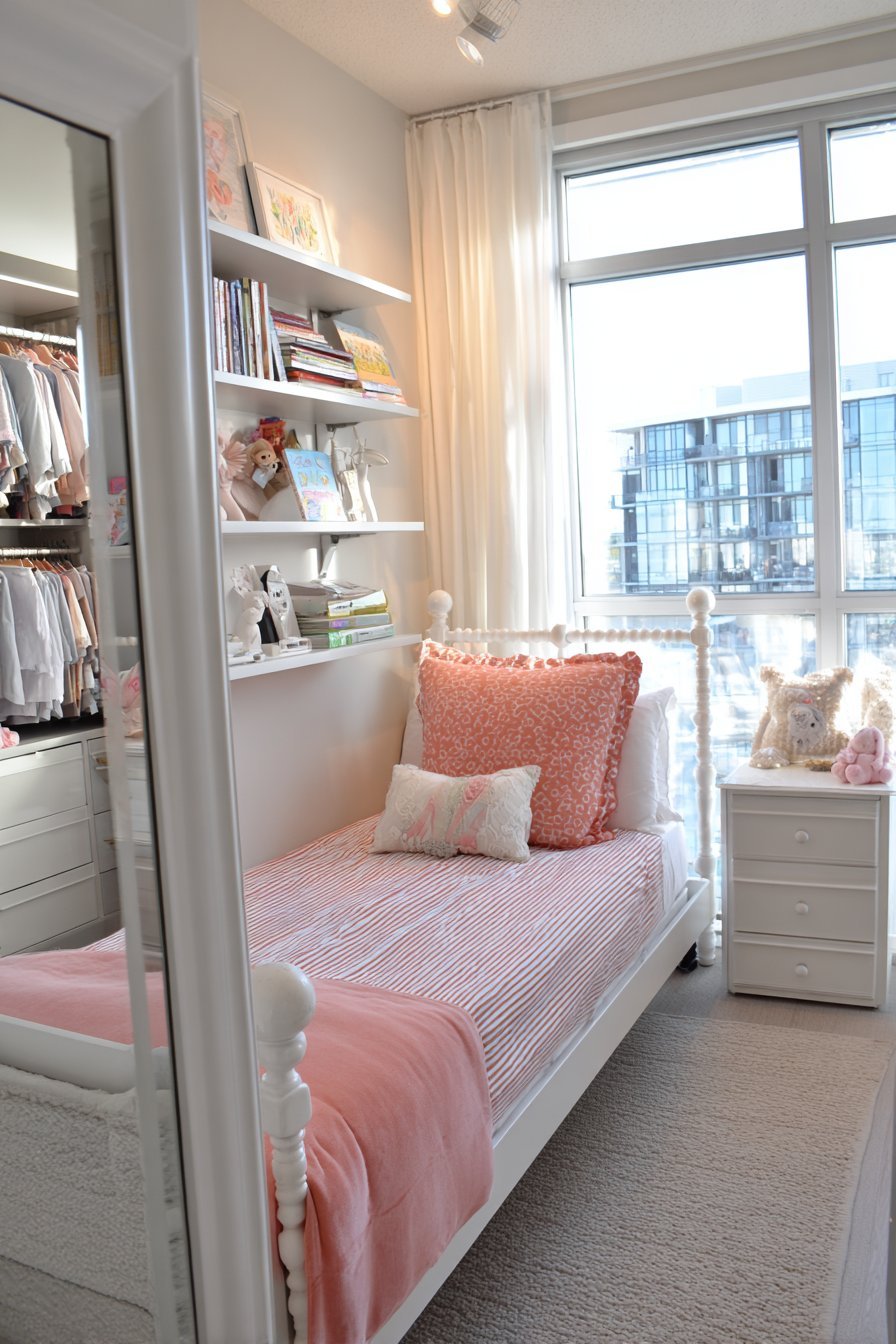
The color scheme combines soft coral, white, and natural wood tones harmoniously. These choices create visual continuity that prevents the small space from feeling cluttered. Every element serves dual purposes, balancing aesthetics with functionality. Strategic placement ensures clear pathways for safe movement.

Key Design Tips:
- Install wall-mounted shelves 4-5 feet high to preserve floor space
- Choose narrow, tall dressers instead of wide, low options
- Mount mirrors at 18-24 inches from floor for toddler viewing height
- Use vertical striped patterns to create illusion of height
- Limit color palette to three main tones in small spaces
5. Montessori-Inspired Independence Design

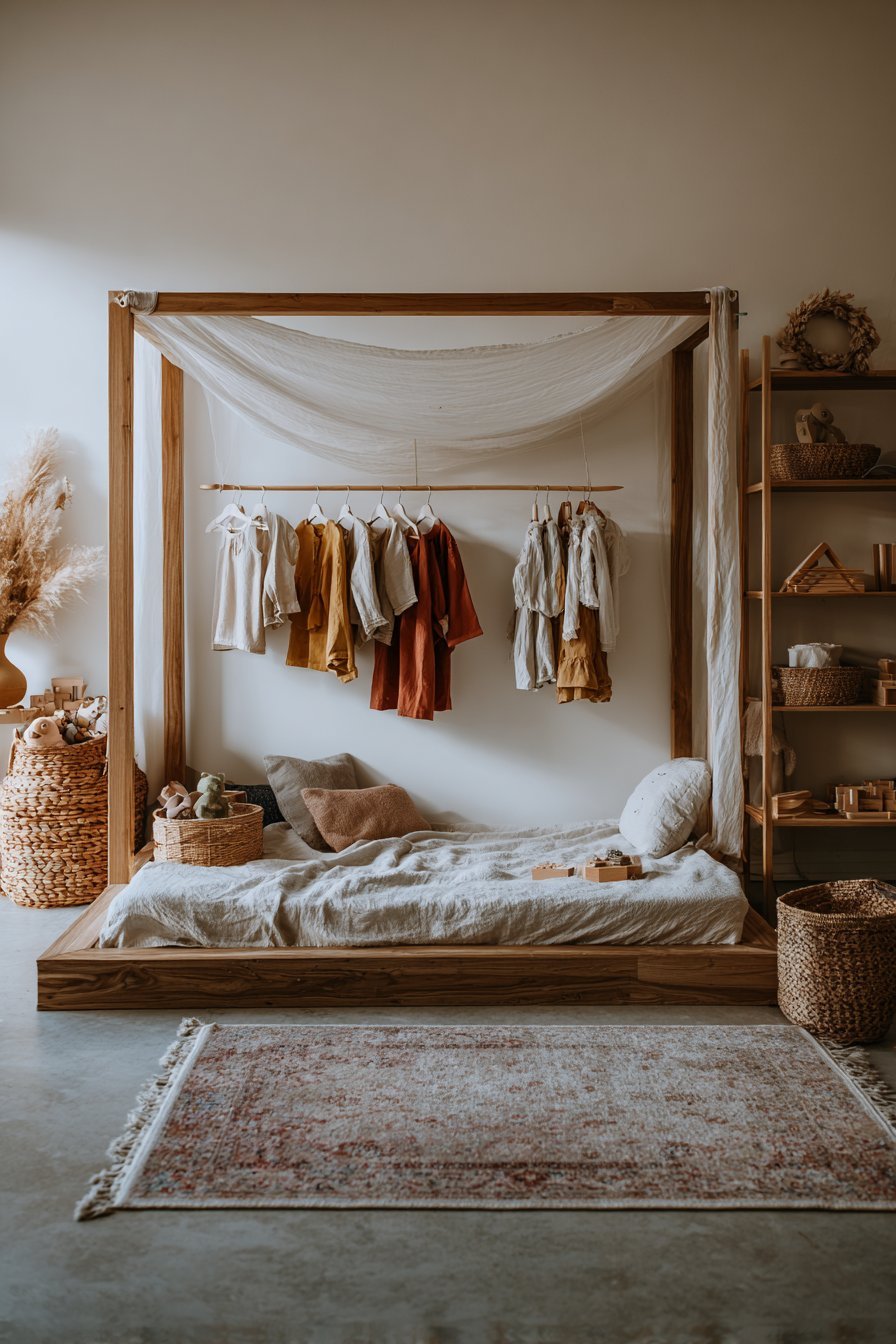
A low platform bed frame in natural wood promotes autonomous sleeping habits. The floor-level design allows toddlers to get in and out independently. Sheer white fabric creates a canopy suspended from above. This addition provides coziness without restricting movement or visibility.
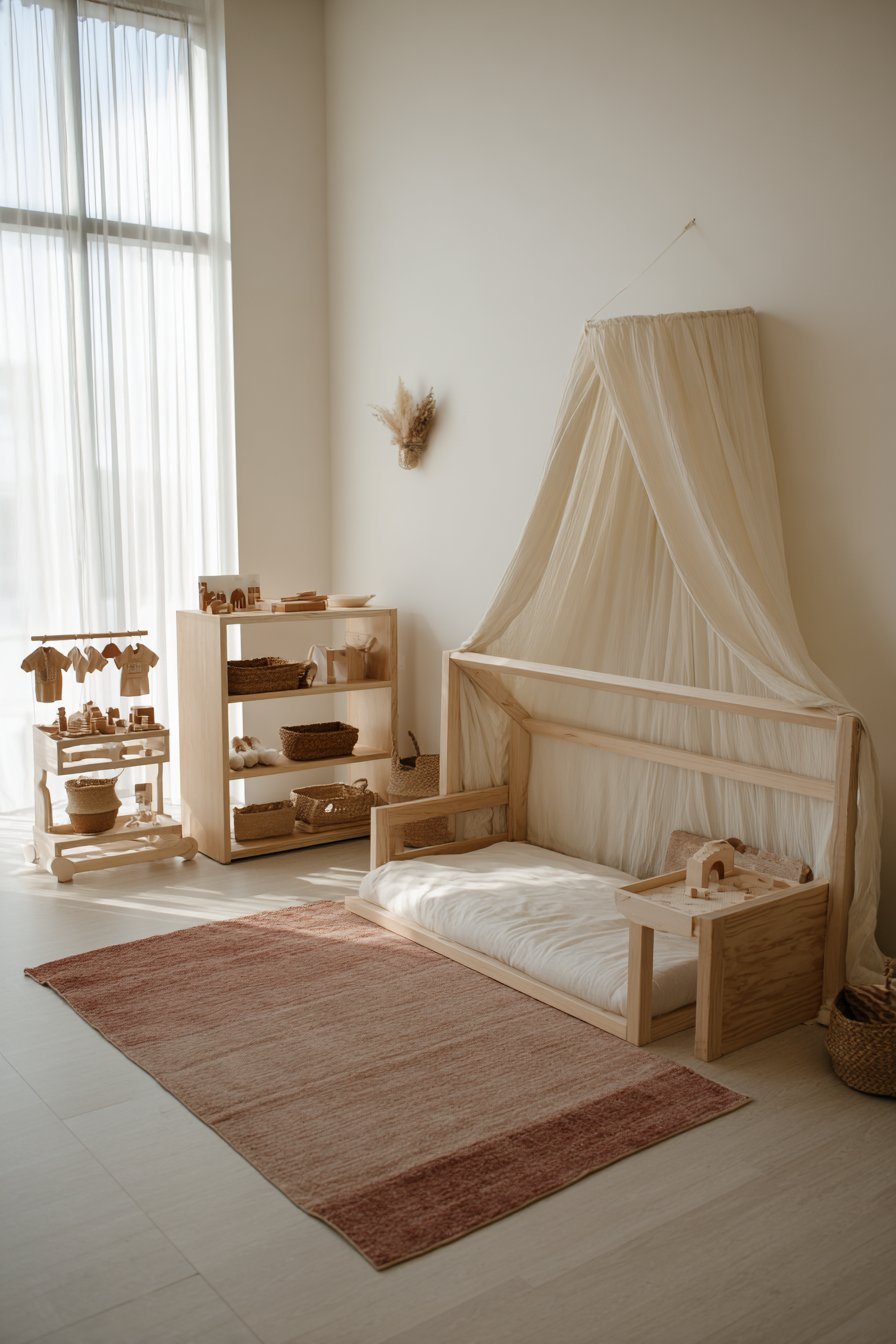
The activity shelf features organized toys in wooden trays and woven baskets. Items rotate regularly to maintain interest and prevent overwhelm. A child-sized wardrobe bar hangs clothes at toddler height. This accessibility encourages children to participate in dressing routines independently.

Neutral walls in warm white provide a calm, non-distracting backdrop. A vintage-style area rug in muted rose and cream defines the sleeping zone. The Montessori philosophy emphasizes child-centered design that fosters independence. Every element remains accessible and purposeful for the developing child.
Key Design Tips:
- Position beds directly on floor or low platforms for safe independent access
- Rotate toys weekly to maintain engagement without overstimulation
- Install clothing bars at 24-30 inches for toddler dressing independence
- Choose neutral wall colors to minimize visual distraction
- Use natural materials like wood and cotton throughout the space
6. Enchanting Watercolor Butterfly Garden

A wall mural of watercolor butterflies and flowers spans the main focal wall. Soft pastels including lavender, peach, and mint green create dreamy imagery. The artistic approach stimulates creativity without overwhelming senses. A white toddler bed with arched headboard sits centered beneath the mural.

Matching nightstands flank the bed, each topped with small table lamps. The symmetrical arrangement creates visual balance and provides functional bedside storage. A reading corner features a cushioned window seat with storage drawers underneath. This dual-purpose furniture maximizes functionality while providing cozy reading space.

Pale hardwood flooring with a braided cotton rug adds natural texture underfoot. Golden hour sunlight creates a warm, inviting atmosphere throughout the space. The enchanting design remains age-appropriate while fostering imaginative play. Quality materials ensure the space grows with your child.

Key Design Tips:
- Commission custom murals or use large-scale wall decals for personalization
- Install symmetrical nightstands for visual balance and equal access
- Choose window seats with built-in storage for space efficiency
- Select hardwood flooring for durability during active toddler years
- Position beds near natural light sources for healthy sleep-wake cycles
7. Imaginative Dress-Up Station Design

A child-height clothing rack displays tulle skirts, costumes, and accessories attractively. The open display encourages creative play and outfit selection. A small vanity table with rounded safety mirror provides pretend play space. The cushioned stool ensures comfortable seating during imaginative sessions.
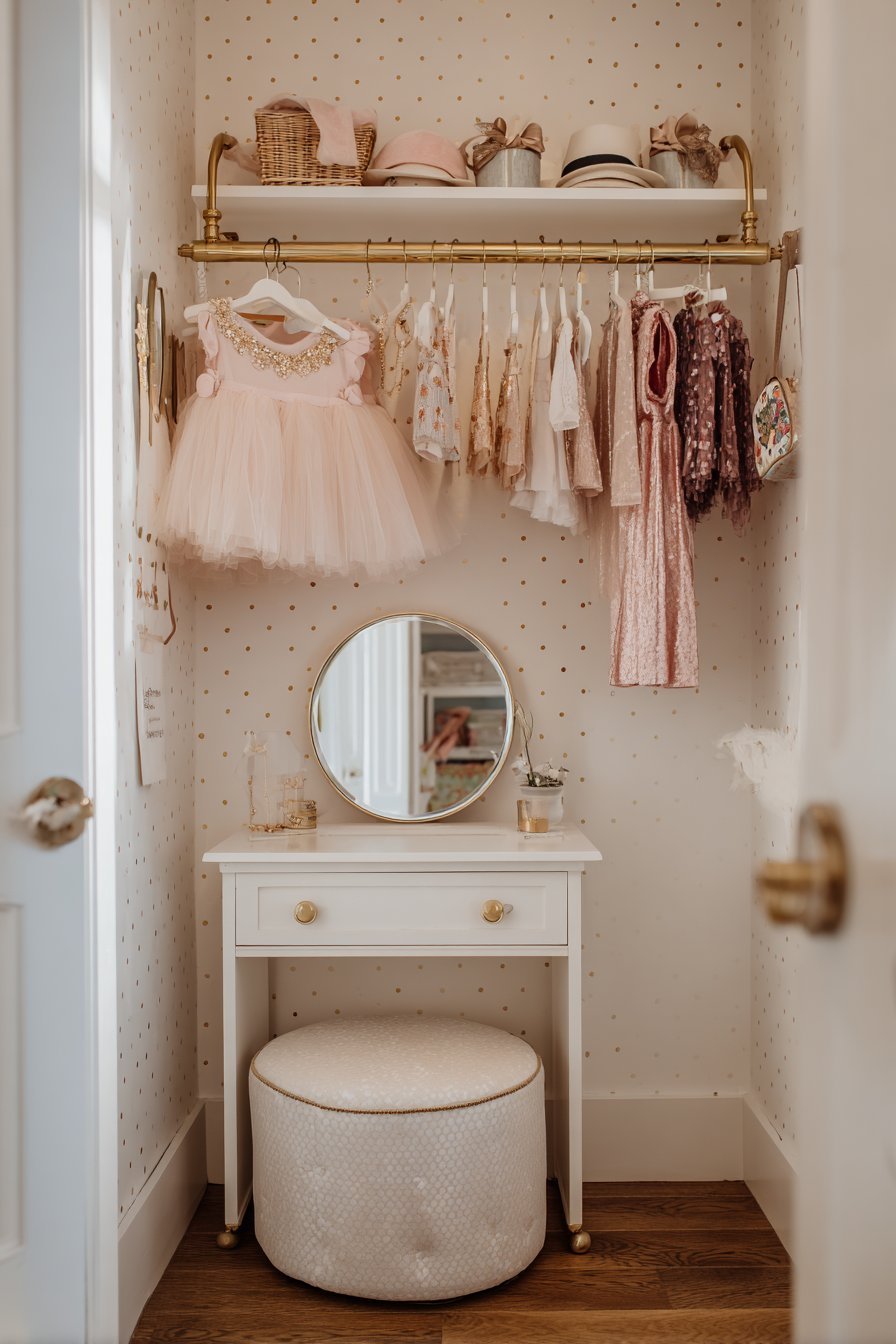
Wall-mounted pegboard in white displays hats, bags, and jewelry at accessible height. The pegboard configuration allows easy reorganization as collections grow. Removable wallpaper with subtle dot pattern in pink and gold adds playful sophistication. The design balances whimsy with elegance successfully.
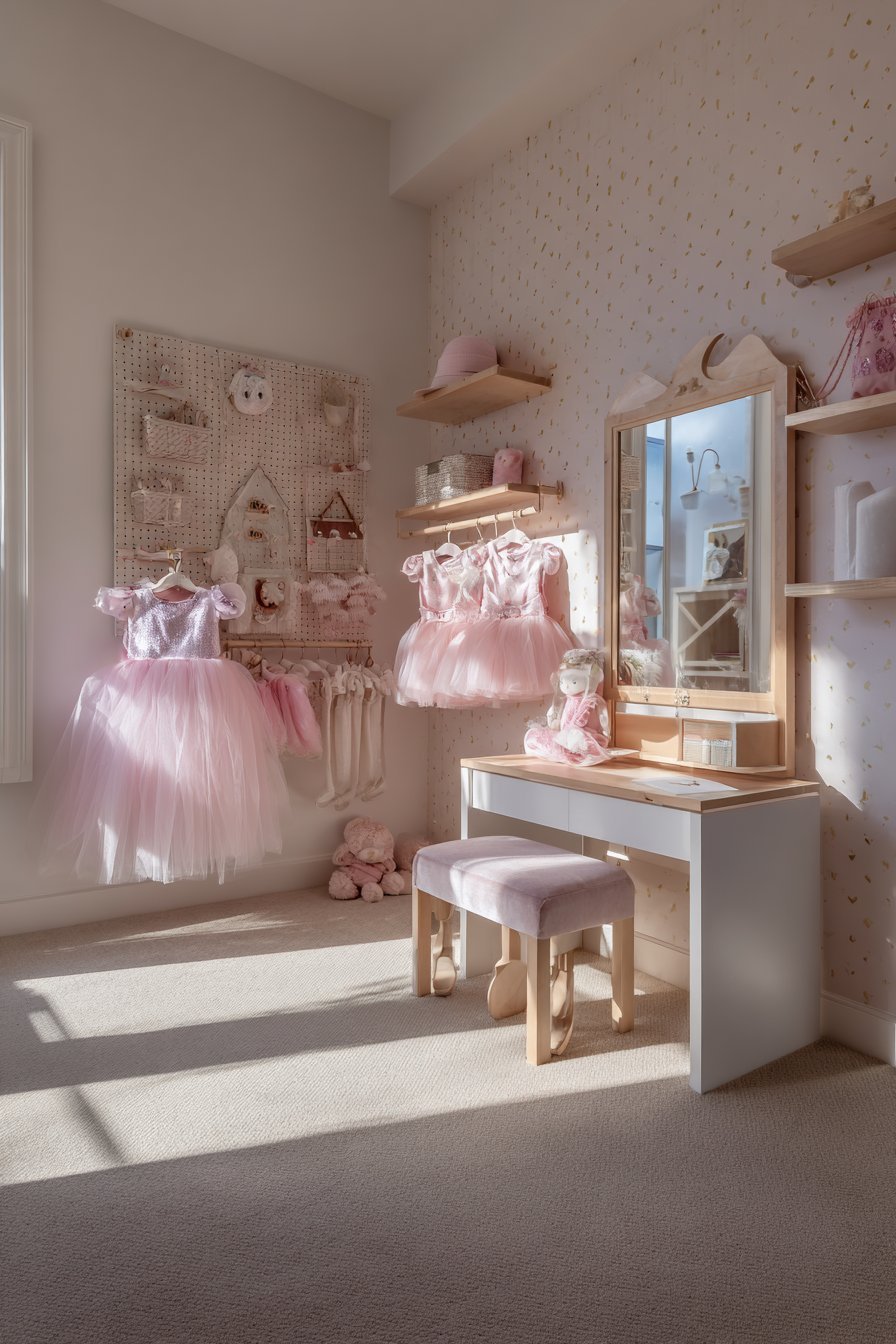
Natural lighting highlights organizational elements and safe furniture pieces. The dedicated dress-up area teaches organization skills through play. Children learn to hang costumes and return accessories after use. This setup combines entertainment with valuable life skill development.

Key Design Tips:
- Install clothing racks at 36-40 inches for comfortable toddler access
- Choose vanity mirrors with rounded edges for safety
- Use pegboard systems for flexible, growing accessory collections
- Select removable wallpaper for damage-free design updates
- Ensure adequate lighting for safe mirror use and outfit selection
8. Cozy Literary Corner Creation

A low upholstered armchair in blush velvet provides comfortable toddler-sized seating. The chair sits beside a small bookcase with forward-facing display slots. This arrangement showcases book covers, making selection easier for pre-readers. A cloud-shaped wall shelf holds favorite books and small decorative items.
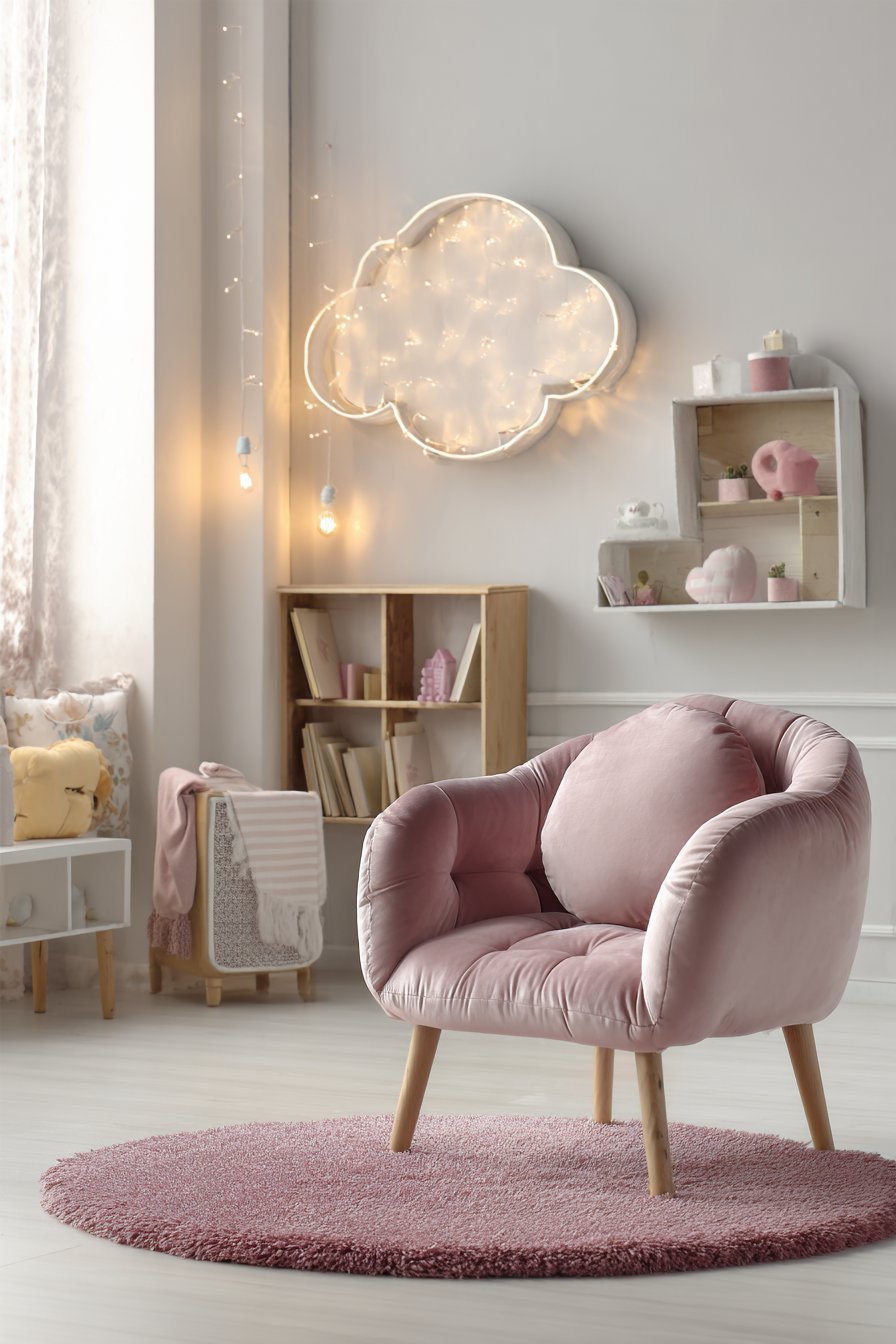
Soft white walls create a peaceful backdrop for focused reading time. String lights in warm white provide ambient evening lighting without harsh glare. Plush carpet in light grey grounds the space beneath a round pink wool rug. The layered textures create inviting softness for extended reading sessions.

The dedicated literary corner promotes early literacy through comfortable design. Children associate reading with comfort and warmth from early ages. The forward-facing book display captures attention better than spine-out shelving. This thoughtful design detail significantly impacts reading habit formation.

Key Design Tips:
- Scale furniture to toddler proportions for comfortable independent use
- Display books face-forward to engage pre-readers with cover art
- Layer lighting with overhead fixtures and string lights for ambiance
- Use plush carpeting in reading areas for extended comfort
- Position reading corners away from high-traffic play zones
9. Growth-Tracking Woodland Measurement Wall

A growth chart painted directly onto soft grey walls features woodland animal illustrations. The charming creatures mark measurement increments attractively. This permanent feature creates lasting memories throughout childhood years. A white toddler bed with storage drawers underneath maximizes functional efficiency.

Dusty rose and cream bedding coordinates with the grey wall backdrop. A small craft table with washable surface provides dedicated creative space. Two chairs accommodate parallel play with siblings or friends. Open cube storage houses toys and books in labeled fabric bins.

Natural daylight from double windows creates a bright, cheerful atmosphere. The functional design emphasizes growth-oriented features that evolve with your child. Storage solutions keep spaces organized while teaching responsibility. The practical approach balances aesthetics with real-world toddler needs.

Key Design Tips:
- Paint growth charts directly on walls for permanent memory-making
- Choose beds with built-in storage to maximize space efficiency
- Select craft tables with washable or replaceable surfaces
- Label storage bins with pictures for pre-reader organization
- Position windows to provide abundant natural daylight for activities
10. Flowing Canopy Romance

A canopy created from flowing white cotton fabric suspends from a ceiling-mounted metal ring. The fabric drapes over a toddler bed dressed in layered white and pink bedding. The romantic element adds softness without restricting movement or safety. Removable wallpaper with hand-drawn floral pattern decorates the walls beautifully.

A vintage-inspired wooden dresser painted in sage green provides ample storage capacity. The dresser top displays framed family photos and a small potted succulent. These personal touches make the space feel uniquely connected to family history. Natural lighting filters through the canopy fabric, creating soft, diffused illumination.

The romantic design remains practical for everyday toddler life. Machine-washable fabrics ensure easy maintenance despite inevitable spills. The sage green dresser adds sophisticated color without overwhelming the soft palette. This balance creates spaces that feel special without sacrificing functionality.

Key Design Tips:
- Suspend canopies securely from ceiling studs or joists only
- Choose machine-washable fabrics for all textiles in toddler rooms
- Paint vintage furniture for budget-friendly, unique storage solutions
- Display family photos at toddler eye level for connection
- Use succulents instead of toxic houseplants around young children
11. Creative Art Gallery System

Clipboards mounted at toddler eye-level create a rotating art display system. The low gallery wall showcases current masterpieces with pride. Below, a craft supply station includes bins of crayons and washable markers. Accessible shelving keeps paper and supplies within easy reach independently.

Light purple accent walls with white wainscoting provide durability and charm. The wainscoting protects walls from inevitable marks during creative sessions. A small easel stands ready for painting projects on protective vinyl flooring. This dedicated art area encourages creative expression without household stress.

Natural light from nearby windows illuminates the creative workspace effectively. The display system validates children’s artistic efforts through prominent showcasing. Regular rotation keeps the gallery fresh and encourages continued creativity. This design celebrates childhood creativity as an essential developmental component.

Key Design Tips:
- Mount clipboards at 30-36 inches for easy toddler artwork rotation
- Install wainscoting for wall protection in high-activity areas
- Use vinyl flooring under art areas for easy cleanup
- Choose washable markers and paints exclusively for toddler use
- Provide dedicated storage for each art supply type
12. Safety-Focused Thoughtful Layout

Corner guards on furniture edges prevent injury during active play. Visible outlet covers ensure electrical safety throughout the space. A video monitor mounted high provides parental peace of mind. The convertible crib transitions to toddler bed mode with matching dresser and changing table.

Soft pink walls complement white furniture in a timeless combination. Blackout curtains in grey and white chevron pattern ensure quality sleep. The light-blocking capability supports healthy sleep schedules and naptime routines. A plush area rug in cream with subtle pink border provides cushioned play space.

The thoughtfully planned safe environment balances protection with development needs. Every element undergoes safety evaluation before room inclusion. The design demonstrates that safety-focused spaces need not sacrifice aesthetic appeal. Parents rest easier knowing potential hazards receive proper attention.

Key Design Tips:
- Install corner guards on all furniture with sharp edges
- Use outlet covers rated for toddler-proof security
- Choose convertible furniture that grows with your child
- Invest in quality blackout curtains for healthy sleep patterns
- Select non-slip rug pads under all area rugs
13. Nature-Inspired Sensory Corner

A small ball pit in natural colors provides sensory stimulation safely. A textured climbing triangle in natural wood encourages gross motor development. A sensory board mounted on walls offers various tactile elements for exploration. The main sleeping area features a floor mattress on a low platform.

Neutral bedding with many throw pillows creates a cozy nest-like environment. Walls painted in soft sage green create a calming backdrop for activities. Natural fiber baskets provide toy storage that blends seamlessly with the aesthetic. The Montessori-inspired elements support developmental milestones through purposeful design.

Soft diffused natural lighting emphasizes natural materials throughout the space. The sensory corner addresses multiple developmental needs simultaneously. Tactile experiences, physical challenges, and calming spaces coexist harmoniously. This comprehensive approach supports whole-child development through environmental design.

Key Design Tips:
- Include sensory elements that address multiple developmental areas
- Choose natural wood climbing equipment for safety and aesthetics
- Create sensory boards with varied textures and safe moving parts
- Use neutral colors in sensory-focused spaces to prevent overstimulation
- Provide floor-level sleeping options for sensory-sensitive children
14. Personalized Name and Positive Messages

A personalized name sign above the bed features wooden letters with small floral decorations. The custom element makes the space feel uniquely belonging to your child. A white metal toddler bed frame with curved details holds bedding with subtle rainbow pattern. The muted tones maintain calmness while adding cheerful color.

A growth mindset corner displays a small chalkboard with encouraging messages. The positive affirmations support emotional development and confidence building. Wall-mounted fabric pockets in coordinating colors hold small books and toys. This storage solution adds functionality without requiring floor space.

Natural lighting captures the personalized details throughout the space. The encouraging design elements create positive associations with the bedroom. Children develop strong self-concepts when surrounded by affirmation. This thoughtful approach recognizes emotional development as equally important as physical safety.

Key Design Tips:
- Personalize spaces with custom name signs or initial decorations
- Display positive affirmations at child eye level for daily reinforcement
- Choose rainbow patterns in muted tones for cheerfulness without intensity
- Use wall-mounted storage to preserve valuable floor space
- Update chalkboard messages weekly to maintain fresh encouragement
15. Cozy Den Hideaway Creation

A commercial play tent in soft pink canvas features star-shaped window cutouts. Inside, cushions and a small lantern light create an inviting hideaway. The surrounding room features a toddler bed with quilted blush upholstered headboard. A small dresser painted white with gold knobs provides charming storage.

Walls in warm cream provide a neutral backdrop for layered textures. A vintage-style area rug in faded pink and cream grounds the space beautifully. The imaginative play space supports independent quiet time when needed. Children develop self-regulation skills through access to calming retreat spaces.

Afternoon light creates gentle shadows that highlight cozy textures throughout. The layered design includes varied textiles from smooth to plush. These tactile differences provide sensory richness that supports development. The den offers security and independence simultaneously.

Key Design Tips:
- Provide enclosed spaces like tents for toddler emotional regulation
- Include battery-operated lighting in hideaway spaces for ambiance
- Layer multiple textures throughout rooms for sensory development
- Choose vintage-style rugs for character and budget-friendly options
- Paint hardware on budget furniture for instant custom upgrades
16. Musical Corner Development Space

A small keyboard on a low stand introduces musical concepts early. A basket of rhythm instruments includes tambourine and maracas for exploration. Wall-mounted decor showing musical notes adds playful thematic elements. The main sleeping area includes a platform toddler bed with under-bed storage.

Light grey walls with one accent wall in soft peach create gentle color contrast. The dual-tone approach adds interest without overwhelming the senses. A cushioned floor mat provides comfortable play space for musical activities. The music-encouraging environment supports cognitive development through sound exploration.

Balanced natural lighting emphasizes developmental play elements throughout the space. Early musical exposure benefits language development and mathematical thinking. The accessible instruments encourage independent exploration and creativity. This design recognizes music as essential to whole-child development.

Key Design Tips:
- Introduce age-appropriate instruments scaled for toddler hands
- Store instruments in accessible baskets for independent music-making
- Choose keyboards with volume control for household harmony
- Use accent walls sparingly to create focal points without overwhelm
- Provide cushioned mats for floor-based musical movement activities
17. Garden Theme Botanical Beauty

A wall mural of oversized flowers in watercolor style spans one wall. Soft pinks, purples, and greens create a botanical garden atmosphere. The artistic approach brings nature indoors beautifully. A white toddler bed with decorative carved details sits beneath the mural.

Organic cotton bedding in coordinating floral prints continues the garden theme cohesively. A child-sized table and chairs set in natural wood provides tea party and craft space. Real potted plants on high shelves add life while remaining safely out of reach. The nature-inspired design creates connections with the natural world.

Morning sunlight highlights botanical artwork and natural materials throughout the space. The whimsical design sparks imagination without crossing into overwhelming decoration. Children develop appreciation for nature through beautiful environmental immersion. This approach combines aesthetics with developmental psychology thoughtfully.

Key Design Tips:
- Use botanical themes to introduce children to nature concepts
- Place real plants on high shelves beyond toddler reach for safety
- Coordinate bedding with wall art for cohesive design flow
- Provide child-sized furniture for appropriate scaled experiences
- Choose organic cotton for bedding to minimize chemical exposure
18. Transitional Growth-Oriented Design

A convertible toddler bed grows into a twin bed for long-term value. Neutral bedding with pink accent pillows allows easy style updates. A tall bookcase with adjustable shelving accommodates changing developmental needs. Currently, the mix of toys and books reflects toddler interests.

A desk area with small chair provides space for early learning activities. The workspace grows from coloring station to homework spot seamlessly. Walls in soft white with pink and gold polka dot decals create playful accents. The adaptable approach saves money while providing quality furnishings.

Natural lighting emphasizes quality furniture investments throughout the space. The long-term planning approach recognizes that children outgrow rooms quickly. Investing in convertible, adjustable furniture provides better value than frequent replacements. This practical design philosophy serves growing families well.

Key Design Tips:
- Invest in convertible furniture that transitions through multiple stages
- Choose neutral base pieces that accept changing accent colors
- Select adjustable shelving systems for evolving storage needs
- Plan desk spaces that grow from play to study areas
- Use removable decals for flexibility as tastes mature
19. Smart Storage System Efficiency

A bed frame with built-in drawers underneath eliminates separate dresser needs. Wall-mounted fabric organizers provide toy storage without floor footprint. A hanging clothes organizer at accessible height fills the closet efficiently. Over-door hooks accommodate bags and accessories conveniently.

Light wood laminate flooring with area rug in soft pink and grey geometric pattern defines play space. The clutter-free environment reduces visual stress for children and parents. The efficient use of every storage opportunity maximizes small footprints successfully. Organization systems teach valuable life skills through daily use.

Natural daylight highlights the well-organized environment throughout the space. The systematic approach to storage prevents toy accumulation chaos. Children learn that everything has a designated place and purpose. This organizational foundation serves them throughout life.

Key Design Tips:
- Choose beds with built-in storage to consolidate furniture needs
- Mount organizers on walls to preserve floor space for play
- Install closet systems at mixed heights for growing accessibility
- Use over-door hooks for frequently accessed items
- Define zones with area rugs even in small spaces
20. Princess Theme with Subtle Elegance

An ornate white toddler bed features detailed headboard and footboard carvings. Layers of white and blush bedding with delicate lace trim create luxurious comfort. A small chandelier with fabric shades provides ambient lighting safely. The princess inspiration executes with refined taste rather than overwhelming pink.

Light grey walls with white crown molding add architectural sophistication. A vintage-inspired vanity table with child-safe mirror offers dress-up space. Tall windows dressed in flowing white curtains allow abundant natural light. The elegant aesthetic interprets fairy-tale themes through quality materials.

The refined design demonstrates that princess themes need not feel garish. Thoughtful material selection and restrained color use create sophisticated spaces. Children appreciate beauty at young ages when executed appropriately. This design respects both childhood wonder and timeless aesthetics.

Key Design Tips:
- Execute themed rooms with restraint and quality materials
- Choose ornate furniture in white or neutral tones for sophistication
- Install chandelier-style lighting with fabric shades for safety
- Add architectural details like crown molding for elegance
- Use flowing natural fiber curtains instead of synthetic character prints
Why These Toddler Girl Room Designs Are the Best
These toddler girl room designs represent thoughtful approaches to creating spaces that balance safety, development, and aesthetics. Each concept addresses the unique needs of children transitioning from infancy to early childhood. The designs demonstrate versatility across different spatial constraints, budgets, and personal style preferences.
The incorporation of child-height furniture and storage promotes independence during crucial developmental stages. Montessori-inspired elements appear throughout multiple designs, recognizing their proven effectiveness in fostering autonomy. Natural materials like wood, cotton, and wool provide sensory richness while ensuring durability through active toddler years.
Safety considerations permeate every design without sacrificing visual appeal. Low beds prevent dangerous falls while corner guards and outlet covers address common hazards. The balance between protection and independence allows children to explore safely within their personal spaces.
Color theory plays essential roles in these successful designs. Soft pastels and muted tones create calming environments that support healthy sleep patterns. The careful use of accent walls and limited color palettes prevents visual overstimulation. These choices recognize that young children process sensory information differently than adults.
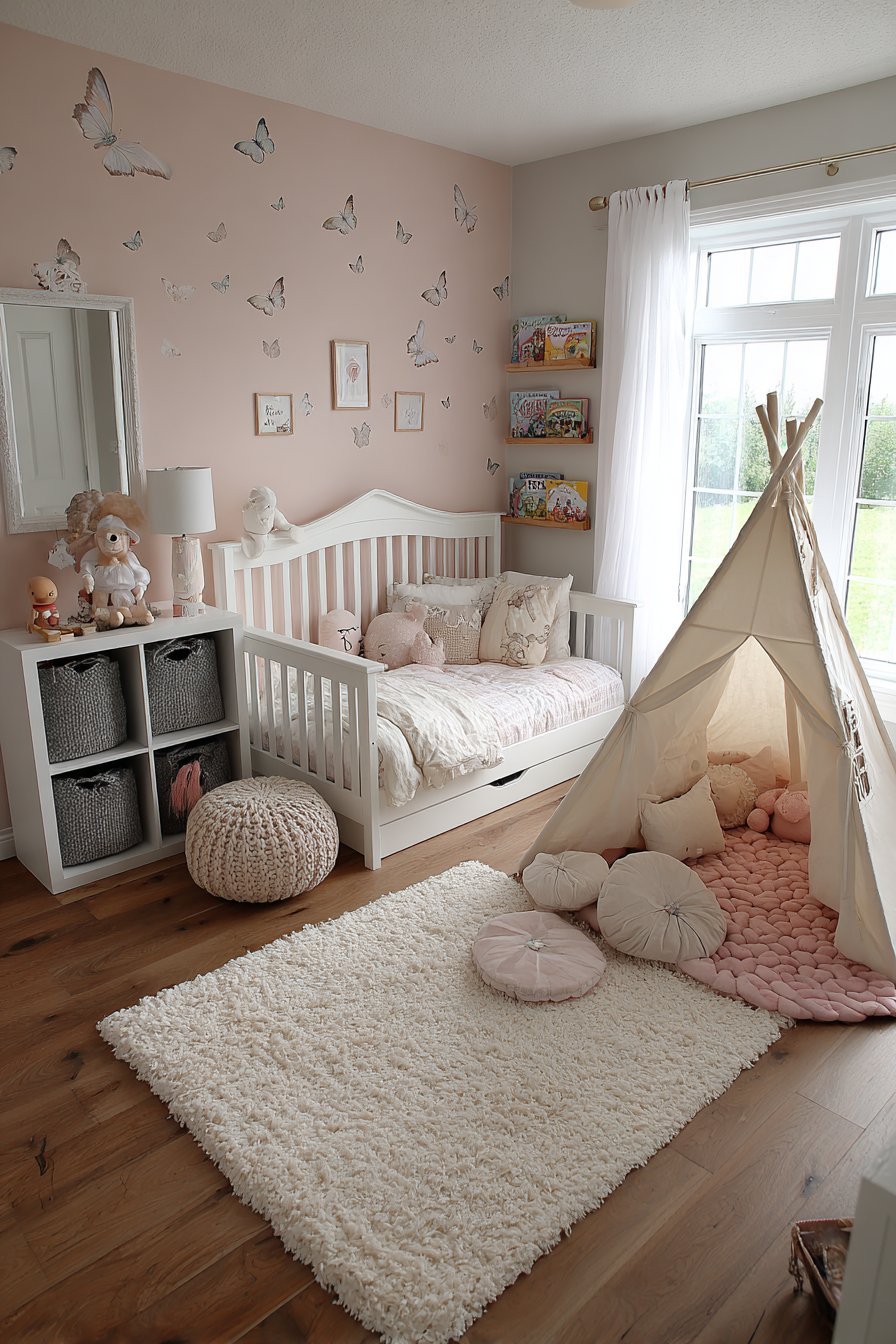
Spatial considerations address both compact apartments and generous rooms effectively. Vertical storage solutions, convertible furniture, and multi-functional pieces maximize limited square footage. Open floor plans in larger spaces create distinct zones for sleeping, playing, and learning activities.
The designs emphasize quality foundational pieces that grow with children rather than disposable furnishings. Convertible beds, adjustable shelving, and timeless aesthetics provide better long-term value. This approach proves more sustainable environmentally and economically than frequent complete redesigns.
Conclusion
These toddler girl room designs demonstrate that spaces for young children deserve thoughtful planning and quality execution. The key takeaways include prioritizing safety without sacrificing beauty, choosing natural materials that support sensory development, and creating accessible storage that fosters independence. Each design concept offers unique advantages while addressing universal toddler needs.
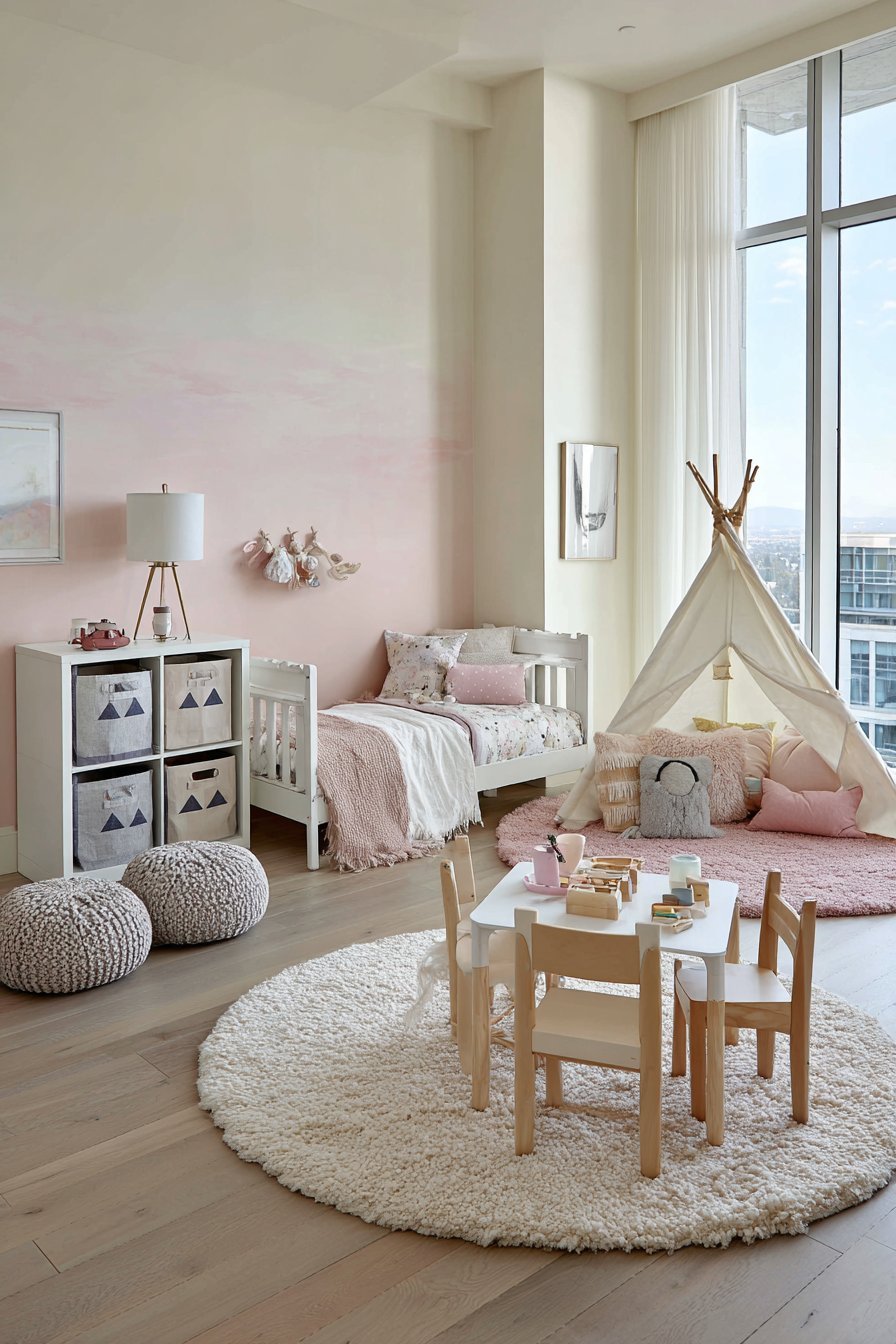
Successful toddler room design balances multiple considerations simultaneously. Physical safety, emotional security, developmental support, and aesthetic appeal work together in these comprehensive examples. Start by assessing your specific space, budget, and child’s personality, then adapt these concepts to create a room where your daughter will thrive and grow.
