
The kitchen serves as the heart of every home. It’s where families gather, meals are prepared, and memories are created. Thoughtful interior design transforms this essential space into something extraordinary. The combination of sage green and natural wood creates kitchens that feel both contemporary and timeless.
Sage green brings botanical serenity to kitchen spaces. This versatile hue pairs beautifully with wood’s organic warmth. The natural materials complement each other perfectly. Together, they create environments that feel grounded and inviting. This color and material pairing works across various design styles, from rustic farmhouse to refined contemporary.
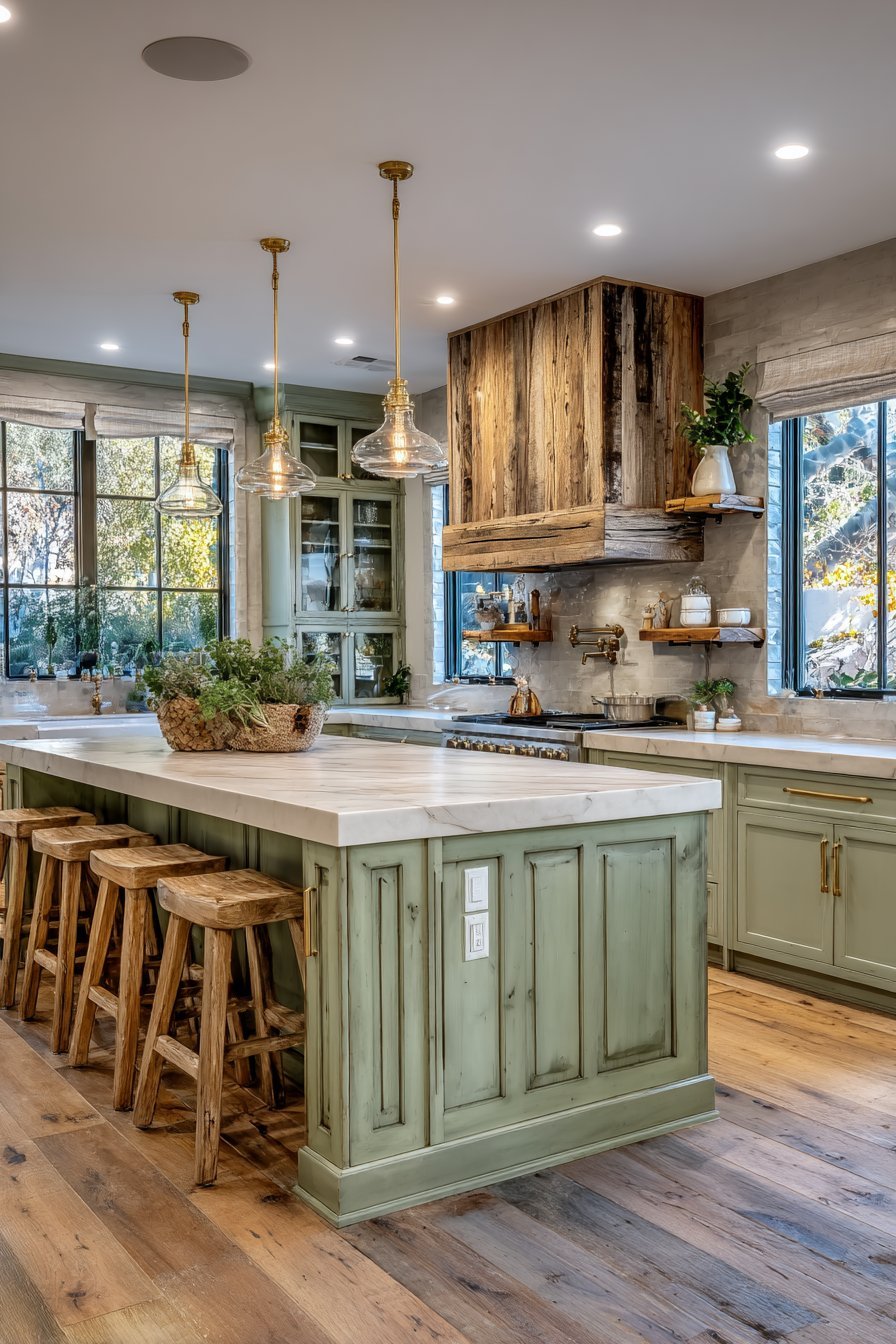
The following designs showcase twenty unique approaches to sage green and wood kitchens. Each concept demonstrates how these elements can be combined in distinctive ways. Whether you’re planning a complete renovation or a simple refresh, these ideas offer practical inspiration. The designs emphasize quality materials, thoughtful spatial planning, and timeless aesthetic appeal.
1. Shaker-Style Sage and Oak Harmony
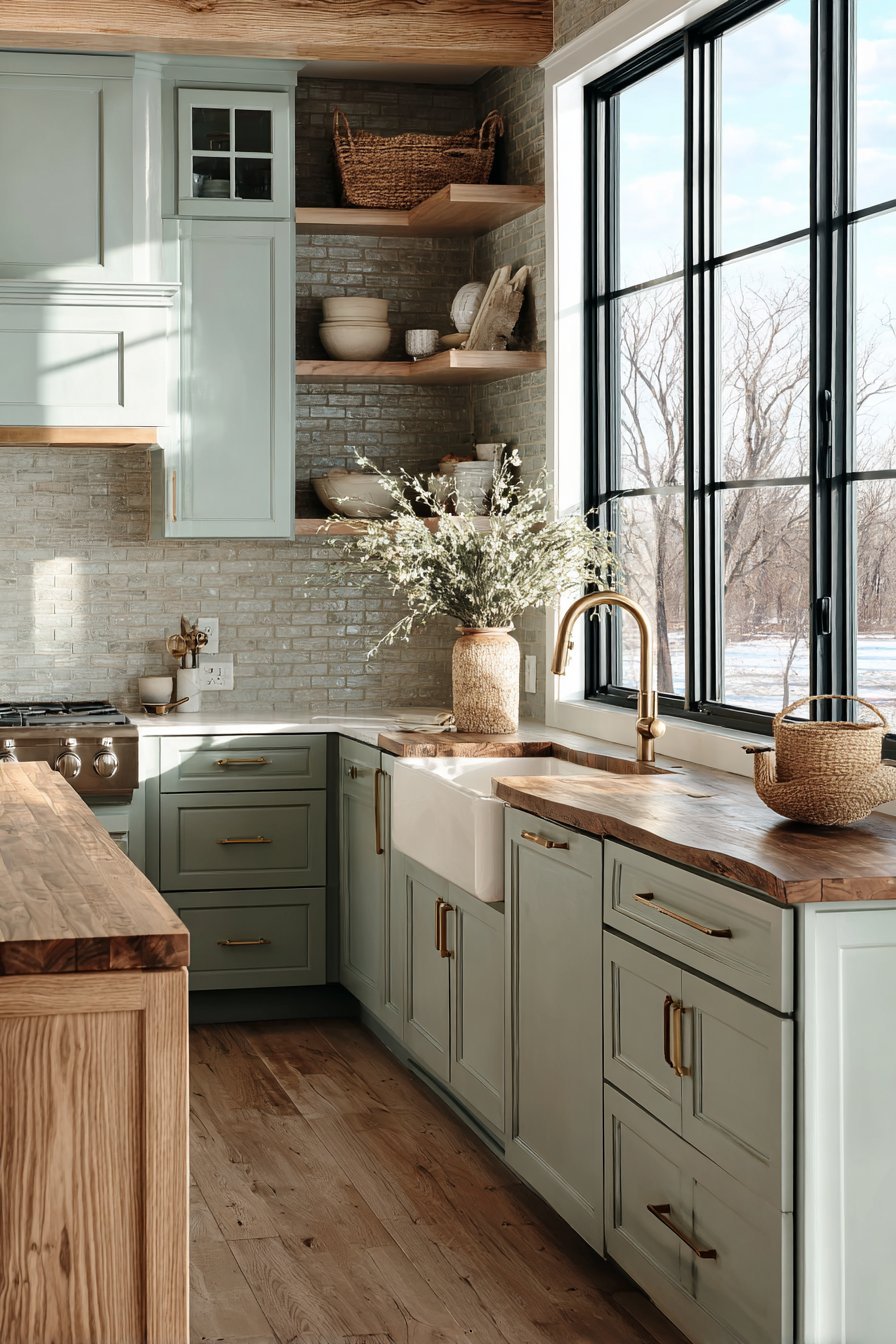
Custom shaker-style cabinetry in soft sage green creates the foundation for this elegant kitchen. Natural white oak open shelving provides contrast and display space. The clean lines of shaker doors offer timeless appeal. Morning light streams through windows above the farmhouse sink. The space feels fresh and welcoming.

The kitchen island becomes a stunning focal point with its walnut butcher block countertop. Visible grain patterns tell the story of natural wood beauty. Sage green base cabinets ground the island design. Brass cup pulls add refined metallic accents. The hardware choice bridges the green and wood tones seamlessly.
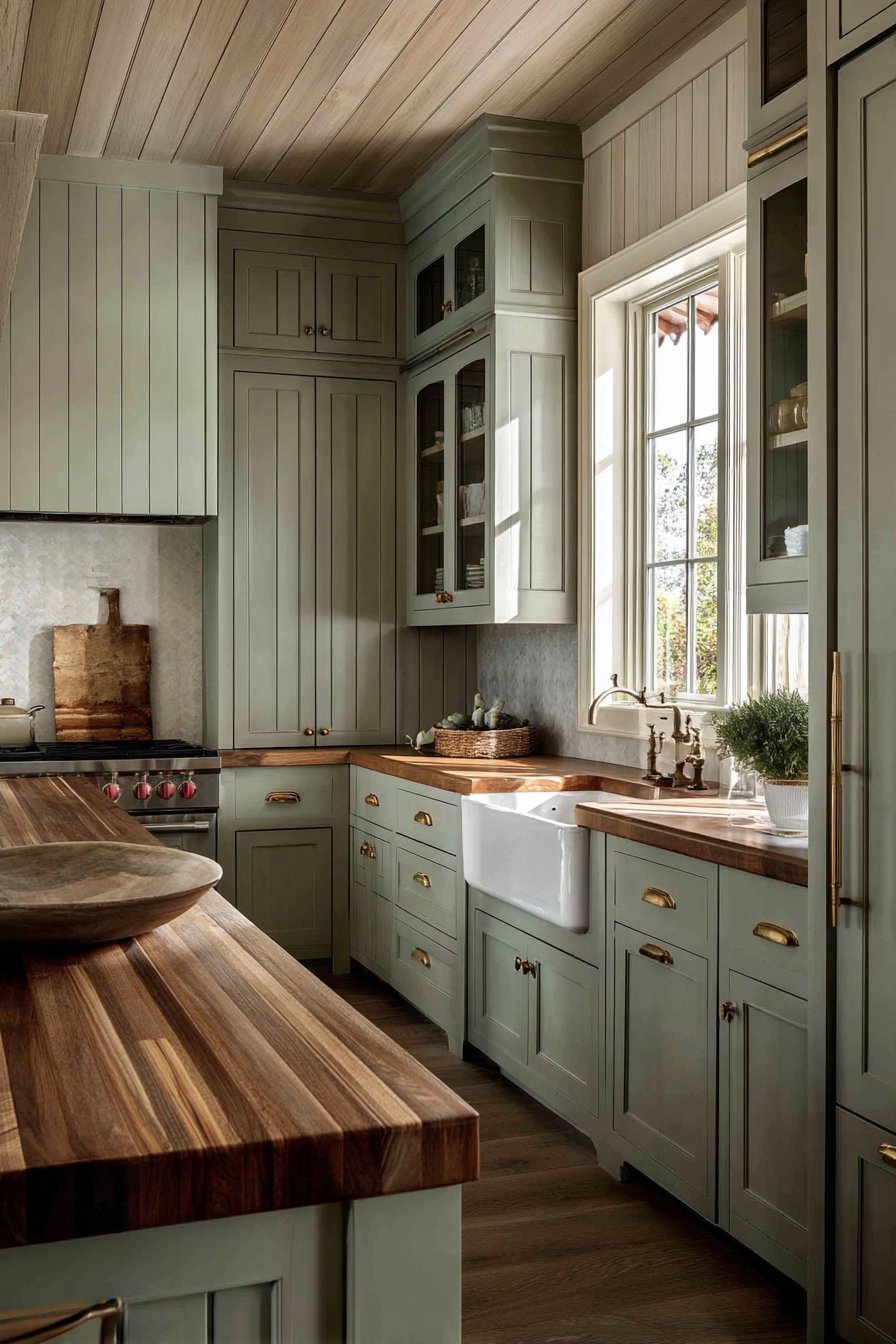
Material selection drives the success of this design. White oak shelving displays everyday items beautifully. The open shelving creates visual lightness in the upper portions. Walnut countertops bring rich, warm tones to work surfaces. The combination of different wood species adds depth and interest.
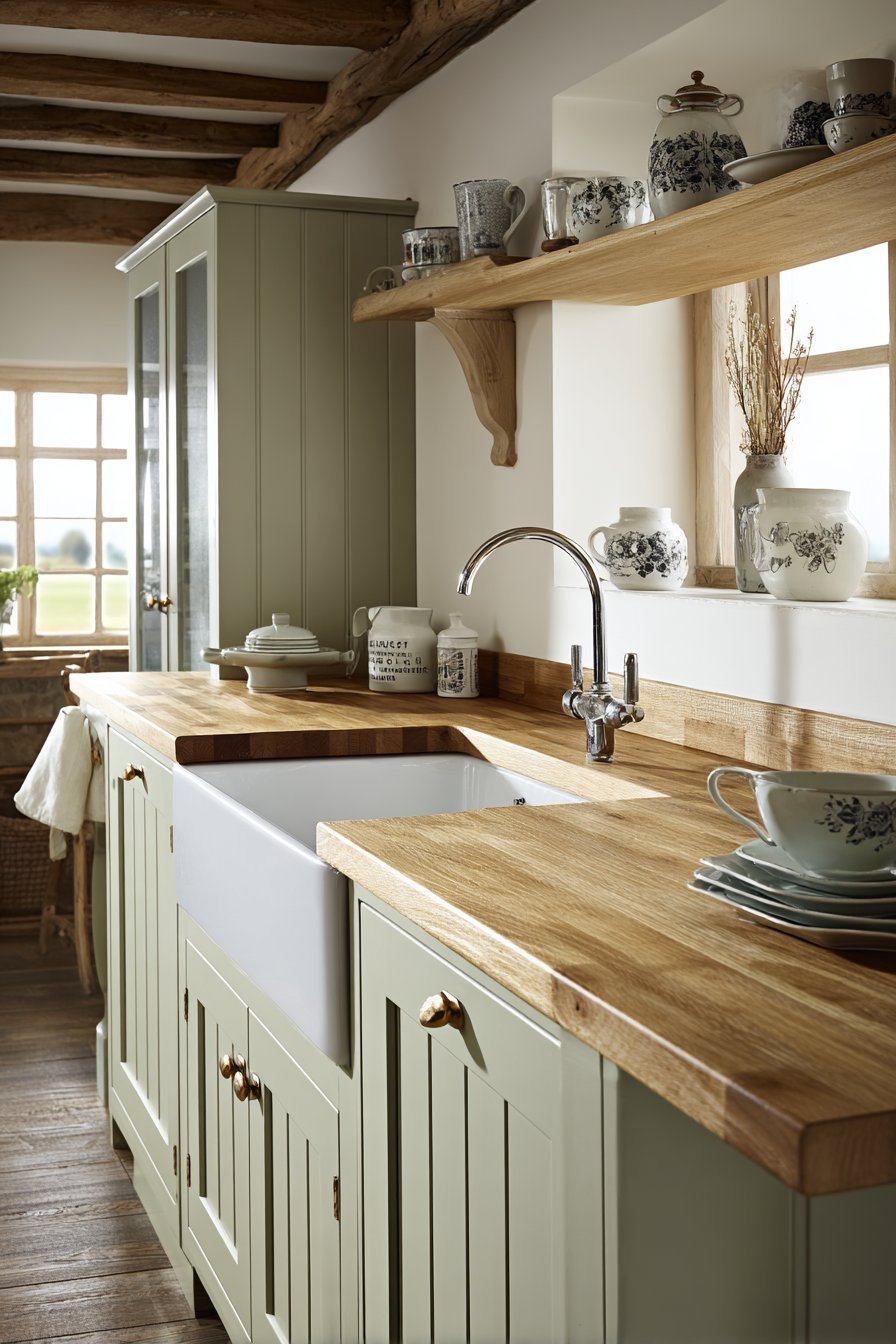
The color palette remains soft and organic throughout. Sage green cabinetry provides botanical freshness without overwhelming the space. Natural wood tones add warmth and texture. The brass hardware introduces subtle glamour. Together, these elements create a kitchen that feels both current and enduring.
Key Design Tips:
- Select shaker-style doors for their versatility across design periods
- Combine different wood species to create visual interest and depth
- Use brass hardware to bridge green and wood tones effectively
- Install open shelving to break up solid cabinetry runs
- Choose butcher block for islands to add warm work surfaces
- Position windows strategically to maximize natural light exposure
2. Ceramic Tile and Reclaimed Pine Detail

Handmade ceramic tiles in matte sage green create a stunning backsplash. The subway pattern arrangement feels classic and approachable. Floating shelves crafted from reclaimed pine bring rustic character. Natural edge details on the wood add organic beauty. The contrast between refined tile and raw wood creates compelling visual tension.

The wooden shelves serve both functional and aesthetic purposes. White ceramic dishes rest on the pine planks. Brass kitchen accessories add metallic warmth. The display creates a curated yet lived-in feeling. Each element on the shelves contributes to the overall design narrative.

Texture plays a crucial role in this kitchen detail. The matte ceramic tiles have subtle surface variation. Reclaimed pine shows its history through weathering and patina. The combination of smooth tile and rough wood creates tactile interest. Close observation reveals the beauty in material authenticity.

Lighting makes these materials shine in different ways. Soft diffused light emphasizes the tile’s subtle color variations. The wood grain becomes more prominent under directional lighting. Shadows create depth around the natural edge details. The interplay of light and texture brings the design to life.
Key Design Tips:
- Choose handmade tiles for unique character and slight imperfections
- Install floating shelves at varying heights for visual rhythm
- Select reclaimed wood for its environmental and aesthetic benefits
- Display functional items that complement your color scheme
- Use natural edge wood for organic, one-of-a-kind details
- Layer materials with different textures for depth
3. Floor-to-Ceiling Custom Cabinetry
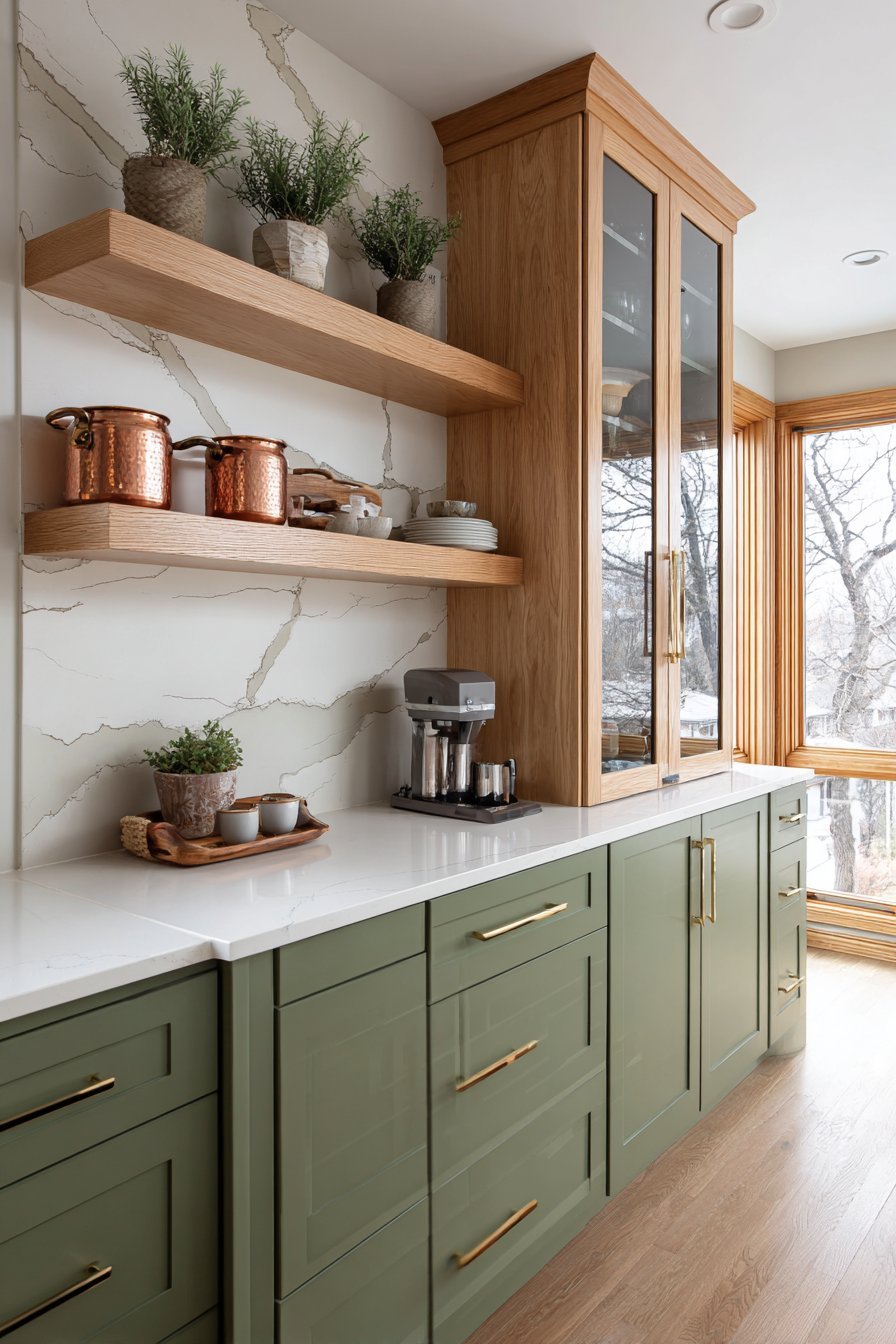
Floor-to-ceiling cabinetry maximizes storage while creating impressive visual impact. Sage green lower cabinets anchor the design with solid color. Natural oak upper cabinets with glass-front doors lighten the upper reaches. The vertical balance prevents the space from feeling heavy. Honed white quartz countertops provide clean work surfaces.

A wooden floating shelf spans the wall at eye level. This design element breaks up the cabinetry and adds warmth. Potted herbs bring living greenery into the kitchen. Vintage brass cookware creates decorative interest. The shelf becomes a functional display zone.

The glass-front upper cabinets serve multiple purposes. They create visual transparency that prevents claustrophobia. The interior wooden shelves remain visible through the glass. This design choice showcases the wood even in closed cabinets. The effect adds dimension to the vertical storage.

Brushed brass hardware unifies the two-toned cabinetry. The metallic finish complements both green and natural wood. Hardware placement on shaker doors follows traditional proportions. The consistency in hardware selection creates visual cohesion. Small details like hardware make significant design impact.
Key Design Tips:
- Extend cabinetry to ceiling height for maximum storage capacity
- Use glass-front doors on upper cabinets to prevent visual heaviness
- Install a floating shelf to break up tall cabinetry runs
- Select honed rather than polished countertops for softer appearance
- Display potted herbs on shelves for functional beauty
- Choose brushed rather than polished brass for subtle elegance
4. Live-Edge Walnut Island Centerpiece

The kitchen island commands attention with its striking live-edge walnut countertop. Natural wood characteristics remain beautifully visible in the thick slab. The sage green painted base features charming beadboard paneling. This combination of refined carpentry and raw wood creates perfect contrast. Four wooden bar stools with spindle backs surround the island.
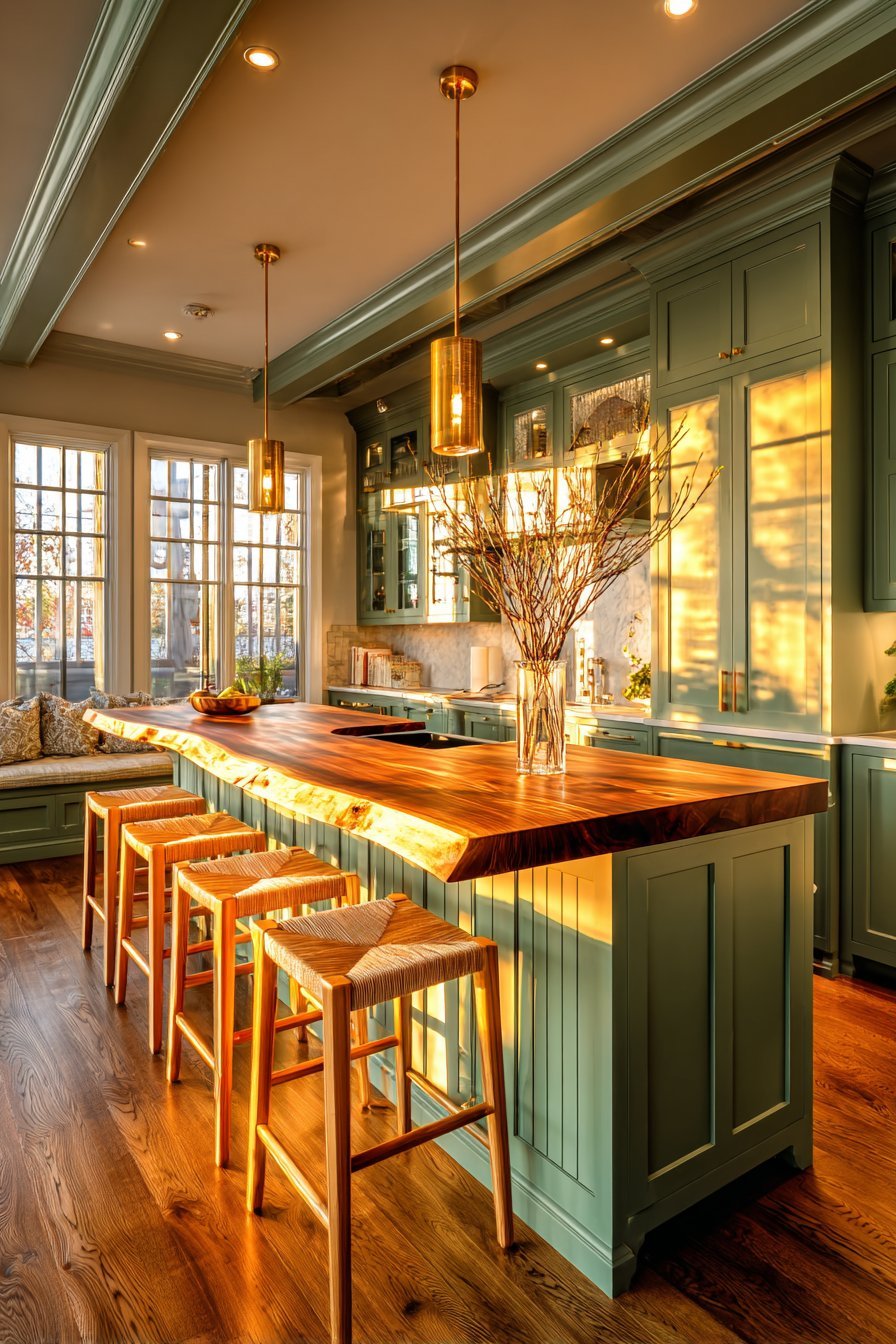
Natural oak finish on the bar stools complements the walnut countertop. The lighter oak provides visual relief against the rich walnut. Spindle-back design adds traditional charm without feeling dated. The stools invite family and guests to gather comfortably. The island becomes the kitchen’s social center.

Pendant lights with brass fixtures hang above the island. The lighting choice adds vertical interest to the space. Brass finishes tie together hardware throughout the kitchen. The pendants provide task lighting for food preparation. They also create ambient lighting for evening gatherings.

Golden hour lighting transforms this kitchen into something magical. Warm afternoon sun streams through nearby windows. The light catches the walnut’s rich grain patterns. Shadows emphasize the live-edge character of the countertop. The sage green base appears softer in this natural illumination.
Key Design Tips:
- Choose live-edge slabs for unique, unrepeatable countertops
- Use beadboard paneling to add texture to painted surfaces
- Select bar stools in complementary but different wood species
- Install pendant lights at proper height for function and aesthetics
- Position islands to receive natural light from multiple angles
- Embrace wood’s natural characteristics rather than hiding them
5. Reclaimed Barn Wood Range Hood
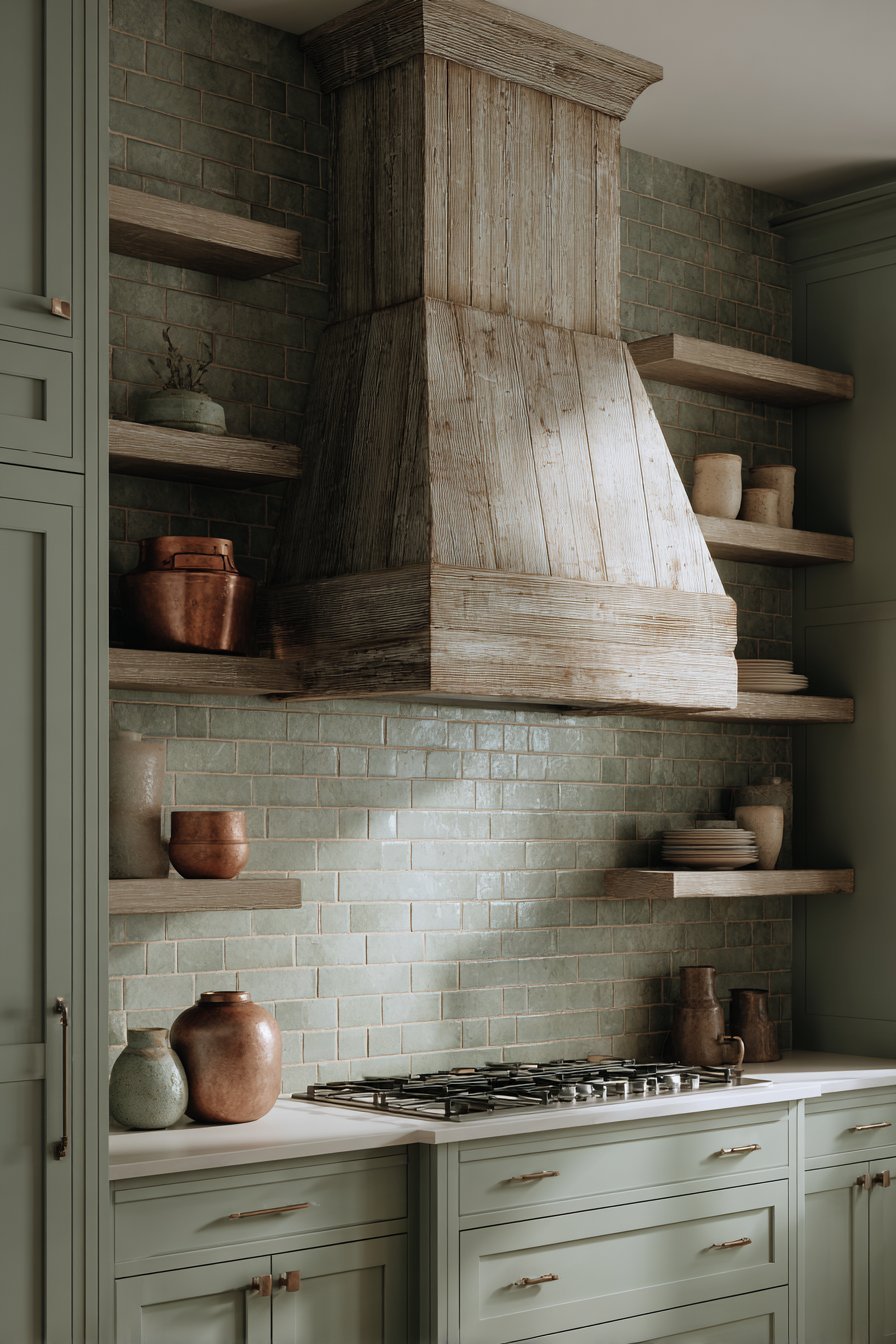
A statement range hood crafted from reclaimed barn wood becomes the kitchen’s focal point. Natural weathering and texture tell stories of the wood’s previous life. Sage green subway tile surrounds the hood in clean lines. The juxtaposition of rustic wood and refined tile creates visual drama. This design celebrates both raw materials and crafted elements.
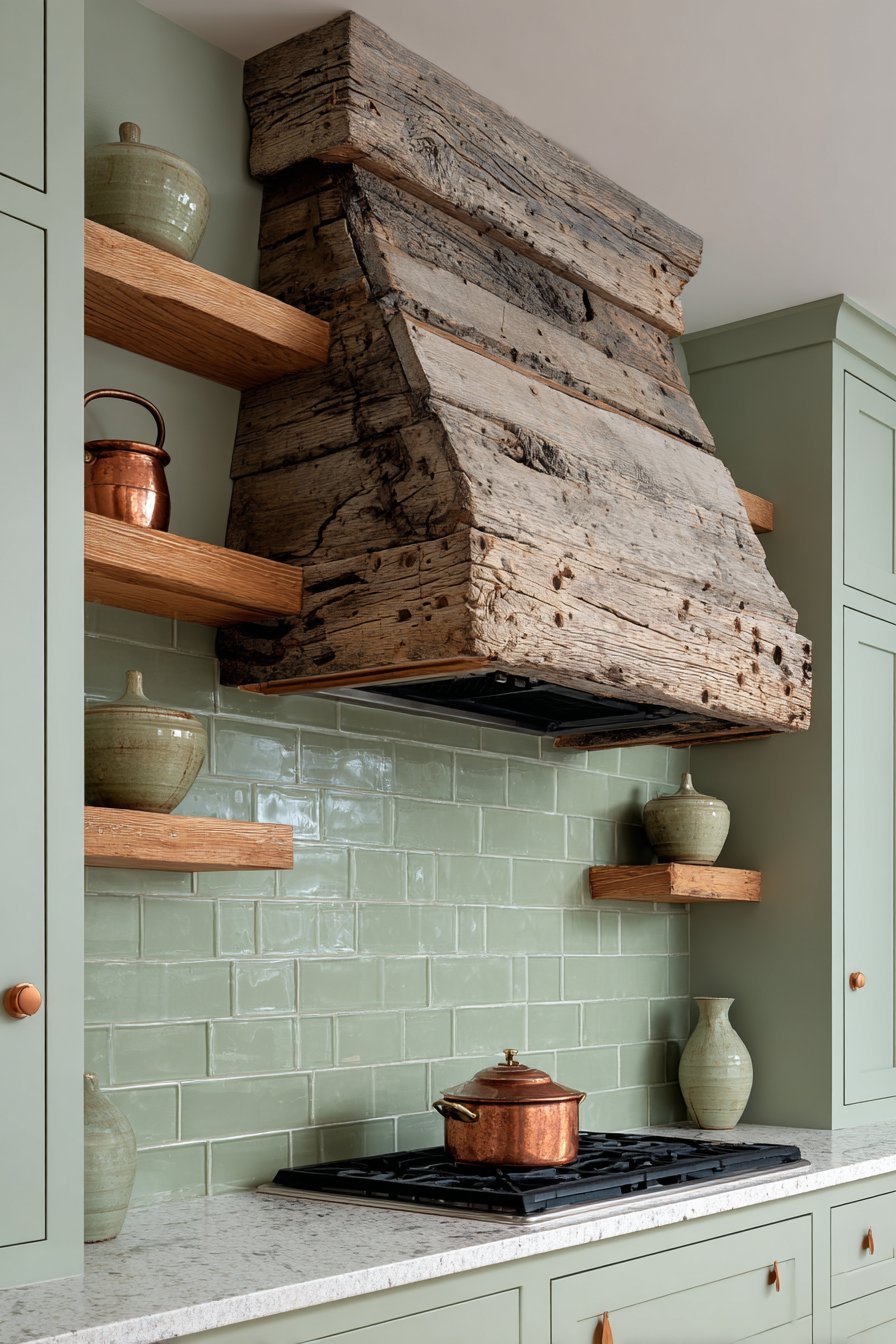
Surrounding cabinetry painted in matching sage green maintains color consistency. Simple shaker doors keep the design from competing with the hood. Wooden knobs in natural finish add subtle organic touches. The hardware choice reinforces the wood-and-green theme. Each element supports rather than overwhelms the others.

Open wooden shelving flanks both sides of the range hood. The shelves display copper pots with beautiful patina. Ceramic vessels add sculptural interest to the functional storage. The display creates a chef’s kitchen feeling. Frequently used items remain accessible and attractive.
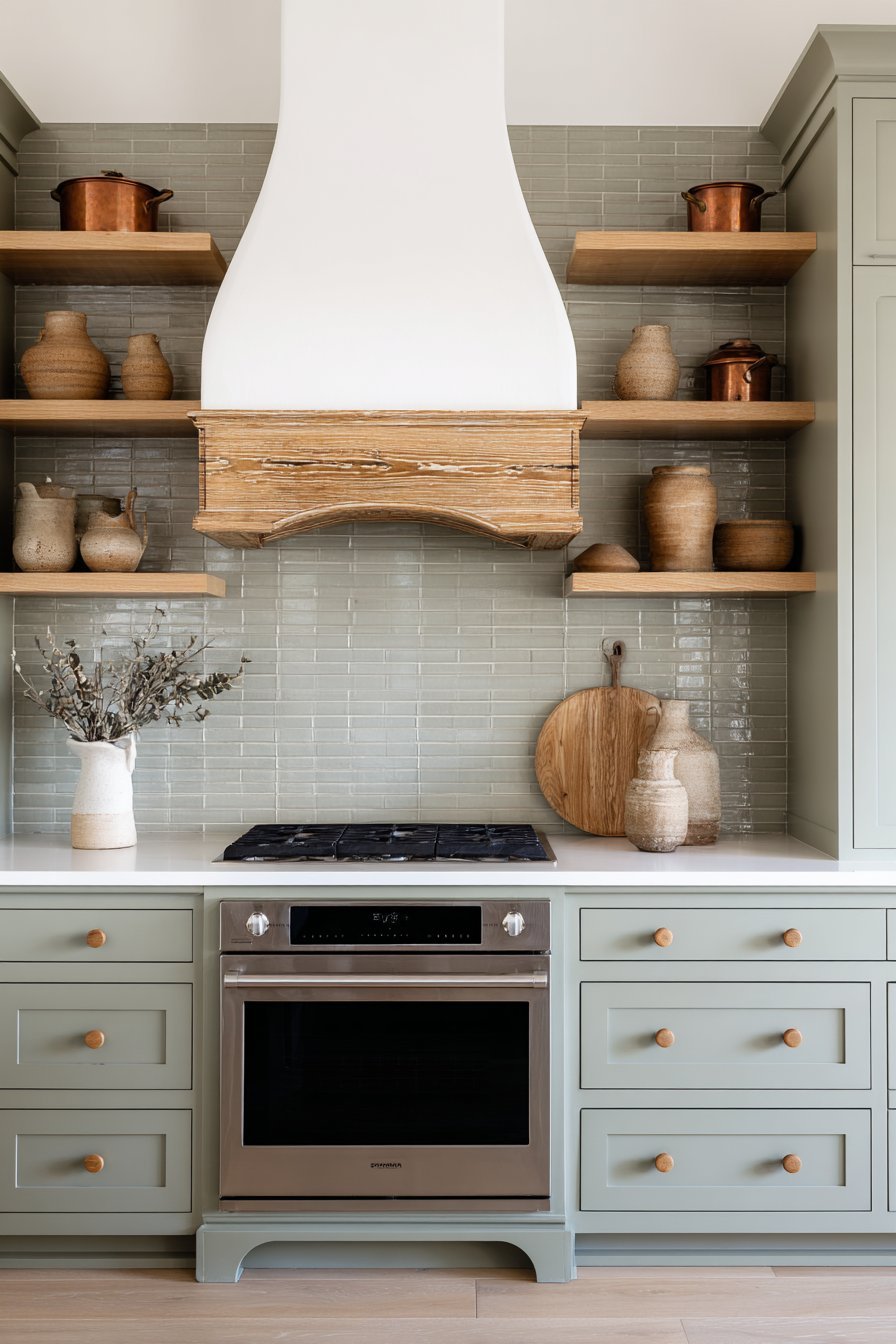
Lighting strategy emphasizes the reclaimed wood’s texture and character. Balanced exposure captures both the wood’s detail and the tile’s color. Soft natural lighting prevents harsh shadows. The overall effect highlights the hood’s craftsmanship. This centerpiece demonstrates how architectural elements can define a kitchen’s personality.
Key Design Tips:
- Source reclaimed barn wood for authentic character and sustainability
- Create symmetry with matching open shelving on both sides
- Display copper cookware to complement wood and green tones
- Choose subway tile for classic appeal that won’t compete
- Use simple cabinet hardware near statement pieces
- Install proper ventilation behind decorative wood hoods
6. Built-In Breakfast Nook Corner
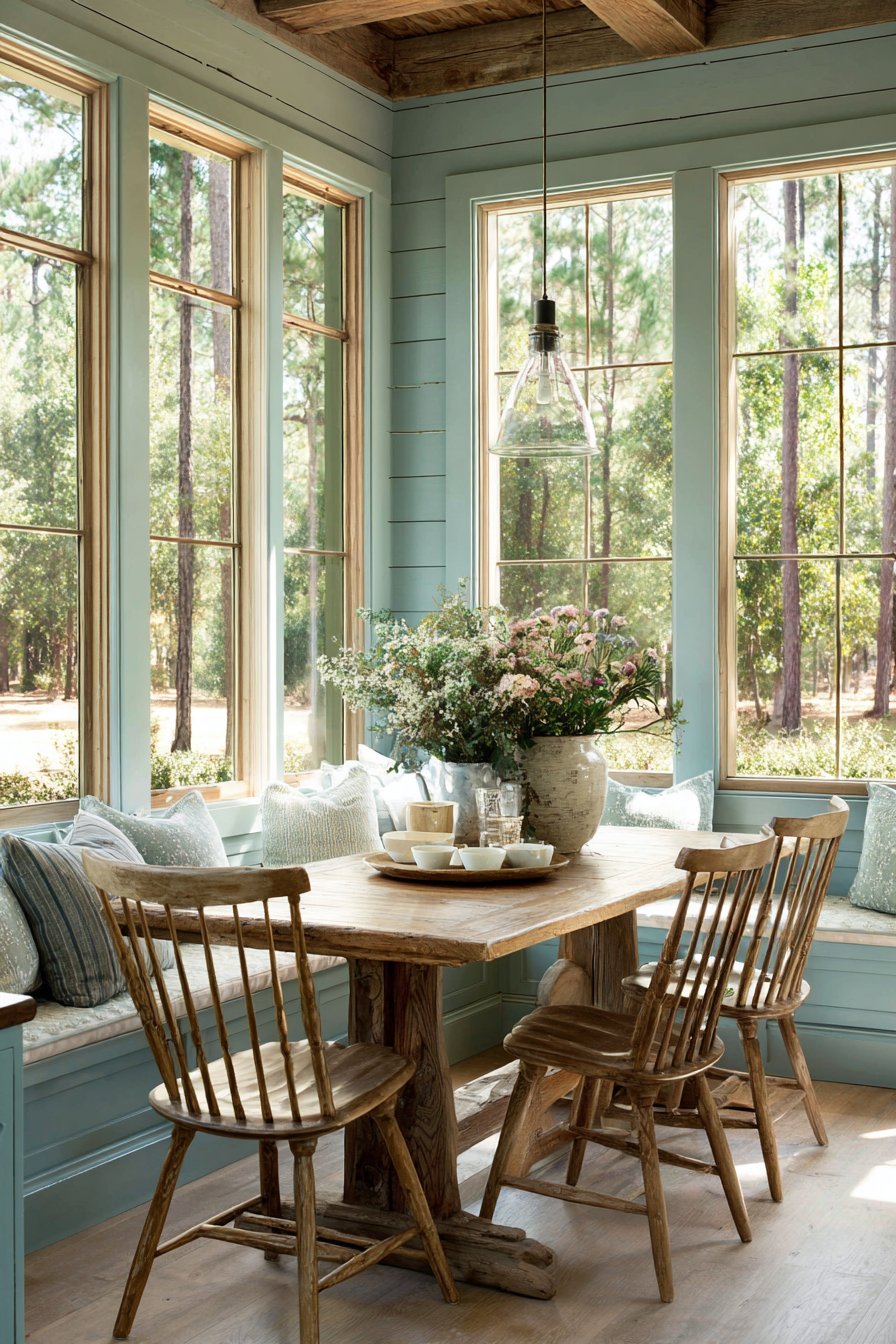
A built-in breakfast nook transforms a kitchen corner into a cozy retreat. Custom bench seating features comfortable linen fabric upholstery. Sage green beadboard wainscoting wraps the lower walls. Natural pine shiplap covers the upper walls in horizontal lines. The layered wall treatment creates architectural interest.
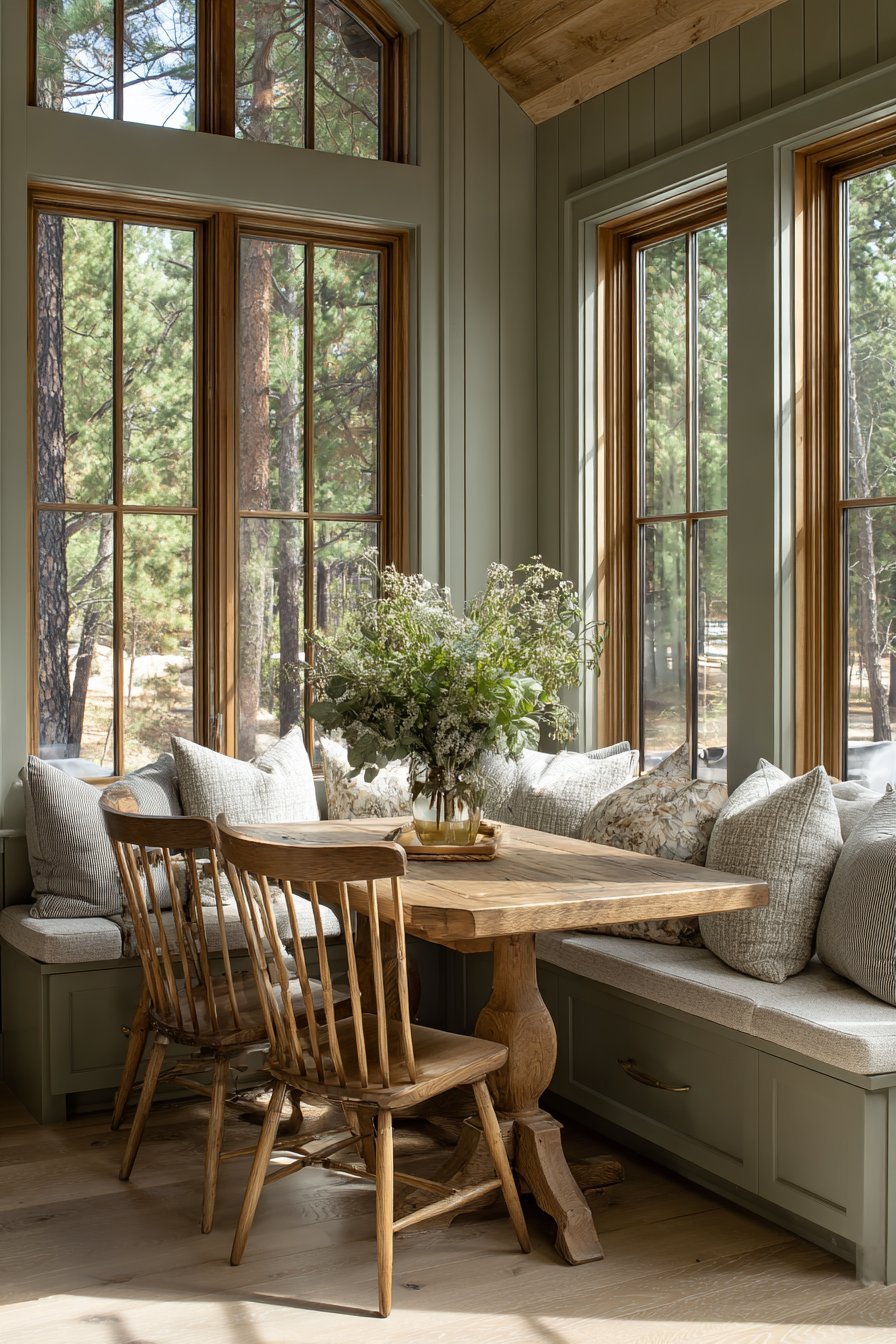
A solid oak farmhouse table centers the nook. Visible wood grain adds natural beauty to the sturdy table. Wooden Windsor chairs surround the table with traditional charm. The chair style brings historical design references forward. Mixed seating types prevent the space from feeling too matched.

Large windows with simple wooden trim frame outdoor views. Natural light floods this corner throughout the day. The window placement makes the nook feel connected to nature. Simple trim details keep focus on the view itself. The wooden frames extend the material palette established elsewhere.

This integrated dining area demonstrates thoughtful space planning. The nook doesn’t feel added as an afterthought. Instead, it flows naturally from the kitchen design. The consistent use of sage green and natural wood unifies the spaces. The result is a kitchen that encourages lingering and conversation.
Key Design Tips:
- Build in seating to maximize space efficiency in corners
- Layer different wall treatments for dimensional interest
- Choose linen upholstery for durable, washable seating
- Select solid wood tables for longevity and beauty
- Mix seating types to add visual variety
- Position breakfast nooks near windows for natural light
7. Farmhouse Sink and Butcher Block

The sink area becomes a beautiful focal point through thoughtful material choices. A deep farmhouse sink sets into butcher block countertops. Rich honey-toned wood grain surrounds the white porcelain basin. Sage green base cabinets with inset panel doors provide storage below. The combination feels both practical and aesthetically pleasing.
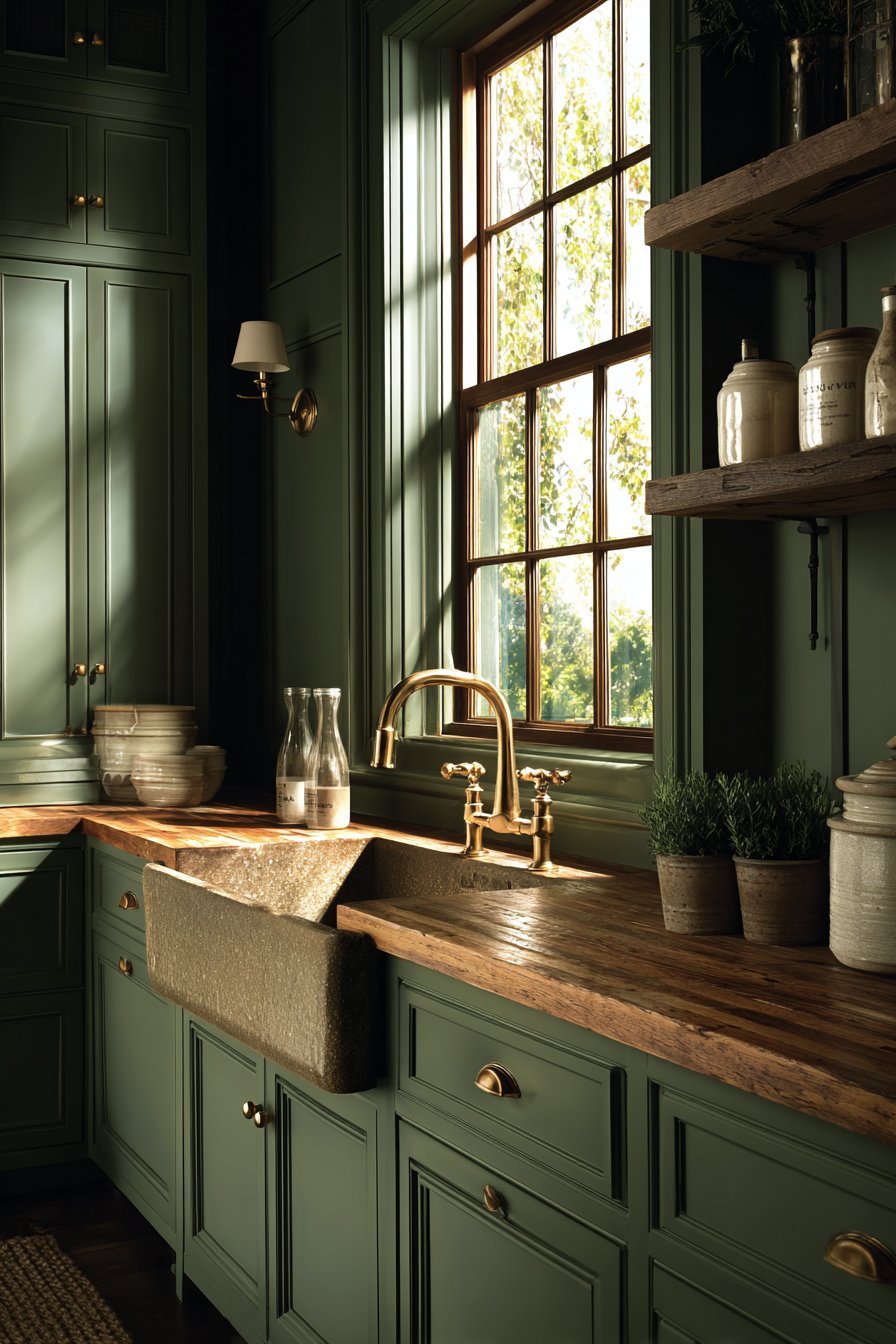
Wooden knobs on the sage green cabinets reinforce the natural theme. The small hardware details contribute to overall design cohesion. Inset panel doors require precise craftsmanship to execute properly. This cabinet style signals quality construction throughout. The details matter in creating elevated design.

A window with wooden trim frames a view of outdoor greenery. The connection to nature enhances the organic kitchen aesthetic. A small wooden shelf beneath the window holds potted herbs. Fresh herbs remain within easy reach during cooking. The living plants add authentic green accents.

Brass faucet fixtures bridge the green and wood color palette. The metallic finish adds a refined touch to the work area. Brass ages beautifully with a natural patina over time. Morning light illuminates this practical workspace ideally. The functional zone receives design attention it deserves.
Key Design Tips:
- Choose butcher block around sinks for warm, practical surfaces
- Select farmhouse sinks for their generous basin depth
- Install windows above sinks for views during kitchen tasks
- Add small shelves for fresh herbs within arm’s reach
- Use brass faucets for finishes that improve with age
- Opt for inset cabinet doors when budget allows quality craftsmanship
8. Floor-to-Ceiling Oak Pantry

Custom shelving crafted from solid oak creates impressive pantry storage. The floor-to-ceiling design maximizes vertical space efficiently. Adjustable wooden shelves accommodate items of varying heights. The pantry alcove is painted sage green for definition. The wooden shelves pop beautifully against the painted background.
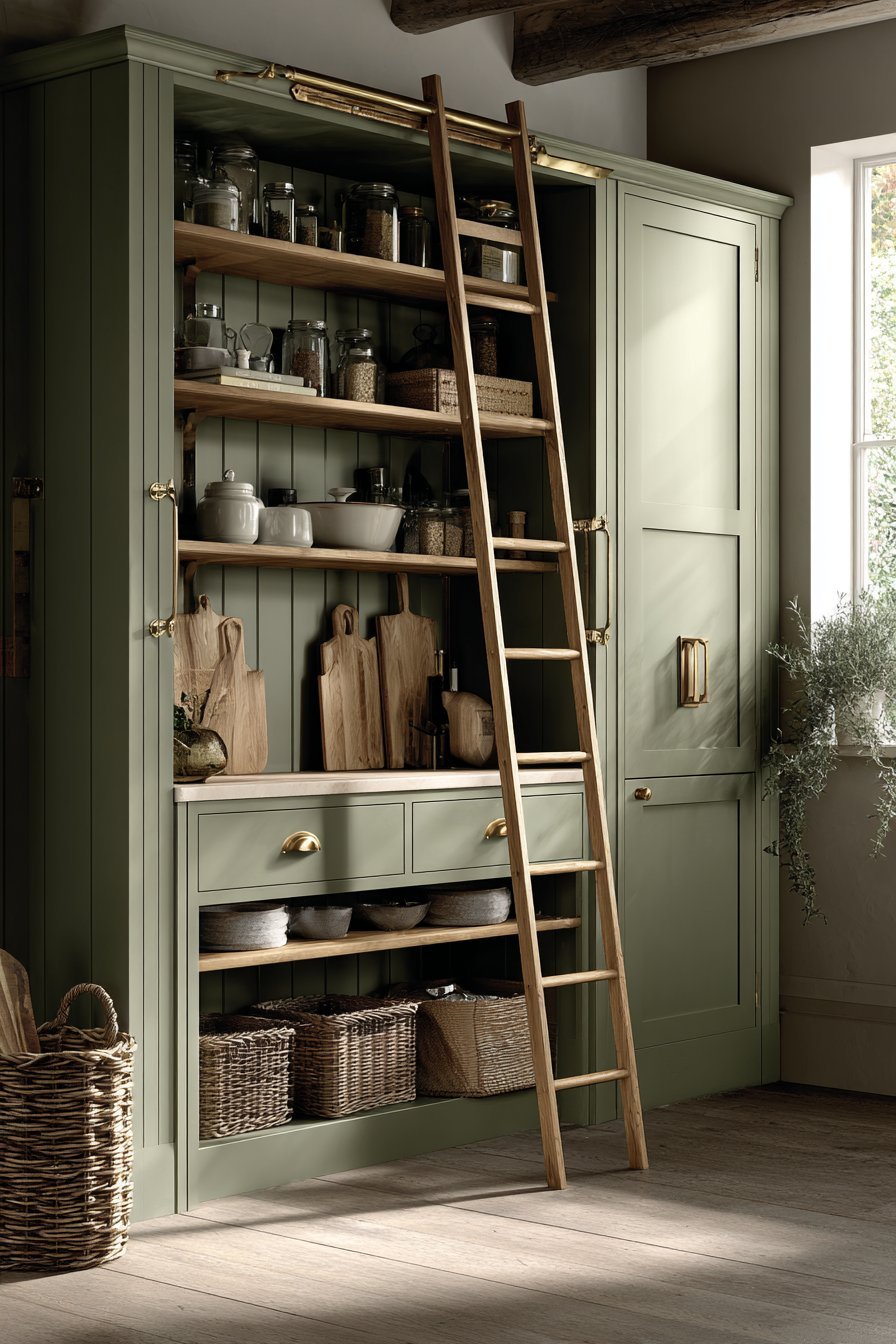
Glass storage jars line the shelves in organized rows. Woven baskets provide concealed storage for less attractive items. Wooden cutting boards lean vertically between stored goods. The organized arrangement looks beautiful and functions well. Pantry storage becomes both practical and displayable.

The contrast between wood shelves and green walls creates visual interest. The sage green painted alcove feels like a special zone. The wooden shelves bring warmth to the storage area. This design proves that functional spaces deserve aesthetic consideration. Beauty and utility coexist perfectly here.
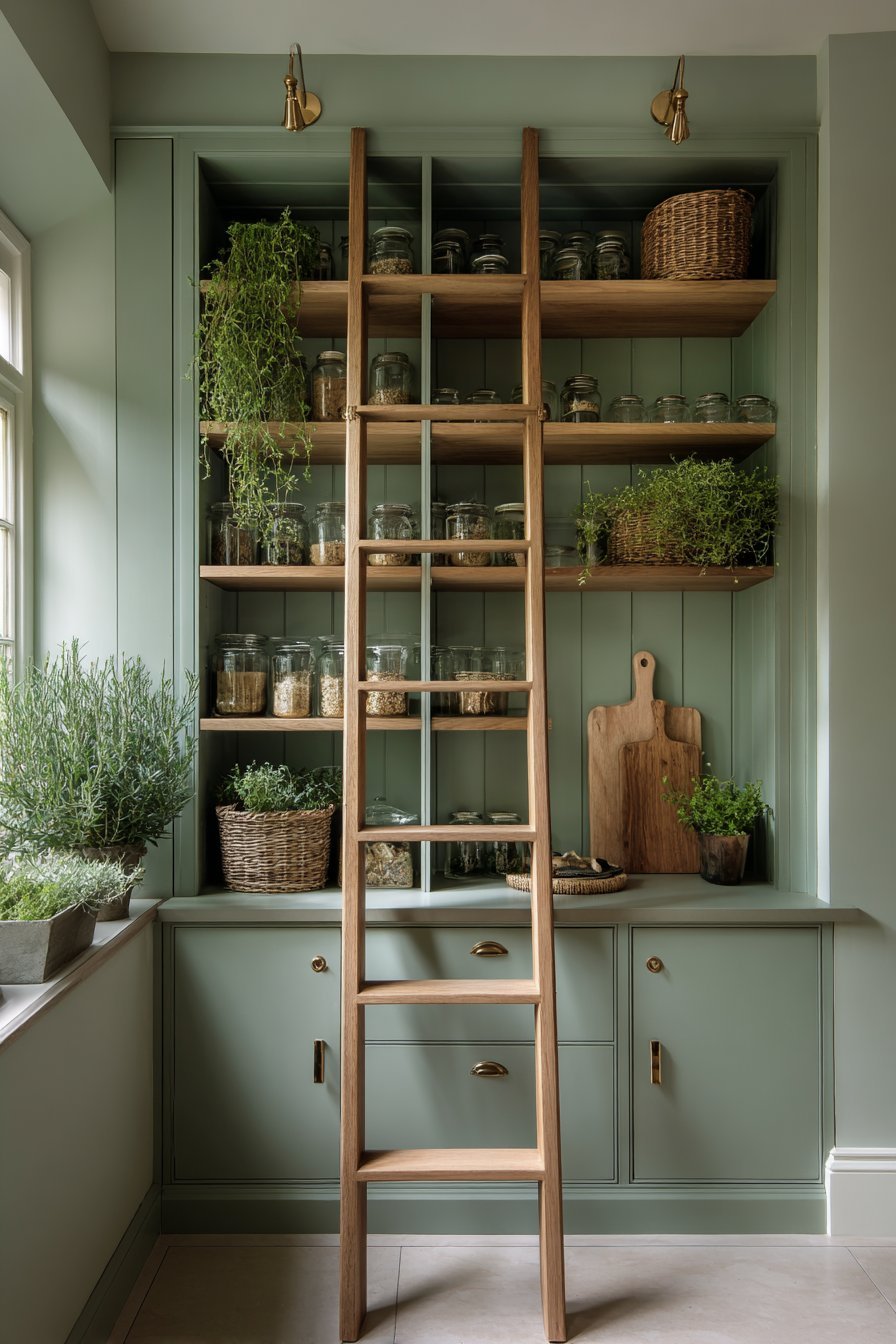
Wooden ladder hardware in brass finish provides access to upper shelves. The rolling ladder adds both function and vintage charm. Brass hardware continues the metallic accent established throughout. The ladder becomes a design feature rather than just a tool. Every element receives design attention in this kitchen.
Key Design Tips:
- Build pantries with solid wood for lasting durability
- Paint pantry interiors in accent colors for definition
- Install adjustable shelving to accommodate changing needs
- Use glass jars for beautiful, visible dry goods storage
- Add rolling ladders for access to tall pantry shelves
- Incorporate woven baskets for textured, concealed storage
9. Exposed Oak Beam Ceiling

Exposed natural oak beams run parallel across the ceiling. The wooden beams create striking architectural interest overhead. Sage green perimeter cabinetry grounds the design below. The vertical relationship between ceiling and cabinetry creates dynamic tension. A large wooden kitchen island anchors the central space.
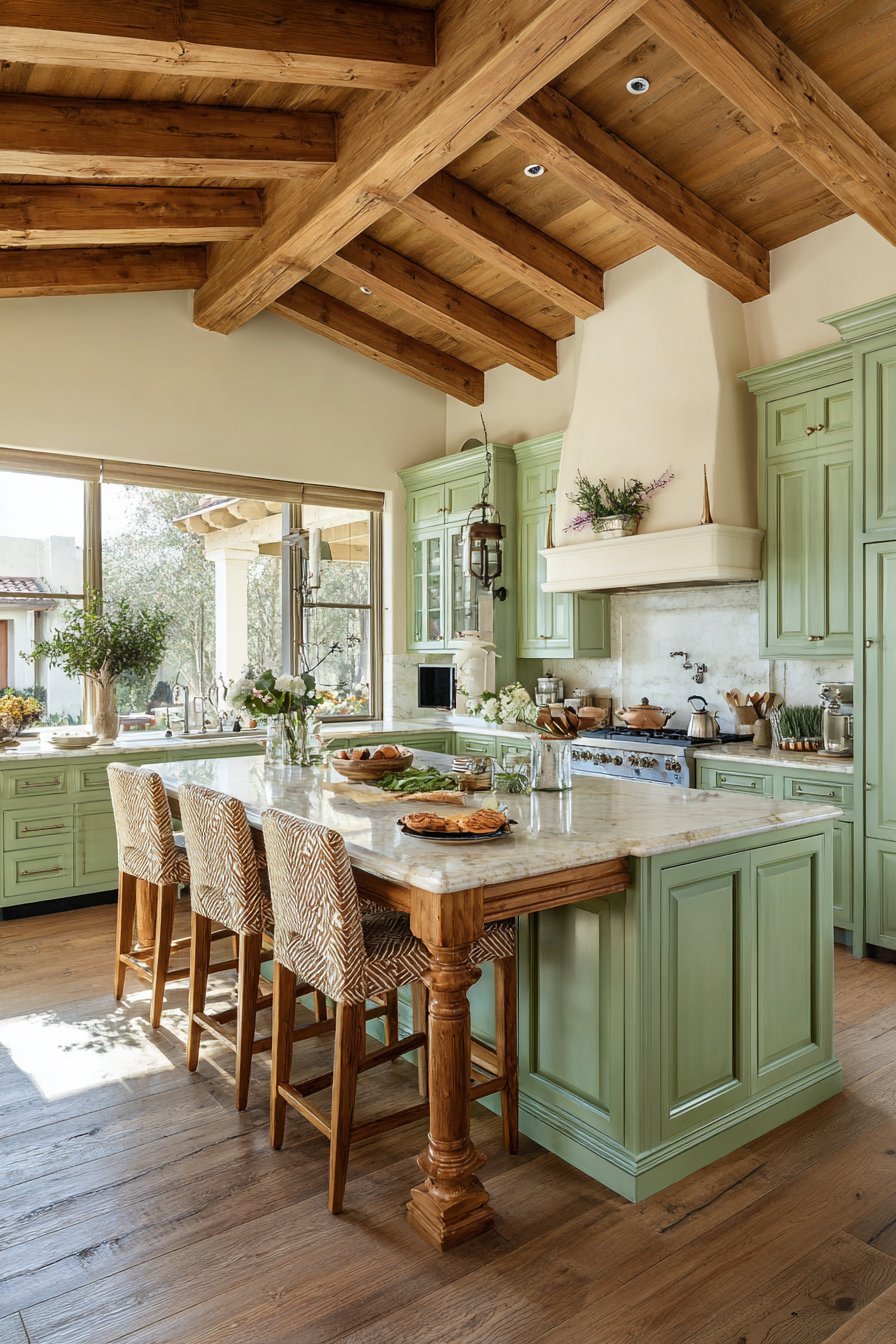
The island features turned legs that reference traditional furniture design. The detail adds refinement to the substantial piece. Marble countertops on the perimeter cabinets provide cool, classic work surfaces. Reclaimed wood flooring in varied tones adds warmth underfoot. The material palette includes multiple wood species and finishes.
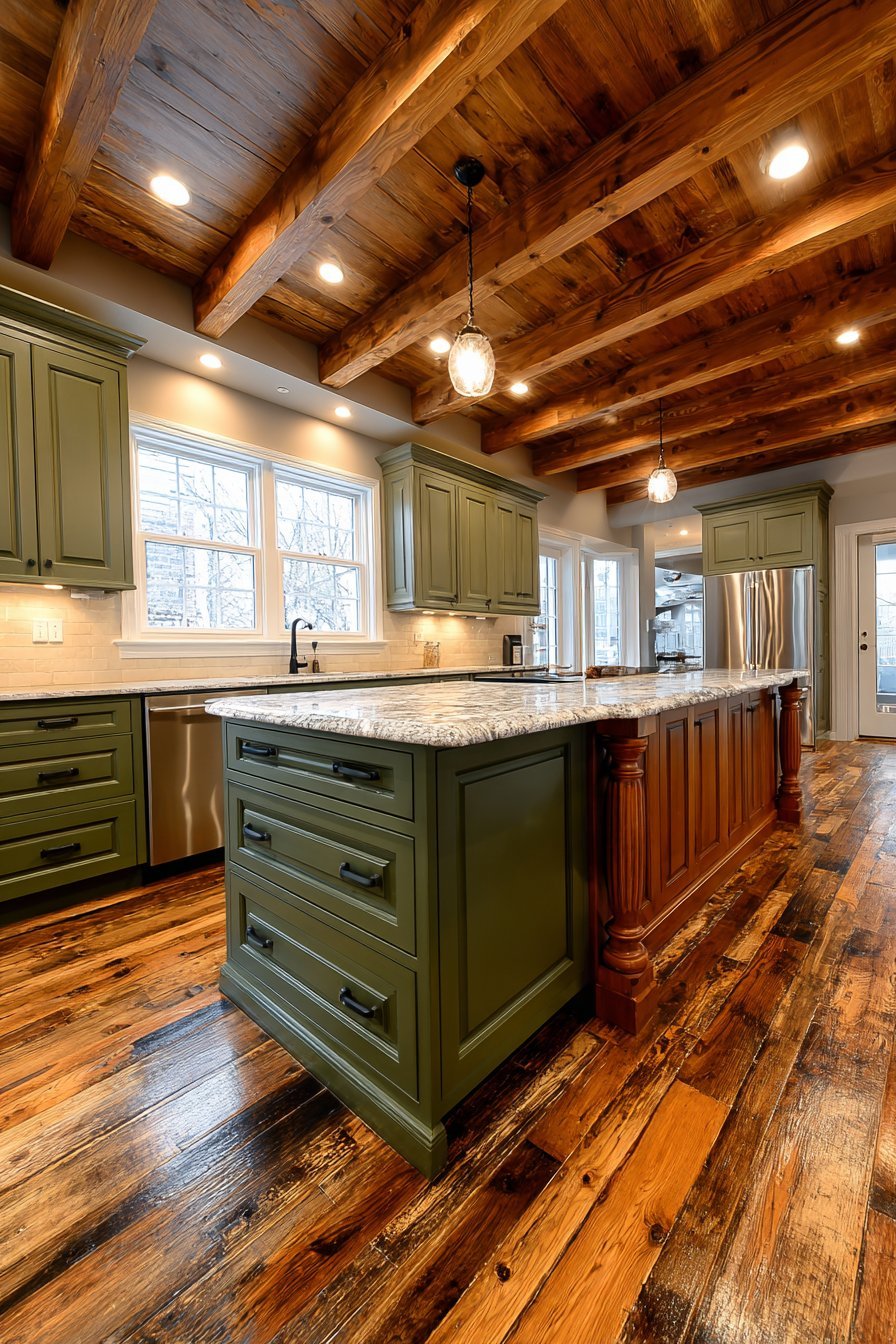
Wide-angle views reveal how the elements work together spatially. The exposed beams draw the eye upward. This architectural feature adds perceived height to the room. The sage green cabinetry prevents the wood from overwhelming the space. Balance between materials creates visual harmony.

Golden hour lighting transforms this kitchen dramatically. Natural light accentuates the interplay between overhead beams and lower cabinets. Warm afternoon sun highlights wood grain patterns. Shadows from the beams create interesting patterns on walls and counters. The space changes character throughout the day.
Key Design Tips:
- Expose structural beams when architecture allows for impact
- Use turned legs on islands to add furniture-quality details
- Select marble countertops for cool contrast to warm wood
- Install wide-plank reclaimed flooring for authentic character
- Balance substantial wood features with painted cabinetry
- Orient beams to enhance the room’s spatial proportions
10. Dedicated Coffee Station Nook
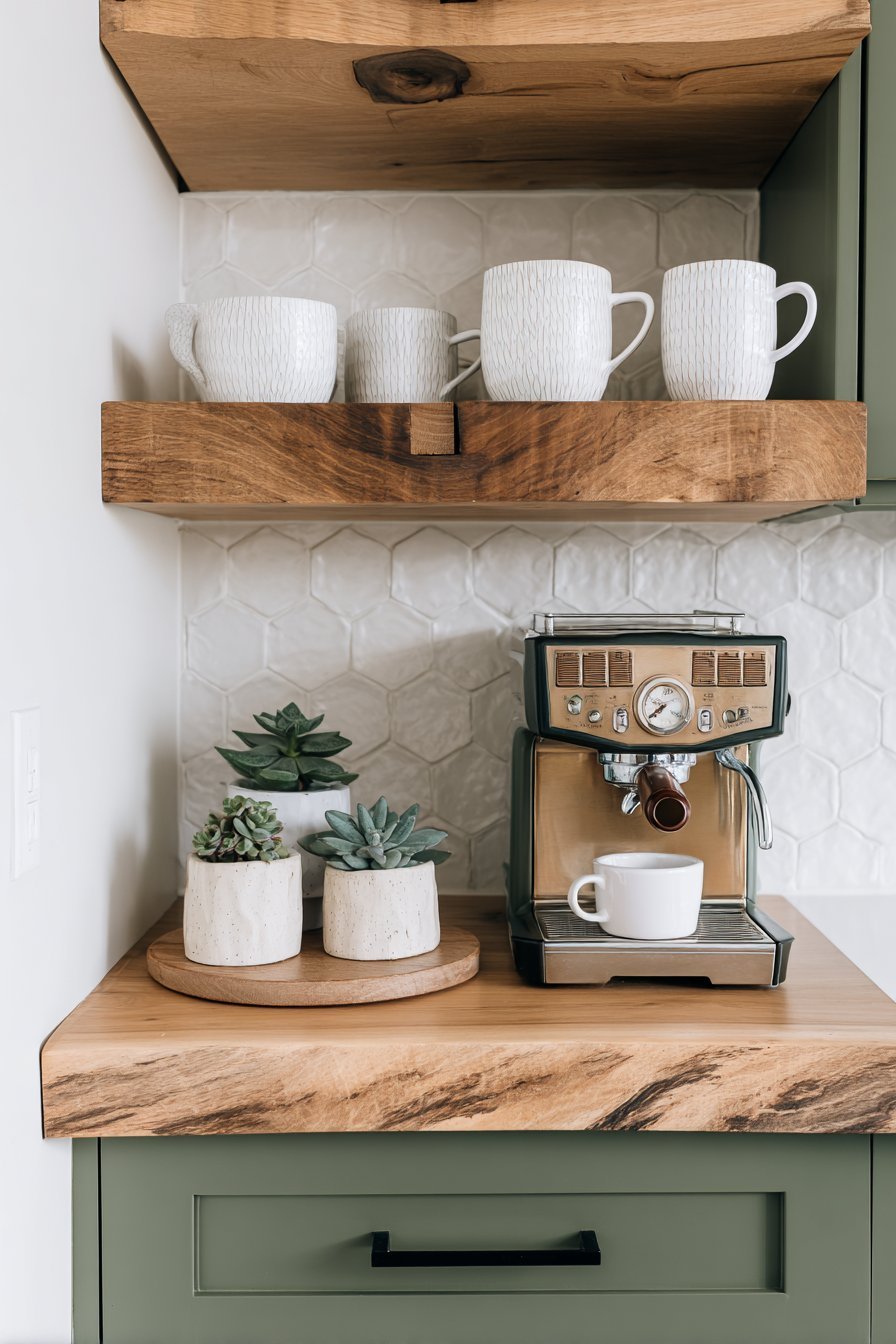
A dedicated coffee station brings cafe charm to the kitchen. Sage green base cabinets provide foundational storage. A floating shelf made from thick walnut wood with live edges tops the cabinet. The natural wood edge creates organic visual interest. This small zone receives special design attention.
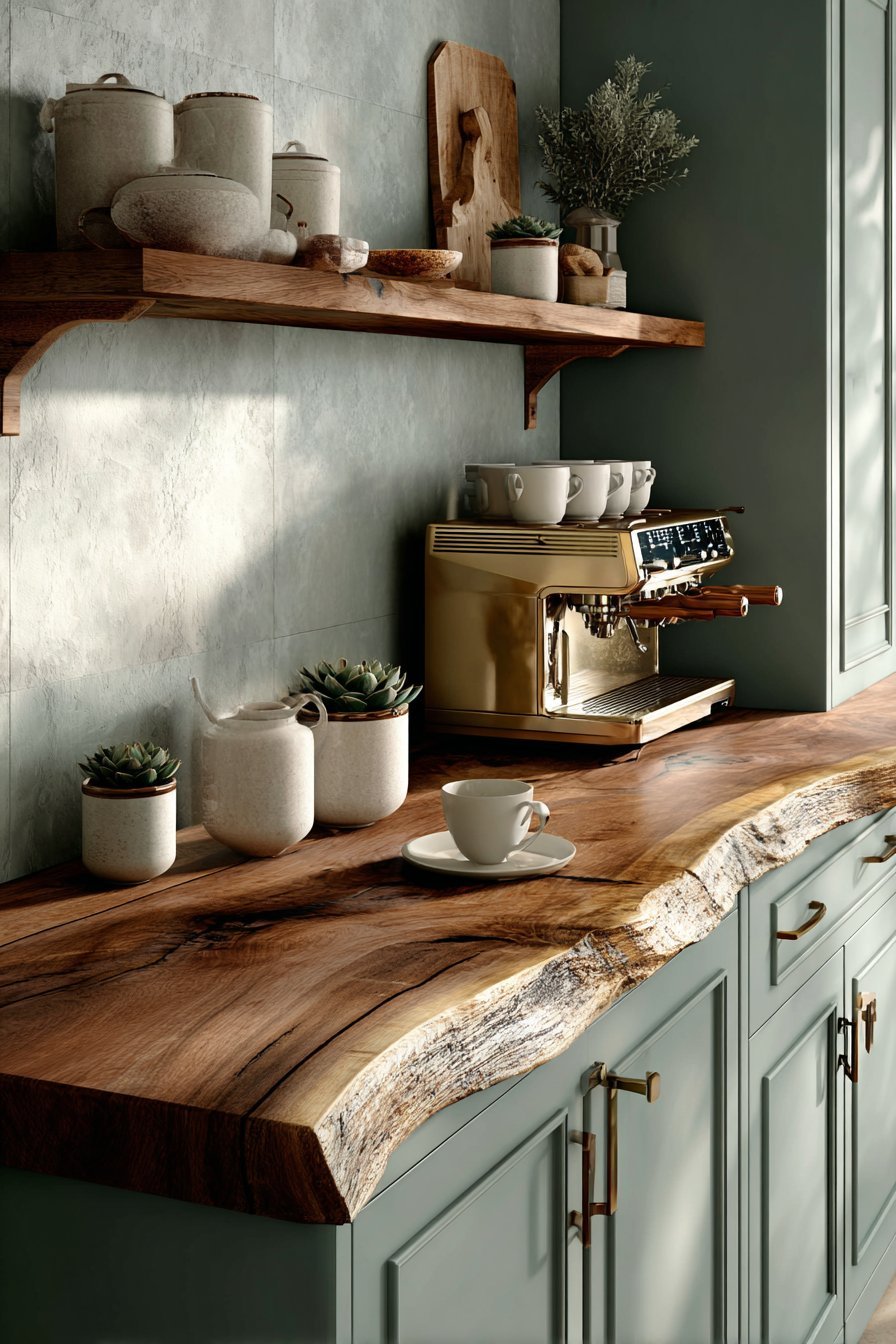
The wooden shelf displays white ceramic mugs in neat rows. A brass espresso machine becomes a functional sculpture. Small potted succulents add living green touches. The arrangement looks curated yet practical. Every morning coffee ritual feels special here.

Sage green zellige tiles create the backsplash behind the station. Characteristic texture variation in the handmade tiles adds depth. The matte surface of zellige tiles complements the wood beautifully. Under-cabinet wooden brackets in natural finish support the shelf. The brackets add both function and decorative detail.

Close-up photography reveals the material quality in this small space. Soft morning light highlights rich wood tones. The light creates subtle shadows that emphasize texture. The matte green cabinetry absorbs light softly. This detailed approach to a small zone demonstrates design thoroughness.
Key Design Tips:
- Create dedicated stations for specific kitchen activities
- Choose live-edge wood for unique, organic shelf details
- Display functional items that double as decoration
- Use zellige tiles for authentic handmade texture
- Install under-cabinet lighting to highlight coffee stations
- Add living plants to bring freshness to small zones
11. Reclaimed Oak Harvest Table

A large harvest table crafted from reclaimed oak dominates the dining area. Visible saw marks and natural imperfections add authentic character. The substantial table feels like it has lived through generations. Mismatched wooden chairs painted in varying shades of sage green surround it. The eclectic seating arrangement feels collected over time.
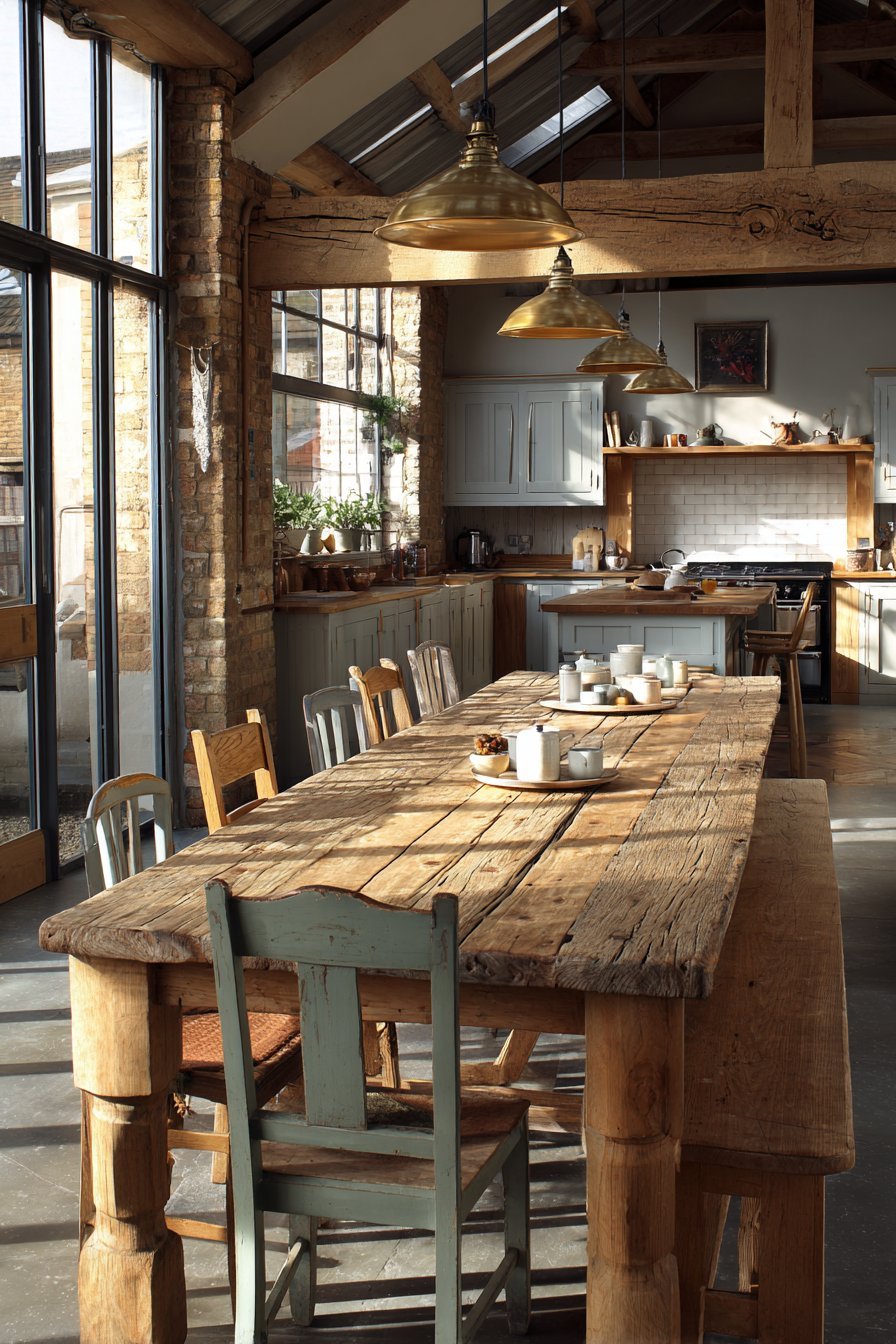
A wooden beam above holds pendant lights with brass detailing. The overhead lighting provides focused illumination for dining. The beam adds architectural definition to the eating area. The brass pendant fixtures tie to hardware throughout the kitchen. Consistent metallic finishes create design cohesion.
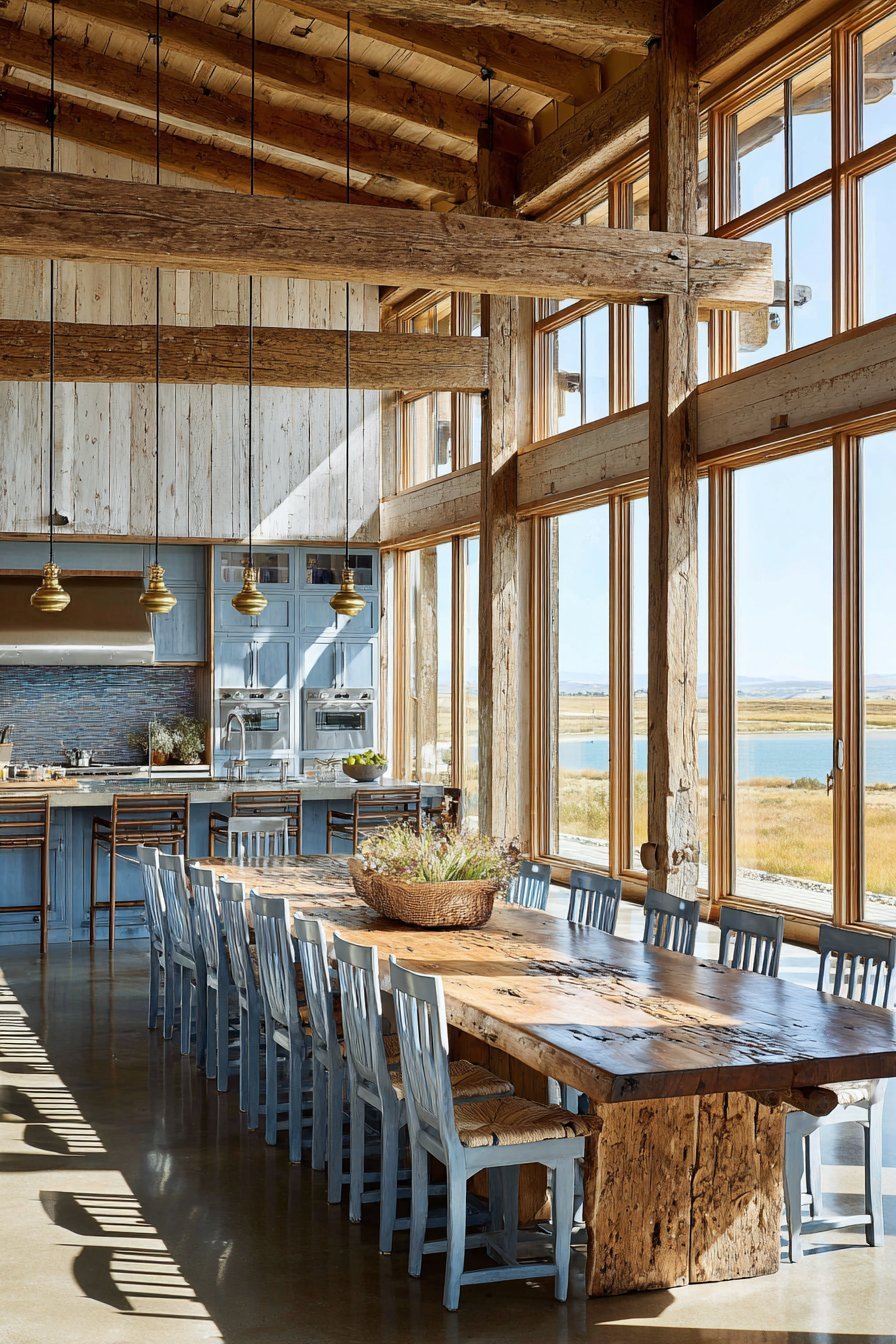
Adjacent kitchen cabinetry continues the sage green and wood theme. Painted lower cabinets match the chair colors. Natural wood upper cabinets maintain material consistency. The open flow between kitchen and dining feels intentional. The spaces share design DNA while serving different functions.
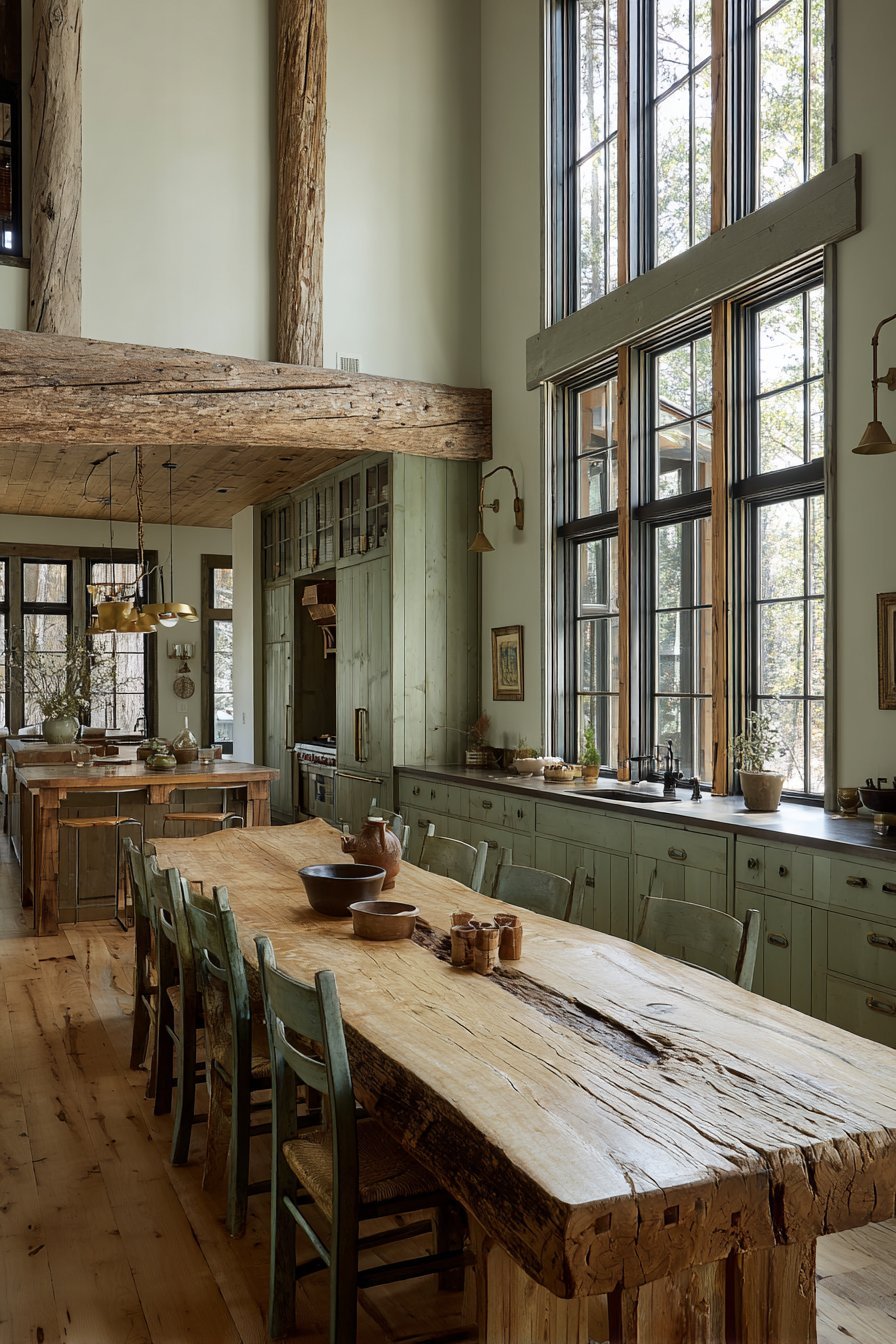
Natural daylight streams through large windows nearby. The light creates authentic shadows that enhance wood textures. Window placement considers how natural light moves through the space. The dining area feels bright and welcoming throughout the day. Light becomes an active design element.
Key Design Tips:
- Choose reclaimed wood tables for sustainable, characterful dining
- Mix and match chair styles painted in related green tones
- Install beams above dining areas for architectural definition
- Use pendant lights to define and illuminate eating zones
- Create open flow between kitchen and dining areas
- Position dining tables near windows for natural illumination
12. Integrated Appliance Wall
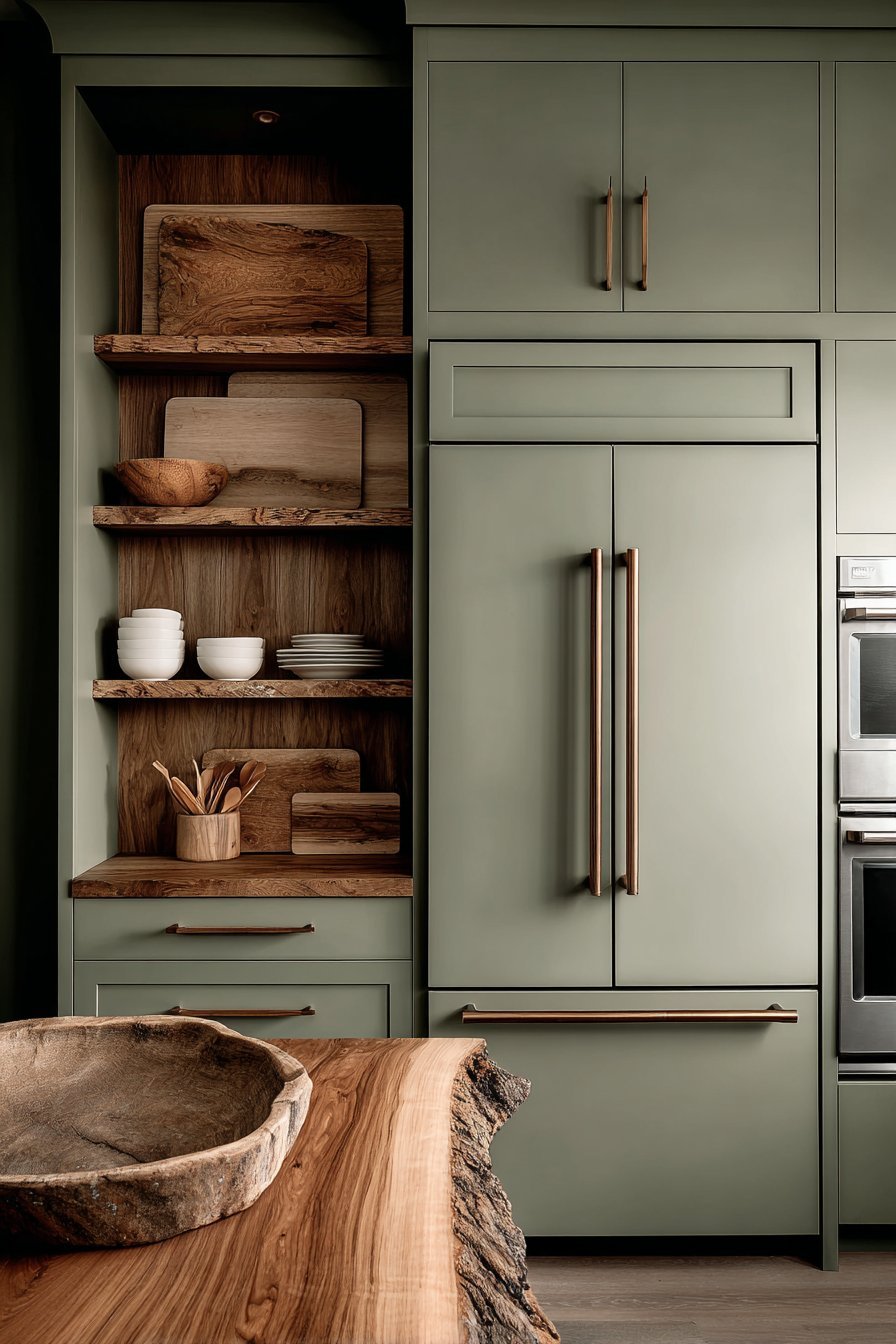
Modern appliances integrate seamlessly into sage green shaker cabinetry. The appliance wall balances contemporary function with traditional aesthetics. Open shelving flanks both sides in rough-sawn pine. Natural edge details on the wooden shelves add organic touches. The design successfully merges modern convenience with rustic beauty.
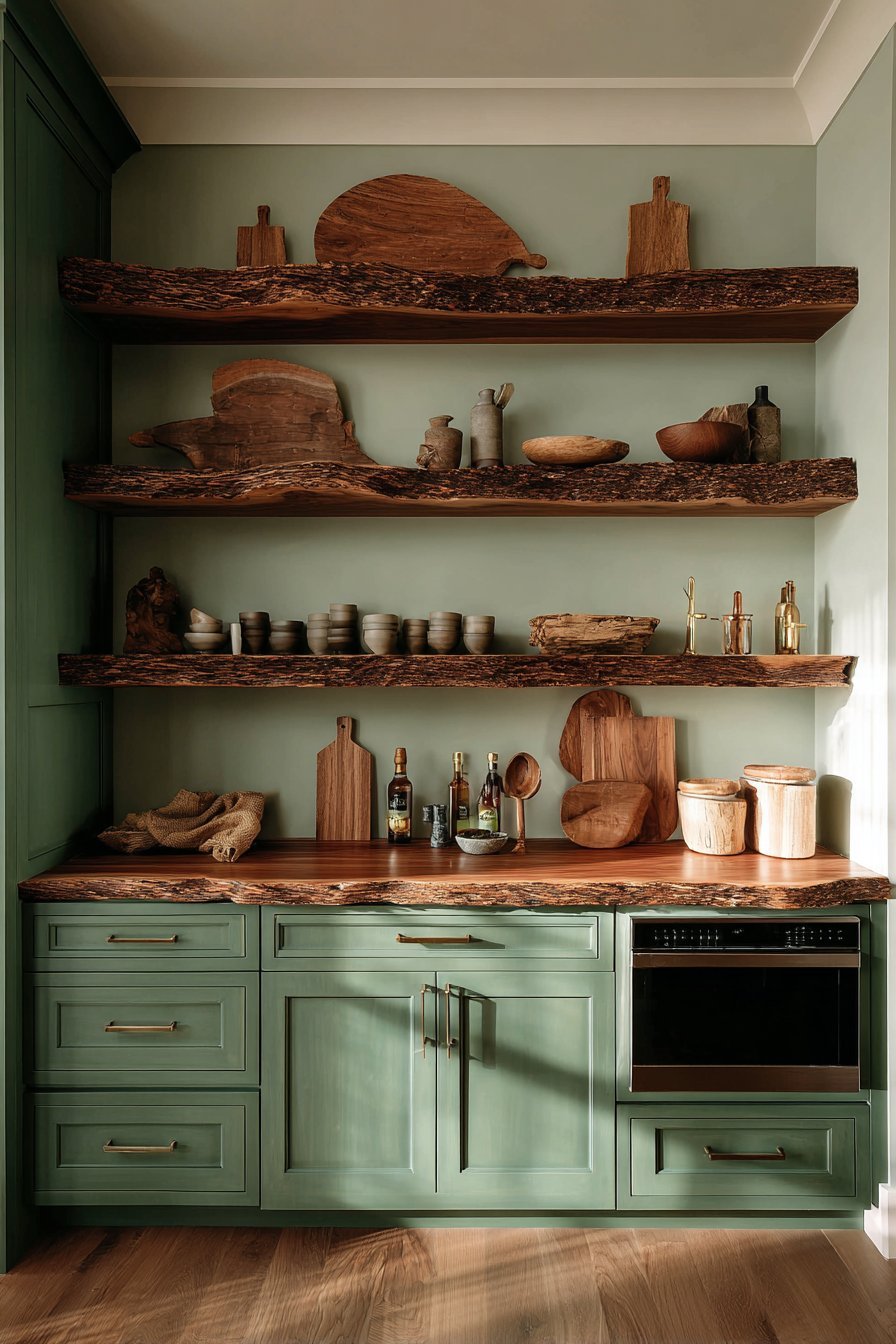
The wooden shelves display cutting boards standing vertically. Wooden bowls in various sizes create sculptural groupings. Brass kitchen tools hang from simple hooks. The display remains functional while looking intentionally styled. Frequently used items stay accessible and attractive.

A wooden countertop in maple spans the workspace below. The light wood provides contrast to the sage green cabinets. Maple’s subtle grain pattern adds quiet interest. The smooth surface works well for food preparation tasks. Material choices consider both aesthetics and functionality.
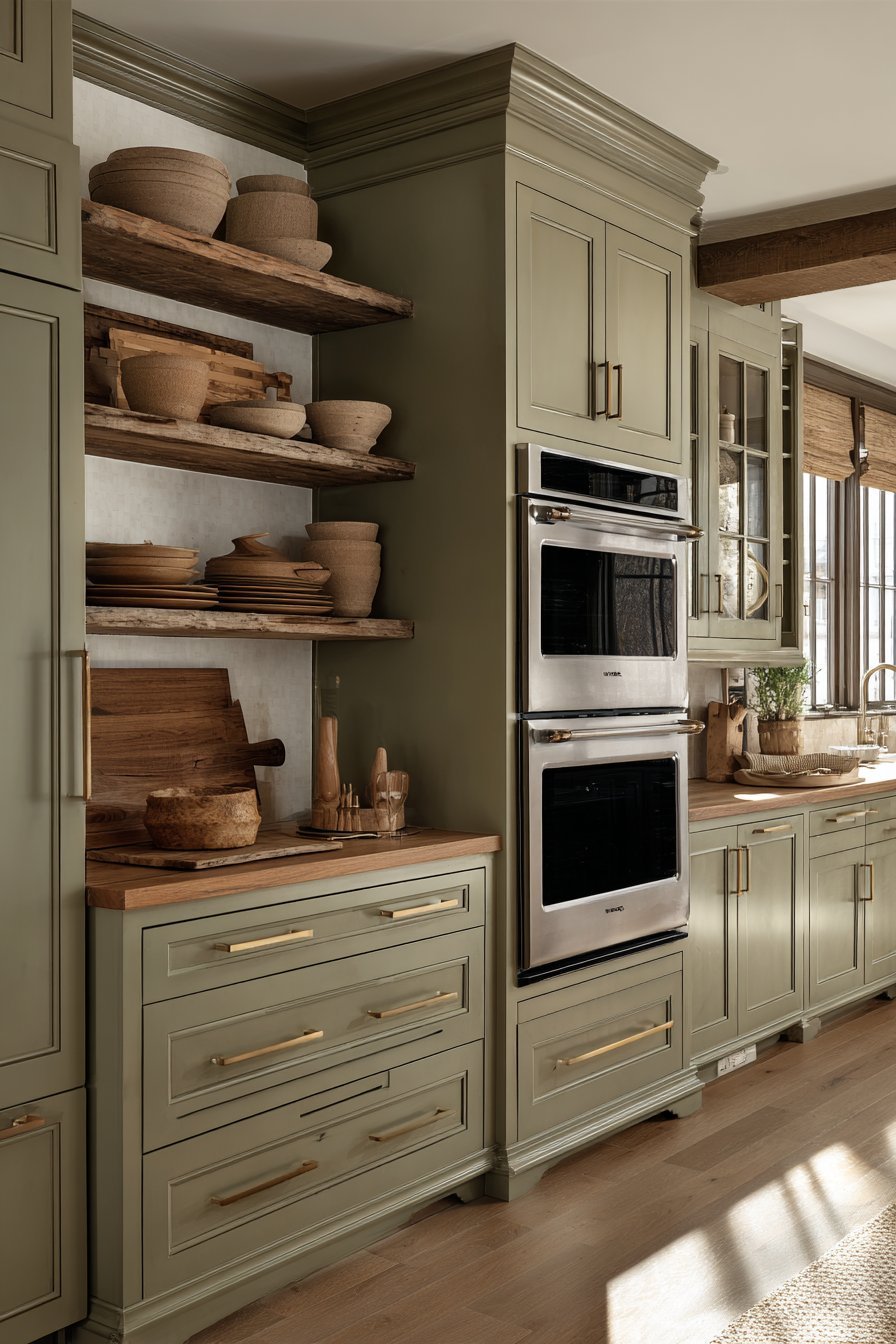
Professional lighting ensures the integrated appliances function well. Balanced lighting also showcases the organic aesthetic throughout. The design demonstrates that modern appliances needn’t disrupt cohesive style. Technology integrates without dominating. The result feels both current and timeless.
Key Design Tips:
- Panel appliances to match cabinetry for integrated appearance
- Flank appliance zones with open shelving to soften
- Display wooden kitchen tools as functional decoration
- Choose maple countertops for light, subtle wood grain
- Install adequate task lighting at appliance work zones
- Balance modern technology with organic material warmth
13. Bay Window Oak Seat
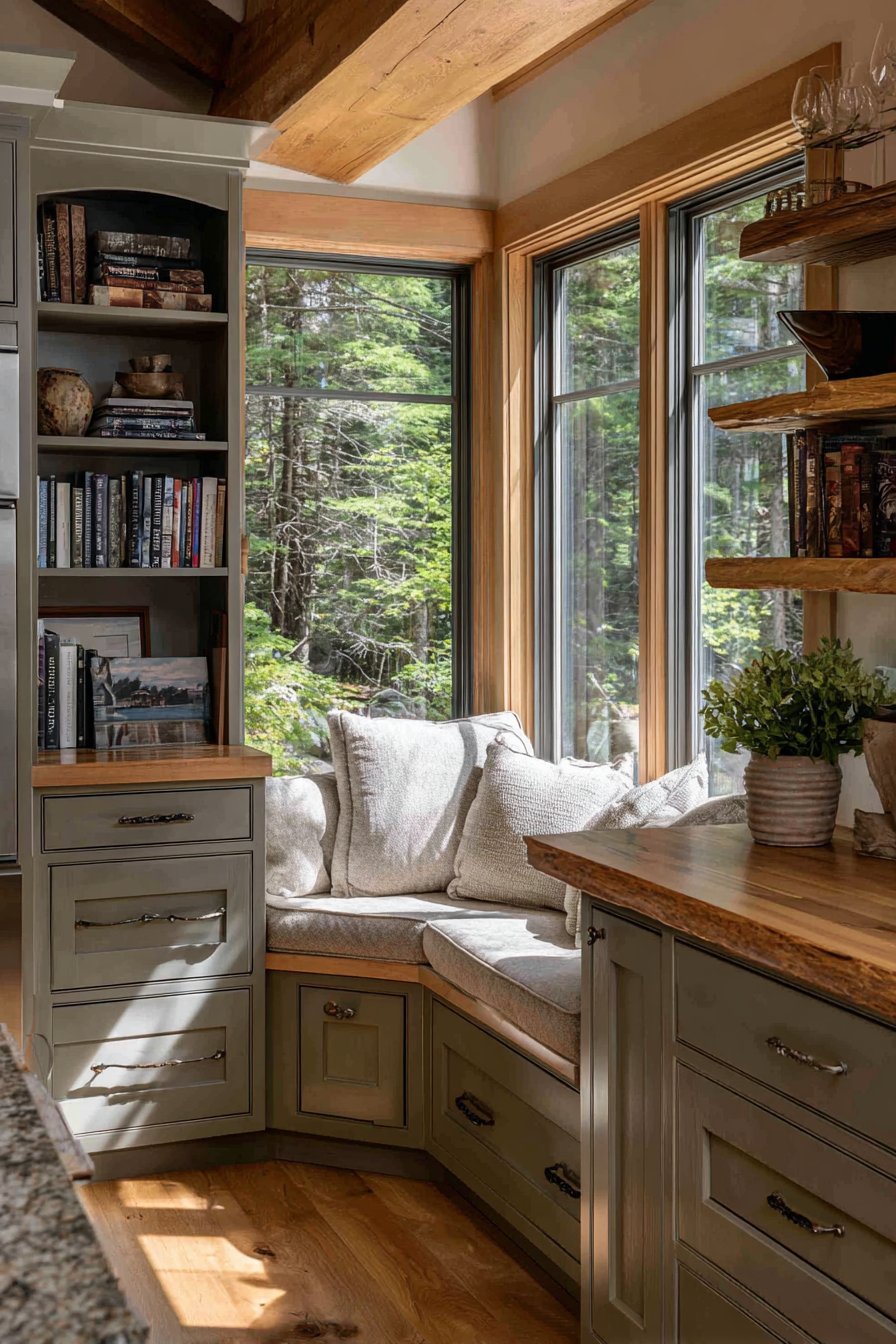
A bay window area transforms into a cozy reading nook. Custom wooden window seat crafted from oak features lift-top storage. The practical design maximizes often-wasted space beautifully. Linen cushions in natural tones provide comfortable seating. Surrounding sage green cabinetry extends to create the nook.
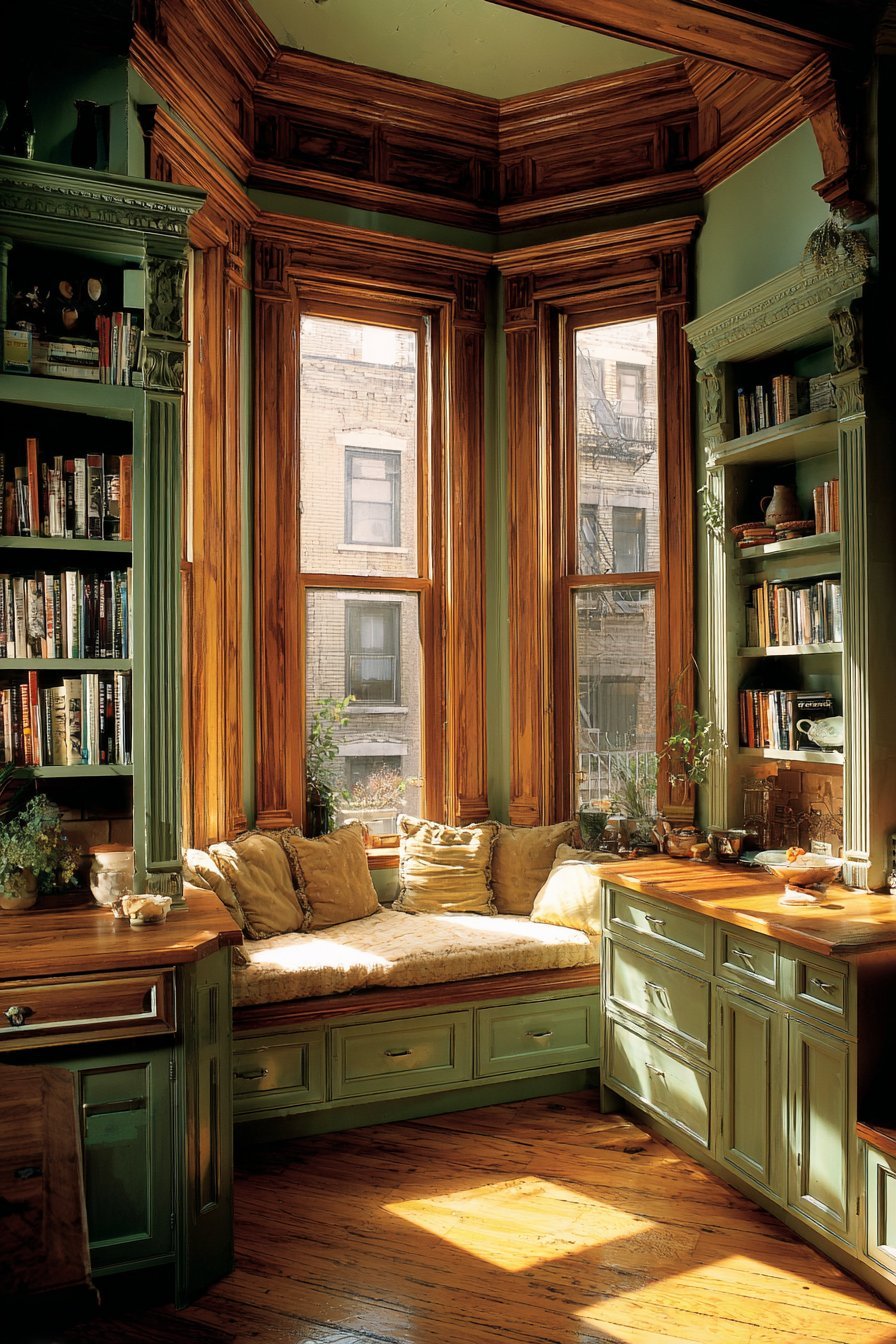
Wooden countertops extend from the cabinets to create a reading surface. The integrated design makes the nook feel purposeful. Built-in bookcases with wooden shelves flank both sides. Cookbooks and decorative items fill the shelves. The kitchen becomes a space for both cooking and relaxing.

Wooden window trim in natural finish frames outdoor views. The simple trim details let the view take center stage. Natural light floods this cozy corner throughout the day. The reading nook benefits from changing light conditions. Morning sun creates different moods than afternoon light.

This multifunctional space demonstrates creative kitchen planning. Not every kitchen zone must serve food preparation functions. The nook adds unexpected living space functionality. The consistent use of sage green and wood maintains design unity. The space feels intentional rather than improvised.
Key Design Tips:
- Convert bay windows into functional seating with storage
- Use lift-top mechanisms for hidden toy or cookbook storage
- Add built-in bookcases to maximize vertical wall space
- Choose linen cushions for easy cleaning and neutral appeal
- Extend kitchen countertops to create small desk surfaces
- Frame windows simply to emphasize views over trim
14. Carved Oak Mantel Hood

A statement range area features a carved oak mantel-style hood. The wood receives sage green paint with intentional distressing. The technique reveals glimpses of natural wood underneath. This layered finish creates aged, authentic character. Surrounding walls feature sage green beadboard with natural wood trim.

Open wooden shelving displays copper cookware with beautiful patina. White ceramic pieces provide bright contrast. The shelves remain functional while creating visual interest. The range becomes a focal point through material and display choices. Cooking areas deserve design attention beyond pure function.

The range sits on wooden flooring with a patterned runner. The rug adds softness underfoot in a standing-intensive zone. Pattern introduces visual complexity to solid surfaces. The runner also protects wood flooring from cooking spills. Practical considerations inform beautiful solutions.
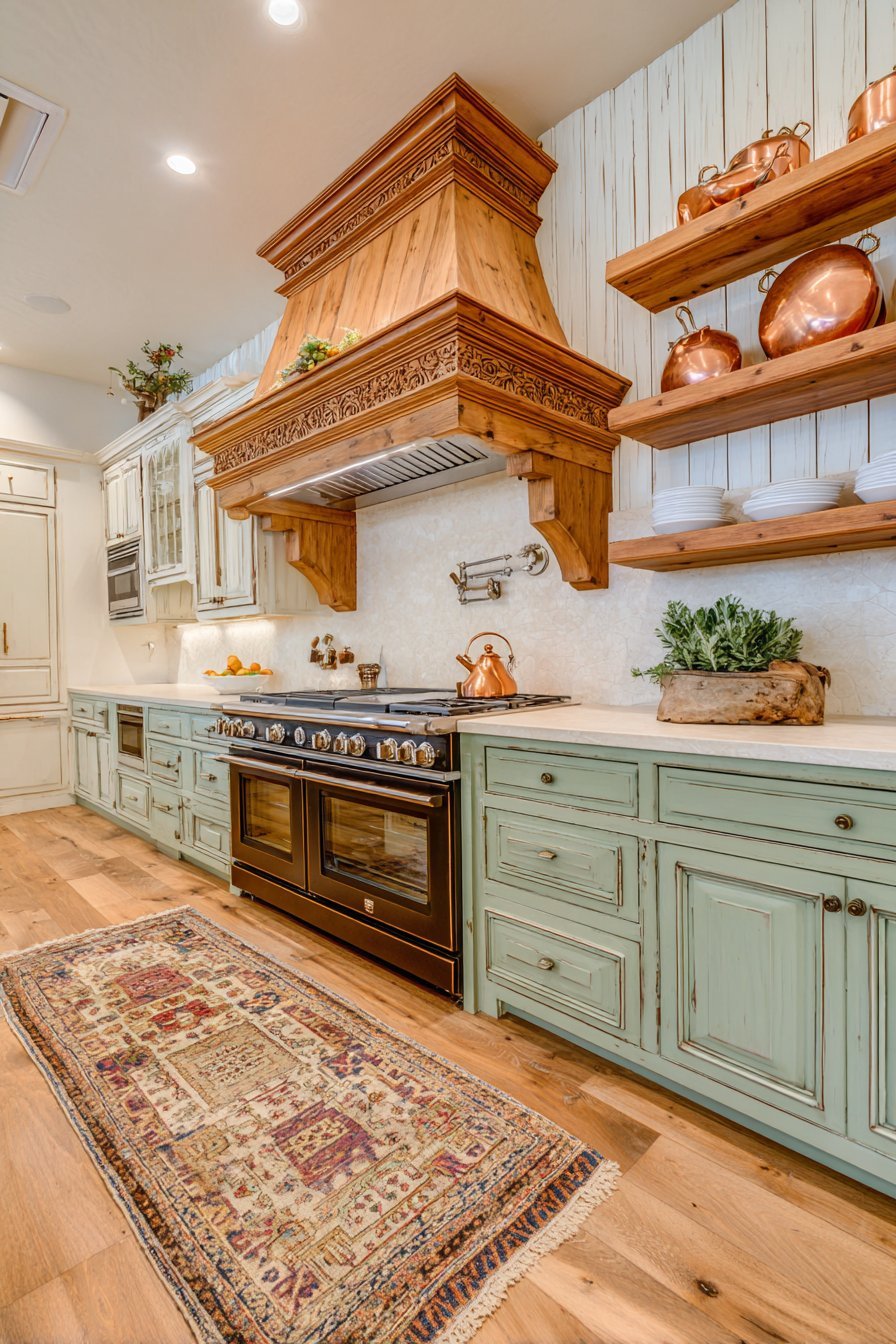
Focused lighting on the range area highlights layered textures. The painted and distressed wood shows dimension under proper lighting. Natural wood trim creates framing lines. The rich sage green color gains depth from strategic illumination. Lighting design enhances the architectural feature significantly.
Key Design Tips:
- Add carved details to range hoods for furniture-quality presence
- Use distressed paint finishes to reveal wood beneath
- Install beadboard in cooking areas for traditional texture
- Display copper cookware for functional decoration that ages well
- Add runners in standing zones for comfort and protection
- Focus lighting on architectural features to emphasize details
15. Glass-Front Upper Storage Wall

Floor-to-ceiling cabinetry creates an impressive storage wall. Sage green glass-front upper cabinets reveal wooden interior shelves. The transparency prevents the tall storage from feeling oppressive. Sage green solid lower cabinets provide concealed storage. Wooden countertops connect the upper and lower zones.
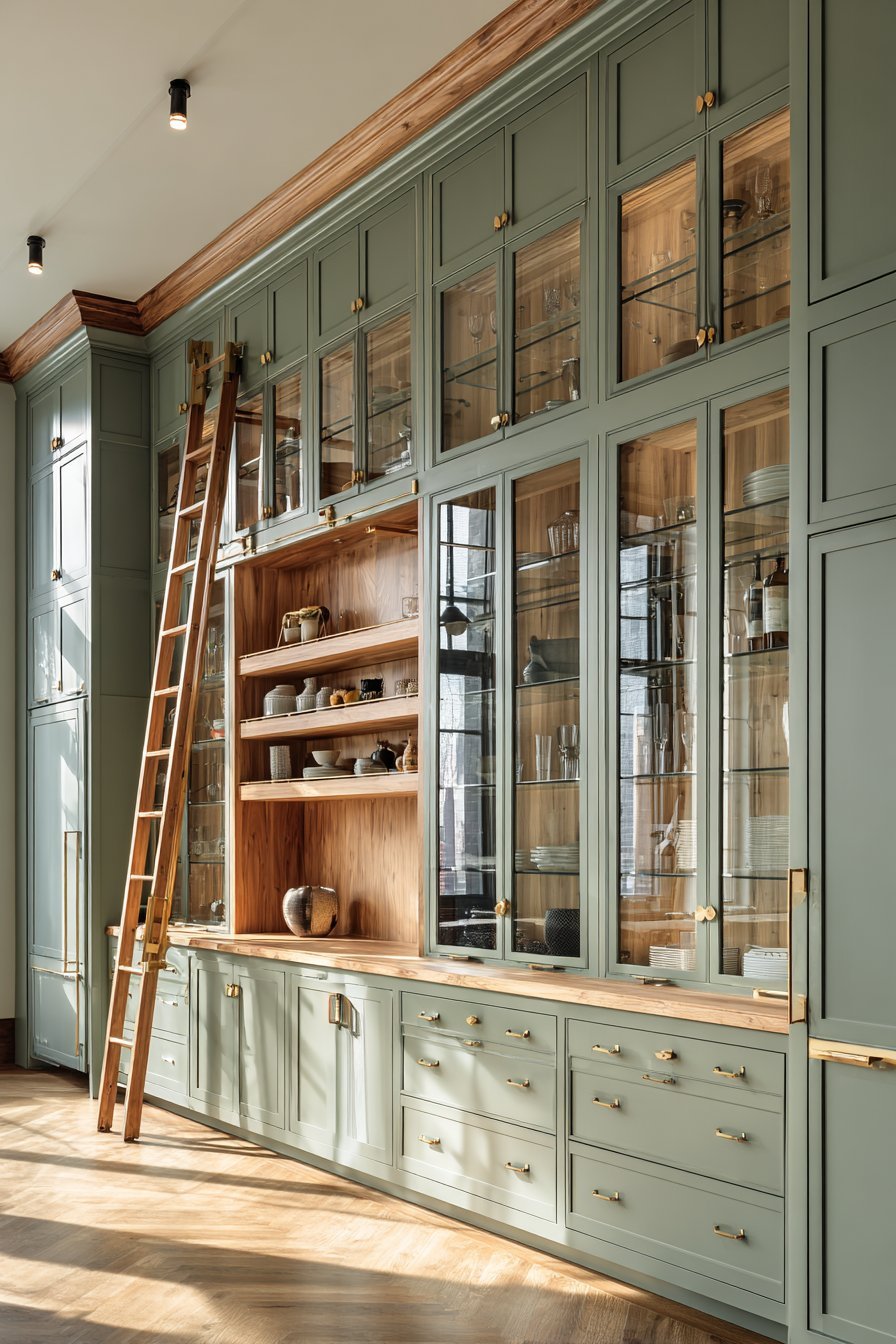
Cabinet hardware features simple wooden knobs and pulls in natural oak. The wood hardware extends the organic theme to small details. Wooden crown molding tops the cabinetry run. The molding provides architectural finish to the vertical design. Traditional details elevate the overall aesthetic.
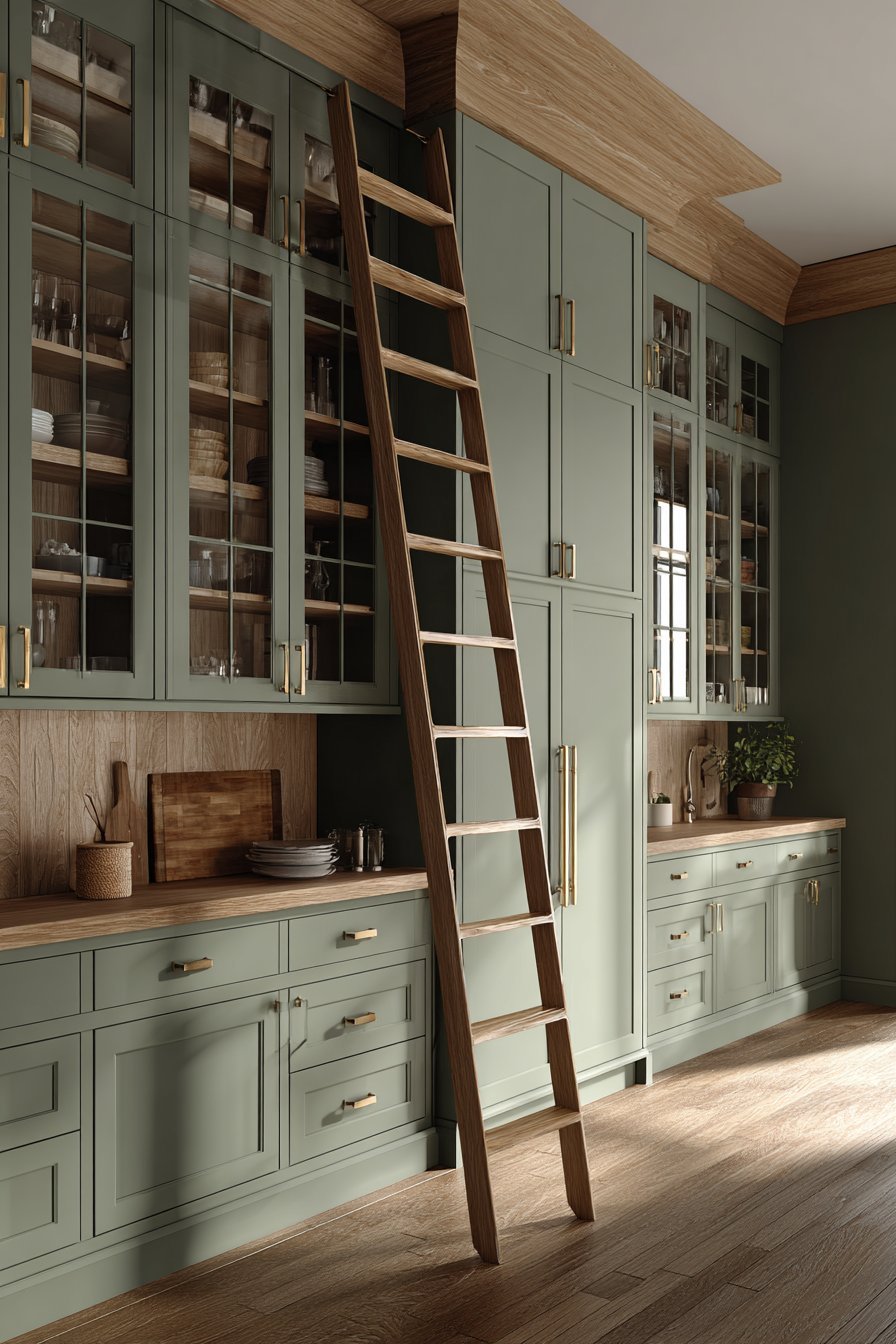
A wooden library ladder on brass hardware provides upper storage access. The ladder serves function while adding vintage charm. Brass hardware on the ladder matches metallic finishes throughout. The ladder can slide along the cabinet run. Practical access becomes a design feature.

Wide-angle photography captures the impressive vertical storage solution. Natural lighting creates depth through the glass cabinet doors. The visible wooden interior shelves add warmth to closed storage. Glass reflects light, making the space feel larger. The storage wall becomes an architectural feature.
Key Design Tips:
- Install glass-front uppers to prevent tall storage from feeling heavy
- Use wooden interior shelves visible through glass doors
- Add library ladders for both function and nostalgic charm
- Choose wooden hardware to extend natural material theme
- Install crown molding for architectural finish on tall cabinets
- Arrange cabinet interiors attractively since they’ll be visible
16. Mudroom Transition Lockers
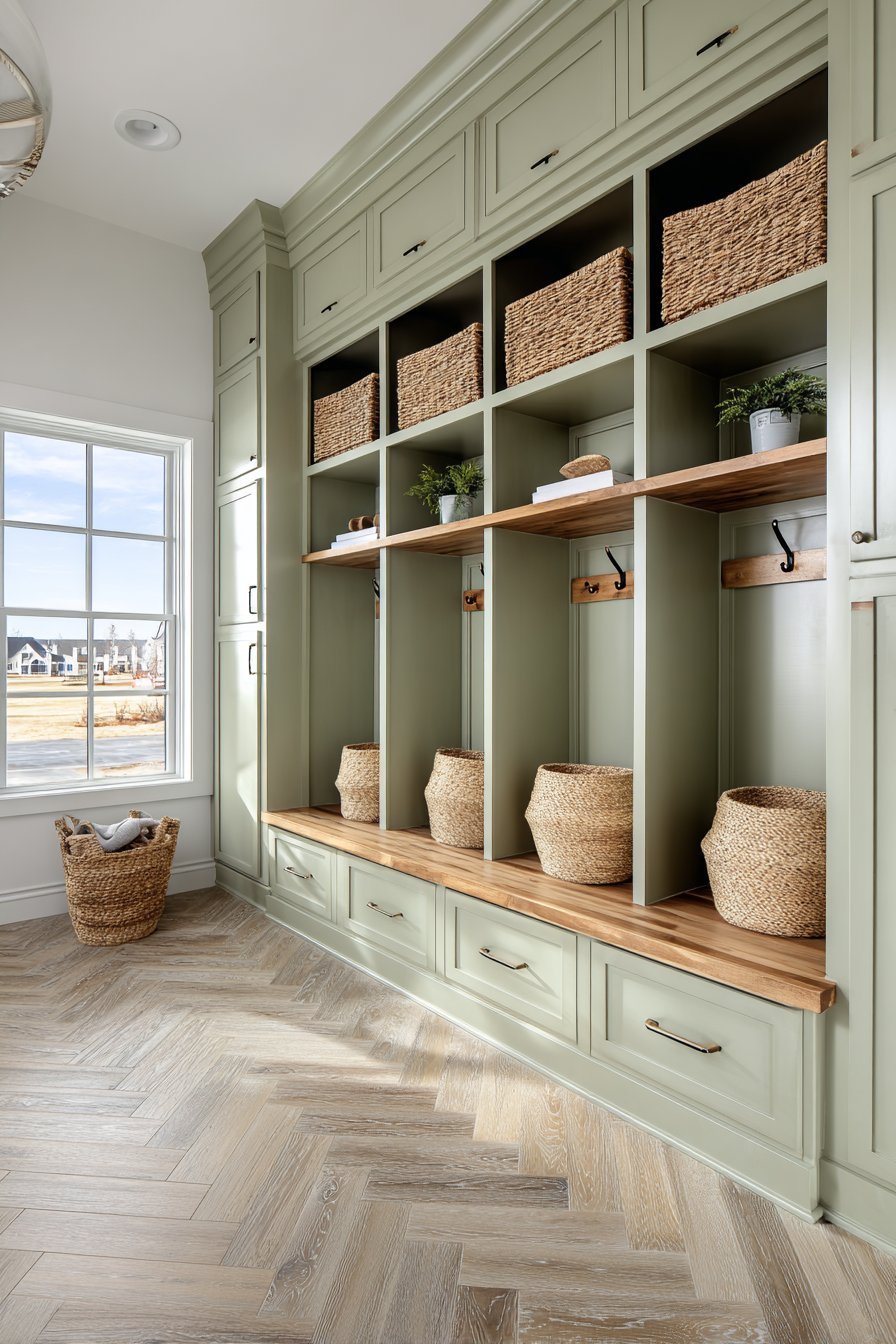
The transition between kitchen and mudroom receives thoughtful design attention. Sage green built-in lockers feature individual compartments. Each locker includes a wooden bench seat crafted from oak planks. The benches provide practical seating for removing shoes. Sage green doors on each locker maintain color consistency.
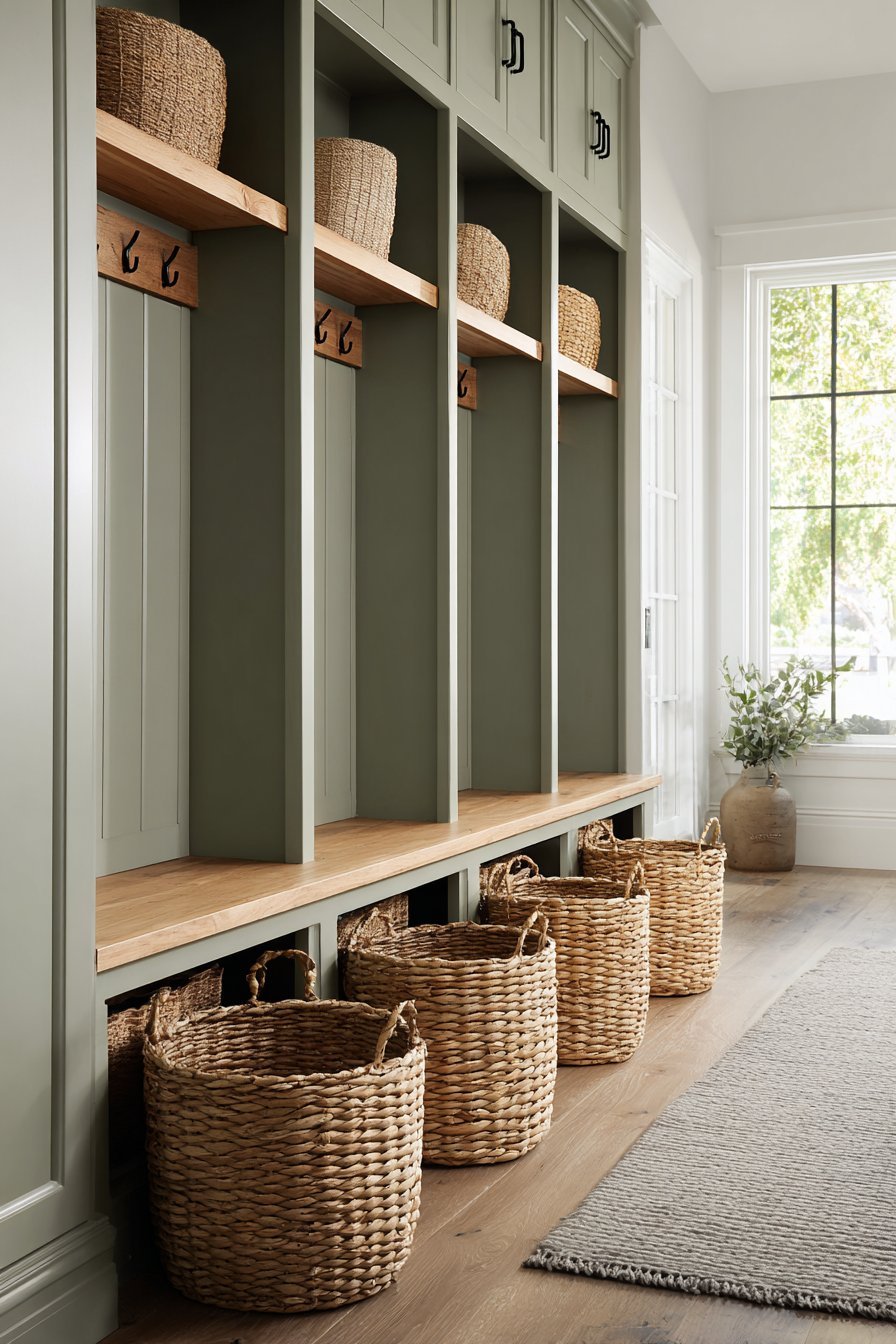
Wooden coat hooks mount inside each locker opening. An upper wooden shelf in each compartment stores hats. The flooring transitions from kitchen tile to wooden planks. The material change signals a shift in room function. Woven baskets sit beneath benches for shoe storage.

This transition zone demonstrates how cohesive design extends throughout the home. The sage green and wood theme doesn’t stop at kitchen boundaries. Instead, the palette flows naturally into adjacent spaces. The mudroom feels connected to rather than separate from the kitchen. Consistent design choices create visual flow.

Natural light from adjacent windows illuminates the mudroom area. The lighting makes the transition feel welcoming rather than utilitarian. Practical spaces benefit from aesthetic consideration. The result is a mudroom that feels designed rather than leftover. Every space in the home deserves intentional planning.
Key Design Tips:
- Extend kitchen design themes into adjacent transition spaces
- Build individual lockers with dedicated storage for each family member
- Install wooden bench seats for practical sitting while removing shoes
- Use woven baskets for concealed shoe storage that looks attractive
- Transition flooring materials to signal room function changes
- Provide adequate hooks and shelves in mudroom lockers
17. Horizontal Wood Plank Backsplash
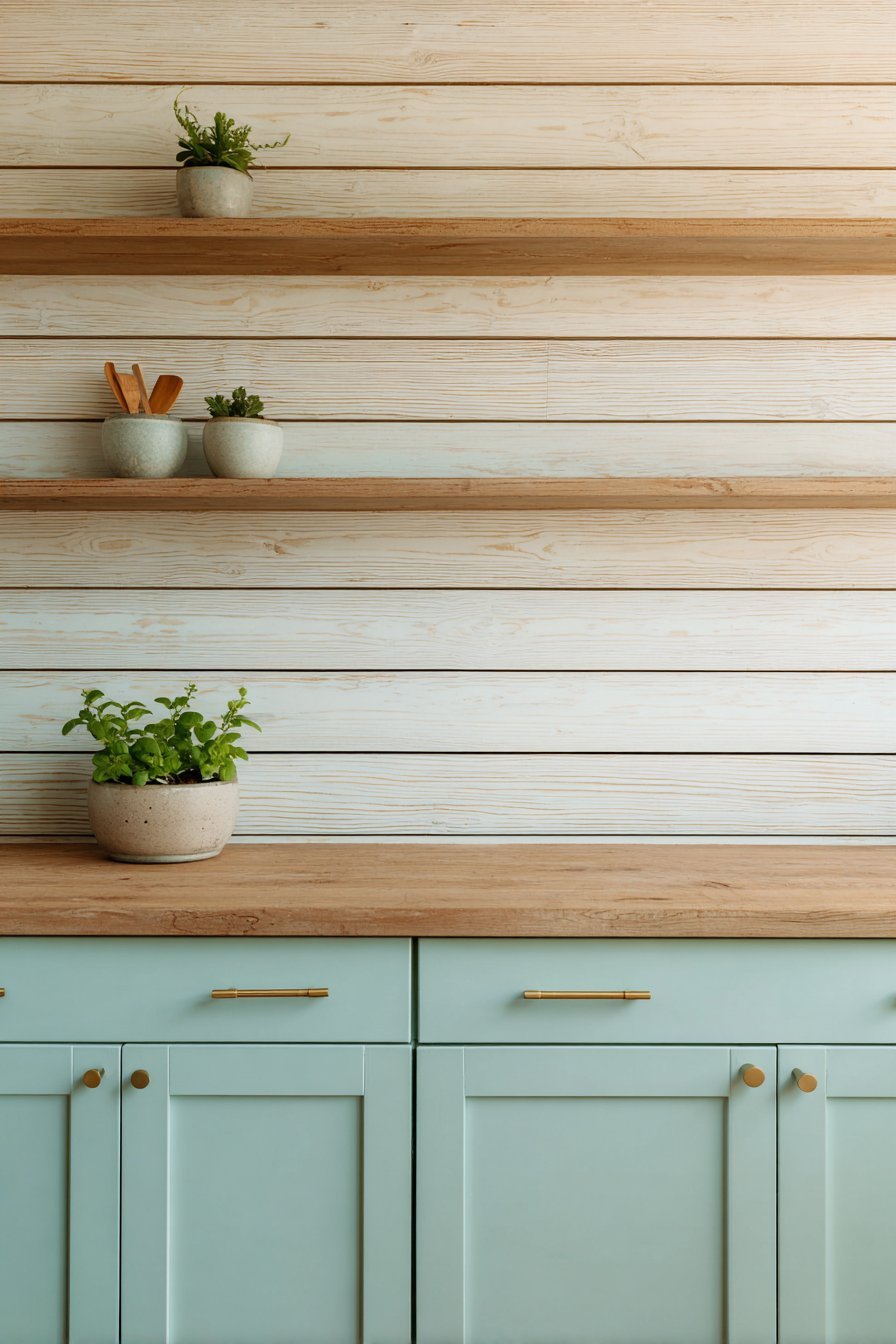
Horizontal wooden planks in natural pine create an unusual backsplash. The shiplap effect adds organic warmth behind work areas. Sage green lower cabinets ground the design below. Natural wood upper cabinets continue above. The wooden backsplash bridges the two cabinet zones.
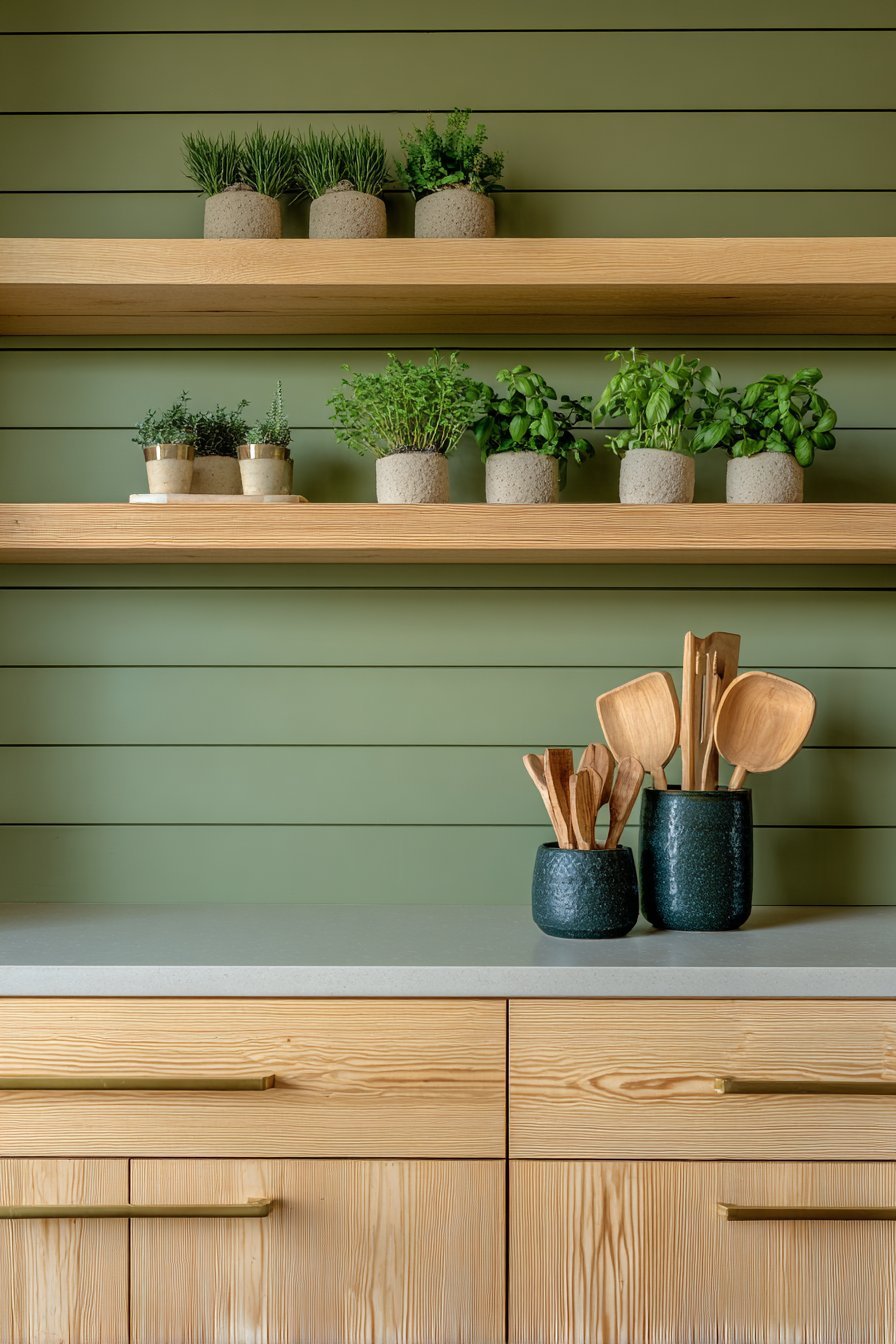
Brass floating shelves interrupt the wooden plank backsplash. The metallic shelves appear to float against the wood. Small potted herbs and wooden utensils rest on the brass shelves. The display adds living elements and practical storage. The floating effect creates visual lightness.

Wood grain patterns create visual interest against solid cabinetry. Each plank shows unique grain characteristics. The horizontal lines make the kitchen feel wider. The natural pine color provides warm contrast to sage green. The material combination feels both fresh and timeless.
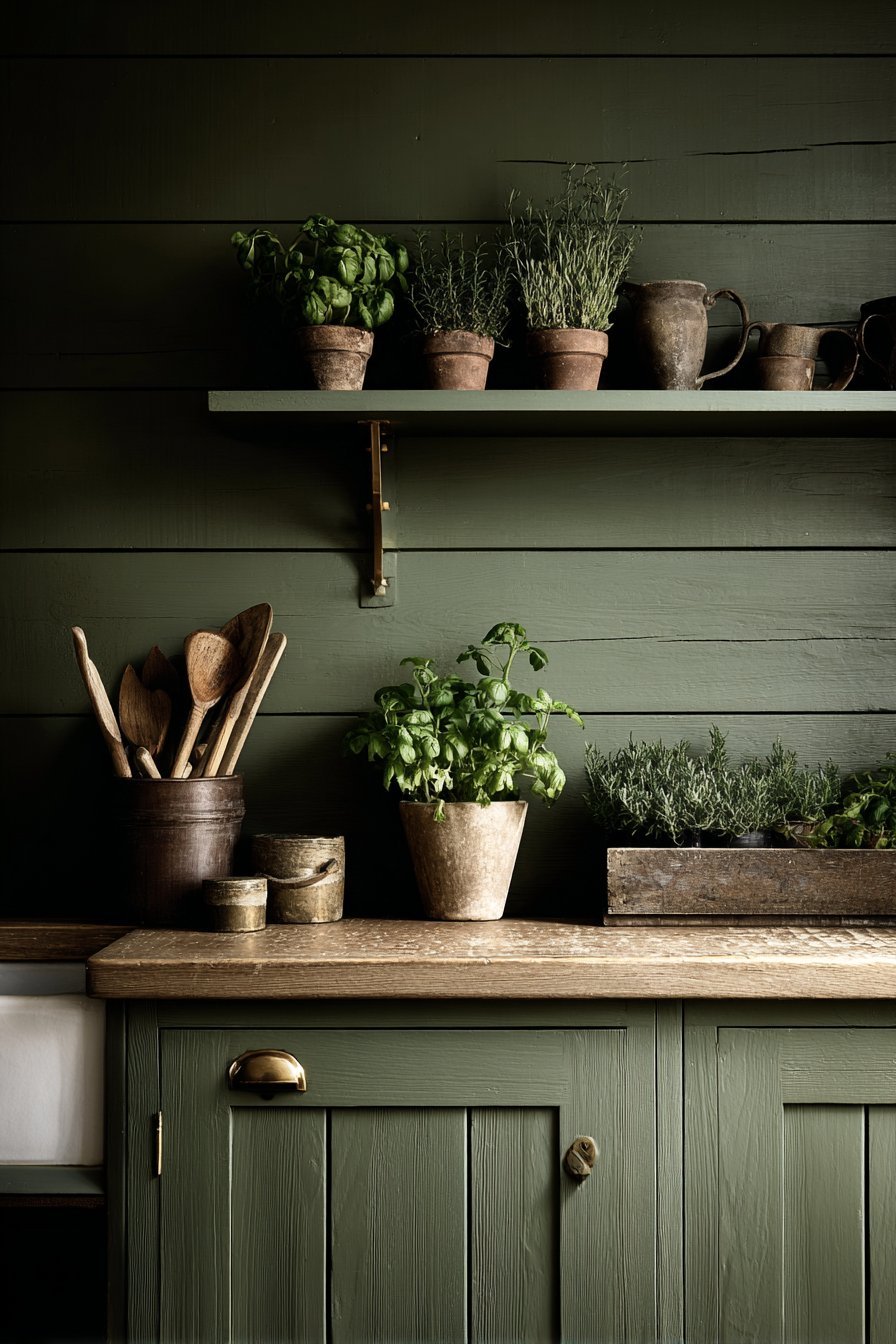
Detail photography emphasizes wood grain texture. Side lighting creates shadows that accentuate the grain patterns. The subtle sheen of sage green paint contrasts with matte wood. Close observation reveals the beauty in material details. Proper photography captures what the eye naturally appreciates.
Key Design Tips:
- Install wood backsplashes with proper sealing for moisture protection
- Use horizontal planking to visually widen narrow kitchens
- Add floating shelves to break up large backsplash expanses
- Display herbs on shelves for living greenery near cooking areas
- Choose pine for affordable wood with attractive grain
- Seal wood backsplashes properly to protect from cooking splashes
18. Integrated Desk Nook
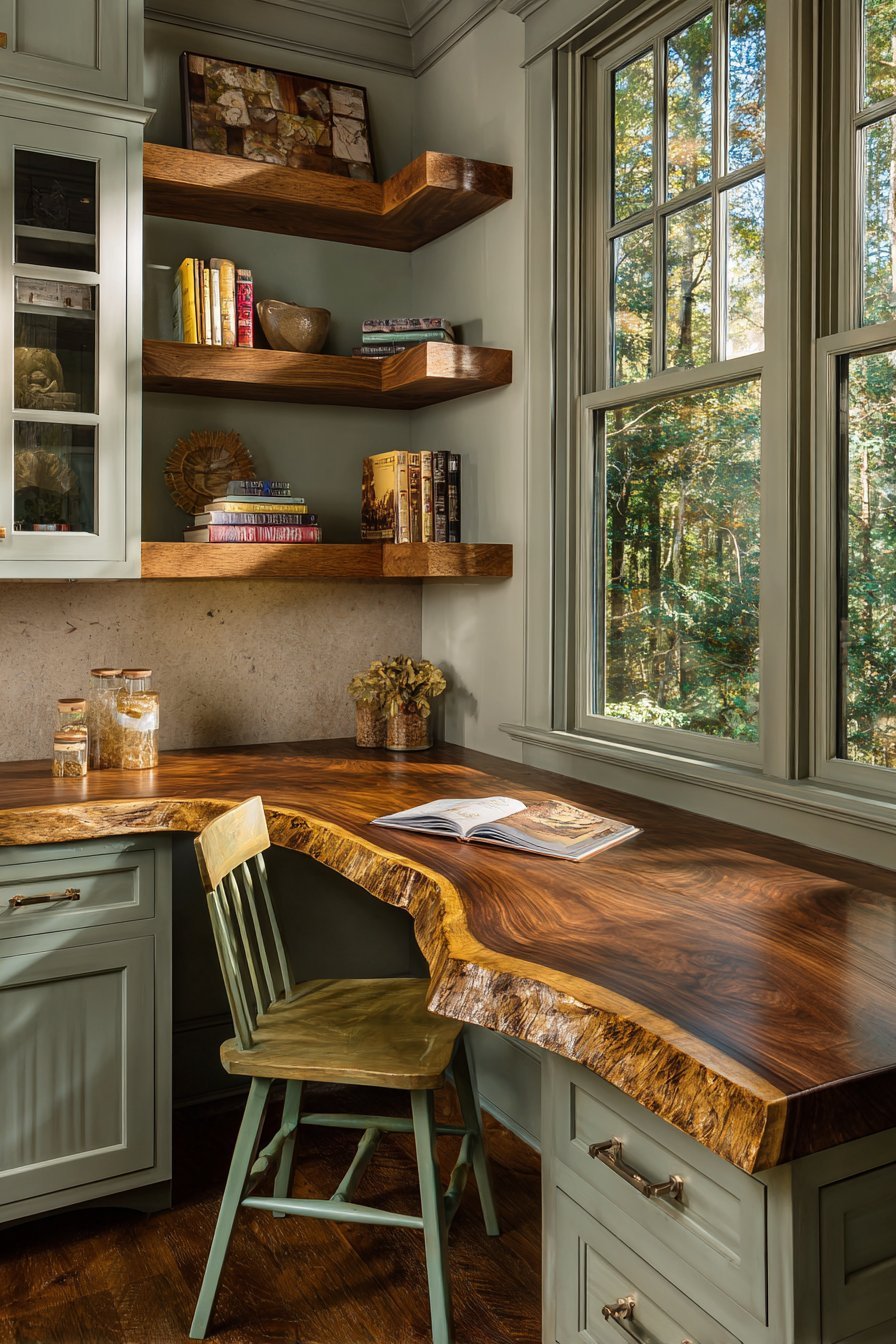
A desk nook carves into the cabinetry run efficiently. The walnut wood desktop features natural edge detail. The organic edge adds visual interest to the functional surface. Sage green painted cabinet base provides knee space below. The desk height matches standard office dimensions.
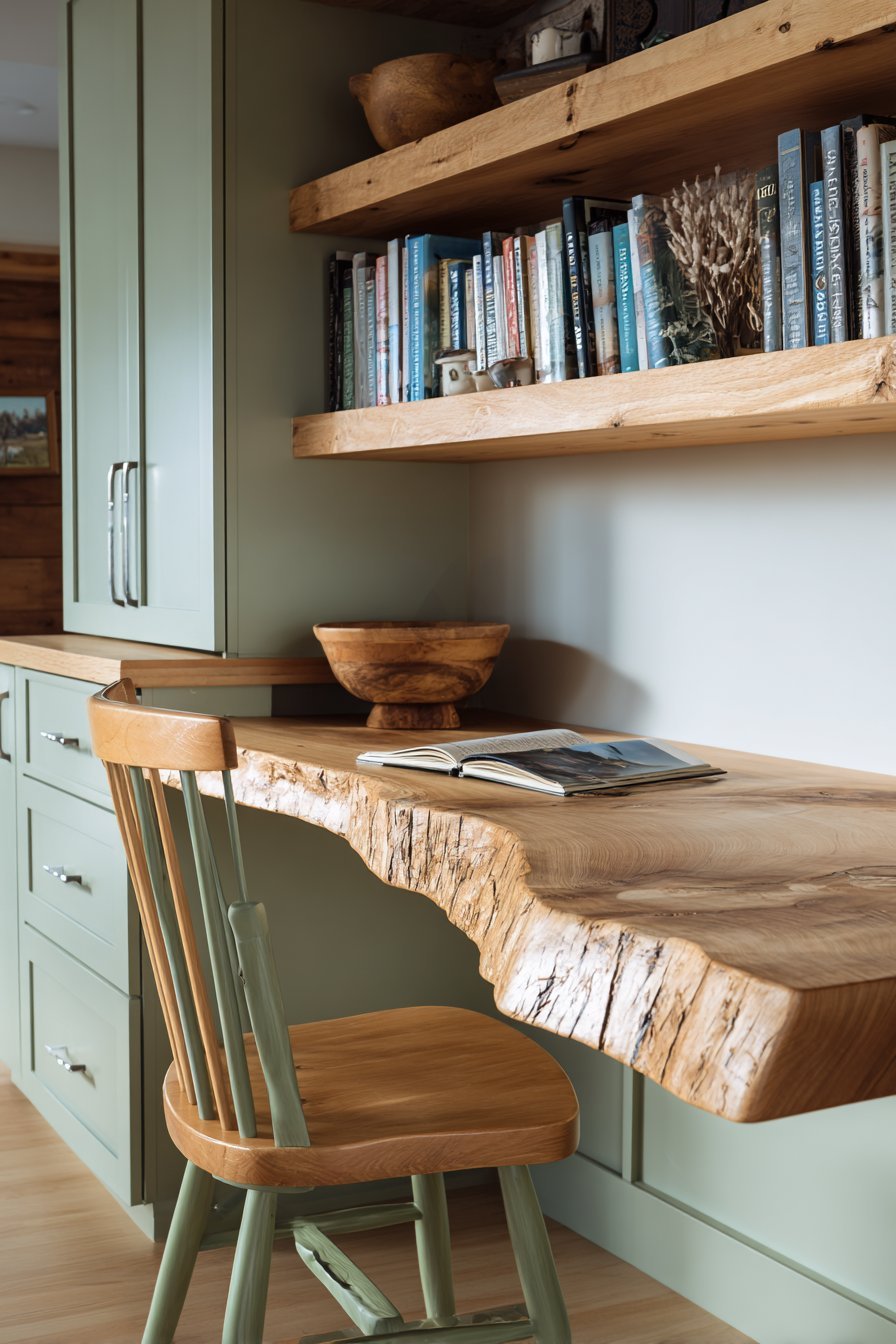
Wooden floating shelves above hold cookbooks within reach. Decorative items personalize the small workspace. A wooden chair with sage green painted legs provides seating. The chair design ties together the room’s materials. The integrated workspace doesn’t feel like an afterthought.

Surrounding cabinetry continues the sage green and wood theme. The desk appears as a natural extension of kitchen design. The functional workspace serves multiple purposes. Meal planning, homework, and correspondence happen here. Kitchens increasingly serve as home command centers.
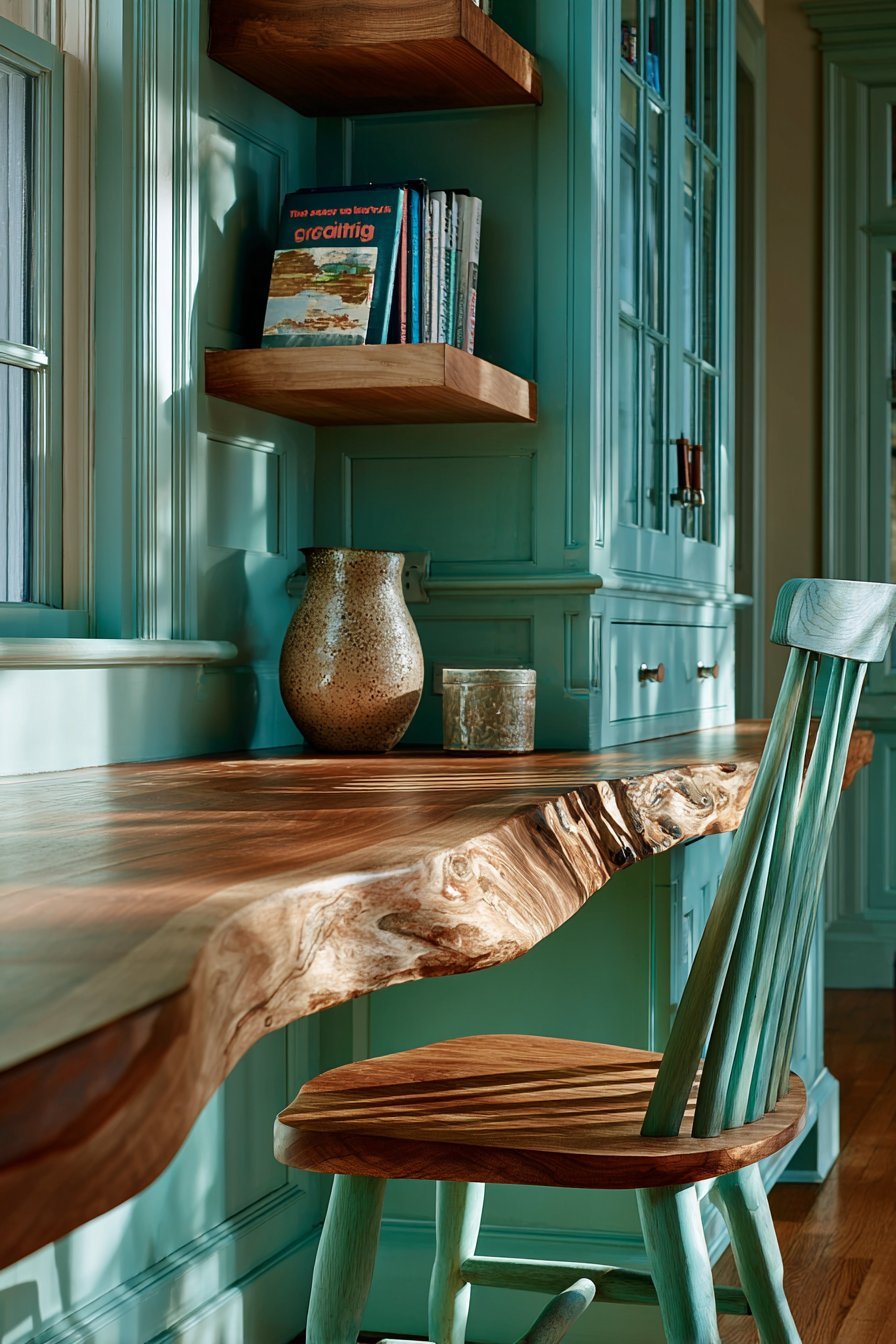
Soft natural lighting from nearby windows illuminates the desk. The workspace receives adequate light for detailed tasks. The wood grain and green paint texture become visible up close. The small zone receives the same design attention as larger areas. Thoughtful planning considers all kitchen functions.
Key Design Tips:
- Integrate desk zones into kitchen cabinetry runs
- Use natural edge wood for desktop interest and uniqueness
- Install floating shelves above desks for accessible storage
- Choose chairs with legs painted to match cabinetry
- Position desks near windows for natural work lighting
- Make desk height standard for comfortable extended use
19. Tongue-and-Groove Cedar Ceiling
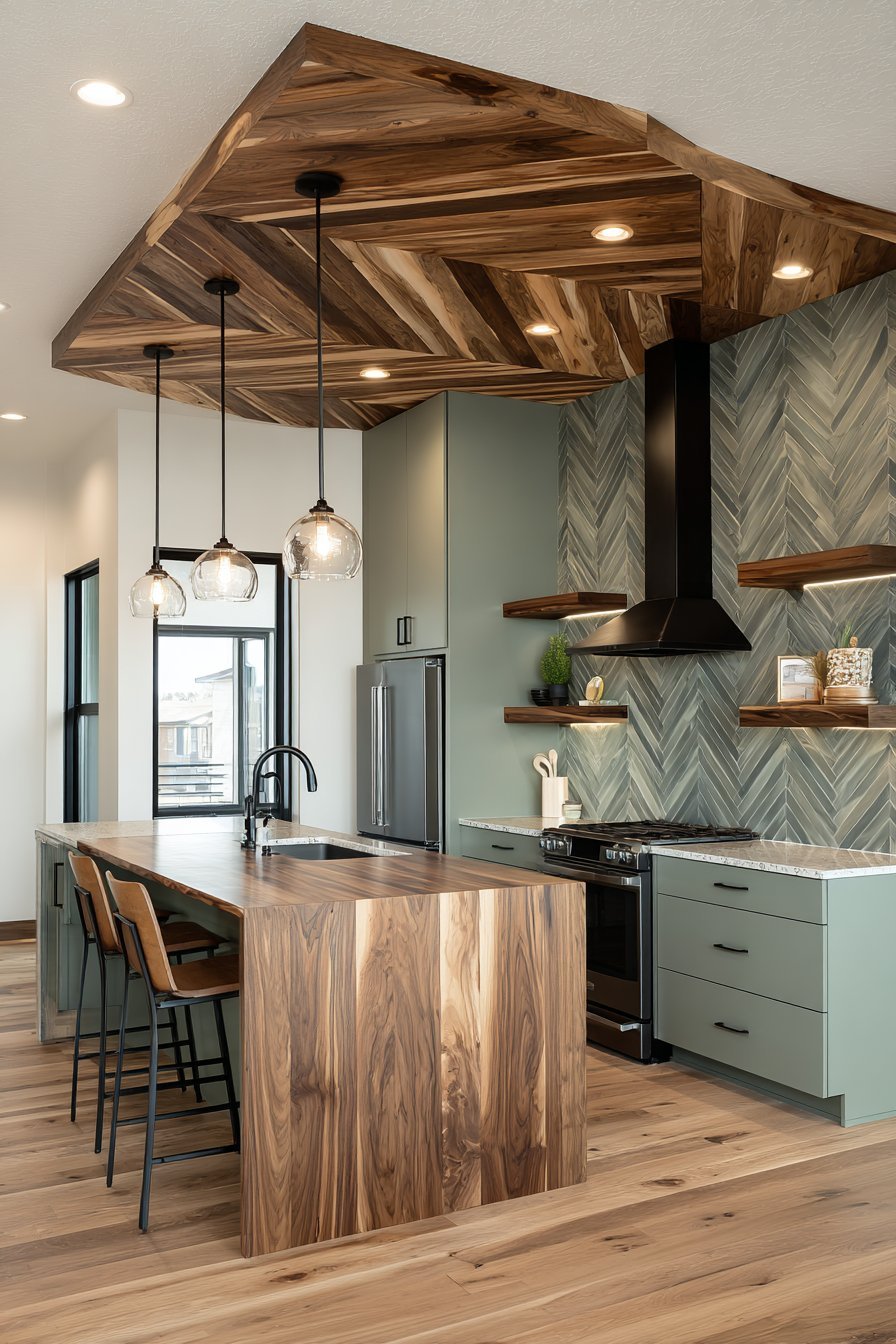
The ceiling receives dramatic treatment with tongue-and-groove wooden planks. Natural cedar finish brings warmth from above. The overhead wood creates visual interest often overlooked. Sage green perimeter cabinetry provides grounding below. The contrast between ceiling and cabinetry creates dynamic spatial interest.
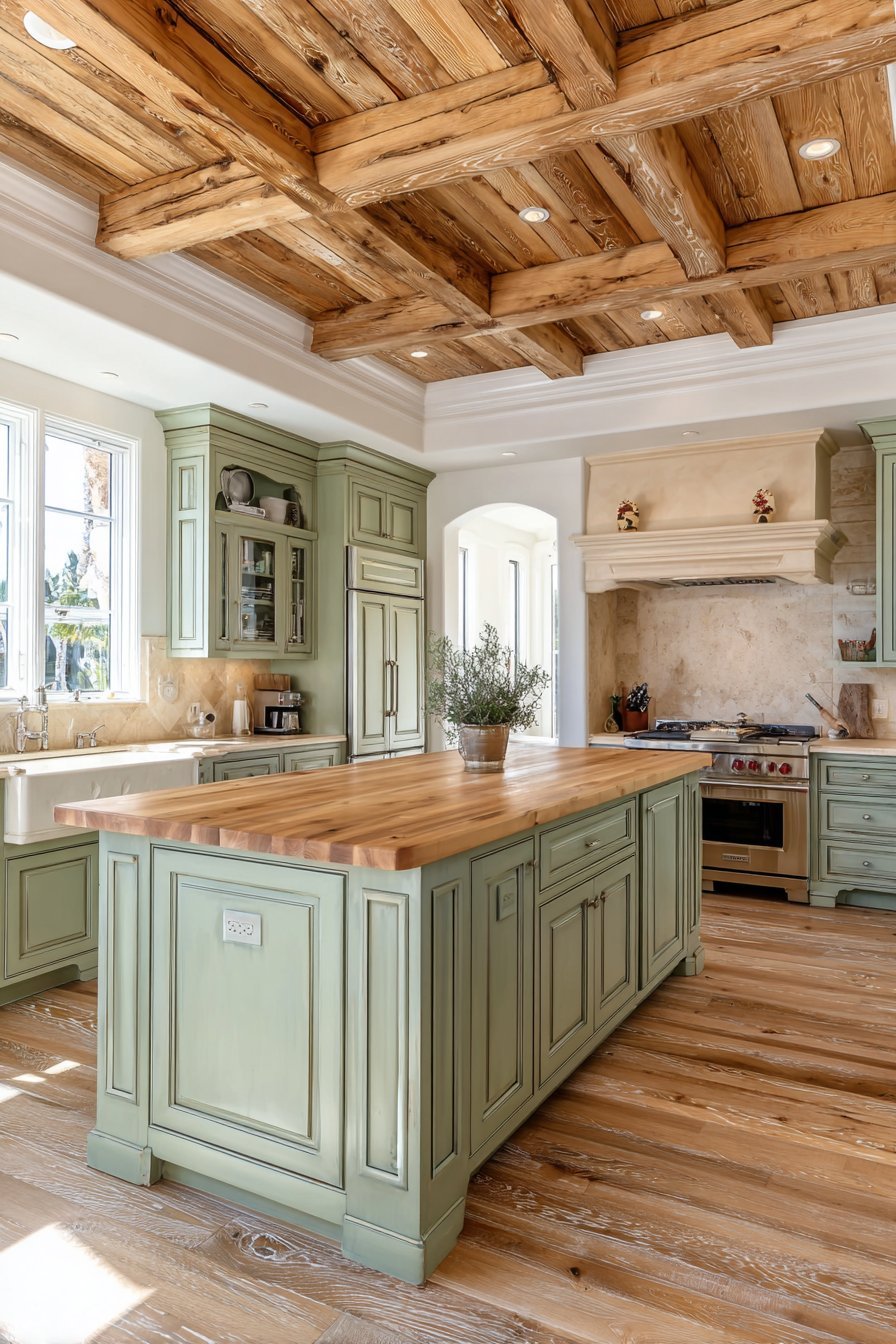
Wooden corbels support floating wooden shelves along walls. The corbels add traditional architectural detail. Floating shelves maintain the wood presence at mid-height. A large wooden kitchen island centers the space. The island base is painted sage green with butcher block top.

Wooden beam accents frame the ceiling at key points. The beams add structure to the overhead plane. The ceiling treatment makes the room feel more intimate. Wide-angle architectural photography captures the striking overhead detail. The unusual ceiling perspective creates memorable design impact.

Afternoon natural light creates warm tones in the cedar. The wood appears to glow during golden hour. Shadows from beams create interesting ceiling patterns. The overhead design demonstrates that all surfaces offer opportunities. Looking up reveals as much beauty as looking around.
Key Design Tips:
- Treat ceilings as design opportunities rather than afterthoughts
- Choose cedar for natural warmth and pleasant aroma
- Add wooden beams to frame and structure ceiling planes
- Use corbels to support floating shelves with traditional style
- Balance extensive overhead wood with painted lower cabinetry
- Install adequate lighting to showcase ceiling treatments
20. Suspended Wooden Pot Rack
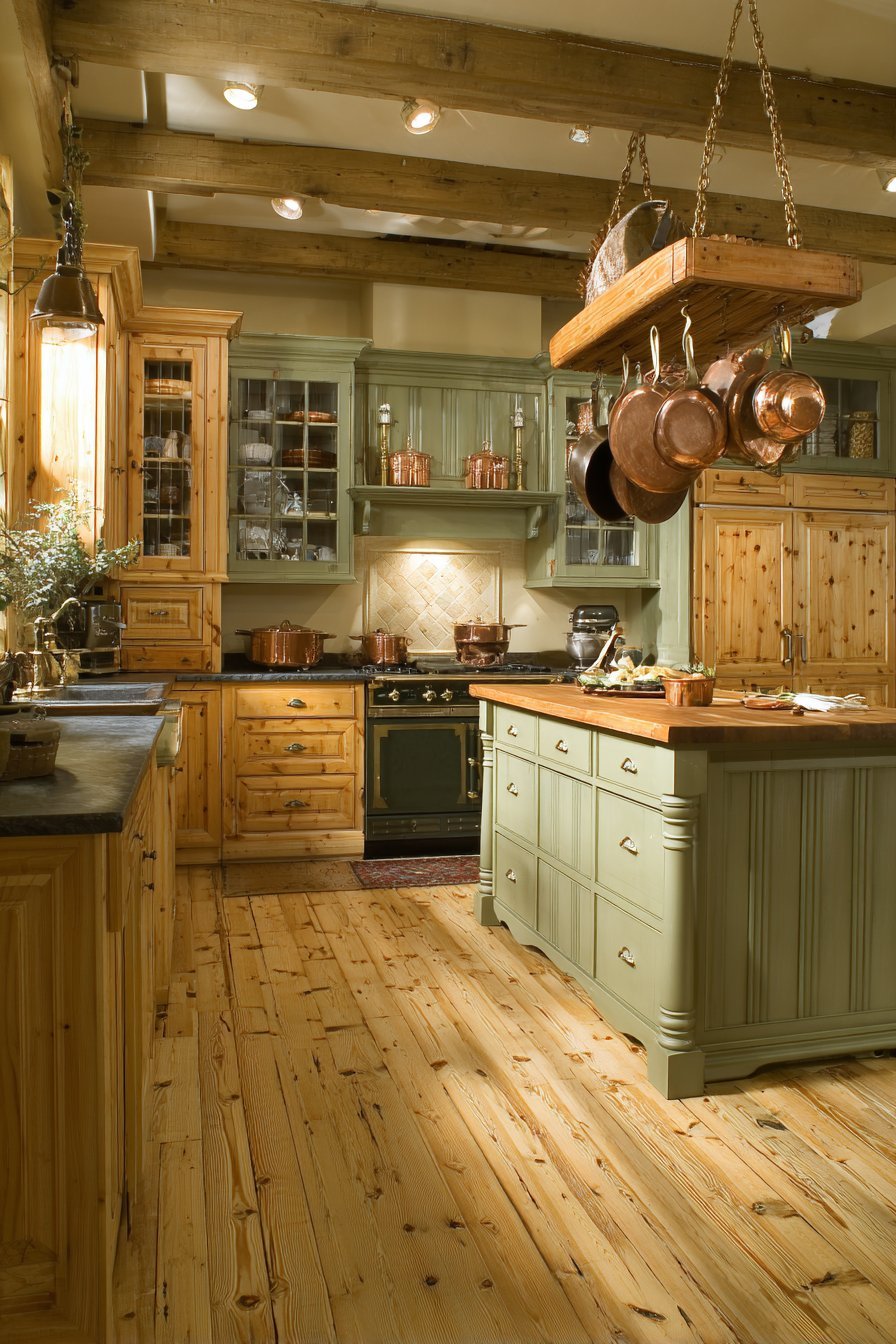
A custom-built wooden pot rack suspends from the ceiling. Brass chains provide industrial yet refined hanging hardware. Copper pots and cast iron skillets hang at varying heights. The overhead storage creates vertical interest and functionality. The suspended rack hovers above a sage green island.

The island features a thick wooden countertop with visible grain. Sage green base cabinets ground the substantial island. Surrounding cabinetry alternates between sage green painted and natural wood. Glass-front cabinets in natural wood reveal interior storage. The material alternation creates visual rhythm.

Wooden flooring in wide planks adds warmth underfoot. The varied plank widths create organic floor patterns. The floor color complements both cabinetry types. The material palette includes multiple wood species harmoniously. Everything works together despite the variety.
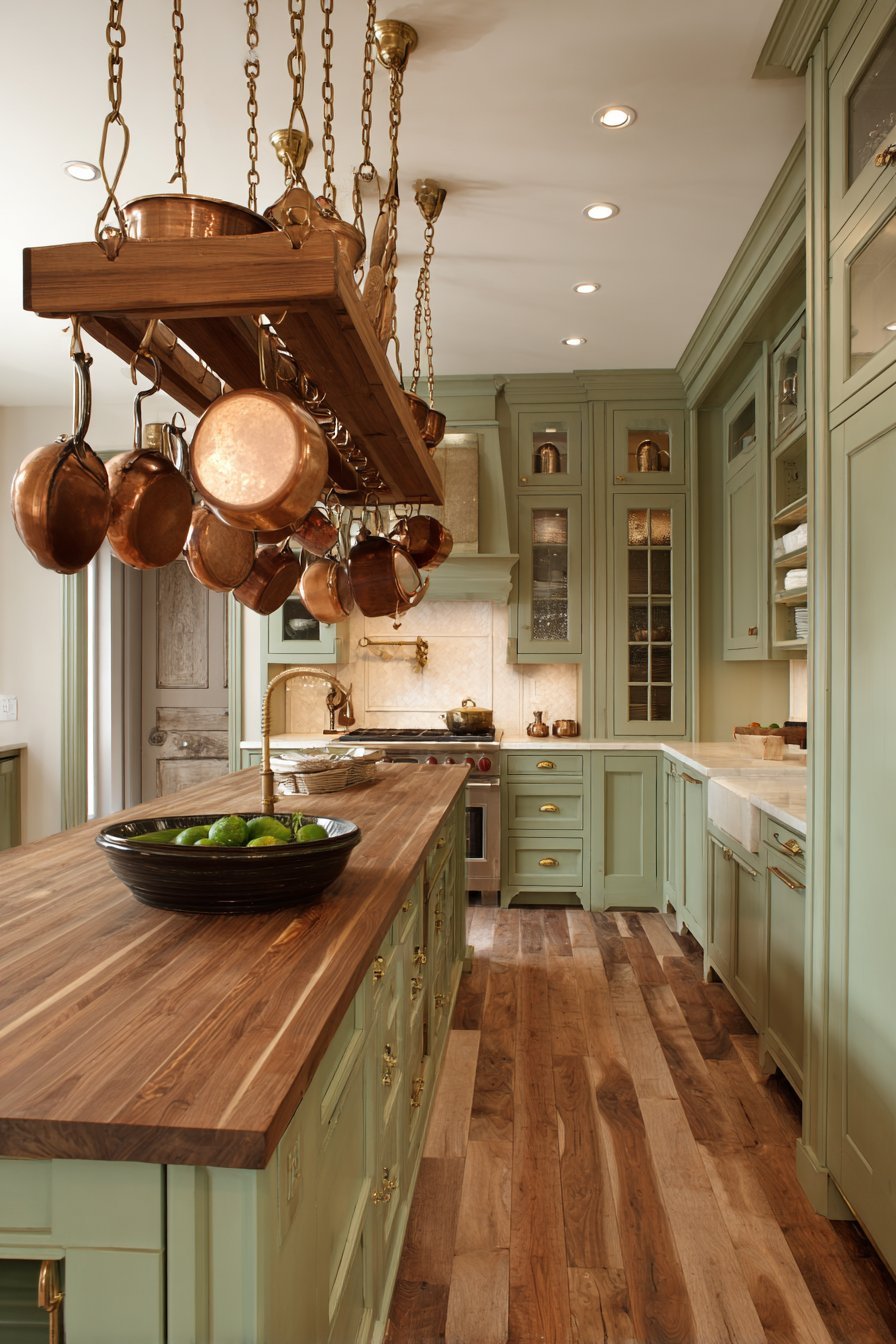
Professional interior photography showcases the vertical interest. The hanging pot rack draws the eye upward. Balanced lighting illuminates both the overhead rack and work surfaces. The design demonstrates creative storage solutions. Functional needs drive beautiful design decisions.
Key Design Tips:
- Hang pot racks above islands for convenient cooking access
- Use brass chain for refined industrial hanging systems
- Display attractive cookware as functional decoration
- Vary hanging heights to create visual interest
- Alternate between painted and natural wood cabinetry
- Choose wide-plank flooring for organic, upscale appearance
Why These Sage Green and Wood Kitchen Designs Are the Best
These sage green and wood kitchen designs represent exceptional approaches to creating warm, inviting culinary spaces. The combination of botanical green tones with natural wood delivers timeless appeal that transcends passing trends. Each design demonstrates how organic materials and soft colors create environments where families naturally gather.
The versatility of this design approach accommodates various styles effortlessly. Traditional farmhouse aesthetics benefit from reclaimed wood and beadboard details. Contemporary spaces embrace clean shaker lines and minimal hardware. The sage green and wood palette adapts to rustic, transitional, and modern design sensibilities. This flexibility makes the approach accessible to diverse homeowner preferences.

Material quality drives the success of these designs. Natural wood brings irreplaceable warmth and character to kitchens. Whether white oak, walnut, pine, or reclaimed barn wood, each species contributes unique grain patterns. Sage green provides botanical serenity without the coldness of pure neutrals. The hue works beautifully in various finishes from matte paint to glazed ceramic.
Practical considerations make these designs particularly successful. Wood countertops and butcher block islands provide warm, functional work surfaces. Sage green cabinetry hides minor wear better than stark white. Natural materials age gracefully, developing patina that enhances rather than diminishes beauty. These kitchens improve with time rather than date quickly.
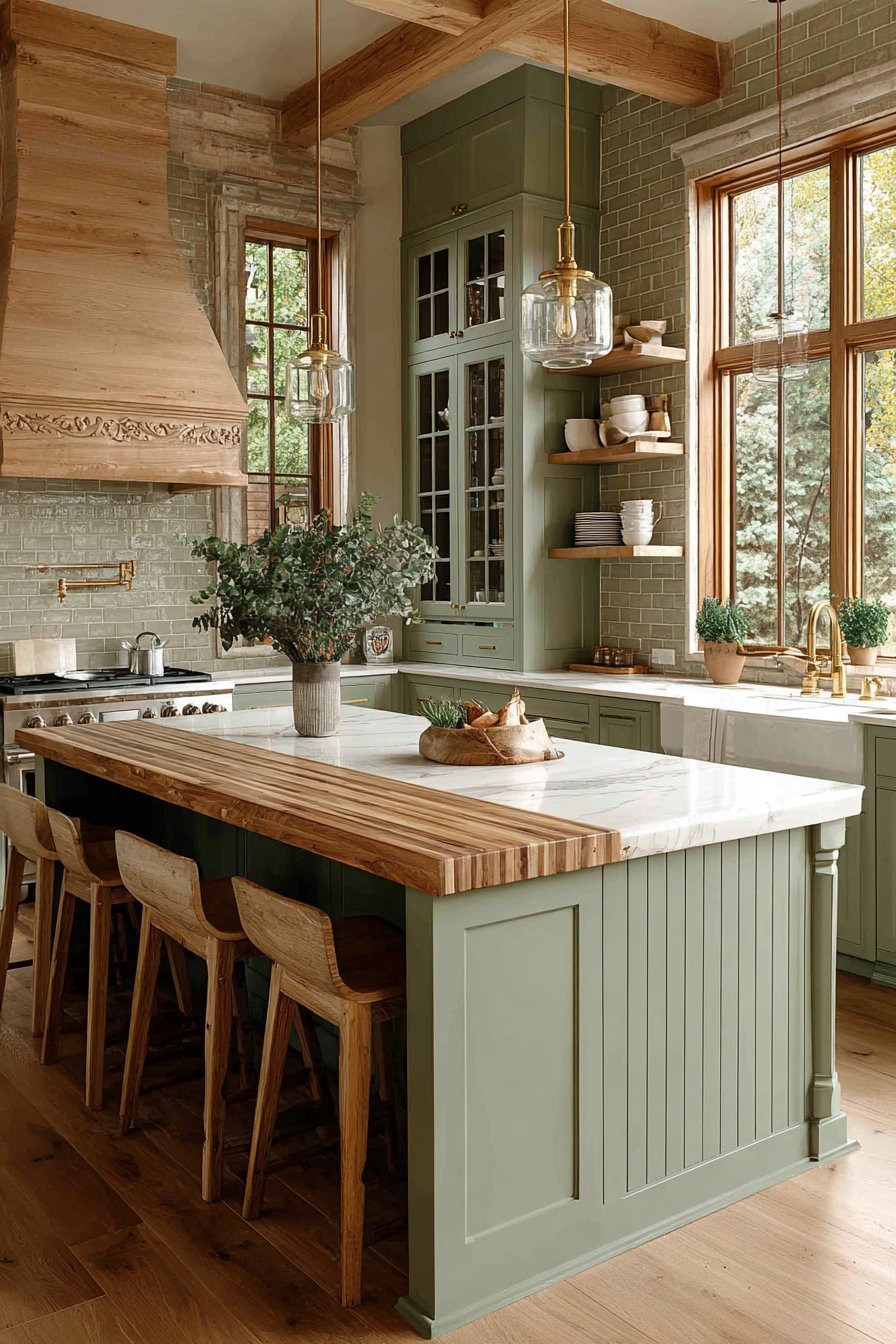
Color theory supports the sage green and wood combination. Green exists naturally alongside wood in forests and gardens. The pairing feels instinctively harmonious to human perception. Warm wood tones balance the cool undertones in sage green. The result is spaces that feel neither too warm nor too cool.
Spatial considerations benefit from this material and color approach. Sage green grounds lower cabinets without overwhelming small kitchens. Natural wood in upper zones or on islands adds warmth without heaviness. The combination works in compact galley kitchens and expansive open concepts alike. Strategic placement of each material optimizes perceived space.
Sustainability factors into the appeal of these designs. Quality wood cabinetry and countertops last decades with proper care. Sage green’s enduring popularity means you won’t tire of the color quickly. The investment in natural materials pays dividends in longevity and timeless beauty.
Conclusion
These sage green and wood kitchen designs prove that natural materials and botanical colors create enduring beauty. The key takeaways include choosing quality wood species, balancing painted and natural cabinetry, and incorporating brass accents. Successful designs layer different wood types and vary cabinet door styles thoughtfully.
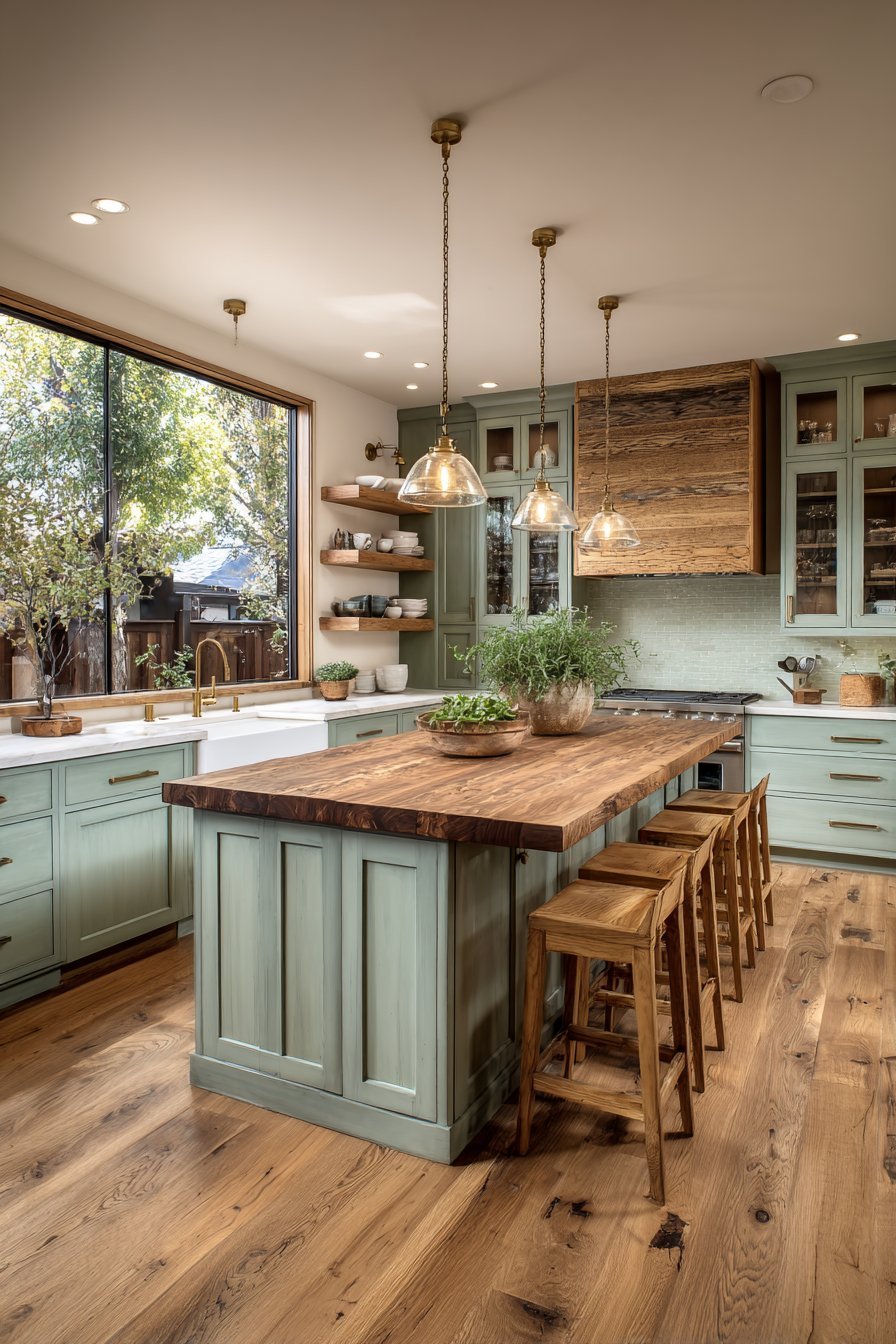
Start your kitchen transformation by selecting one sage green element and one wood feature. Perhaps sage green lower cabinets with a butcher block island or a reclaimed wood hood with sage subway tile. Build your design from these foundations. Your dream sage green and wood kitchen awaits through thoughtful planning and material selection.
