
Creating an old kitchen aesthetic brings unmatched character and warmth to your home. This design approach celebrates authentic materials and time-honored craftsmanship. The combination creates inviting spaces that honor the past while remaining perfectly functional for modern living.
Old kitchens possess a soul that contemporary designs often struggle to replicate. They tell stories through worn butcher blocks, patinated brass fixtures, and well-loved porcelain sinks. These spaces remind us that true beauty often comes with age and use. The gentle imperfections and natural wear patterns add depth and authenticity that cannot be manufactured.
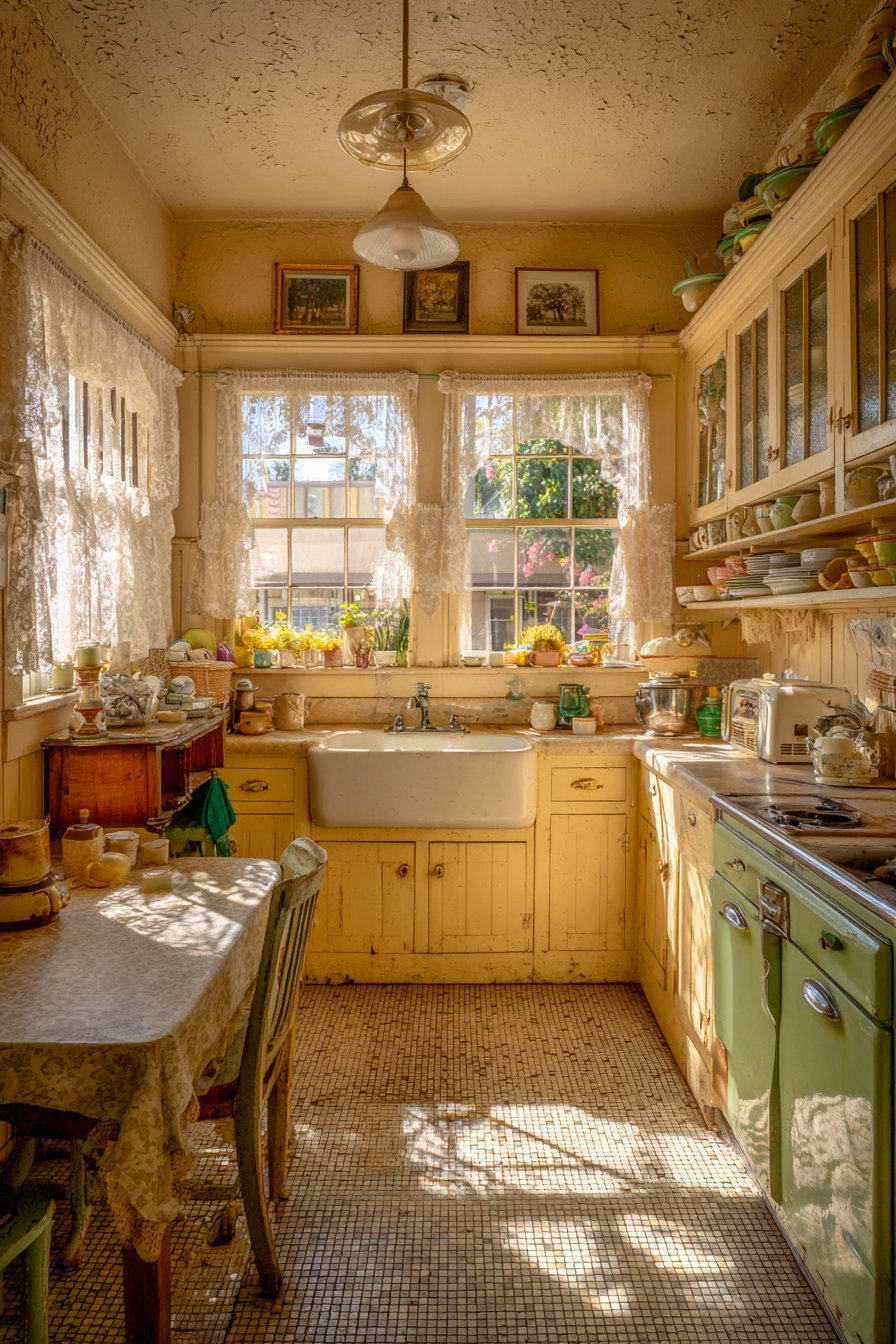
This article explores twenty stunning old kitchen concepts ranging from 1920s Shaker simplicity to Victorian-era elegance. Each design showcases different approaches to vintage aesthetics. Whether you’re restoring an original period kitchen or creating vintage charm in a newer space, these ideas demonstrate how authentic materials and thoughtful preservation create truly exceptional kitchens.
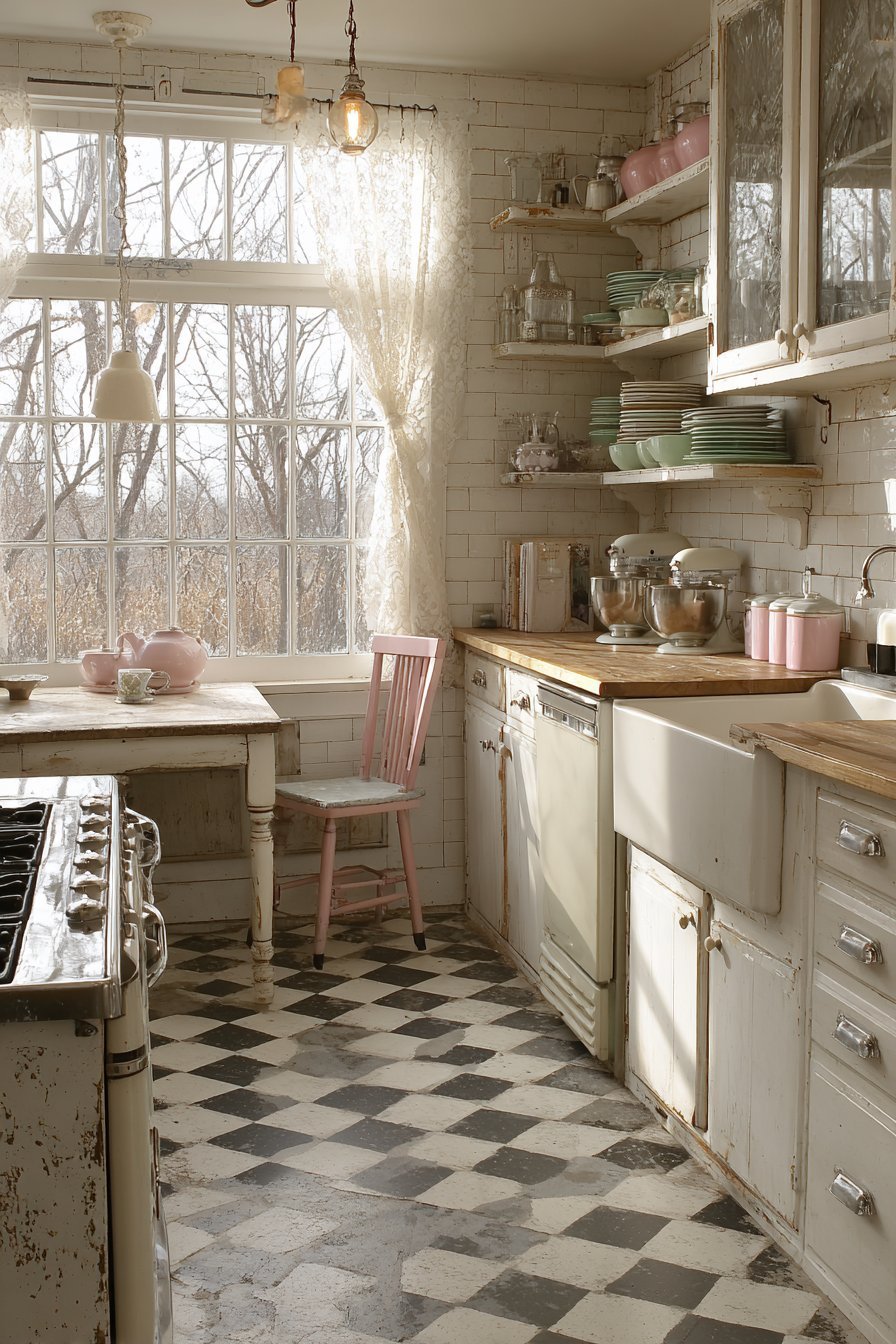
1. Classic 1940s Farmhouse Kitchen with Porcelain Charm
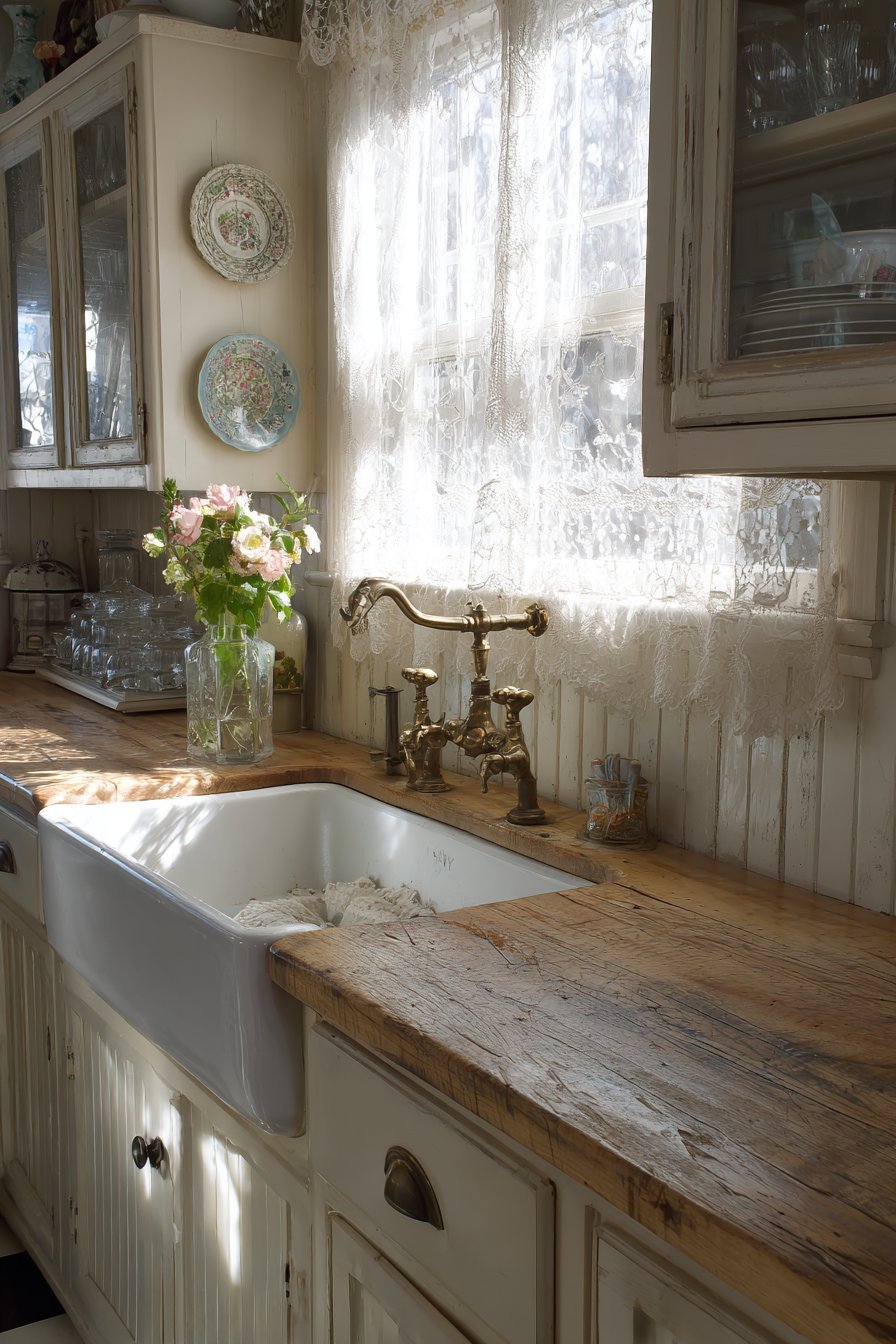
A charming vintage-inspired kitchen centers around an original 1940s white porcelain farmhouse sink. The exposed front apron creates an iconic focal point beneath the window. Classic cross-handle faucets in brass finish show gentle patina that speaks to decades of faithful service. This authentic aging cannot be replicated by artificially distressed modern fixtures.
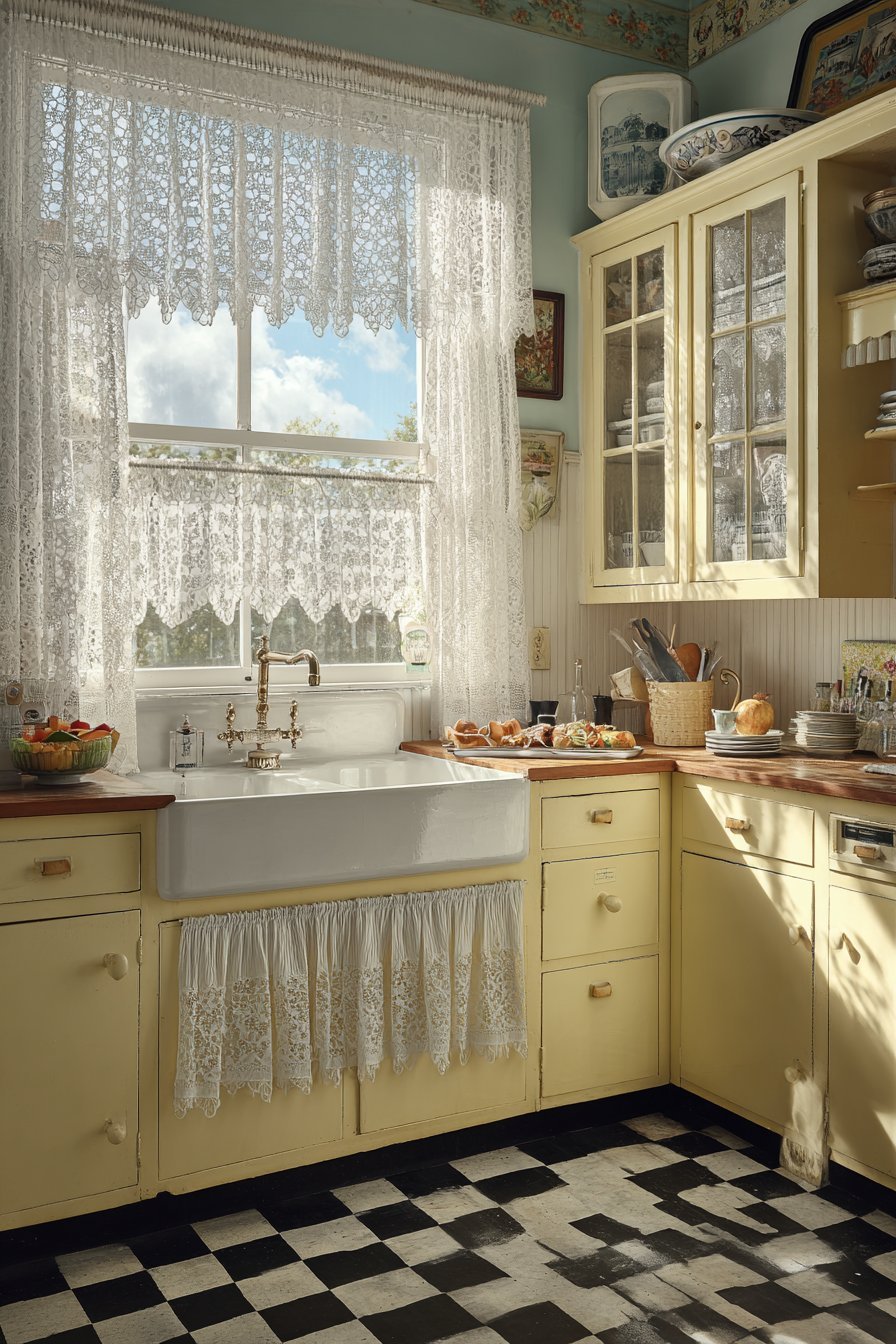
Cream-colored beadboard cabinetry lines the walls with timeless appeal. Glass-front upper cabinets display heirloom dishes and vintage glassware collections. These transparent storage solutions serve both functional and decorative purposes. The displayed items become part of the room’s visual story.

Butcher block countertops showcase natural wear patterns accumulated over years of meal preparation. Authentic knife marks tell stories of countless family dinners. The wood has developed rich honey tones from oil treatments and use. Checkerboard black and white linoleum flooring completes the nostalgic aesthetic perfectly.
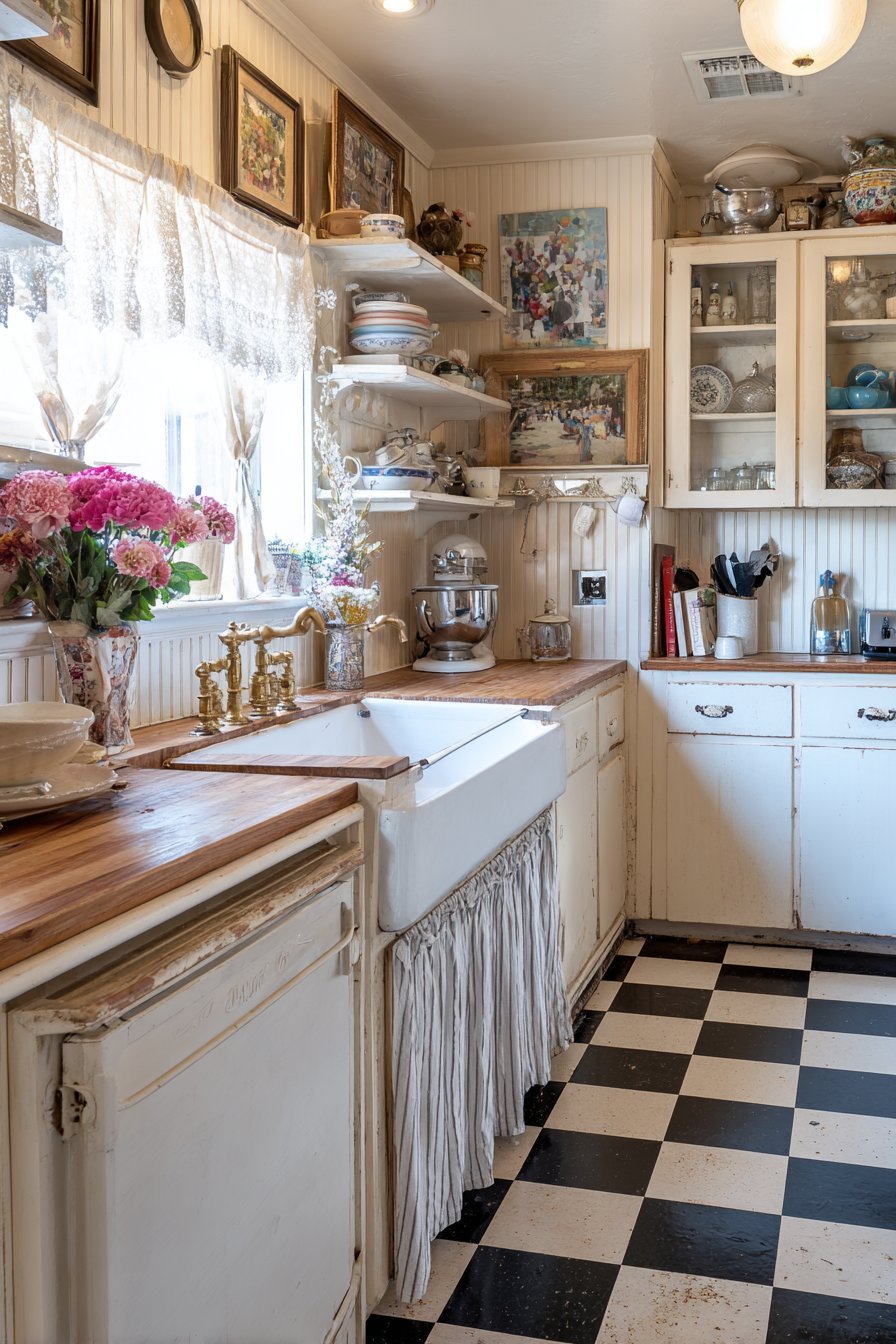
Natural morning light streams through lace curtains creating soft shadows across the workspace. The interplay of light and shadow enhances the vintage atmosphere throughout the day. This kitchen demonstrates how preserved original elements create spaces with genuine soul and character.
Key Design Tips:
- Preserve original porcelain sinks rather than replacing them with modern alternatives
- Display vintage dishware in glass-front cabinets for authentic decoration
- Embrace natural wear patterns on butcher block rather than excessive refinishing
- Choose lace or sheer curtains to maintain period-appropriate window treatments
- Install classic linoleum patterns that reflect the era’s aesthetic sensibilities
2. Mint Green Metal Cabinet Mid-Century Kitchen

An old kitchen restoration showcases original 1950s metal cabinetry in refreshing mint green. Chrome handles provide gleaming contrast against the soft color. Slight surface scratches add character rather than diminishing value. These honest marks of use tell the story of family life.
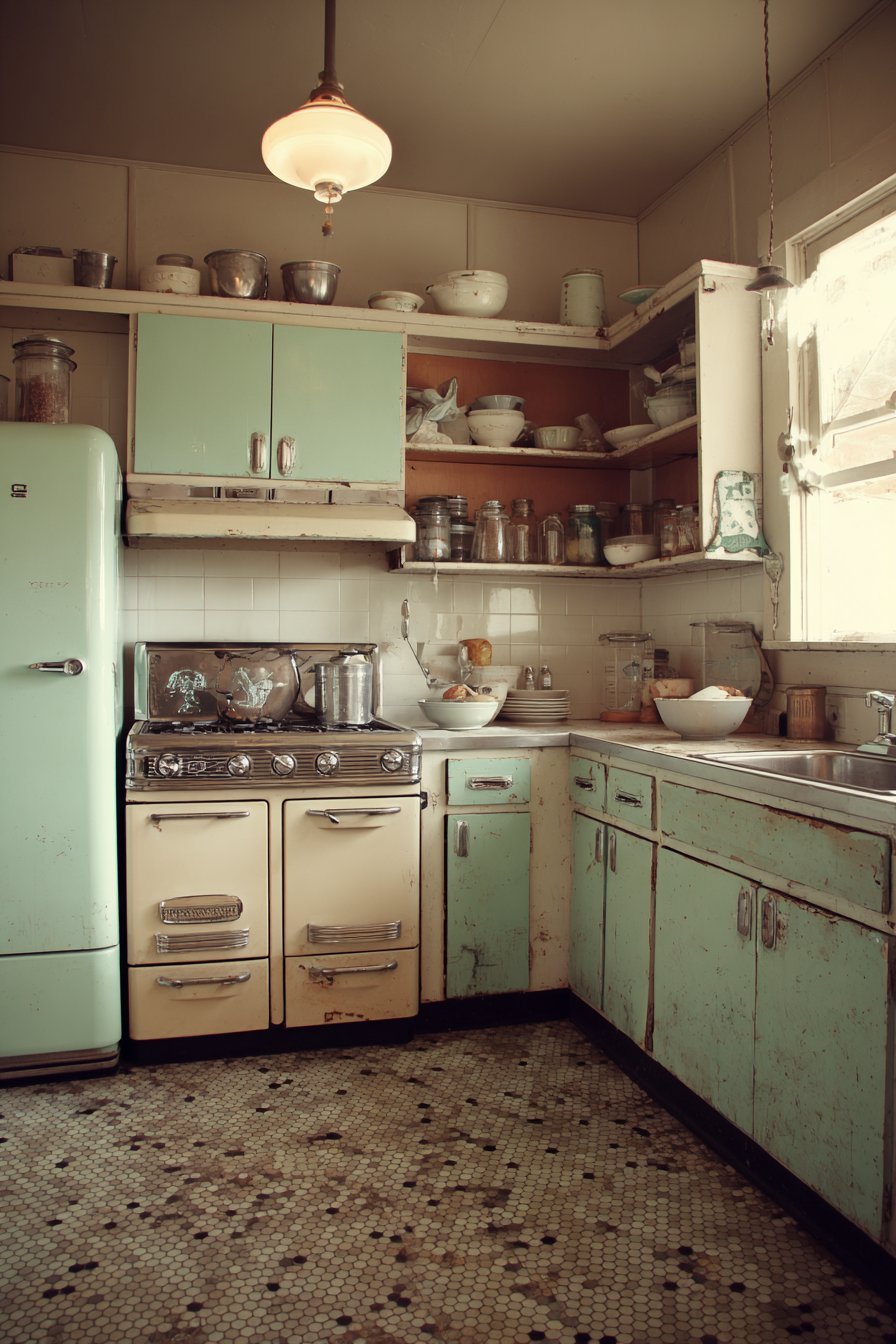
A vintage Chambers stove in working condition serves as the magnificent centerpiece. Its cream enamel finish displays honest signs of decades of service. The appliance represents superior mid-century American manufacturing quality. Modern stoves rarely match the durability of these vintage workhorses.

Original hexagonal ceramic floor tiles in white feature strategic black accent tiles. Natural glaze variations create visual interest across the surface. The geometric pattern reflects the era’s design sensibilities perfectly. Open shelving displays period-appropriate Pyrex mixing bowls in cheerful primary colors.
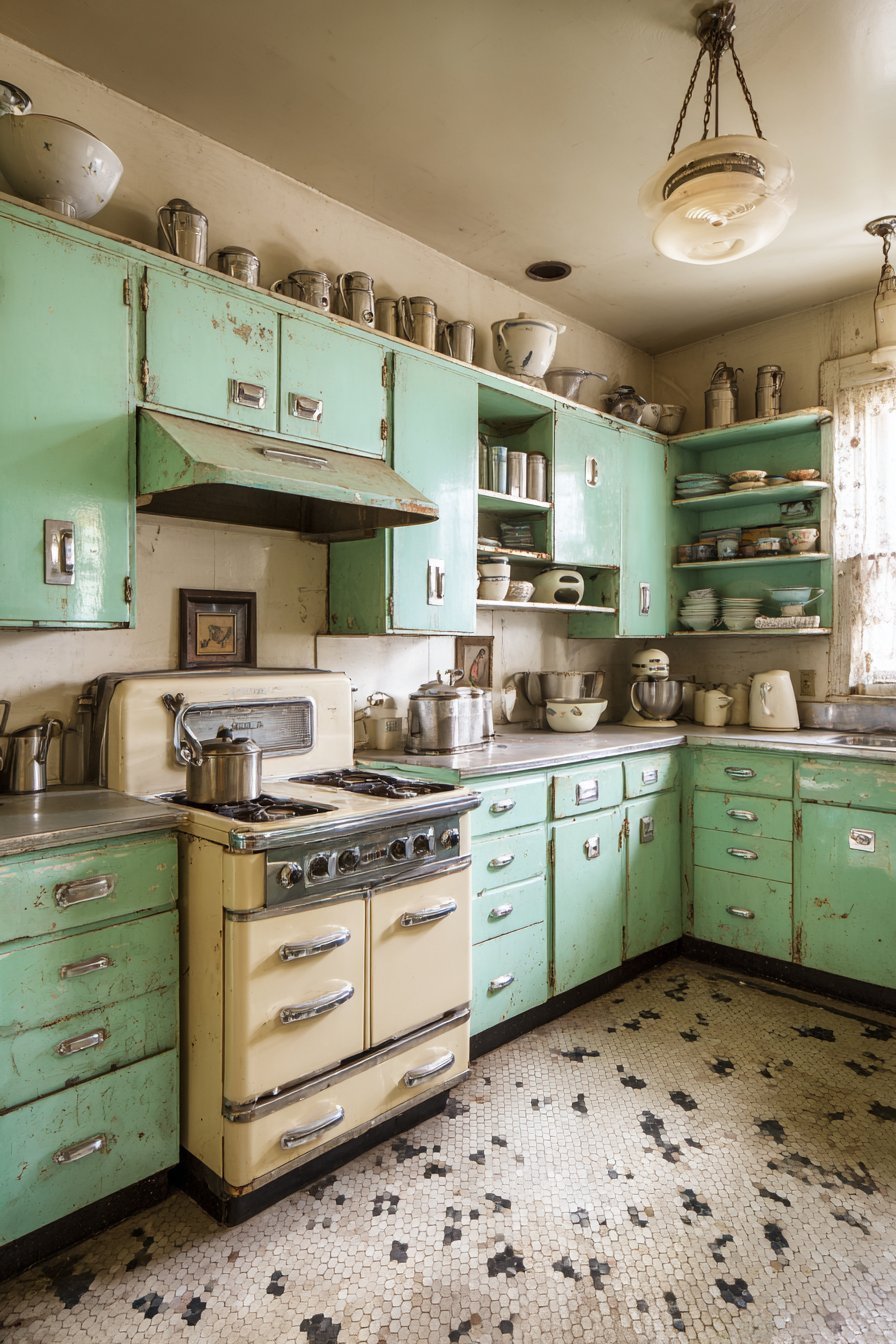
Pendant lighting with milk glass shades provides warm illumination throughout the space. The fixtures cast soft pools of light across work surfaces. This kitchen demonstrates successful preservation of mid-century modern elements. The cohesive design transports you directly to the 1950s.
Key Design Tips:
- Restore rather than replace metal cabinetry when possible
- Keep vintage appliances functional through proper maintenance and repair
- Display era-appropriate accessories like Pyrex and Fire King collections
- Maintain original floor tile patterns even with minor imperfections
- Use milk glass lighting fixtures for authentic mid-century illumination
3. Soapstone Sink Country Kitchen with Sage Cabinetry

A practical old kitchen features a deep soapstone sink with integrated drainboard. Natural patina and subtle surface variations showcase years of faithful use. The material develops character that synthetic alternatives cannot replicate. Soapstone’s durability ensures it will serve many more generations.

Painted wood cabinetry in soft sage green displays gentle wear at frequently touched areas. Simple brass knobs provide functional hardware with warm metallic tones. The paint shows natural aging that adds authenticity to the design. These imperfections make the space feel lived-in and loved.

A vintage Hoosier cabinet stands proudly against one wall. Its flour bin and pull-out work surface remain perfectly functional after decades. These multi-functional pieces represent ingenious storage solutions from earlier eras. Modern kitchens often lack such thoughtful design elements.

Wood plank flooring with visible grain patterns adds warmth underfoot. Natural color variations create visual interest across the surface. The window over the sink frames a view of an herb garden. Sheer curtains diffuse daylight beautifully throughout the workspace.
Key Design Tips:
- Embrace soapstone’s natural patina rather than excessive polishing
- Apply paint to cabinetry in muted historical colors like sage and cream
- Incorporate multi-functional vintage pieces like Hoosier cabinets
- Position sinks beneath windows to maximize natural light and views
- Use sheer window treatments that filter light while maintaining privacy
4. Cream Enameled Stove Traditional Kitchen Workspace

An old kitchen workspace features an original 1930s enameled cast iron stove. Cream with black trim creates classic color contrast. Authentic aging and surface variations tell the appliance’s long history. The stove represents craftsmanship that modern manufacturing rarely achieves.
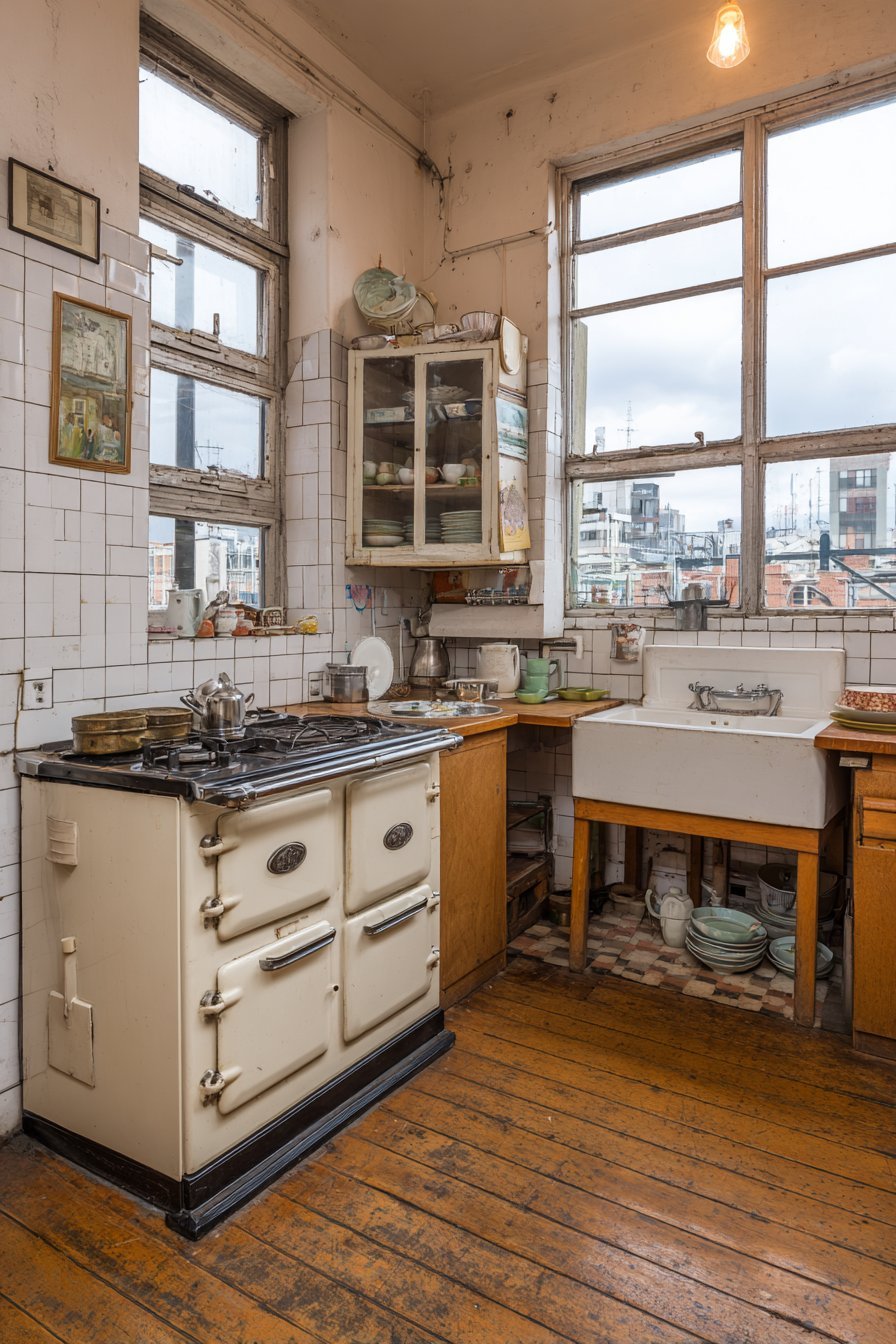
Wooden countertops show natural darkening around preparation areas from decades of use. The patina develops where hands and ingredients have touched the surface repeatedly. Open plate racks above the sink hold mismatched vintage dishes. The practical storage keeps everyday items within easy reach.
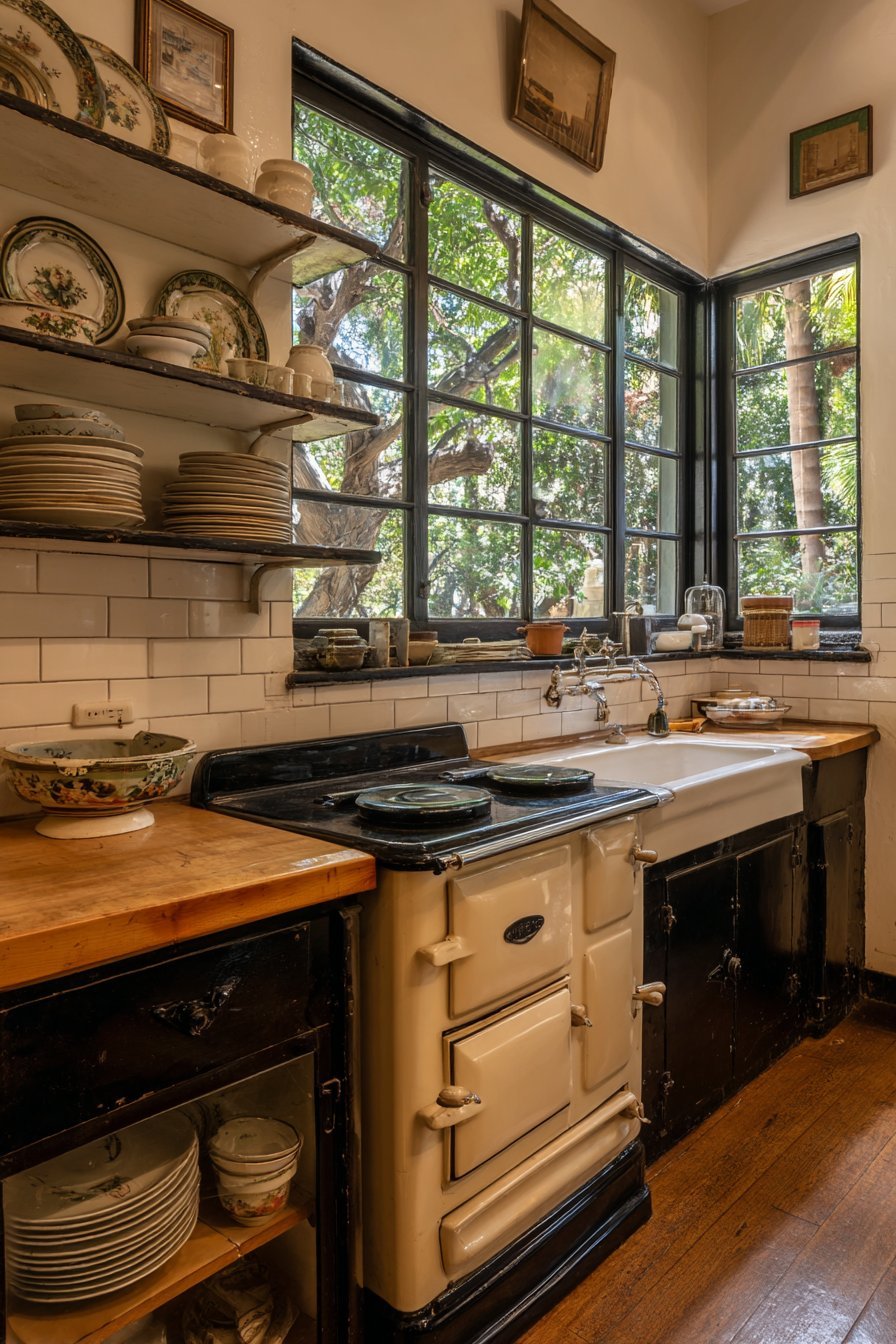
Subway tile backsplash in classic white displays slight crazing in the glaze. This network of fine cracks adds period authenticity to the design. A glass-front pie safe stores baking supplies while displaying vintage charm. These specialized storage pieces served essential functions in earlier kitchens.

Natural light from a multi-pane window highlights the honest wear throughout. The functional beauty of well-used materials creates visual warmth. This kitchen demonstrates how original elements and thoughtful layout create timeless appeal.
Key Design Tips:
- Maintain vintage appliances in working order rather than replacing them
- Accept natural darkening on wood countertops as desirable patina
- Use open storage solutions like plate racks for frequently used items
- Embrace crazing in vintage tile as character rather than damage
- Incorporate specialized vintage storage pieces like pie safes
5. Exposed Beam Renovated 1920s Kitchen

A renovated old kitchen maintains original architectural details throughout. Exposed ceiling beams display natural wood grain with subtle darkening from age. The structural elements add visual interest overhead. They connect the space to its historical origins.
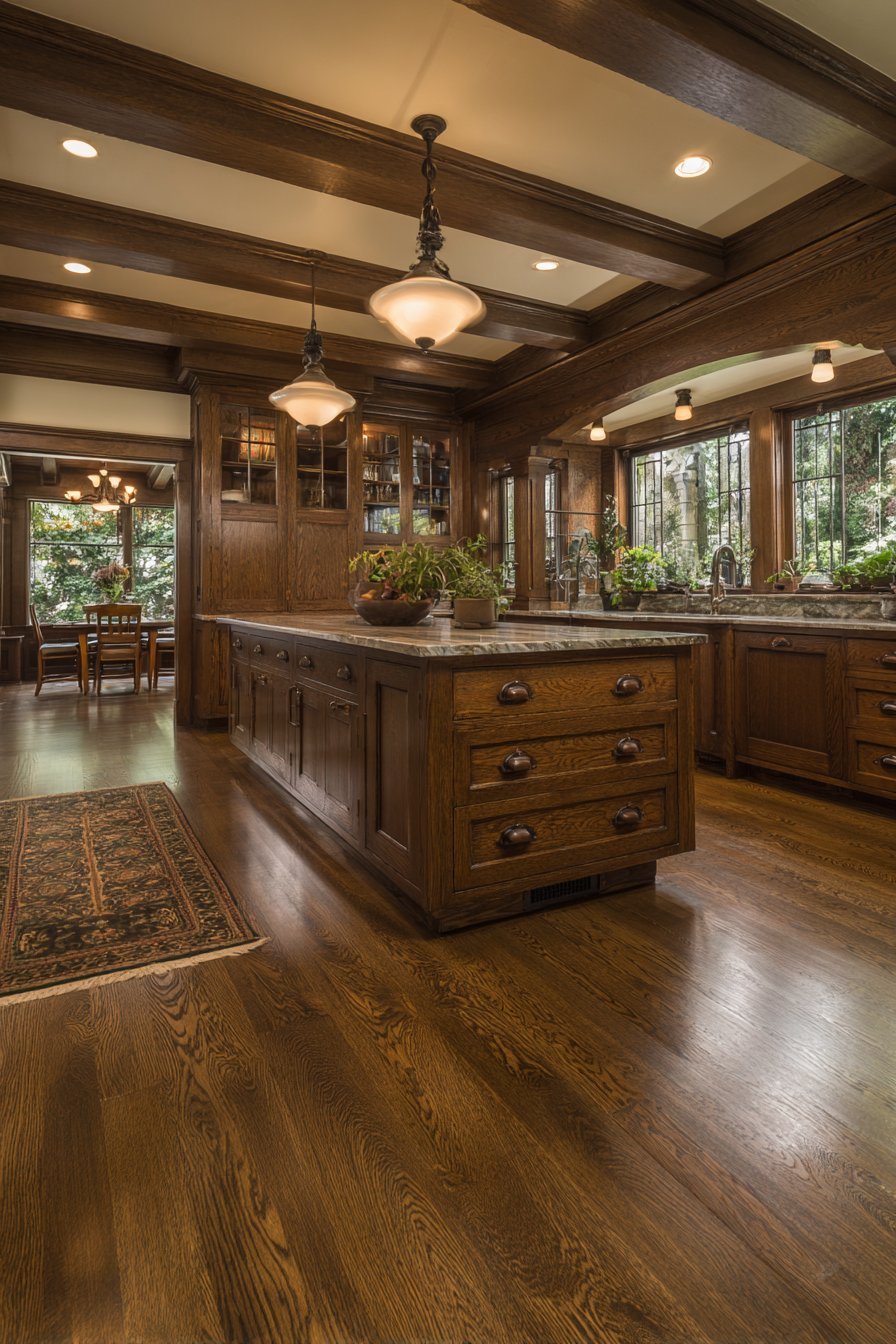
Refurbished 1920s cabinetry in natural oak features carefully preserved original hardware. Glass-front upper cabinets showcase the wood’s beautiful grain patterns. Marble countertops display natural veining patterns unique to each slab. Subtle etching from acidic foods over time adds authentic character.

Original hardwood flooring has been refinished to reveal authentic grain patterns. Slight color variations across boards create visual depth. The wood shows its natural beauty without excessive staining or treatment. Vintage schoolhouse pendant lights provide period-appropriate illumination with modern efficiency.

This kitchen demonstrates how preserved original elements blend beautifully with gentle updates. The balance respects historical character while ensuring modern functionality. Natural lighting emphasizes material textures and historical authenticity throughout the space.
Key Design Tips:
- Preserve original ceiling beams rather than covering them with drywall
- Refurbish vintage cabinetry instead of complete replacement when possible
- Accept natural etching on marble countertops as desirable patina
- Refinish original hardwood floors to reveal their natural beauty
- Install period-appropriate lighting that accommodates modern bulbs
6. Floor-to-Ceiling Pantry with Paint Layer History
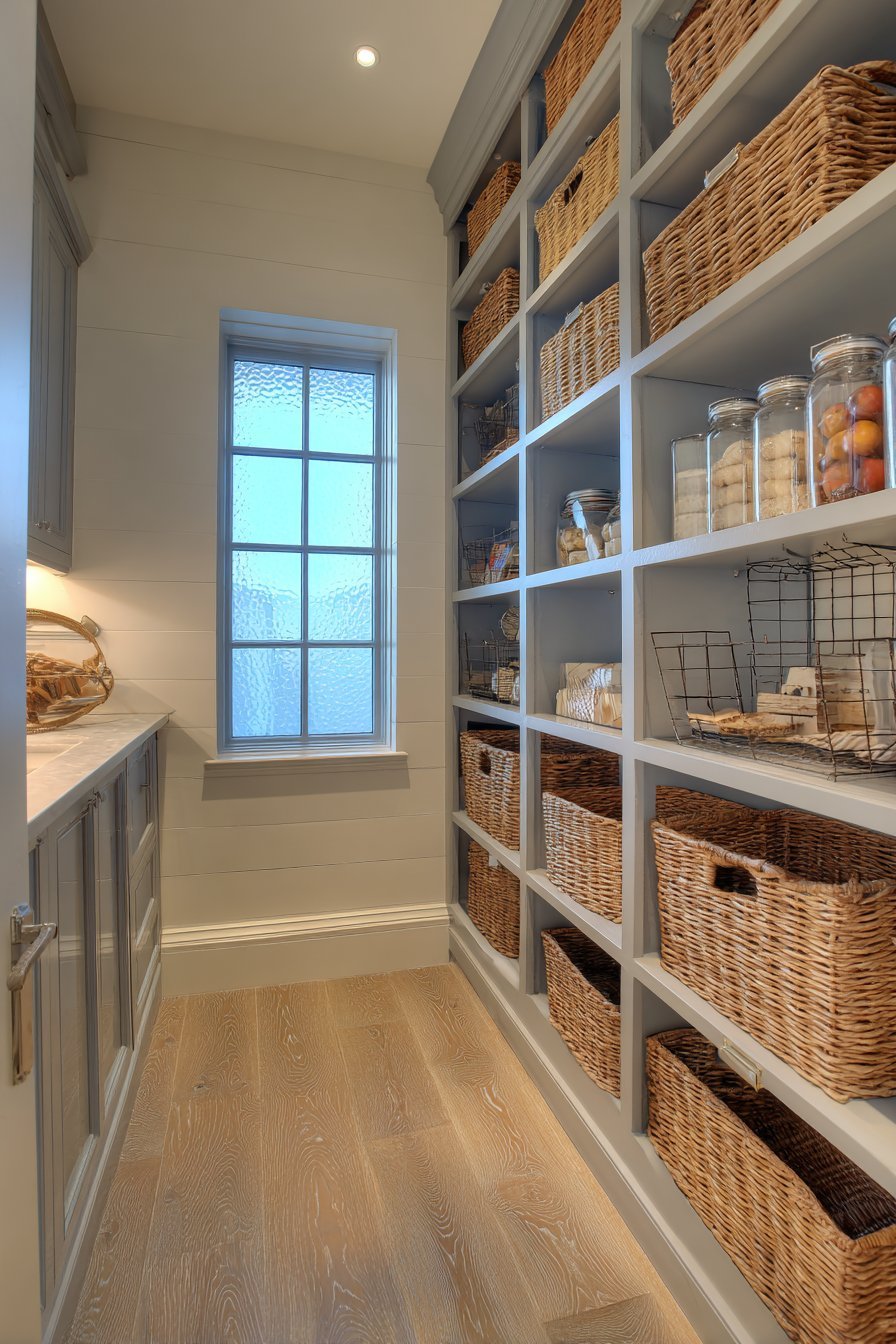
An old kitchen pantry area features impressive floor-to-ceiling built-in shelving. Painted wood shows subtle wear revealing layers of previous colors at edges. This paint archaeology tells the room’s color history across decades. Each layer represents a family’s taste and era.

Wire produce baskets and vintage glass storage jars line the functional shelves. Original wood flooring displays traffic wear patterns near the entrance. These patterns map decades of footsteps and daily routines. The wear creates a visual record of human activity.
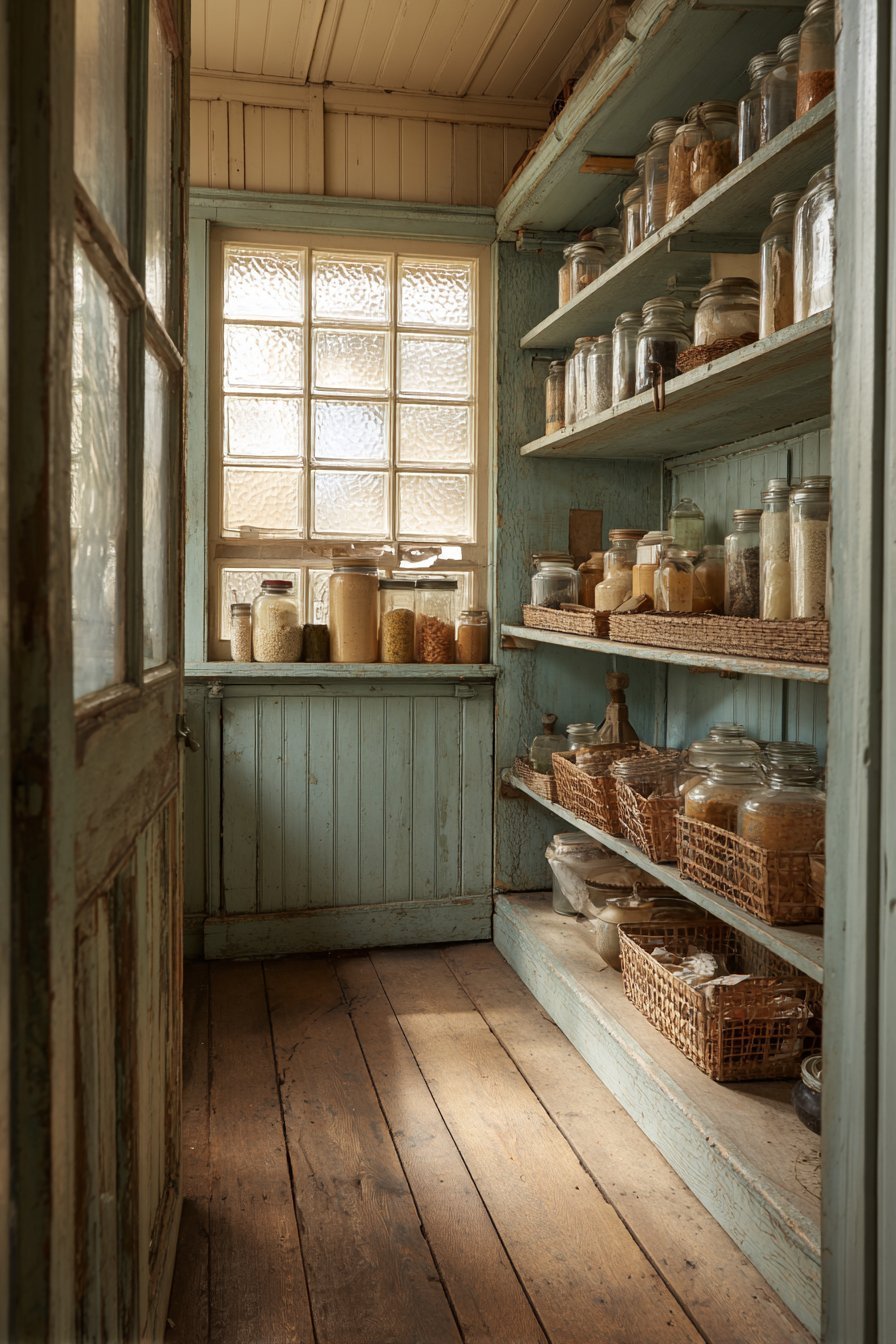
A small window with vintage wavy glass panes diffuses natural light across storage areas. The irregular glass adds visual character while providing illumination. Beadboard walls painted in soft cream show gentle aging. Slight paint loss at corners reveals the material beneath.
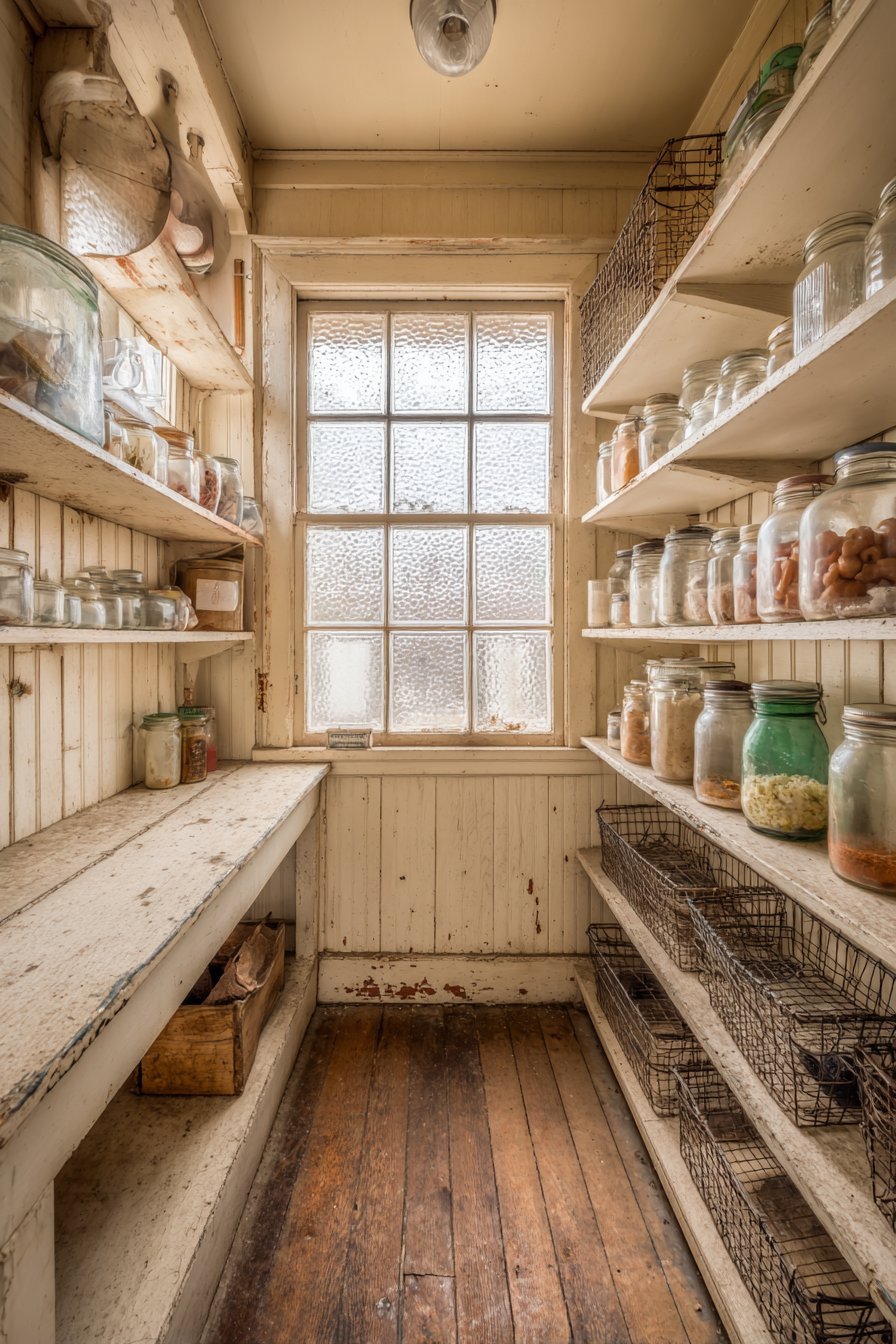
This dedicated storage space demonstrates how functional areas deserve design attention. The pantry combines practical organization with authentic vintage appeal. Detail-focused design creates spaces that work beautifully while honoring their history.
Key Design Tips:
- Preserve paint layers that show through at edges as historical detail
- Use vintage glass jars for attractive and functional dry goods storage
- Maintain original wood flooring even with visible wear patterns
- Keep vintage wavy glass windows rather than replacing with modern alternatives
- Apply gentle paint colors that complement rather than hide aged surfaces
7. Buttercream Yellow Cottage Kitchen with Yellowware
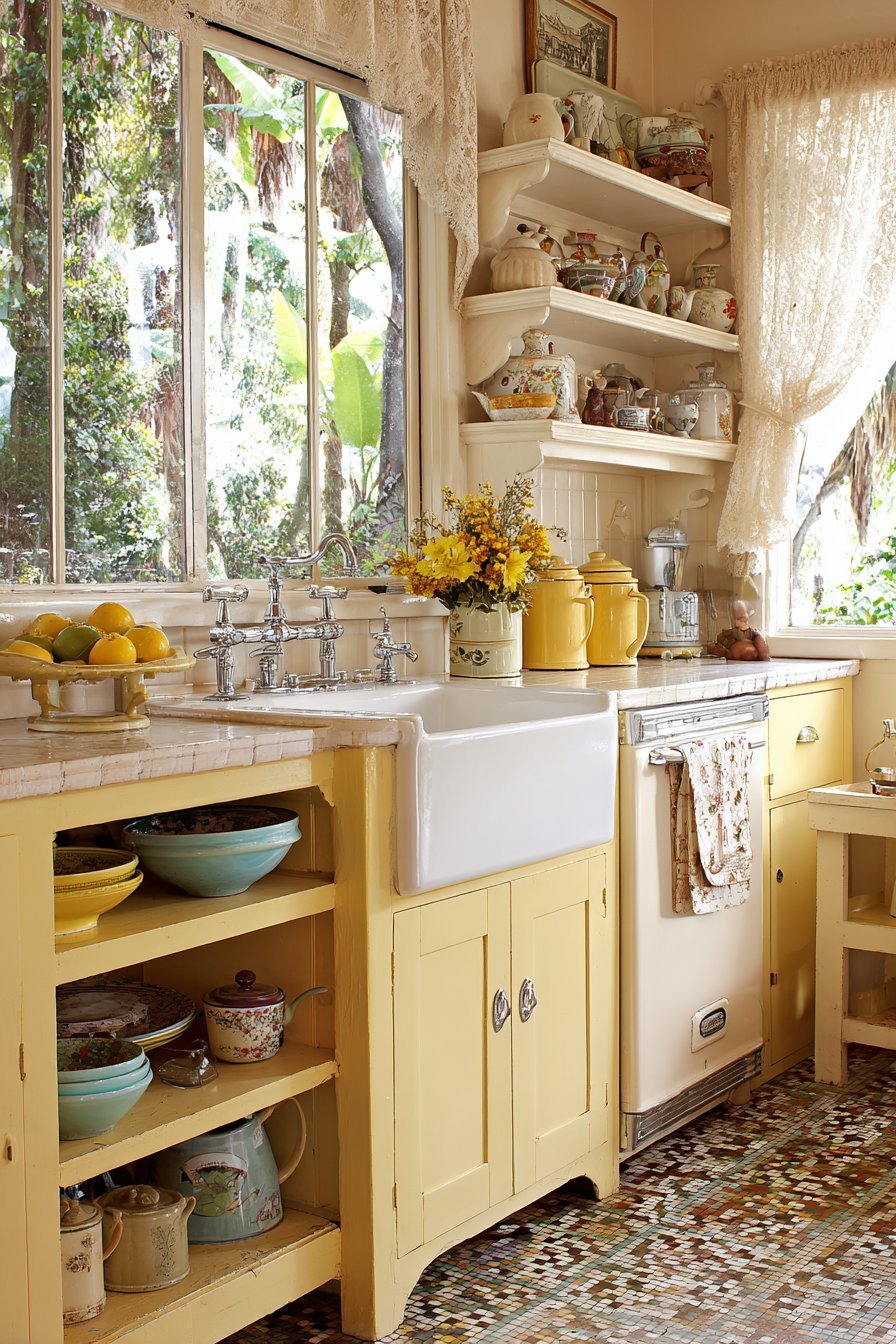
A cottage-style old kitchen features an original apron-front sink in white porcelain. Visible crazing across the surface adds desirable character. The fine crack network develops naturally in vintage porcelain over time. This patina cannot be artificially created in new fixtures.
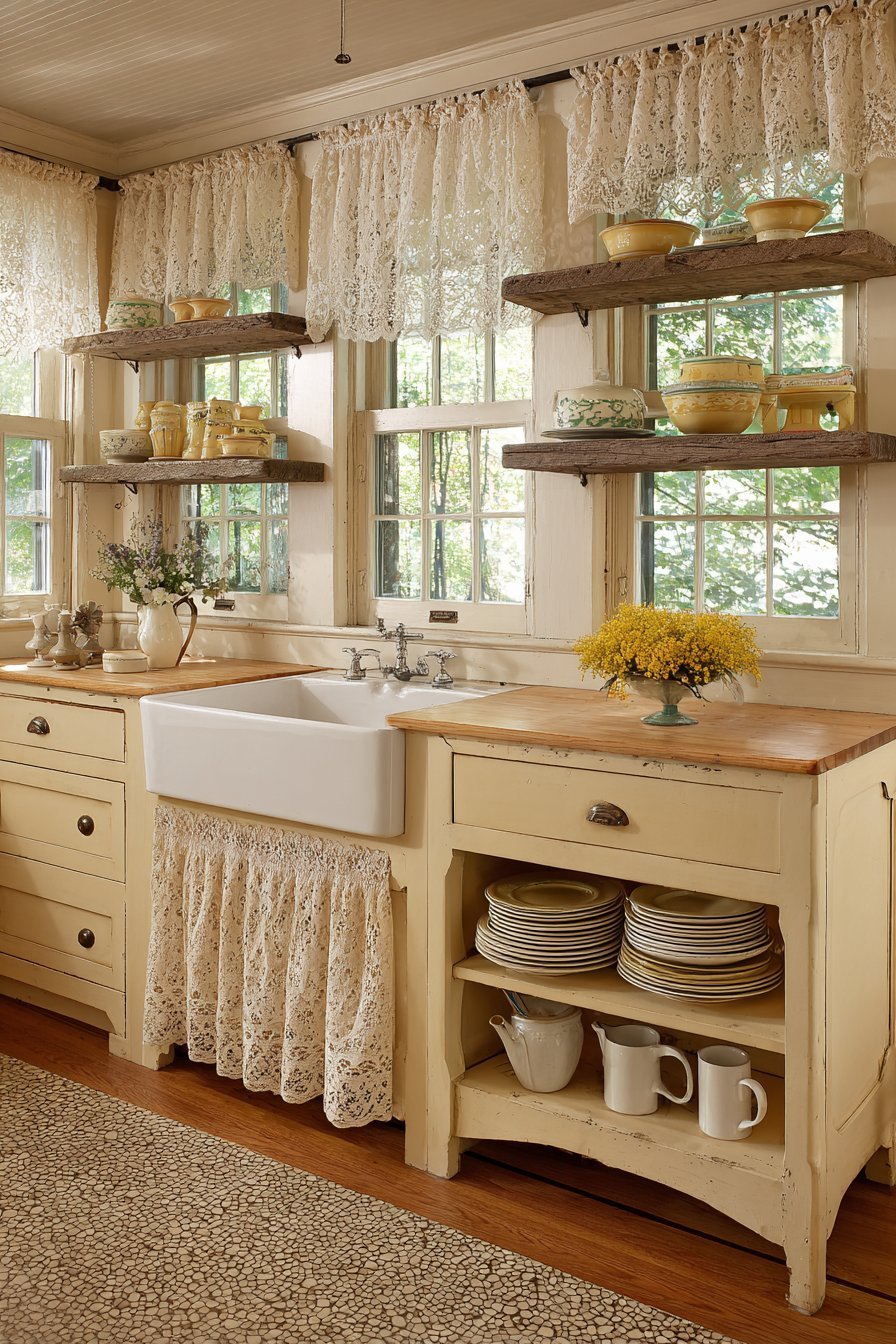
Open shelving constructed from reclaimed barn wood displays vintage yellowware mixing bowls. Ceramic pitchers in warm golden tones complement the overall palette. Painted cabinetry in buttercream yellow shows honest wear at handles and edges. The paint loss reveals wood grain beneath in frequently touched areas.

Vintage linoleum flooring in geometric pattern displays authentic aging throughout. Slight fading near the window shows where decades of sunlight have touched. Lace cafe curtains filter golden hour sunlight beautifully. The filtered light creates a warm glow across surfaces.
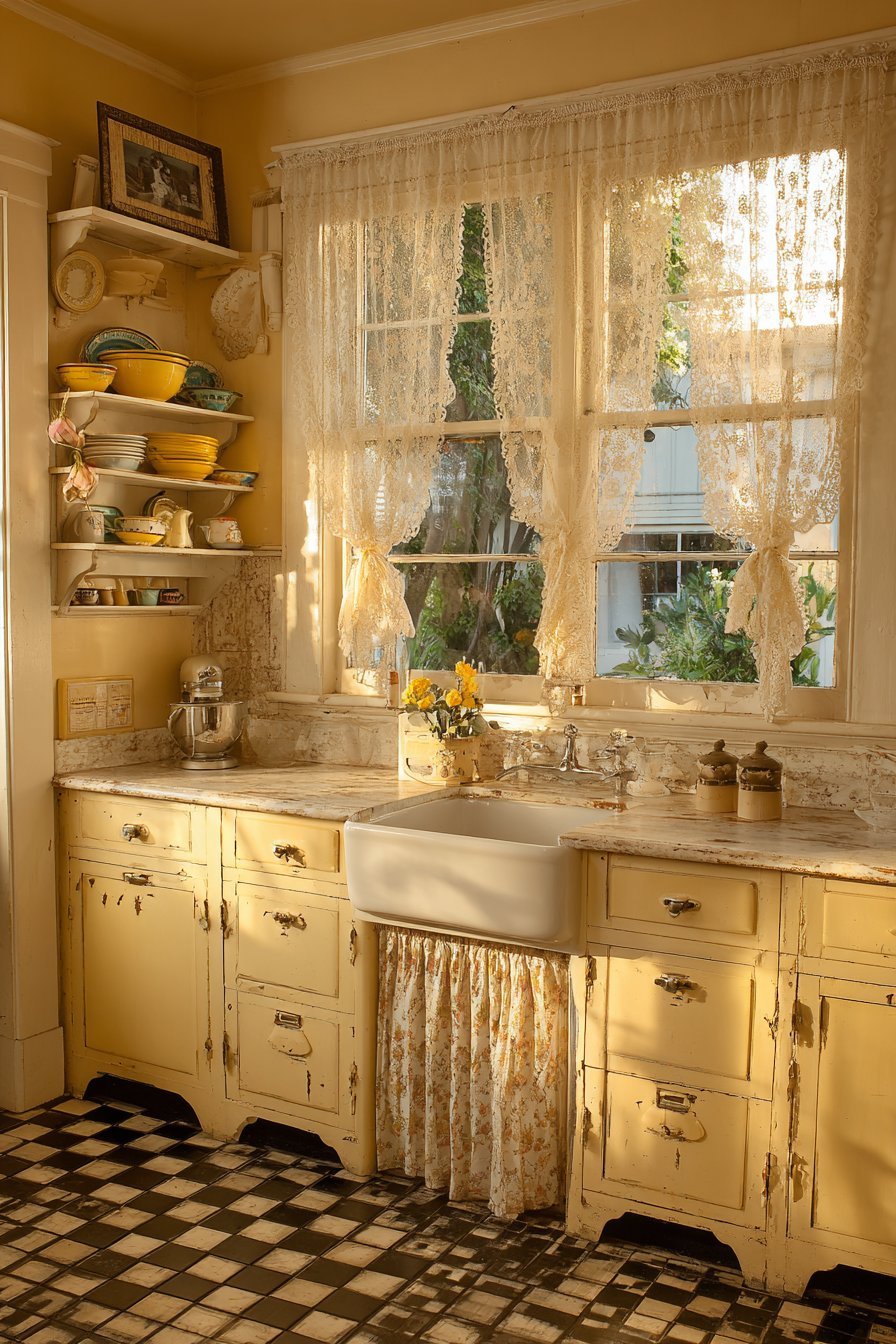
This kitchen captures cozy, lived-in quality perfectly. The combination of warm colors and authentic materials creates inviting atmosphere. Professional design demonstrates how embracing gentle aging creates genuine charm.
Key Design Tips:
- Accept crazing in vintage porcelain as desirable rather than problematic
- Display vintage pottery collections on open shelving for visual warmth
- Use reclaimed wood for shelving to add texture and history
- Maintain original linoleum with natural fading as authentic detail
- Choose cafe curtains for cottage-style light filtering and privacy
8. Built-In Breakfast Nook with Floral Upholstery

An old kitchen breakfast nook features original built-in corner bench seating. Storage compartments beneath provide practical functionality. Vintage floral fabric upholstery shows gentle fading from years of sunlight exposure. The worn textile tells stories of countless morning conversations.
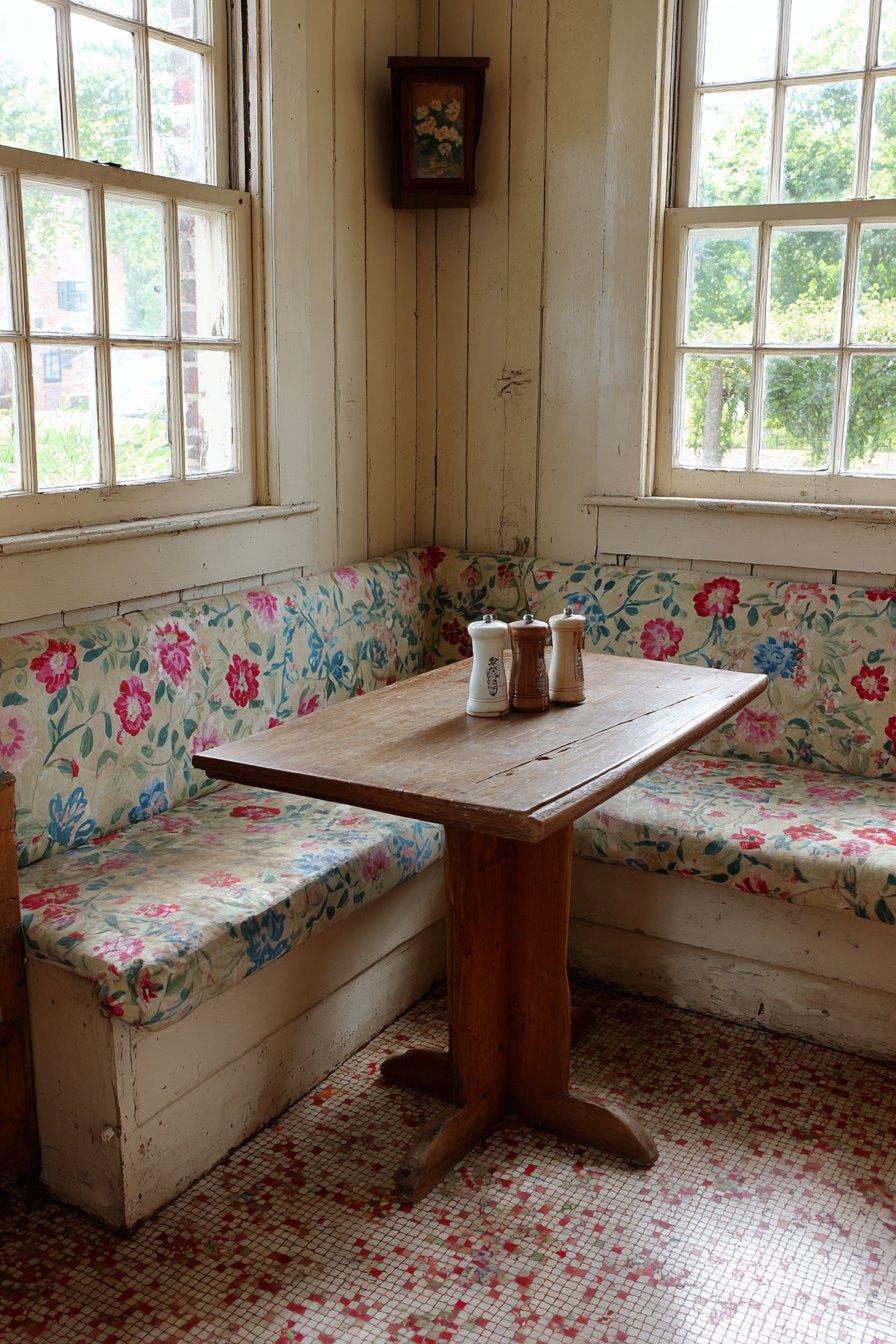
A small drop-leaf table in natural wood displays authentic surface wear and patina. The compact design maximizes limited space efficiently. Wainscoting in cream-painted wood shows subtle imperfections that add character. Original multi-pane windows frame morning light streaming across the intimate space.
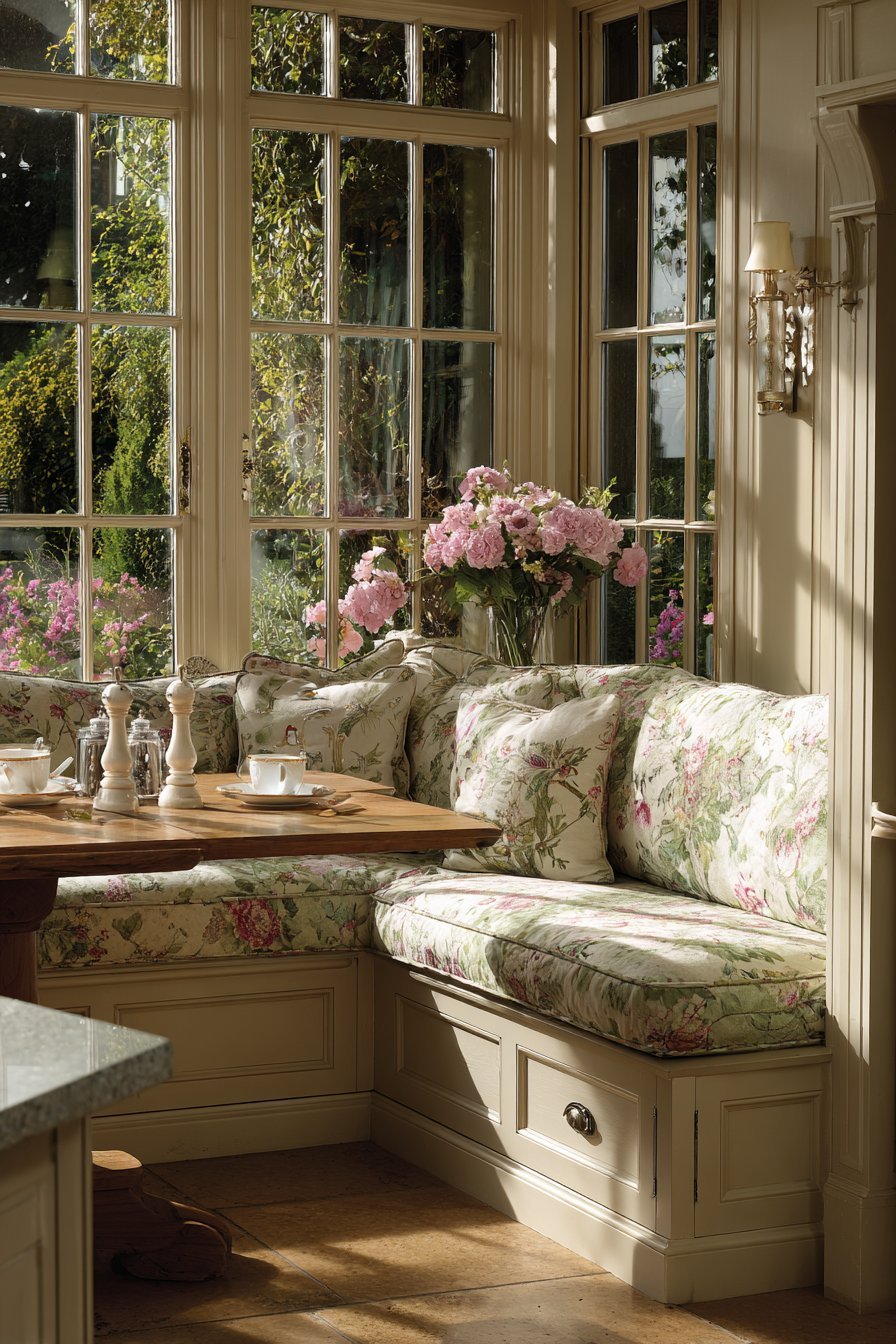
Vintage salt and pepper shakers rest on the table as charming period details. Linoleum flooring in cream and red pattern shows natural wear from foot traffic. The breakfast area creates a dedicated space for casual family meals. Built-in seating maximizes functionality in compact footprints.
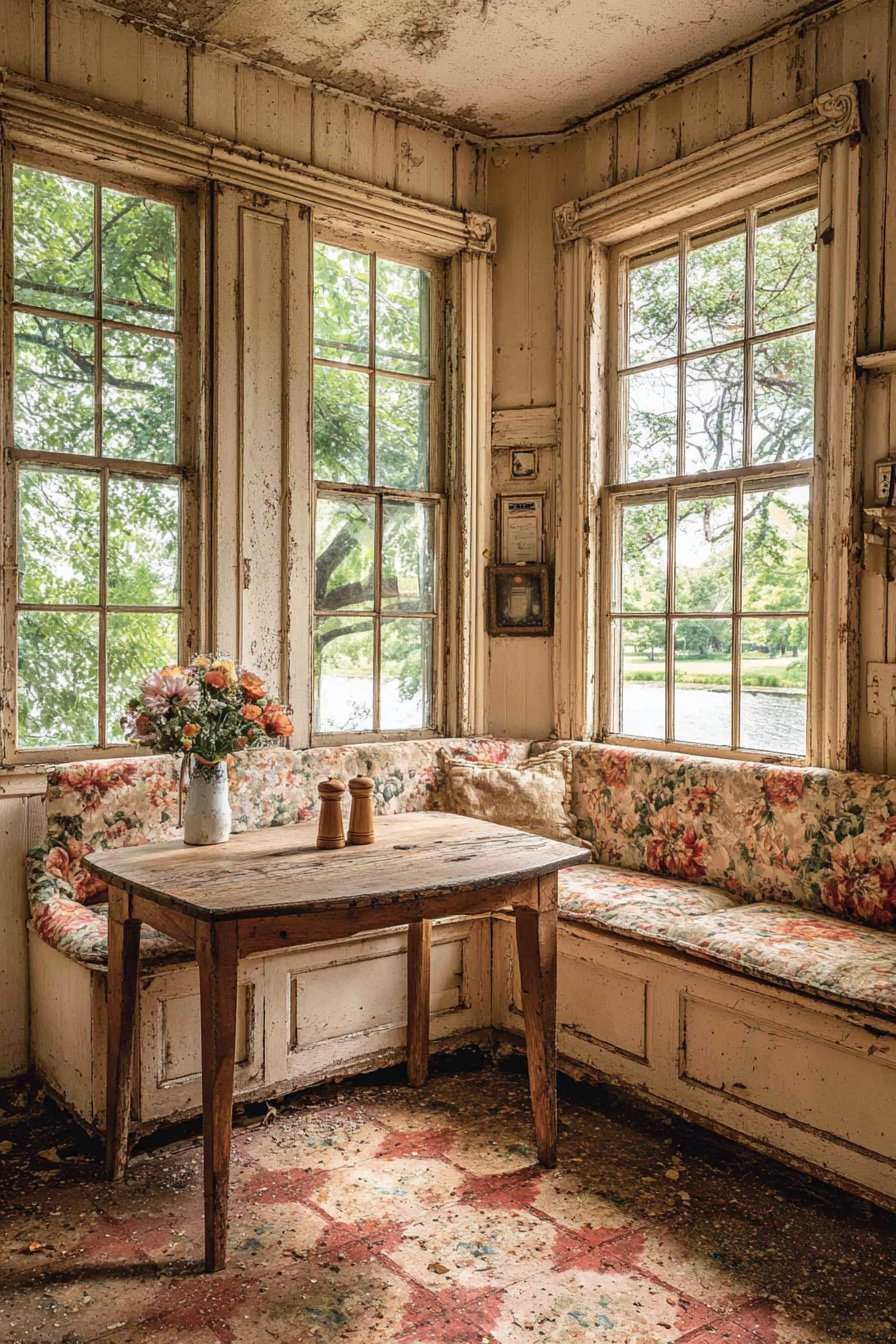
This cozy nook demonstrates how thoughtful design creates inviting gathering spaces. The intimate scale encourages conversation and connection. Nostalgic charm combines with practical functionality for everyday living.
Key Design Tips:
- Incorporate built-in seating to maximize space in compact kitchens
- Accept gentle fading on vintage textiles as authentic aging
- Use drop-leaf tables for flexibility in small breakfast areas
- Maintain original multi-pane windows for period-appropriate character
- Display vintage table accessories that reflect the era’s aesthetic
9. Wood-Burning Cookstove Farmhouse Kitchen
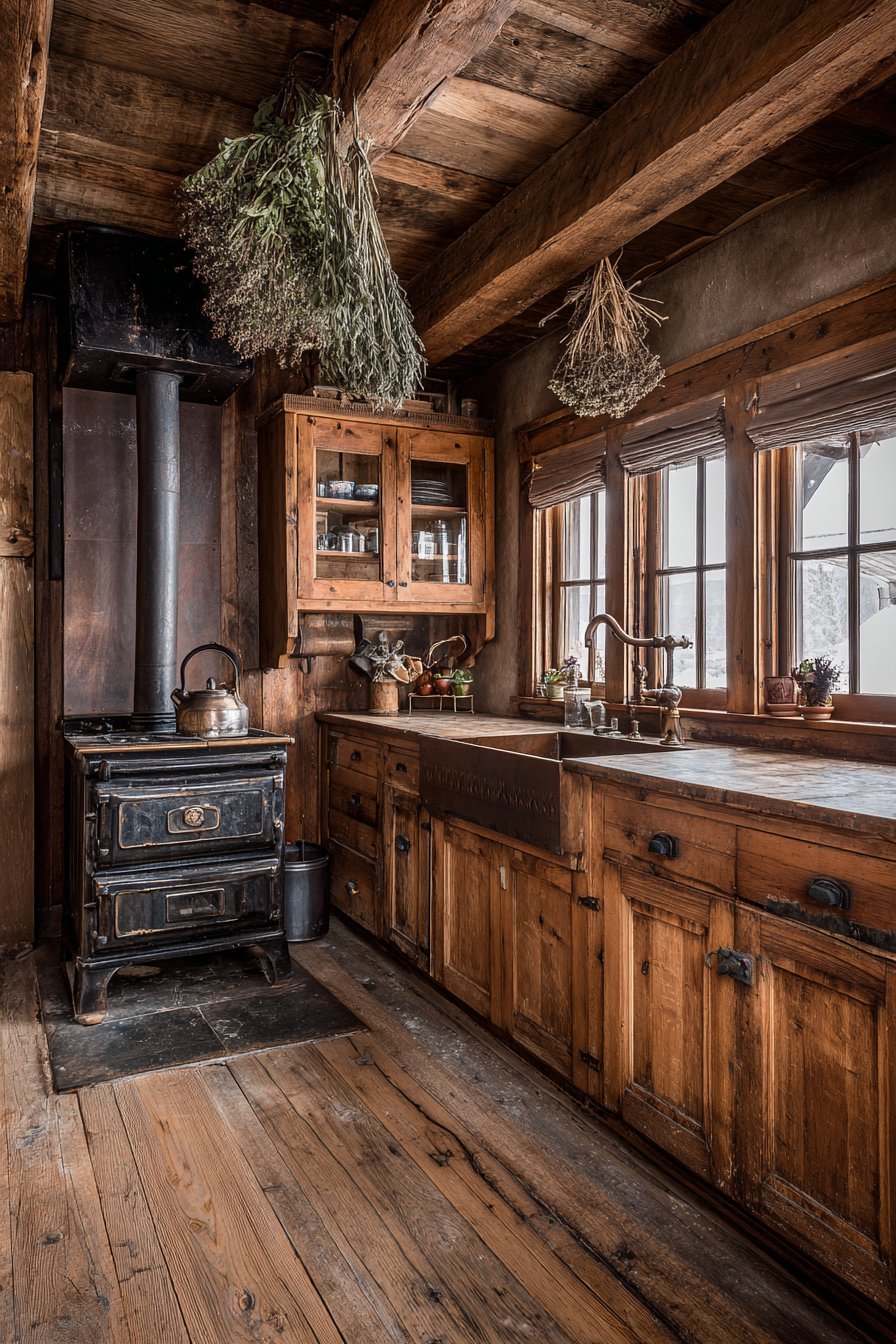
A farmhouse old kitchen features an original wood-burning cookstove converted to decorative storage. Its cast iron surface shows authentic rust patina and wear. The appliance serves as a striking focal point celebrating kitchen history. Few modern elements match its visual impact and authenticity.
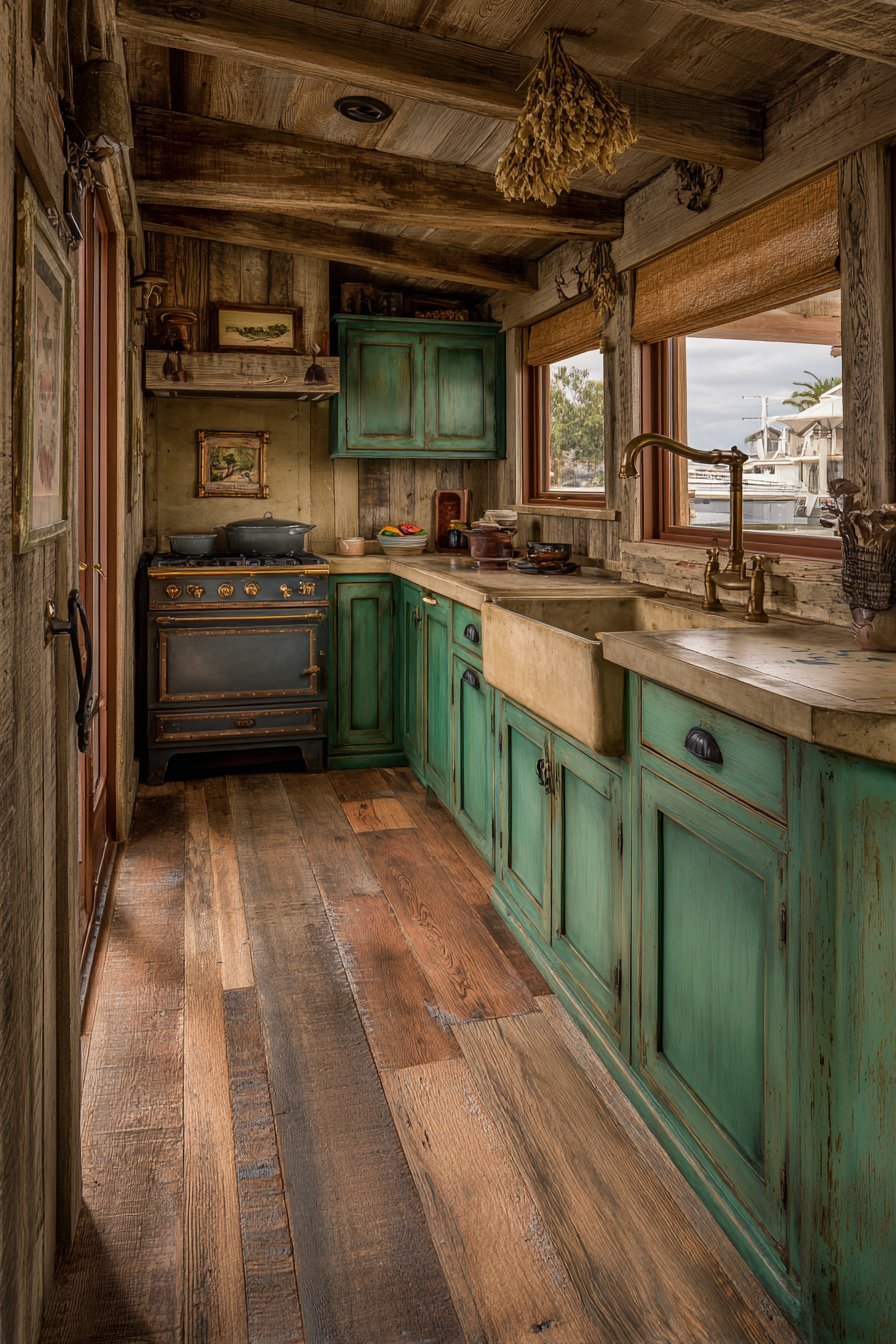
Wooden cabinetry with simple panel doors displays natural aging throughout. Darkening around handles shows where hands have touched for decades. A deep ceramic sink sits below the window. The brass gooseneck faucet shows beautiful verdigris patina from oxidation.

Wide plank pine flooring showcases authentic knots and grain patterns. Natural color variations from age create visual interest across the surface. Dried herbs hang from exposed ceiling beams adding functional decoration. The vintage roller shade provides adjustable window coverage.
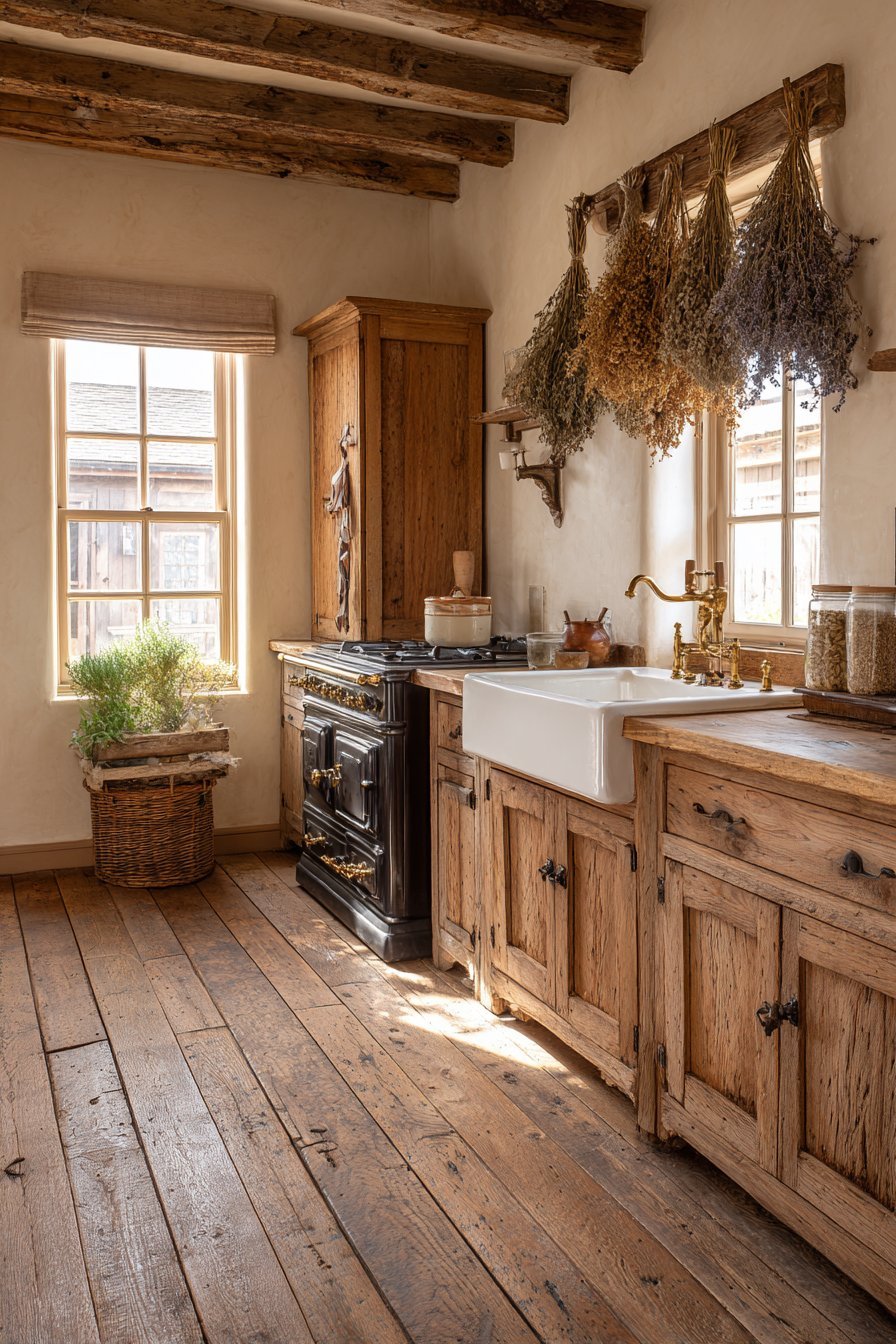
Natural daylight streaming through windows illuminates the rustic textures beautifully. The combination of authentic materials creates cohesive farmhouse aesthetic. This kitchen demonstrates successful preservation of agricultural heritage in residential design.
Key Design Tips:
- Repurpose non-functional vintage appliances as decorative focal points
- Embrace natural darkening on cabinetry around frequently touched areas
- Allow brass fixtures to develop natural verdigris patina
- Display dried herbs from ceiling beams for functional decoration
- Maintain wide plank flooring with natural knots and variations
10. Harvest Gold Electric Range Mid-Century Layout

An old kitchen work triangle features a vintage 1960s electric range in harvest gold. Chrome details show gentle wear from decades of use. The iconic appliance color defines its era perfectly. Harvest gold represents mid-century color trends at their peak.

Original laminate countertops in boomerang pattern display authentic edge wear. Slight fading shows where sunlight has touched surfaces over years. Metal cabinetry in cream shows honest surface scratches and dents. These imperfections tell stories of daily kitchen activities.

Vinyl flooring in geometric pattern reflects the era’s bold aesthetic sensibilities. Natural wear patterns show high-traffic pathways through the space. A fluorescent light fixture with vintage diffuser provides even illumination. The lighting represents typical mid-century kitchen solutions.

This complete mid-century layout demonstrates authentic period design choices. The cohesive aesthetic transports visitors directly to the 1960s. Balanced exposure showcases period-authentic materials with their natural aging patterns.
Key Design Tips:
- Maintain vintage appliances in signature era colors like harvest gold
- Preserve original laminate patterns even with minor edge wear
- Accept surface scratches on metal cabinetry as authentic character
- Keep geometric vinyl flooring that reflects period design trends
- Use fluorescent fixtures with vintage diffusers for authentic lighting
11. Victorian Copper Sink Kitchen with Tin Ceiling

A Victorian-era old kitchen features an original copper sink with stunning natural green patina. Years of oxidation create beautiful color variations across the surface. The patina represents natural chemical processes over decades. Modern copper cannot replicate this authentic aging.

Dark wood cabinetry features ornate carved details celebrating Victorian craftsmanship. Brass hardware displays rich patina from years of polishing and use. Marble countertop remnants show natural veining patterns. Edge chips tell stories of use across generations.
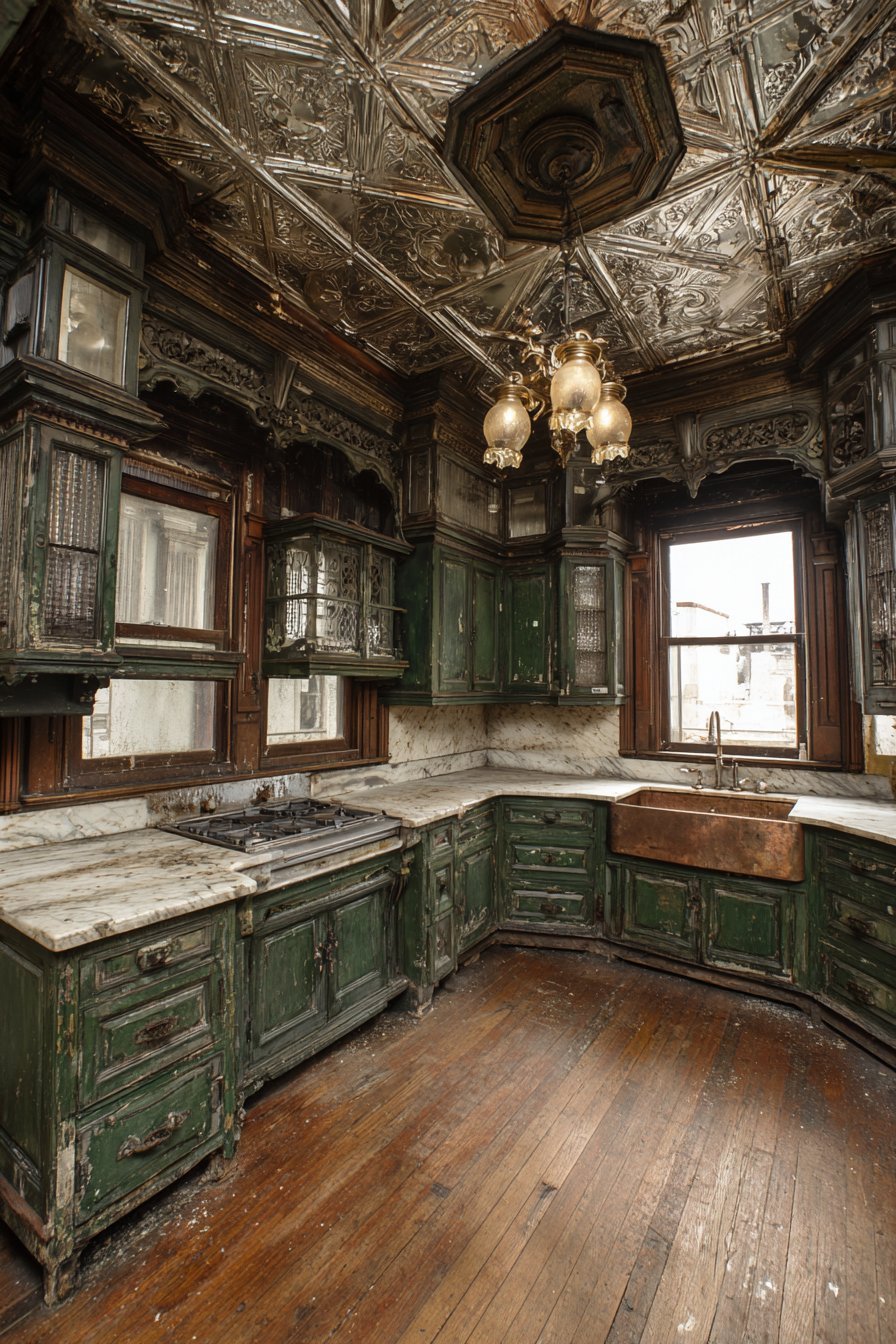
Original tin ceiling with embossed pattern painted in cream shows subtle tarnishing. The decorative ceiling adds architectural interest overhead. A gas chandelier converted to electric maintains period authenticity. Tall windows flood the space with natural light.
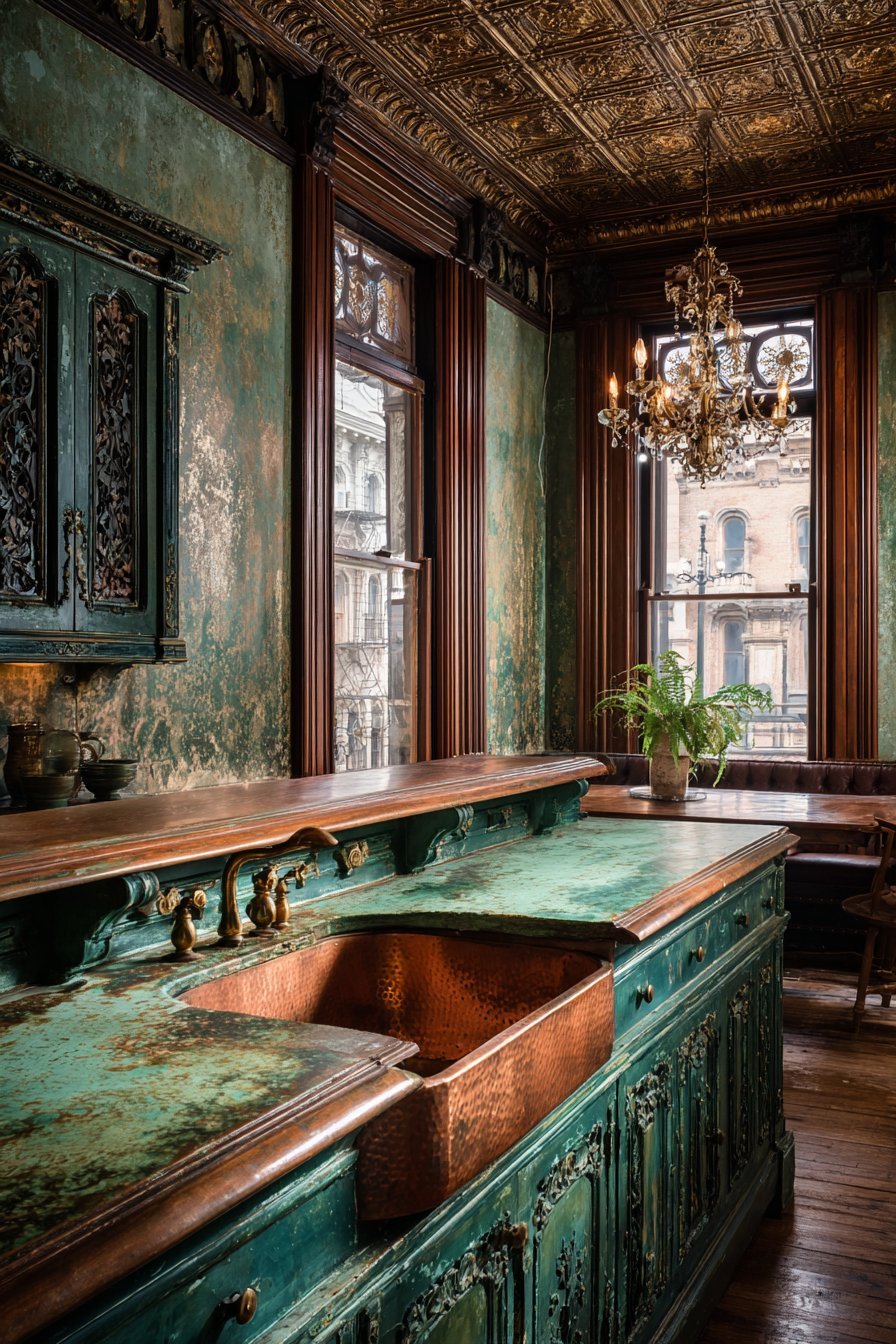
Material textures create visual richness throughout this ornate kitchen. The combination of copper, brass, marble, and tin represents Victorian material preferences. Professional design captures ornate details and authentic aging beautifully.
Key Design Tips:
- Preserve copper sinks with natural green patina rather than polishing
- Maintain ornate wood carvings with gentle cleaning not refinishing
- Accept edge chips on marble as evidence of authentic use
- Keep tin ceilings with their embossed patterns and gentle tarnishing
- Convert gas fixtures to electric while maintaining original appearance
12. Repurposed Workbench Kitchen Island
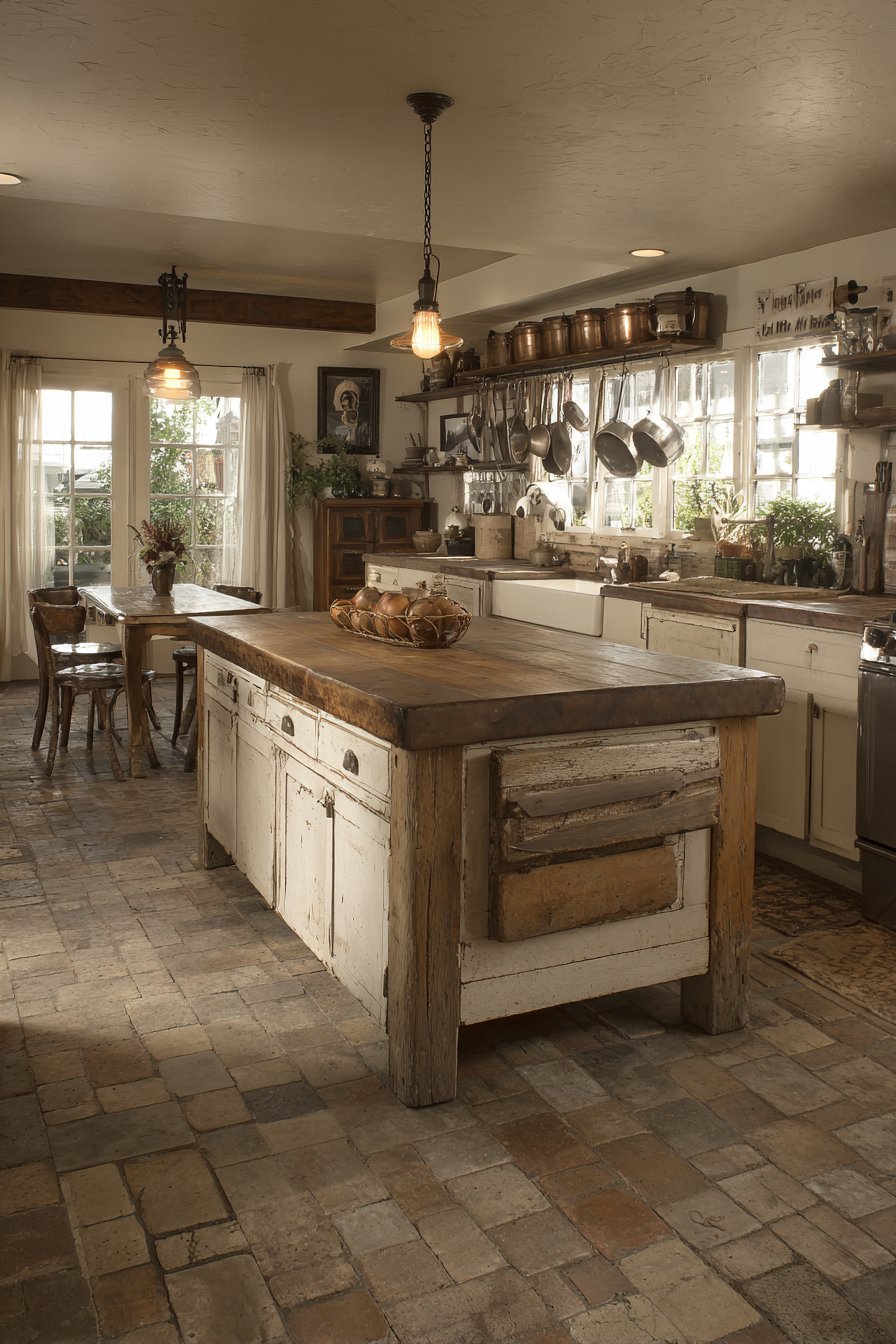
An old kitchen island features a repurposed antique workbench as functional centerpiece. Its thick maple top shows cutting scars accumulated over decades. Natural darkening from oil treatments creates rich honey tones. The surface tells stories through every mark and stain.
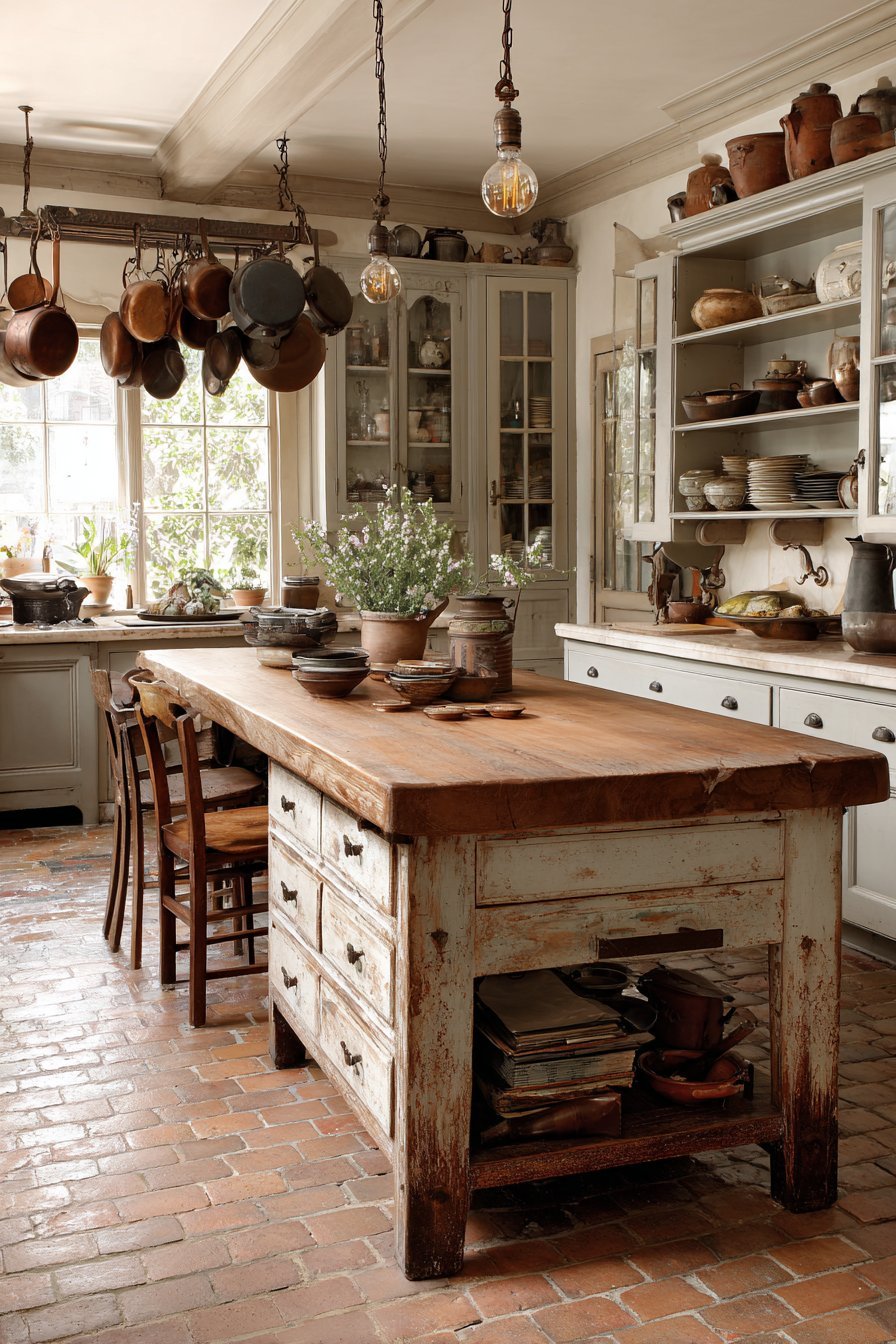
Mismatched vintage chairs surround the island for casual dining functionality. Original tool drawer pulls remain as authentic hardware. A hanging pot rack above displays well-seasoned cast iron cookware. The dark patina on cookware represents years of proper seasoning.

Brick flooring with natural variation adds character underfoot. Slight unevenness reflects historical installation methods. Pendant lights with Edison bulbs provide warm illumination across the workspace. The visible filaments create ambient glow.

Creative repurposing demonstrates how vintage furniture finds new kitchen life. The workbench island combines history with modern functionality. Natural lighting emphasizes material histories and authentic textures throughout.
Key Design Tips:
- Repurpose vintage workbenches as unique kitchen islands
- Preserve cutting scars and marks on antique work surfaces
- Mix mismatched vintage seating for eclectic character
- Display well-seasoned cast iron as functional decoration
- Use brick flooring for rustic texture and natural variation
13. Stone Sink French Country Kitchen
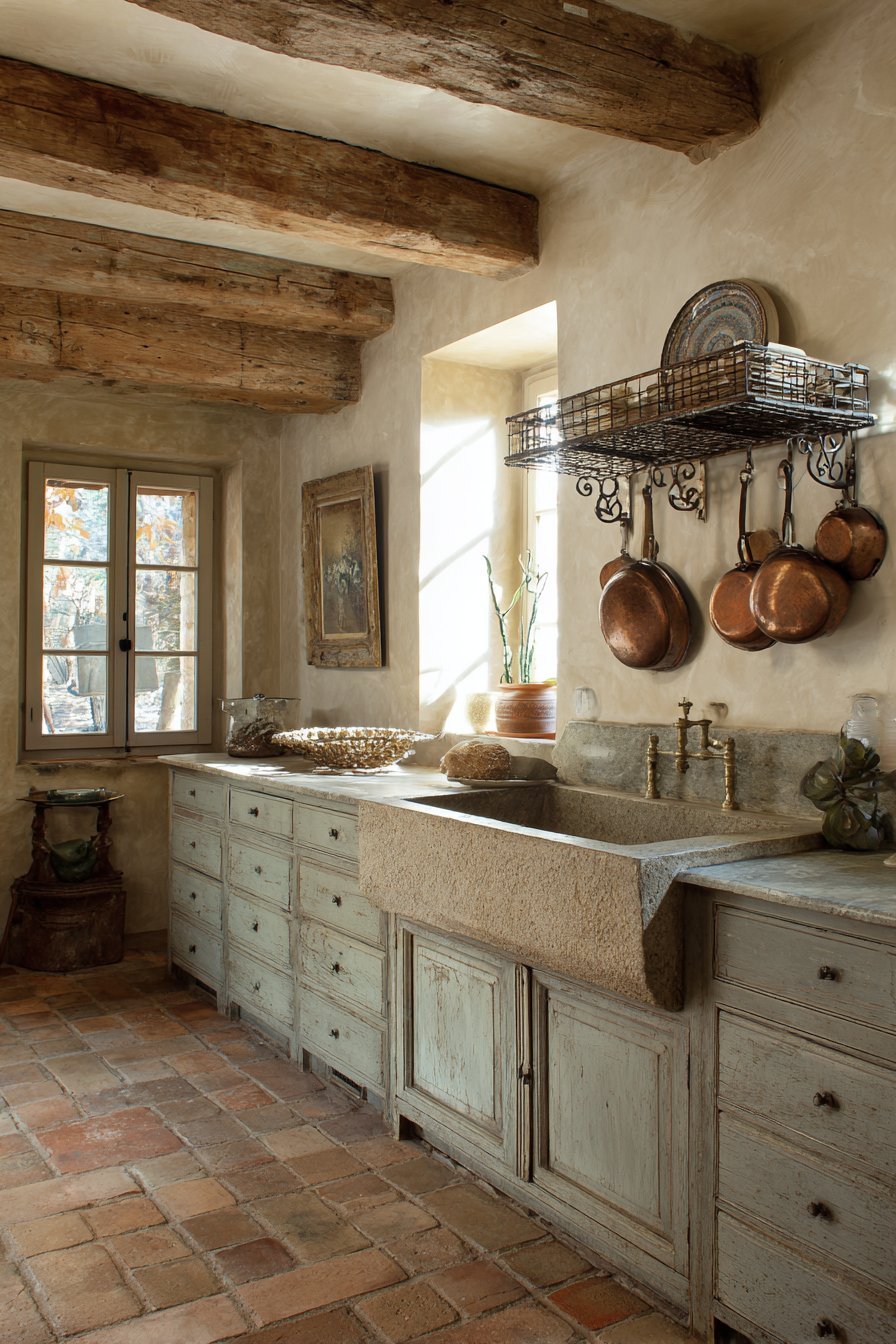
A French country old kitchen features an original stone farmhouse sink. Visible chisel marks show hand-crafting techniques from earlier eras. Natural weathering adds texture and character across the surface. The substantial sink represents traditional European craftsmanship.
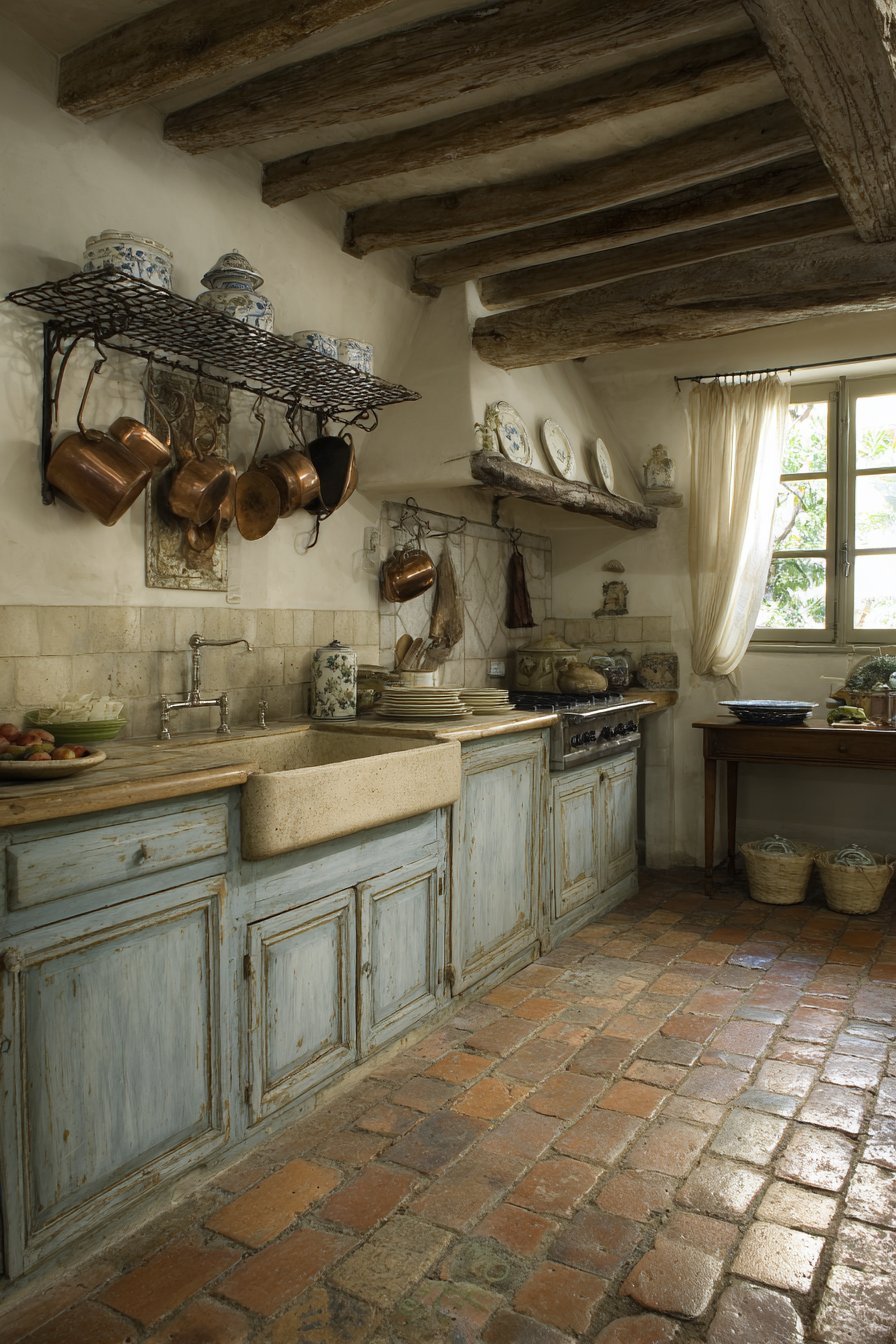
Distressed cabinetry in soft blue-grey shows intentional wear patterns. Paint reveals wood beneath at corners and edges creating authentic aging. Terracotta floor tiles display natural color variations throughout. Gentle wear patterns show decades of foot traffic.
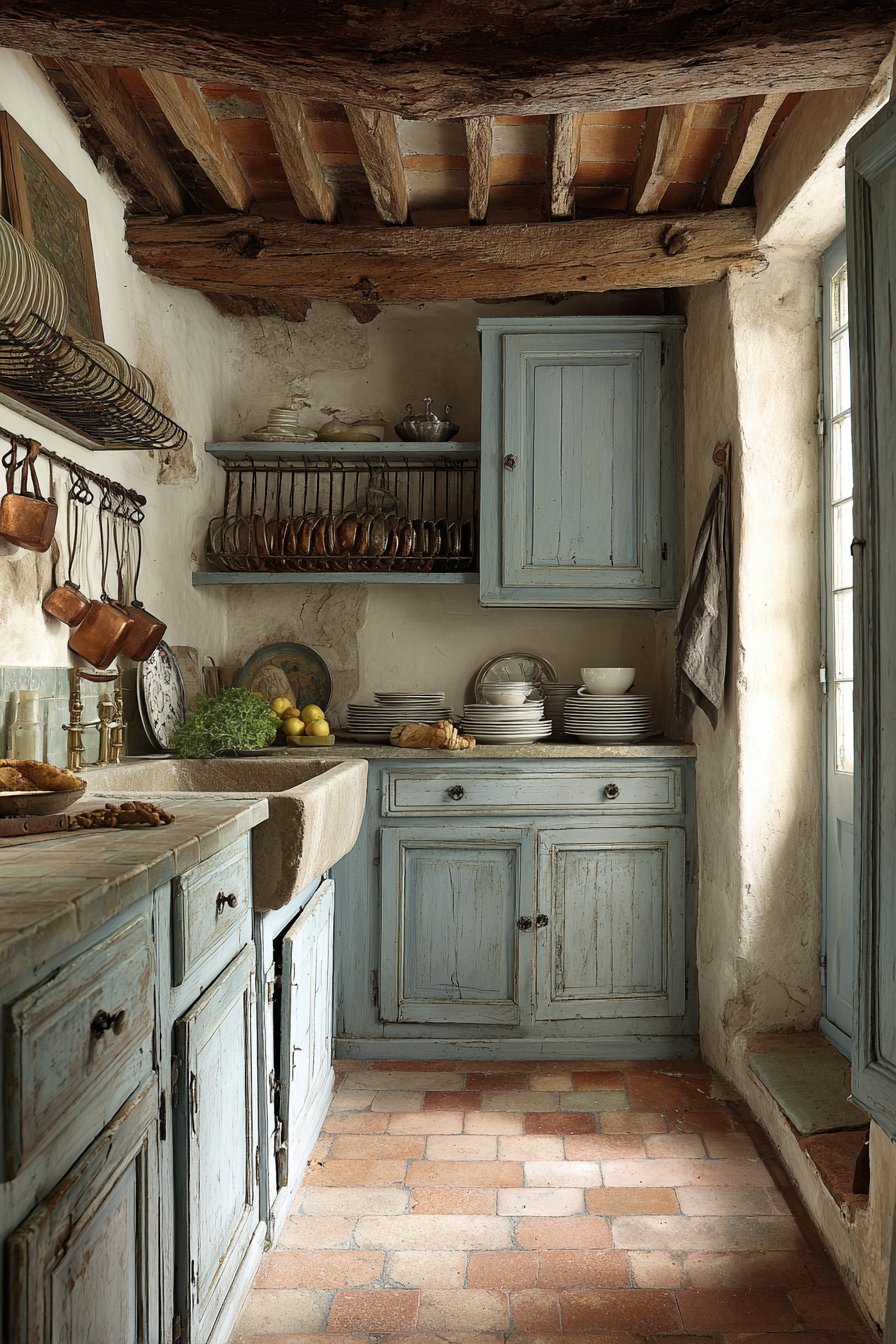
A vintage wire dish rack mounted above the sink holds everyday dishes. Exposed wooden ceiling beams show original saw marks and natural darkening. Wrought iron pot rack displays copper cookware with natural patina. The layered metals create visual richness.

Soft natural window light captures the rustic European aesthetic beautifully. The combination of stone, terracotta, and aged wood creates cohesive design. Authentic material aging demonstrates successful French country styling.
Key Design Tips:
- Preserve chisel marks in stone sinks as evidence of hand craftsmanship
- Apply distressing techniques that reveal wood beneath painted surfaces
- Use terracotta tiles with natural color variations for authentic flooring
- Display copper cookware allowing natural patina to develop
- Incorporate wrought iron elements for traditional European character
14. Yellow Formica Baking Station Kitchen

An old kitchen baking station features original 1950s Formica countertop in yellow speckled pattern. Chrome edge trim shows gentle wear from decades of use. Metal flour bin and sugar canister in matching yellow enamel complete the look. Authentic surface crazing adds period character to enamelware.
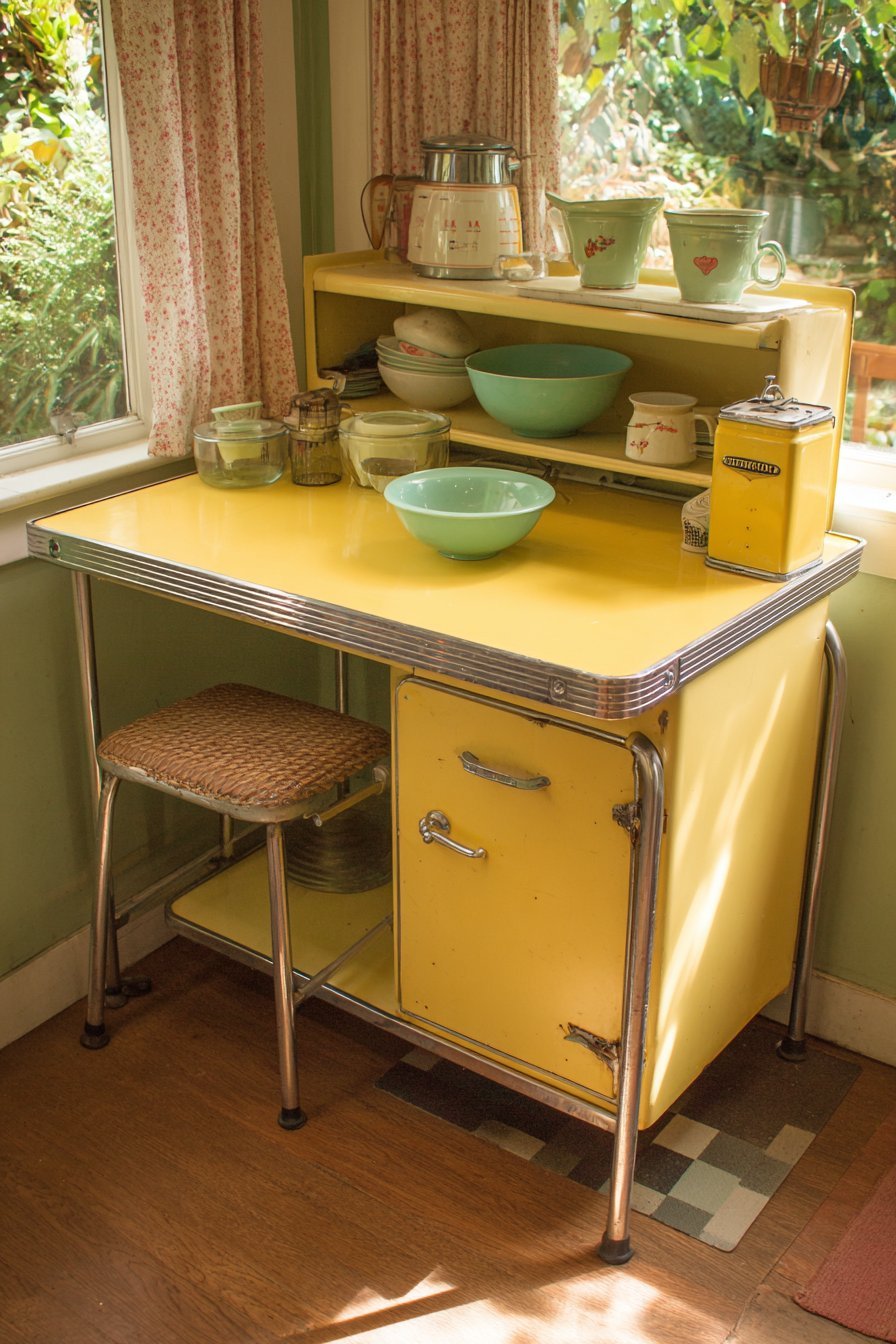
A vintage Hoosier-style cabinet features a pull-out porcelain work surface. The built-in sifter remains perfectly functional after many years. Open shelving displays Fire King jadeite mixing bowls and measuring cups. The cheerful green glass represents iconic mid-century kitchenware.

Checkerboard vinyl flooring shows natural scuff marks and fading patterns. These wear marks map decades of baking activities. Natural morning light through cafe curtains illuminates the dedicated workspace. The filtered sunlight creates perfect conditions for detailed baking work.

This preserved baking area demonstrates specialized kitchen zones from earlier eras. Period-appropriate accessories enhance the authentic mid-century aesthetic. Attention to detail creates a functional workspace celebrating baking traditions.
Key Design Tips:
- Preserve original Formica patterns with chrome edge trim intact
- Display period-appropriate accessories like Fire King jadeite collections
- Maintain Hoosier cabinets with their original functional elements
- Accept scuff marks on vintage vinyl as authentic wear patterns
- Create dedicated baking zones with specialized vintage storage
15. Racing Green AGA English Cottage Kitchen

An English cottage old kitchen features an original AGA-style range cooker. Racing green enamel shows gentle surface wear from decades of faithful service. The substantial appliance serves as the kitchen’s commanding focal point. AGA cookers represent British kitchen traditions at their finest.
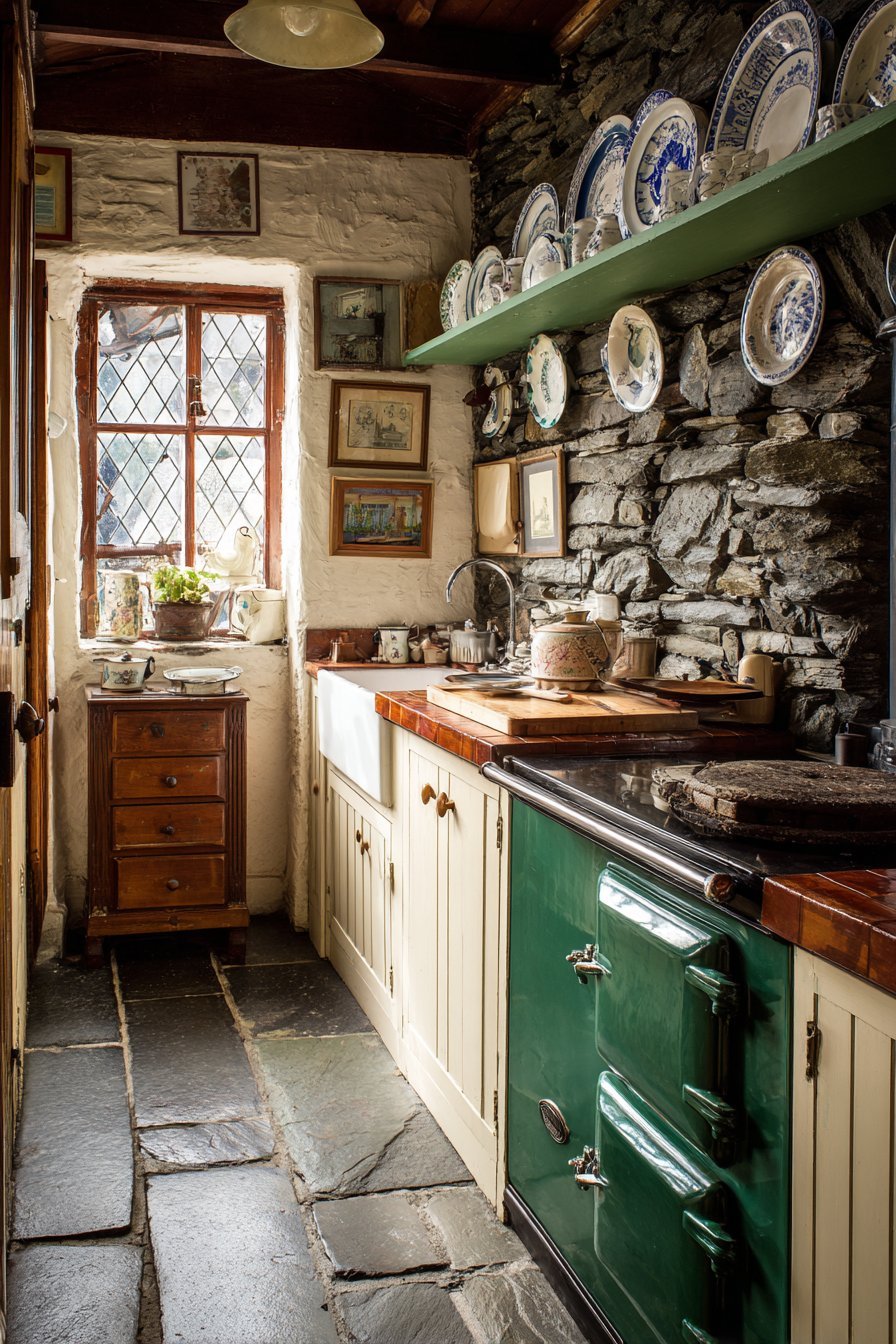
Painted wood cabinetry in cream shows honest aging patterns. Darkening near frequently used areas reveals natural wear. Flagstone flooring features natural texture variations across the surface. Slight unevenness reflects centuries-old installation techniques and settling.

A plate rack above displays a transferware china collection in blue and white. Small leaded glass windows diffuse soft natural light throughout. Exposed stone wall sections add rustic character and historical authenticity. The layered textures create depth and visual interest.

This kitchen captures layered history through thoughtful material preservation. Natural light reveals texture details and surface patinas beautifully. The cohesive design demonstrates successful English cottage styling.
Key Design Tips:
- Maintain AGA or similar range cookers as kitchen focal points
- Accept natural darkening on cabinetry near high-use areas
- Preserve flagstone flooring with natural unevenness intact
- Display transferware collections on open plate racks
- Incorporate exposed stone walls for rustic character
16. Red Laminate Breakfast Bar Diner-Style Kitchen

An old kitchen with original 1940s breakfast bar features chrome-edged laminate countertop. Red with white marbled pattern shows edge wear and slight fading. Matching chrome and vinyl bar stools feature red seats. Authentic cracking in vinyl upholstery tells stories of use.
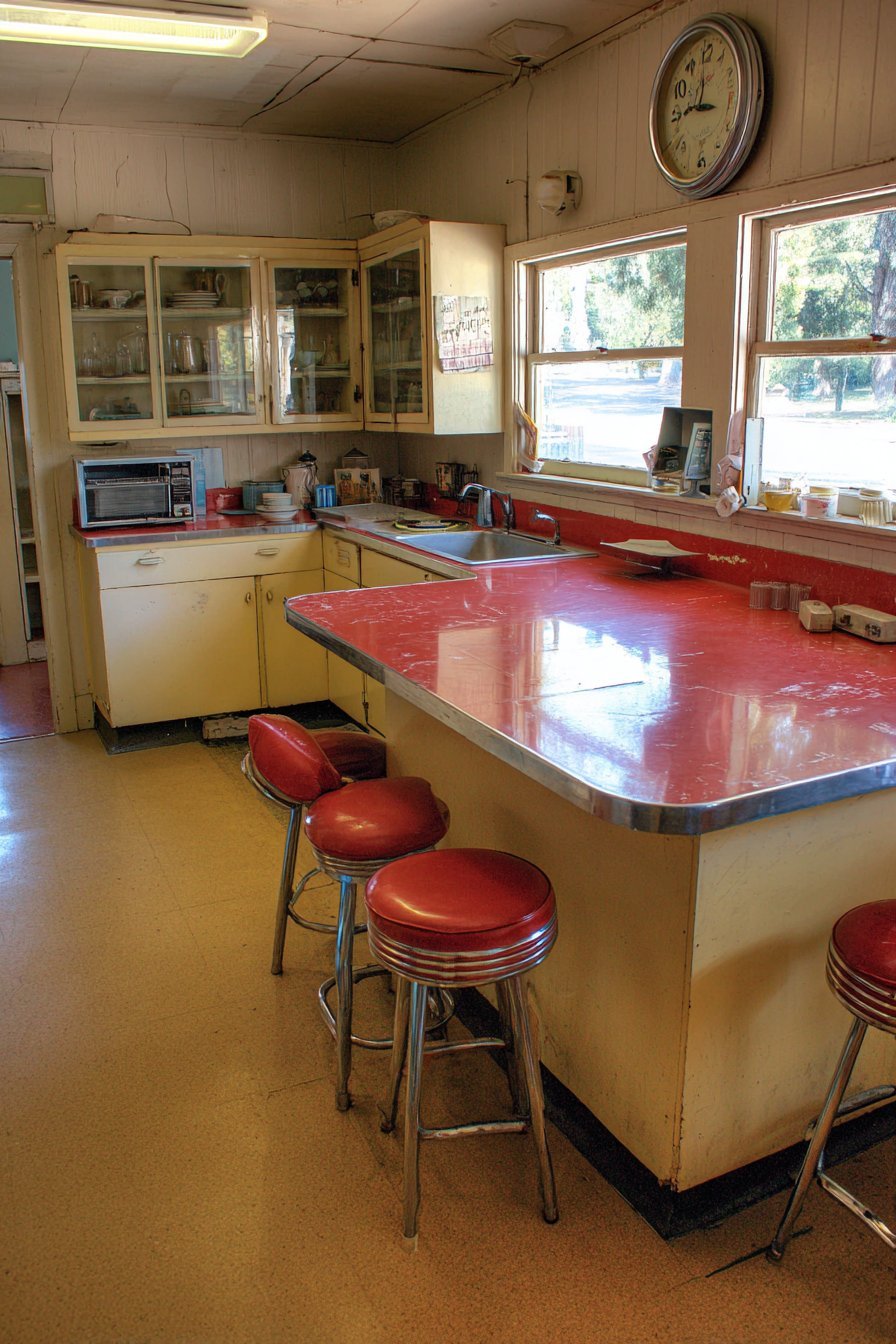
Overhead cabinets with sliding glass doors reveal vintage dishware collections. Linoleum flooring in cream and red continues the coordinated color scheme. Natural wear patterns appear near the seating area from decades of foot traffic. A vintage diner-style clock on the wall adds period authenticity.
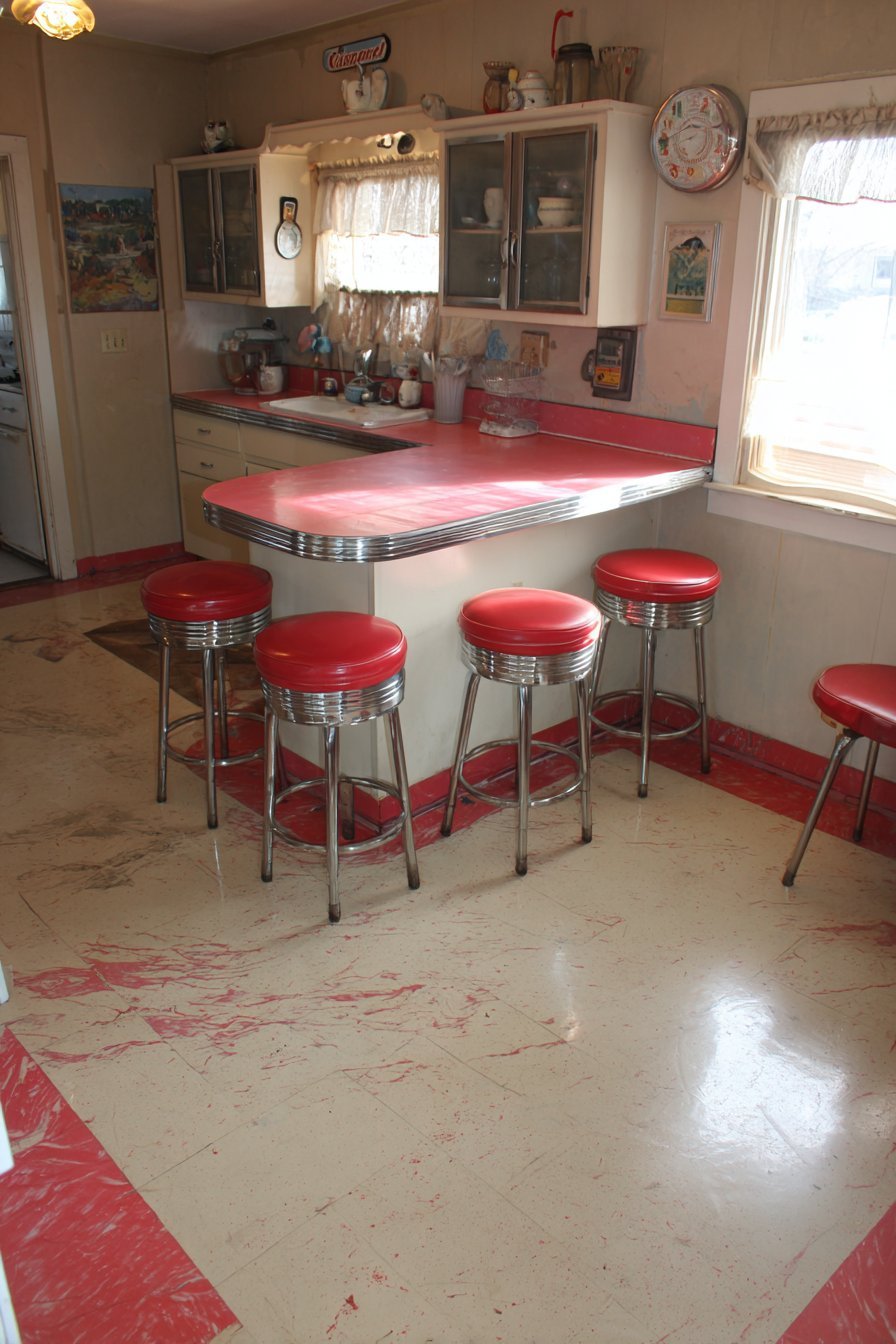
The breakfast bar creates a casual dining area within the kitchen. Chrome details throughout reflect light and add metallic shine. The red and cream palette creates cheerful retro atmosphere. This design captures American diner aesthetic in residential setting.

Natural window light captures the retro breakfast area beautifully. Honest aging details add authenticity throughout the space. The cohesive design demonstrates successful mid-century residential styling.
Key Design Tips:
- Preserve chrome-edged laminate countertops with original patterns
- Maintain vintage vinyl bar stools despite surface cracking
- Use sliding glass cabinet doors for vintage display storage
- Coordinate floor and counter colors for cohesive retro palette
- Add period-appropriate accessories like diner-style clocks
17. Shaker Pine Kitchen with Peg Rail
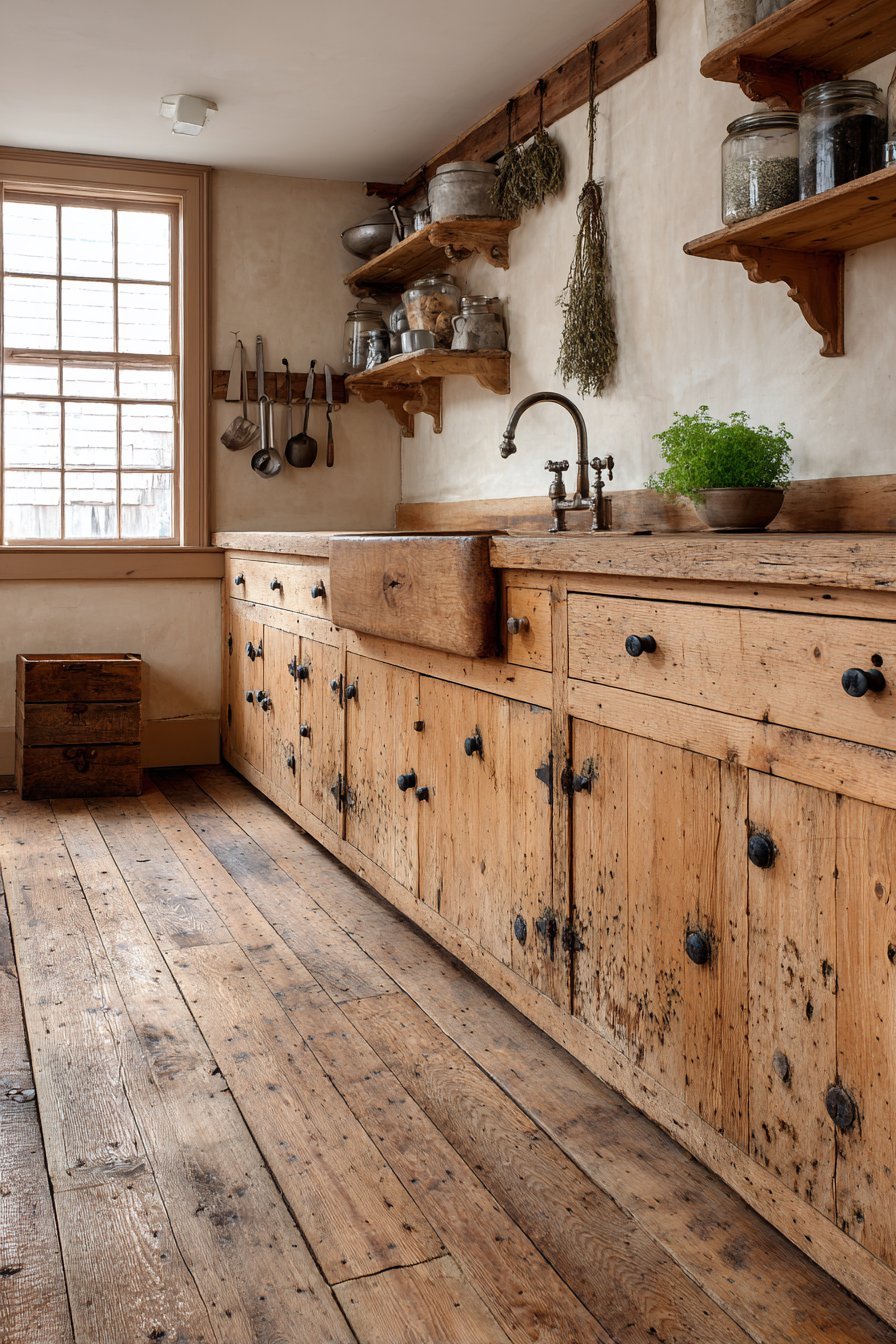
A Shaker-style old kitchen features original built-in pine cabinetry. Simple panel doors reflect Shaker design philosophy of functional beauty. Wooden knob pulls show smooth wear from countless touches. The natural aging creates comfortable tactile surfaces.
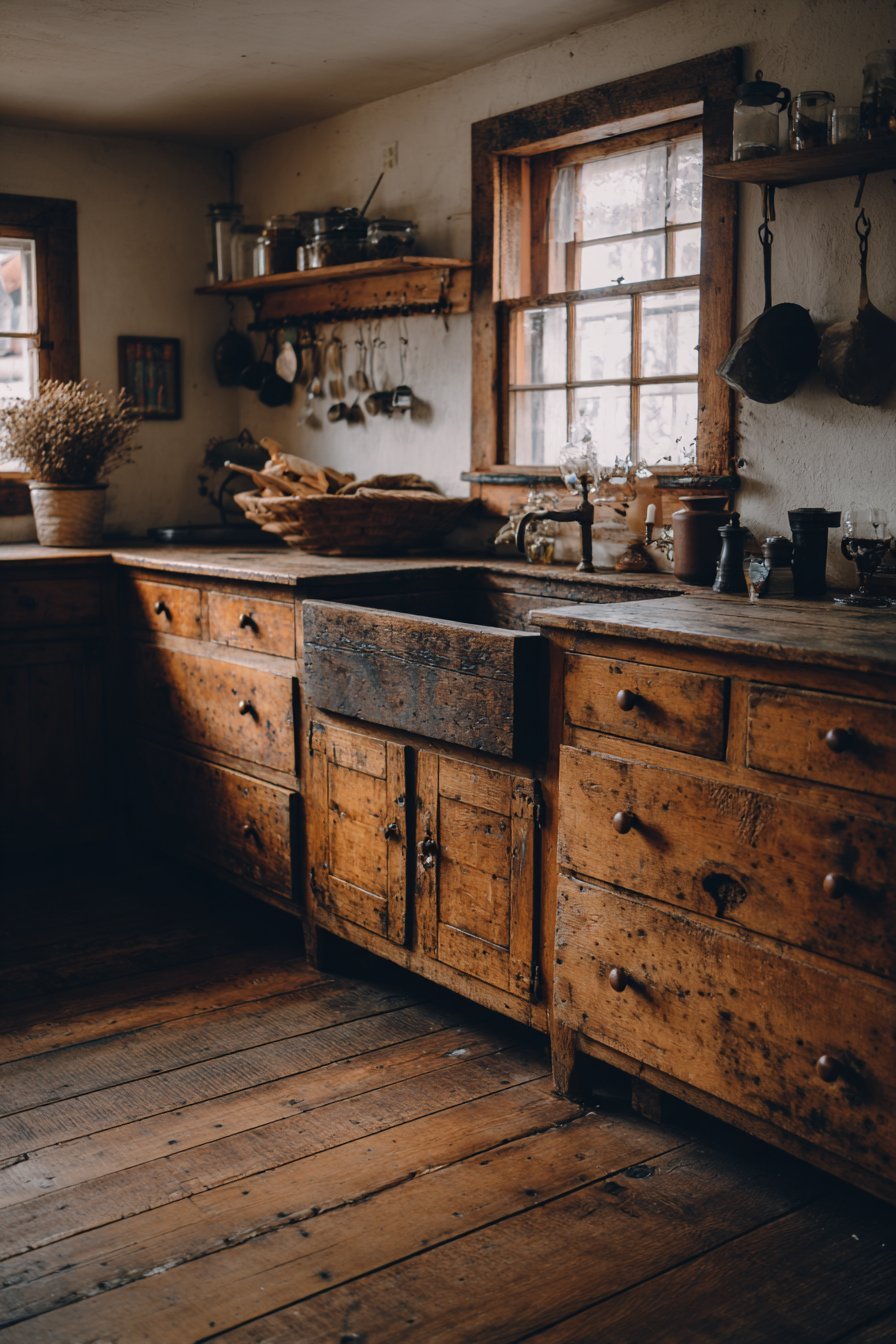
A deep dry sink converted to storage displays natural wood aging. Darkening over time creates rich warm tones throughout. Wide plank pumpkin pine flooring shows authentic nail holes. Knots and natural color variations add character across the surface.

Peg rail mounted on the wall holds vintage utensils and dried herbs. Small multi-pane window provides natural light for the workspace. Painted walls in historical milk paint show subtle color variations. Gentle aging creates soft patina across painted surfaces.

Minimalist functionality defines this authentic Shaker aesthetic. Soft natural lighting emphasizes wood grain and surface patinas. The design demonstrates how simplicity creates timeless beauty.
Key Design Tips:
- Preserve simple panel doors that reflect Shaker design principles
- Accept smooth wear on wooden pulls as desirable aging
- Maintain wide plank flooring with authentic nail holes visible
- Use peg rails for functional storage in Shaker tradition
- Apply historical milk paint for authentic wall finishes
18. Soapstone Scullery with Canning Storage
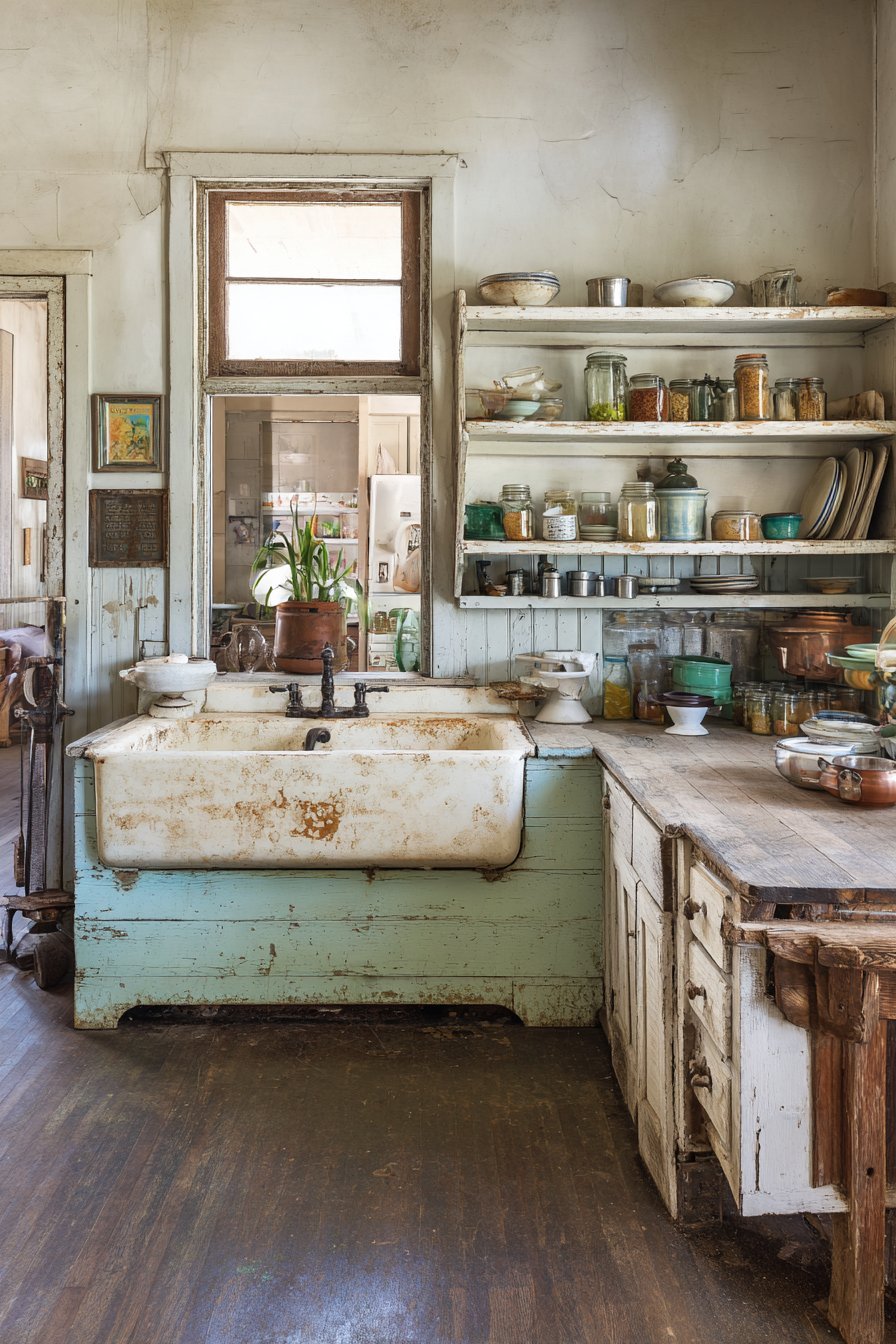
An old kitchen scullery area features an original deep soapstone utility sink. Natural patina and subtle surface scratches show decades of use. The dedicated washing area represents traditional kitchen work zones. Soapstone’s durability ensures continued functionality.

Open shelving in painted wood displays vintage canning jars in various sizes. Preserving equipment reflects historical food storage practices. Beadboard walls painted in soft grey-blue show gentle wear. Slight paint loss at corners reveals the material beneath.

Original wood flooring shows visible grain and natural darkening near sink areas. A small window above the workspace diffuses natural light across vintage enamelware. Copper molds hang as decorative elements celebrating kitchen history. The functional work area balances utility with aesthetic appeal.

This scullery demonstrates how dedicated work zones enhanced kitchen efficiency. Authentic materials and honest use create genuine character. Attention to functional details celebrates traditional kitchen practices.
Key Design Tips:
- Preserve soapstone utility sinks with natural patina intact
- Display vintage canning jars as functional decoration
- Use beadboard walls painted in muted historical colors
- Accept natural darkening on wood floors near water sources
- Incorporate vintage enamelware and copper molds as decoration
19. Colonial Walk-In Fireplace Kitchen

A Colonial-era old kitchen features a massive walk-in fireplace. Original cast iron crane and hooks accommodate hanging pots. The brick shows soot staining and heat darkening from centuries of use. This cooking fireplace represents primitive American kitchen technology.

Hand-hewn ceiling beams display axe marks and natural checking. The rough-cut timbers show evidence of hand craftsmanship. Wide plank flooring with wooden pegs displays authentic wear patterns. Natural color variations reflect age and different wood sources.

Built-in cupboard with original hardware stores pewter dishes and earthenware. Small casement windows with wavy glass panes diffuse natural light. The primitive functionality creates connection to colonial daily life. Historical authenticity reveals hand-crafted construction throughout.

This kitchen captures primitive functionality from America’s colonial period. Natural lighting reveals material textures and craftsmanship evidence. The design demonstrates successful historical preservation and interpretation.
Key Design Tips:
- Preserve cooking fireplaces with original crane mechanisms intact
- Maintain hand-hewn beams showing axe marks and checking
- Keep wide plank flooring with visible wooden peg construction
- Display period-appropriate pewter and earthenware collections
- Preserve wavy glass in original windows for historical authenticity
20. Exposed Brick Renovation Preserving Character

An old kitchen renovation preserves original architectural character throughout. Exposed brick chimney shows natural mortar variations and slight crumbling. The authentic aging adds character rather than diminishing value. Refinished wood cabinetry maintains original construction with added modern function.

Natural grain and gentle aging patterns remain visible after refinishing. Original heart pine flooring displays rich patina from decades of wear. Natural wear patterns create visual warmth across the surface. Vintage-style schoolhouse lighting provides period-appropriate illumination with modern efficiency.

A large farmhouse window with original wavy glass floods the space with natural light. The irregular glass creates soft light diffusion throughout the day. This renovation demonstrates successful preservation balance. Original materials blend seamlessly with gentle functional updates.

Thoughtful restoration highlights original materials and authentic textures. The design proves that preservation and modernization can coexist beautifully. Professional architectural photography captures the successful blend of old and new.
Key Design Tips:
- Expose brick chimneys accepting natural mortar variations as character
- Refinish original cabinetry maintaining construction details intact
- Preserve heart pine flooring allowing natural patina to show
- Use vintage-style lighting that accommodates modern bulbs
- Maintain original wavy glass windows for authentic light quality
Why These Old Kitchen Designs Are the Best
These old kitchen designs represent the finest approaches to creating spaces with genuine soul and character. Each concept demonstrates thoughtful consideration of authentic materials and historical preservation principles. The designs showcase versatility that suits different architectural periods and personal aesthetic preferences.

The incorporation of original materials and vintage elements adds sustainability to beautiful design choices. Preserved fixtures and cabinetry prevent perfectly functional items from entering landfills. These materials bring history and stories that new manufactured products cannot replicate. The old kitchen aesthetic creates comfortable environments where families gather naturally around time-tested functionality.
Authentic aging patterns on surfaces like butcher block, soapstone, and porcelain demonstrate superior material quality. These materials develop beautiful patinas rather than deteriorating with age. The natural wear tells stories of family life and daily rituals across generations. Modern materials often lack this capacity for graceful aging.
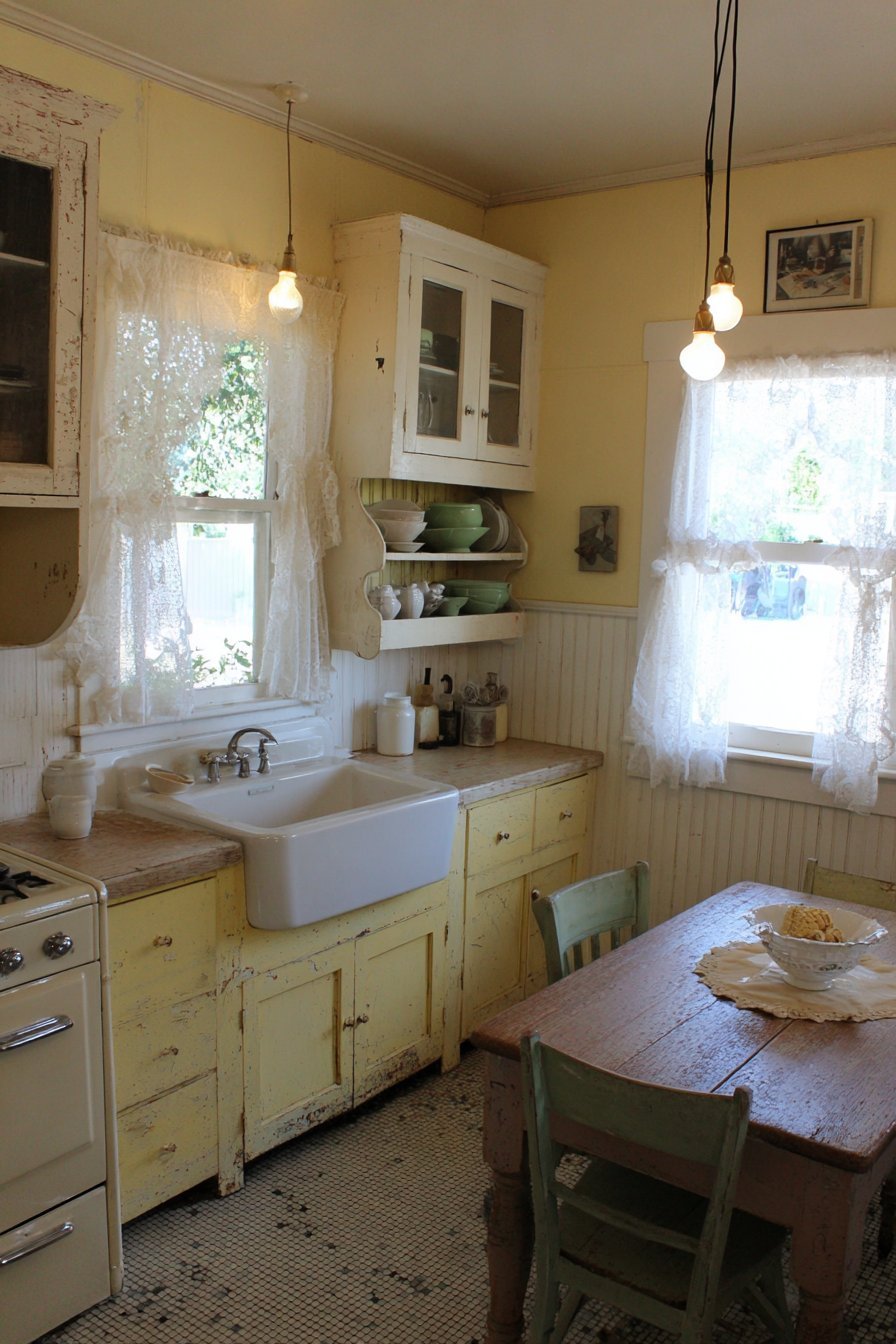
Color theory in old kitchens favors muted, warm tones that create inviting atmospheres. Creams, soft greens, and warm wood tones provide timeless backdrops. These palettes complement rather than compete with displayed collections and functional elements. The subtle colors allow authentic materials and architectural details to shine.
Spatial considerations in these designs reveal ingenious historical solutions to storage and workflow. Built-in elements like Hoosier cabinets and breakfast nooks maximize limited square footage. The efficient layouts demonstrate that good design transcends changing trends. Traditional work triangles and dedicated task zones remain relevant regardless of era.
Conclusion
These old kitchen designs demonstrate that genuine character comes from authentic materials and thoughtful preservation. The key takeaways include embracing natural aging, maintaining original architectural elements, and celebrating craftsmanship from earlier eras. Quality vintage pieces combined with period-appropriate accessories create kitchens that feel both beautiful and historically grounded.
Successful old kitchen design balances aesthetic appeal with practical modern functionality. Start by identifying and preserving existing original elements in your space. Add vintage accessories and materials that complement your home’s architectural period. Your dream old kitchen awaits creation through respectful preservation and authentic material choices.
