
Transforming a small backyard into a functional and beautiful outdoor space requires creativity and strategic planning. Many homeowners believe limited square footage restricts their design possibilities. However, compact yards offer unique opportunities for intimate, personalized outdoor living areas that larger spaces cannot replicate.
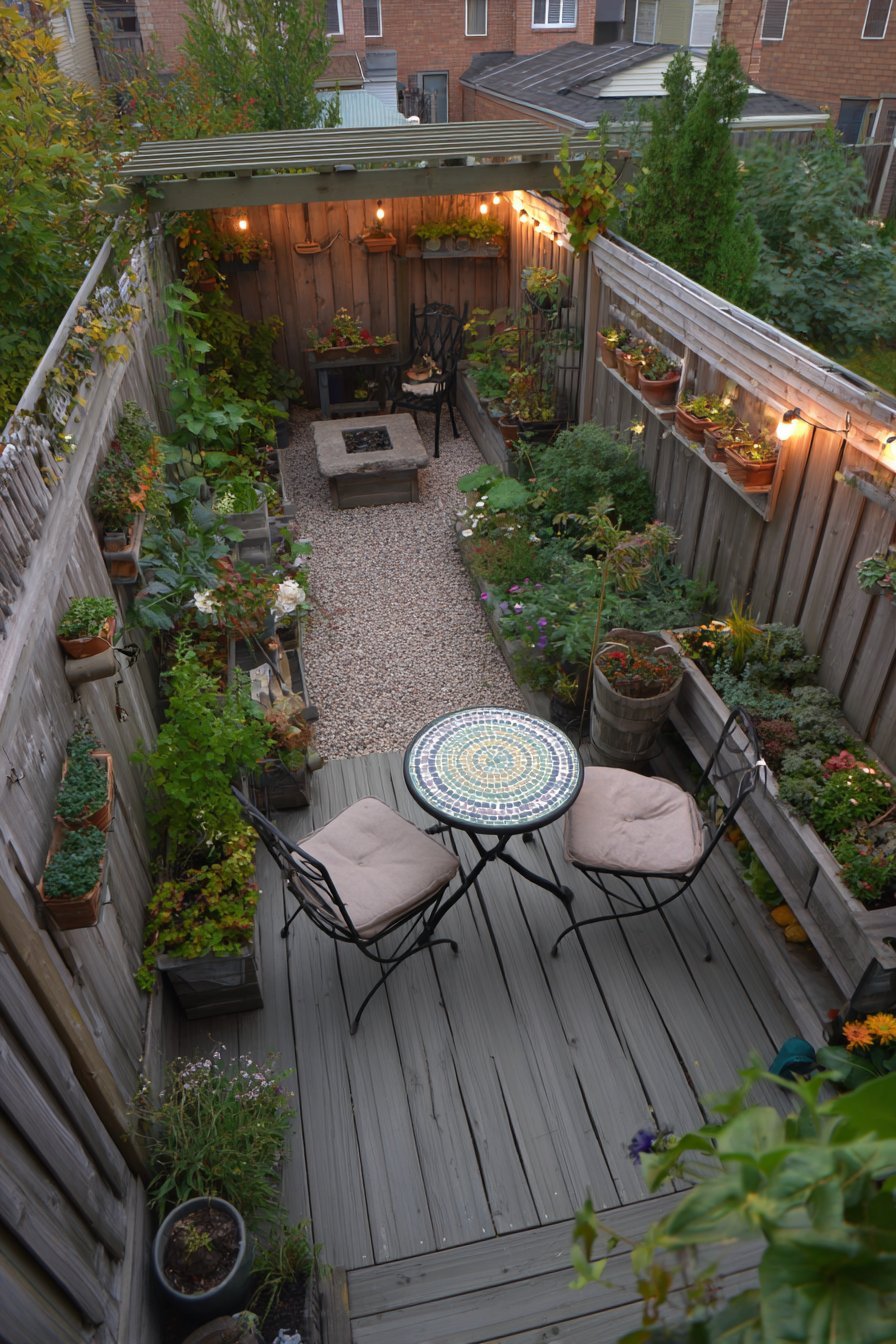
The key to successful small backyard design lies in maximizing every inch through vertical solutions and multi-functional elements. Thoughtful furniture selection, strategic planting, and defined activity zones create the illusion of spaciousness. These design principles turn modest outdoor areas into cherished extensions of the home.
This article explores twenty distinctive approaches to small backyard transformation. Each concept demonstrates how constraint inspires innovation in outdoor design. From cozy reading nooks to productive vegetable gardens, these ideas prove that size limitations need not compromise style or functionality.
1. Cozy Reading Nook Retreat
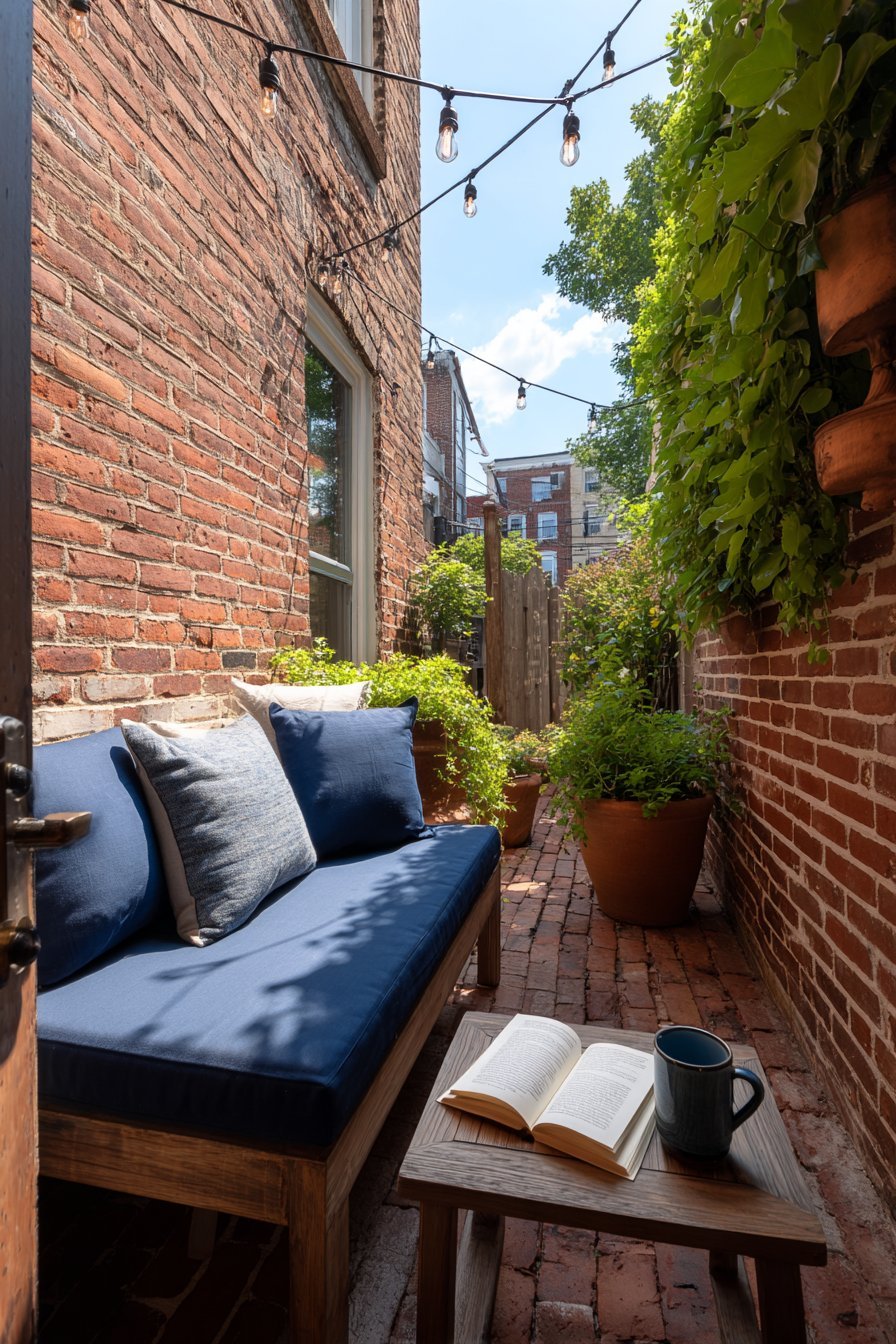
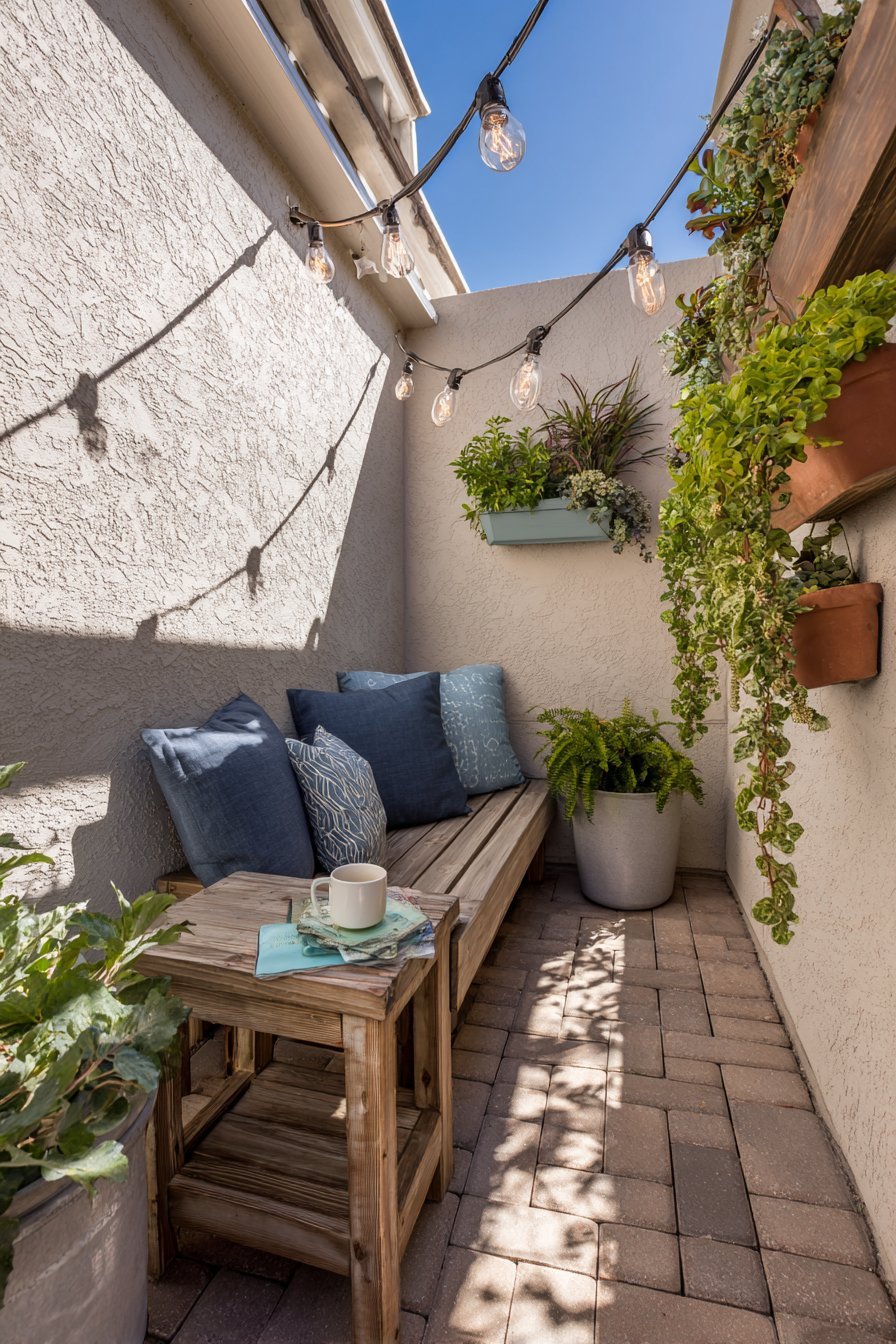
A compact wooden bench becomes the centerpiece of this intimate reading sanctuary. The weathered teak finish shows natural aging that adds character. Plush outdoor cushions in faded navy canvas provide comfort for extended lounging sessions.
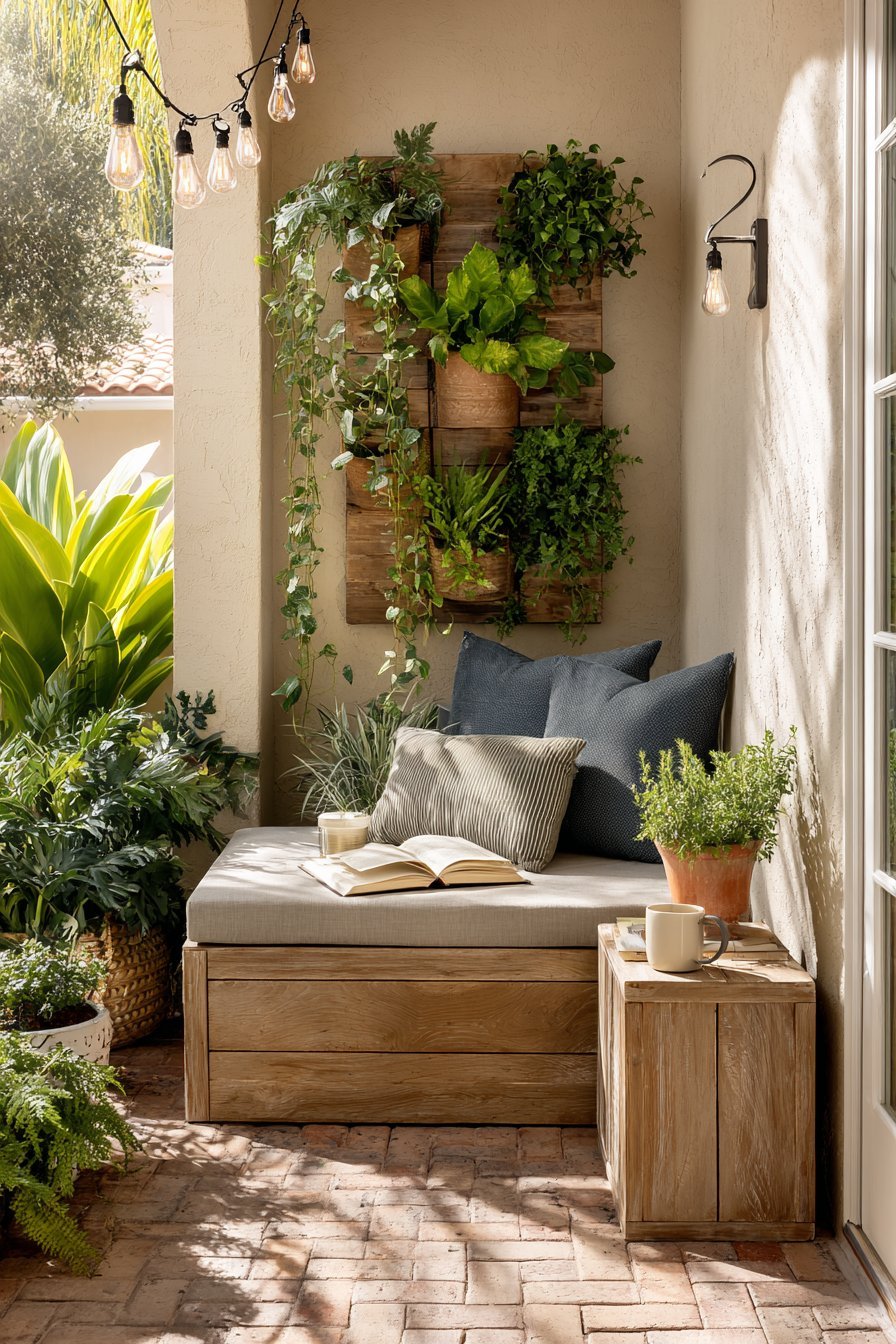
The vertical garden wall maximizes limited ground space brilliantly. Mixed herbs and trailing pothos plants grow in terracotta pots mounted along the fence. This living wall creates visual interest while adding practical functionality. Fresh herbs remain within easy reach for cooking enthusiasts.
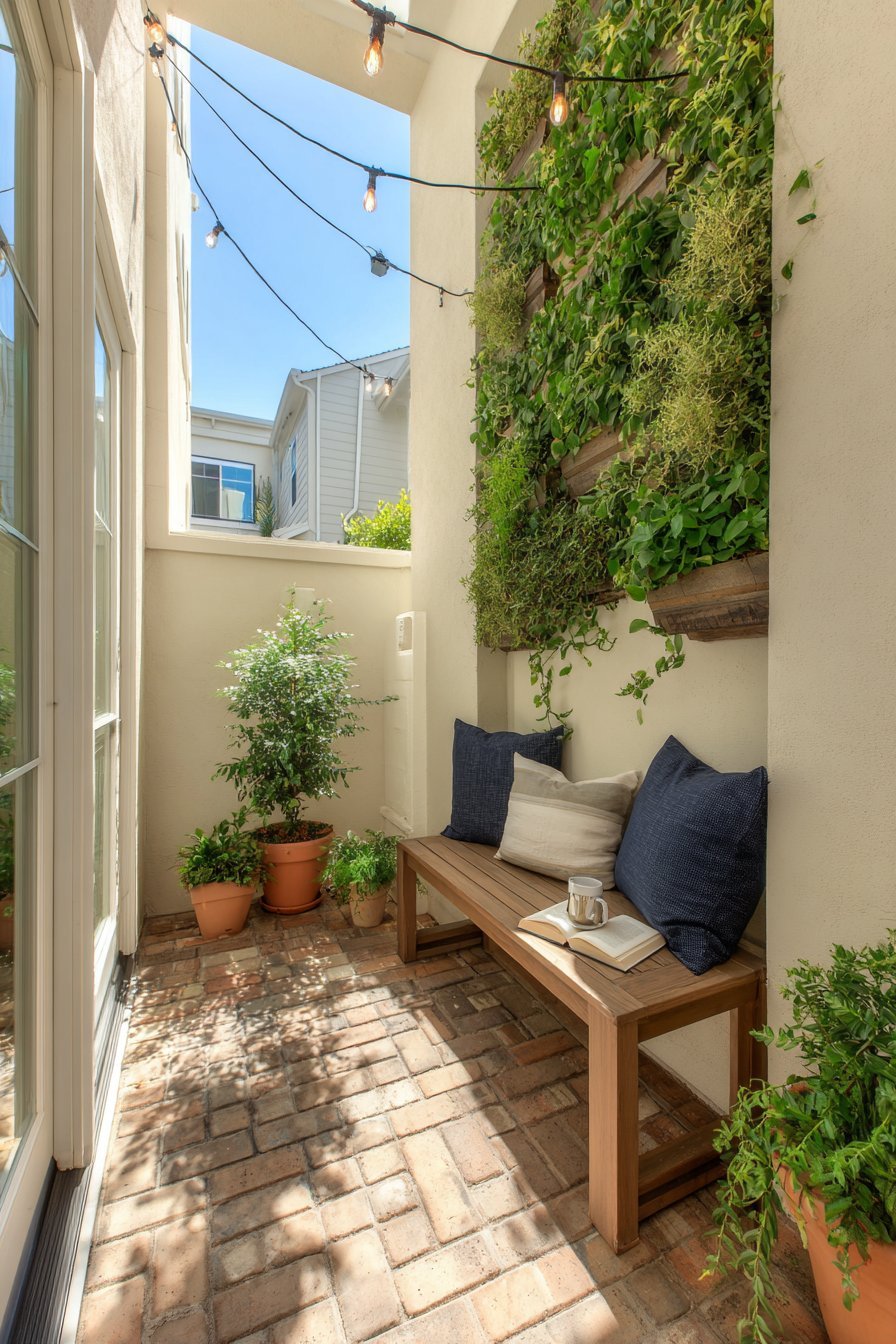
String lights with Edison bulbs transform the space after sunset. The warm ambient lighting creates a magical atmosphere for evening reading. Brick paver flooring provides a stable, attractive foundation. Afternoon sunlight filters through overhead foliage, casting dappled shadows that dance across the reading area.
A small side table crafted from reclaimed wood completes the functional setup. The weathered surface holds books, beverages, and reading glasses. This compact arrangement proves that dedicated relaxation zones work beautifully in minimal square footage.
Key Design Tips:
- Select weathered wood furniture for instant character and outdoor durability
- Install vertical gardens to add greenery without sacrificing floor space
- Use Edison bulb string lights for warm, inviting evening illumination
- Choose compact side tables with storage potential underneath
- Position seating to capture optimal natural light during preferred reading hours
- Layer soft textiles in weather-resistant fabrics for comfort and style
2. Bistro Dining Patio
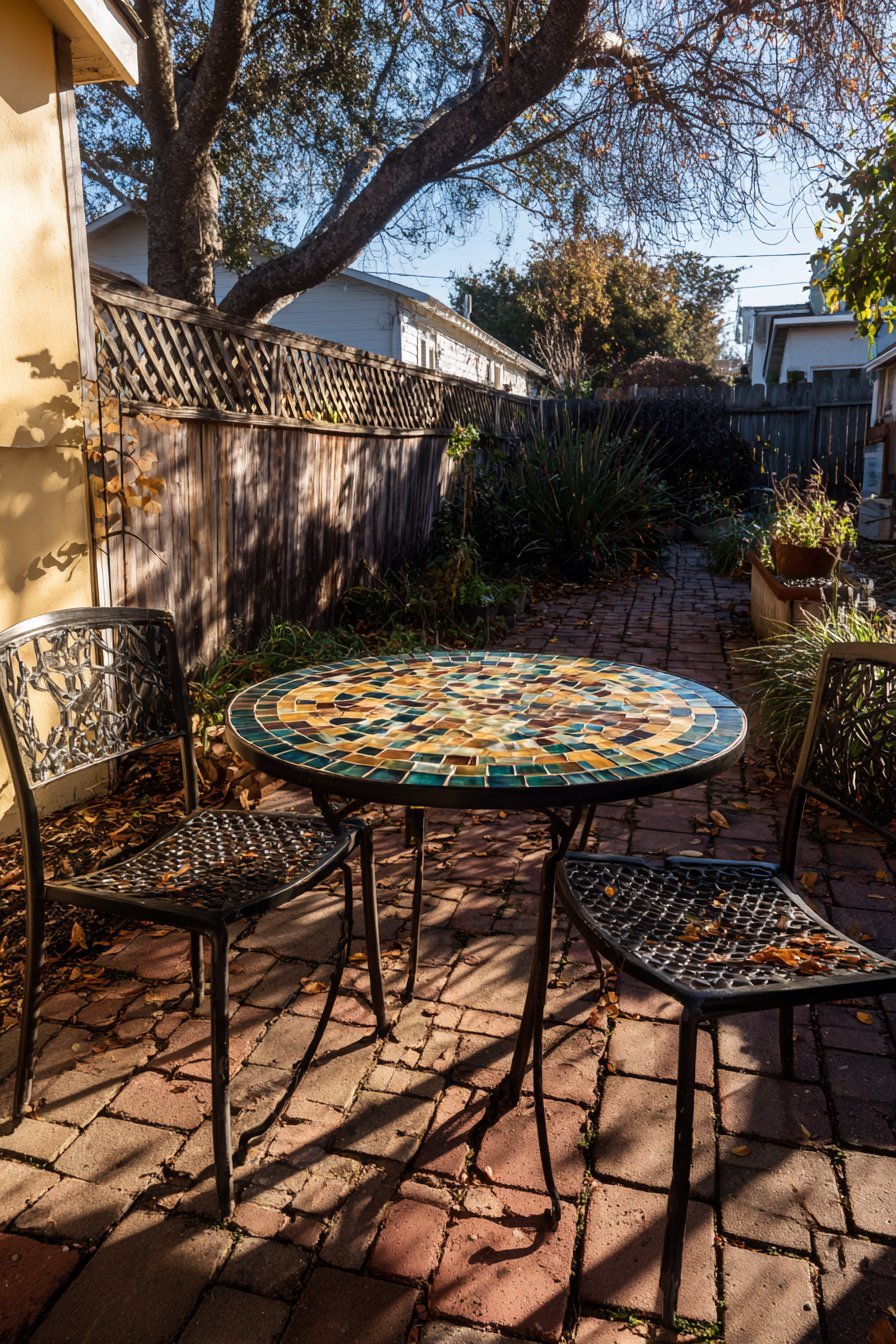
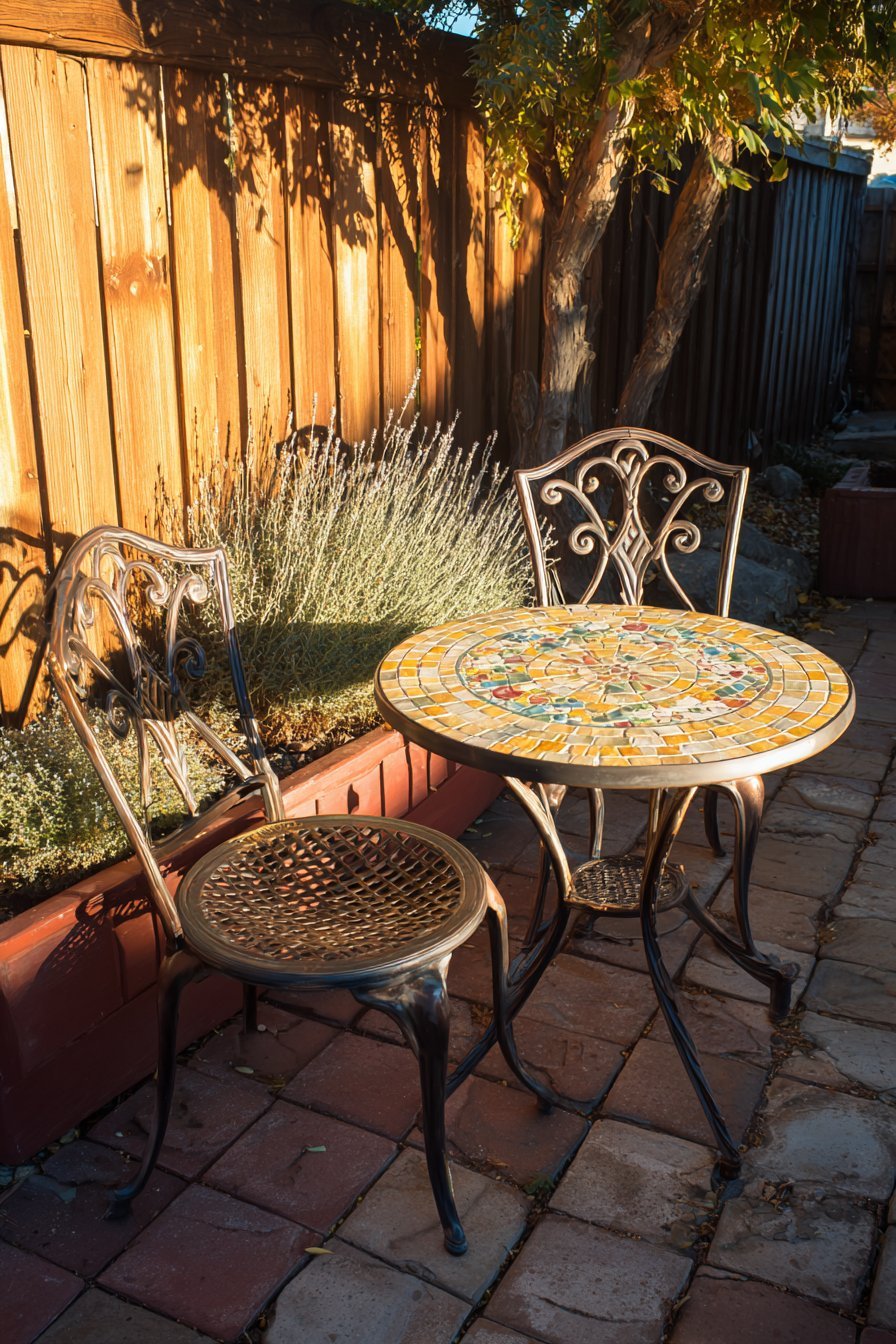
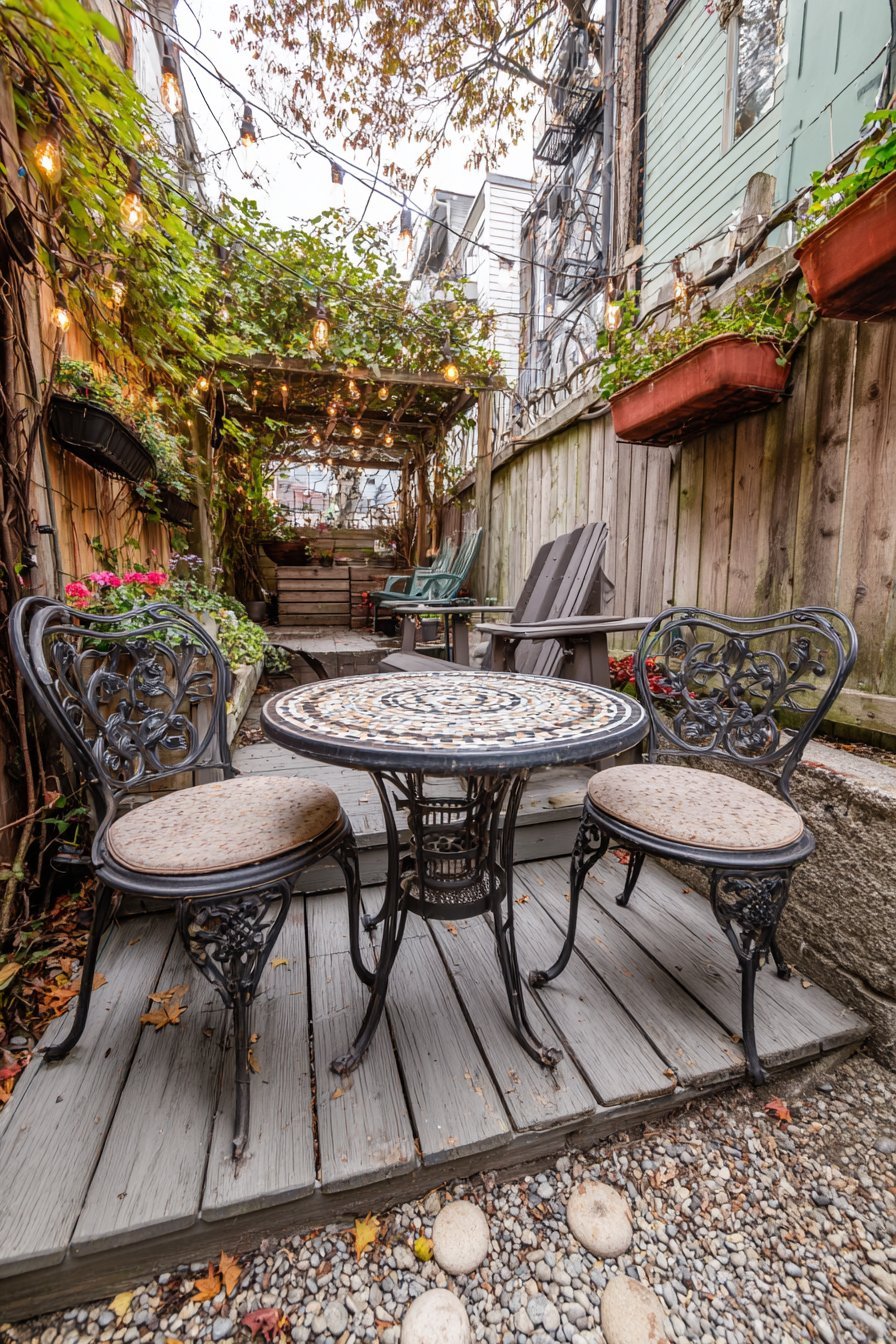
This charming patio demonstrates how eight by ten feet accommodates complete dining functionality. The wrought iron bistro set shows gentle patina that speaks to quality craftsmanship. A mosaic tile tabletop adds artistic flair while resisting weather damage.

Built-in planters along the fence line maximize vertical growing space. Lavender and ornamental grasses provide texture, fragrance, and movement. The thoughtful plant selection requires minimal maintenance while delivering maximum visual impact. These perennials return season after season with little intervention.
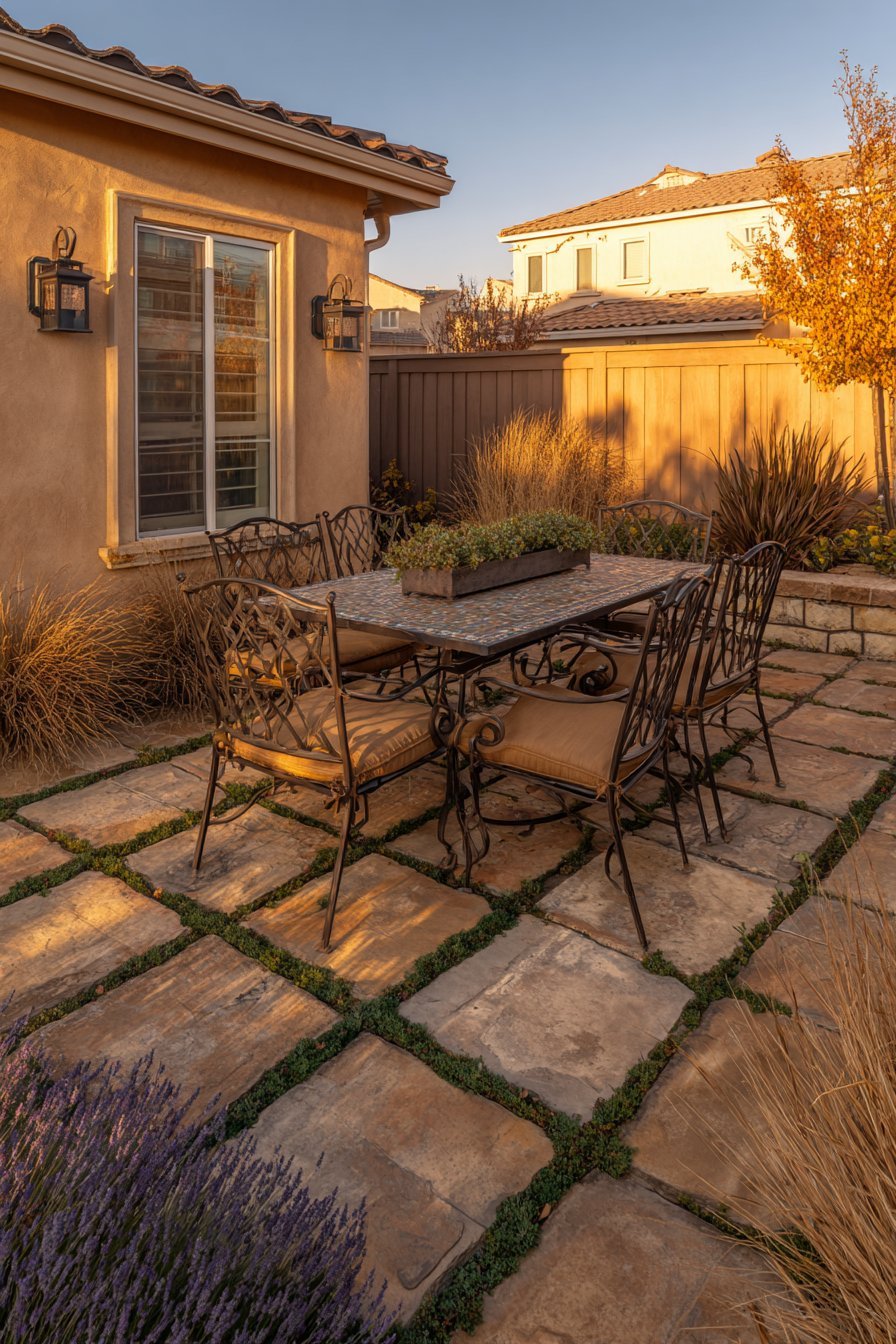
Warm terracotta pavers create a classic Mediterranean foundation. Natural gaps between pavers fill with creeping thyme that releases fragrance underfoot. This softscape element prevents the space from feeling too rigid or formal.
Late afternoon golden hour lighting showcases the space at its finest. The textured surfaces and lived-in character become more pronounced in angled sunlight. This compact patio proves that intimate dining areas create more memorable experiences than oversized formal spaces.
Key Design Tips:
- Choose bistro-scale furniture to maintain proper proportion in small spaces
- Install built-in planters to define boundaries without bulky containers
- Select pavers that allow softscape plantings between joints
- Use wrought iron furniture that feels substantial without visual heaviness
- Plant fragrant herbs and flowers for multi-sensory dining experiences
- Allow furniture to develop natural patina rather than constantly refinishing
3. Narrow Garden Pathway
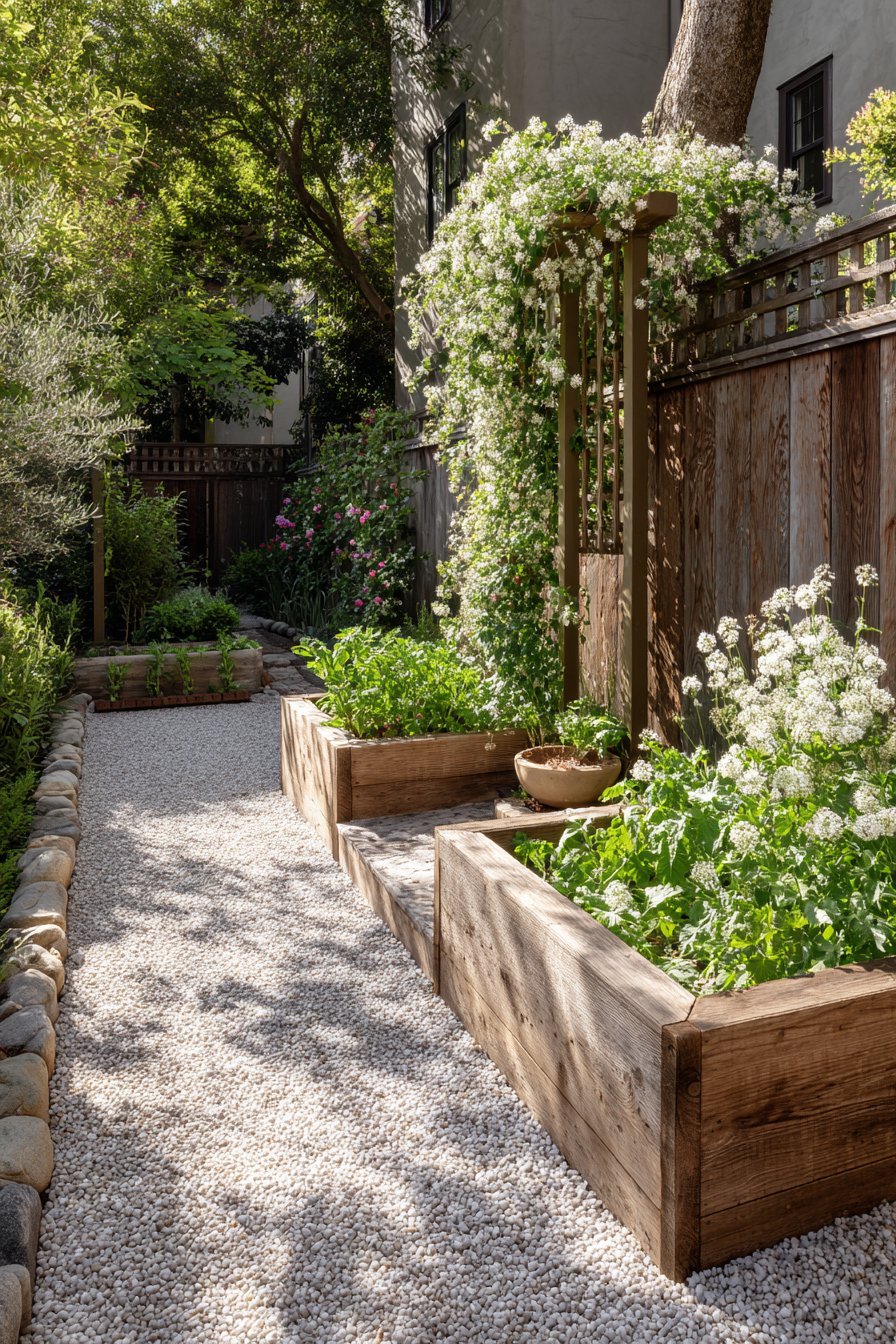
A fifteen-foot deep yard becomes a productive garden through clever pathway design. Gravel paths wind between raised cedar planter boxes filled with vegetables and flowers. The meandering layout creates the illusion of greater depth than exists.
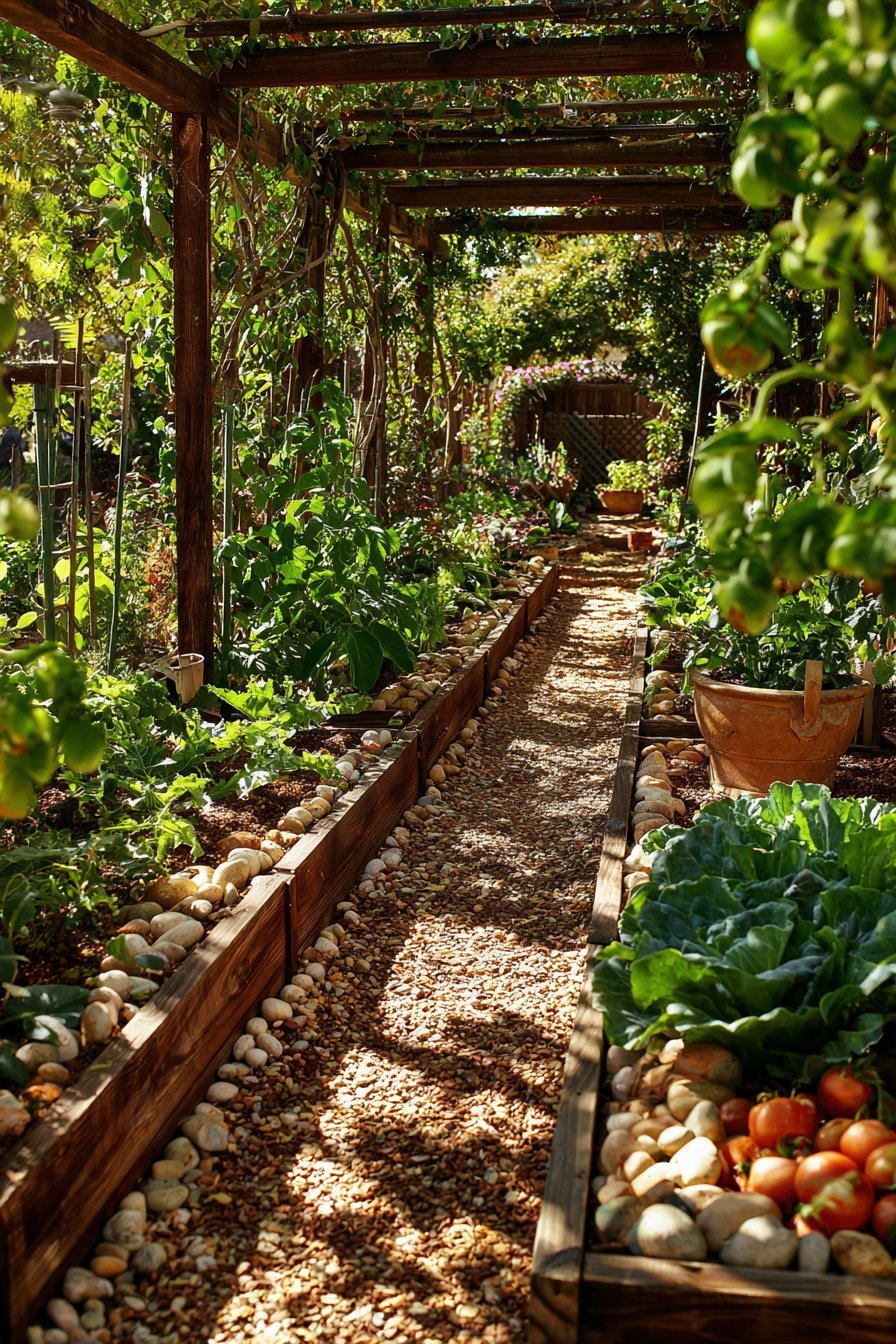
Raised bed gardening maximizes growing potential in compact spaces. Cedar construction naturally resists rot while aging beautifully. The elevated design improves drainage and reduces strain during gardening tasks. Vegetables and flowers intermingle for both productivity and aesthetic appeal.
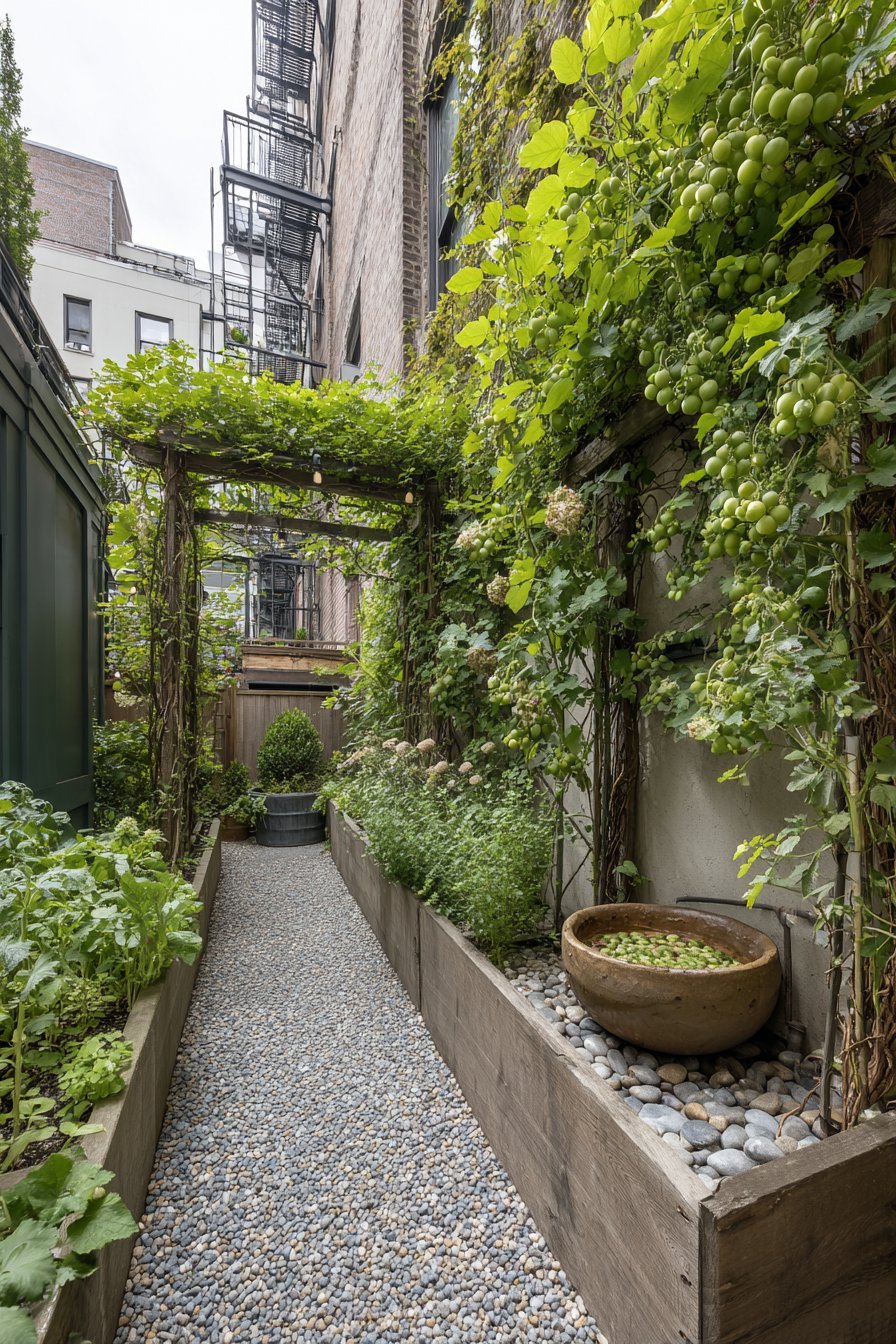
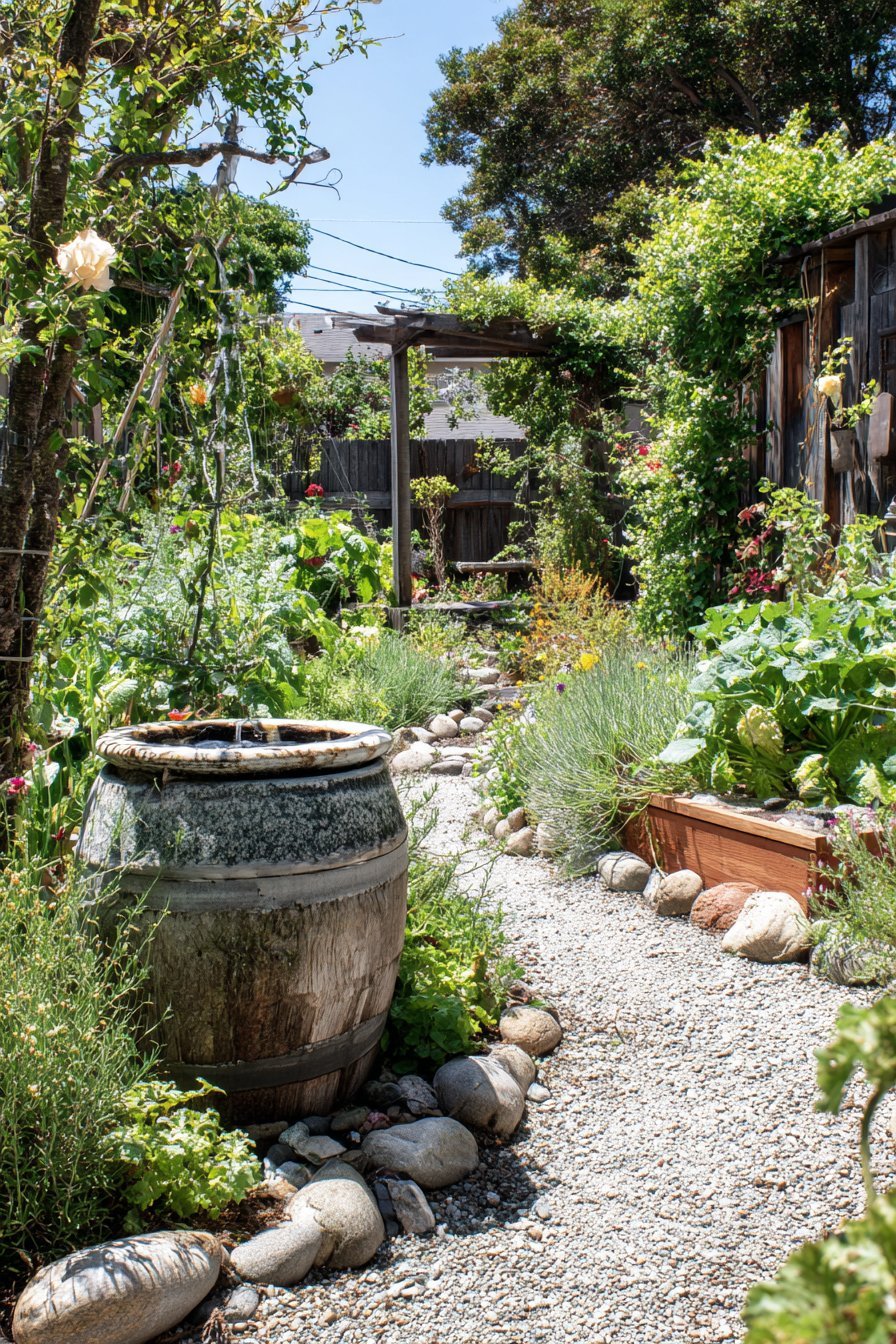
A small water feature made from a repurposed ceramic pot adds sensory dimension. The subtle trickling sound creates peaceful ambiance throughout the garden. Natural stone edging defines bed boundaries with organic irregularity. This prevents the geometric planter boxes from appearing too rigid.
Morning light casts long shadows that emphasize careful spatial organization. An arbor covered in climbing jasmine creates a focal point that draws the eye upward. This vertical element adds height dimension to the narrow space.
Key Design Tips:
- Create winding pathways to make short spaces feel longer through visual tricks
- Build raised beds for improved drainage and easier access
- Incorporate water features for sound that masks urban noise
- Use climbing plants on arbors to add vertical interest
- Mix vegetables and flowers for productive beauty
- Define edges with natural stone for organic aesthetic continuity
4. Fire Pit Gathering Circle
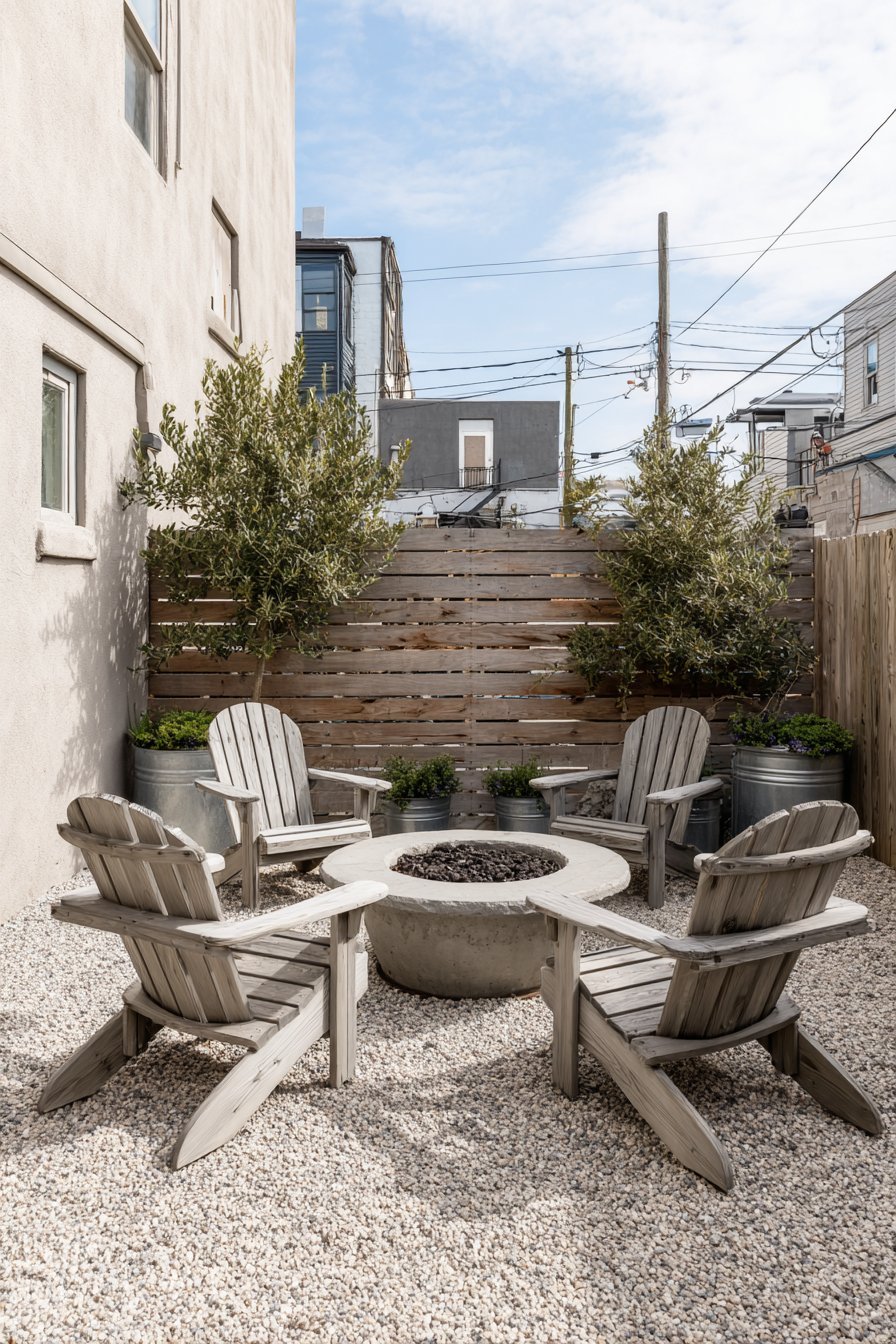
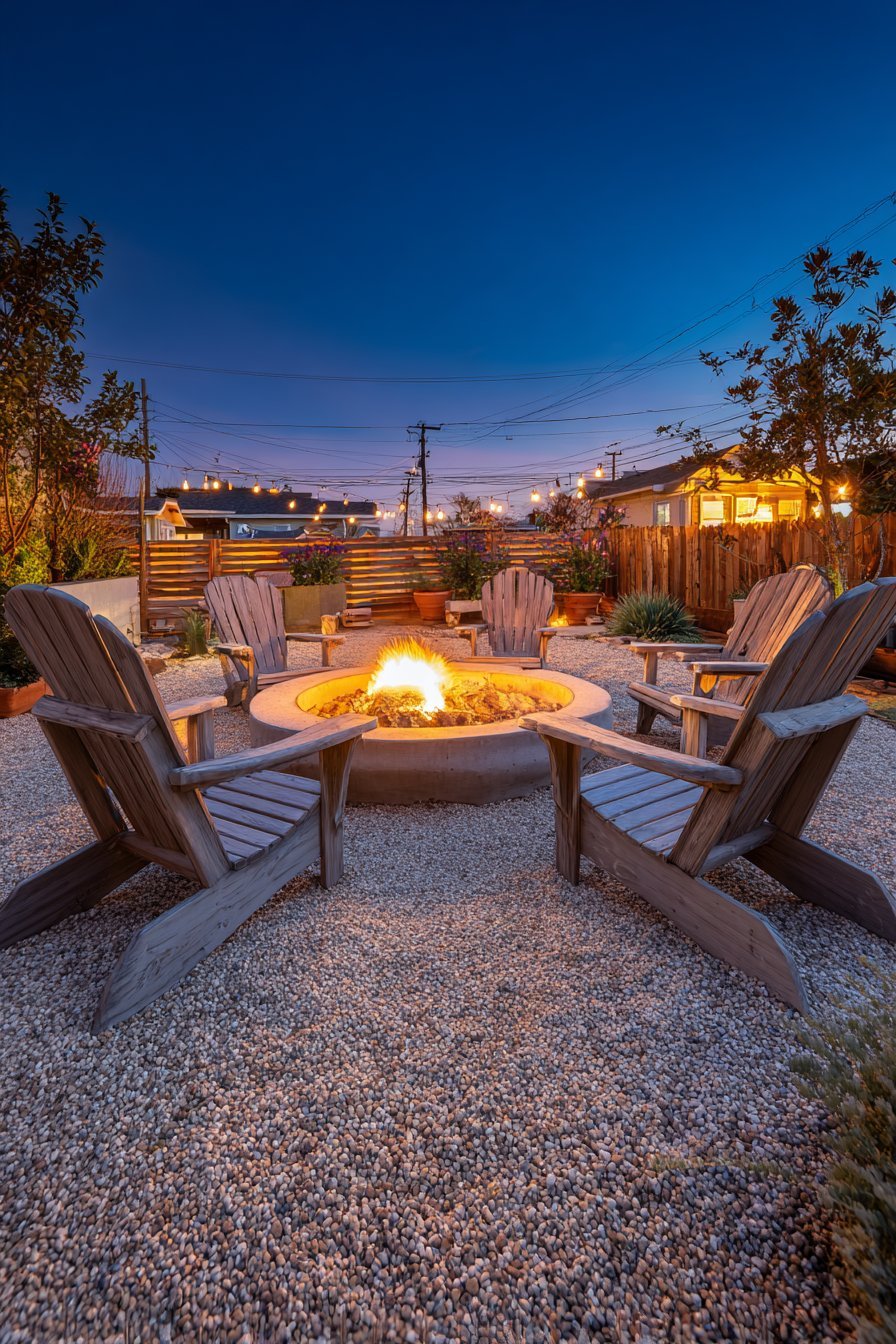
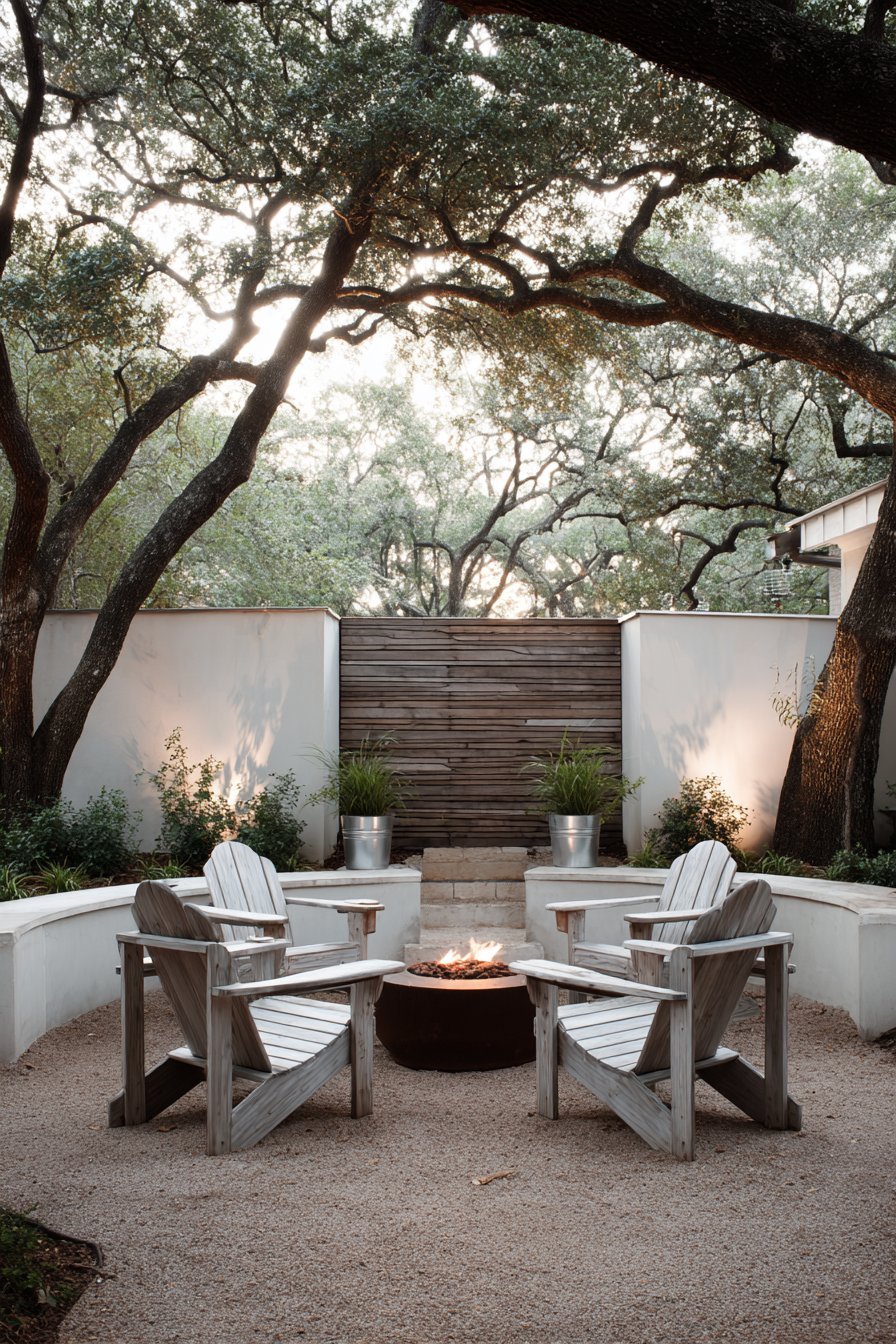
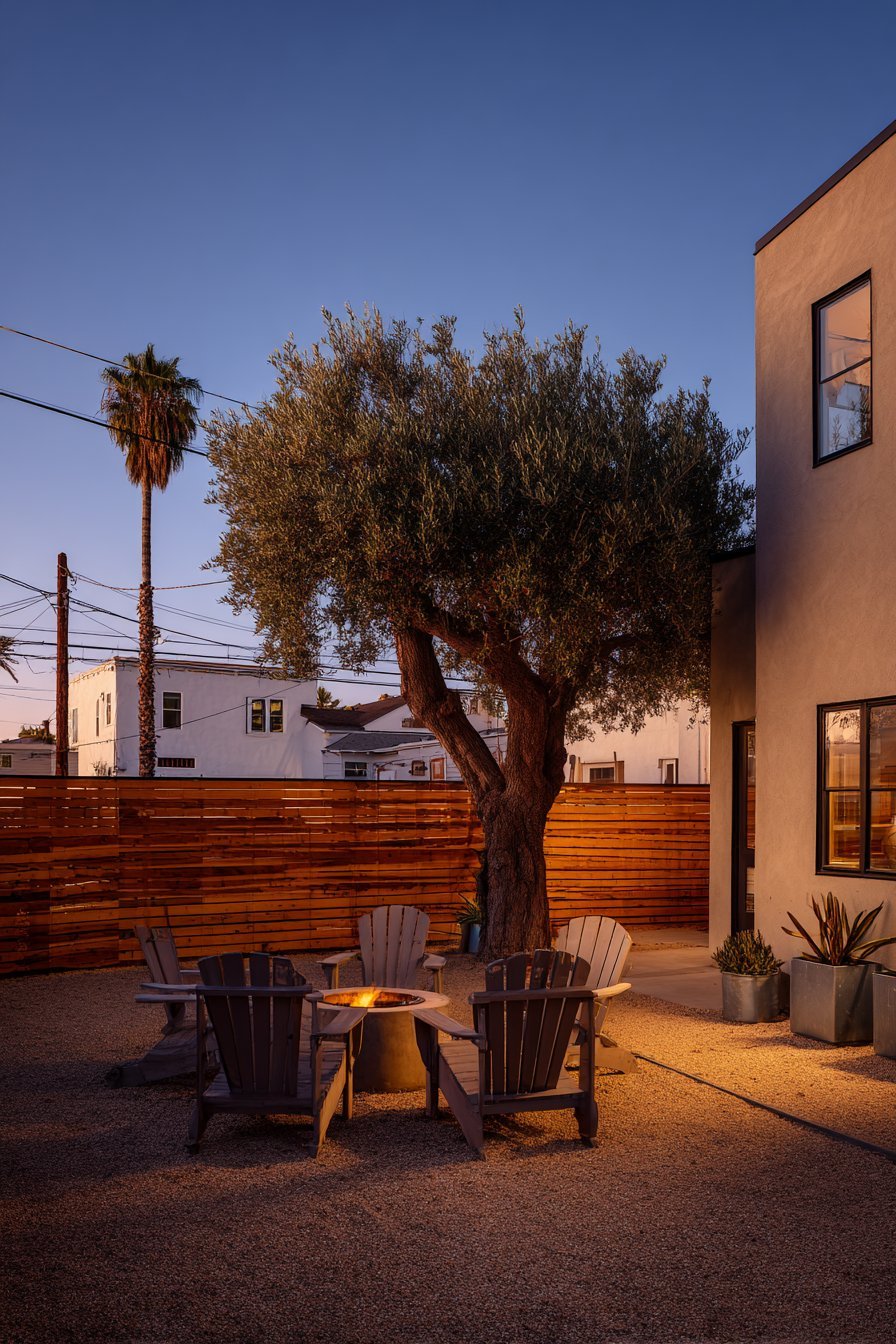
A twelve-foot circular area becomes the social heart of this small backyard. Four Adirondack chairs in weathered gray surround a compact fire pit. The decomposed granite surface shows subtle tonal variations that add natural texture.
The circular layout encourages conversation and connection among guests. Adirondack chairs provide comfortable seating without overwhelming the space visually. Their low profile maintains sight lines across the backyard. The weathered finish requires no maintenance while looking intentionally aged.
A horizontal cedar slat privacy screen provides enclosure without claustrophobia. The simple design allows air circulation while blocking unwanted views. Potted plants in galvanized metal containers add greenery without permanent landscape commitment. This flexibility allows seasonal changes and easy rearrangement.
Evening blue hour lighting creates serene atmosphere in this gathering space. The fire pit provides warm ambient glow that draws people together naturally. This design proves that meaningful outdoor entertaining requires minimal square footage when properly planned.
Key Design Tips:
- Arrange seating in circles to promote conversation and connection
- Use decomposed granite for permeable, low-maintenance surfaces
- Install privacy screens that provide enclosure without solid barriers
- Choose low-profile furniture to maintain visual openness
- Add container gardens for flexible seasonal planting
- Select fire pit sizes appropriate to space dimensions
5. Vertical Herb Garden
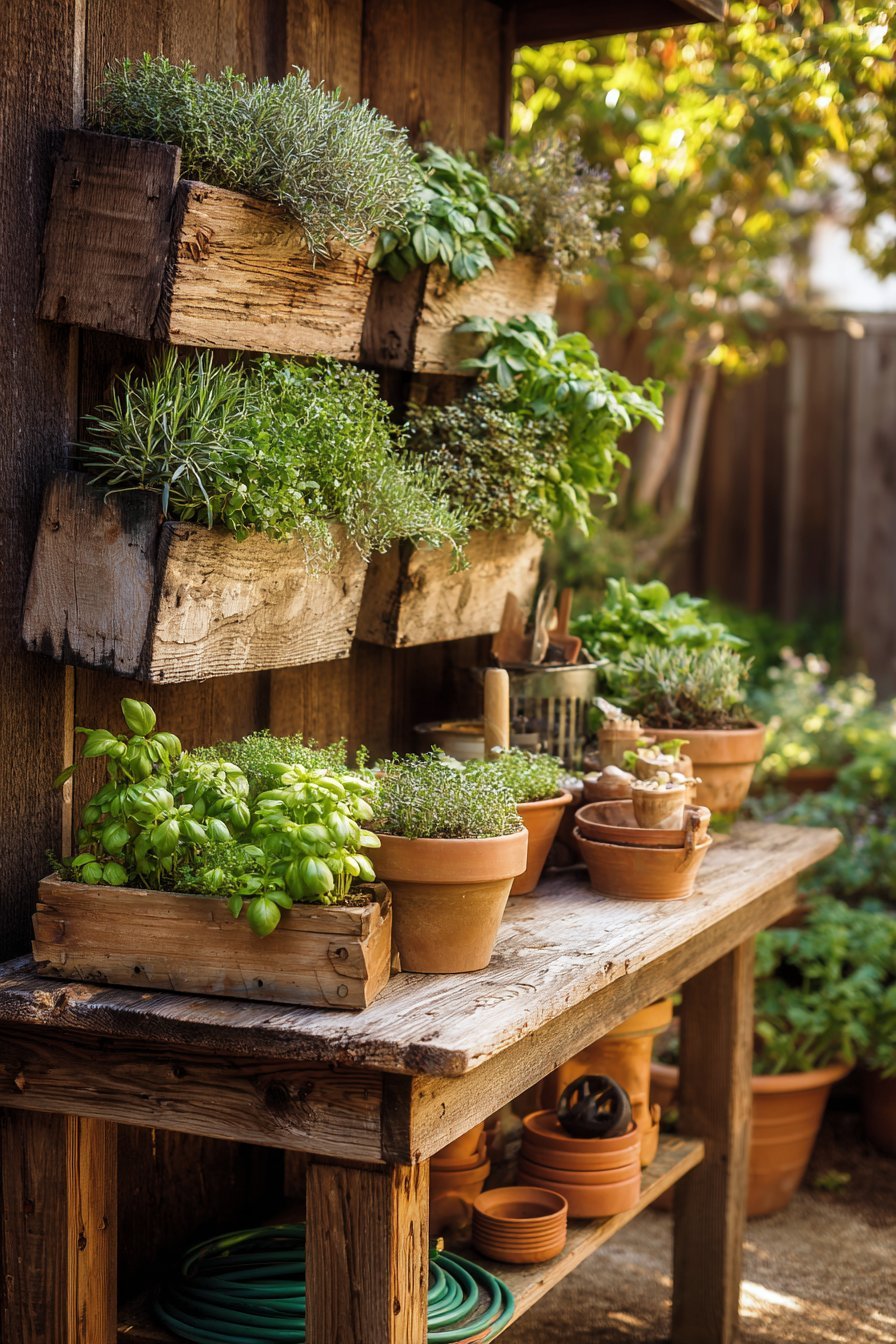
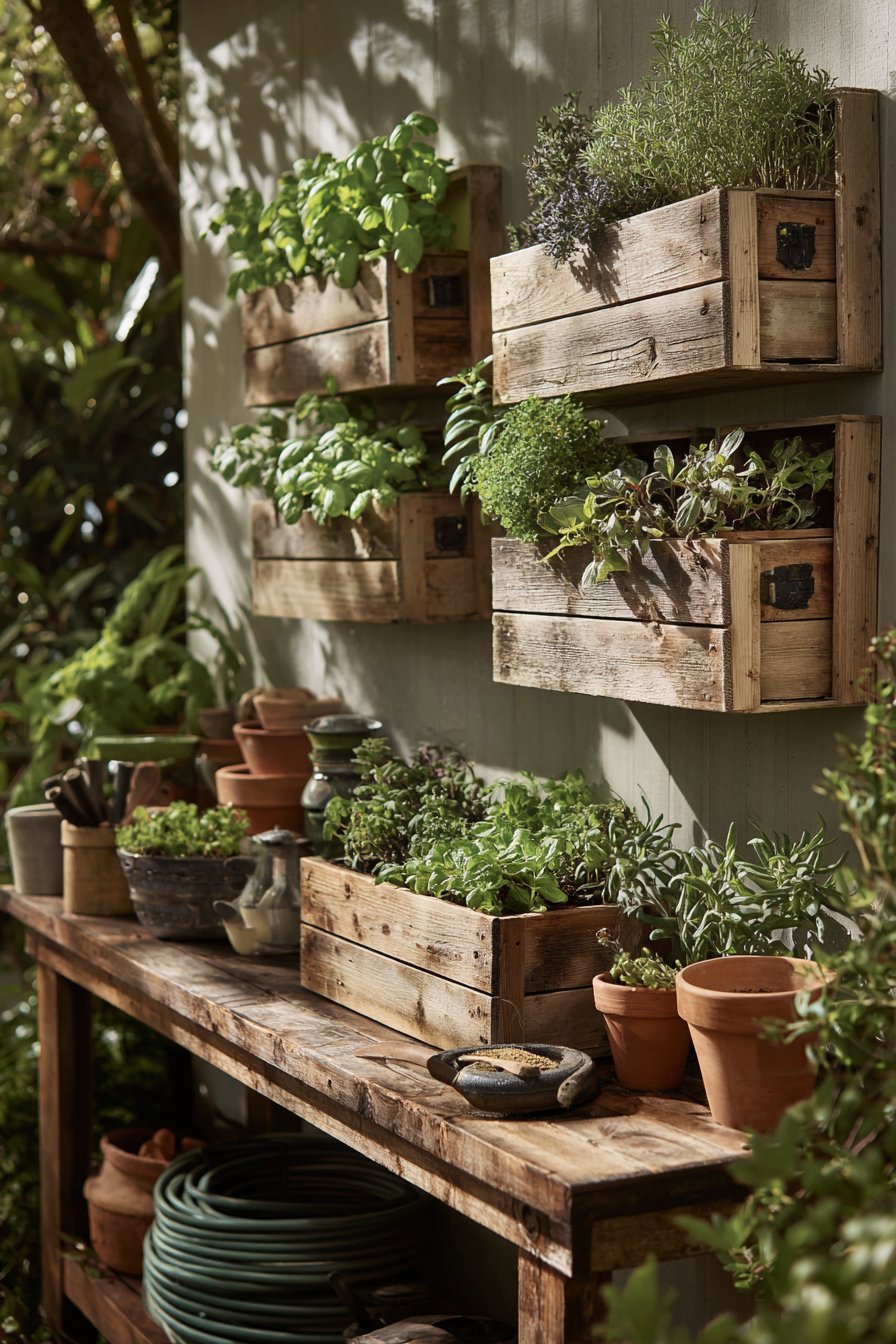
Wall-mounted wooden boxes transform vertical fence space into productive growing area. Natural cedar construction shows visible grain texture that ages beautifully. Each box contains different culinary herbs at various growth stages.
This vertical arrangement puts fresh herbs within easy reach of the kitchen. The elevated position provides excellent drainage and air circulation. Different herbs receive appropriate sun exposure based on box positioning. This thoughtful layout maximizes harvest potential throughout growing seasons.

A small potting bench made from reclaimed barn wood provides essential working surface. The weathered appearance adds character while offering practical functionality. Storage underneath keeps tools and supplies organized and accessible. Terra cotta pots in various sizes stack neatly beneath the work surface.
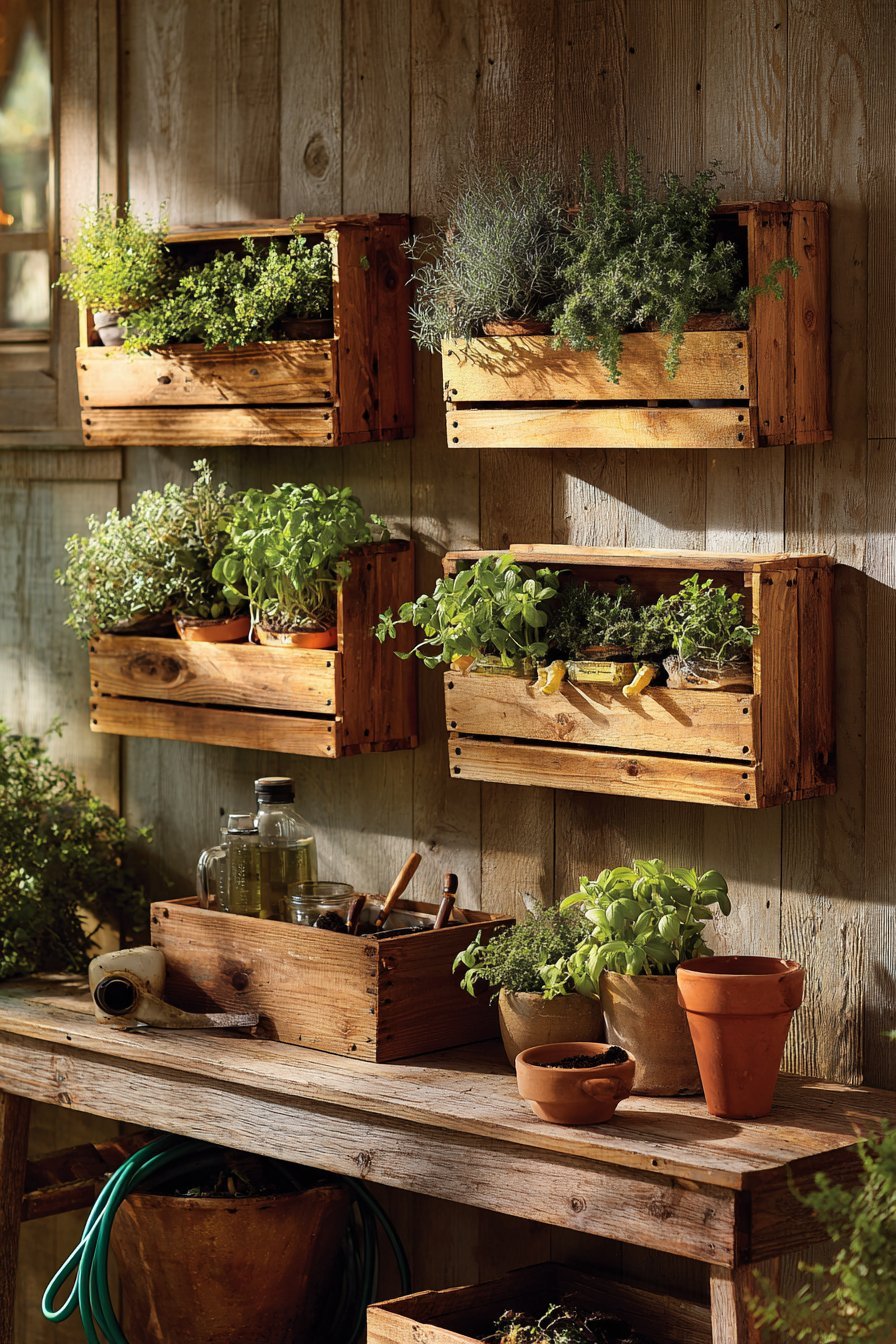
Soft morning light highlights the textures of wood and foliage beautifully. Natural shadows create dimensional interest throughout the vertical garden. Practical details like a coiled garden hose integrate seamlessly into the design aesthetic.
Key Design Tips:
- Mount planter boxes at comfortable reaching height for easy harvesting
- Use cedar for natural rot resistance without chemical treatments
- Include a dedicated potting bench for garden task efficiency
- Group herbs by water and sunlight requirements for healthier growth
- Store supplies in weatherproof containers beneath work surfaces
- Position vertical gardens to receive optimal morning sunlight
6. Meditation Corner Platform
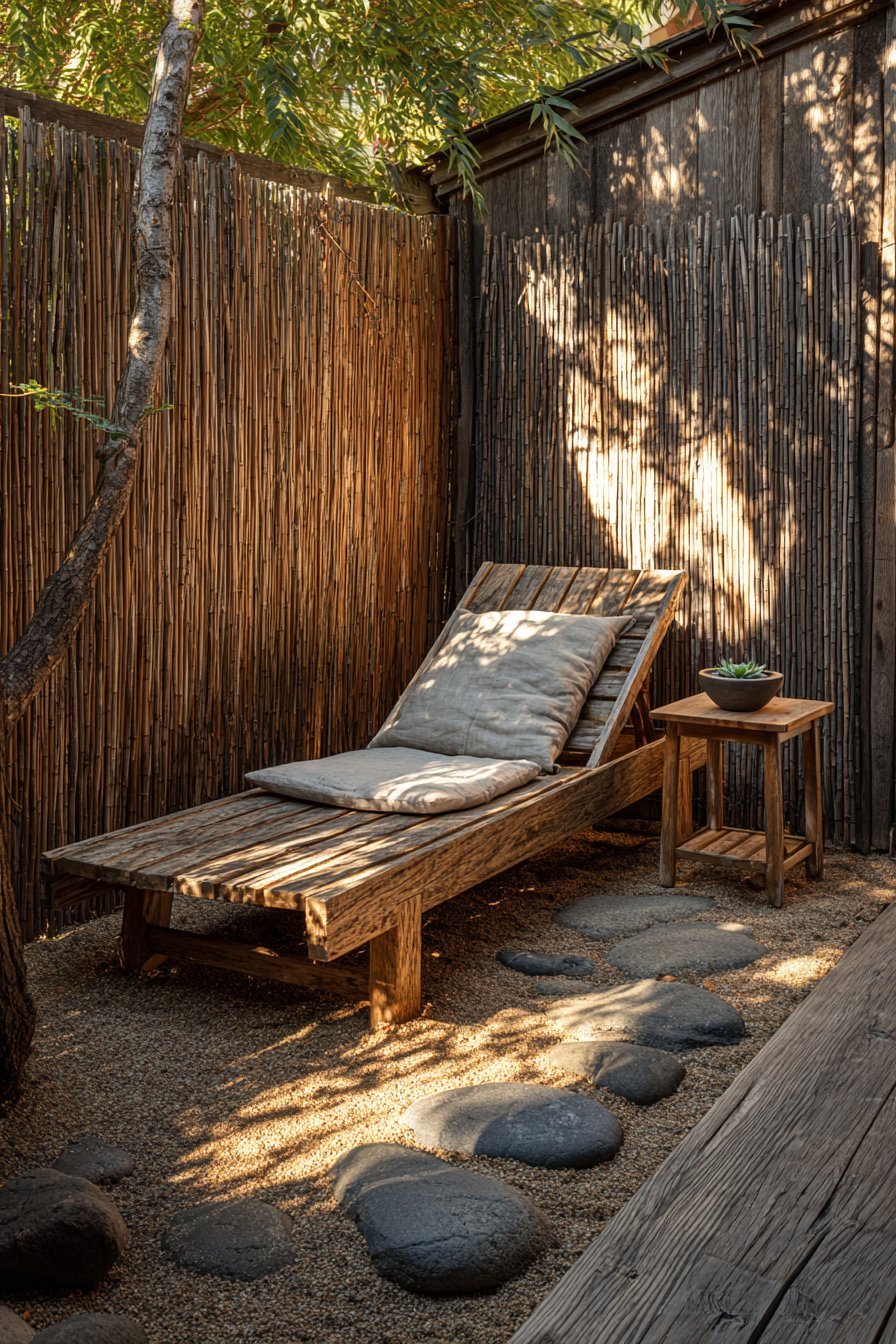
A six by eight foot platform deck creates dedicated wellness space. Composite materials in driftwood gray require minimal maintenance while resisting weather damage. The modest size provides sufficient room for yoga practice or quiet contemplation.
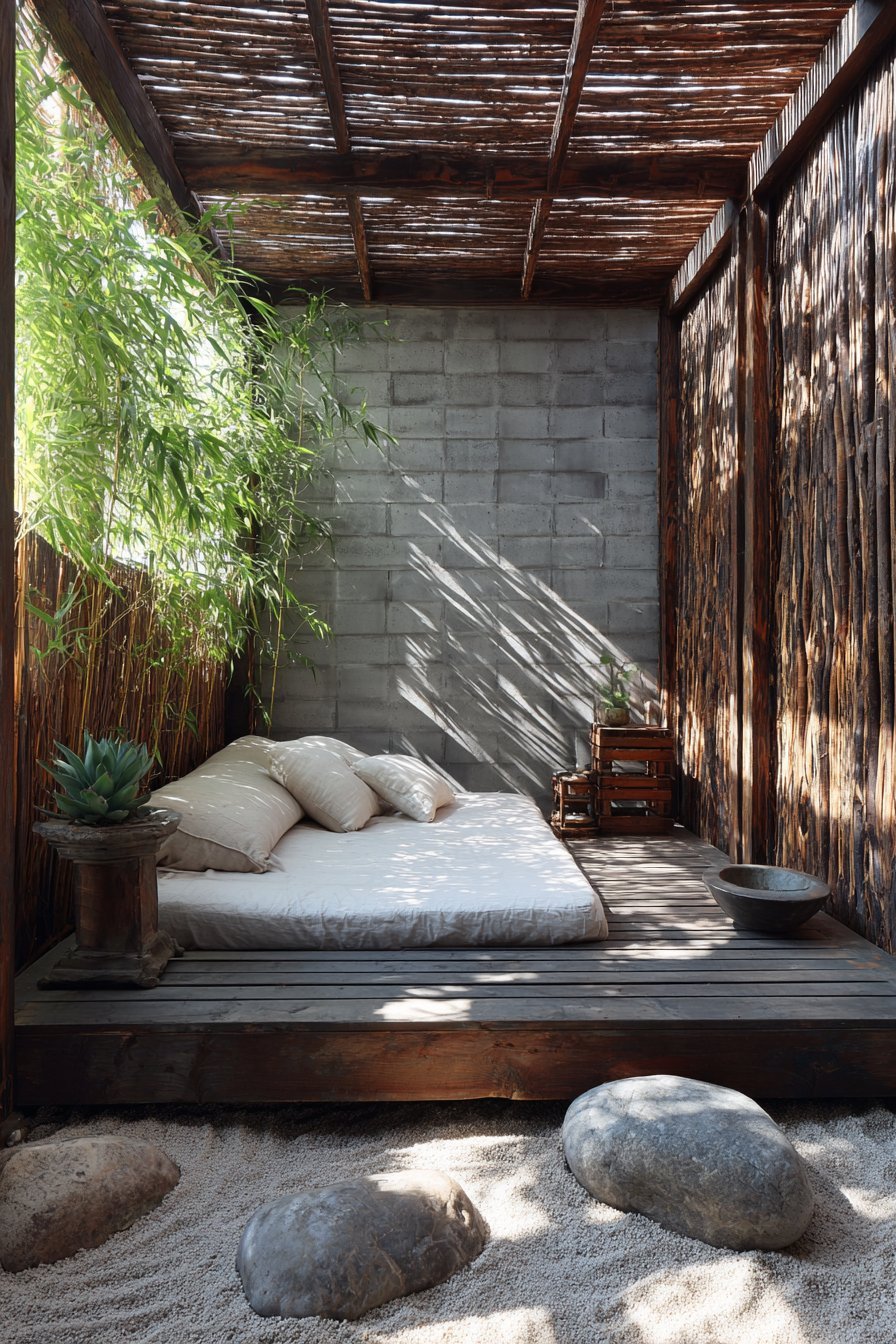
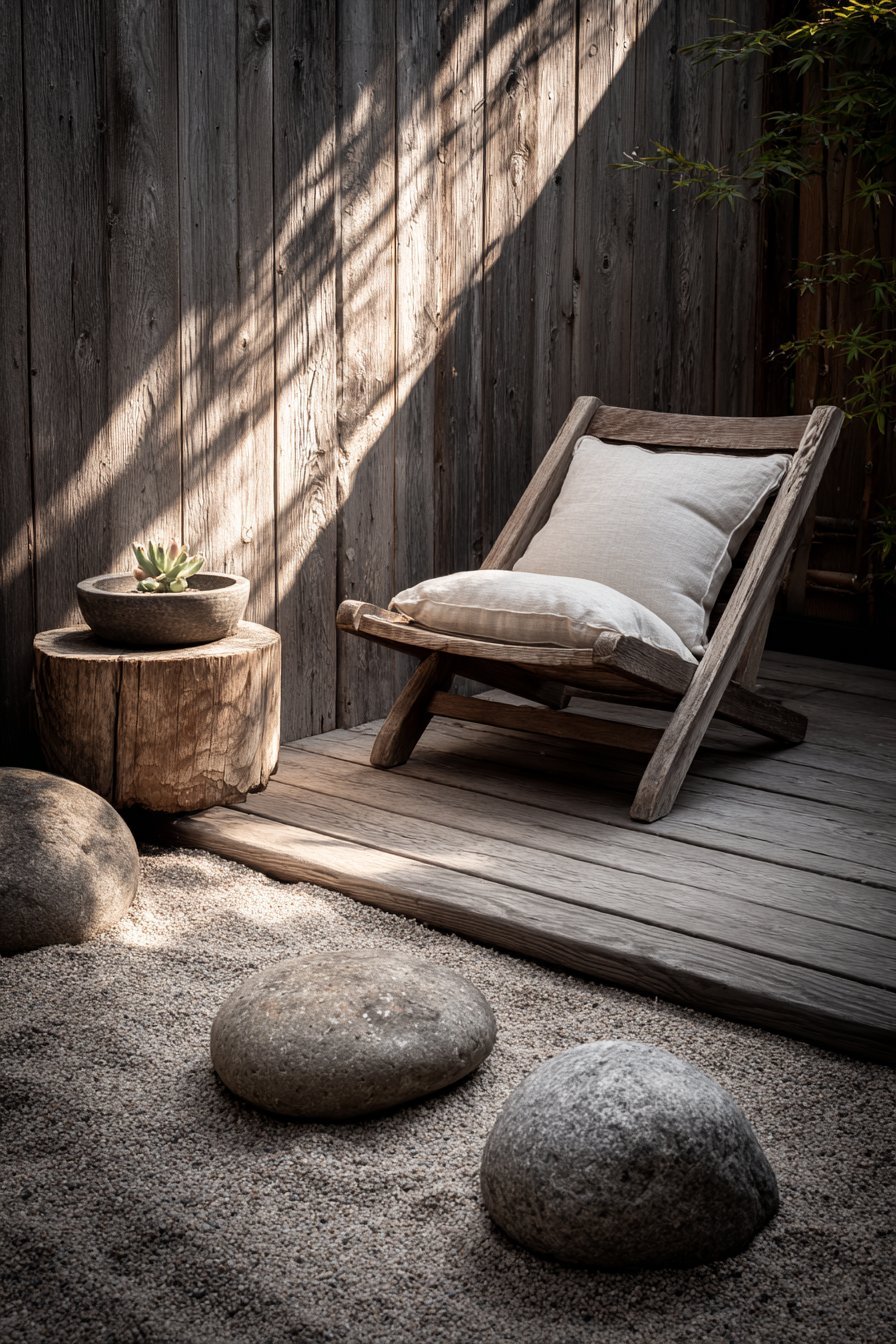
A single weathered teak lounge chair with natural cotton cushions faces a minimalist zen garden. Raked gravel and three carefully placed river rocks create focal points for meditation. This simple arrangement embodies the less-is-more philosophy perfectly.
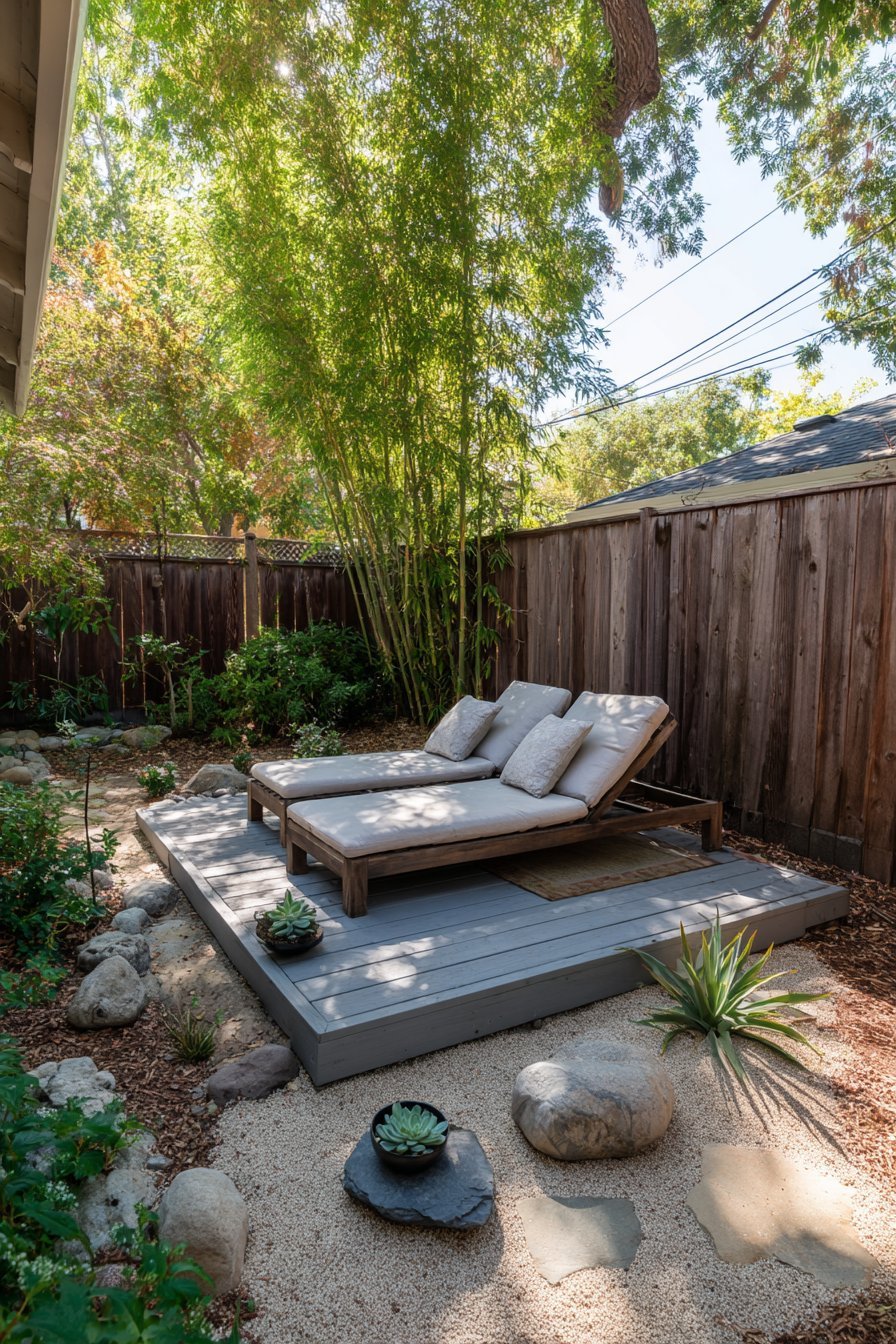
Bamboo privacy screening on two sides creates intimacy while allowing filtered light passage. The natural material complements the zen aesthetic while providing practical enclosure. A small side table holds a stone water bowl and single succulent. These minimal accessories support practice without creating visual clutter.
Late afternoon light creates dramatic shadows through bamboo screening. The interplay of light and shadow enhances the peaceful atmosphere. This corner proves that personal sanctuary spaces require minimal investment when thoughtfully designed.
Key Design Tips:
- Use composite decking for durability and low maintenance requirements
- Create zen gardens with raked gravel and minimal stone placement
- Install bamboo screening for privacy that allows light filtration
- Choose single-purpose furniture to maintain simplicity and focus
- Limit accessories to essential meditation support items
- Position seating to capture optimal lighting for chosen practice times
7. Raised Bed Vegetable Garden
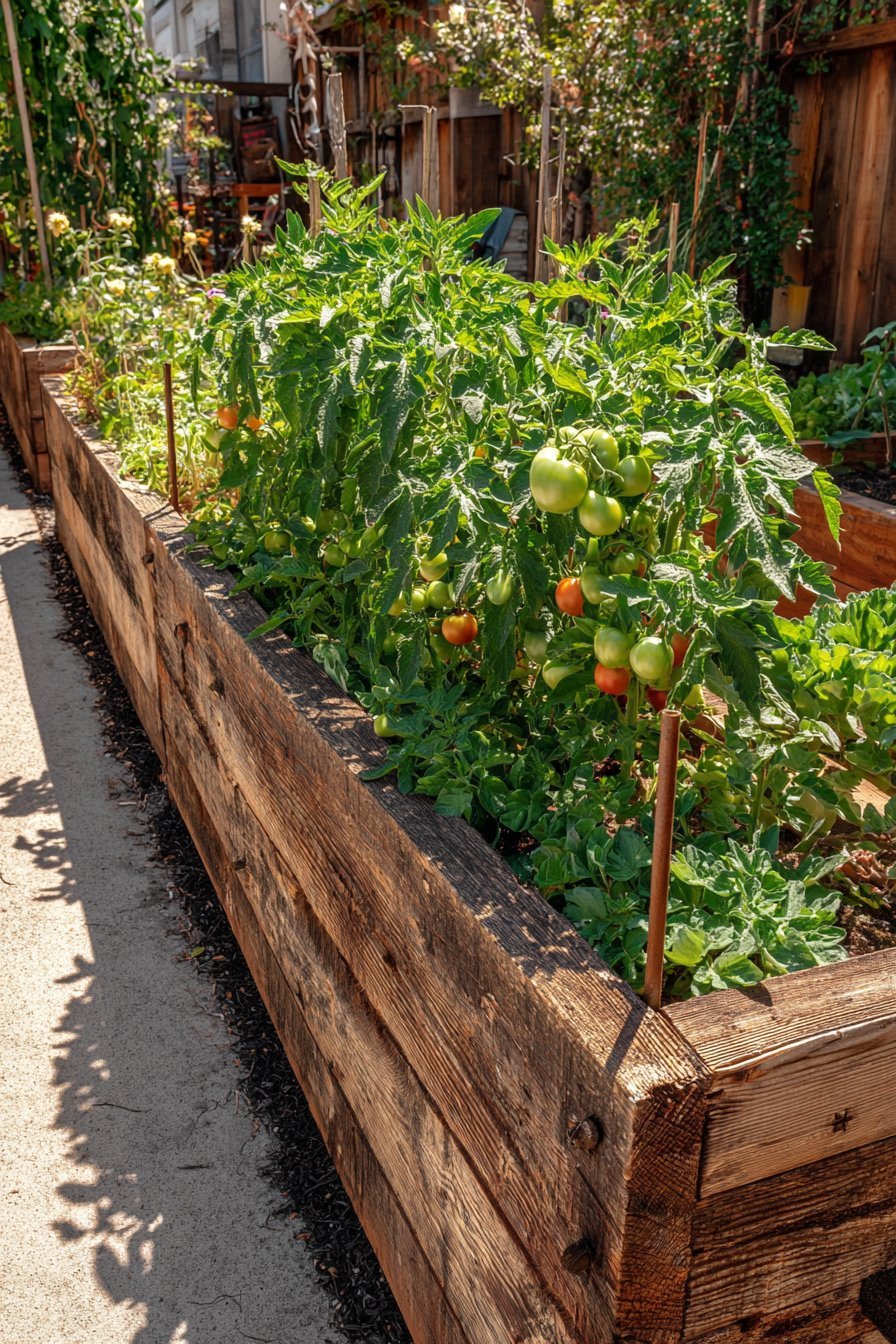
Four by eight foot cedar beds demonstrate maximum productivity in minimal space. Untreated lumber shows natural weathering and visible age rings. Thriving tomato plants display visible fruit alongside leafy greens and companion flowers.
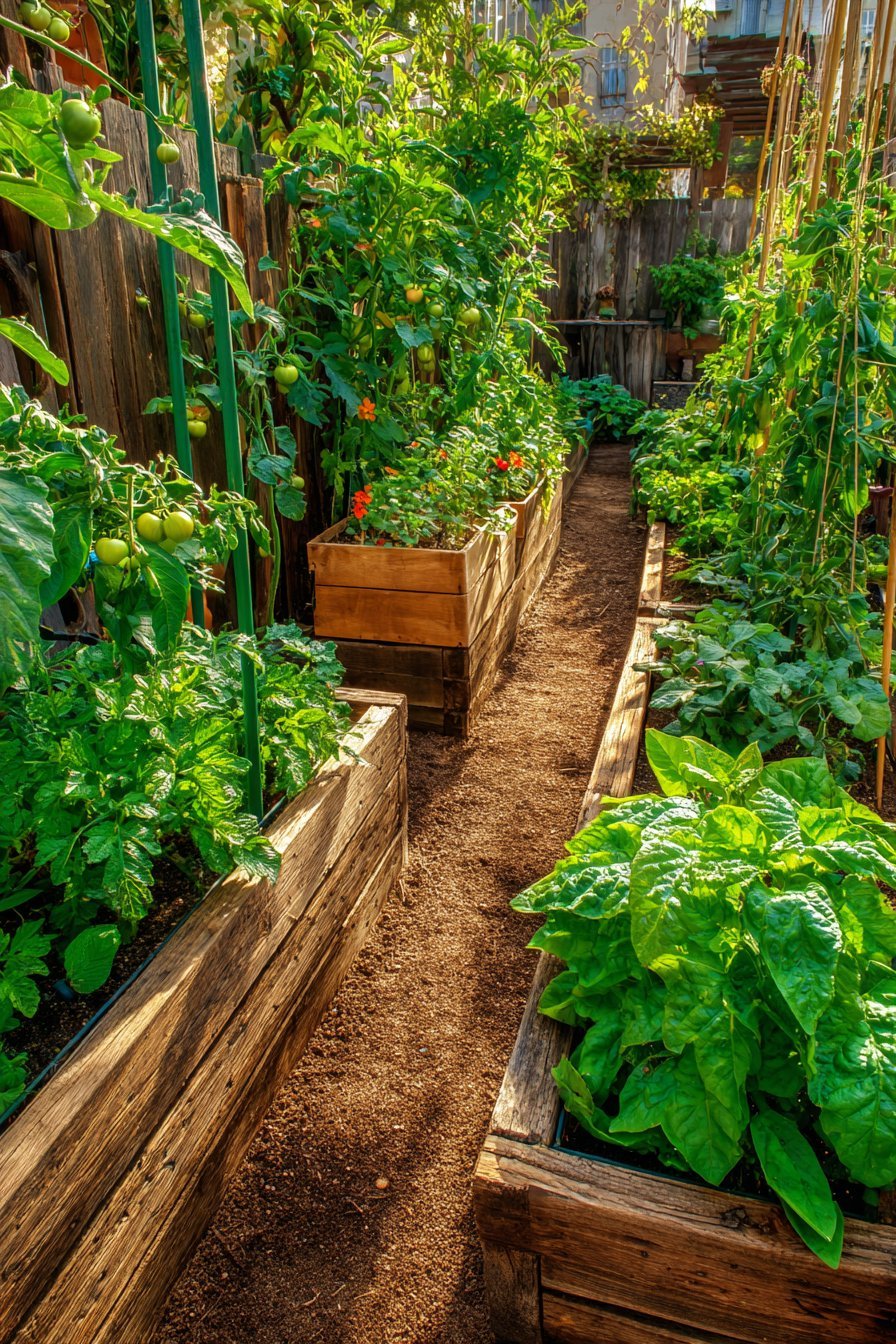
The raised bed system provides excellent drainage and soil control. Gardeners customize soil composition for optimal growing conditions. The elevated design reduces back strain during planting and harvesting tasks. Companion planting maximizes yields while naturally deterring pests.
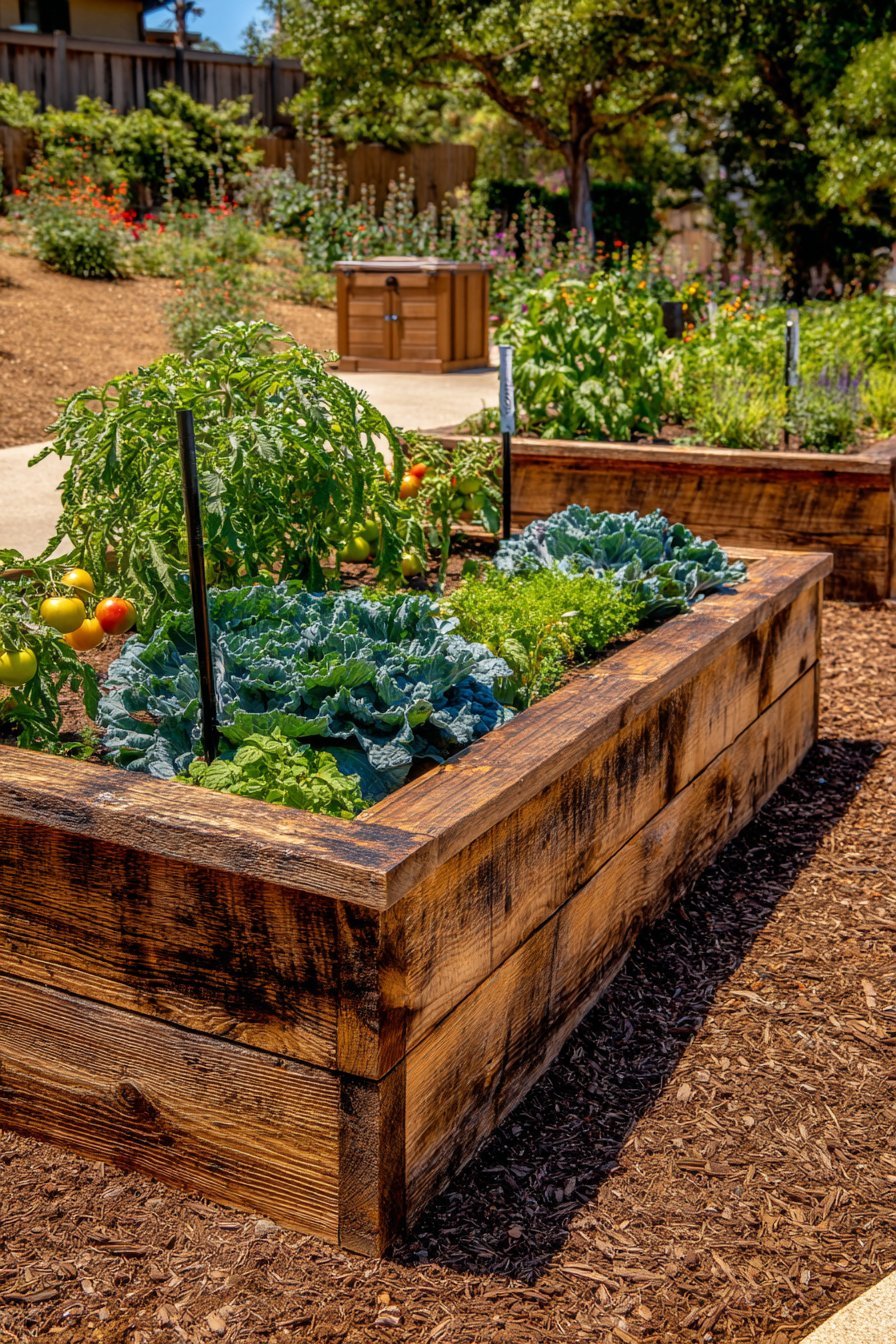
Narrow mulched paths between beds provide necessary access without wasting growing space. Garden markers identify plant varieties while adding practical organization. Drip irrigation systems deliver water directly to root zones efficiently. This technology conserves water while promoting healthier plant growth.
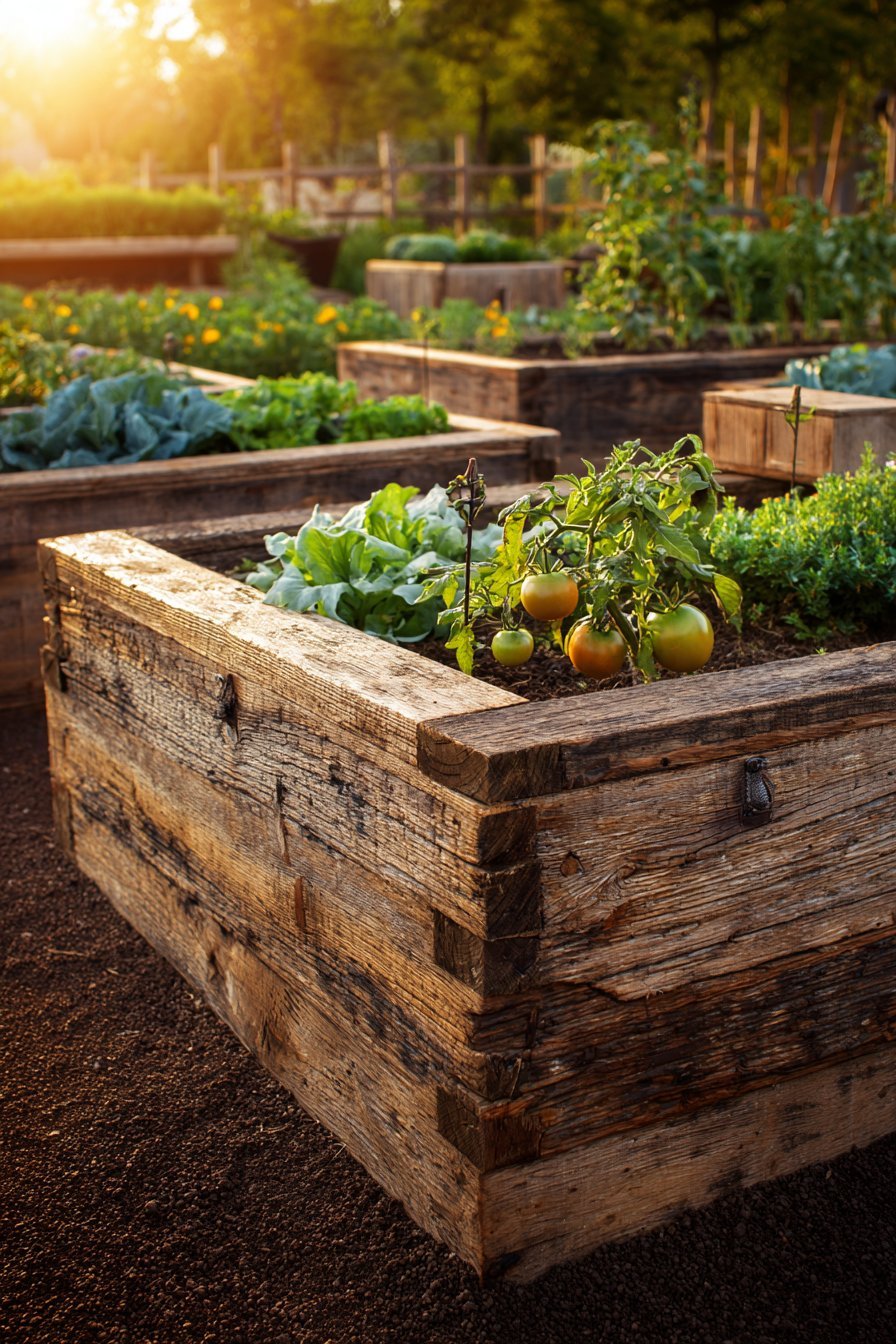
Morning sunlight illuminates the productive garden space perfectly. Healthy plant growth demonstrates the success of intensive planting methods. A small wooden storage box keeps essential tools within easy reach. This compact system proves urban gardening viability for fresh produce.
Key Design Tips:
- Build beds at comfortable working height to reduce physical strain
- Use companion planting to maximize yields and natural pest control
- Install drip irrigation for water conservation and healthier plants
- Create narrow paths that provide access without wasting space
- Choose untreated lumber to avoid chemical leaching into soil
- Label plants clearly for organized harvest planning and crop rotation
8. Compact Dining Terrace
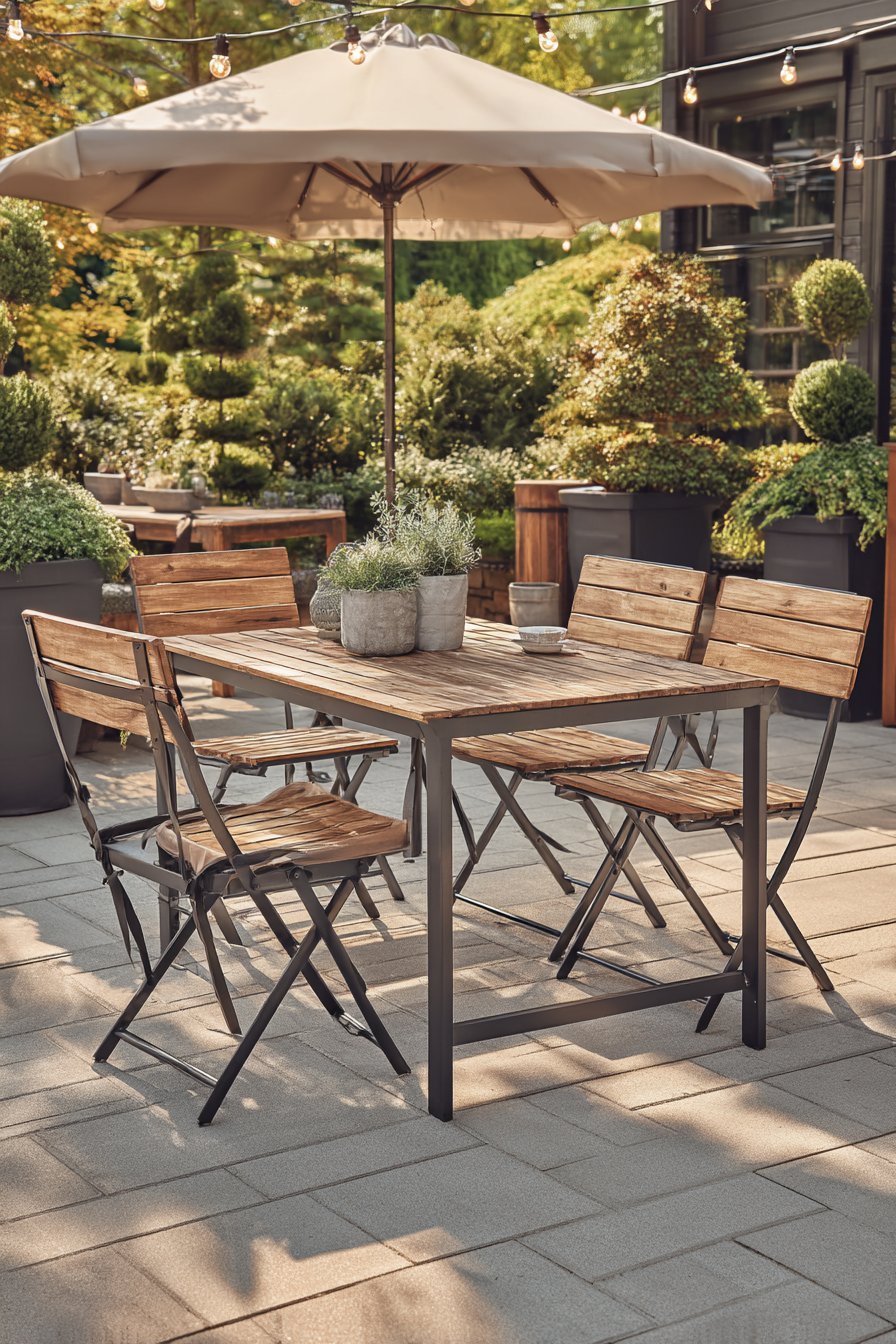
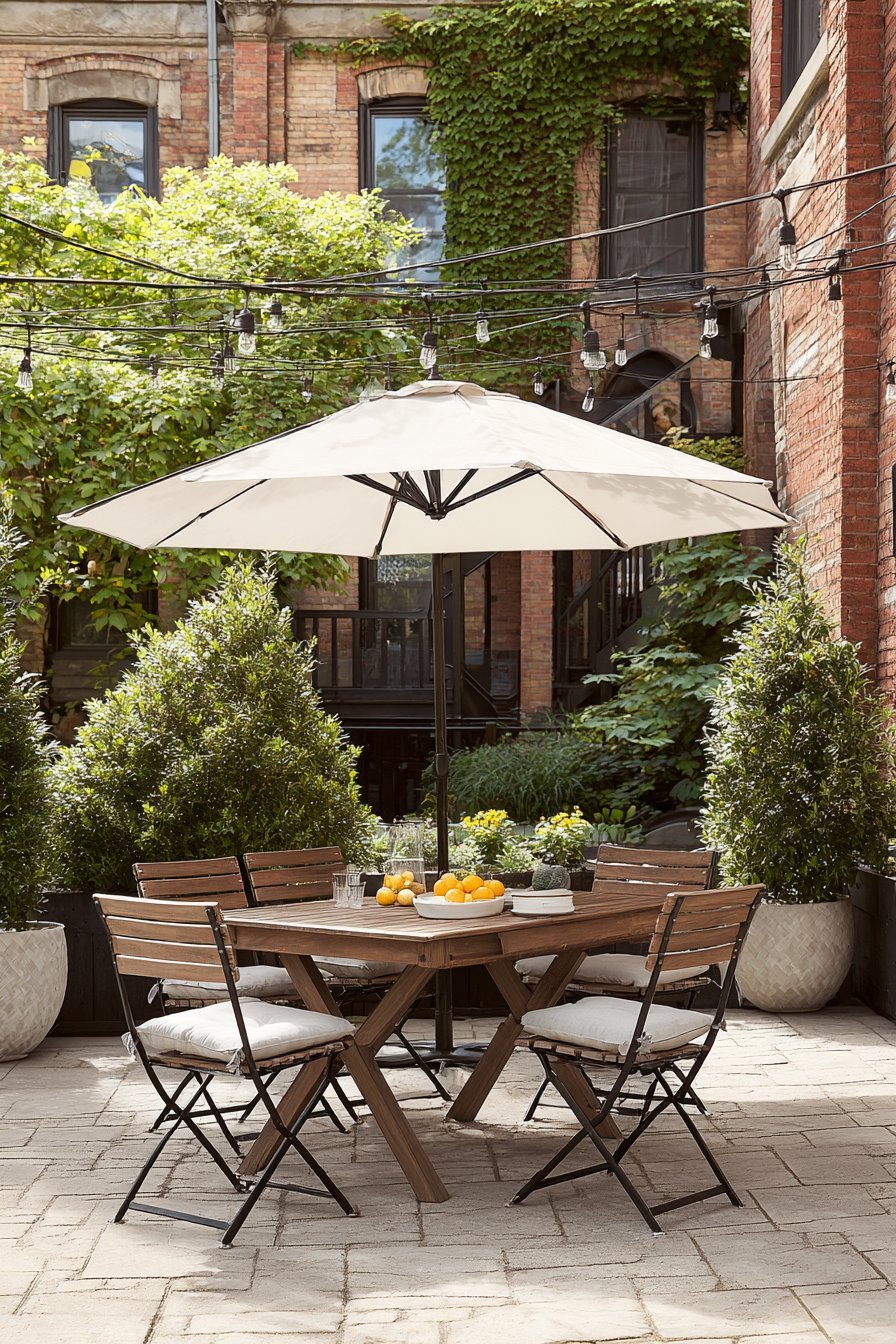
A narrow rectangular table made from weather-resistant acacia wood anchors this dining area. Visible grain patterns and natural color variations add organic beauty. Four folding chairs with metal frames and slatted wood seats provide flexible seating options.
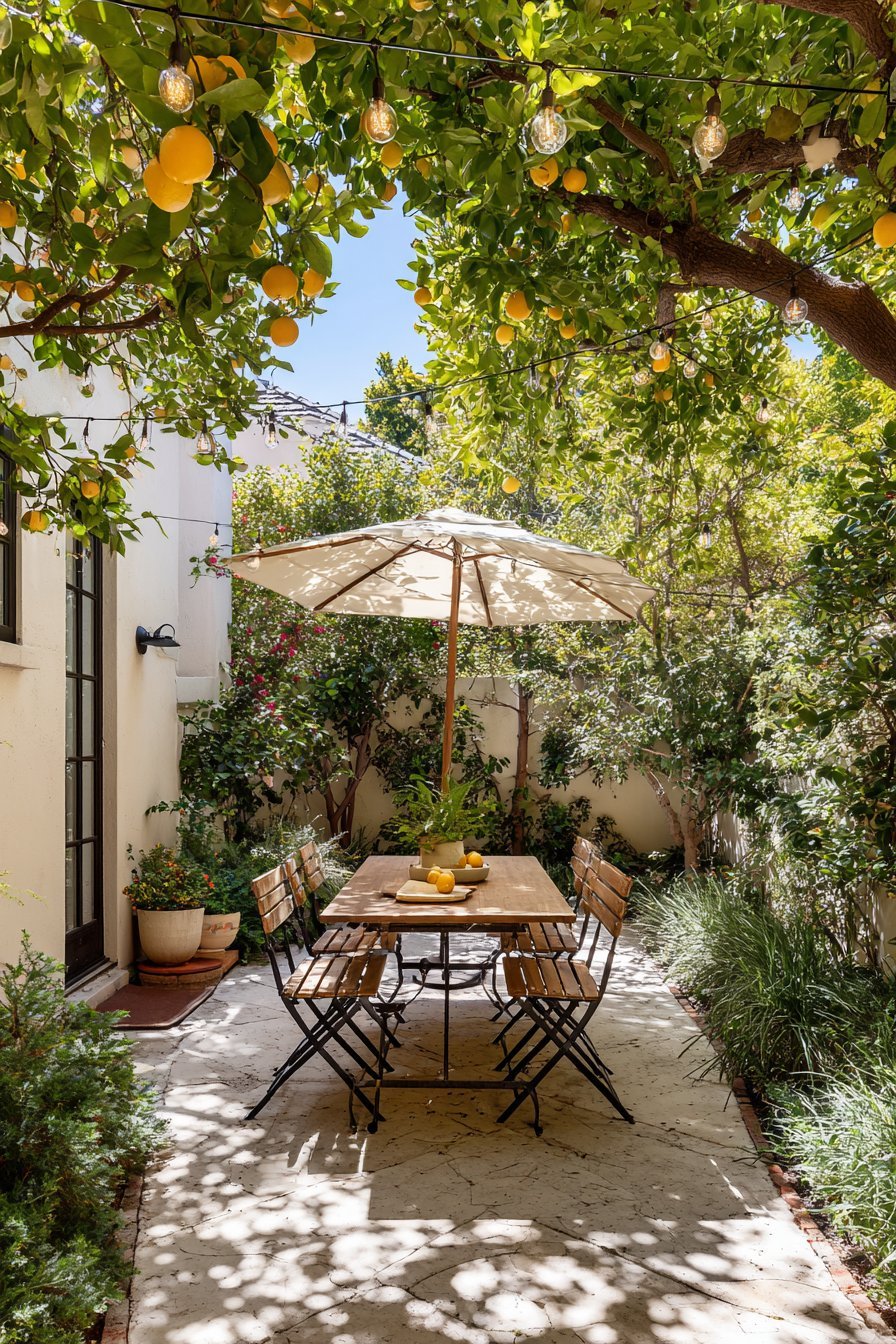
The ten by twelve foot paved area accommodates comfortable dining without crowding. A market umbrella in natural canvas provides essential shade during daytime meals. Folding chairs store compactly when not needed, maintaining open space flexibility. This adaptability proves crucial in small outdoor areas.
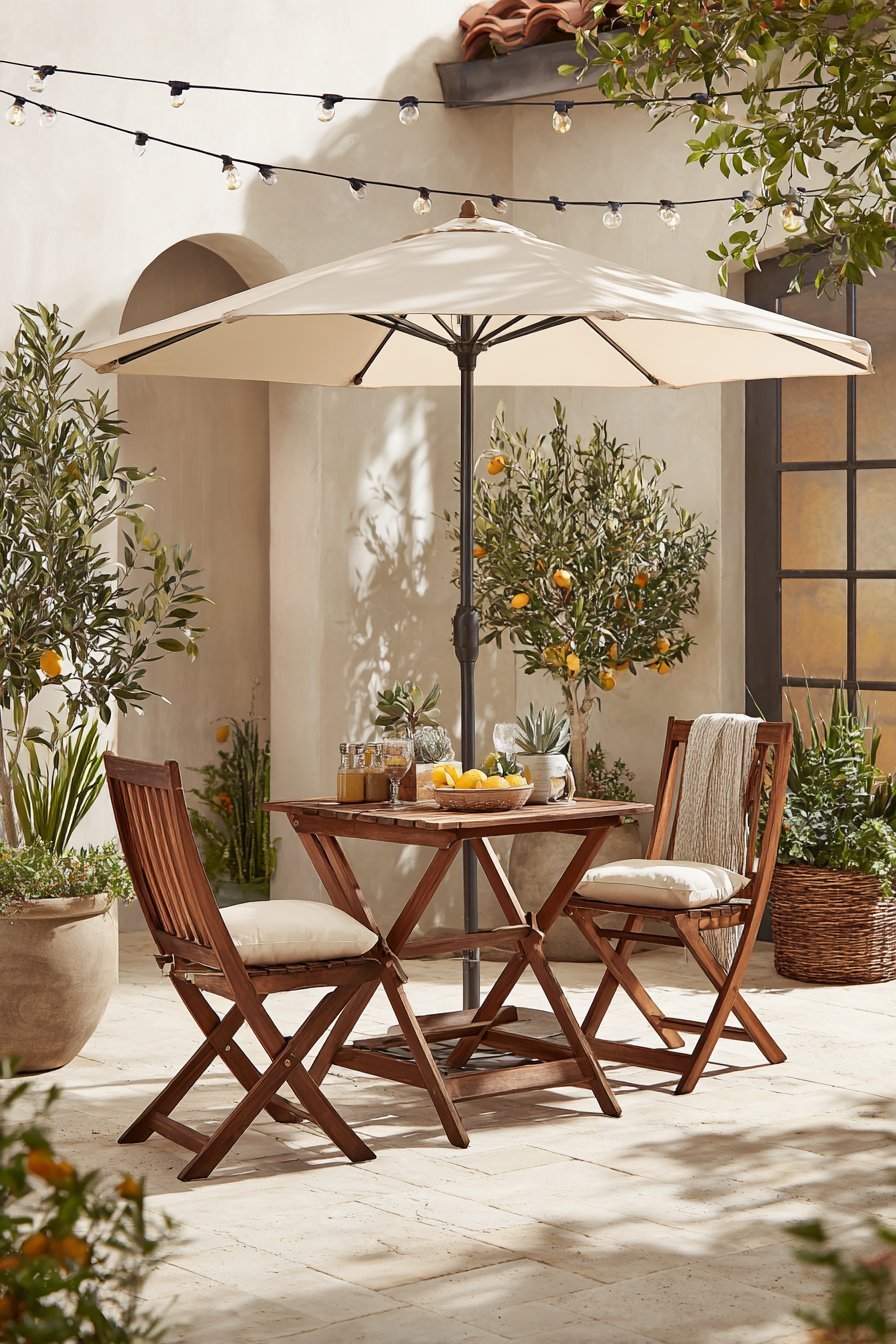
Potted citrus trees in ceramic containers frame the dining space naturally. The trees provide privacy screening while offering seasonal fruit harvests. String lights overhead create romantic evening ambiance for outdoor dining. Afternoon sunlight filters through, casting attractive shadows on limestone pavers.
The space-efficient furniture choices allow multiple uses throughout the day. Morning coffee transitions to afternoon work sessions and evening entertaining seamlessly. This versatility maximizes the value of every square foot.
Key Design Tips:
- Select folding furniture for storage flexibility when space is not in use
- Choose weather-resistant wood species that age beautifully without constant maintenance
- Use container-grown trees for privacy that remains mobile and seasonal
- Install market umbrellas for adjustable shade throughout different times
- Add string lighting for ambiance that extends usability into evening hours
- Select pavers in neutral tones that complement various table settings
9. Children’s Play Zone
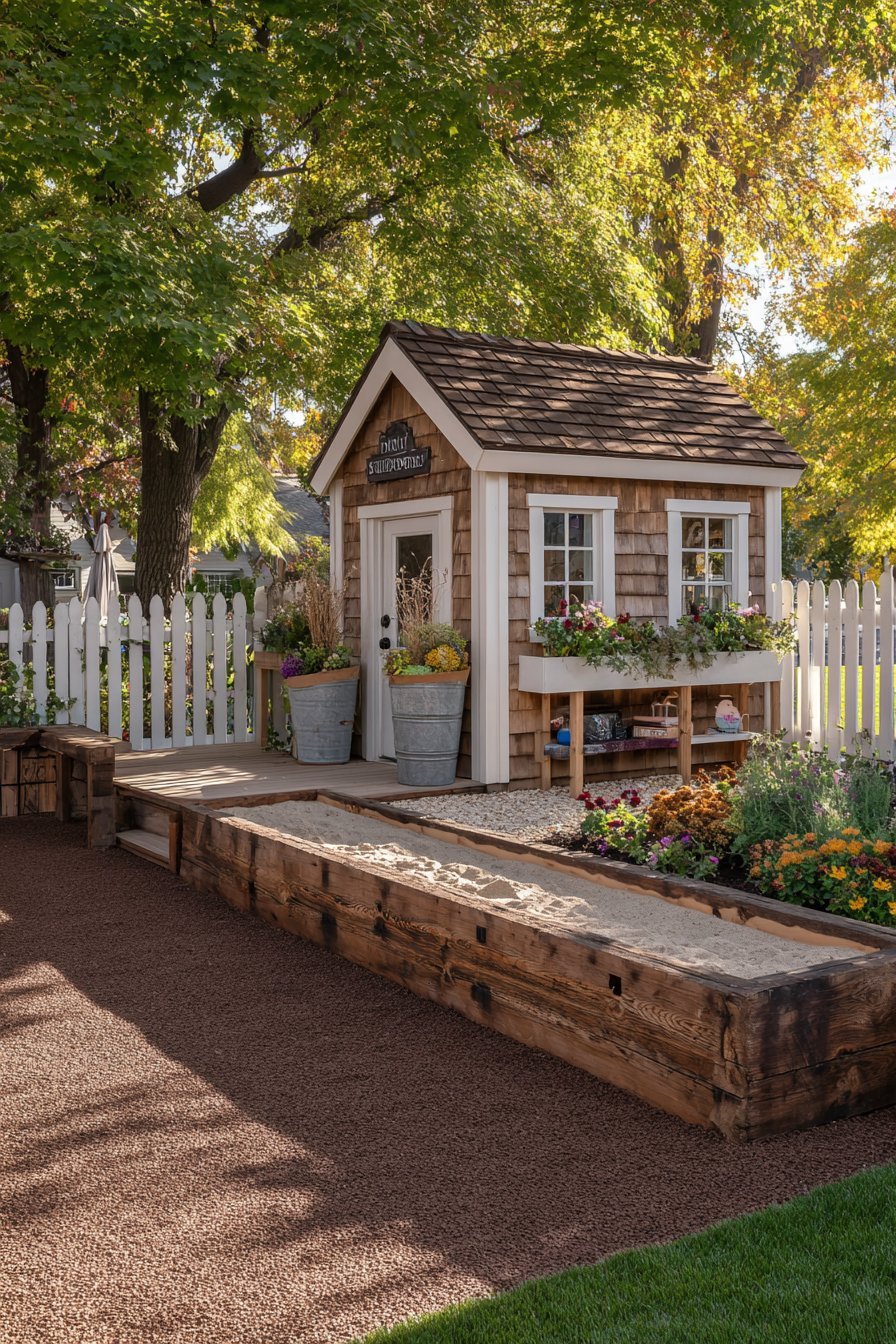
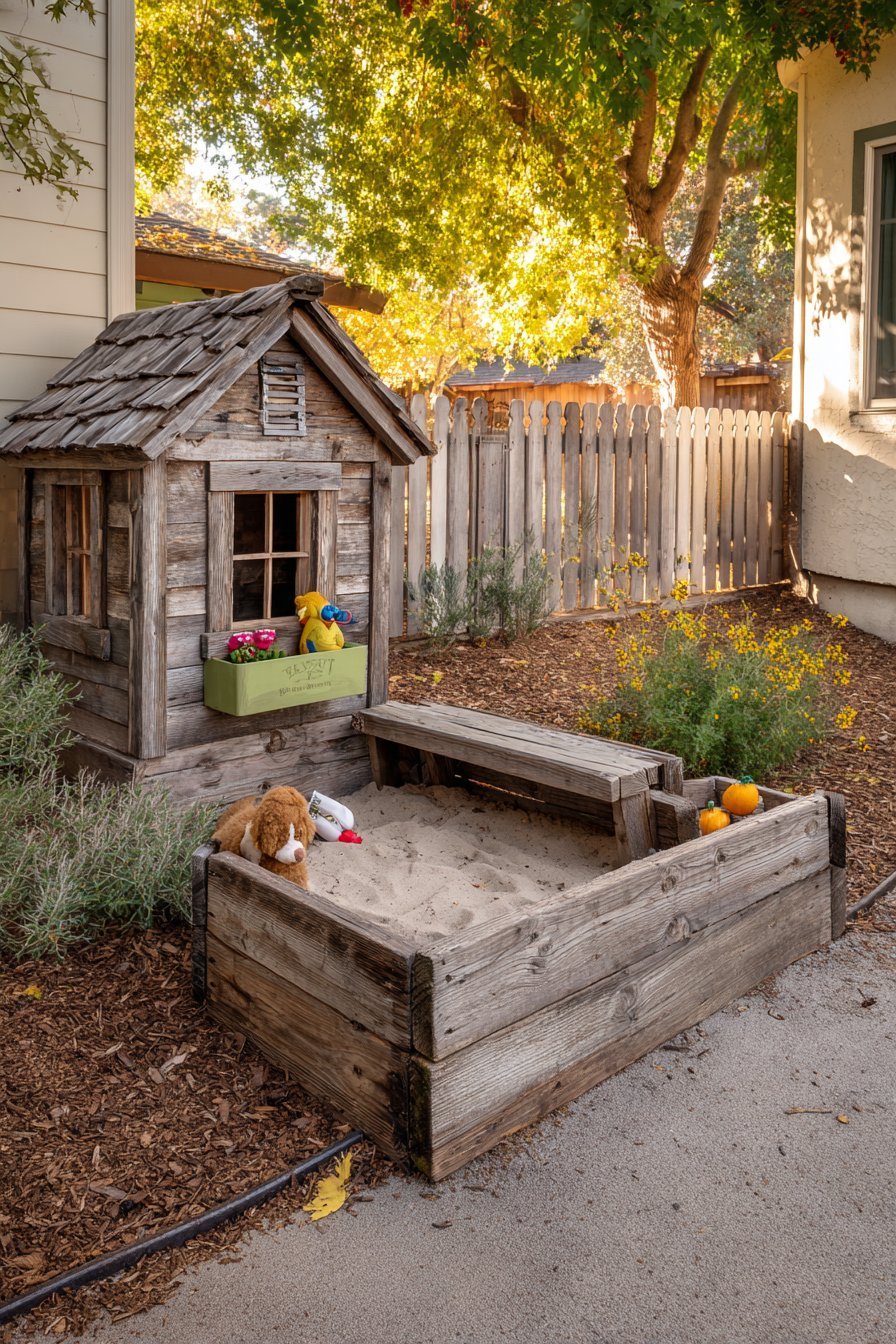
A compact sandbox made from railroad ties includes a built-in bench seat along one edge. This thoughtful design provides parent seating while children play. The sturdy construction withstands years of active use and changing weather conditions.
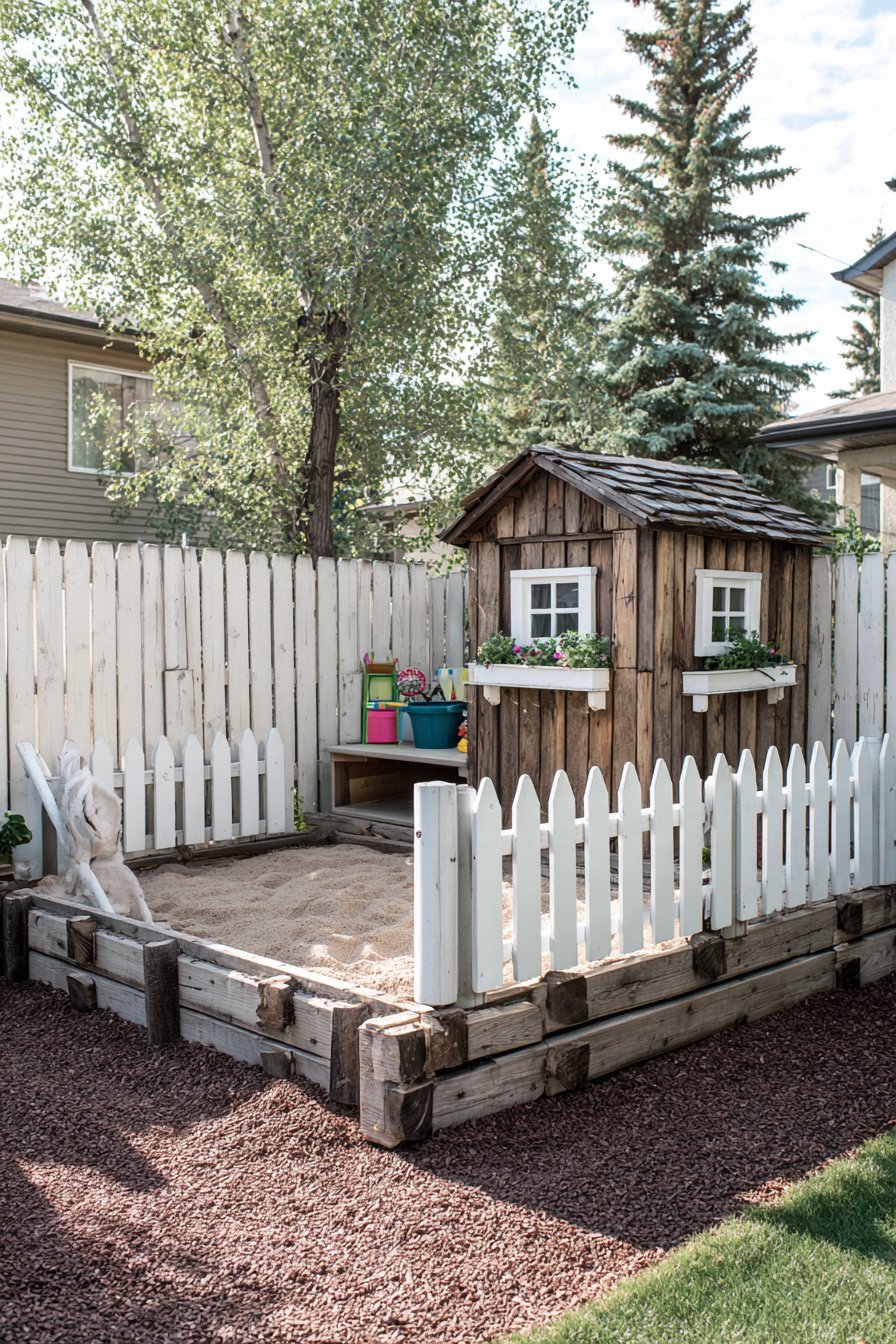
A small playhouse with cedar shake siding occupies the corner without overwhelming the space. Window boxes add decorative charm while teaching children about growing plants. The scaled-down structure feels substantial enough for imaginative play yet small enough for tiny yards.
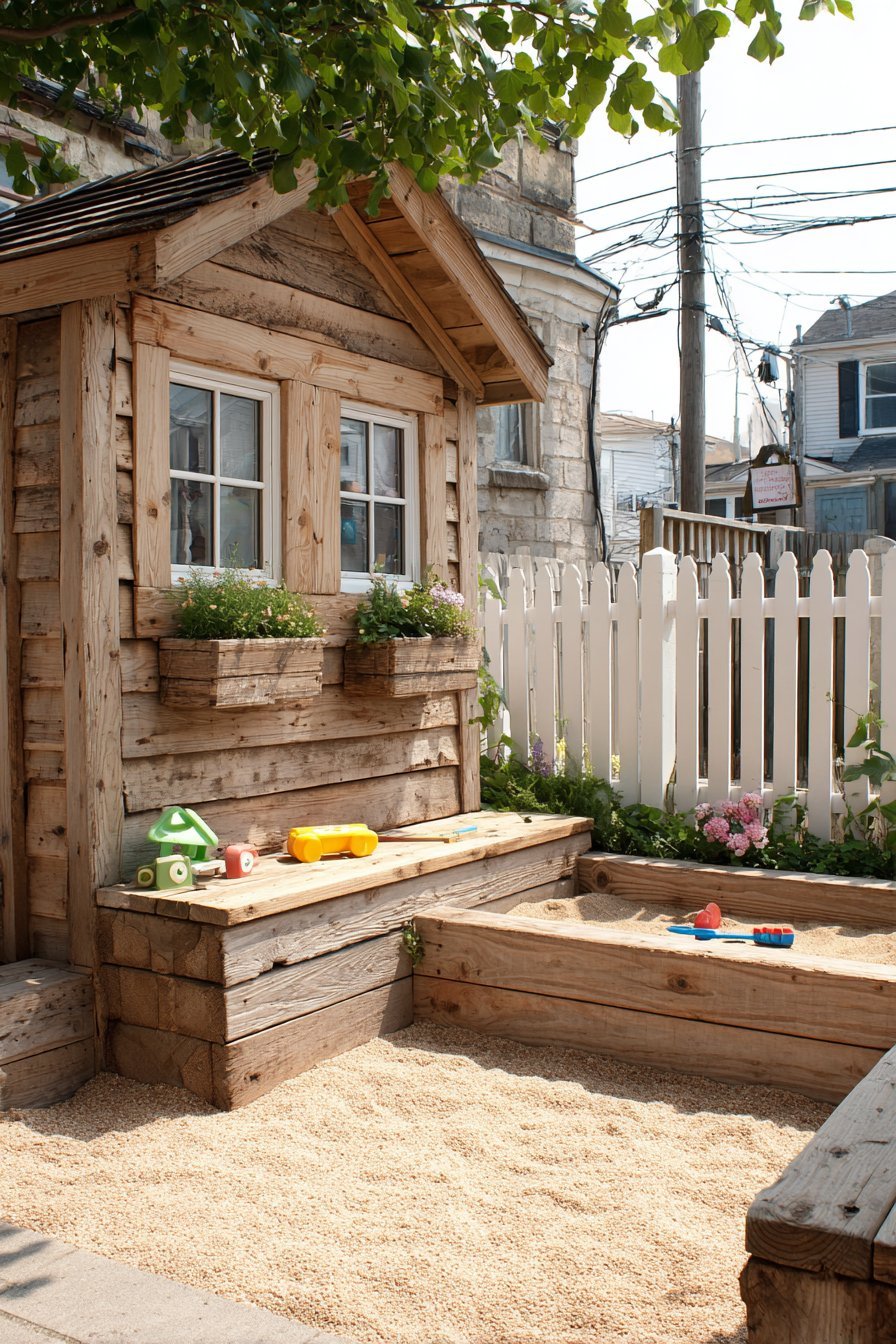
Rubber mulch safety surfacing in natural brown tones cushions inevitable tumbles and falls. This material requires minimal maintenance compared to traditional options. A low picket fence painted in soft white defines the play zone boundaries clearly. A simple storage bin keeps outdoor toys organized and weather-protected.
Natural afternoon light creates a safe, welcoming atmosphere for outdoor play. The dedicated space allows children freedom while containing the inevitable toy scatter. This design proves that small yards can accommodate meaningful play areas with proper planning.
Key Design Tips:
- Install rubber mulch surfacing for safety and low maintenance benefits
- Build integrated seating into sandbox edges for parent supervision comfort
- Choose playhouses scaled appropriately to the available space dimensions
- Define play zones with low fencing that maintains visual openness
- Add storage solutions that teach organizational responsibility to children
- Select natural materials that age gracefully and resist weather damage
10. Shade Garden Sanctuary
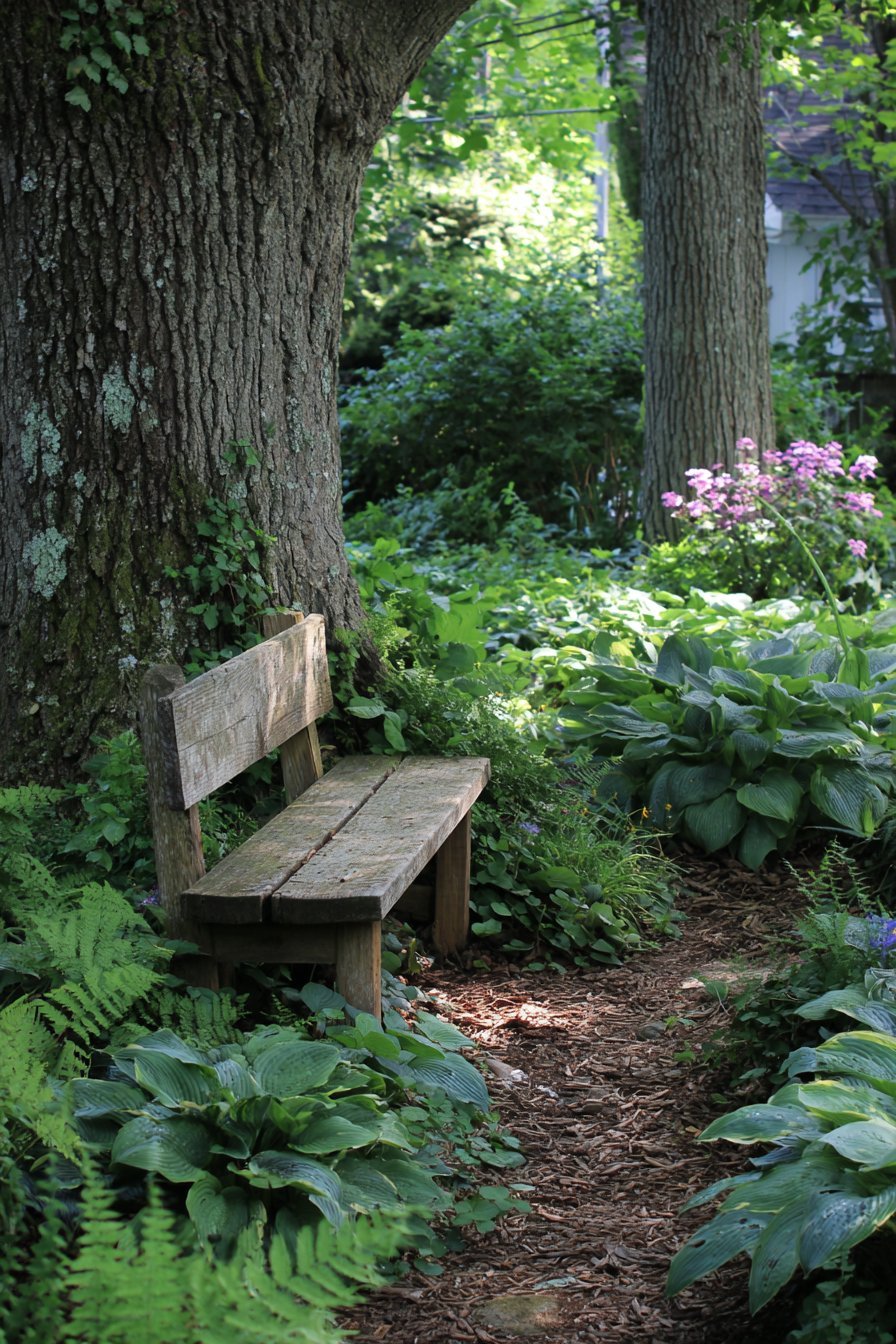
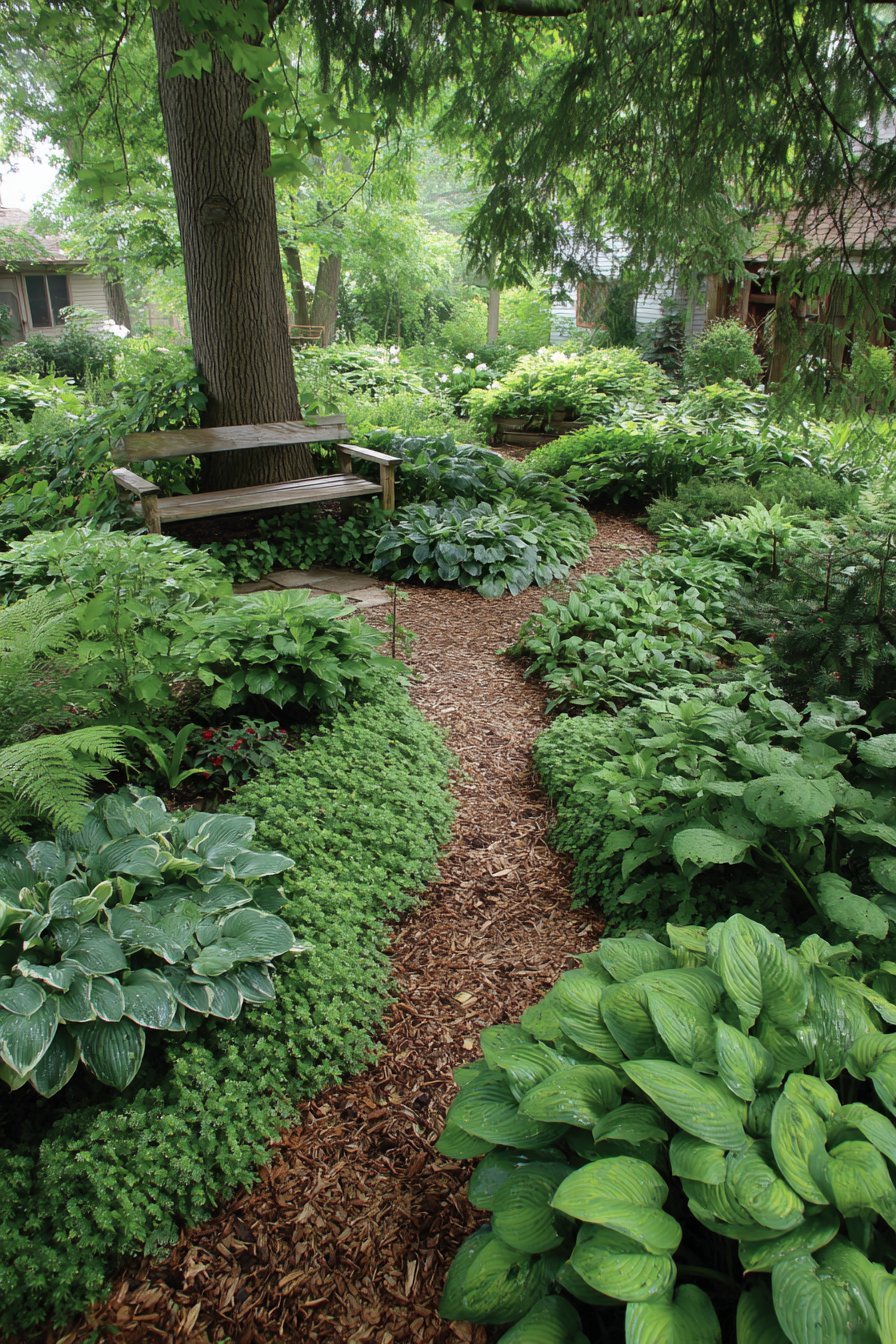
This shade garden thrives beneath mature tree canopy where grass struggles. Hostas display varied leaf patterns that provide visual interest without flowers. Ferns add delicate fronds that move gently in breezes. Impatiens provide seasonal color pops in challenging low-light conditions.
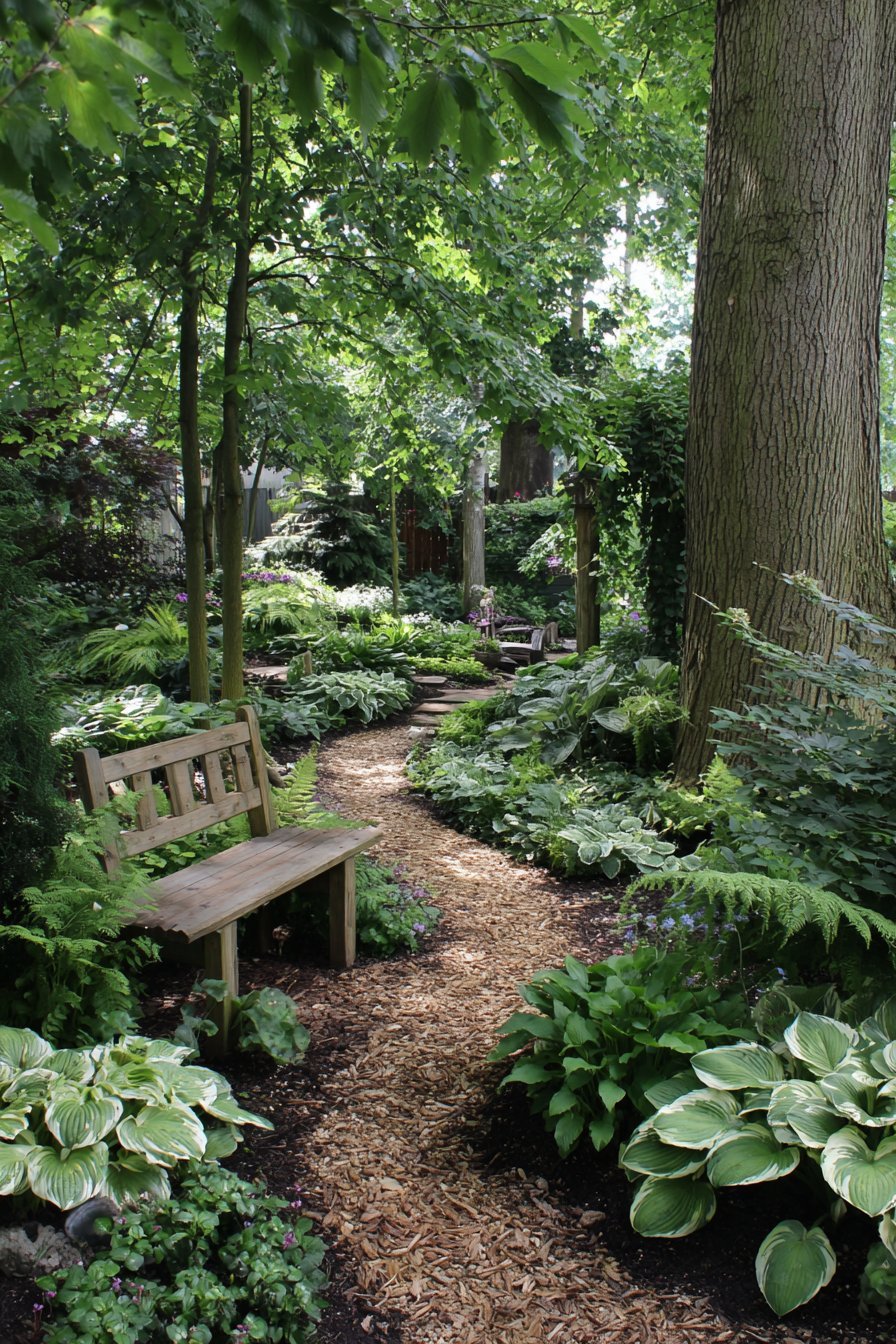
A narrow mulched pathway made from shredded hardwood bark winds through the plantings. The soft surface feels pleasant underfoot while suppressing weeds naturally. A small wooden bench shows natural aging with lichen growth that adds character. The weathered appearance blends seamlessly into the woodland aesthetic.
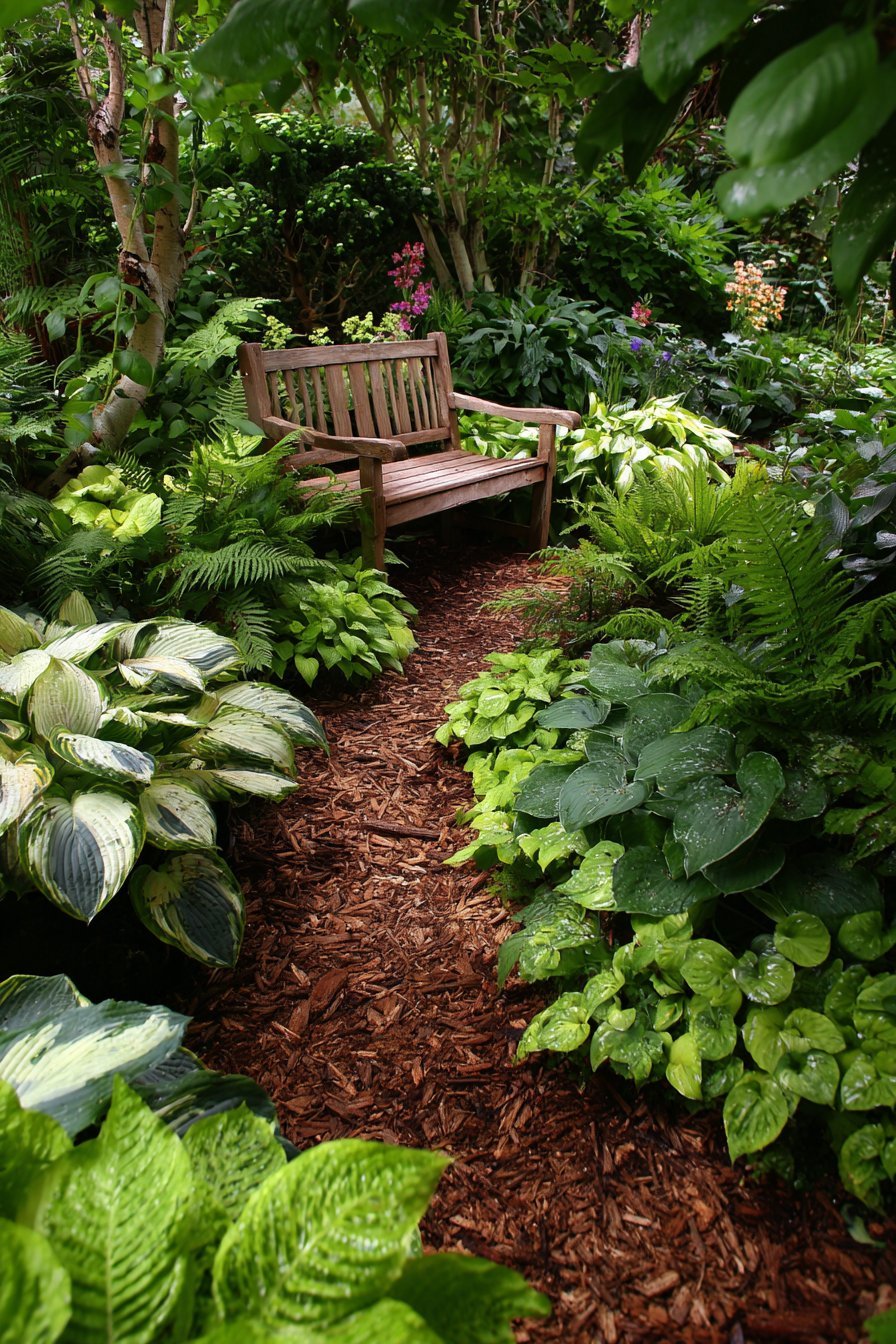
Thoughtful plant selection transforms problematic shade into garden assets. These moisture-loving plants require less watering than sun-loving alternatives. The layered textures create visual complexity despite limited color palette. Different foliage shapes and sizes prevent monotony in green-on-green compositions.
Dappled morning light filters through tree canopy, creating dramatic patterns. The interplay of light and shadow changes throughout the day. This shade garden demonstrates that challenging conditions inspire creative, beautiful solutions.
Key Design Tips:
- Select shade-tolerant plants rather than fighting existing light conditions
- Layer plants by height for dimensional interest in monochromatic schemes
- Use varied leaf textures and patterns to create visual complexity
- Install pathways with natural materials that blend into woodland settings
- Allow benches and structures to weather naturally in shade environments
- Embrace the peaceful atmosphere that shade gardens naturally create
11. Compact Water Garden
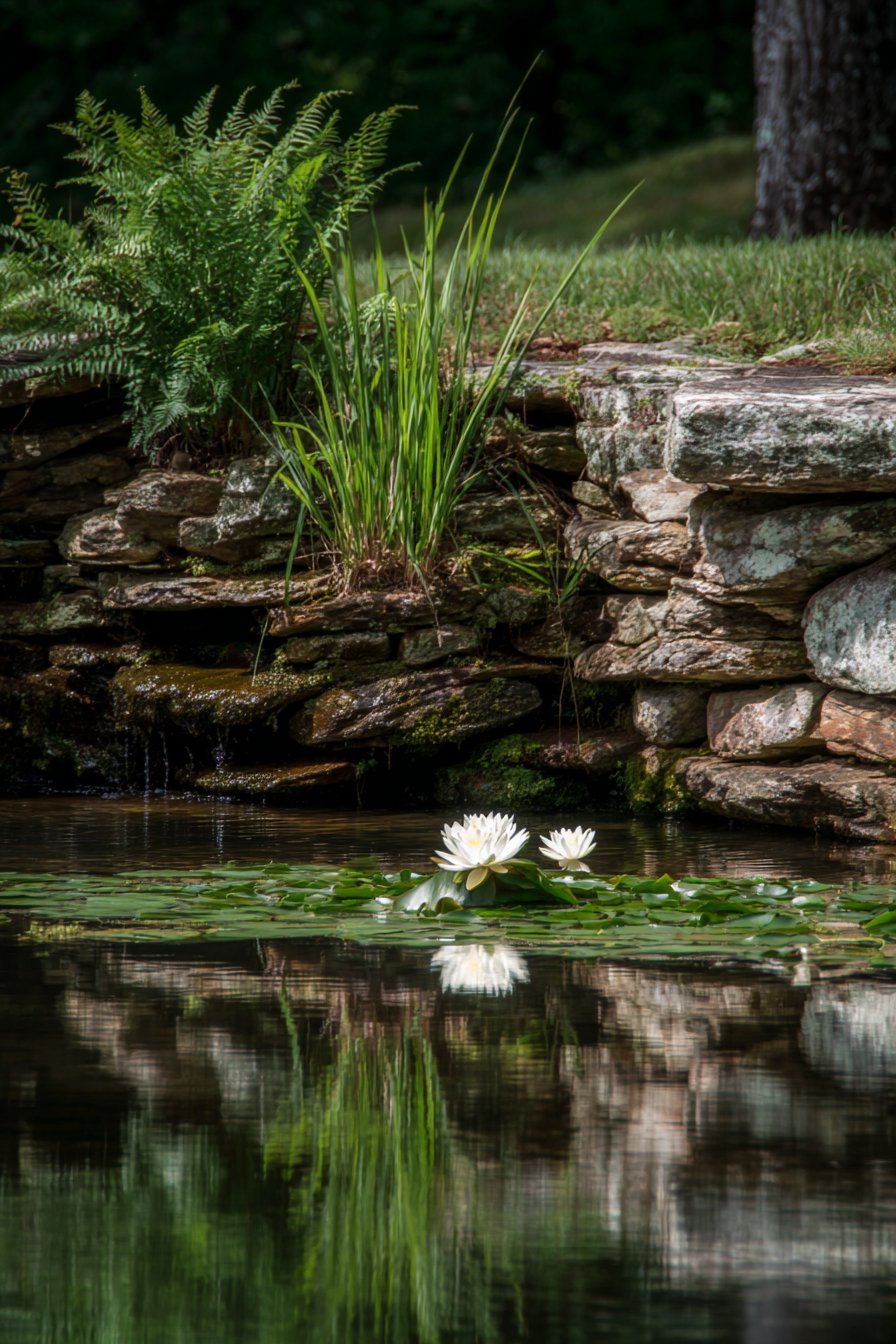
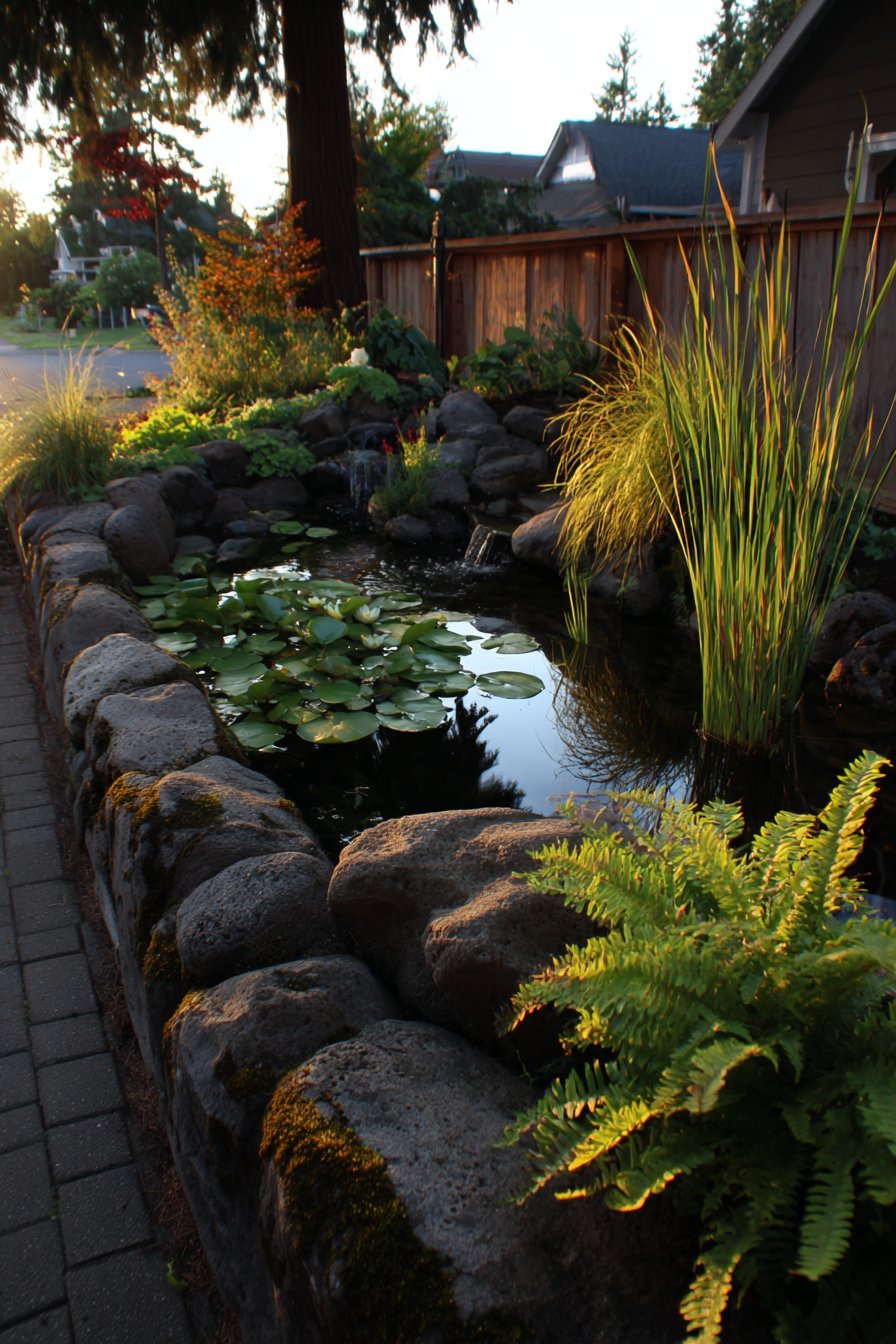
A four by six foot rigid preformed liner creates a complete aquatic ecosystem. Natural stone edging shows moss growth and weathering that looks established. Water lilies float serenely on the surface while marginal plants thrive along edges.
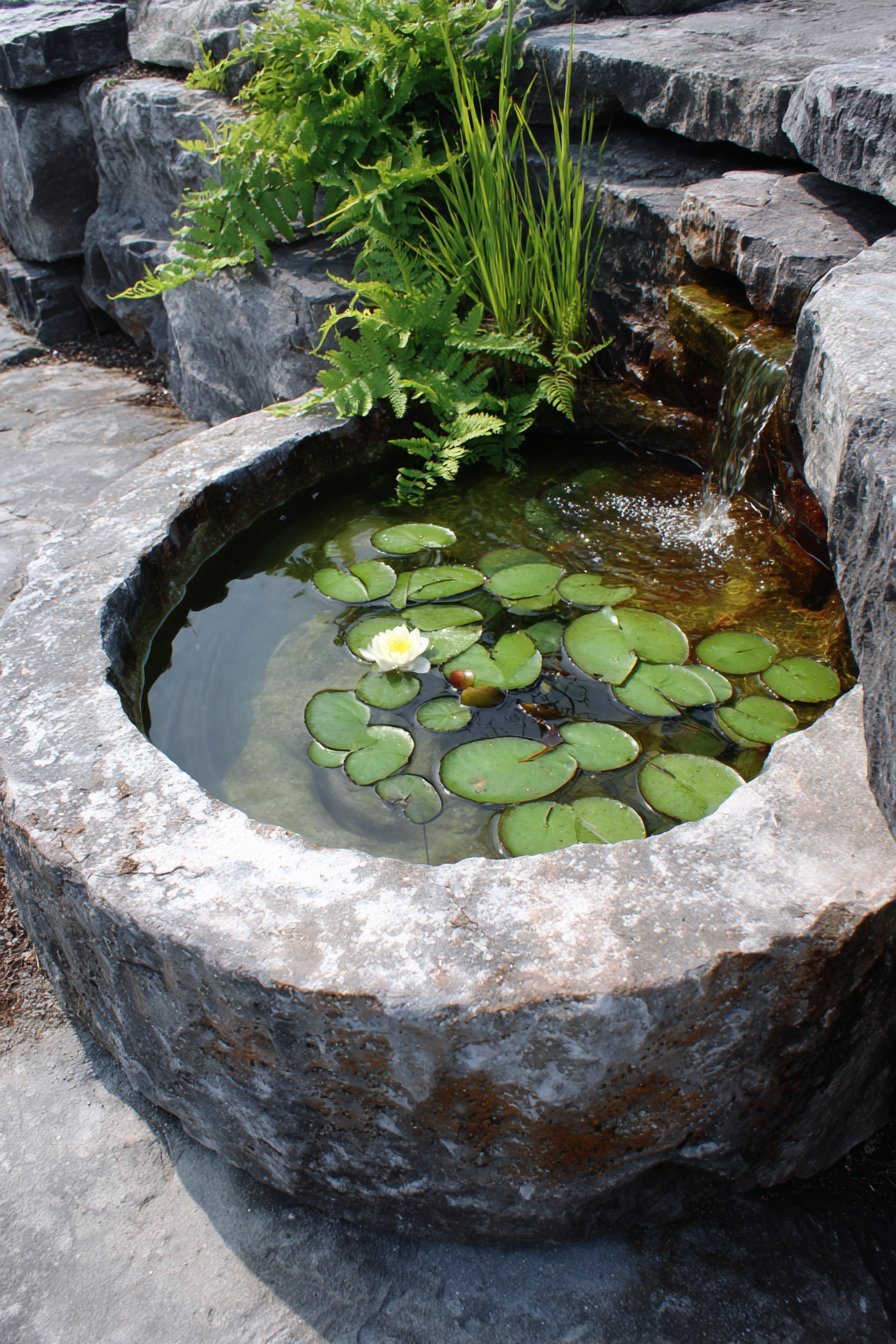
Iris and cattails grow in shallow water, providing vertical interest and habitat. A small recirculating fountain creates gentle water movement and pleasant sound. This feature masks urban noise while preventing stagnant water and mosquito breeding. The contained system requires surprisingly little maintenance once established.
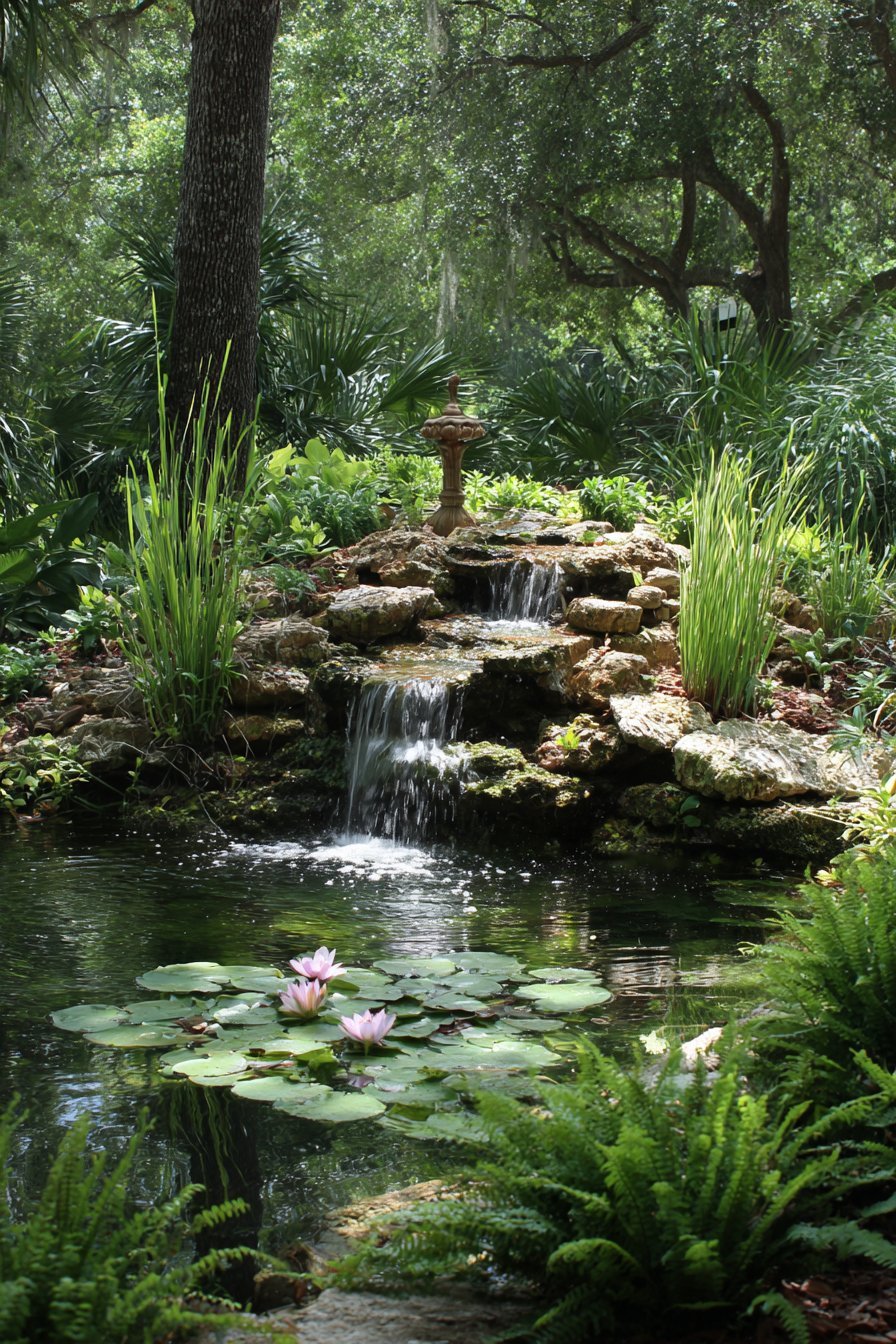
Surrounding plantings include ferns and ornamental grasses that complement the water feature. These moisture-loving plants thrive in the increased humidity near the pond. The complete design creates a tranquil focal point that draws attention immediately.
Afternoon light reflects beautifully off the water surface. Aquatic plants and their mirror-like reflections double the visual impact. This compact pond proves that water features work successfully in minimal square footage. The proper aquatic ecosystem balance maintains water clarity naturally.
Key Design Tips:
- Choose preformed liners for easier installation and reliable waterproofing
- Include recirculating fountains to prevent stagnant water and add sound
- Select appropriate aquatic plants for different water depths and zones
- Allow stone edging to weather naturally for an established appearance
- Position ponds to receive partial sunlight for healthy plant growth
- Surround water features with complementary moisture-loving plantings
12. Outdoor Movie Theater
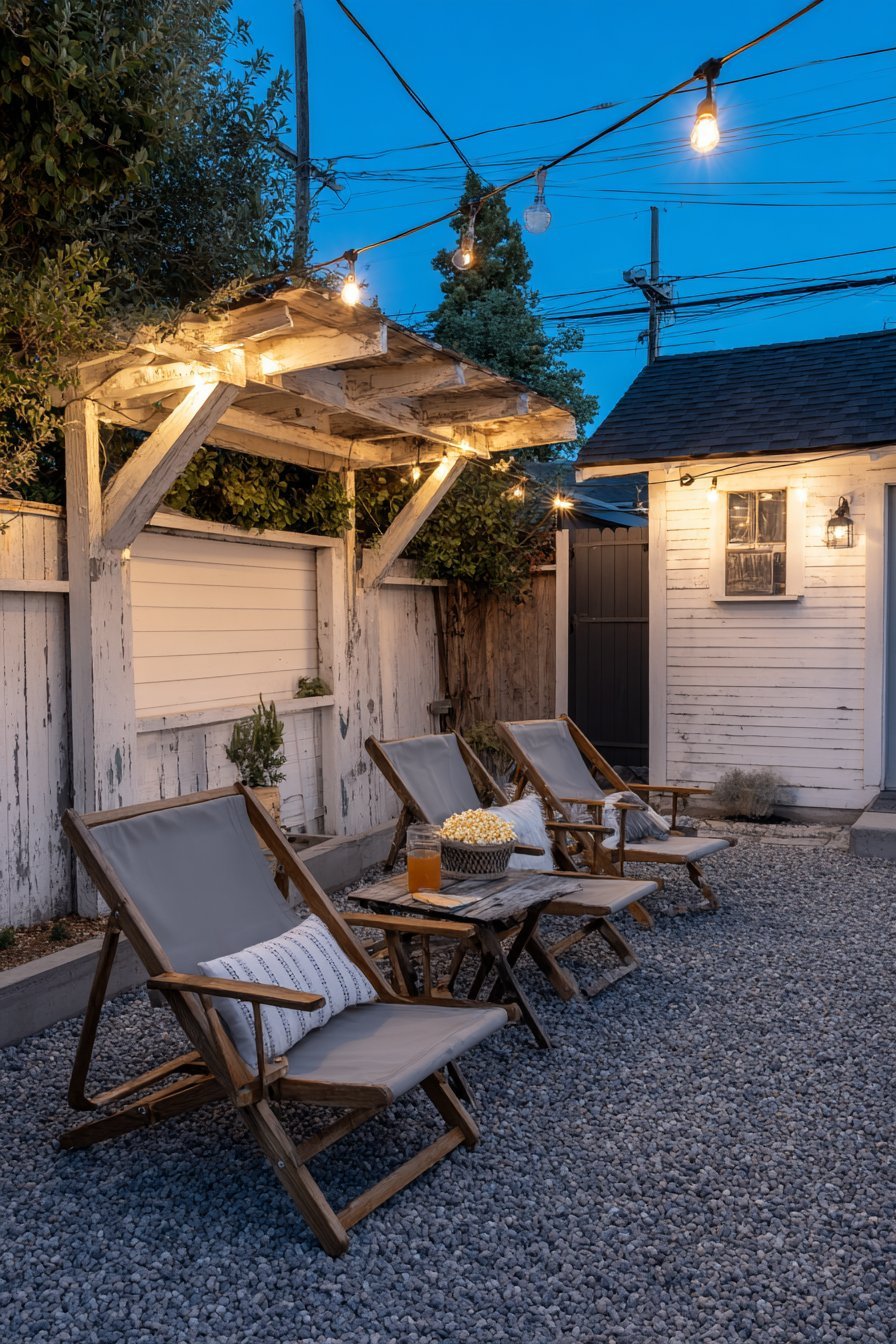
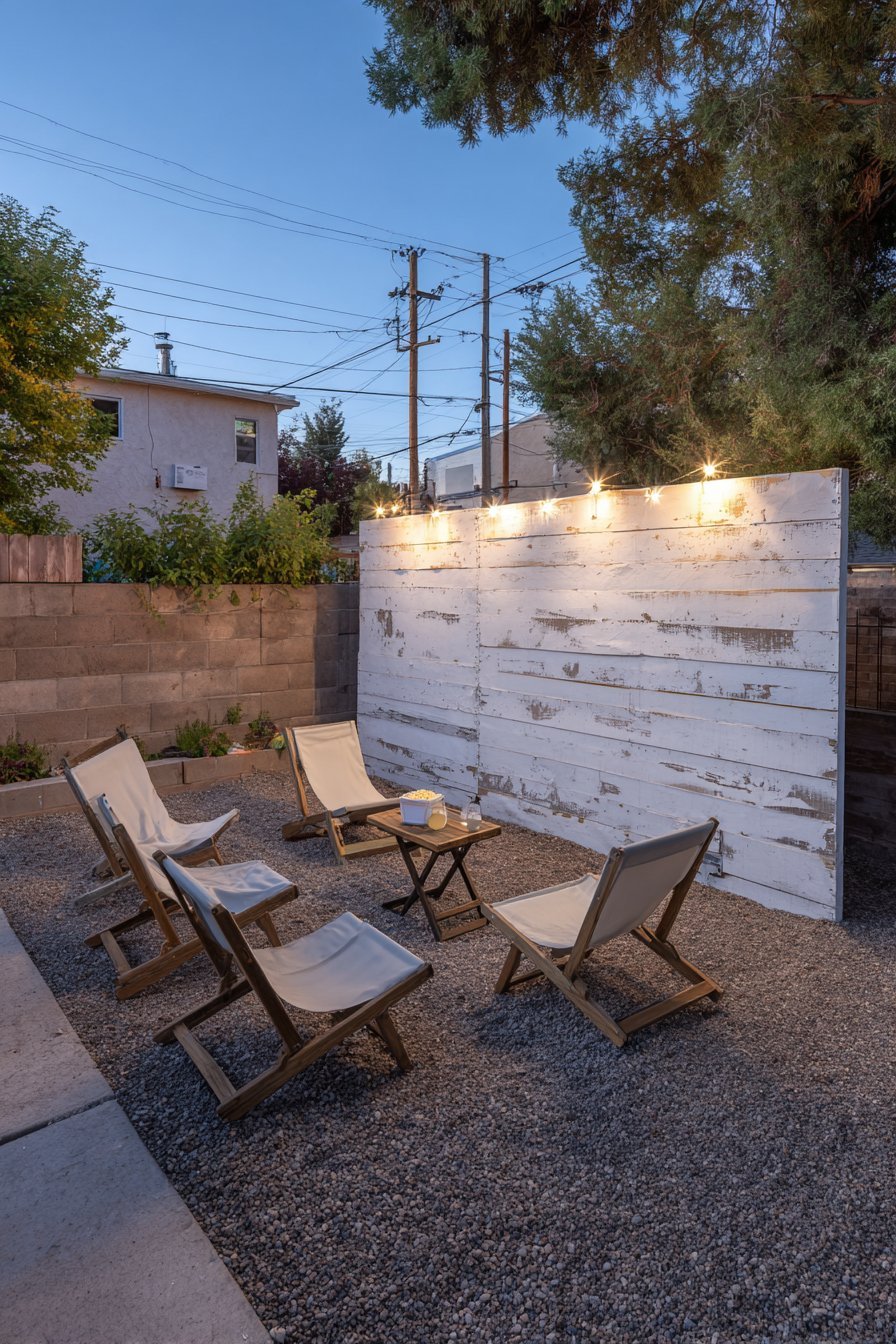
A white painted fence section serves as an ingenious projection surface. The horizontal boards show subtle texture that disappears when movies play. This creative reuse eliminates the need for expensive screens or equipment storage.
Four low-slung camping chairs with canvas fabric provide comfortable, portable seating. The neutral tones blend into the landscape when not in use. A simple gravel base defines the viewing area without permanent construction. This flexible setup stores completely between movie nights.
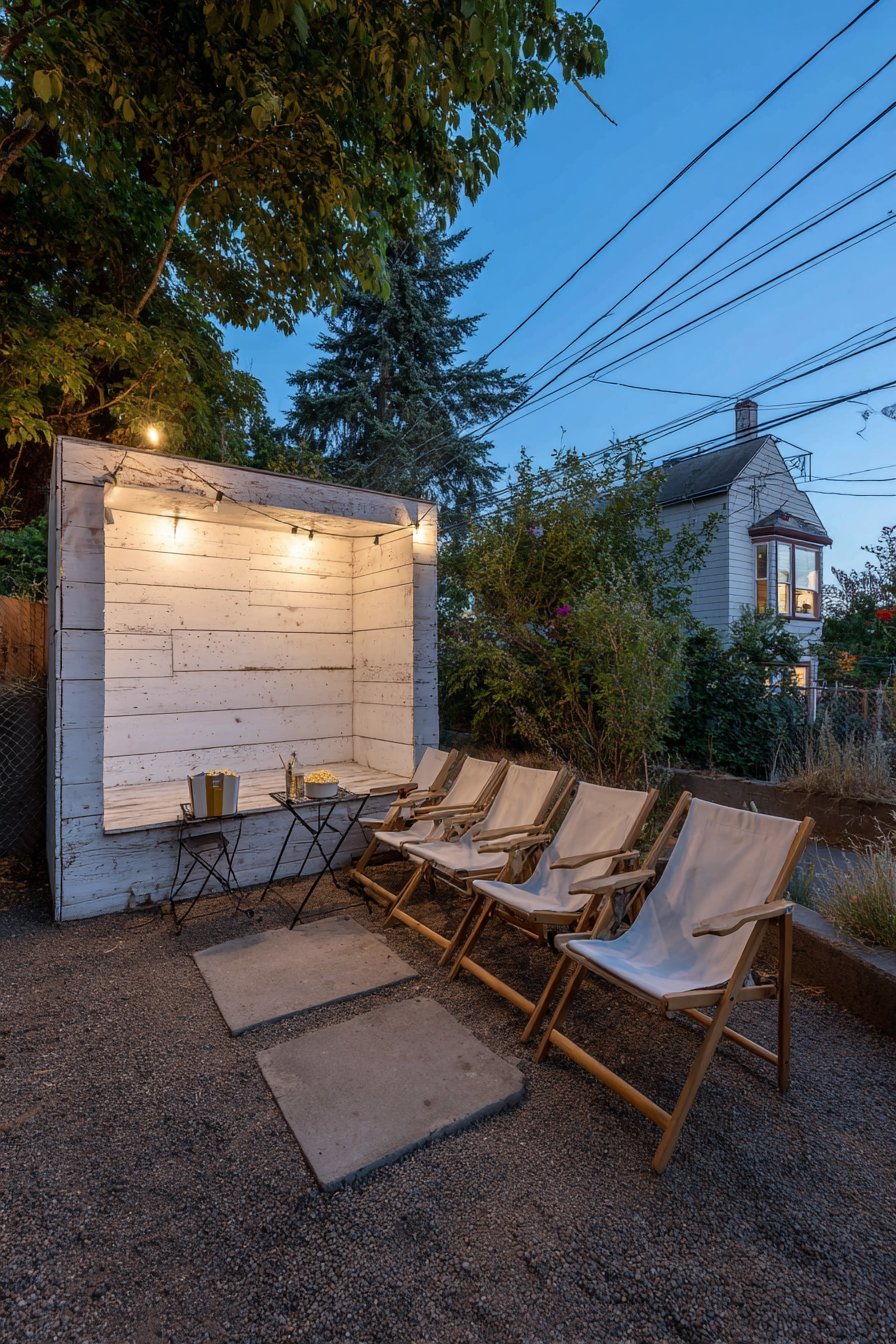
A small folding table holds snacks and drinks within easy reach. String lights overhead create ambient lighting for pre-show mingling. The compact setup demonstrates impressive creativity in using existing structures. No permanent modifications mean easy removal if preferences change.
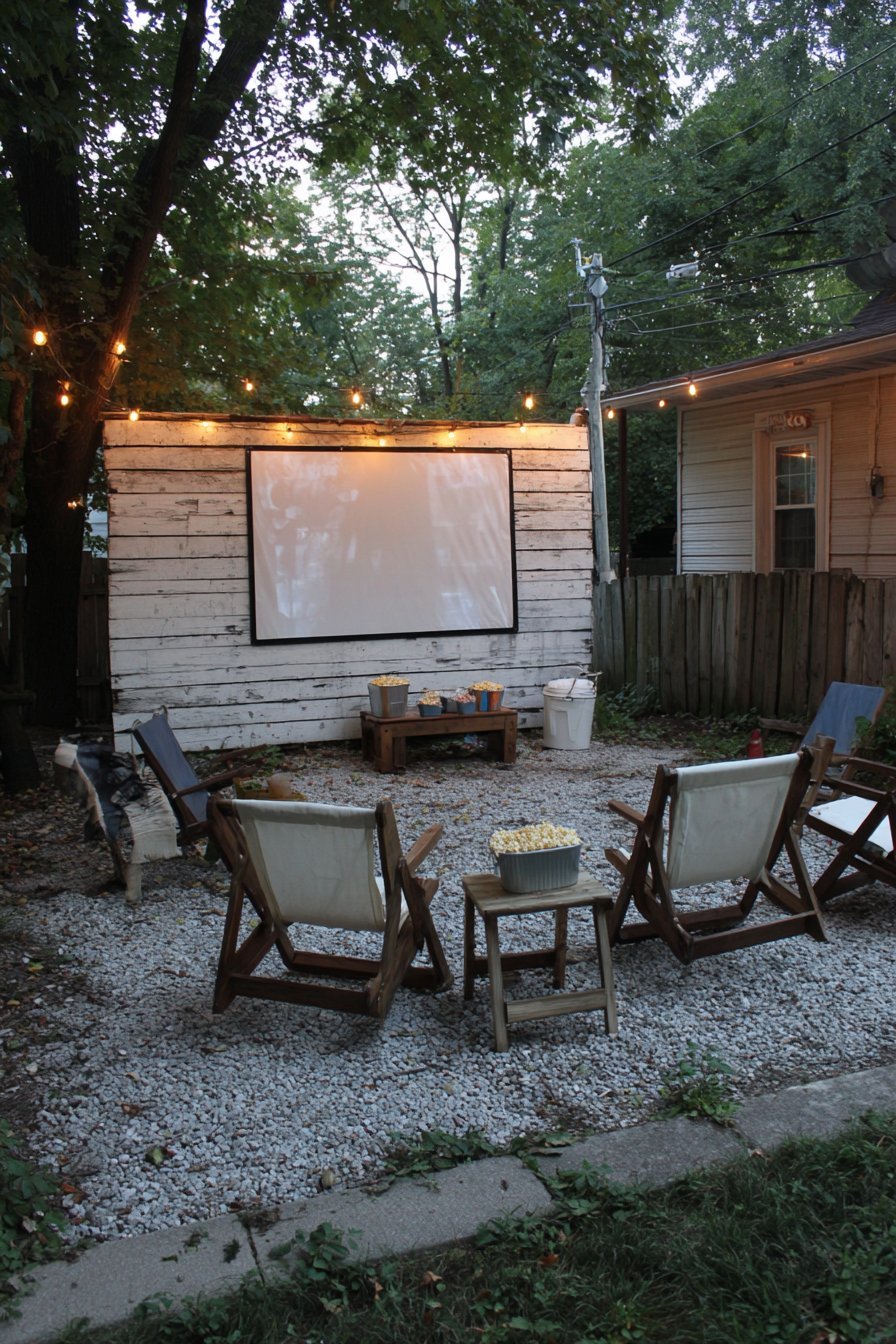
Evening blue hour photography captures the cozy outdoor theater atmosphere. The accessibility and simplicity make regular movie nights realistic. This design proves that backyard entertainment requires imagination rather than extensive budgets.
Key Design Tips:
- Use existing white fences or walls as projection surfaces
- Choose portable, lightweight seating that stores easily between uses
- Install dimmer string lights that provide ambiance without screen glare
- Create temporary viewing areas with gravel or removable surfaces
- Include small tables for snacks and drinks within arm’s reach
- Position seating at optimal viewing angles for comfortable neck positions
13. Succulent Container Collection
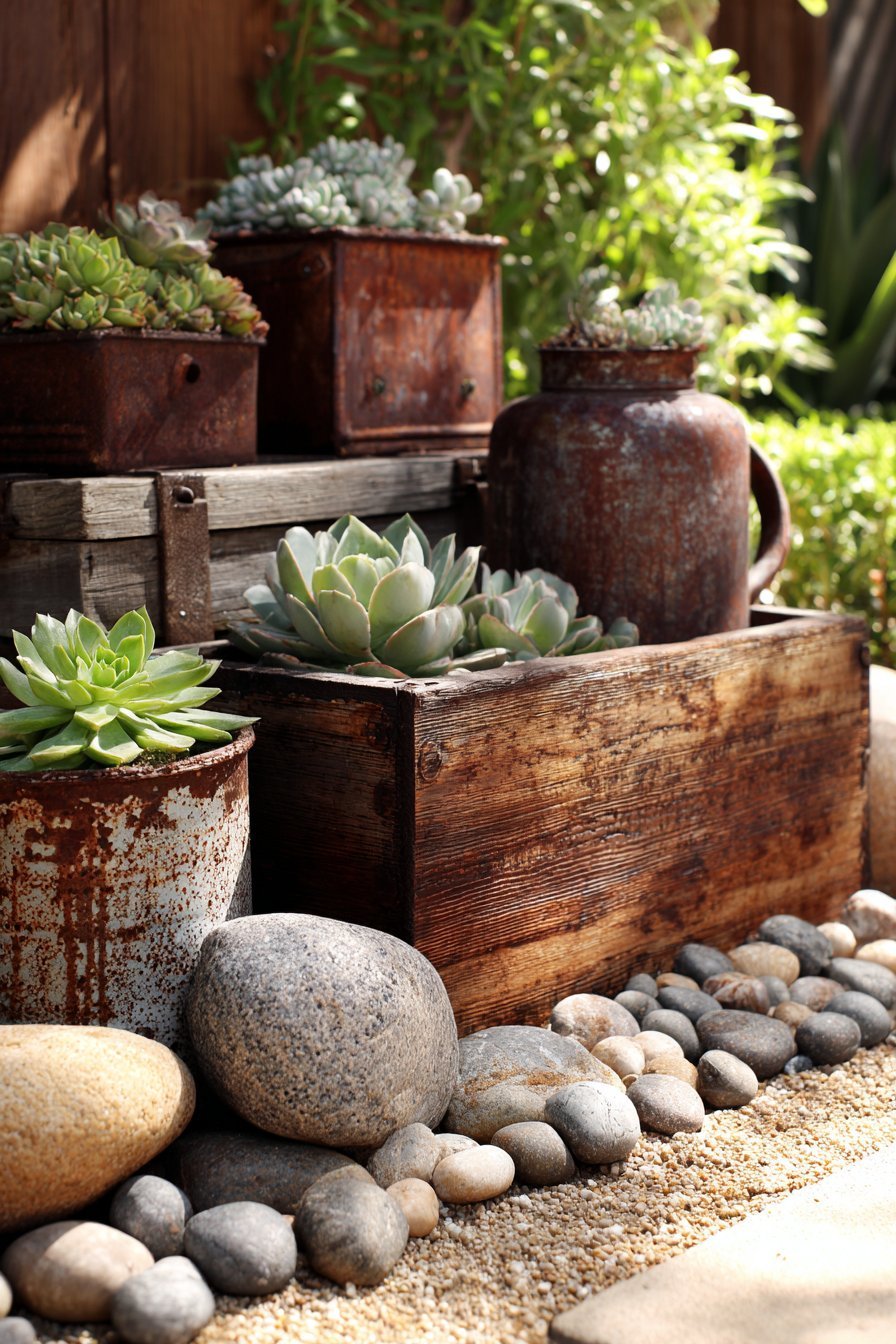
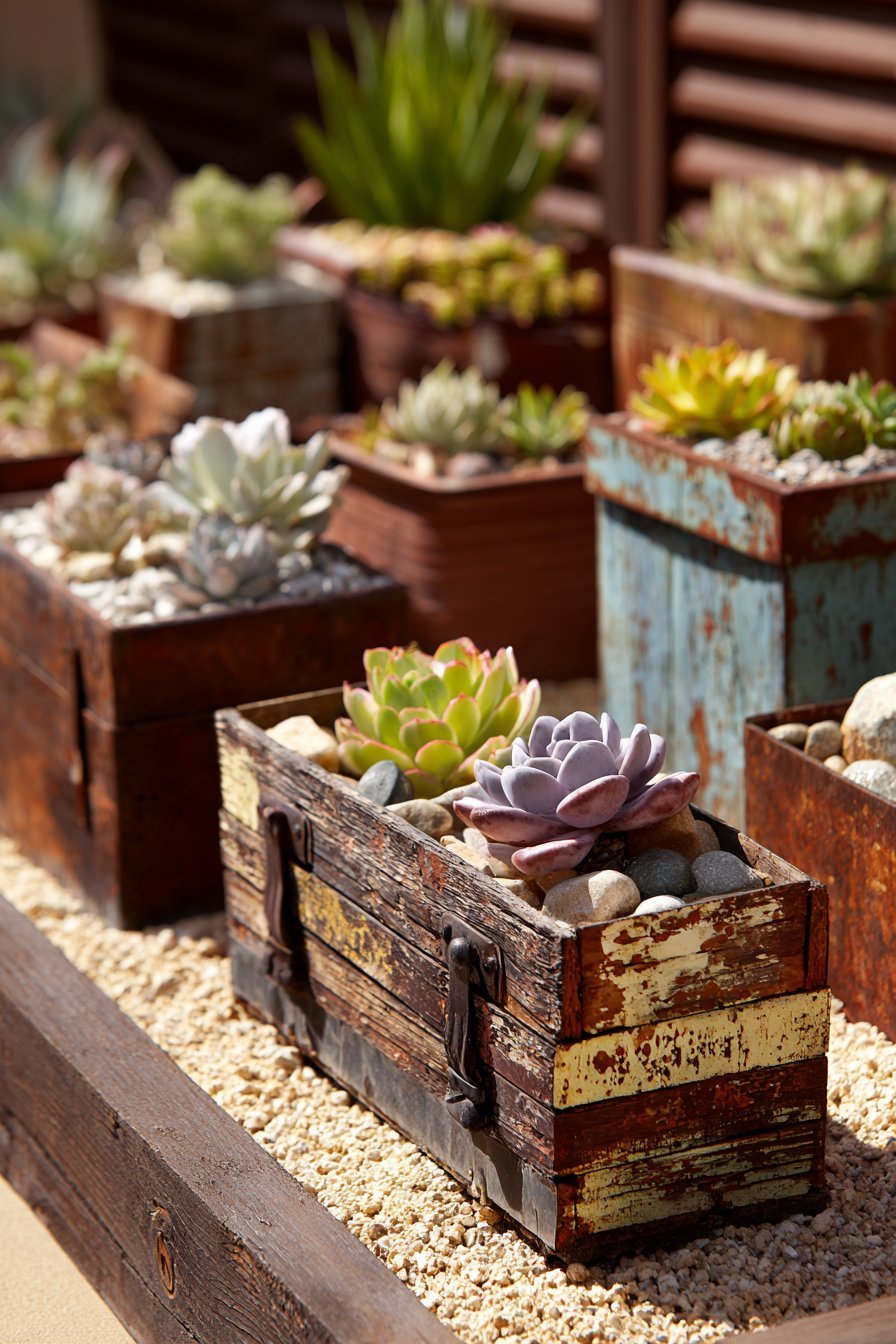
Mismatched vintage containers create an eclectic succulent display. Weathered wooden boxes, terra cotta pots with mineral deposits, and repurposed metal tins each contribute unique character. The varied containers prevent the display from looking too planned or formal.
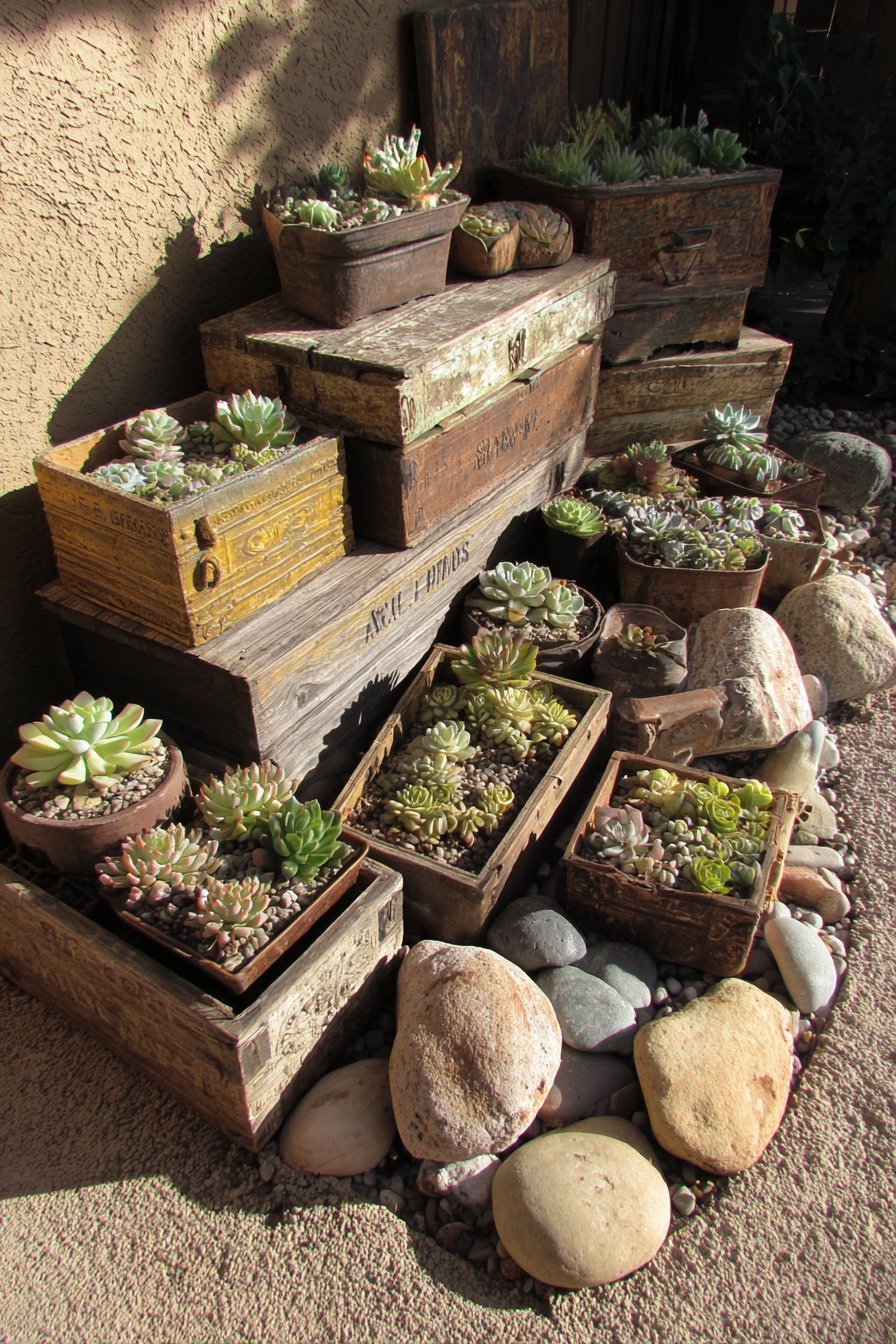
Drought-tolerant succulents show impressive texture variety. Smooth echeveria contrasts beautifully with fuzzy kalanchoe and spiky agave. The sculptural plant forms create living art that requires minimal maintenance. These hardy plants thrive on neglect rather than constant attention.
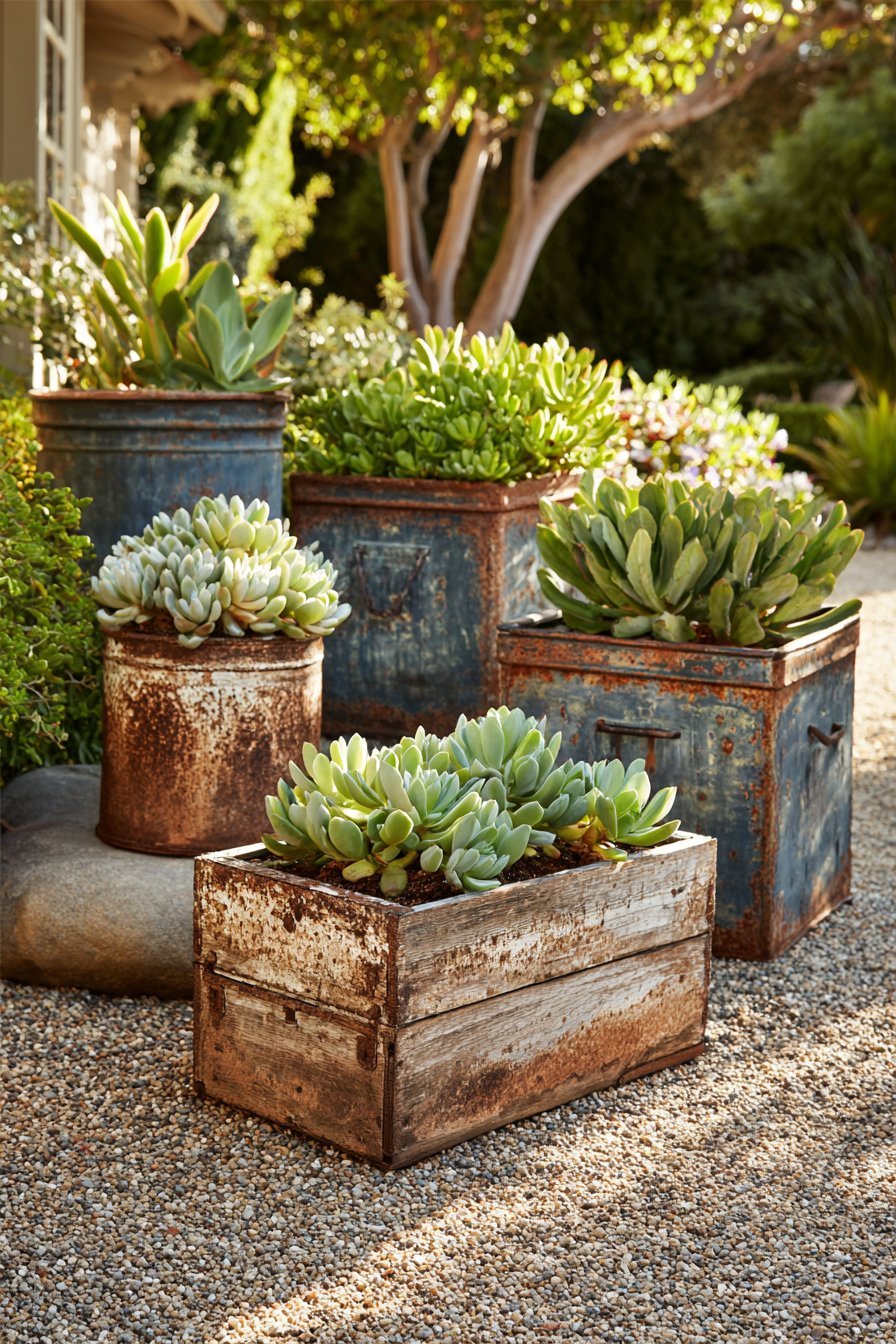
A small gravel courtyard area provides the perfect foundation for this collection. Larger decorative rocks add visual interest while supporting the desert aesthetic. The space requires minimal water, making it ideal for dry climates or busy homeowners.
Bright afternoon sunlight creates sharp shadows that emphasize sculptural forms. The container patinas become more pronounced in direct lighting. This low-water landscaping approach proves beautiful and practical for compact urban yards.
Key Design Tips:
- Collect varied containers over time for authentic, eclectic appearance
- Group succulents by water needs despite container differences
- Use gravel surfaces for excellent drainage and desert aesthetic
- Allow containers to develop natural patina rather than constant cleaning
- Position collections in full sun for healthiest succulent growth
- Add decorative rocks in complementary tones for compositional interest
14. Corner Breakfast Nook
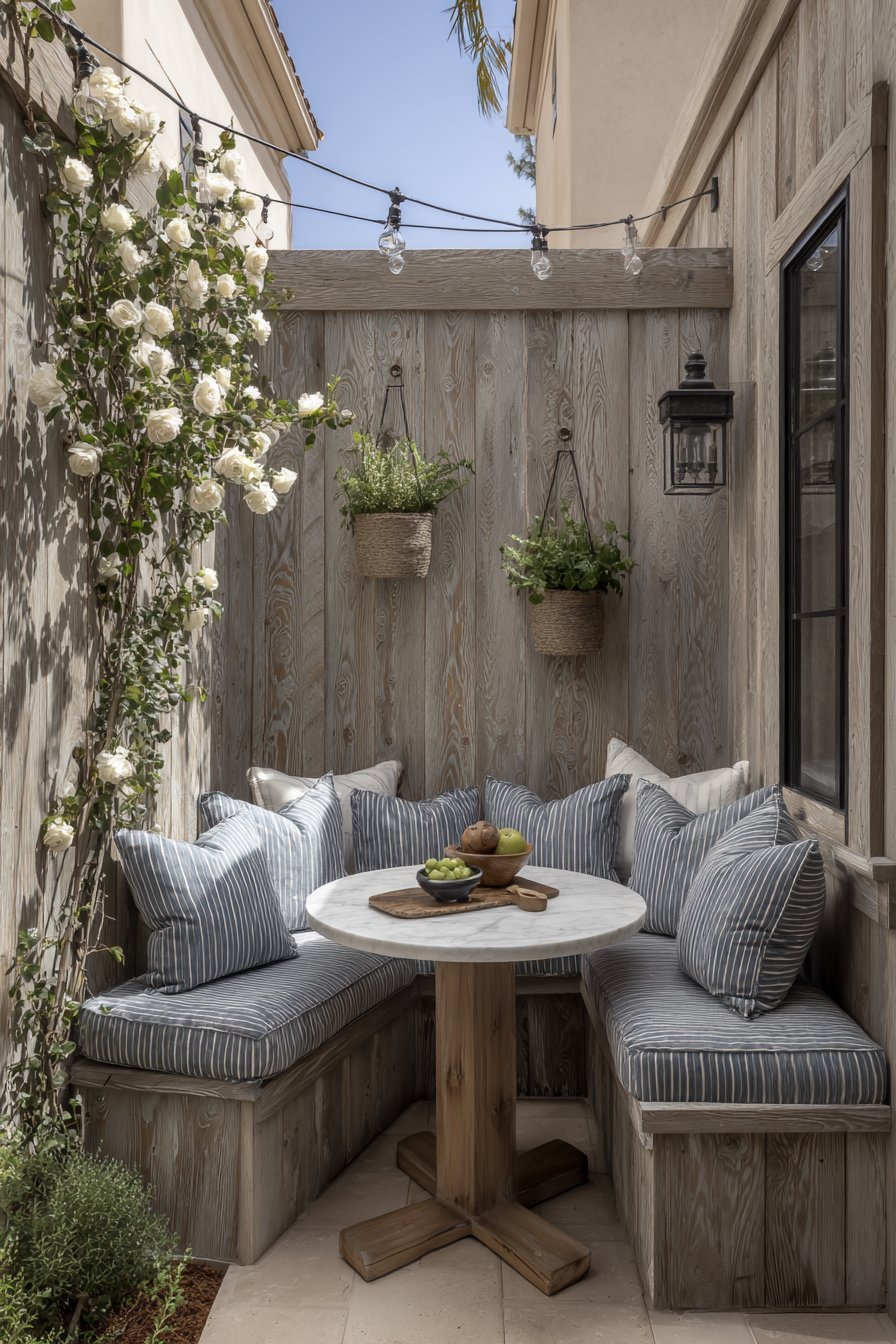
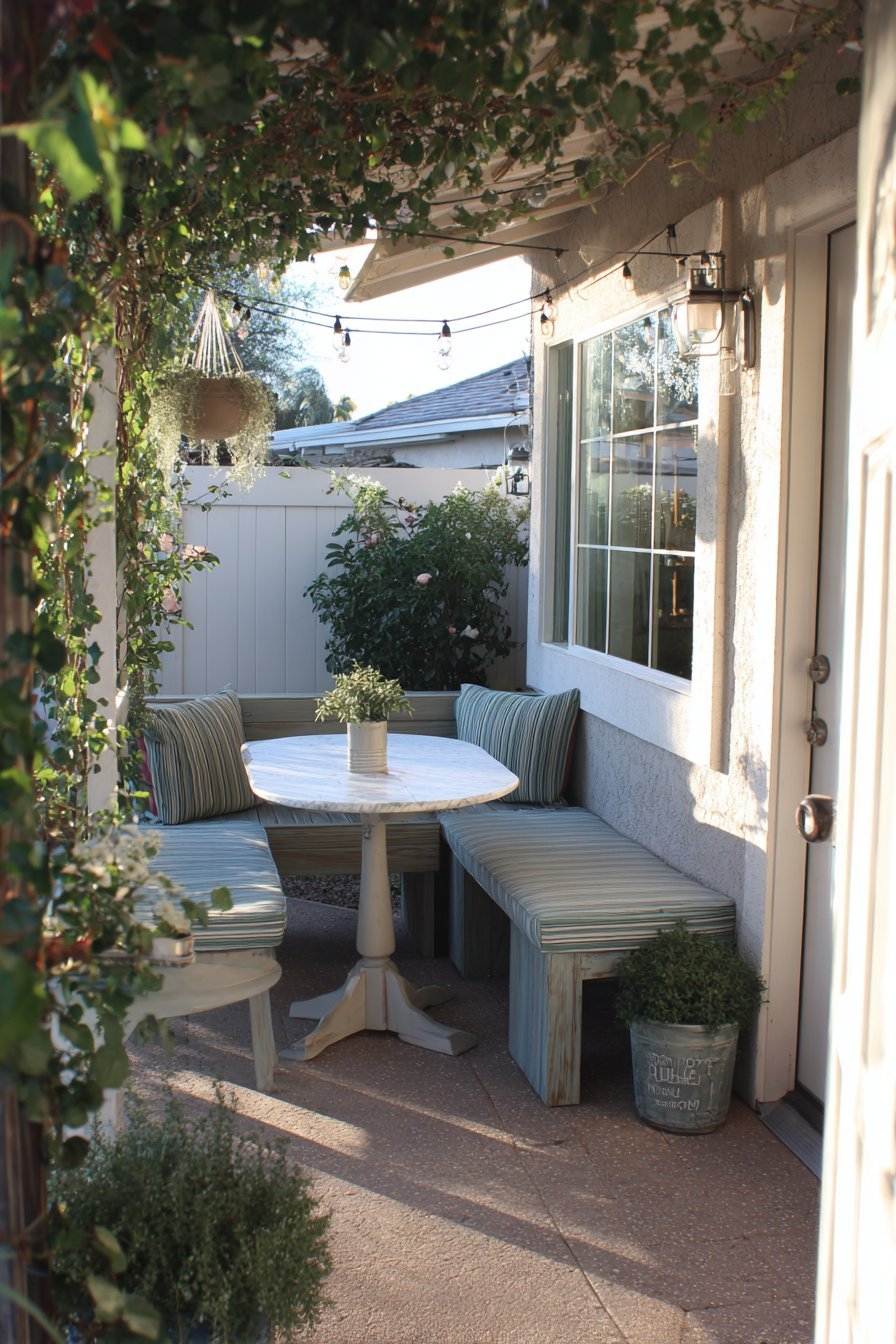
A built-in corner bench maximizes seating in an eight by eight foot space. Weathered wood plank construction shows natural aging that adds character. Outdoor cushions in striped marine-grade fabric provide comfort while resisting weather damage.
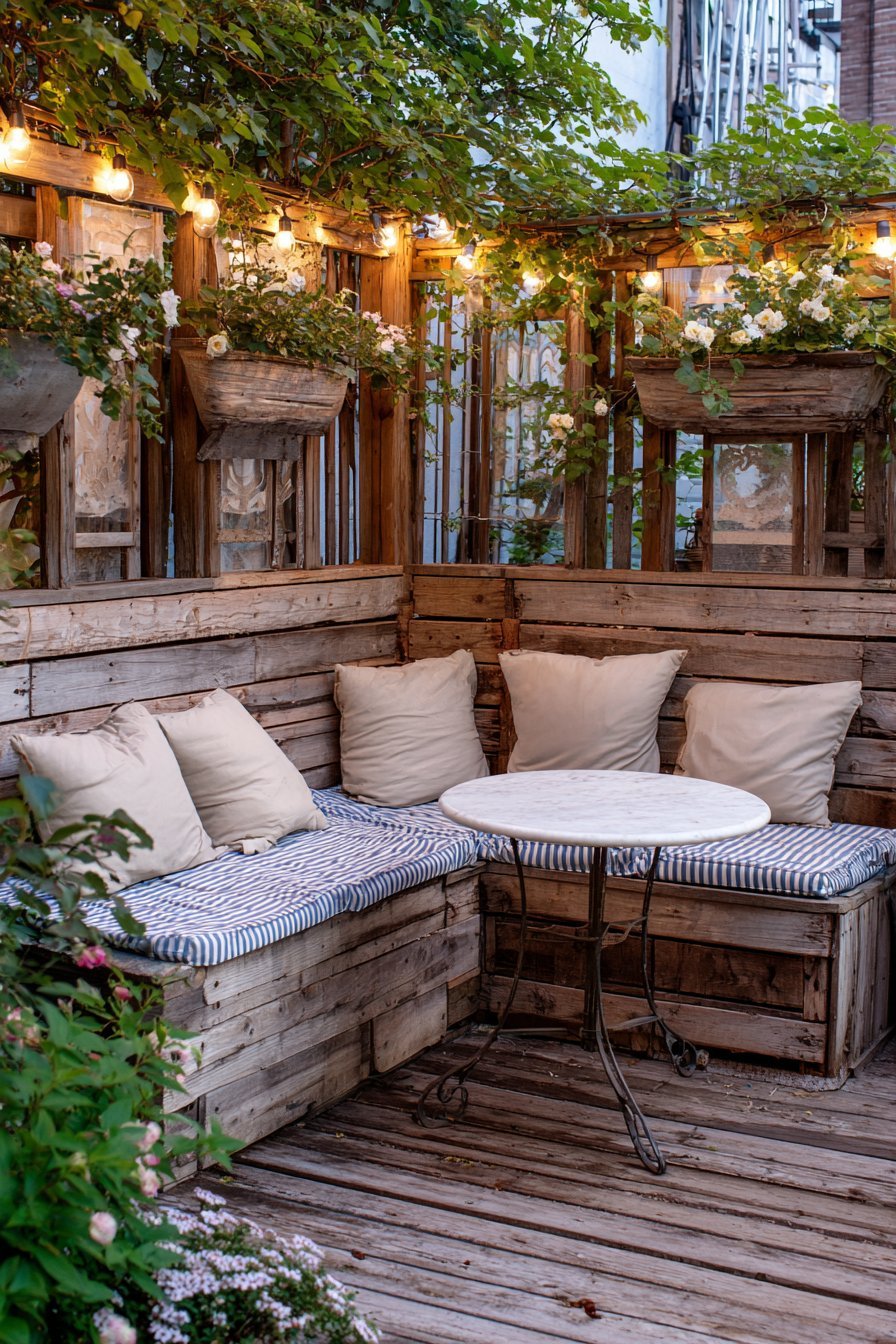
A small round bistro table with marble top fits perfectly in the L-shaped seating area. The intimate scale encourages conversation and lingering over morning coffee. Climbing roses on trellises surround the space with fragrance and seasonal color. Hanging baskets with trailing plants add vertical interest and softness.
Cafe-style string lights create intimate overhead lighting for evening meals. The warm glow transforms the breakfast nook into a romantic dinner spot. Morning golden hour light floods the cozy eating area naturally. Textures of wood and fabric become more pronounced in angled sunlight.
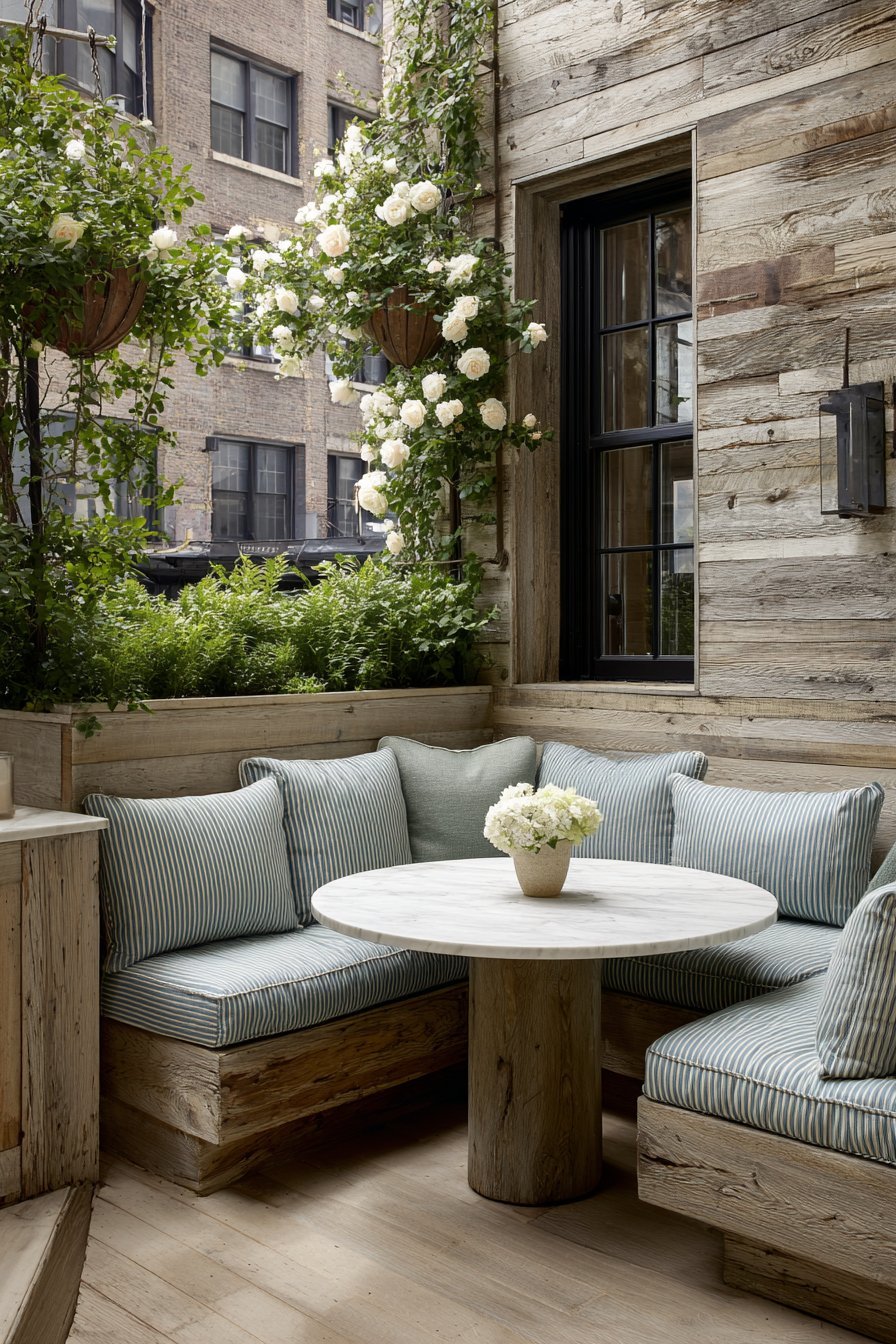
The built-in seating solution provides storage beneath cushions for outdoor dining accessories. This efficient design eliminates the need for separate furniture pieces. The garden room feeling makes outdoor dining a daily pleasure rather than special occasion activity.
Key Design Tips:
- Build corner benches to maximize seating capacity in small spaces
- Include hidden storage beneath bench seating for dining accessories
- Use marine-grade fabrics for cushions that resist weather and fading
- Plant climbing roses on trellises for fragrance and seasonal beauty
- Add cafe lighting for ambiance that extends usability into evenings
- Choose round tables that improve traffic flow in tight spaces
15. Compact Garden Workshop
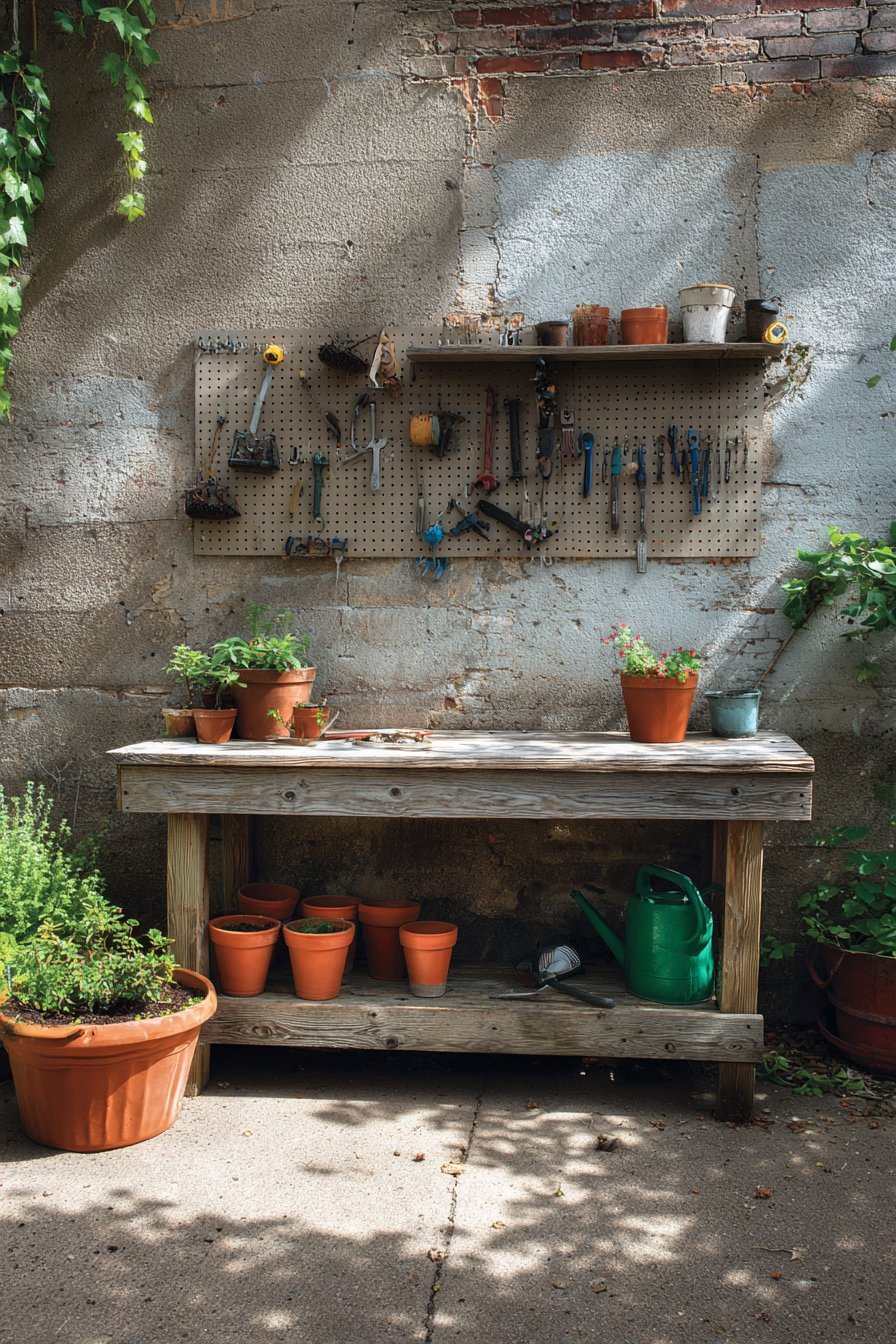
A potting bench made from reclaimed lumber provides essential workspace in just four feet of width. Natural weathering and visible nail holes add vintage character. Wall-mounted tool storage keeps essential implements organized and accessible without consuming floor space.
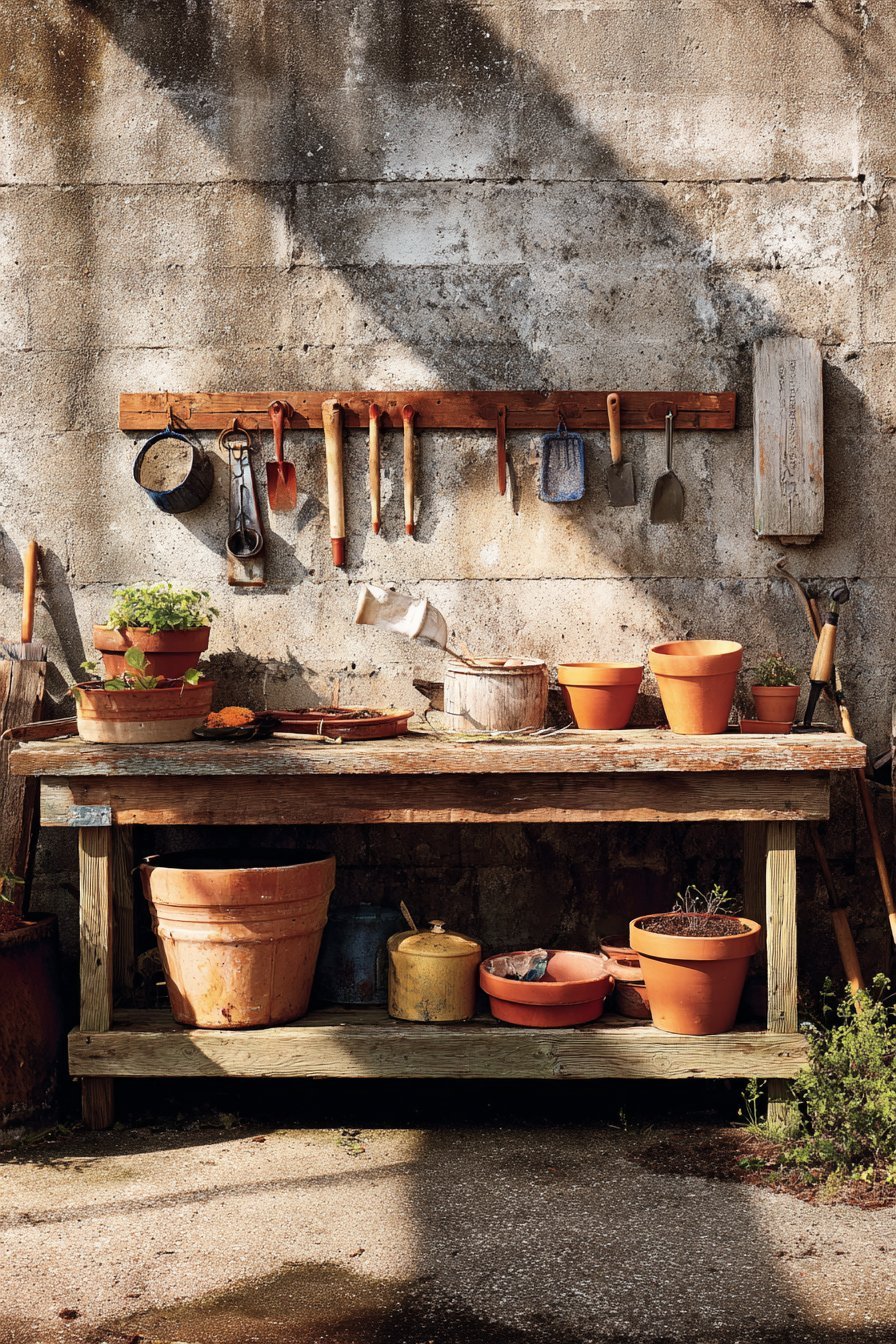
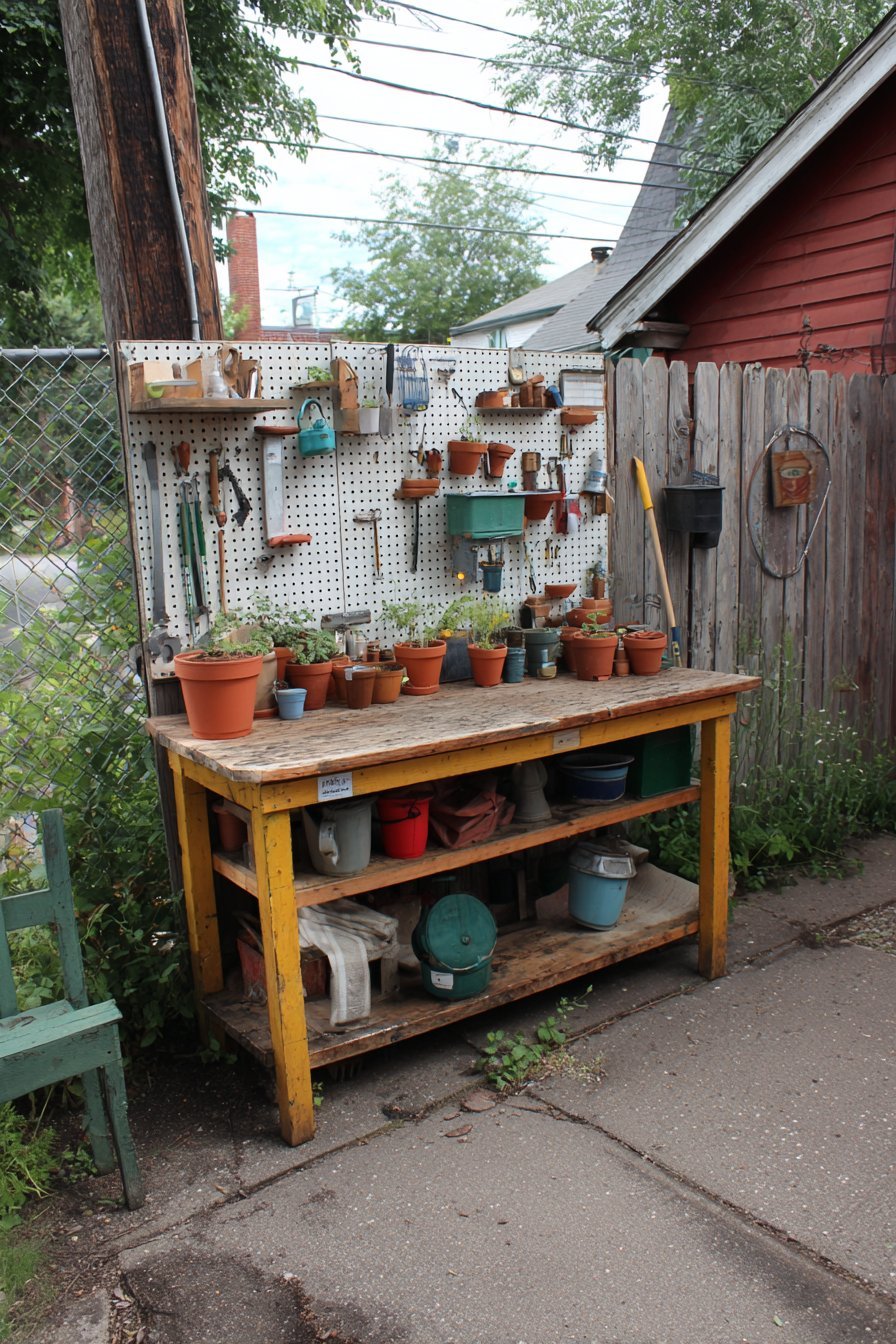
A small pegboard displays hand tools at eye level for easy identification. Shelves below hold terra cotta pots and garden supplies in neat organization. The concrete slab foundation shows age through subtle cracks and staining. These imperfections add authenticity rather than detracting from functionality.
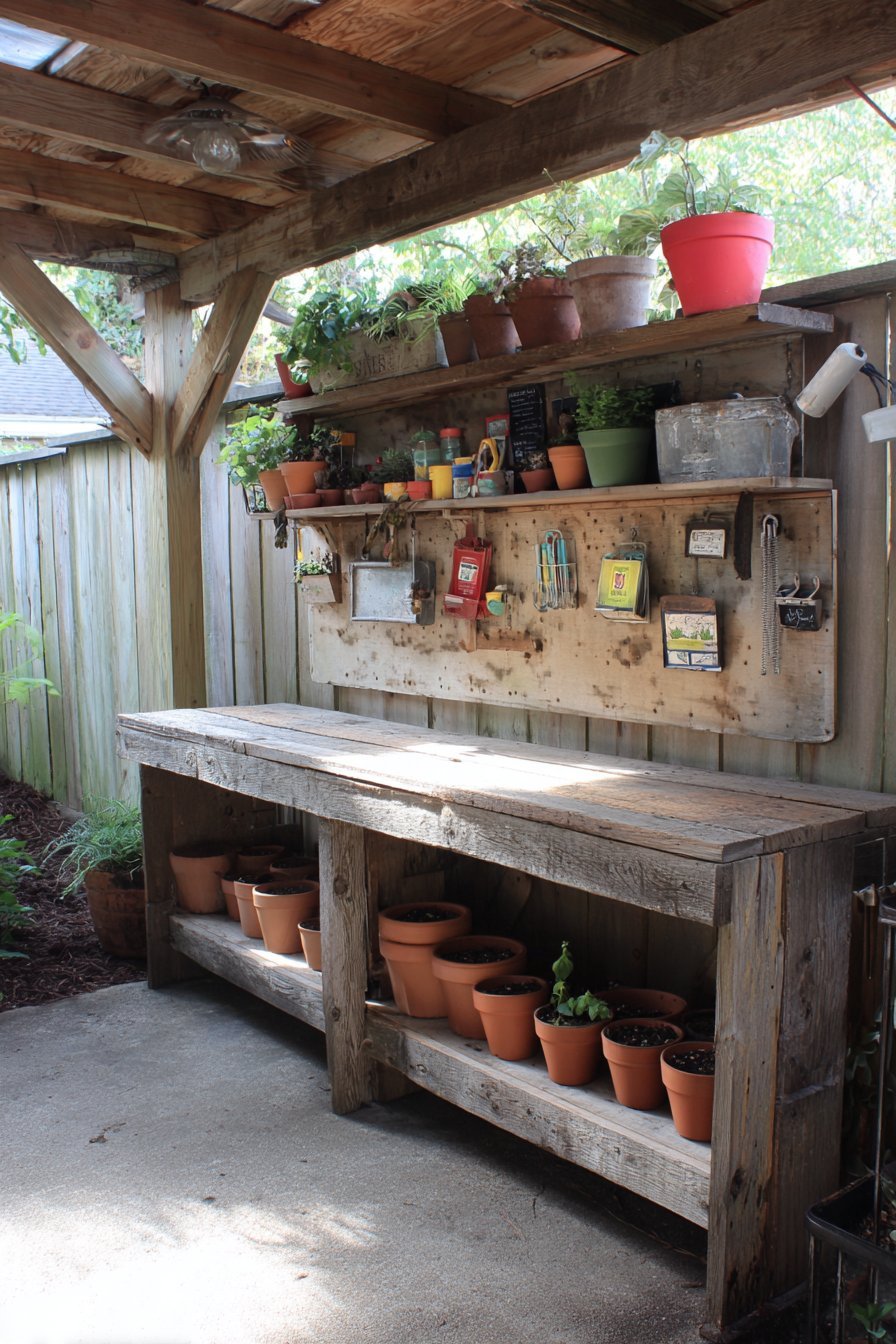
A small work light provides task illumination for evening or overcast day projects. Natural afternoon light illuminates the functional workspace during most working hours. The practical organization allows efficient gardening task completion without searching for misplaced tools.
This dedicated garden work zone demonstrates that narrow side yards serve important functions. Proper planning transforms overlooked spaces into valuable utility areas. The vintage aesthetic proves that functional spaces can maintain visual appeal.
Key Design Tips:
- Build potting benches at a comfortable working height to prevent back strain
- Mount pegboards for tool storage that keeps implements visible and organized
- Include shelving below work surfaces for supply storage and accessibility
- Use reclaimed lumber for instant character and environmental responsibility
- Install task lighting for evening or cloudy day work sessions
- Position workshops in covered or partially shaded locations for year-round use
16. Native Pollinator Garden
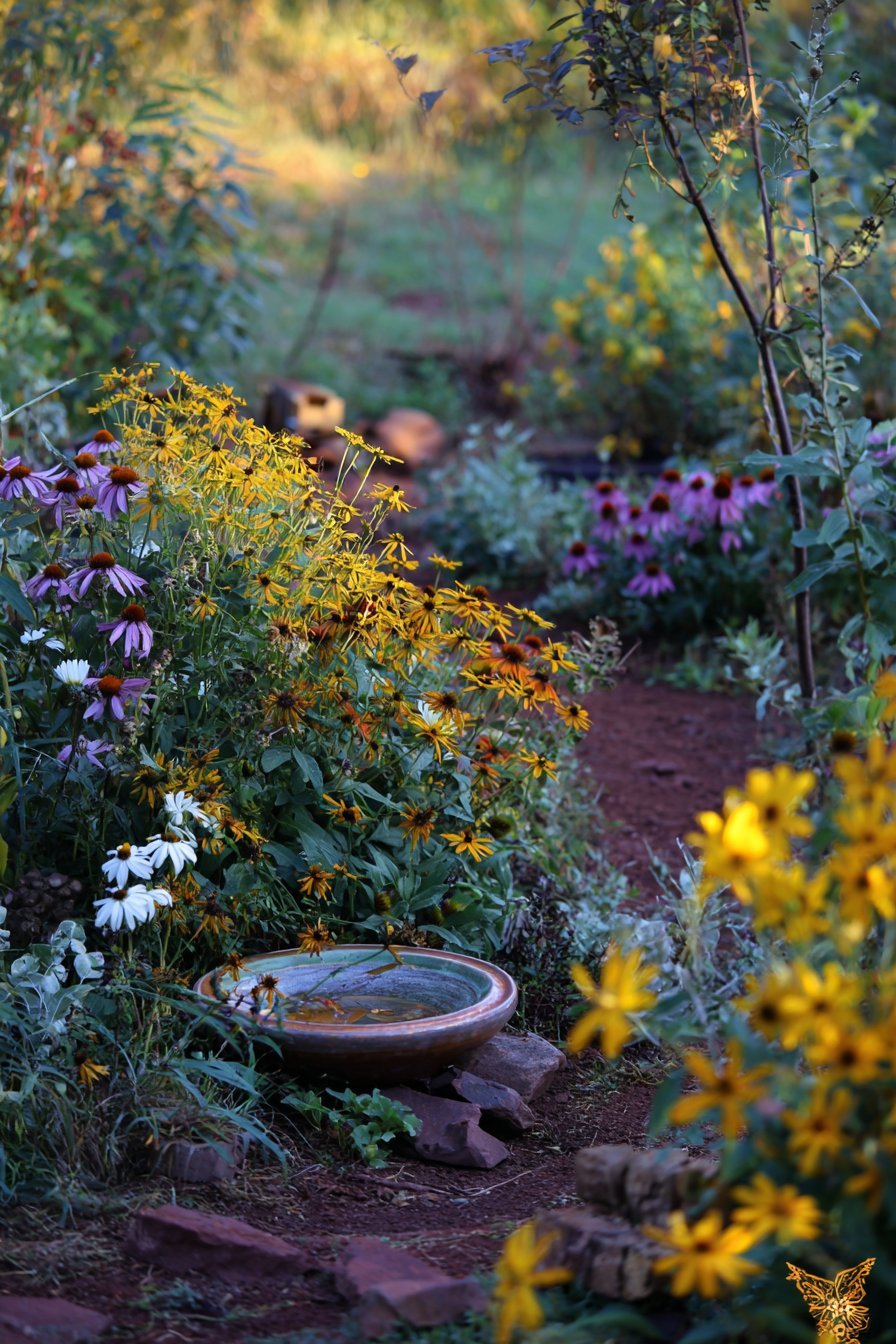
Purple coneflower, black-eyed susans, and bee balm create a thriving ecosystem. The ten by ten foot garden packs impressive biodiversity into compact space. Various bloom stages ensure continuous nectar sources throughout growing seasons. Native wildflowers require less water and maintenance than exotic alternatives.
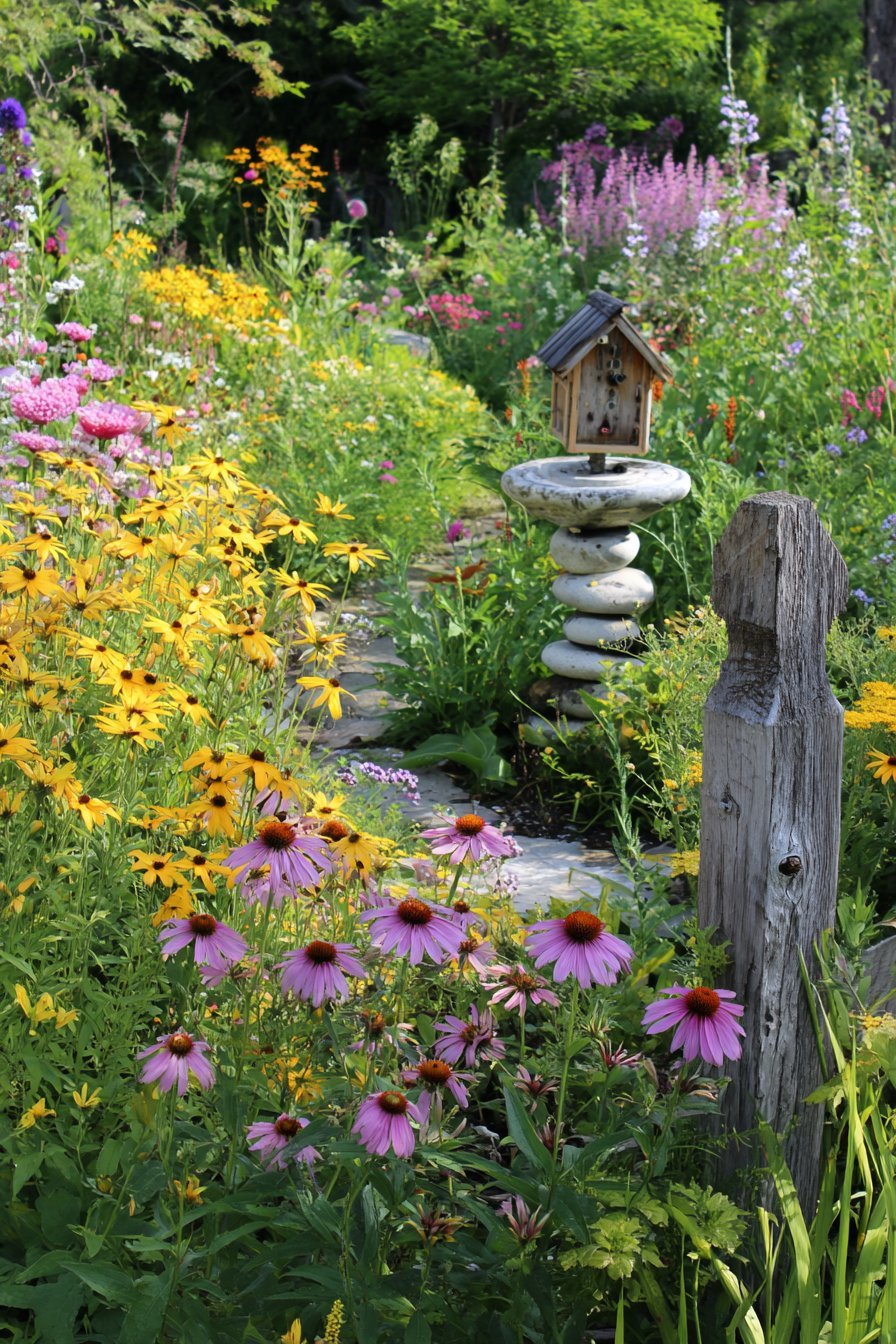
A small birdbath made from stacked stones and a ceramic basin provides essential water. Birds, bees, and butterflies visit regularly throughout the day. Natural mulch pathways allow access without compacting soil or crushing plants. A simple wooden bee hotel mounted on the fence provides nesting habitat.
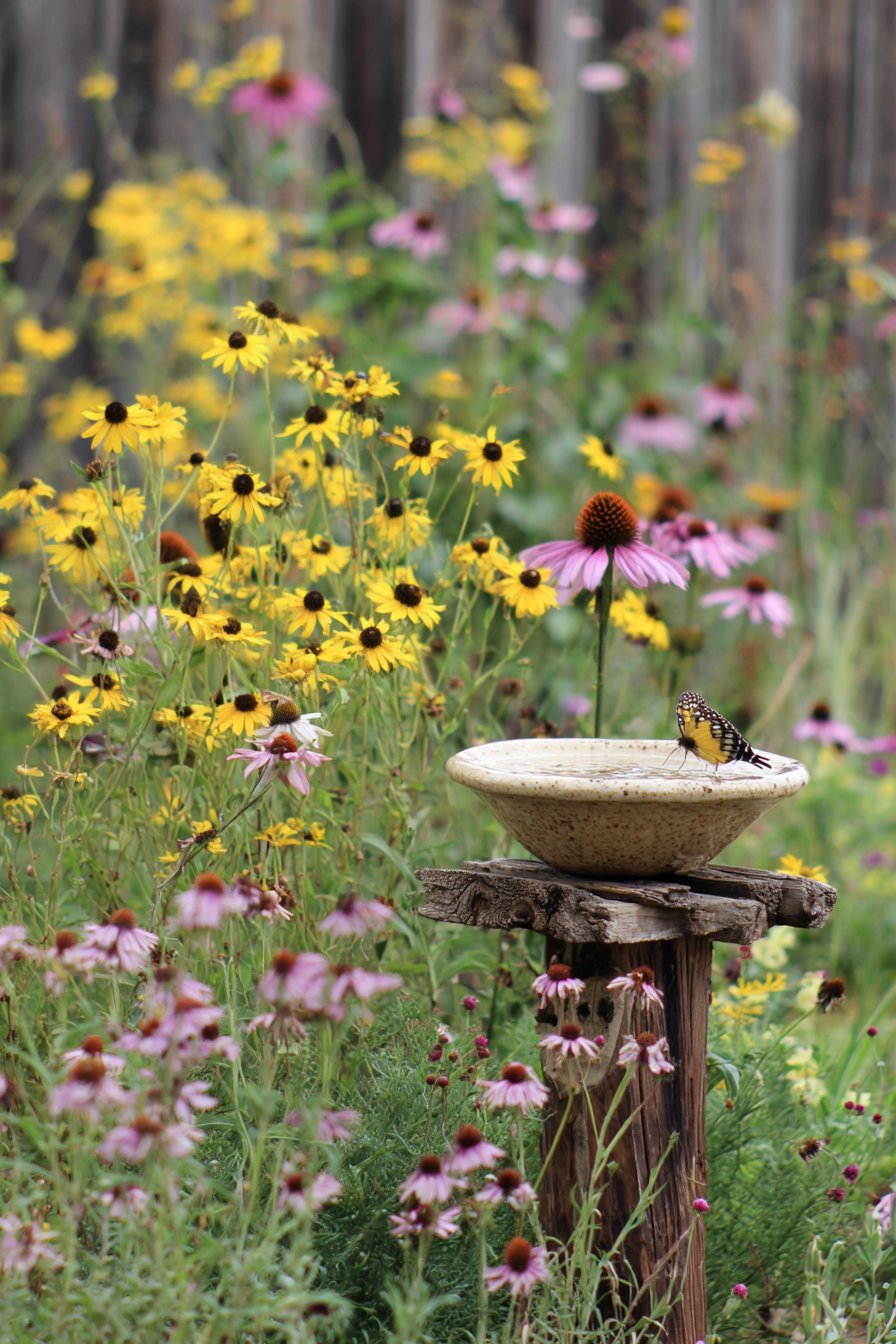
Late morning light catches pollinators in active feeding and pollination work. The living ecosystem creates constant movement and interest. Close-up observation reveals the incredible biodiversity supported by thoughtful native plantings. This garden provides ecological value alongside ornamental beauty.
The environmental benefits extend far beyond the property boundaries. Native plants support local insect populations that birds depend upon. This creates a positive ripple effect throughout the neighborhood ecosystem. Small gardens collectively make significant environmental contributions.

Key Design Tips:
- Choose native wildflowers adapted to local climate and soil conditions
- Plant in groups for visual impact and easier pollinator location
- Include water sources for birds, bees, and beneficial insects
- Install bee hotels to provide nesting habitat for solitary species
- Allow natural mulch to remain for ground-nesting insect protection
- Avoid pesticides that harm the beneficial insects you attract
17. Dedicated Yoga Platform

An eight by ten foot wooden deck provides dedicated wellness space. Composite decking in natural gray shows subtle grain texture without maintenance demands. The modest size accommodates various yoga practices without excess space that feels empty.

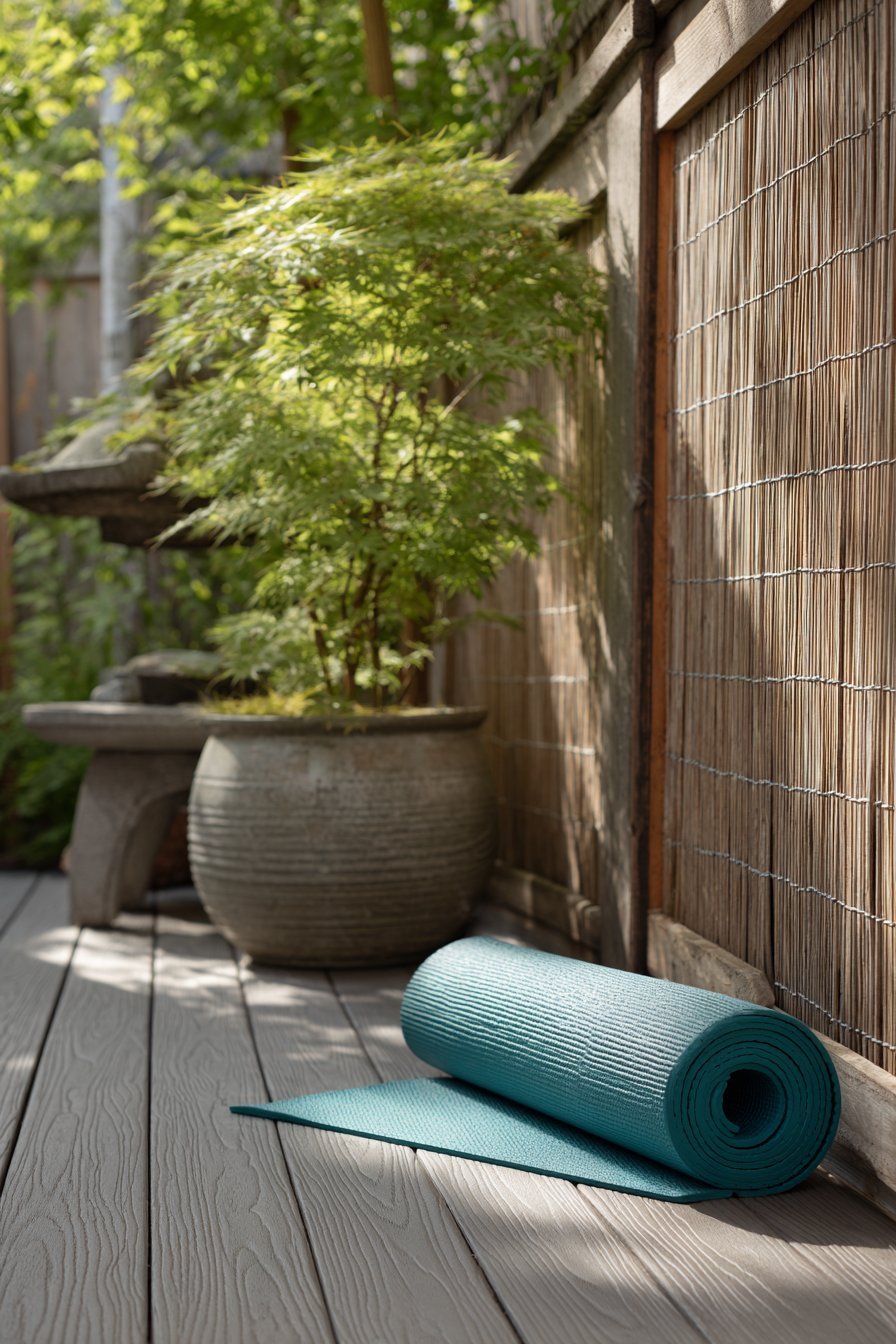
A rolled yoga mat in muted teal leans against the fence when not in use. Minimal decoration maintains the meditative atmosphere essential for practice. A small fountain provides white noise that masks urban sounds and aids concentration. A potted Japanese maple provides dappled shade and seasonal interest.
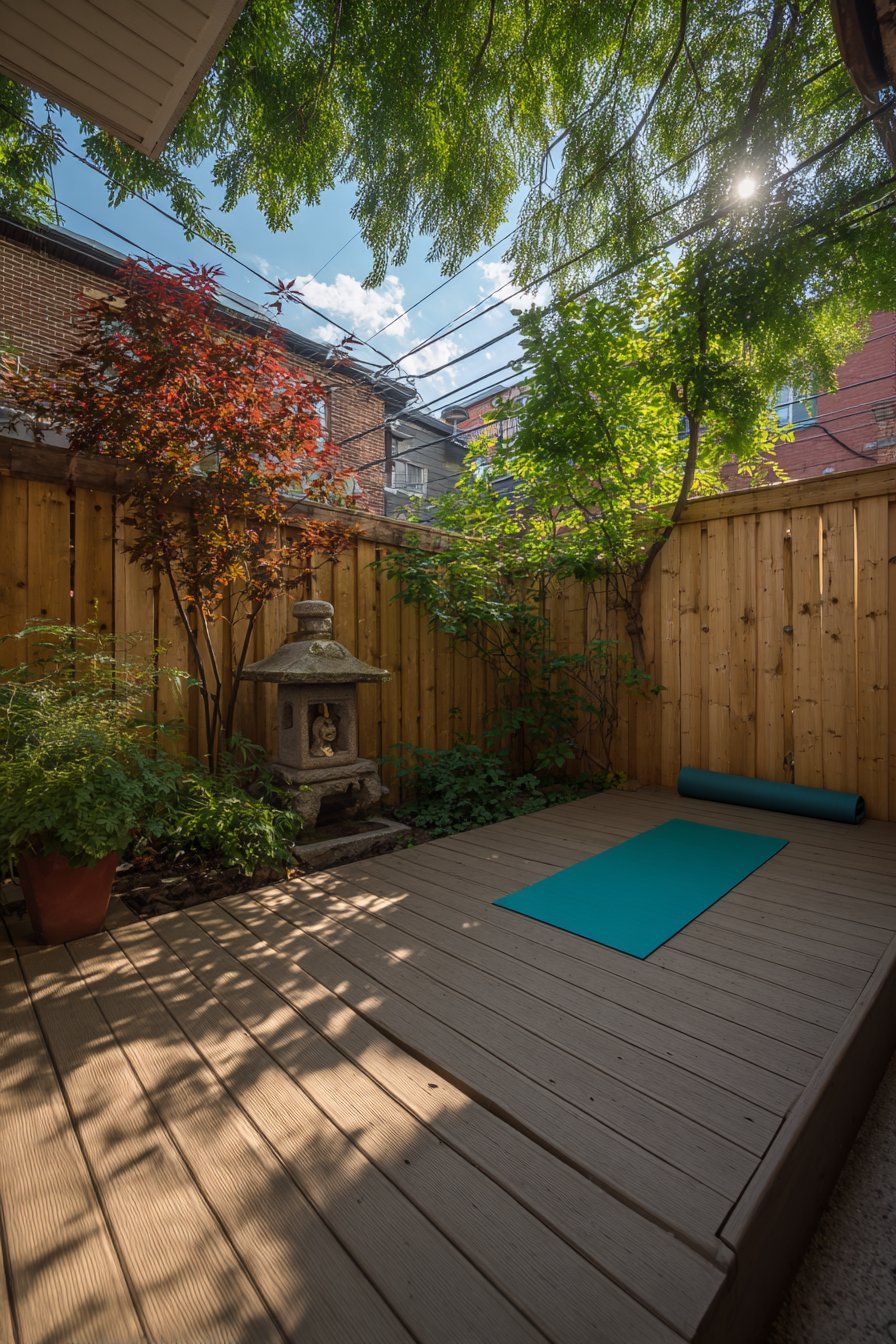
Privacy screening made from bamboo panels creates necessary seclusion for unself-conscious practice. Early morning light creates calm atmosphere with long soft shadows. The dedicated space removes barriers to consistent practice by eliminating setup time and distractions.
This wellness area demonstrates that small yards accommodate meaningful personal sanctuary spaces. Minimal investment yields significant mental and physical health benefits. The separate zone creates psychological distinction between everyday activities and mindful practice.
Key Design Tips:
- Use composite materials for splinter-free surfaces and minimal maintenance
- Size platforms to accommodate full range of practice movements
- Install water features for white noise that enhances concentration
- Add deciduous trees for seasonal shade that allows winter sun
- Create privacy screening that permits air circulation and filtered light
- Position platforms to receive optimal morning light for energizing practices
18. Vertical Container Display
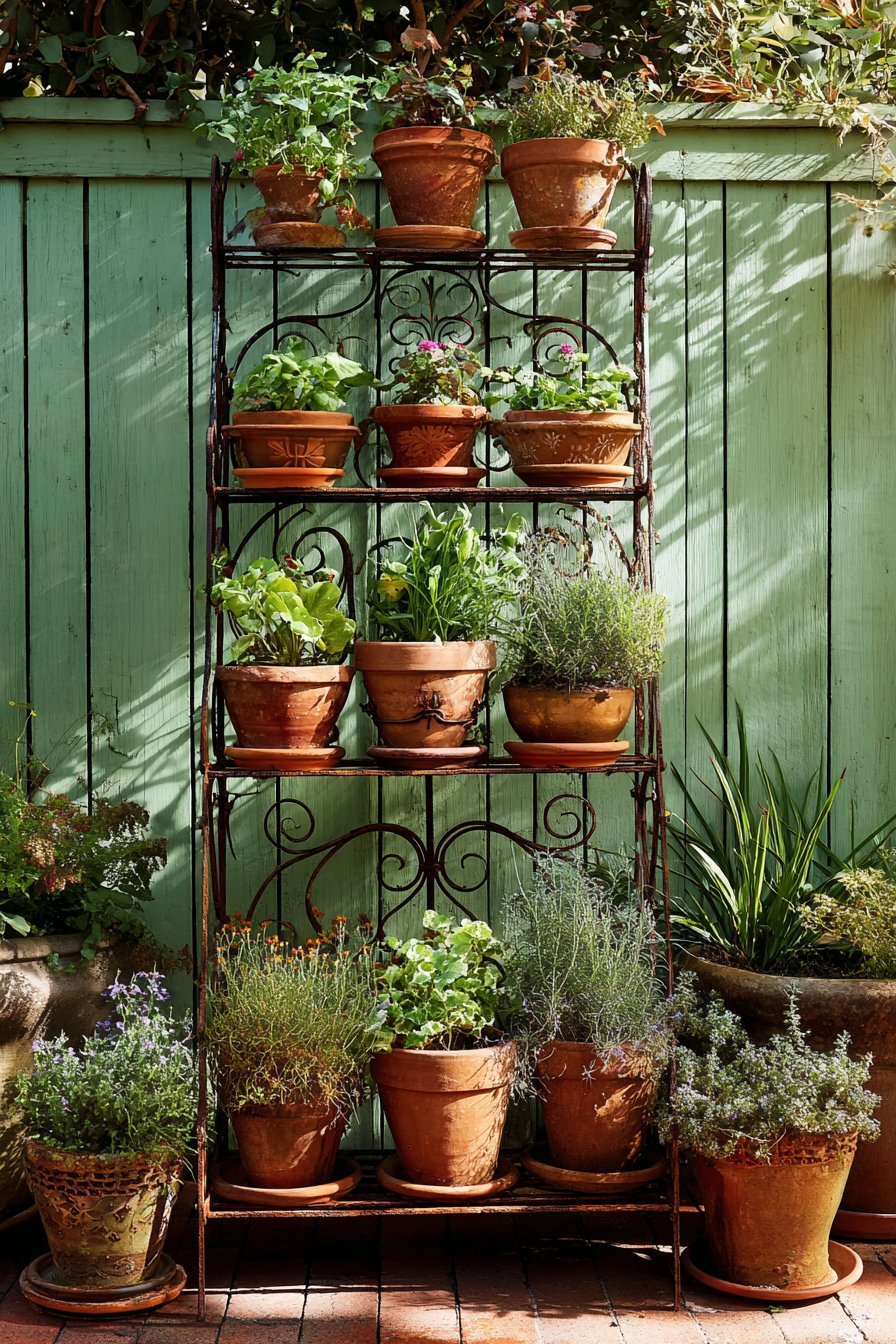
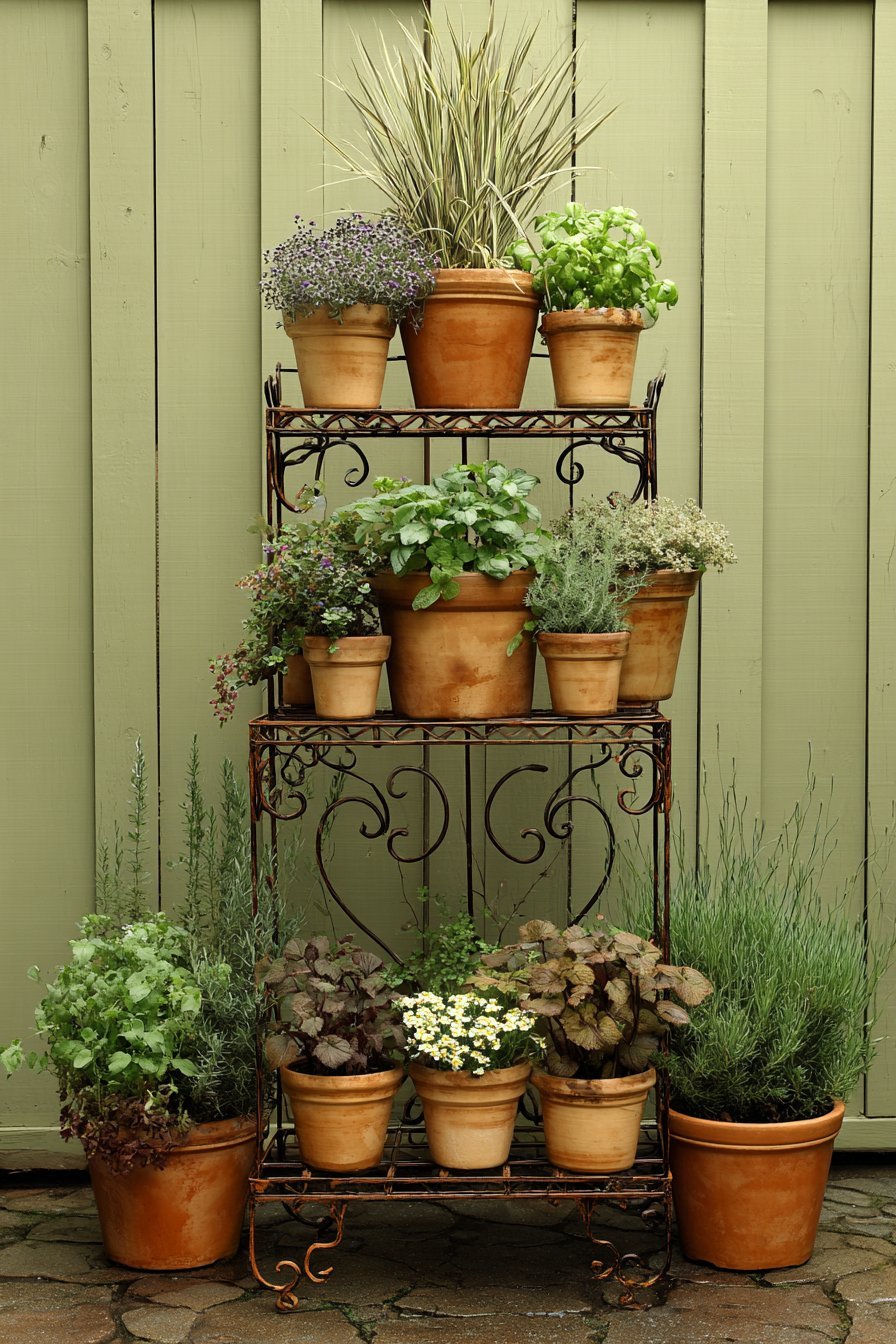
A tiered plant stand made from wrought iron maximizes growing space. Decorative scrollwork shows rust patina that adds vintage charm. The vertical display holds twelve terra cotta pots in graduated sizes without consuming floor space.
The compact footprint of just three by four feet provides substantial growing capacity. Herbs, annual flowers, and trailing plants create a living vertical garden. Different pot sizes accommodate varied plant root requirements while creating visual interest through asymmetry.
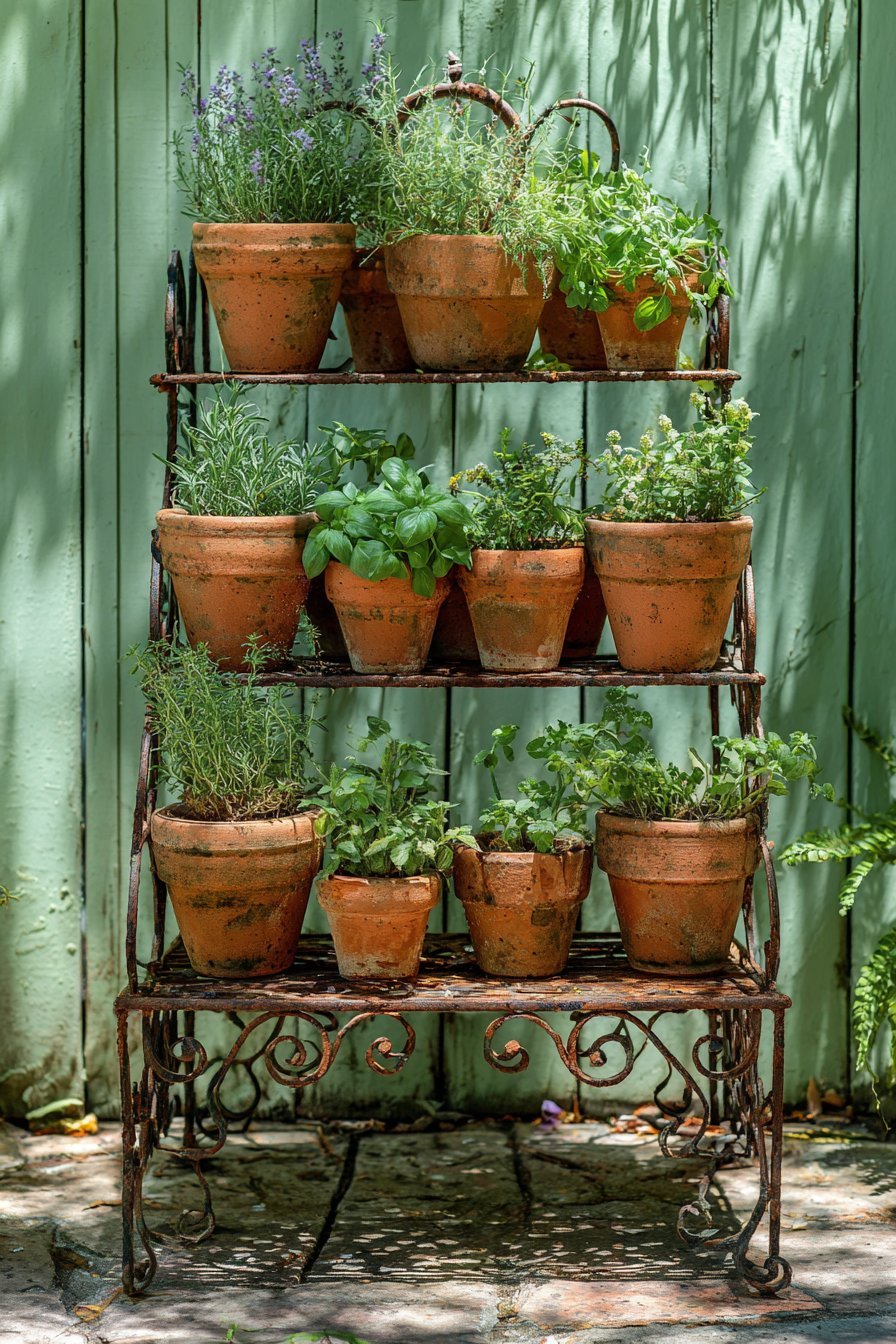
A fence painted in soft sage green provides attractive backdrop for the display. The neutral color allows plant colors and textures to take center stage. Afternoon light creates dimensional shadows through the ornate stand structure. Varied foliage textures and terracotta colors appear more vivid in direct sunlight.
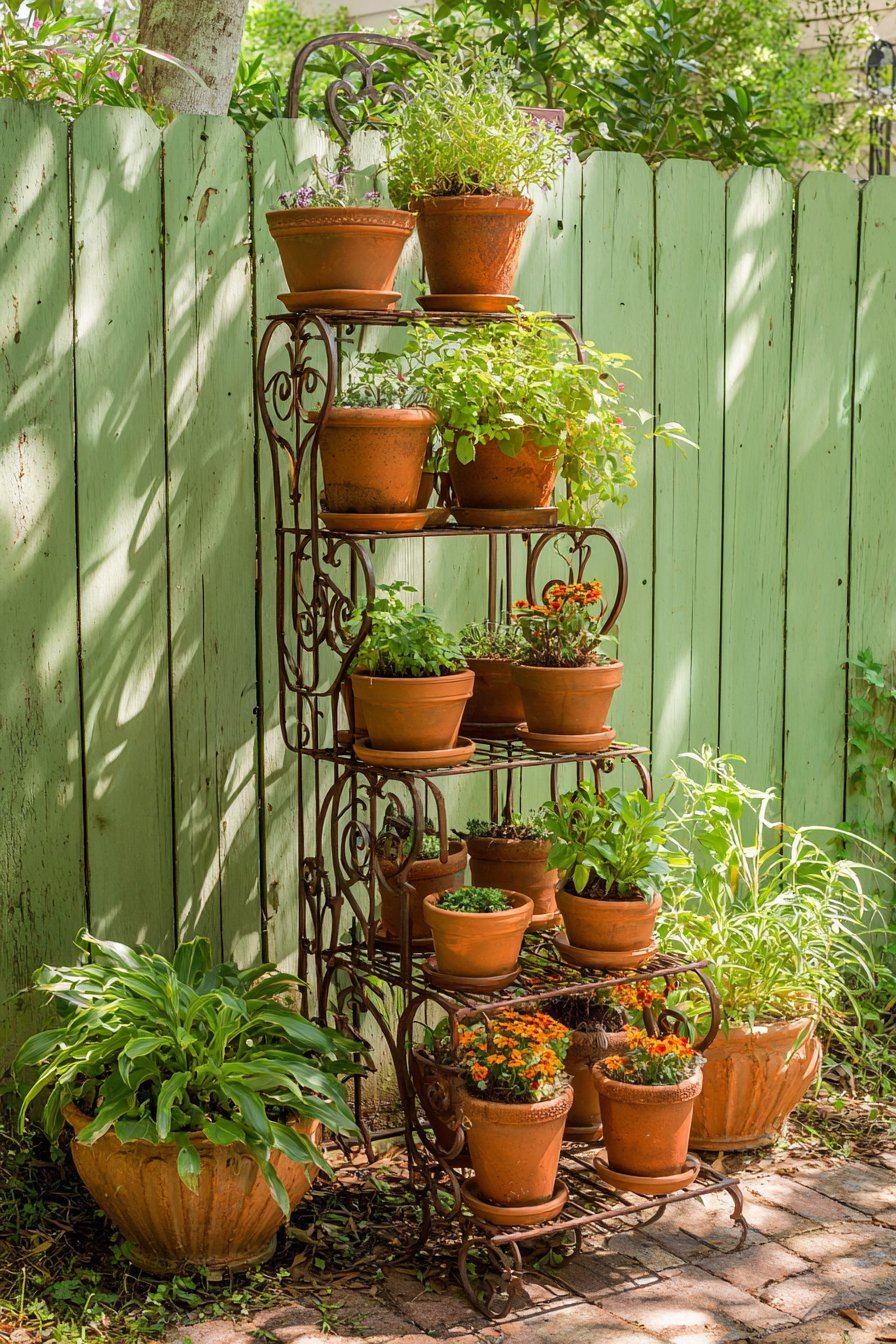
This vertical gardening solution proves ideal for tiny urban yards and rental properties. The portable display moves easily to follow sun patterns or accommodate other activities. Maximum planting density occurs through creative vertical stacking rather than horizontal expansion.
Key Design Tips:
- Choose sturdy metal stands that support considerable weight when pots are watered
- Arrange pots by size with largest at bottom for visual stability
- Paint background fences in neutral tones that showcase plantings
- Group plants by similar water and sunlight requirements on each tier
- Allow metal stands to develop natural rust patina for vintage character
- Position vertical displays to receive adequate sunlight for the chosen plants
19. Attractive Storage Shed
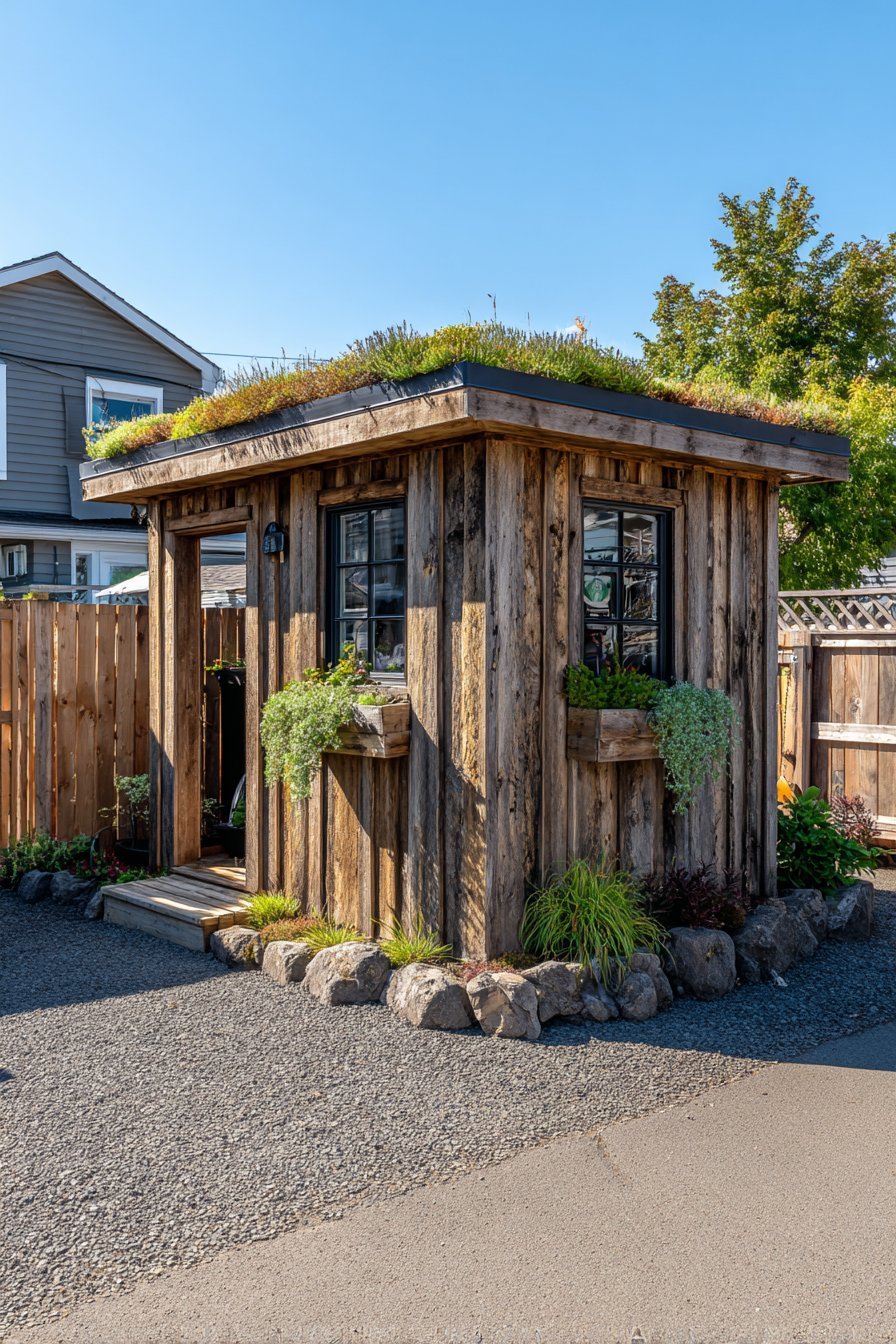
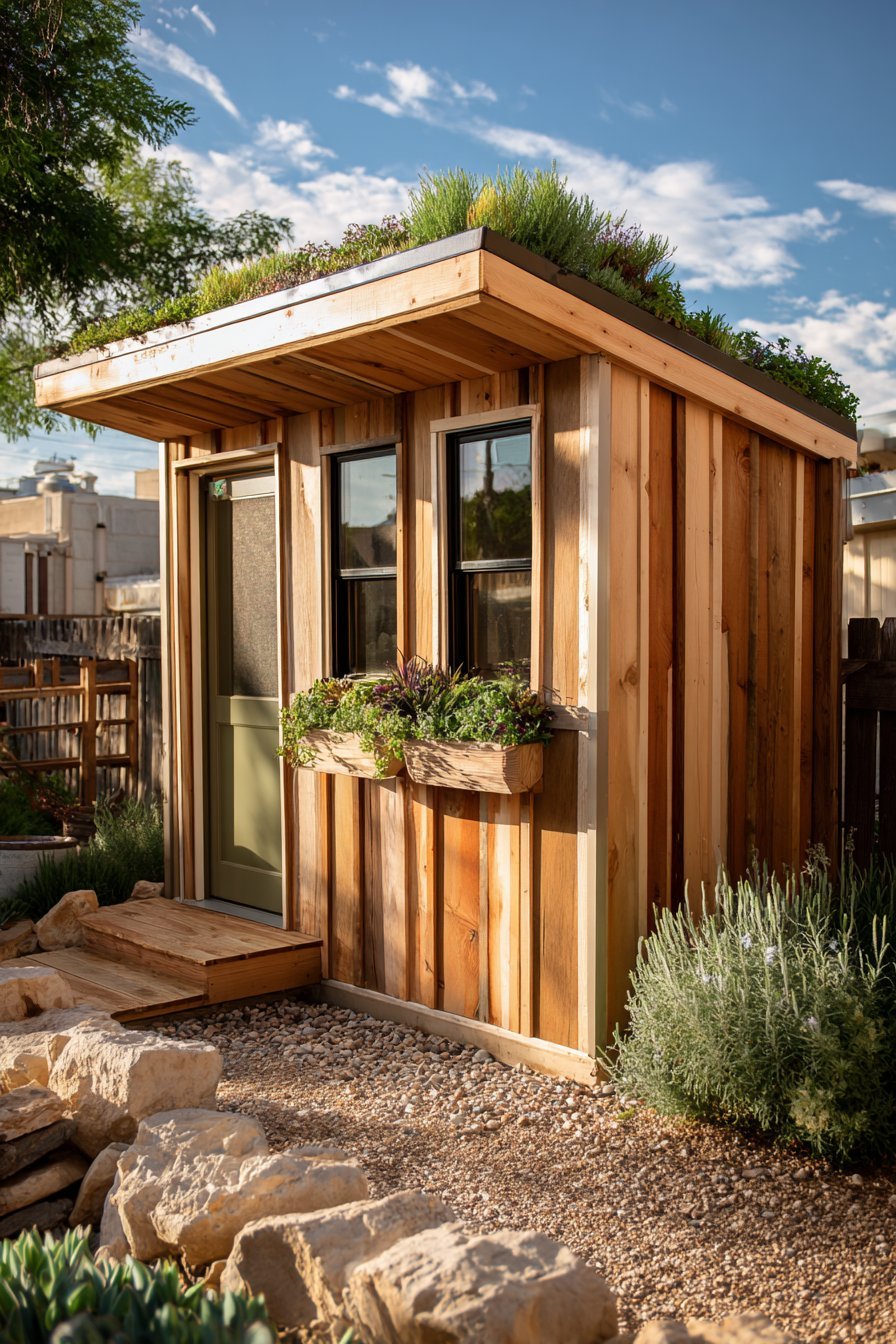
A four by six foot cedar shed provides essential storage without overwhelming small yards. Board and batten siding in natural finish shows weathering and color variations. A green roof planted with sedums adds visual interest while providing insulation benefits.
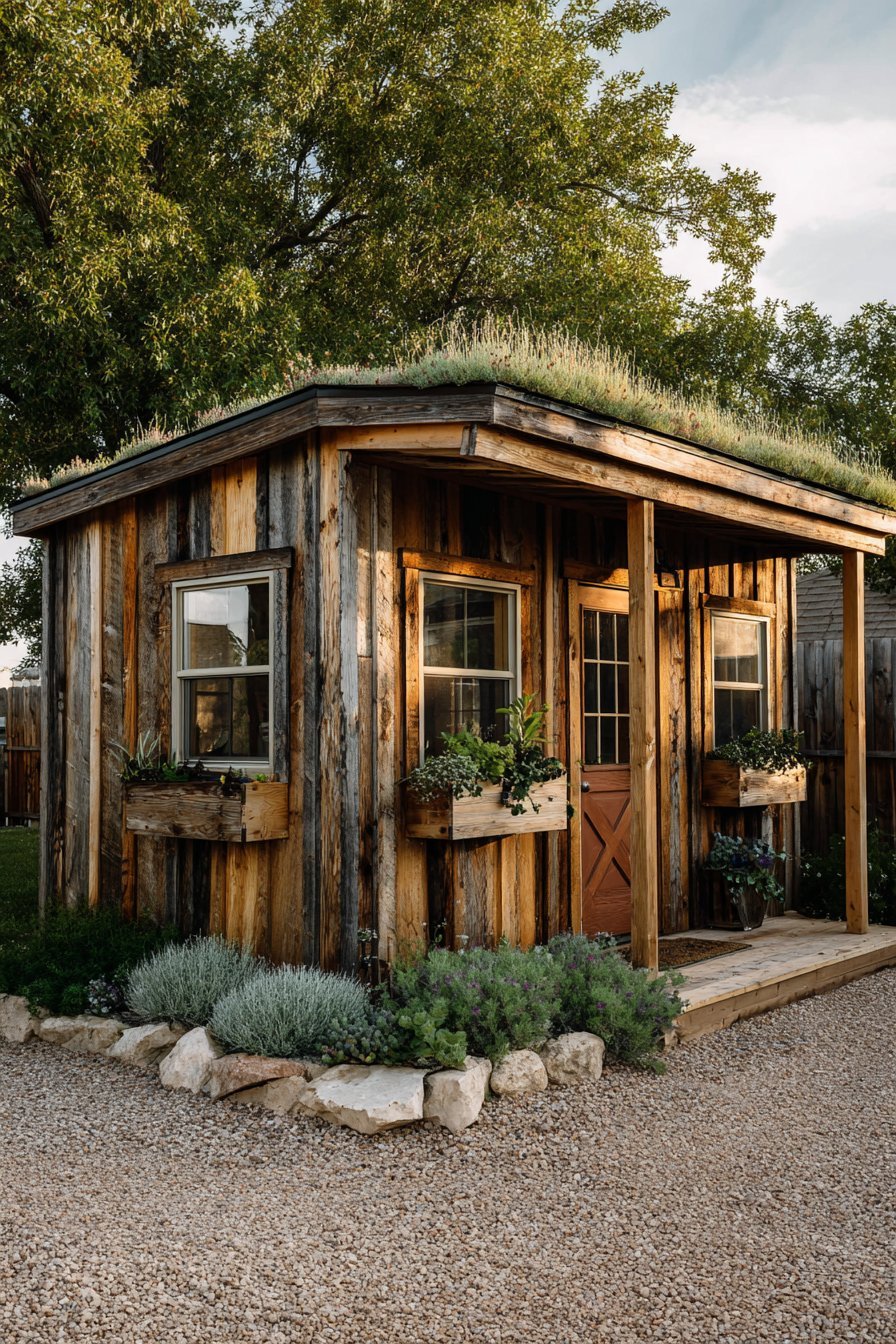
Window boxes with trailing plants soften the utilitarian structure’s appearance. A small covered porch area provides convenient access for frequently used tools. Gravel base with natural stone edging integrates the shed into landscape design rather than appearing as afterthought.
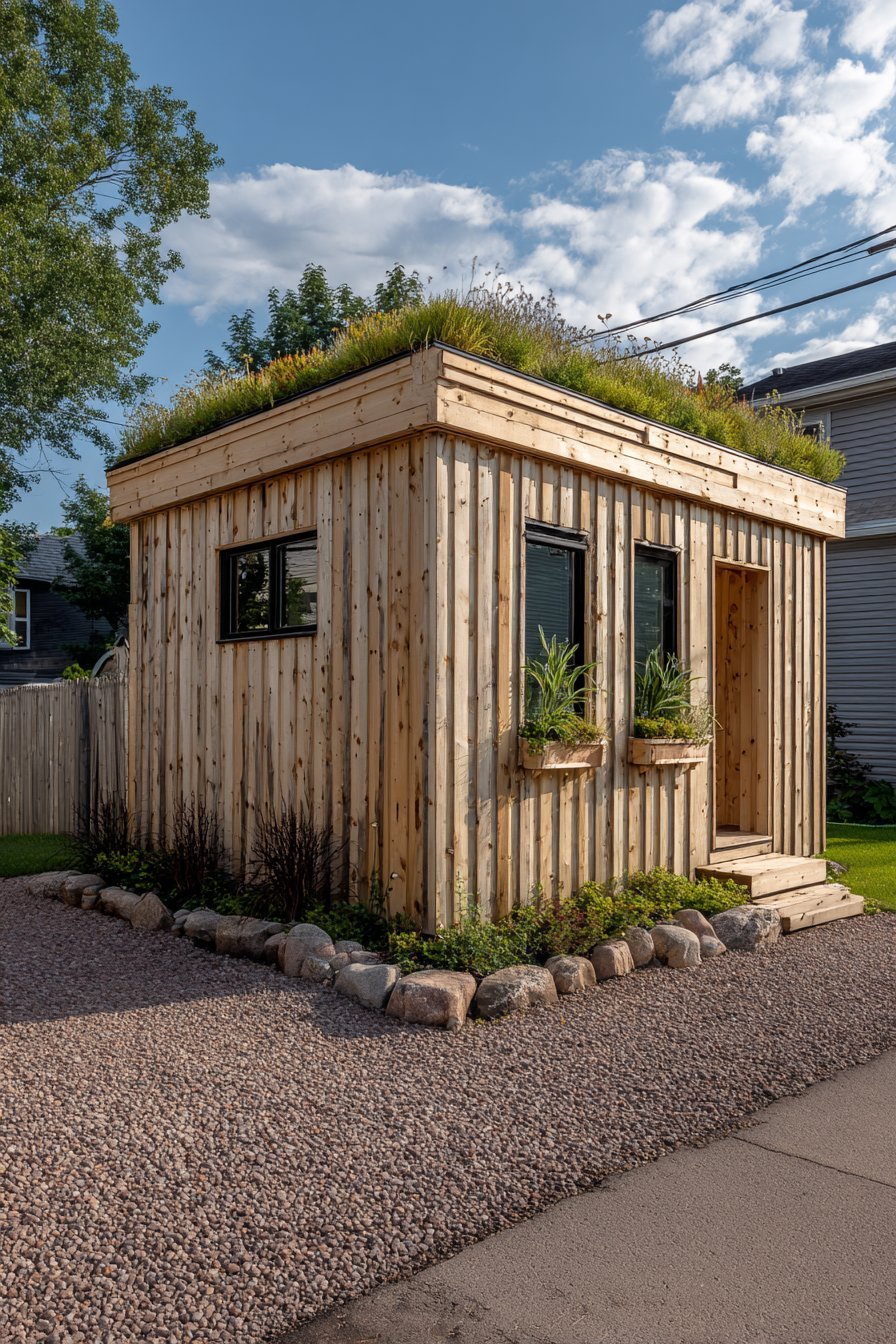
The living roof requires minimal maintenance once established. Sedums naturally thrive in shallow soil with minimal water. The additional layer provides temperature regulation that protects stored items from extreme heat and cold.
Afternoon sunlight highlights natural wood texture and living roof plantings. The shed functions as an attractive garden structure rather than utilitarian eyesore. Proper planning proves that storage needs integrate successfully into beautiful landscape designs.
Key Design Tips:
- Size sheds proportionally to yard dimensions to avoid overwhelming space
- Add green roofs for environmental benefits and aesthetic improvement
- Include window boxes to soften utilitarian structures with living plants
- Build small covered porches for convenient access to frequently used items
- Use natural stone edging to integrate structures into landscape design
- Choose board and batten siding for traditional appeal and shadow lines
20. Compact Outdoor Kitchen
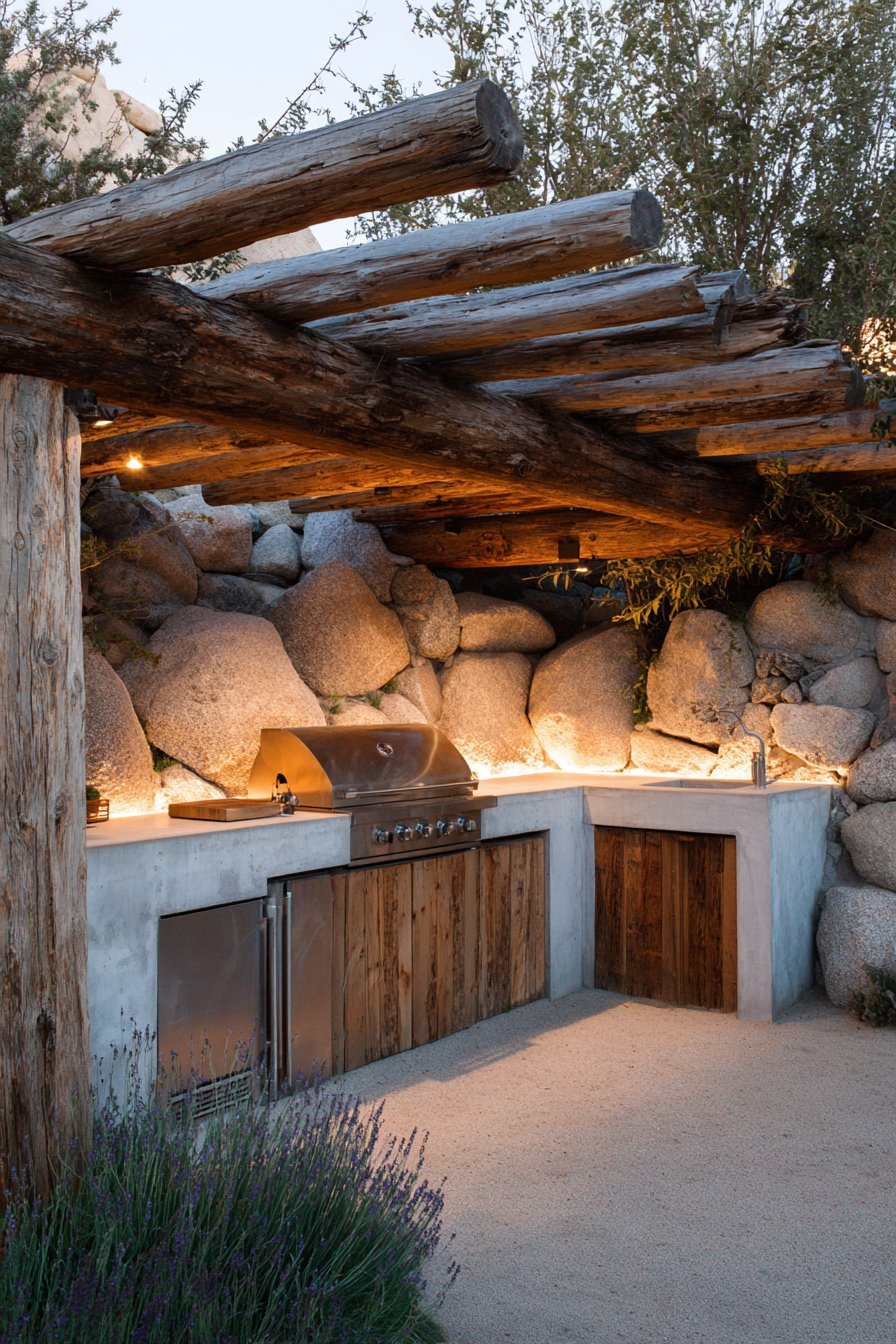
A six-foot built-in grill station delivers serious cooking capabilities in minimal space. Concrete countertops show aggregate exposure and natural variations that improve with age. The compact run includes essential prep surface, built-in ice chest, and storage cabinet.
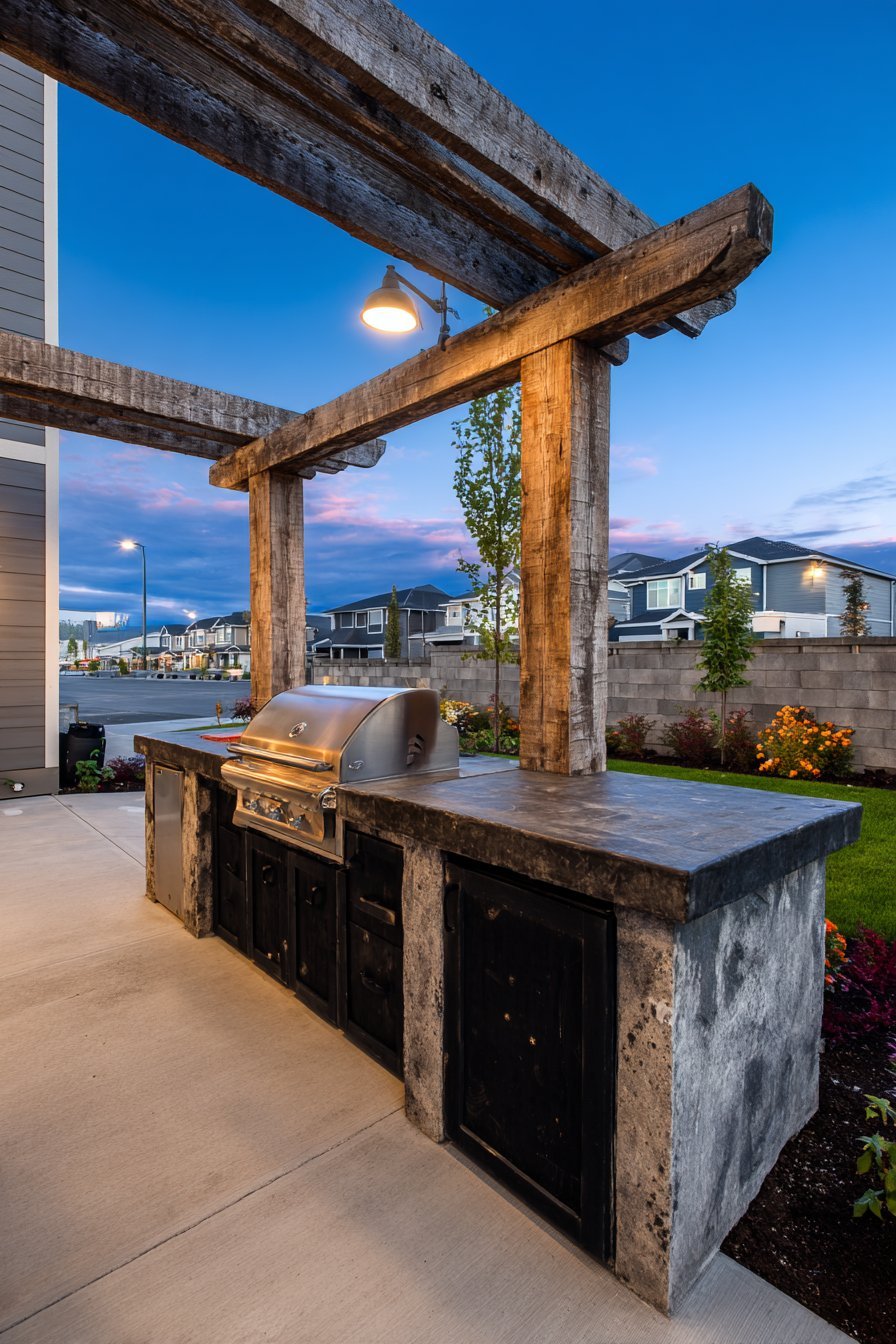
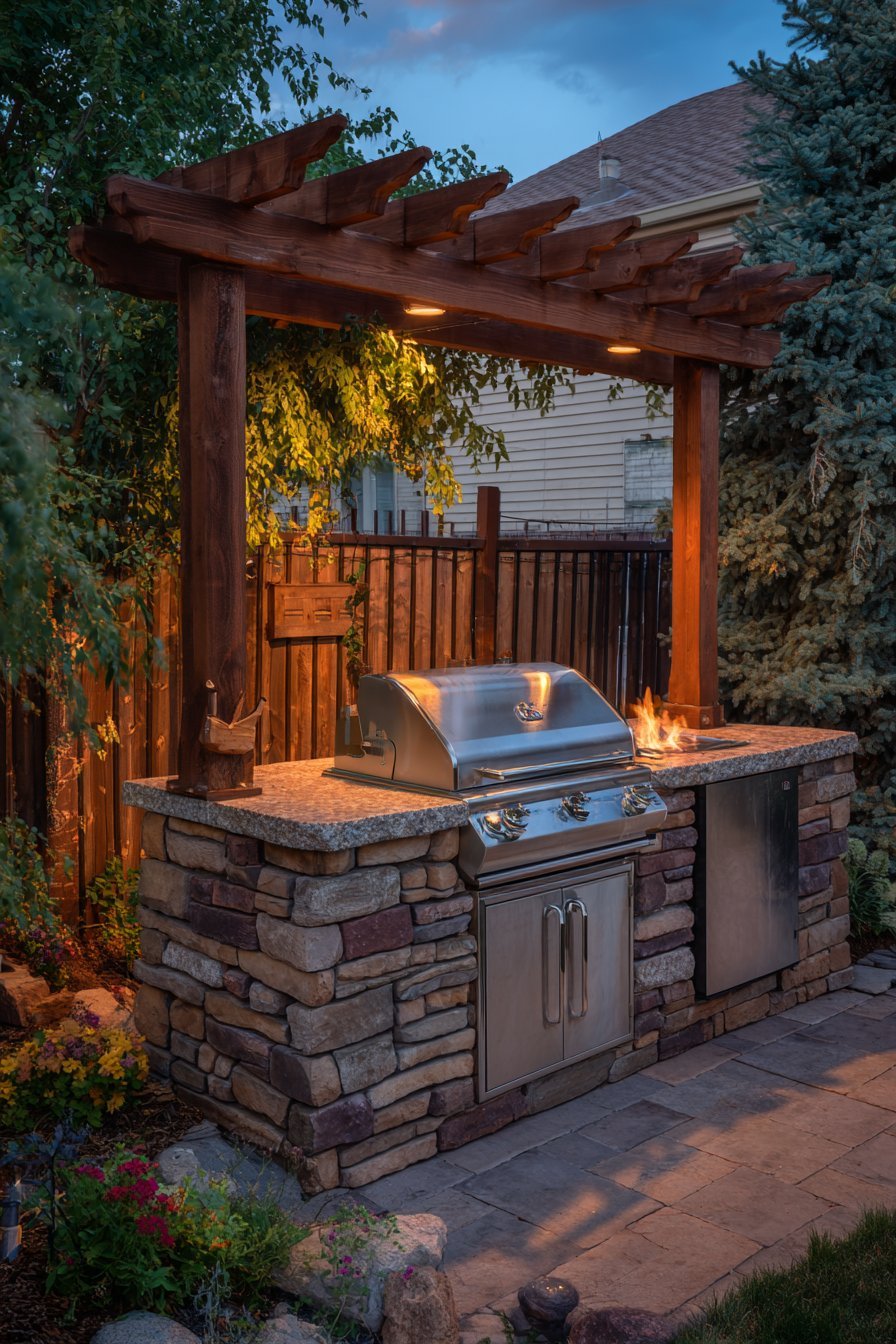
Stainless steel grill shows realistic aging and use that proves functionality over showroom appearance. A simple pergola overhead made from rough-sawn cedar beams provides partial shade. The open structure maintains airflow essential for safe grilling while reducing direct sun exposure.

A low stone wall with cap stones creates backdrop and defines the cooking zone. Evening light with active grill flames creates warm ambiance for outdoor cooking and gathering. The functional space demonstrates that serious cooking facilities fit into minimal yard spaces.
Multi-functional design eliminates separate elements that consume valuable square footage. The integrated approach maximizes efficiency while maintaining clean aesthetic lines. Careful planning proves that compact outdoor kitchens rival larger installations in capability and enjoyment.
Key Design Tips:
- Design outdoor kitchens with all essential functions within arm’s reach
- Use concrete countertops that improve appearance as they age and patina
- Install built-in ice chests to eliminate coolers that clutter cooking zones
- Add pergolas for partial shade that maintains necessary ventilation
- Include adequate storage for grilling tools, fuels, and accessories
- Choose quality grills that justify dedicated outdoor kitchen investment
Why These Little Backyard Designs Are the Best
These twenty little backyard designs succeed because they embrace spatial limitations as creative opportunities rather than obstacles. Each concept demonstrates that thoughtful planning transforms modest outdoor areas into highly functional spaces. The designs prioritize multi-functional elements that serve multiple purposes without consuming excessive square footage.
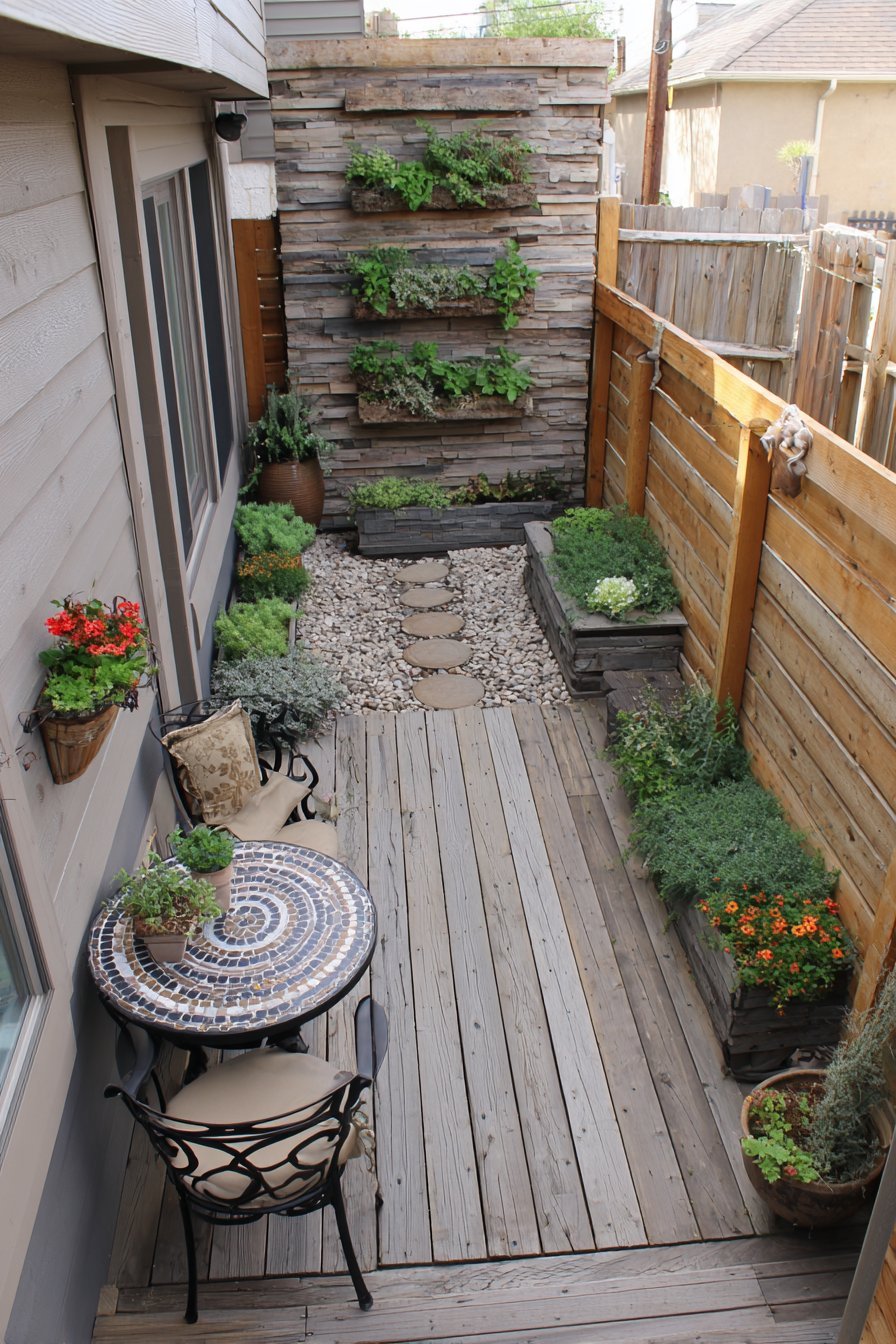
Vertical gardening solutions appear throughout these concepts because they maximize growing space without expanding ground area requirements. Wall-mounted planters, climbing plants on trellises, and tiered displays allow substantial gardens in minimal footprints. This approach proves essential for productive gardening in urban settings where horizontal space remains severely limited.
The material choices emphasize natural aging and patina development that improve appearances over time. Cedar, teak, and other weather-resistant woods require minimal maintenance while developing character. This practical consideration reduces long-term upkeep demands while enhancing visual authenticity. Galvanized metal, terra cotta, and natural stone similarly improve with age rather than deteriorating.
These designs succeed because they create defined activity zones within compact spaces. Separate areas for dining, relaxing, gardening, and entertaining prevent spaces from feeling cluttered or confused. Clear functional separation allows small yards to serve diverse purposes throughout different times and seasons. The psychological impact of dedicated zones increases perceived space beyond actual measurements.
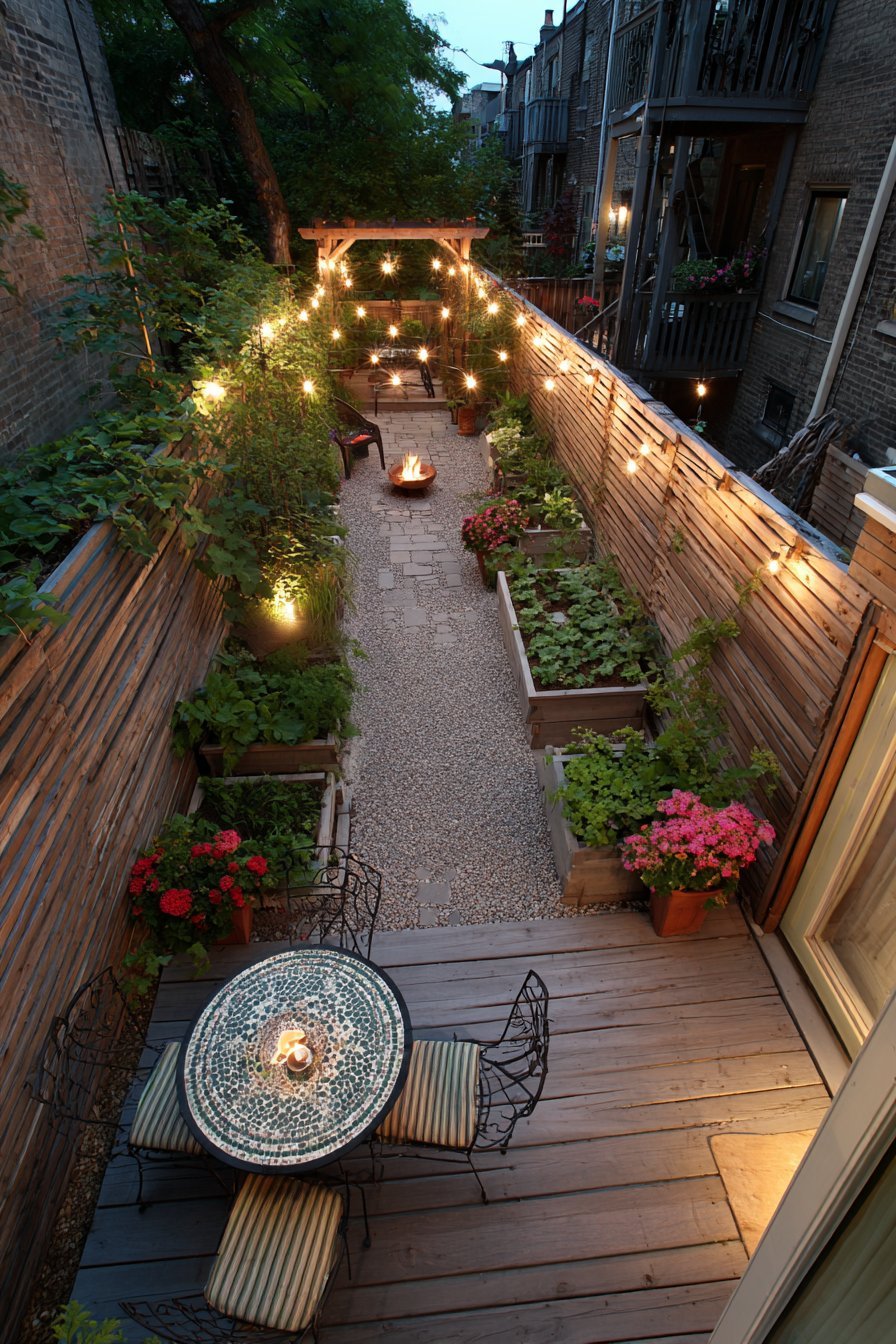
Lighting strategies extend usability beyond daylight hours without extensive electrical installations. String lights, solar fixtures, and strategically placed task lighting transform evening atmospheres. This temporal expansion effectively doubles the functional hours available in outdoor spaces. The relatively minimal investment yields substantial returns in enjoyment and practicality.
Sustainable practices, including native plantings, water features with recirculation, and permeable surfaces address environmental concerns. These approaches reduce maintenance requirements while supporting local ecosystems. Rain gardens, pollinator habitats, and organic vegetable gardens demonstrate that small spaces contribute meaningfully to environmental stewardship. The collective impact of many small sustainable yards creates significant positive change.
Conclusion
These twenty little backyard transformations prove that spatial constraints inspire creative excellence in outdoor design. The key principles include vertical maximization, multi-functional elements, quality material selection, and defined activity zones. Each design demonstrates that thoughtful planning yields functional beauty regardless of square footage limitations.
Successful small backyard design balances aesthetic appeal with practical functionality throughout all seasons. Start with one concept that resonates with your lifestyle and available space. Layer additional elements gradually as budgets and time permit. Your dream outdoor sanctuary awaits creation through strategic planning and creative implementation of these proven design approaches.
