
Creating a Japandi kitchen merges the best of two influential design philosophies. Japanese minimalism meets Scandinavian warmth in perfect harmony. This fusion creates spaces that feel both serene and inviting. The result is a kitchen that balances functionality with aesthetic beauty.
Japandi design has become increasingly popular for good reason. It addresses modern living needs while maintaining timeless appeal. These kitchens emphasize quality over quantity and natural materials over synthetic alternatives. The philosophy celebrates craftsmanship, sustainability, and mindful living through thoughtful design choices.

This article explores twenty exceptional Japandi kitchen concepts. Each design demonstrates unique approaches to combining clean lines with organic warmth. From compact galley layouts to spacious social kitchens, these ideas offer inspiration for various spaces and lifestyles. You’ll discover how natural wood, concrete, and ceramic create cohesive environments. The designs showcase everything from dramatic statement walls to subtle material layering.
1. Serene White Oak and Concrete Sanctuary

Picture a kitchen where morning light dances across blonde wood grain. Clean-lined white oak cabinetry features integrated handles for seamless surfaces. A waterfall-edge concrete countertop provides dramatic visual interest. The minimalist space incorporates a sliding shoji-inspired door with translucent panels. This leads to a well-organized pantry area.
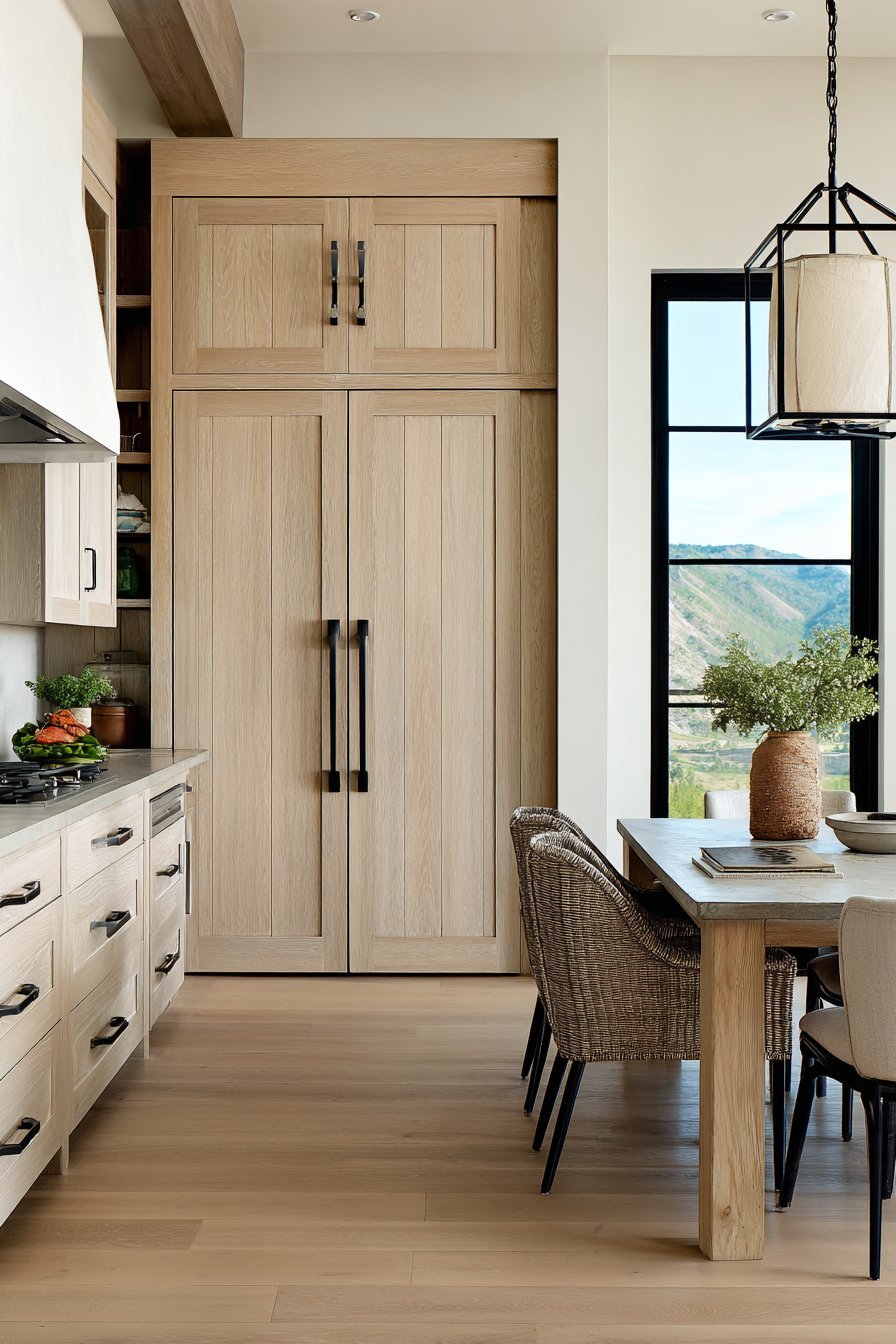
Natural light filters through a large window above the undermount sink. The stainless steel basin maintains the understated aesthetic. Light highlights the beautiful contrast between warm wood and cool concrete. A single pendant light hangs above a compact dining nook. The black metal framework holds a rice paper shade. This creates soft, diffused illumination during evening hours.
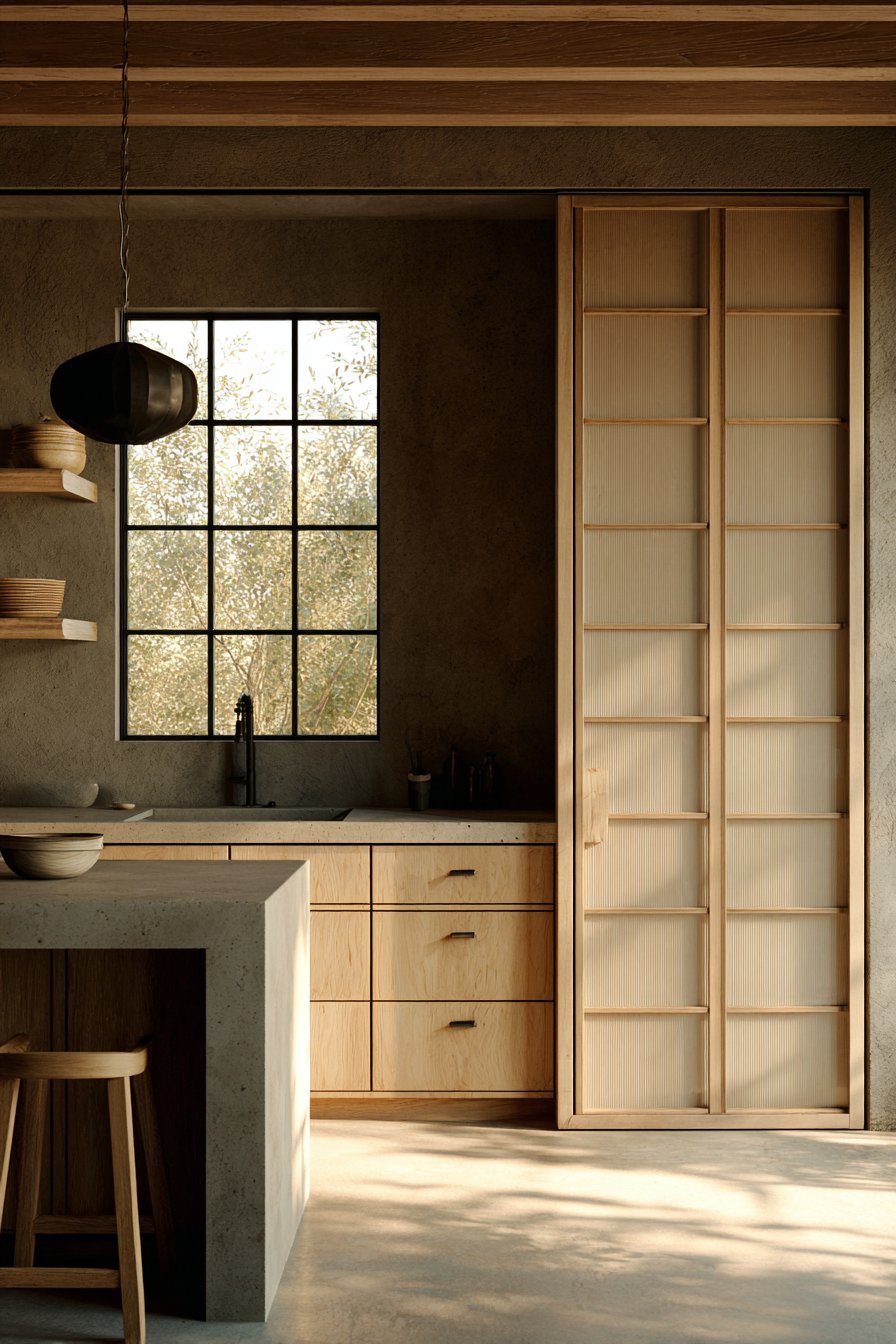
The space demonstrates how simplicity enhances functionality. Wide-angle views reveal the harmonious blend of Japanese and Scandinavian principles. Every element serves a purpose while contributing to overall beauty. The balanced exposure throughout the room creates a peaceful atmosphere. This kitchen proves that minimalism doesn’t mean sacrificing warmth or character.

Key Design Tips:
- Choose white oak for its light color and beautiful grain patterns
- Install integrated cabinet handles to maintain clean lines
- Incorporate a waterfall-edge countertop for dramatic impact
- Use shoji-inspired elements to add authentic Japanese character
- Position pendant lights strategically above work and dining areas
- Maximize natural light through large, unobstructed windows
2. Walnut Island with Charcoal Granite Excellence
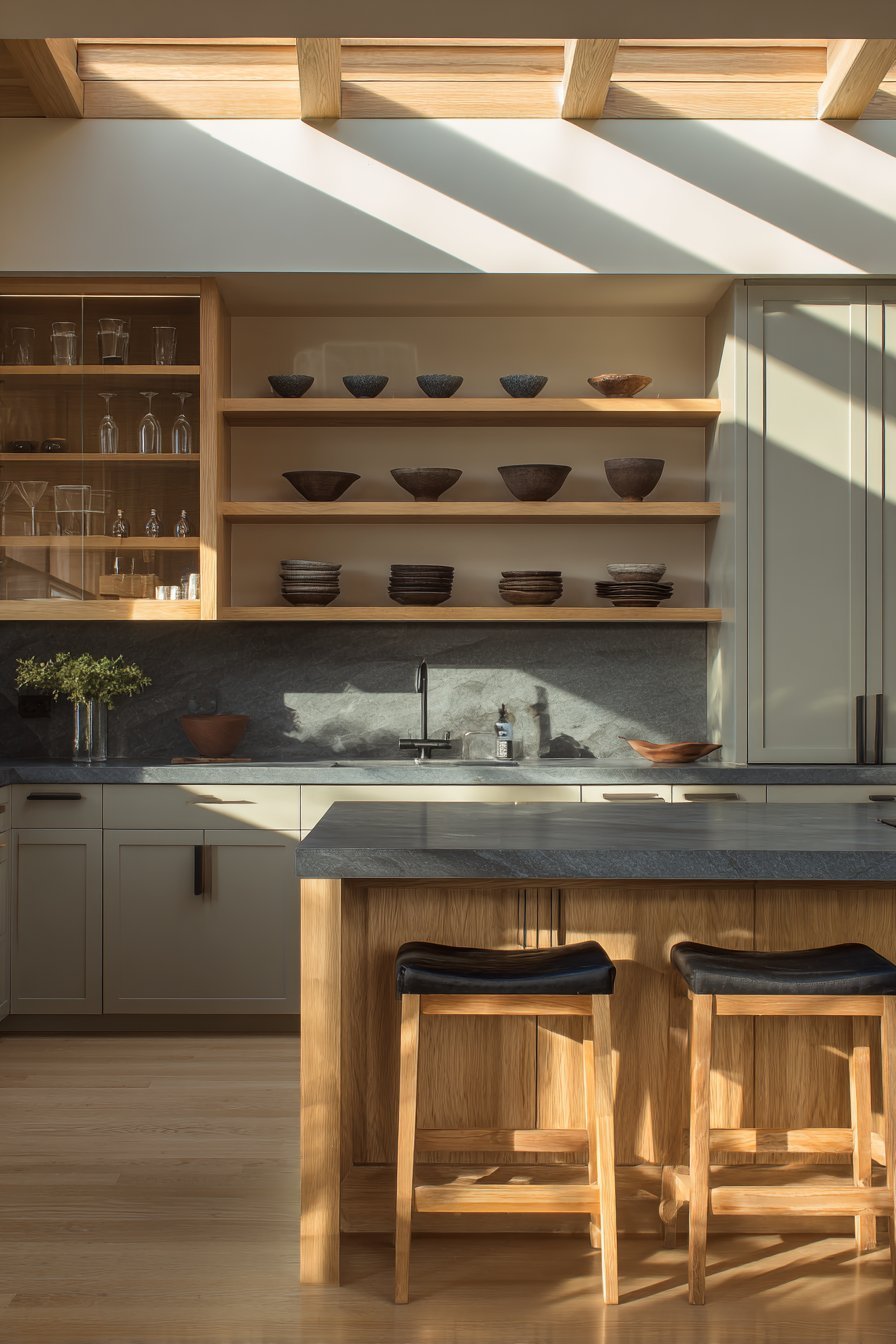
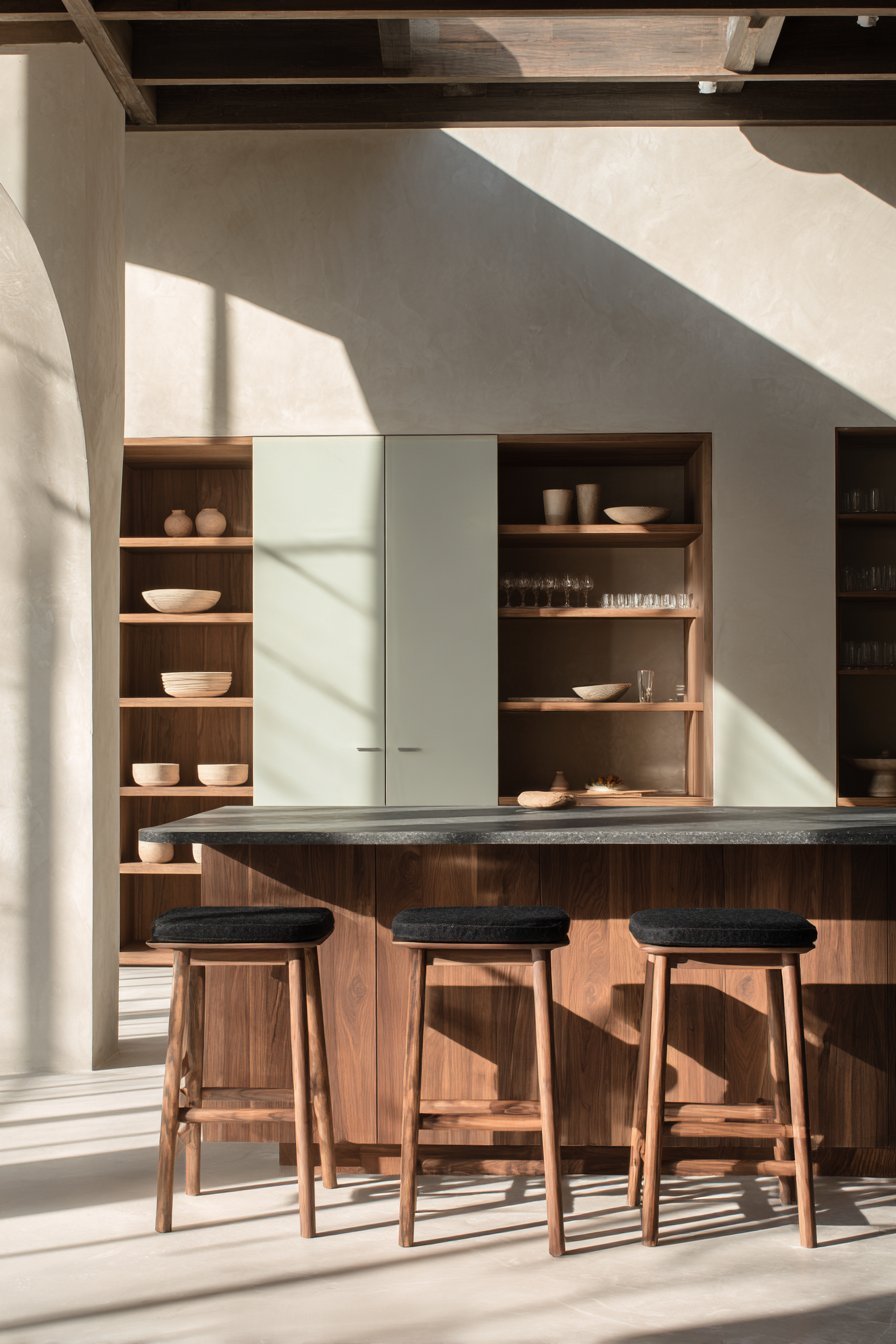
A substantial walnut island becomes the kitchen’s focal point. The solid wood base showcases rich, natural grain variations. Honed granite in charcoal grey tops the island with sophisticated elegance. One side features open shelving displaying handmade ceramic bowls. Minimal glassware adds functional beauty to the display.
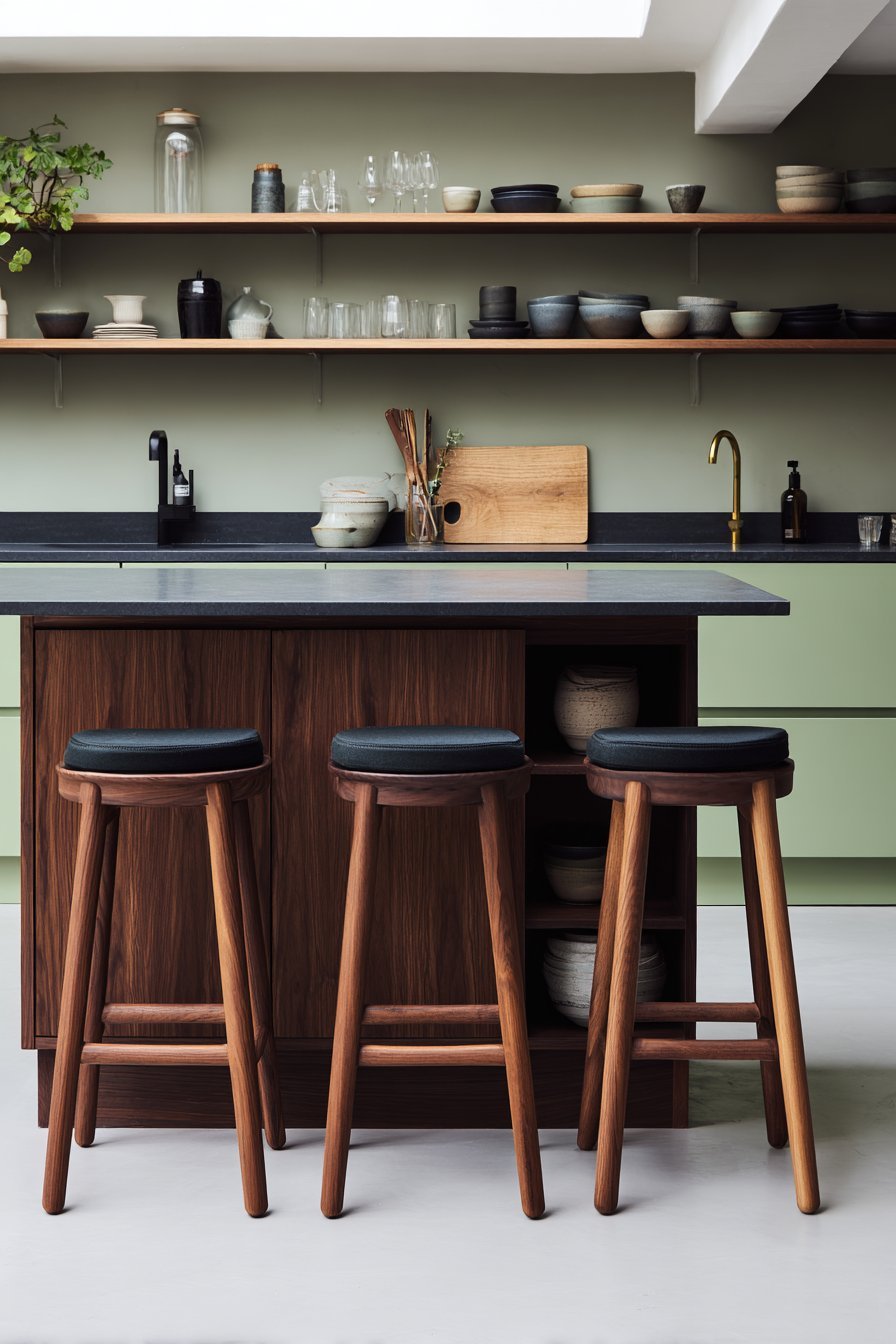
Three low-profile wooden bar stools provide comfortable seating. Black cushions complement the granite’s dark tones. The surrounding kitchen showcases handleless sage green lower cabinets. These pair beautifully with open upper shelving in light ash wood. The combination creates visual interest through contrasting tones.
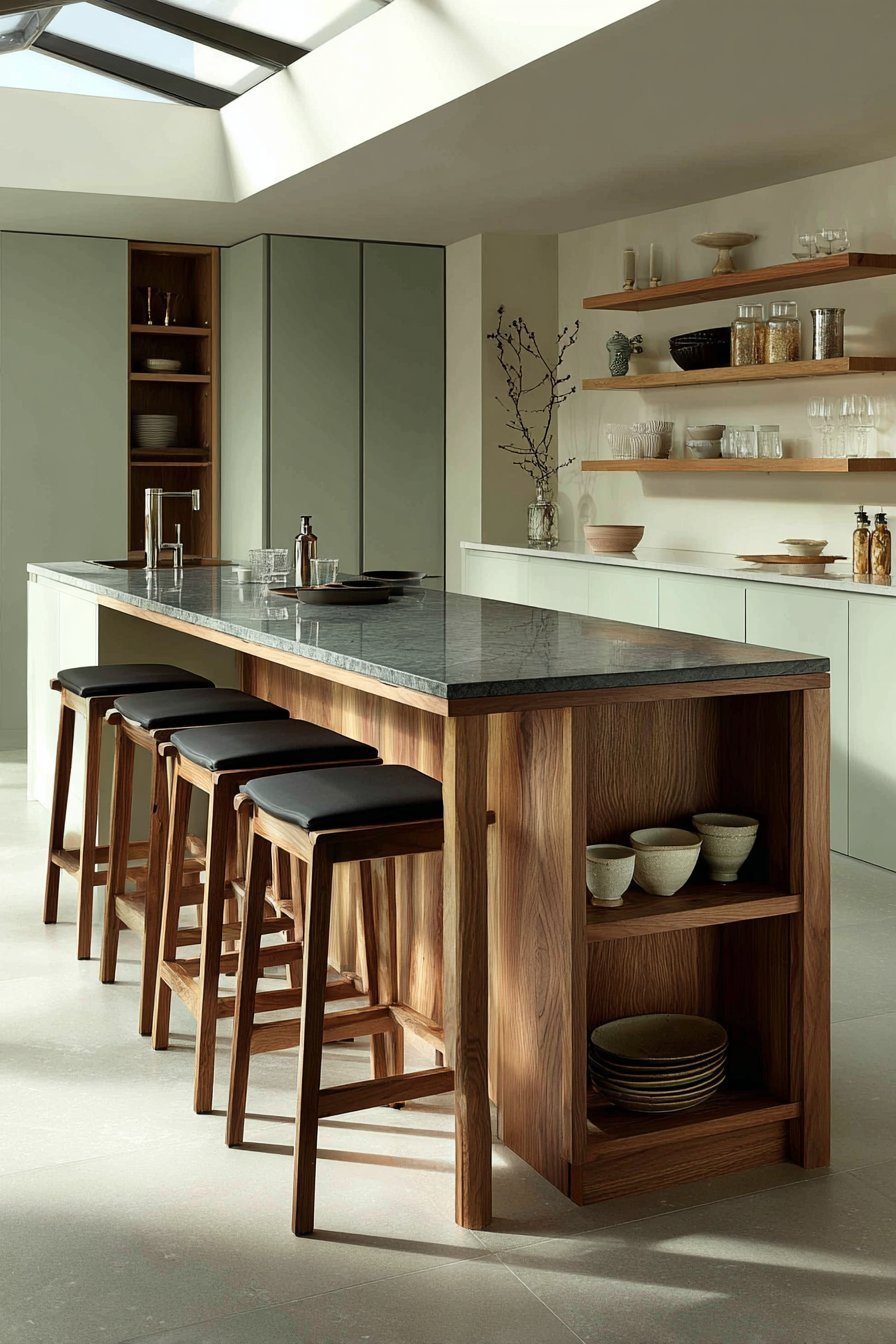
Natural light from skylights creates soft shadows across matte surfaces. The illumination emphasizes the tactile quality of mixed materials. This design demonstrates how different woods can coexist harmoniously. The walnut island grounds the space while lighter ash shelving keeps the room feeling open. Professional attention to material details elevates the entire composition.
Key Design Tips:
- Select walnut for islands to create warm, grounding focal points
- Use honed finishes on granite for sophisticated matte surfaces
- Incorporate open shelving to display beautiful functional items
- Choose handleless cabinets for streamlined contemporary appeal
- Install skylights to bring natural light deep into the kitchen
- Mix wood tones thoughtfully to add depth without chaos
3. Vertical Storage with Douglas Fir Efficiency
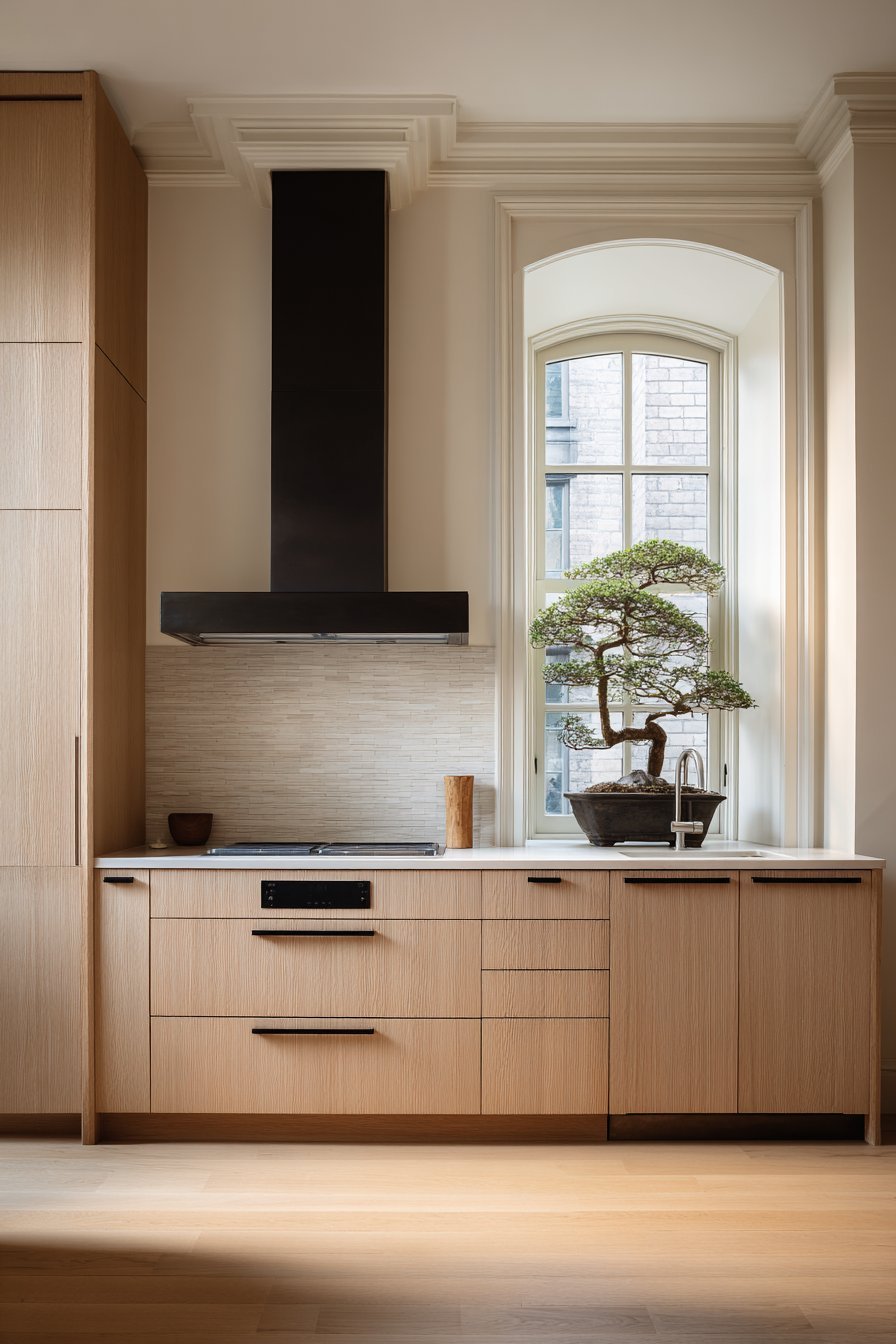
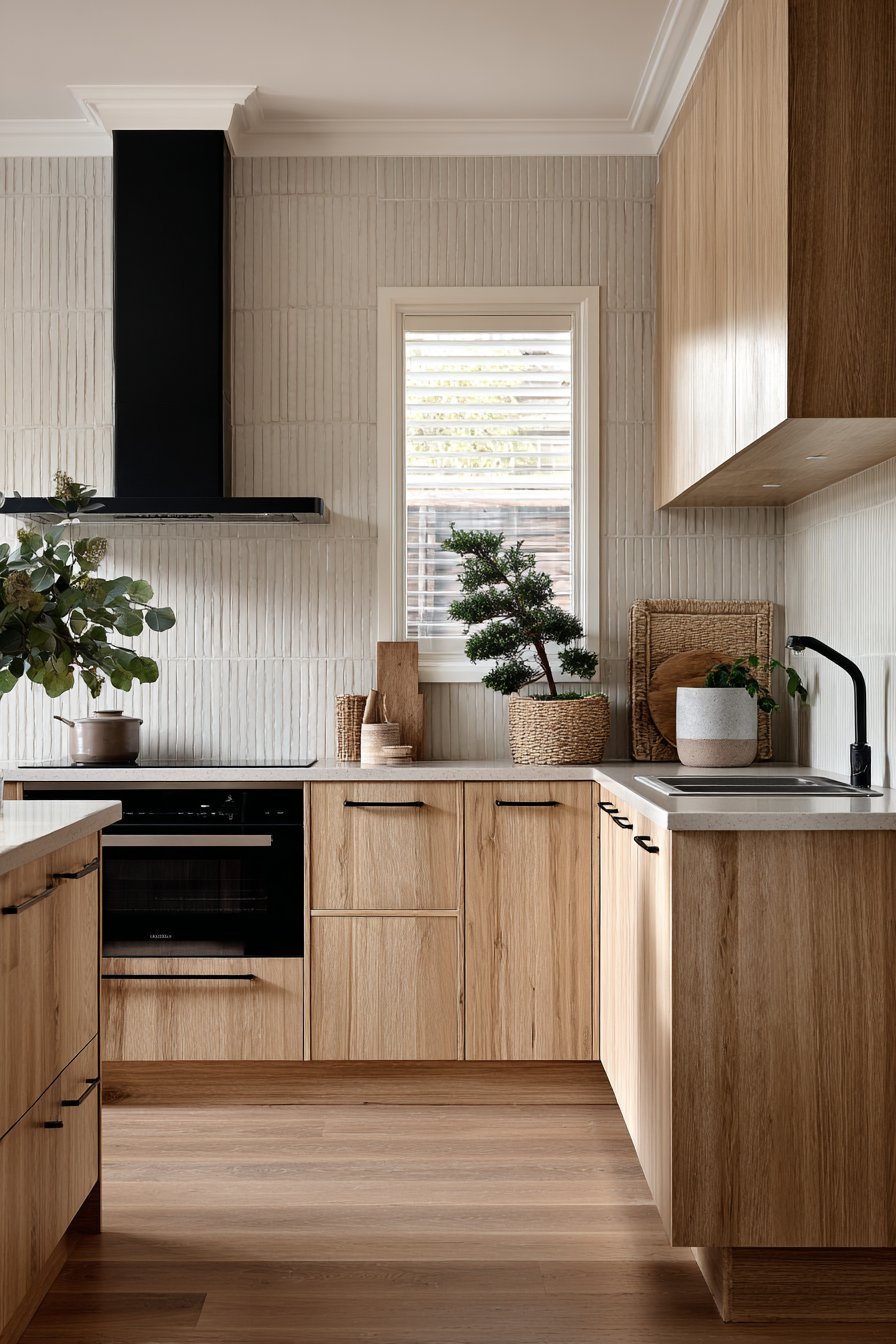
Floor-to-ceiling storage maximizes every inch of available space. Vertical grain Douglas fir cabinetry showcases natural wood beauty. The finish preserves the wood’s authentic character and warmth. Matte black hardware provides subtle contrast without overwhelming the design. A slim profile range hood maintains the understated aesthetic.
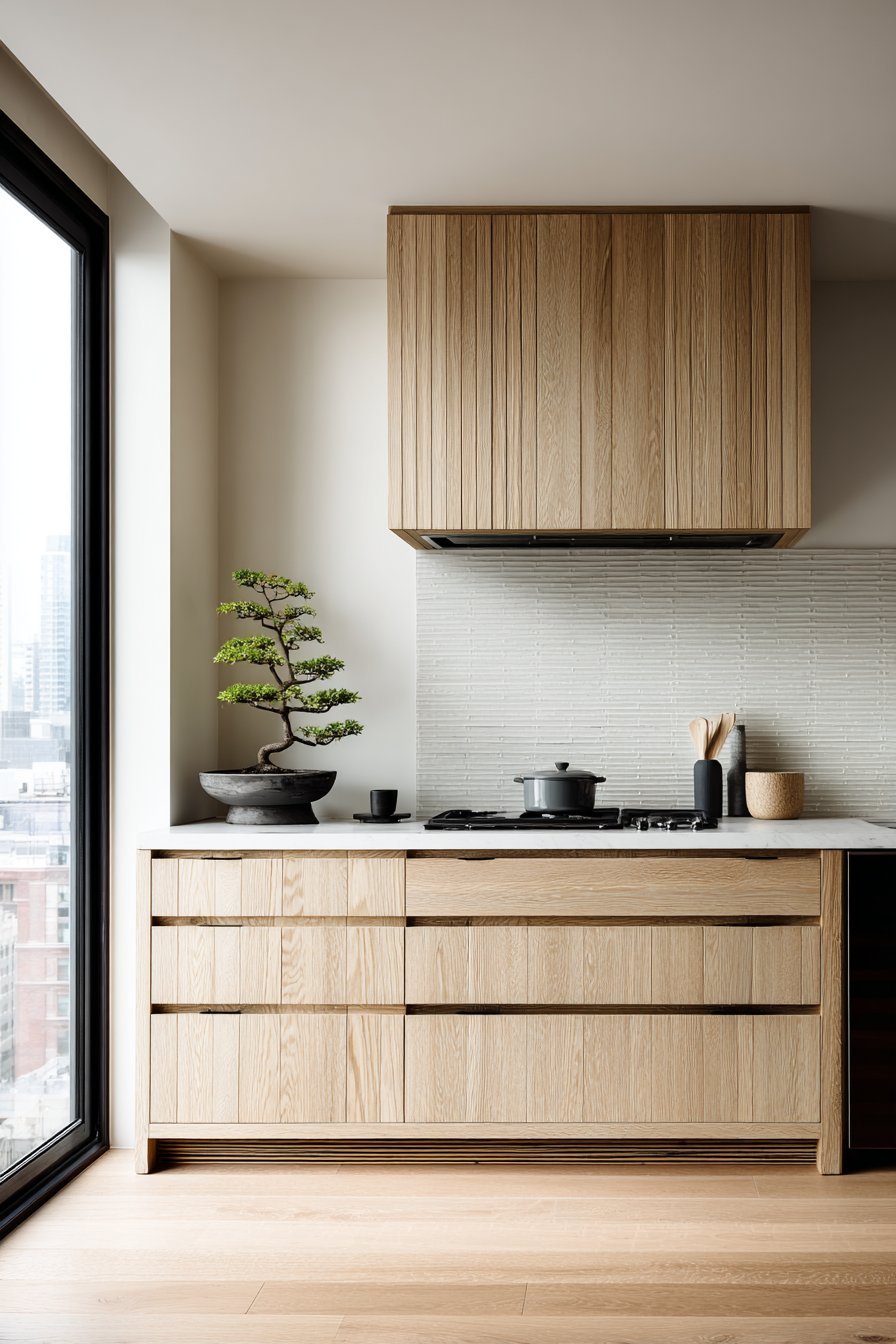
Brushed stainless steel adds professional quality to the cooking area. The backsplash consists of handmade ceramic tiles in soft white. Subtle texture variations create visual interest without busy patterns. A small potted bonsai sits peacefully on the windowsill. This brings living nature into the functional space.

The design proves that compact kitchens can feel spacious and organized. Efficient use of vertical space eliminates clutter from countertops. Soft diffused lighting highlights the warmth of natural wood. The monochromatic surfaces create a calm, cohesive environment. This kitchen demonstrates that thoughtful planning creates beauty in small footprints.
Key Design Tips:
- Maximize vertical space with floor-to-ceiling cabinetry
- Choose vertical grain wood for distinctive linear patterns
- Install slim profile range hoods in compact spaces
- Use handmade tiles to add subtle texture and character
- Incorporate small plants to bring natural elements indoors
- Keep hardware minimal and functional for clean aesthetics
4. Integrated Coffee Station with Geometric Accents

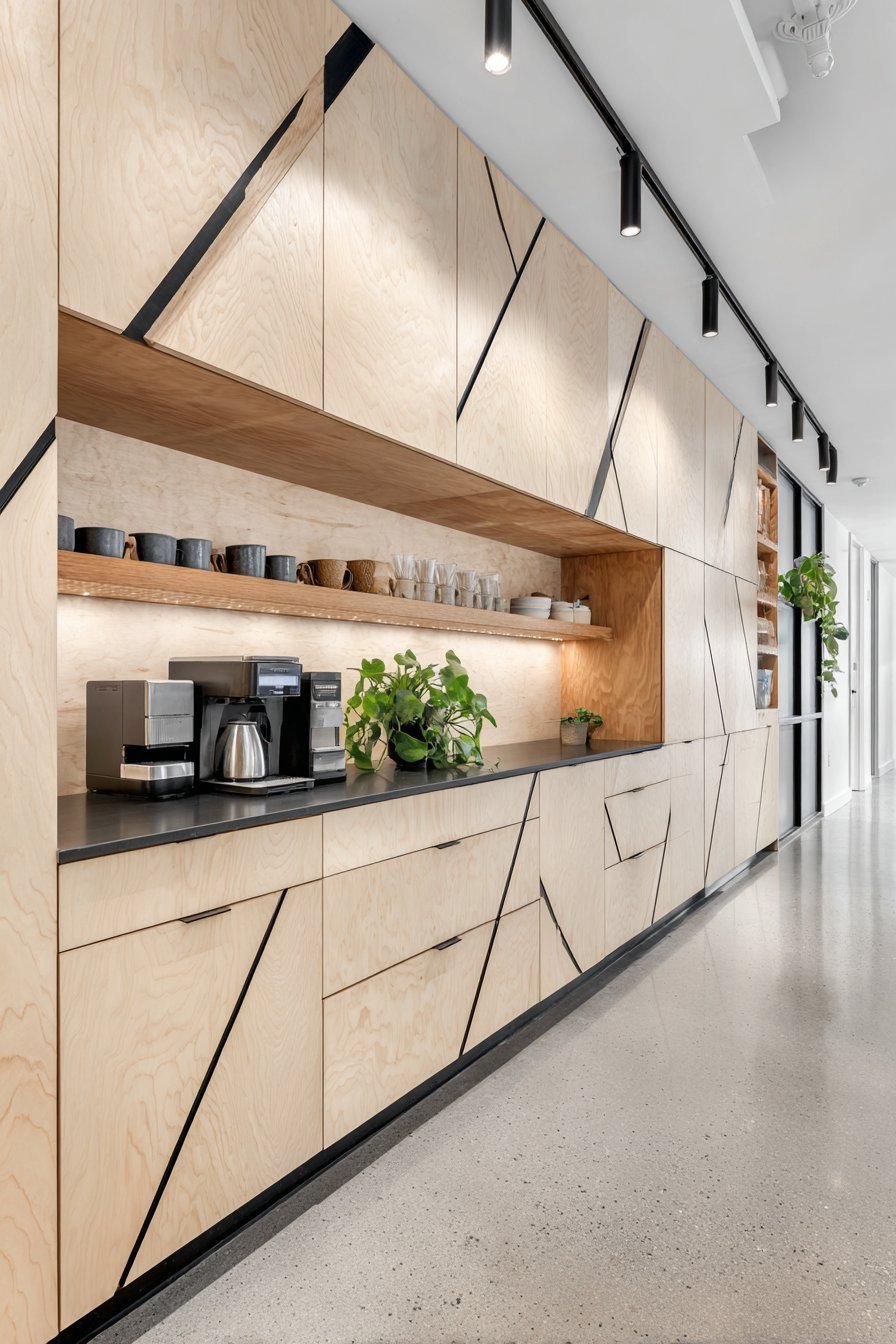
A dedicated coffee station elevates the morning ritual. Built-in shelving displays artisanal mugs and pour-over equipment. The integration feels seamless within the larger kitchen design. Light birch wood combines with darker walnut accents. The geometric pattern creates visual rhythm and contemporary interest.

Polished concrete flooring in warm grey tones grounds the entire space. The smooth surface reflects light while remaining practical and durable. A single track of minimalist black pendant lights provides task illumination. Natural daylight streams through frosted glass panels. This creates even, flattering illumination throughout the day.
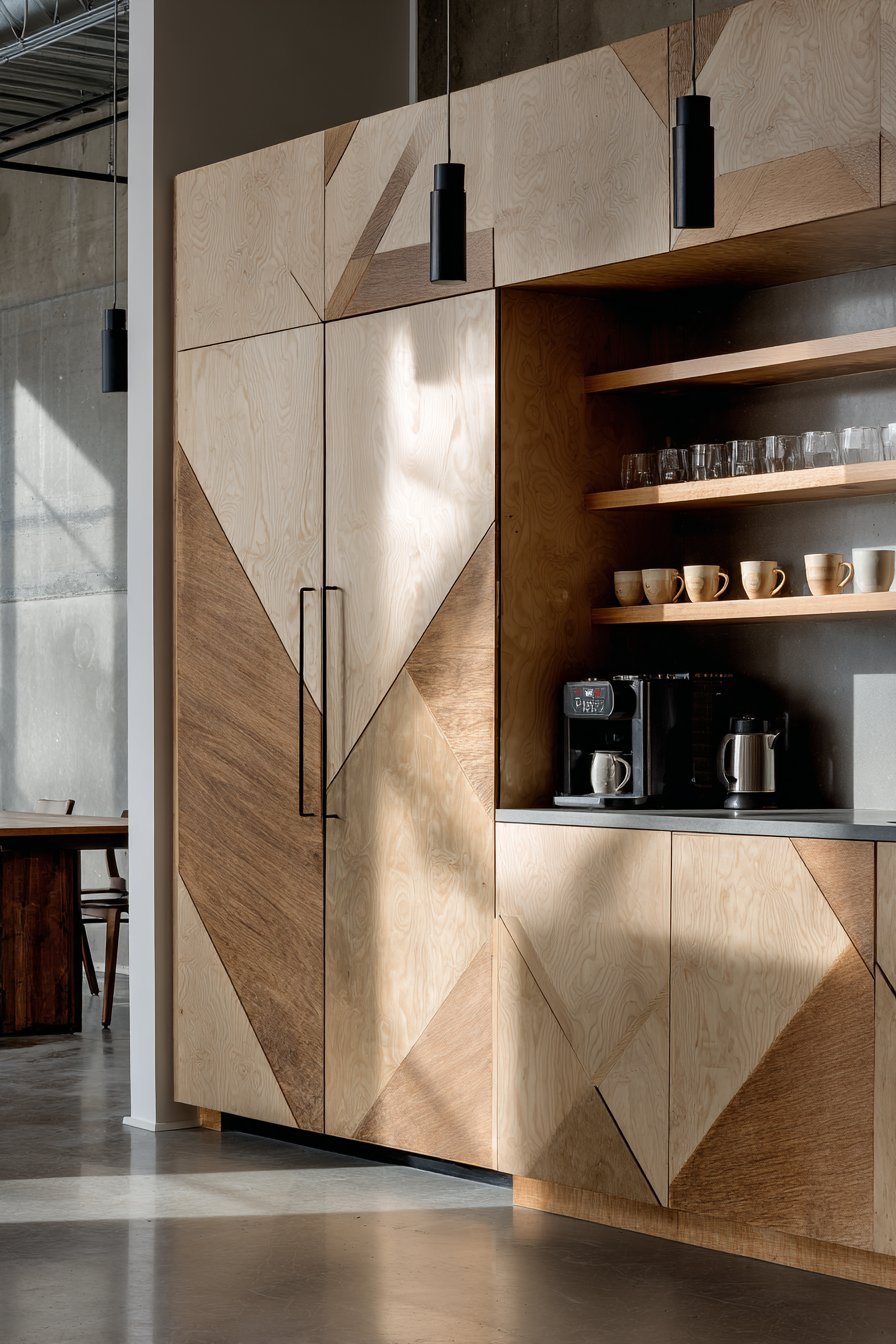
The workspace demonstrates thoughtful organization and restrained color choices. Every coffee-making tool has a designated place within reach. The material combination showcases how contrasting woods create depth. Professional lighting emphasizes the authenticity of natural materials. This design proves that specialized stations enhance both function and beauty.
Key Design Tips:
- Create dedicated stations for frequently used appliances
- Display beautiful tools and equipment as part of the design
- Combine light and dark woods for geometric interest
- Use polished concrete for durable, easy-to-maintain flooring
- Install frosted glass to diffuse natural light evenly
- Incorporate track lighting for flexible task illumination
5. Live-Edge Dining Integration with Garden Views
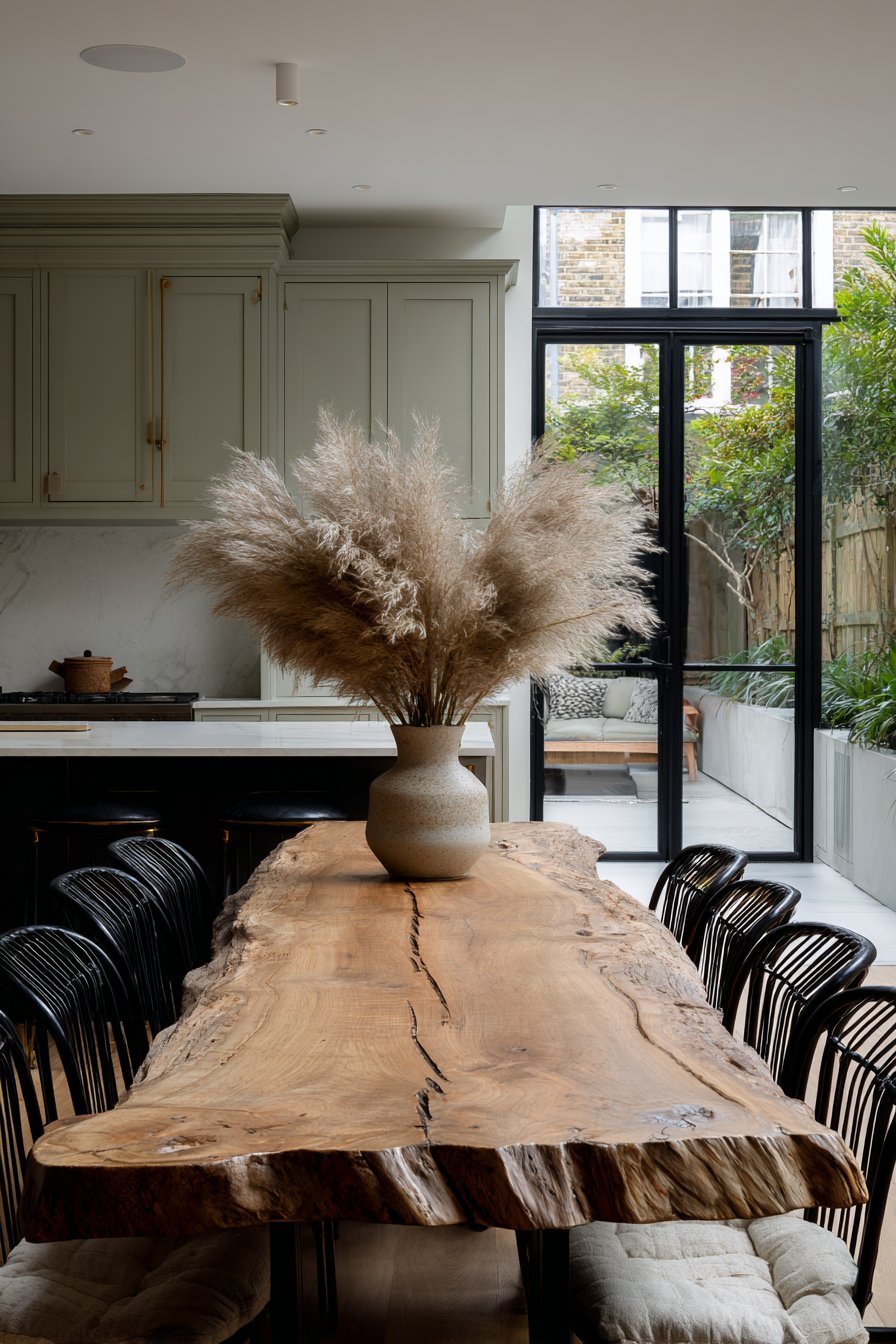
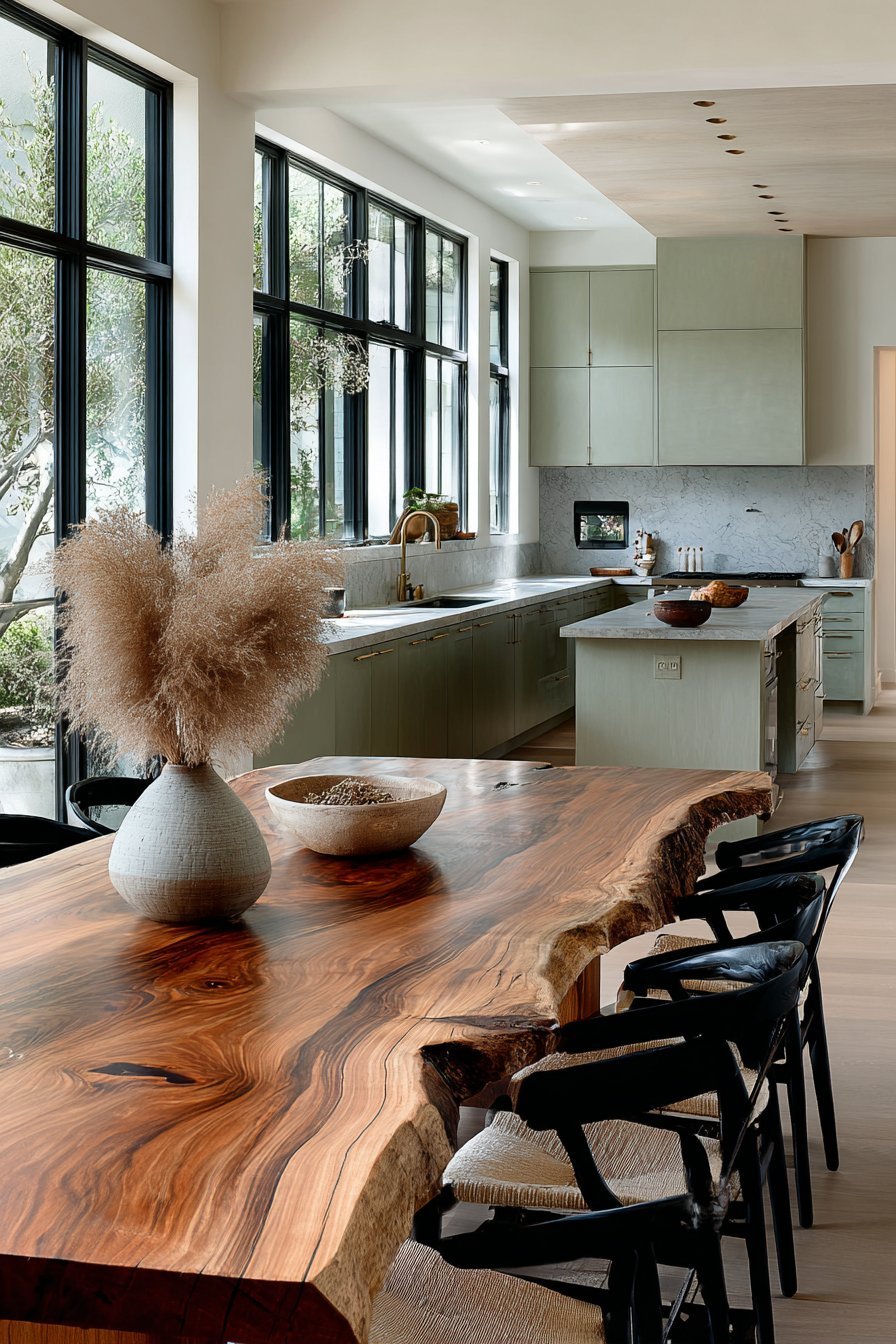
A custom live-edge oak table creates organic connection to nature. The natural edge preserves the tree’s original form and character. Sleek black metal chairs with natural linen cushions surround the table. Behind the dining space, handleless cabinets in muted olive green extend along the wall. Brass edge pulls provide subtle accents without dominating the design.
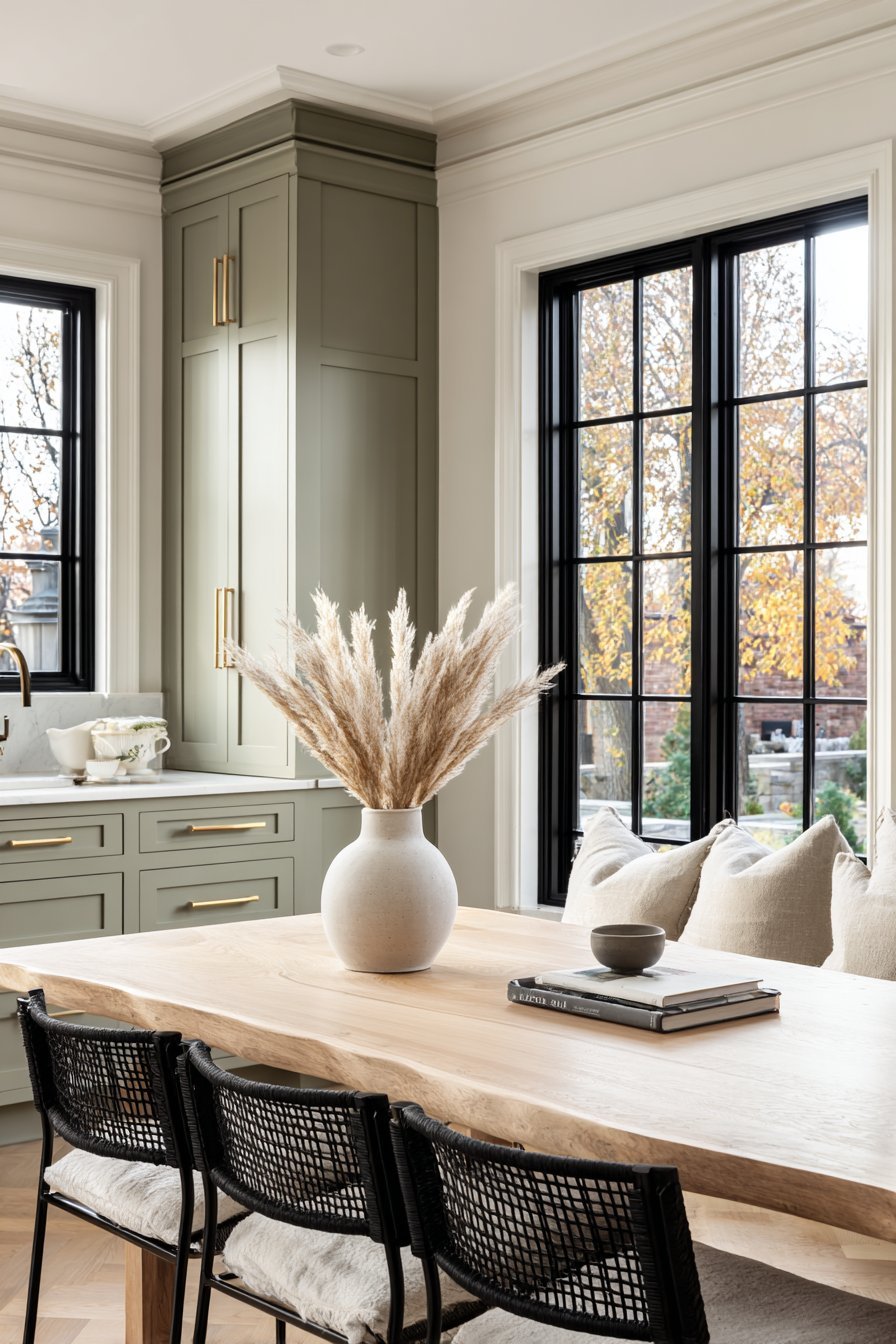
A low-profile ceramic vase holds dried pampas grass as centerpiece. The neutral tones complement the natural wood beautifully. Large windows with simple black frames offer peaceful garden views. Natural light floods the space throughout the day. The connection between indoor and outdoor spaces feels intentional and nurturing.
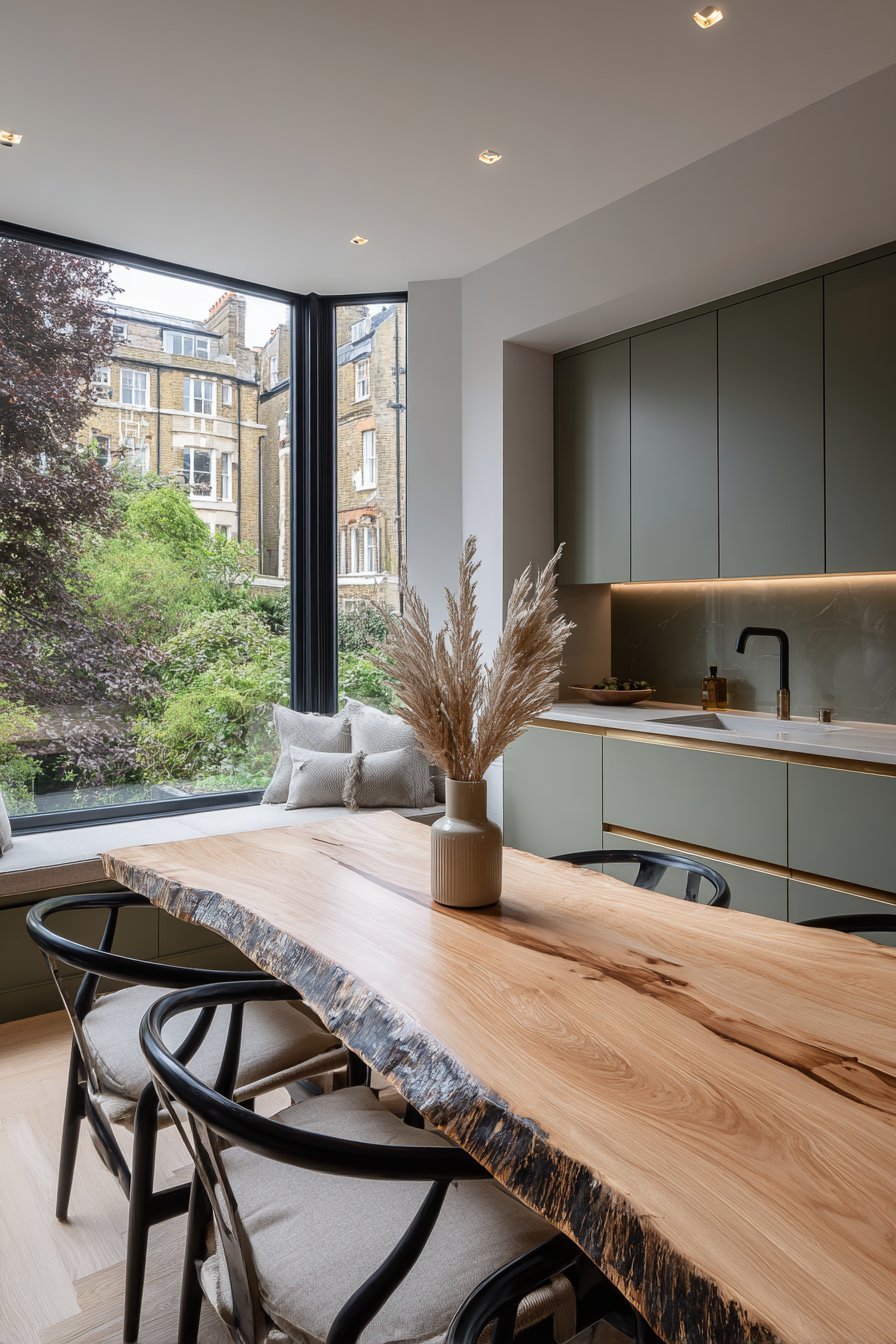
This design showcases seamless flow between dining and cooking zones. The live-edge table becomes a conversation piece and functional surface. Balanced exposure highlights both the organic table edge and refined cabinetry. The space demonstrates how Japandi design celebrates natural imperfection. Authenticity and craftsmanship take precedence over manufactured uniformity.
Key Design Tips:
- Choose live-edge tables for organic, one-of-a-kind character
- Use metal and linen together for contemporary comfort
- Install large windows to maximize natural light and views
- Select muted cabinet colors that complement natural wood
- Incorporate brass accents sparingly for warm metal touches
- Create clear flow between cooking and dining areas
6. Dramatic Black Wall with Oak Shelving Contrast
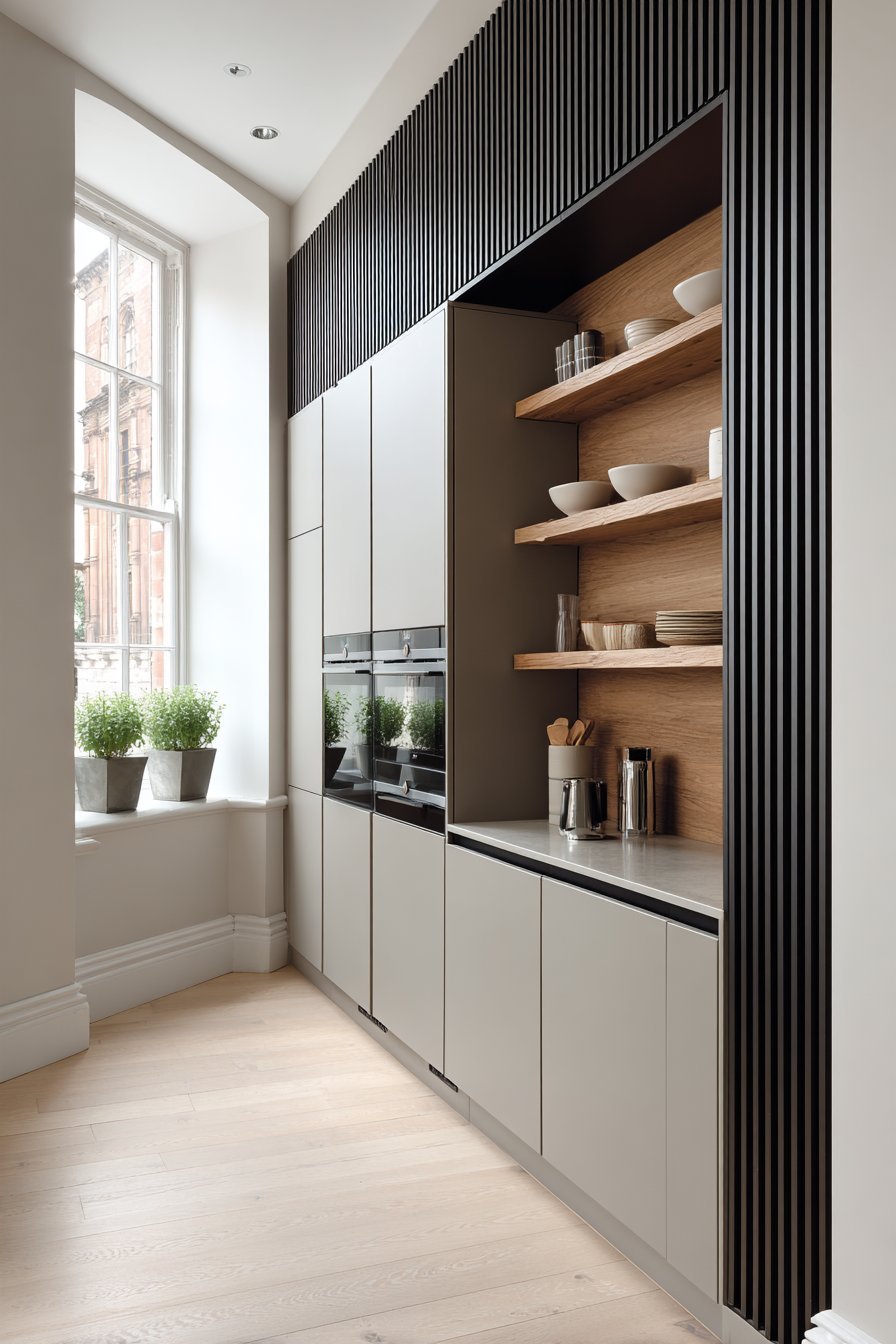
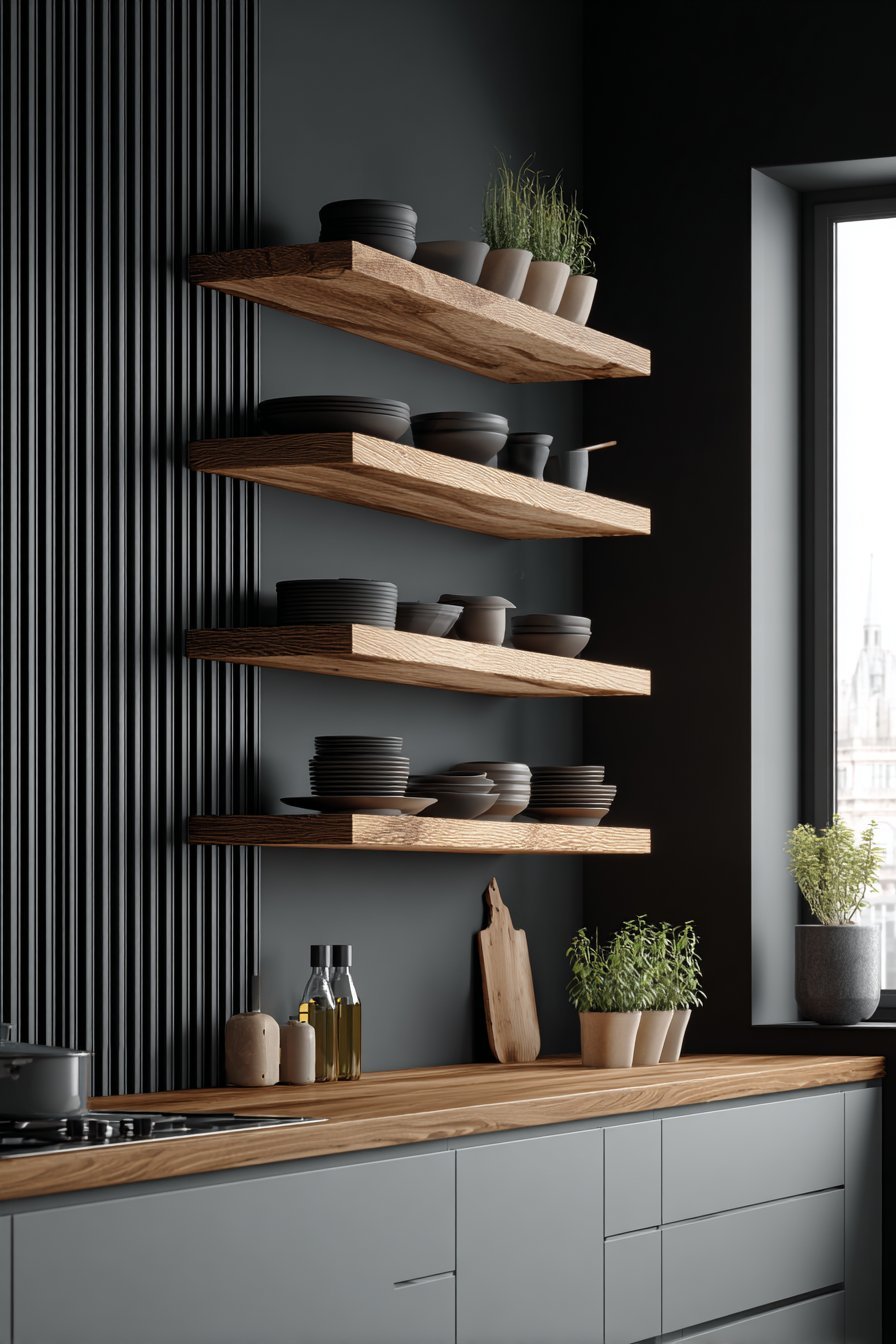
A statement wall in matte black creates unexpected drama. Vertical wood slat detailing adds texture and dimension to the dark surface. Thick oak planks serve as open shelving against this backdrop. The contrast between dark wall and light wood becomes striking. Minimal dishware in earth tones and natural materials fills the shelves.
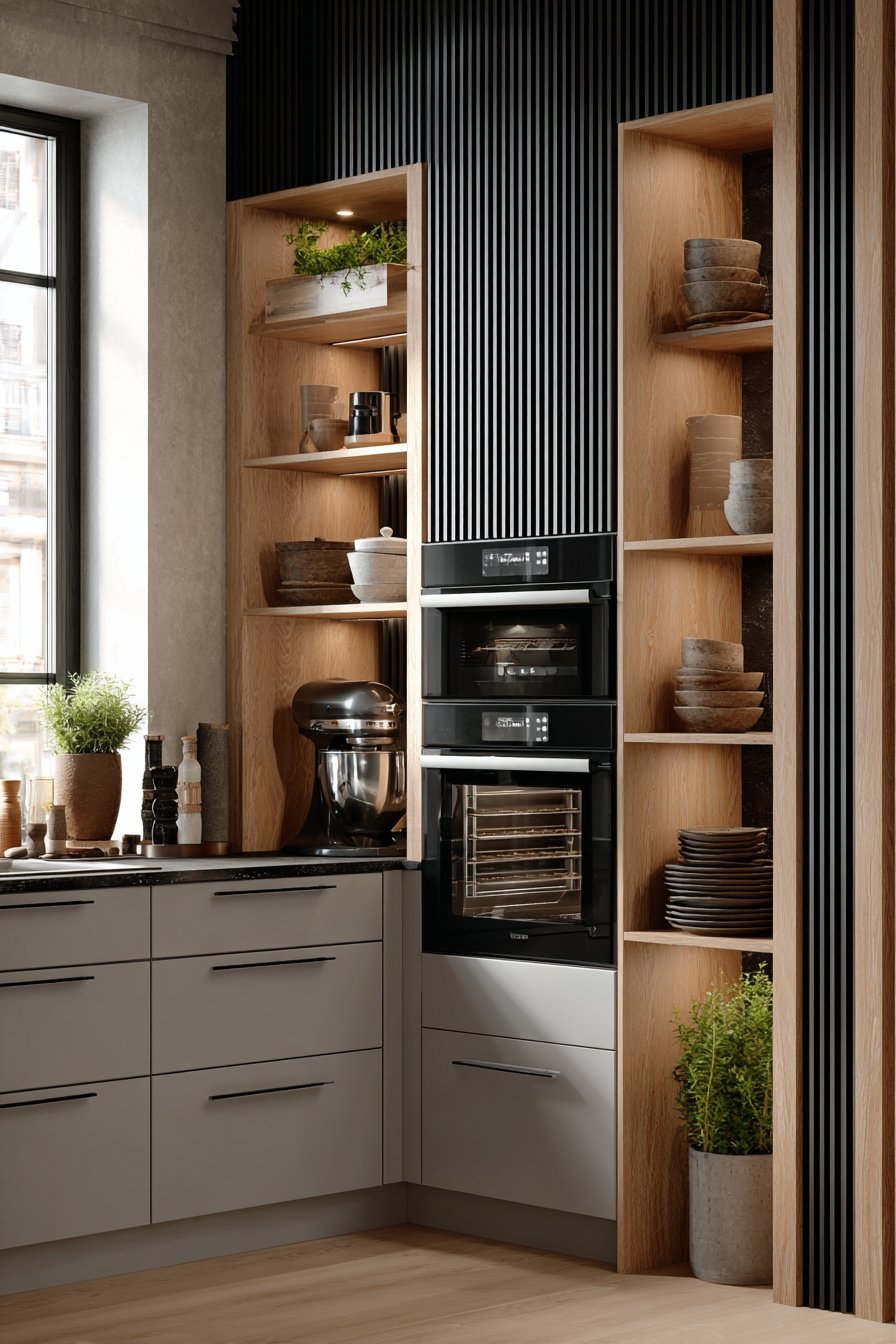
The opposing wall features light grey cabinets with recessed panel doors. Integrated appliances maintain a seamless, uncluttered appearance. A narrow window with a deep sill holds small potted herbs. Fresh greenery adds life and practical functionality. The herbs thrive in the natural light while remaining within easy reach.

Soft natural lighting emphasizes the interplay between dark and light elements. The cohesive minimalist aesthetic remains intact despite the bold wall. This design proves that Japandi style accommodates dramatic statements. The key lies in maintaining balance and intentionality. Every element serves the overall composition without competing for attention.
Key Design Tips:
- Use dark accent walls to create depth and drama
- Add vertical slat details for texture on flat surfaces
- Install thick, substantial shelving for visual weight
- Display minimal collections in curated earth tones
- Integrate appliances for seamless cabinet lines
- Grow fresh herbs on deep windowsills for function and beauty
7. Matte Black Basin with Brass Faucet Sophistication
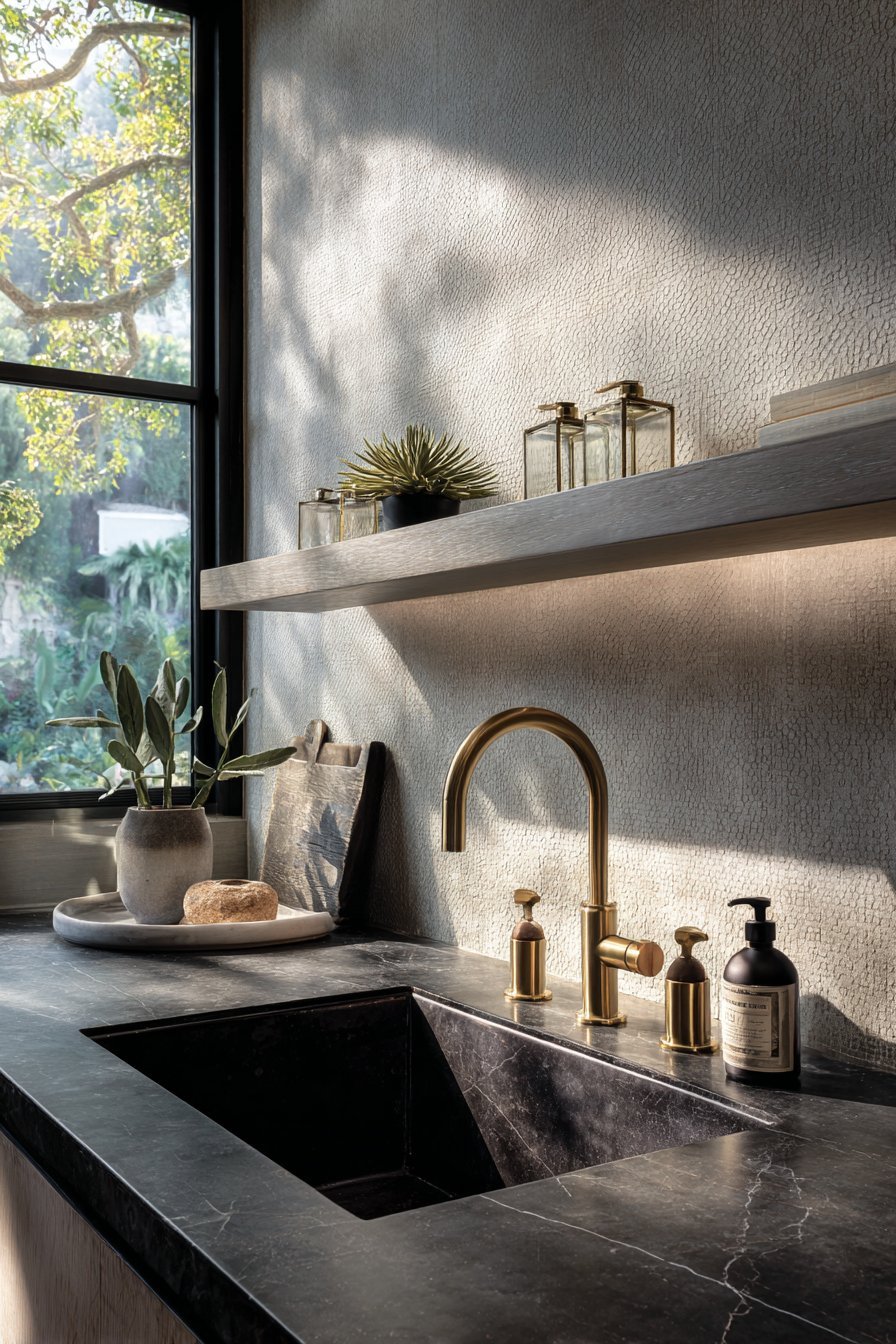
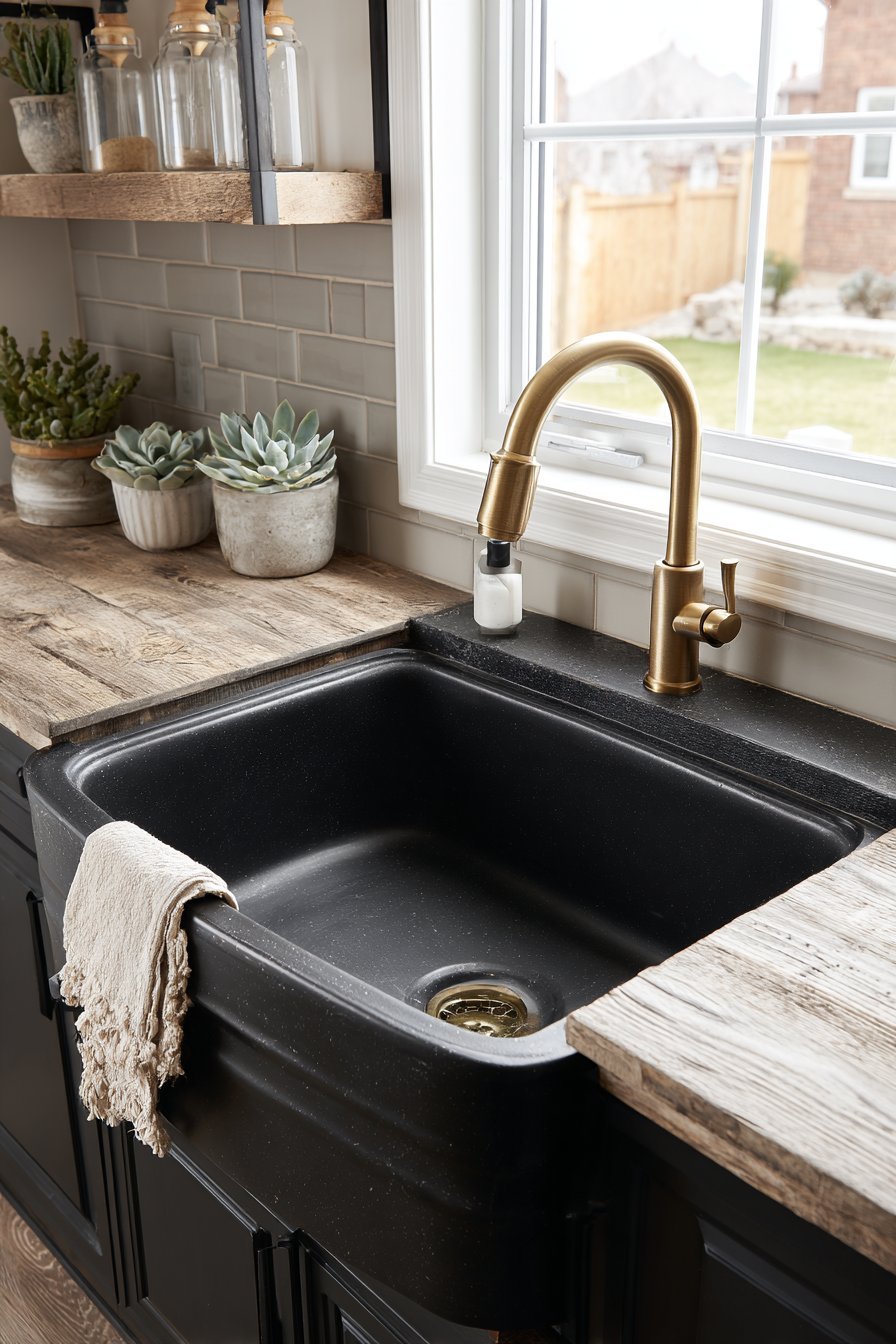
The sink area becomes a study in refined material choices. A deep farmhouse-style basin in matte black ceramic makes a bold statement. The minimalist brass faucet features wooden handle details. This combination of metal and wood exemplifies Japandi philosophy. Honed black granite surrounds the sink with subtle grey veining.
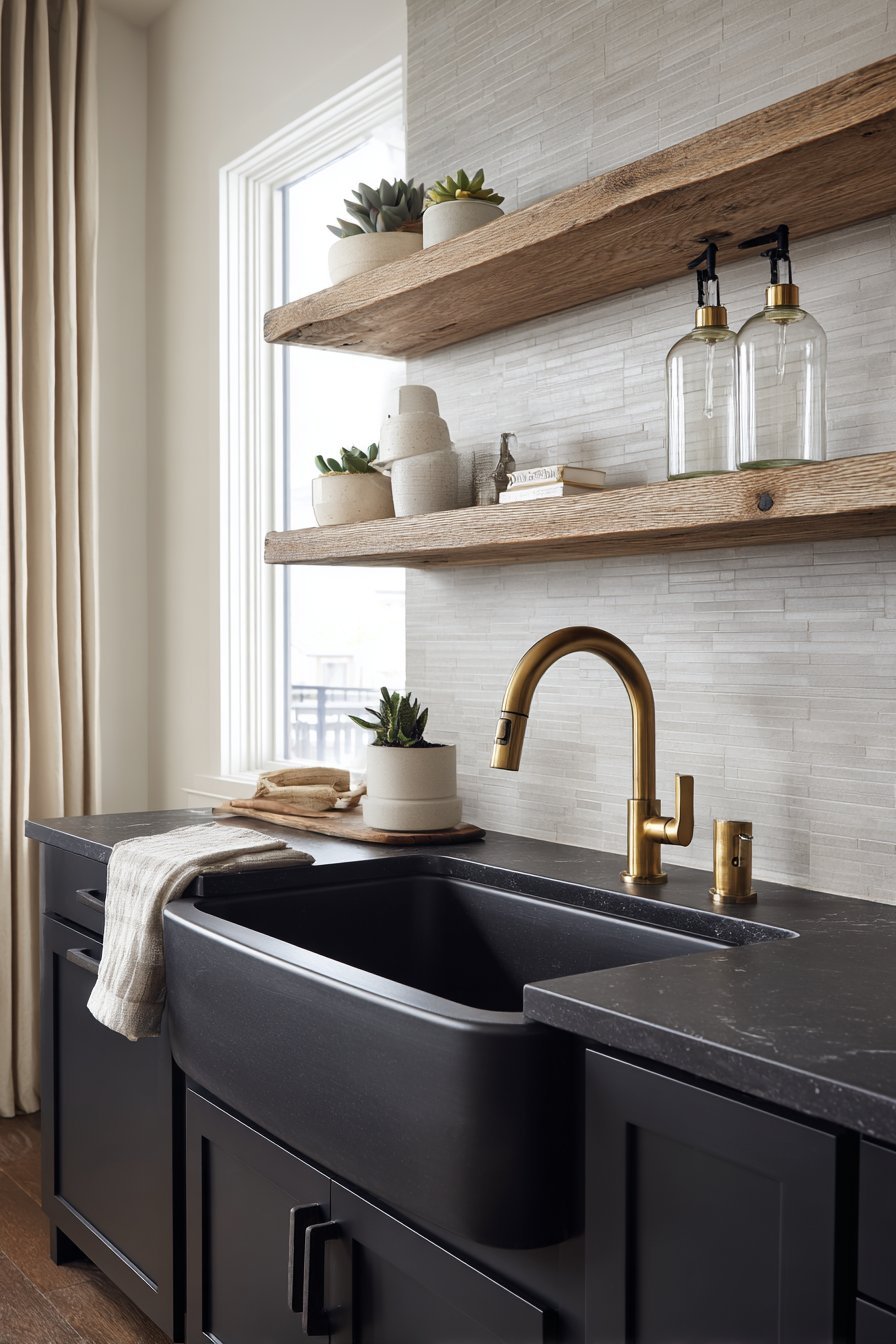
White oak floating shelves mount on a tile backsplash in soft grey. Glass dispensers hold dish soap with elegant simplicity. A small succulent arrangement adds organic presence without clutter. Morning light from an adjacent window creates gentle highlights. The water-resistant surfaces shimmer subtly in the natural illumination.
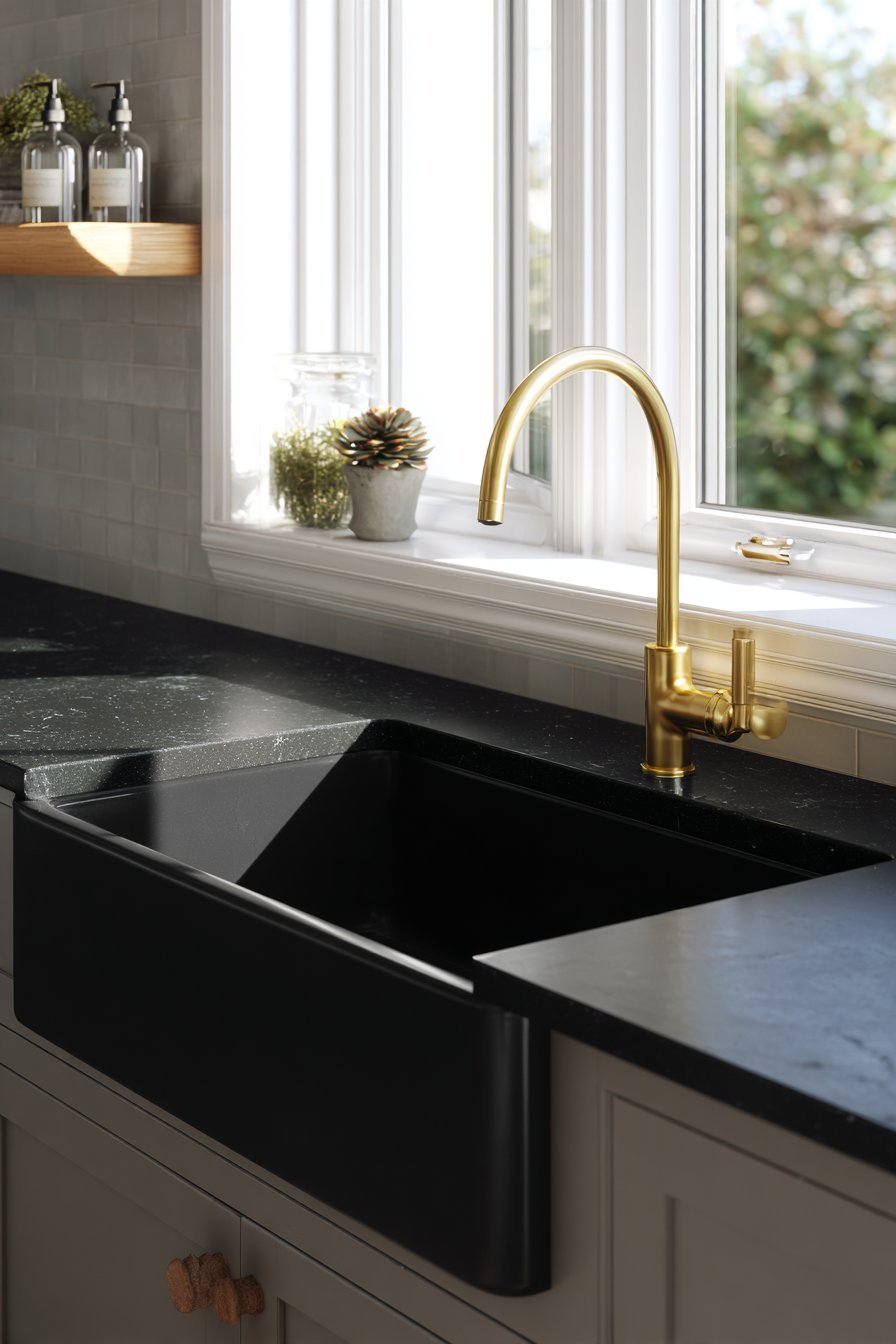
This design demonstrates functional beauty through material quality. The matte black ceramic requires regular maintenance but offers stunning visual impact. Brass develops a natural patina over time, adding character. The combination of black, brass, and white oak creates timeless appeal. Attention to realistic texture representation elevates the entire composition.
Key Design Tips:
- Choose matte black fixtures for sophisticated contemporary appeal
- Incorporate brass for warm metal tones that age beautifully
- Use honed granite for elegant, low-gloss surfaces
- Install floating shelves to maintain visual lightness
- Display functional items in beautiful, simple containers
- Position sinks near windows to utilize natural light
8. Galley Layout with Ash Wood Efficiency
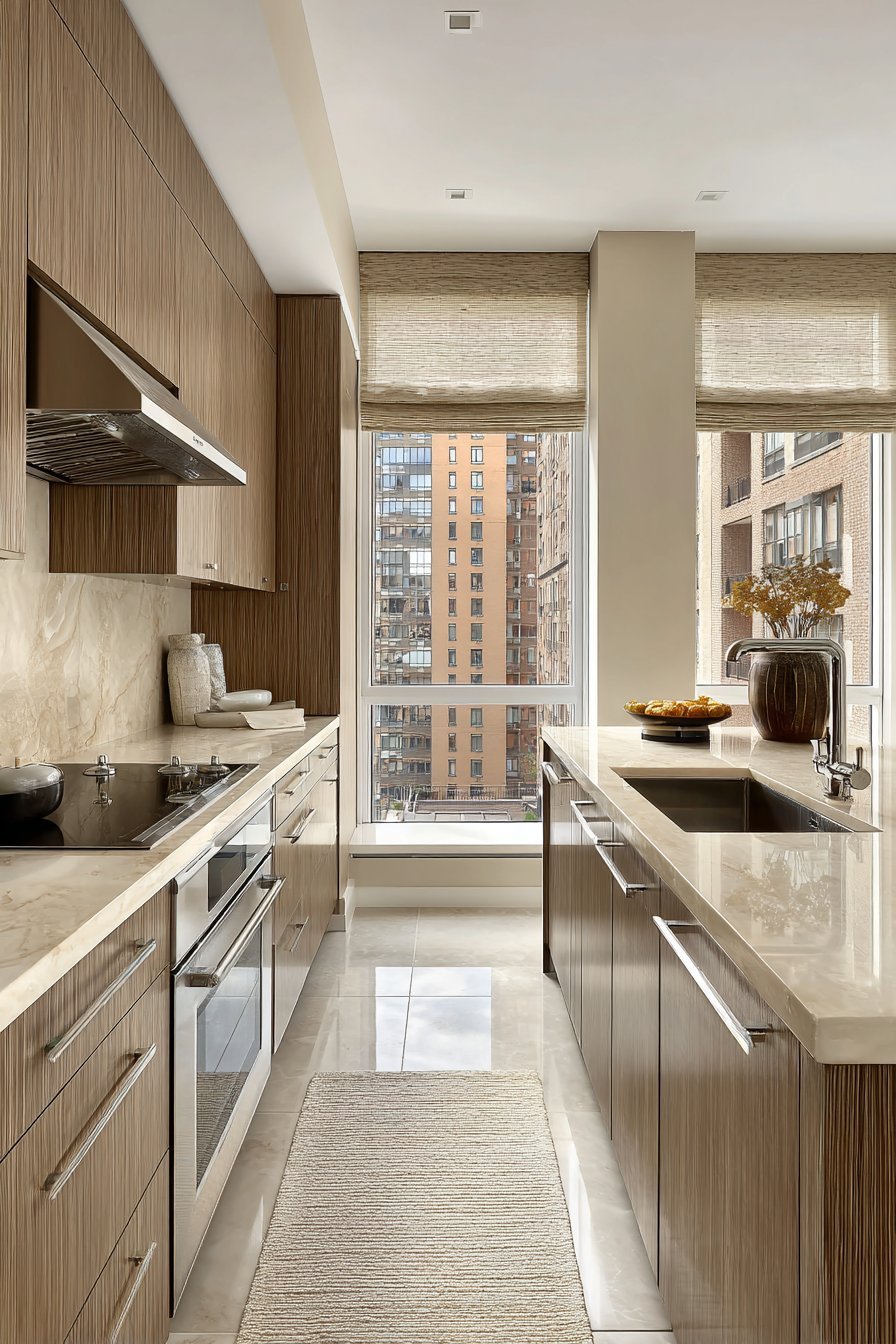
Parallel runs of cabinetry maximize the galley kitchen’s potential. Light ash wood showcases distinctive grain patterns throughout. One side features a continuous workspace with integrated technology. The built-in induction cooktop sits flush with the quartz countertop. Warm beige tones complement the ash wood beautifully.
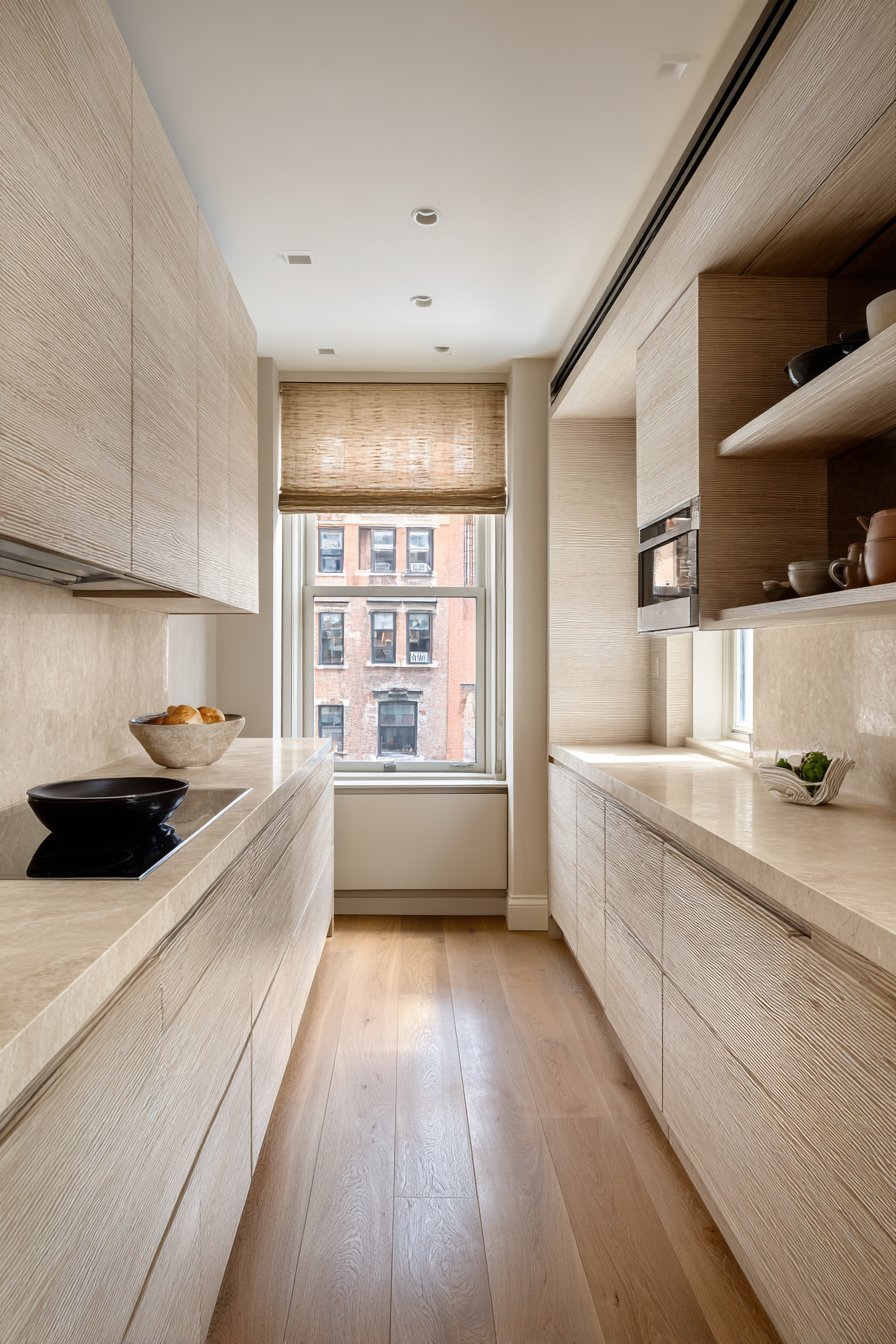
The opposite side incorporates floor-to-ceiling storage solutions. Some open cubbies display minimal cookware with intentional placement. Natural bamboo Roman shades filter sunlight from the corridor’s end window. The controlled light creates soft, flattering illumination. The efficient layout demonstrates thoughtful planning for narrow spaces.
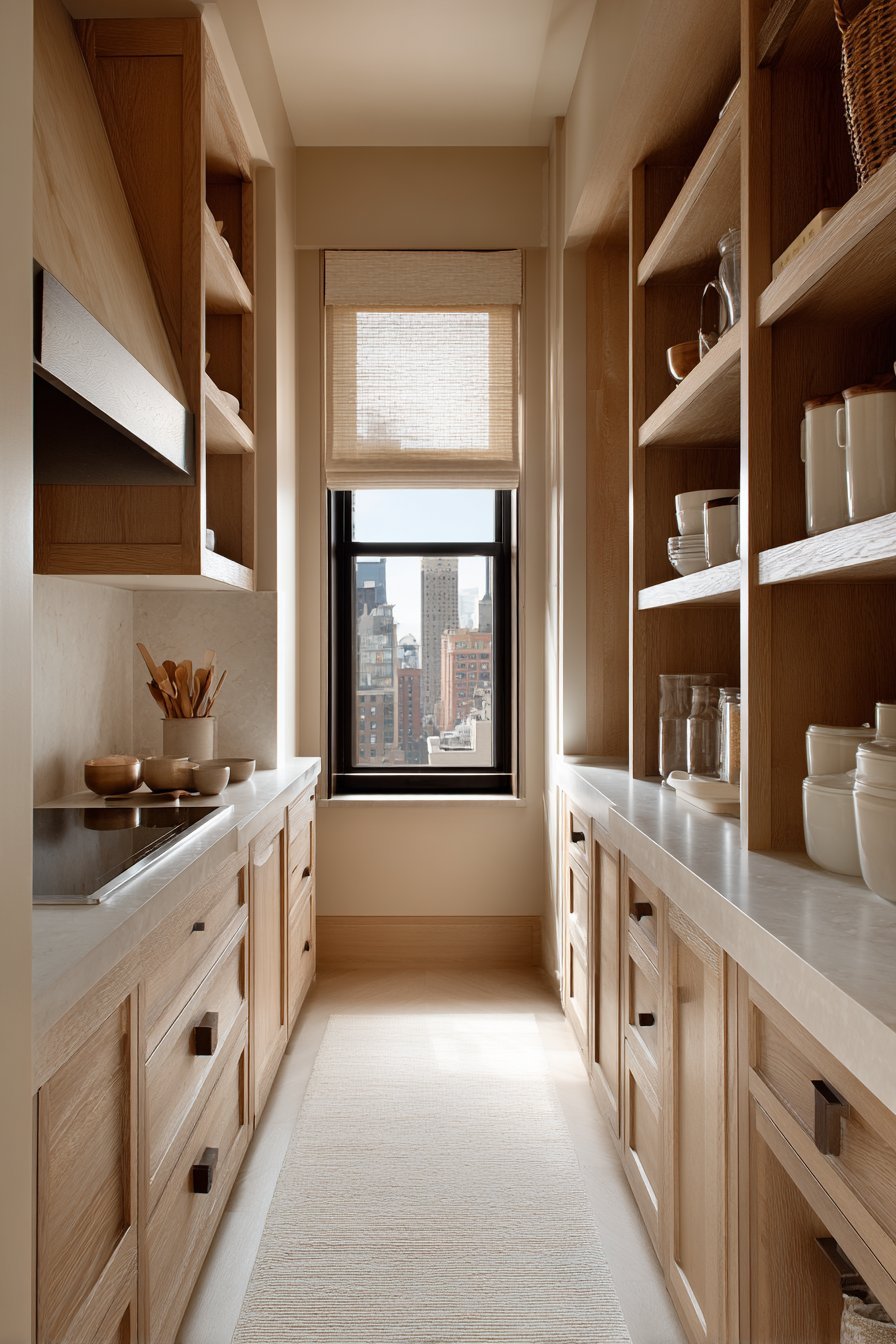
Wide-angle views reveal how seamless appliance integration maintains clean lines. The soft diffused lighting highlights the ash wood’s natural beauty. This design proves that galley kitchens can feel spacious and organized. Strategic storage placement eliminates countertop clutter. The narrow space becomes an efficient, beautiful cooking environment.

Key Design Tips:
- Maximize parallel walls in galley layouts for efficiency
- Choose light wood tones to prevent narrow spaces from feeling dark
- Integrate appliances flush with countertops for seamless surfaces
- Incorporate varied storage with both open and closed options
- Use Roman shades for light control and natural material consistency
- Create continuous workspaces for uninterrupted food preparation
9. Terrazzo Countertop with Glass-Fronted Storage
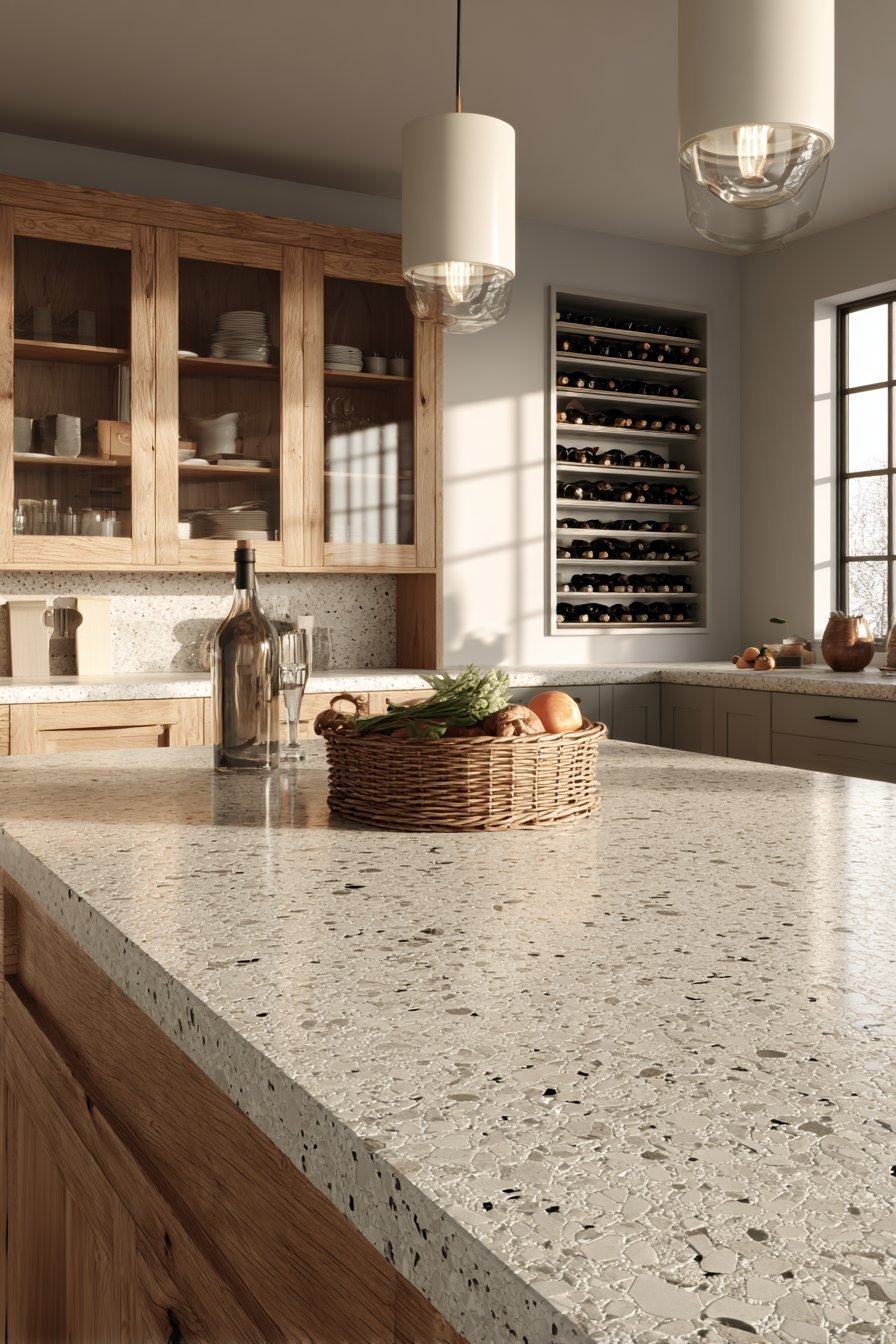
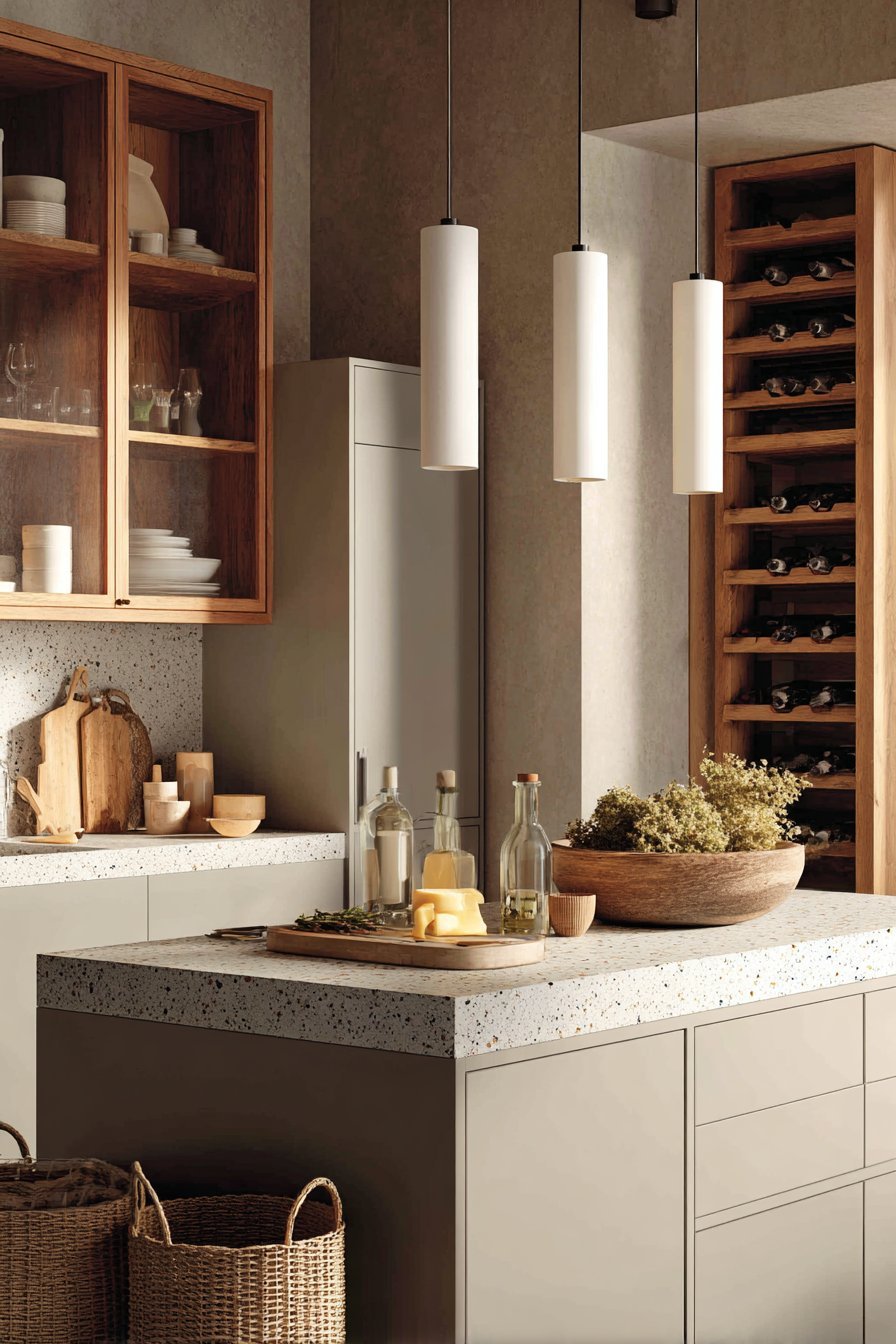
A striking terrazzo countertop anchors this sophisticated design. Neutral tones blend black, grey, and cream aggregate. Pale concrete binds the varied elements into cohesive surfaces. Custom cabinetry combines upper glass-fronted units with wooden frames. Lower solid doors feature a warm grey painted finish.

Simple cylindrical pendant lights in white ceramic hang at varying heights. The arrangement creates visual interest above the counter workspace. A woven basket holds fresh produce near built-in wine storage. Horizontal bottle storage integrates seamlessly into the cabinetry. Natural materials and handcrafted elements pervade the entire design.

Professional lighting emphasizes the terrazzo’s handcrafted quality. Each aggregate piece tells a story of material origins. The balanced minimalist composition demonstrates restraint and intention. Glass-fronted cabinets display beautiful dishware while protecting from dust. This kitchen celebrates both form and function through thoughtful details.
Key Design Tips:
- Select terrazzo for unique, handcrafted countertop surfaces
- Use glass-fronted cabinets to display beautiful collections
- Hang pendant lights at varying heights for dynamic interest
- Incorporate wine storage into custom cabinetry designs
- Choose woven baskets for natural texture and practical storage
- Combine painted and natural wood finishes for depth
10. Breakfast Nook with Built-In Bench Seating
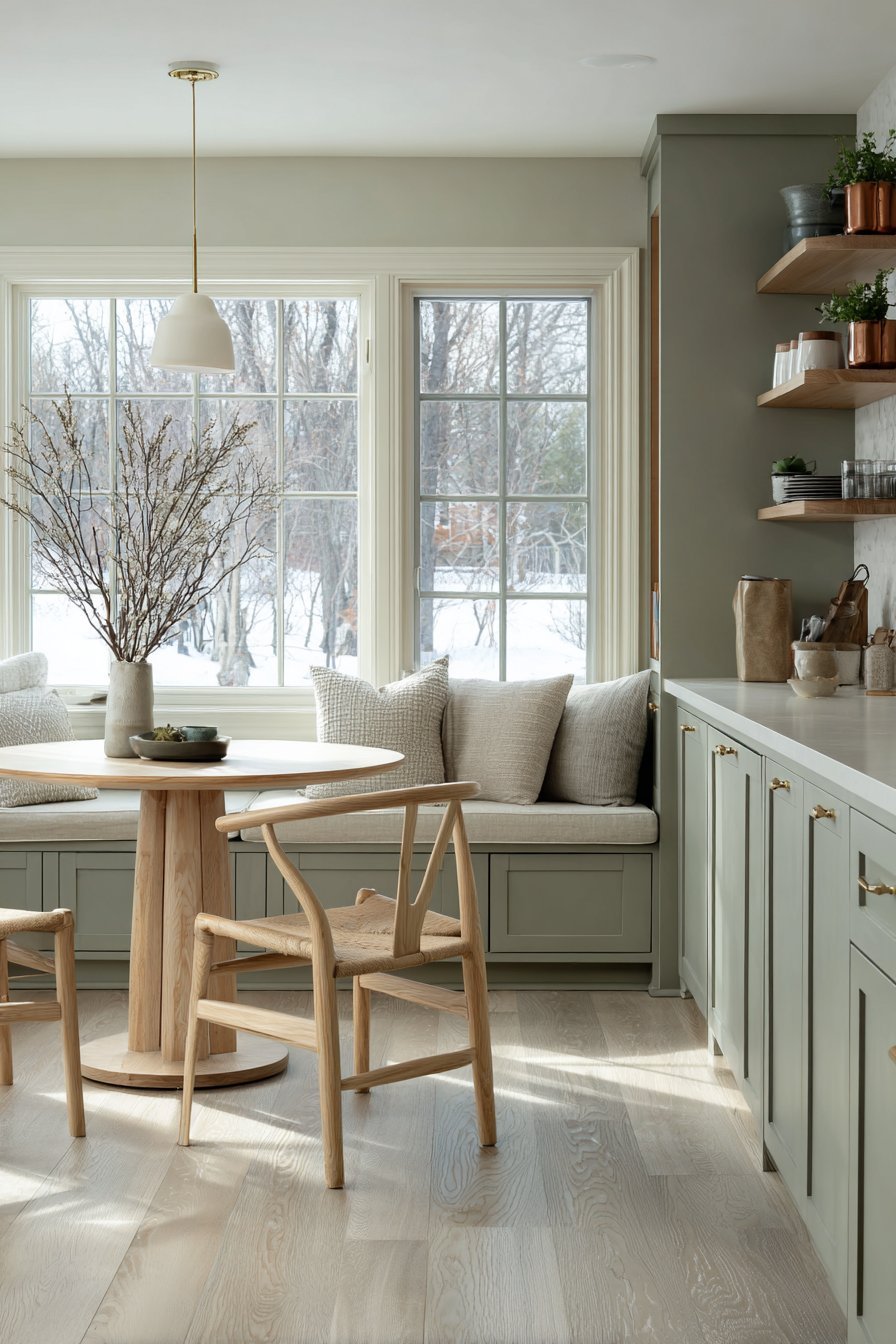
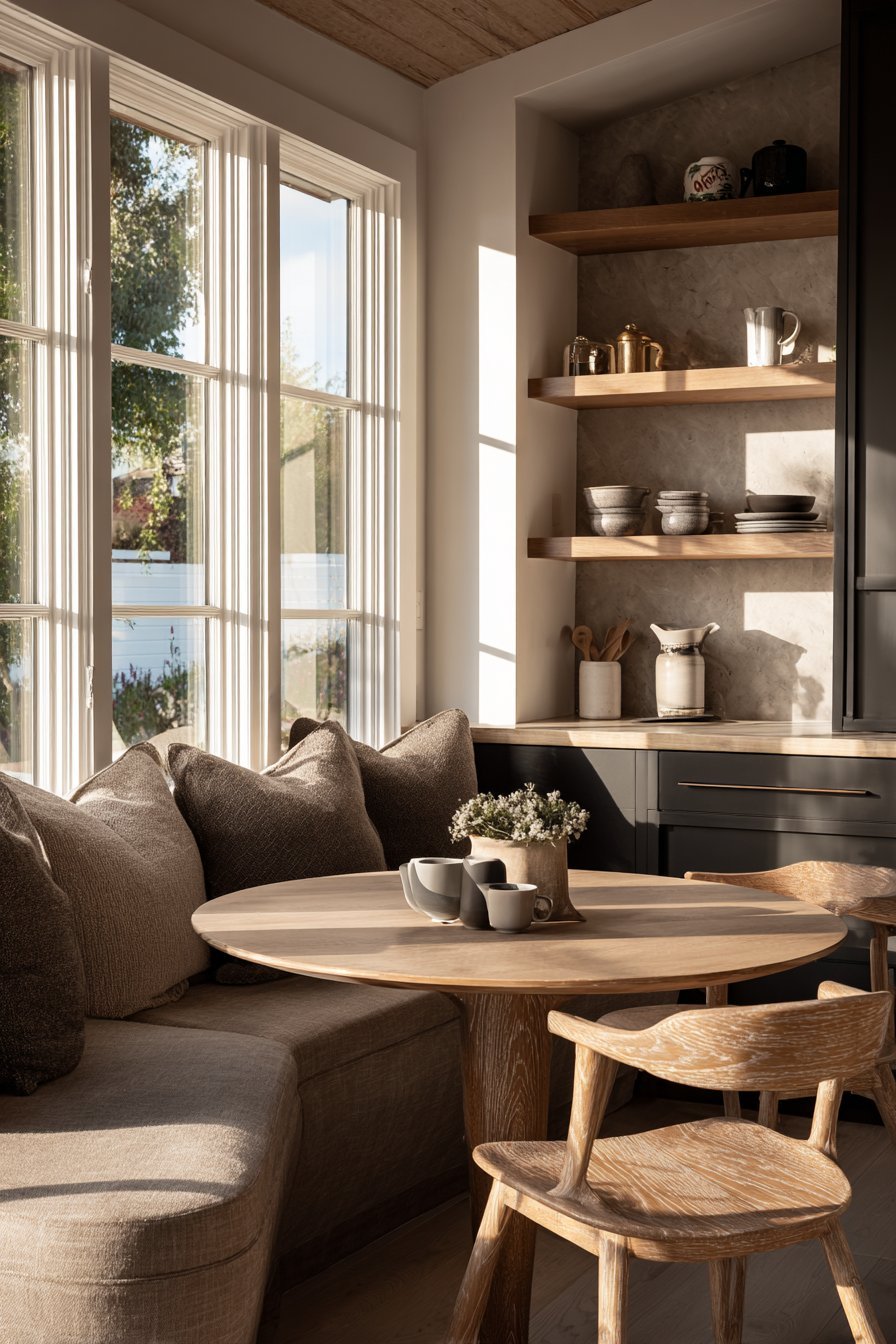
Built-in bench seating upholstered in natural linen creates comfort. The seating nestles against a wall of generous windows. A round oak pedestal table centers the intimate breakfast space. Two matching wooden chairs complete the seating arrangement. The adjacent kitchen features lower cabinets in deep charcoal.

Light maple butcher block countertops show natural wood variations. The organic patterns and occasional knots add authentic character. Floating upper shelves in matching maple display tea canisters. Minimalist servingware creates a curated, intentional appearance. Soft morning light creates natural shadows throughout the space.
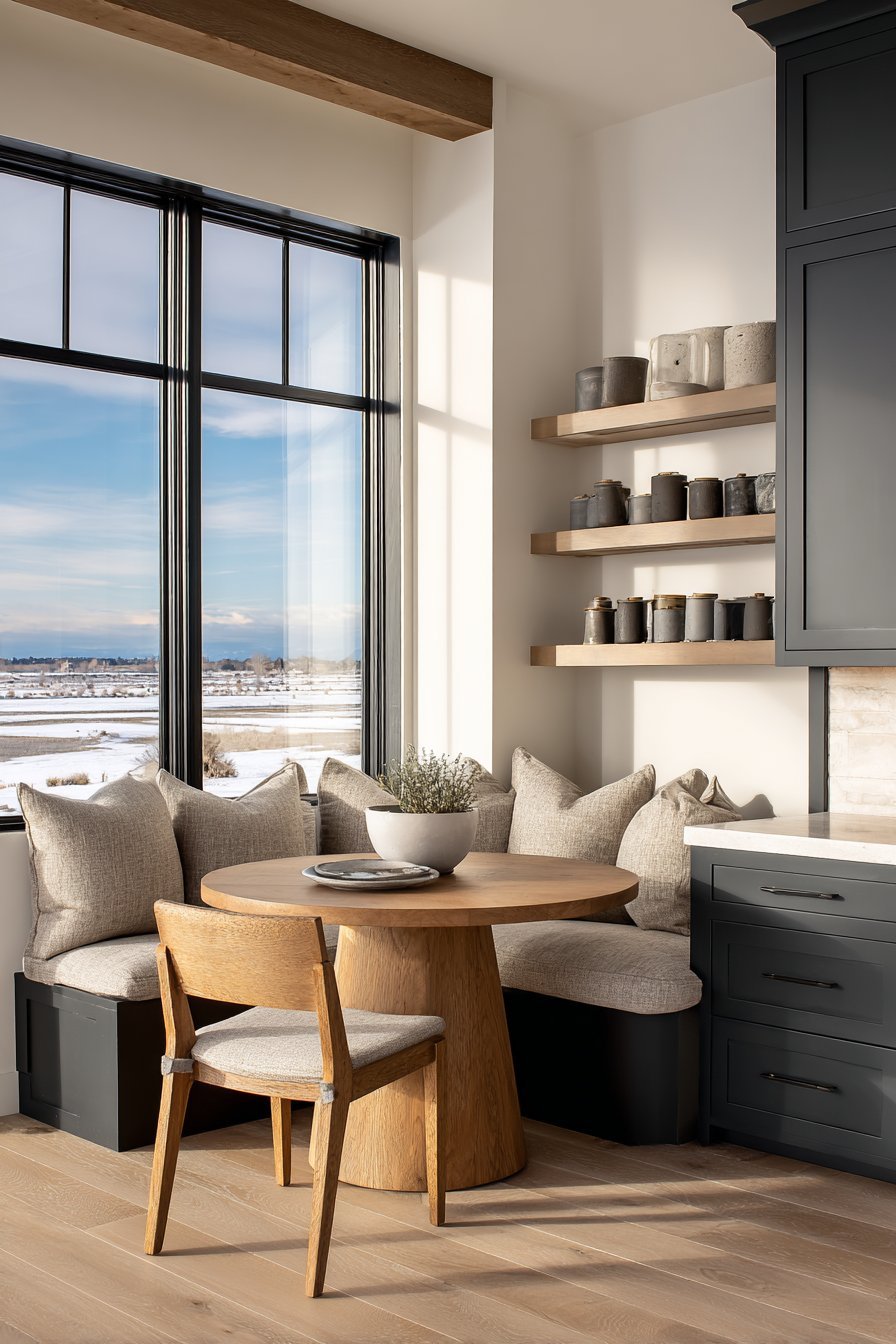
The design demonstrates seamless integration of dining and cooking areas. The breakfast nook invites lingering over morning coffee. Natural linen upholstery remains durable while feeling soft and welcoming. The round table encourages intimate conversation and connection. This space proves that Japandi kitchens embrace social functionality.
Key Design Tips:
- Build in bench seating to maximize space efficiency
- Choose natural linen for durable, beautiful upholstery
- Install round tables in breakfast nooks for social connection
- Use butcher block for warm, natural countertop surfaces
- Display curated collections on floating shelves
- Position seating near windows to enjoy natural light
11. Sliding Pantry with Organized Glass Storage
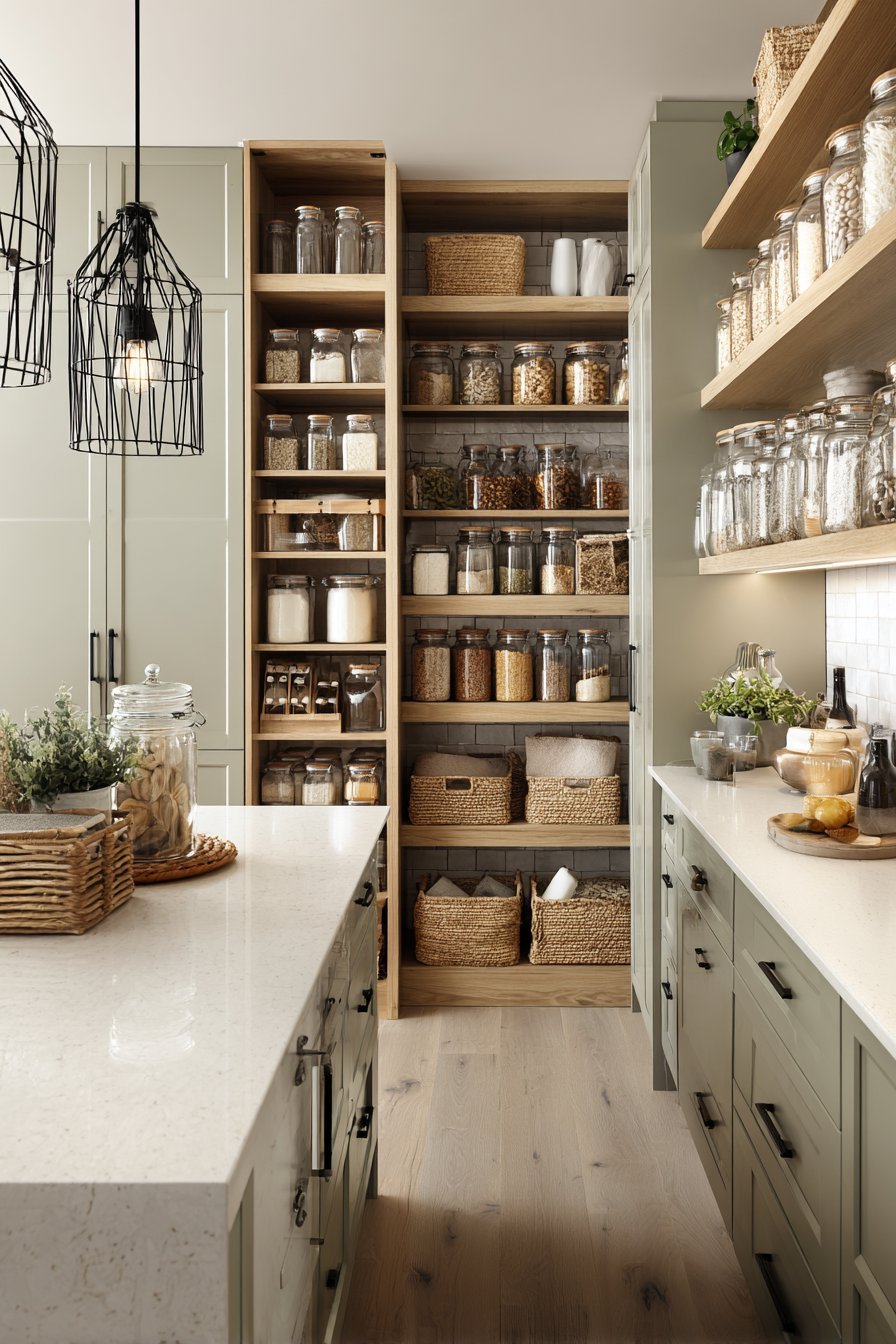
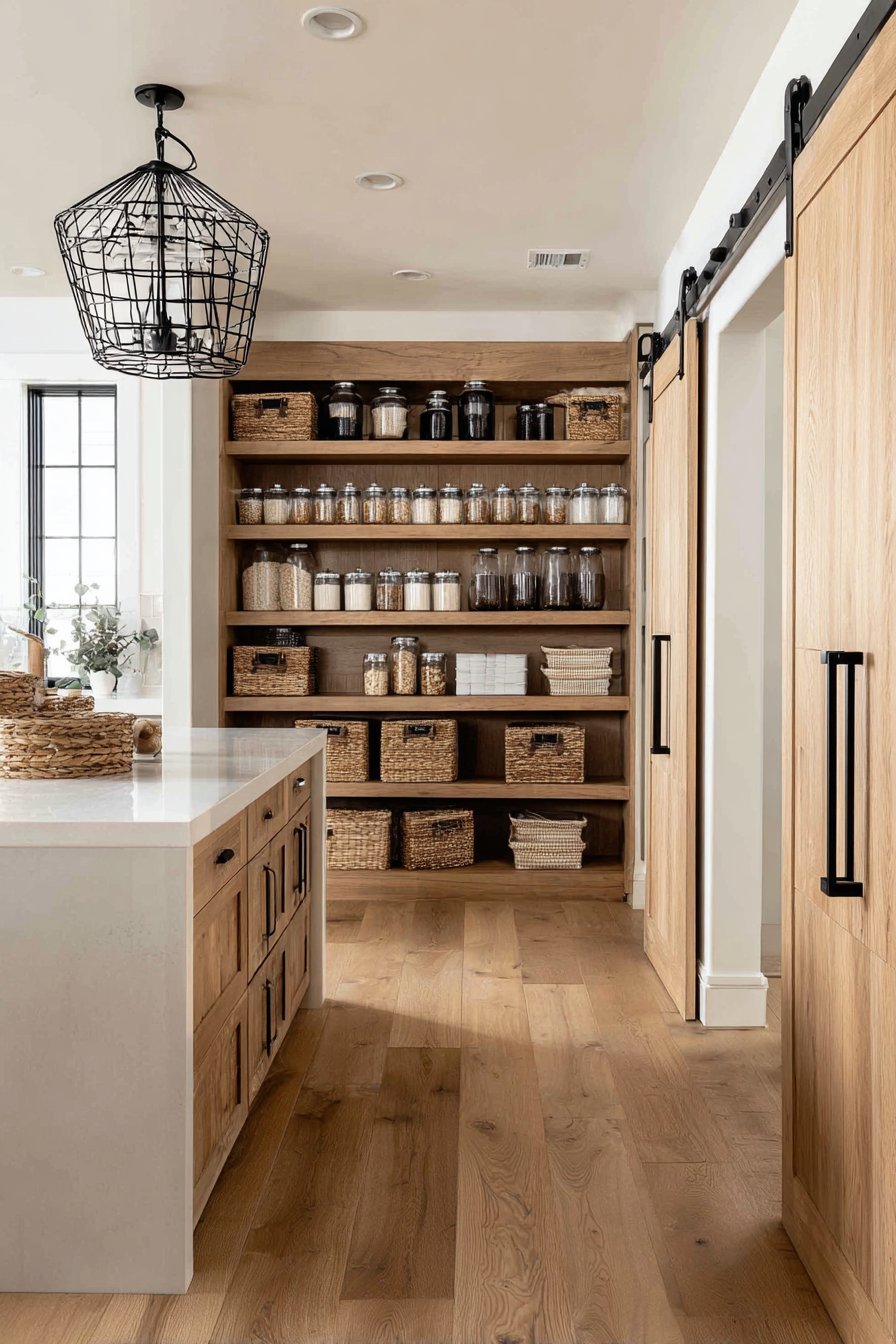
A sliding door system reveals organized pantry perfection. Custom white oak shelving adjusts to varied heights. Provisions nestle in uniform glass jars with simple labels. Natural fiber baskets hold larger items with textural beauty. LED strip lighting illuminates each shelf for easy visibility.
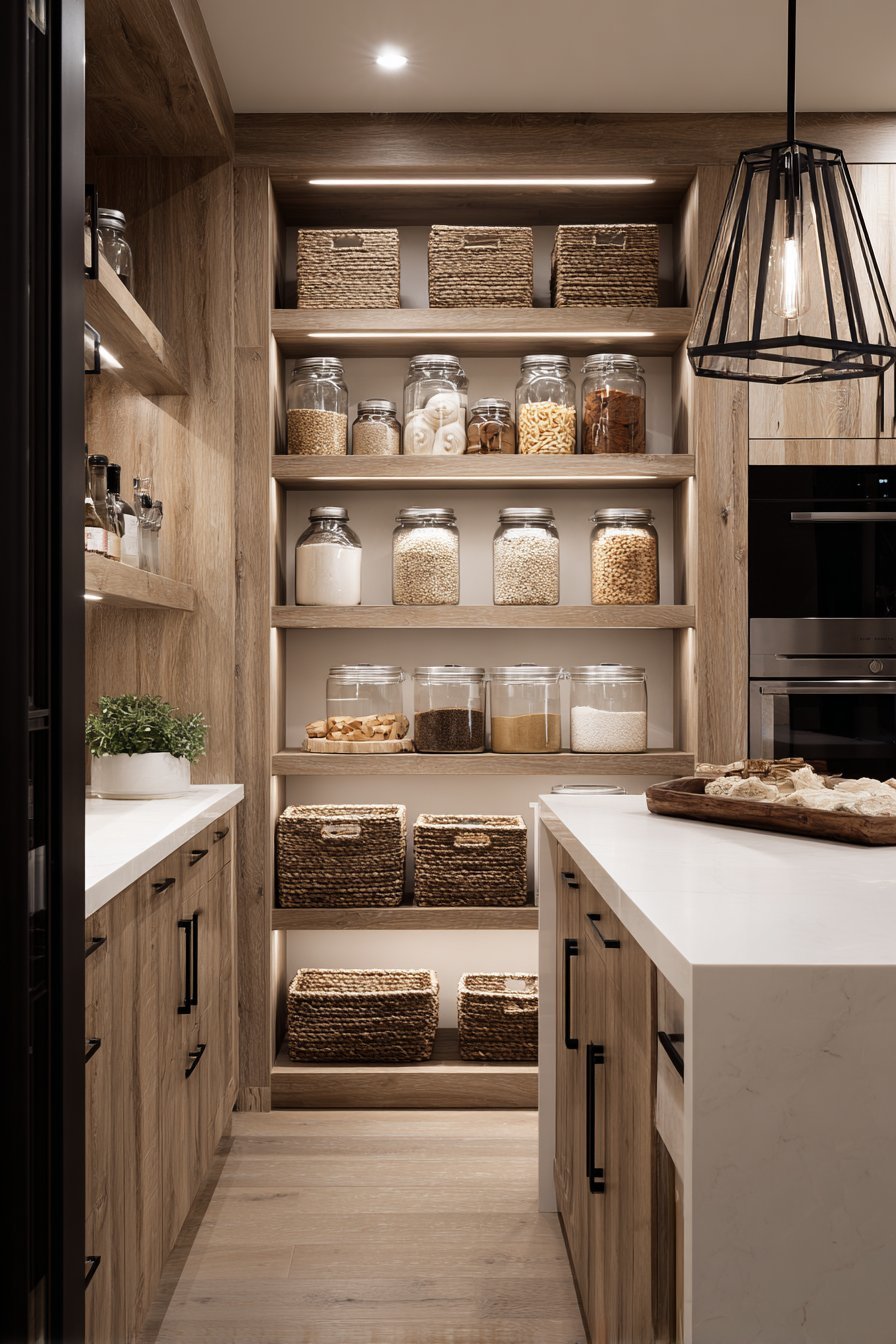
The surrounding kitchen shows handleless cabinets in soft sage. A waterfall quartz island features creamy white tones. The seamless edge detail creates contemporary elegance. A single architectural pendant light hangs above the workspace. Black wire framework maintains the minimal aesthetic while providing focused illumination.
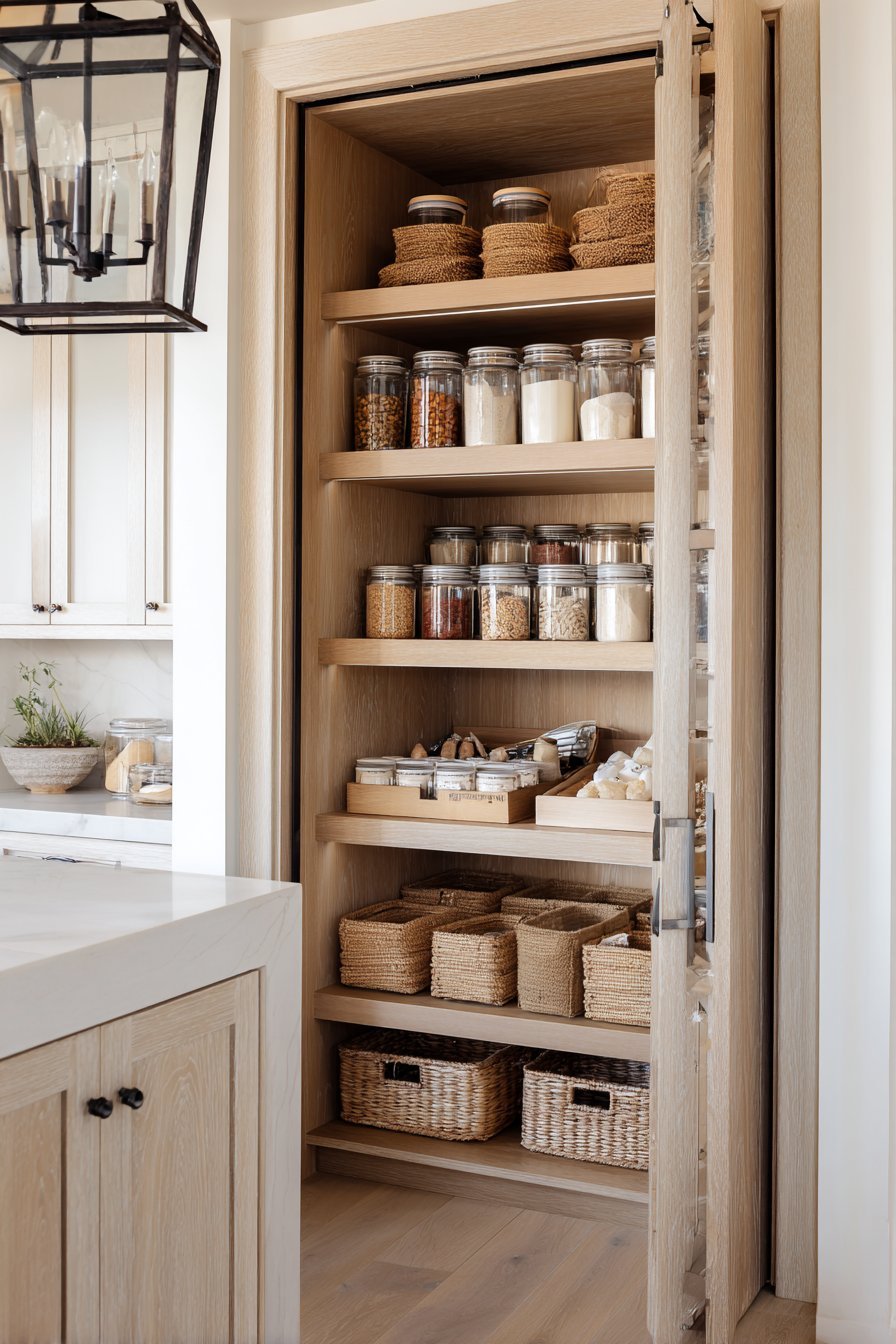
This design emphasizes practical storage solutions within beautiful frameworks. The sliding door mechanism saves space while creating visual interest. Glass jar storage allows quick inventory of pantry contents. The cohesive natural material palette extends from kitchen to pantry. Every organizational element serves both beauty and function.
Key Design Tips:
- Install sliding doors for space-saving pantry access
- Use adjustable shelving to accommodate various item sizes
- Store dry goods in uniform glass containers for visual harmony
- Incorporate LED lighting for functional visibility
- Choose natural fiber baskets for texture and flexibility
- Maintain consistent material palettes between kitchen and pantry
12. Exposed Beam Ceiling with Material Layering
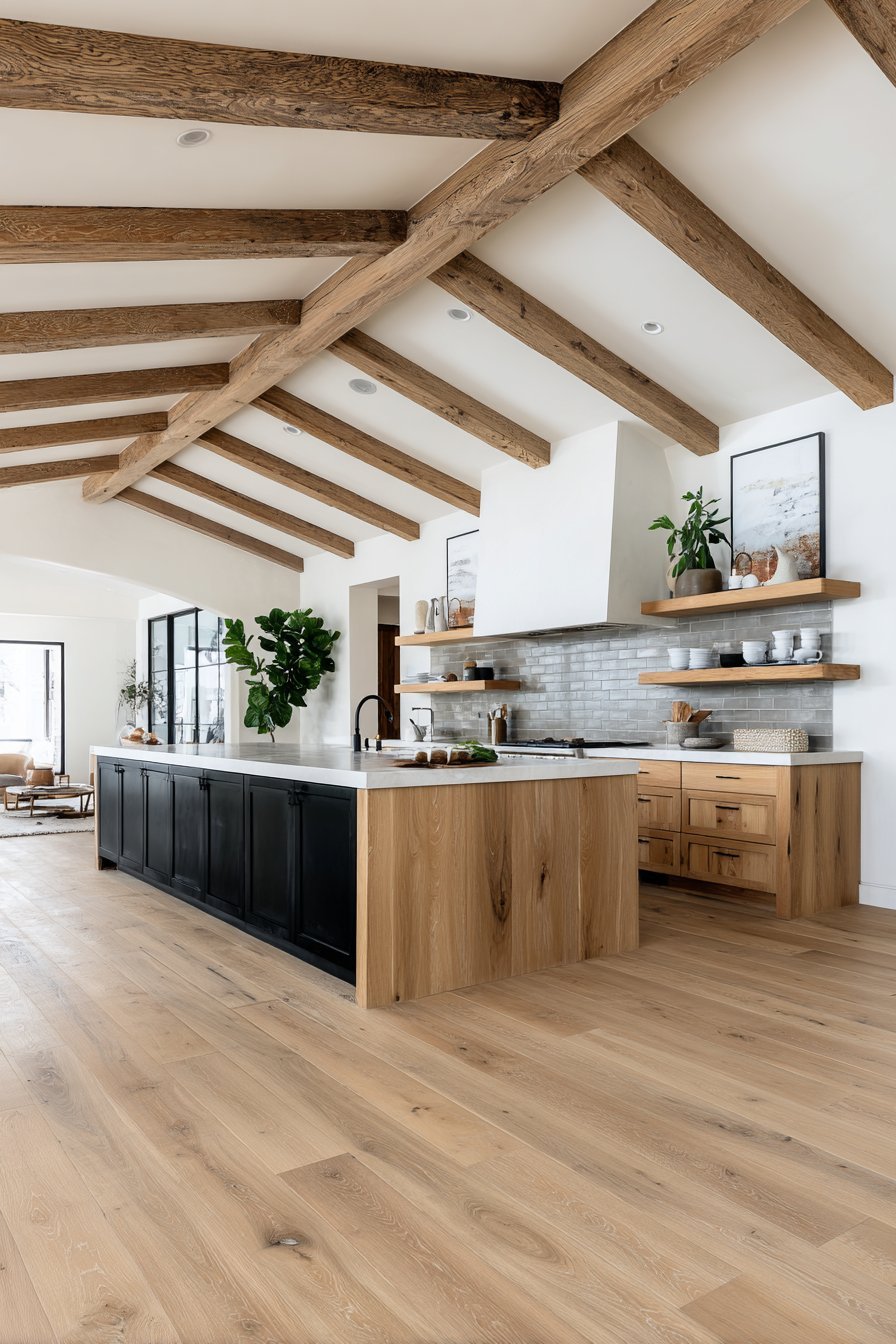
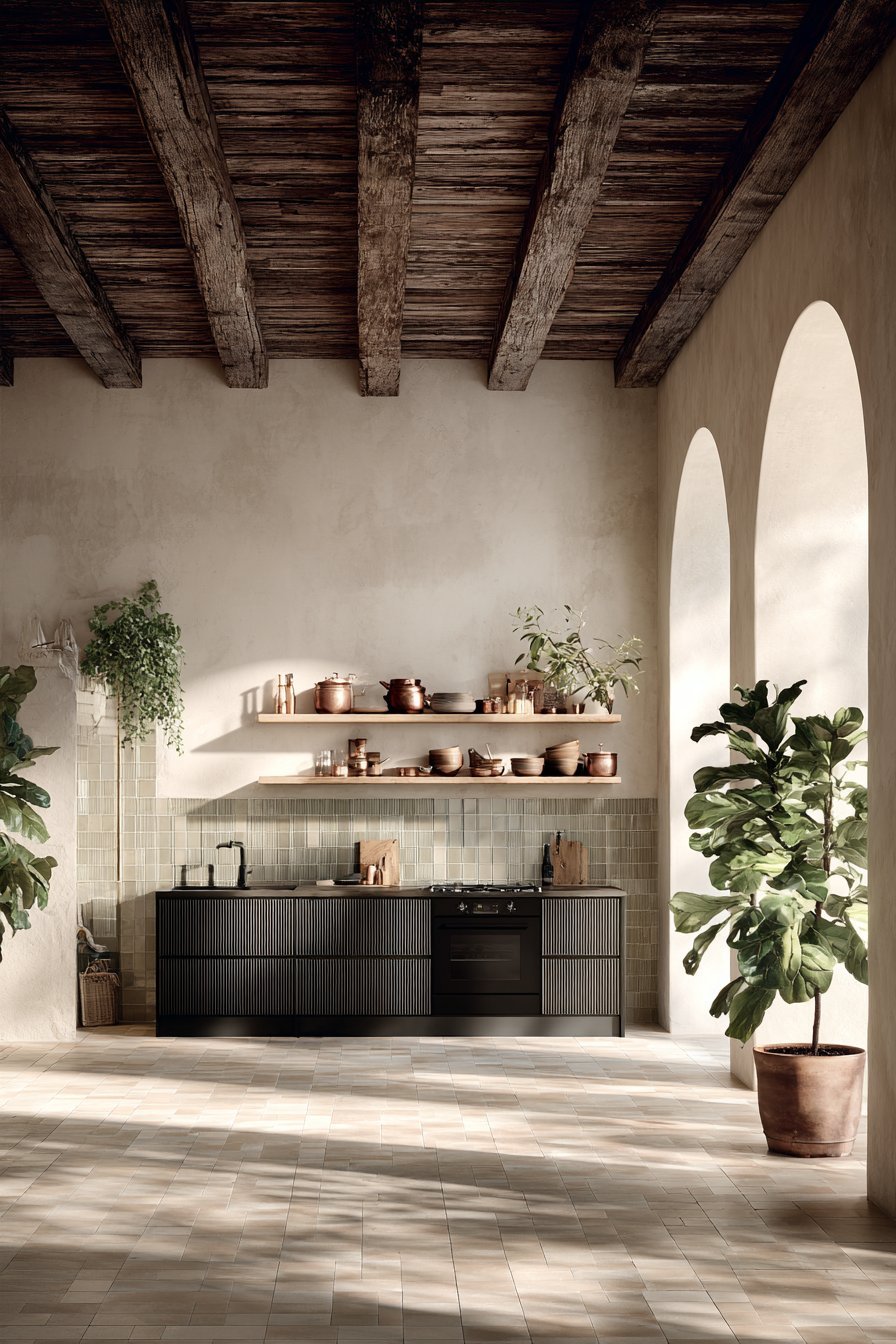
Natural wooden beams in dark walnut contrast against white plaster. The exposed ceiling adds architectural interest and vertical drama. Below, the kitchen combines matte black lower cabinets with function. Open upper shelving in light pine displays copper cookware. Ceramic dishes add handmade quality to the practical display.
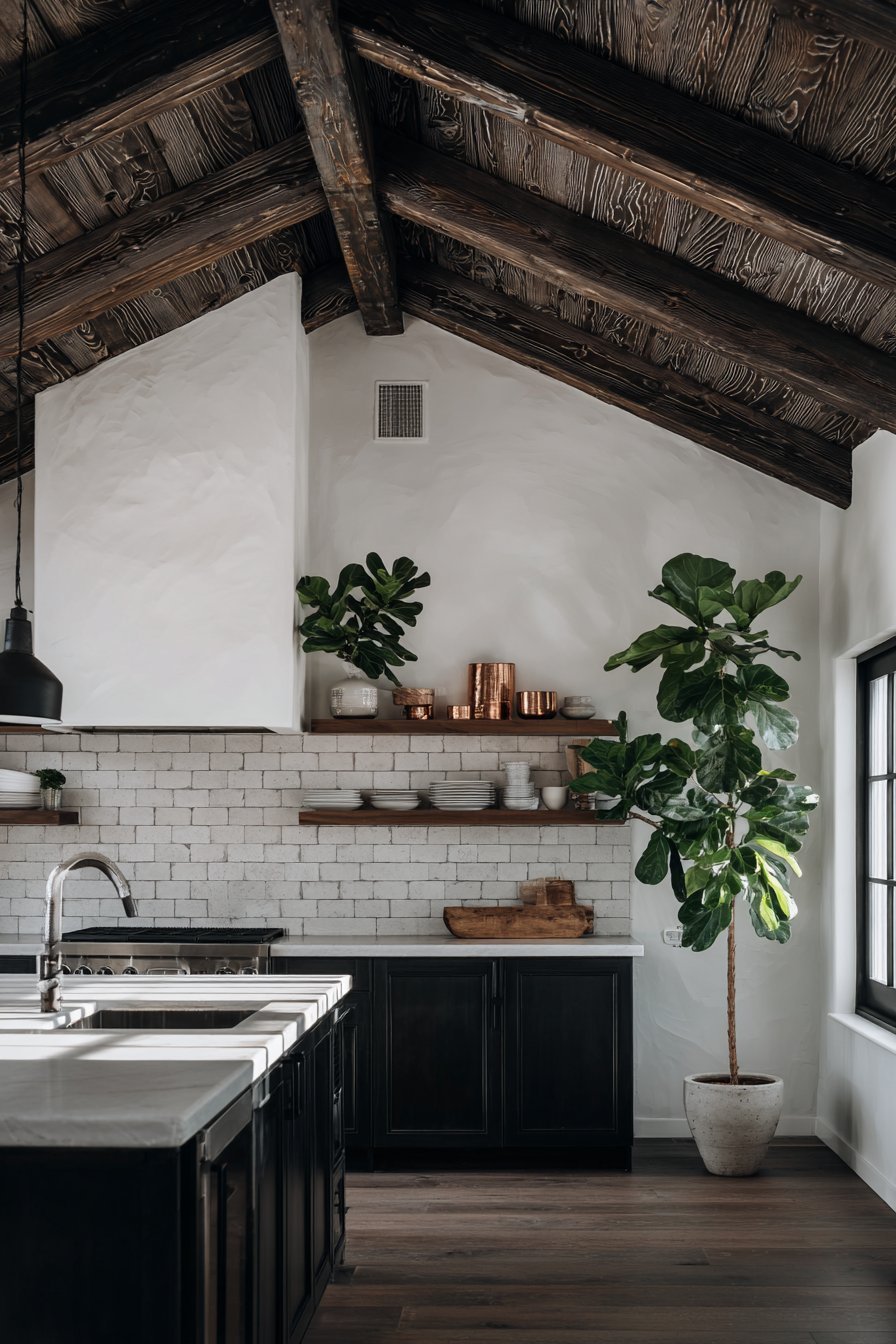
Elongated subway tiles in soft grey create the backsplash. Dark grout lines emphasize the tile pattern and geometry. A potted fiddle leaf fig adds organic presence in the corner. Natural light from clerestory windows creates dynamic shadows throughout the day. The changing light patterns add living quality to static surfaces.

The design demonstrates successful material layering and contrast. Dark beams anchor the visual composition from above. Light shelving prevents the space from feeling heavy or oppressive. The combination creates balanced vertical interest. This kitchen proves that Japandi design accommodates architectural drama.
Key Design Tips:
- Expose ceiling beams to add architectural character
- Use dark wood tones to create visual anchors
- Combine matte black cabinets with light wood shelving
- Install elongated tiles for contemporary backsplash patterns
- Add large plants to bring natural elements into the space
- Incorporate clerestory windows for dramatic natural lighting
13. Dedicated Baking Station with Marble Integration
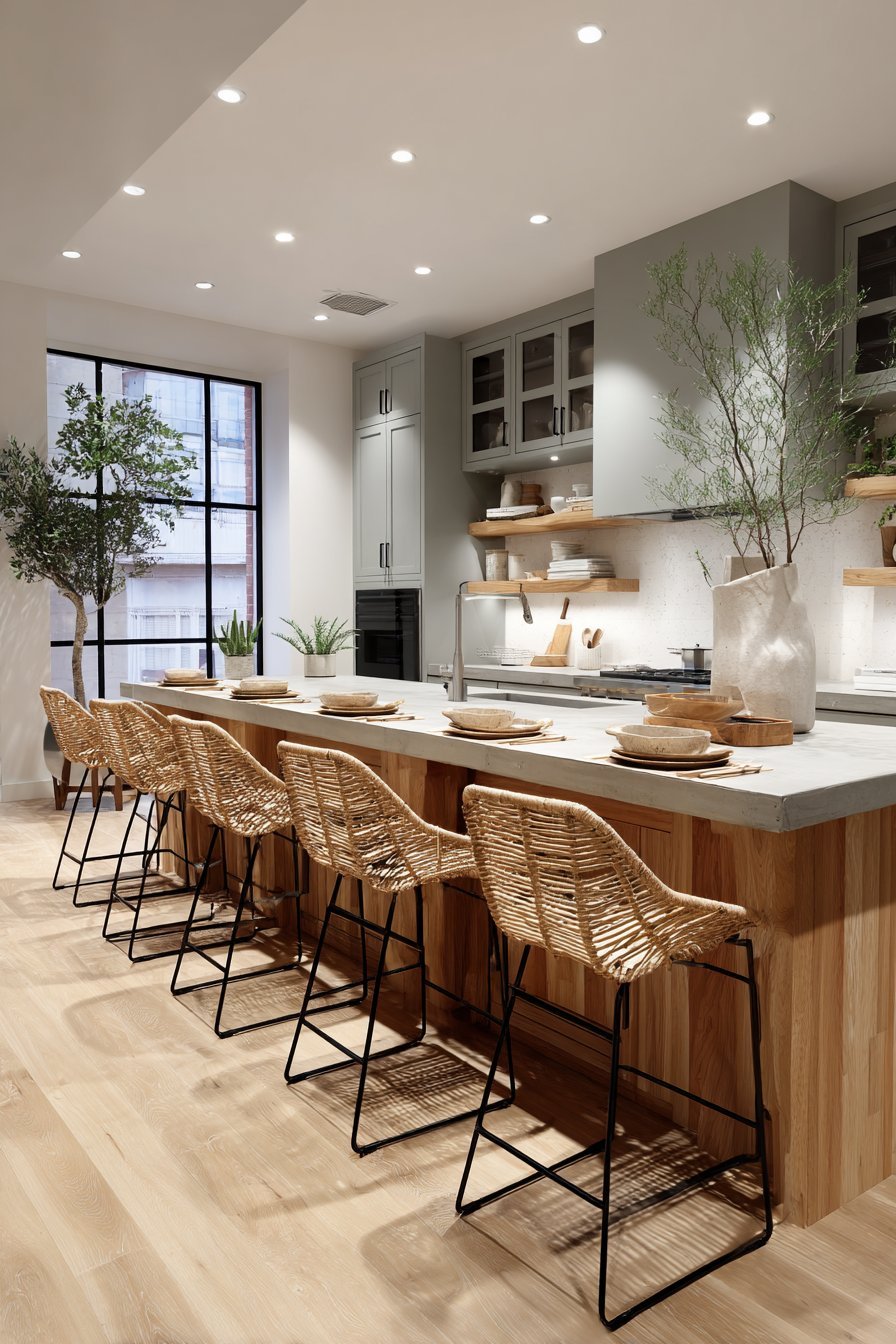
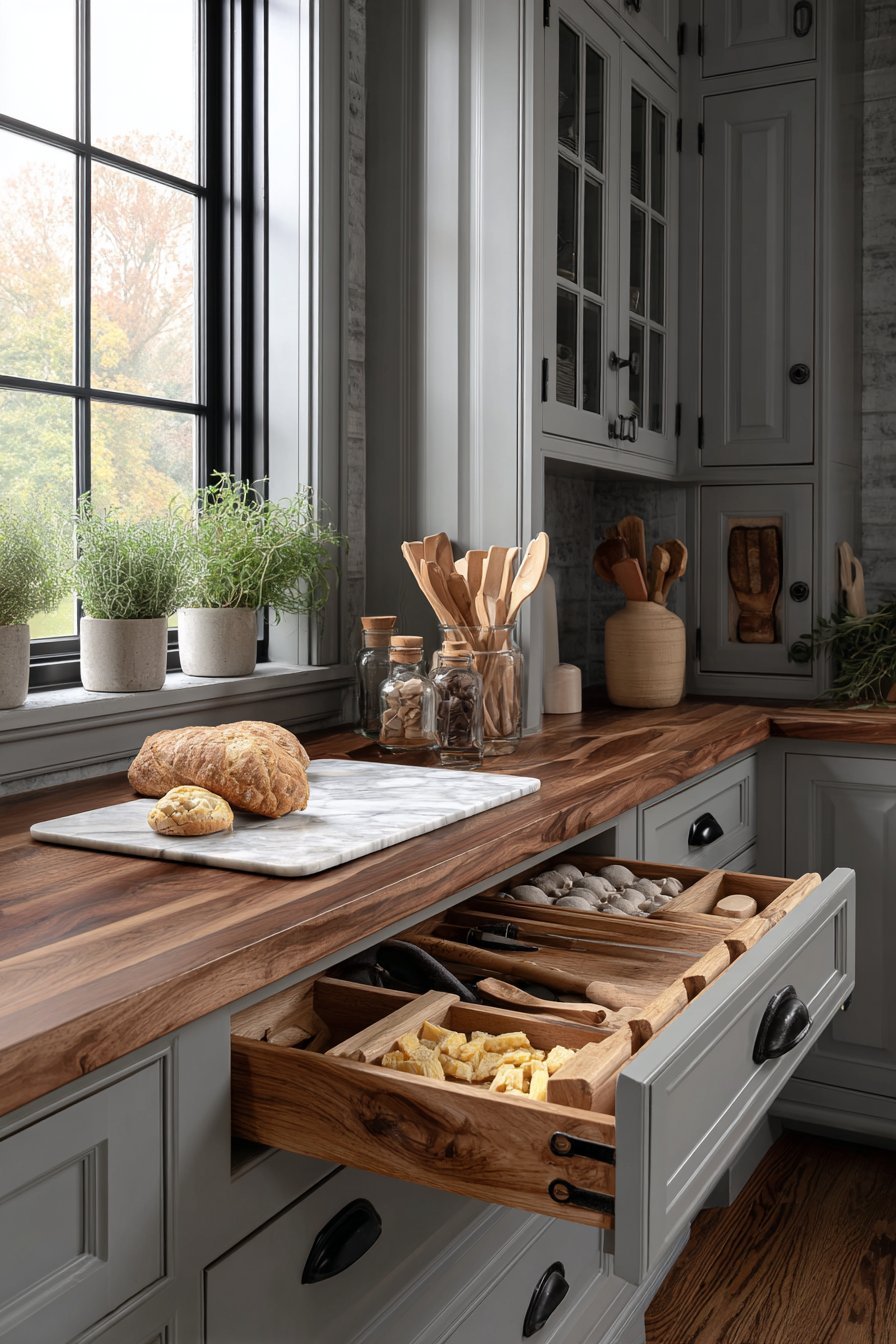
A specialized baking station features a marble pastry slab. The cool surface integrates seamlessly into walnut countertops. Pull-out storage drawers below contain organized baking tools. Wooden dividers keep implements separated and easily accessible. The surrounding cabinetry maintains consistent Japandi aesthetics.
Flat-panel doors in warm grey complement the walnut beautifully. Simple black knobs provide functional hardware without visual noise. A window backsplash offers natural light and peaceful garden views. Fresh herbs grow in small concrete planters along the windowsill. The living greenery remains within easy reach during cooking.
This design showcases specialized work zones within cohesive kitchens. The marble slab serves practical baking needs while adding luxury. Soft diffused lighting showcases authentic material textures throughout. Functional details enhance rather than detract from overall beauty. The space demonstrates that specialized needs deserve thoughtful accommodation.
Key Design Tips:
- Create dedicated stations for specialized cooking activities
- Integrate marble slabs for ideal pastry work surfaces
- Install pull-out storage for organized tool accessibility
- Use wooden dividers to keep drawers organized
- Position work stations near windows for natural light
- Grow fresh herbs in concrete planters for function and style
14. Linear Island with Social Seating Integration
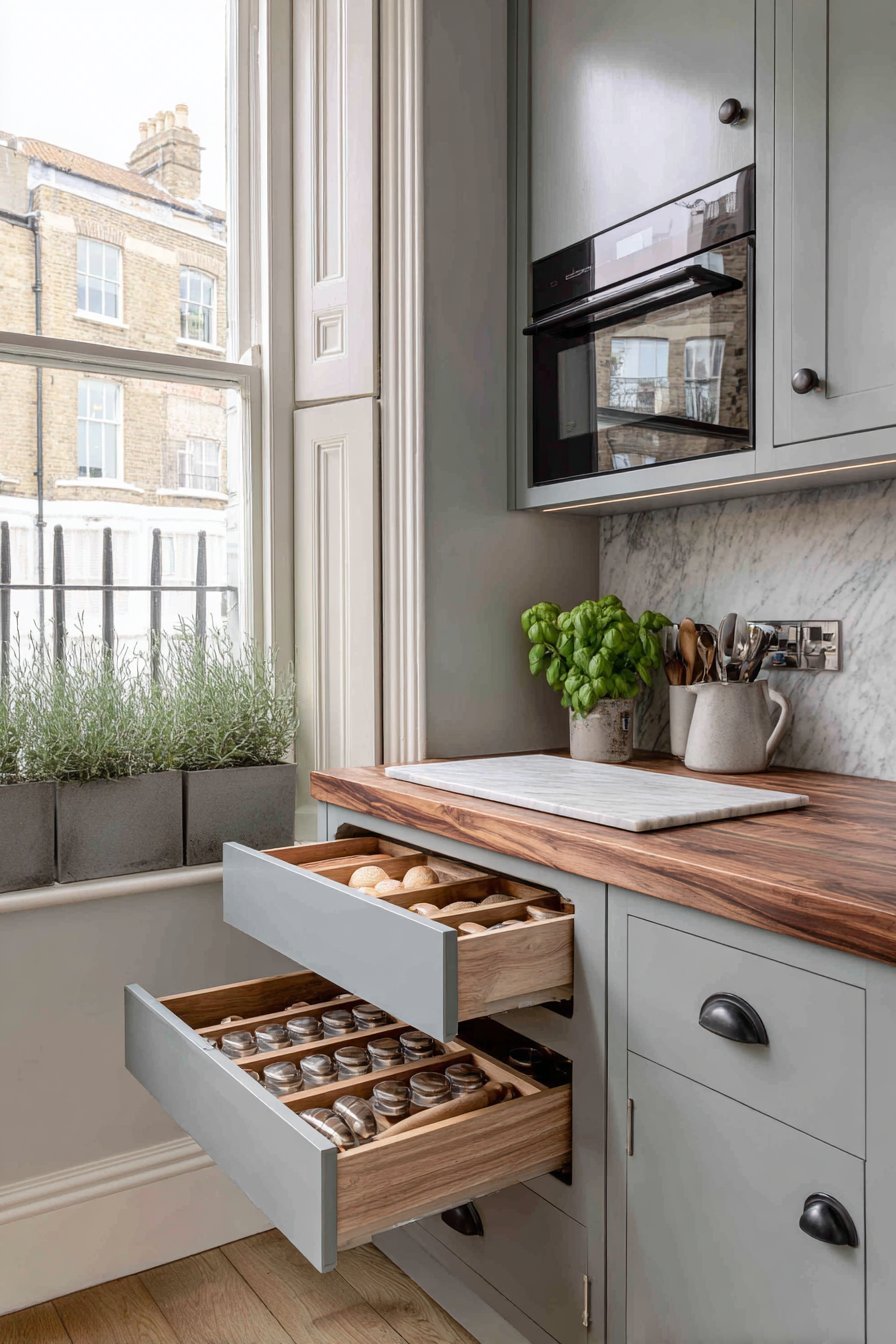
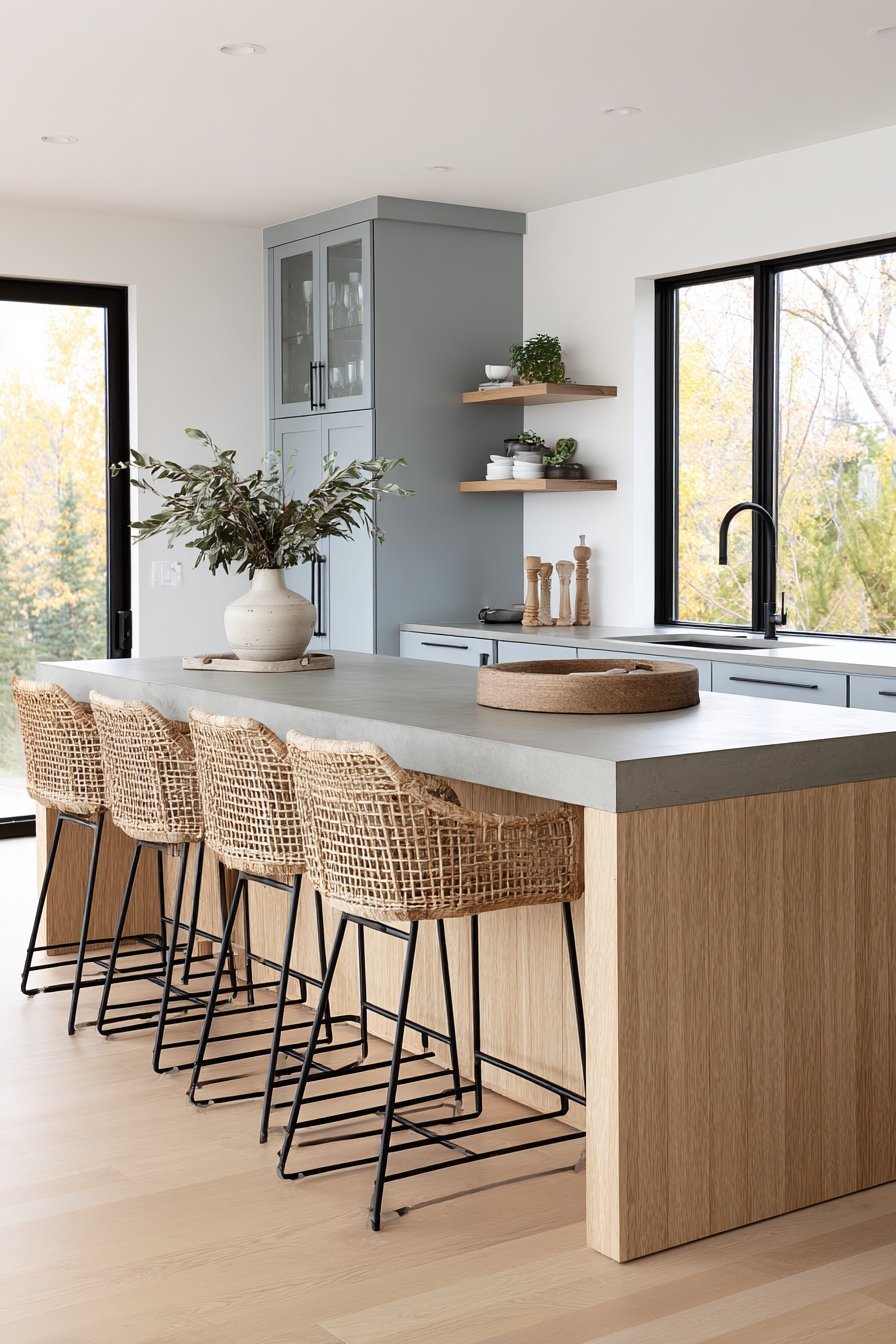
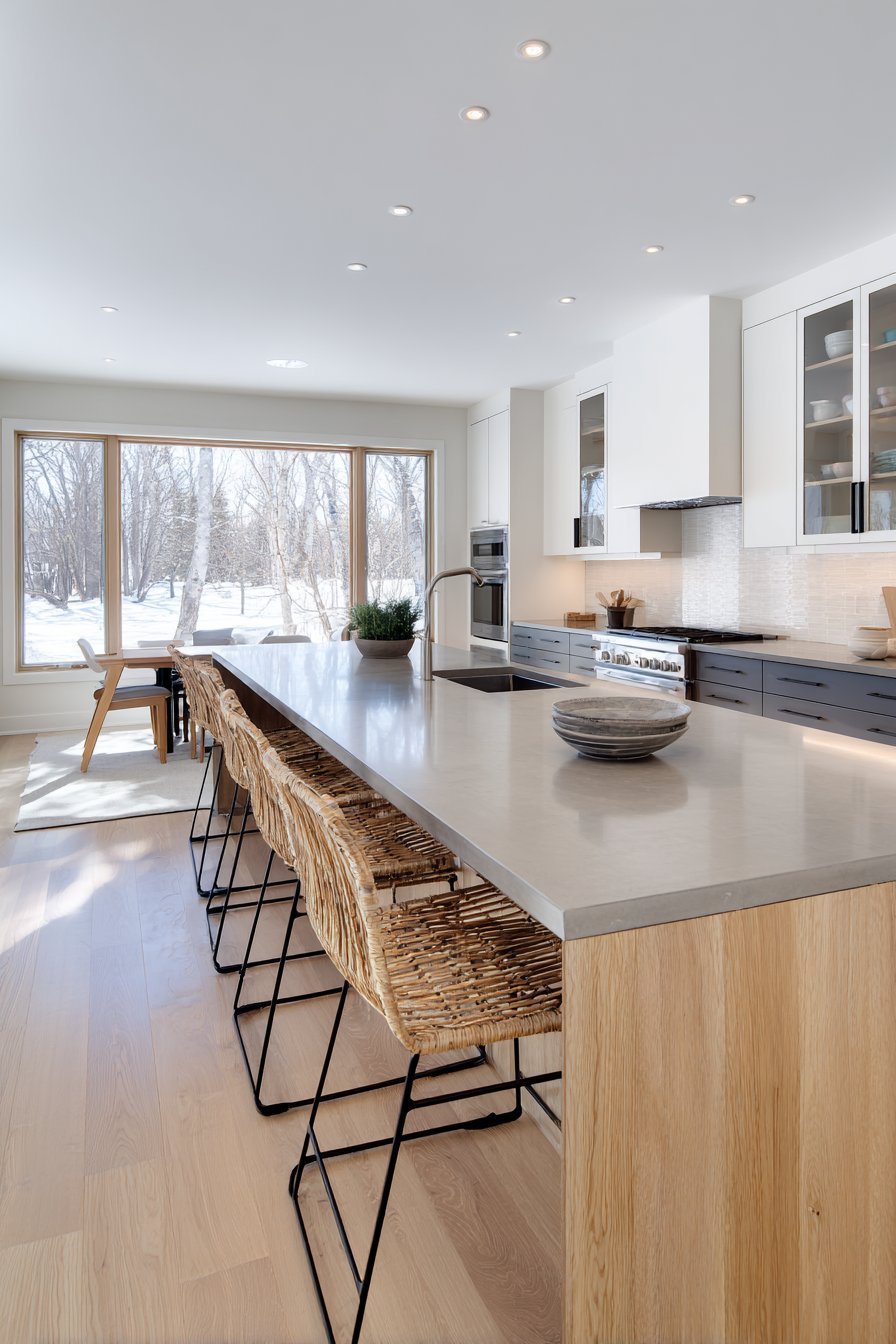
A long linear island provides seating for four people. One side accommodates comfortable social seating arrangements. The other side incorporates practical storage solutions. White oak base cabinetry supports a polished concrete countertop. Medium grey tones in the concrete feel contemporary yet warm.
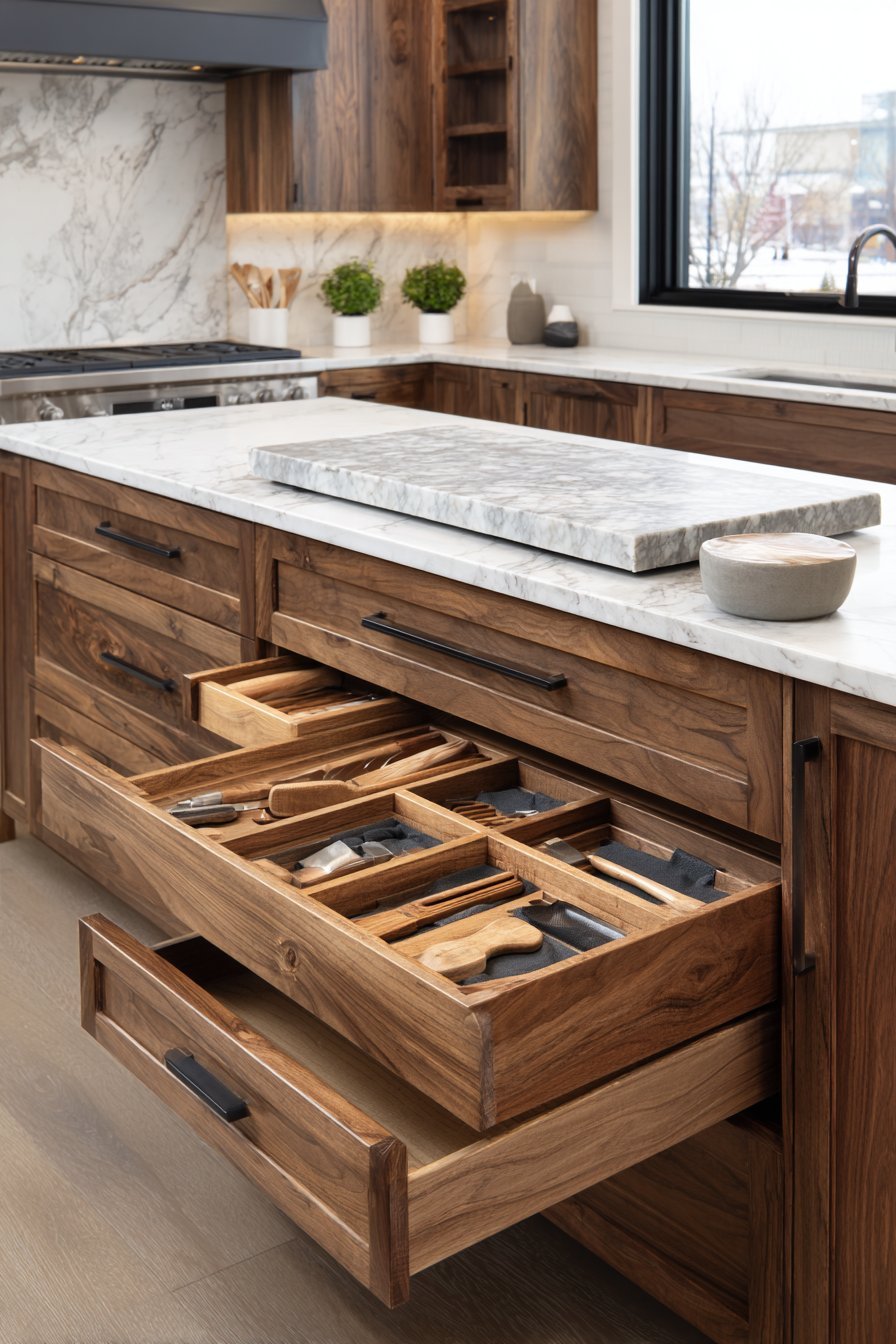
Woven rattan bar stools feature black metal frames. The natural material adds texture and organic warmth. Perimeter kitchen cabinets feature frosted glass inserts on upper units. Lower units showcase a muted blue-grey finish. Recessed lighting provides even illumination throughout the space. Large windows bring abundant natural daylight into the room.
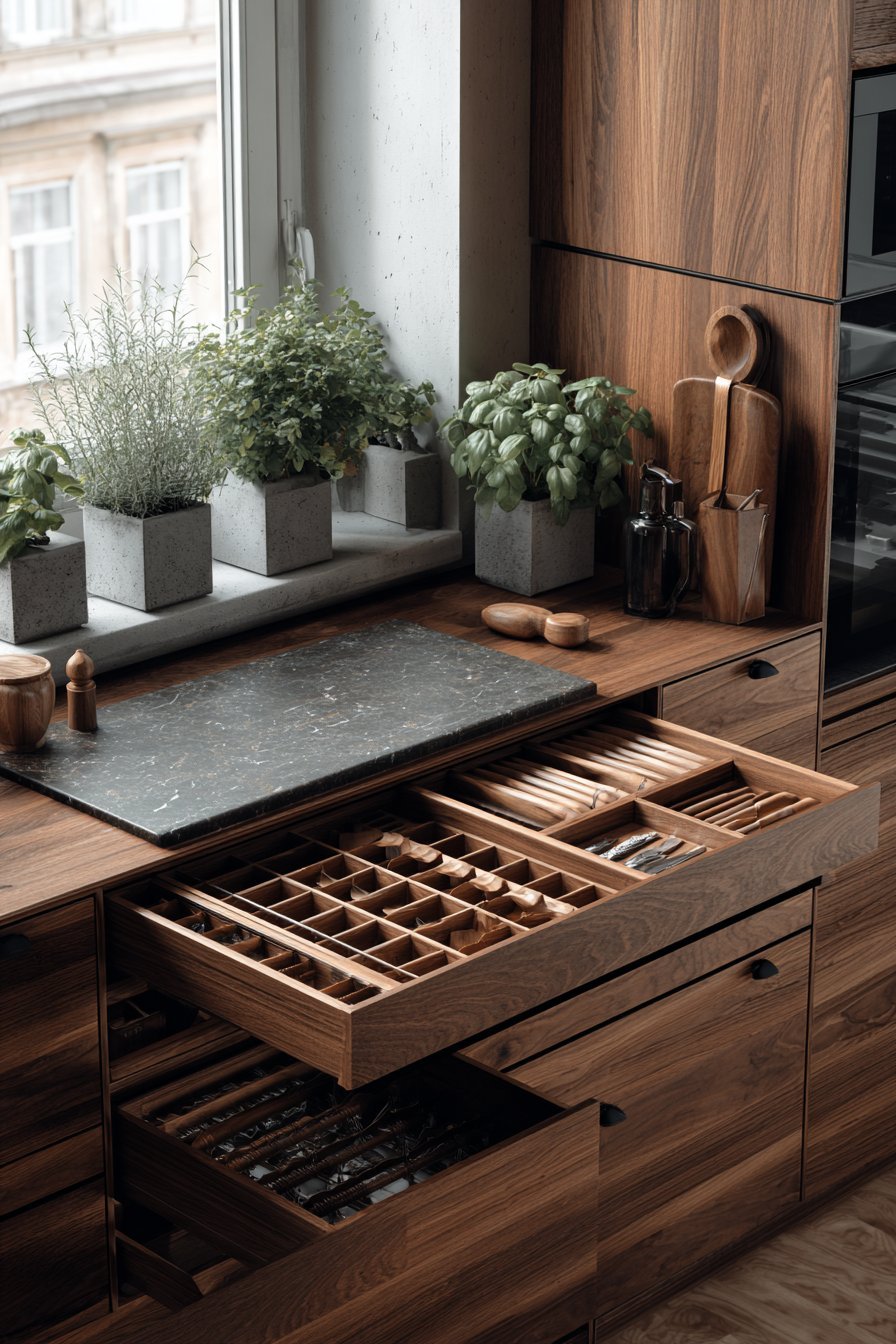
The design emphasizes social functionality within working kitchens. The island becomes a gathering place for family and friends. Professional attention to material interplay creates visual interest. Natural and manufactured materials balance throughout the composition. This space demonstrates that kitchens serve as social hubs.
Key Design Tips:
- Design islands with seating to encourage social interaction
- Combine natural wood with polished concrete for contrast
- Choose woven rattan for texture and organic appeal
- Install frosted glass to soften cabinet fronts
- Use recessed lighting for clean, even illumination
- Maximize natural light through generous window placement
15. Corner Banquette with Belgian Linen Comfort

A custom built-in banquette fills the corner with comfort. Natural Belgian linen cushions provide soft, durable seating. Throw pillows in charcoal grey add layered texture. A small round table in black-stained oak sits before the seating. The adjacent kitchen displays minimalist upper shelving in light birch.

Lower cabinets feature deep forest green with unique leather pulls. The unusual hardware choice adds tactile interest and sophistication. A window above the banquette features simple black frames. No window treatment maximizes the natural light and views. The unobstructed glass creates strong indoor-outdoor connection.
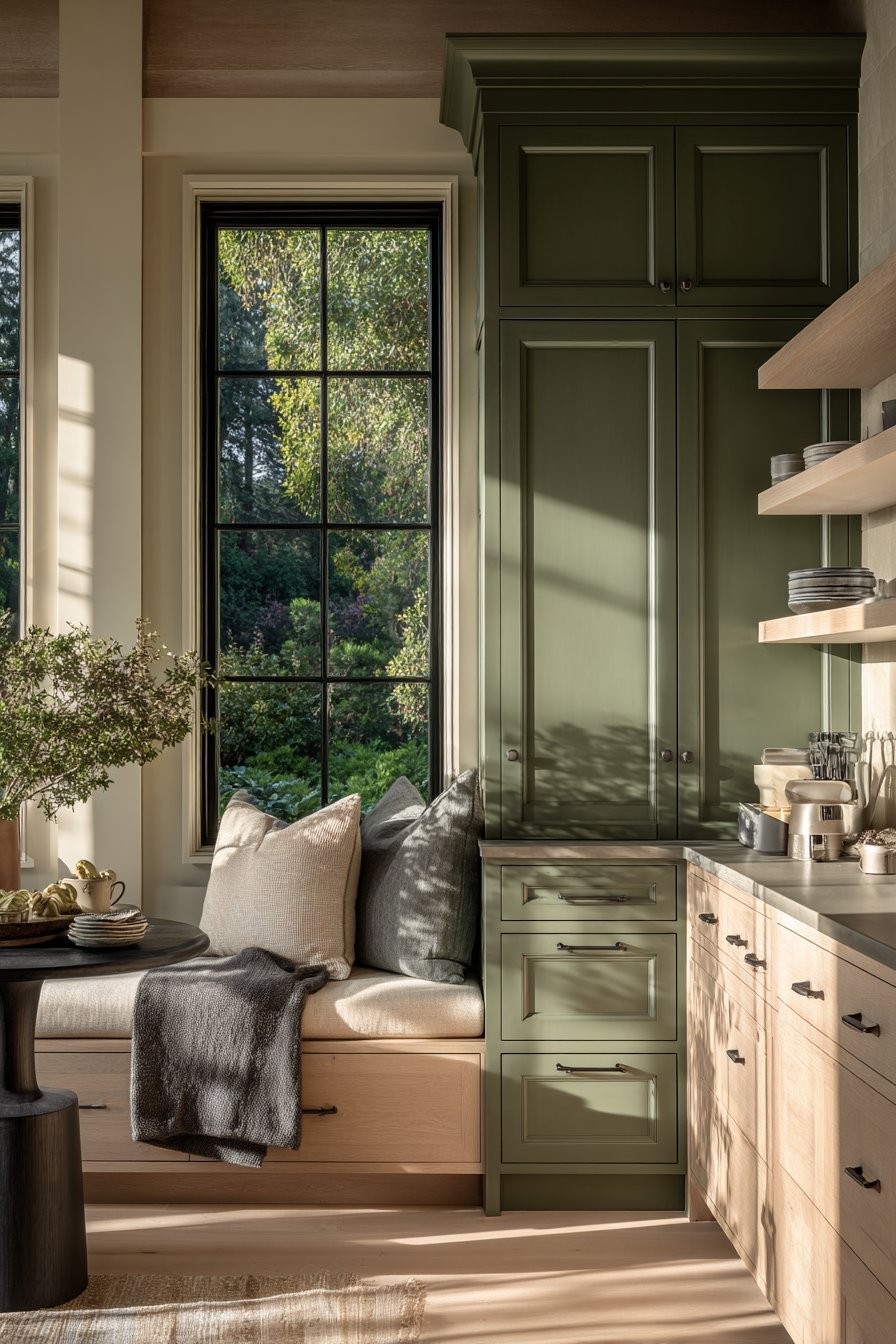
This design demonstrates cozy dining integration within kitchen spaces. The banquette invites relaxed meals and casual conversations. Soft lighting highlights refined material choices throughout. The restrained color palette creates cohesive visual harmony. Natural materials dominate from linen to leather to wood.

Key Design Tips:
- Build in banquette seating for space-efficient dining
- Choose Belgian linen for durability and natural beauty
- Use leather cabinet pulls for unique tactile details
- Install black-framed windows for contemporary definition
- Skip window treatments to maximize light and views
- Incorporate deep cabinet colors for sophisticated depth
16. Seamless Appliance Integration with Teak Veneer

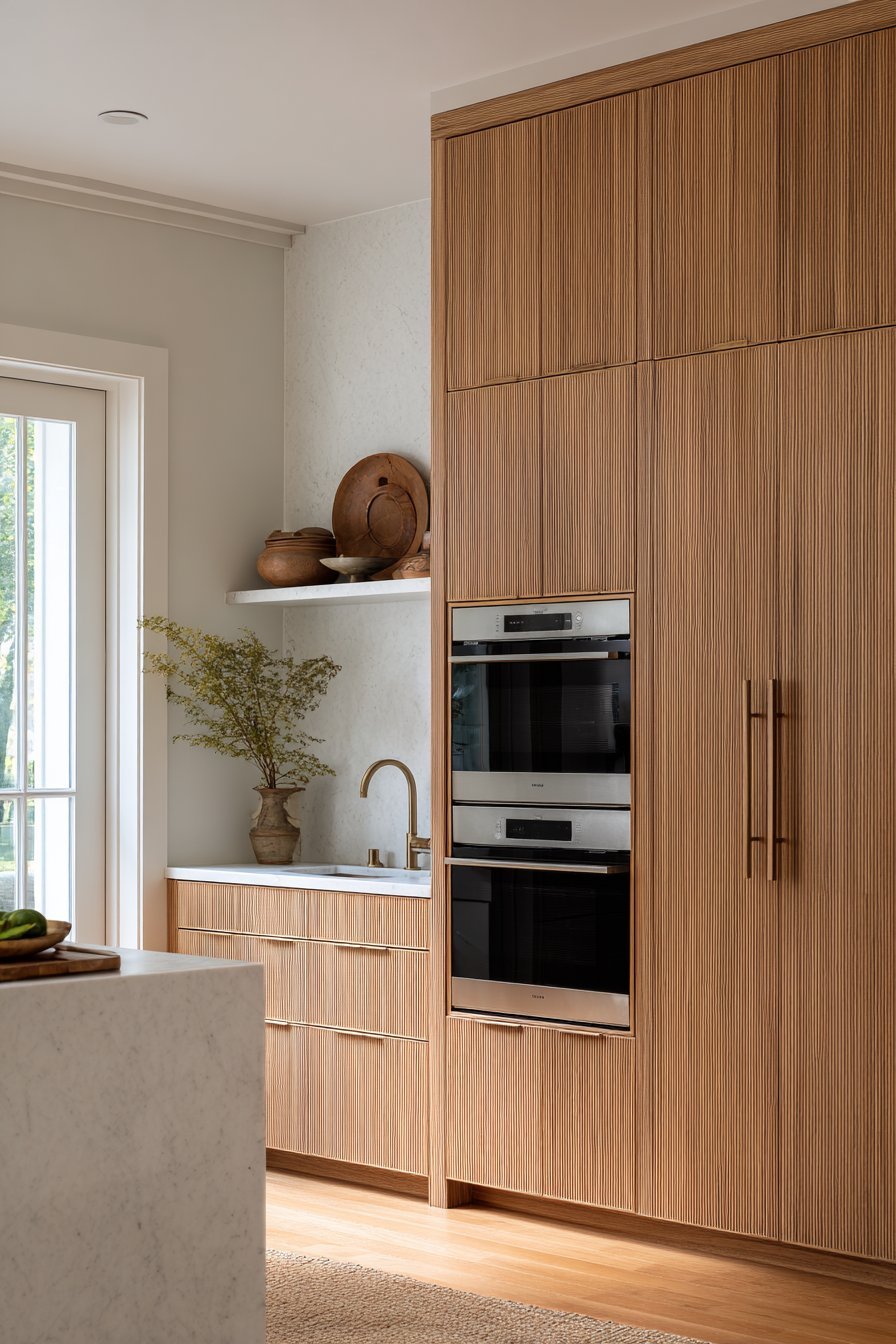
An appliance wall conceals modern technology behind beautiful panels. Integrated refrigerator, oven, and microwave disappear from view. Seamless cabinet panels feature natural teak veneer throughout. Horizontal grain orientation creates flowing linear patterns. Recessed finger pulls in brushed brass provide subtle access.

Adjacent to the appliance wall sits a narrow prep station. A small sink and additional counter space utilize honed white marble. The cool stone contrasts beautifully with warm teak tones. A single shelf above displays artisanal pottery pieces. Natural light from a nearby skylight creates subtle surface highlights.
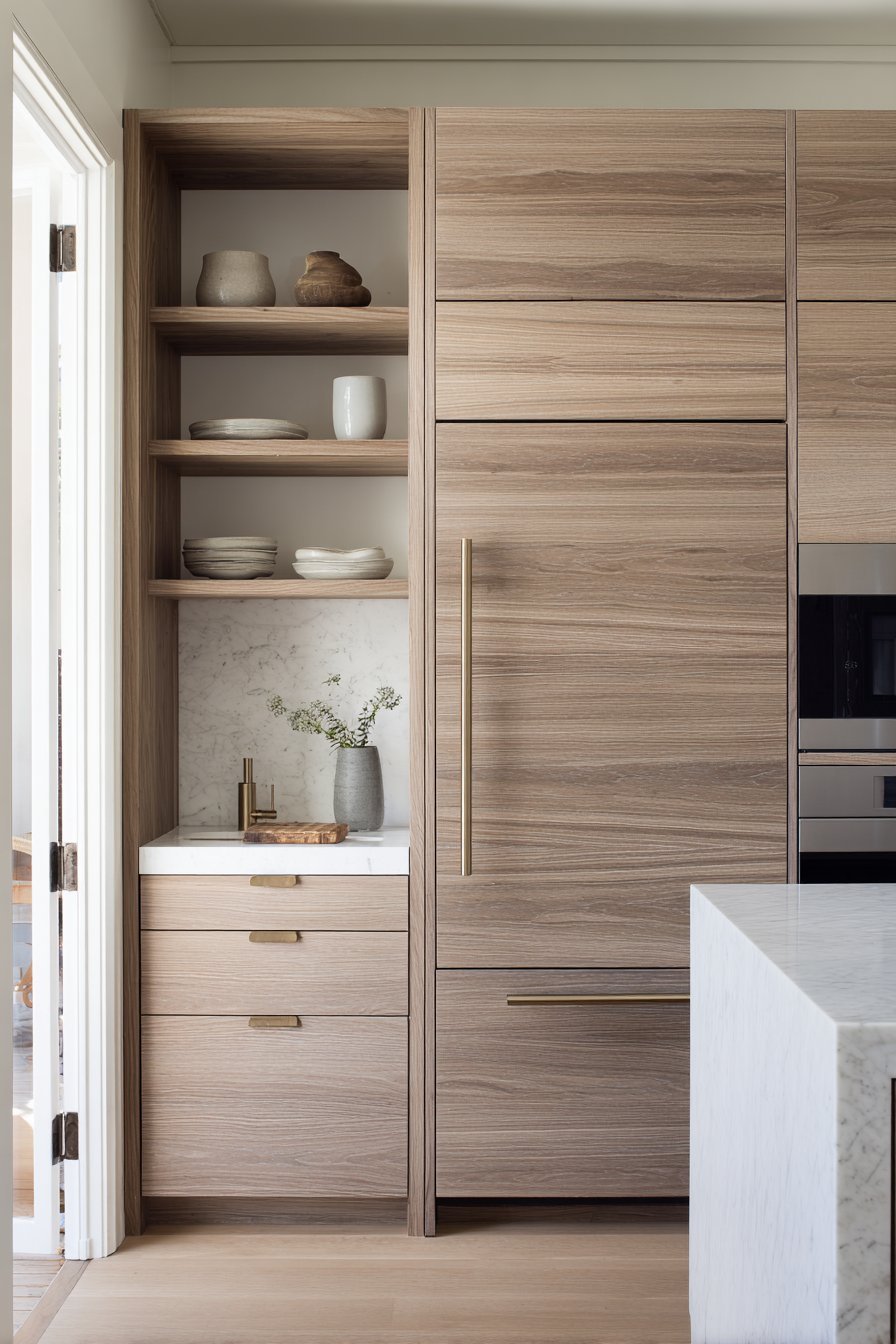
The design emphasizes clean integration of modern appliances. Natural material cabinetry maintains aesthetic priorities while housing technology. Professional attention to detail elevates the composition. The combination of teak and marble creates timeless elegance. This kitchen proves that modern convenience coexists with natural beauty.
Key Design Tips:
- Conceal appliances behind matching cabinet panels
- Choose teak veneer for rich, warm wood tones
- Orient grain horizontally for flowing visual lines
- Install recessed pulls for handle-free surfaces
- Add prep stations for specialized work areas
- Use skylights to bring natural light to interior spaces
17. Whitewashed Shiplap with Floating Shelf System
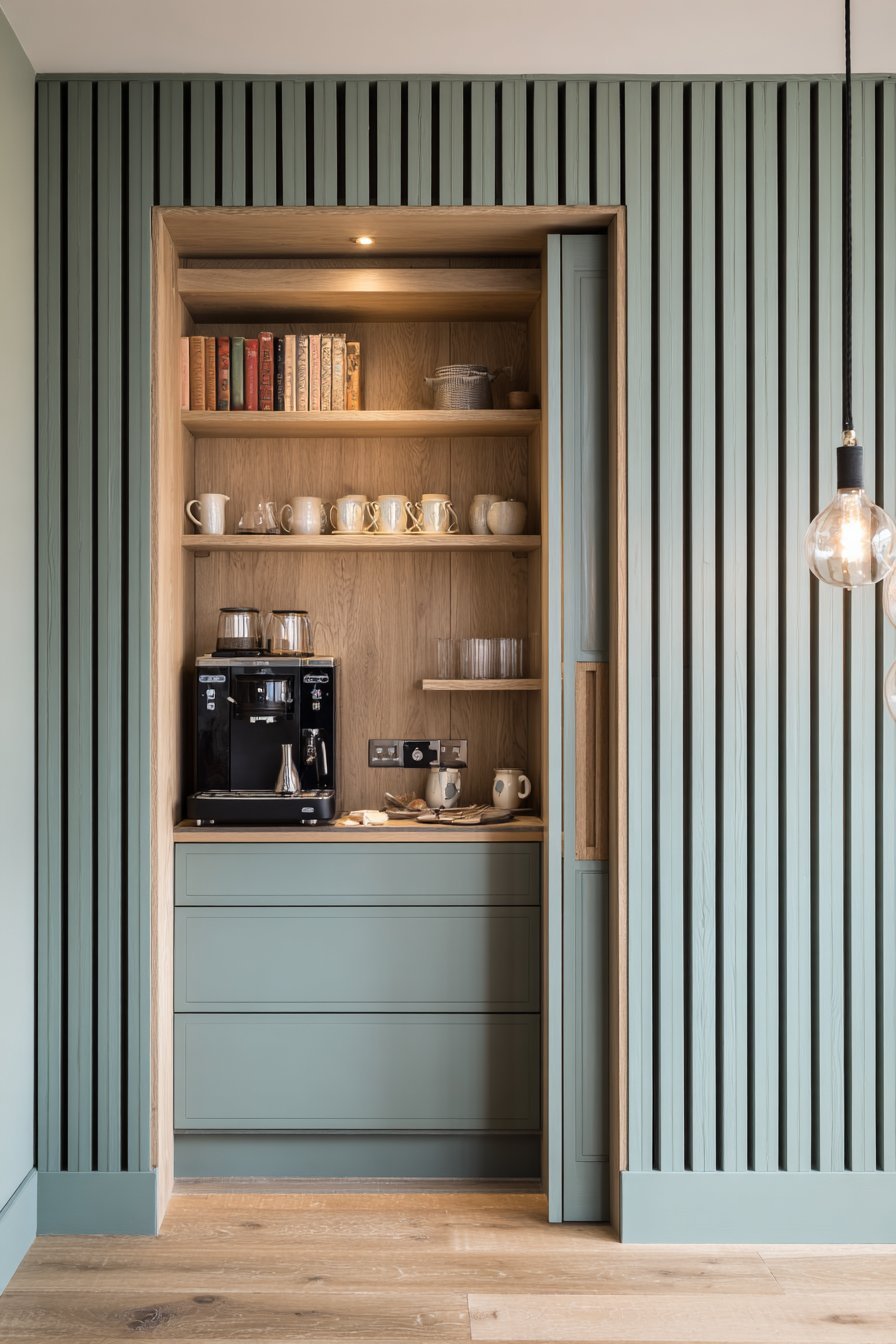
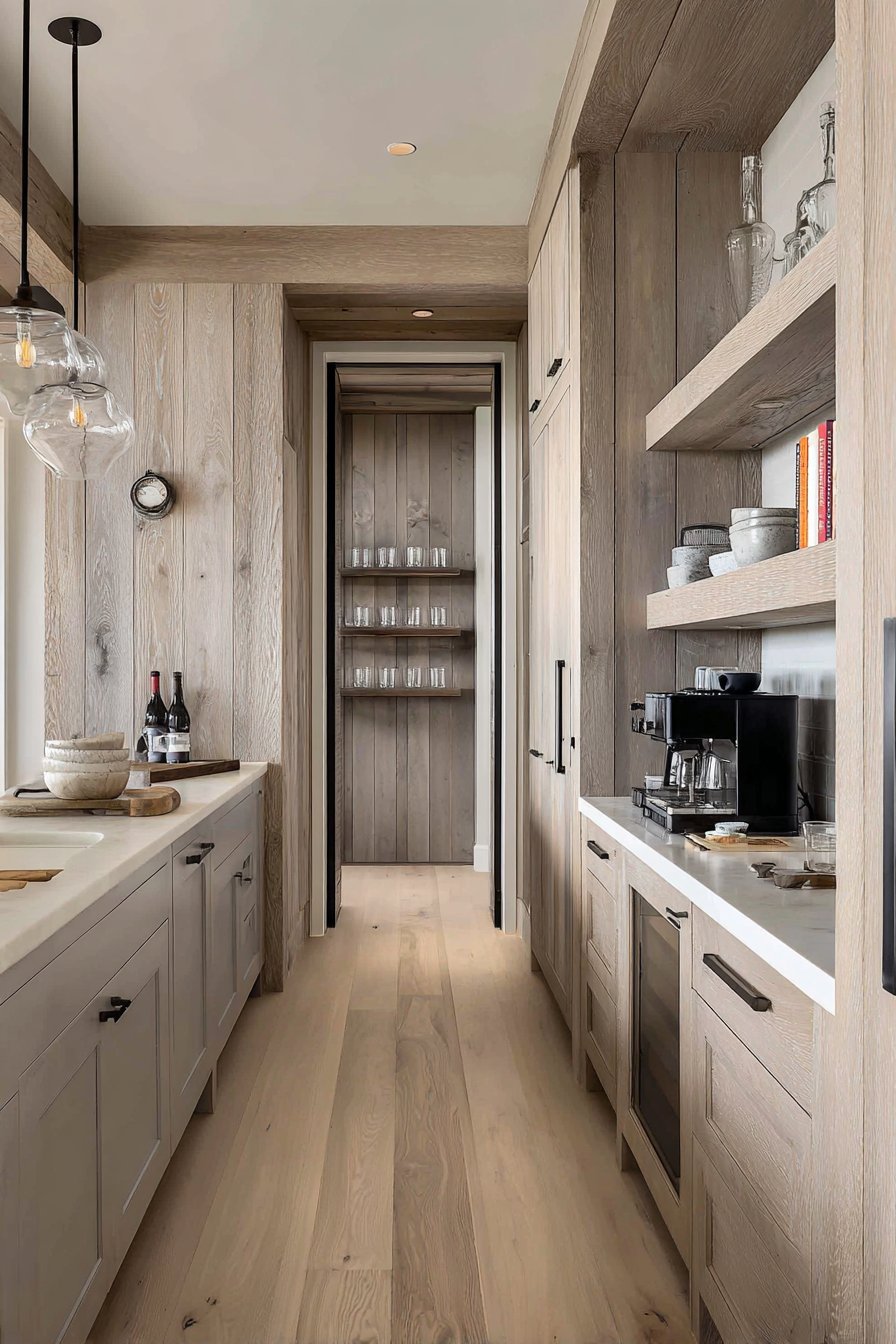
A stunning focal wall features vertical shiplap in whitewashed oak. The treatment creates textural interest without overwhelming the space. Floating shelf system displays minimal glassware with intention. A small collection of cookbooks adds personal character. The opposite wall features full-height cabinets in soft putty grey.

Integrated handles maintain the sleek cabinet lines throughout. A built-in coffee bar features a sliding tambour door. The concealed storage keeps countertops clear when not in use. Wide-plank white oak flooring shows natural grain variations. Authentic wood character includes knots and color shifts. Pendant lights feature black cords and simple glass globes.

The design captures serene atmosphere through balanced natural illumination. The whitewashed oak reflects light while adding texture. Floating shelves create display opportunities without visual weight. The cohesive material palette extends from walls to floors. This kitchen demonstrates how subtle variations create interest within restraint.
Key Design Tips:
- Install vertical shiplap to add texture and interest
- Whitewash oak to lighten wood while preserving grain
- Use floating shelves for airy display options
- Incorporate tambour doors for concealed appliance storage
- Choose wide-plank flooring to showcase natural wood beauty
- Hang simple pendant lights for focused task illumination
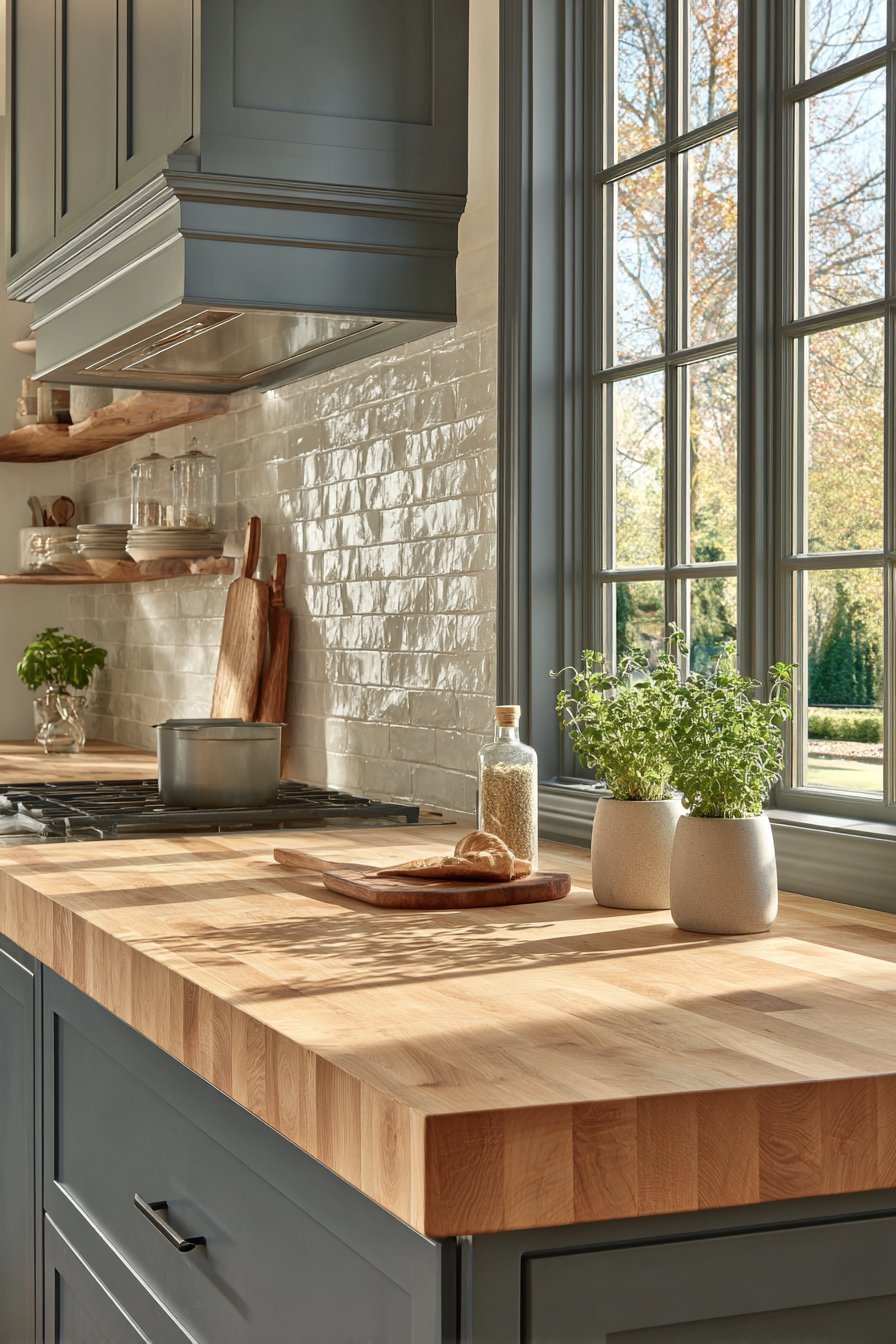
18. Dual-Tone Cabinet Scheme with Butcher Block Warmth
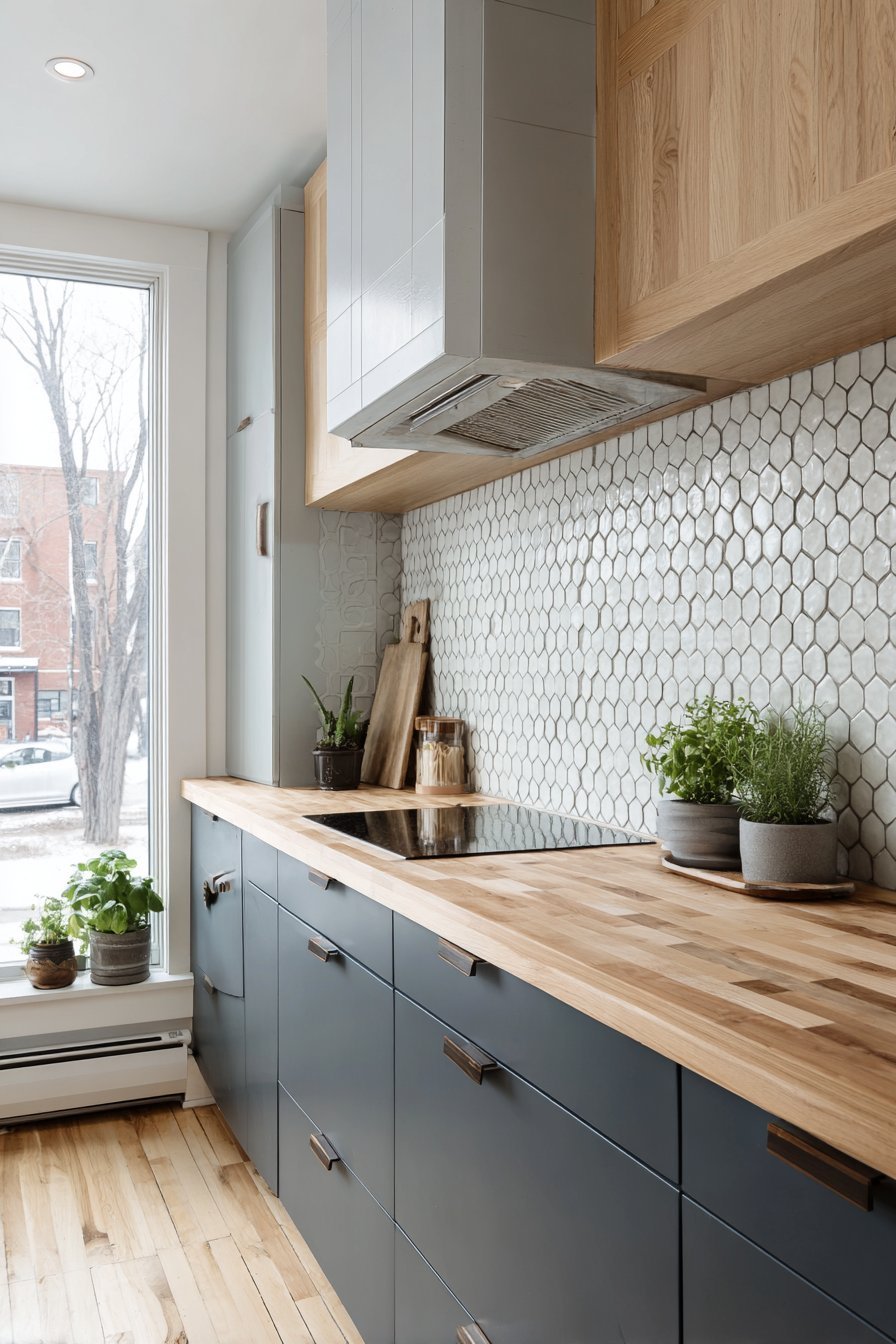
A dual-tone cabinet approach creates visual layering. Upper units in natural ash wood feel light and open. Lower cabinets in matte charcoal grey ground the composition. Thick butcher block maple countertops showcase visible end grain. Natural oil finish protects while enhancing the wood’s character.
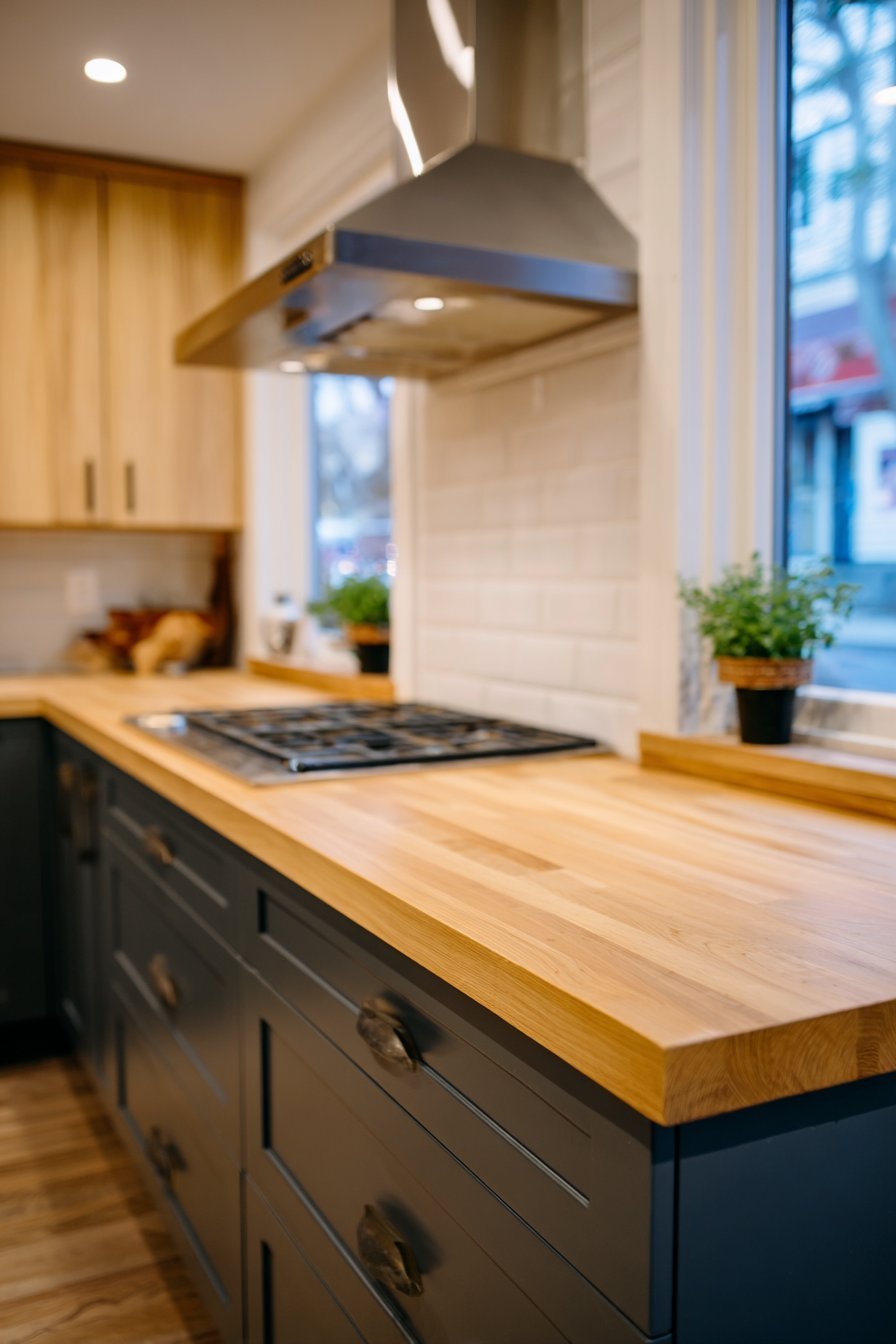
A minimalist range hood in stainless steel provides functional focus. Clean geometric lines serve as subtle focal points. The backsplash features handmade zellige tiles in soft white. Irregular surface texture catches light in constantly changing ways. Small potted herbs sit on the counter near the window.

The design emphasizes warmth through carefully chosen wood tones. Soft golden hour lighting bathes the space in flattering illumination. The interplay between warm wood and cool grey creates dynamic balance. Handmade tile work adds artisanal quality to practical surfaces. This kitchen celebrates natural materials and authentic craftsmanship.
Key Design Tips:
- Combine two cabinet tones for visual depth
- Use ash wood on upper cabinets to maintain lightness
- Choose end-grain butcher block for distinctive surfaces
- Install minimalist range hoods with clean geometry
- Incorporate handmade tiles for artisanal character
- Position herbs near windows for optimal growing conditions
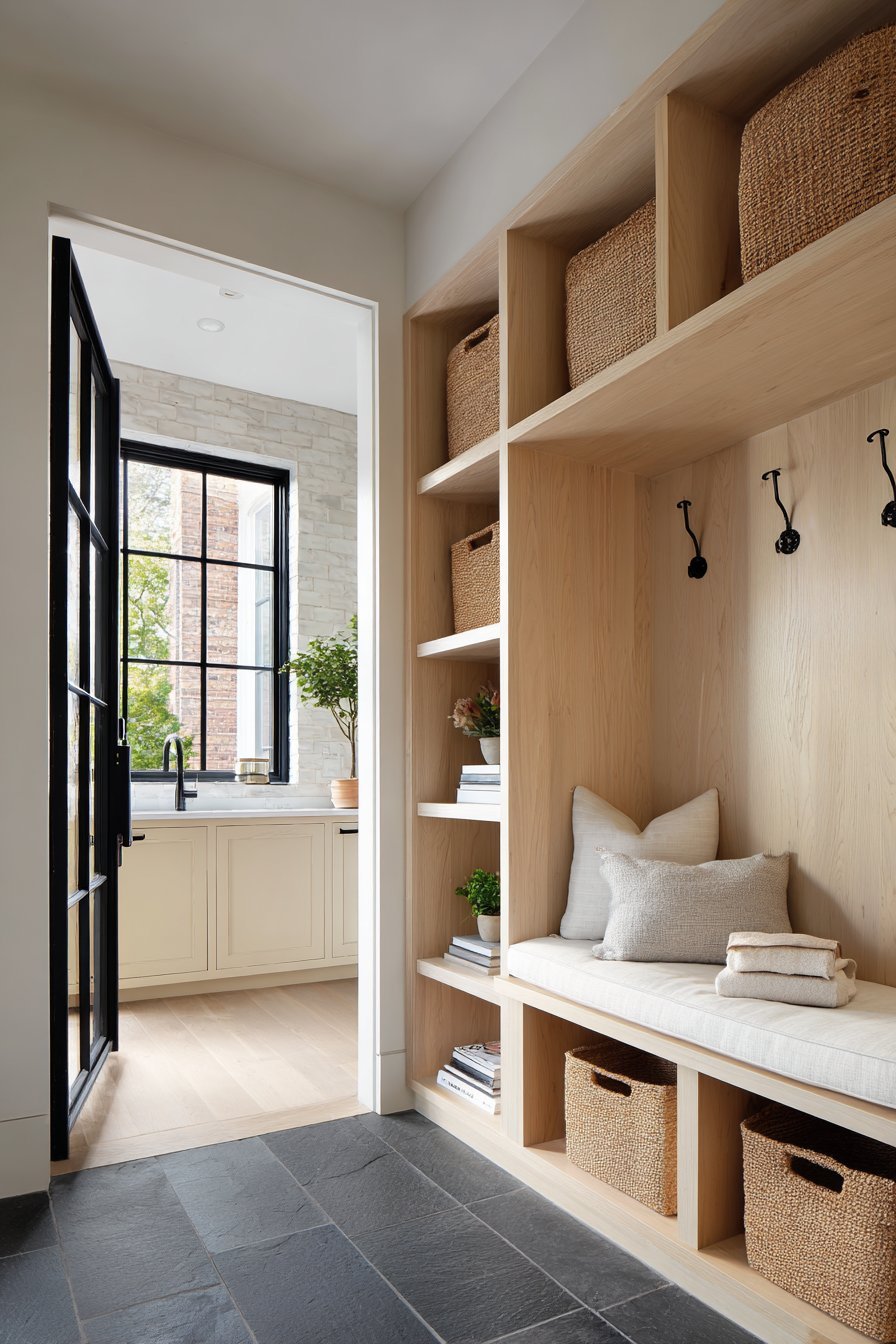
19. Mudroom Transition with Built-In Organization
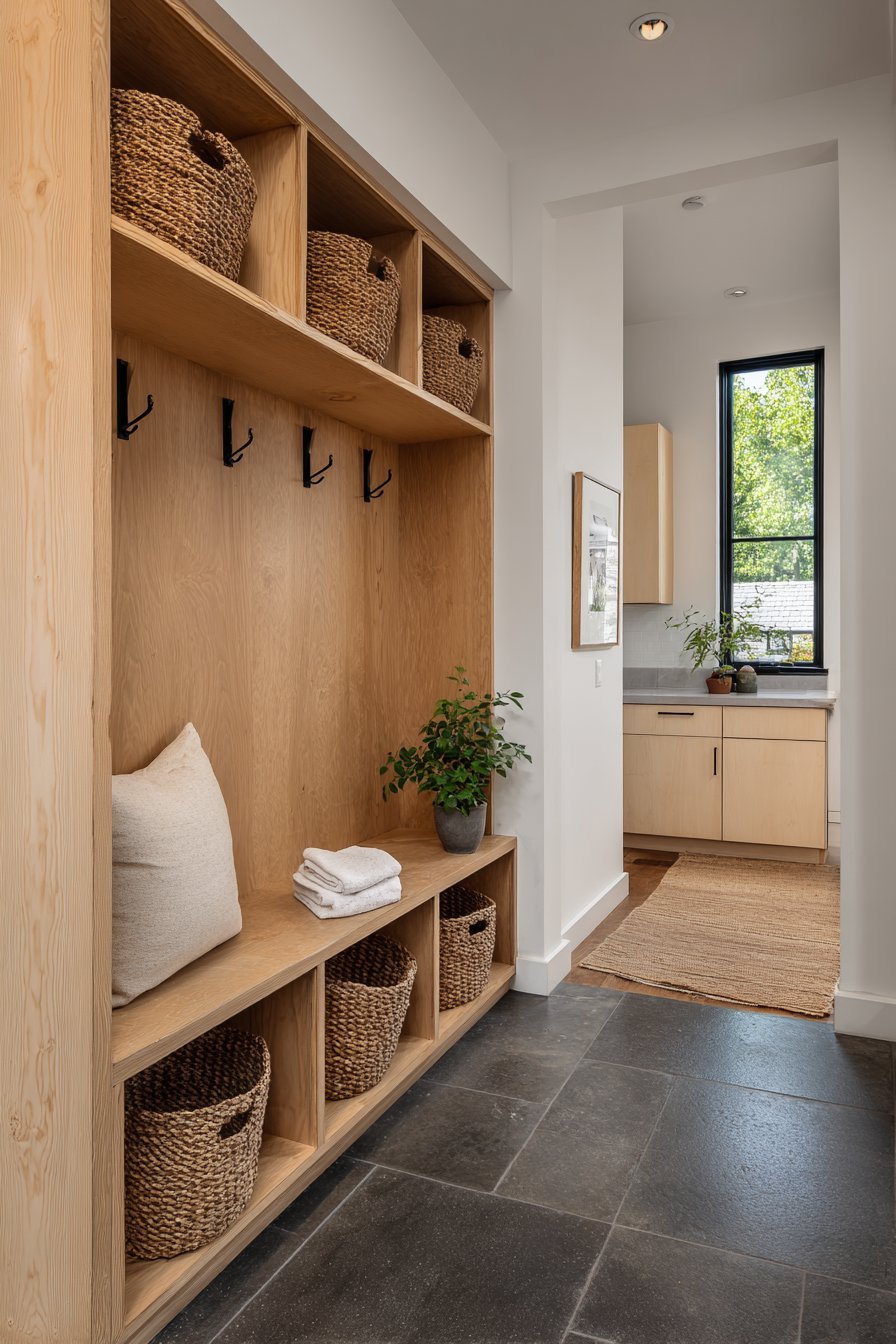
A thoughtful transition area connects kitchen to entry. Built-in bench seating in white oak provides practical function. Storage cubbies above contain woven baskets for organization. Hooks in matte black metal offer coat storage. The flooring transitions from kitchen’s polished concrete to natural slate tiles.
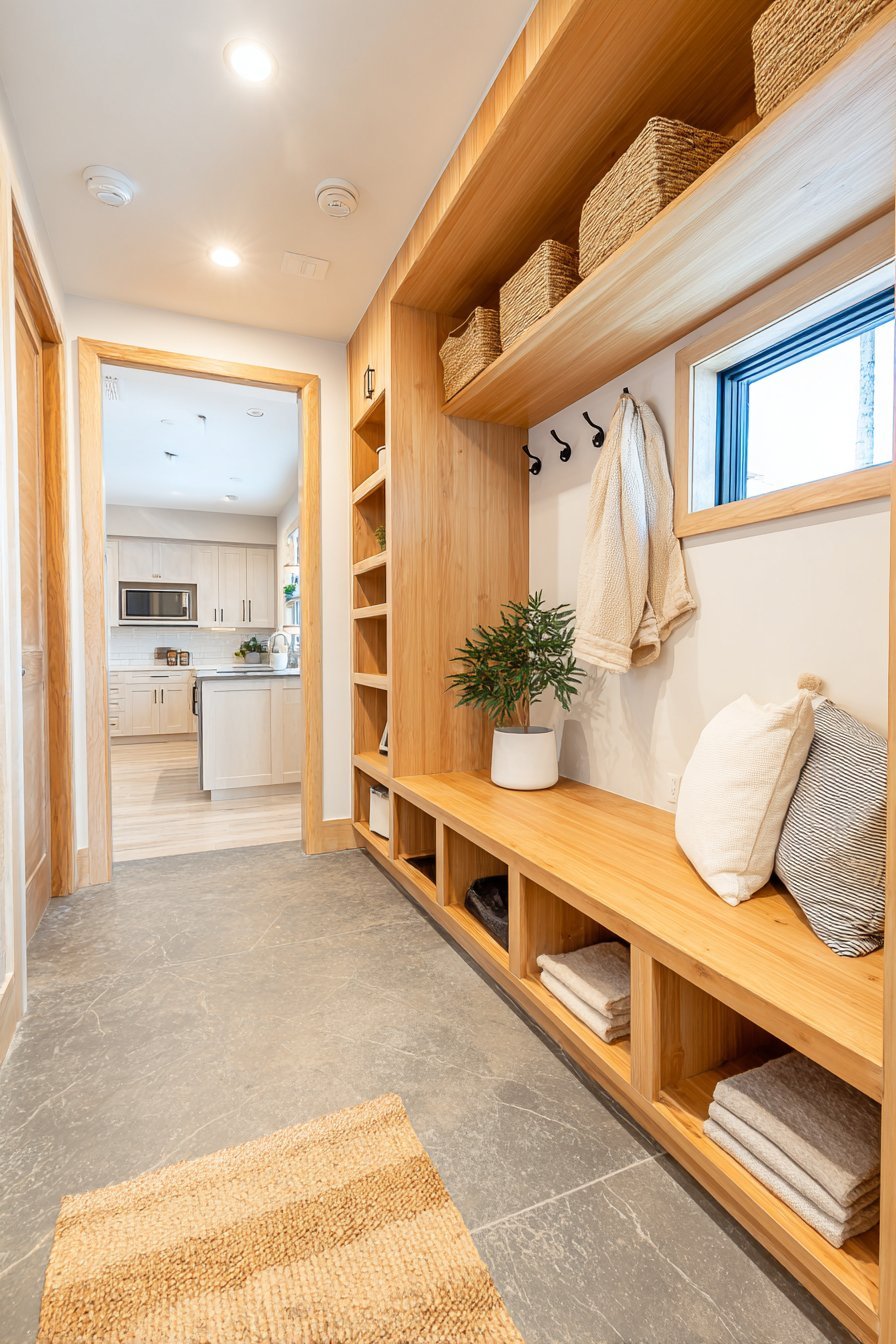
The material change defines separate functional zones naturally. The adjacent kitchen remains visible with light cabinetry. A window with minimal black framework brings natural light. A small potted plant and folded linens add lived-in warmth. The details suggest actual use rather than staged perfection.
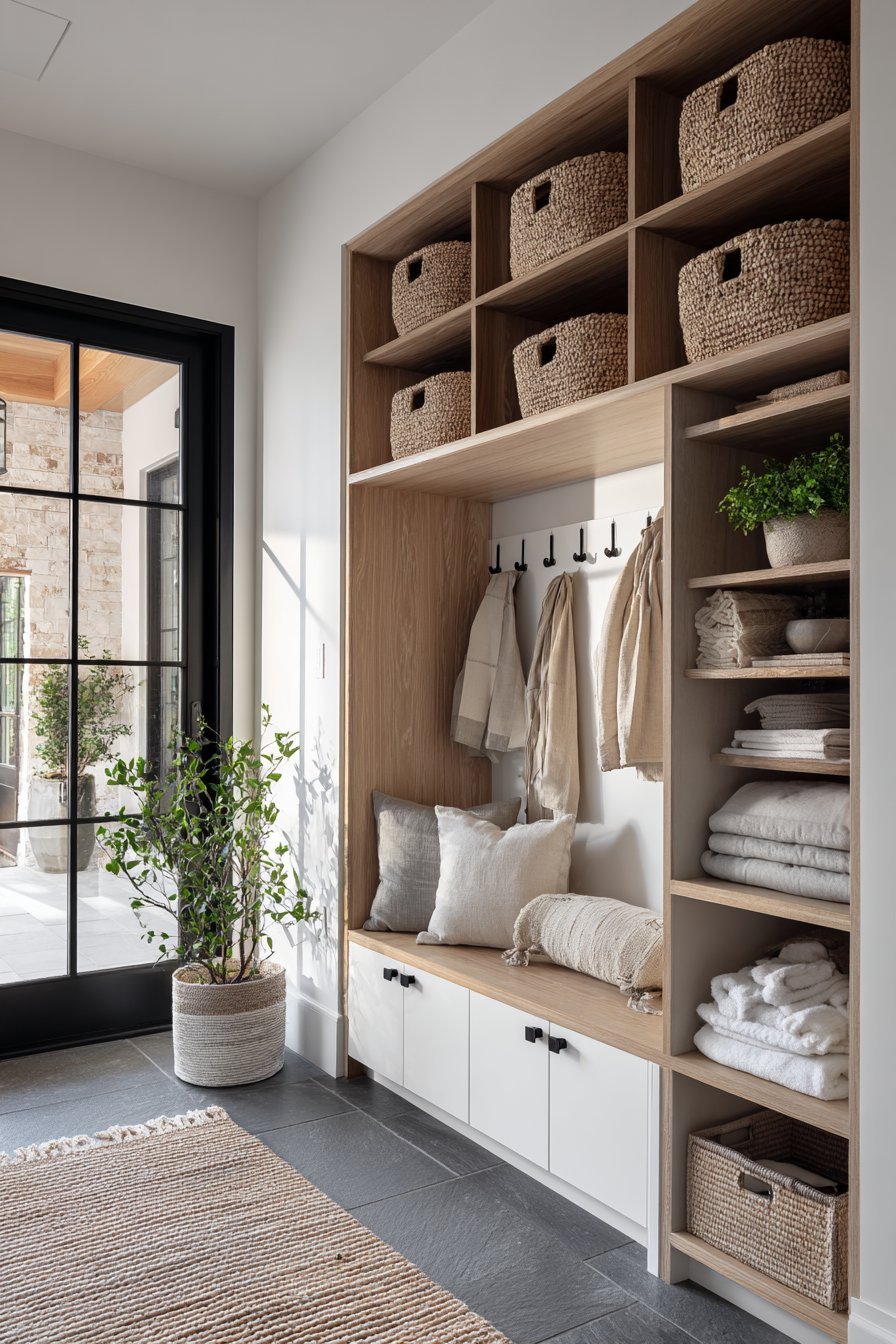
This design demonstrates functional flow between different spaces. The mudroom prevents outdoor dirt from entering the kitchen. Consistent Japandi aesthetic maintains visual cohesion throughout. Natural materials and understated design create seamless transitions. The space proves that practical needs deserve beautiful solutions.
Key Design Tips:
- Create transition zones between kitchen and entry areas
- Install built-in benches for seating and storage
- Use woven baskets for organized, natural storage
- Change flooring materials to define different zones
- Maintain consistent aesthetic across connected spaces
- Add lived-in details for warmth and authenticity
20. Reading Nook Alcove with Cookbook Storage
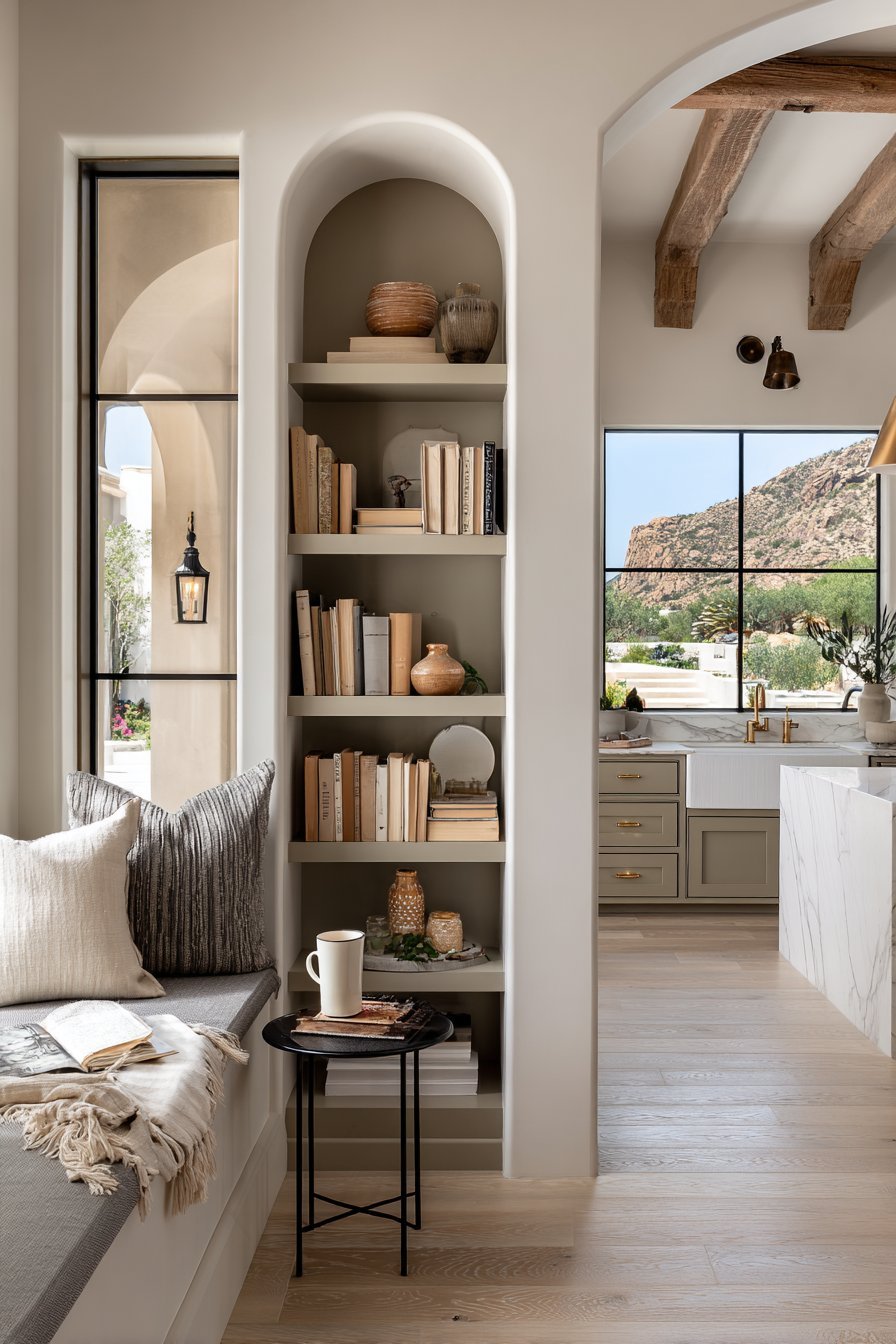
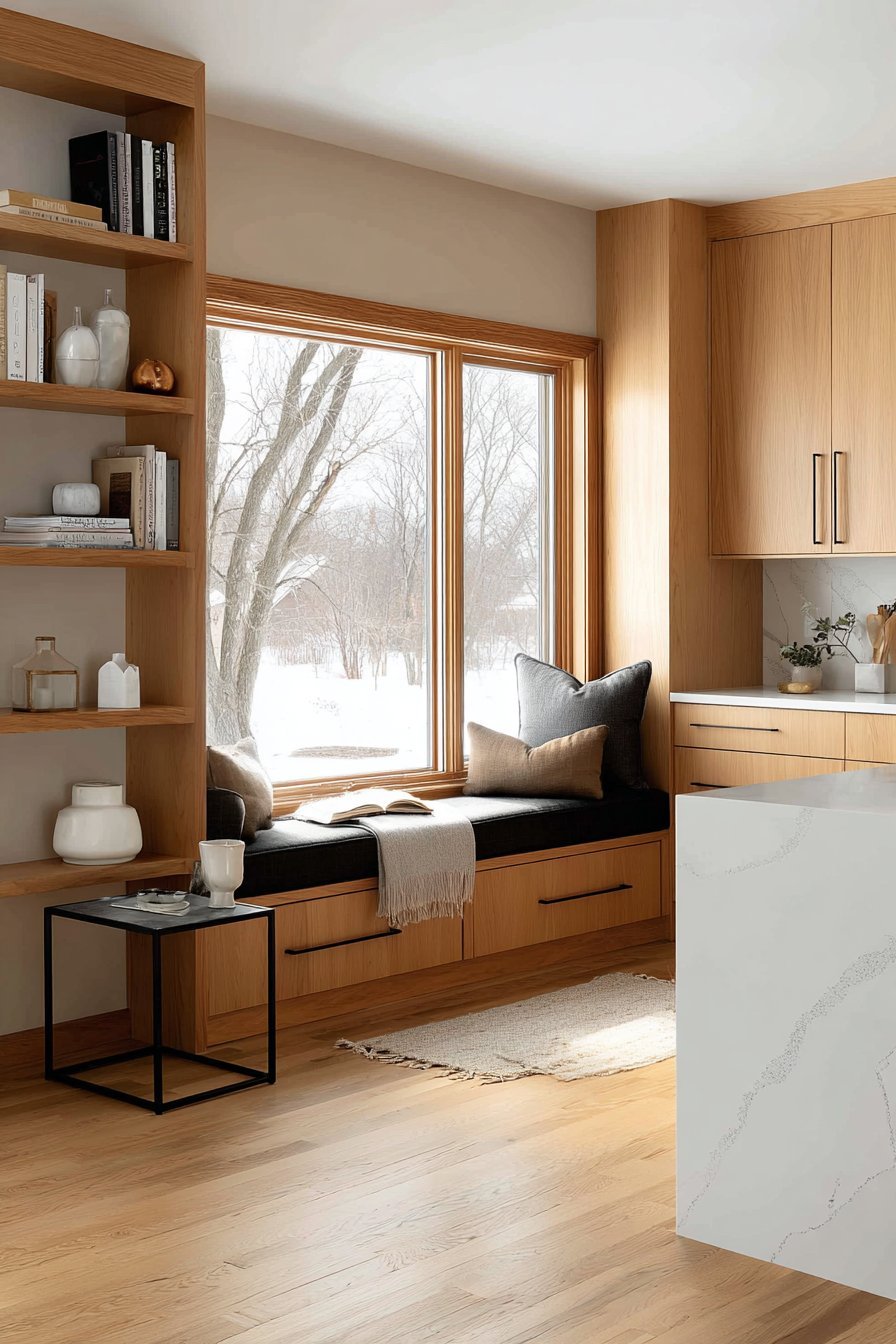
A cozy reading nook occupies a thoughtfully designed alcove. Built-in window seat cushioning features charcoal linen upholstery. Floor-to-ceiling shelving in light maple flanks the seating. Cookbooks and decorative objects in earth tones fill the shelves. A small side table in black metal holds ceramic vessels.
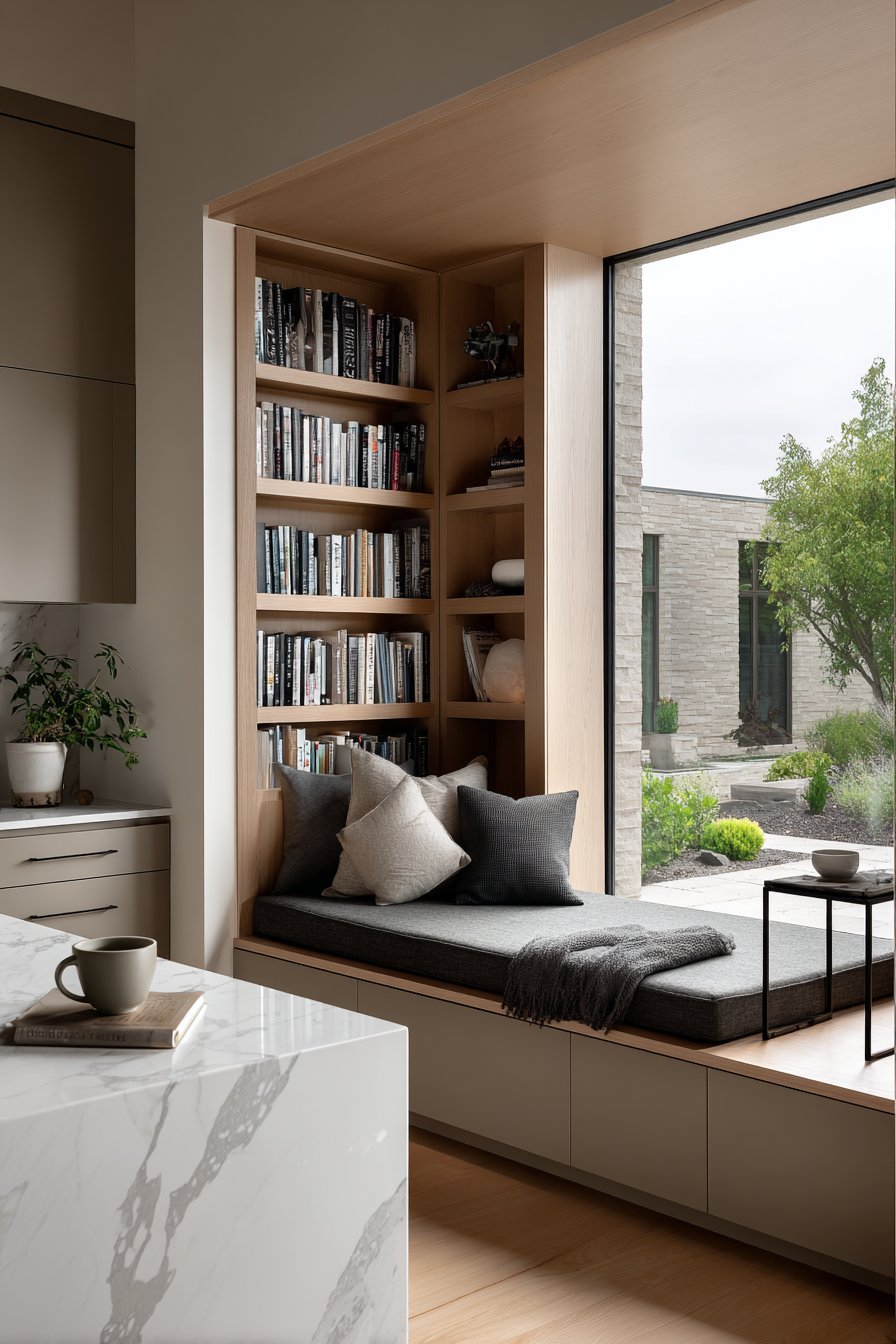
The main kitchen area features handleless cabinets in warm taupe. A waterfall island in white quartz creates elegant focal interest. Natural light floods through large windows with landscaping views. The minimalist outdoor design complements the interior aesthetic. Professional photography captures the cozy retreat within functional space.
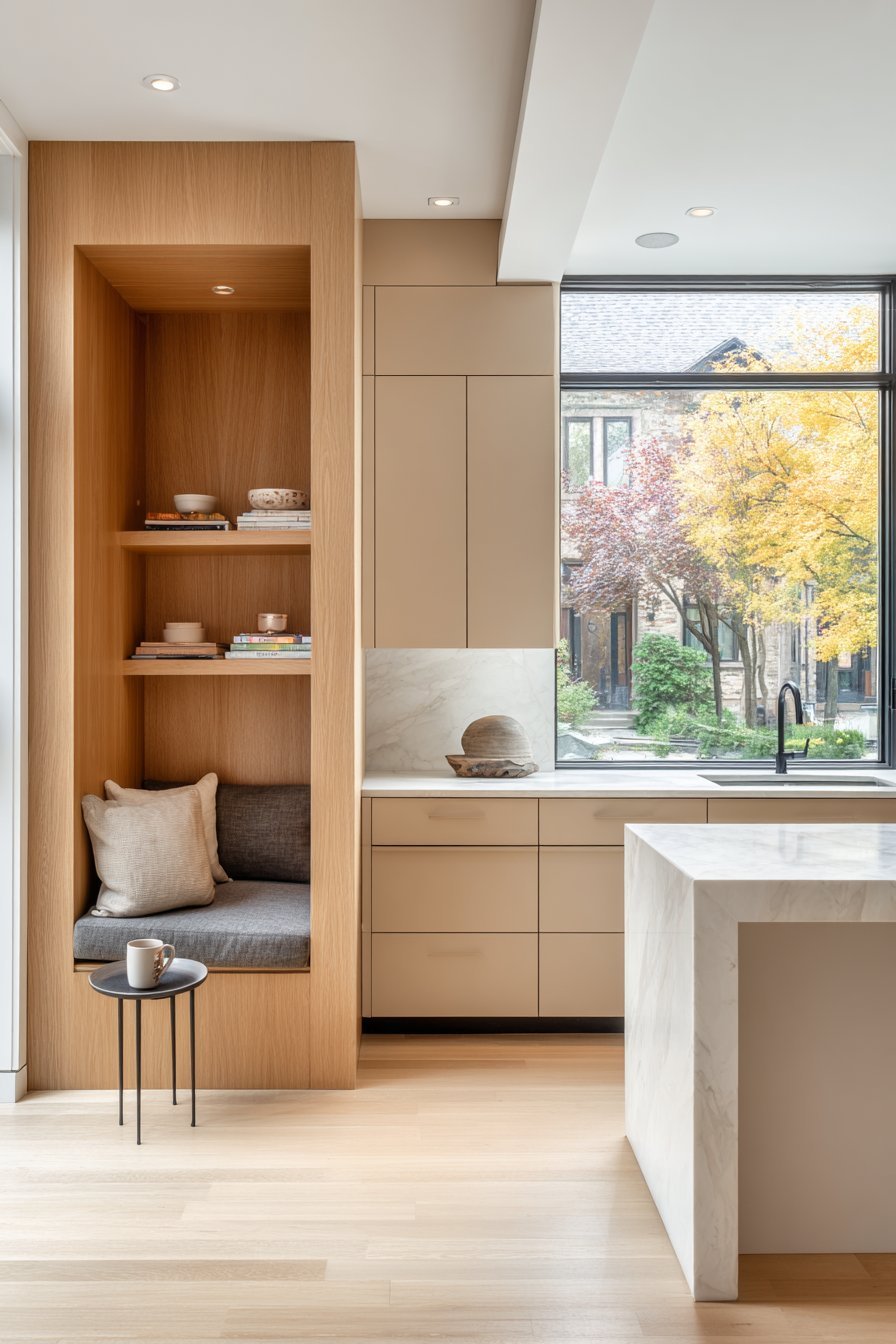
This design demonstrates how kitchens can include contemplative spaces. The reading nook provides respite from cooking activities. Soft natural lighting creates perfect conditions for reading. Layered textures from linen to maple to ceramic add depth. The space proves that kitchens serve multiple lifestyle needs.
Key Design Tips:
- Carve out alcoves for specialized activity zones
- Build in window seats for comfortable reading areas
- Install floor-to-ceiling shelving for extensive storage
- Display cookbooks as both functional and decorative elements
- Use side tables for convenient beverage placement
- Coordinate interior and exterior aesthetics through window views
Why These Japandi Kitchen Designs Are the Best
These Japandi kitchen designs represent exceptional approaches to contemporary cooking spaces. Each concept demonstrates thoughtful material selection and spatial planning. The fusion of Japanese minimalism with Scandinavian warmth creates uniquely balanced environments. These designs work because they prioritize both beauty and functionality.
The versatility of Japandi style accommodates various kitchen sizes and layouts. Compact galley kitchens benefit from efficient vertical storage and light wood tones. Spacious social kitchens incorporate islands and dining areas seamlessly. The aesthetic principles remain consistent across different scales. Natural materials, clean lines, and restrained color palettes unite all variations.

Durability stands as a key advantage of these design approaches. Solid wood cabinetry ages beautifully with proper maintenance. Concrete and stone surfaces withstand daily kitchen demands. Quality materials justify initial investment through longevity and timeless appeal. These kitchens avoid trendy elements that quickly feel dated.
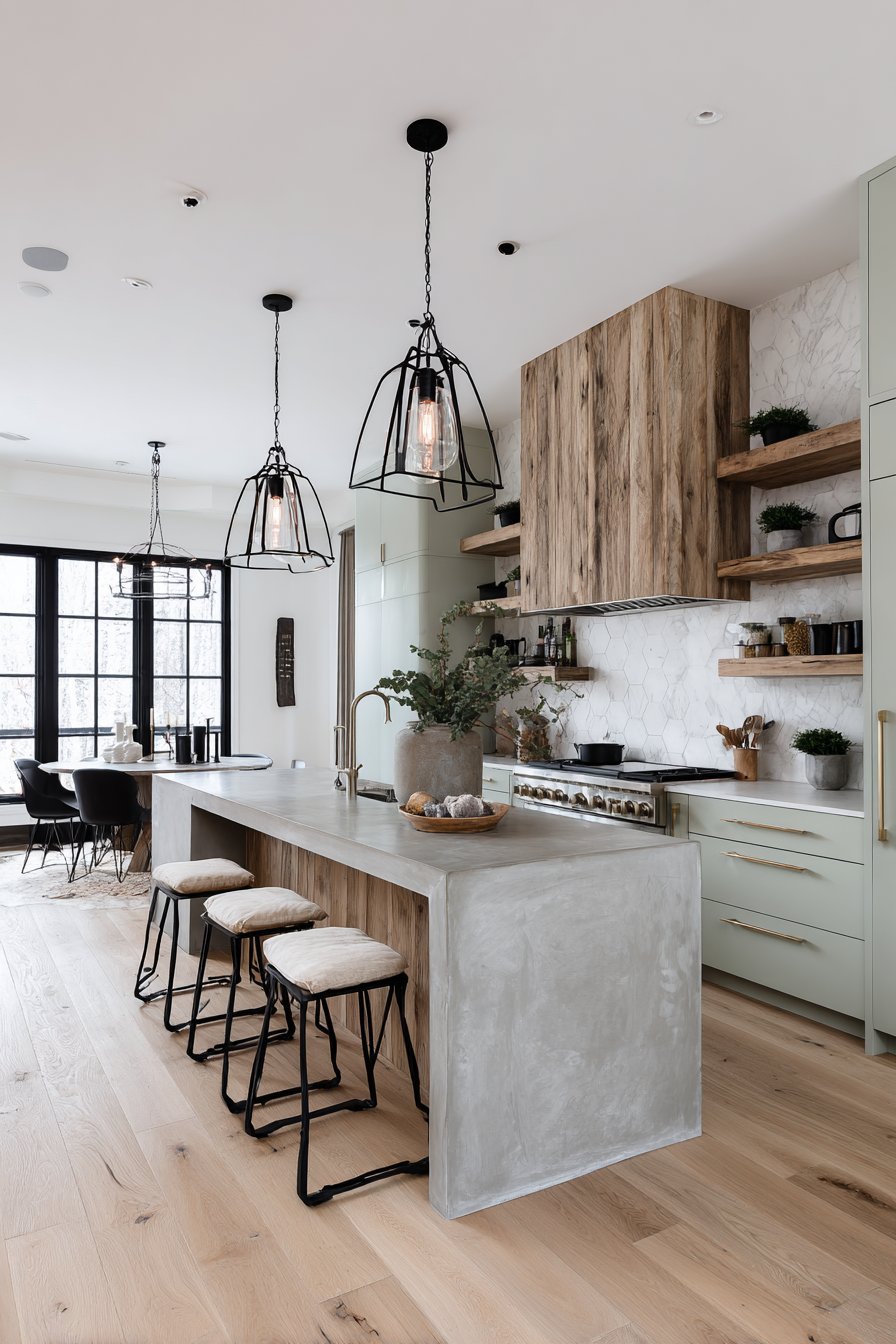
Color theory plays a crucial role in Japandi success. Neutral palettes create calm, cohesive backgrounds. Muted greens, warm greys, and soft blues add subtle variation. Natural wood tones range from blonde ash to rich walnut. The restrained color approach allows materials and textures to shine. Strategic contrast between light and dark elements creates visual interest.
Sustainability aligns naturally with Japandi philosophy. Solid wood from responsible sources reduces environmental impact. Durable materials minimize replacement needs and waste. The timeless aesthetic discourages frequent renovations. Energy-efficient appliances integrate seamlessly behind natural wood panels. These kitchens demonstrate that beautiful design supports environmental responsibility.
Conclusion
These twenty Japandi kitchen designs showcase the perfect balance between simplicity and warmth. Natural materials create timeless beauty that improves with age. Functional layouts support modern cooking and social needs. The key takeaways include prioritizing quality over quantity and celebrating authentic materials.

Successful Japandi kitchens require thoughtful planning and restraint. Choose solid wood cabinetry in light to medium tones. Incorporate natural stone or concrete for durable surfaces. Add handmade ceramic elements for artisanal character. Maintain clean lines while layering natural textures. Your dream Japandi kitchen awaits through mindful design choices and commitment to quality.
