
Empty walls present unique opportunities in interior design. These blank canvases allow homeowners to explore creative possibilities. The intentional use of negative space creates sophisticated environments that feel both calming and purposeful.
Modern design increasingly celebrates the power of restraint. Empty walls offer visual breathing room in our cluttered world. This approach transforms bare surfaces into architectural features. The strategic embrace of emptiness creates spaces that feel curated rather than unfinished.
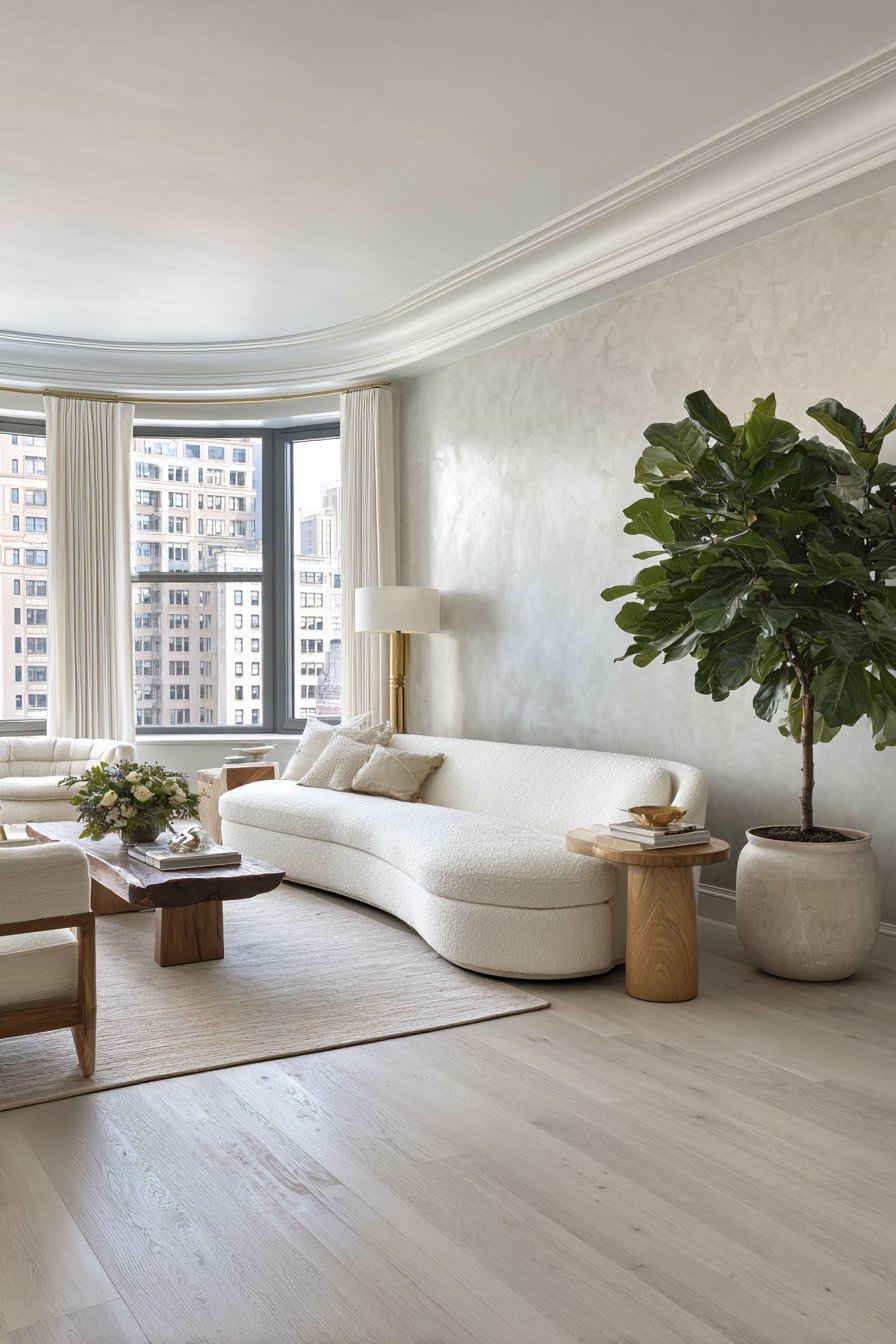
This article explores twenty distinctive approaches to empty wall decor. Each concept demonstrates how texture, color, and material choices create visual interest. From minimalist living rooms to serene bedrooms, these designs prove that sometimes less truly becomes more.
1. Minimalist Abstract Canvas Focal Point
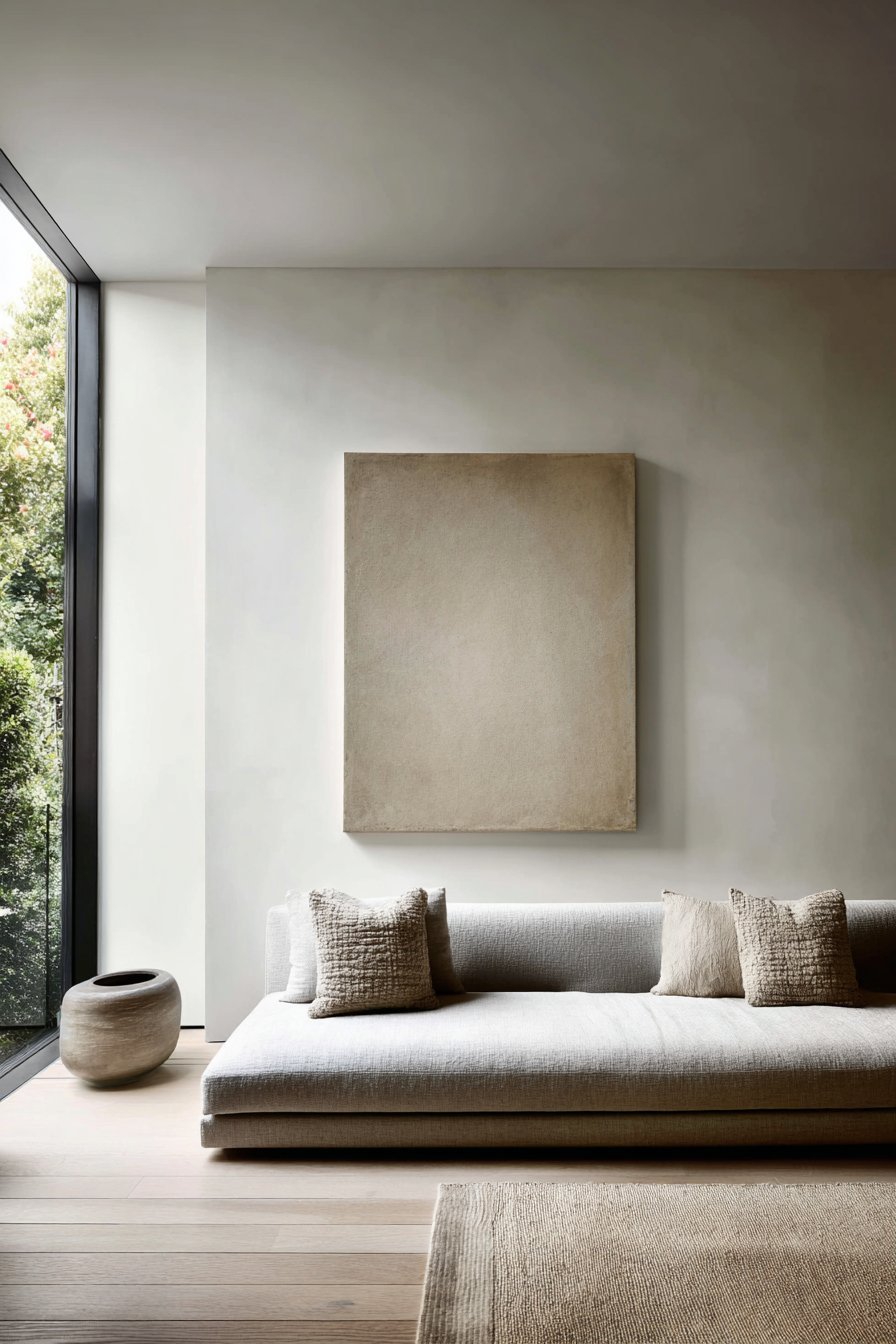
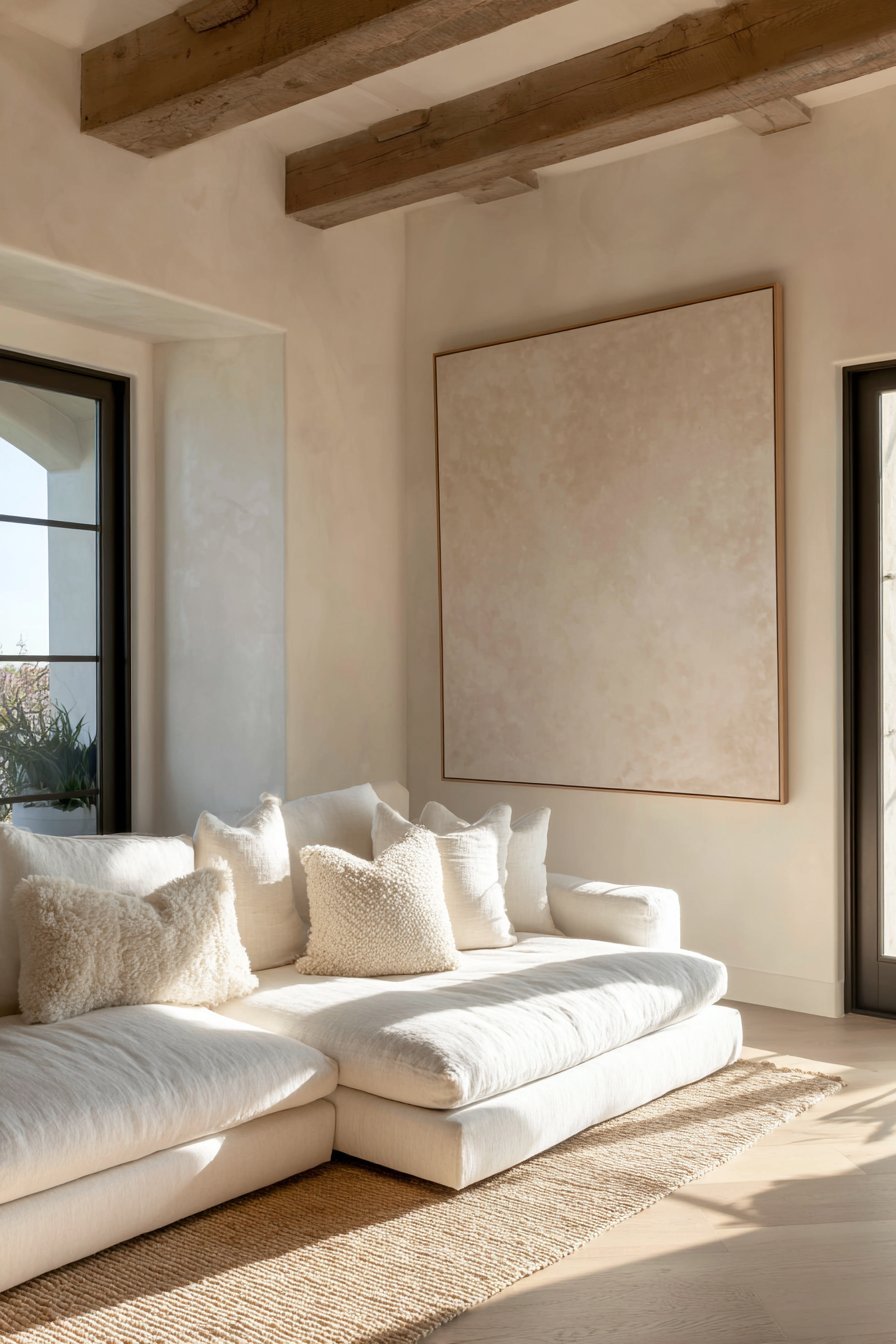
A minimalist living room demonstrates the power of singular artistic focus. An oversized abstract canvas in muted earth tones commands attention on the white wall. The piece sits slightly off-center, creating dynamic visual tension. This deliberate placement draws the eye naturally across the space.
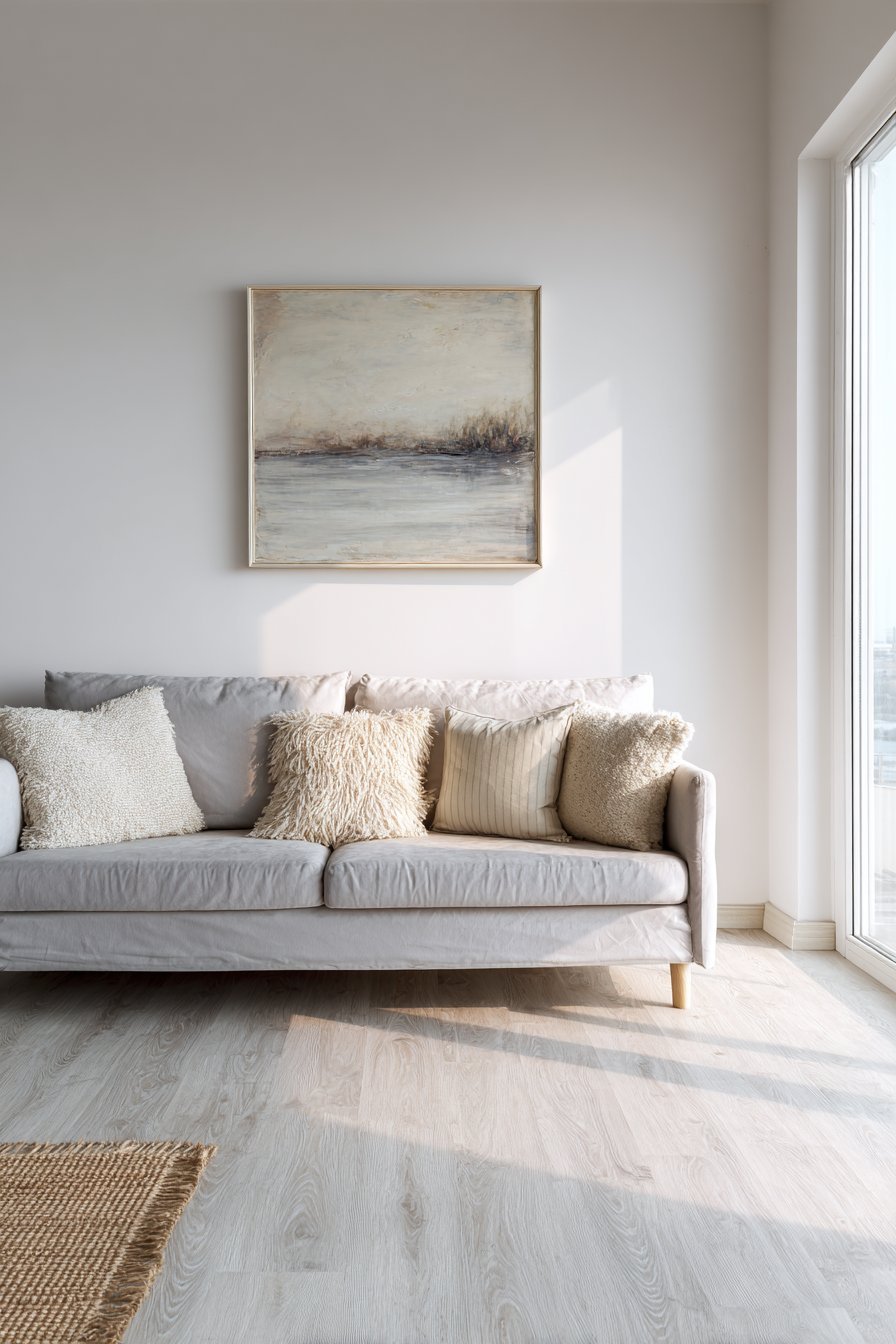
Below the artwork, a low-profile grey linen sofa grounds the composition. Textured throw pillows in complementary neutrals add subtle dimension. Light oak flooring and a simple jute rug anchor the room. These natural materials create warmth without competing for attention.
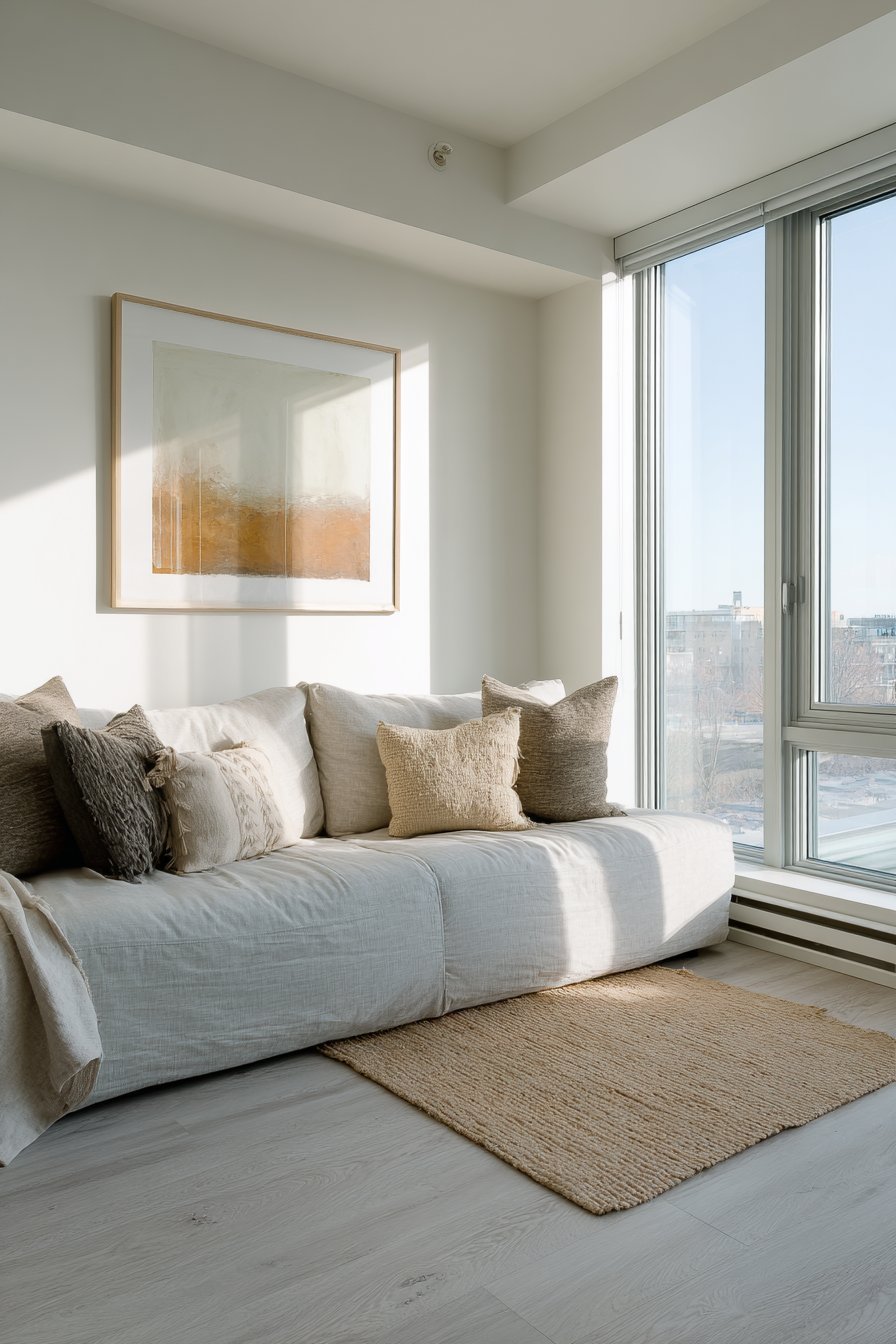
Morning light from a nearby window transforms the space throughout the day. Soft shadows dance across the wall surface. The clean expanse emphasizes intentional simplicity. Natural illumination highlights the wall’s pristine quality and architectural presence.
Key Design Tips:
- Position large artwork slightly off-center for dynamic visual interest
- Choose muted earth tones that complement existing furniture
- Layer textures through textiles like linen and jute for depth
- Maximize natural light to create changing shadow patterns
- Keep surrounding decor minimal to emphasize the focal piece
2. Scandinavian Floating Shelf Simplicity
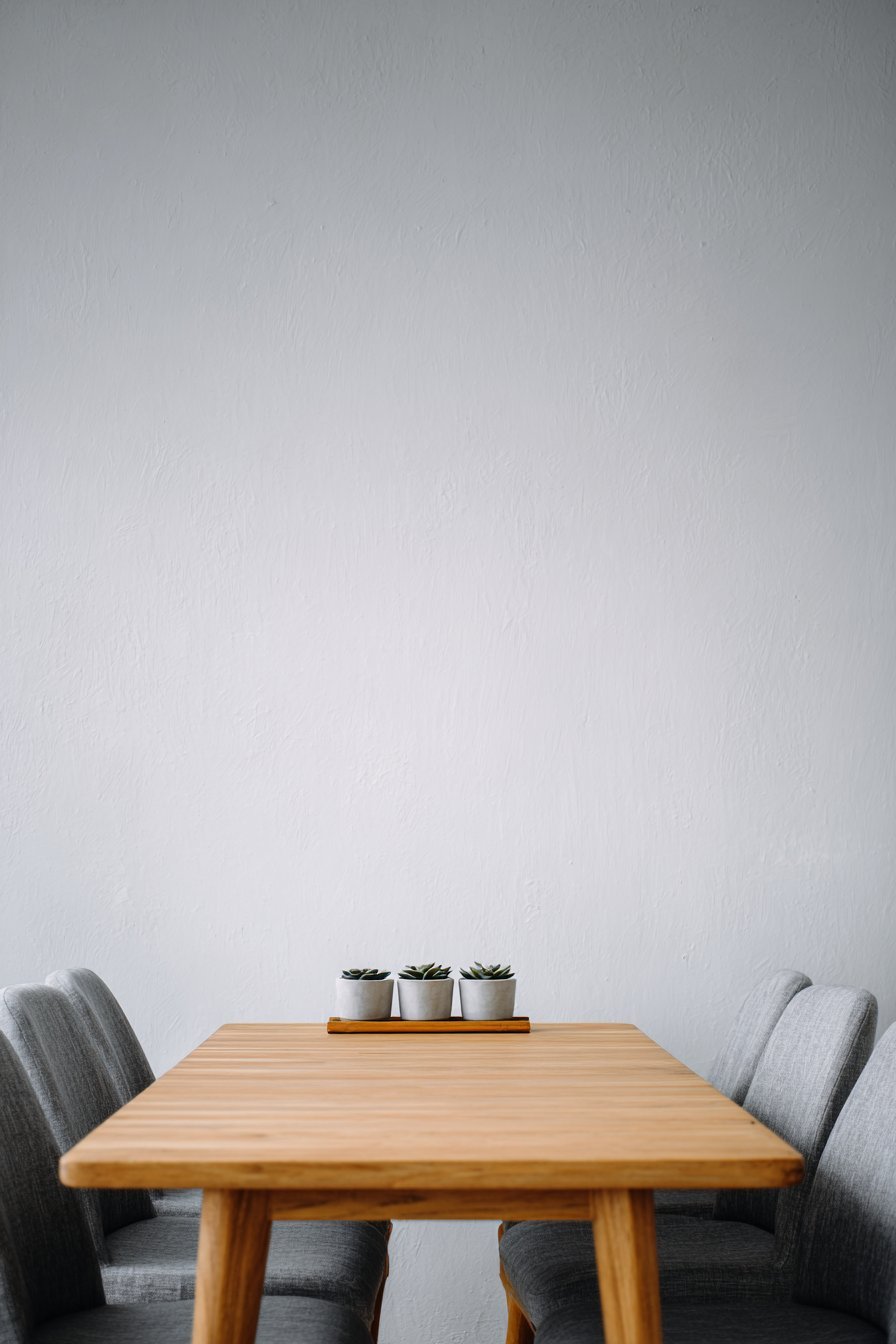
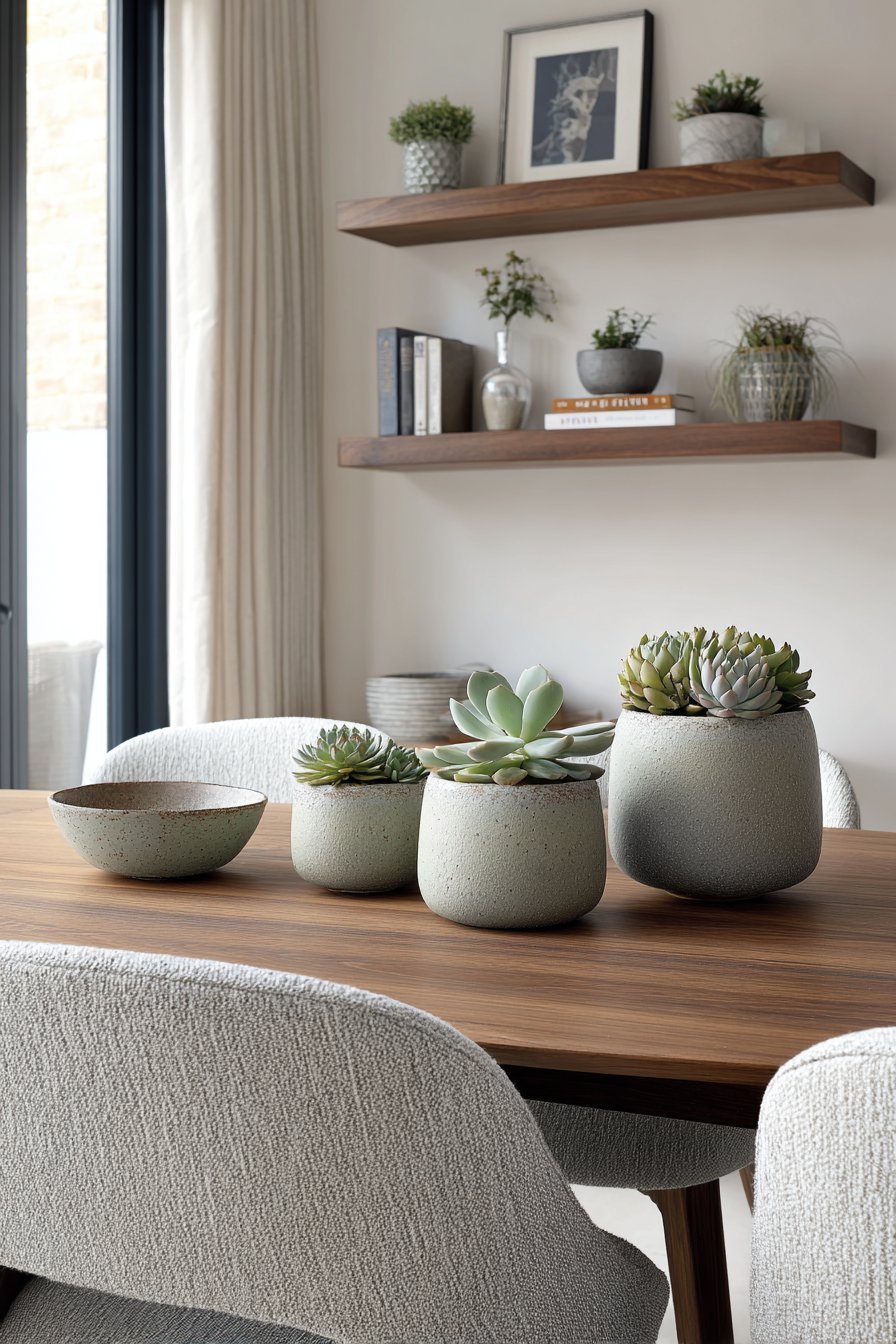
A Scandinavian dining room showcases the beauty of minimal decoration. An expansive white wall serves as the perfect backdrop. A single floating wooden shelf displays three small succulents. The ceramic planters add organic warmth to the clean aesthetic.
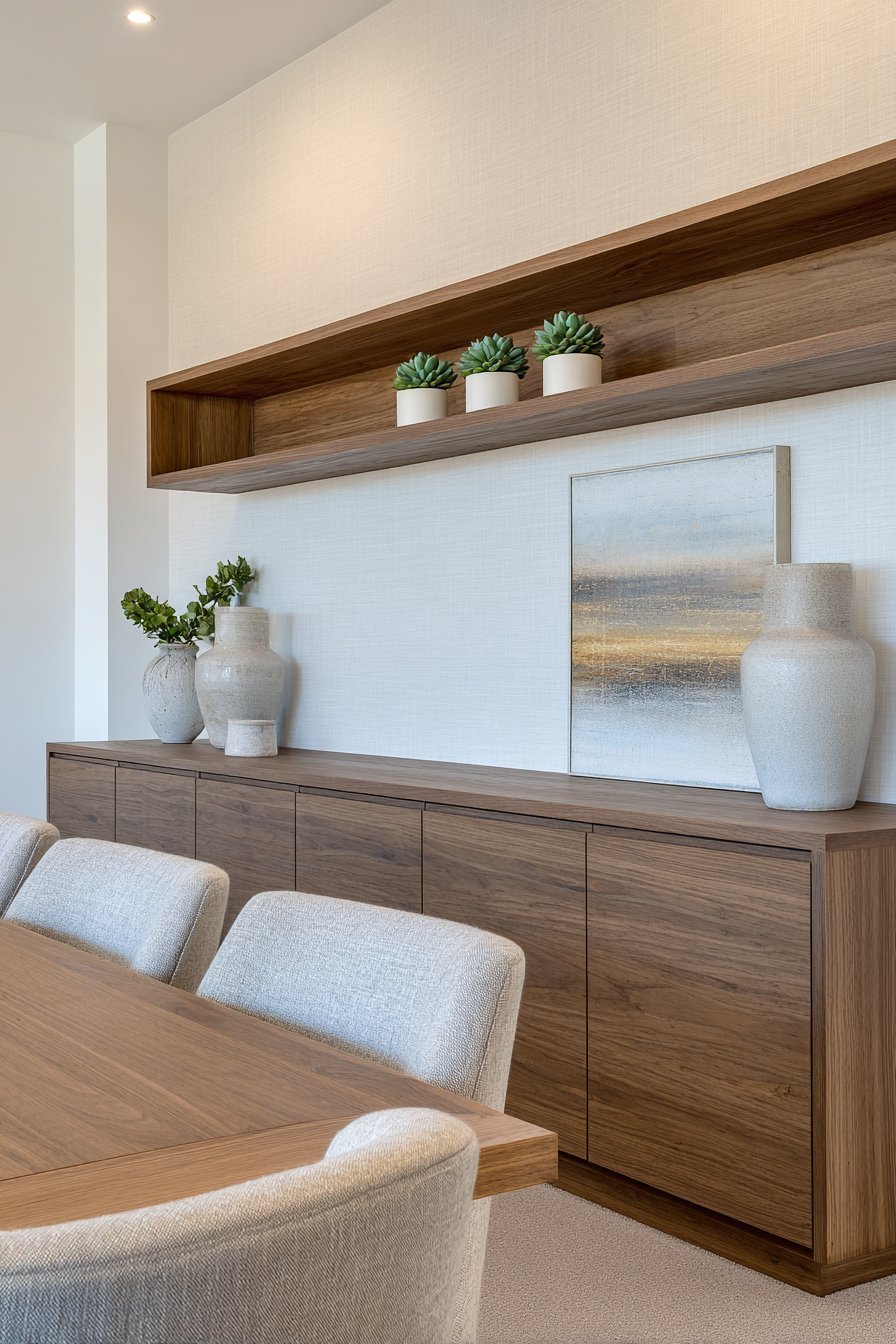
The natural oak dining table centers the room beautifully. Upholstered chairs in soft grey linen provide comfortable seating. The generous negative space creates calm and openness. This breathing room allows each element to shine individually.
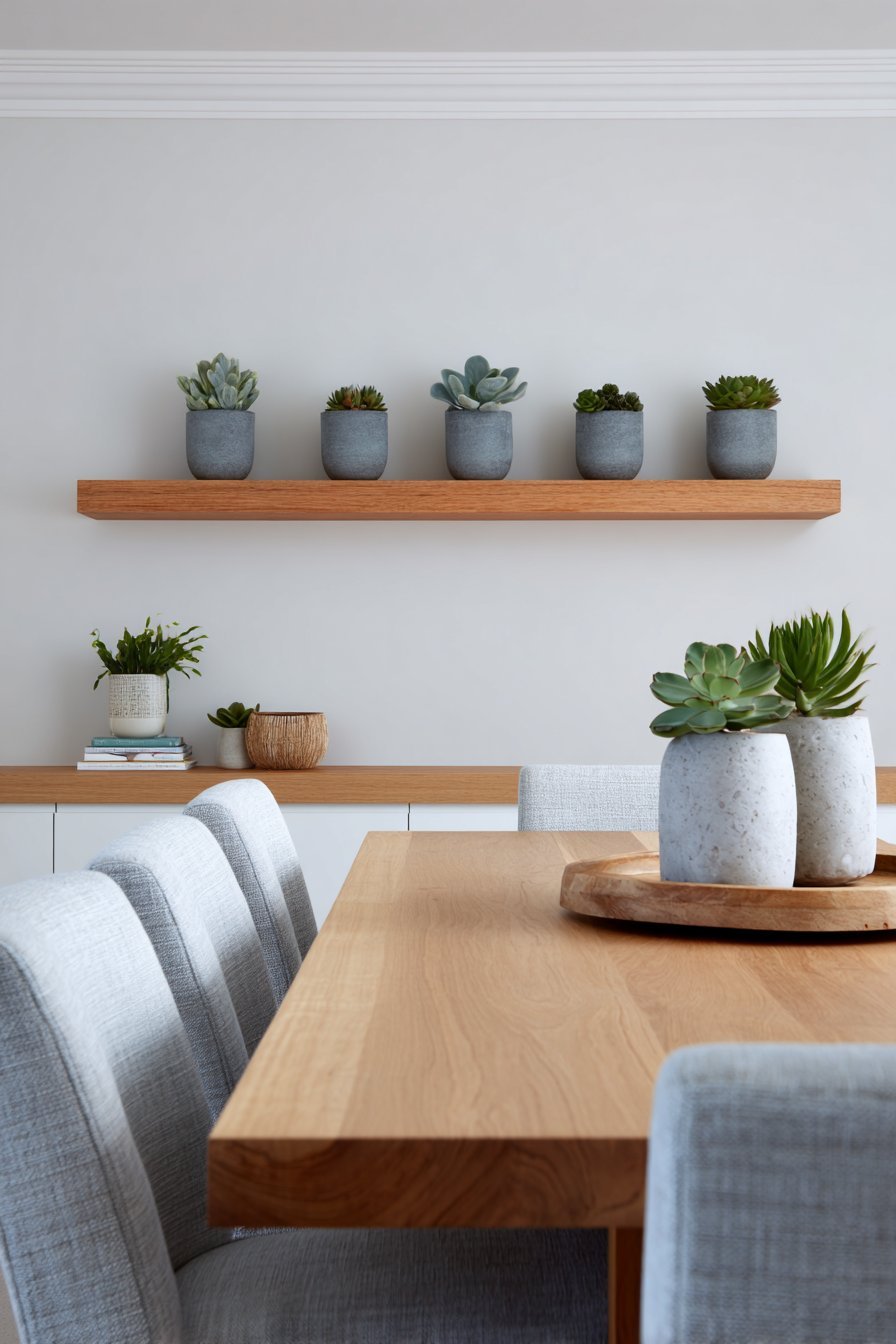
Professional lighting design enhances the wall’s subtle texture. Soft diffused daylight creates gentle highlights throughout the day. The minimalist approach demonstrates sophisticated restraint. This design proves that careful editing creates more impact than abundant decoration.
Key Design Tips:
- Use floating shelves sparingly for maximum visual impact
- Display odd numbers of items for balanced composition
- Choose plants that require minimal maintenance for longevity
- Paint walls in warm white tones for inviting brightness
- Allow generous negative space around decorative elements
3. Sage Green Accent Wall Serenity
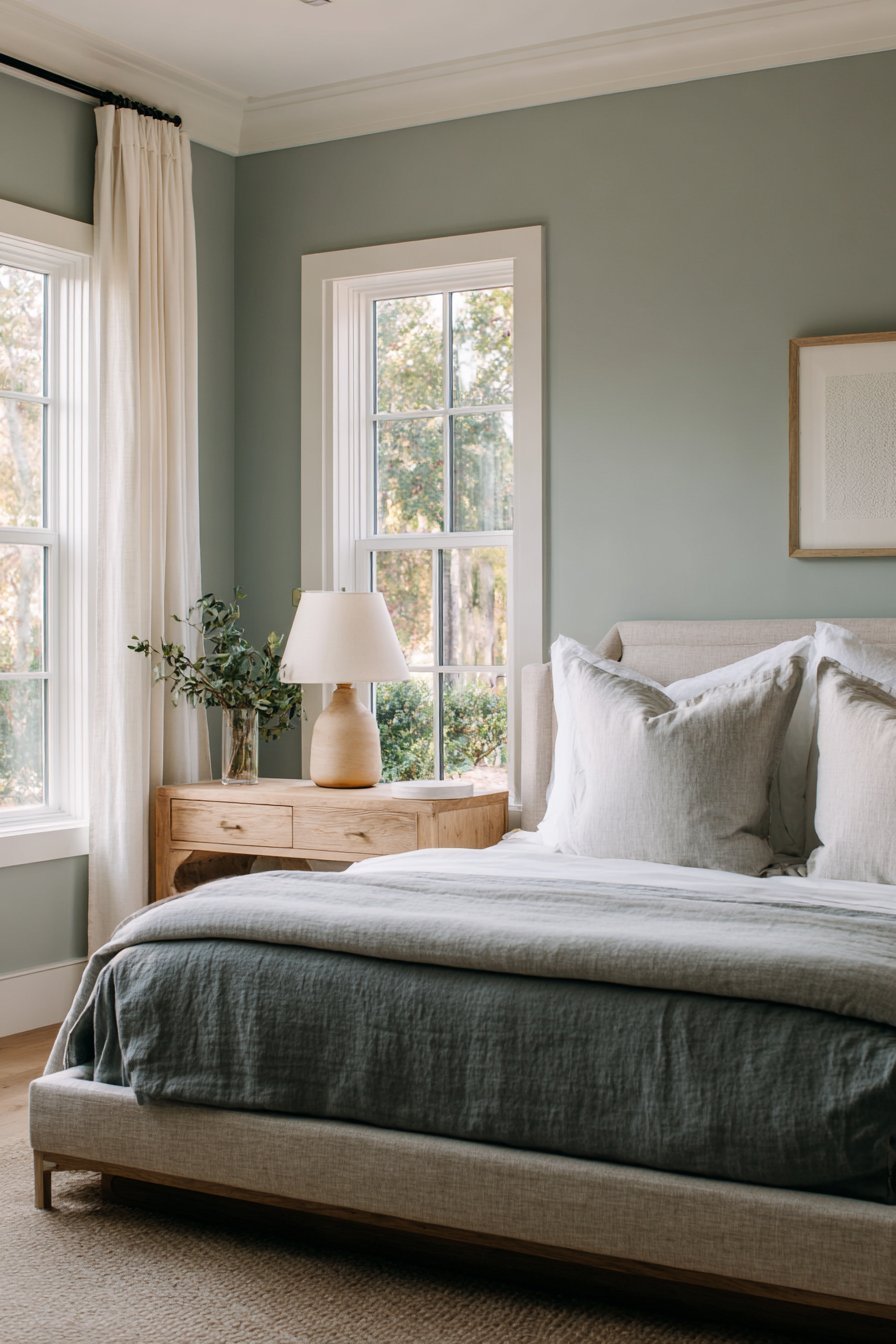
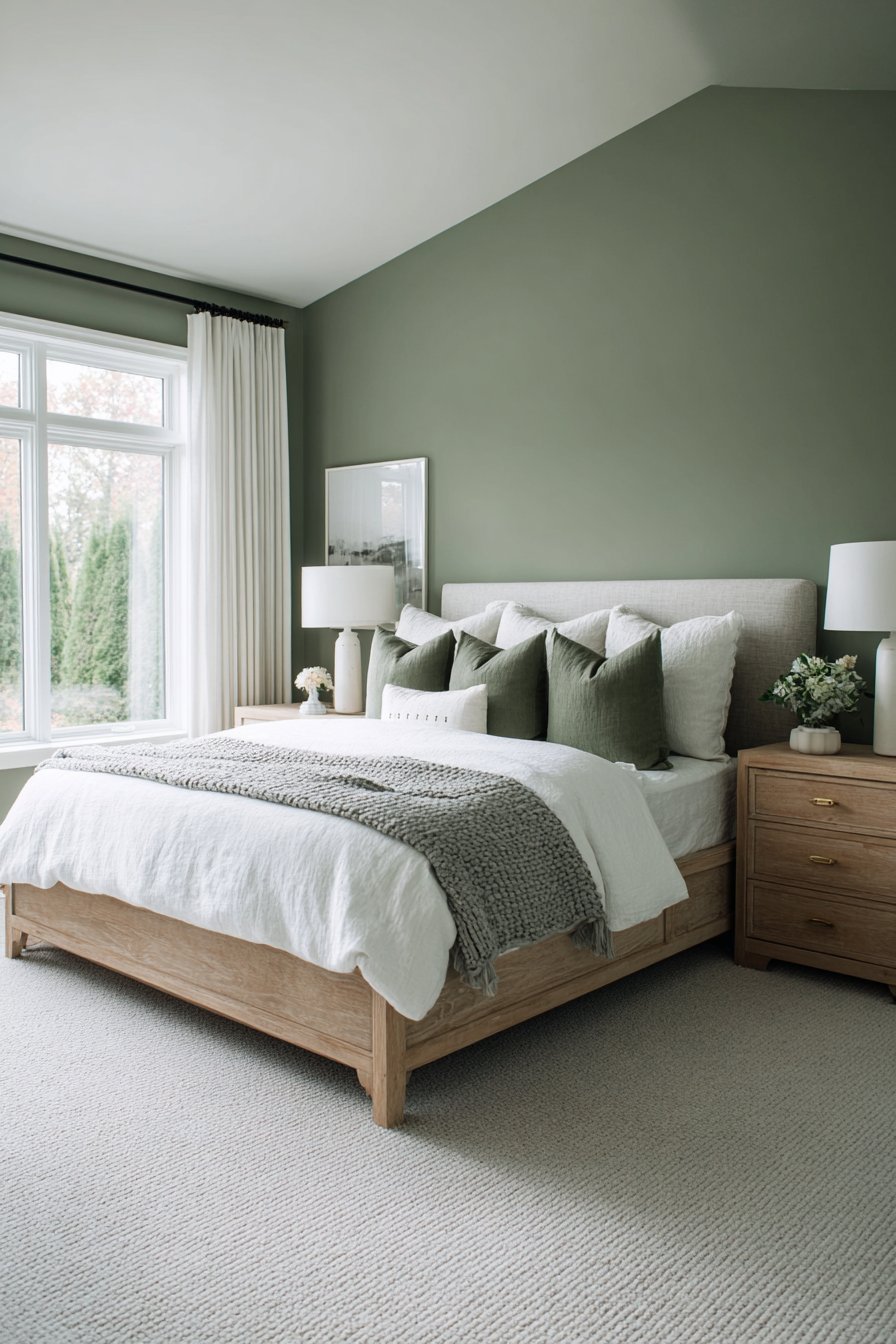
A modern bedroom features an empty accent wall in soft sage green. The color itself serves as the primary decorative element. This approach demonstrates how paint alone creates sophisticated visual interest. The wall remains completely bare behind the natural linen upholstered bed.
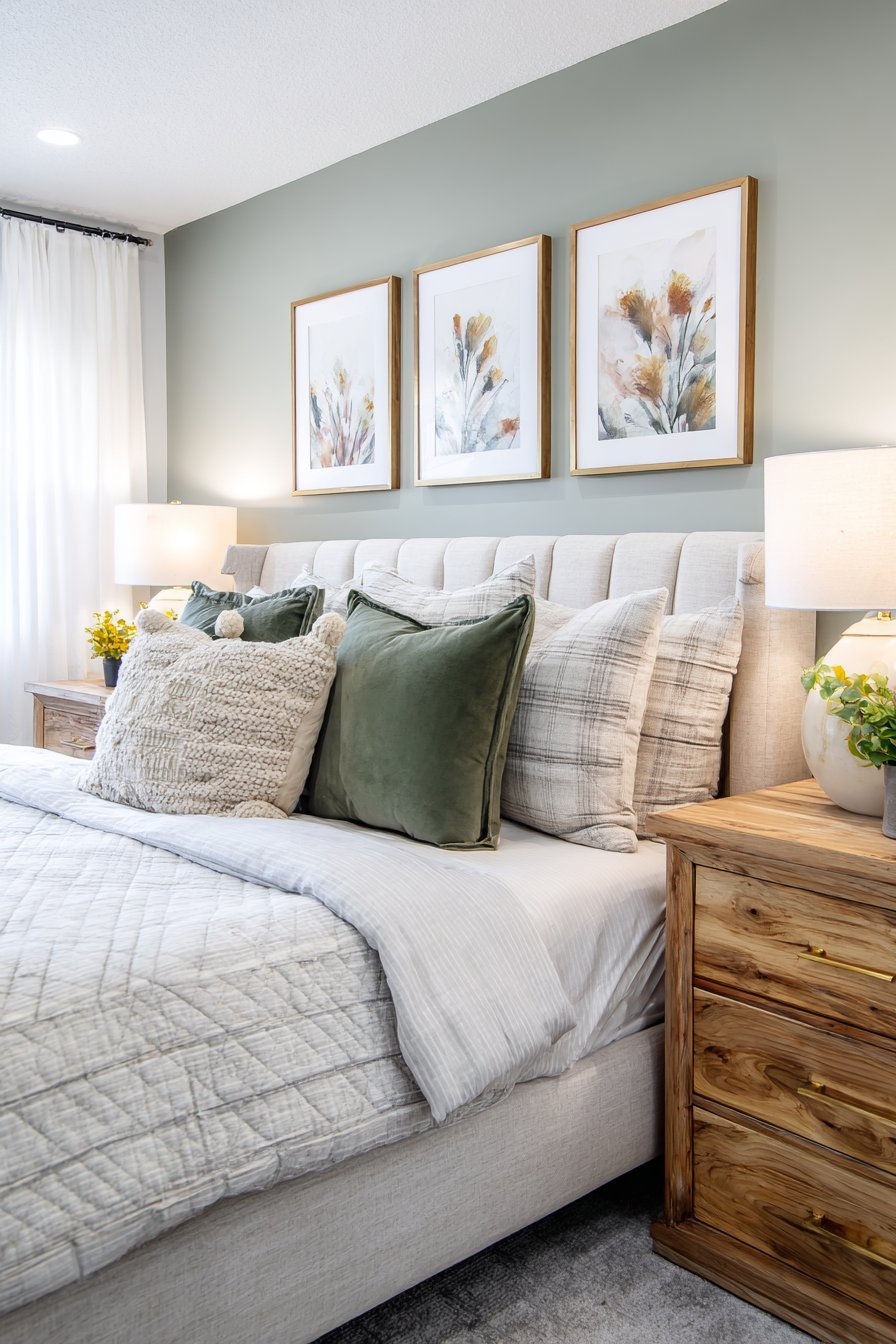
White oak nightstands flank the bed with timeless simplicity. Simple brass pulls add subtle metallic accents. Minimal ceramic table lamps provide gentle task lighting. The restrained palette promotes relaxation and peaceful sleep.
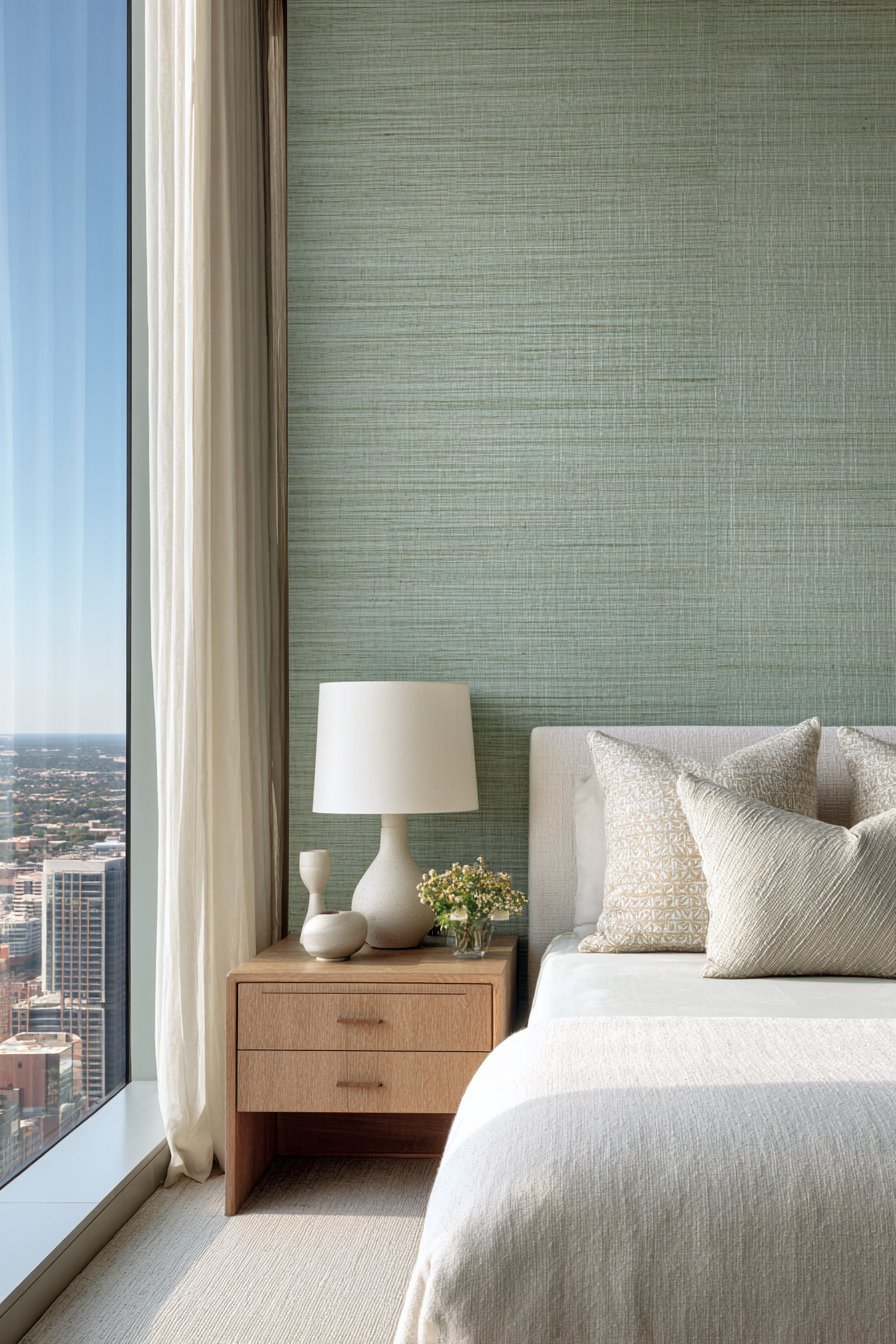
Natural light from sheer curtained windows illuminates the smooth finish. The color shifts subtly throughout the day. This dynamic quality adds depth without additional decoration. The unadorned wall contributes to a calming sleep environment.
Key Design Tips:
- Select muted green tones for calming bedroom atmospheres
- Use high-quality paint with smooth, even finish
- Keep bedside styling minimal to maintain serenity
- Choose natural linen fabrics for organic texture
- Install sheer curtains for soft, filtered natural light
4. Charcoal Grey Office Drama
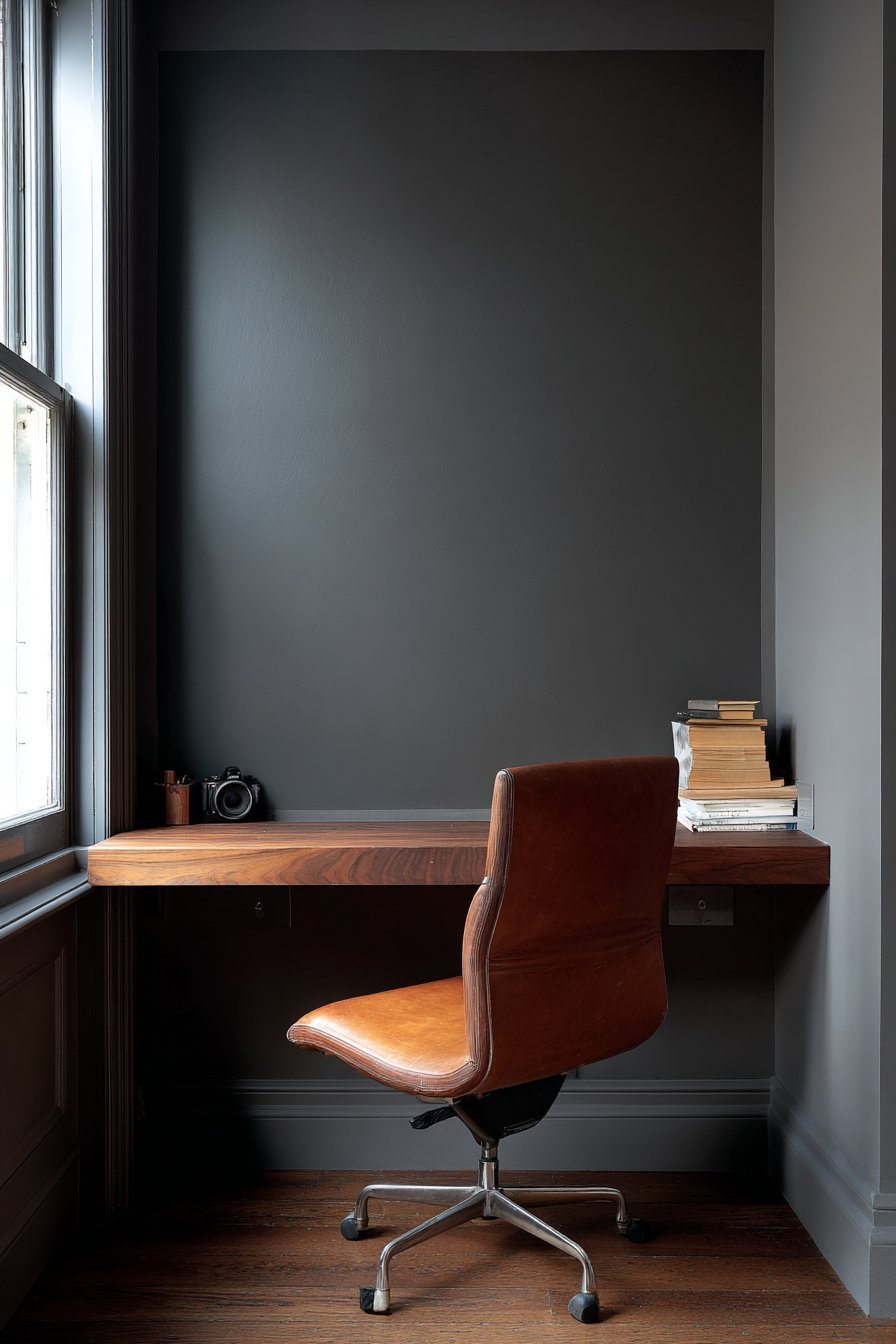
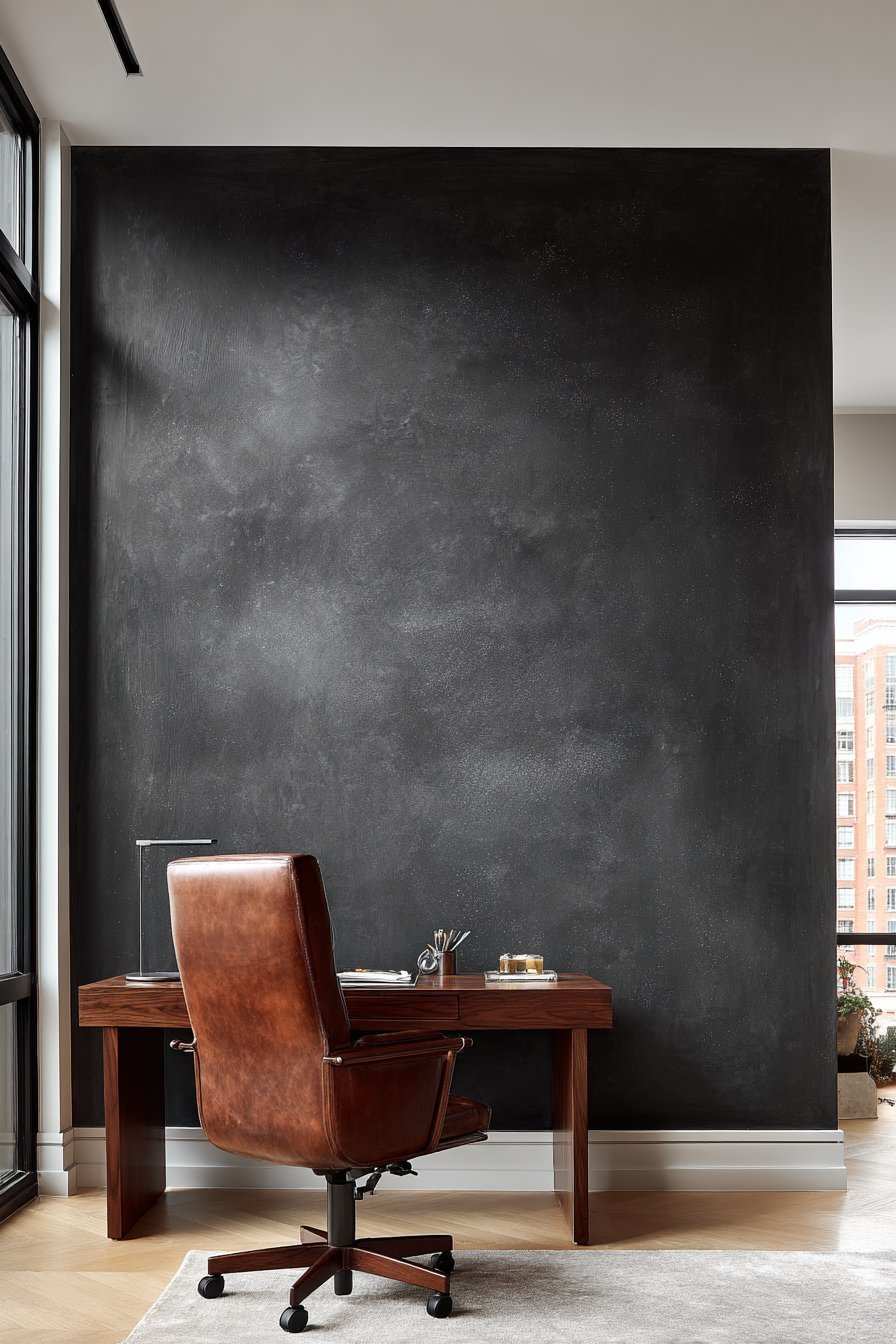
A contemporary home office features a dramatic charcoal grey wall. This bold backdrop creates striking visual contrast. A simple walnut desk sits perpendicular to the wall. The clean lines emphasize functional workspace design.
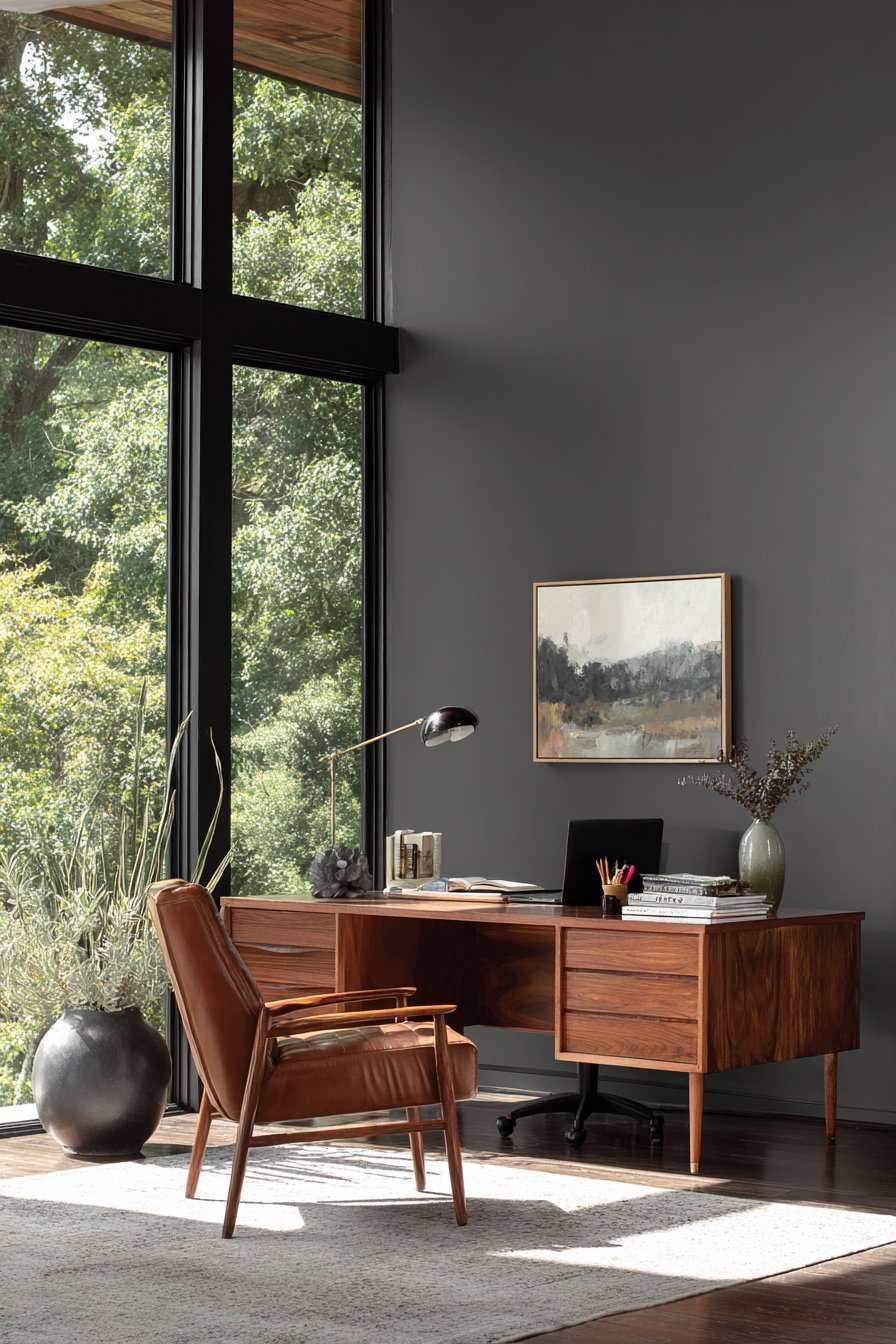
A mid-century modern leather desk chair provides ergonomic comfort. Minimal desk accessories maintain the uncluttered aesthetic. The empty wall serves as a visual anchor. This lack of distraction enhances focus and productivity.
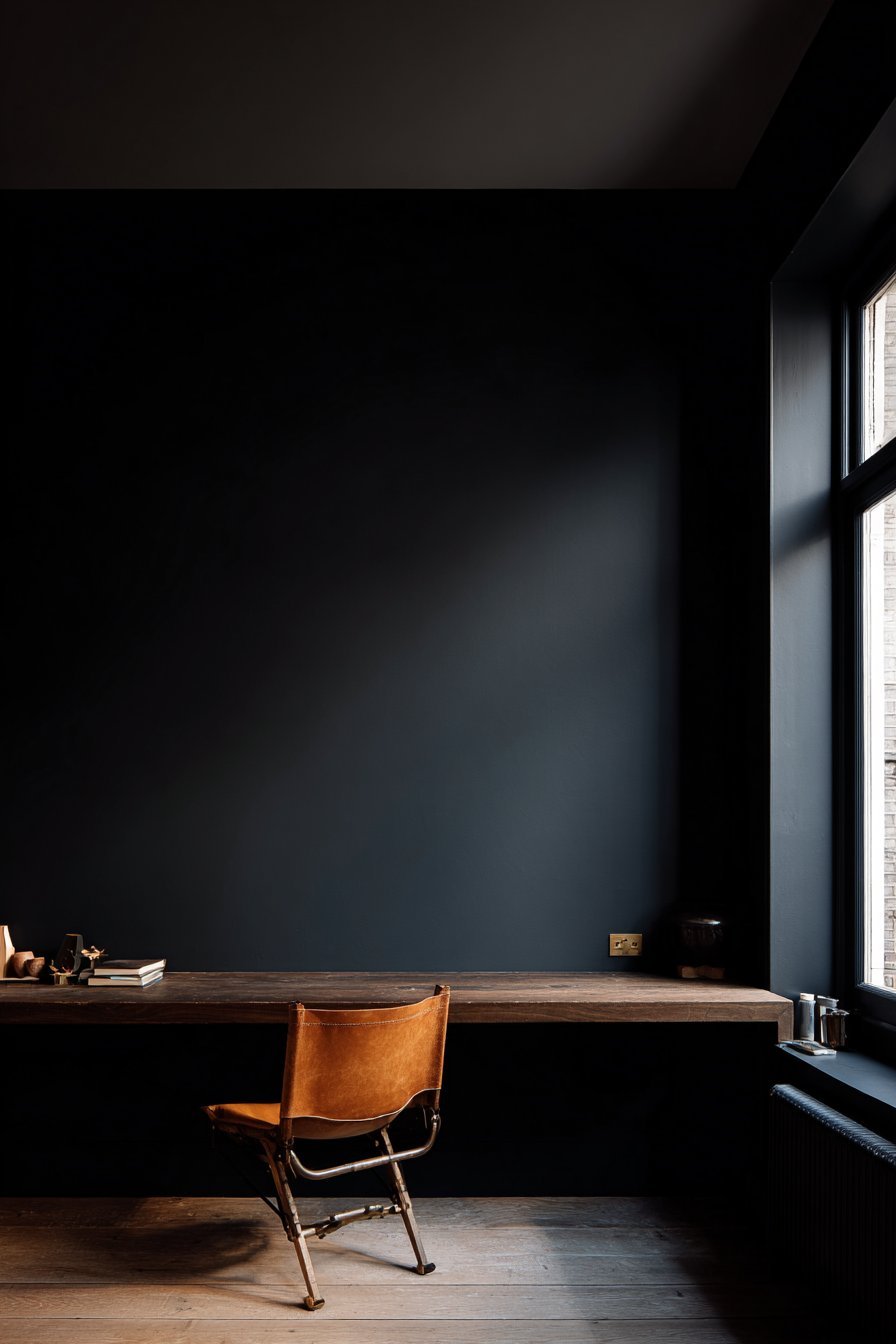
Natural window light creates gentle highlights on the matte finish. The dark color adds sophistication without feeling heavy. Strategic lighting placement prevents the space from feeling dim. This design demonstrates the power of intentional emptiness in workspace environments.
Key Design Tips:
- Use dark wall colors to create dramatic focal points
- Choose matte finish paint to minimize light reflection
- Position desk perpendicular to empty walls for ergonomic viewing
- Maintain minimal desktop accessories for clean aesthetics
- Supplement natural light with task lighting as needed
5. Bohemian Textured Plaster Corner
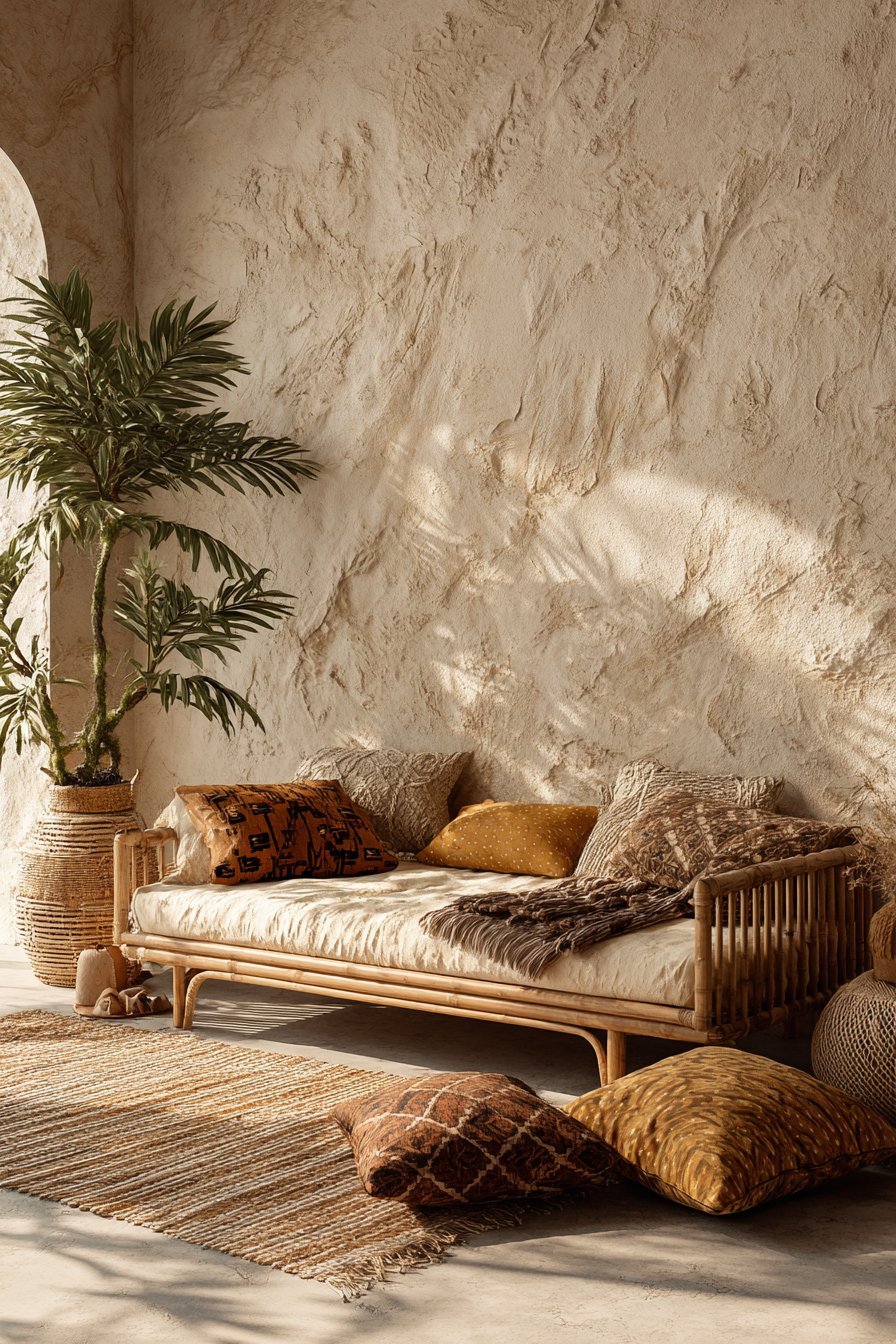
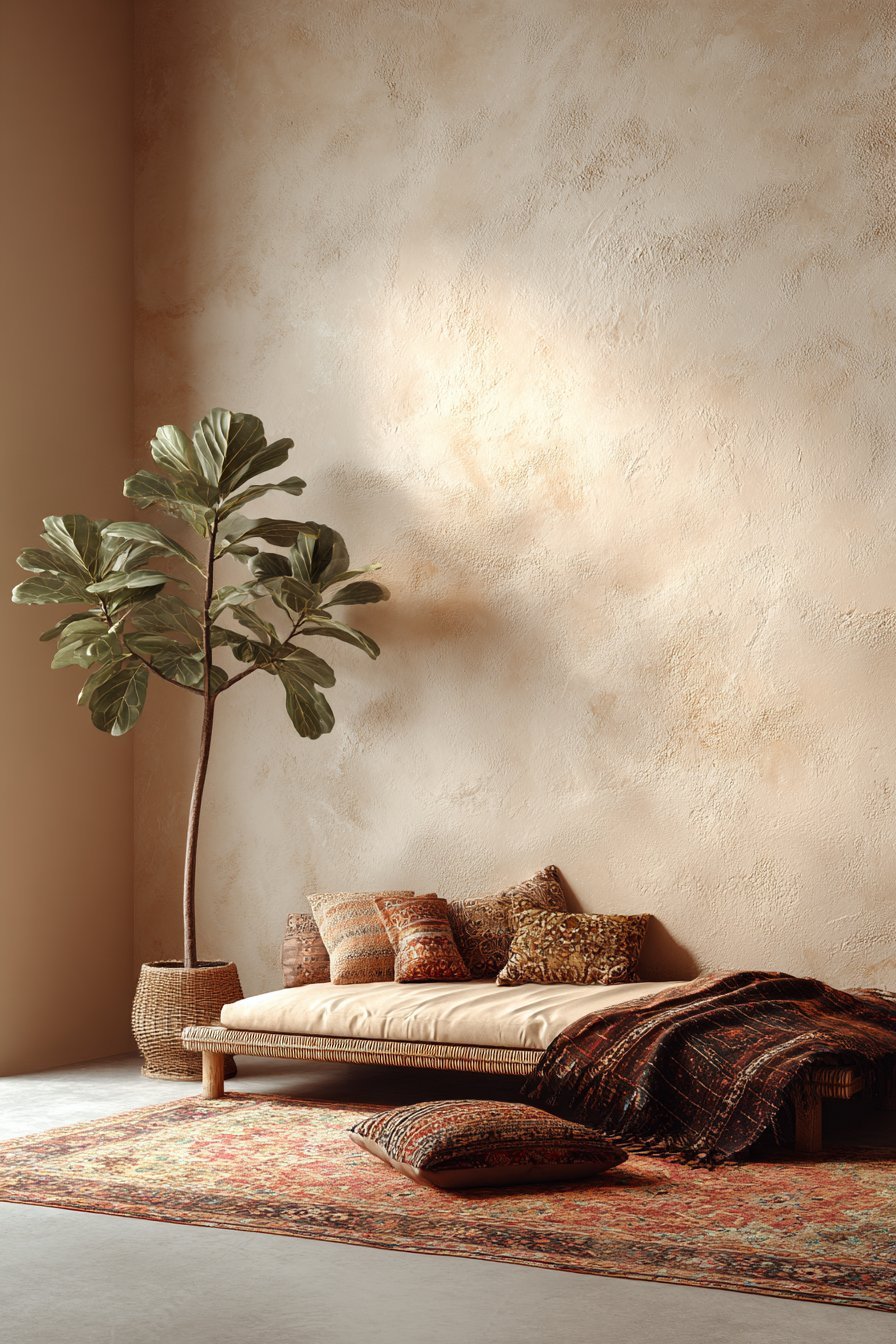
A bohemian living room corner showcases natural plaster texture. The warm cream tones create organic visual interest. A low-profile rattan daybed sits against the textured wall. Linen cushions and macramé throws add layered softness.
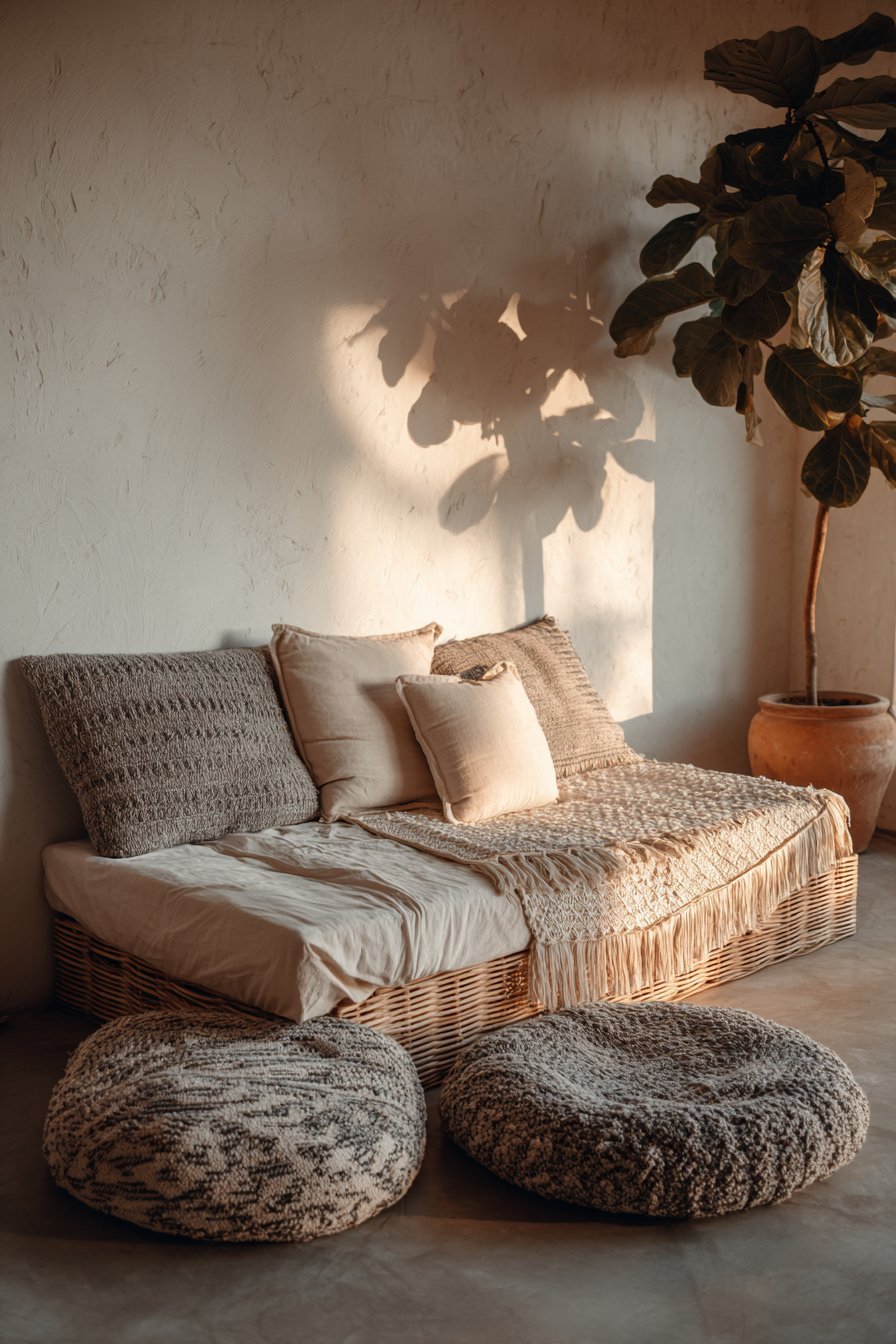
Floor pillows in earthy patterns scatter casually nearby. A potted fiddle leaf fig tree adds vertical green dimension. The organic texture provides visual interest without wall hangings. This approach celebrates natural materials and handcrafted finishes.
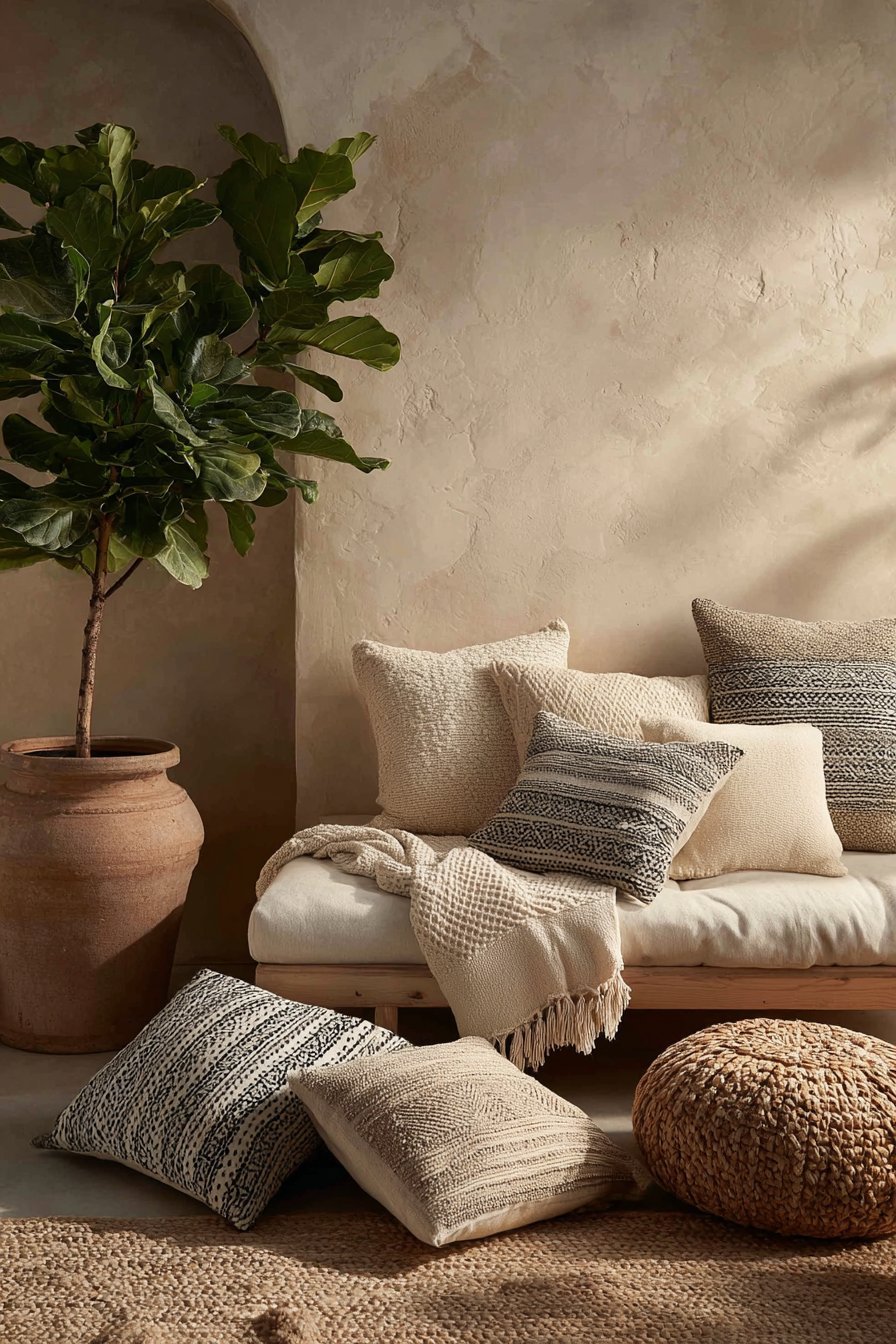
Golden hour lighting emphasizes the wall’s tactile surface. The plaster’s irregular texture creates subtle shadow play. This natural variation adds depth and character. The relaxed aesthetic feels both intentional and effortlessly gathered.
Key Design Tips:
- Apply natural plaster finishes for organic texture variations
- Choose warm cream tones for inviting bohemian spaces
- Layer natural materials like rattan, linen, and jute
- Add live plants for vertical interest and air quality
- Embrace imperfection in handcrafted plaster applications
6. Transitional Entryway Elegance
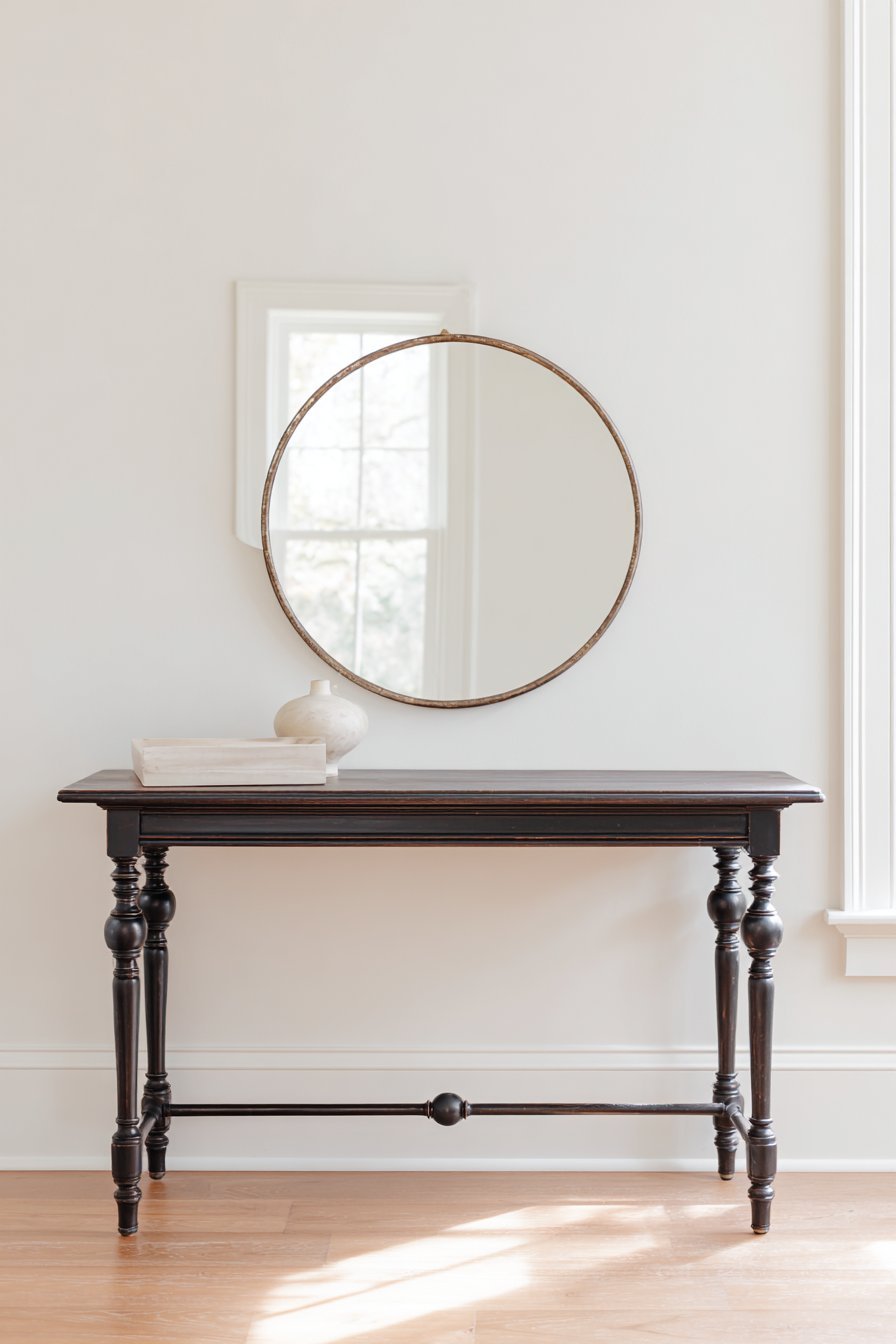
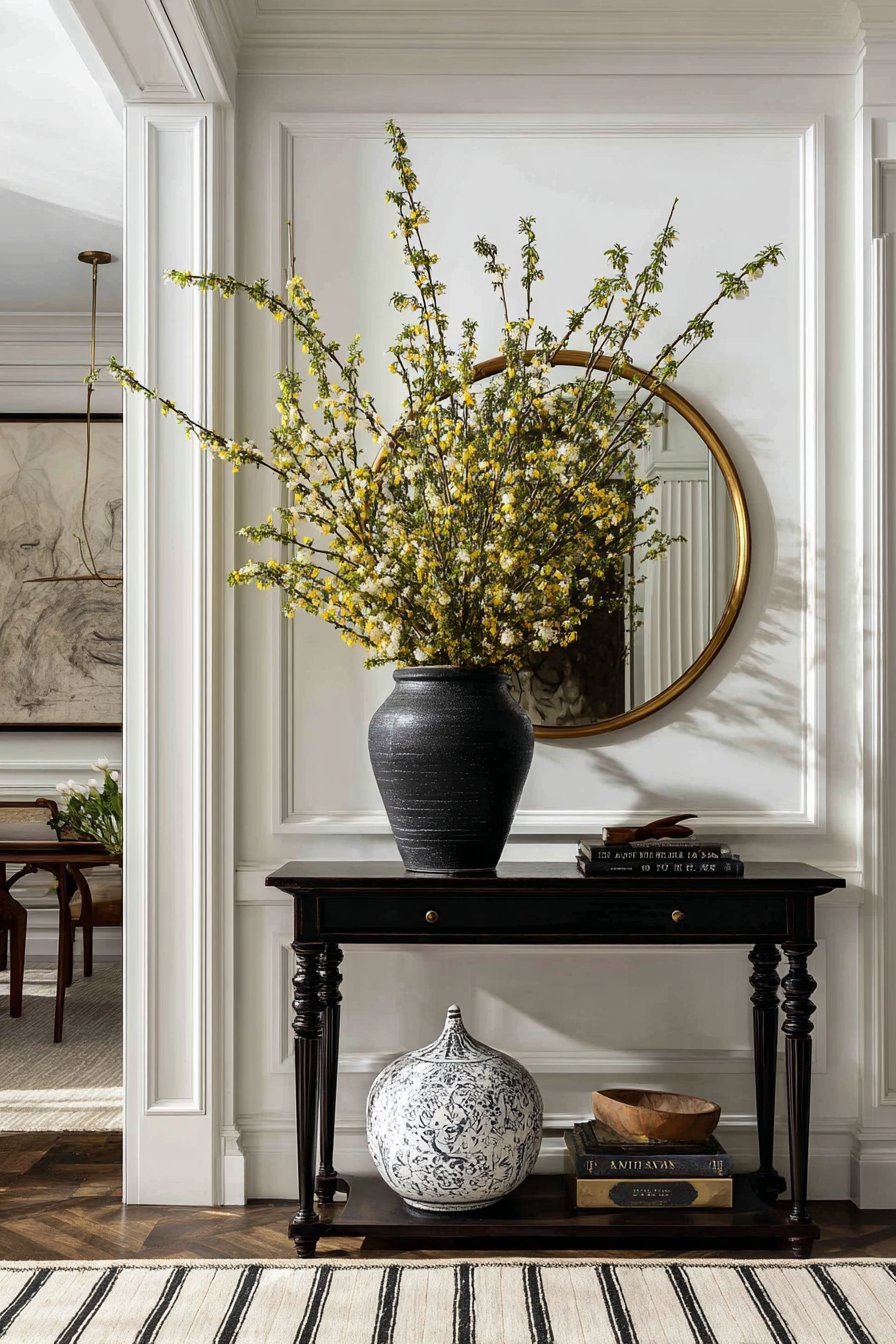
A transitional entryway demonstrates classic simplicity. The empty wall features Benjamin Moore Simply White. A narrow console table in dark walnut stands against it. The turned legs add traditional architectural detail.
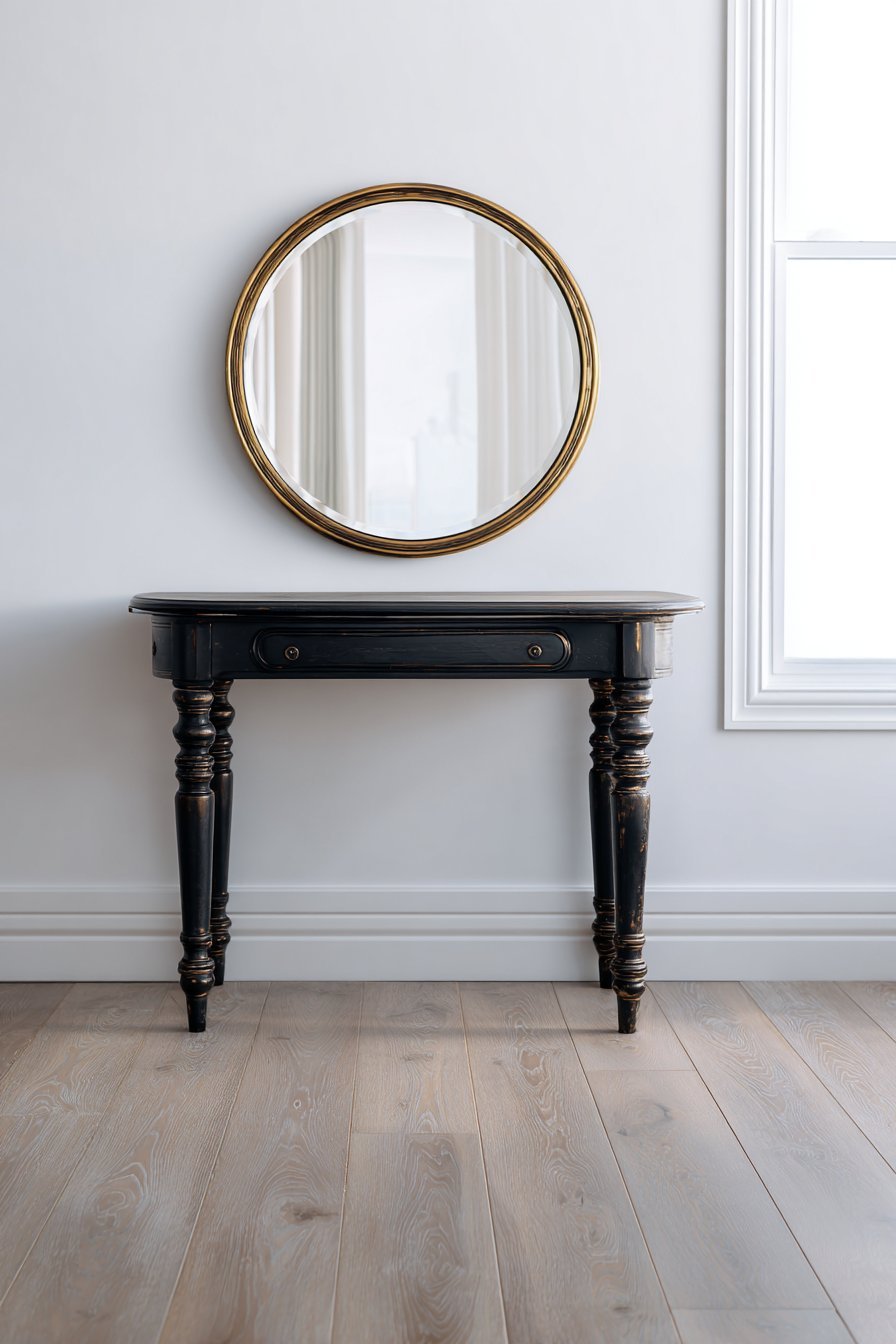
A round mirror in antique brass leans casually on the console. This relaxed placement feels current and approachable. Natural light from a transom window creates subtle shadows. The carefully chosen pieces stand out against the pristine backdrop.
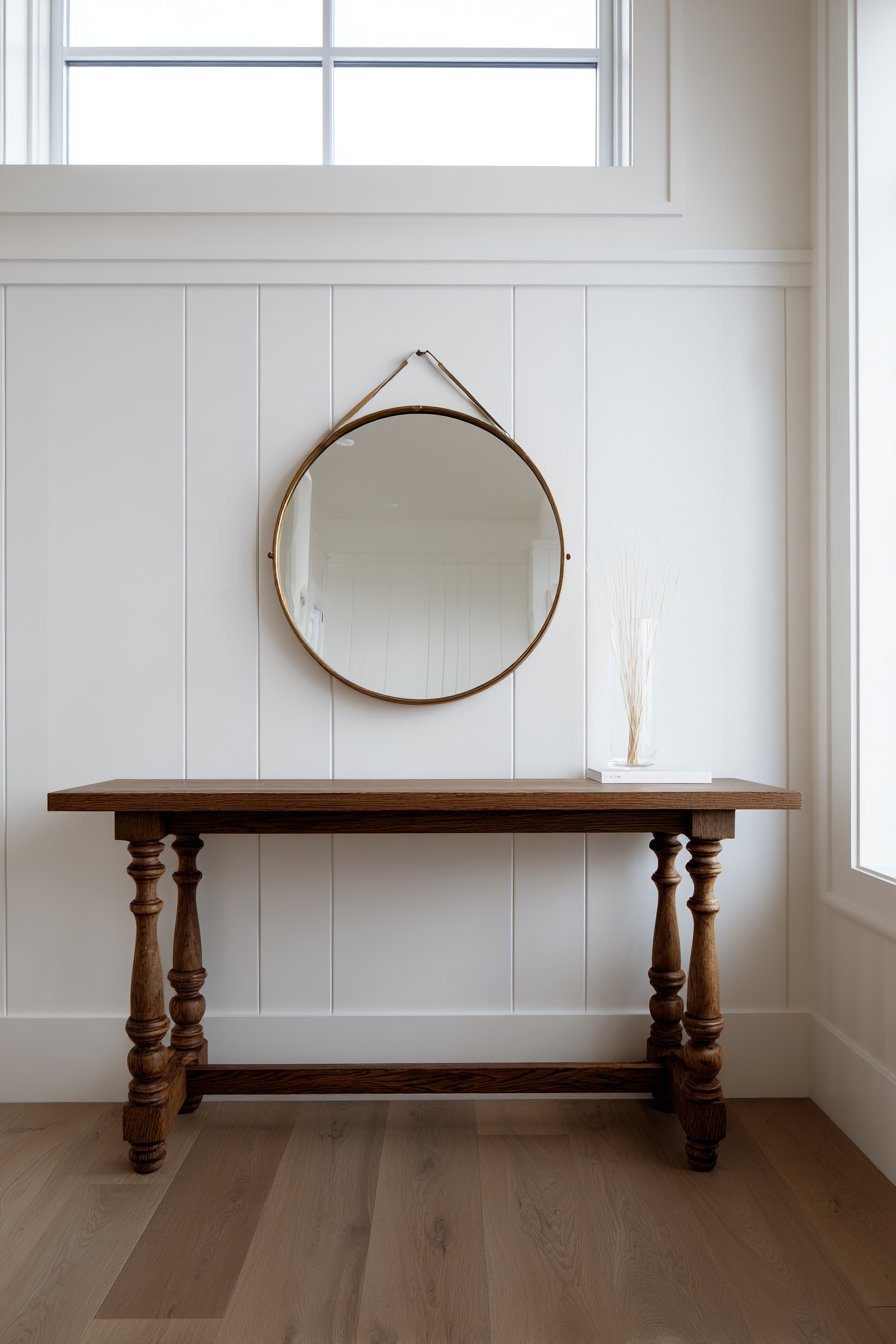
The empty wall allows each element to command attention. Quality pieces shine without competing for visual space. This approach demonstrates how restraint enhances individual components. The crisp painted finish provides the perfect clean canvas.
Key Design Tips:
- Use classic white paint for timeless entryway appeal
- Choose quality furniture pieces that make strong statements
- Lean mirrors casually instead of hanging for relaxed elegance
- Maximize natural light from transom windows when possible
- Limit decorative accessories to maintain sophisticated simplicity
7. Farmhouse Shiplap Texture
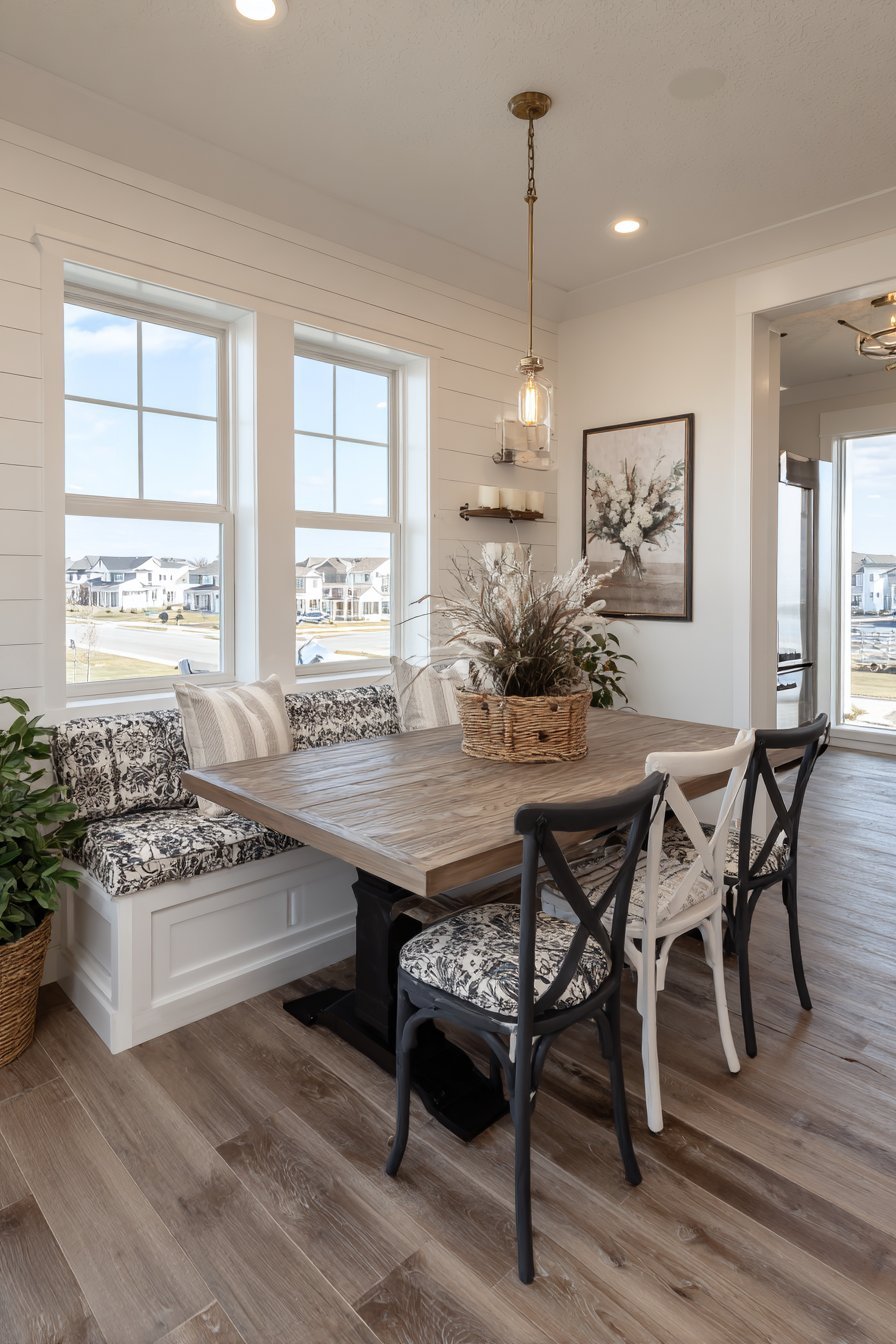
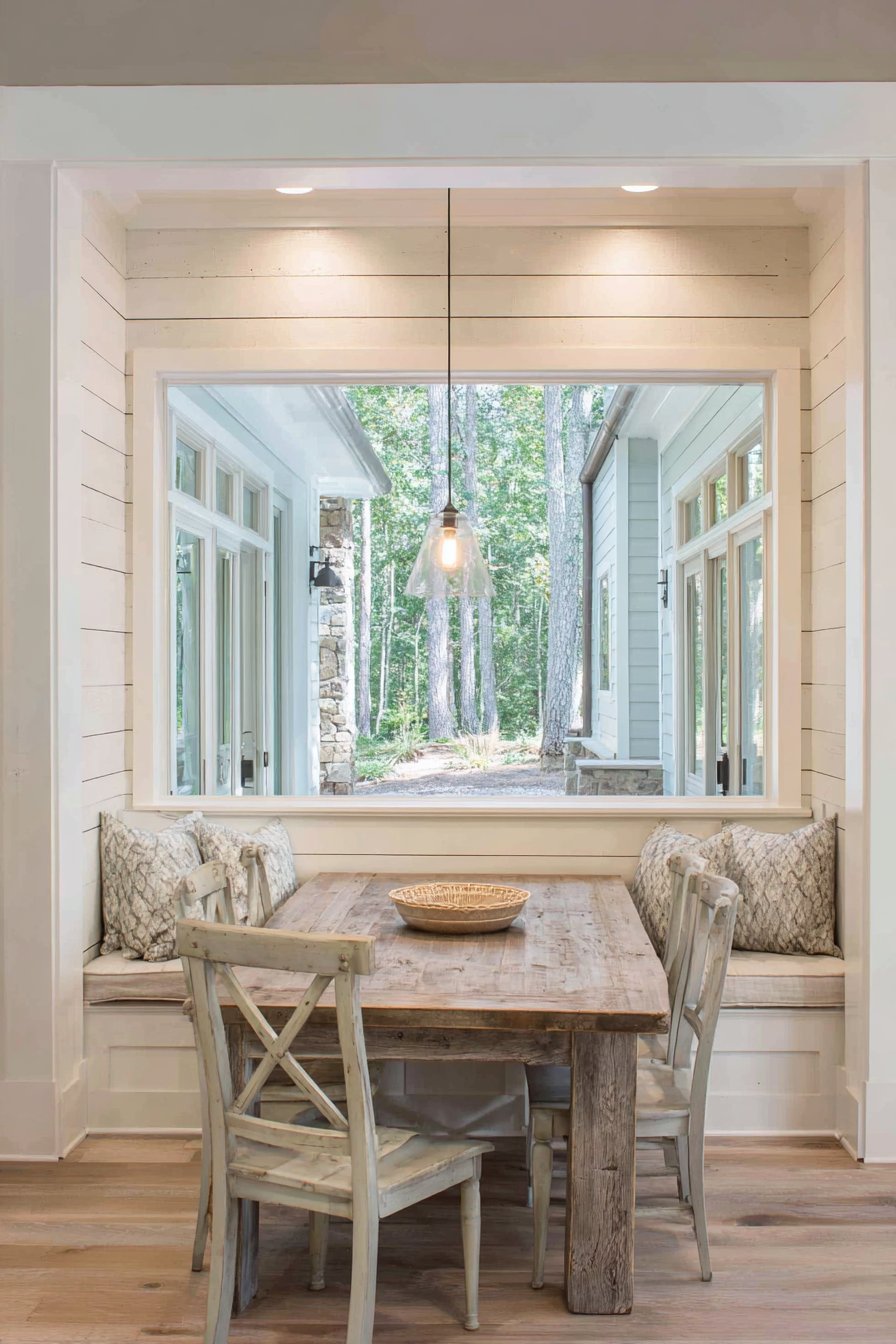
A farmhouse kitchen breakfast nook celebrates architectural detail. The empty shiplap wall showcases horizontal wood planking. Soft cream paint emphasizes the texture’s depth. The wall remains completely bare of decoration.
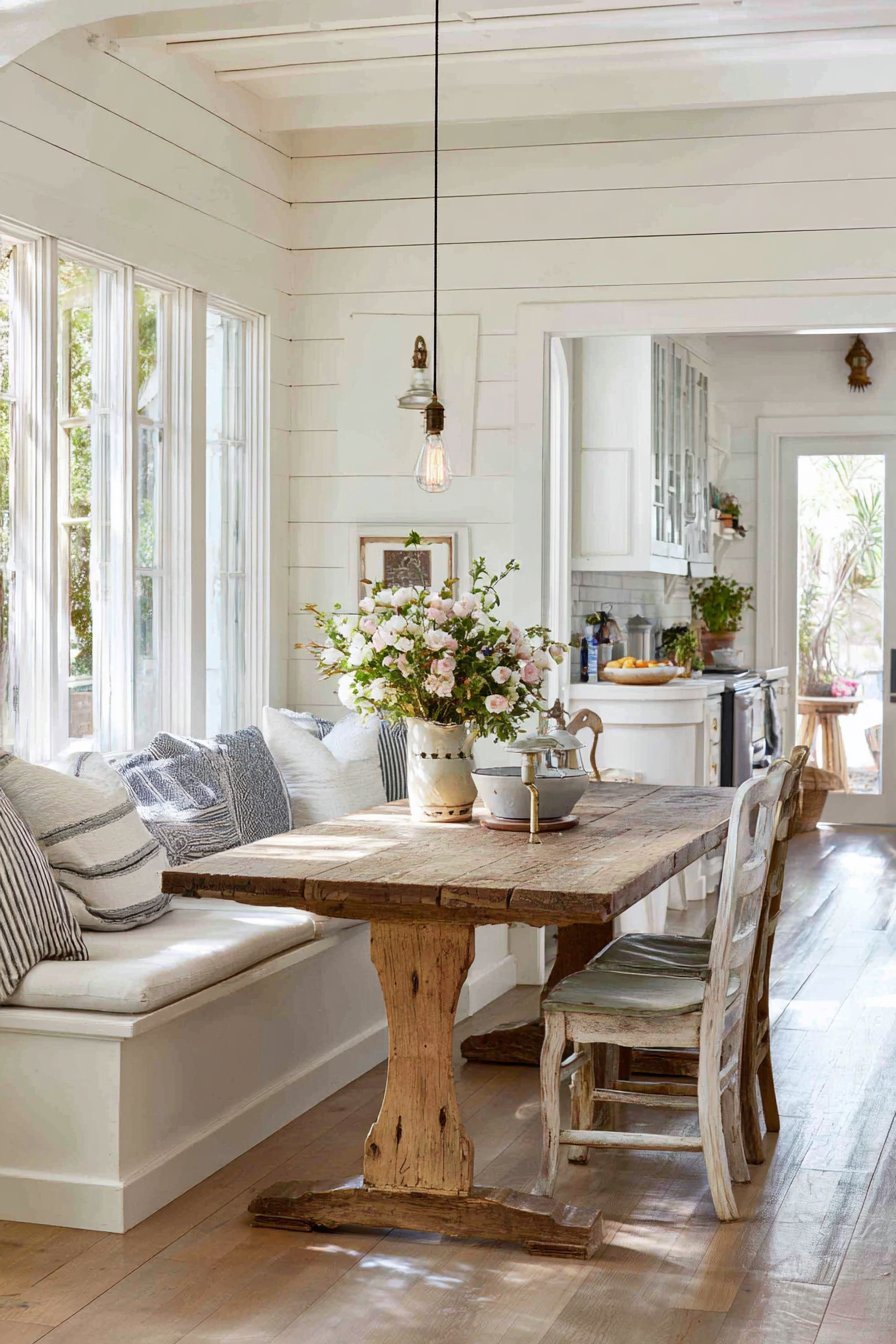
A rustic pine dining table centers the space naturally. Mismatched chairs add charming character and personality. A simple pendant light with Edison bulb hangs above. Morning light highlights the shiplap’s dimensional quality.
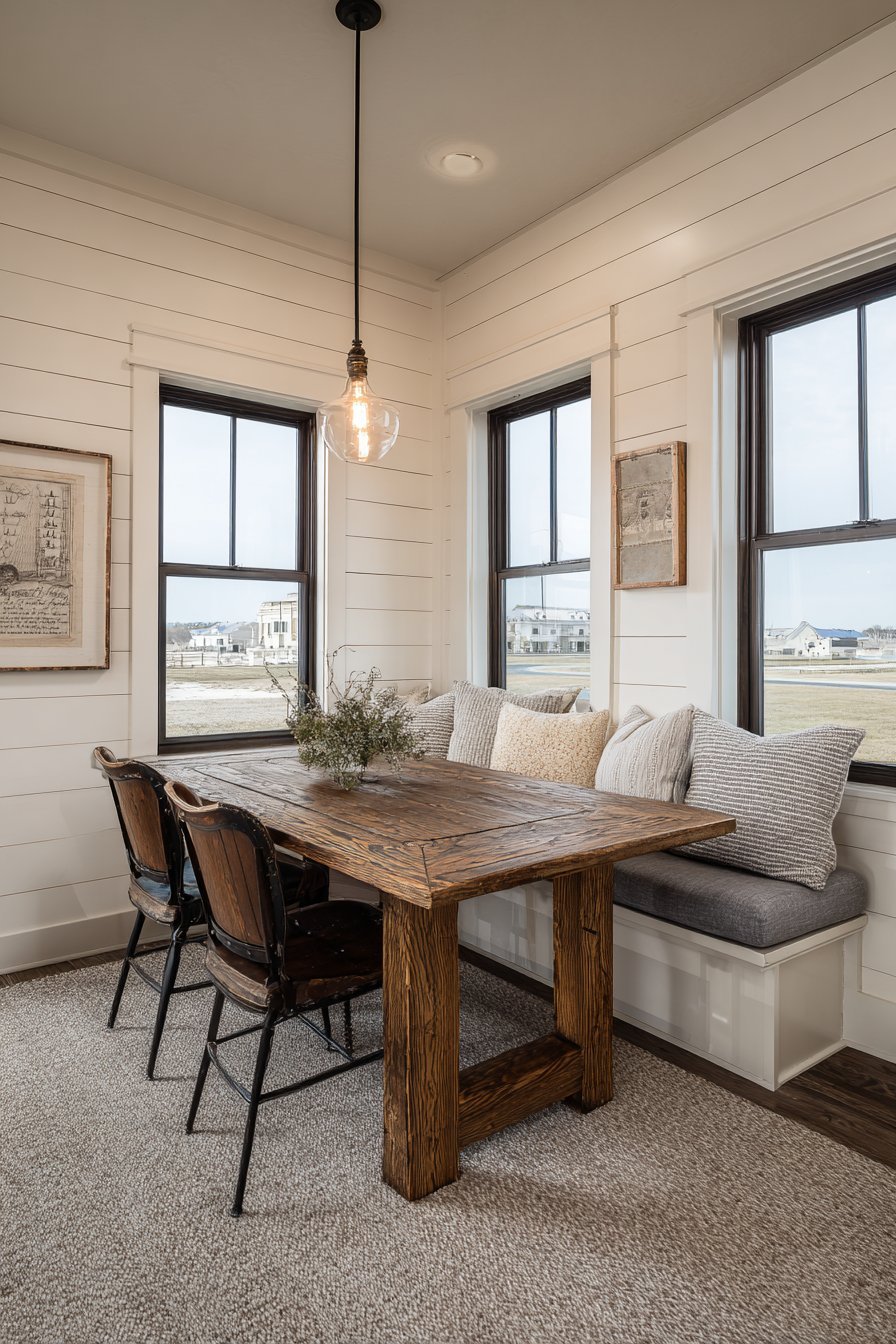
The horizontal lines create visual rhythm and movement. Shadow lines between planks add subtle depth. This architectural detail provides sufficient visual interest alone. The design proves that structural elements can serve decorative purposes.
Key Design Tips:
- Install real shiplap for authentic texture and depth
- Paint in soft neutral tones to highlight architectural detail
- Mix chair styles for farmhouse eclectic character
- Use Edison bulb lighting for vintage farmhouse ambiance
- Position seating to maximize natural morning light
8. Coastal Grasscloth Serenity
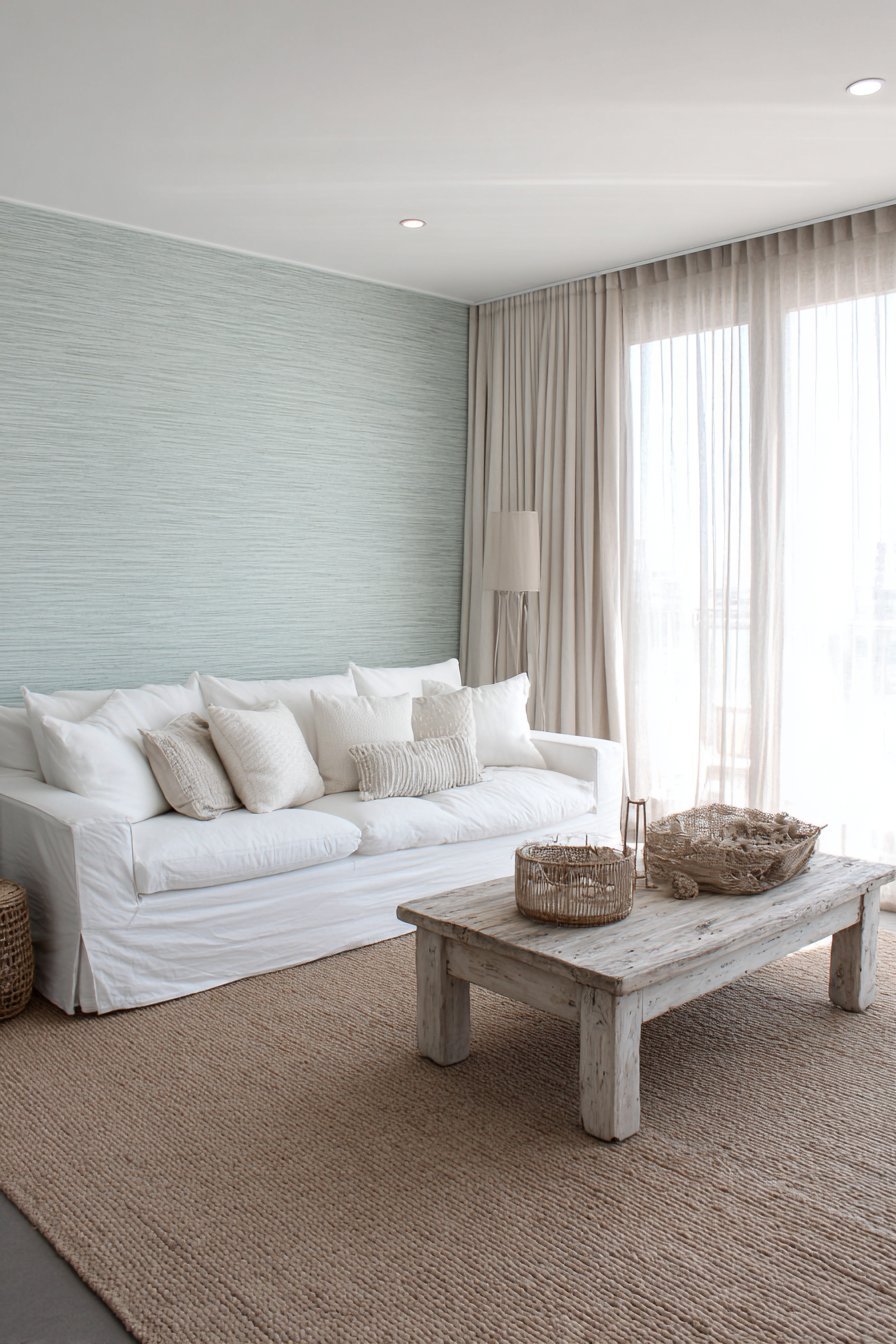
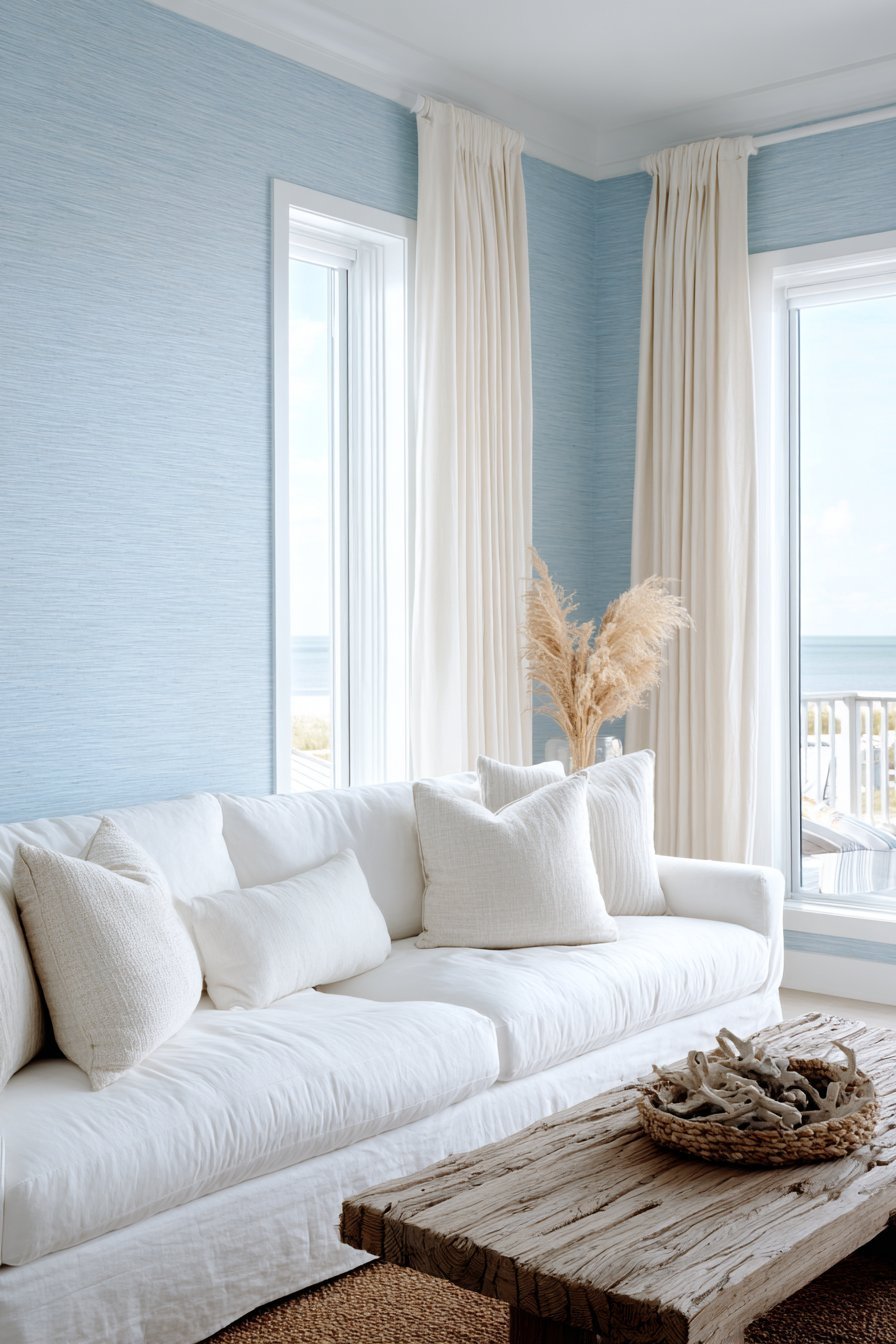
A coastal living room features pale blue-grey grasscloth wallpaper. The subtle texture provides natural decoration. A slipcovered white linen sofa sits parallel to the wall. The breezy aesthetic feels relaxed and vacation-inspired.
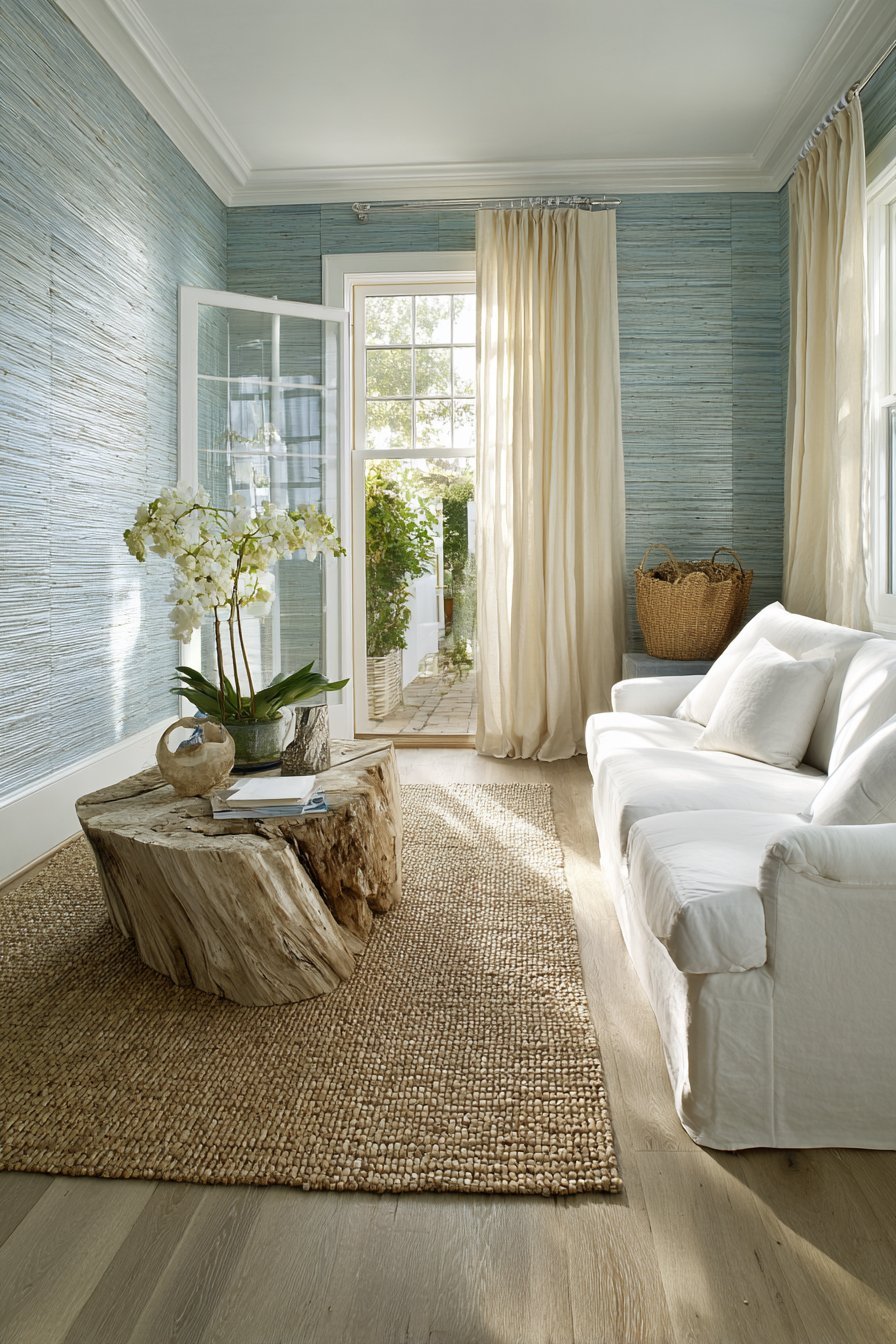
A driftwood coffee table adds organic sculptural interest. Woven seagrass rug grounds the seating area naturally. Natural linen curtains frame adjacent windows softly. Soft daylight emphasizes the grasscloth’s organic weave pattern.
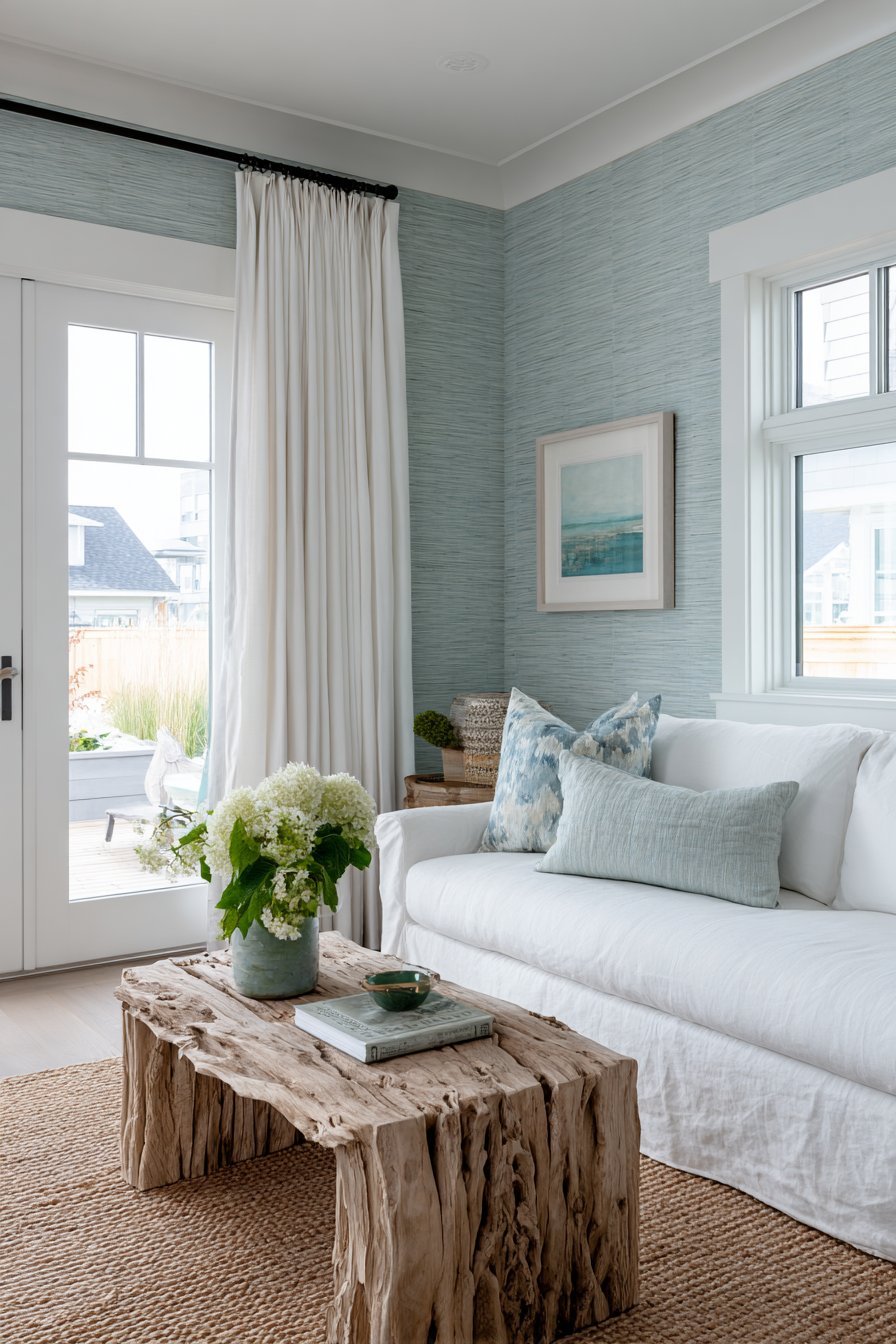
The wallpaper’s texture creates depth without overwhelming. Natural fibers add tactile dimension and visual warmth. This approach demonstrates how material choice creates interest. The minimally decorated wall maintains serene coastal simplicity.
Key Design Tips:
- Choose grasscloth wallpaper for natural texture variations
- Select pale blue-grey tones for coastal color schemes
- Use slipcovers for relaxed, washable furniture options
- Incorporate driftwood and natural fiber accessories
- Maximize natural light to highlight grasscloth weave patterns
9. Gentle Nursery Calm
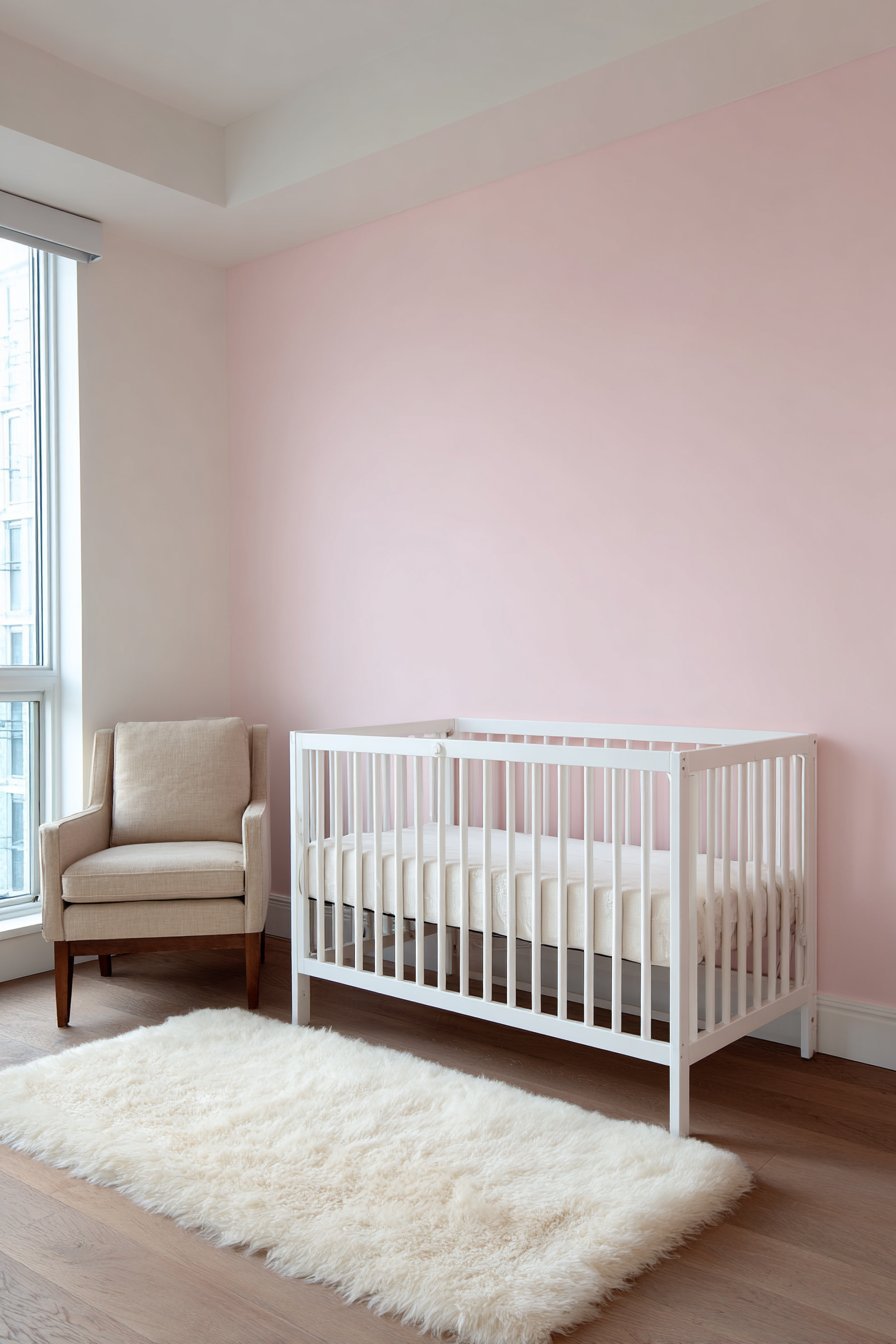
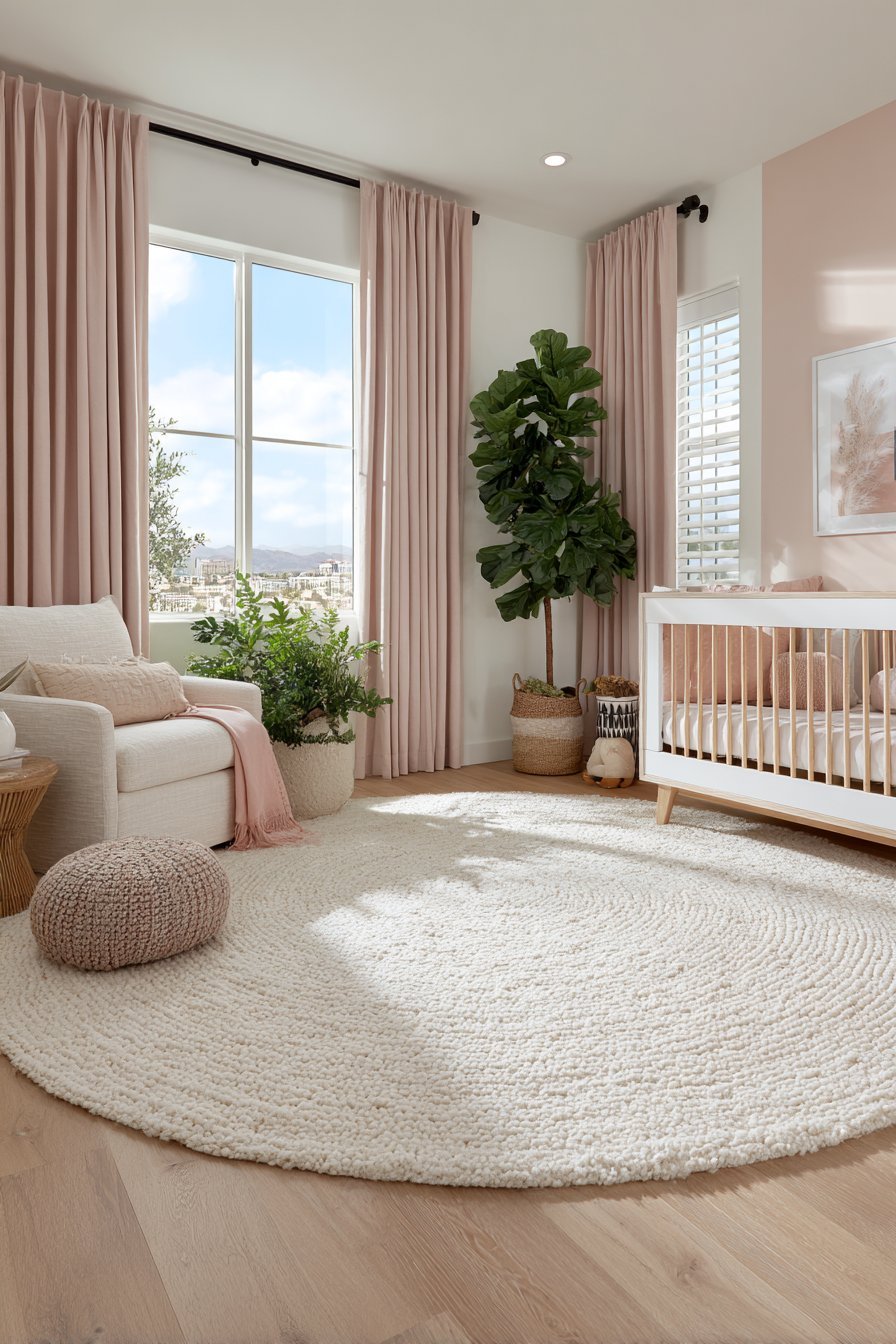
A modern nursery features a blush pink accent wall. The wall remains completely empty of artwork or decorations. This intentional choice maintains a calm environment. A simple white crib with clean lines sits centered.
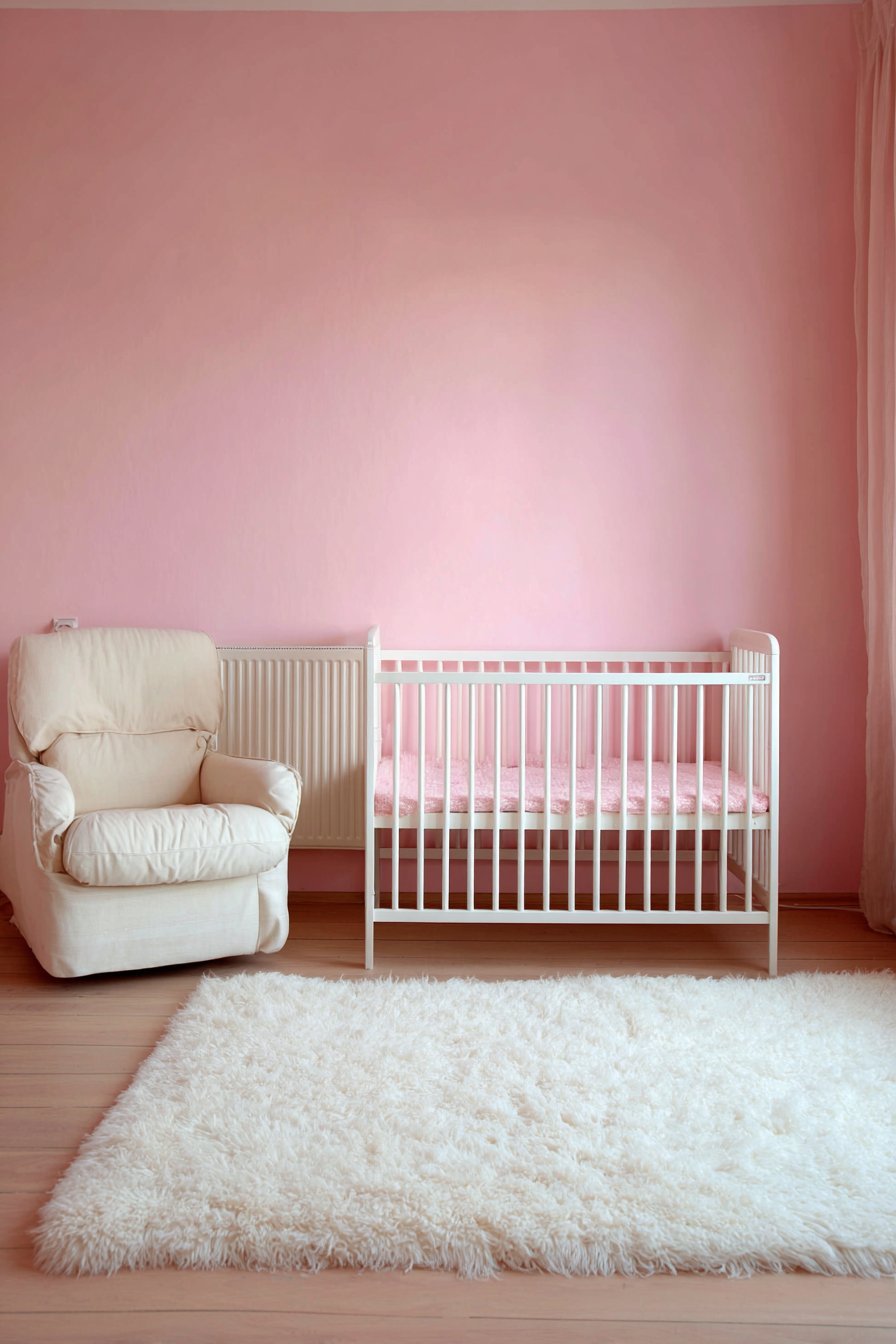
A comfortable glider in natural linen provides nursing space. Light oak flooring creates warm foundational tones. A soft wool rug in ivory adds plush comfort. Diffused morning light gently illuminates the smooth finish.
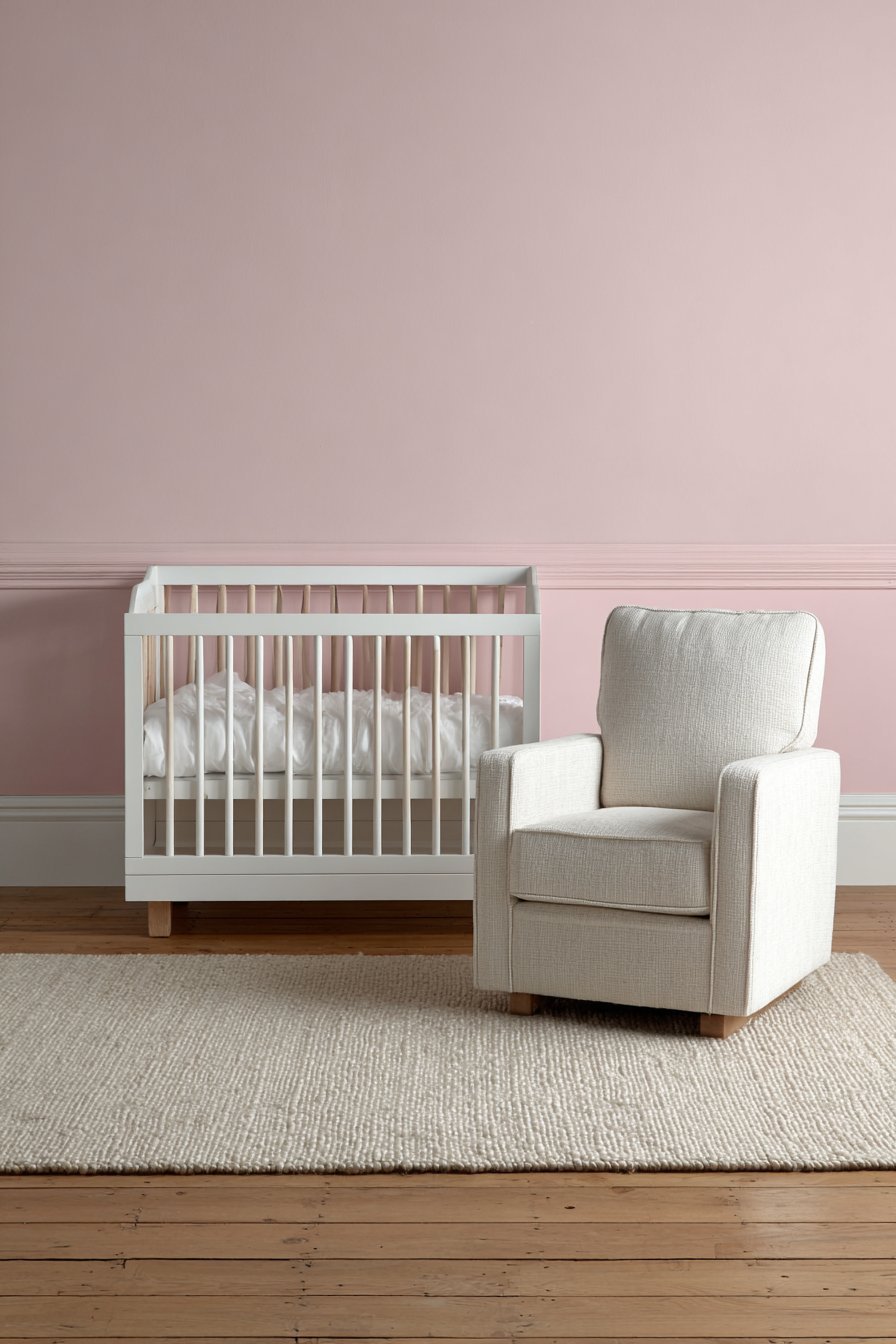
The empty wall contributes to peaceful sleep environments. Lack of visual stimulation promotes infant rest and development. This design prioritizes function over decoration. The restrained approach creates serene spaces for baby and parent.
Key Design Tips:
- Keep nursery walls empty to minimize visual stimulation
- Choose soft, muted colors for calming atmospheres
- Select blackout-lined curtains for optimal sleep conditions
- Prioritize comfortable seating for feeding and bonding
- Use natural materials for healthier indoor air quality
10. Japanese-Inspired Meditation Space
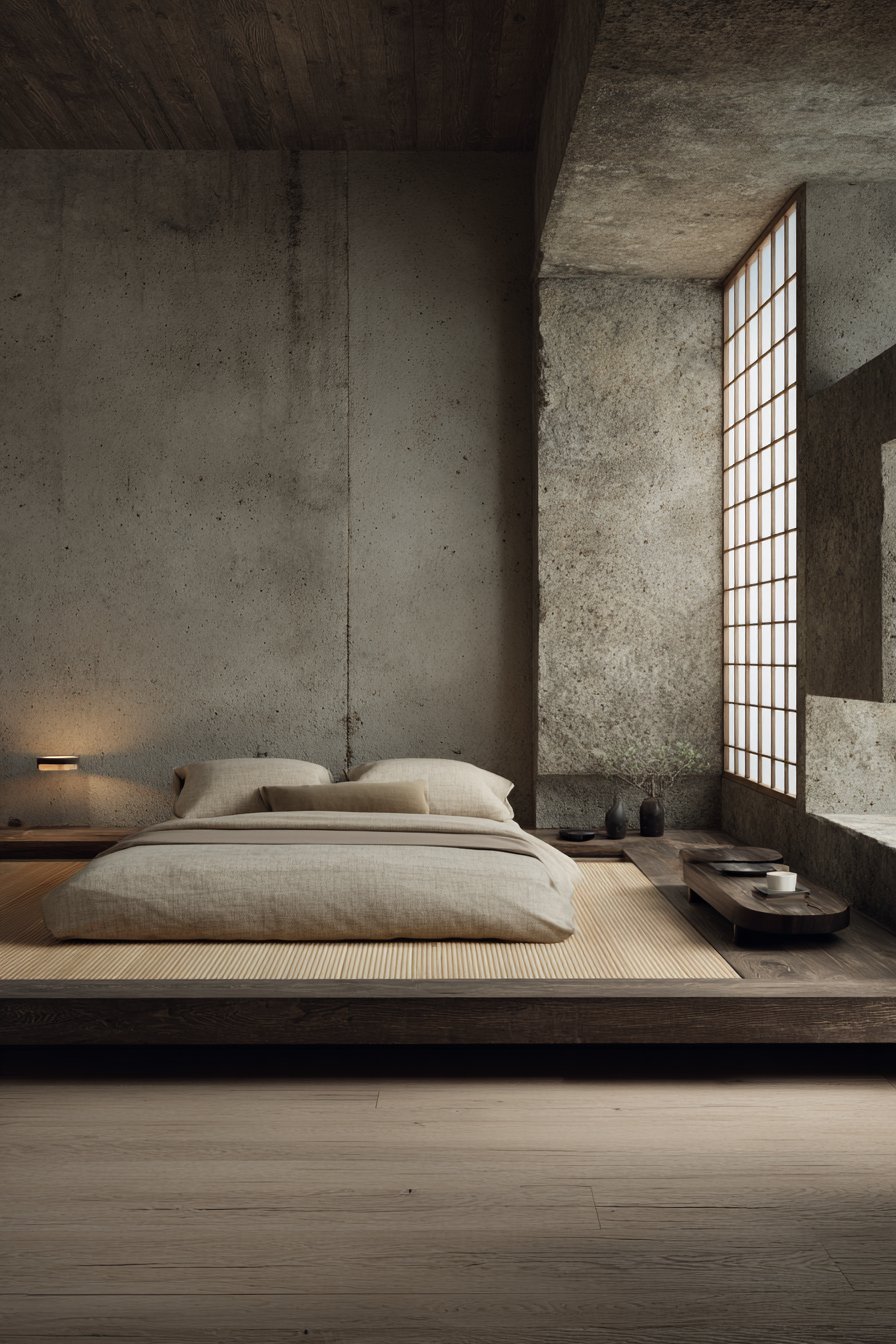
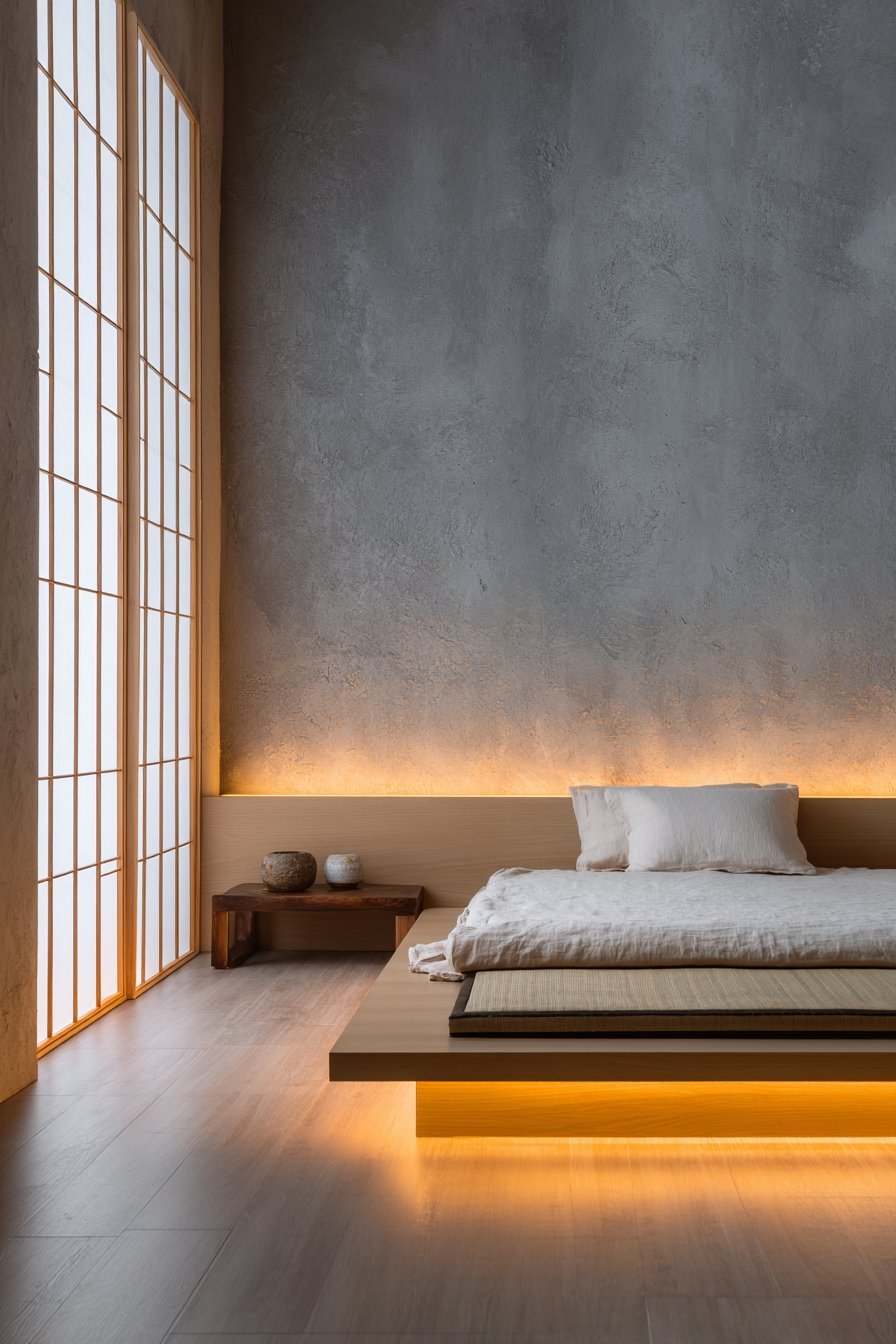
A meditation room showcases smooth concrete-look plaster. Warm grey tones create peaceful neutrality. A low platform bed with natural linen sits flush against the wall. A single low wooden side table provides minimal function.
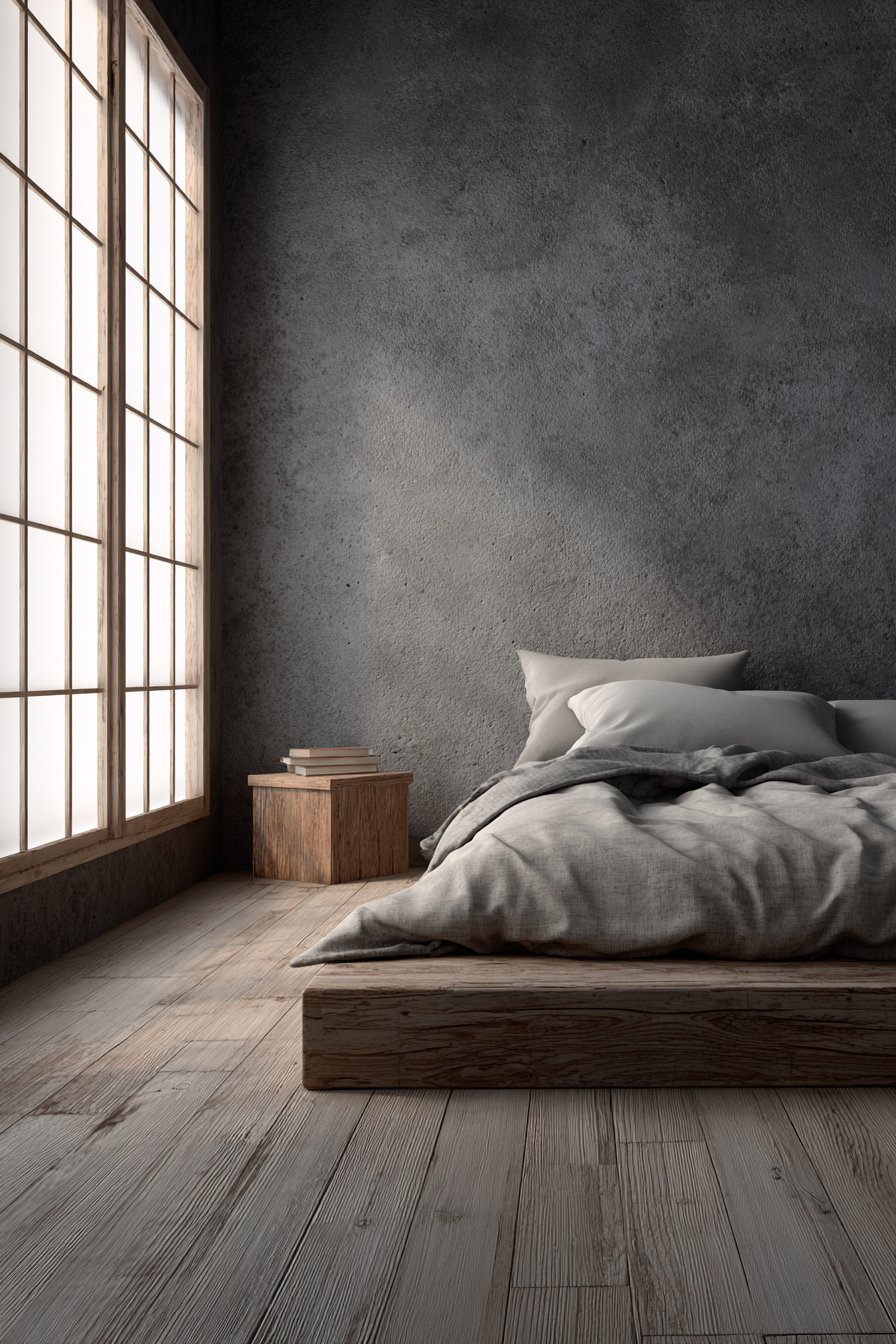
Light bamboo flooring adds natural warmth underfoot. Natural light from a paper screen window creates soft illumination. The lighting remains even across the wall’s subtle variations. This zen-like quality promotes mindfulness and contemplation.
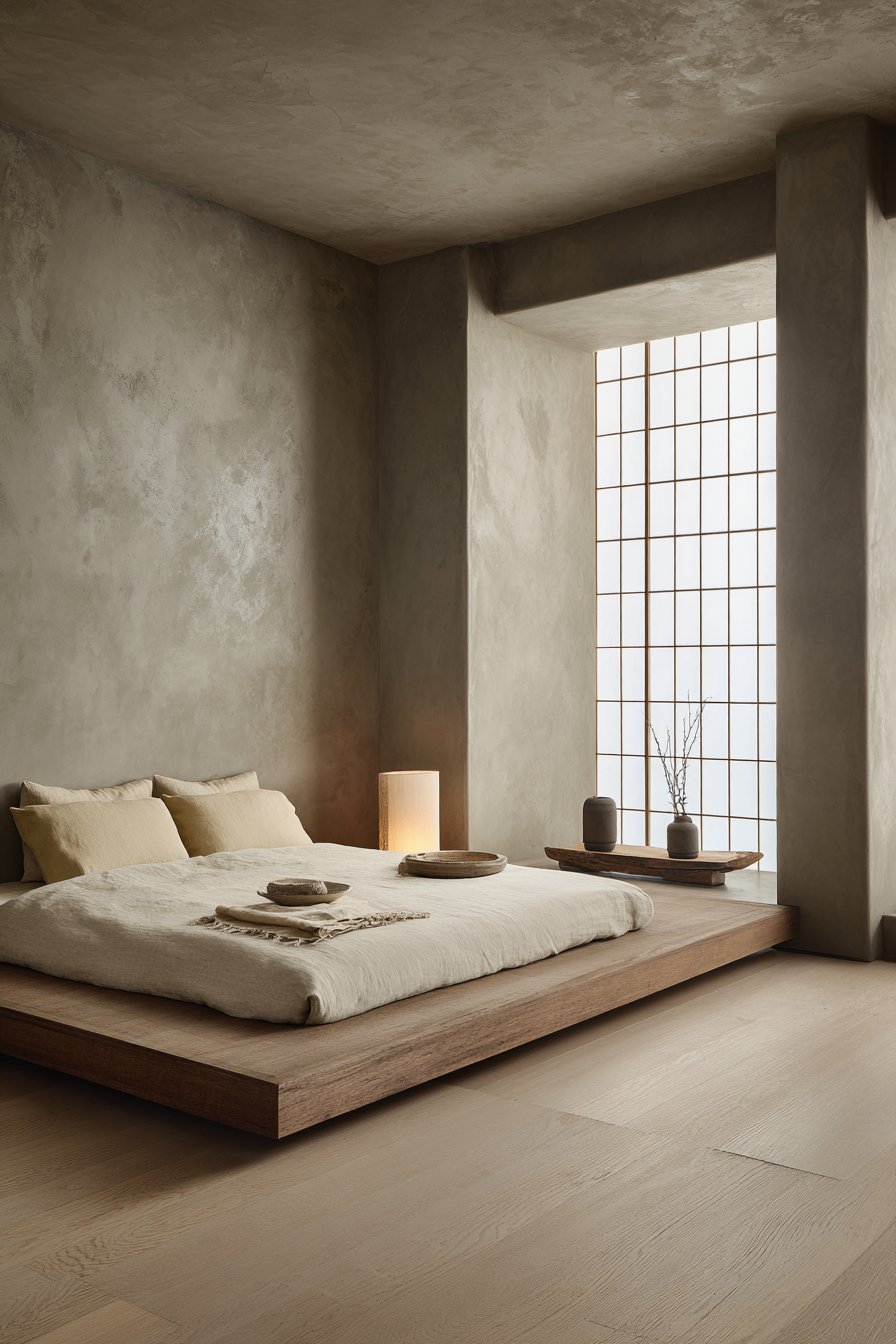
The deliberately empty wall eliminates visual distraction. The minimalist aesthetic supports meditation practice perfectly. Material quality takes precedence over decorative abundance. This approach demonstrates how emptiness creates space for inner reflection.
Key Design Tips:
- Use concrete-look plaster for contemporary zen aesthetics
- Keep furniture low and minimal for meditation spaces
- Install paper screen windows for soft, diffused lighting
- Choose natural materials like bamboo and linen exclusively
- Embrace emptiness as intentional design choice for mindfulness
11. Mid-Century Walnut Paneling
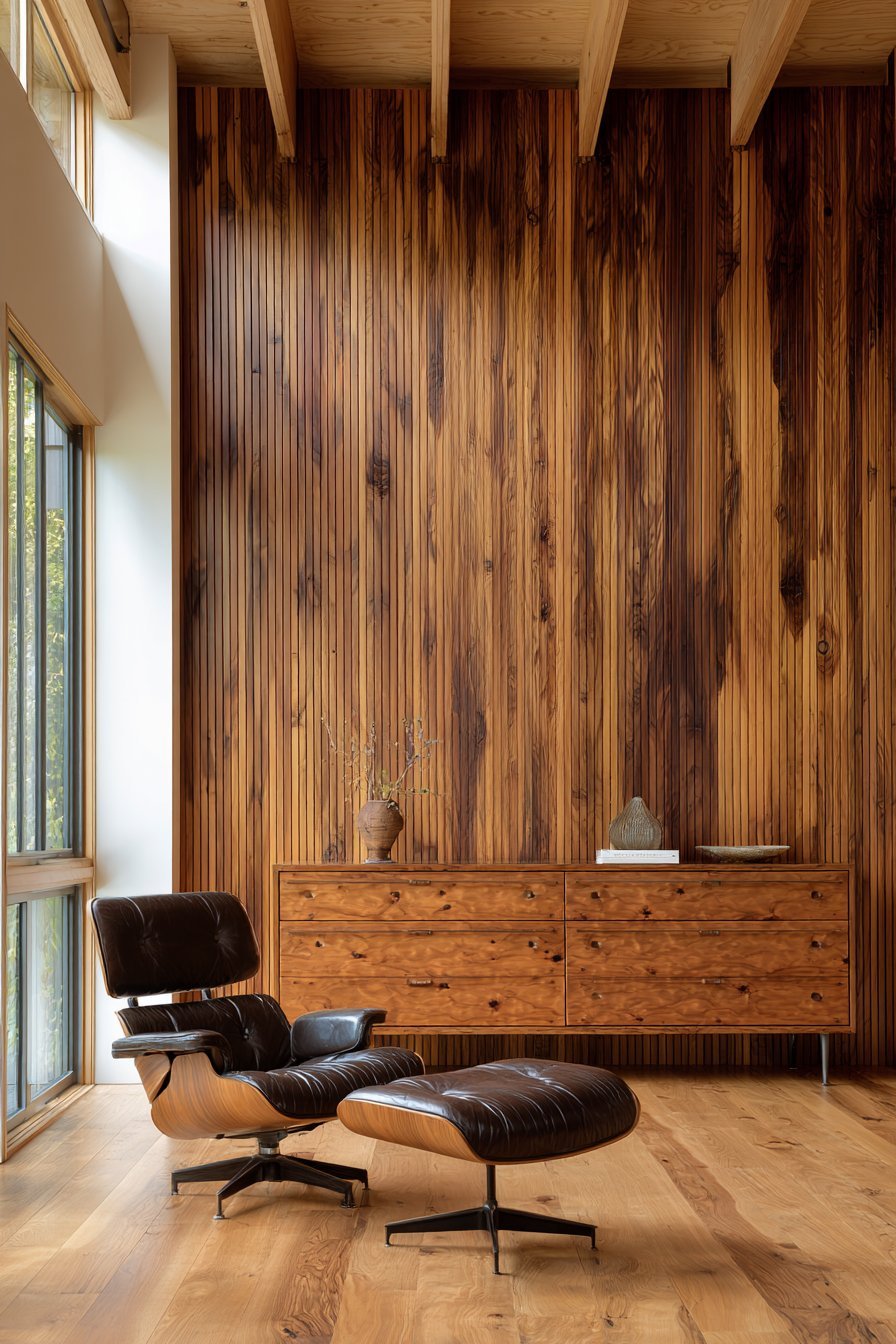
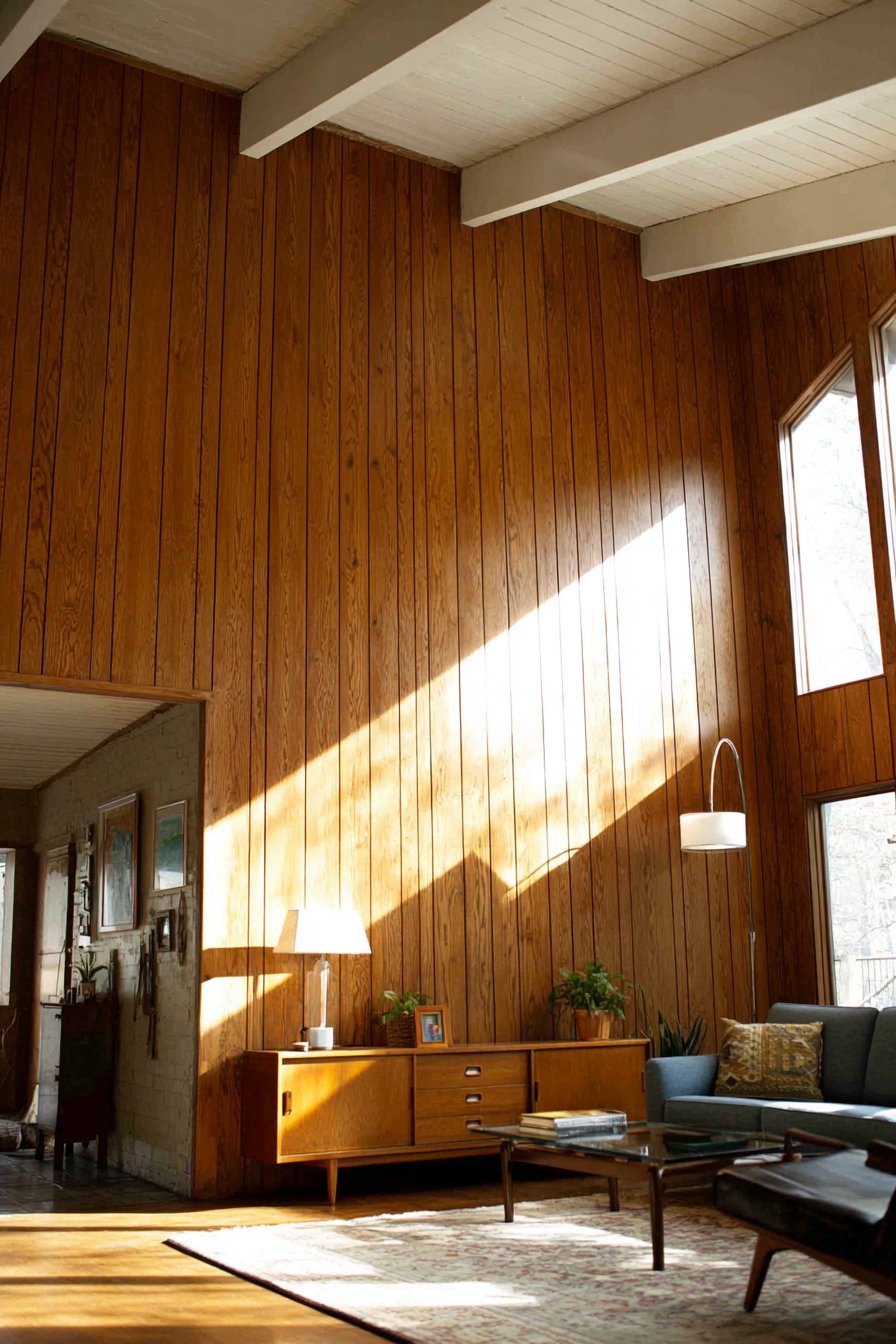
A mid-century modern living room features vertical walnut paneling. The warm wood tones provide all necessary visual interest. Vertical grain patterns create natural decorative elements. A teak credenza sits below with characteristic tapered legs.
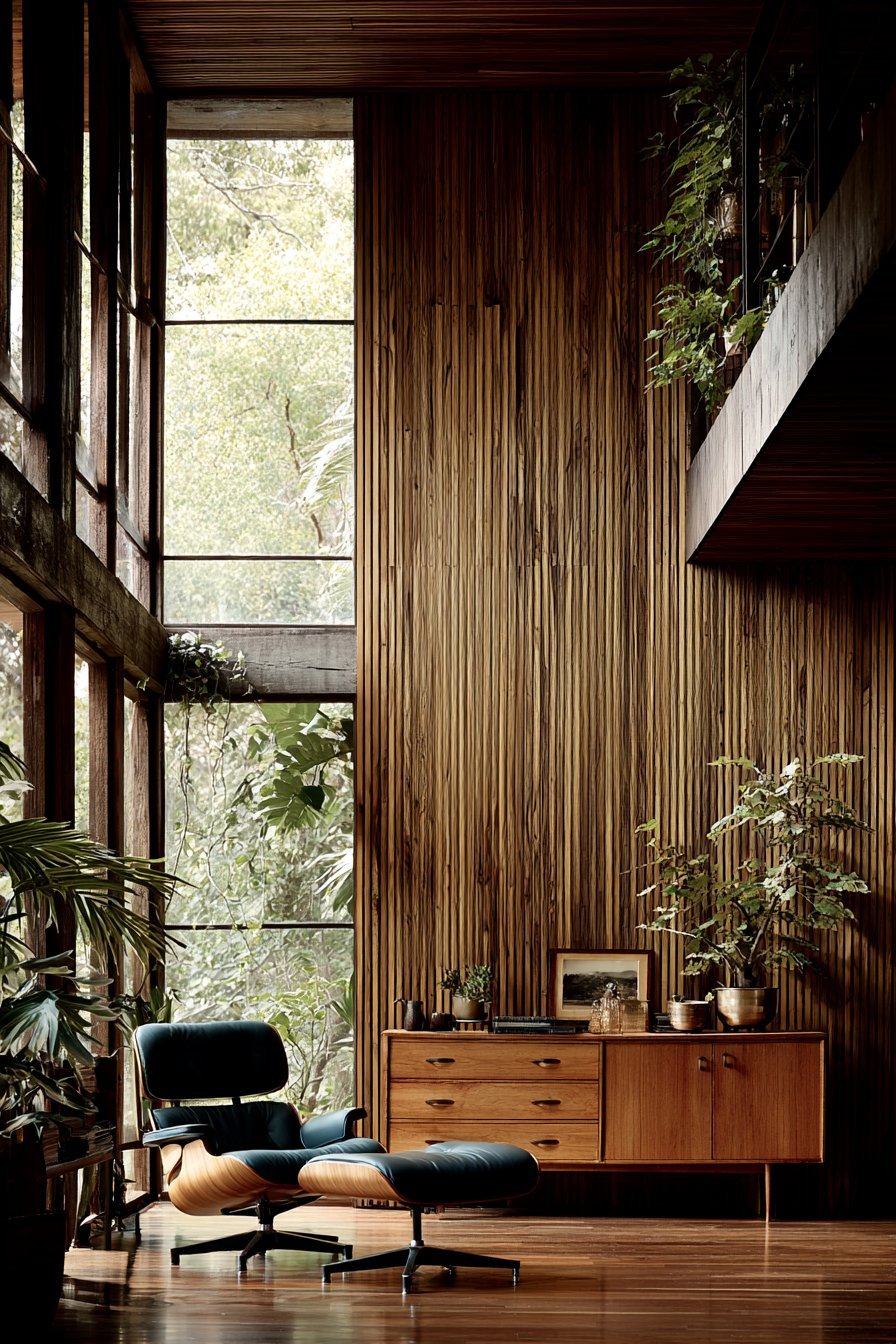
Brass pulls add authentic mid-century hardware details. A vintage Eames lounge chair and ottoman anchor the space. Natural light from clerestory windows highlights wood grain variations. The empty wall’s material richness eliminates decoration needs.
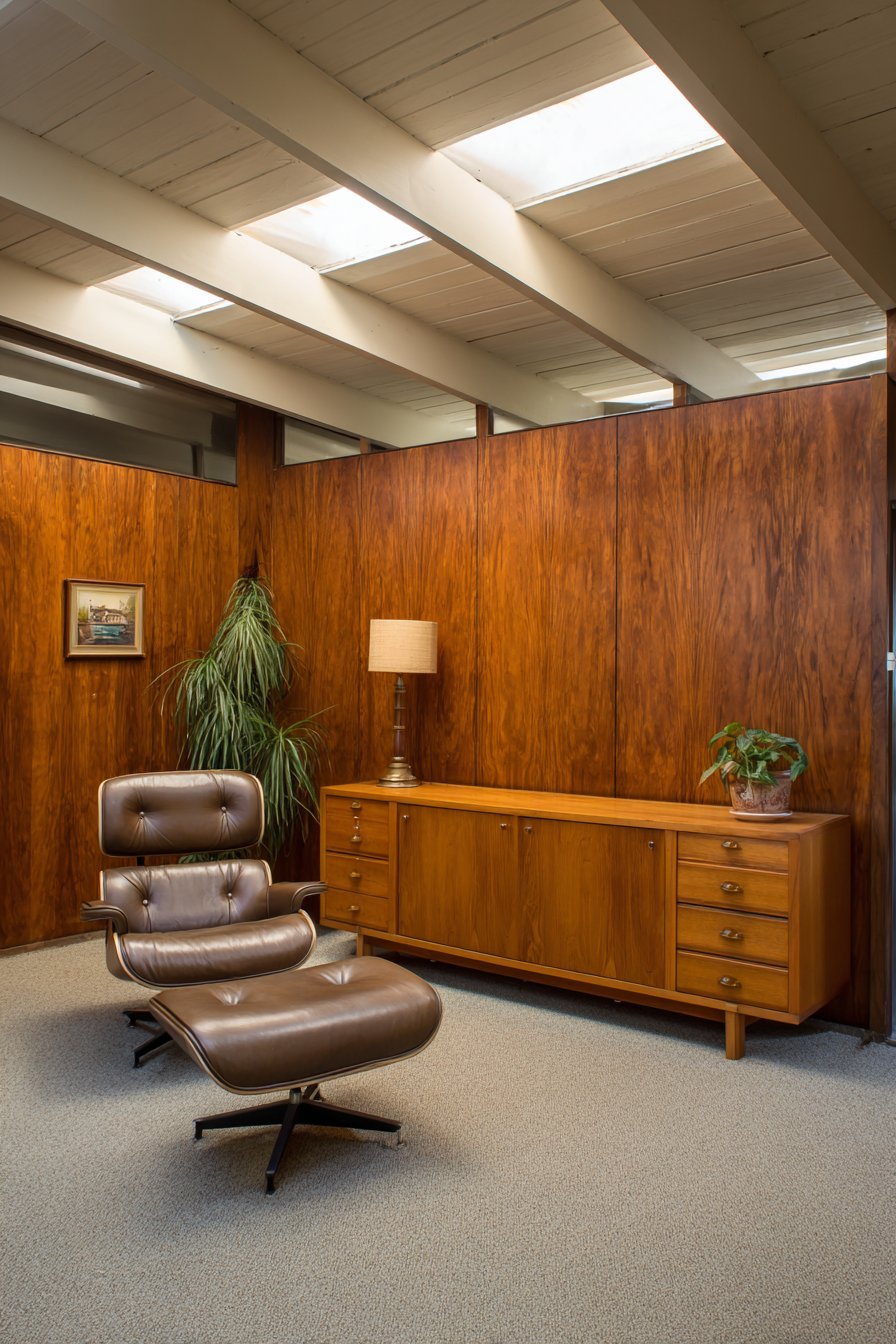
The wood’s natural beauty commands full attention. Quality materials speak louder than added accessories. This design demonstrates how architectural elements become art. The paneling serves both structural and aesthetic purposes beautifully.
Key Design Tips:
- Select quality hardwoods for lasting beauty and durability
- Highlight natural grain patterns through strategic lighting
- Choose authentic mid-century furniture for cohesive styling
- Install clerestory windows for indirect natural illumination
- Let premium materials shine without additional decoration
12. Contemporary Dimensional Tile Wall
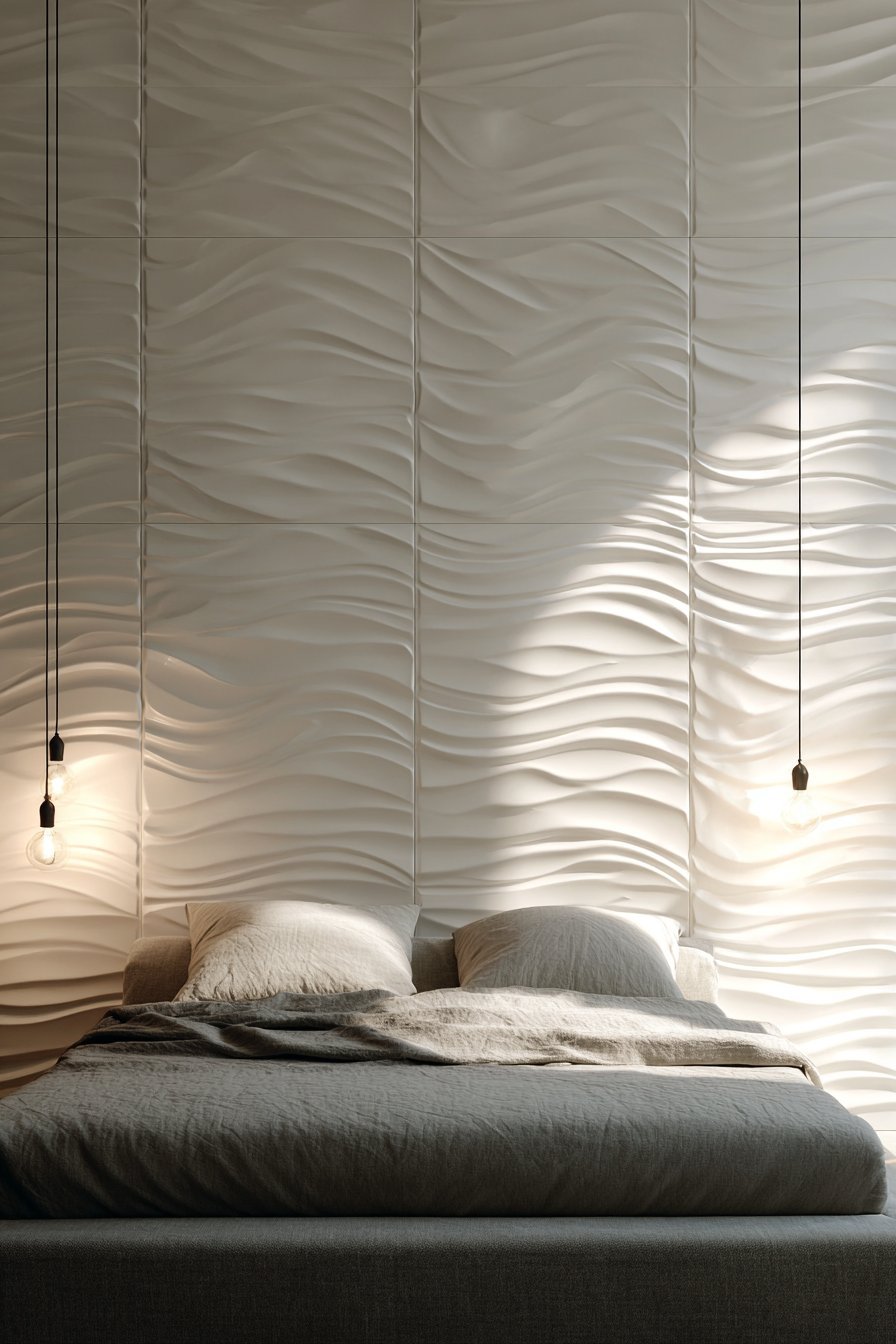
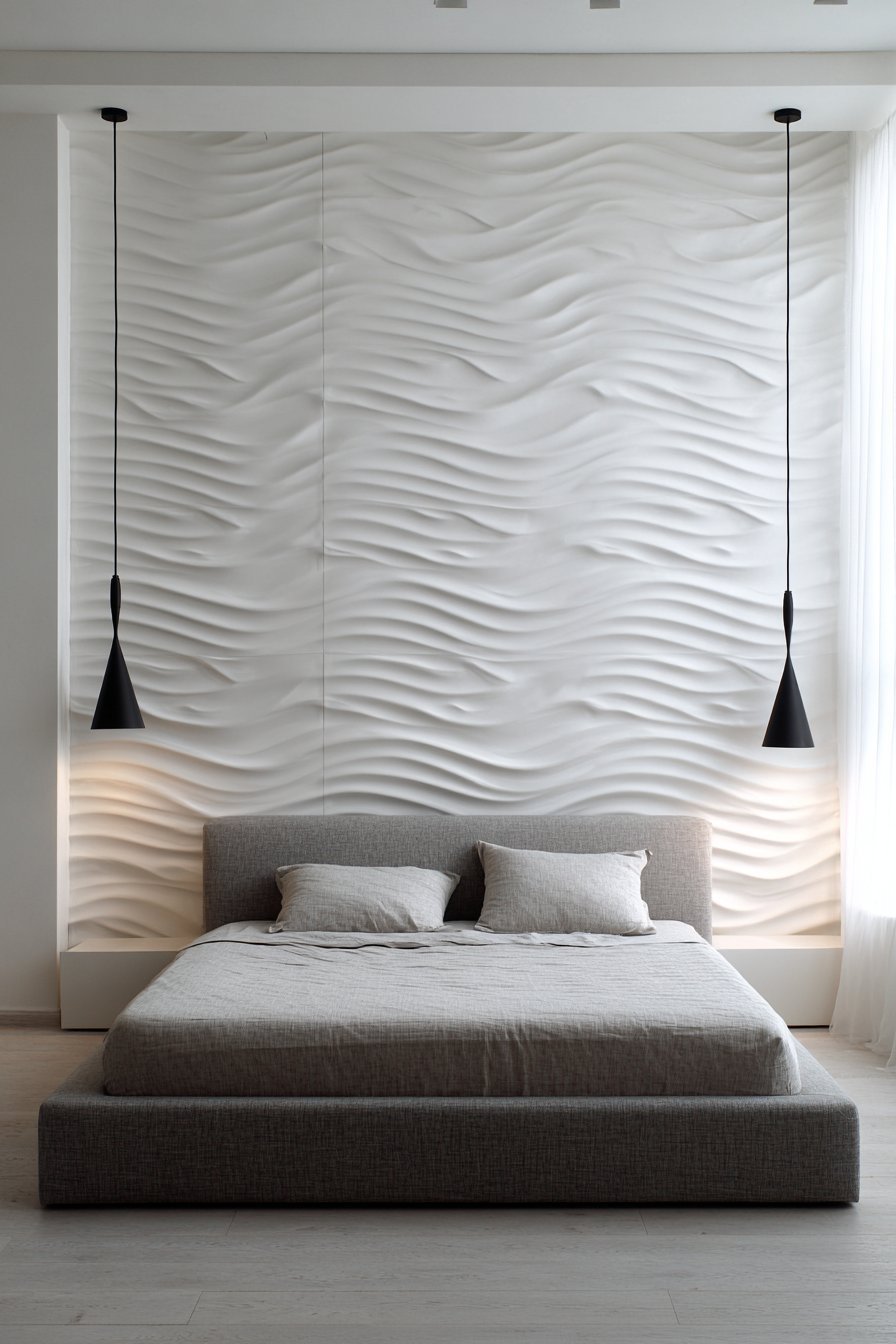
A contemporary bedroom showcases dimensional white tiles. The subtle wave pattern creates texture through shadow and light. A platform bed in grey upholstered fabric centers against the wall. Simple pendant lights with black cord drops flank the bed.
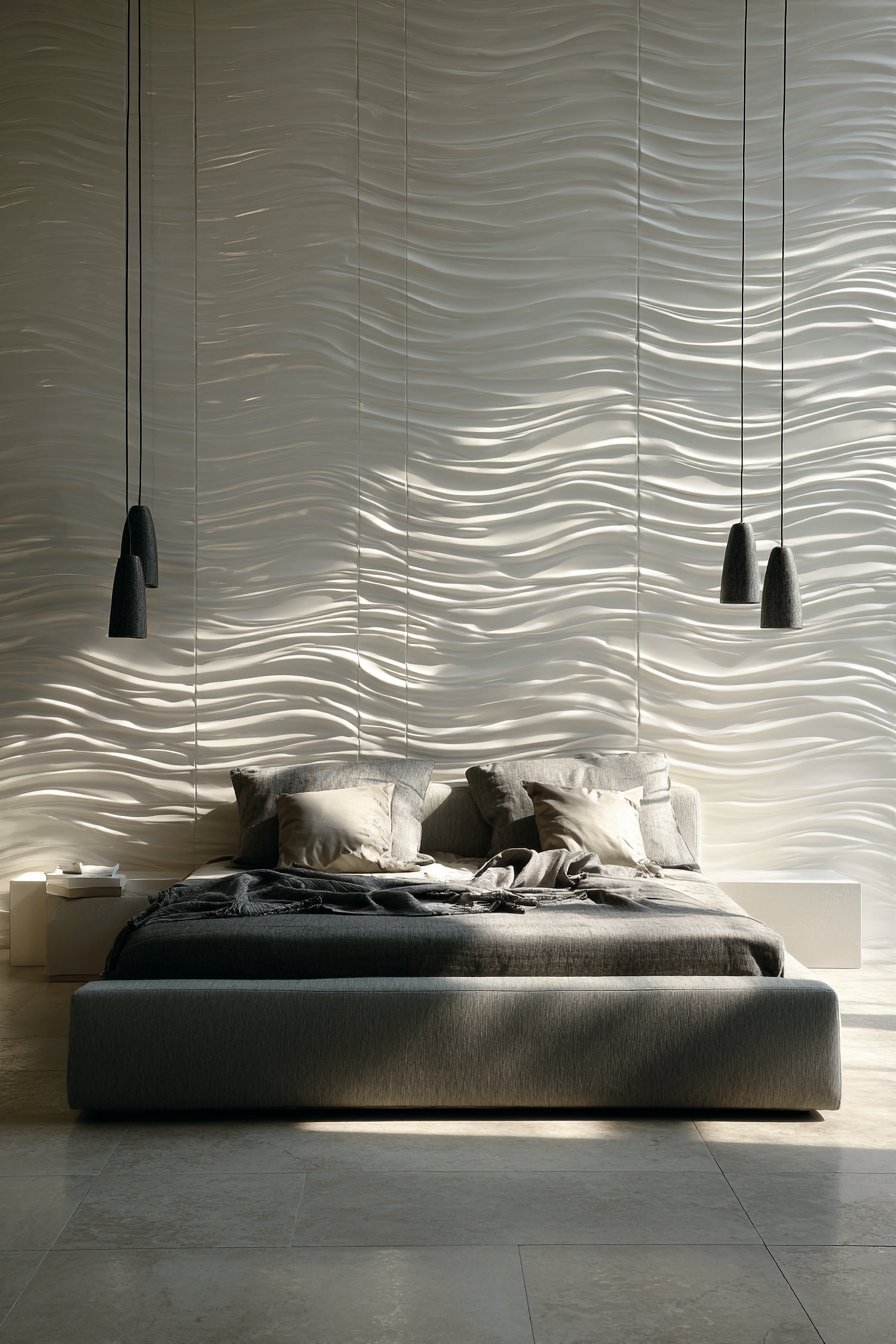
Morning light creates changing shadow patterns across tiles. The sculptural quality adds dynamic visual interest. Material choice replaces traditional wall art completely. The dimensional surface interacts beautifully with natural light throughout the day.
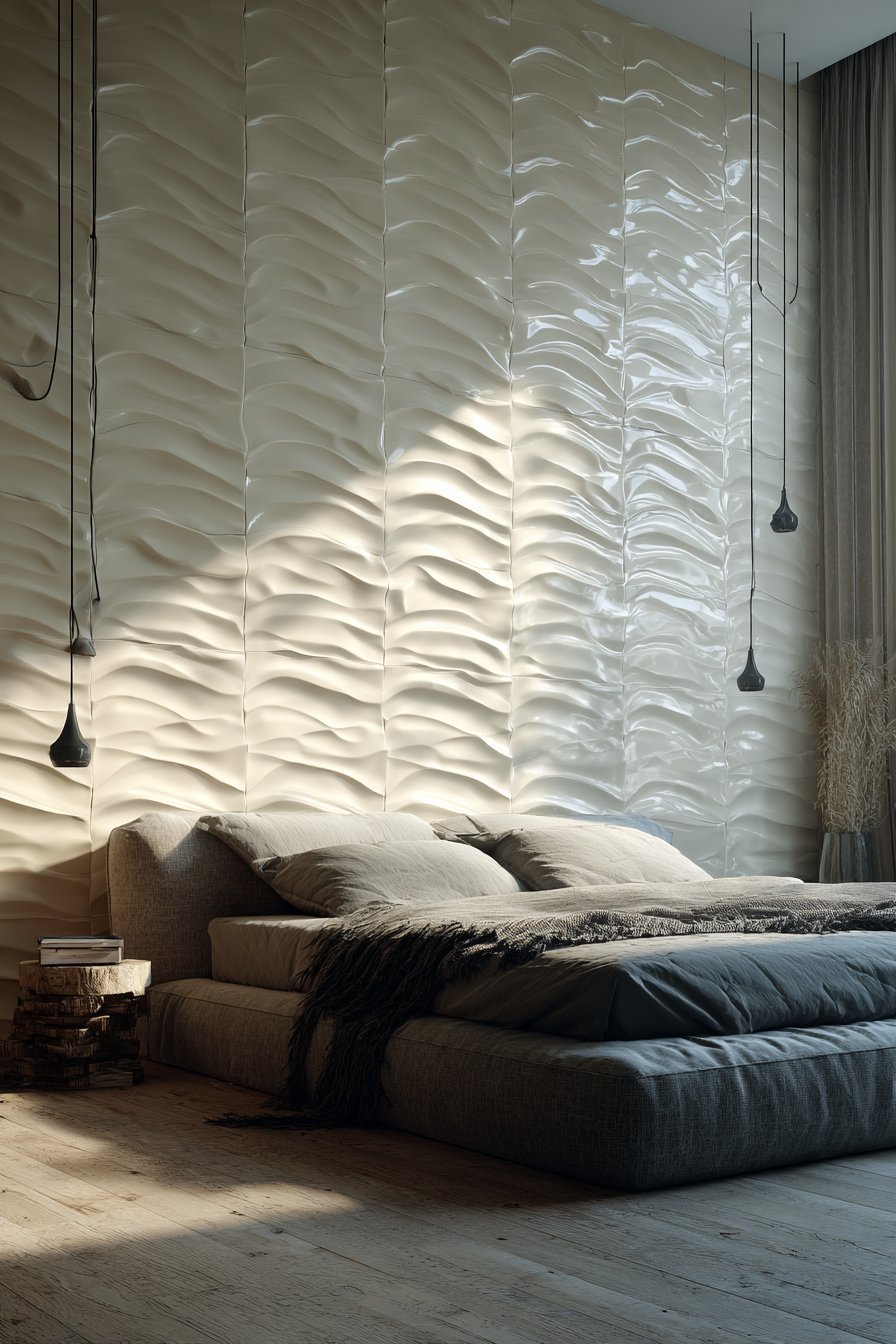
This design demonstrates how architectural finishes become focal points. The three-dimensional surface adds depth without color. Light and shadow create ever-changing artistic displays. The empty wall becomes a living canvas through material selection.
Key Design Tips:
- Choose dimensional tiles for texture-based visual interest
- Install pendant lights to create dramatic shadow patterns
- Select white or neutral tiles for versatile styling
- Position bed to maximize morning light interaction
- Consider how natural light changes throughout the day
13. Rustic Exposed Brick Character
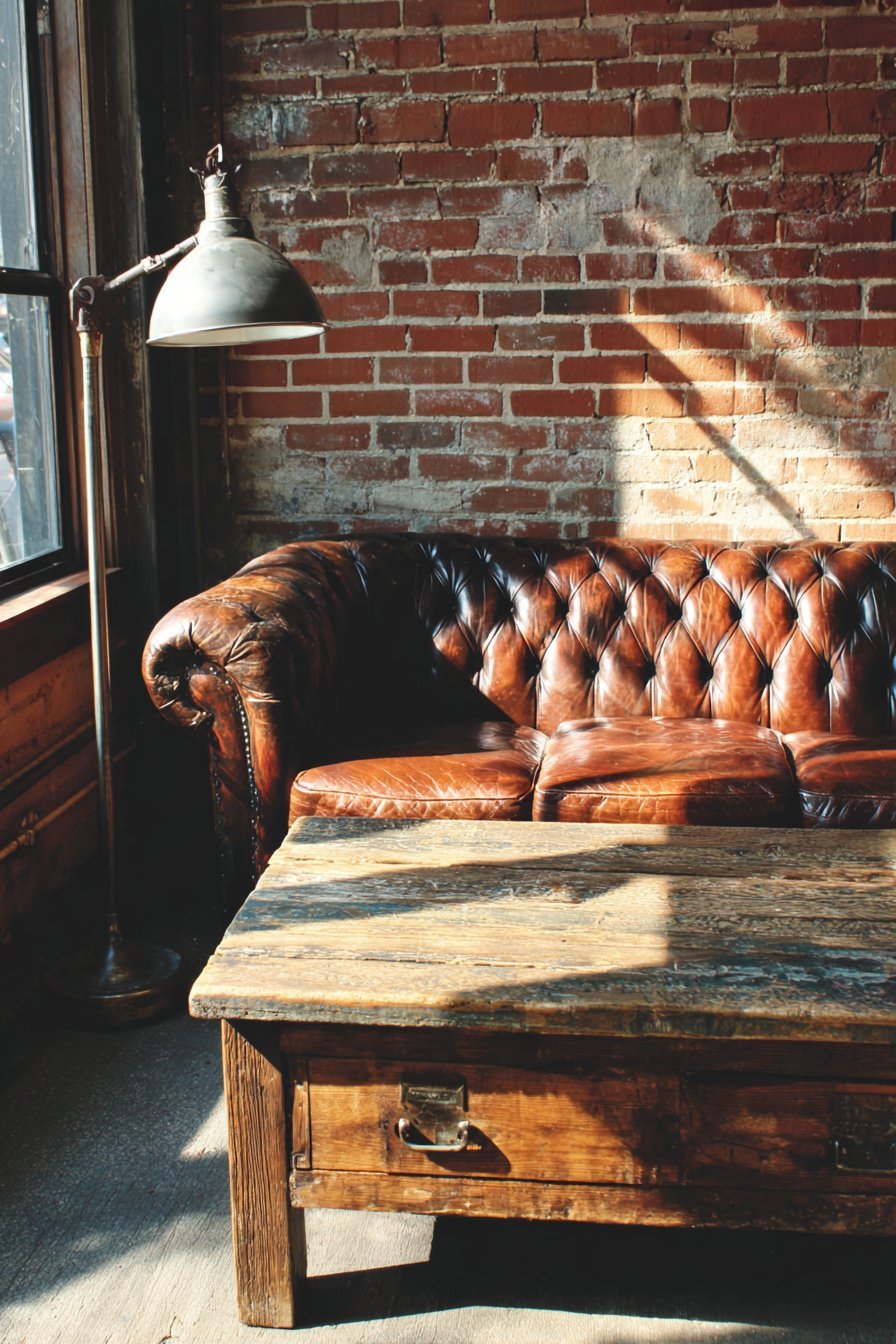
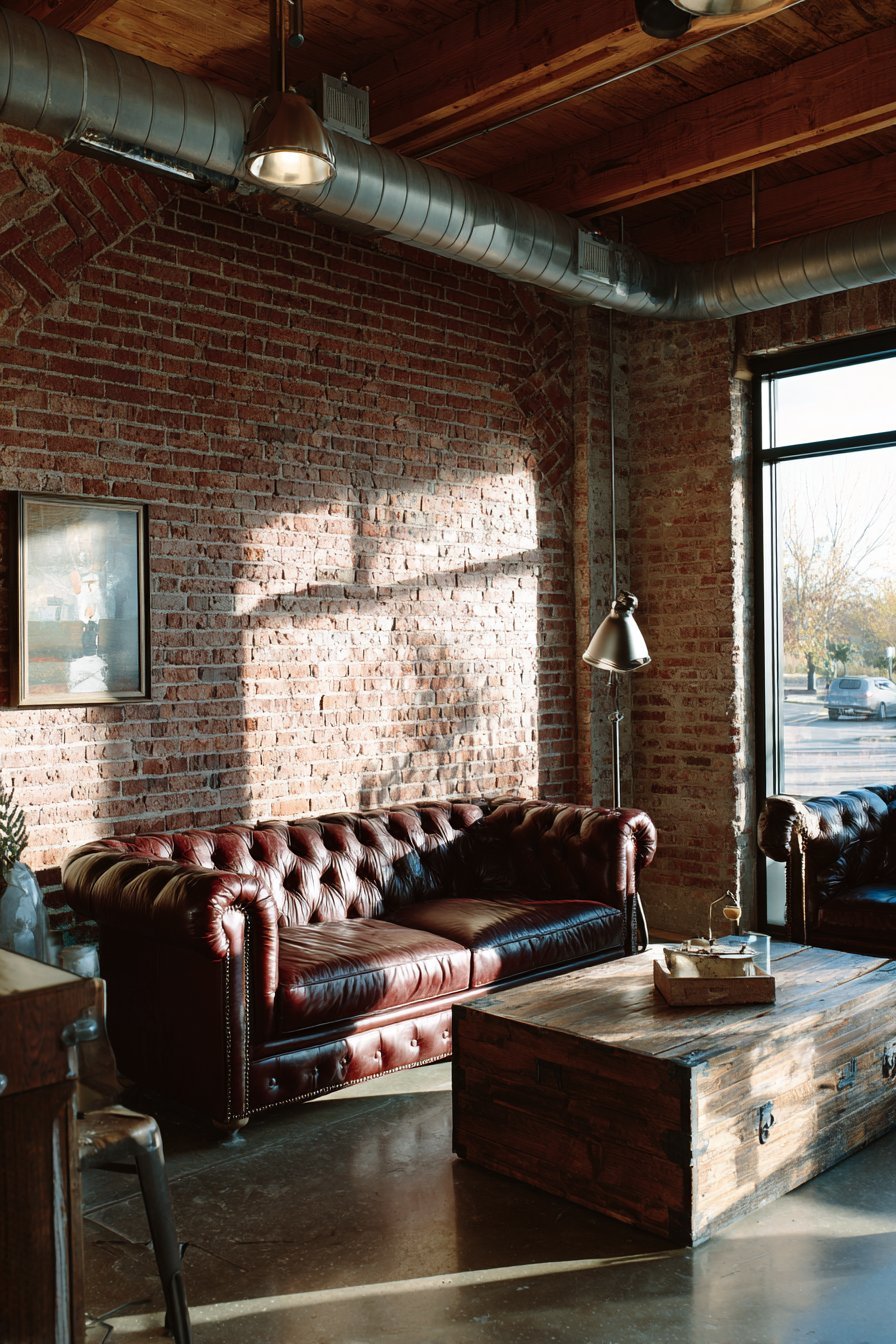
A rustic cabin living room celebrates exposed brick walls. The warm red-brown tones provide natural decoration. Irregular mortar lines add authentic texture and history. A leather Chesterfield sofa in cognac sits perpendicular to the wall.
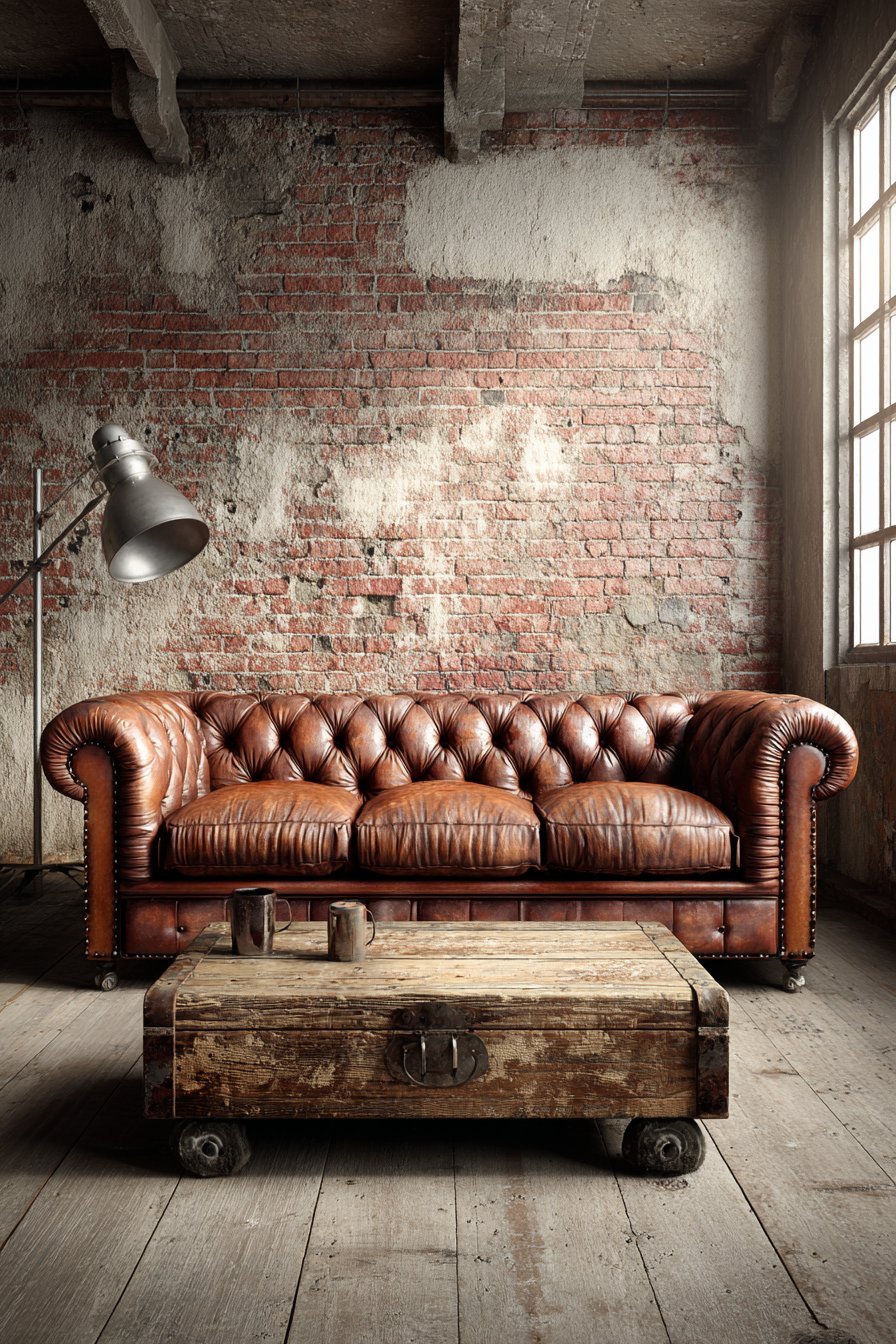
A reclaimed wood coffee table adds complementary organic texture. An industrial metal floor lamp provides focused task lighting. Afternoon light highlights the brick’s dimensional surface beautifully. The inherent character eliminates accessory needs completely.
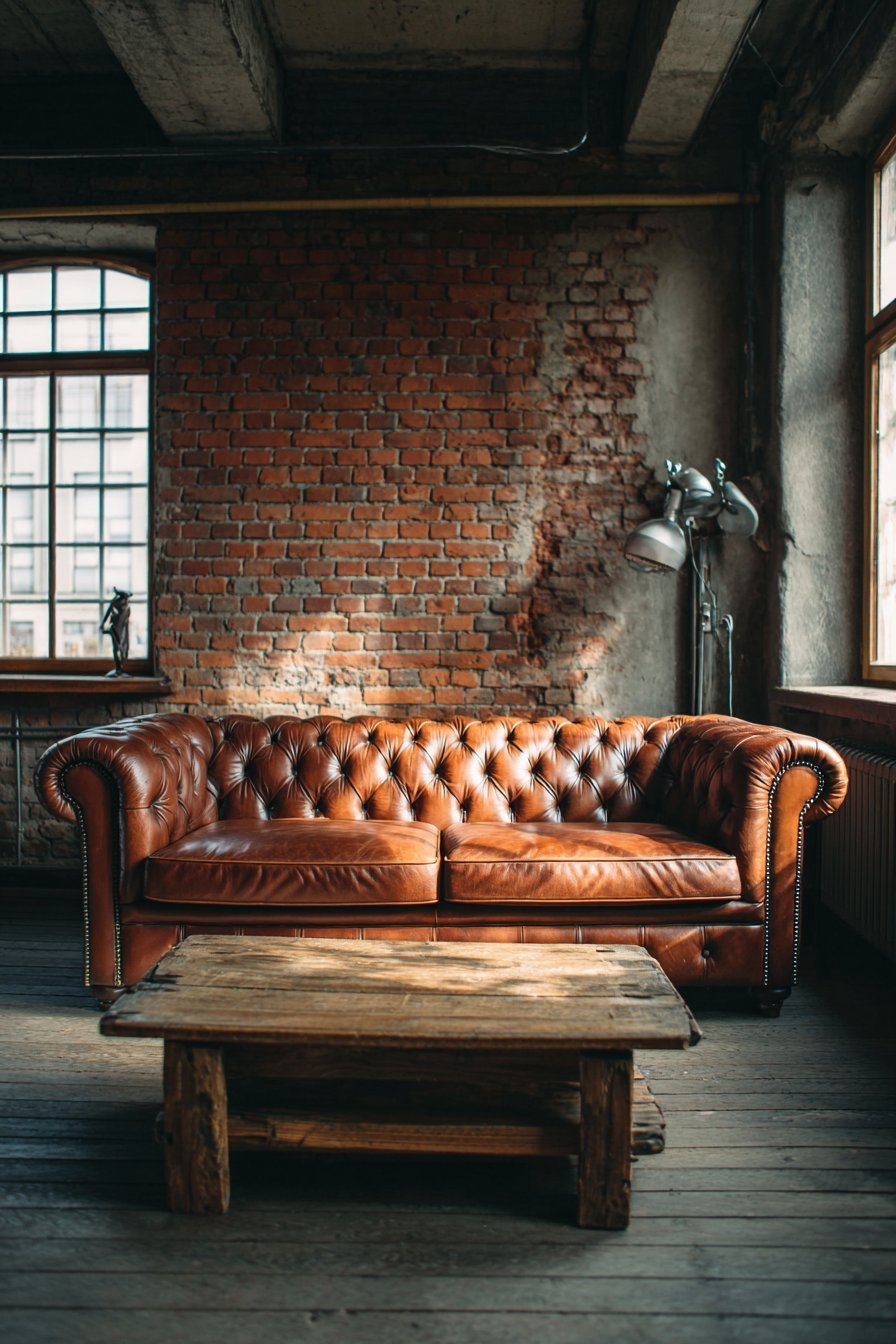
The brick’s natural variations create visual rhythm. Each element tells a story of age and craftsmanship. This approach honors original architectural features authentically. The empty wall’s character creates interest through material alone.
Key Design Tips:
- Preserve original brick walls when possible for authenticity
- Seal brick appropriately to prevent dust and deterioration
- Choose leather furniture for complementary rustic textures
- Use industrial lighting to enhance cabin aesthetic
- Maximize natural light to showcase brick’s dimensional quality
14. Sophisticated Grey Paint Depth
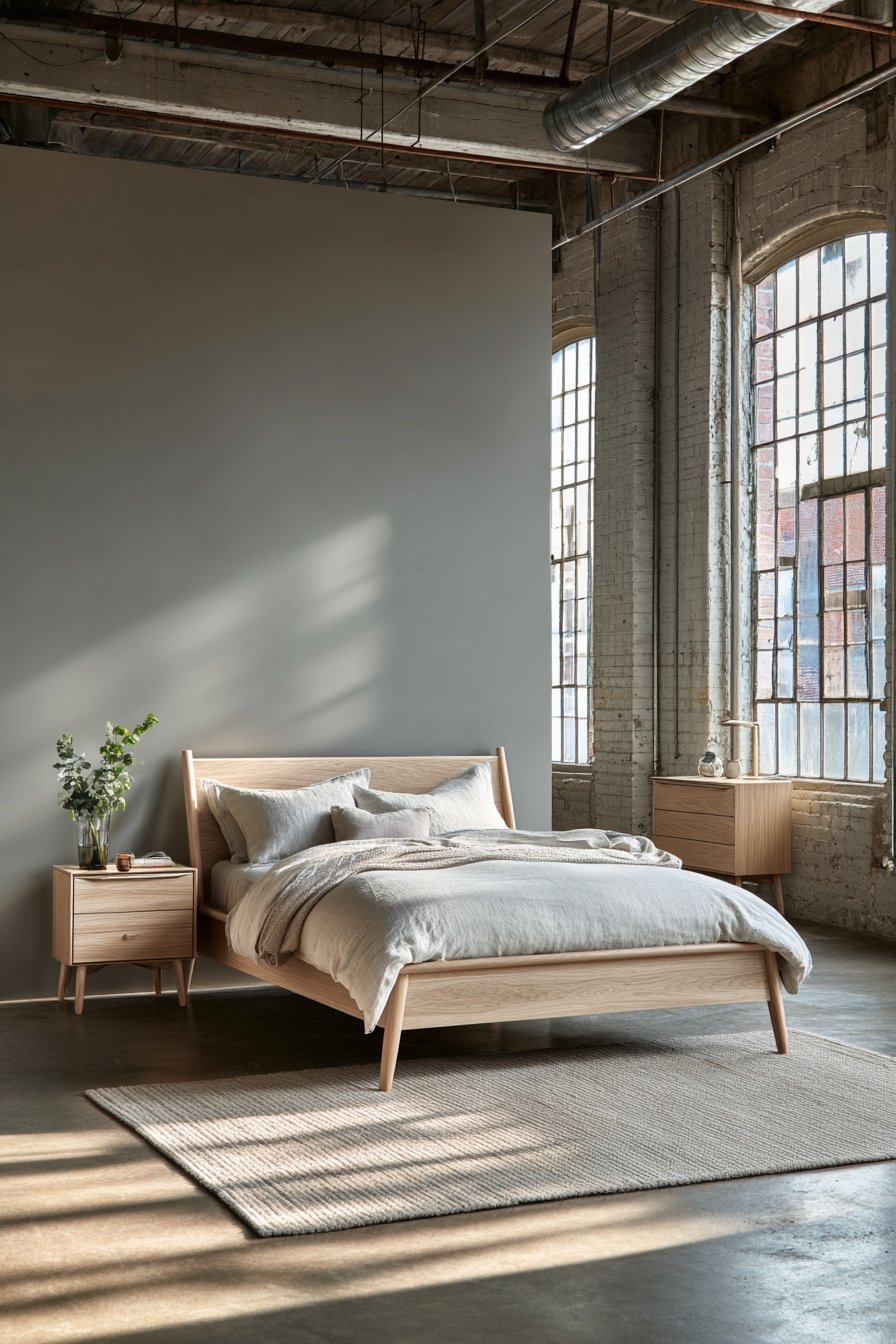
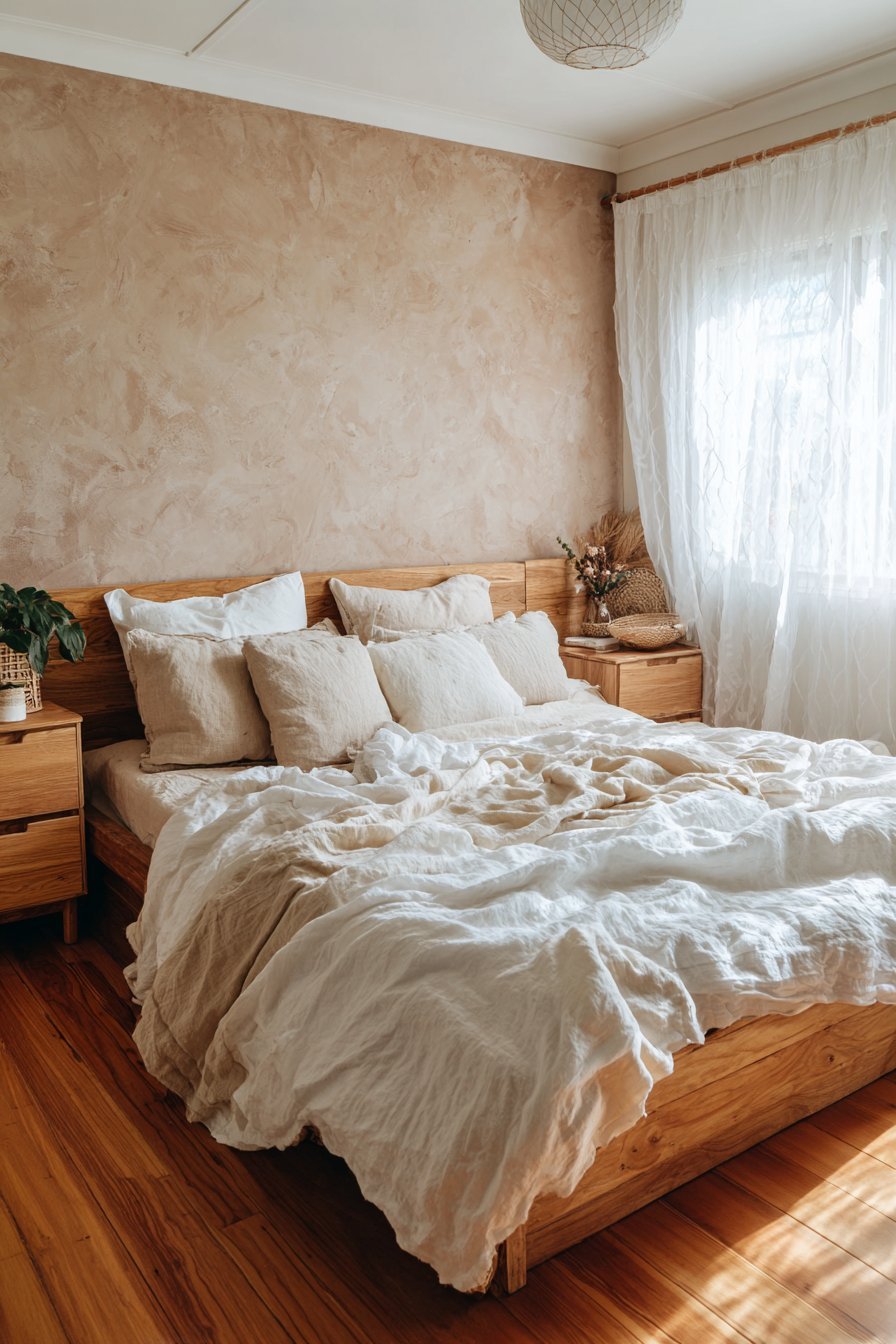
A Scandinavian bedroom features Farrow & Ball’s Elephants Breath paint. This subtle warm grey shifts in different light conditions. A simple platform bed with white oak frame sits centered. Natural linen bedding creates soft, inviting layers.
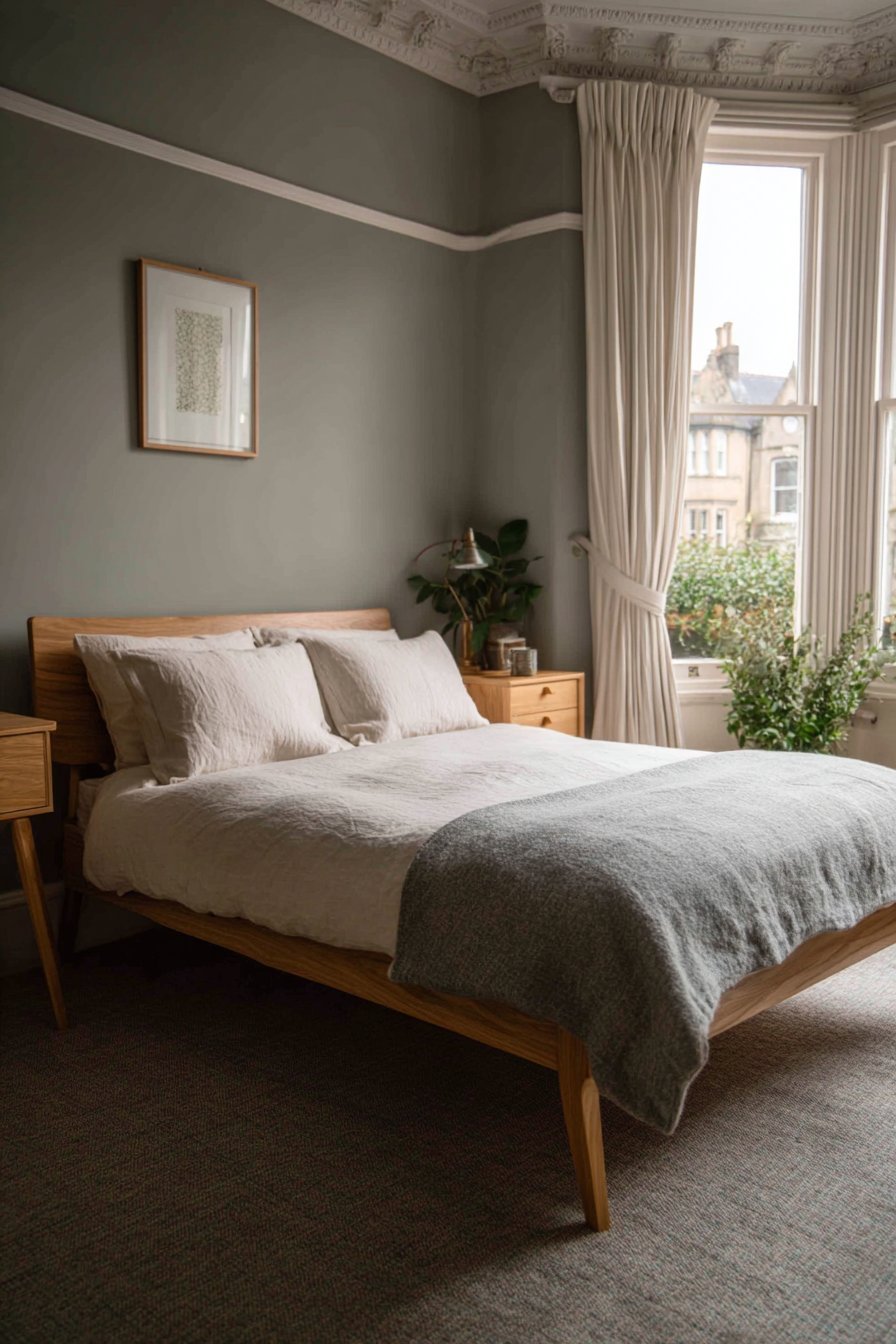
Matching oak nightstands with minimal hardware flank the bed. Sheer white curtains filter soft daylight across the wall. The nuanced color creates depth throughout the day. The sophisticated paint choice alone generates visual interest.
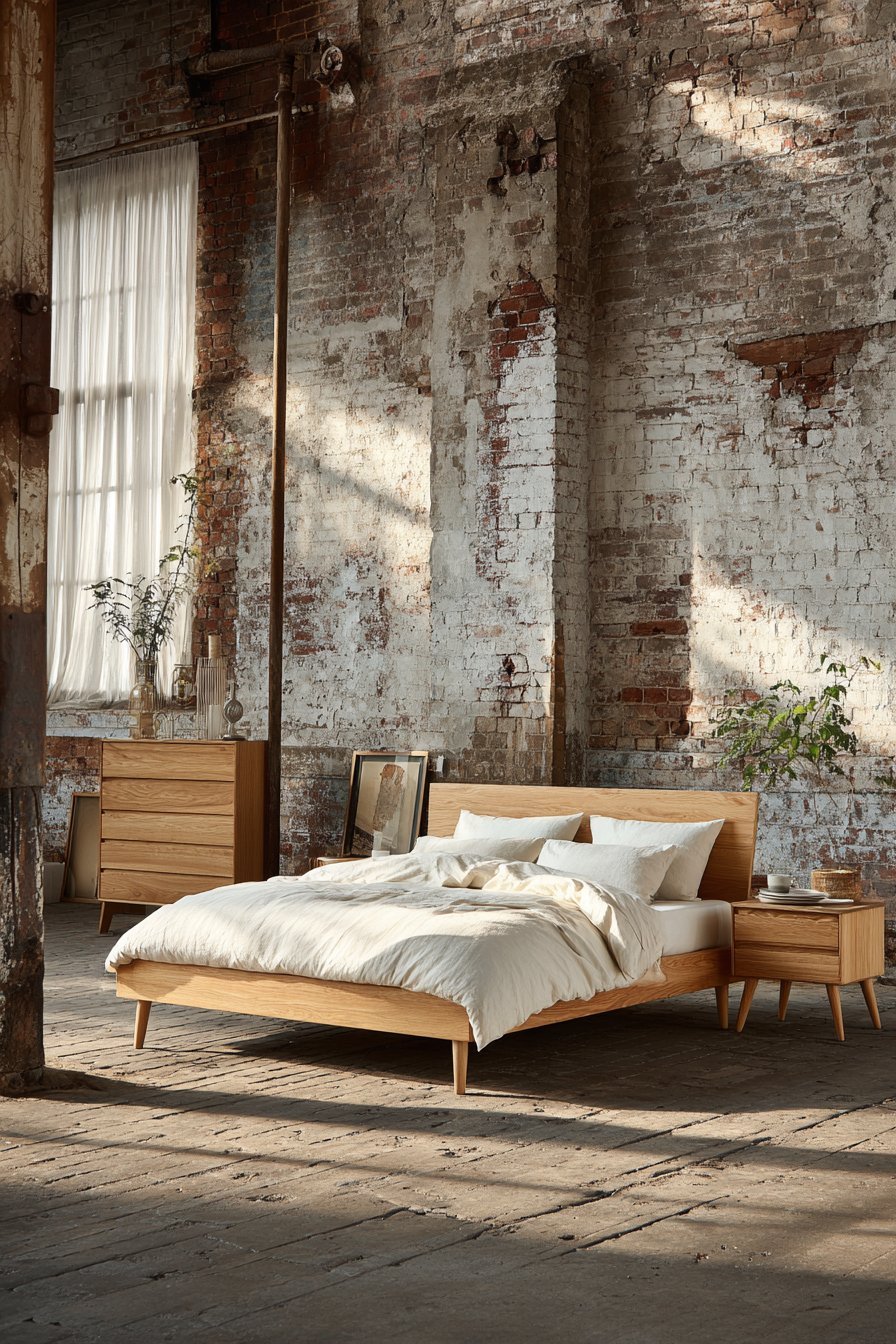
Quality paint demonstrates how color complexity matters. The grey’s warmth prevents coldness in bedroom spaces. Subtle undertones create richness without pattern or texture. This design proves that exceptional paint elevates empty walls.
Key Design Tips:
- Invest in premium paint brands for superior color depth
- Test paint samples in different lighting conditions
- Choose warm grey tones for inviting bedroom atmospheres
- Use sheer curtains to showcase paint color variations
- Keep surrounding decor minimal to highlight paint quality
15. Modern Farmhouse Board and Batten
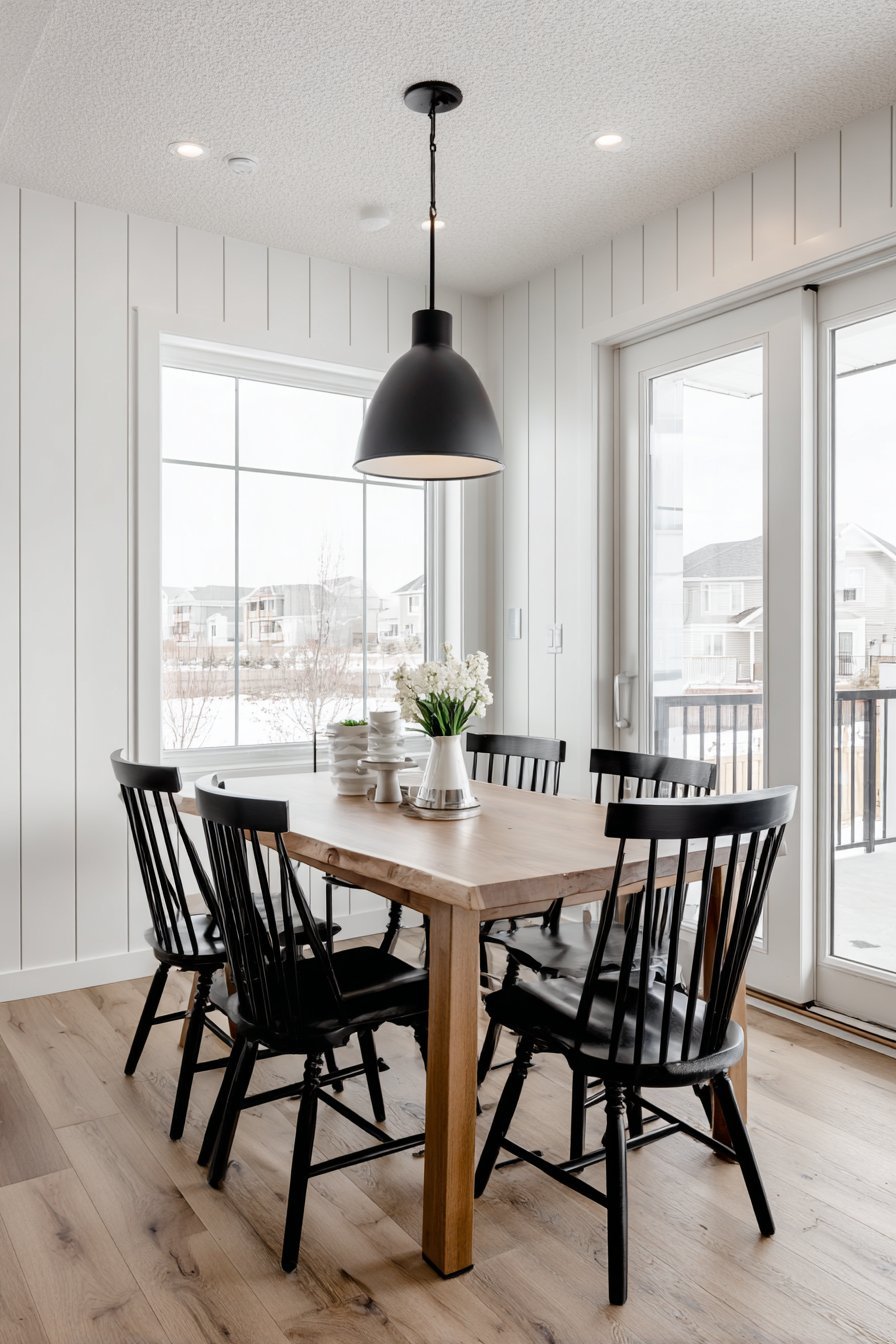
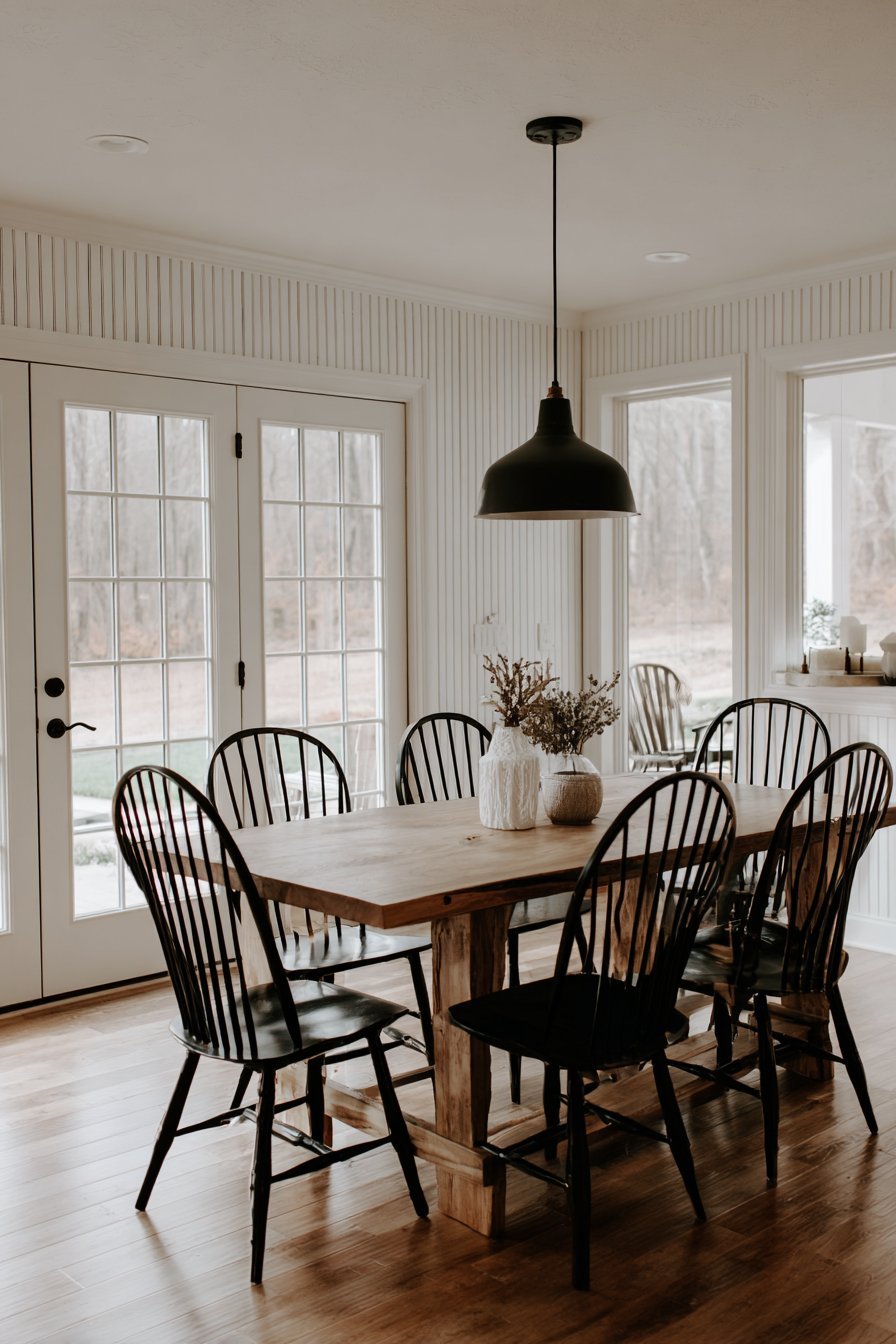
A modern farmhouse dining room features board and batten paneling. The vertical detail provides architectural interest without decoration. Warm white paint emphasizes the dimensional quality. A live-edge dining table seats eight comfortably.
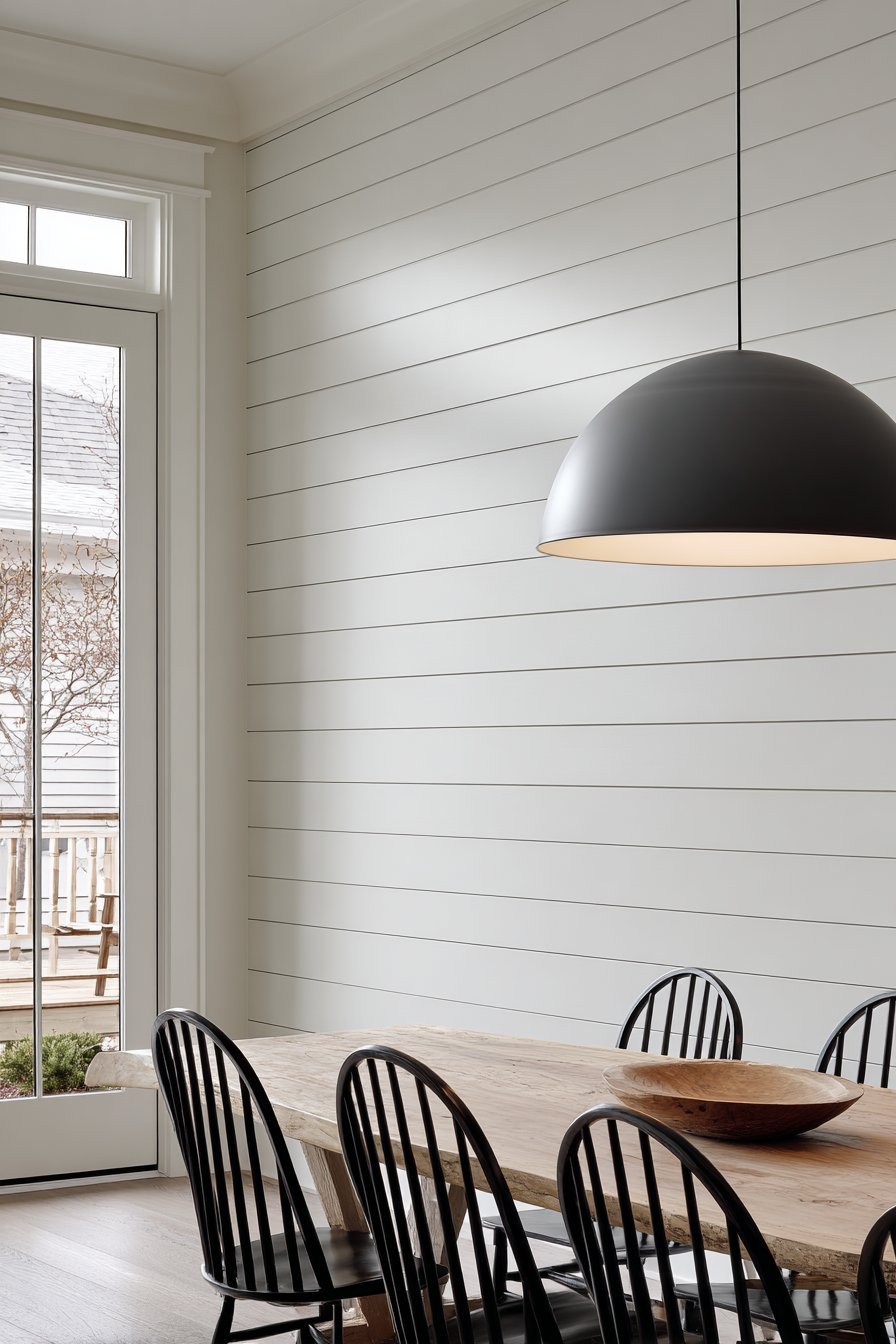
Simple black Windsor chairs surround the natural wood table. A statement pendant light with matte black finish hangs centered. Natural light from French doors highlights the paneling’s depth. The structural detail serves as decoration itself beautifully.
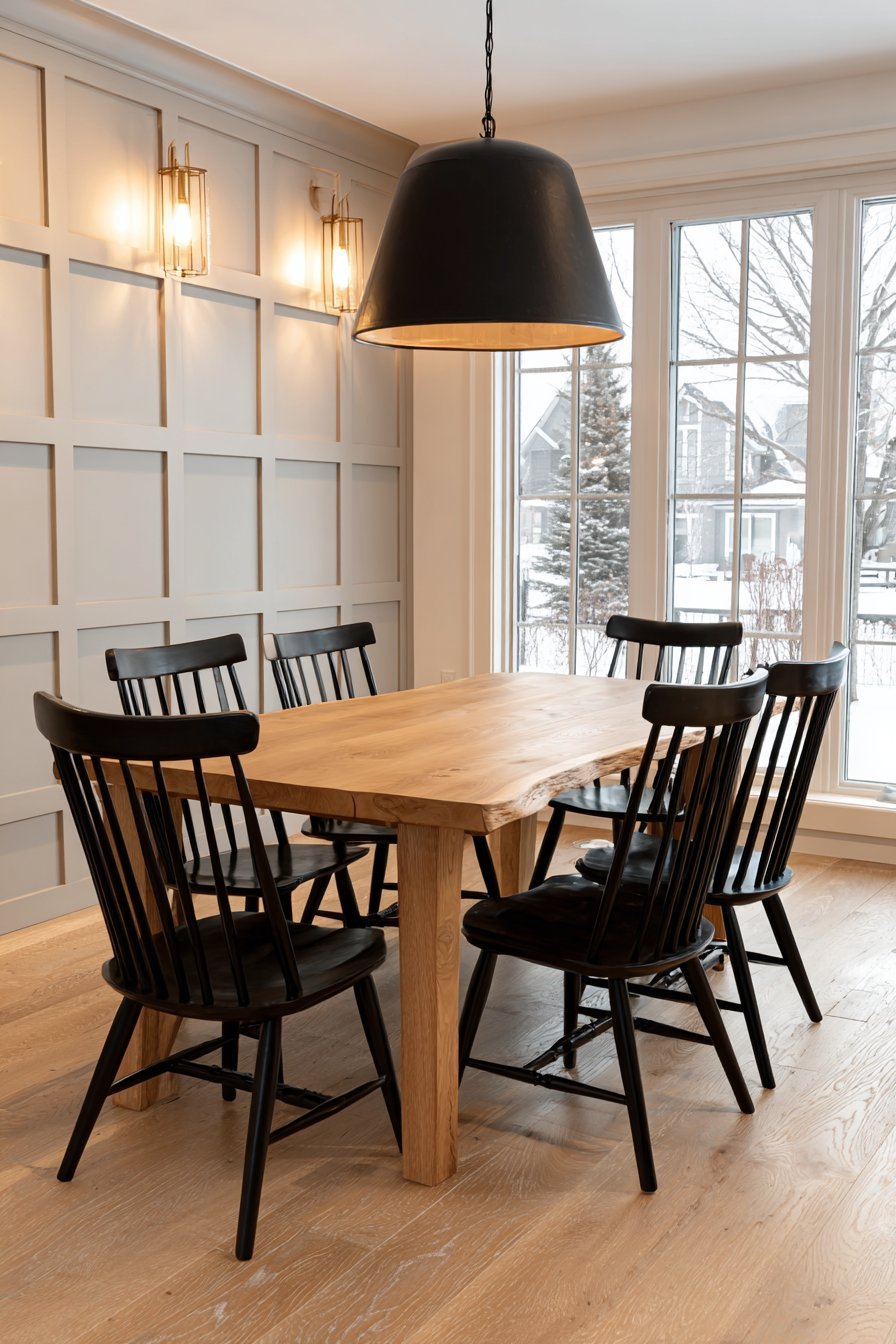
The vertical lines create height and visual rhythm. Shadow lines between boards add subtle dimension. This architectural treatment transforms plain walls into features. The empty wall’s structure provides all necessary interest.
Key Design Tips:
- Install board and batten for classic architectural detail
- Paint in warm white for modern farmhouse appeal
- Choose natural wood tables for organic contrast
- Use matte black fixtures for contemporary farmhouse style
- Maximize French door light to highlight paneling detail
16. Minimalist Large-Format Tile Elegance
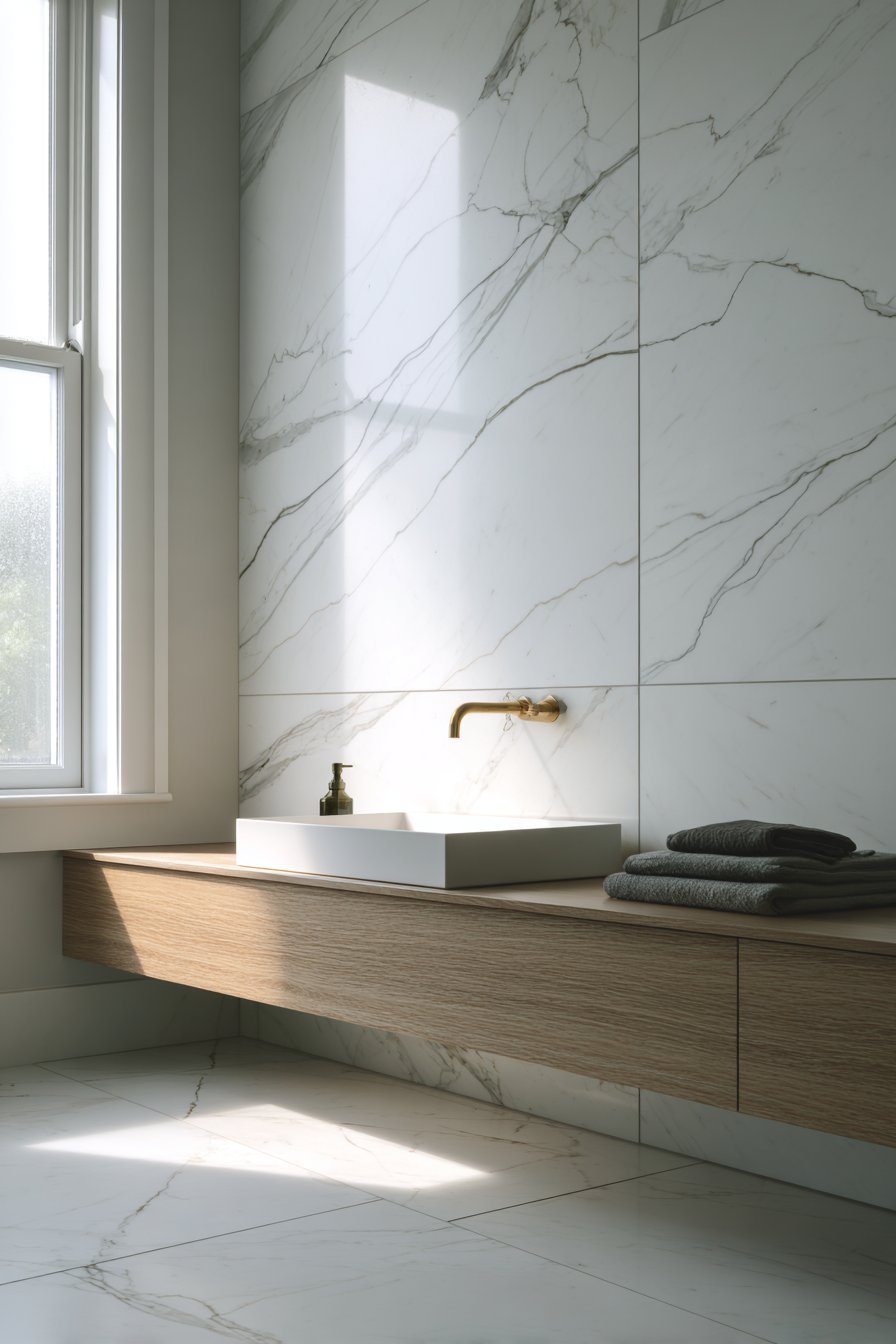
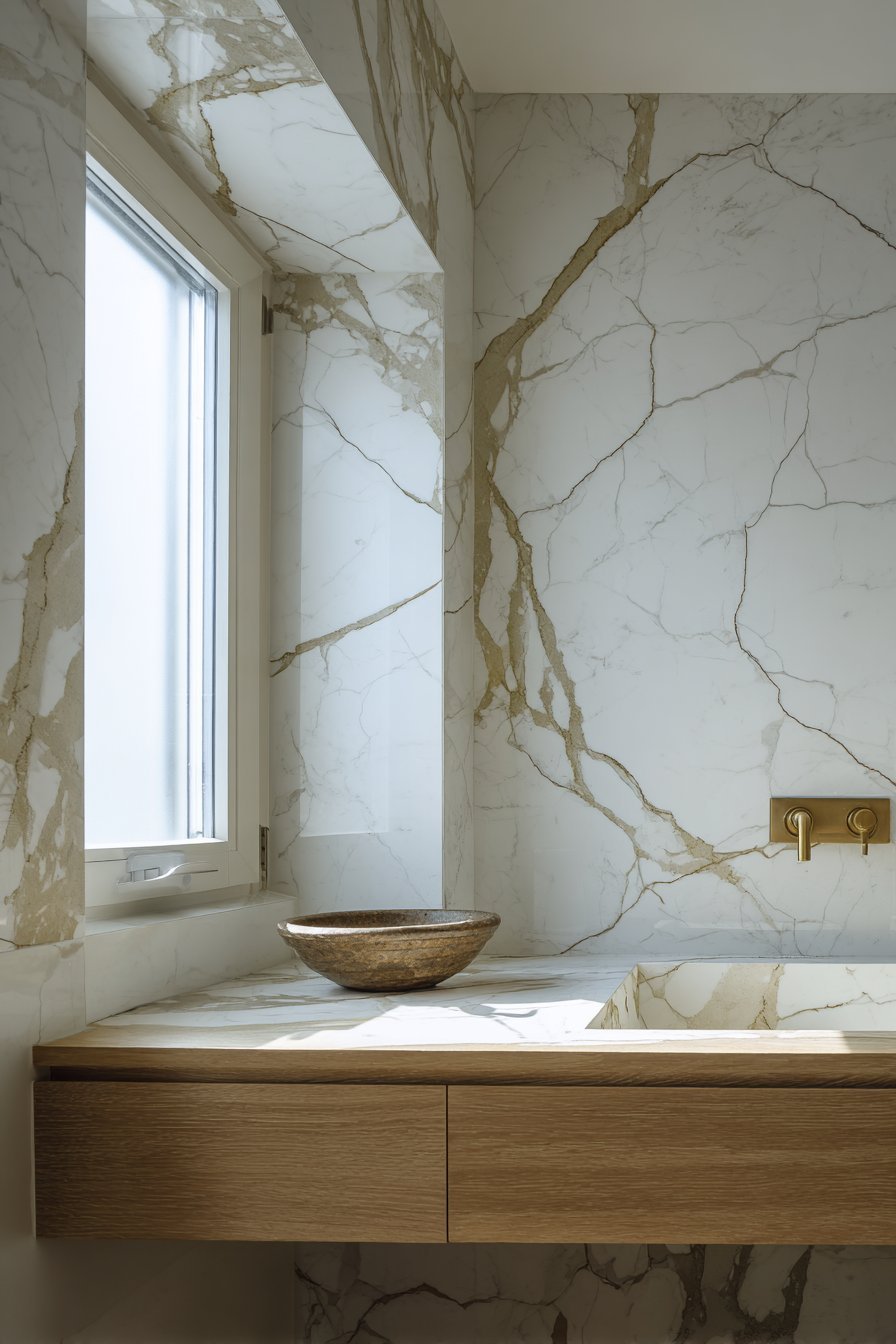
A minimalist bathroom showcases large-format porcelain slabs. Subtle marble-look veining adds sophisticated interest. A floating vanity in white oak features integrated sink. Wall-mounted brushed brass faucet provides functional elegance.
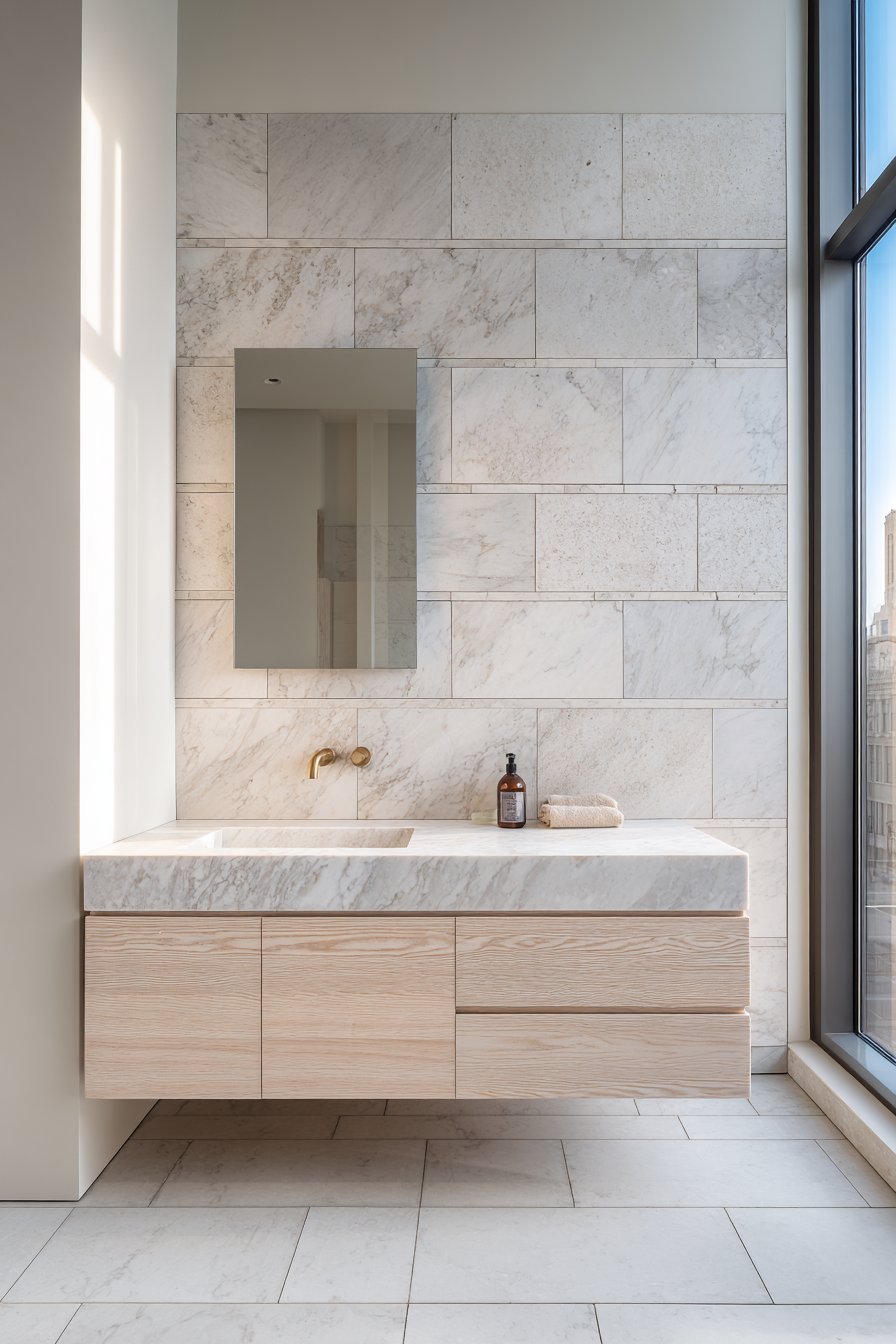
Minimal grout lines maintain clean, seamless appearance. Natural light from frosted window creates gentle highlights. The tile surface remains smooth and uninterrupted. Material quality and scale provide elegance without ornamentation.
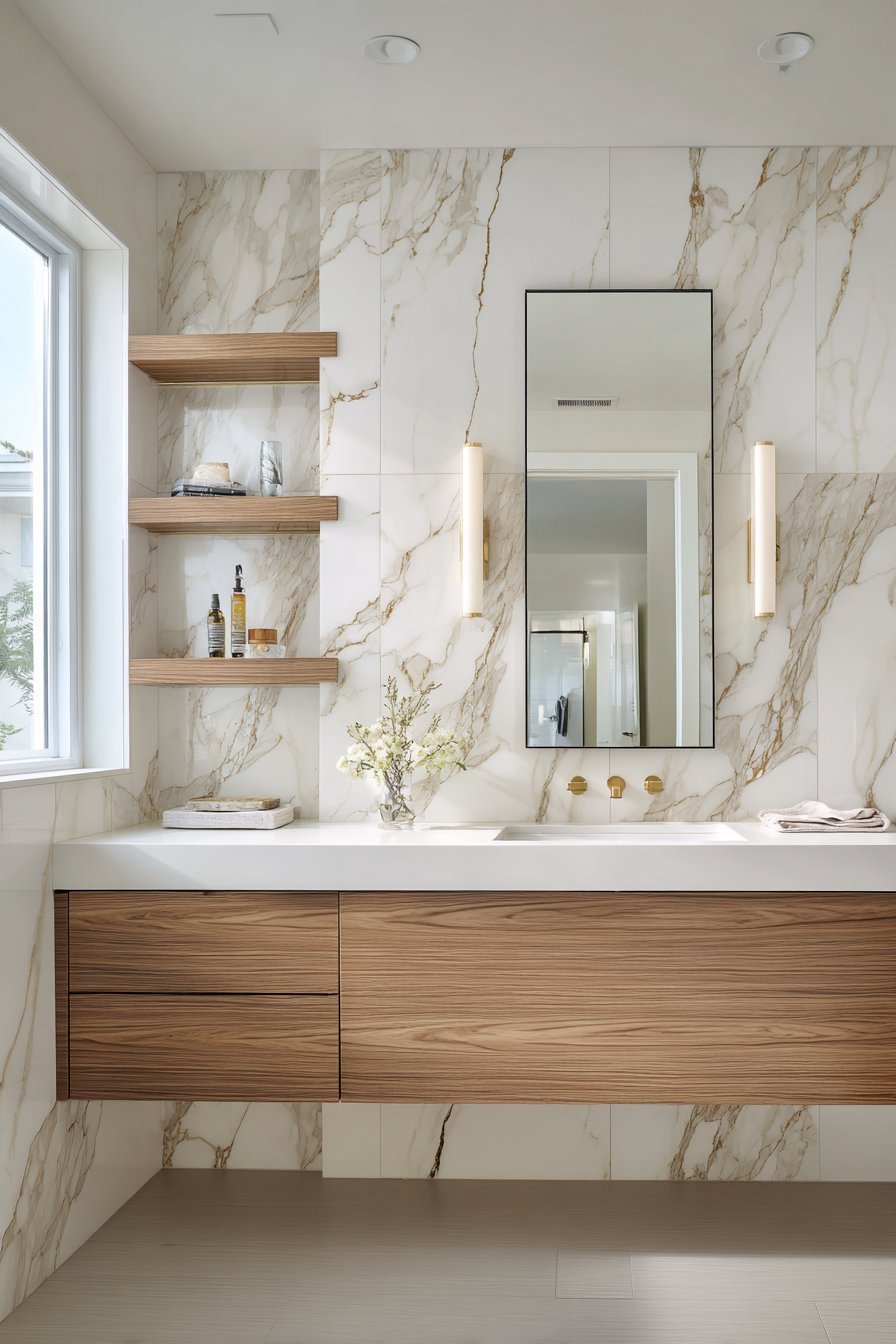
Large-format tiles create luxurious, spa-like environments. Reduced grout lines simplify cleaning and maintenance. The veining provides natural artistic variation. This design demonstrates how material selection elevates simple spaces.
Key Design Tips:
- Choose large-format tiles to minimize grout lines
- Select subtle veining patterns for sophisticated interest
- Install floating vanities for contemporary clean aesthetics
- Use brushed brass fixtures for warm metallic accents
- Maximize natural light through frosted privacy windows
17. Industrial Exposed Concrete Statement
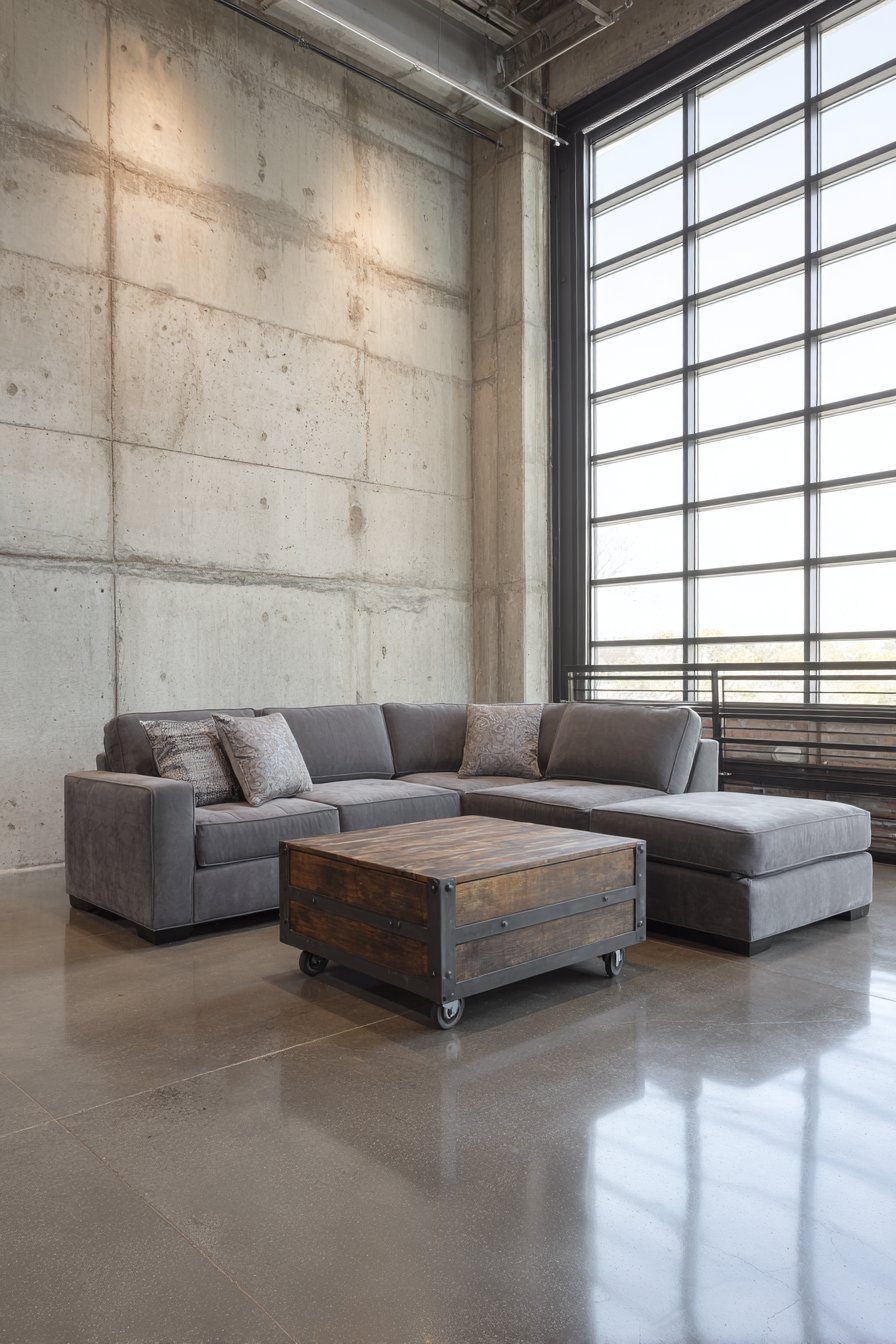
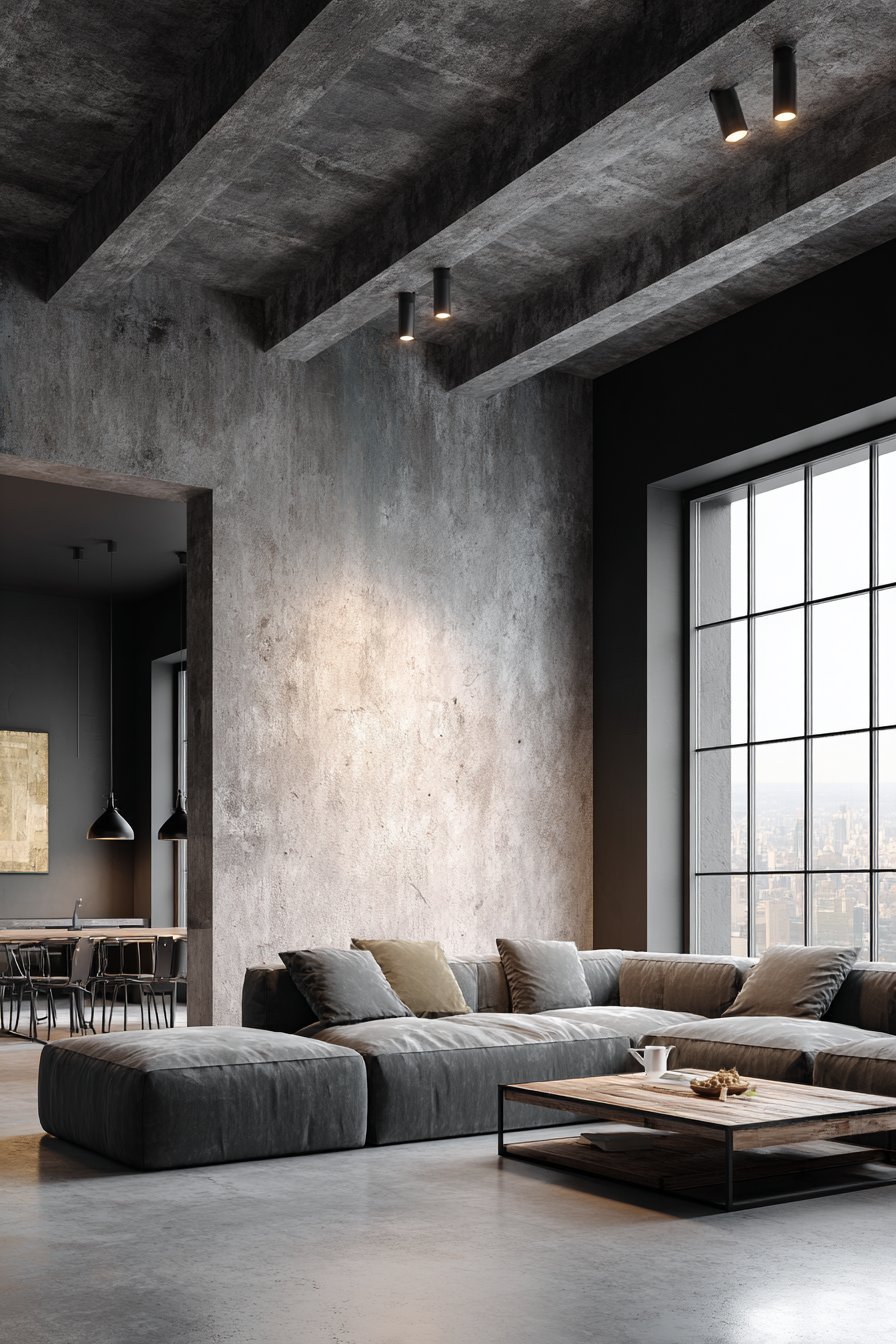
A contemporary loft showcases exposed concrete walls. Natural formwork patterns create industrial character. A modular grey sectional sofa faces the textured wall. Industrial metal and wood coffee table adds functional style.
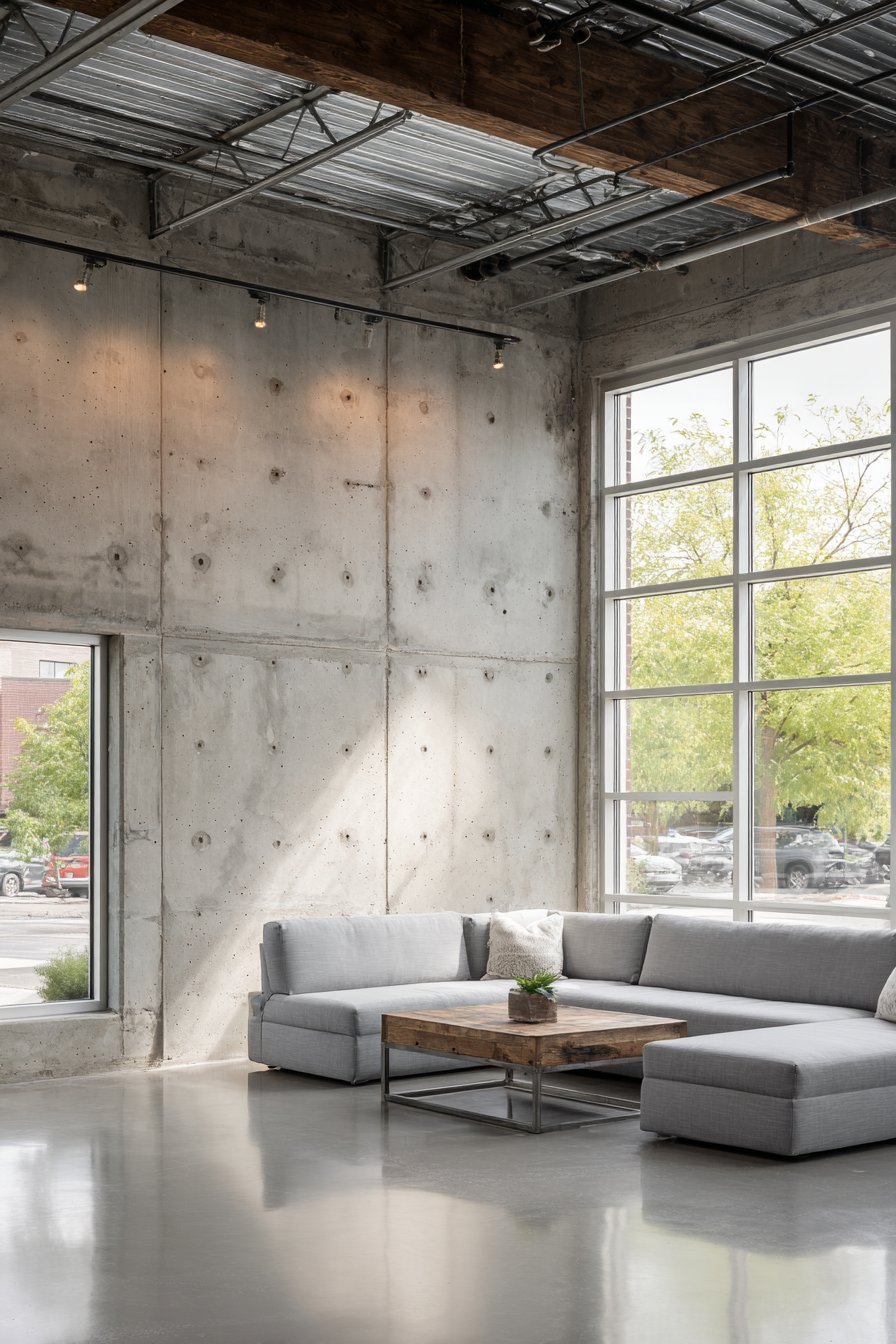
Polished concrete floors reflect ambient light beautifully. Large factory-style windows flood the space with daylight. The concrete’s raw texture creates bold statements. Industrial character eliminates decoration needs completely.
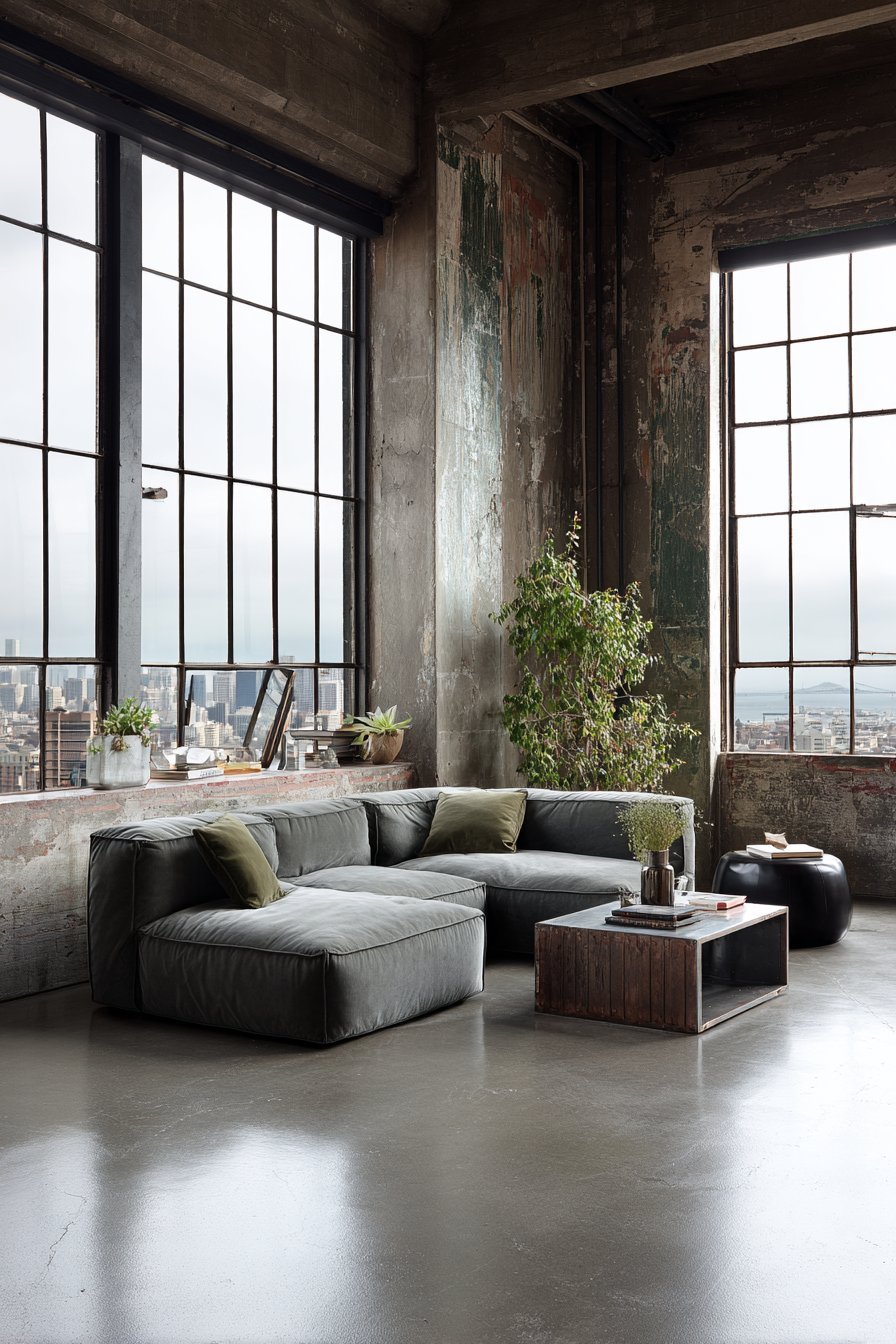
The formwork patterns tell construction stories authentically. Subtle color variations add organic visual interest. This approach celebrates honest materials and building processes. The empty wall becomes architectural sculpture through material choice.
Key Design Tips:
- Seal concrete walls properly to prevent dust issues
- Choose industrial-style furniture for cohesive aesthetics
- Maximize natural light through oversized windows
- Use polished concrete floors for light reflection
- Embrace raw materials for authentic industrial character
18. Venetian Plaster Sophistication
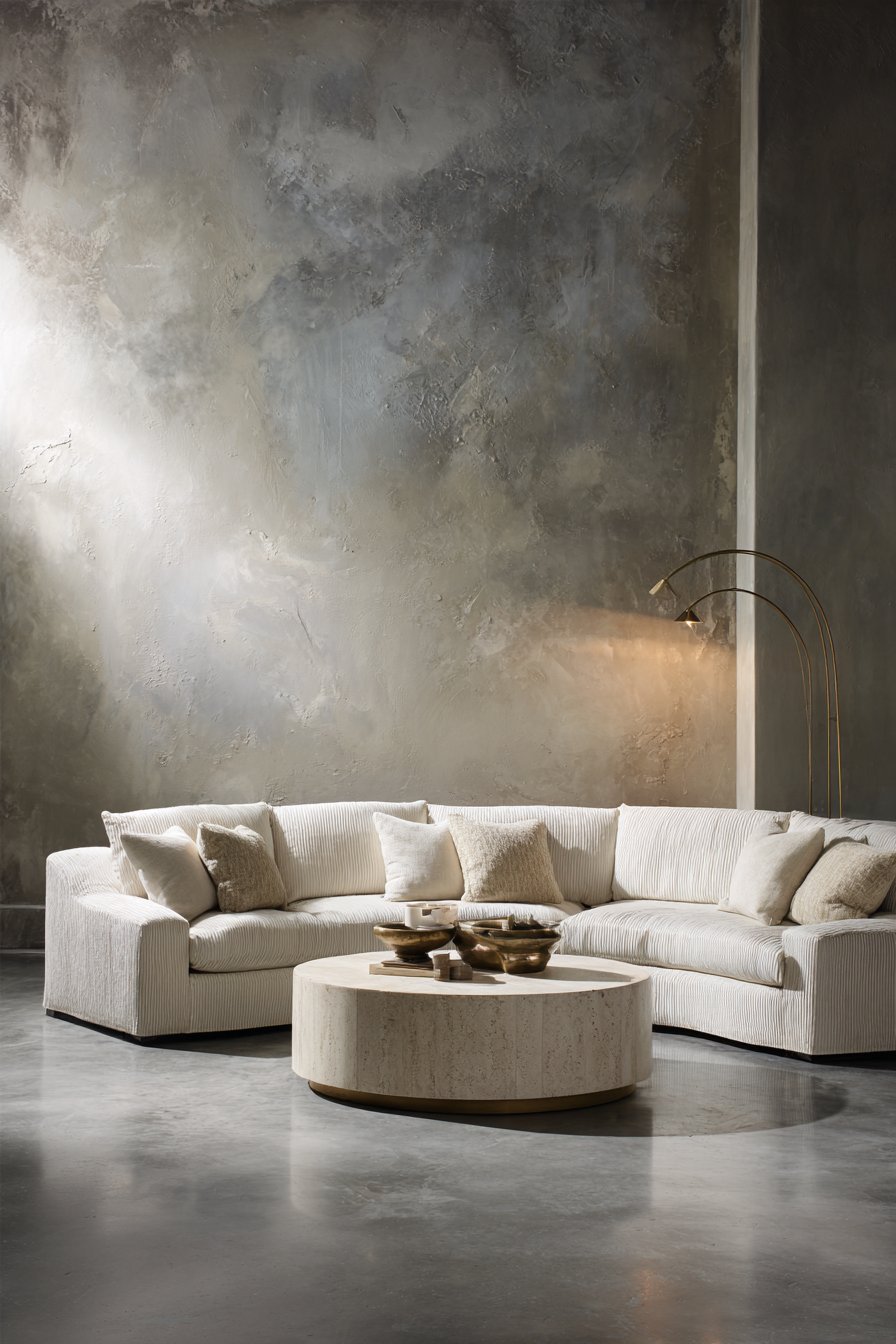
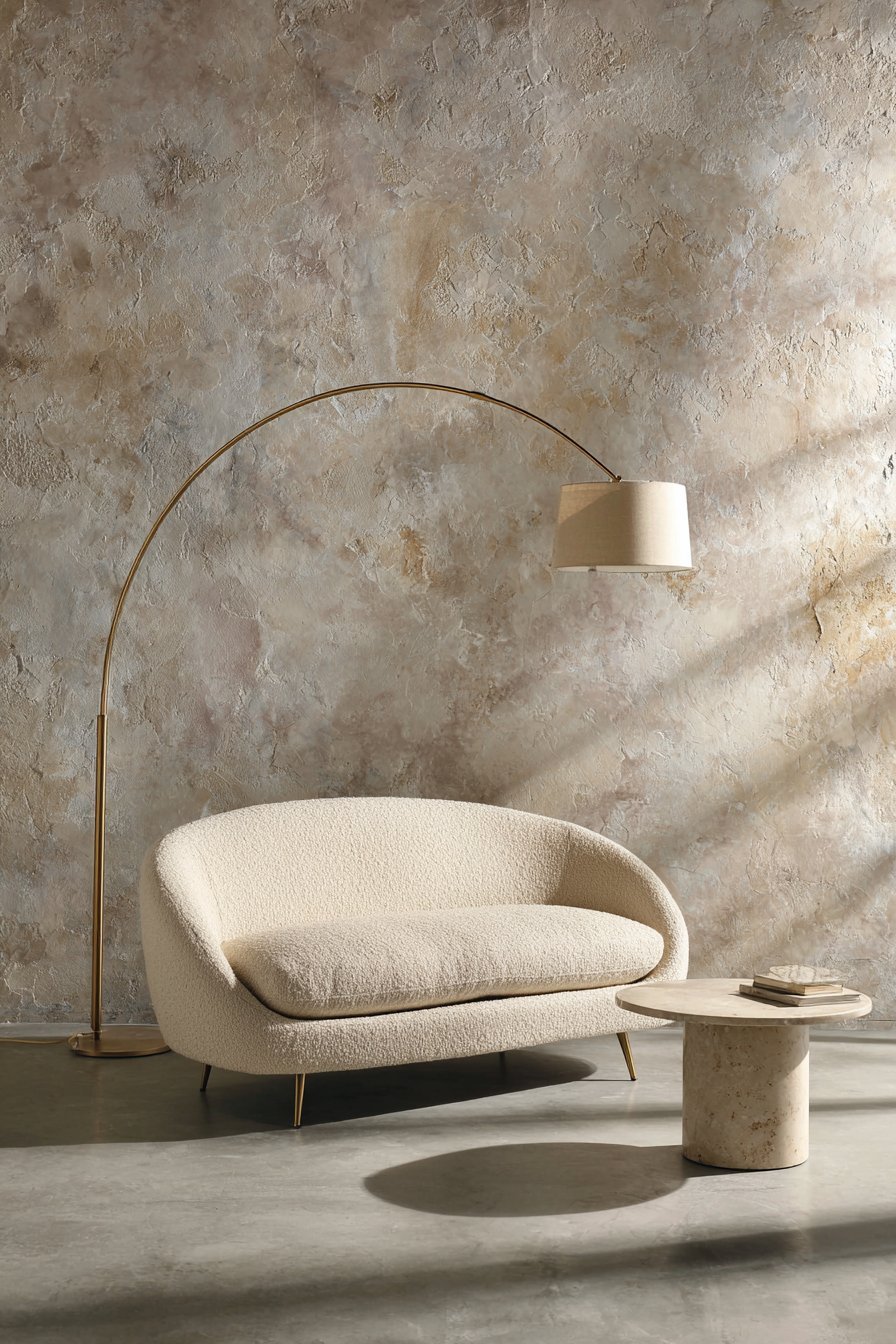
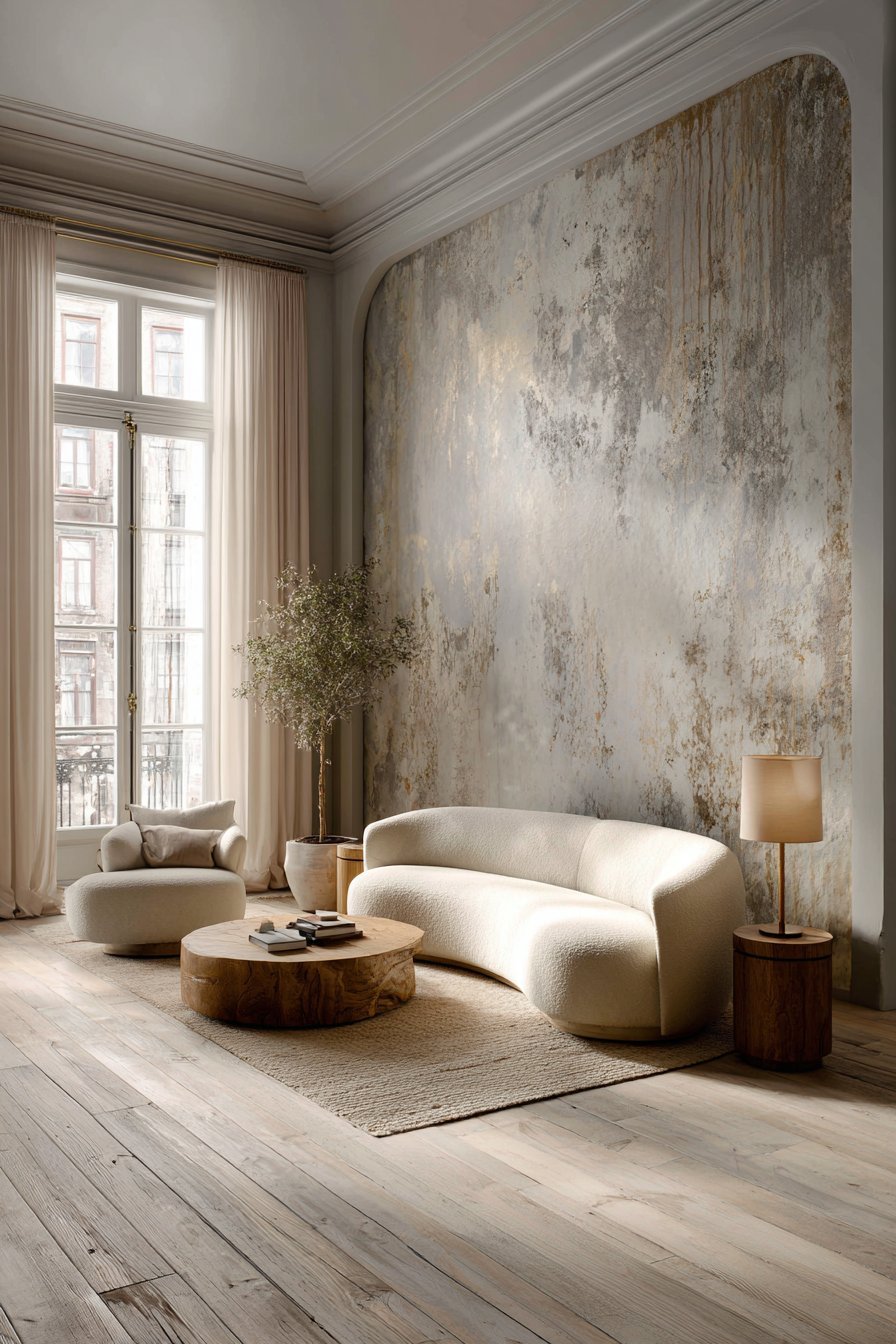
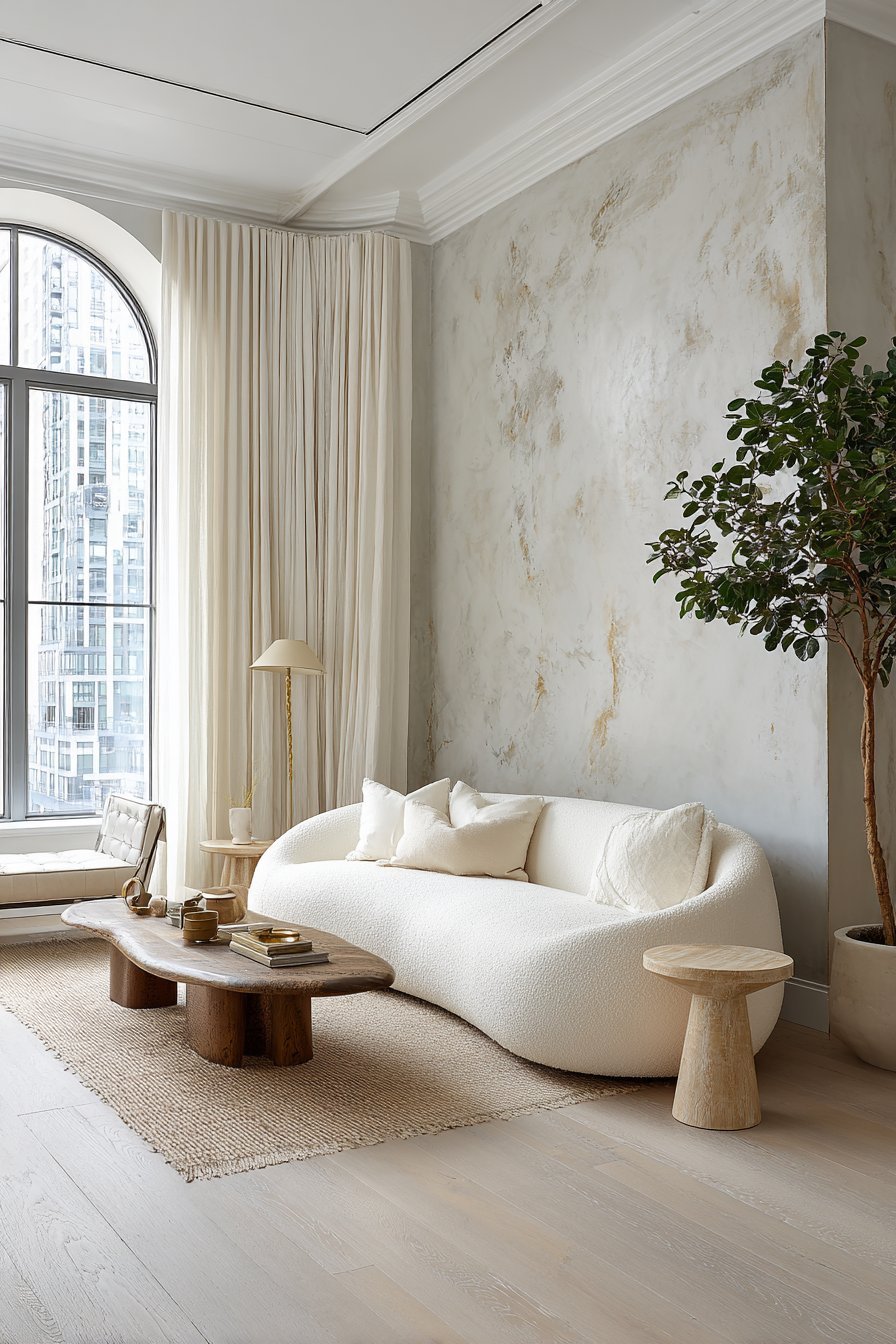
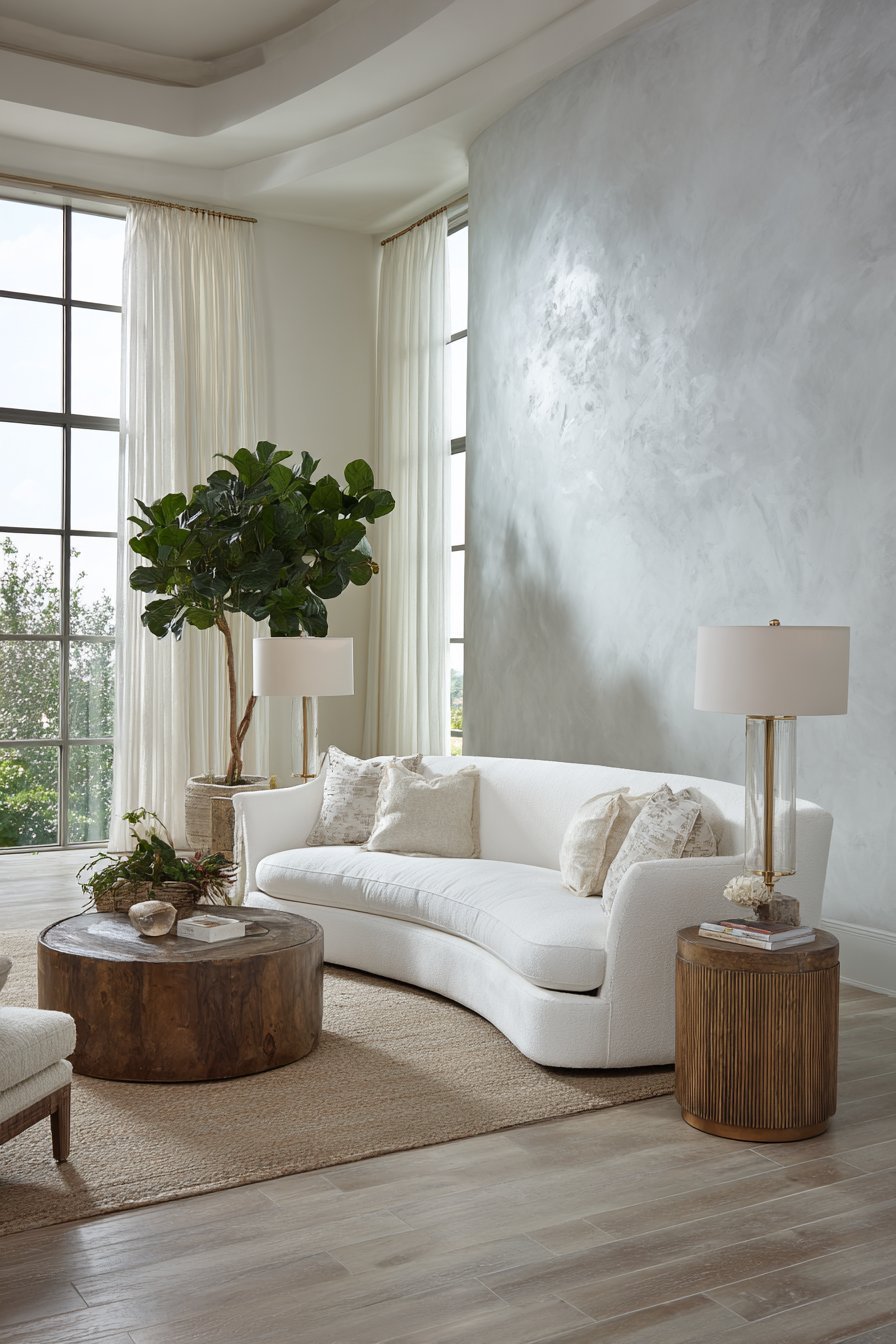
A transitional living room features hand-troweled venetian plaster. Soft taupe tones create subtle elegance. The surface shows variations in sheen and tone. A curved sofa in cream bouclé fabric sits centered below.
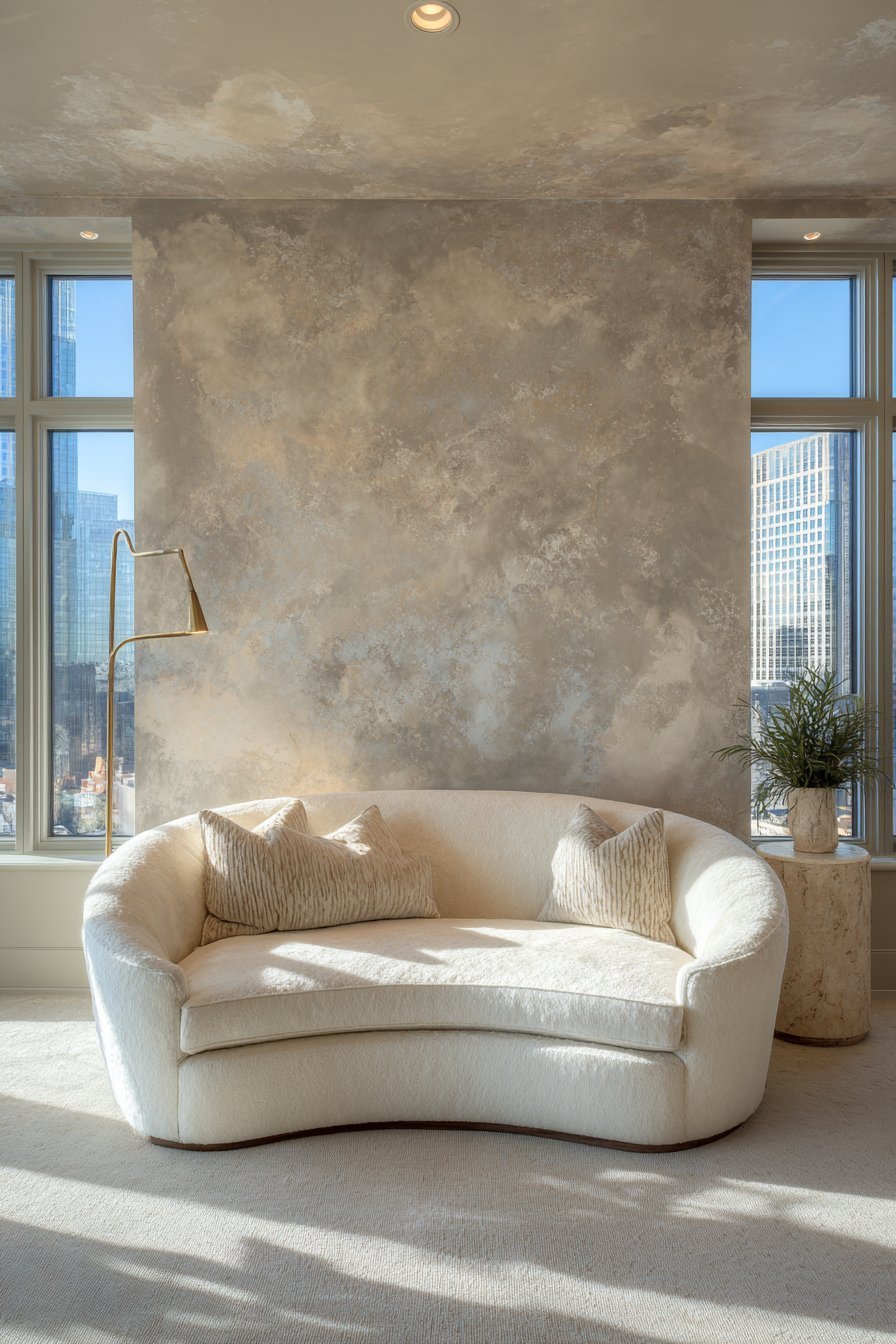
A round travertine coffee table adds natural stone beauty. A brass arc floor lamp provides warm accent lighting. Afternoon light creates gentle shadows across organic texture. The artisanal finish provides sophisticated visual interest alone.
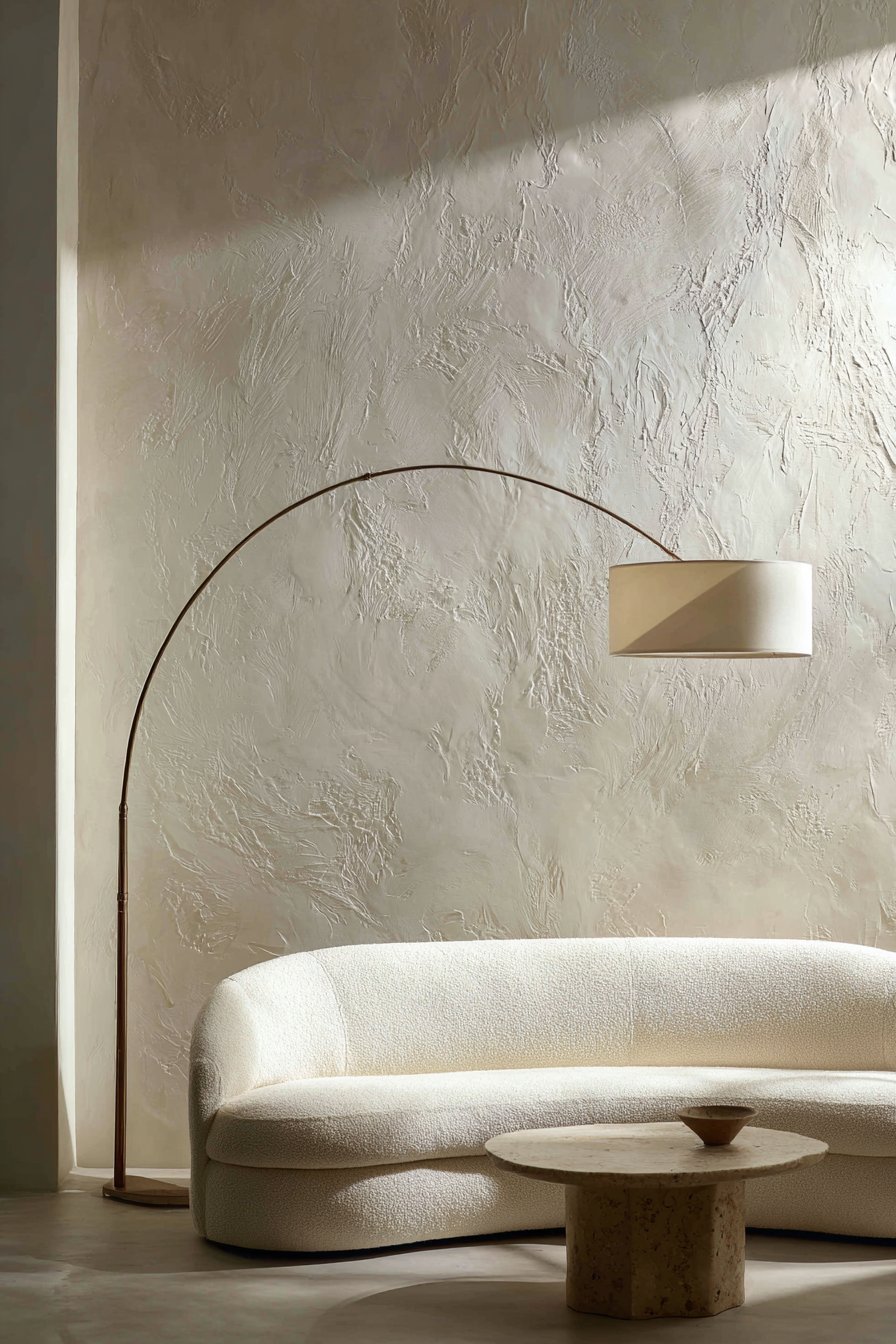
Hand-applied plaster creates unique, unrepeatable surfaces. The trowel marks add human touch and craftsmanship. Sheen variations catch and reflect light beautifully. This design celebrates traditional techniques in contemporary settings.
Key Design Tips:
- Hire skilled artisans for quality venetian plaster application
- Choose warm neutral tones for versatile sophistication
- Use curved furniture to soften angular wall planes
- Add brass lighting for warm metallic highlights
- Embrace natural sheen variations as design features
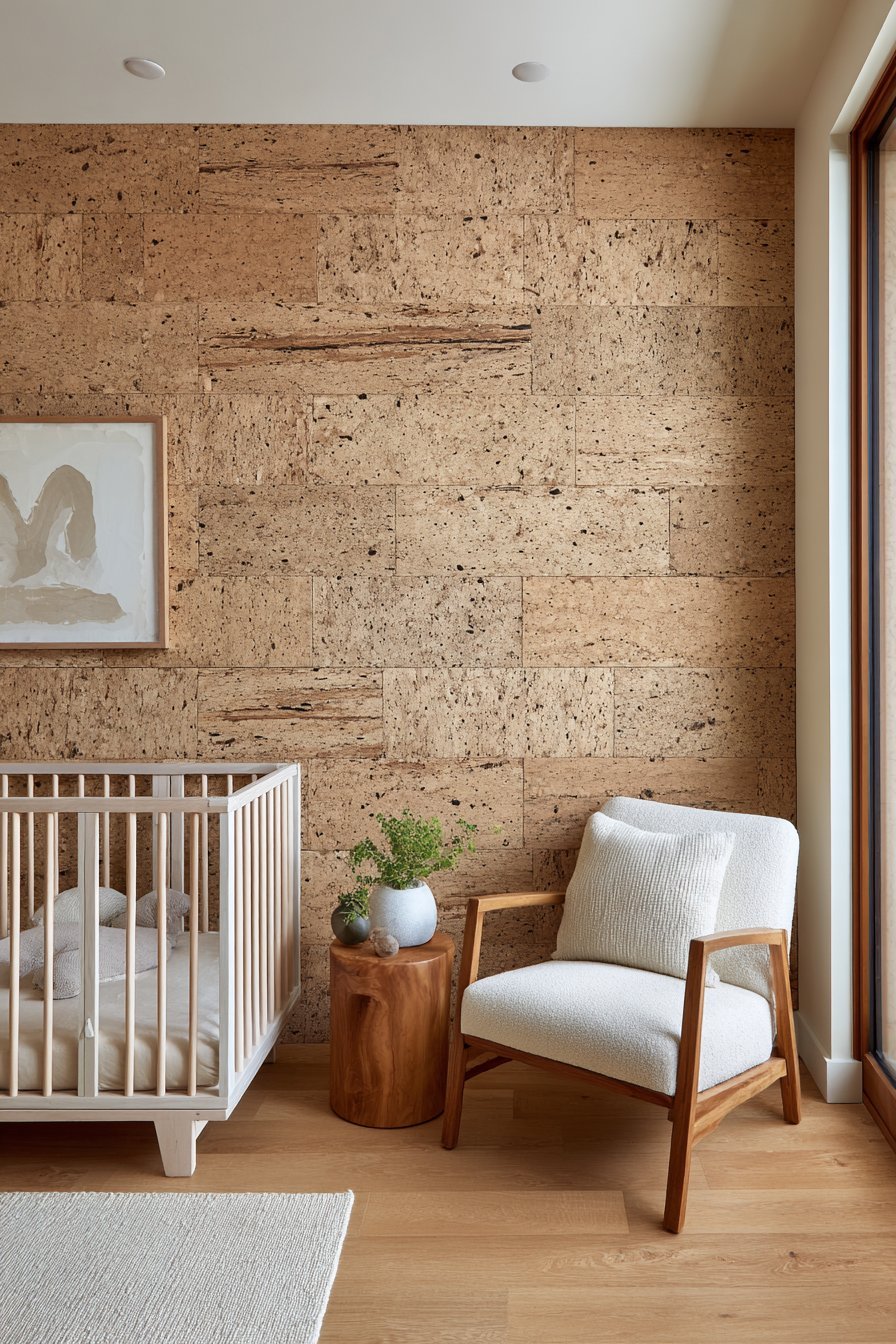
19. Natural Cork Tile Warmth
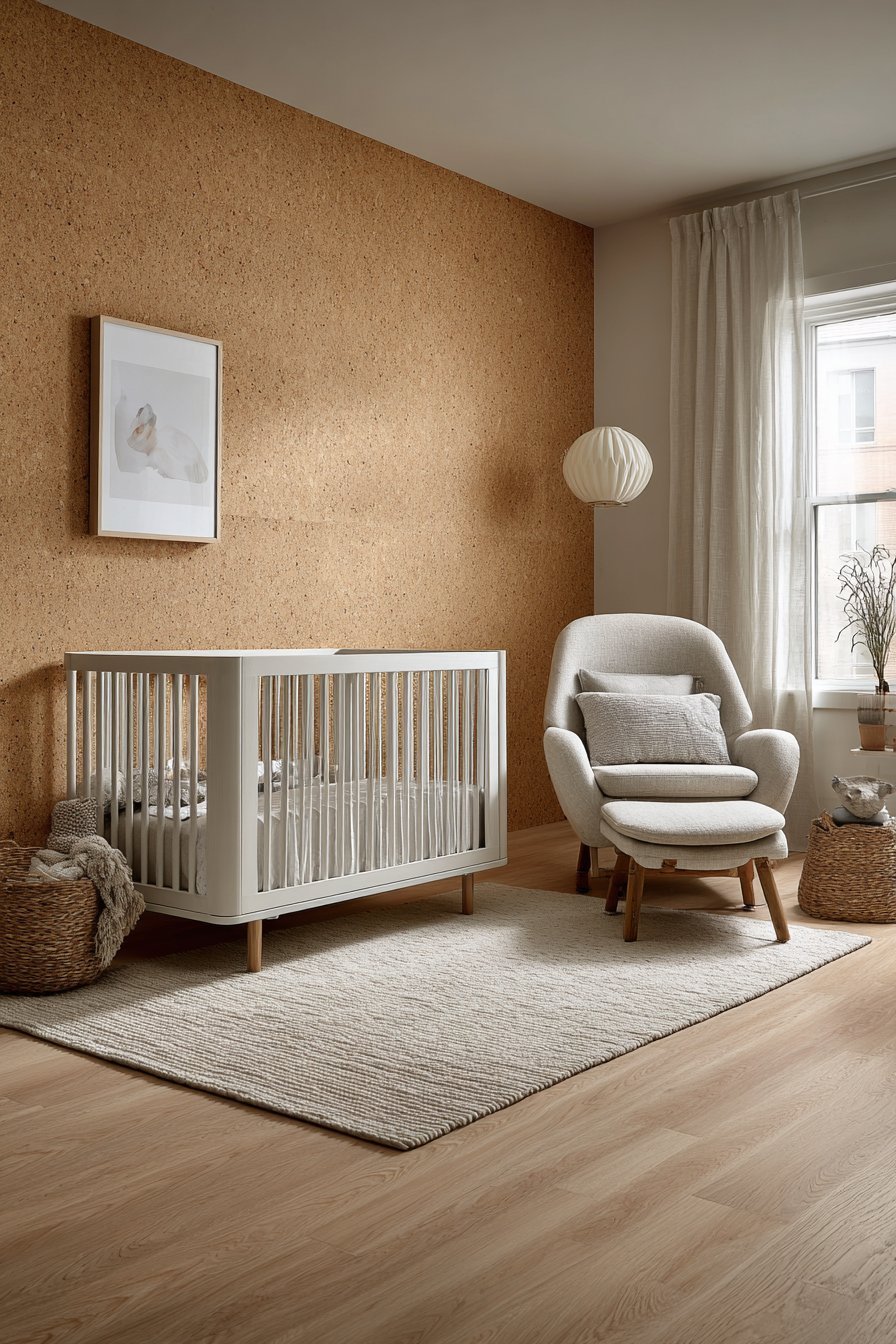
A modern nursery features natural cork tiles. Warm honey tones provide organic visual warmth. The material’s texture shows subtle natural variations. A simple white crib with clean lines sits against the wall.
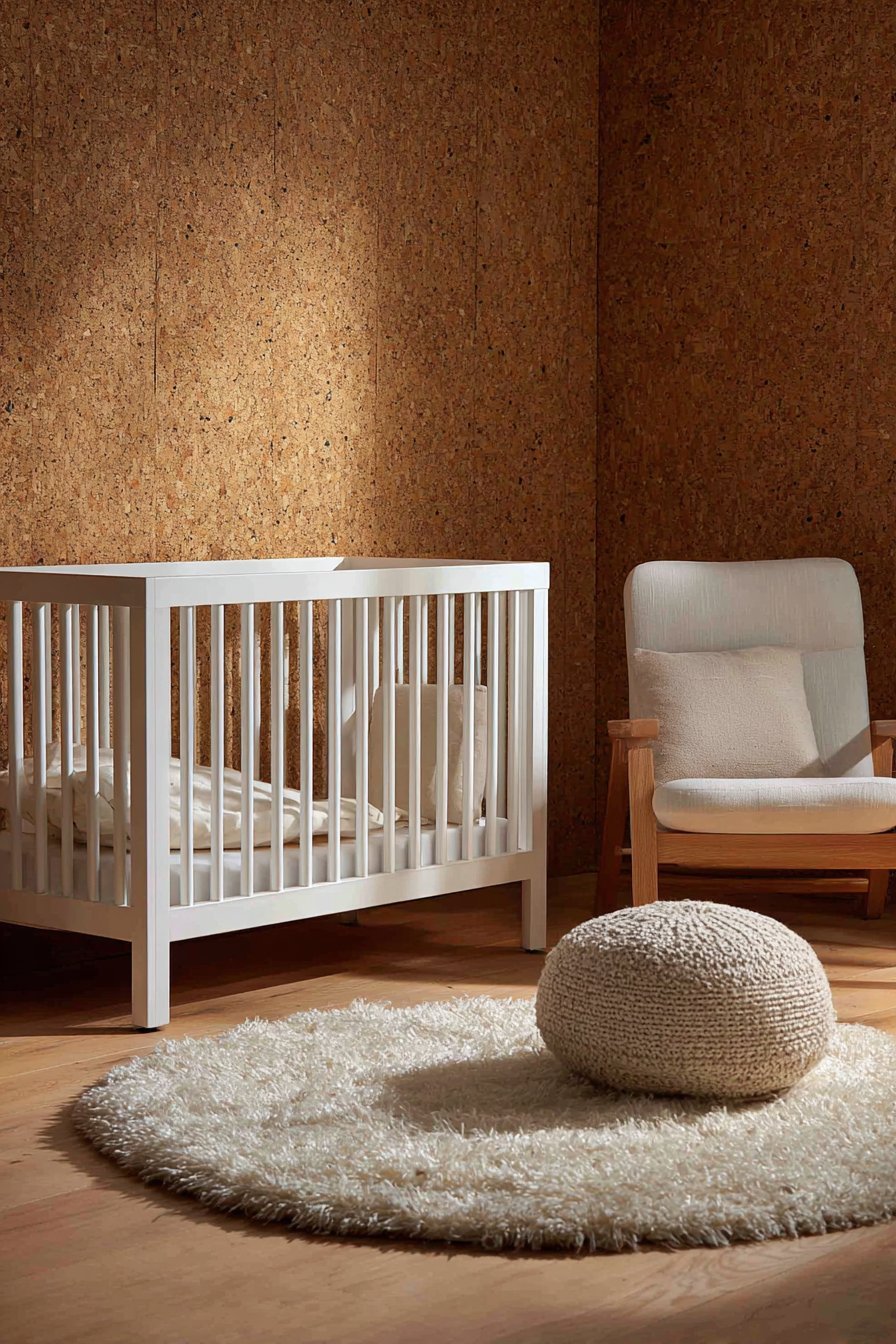
A comfortable nursing chair in natural linen sits nearby. Light oak flooring complements the cork beautifully. A soft wool rug completes the natural material palette. Diffused natural light highlights cork’s grain patterns.
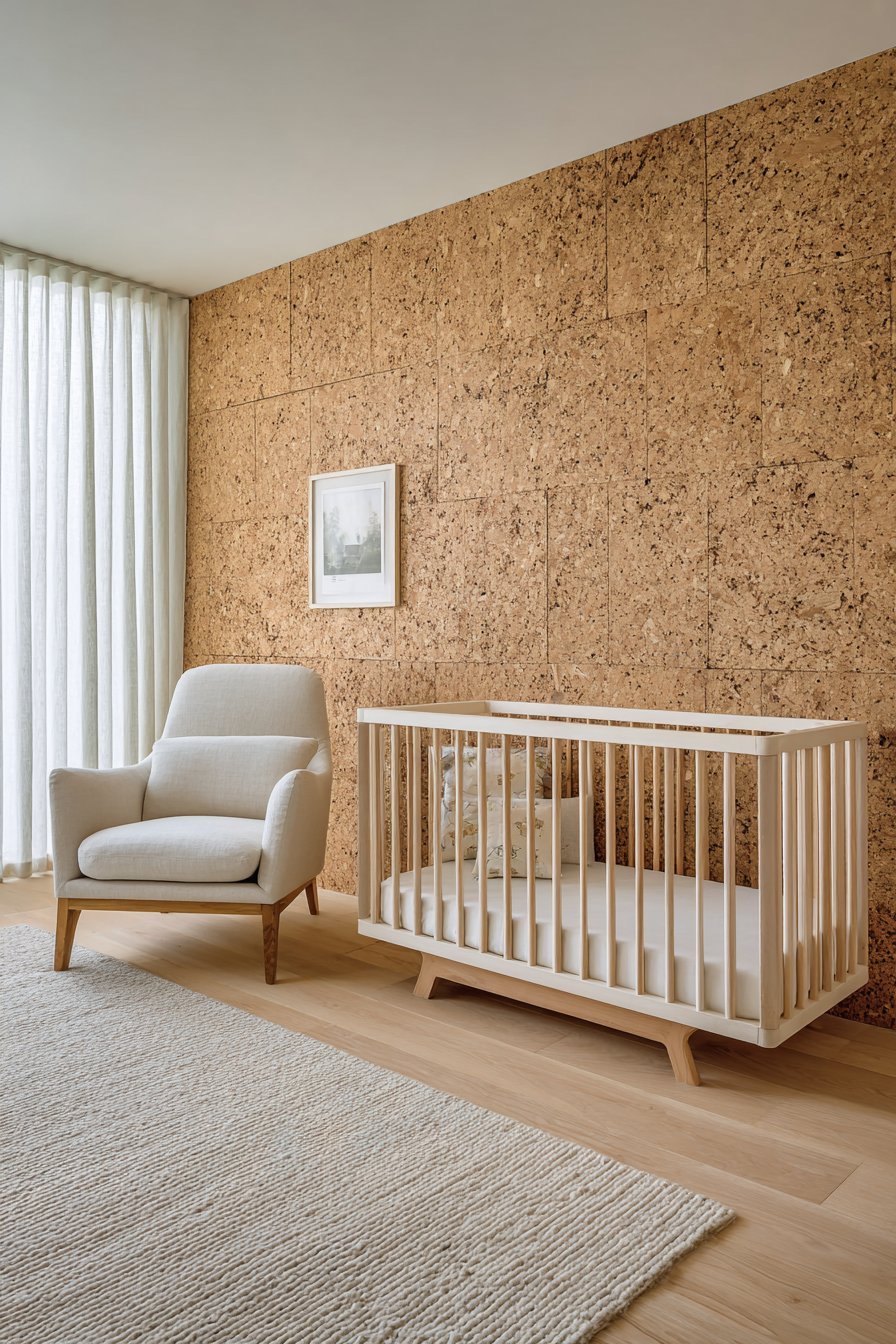
Cork provides sustainable, renewable material choices. Natural texture creates interest through organic variation. The material offers acoustic benefits for nursery spaces. This design demonstrates how sustainable choices create beautiful results.
Key Design Tips:
- Choose natural cork for sustainable nursery materials
- Install cork tiles for acoustic dampening benefits
- Use warm honey tones for inviting nursery atmospheres
- Layer natural materials like oak, linen, and wool
- Maximize soft, diffused natural lighting for gentleness
20. Japandi Wood Slat Rhythm
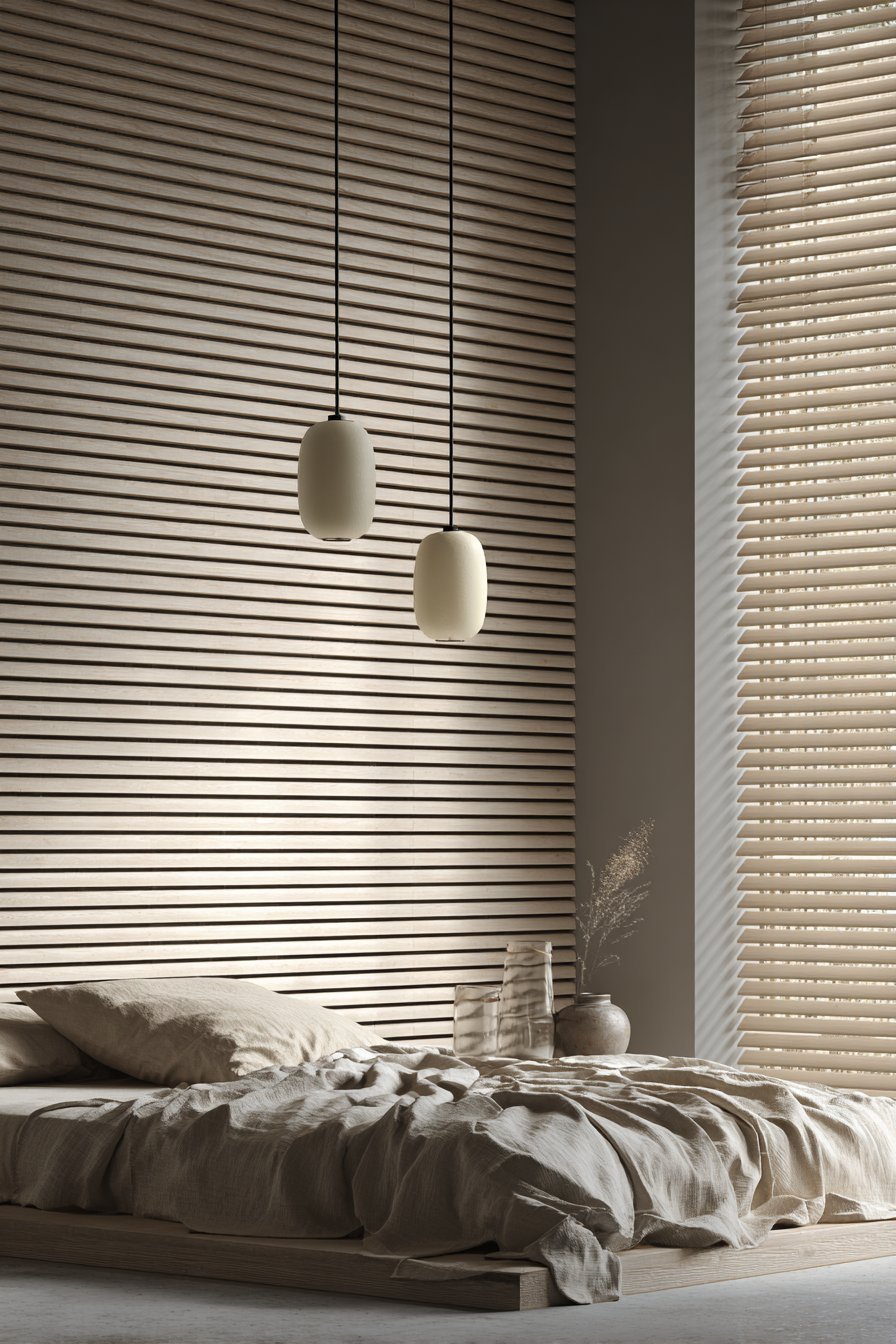
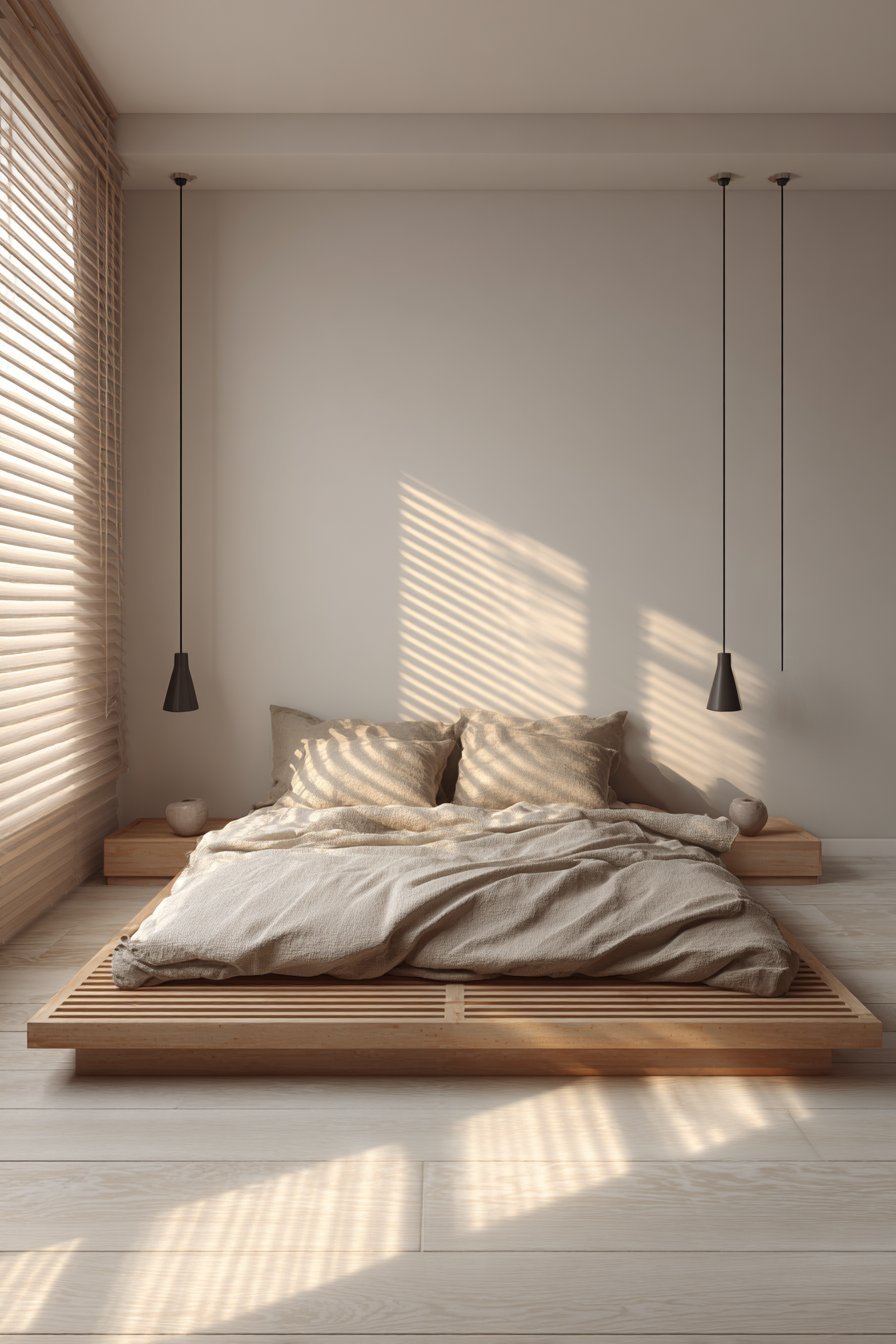
A Japandi-style bedroom features horizontal wood slat paneling. Light ash creates clean, contemporary warmth. Evenly spaced slats create rhythm and shadow play. A low platform bed sits flush against the wall.
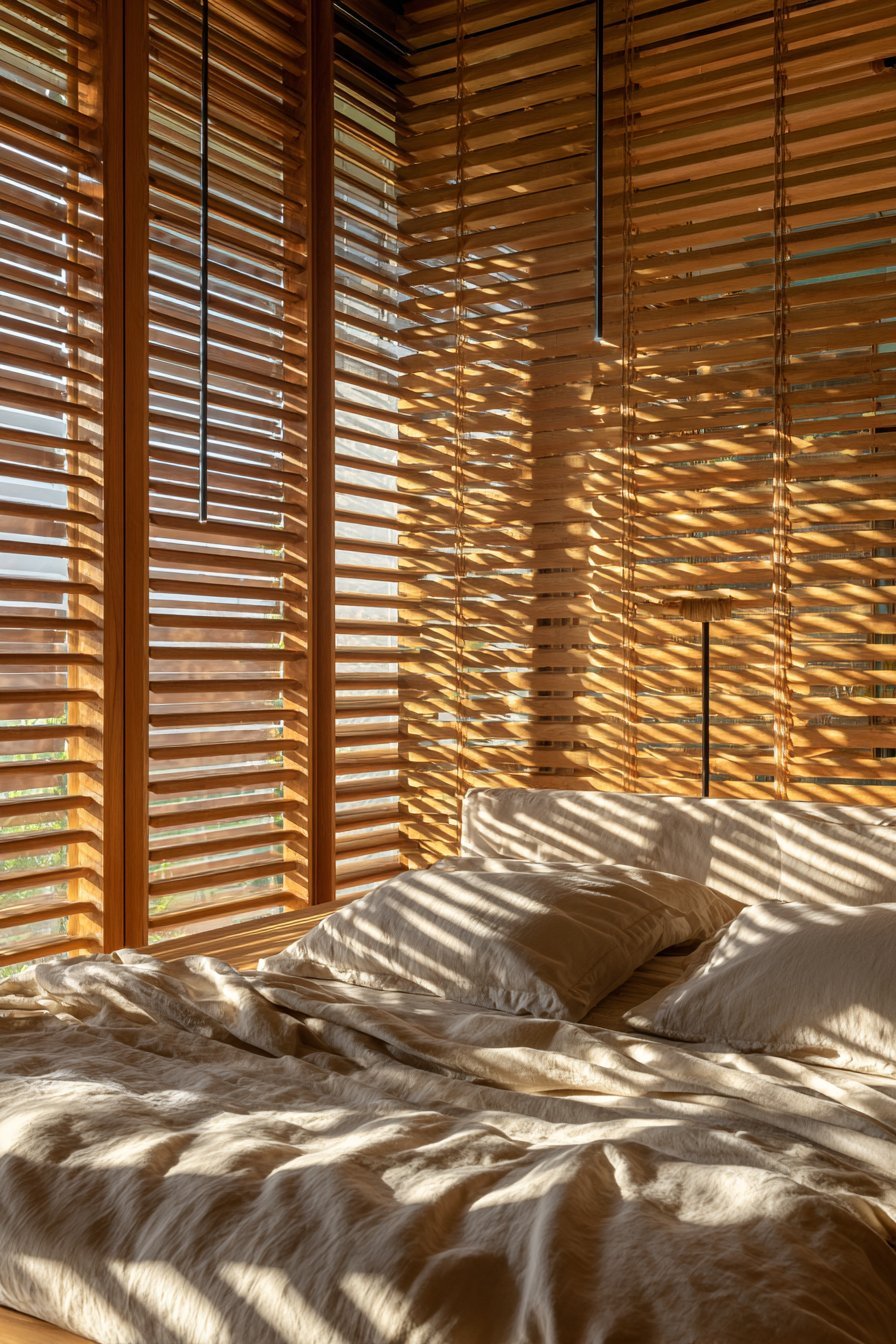
Natural linen bedding maintains the minimalist aesthetic. Simple ceramic pendant lights hang on black cords. Soft morning light filters through paper-like roller shades. Linear shadow patterns dance across the slatted wall.
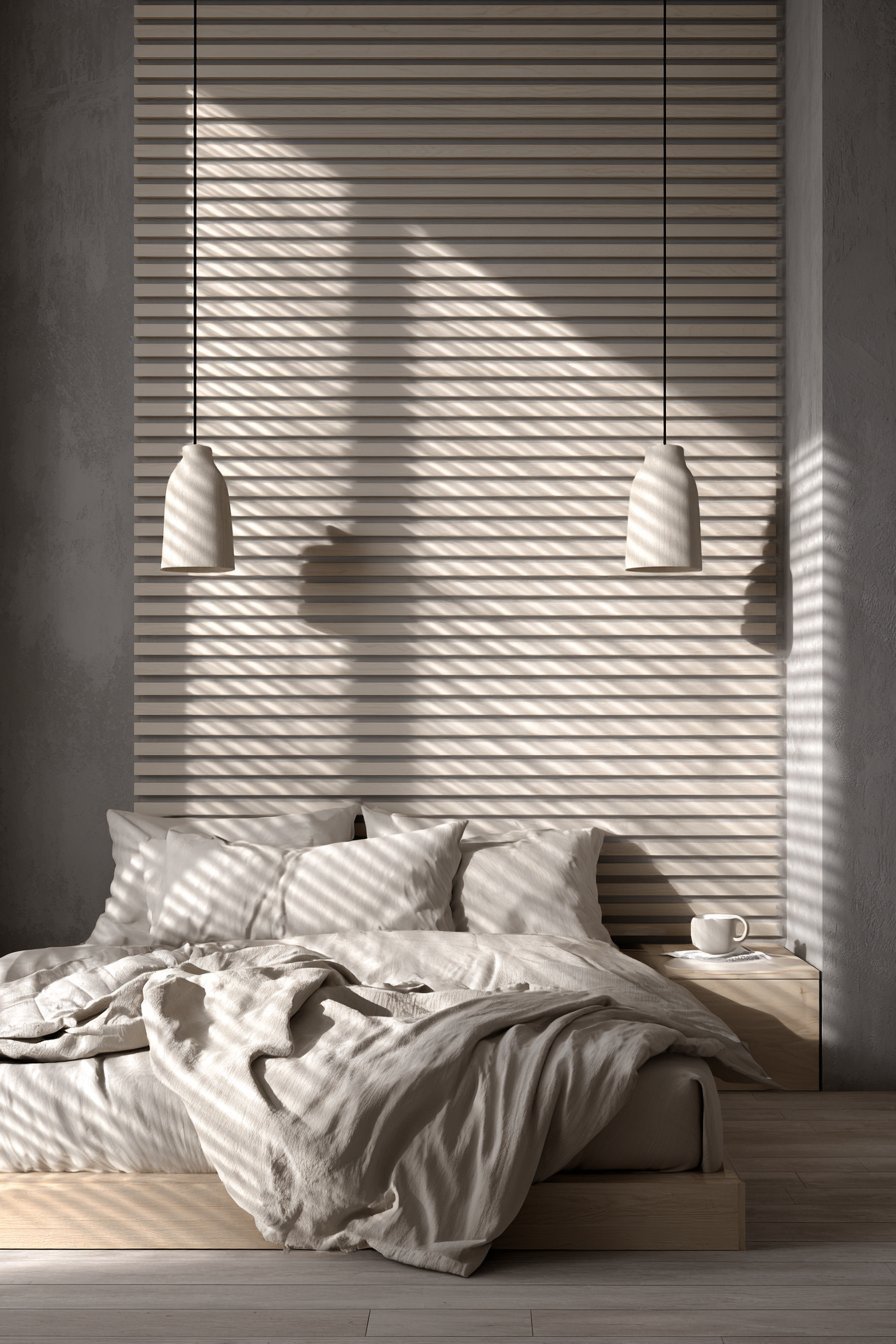
The geometric detail provides meditative visual interest. Horizontal lines create calming horizontal flow. Strategic spacing allows light and shadow interaction. This design proves that simple repetition creates powerful impact.
Key Design Tips:
- Install horizontal slats for calming visual rhythm
- Choose light wood tones for contemporary Japandi style
- Space slats evenly for balanced geometric patterns
- Use low platform beds for cohesive minimalist aesthetics
- Install diffusing window treatments for soft shadow play
Why These Empty Wall Designs Are the Best
These empty wall designs represent sophisticated approaches to contemporary interior styling. Each concept demonstrates how restraint creates visual impact through material quality and architectural detail. The designs prove that bare walls become powerful design elements when treated intentionally.
Material selection drives success in empty wall approaches. Quality finishes like venetian plaster, natural wood, and dimensional tiles provide inherent beauty. These surfaces create texture, depth, and visual interest without additional decoration. The investment in premium materials pays lasting aesthetic dividends.
Color theory plays crucial roles in empty wall success. Sophisticated paint choices like Farrow & Ball’s nuanced greys create depth through subtle undertones. Bold choices like charcoal grey provide dramatic contrast that anchors spaces. Soft tones like blush pink and sage green promote calm through color psychology alone.
Architectural details transform empty walls into features. Board and batten paneling, shiplap, and wood slat walls provide structural interest. These elements create shadow play and dimensional depth through physical form. The craftsmanship becomes decoration itself through skilled installation.
Lighting interaction elevates empty wall designs significantly. Natural light creates changing patterns throughout the day. Strategic artificial lighting highlights texture and dimensional surfaces. This dynamic quality makes empty walls living elements rather than static backdrops.
Sustainability considerations make empty wall approaches increasingly relevant. Natural materials like cork and grasscloth provide renewable options. Quality installations last decades without replacement needs. This longevity reduces environmental impact while maintaining timeless appeal.
Spatial considerations benefit from empty wall treatments. Small spaces feel larger with uncluttered surfaces. Open concepts maintain flow through minimal visual interruption. The breathing room created by empty walls enhances overall spatial perception and livability.
Conclusion
These empty wall designs demonstrate that sophisticated interiors embrace intentional restraint. The key takeaways emphasize material quality over decorative abundance. Strategic color choices, architectural details, and lighting interaction create dynamic visual interest.
Successful empty wall design balances aesthetic appeal with practical benefits. Premium materials provide lasting beauty without maintenance-intensive accessories. Natural finishes improve indoor air quality while delivering timeless style.
Start transforming your spaces by selecting one empty wall approach. Consider your room’s natural light, existing materials, and desired atmosphere. Your journey toward sophisticated minimalism begins with understanding that sometimes the most powerful design choice is knowing what to leave out.
