
Creating a duck-themed nursery offers a delightful blend of whimsy and sophistication for your baby’s first room. This charming theme celebrates the gentle nature of these beloved waterfowl. The soft colors and playful elements create spaces that nurture both parents and children.
Duck nurseries have captured the hearts of expecting parents worldwide. They provide a timeless alternative to traditional nursery themes. The versatility of duck-inspired design allows for interpretations ranging from vintage charm to modern minimalism. Whether you prefer hand-painted murals or subtle embroidered details, this theme adapts beautifully to your personal style.
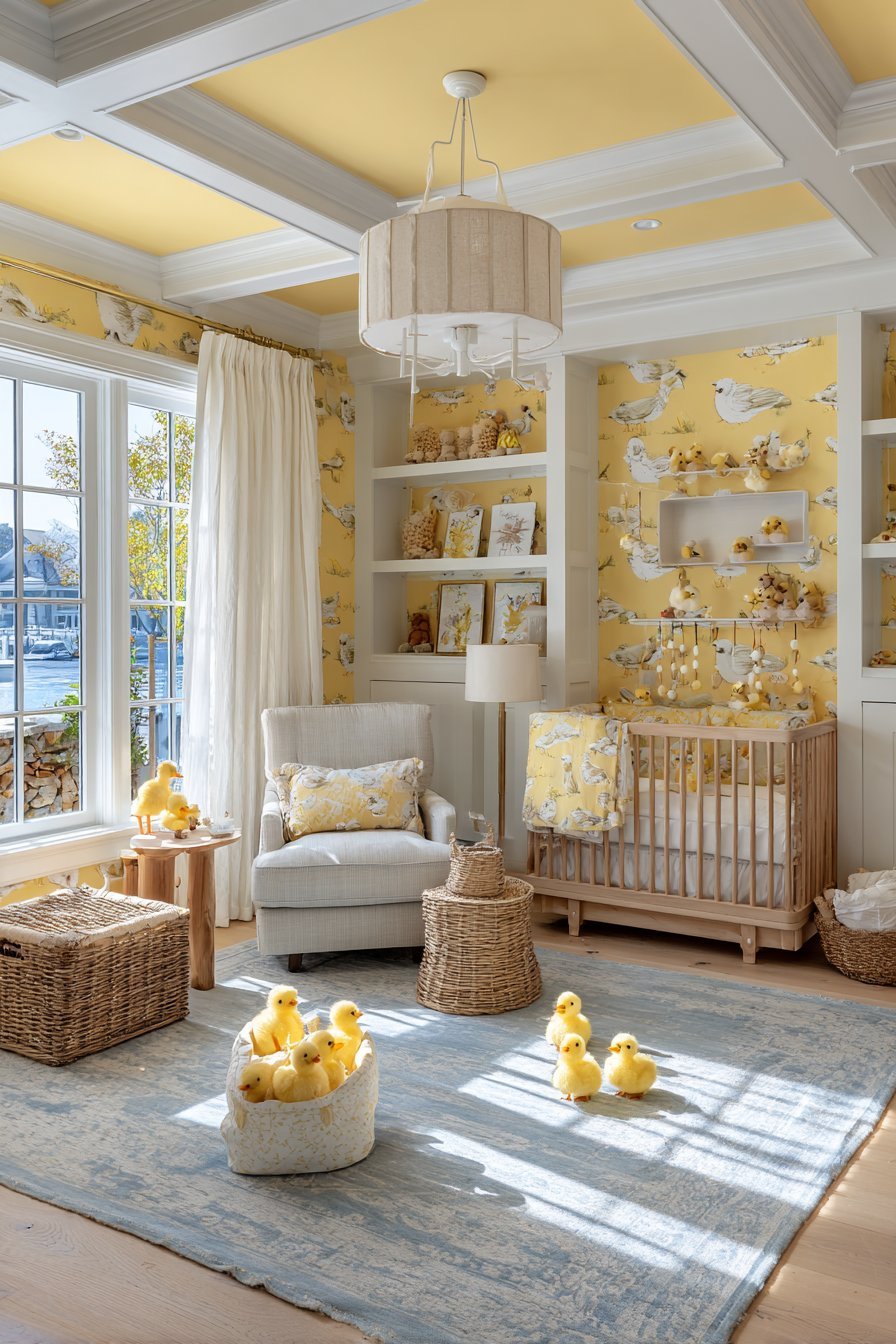
The following designs showcase diverse approaches to duck nursery creation. Each concept demonstrates thoughtful attention to color palettes, materials, and spatial arrangement. From serene reading nooks to practical changing stations, these ideas prove that functional spaces can be enchanting. The duck theme naturally incorporates soothing blues, soft yellows, and calming greens that promote peaceful sleep and joyful play.
1. Hand-Painted Duck Illustration Paradise
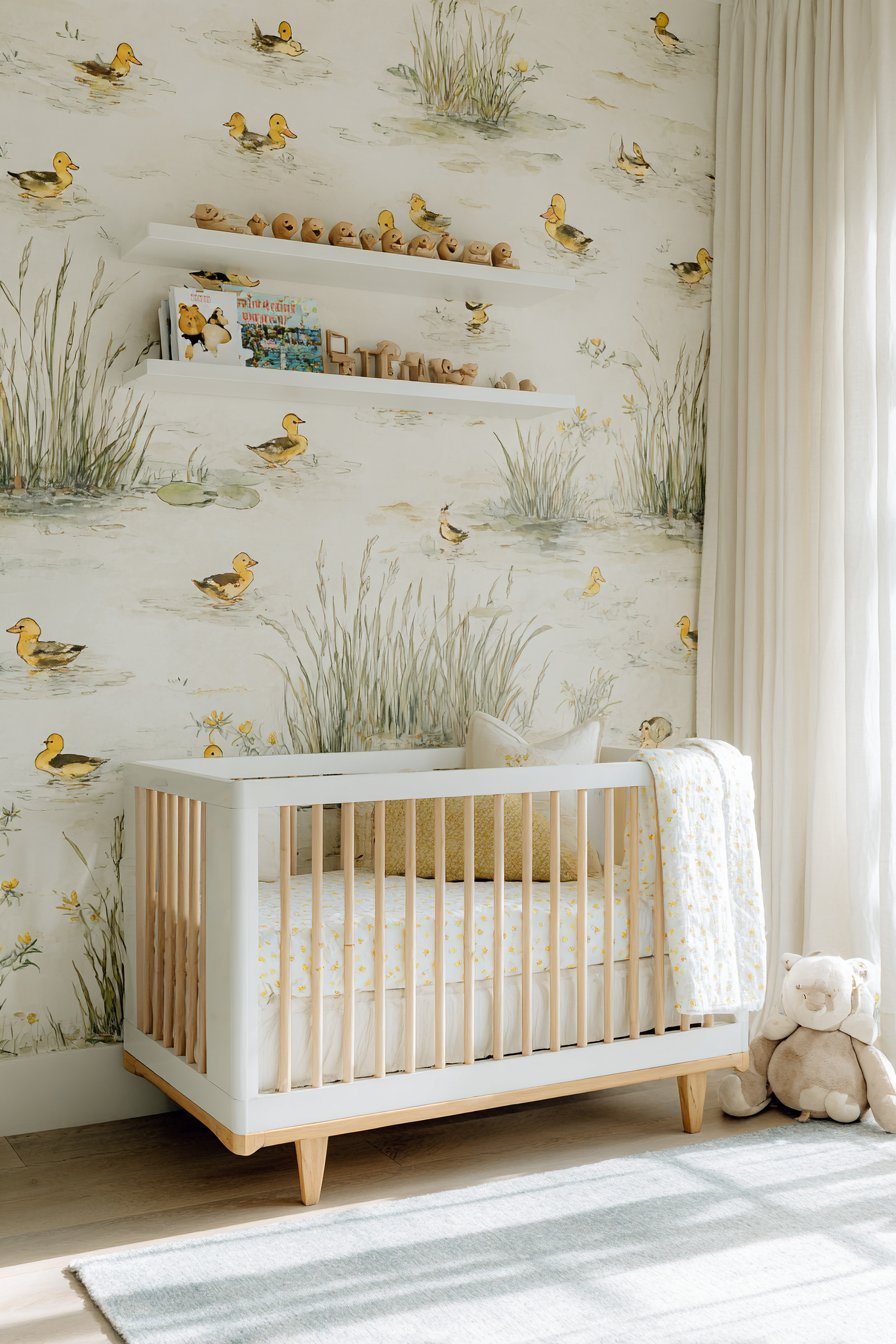
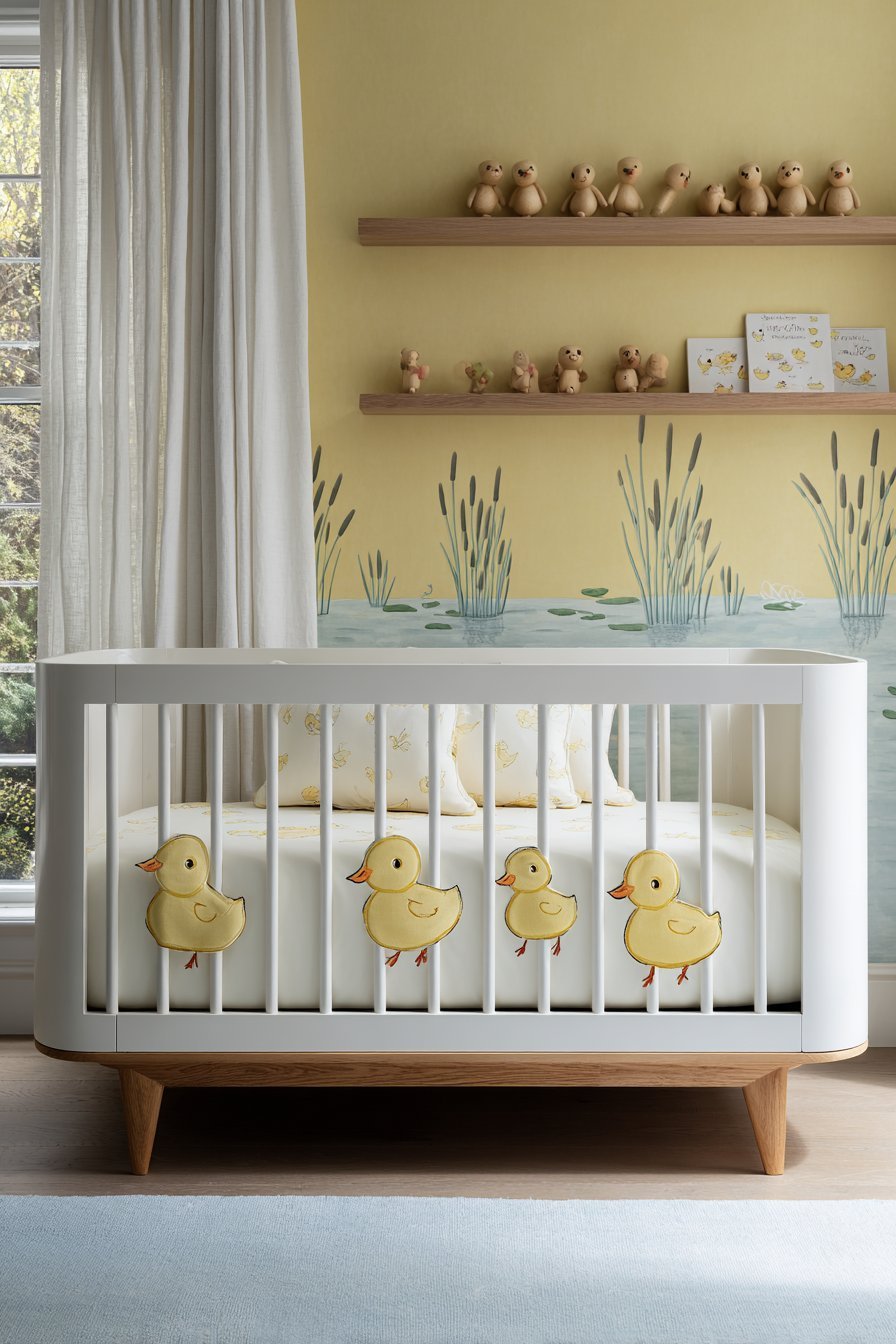
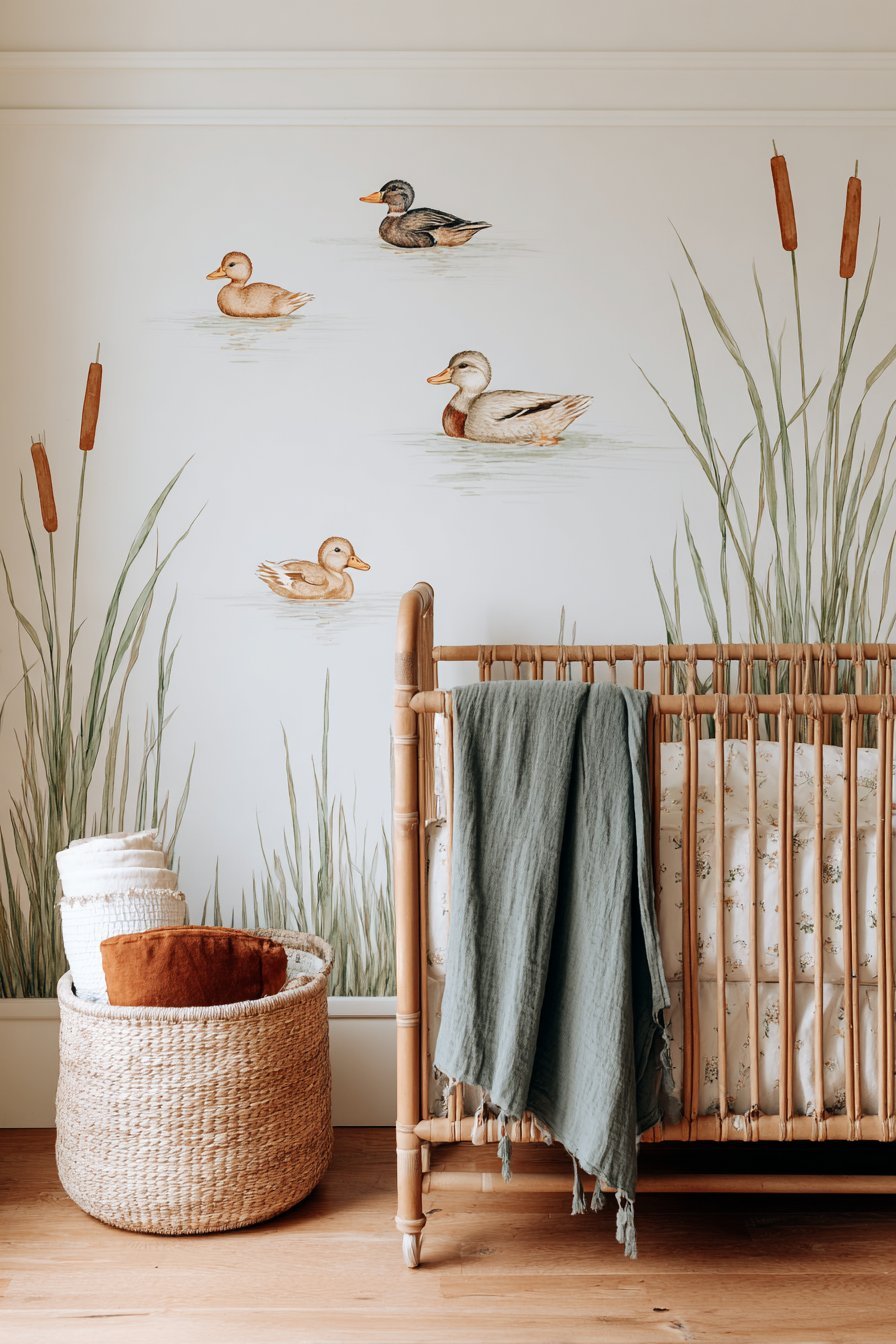
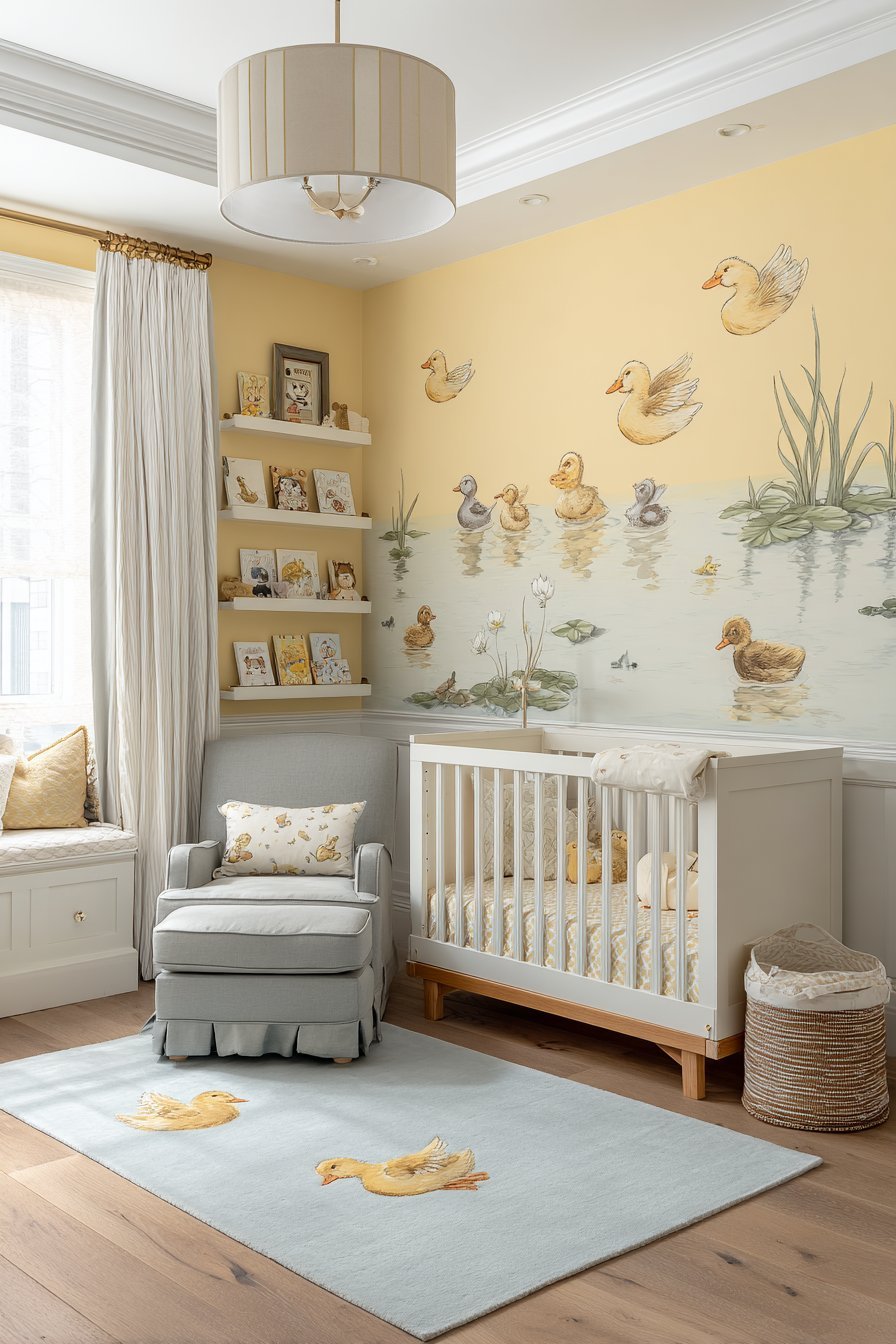
A soft yellow accent wall becomes an artistic masterpiece with hand-painted duck illustrations. Watercolor cattails and lily pads create a gentle pond scene. The white convertible crib stands centered against this whimsical backdrop. Natural wood legs ground the piece in organic warmth.
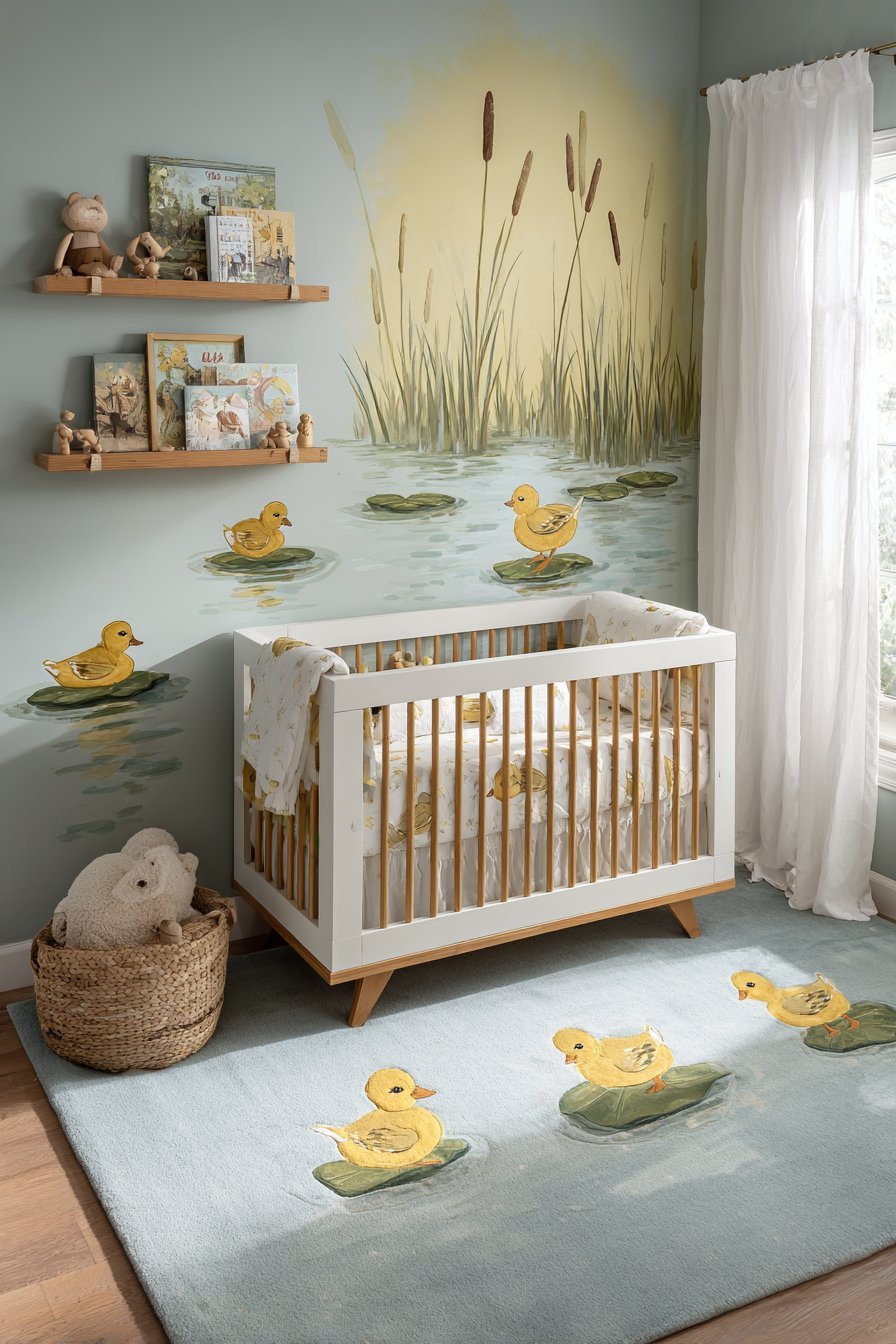
Organic cotton bedding features delicate embroidered duck motifs. These textile details add tactile interest without overwhelming the space. A plush area rug in pale blue anchors the room with subtle wave patterns. The floor covering provides comfort while reinforcing the aquatic theme.
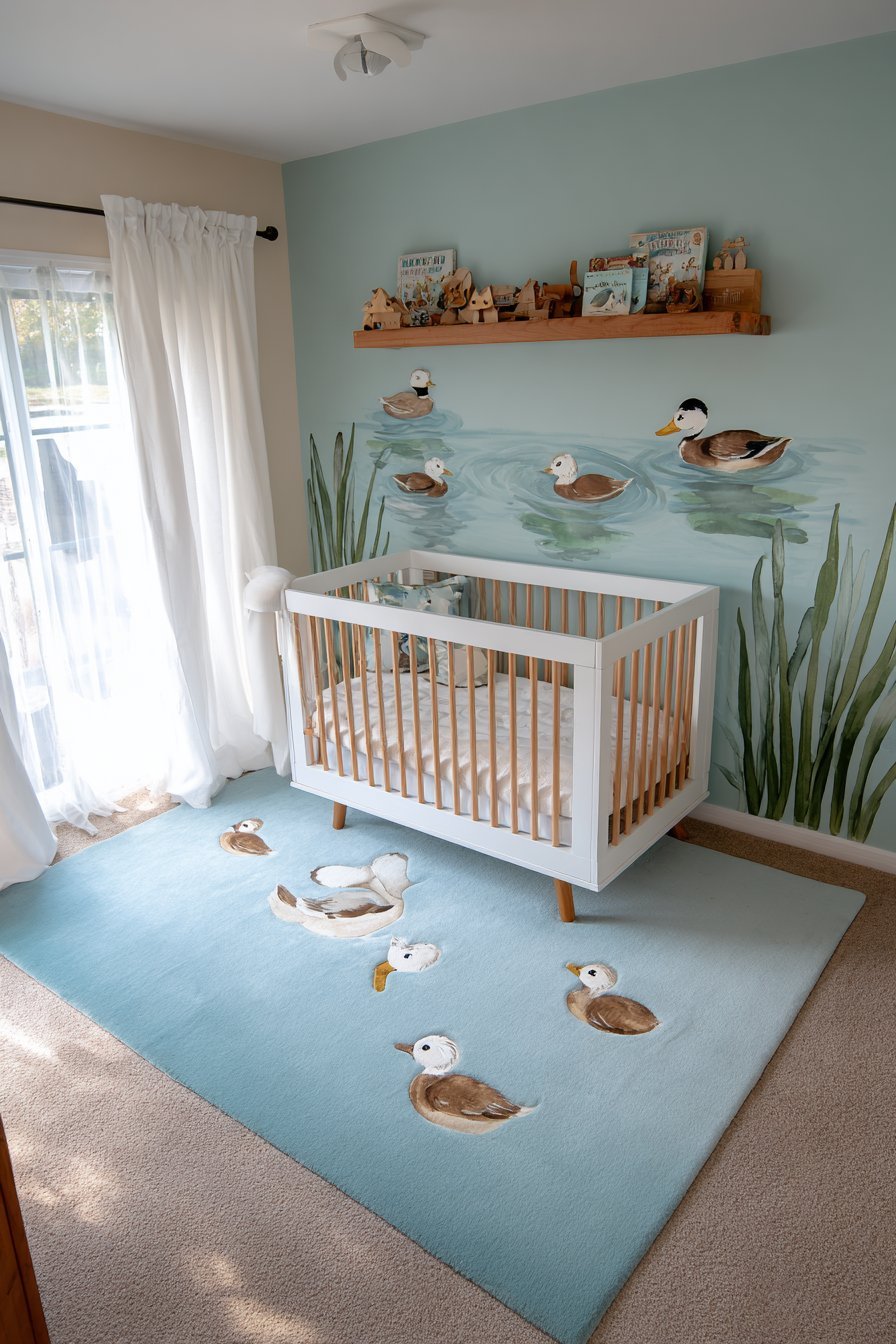
Natural oak floating shelves display wooden duck toys with intention. Children’s books about pond life line the shelves alongside decorative pieces. Morning light filters through sheer white curtains creating magical shadows. The interplay of natural illumination enhances every hand-painted detail throughout the space.
Key Design Tips:
- Hire a local artist or use stencils for hand-painted wall details
- Select convertible cribs that transition from infant to toddler use
- Choose organic cotton bedding for sensitive baby skin
- Install floating shelves at varying heights for visual interest
- Use sheer curtains to maximize natural light while maintaining privacy
2. Vintage-Inspired Changing Station
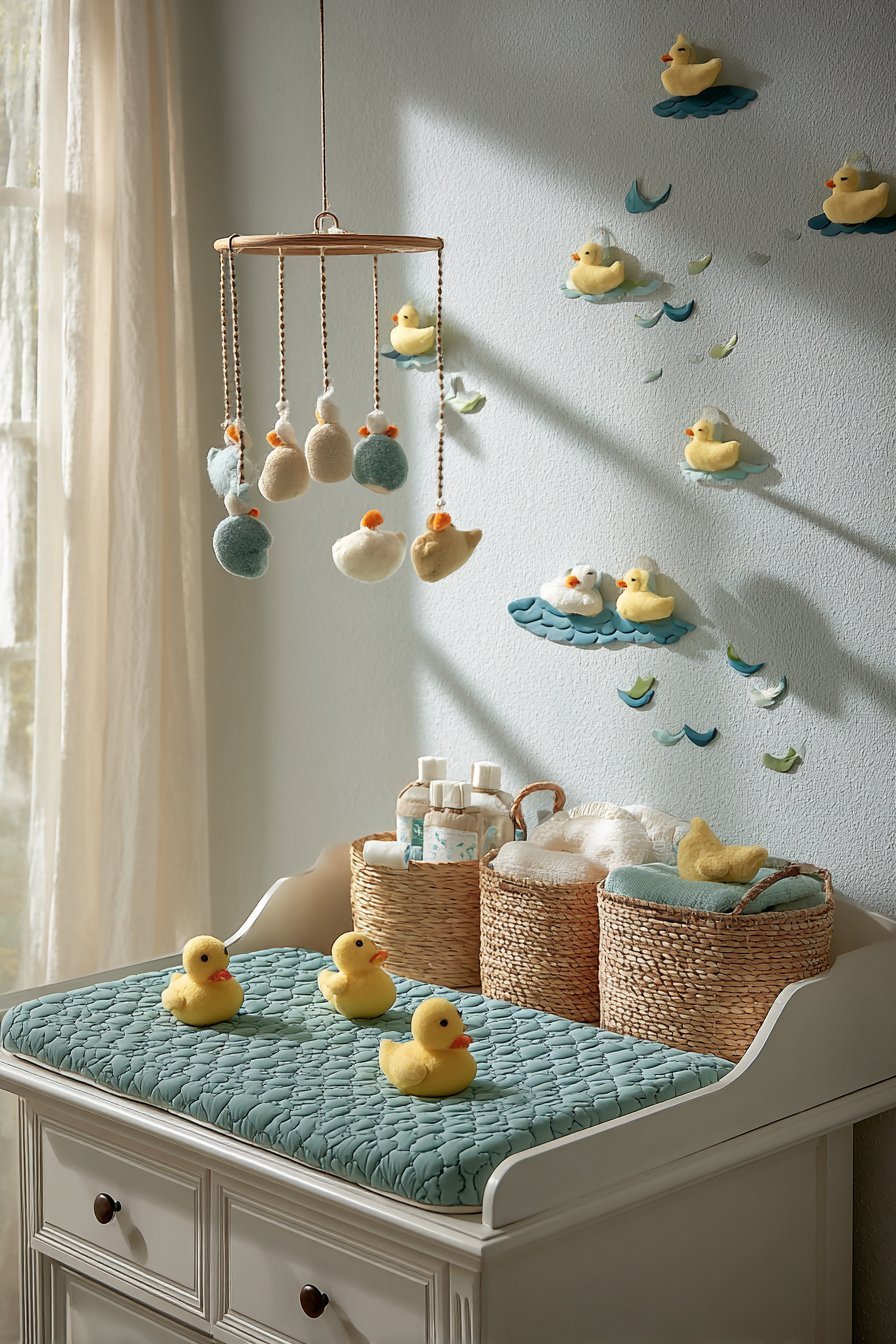
A white dresser transforms into a practical changing table with vintage character. The contoured changing pad features duck print fabric that’s both charming and wipeable. Above this functional workspace, a whimsical mobile captivates with felted wool ducks. Cream, yellow, and soft blue ducks suspend from natural wooden hoops.
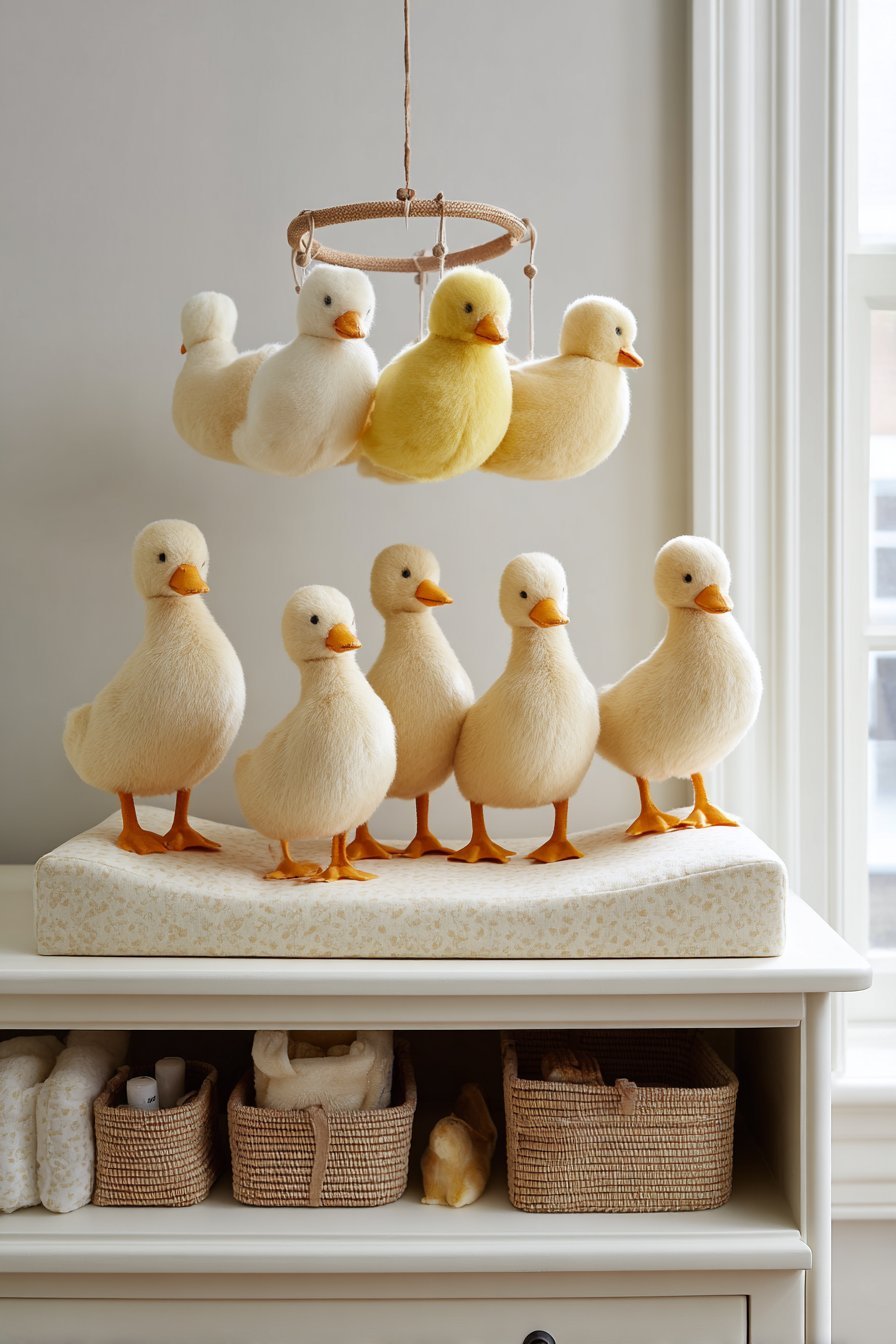
Woven rattan baskets provide organized storage on dresser shelves. These natural containers hold diapers, wipes, and baby essentials within easy reach. Removable duck decals on the wall create a gentle pond scene. The temporary nature allows for future updates as your child grows.
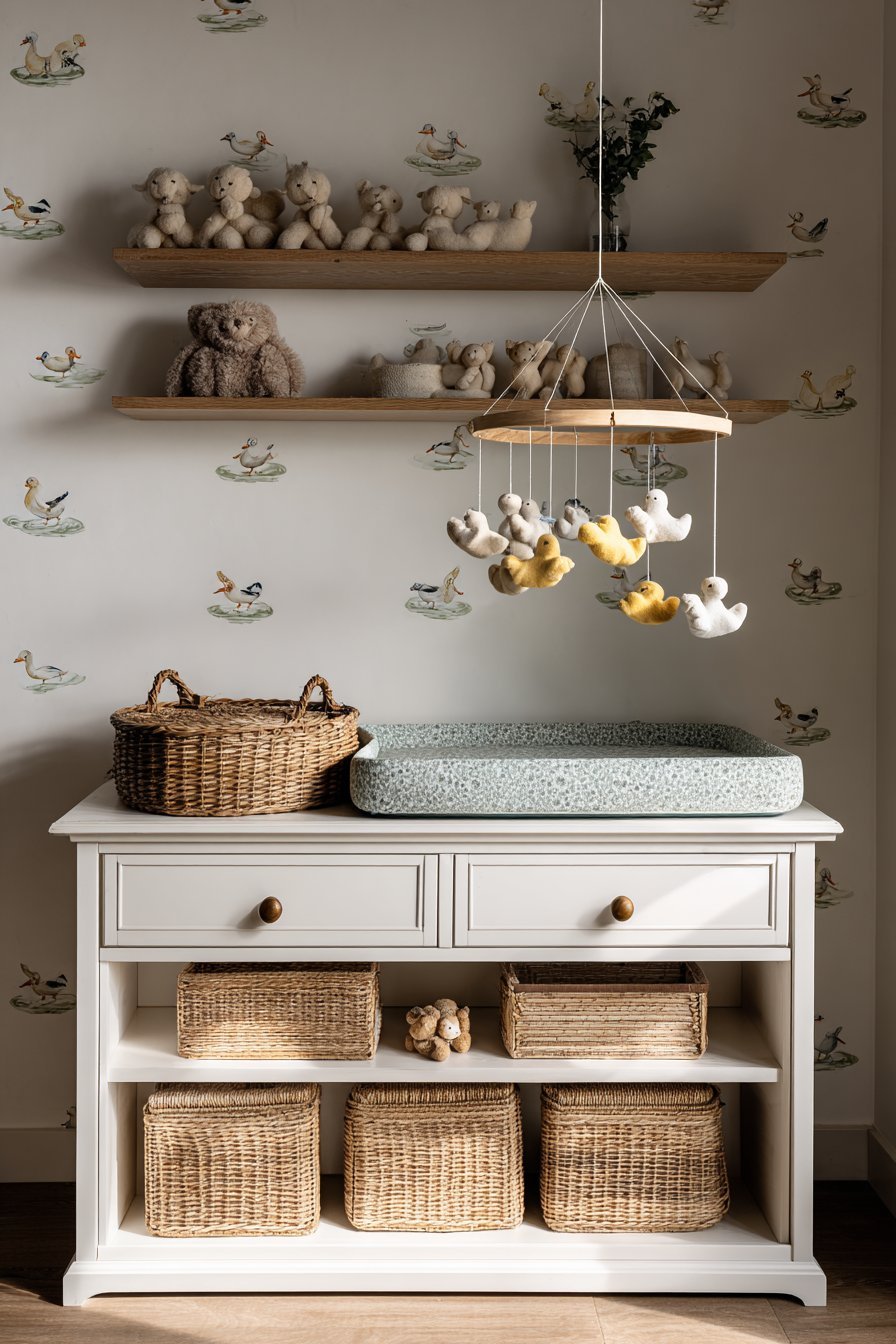
Natural daylight illuminates this practical workspace from a nearby window. The combination of vintage aesthetics and modern functionality creates an ideal changing area. Professional organization meets charming design in this thoughtfully planned space.

Key Design Tips:
- Convert existing dressers to save money and add character
- Choose wipeable fabrics for all changing pad covers
- Use woven baskets for attractive, accessible storage
- Select removable wall decals to protect walls and allow changes
- Position changing stations near natural light sources when possible
3. Cozy Reading Nook Retreat
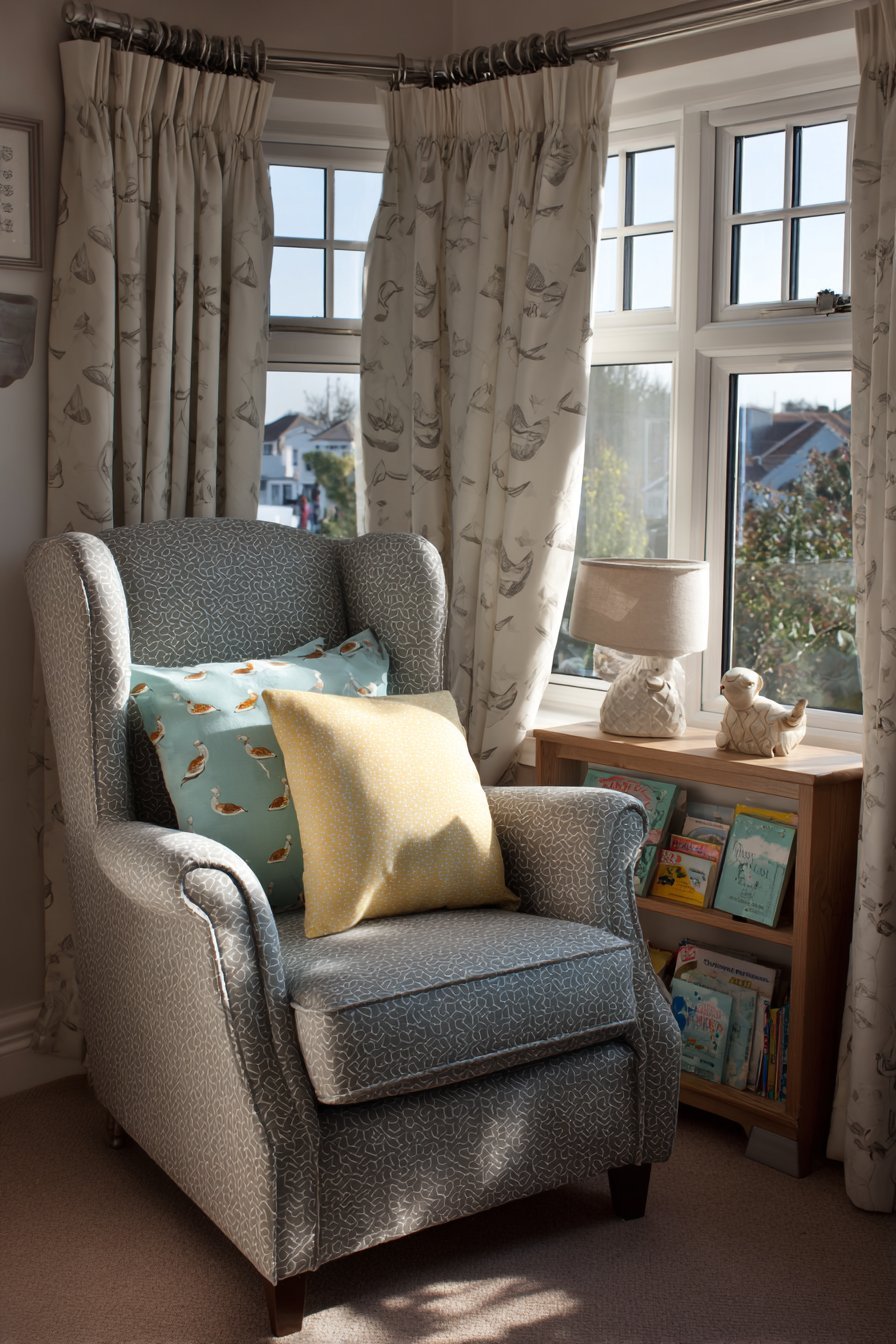
A comfortable glider chair creates the perfect reading corner near large windows. Soft grey upholstery provides neutral elegance while duck-printed pillows add thematic charm. Yellow and blue tones in the pillows complement the overall color scheme beautifully.
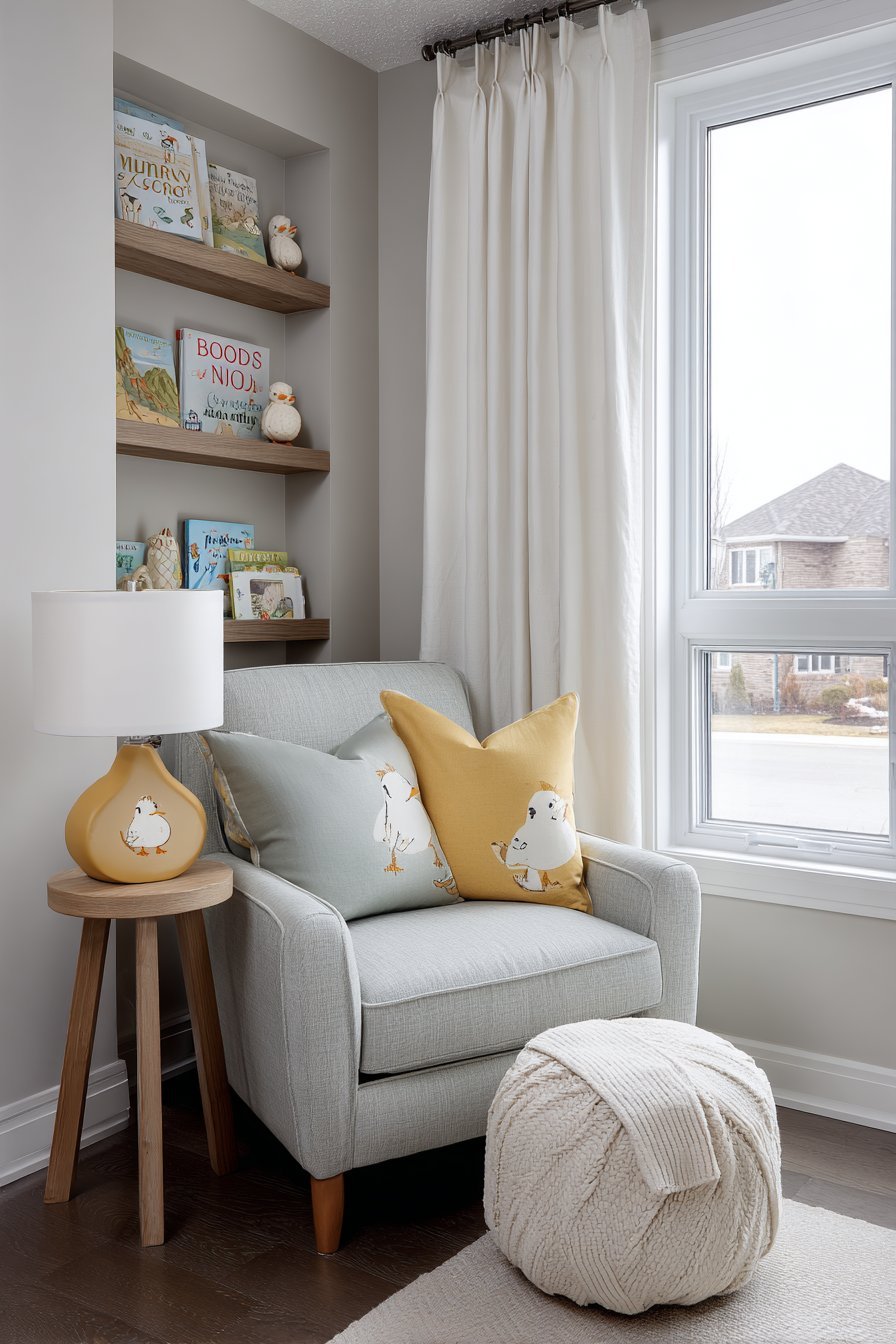
A small oak side table holds a duck-shaped lamp with warm LED lighting. This functional piece provides necessary illumination for nighttime stories and feedings. Below, a low bookshelf displays board books about ducks and pond creatures. Ceramic duck figurines serve as charming bookends that reinforce the theme.
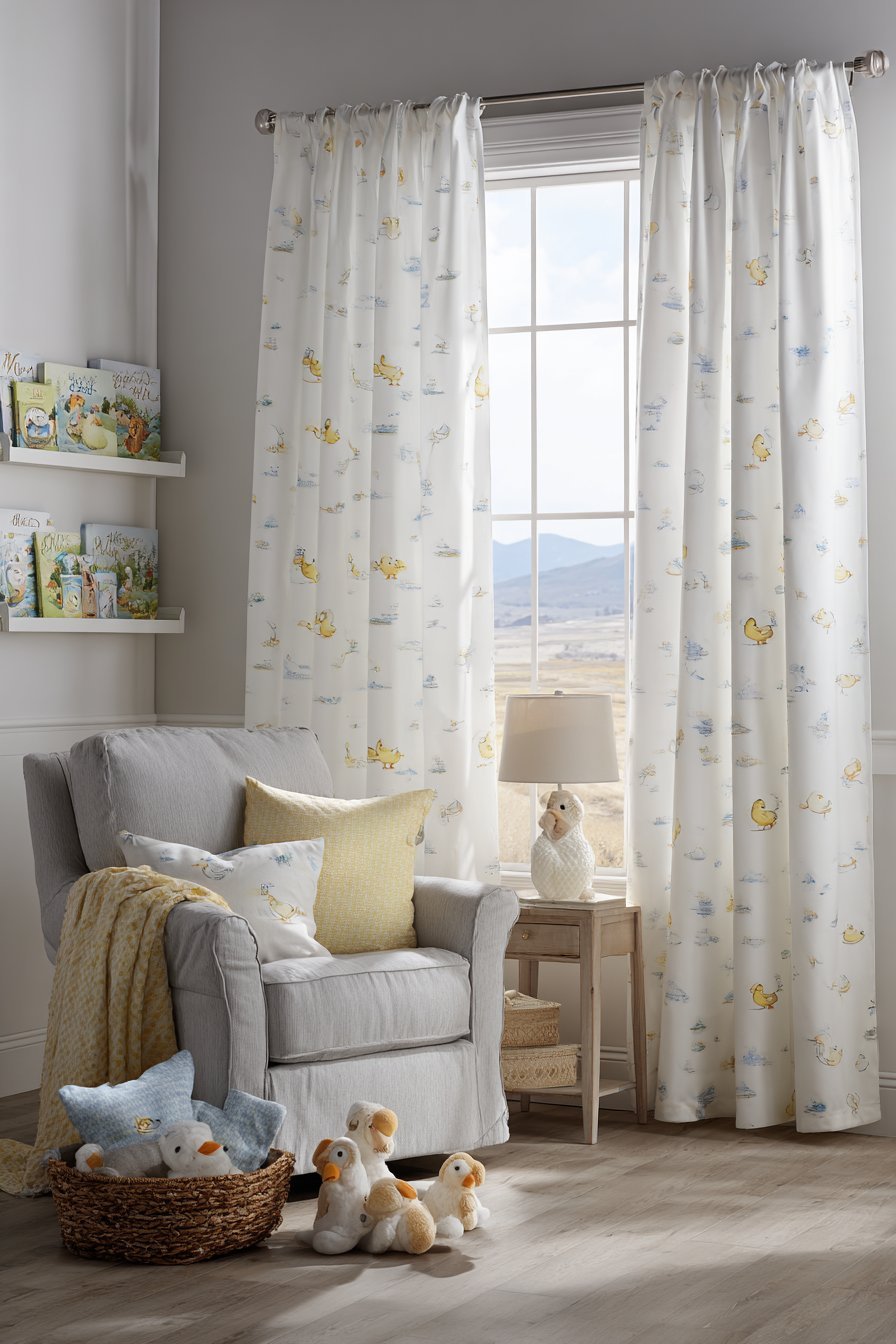
Afternoon sunlight streams through white linen curtains creating a peaceful atmosphere. The flowing fabric adds softness while controlling light levels throughout the day. This intimate corner becomes a sanctuary for parent-child bonding through reading and quiet moments.
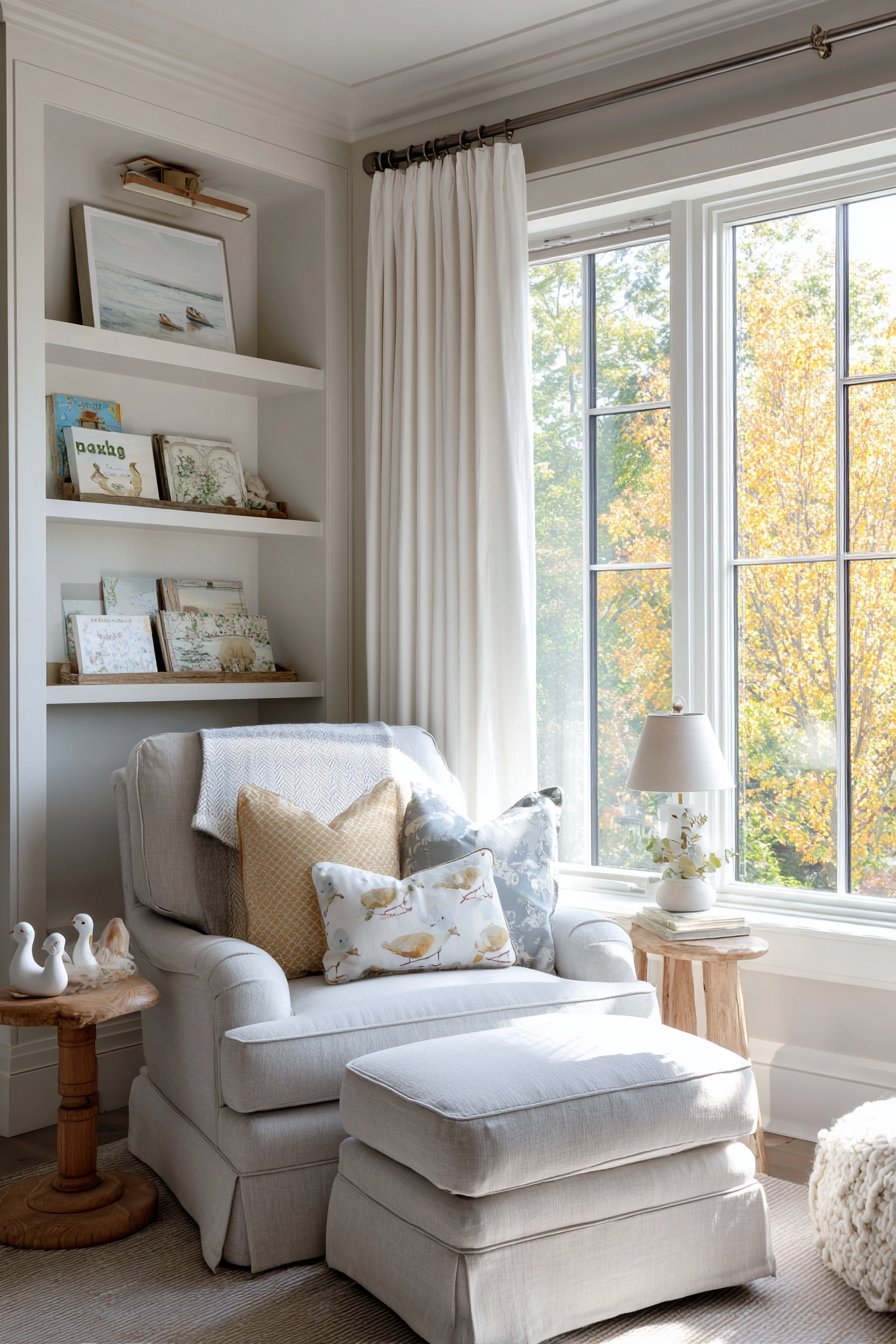
Key Design Tips:
- Invest in a quality glider chair with proper lumbar support
- Layer throw pillows in coordinating patterns and textures
- Choose LED bulbs for safety and energy efficiency
- Create low storage for books that babies can eventually access
- Position reading nooks near windows for natural light benefits
4. Modern Watercolor Wallpaper Statement
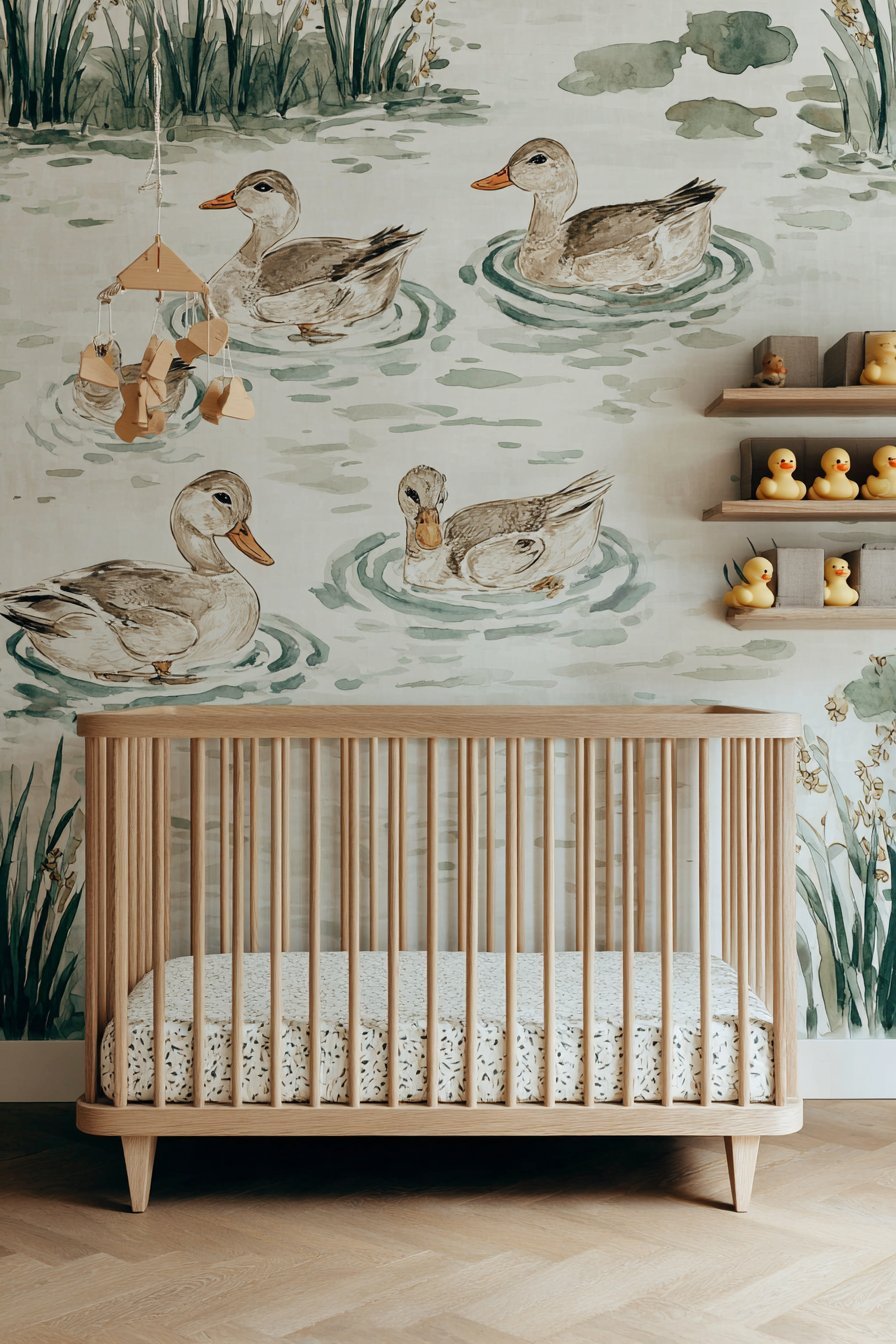
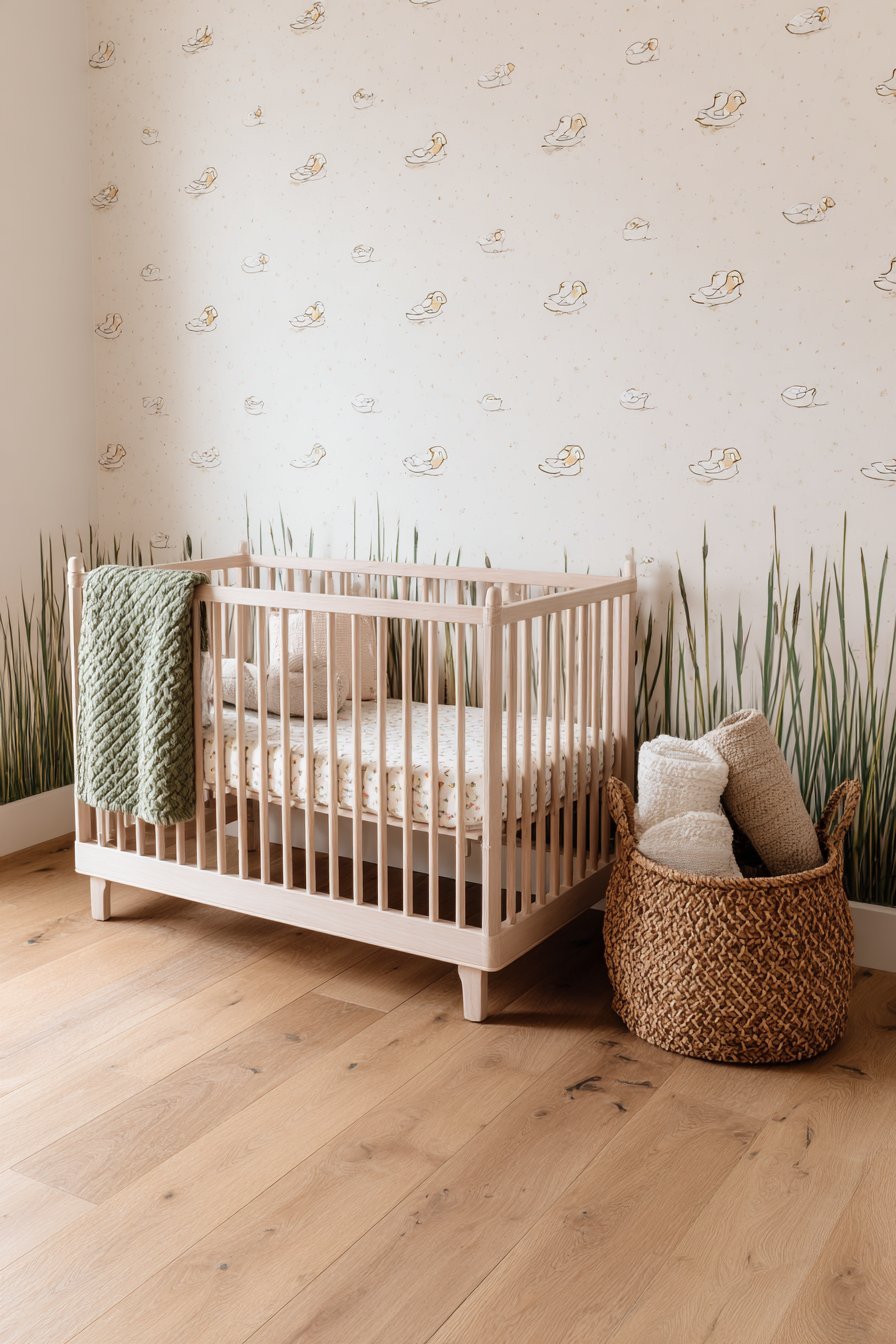
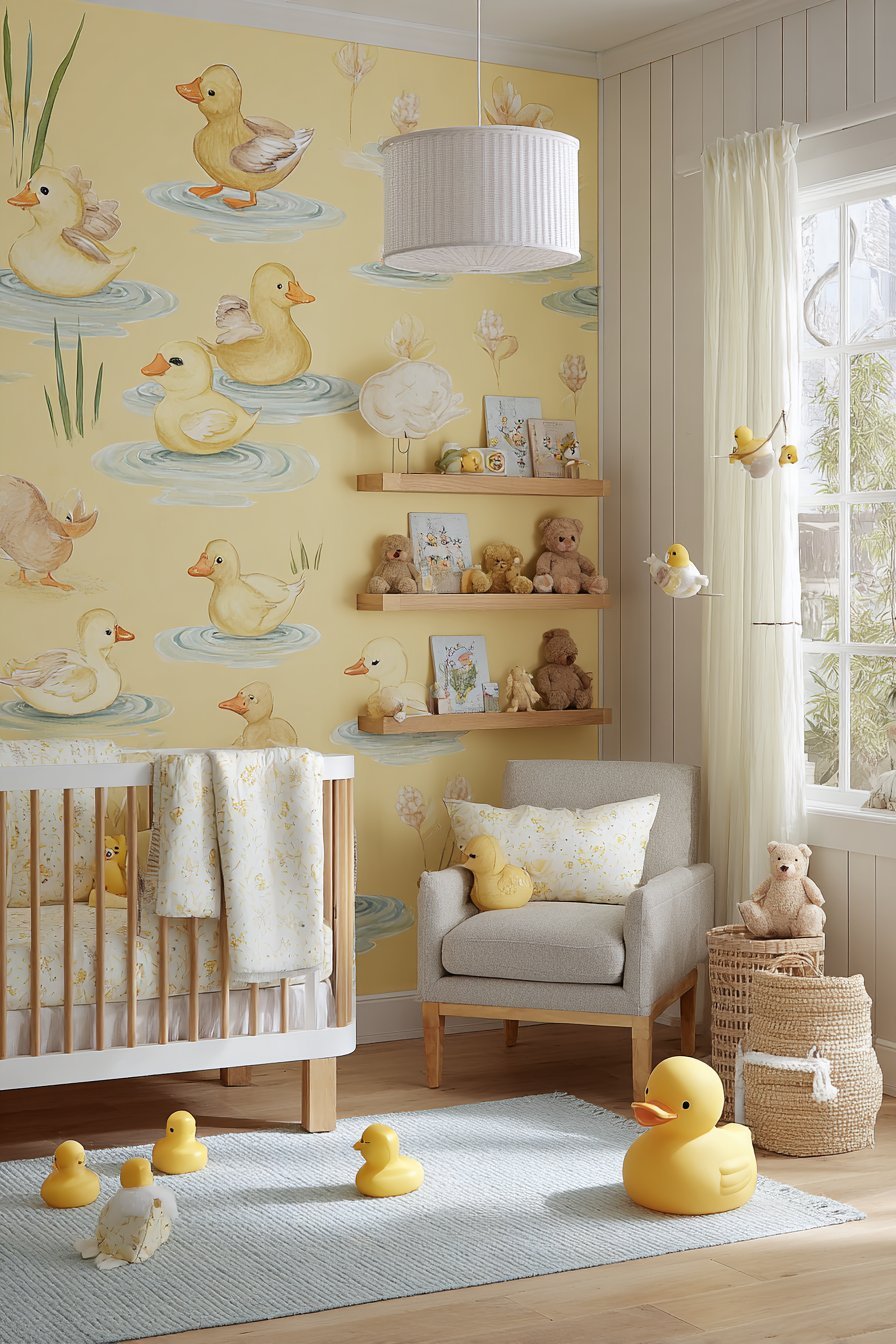
Custom wallpaper featuring watercolor ducks creates an immediate focal point. The tranquil pond scene includes soft green water plants and pale blue ripples. This artistic installation transforms an ordinary wall into gallery-worthy art. The mid-century modern crib in white oak complements the contemporary aesthetic.
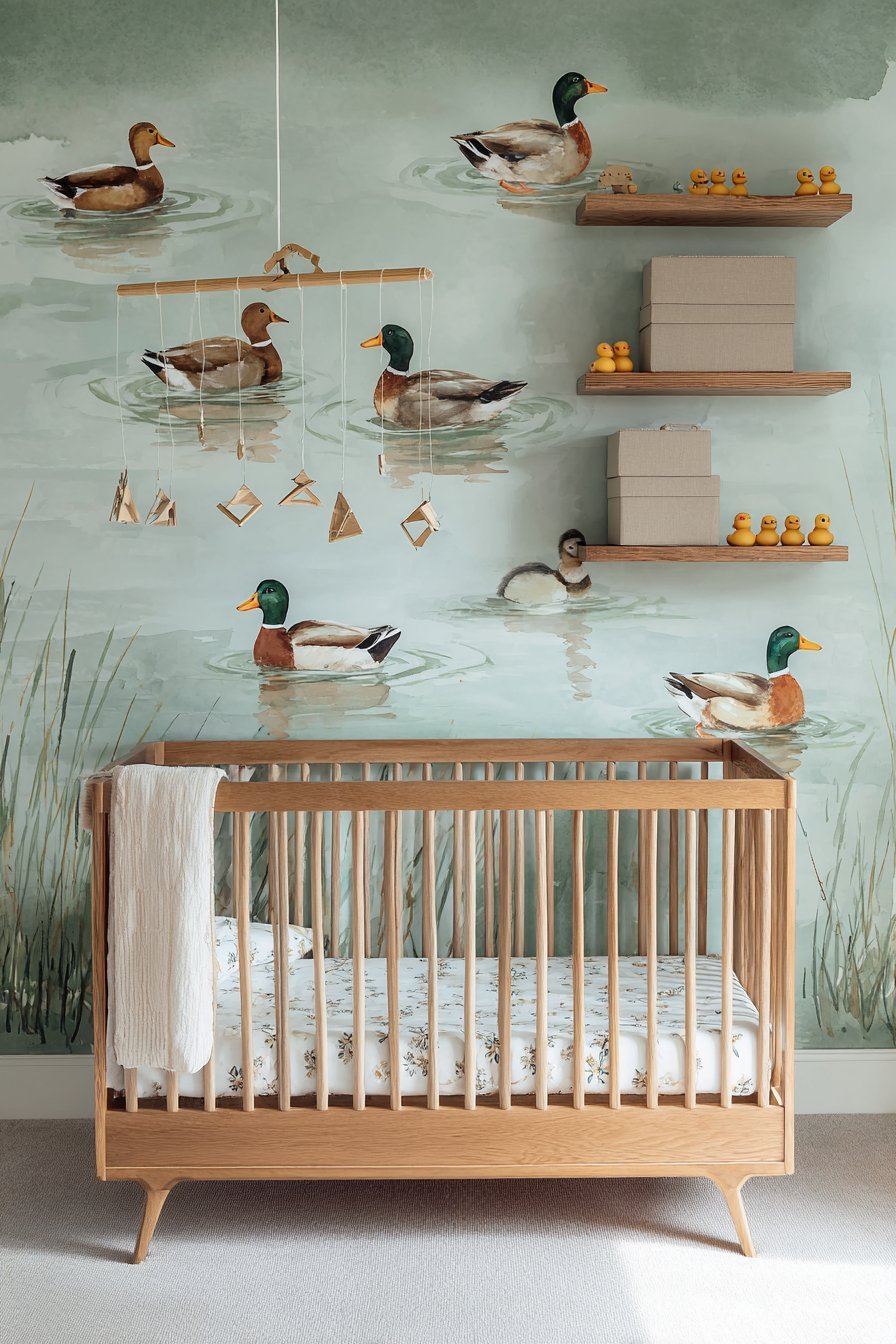
Fitted sheets in coordinating duck prints tie the bedding to the dramatic wall treatment. A geometric mobile with duck shapes in matte brass and natural wood hangs above. The modern interpretation brings sophistication to traditional nursery themes. Floating shelves display rubber ducks in various sizes alongside neutral storage boxes.
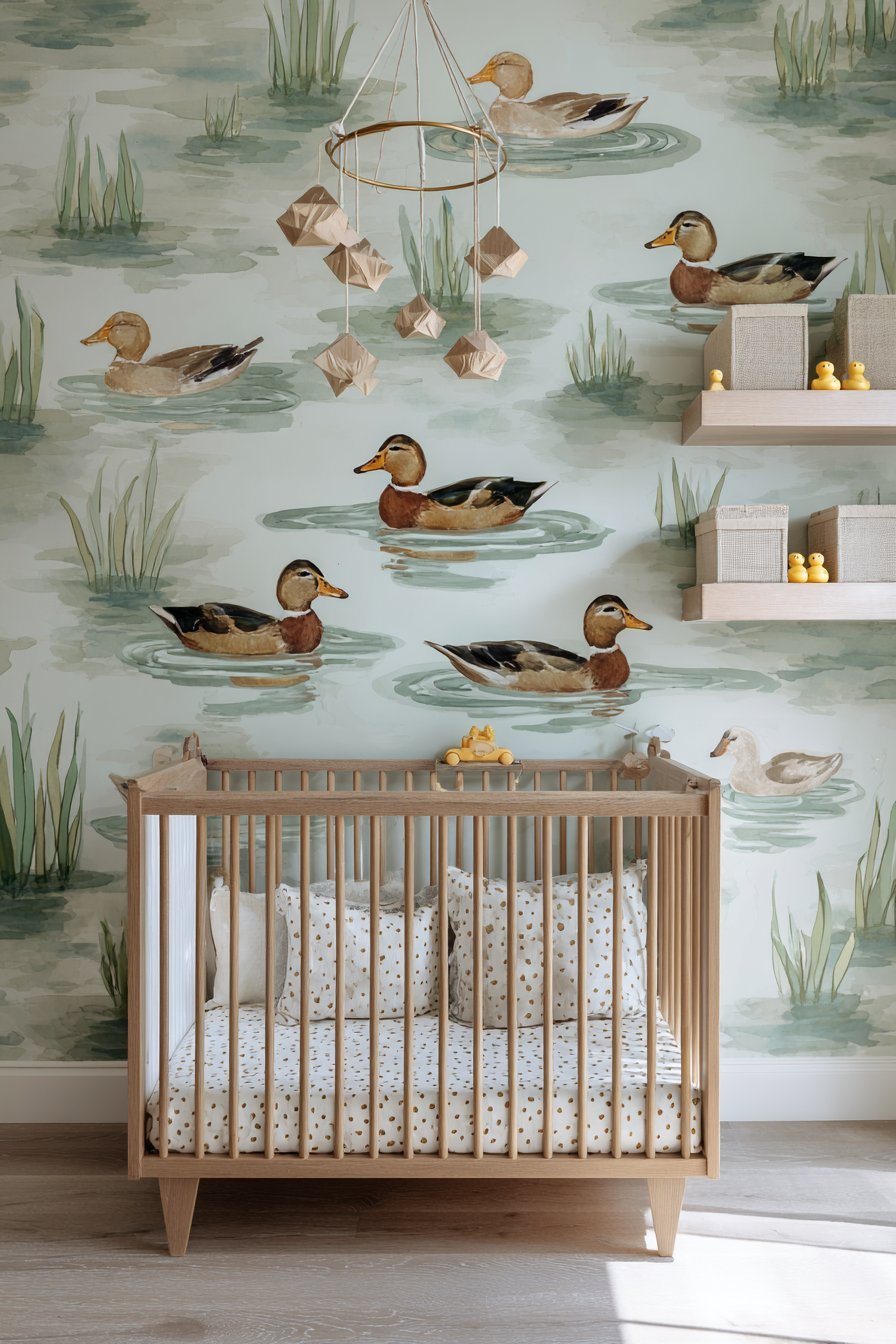
Morning light creates depth and dimension in the wallpaper design. The interplay between illumination and illustration brings the pond scene to life. This sophisticated approach proves duck themes can be grown-up and stylish.
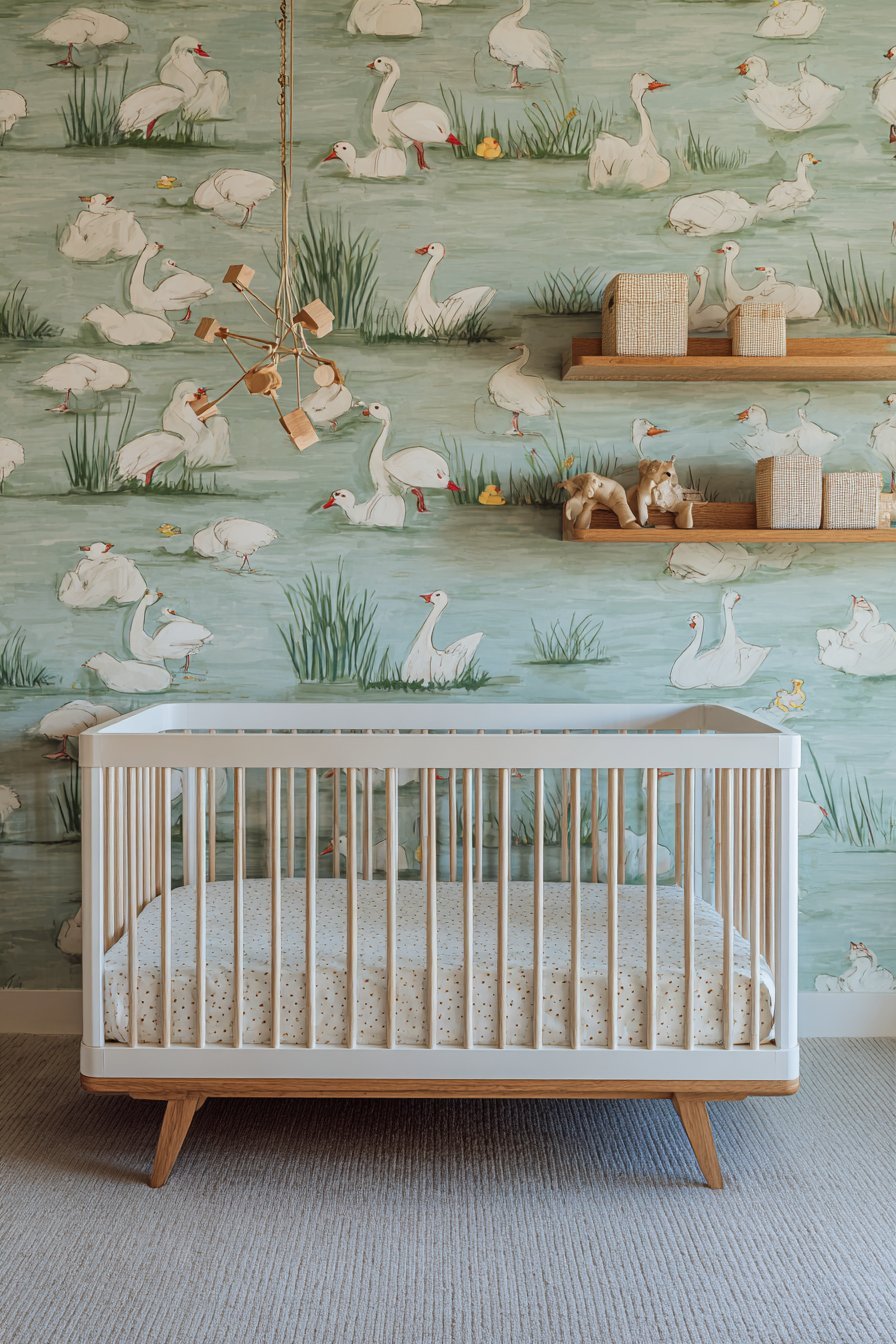
Key Design Tips:
- Invest in quality custom wallpaper for durability and visual impact
- Select mid-century modern furniture for timeless appeal
- Use geometric shapes to modernize traditional themes
- Display collections intentionally rather than cluttering surfaces
- Consider how natural light affects wallpaper appearance throughout the day
5. Gender-Neutral Sage Haven
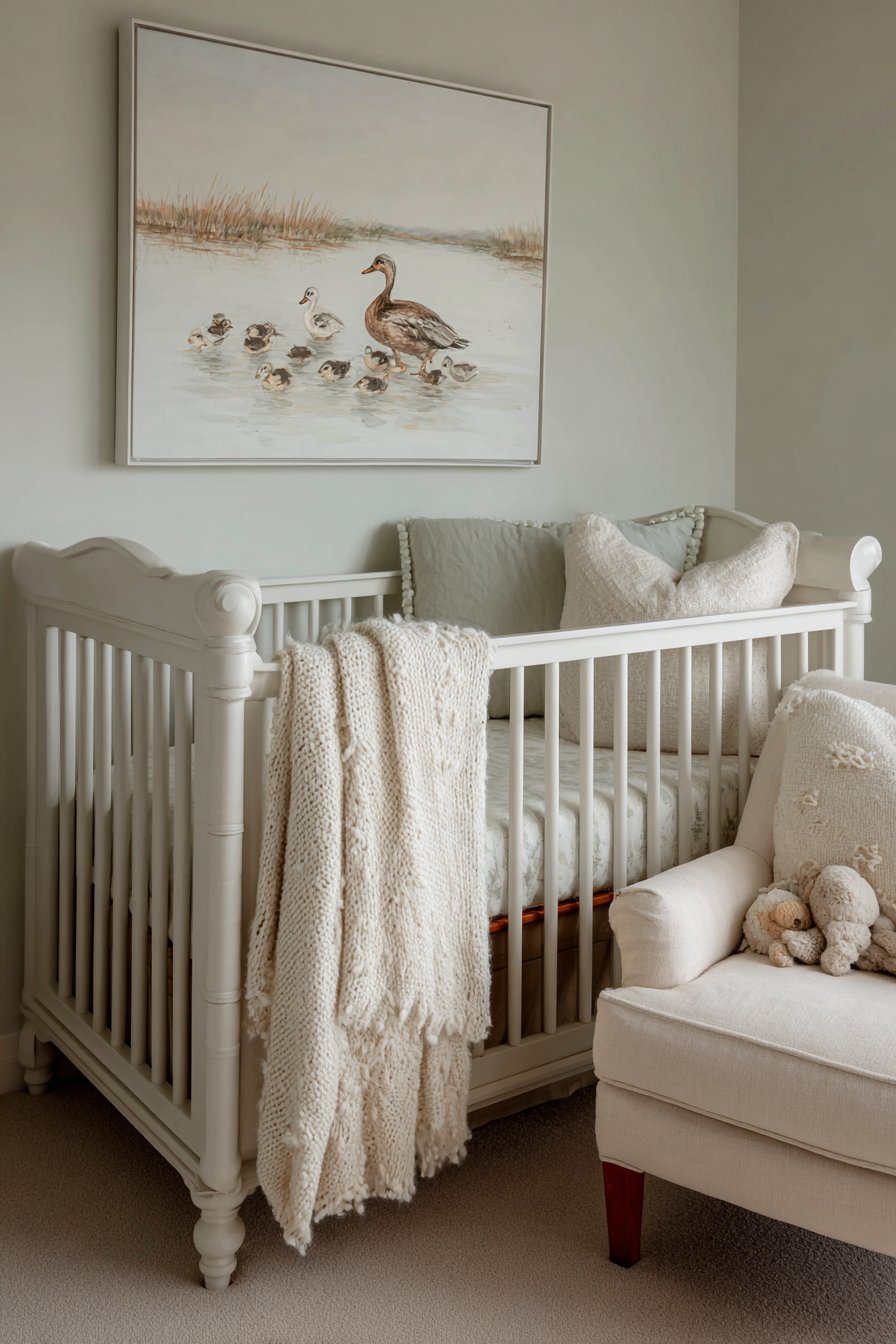
Soft sage green walls evoke peaceful pond vegetation and natural environments. This calming color provides a gender-neutral backdrop perfect for any child. The classic white crib features traditional spindle details and Belgian linen bedding. Subtle duck embroidery in cream thread adds understated elegance.
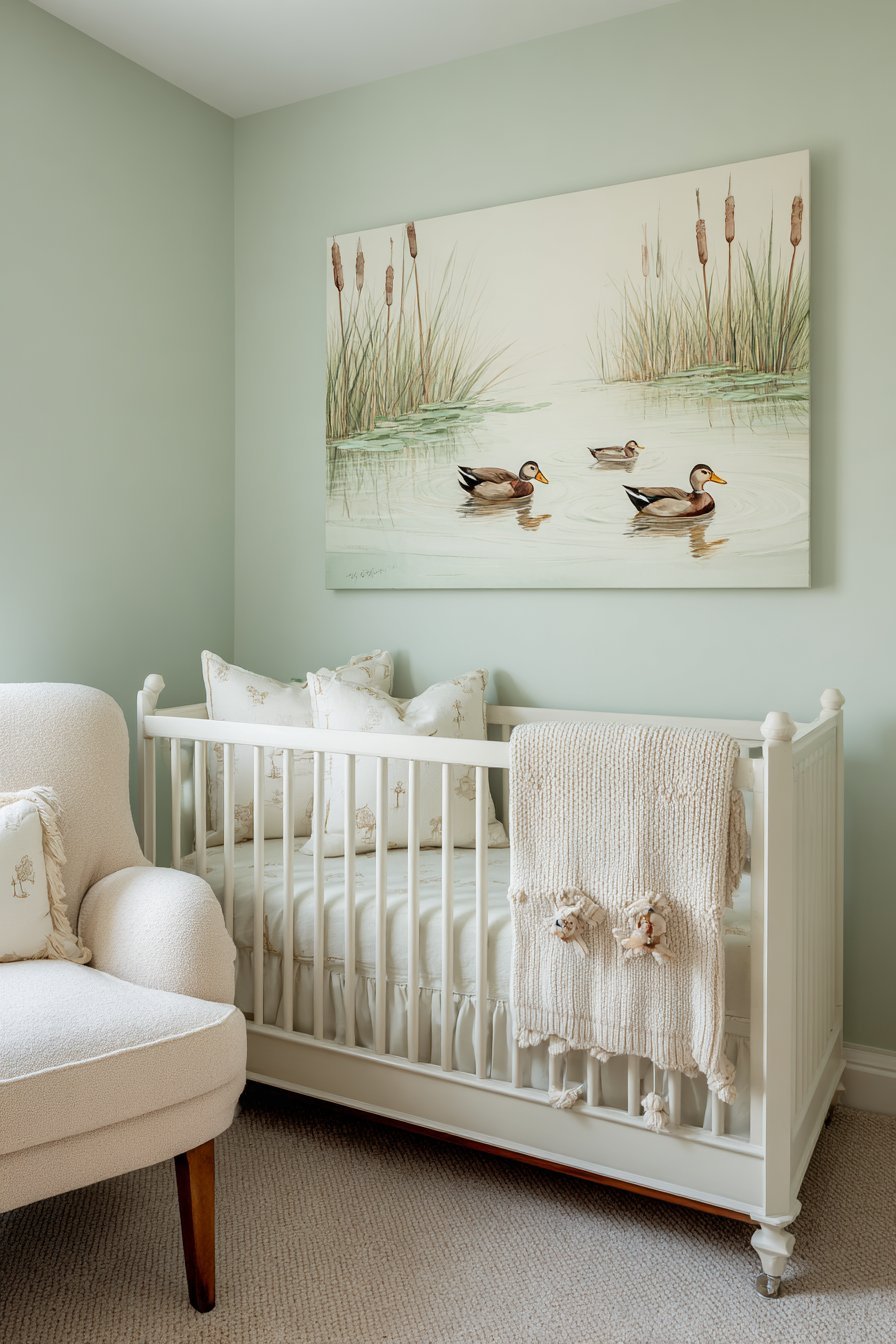
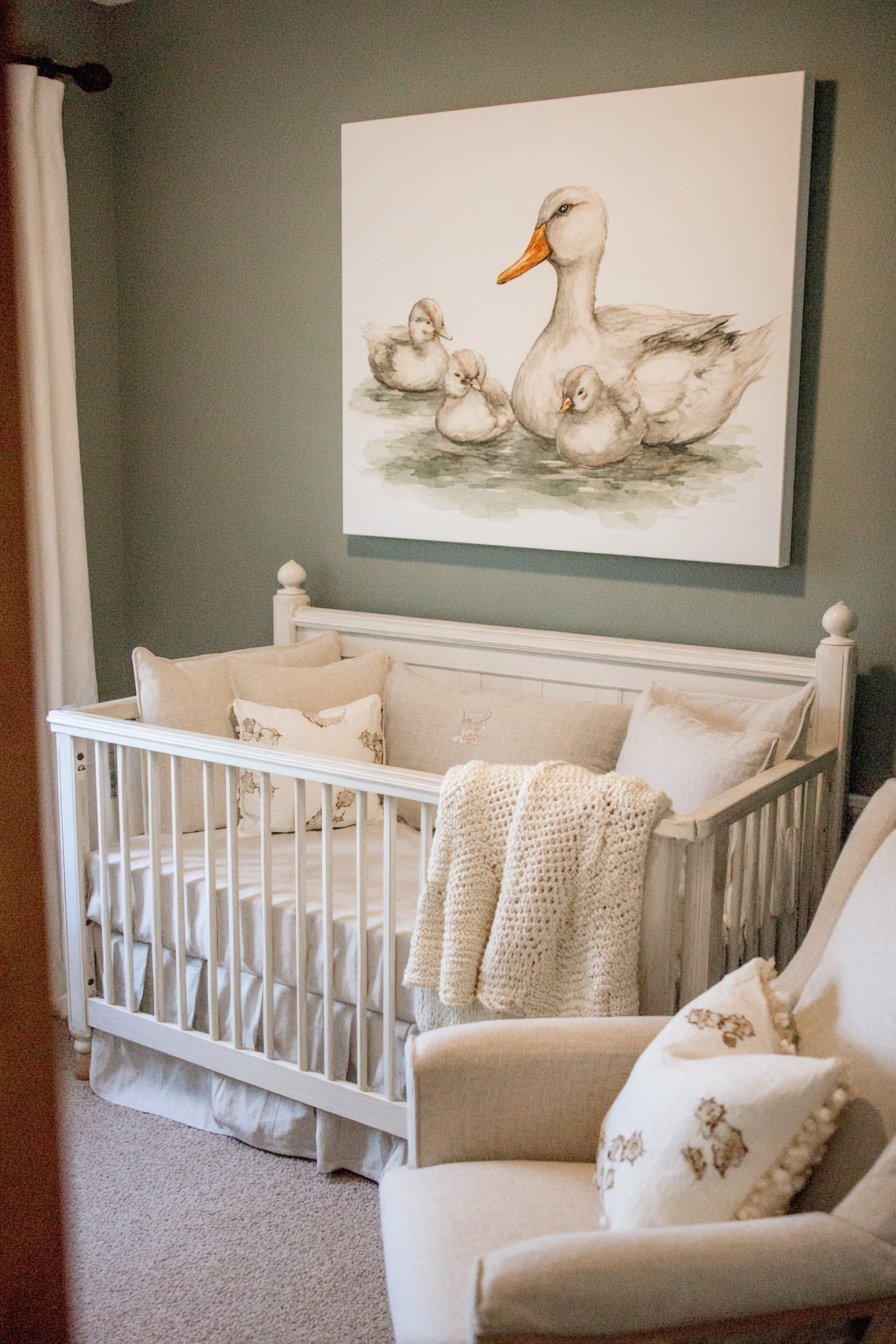
A large canvas print hangs above the crib showing mother duck and ducklings. The watercolor rendering uses authentic natural coloring rather than cartoonish interpretations. This artistic choice elevates the entire space with gallery-quality artwork. A cream nursing chair with wooden legs provides comfortable seating for late-night feedings.
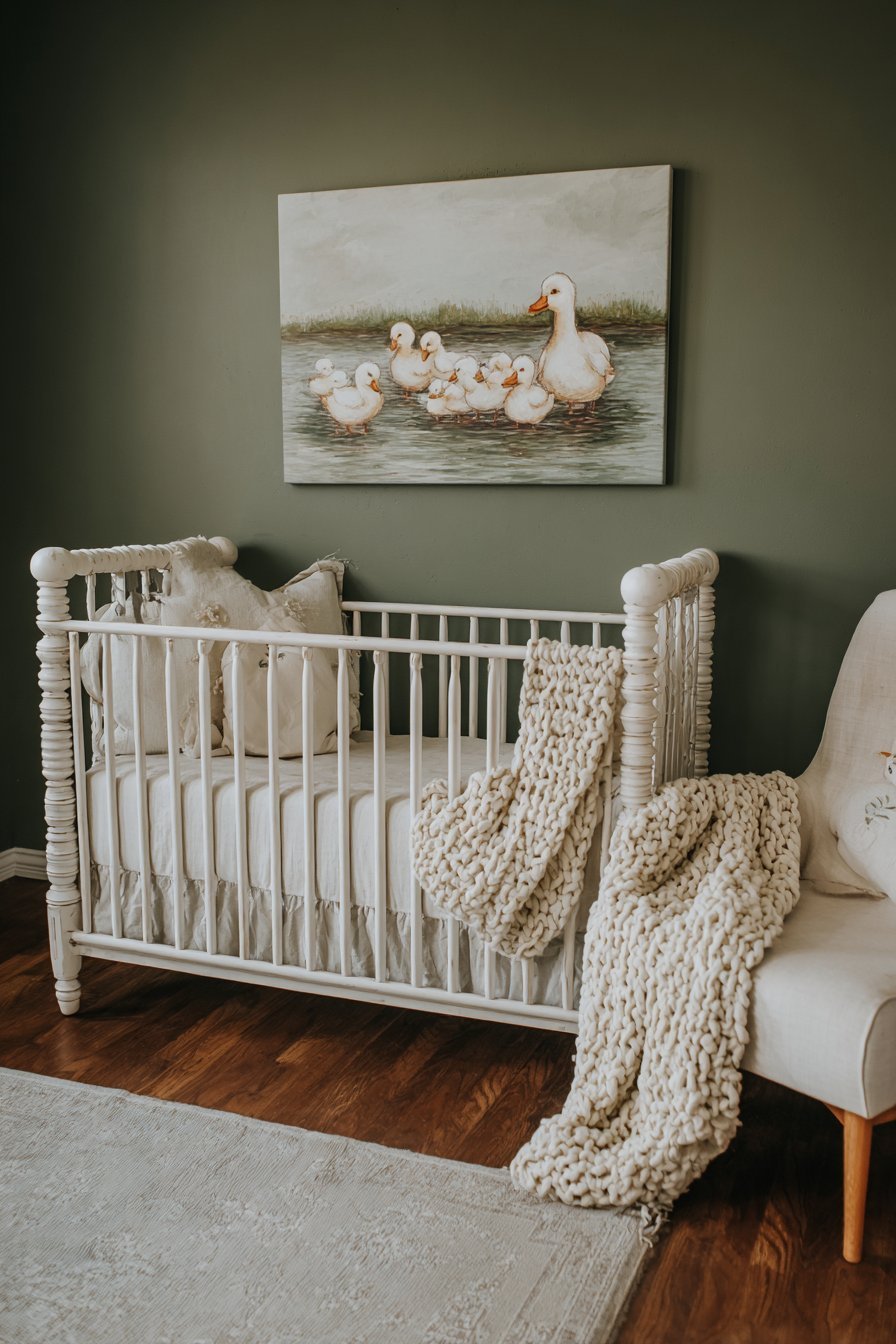
A handknit throw blanket featuring duck motifs drapes casually over the chair arm. The textile adds warmth and grandmother-made charm to the modern space. The cohesive color palette creates visual harmony throughout the nursery.
Key Design Tips:
- Choose sage green for a calming, versatile wall color
- Select Belgian linen bedding for luxury and breathability
- Commission or purchase high-quality artwork instead of decals
- Incorporate handmade textiles for personal warmth
- Maintain a cohesive color palette with subtle variations
6. Interactive Play Wall Design
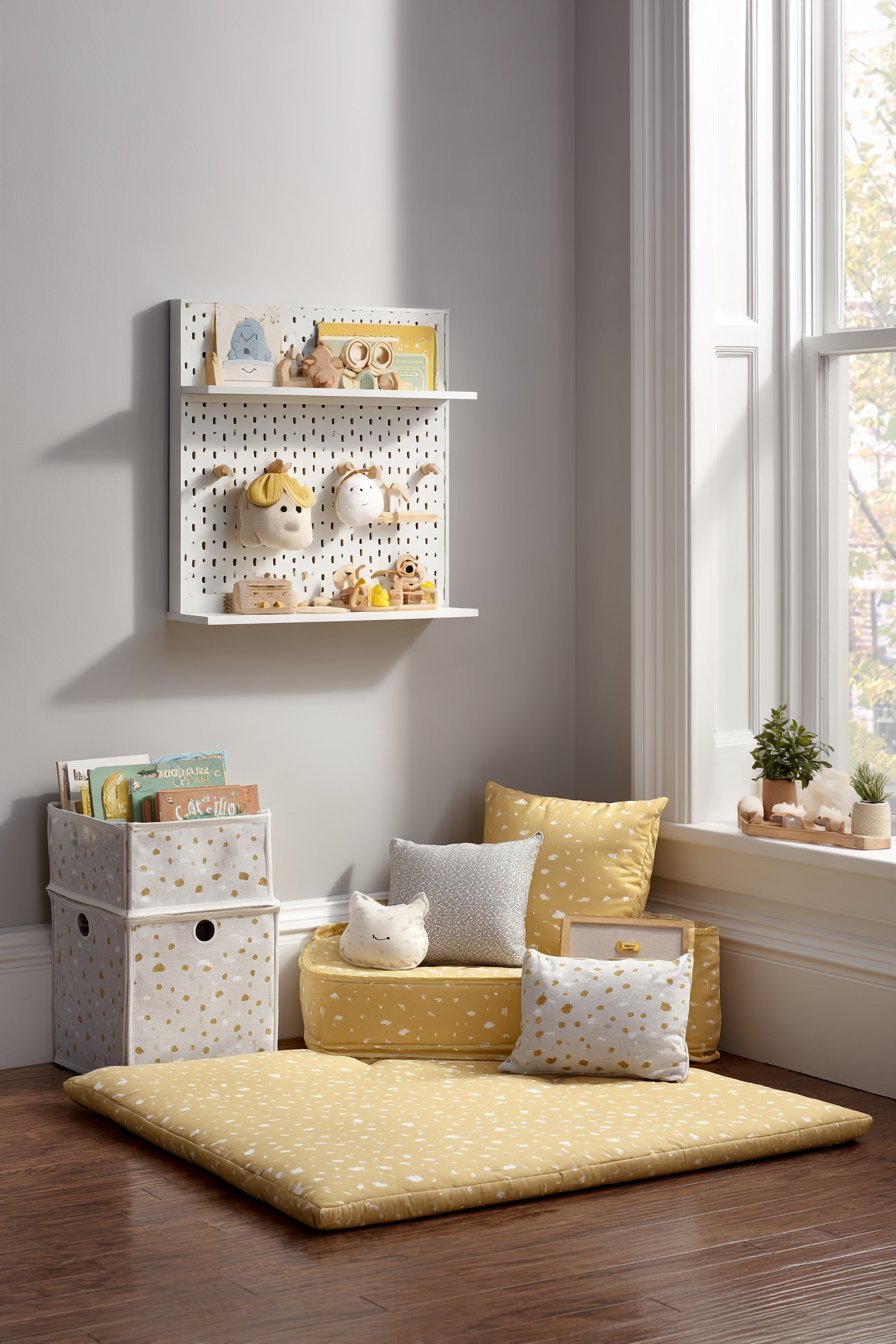
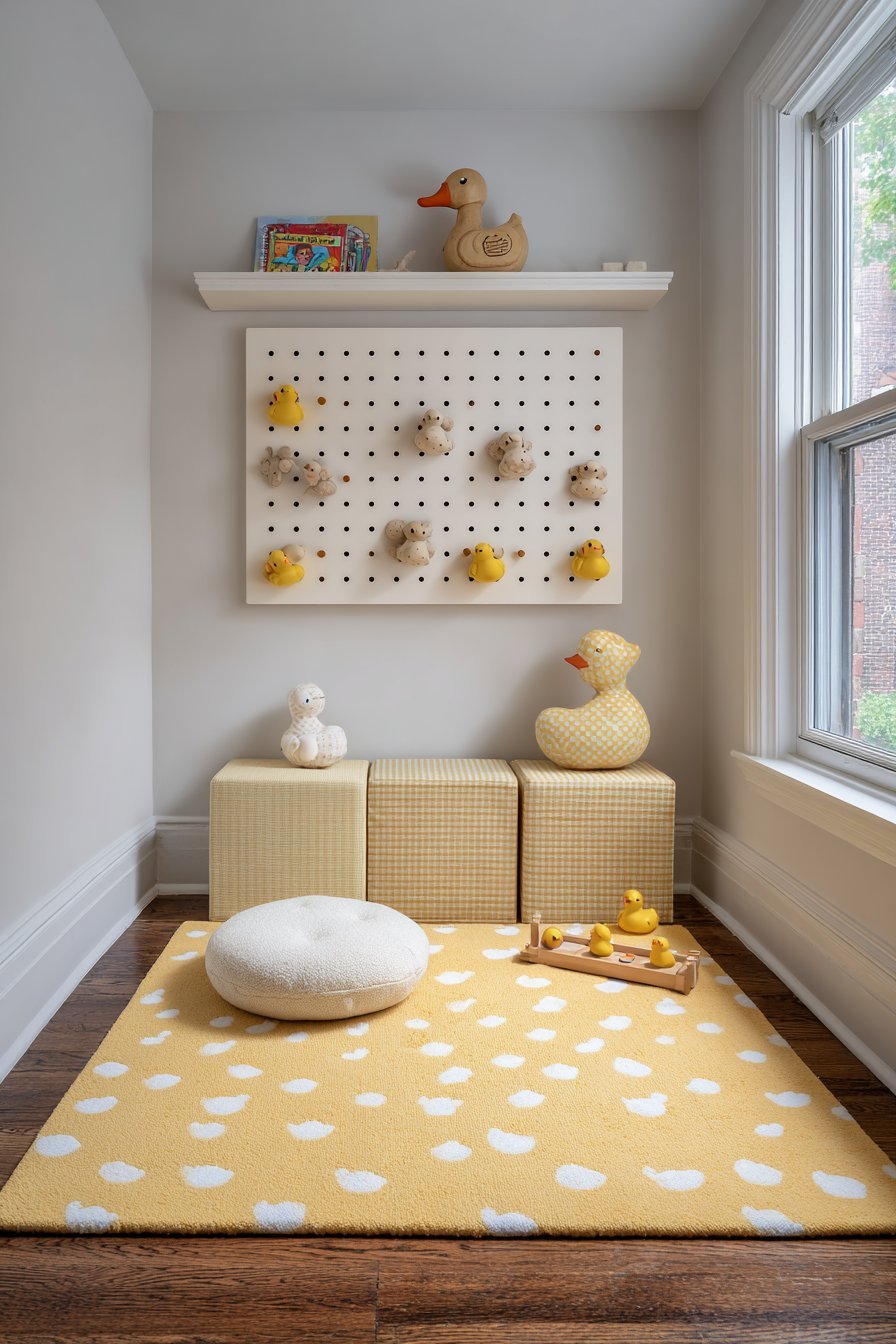
A low-mounted white pegboard with brass hooks creates an interactive activity area. Duck-themed sensory toys hang at child-accessible heights encouraging independent exploration. Fabric ducks in various textures and wooden pull toys provide developmental benefits. This thoughtful arrangement grows with your child’s abilities.
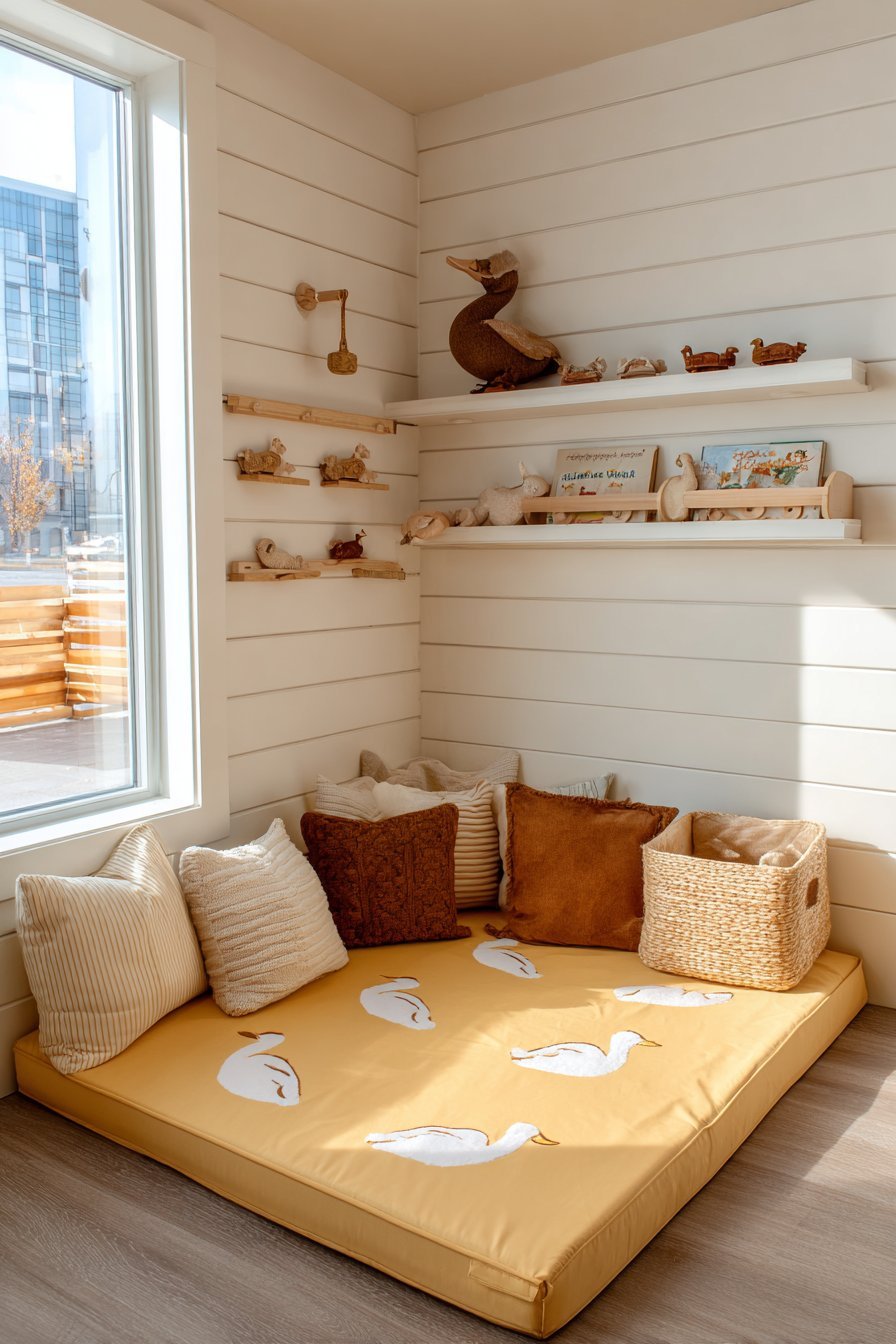
Below sits a cushioned floor mat in soft yellow with white duck silhouettes. The padded surface provides safe space for tummy time and early play. Coordinating storage cubes contain additional toys and board books for easy rotation. Simple white shiplap walls provide clean backdrop without competing for attention.
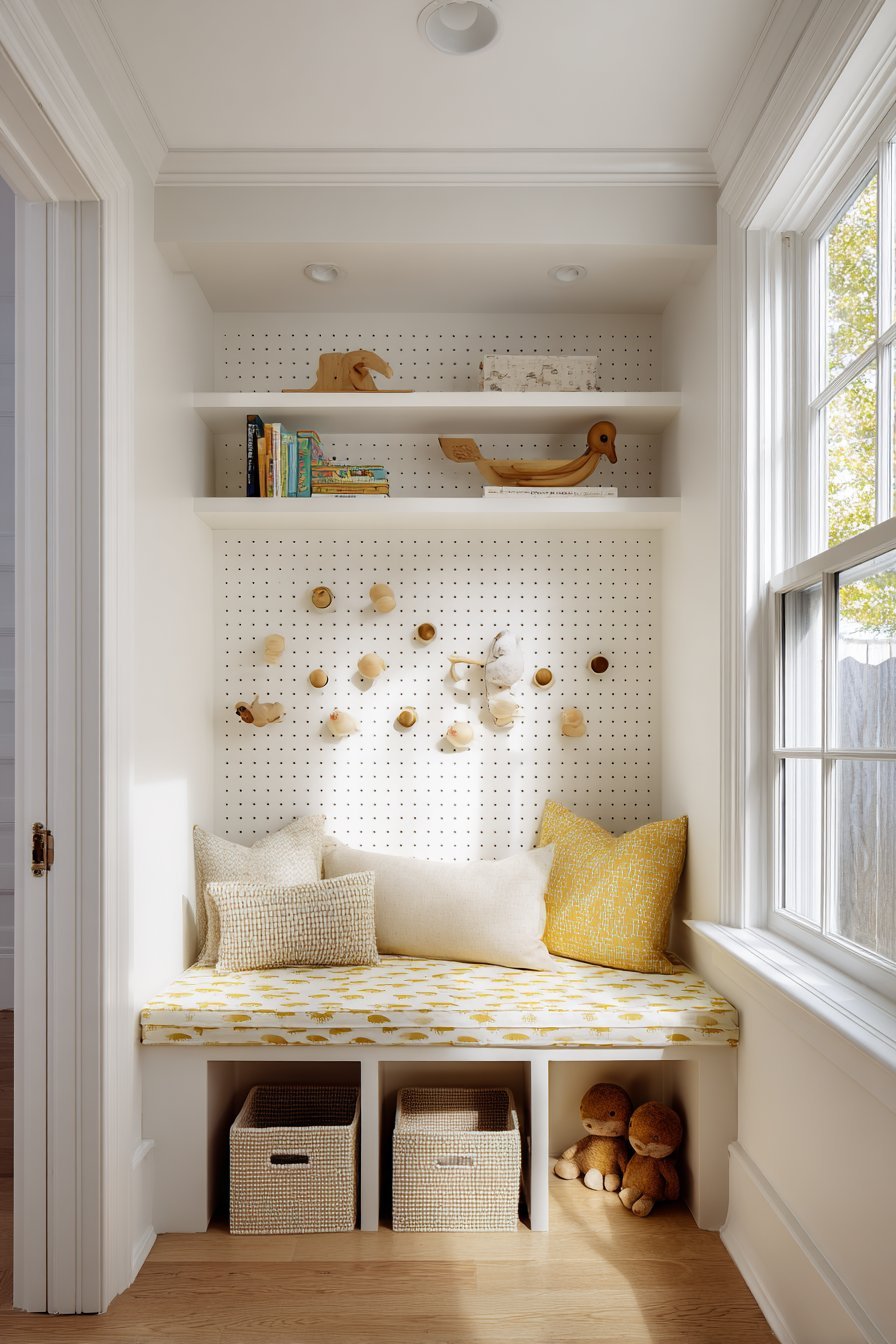
Natural side lighting illuminates the play area throughout the day. A decorative shelf holds a vintage wooden duck decoy adding nostalgic charm. This functional design prioritizes child development while maintaining aesthetic appeal.
Key Design Tips:
- Mount pegboards at toddler height for accessible toy storage
- Choose sensory toys with varied textures for development
- Use cushioned mats for safe floor play areas
- Rotate toys regularly to maintain interest and reduce clutter
- Incorporate vintage pieces for character and conversation
7. Statement Ceiling Lighting Feature
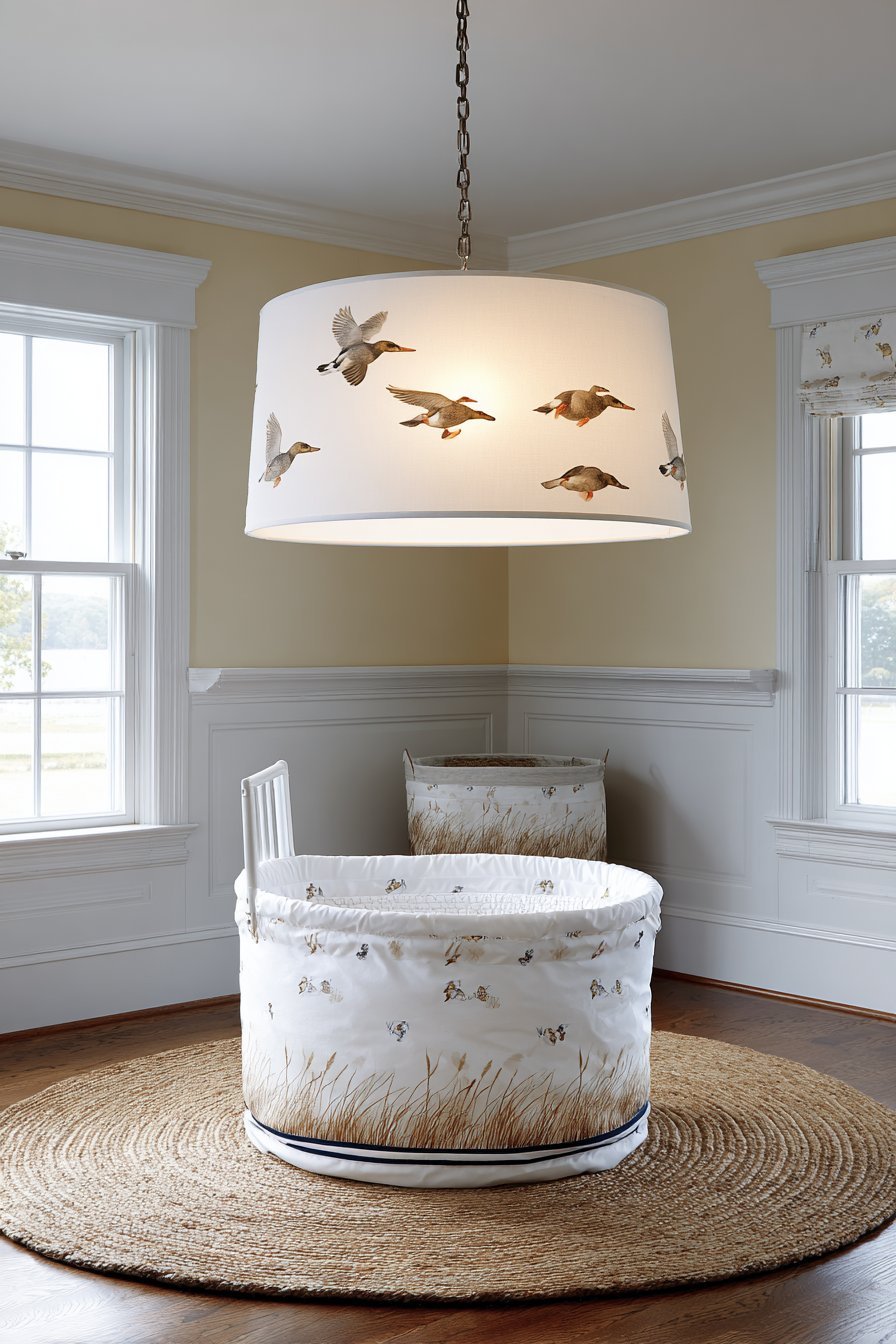
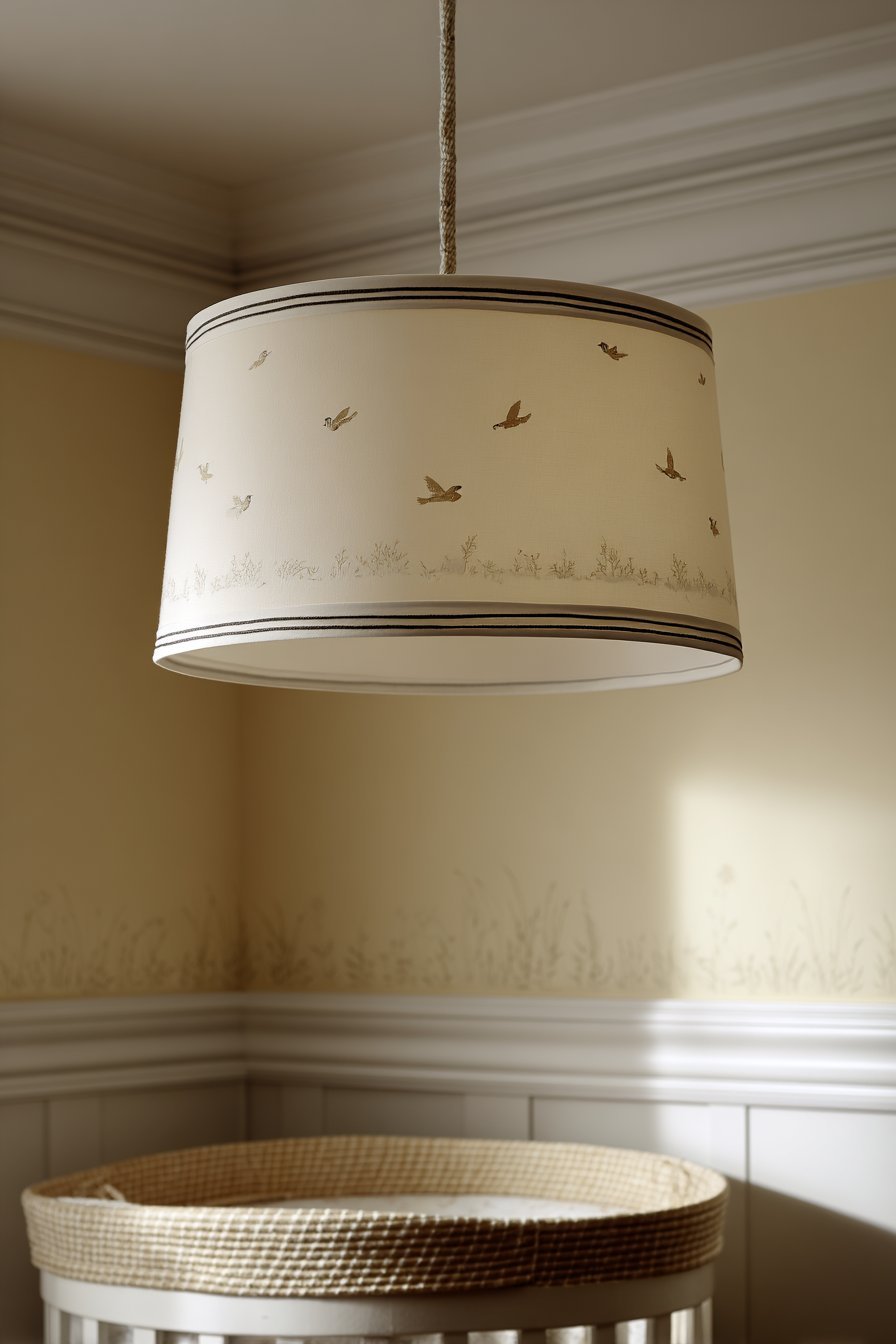
A unique pendant light features a white fabric shade decorated with swimming duck silhouettes. When illuminated, gentle shadows cast moving patterns across the ceiling. This overhead element adds visual interest often overlooked in nursery design. The light hangs above a round braided rug in natural jute with navy binding.
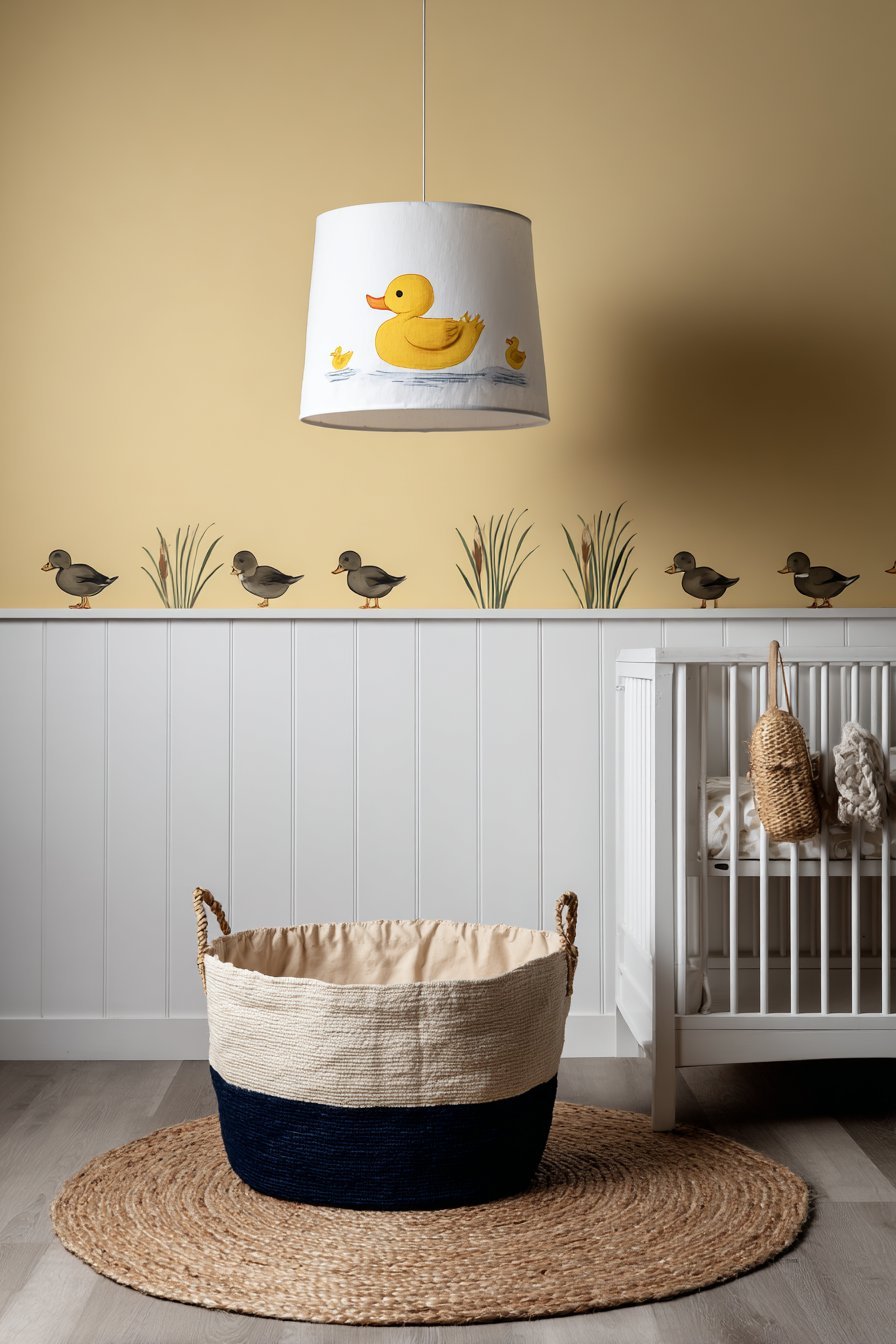
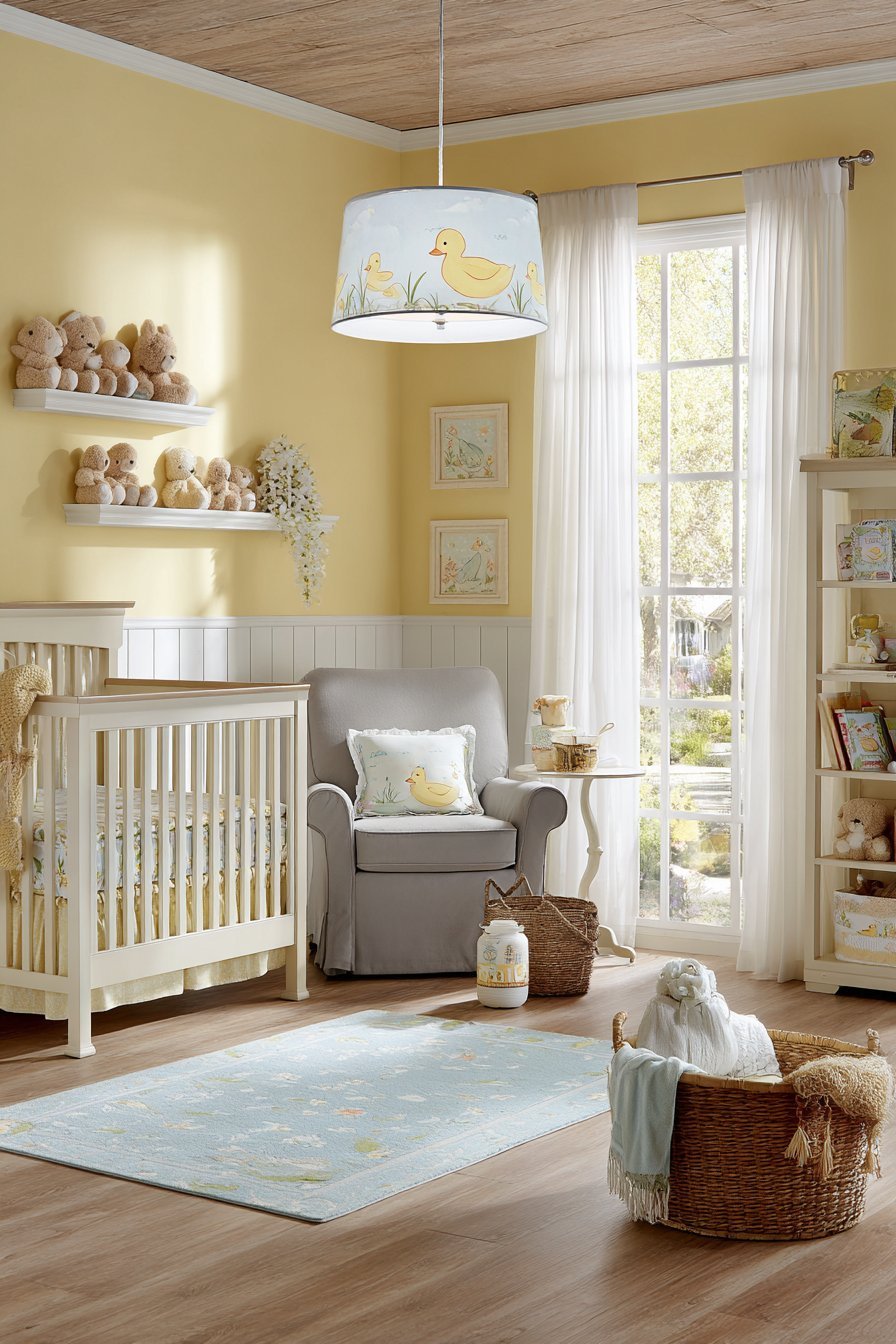
A white rocking bassinet with mesh sides sits below dressed in organic muslin. Tiny duck prints on the sheets remain visible but subtle in the gentle lighting. Soft butter yellow walls complement white wainscoting trim adding architectural character. Crown molding includes a delicate duck and cattail border decal.
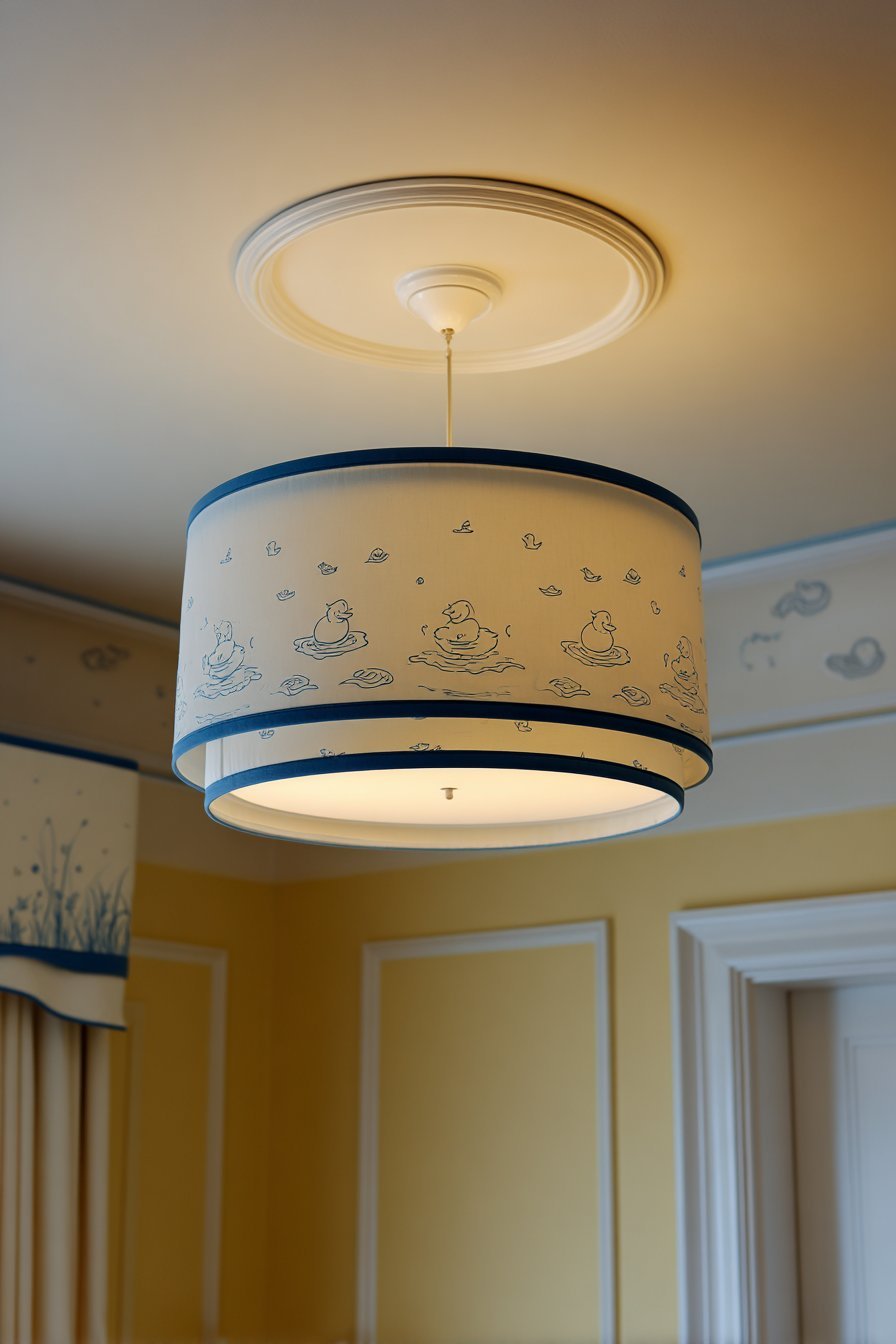
The layered lighting approach creates ambiance for different times of day. Evening illumination becomes especially magical as shadow patterns dance overhead. This thoughtful detail transforms a functional element into artistic statement.
Key Design Tips:
- Select statement lighting that serves dual decorative and functional purposes
- Consider shadow patterns when choosing decorative light fixtures
- Layer ambient lighting with task lighting for versatility
- Use crown molding details to add architectural interest
- Choose breathable bassinet fabrics like organic muslin
8. Custom Window Treatment Oasis
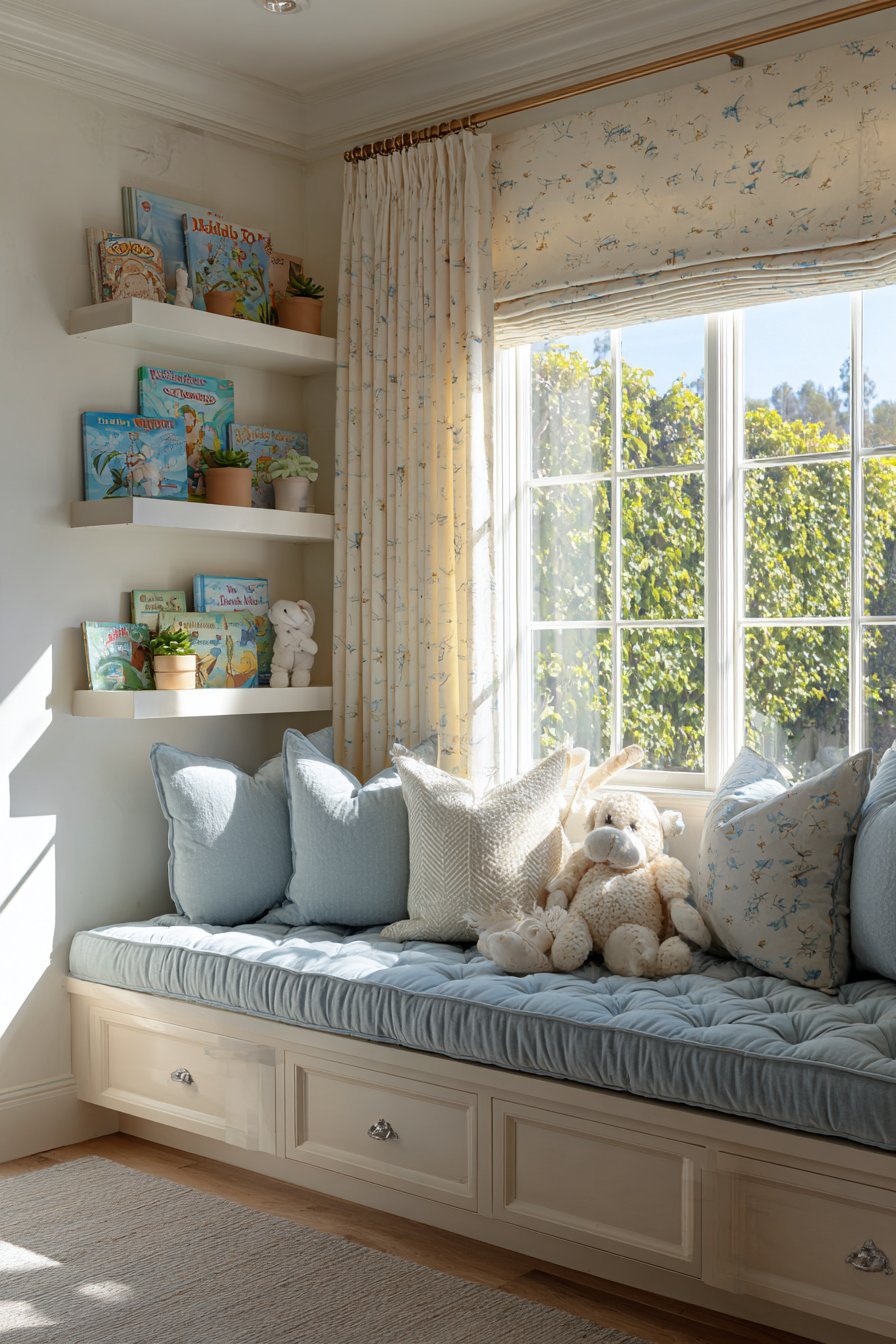
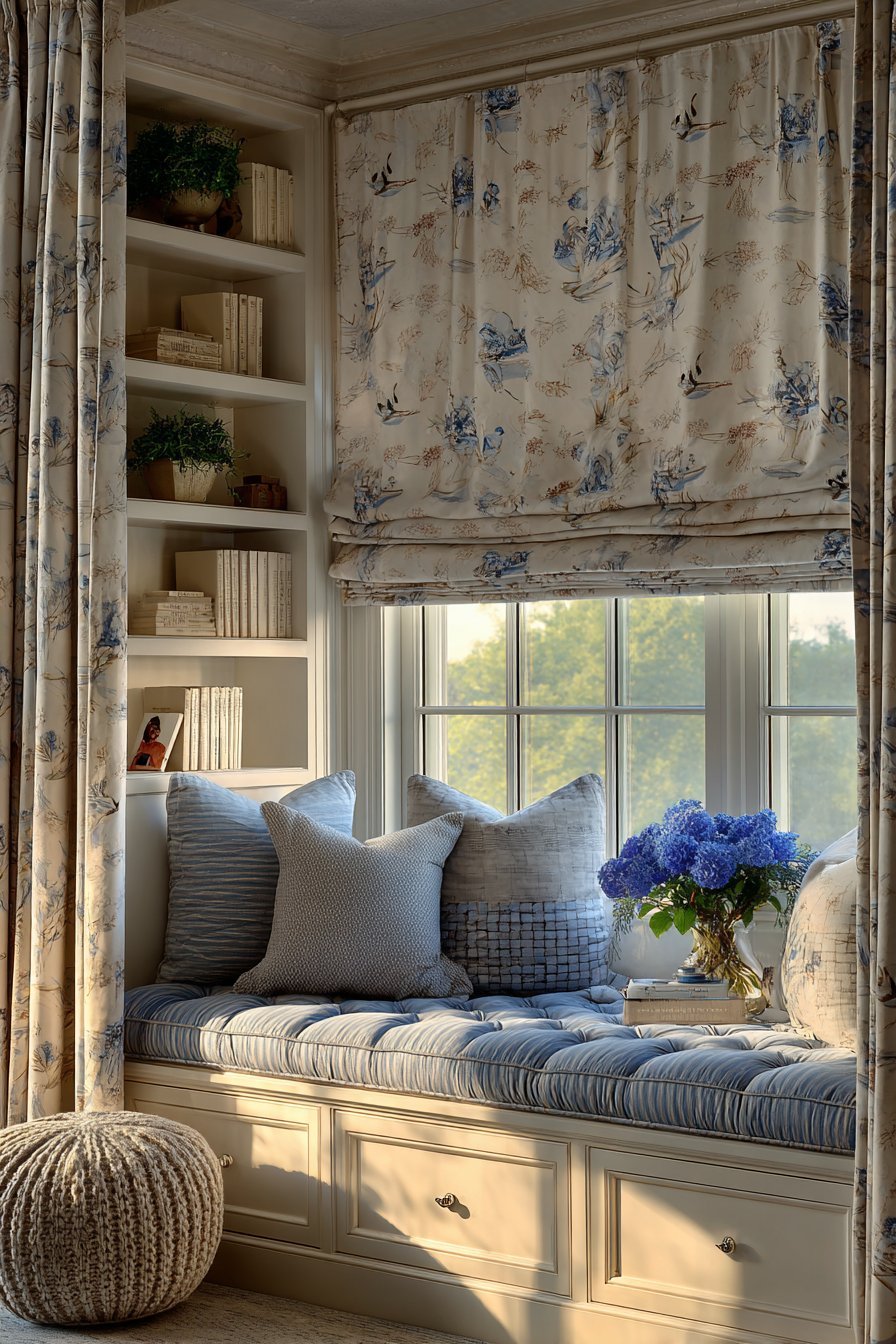
Roman shades in linen fabric showcase a repeating pattern of ducks and dragonflies. The soft watercolor style brings artistry to functional window covering. Below, a built-in window seat provides cushioned seating with tufted padding. Blue-grey fabric coordinates beautifully with the shade pattern above.
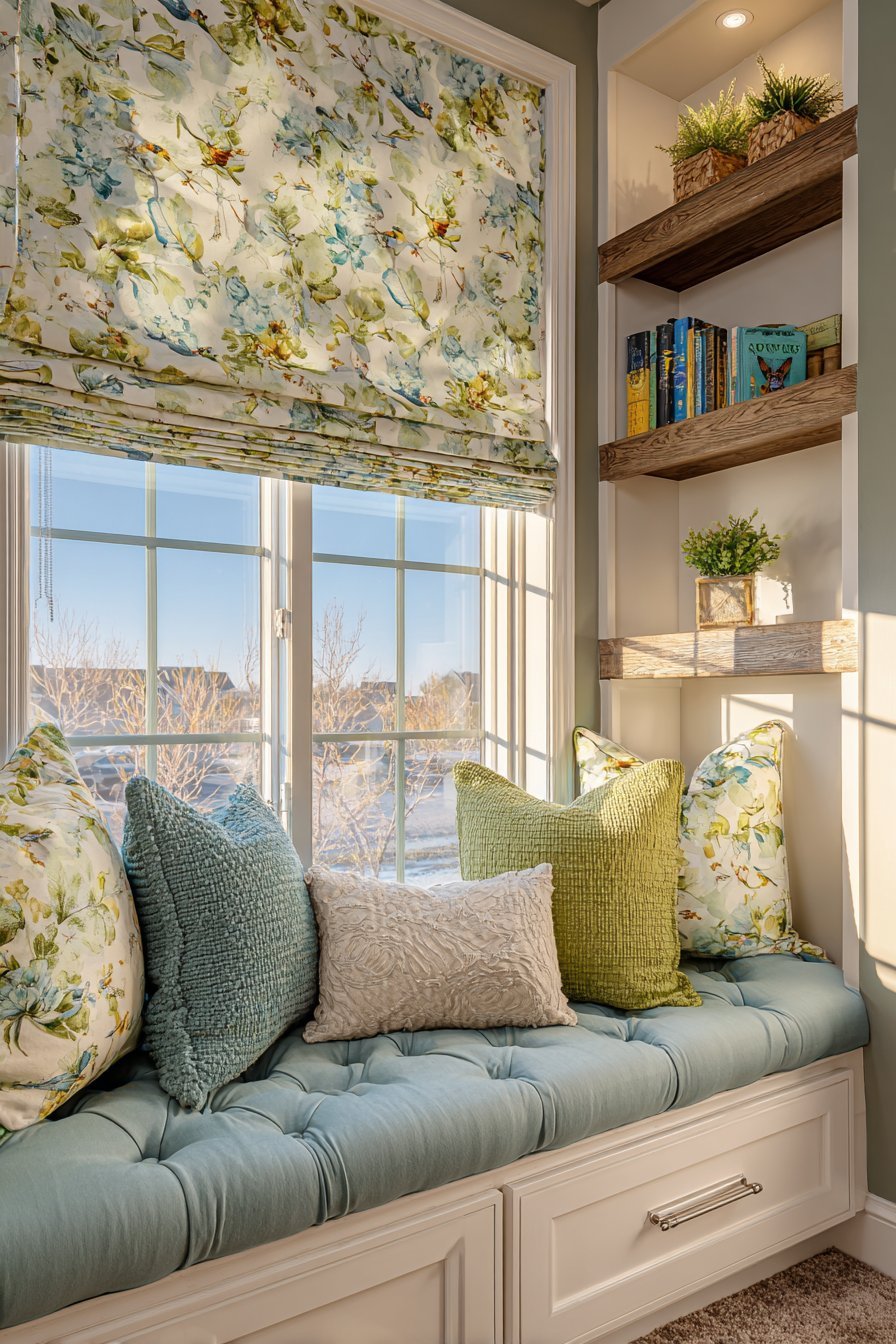
Storage drawers underneath maximize space efficiency in the window seat design. White painted wood provides clean contrast against the soft textiles. Duck-themed throw pillows in various sizes and textures create an inviting reading spot. Adjacent floating shelves display vintage children’s books and small potted plants.
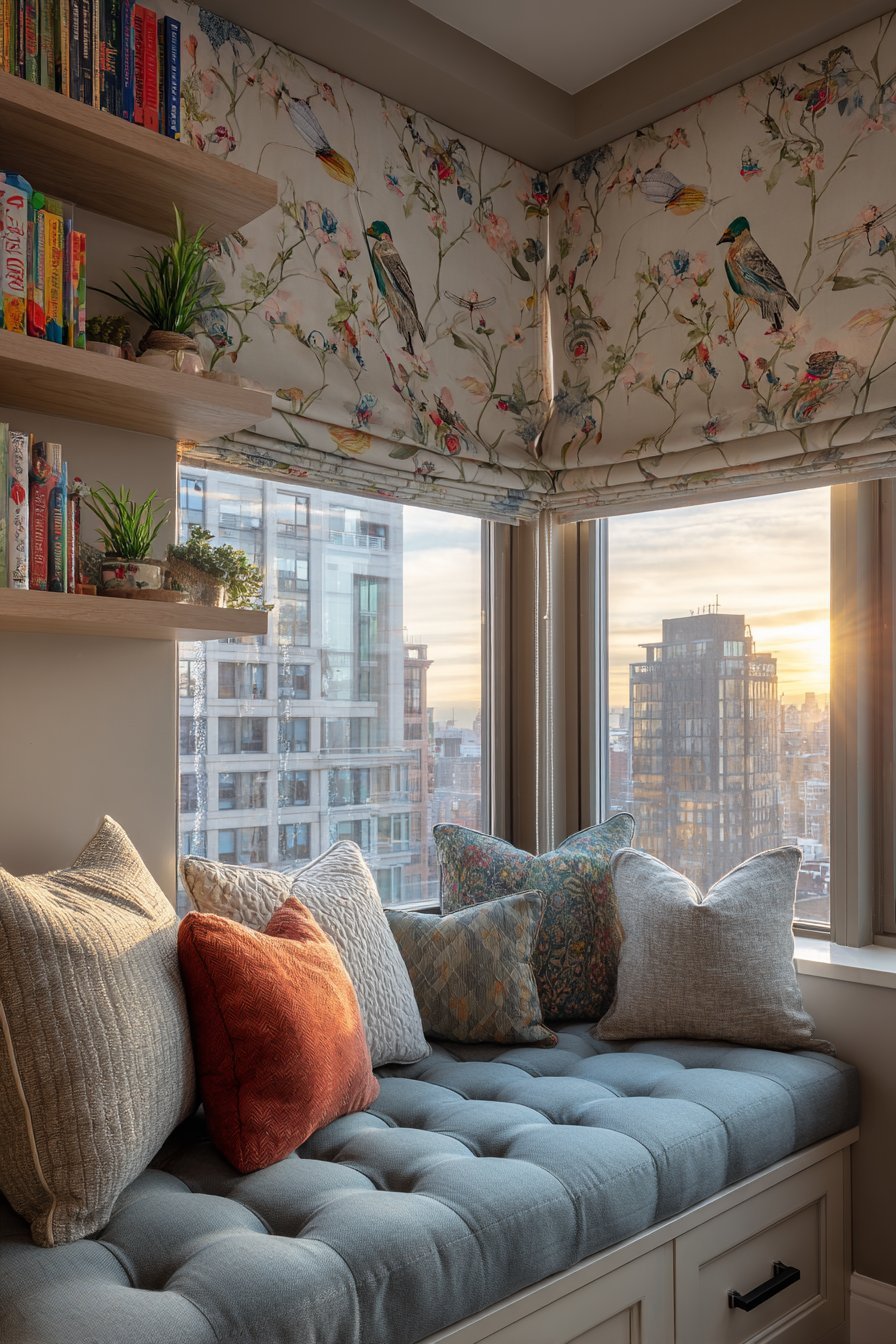
Afternoon golden hour light filters through the custom shades creating warm ambiance. The window seat becomes a favorite spot for quiet moments and daydreaming. This functional built-in adds both seating and storage value.
Key Design Tips:
- Invest in custom window treatments for perfect fit and style
- Build window seats with storage to maximize functionality
- Mix pillow sizes and textures for visual and tactile interest
- Display books with covers facing out for colorful wall art
- Position seating to take advantage of natural light
9. Nostalgic Vintage Charm
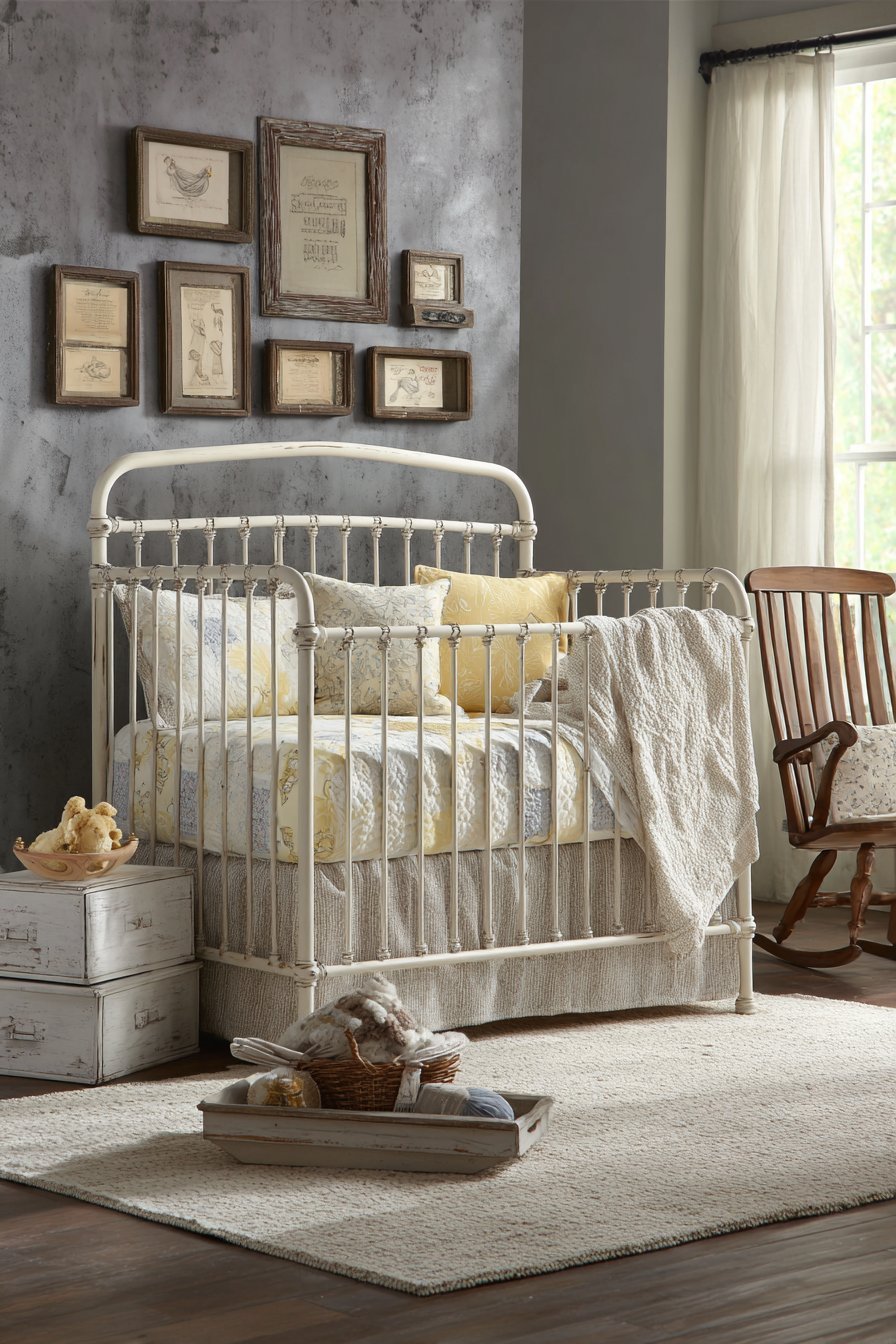
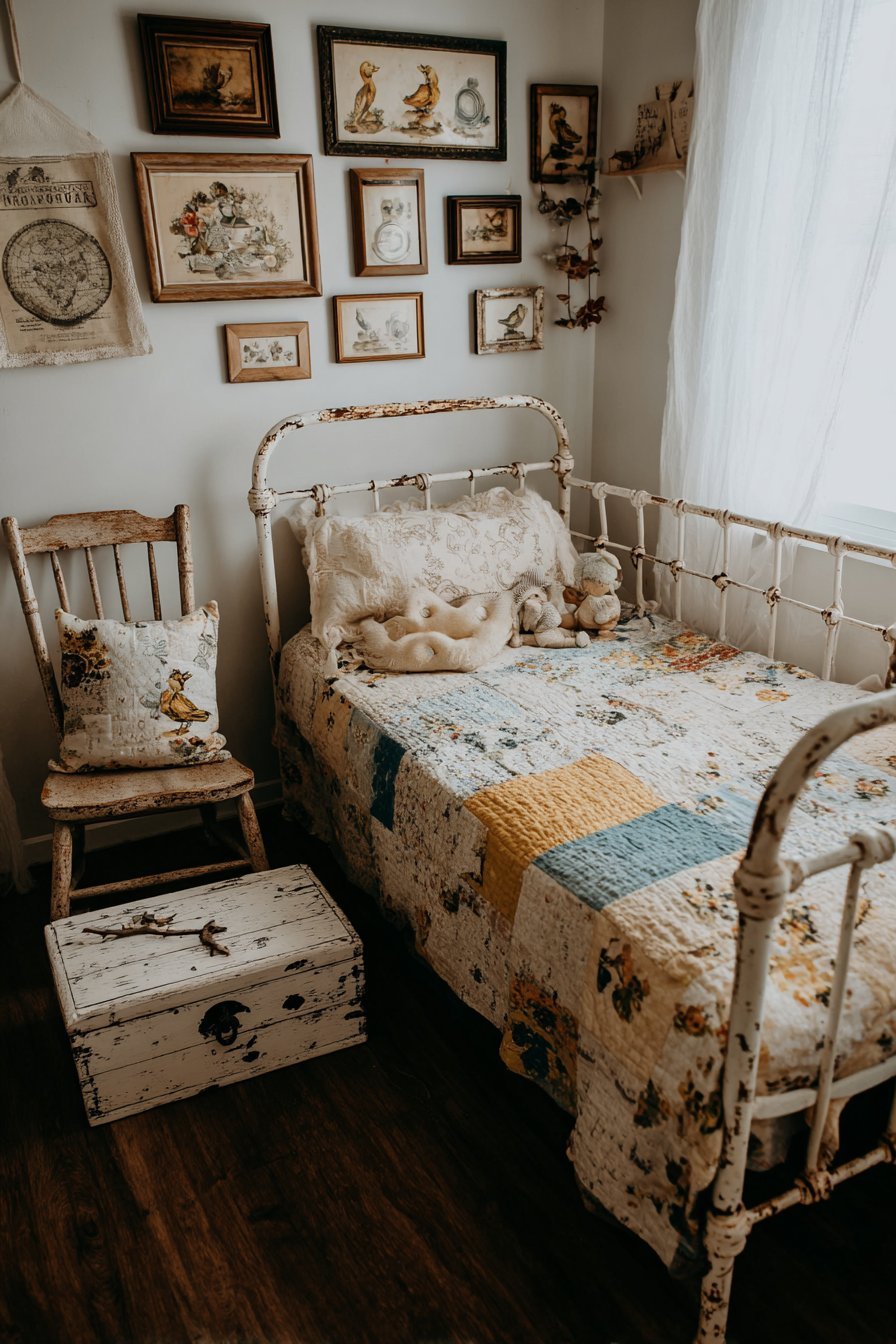
An antique white iron crib with curved details becomes the centerpiece. The distressed finish adds authentic vintage character that new furniture cannot replicate. A patchwork quilt features duck appliqués in muted yellow, blue, and cream fabrics. Subtle texture variations show the handmade quality.
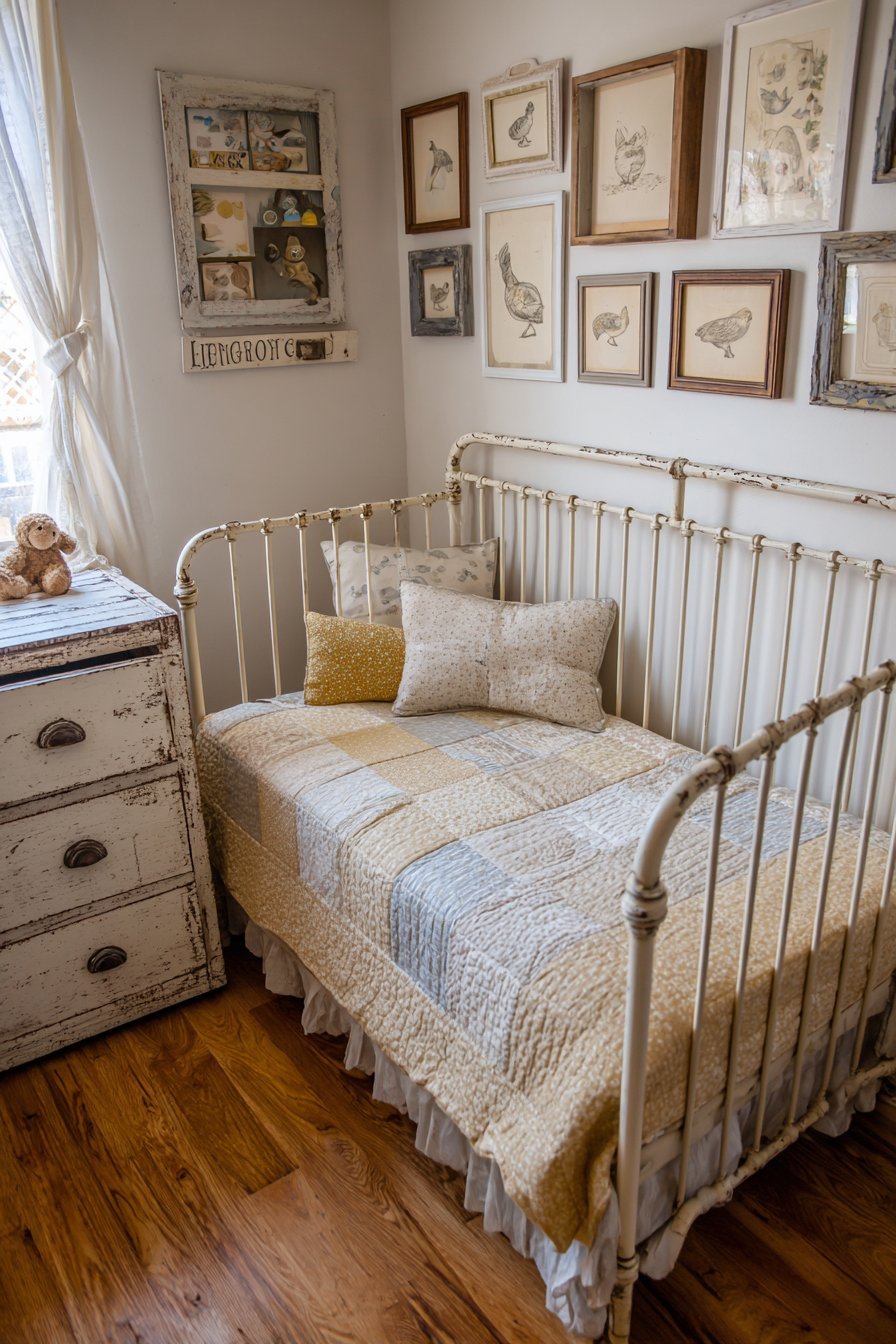
A weathered wooden rocking chair sits nearby with a faded duck-printed cushion. The worn patina tells stories of previous generations and family history. A gallery wall displays vintage duck prints in mismatched antique frames. An old wooden toy box painted in chippy white shows hand-painted duck details.
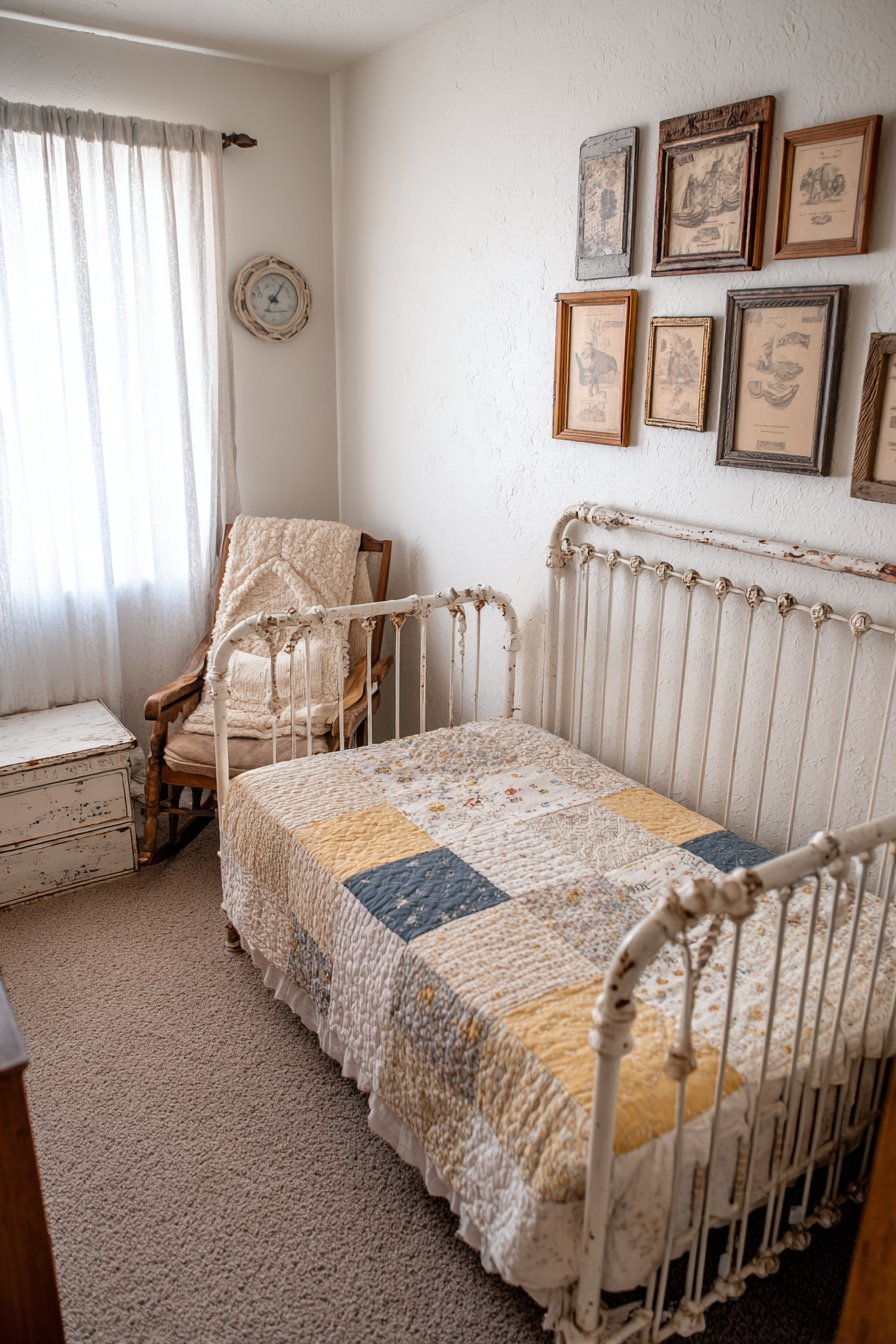
Soft natural window light creates authentic vintage ambiance throughout the space. The curated collection feels intentional rather than randomly assembled. This nostalgic approach celebrates the past while welcoming new life.
Key Design Tips:
- Shop antique stores and estate sales for authentic vintage pieces
- Look for furniture with distressed finishes and patina
- Create gallery walls with mismatched frames for eclectic charm
- Incorporate handmade quilts and textiles for warmth
- Embrace imperfections as character rather than flaws
10. Clean Minimalist Sanctuary
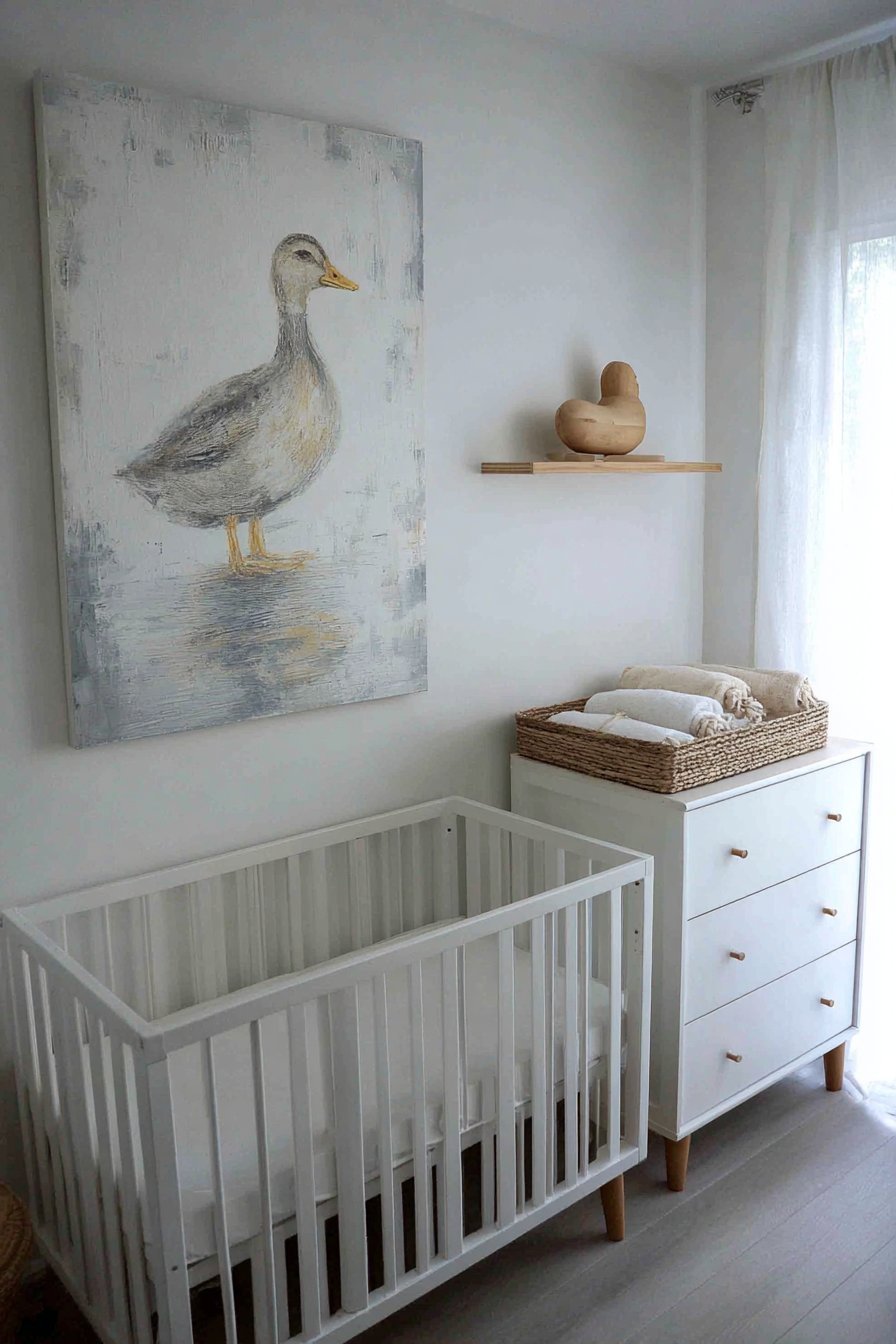
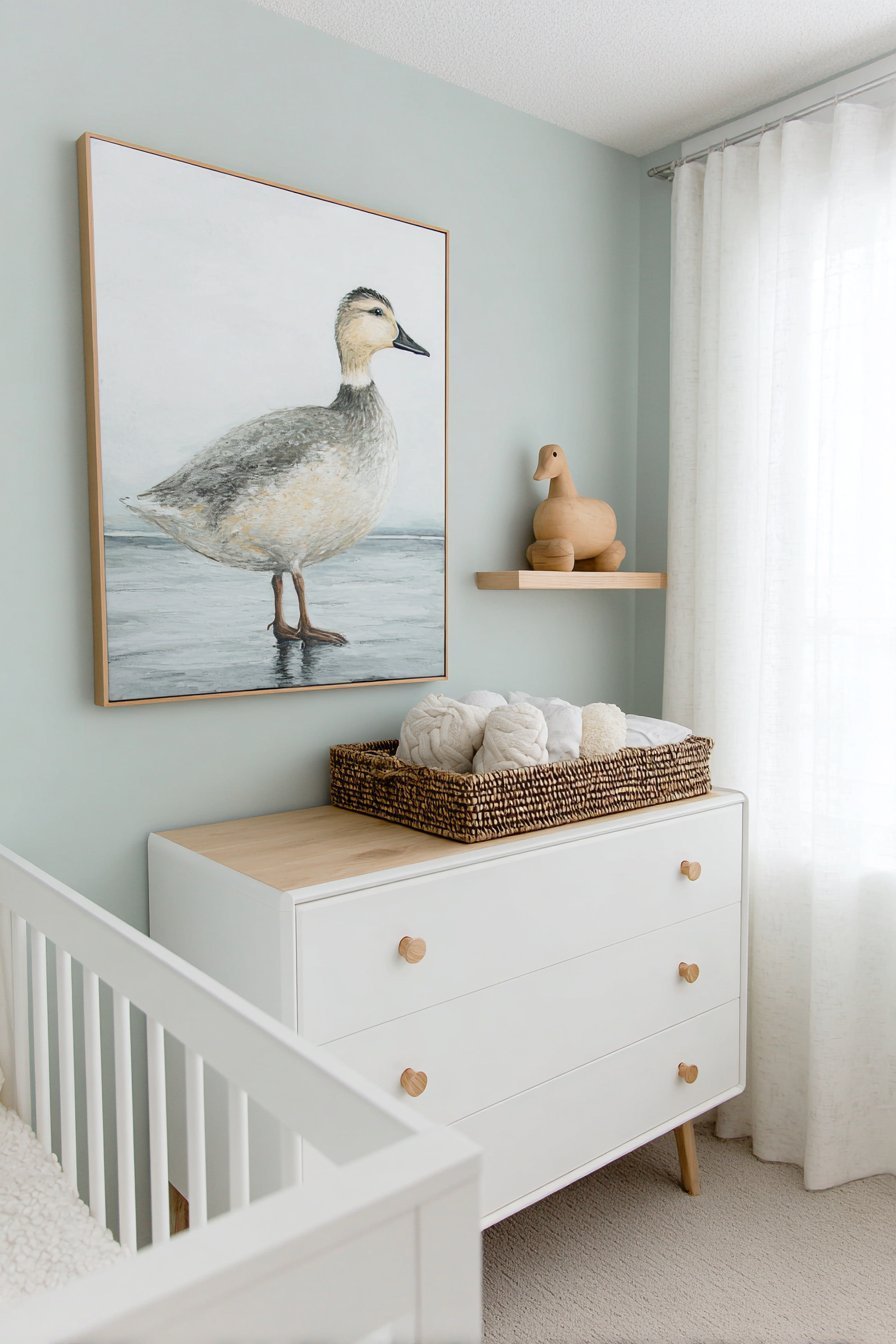
A simple white crib with beech wood legs demonstrates that less is more. Clean lines and minimal ornamentation create peaceful visual space. The focal point is a large-scale abstract art piece depicting a single duck in profile. Subtle brush strokes use grey, white, and pale yellow on canvas.
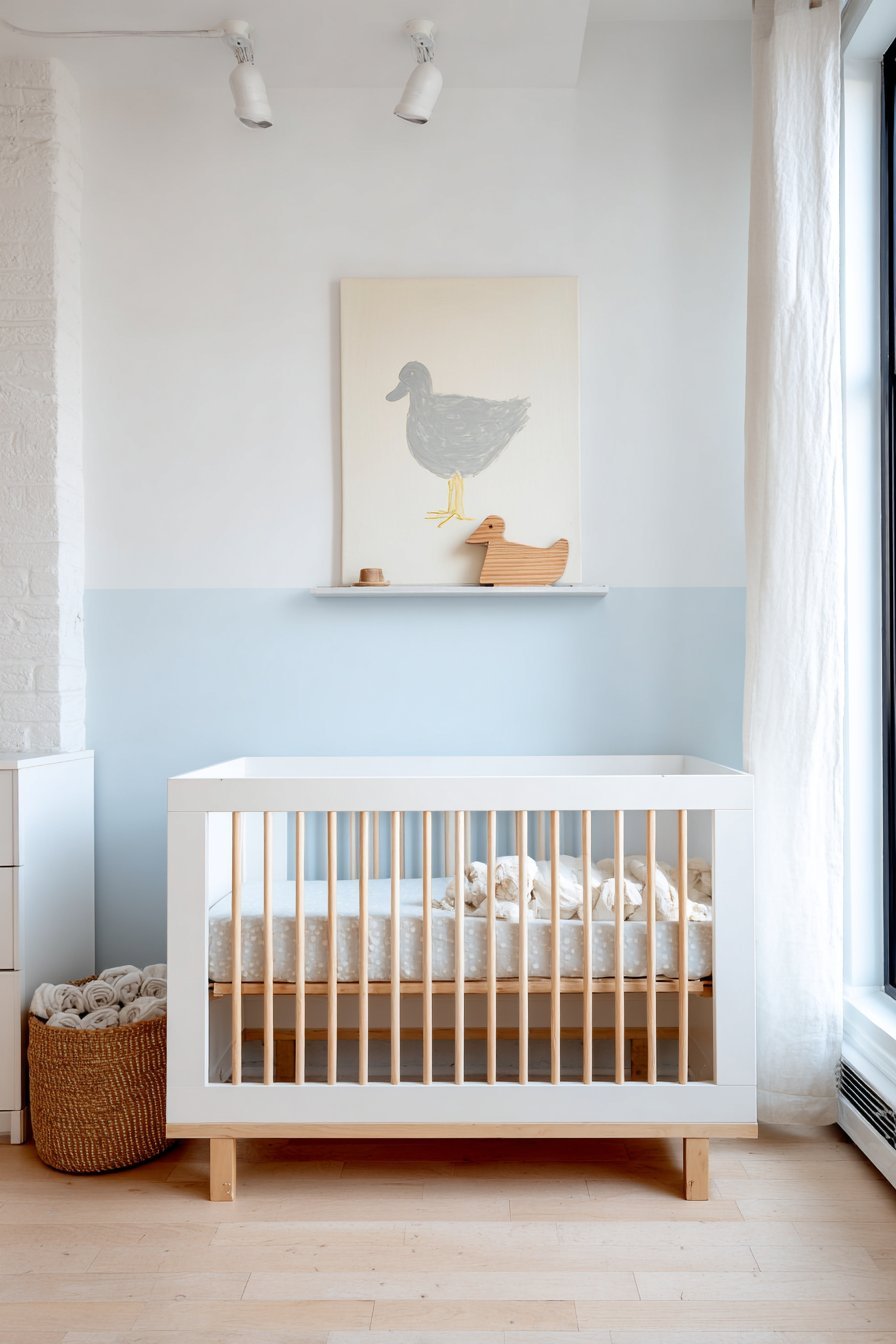
One accent wall in the softest duck egg blue provides gentle color. The restrained palette prevents visual overwhelm in the nursery space. A simple white dresser with wooden knobs serves dual purpose as changing table. A single duck-shaped wooden toy sits on a floating shelf as intentional decoration.
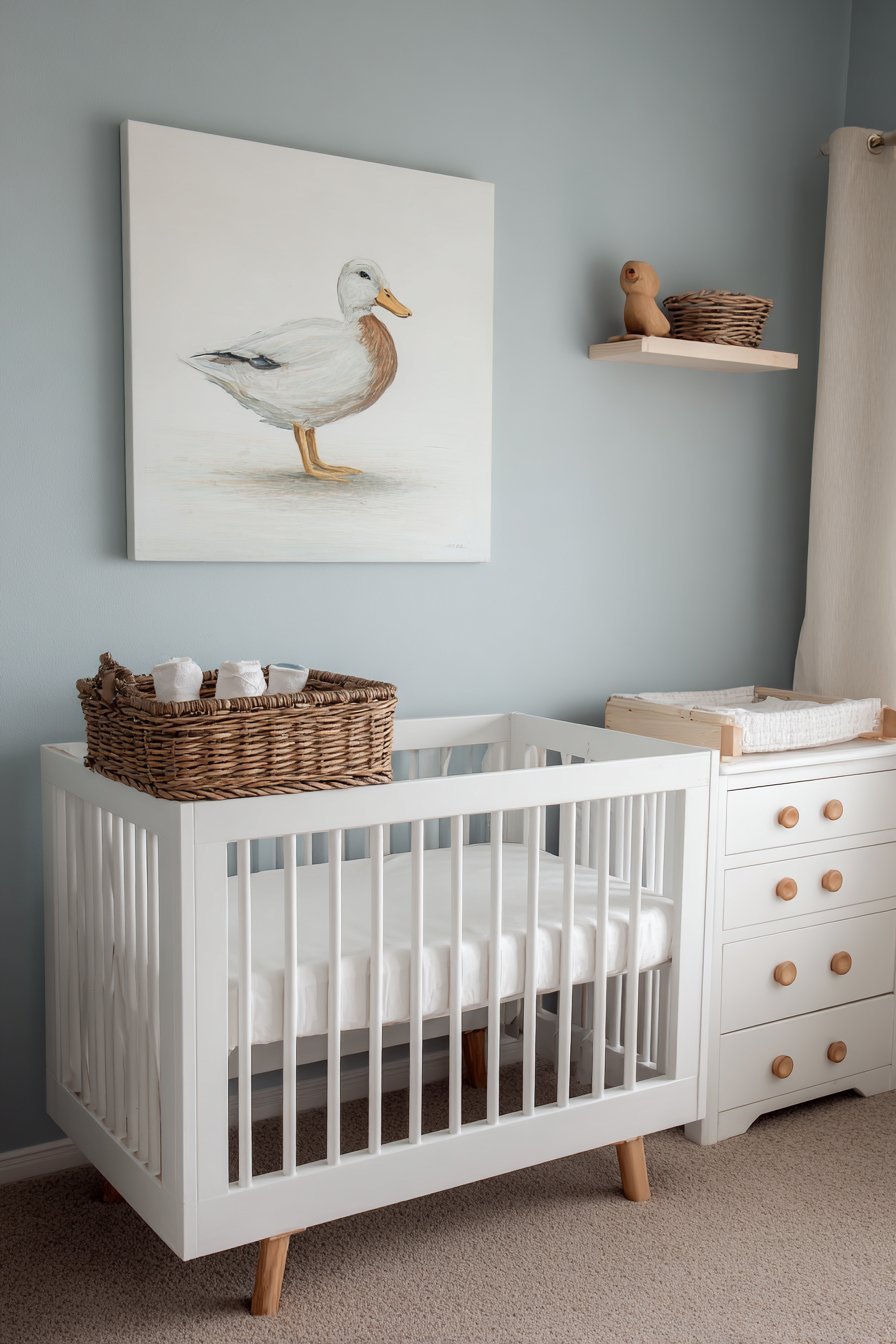
Morning light through sheer curtains illuminates the purposefully spare space. Every element serves a function while contributing to the cohesive aesthetic. This refined approach proves minimalism and whimsy can coexist beautifully.
Key Design Tips:
- Limit color palette to three or four coordinating shades
- Choose furniture with clean lines and simple silhouettes
- Display single statement art pieces rather than multiple small items
- Use negative space intentionally as design element
- Select multi-functional furniture to reduce visual clutter
11. Interactive Growth Chart Wall
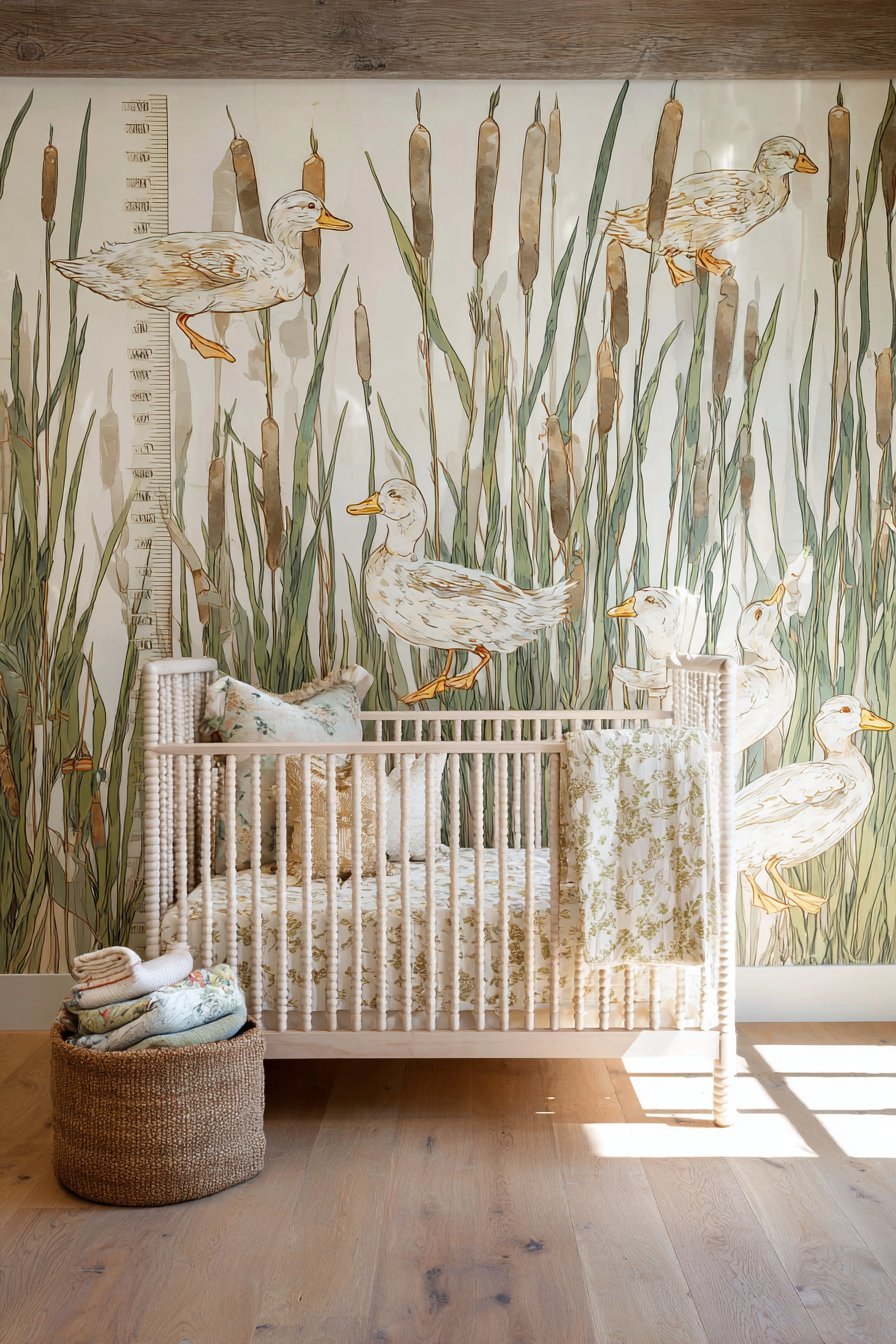
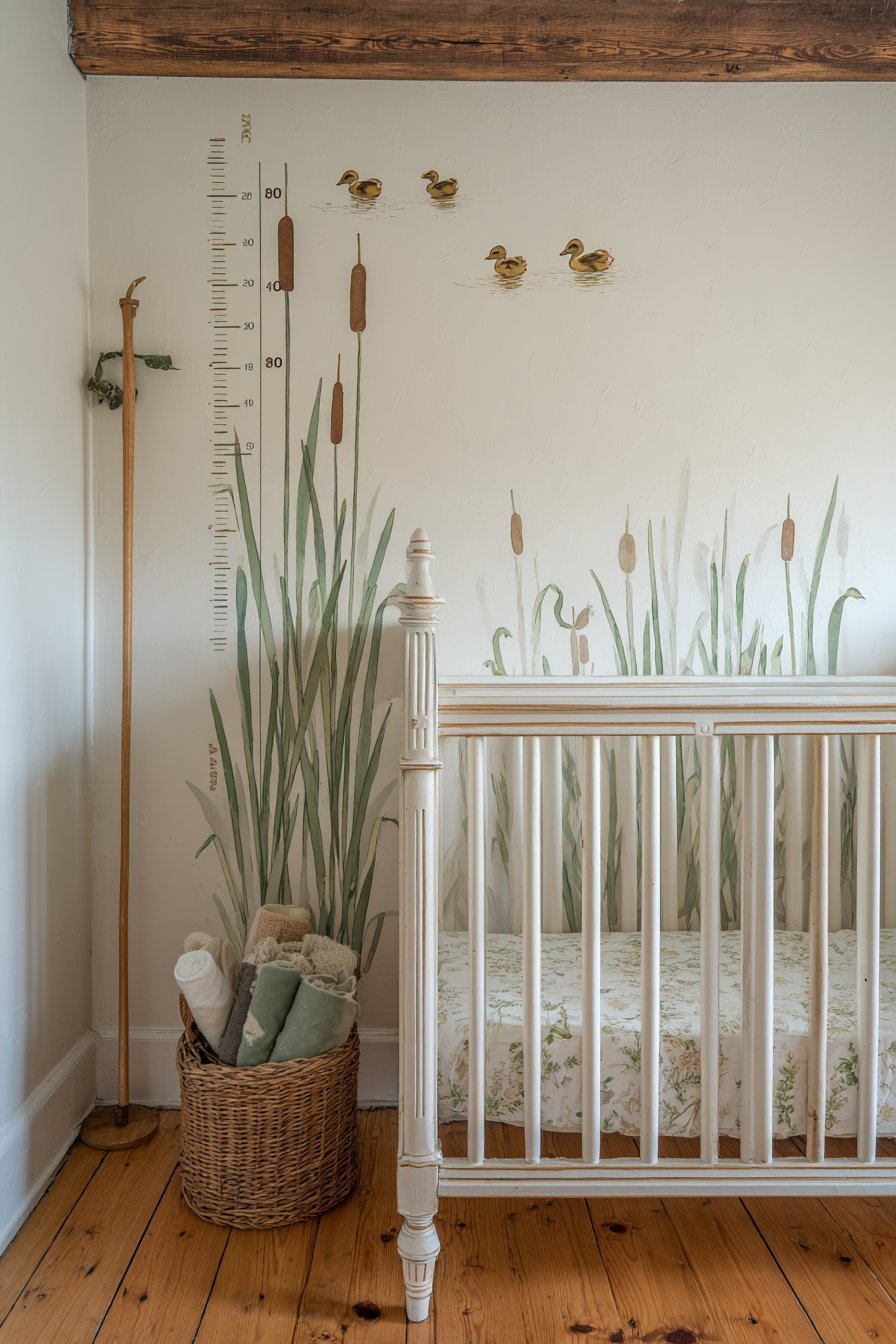
A floor-to-ceiling height measurement chart designed as cattails creates functional art. Ducks swim at various heights along the hand-painted growth tracker. Parents can record milestones directly on the waterproof wall surface. This personalized element becomes a keepsake documenting growth over years.
A white Jenny Lind style crib with spindle details provides classic beauty. The fitted sheet features tiny duck prints that coordinate without overwhelming. A natural fiber basket holds rolled blankets in complementary colors. Light oak flooring with visible grain adds warmth underfoot.
Natural side lighting creates dimension in the hand-painted cattail details. The growth chart becomes both practical tool and decorative feature. This thoughtful integration shows how functional elements can enhance design.
Key Design Tips:
- Use waterproof paint for growth charts to allow marking
- Position growth charts in high-traffic areas for regular use
- Choose classic crib styles that transcend trends
- Store blankets rolled in baskets for easy access and neat appearance
- Celebrate visible wood grain in flooring and furniture choices
12. Organized Closet System
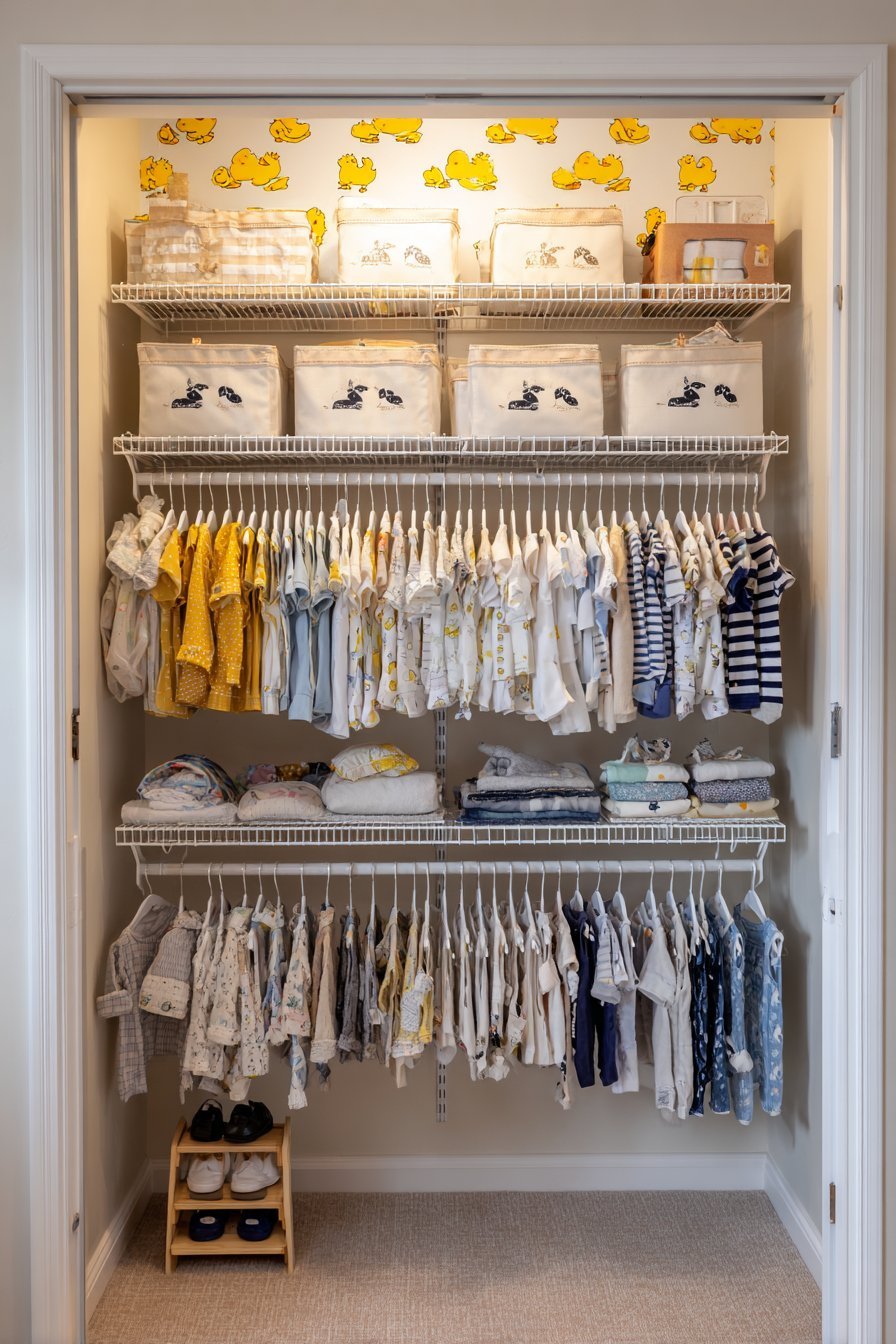
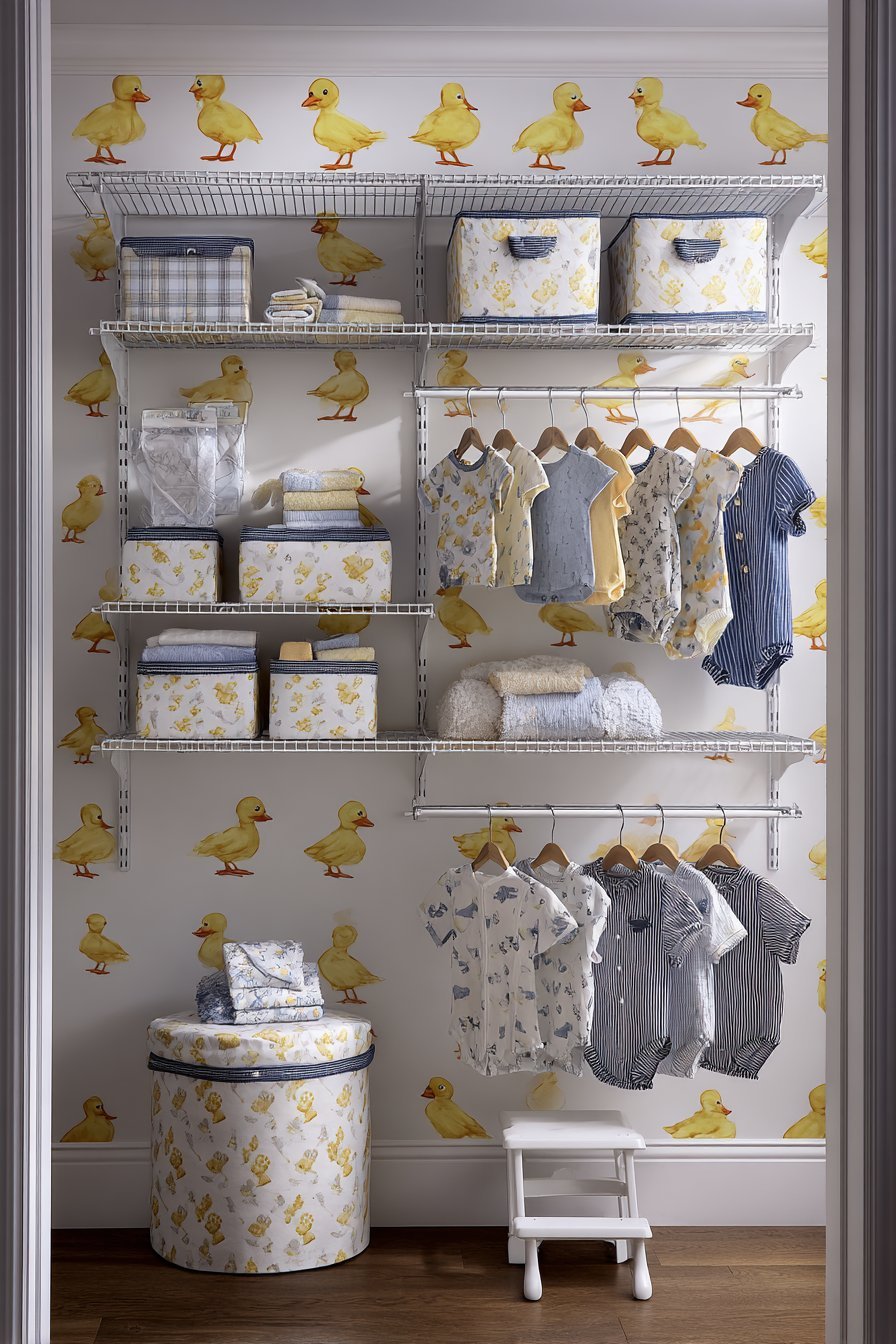
White wire shelving creates divided sections for baby clothes organized by size. This systematic approach simplifies daily dressing and outfit planning. Duck-themed fabric bins in canvas with navy duck silhouettes store accessories. The coordinated storage containers maintain the nursery theme throughout the space.
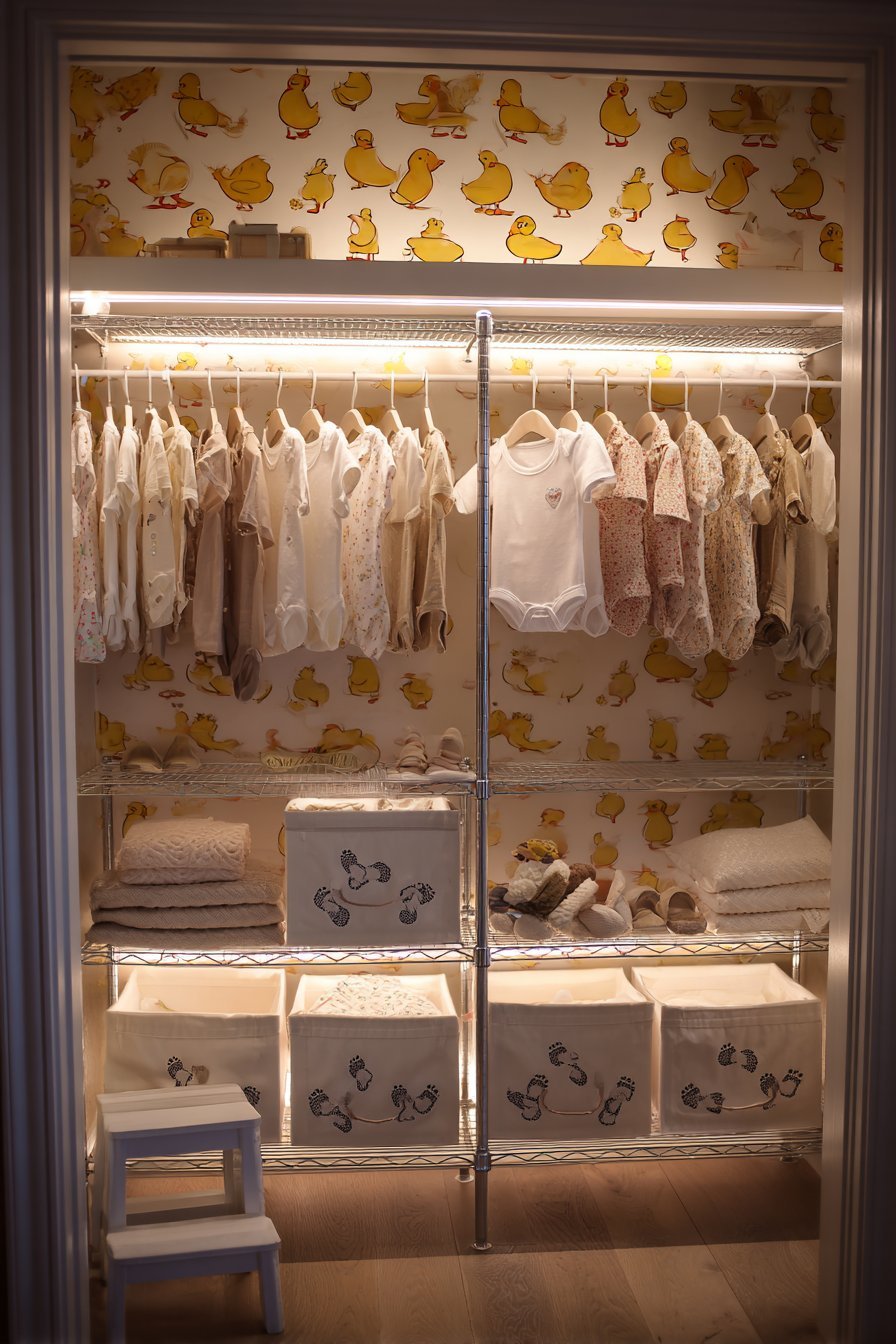
A lower hanging rod displays tiny outfits including duck-printed onesies and rompers. Above the shelving, a wallpaper border shows repeating yellow ducklings in a row. LED strip lighting illuminates the organized space making evening clothing searches easier. A small step stool painted with duck footprints adds whimsical functionality.
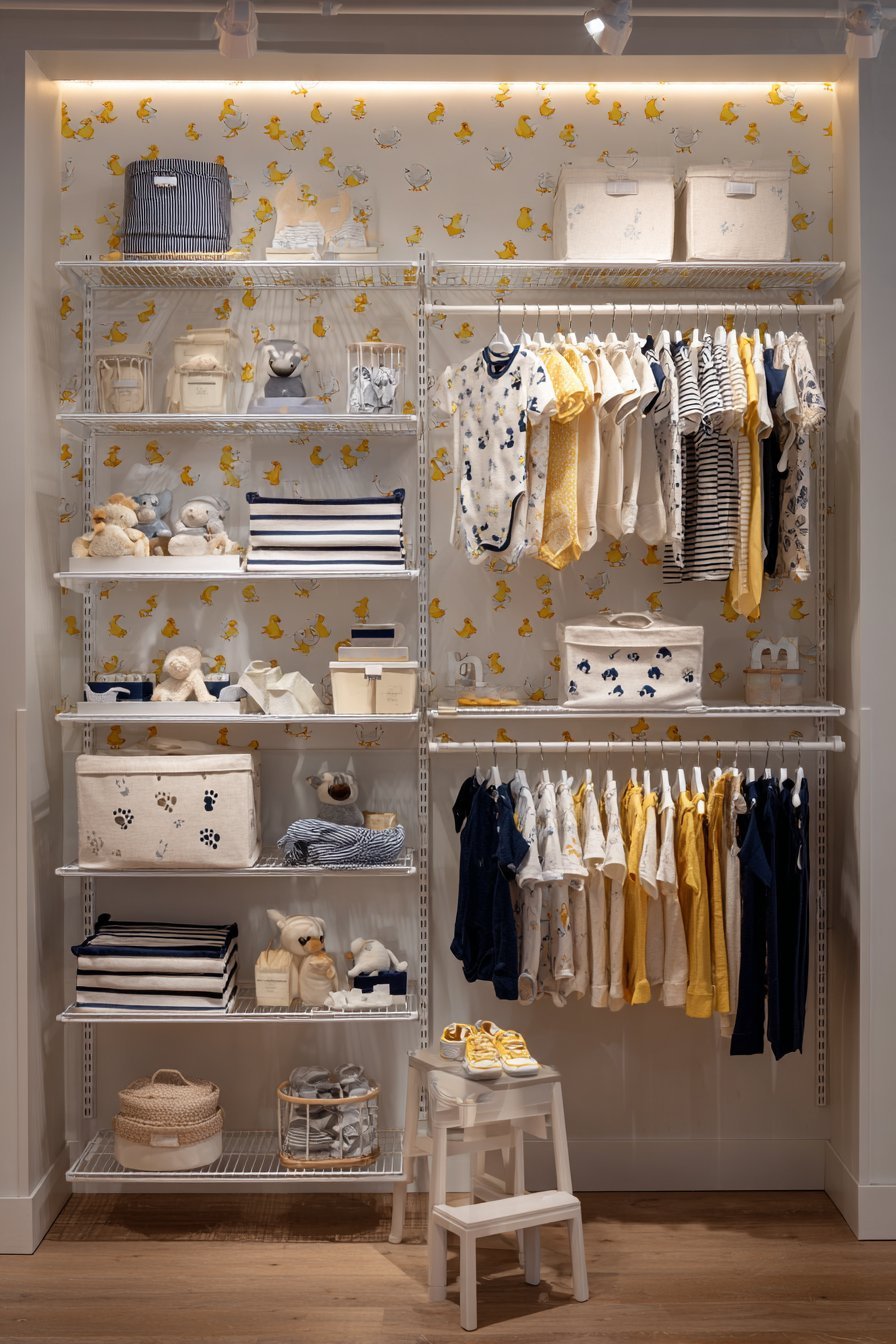
This behind-the-doors organization demonstrates that every space deserves design attention. The efficient system saves time and reduces stress during busy baby care routines. Practical organization can be beautiful when thoughtfully executed.
Key Design Tips:
- Divide baby clothes by size for easy access as baby grows
- Use fabric bins to keep small items contained and visible
- Install LED strip lighting in closets for better visibility
- Add decorative borders even in hidden spaces
- Paint or decorate step stools to match nursery themes
13. Functional Changing Station
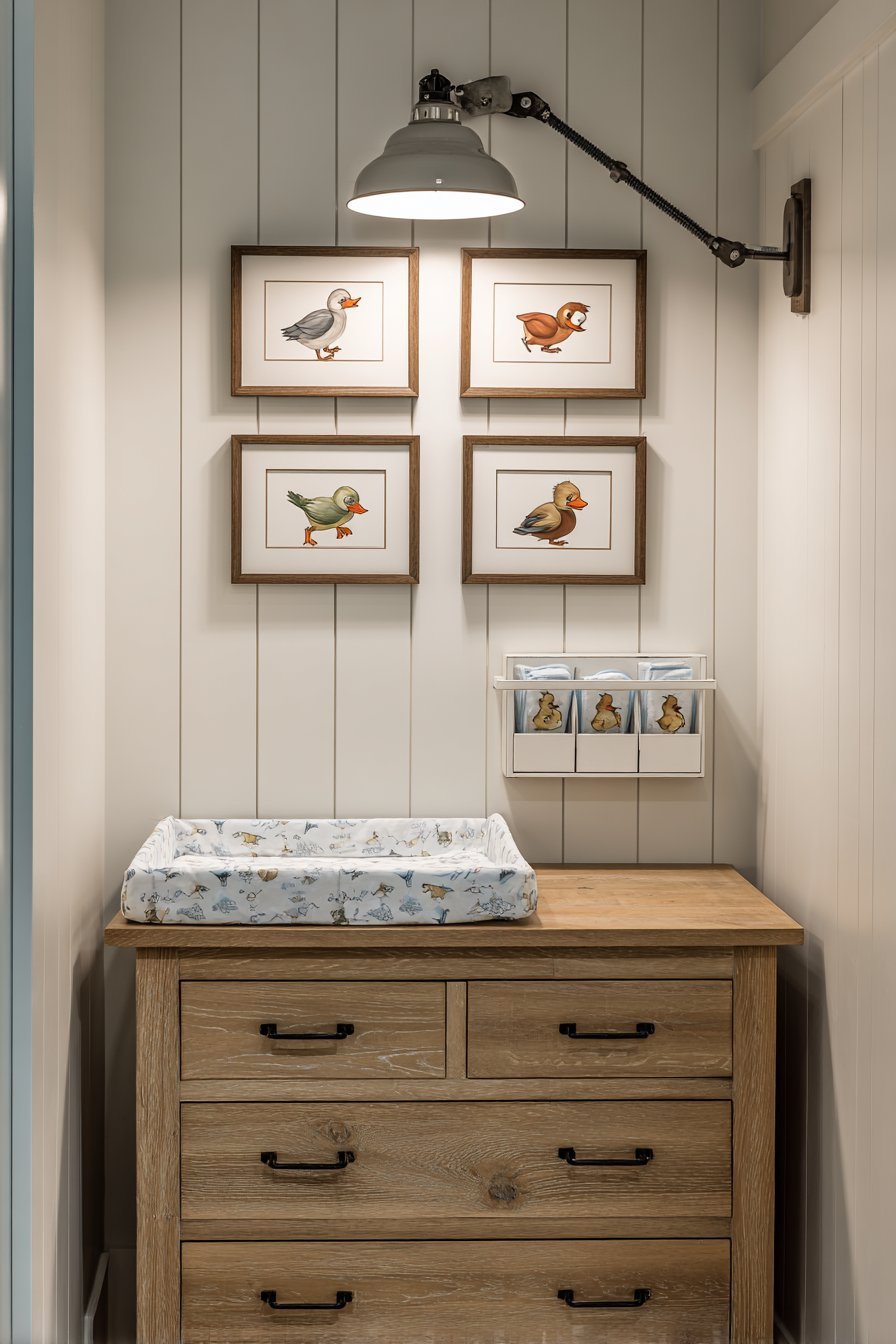
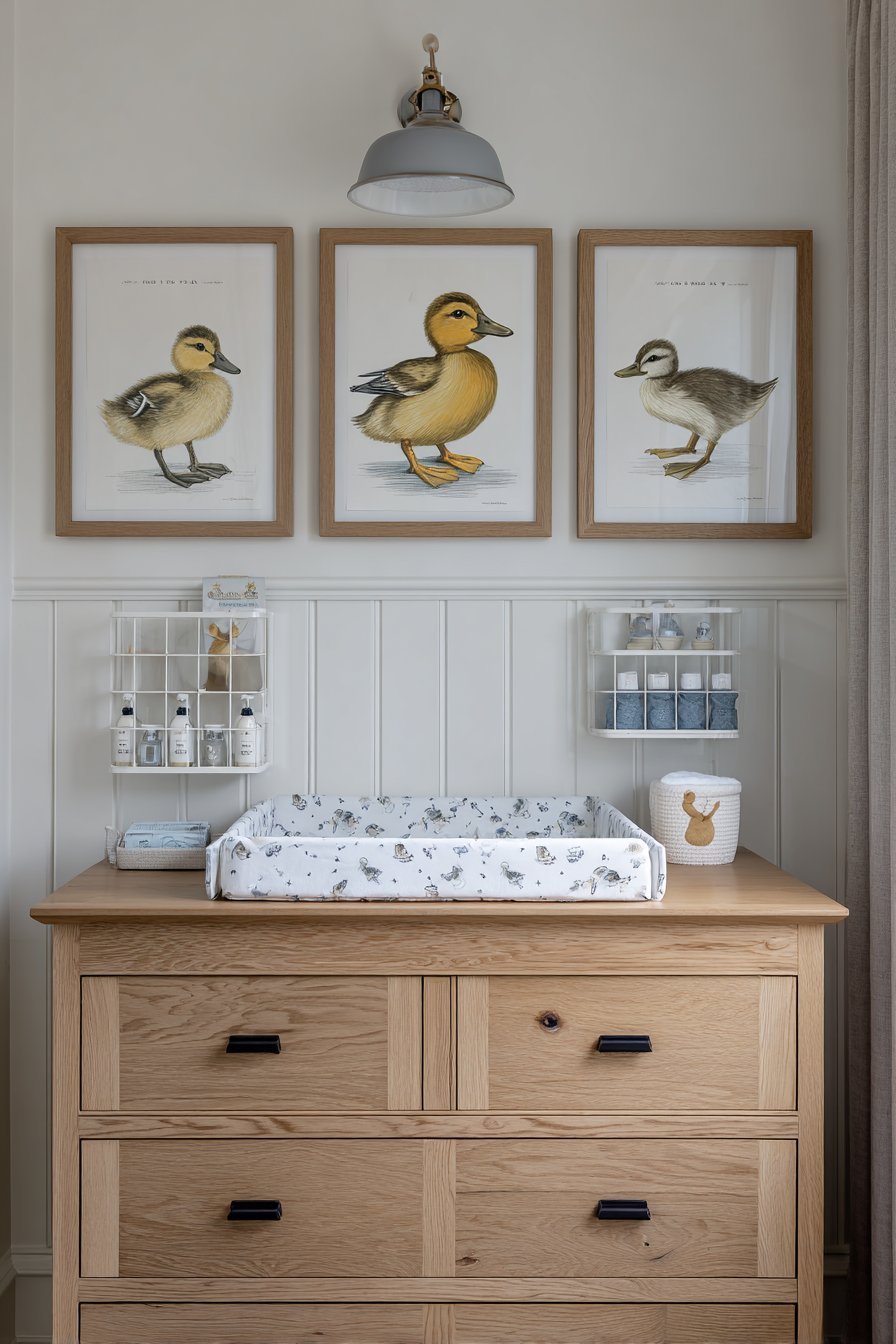
A wide natural wood dresser provides ample storage topped with a changing pad. The wipeable duck-printed fabric cover combines practicality with style. Three framed prints above show the duck life cycle from egg to adult. The educational watercolor illustrations add learning opportunities to daily routines.
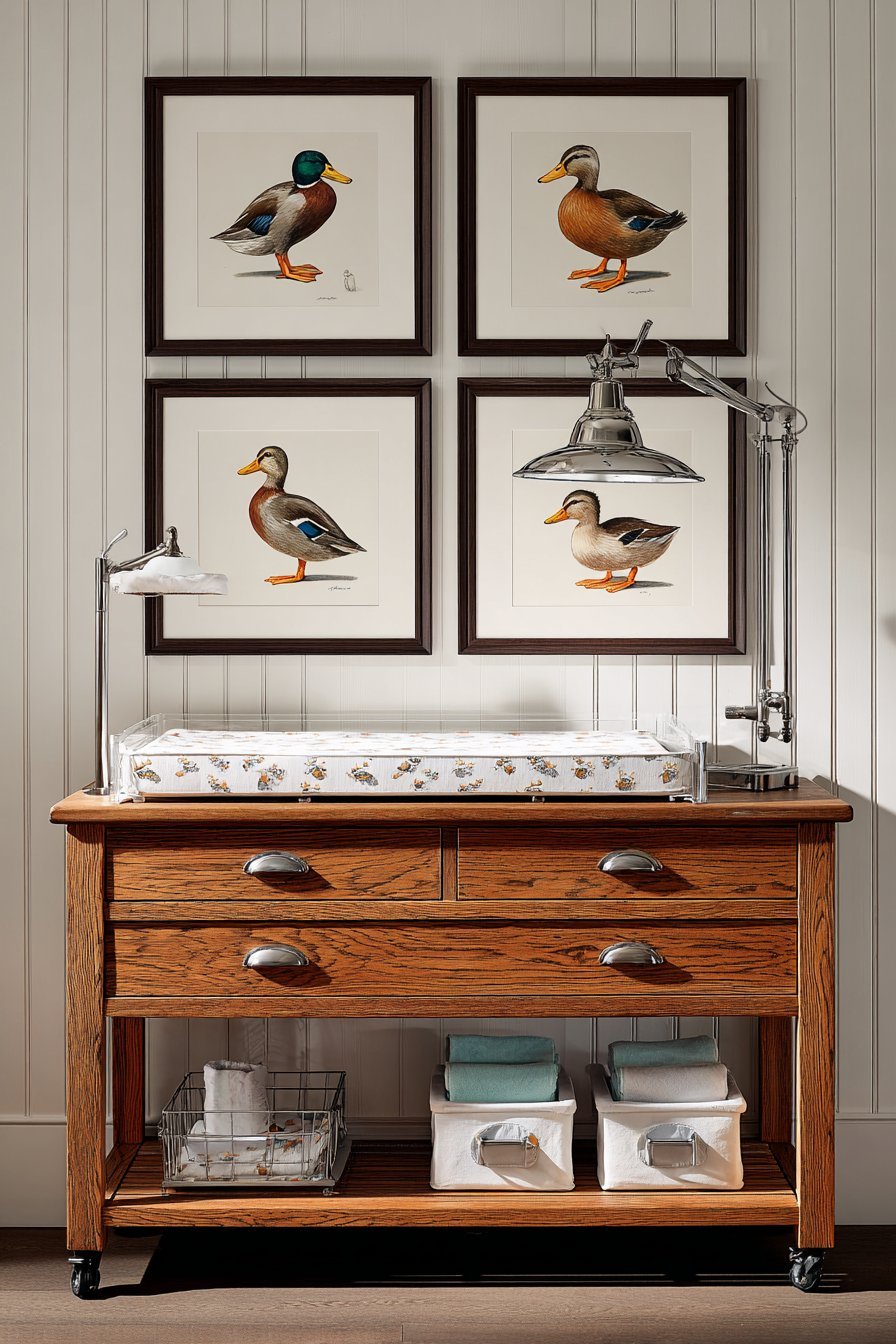
A white metal caddy organizer holds diapering essentials with duck-themed labels. This system keeps frequently used items within arm’s reach during changes. A small waste bin with duck decals sits below for convenient disposal. Soft LED lighting from an adjustable arm lamp provides directed task lighting.
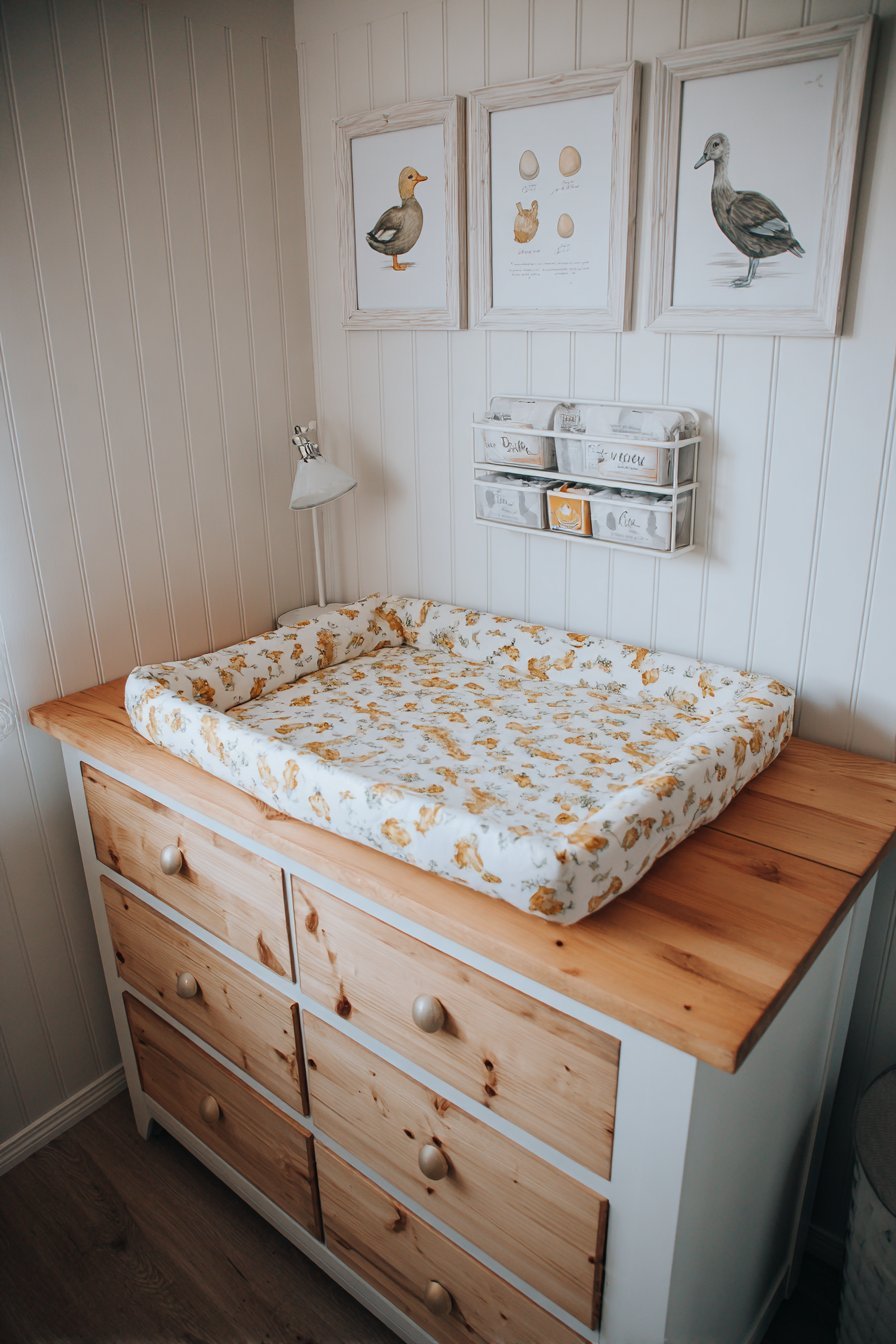
Beadboard wainscoting painted in soft white adds architectural detail below the wall art. The classic treatment elevates a purely functional space into designed environment. Every changing session becomes more pleasant in this thoughtfully appointed area.
Key Design Tips:
- Choose wide dressers that provide stability as changing tables
- Display educational art to make routines learning opportunities
- Use labeled organizers to keep supplies sorted and accessible
- Install adjustable task lighting for nighttime diaper changes
- Add wainscoting for architectural interest and wall protection
14. Sensory Water Play Corner
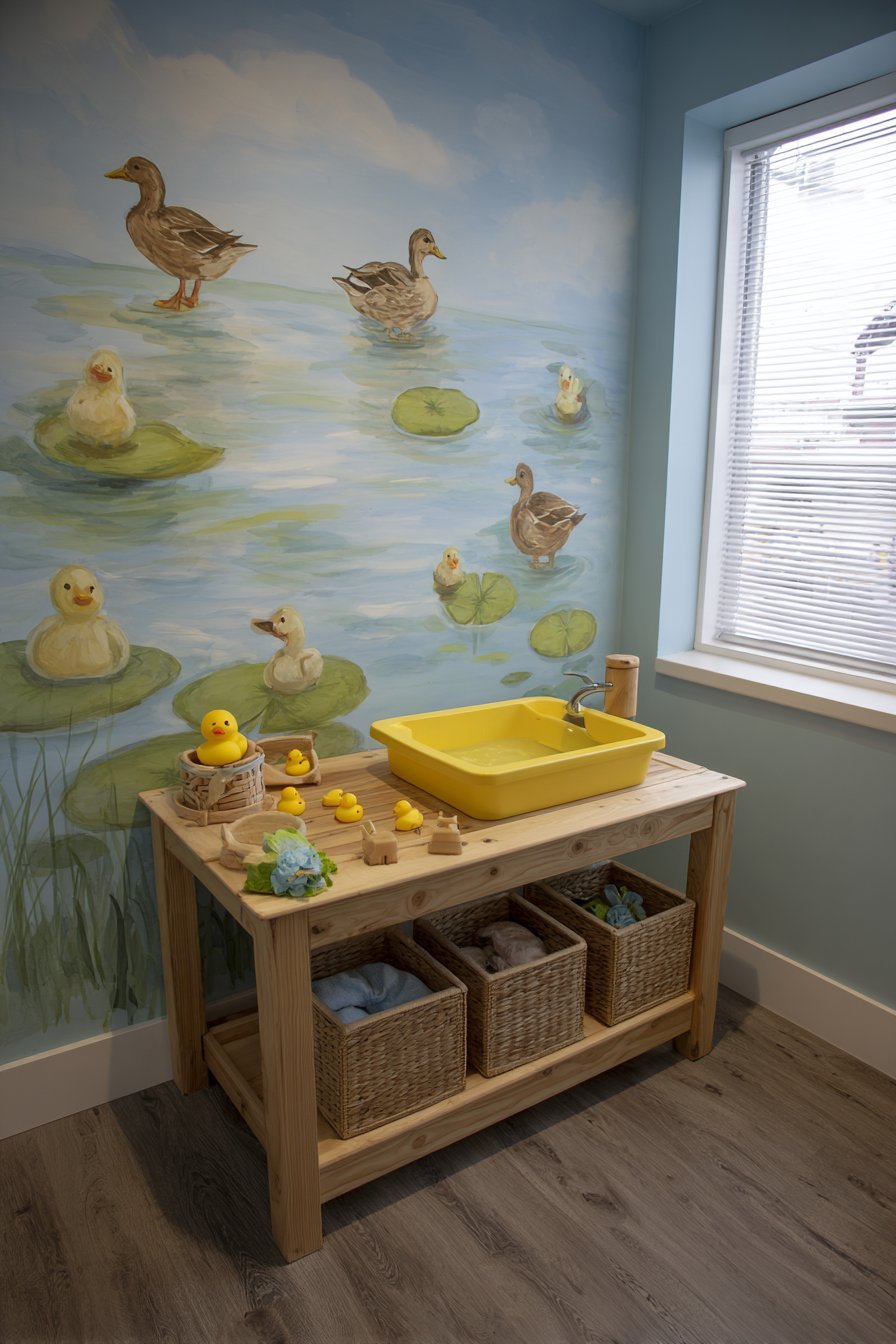
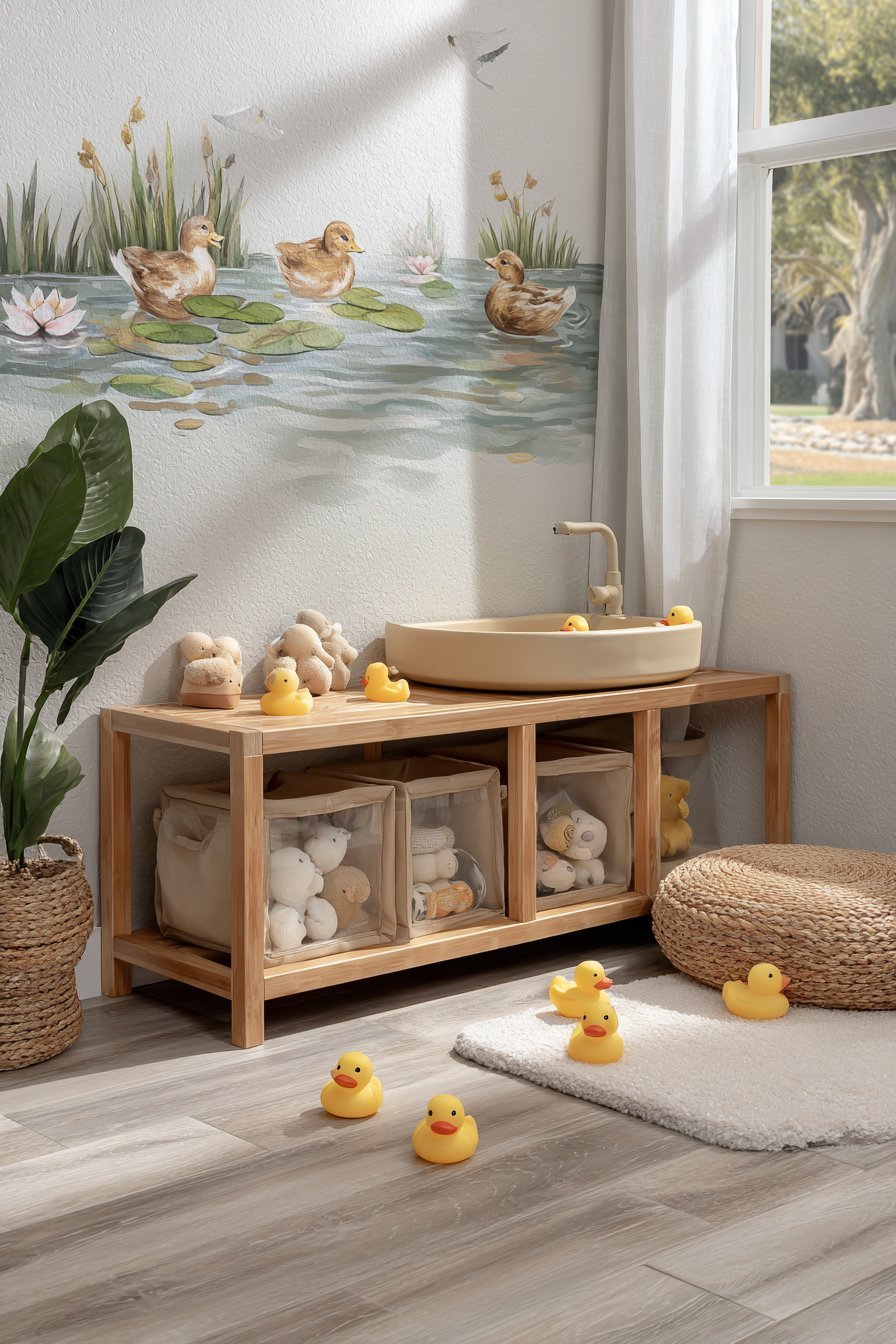
A low wooden play table holds a basin designed for supervised water play. Rubber ducks in various sizes and foam bath toys encourage sensory exploration. This dedicated activity area teaches cause and effect through splashing and pouring. Below the table, storage cubes contain towels and waterproof bibs.
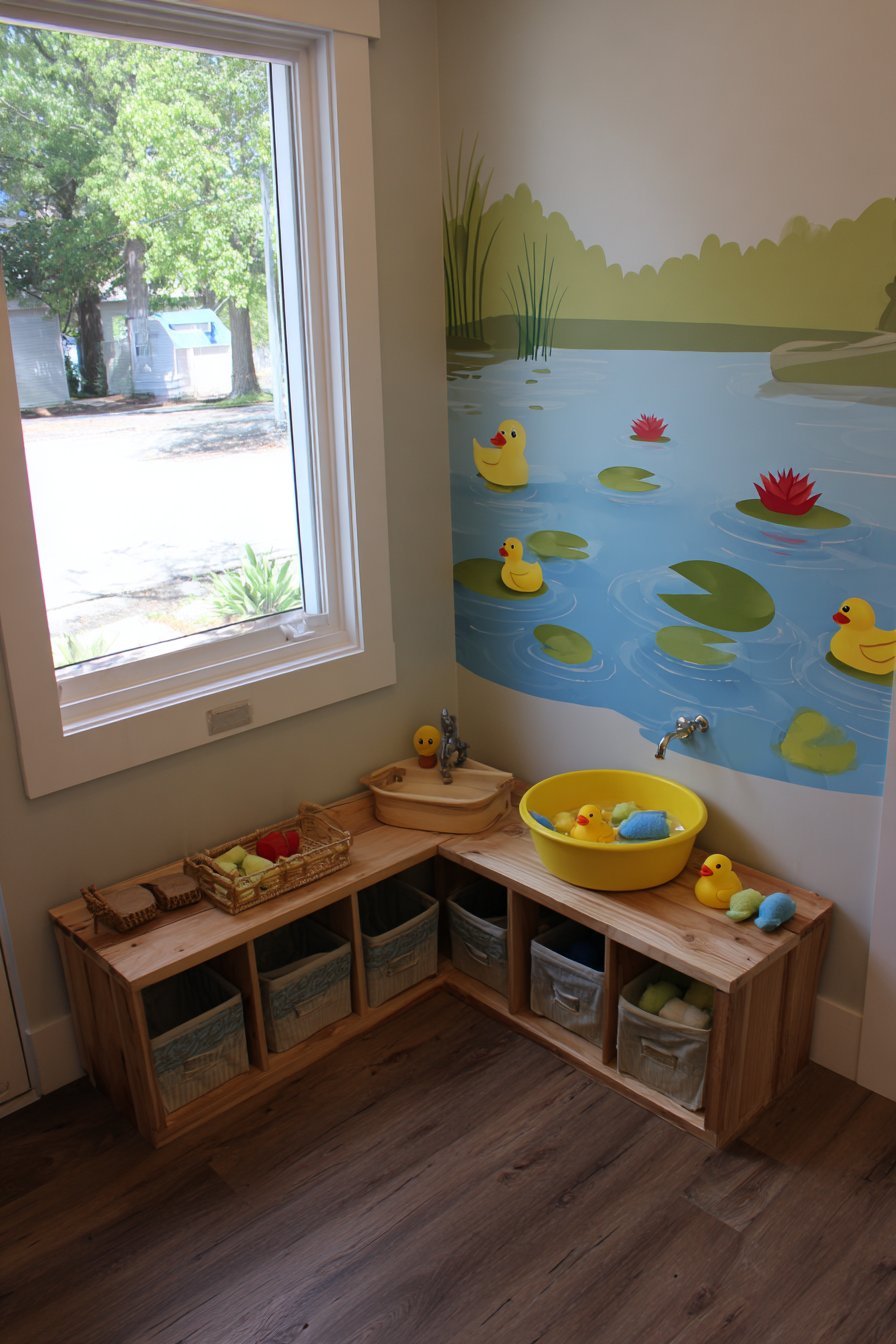
The wall behind features a peaceful pond mural with realistic ducks and lily pads. Gentle ripples painted in soft colors create depth and movement. Waterproof vinyl flooring in light wood look protects against inevitable splashes. This practical choice allows for easy cleanup after play sessions.
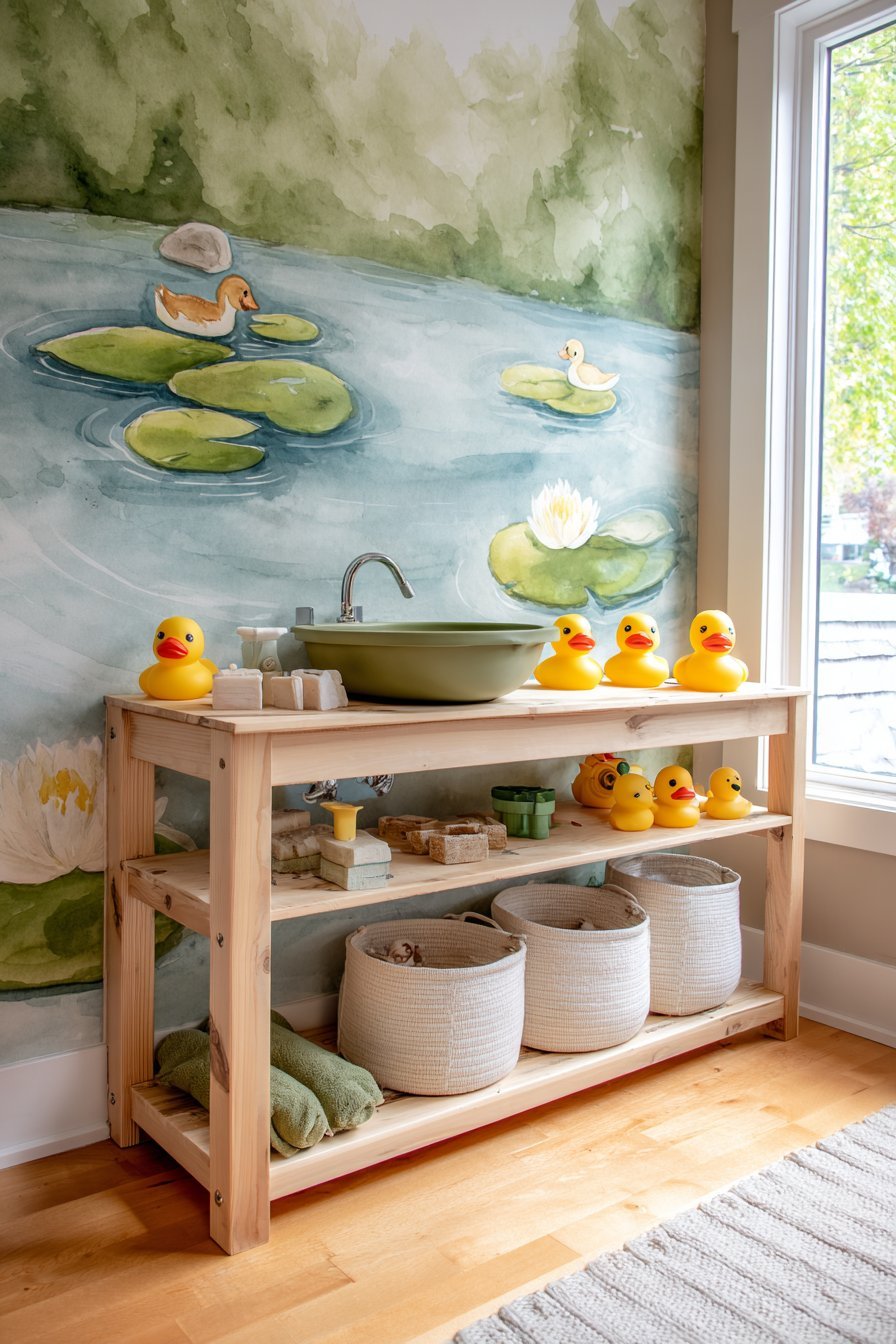
Natural window light illuminates the interactive play space throughout the day. The sensory area grows with your child from infant observation to toddler participation. This thoughtful addition recognizes that nurseries should support development through play.
Key Design Tips:
- Install waterproof flooring in play areas for easy maintenance
- Supervise all water play activities for safety
- Store cleanup supplies directly beneath play areas
- Choose realistic murals that teach observation skills
- Create dedicated spaces for different play types
15. Twin Nursery Layout
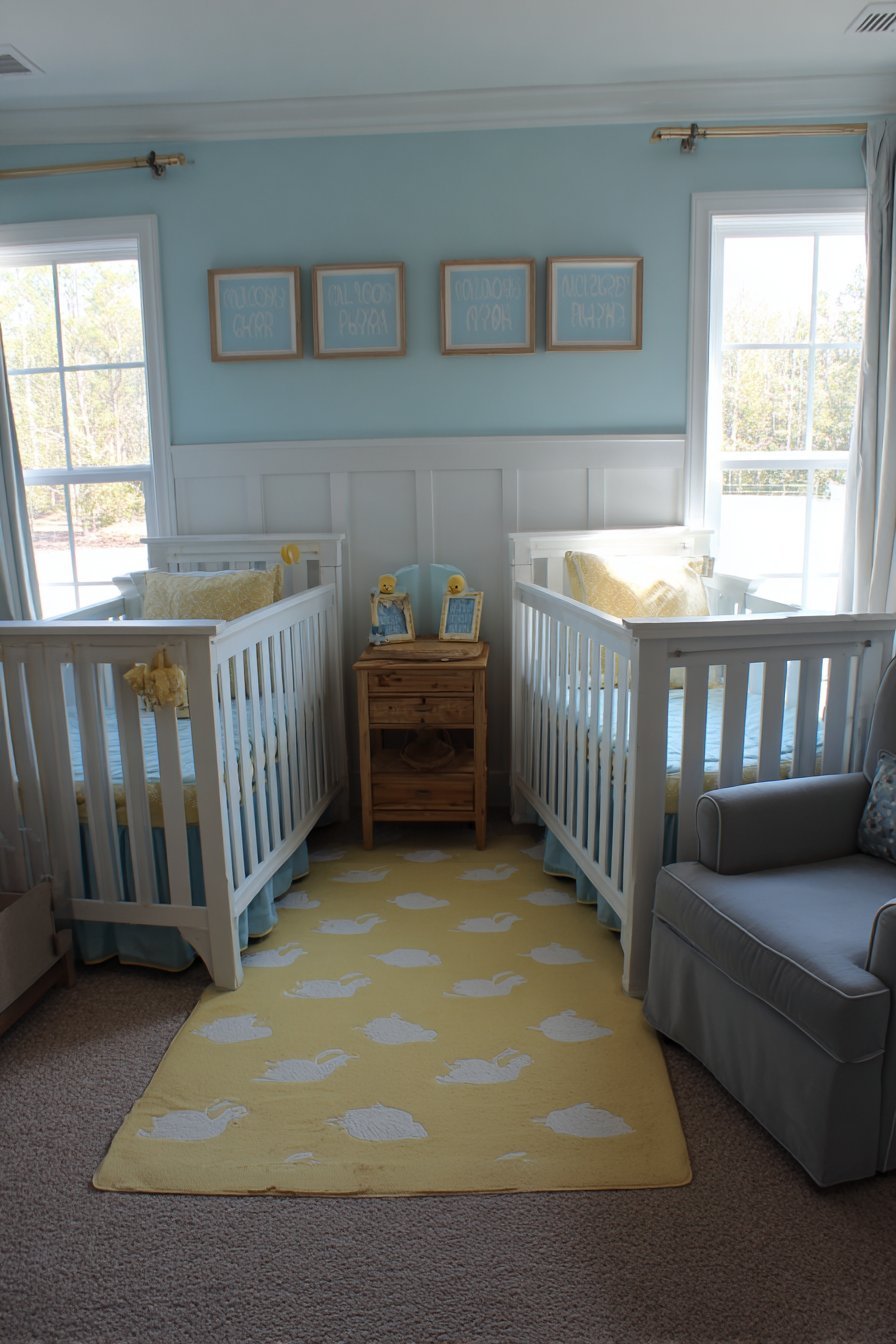
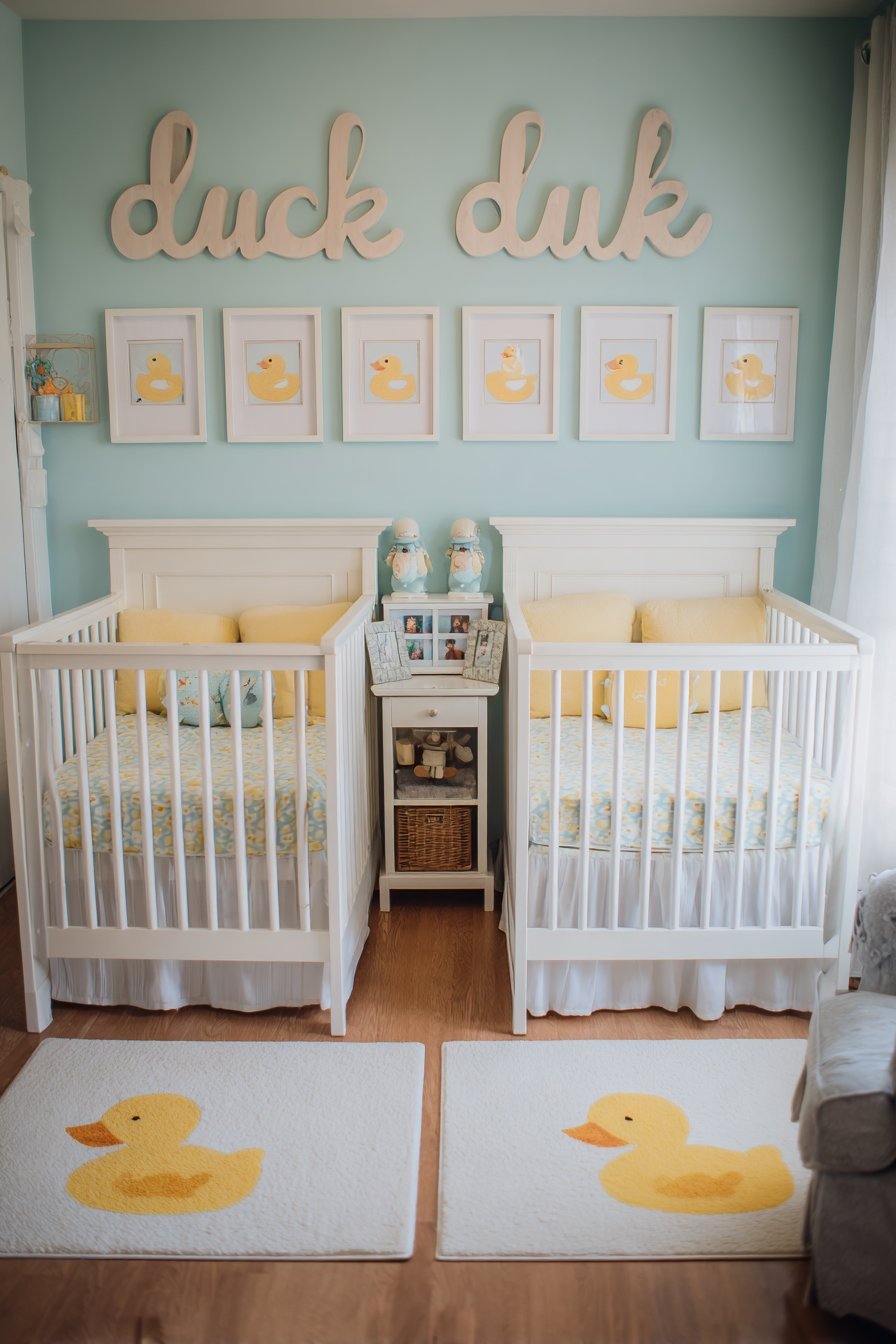
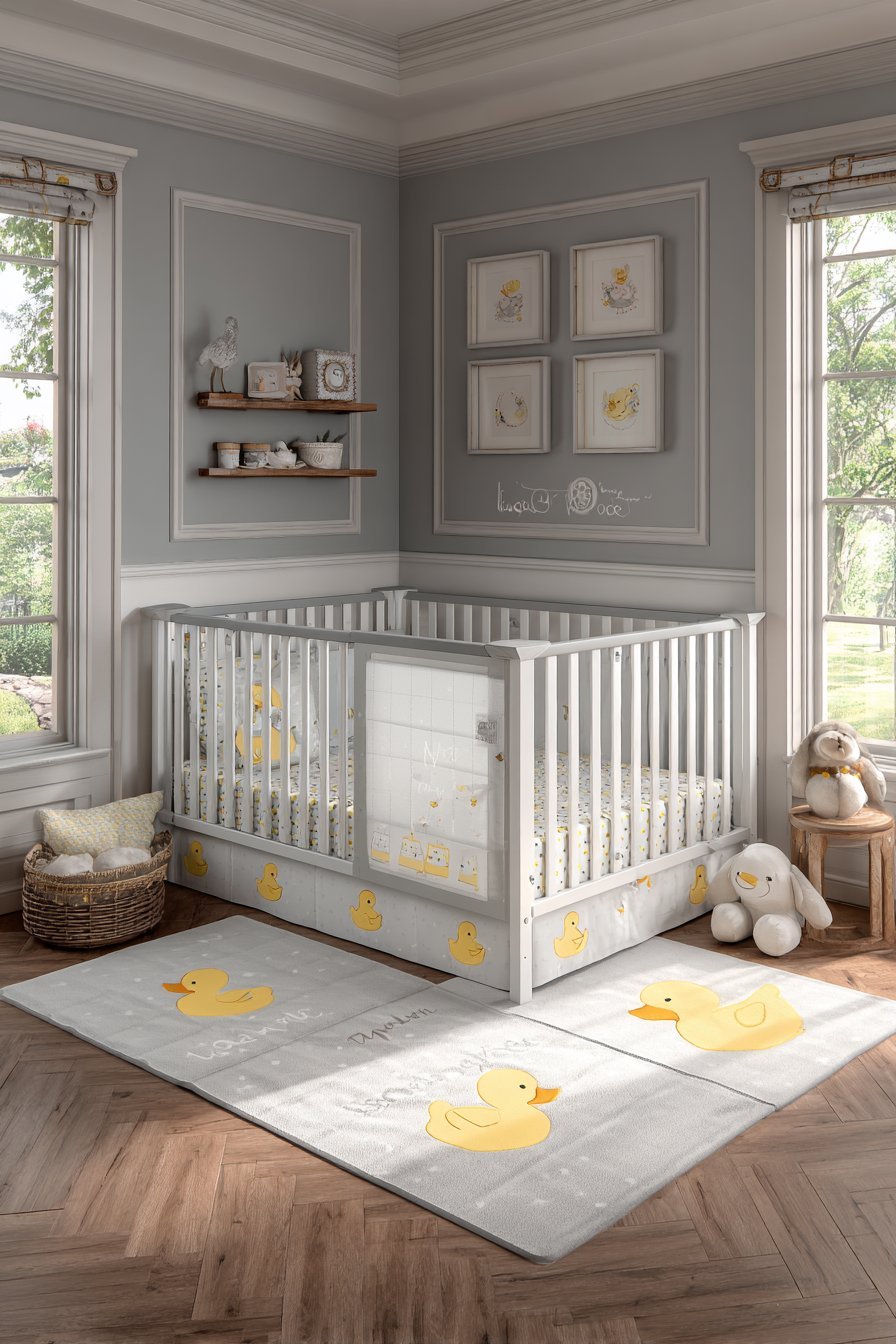
Two matching white cribs position parallel against a long powder blue wall. The symmetrical arrangement creates visual harmony for the twin space. Between the cribs sits a shared nightstand in natural oak. A duck-shaped sound machine and two identical nightlights provide comfort for both babies.
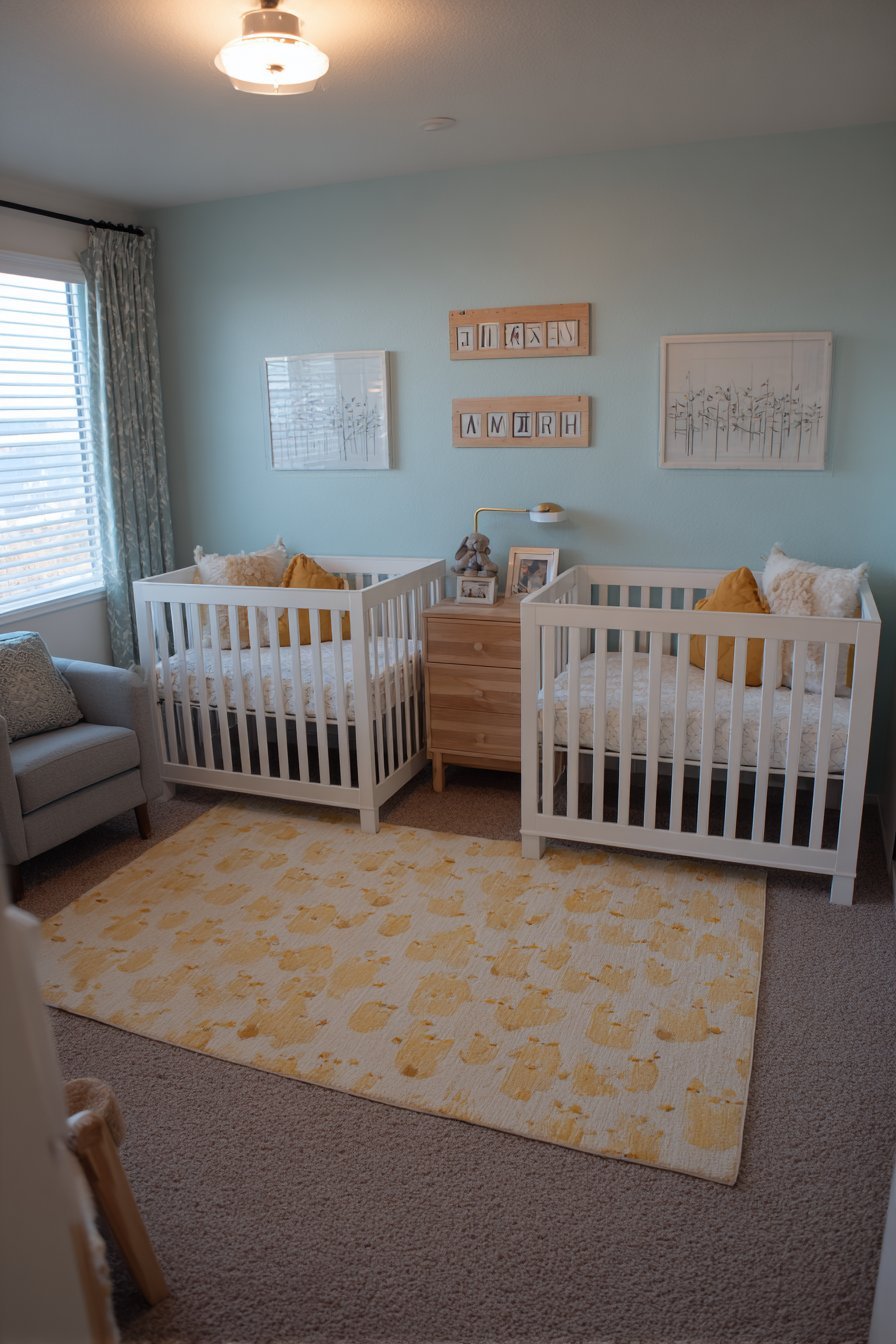
Individual name signs hang above each crib with duck illustrations incorporated into letter designs. This personalization helps differentiate spaces while maintaining cohesive design. Matching area rugs in pale yellow anchor each crib area with duck silhouettes. A shared glider chair in grey faces the cribs for simultaneous soothing.
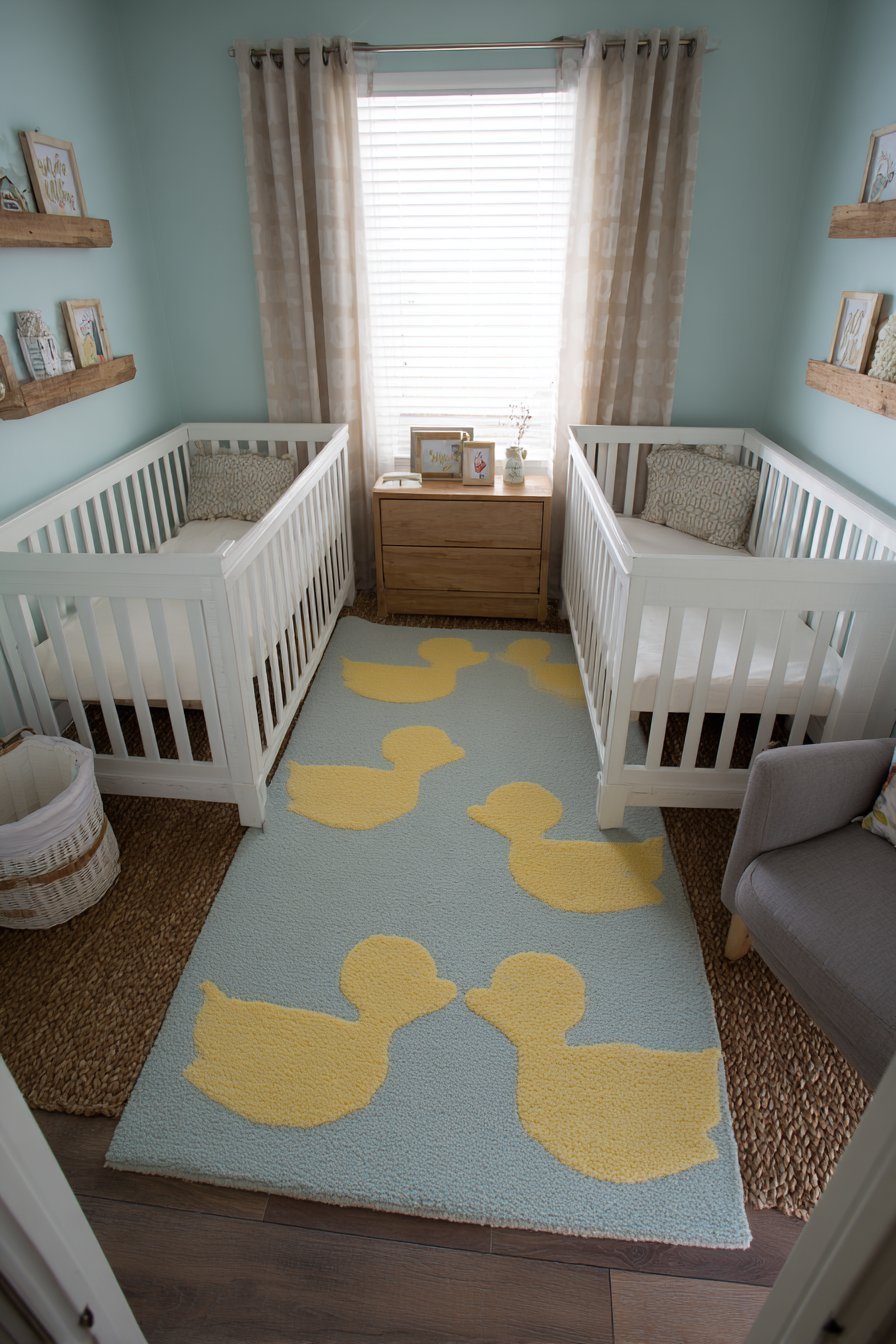
The balanced layout demonstrates thoughtful planning for double the joy. Coordinated elements create unity while personalized details honor each child’s individuality. This twin nursery proves matching doesn’t mean boring or impersonal.
Key Design Tips:
- Use symmetrical layouts in twin nurseries for visual balance
- Personalize individual spaces with names or unique details
- Share larger furniture pieces to maximize limited space
- Choose identical essential items for fairness and ease
- Position seating to view both cribs simultaneously
16. DIY Craft Corner
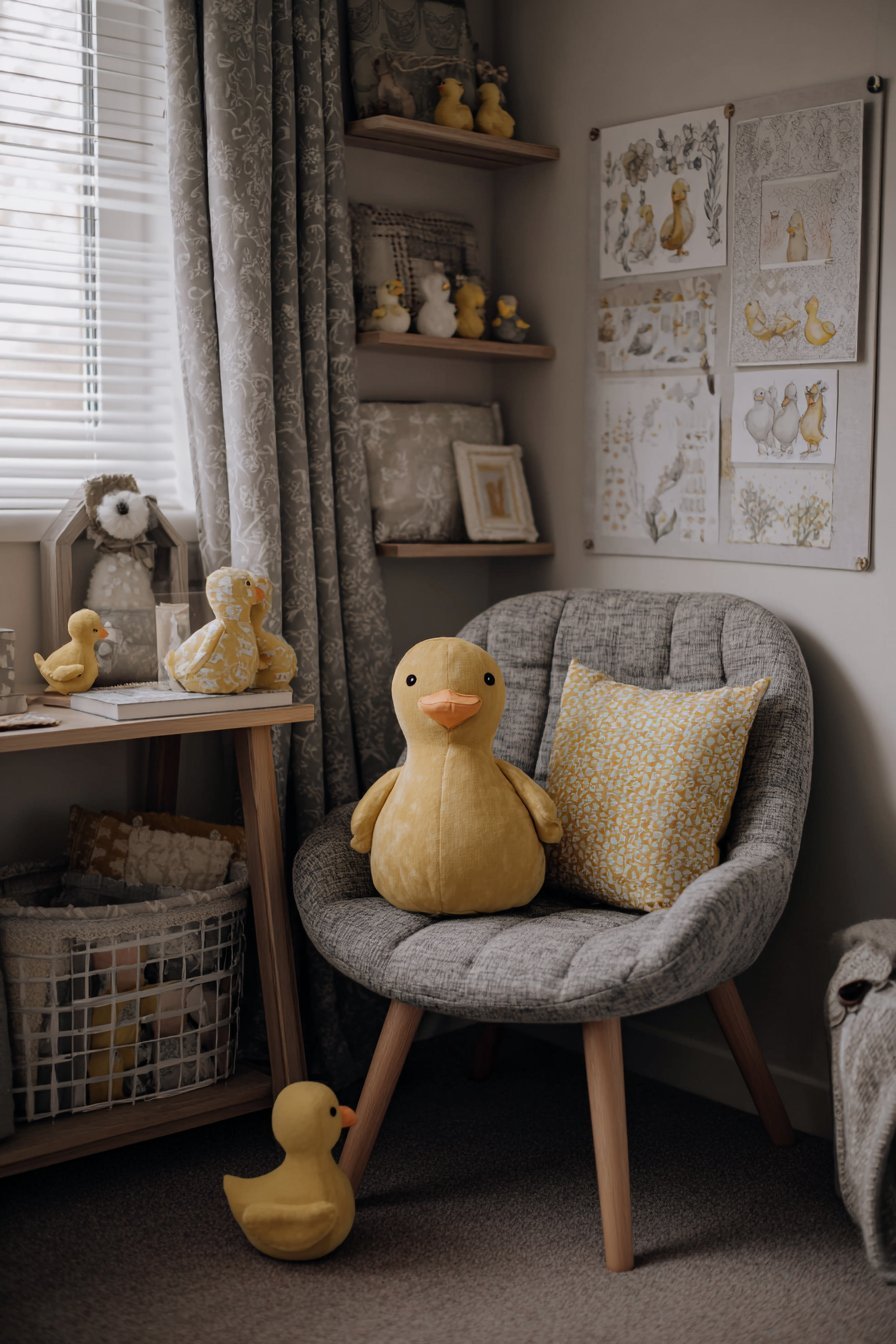
A small desk holds supplies for creating handmade duck-themed decorations. A pin board displays duck pattern templates and design inspiration. Shelves organize felt, fabric scraps, and stuffing materials by color. Completed handmade fabric ducks in various patterns sit proudly on display.
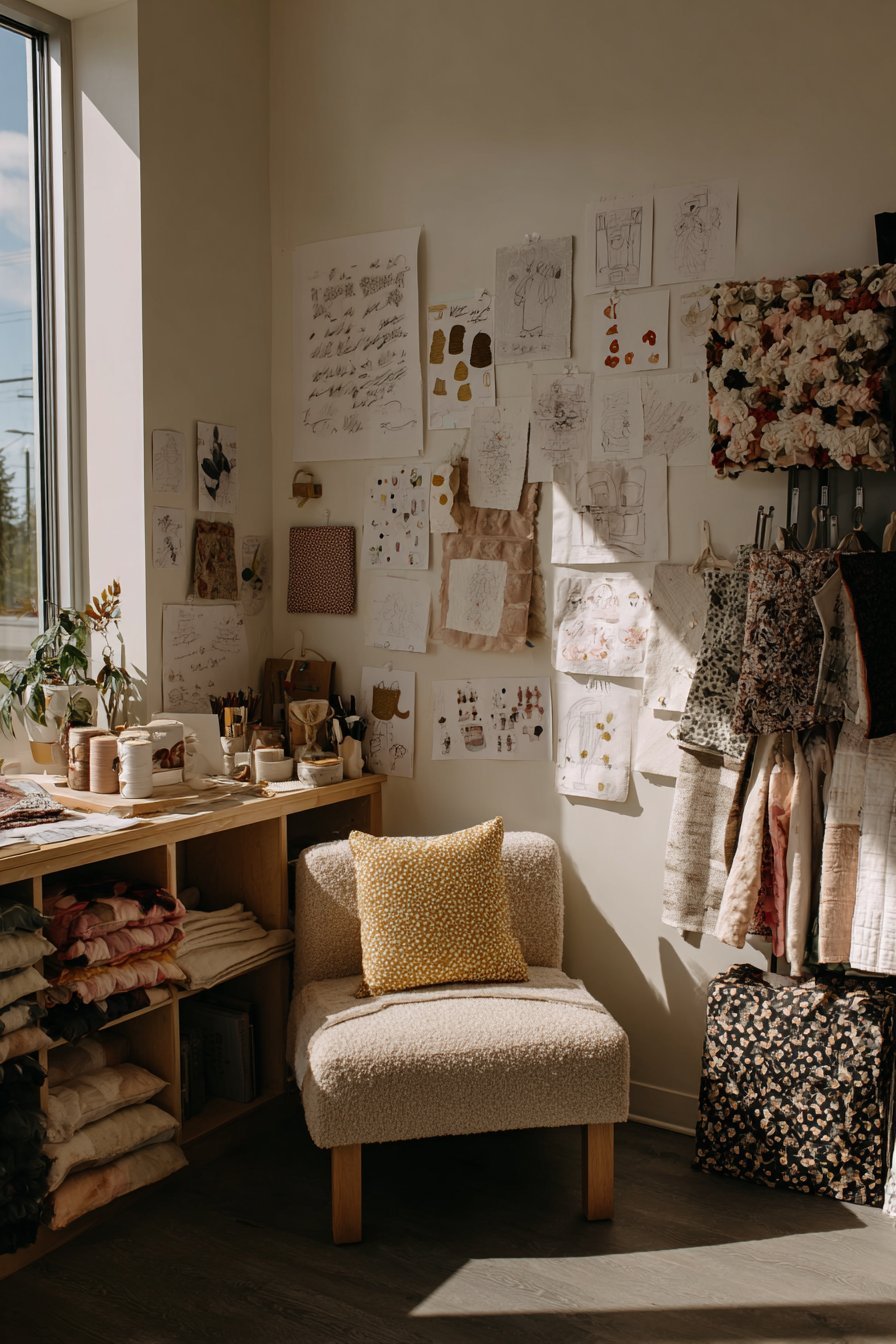
This creative workspace shows the personal touch of custom nursery preparation. A comfortable chair for crafting sits nearby encouraging hours of creative work. The wall features sketches and design ideas for additional duck elements. Natural daylight from a nearby window provides ideal crafting light.
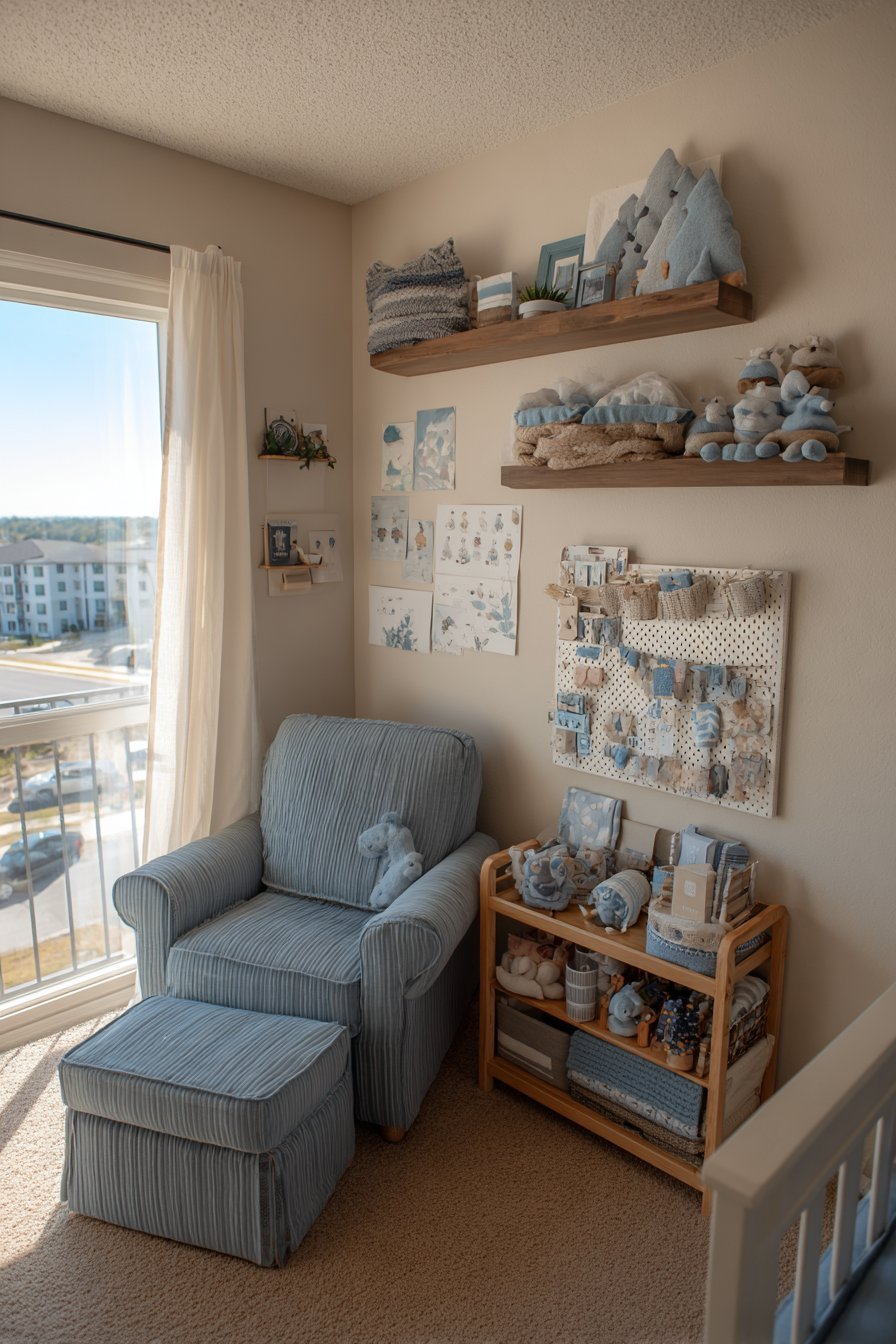
This behind-the-scenes glimpse reveals the love poured into nursery creation. The handmade elements add irreplaceable personal meaning to the space. Each custom piece tells the story of anticipation and preparation.
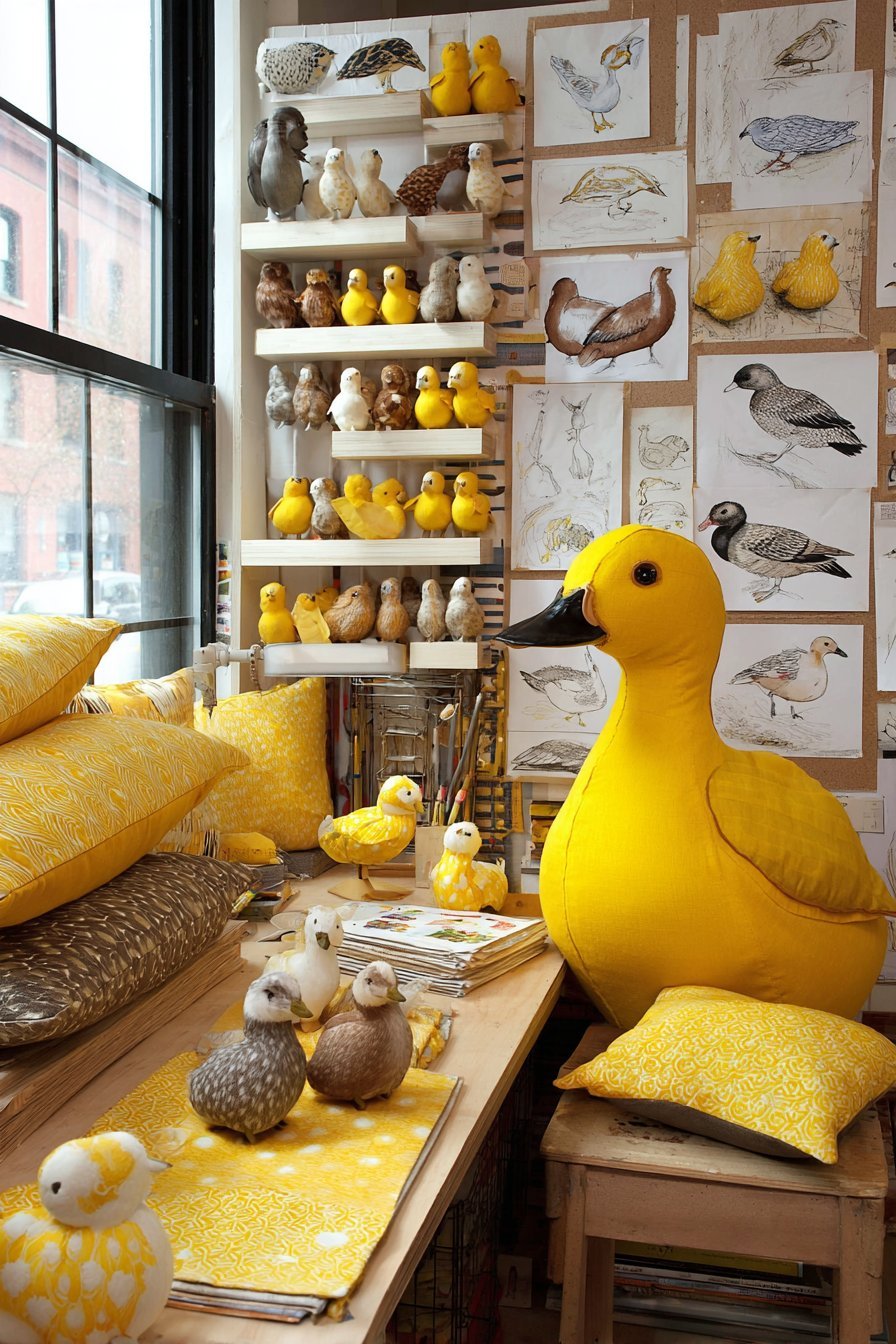
Key Design Tips:
- Dedicate space for crafting personalized nursery elements
- Organize supplies by type and color for efficient creating
- Display finished projects as motivation and inspiration
- Use pattern templates for consistent results
- Create in natural light when possible for accurate colors
17. Nighttime Lighting Ambiance
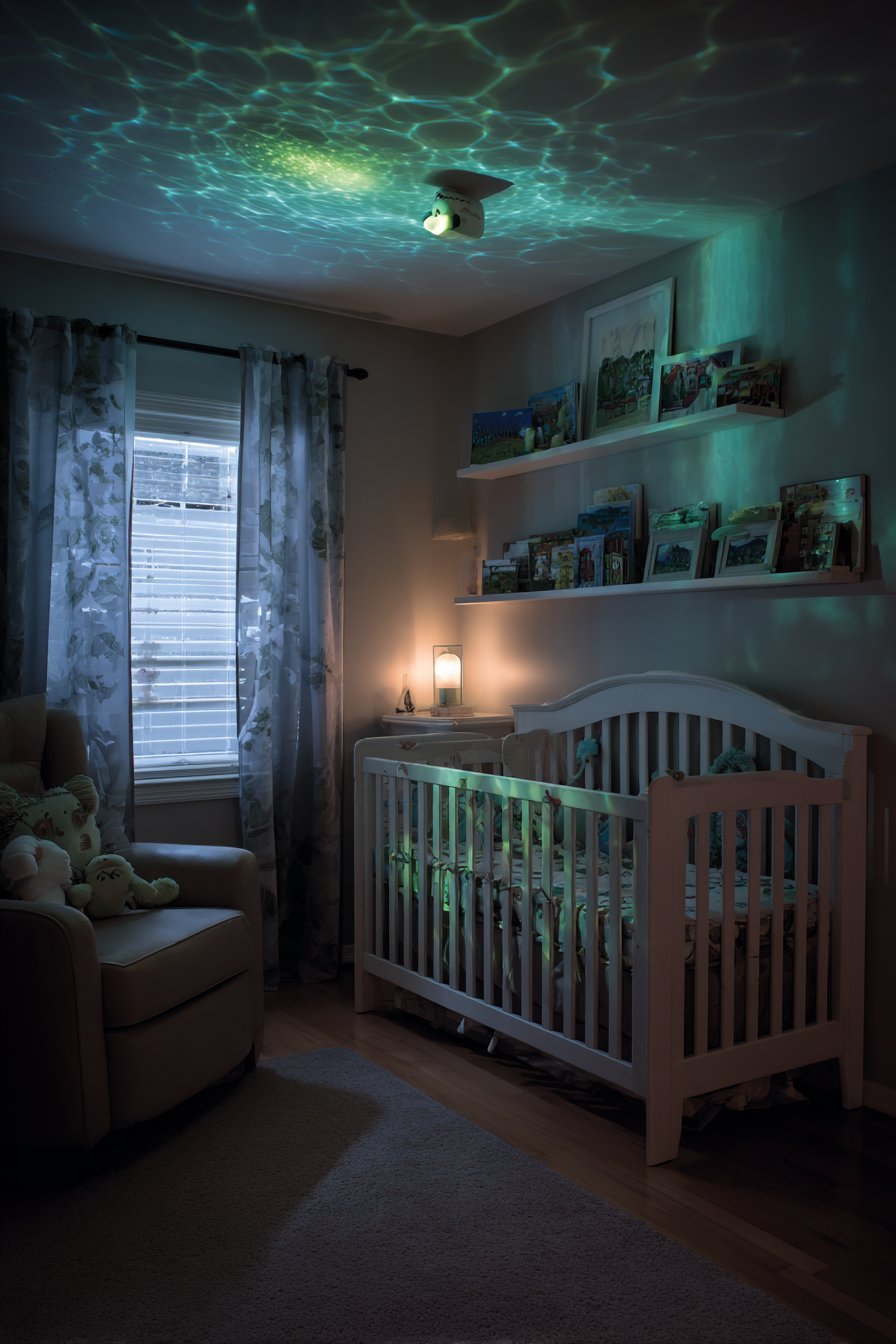
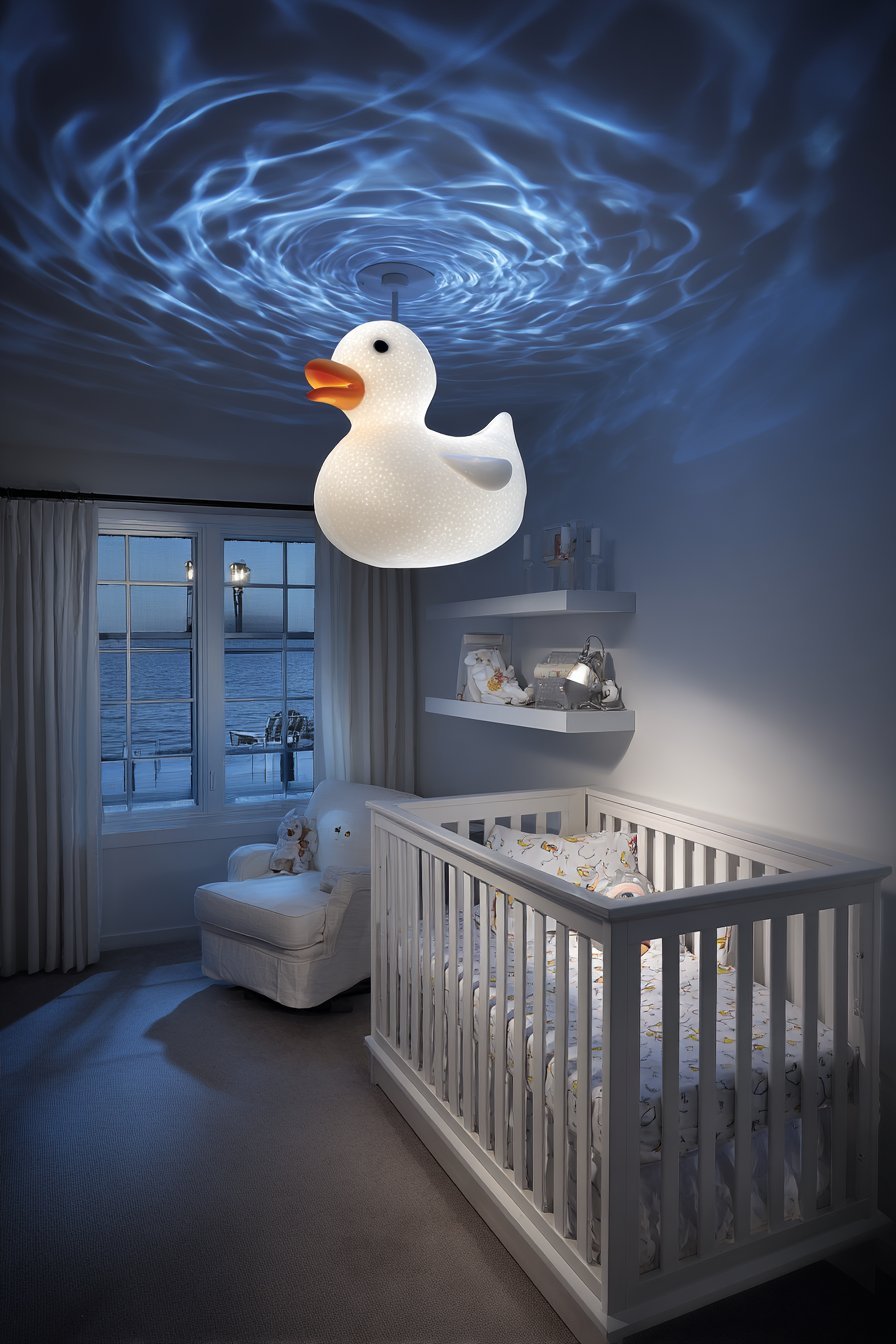
A duck-shaped projector lamp casts gentle moving water ripples on the ceiling. This mesmerizing effect soothes babies during nighttime wakings. Color-changing LED strip lights behind floating shelves create soft ambient glow. The dimmer-controlled overhead fixture allows lighting adjustment for different activities.
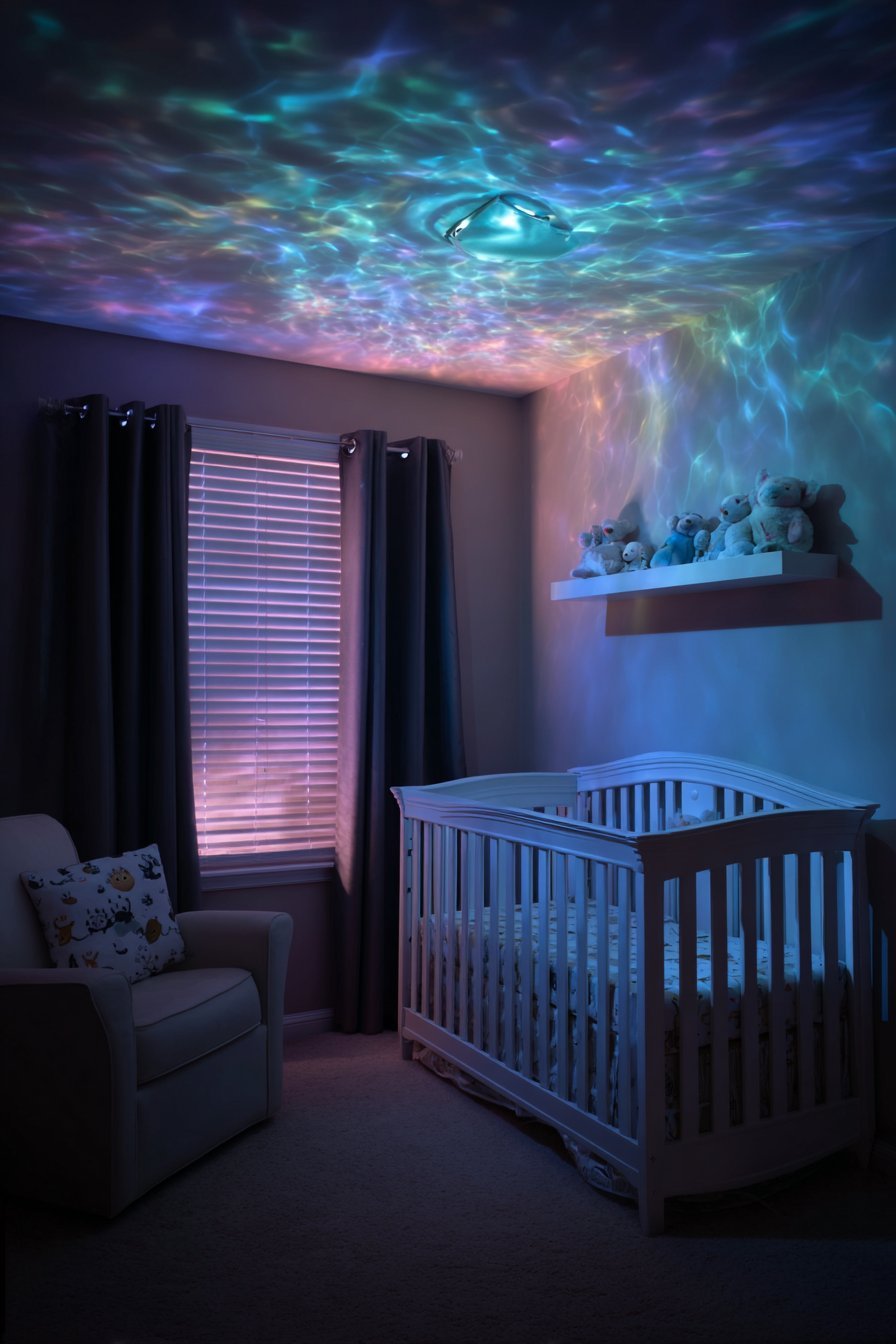
The white crib features breathable mesh sides visible in low light. Duck-printed sheets remain barely visible in the gentle illumination. A nursing chair sits in shadow with a small reading light attached. Blackout curtains with duck embroidery frame the window providing darkness when needed.
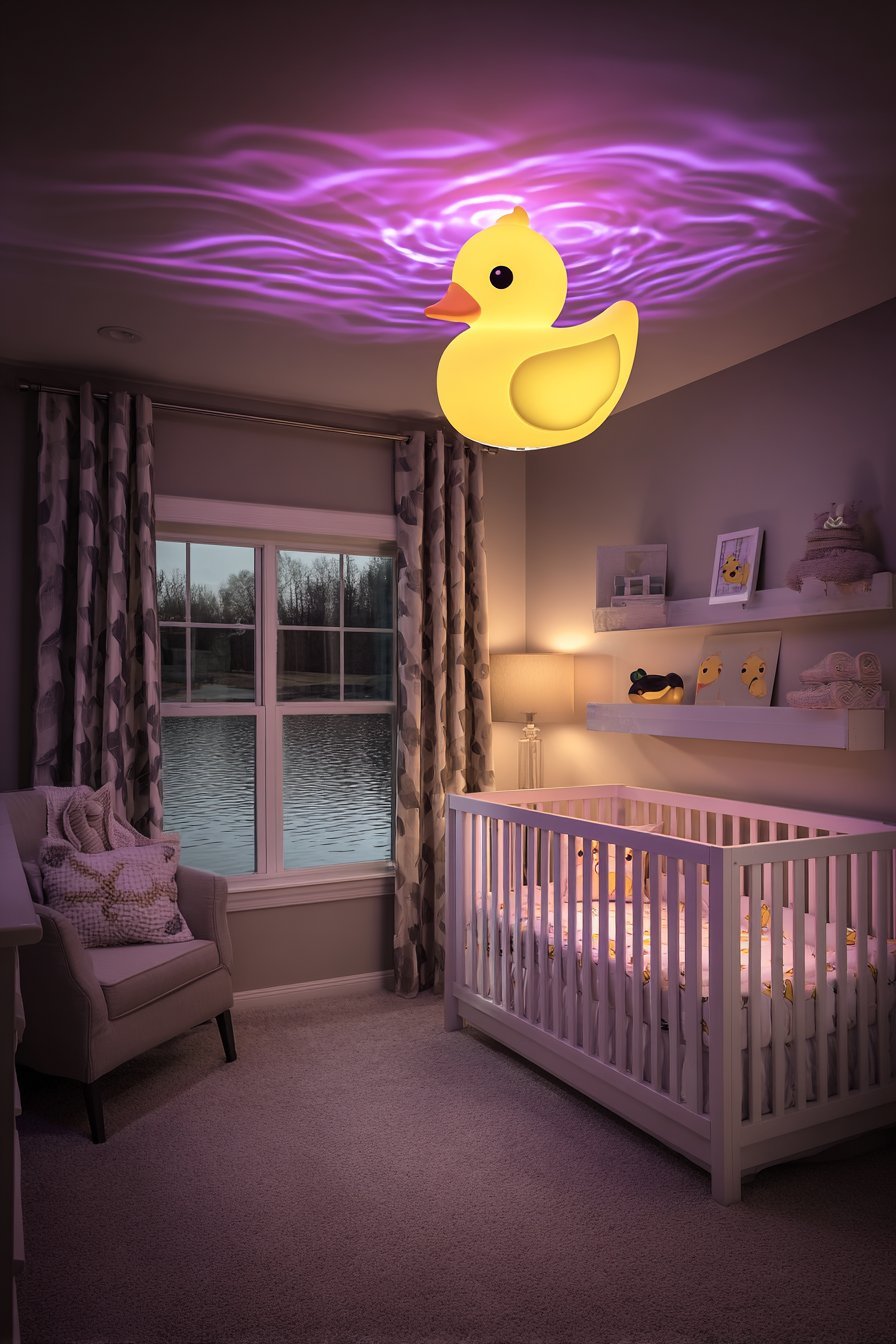
The layered lighting approach addresses every nighttime need from diaper changes to feedings. Evening sessions become less jarring with thoughtful illumination planning. The duck theme translates beautifully into functional lighting choices.
Key Design Tips:
- Layer multiple light sources for different nighttime needs
- Install dimmer switches on overhead fixtures for flexibility
- Use projector lamps that cast soothing ceiling patterns
- Attach reading lights to chairs for hands-free illumination
- Choose blackout curtains that allow complete darkness for naps
18. Safety-Focused Design Elements
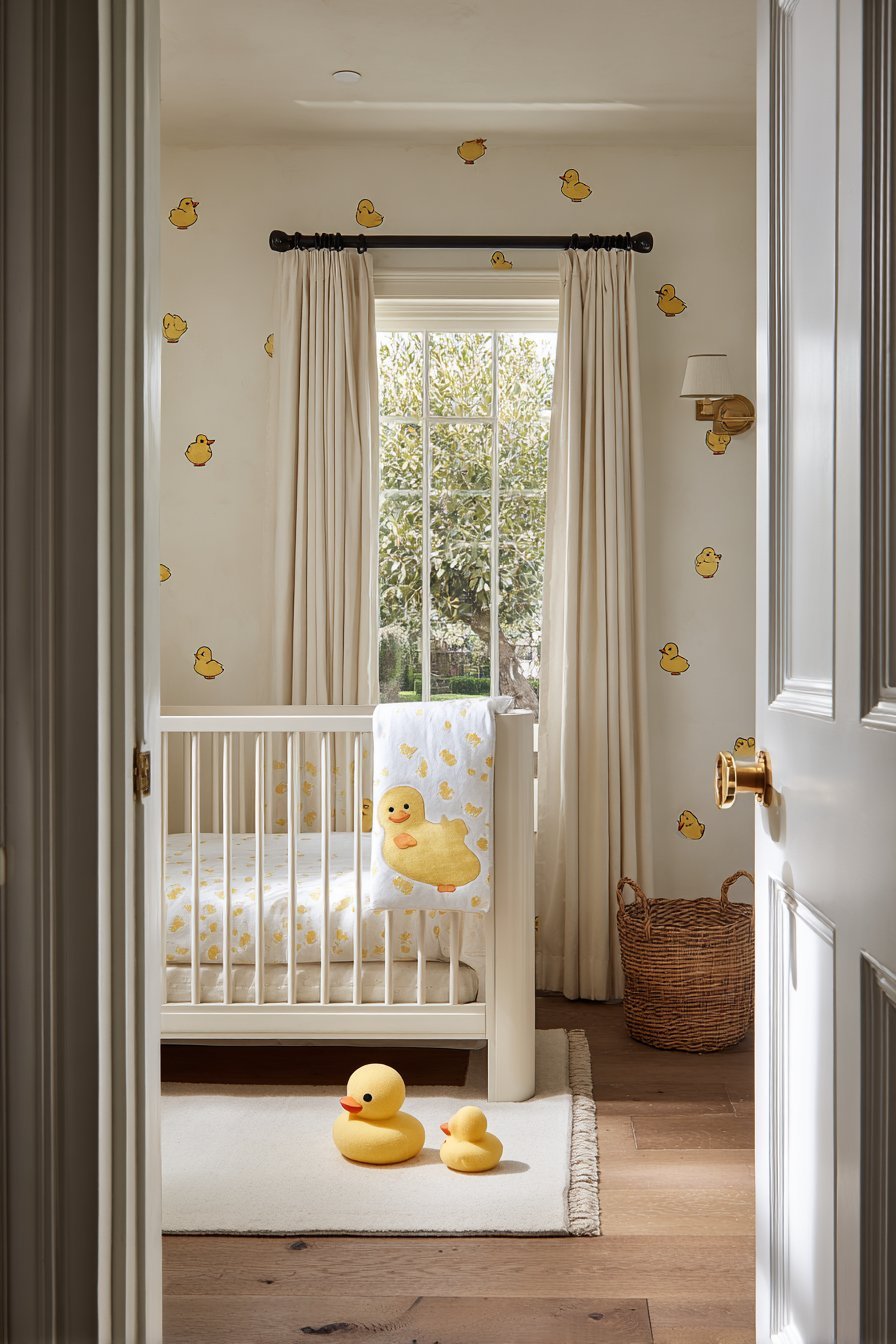
This view highlights essential safety features integrated throughout the duck nursery. The crib shows properly spaced slats preventing head entrapment. A firm mattress with fitted duck sheet ensures safe sleep standards. Outlet covers with duck stickers maintain theme while protecting curious fingers.
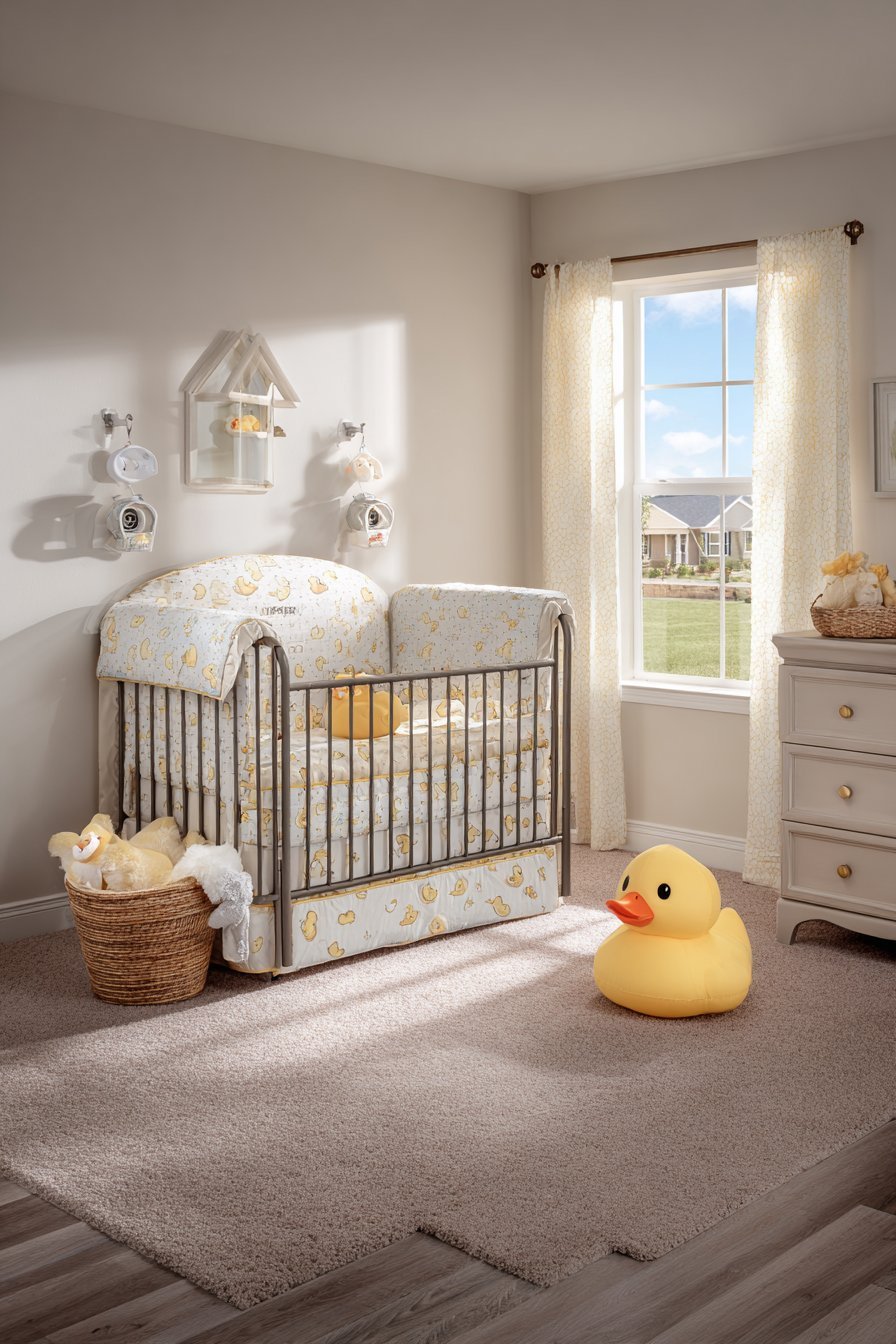
A baby monitor with duck-shaped camera housing mounts securely to the wall. Corner guards on furniture edges prevent bumps and injuries. A properly anchored dresser displays visible anti-tip straps providing peace of mind. A safety gate in the doorway features duck decals maintaining design cohesion.
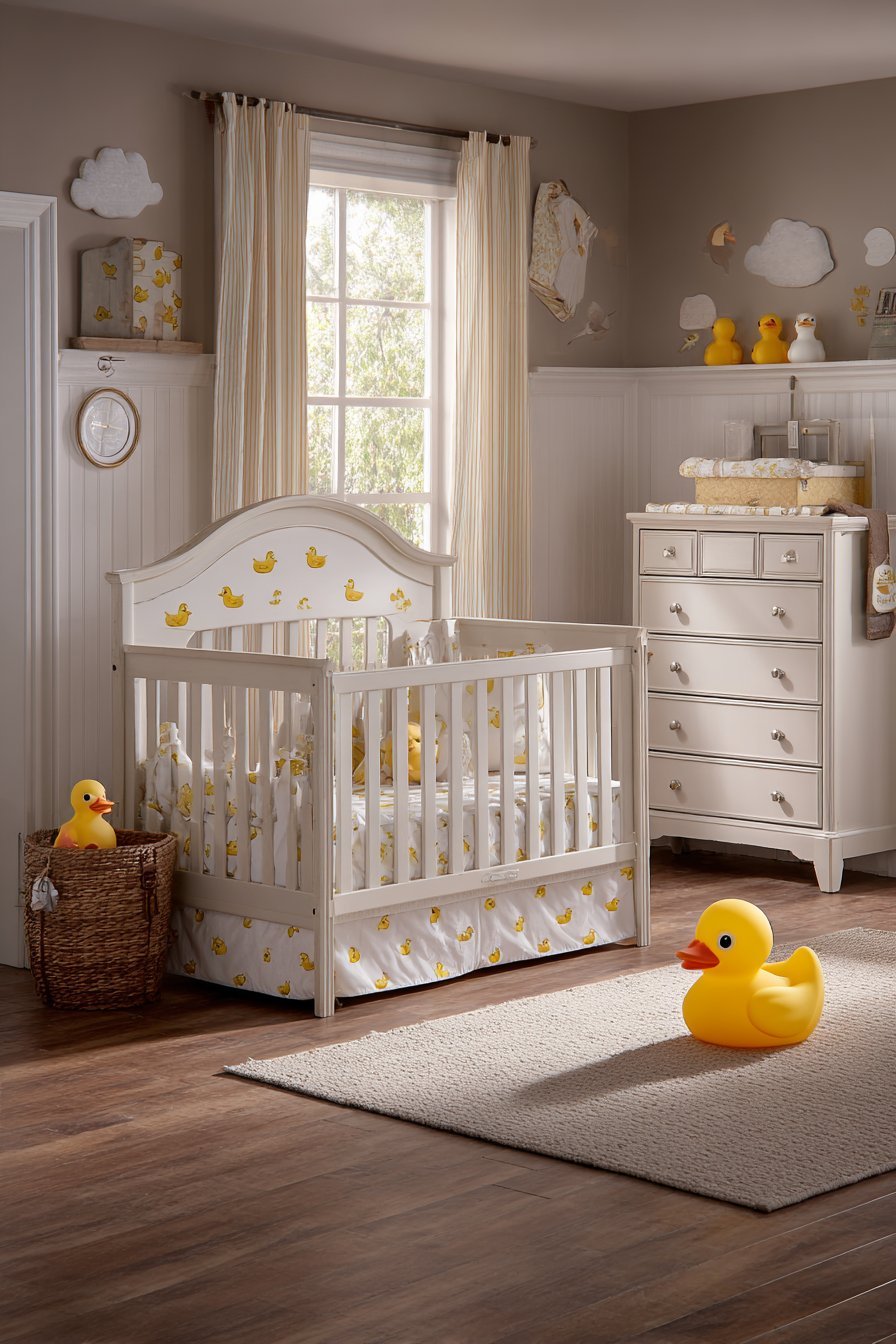
Soft foam edge protectors line the window sill guarding against sharp corners. These safety measures don’t compromise the decorative theme but enhance it. Every element demonstrates that beautiful nurseries can be completely child-safe.
Key Design Tips:
- Ensure crib slats are no more than 2.375 inches apart
- Anchor all tall furniture to walls with anti-tip straps
- Cover all electrical outlets with protective covers
- Install safety gates at doorways and stairs
- Add corner guards to furniture with sharp edges
19. Budget-Friendly DIY Approach
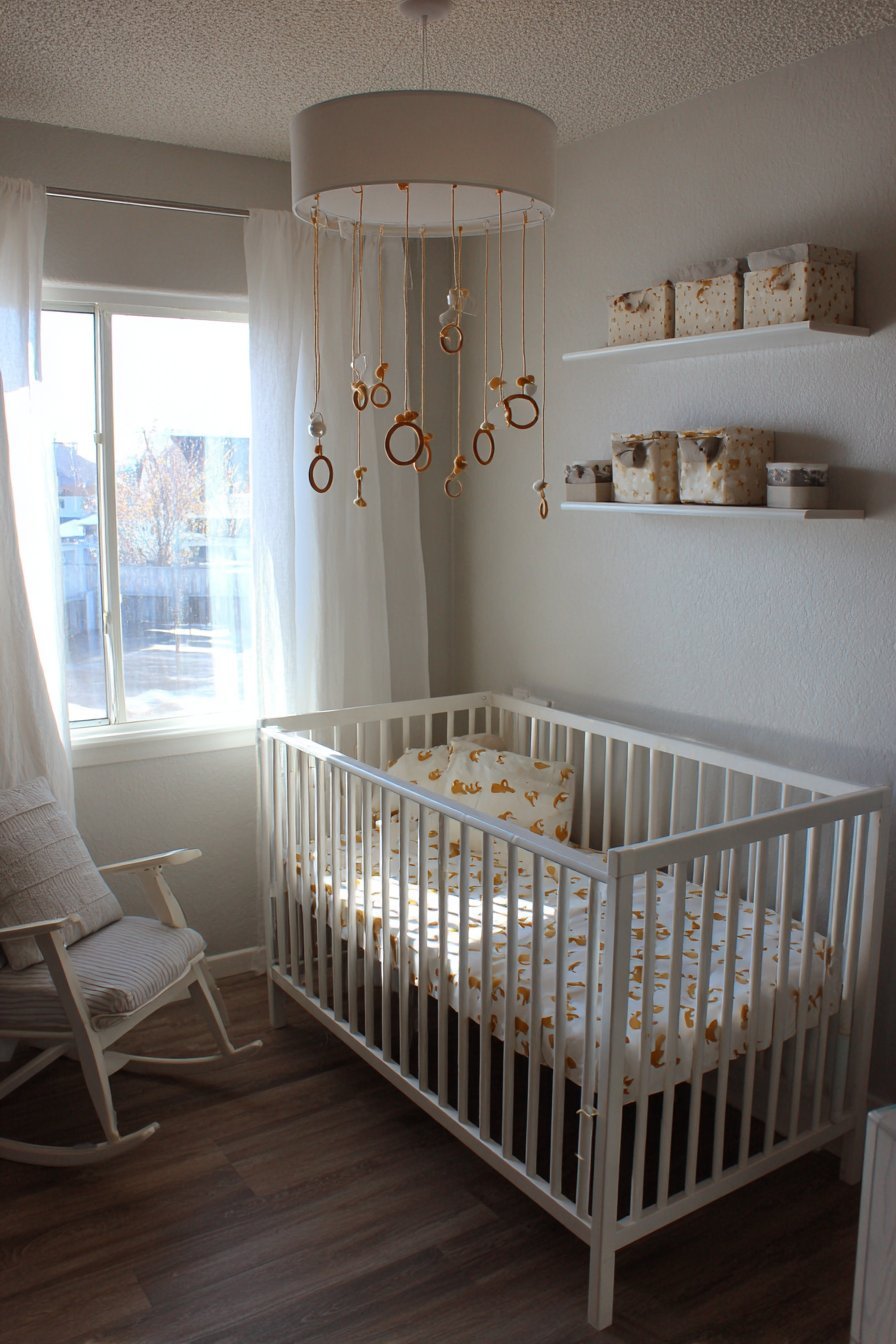
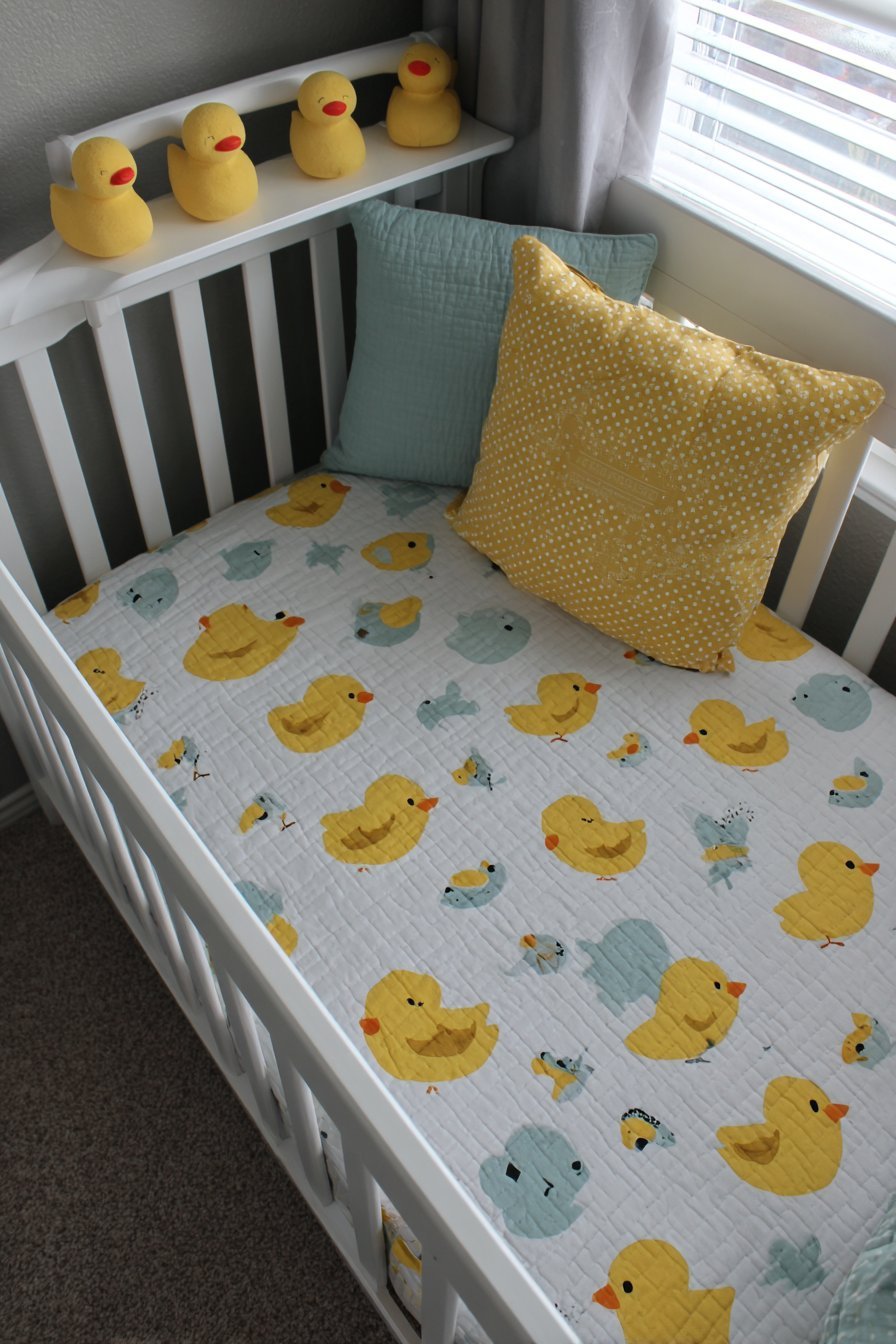
A refinished secondhand crib painted in fresh white proves budget beauty. New duck-printed bedding updates the vintage frame completely. Handmade duck wall art created from canvas and acrylic paint costs minimal investment. Repurposed vintage duck figurines from thrift stores arrange charmingly on painted shelves.
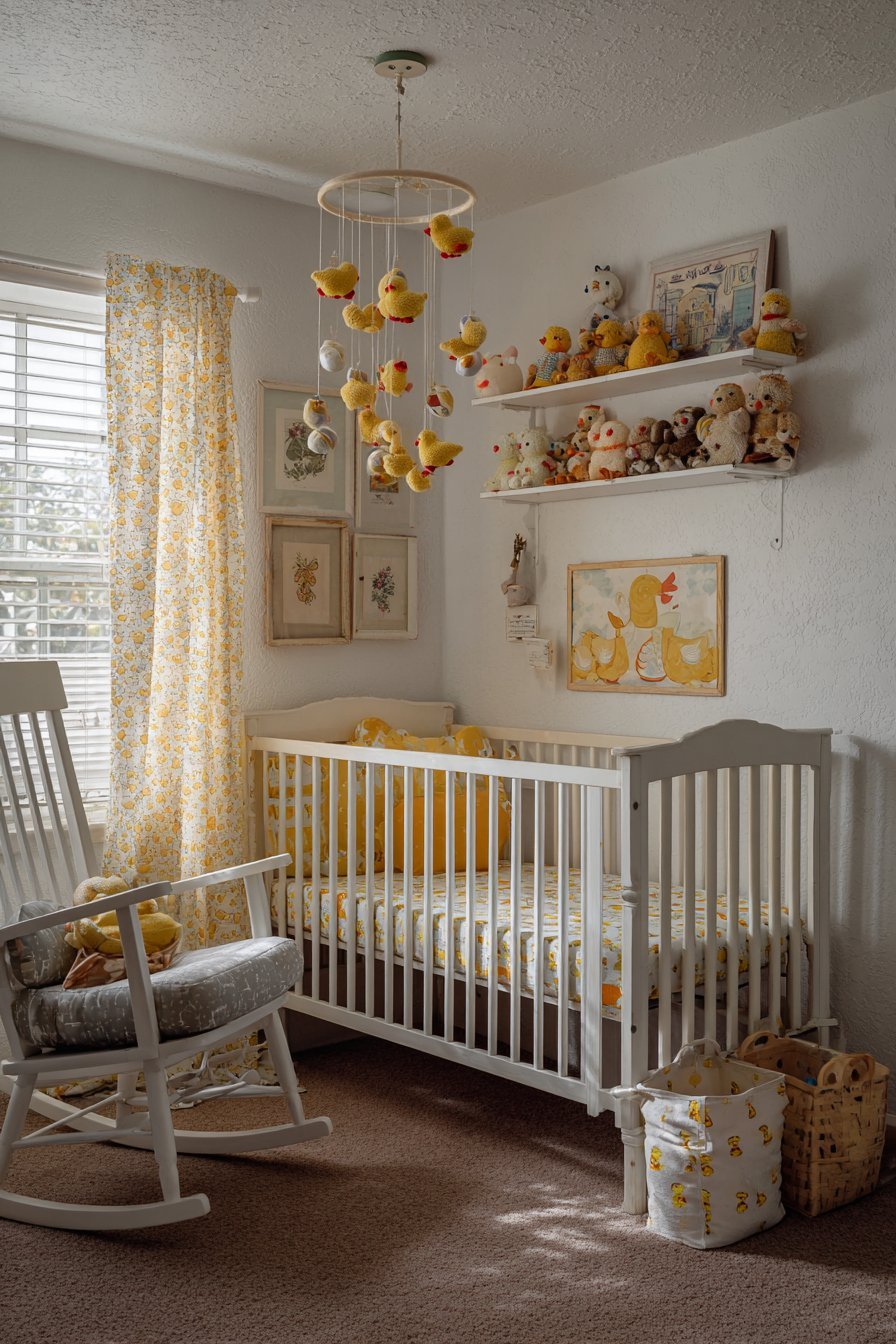
A DIY mobile made from craft store wooden ducks and embroidery hoops hangs above. Fabric storage bins sewn from discount duck-printed material provide functional organization. A yard sale rocking chair refinished in soft grey features a recovered cushion. These creative thrifty solutions prove style doesn’t require huge budgets.
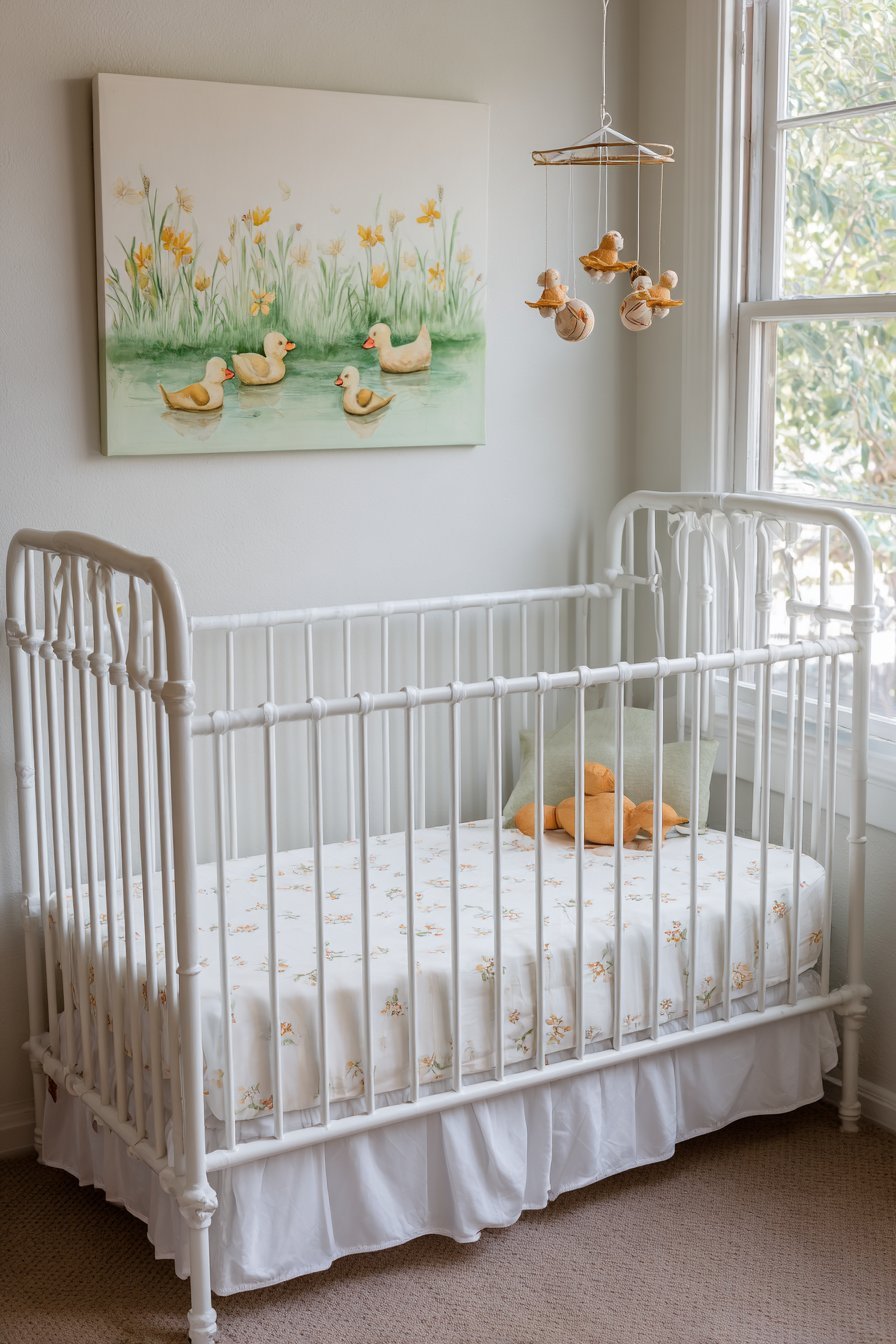
The personal creativity and resourcefulness shine through every element. This approach demonstrates that beautiful nurseries come from imagination rather than unlimited funds. The handmade quality adds irreplaceable charm and meaning.
Key Design Tips:
- Refinish secondhand furniture with fresh paint for new life
- Create art using canvas and inexpensive acrylic paints
- Shop thrift stores and yard sales for vintage treasures
- Make your own mobiles using craft store supplies
- Sew simple storage solutions from discount fabric remnants
20. Adaptable Transitional Design
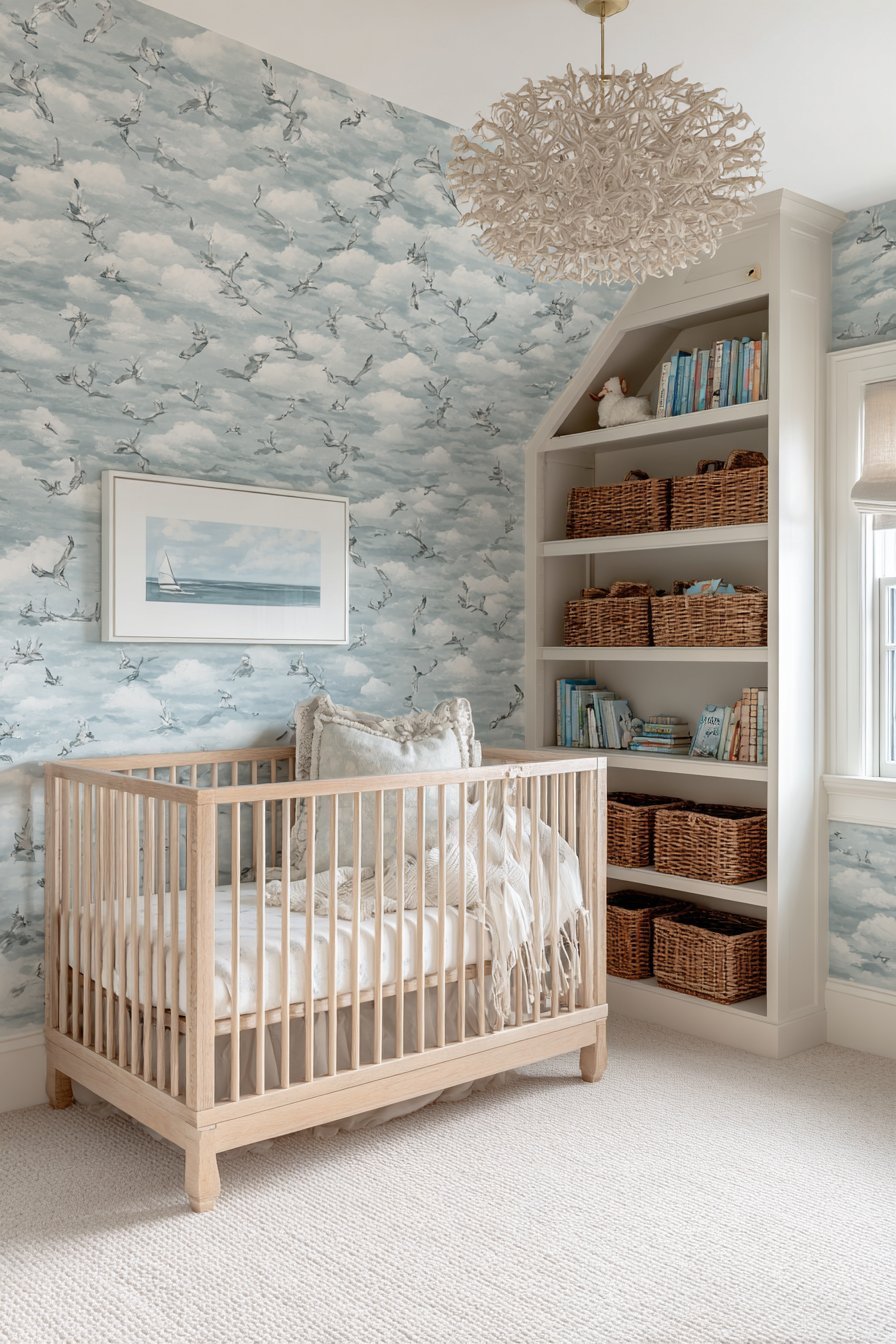
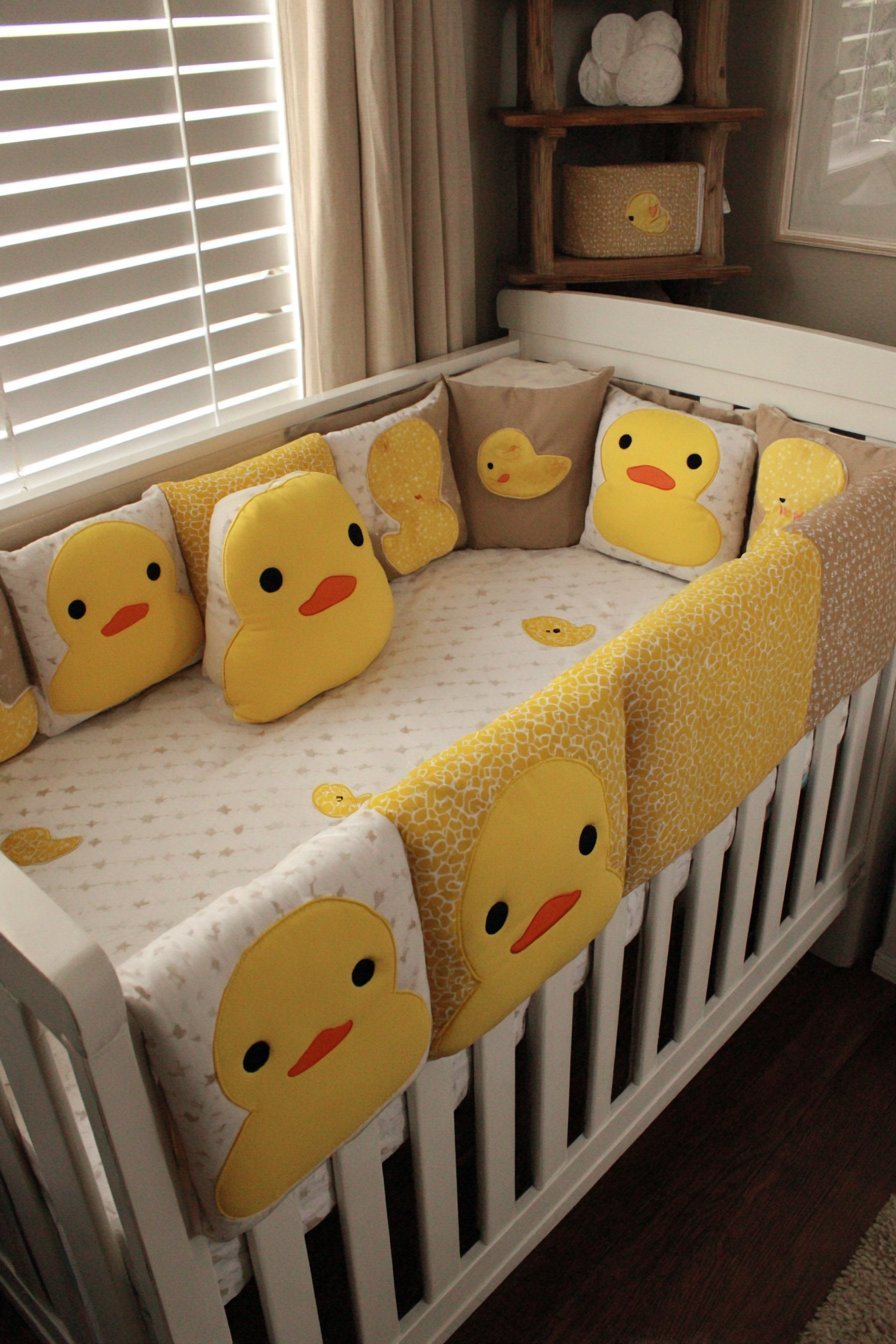
A convertible crib transforms from infant bed to toddler bed with duck-themed rails. This investment piece grows with your child through multiple stages. Wall decals remove easily and replace as tastes mature over years. A classic wooden bookshelf transitions from board books to chapter books seamlessly.
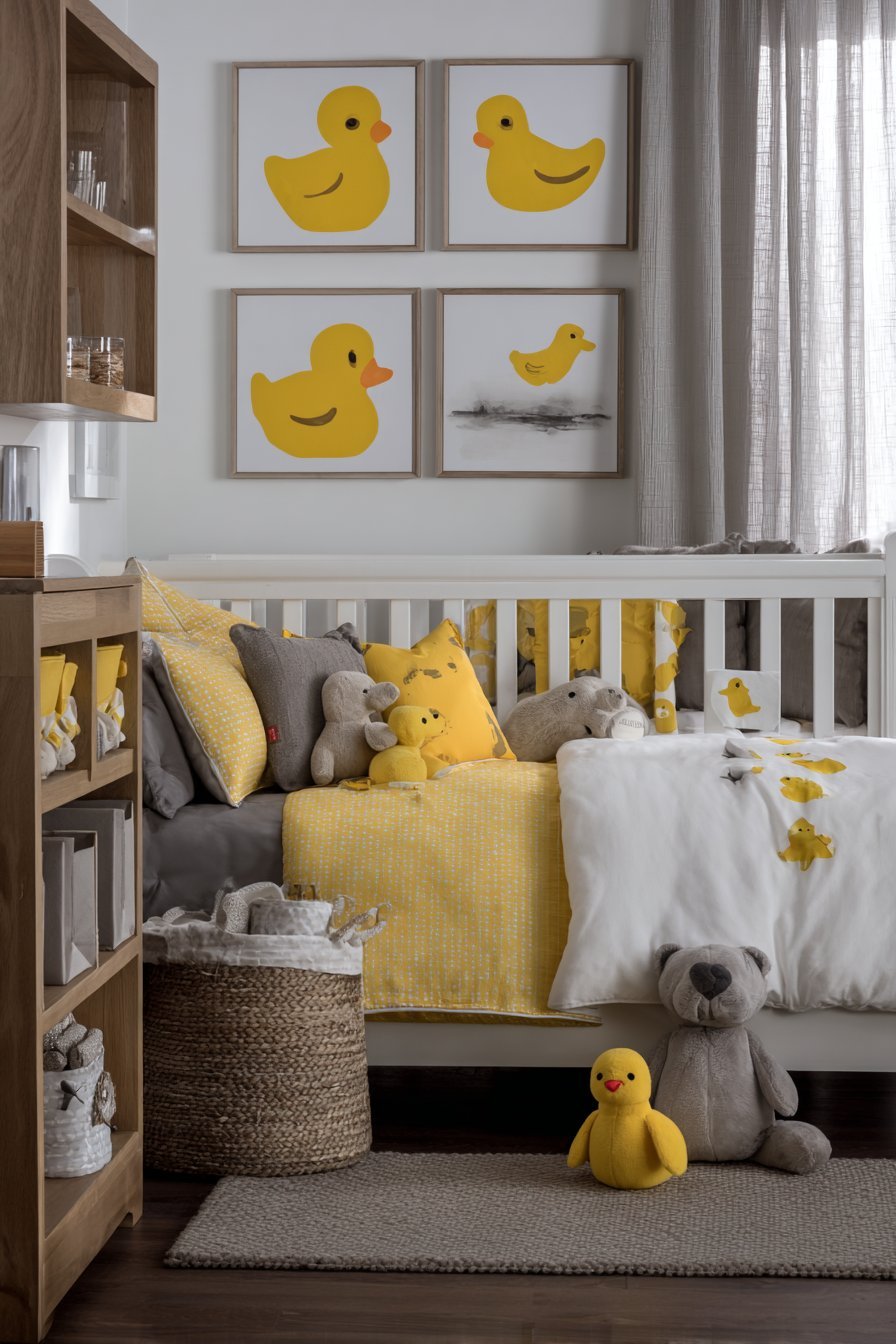
Storage solutions feature removable duck-printed bin liners swappable for solid colors. Neutral base furniture in white and natural wood works beyond baby years. The duck theme incorporates through easily changeable textiles and accessories. This strategic approach protects your furniture investment long-term.
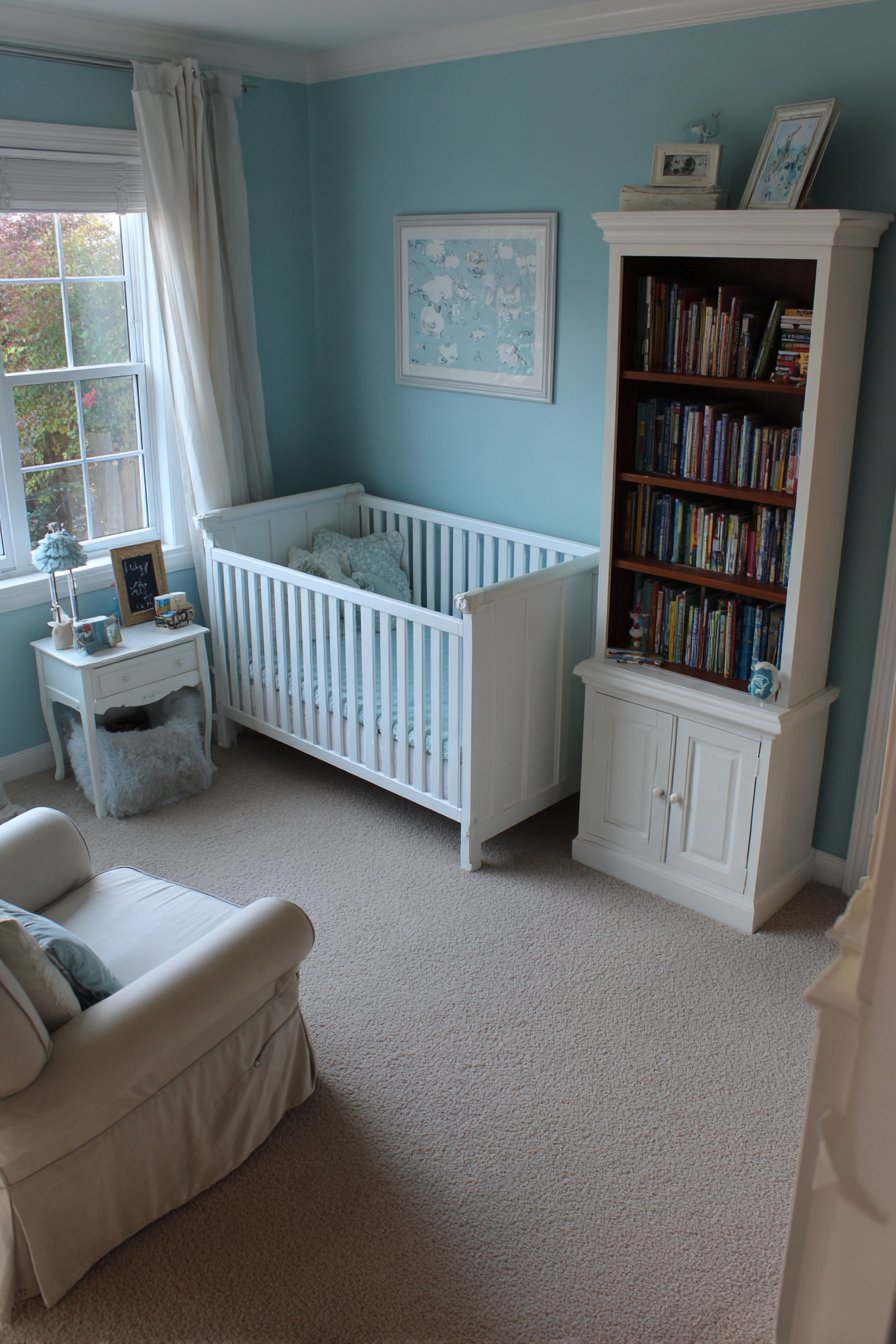
Quality pieces transcend the specific theme while currently embracing it fully. The flexible decorative elements allow personality evolution without complete room overhauls. This forward-thinking design saves money and reduces waste over time.
Key Design Tips:
- Invest in convertible furniture that adapts as children grow
- Use removable decorations like decals instead of permanent paint
- Choose neutral base furniture in timeless styles
- Incorporate themes through textiles and accessories rather than furniture
- Select quality pieces that justify higher upfront costs through longevity
Why These Duck Nursery Designs Are the Best
These duck nursery designs represent the finest approaches to creating nurturing, beautiful spaces for newborns. Each concept demonstrates thoughtful consideration of color theory, material selection, and spatial planning. The designs showcase remarkable versatility adapting to various styles from vintage charm to modern minimalism.
The incorporation of natural materials like oak wood, organic cotton, and Belgian linen prioritizes baby safety and comfort. These sustainable choices create healthier environments free from harmful chemicals. The soft color palettes featuring yellow, blue, and sage green promote calm and restful sleep.
The duck theme provides timeless appeal that transcends passing trends. Unlike characters that children quickly outgrow, ducks offer gentle whimsy appropriate for infants through toddlers. The designs demonstrate how themes can be sophisticated rather than cartoonish through artistic interpretation.
Practical functionality integrates seamlessly with aesthetic beauty throughout these concepts. Changing stations, storage solutions, and safety features receive equal attention to decorative elements. The designs recognize that nurseries must support daily caregiving routines while inspiring joy.
The adaptable nature of these concepts allows personalization for different budgets and spaces. Whether creating DIY projects or investing in custom wallpaper, the duck theme accommodates various approaches. Small nurseries and spacious rooms both benefit from these scalable design principles.
Conclusion
These duck nursery designs demonstrate that thoughtful planning creates spaces both functional and enchanting. The key takeaways include the importance of natural materials, soothing color palettes, and adaptable furniture. Quality pieces combined with personal touches create rooms that nurture development and family bonding.
Successful nursery design balances immediate needs with long-term flexibility. Start by selecting one concept that resonates with your personal style. Your dream duck nursery awaits creation through careful planning and creative expression.
