
Creating a cottage backyard transforms your outdoor space into a romantic retreat. This design approach celebrates natural beauty and timeless charm. The combination of weathered materials and abundant plantings creates magical garden environments.
Cottage backyards have captivated homeowners seeking peaceful outdoor sanctuaries. They offer an escape from modern life’s fast pace. The generous layered plantings and vintage elements create memorable spaces for relaxation and entertaining. These designs honor traditional gardening practices while remaining relevant for contemporary living.
The following concepts showcase diverse approaches to cottage backyard design. Each space demonstrates how weathered materials, climbing vines, and informal plantings work together harmoniously. From productive vegetable gardens to romantic dining areas, these ideas celebrate the cottage aesthetic’s versatility and enduring appeal.
1. English Garden Flagstone Pathway

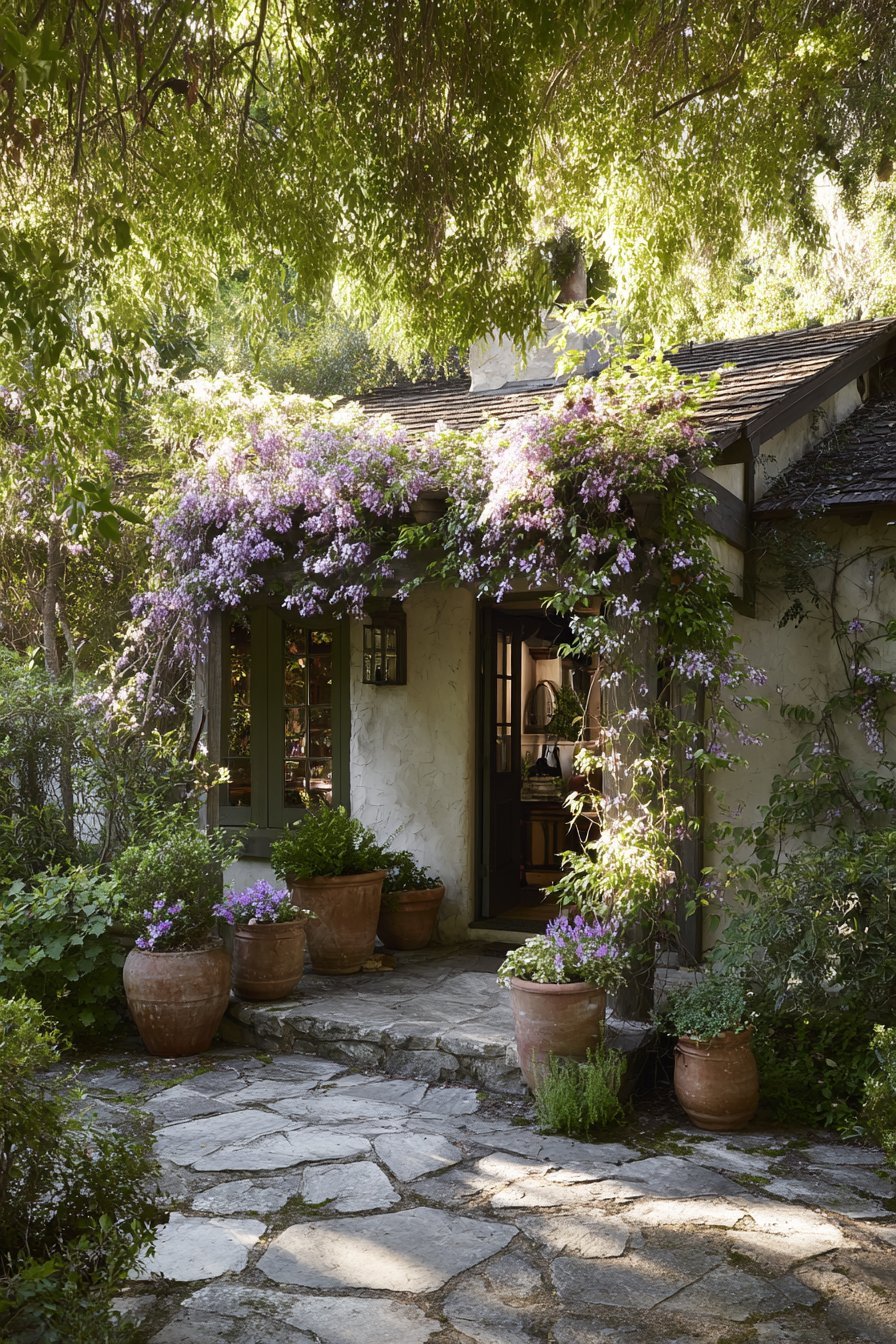
A curved flagstone pathway winds gracefully through abundant cottage plantings. Lavender, roses, and climbing jasmine create layers of color and fragrance. The natural stone’s irregular shapes add organic character to the garden. A weathered wooden arbor draped with clematis vines marks the entrance to a small patio area.
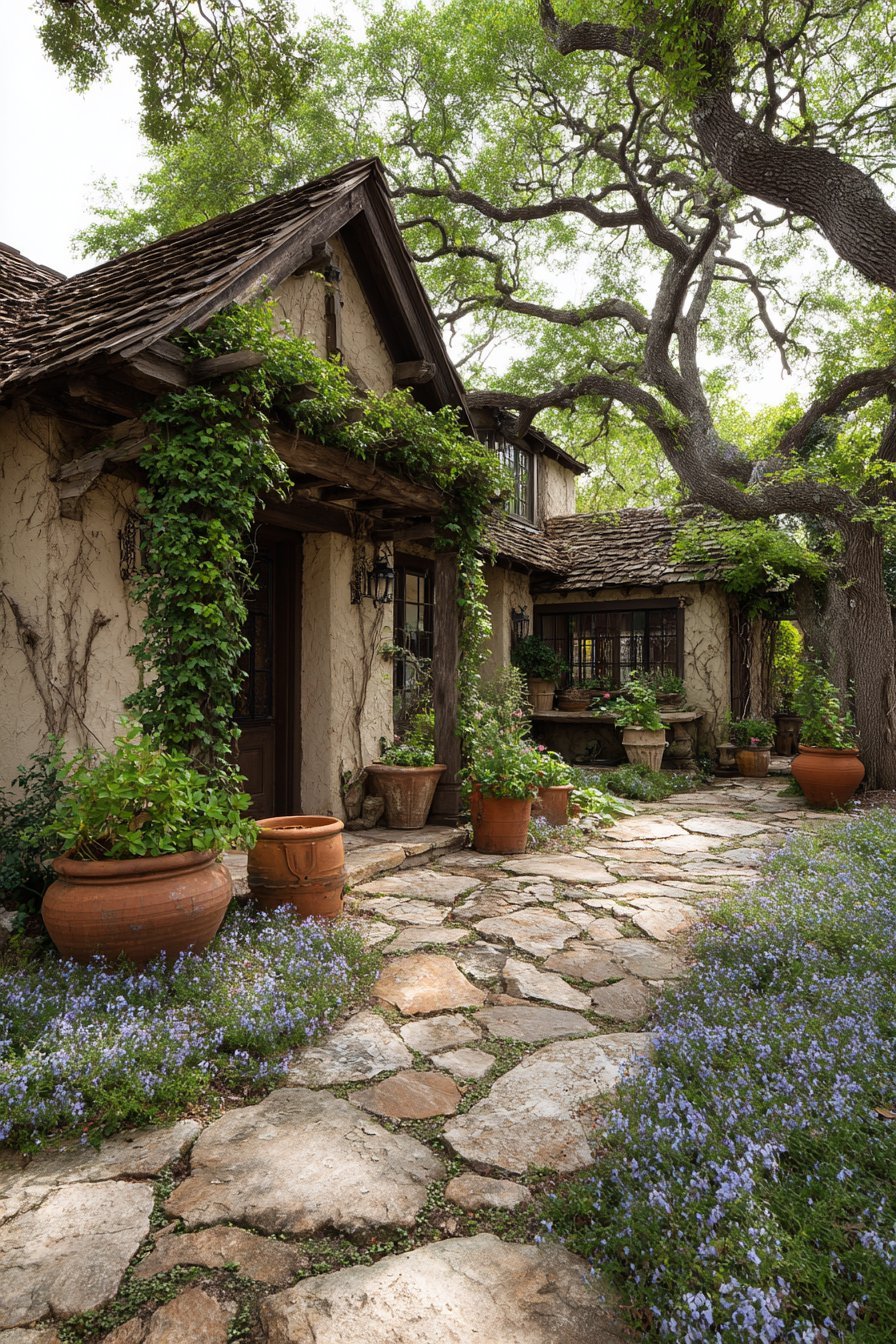
Vintage terracotta pots in various sizes dot the landscape. They contain mixed herbs and cottage flowers that spill over their rims. The containers show authentic patina from years of use. This adds to the garden’s lived-in charm and timeless appeal.
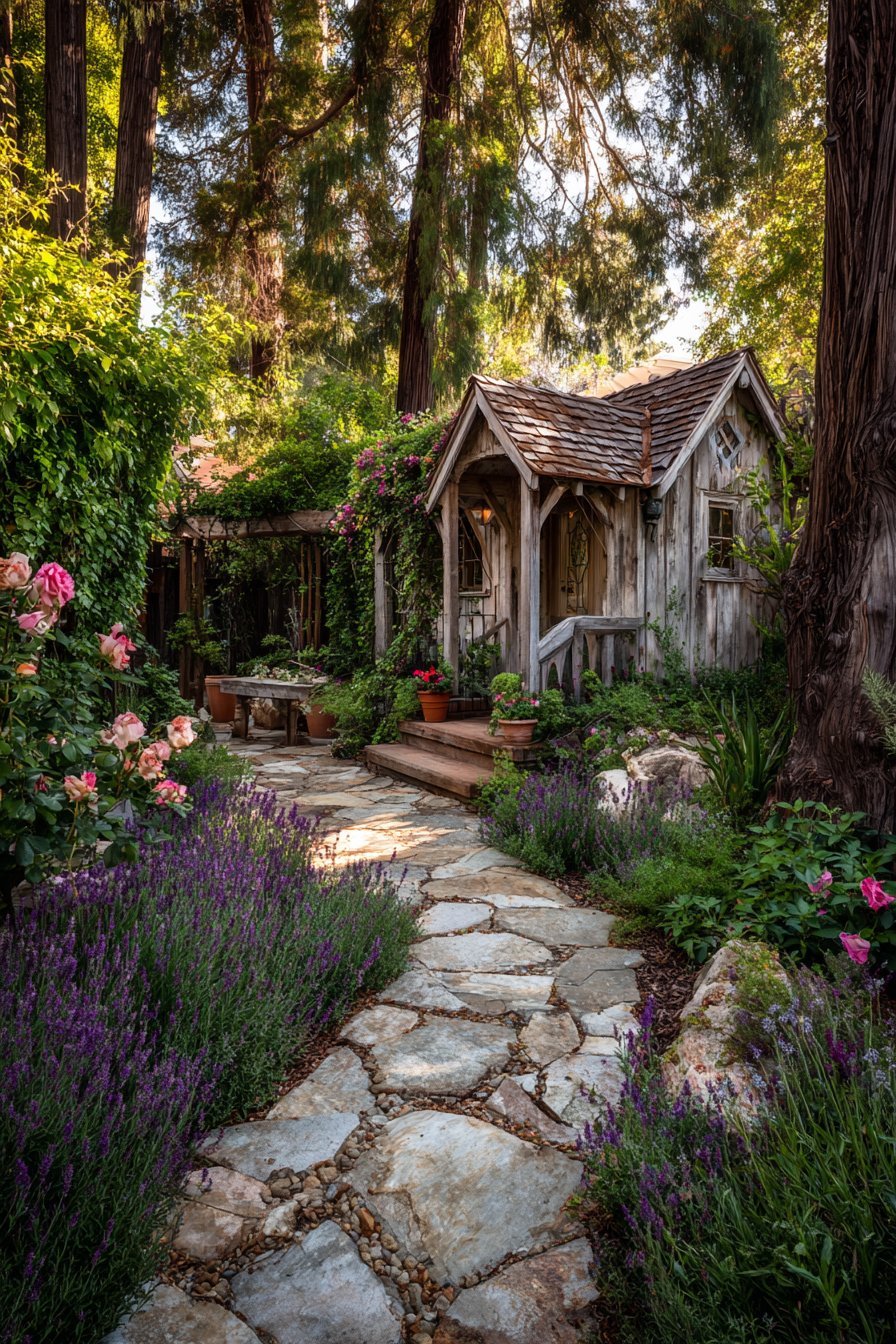
Established trees filter afternoon sunlight through their canopy. Dappled shadows dance across the stone path throughout the day. This natural lighting creates depth and dimension in the garden. The organic planting scheme features soft focus on background elements. The foreground plants remain crisp and detailed.
Key Design Tips:
- Use flagstone in irregular shapes for authentic cottage pathway character
- Plant lavender along path edges for fragrance and soft texture
- Train climbing vines on arbors to create vertical garden interest
- Mix terracotta pot sizes for visual variety and informal charm
- Allow plants to self-seed between stones for natural softening
- Choose established trees for instant mature garden atmosphere
2. Vintage Rose Garden Seating
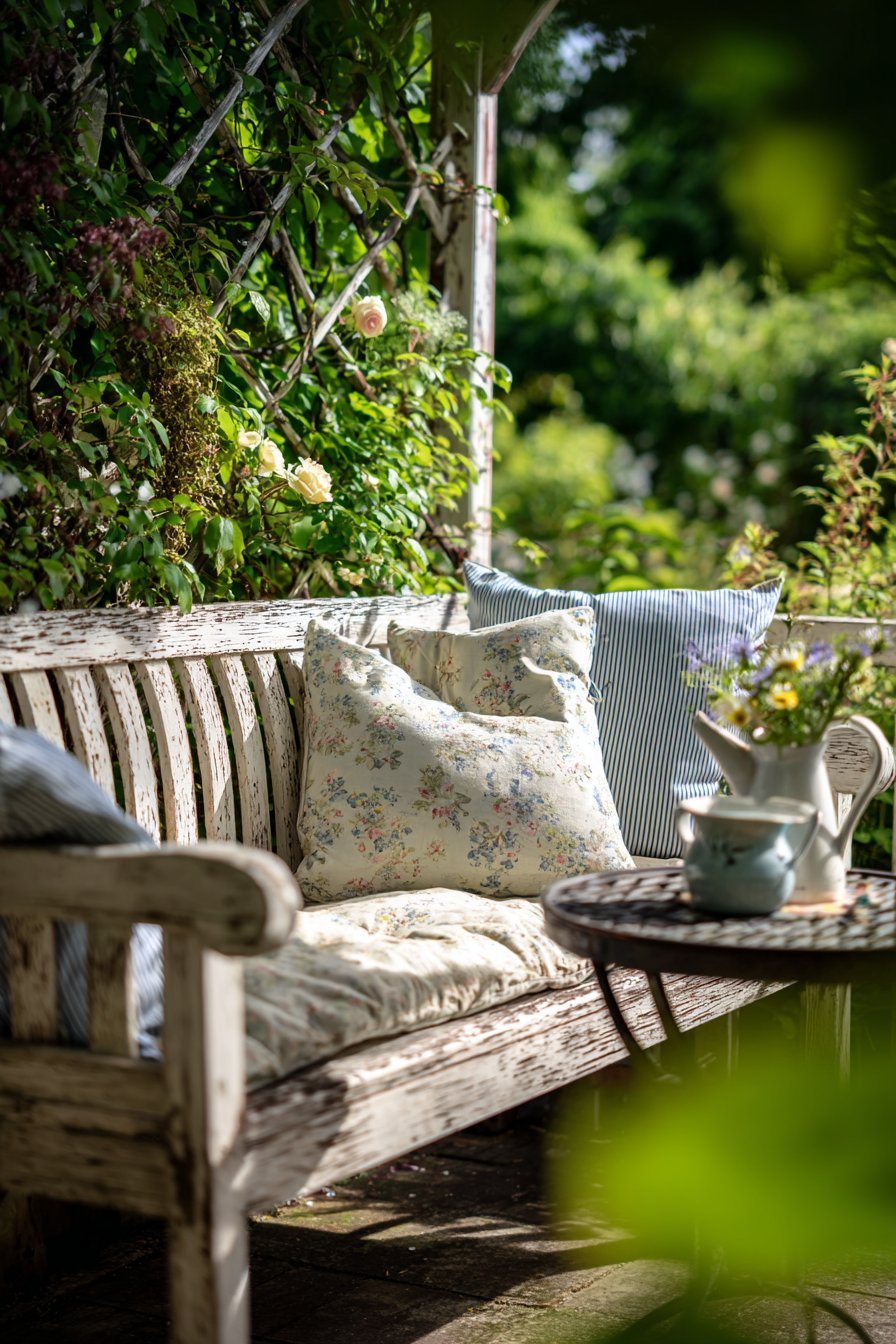
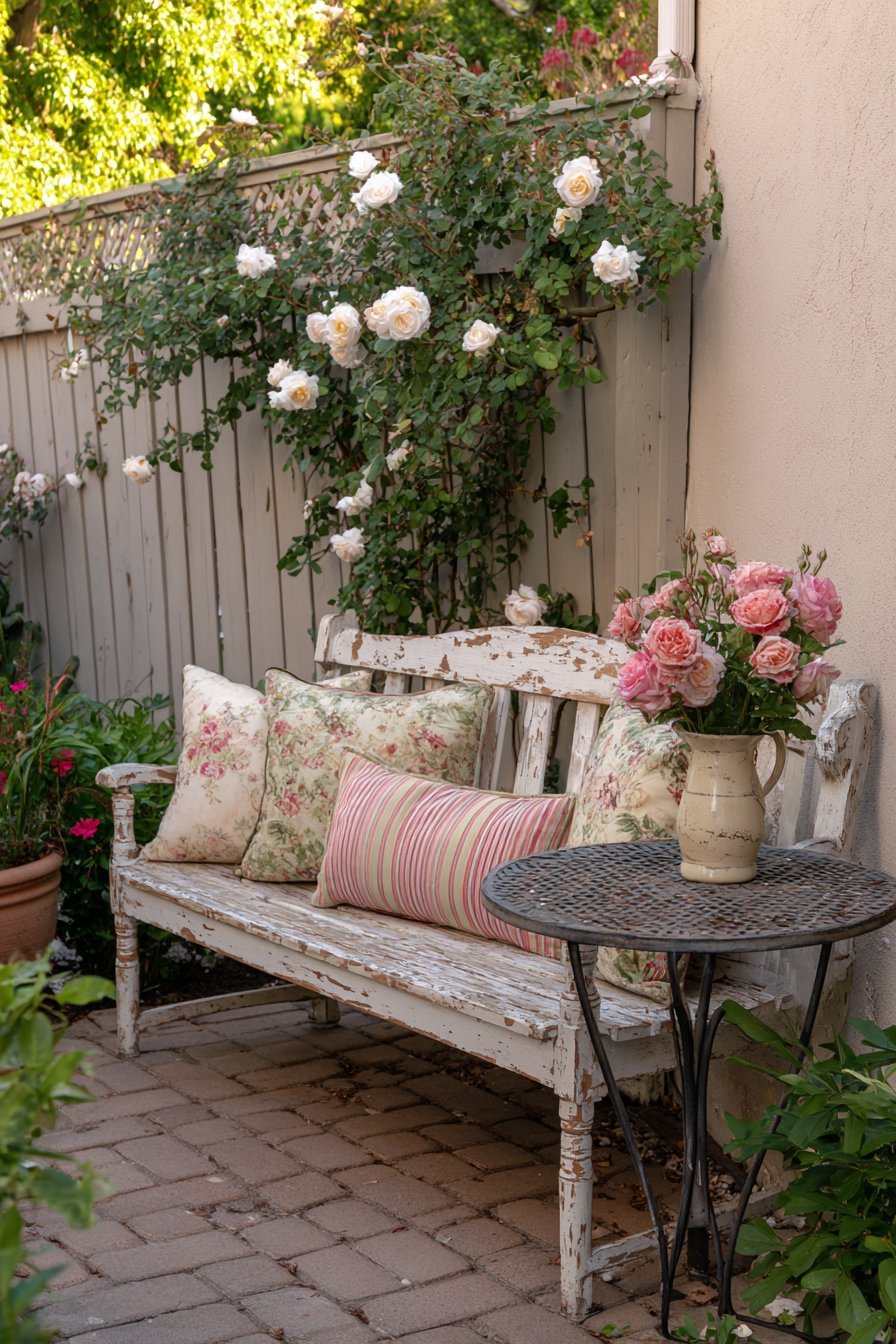
A distressed white painted wooden bench sits against a fence covered with climbing roses. The bench shows authentic aging with peeling paint texture and weathered wood grain. Mismatched vintage cushions in faded florals and stripes add comfort and character. The cushions look as though they’ve been collected over time.
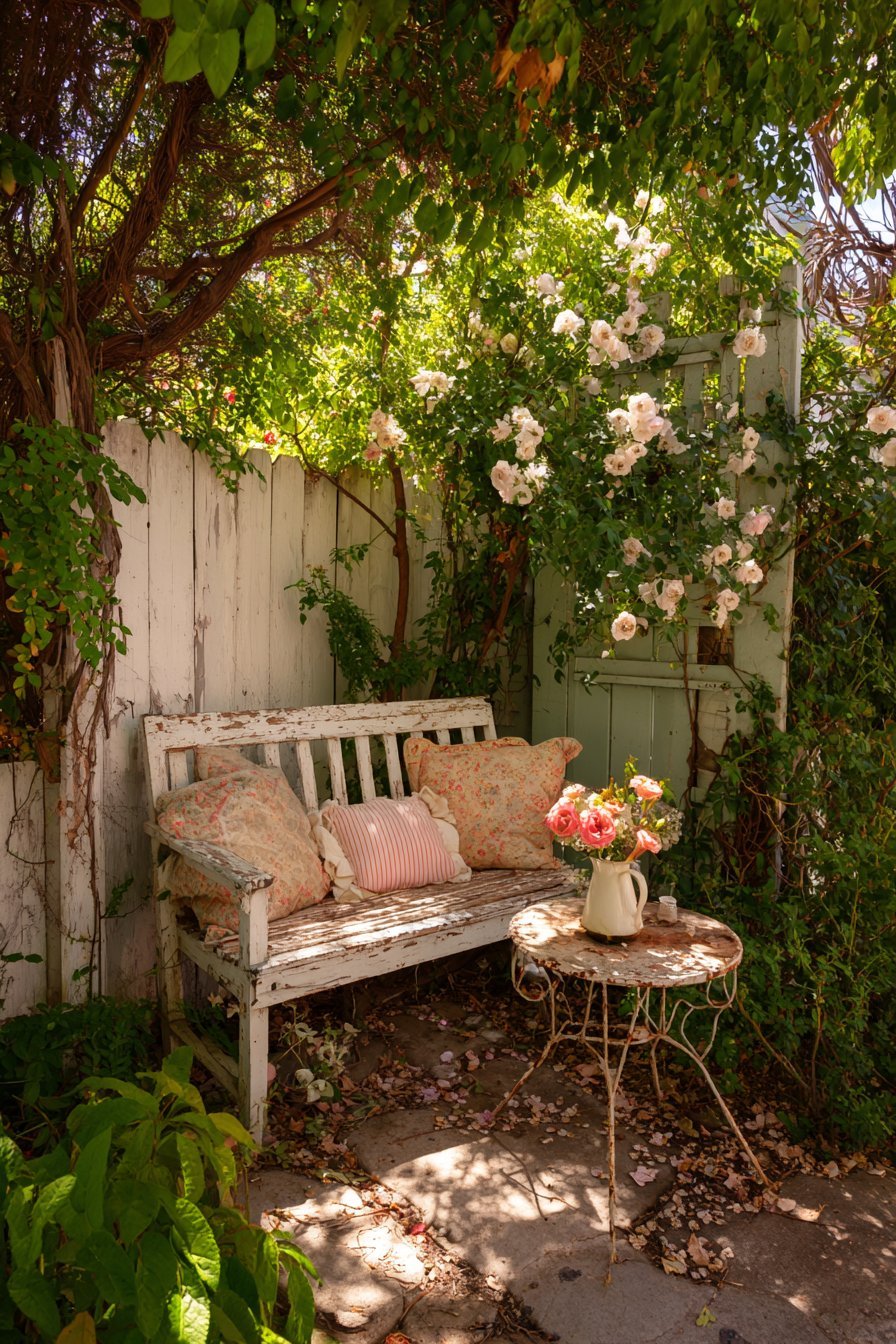
A small round metal bistro table stands beside the bench. A ceramic pitcher filled with freshly cut garden flowers serves as decoration. The arrangement changes with the seasons and available blooms. This creates an ever-evolving display of garden beauty.
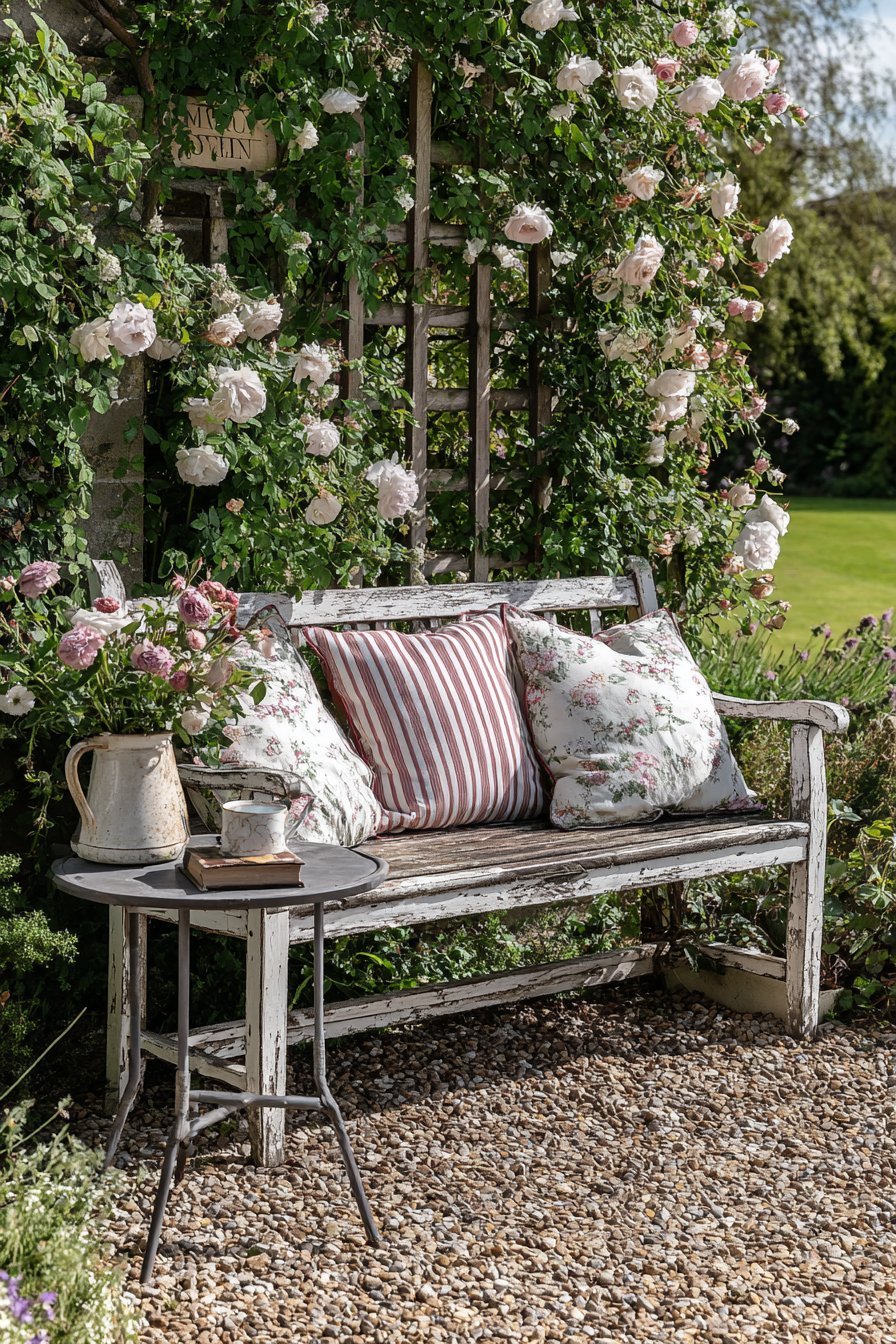
Morning light illuminates the intimate seating area beautifully. The low angle emphasizes the peeling paint and aged patina. These authentic details tell stories of time and weather. The space invites quiet moments with coffee or a good book.
Key Design Tips:
- Choose white paint that weathers naturally for authentic cottage appeal
- Mix cushion patterns freely for collected-over-time character
- Position seating where morning light creates the best atmosphere
- Use metal bistro furniture for durability and vintage style
- Display fresh-cut flowers in simple ceramic or glass vessels
- Allow climbing roses to grow abundantly for romantic effect
3. Productive Vegetable Garden Beds
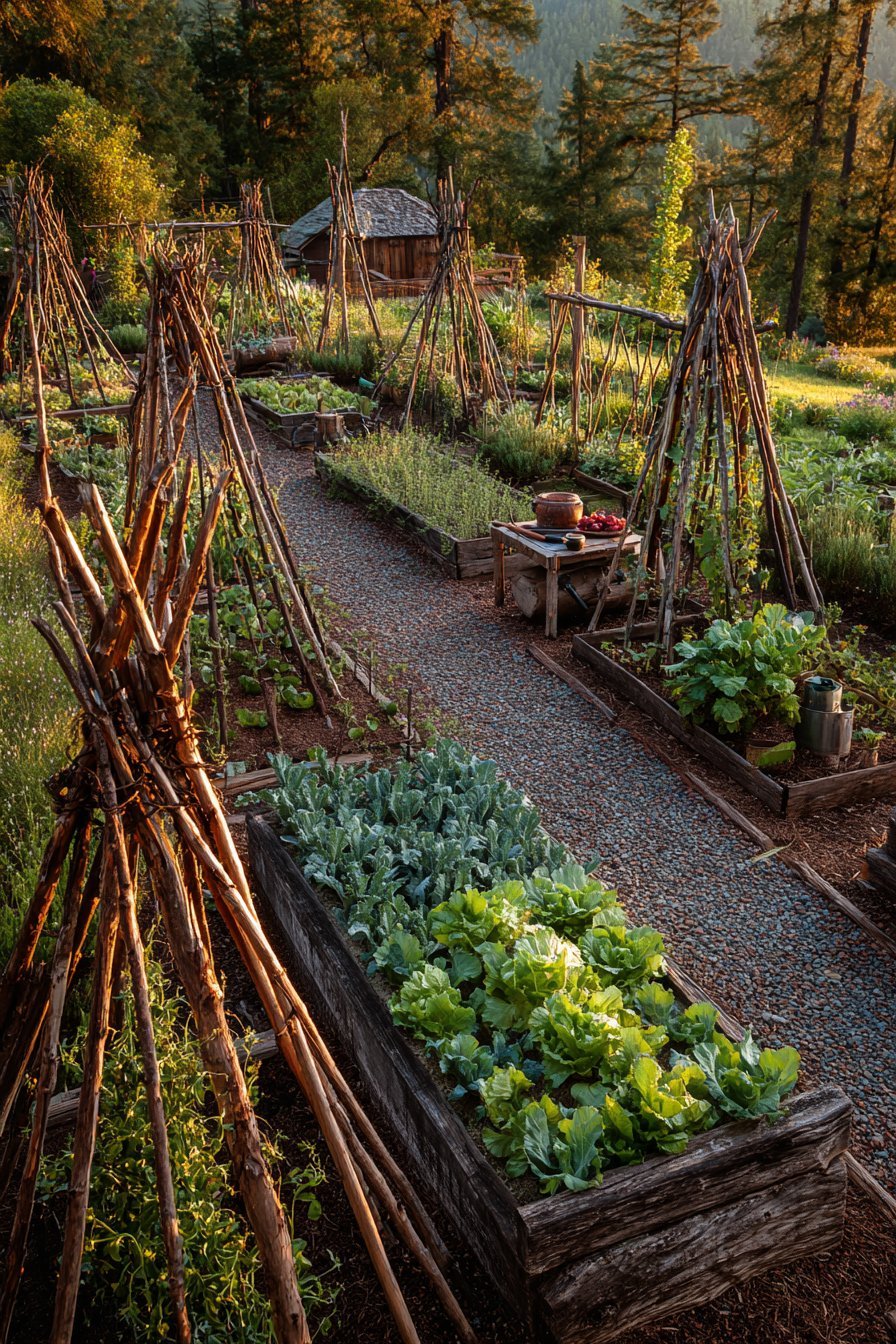
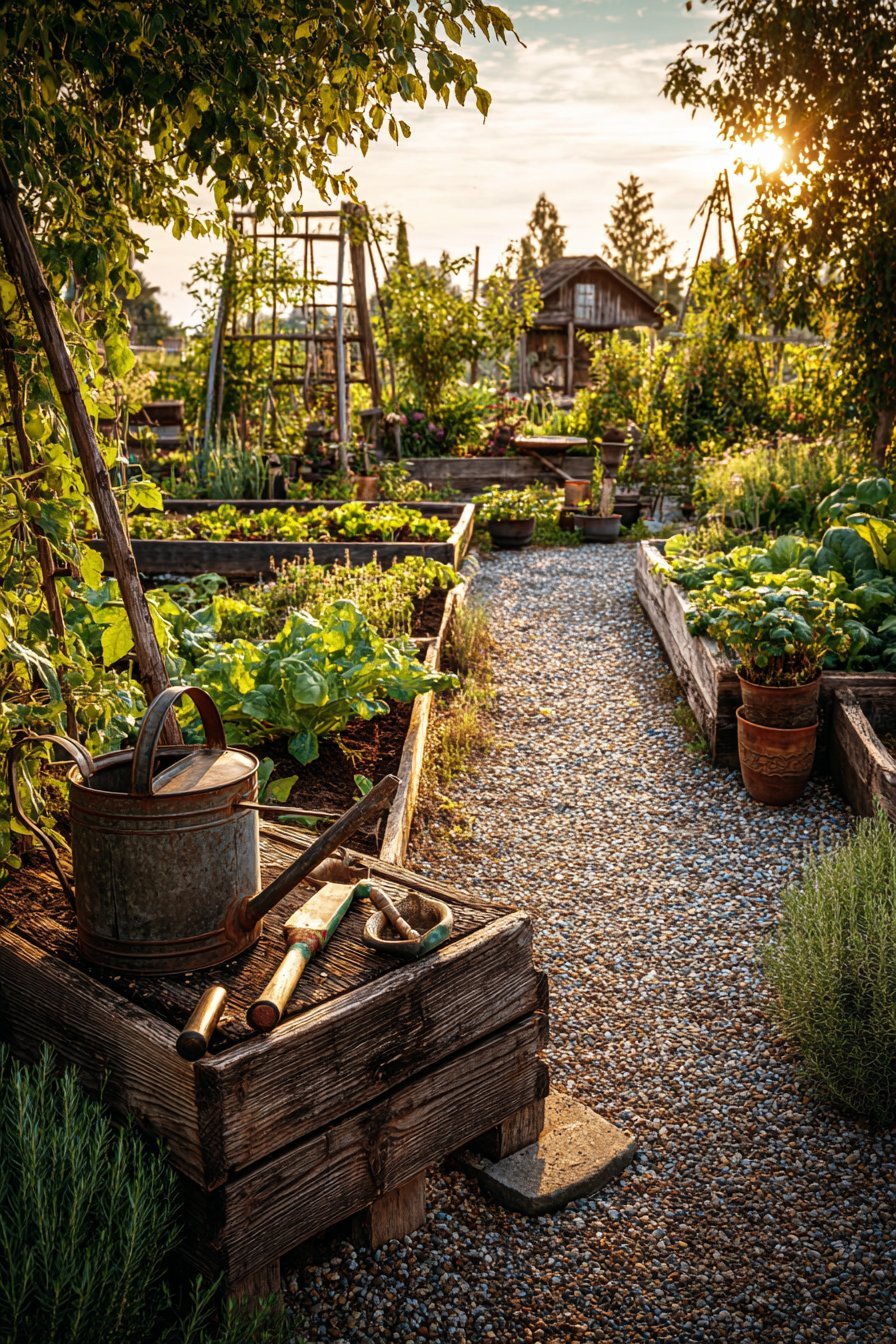
Raised beds constructed from reclaimed weathered barn wood create defined growing spaces. The silvered wood shows decades of exposure to elements. Neat rows of heirloom tomatoes grow on handmade wooden stakes. Lettuce, herbs, and climbing beans thrive in the organized layout.
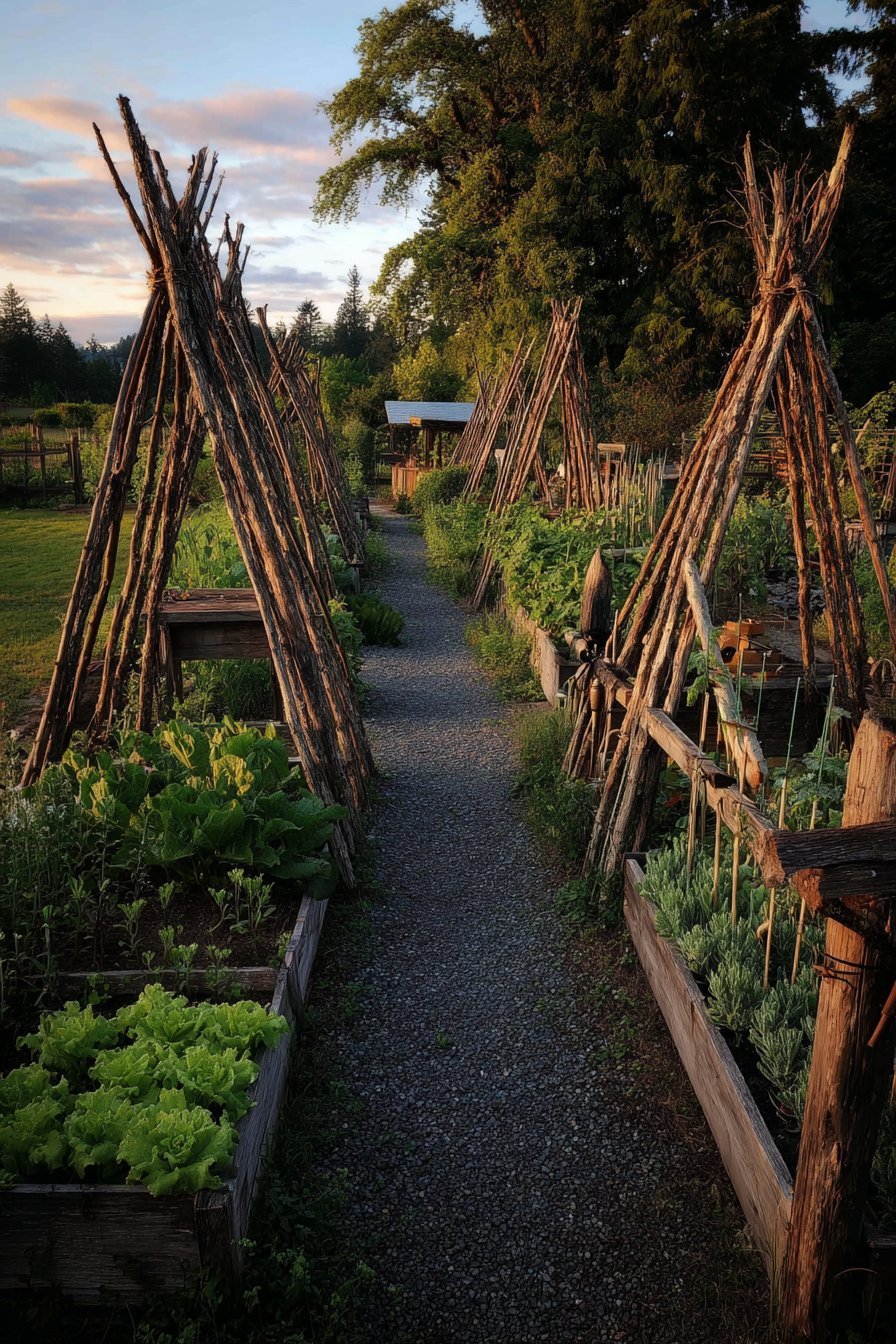
Gravel paths separate the raised beds for easy access. Low-growing thyme and chamomile border the pathways naturally. These herbs release fragrance when brushed against during harvesting. The practical design combines beauty with productive growing space.

A vintage watering can and hand tools rest on a small potting bench. Golden hour lighting emphasizes the traditional cottage garden approach. The warm directional light highlights the organized yet informal layout. This productive space demonstrates that vegetable gardens can be beautiful.
Key Design Tips:
- Build raised beds from reclaimed barn wood for authentic character
- Plant heirloom varieties to maintain cottage garden tradition
- Use gravel paths for clean navigation and good drainage
- Border paths with creeping herbs for fragrance and softness
- Install handmade wooden stakes instead of modern metal versions
- Position potting bench within the garden for convenience
4. Rustic Farm Table Dining

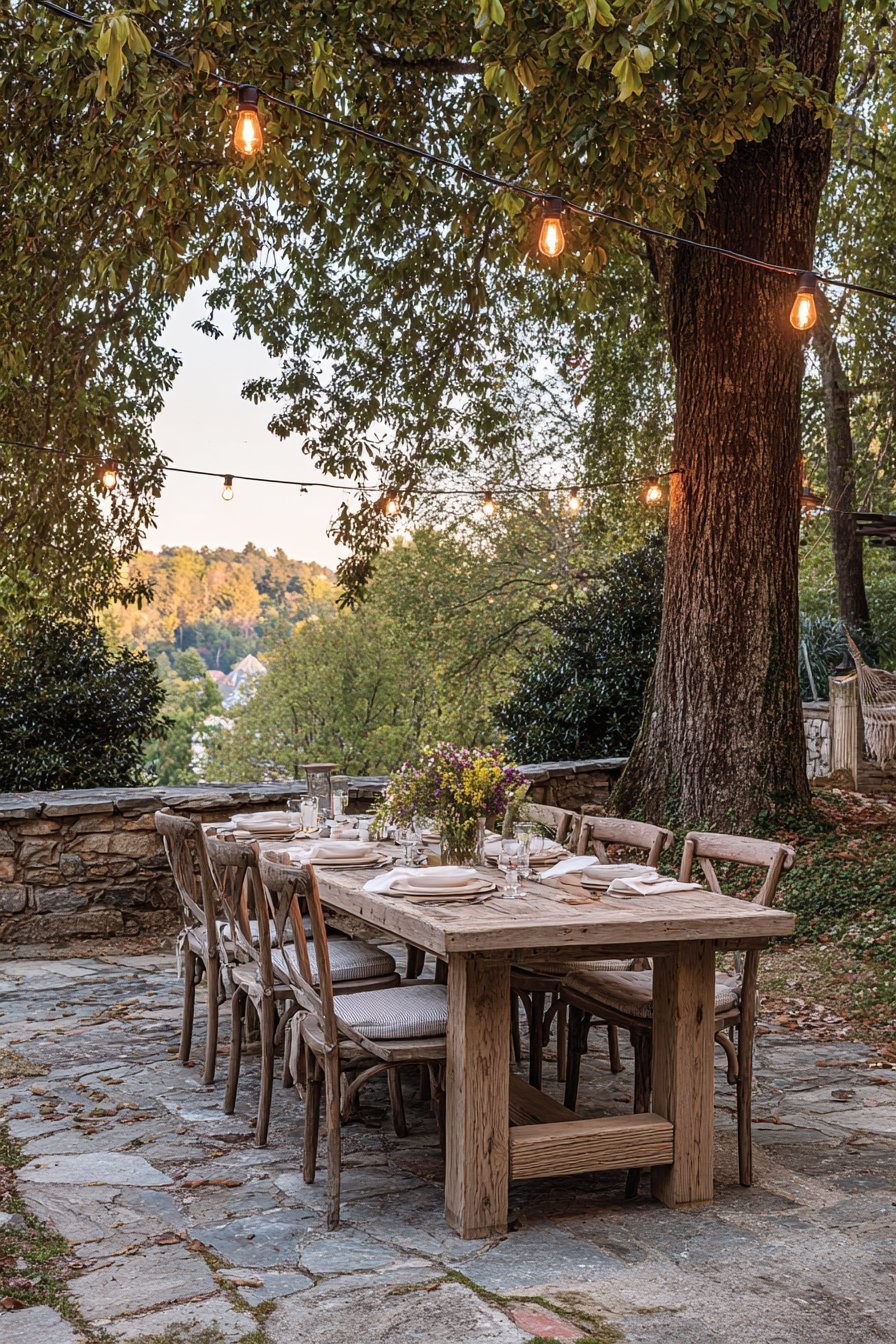
A rustic wooden farm table with mismatched vintage chairs occupies a worn brick patio. The table shows authentic aging with weathered wood grain visible. String lights with Edison bulbs hang overhead between established trees. The bulbs cast warm ambient light for evening gatherings.
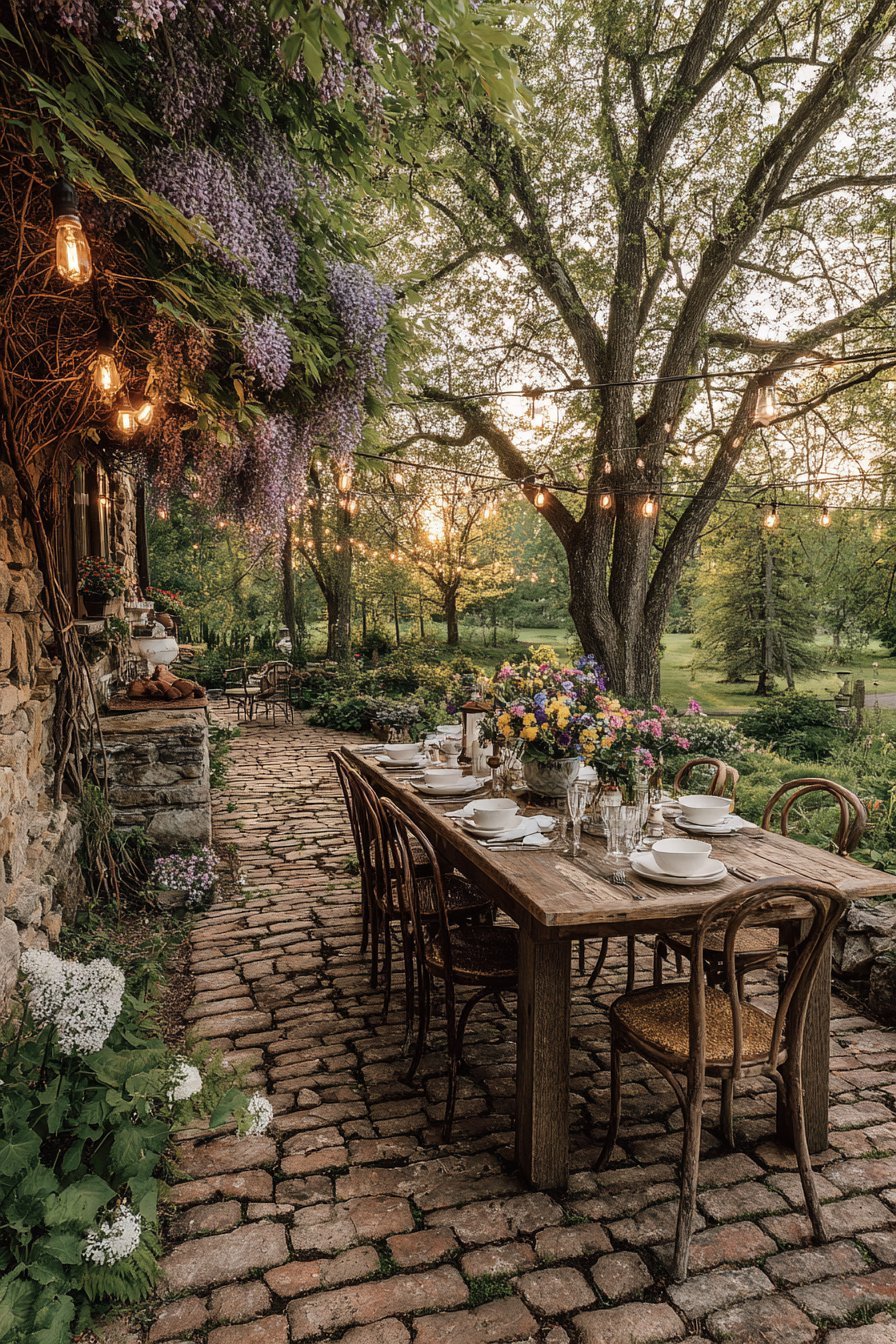
Simple white ironstone dishes set the table with casual elegance. Linen napkins and garden-gathered wildflowers in mason jars complete the setting. The arrangements feature whatever blooms beautifully at the moment. This spontaneous approach feels genuine and unforced.
Climbing roses and wisteria frame the dining space along an old stone wall. Evening photography captures natural twilight combined with string light glow. The combination creates an inviting atmosphere for outdoor meals. This space makes every dinner feel like a special occasion.

Key Design Tips:
- Select a substantial farm table that can weather outdoor conditions
- Mix chair styles freely for authentic cottage collecting aesthetic
- Hang string lights at varying heights for dimension and interest
- Use white ironstone dishes for classic cottage table settings
- Gather fresh flowers daily for centerpieces in simple containers
- Position dining area where walls provide natural enclosure
5. Sage Green Garden Shed
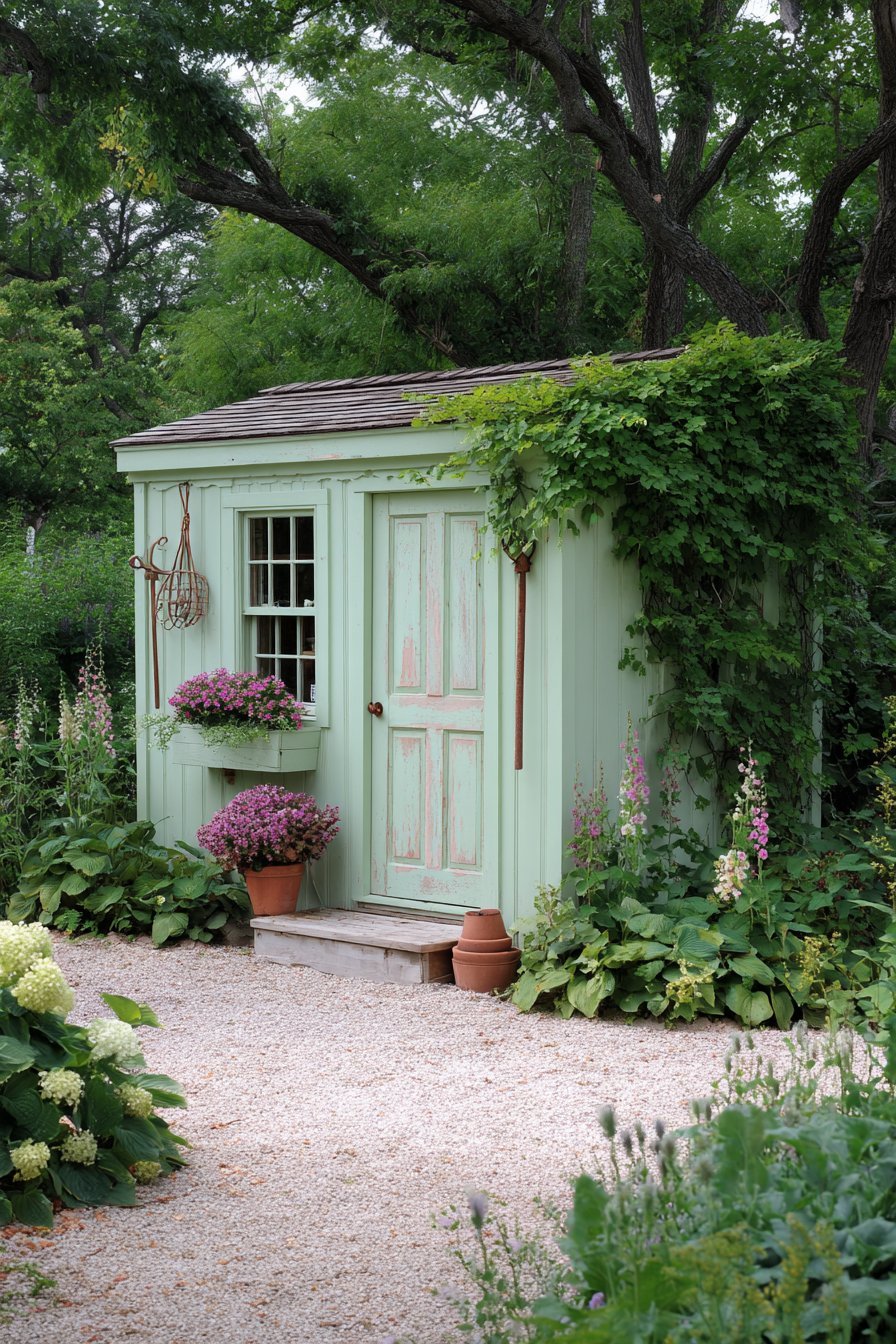
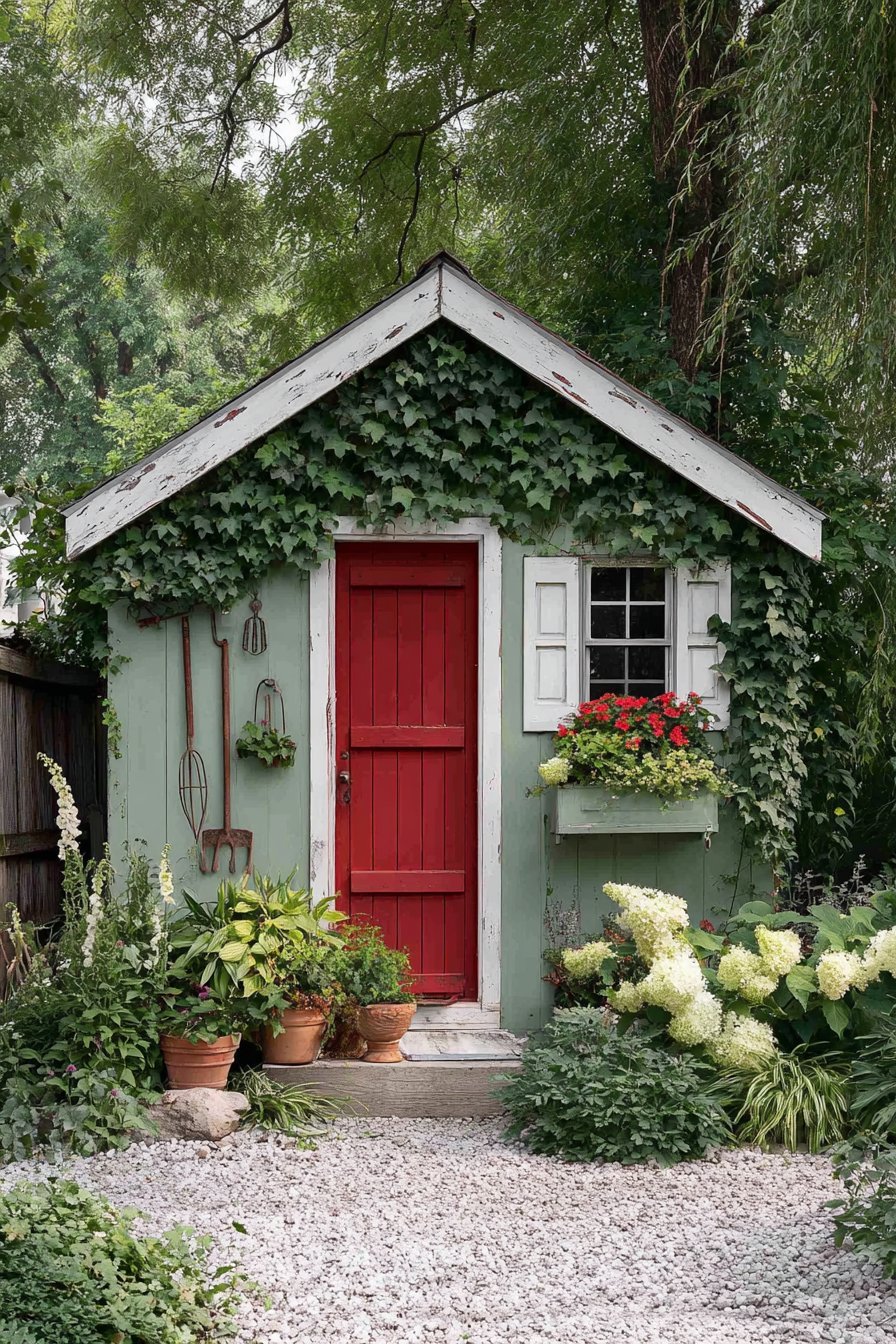
A charming garden shed painted soft sage green with white trim serves as garden headquarters. The weathered red door shows authentic wear and character. Window boxes overflow with trailing geraniums and ivy that cascade down the walls. The abundant plantings soften the structure’s architectural lines.
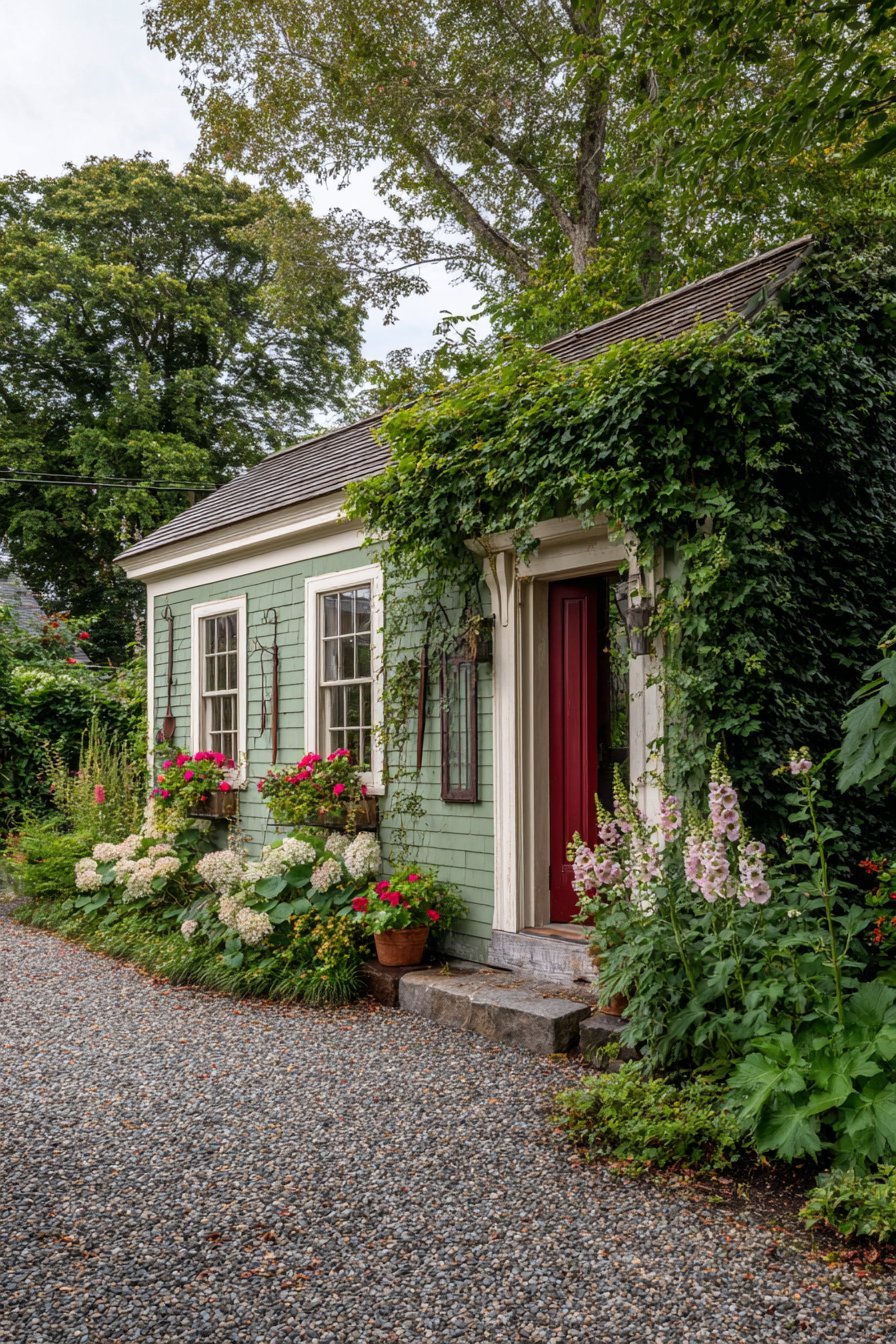
Vintage garden tools hang on the exterior wall as functional decoration. Clay pots stack beside the entrance ready for planting projects. A climbing hydrangea covers one side of the structure naturally. The vine’s growth pattern creates organic visual interest throughout seasons.
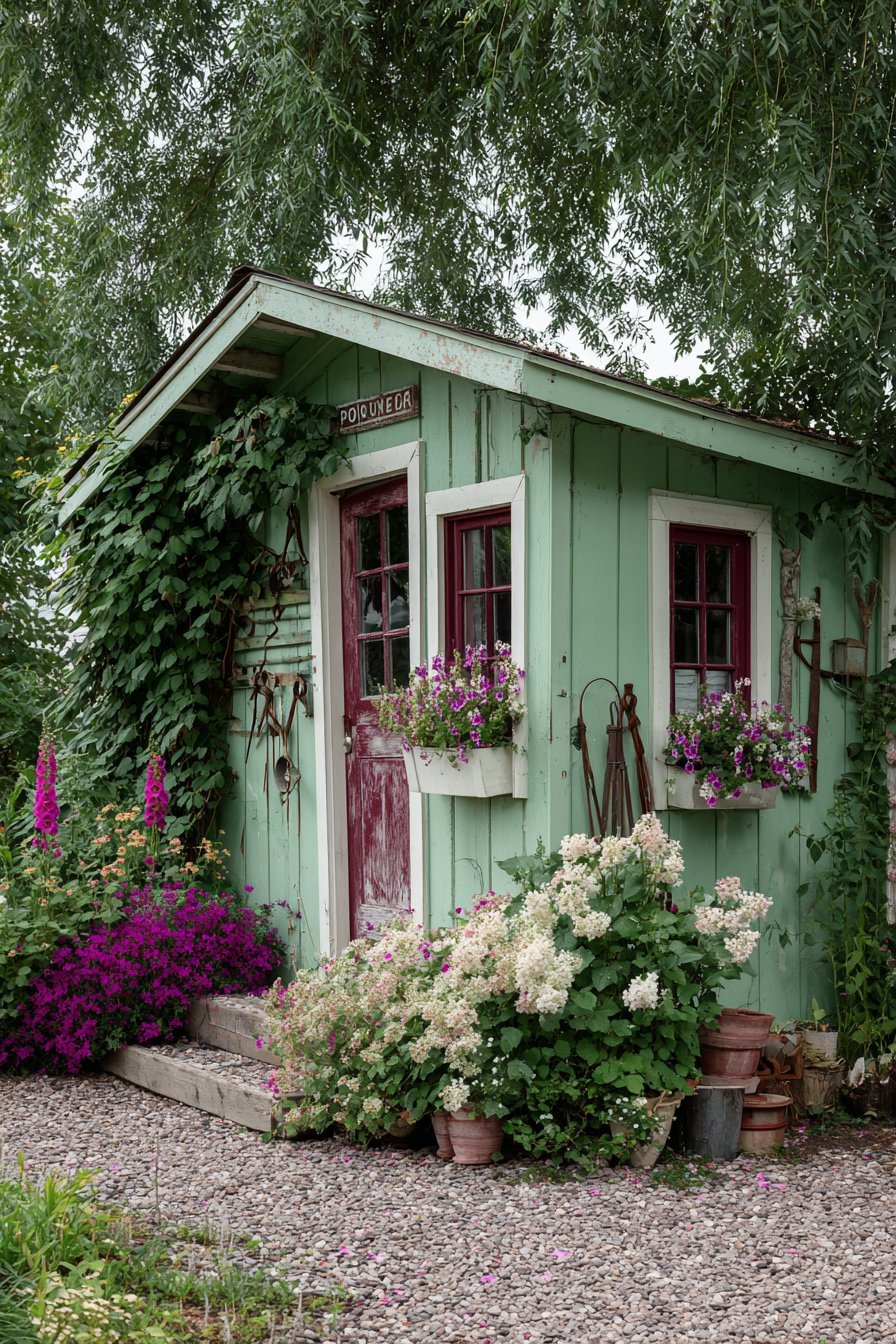
The shed sits on gravel surrounded by perennial borders. Hollyhocks, delphiniums, and foxgloves tower in the background. Natural overcast lighting provides even illumination of the charming outbuilding. The shed demonstrates how functional structures enhance cottage garden beauty.
Key Design Tips:
- Paint sheds in muted historic colors like sage or cream
- Add window boxes for year-round planted interest and charm
- Display vintage tools as decorative elements on exterior walls
- Stack terracotta pots in graduated sizes near the entrance
- Encourage climbing vines to grow on at least one wall
- Surround with tall cottage perennials for garden integration
6. Stone Trough Water Feature
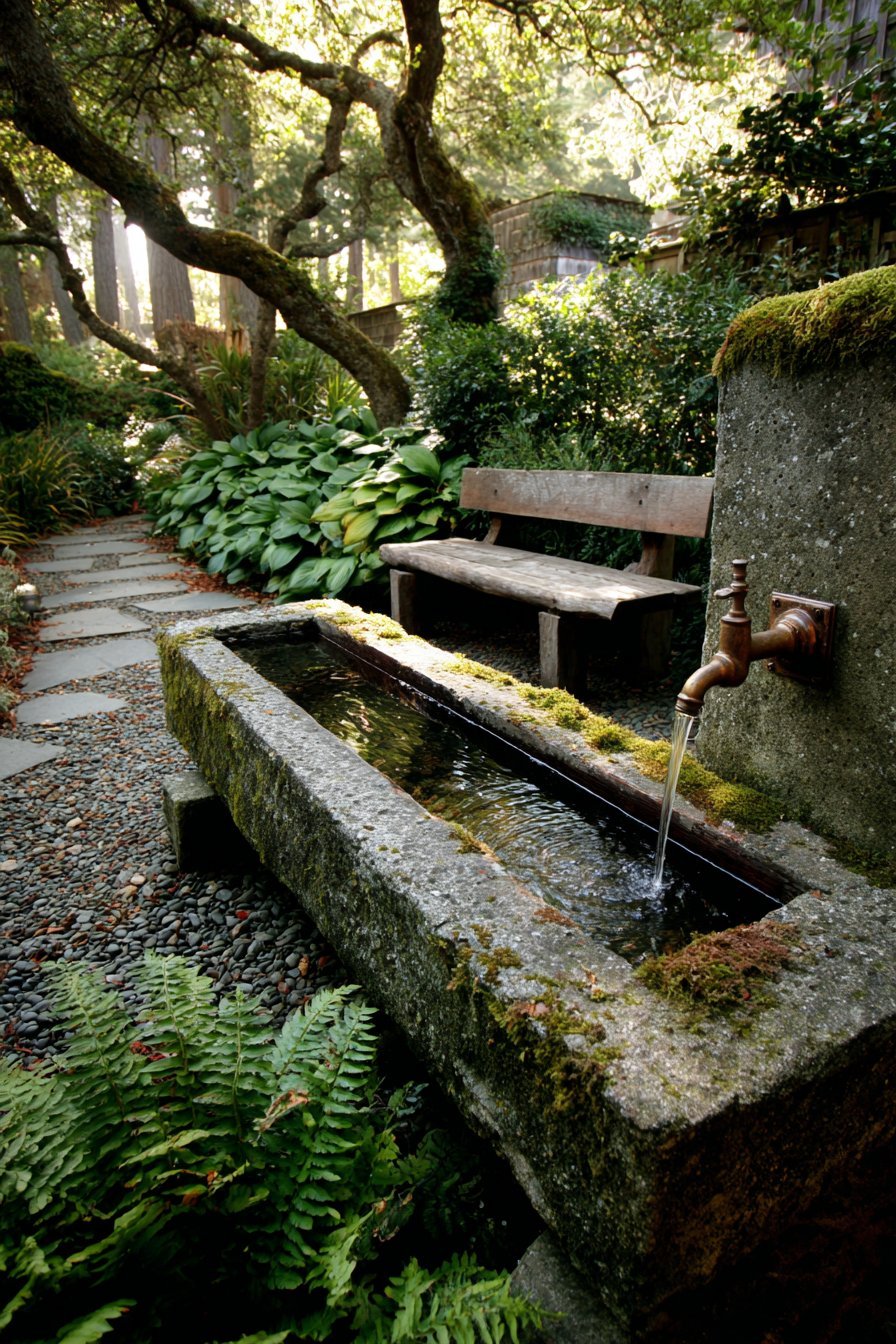
A reclaimed stone trough fountain creates a peaceful focal point. Water gently trickles from an old brass spigot into the weathered basin. The sound of running water adds sensory dimension to the garden. Ferns, hostas, and moss-covered rocks surround the fountain naturally.
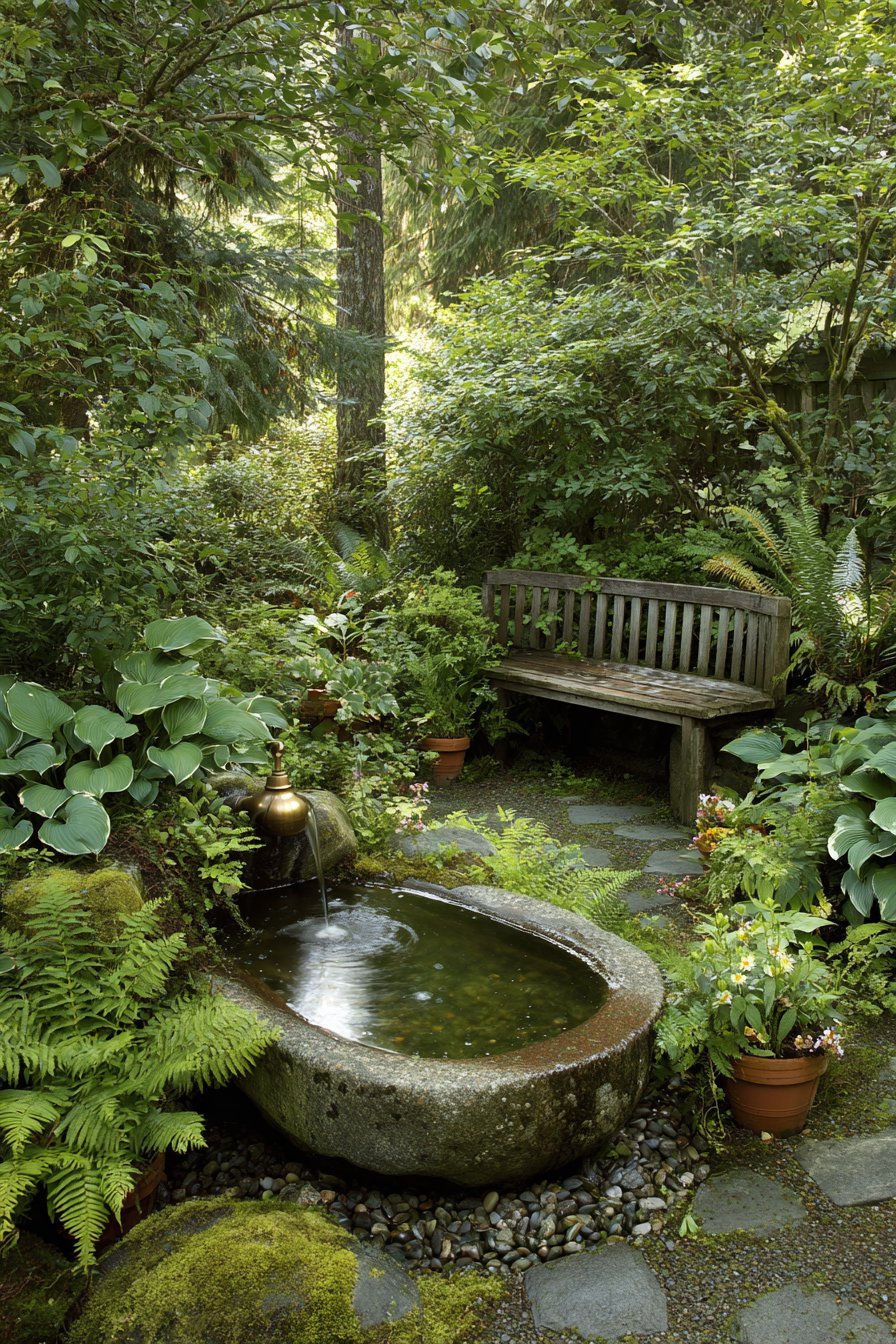
Small pebbles encircle the base where water occasionally splashes. Shade-loving plants thrive in this microclimate created by constant moisture. The naturalistic setting looks as though it’s always existed here. A worn stone path leads to a simple wooden bench nearby.
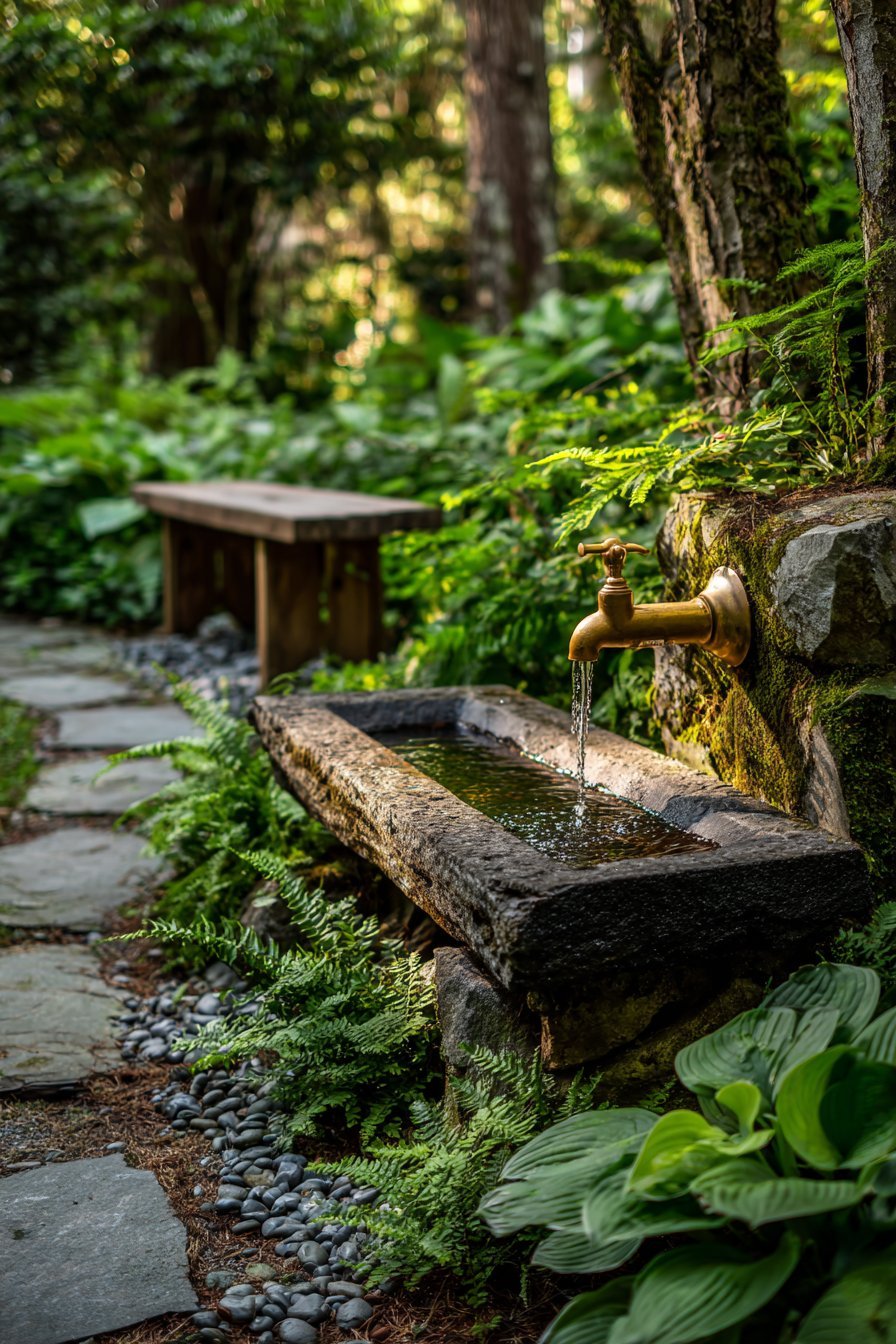
Soft morning light filters through the tree canopy overhead. The lighting highlights water movement and lush green textures. This creates a meditative space for enjoying garden sounds. The authentic materials and peaceful atmosphere define cottage garden water elements.
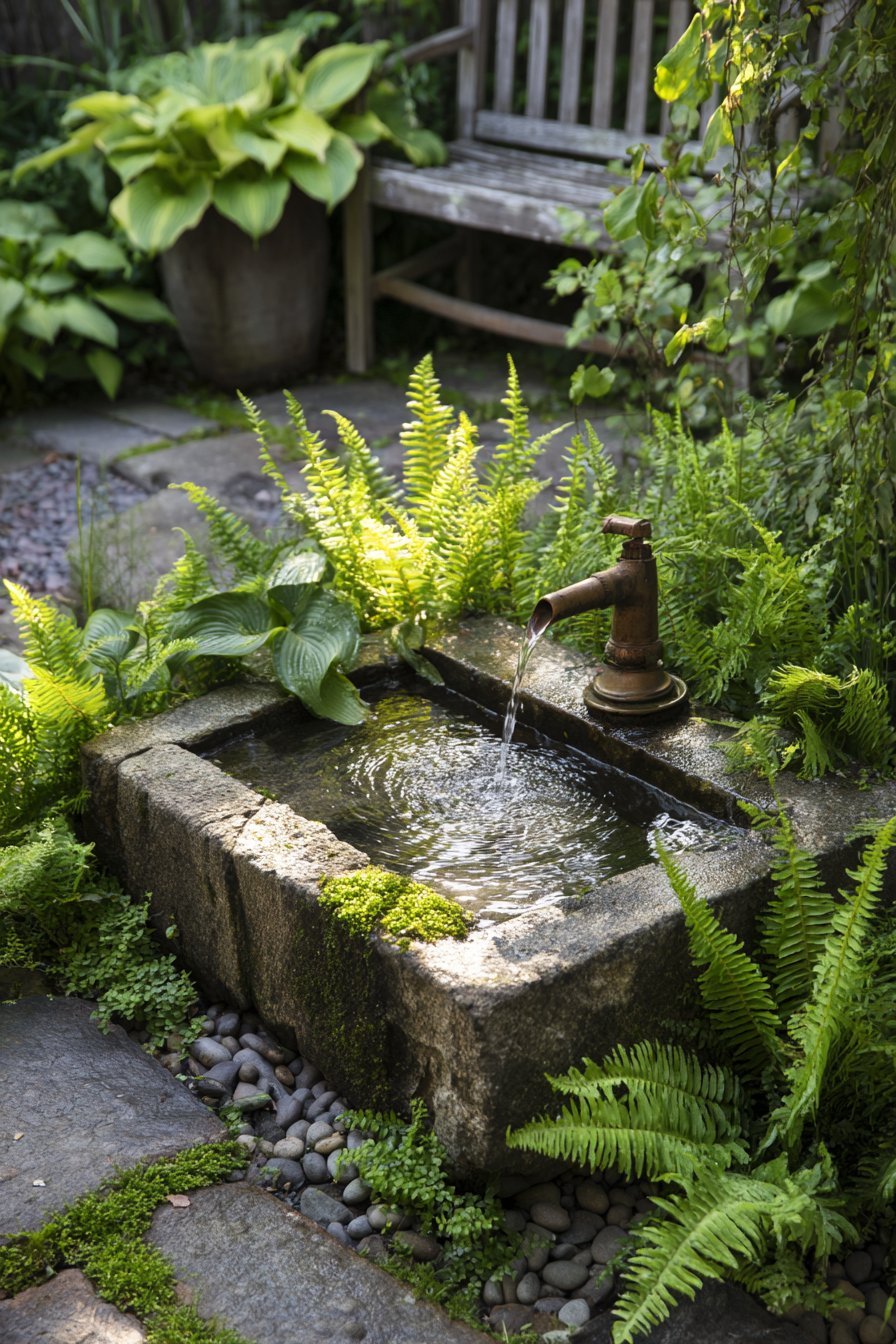
Key Design Tips:
- Source reclaimed stone troughs for authentic aged appearance
- Install simple spigot systems for gentle water movement
- Surround with shade plants that thrive in moist conditions
- Add moss-covered rocks for naturalistic ancient appearance
- Create small pebble areas for water splash containment
- Position seating nearby to enjoy the water sounds fully
7. White Picket Fence Border

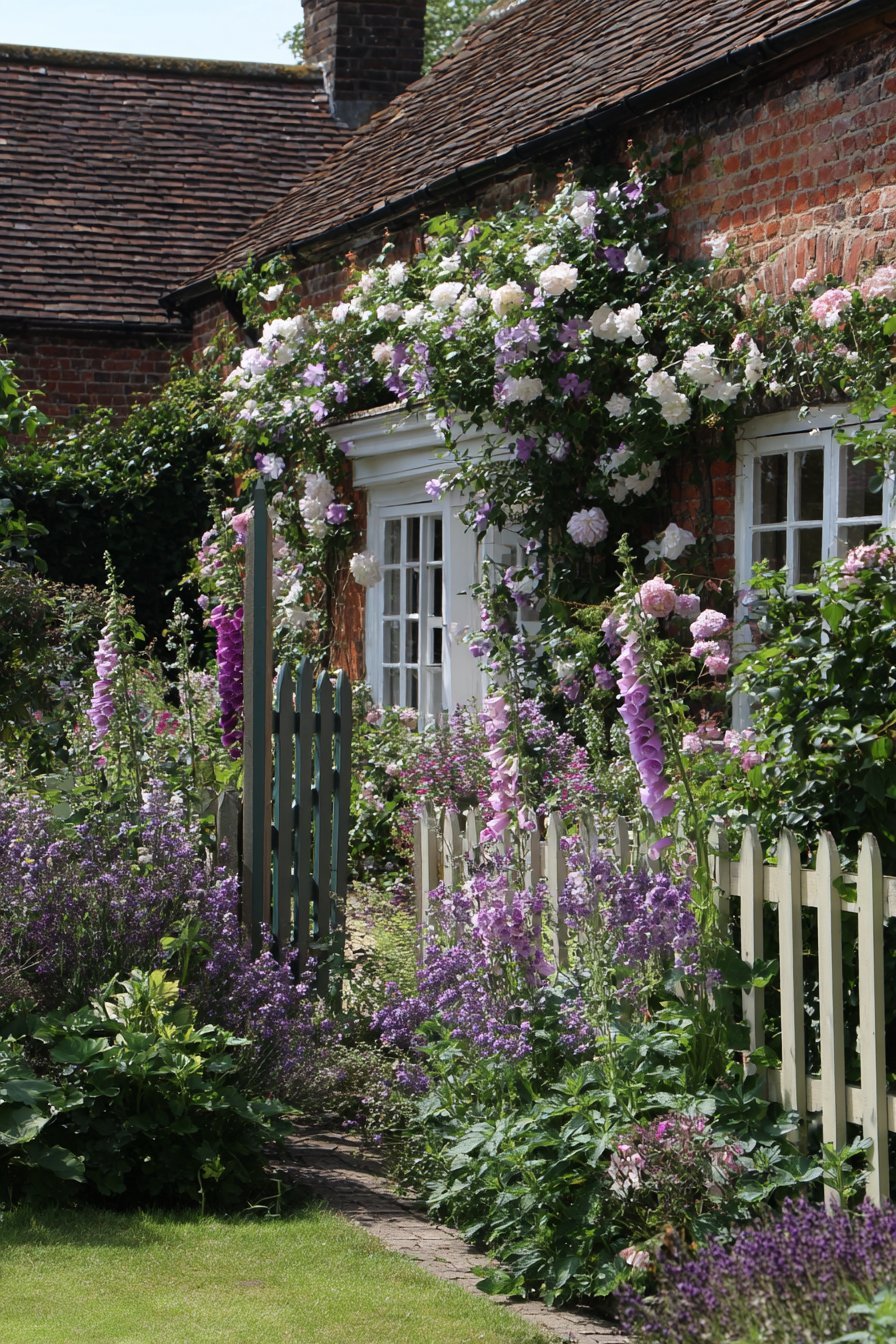
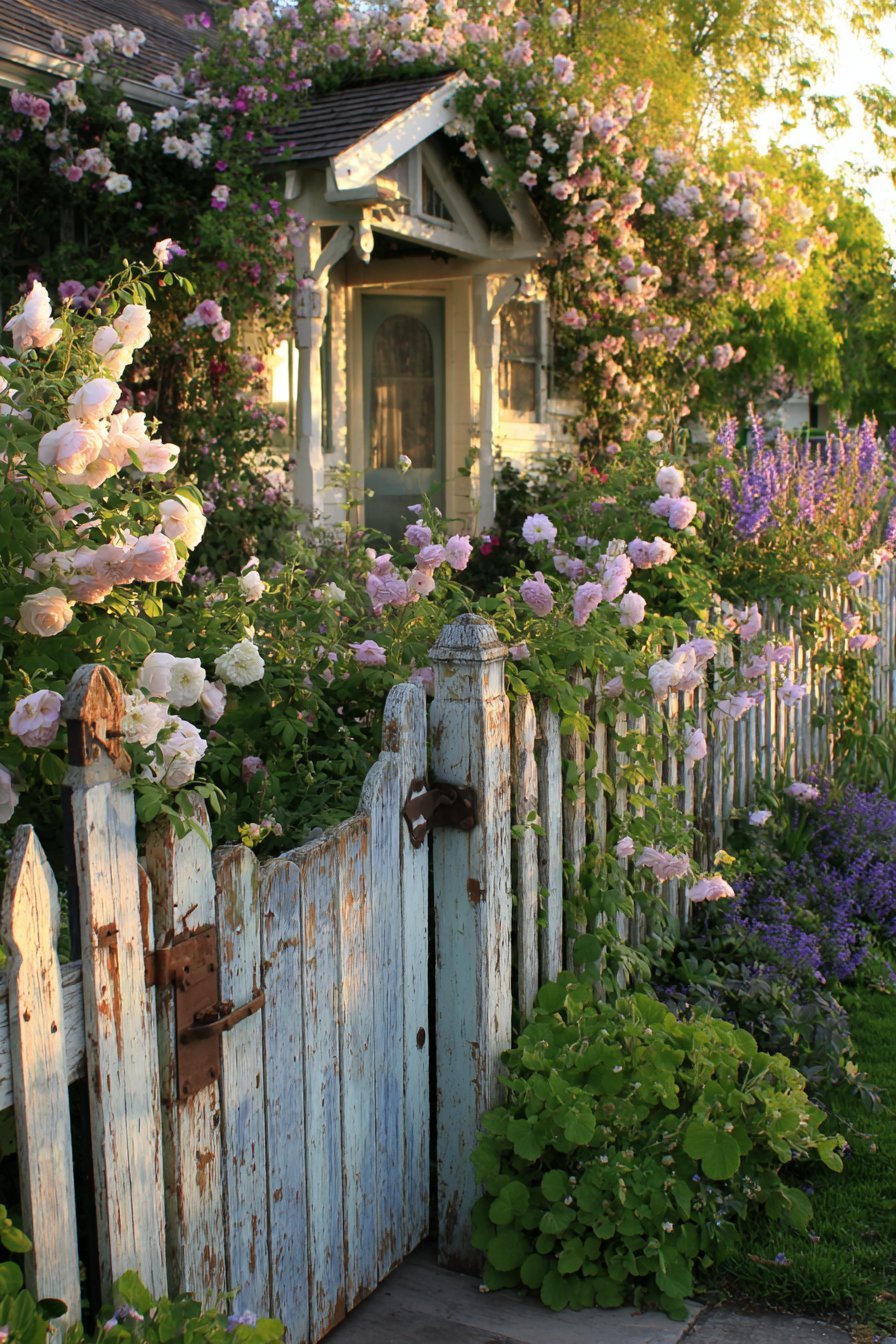
Traditional white picket fencing partially disappears beneath abundant cottage plantings. Climbing roses, clematis, and honeysuckle weave through the fence pickets. The vines soften the structure’s rigid lines with organic growth. Tall delphiniums, foxgloves, and hollyhocks create vertical drama in front.
Lower-growing catmint and lady’s mantle spill onto the grass edge. The generous informal planting style defines the cottage aesthetic perfectly. An old wooden gate with wrought iron hinges shows authentic wear. The hardware’s patina demonstrates decades of use and weather exposure.
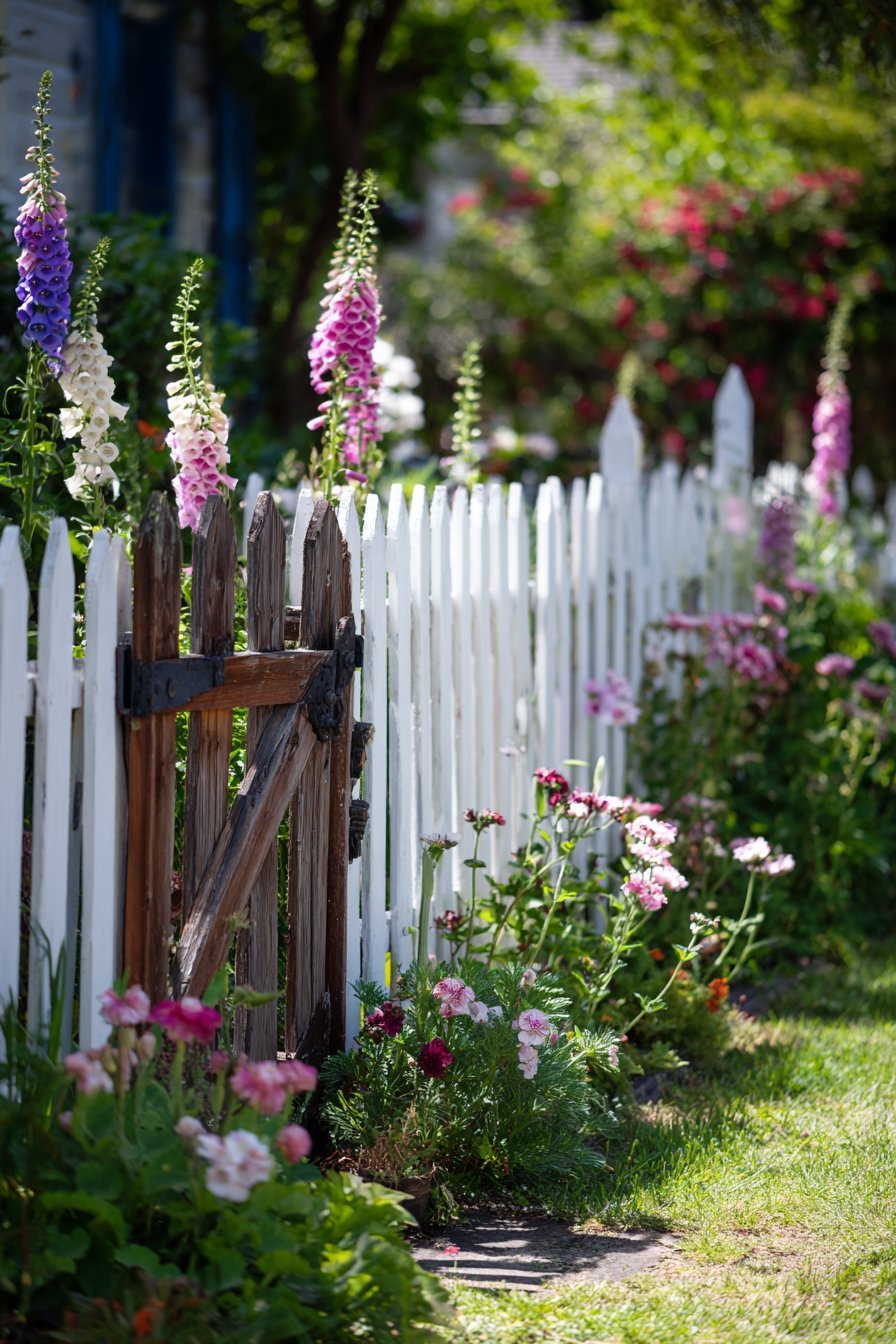
Afternoon sunlight backlights the flowers creating a romantic effect. The translucent petals glow with captured light. This layered approach to fence plantings creates depth and dimension. The technique screens unsightly views while adding beauty.
Key Design Tips:
- Paint picket fences white for classic cottage garden backdrop
- Train climbing vines to weave through fence openings naturally
- Layer plant heights from tall background to low foreground
- Choose generous quantities for abundant cottage garden effect
- Install vintage hardware on gates for authentic period details
- Allow plants to obscure fencing partially for soft appearance
8. Intimate Fire Pit Circle
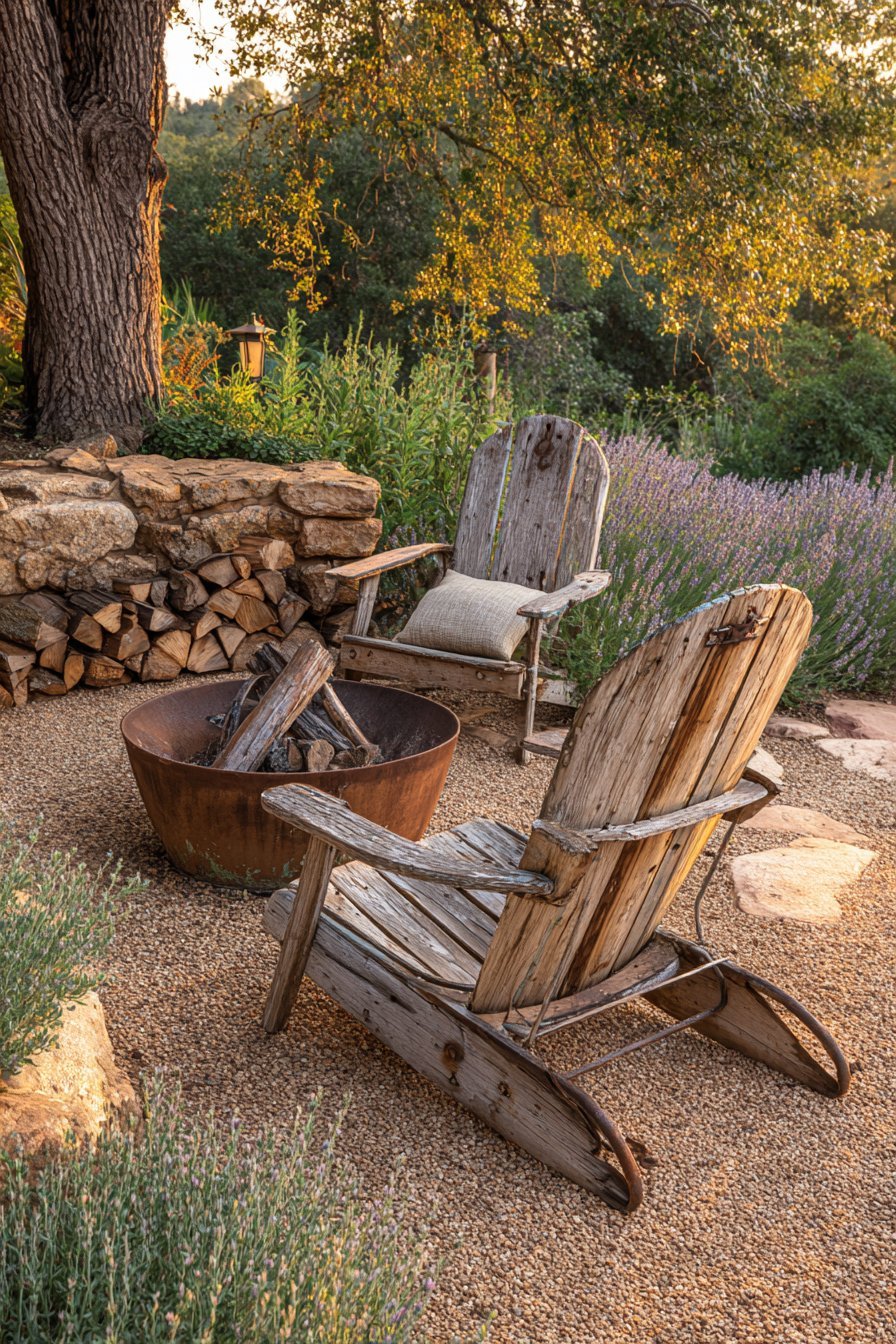
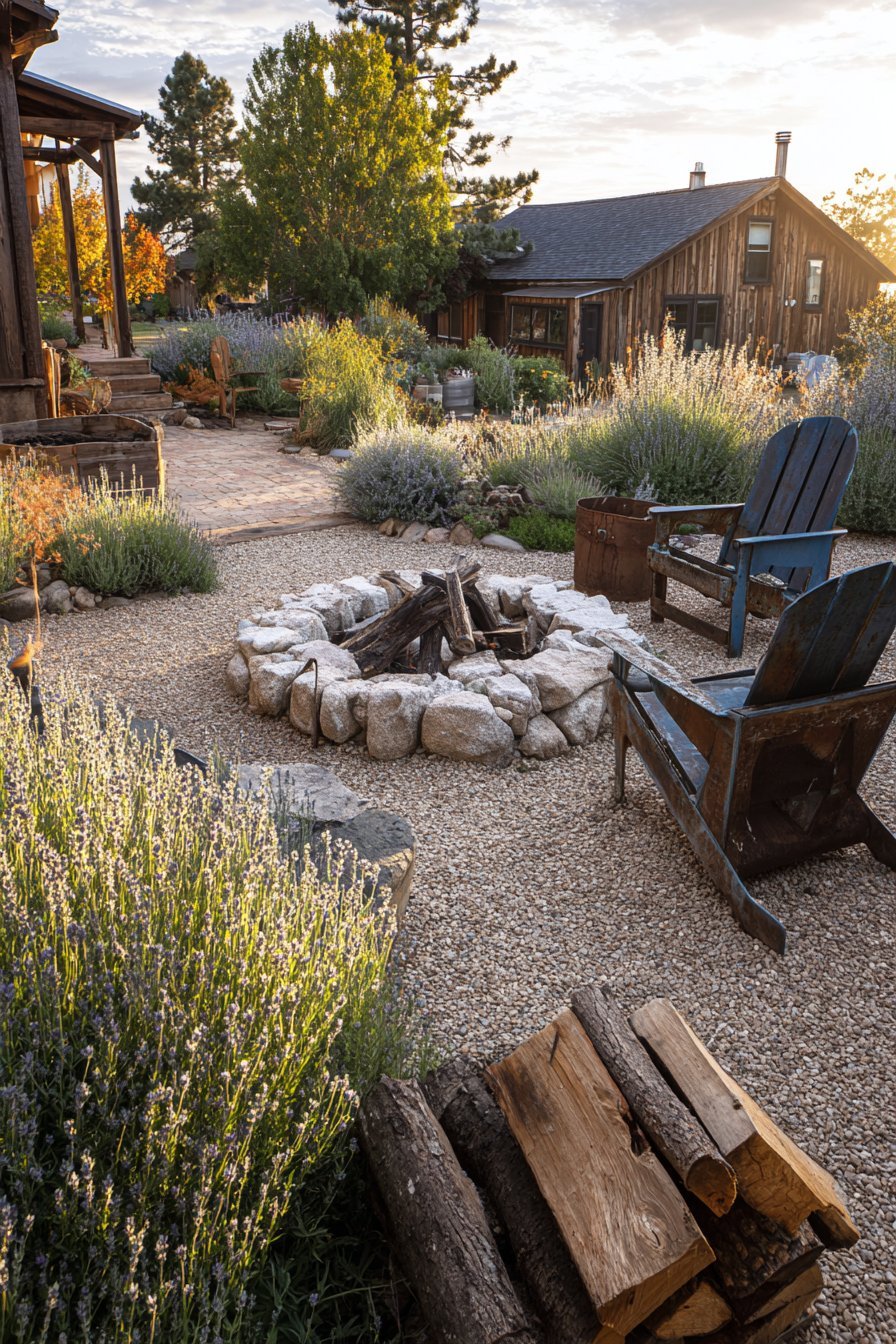
A circular arrangement of mismatched vintage metal chairs surrounds a simple stone fire ring. A weathered Adirondack chair adds comfortable seating variety. The informal arrangement invites conversation and connection. Fragrant herbs like lavender and rosemary grow nearby for sensory appeal.
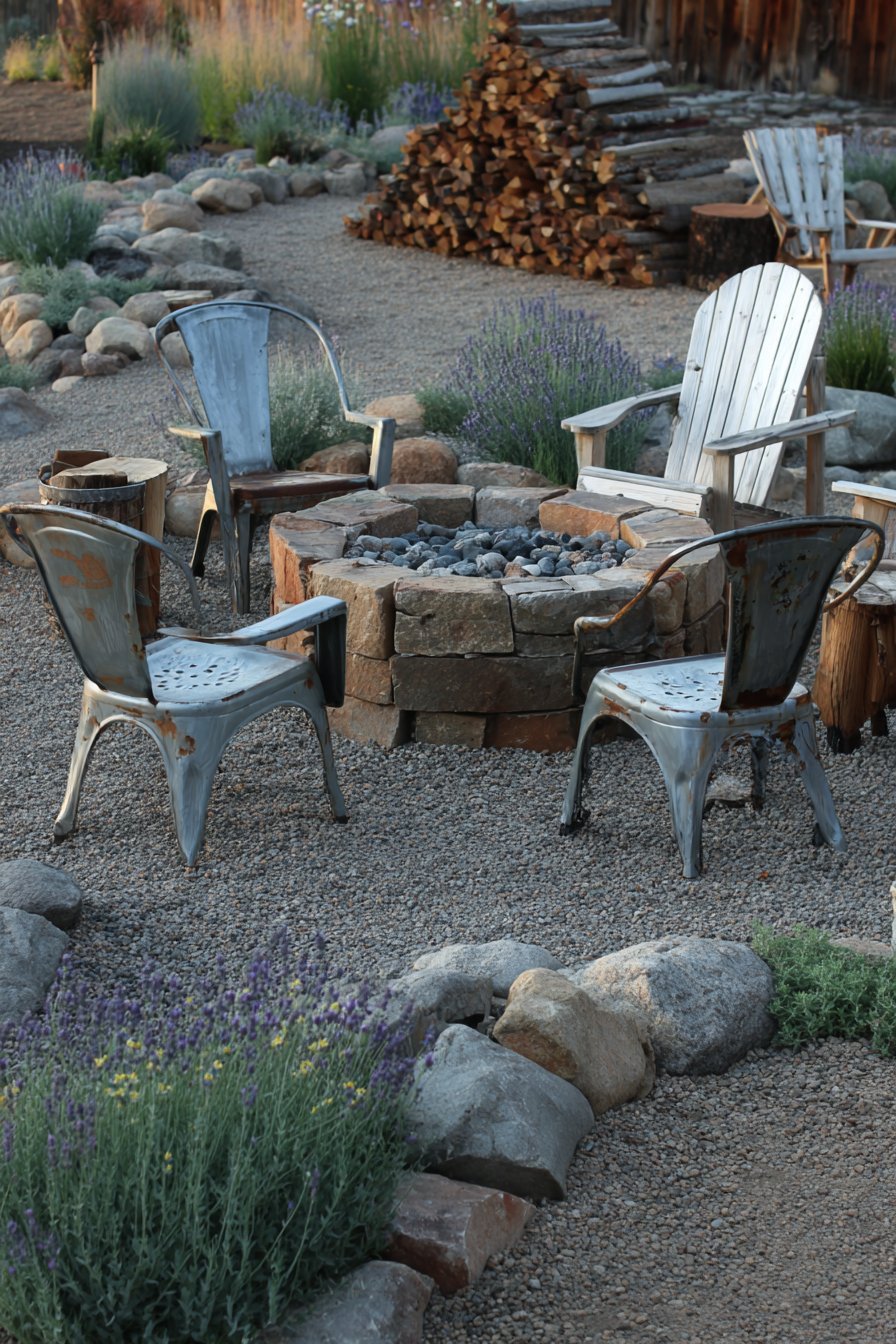
Firewood stacks neatly in a rustic log holder within easy reach. The seating area sits on compacted gravel with gaps between stones. Low-growing thyme fills these spaces with fragrant groundcover. The plants release scent when warmed by fire heat.
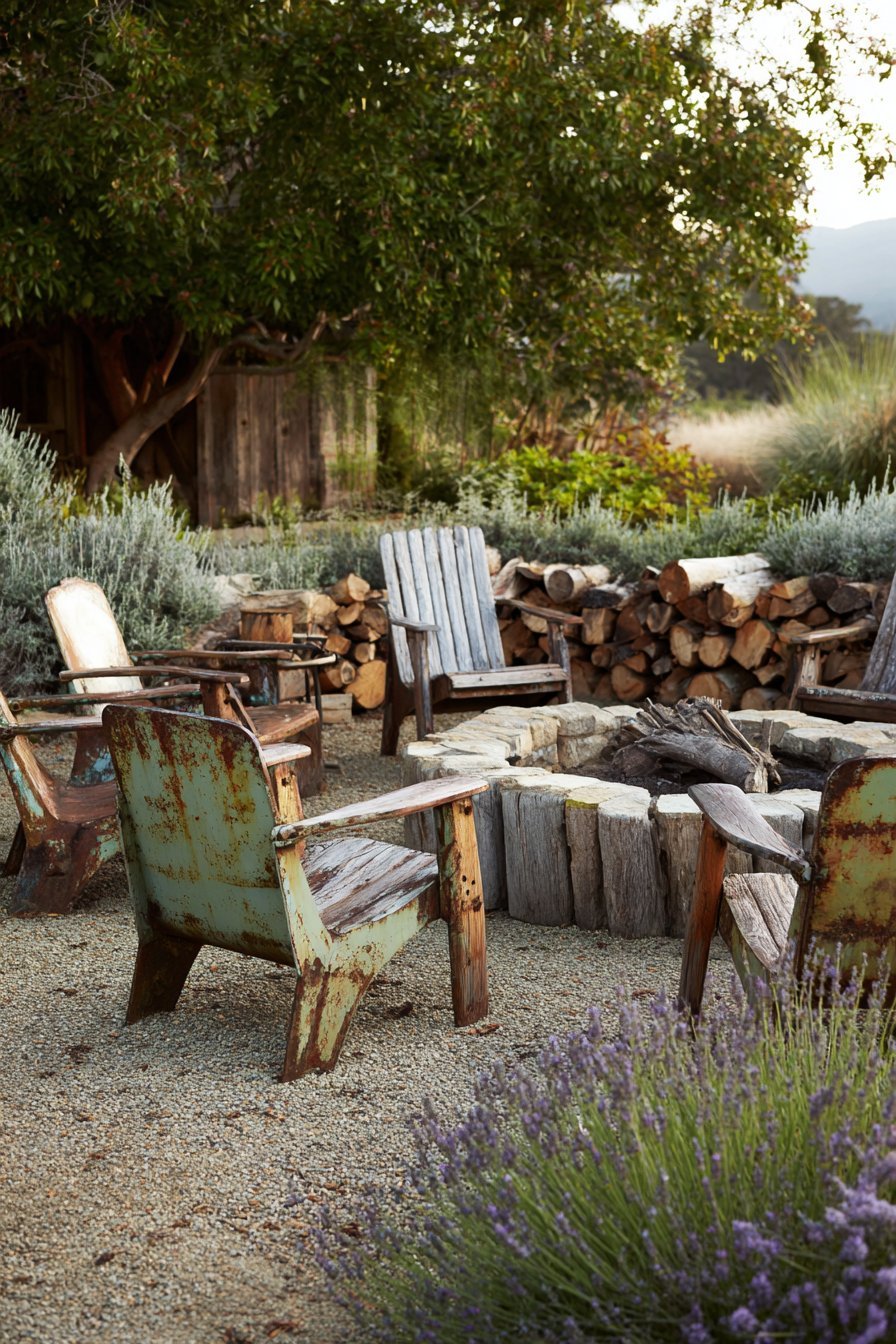
Natural evening light hints at approaching sunset glow. The lighting suggests the transition to nighttime fire gatherings. This creates anticipation for starlit conversations ahead. The informal welcoming space embodies cottage entertaining principles.
Key Design Tips:
- Mix seating styles freely for collected character and comfort
- Position fire pit away from structures following safety guidelines
- Plant fragrant herbs nearby for pleasant aromatic experience
- Use compacted gravel as fire-safe ground surface material
- Stack firewood in rustic holders as functional decoration
- Create generous seating circle for inclusive group gatherings
9. Traditional Clothesline Display
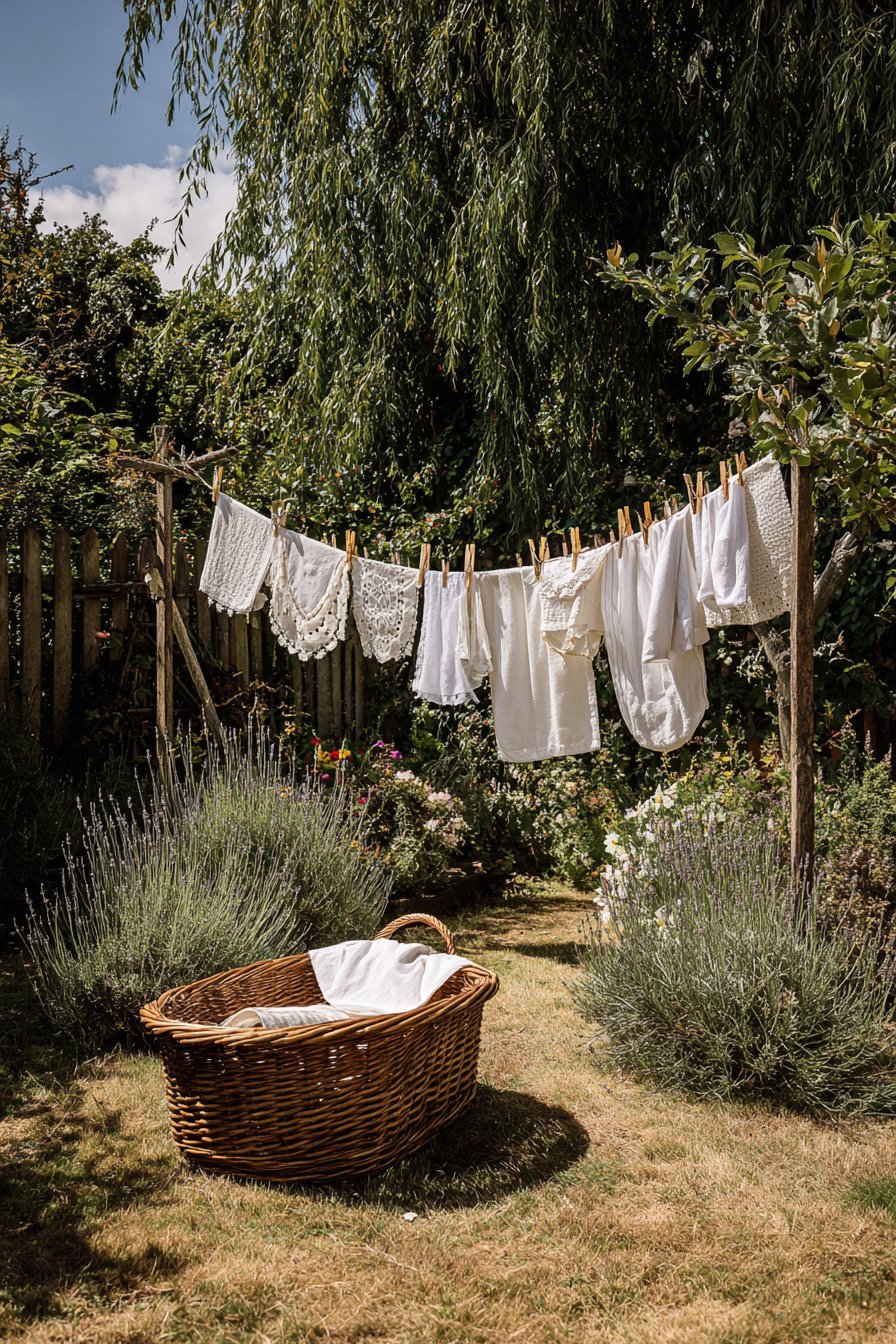
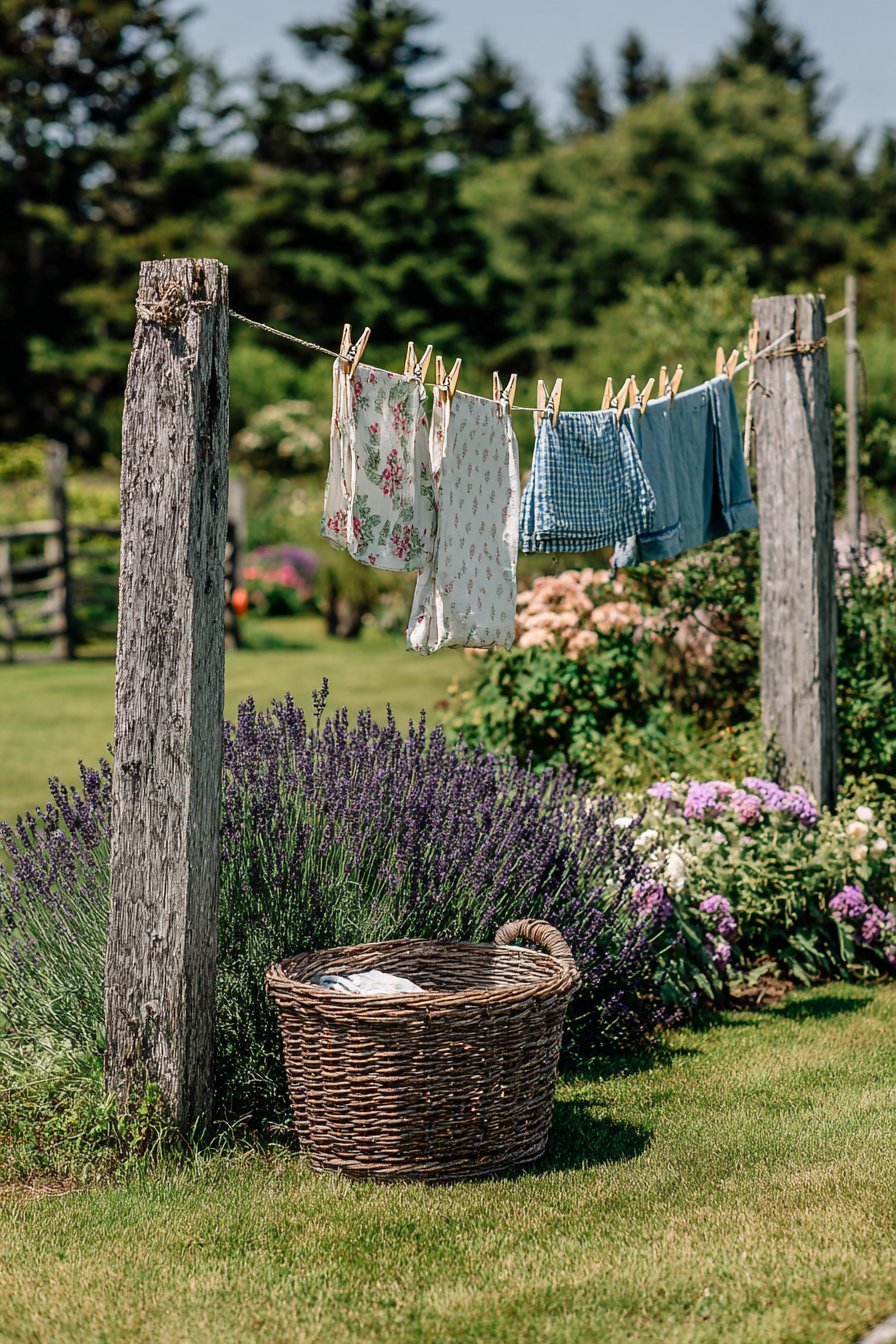
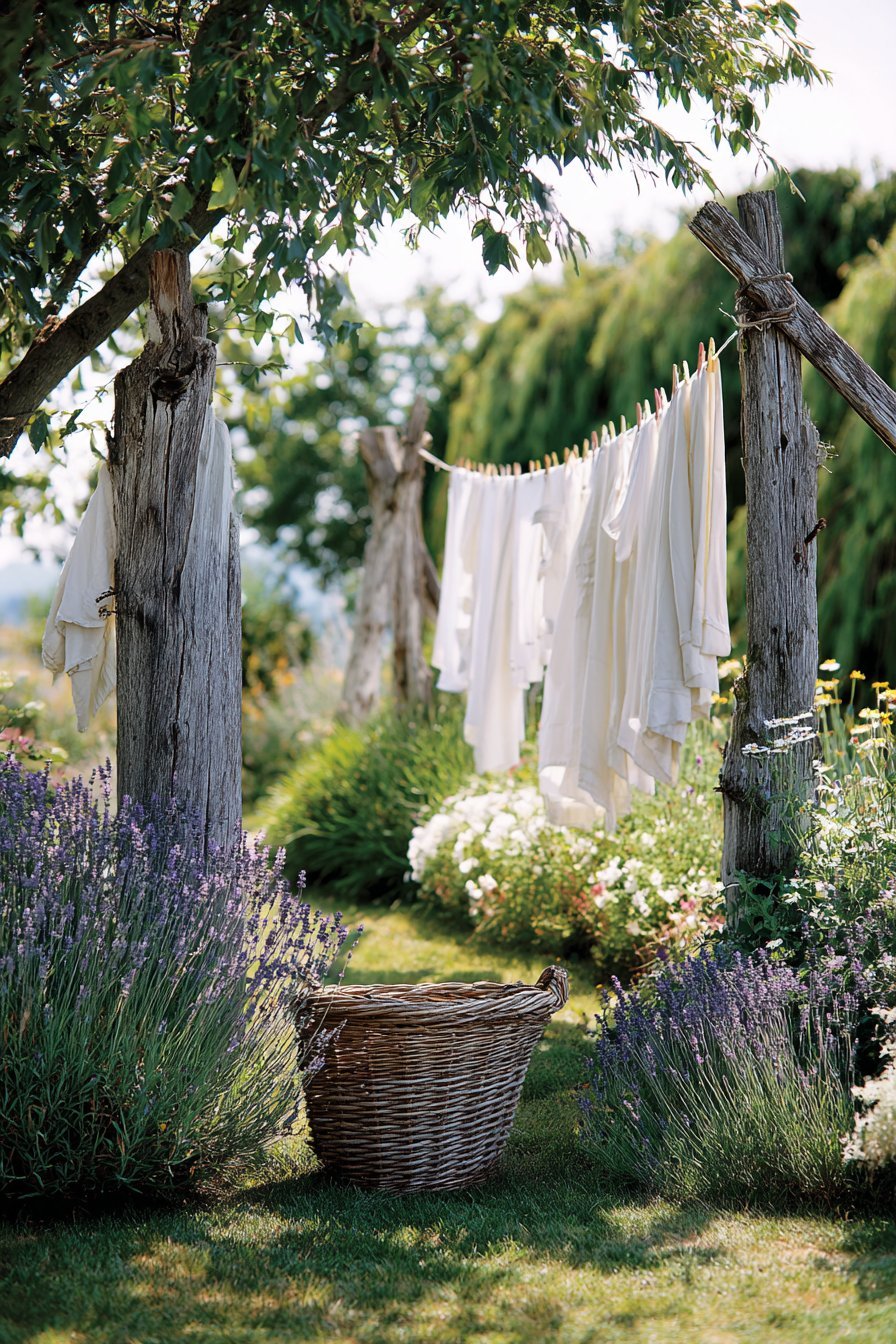
A clothesline strung between weathered wooden posts displays vintage linens. Cotton dish towels move gently in the breeze. The practical element adds nostalgic charm to the cottage backyard. Established lavender plants grow at each post’s base for fragrance.
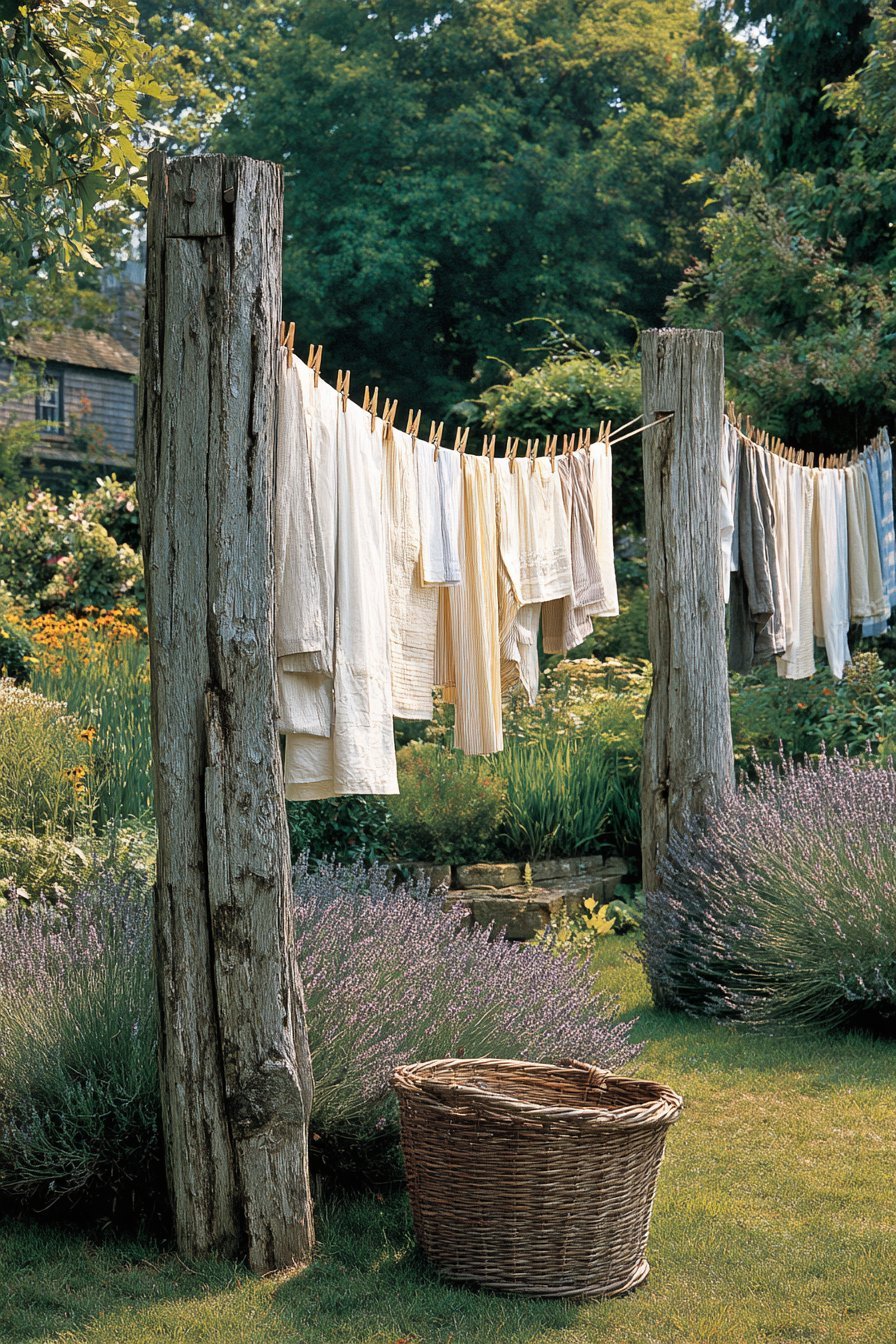
A woven wicker laundry basket sits on the grass nearby. The basket looks well-used and authentic to cottage living. Traditional cottage gardens appear in the backdrop with mixed perennial borders. Self-seeding annuals fill gaps naturally between established plants.
Bright midday natural light illuminates the fresh whites dramatically. The lighting highlights the authentic cottage practice of line-drying. This documentary approach captures practical cottage living elements. The scene demonstrates that functional features can enhance garden beauty.
Key Design Tips:
- Install clothesline using weathered wood posts for period authenticity
- Plant lavender at post bases for fragrance during hanging tasks
- Use vintage wicker baskets for authentic cottage laundry presentation
- Position clothesline where natural light showcases white linens best
- Incorporate mixed perennial borders as attractive backdrop plantings
- Embrace practical elements as decorative cottage garden features
10. Vintage Glass Greenhouse

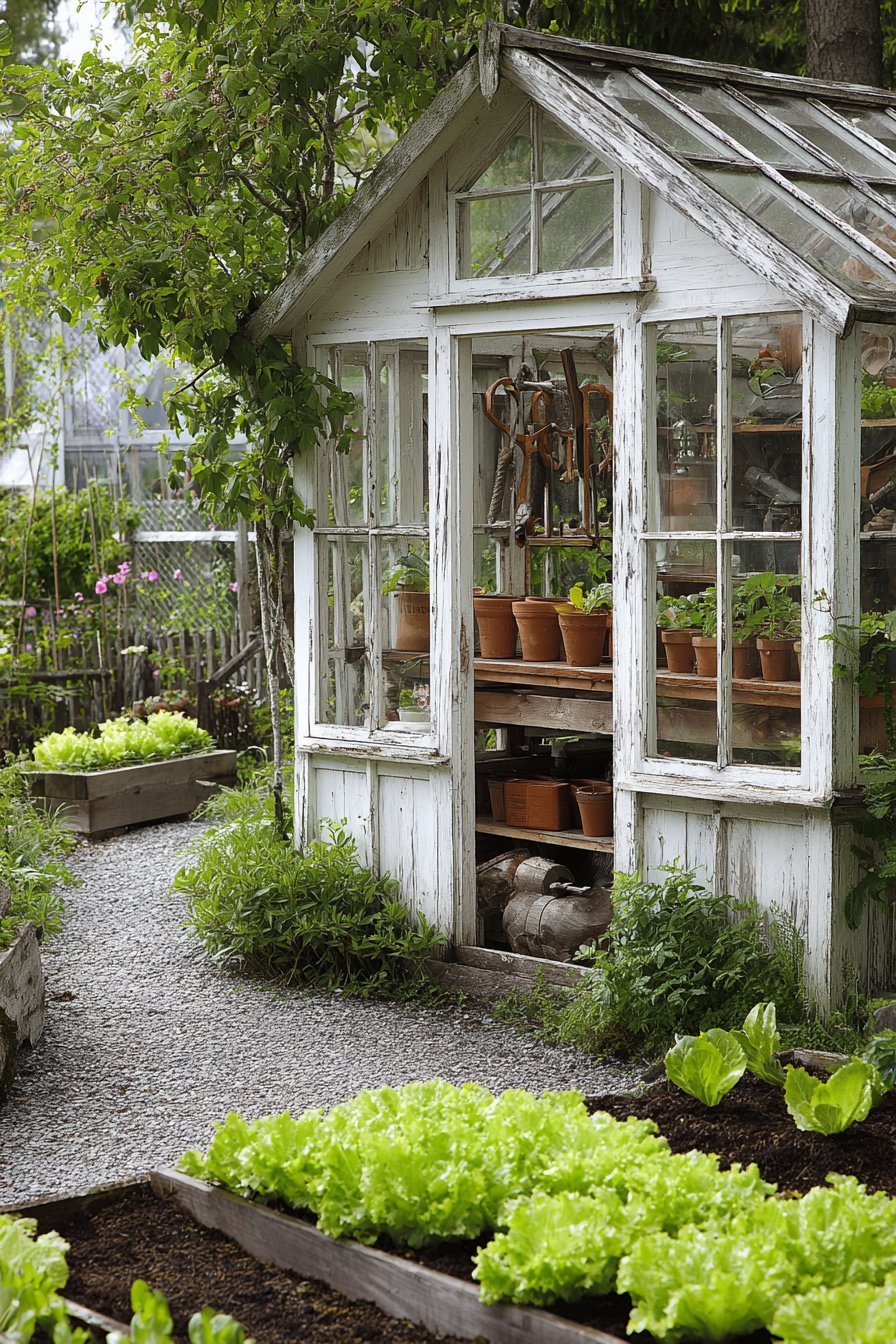
A greenhouse structure features vintage glass panes in weathered white-painted frames. Inside, terracotta pots of seedlings line wooden shelving. Hand tools, coiled garden twine, and supplies occupy the working space. The greenhouse serves practical propagation and growing functions.
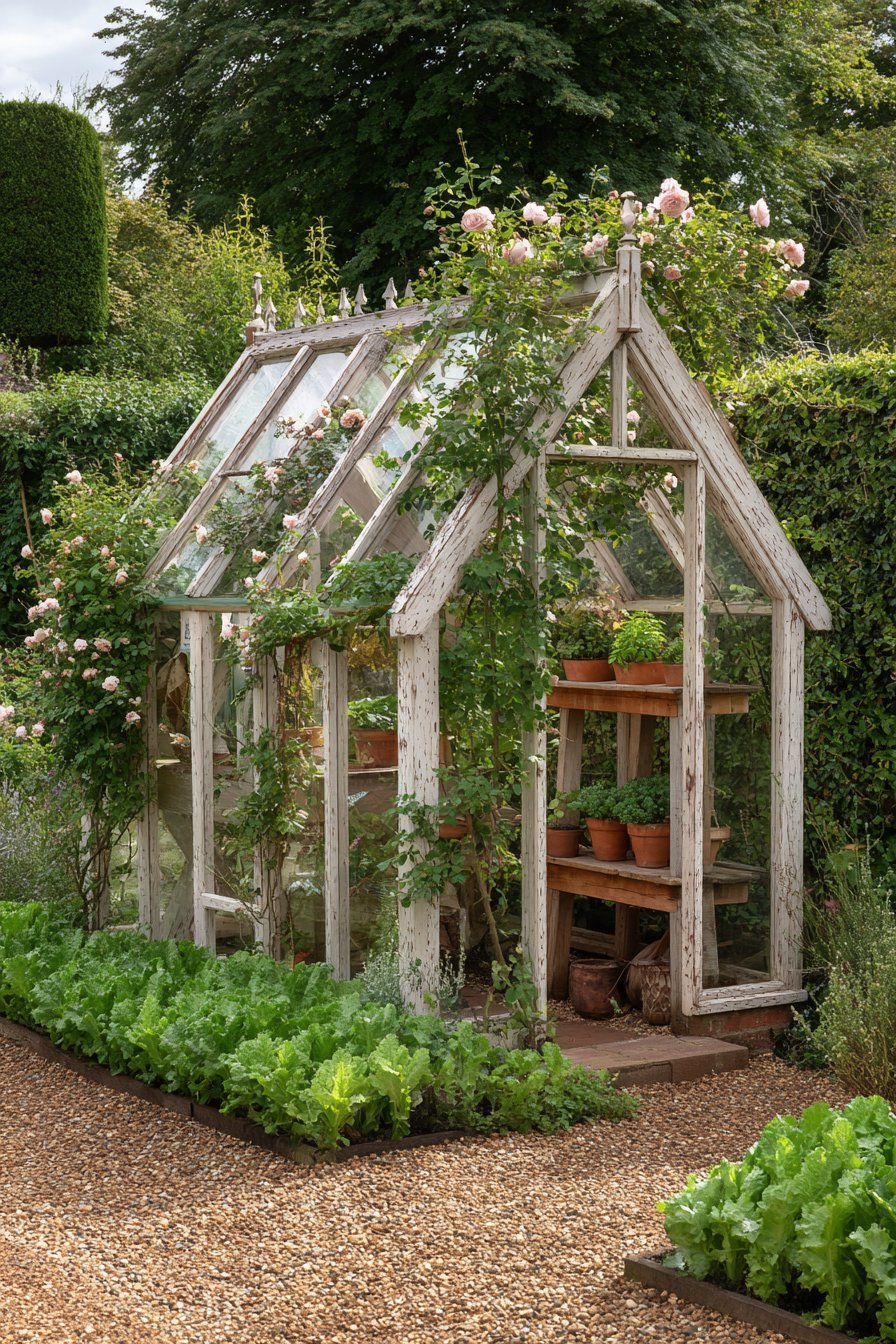
Climbing roses grow up one exterior side naturally. A gravel path leads to the greenhouse door bordered by lettuces and herbs. The productive plantings demonstrate cottage garden self-sufficiency values. The neat rows show organized growing practices.

Overcast natural lighting provides even illumination of the structure. The soft light shows period details and functional elements clearly. This working greenhouse exists within the productive cottage garden setting. The building combines practical function with architectural charm.
Key Design Tips:
- Choose vintage-style glass panes for authentic period appearance
- Paint frames white or cream for classic greenhouse aesthetic
- Install wooden shelving for traditional work surface character
- Encourage climbing roses on at least one exterior wall
- Border approach paths with productive edible plantings
- Maintain organized interior for efficient working greenhouse function
11. Layered Perennial Border
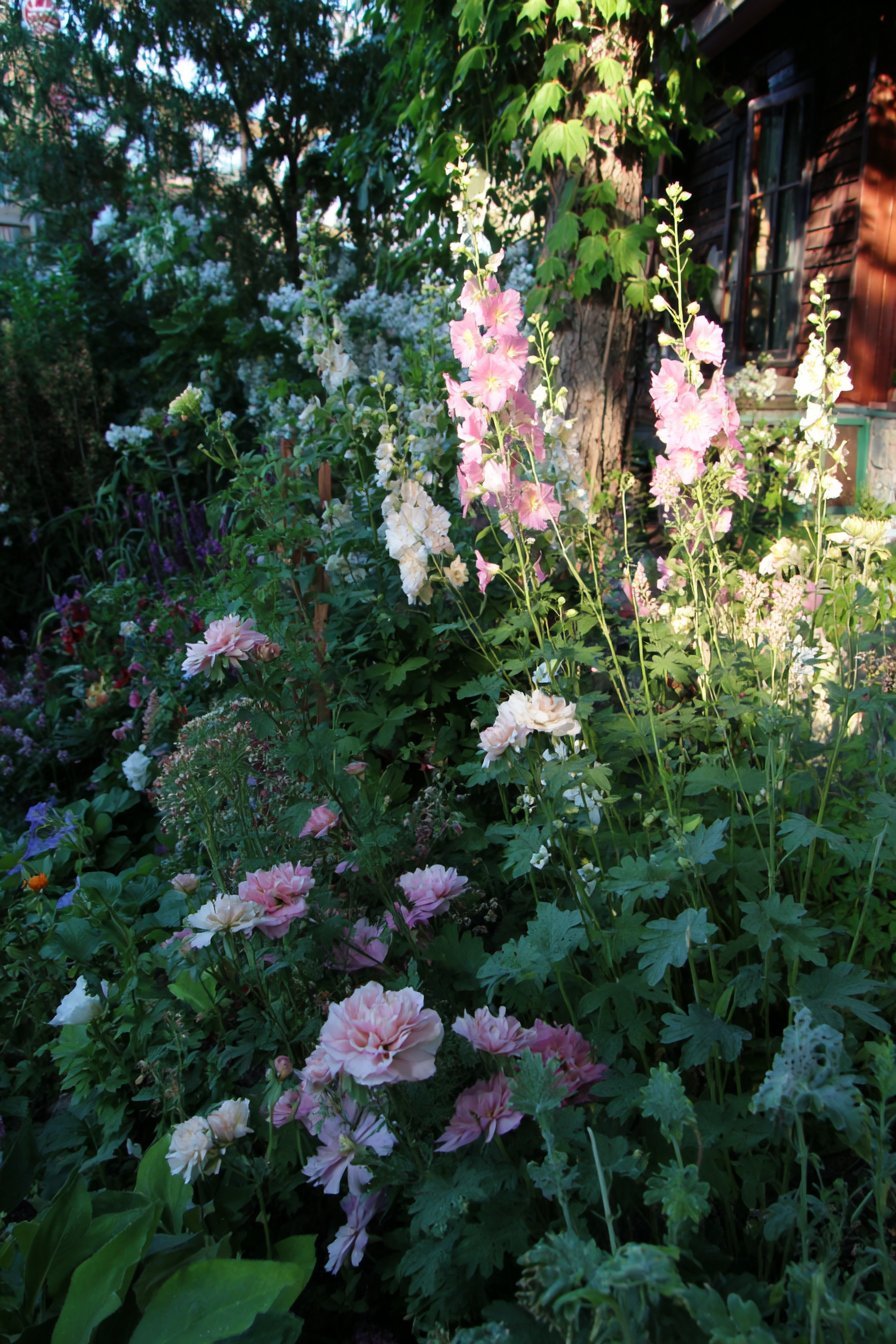
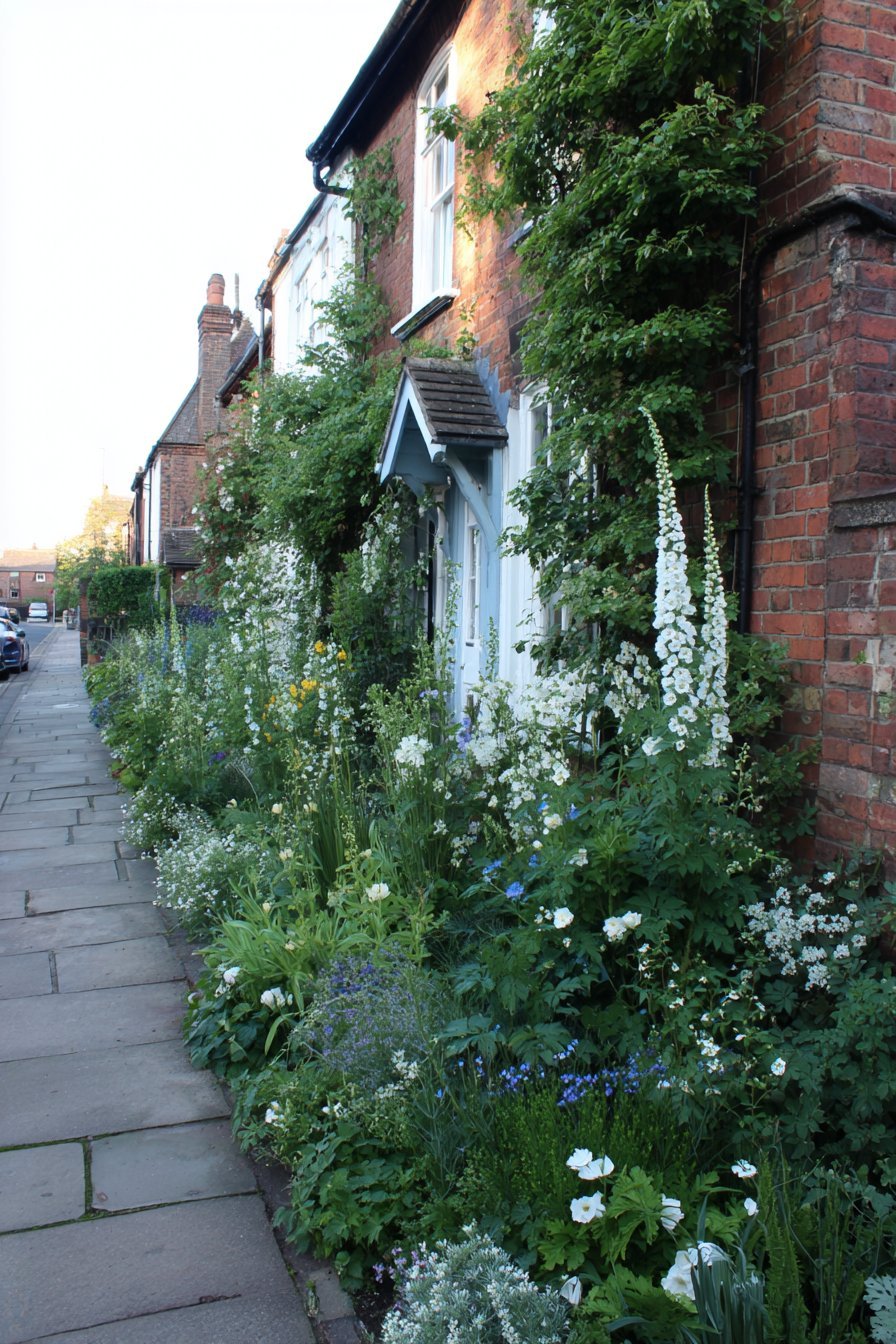
Tall delphiniums and hollyhocks tower at the border’s back. Mid-height roses and peonies fill the middle layer with color. Low catmint and hardy geraniums edge the front border. This traditional cottage garden technique creates depth and visual interest.
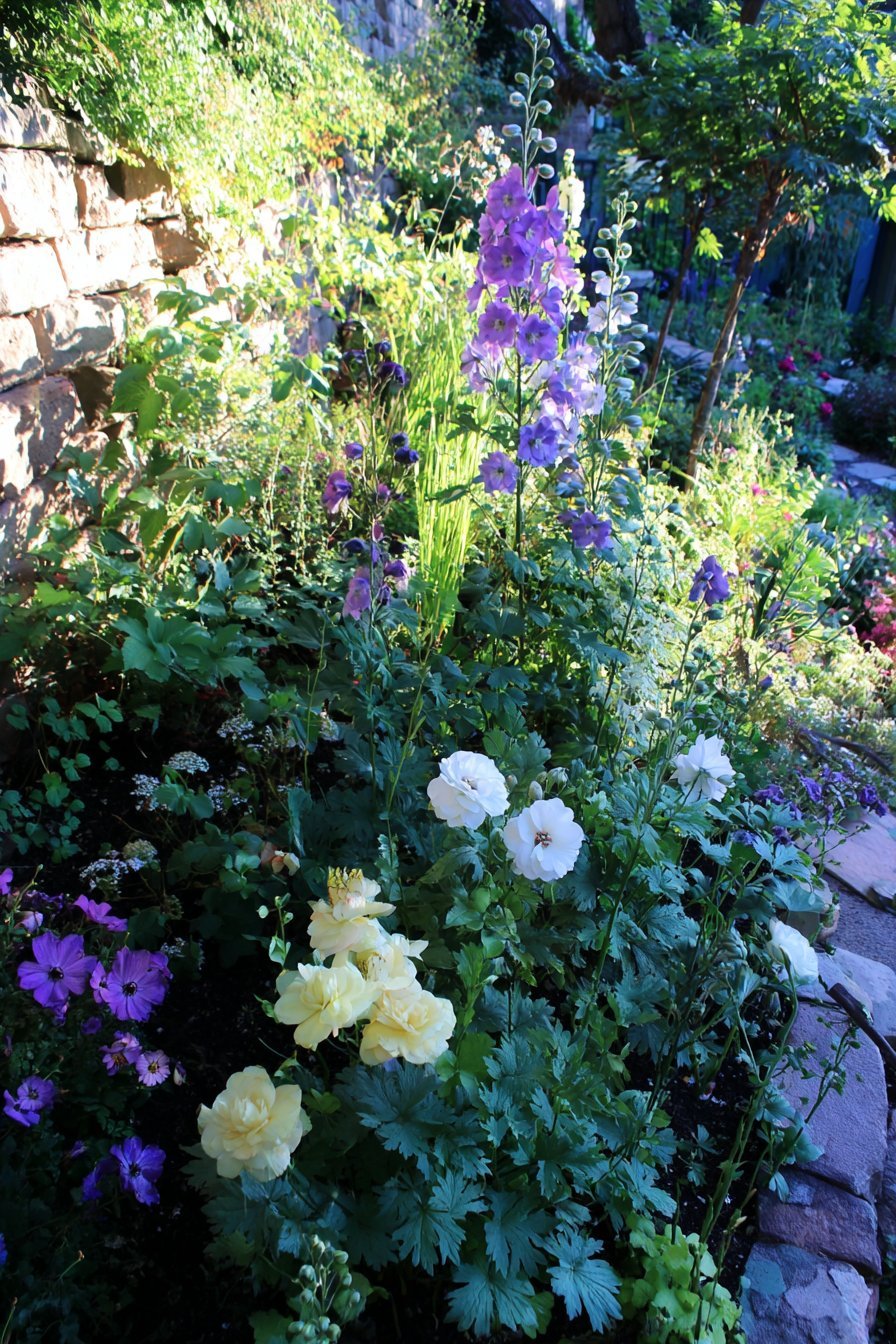
An old stone or brick wall forms the backdrop. Climbing jasmine and clematis soften the hard surface beautifully. Self-seeding foxgloves and forget-me-nots fill gaps naturally. This spontaneous growth adds to the cottage garden’s authentic character.

Golden hour lighting creates warm tones across the border. Long shadows emphasize the layered planting structure and depth. The abundant informal arrangements define successful cottage borders. This demonstrates generous planting that characterizes the cottage style.
Key Design Tips:
- Layer plants by height from tall background to low foreground
- Use walls as backdrops for climbing vines and support
- Allow self-seeding plants to naturalize in border gaps
- Plant in generous drifts for abundant cottage garden effect
- Choose perennials that bloom at different times for season-long color
- Photograph borders during golden hour for best lighting effect
12. Working Chicken Coop
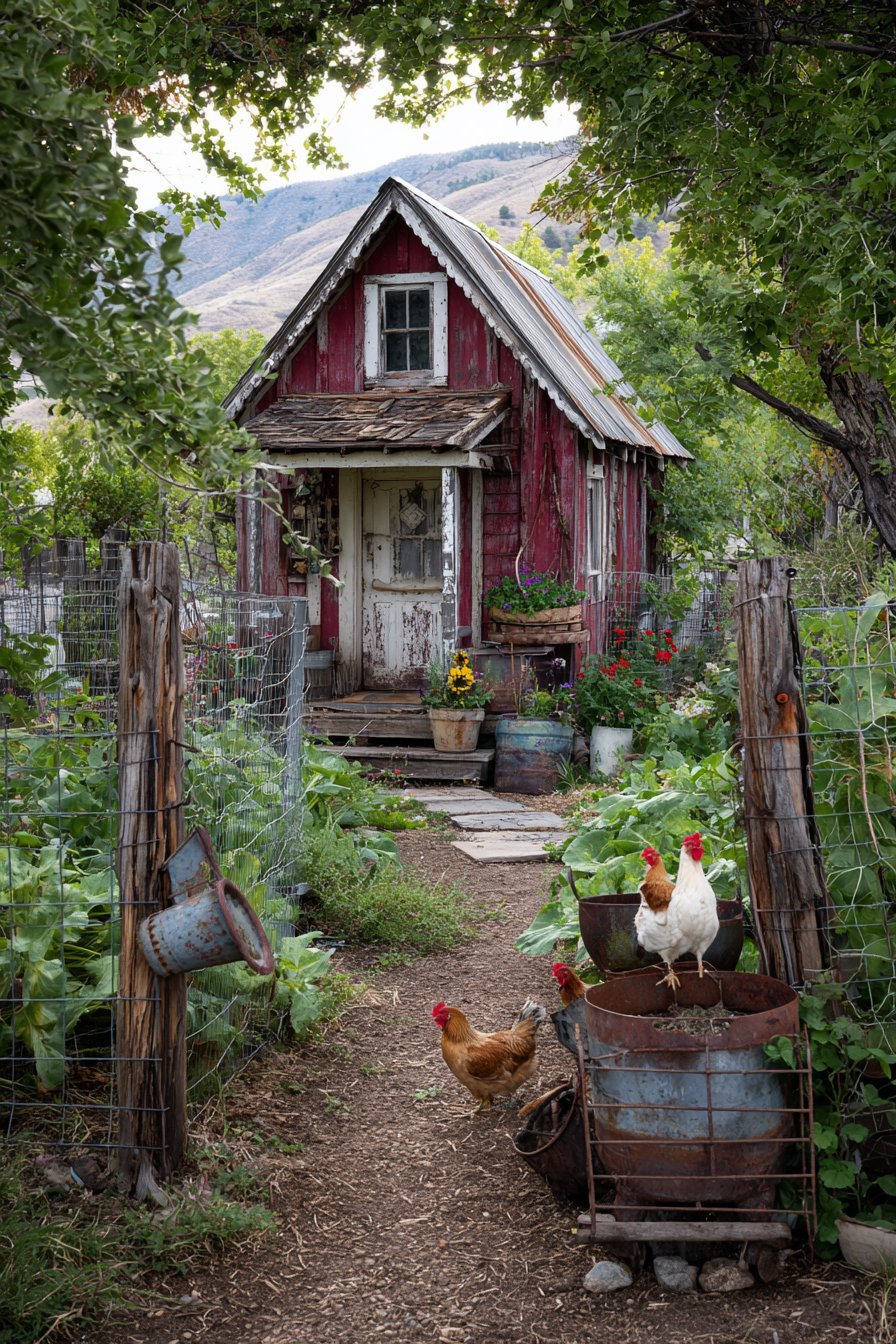
A chicken coop painted weathered barn red with white trim serves dual purposes. Simple wire fencing contains the free-ranging hens safely. The birds peck around established herb gardens of oregano, thyme, and sage. This integration demonstrates cottage garden self-sufficiency principles.
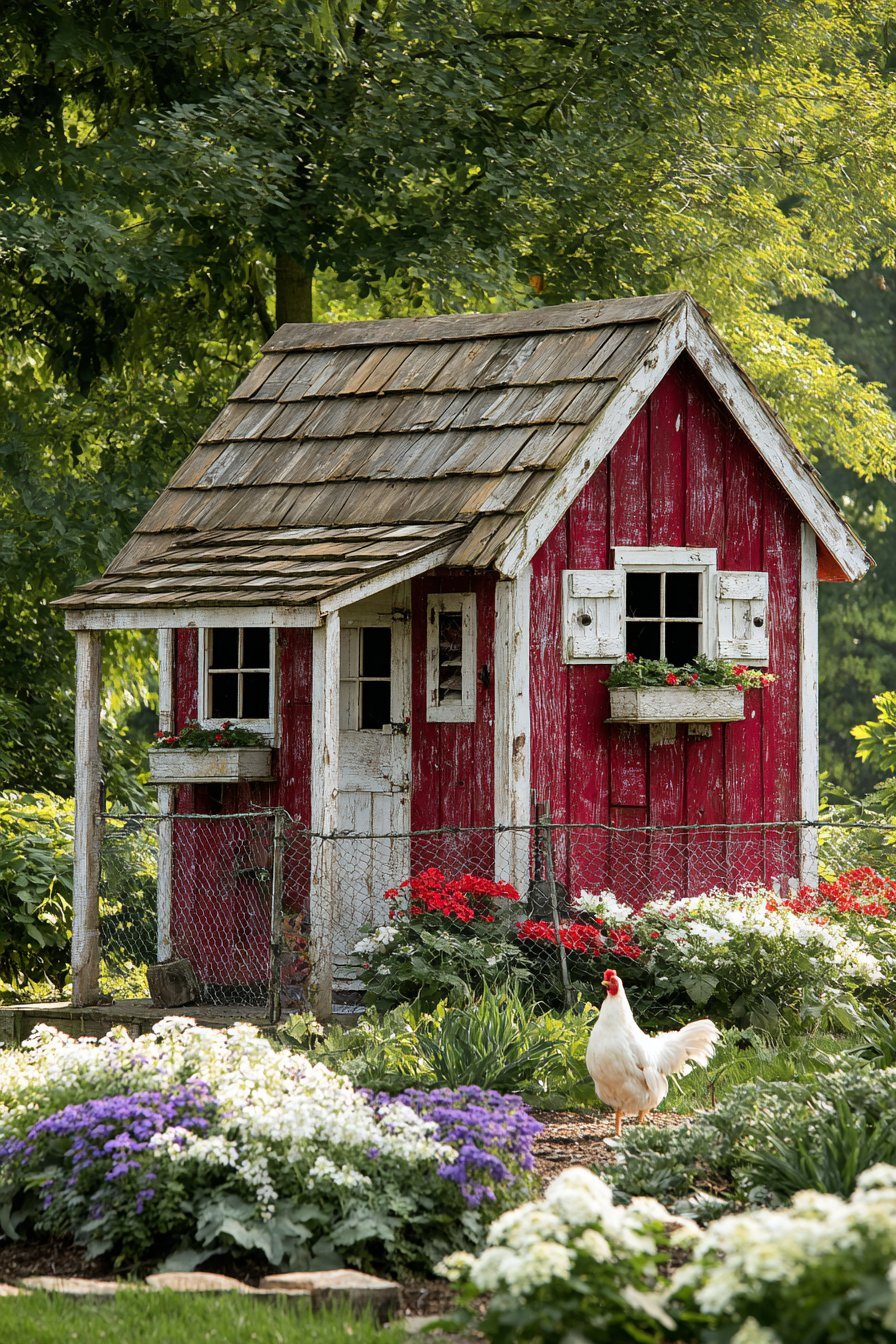
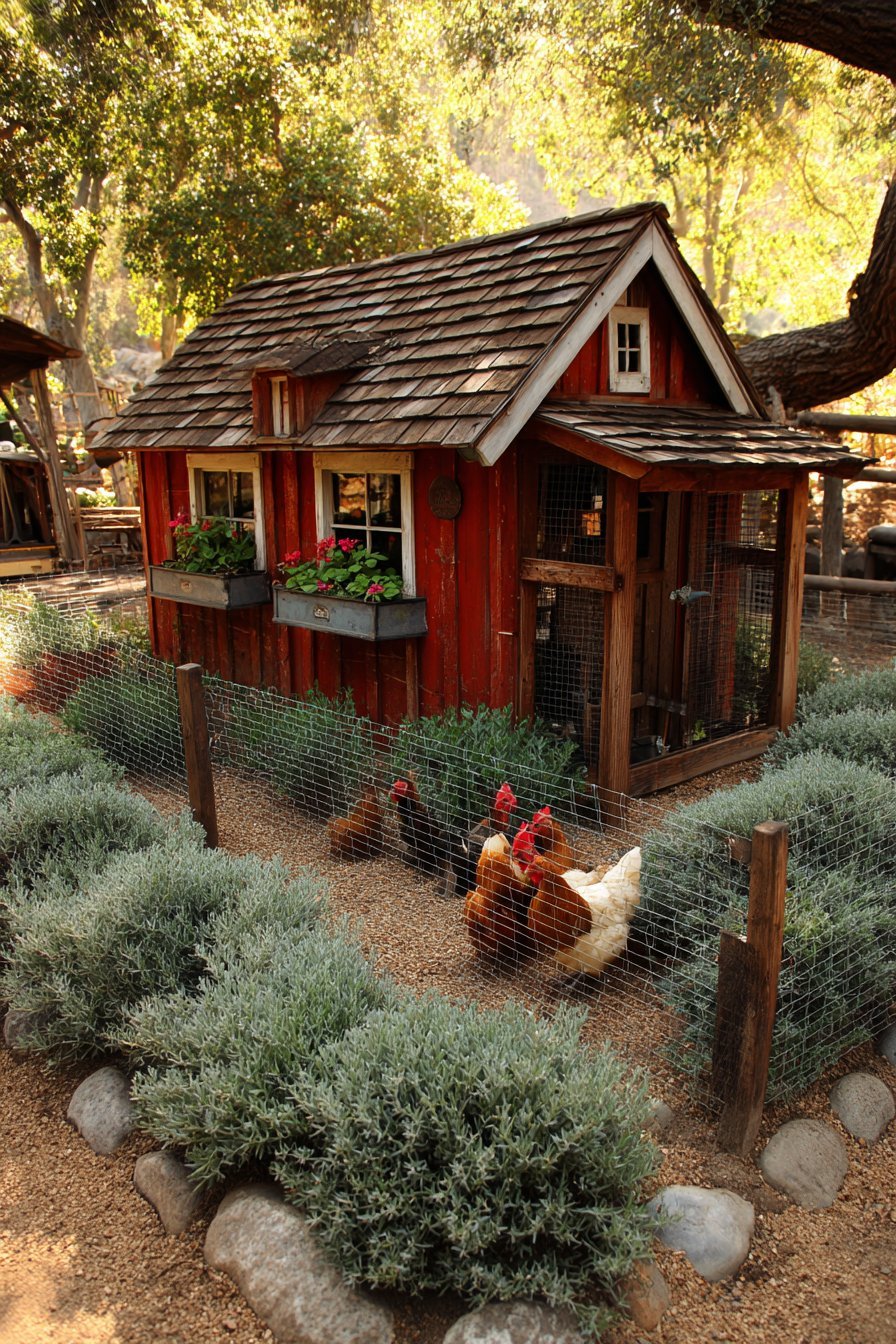
Vintage metal feeders and waterers show authentic patina from use. The coop features window boxes with cheerful geraniums for decoration. A small covered porch area provides shelter for the birds. The structure combines practical function with cottage aesthetic appeal.

Natural afternoon light illuminates this working garden element beautifully. The lighting shows how homesteading features integrate with ornamental gardens. This practical addition enhances rather than detracts from garden beauty. The coop demonstrates cottage living’s traditional self-sufficient approach.
Key Design Tips:
- Paint coops in traditional barn colors for authentic appearance
- Plant herbs chickens can safely forage around enclosure
- Use vintage metal equipment for functional period decoration
- Add window boxes to coops for ornamental cottage charm
- Position coops where they integrate naturally with garden layout
- Maintain decorative elements alongside practical chicken-keeping needs
13. Productive Cutting Garden

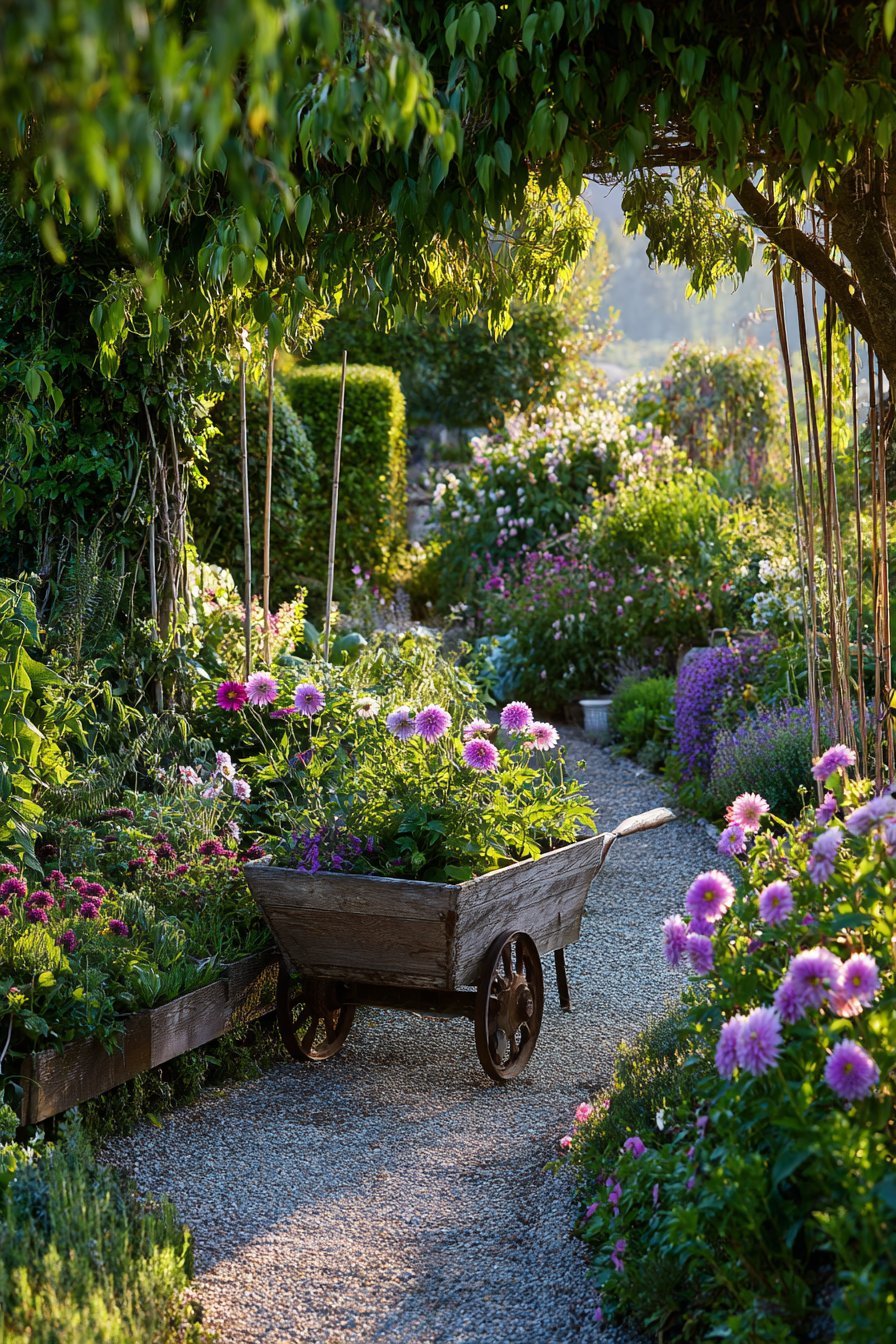
Organized rows of dahlias, zinnias, cosmos, and sweet peas grow on supports. Gravel paths separate the planting areas for easy flower harvesting. An old wooden wheelbarrow filled with freshly cut blooms sits at path intersections. Simple wooden stakes mark different plant varieties clearly.
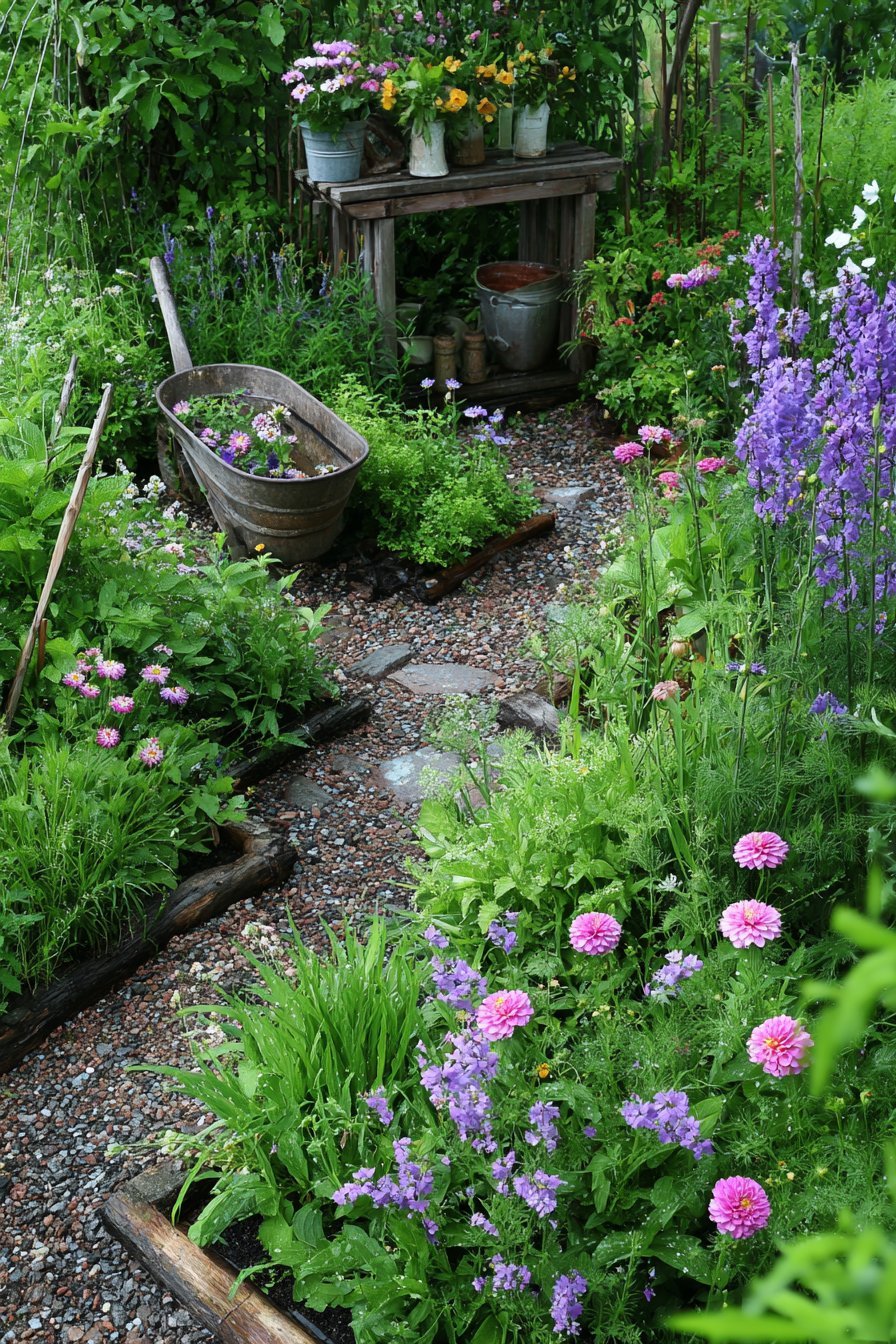
A rustic potting bench holds glass bottles and vintage shears. The bench serves as the cutting garden’s working headquarters. The productive space demonstrates cottage tradition of growing flowers for arrangements. This approach differs from purely ornamental garden design.

Morning natural light shows dew still visible on flower petals. The fresh lighting emphasizes both beauty and functionality equally. This captures the essence of productive cottage cutting gardens. The space proves that working gardens can be visually stunning.
Key Design Tips:
- Organize cutting gardens in rows for efficient harvesting access
- Use gravel paths to maintain clean walking surfaces when wet
- Plant generous quantities of each flower variety for abundant cutting
- Install bamboo or wooden supports for climbing flower varieties
- Position potting bench within garden for immediate flower processing
- Choose varieties that produce continuously throughout the growing season
14. Spiral Herb Garden
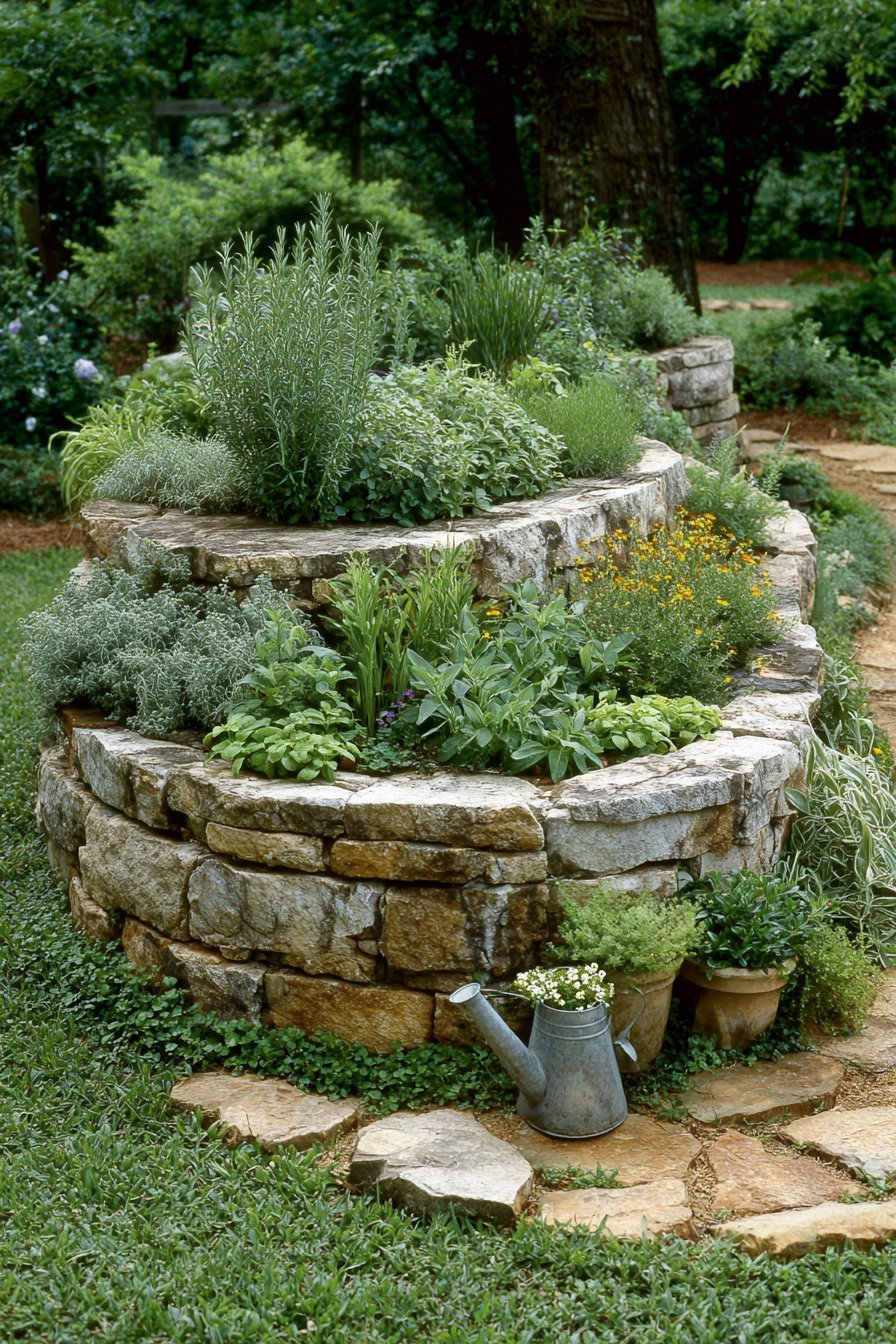
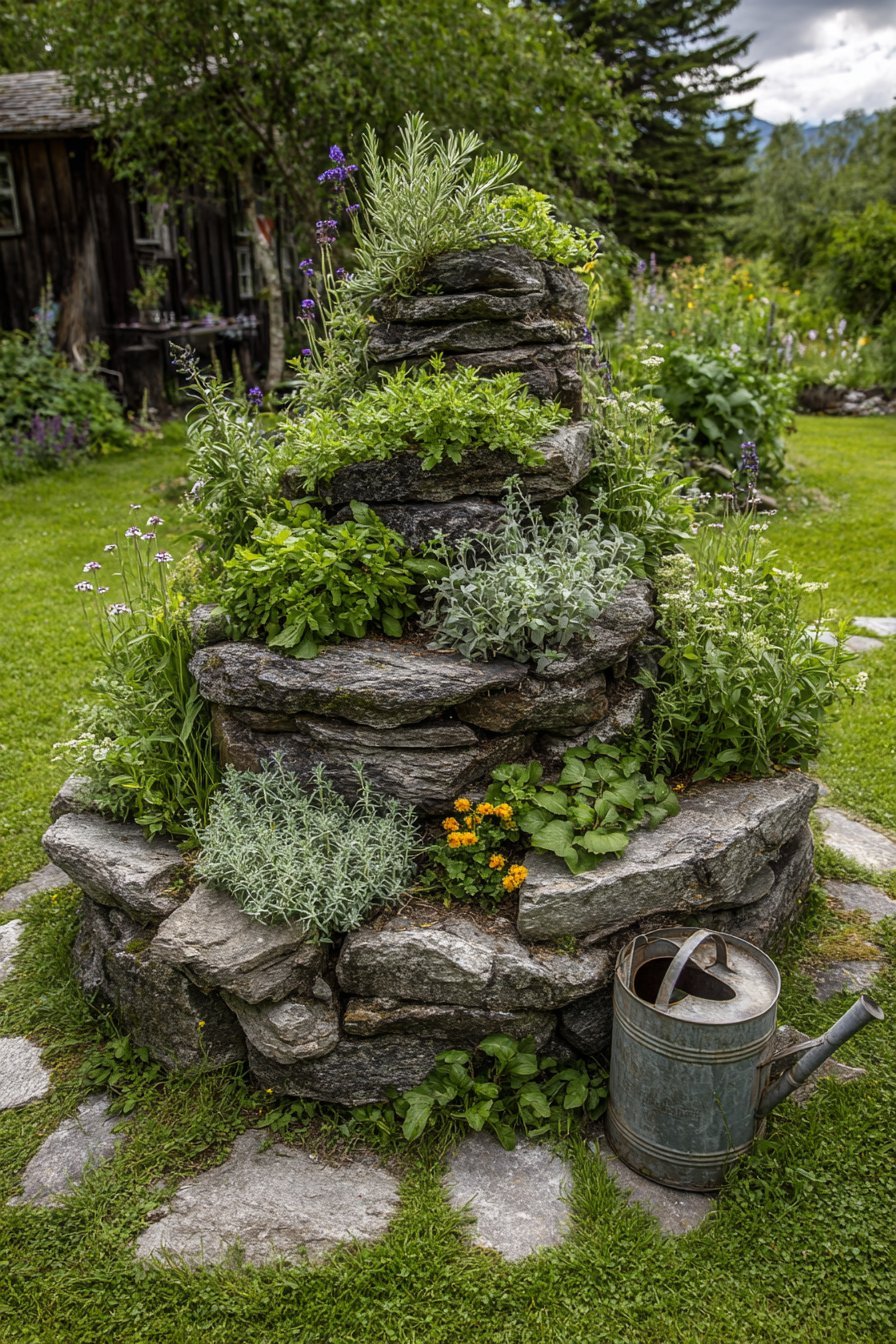
A herb spiral constructed from weathered stones stacks in ascending circles. The vertical structure creates different microclimates for diverse herbs. Rosemary, thyme, sage, oregano, and mint grow in appropriate zones. The spiral design maximizes growing space in small footprints.
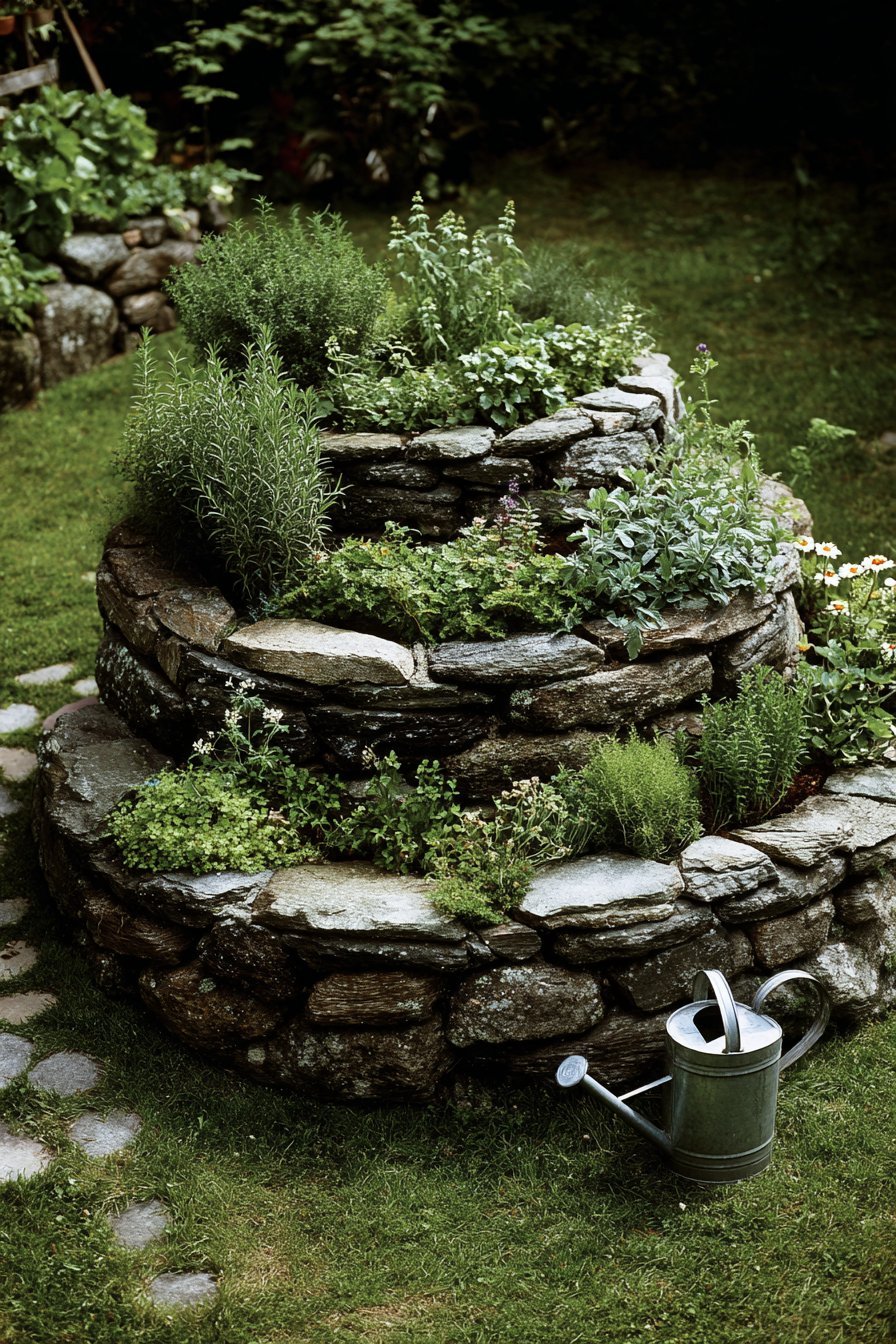
Small stone pathways allow access for harvesting herbs easily. Self-seeding calendula and chamomile soften the spiral’s edges naturally. A vintage watering can sits nearby on the grass ready for use. The three-dimensional design adds sculptural interest to cottage gardens.

Natural overcast lighting provides even illumination of the structure. The lighting shows the spiral design and diverse herb plantings clearly. This overhead angle reveals the intentional layout best. The herb spiral represents traditional cottage garden ingenuity and efficiency.
Key Design Tips:
- Build spirals from weathered or salvaged stone for character
- Position Mediterranean herbs at top in drier microclimate
- Plant moisture-loving herbs at base in damper conditions
- Create small access paths for easy harvesting without stepping on herbs
- Allow flowering herbs to self-seed around spiral edges naturally
- Place spirals near kitchen doors for convenient culinary herb access
15. Wisteria-Draped Pergola
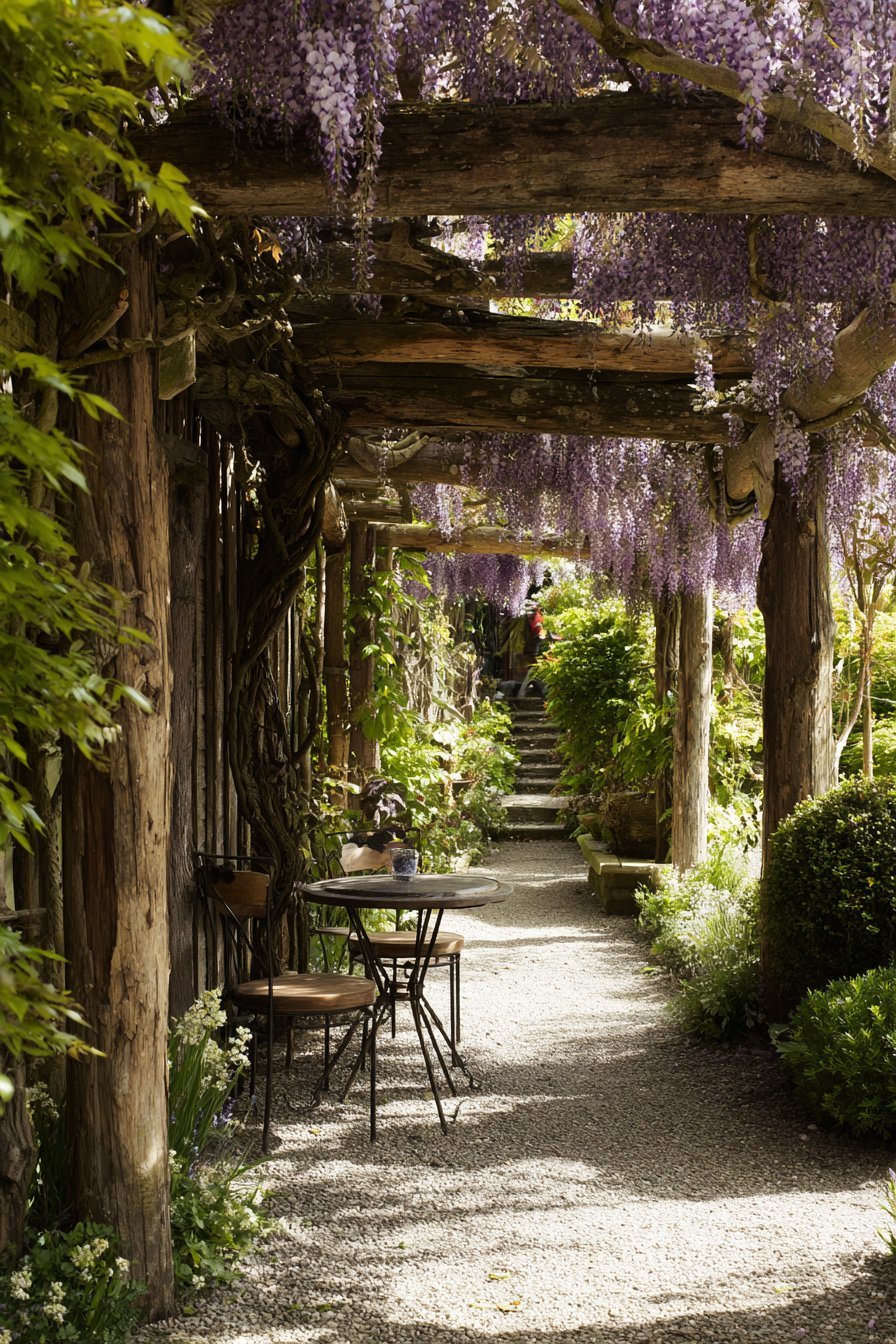
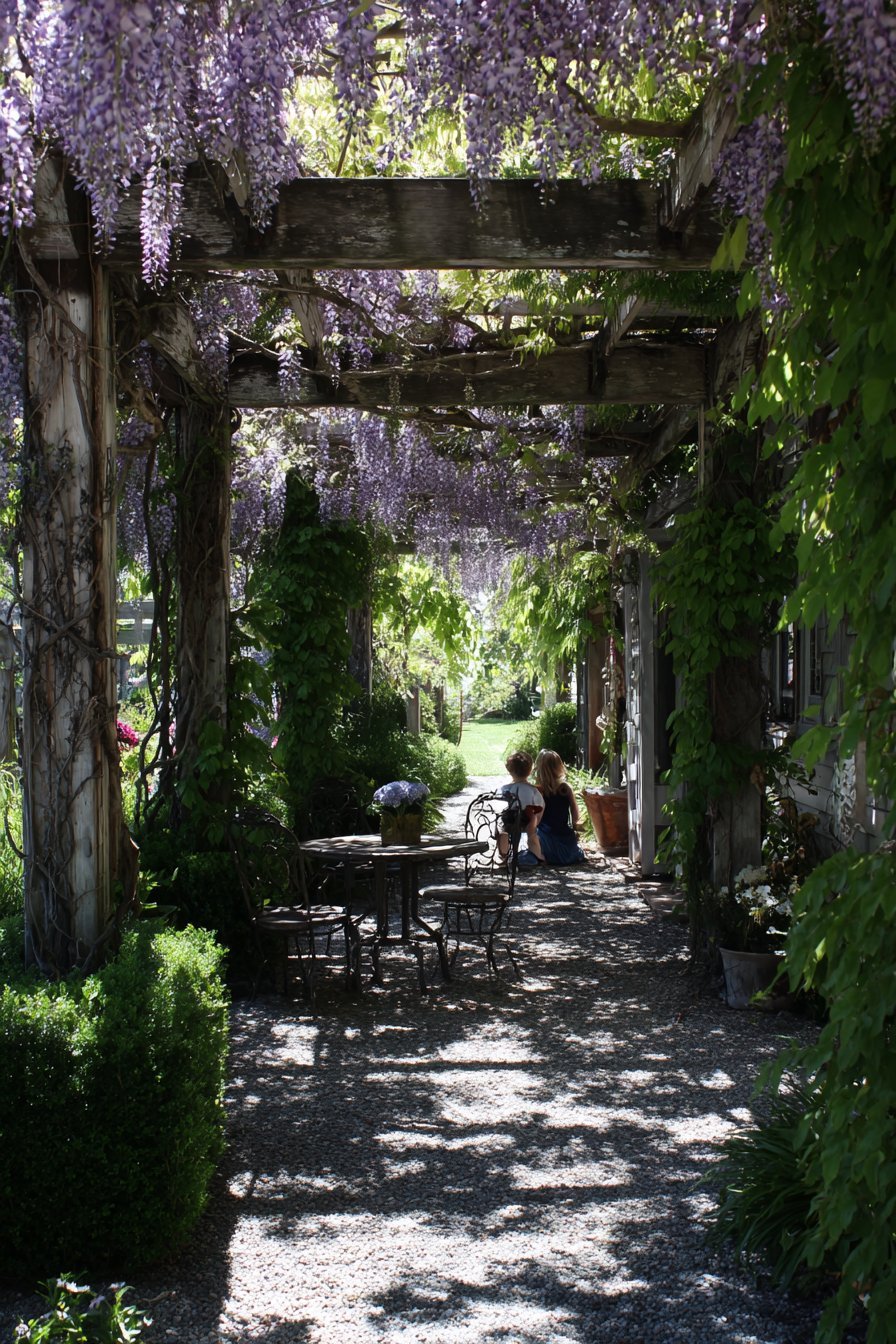
A pergola structure made from weathered wooden posts and beams supports mature wisteria. The heavy vines drape the structure in full spring bloom. Underneath, simple gravel flooring hosts vintage metal bistro furniture. Dappled sunlight filters through the vine canopy creating natural patterns.
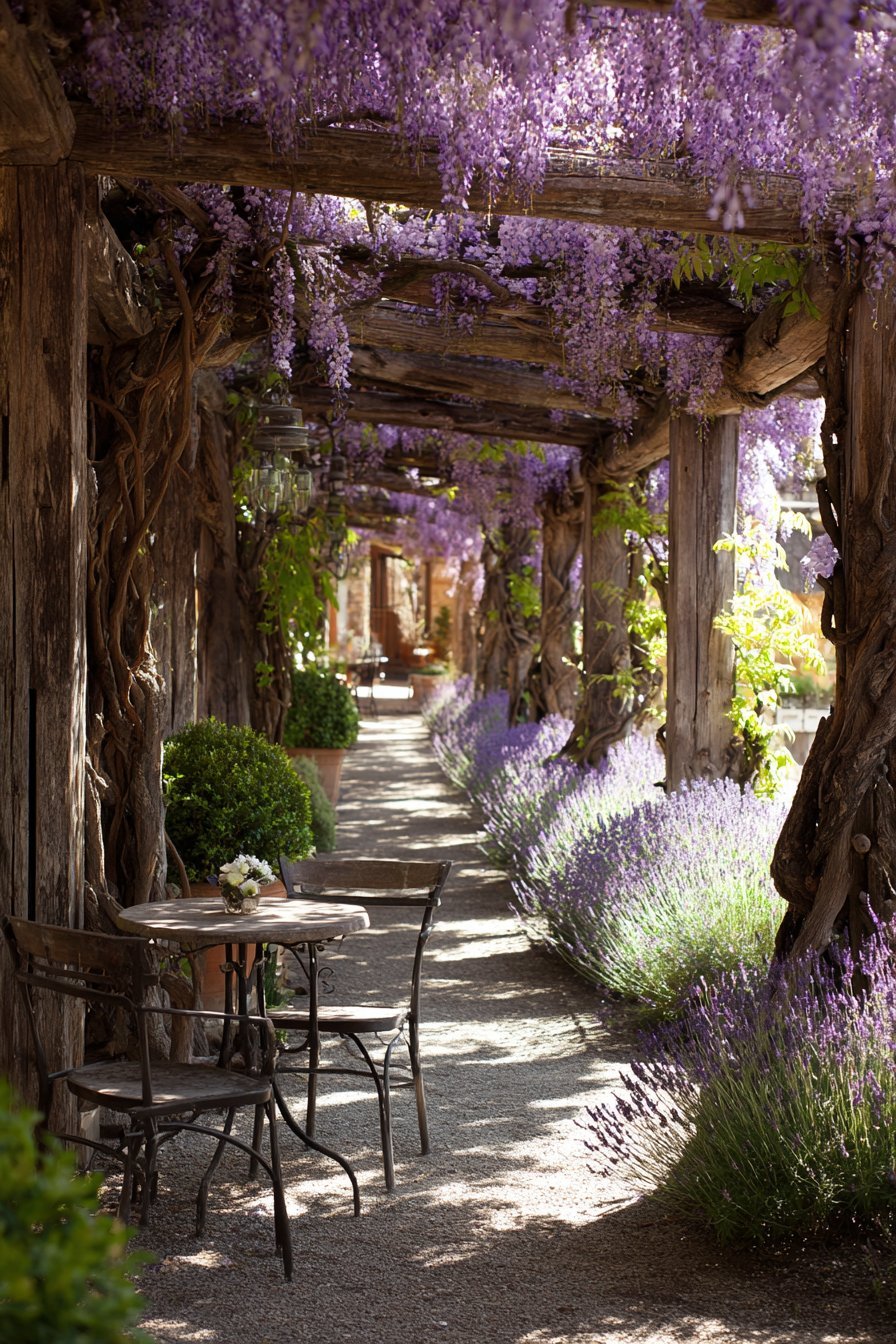
Established box hedges or lavender borders define the pergola area. The low plantings ground the vertical structure visually. The silvered wood shows authentic aging from weather exposure. Established vine growth demonstrates years of patient cultivation.

Late spring photography captures peak wisteria bloom perfectly. Natural lighting emphasizes the romantic cottage garden structure’s beauty. The filtered light creates an enchanting atmosphere for outdoor relaxation. This demonstrates how time enhances cottage garden structures.
Key Design Tips:
- Build pergolas from substantial timbers that weather beautifully over time
- Plant wisteria knowing it requires years to reach maturity
- Use simple gravel floors that drain well under structures
- Add bistro furniture for intimate seating in shaded areas
- Border pergolas with low hedges or lavender for definition
- Allow wood to weather naturally for authentic silvered patina
16. Peaceful Shade Garden
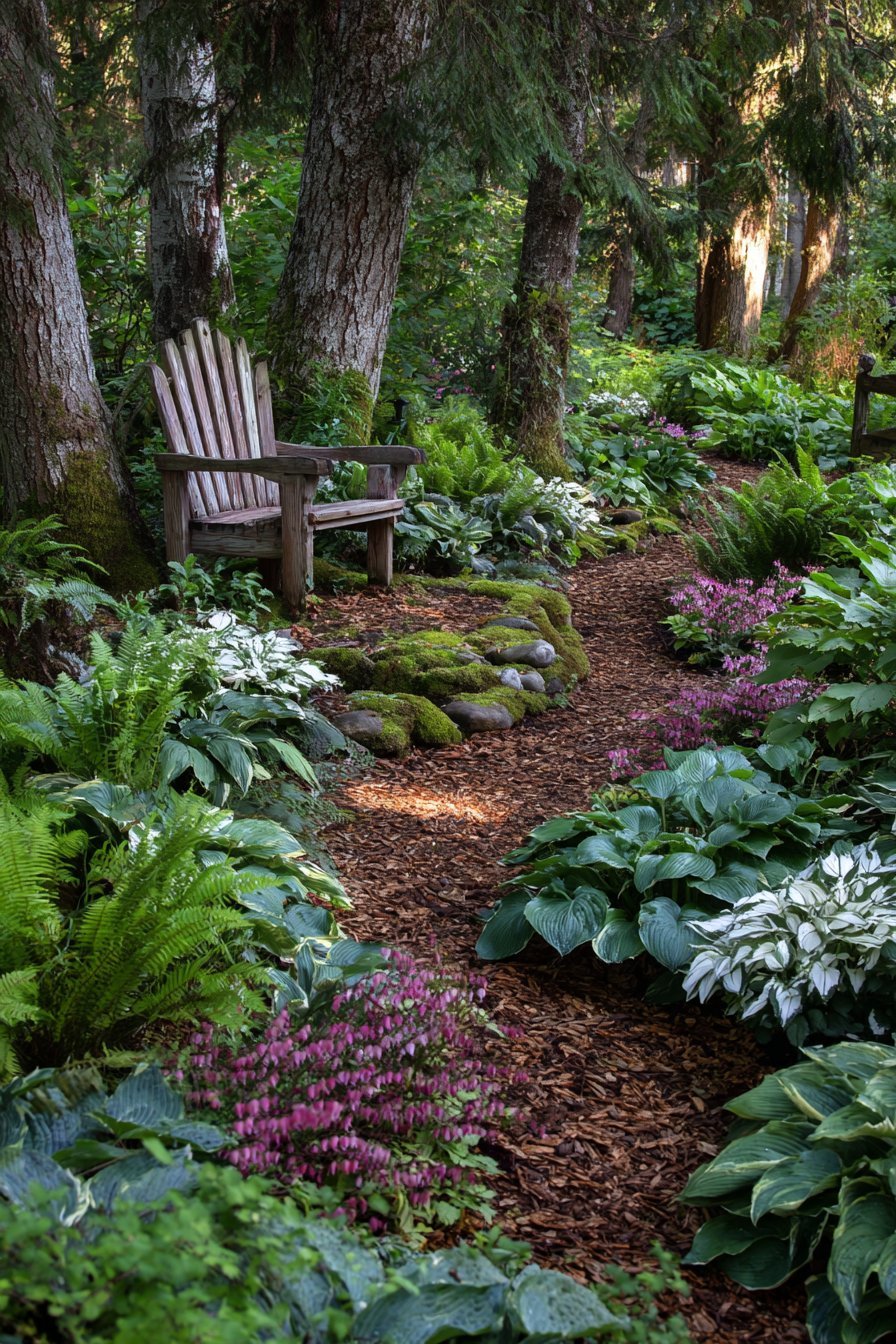
Established trees create shade for hostas, ferns, bleeding hearts, and astilbes. The plants grow in naturalistic drifts mimicking woodland conditions. A meandering bark mulch path winds through the plantings gracefully. A weathered wooden bench sits positioned for quiet contemplation.
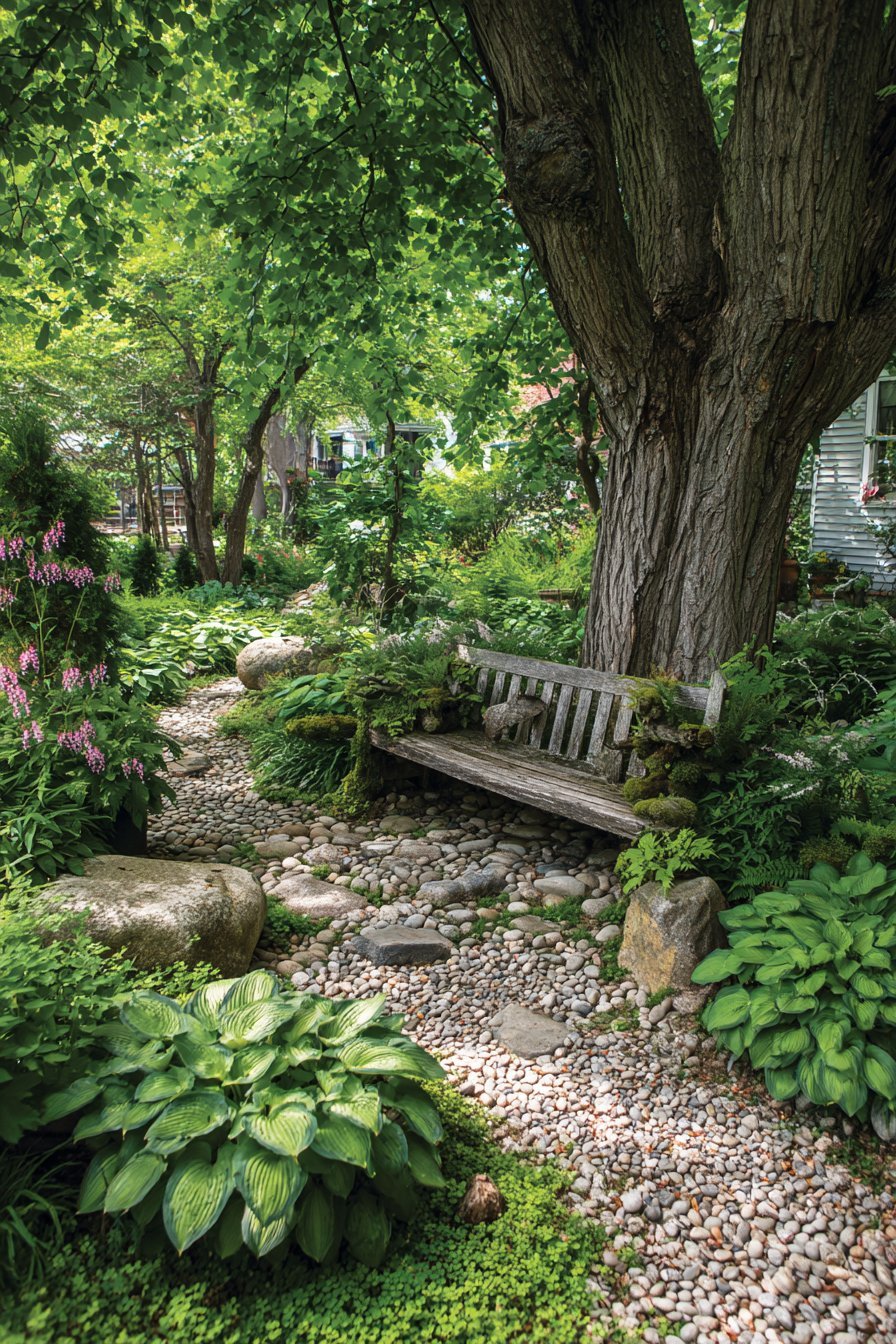
Moss grows on exposed tree roots and decorative stones naturally. The shade garden demonstrates successful cottage gardening in challenging conditions. These low-light spaces often get neglected in garden planning. This design shows their beautiful potential when planted thoughtfully.
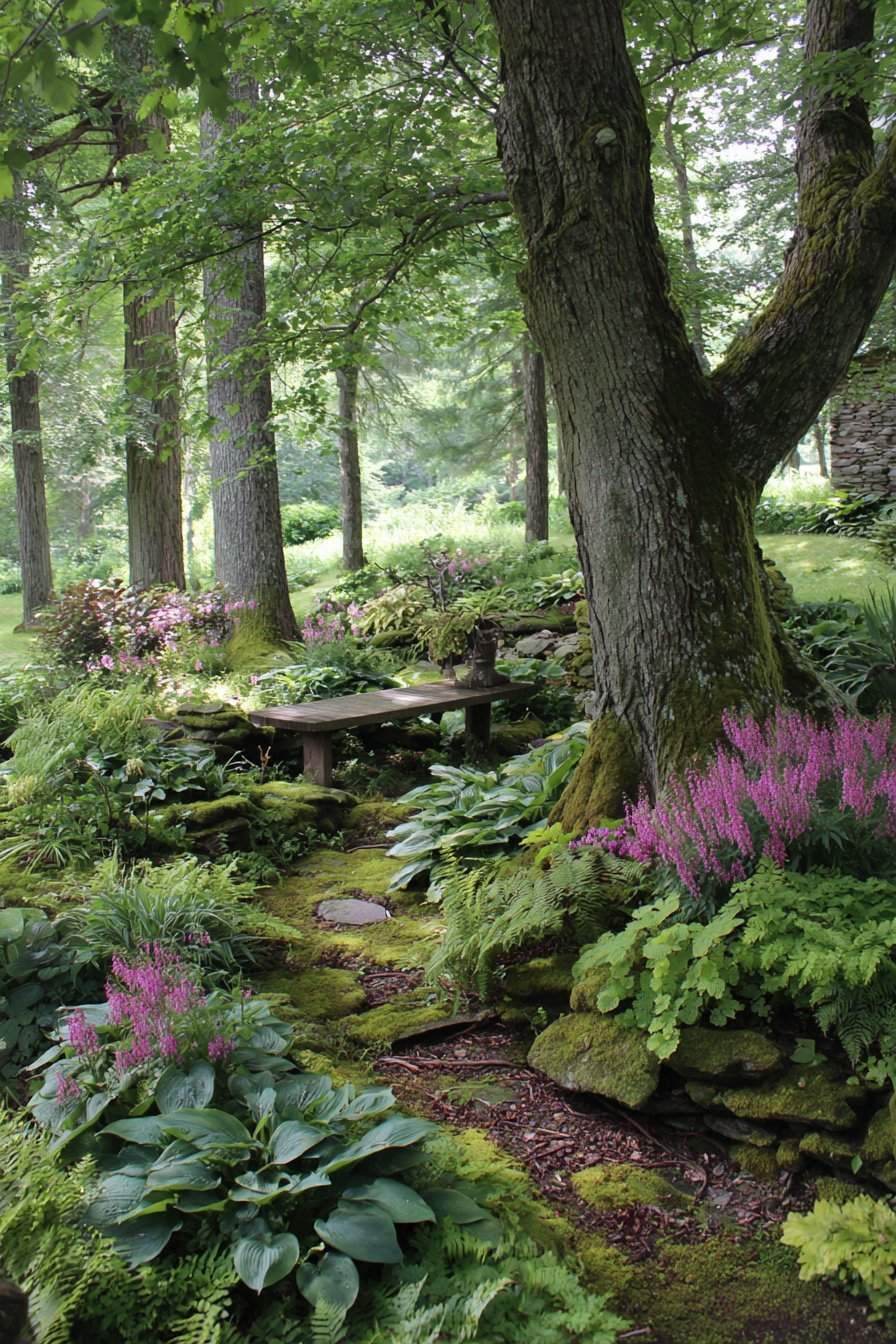
Soft diffused natural lighting characterizes woodland garden settings. The even light shows lush textures and peaceful atmosphere perfectly. This captures successful shade garden design principles beautifully. The space proves that shady areas can be garden highlights.

Key Design Tips:
- Choose shade-tolerant plants that thrive in low-light conditions
- Plant in naturalistic drifts rather than rigid formal arrangements
- Use bark mulch paths that complement woodland aesthetic naturally
- Encourage moss growth on stones and roots for ancient appearance
- Position benches where dappled light creates the best atmosphere
- Layer different foliage textures for visual interest without flowers
17. Romantic Garden Gateway

An antique wooden gate with decorative iron hinges marks the entrance. Stone pillars flanking the gate show partial covering of climbing roses and ivy. The gate’s weathered wood grain appears through peeling paint layers. Generous mixed borders overflow on both sides of the entrance.
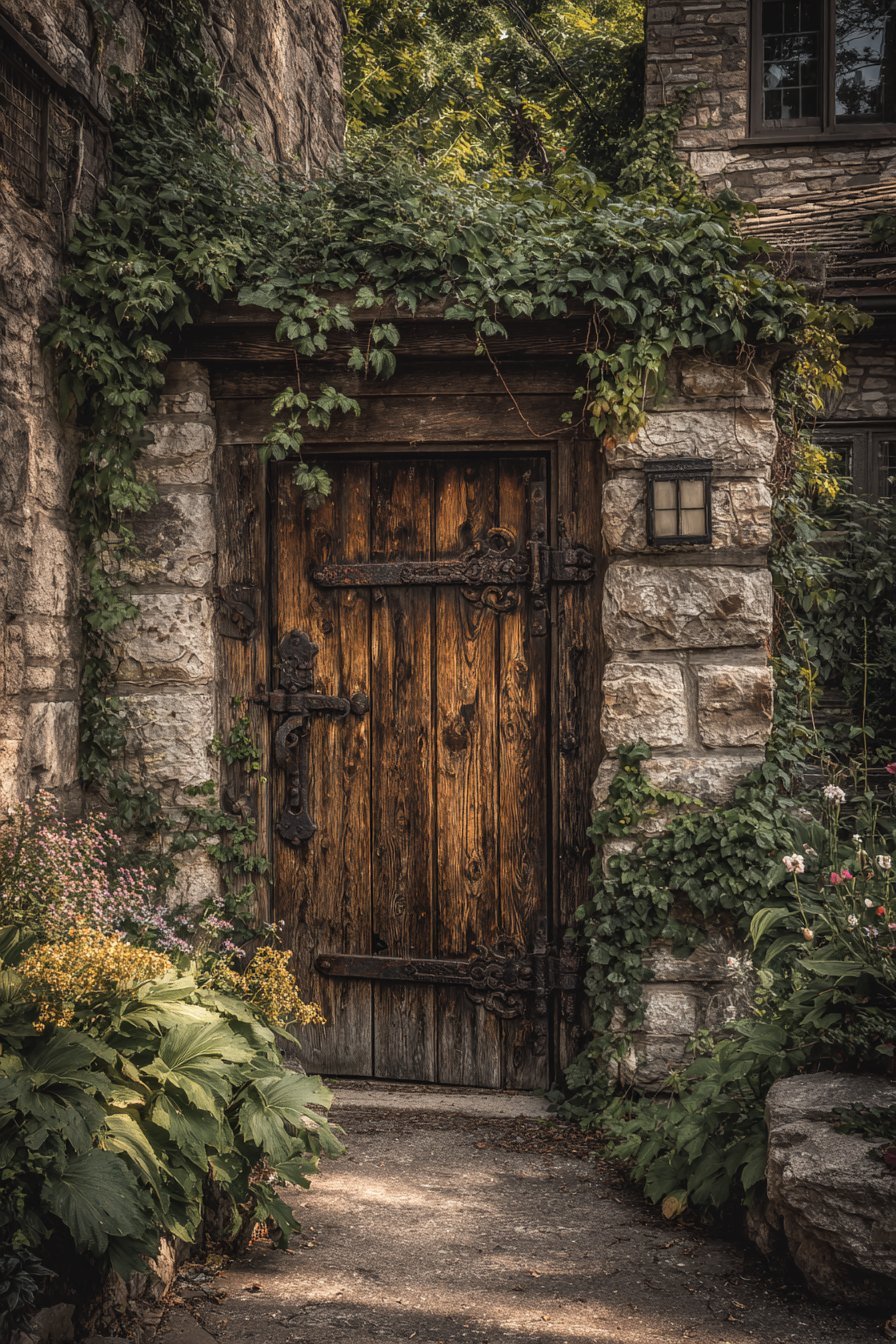
Delphiniums, phlox, and lady’s mantle spill abundantly beside the gateway. The plantings soften the entrance structure with organic growth. Natural afternoon light creates shadows emphasizing the entrance depth. The gate serves as a traditional cottage garden feature and threshold.
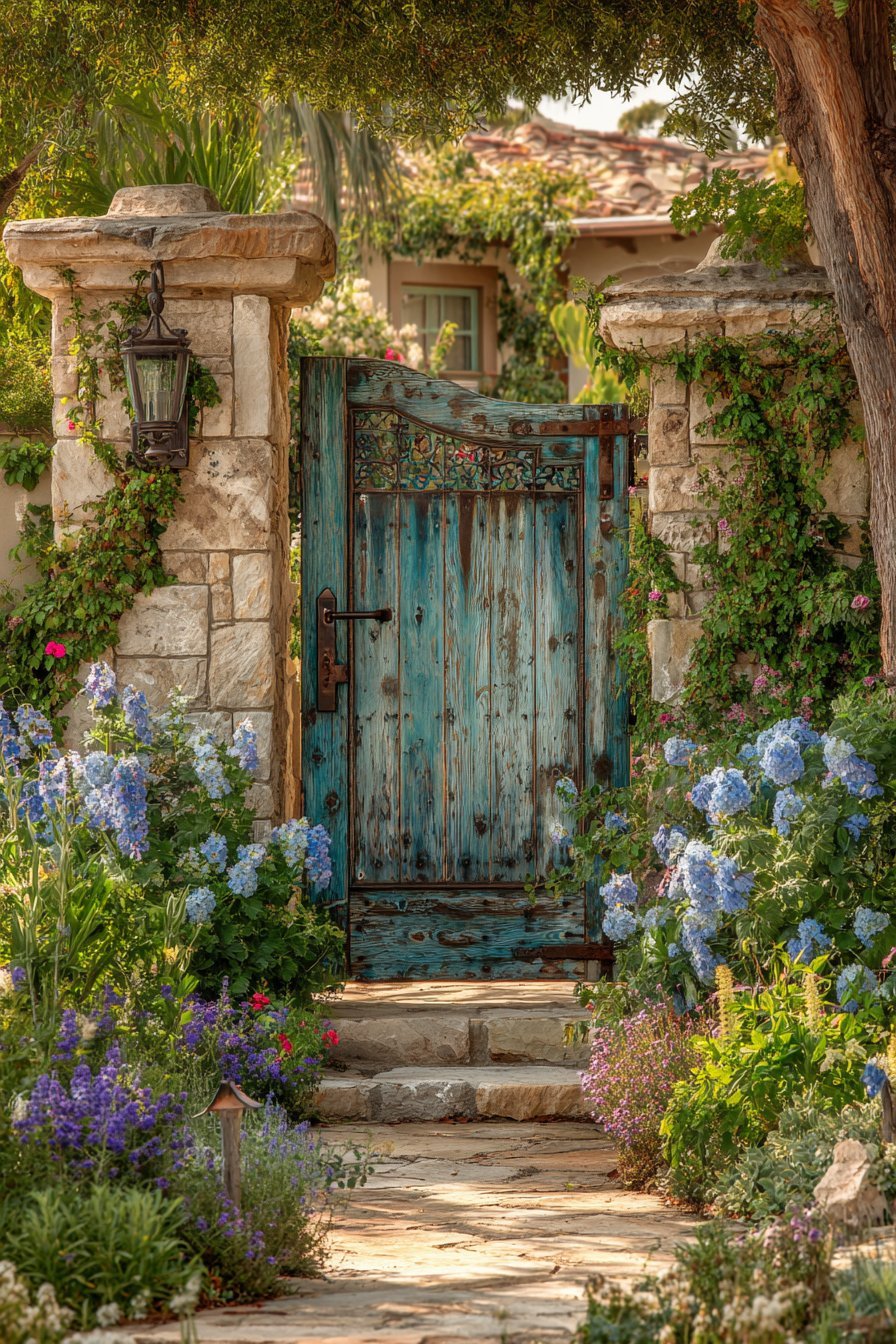
Architectural garden photography focuses on how plantings soften structures. The abundant vegetation partially obscures the gate creating mystery. This demonstrates the cottage principle of blending built and natural elements. The entrance invites exploration of gardens beyond.
Key Design Tips:
- Source antique gates with authentic hardware and patina
- Flank gates with substantial stone or brick pillars for presence
- Train climbing vines to partially obscure gate structure naturally
- Plant generous borders that overflow onto pathways informally
- Allow paint to weather naturally showing wood grain beneath
- Position gates where afternoon light creates dimensional shadows
18. Naturalized Wildflower Meadow

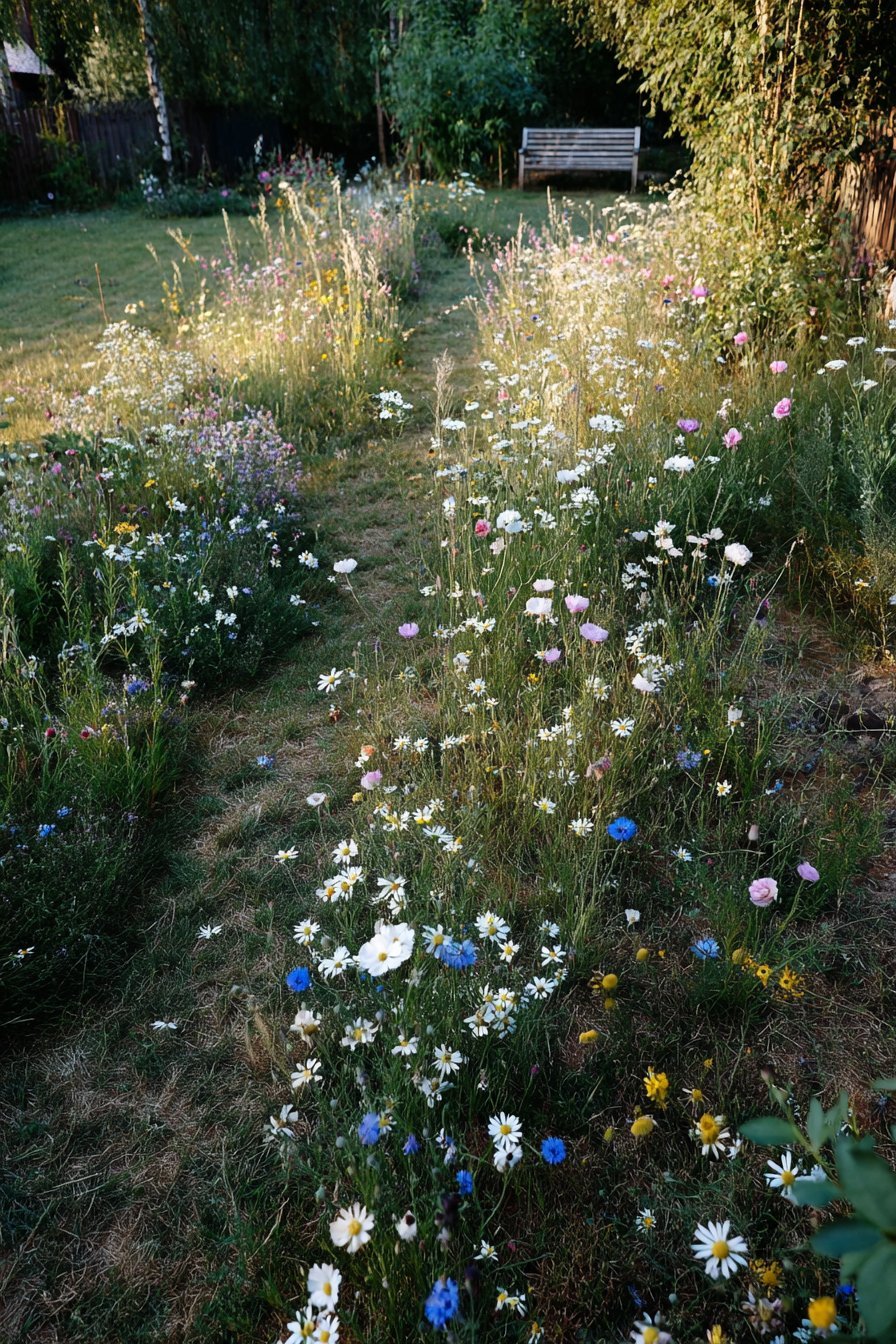
Naturalized drifts of poppies, cornflowers, and ox-eye daisies create informal beauty. Native wildflowers mix with traditional cottage garden varieties naturally. A simple mown grass path winds through the meadow to a bench. Established hedgerows or stone walls form the meadow boundary.
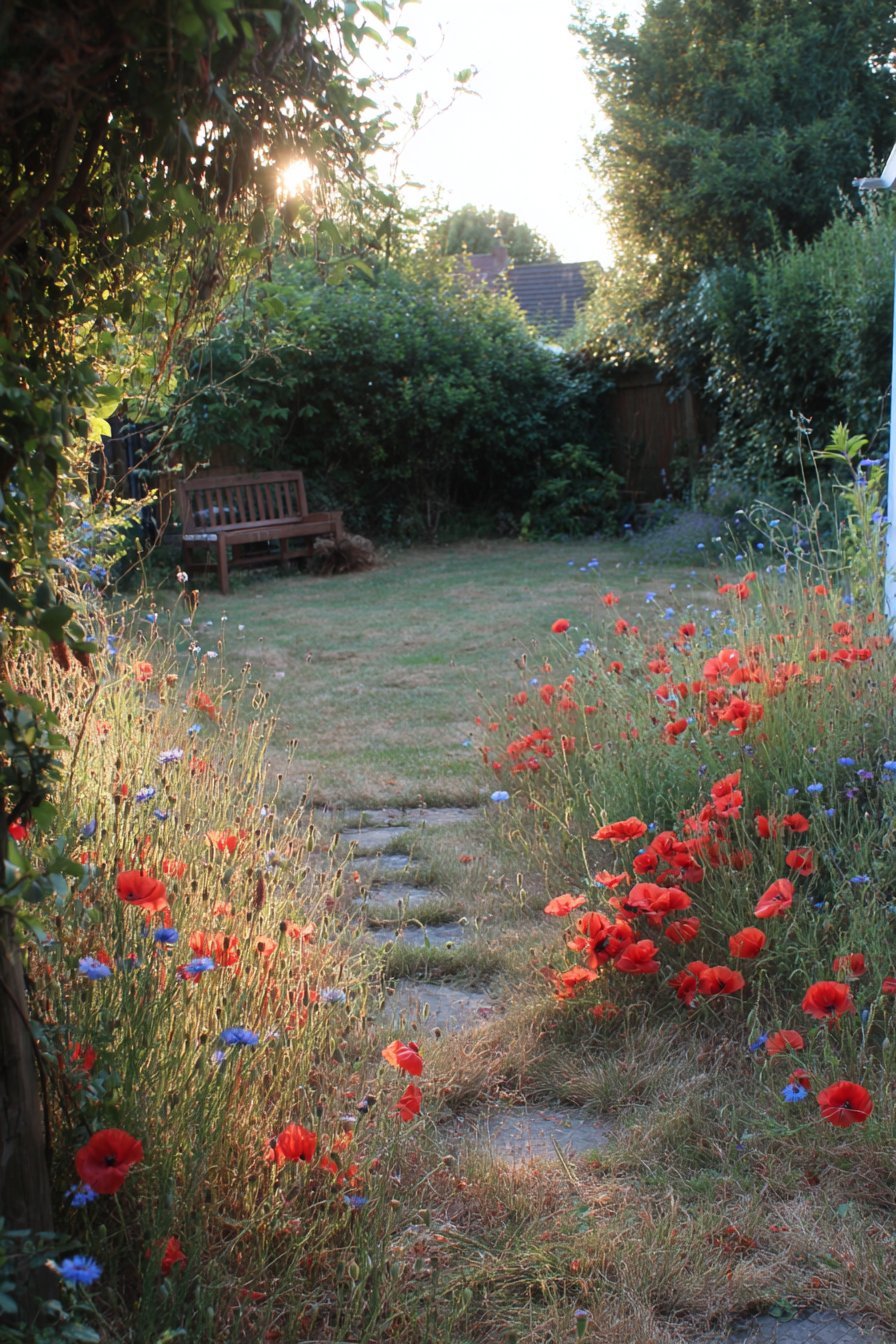
The meadow demonstrates cottage garden principles of working with nature. This low-maintenance approach suits contemporary sustainable gardening values. The romantic effect rivals more labor-intensive formal plantings. The natural beauty changes with seasons and weather.

Late afternoon golden hour lighting illuminates wildflowers with warm backlighting. The dreamy effect enhances the romantic cottage meadow aesthetic. Wide-angle photography shows the generous scale and natural beauty. This proves meadows can replace traditional lawn areas beautifully.
Key Design Tips:
- Choose wildflower mixes appropriate for your regional climate and soil
- Mow paths through meadows for access and visual definition
- Allow meadows to self-seed naturally for sustainable maintenance
- Position benches where you can enjoy meadow views fully
- Border meadows with hedgerows or walls for enclosure feeling
- Photograph meadows during golden hour for most romantic effect
19. Authentic Potting Station

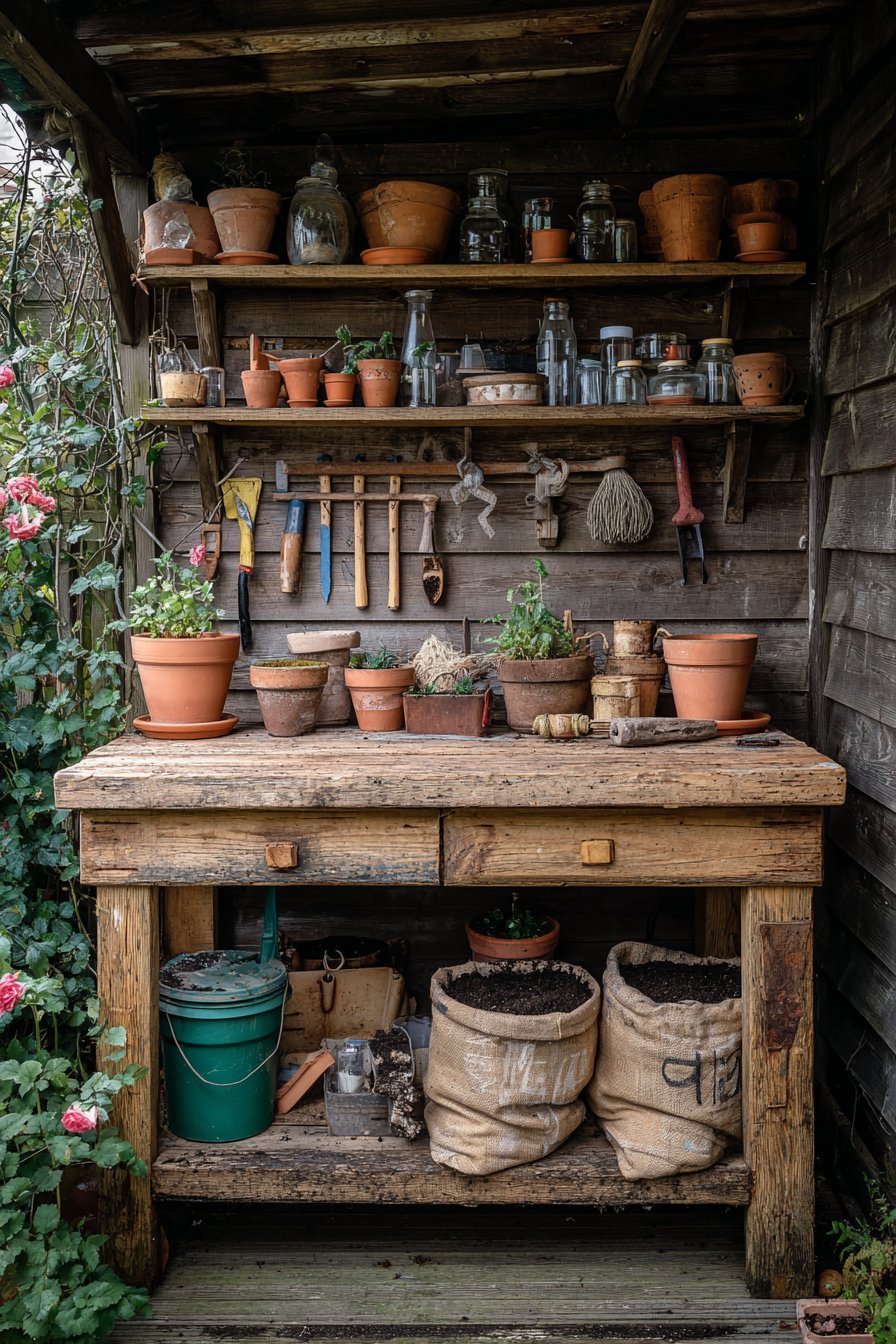
A weathered wooden workbench with shelves holds vintage terracotta pots and supplies. Hand tools hang from hooks on a vertical board within easy reach. Glass bottles, garden twine, and salvaged containers await planting projects. Bags of compost and potting soil store underneath the bench.
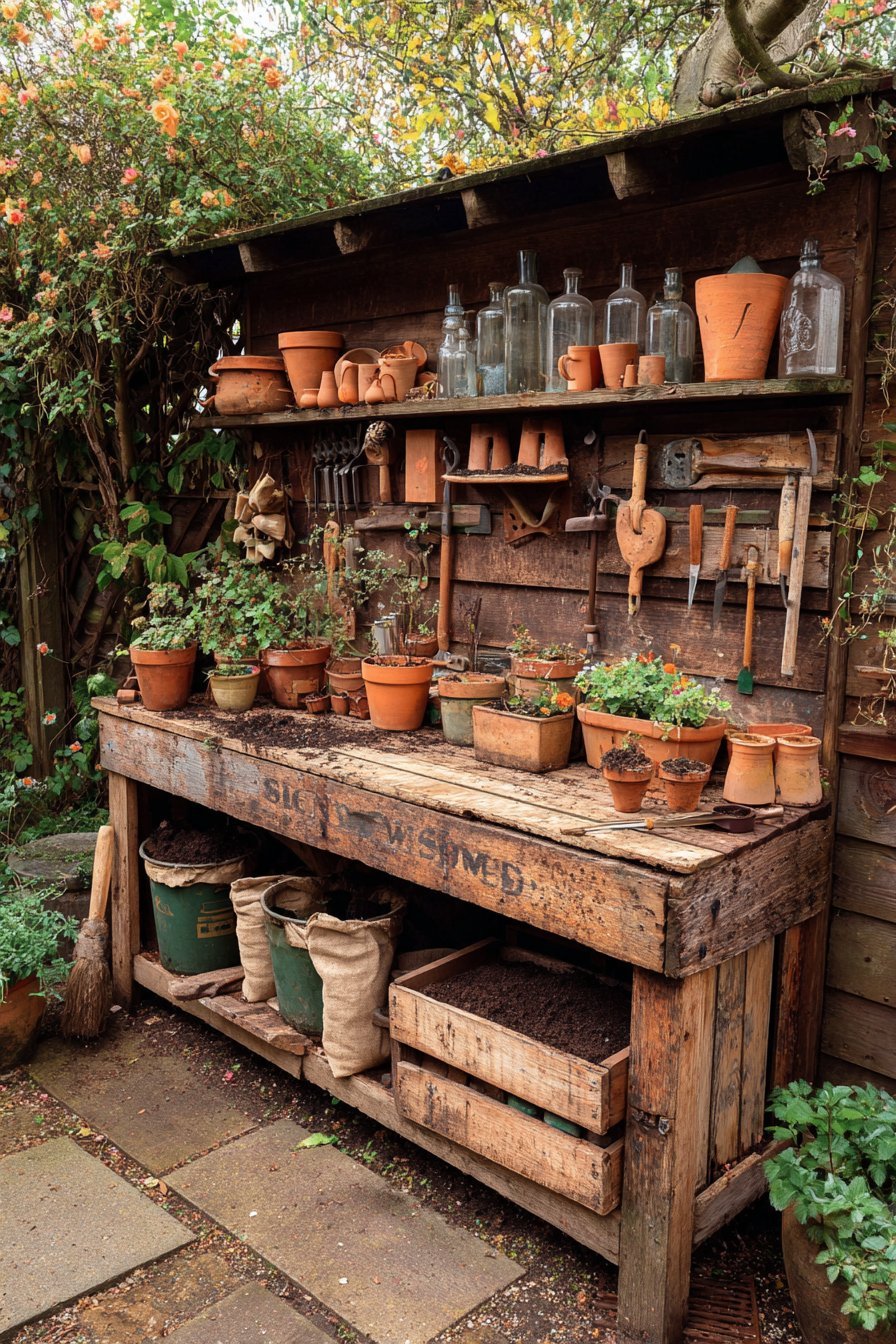
Climbing vines or roses frame the potting area against a shed or fence. The vertical plantings create an attractive backdrop for working space. North-facing light provides even illumination ideal for potting work. The authentic well-used area shows cottage garden’s working nature.

Detail-oriented photography captures vintage tools and materials carefully. The attention shows respect for traditional cottage garden practices. This working space proves that functional areas enhance garden beauty. The station demonstrates that cottage gardens are actively worked spaces.
Key Design Tips:
- Build potting benches at comfortable working height for your use
- Install shelves above benches for organized tool and supply storage
- Use weathered wood that shows authentic age and patina
- Hang most-used tools on hooks for immediate access
- Frame potting areas with climbing vines for attractive backdrop
- Position benches in north light for even illumination during work
20. Intimate Reading Retreat

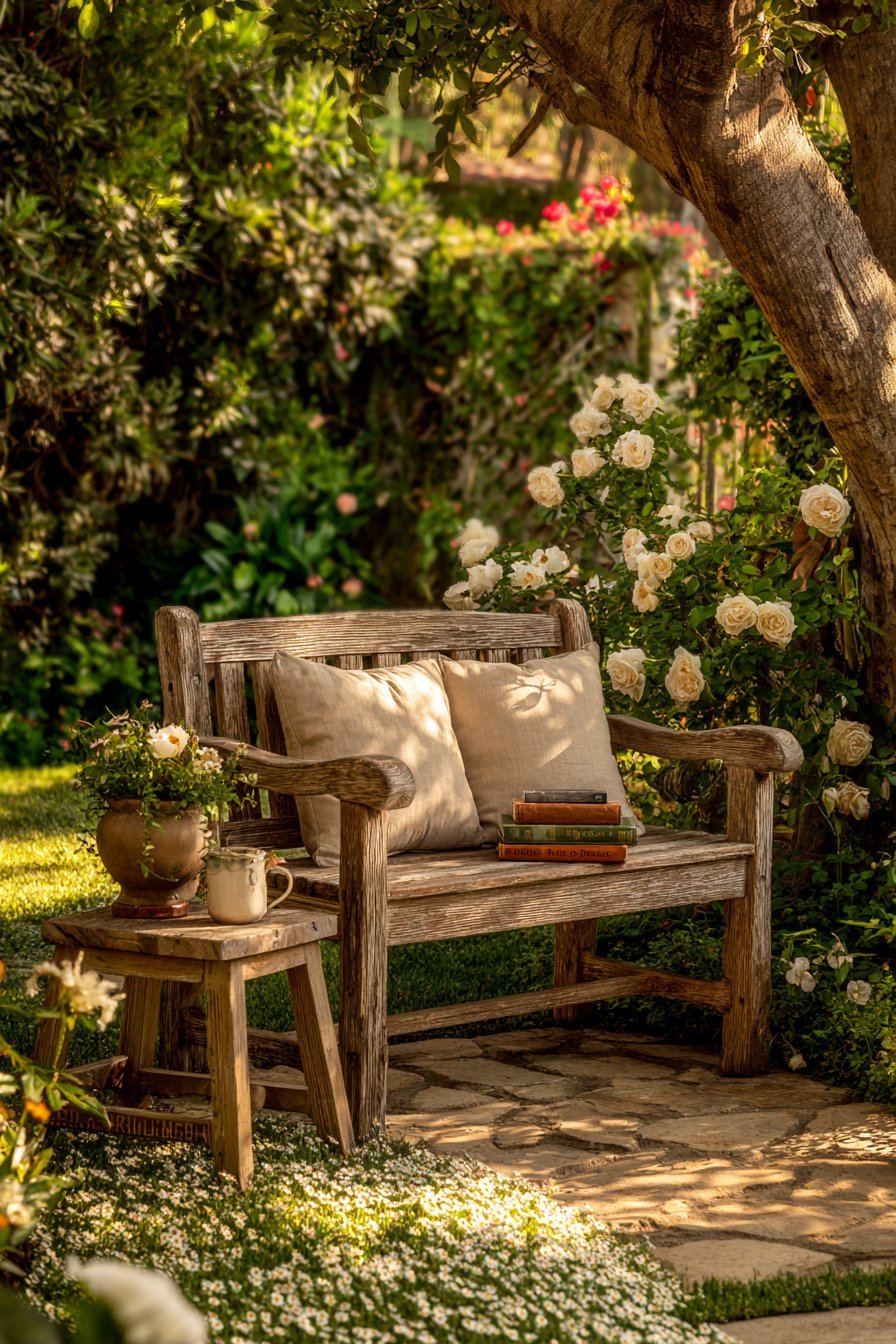
A vintage wooden bench with faded cushions sits under an established fruit tree. A weathered side table holds gardening books and a ceramic mug. Fragrant plants including roses, lavender, and jasmine surround the area. Low-growing chamomile carpets the ground nearby releasing scent when stepped on.
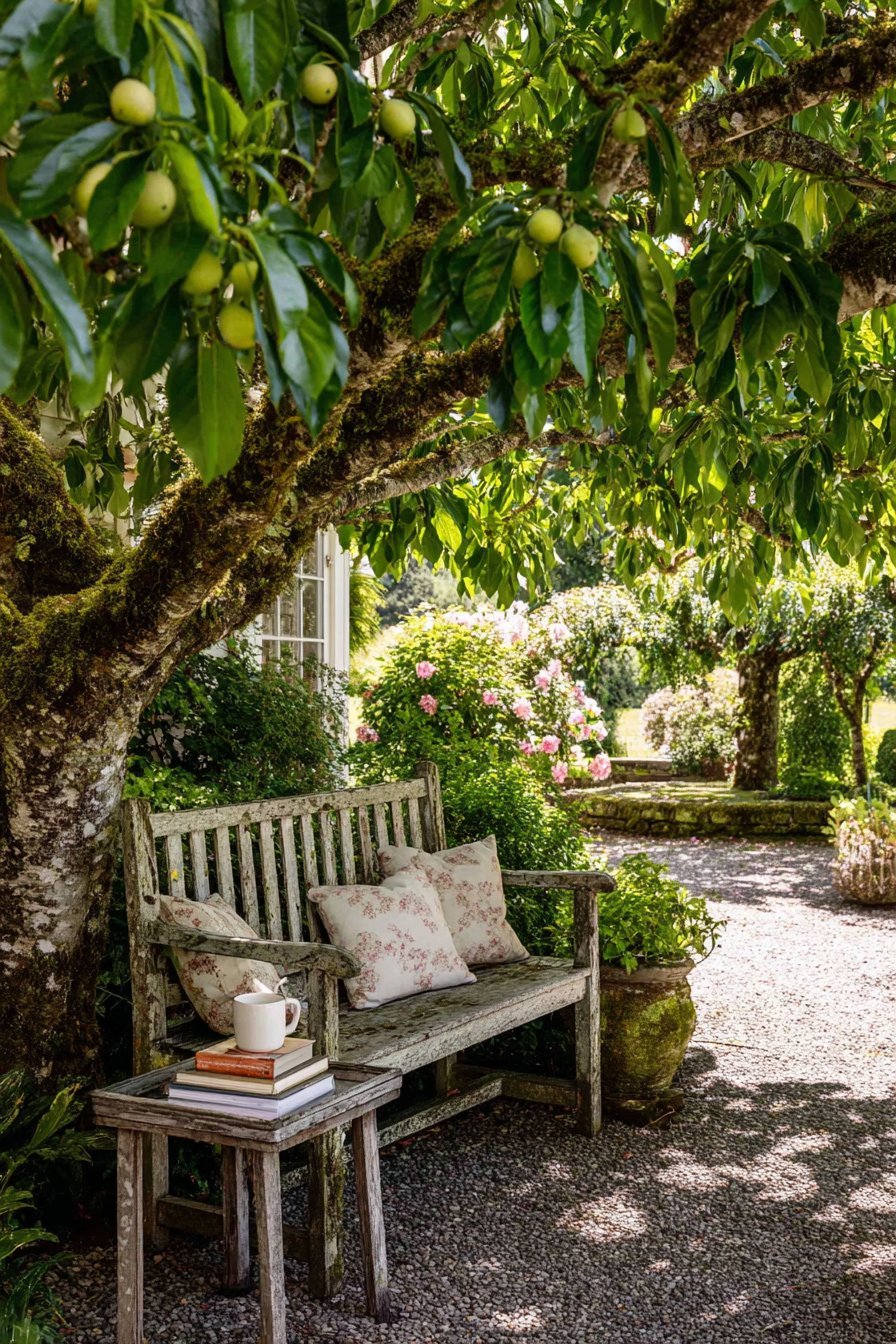
Dappled natural light filters through the tree canopy overhead. The filtered lighting creates a peaceful atmosphere for reading and relaxation. Soft focus on background elements emphasizes the intimate personal space. This retreat demonstrates cottage garden’s contemplative nature.

The space invites quiet moments away from household activity. The garden becomes an outdoor room for personal time. This shows how cottage backyards provide more than visual beauty. They offer sanctuary and connection with nature’s rhythms.
Key Design Tips:
- Position seating under established trees for natural shade and enclosure
- Add small tables for books, beverages, and garden journals
- Surround reading areas with fragrant plants for sensory experience
- Plant chamomile or thyme underfoot for aromatic groundcover
- Choose cushions in faded florals that coordinate with garden palette
- Create private retreats away from main activity areas for solitude
Why These Cottage Backyard Designs Are the Best
These cottage backyard designs represent the finest approaches to creating romantic outdoor sanctuaries. Each concept demonstrates thoughtful integration of weathered materials, abundant plantings, and functional elements. The designs showcase versatility suitable for various property sizes and regional climates while maintaining authentic cottage aesthetic principles.
The incorporation of reclaimed materials adds sustainability to beautiful design choices. Weathered barn wood, salvaged stone, and vintage accessories bring history and character that new materials cannot replicate. These authentic elements create outdoor spaces with genuine soul and timeless appeal that improves with age.
The generous layered planting approach defines successful cottage gardens fundamentally. Tall background plants, mid-height perennials, and low groundcovers create depth and dimension throughout seasons. This traditional technique maximizes visual interest while supporting beneficial insects and wildlife naturally. The informal arrangements appear effortless yet require knowledge of plant requirements and growth habits.
Functional elements integrated as design features demonstrate cottage garden practicality. Productive vegetable gardens, cutting gardens, herb spirals, and chicken coops prove that working spaces enhance rather than diminish aesthetic appeal. This approach honors cottage garden traditions of self-sufficiency and resourcefulness while creating beautiful outdoor environments.
Color theory applications in these designs balance abundant blooms with neutral foundations. Weathered wood, stone pathways, and evergreen structures provide year-round bones for seasonal flower displays. The palette emphasizes soft pastels, white blooms, and natural material tones that create cohesive romantic atmospheres without overwhelming senses.
The designs address spatial considerations from intimate courtyard gardens to expansive properties. Vertical elements like arbors, pergolas, and climbing vines maximize small space potential. Meadow plantings and generous borders suit larger properties beautifully. This adaptability makes cottage garden principles accessible regardless of available space or budget constraints.
Conclusion
These cottage backyard designs demonstrate that romance and functionality coexist beautifully in thoughtful outdoor spaces. The key takeaways include the importance of weathered materials, abundant layered plantings, and integrated functional elements. Quality vintage pieces combined with generous plantings create gardens that feel both enchanting and welcoming.
Successful cottage garden design balances aesthetic appeal with practical sustainability and seasonal interest. Start small by adding one reclaimed element or establishing a cottage border. Your dream cottage backyard awaits creation through patient cultivation and authentic material choices.
