
The kitchen stands as the heart of every home. A space where functionality meets beauty creates lasting impressions. Beige and wood kitchens offer this perfect harmony through natural warmth and sophisticated neutrality.
These timeless combinations have endured changing design trends for good reason. The organic textures of wood paired with soft beige tones create environments that feel both grounded and refined. They provide versatile backdrops that accommodate various design styles while maintaining their inherent appeal.
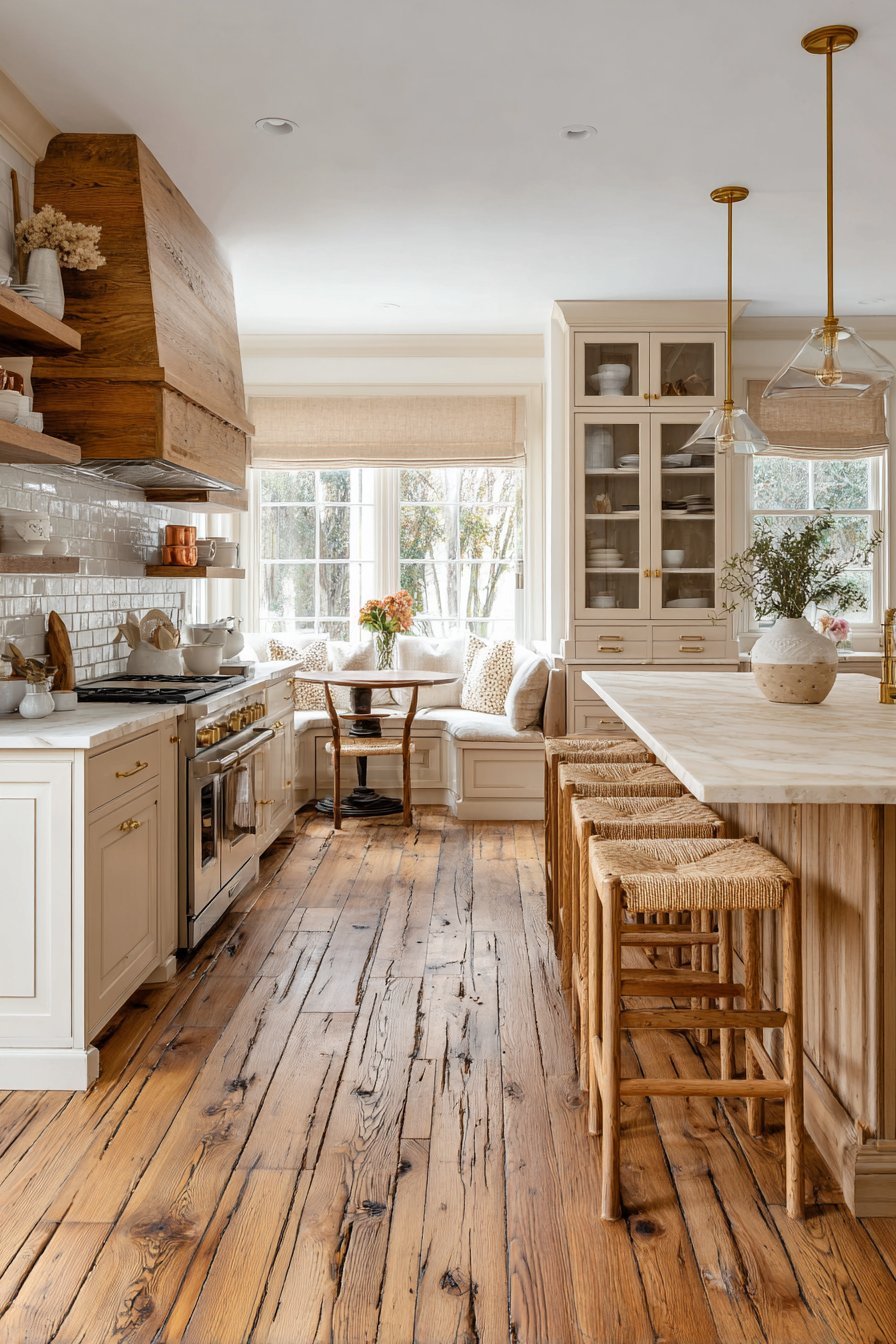
This article explores twenty distinctive approaches to beige and wood kitchen design. From traditional shaker cabinetry to modern minimalist interpretations, each concept demonstrates unique ways to blend these classic materials. Whether you’re planning a complete renovation or seeking inspiration for smaller updates, these designs showcase the remarkable versatility of beige and wood combinations.
1. Classic Shaker Style with Natural Oak Flooring
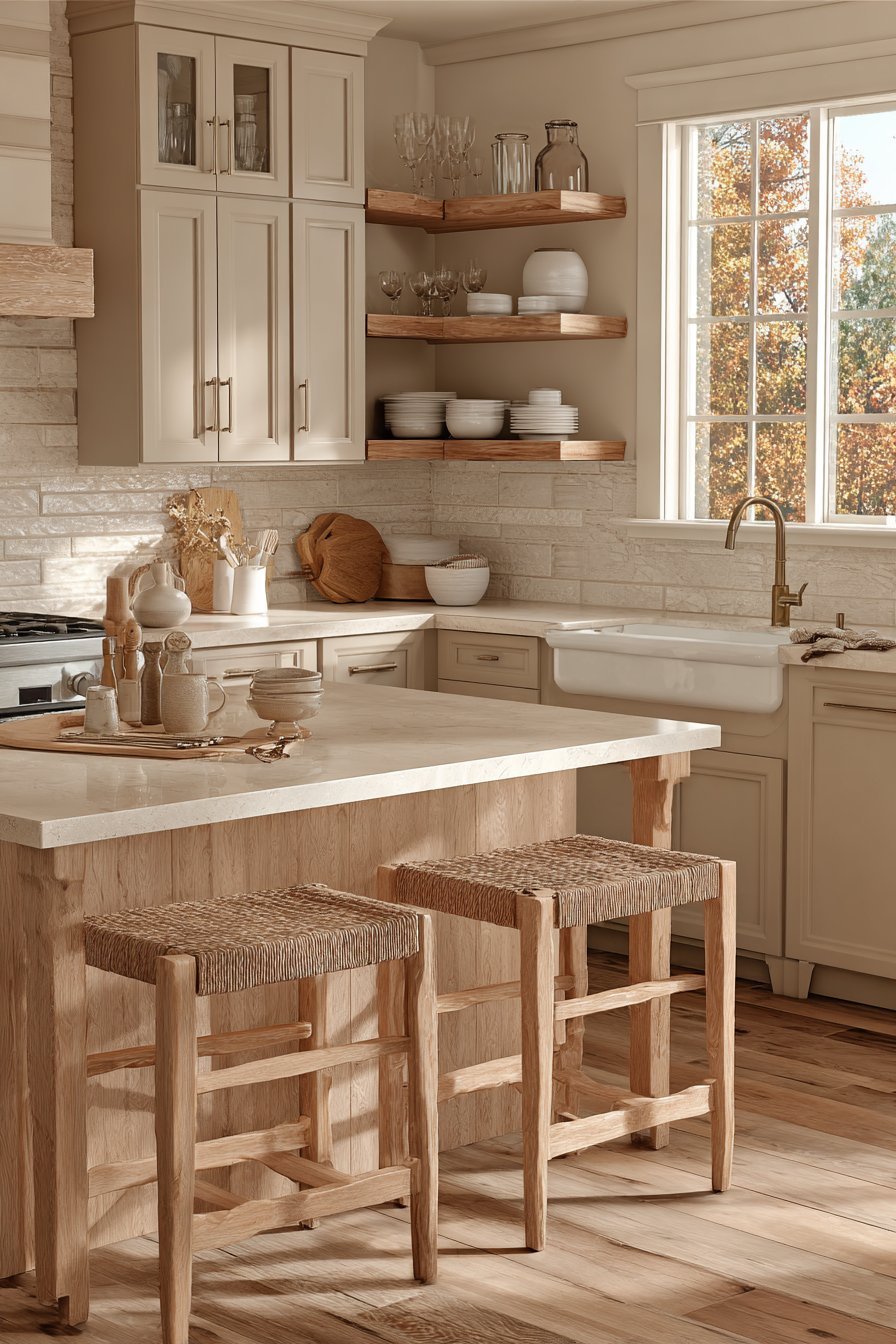
Custom shaker-style cabinetry in soft matte beige creates an immediately welcoming atmosphere. The simple recessed panel doors showcase timeless craftsmanship. Natural oak hardwood flooring with visible grain patterns grounds the space beautifully. This combination delivers enduring appeal that transcends fleeting trends.

The large kitchen island serves as the functional and visual centerpiece. Its beige quartz waterfall countertop provides durable elegance. Three wooden bar stools with woven rush seats line one side. The natural fiber adds organic texture that complements the wood flooring. Open wooden shelving displays ceramic dishes and glassware against beige subway tiles.

Brass hardware and fixtures introduce warm metallic accents throughout. Morning light streams through windows above the farmhouse sink. The natural illumination creates soft shadows that highlight wood grain textures. This interplay of light and material adds dimensional depth to the space.

The material palette demonstrates thoughtful restraint. Painted wood cabinetry provides smooth surfaces that balance the textured oak flooring. The combination feels cohesive without overwhelming the senses. Each element supports the others in creating harmonious design.
Key Design Tips:
- Select shaker-style cabinets for their timeless appeal and versatility
- Install natural oak flooring to add warmth and authentic wood character
- Choose waterfall edge countertops for modern sophistication within traditional design
- Incorporate woven natural materials like rush seats for organic texture
- Use brass hardware consistently to create warm metallic continuity
2. Organized Pantry with Reclaimed Wood Shelving

Floor-to-ceiling pantry cabinets in warm beige maximize vertical storage potential. Reclaimed wood floating shelves display organized spice jars and cookbooks. The wooden shelves feature live edge details with natural knots. These authentic imperfections add character that manufactured materials cannot replicate.
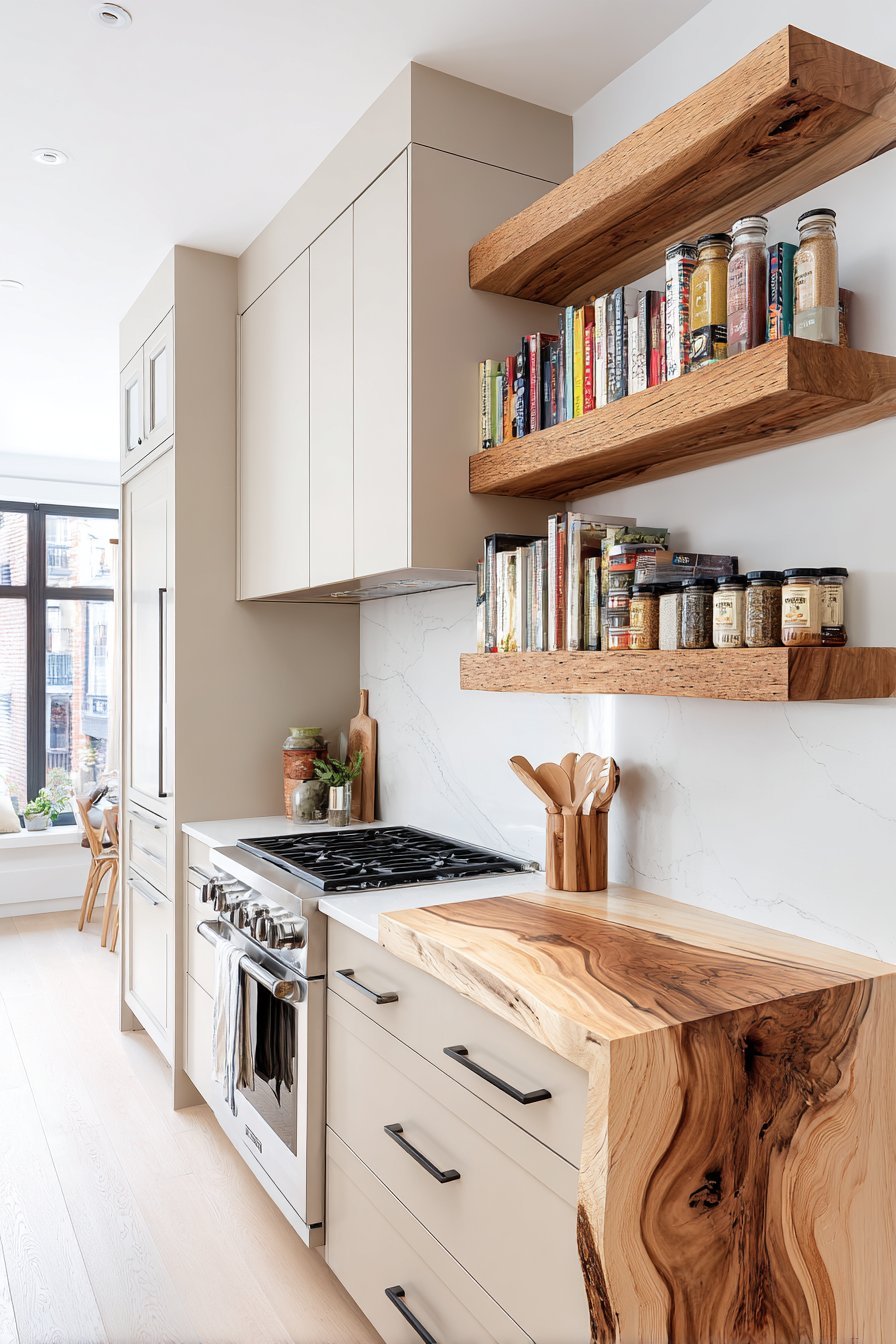
Beige painted shiplap walls provide subtle texture while maintaining neutral tones. The horizontal lines create visual rhythm without overwhelming the space. Under-cabinet lighting illuminates workspace areas below. This targeted illumination highlights the contrast between smooth painted surfaces and rustic wood grain.

The organization system transforms functional storage into beautiful display. Wooden dividers separate different categories of items. Beige containers maintain visual consistency across shelves. This thoughtful arrangement makes finding items effortless while creating pleasing aesthetics.
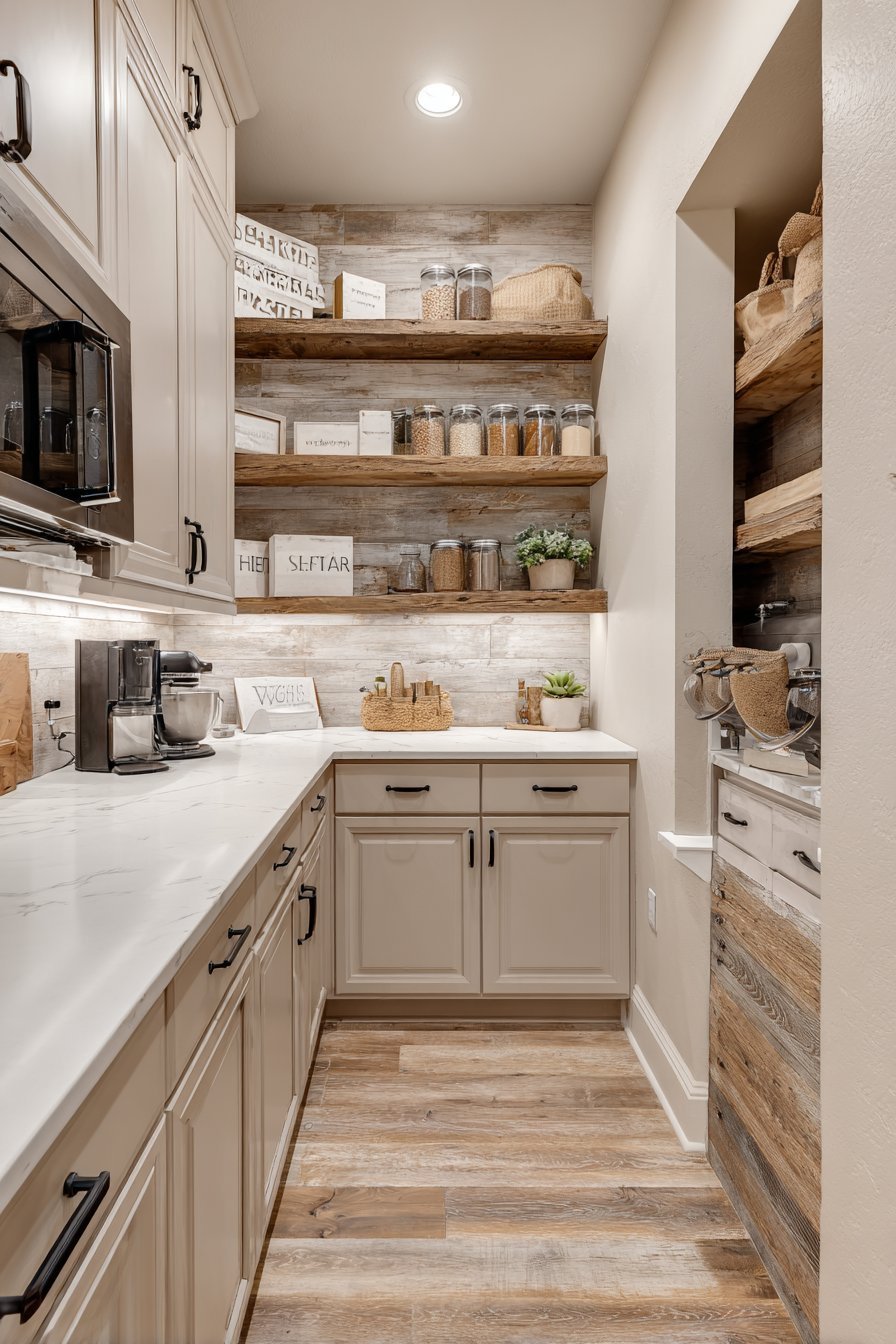
Natural wood tones vary across the reclaimed shelves. Some pieces show honey warmth while others display deeper amber hues. This variation adds visual interest and authenticity. The shelves tell stories through their weathered surfaces and unique characteristics.
Key Design Tips:
- Install floor-to-ceiling cabinets to maximize storage capacity
- Use reclaimed wood shelves for sustainable design with authentic character
- Add under-cabinet lighting to improve functionality and highlight materials
- Organize with matching containers in beige tones for visual harmony
- Embrace natural wood variations rather than seeking perfect uniformity
3. Handmade Ceramic Tile with Walnut Trim
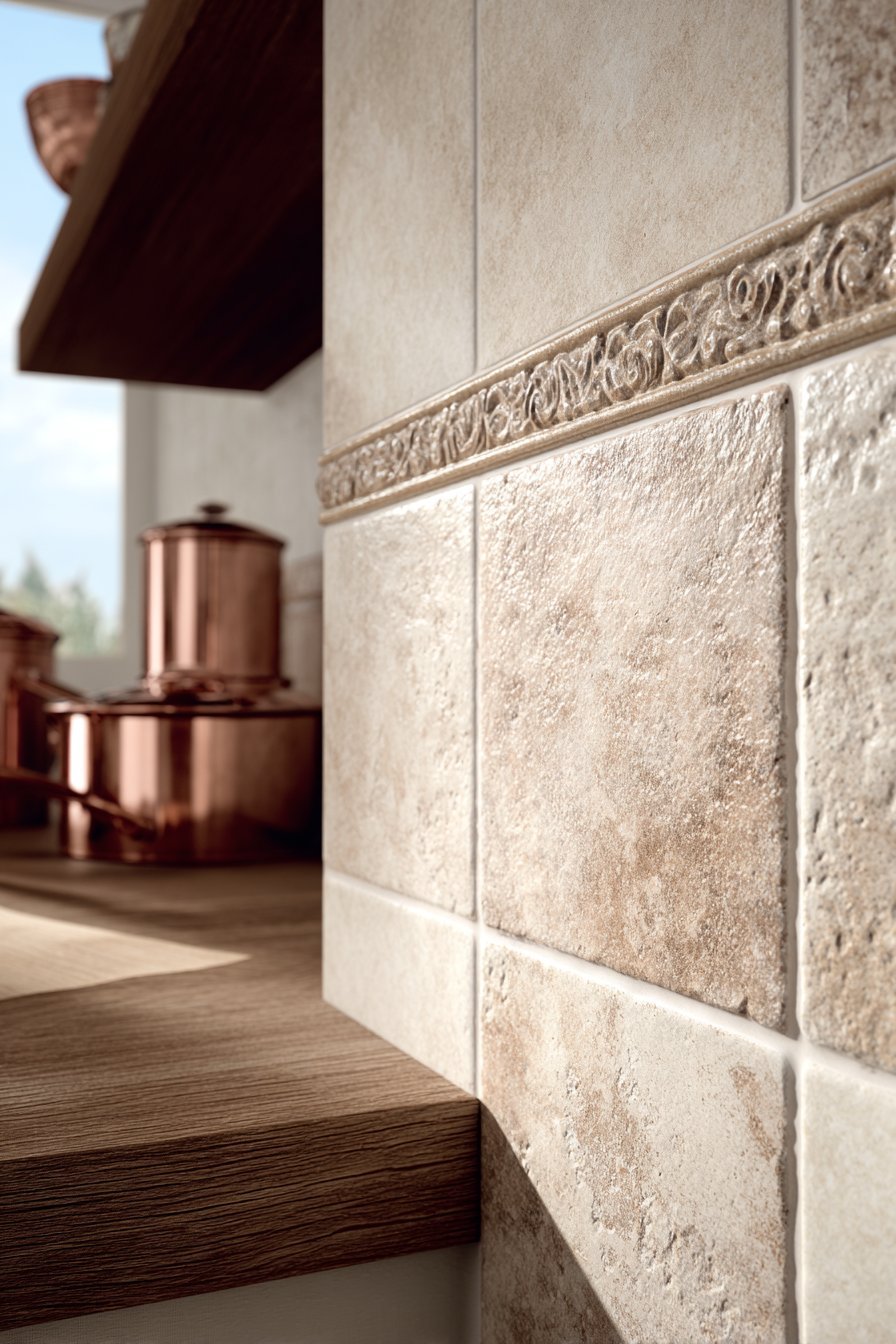
Handmade ceramic tiles in varying shades of cream and beige create artisanal beauty. Each tile shows subtle variations that machine-made products lack. Natural walnut wood trim borders the backsplash. This rich wood transitions seamlessly to open shelving above.
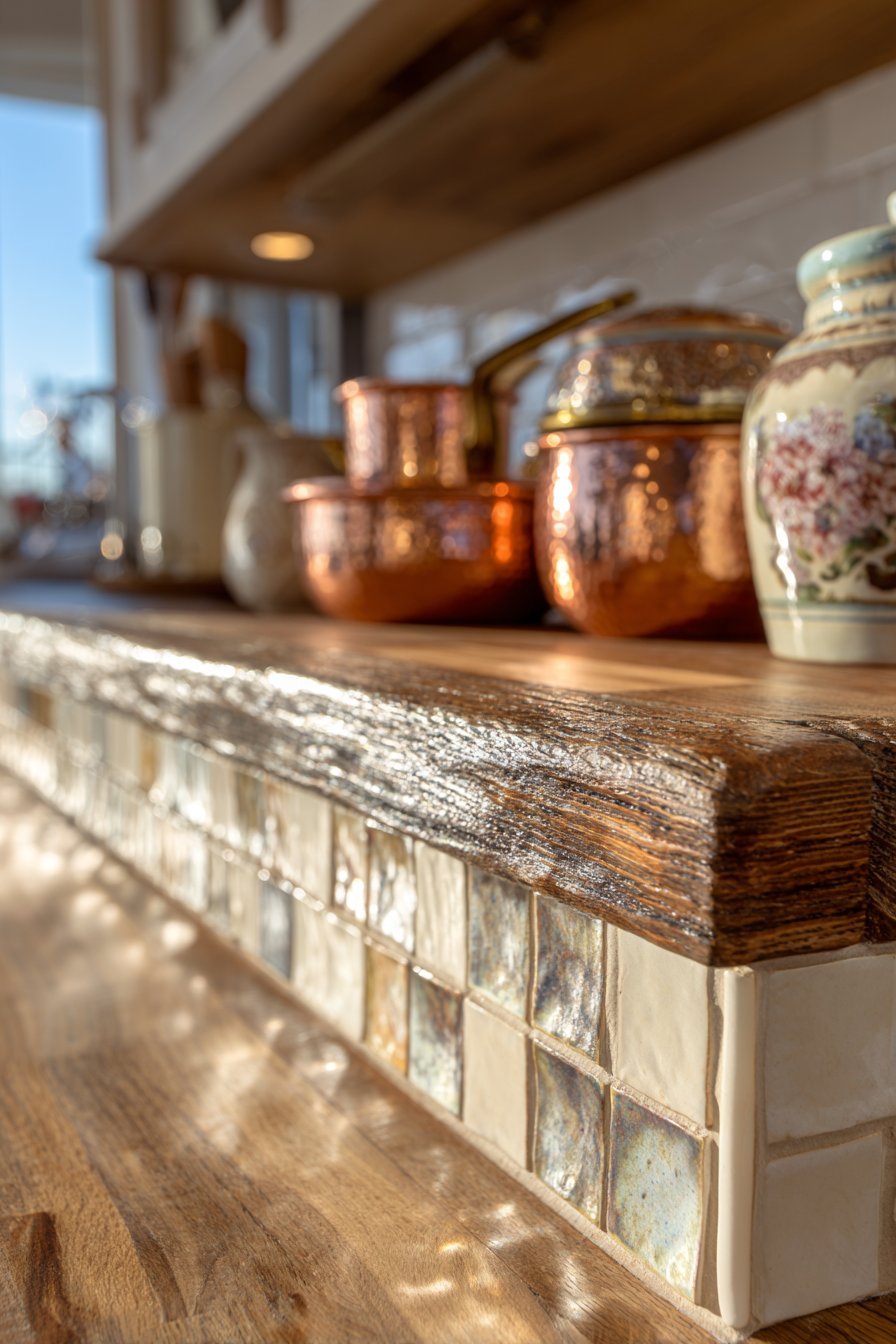
The wooden shelf displays copper cookware and ceramic containers. These earth-toned accessories complement the beige tile palette. Beige grout lines add subtle texture across the tile surface. The dimensional quality becomes apparent as light moves across the wall.

Morning light from nearby windows enhances the handmade tile characteristics. The natural illumination catches the slight irregularities and glaze variations. These imperfections represent human craftsmanship and artistic touch. The walnut trim provides rich contrast against the lighter tiles.

The material combination celebrates natural elements and handcrafted quality. Ceramic, wood, and copper each bring distinct textures to the composition. Together they create a vignette that feels curated and intentional. The backsplash becomes artwork rather than simply functional protection.
Key Design Tips:
- Choose handmade tiles for unique character and artisanal quality
- Border tile installations with natural wood trim for elegant transitions
- Display copper cookware to add warm metallic tones
- Use natural walnut for rich color contrast against beige tones
- Position near windows to maximize natural light on textured surfaces
4. Spacious Layout with Butcher Block Island

A large center island with butcher block countertop commands attention. The natural maple shows visible end-grain pattern. This durable surface provides ideal workspace for food preparation. Beige painted base cabinets surround the island with simple recessed panel doors.
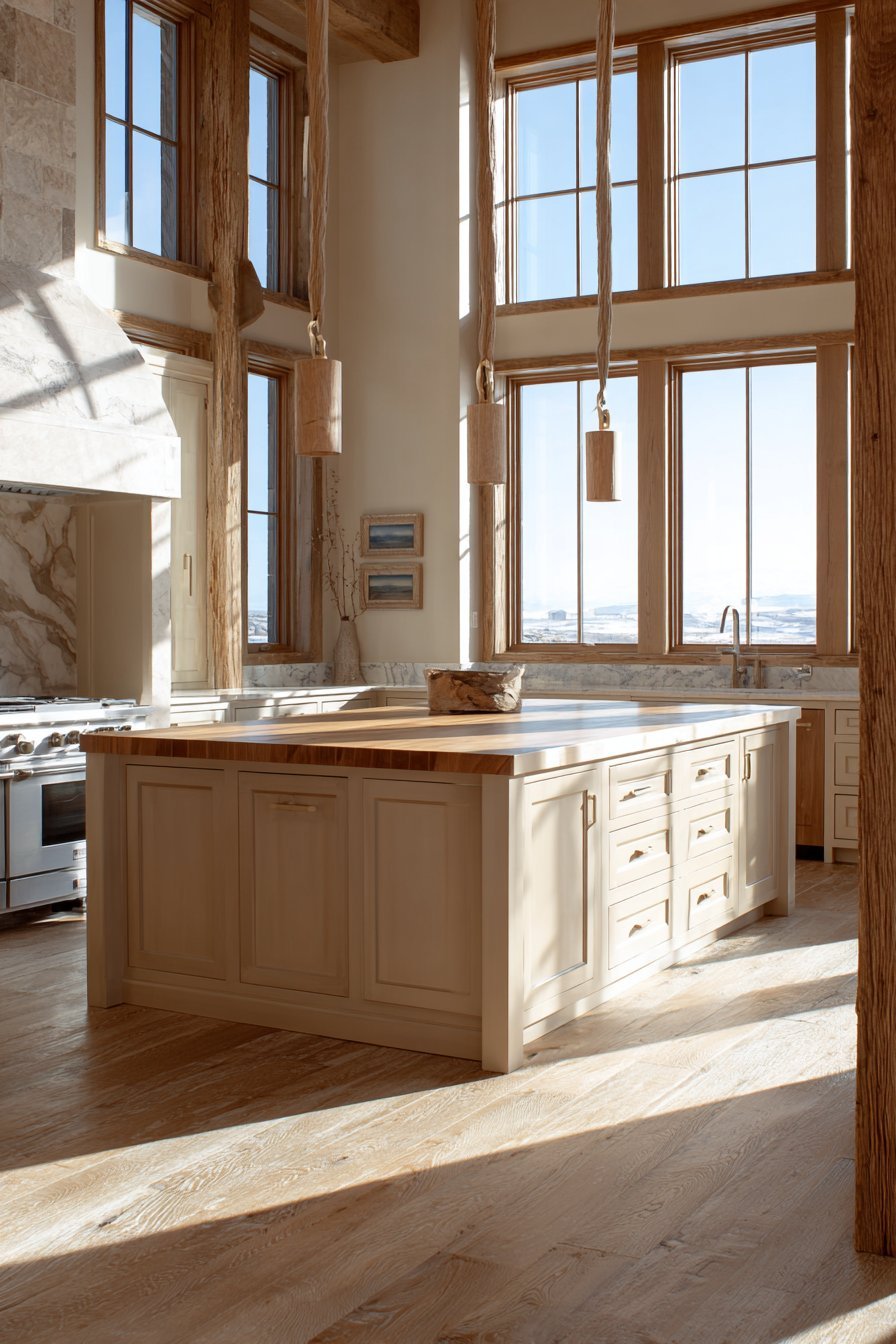
Pendant lights featuring natural wood and brass details hang above. The fixtures provide task lighting while reinforcing the material palette. Perimeter countertops use beige quartz with subtle veining. This consistent stone choice creates visual continuity around the kitchen edges.

Wide-plank white oak flooring extends throughout the generous space. The boards show natural color variations and grain patterns. Large windows with natural wood trim flood the kitchen with soft daylight. Gentle shadows emphasize the layered neutral tones throughout.
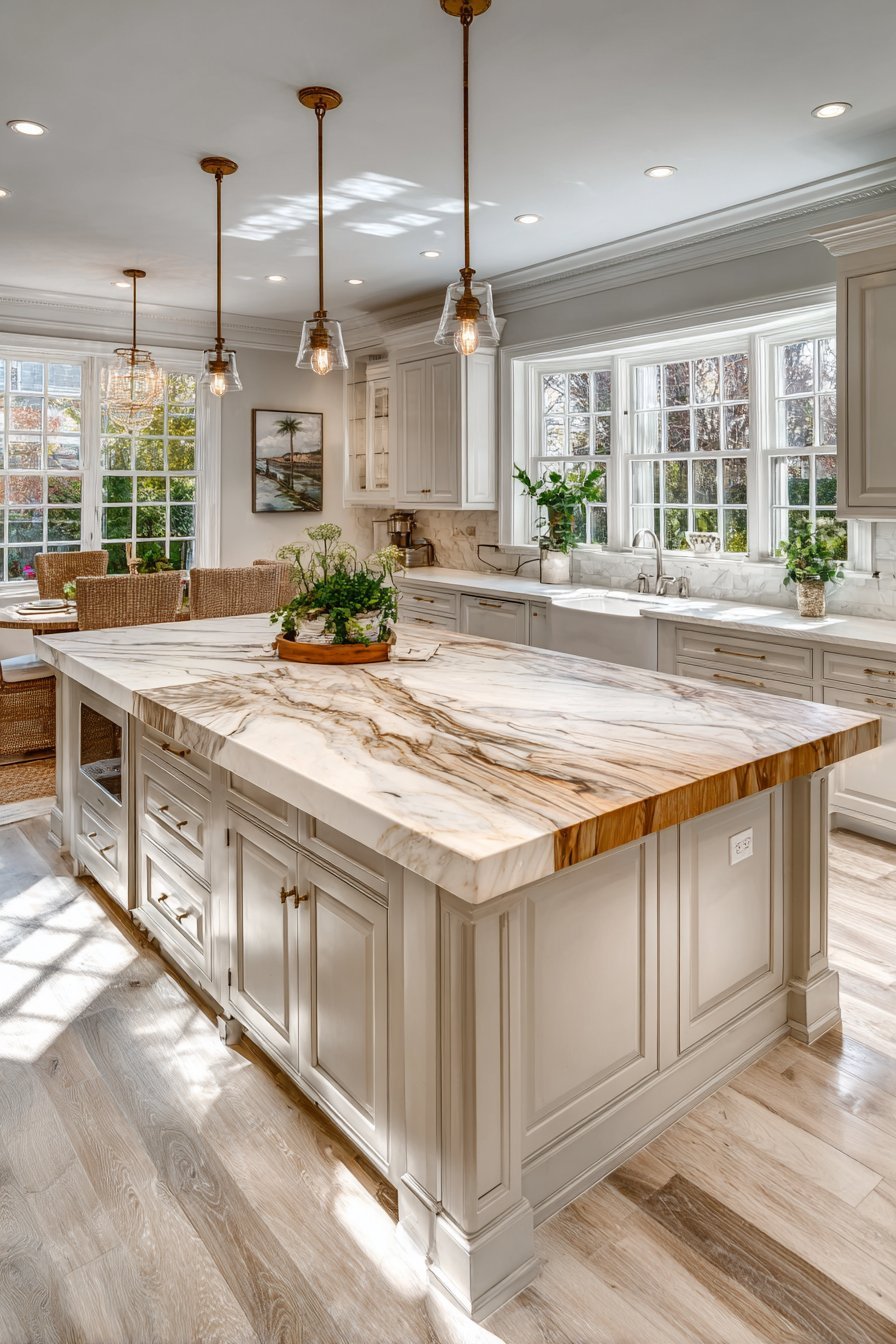
The spacious proportions allow comfortable movement and multiple work zones. The island provides central preparation space while perimeter counters handle other tasks. This layout supports efficient cooking and casual gathering simultaneously. The generous scale feels luxurious without appearing ostentatious.
Key Design Tips:
- Install butcher block countertops on islands for durable work surfaces
- Use end-grain maple for maximum durability in high-use areas
- Maintain consistent quartz for perimeter counters to define zones
- Choose wide-plank flooring to enhance the sense of spaciousness
- Maximize natural light through large windows with wood trim
5. Custom Wood Range Hood as Focal Point

A professional-style stainless steel range anchors the cooking wall. Custom wood range hood in light oak creates dramatic focal impact. Corbel supports add architectural detail and traditional charm. The hood finish uses clear matte seal that highlights natural grain.

Beige cabinets with simple shaker detailing flank the range on both sides. The surrounding walls feature warm beige paint with subtle texture. Open wooden shelves display white dishes and brass accessories. These functional displays add visual interest at eye level.
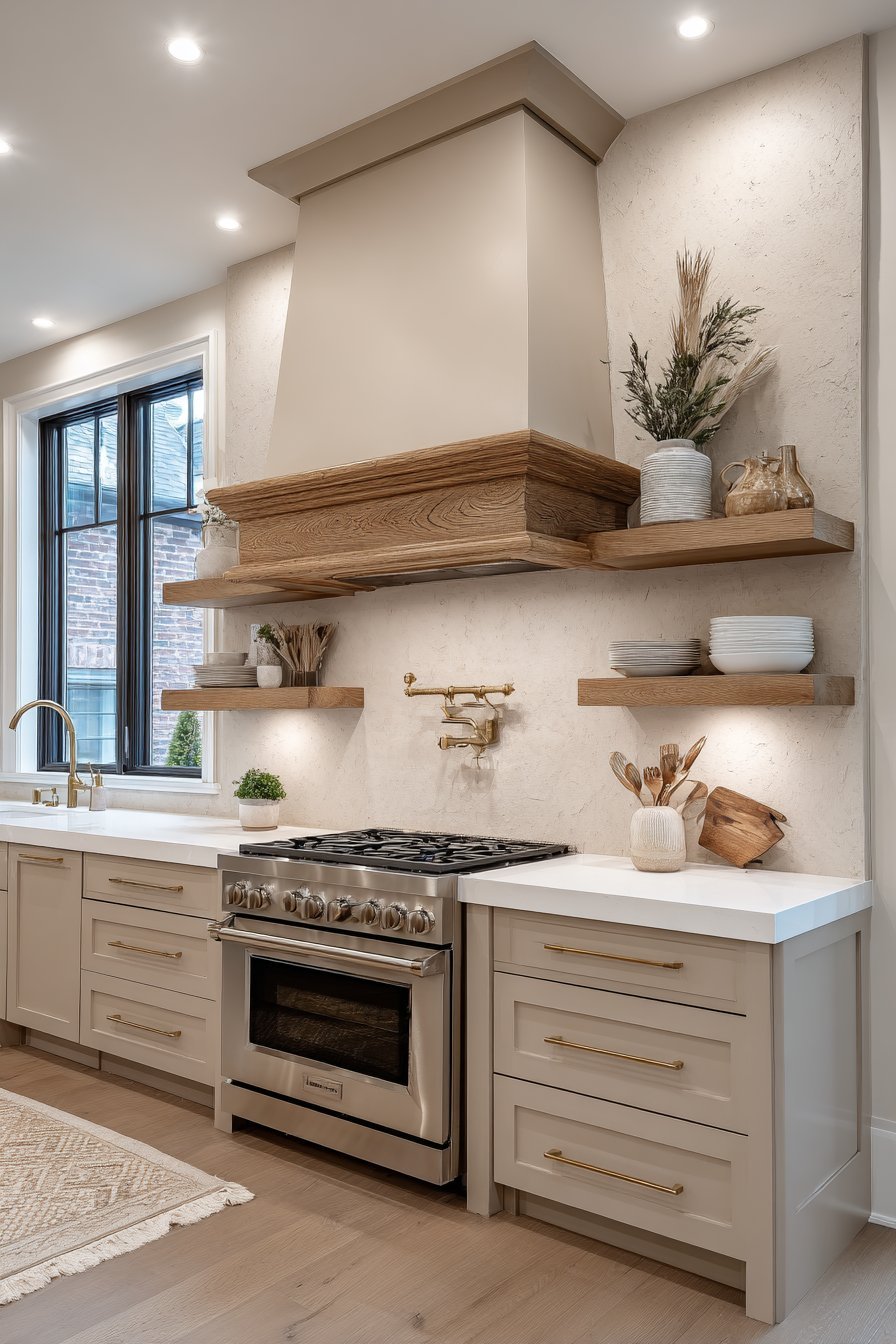
Recessed lighting provides even illumination across the cooking zone. Natural light from adjacent windows adds warmth and dimensionality. The combined lighting creates ideal working conditions. The wood hood becomes a statement piece that defines the kitchen character.
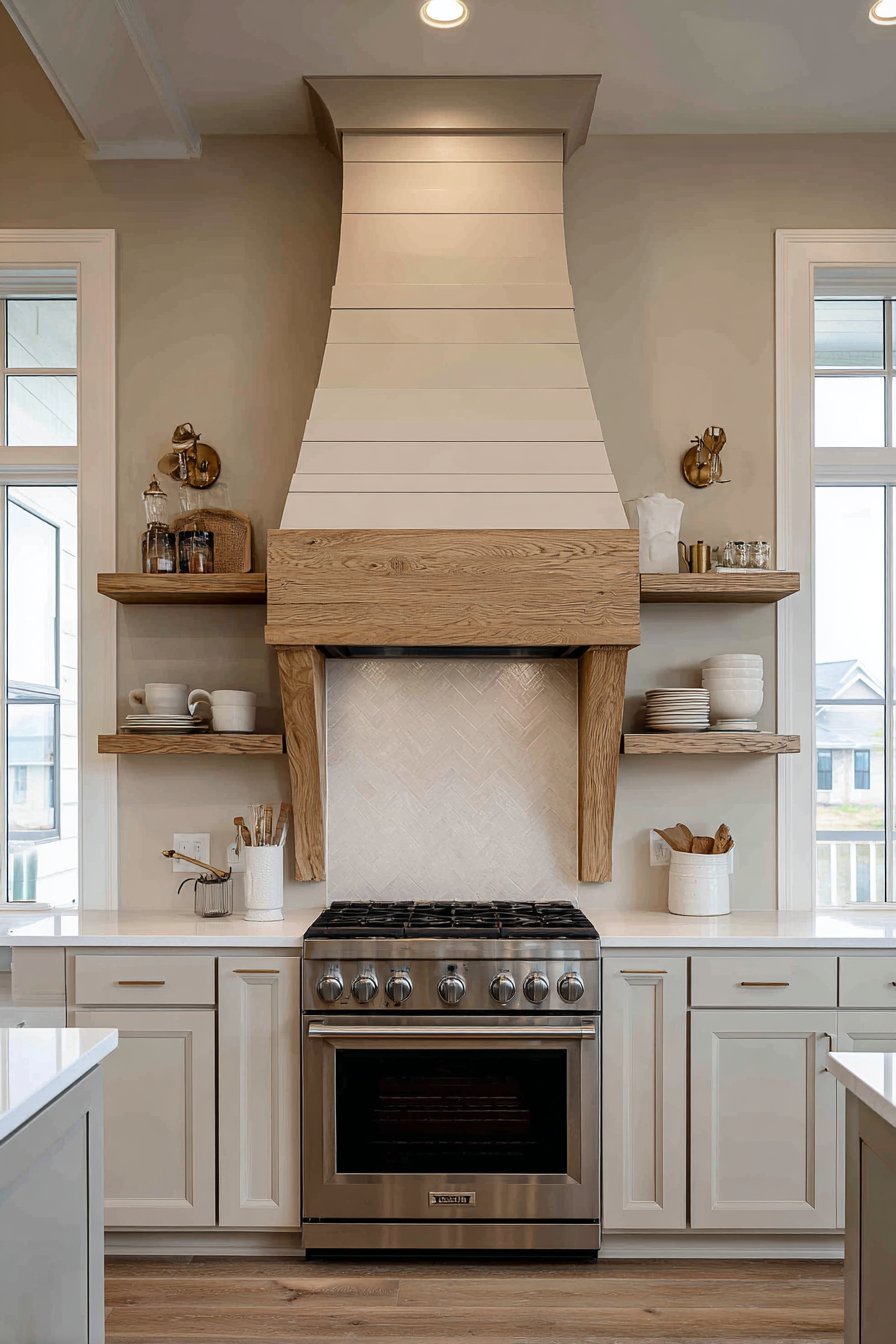
The craftsmanship of the wooden hood demonstrates attention to detail. The corbels show traditional woodworking techniques. The light oak wood choice maintains brightness while adding substantial presence. This custom element elevates the entire kitchen design.
Key Design Tips:
- Design custom range hoods to create distinctive focal points
- Add corbel supports for traditional architectural detail
- Use light oak wood to maintain brightness in the space
- Apply clear matte finishes to showcase natural wood grain
- Flank range areas with open shelving for functional display
6. Cozy Breakfast Nook with Built-in Banquette

Built-in banquette seating features beige linen cushions for comfort. The natural oak base and backrest provide structural warmth. A round wooden dining table in light oak centers the nook. The pedestal base allows easy movement around the table.
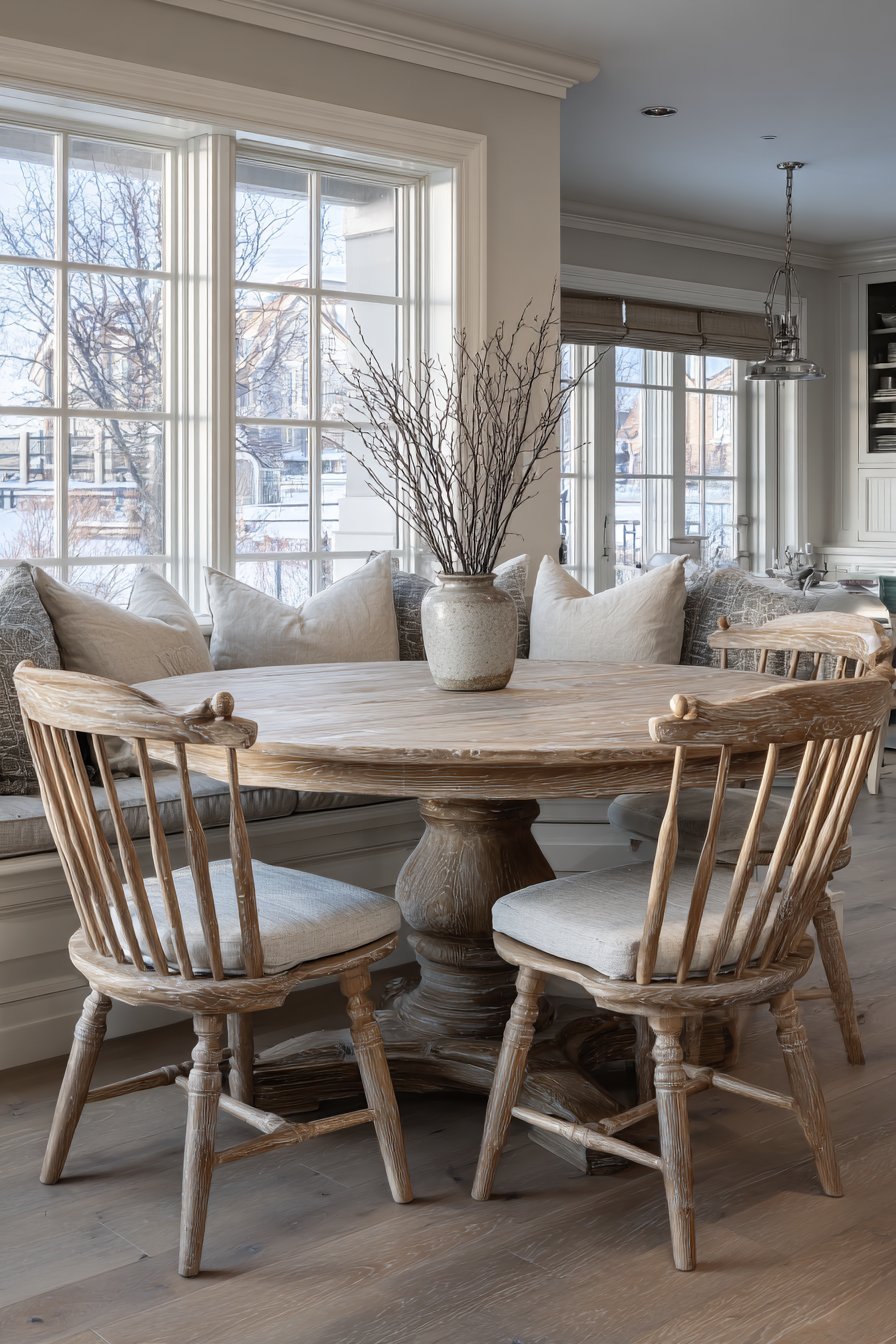
Wooden Windsor chairs complete the seating arrangement. Beige walls with board and batten wainscoting create architectural interest. The trim detail adds dimension without overwhelming the intimate space. Large windows with natural wood frames allow abundant natural light.
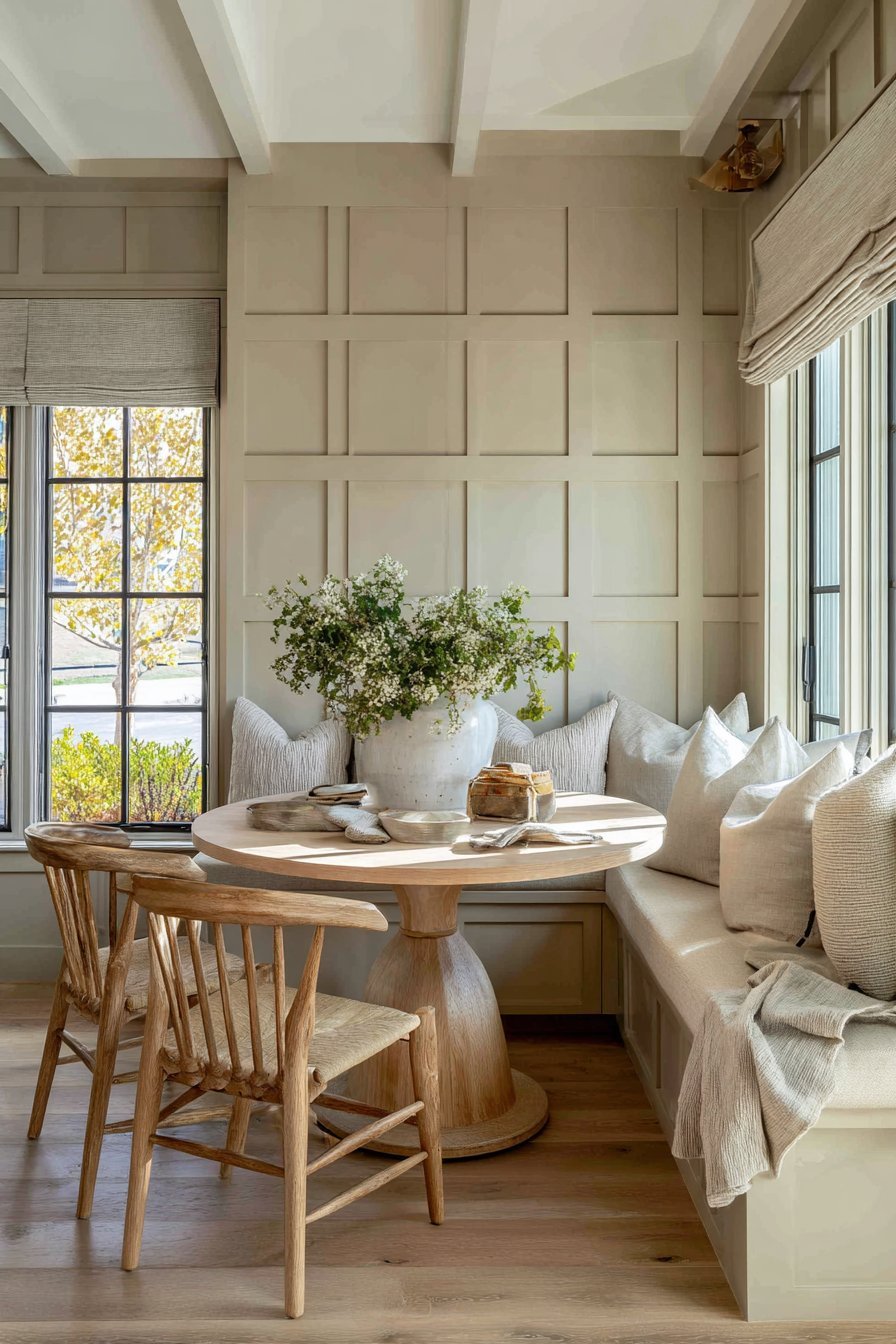
Simple roman shades in neutral linen provide privacy when needed. The fabric filters light softly during daytime hours. Morning sun illuminates the textile textures and wood grain beautifully. This creates an inviting atmosphere perfect for leisurely breakfasts.
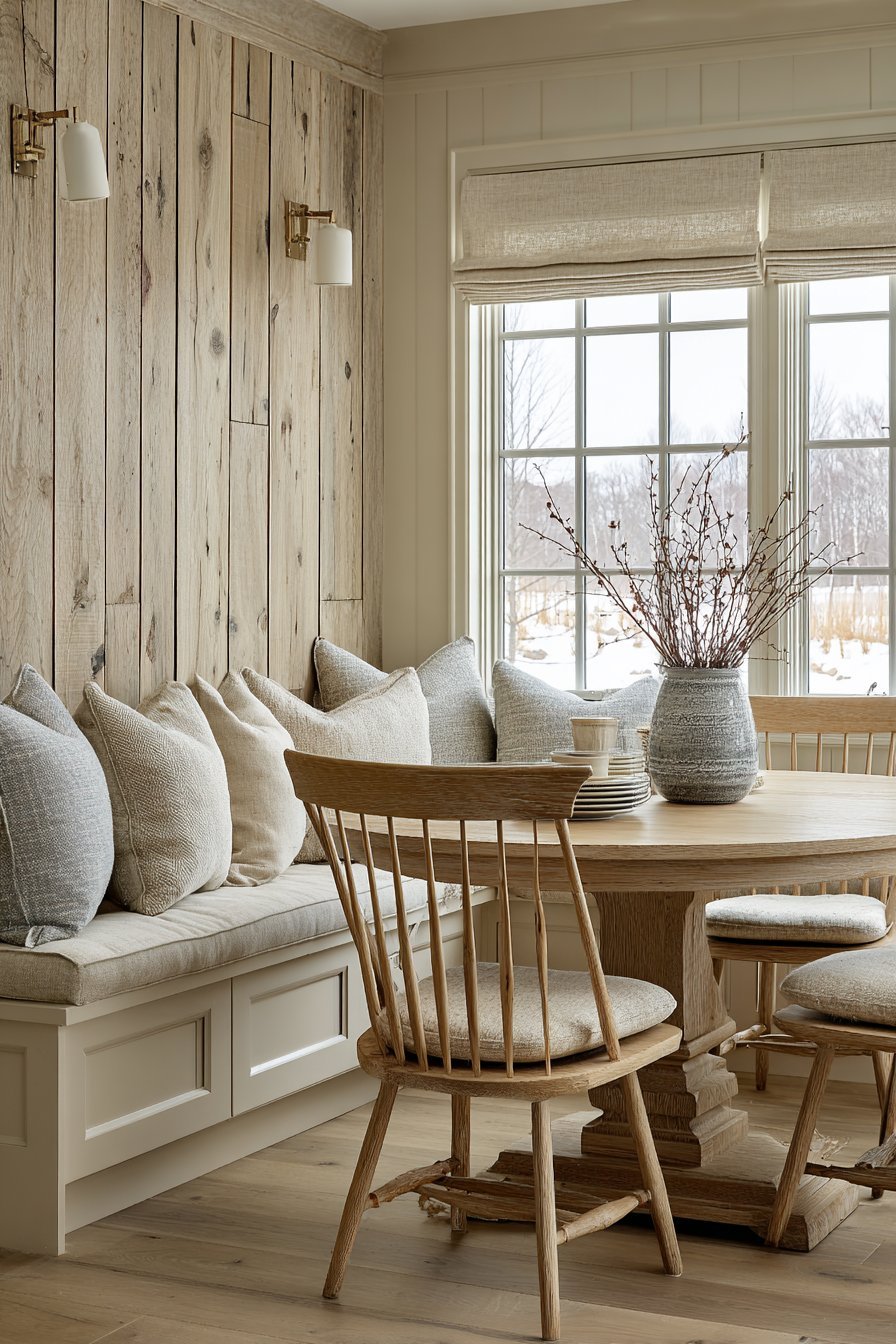
The breakfast nook demonstrates how built-ins maximize space efficiency. The banquette provides seating without requiring chair clearance space. Storage beneath the cushions adds practical functionality. The cohesive design feels intentional and carefully planned.
Key Design Tips:
- Build banquette seating to maximize space efficiency
- Choose natural oak for built-in bases to add warmth
- Select round pedestal tables to improve traffic flow
- Add board and batten wainscoting for architectural character
- Use linen textiles for natural texture and light filtration
7. Functional Farmhouse Sink Area

A cream fireclay farmhouse apron-front sink creates classic appeal. The sink sets into beige quartz countertops for durability. A window with natural wood trim and mullions provides the perfect backdrop. Simple linen cafe curtains in ivory add soft privacy.
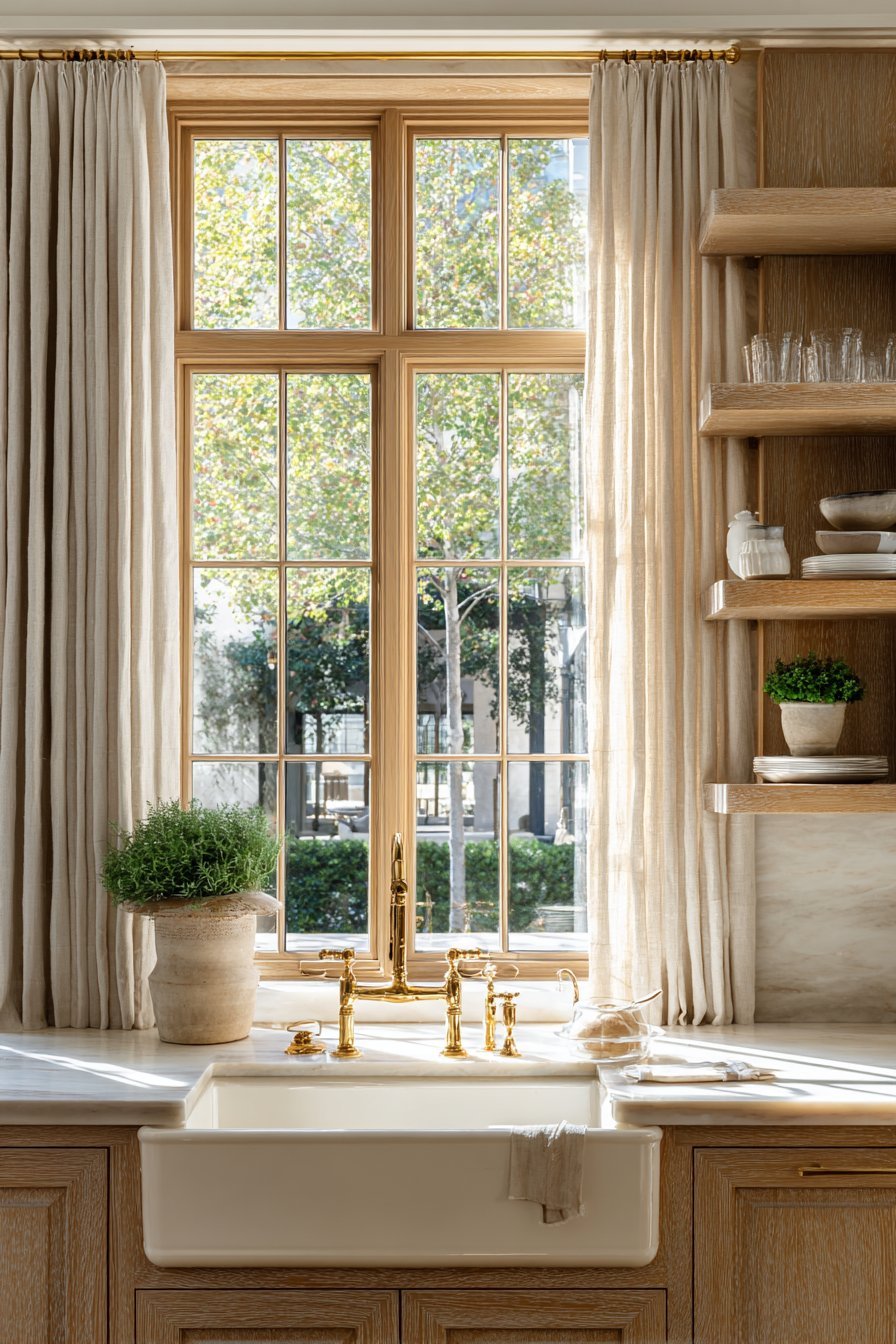
Wooden floating shelves flank the window on both sides. The shelves display potted herbs and vintage glassware. This functional arrangement keeps frequently used items accessible. A gooseneck brass faucet adds traditional charm and practical functionality.

Natural afternoon light streams through the window throughout the day. The illumination highlights smooth beige surfaces and wood grain textures. The window becomes a focal point that draws attention naturally. The sink area feels like a dedicated workspace within the larger kitchen.
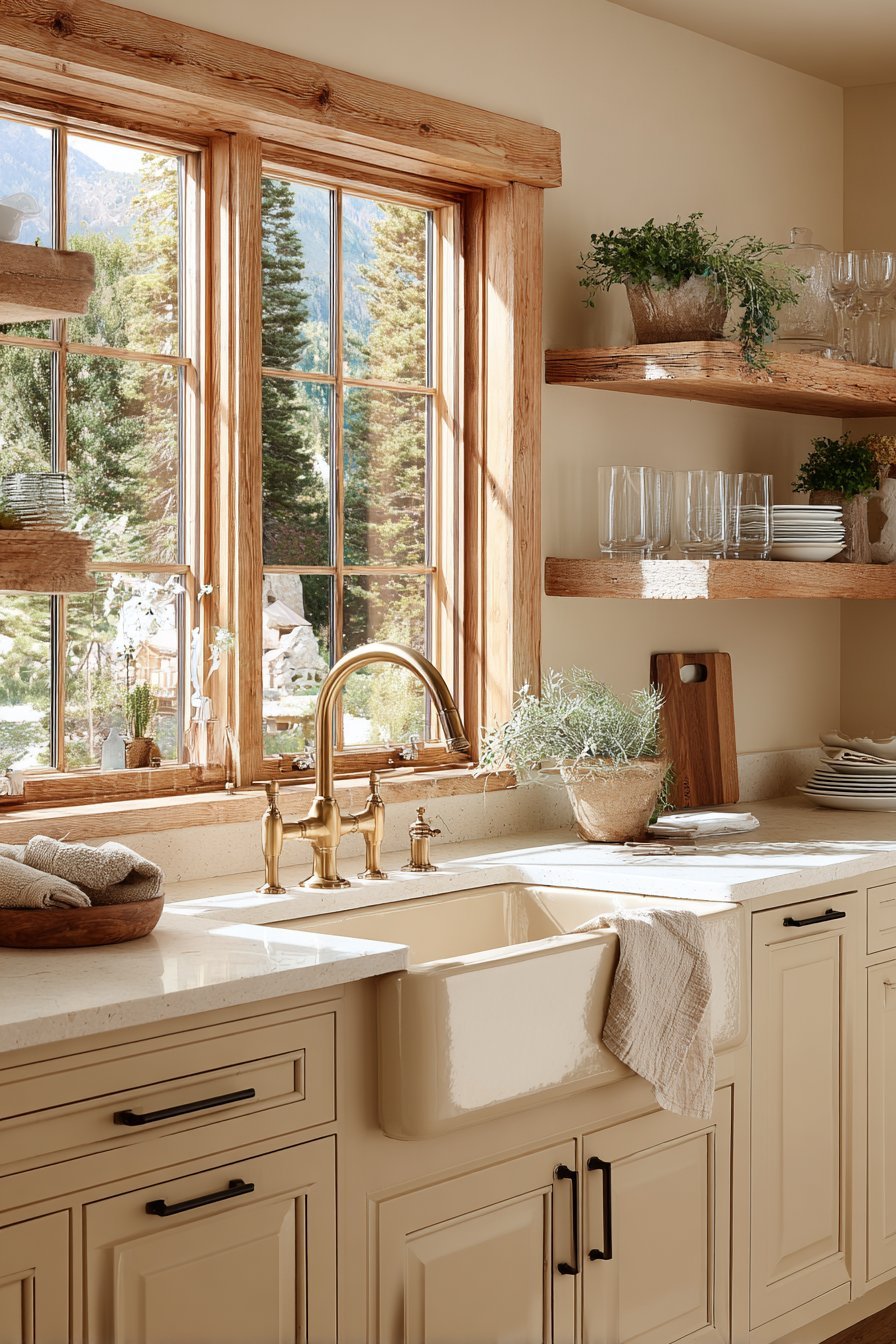
The material choices emphasize durability for high-use areas. Fireclay resists staining and scratching better than other materials. Quartz countertops provide similar resilience around the sink. These practical selections ensure the beautiful design maintains its appearance over time.
Key Design Tips:
- Install fireclay farmhouse sinks for classic style and durability
- Flank windows with floating shelves for practical storage
- Choose gooseneck faucets for traditional appeal and functionality
- Use linen cafe curtains for privacy without blocking light
- Position sinks beneath windows to maximize natural illumination
8. Modern Interpretation with Mixed Materials

Flat-panel cabinets in warm greige showcase contemporary styling. Integrated handles maintain clean lines and minimalist aesthetics. A dramatic wood accent wall features horizontal planks of mixed-tone oak. This architectural element anchors the adjacent dining area.

A sleek wooden dining table with waterfall edges continues the modern theme. Beige upholstered chairs create cohesive connection between kitchen and dining zones. Minimalist pendant lights with wood and metal details hang above. The fixtures provide necessary illumination while reinforcing material continuity.
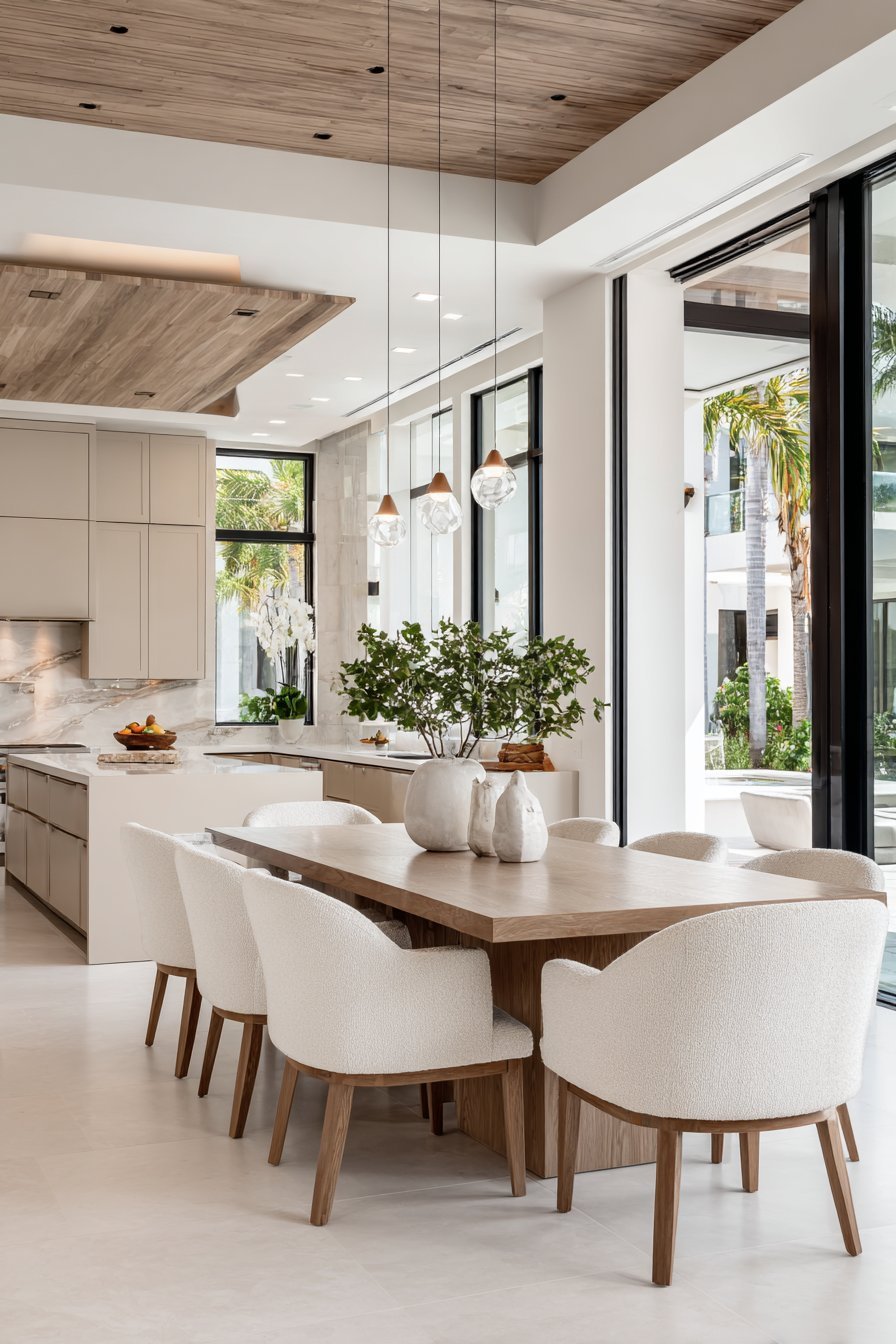
Large format beige porcelain floor tiles show subtle concrete-look texture. The unified flooring flows seamlessly throughout the open concept space. Floor-to-ceiling windows provide abundant natural light. The generous glazing connects interior spaces with outdoor views.
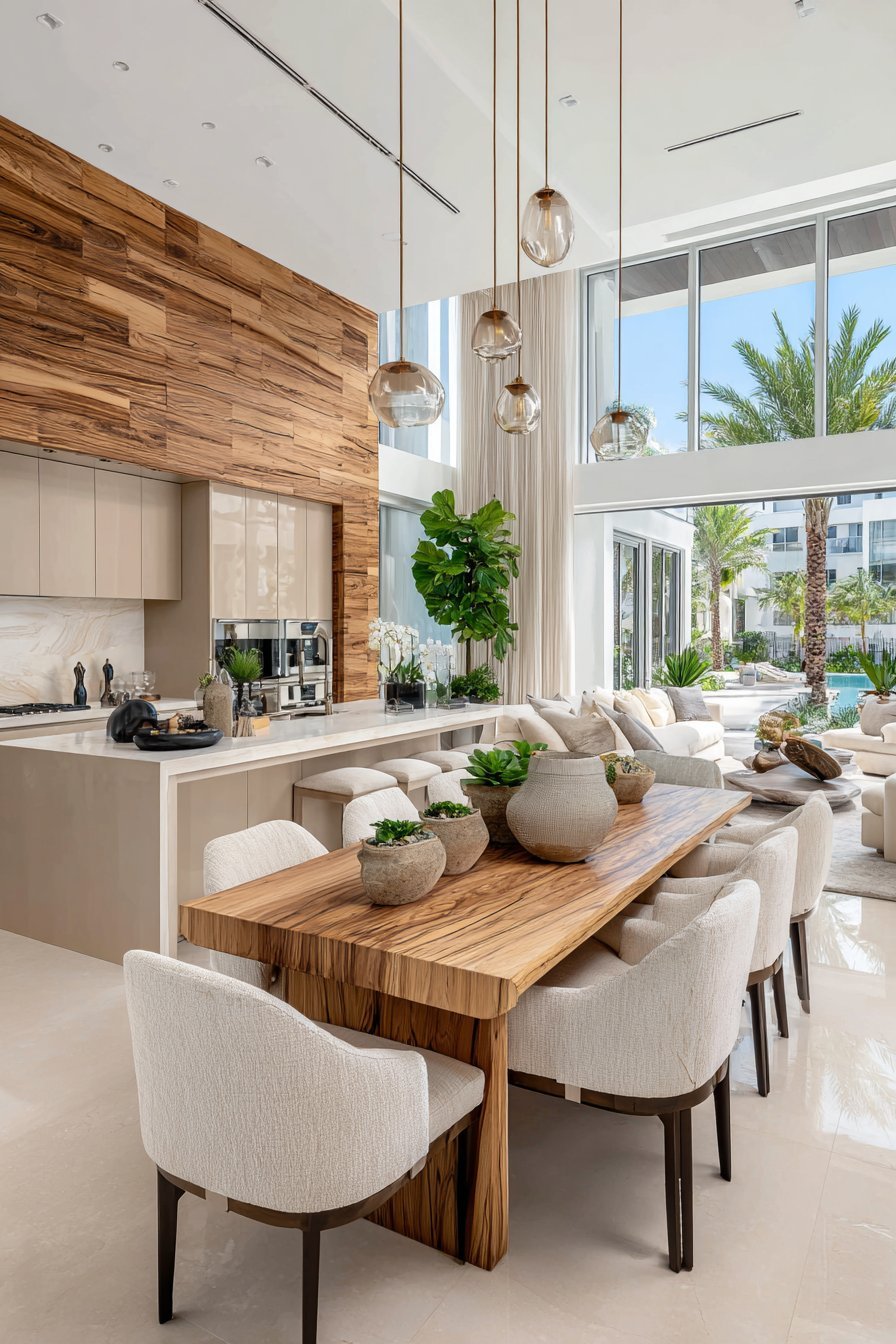
This contemporary interpretation proves beige and wood work beautifully in modern design. The clean lines and minimal ornamentation feel current and sophisticated. Natural materials prevent the space from feeling cold or sterile. The balance achieves modern comfort rather than stark minimalism.
Key Design Tips:
- Choose flat-panel cabinets for contemporary clean-line aesthetics
- Create wood accent walls to add architectural drama
- Use large format tiles to minimize grout lines and enhance spaciousness
- Select waterfall edge tables for modern sculptural appeal
- Maximize floor-to-ceiling windows to flood spaces with natural light
9. Dedicated Coffee Station with Character

Open wooden shelving in natural walnut creates a coffee station. The shelves display ceramic mugs and vintage coffee equipment. A vintage coffee grinder adds nostalgic charm. Storage canisters maintain organization while contributing to the aesthetic.
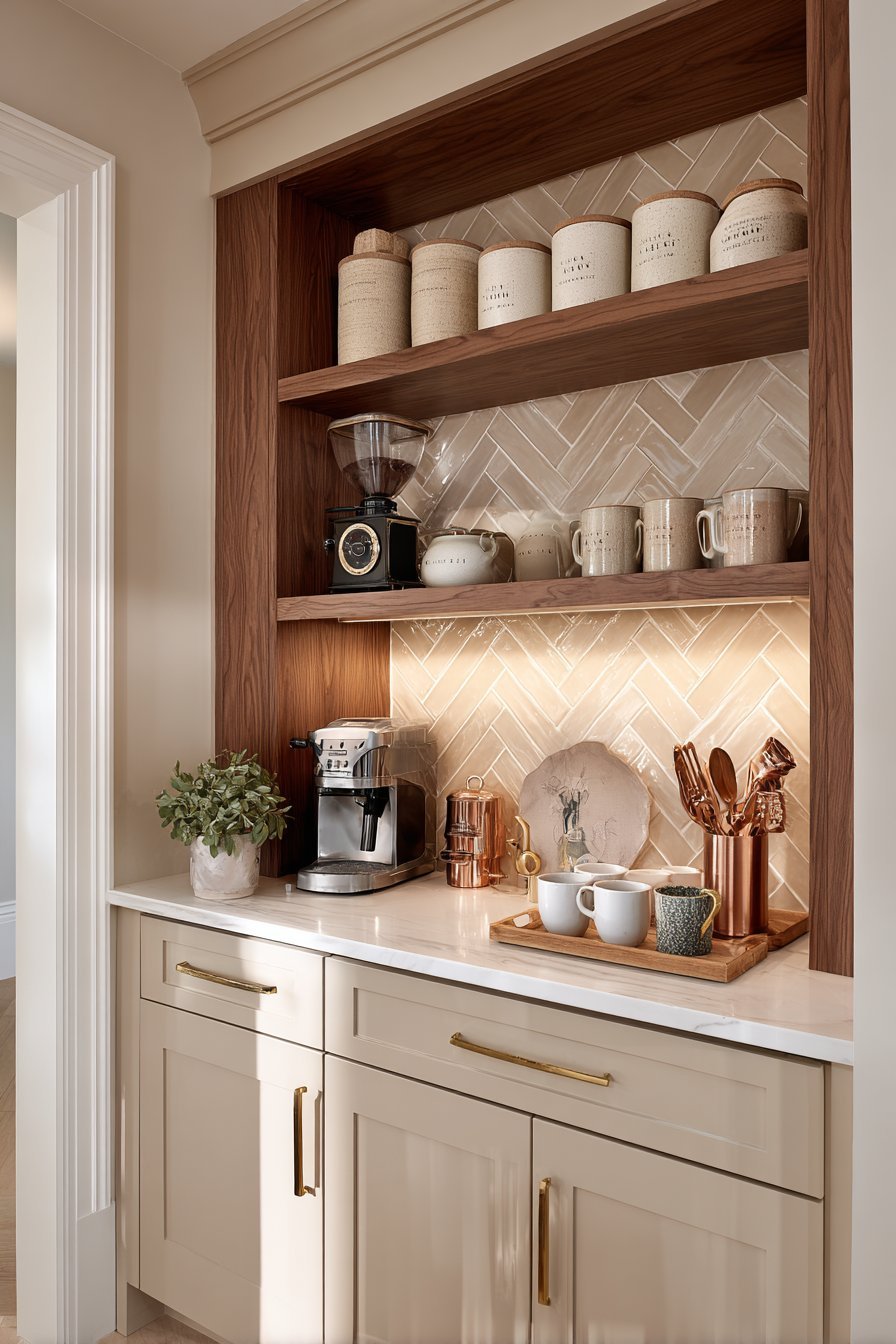
The backdrop features beige subway tile in herringbone pattern. This dimensional installation adds visual interest to the vertical surface. A butcher block countertop section provides dedicated workspace. The maple surface offers ideal space for coffee preparation rituals.
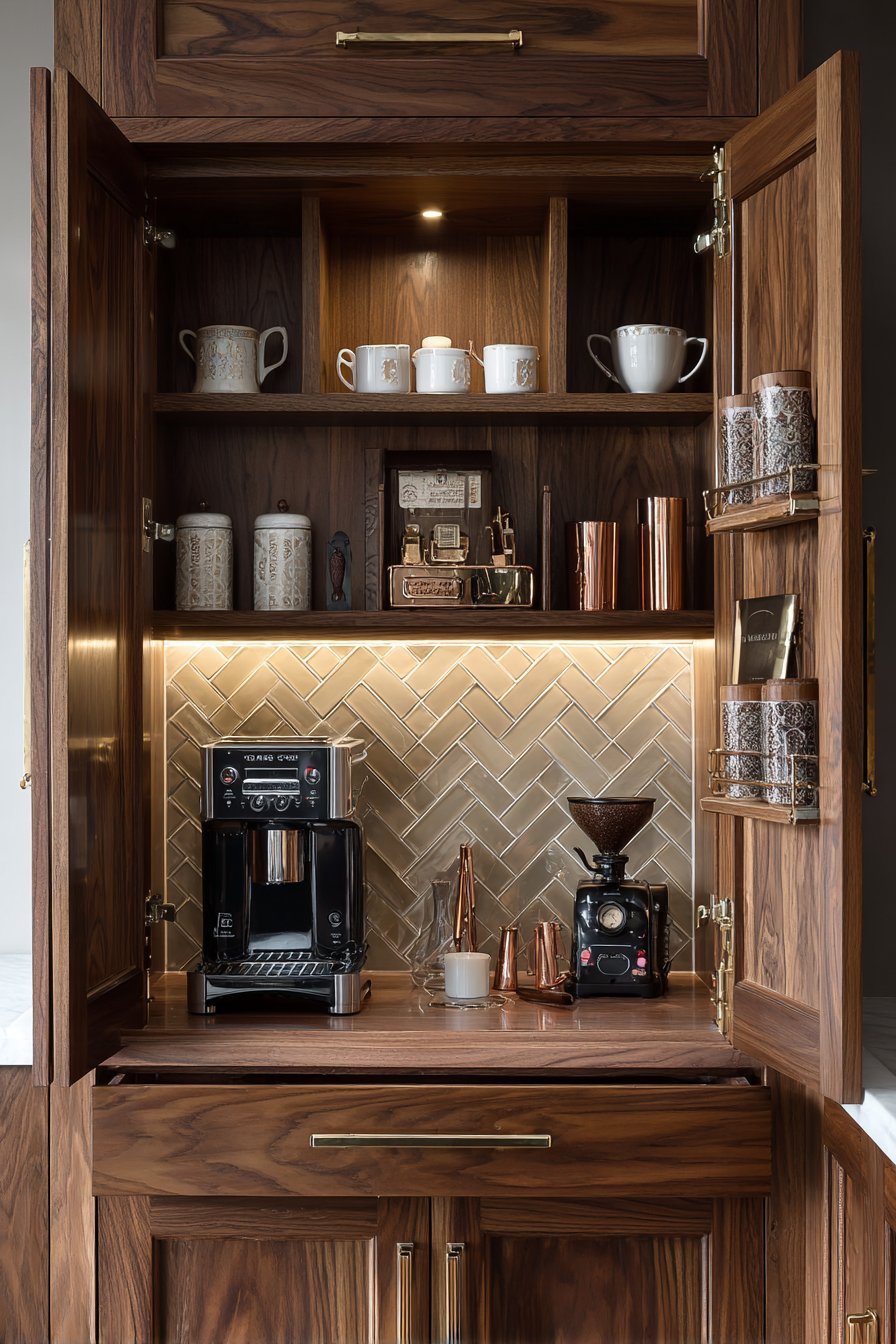
Brass hooks underneath the shelves hold copper coffee implements. These metallic accents catch light and add sparkle. Under-cabinet LED lighting creates warm task lighting for the station. The focused illumination makes morning coffee preparation easier.

The dedicated coffee area demonstrates thoughtful kitchen planning. Creating specific zones for different activities improves overall functionality. The visual appeal encourages daily use and coffee ritual enjoyment. This small investment in dedicated space pays dividends in daily satisfaction.
Key Design Tips:
- Create dedicated coffee stations for specialized functionality
- Install herringbone tile patterns to add dimensional interest
- Use butcher block sections for coffee preparation workspaces
- Add brass hooks for functional vertical storage
- Include under-cabinet lighting for practical task illumination
10. Two-Tier Island with Furniture Details
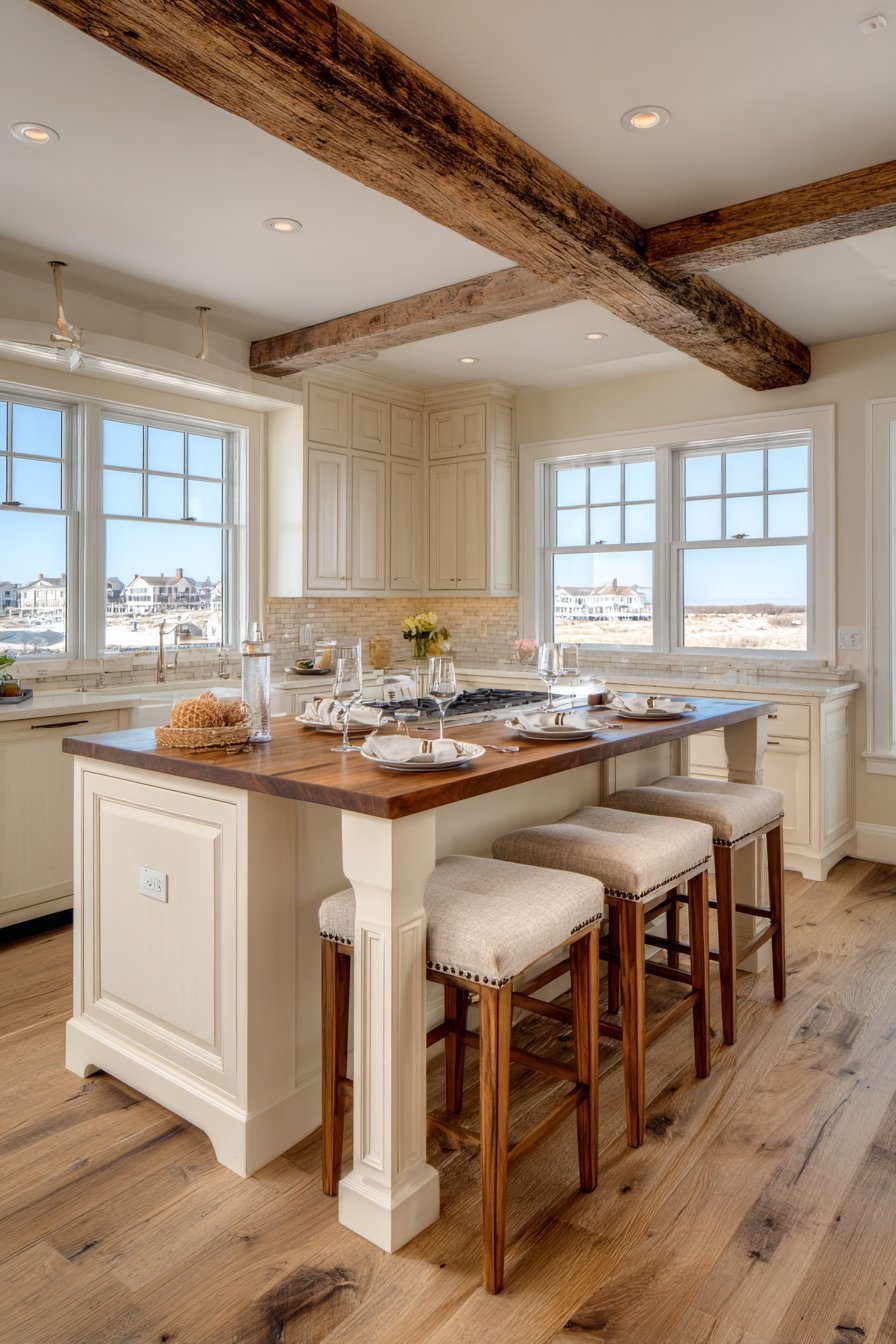
A two-tier island design provides multiple functional levels. The raised bar section features natural hickory wood countertop. The main prep surface uses beige quartz for durability. This height variation creates distinct zones within the island.
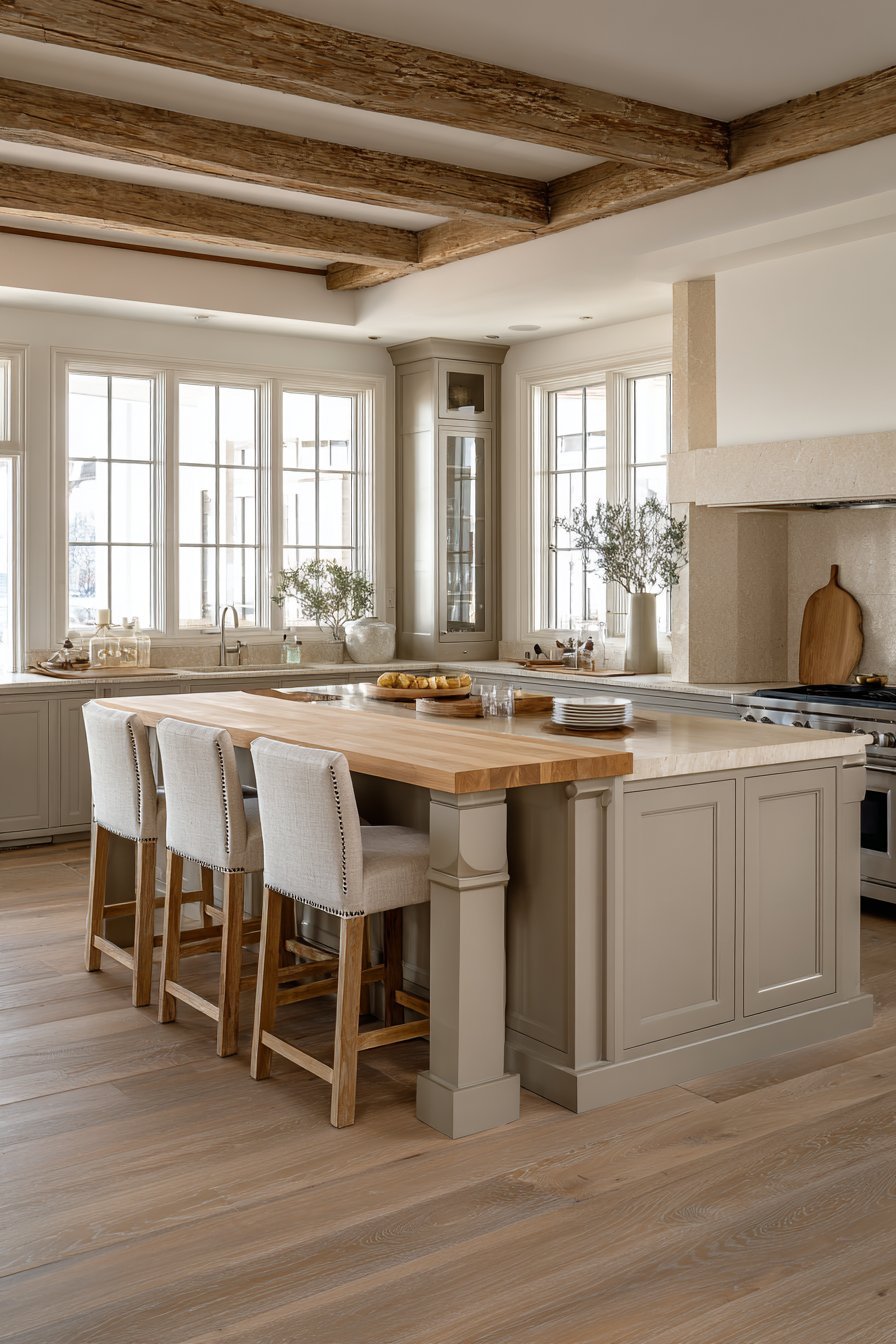
The island base showcases soft greige paint with furniture-style legs. Decorative corbels add traditional architectural detail. Four wooden counter stools with beige linen cushions provide comfortable seating. Nailhead trim on the cushions adds refined detail.

Wide-plank engineered oak flooring extends throughout the surrounding space. The natural finish shows beautiful grain patterns and subtle color variations. A wooden beam spanning the ceiling adds structural character. This architectural element emphasizes the kitchen’s generous height.

Natural light from multiple windows creates soft, even illumination. The island serves as both functional workspace and visual centerpiece. The furniture-style details elevate the island beyond basic cabinetry. This approach creates custom appearance without full custom costs.
Key Design Tips:
- Design two-tier islands to create distinct functional zones
- Use furniture-style legs to add custom architectural character
- Incorporate decorative corbels for traditional detailing
- Select wooden counter stools with upholstered cushions for comfort
- Add nailhead trim to upholstery for refined finishing touches
11. Glass-Front Cabinets with Display Potential

Glass-front upper cabinets feature beige painted frames with natural wood mullions. The classic divided-light pattern adds traditional character. Cabinet interiors use slightly darker beige paint. This subtle contrast creates depth while displaying white dishware and wooden cutting boards.

Solid beige lower cabinets maintain visual weight below. Simple hardware in unlacquered brass will develop beautiful patina over time. Butcher block countertops in maple provide warm contrast against painted surfaces. The rounded edge detail adds softness to the countertop profile.
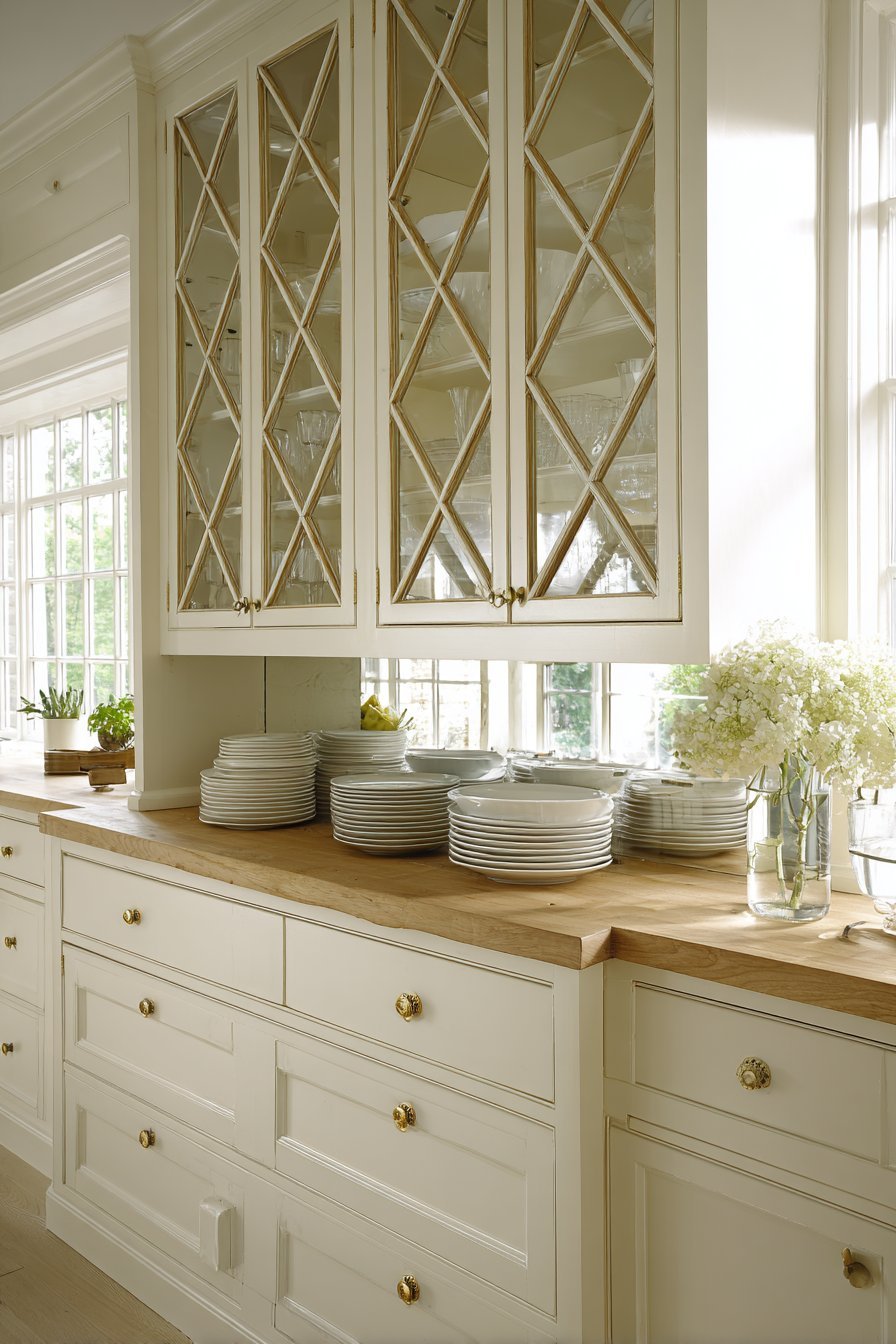
Small windows above the cabinets feature natural wood trim. Soft diffused daylight illuminates the space evenly throughout the day. The glass-front cabinets allow display of attractive kitchen items. This transforms functional storage into decorative opportunity.

The thoughtful layering of beige tones prevents monotony. The slightly darker cabinet interiors create dimension and visual interest. The natural wood mullions break up large glass expanses. These details demonstrate how small variations enhance overall design sophistication.
Key Design Tips:
- Install glass-front uppers to showcase attractive dishware
- Paint cabinet interiors slightly darker for visual depth
- Choose unlacquered brass hardware for developing patina
- Add wood mullions to glass doors for traditional character
- Use rounded edge countertops to soften the overall aesthetic
12. Efficient Galley Kitchen Layout

Narrow base cabinets in warm beige line both galley walls. Natural white oak countertops cap the cabinetry with organic beauty. Open wooden shelving on one wall displays organized essentials. Beige and neutral containers maintain visual consistency across the shelves.
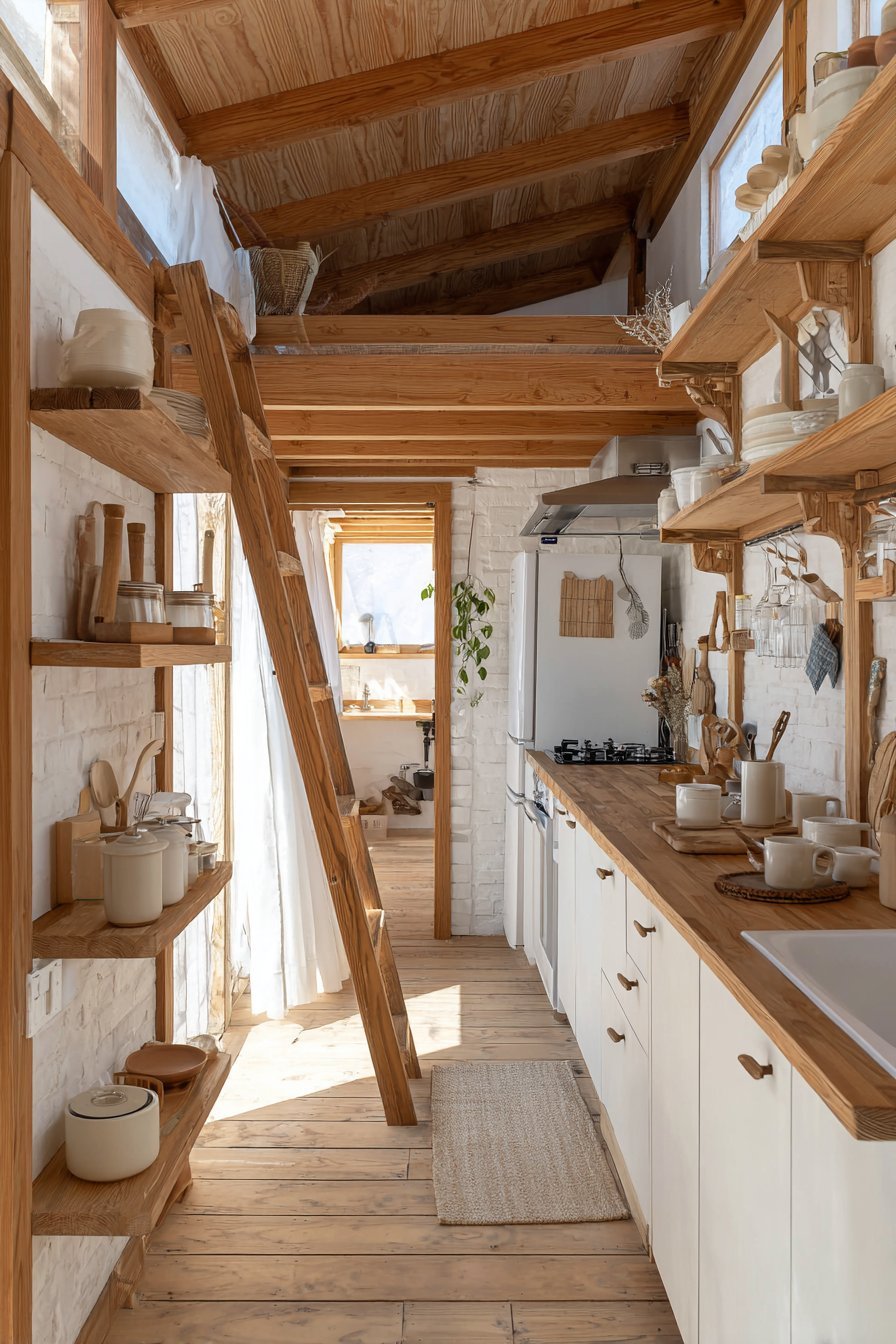
The opposite wall features beige tile in classic brick pattern. This traditional installation adds texture without overwhelming the narrow space. A wooden step ladder provides charming access to upper storage. Natural light enters from a window at the galley end.

The light creates depth and highlights wood grain throughout the compact space. Practical details like wooden knife blocks add lived-in character. Beige ceramic containers store frequently used items within easy reach. Every element serves both functional and aesthetic purposes.
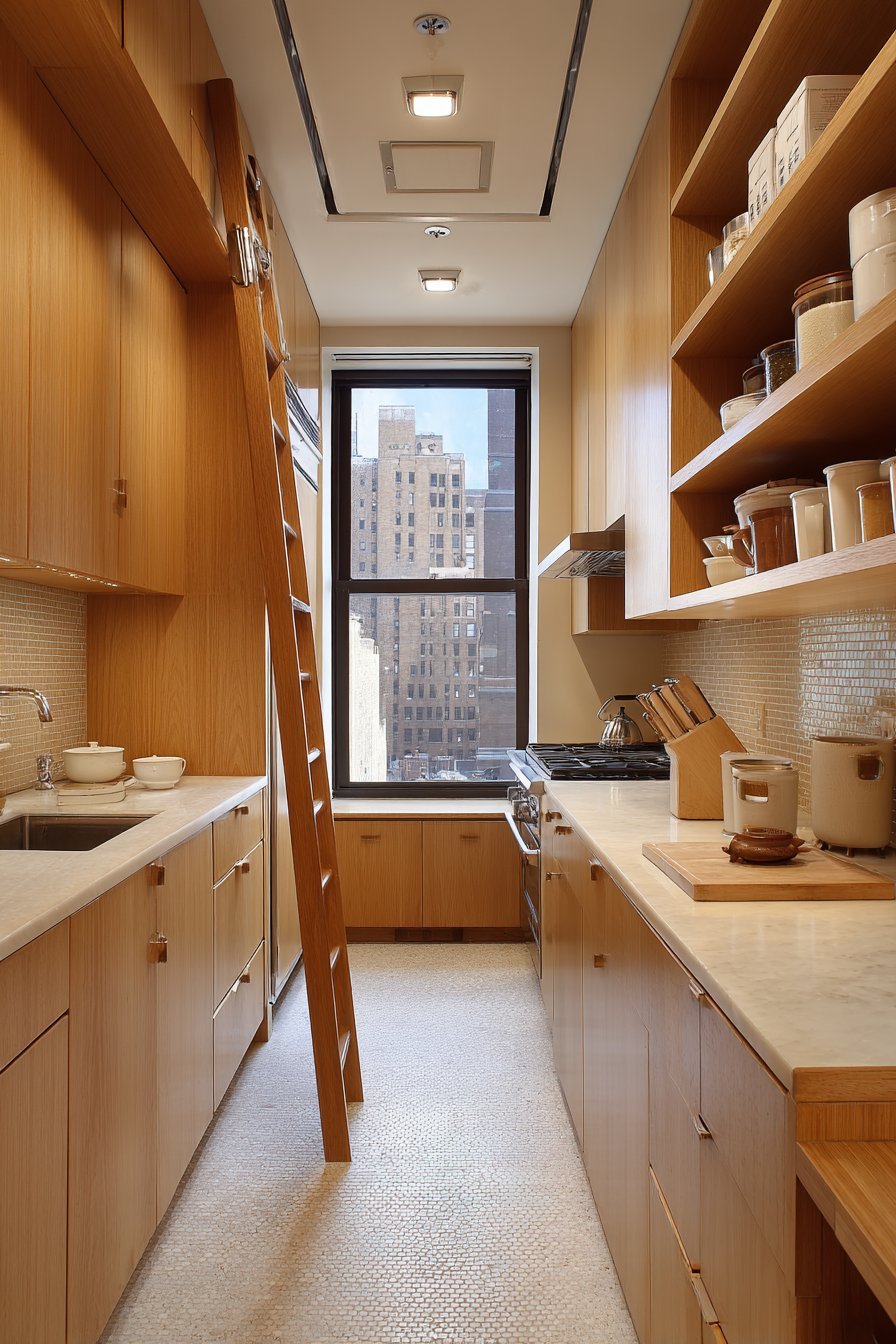
The galley layout proves that small kitchens can be highly efficient. The parallel workspace arrangement supports smooth cooking workflows. The cohesive material palette prevents the narrow space from feeling cluttered. Thoughtful design maximizes every available inch without sacrificing beauty.
Key Design Tips:
- Use galley layouts to maximize efficiency in narrow spaces
- Install open shelving on one wall to prevent visual closure
- Choose classic brick tile patterns for traditional texture
- Maximize natural light from end windows to create depth
- Select practical accessories that also contribute to aesthetics
13. Custom Corner Cabinet Solutions
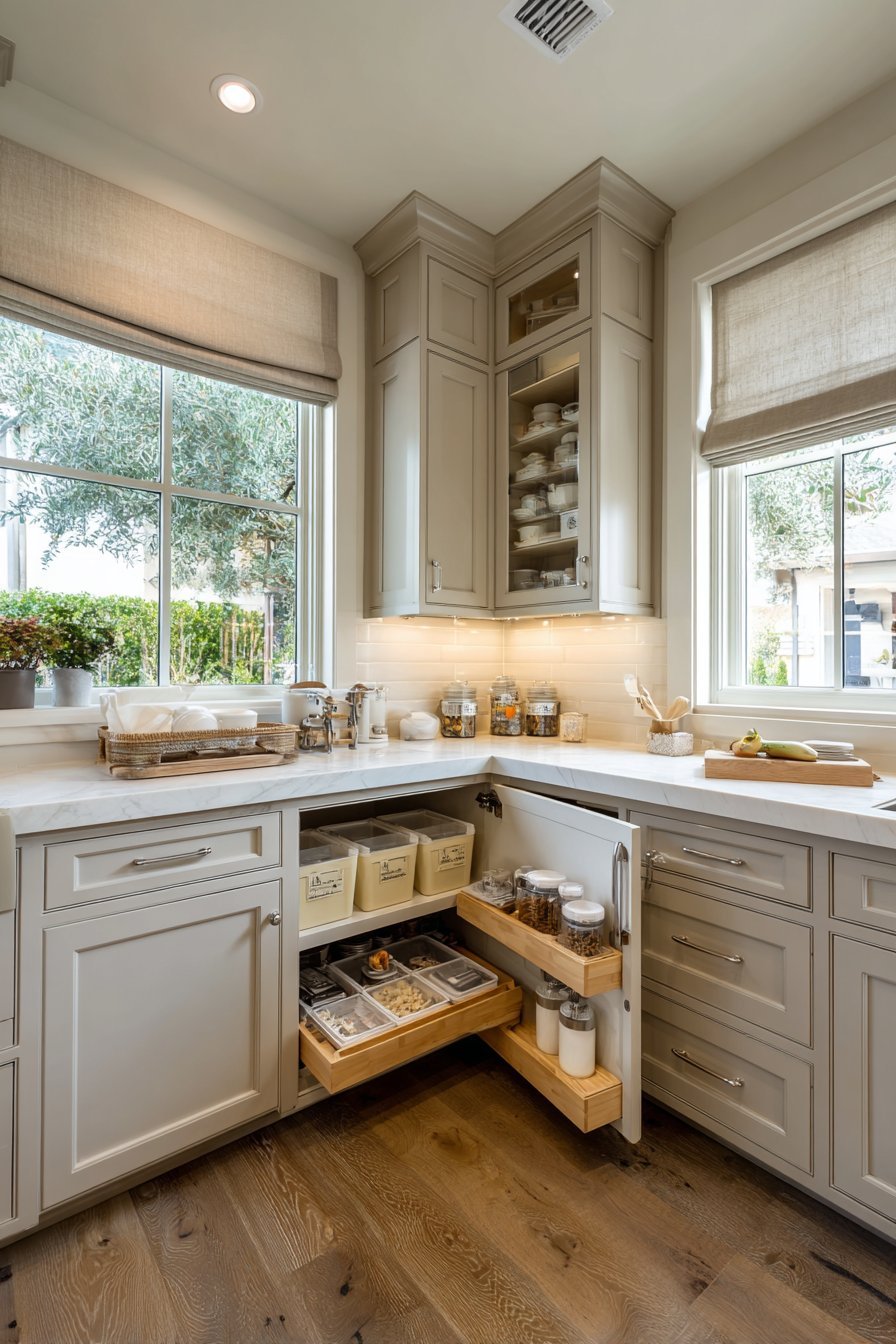
A custom corner cabinet showcases intelligent storage solutions. The lazy susan mechanism reveals organized storage with wooden dividers. Beige containers maintain visual order within the cabinet interior. The cabinetry features inset doors with beaded face frames.
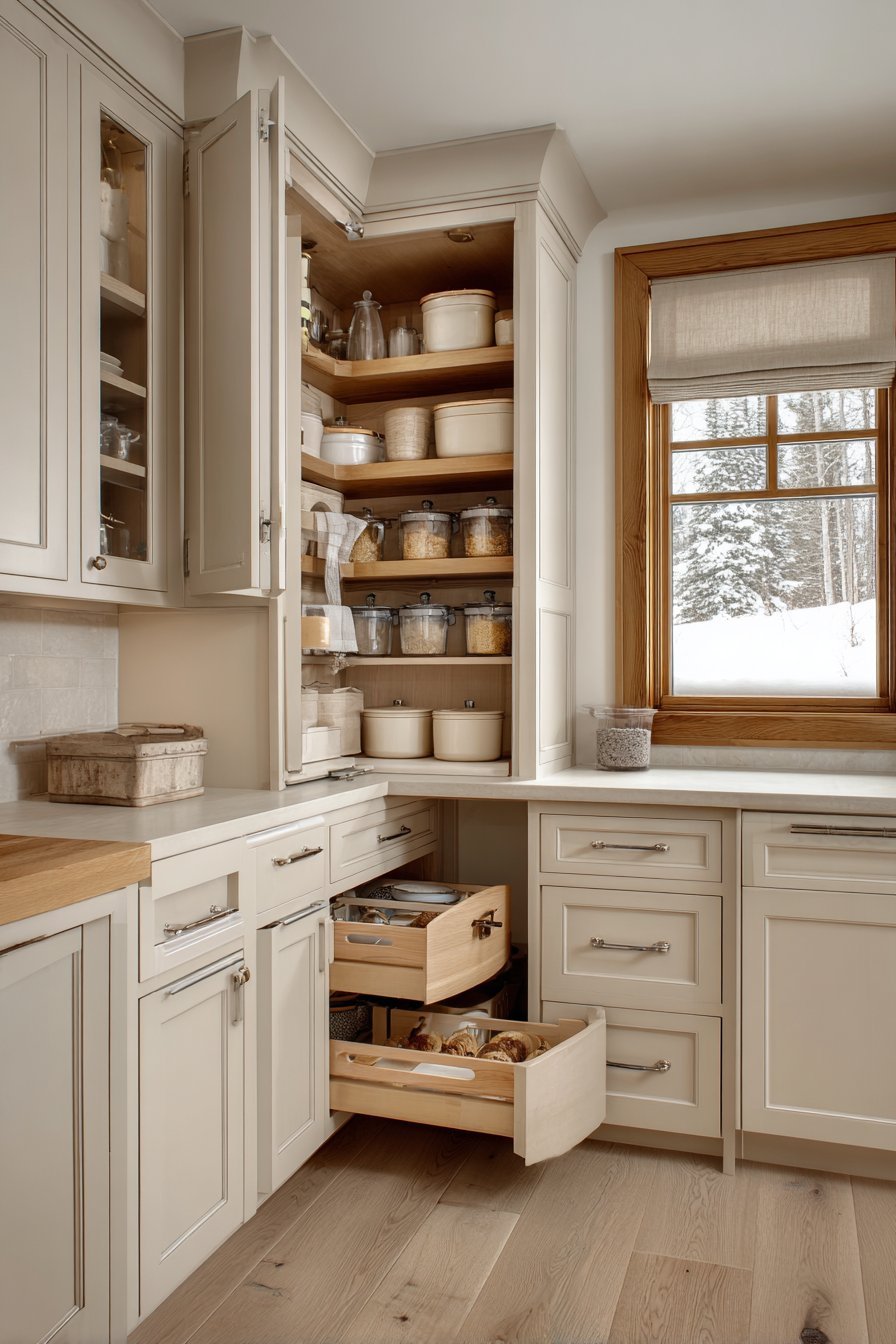
The soft beige paint creates subtle elegance. Adjacent countertops use solid wood in light maple. A food-safe oil finish protects the wood while maintaining natural appearance. A corner window with natural wood trim provides natural light to the workspace.

A simple valance in beige linen softens the window treatment. The floor features wide-plank hickory with natural color variations. These authentic variations add character throughout the flooring surface. The corner receives dedicated attention rather than becoming wasted space.

Clever storage solutions transform challenging corners into functional assets. The lazy susan allows easy access to items typically lost in corner depths. The wooden dividers maintain organization and prevent item tumbling. This attention to detail demonstrates comprehensive kitchen planning.
Key Design Tips:
- Install lazy susan mechanisms to maximize corner accessibility
- Use wooden dividers within cabinets for organized storage
- Choose inset doors with beaded frames for traditional elegance
- Apply food-safe oil finishes to wood countertops
- Position corner windows to add natural light to workspaces
14. Farmhouse Table as Secondary Workspace

A large farmhouse table in reclaimed wood serves dual purposes. The table provides secondary prep area and casual gathering space. Natural wear and patina show authentic history. Visible wood grain and slight imperfections add irreplaceable character.

The table positions before a wall of floor-to-ceiling beige cabinets. Upper sections feature glass doors that display attractive kitchen items. Beige painted dining chairs with wooden seats surround the table. The mixed seating arrangement supports various activities throughout the day.

Industrial-style pendant lights with wooden accents hang above the table. These fixtures provide focused task lighting when needed. Natural light from skylights creates dramatic shadows across the wood surface. The varied lighting supports different moods and functions.

This dual-purpose space demonstrates kitchen versatility. The area supports food preparation during cooking and dining during meals. The reclaimed wood table adds authenticity that new furniture cannot replicate. The combination of cooking and gathering feels organic and uncontrived.
Key Design Tips:
- Incorporate farmhouse tables for flexible secondary workspaces
- Choose reclaimed wood for authentic character and sustainability
- Mix seating types to support various activities
- Add skylights to introduce dramatic natural lighting
- Create dual-purpose zones that support multiple functions
15. Custom Plate Rack Between Cabinets
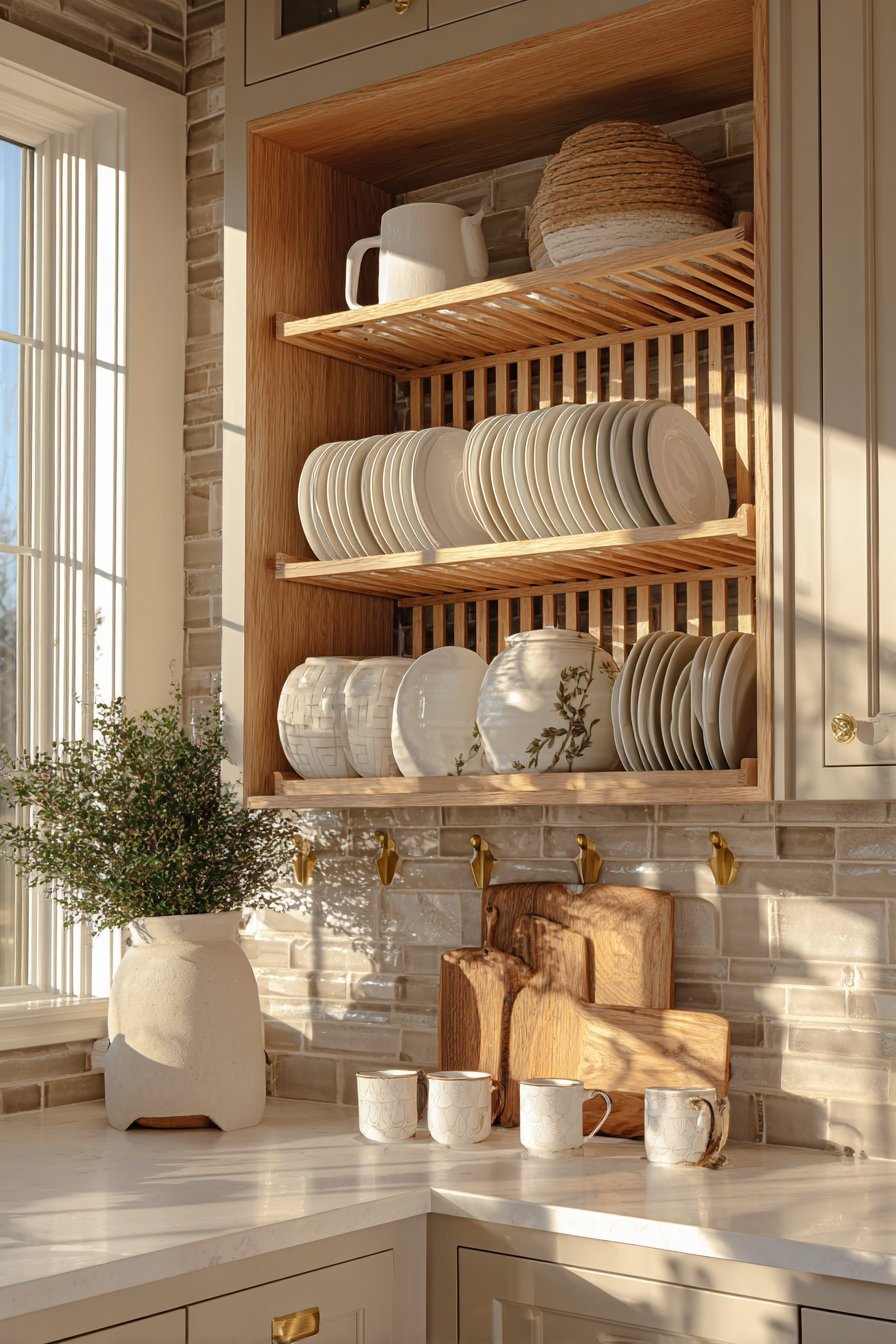
A custom plate rack made from natural oak features beige-painted backing. The rack installs between upper cabinets as a featured element. White ironstone plates and wooden serving boards display in organized arrangement. The three-dimensional rack adds depth to the wall composition.

Beige subway tiles surround the feature element. Traditional running bond pattern provides classic backdrop. Small wooden pegs below the rack hold coffee mugs vertically. Brass cup hooks add functional detail while contributing metallic warmth.

Morning light from a nearby window side-lights the display beautifully. This angled illumination emphasizes the rack’s dimensional quality. The texture of wood grain becomes more apparent in this lighting. The functional element becomes decorative focal point.
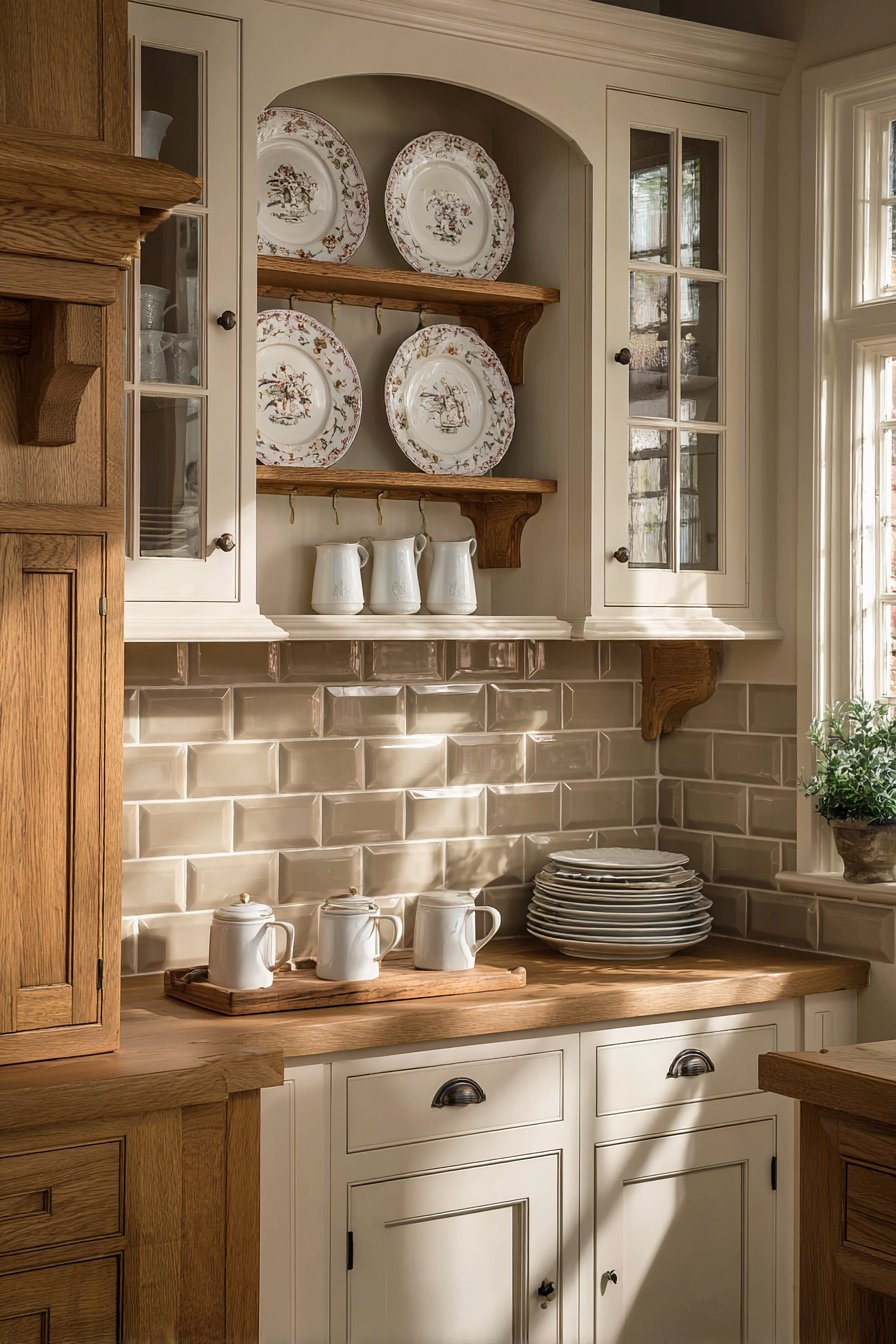
Custom plate racks demonstrate how traditional storage solutions remain relevant. The open display keeps frequently used items accessible. The visual appeal encourages maintaining organization. This crafted detail adds personality that standard cabinets cannot provide.
Key Design Tips:
- Install custom plate racks for functional display storage
- Paint rack backing to create visual contrast
- Position racks near windows to maximize natural light effects
- Add wooden pegs below for additional vertical storage
- Include brass hooks for hanging items and metallic accent
16. Statement Ventilation Hood in Shiplap

Horizontal shiplap boards in natural white oak cover the ventilation hood. The clear satin finish highlights beautiful wood grain. The statement hood contrasts with beige painted cabinetry surrounding it. A wooden mantel shelf displays brass candlesticks and potted herbs.
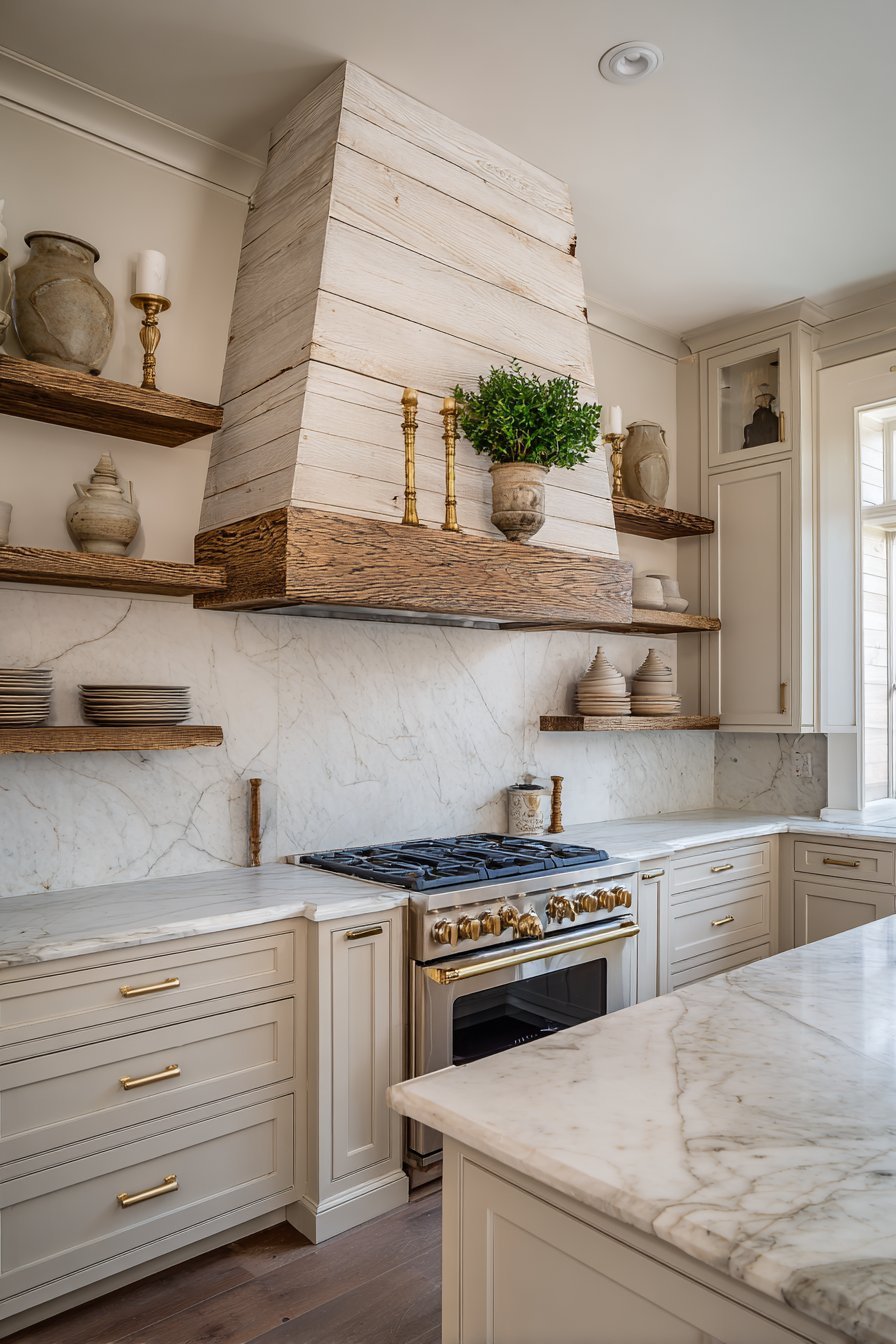
Beige marble countertops with subtle grey veining provide elegant work surfaces. The natural stone adds luxury to the functional kitchen. Open wooden shelving holds frequently used dishes in neutral tones. A professional gas range with brass accents sits beneath the dramatic hood.

Natural light and recessed lighting combine for even illumination. The architectural presence of the wooden hood anchors the entire cooking wall. The horizontal shiplap lines create visual rhythm. This custom element demonstrates commitment to distinctive design.

The hood transforms a necessary ventilation element into architectural feature. The investment in custom woodwork pays dividends in visual impact. The natural wood maintains brightness while adding substantial presence. This approach creates focal drama without color contrast.
Key Design Tips:
- Cover range hoods with horizontal shiplap for architectural drama
- Use clear satin finishes to showcase natural wood grain
- Add mantel shelves to hoods for functional display
- Choose marble countertops to introduce subtle luxury
- Combine natural and recessed lighting for optimal illumination
17. Barn Door Pantry Entry
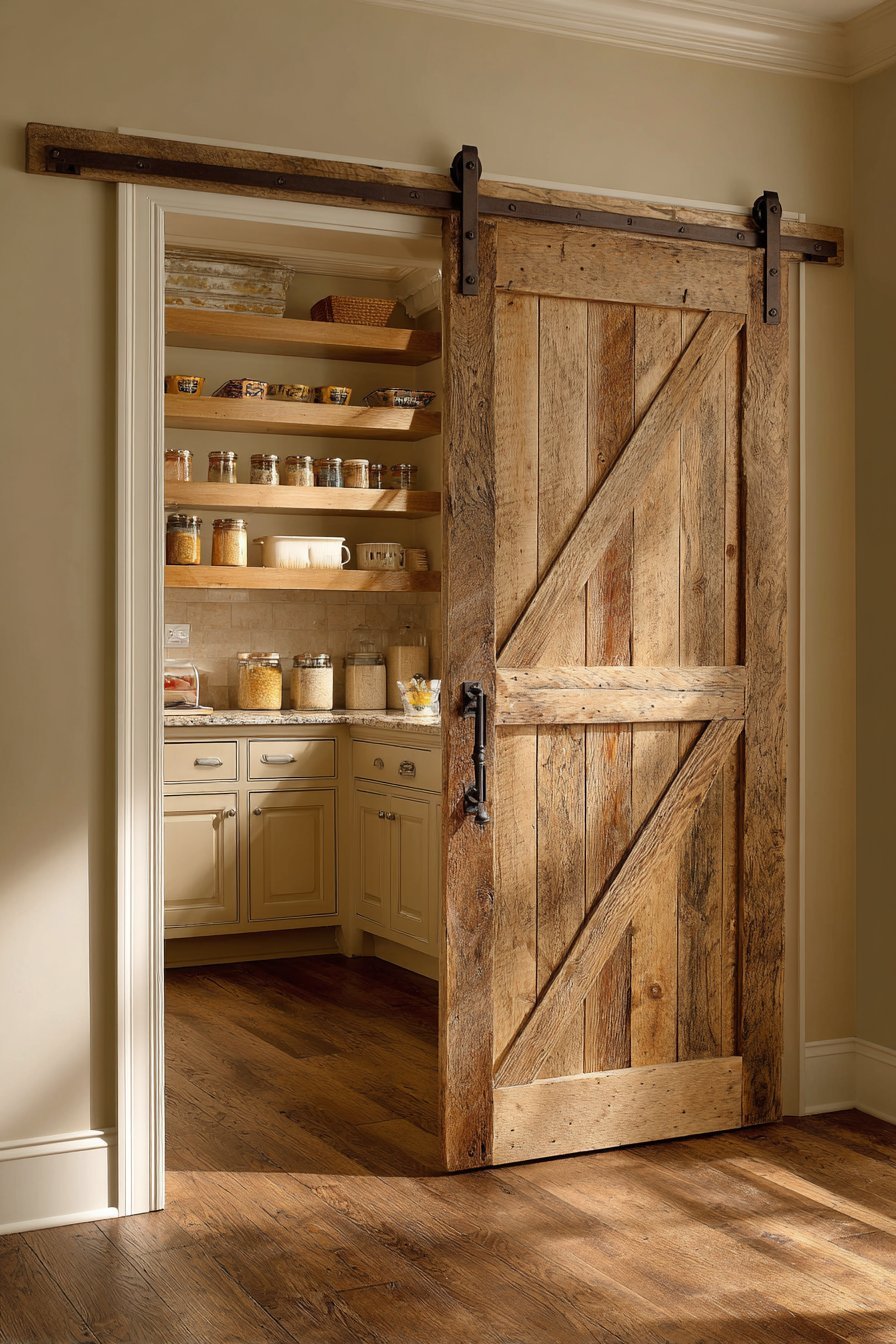
A custom barn door in natural alder wood creates rustic charm. Metal hardware in oil-rubbed bronze provides industrial contrast. The door features vertical planks with diagonal cross-brace. The classic barn door style adds authentic farmhouse character.
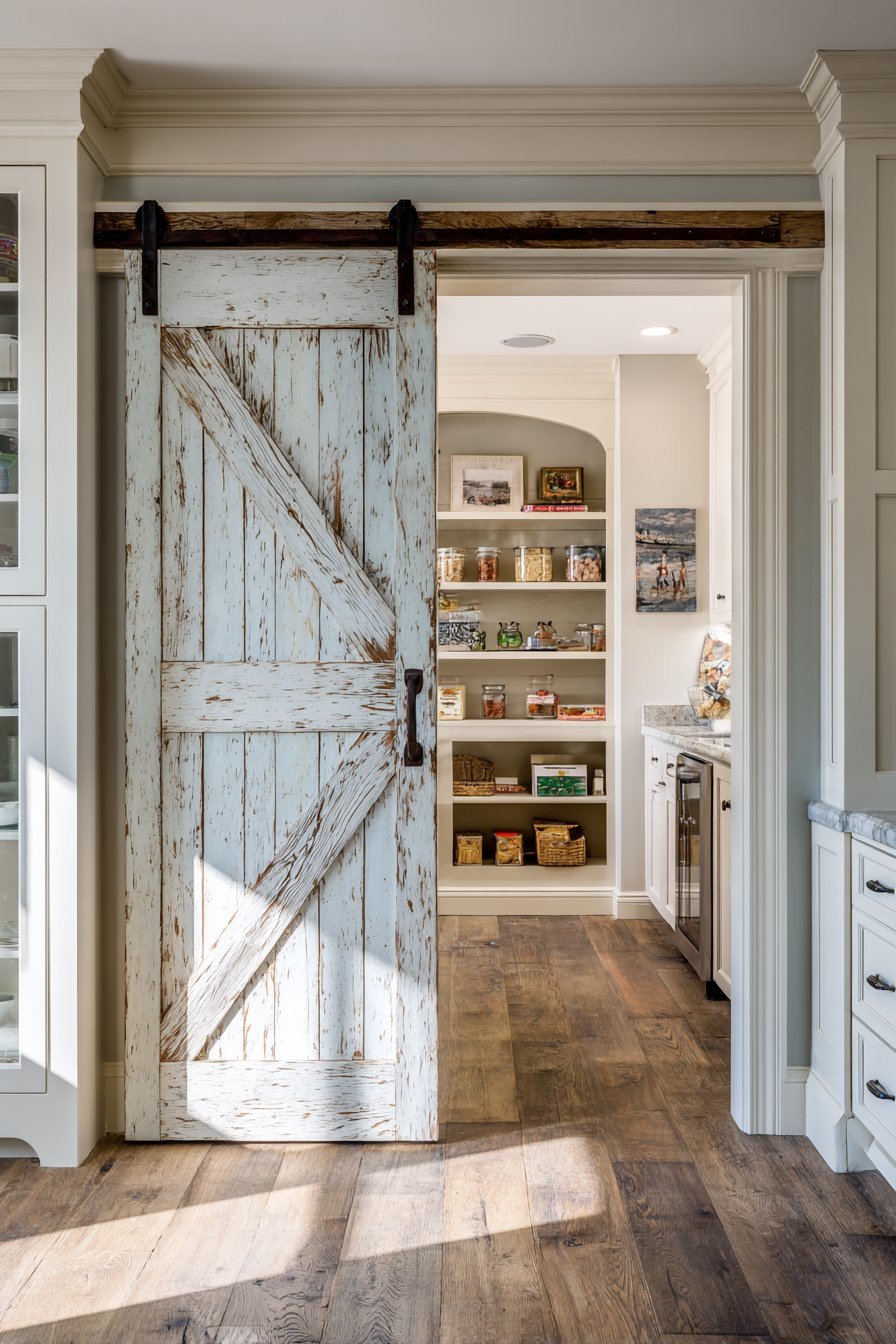
The door slides along a visible track mounted above. Surrounding trim and door frame use soft beige paint. Through the partially open door, organized wooden shelving appears. Beige containers maintain visual consistency within the pantry.

Wide-plank oak flooring extends from kitchen into pantry space. Natural light from the kitchen creates dimensional lighting across the door surface. The illumination highlights grain patterns and hardware details. The barn door becomes transitional art between spaces.
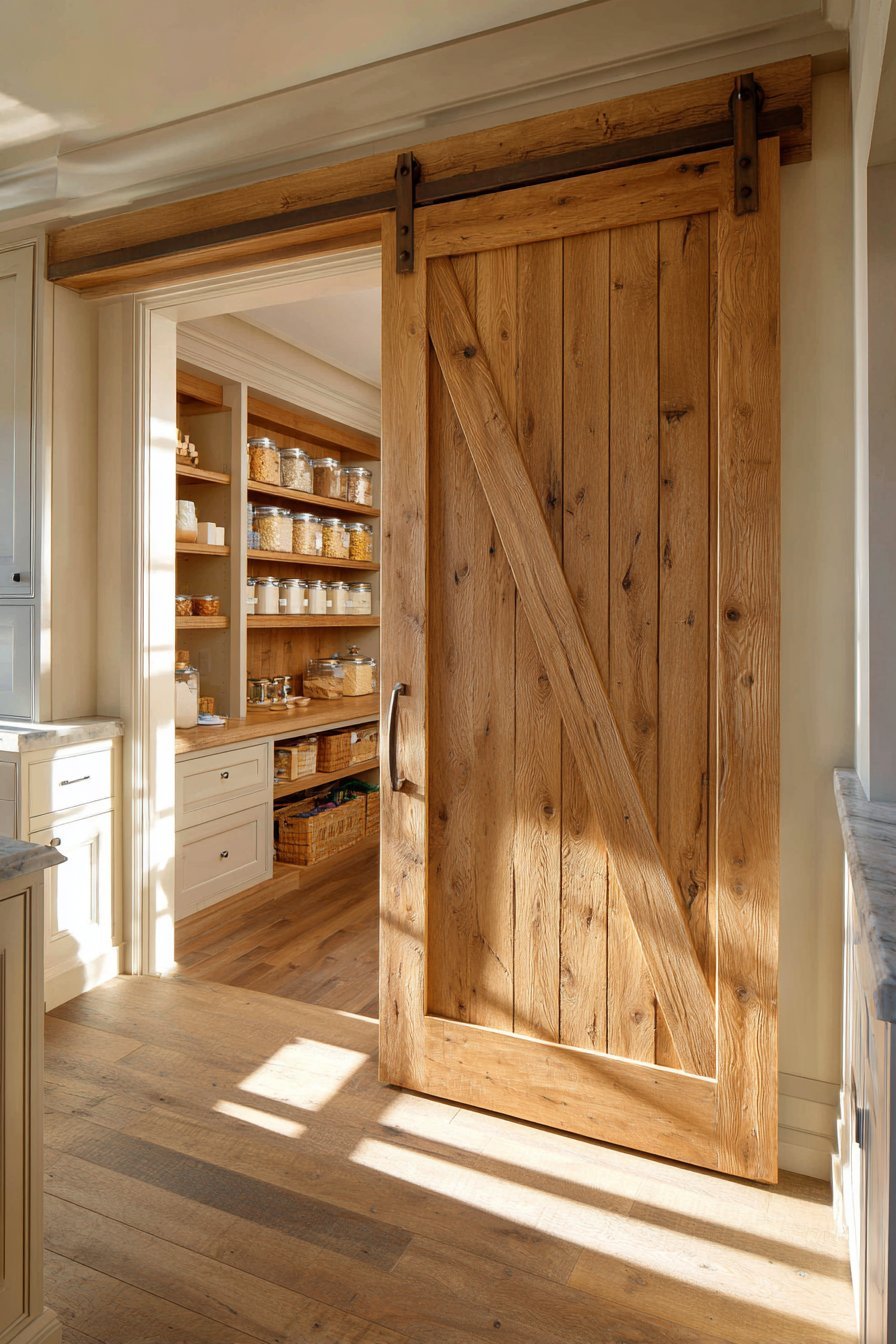
Barn doors provide practical solutions for tight spaces. The sliding mechanism requires no door swing clearance. The visible hardware adds decorative interest. This installation demonstrates how functional elements become design features.
Key Design Tips:
- Install barn doors where swing clearance is limited
- Choose natural wood to add organic warmth
- Use oil-rubbed bronze hardware for contrast
- Paint surrounding trim to frame the natural wood
- Maintain consistent flooring between connected spaces
18. Layered Window Treatment Details
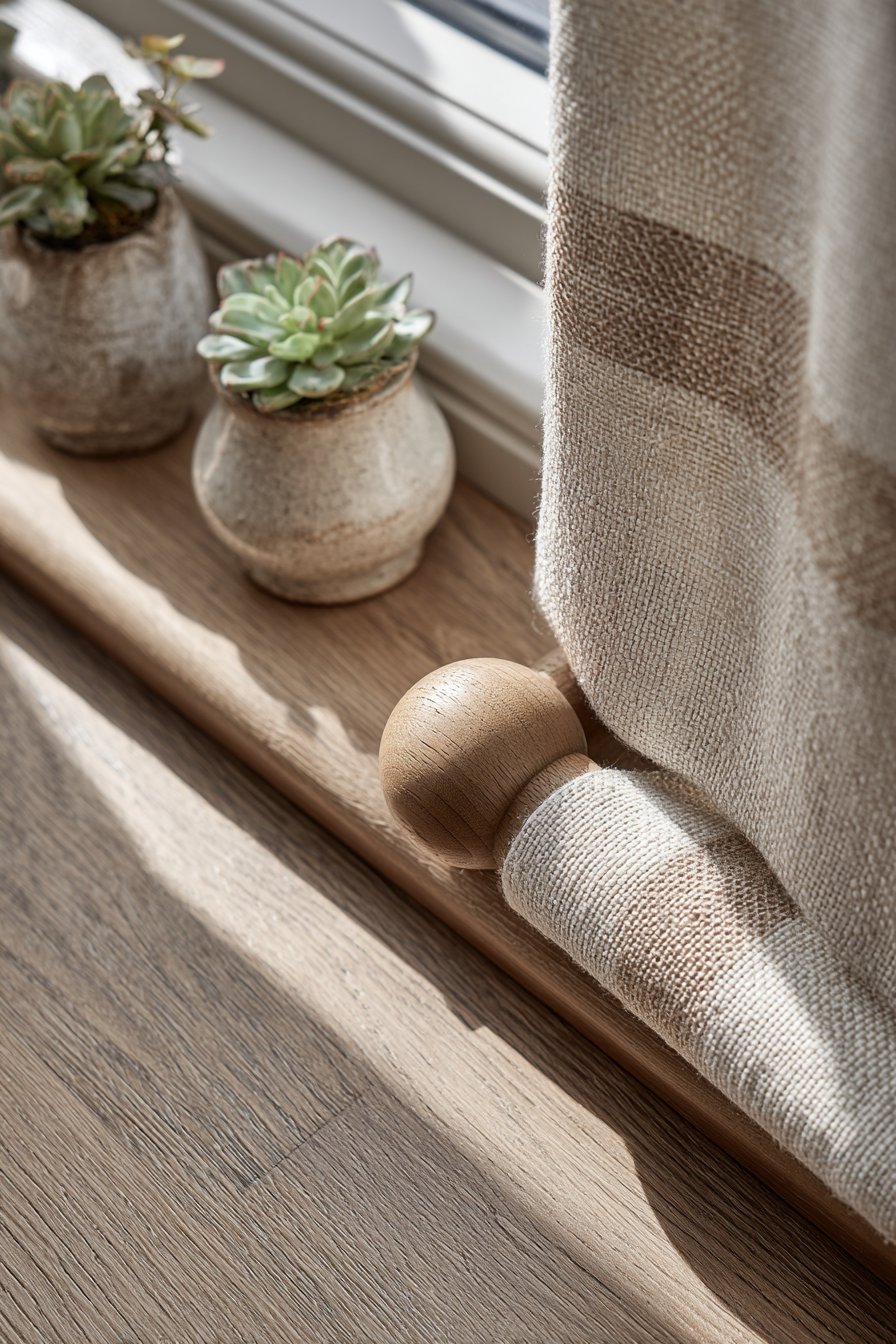
A Roman shade in natural linen features subtle beige stripes. The fabric mounts on a wooden rod in light oak. Simple wooden finials cap the rod ends. The window frame and trim use soft beige paint throughout.
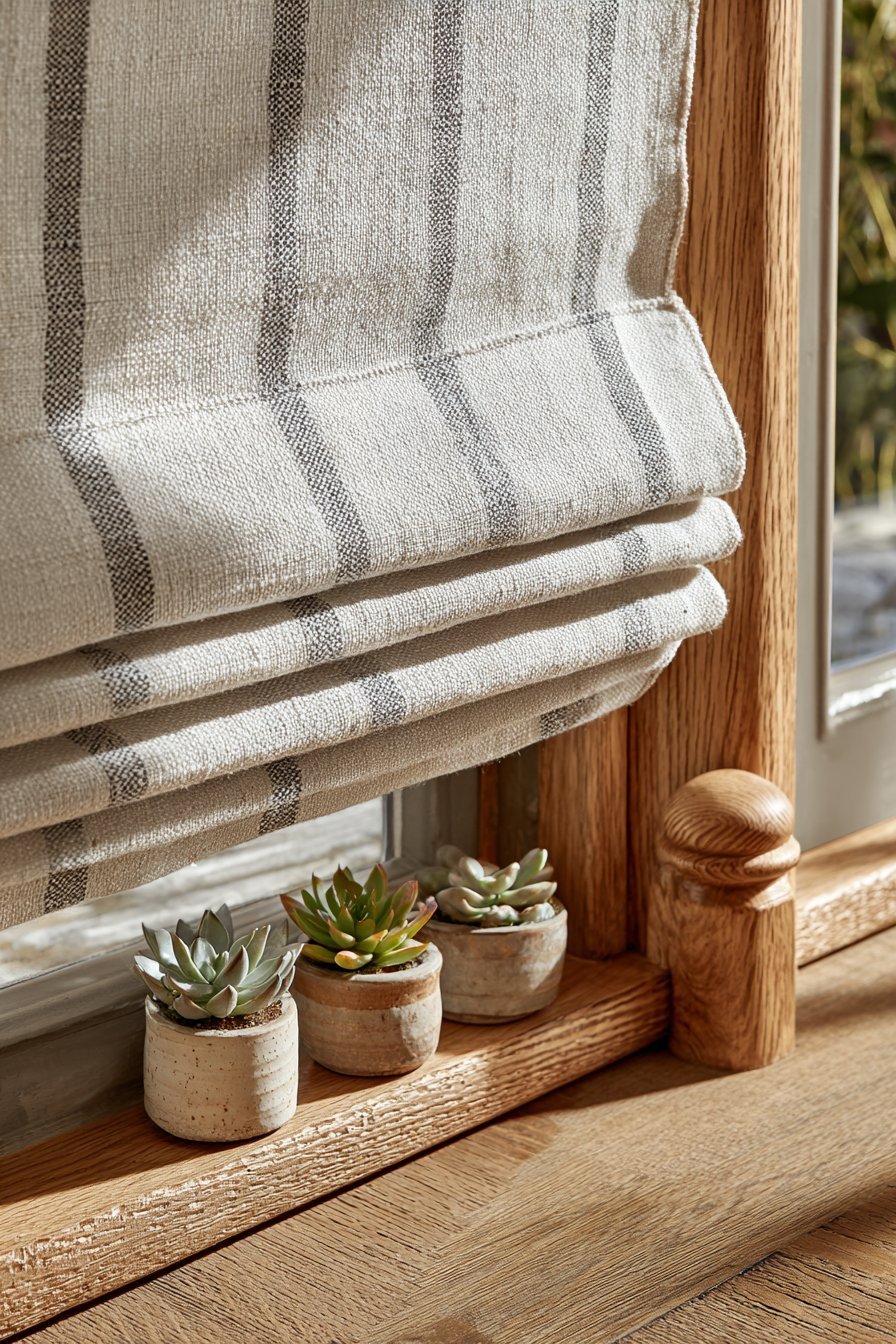
Natural oak flooring extends beneath the window area. The beige-painted wood sill displays small potted succulents. Ceramic containers in neutral tones hold the living plants. Soft afternoon light filters through the semi-sheer fabric beautifully.

The filtered light creates warm glow within the space. Gentle shadows emphasize textile texture and wood grain. The layered textures create sophisticated window treatment. The natural materials work together harmoniously.

Window treatments significantly impact kitchen atmosphere. The Roman shade provides privacy while filtering light softly. The natural linen adds organic texture to the space. These thoughtful details demonstrate comprehensive design consideration.
Key Design Tips:
- Choose Roman shades for clean lines and light control
- Select natural linen for organic texture and light filtration
- Use wooden rods that match other wood tones
- Display plants on window sills for living elements
- Layer materials to create dimensional window treatments
19. Thoughtful Flooring Transitions

Wide-plank white oak hardwood meets beige porcelain tile. The transition strip uses matching oak for seamless flow. The materials change between kitchen and adjacent spaces. Beige kitchen cabinets with wooden countertops appear above the hardwood section.
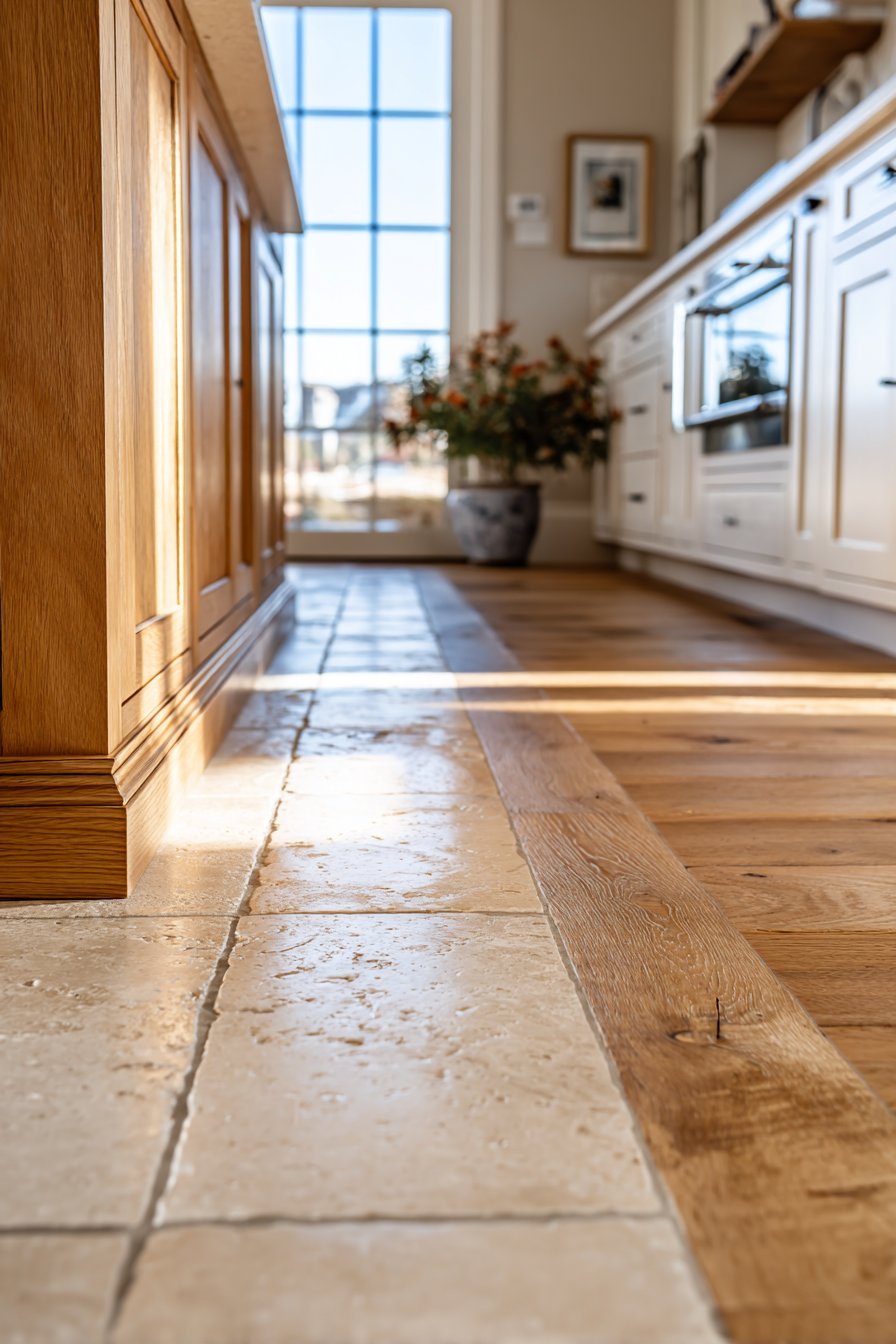
Natural light from windows creates highlights on both floor surfaces. The illumination emphasizes their different textures while showing complementary tones. The hardwood shows authentic grain patterns. The porcelain tile offers subtle texture that suggests concrete.

The material transition demonstrates thoughtful design planning. The matching transition strip prevents jarring visual breaks. The color coordination between wood and tile maintains flow. The different textures serve practical purposes in different zones.

Floor transitions require careful consideration during planning. The materials should complement while serving distinct functional needs. Wood provides warmth in main living areas. Tile offers durability in high-moisture zones. The successful transition balances aesthetics with practicality.
Key Design Tips:
- Use matching wood for transition strips between materials
- Coordinate colors between different flooring materials
- Choose materials that serve functional needs by zone
- Maintain consistent cabinet finishes across floor transitions
- Position transitions at logical room boundaries when possible
20. Integrated Kitchen Desk Area

A wooden desktop in butcher block maple creates a command center. The beige painted cabinet base includes file drawers with brass pulls. Open wooden cubby storage sits above the desk. Beige fabric bins and neutral-spine cookbooks fill the cubbies.
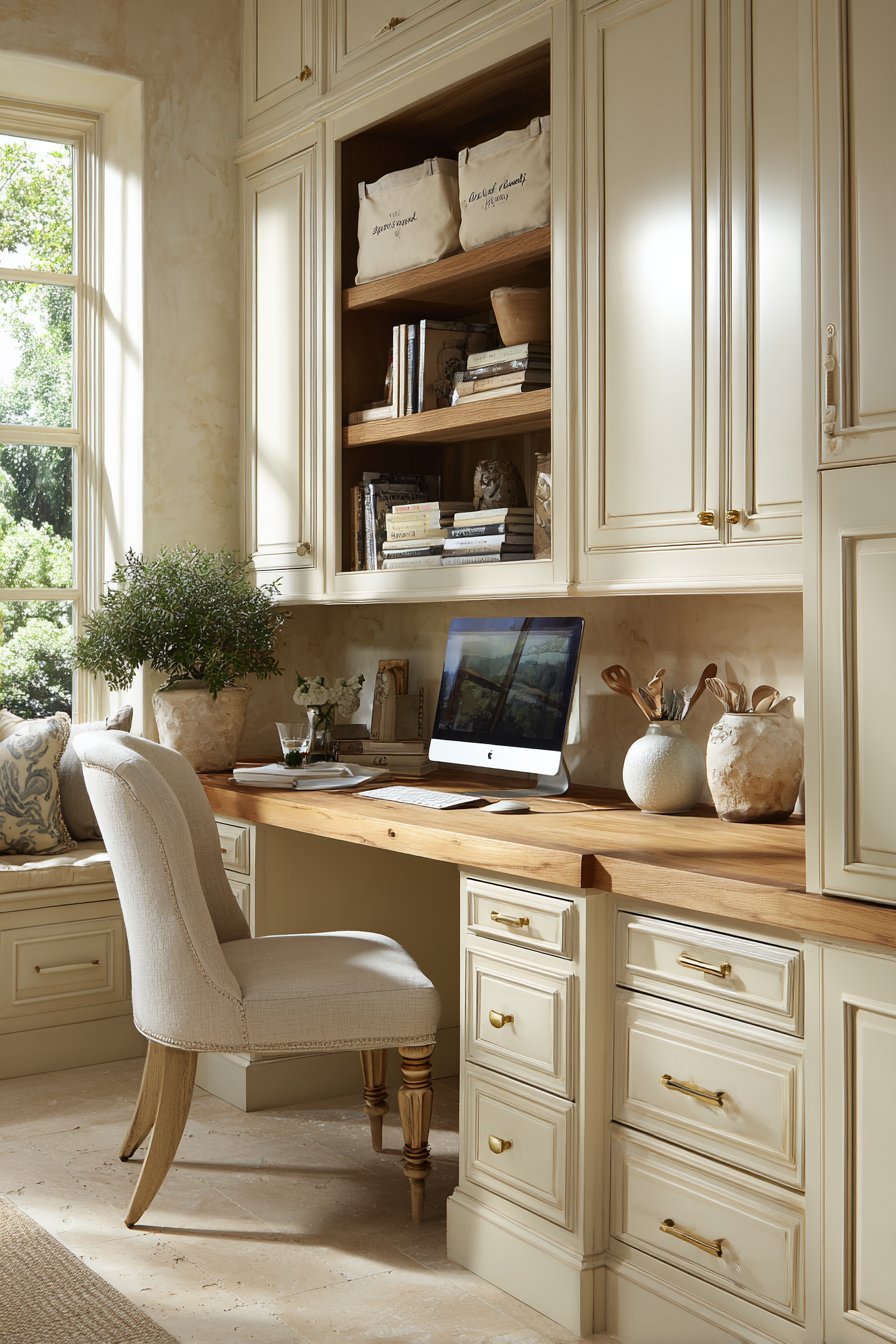
A beige upholstered wooden chair with turned legs provides comfortable seating. Task lighting under upper cabinets illuminates the workspace perfectly. Surrounding walls feature warm beige paint with subtle texture. Natural light from a nearby window creates ideal working conditions.

The integrated desk extends kitchen functionality beyond cooking. The space supports meal planning, homework, and household management. The cohesive design blends the desk seamlessly into kitchen cabinetry. The workspace feels intentional rather than afterthought.

Kitchen desk areas address modern family needs. The central location keeps family members connected during activities. The matching materials ensure the desk doesn’t disrupt kitchen aesthetics. This multi-purpose approach maximizes kitchen value and usability.
Key Design Tips:
- Integrate desk areas into kitchen cabinetry for cohesion
- Include file drawers to manage household paperwork
- Add open cubby storage above desks for organization
- Use fabric bins to conceal clutter while maintaining aesthetics
- Position desks near windows to maximize natural light
Why These Beige and Wood Kitchen Designs Are the Best
These beige and wood kitchen designs represent optimal approaches to creating warm, sophisticated spaces. The concepts demonstrate remarkable versatility across traditional and contemporary styles. Each design proves these materials adapt beautifully to different aesthetic preferences.
The sustainability factor strengthens these design choices significantly. Reclaimed wood adds environmental responsibility to beautiful aesthetics. Quality hardwoods and durable beige finishes reduce replacement needs over time. These materials age gracefully rather than appearing dated quickly.
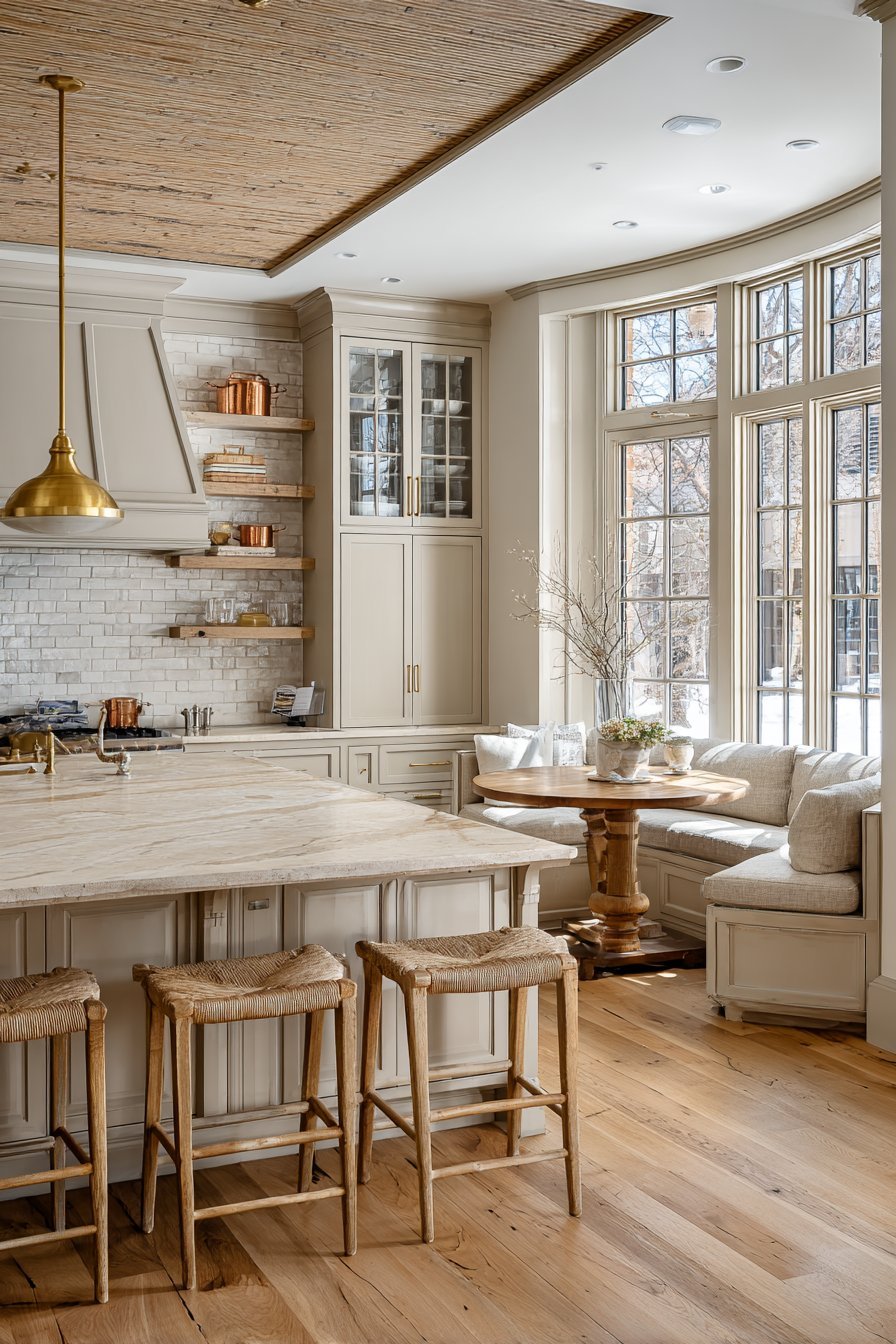
The neutral palette provides exceptional longevity in home design. Beige tones complement various accent colors throughout seasons. Wood brings organic warmth that synthetic materials cannot replicate. This combination creates foundations that accommodate evolving tastes without requiring complete overhauls.
Practical considerations support these design approaches strongly. Wood countertops offer natural antimicrobial properties for food preparation. Beige cabinets hide minor wear better than stark white alternatives. The materials balance durability with maintenance accessibility.
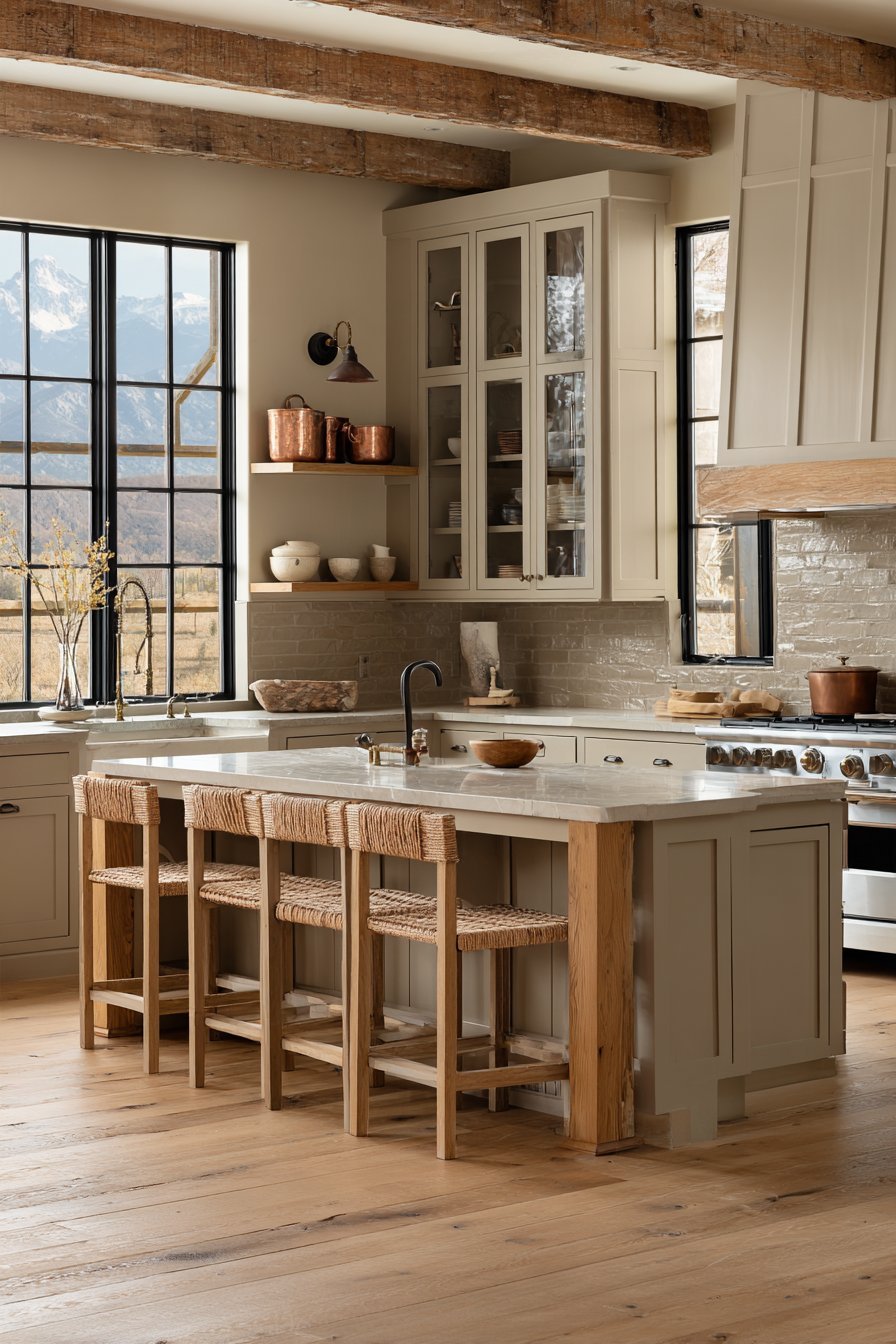
The designs address diverse spatial needs effectively. Small galley kitchens benefit from cohesive neutral palettes. Large open concepts gain warmth from abundant wood elements. The material combination scales appropriately across different kitchen sizes.
Color theory principles validate these material pairings. Beige provides neutral backdrop that prevents visual fatigue. Wood introduces varying tones that create subtle interest. The natural variations prevent monotony while maintaining cohesion.
These timeless combinations transcend temporary design trends. The materials have remained popular across decades for sound reasons. They create comfortable environments that feel both elegant and approachable.
Conclusion
These twenty beige and wood kitchen designs demonstrate the enduring appeal of natural materials and neutral palettes. The concepts showcase versatility across traditional shaker styling to contemporary minimalism. Each approach offers unique interpretation while maintaining cohesive material harmony.

The key takeaways emphasize quality material selection and thoughtful layering. Investing in solid wood elements and durable beige finishes creates lasting beauty. Attention to detail in hardware, lighting, and organizational systems elevates overall design success.
Start your beige and wood kitchen journey by identifying which style resonates most deeply. Consider your functional needs alongside aesthetic preferences. Begin with foundational elements like cabinetry and flooring before adding detailed touches. Your dream kitchen awaits through careful planning and commitment to these timeless materials.
