

The main wall in your living room serves as the heart of your interior design. It sets the tone for the entire space. This focal point deserves careful attention and creative planning. Whether you prefer dramatic statements or subtle elegance, your main wall reflects your personal style.
Thoughtful wall design transforms ordinary rooms into extraordinary spaces. The right approach considers texture, color, dimension, and lighting. These elements work together to create visual interest and architectural character. From natural materials to bold artistic expressions, the possibilities are endless.
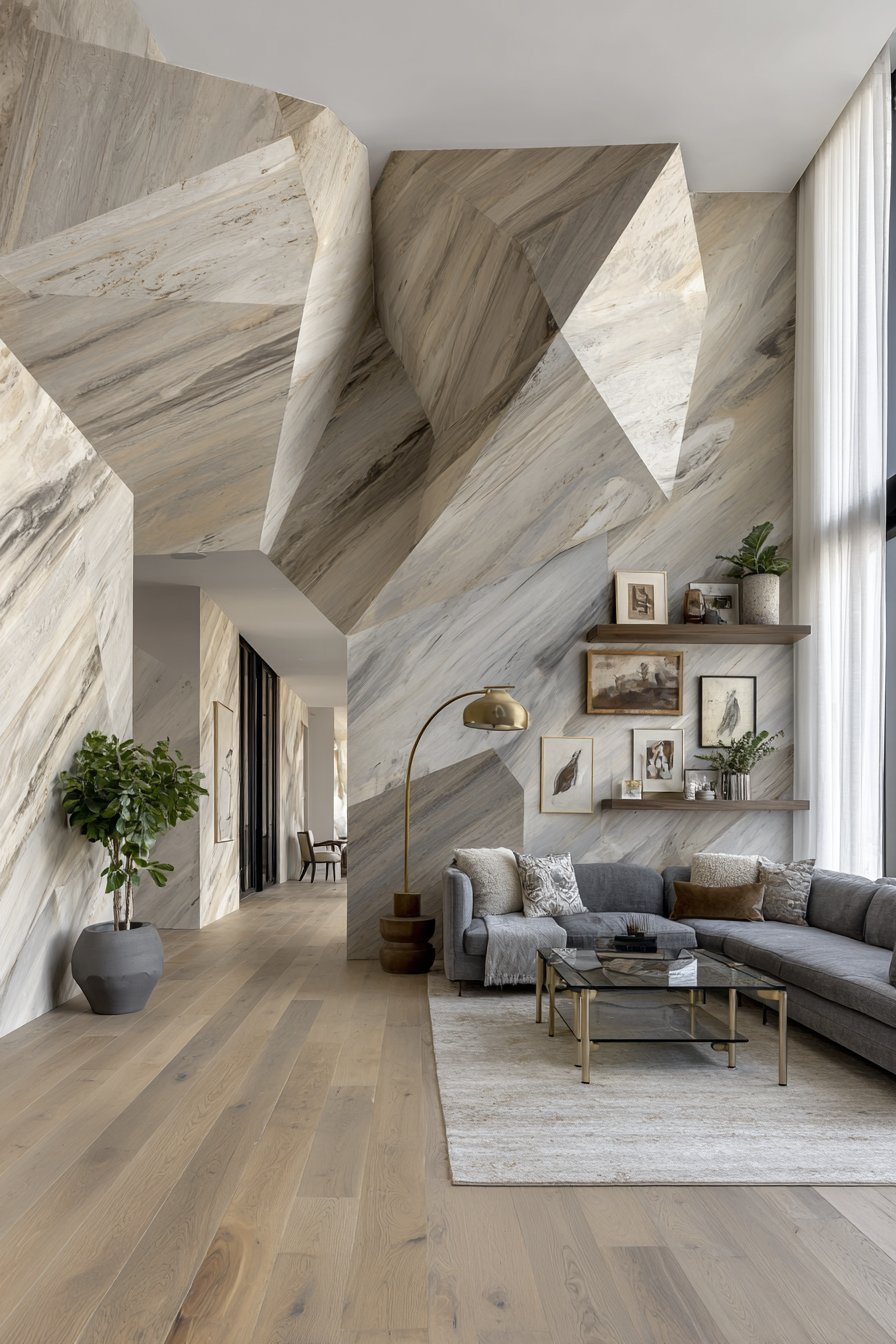
This article explores twenty distinctive main wall design concepts. Each approach offers unique advantages for different aesthetics and lifestyles. You’ll discover solutions ranging from classic architectural details to contemporary artistic installations. These designs demonstrate how versatile and impactful proper wall treatment can be.
1. Dramatic Floor-to-Ceiling Gallery Wall
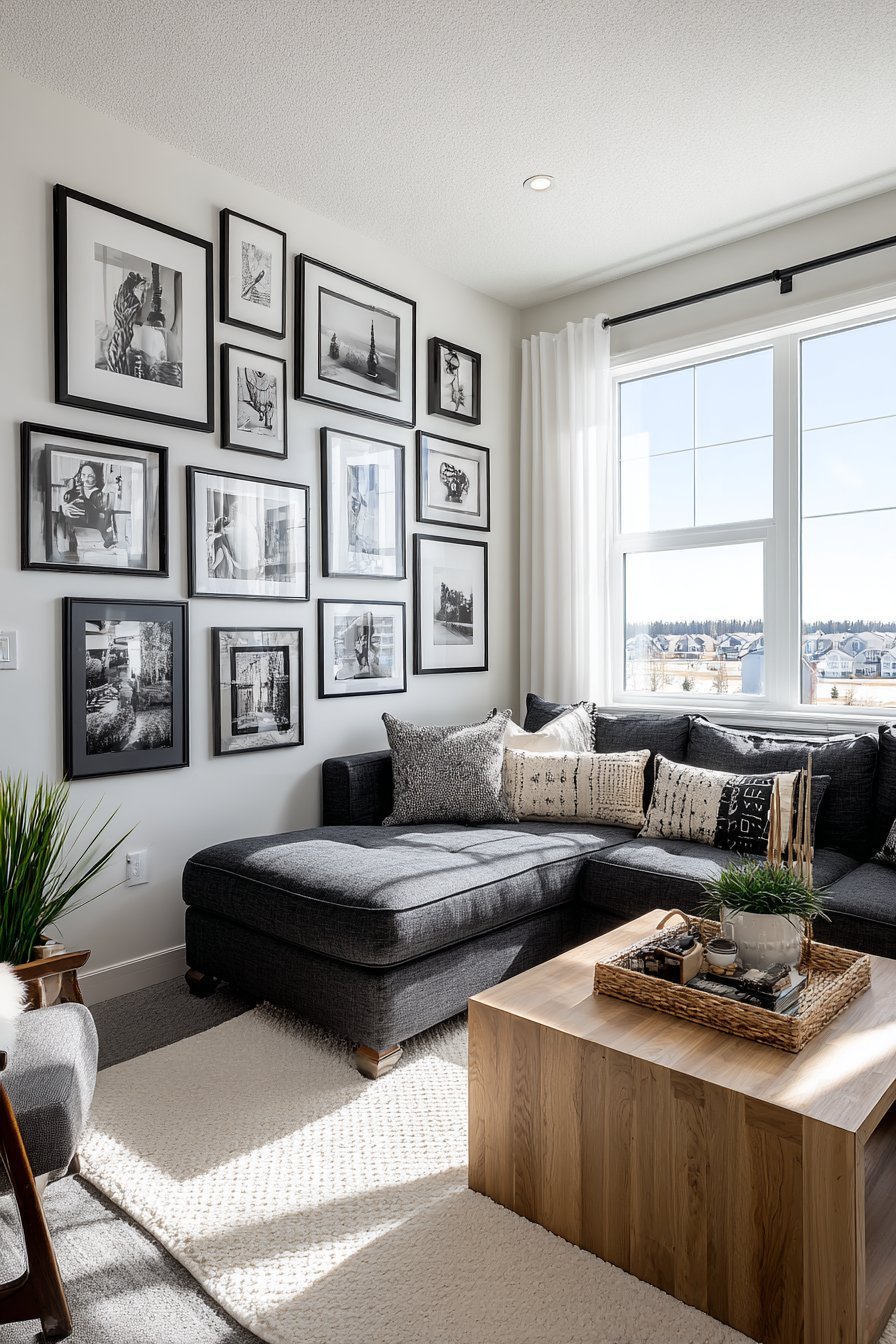
Stepping into a living room with a curated gallery wall creates immediate visual impact. Black and white photography fills the space from floor to ceiling. Consistent black frames unify the collection. The salon-style arrangement appears organic yet perfectly balanced.
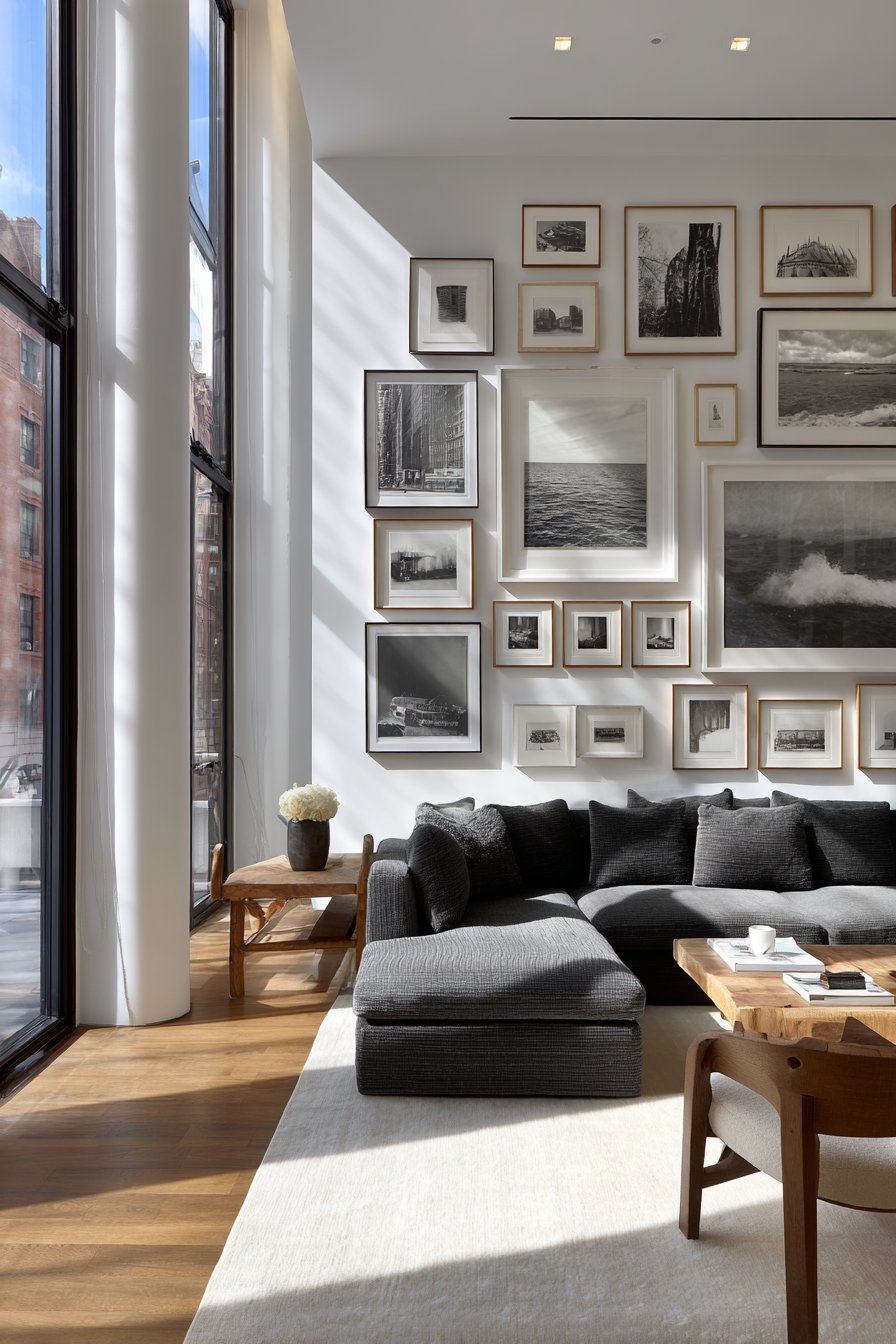
A charcoal grey sectional sofa anchors the room opposite this artistic display. The natural oak coffee table adds warmth to the sophisticated palette. A cream wool area rug grounds the seating arrangement beautifully. These neutral elements allow the photography collection to command attention.
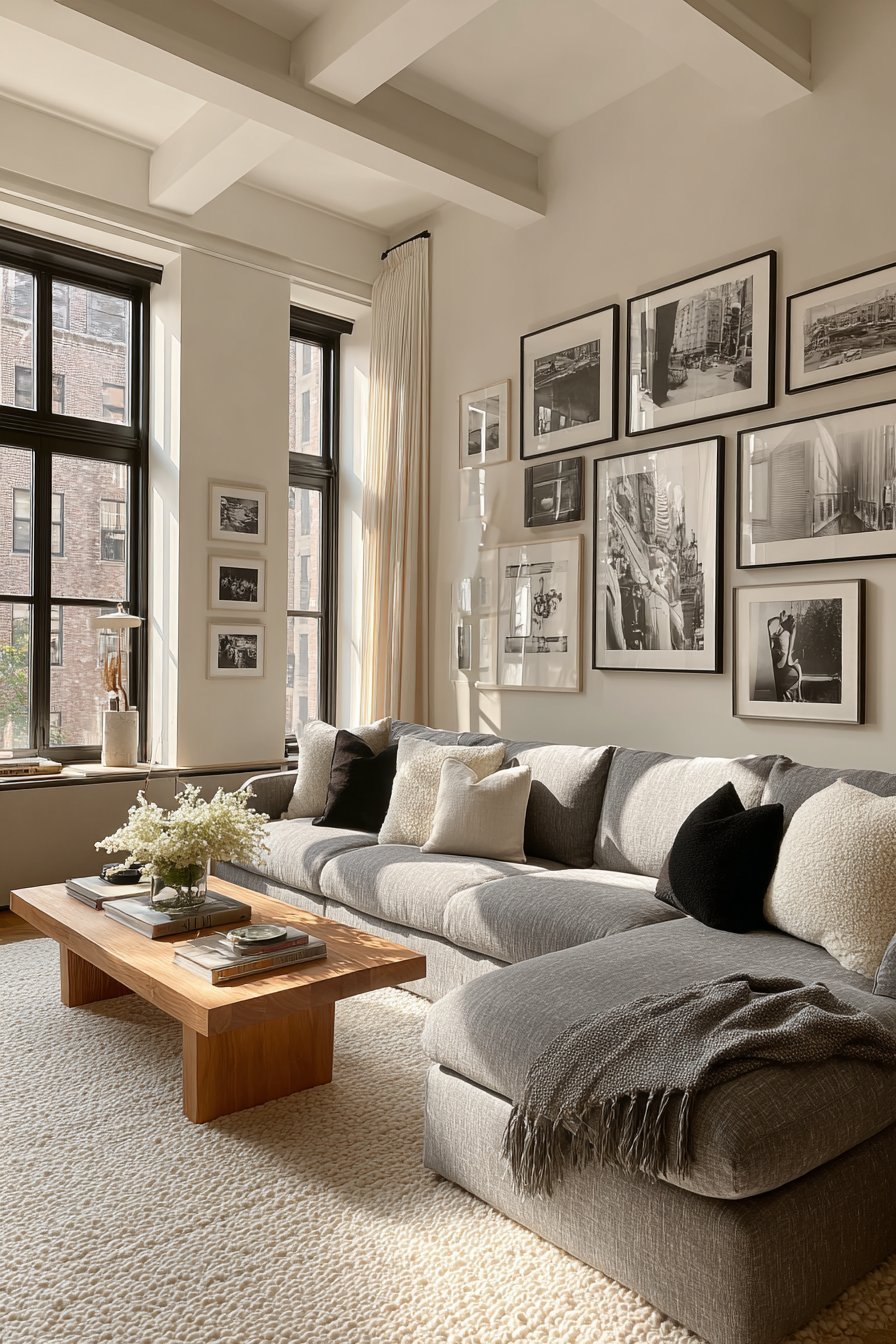
Natural afternoon light plays across the framed pieces throughout the day. Subtle shadows emphasize the dimensional quality of the frames. The interplay between light and shadow adds depth to the gallery arrangement. This dynamic quality keeps the wall visually interesting from morning to evening.
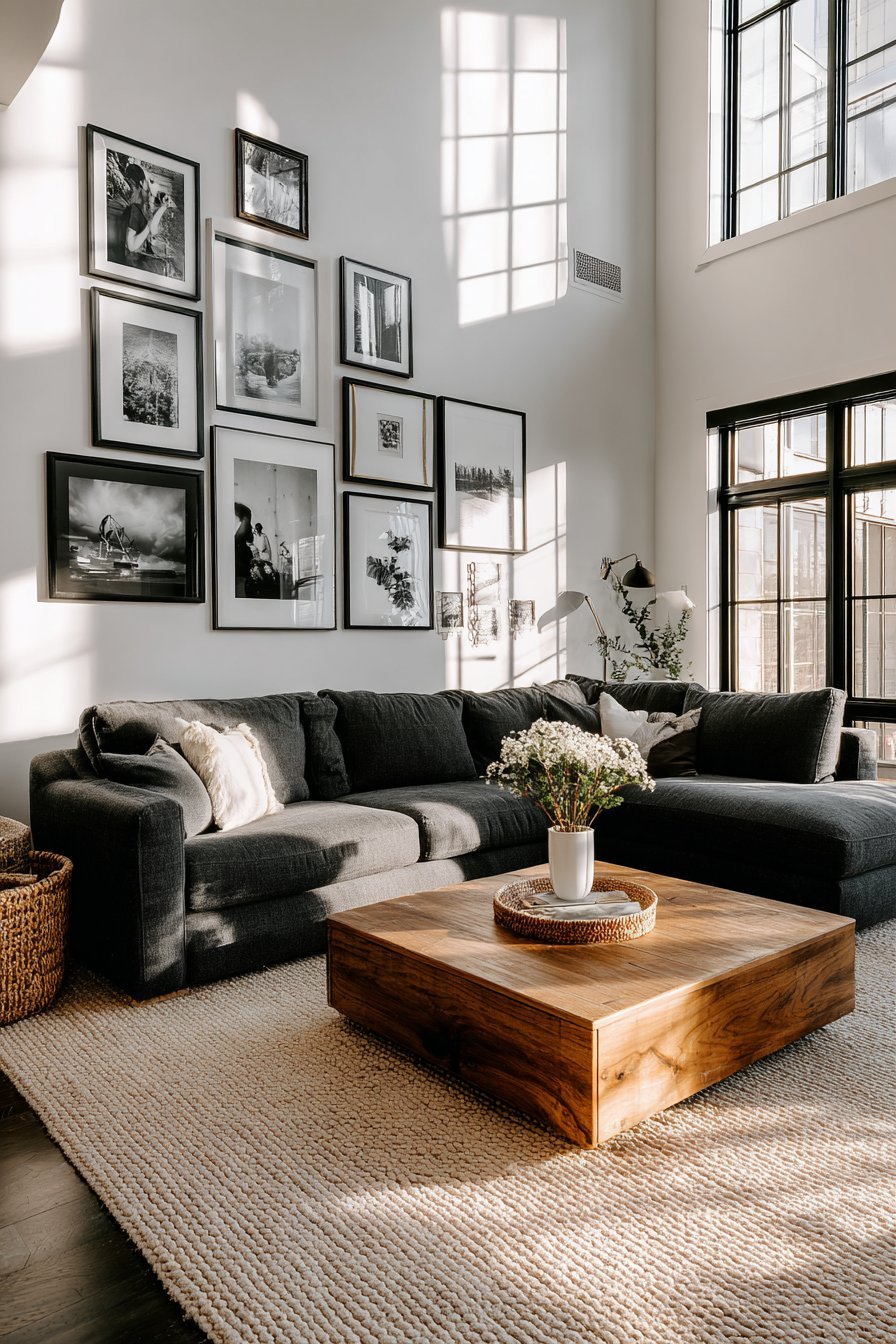
The textural contrast deserves special consideration in this design. Smooth frame surfaces contrast beautifully with the matte wall finish. This subtle variation adds sophistication without overwhelming the space. The professional presentation rivals commercial gallery installations.
Key Design Tips:
- Mix frame sizes for visual interest while maintaining consistent frame style
- Arrange pieces on the floor first to perfect your layout before hanging
- Maintain 2-3 inches between frames for optimal salon-style spacing
- Use quality matting to elevate standard prints to gallery-worthy status
- Consider LED picture lights to highlight artwork during evening hours
- Start with a central anchor piece and build outward for balanced composition
2. Scandinavian Vertical Wood Slat Paneling
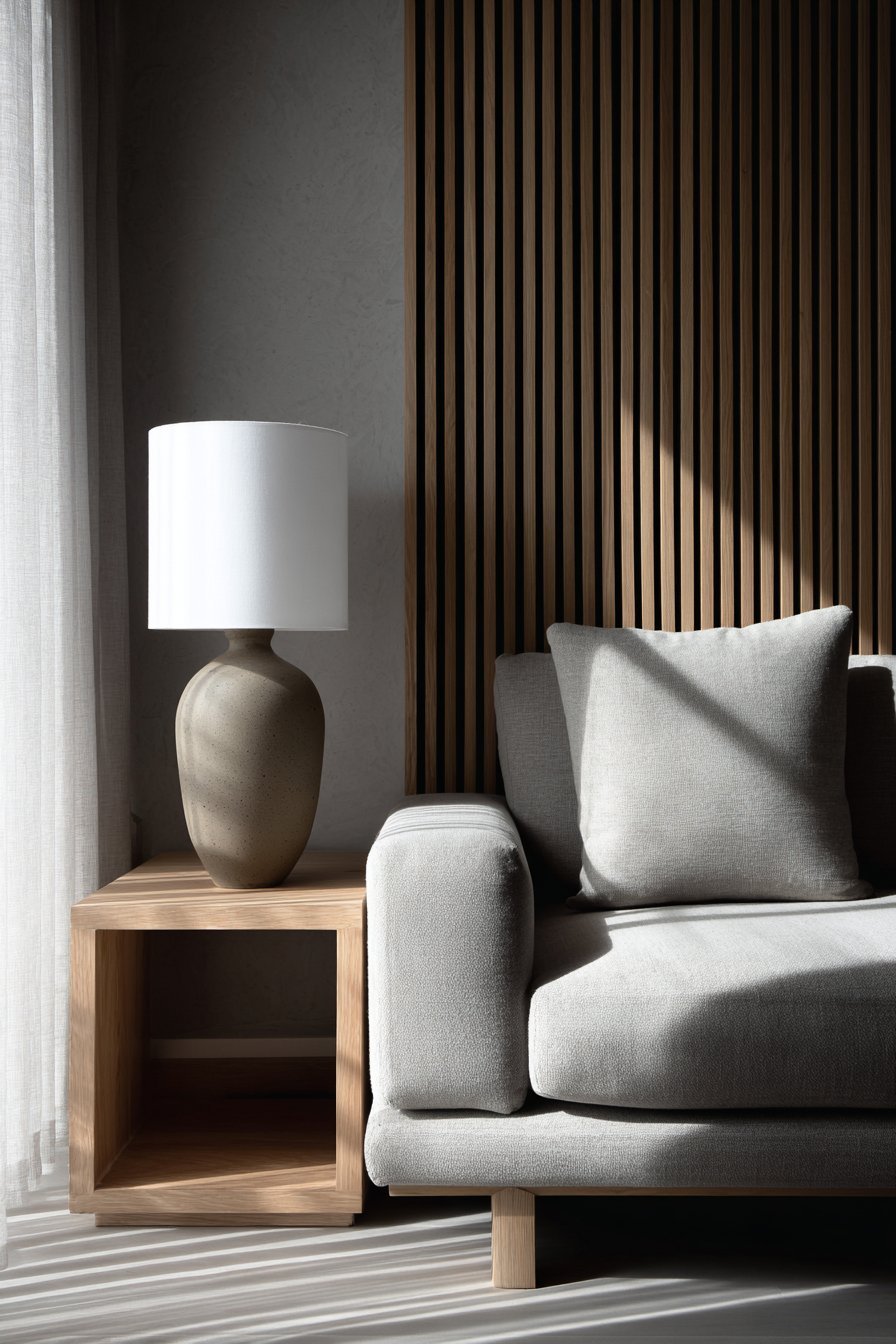
Light oak slats create stunning vertical lines in this Nordic-inspired space. The wooden panels run from floor to ceiling continuously. Even spacing between slats produces subtle shadow gaps. This dimensional treatment adds texture without overwhelming the minimalist aesthetic.
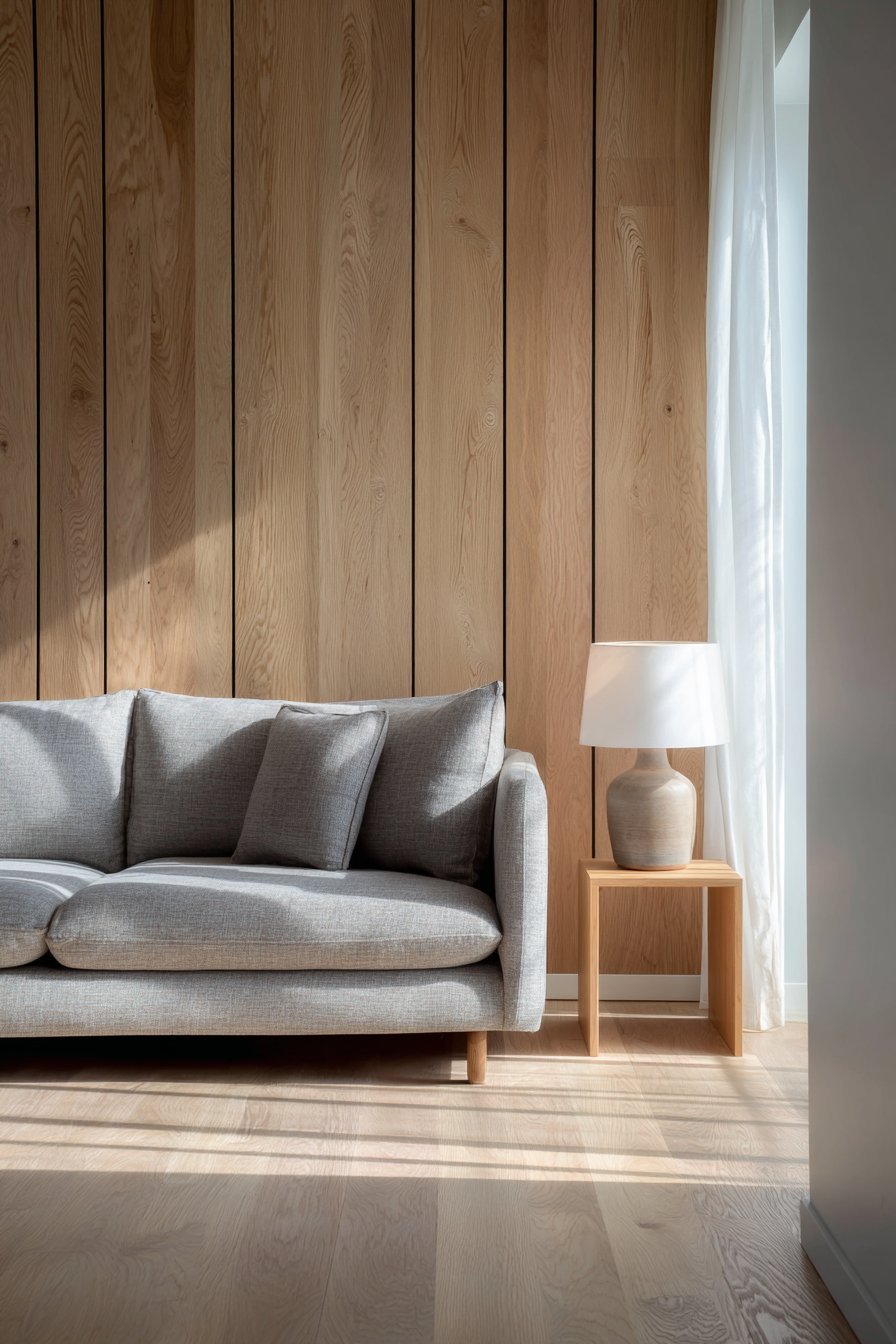
A grey linen sofa provides comfortable seating opposite the feature wall. Simple side tables maintain the uncluttered Scandinavian approach. Ceramic lamps offer warm ambient lighting in the evening hours. These minimal furnishings allow the wood paneling to shine.
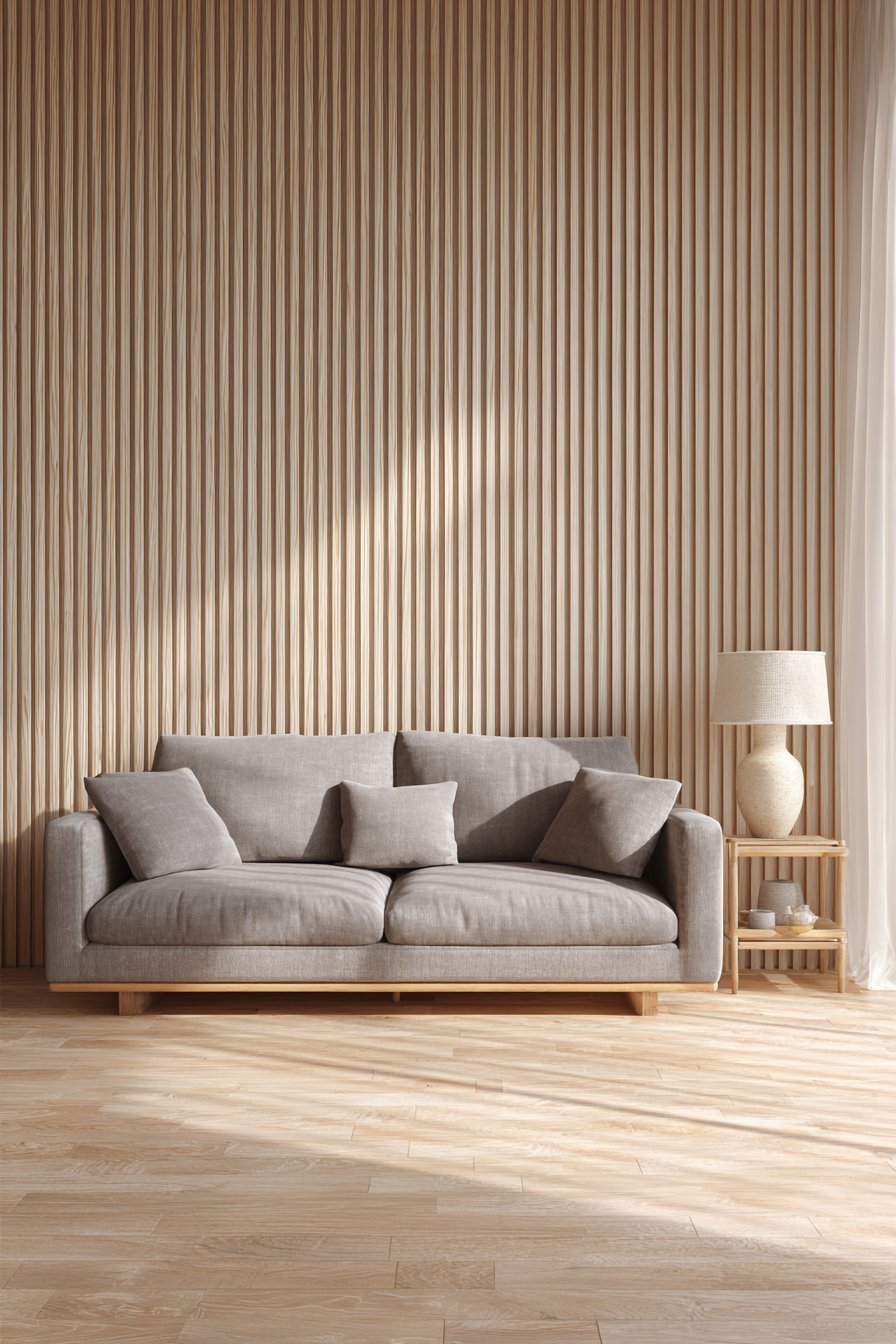
Morning sunlight filters through sheer curtains beautifully in this design. The natural light emphasizes wood grain patterns throughout the day. Gentle linear shadows add depth and visual movement. This changing light quality keeps the space feeling dynamic yet peaceful.
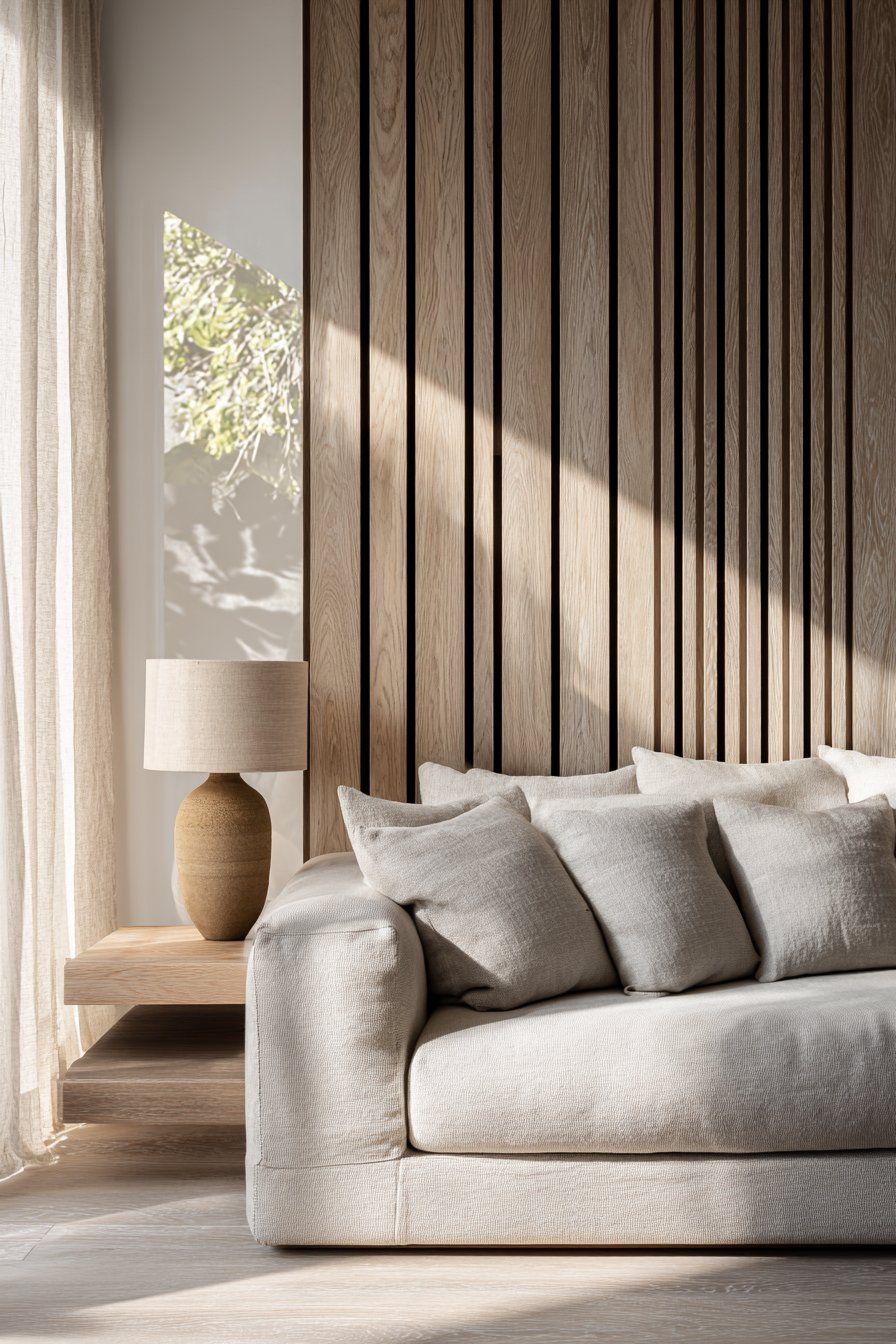
The material choice reflects core Scandinavian design principles perfectly. Light oak brings warmth while maintaining brightness in the room. The vertical orientation makes ceilings appear higher. This architectural trick maximizes the sense of space.
Key Design Tips:
- Choose light wood tones to maintain brightness in Scandinavian designs
- Ensure consistent spacing between slats for professional appearance
- Install slats with proper ventilation behind to prevent warping
- Use quality hardwood rather than veneer for longevity
- Consider adding integrated LED strips behind slats for evening ambiance
- Keep surrounding decor minimal to let the wood paneling star
3. Authentic Reclaimed Barn Wood Accent Wall
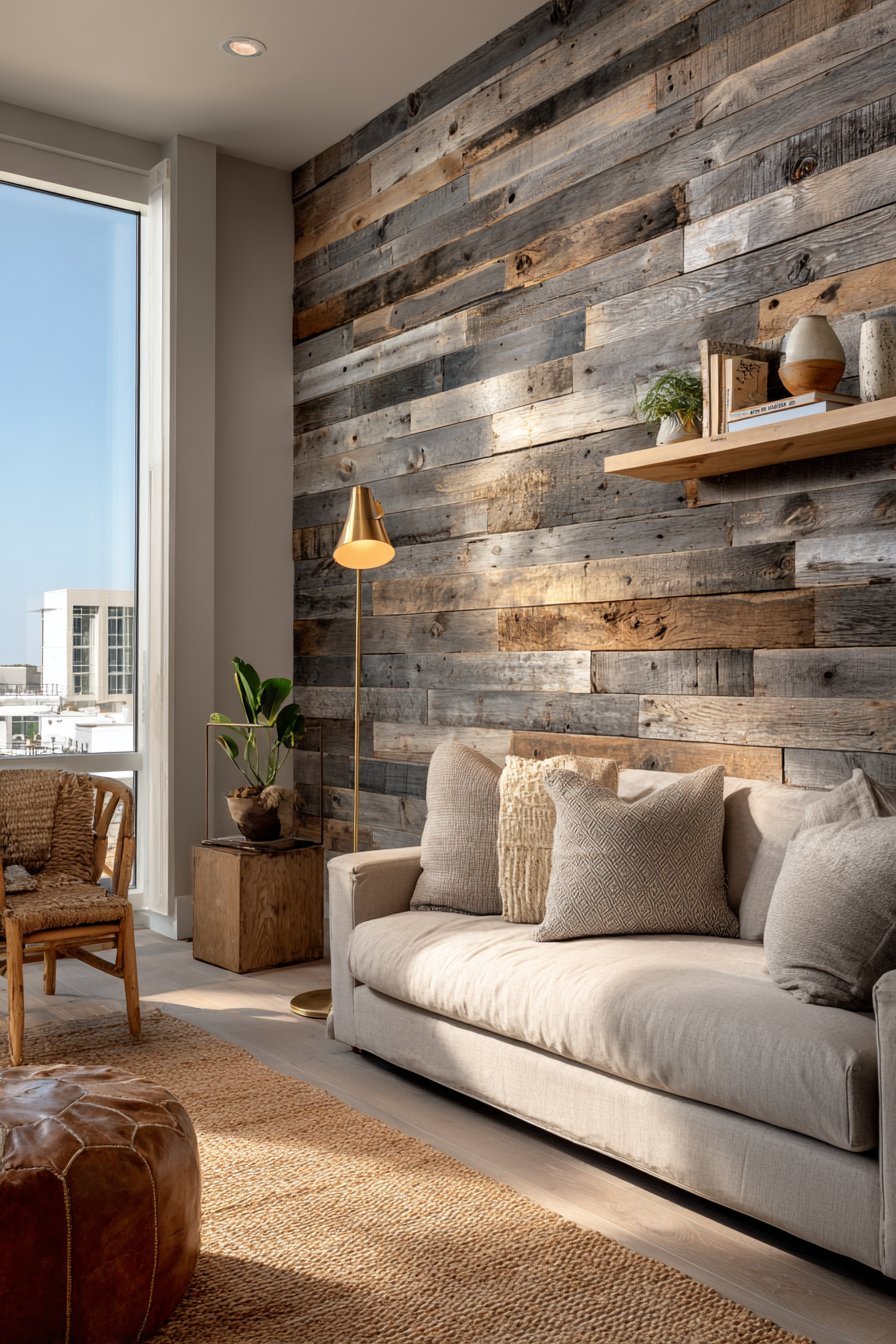
Weathered barn wood planks create remarkable character in this farmhouse living room. Horizontal installation in varying widths adds authentic rustic appeal. Natural grey-brown patina tells stories of decades past. Visible knots and grain patterns celebrate the wood’s history.
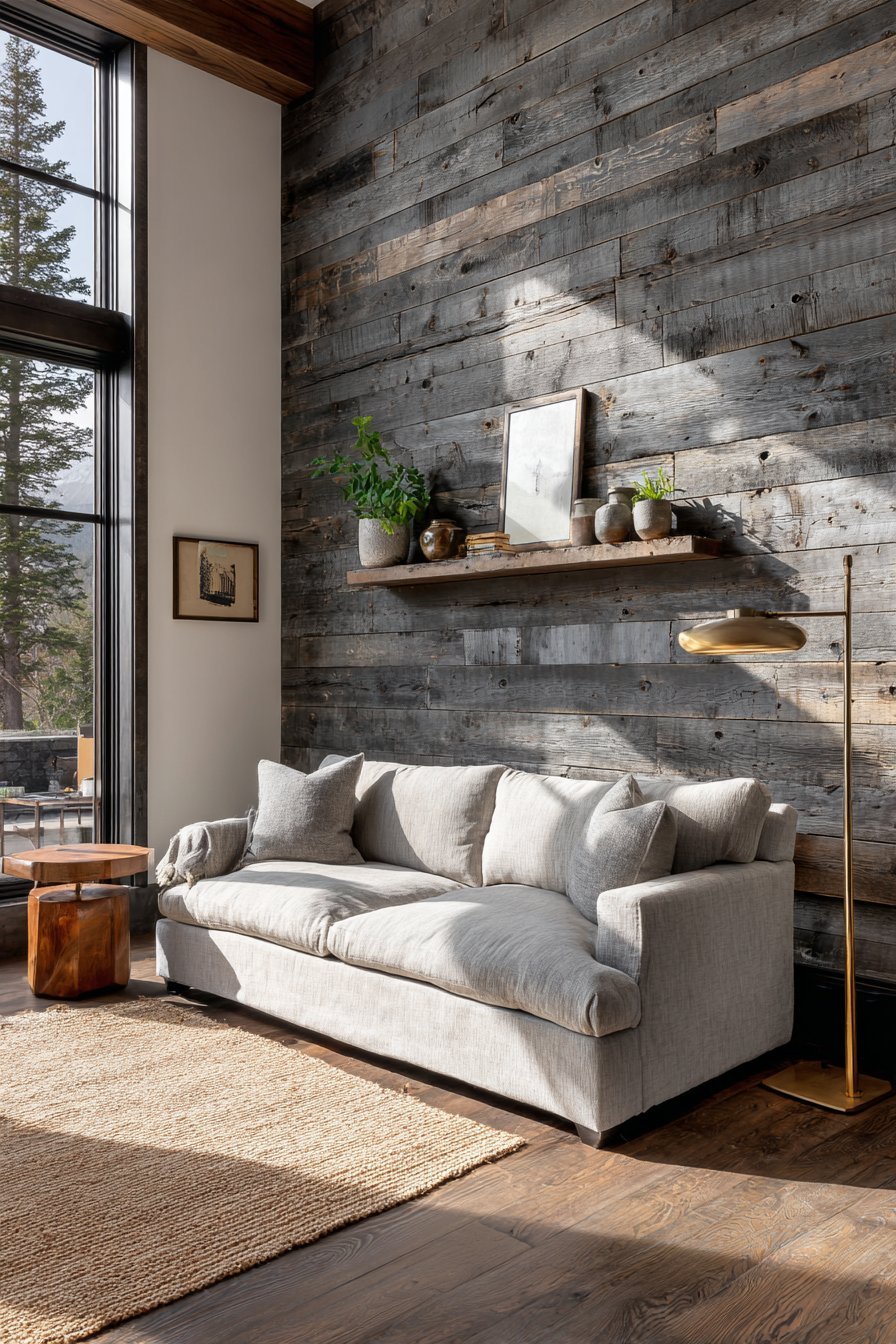
A beige slipcovered sofa offers comfortable seating opposite this textured wall. Vintage brass floor lamps provide both function and period charm. Natural jute rugs ground the space with organic texture. These carefully chosen elements enhance the farmhouse aesthetic.
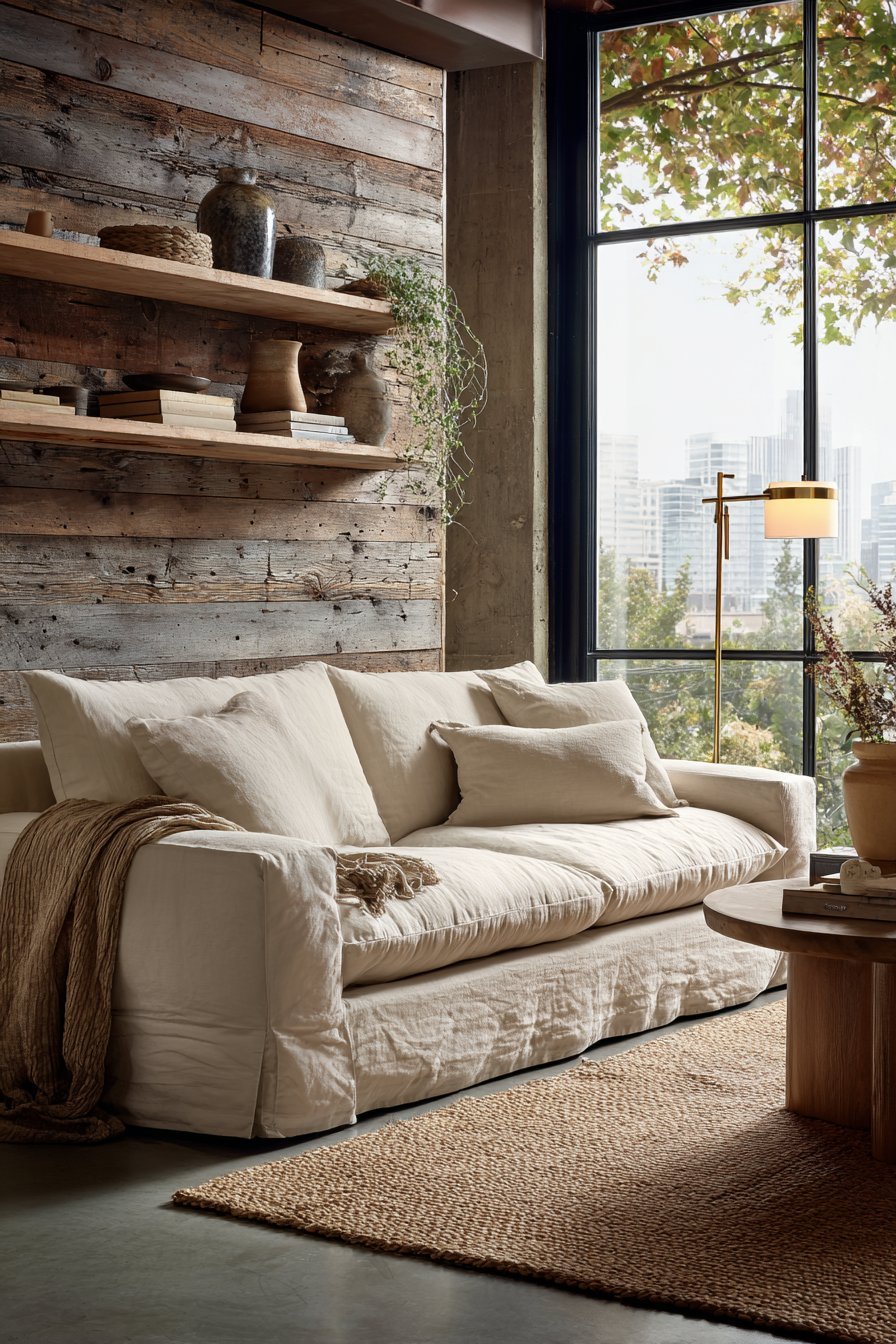
Golden hour lighting transforms this wall throughout the afternoon. West-facing windows allow warm sunset tones to illuminate the wood. The natural weathering patterns become more pronounced in this light. Shadows emphasize the dimensional quality of the varied plank widths.
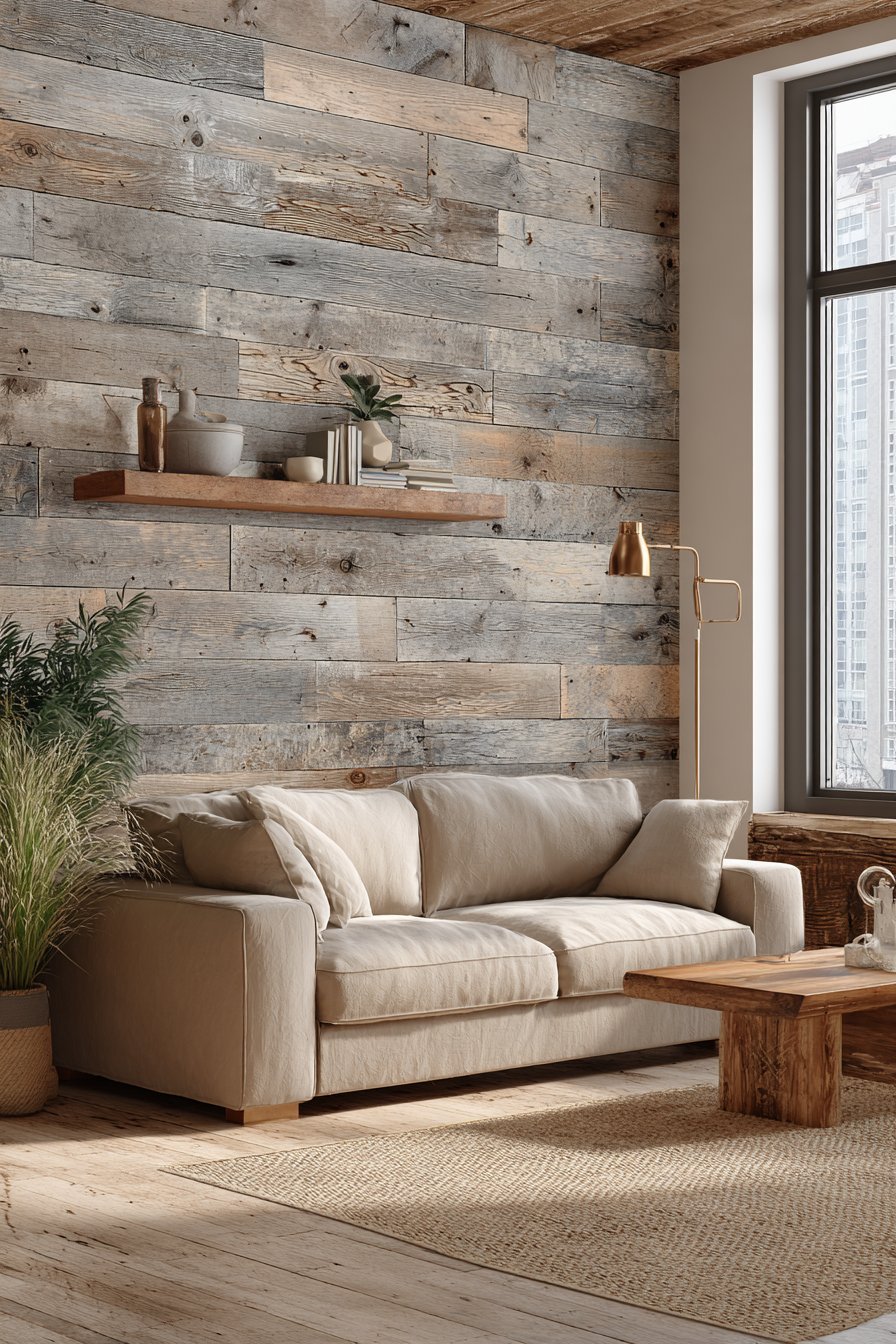
A rustic floating shelf extends the design functionality beautifully. Simple pottery and fresh greenery add living elements to the display. The shelf appears to grow naturally from the reclaimed wood background. This integration demonstrates thoughtful design planning.
Key Design Tips:
- Source reclaimed wood from reputable suppliers to ensure proper treatment
- Seal wood properly to prevent dust and splinters while maintaining character
- Mix plank widths between 4-8 inches for authentic barn aesthetic
- Install planks with slight gaps to accommodate natural wood movement
- Preserve original nail holes and weathering marks for genuine character
- Balance rustic wall with refined furnishings for sophisticated farmhouse style
4. Bohemian Large-Scale Macramé Wall Hanging
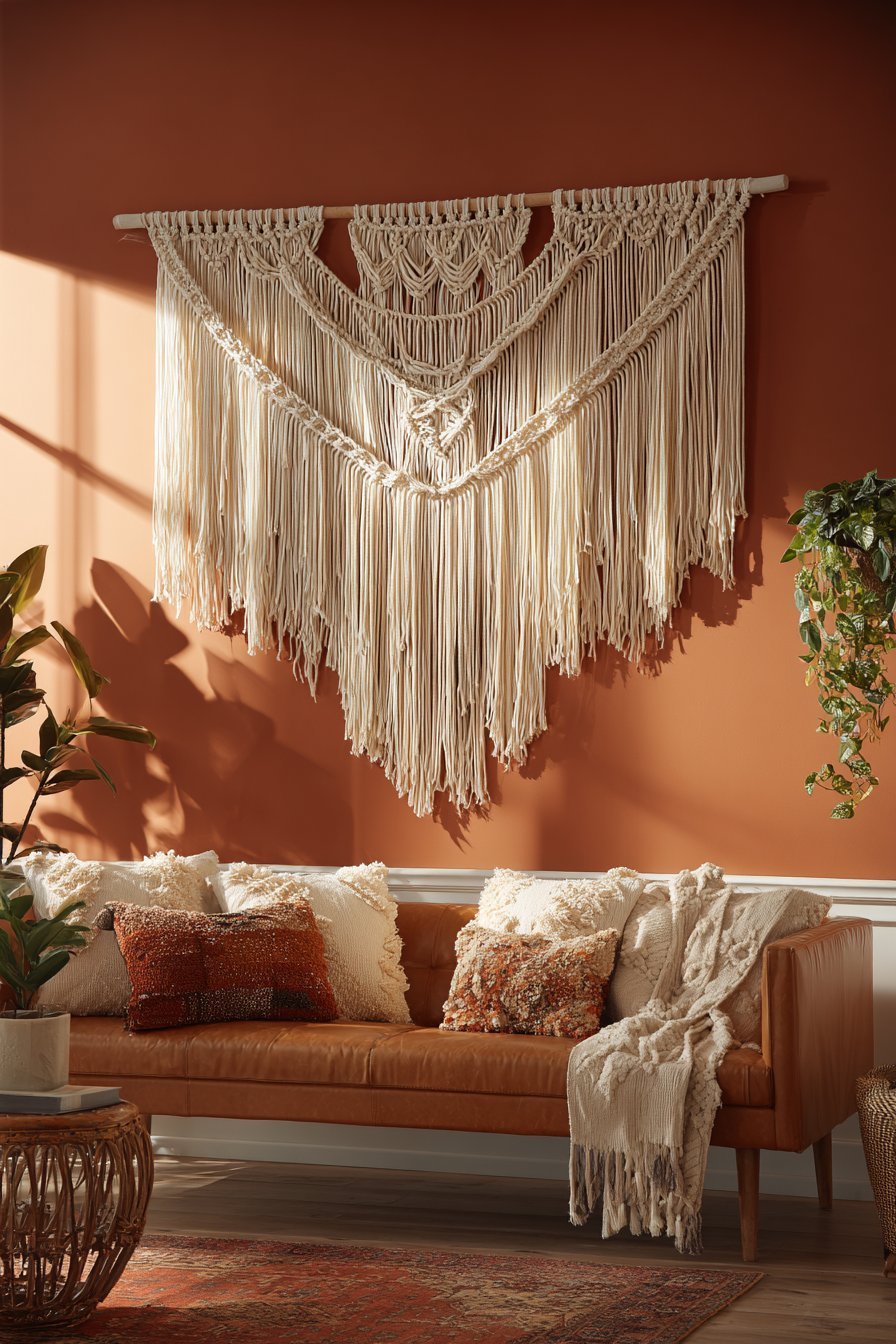
A magnificent macramé piece dominates this bohemian living room wall. Intricate knotwork in natural cotton cord demonstrates exceptional craftsmanship. The six-foot-wide hanging creates dramatic textural impact. Fringe details add movement and softness to the design.
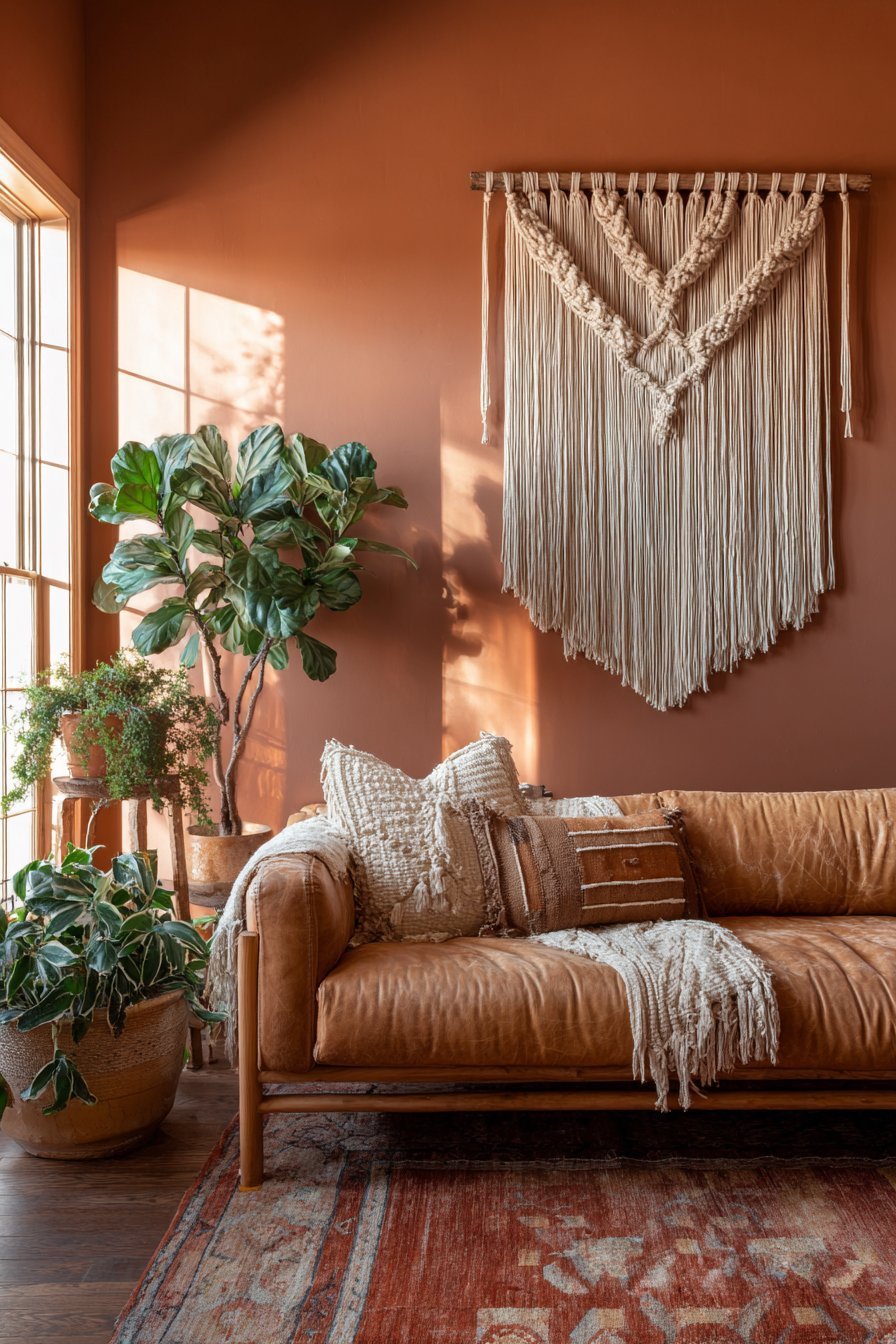
Terracotta wall paint provides the perfect backdrop for this fiber art. The warm orange-red tone enhances the natural cotton color beautifully. A low-profile tan leather sofa sits below with layered throw pillows. Vintage Moroccan rugs in rust and cream complete the collected aesthetic.
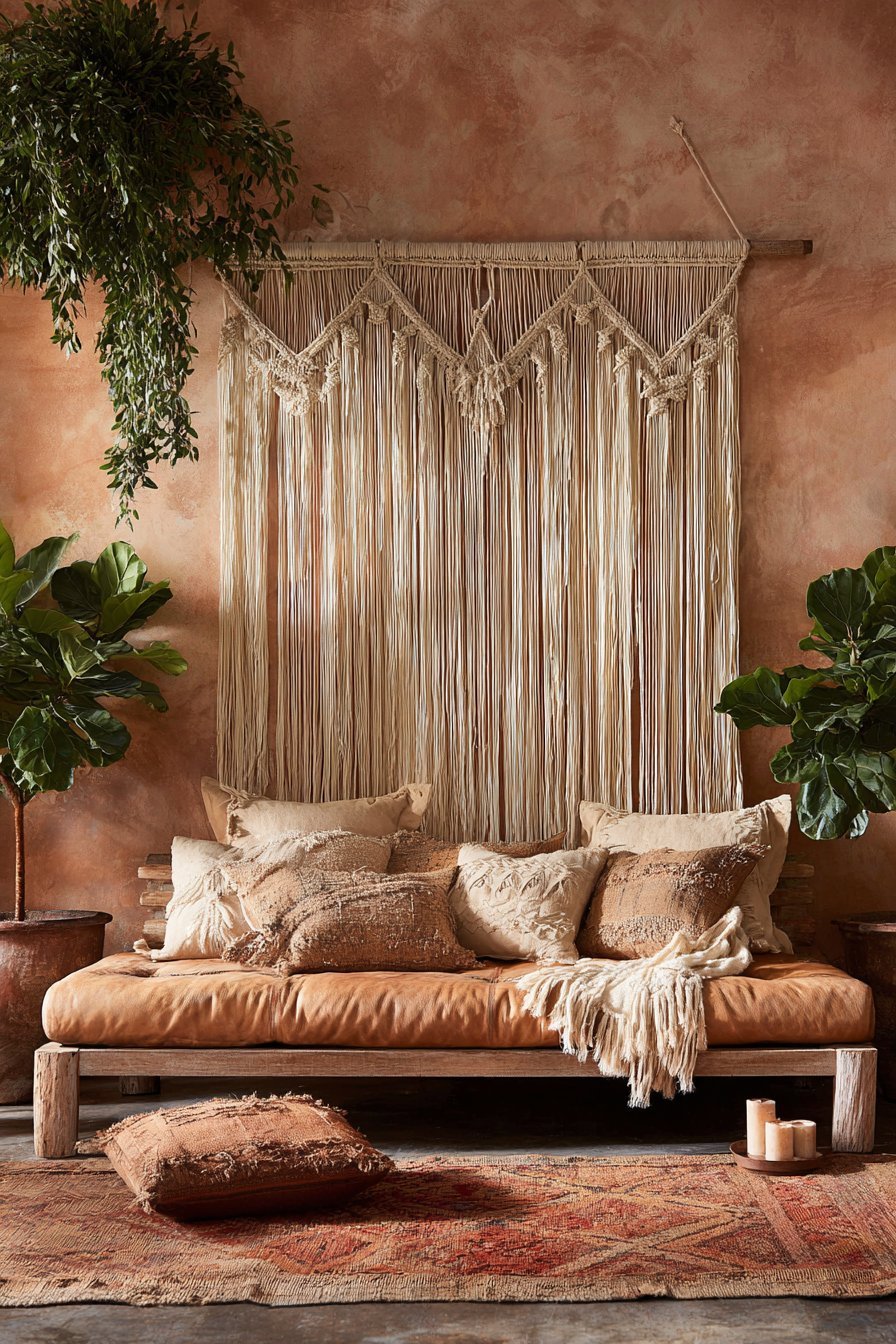
Living plants play a crucial role in this bohemian space. Potted fiddle leaf figs add vertical interest on either side. Trailing pothos brings organic movement and life. These botanical elements complement the natural fiber wall hanging perfectly.
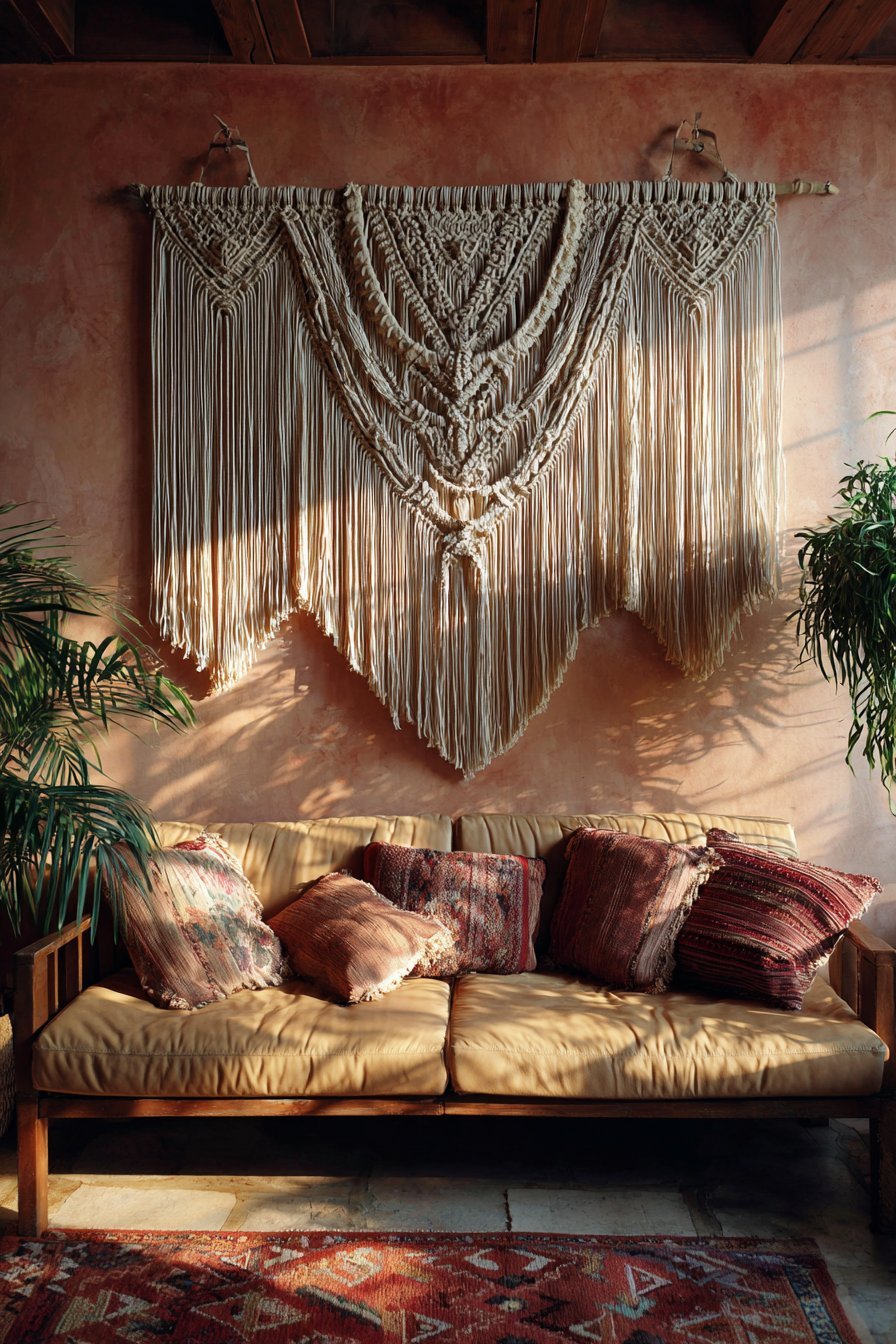
Soft diffused lighting showcases the macramé’s dimensional quality throughout the day. Gentle shadows form between the intricate knots. This shadow play adds depth and visual interest. The handcrafted nature of the piece brings warmth and personality.
Key Design Tips:
- Choose wall hangings scaled appropriately to your wall dimensions
- Hang macramé 8-12 inches above furniture to establish visual connection
- Use sturdy wall anchors rated for the hanging’s weight
- Pair natural fiber art with warm paint colors for cohesive bohemian aesthetic
- Layer multiple textures through rugs, pillows, and plants
- Position away from high-humidity areas to preserve fiber integrity
5. Sophisticated Navy Built-In Shelving
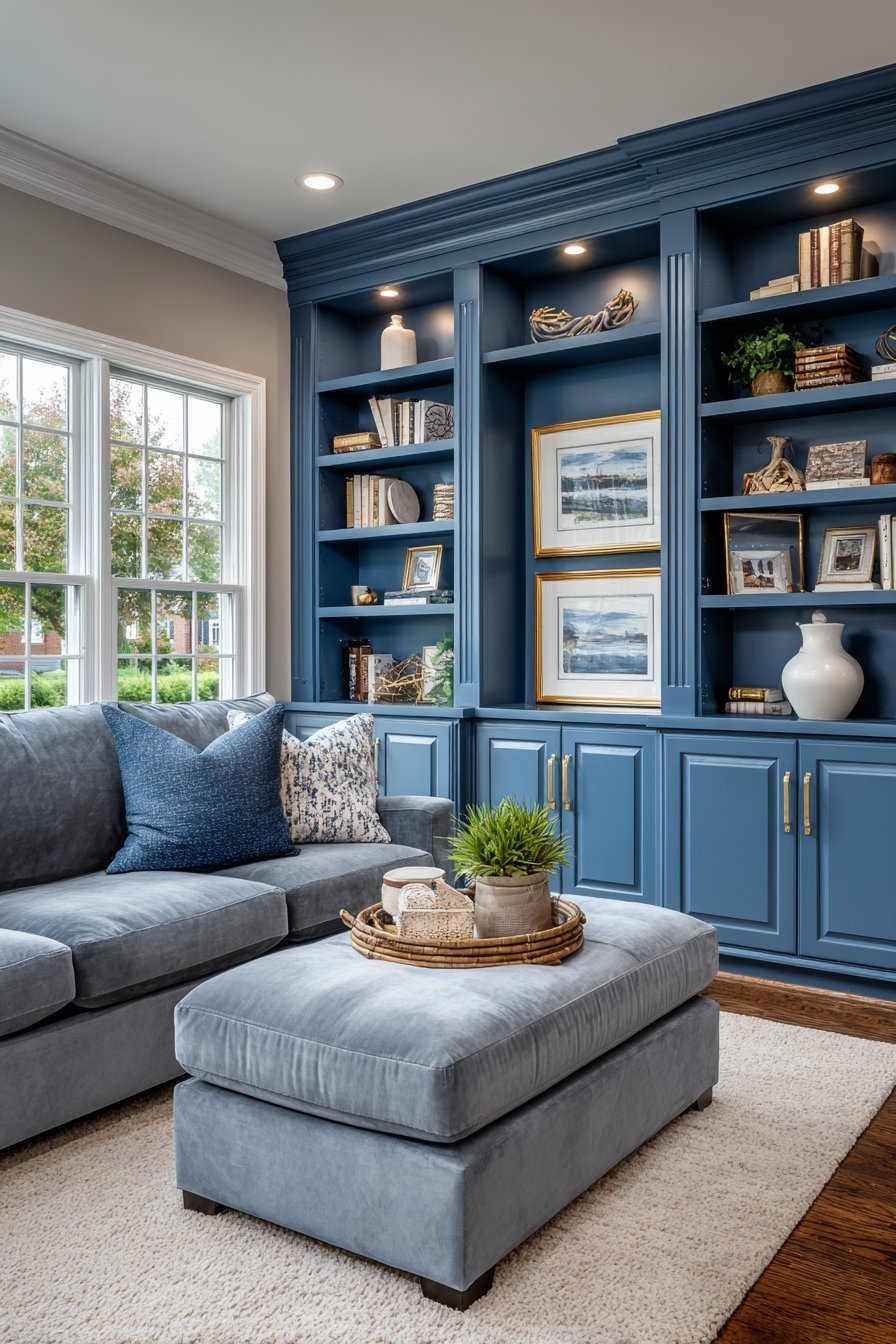
Custom built-in shelving spans this entire wall in sophisticated navy blue. Floor-to-ceiling installation creates impressive architectural presence. Open display areas alternate with closed cabinet storage thoughtfully. Brushed brass hardware adds luxurious detail throughout.
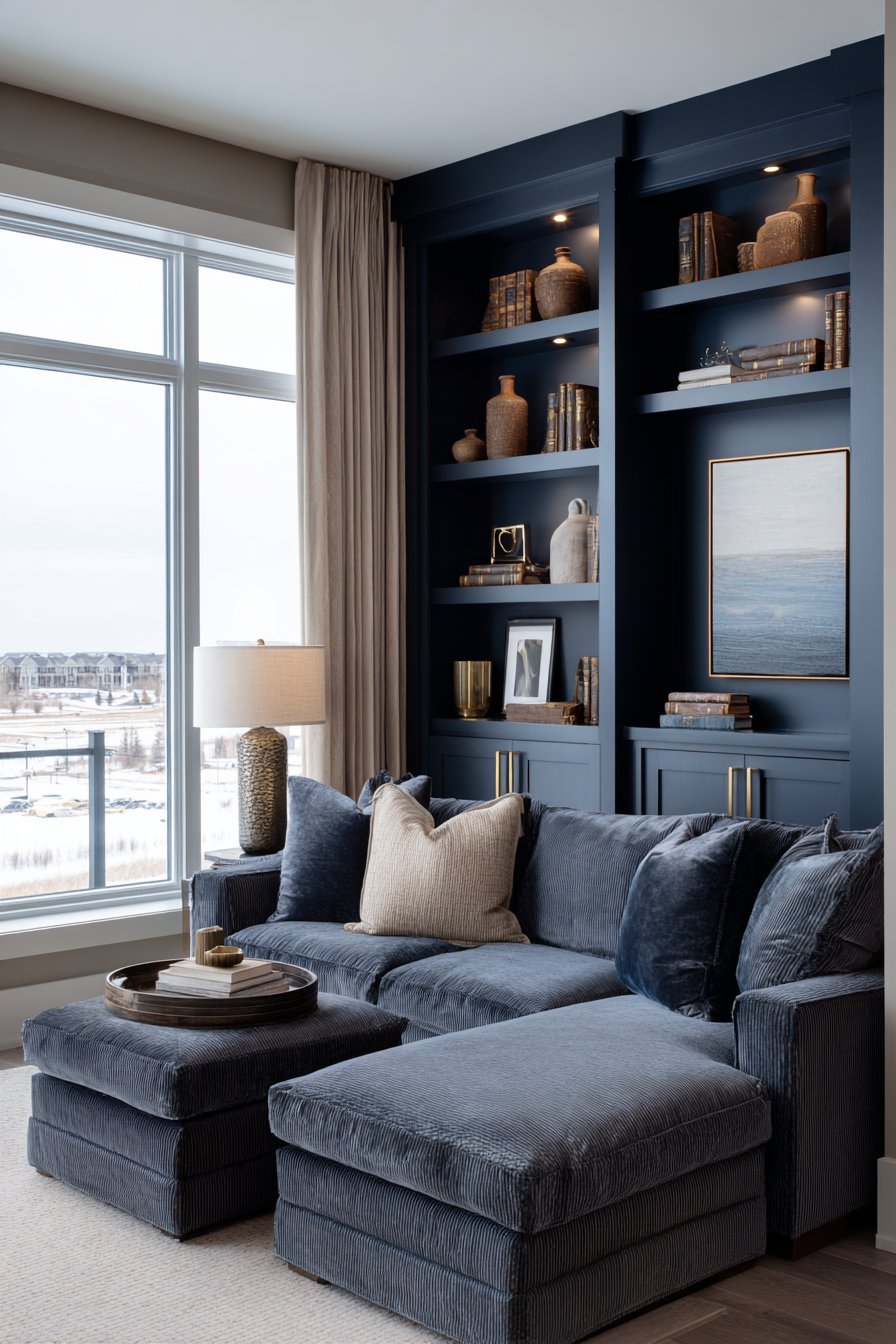
The shelving displays a curated collection of meaningful objects. Leather-bound books provide intellectual weight and rich texture. Ceramic vessels introduce organic shapes and artistic interest. Framed family photos add personal connection and warmth.
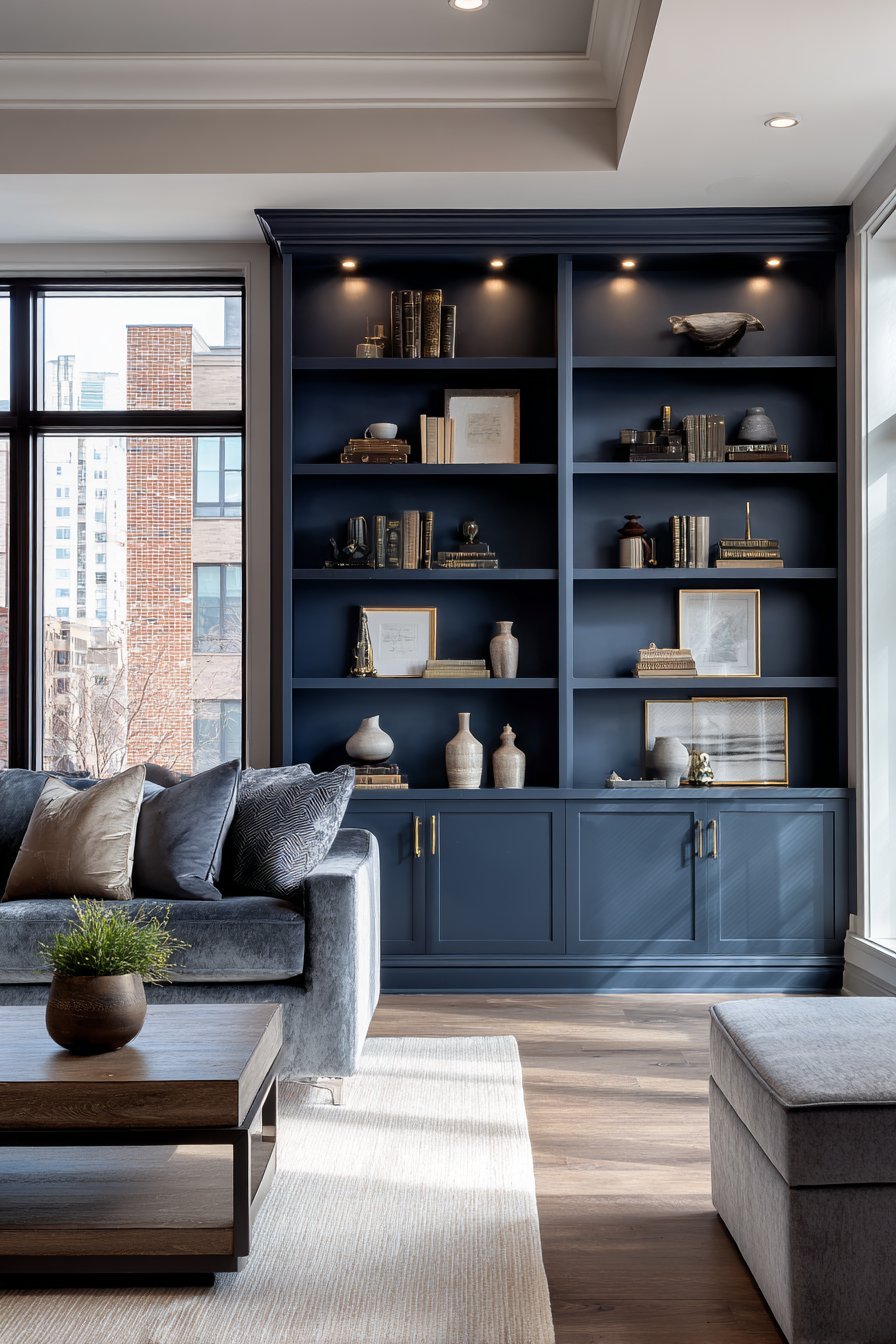
Intentional negative space prevents the shelving from appearing cluttered. This balanced approach demonstrates professional styling expertise. Each displayed item receives proper visual breathing room. The composition appears both purposeful and effortlessly elegant.
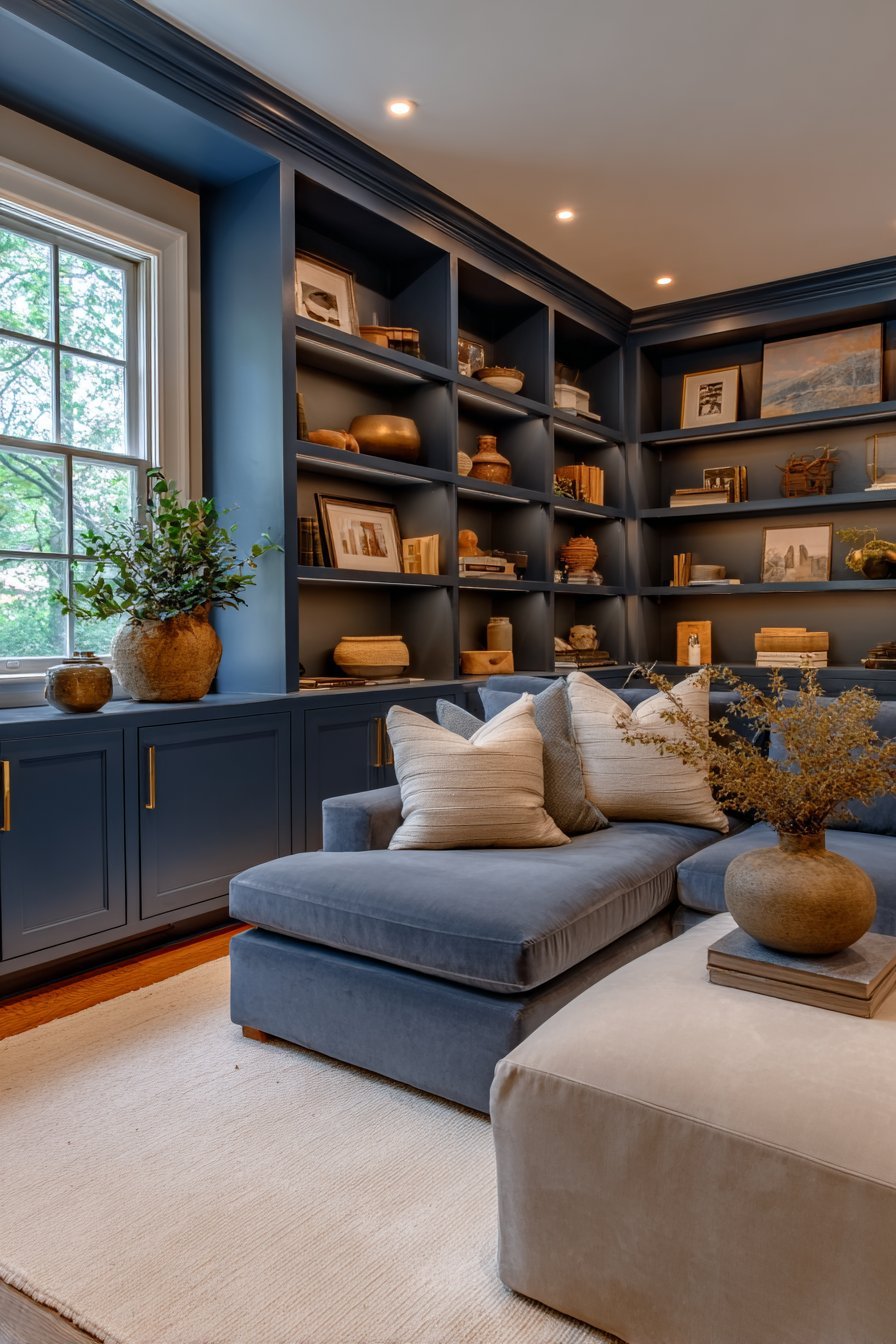
Integrated LED shelf lighting provides subtle evening illumination. Natural daylight from adjacent windows creates balanced ambient light. The lighting combination showcases the navy paint depth beautifully. Objects cast gentle shadows that add dimensional interest.
Key Design Tips:
- Paint built-ins in colors that complement your room’s palette
- Vary shelf heights to accommodate different object sizes
- Follow the rule of thirds when styling shelves
- Group items in odd numbers for pleasing visual composition
- Include closed storage to hide utilitarian items
- Install quality lighting to showcase displayed collections properly
6. Mid-Century Geometric Wood Panel Treatment
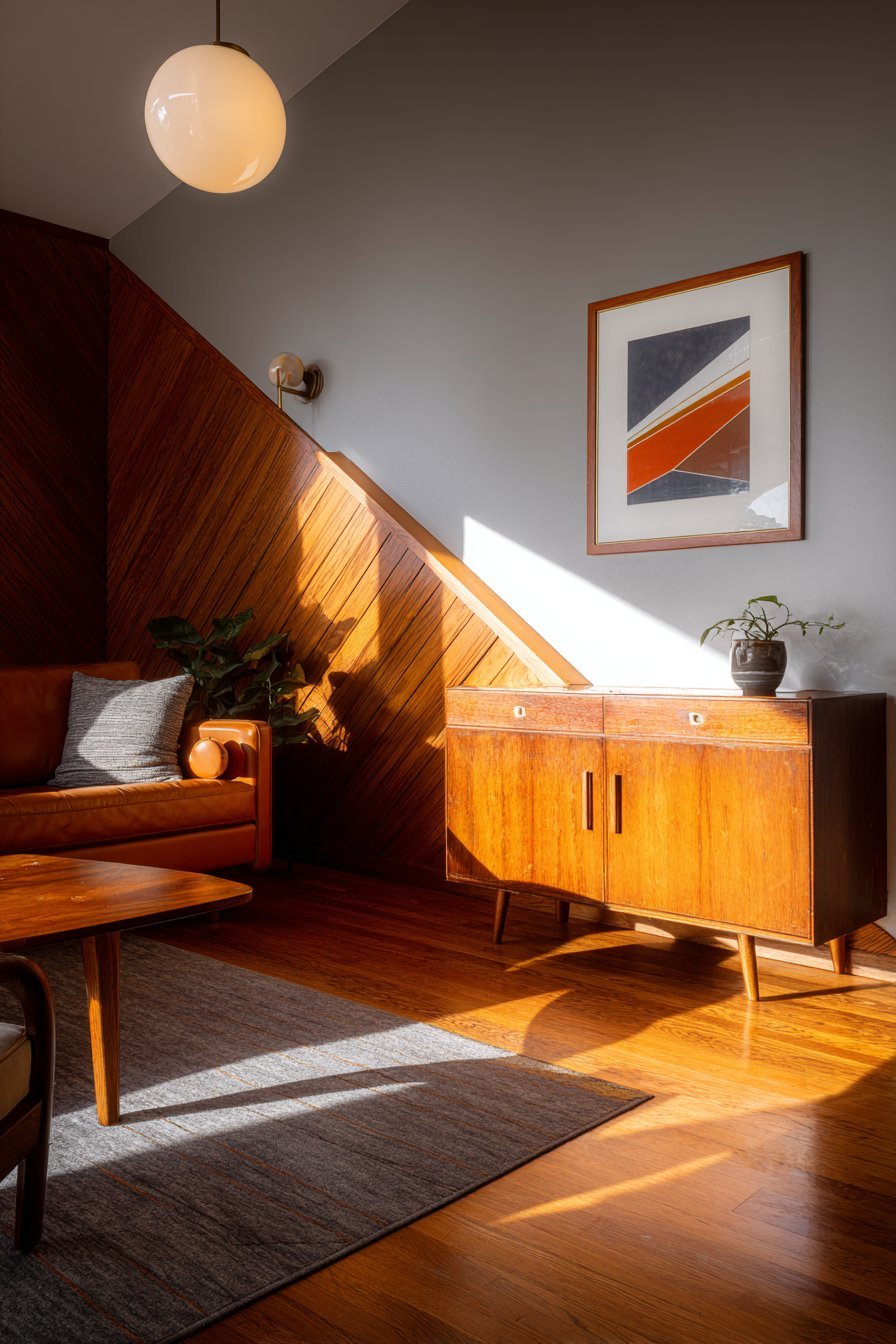
Abstract three-dimensional wood panels create stunning visual impact in this space. Walnut squares vary in depth across the wall surface. The asymmetrical composition generates dynamic shadow play. This geometric pattern celebrates mid-century modern design principles.
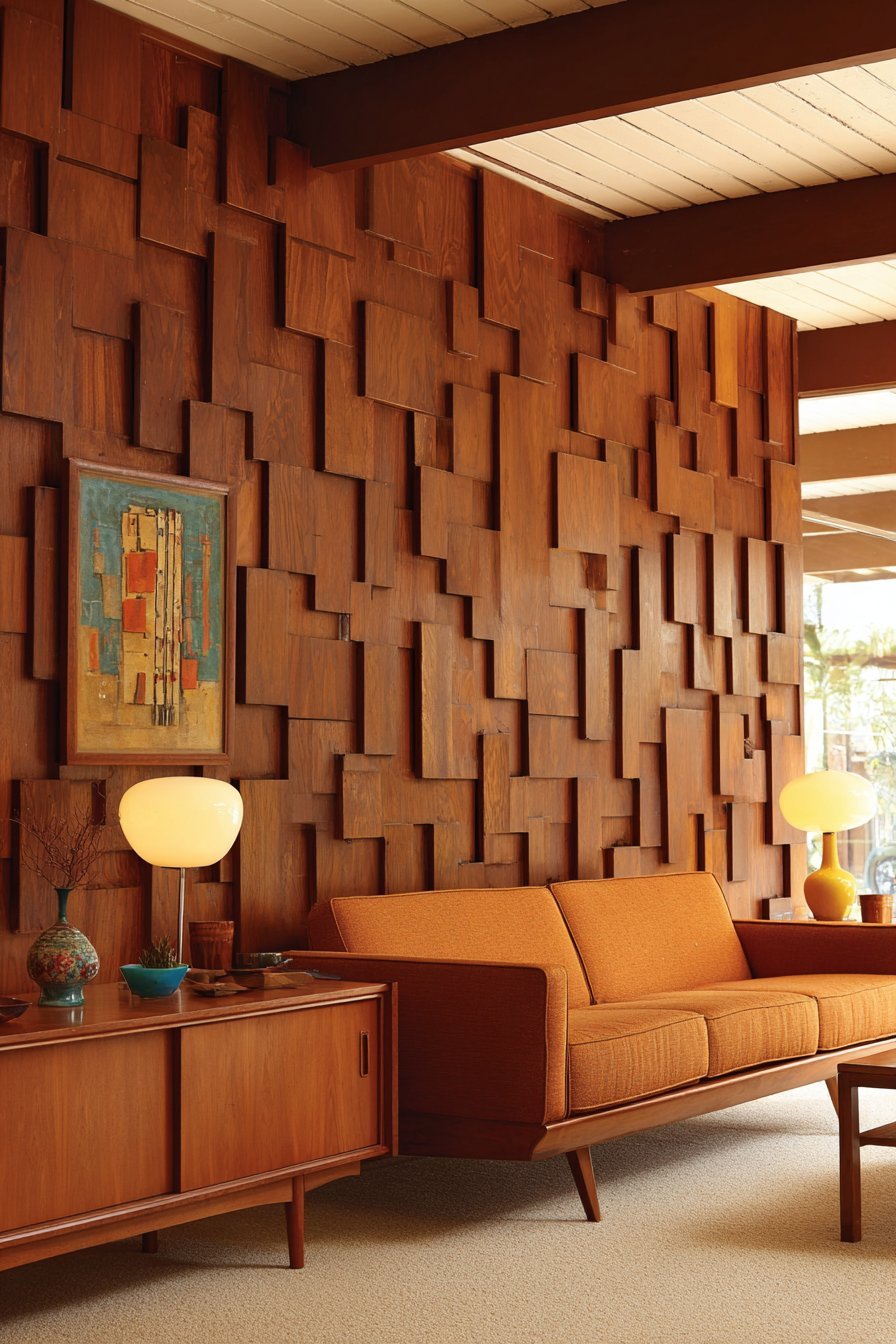
A cognac leather sofa provides authentic period seating opposite the feature wall. Splayed wood legs demonstrate classic mid-century construction details. A teak credenza along the side wall adds functional storage. These iconic pieces create an cohesive vintage aesthetic.
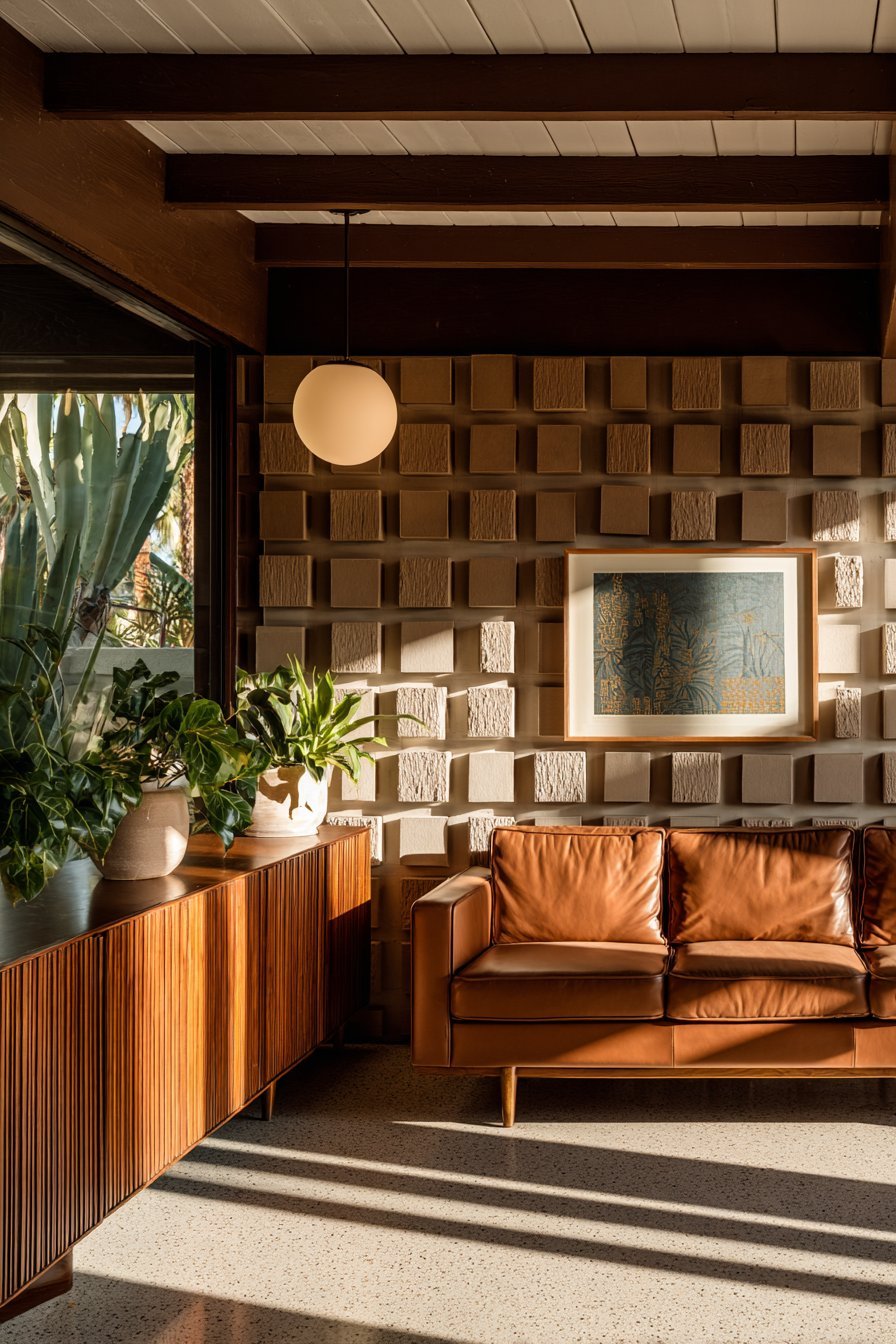
Afternoon natural light transforms this wall throughout the day. Dynamic shadows shift across the dimensional wood panels constantly. The geometric pattern appears different from every viewing angle. This changing quality keeps the design perpetually interesting.
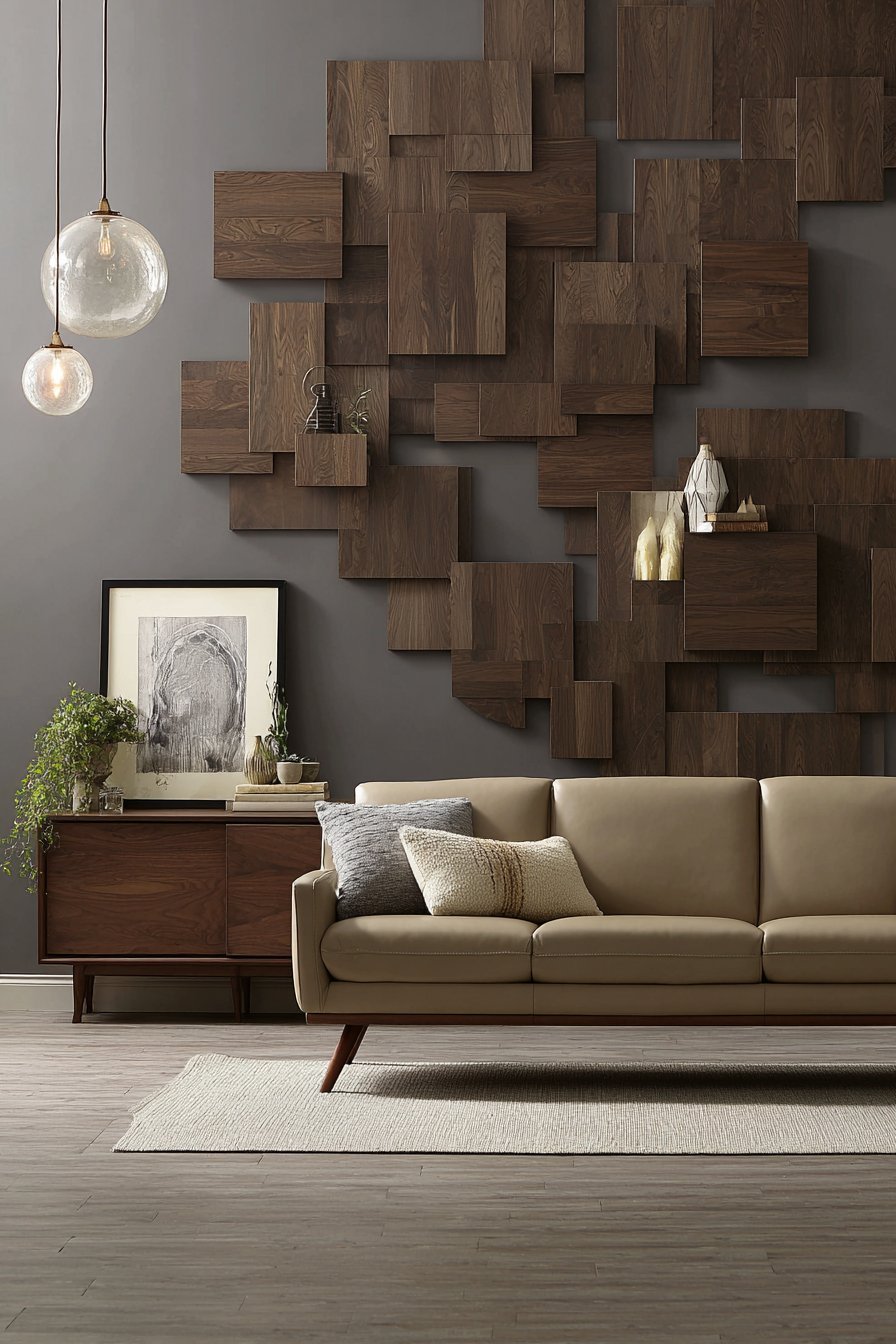
A globe pendant light reinforces the mid-century modern theme perfectly. Abstract artwork adds color while maintaining period authenticity. The wood grain variations in the walnut panels provide organic texture. These details demonstrate attention to era-appropriate design choices.
Key Design Tips:
- Use quality hardwoods like walnut or teak for authentic mid-century appeal
- Create depth variations between 1-3 inches for optimal shadow play
- Design asymmetrical patterns that appear random yet balanced
- Position panels to create interesting compositions from main viewing angles
- Seal wood properly to preserve color and prevent dust accumulation
- Pair geometric panels with iconic mid-century furniture pieces
7. Crisp White Horizontal Shiplap Paneling
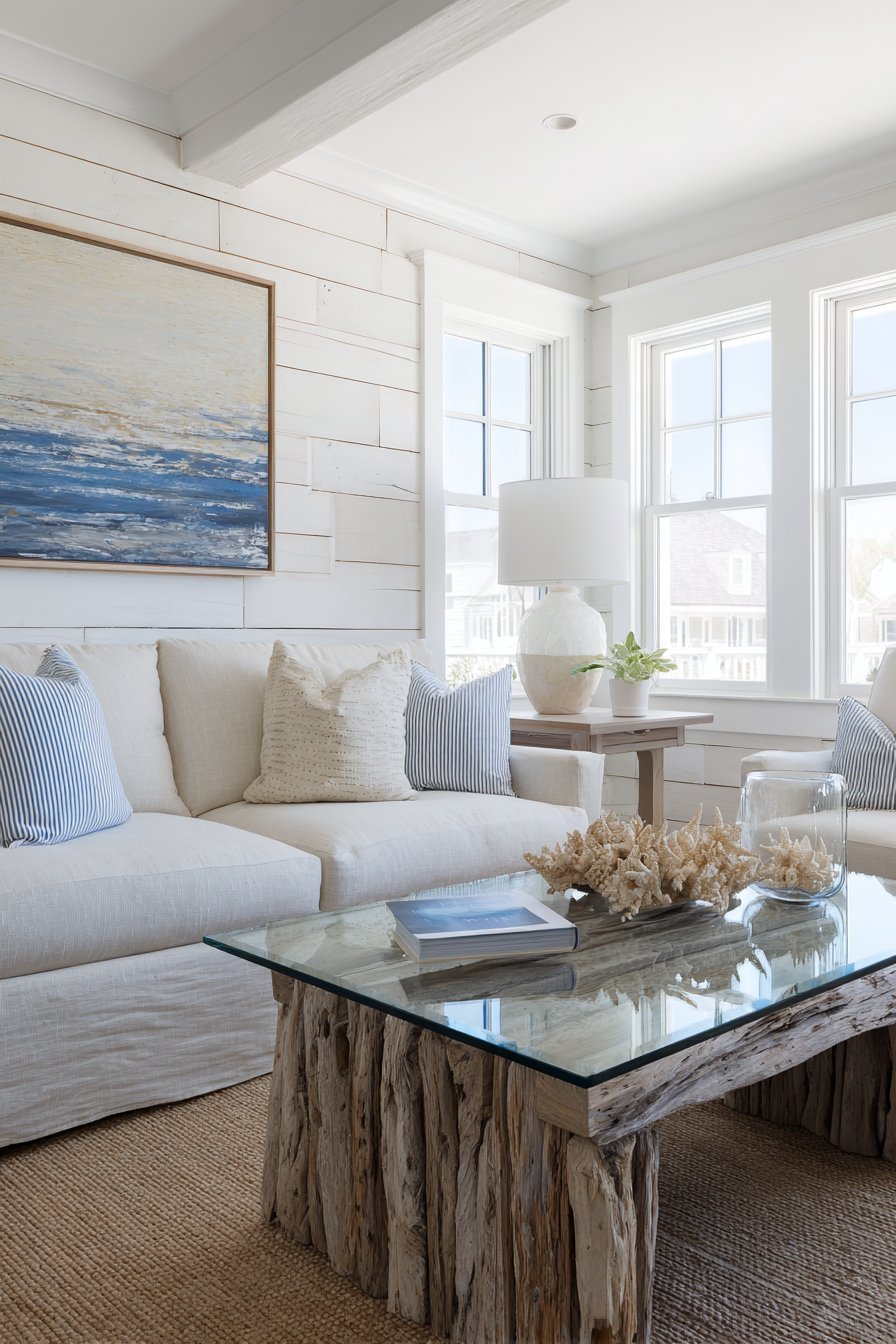
Classic shiplap extends across this entire coastal living room wall. Crisp white paint creates bright, airy atmosphere. Horizontal installation emphasizes the room’s width pleasingly. Subtle shadow lines between boards add dimensional interest.
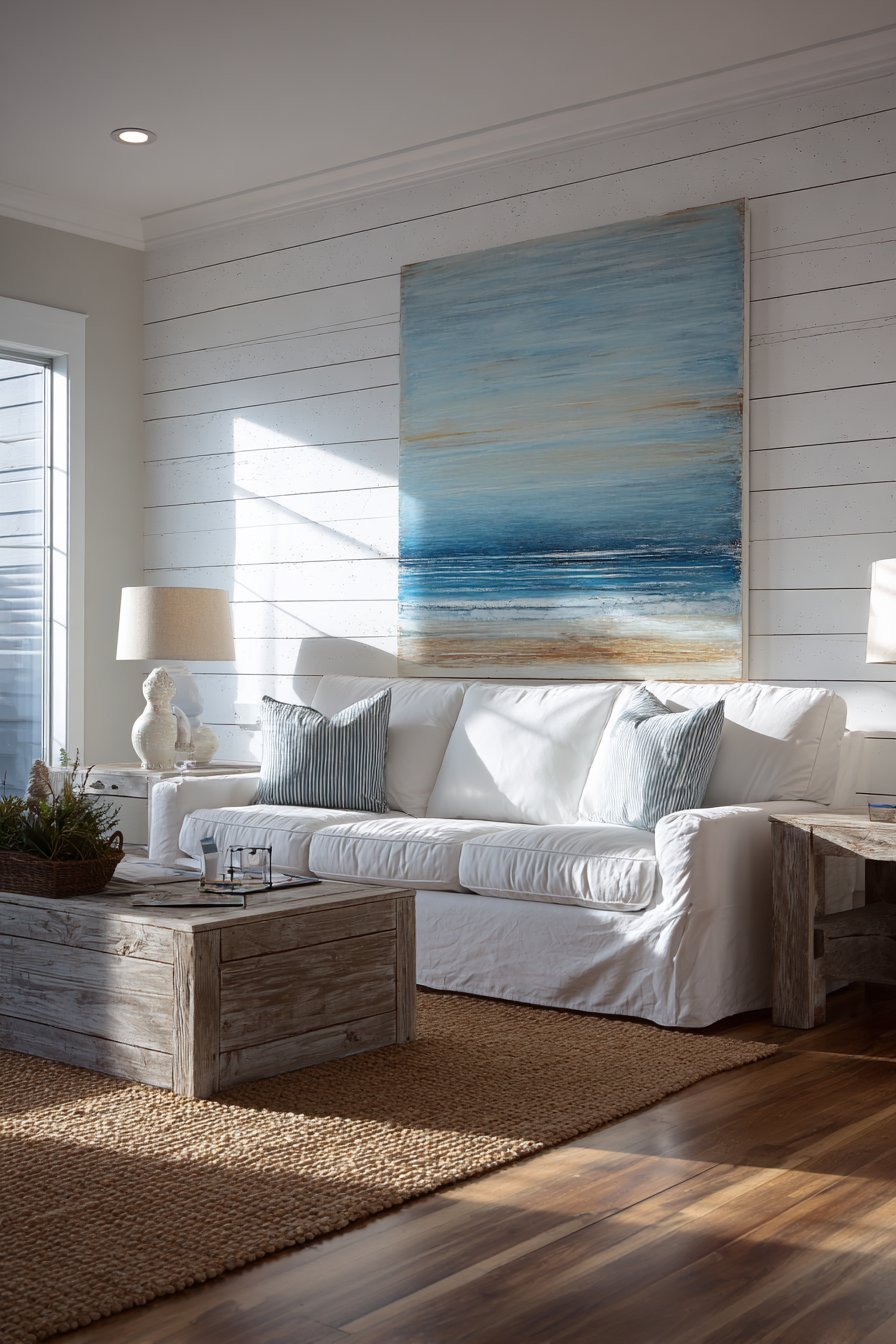
The shiplap serves as perfect backdrop for large-scale artwork. A nautical-inspired abstract painting features blues and sandy beiges. These coastal colors complement the white paneling beautifully. The artwork becomes the focal point against this clean backdrop.
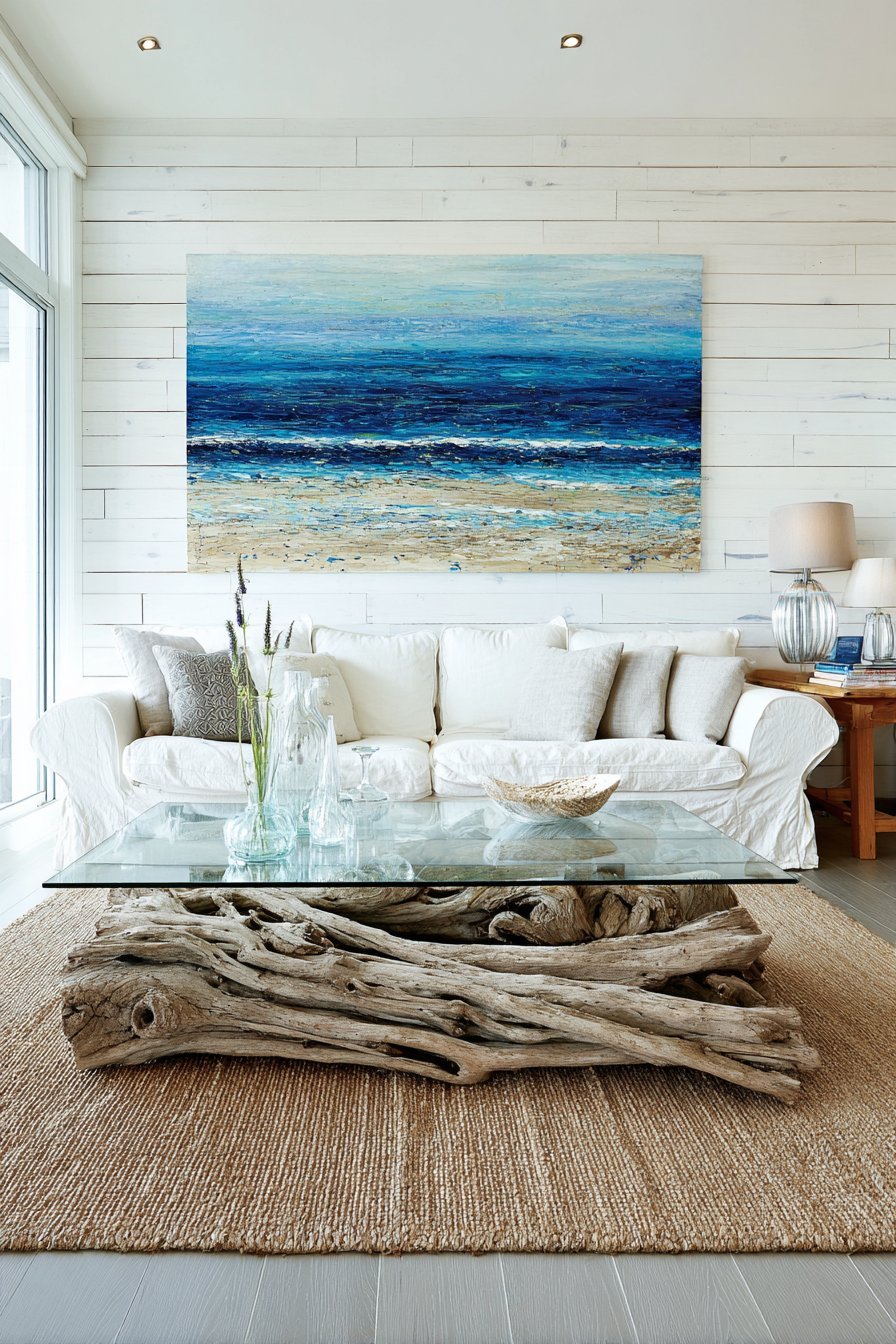
Natural linen slipcovered sofa maintains the coastal aesthetic effortlessly. Weathered driftwood coffee table adds organic texture and beachy character. Sisal area rugs bring natural fiber warmth underfoot. White ceramic lamps and glass accessories complete the coastal theme.
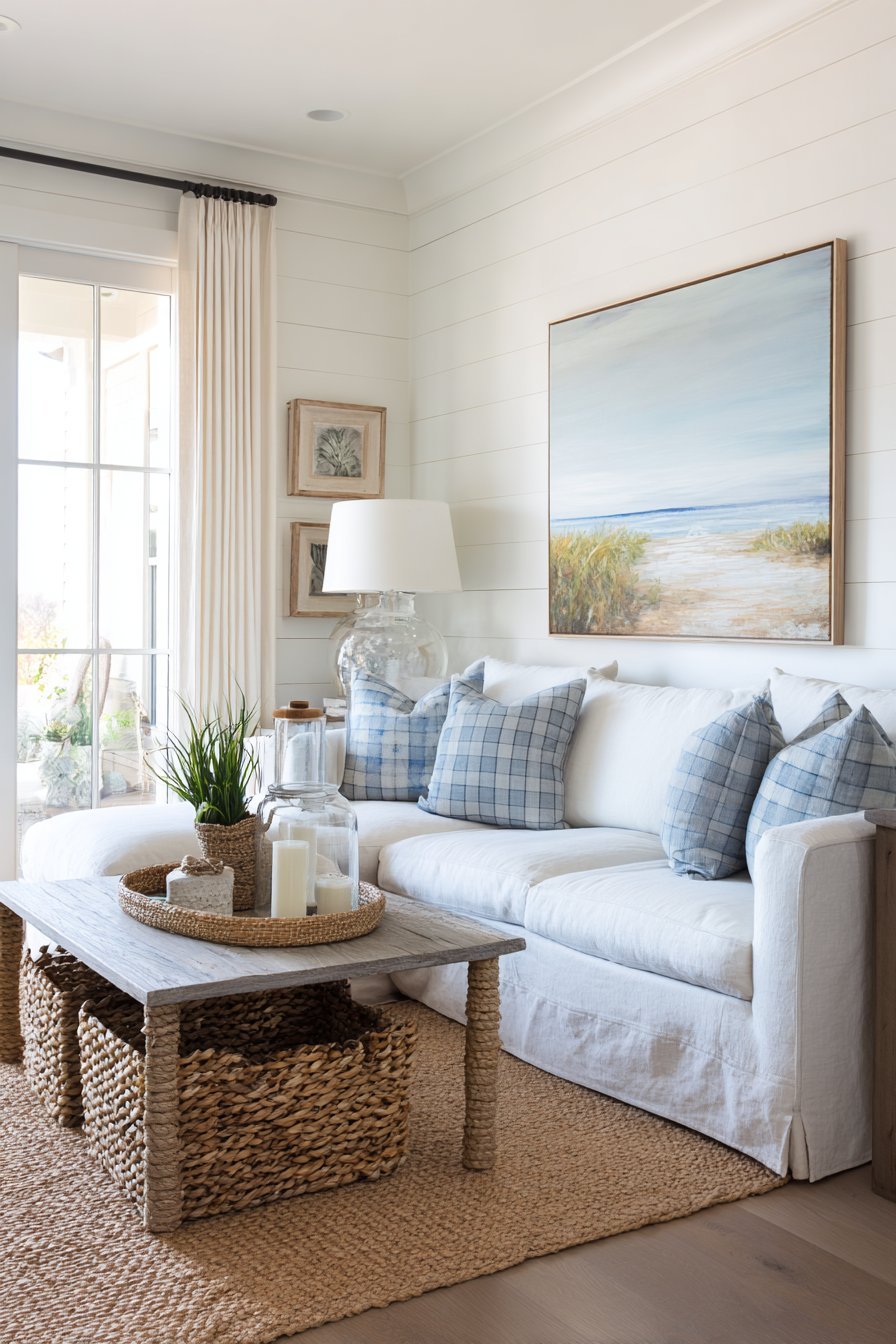
Bright natural daylight floods this space throughout the day. The white shiplap reflects light beautifully and maximizes brightness. Subtle shadows between boards create gentle textural interest. This treatment captures authentic beach house atmosphere perfectly.
Key Design Tips:
- Use nickel gap spacing between boards for authentic shiplap appearance
- Prime properly before painting to ensure bright white finish
- Install horizontally to make rooms appear wider
- Choose satin or eggshell paint finish for easy cleaning
- Level carefully during installation for professional results
- Pair with natural textures like linen, jute, and weathered wood
8. Industrial Exposed Brick Statement Wall
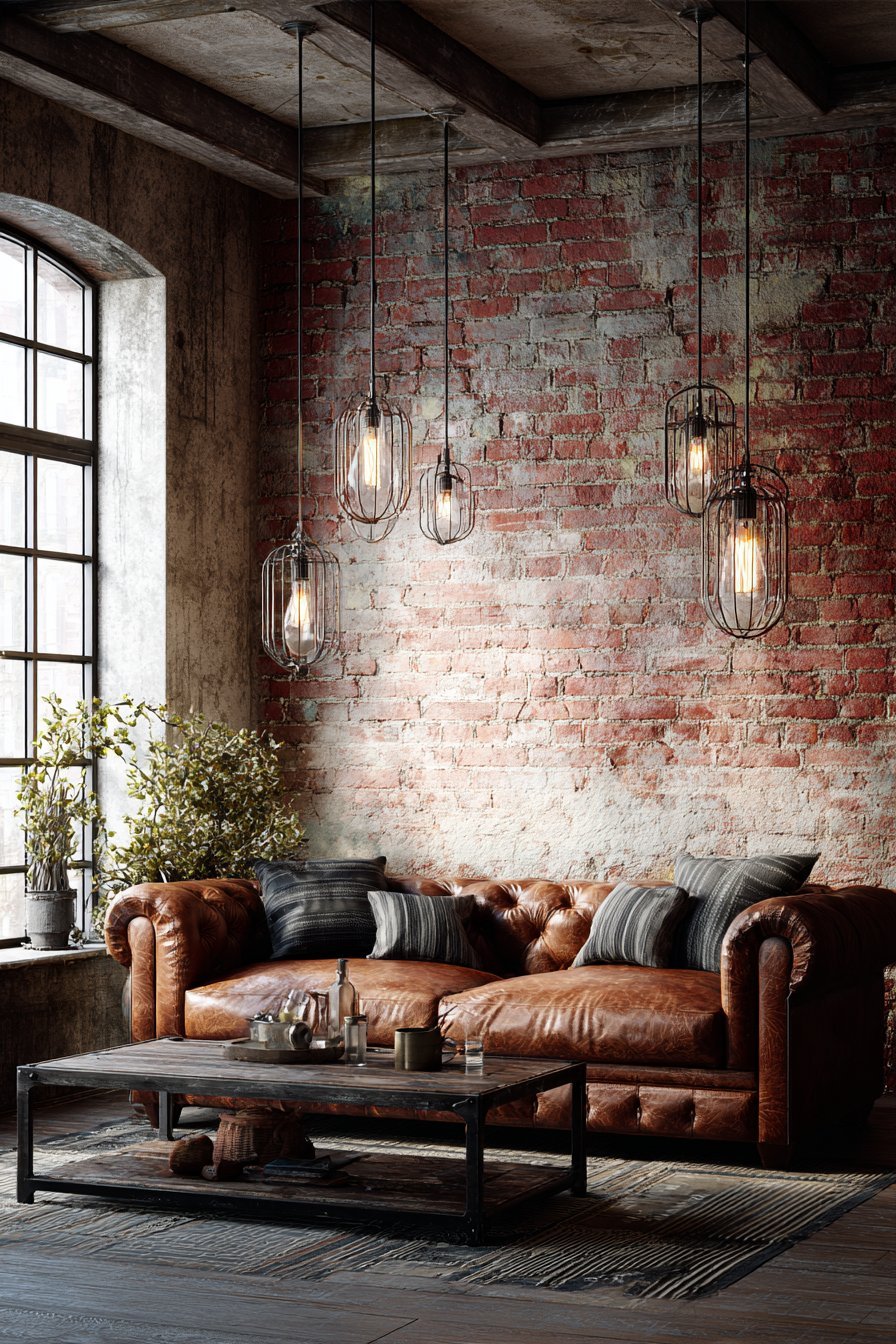
Authentic aged brick creates raw architectural character in this loft space. Red-orange tones vary naturally across the wall surface. White mortar and natural weathering patterns tell the building’s history. This exposed brick provides genuine industrial aesthetic.
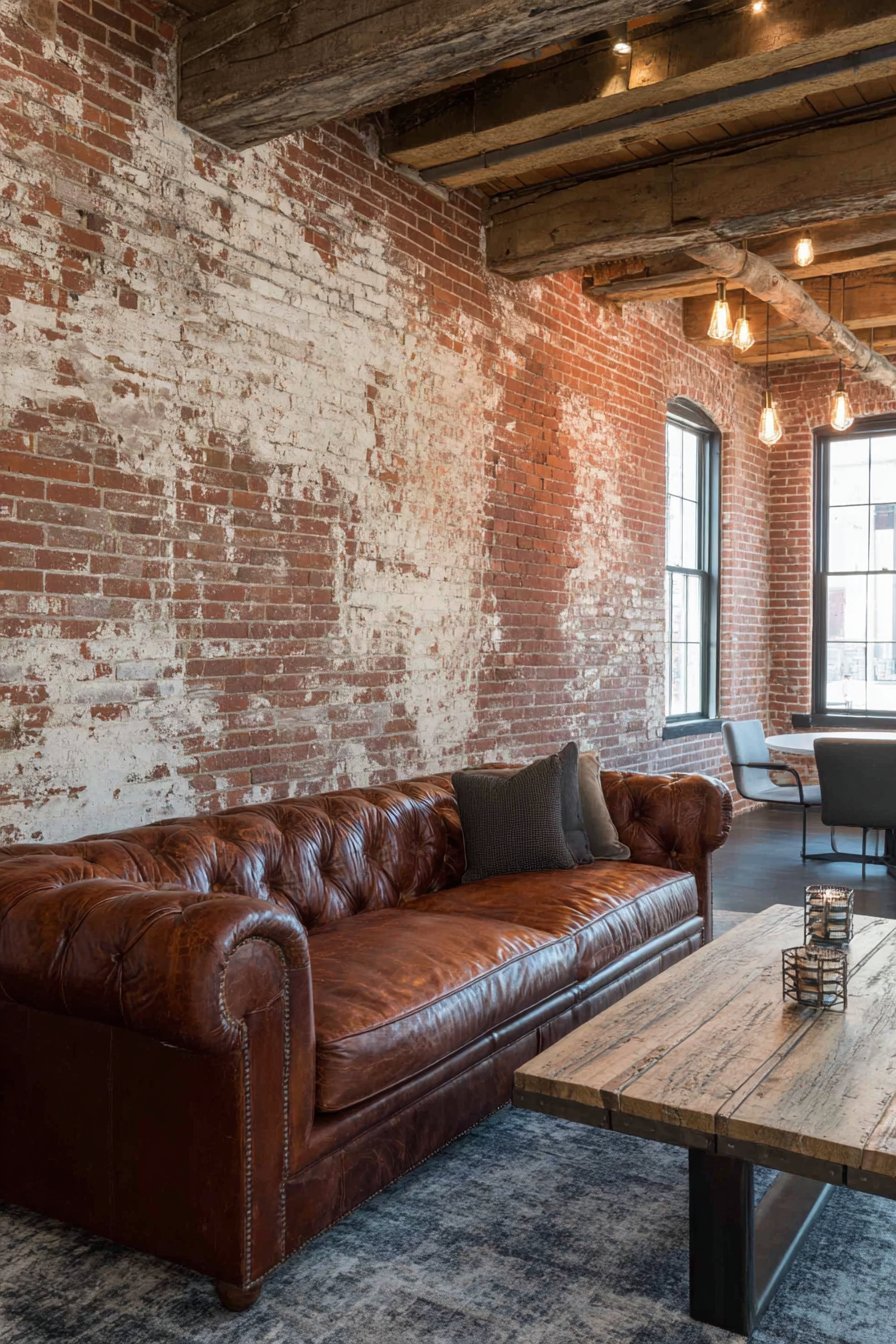
A distressed brown leather Chesterfield sofa faces this textured wall. Metal and reclaimed wood coffee table reinforces industrial design themes. Edison bulb pendant lights hang from exposed ceiling beams overhead. These period-appropriate elements create cohesive loft styling.
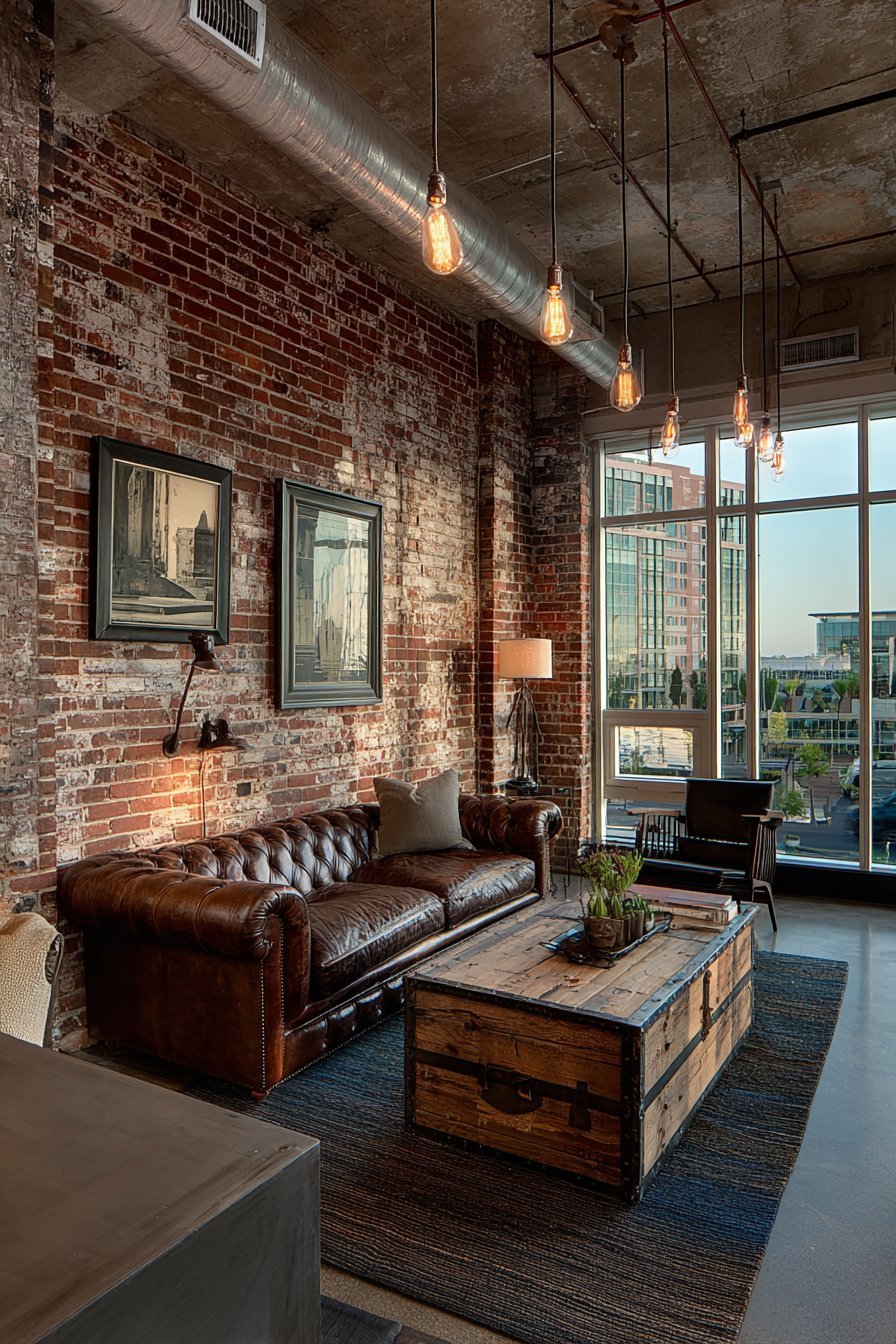
Natural light from metal-framed windows highlights the brick beautifully. The dimensional surface creates constantly changing shadow patterns. Color variations in individual bricks add visual interest throughout. This authentic material provides texture impossible to replicate.
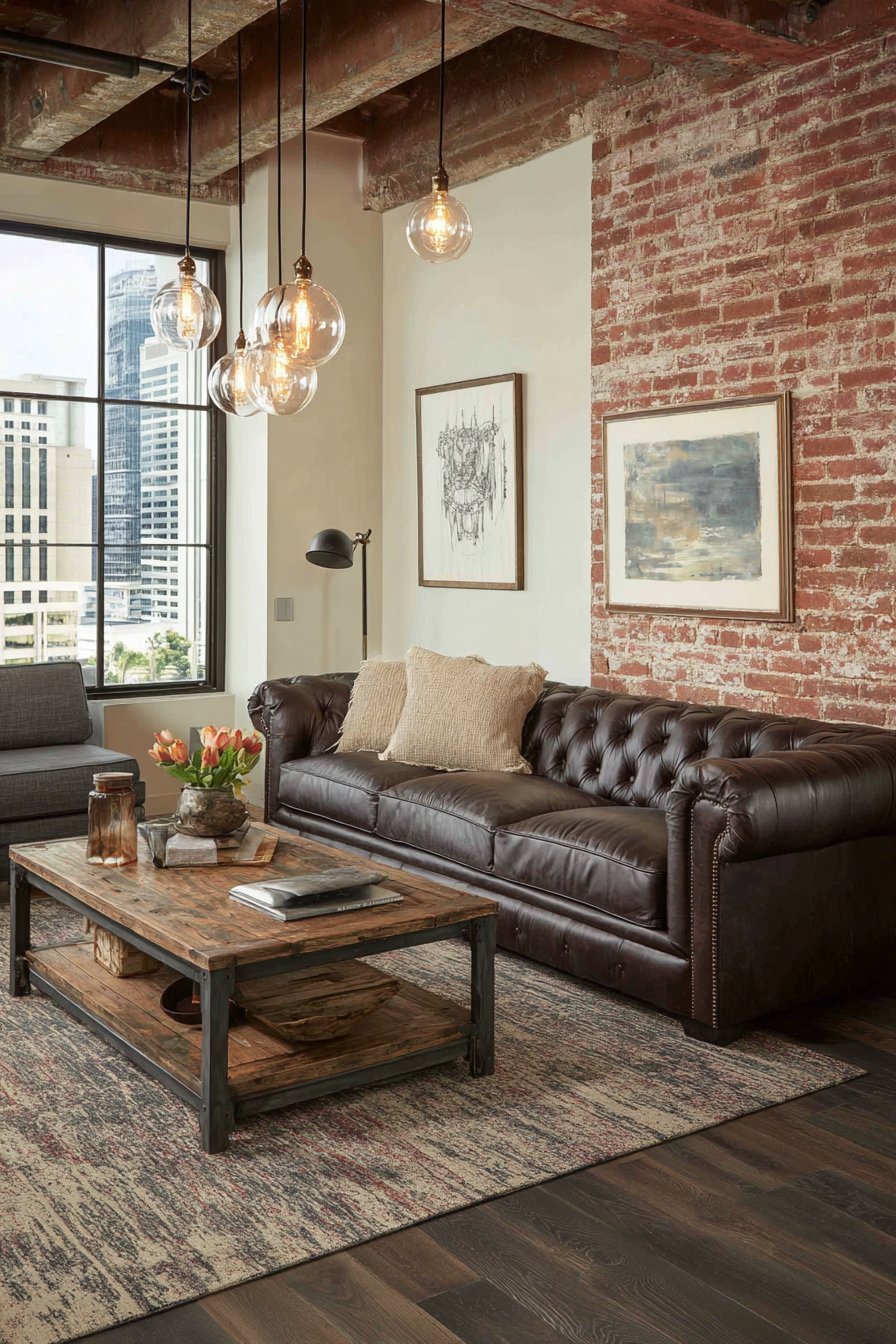
The brick texture brings warmth to potentially cold industrial spaces. The varied tones complement leather and metal furnishings perfectly. This wall requires no additional decoration or artwork. The brick itself provides sufficient visual interest and character.
Key Design Tips:
- Seal exposed brick to prevent dust while maintaining natural appearance
- Clean gently with appropriate masonry cleaners when needed
- Avoid painting brick to preserve authentic industrial character
- Balance raw brick with refined furnishings for sophisticated industrial style
- Use warm lighting to enhance brick’s natural red-orange tones
- Leave brick unadorned or add minimal artwork in metal frames
9. Luxurious Book-Matched Marble Effect Tiles
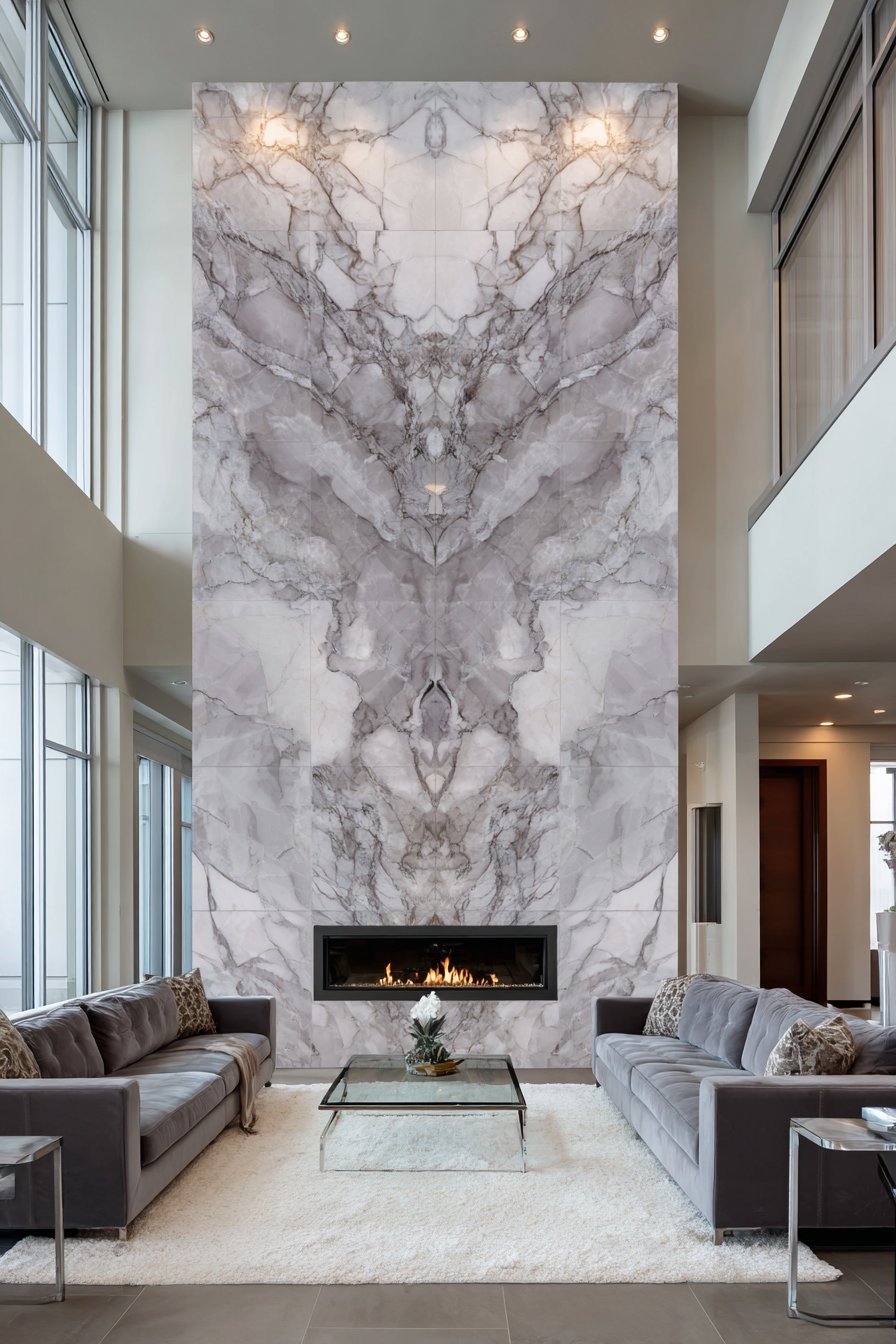
Large-format porcelain tiles create dramatic luxury in this contemporary space. Book-matched installation produces symmetrical marble veining patterns. Grey and white veining flows elegantly across the wall surface. This sophisticated treatment frames a linear gas fireplace beautifully.
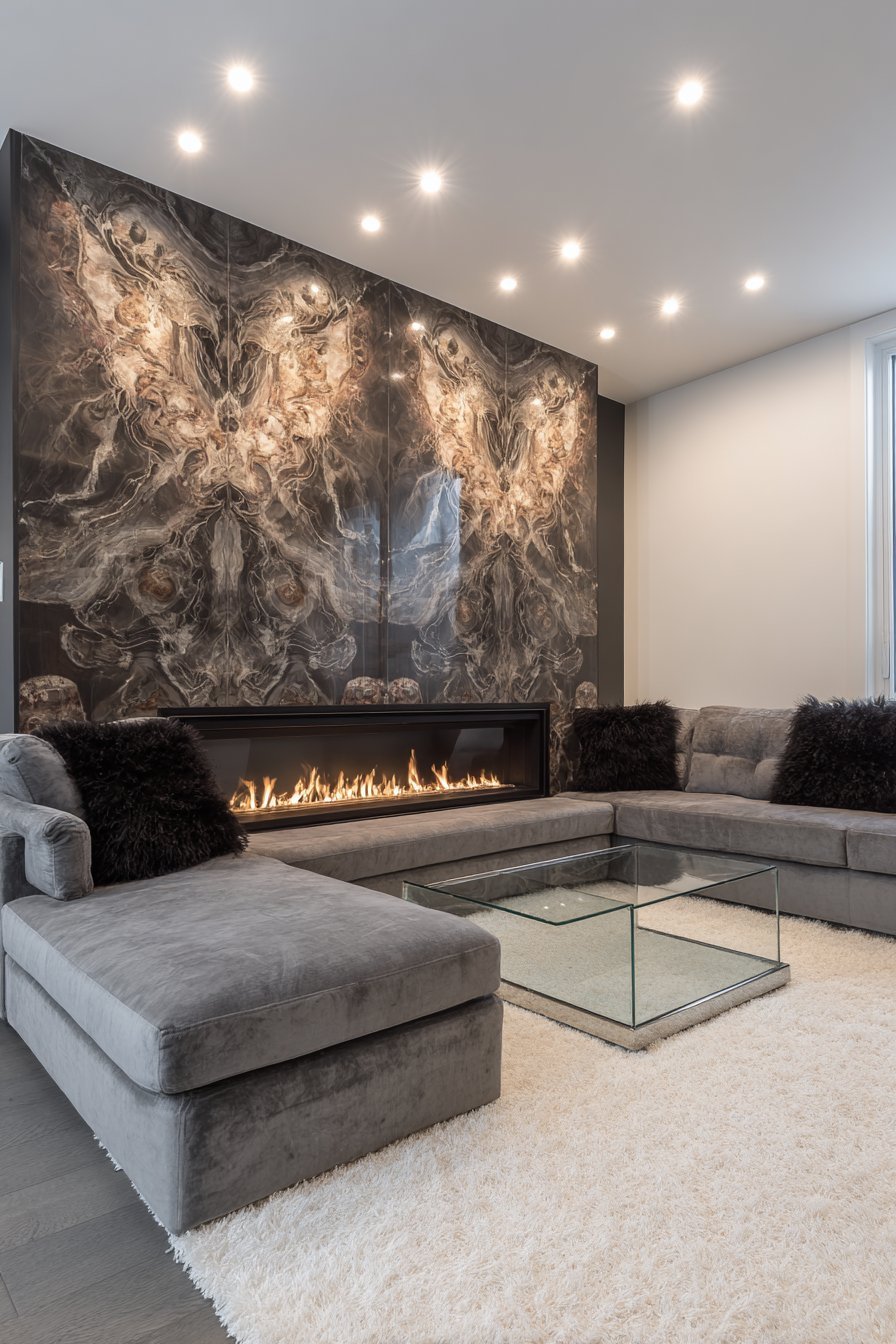
Modern grey velvet sectional sofa provides comfortable seating opposite the feature wall. Chrome and glass coffee table maintains the contemporary aesthetic. Plush white area rug adds softness underfoot. These refined elements complement the luxurious wall treatment.
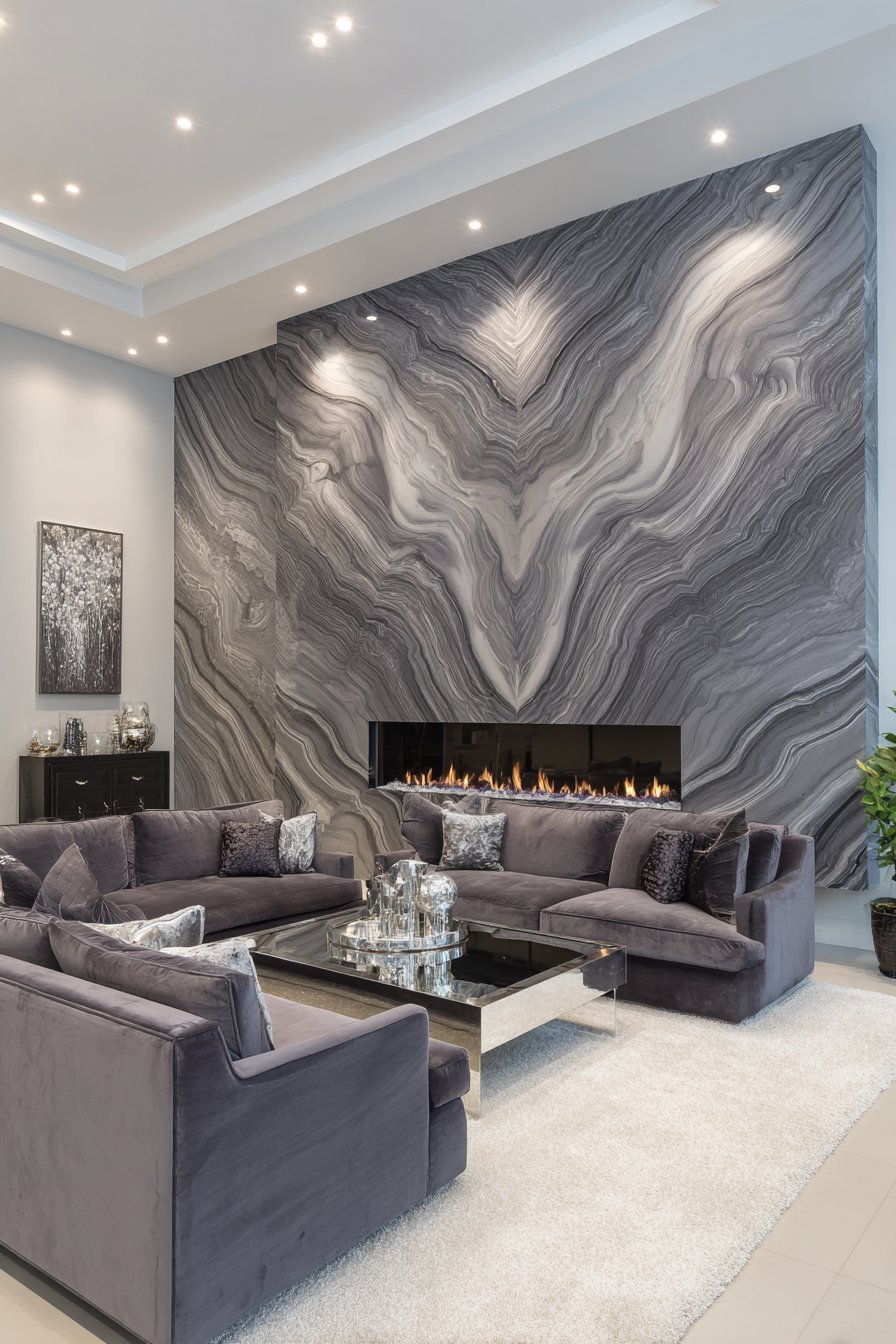
Recessed ceiling lighting provides even illumination throughout the space. The lighting highlights the reflective quality of polished tile surfaces. Subtle reflections add depth and visual interest. The marble effect appears authentic from every angle.
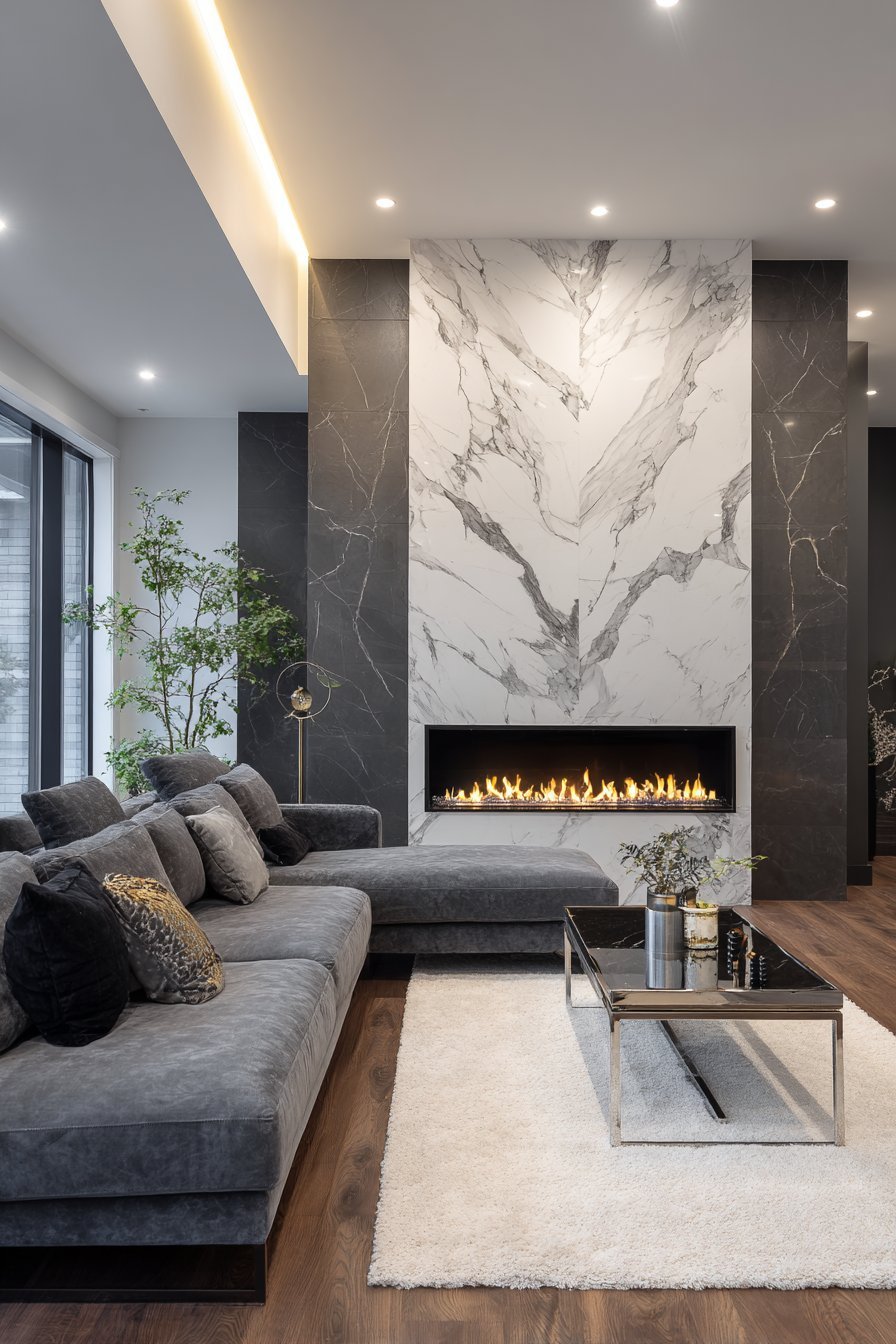
This wall treatment elevates the entire room’s sophistication level. The symmetrical veining pattern creates pleasing visual balance. Grey tones work beautifully with various color schemes. The porcelain material offers durability that natural marble cannot match.
Key Design Tips:
- Choose large-format tiles to minimize grout lines
- Book-match tiles for symmetrical veining patterns
- Use rectified tiles for minimal grout joint visibility
- Install with quality tile adhesive rated for large formats
- Seal grout properly to prevent staining
- Position recessed lighting to highlight tile’s reflective qualities
10. Classic Wainscoting with Sage Green Upper Wall
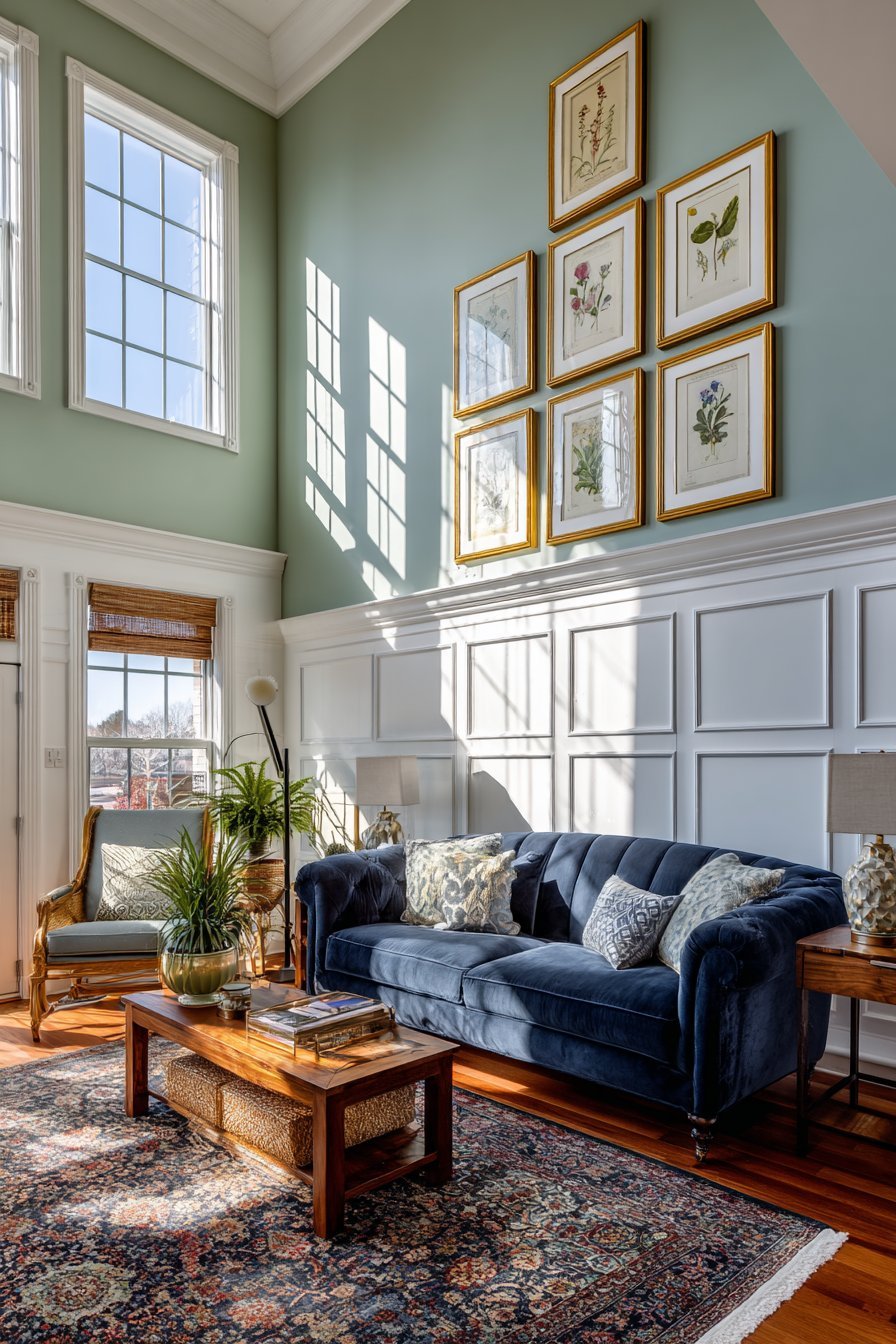
Traditional raised panel wainscoting extends three feet up this wall. Warm white paint creates bright, fresh appearance. Decorative chair rail molding provides elegant transition point. Soft sage green paint covers the upper wall beautifully.
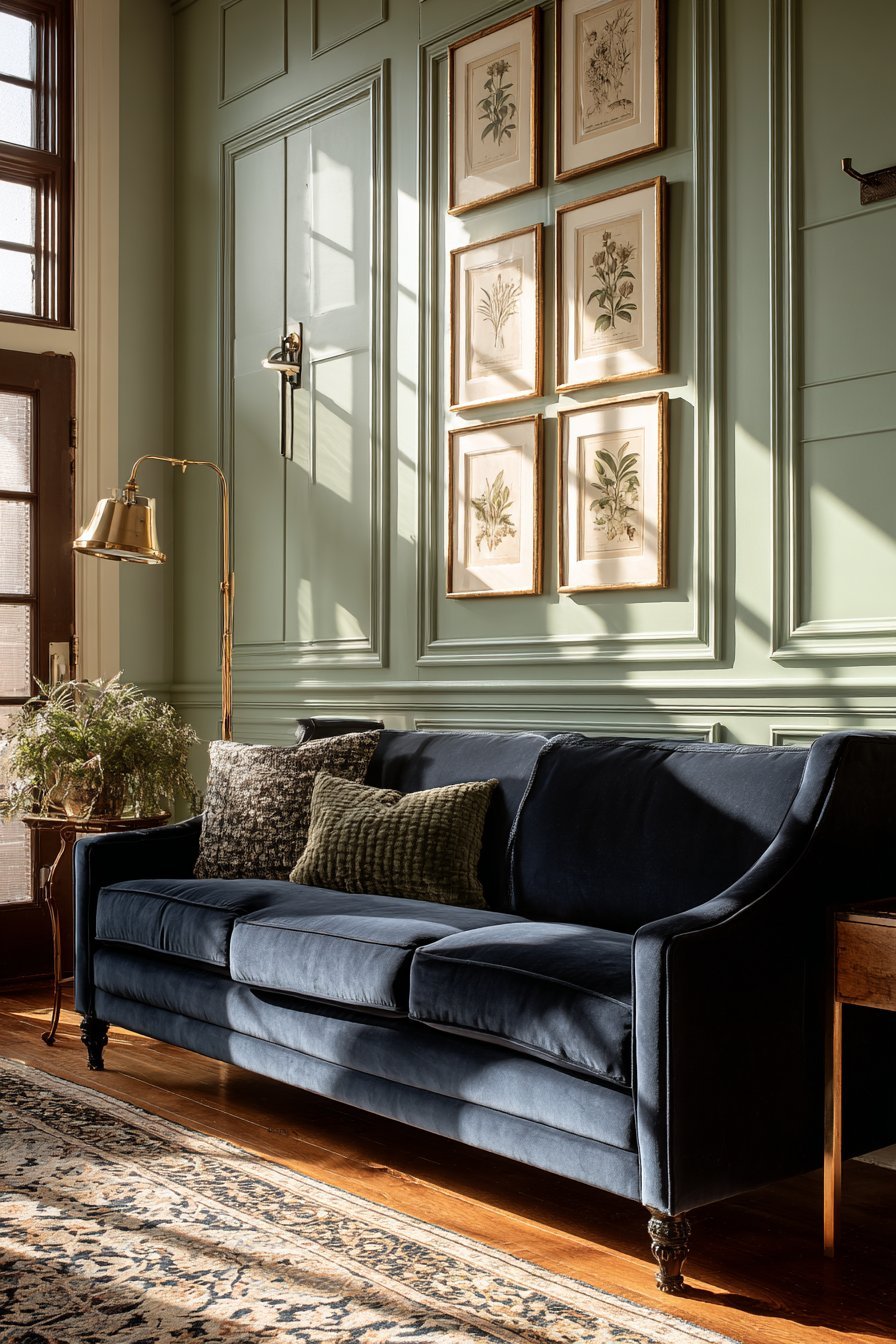
Vintage botanical prints hang in gold frames above the wainscoting. Grid arrangement creates orderly, traditional presentation. The prints’ natural subjects complement the sage green perfectly. This classic styling demonstrates timeless design principles.
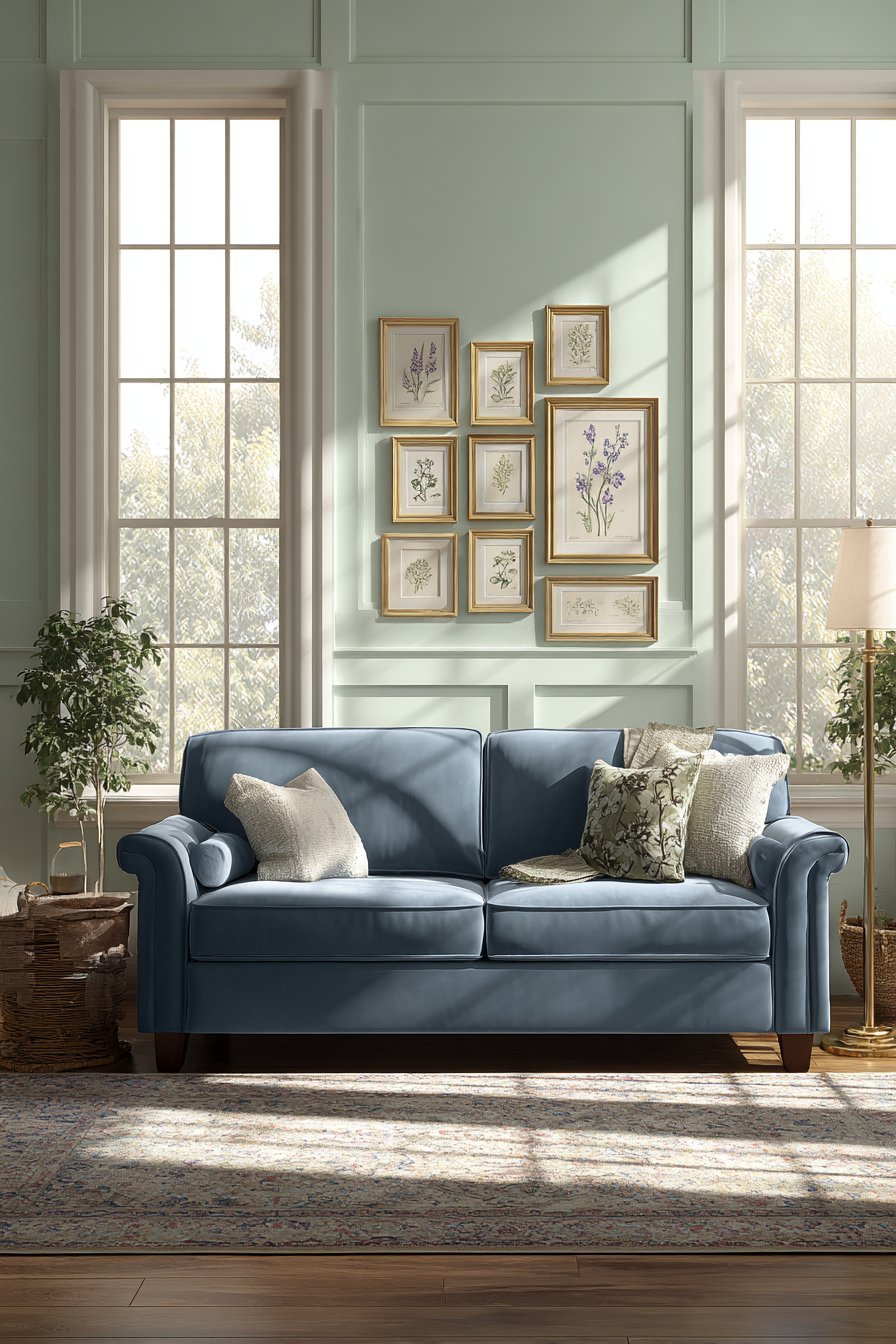
A camelback sofa in navy blue velvet provides elegant seating. Antique brass floor lamp adds both function and traditional charm. Traditional Oriental rug grounds the space with rich patterns. These period-appropriate elements create cohesive traditional aesthetic.
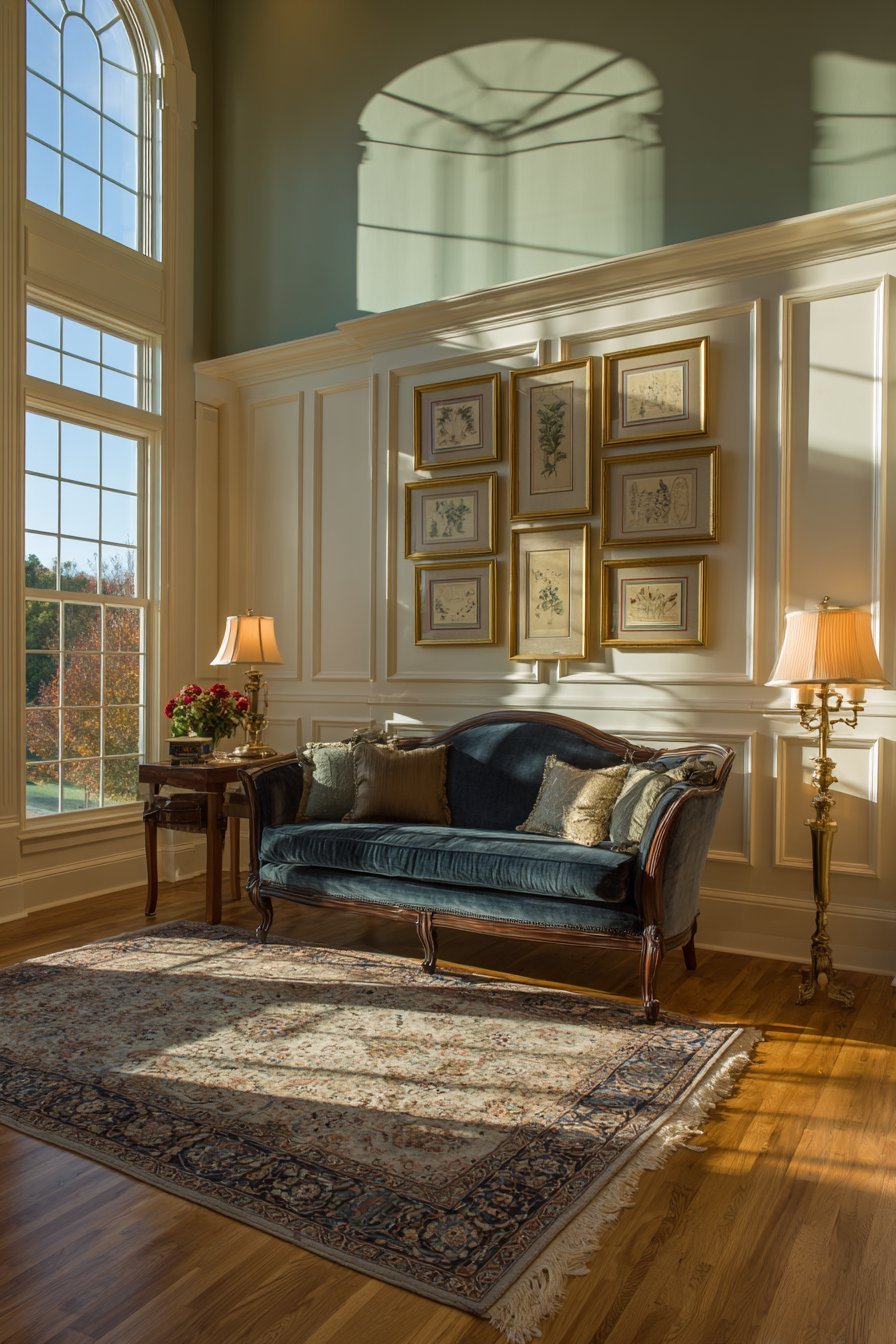
Natural afternoon light through mullioned windows creates gentle shadows. The dimensional raised panels cast subtle shadow lines. These shadows emphasize the wainscoting’s architectural quality. The lighting enhances both paint colors beautifully.
Key Design Tips:
- Install wainscoting at 36 inches height for classic proportion
- Use proper chair rail molding for professional transition
- Paint wainscoting in semi-gloss for durability and easy cleaning
- Choose matte or eggshell finish for upper wall
- Hang artwork 6-8 inches above chair rail
- Select upper wall colors that complement lower wainscoting
11. Minimalist Warm Grey Stucco Texture
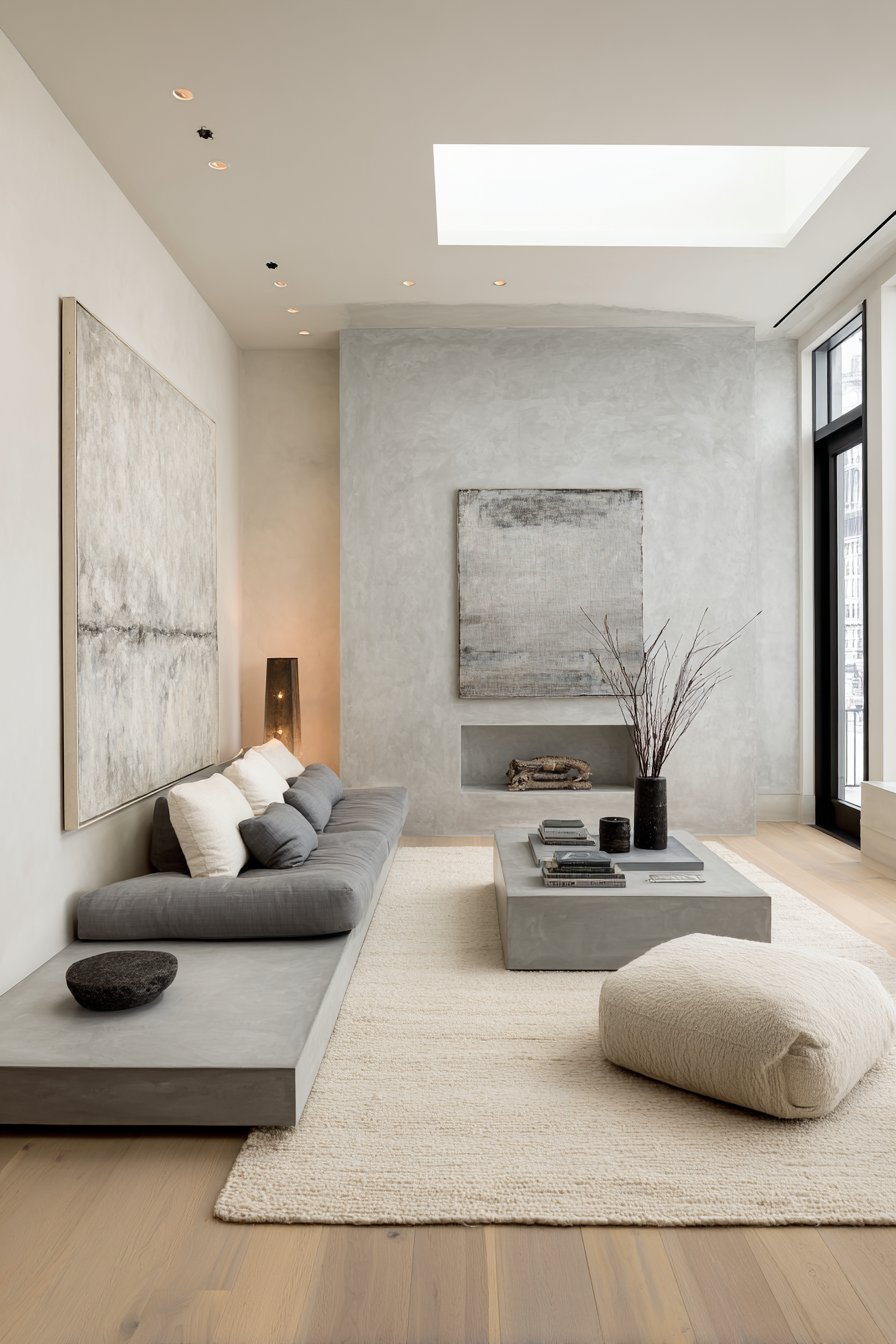
Smooth stucco finish in warm grey creates subtle textured backdrop. The intentionally sparse wall emphasizes a single oversized abstract canvas. Muted earth tones in the artwork complement the grey beautifully. This minimalist approach demonstrates restraint and intentionality.
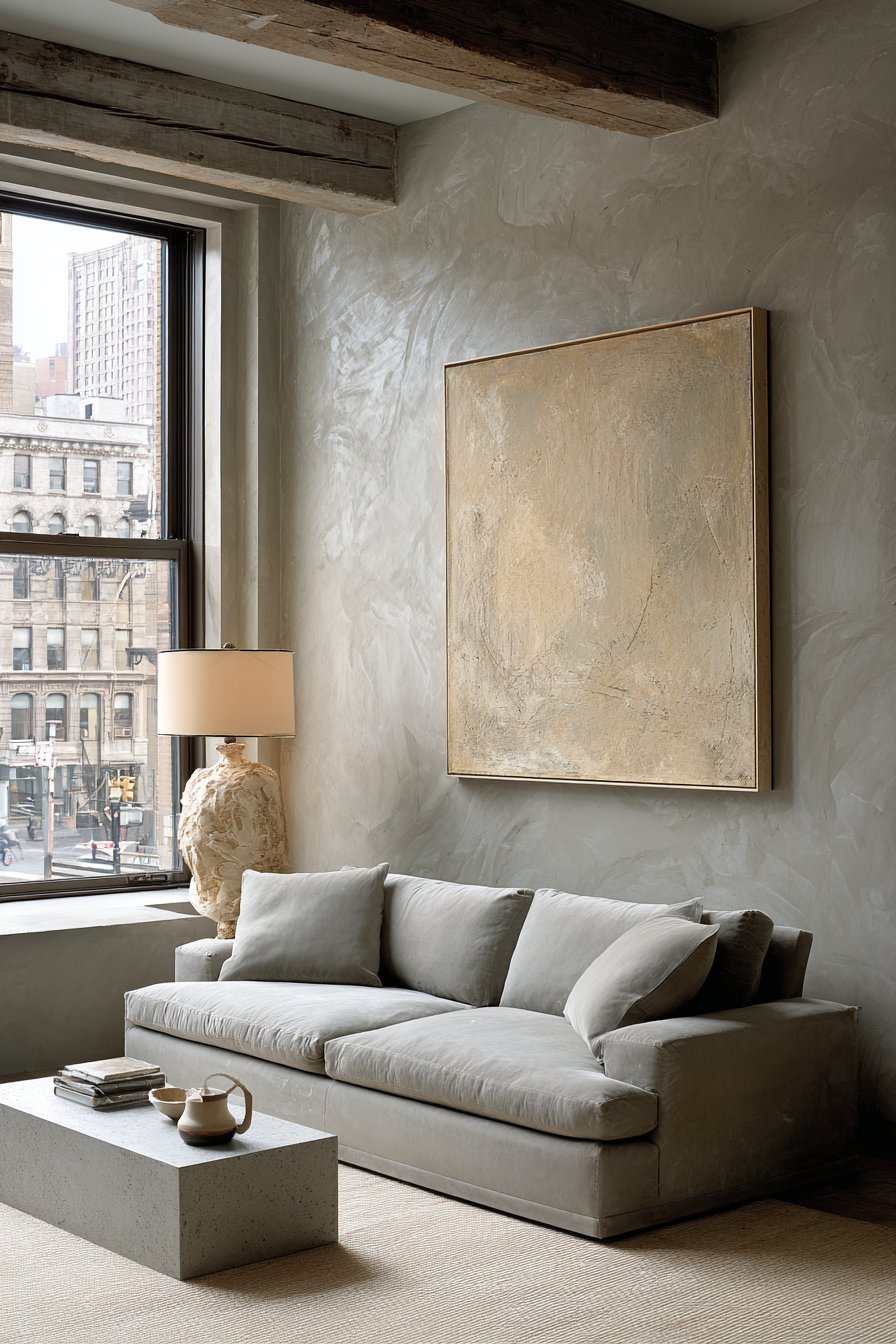
A low-profile grey platform sofa sits centered facing this wall. Simple concrete coffee table maintains the minimalist aesthetic perfectly. Neutral wool area rug adds softness without visual weight. These carefully chosen pieces support rather than compete.
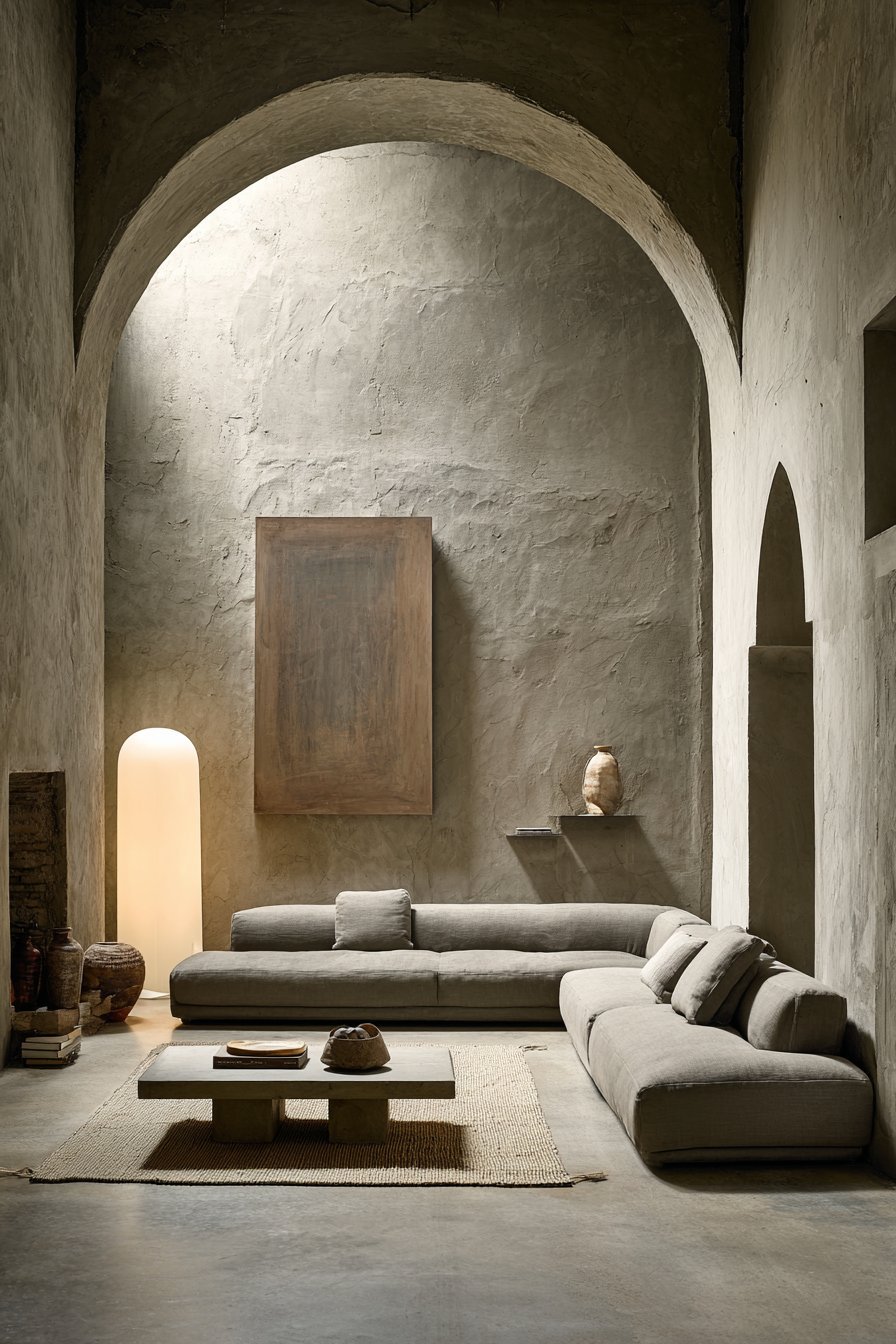
Soft natural daylight from clerestory windows illuminates the space evenly. The lighting reveals the stucco’s subtle texture throughout the day. This texture adds depth without overwhelming the minimal design. The effect remains calm and contemplative.
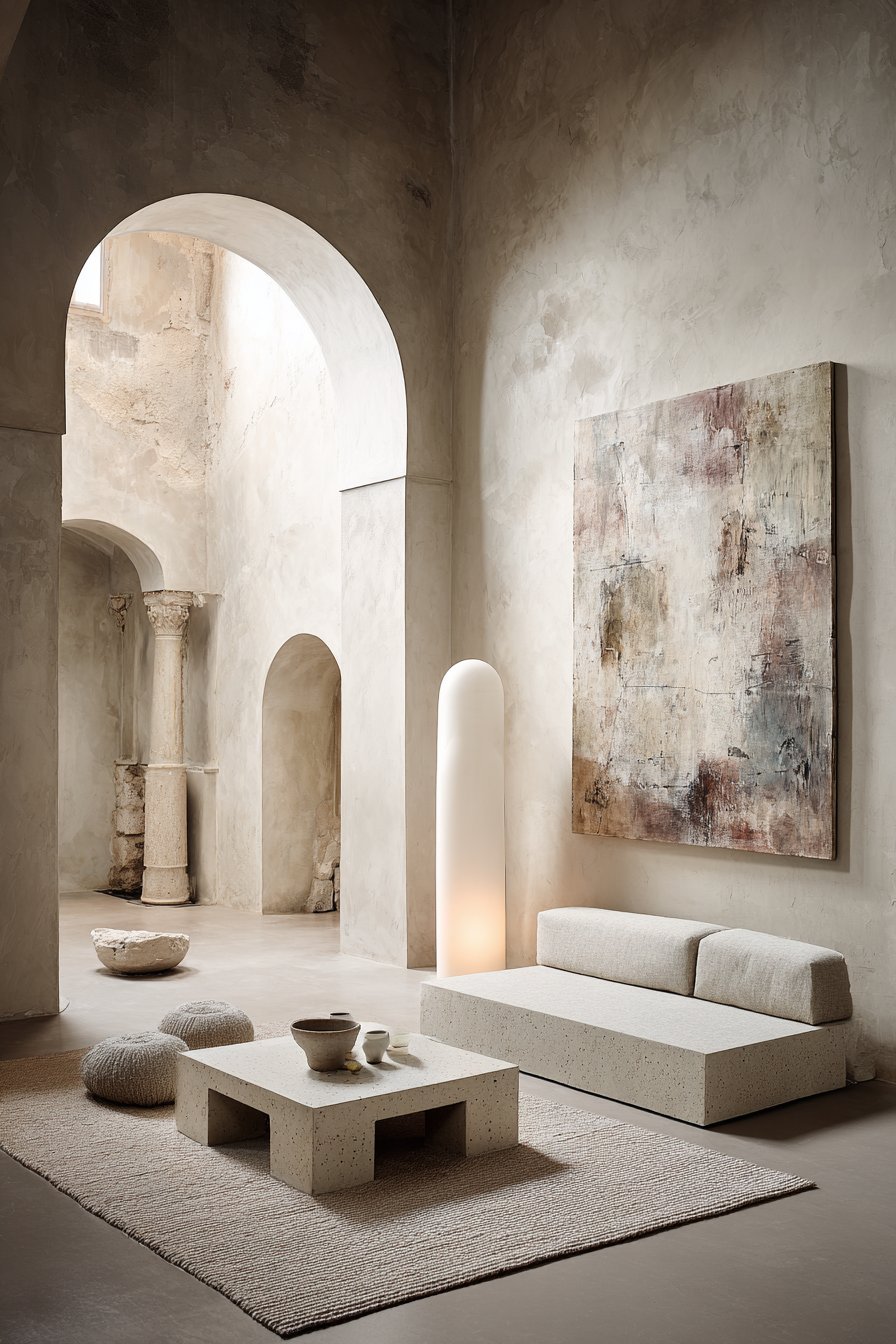
A sculptural floor lamp provides necessary ambient lighting. Its artistic form serves as both function and art object. The minimal styling allows each piece to make meaningful contribution. This approach requires careful editing and thoughtful selection.
Key Design Tips:
- Apply stucco in thin layers for subtle texture
- Choose warm grey tones to prevent cold appearance
- Limit wall decor to one statement piece
- Select furniture with clean lines and minimal ornamentation
- Use natural materials like concrete, wood, and wool
- Ensure ample natural light to appreciate subtle textures
12. Bold Tropical Leaf Pattern Wallpaper
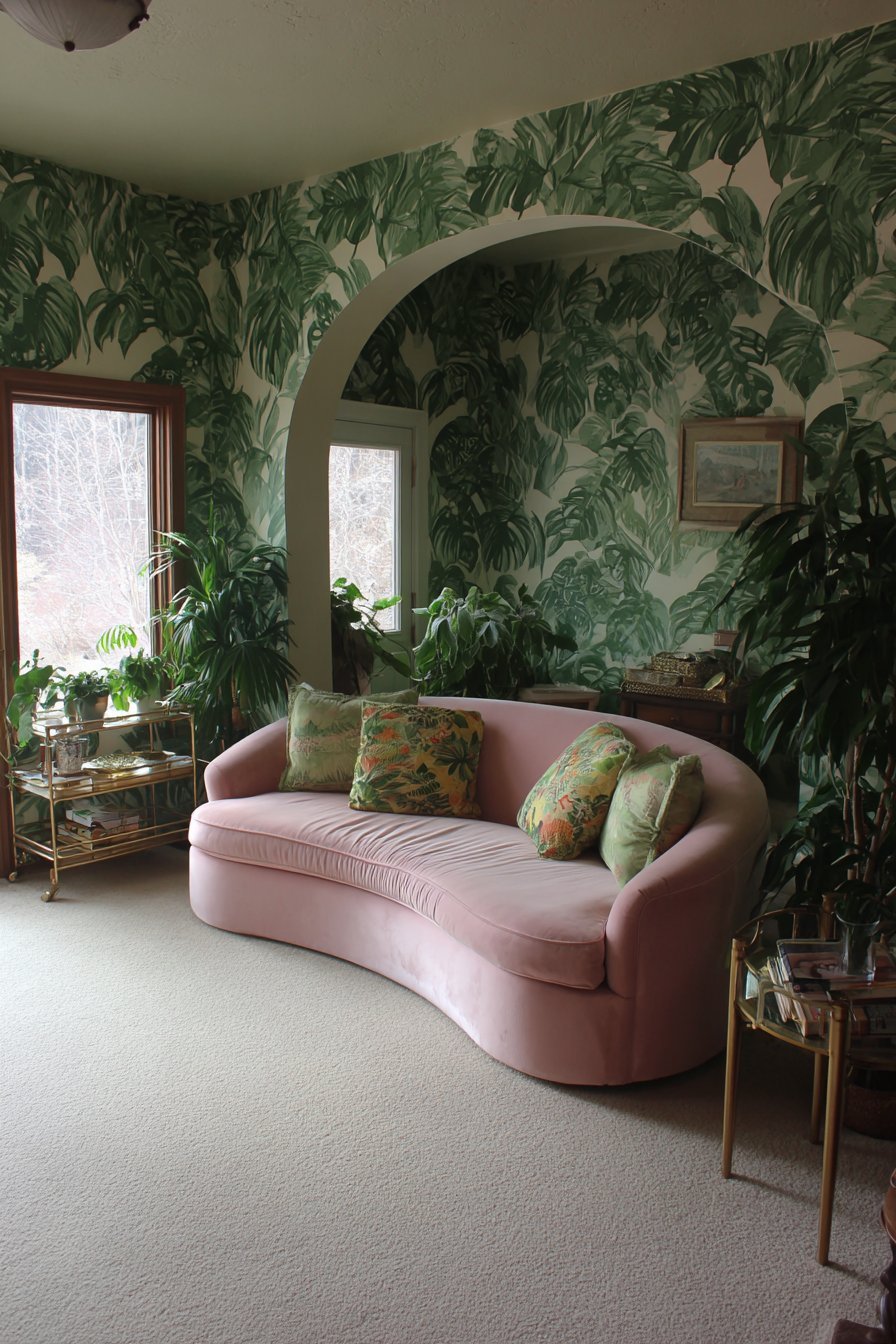
Removable wallpaper features dramatic large-scale botanical prints. Monstera and palm leaves in deep greens dominate the pattern. Cream background allows the leaf pattern to stand out. This bold tropical print creates instant accent wall impact.
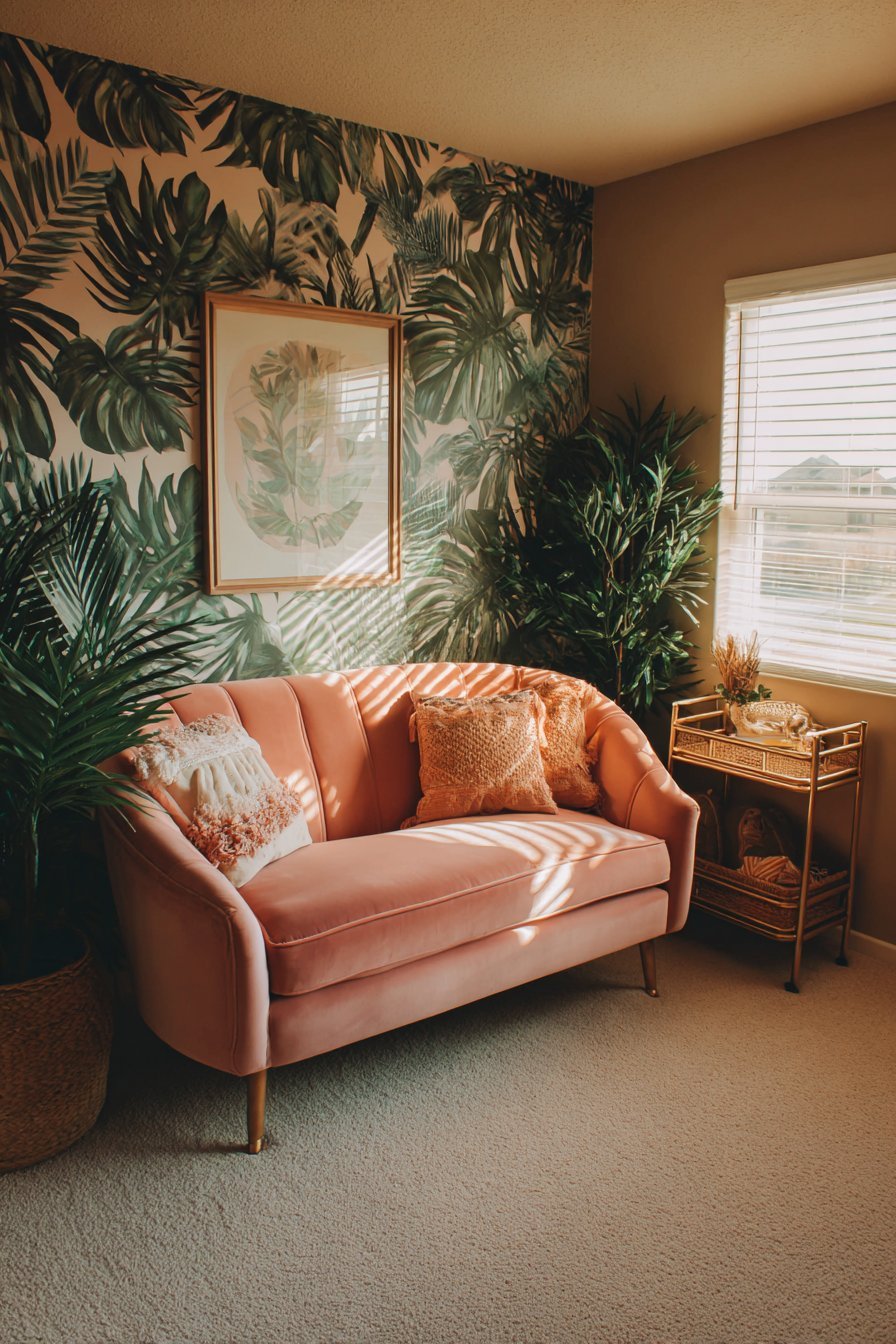
A curved velvet sofa in dusty rose sits against this dramatic backdrop. The soft pink tone complements the green leaves beautifully. Brass bar cart and rattan side table add eclectic character. Colorful throw pillows layer additional pattern and texture.
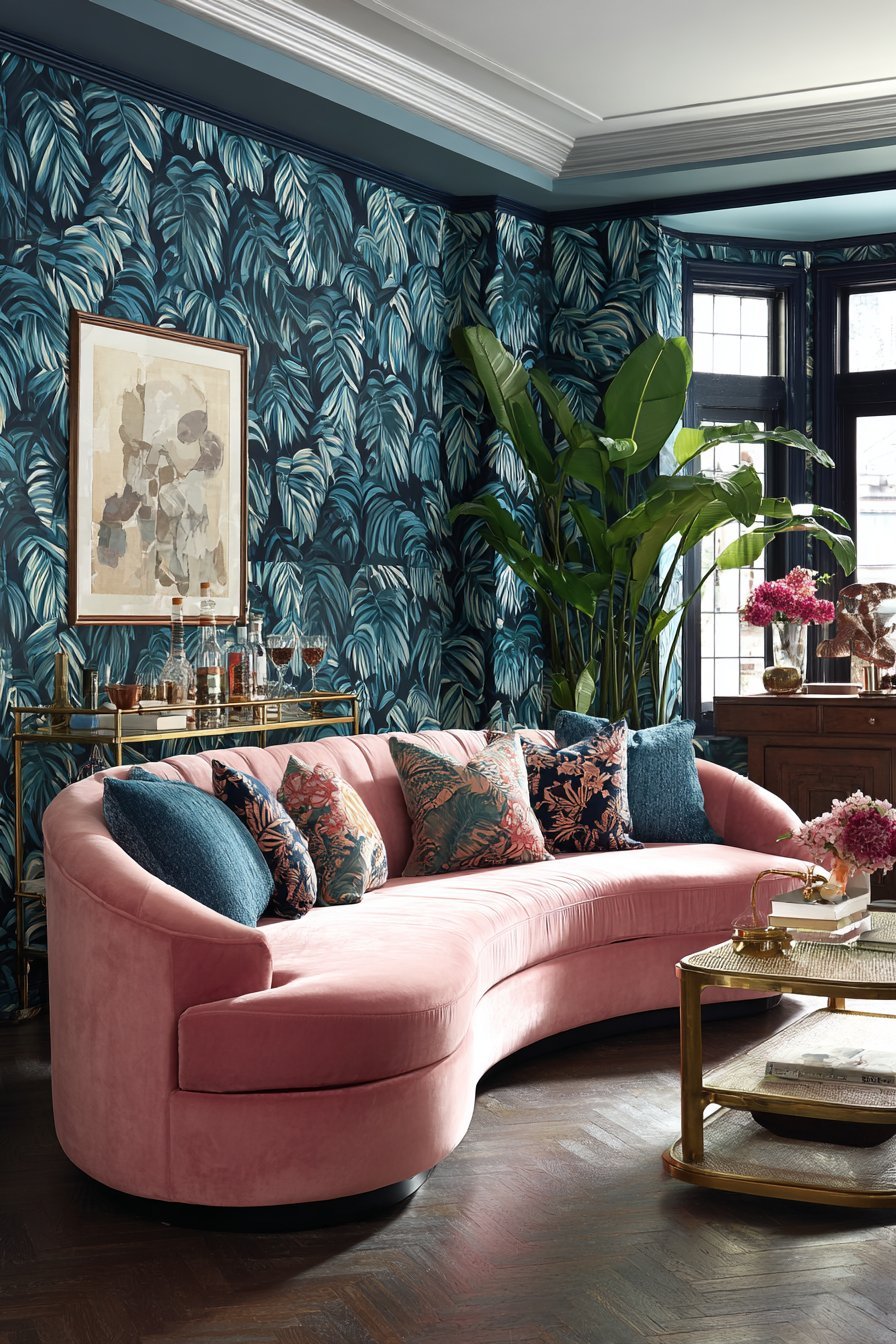
Large potted plants reinforce the botanical theme throughout the space. Living greenery echoes the wallpaper pattern organically. This connection between wall treatment and living elements strengthens the design. The layered botanical approach creates immersive tropical atmosphere.
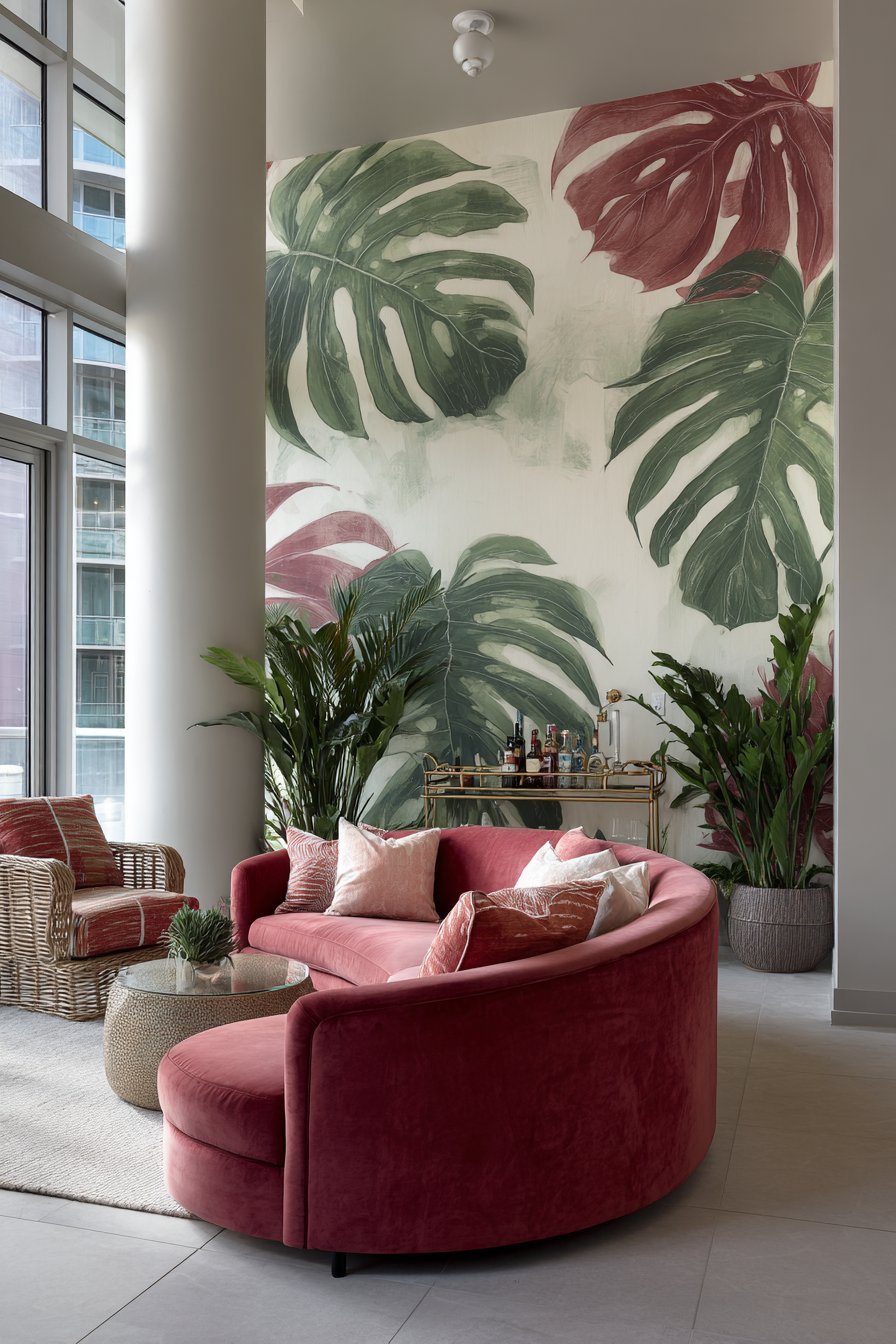
Natural light from adjacent windows illuminates the wallpaper pattern clearly. Subtle shadows add depth between the printed leaves. The peel-and-stick installation allows easy future changes. This flexibility makes bold choices less intimidating.
Key Design Tips:
- Choose peel-and-stick wallpaper for rental-friendly installation
- Apply to one accent wall rather than entire room
- Ensure wall surface is smooth and clean before application
- Use squeegee tool to remove air bubbles during installation
- Pair bold wallpaper with solid-colored furniture
- Add living plants to reinforce botanical themes
13. Serene Sage Green Accent with Nature Photography
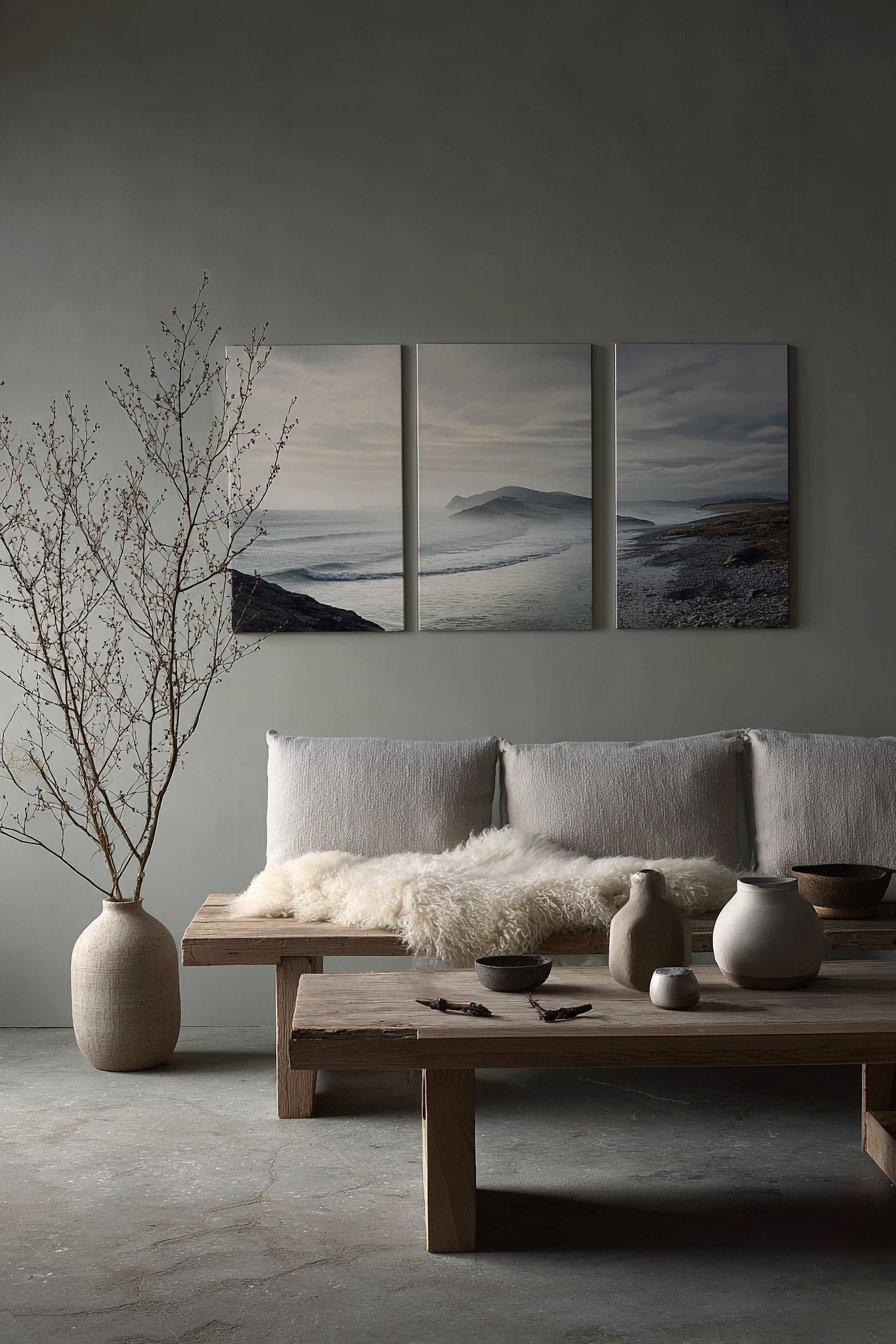
Muted sage green paint creates calming backdrop in this Scandinavian space. The restrained color emphasizes Nordic design simplicity. Three large-scale nature photographs hang in thin oak frames. This minimal gallery arrangement maintains the peaceful aesthetic.
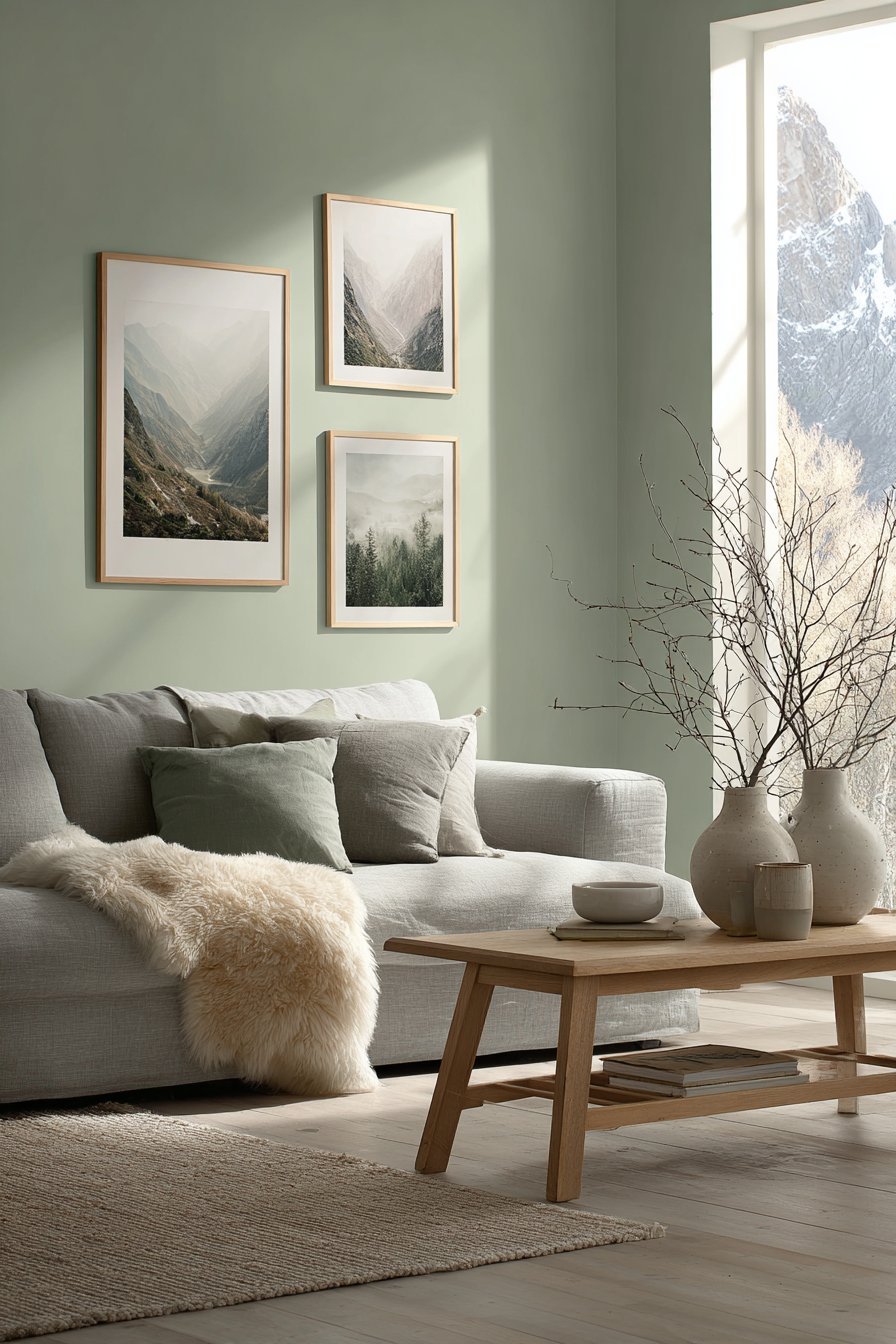
Light grey linen sofa faces the wall with natural sheepskin throw. Simple wooden coffee table demonstrates Scandinavian material preferences. Ceramic vessels and single branch in floor vase add organic elements. These natural touches reinforce the connection to nature.
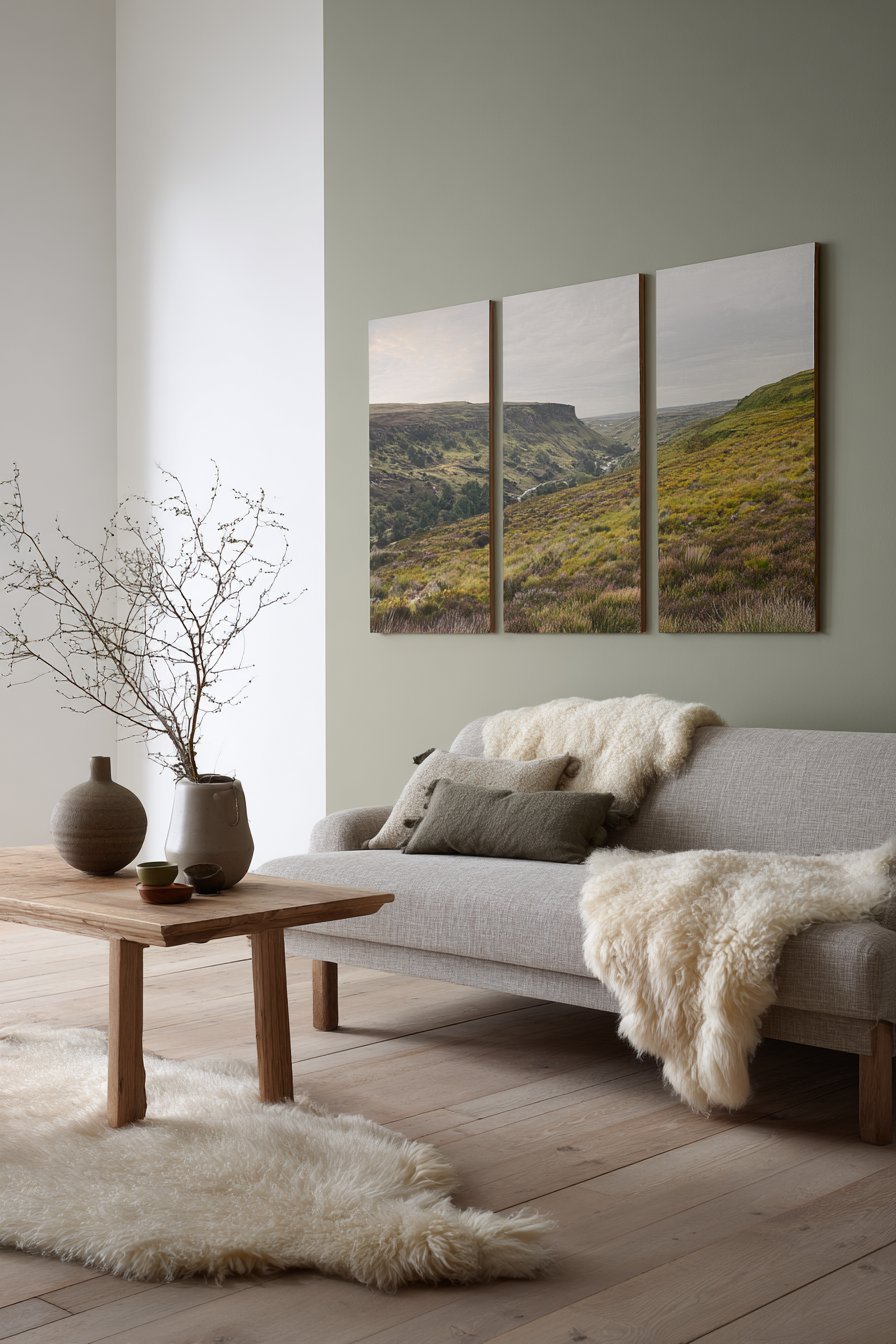
Soft morning light creates calm, serene atmosphere throughout this space. The lighting gently illuminates the painted wall surface. Natural shadows add subtle depth without harsh contrast. This quality of light enhances the peaceful mood.
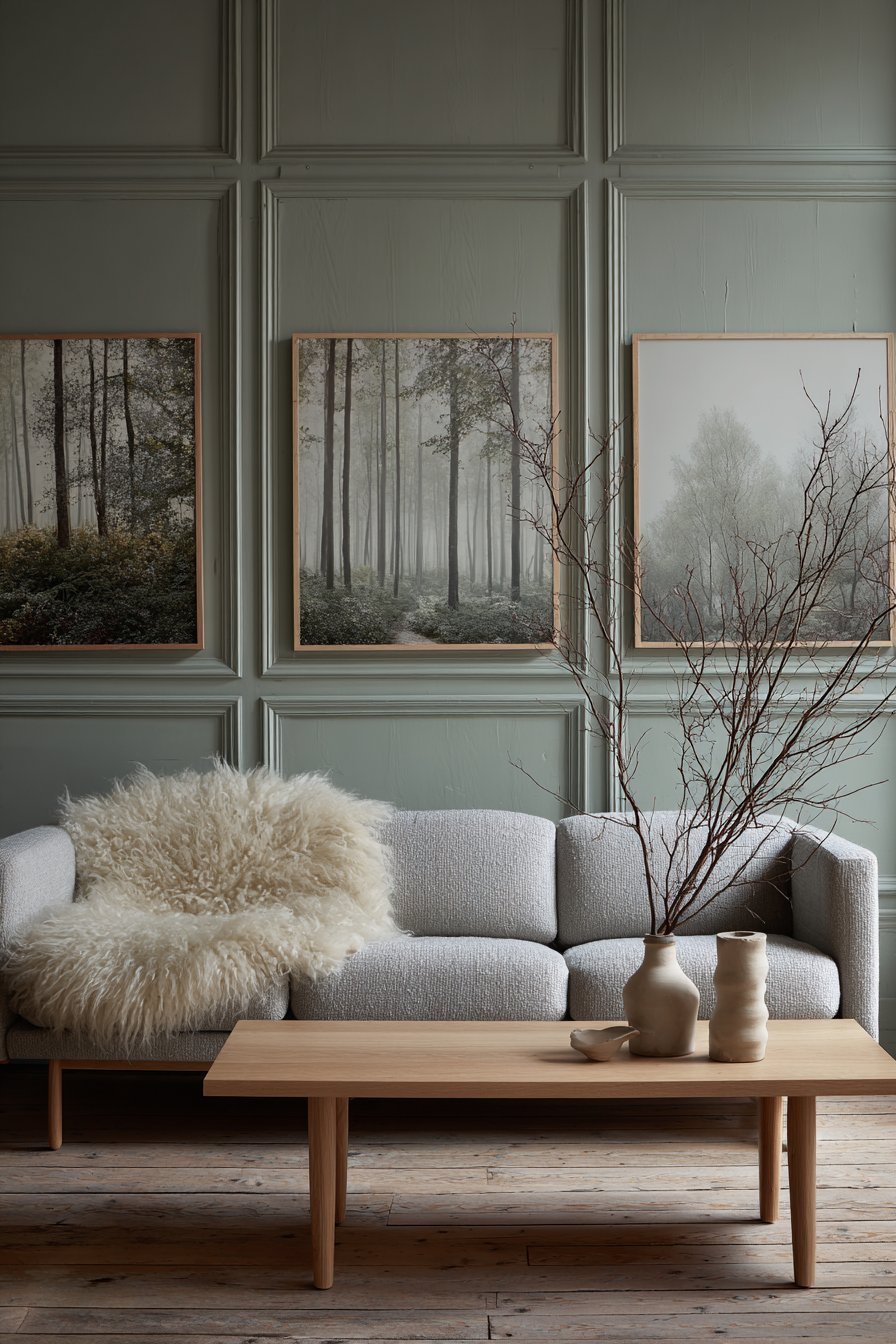
The sage green tone works beautifully with natural wood and neutral textiles. This color choice demonstrates understanding of Nordic color theory. The overall effect promotes relaxation and mindfulness. The uncluttered composition allows breathing room for thought.
Key Design Tips:
- Choose muted sage green rather than bright or yellow-green tones
- Limit artwork to three pieces for Scandinavian simplicity
- Use natural wood frames in light oak or birch
- Incorporate organic elements like branches and ceramic vessels
- Select matte paint finish for soft appearance
- Maintain mostly neutral palette with green as primary color
14. Functional Charcoal Acoustic Felt Panels
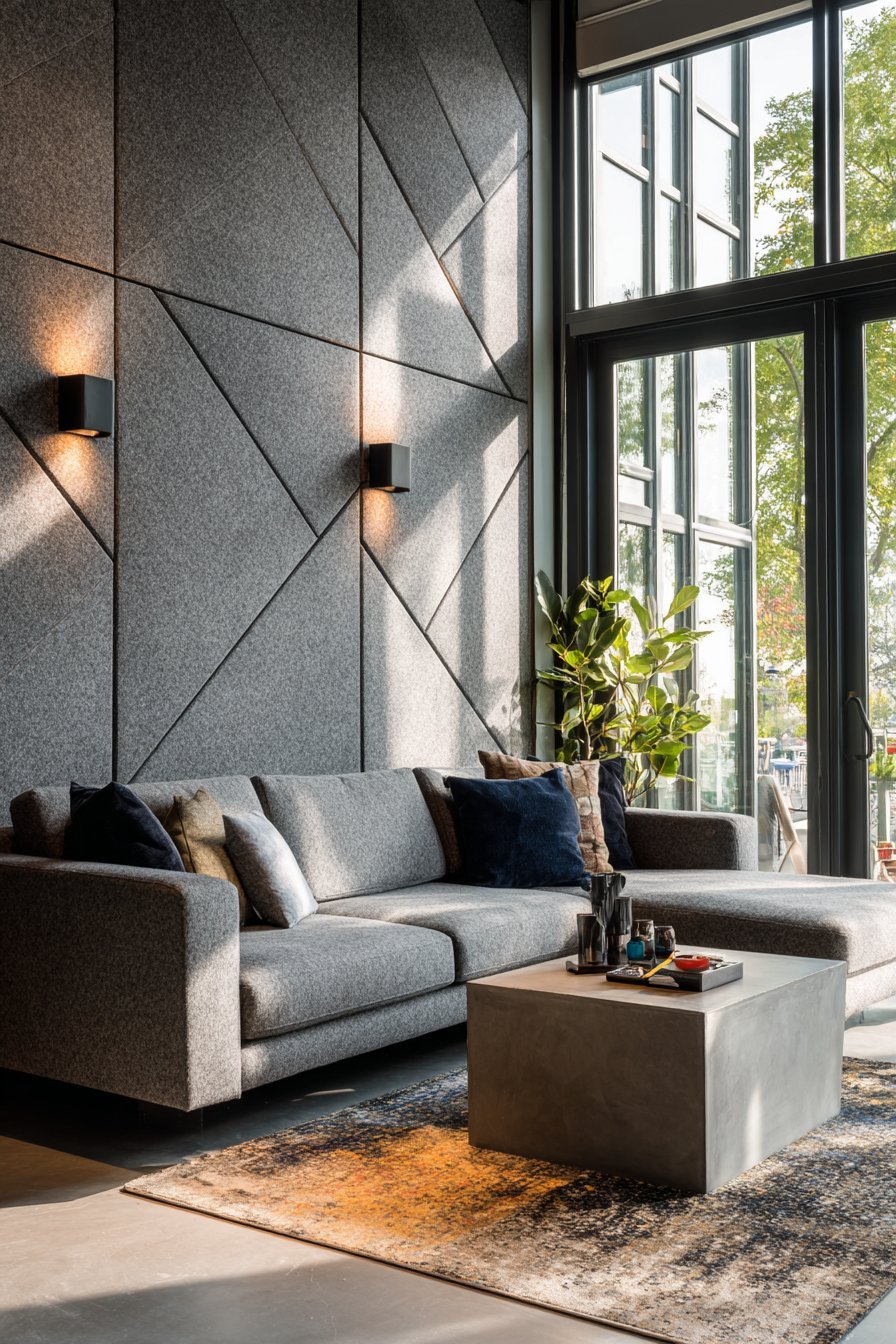
Acoustic felt panels in charcoal grey serve dual purposes beautifully. Geometric arrangement creates modern visual interest. Three-dimensional panels produce subtle shadow play throughout the day. These panels improve room acoustics while enhancing aesthetics.
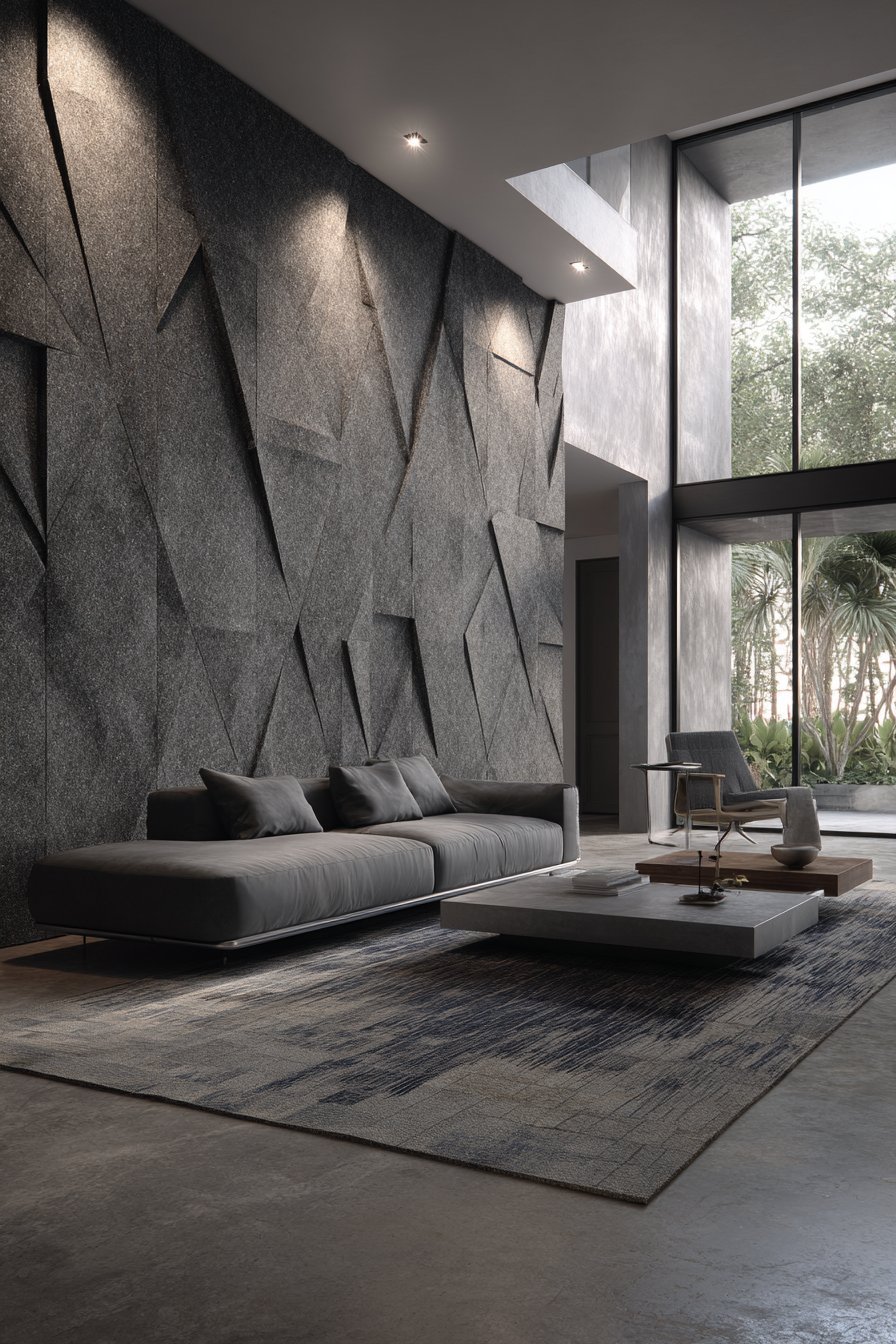
Contemporary grey sectional sofa provides comfortable seating opposite these panels. Polished concrete coffee table maintains industrial-modern aesthetic. Abstract area rug adds pattern without overwhelming the space. These contemporary elements work cohesively together.
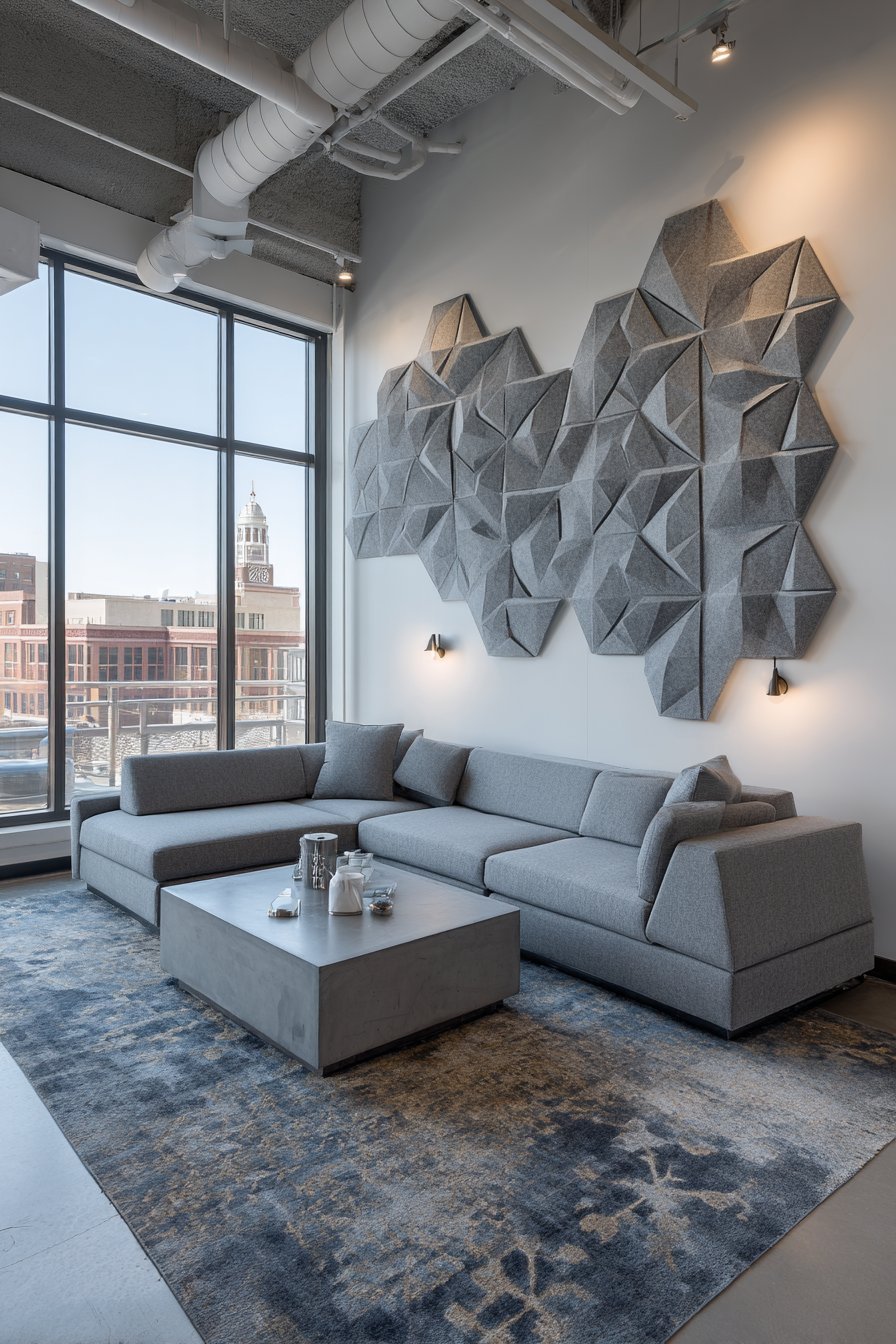
Minimalist wall sconces provide focused task lighting in the evening. Natural daylight from floor-to-ceiling windows floods the space during daytime. The lighting highlights the felt’s textured surface beautifully. Dimensional panel arrangement becomes more apparent in varied lighting.
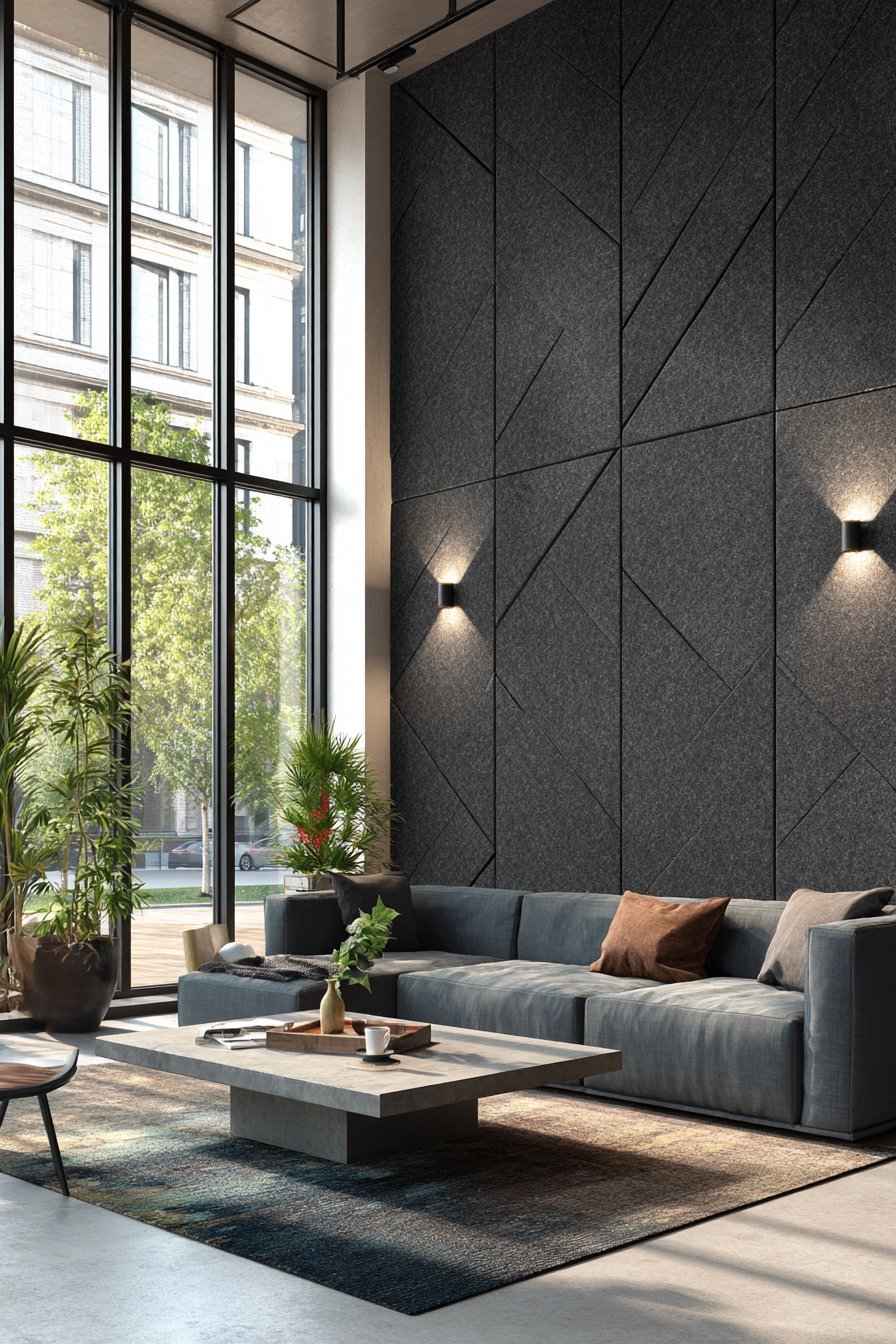
This solution addresses common problems in modern open-plan living. Hard surfaces often create echo and poor acoustics. The felt panels absorb sound while looking intentionally designed. This functional beauty demonstrates thoughtful contemporary design.
Key Design Tips:
- Position acoustic panels on walls opposite hard surfaces
- Choose panel colors that complement your existing palette
- Arrange in geometric patterns for visual interest
- Calculate coverage area based on room acoustics needs
- Install with proper adhesive rated for panel weight
- Combine with other acoustic solutions for optimal sound control
15. Rustic Mixed Stone Veneer Fireplace Wall
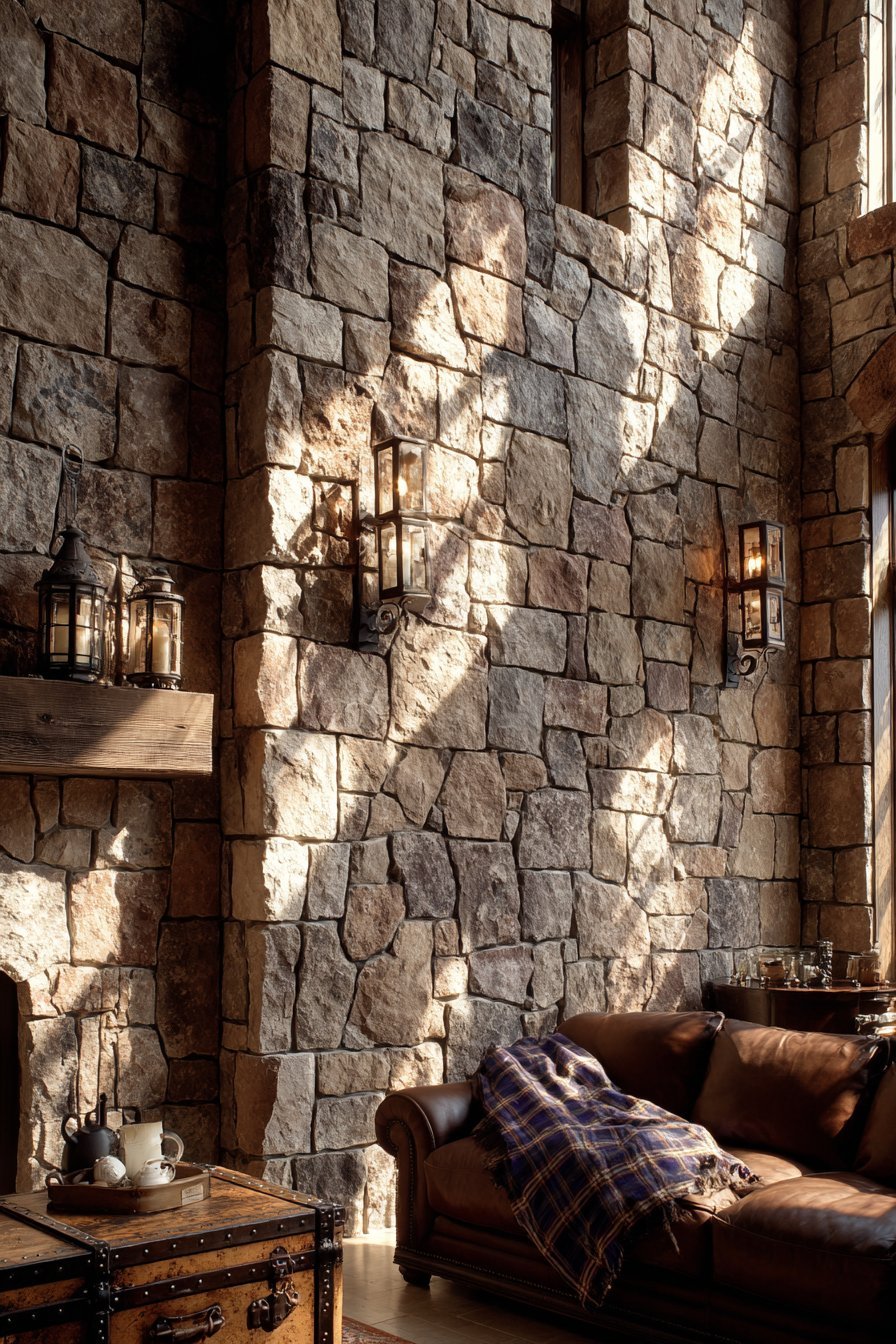
Natural stone veneer creates authentic rustic texture around the fireplace. Earth tones range from warm beiges to grey-browns. Mixed sizes and irregular shapes create stacked stone appearance. This natural material provides genuine textural depth.
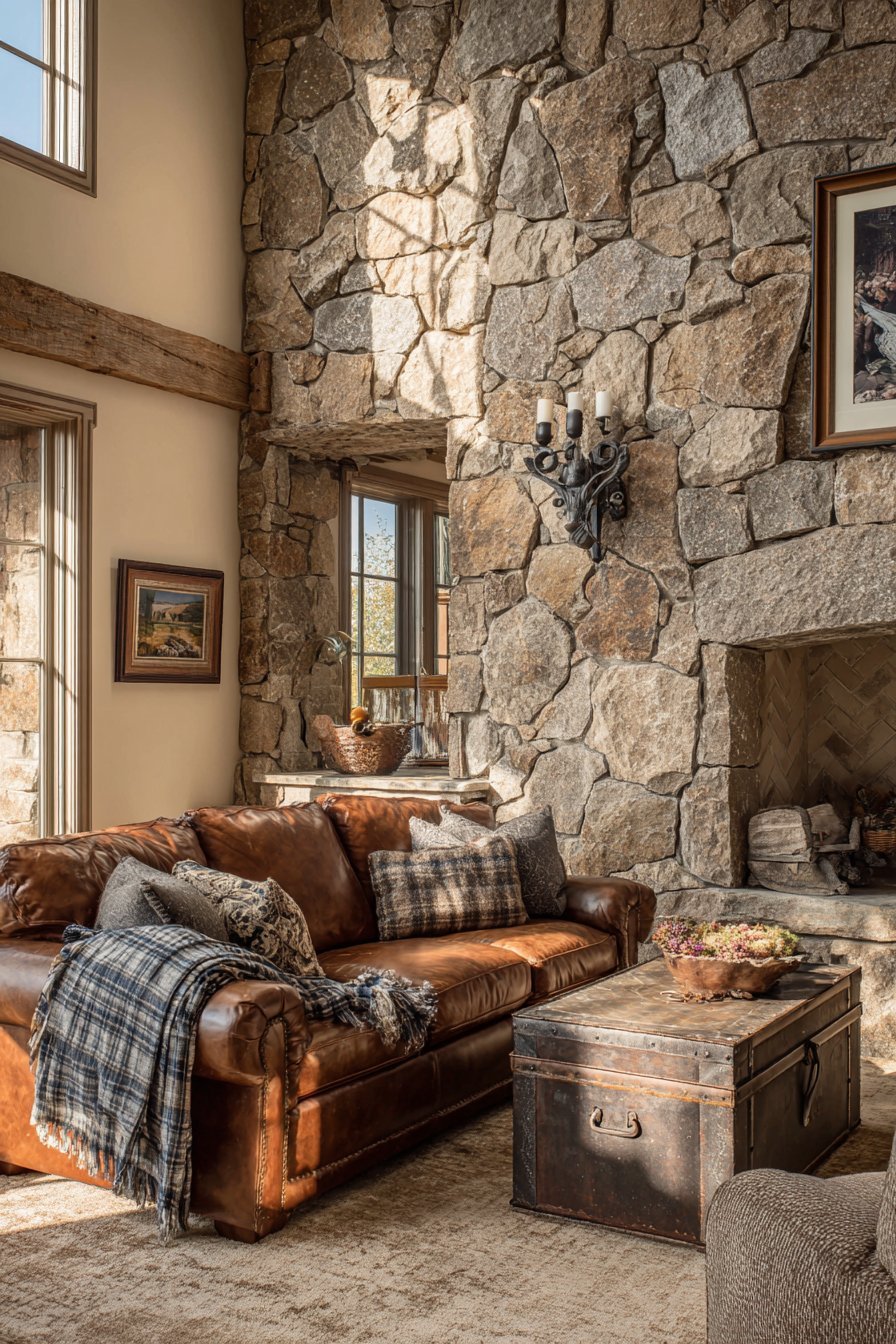
A brown leather sofa faces this stone wall comfortably. Plaid wool throw adds traditional rustic pattern and warmth. Antique trunk coffee table provides both function and character. Wrought iron wall sconces flank the fireplace traditionally.
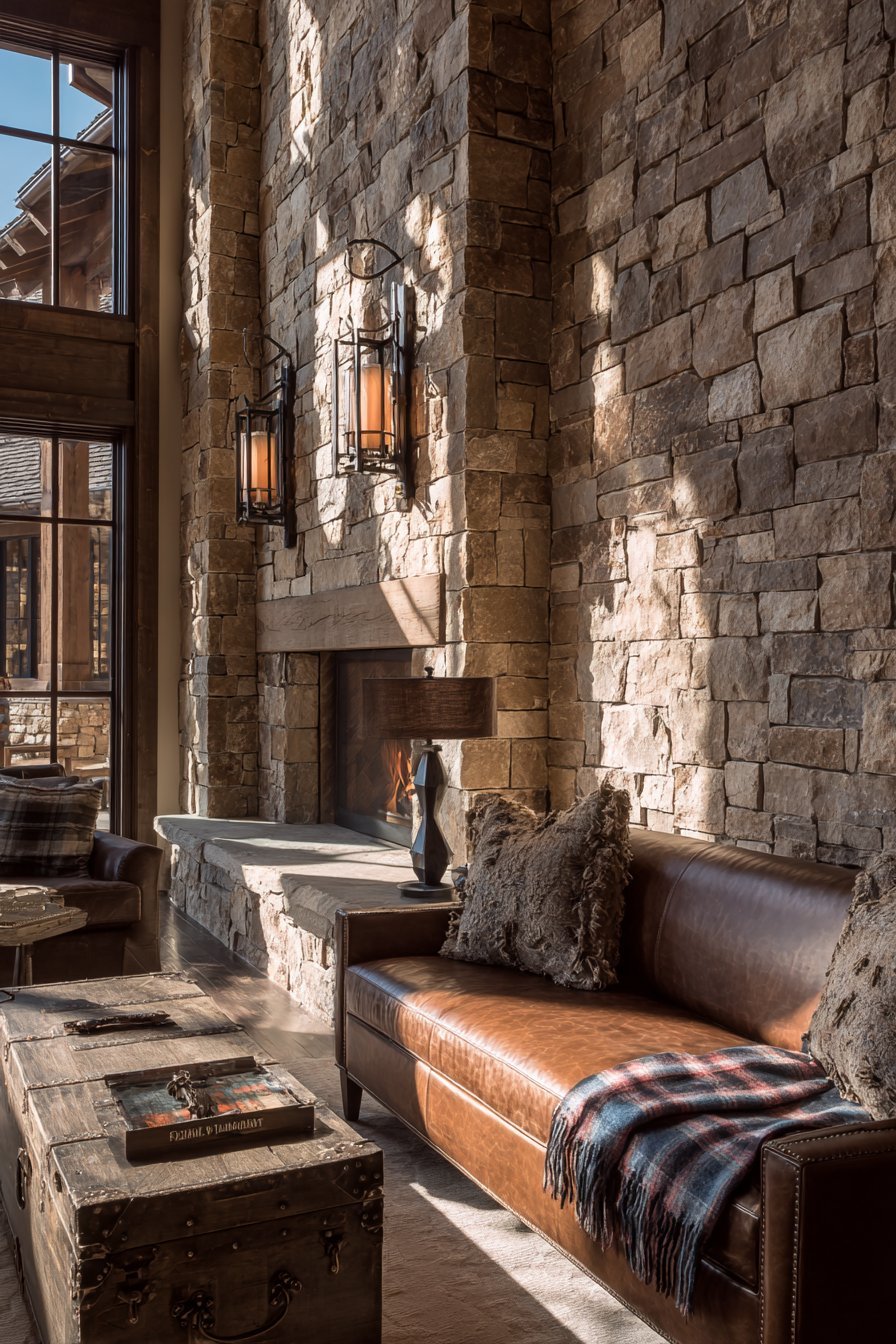
Warm afternoon light from nearby windows creates dramatic shadows. Light plays between individual stone pieces throughout the day. This shadow pattern emphasizes the dimensional texture constantly. Natural color variations become more apparent in changing light.
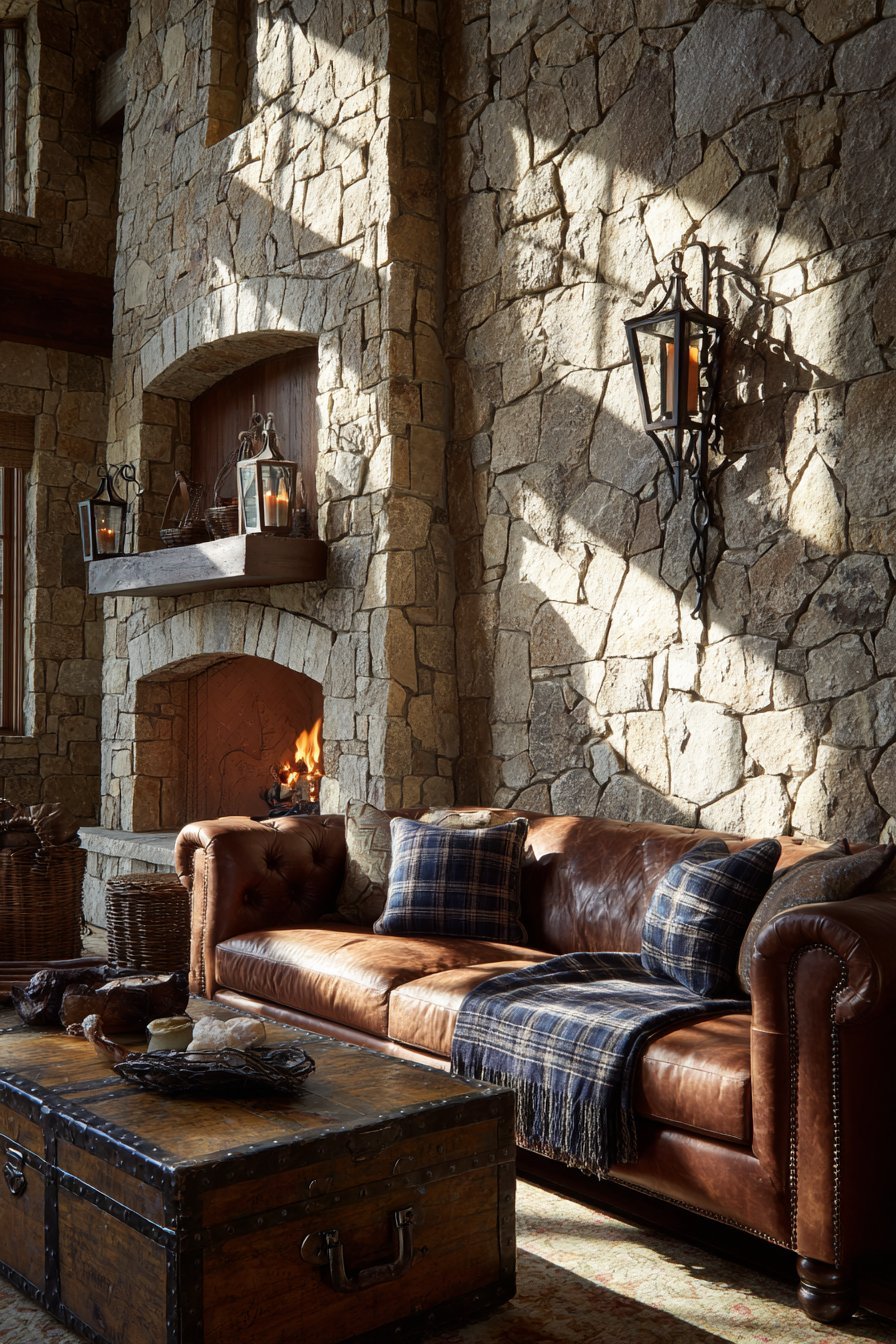
The stone veneer adds significant architectural presence to the space. This material choice brings outdoor elements inside effectively. The installation around the fireplace creates focal point naturally. The warmth of the fire complements the earthy stone tones.
Key Design Tips:
- Choose stone veneer in colors that complement your palette
- Install with proper mortar and ensure level application
- Mix stone sizes for authentic stacked appearance
- Seal stone to prevent staining while maintaining natural look
- Position lighting to create dramatic shadows between stones
- Balance rustic stone with refined furnishings for sophistication
16. Preserved Moss Living Wall Installation
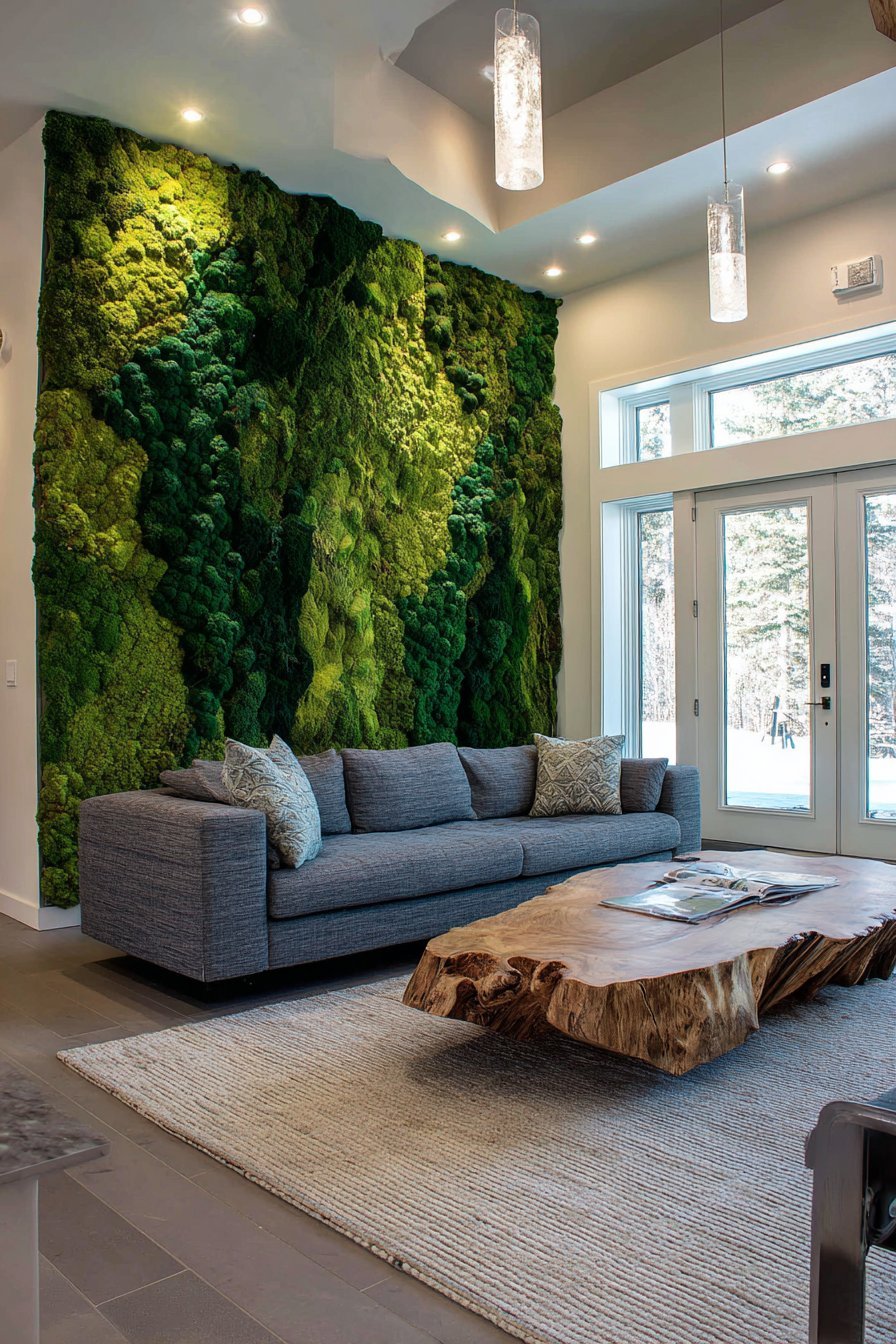
Vertical garden installation uses preserved moss in various green shades. This living wall effect requires no maintenance or watering. Natural moss texture provides organic visual interest throughout. Subtle dimensional depth adds biophilic design element.
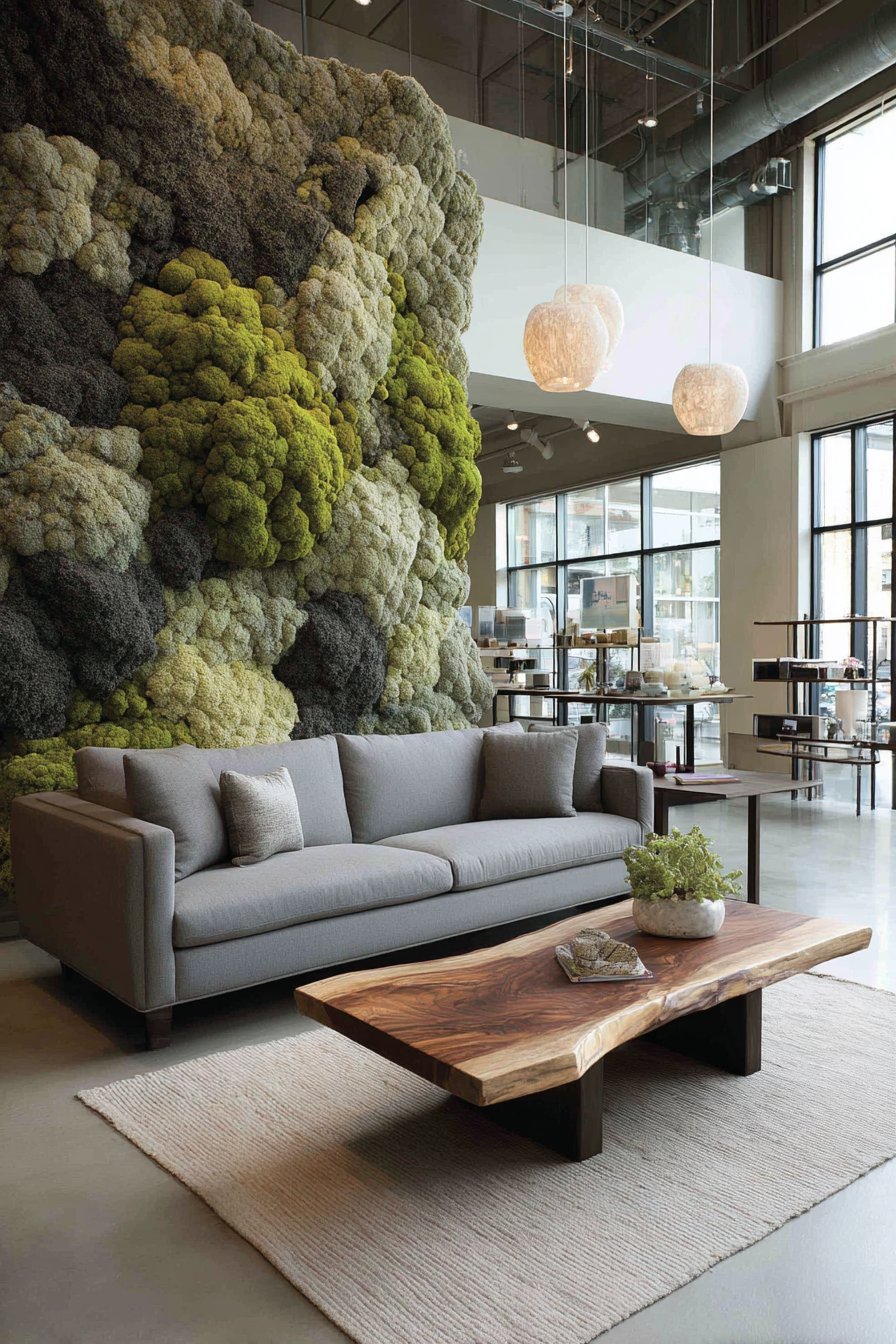
Modern grey sofa sits opposite this green wall installation. Live edge wood coffee table brings additional natural material. Neutral area rug grounds the space without competing visually. These natural elements create cohesive biophilic design.
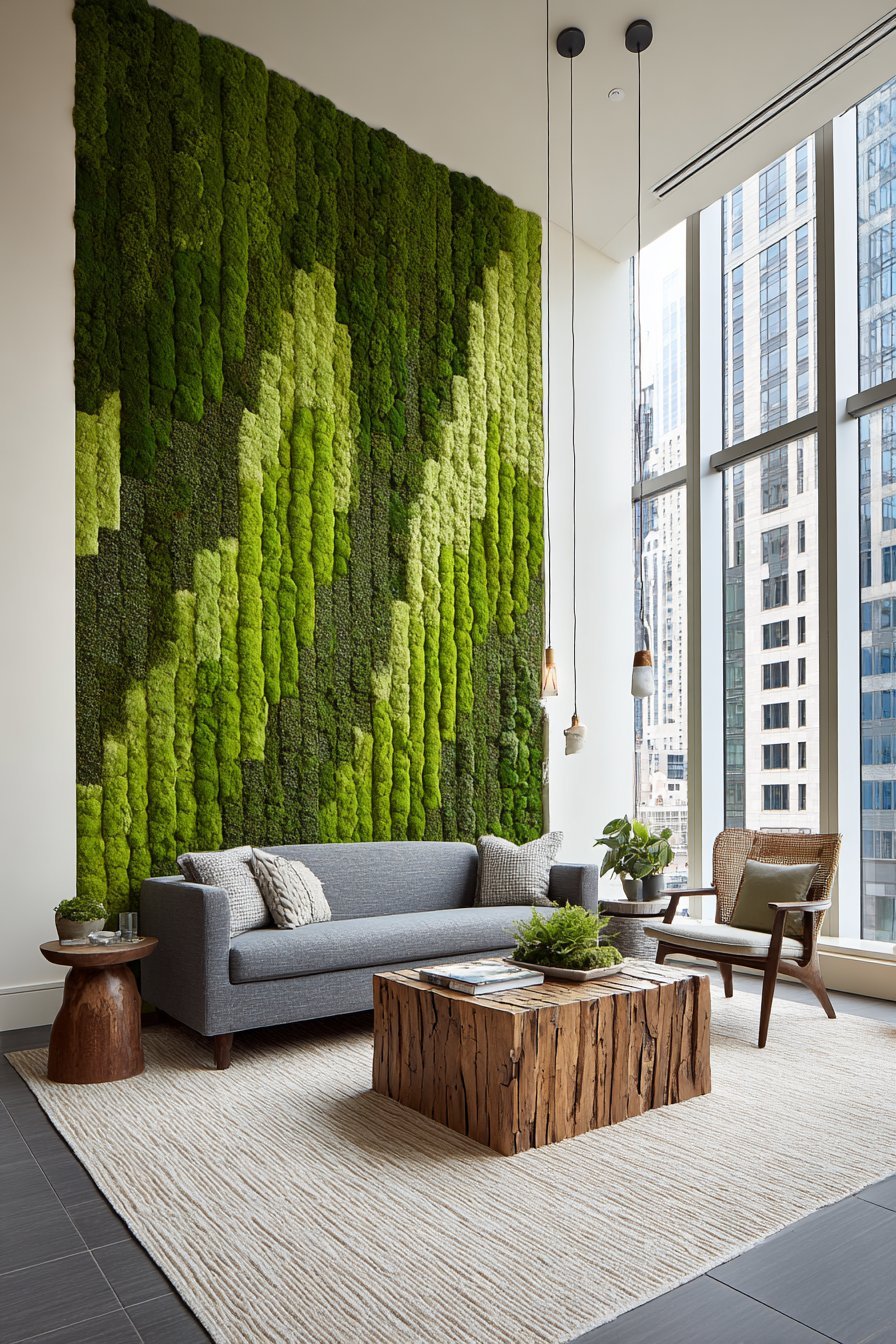
Soft natural daylight from adjacent windows illuminates the moss gently. The lighting highlights color variations within the preserved moss. Natural texture becomes more apparent in proper illumination. The green wall creates calming focal point naturally.
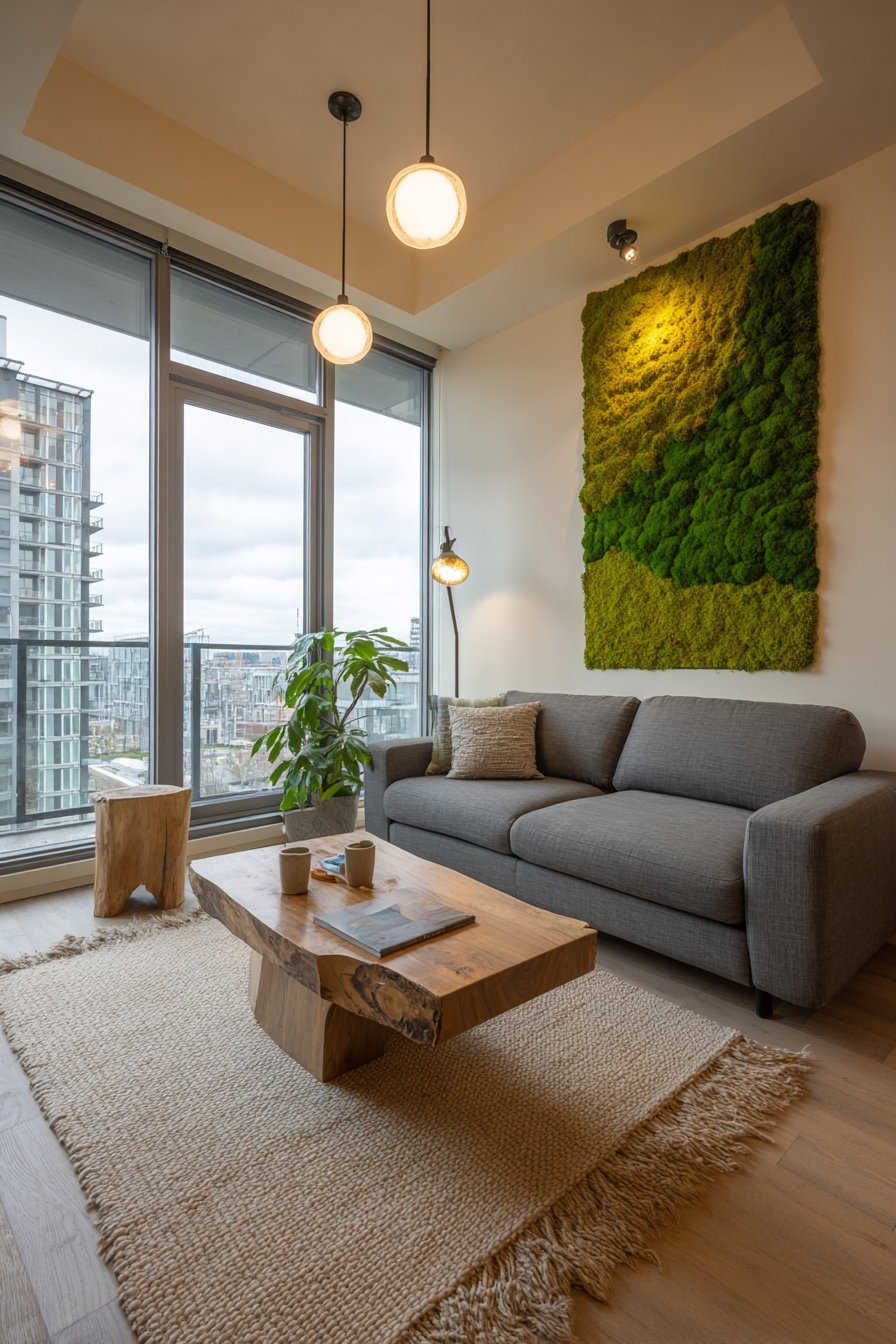
Simple pendant lights provide ambient lighting in evening hours. The preserved moss maintains color and texture indefinitely. This solution brings nature indoors without maintenance requirements. The calming effect promotes wellbeing and connection to nature.
Key Design Tips:
- Purchase preserved moss from reputable suppliers for quality assurance
- Install in panels for easier application and future maintenance
- Keep moss away from direct sunlight to prevent fading
- Maintain moderate humidity levels to preserve moss quality
- Avoid touching frequently to maintain natural appearance
- Position where it can be appreciated without interference
17. Classic Board and Batten White Farmhouse Wall
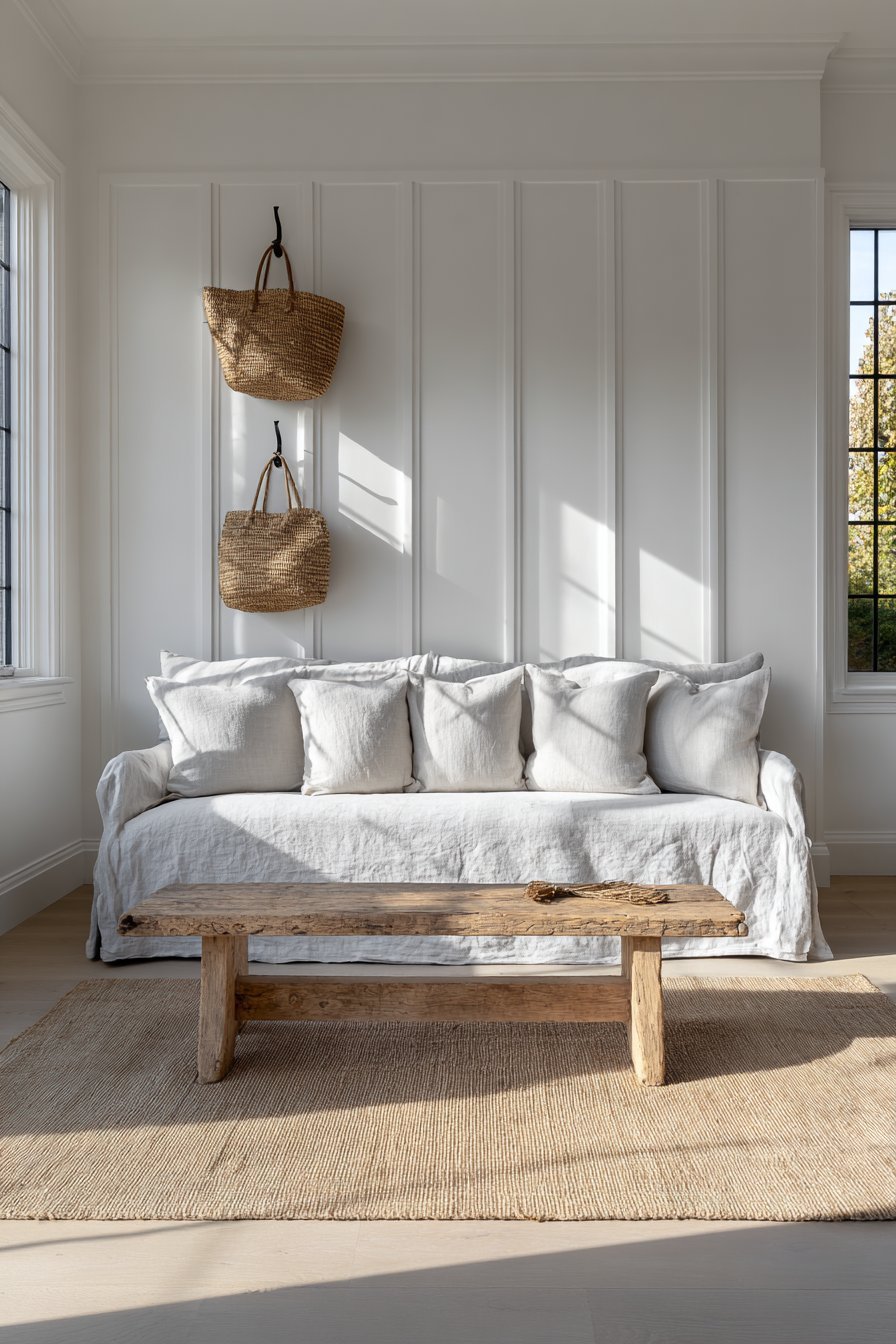
Traditional board and batten treatment creates architectural detail throughout. White paint provides crisp, fresh farmhouse appearance. Vertical boards extend from baseboard to ceiling continuously. Even spacing creates consistent rhythm across the wall.
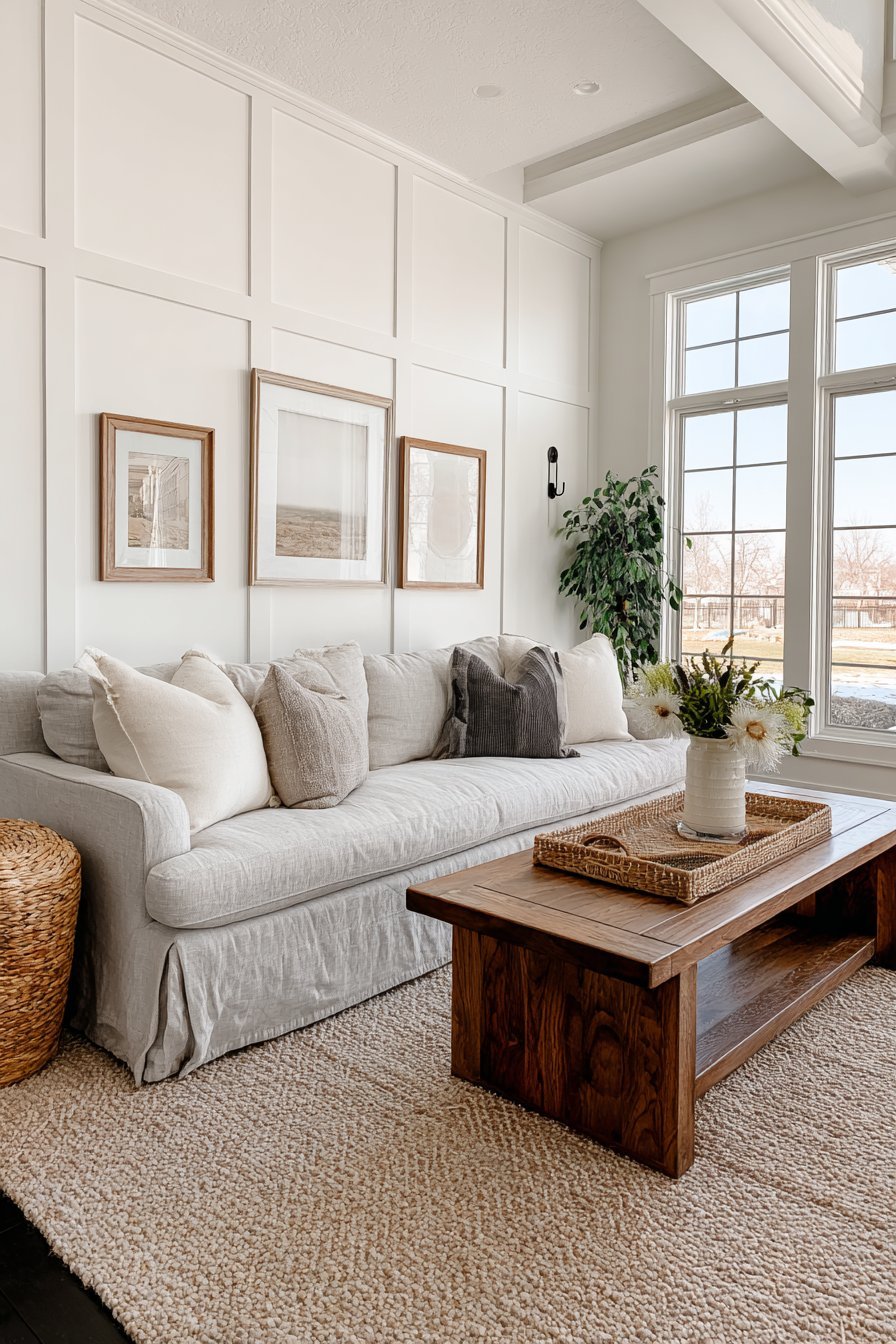
Grey linen slipcovered sofa centers opposite this architectural wall. Vintage wooden bench serves as coffee table with practical charm. Natural fiber rug adds organic texture underfoot. Simple iron wall hooks hold woven baskets functionally.
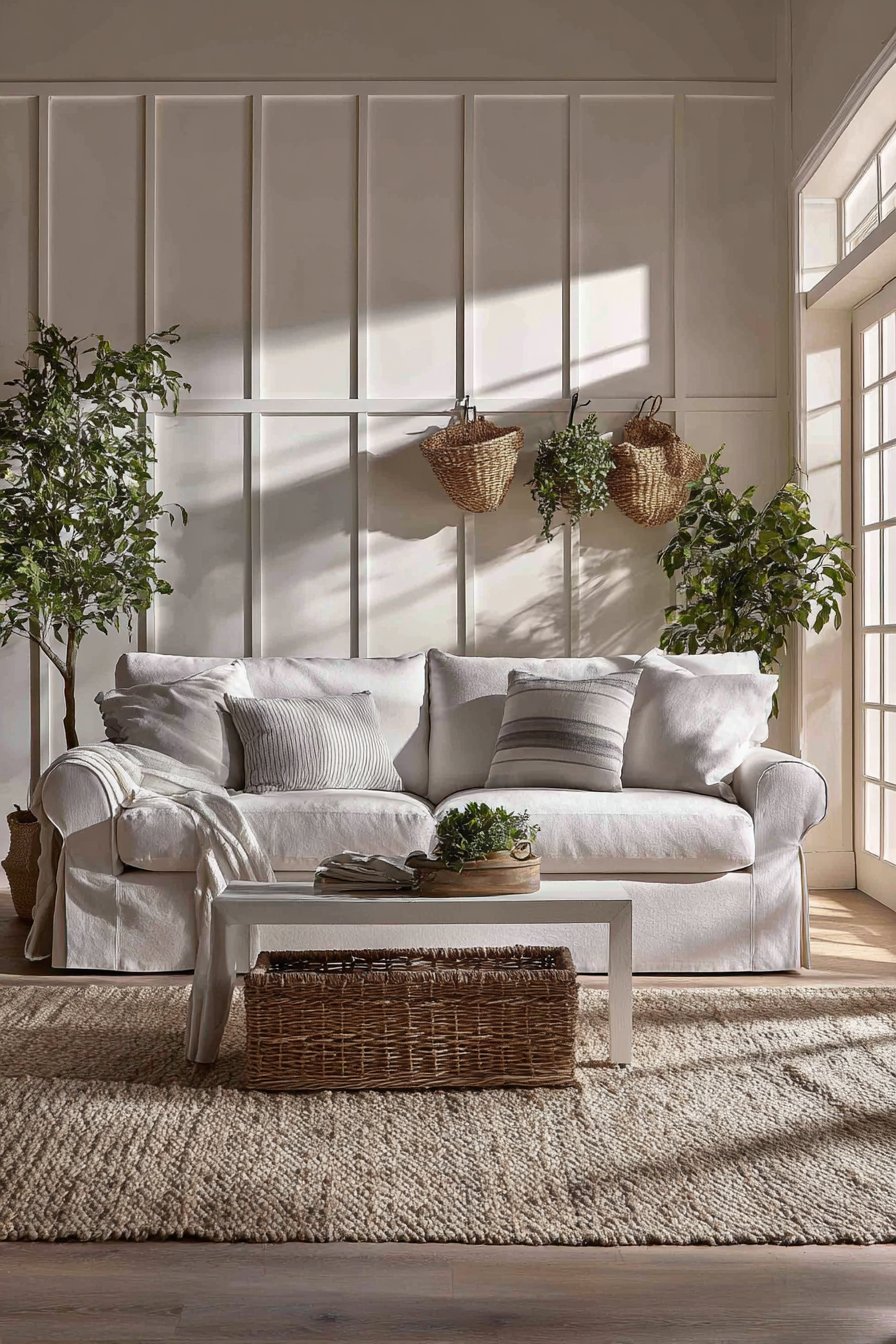
Natural morning light through farmhouse windows creates gentle shadows. These shadows emphasize the dimensional board and batten installation. The crisp white paint reflects light beautifully throughout the space. This treatment maintains the room’s airy, casual character.
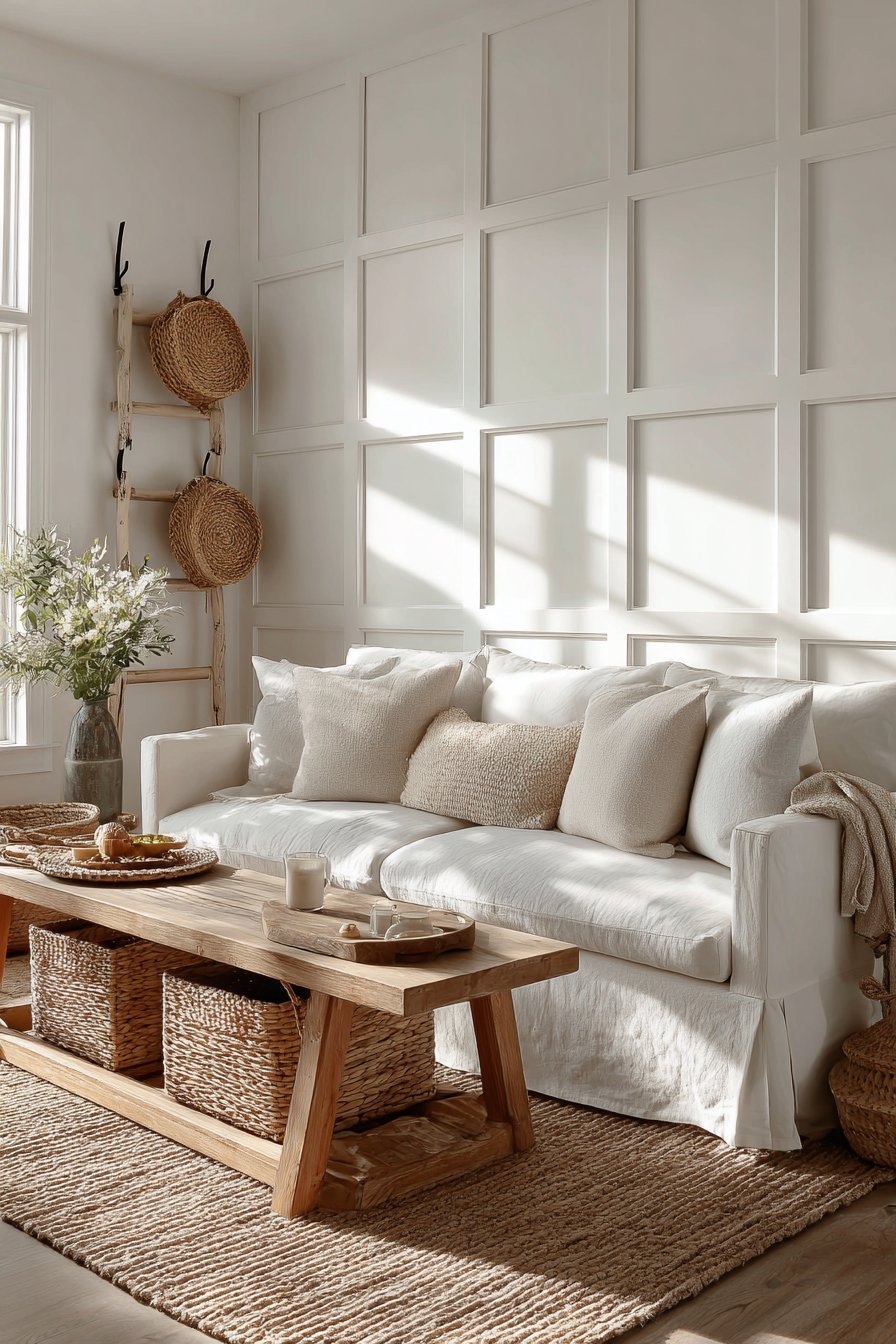
The vertical orientation makes ceilings appear higher than actual height. This architectural trick maximizes perceived space effectively. The classic white finish works with various decorating styles. This versatility makes board and batten timeless investment.
Key Design Tips:
- Space vertical boards 12-16 inches apart for classic proportion
- Use quality paint in semi-gloss or satin for durability
- Install battens over seams between base boards for clean finish
- Ensure level installation for professional appearance
- Prime properly before painting for best coverage
- Pair with casual farmhouse furnishings and natural materials
18. Artistic Hand-Painted Abstract Mural
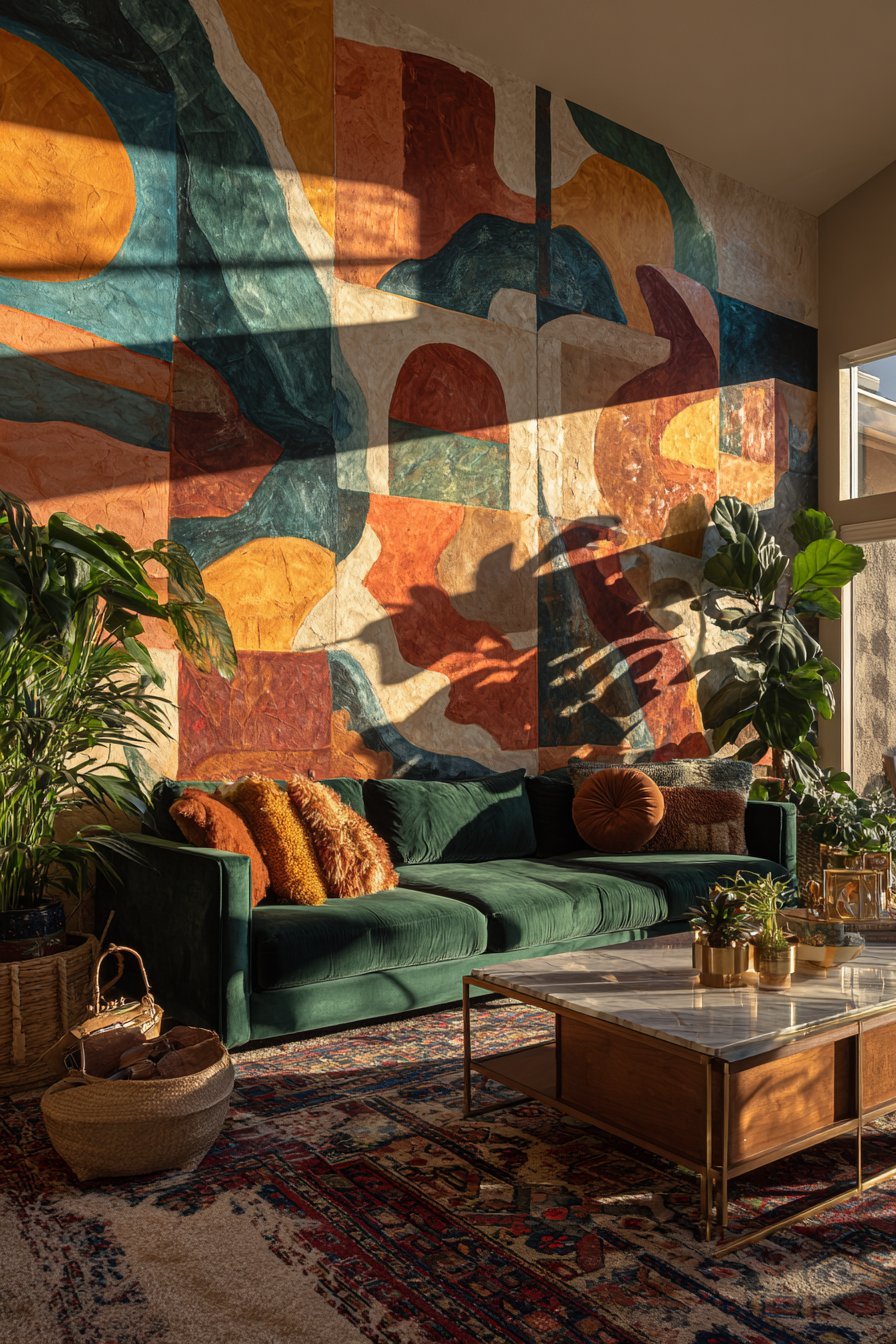
Bold hand-painted mural spans the entire wall surface dramatically. Abstract organic shapes use terracotta, ochre, and deep teal. Cream background allows the painted elements to dominate. This artistic wall treatment creates truly one-of-a-kind statement.
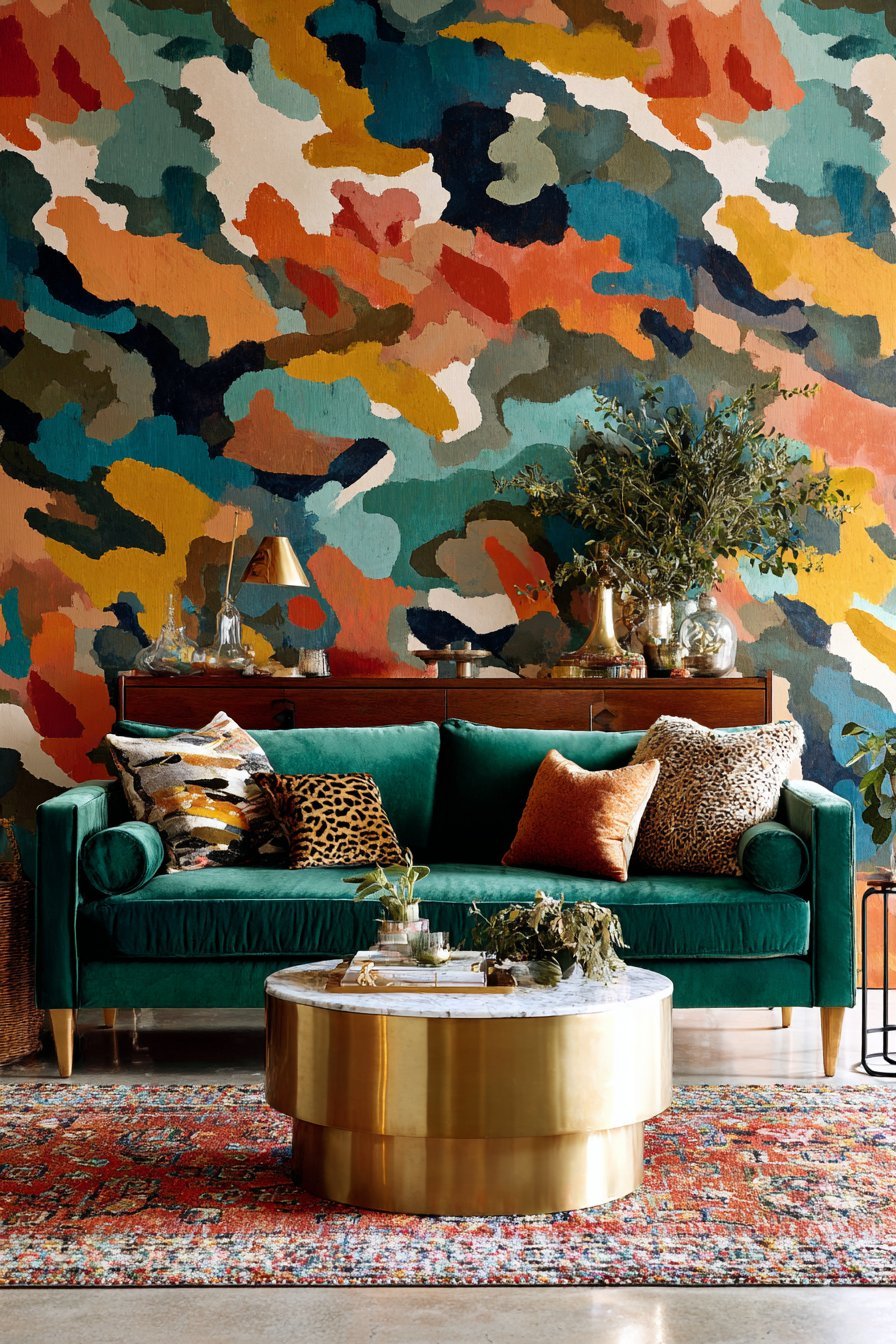
Jewel-toned emerald green velvet sofa faces this artistic backdrop. Brass and marble coffee table adds luxurious detail. Layered vintage rugs create rich textural foundation. Eclectic accessories and abundant plants complete the maximalist look.
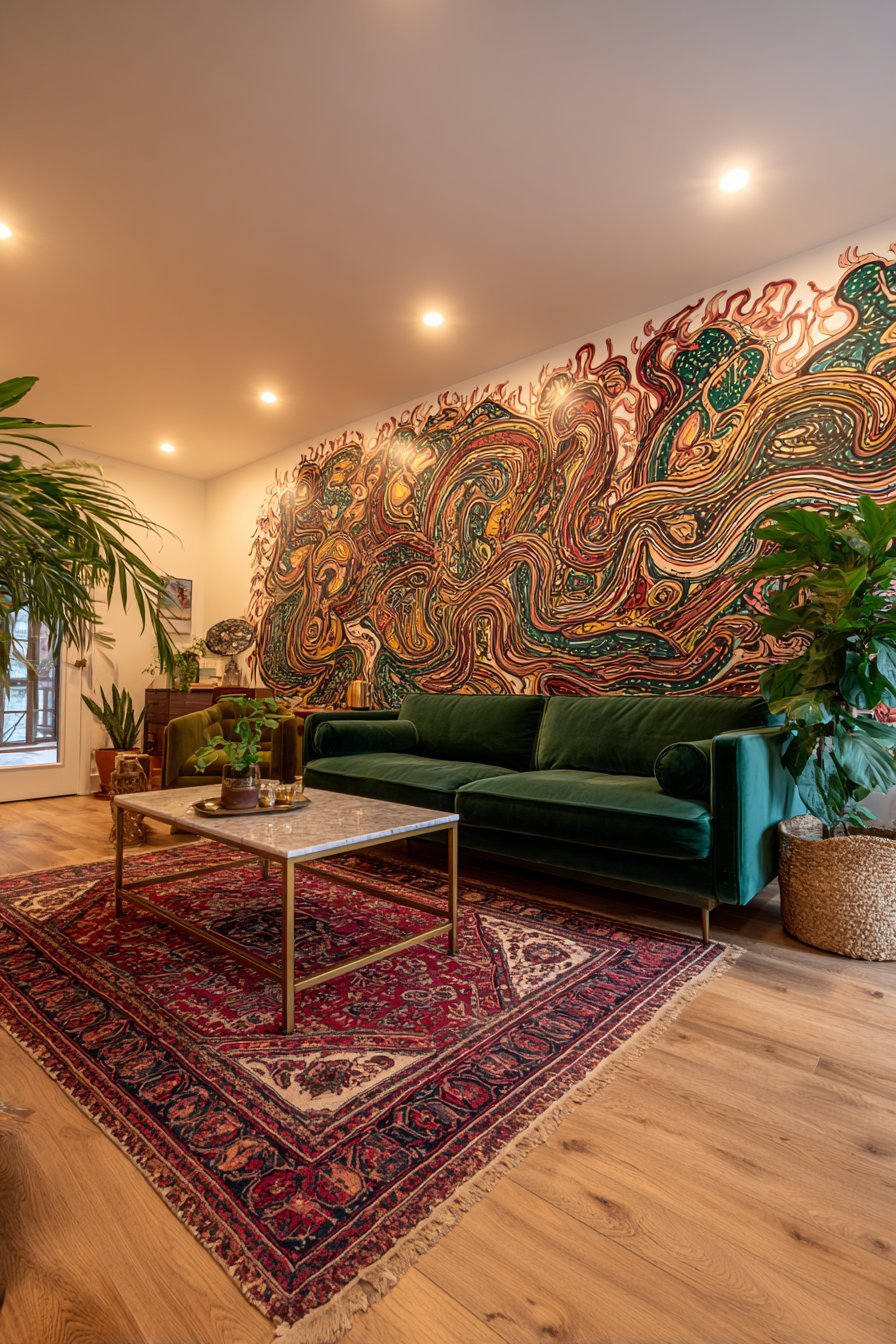
Warm golden hour lighting illuminates the painted mural beautifully. The lighting brings out richness in hand-mixed colors. Brushstroke textures become visible in proper illumination. The artistic quality adds personality impossible to replicate.
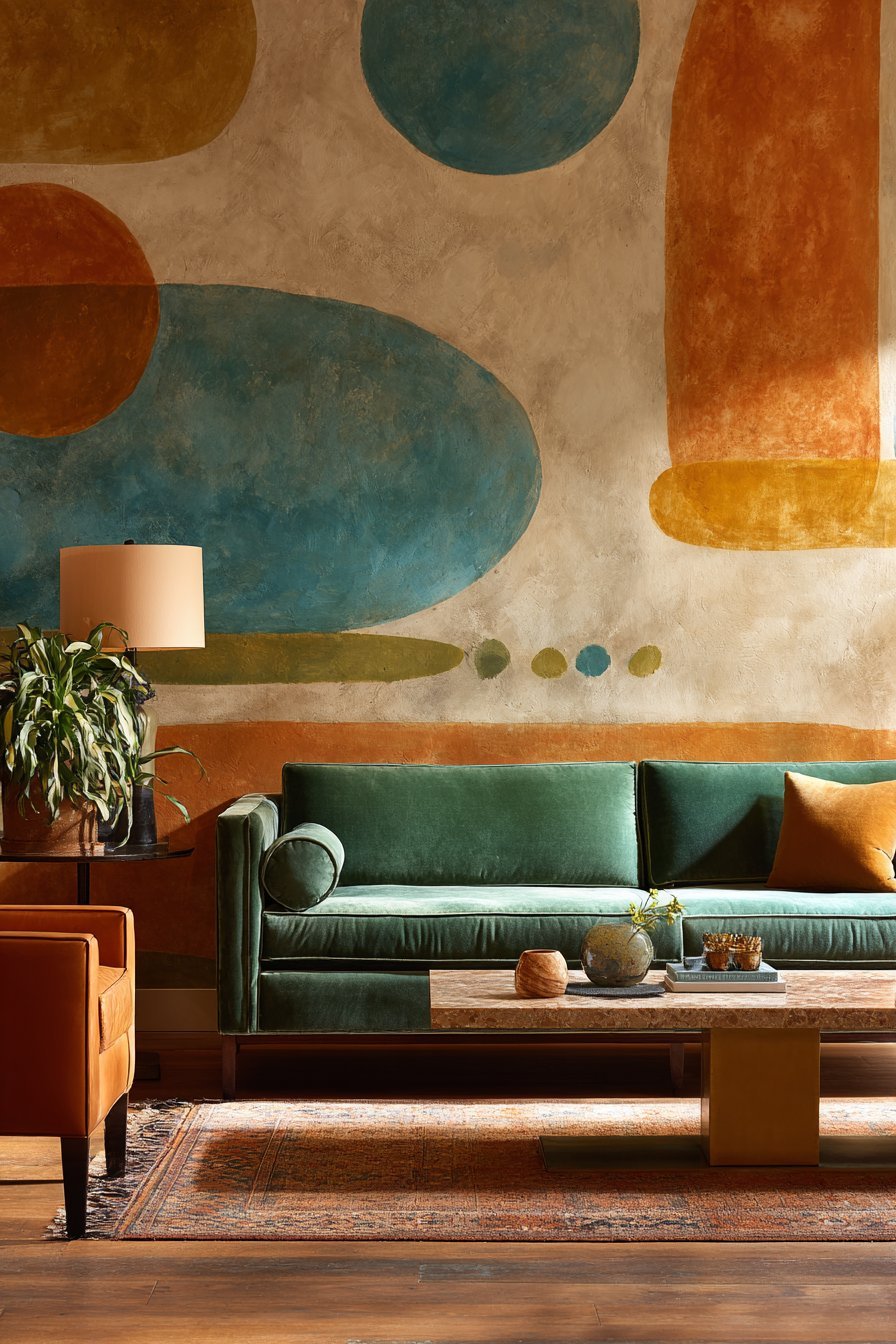
This maximalist approach celebrates color, pattern, and artistic expression. The hand-painted nature ensures absolute uniqueness. Professional execution elevates the mural from DIY to artwork. This investment piece becomes the room’s defining feature.
Key Design Tips:
- Hire professional muralist for best results and longevity
- Choose colors that complement your existing palette
- Protect mural with clear matte sealer after completion
- Design mural considering furniture placement and viewing angles
- Balance bold mural with quality furnishings in complementary colors
- Plan mural as permanent feature rather than temporary decoration
19. Sophisticated Greige Tongue and Groove Paneling
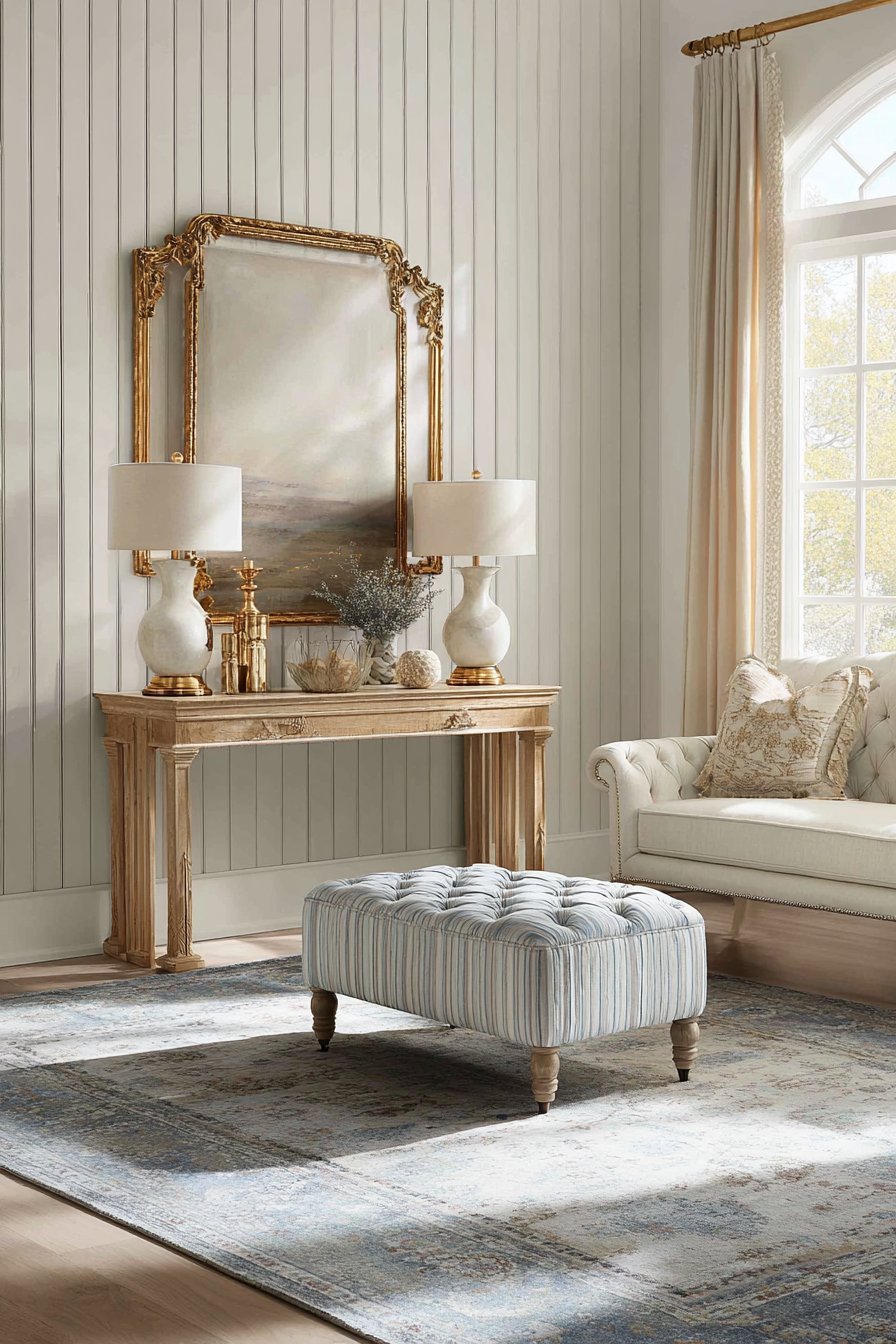
Horizontal tongue and groove paneling creates subtle linear texture. Soft greige paint color demonstrates transitional style sophistication. The painted paneling serves as elegant backdrop. Subtle texture adds depth without overwhelming the space.
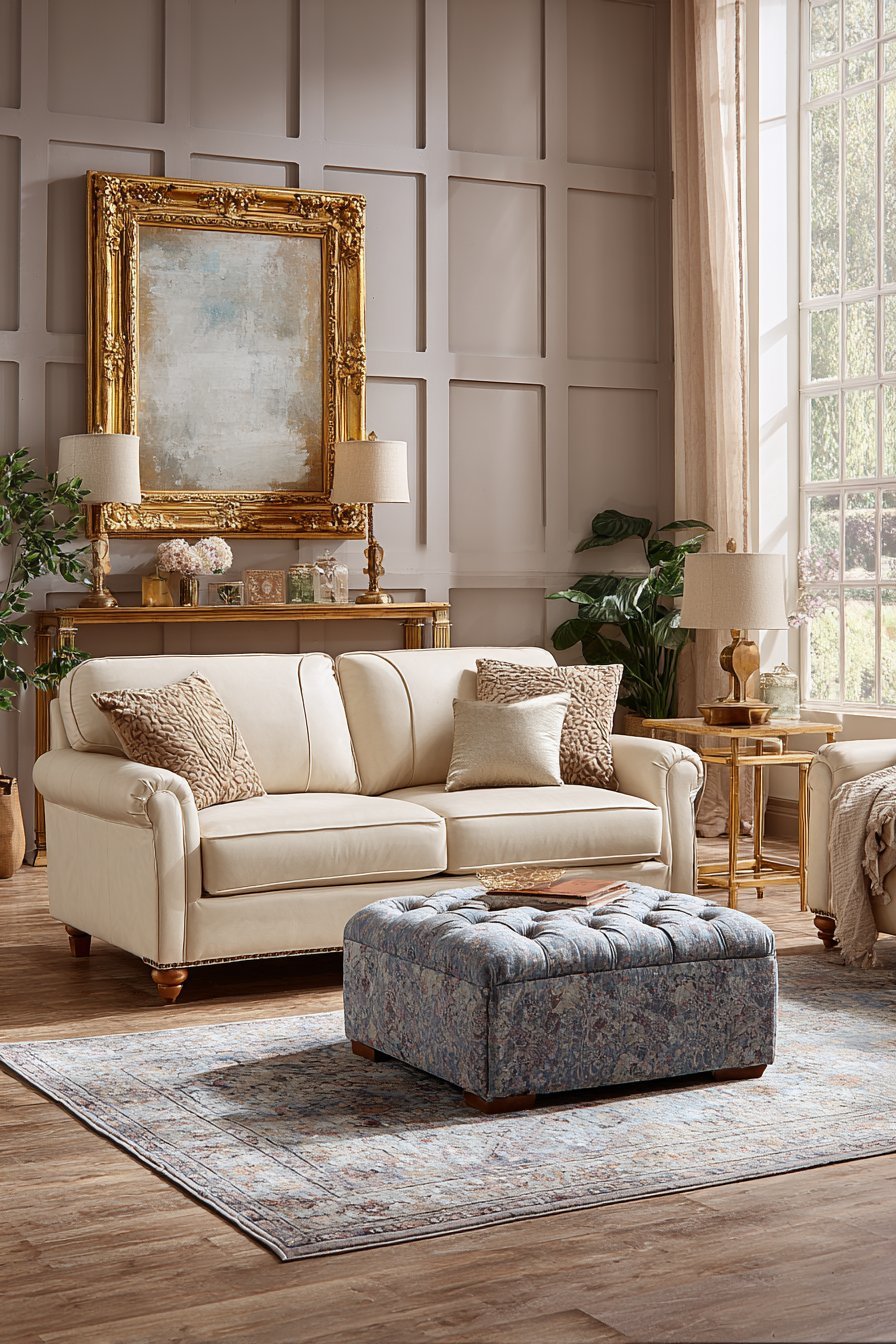
Large ornate gold-framed mirror hangs above a styled console table. Table lamps and decorative objects complete the vignette beautifully. Cream upholstered sofa faces the wall with tufted ottoman. Traditional area rug in muted blues and creams grounds the space.
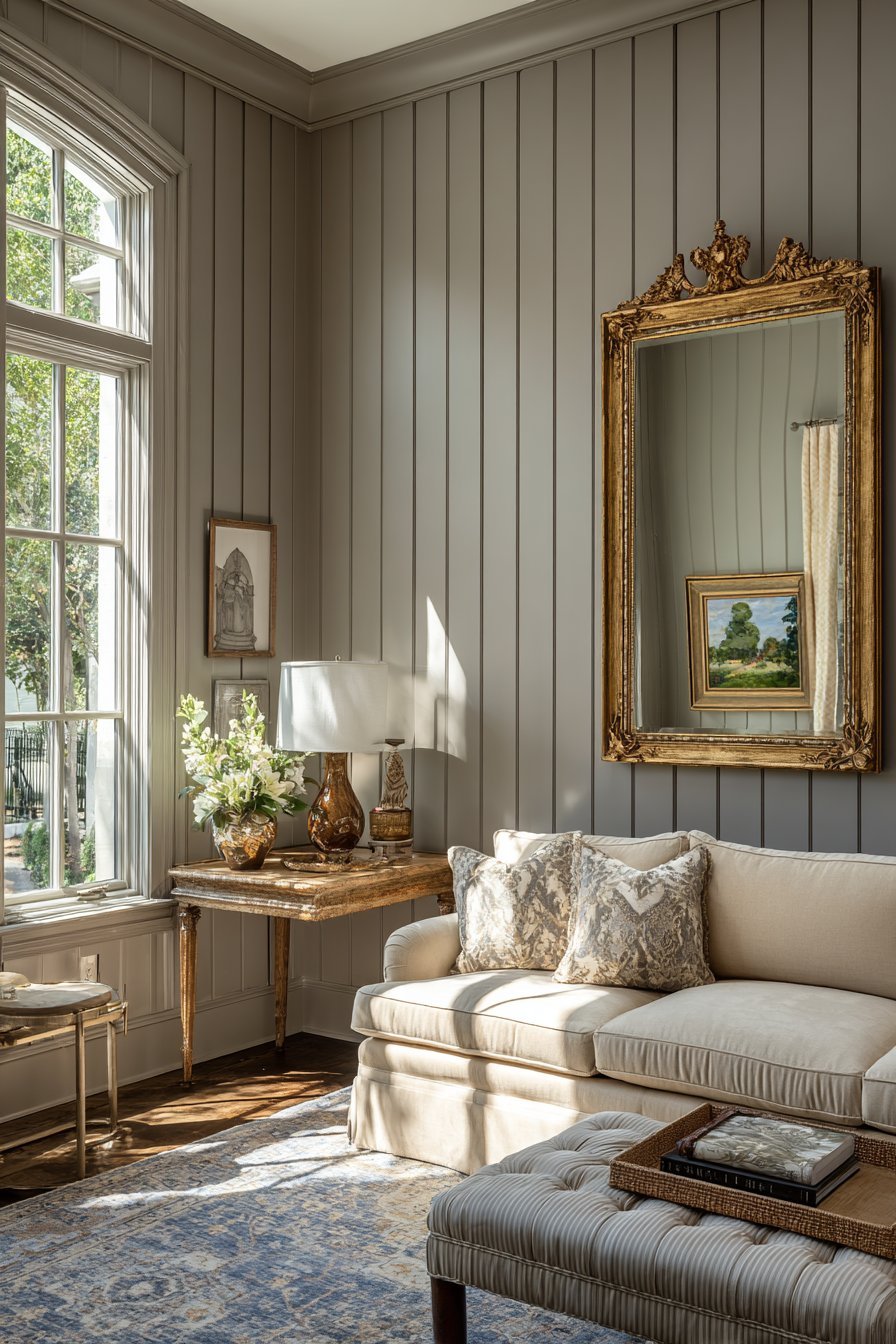
Natural afternoon light through draped windows creates soft shadows. Shadows between tongue and groove boards add dimensional interest. The lighting enhances the sophisticated layered design aesthetic. Draped windows soften the light beautifully.
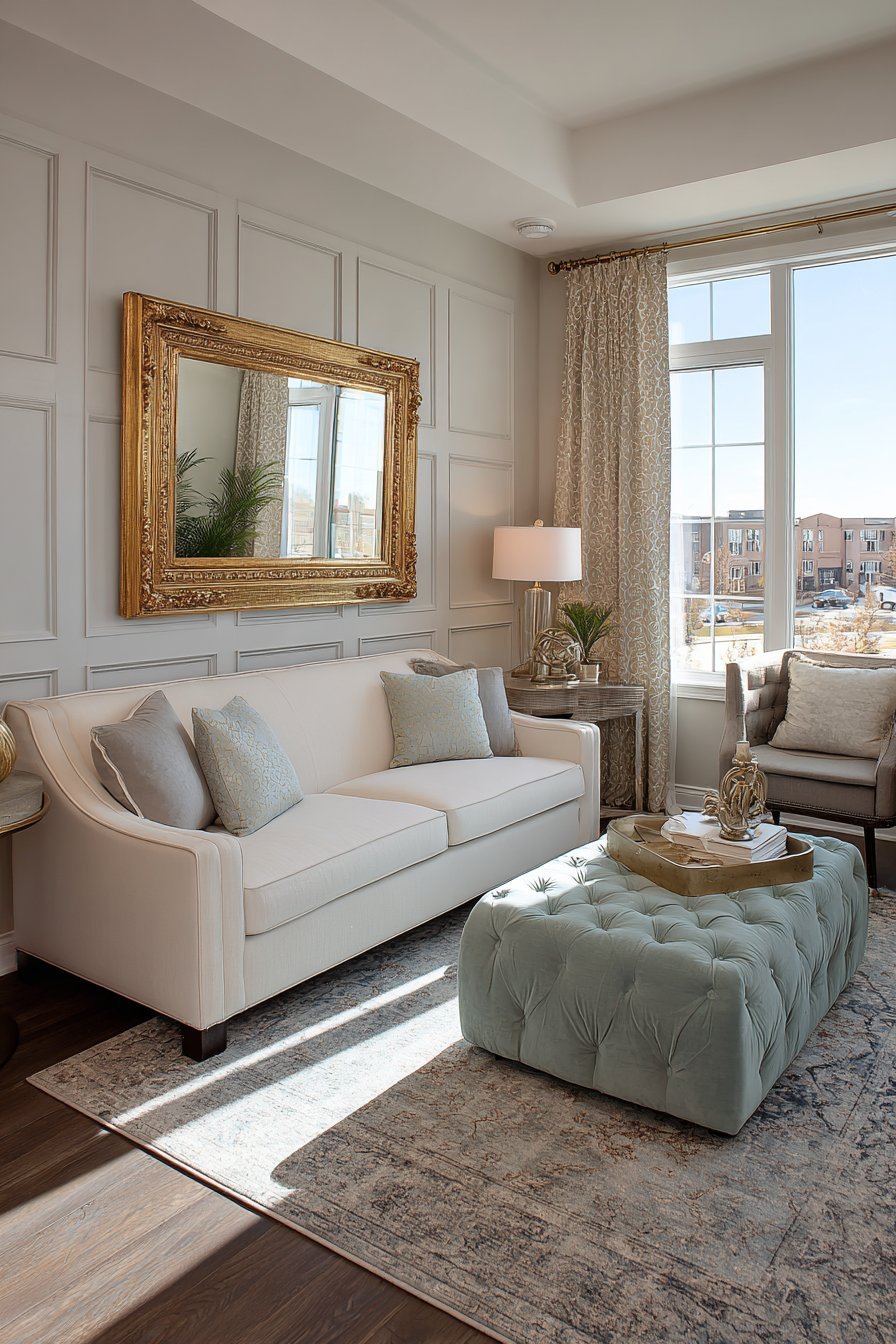
The greige color bridges grey and beige perfectly for transitional spaces. This neutral works with both warm and cool color schemes. The horizontal installation emphasizes room width pleasingly. This treatment adds architectural interest subtly and elegantly.
Key Design Tips:
- Choose quality tongue and groove boards for tight fit
- Paint in soft greige tones for transitional aesthetic
- Install horizontally for width emphasis
- Use eggshell or satin finish for subtle sheen
- Style with both traditional and contemporary elements
- Add dimensional decor like mirrors to enhance paneling texture
20. Glamorous Art Deco Geometric Wallpaper
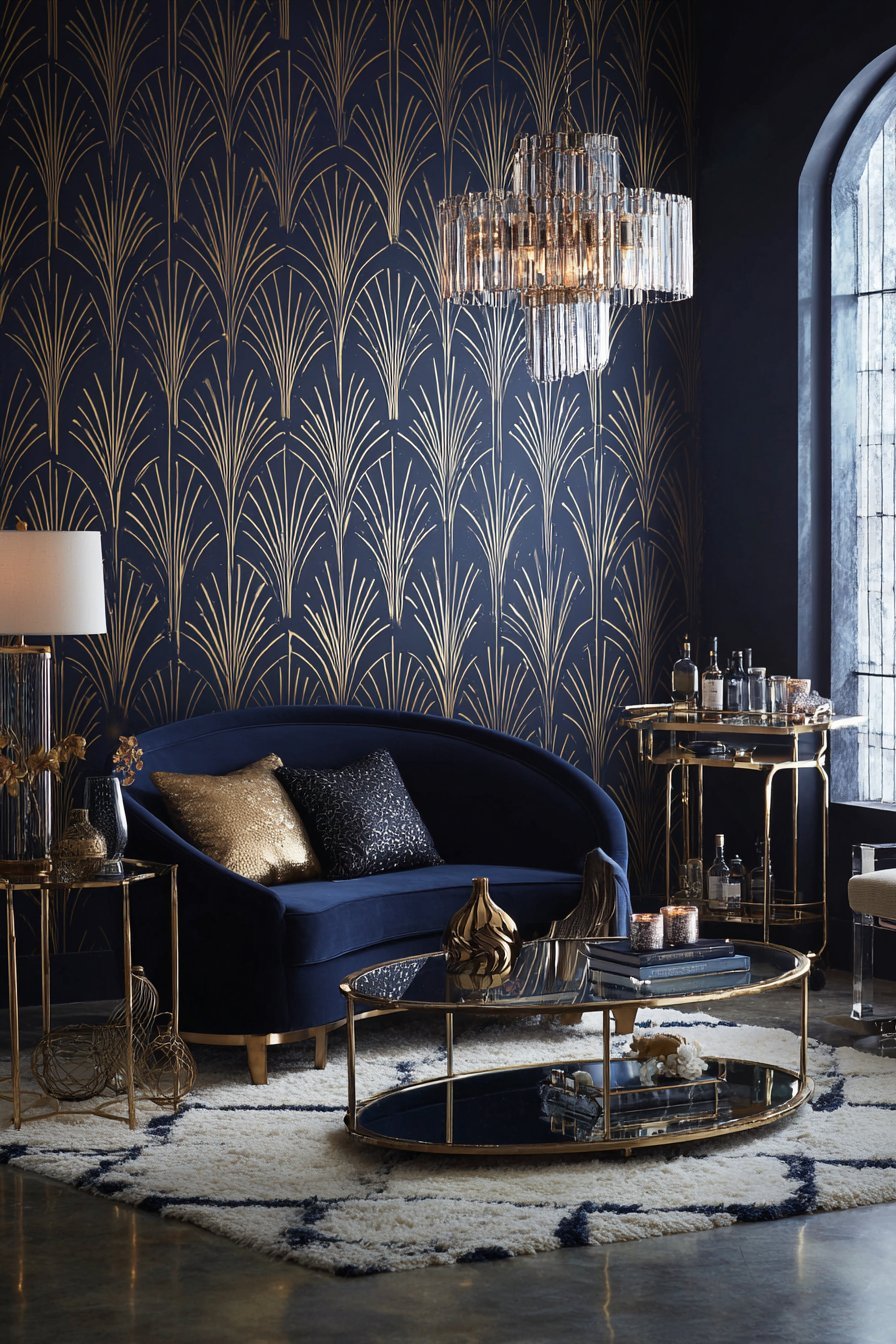
Metallic gold and navy wallpaper features repeating fan motifs. Angular shapes characteristic of 1920s Art Deco style dominate. This bold wall treatment creates dramatic impact immediately. The glamorous aesthetic transports viewers to another era.
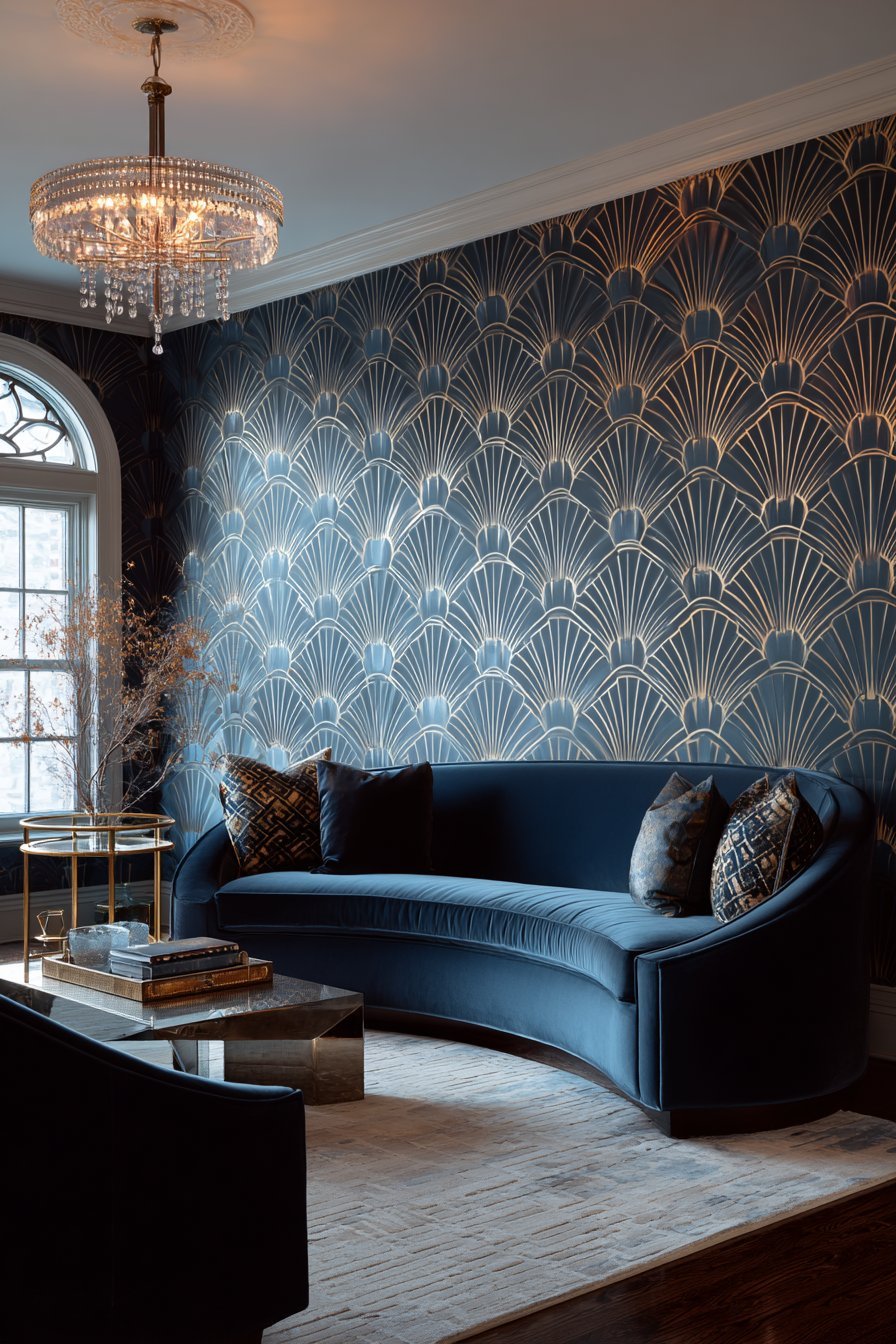
Curved navy velvet sofa with gold accent pillows complements perfectly. Mirrored coffee table reflects light and enhances glamour. Brass bar cart reinforces the luxurious metallic theme. Crystal chandelier and table lamps provide sparkling illumination.
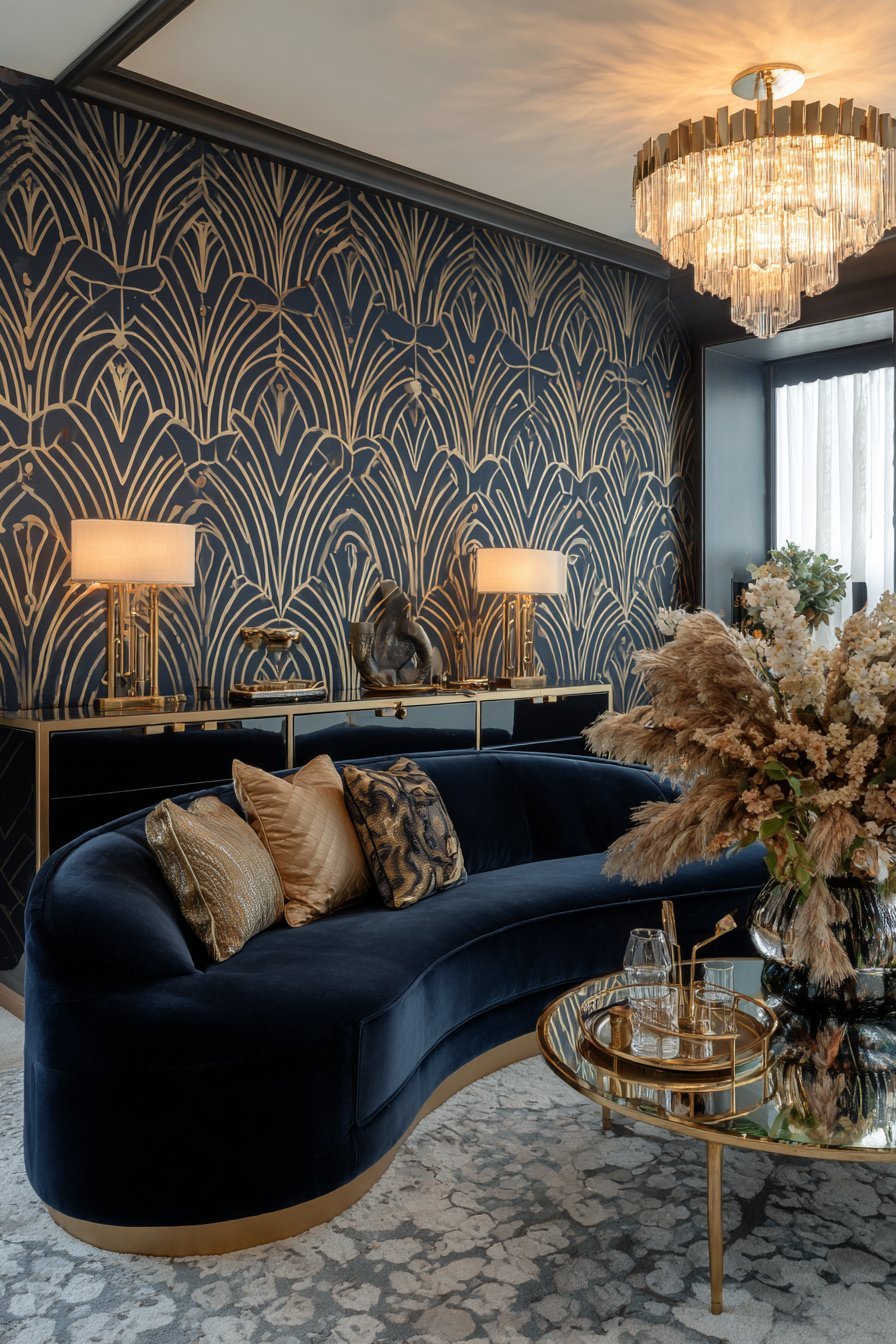
Soft evening light through window sheers creates subtle shimmer. Metallic wallpaper elements catch and reflect available light. This quality changes throughout the day and evening. The glamorous effect intensifies with proper lighting design.
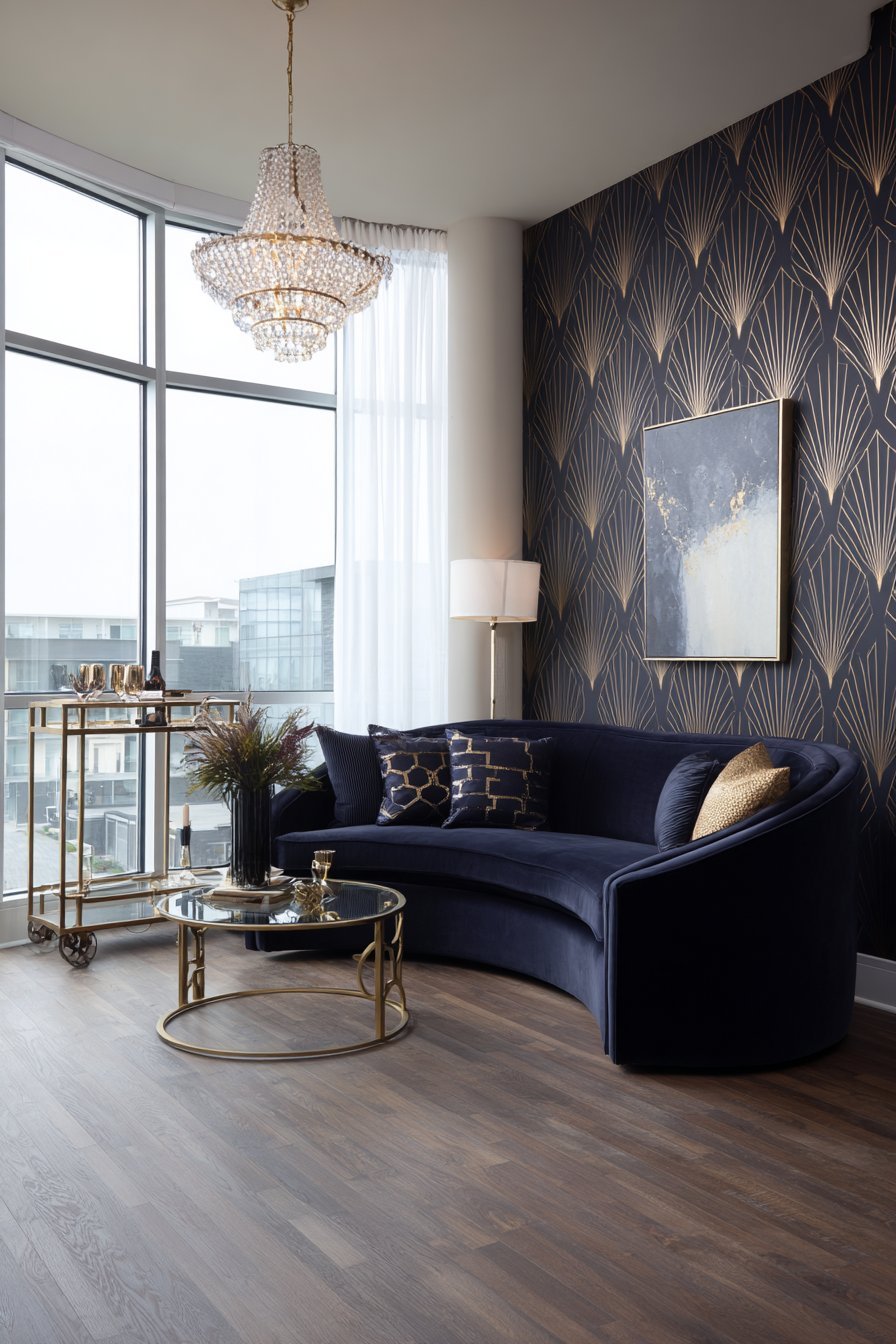
Art Deco style celebrates luxury, geometry, and bold design choices. This wallpaper captures the era’s essence perfectly. The navy and gold combination remains timelessly sophisticated. This dramatic approach suits those who appreciate theatrical design.
Key Design Tips:
- Choose quality wallpaper with metallic elements for authentic shimmer
- Install professionally for pattern matching at seams
- Limit metallic wallpaper to one accent wall
- Pair with curved furniture typical of Art Deco style
- Include mirrors and glass to enhance reflective quality
- Use warm lighting to make metallic elements glow
Why These Main Wall Designs Are the Best
These main wall designs represent the finest approaches to creating impactful focal points in living spaces. Each concept demonstrates thoughtful consideration of materials, scale, texture, and visual interest. The designs showcase remarkable versatility that accommodates different architectural styles, personal preferences, and practical requirements.
The incorporation of natural materials like wood, stone, and preserved moss adds authenticity and timeless appeal. These materials bring warmth and organic texture that synthetic alternatives cannot replicate. Architectural treatments like board and batten, wainscoting, and built-in shelving add permanent value to homes while creating distinguished character.
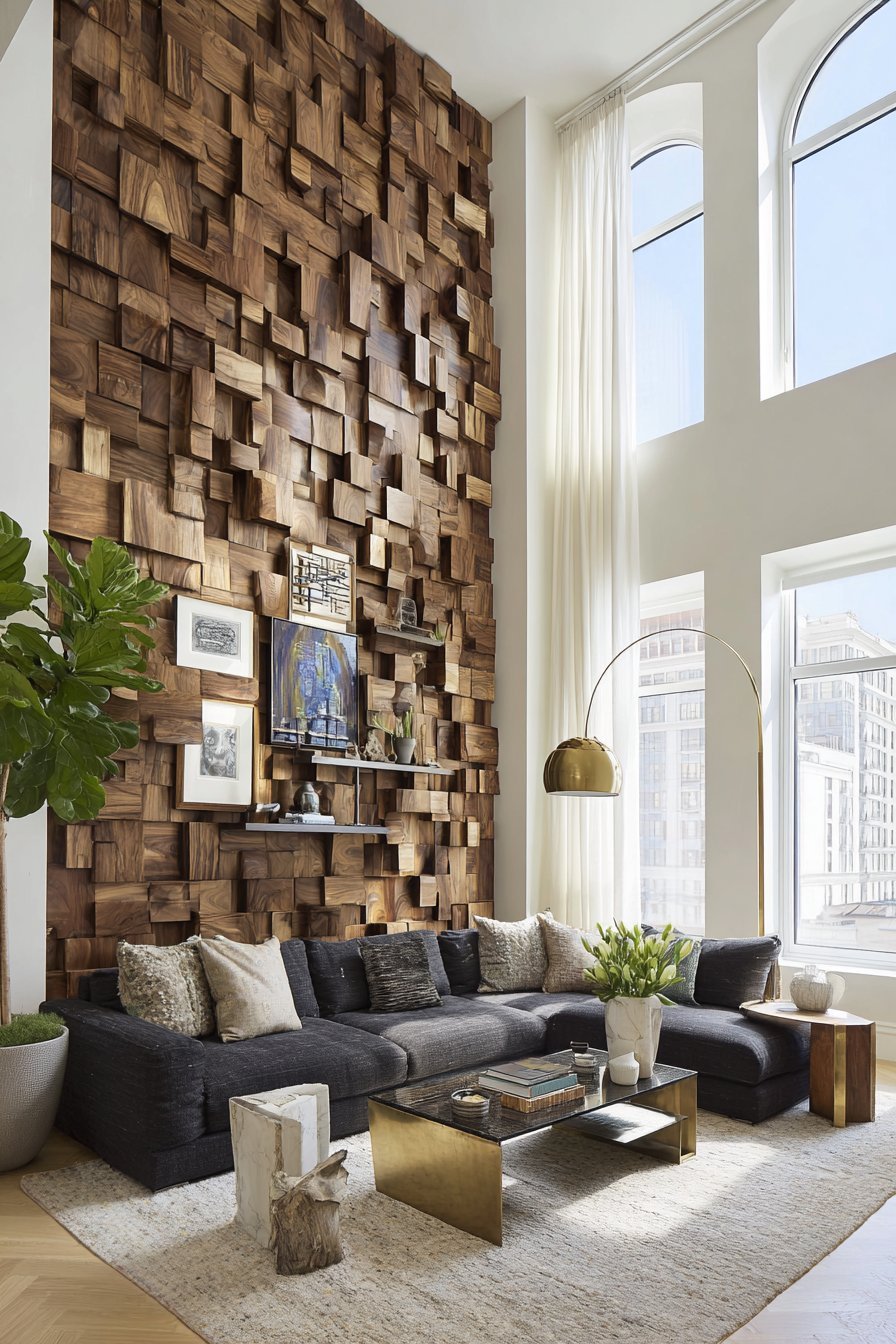
Bold artistic choices such as gallery walls, murals, and geometric patterns allow personal expression and creative freedom. These approaches transform blank walls into conversation pieces and reflection of individual style. The variety of options ensures solutions exist for both minimalist and maximalist preferences.
Color theory plays crucial role in these successful designs. From crisp whites that maximize light to dramatic navy blues and warm terracottas, each color choice serves specific purpose. Muted tones create calm environments while bold colors energize spaces. Proper paint selection and application quality ensures professional appearance and longevity.
Textural variety distinguishes exceptional wall designs from ordinary ones. Smooth stucco, dimensional wood panels, natural stone, and fabric elements each contribute unique tactile quality. These textures create shadow play and visual depth that flat paint cannot achieve. Layering multiple textures within single space adds sophisticated complexity.
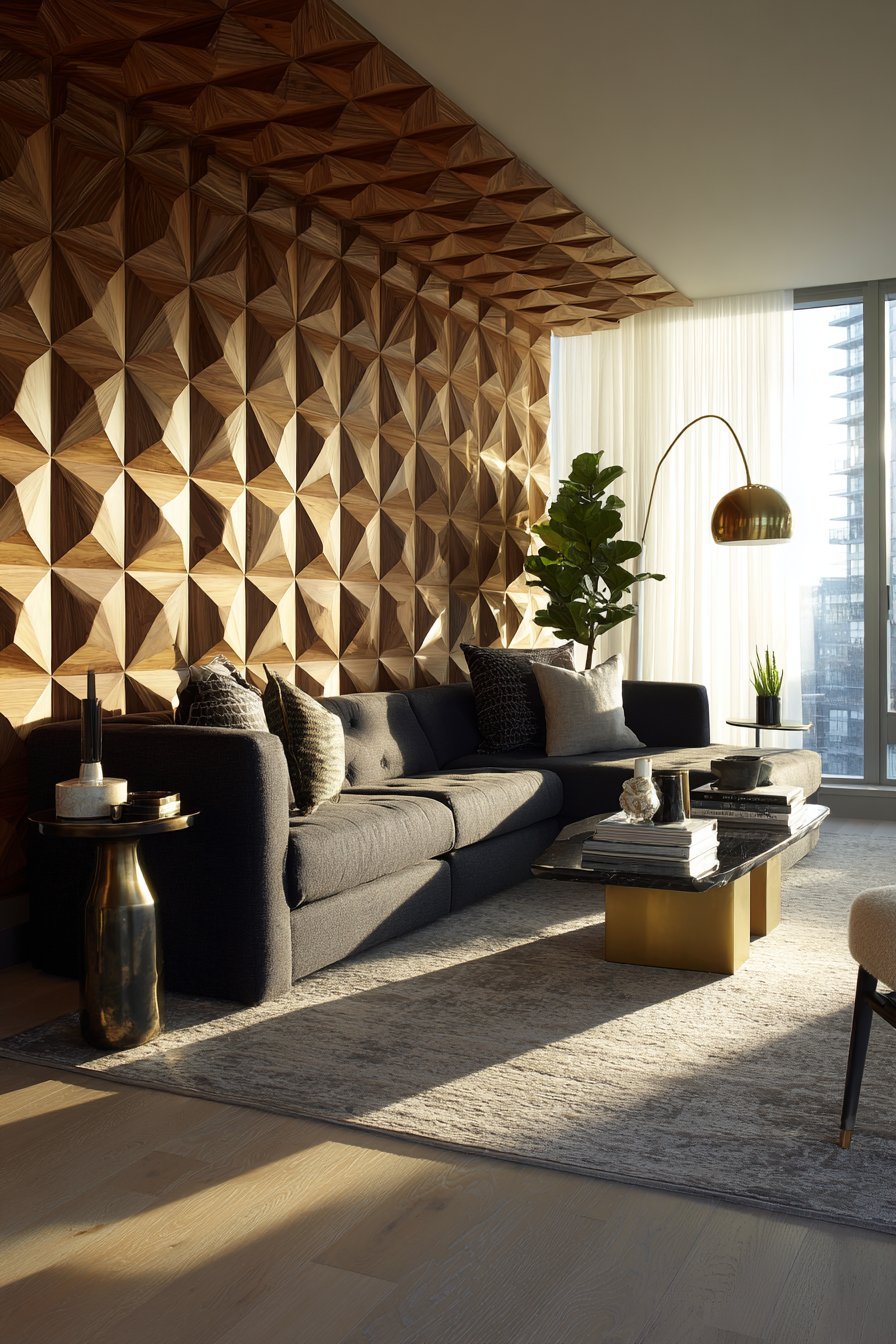
Lighting considerations elevate these designs from good to exceptional. Natural daylight interaction with textured surfaces creates changing displays throughout the day. Integrated and ambient lighting highlights materials and creates atmosphere. Proper illumination makes significant difference in how wall treatments appear and function.
Spatial considerations ensure these designs work in various room sizes. Vertical elements like wood slats make ceilings appear higher. Horizontal installations emphasize width in narrow spaces. Scale-appropriate treatments prevent overwhelming smaller rooms while avoiding underwhelming larger spaces.
Sustainability and longevity factor importantly into these superior design approaches. Quality materials properly installed provide decades of beauty. Removable options like peel-and-stick wallpaper offer flexibility for changing preferences. This balance between permanence and adaptability serves different life stages and circumstances.
Conclusion
These twenty main wall design concepts demonstrate the transformative power of thoughtful wall treatment in living spaces. From classic architectural details to contemporary artistic installations, each approach offers unique advantages. The key takeaways include the importance of material quality, proper scale, textural interest, and lighting consideration.
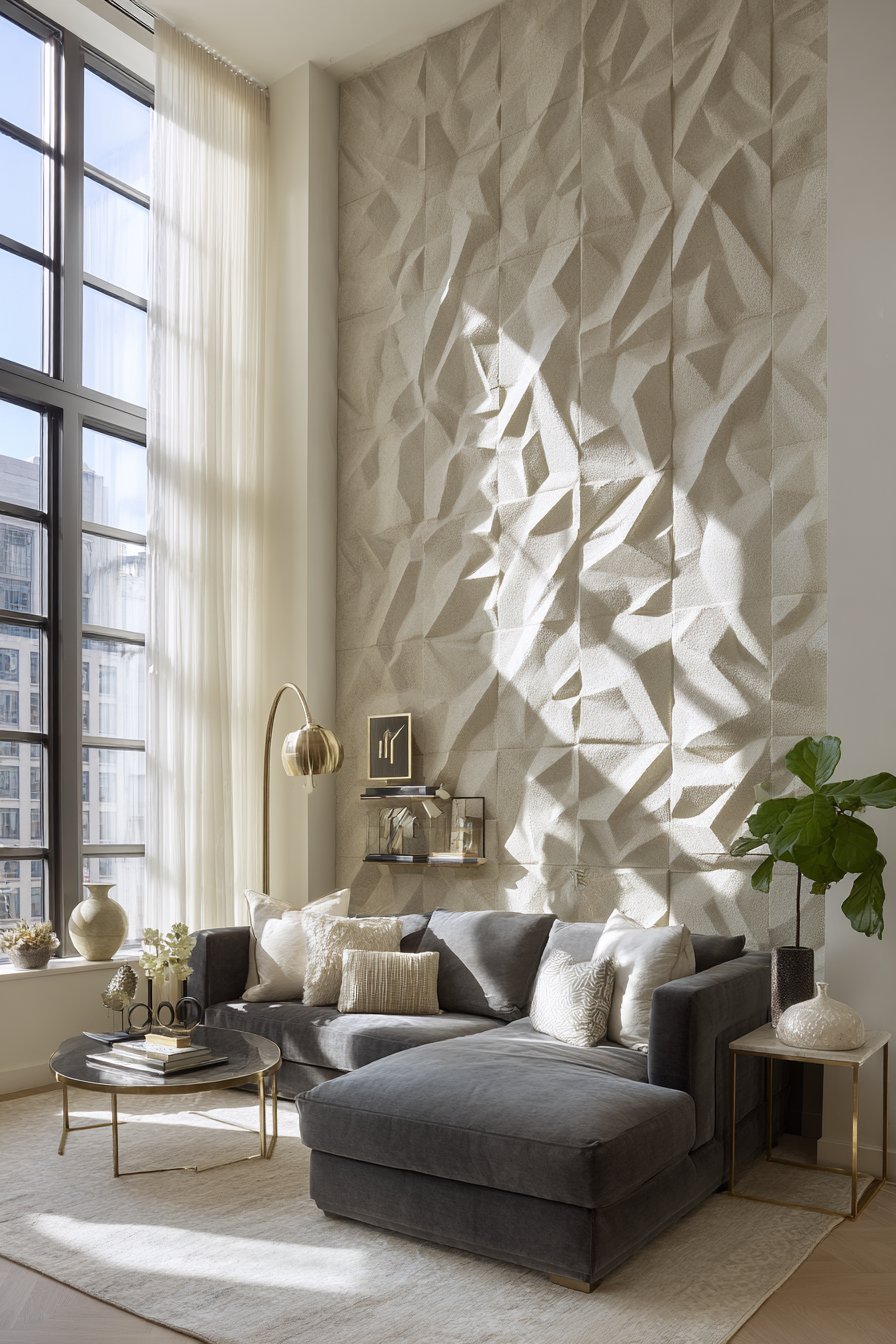
Successful main wall design balances aesthetic impact with practical functionality and long-term value. Whether you prefer minimalist restraint or maximalist drama, quality execution matters most. Start by identifying your personal style preferences and room’s architectural character. Consider which materials and approaches resonate with your lifestyle and maintenance preferences.
Your dream living room awaits creation through intentional main wall design. Choose treatments that reflect your personality while complementing your home’s architecture. Invest in quality materials and professional installation where needed. These walls become backdrop for your life’s meaningful moments and gatherings.
