

Creating a Beatrix Potter nursery brings timeless English countryside charm into your baby’s first space. These designs celebrate the beloved children’s author’s whimsical illustrations and gentle storytelling. The combination of soft watercolors, natural materials, and vintage-inspired elements creates nurturing environments perfect for your little one.
Beatrix Potter nurseries have captivated parents for generations with their enduring appeal. They offer a refreshing alternative to bold, contemporary designs. The warmth of hand-painted murals and carefully curated vintage details creates memorable spaces that grow with your child.
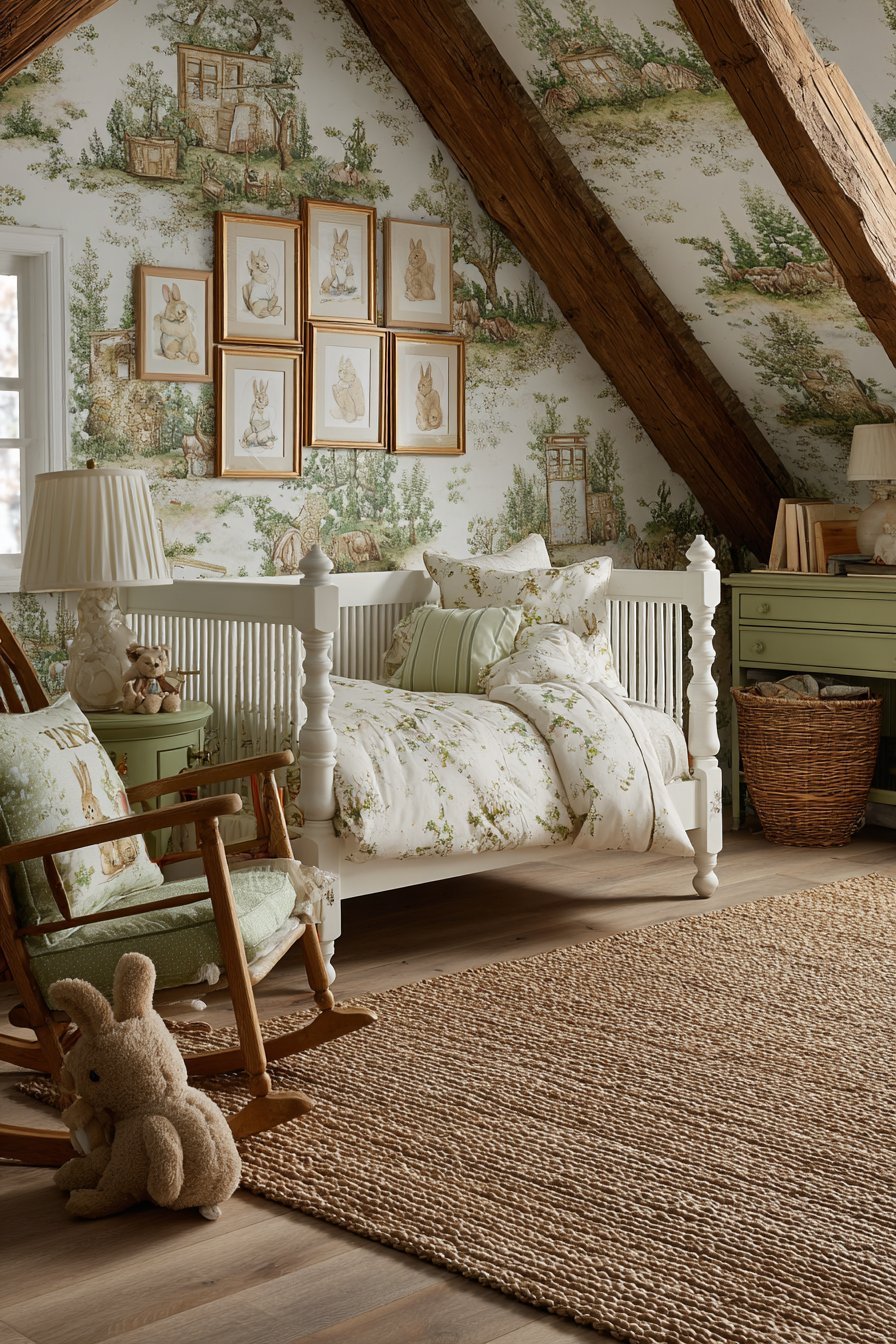
These twenty designs showcase the versatility of Beatrix Potter-inspired nurseries. From elaborate hand-painted murals to subtle nods through embroidered textiles, each concept demonstrates thoughtful design. The English country cottage aesthetic adapts beautifully to modern parenting needs while maintaining its classic charm.
1. Hand-Painted Peter Rabbit Garden Mural
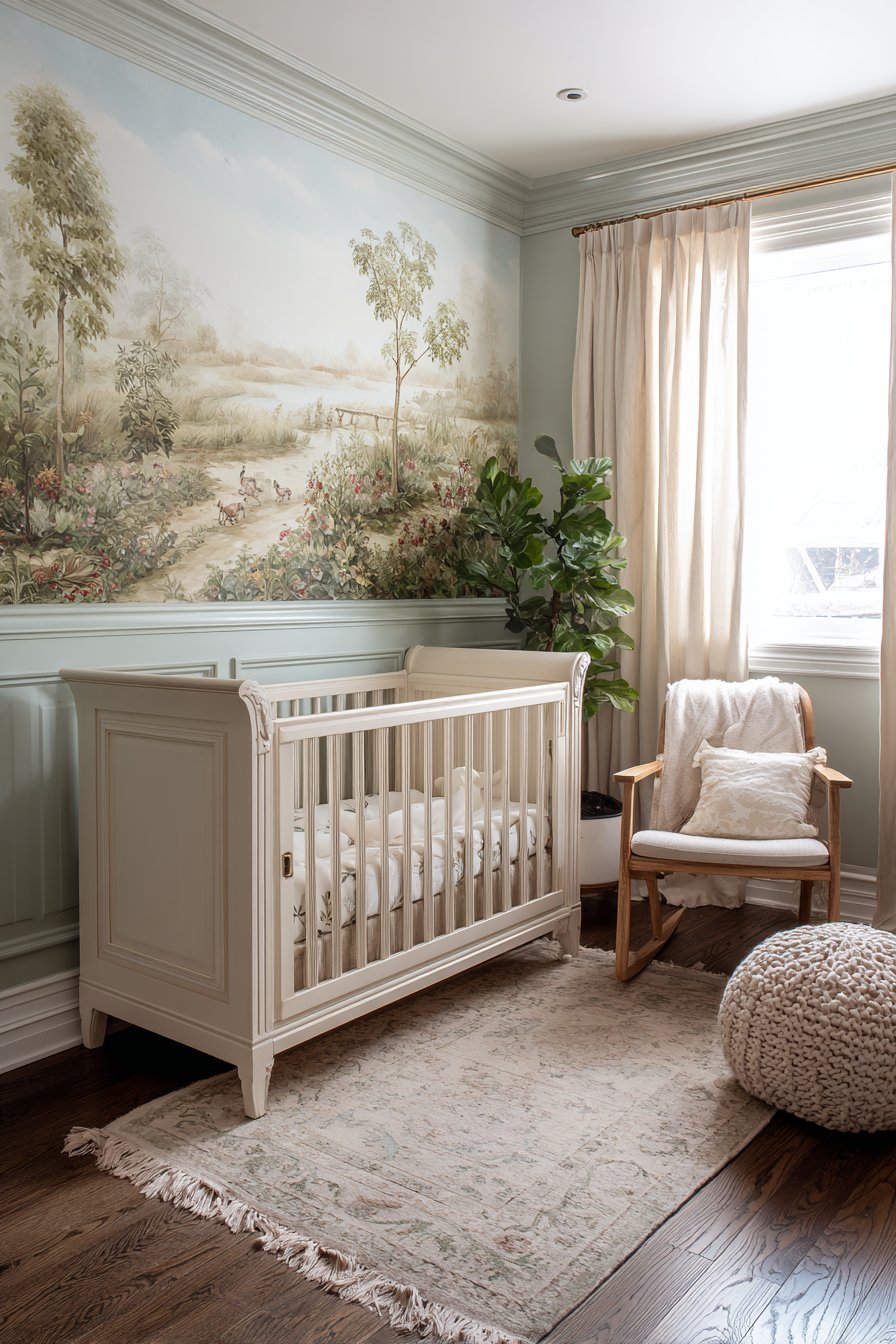
A hand-painted Peter Rabbit mural transforms an ordinary wall into a gateway to childhood wonder. Soft watercolor-style illustrations depict the iconic garden scene. Peter Rabbit peers from behind Mr. McGregor’s vegetables. The gentle colors soothe without overwhelming delicate senses.
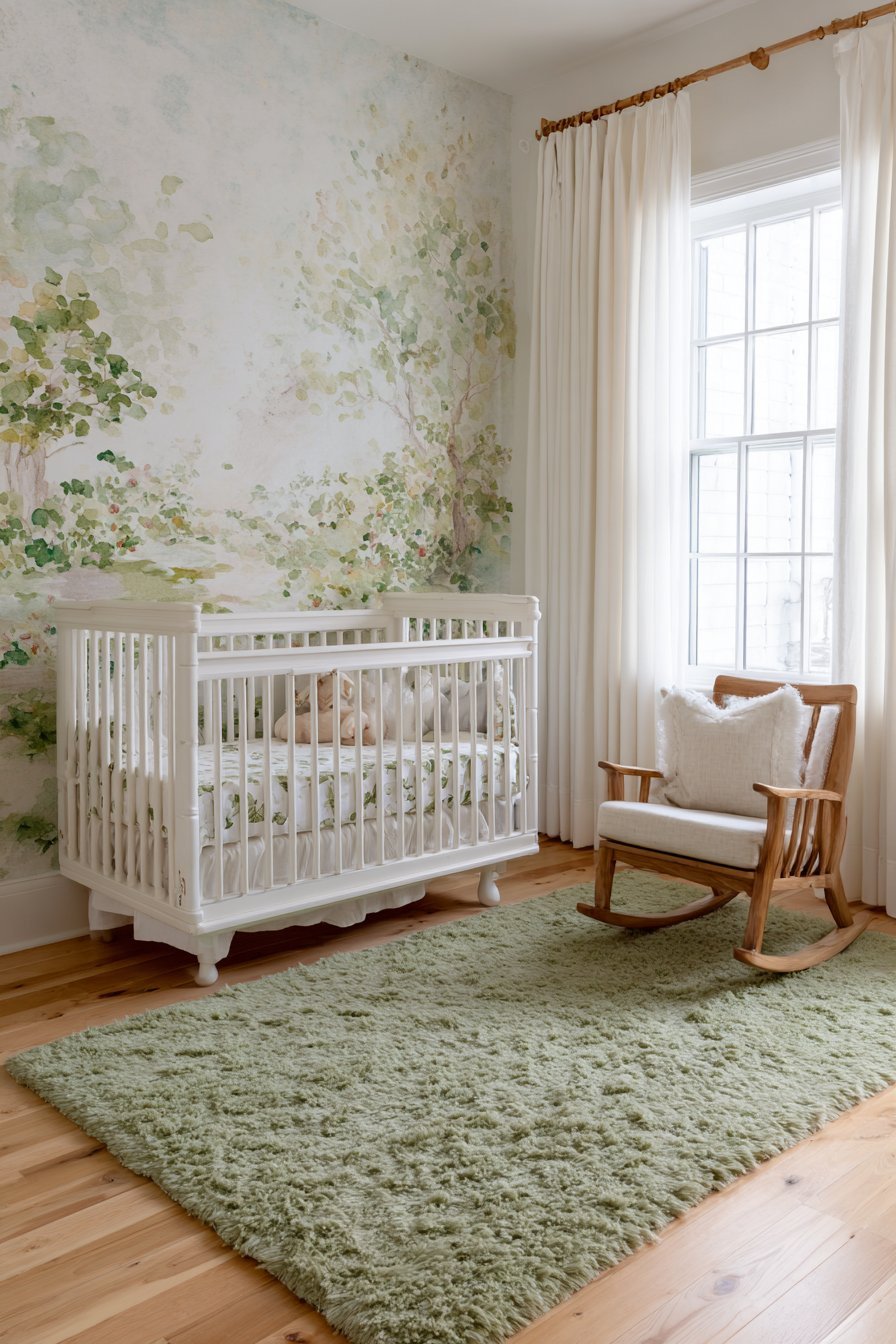
The white wooden crib with subtle carved details sits centered against this artistic backdrop. Organic cotton bedding features delicate embroidered vegetable motifs that echo the mural. Natural oak flooring provides warmth underfoot. A plush wool rug in sage green anchors the sleeping area beautifully.

A vintage-inspired wooden rocking chair occupies the corner near the window. Linen cushions offer comfort during late-night feedings. Sheer cream curtains filter morning light gently. The filtered sunlight highlights the hand-painted artwork without harsh glare.
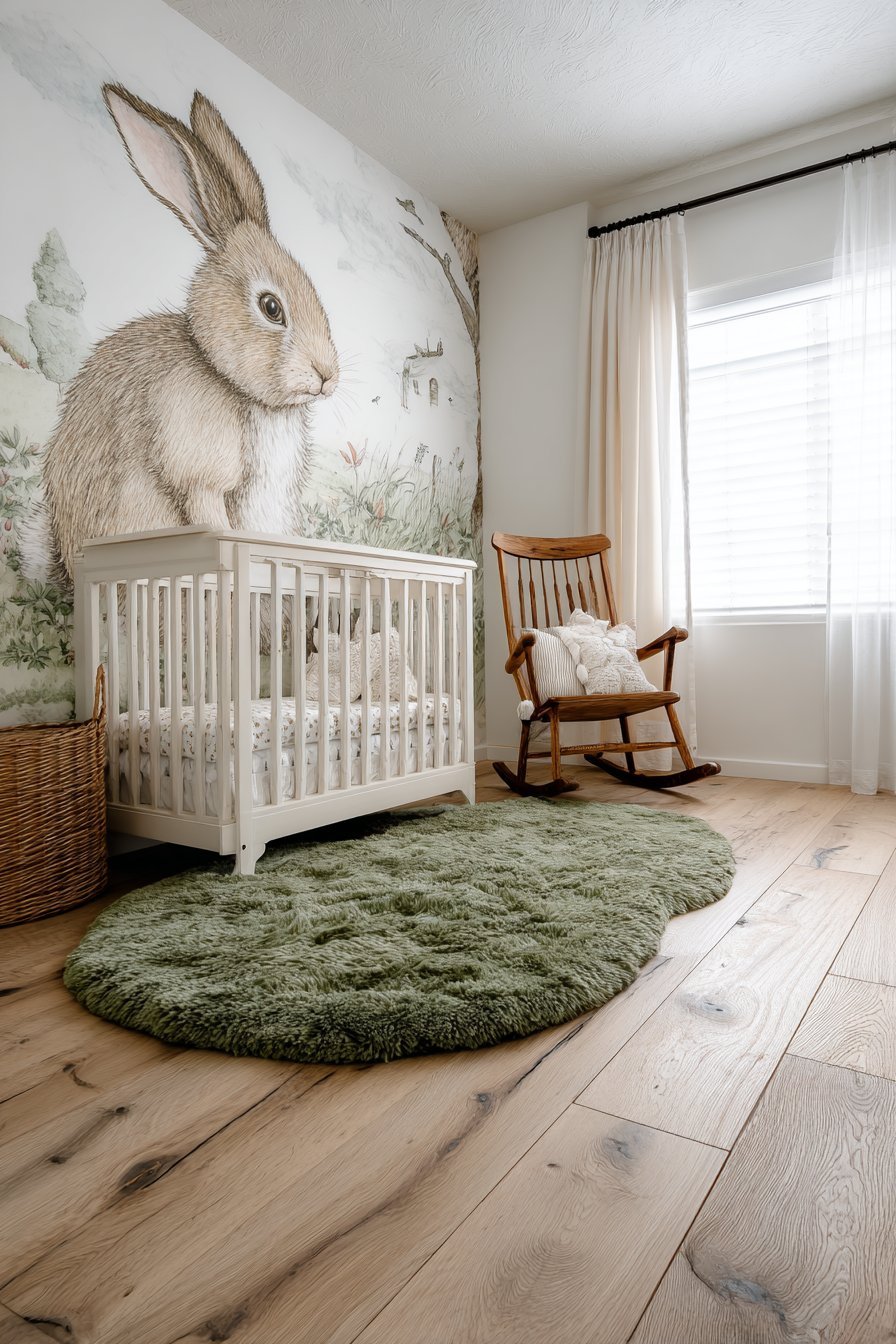
The balance between whimsy and sophistication defines this design approach. Natural textures complement the painted elements without competing. Each material choice supports the overall aesthetic while serving practical functions.
Key Design Tips:
- Commission a local artist for custom murals that fit your exact wall dimensions
- Choose organic cotton bedding to ensure baby’s comfort and safety
- Position the crib to make the mural visible from the sleeping position
- Use sage green as an accent color throughout the room for cohesion
- Install sheer curtains to protect painted walls from direct sunlight fading
- Select furniture with carved details that reference storybook illustrations
2. Cozy Reading Nook with Potter Collection
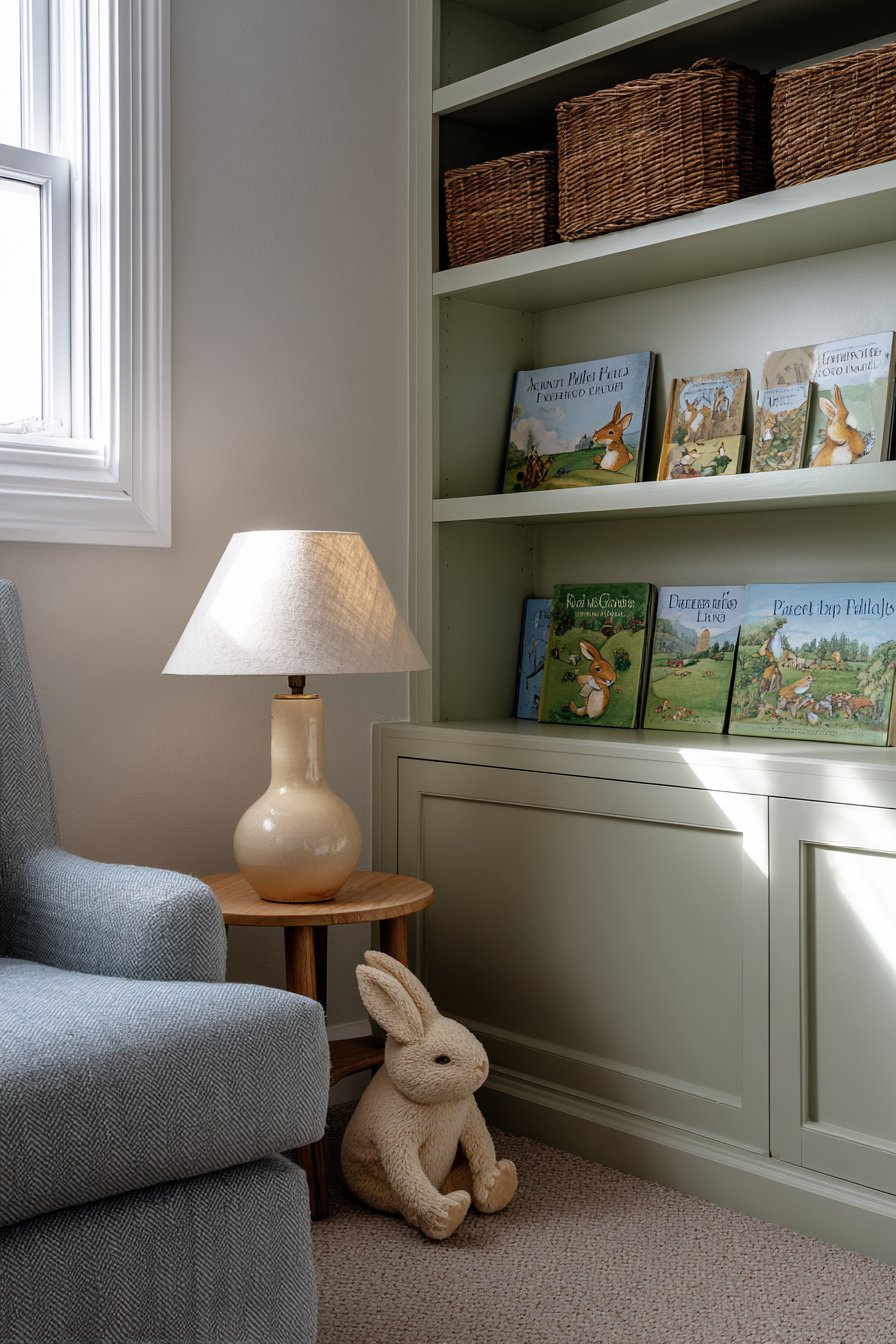
A reading nook dedicated to Beatrix Potter’s complete works creates literary magic. The low upholstered armchair in muted blue-grey linen invites comfortable story time. Built-in shelving displays the collection with distinctive vintage covers prominently featured. This dedicated space celebrates the written word from birth.
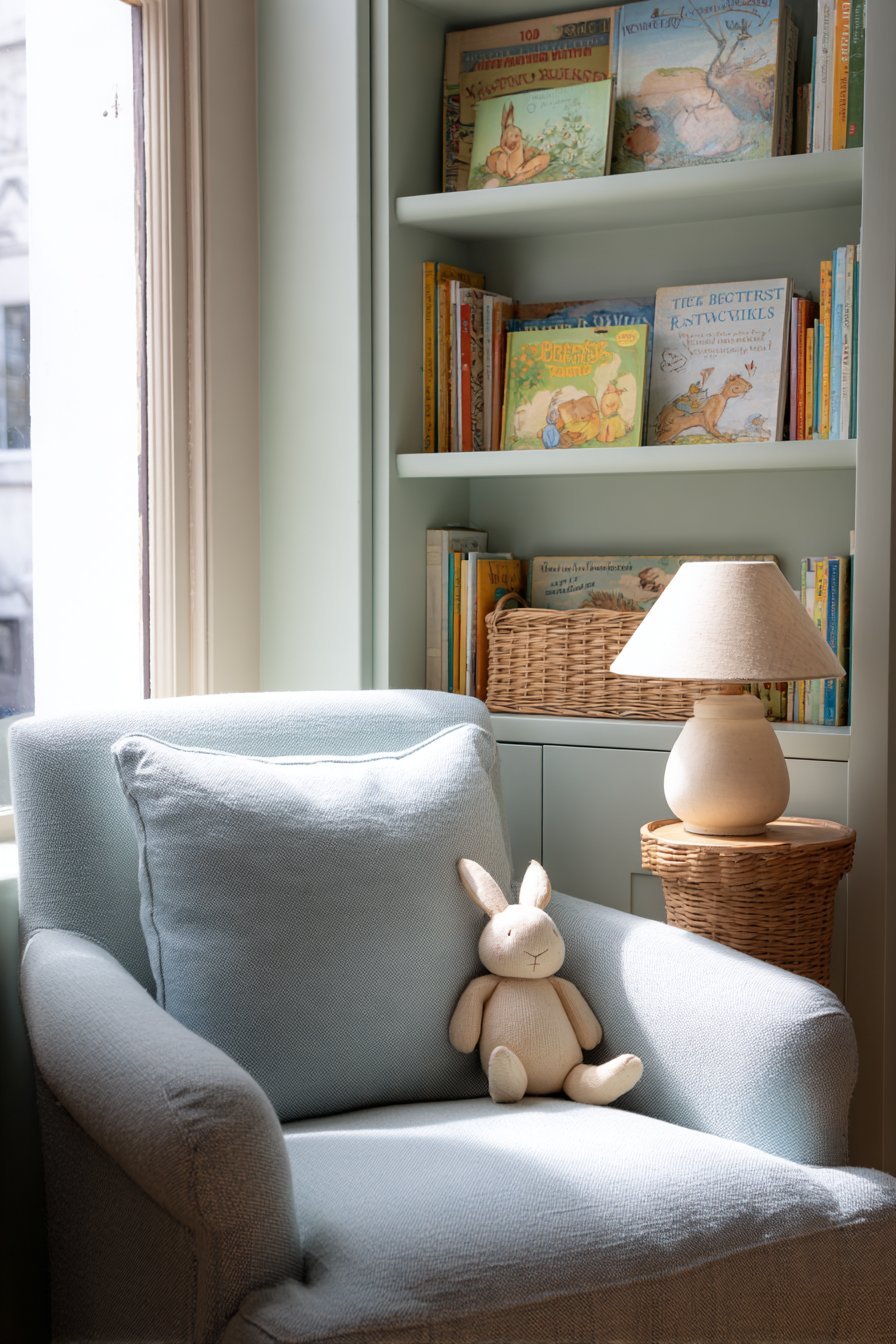
The shelving unit painted in soft sage green features adjustable shelves. Woven baskets provide practical toy storage while maintaining aesthetic appeal. A small round side table in natural wood holds essentials within reach. The ceramic rabbit lamp with linen shade provides focused reading light.
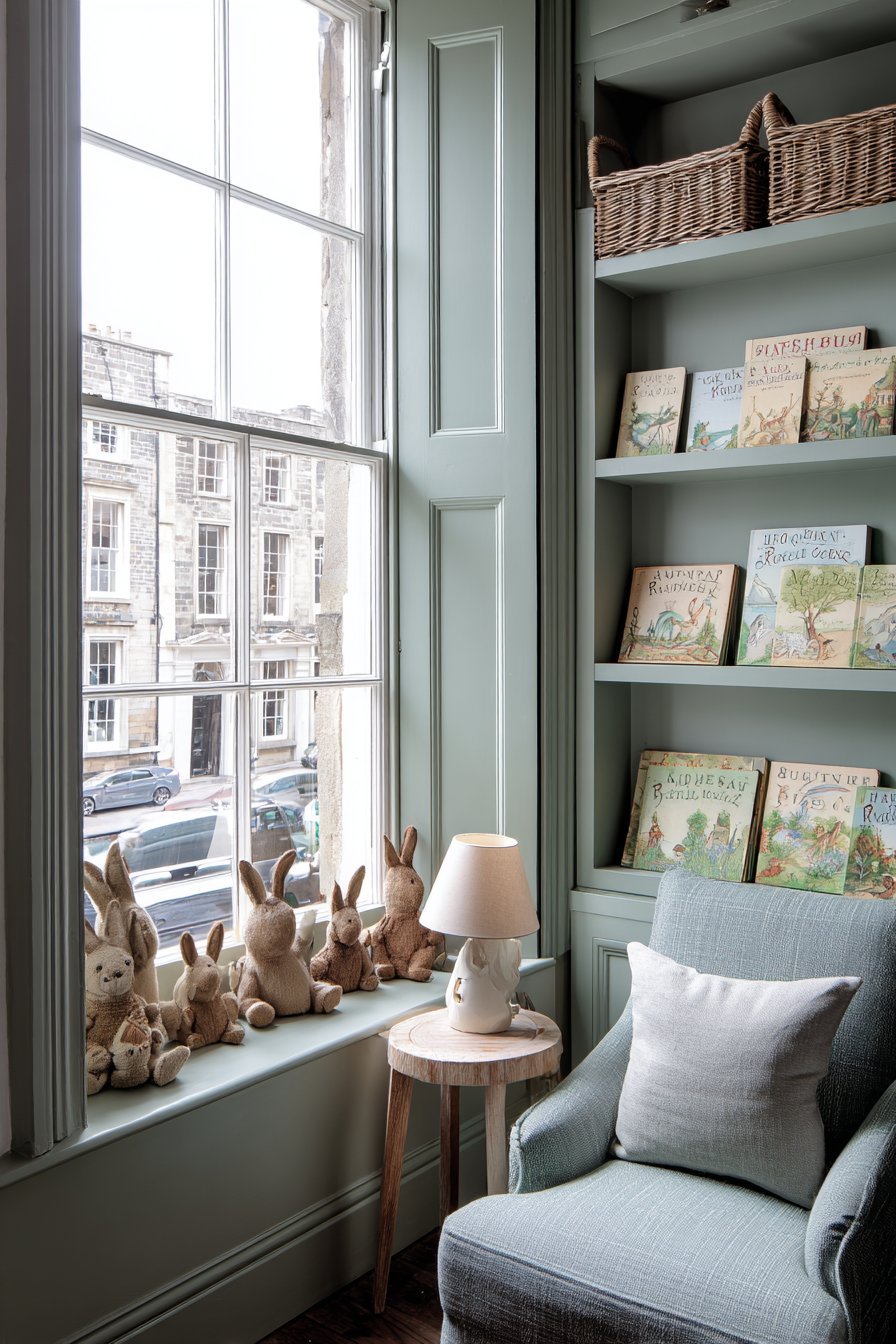
Natural light from a nearby window illuminates this peaceful corner. The combination of artificial and natural lighting creates flexible functionality. Morning readings benefit from sunlight while evening stories rely on the gentle lamp glow.

The organization of this space teaches children to value books early. Visible spines invite interaction and selection. Lower shelves keep favorite stories accessible as your child grows. Upper shelves display collectible editions safely out of reach.
Key Design Tips:
- Install built-in shelving for a custom, finished appearance
- Use adjustable shelves to accommodate books of varying heights
- Position the reading chair near natural light sources when possible
- Choose woven baskets that complement the cottage aesthetic
- Select a comfortable armchair suitable for extended reading sessions
- Display books with covers facing forward to showcase Potter’s beautiful illustrations
3. Organized Changing Station with Vintage Charm
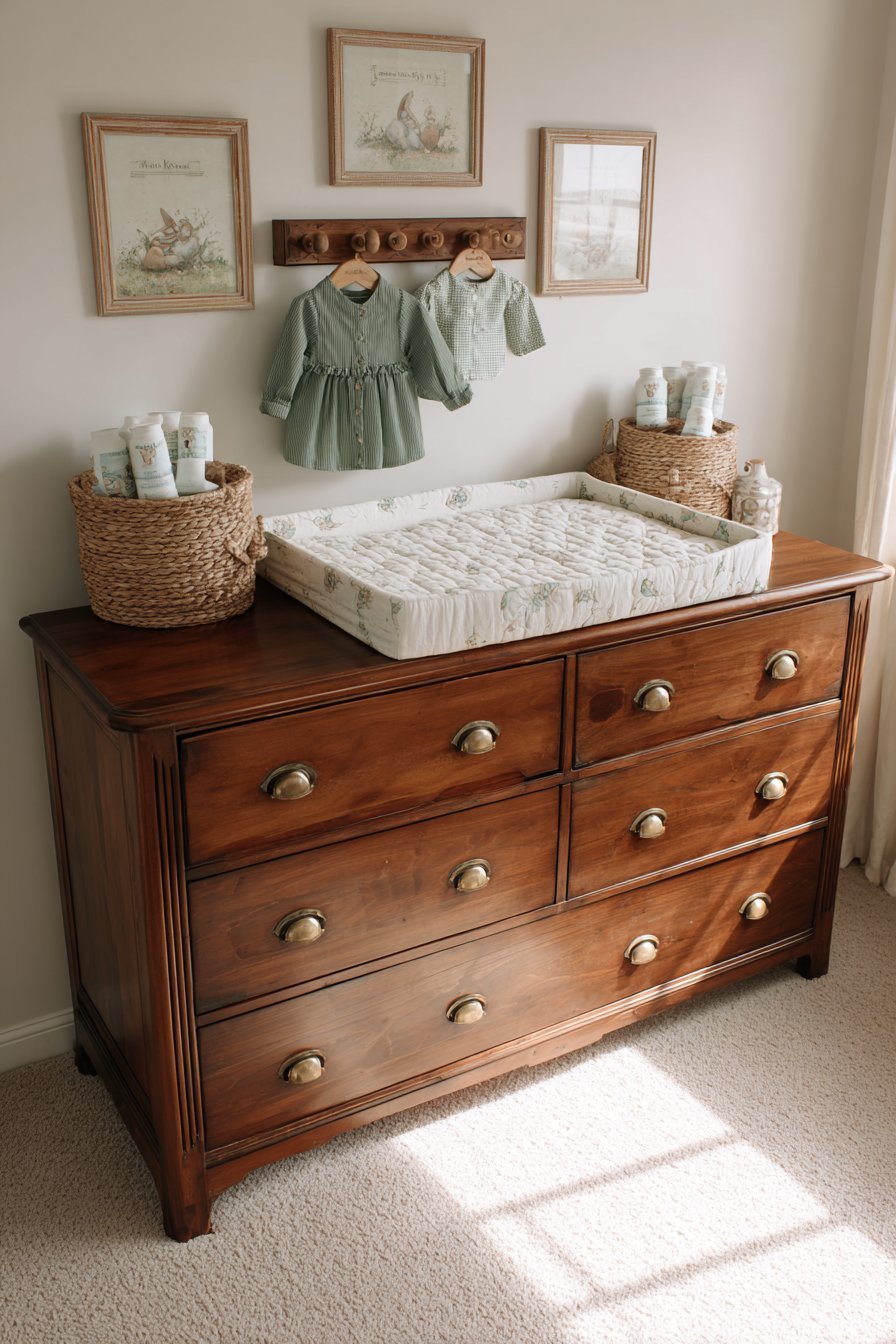
The changing station combines functionality with Beatrix Potter aesthetic appeal seamlessly. A solid oak dresser with brass cup pulls provides ample storage. The quilted changing pad in cream linen features embroidered Peter Rabbit corner details. Practicality meets charm in this essential nursery element.

Framed vintage Beatrix Potter illustration prints hang above the dresser. Simple wooden frames with cream matting create gallery-quality presentation. The collection tells a visual story across the wall. Open woven baskets on top hold neatly rolled cotton diapers.
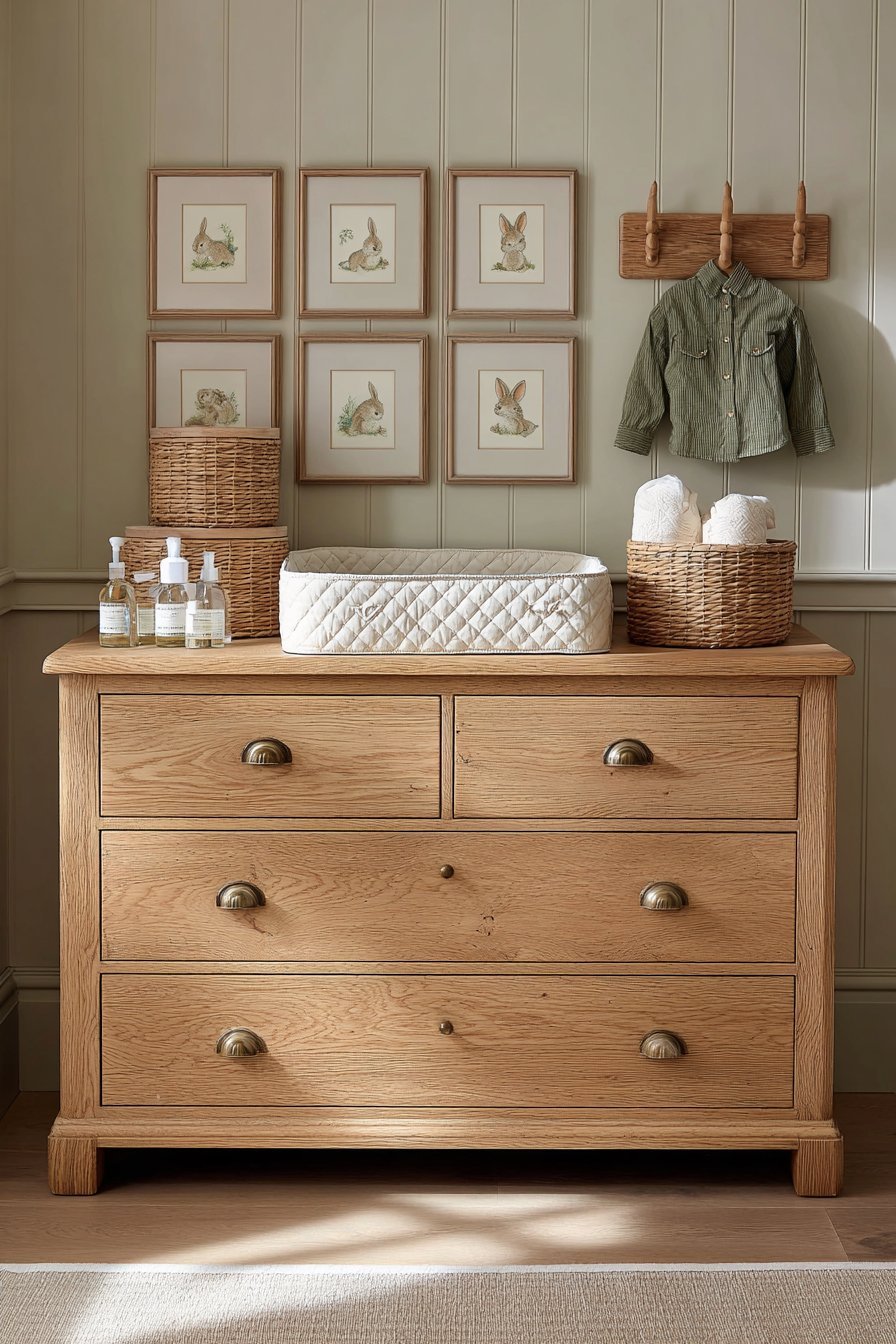
A wall-mounted wooden peg rack painted sage green displays tiny garments. Baby cardigans and bonnets become decorative elements when not in use. This approach maximizes vertical space efficiently. Everything needed for diaper changes stays within arm’s reach.
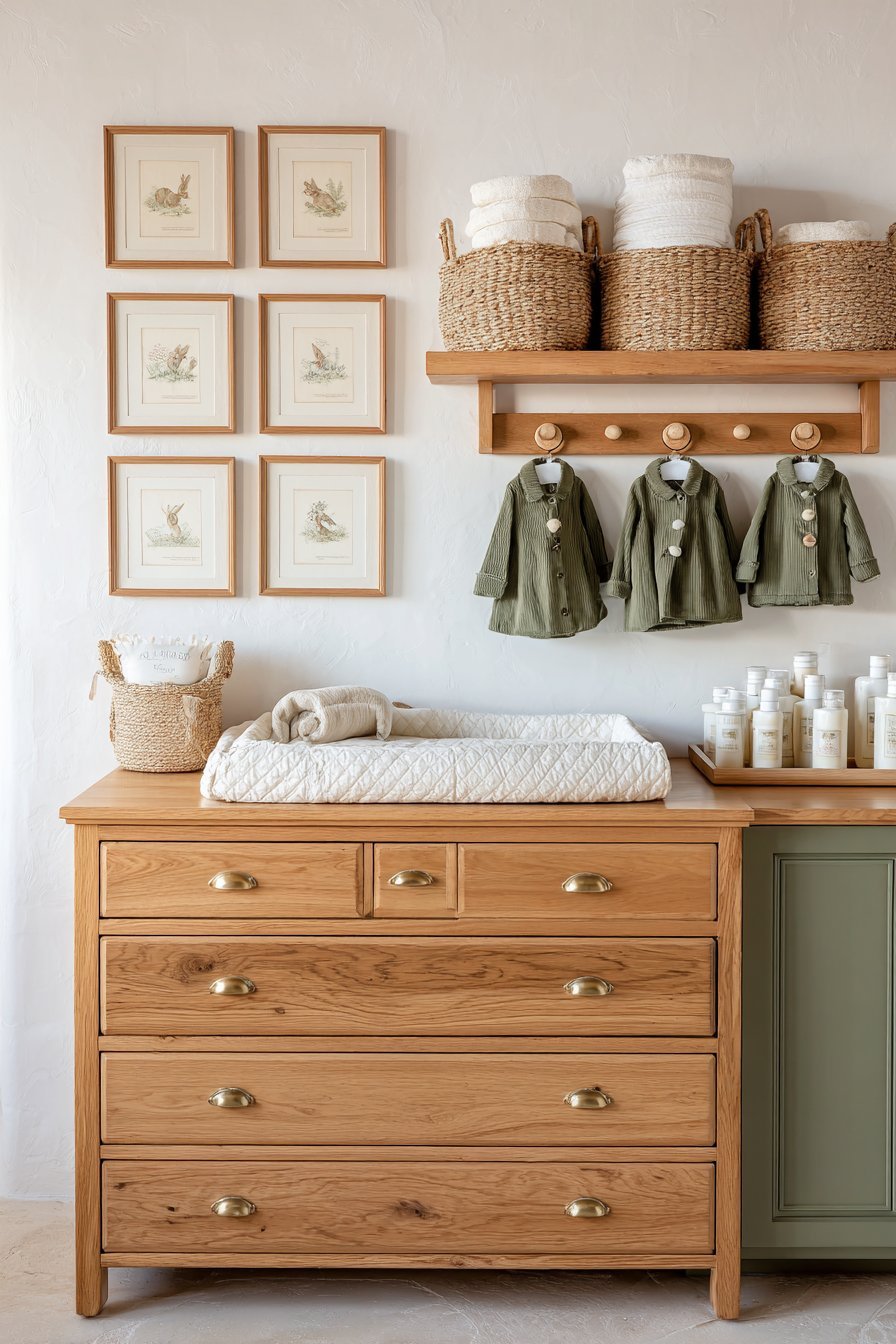
The organization system reduces stress during those frequent daily changes. Natural baby care products in the baskets maintain the room’s aesthetic. Glass containers replace plastic when possible. Every element serves dual purposes of function and beauty.
Key Design Tips:
- Choose a solid wood dresser that will transition beyond nursery years
- Install the peg rack at convenient height for one-handed access
- Use woven baskets for texture and practical open storage
- Frame illustrations professionally for lasting quality
- Select brass hardware for vintage authenticity
- Keep natural care products in attractive glass containers
4. Whimsical Wallpaper with Jemima Puddle-Duck
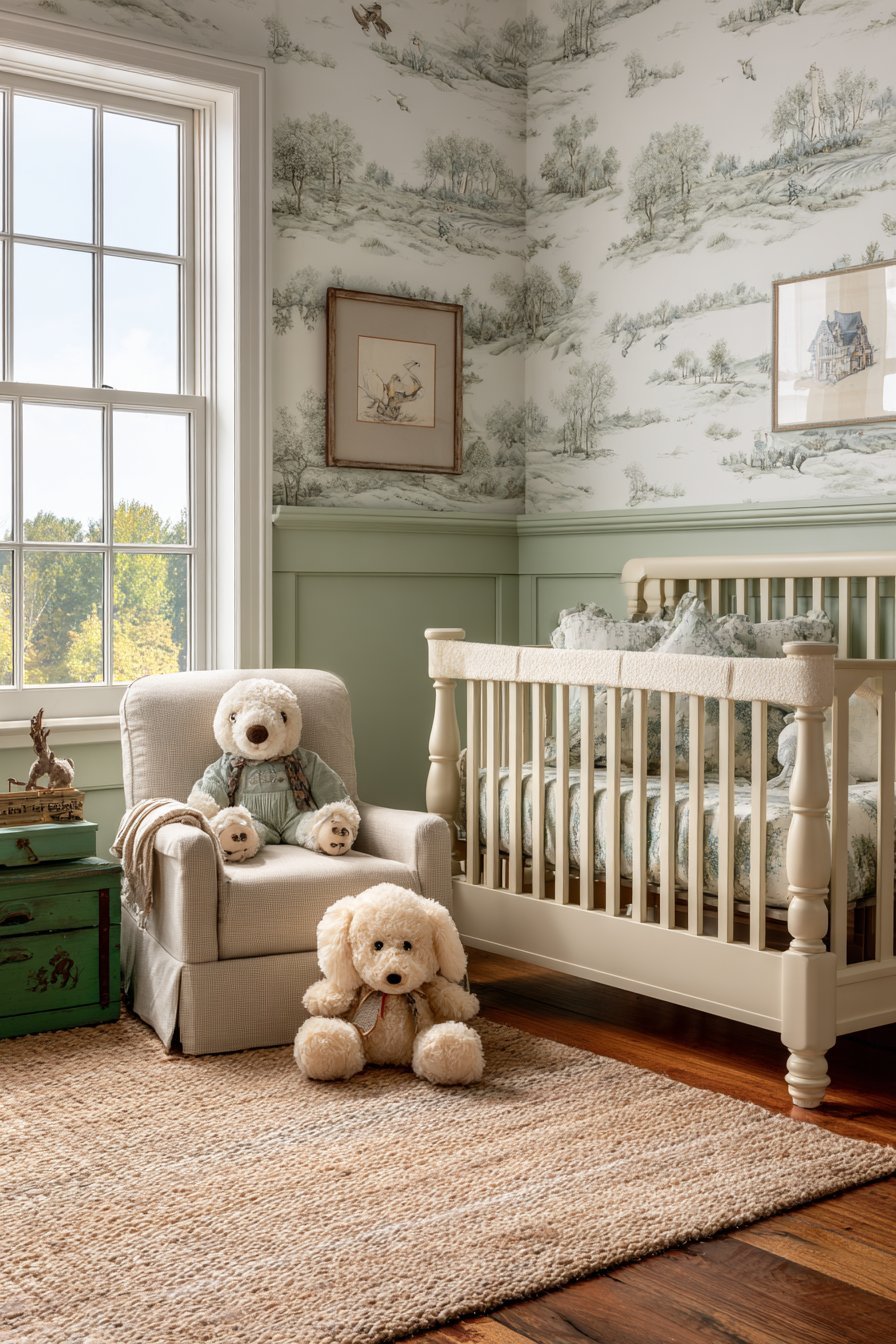
Custom wallpaper featuring Jemima Puddle-Duck creates an immersive storybook environment. The repeating pattern shows countryside scenes in soft watercolors. Sage, cream, and dusty blue tones work harmoniously together. This backdrop transforms the entire room without overwhelming the space.
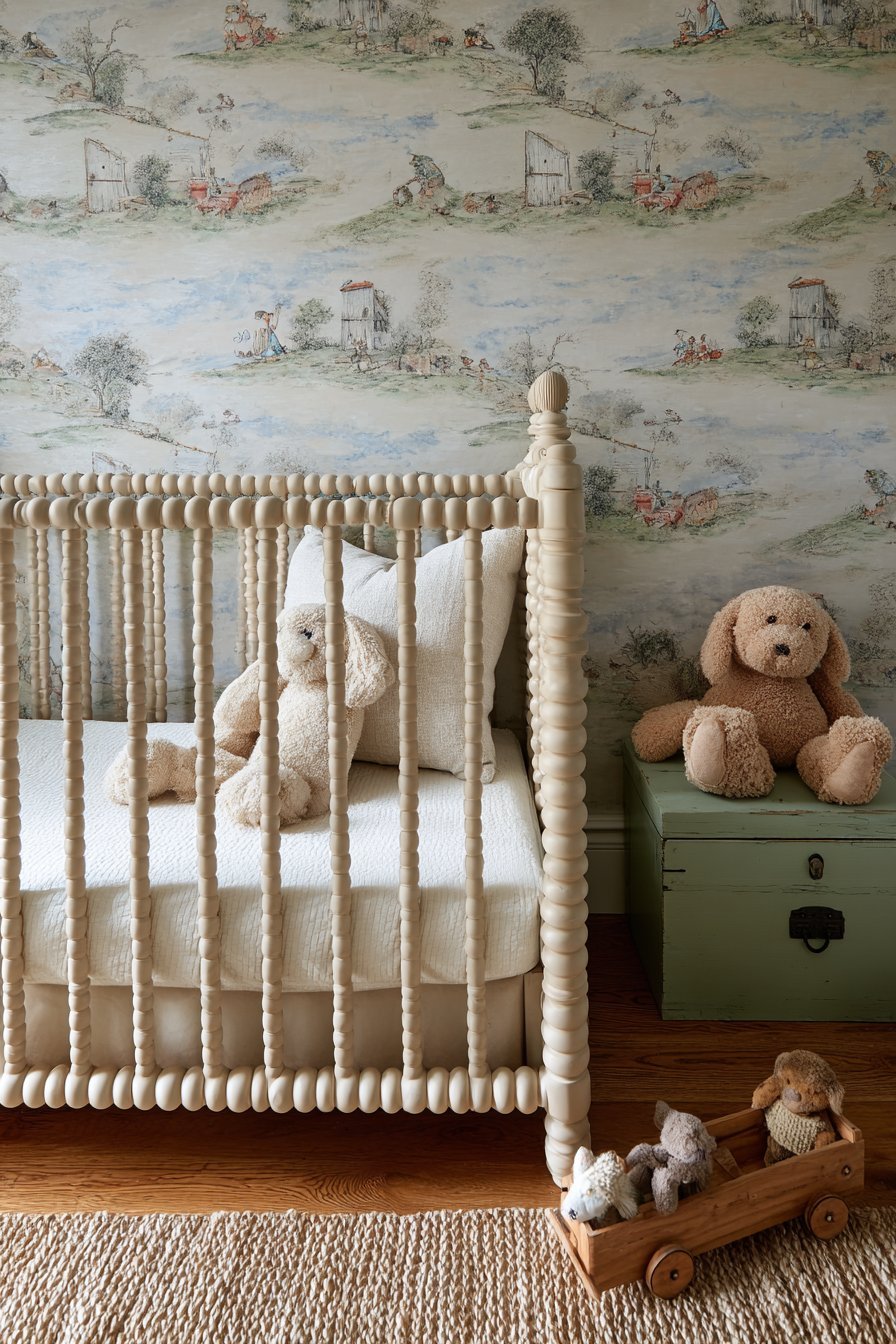
A cream-painted wooden crib with turned spindles sits beautifully against the papered wall. The traditional crib design complements the vintage aesthetic perfectly. A small upholstered glider in natural linen provides comfortable seating. The neutral furniture allows the wallpaper to shine.
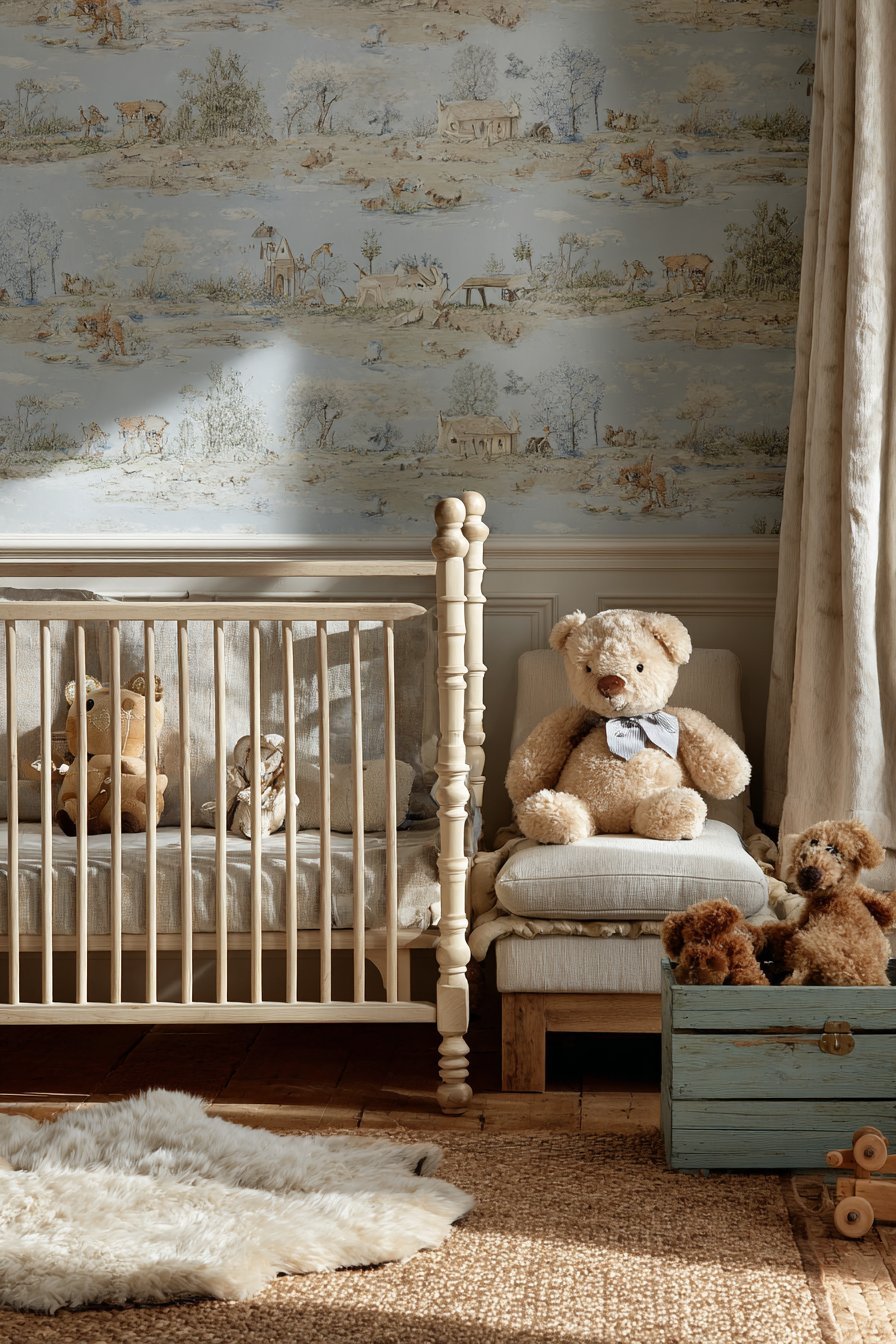
Oak flooring partially covered by a braided wool rug adds warmth. The natural earth tones in the rug echo the wallpaper palette. A vintage wooden toy chest painted sage green stores plush animals. Storage solutions blend seamlessly with decorative elements.
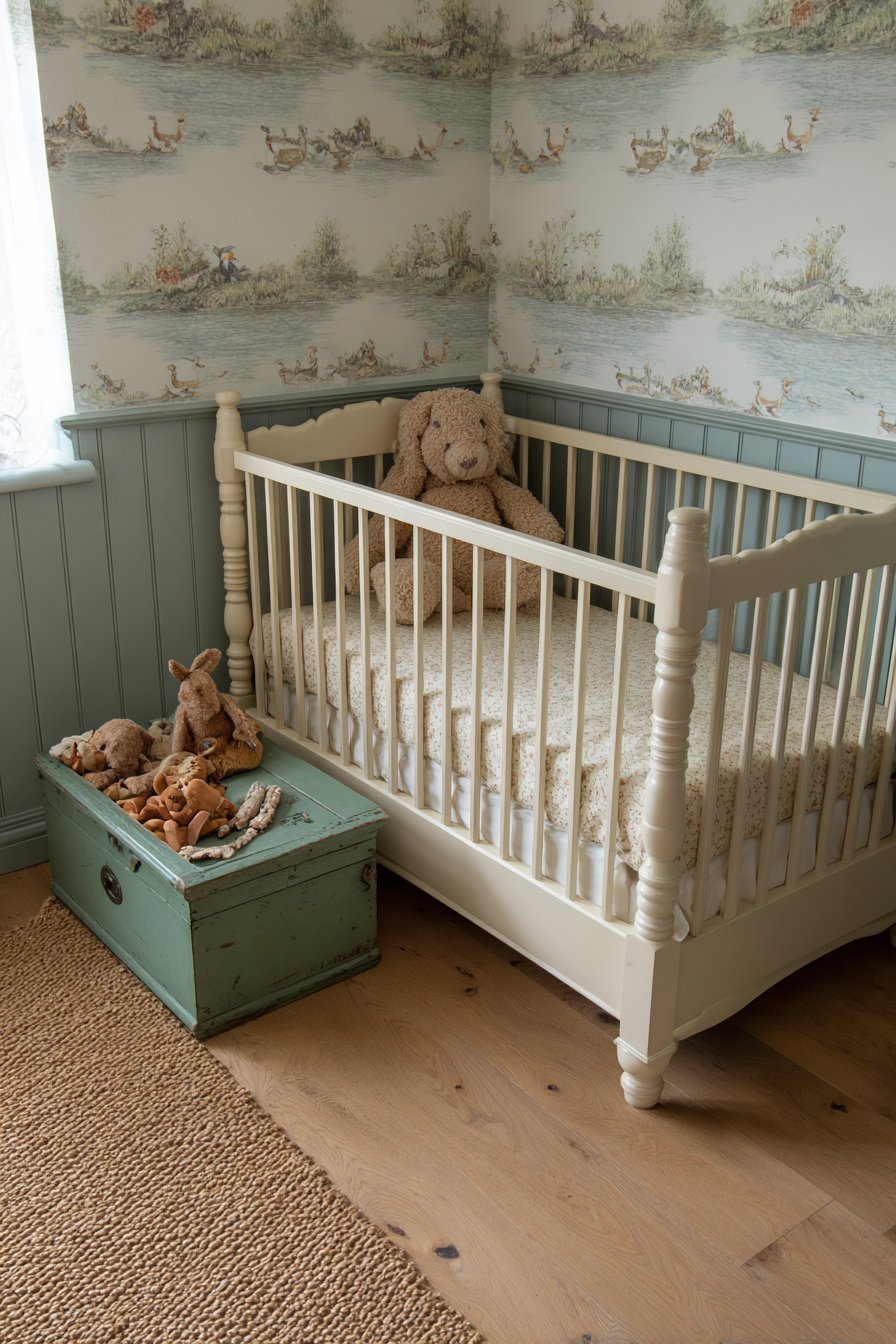
The wallpaper pattern creates visual interest without busy chaos. The soft watercolor technique feels gentle and soothing. Children can discover new details in the scenes as they grow. This design choice provides years of engagement and wonder.
Key Design Tips:
- Order wallpaper samples to test colors in your nursery’s lighting
- Hire professional installers for seamless pattern matching
- Choose washable wallpaper for practical maintenance
- Keep furniture simple when using bold wallpaper patterns
- Use the wallpaper colors as your palette guide
- Consider wallpapering just one accent wall if full-room feels overwhelming
5. Curated Gallery Wall of Classic Tales
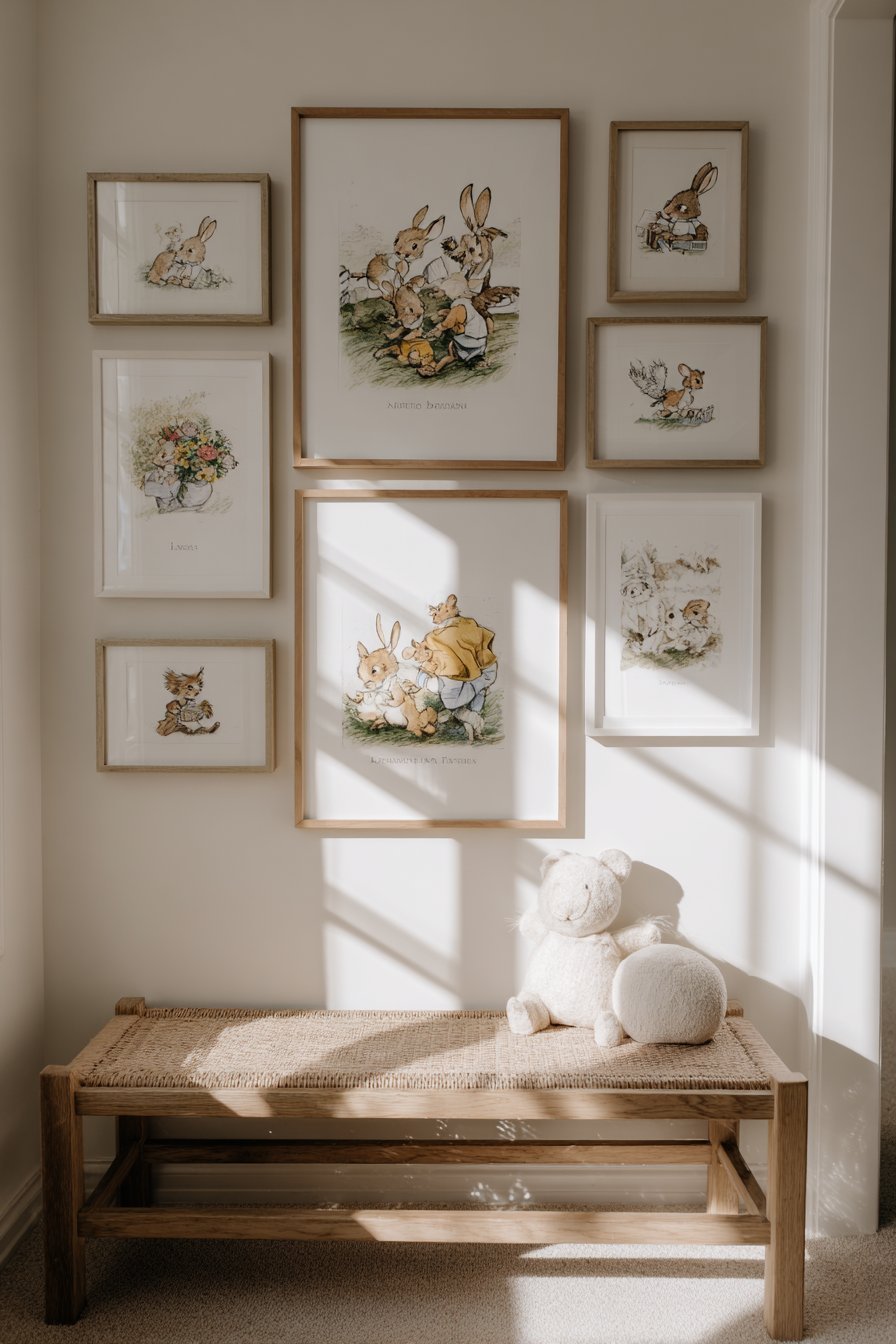
An asymmetric gallery wall showcases scenes from multiple Beatrix Potter stories. The Tale of Benjamin Bunny and The Tale of Tom Kitten appear alongside other classics. Frame finishes vary between simple oak, painted white, and sage green. All frames feature cream matting for cohesive presentation.
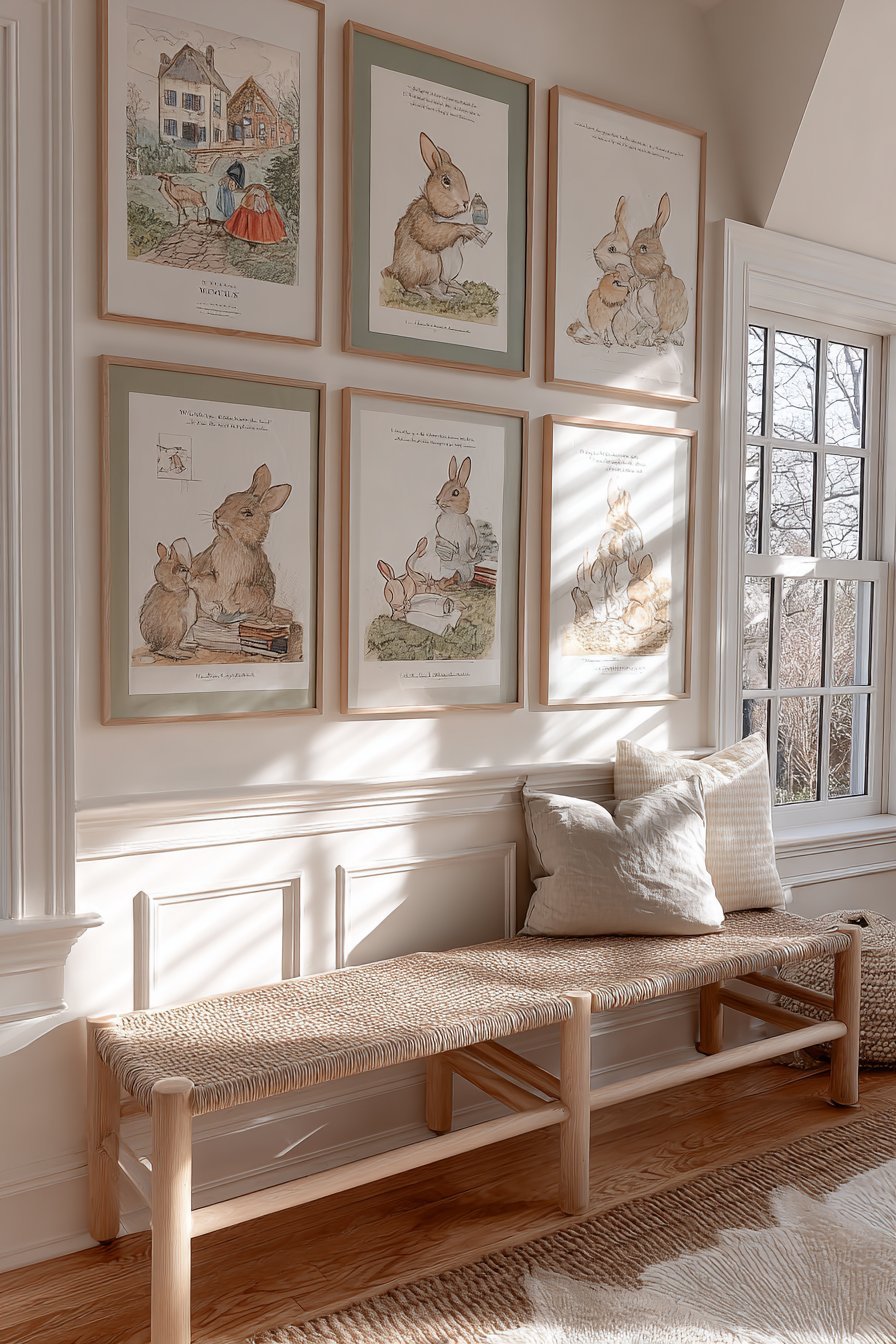
The varying frame styles add visual interest while maintaining harmony. The asymmetric arrangement feels organic rather than rigid. Below the gallery wall sits a low wooden bench. A woven cushion makes this the perfect spot for story time.
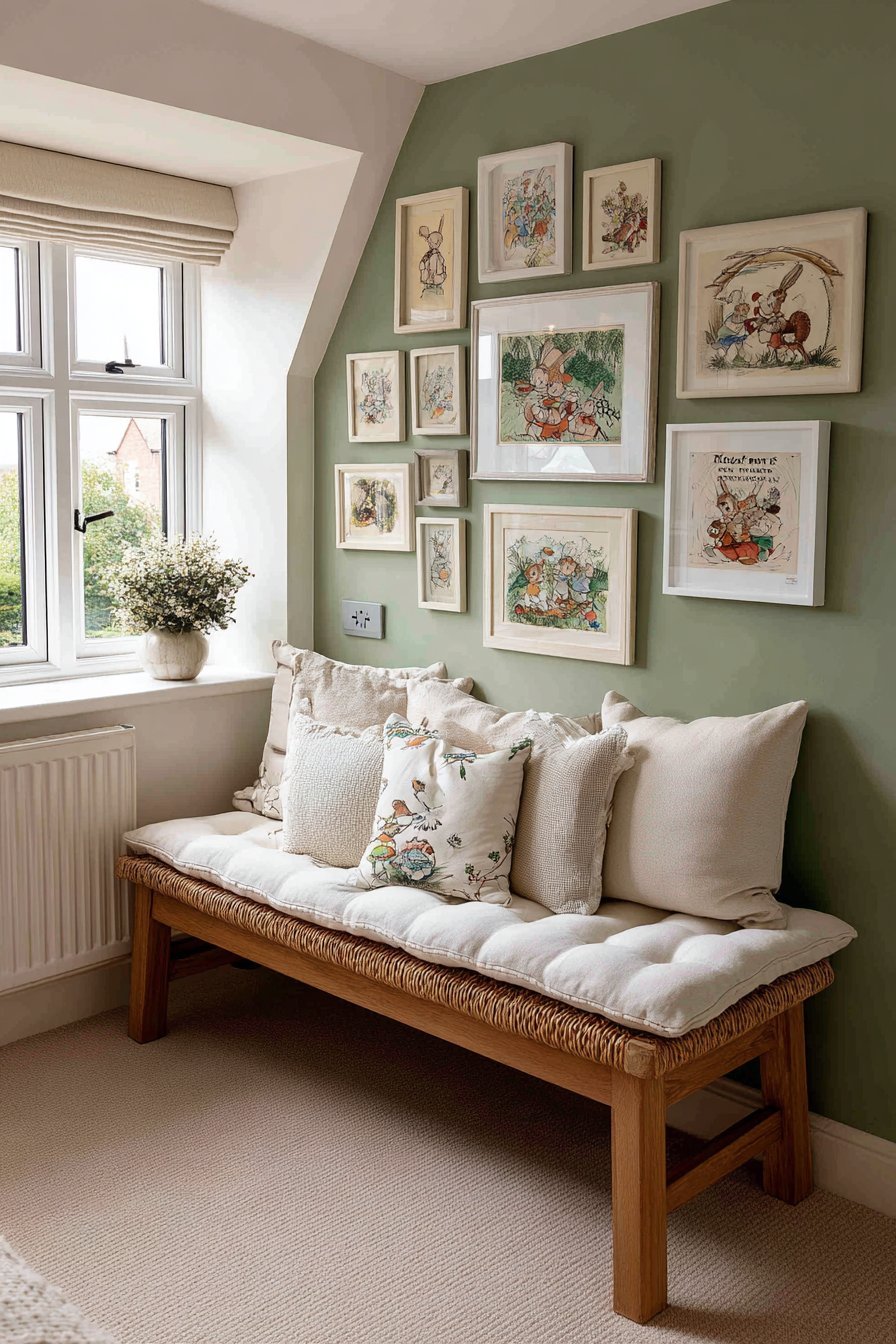
Natural morning light from adjacent windows creates soft shadows on cream walls. The changing light throughout the day adds dimension to the display. The gallery becomes a focal point that draws the eye naturally. Children can identify characters and stories from their crib view.

This approach allows for easy updates as your child’s interests develop. New prints can replace others without redesigning the entire wall. The collection grows with your family. Personal favorites can take prominence over time.
Key Design Tips:
- Mix frame styles in odd numbers for pleasing asymmetry
- Use consistent matting color to unify different frame finishes
- Hang the lowest frames at toddler eye level for engagement
- Create a paper template layout before hammering nails
- Include breathing room between frames for visual rest
- Choose archival-quality prints to prevent fading over time
6. Vintage Metal Crib with Cottage Charm
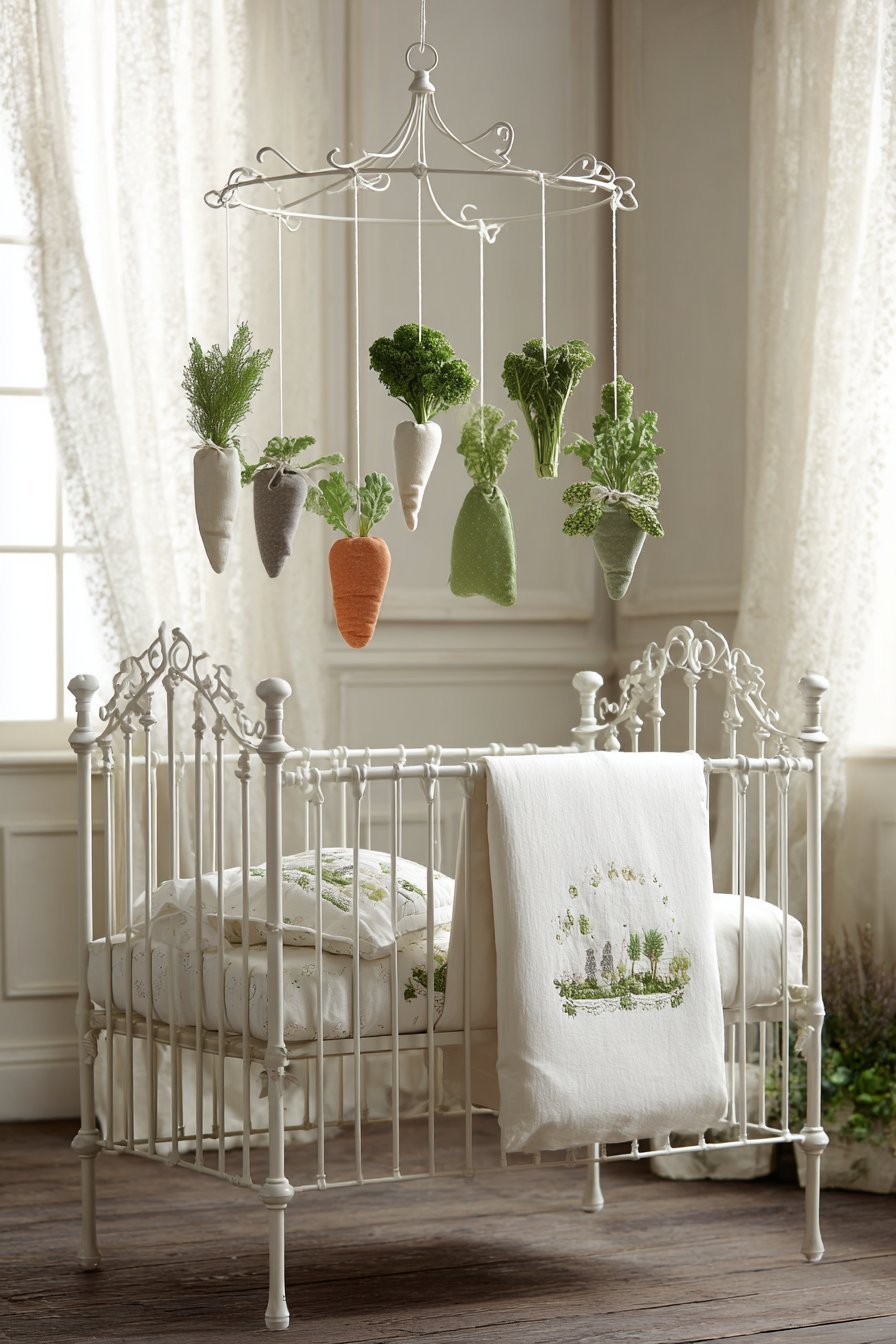
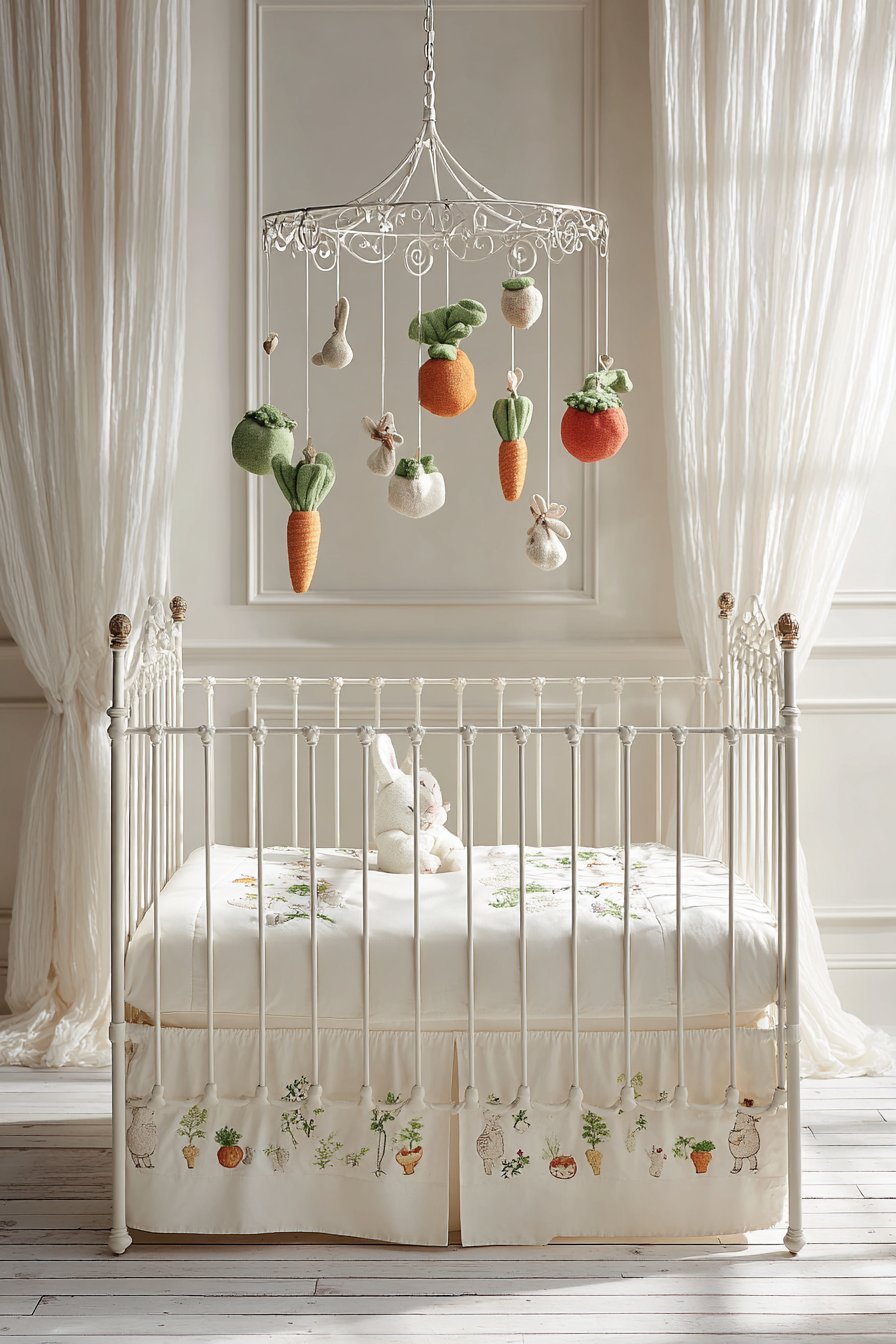
A vintage-inspired metal crib in soft white finish anchors this romantic nursery. Delicate scrollwork details evoke English country cottages beautifully. The crib becomes a statement piece that defines the room’s character. Organic cotton sheets in cream provide a neutral foundation.
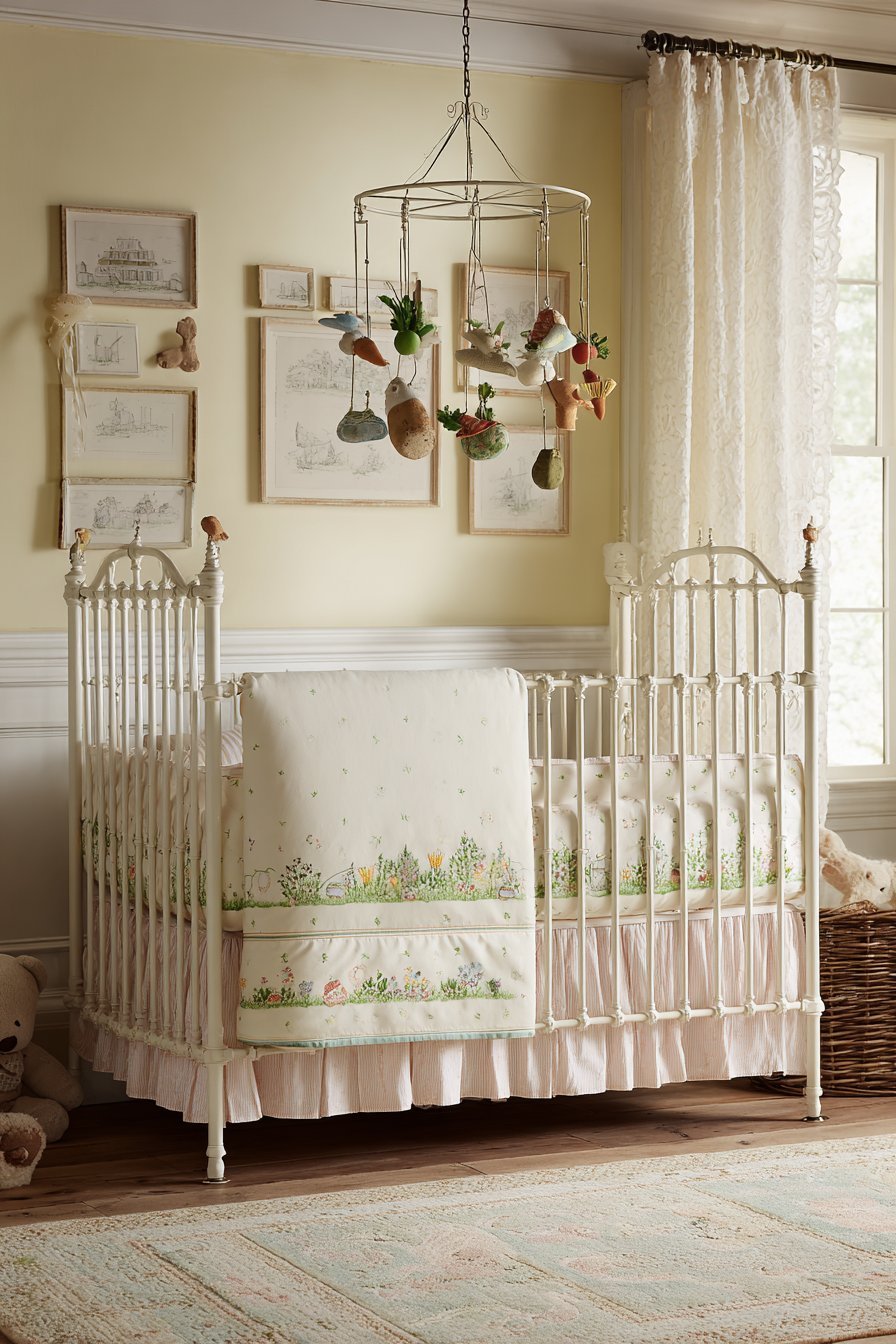
Hand-embroidered vegetable garden motifs along the hem add personalized charm. These subtle details reward close inspection. A mobile crafted from felt vegetables hangs above the crib. Garden implements in muted natural colors gently rotate overhead.
The surrounding walls painted in soft buttercream create warmth. White wainscoting below chair rail height adds architectural interest. This traditional wall treatment enhances the cottage aesthetic authentically. Natural light filters through lace curtains creating romantic shadows.
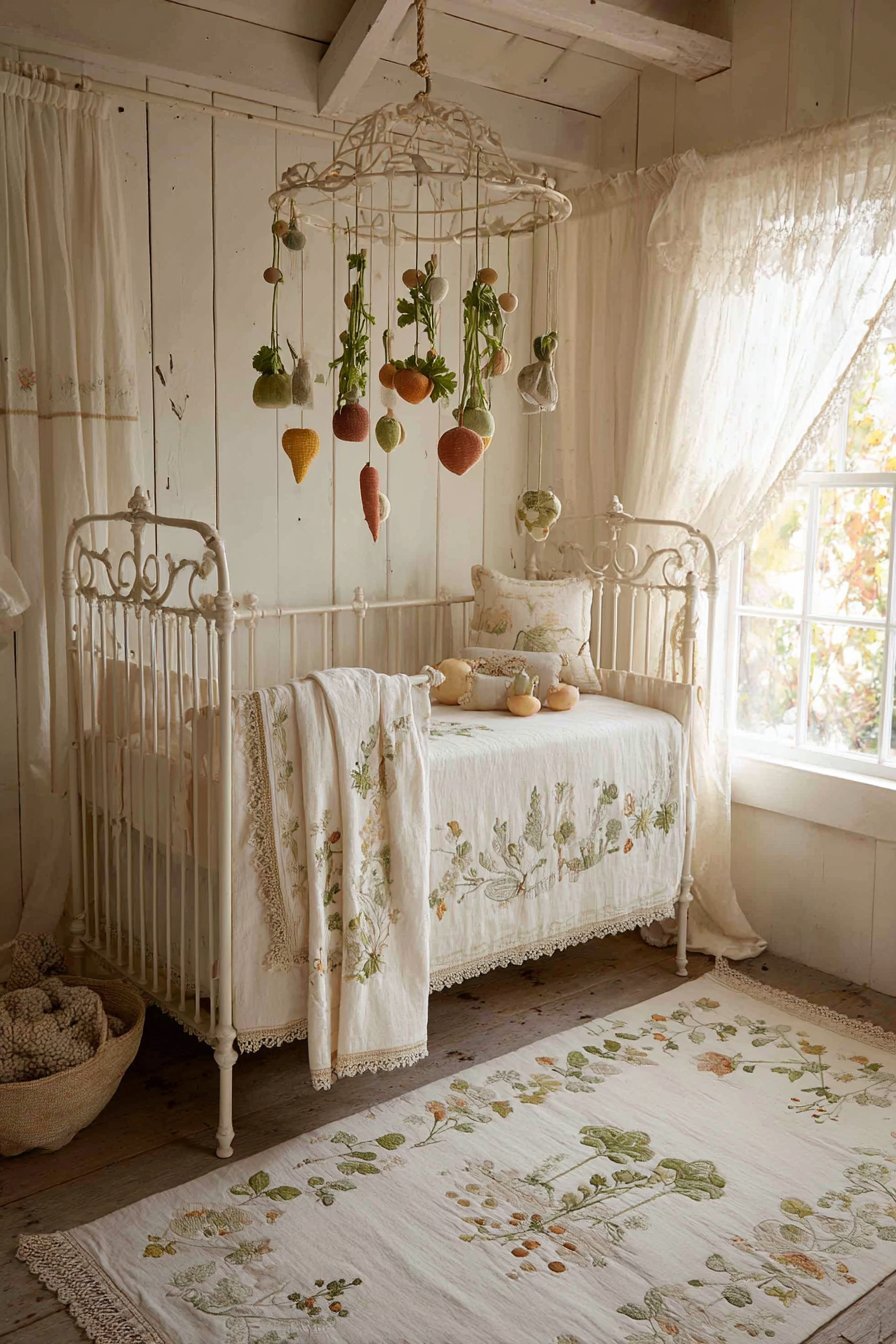
The combination of metal and soft textiles creates pleasing contrast. Hard and soft elements balance each other perfectly. The room feels both substantial and gentle simultaneously. Every detail contributes to the cohesive cottage vision.
Key Design Tips:
- Research vintage crib safety standards before purchasing
- Choose metal finishes that won’t chip or rust over time
- Hand-embroider linens or commission local artisans for custom work
- Create mobiles from natural materials like wool felt
- Install wainscoting at traditional chair rail height
- Use lace curtains to filter light while maintaining privacy
7. Inviting Window Seat Reading Corner

A built-in window seat creates a special reading sanctuary. Sage green painted wood frame provides structure and color. Cream linen cushions adorned with embroidered rabbits invite comfortable sitting. This architectural element adds both function and charm.
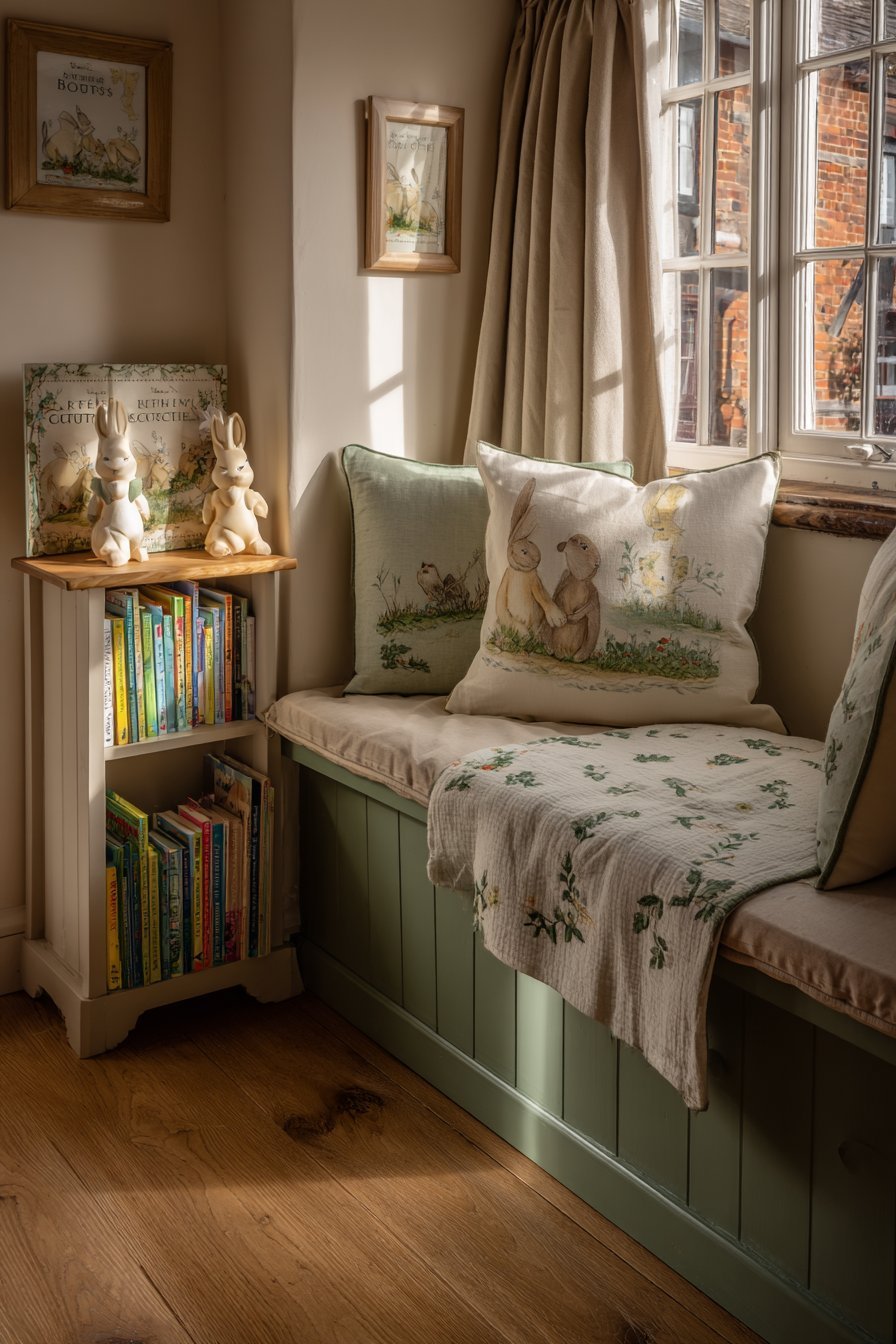
Tab-top curtains in natural linen frame the window beautifully. A subtle leaf print border references the garden theme. Beside the window seat stands a small bookshelf painted cream. Beatrix Potter books and ceramic animal figurines share shelf space harmoniously.
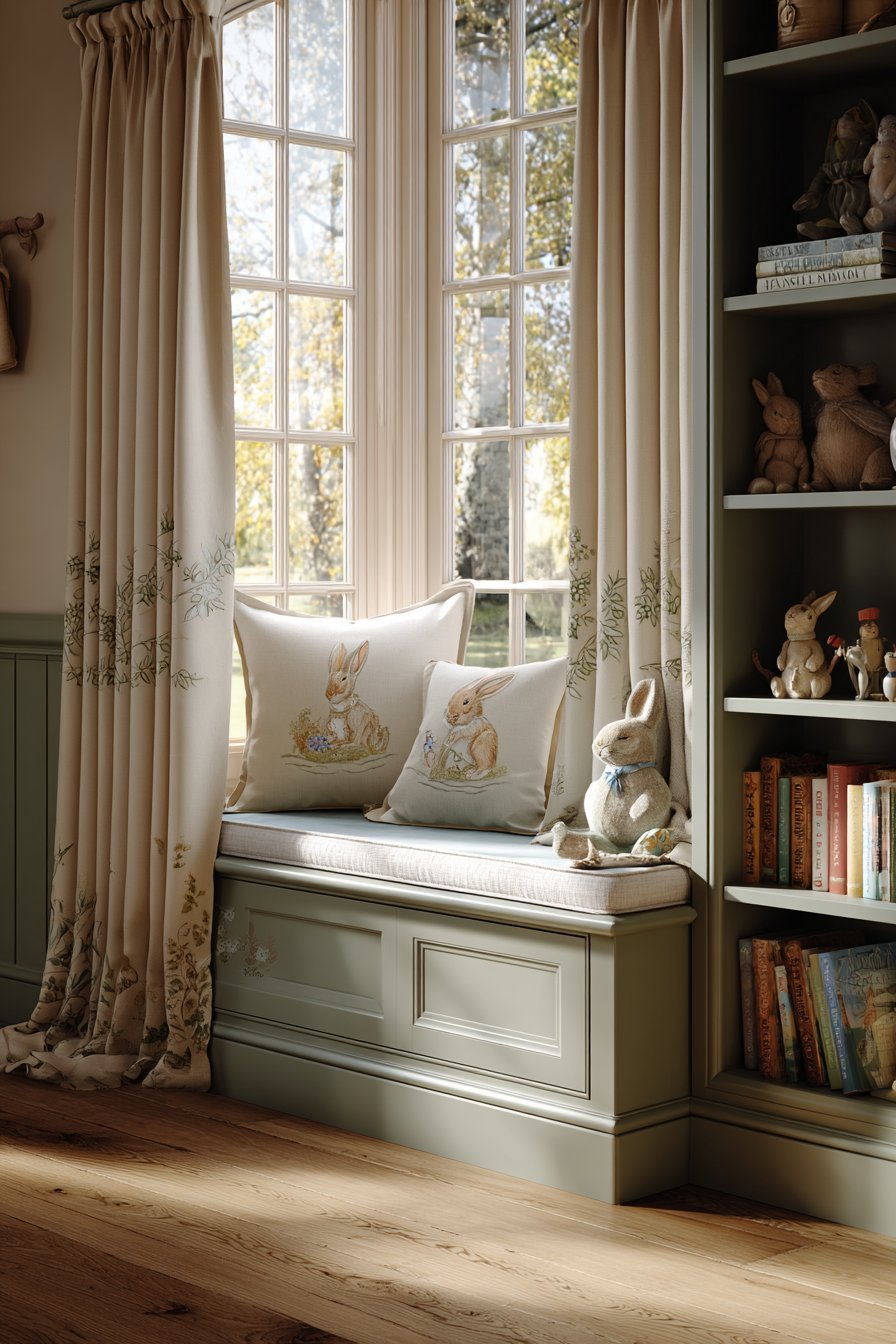
Natural oak flooring extends throughout the reading area. Cream walls provide a serene backdrop that won’t compete. The window becomes a focal point during daytime hours. Golden hour lighting streaming through creates magical reading moments.
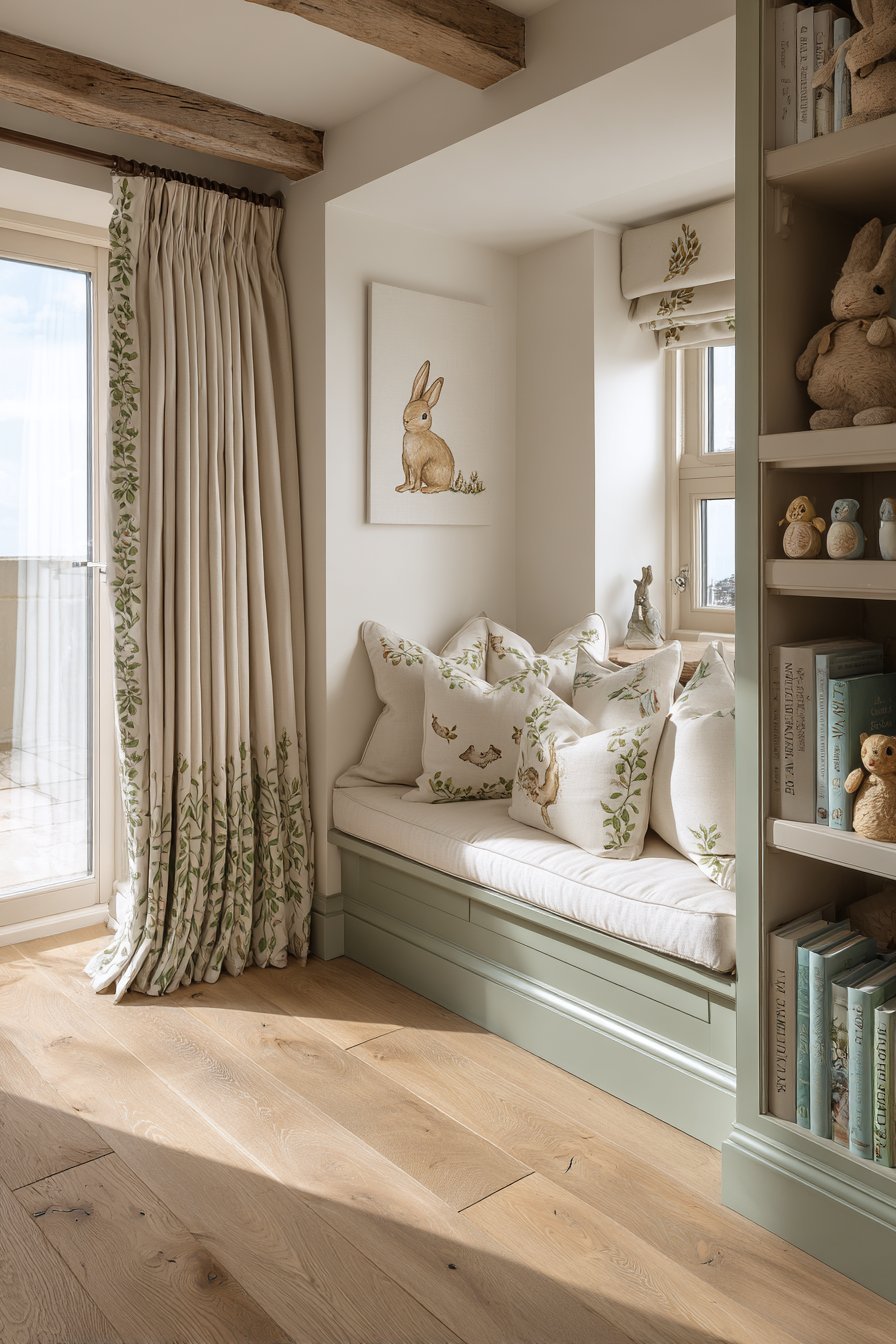
This dedicated reading space grows with your child over years. Toddlers enjoy picture books while sitting with parents. Older children retreat here for independent reading adventures. The window seat becomes a cherished spot for quiet reflection.
Key Design Tips:
- Build window seats with lift-up cushions for hidden storage
- Use high-density foam for cushions that maintain shape over time
- Position bookshelves within easy reach from the seat
- Choose washable curtain fabrics for practical maintenance
- Install the seat at comfortable height for adult and child use
- Add throw pillows that can be removed for safety when unattended
8. Personalized Hand-Lettered Wooden Sign
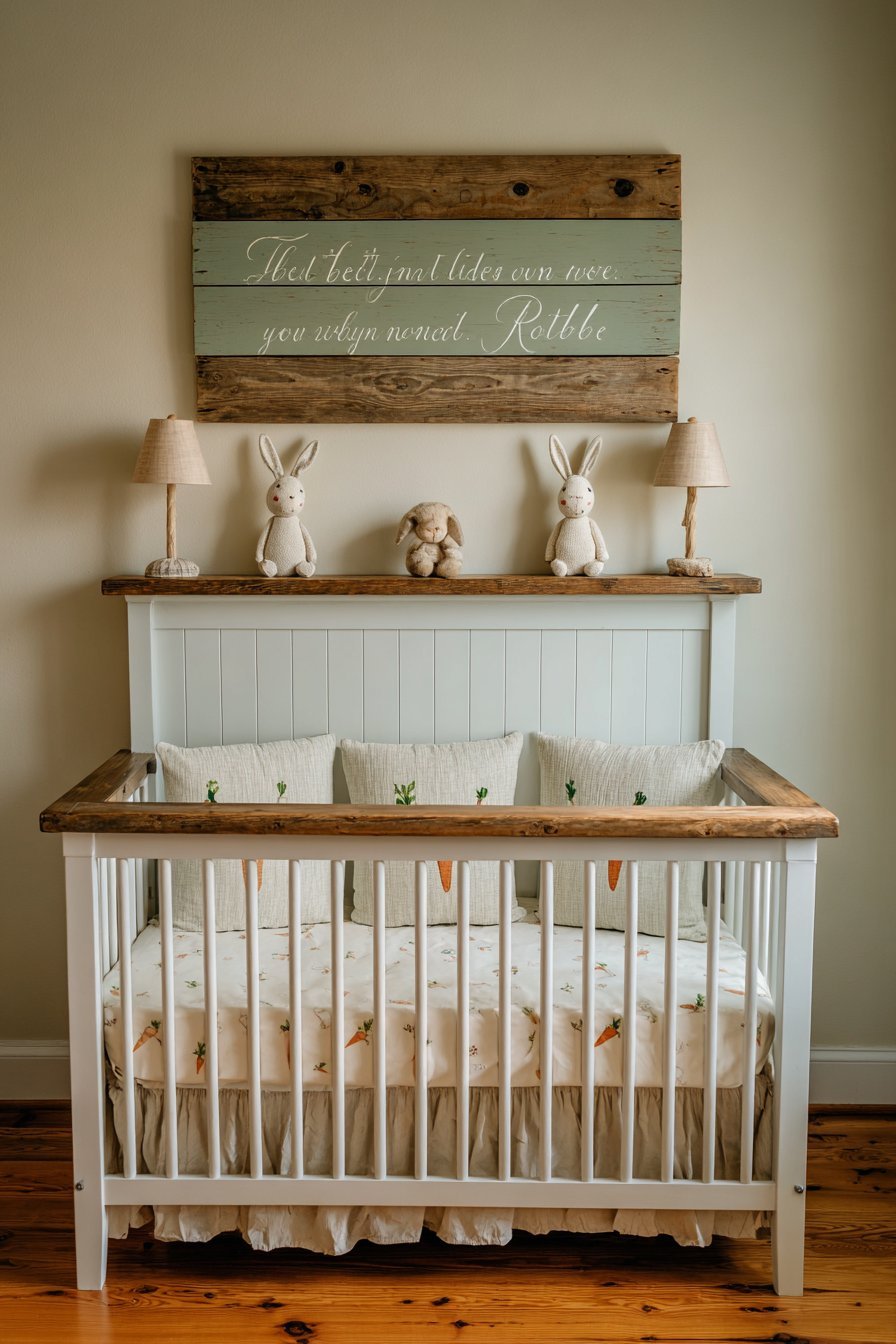
A hand-painted wooden sign above the crib features a beloved Peter Rabbit quote. Elegant script lettering captures the timeless story’s essence. The sign crafts from reclaimed wood with visible grain adds character. Soft sage green paint with cream lettering creates gentle contrast.
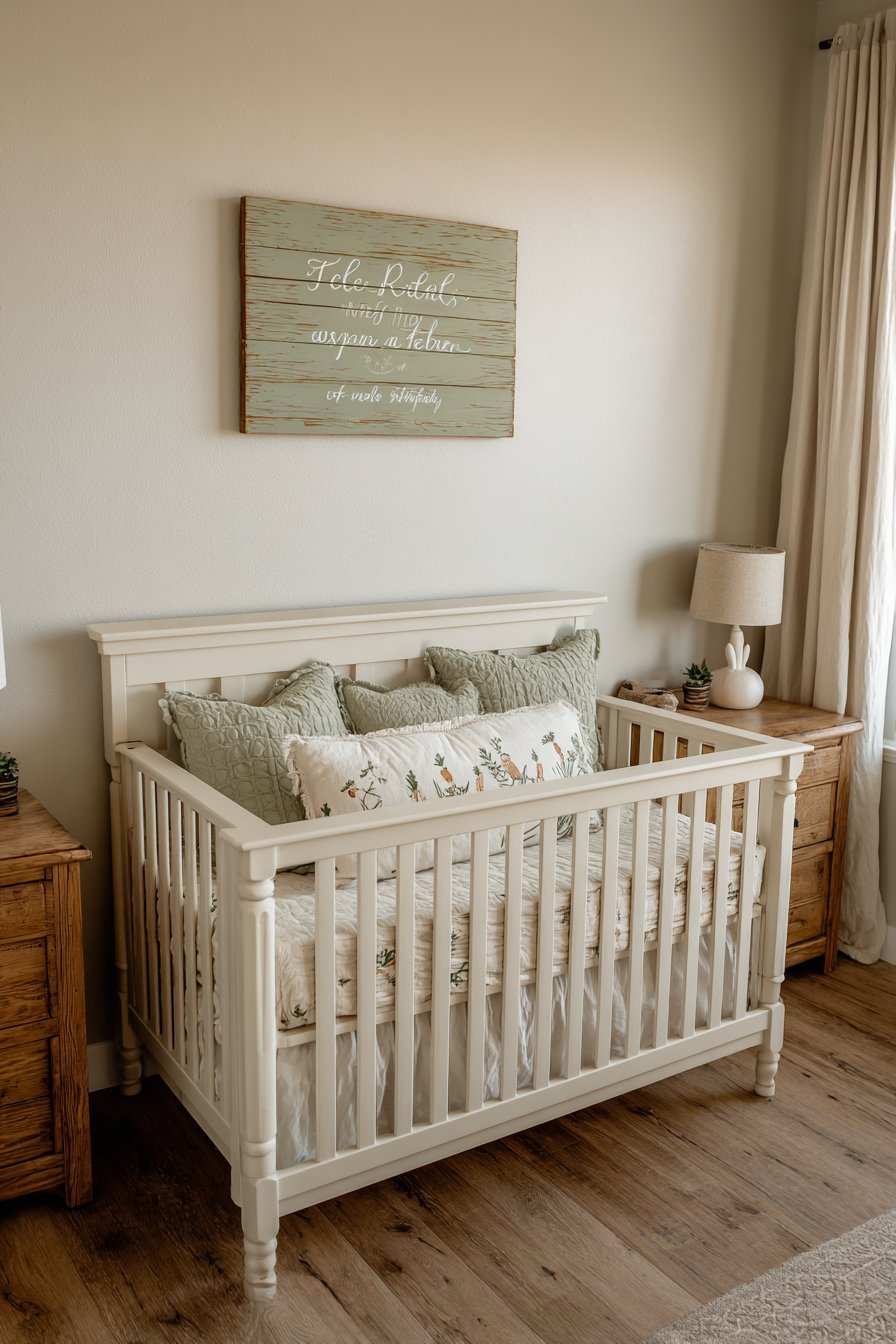
Below this personal touch, a white spindle crib displays coordinating bedding. Cream and sage tones with delicate embroidered carrot details tie everything together. Flanking nightstands in natural oak hold ceramic rabbit lamps. Symmetrical placement creates balance and harmony.
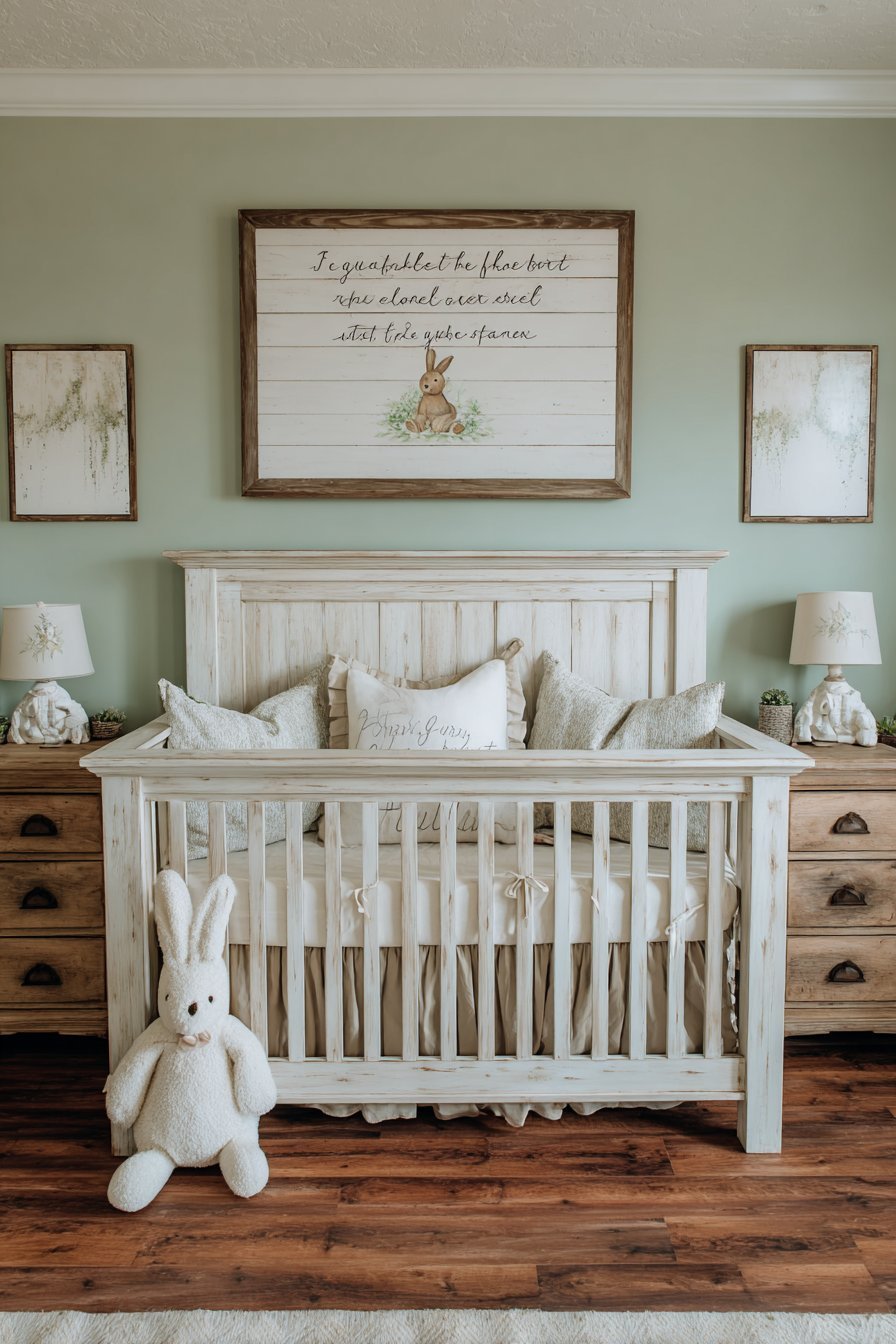
Cream walls allow the wooden sign to become the focal point. Natural wood flooring adds warmth without competing for attention. The personalized element makes this nursery uniquely yours. Favorite quotes can inspire both parent and child during quiet moments.

The hand-lettered craftsmanship showcases artisan quality. Machine-made signs can’t replicate the subtle imperfections that add authenticity. This personal touch demonstrates the care invested in creating this special space.
Key Design Tips:
- Commission hand-lettered signs from local craftspeople
- Choose meaningful quotes that resonate with your family
- Use reclaimed wood for environmental sustainability and character
- Position signs at safe heights above the crib
- Coordinate paint colors with existing room palette
- Seal painted wood properly to prevent dust accumulation
9. Charming Vintage High Chair Station
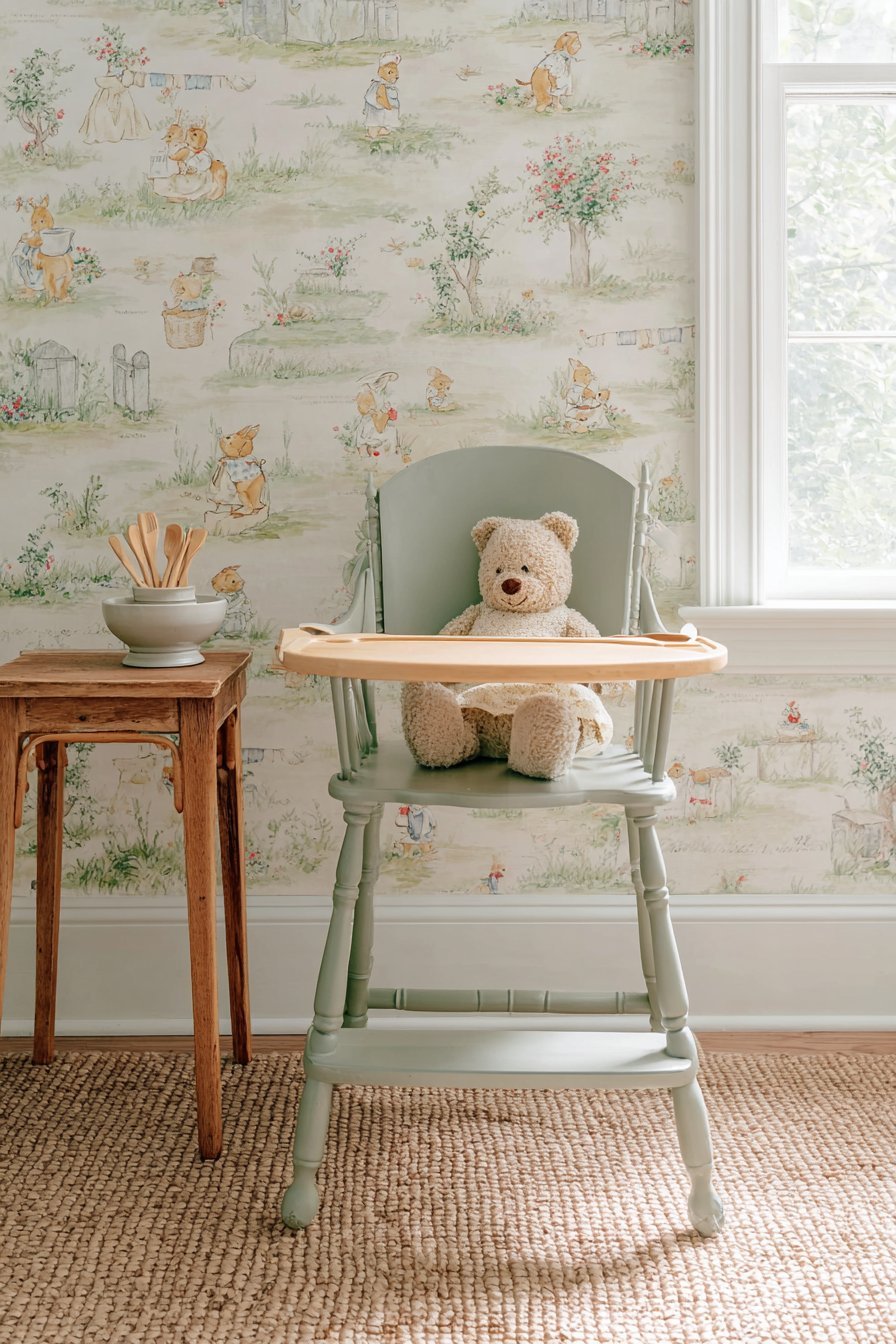
A vintage wooden high chair painted soft sage green creates a functional feeding area. The natural wood tray maintains practical cleaning ease. Positioned on a natural fiber rug, this corner feels intentional. Behind the chair, wallpaper depicting Mrs. Tiggy-Winkle’s laundry scenes adds storytelling magic.
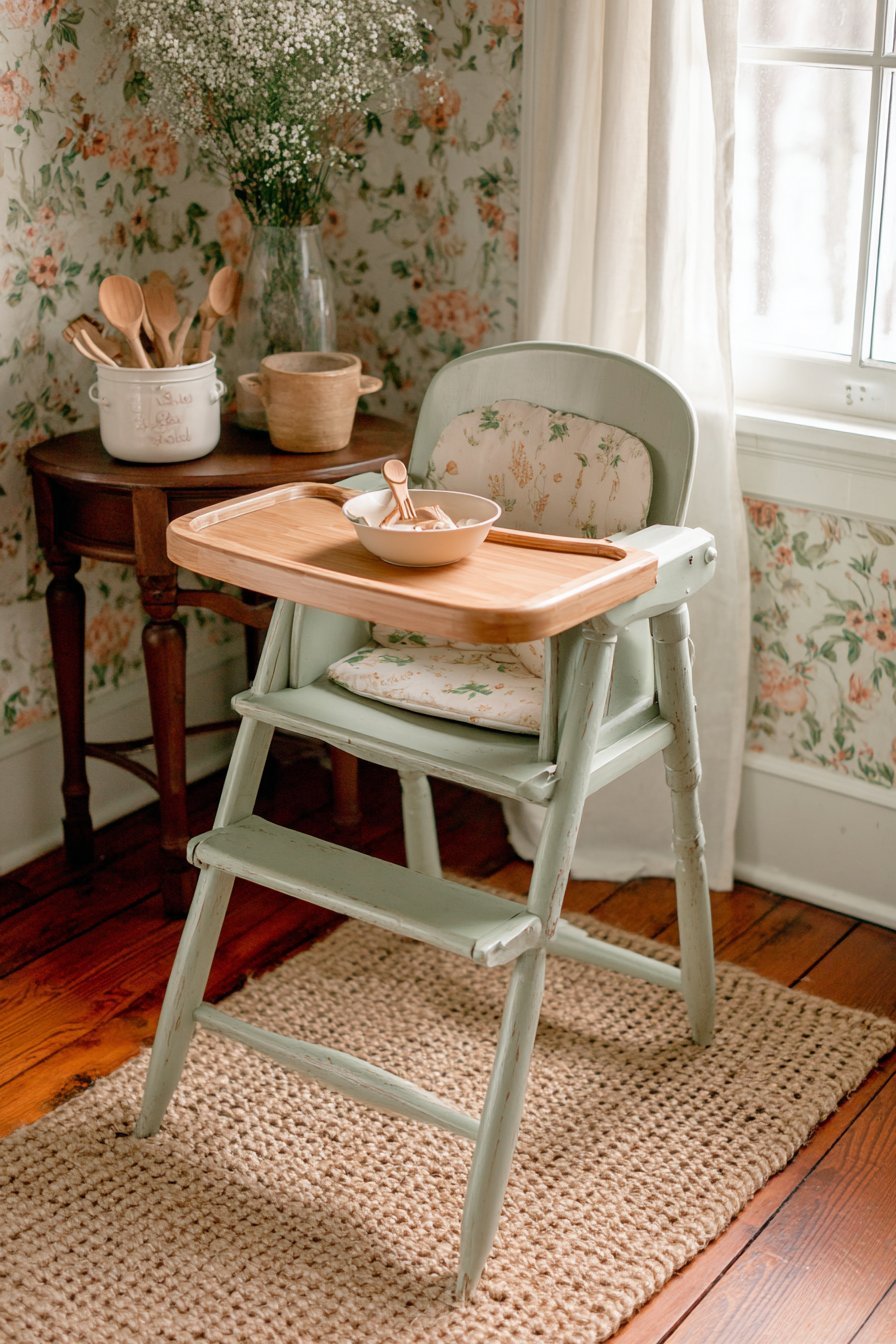
The soft watercolor wallpaper scenes provide entertainment during meals. A small wooden side table holds necessities within reach. Ceramic bowls and vintage children’s utensils maintain the aesthetic authenticity. Natural light from a nearby window illuminates this practical space.
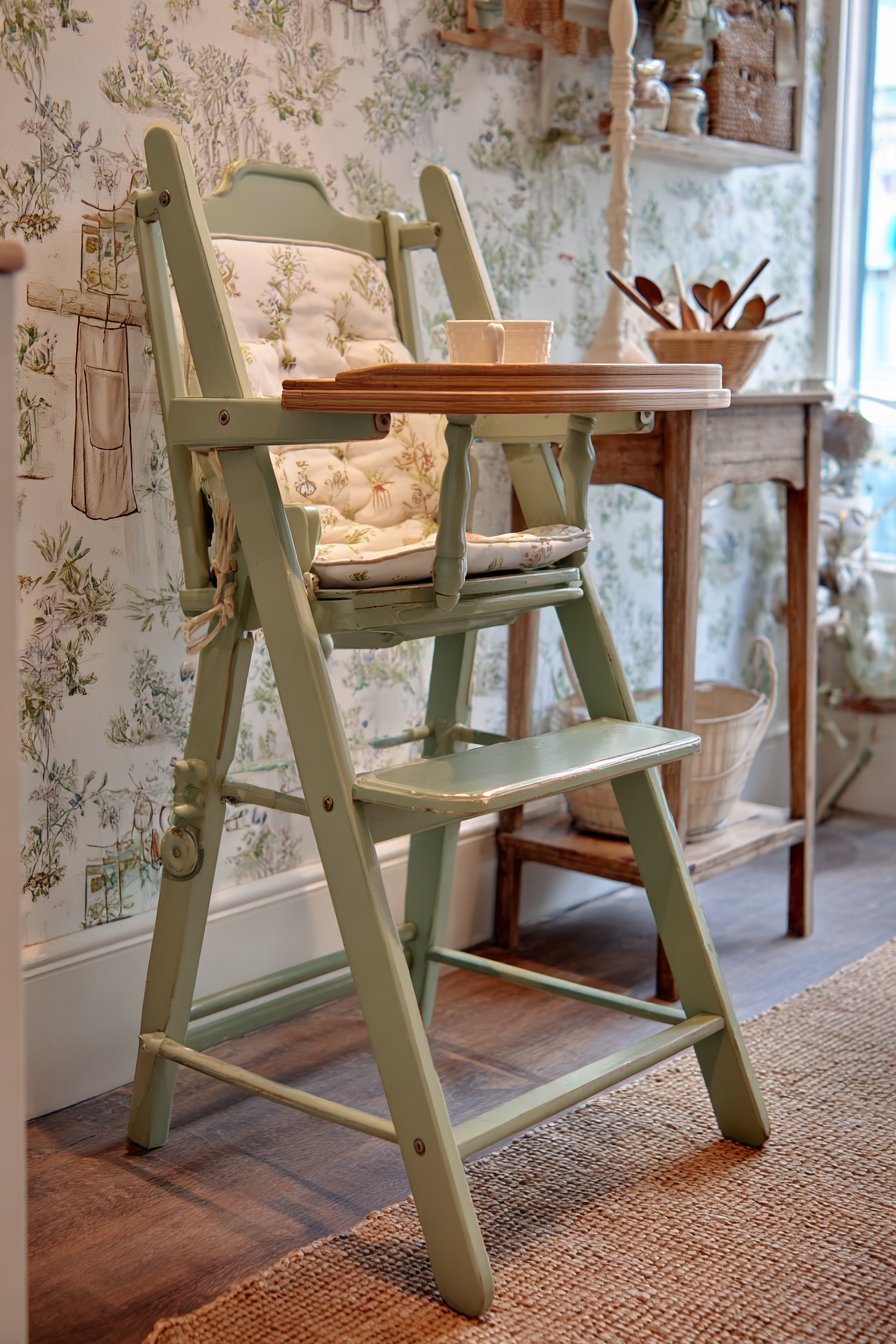
The feeding area becomes more than just functional necessity. It transforms into a storytelling opportunity during every meal. Children engage with the wallpaper characters while eating. This distraction technique helps with sometimes challenging feeding times.
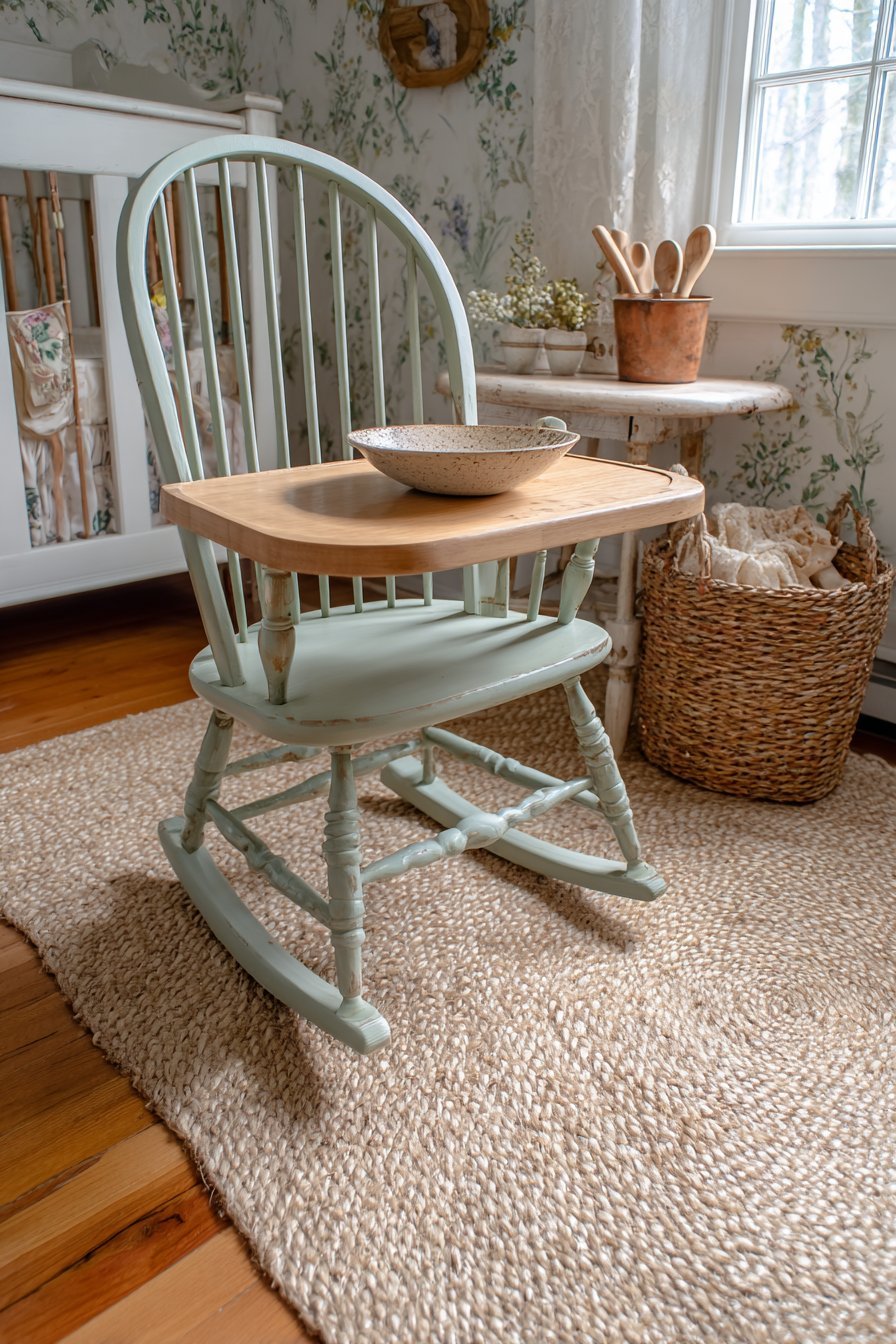
The vintage high chair adds character while serving modern needs. Properly restored antique chairs meet current safety standards. The painted finish updates the piece while respecting its history. This approach balances nostalgia with contemporary function.
Key Design Tips:
- Ensure vintage high chairs meet current safety certifications
- Use non-toxic paint suitable for children’s furniture
- Position feeding areas near windows for natural light
- Choose natural fiber rugs that clean easily
- Keep meal supplies organized on nearby side tables
- Apply wallpaper behind feeding areas for easy cleaning
10. Organized Vintage Wardrobe Display

A vintage wooden wardrobe painted soft duck egg blue stores tiny garments beautifully. Simple brass knobs add subtle elegance. Inside, tiny hanging garments include knitted cardigans and cotton dresses. Peter Rabbit appliqués adorn some pieces creating themed coordination.

The wardrobe interior shows careful organization principles. Wooden hangers sized for baby clothes prevent shoulder bumps. Small woven baskets hold accessories like socks and hats. Everything has its designated place for easy access.
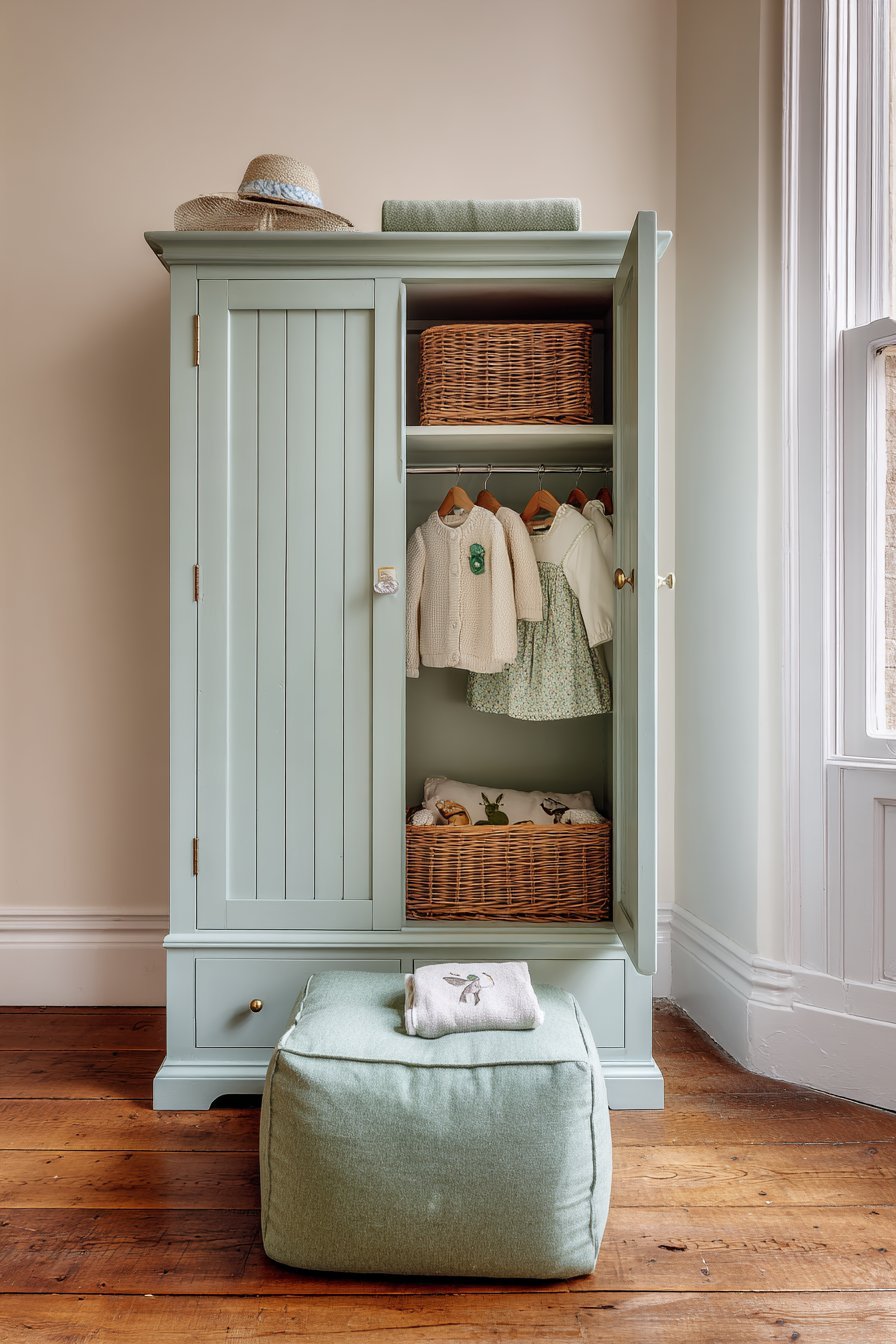
Adjacent to the wardrobe, a cushioned storage ottoman in sage green linen serves dual purposes. It provides additional seating during dressing times. The lift-top reveals hidden storage for extra supplies. Cream walls and natural oak flooring frame this functional area.
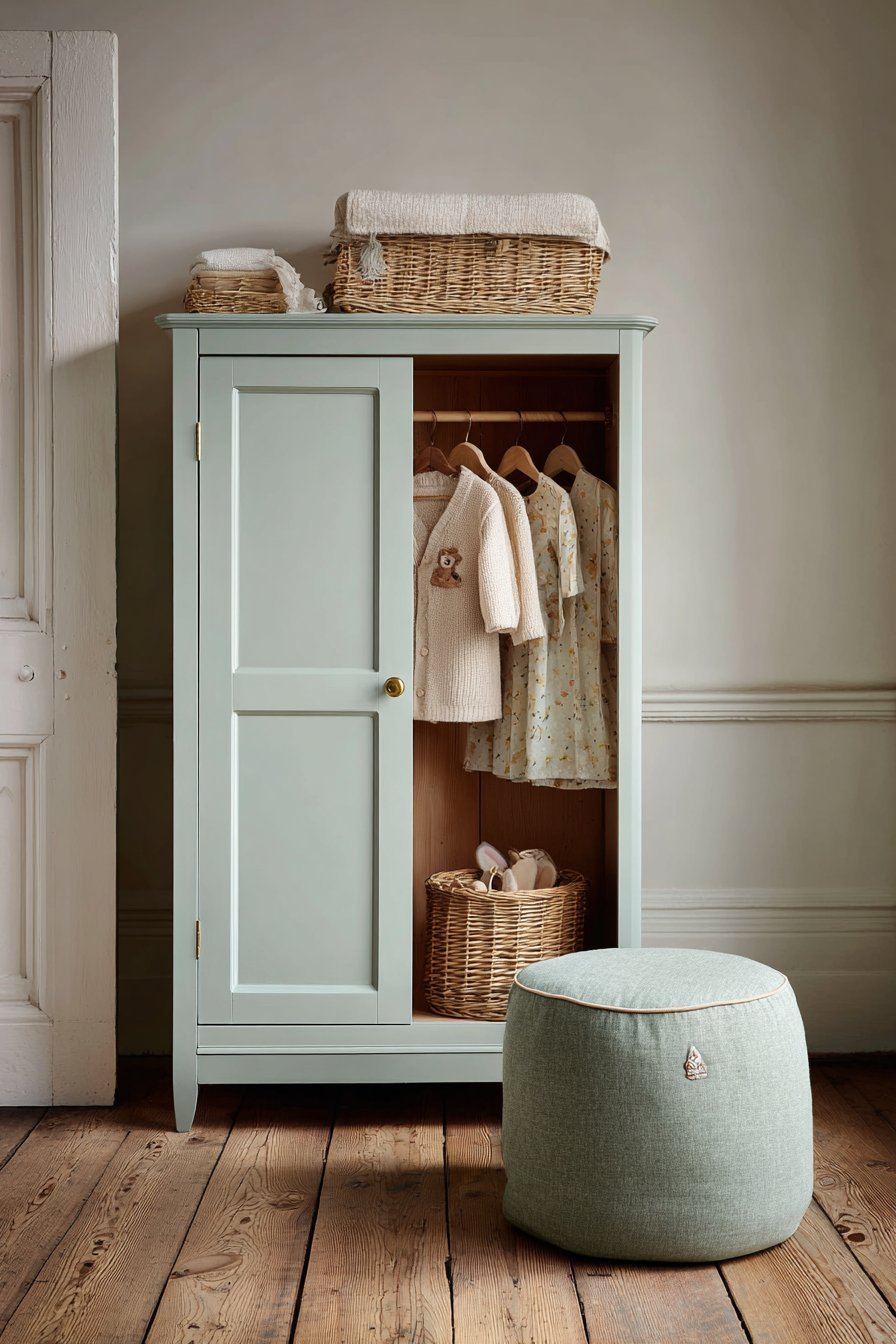
The painted furniture approach unifies the room’s aesthetic cohesively. Duck egg blue complements sage green and cream beautifully. The wardrobe becomes a decorative element when doors stand open. Organized clothing creates a pleasing visual display.
Key Design Tips:
- Paint vintage furniture with chalk paint for authentic matte finish
- Use appropriately sized hangers to maintain garment shape
- Install interior shelving at heights matching storage needs
- Choose storage ottomans with safety hinges for little fingers
- Organize clothing by type for efficient morning routines
- Display special occasion outfits as decorative elements
11. Interactive Play Area with Vintage Elements
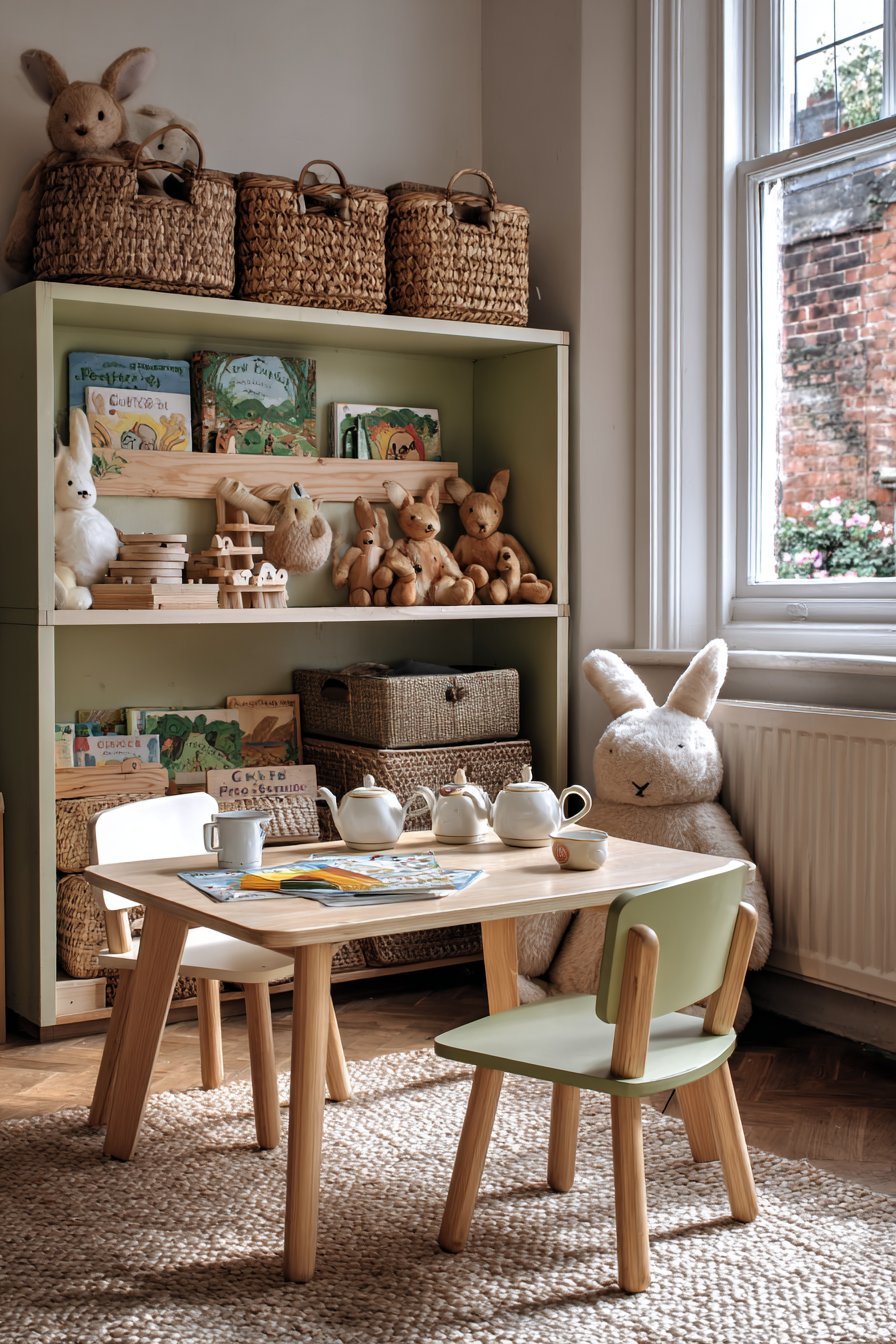
A low wooden table and two small chairs create an engaging play zone. Complementary cream and sage green painted tones coordinate beautifully. The table displays a vintage tea set with rabbit motifs. Scattered Beatrix Potter board books invite story exploration.
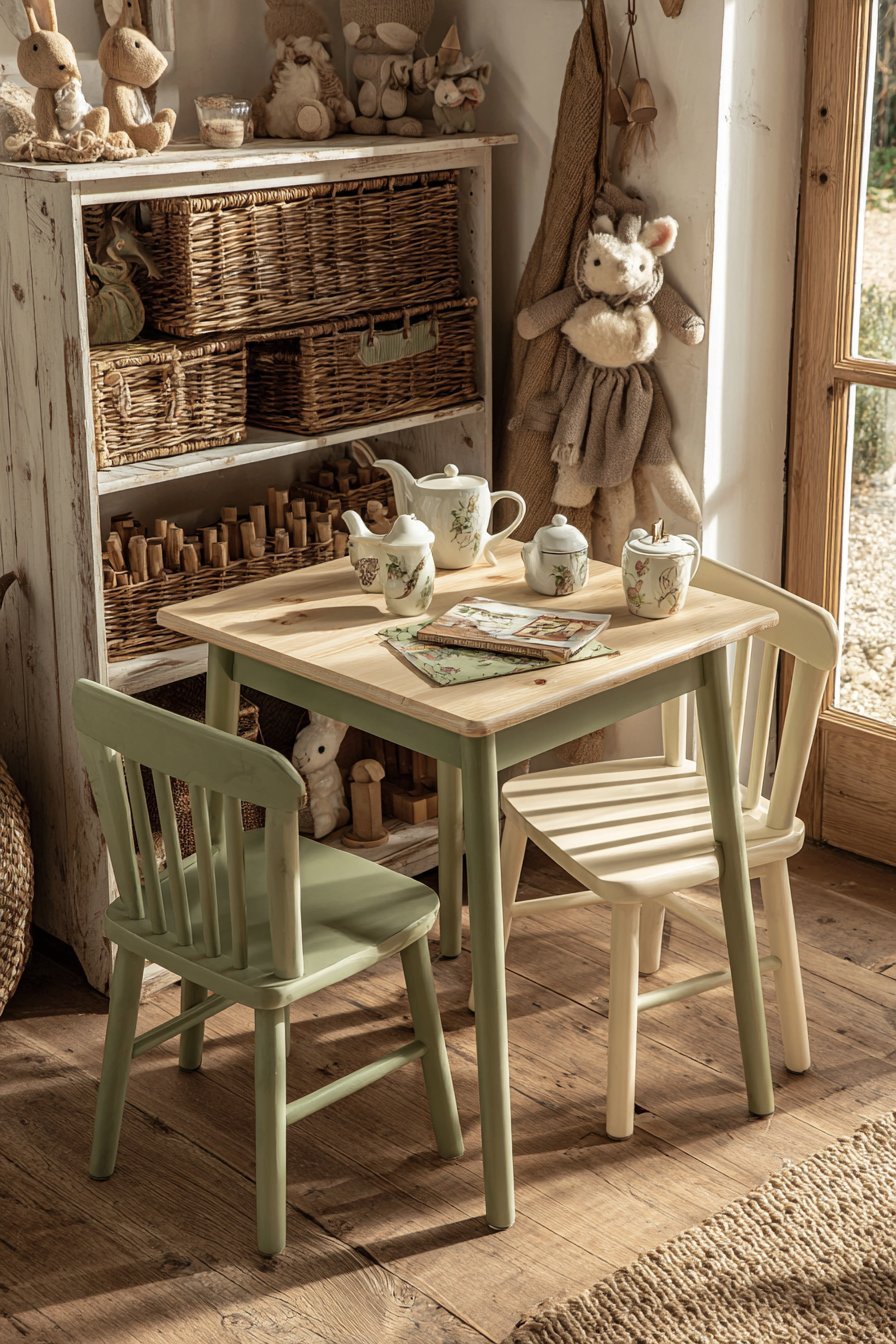
A braided wool rug in natural earth tones defines the play boundaries. Behind the table, open wooden shelving painted cream provides organization. Woven baskets filled with wooden toys maintain the natural aesthetic. Plush Peter Rabbit and Benjamin Bunny characters occupy places of honor.
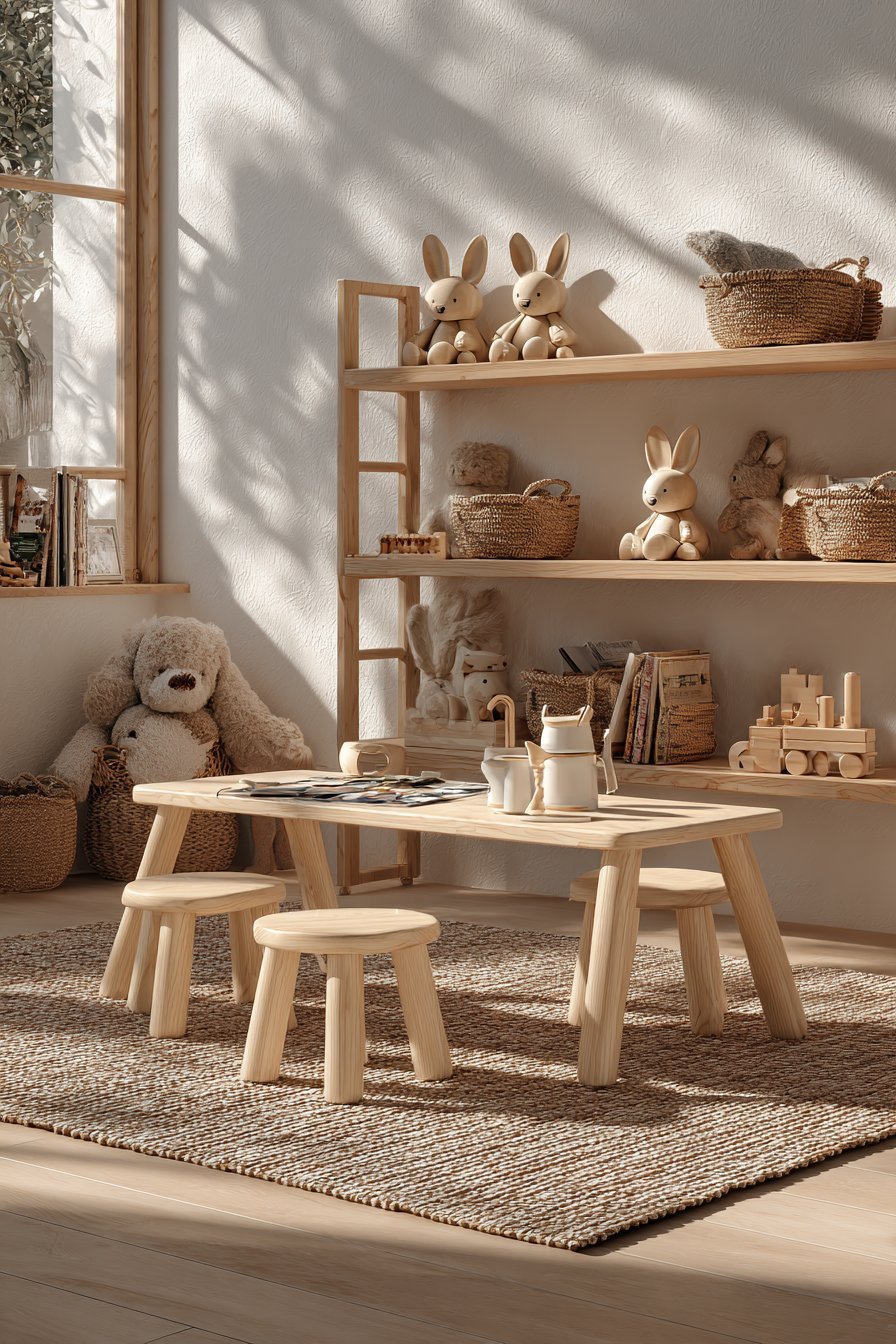
Natural light from a window creates soft shadows for interesting play. The thoughtfully organized space encourages independent exploration safely. Everything remains within easy reach for small hands. The vintage-inspired furniture scales appropriately for toddler use.
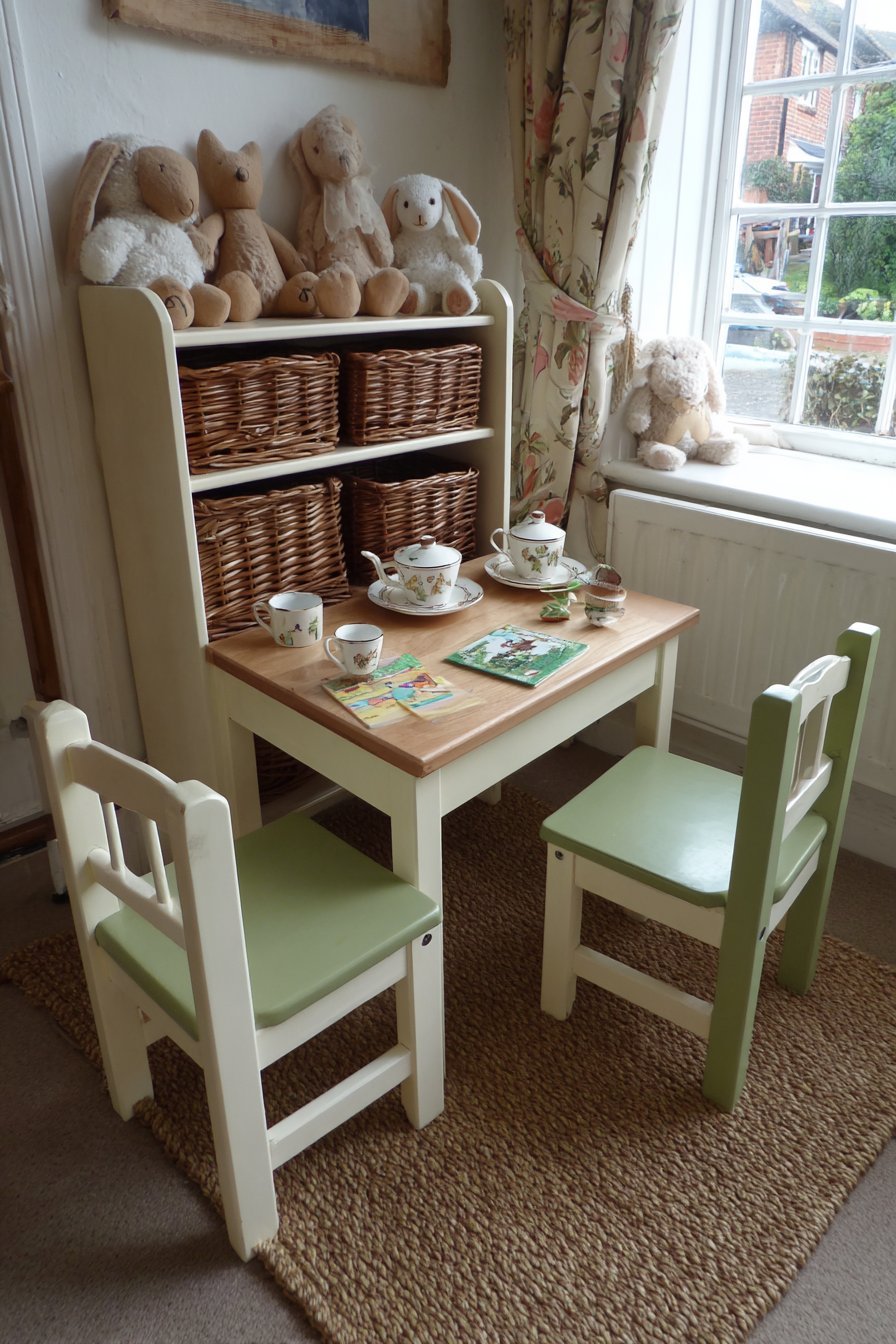
This dedicated play area keeps toys contained while remaining accessible. Children learn organizational skills through designated storage spots. The aesthetic storage solutions please both children and adults. Play becomes part of the room’s beauty rather than visual clutter.
Key Design Tips:
- Choose child-sized furniture that encourages independent play
- Use open shelving for easy toy access and cleanup
- Define play zones with rugs for visual boundaries
- Select wooden toys that align with the vintage aesthetic
- Rotate displayed toys to maintain interest and reduce overwhelm
- Ensure furniture has rounded edges for safety
12. Exquisite Hand-Embroidered Crib Textiles
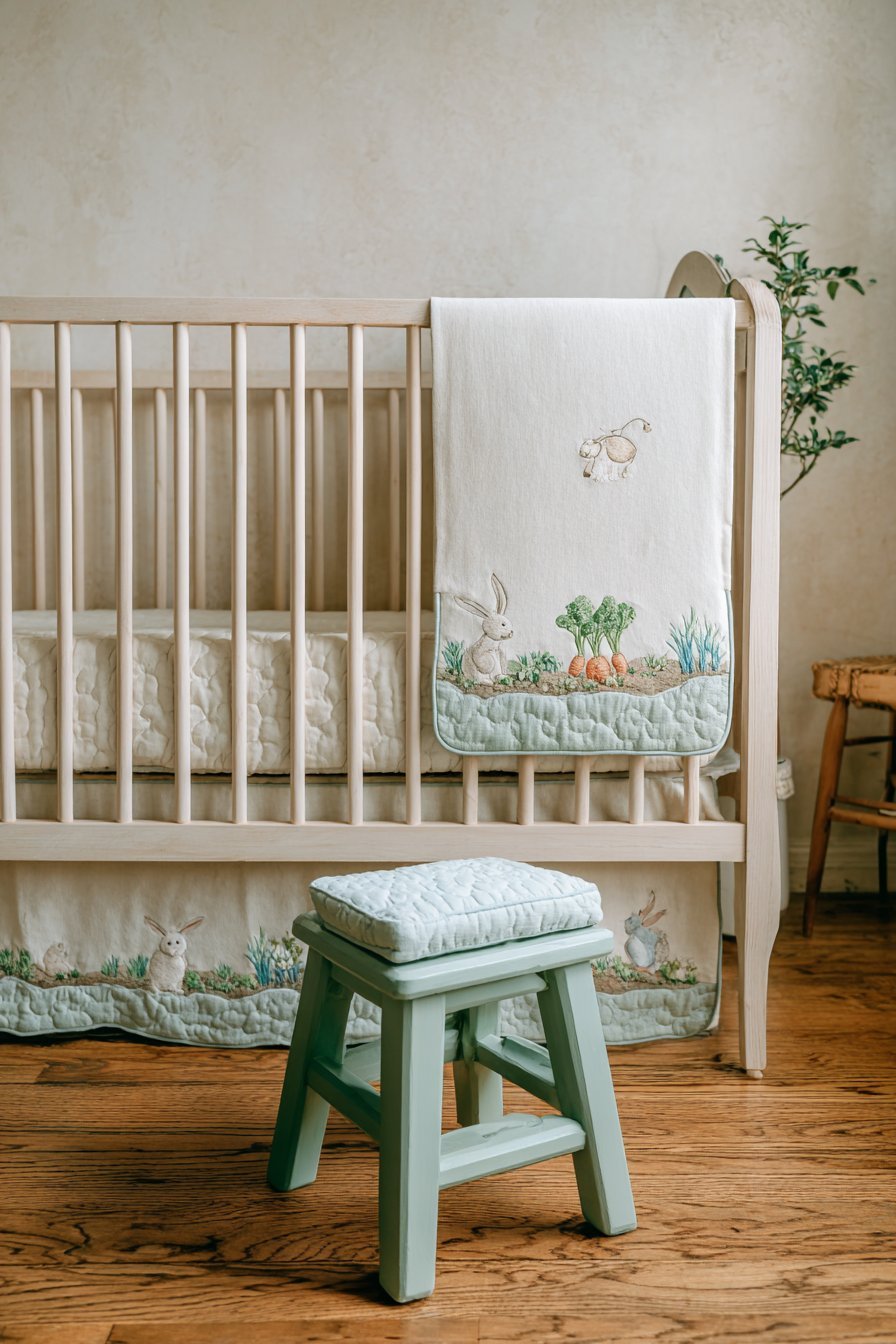
Custom crib textiles featuring hand-embroidered details elevate this nursery’s sophistication. Natural linen fabric provides the foundation for artisan work. Garden scenes with vegetables and rabbits appear in sage green thread. Dusty blue accents add dimensional interest to the embroidery.

The white wooden crib displays matching embroidered bumper pads carefully. A quilted blanket with similar motifs coordinates the bedding ensemble. A vintage wooden step stool painted sage green sits beside the crib. Cream walls with subtle texture allow textiles to shine.
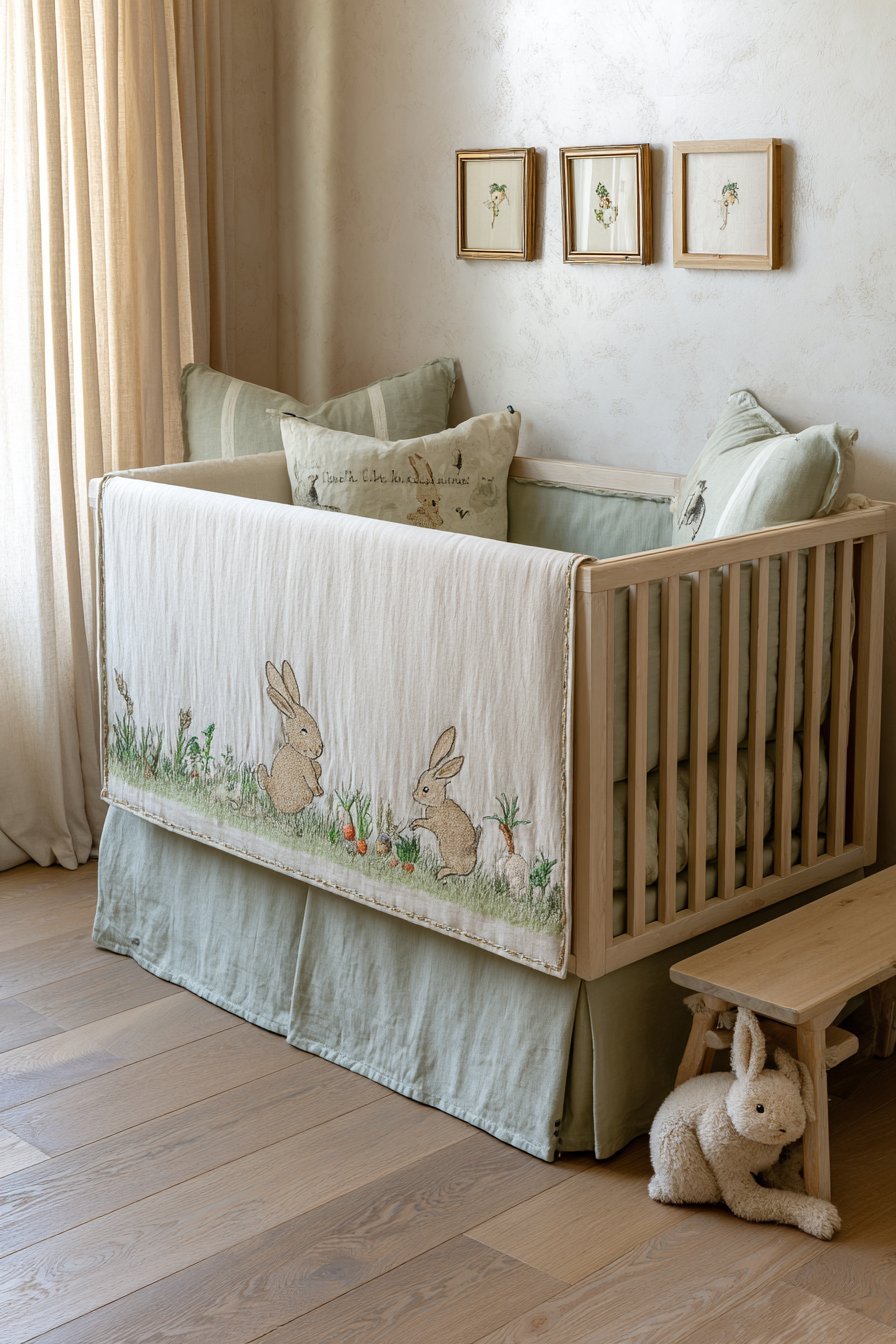
Natural oak flooring adds warmth without competing for visual attention. The hand-embroidery work showcases incredible craftsmanship and dedication. Machine embroidery cannot replicate the subtle variations and character. Soft natural lighting highlights the textile textures beautifully.
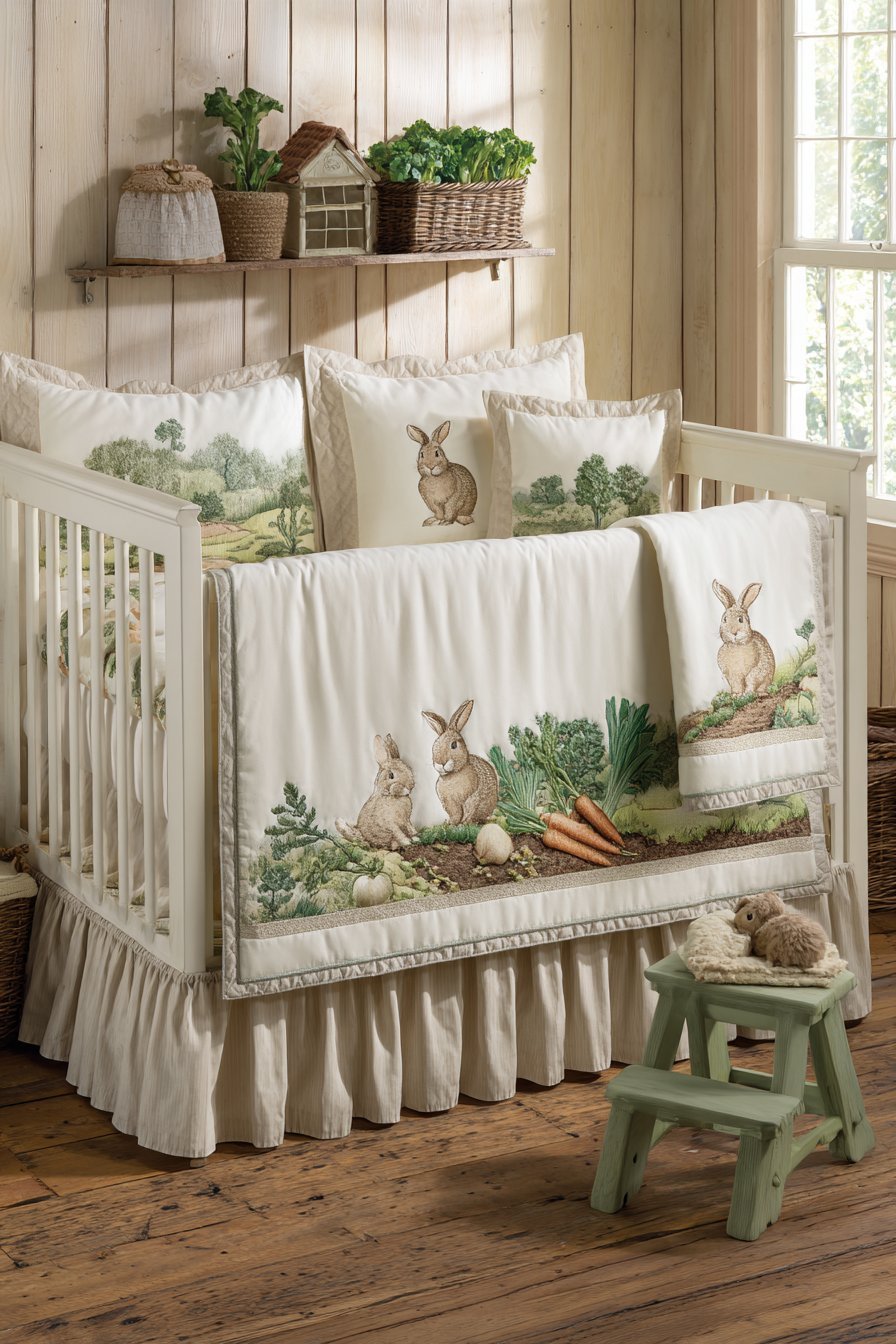
These custom textiles become heirloom pieces passed through generations. The investment in quality craftsmanship pays dividends over time. Children grow knowing they were surrounded by carefully chosen beauty. The textiles tell stories of love and attention.
Key Design Tips:
- Commission local embroiderers for custom heirloom pieces
- Choose natural linen for breathability and longevity
- Follow current safe sleep guidelines for crib textiles
- Use embroidery hoops to maintain even tension in handwork
- Wash embroidered items according to specific care instructions
- Store unused seasonal textiles in acid-free tissue paper
13. Nostalgic Rocking Horse Corner

A vintage-style wooden rocking horse painted soft cream becomes the room’s centerpiece. Sage green saddle and bridle details add coordinated color pops. Positioned on a wool rug with subtle botanical patterns, this corner invites imaginative play. The rocking horse represents timeless childhood joy.

Behind the rocking horse, walls display framed Beatrix Potter pencil sketches. Original watercolor studies hang alongside finished illustration prints. A small wooden shelf holds additional vintage toys including wooden blocks. Cloth dolls add softness to the curated collection.
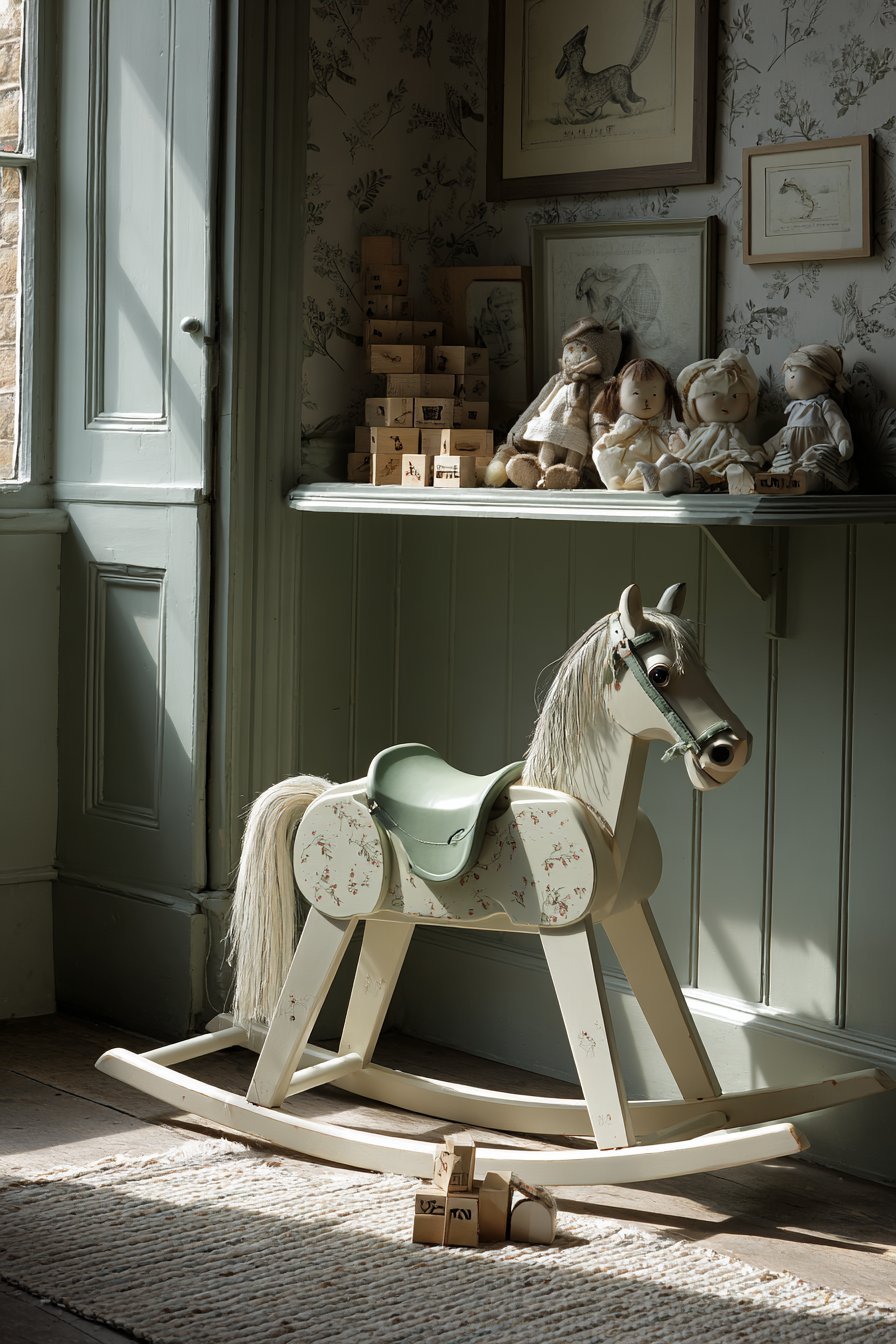
Natural morning light streams through a nearby window illuminating the play corner. The lighting creates dramatic shadows that enhance the nostalgic atmosphere. The vintage-inspired toys encourage screen-free creative play. Traditional toys stimulate imagination differently than modern alternatives.
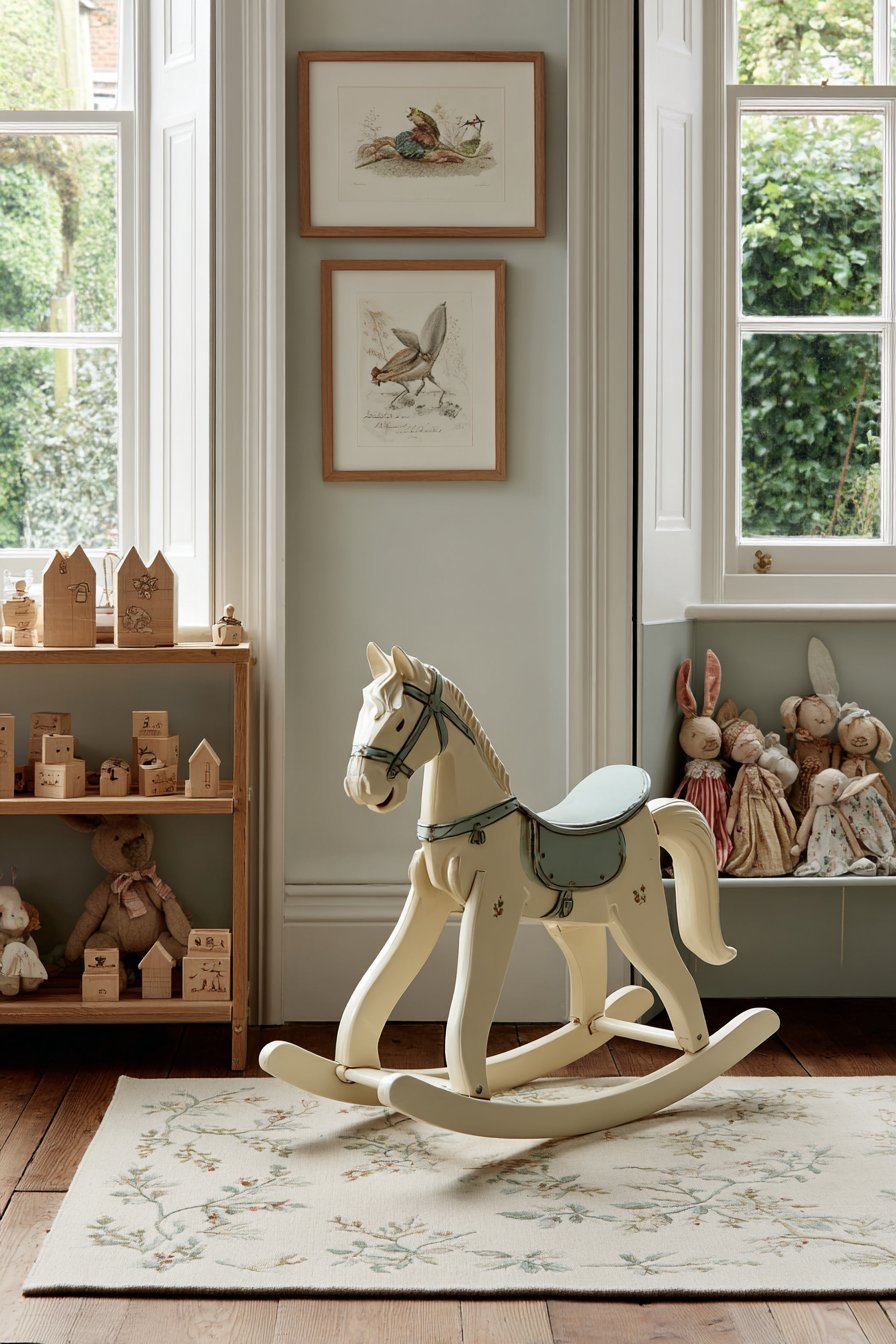
The painted details on the rocking horse demonstrate artisan quality. Hand-painted eyes and carefully applied saddle detailing show craftsmanship. This piece becomes a treasured childhood memory maker. Future generations may enjoy the same rocking horse.
Key Design Tips:
- Select rocking horses with appropriate weight limits and safety features
- Paint wooden toys with non-toxic child-safe finishes
- Display vintage toys as decorative elements between play sessions
- Choose botanical pattern rugs to soften hard flooring
- Frame original sketches and studies for artistic depth
- Rotate toy displays to maintain novelty and interest
14. Handcrafted Felted Vegetable Mobile
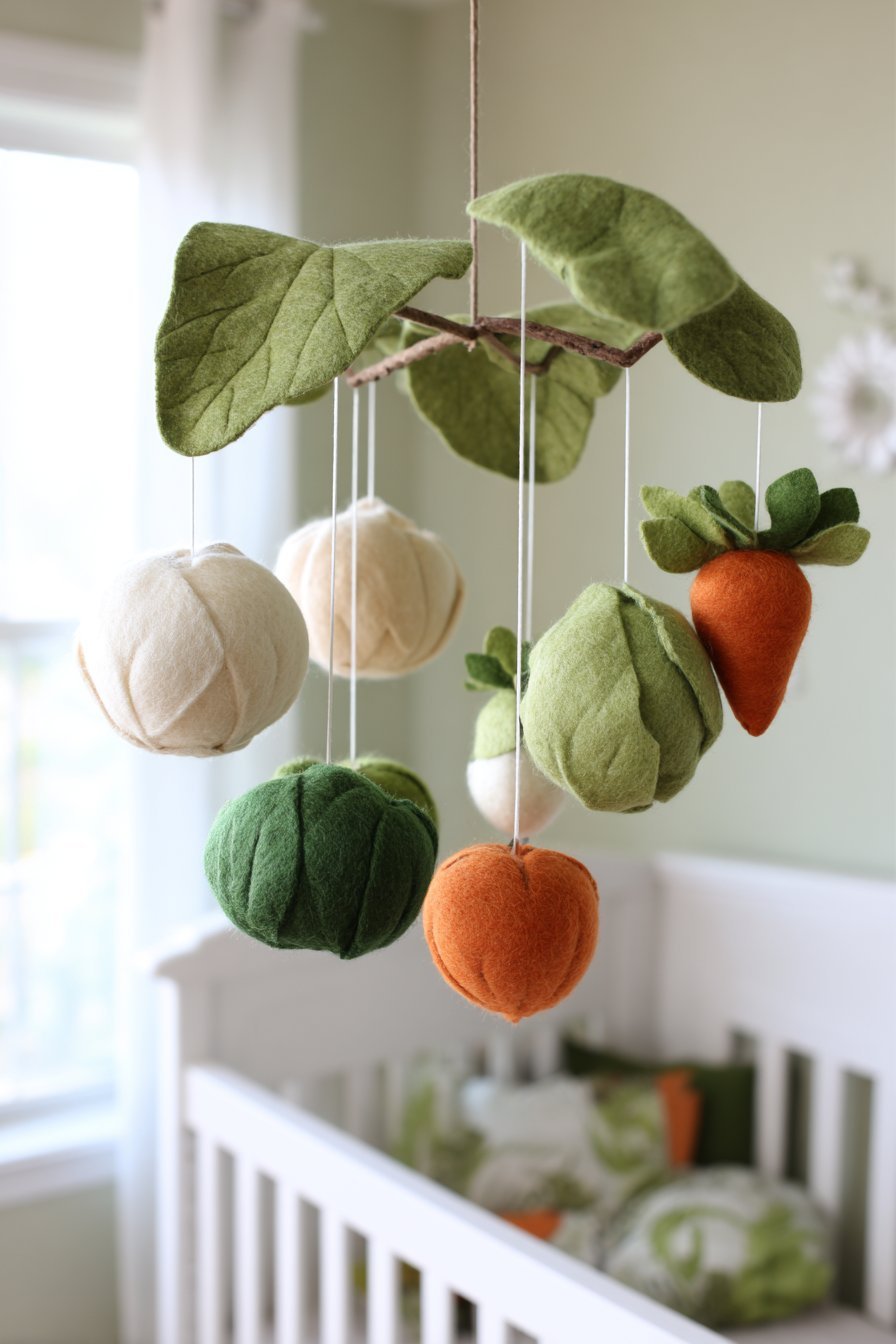
A custom mobile crafted from felted wool vegetables adds whimsical charm overhead. Carrots, radishes, and lettuce appear in natural colors suspended gracefully. A painted wooden branch in sage green serves as the hanging structure. Below, a simple white crib provides serene sleeping space.
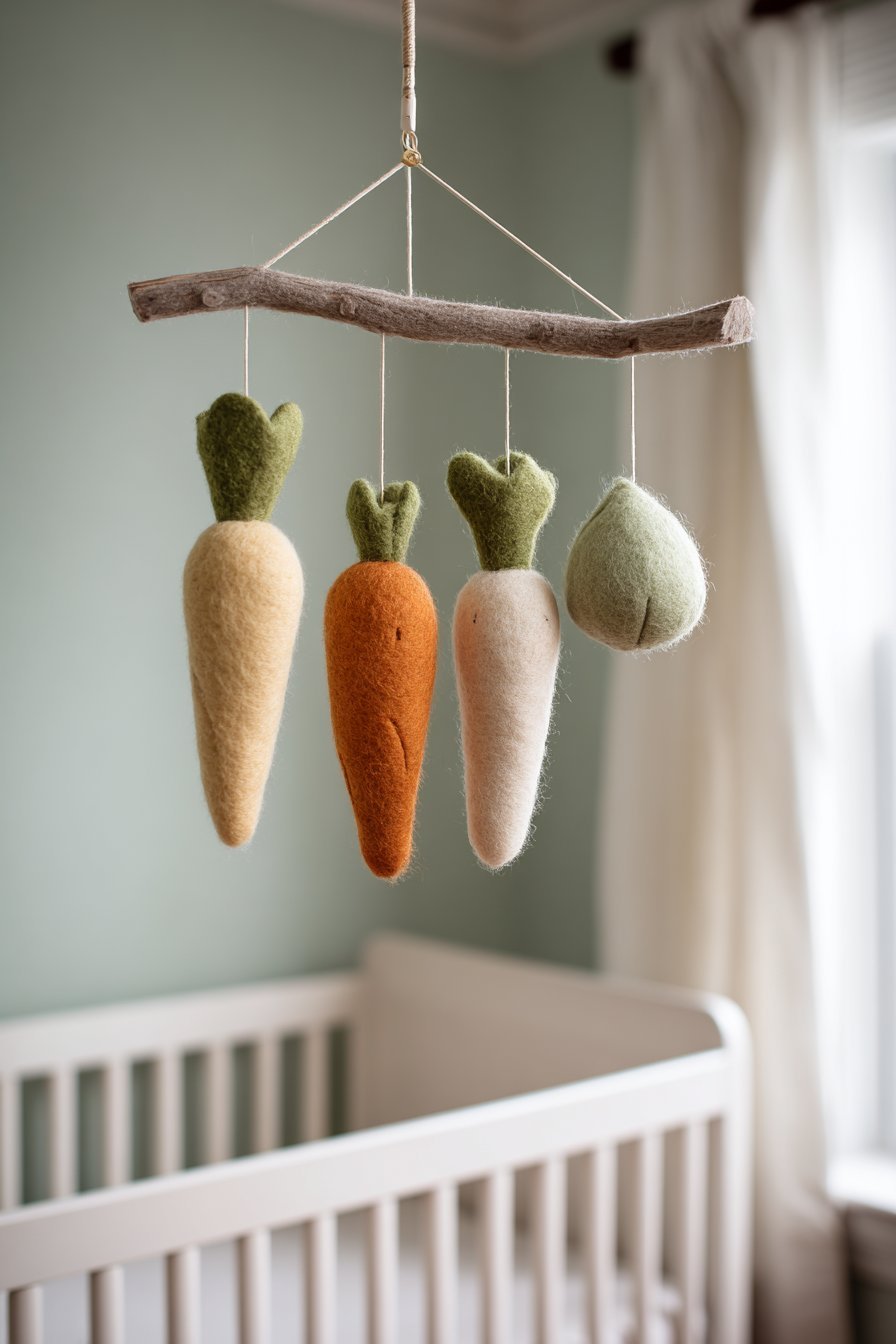
The mobile hangs at optimal viewing height for infant visual development. Cream walls create a peaceful backdrop for the colorful mobile. Soft natural lighting allows gentle movement to cast subtle shadows. The handcrafted elements demonstrate attention to detail and quality.
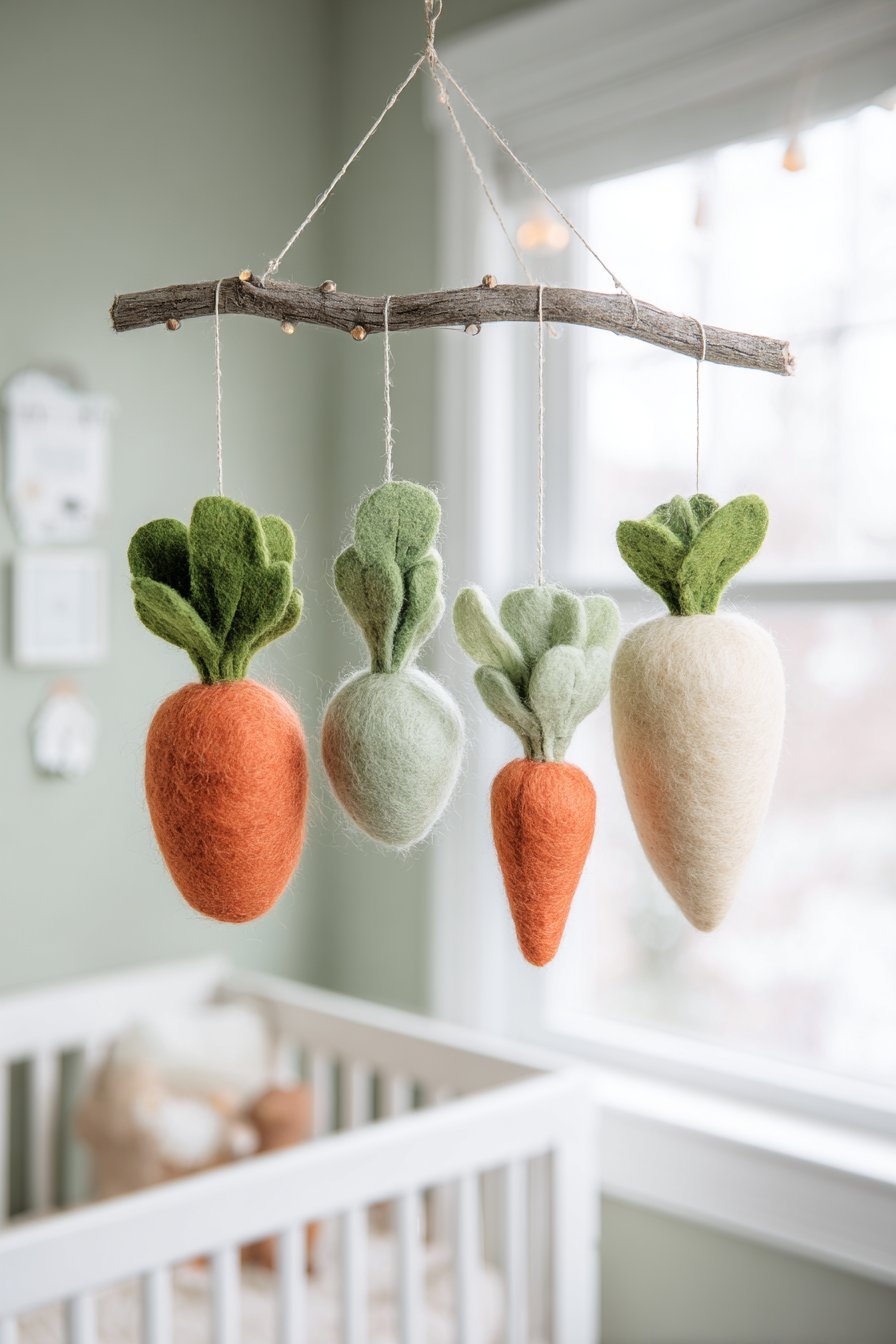
The dimensional quality of felted vegetables creates interesting visual texture. Babies benefit from tracking movement and studying shapes. The natural wool materials avoid synthetic alternatives appropriately. This mobile becomes both developmental tool and artistic statement.
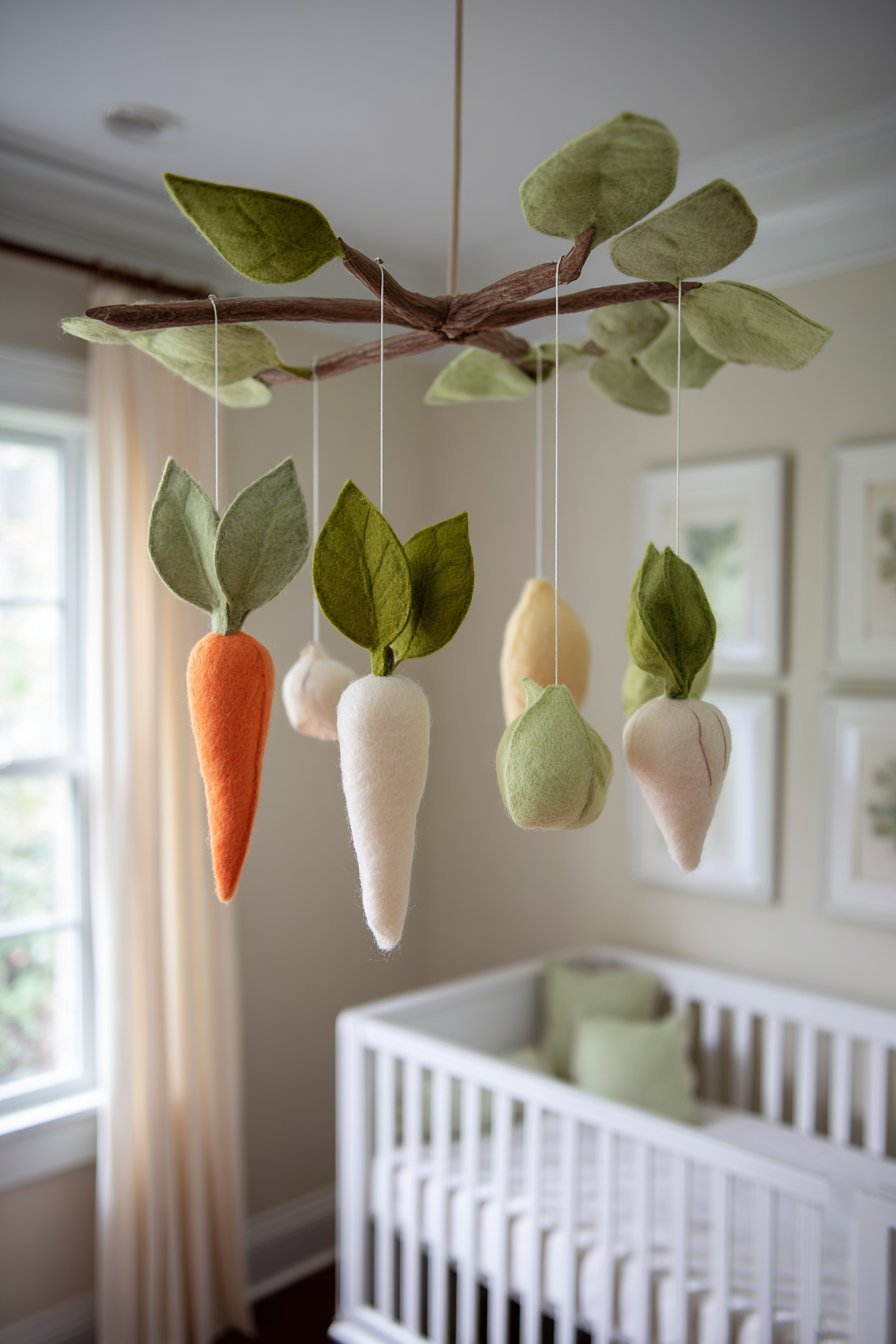
The handcrafted approach supports artisan makers and sustainable practices. Mass-produced mobiles lack the character and uniqueness shown here. Parents appreciate knowing skilled hands created each vegetable. The mobile becomes a conversation piece during nursery visits.
Key Design Tips:
- Hang mobiles securely using proper ceiling hardware
- Position mobiles within infant sight lines but beyond reach
- Choose natural materials like wool over synthetic options
- Ensure mobile components are securely attached to prevent choking hazards
- Coordinate mobile colors with room palette
- Remove mobiles when baby begins pulling to stand
15. Elegant Diaper Caddy Organization

A vintage wooden tray with divided compartments organizes diaper supplies beautifully. Painted sage green, the tray holds natural baby care products. Glass bottles and cotton supplies arrange neatly in designated sections. The tray sits atop a cream-painted chest of drawers.
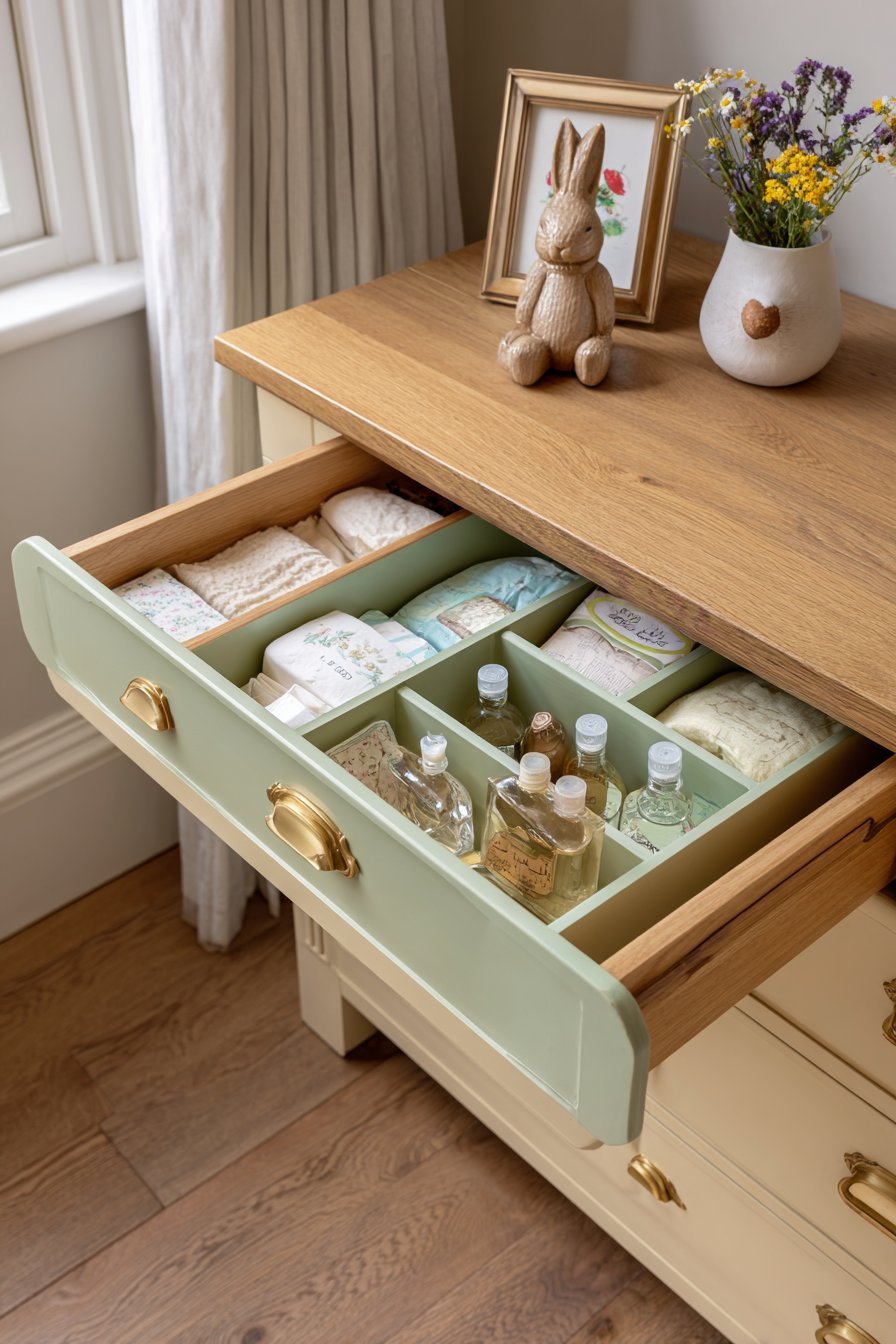
Above hangs a small framed print of Mrs. Tiggy-Winkle maintaining thematic consistency. A ceramic rabbit figurine adds whimsy to the practical space. Fresh wildflowers in a small vase provide natural beauty. Natural oak flooring anchors this organized station.

The organized approach reduces stress during diaper changes significantly. Everything needed stays within easy reach preventing frustration. Glass bottles replace plastic maintaining aesthetic standards while being practical. The vintage tray elevates utilitarian supplies into attractive displays.
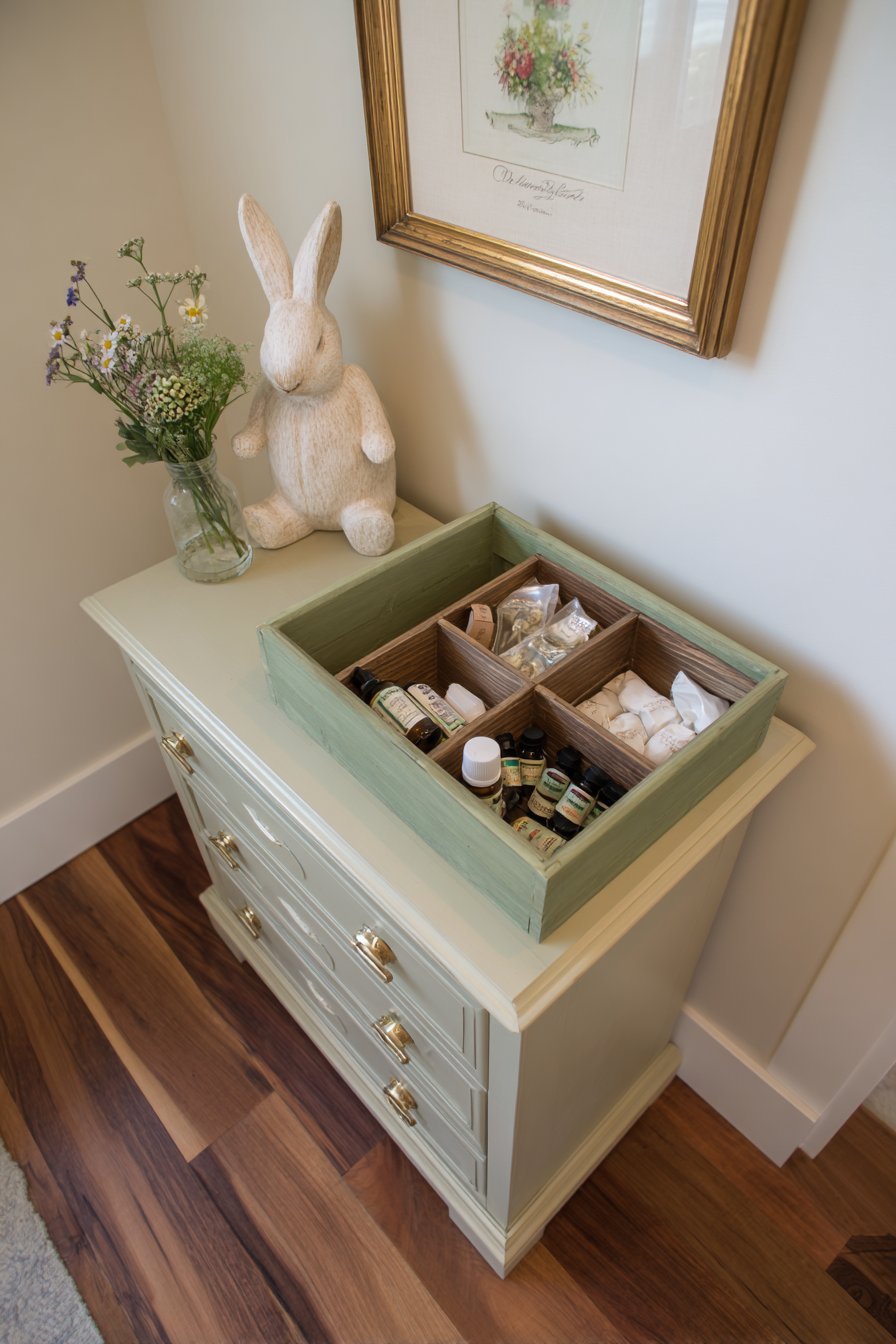
This attention to organizational beauty teaches children about order early. Even practical necessities deserve thoughtful presentation. The caddy system adapts as needs change over time. Different supplies can occupy the same organizational structure.
Key Design Tips:
- Use divided trays to separate supplies by category
- Choose glass containers for environmentally conscious storage
- Keep the most frequently used items in easiest-reach sections
- Paint vintage trays to match existing color schemes
- Add fresh flowers regularly for living beauty
- Position supply caddies at comfortable adult working height
16. Impressive Floor-to-Ceiling Book Display

Floor-to-ceiling built-in bookshelves painted soft sage green create a literary focal wall. Cream interior backing provides contrast for displayed books. An extensive children’s book collection fills the custom shelving. Beatrix Potter titles occupy prominent positions at child height.
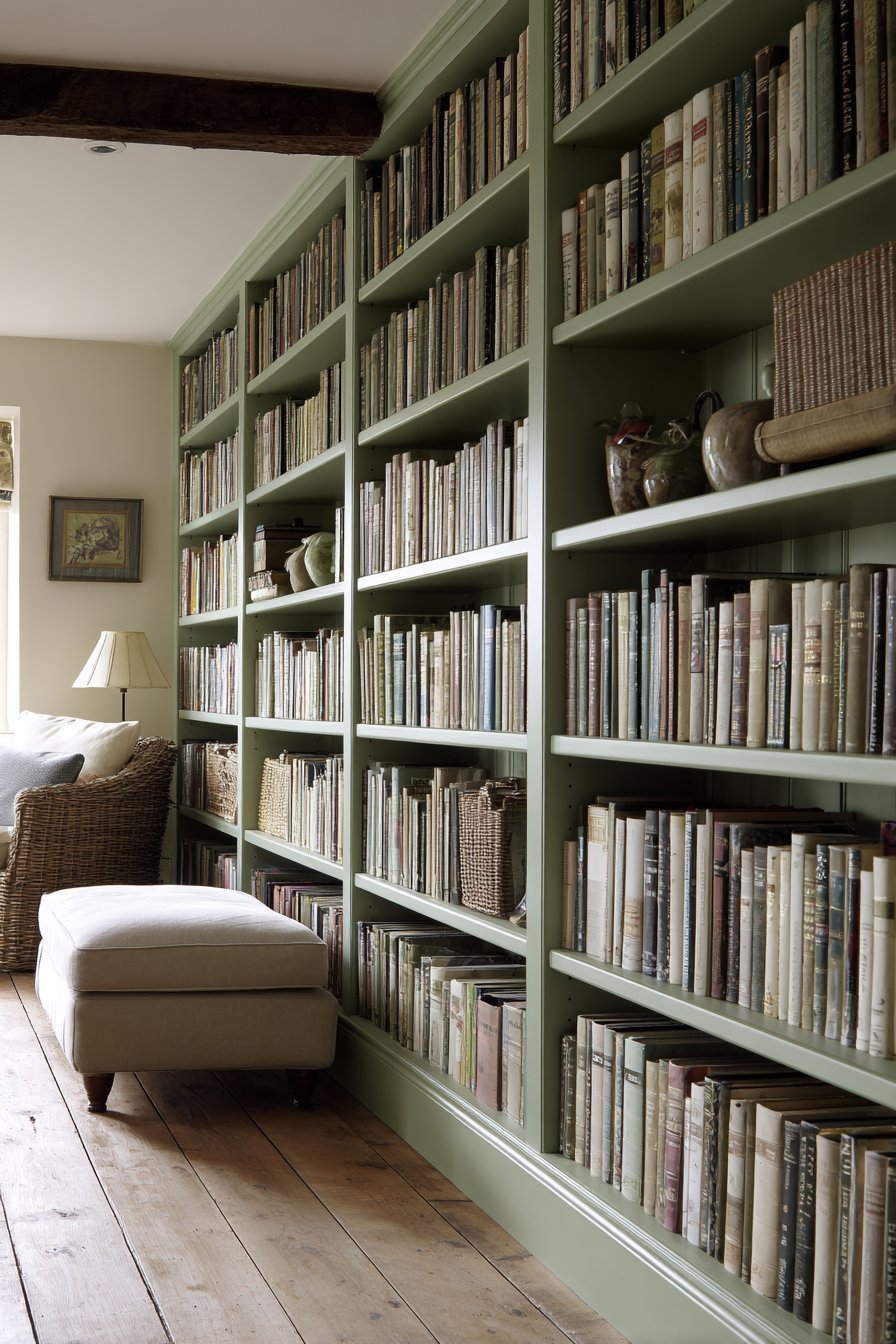
The shelving includes a mix of books and decorative ceramic animal figurines. Woven baskets provide flexible storage for toys and supplies. A small upholstered ottoman in natural linen offers comfortable seating. Natural oak flooring and cream walls frame this impressive installation.
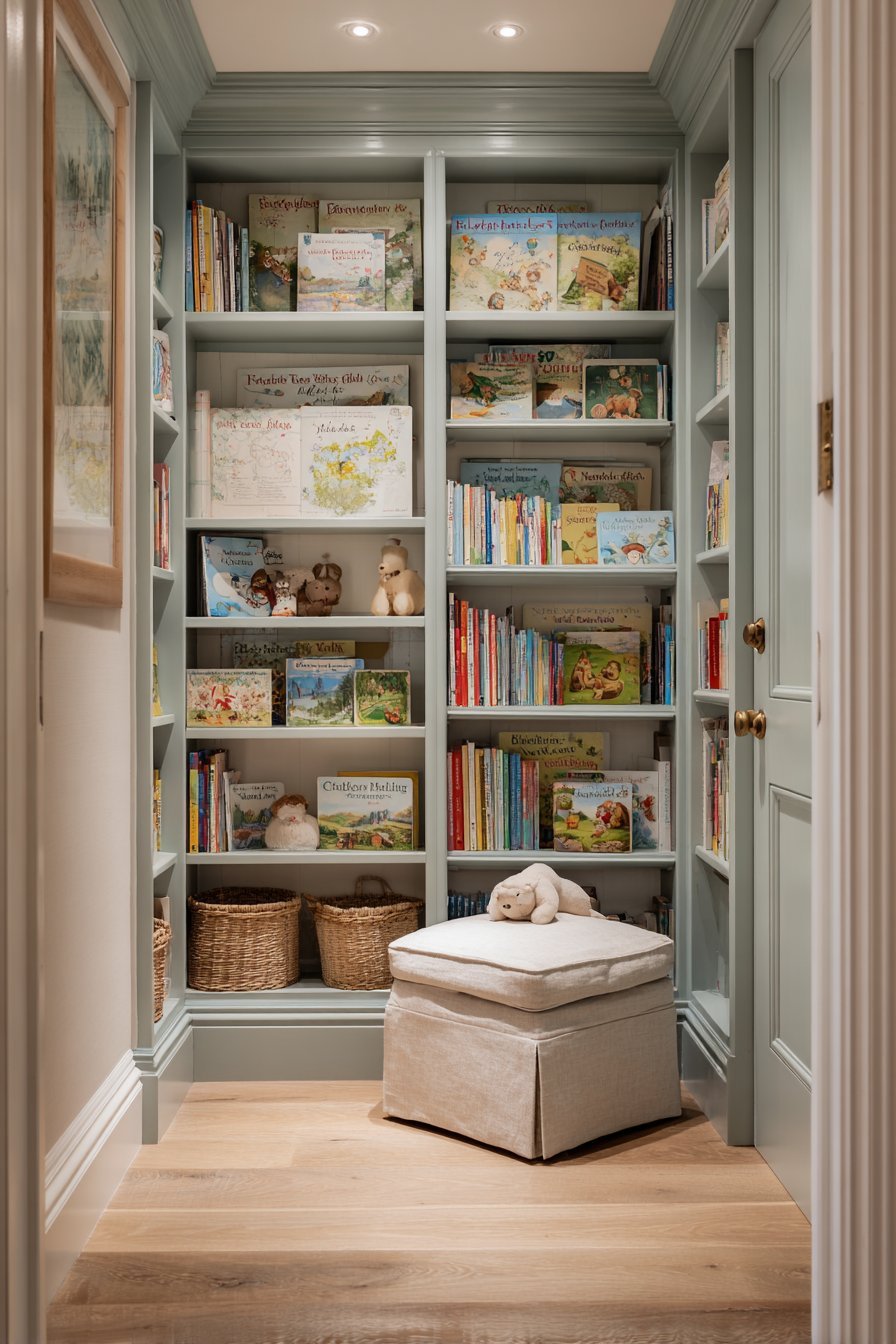
The custom carpentry demonstrates investment in literary education from birth. Children surrounded by books become readers naturally. The organized collection makes book selection easy and appealing. Lower shelves keep favorites accessible as coordination develops.
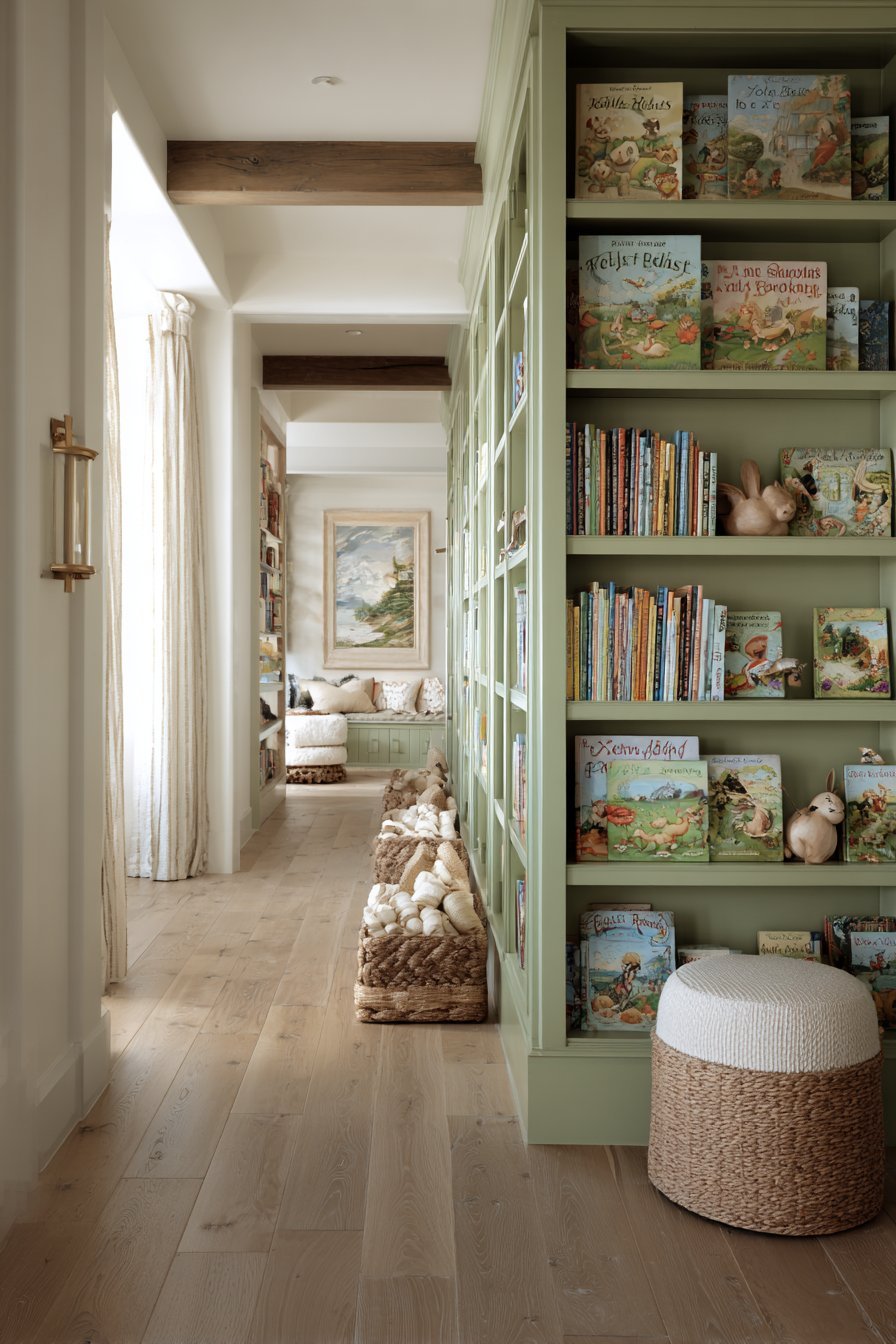
This built-in approach maximizes vertical space efficiently in smaller nurseries. The sage green paint creates cohesion with other room elements. The shelving becomes a permanent architectural feature adding home value. Future children will benefit from this thoughtful installation.
Key Design Tips:
- Design built-ins with adjustable shelving for flexibility
- Paint interiors lighter than exteriors for visual depth
- Position children’s books at accessible heights
- Include closed storage options for less attractive necessities
- Use library-style organization for large collections
- Install proper lighting to highlight the book display
17. Transitional Toddler Bed Conversion
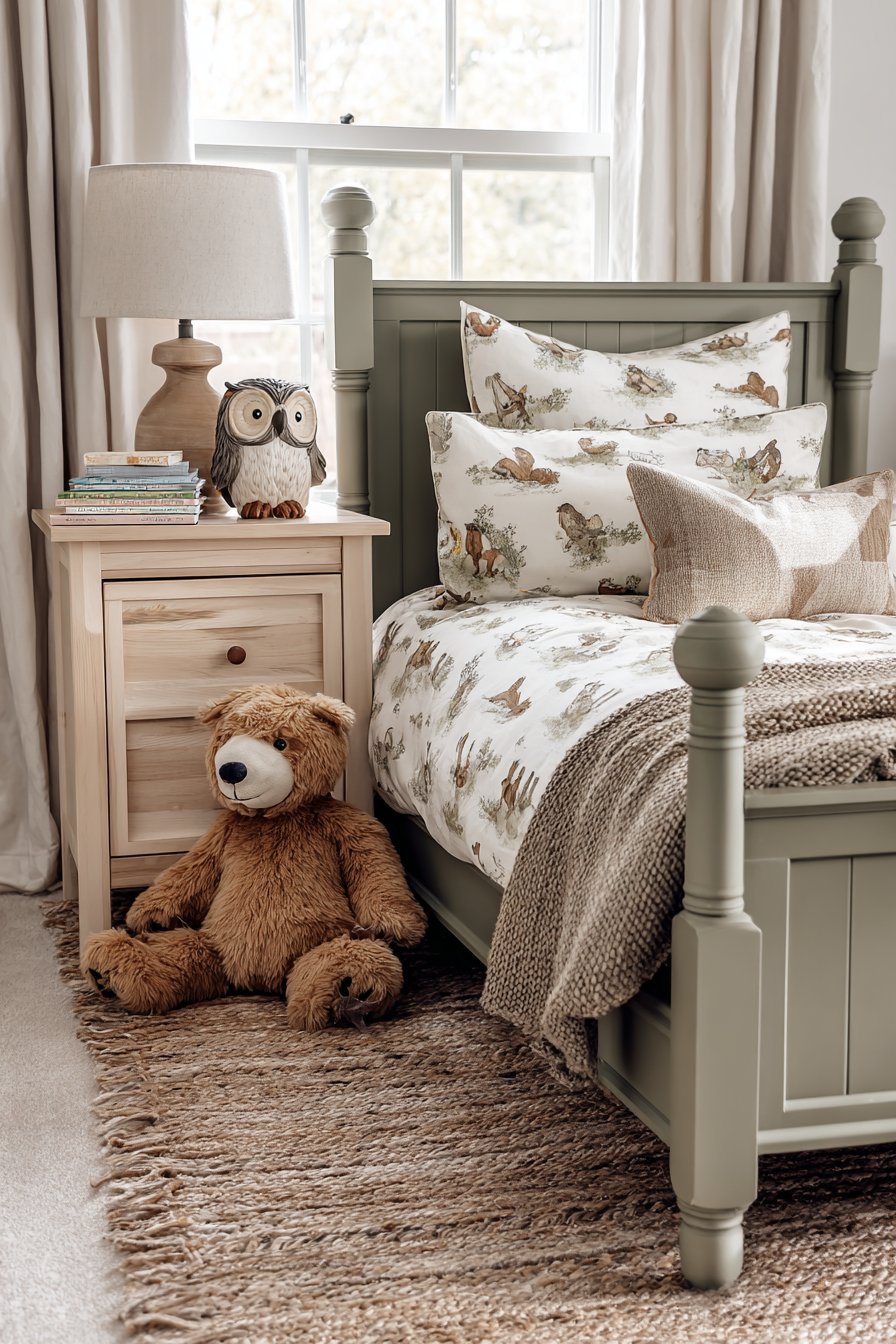
A vintage wooden crib converts to a toddler bed extending its usefulness. Sage green painted rails and cream spindles maintain the established aesthetic. Organic cotton bedding features embroidered Squirrel Nutkin scenes in muted forest colors. The transitional design grows with your child seamlessly.

A braided wool rug in earth tones anchors the sleeping area comfortably. Beside the bed, a vintage wooden nightstand painted cream holds essentials. A ceramic owl lamp provides gentle nighttime illumination. A stack of bedtime stories waits for evening reading.
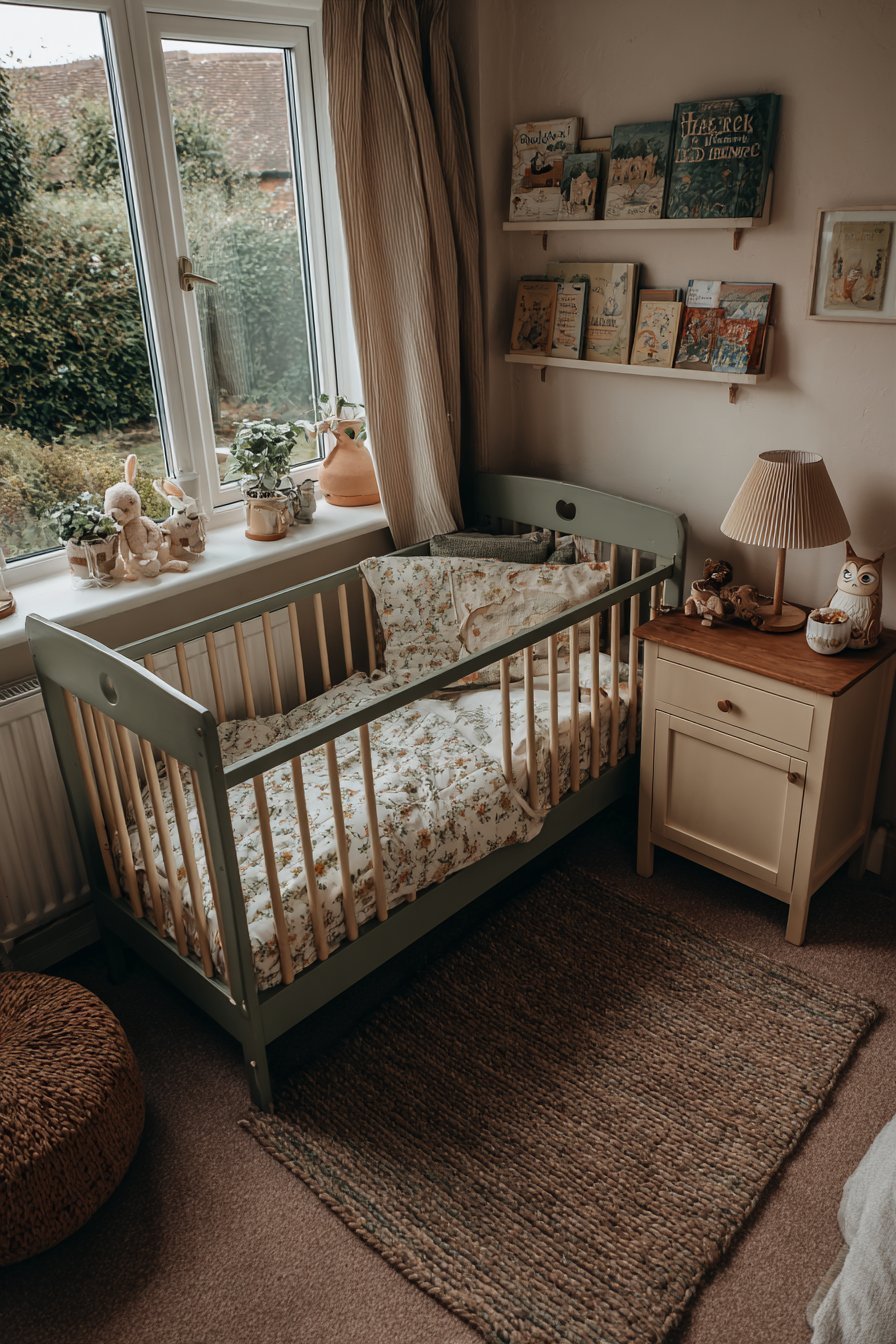
Natural light filters through gauzy curtains creating peaceful atmosphere. The conversion extends the furniture’s lifespan significantly reducing waste. Children appreciate maintaining familiar sleeping spaces during transitions. The toddler bed height allows independent getting in and out.
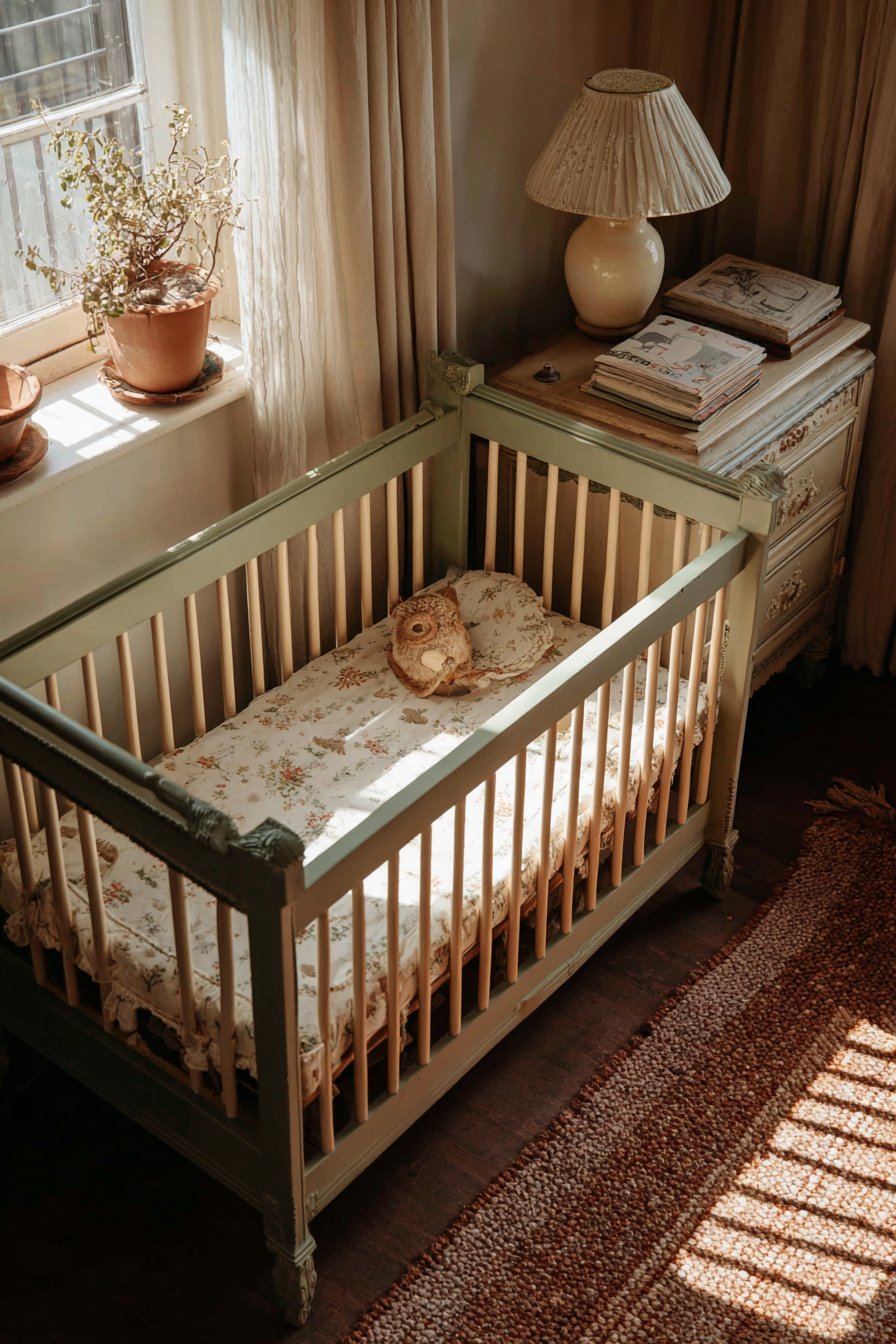
This approach demonstrates sustainable thinking about nursery investments. Quality furniture pieces adapt rather than being discarded. The painted vintage aesthetic remains relevant through different life stages. Thoughtful initial purchases pay dividends over years.
Key Design Tips:
- Choose convertible cribs that transform into toddler beds
- Install bed rails for safety during the transition period
- Update bedding to reflect growing child’s interests
- Position nightstands for easy reach from the bed
- Use adjustable lamps that accommodate changing needs
- Maintain consistent sleep space location for comfort
18. Custom Hand-Painted Window Treatments
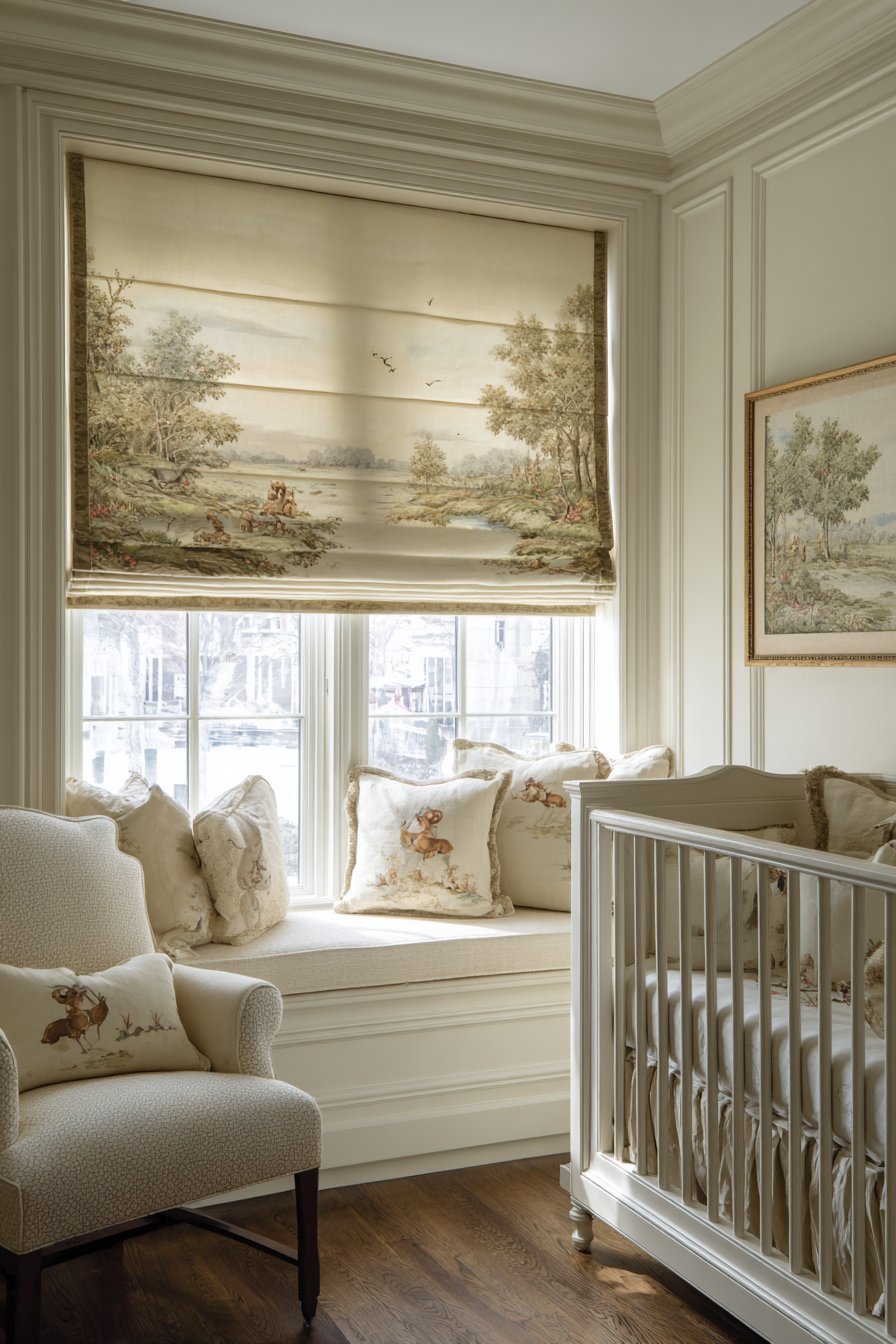
Custom roman shades in natural linen feature hand-painted borders beautifully. Countryside scenes with hedgerows and small animals appear in watercolor style. The window treatment filters soft natural light effectively. Below the window, a white wooden crib sits centered perfectly.

Matching throw pillows with similar hand-painted details rest in the glider chair. The coordinated custom elements create cohesive artistic unity. Cream walls and natural oak flooring provide neutral backdrop. The window becomes an artistic focal point rather than afterthought.
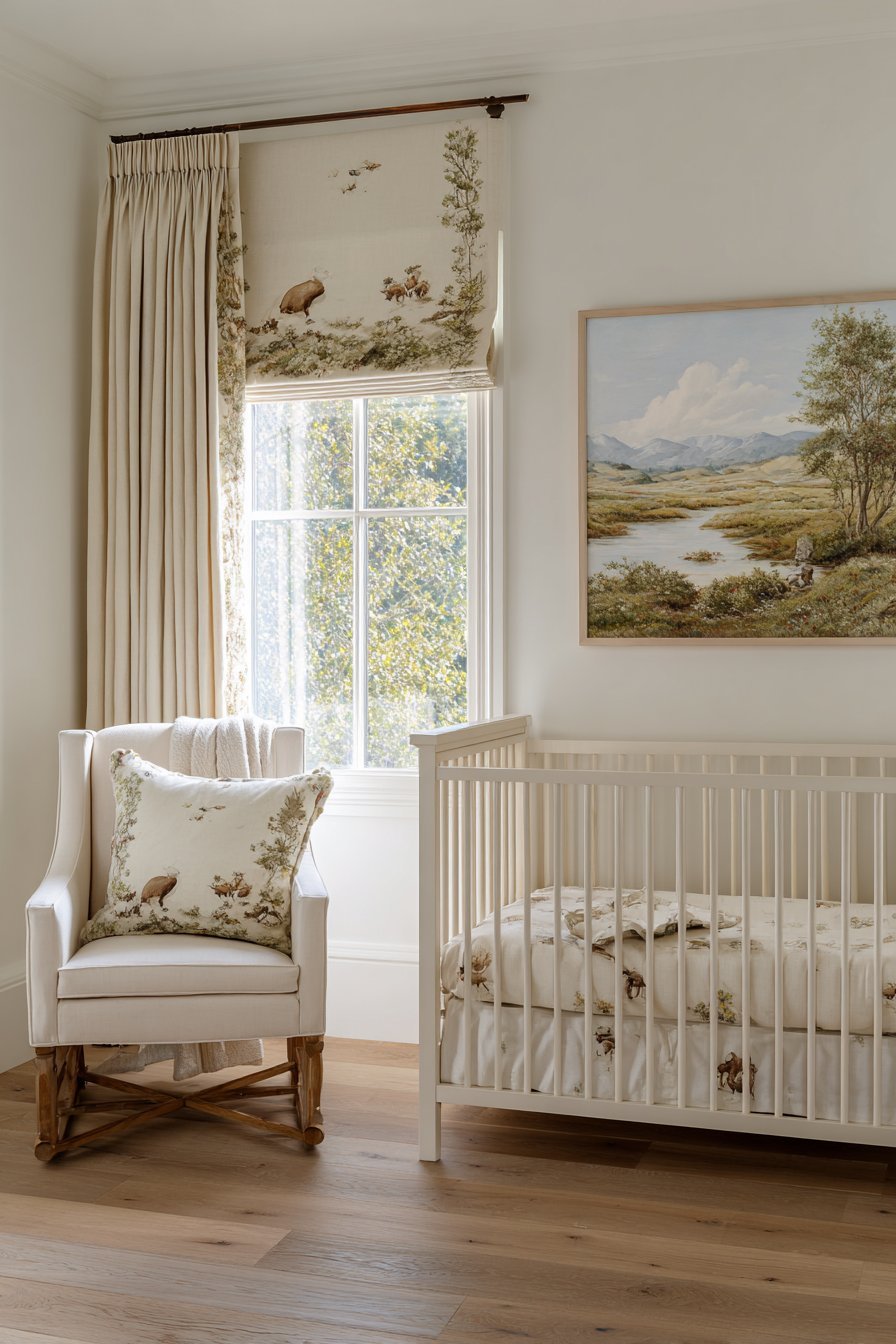
The natural linen fabric filters light while maintaining privacy appropriately. The hand-painted artwork transforms functional window coverings into art pieces. Custom treatments fit window dimensions precisely avoiding gaps. The investment in quality shows through superior appearance and function.
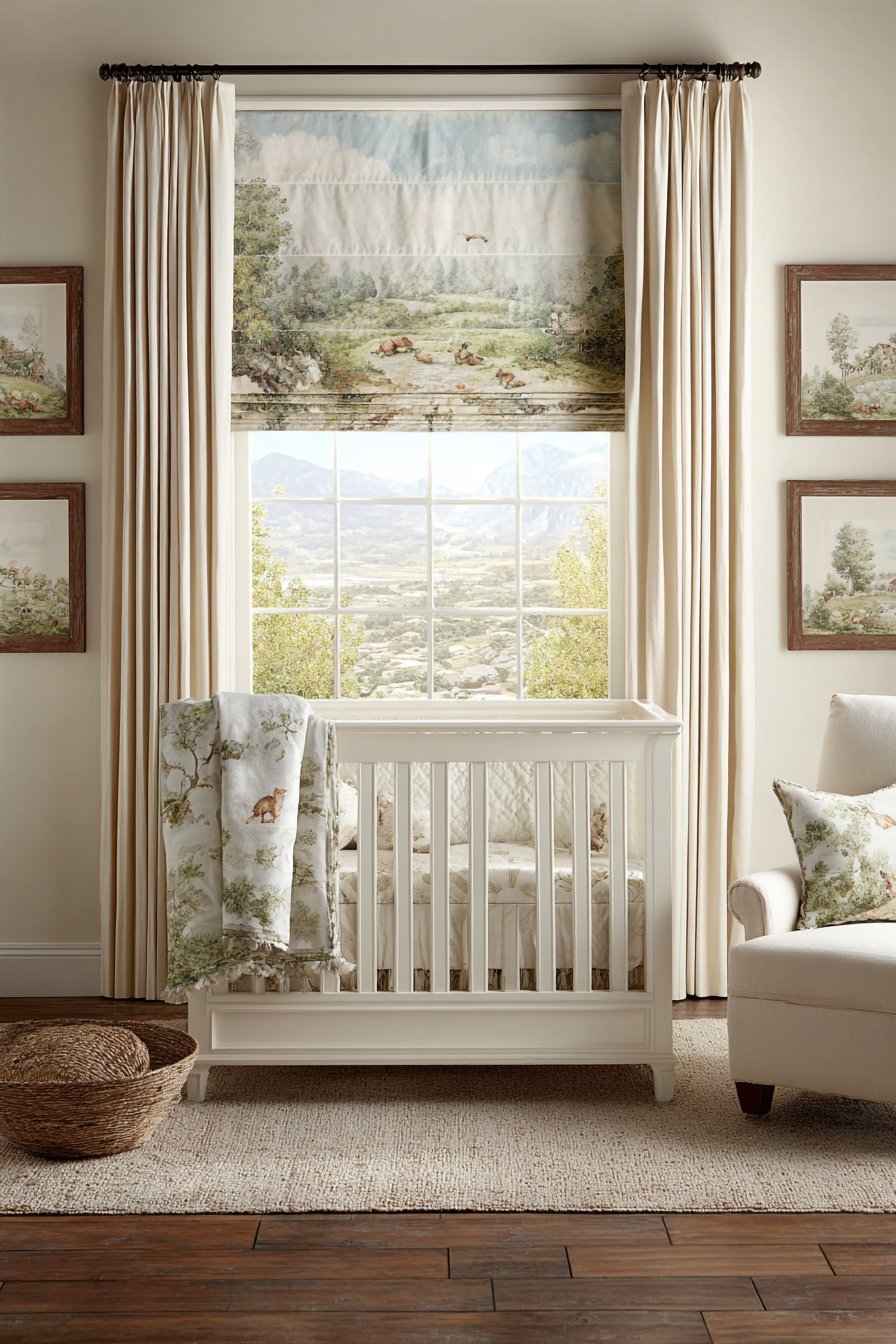
These window treatments demonstrate commitment to artistic excellence throughout the room. Every element receives equal attention and care. Children grow understanding that beauty matters in all aspects. The treatments block light for naps while adding decorative value.
Key Design Tips:
- Commission custom window treatments for perfect fit
- Choose natural fabrics that filter light gently
- Coordinate window treatment artwork with other room elements
- Seal hand-painted fabrics to prevent fading
- Install blackout liners behind decorative treatments for naps
- Use cordless roman shades for child safety
19. Curated Ceramic Figurine Display

A vintage wooden hutch painted soft duck egg blue displays collectibles beautifully. Ceramic Beatrix Potter character figurines occupy the glass-front cabinets. Peter Rabbit, Jemima Puddle-Duck, and Tom Kitten appear among other favorites. Small drawers provide practical storage below the display area.

The hutch protects collectibles while keeping them visible for enjoyment. A small upholstered stool in sage green velvet sits before the hutch. Cream walls and natural flooring provide neutral backdrop. The curated collection grows over time with meaningful additions.
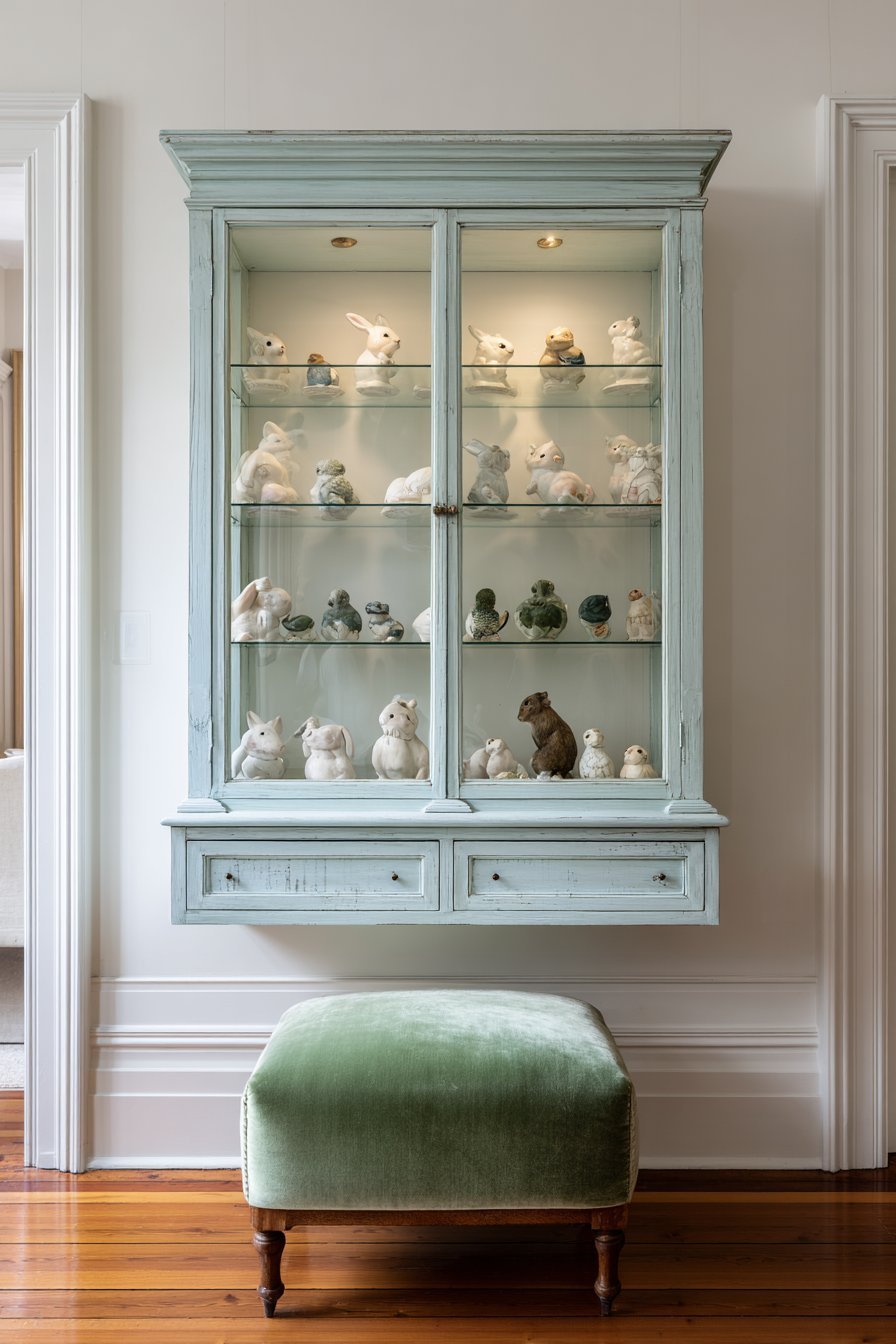
The glass cabinet doors create subtle reflections adding dimension. The duck egg blue paint coordinates with the established color palette. The hutch becomes both functional storage and decorative focal point. Children learn to appreciate collected treasures and careful curation.
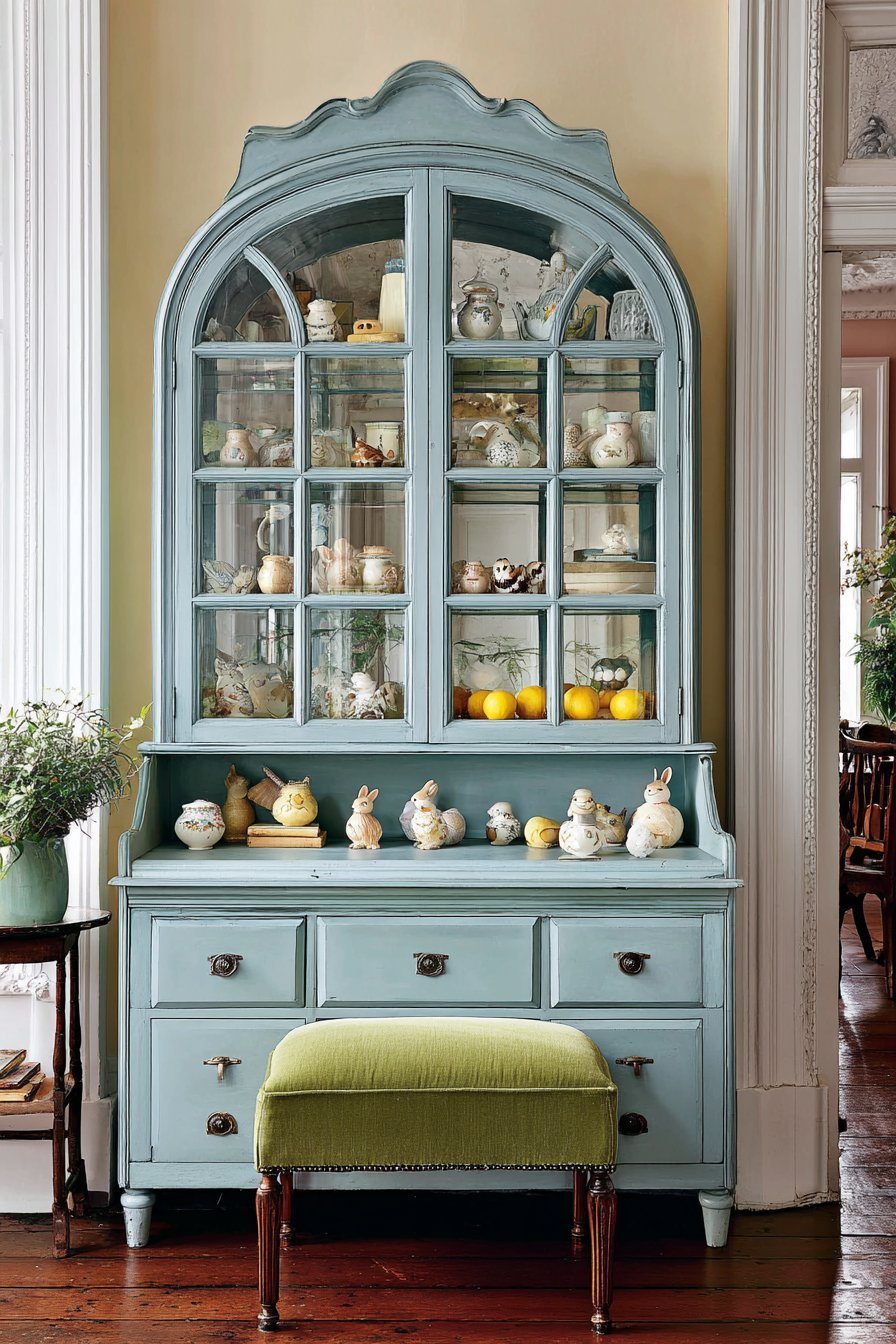
This display approach elevates children’s room décor beyond purely functional furniture. The collectibles represent literary characters children know from stories. The connection between books and figurines reinforces storytelling. Future gift-givers appreciate knowing the collection to expand.
Key Design Tips:
- Choose hutches with adjustable interior shelving
- Display collectibles with proper spacing for visual appreciation
- Keep fragile items behind glass doors for protection
- Paint furniture to match established room palette
- Add interior lighting to highlight displayed collections
- Dust glass cabinets regularly to maintain clarity
20. Textured Shiplap Accent Wall
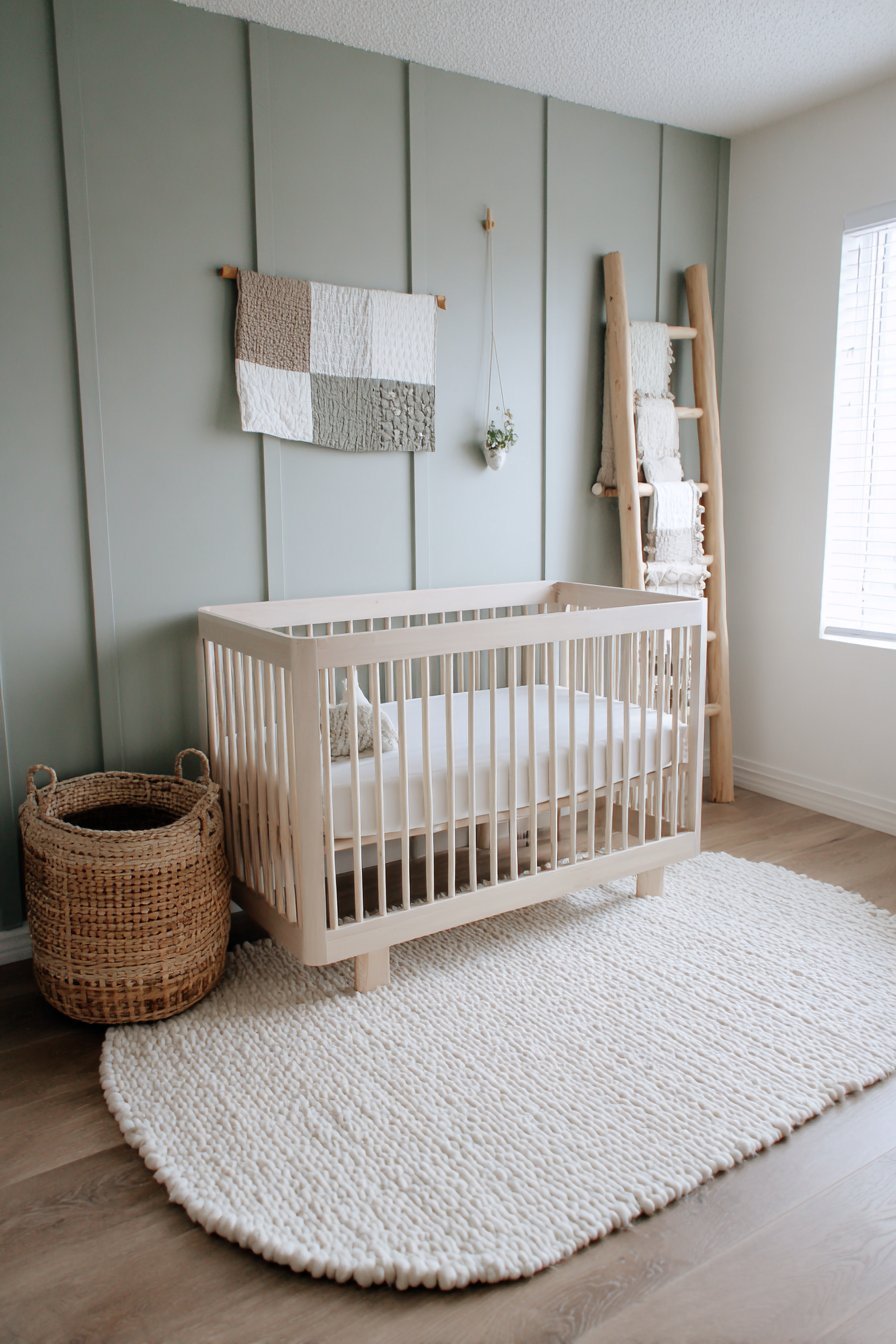
A statement wall featuring shiplap paneling painted soft sage green adds texture. The floor-to-ceiling installation provides authentic cottage charm. Against this textured wall sits a cream-painted wooden crib. A vintage woven bassinet beside accommodates the newborn stage.

Natural oak flooring with a large wool rug in cream stripes anchors the space. A vintage wooden ladder painted white leans decoratively against the shiplap. Small quilts and blankets drape over the ladder rungs artfully. The architectural detail creates depth and cottage atmosphere.
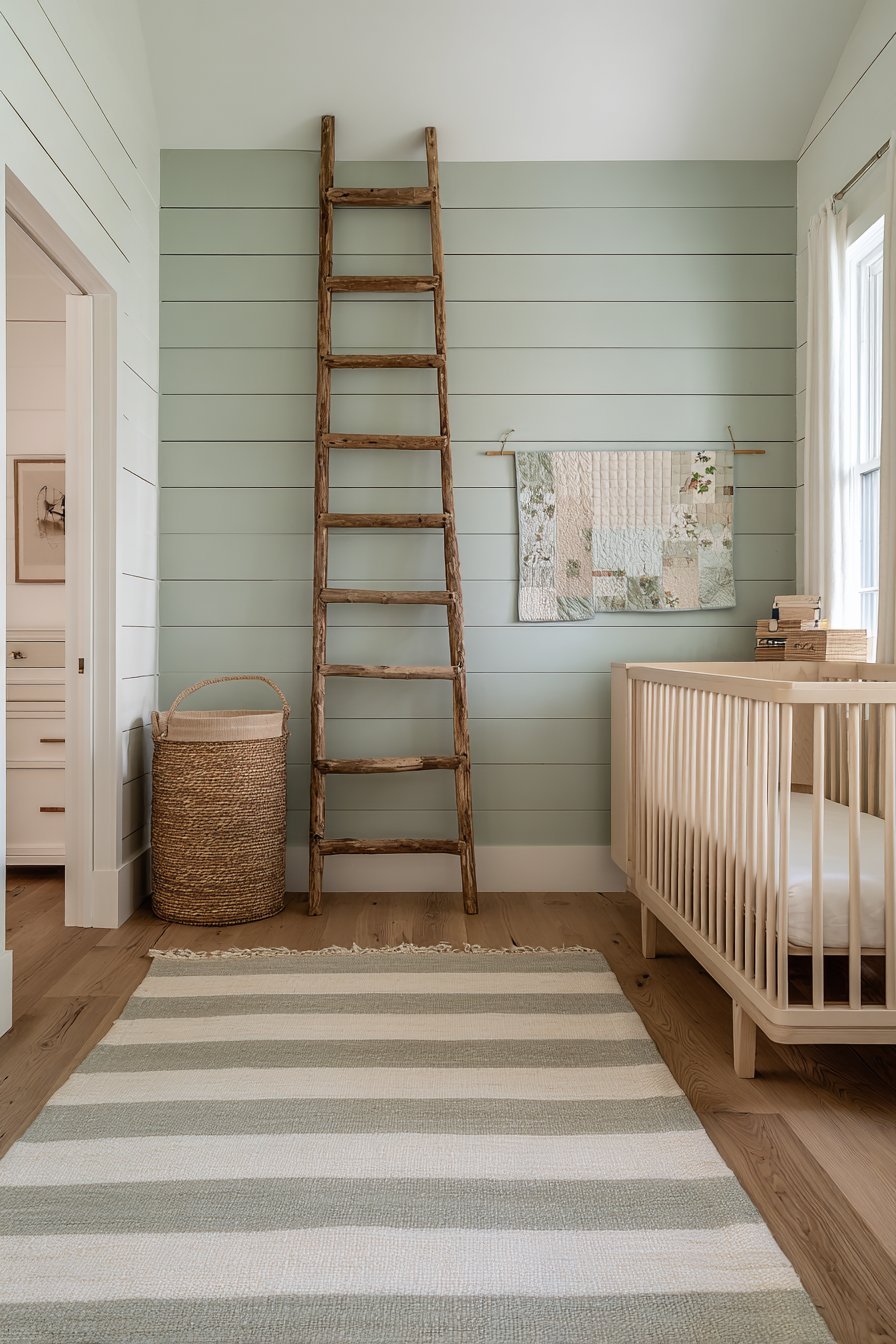
The shiplap paneling adds three-dimensional texture beyond flat painted walls. Shadow lines created by the overlapping boards add visual interest. The sage green paint unifies the feature wall with other room elements. The installation represents a more permanent design commitment.
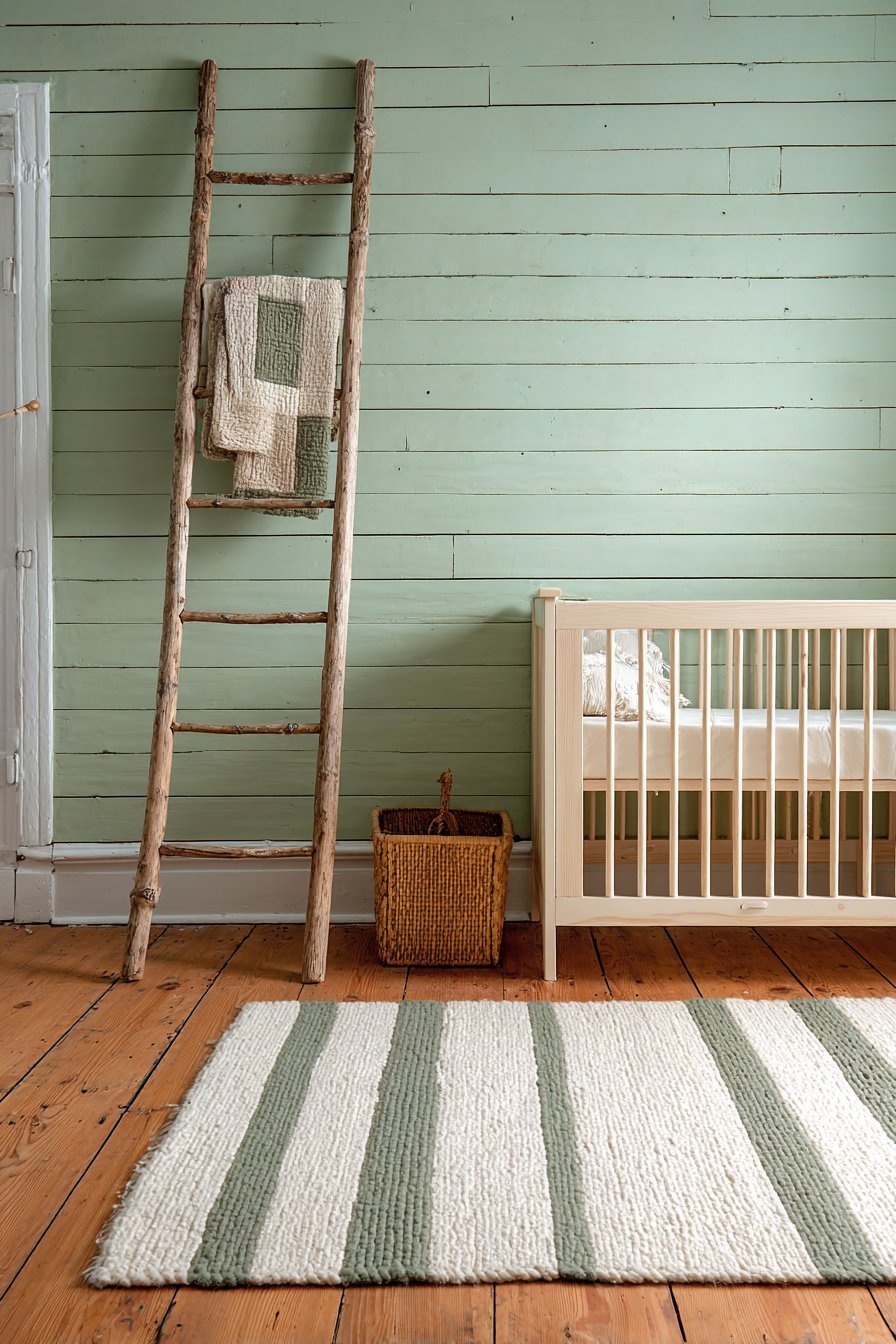
This architectural approach transforms ordinary walls into character-filled backdrops. The textured wall becomes a defining room feature remembered over time. The cottage aesthetic achieves authentic period feeling. Professional installation ensures proper spacing and alignment of panels.
Key Design Tips:
- Install shiplap with consistent spacing between boards
- Paint shiplap before or after installation depending on preference
- Use shiplap on single accent walls to avoid overwhelming
- Coordinate shiplap color with existing palette
- Ensure proper wall preparation before panel installation
- Consider horizontal or vertical orientation based on room dimensions
Why These Beatrix Potter Nursery Designs Work Best
These Beatrix Potter nursery designs represent thoughtful approaches to creating timeless children’s spaces. Each concept demonstrates careful consideration of natural materials and vintage elements. The designs showcase remarkable versatility suiting different home styles and personal preferences.
The incorporation of hand-painted elements and custom textiles adds personality that mass-produced décor cannot replicate. These personalized touches create spaces that feel intentionally designed rather than catalog-ordered. The English countryside aesthetic provides gender-neutral options that avoid trendy themes.
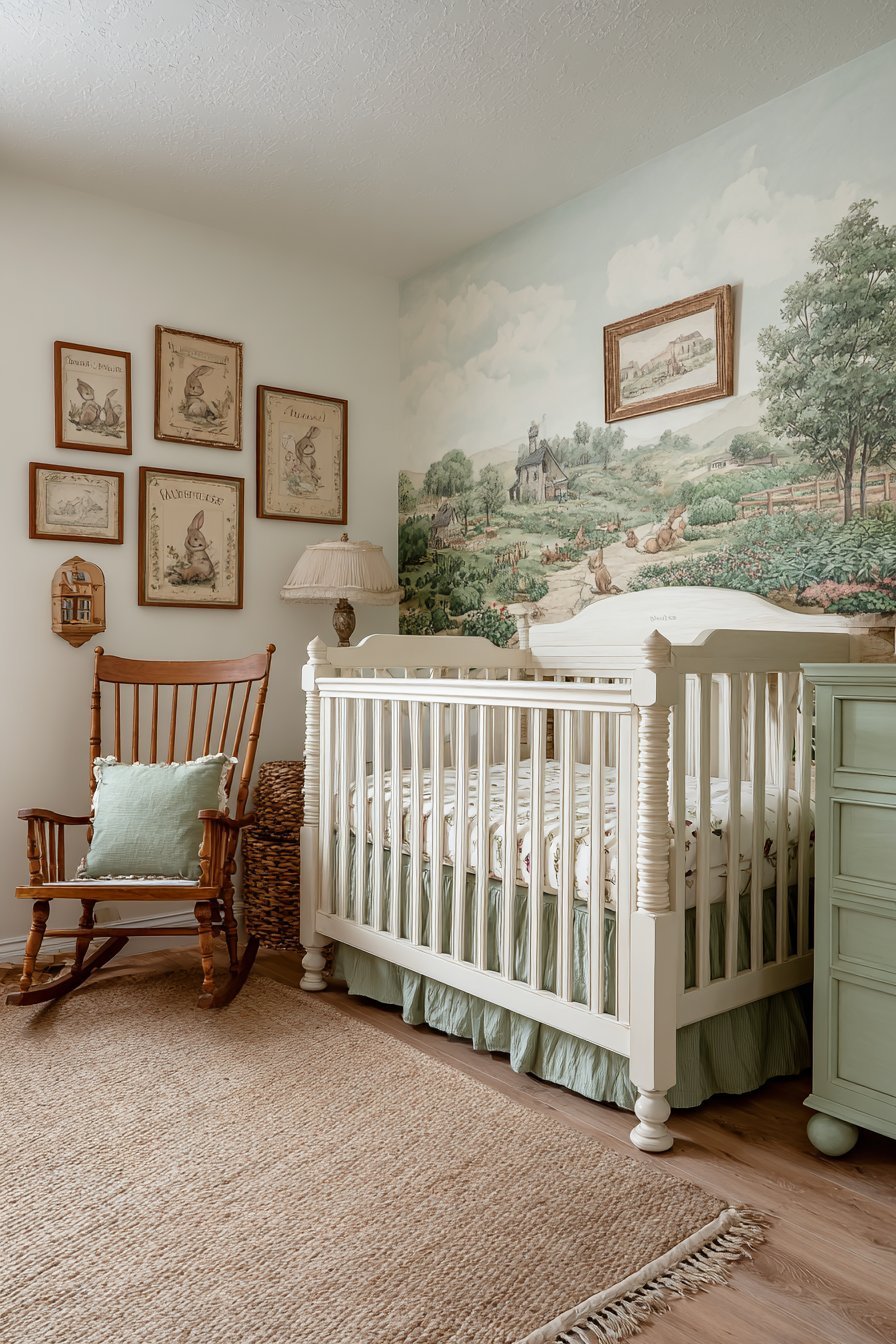
Natural materials like oak flooring, wool rugs, and linen fabrics ensure durability through active childhood years. These sustainable choices create healthier indoor environments free from synthetic off-gassing. Quality pieces transition through different life stages reducing long-term costs.
The soft color palette of sage green, cream, and dusty blue creates soothing environments conducive to rest. Color theory supports using muted tones in nurseries for better sleep patterns. The palette grows with children without feeling juvenile as they mature.
Beatrix Potter’s timeless illustrations provide cultural and literary value beyond simple decoration. Children surrounded by quality art develop aesthetic appreciation early. The connection to beloved stories encourages literacy and imagination development.
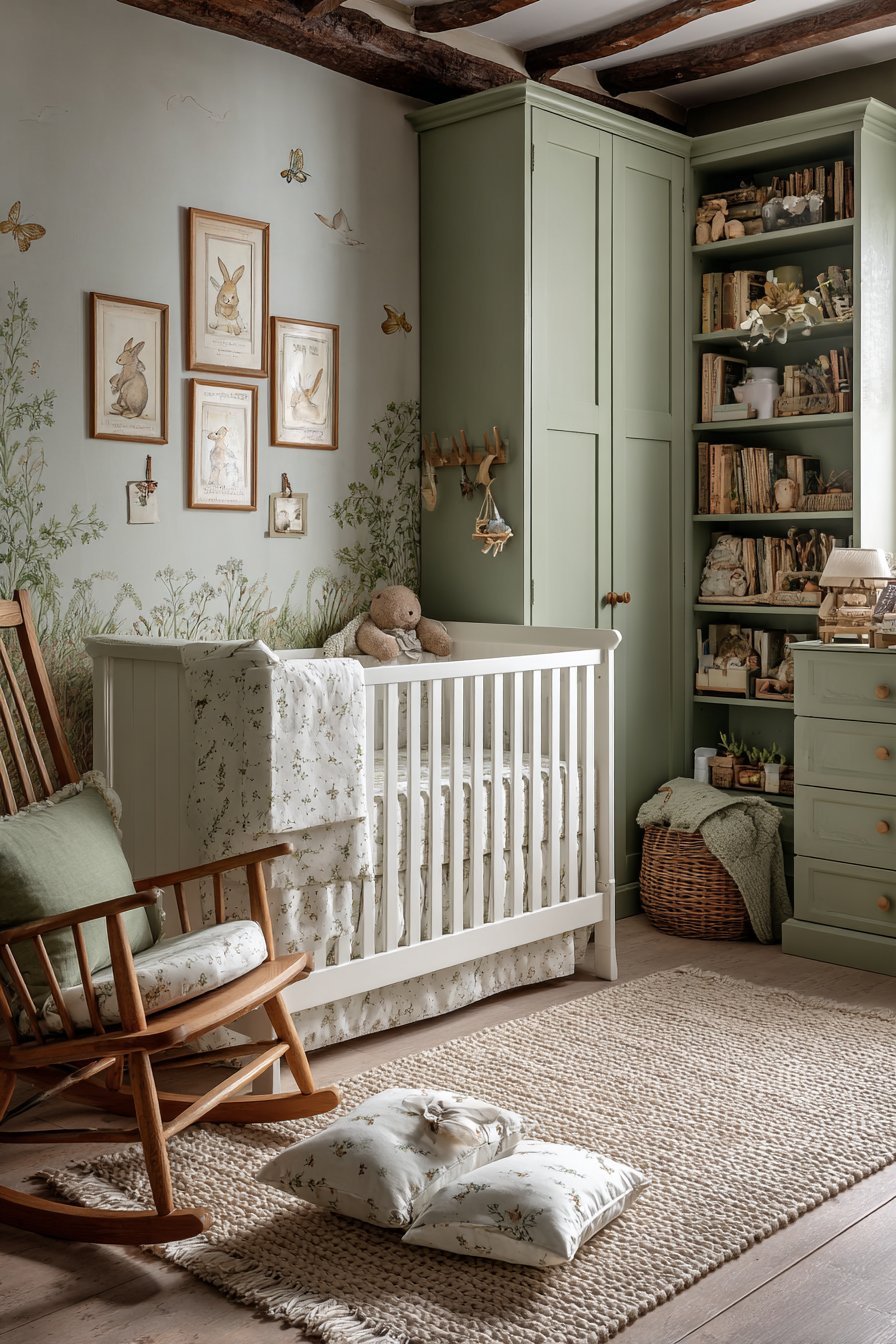
The vintage-inspired furniture pieces offer investment-quality longevity versus disposable fast furniture. Properly maintained antique and vintage-style pieces serve multiple children and generations. The cottage aesthetic remains perpetually relevant avoiding dated trendy looks.
These designs balance whimsy with sophistication appealing to both children and adults. Parents spend significant time in nurseries during early years needing spaces they also enjoy. The thoughtful design approach creates rooms that function beautifully while looking spectacular.
Conclusion
These Beatrix Potter nursery designs demonstrate that timeless English countryside charm creates perfect environments for babies and young children. The key takeaways include the importance of natural materials, hand-crafted elements, and literary connections. Quality pieces combined with personal touches create rooms that feel both beautiful and nurturing.
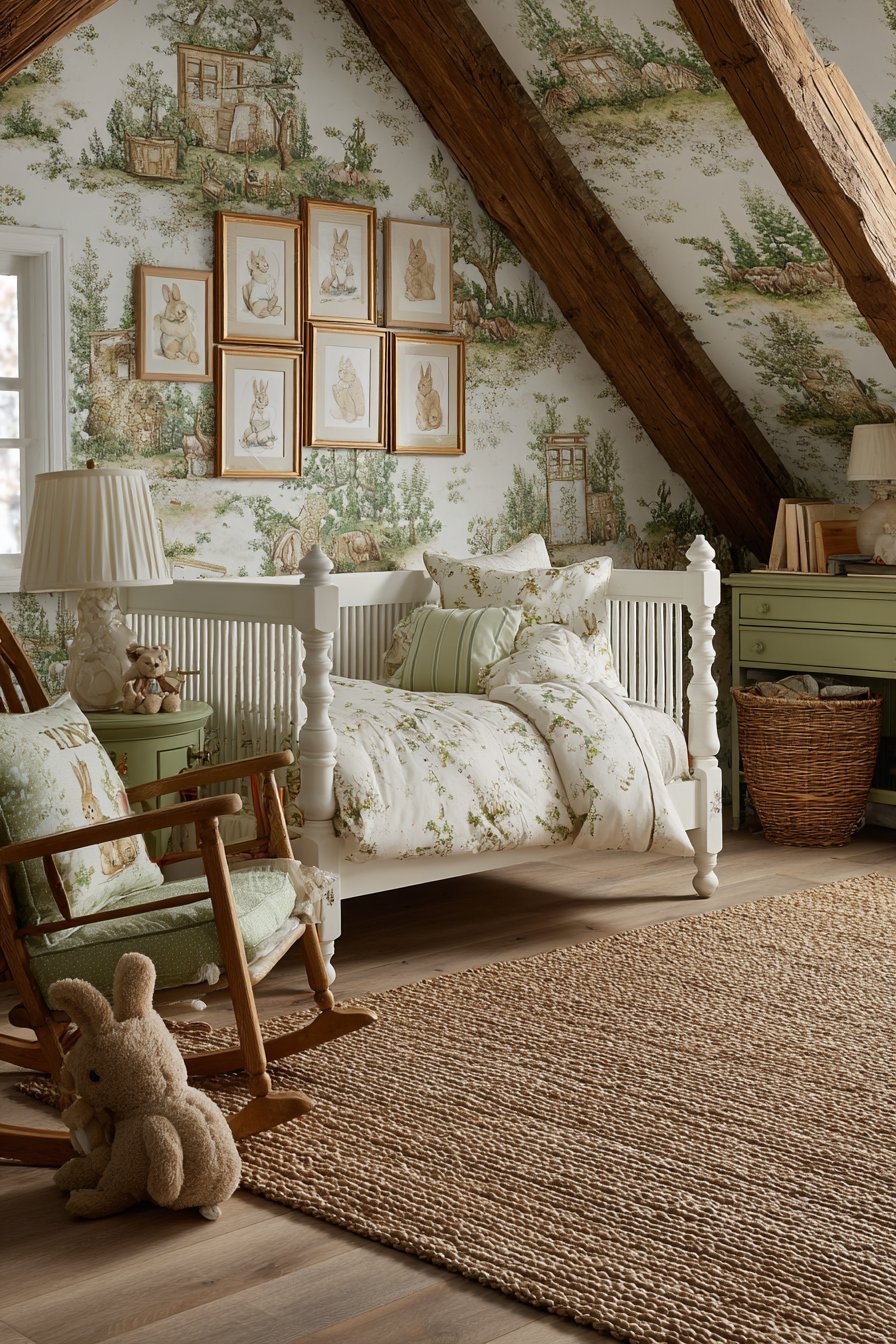
Successful Beatrix Potter design balances whimsical storytelling with practical functionality. Start small by adding one hand-painted element or vintage furniture piece. Your dream English cottage nursery awaits creation through thoughtful planning and creative expression inspired by these beloved tales.
