

Creating a beautiful backyard doesn’t require a massive budget or professional landscaping services. Smart planning and creative resourcefulness can transform outdoor spaces into functional, inviting retreats. The most successful budget-friendly backyards balance practical needs with aesthetic appeal through clever material choices and DIY solutions.
Today’s homeowners increasingly seek outdoor spaces that extend their living areas without breaking the bank. Affordable backyard transformations demonstrate that limitations often inspire the most innovative design solutions. From repurposed materials to low-maintenance plantings, countless approaches exist for creating outdoor spaces that feel intentional and welcoming.
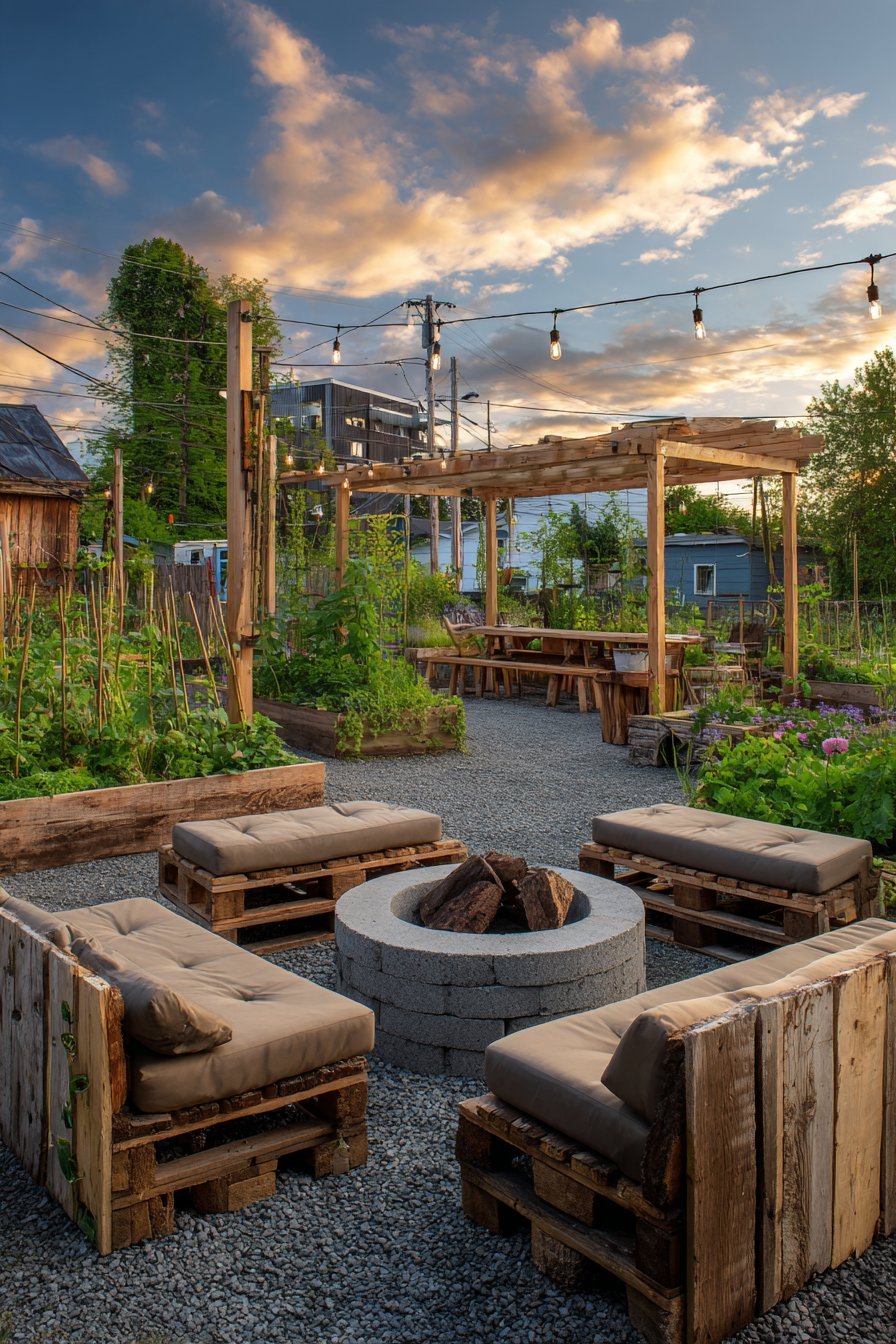
This comprehensive guide explores twenty distinct cheap backyard ideas spanning various functional zones and design styles. Each concept proves that beautiful outdoor living spaces emerge from creativity rather than expensive materials. Whether you’re working with a small urban yard or a suburban lawn, these budget-conscious approaches offer practical inspiration for transforming your outdoor space into a personal oasis.
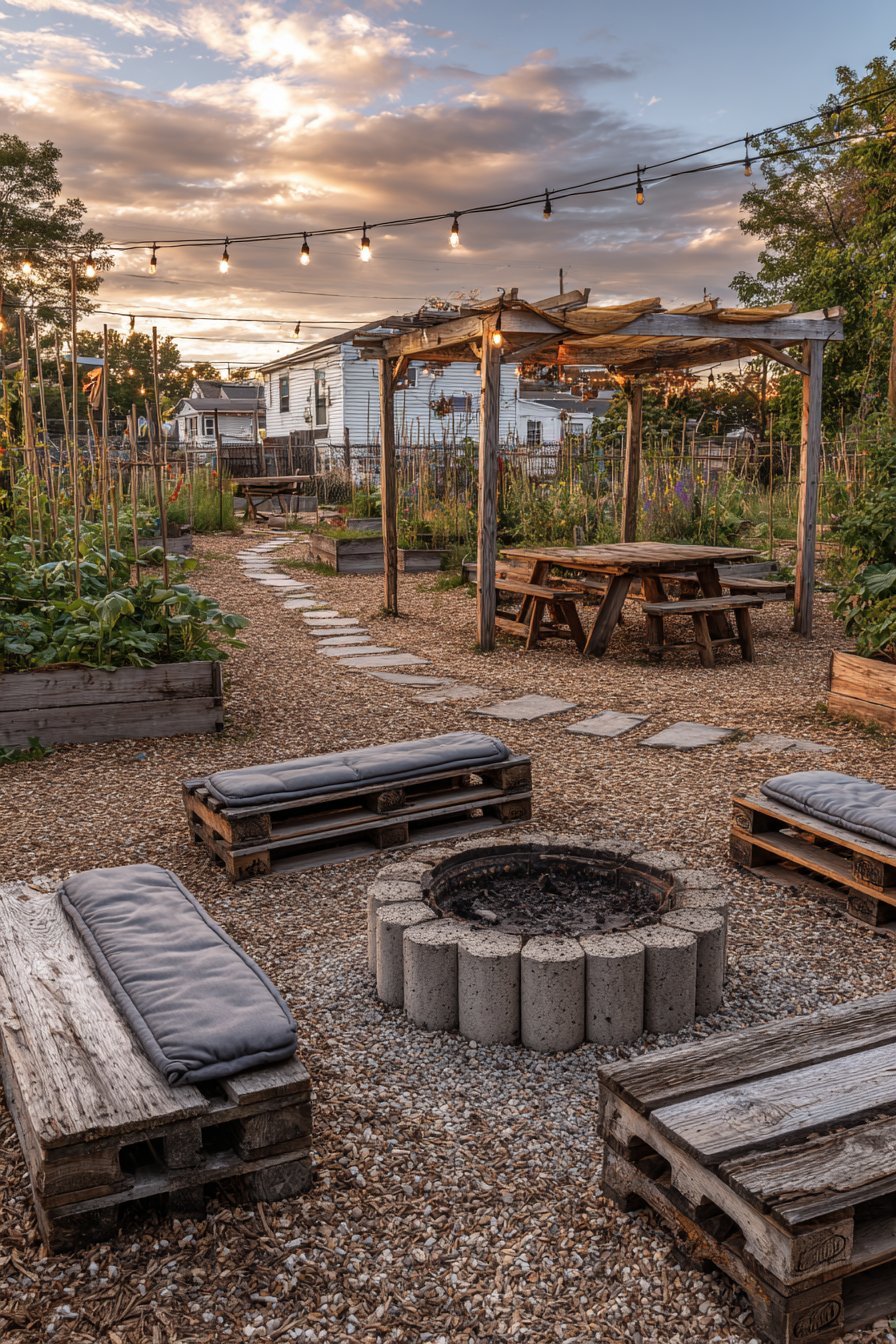
1. DIY Pallet Furniture Seating Area
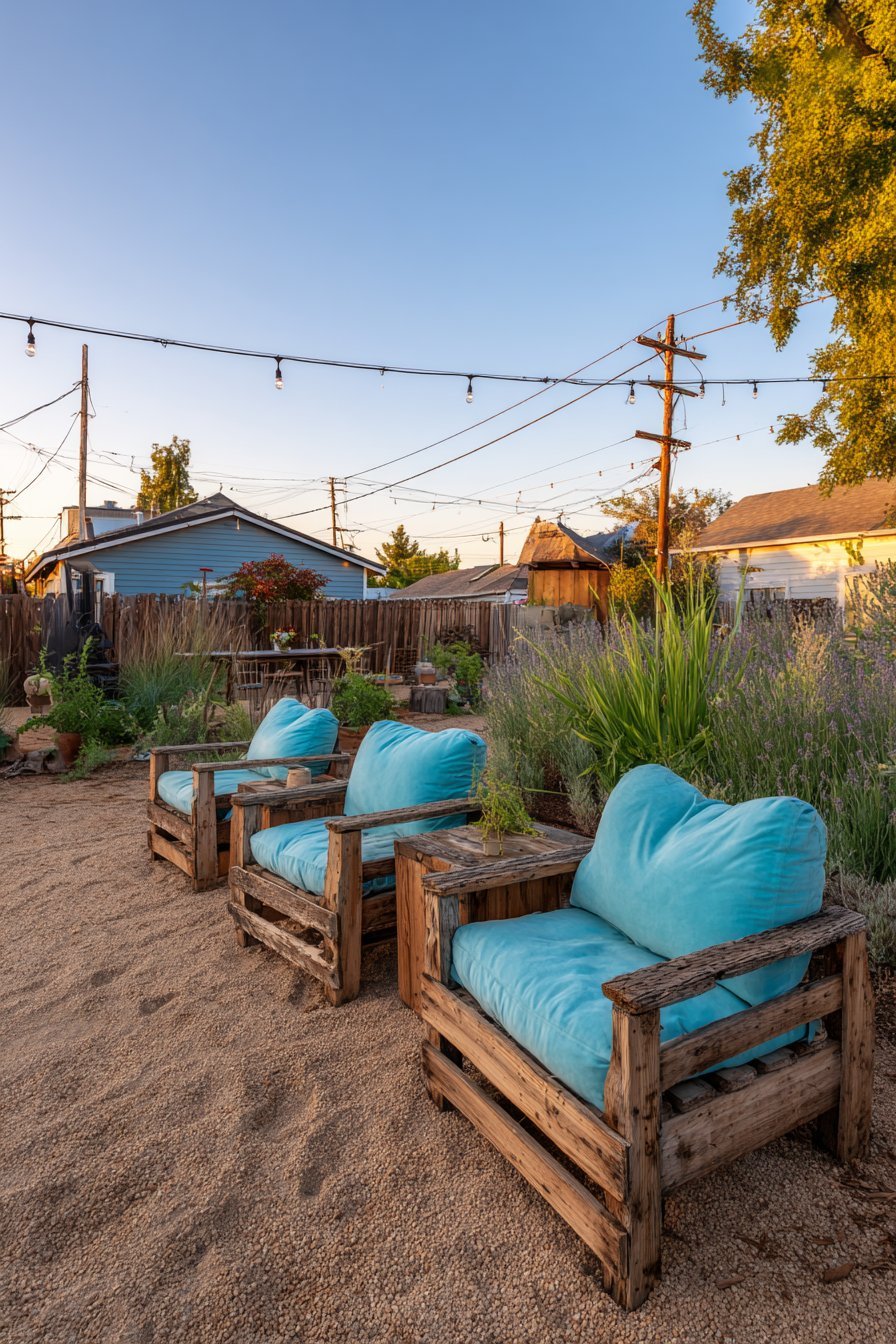
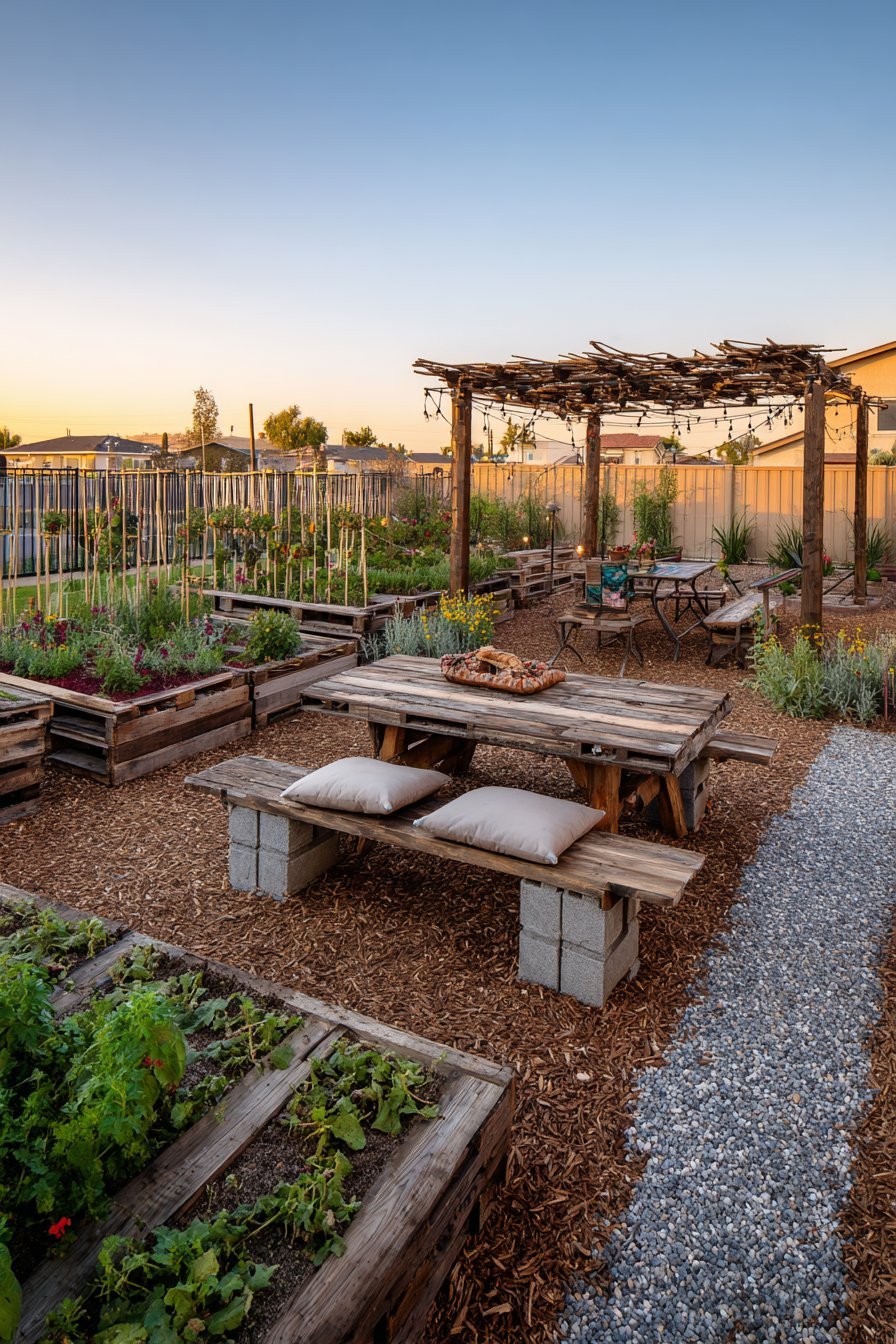
A thoughtfully arranged pallet furniture seating area demonstrates how reclaimed materials create comfortable outdoor living spaces. Weather-resistant cushions in faded denim blue soften the raw wooden surfaces. Repurposed wooden crates serve dual purposes as side tables and planters filled with hardy perennials. String lights drape overhead between existing fence posts, adding ambient illumination.
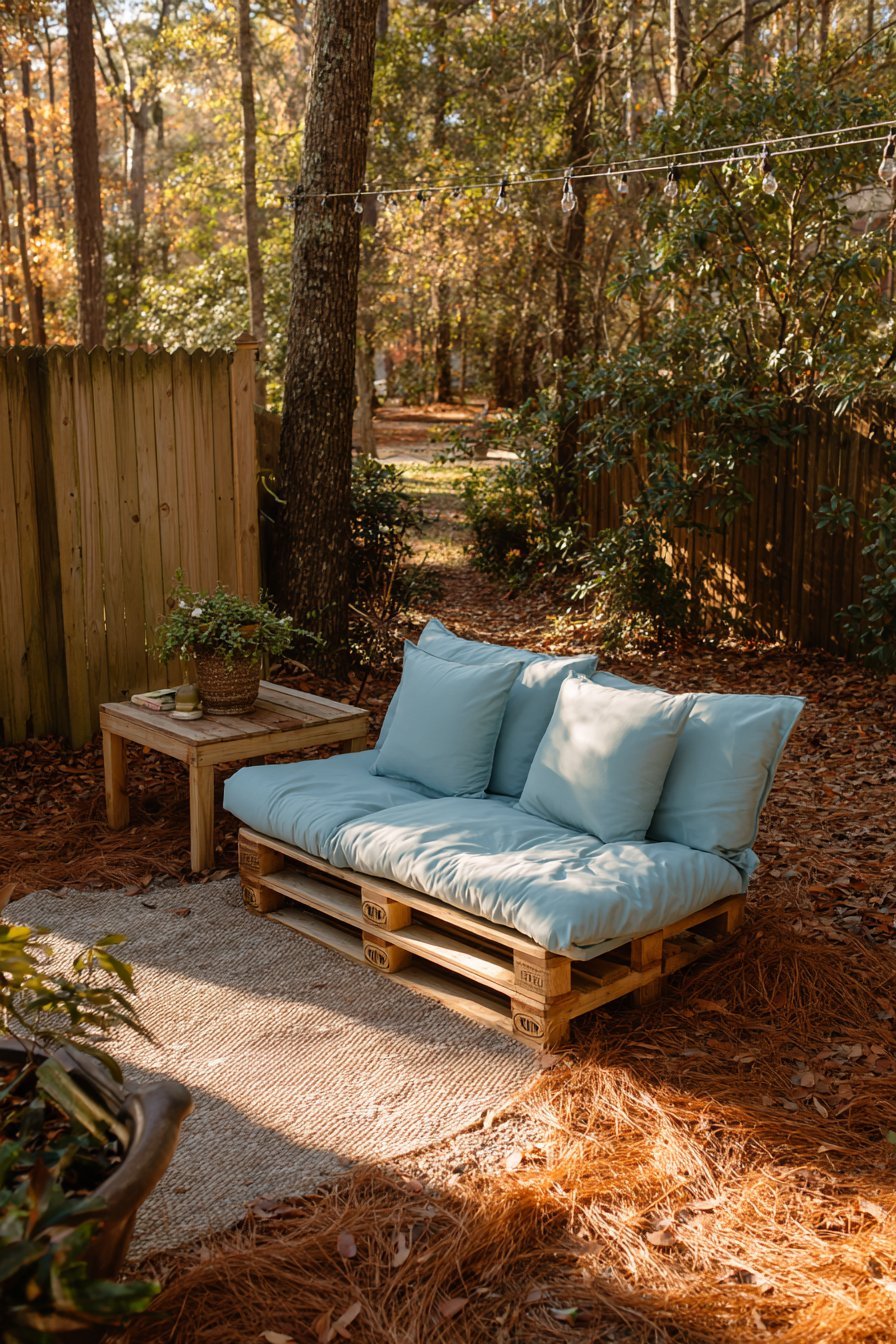
The natural mulch pathways connecting different zones establish visual flow throughout the space. This material choice requires minimal maintenance while defining separate functional areas. The weathered texture of pallet wood develops character over time rather than appearing shabby. Golden hour sunlight enhances the natural wood tones and creates inviting shadows across the seating area.
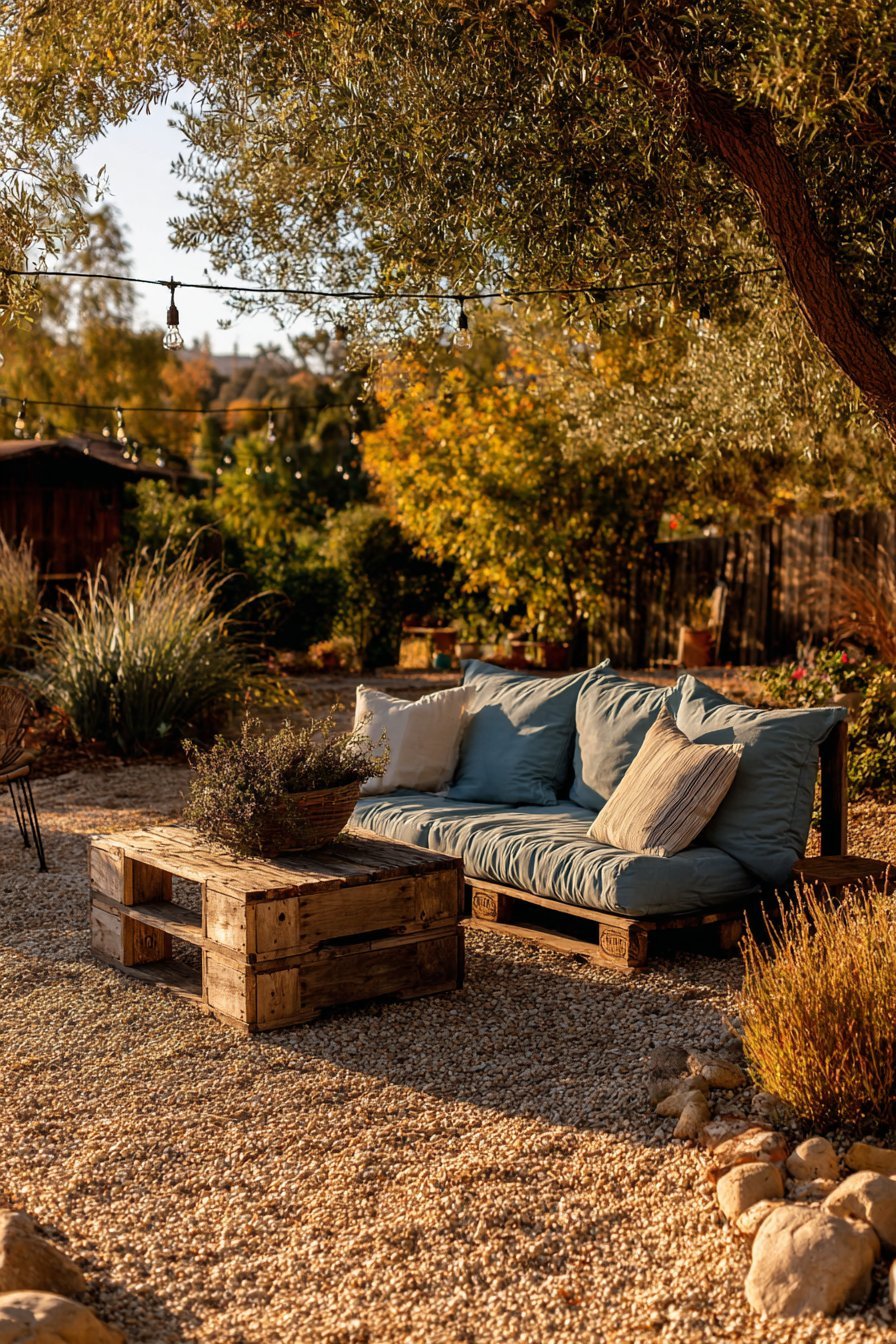
Material selection plays a crucial role in this budget-friendly design. Pallets provide sturdy construction at minimal cost when properly treated for outdoor use. The modular nature of pallet furniture allows for easy reconfiguration as needs change. Cushions add comfort and color pops that personalize the neutral wood foundation.

Key Design Tips:
- Sand and seal pallet wood thoroughly to prevent splinters and extend lifespan
- Choose outdoor-grade cushions with removable, washable covers for easy maintenance
- Install string lights with solar power or outdoor-rated electrical connections
- Plant hardy perennials in crate planters that thrive with minimal water
- Create defined pathways using natural mulch to connect seating areas with other yard zones
- Position seating to capture optimal sunlight during preferred usage times
2. Circular Fire Pit Gathering Space
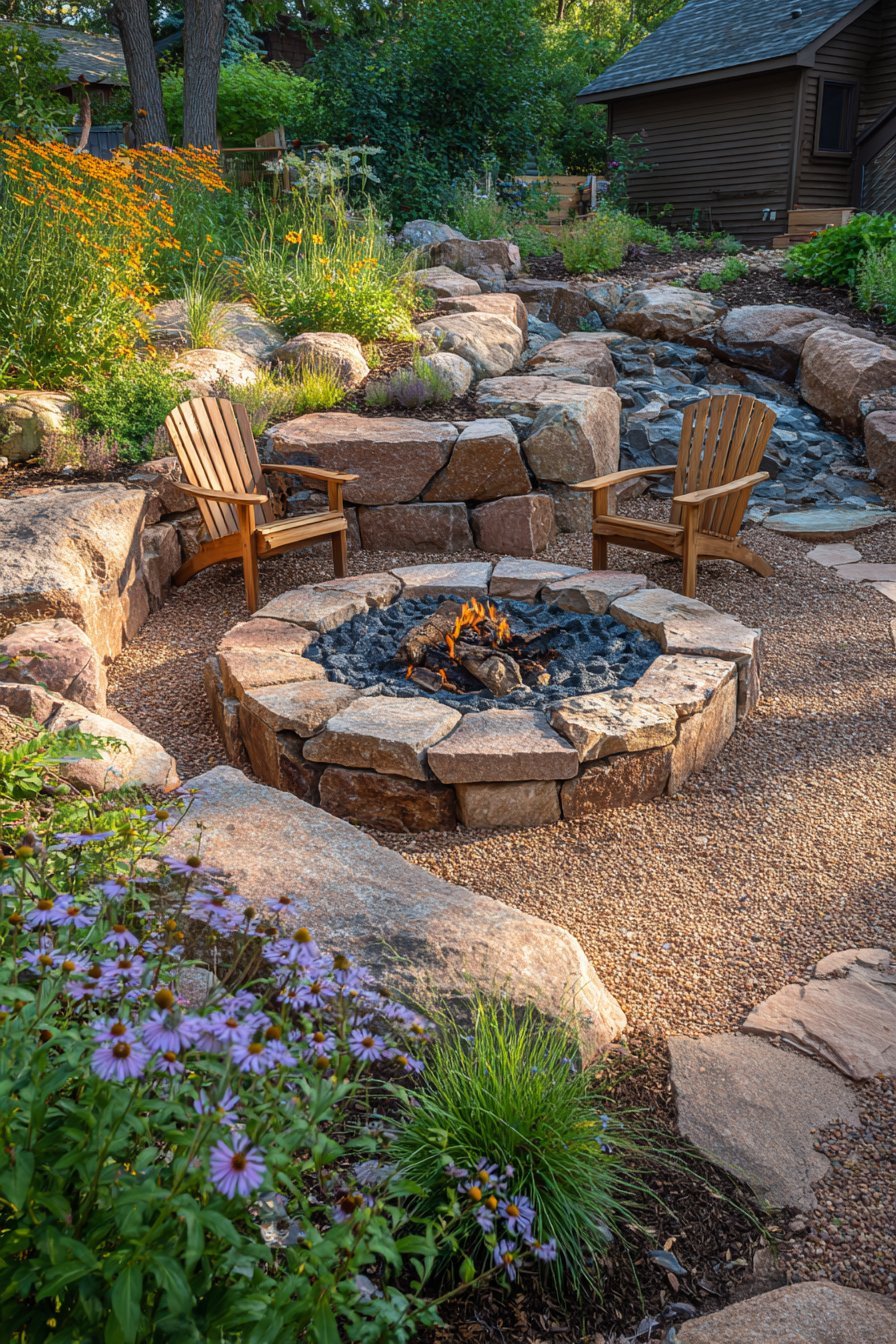
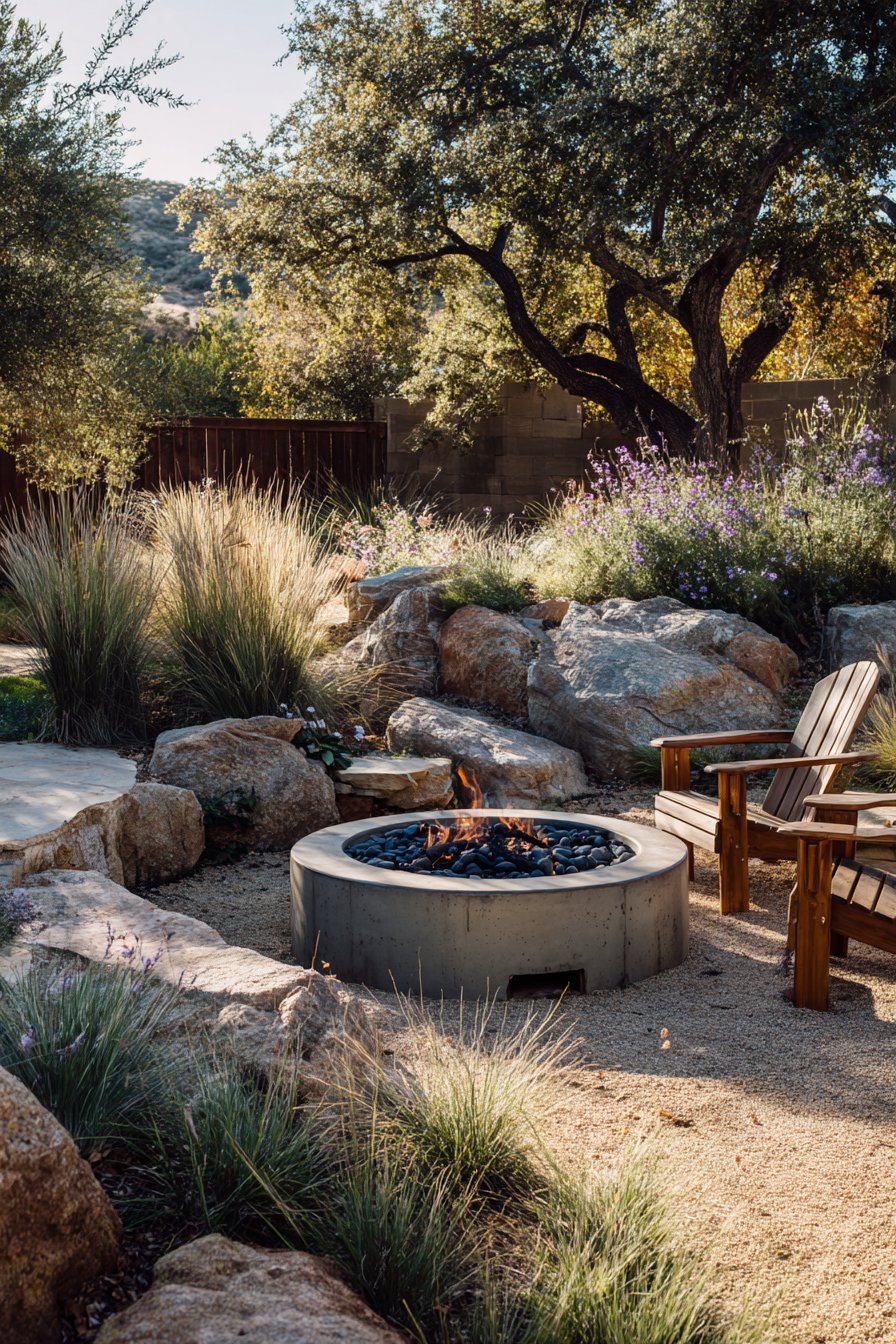
A handcrafted fire pit area constructed from stacked concrete retaining blocks creates an affordable focal point for outdoor gatherings. The circular arrangement provides structural stability without mortar or specialized tools. Large flat stones partially buried in gravel surround the pit, offering natural seating options. Several Adirondack chairs built from construction-grade lumber provide additional comfortable seating.
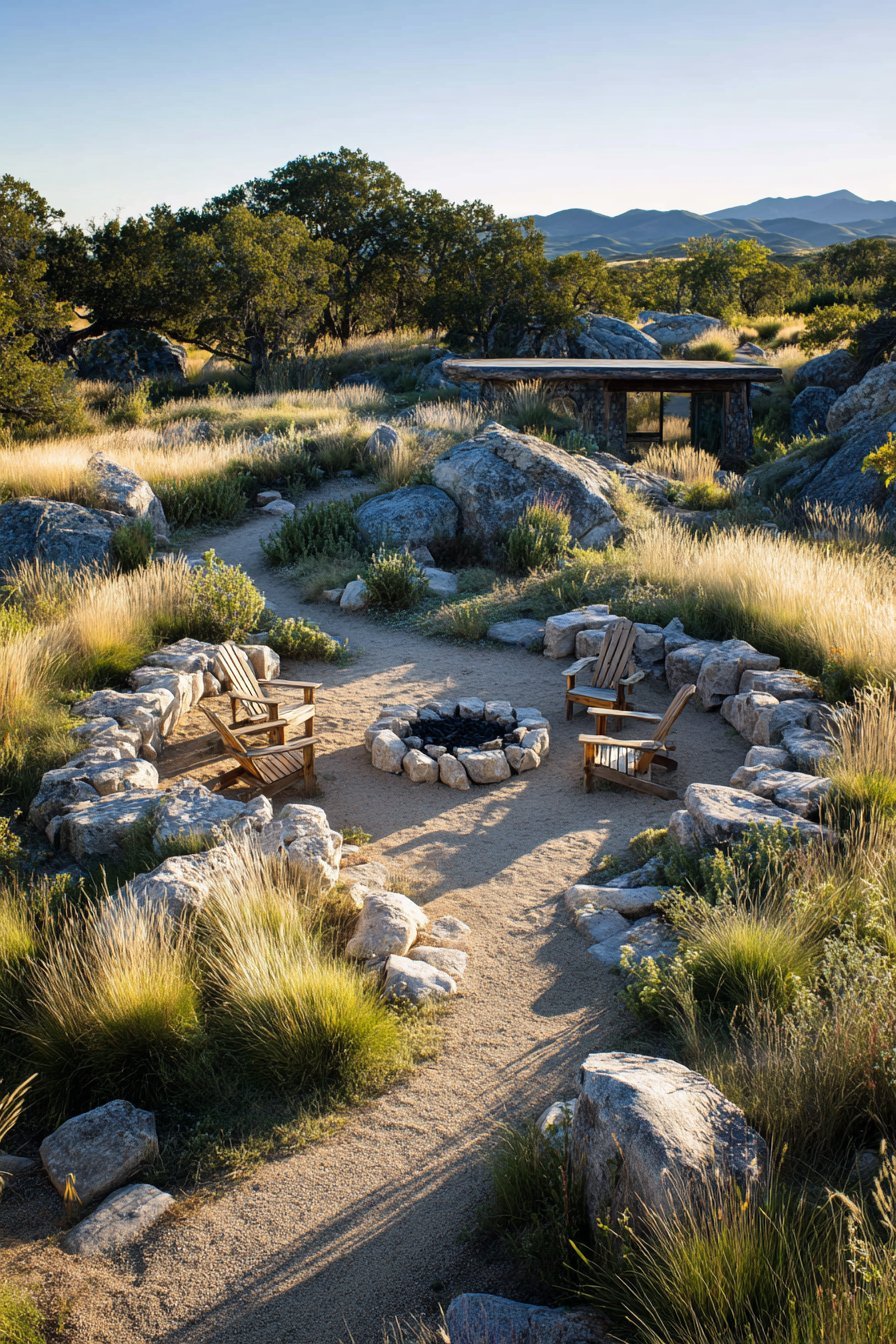
Native grasses and wildflowers planted in the background require minimal maintenance while adding natural beauty. The low-water plantings thrive without irrigation systems or constant attention. Afternoon lighting emphasizes the raw texture of concrete blocks and natural stone. The gravel base provides excellent drainage and defines the gathering area clearly.
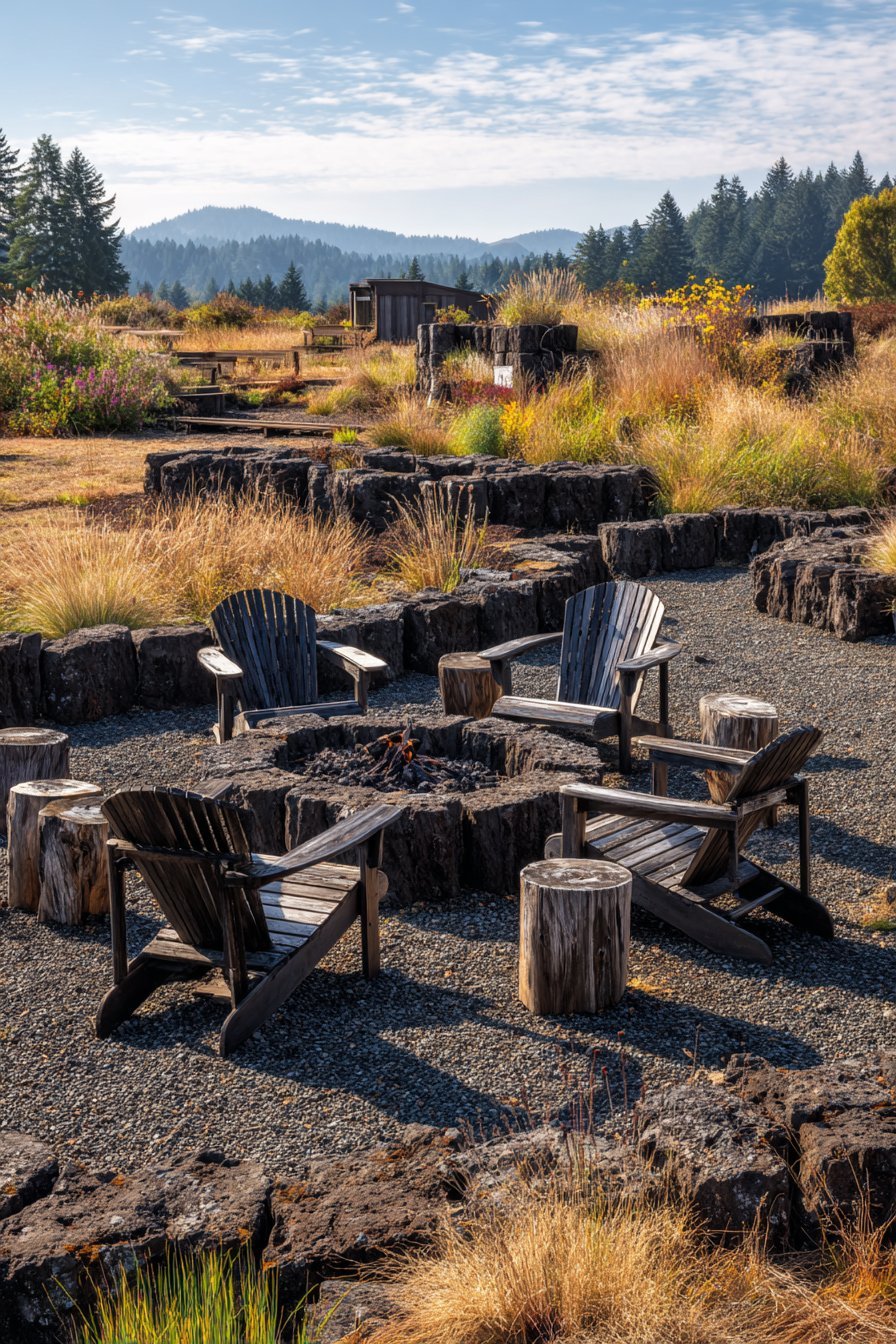
This fire pit design prioritizes safety and functionality alongside affordability. The concrete block construction contains fire effectively while radiating warmth outward. Gravel surrounding the pit prevents grass fires and creates a clean appearance. The combination of stone seating and wooden chairs accommodates varying comfort preferences among guests.
Key Design Tips:
- Stack concrete blocks in alternating patterns for structural strength without adhesive
- Bury flat stones halfway into gravel for stability and natural appearance
- Maintain three-foot clearance between fire pit and seating for safety
- Select native grass species that require no supplemental watering once established
- Build Adirondack chairs using free plans available online and basic tools
- Install a simple fire ring insert to protect concrete from extreme heat damage
3. Galvanized Tank Raised Garden Beds
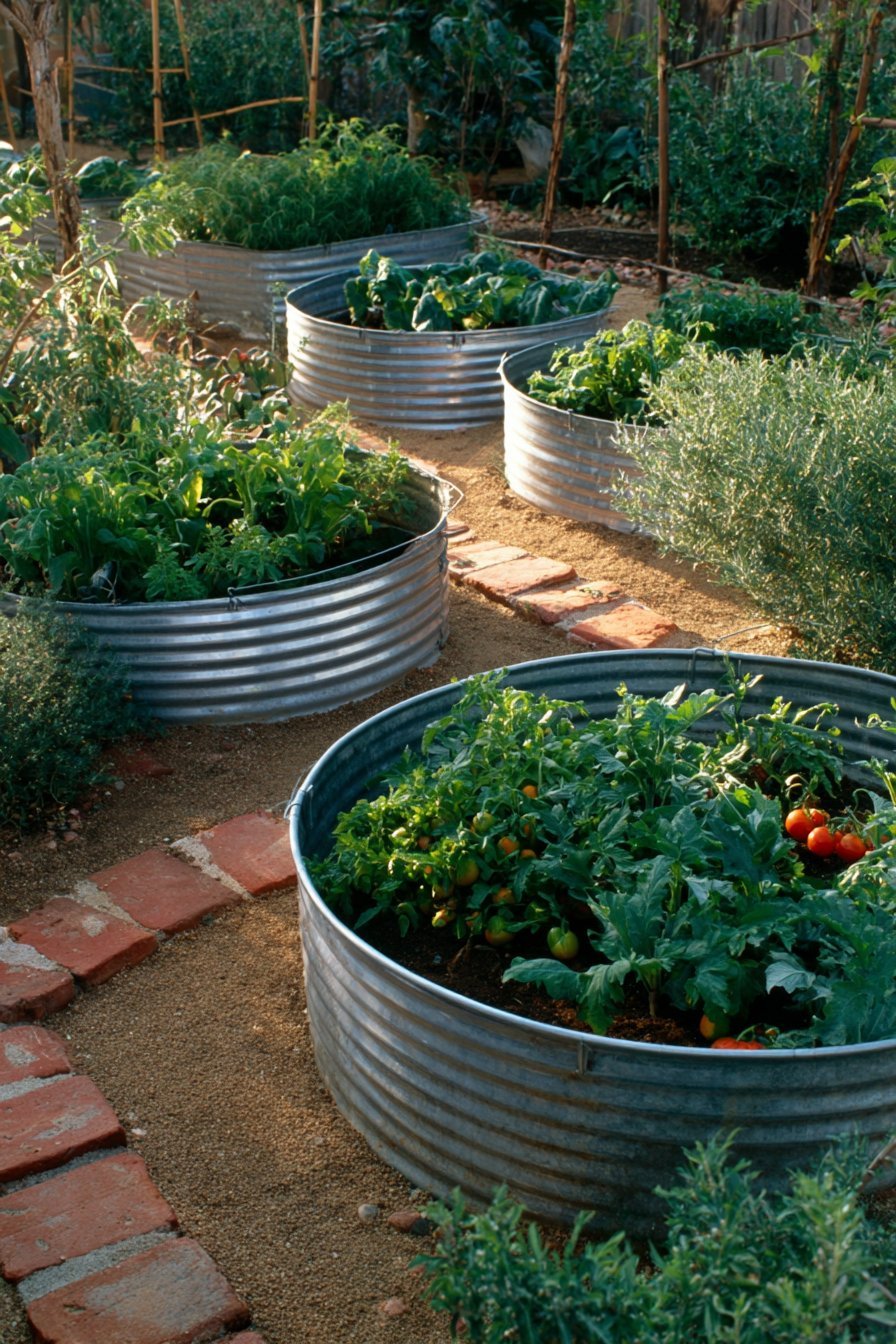
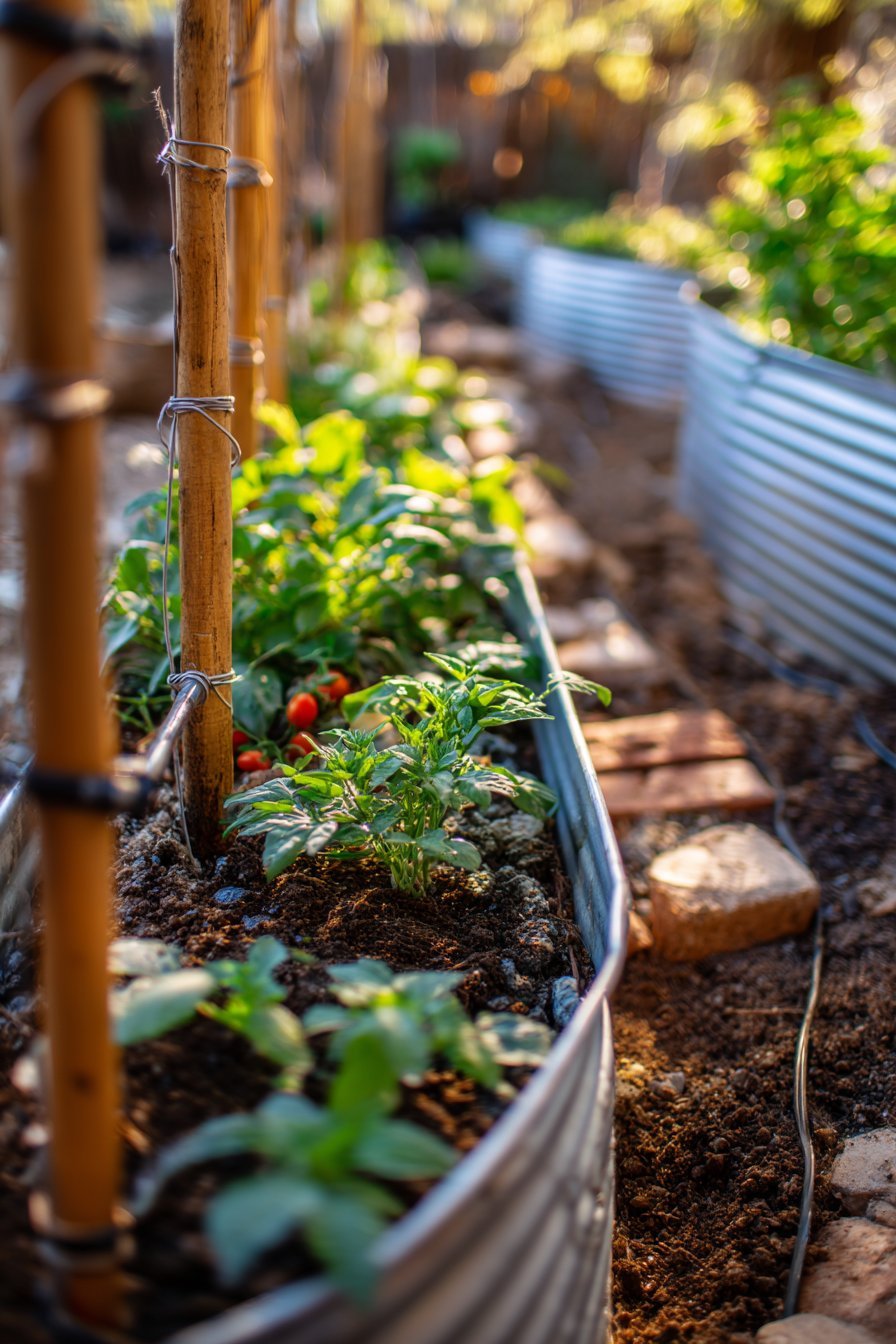
Converting galvanized stock tanks into raised planters creates productive growing spaces at a fraction of traditional raised bed costs. Various vegetables and herbs flourish in amended soil with visible drip irrigation lines fashioned from basic garden hose. Reclaimed brick pathways separate the growing beds while adding visual interest. A bamboo stake and twine trellis supports climbing plants vertically, maximizing limited space.
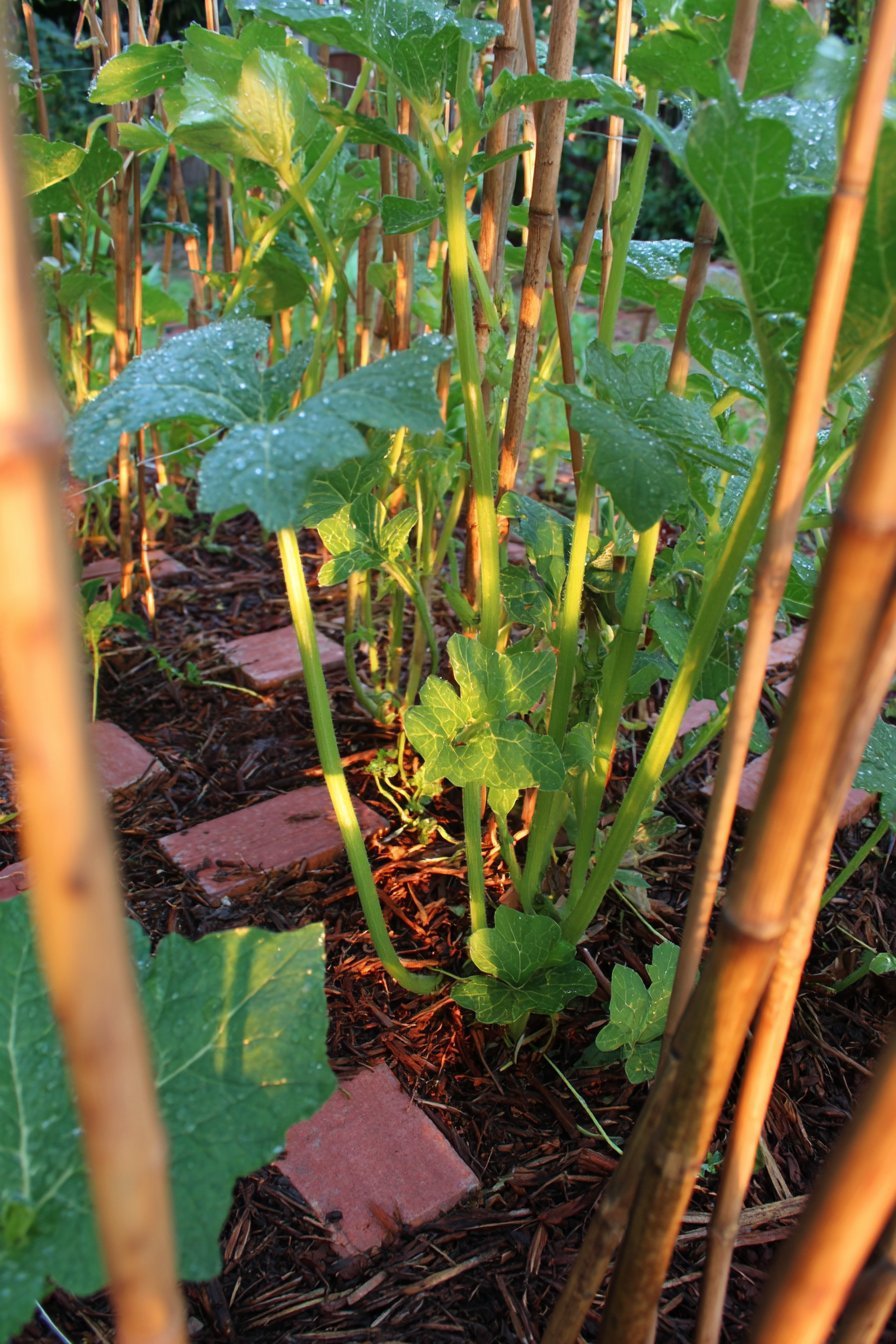
Morning light illuminates the productive garden with soft, even shadows across the plantings. The metal tanks provide excellent drainage and warm soil quickly in spring. Different tank sizes accommodate various plant root depths and growth habits. The functional irrigation system ensures consistent moisture without daily hand-watering.
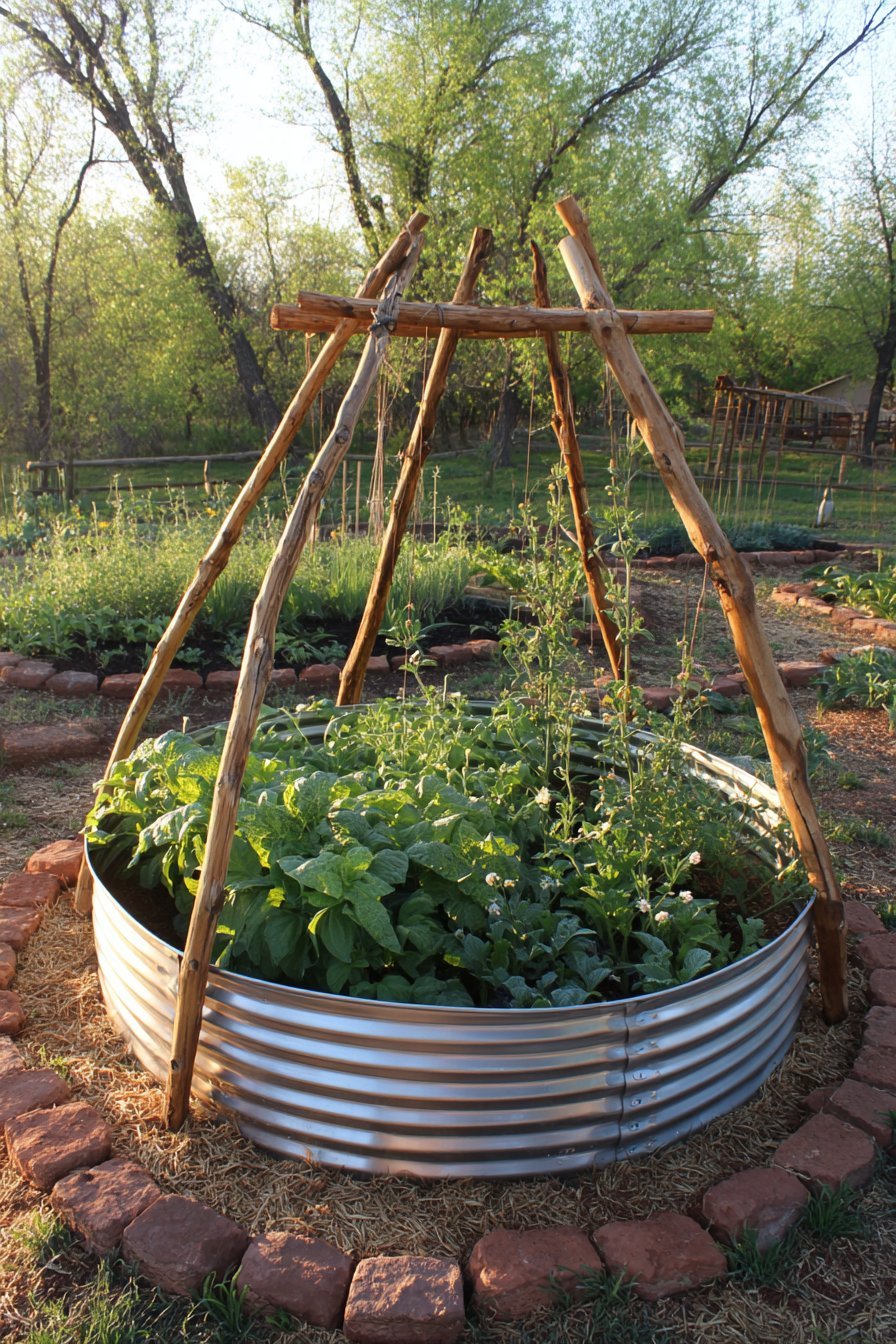
This approach combines food production with attractive landscape design. The industrial aesthetic of galvanized metal creates contemporary visual appeal. Brick pathways prevent mud during wet seasons while establishing permanent growing zones. The visible irrigation system demonstrates transparent sustainability practices.
Key Design Tips:
- Drill drainage holes in tank bottoms before filling with soil
- Fill tanks with quality amended soil mixed with compost for optimal nutrition
- Install drip irrigation before planting to avoid disturbing established roots
- Use reclaimed bricks set on sand for easy pathway adjustment
- Create bamboo trellises by driving stakes deep and securing with natural twine
- Group plants with similar water and sun requirements in each tank
4. Pressure-Treated Lumber Pergola

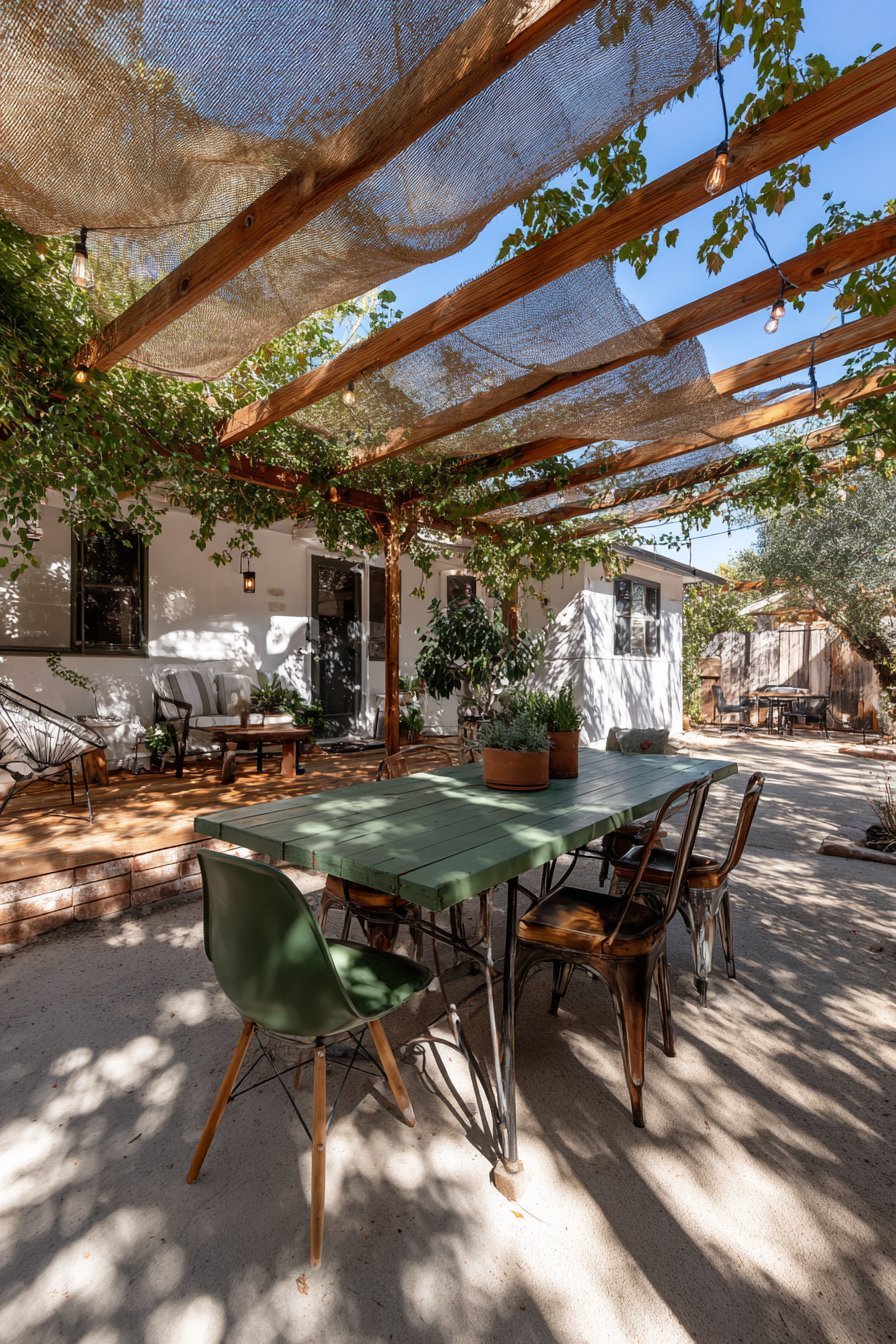
A DIY pergola structure built from pressure-treated lumber provides essential shade without the expense of professional installation. Outdoor fabric remnants create a retractable shade canopy using a basic rope and pulley system. Below, a painted secondhand table paired with mismatched chairs unified through spray paint creates cohesive dining space. Potted plants in various recycled containers add greenery and vertical interest.
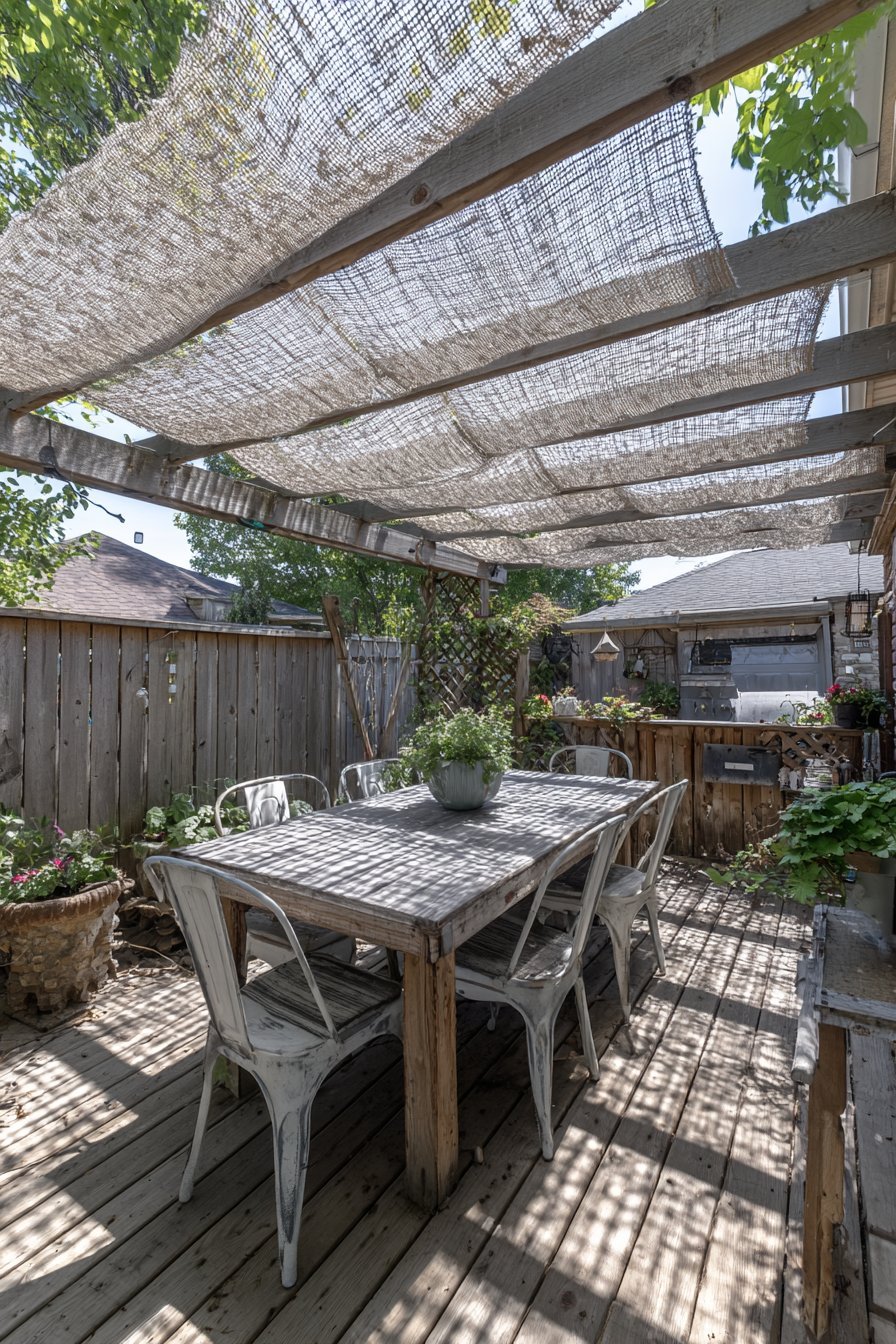
Midday sunlight creates beautiful dappled shade patterns across the dining area. The simple overhead structure filters harsh sunlight while maintaining airflow. Pressure-treated lumber withstands weather exposure without expensive maintenance. The retractable fabric allows for sun exposure adjustment based on seasonal preferences and weather conditions.
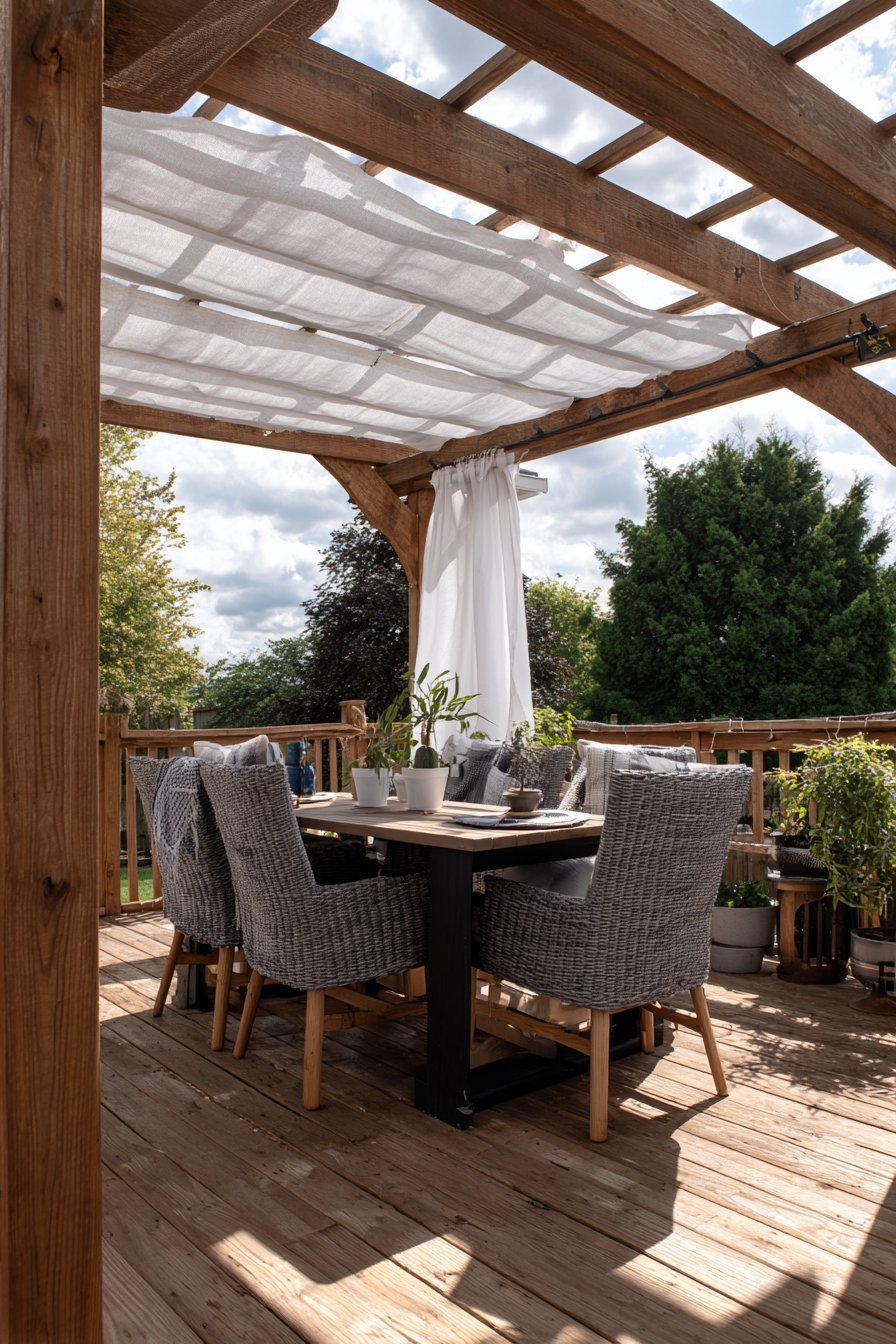
This pergola design demonstrates how basic carpentry skills create significant outdoor improvements. Minimal hardware requirements keep costs low while providing structural integrity. The dining area beneath extends indoor living to the outdoors comfortably. Spray paint unifies disparate furniture pieces into a coordinated collection.
Key Design Tips:
- Anchor pergola posts in concrete footings for stability and longevity
- Space overhead beams 16-24 inches apart for optimal shade without blocking all sunlight
- Choose outdoor fabric rated for UV resistance and weather exposure
- Paint secondhand furniture with outdoor spray paint in coordinating colors
- Install simple rope and pulley system for easy canopy adjustment
- Use recycled containers as planters after drilling drainage holes
5. Lattice Panel Privacy Screen
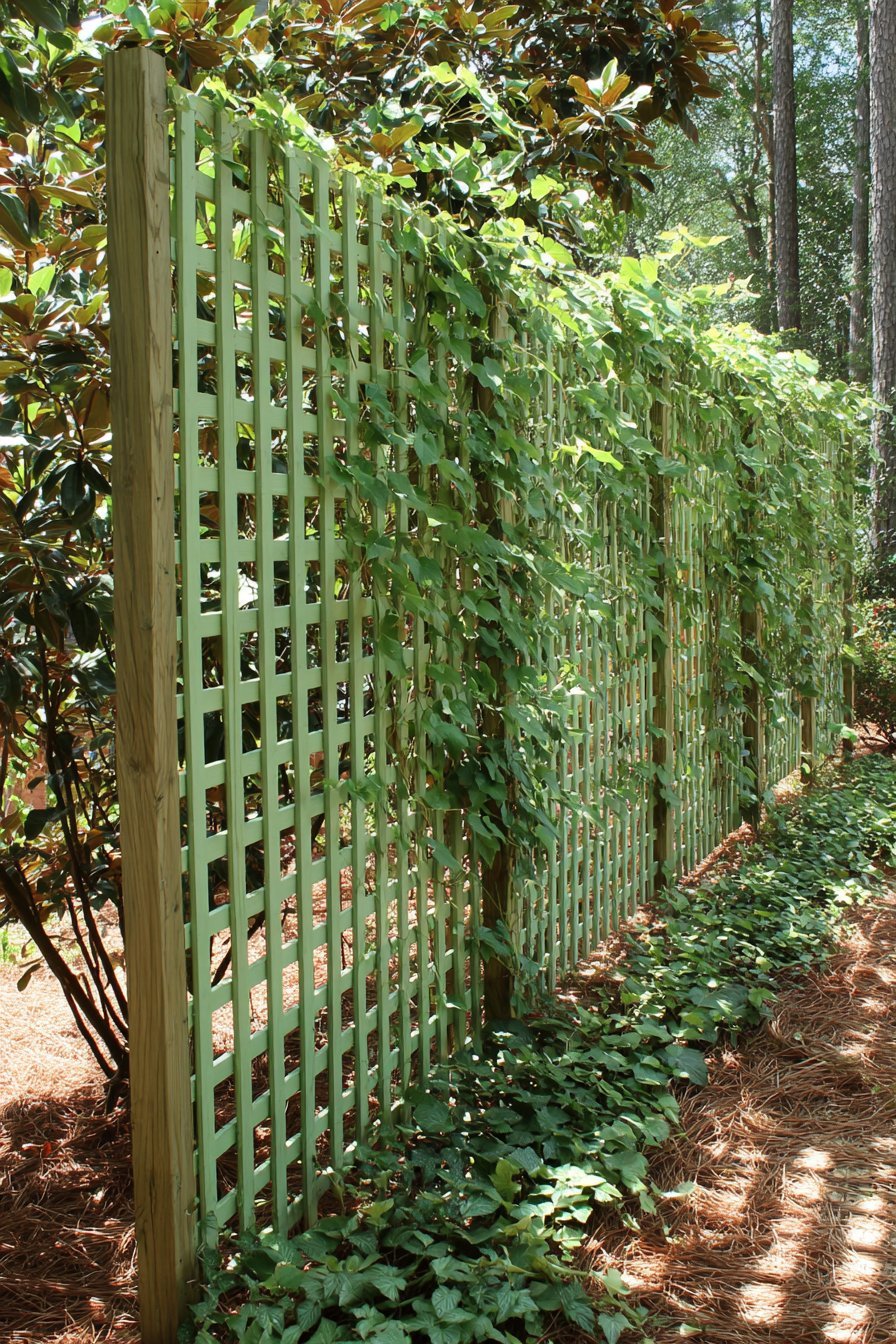
Fast-growing climbing vines transform simple lattice panels into living privacy screens. Morning glory and clematis climb the structure with visible new growth throughout the season. The lattice painted in sage green complements natural surroundings while providing architectural definition. Ground cover plants fill the base area with mulch pathways maintaining clean borders.
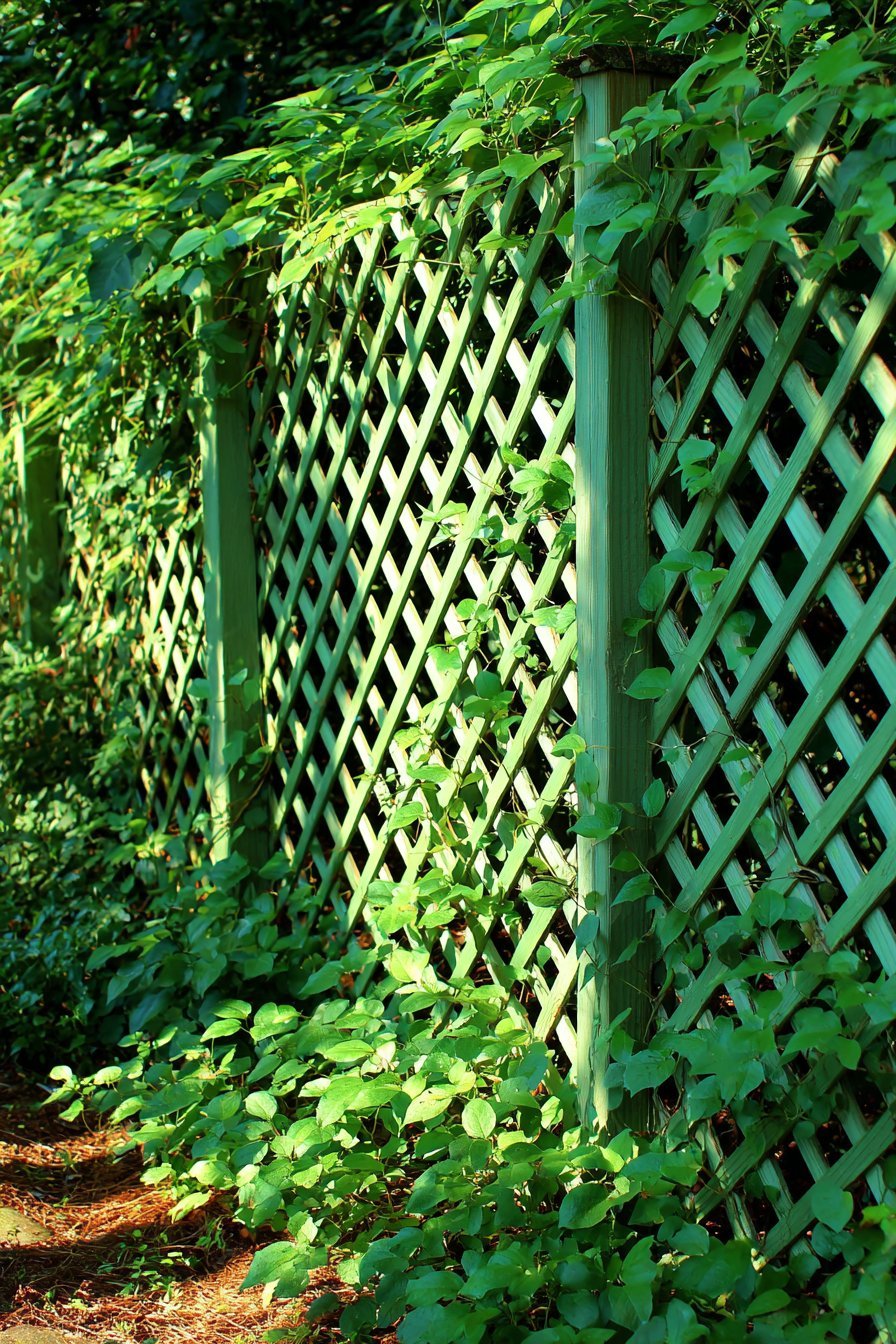
Late afternoon sunlight creates interesting shadow patterns through the lattice openwork. The vertical structure adds height and visual interest to flat yard spaces. Fast-growing vines provide privacy within a single growing season. The painted lattice maintains clean appearance while supporting plant growth.
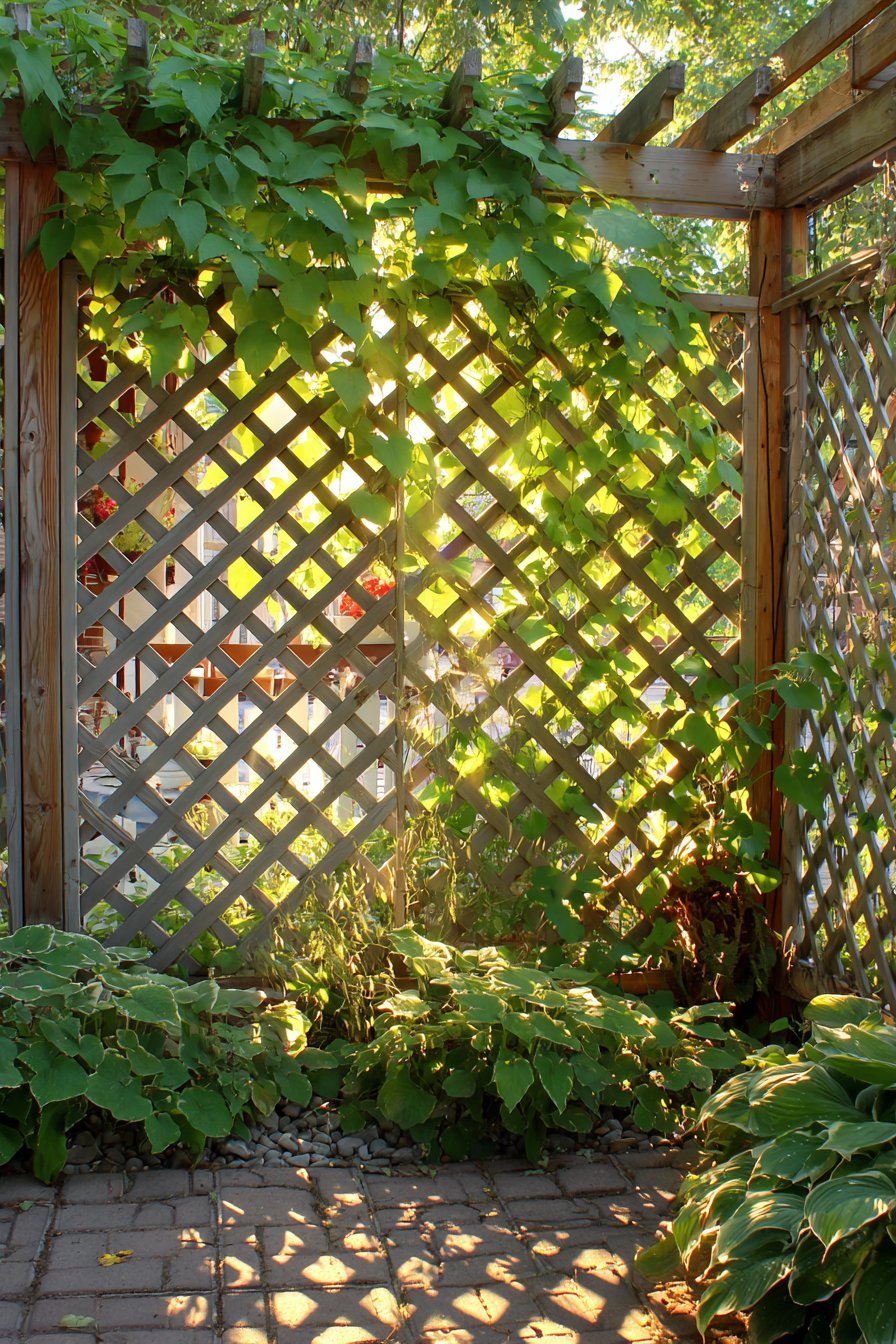
This privacy solution offers flexibility and seasonal variation unlike solid fencing. The climbing plants attract pollinators while screening unwanted views. Ground covers suppress weeds at the base while tying the screen into the landscape. Multiple lattice panels can be configured to suit various yard shapes.

Key Design Tips:
- Attach lattice panels to sturdy posts set in concrete for wind resistance
- Paint lattice with exterior paint before installation for even coverage
- Plant multiple vine varieties for extended bloom seasons and varied textures
- Install ground covers like creeping thyme that tolerate light foot traffic
- Space lattice panels to allow adequate sunlight for plant growth
- Mulch heavily at installation to suppress weeds during establishment
6. DIY Sandbox and Swing Set Play Area
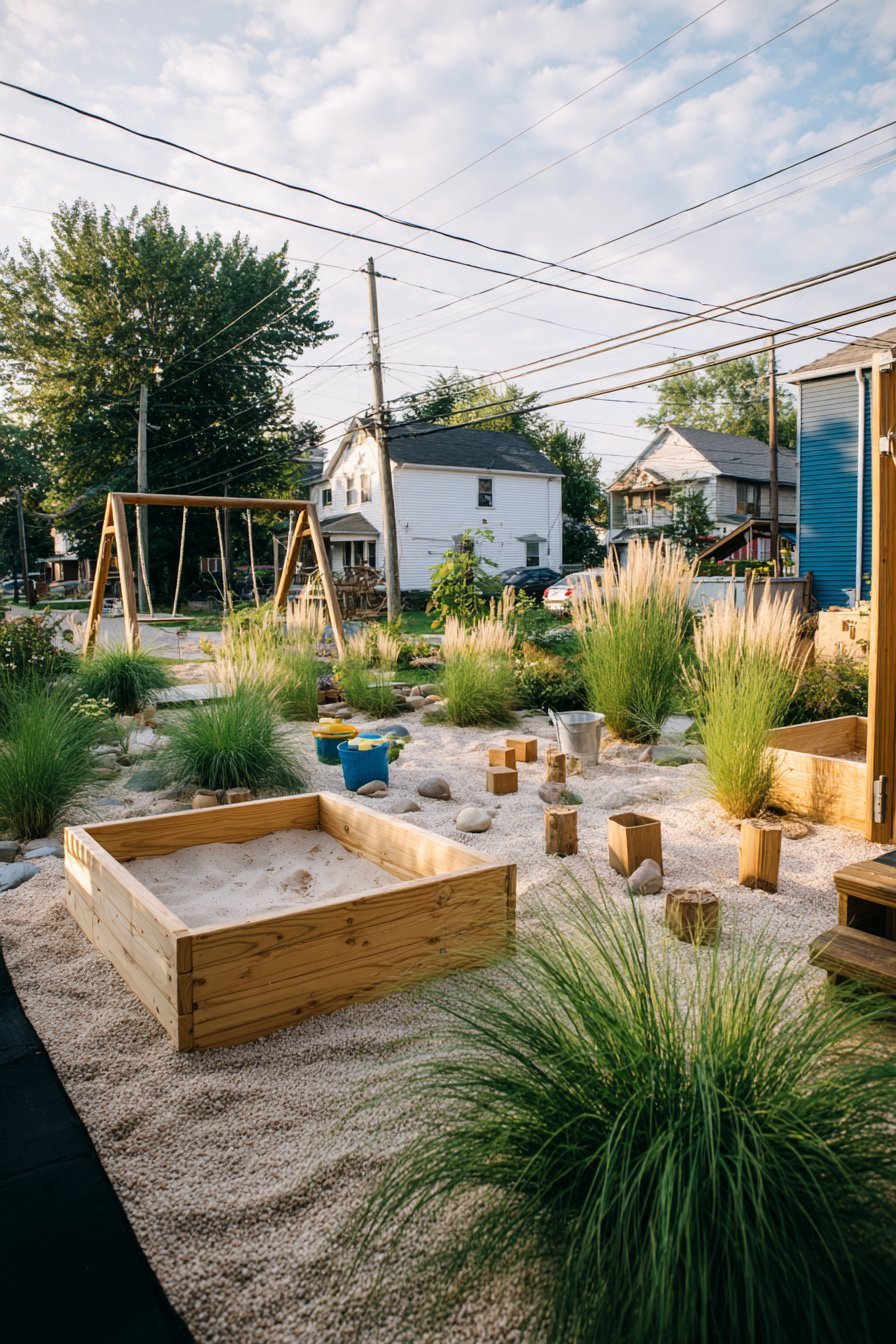
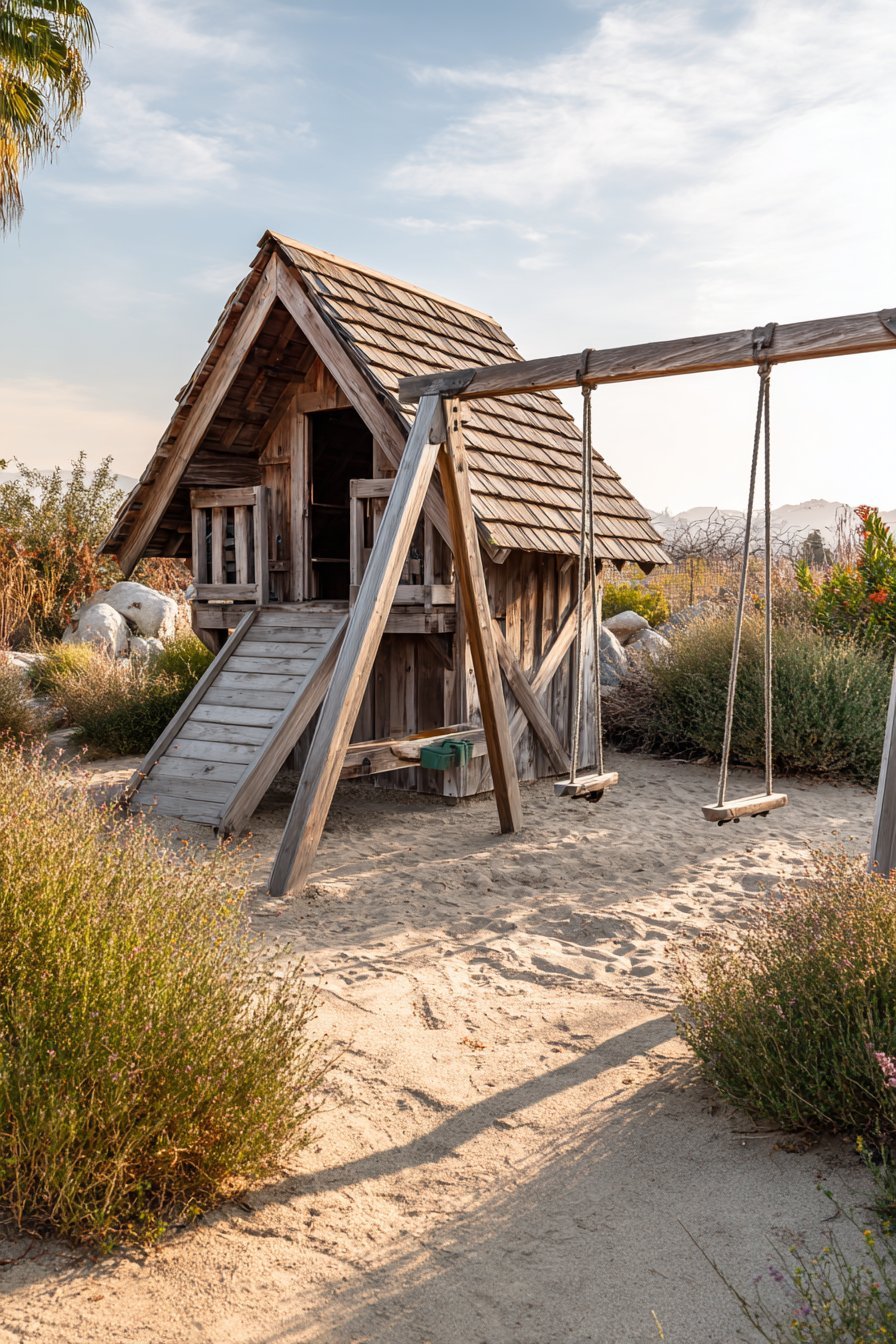
An untreated lumber sandbox with a simple A-frame swing set creates dedicated play space without expensive equipment. Heavy-duty rope suspends swings from dimensional lumber crossbeams. Rubber mulch covers safety zones around play structures for fall protection. Native grass areas reduce lawn maintenance while providing soft play surfaces. Wooden blocks and metal buckets scattered naturally encourage imaginative play.
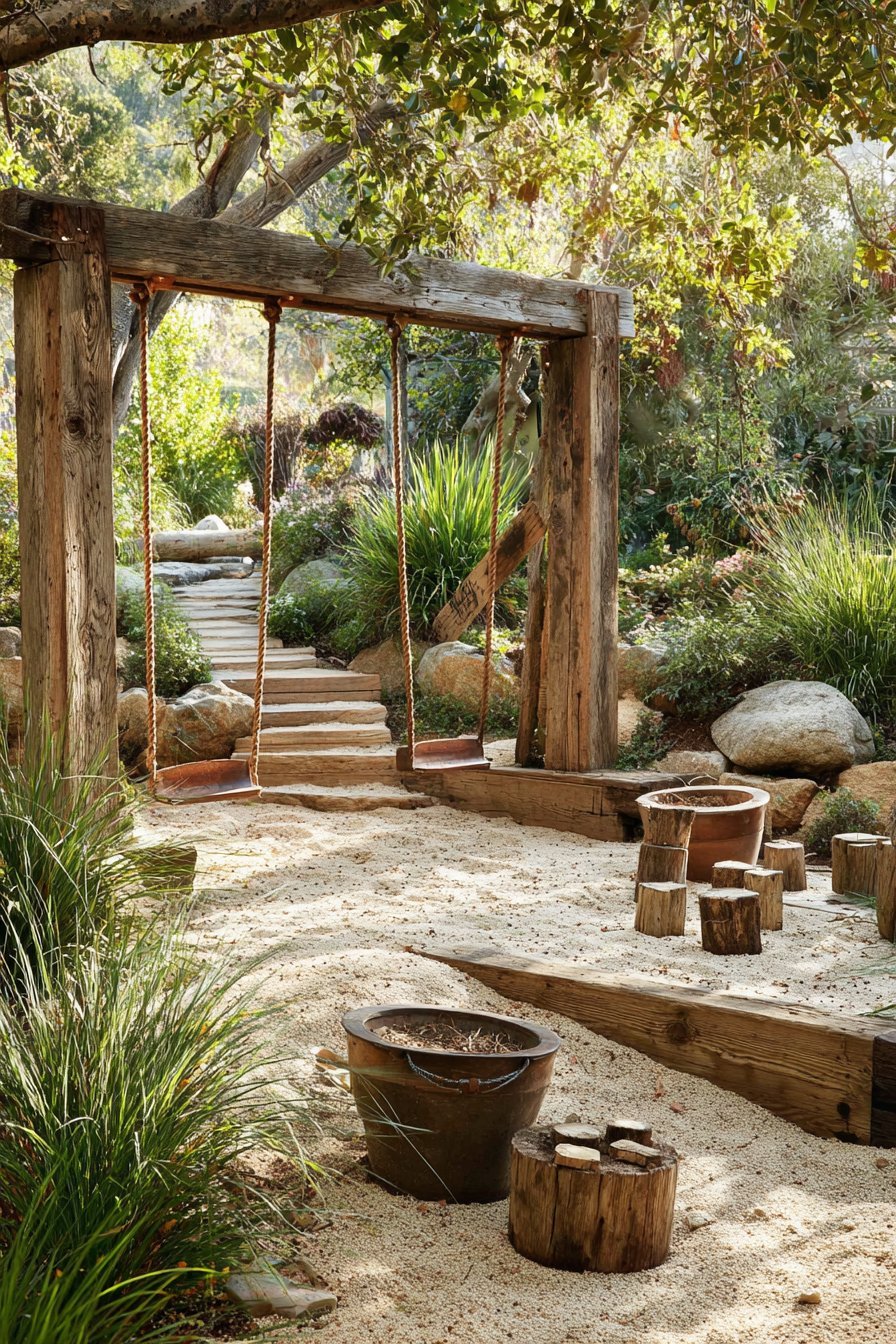
Morning light casts soft shadows across the functional play area. The simple construction prioritizes safety and durability over complex features. Untreated lumber remains safe for children while costing significantly less than cedar alternatives. The open design allows for supervision from multiple vantage points.
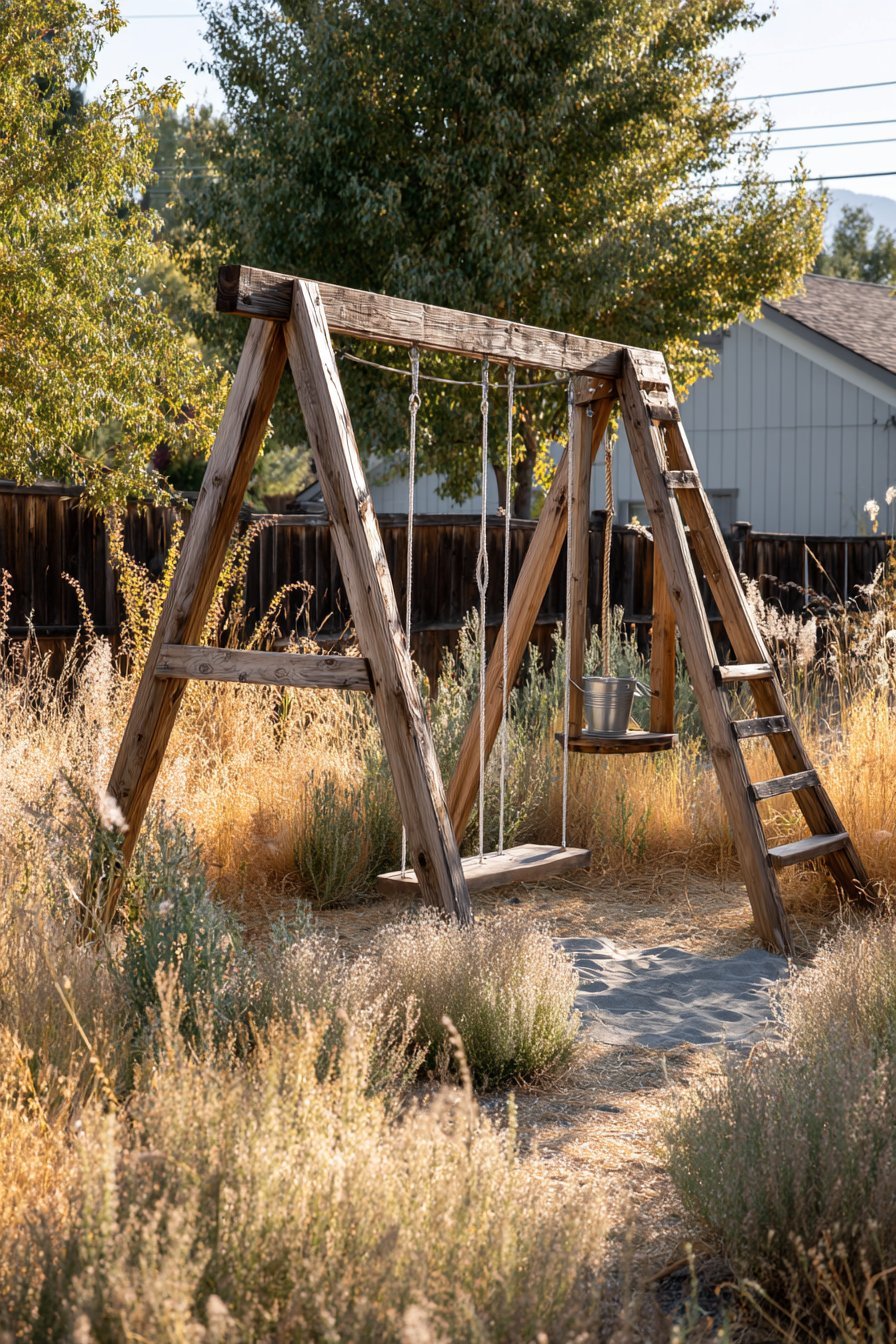
This play space demonstrates that children value simple, versatile play elements. Natural and open-ended toys foster creativity better than expensive plastic equipment. The rubber mulch provides essential safety cushioning during active play. Native grasses require less water and tolerate heavy use better than traditional lawns.
Key Design Tips:
- Build sandbox with corner seats for comfortable play positioning
- Use minimum 4×4 posts for swing set structure ensuring adequate strength
- Install rubber mulch to minimum 6-inch depth for proper fall protection
- Choose rope rated for outdoor use and minimum 600-pound capacity
- Position play equipment away from fences and structures for safety clearance
- Cover sandbox when not in use to keep clean and dry
7. Solar Pathway and Accent Lighting

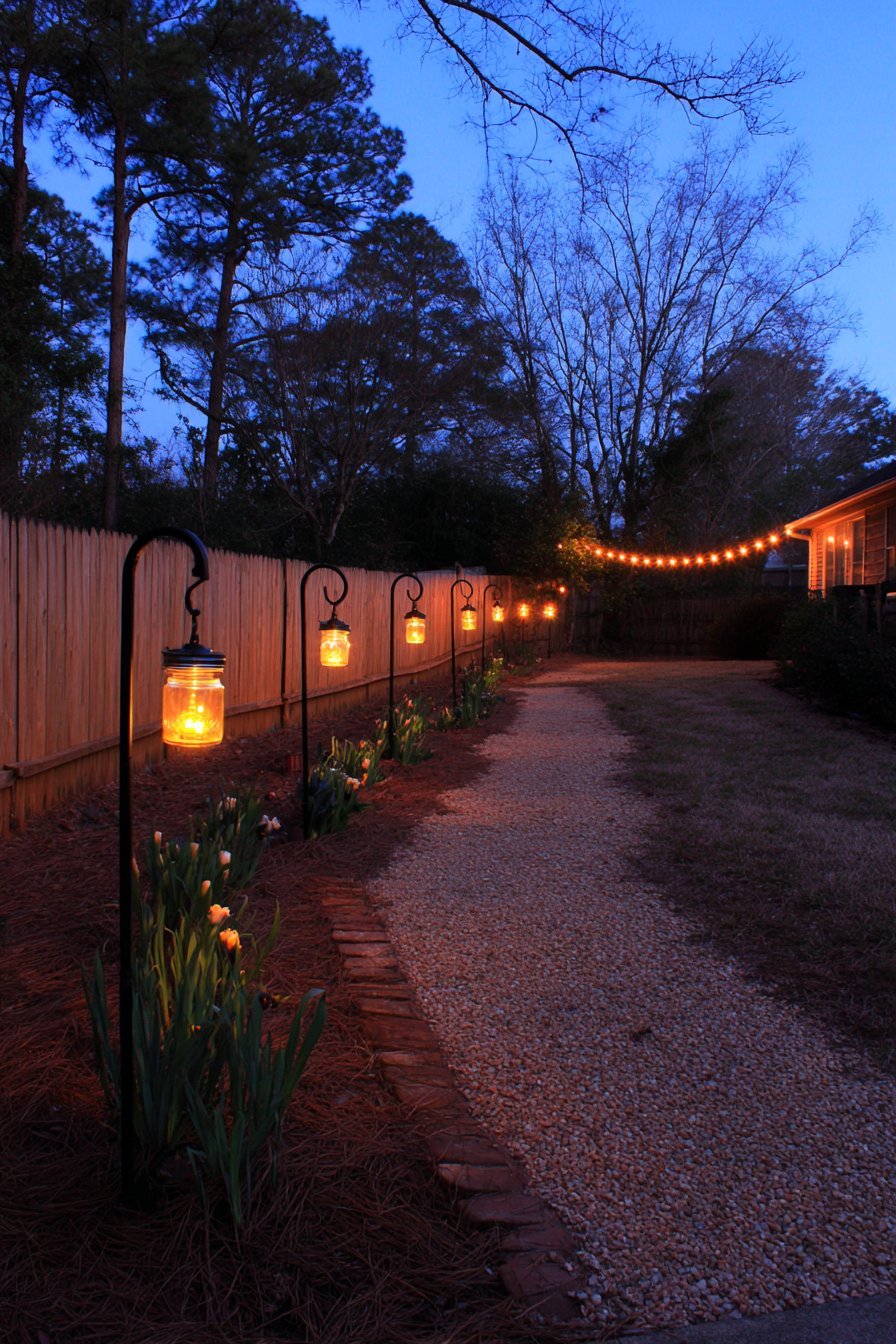
Solar-powered pathway lights along gravel walking paths provide safety and ambiance without electrical installation. Mason jar lanterns with LED tea lights hang from shepherd’s hooks among plantings. Edison bulb solar string lights drape along fence lines. Blue hour twilight showcases the warm glow against darkening sky beautifully.
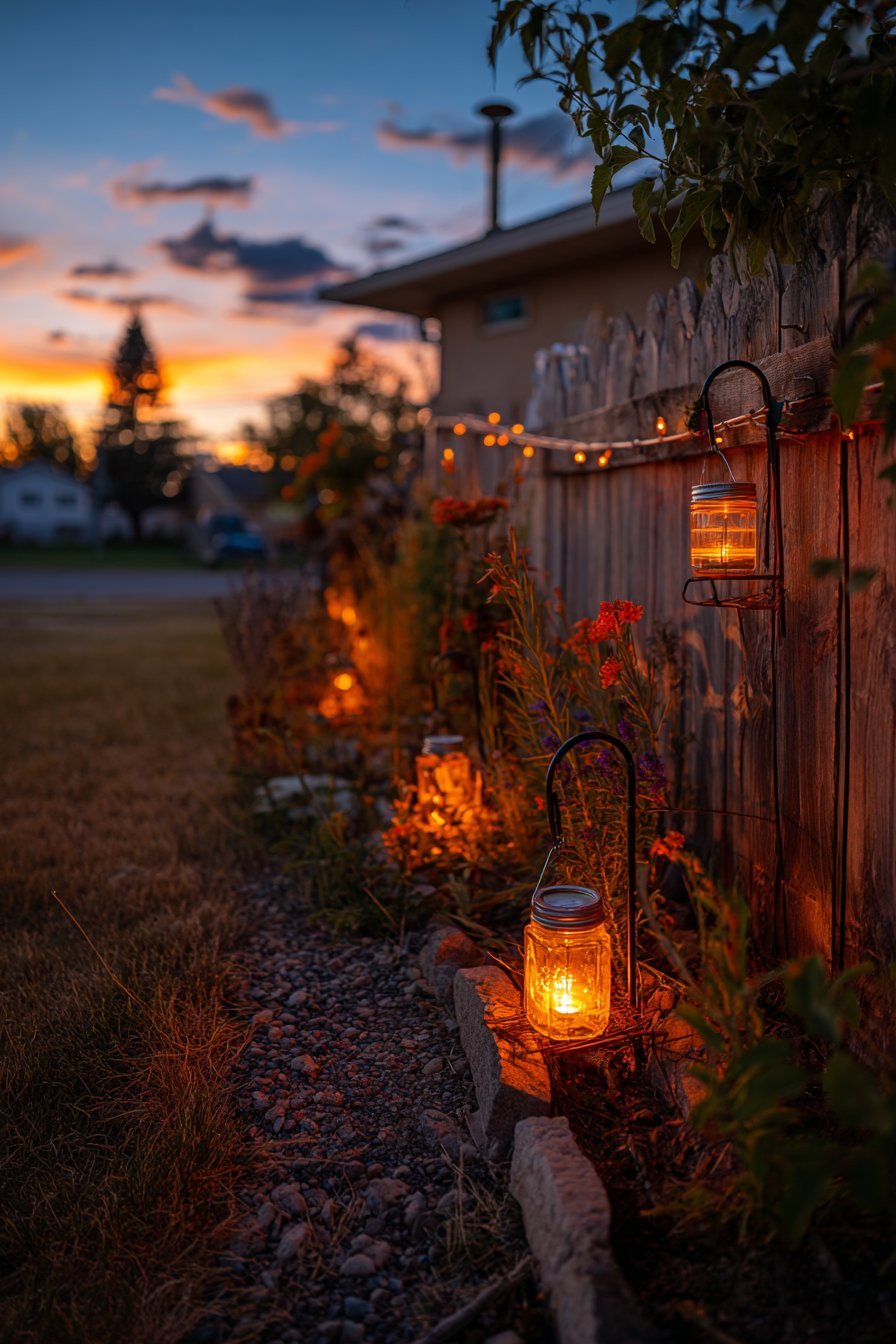
The lighting scheme creates layers of illumination at different heights and intensities. Solar power eliminates ongoing electrical costs and installation complexity. The warm light color creates inviting atmosphere for evening outdoor enjoyment. Strategic placement guides movement through the yard safely after dark.
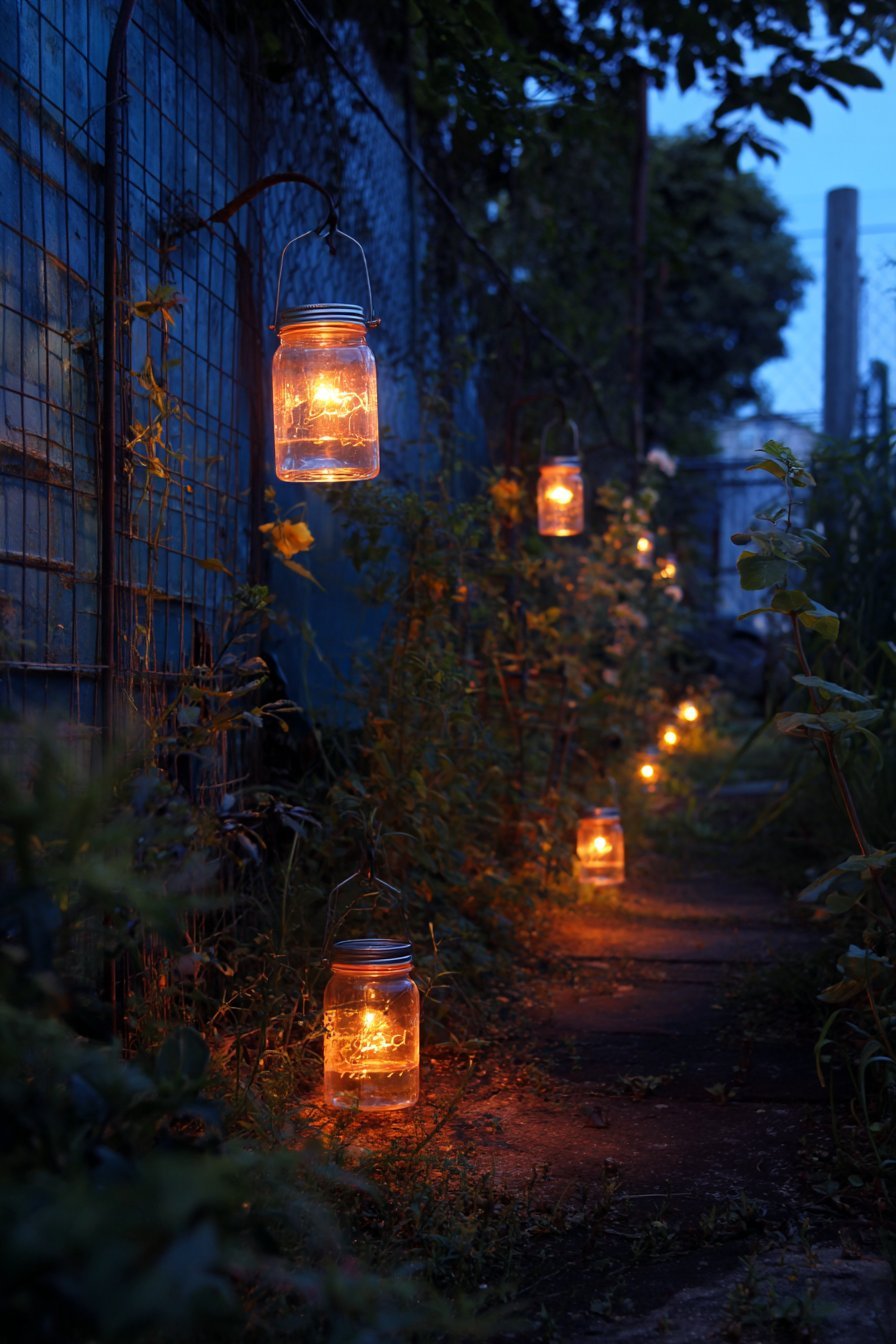
This affordable lighting approach transforms yards into usable evening spaces. The combination of pathway safety lights and decorative accent lights serves multiple functions. Solar technology has improved dramatically while prices have decreased significantly. The Edison bulb aesthetic adds vintage charm to contemporary yards.
Key Design Tips:
- Position solar panel lights where they receive minimum six hours of direct sunlight
- Choose LED solar lights for longest battery life and brightest output
- Install pathway lights every six to eight feet for adequate safety illumination
- Hang mason jar lanterns at varying heights for visual interest
- Replace rechargeable batteries annually for consistent performance
- Clean solar panels monthly to maintain charging efficiency
8. Container Fountain Water Feature
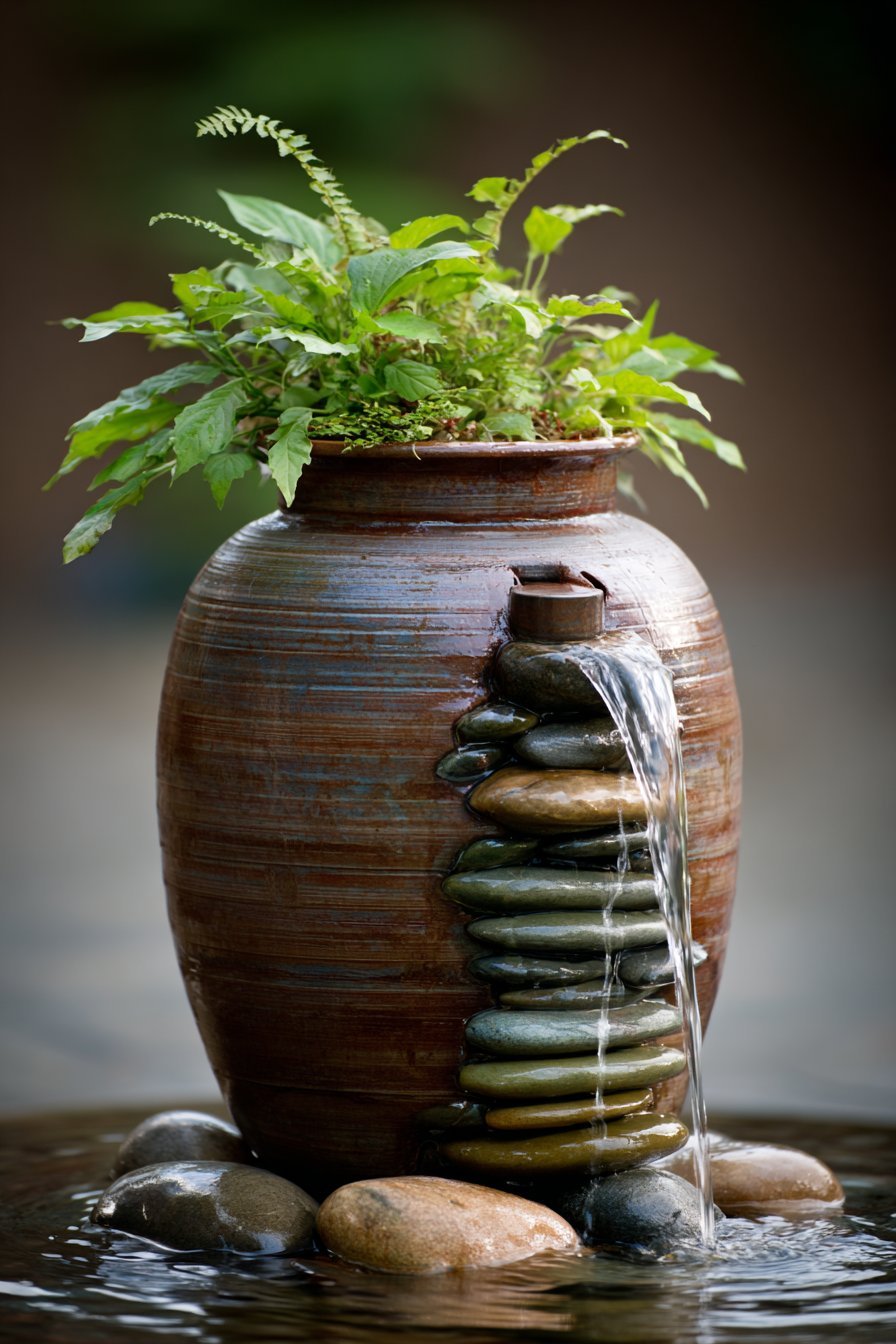
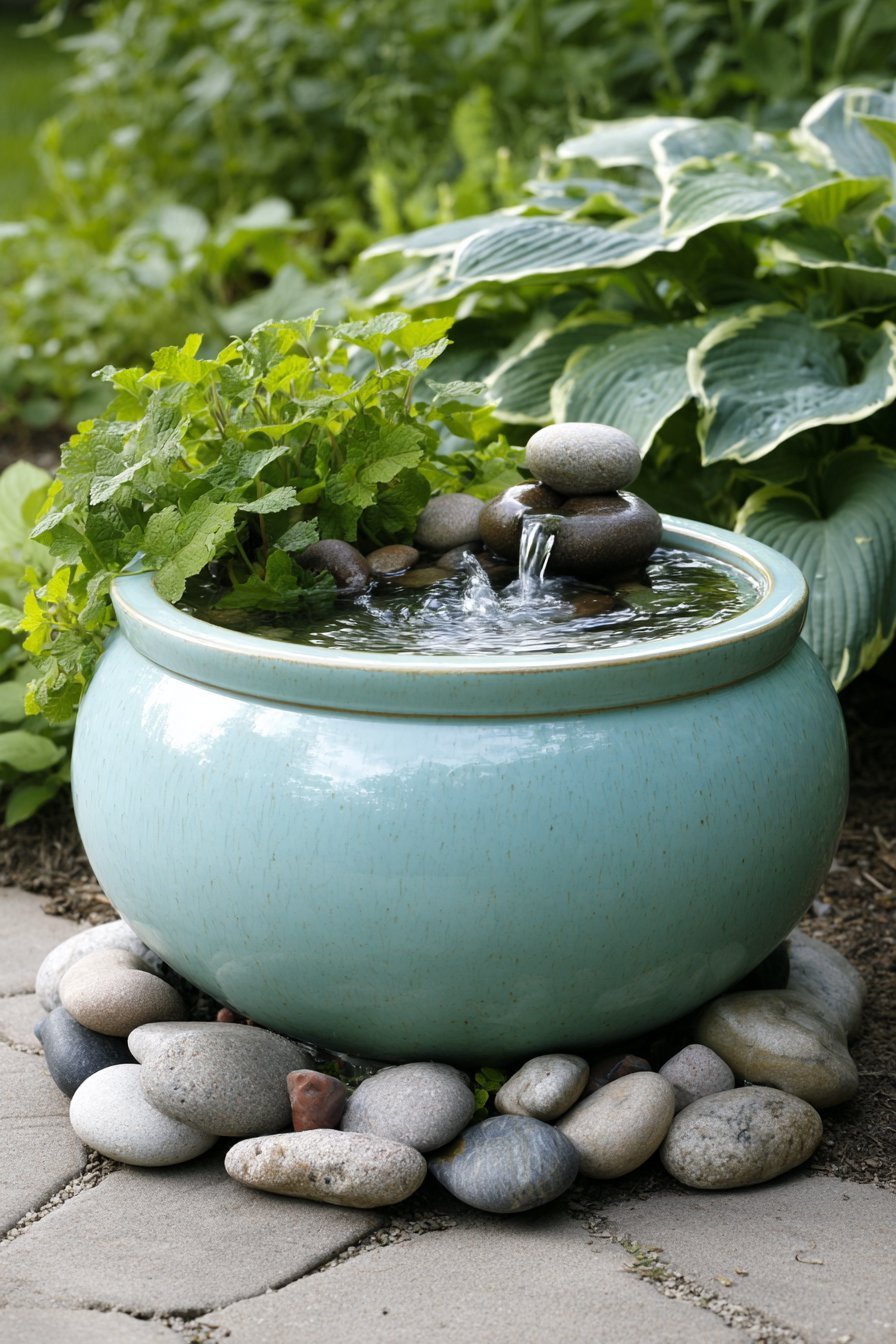
A large ceramic pot water feature with small recirculating pump creates soothing water sounds economically. Stacked river rocks conceal the mechanics while creating natural appearance. Moisture-loving plants like hostas and ferns thrive in the microclimate around the fountain. Larger landscape rocks create natural edging that ties the feature into surrounding plantings.
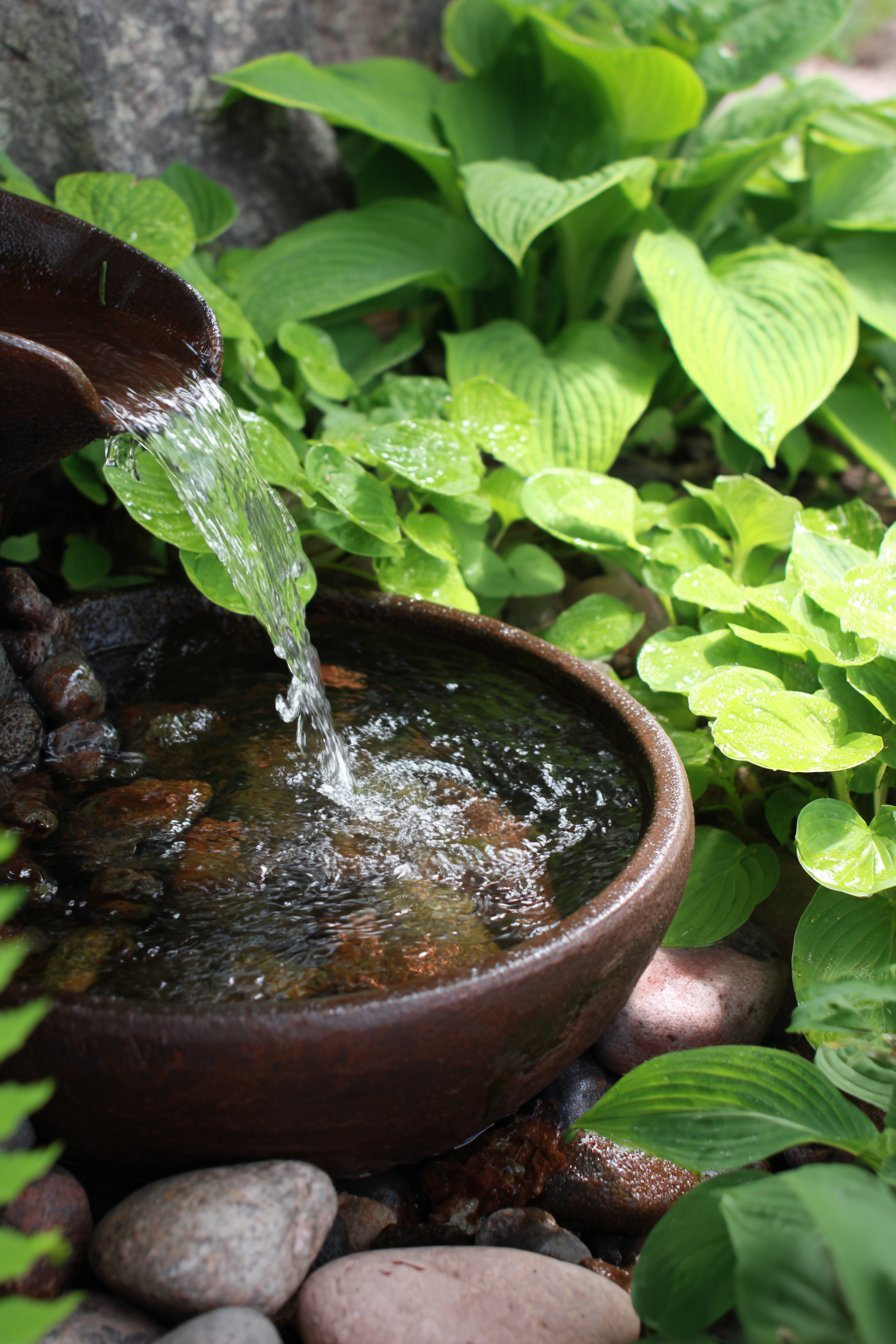
Overcast daylight provides even illumination highlighting water movement and plant textures. The gentle water sound masks neighborhood noise and attracts beneficial wildlife. The container fountain requires minimal space compared to in-ground water features. The recirculating system conserves water while providing constant movement and sound.
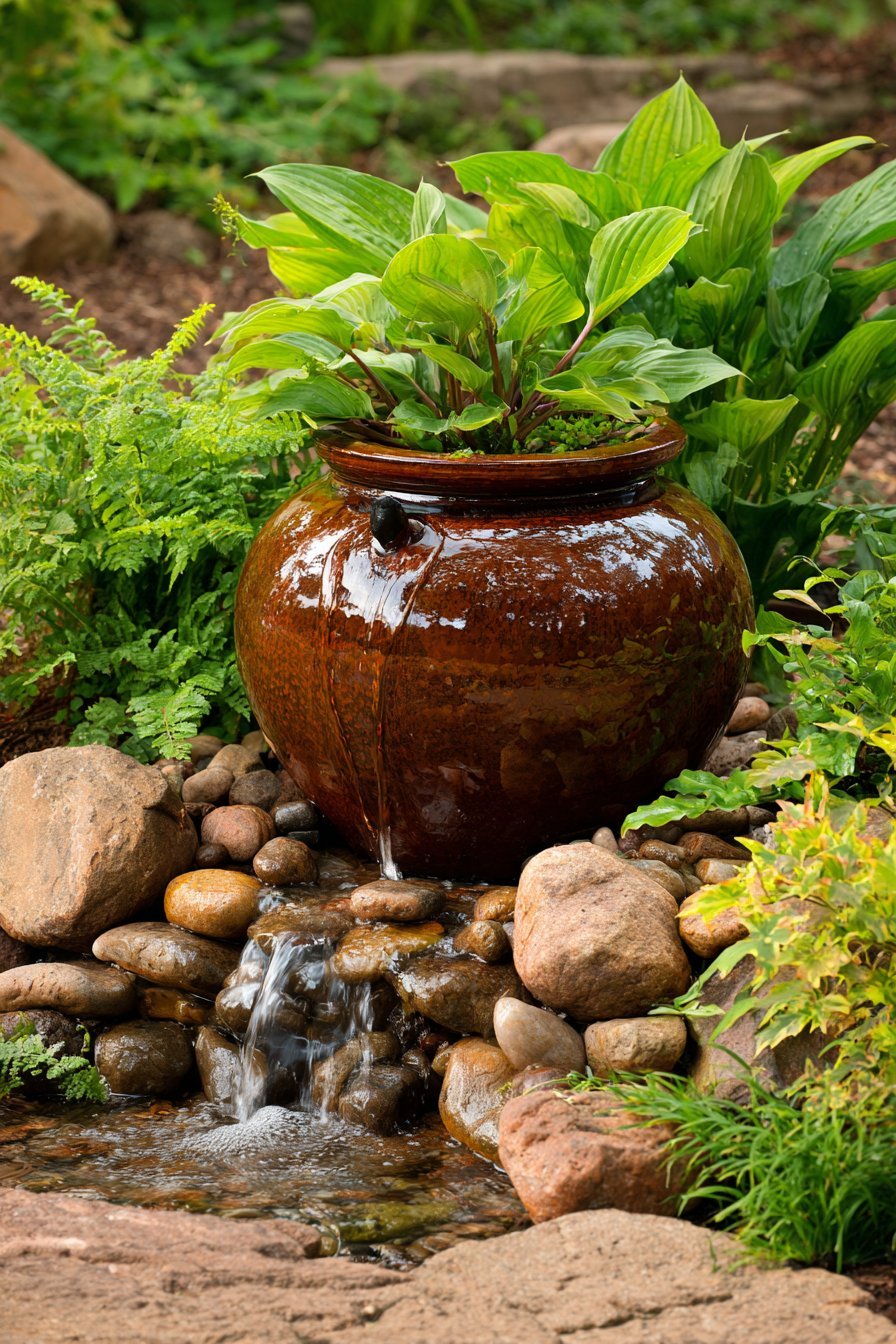
This water feature approach suits renters and budget-conscious homeowners equally. The self-contained design allows for relocation as landscaping evolves. Moisture-loving plants benefit from increased humidity around the fountain. The natural rock materials blend seamlessly with garden aesthetics.
Key Design Tips:
- Select frost-proof ceramic pot for year-round outdoor use
- Choose submersible pump sized appropriately for container volume
- Stack rocks to hide pump while allowing water circulation
- Plant shade-tolerant species if fountain located under trees
- Top off water weekly to maintain proper pump operation
- Winterize by draining completely and storing pump indoors
9. Vertical Pallet Garden Tool Storage
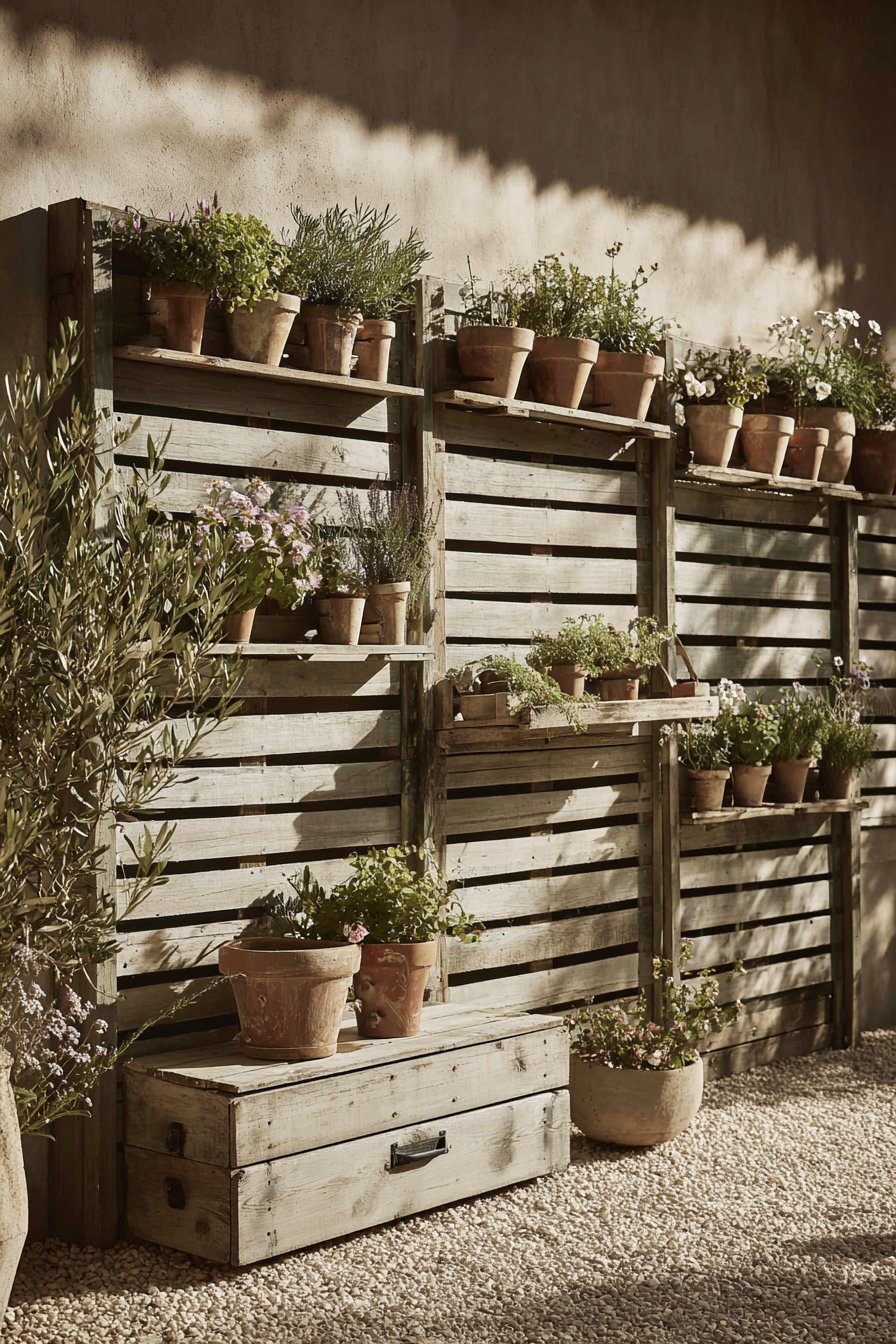
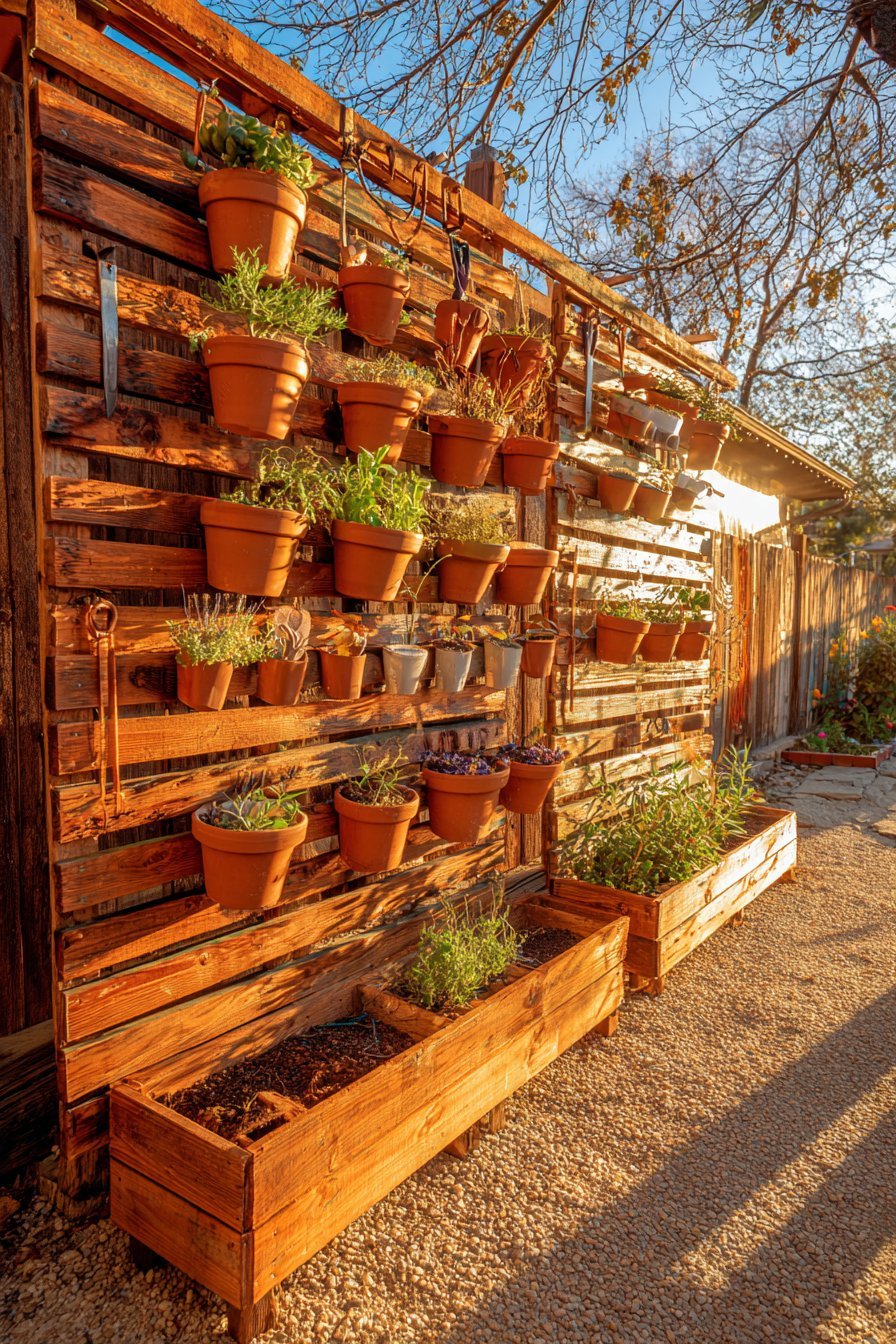
A repurposed shipping pallet creates vertical garden storage that displays plants while concealing tools. Wooden slats hold terra cotta pots at various heights filled with herbs and flowers. Below, a simple wooden box with hinged lid stores garden supplies. The structure painted in weathered grey complements gravel surface areas. Afternoon light creates clear shadows defining the three-dimensional structure.
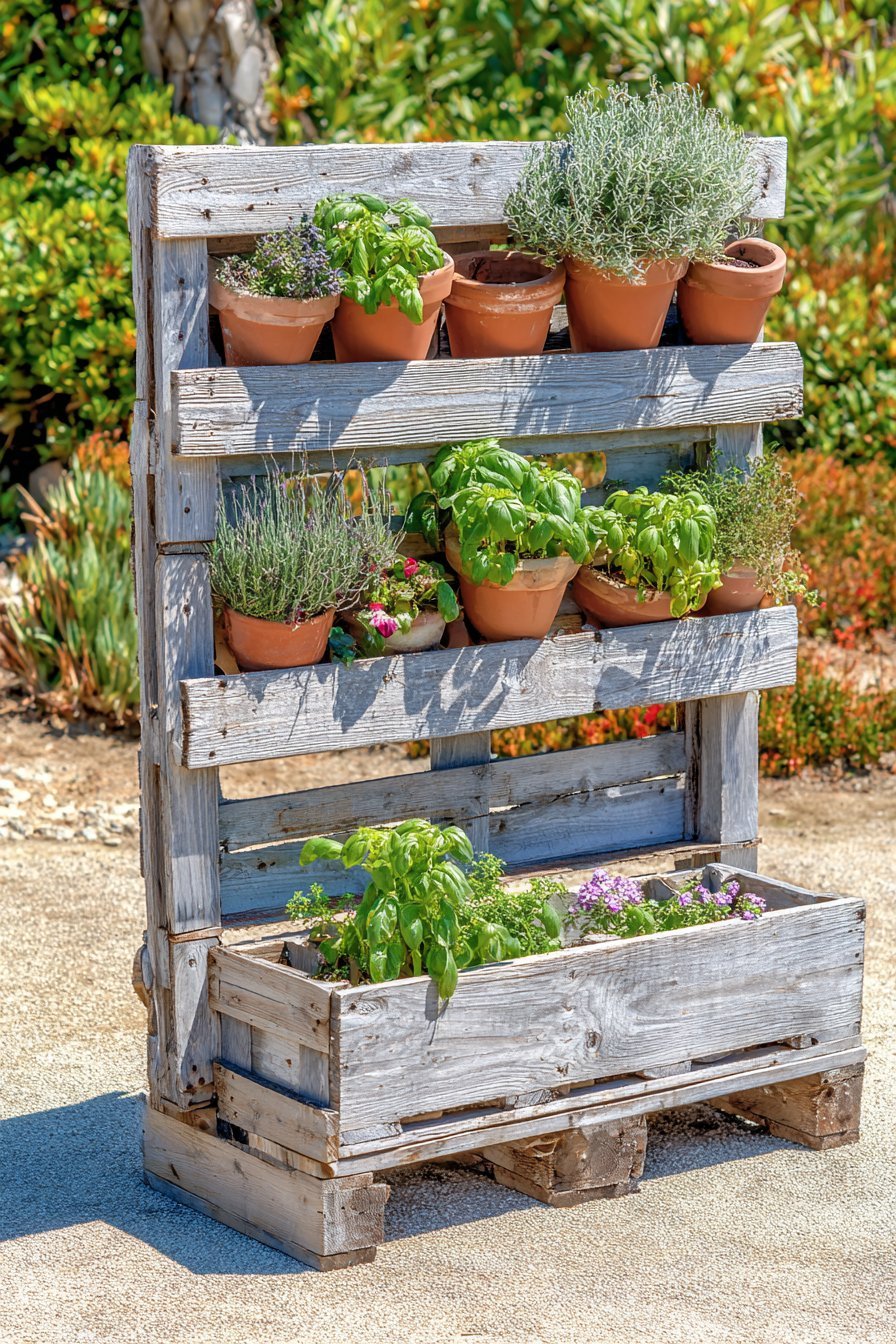
The dual-purpose design maximizes limited space efficiently. Vertical growing increases planting capacity without expanding footprint. Tool storage keeps supplies organized and protected from weather. The weathered paint finish adds intentional character rather than appearing unfinished.
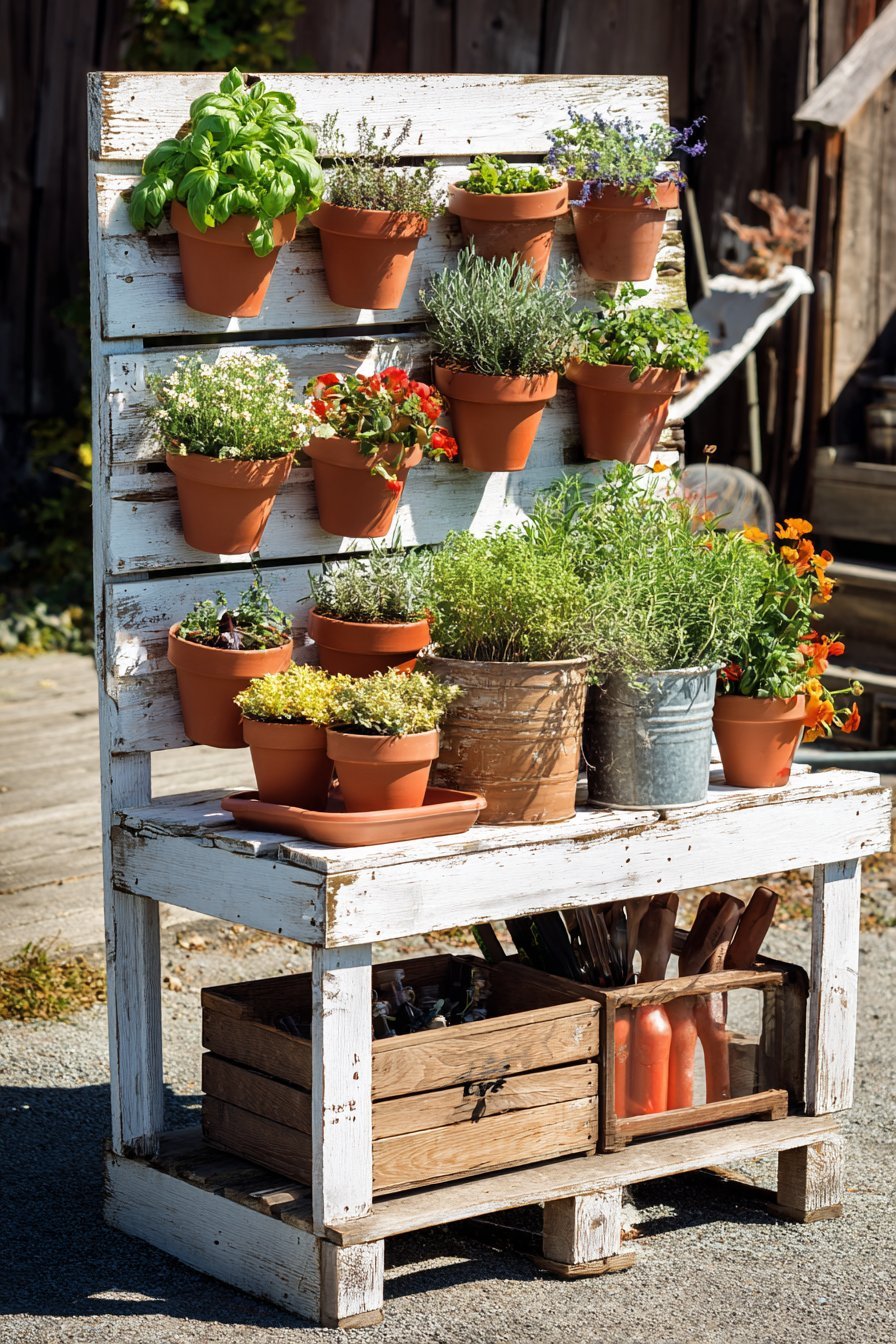
This organizational solution transforms purely functional storage into decorative landscape element. The vertical orientation suits narrow spaces alongside fences or buildings. Herbs planted at eye level facilitate easy harvesting. The concealed storage maintains tidy appearance while keeping supplies accessible.
Key Design Tips:
- Secure pallet firmly to wall or fence for stability
- Drill drainage holes in pot holders to prevent water accumulation
- Paint or seal wood before outdoor exposure for longevity
- Choose herbs that cascade for added visual interest
- Size storage box to fit commonly used tools and supplies
- Add simple latch to hinged lid for secure closure
10. Painted Concrete Paver Patio
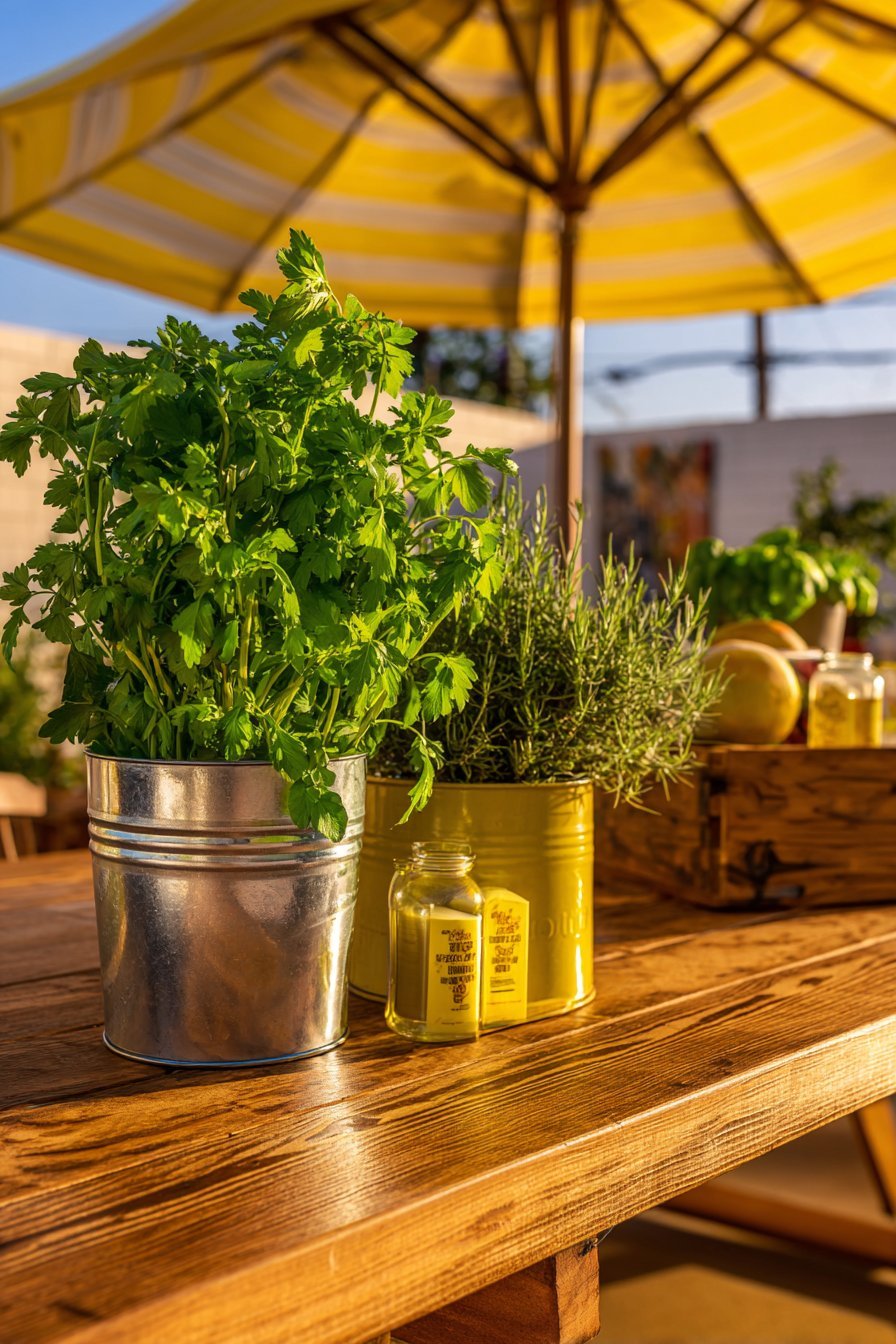
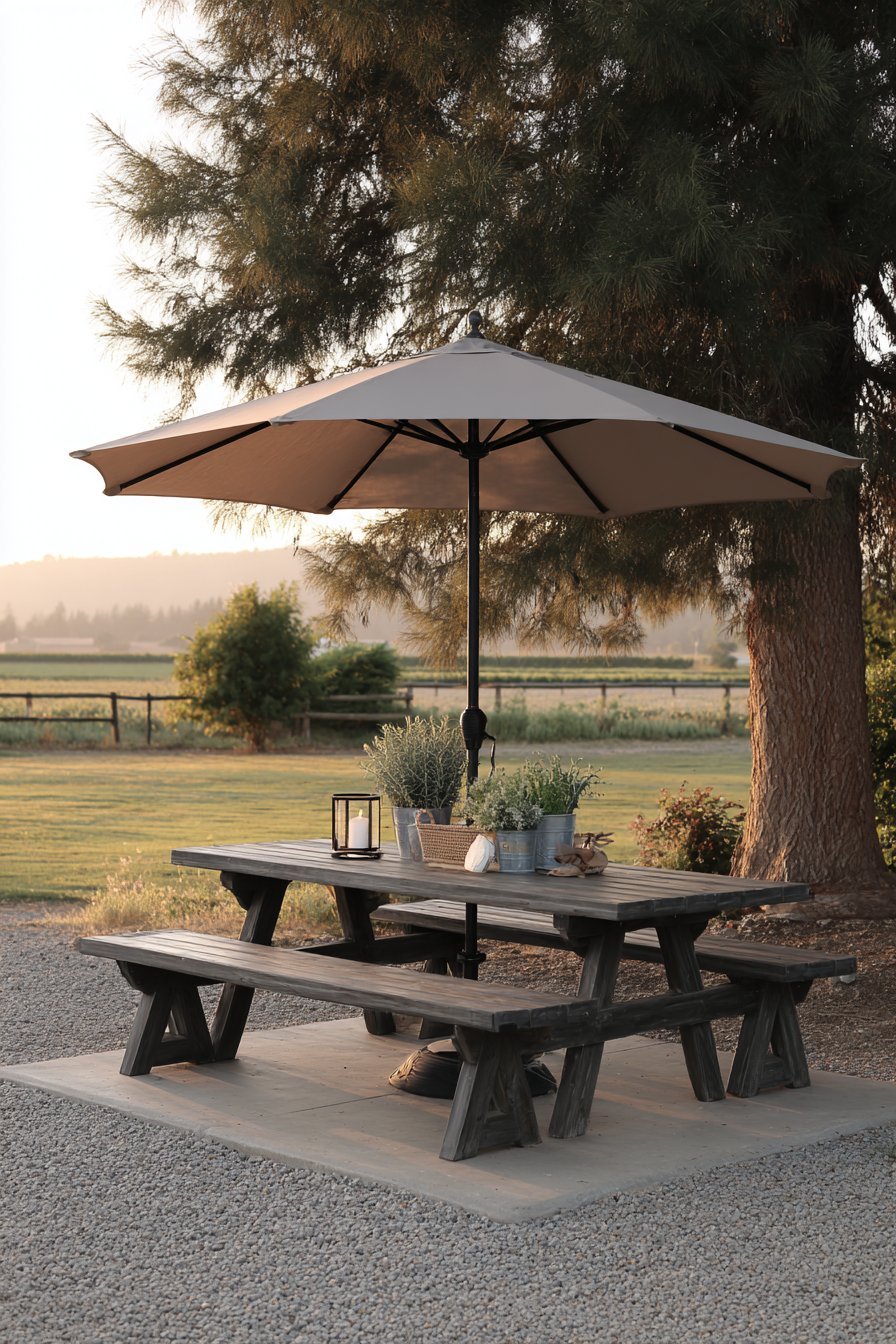
Painted concrete pavers create custom patio surfaces at substantial savings over traditional hardscaping. A market umbrella provides shade over a refinished wooden picnic table. Citronella candles in repurposed tin cans serve dual purposes for lighting and insect control. Potted herbs in mismatched containers create casual centerpieces. Golden hour light creates warm tones across the functional dining setup.
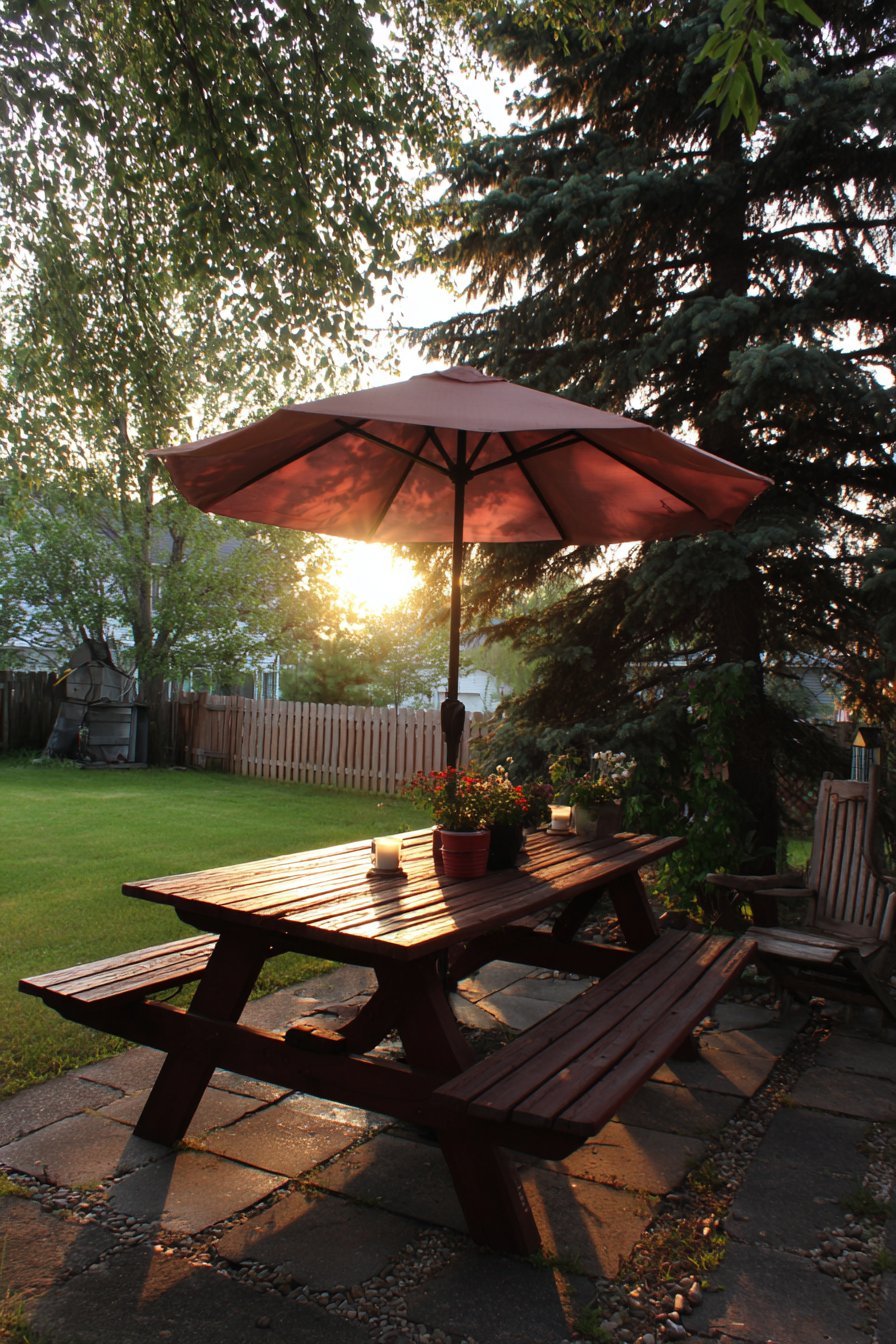
The painted pavers allow for creative pattern designs and color customization. Concrete provides stable, level surface for furniture placement. The refinished picnic table demonstrates how sanding and staining renew tired furniture. Umbrella shade makes the space comfortable during hot afternoon hours.
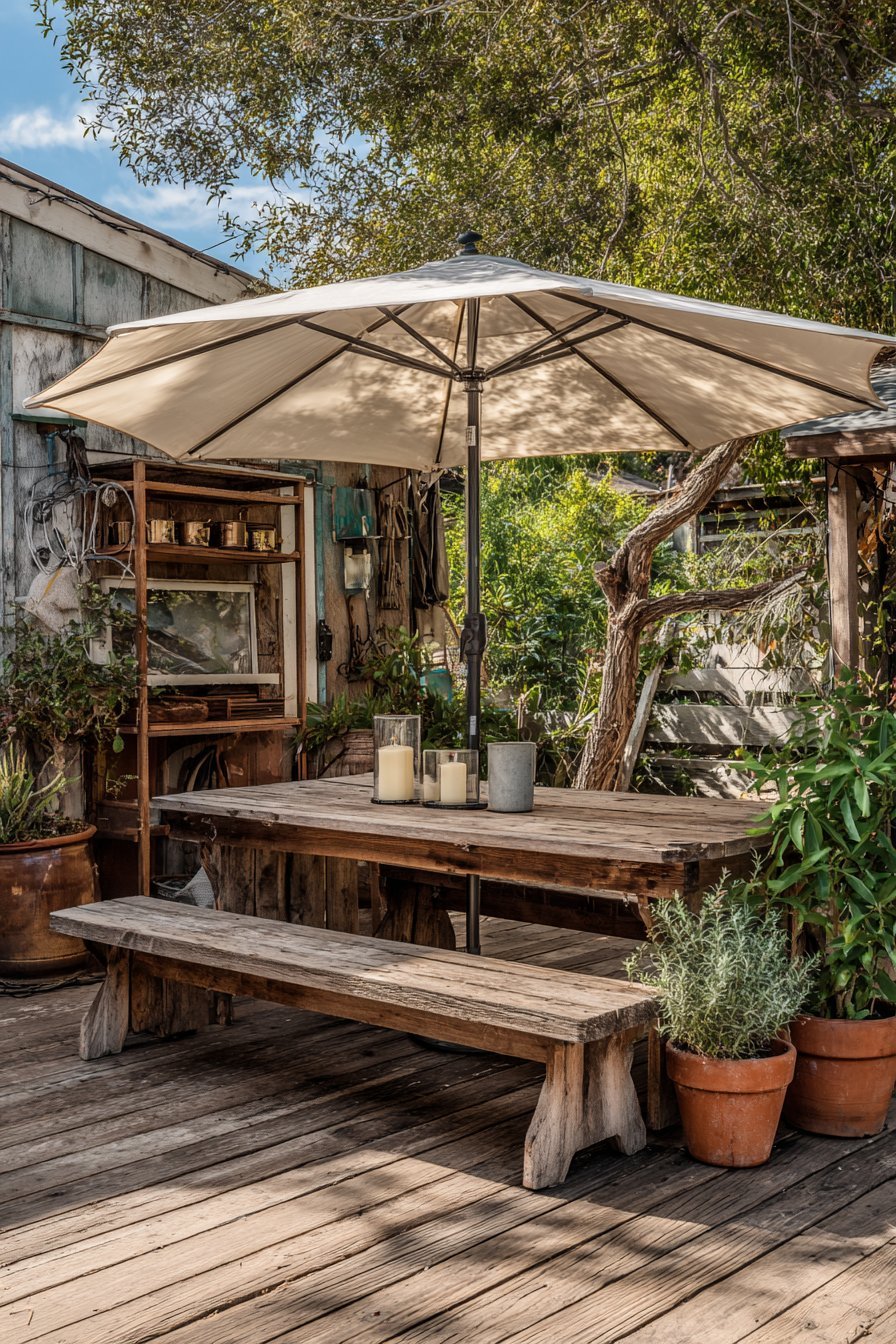
This dining upgrade proves that outdoor entertaining spaces require minimal investment. The combination of functional improvements creates cohesive outdoor room. Citronella candles provide natural pest control without chemicals. Fresh herbs double as decoration and cooking ingredients.
Key Design Tips:
- Level ground thoroughly before laying concrete pavers
- Use concrete porch paint formulated for foot traffic
- Seal painted pavers with clear concrete sealer for durability
- Sand picnic table smooth before applying outdoor wood stain
- Fill umbrella base with sand for stability in wind
- Group potted herbs with similar water requirements together
11. Perennial Division Border Garden
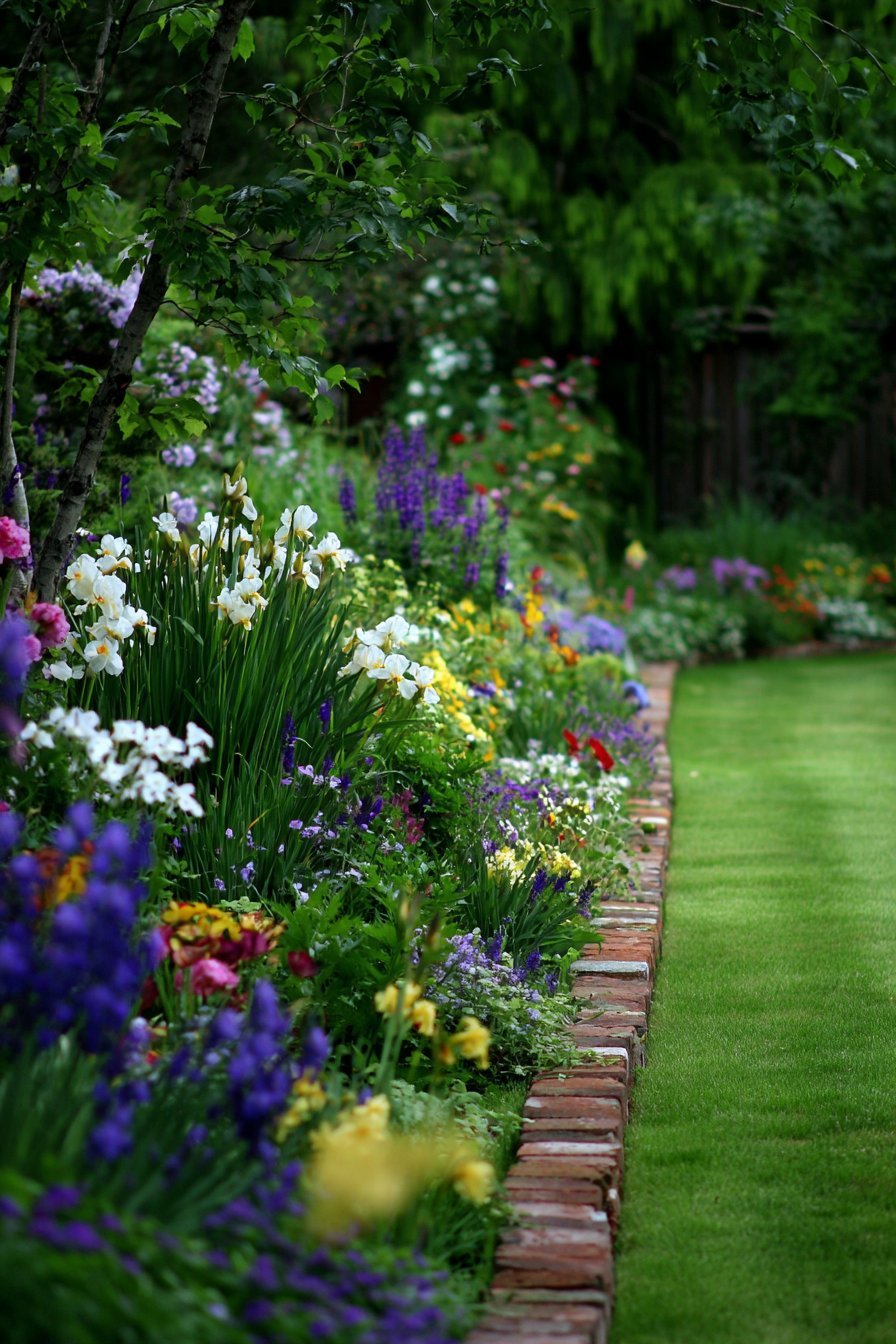
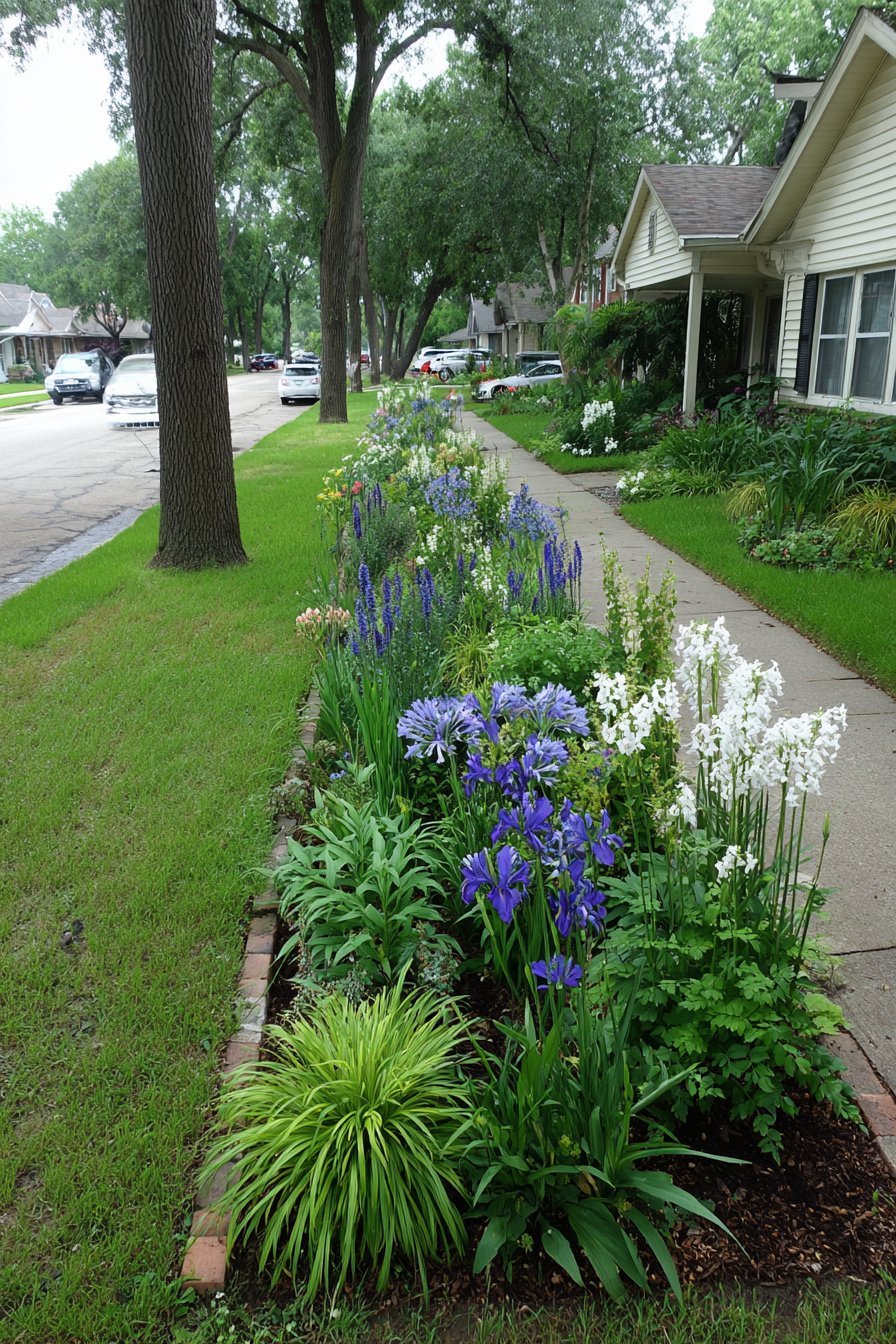
Pass-along plants and perennial divisions create colorful flower beds without nursery expenses. Salvaged brick edging defines planting areas against simple grass lawn. Various heights and textures create visual interest through strategic placement. Natural mulch suppresses weeds between plants while enriching soil. Late morning light showcases fully open flowers at their peak.
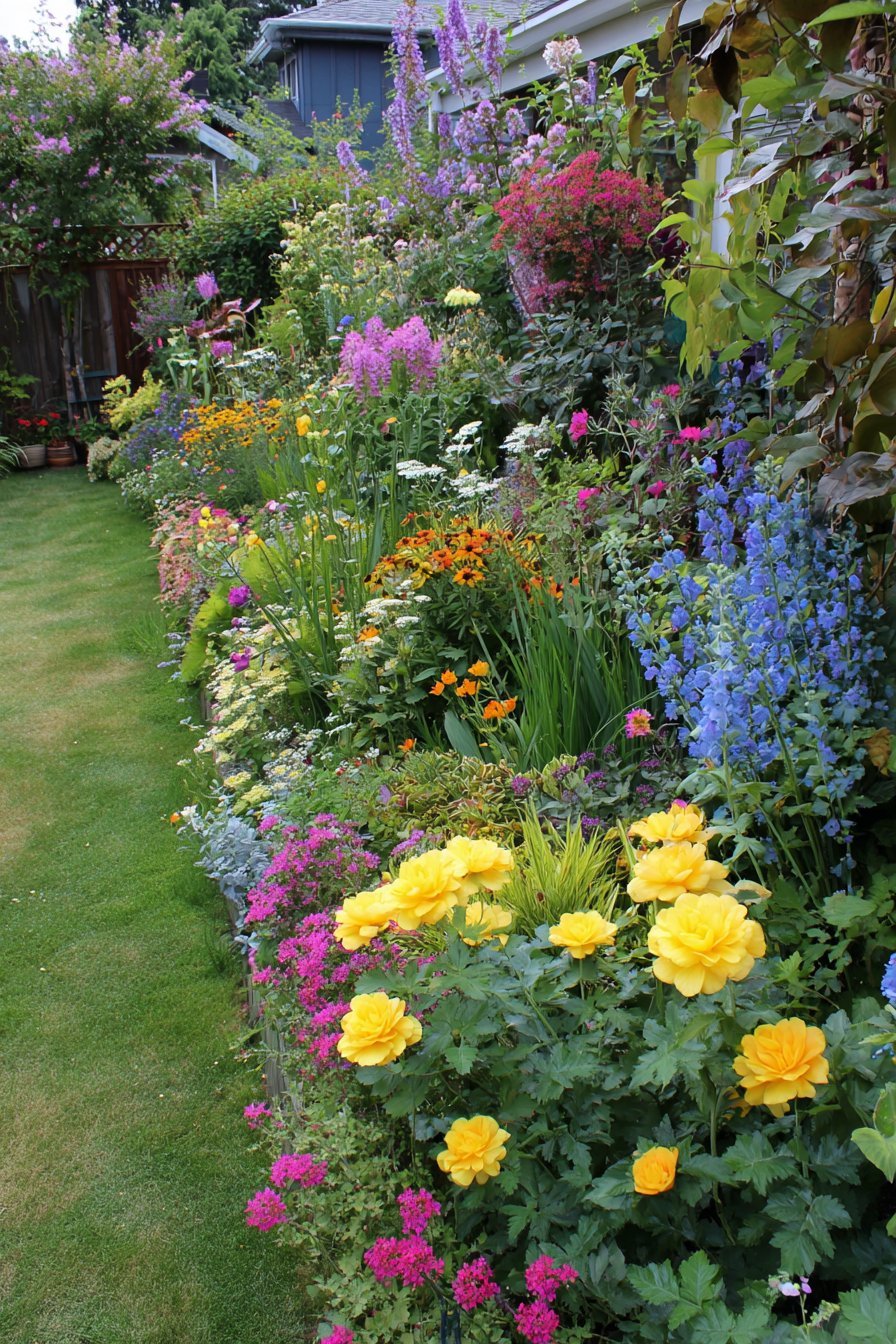
The established border demonstrates patience and plant knowledge over instant gratification. Perennial divisions from established plants cost nothing while expanding garden space. Brick edging provides clean definition without ongoing maintenance. The layered planting design creates long seasonal interest through sequential blooms.

This border approach builds gardens gradually while maintaining low costs. Plant swaps and divisions from neighbors create diverse collections. Natural mulch breaks down to improve soil structure continuously. The varied heights create depth and visual rhythm along borders.
Key Design Tips:
- Divide perennials in early spring or fall for best establishment
- Arrange plants with tallest at back graduating to shortest in front
- Space divisions according to mature size to avoid overcrowding
- Use salvaged bricks set on edge for clean border definition
- Mulch two to three inches deep to suppress weeds effectively
- Group plants with similar sun and water needs together
12. Reclaimed Wood Mud Kitchen

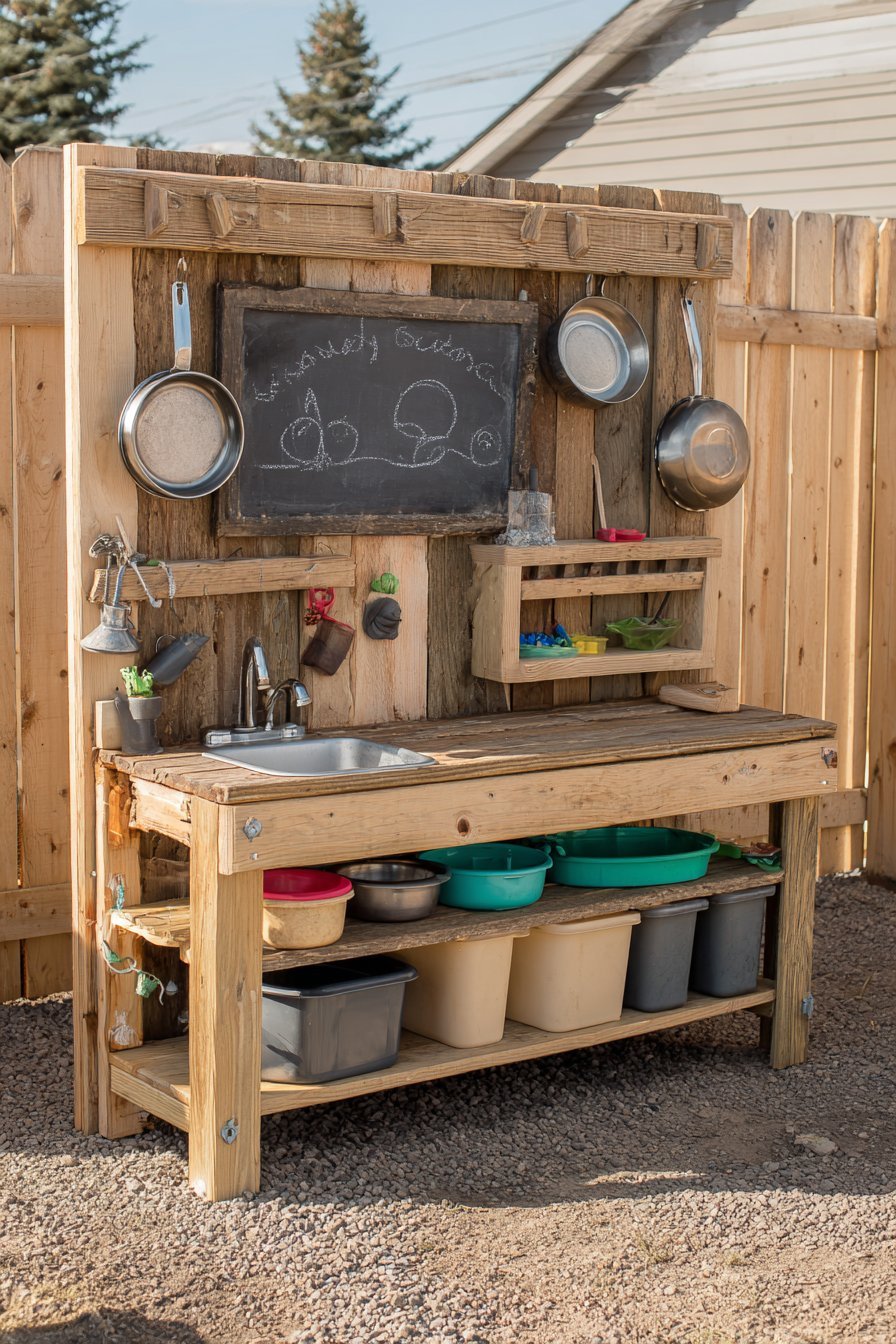
A DIY mud kitchen constructed from reclaimed wood and salvaged sink basin creates imaginative play space. Old pots and pans hang from hooks on the structure. Chalkboard paint on back fence sections creates outdoor art areas. Sand and water play bins made from large plastic storage containers sit on pea gravel. Natural daylight provides even illumination across creative play zones.
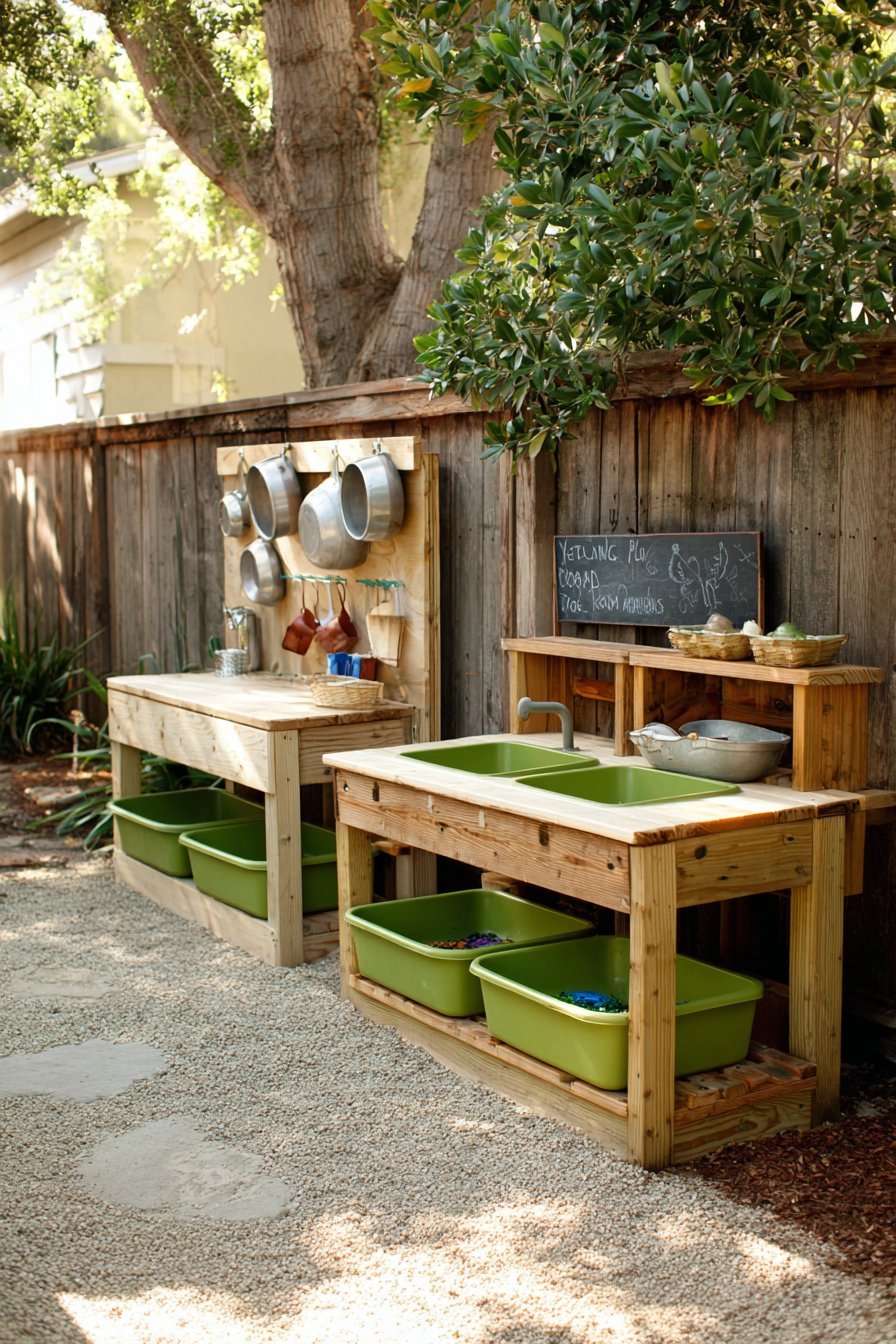
The mud kitchen encourages sensory play and creativity using natural materials. Reclaimed wood construction demonstrates sustainable building practices. The chalkboard area allows for artistic expression that washes away easily. Sand and water bins contain messy play in designated areas.

This play space shows that children value open-ended creative opportunities. The outdoor location keeps messy play from migrating indoors. Salvaged materials add character while reducing construction costs. Multiple play elements accommodate different interests and ages simultaneously.
Key Design Tips:
- Seal reclaimed wood with non-toxic finish safe for children
- Install salvaged sink at appropriate height for child use
- Mount chalkboard paint sections within child reach
- Set play bins on pea gravel for drainage and easy cleanup
- Provide variety of real kitchen items for realistic play
- Locate near outdoor water source for easy cleanup
13. Wood Chip Pathway System
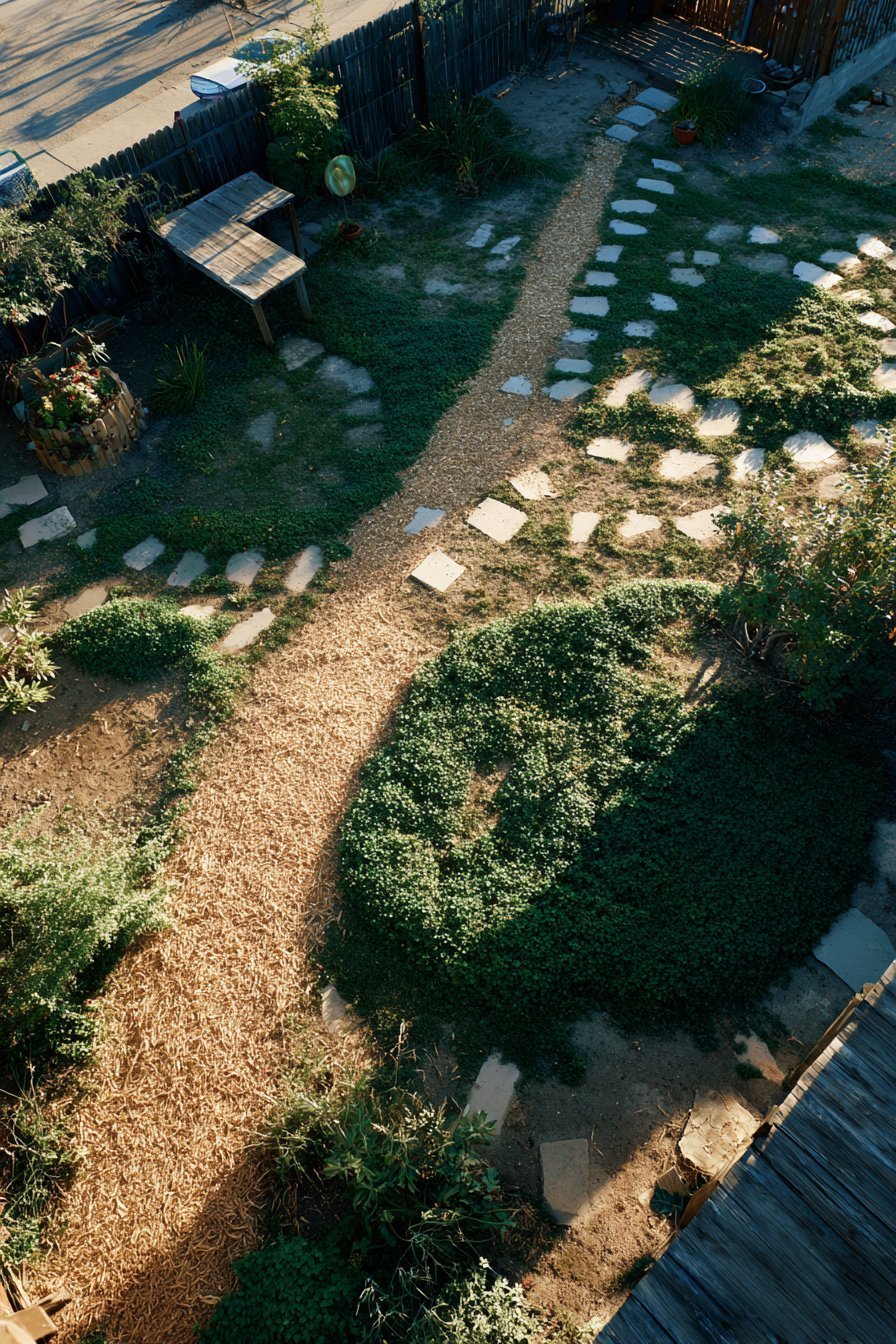
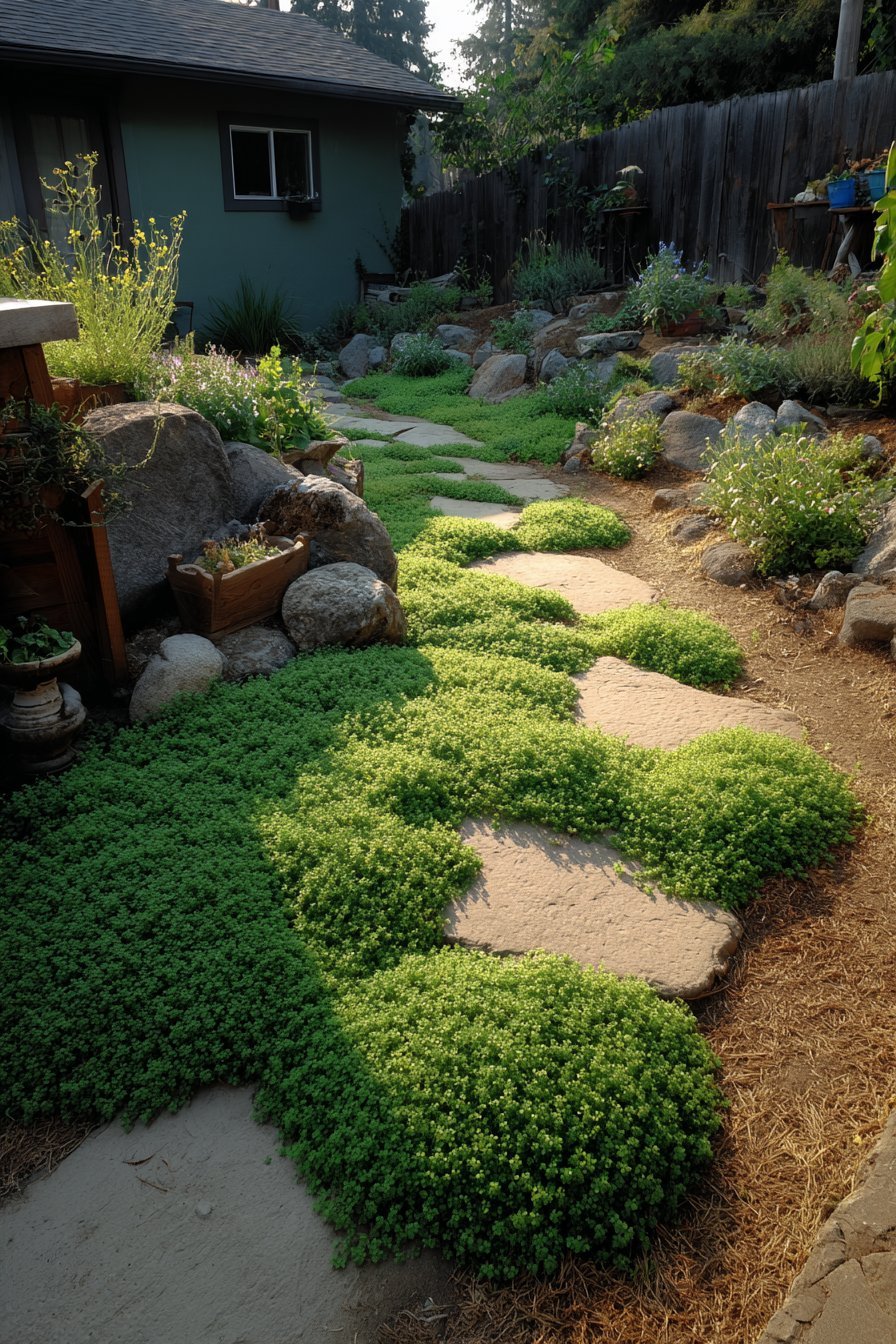
Wood chip mulch pathways connect different yard zones while reducing lawn maintenance areas. Hardy groundcover plants like creeping thyme and clover replace traditional grass. Large stepping stones from broken concrete provide focal walking areas. The natural material palette requires minimal maintenance and irrigation. Afternoon light clearly defines pathways and planted areas.
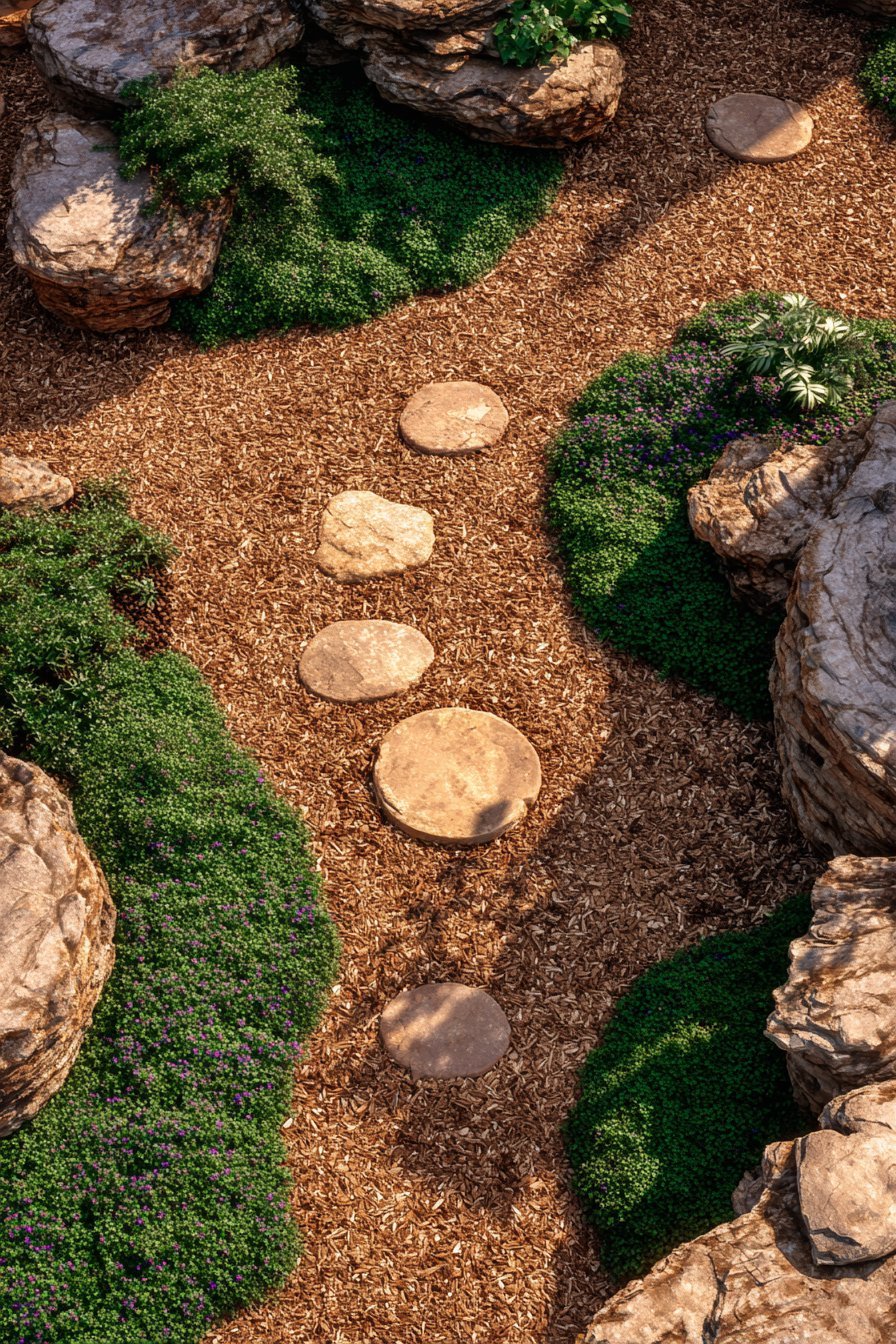
The pathway system creates intentional circulation through outdoor spaces. Wood chips provide soft walking surface that drains well. Groundcover alternatives to grass reduce mowing time and water consumption. Repurposed concrete demonstrates creative reuse of demolition materials.
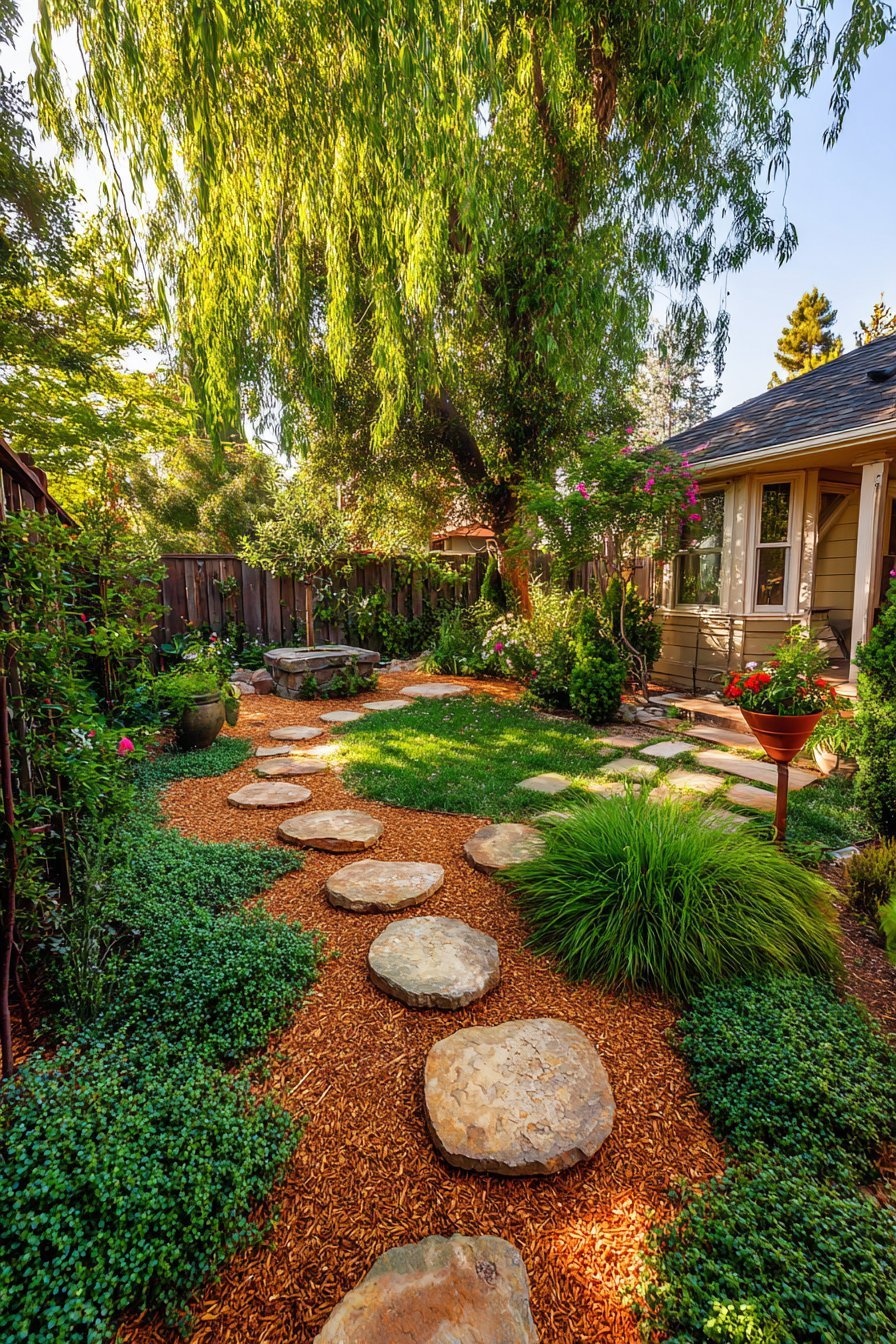
This landscaping approach reduces ongoing maintenance while improving functionality. The defined pathways prevent wear patterns across grass areas. Groundcovers require no mowing and minimal water once established. The aerial view reveals thoughtful planning and practical layout.
Key Design Tips:
- Apply wood chips four inches deep for weed suppression
- Edge pathways with buried boards or stones for definition
- Choose groundcovers suited to local climate and sun exposure
- Break concrete carefully to create flat stepping stone surfaces
- Space stepping stones based on comfortable stride length
- Refresh wood chip pathways annually as material decomposes
14. Shade Garden Under Mature Trees
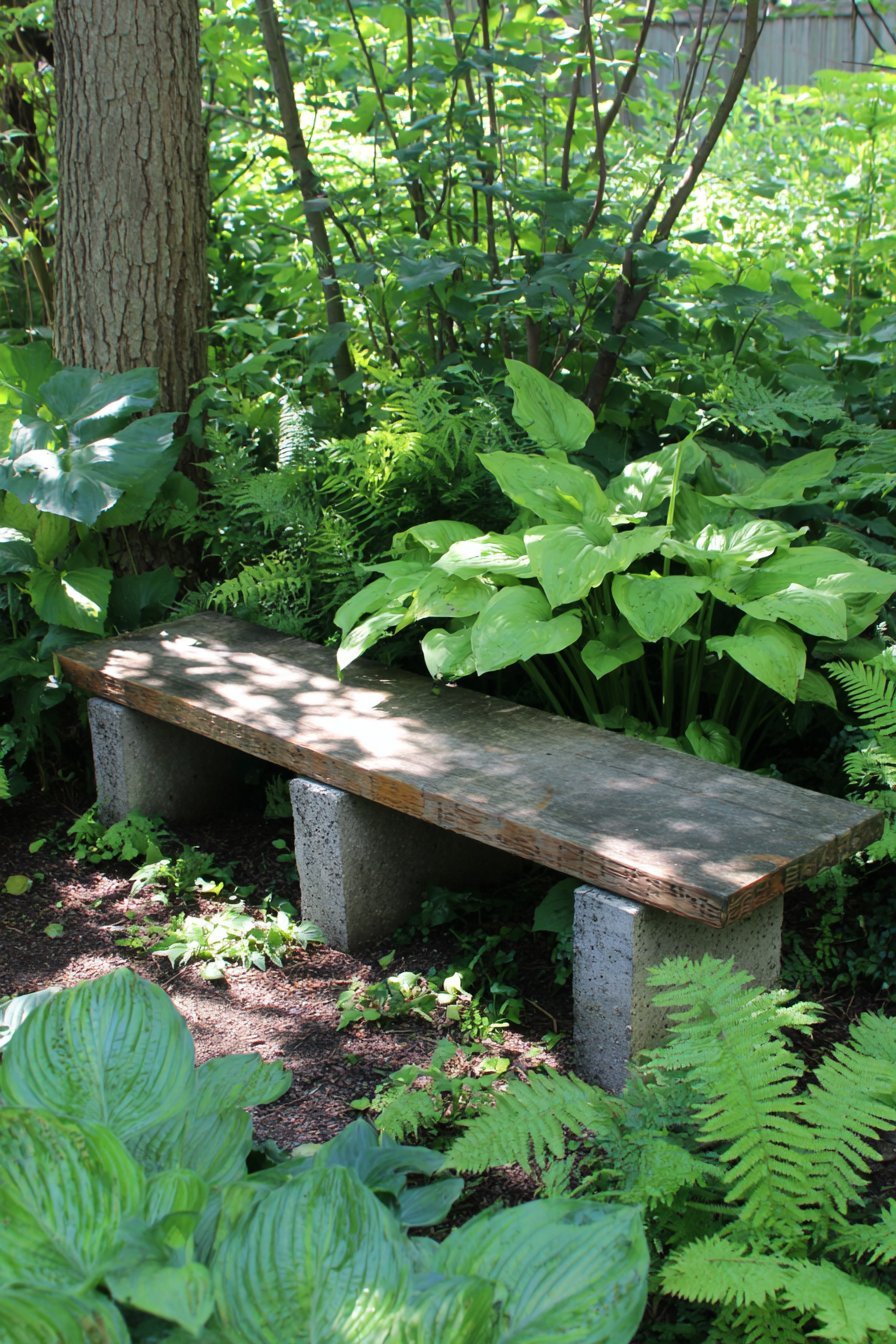
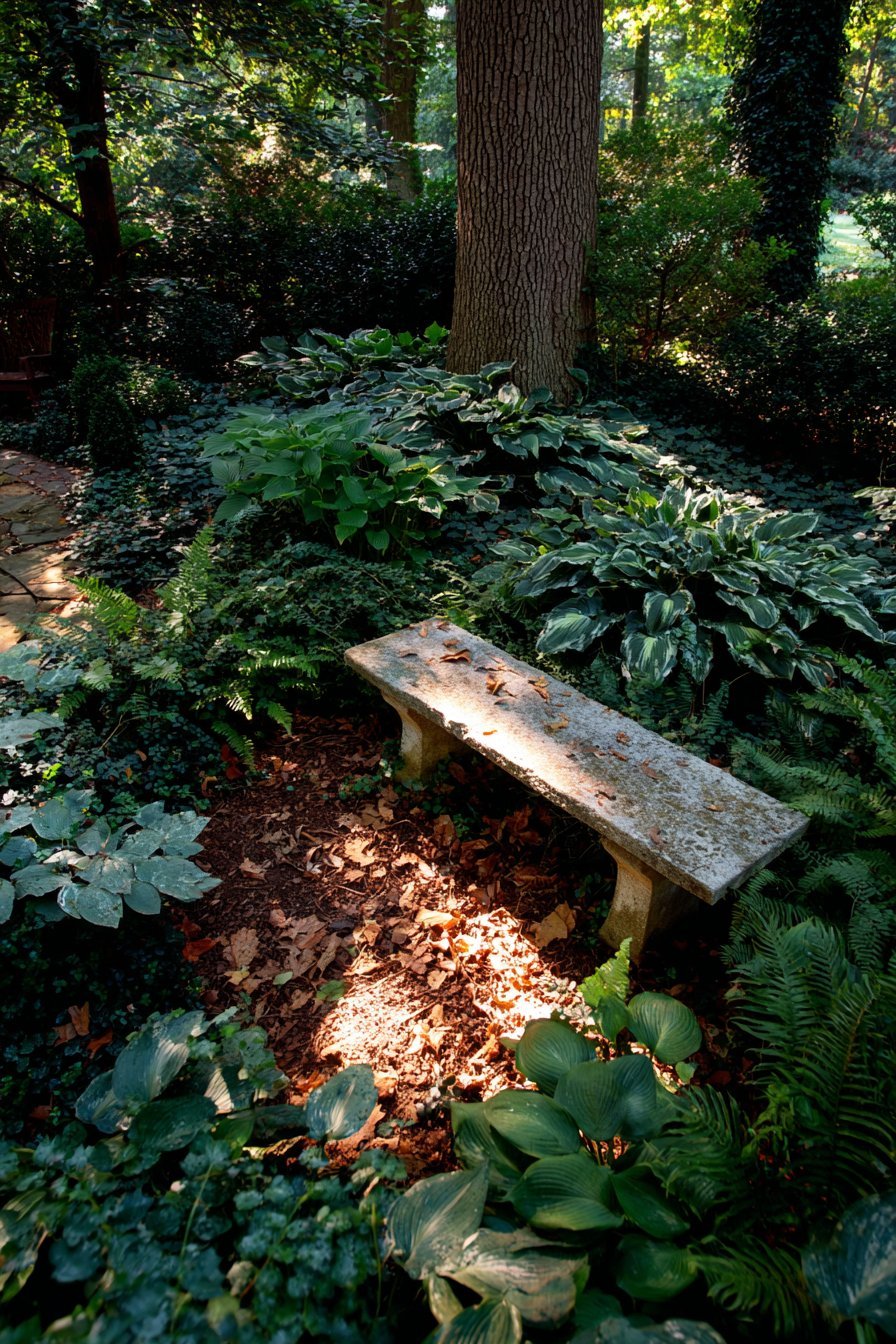
Shade-tolerant plants propagated from divisions flourish beneath existing mature trees. Hostas, ferns, and pachysandra create layers of foliage texture and interest. A simple bench made from reclaimed wooden plank and concrete blocks provides seating. Natural leaf litter left as mulch enriches soil while reducing maintenance. Dappled morning shade with filtered sunlight creates peaceful atmosphere.
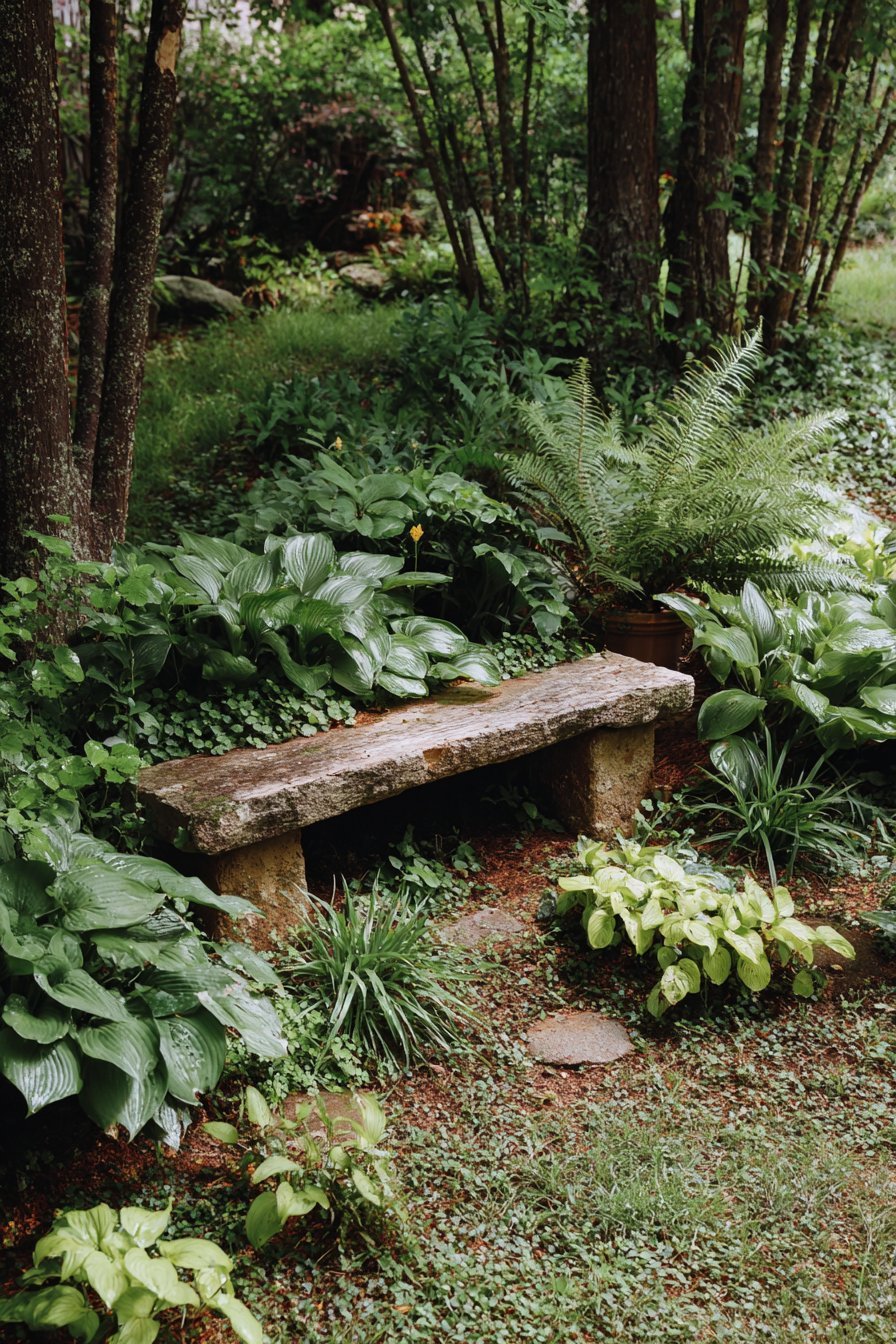
The woodland character develops naturally when working with existing trees. Shade plants thrive where grass struggles to grow successfully. The simple bench construction costs minimal money while providing contemplative seating. Leaf litter mimics forest floor conditions that shade plants prefer.

This garden approach transforms challenging shady areas into lush retreats. Plant divisions from established gardens eliminate purchasing costs. The layered foliage creates depth and visual richness. Reduced sunlight means less watering and slower weed growth.
Key Design Tips:
- Test soil under trees and amend with compost before planting
- Choose shade plants that tolerate tree root competition
- Divide shade perennials in spring for best establishment
- Build simple bench using weathered wood plank and stacked blocks
- Leave natural leaf litter as mulch rather than removing
- Water new divisions regularly first season until established
15. Three-Bin Pallet Composting Station
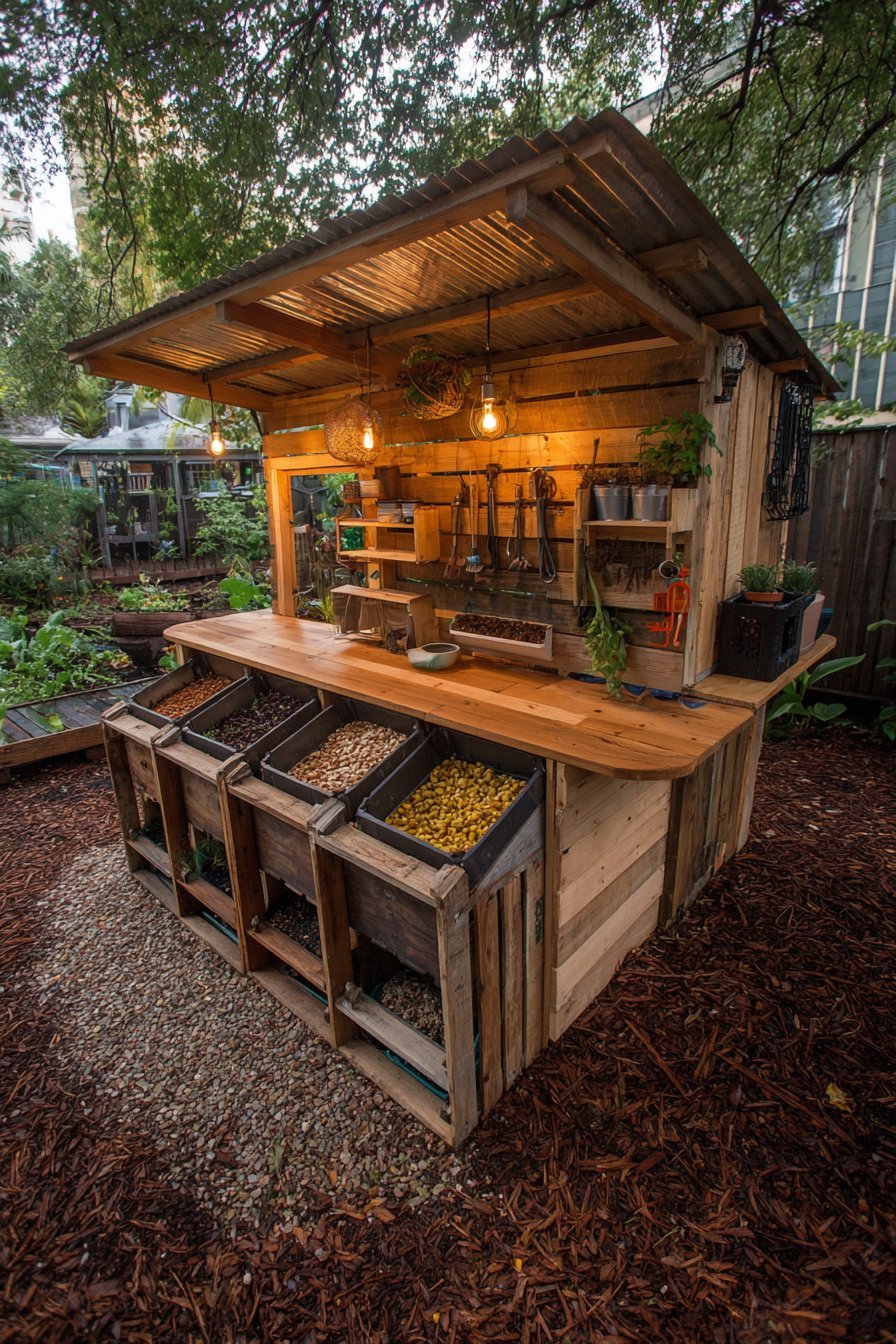
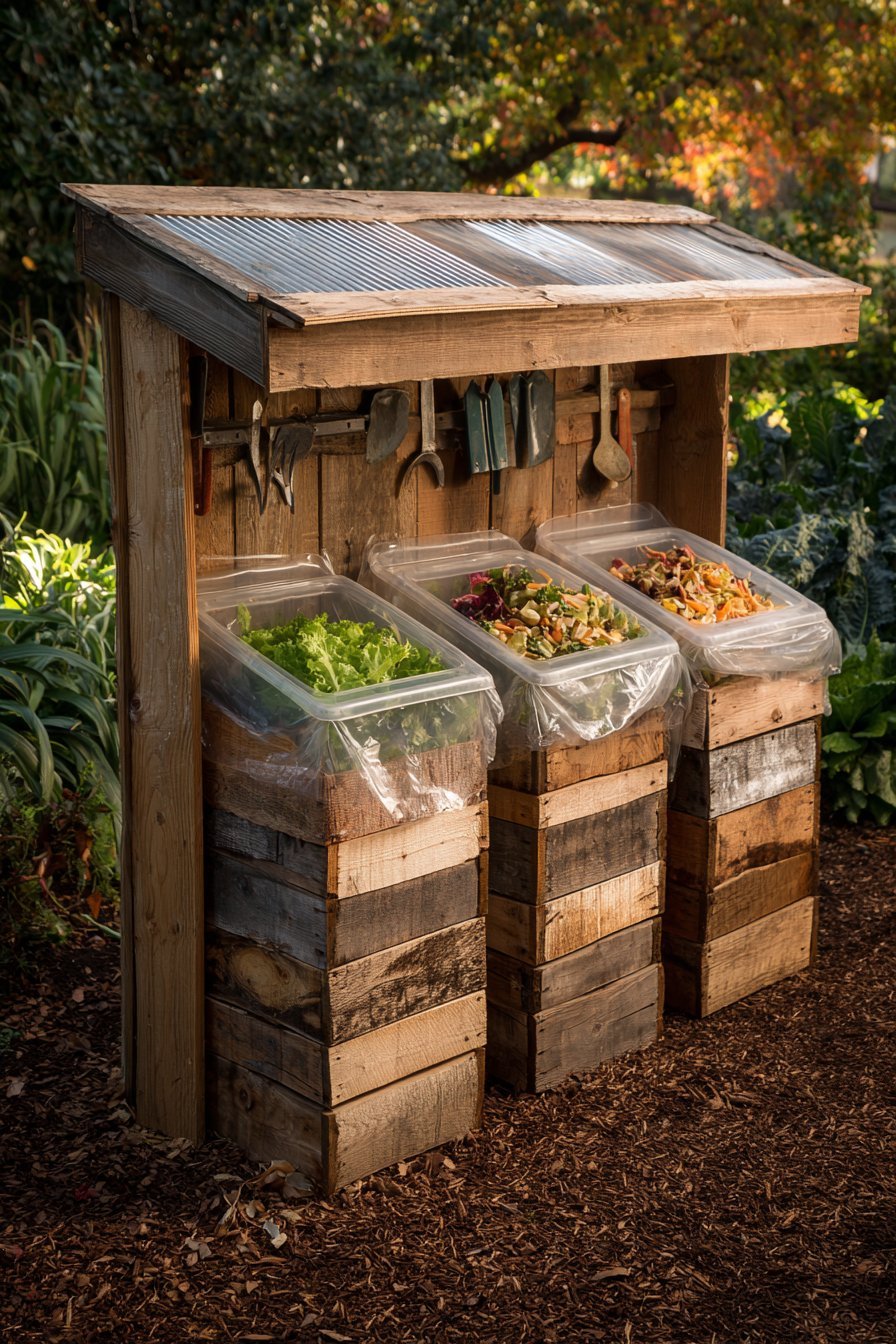
A composting system built from upright shipping pallets creates organized waste management. Three bins at different decomposition stages process kitchen and yard waste. Simple corrugated plastic roof keeps rain controlled while allowing airflow. Garden tools hang on side structure for convenient access. Surrounding area mulched to reduce mud and maintain tidiness.
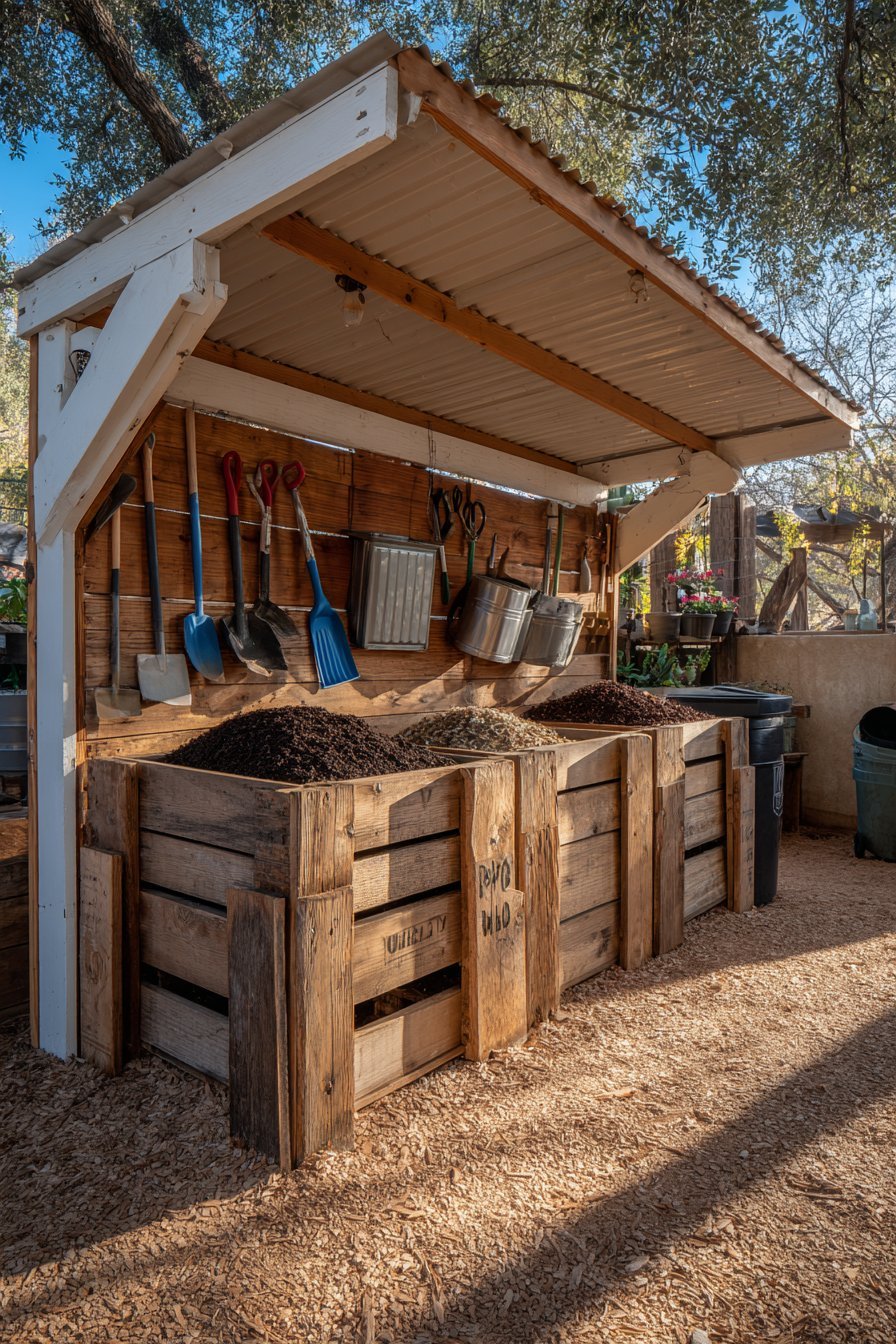
The functional composting setup demonstrates commitment to sustainable gardening. Three-bin system allows for turning compost between stages efficiently. Pallet construction costs minimal money while providing adequate capacity. The roof protection accelerates decomposition by controlling moisture levels.
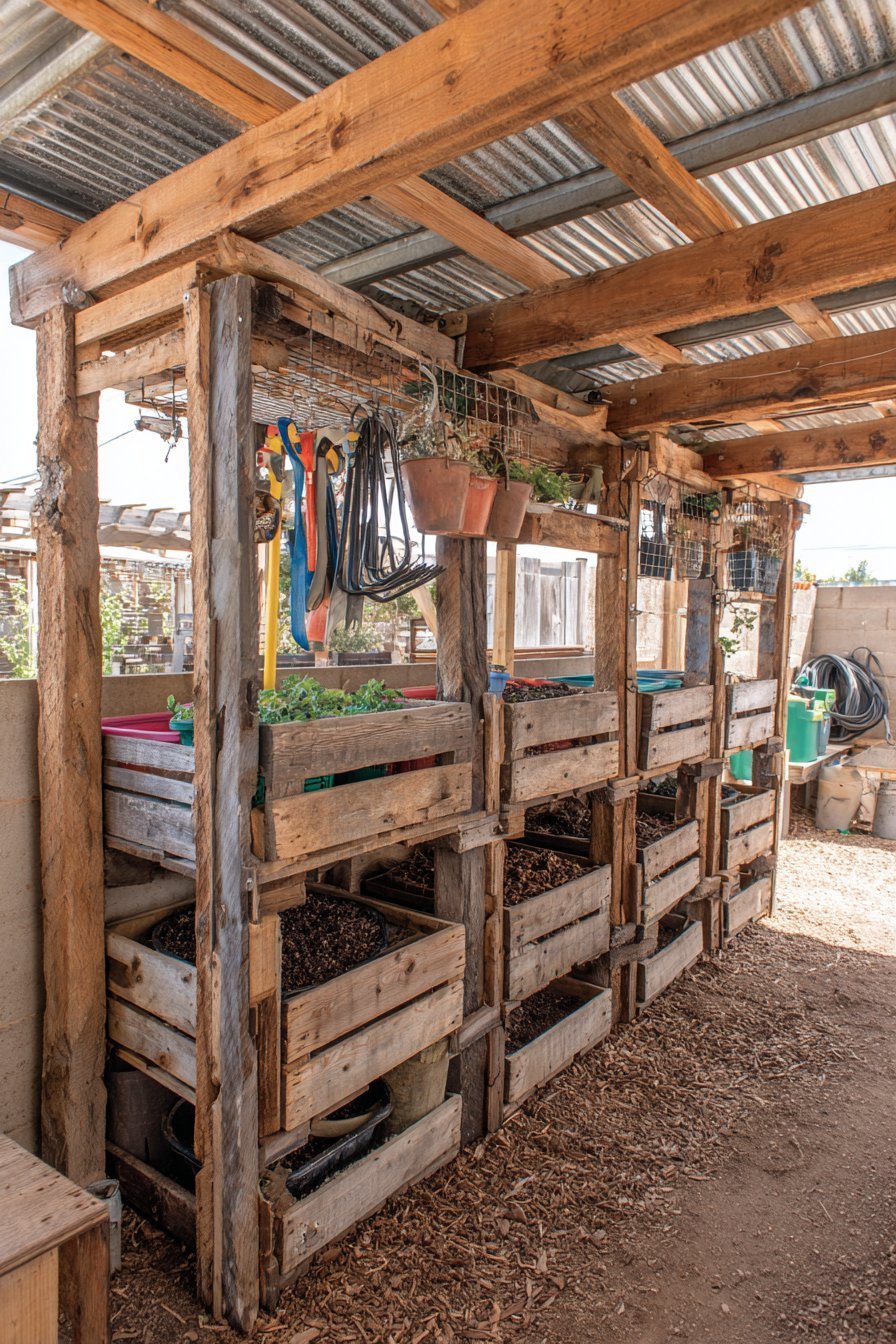
This composting station transforms waste into valuable soil amendment. The visible progression between bins makes process transparent and manageable. Tool storage integration keeps frequently used items accessible. Weathered wood develops character that suits garden settings naturally.
Key Design Tips:
- Secure pallets firmly to each other and anchor to ground
- Leave front pallet slats removable for easy bin access
- Attach corrugated roof with slight slope for water runoff
- Locate bins in partial shade to maintain consistent temperature
- Start compost pile with brown and green materials layered
- Turn compost between bins monthly for faster decomposition
16. Native Wildflower Pollinator Garden
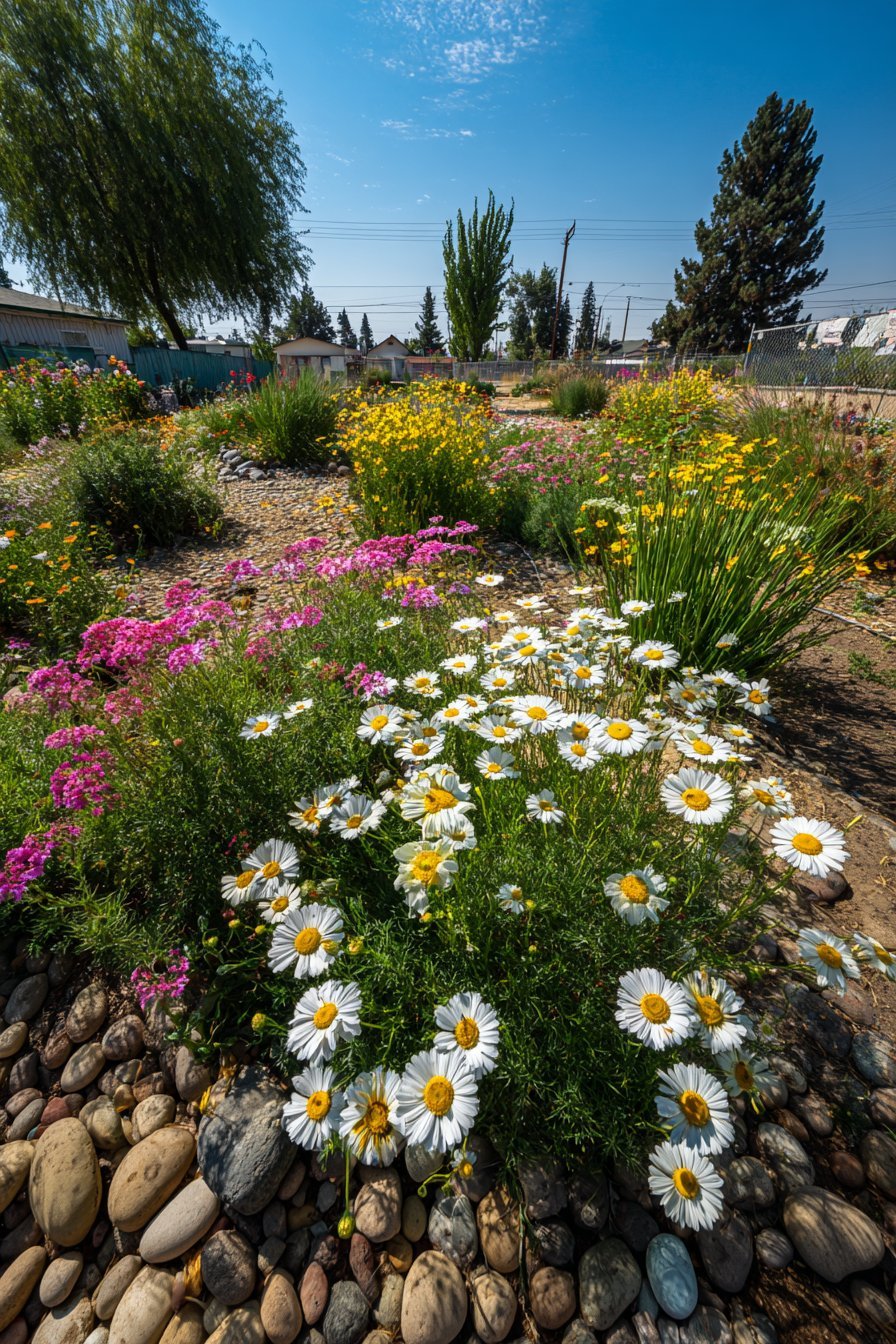
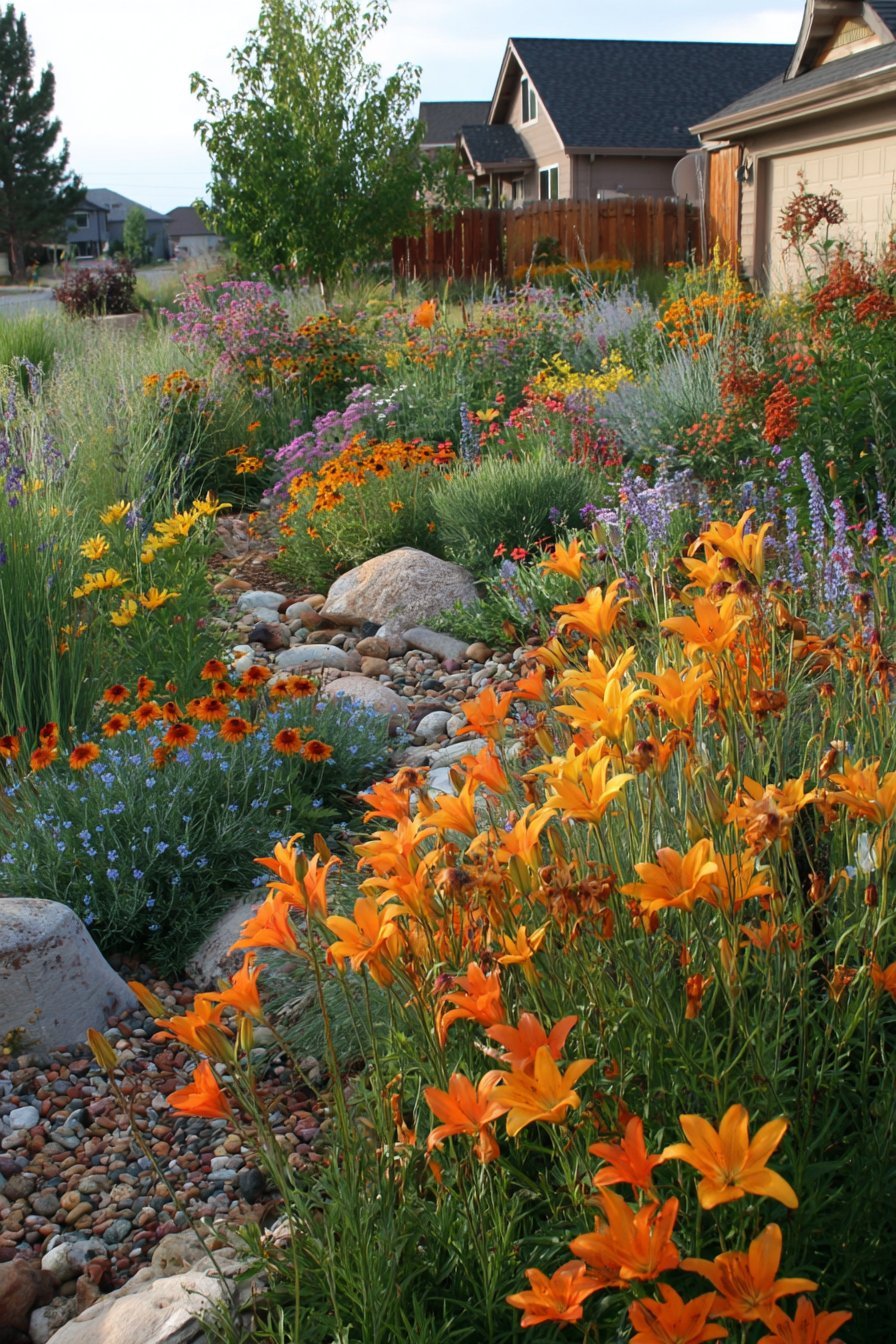
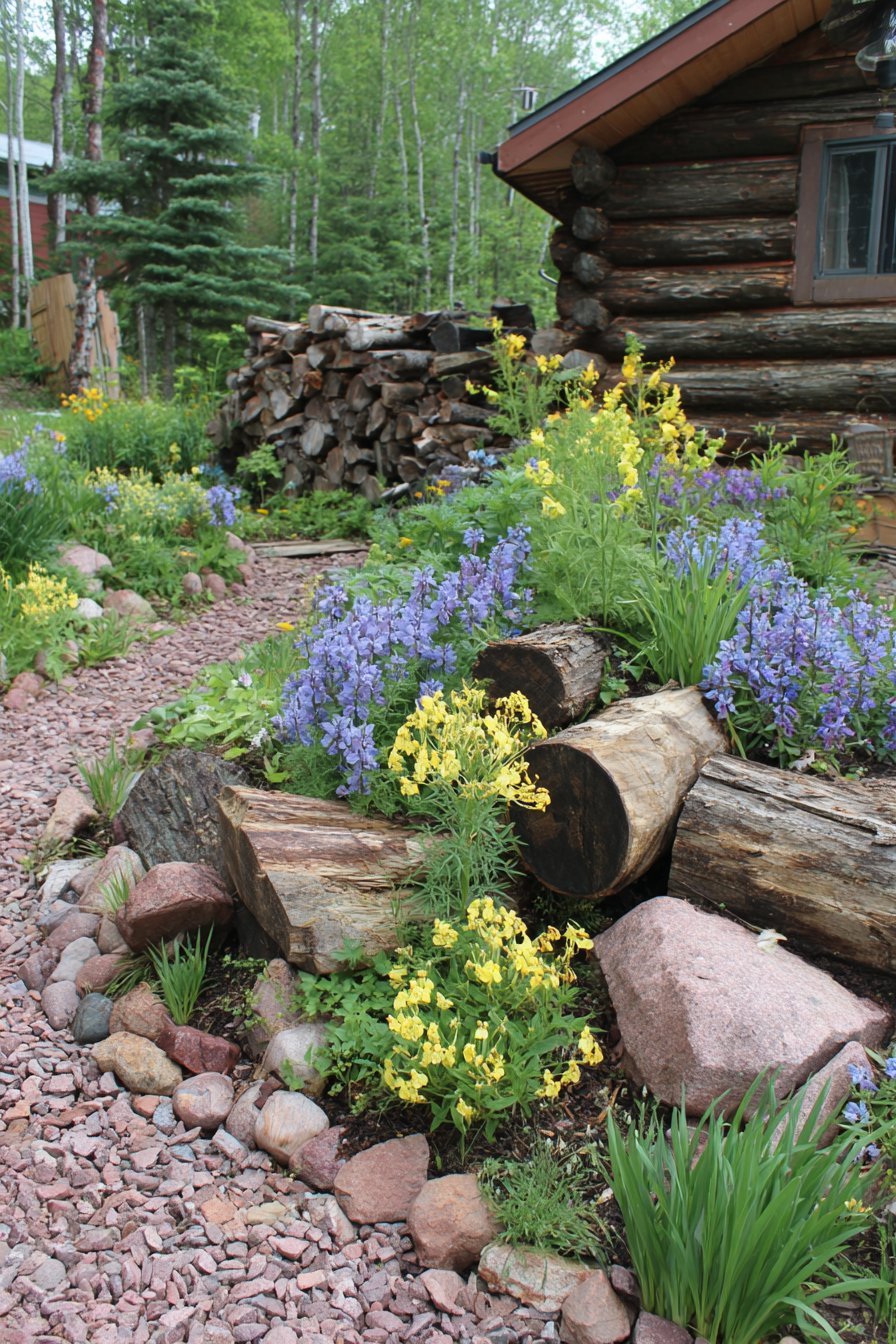
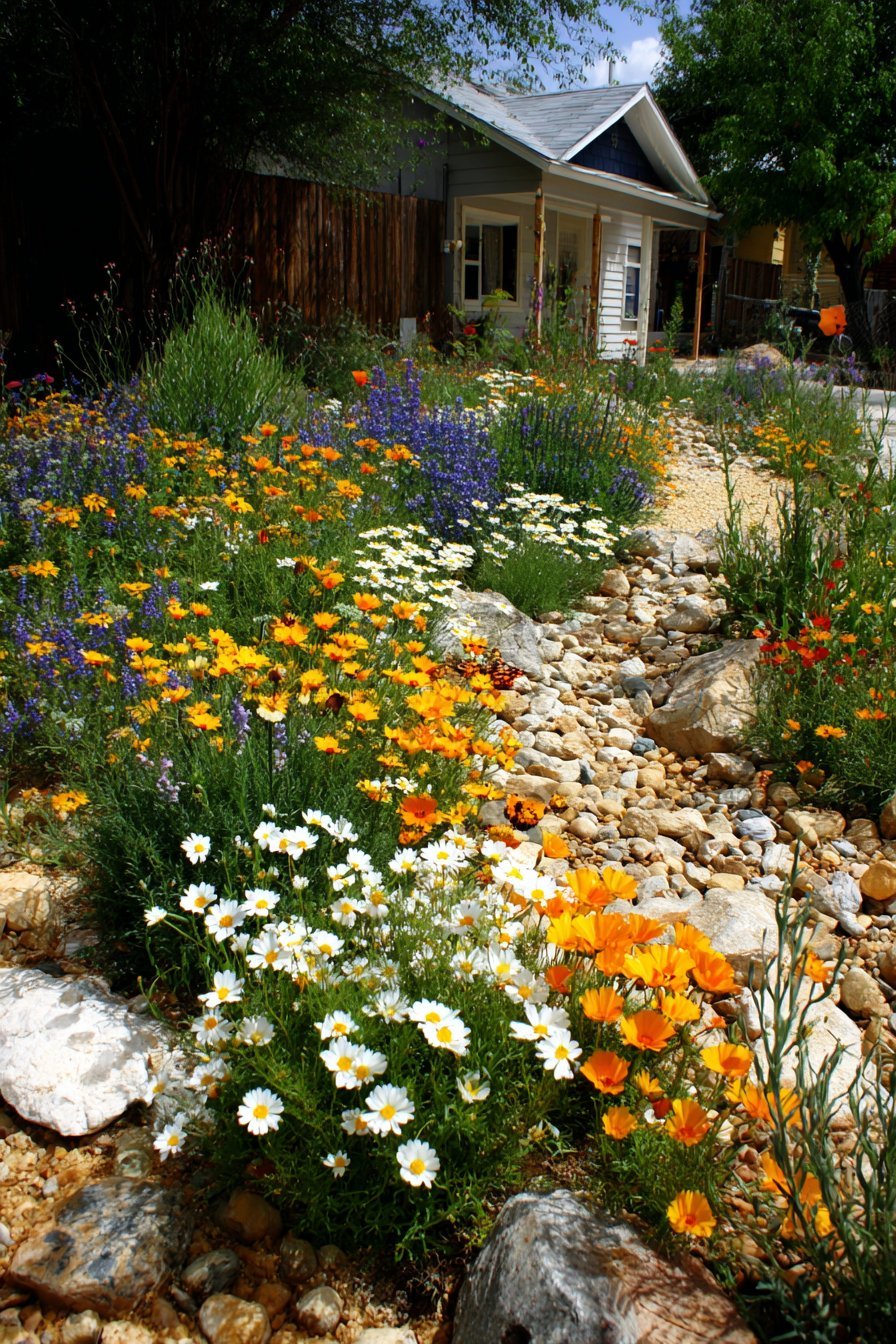
Native wildflower seeds scattered in prepared bed attract butterflies and bees naturally. Various bloom heights and colors provide nectar sources throughout seasons. A simple log pile at one edge provides habitat for beneficial insects. River rock mulch defines garden edge without expensive edging materials. Afternoon sunlight highlights flower colors while pollinators actively visit blooms.
The ecological garden approach supports local wildlife populations. Native wildflowers require no supplemental watering once established. The log pile creates essential habitat for beneficial garden insects. Rock mulch suppresses weeds while allowing natural reseeding.
This pollinator garden demonstrates environmental stewardship through plant selection. Native species thrive with minimal intervention or maintenance. The varied bloom times ensure continuous nectar availability. Visible pollinator activity proves the garden’s ecological value.
Key Design Tips:
- Prepare bed by removing existing vegetation and loosening soil
- Select native wildflower mix appropriate for local conditions
- Scatter seeds in fall or early spring for natural germination
- Place log pile in undisturbed corner for habitat stability
- Define edges with locally sourced river rocks for natural appearance
- Avoid pesticides to protect beneficial insects and pollinators
17. Outdoor Movie Projection Area

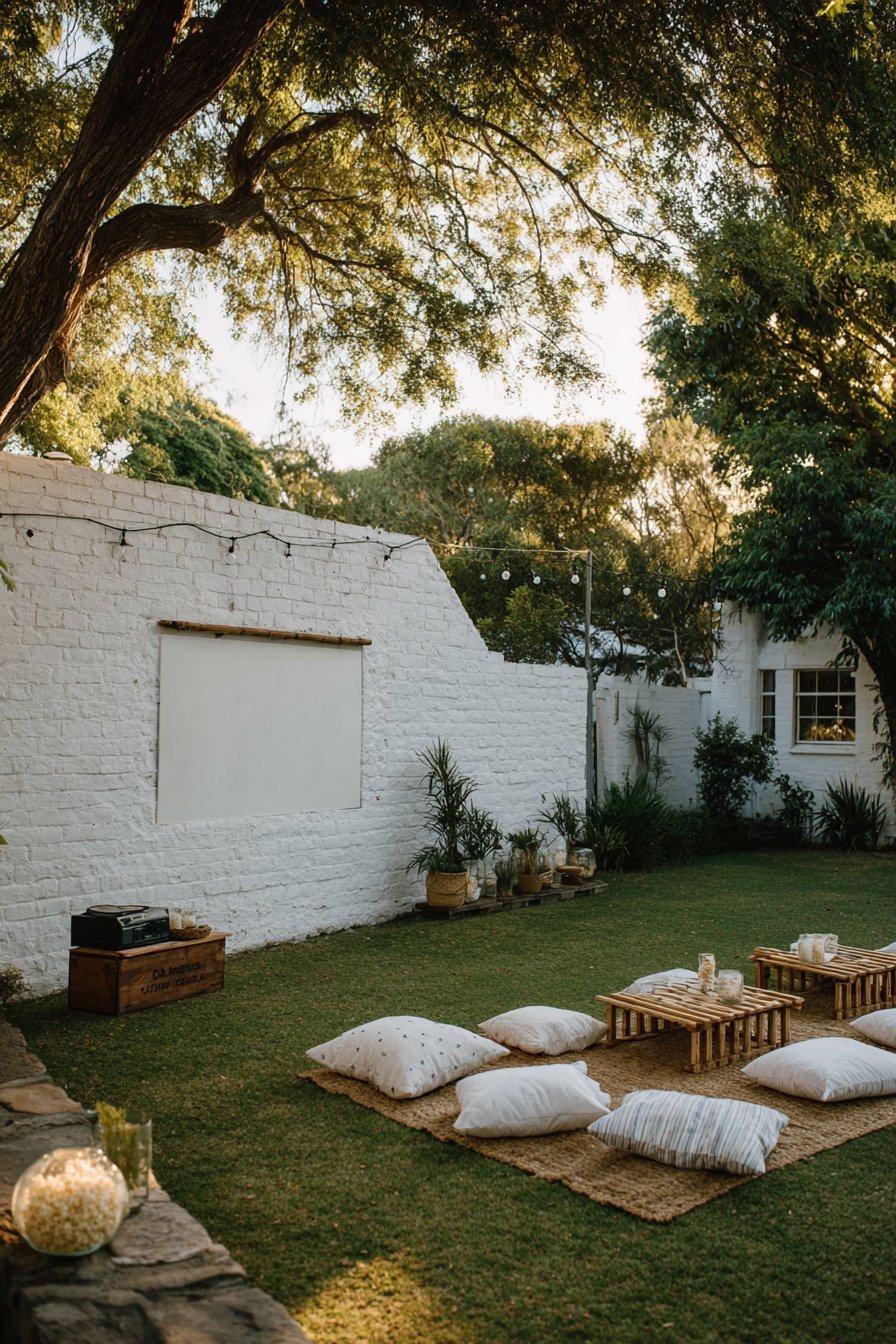
A white painted wall section serves as projection surface for outdoor entertainment. Simple seating arrangement uses outdoor blankets and floor cushions on grass. A portable projector on overturned crate creates casual theater experience. String lights provide ambient lighting before showtime begins. Dusk lighting creates atmospheric mood for evening entertainment.
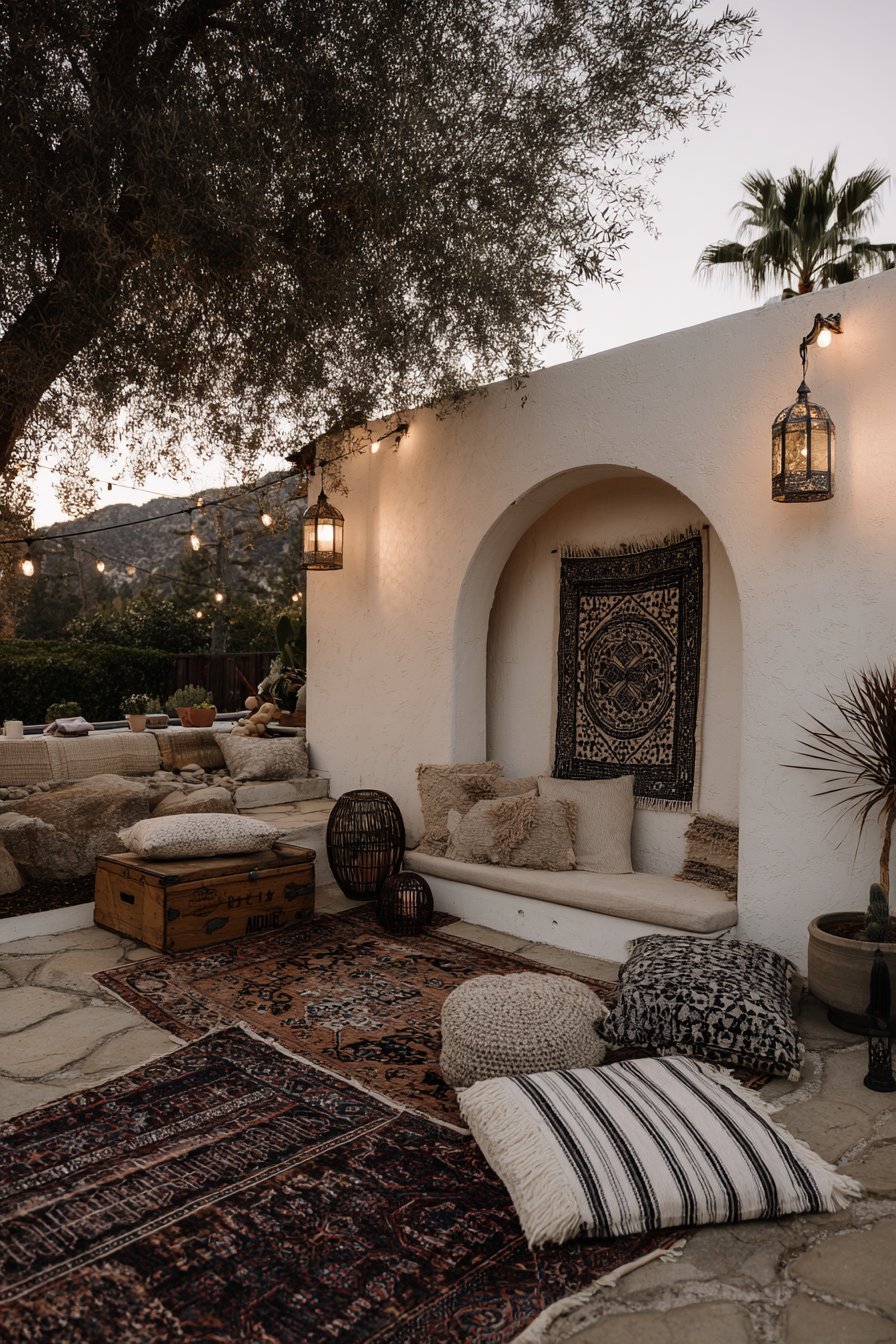
The outdoor movie area transforms yard into entertainment venue affordably. Existing wall surfaces eliminate expensive screen purchases. Casual blanket seating accommodates flexible group sizes. Portable projector allows for storage between uses.

This entertainment setup proves that outdoor theaters require minimal investment. The casual atmosphere encourages relaxed social gatherings. String lights establish the space while providing pre-show illumination. Simple components allow for quick setup and breakdown.
Key Design Tips:
- Paint wall section with exterior white paint for bright projection
- Test projector brightness and distance during daylight setup
- Provide variety of blankets and cushions for seating comfort
- Install dimmer string lights to reduce glare during movies
- Position projector on stable surface protected from dew
- Add outdoor speakers for improved sound quality
18. Cedar Board Raised Vegetable Beds

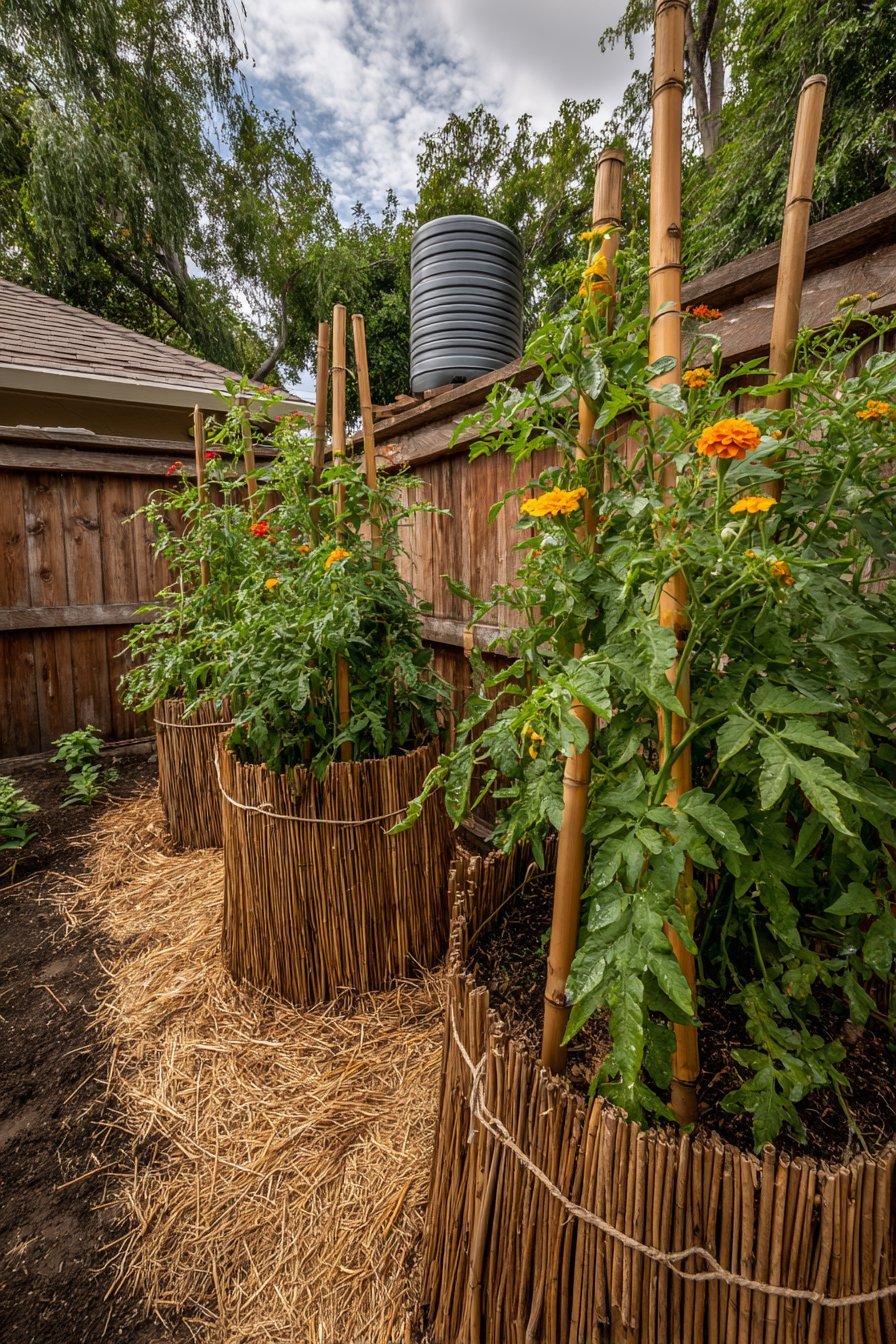
Raised beds constructed from untreated cedar fence boards create productive growing spaces. Companion planting places marigolds among tomato plants on bamboo stakes. Straw mulch pathways between beds prevent mud and suppress weeds. Rain barrel collects roof runoff for sustainable irrigation. Morning light emphasizes fresh growth and vegetable plant health.

The functional growing system maximizes food production in limited space. Cedar boards provide rot resistance without chemical treatments. Companion planting naturally deters pests while improving yields. The rain barrel demonstrates water conservation and cost reduction.

This vegetable garden prioritizes organic growing methods and sustainability. Raised beds warm quickly in spring extending growing seasons. Straw pathways provide clean access during wet weather. The irrigation system reduces water bills while conserving resources.
Key Design Tips:
- Build cedar beds 12 inches deep minimum for root development
- Fill beds with quality vegetable garden soil mixed with compost
- Plant marigolds at bed corners and between tomato plants
- Stake tomatoes with bamboo poles tied with natural twine
- Apply straw mulch four inches deep in pathways
- Position rain barrel on level platform for gravity-fed watering
19. Painted Fence Mural Focal Point
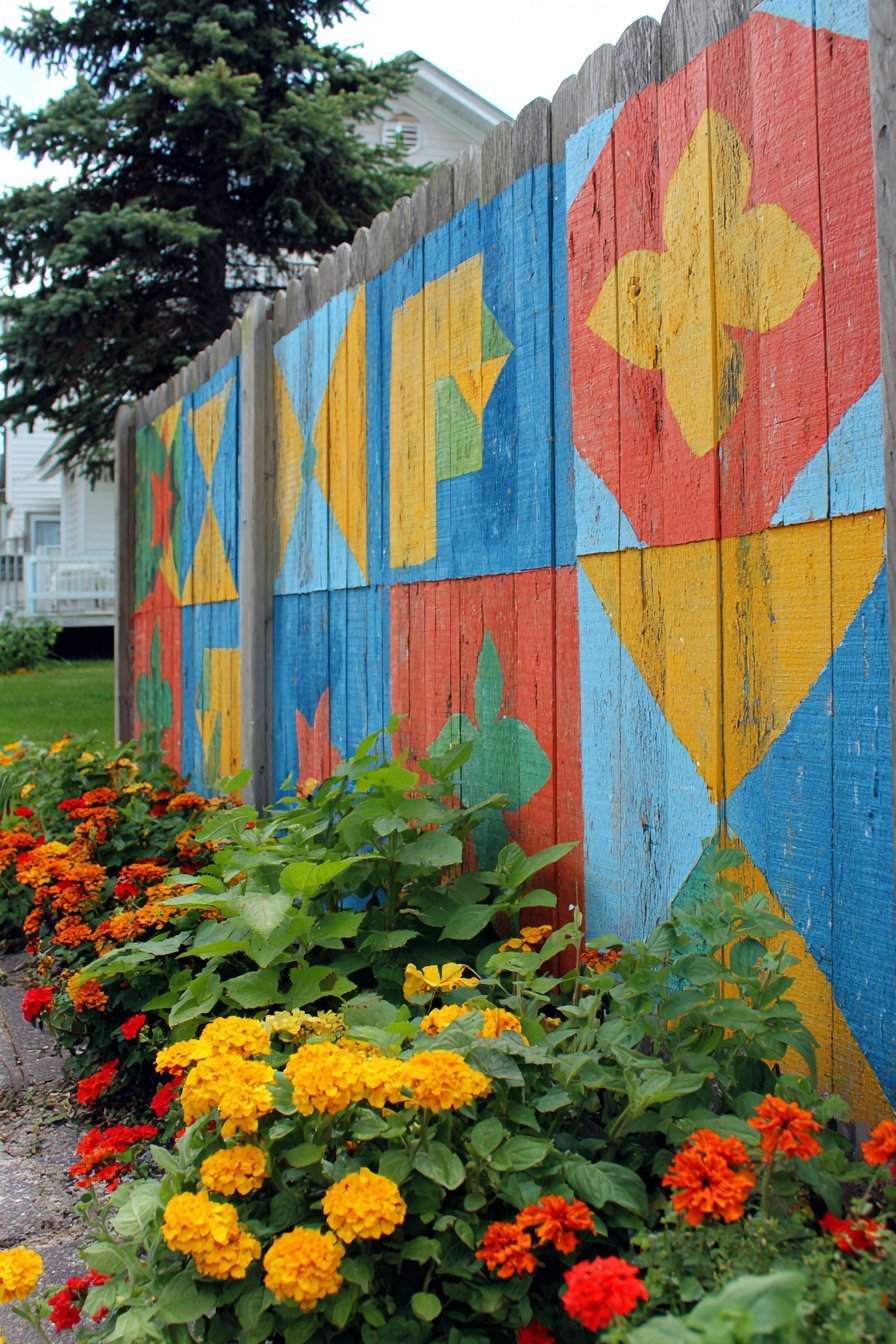
A painted mural on existing fence transforms plain surfaces into visual interest. Bold geometric patterns or nature scenes use exterior paint in coordinating colors. Simple planting bed below features low-cost annuals adding seasonal color. The artistic surface creates focal point without expensive hardscaping. Afternoon light provides even illumination across painted surfaces showing true colors.
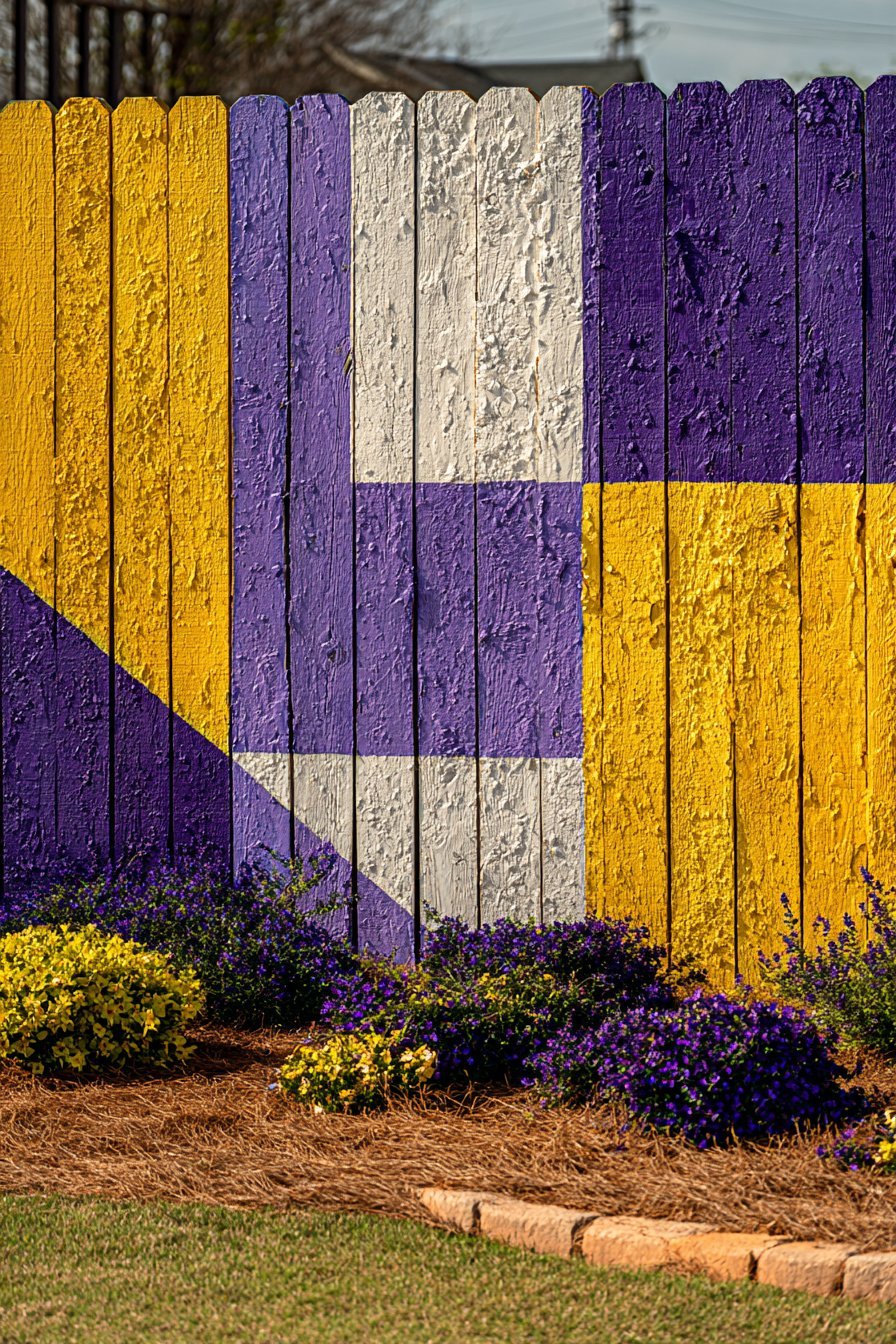
The mural demonstrates how creativity overcomes budget limitations. Exterior paint withstands weather while maintaining vibrant colors. The geometric or nature-inspired design complements landscape plantings. Annual flowers below provide changeable seasonal interest.

This focal point proves that artistic vision transforms overlooked surfaces. The painted fence becomes architectural element rather than background structure. Coordinated colors tie landscape together visually. Simple flower bed grounds the mural and softens hard surfaces.

Key Design Tips:
- Clean and prime fence surface before painting mural
- Use exterior acrylic paint formulated for weather resistance
- Sketch design with chalk before committing to paint
- Choose colors that complement existing landscape and home
- Seal finished mural with exterior clear coat for longevity
- Plant annuals in coordinating colors below mural for unity
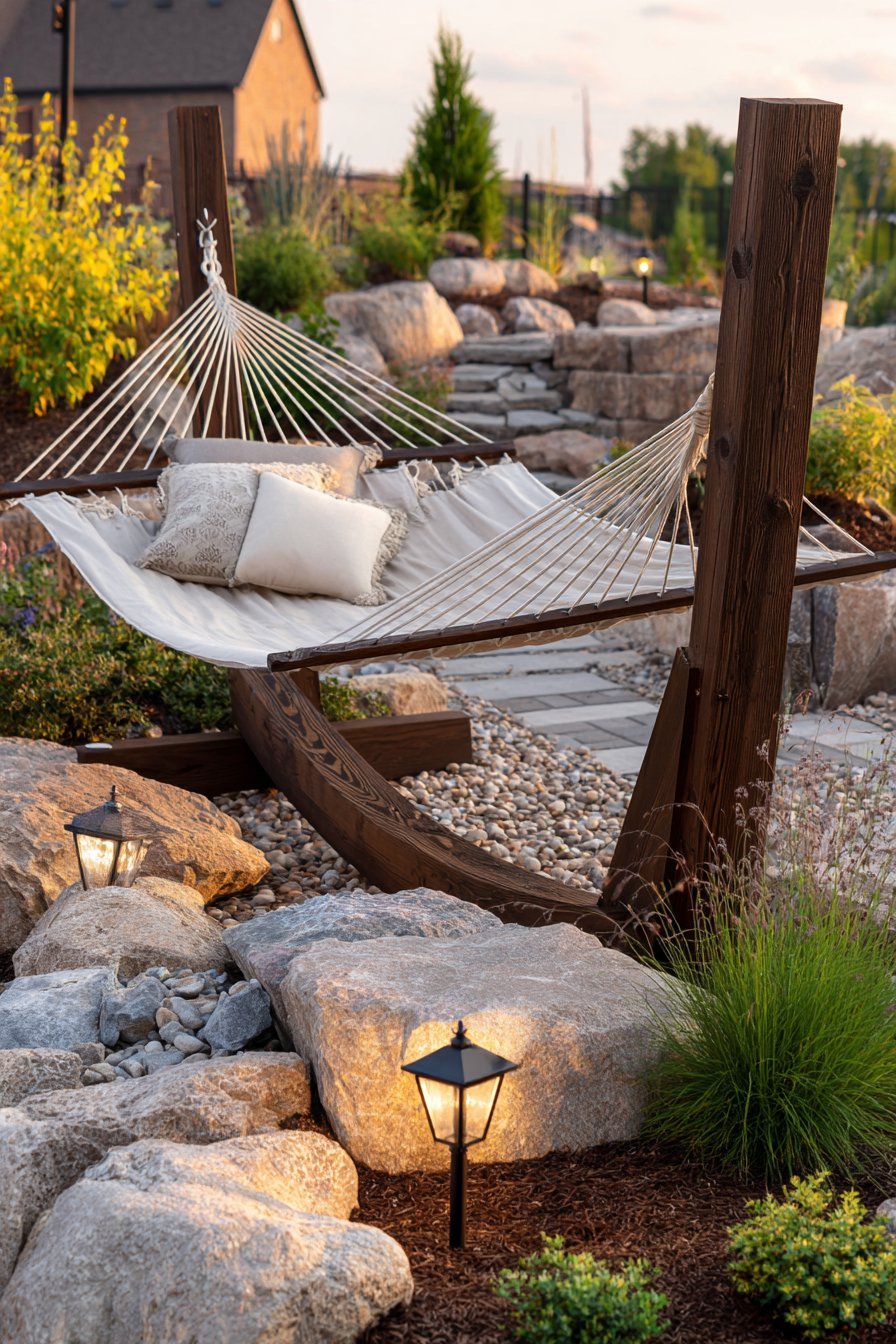
20. DIY Lumber Hammock Stand

A pressure-treated lumber hammock stand with heavy-duty hardware creates relaxation zone affordably. Canvas hammock suspends between posts with adjustable rope system. Native groundcover plants and large landscape rocks create natural setting. Solar-powered LED stake lights mark edges for safety. Golden hour backlight creates peaceful, inviting atmosphere.

The functional relaxation setup demonstrates simple carpentry creates significant value. Pressure-treated lumber withstands weather exposure reliably. The hammock provides comfortable lounging without expensive outdoor furniture. Natural plantings and rocks integrate the stand into landscape seamlessly.

This relaxation zone proves that comfort requires minimal expense. The DIY construction allows customization for available space. Native groundcovers require no maintenance once established. Evening lighting extends usability into twilight hours safely.
Key Design Tips:
- Anchor posts deeply in concrete footings for stability
- Use minimum 4×4 posts for adequate strength and rigidity
- Attach the hammock with heavy-duty eye bolts and carabiners
- Space posts according to hammock length plus two feet
- Plant native groundcovers that tolerate light foot traffic
- Install solar stake lights around perimeter for visibility
Why These Cheap Backyard Ideas Are the Best
These budget-friendly backyard designs represent the most effective approaches to outdoor space transformation without significant financial investment. Each concept demonstrates that creativity and resourcefulness produce results comparable to expensive professional landscaping. The designs prioritize practical functionality alongside aesthetic appeal through smart material selection and DIY implementation.

The versatility across these concepts accommodates different yard sizes, climates, and personal preferences. From productive vegetable gardens to relaxing entertainment spaces, each design serves distinct purposes while maintaining affordability. Sustainable practices like composting, rain water collection, and native plantings reduce ongoing costs while benefiting the environment.
Material choices emphasize durability and natural aging characteristics rather than pristine perfection. Reclaimed wood, concrete blocks, salvaged bricks, and repurposed containers provide character that improves over time. These materials withstand weather exposure while developing attractive patina that adds authenticity to outdoor spaces.
The designs address real-world constraints that budget-conscious homeowners face. Small spaces benefit from vertical gardens and dual-purpose structures. Family-friendly yards incorporate safe play areas using economical materials. Entertaining spaces emerge from simple furniture refinishing and creative lighting solutions. Each approach proves that limitations inspire innovative solutions.
Color theory and spatial planning ensure these economical designs appear intentional rather than makeshift. Coordinated paint colors unify disparate elements into cohesive collections. Strategic lighting extends usability into evening hours. Defined pathways and zones create organized layouts that feel professionally planned.
Longevity considerations ensure these affordable improvements provide lasting value. Proper wood sealing extends life of DIY structures significantly. Native plant selections thrive without ongoing inputs. Simple maintenance routines keep spaces looking fresh without recurring expenses. These designs succeed because they balance immediate affordability with long-term durability and minimal upkeep requirements.
Conclusion
These twenty cheap backyard ideas demonstrate that beautiful, functional outdoor spaces emerge from creativity rather than large budgets. The key takeaways emphasize resourcefulness through repurposed materials, sustainable practices, and DIY construction methods. Each design proves that thoughtful planning creates outdoor rooms that enhance daily living and property value.
Successful budget-friendly backyards balance immediate affordability with long-term durability and functionality. Start with single projects that address your highest priorities, whether creating shade, establishing growing spaces, or developing entertainment areas. Your dream backyard awaits transformation through these practical, achievable approaches that prove constraints inspire the most innovative solutions.
