
Creating a simple backyard doesn’t mean sacrificing style or functionality. This approach celebrates practical design and accessible outdoor living. The combination creates inviting spaces perfect for relaxation and entertainment without overwhelming complexity.

Simple backyard designs have gained popularity as homeowners seek sustainable and maintainable outdoor spaces. These designs offer refreshing alternatives to elaborate landscaping projects. The focus on natural materials and straightforward solutions creates memorable outdoor experiences. This article explores twenty distinct approaches to simple backyard design, each demonstrating how modest elements can transform ordinary yards into extraordinary retreats.
1. Cozy Seating Area with Natural Elements
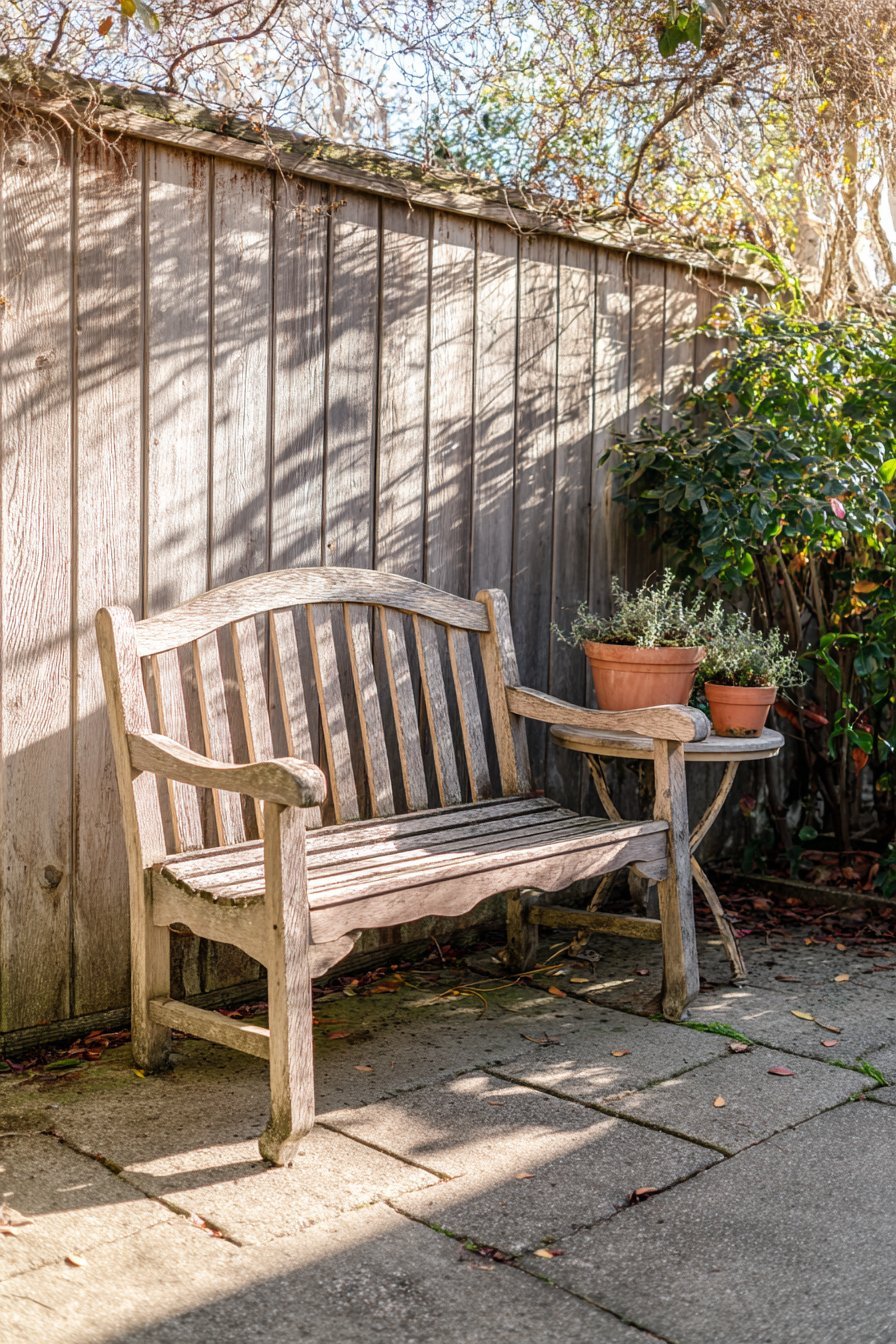
A weathered teak bench positioned against a horizontal wood fence creates an intimate gathering spot. Natural stone pavers form the foundation with creeping thyme growing between joints. This adds subtle texture and natural fragrance underfoot. A few potted herbs in terra cotta containers sit on a small side table. The arrangement feels unpretentious and welcoming.
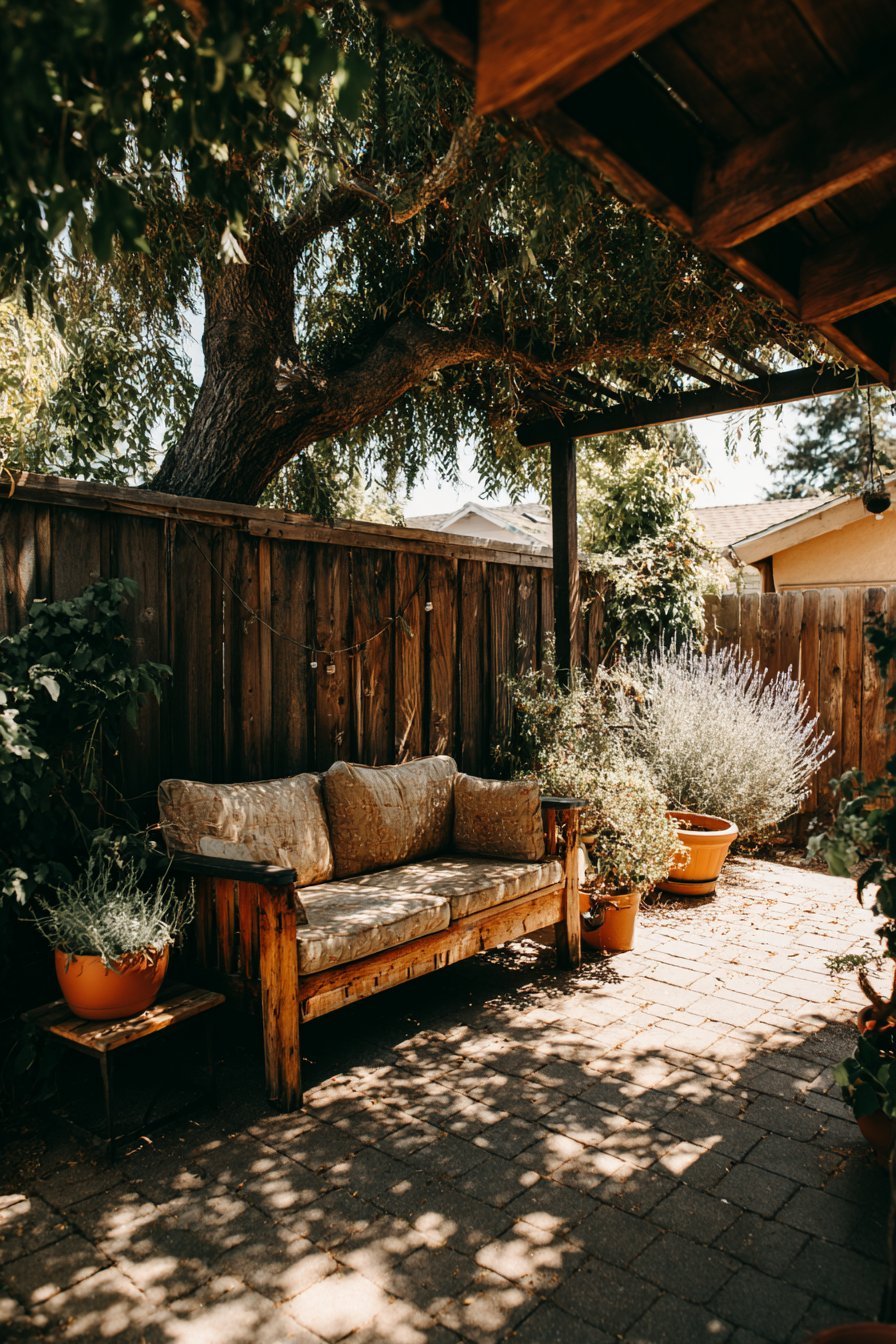
Soft afternoon sunlight filters through an overhead pergola. Dappled shadows dance across the stone surface throughout the day. The organic textures of weathered wood and natural stone work harmoniously together. This creates visual interest without requiring complex design elements.
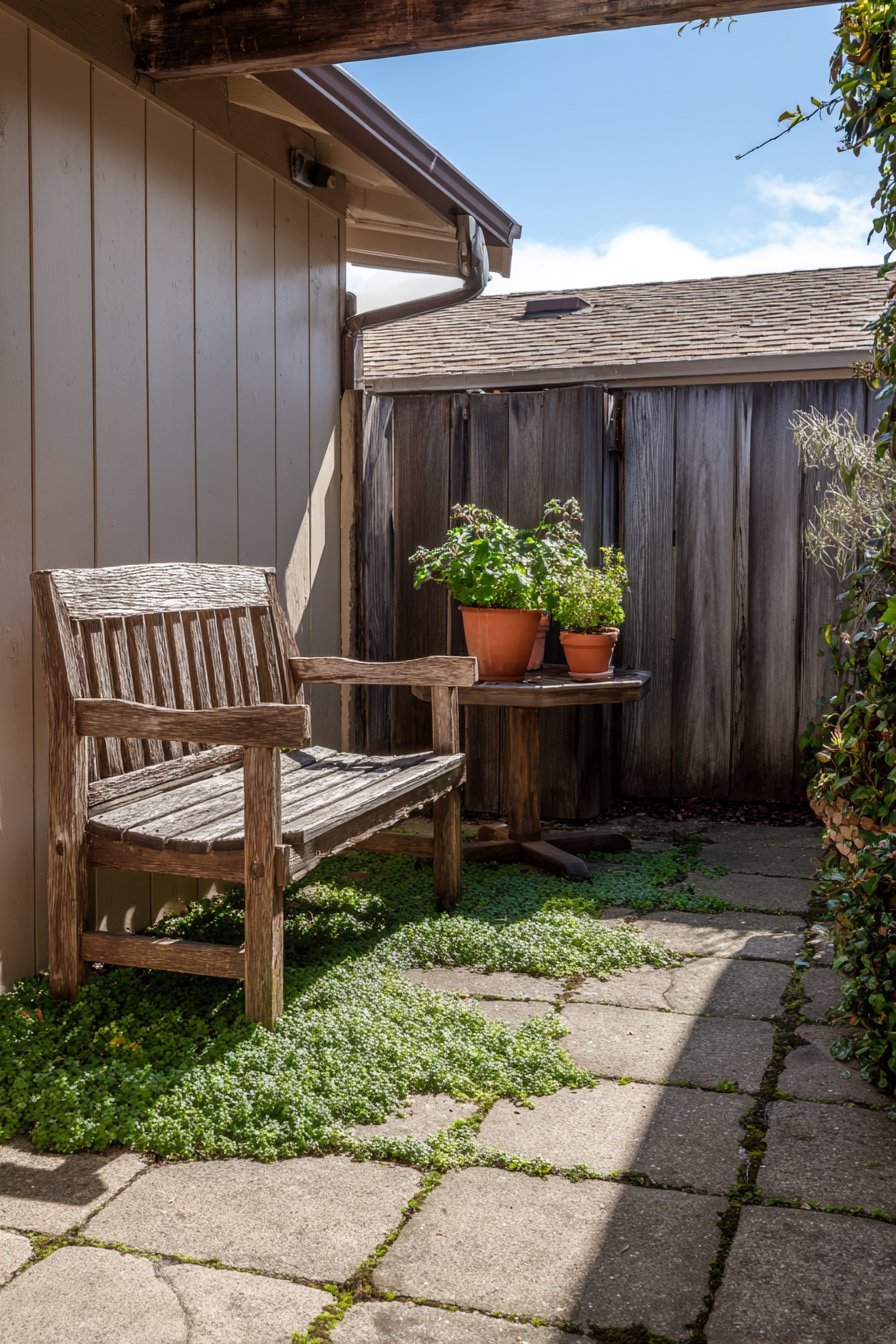
The beauty of this design lies in its accessibility. Every element serves a practical purpose while contributing to the overall aesthetic. The herbs provide fresh ingredients for cooking. The bench offers comfortable seating for morning coffee or evening conversations. The pergola structure defines the space without enclosing it completely.

Key Design Tips:
- Select weathered teak for outdoor furniture as it ages beautifully without maintenance
- Plant creeping thyme between pavers for natural fragrance and ground coverage
- Position seating to capture optimal afternoon light and shade patterns
- Use terra cotta containers for herbs as they provide excellent drainage
- Install a simple pergola to create defined outdoor rooms without walls
2. Raised Wooden Garden Beds for Productive Growing
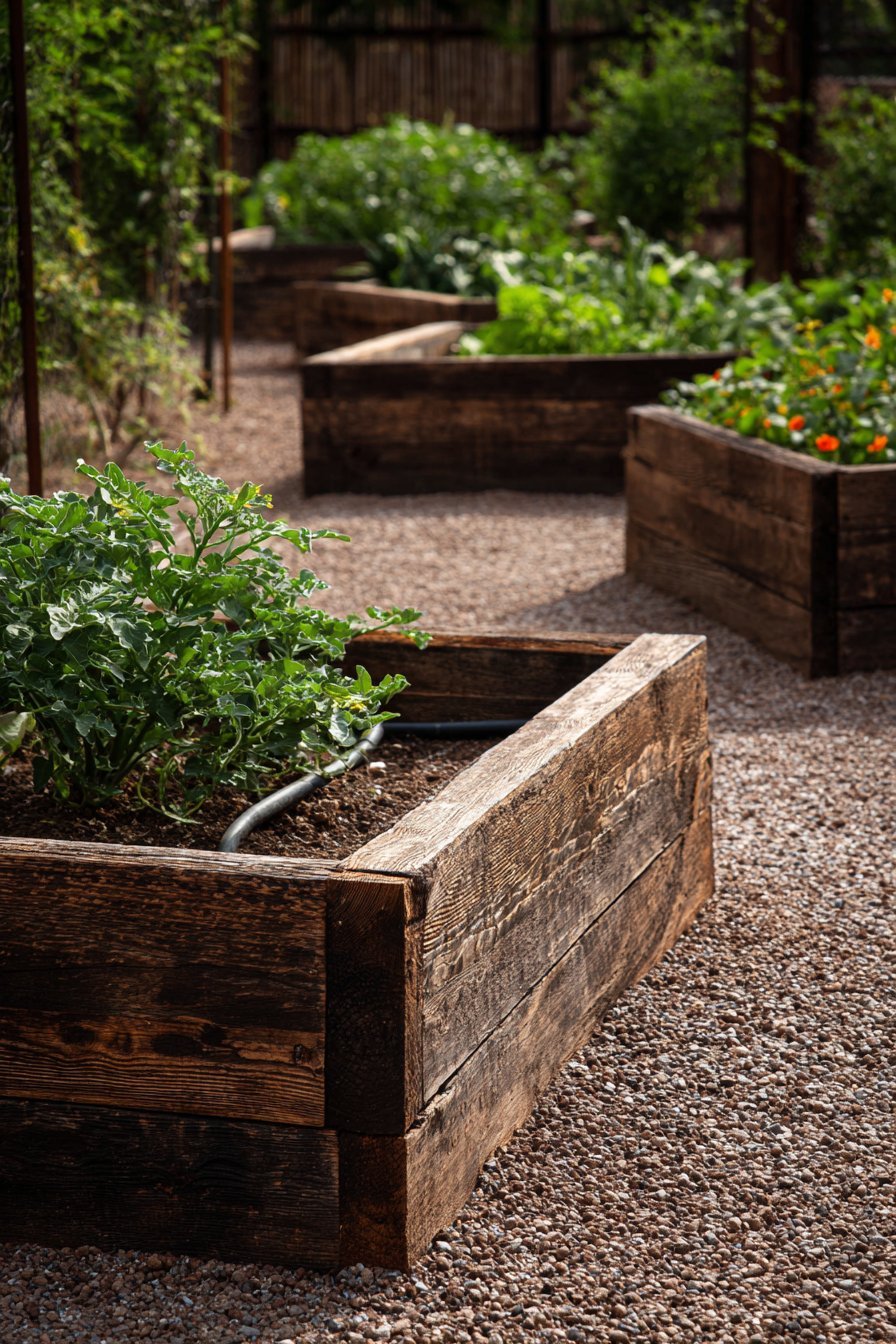
Raised wooden planters constructed from untreated cedar boards showcase natural weathering. The beds contain a mix of vegetables and flowering plants in organized layouts. A gravel pathway winds between the planters providing easy access. This functional design prioritizes both beauty and productivity.
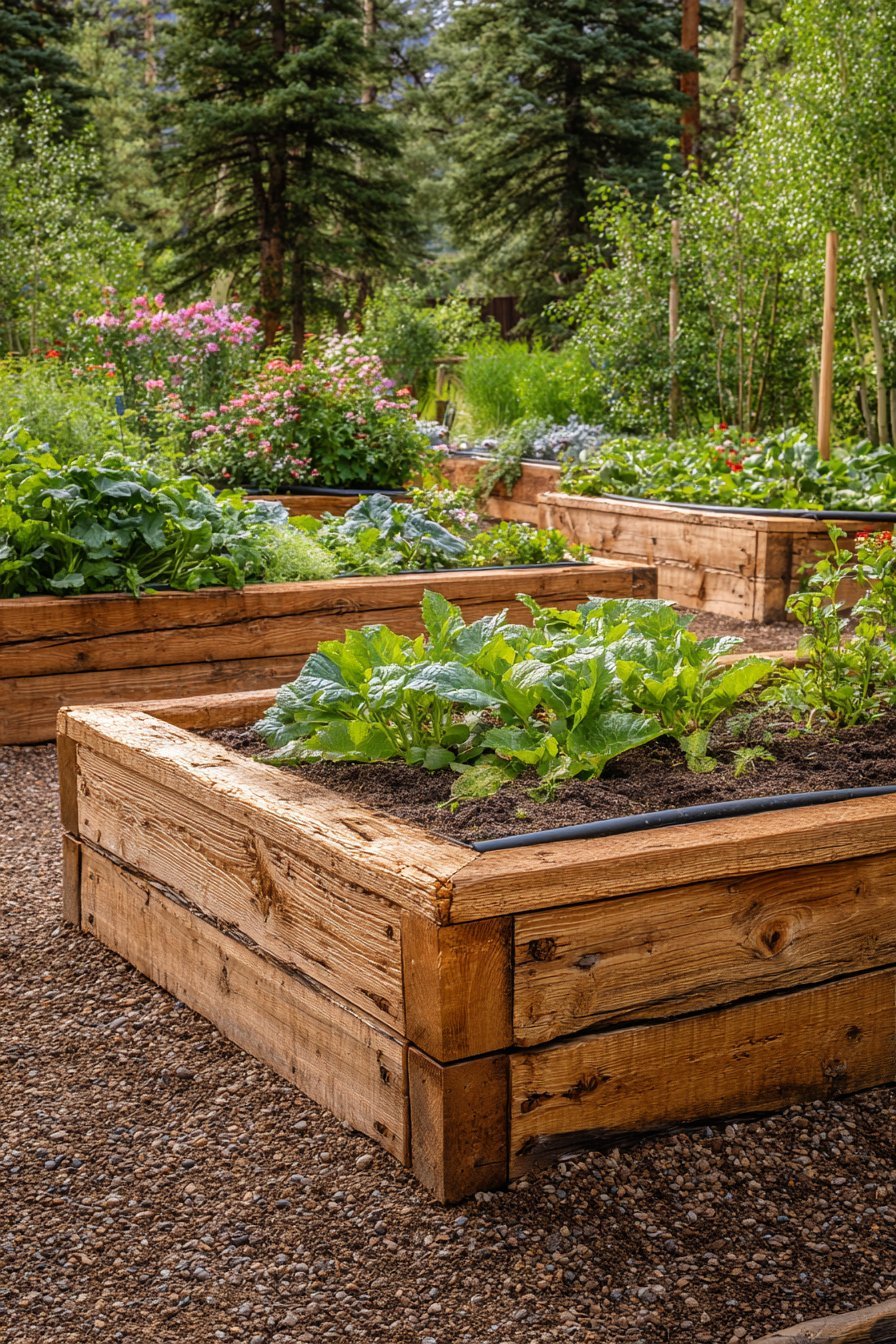
A basic drip irrigation system with visible black tubing ensures practical water management. The exposed irrigation demonstrates honest design principles. Nothing is hidden or overly complicated. Morning light emphasizes the functional beauty of this growing space.

Cedar construction offers natural rot resistance without chemical treatments. The raised bed design improves drainage and soil quality. It also makes gardening more accessible for people with mobility challenges. The combination of vegetables and flowers creates visual interest while supporting beneficial insects.

Key Design Tips:
- Choose untreated cedar for chemical-free vegetable growing spaces
- Install drip irrigation to conserve water and reduce maintenance time
- Mix vegetables with flowering plants to attract pollinators naturally
- Create gravel pathways between beds for all-weather access
- Build beds at comfortable heights to reduce bending and strain
3. Circular Stone Fire Pit for Evening Gatherings
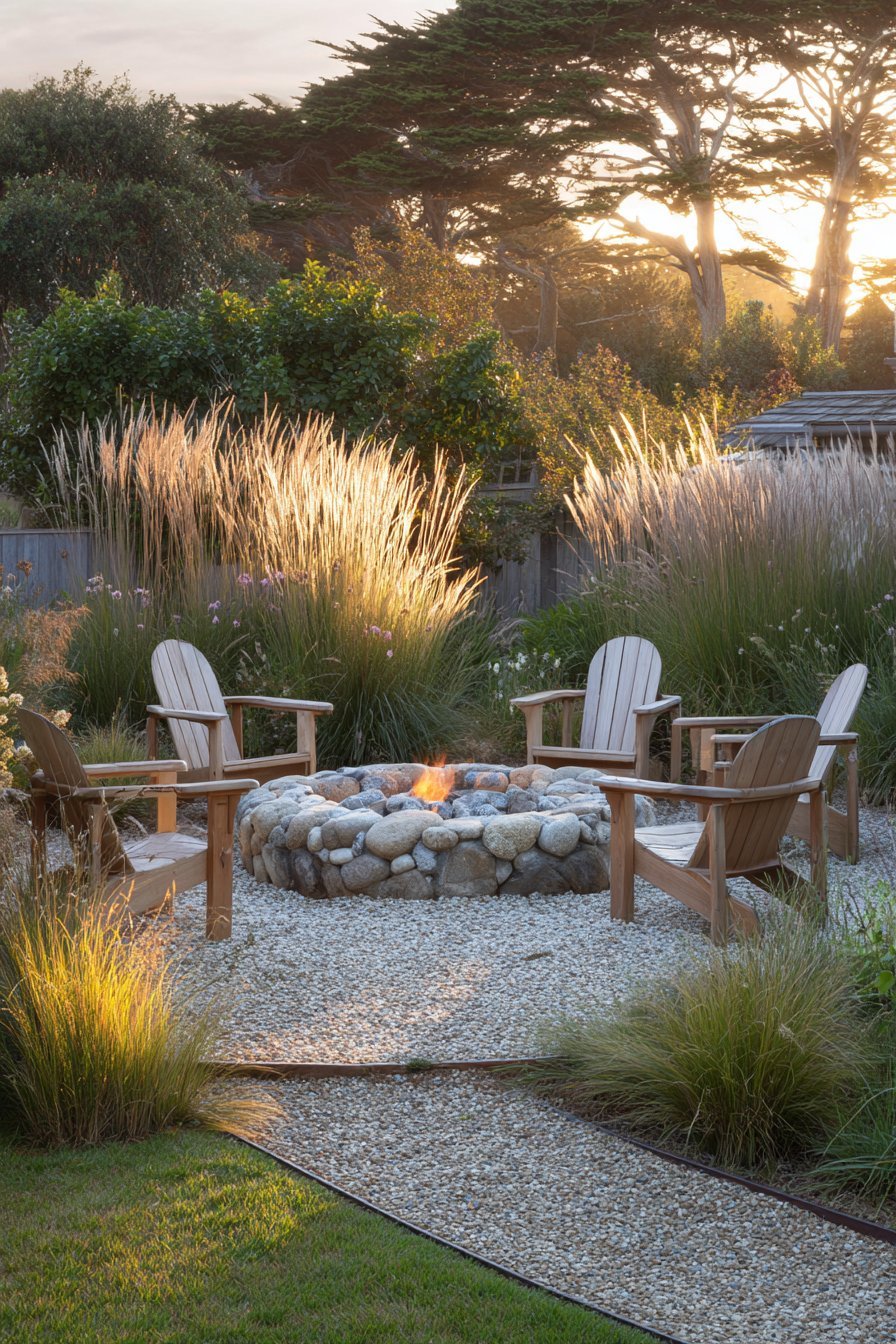
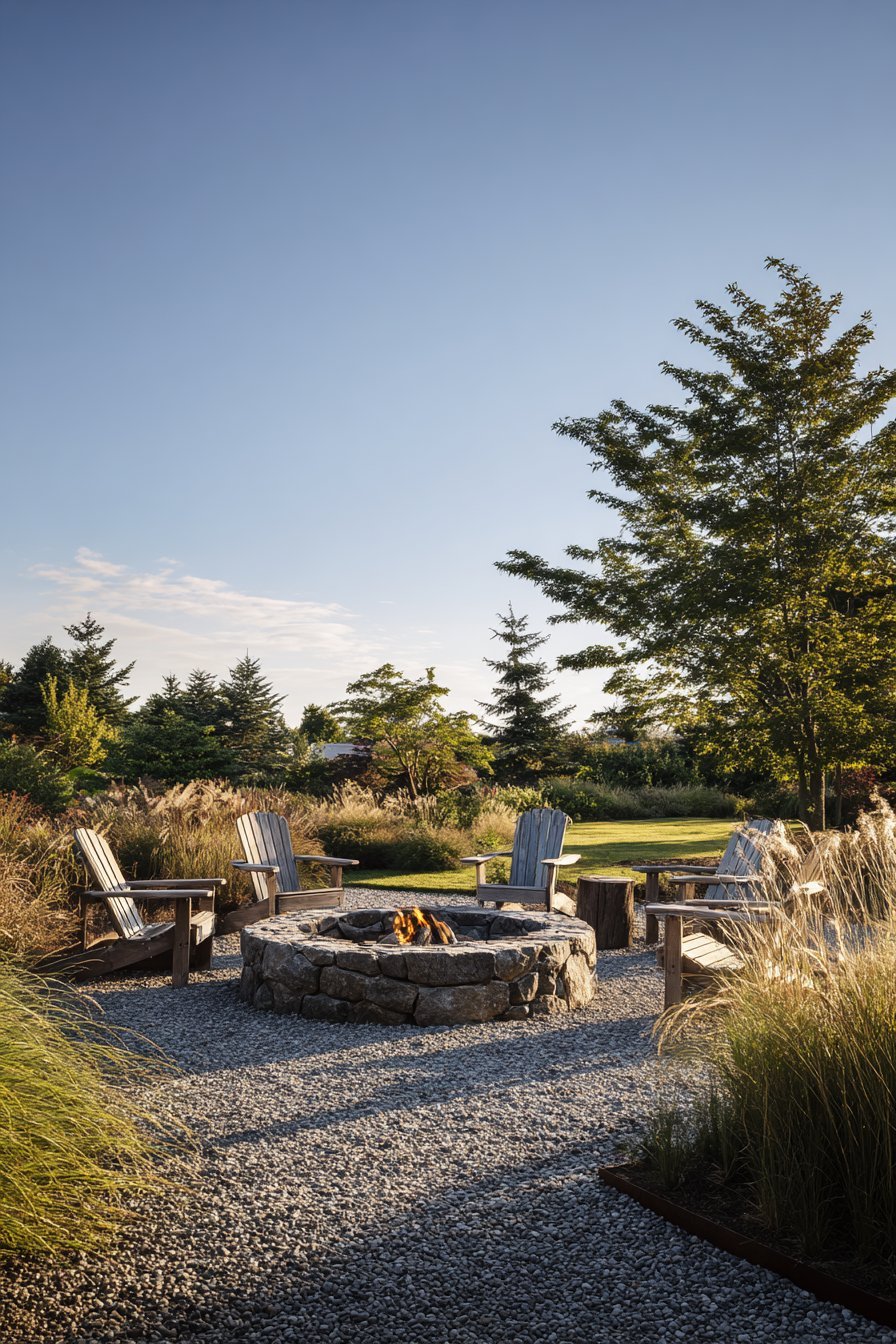
A circular stone fire ring surrounded by Adirondack chairs creates a classic gathering space. The seating arrangement on pea gravel feels stable and well-drained. Natural simplicity defines every aspect of this design. Native grasses and low-maintenance perennials frame the space organically.

Evening golden hour lighting creates warm shadows across the seating area. The fire pit becomes the natural focal point as daylight fades. This modest setup provides everything needed for comfortable outdoor entertaining. The scale remains manageable and approachable.
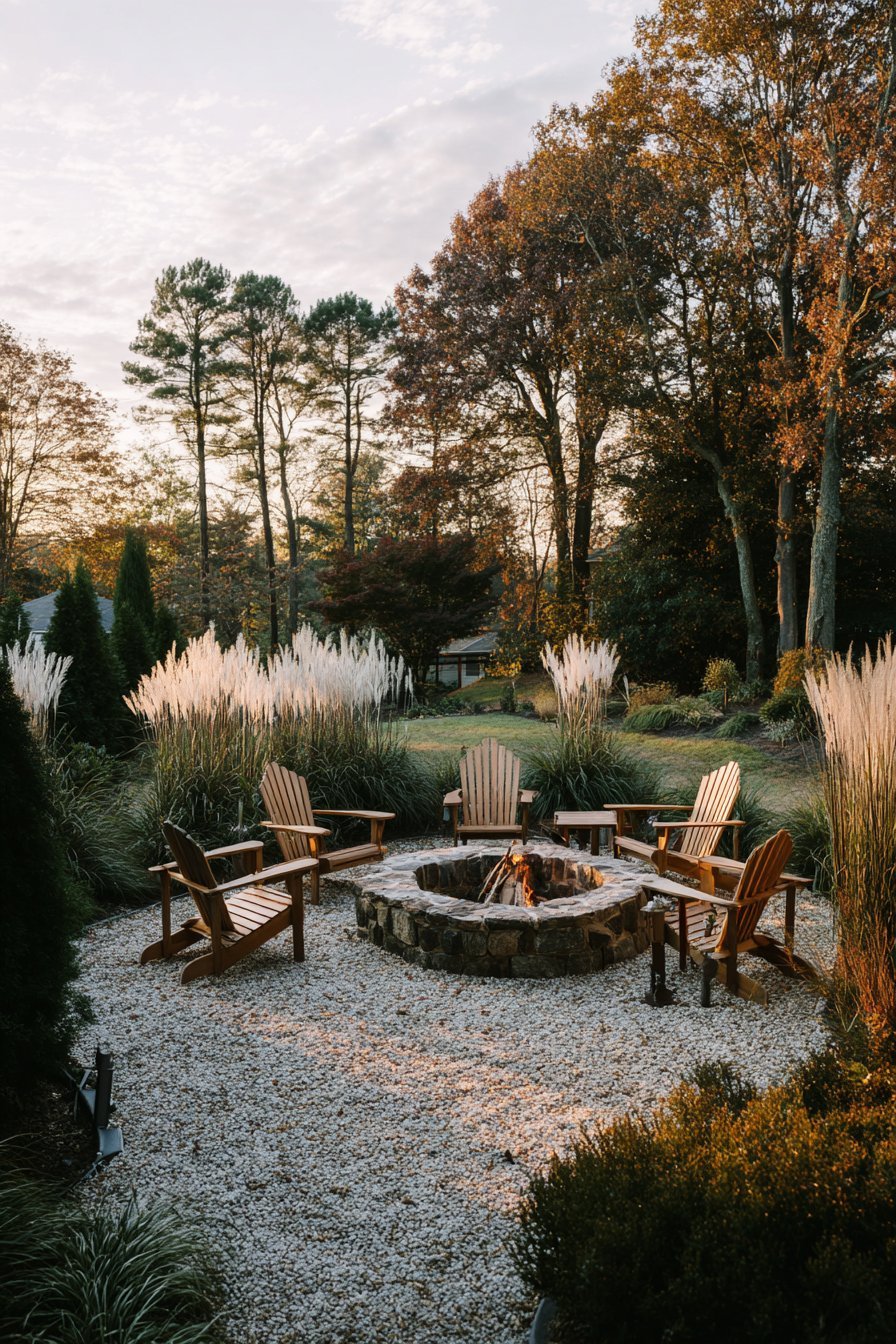
Pea gravel serves multiple practical purposes in this design. It prevents mud around high-traffic areas while allowing water drainage. The stone fire ring provides safe containment for fires. Adirondack chairs offer comfortable seating that withstands weather exposure.
Key Design Tips:
- Use pea gravel for stable, well-draining surfaces around fire features
- Position chairs in a circular arrangement to encourage conversation
- Select native grasses for low-maintenance perimeter plantings
- Choose stone for fire rings as it handles heat safely
- Plan for adequate clearance from structures and overhanging branches
4. Wooden Picnic Table Dining Setup

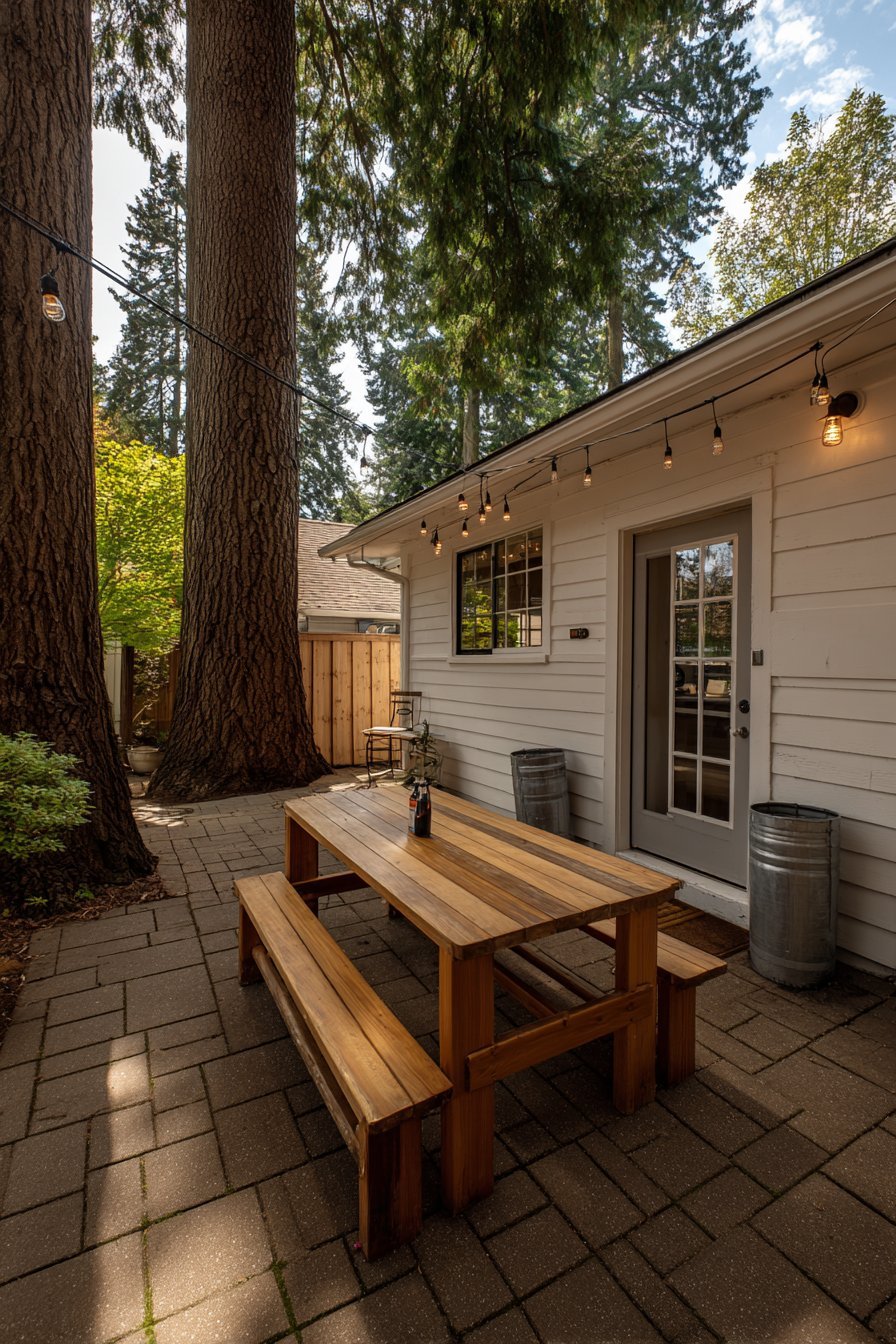
A rectangular wooden picnic table on a concrete paver patio creates casual dining space. String lights hang overhead between two mature trees. This provides ambient evening illumination without complicated wiring. Mismatched wooden chairs add character while maintaining the unpretentious aesthetic.

A galvanized metal tub serves as a practical beverage cooler nearby. The setup demonstrates how simple elements create functional entertaining areas. Natural daylight captures the livable quality of this arrangement. Realistic wear on materials adds authenticity and charm.

The mature trees provide natural shade during hot afternoons. They also serve as convenient anchor points for string lighting. Concrete pavers create a stable, level surface for dining furniture. The combination of practical elements creates an inviting outdoor dining experience.
Key Design Tips:
- Anchor string lights between existing trees to avoid installing posts
- Choose concrete pavers for stable, long-lasting patio foundations
- Mix and match chairs for eclectic character without matching sets
- Use galvanized metal containers for practical outdoor storage solutions
- Position dining areas under natural tree canopies for shade
5. Child-Friendly Play Area with Safety Features

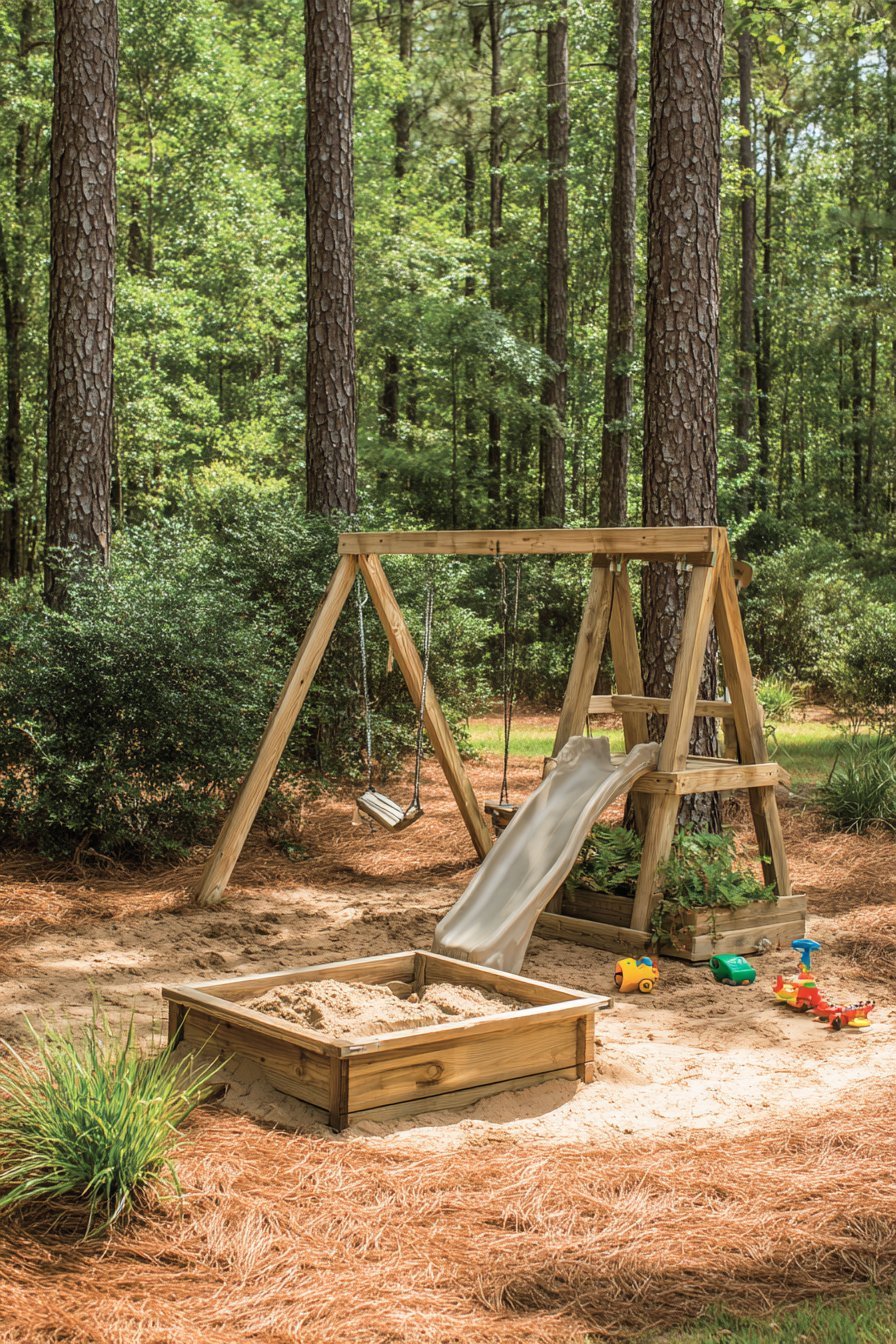
A basic wooden swing set with two swings and a slide sits on rubber mulch. The equipment shows slight weathering indicating actual use. This creates an authentic rather than staged appearance. A small sandbox with a simple wooden frame sits adjacent. A few toys scattered naturally add realistic details.

Mature trees provide dappled shade throughout the play space. This protects children from harsh sun exposure during peak hours. The rubber mulch surface cushions falls while requiring minimal maintenance. Wide-angle photography captures the practical, child-friendly simplicity effectively.
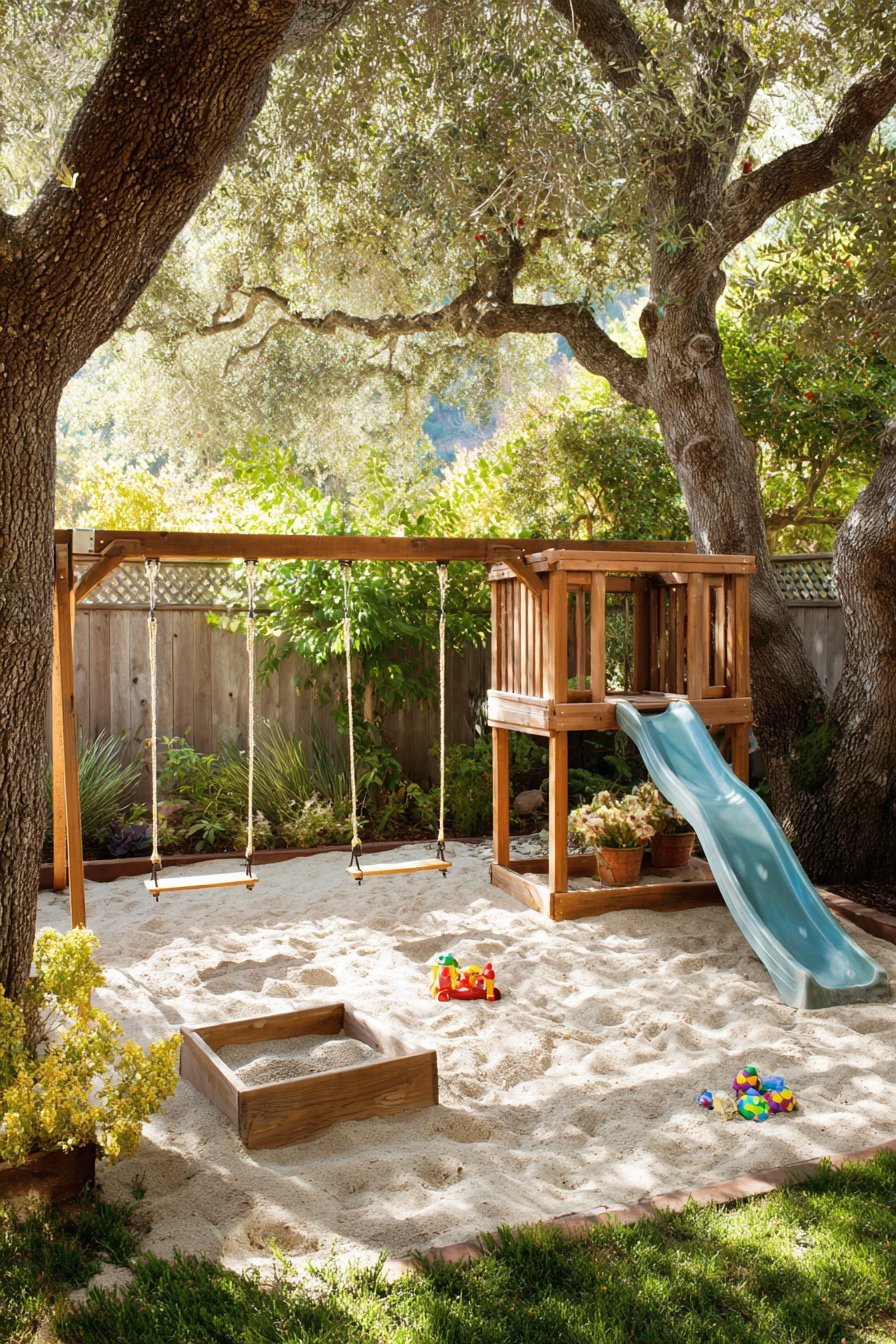
Safety considerations guide every aspect of this design. The rubber mulch meets playground safety standards for fall protection. Proper spacing around equipment prevents accidents. The sandbox frame keeps sand contained while allowing easy access.
Key Design Tips:
- Install rubber mulch under play equipment for safety and low maintenance
- Position play areas where you can easily supervise from the house
- Choose pressure-treated lumber for long-lasting playground equipment
- Plant shade trees near play areas to reduce sun exposure
- Create defined boundaries between play zones and other yard areas
6. Half-Barrel Fountain Water Feature
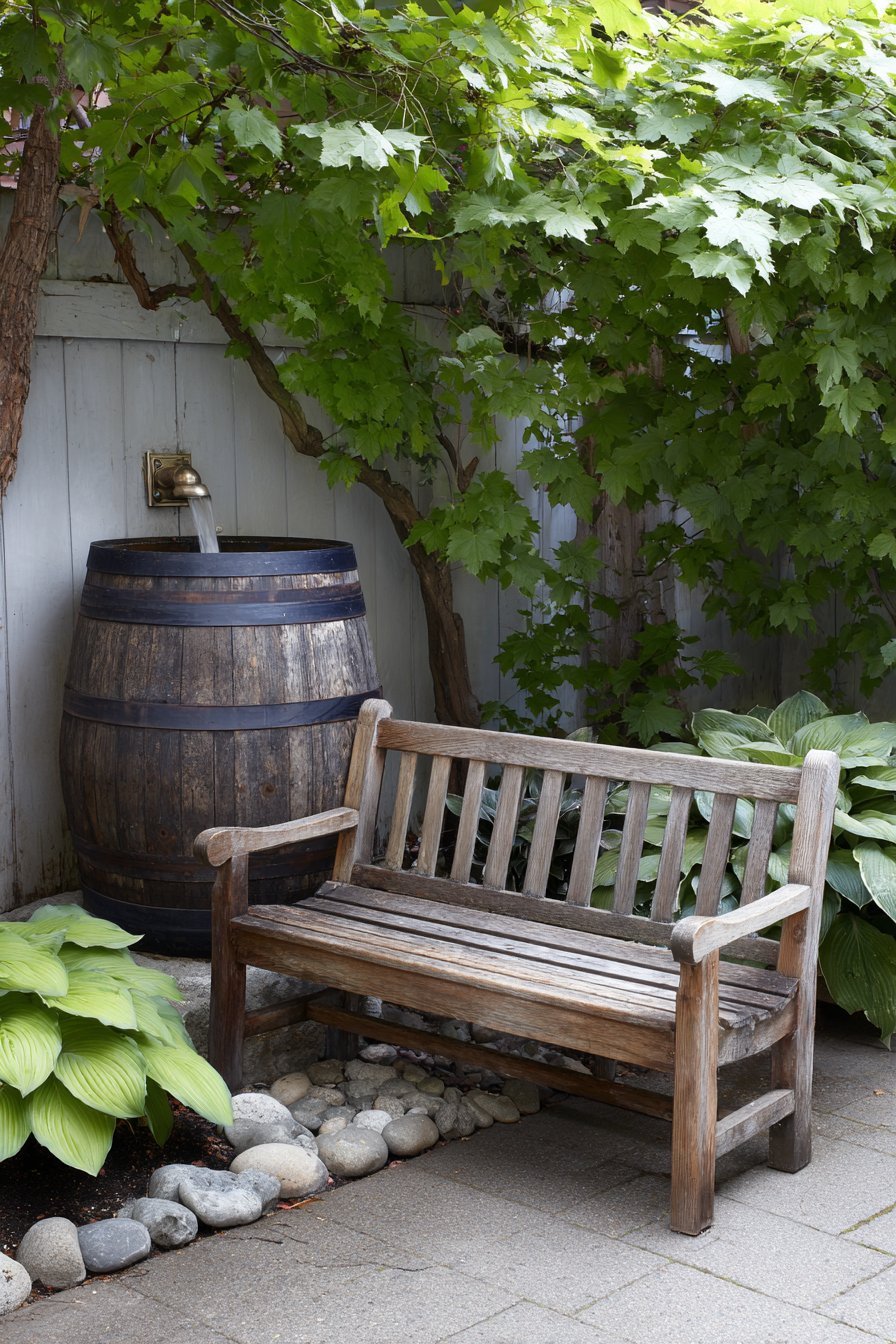
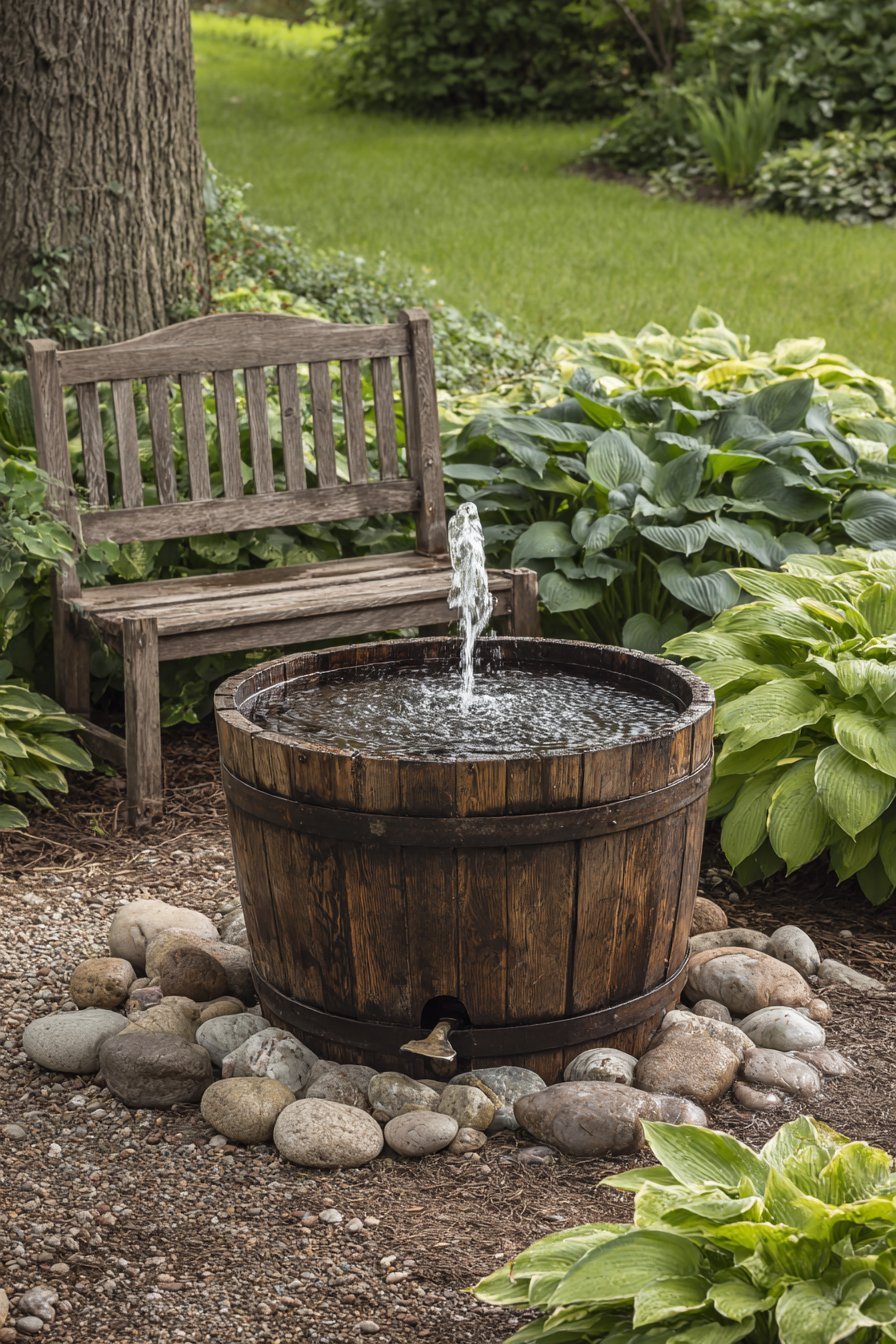
A half-barrel fountain with a small recirculating pump creates gentle water movement. The whiskey barrel is surrounded by river rocks and shade-loving hostas. A weathered wooden bench positioned nearby provides a quiet sitting spot. The modest fountain adds tranquility through understated design.

Professional outdoor photography captures balanced exposure of this simple element. The fountain creates subtle movement without overwhelming the surrounding space. The sound of trickling water masks neighborhood noise naturally. This transforms the backyard into a peaceful retreat.
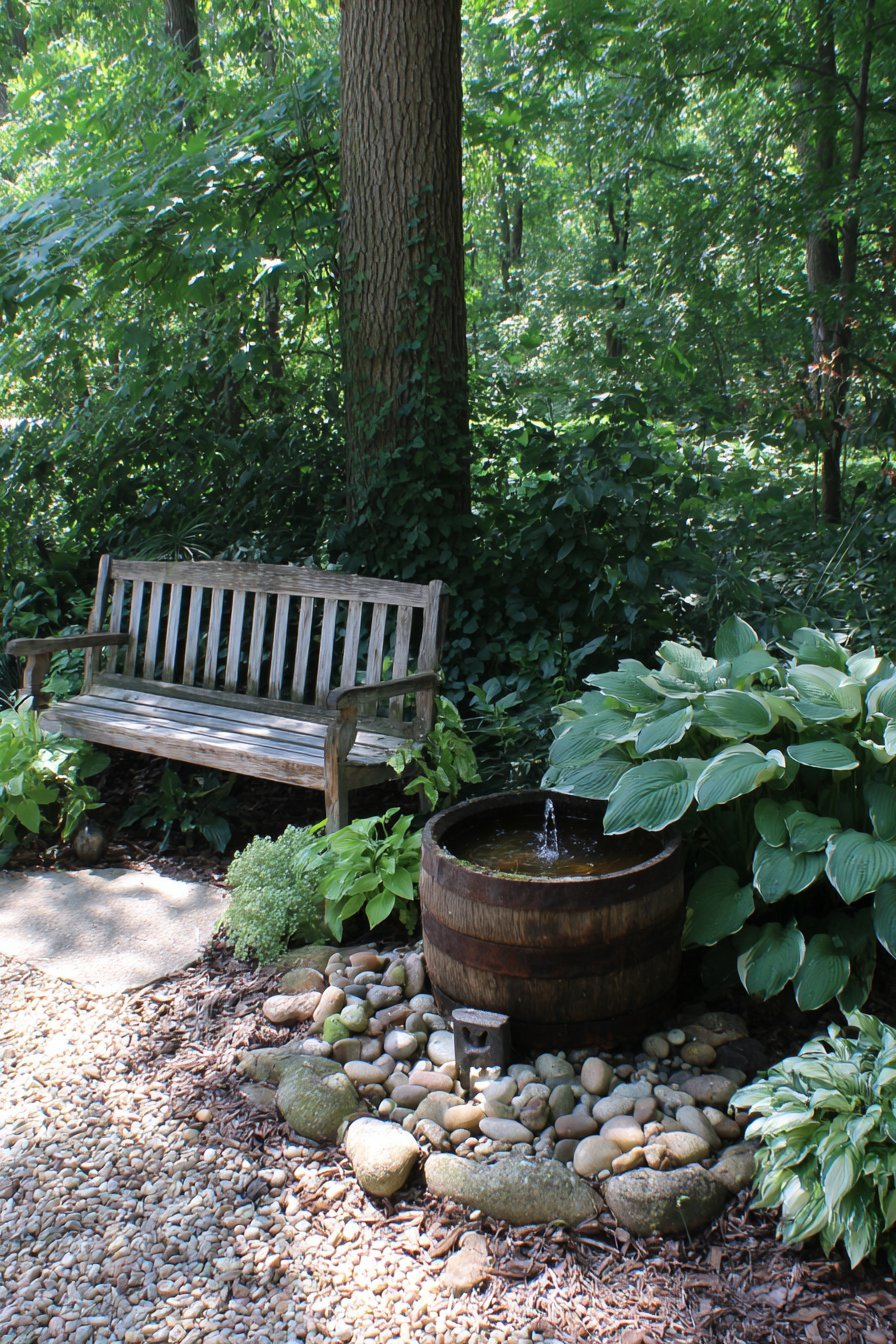
River rocks around the fountain prevent water splash from creating mud. Hostas thrive in the moist microclimate created by the fountain. The weathered bench shows honest aging that adds character. Together these elements create a contemplative corner in the backyard.
Key Design Tips:
- Select half-barrels for instant rustic character in water features
- Use recirculating pumps to minimize water waste and maintenance
- Surround fountains with river rocks for splash control and visual interest
- Plant shade-loving perennials like hostas in fountain microclimates
- Position seating near water features to maximize relaxation benefits
7. Classic Red Storage Shed with Function

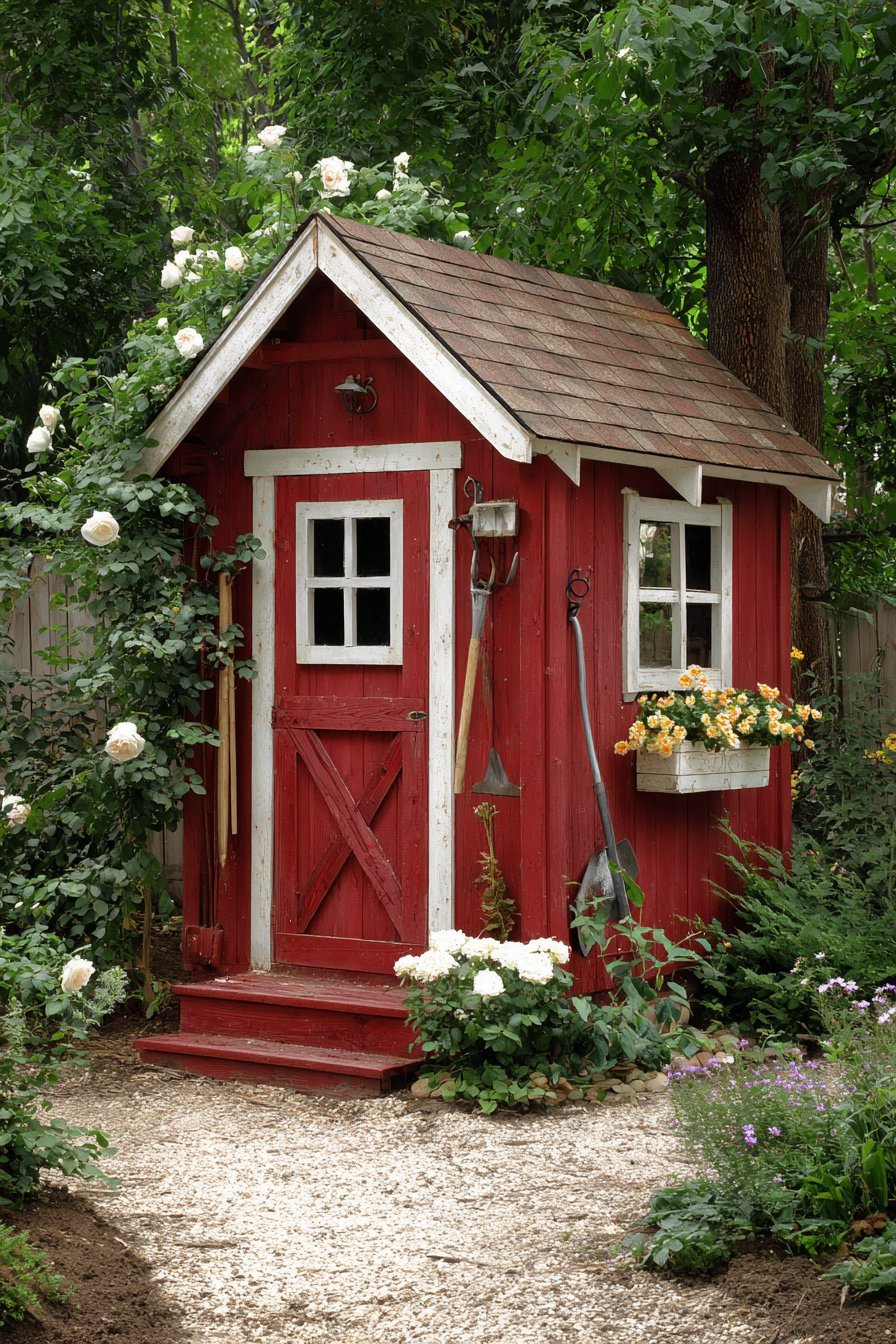
A garden shed painted in classic barn red with white trim serves multiple purposes. Practical storage meets garden workspace in this simple structure. A narrow gravel path leads to the entrance. Basic garden tools hang on exterior hooks for easy access.

Window boxes with cheerful annuals add minimal decoration. Climbing roses grow naturally up one side showing seasonal growth patterns. Natural lighting captures the functional beauty of this backyard structure. Realistic weathering adds character and authenticity.

The shed design prioritizes function while maintaining visual appeal. Exterior tool storage keeps frequently used items accessible. The gravel path prevents mud tracking during wet weather. Window boxes soften the structure without requiring extensive landscaping.
Key Design Tips:
- Paint sheds in traditional colors that complement existing structures
- Install exterior hooks for frequently used tools and equipment
- Add window boxes to soften hard architectural lines
- Create gravel paths to shed entrances for all-weather access
- Allow climbing plants to grow naturally on shed walls for vertical interest
8. Native Perennial Border Garden

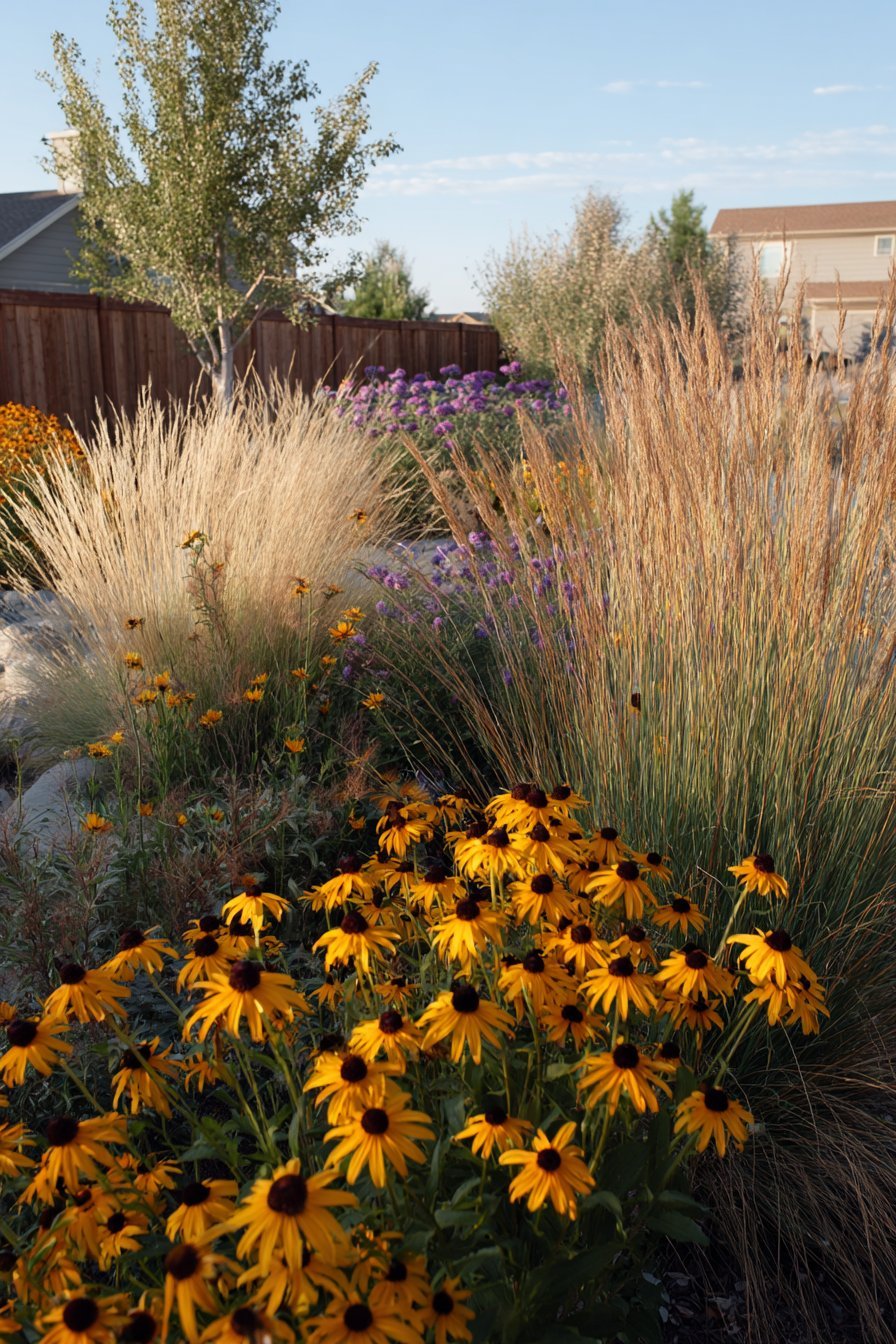
Native perennials planted in naturalistic drifts create a seasonal border along the fence line. Black-eyed Susans, purple coneflowers, and ornamental grasses provide changing interest throughout the year. A basic mulch layer suppresses weeds while retaining moisture. The planting demonstrates water-wise gardening principles.

Wide-angle photography showcases the simple landscaping approach. Afternoon light emphasizes the natural beauty of these low-maintenance plants. The border requires minimal intervention once established. This makes it perfect for busy homeowners.
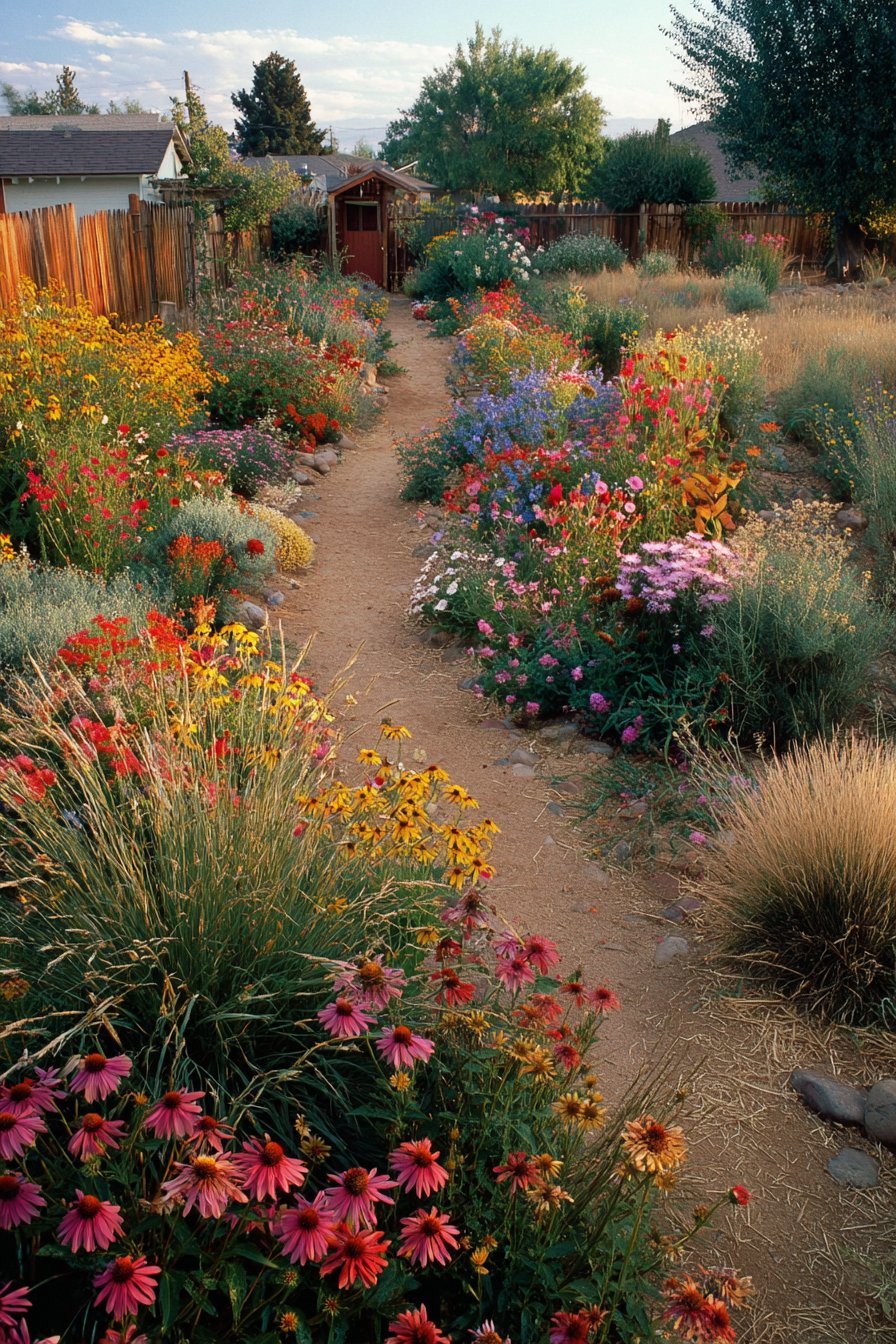
Native plant selection provides multiple benefits beyond beauty. These species support local pollinators and wildlife. They require less water than non-native alternatives. The naturalistic planting style mimics nature rather than fighting against it.
Key Design Tips:
- Choose native perennials adapted to your specific climate zone
- Plant in naturalistic drifts rather than rigid rows for authentic appearance
- Apply organic mulch to suppress weeds and retain soil moisture
- Select plants with different bloom times for season-long interest
- Allow grasses and perennials to self-seed naturally for fuller plantings
9. Rope Hammock Relaxation Station
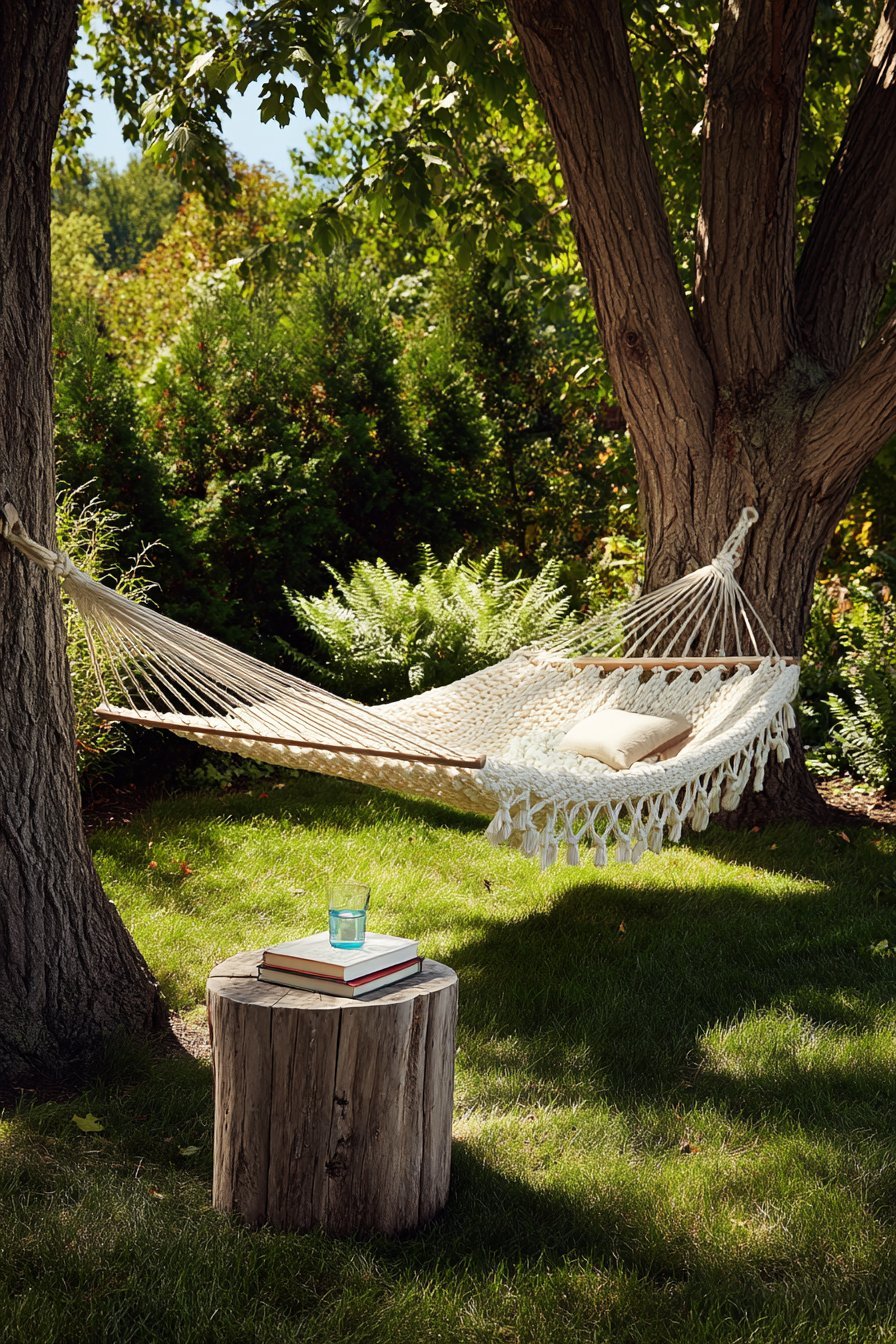
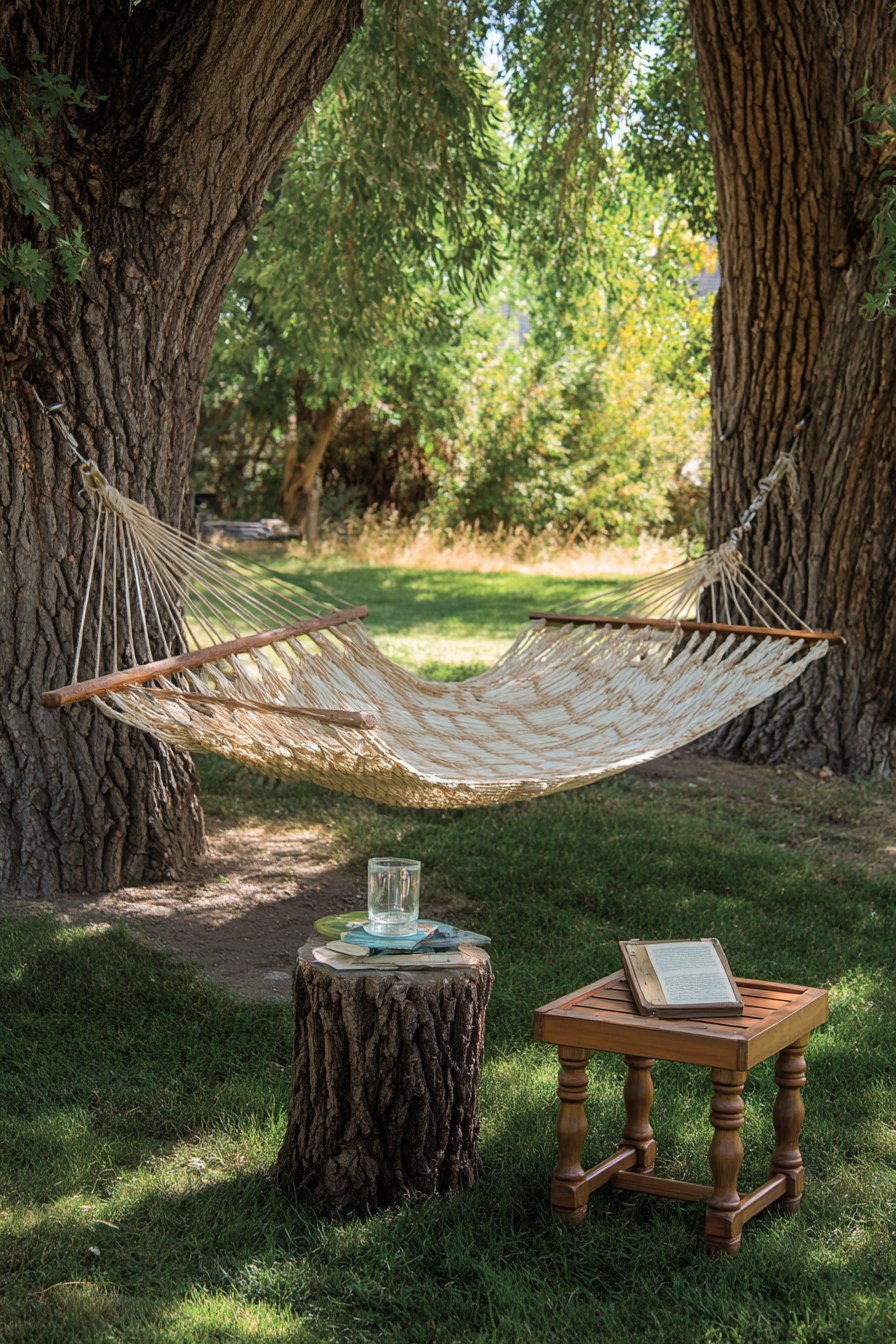
Two sturdy trees support a rope hammock showing slight weathering from outdoor use. A small side table made from a tree stump holds a water glass and paperback book. The surrounding lawn shows natural wear patterns indicating actual use. Dappled sunlight filters through the tree canopy creating natural shade.
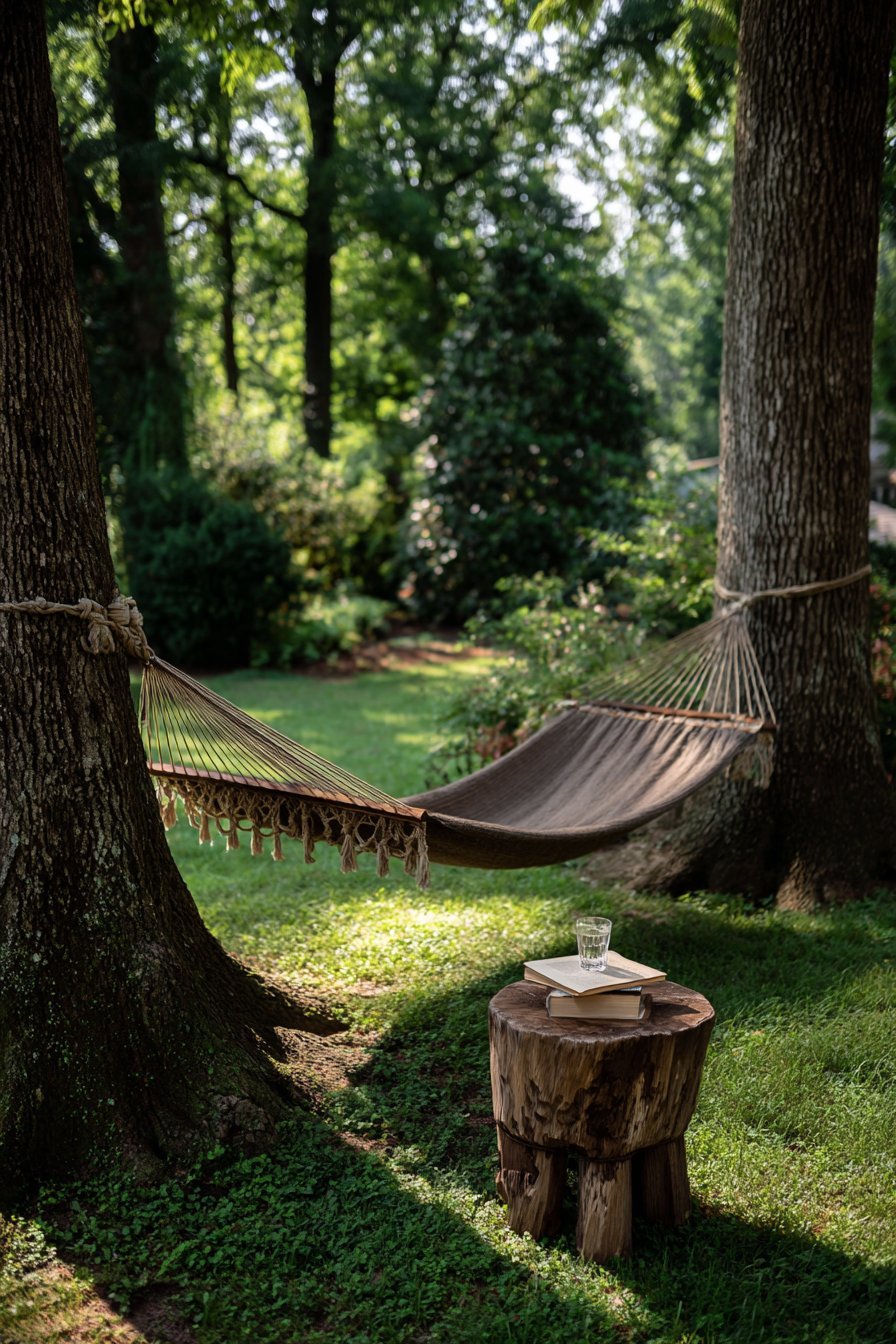
Professional outdoor photography captures the relaxed, unpretentious character of this retreat. The hammock invites afternoon naps and quiet reading time. The tree stump table demonstrates creative use of natural materials. This setup costs little but provides tremendous value.
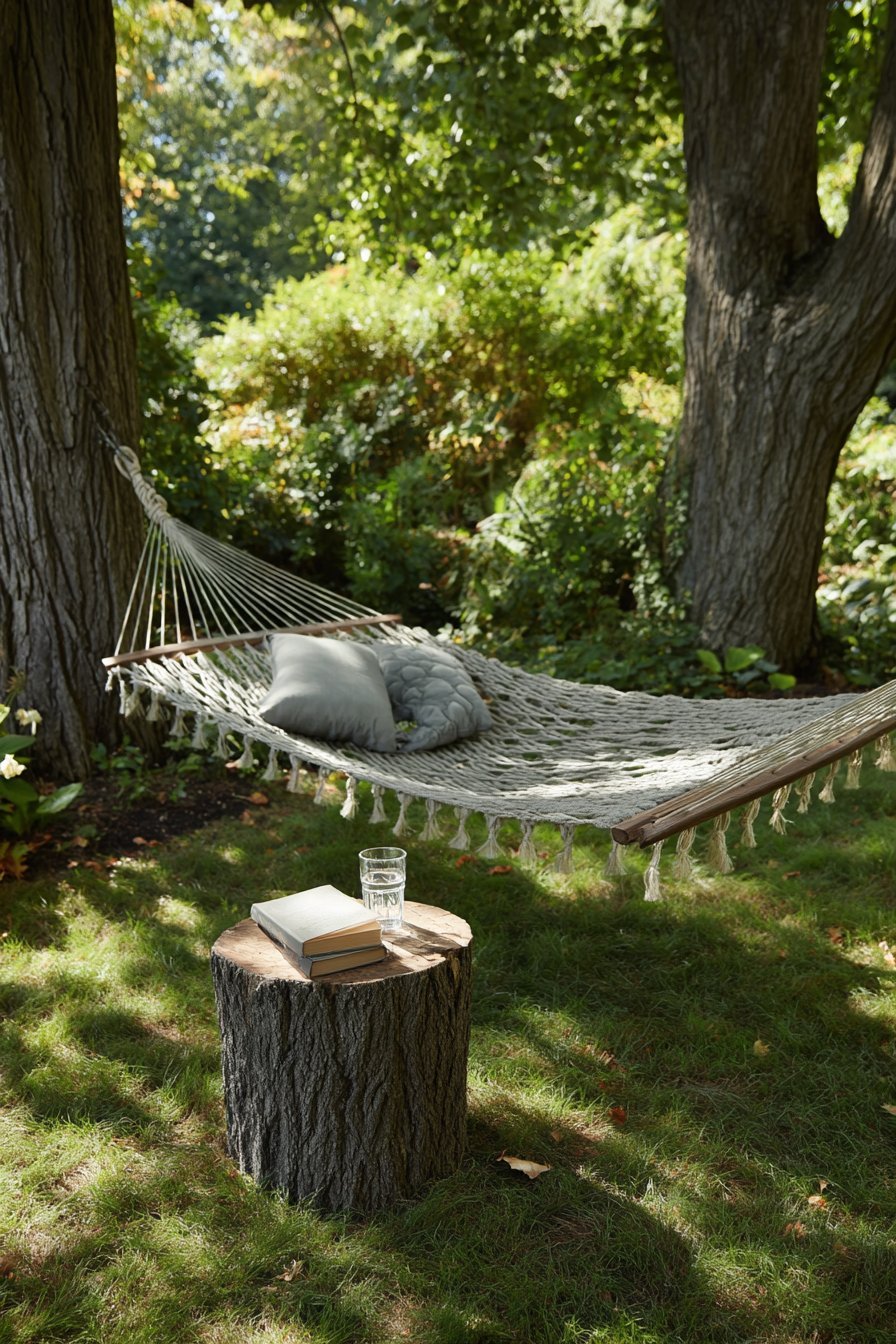
The existing trees require no installation of posts or structures. The hammock hangs at a comfortable height for easy access. Natural shade from the canopy eliminates the need for additional sun protection. This represents simple backyard design at its finest.
Key Design Tips:
- Use existing mature trees as hammock anchor points when possible
- Position hammocks in naturally shaded areas for comfortable daytime use
- Create simple side tables from tree stumps or natural materials
- Allow grass to show realistic wear patterns rather than struggling for perfection
- Select rope hammocks for traditional appearance and good air circulation
10. Productive Vegetable Garden Rows
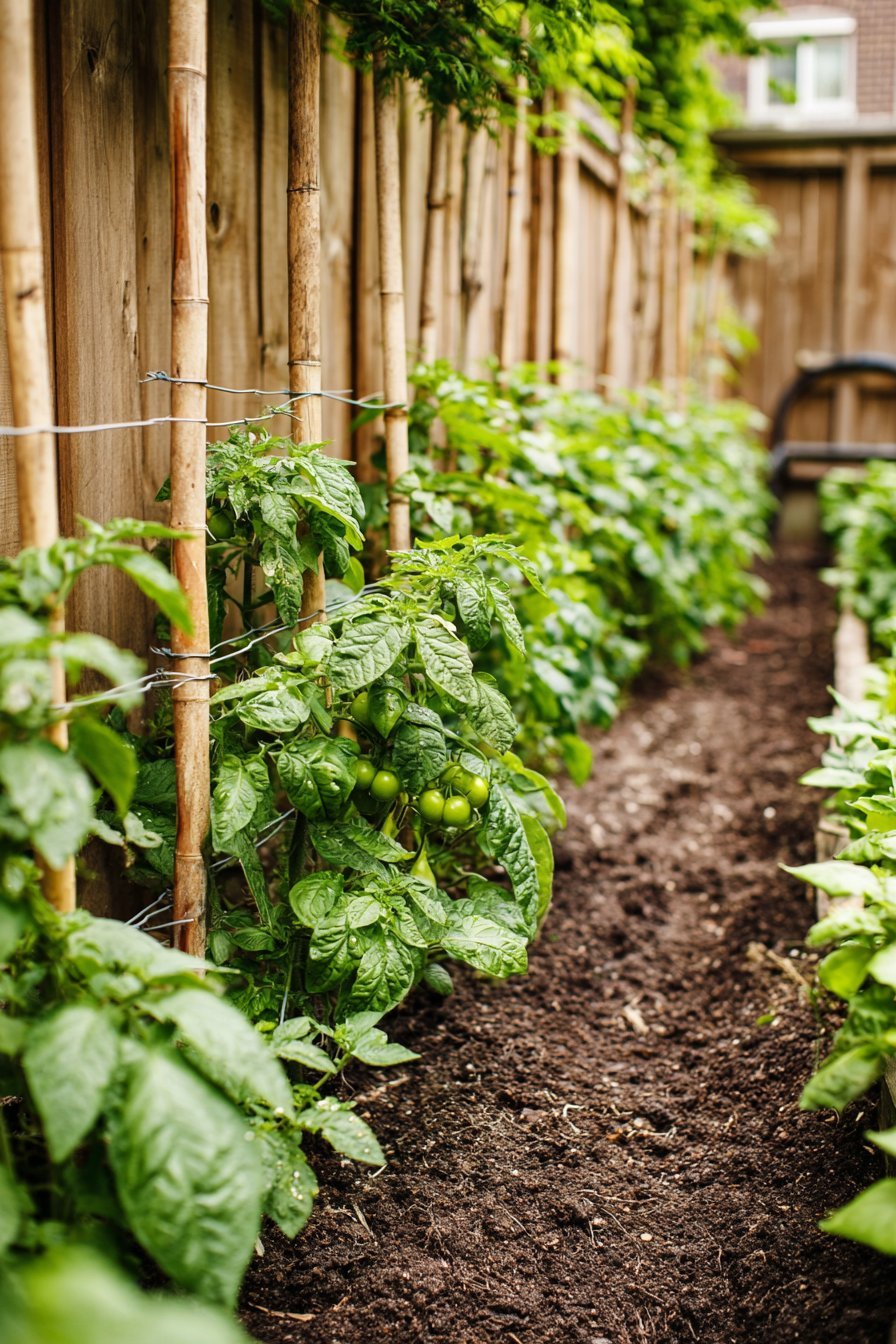
Straight rows marked by wooden stakes and twine create an organized vegetable garden. Tomato plants grow in basic wire cages while bean plants climb simple bamboo teepees. A narrow mulched path provides access for harvesting and maintenance. A rain barrel collects runoff for irrigation.
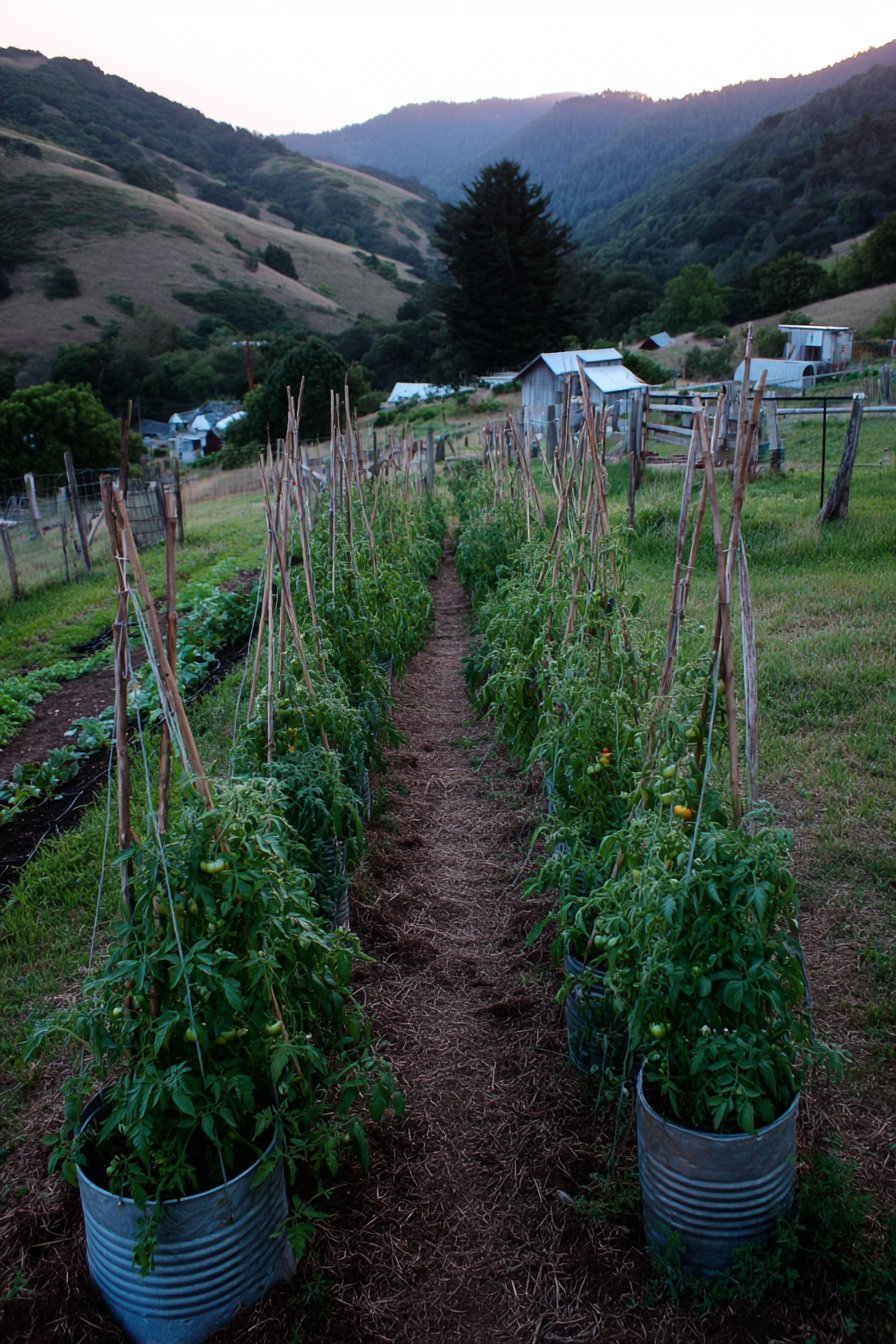
Morning light photography emphasizes the practical, productive nature of this growing space. Realistic plant growth stages add authenticity to the design. The straightforward layout makes crop rotation and care simple. This traditional approach has proven effective for generations.

The rain barrel represents sustainable water management. Wire cages and bamboo teepees provide inexpensive vertical growing support. The mulched path prevents soil compaction while suppressing weeds. Every element serves a practical purpose in this productive space.

Key Design Tips:
- Plant vegetables in straight rows for easy maintenance and harvesting
- Use wire cages for tomatoes and bamboo teepees for climbing beans
- Install rain barrels to collect and conserve irrigation water
- Create mulched pathways to prevent soil compaction in growing areas
- Mark rows with stakes and twine for organized planting patterns
11. Bamboo Privacy Screen Division

Bamboo fencing panels attached to pressure-treated posts create functional privacy screening. Climbing vines are beginning to establish along the structure. The screen divides the yard into functional zones without overwhelming the space. Basic landscape fabric and mulch create a clean foundation.
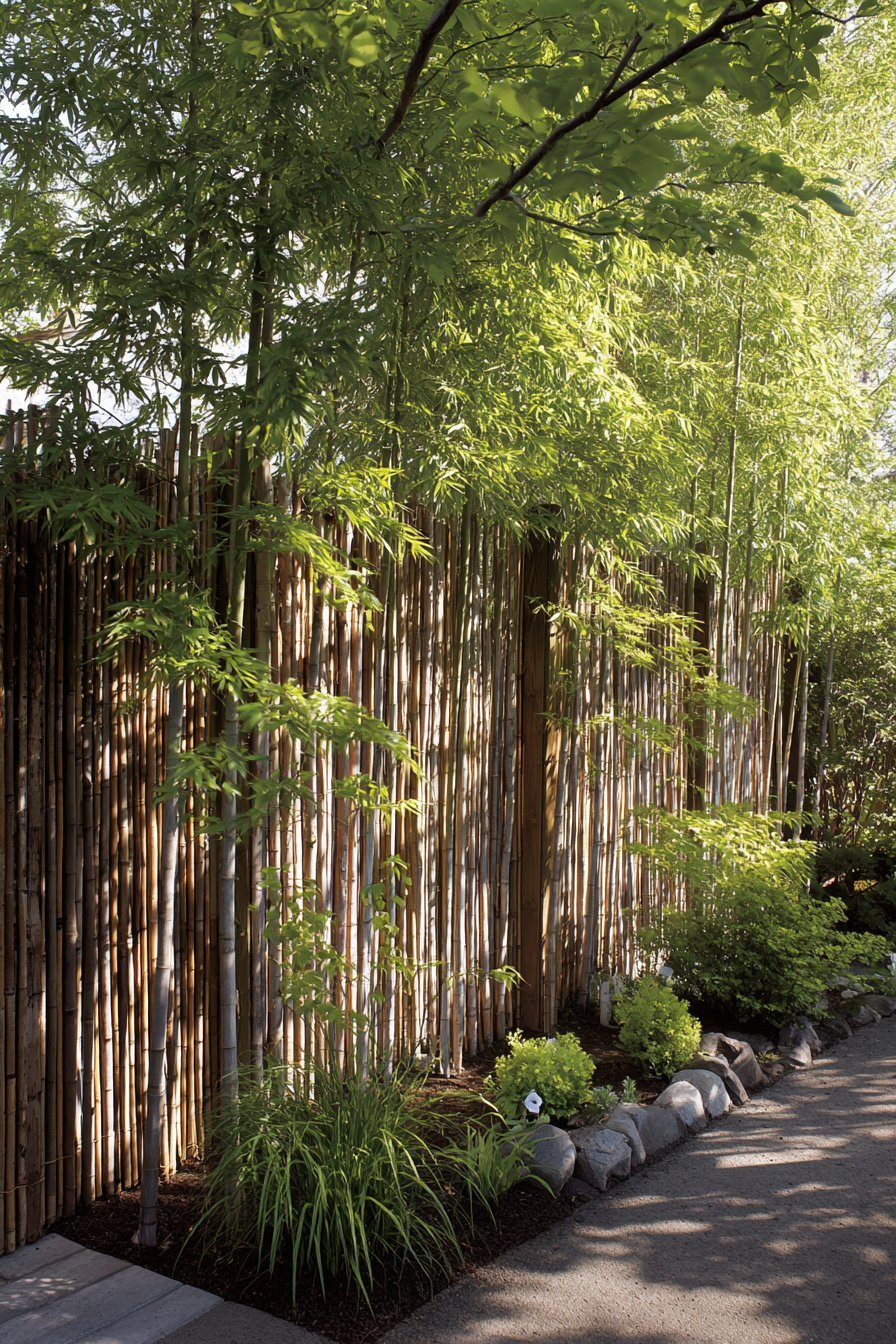
Wide-angle photography demonstrates how this simple solution provides privacy naturally. The bamboo material offers an affordable alternative to solid fencing. As vines mature, they will soften the screen further. The design maintains an approachable aesthetic throughout.

Pressure-treated posts ensure long-lasting support for the bamboo panels. The screening creates intimate outdoor rooms without complete enclosure. Landscape fabric beneath the mulch suppresses weeds effectively. This low-maintenance solution addresses privacy concerns simply.

Key Design Tips:
- Use bamboo fencing for affordable, sustainable privacy screening
- Install pressure-treated posts for long-lasting structural support
- Plant climbing vines to soften hard architectural lines over time
- Apply landscape fabric and mulch to create clean, low-maintenance foundations
- Position screens to divide yards into functional zones
12. Three-Bin Composting System

Three connected wooden bin systems show various decomposition stages. The bins are constructed from basic pallet wood with chicken wire sides. A nearby small tool rack holds a pitchfork and garden spade. The setup demonstrates practical waste reduction in a compact footprint.
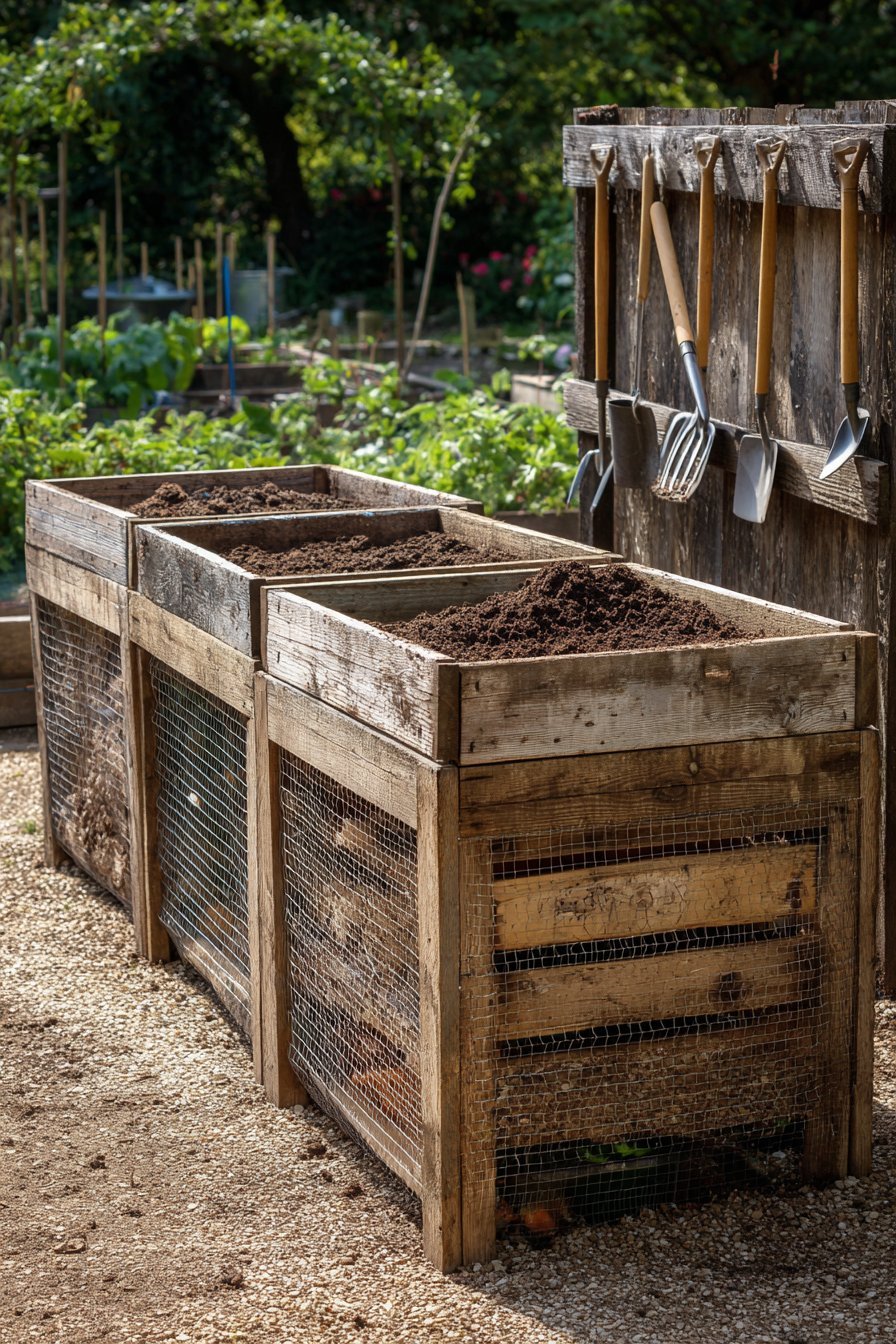
Natural outdoor photography captures the functional simplicity of this composting system. Realistic material aging adds authenticity to the structure. The three-bin design allows for proper composting rotation. This turns kitchen and yard waste into valuable soil amendment.

Pallet wood construction keeps costs minimal while providing adequate structure. Chicken wire sides allow necessary airflow for decomposition. The dedicated tool storage keeps equipment organized and accessible. This setup transforms waste into a valuable garden resource.

Key Design Tips:
- Build three-bin systems to maintain proper composting rotation
- Use reclaimed pallet wood for affordable construction materials
- Add chicken wire sides to allow airflow while containing materials
- Keep composting tools stored nearby for convenient daily use
- Position compost bins in discreet areas with good drainage
13. Flagstone Pathway with Natural Joints
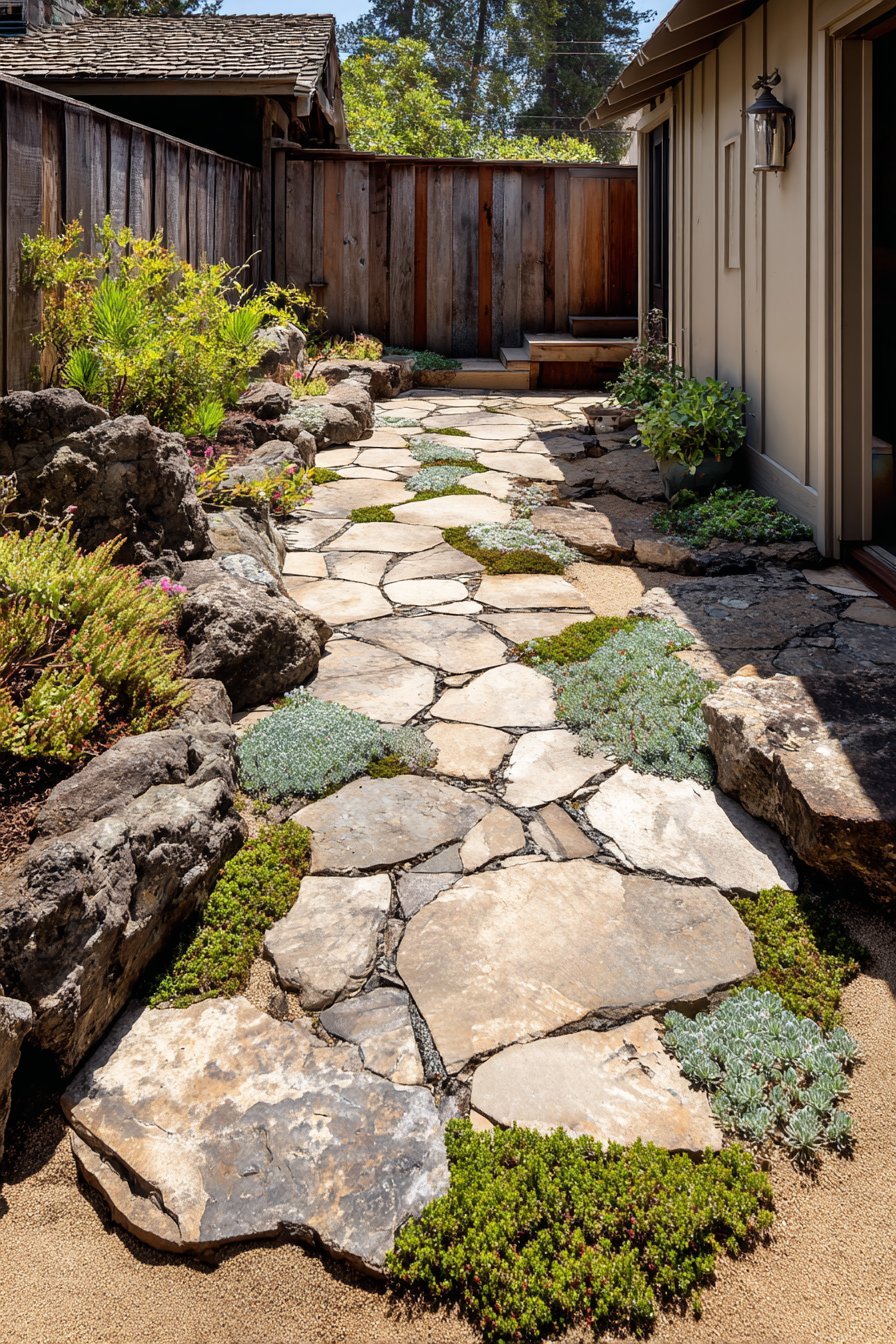
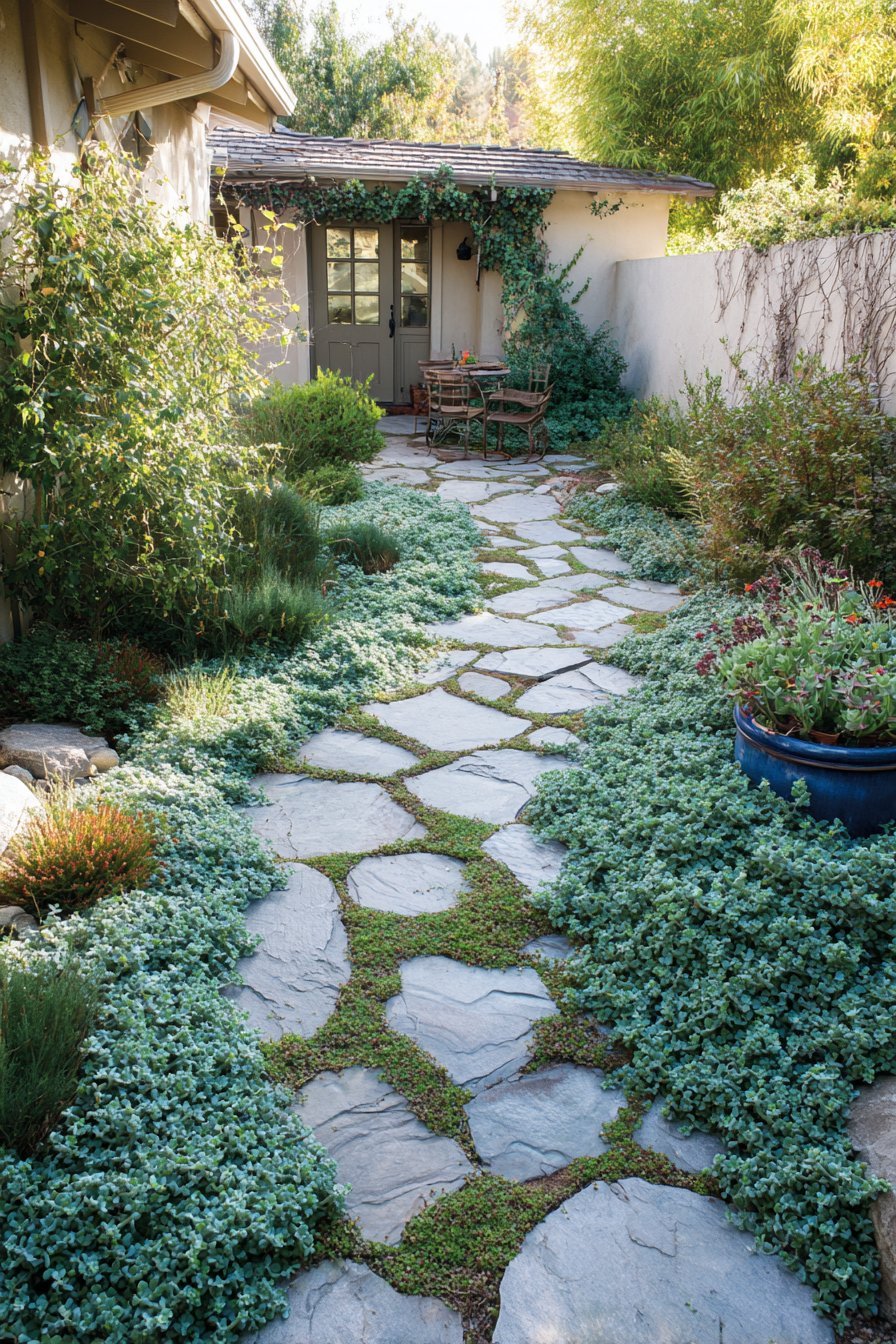
Irregularly shaped flagstone pieces create a charming pathway. Grass grows naturally between the joints adding organic texture. The path connects the patio to the garden shed following a gentle curve. Low-growing sedum and creeping jenny soften the edges organically.
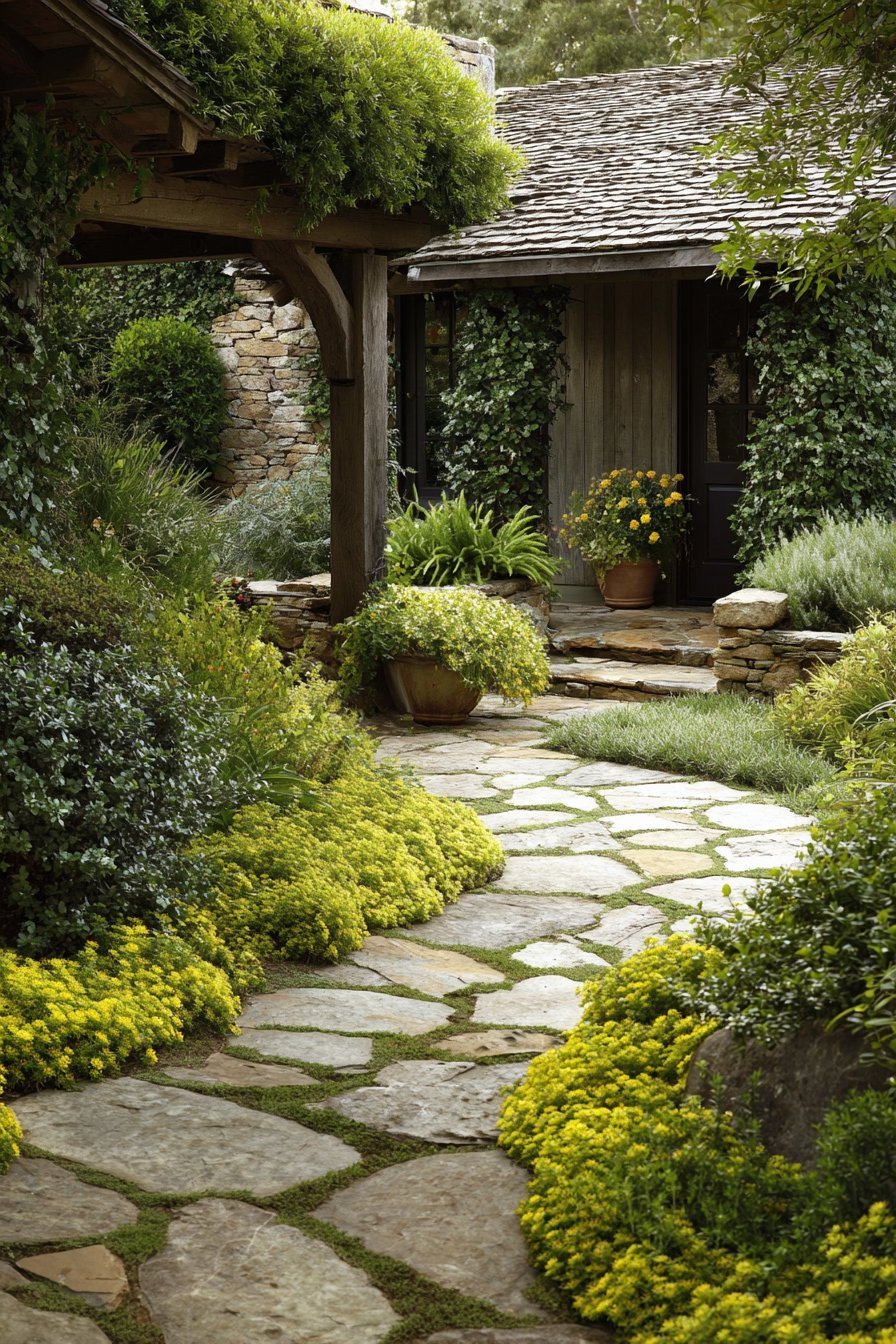
Afternoon sunlight highlights the textural variations in the stone surfaces. Professional landscape photography showcases the accessible, DIY-friendly nature of this element. The pathway provides stable footing while maintaining a natural appearance. This represents achievable hardscaping for homeowners.
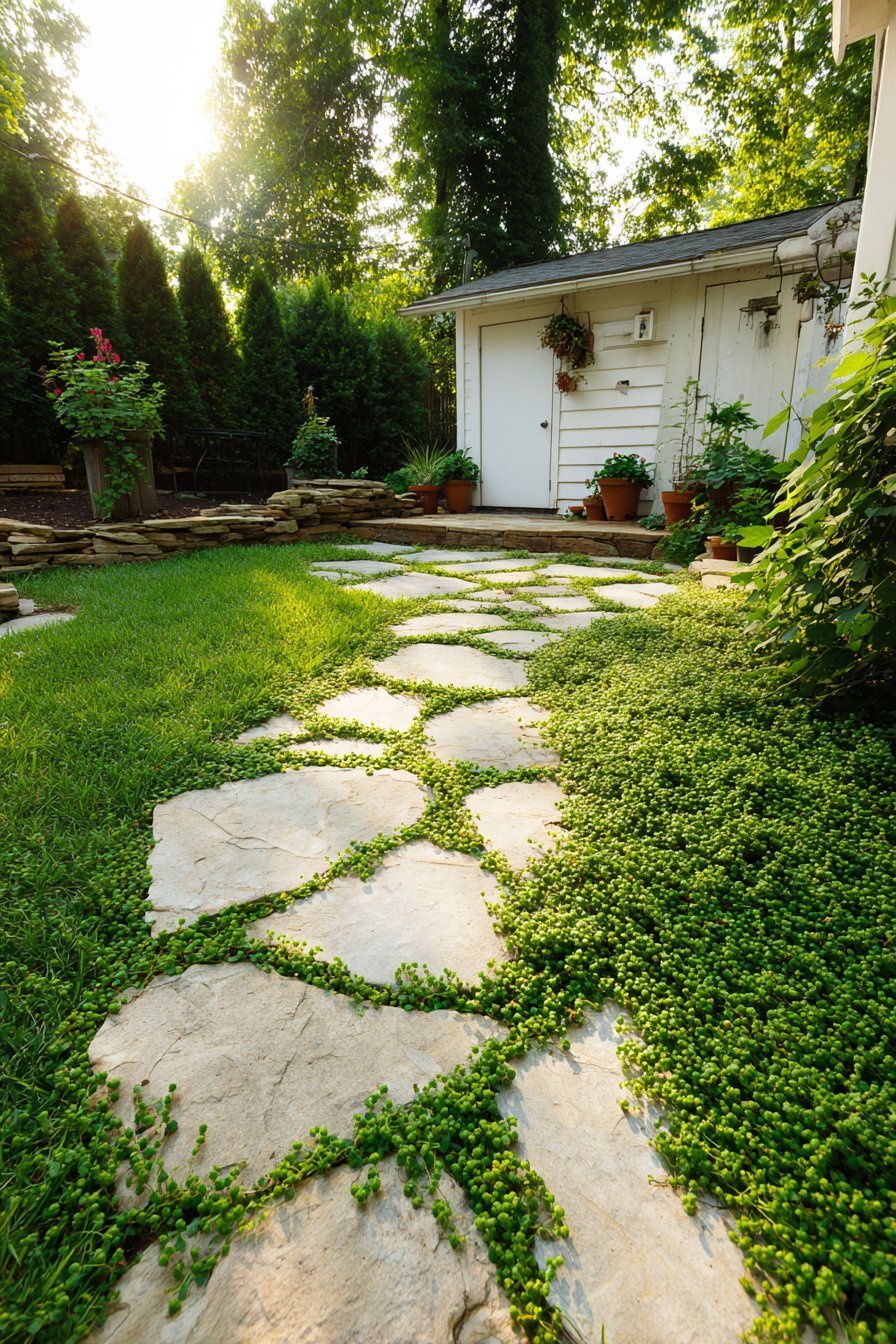
Flagstone installation requires minimal specialized tools or skills. Allowing grass and ground covers between stones reduces material costs. The curved path creates visual interest while directing foot traffic. This design balances function with natural beauty effectively.
Key Design Tips:
- Select flagstone in irregular shapes for natural, organic appearance
- Allow grass or ground covers to grow between stones naturally
- Create gentle curves in pathways for visual interest and flow
- Use flagstone for DIY-friendly hardscaping that doesn’t require mortar
- Plant low-growing perennials along pathway edges for softening
14. Traditional White Chicken Coop

A chicken coop painted in traditional white with a green shingled roof provides practical homesteading. The structure includes easy-access nesting boxes and a small covered feeding area. Free-range chickens occupy the surrounding grassy area naturally. A basic wooden fence provides enclosure.
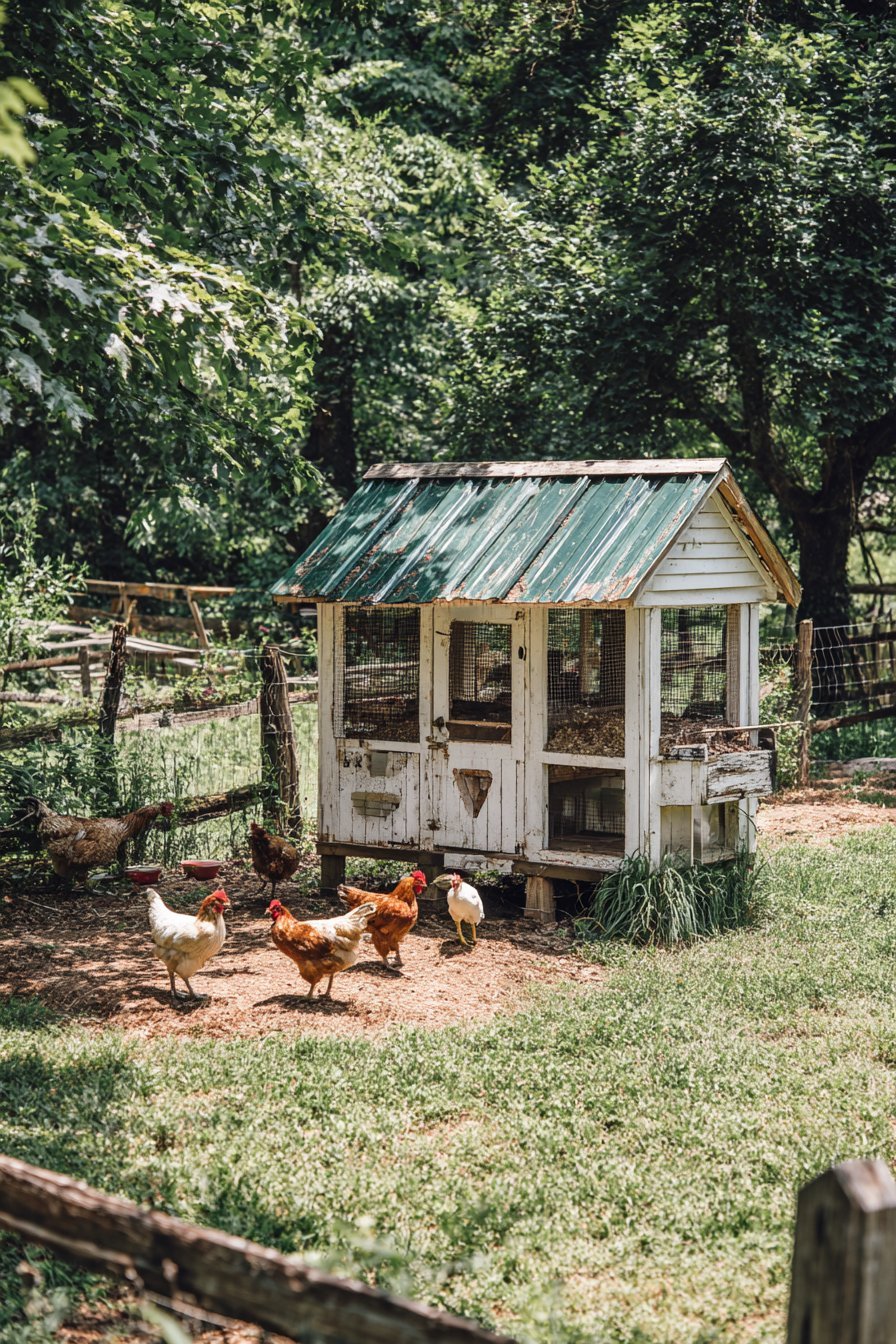
Natural lighting photography captures the functional homesteading aspect authentically. The coop demonstrates practical design for small-scale poultry keeping. Realistic animal husbandry details add credibility to the design. This represents a growing trend in backyard food production.

The coop design balances chicken welfare with owner convenience. External nesting box access simplifies egg collection. The covered feeding area protects food from weather. The surrounding fence keeps chickens contained while allowing supervised free-ranging.

Key Design Tips:
- Paint coops in light colors to reflect heat in summer months
- Design external nesting box access for convenient egg collection
- Include covered feeding areas to protect food from rain
- Provide adequate fencing for predator protection and containment
- Allow supervised free-range time for healthier, happier chickens
15. Brick Grill Station Outdoor Kitchen
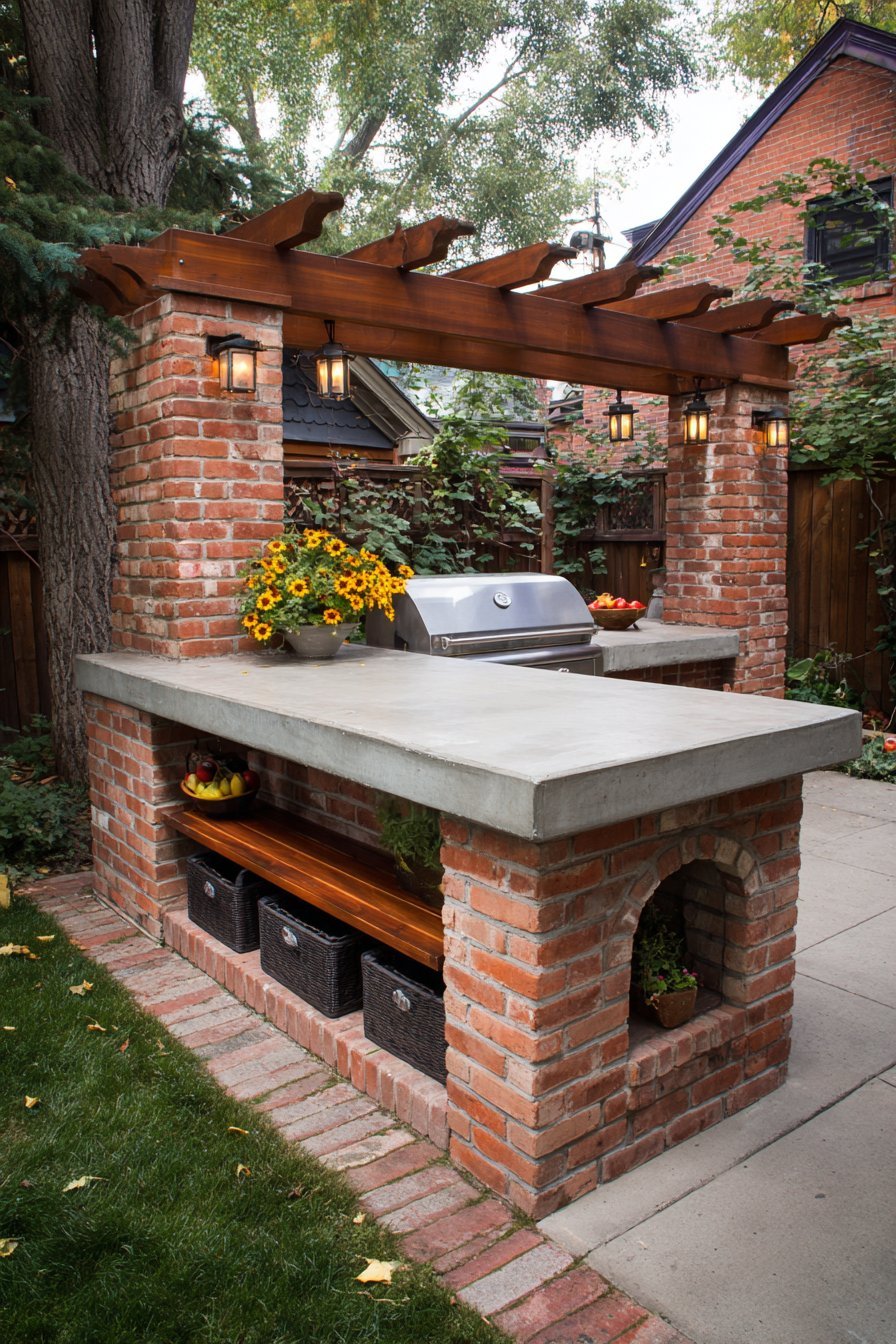
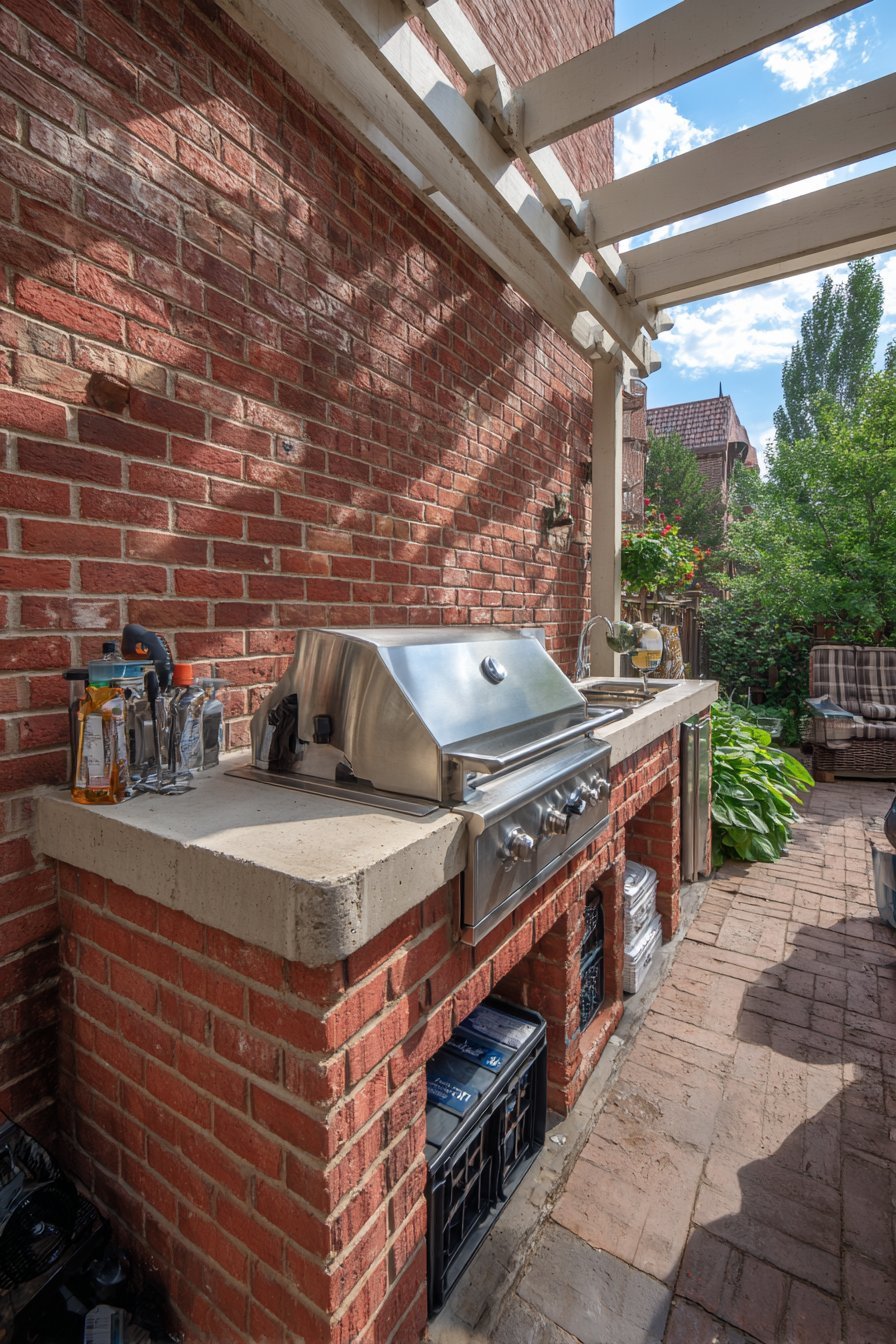
A basic brick grill station with concrete countertop provides outdoor cooking space. Open shelving below stores grilling tools and supplies. Weather-resistant storage bins protect equipment from elements. A small prep sink with simple plumbing connects to the outdoor spigot.
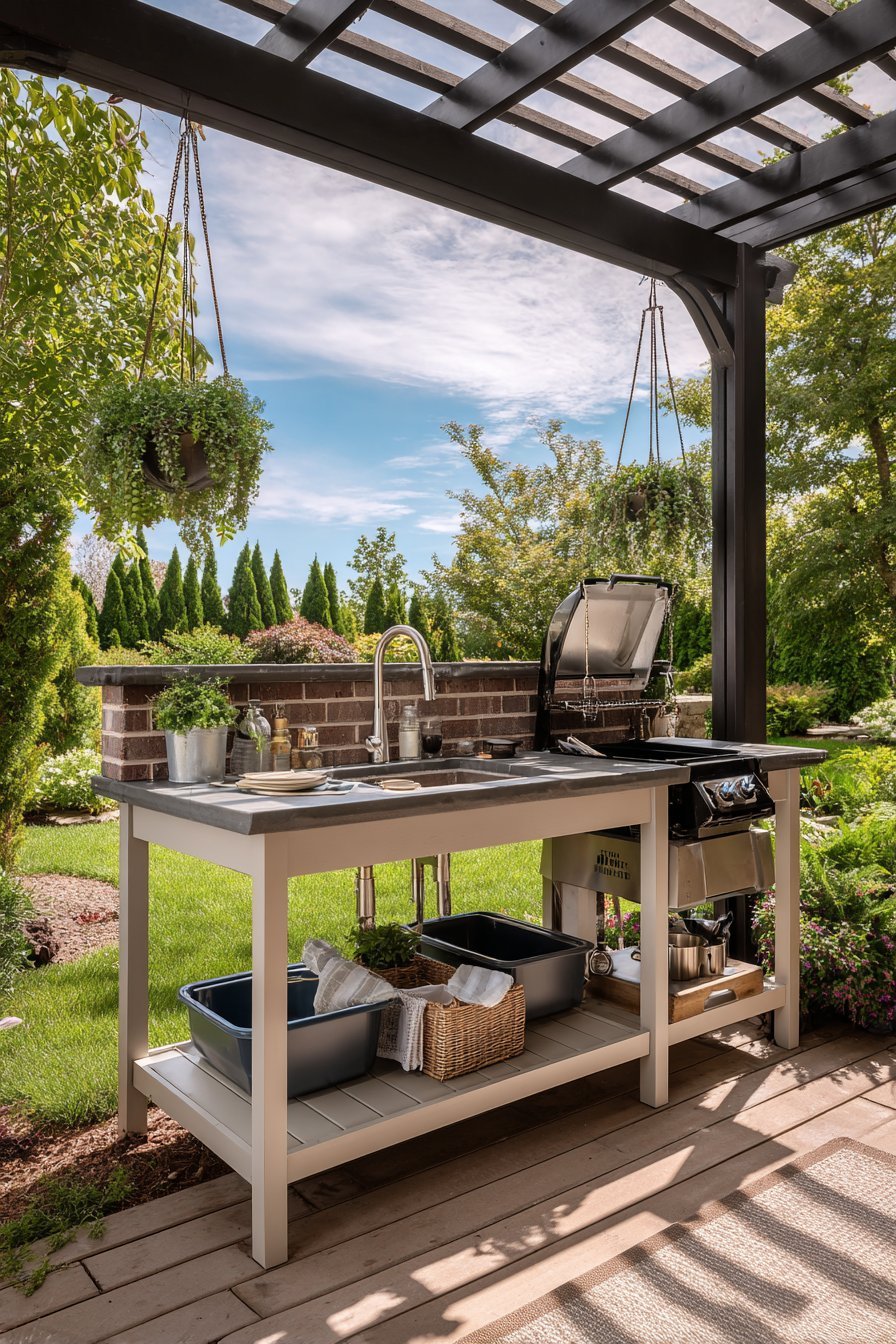
The setup is covered by a basic pergola providing shade. Wide-angle photography shows the practical cooking functionality clearly. This represents accessible outdoor kitchen design without expensive appliances. The focus remains on essential cooking and prep functions.
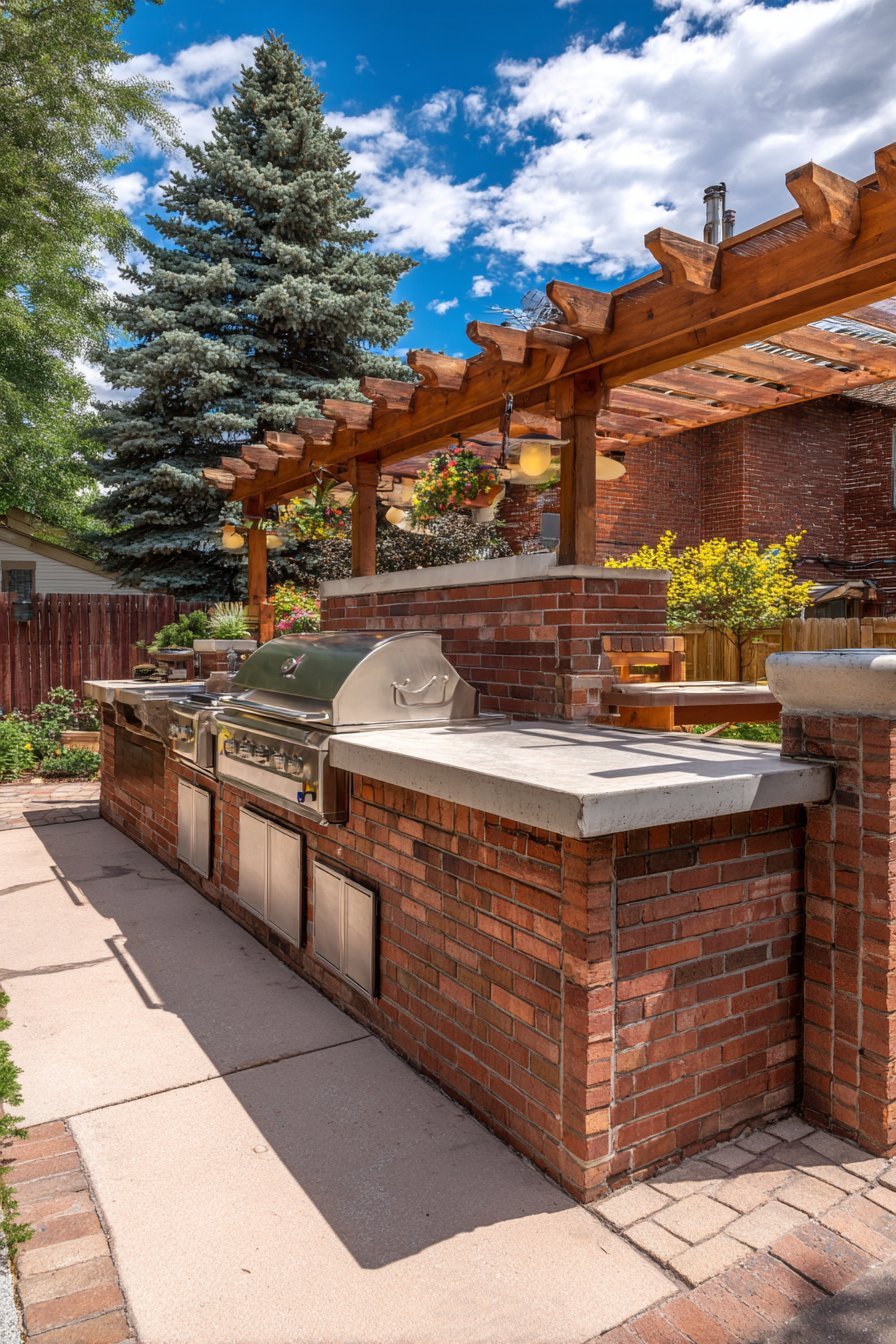
Brick construction offers durability and heat resistance for grilling. The concrete countertop provides ample prep space for food preparation. The pergola shade makes summer cooking more comfortable. This functional design enhances outdoor entertaining capabilities.
Key Design Tips:
- Build grill stations with brick for heat resistance and longevity
- Install concrete countertops for durable, weather-resistant work surfaces
- Add basic plumbing to outdoor sinks for convenient food prep
- Use open shelving with weather-resistant bins for organized storage
- Provide overhead shade with simple pergolas for summer cooking comfort
16. Healthy Lawn with Natural Wear
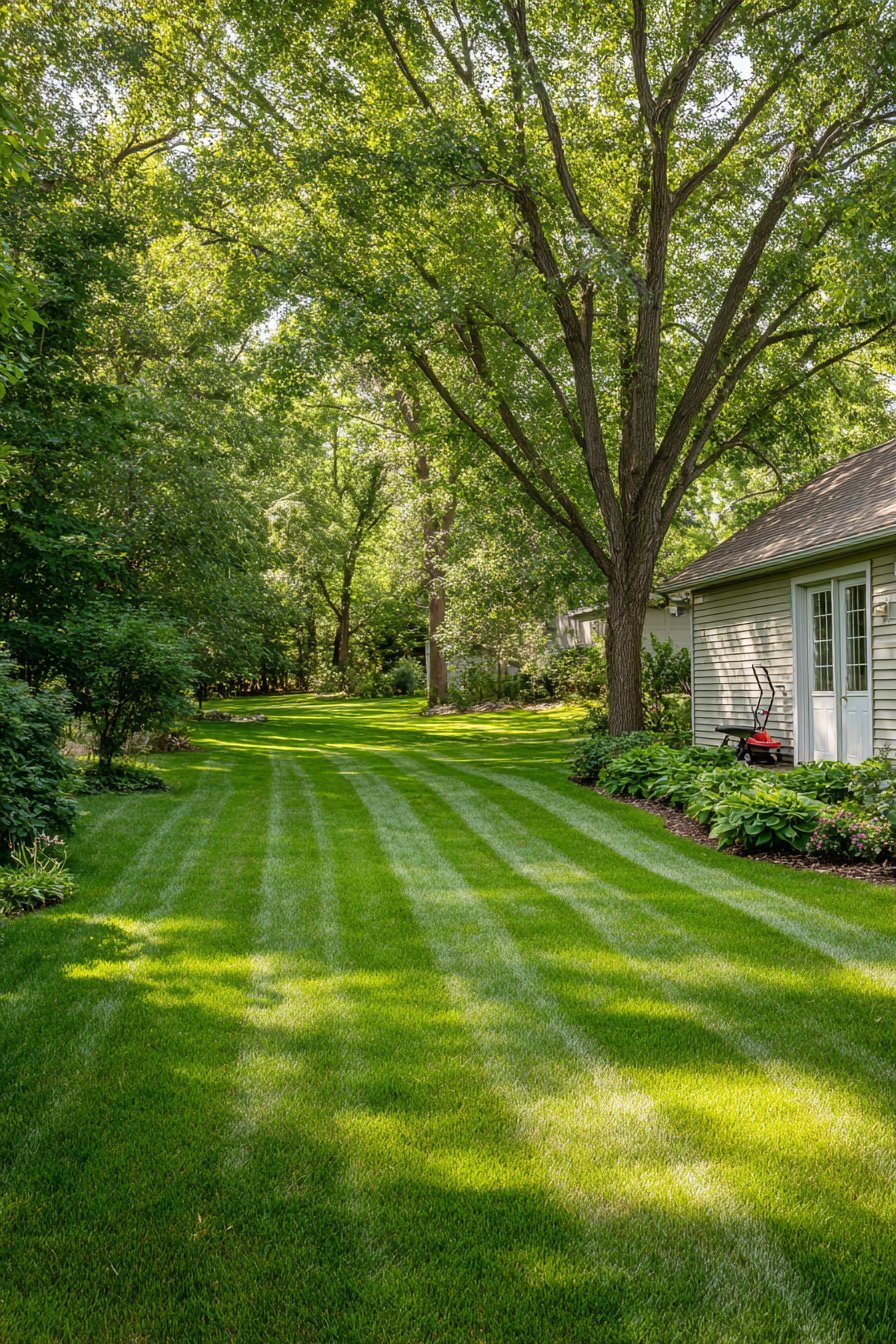
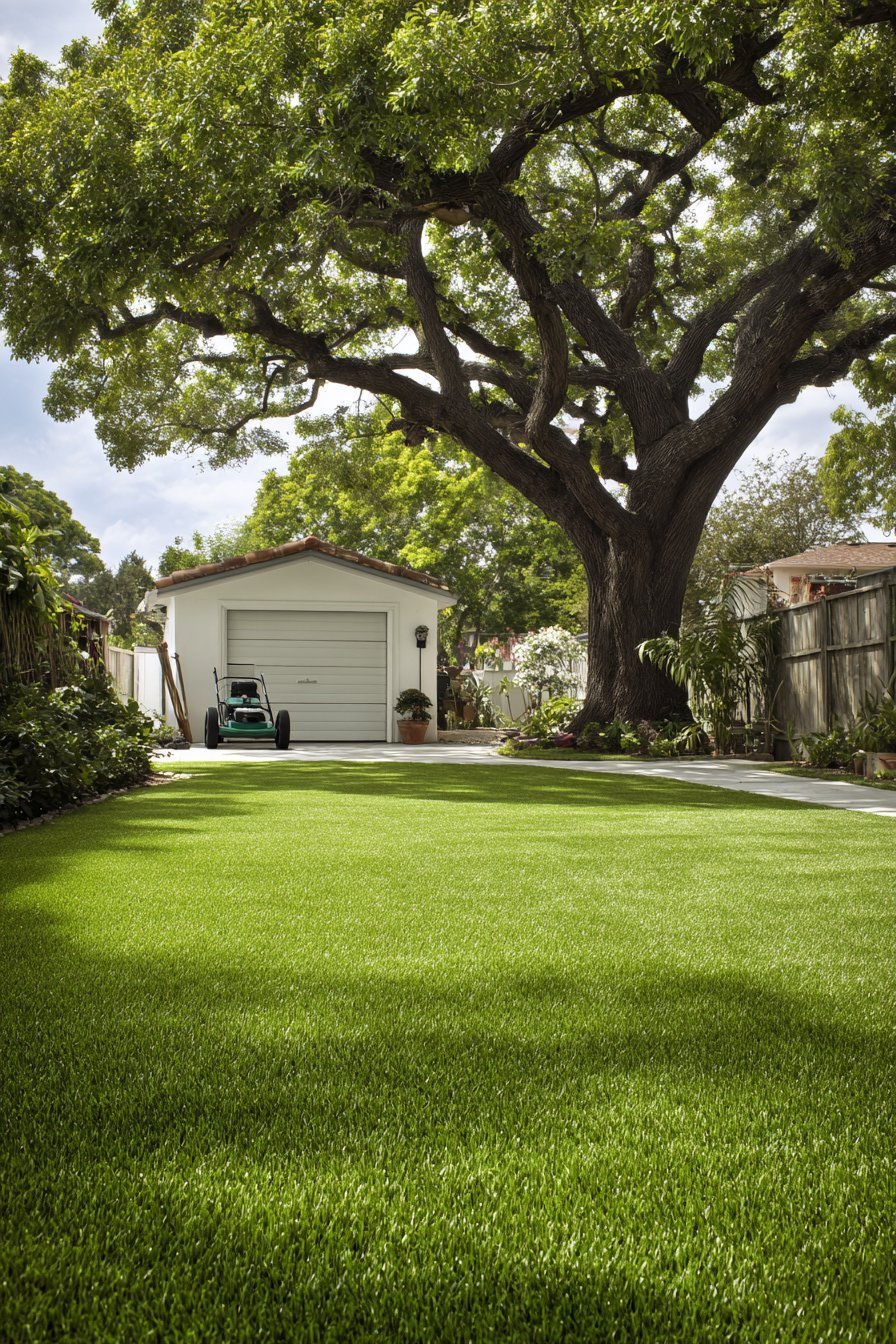
A healthy grass lawn maintained at moderate height shows natural wear patterns. A single mature shade tree provides a focal point and cooling canopy. The edges are defined by basic plastic landscape edging. A manual push mower leans against the garage.
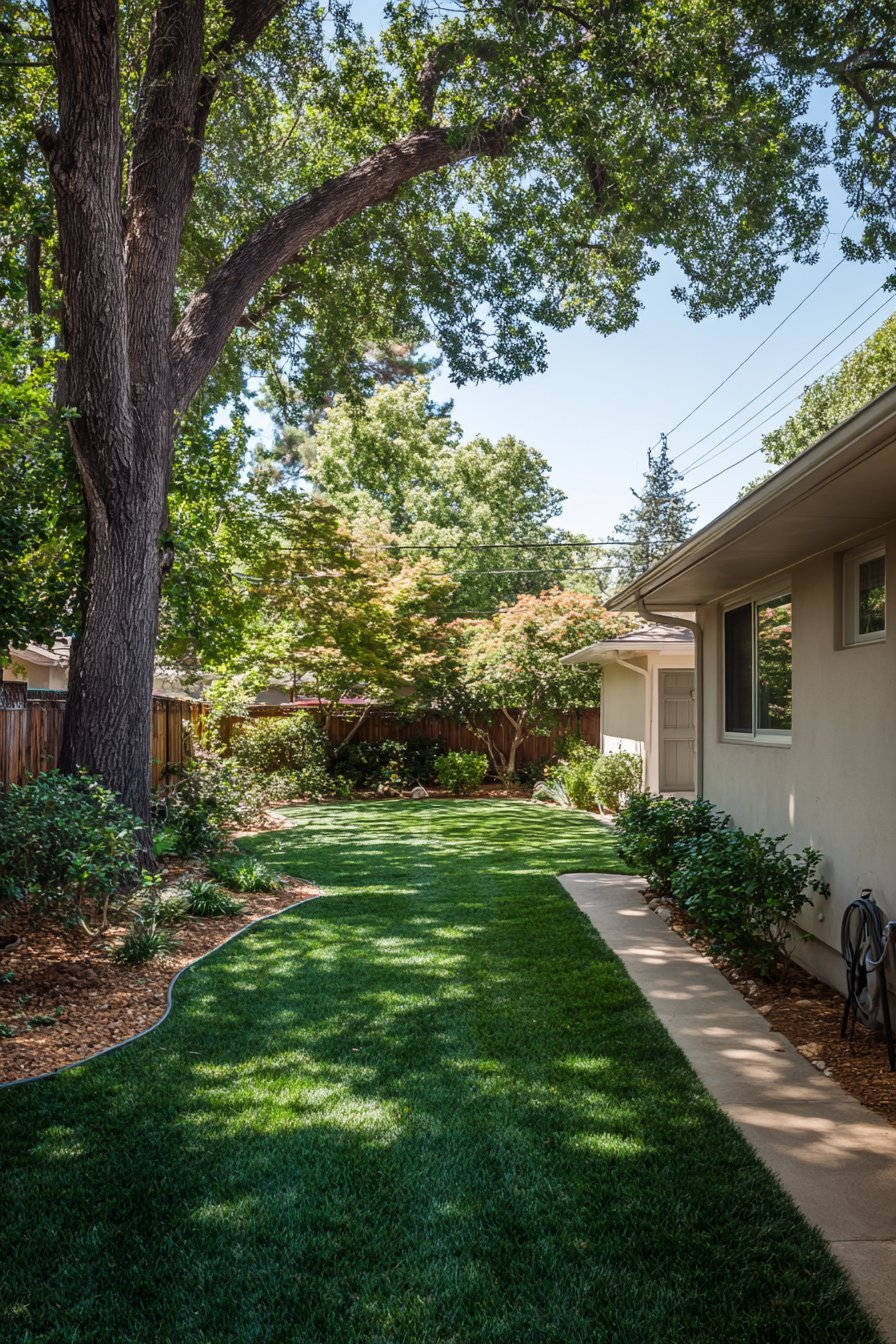
Natural daylight photography captures the straightforward, maintainable beauty of this landscape. The lawn demonstrates that simple can still be beautiful. Realistic wear patterns indicate actual family use. This represents sustainable lawn care practices.
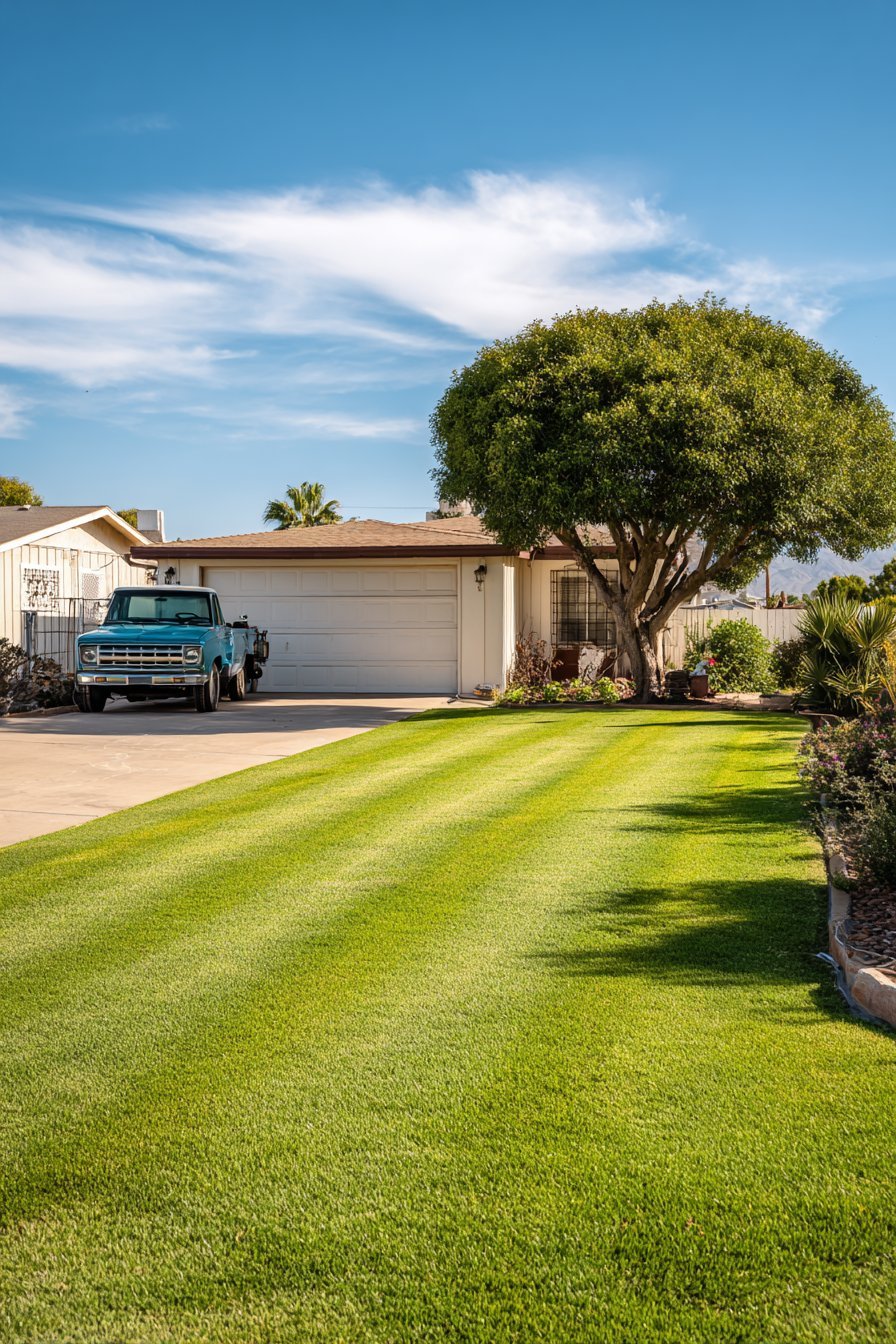
The mature shade tree reduces cooling costs for the home. Basic landscape edging keeps grass contained without expensive materials. The manual push mower suggests sustainable, quiet lawn maintenance. This design celebrates simplicity and functionality equally.
Key Design Tips:
- Maintain grass at moderate heights for healthier, drought-resistant lawns
- Use manual push mowers for sustainable, quiet lawn maintenance
- Install basic plastic edging to define lawn boundaries cleanly
- Plant shade trees for cooling benefits and visual focal points
- Accept natural wear patterns as signs of well-used outdoor spaces
17. Container Garden on Small Patio

Various sized terra cotta and glazed ceramic pots create a container garden. The containers hold a mix of herbs, vegetables, and annual flowers. A basic wooden plant stand provides vertical growing space. Drip trays catch excess water preventing patio staining.
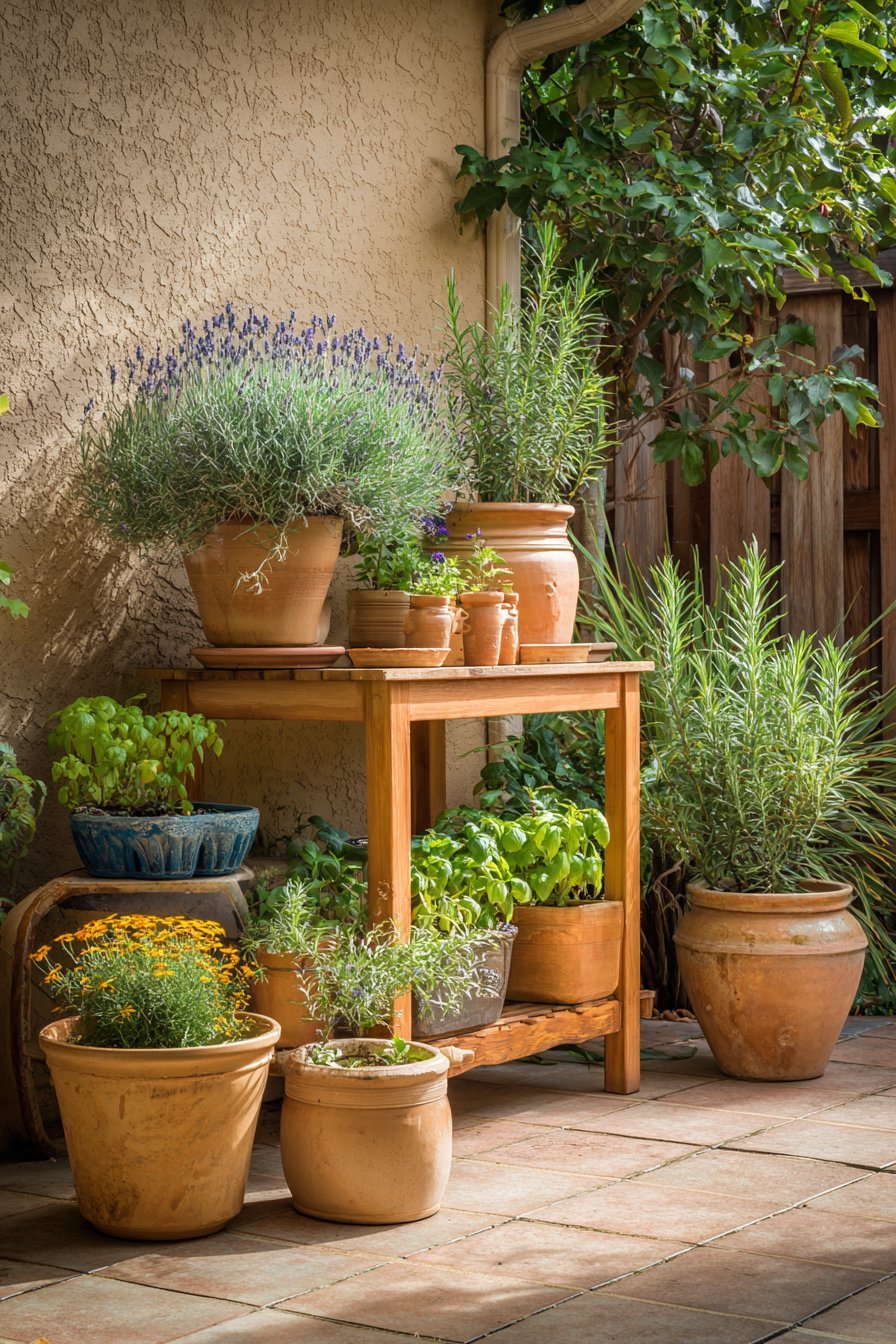
Morning light photography emphasizes the accessible gardening approach. This design suits small spaces and rental properties perfectly. Realistic plant health and seasonal growth add authenticity. Container gardening offers flexibility and mobility advantages.

Terra cotta pots provide excellent drainage for healthy root development. The vertical plant stand maximizes growing space on small patios. Mixing edibles with ornamentals creates visual interest and productivity. This represents gardening adapted to space constraints.

Key Design Tips:
- Use terra cotta pots for superior drainage and root health
- Create vertical growing space with simple wooden plant stands
- Mix herbs, vegetables, and flowers for beauty and functionality
- Place drip trays under containers to protect patio surfaces
- Group containers in functional arrangements for watering efficiency
18. Bird Feeding and Wildlife Station

Several different feeder styles mount on a weathered wooden post. A basic birdbath sits nearby with fresh water and natural stone edges. Native plants selected for wildlife value surround the area. A rustic wooden bench provides an observation spot.
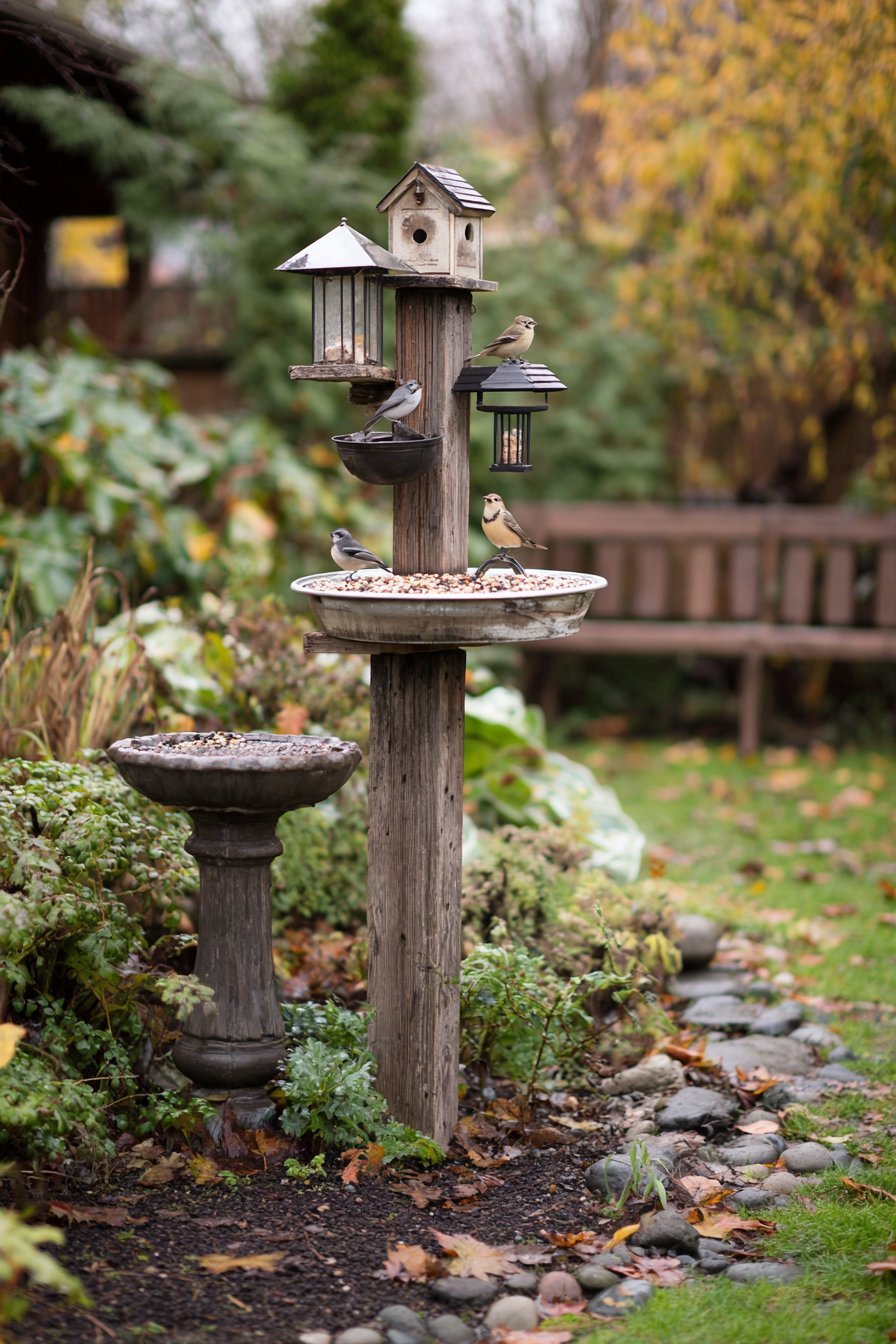
Soft natural lighting captures the simple habitat creation effectively. Realistic bird activity and seasonal elements add authenticity. The feeding station transforms the backyard into a wildlife sanctuary. This represents accessible conservation in residential spaces.

Multiple feeder types attract diverse bird species with different feeding habits. The birdbath provides essential water for drinking and bathing. Native plants offer natural food sources and shelter. The observation bench encourages mindful nature watching.

Key Design Tips:
- Install multiple feeder types to attract diverse bird species
- Position birdbaths near feeders but away from predator hiding spots
- Plant native species that provide natural food sources for wildlife
- Create observation areas with comfortable seating for bird watching
- Maintain feeders and birdbaths regularly for bird health and safety
19. Solar-Powered Evening Lighting

Solar-powered pathway lights line a gravel walkway providing functional illumination. Basic string lights hang between posts defining an outdoor sitting area. The lighting requires no complicated wiring or electrical work. The fixtures show slight weathering from outdoor exposure.
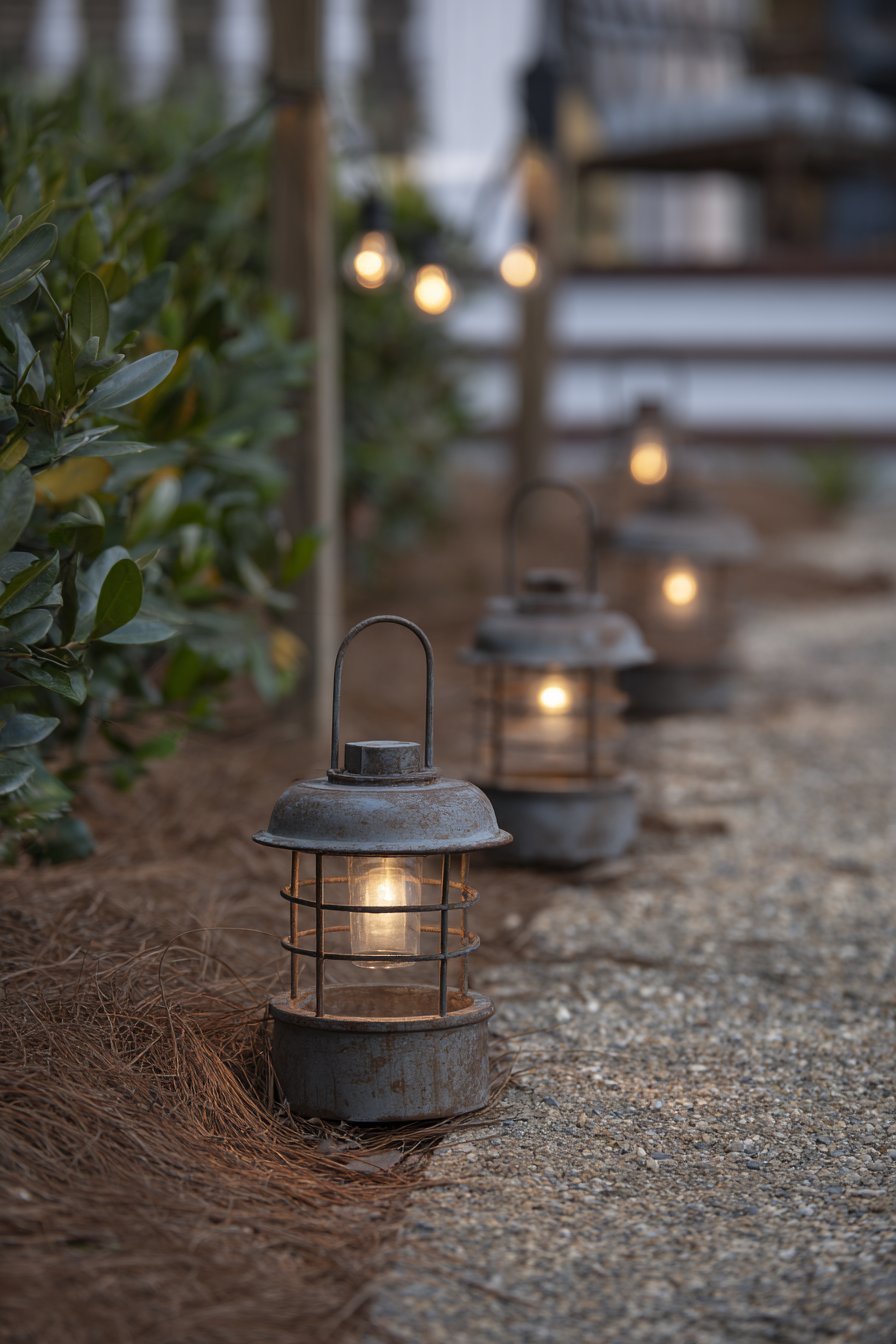
Evening blue hour photography demonstrates how minimal lighting enhances the space. The solar fixtures charge during daylight and illuminate automatically. This represents sustainable outdoor lighting without installation complexity. The unpretentious character remains intact.

Solar pathway lights improve safety along walking routes after dark. String lights create ambient atmosphere for evening gatherings. The lack of wiring simplifies installation dramatically. This lighting scheme balances function with practical limitations.

Key Design Tips:
- Choose solar-powered lights to eliminate wiring and reduce energy costs
- Place pathway lights along walking routes for safety and guidance
- Hang string lights between existing structures to define outdoor rooms
- Accept natural weathering on outdoor light fixtures as part of their character
- Position solar panels to receive maximum daylight for optimal charging
20. Evergreen Border Foundation Planting

Low-maintenance evergreen shrubs like boxwood and juniper provide year-round structure. The shrubs are planted in naturalistic groupings with organic mulch coverage. A basic edging strip separates the planting bed from the lawn. The design requires minimal pruning and seasonal care.
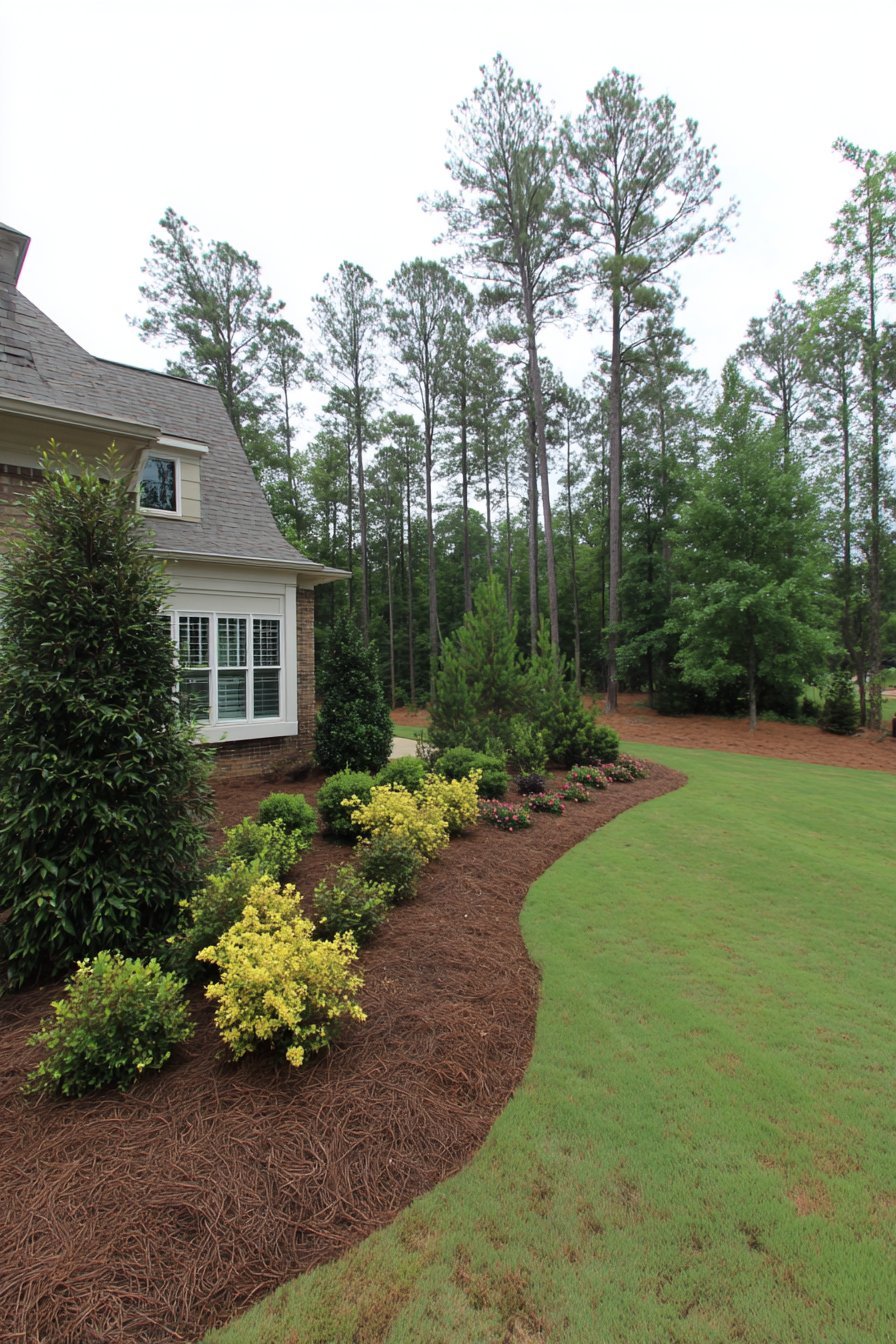
Wide-angle landscape photography captures the timeless simplicity effectively. Realistic plant maturity and spacing add credibility. The foundation planting creates permanent backbone for the landscape. This represents classic landscaping principles applied simply.

Evergreen selections maintain visual interest through all seasons. Naturalistic groupings create more authentic appearance than rigid lines. Organic mulch suppresses weeds while improving soil quality. The minimal maintenance requirements suit busy lifestyles perfectly.

Key Design Tips:
- Select evergreen shrubs for year-round structure and interest
- Plant in naturalistic groupings rather than formal rows
- Apply organic mulch to suppress weeds and retain soil moisture
- Install simple edging to create clean separation between beds and lawn
- Choose low-maintenance varieties that require minimal pruning
Why These Simple Backyard Designs Are the Best
These simple backyard designs represent practical approaches to creating functional outdoor living spaces. Each concept demonstrates thoughtful consideration of natural materials and sustainable practices. The designs showcase versatility that suits different property sizes and homeowner abilities. The emphasis on accessibility makes beautiful backyards achievable for everyone.

The incorporation of natural materials like wood, stone, and native plants adds sustainability to aesthetic appeal. These elements require less maintenance than complex landscaping while providing authentic character. The simple aesthetic creates comfortable environments where families gather naturally without pretension.
Practical functionality guides every design choice presented in these concepts. From vegetable gardens providing fresh produce to fire pits creating gathering spaces, each element serves clear purposes. The designs prioritize longevity through quality materials like cedar, stone, and weather-resistant furnishings. This approach delivers better long-term value than trendy alternatives.
The simple backyard philosophy embraces honest design principles. Visible irrigation systems, weathered finishes, and natural wear patterns reflect authentic outdoor living. These spaces work with nature rather than against it. Native plant selections, rain barrels, and composting systems demonstrate environmental responsibility. The designs prove that simplicity and sustainability complement each other beautifully.

Different approaches suit various lifestyles and interests. Productive vegetable gardens appeal to food-growing enthusiasts. Wildlife habitats attract nature lovers. Entertainment zones serve social butterflies. Each design maintains the simple aesthetic while addressing specific needs. This versatility makes the simple backyard approach universally applicable.
Conclusion
These simple backyard designs demonstrate that beauty and functionality emerge from thoughtful simplicity. The key takeaways include the importance of natural materials, practical functionality, and sustainable practices. Quality elements combined with honest design create outdoor spaces that feel both beautiful and authentic.

Successful simple backyard design balances aesthetic appeal with real-world usability. Start small by adding one element like a fire pit or raised garden bed. Build your outdoor space gradually as time and budget allow. Your dream simple backyard awaits creation through practical planning and accessible implementation.
