

Creating a beautiful backyard transforms your outdoor space into a functional living area. Thoughtful design extends your home’s living space beyond its walls. The right decorating choices make backyards perfect for entertaining, relaxing, and creating memories.
Outdoor spaces deserve the same design consideration as interior rooms. A well-decorated backyard becomes a sanctuary from daily stresses. These twenty designs showcase diverse approaches to outdoor living. From dining areas to play spaces, each concept addresses different needs and preferences.
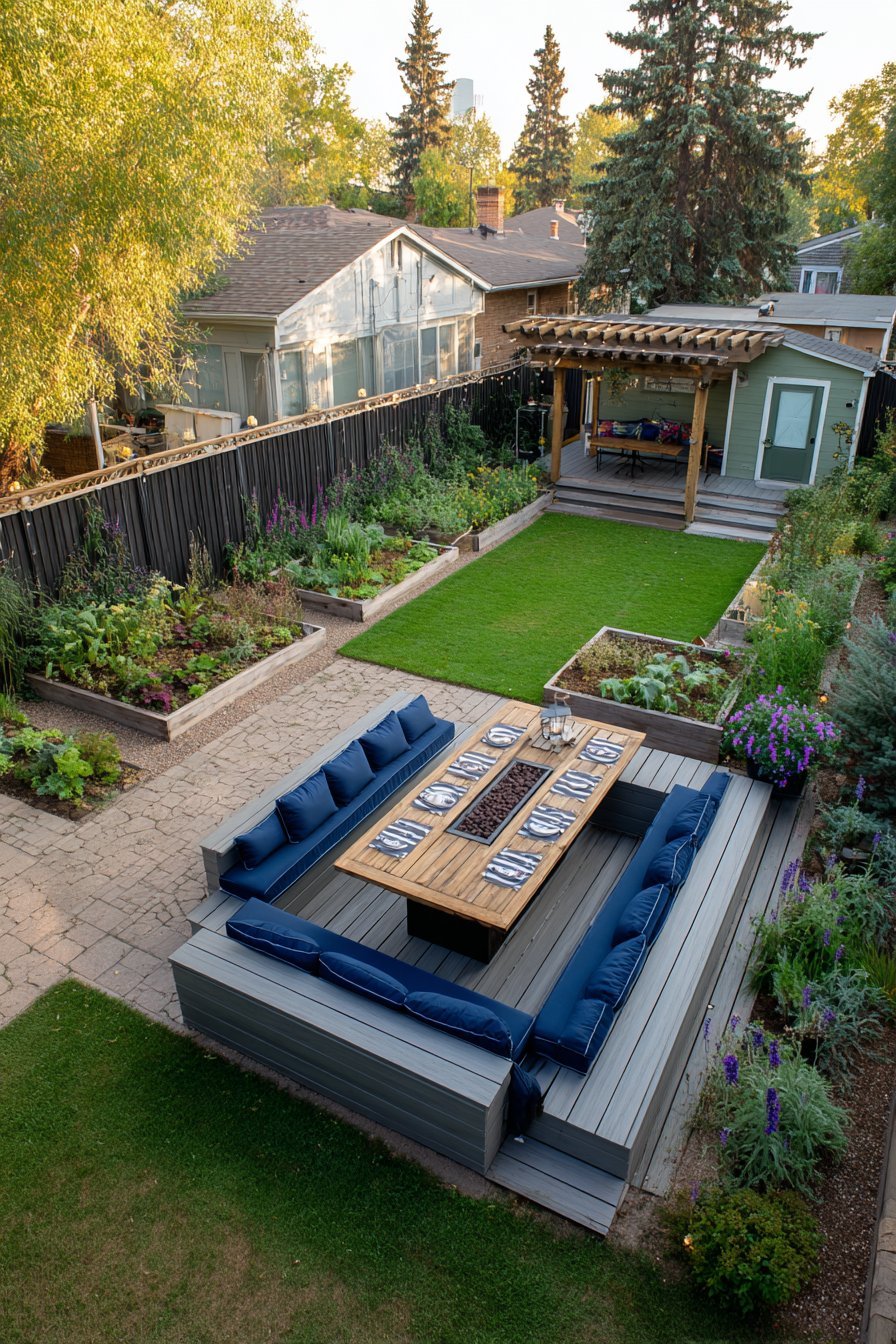
Modern homeowners increasingly view backyards as extensions of their homes. The following designs demonstrate how strategic planning creates multifunctional outdoor environments. Whether you have a sprawling lawn or a compact patio, these ideas offer inspiration for every space.
1. Natural Teak Outdoor Dining Oasis

A welcoming patio features a natural teak dining table as its centerpiece. Eight matching chairs provide ample seating for family gatherings. Warm terracotta tiles create a Mediterranean-inspired foundation. The natural materials work together harmoniously.
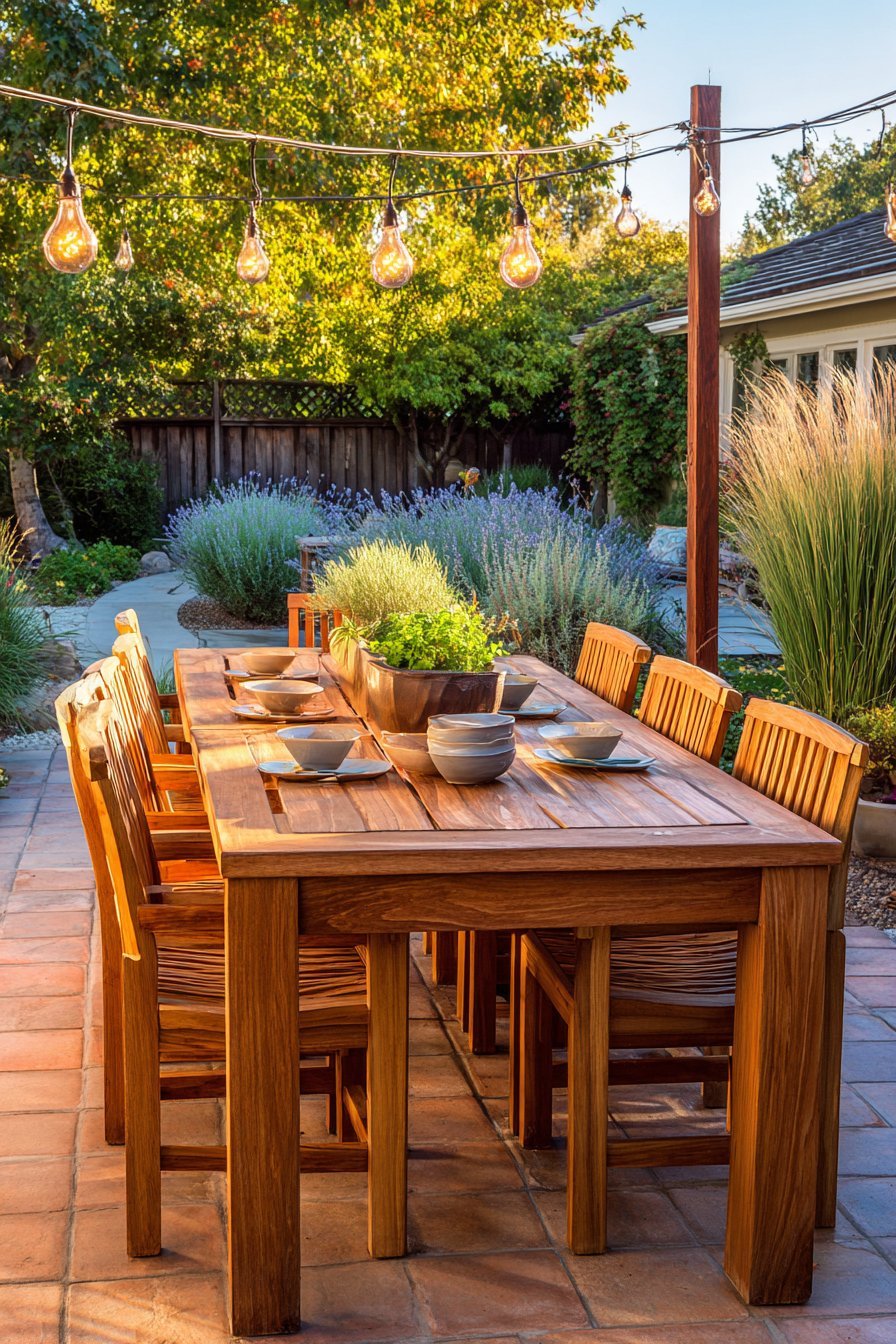
String lights drape overhead between wooden posts. These lights transform the space when evening arrives. The ambient glow creates an enchanting atmosphere for dinner parties. Simple ceramic dishware adorns the table surface. A rustic wooden centerpiece filled with fresh herbs adds organic beauty.
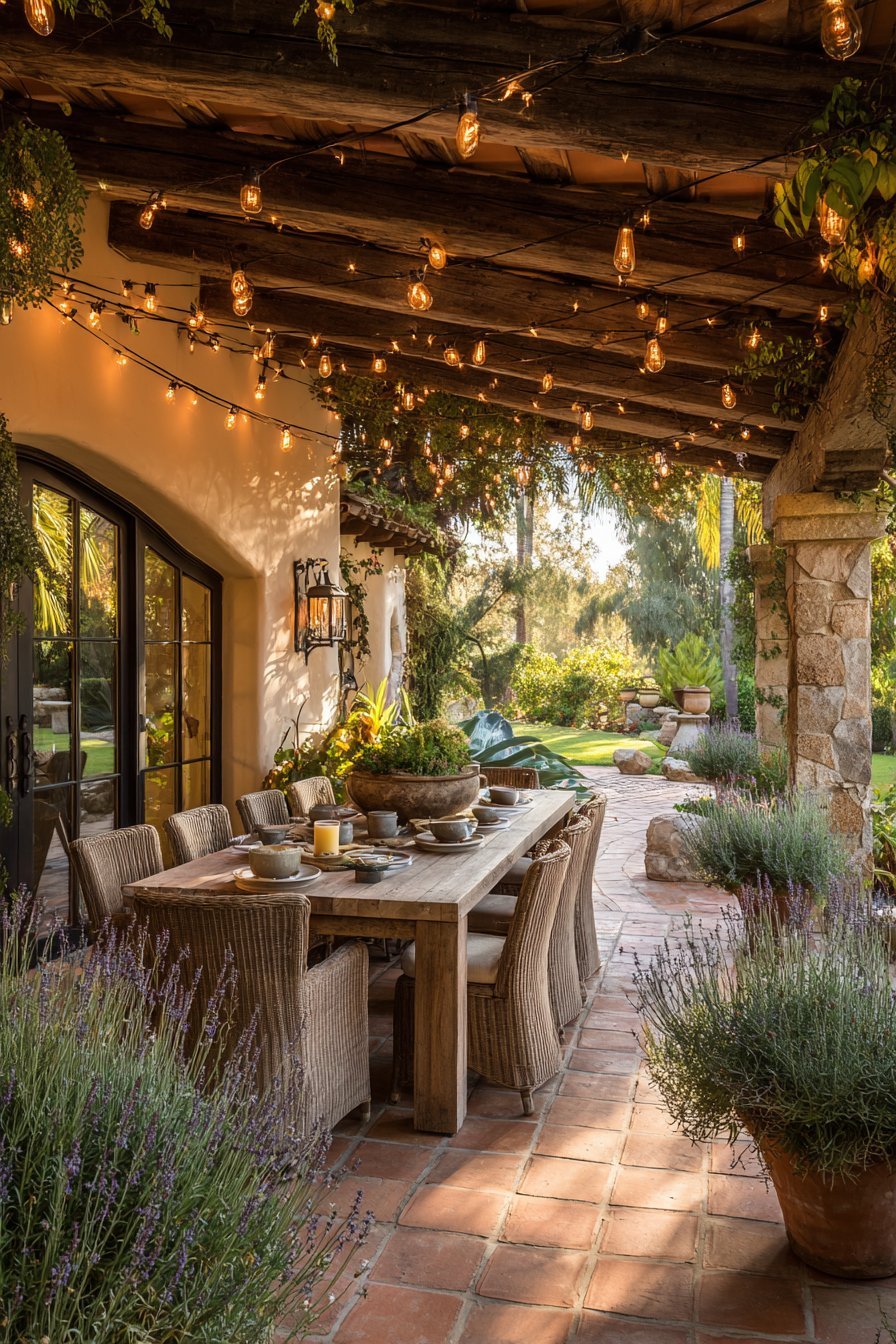
Lush potted plants frame the dining area in varying heights. Lavender and ornamental grasses provide texture and movement. The layered greenery creates natural privacy without blocking views. Golden hour lighting casts shadows across the textured tiles. This interplay of light and shadow enhances the inviting character.
The material choices prioritize longevity and weather resistance. Teak naturally weathers outdoor conditions gracefully. Terracotta tiles provide durability while maintaining warmth. Fresh herbs in the centerpiece offer both beauty and functionality for cooking.
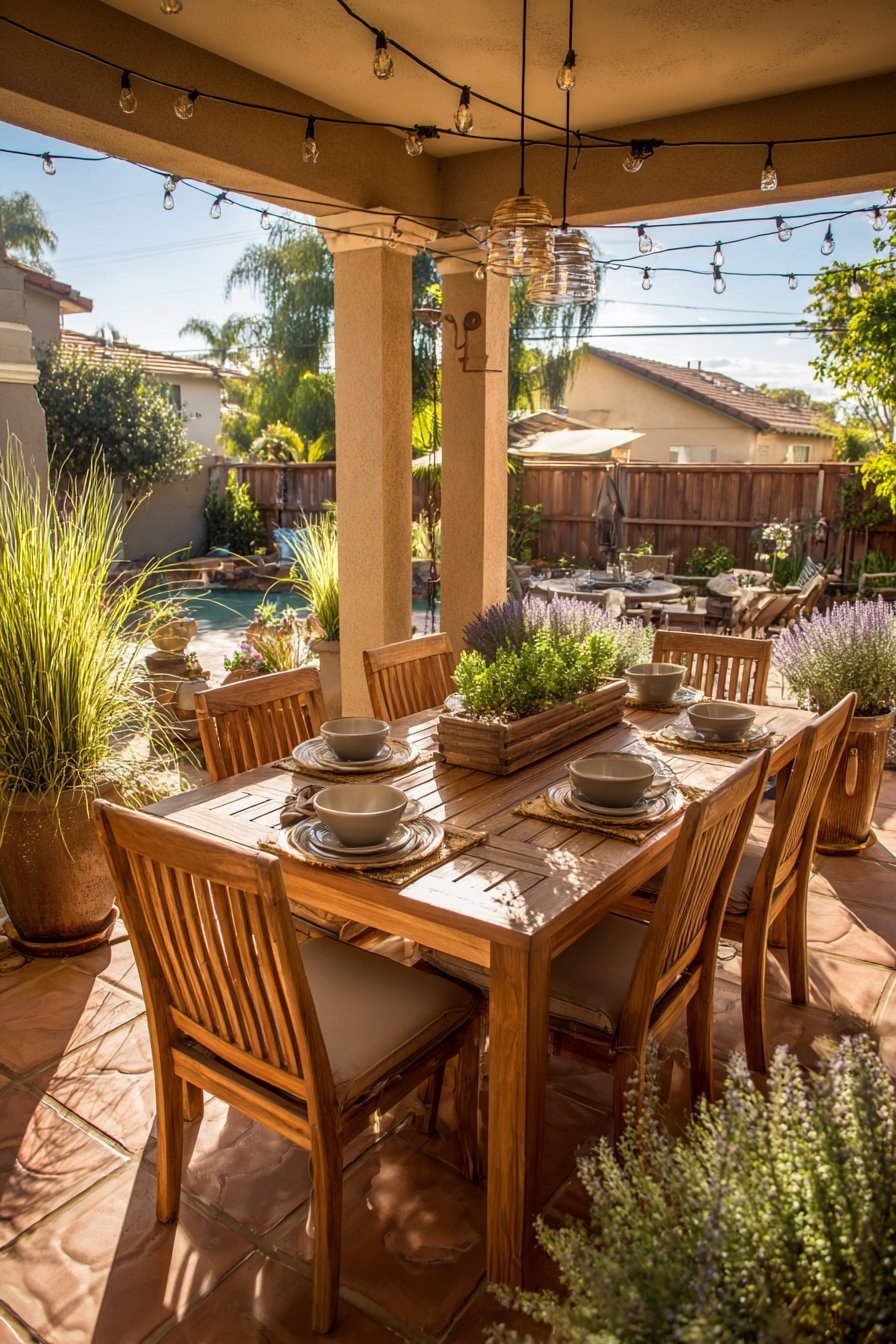
Key Design Tips:
- Choose teak furniture for superior weather resistance and aging beauty
- Install string lights on dimmers to control evening ambiance
- Use terracotta tiles in warm tones to create Mediterranean character
- Frame dining areas with potted plants in varying heights for privacy
- Include fresh herbs as decorative centerpieces that serve culinary purposes
2. Cozy Stone Fire Pit Gathering Space
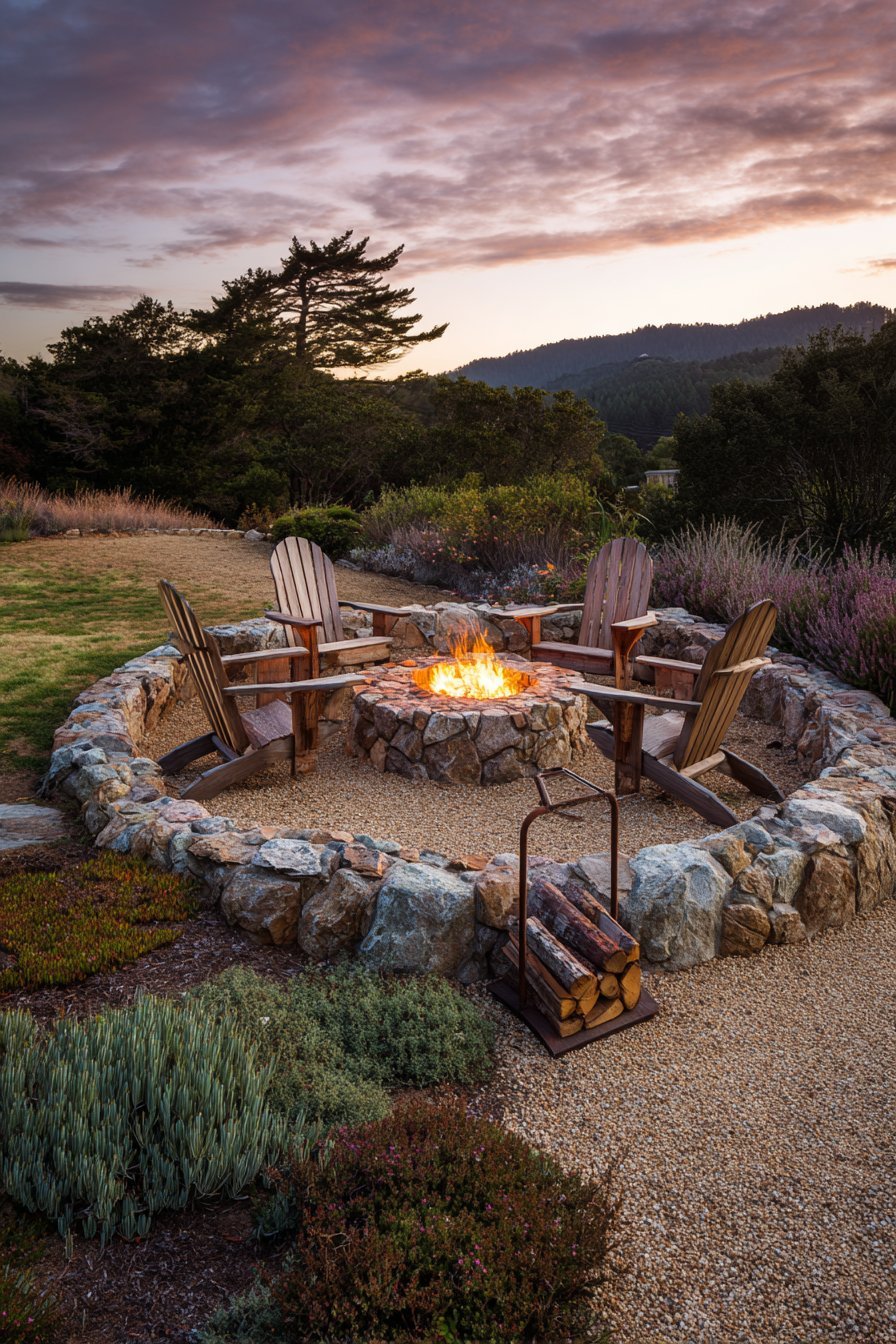
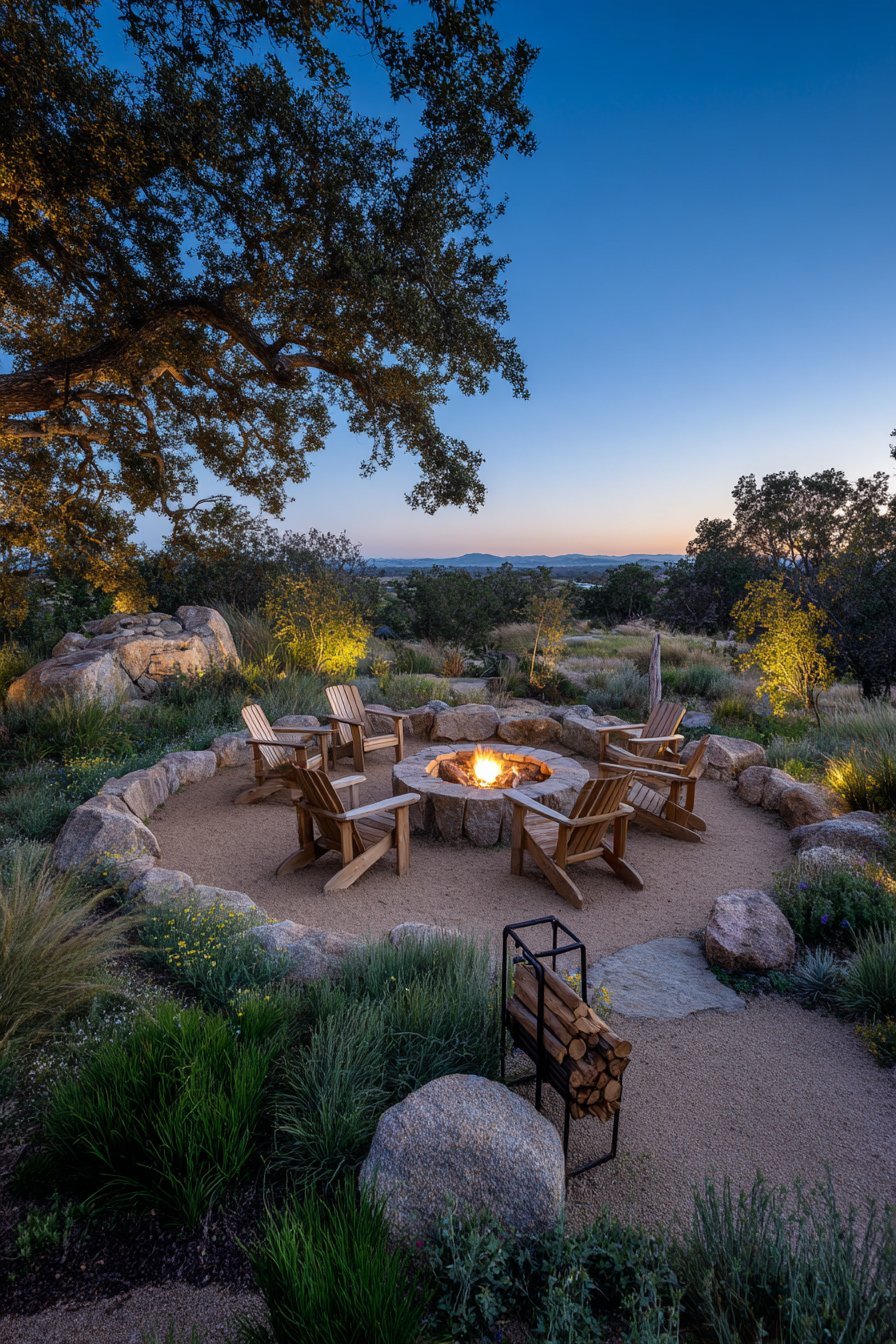
A circular stone-bordered fire pit anchors this intimate gathering area. Six weather-resistant Adirondack chairs in natural wood surround the pit. The arrangement encourages conversation and connection. Decomposed granite surfacing provides practical drainage and aesthetic appeal.
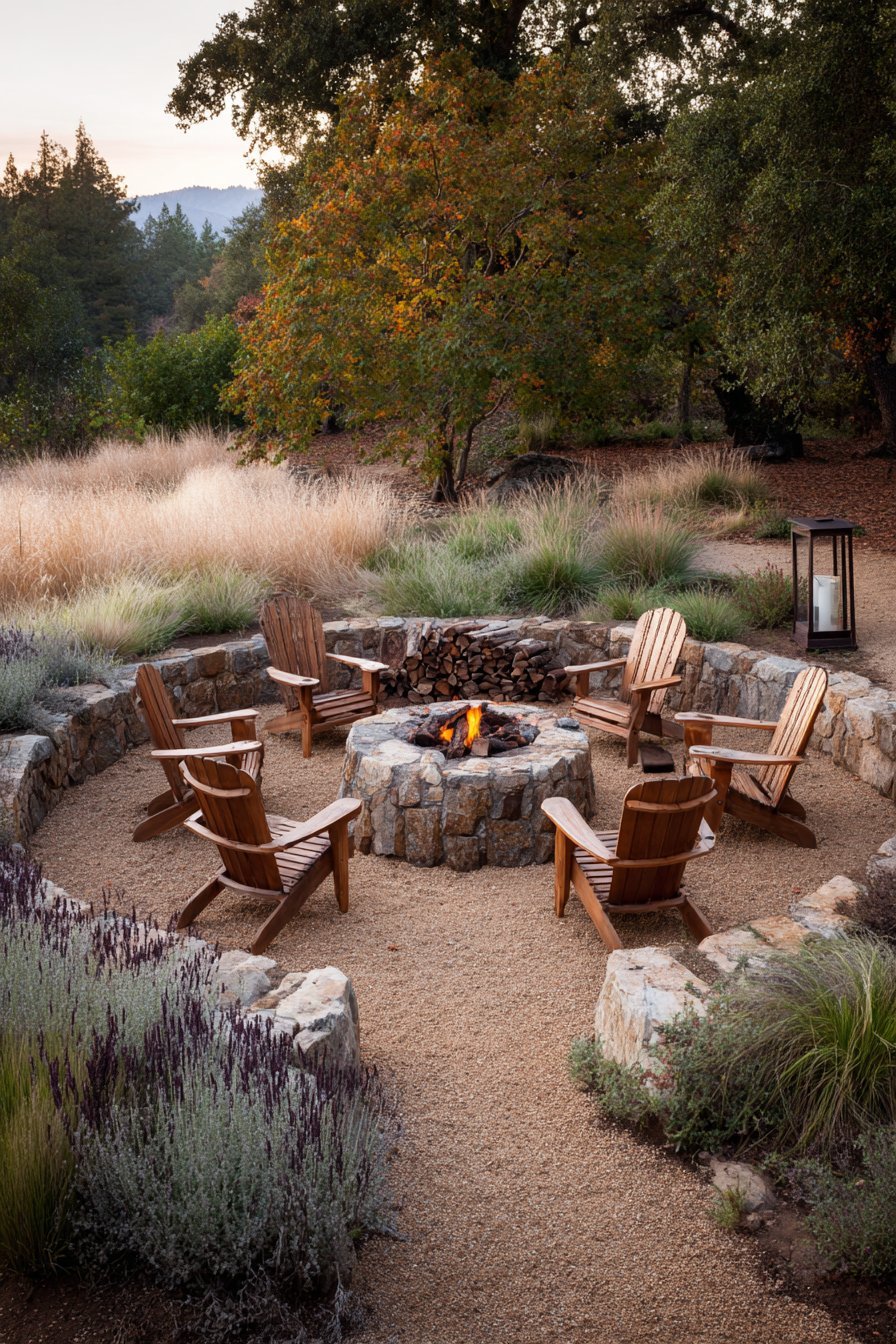
Native drought-tolerant plants create a natural border around the seating area. These plantings require minimal maintenance while providing year-round interest. A metal log holder stands nearby with neatly stacked firewood. This practical element becomes part of the overall design.
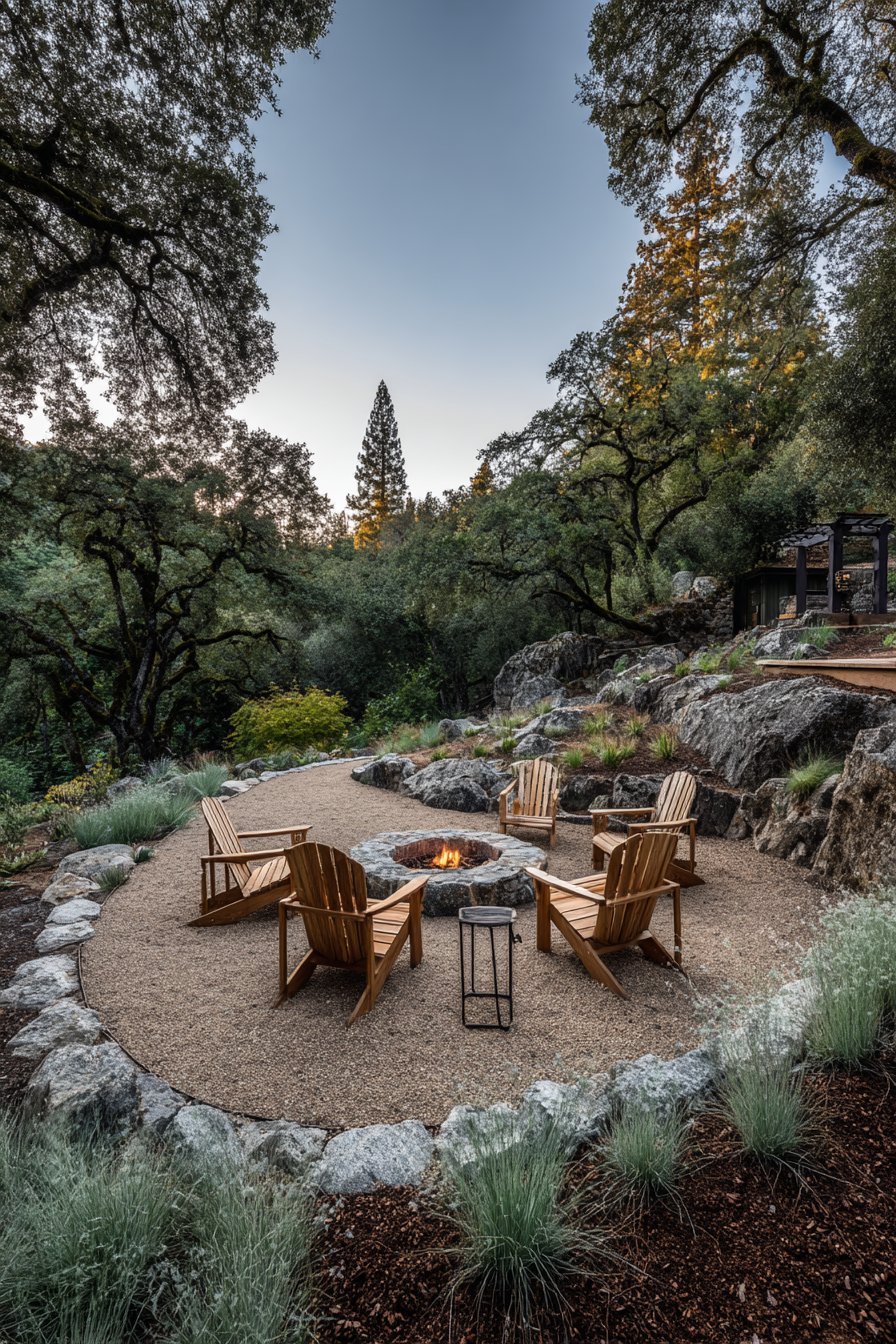
Twilight photography captures the fire pit lit and glowing. Warm ambient lighting highlights the functional beauty of the space. The flames create dancing shadows across the surrounding landscape. Natural materials integrate seamlessly with the environment.
The design prioritizes both comfort and sustainability. Drought-tolerant plantings reduce water consumption significantly. Decomposed granite allows rainwater to permeate naturally. The fire pit provides warmth extending outdoor season use.
Key Design Tips:
- Border fire pits with natural stone for safety and rustic appeal
- Choose Adirondack chairs for classic comfort and durability
- Use decomposed granite for permeable, low-maintenance surfacing
- Select native plants to reduce water needs and maintenance
- Position firewood storage as both functional and decorative element
3. Vertical Garden Wall with Potting Station
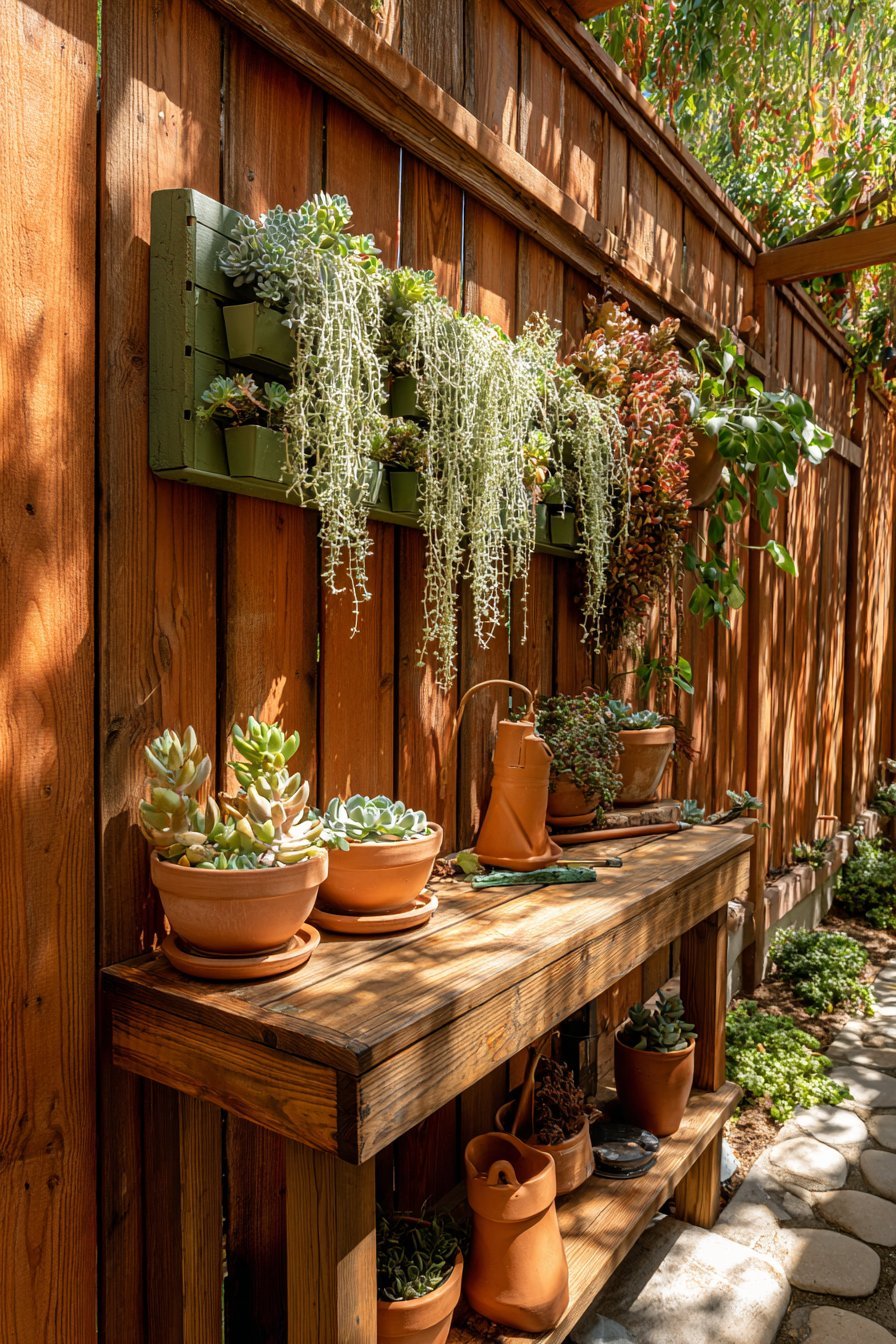
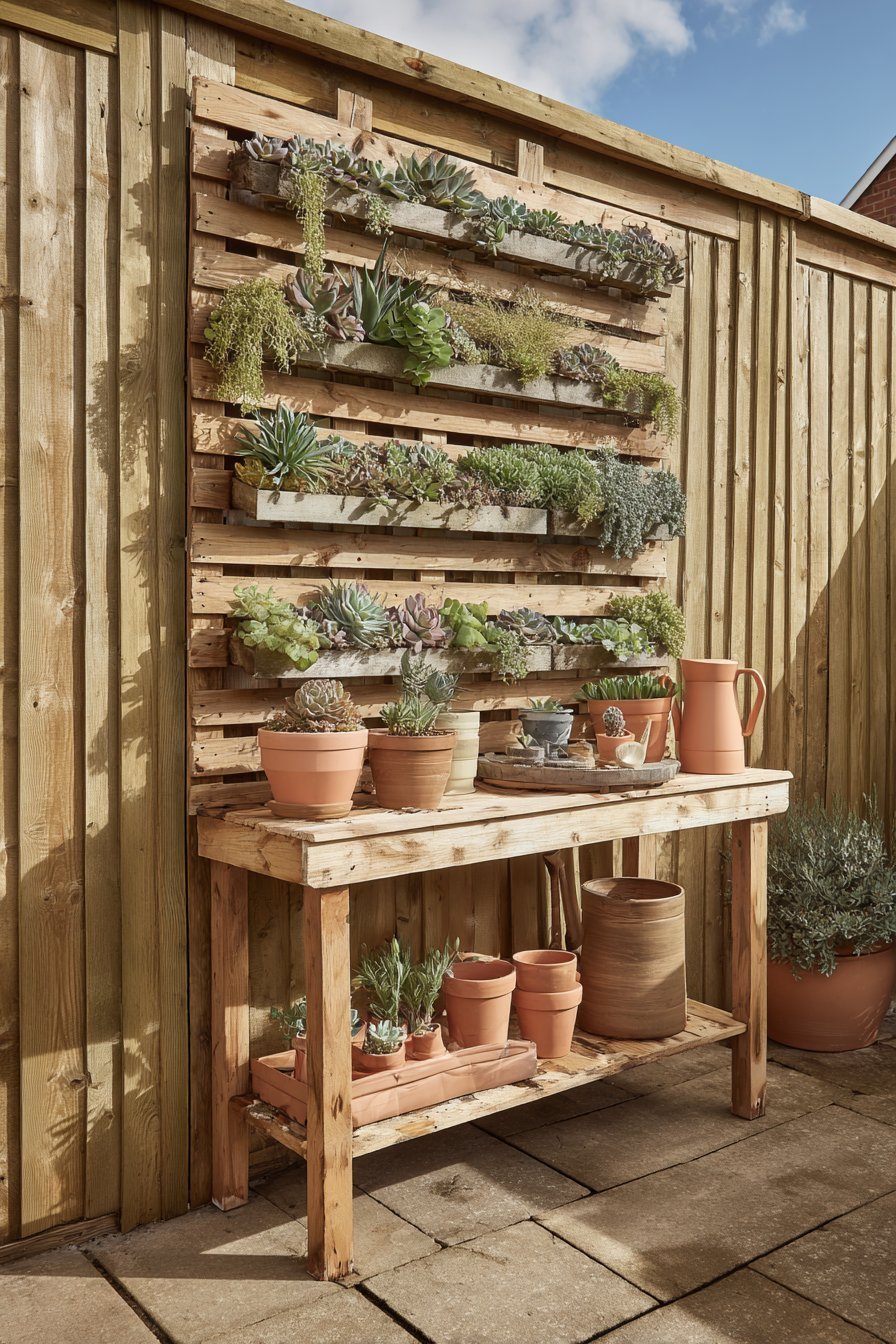
A vertical garden wall mounted on a wooden privacy fence maximizes growing space. The modular planting system showcases herbs, succulents, and trailing vines. Various growth stages create visual interest throughout the seasons. This approach transforms vertical surfaces into productive gardens.
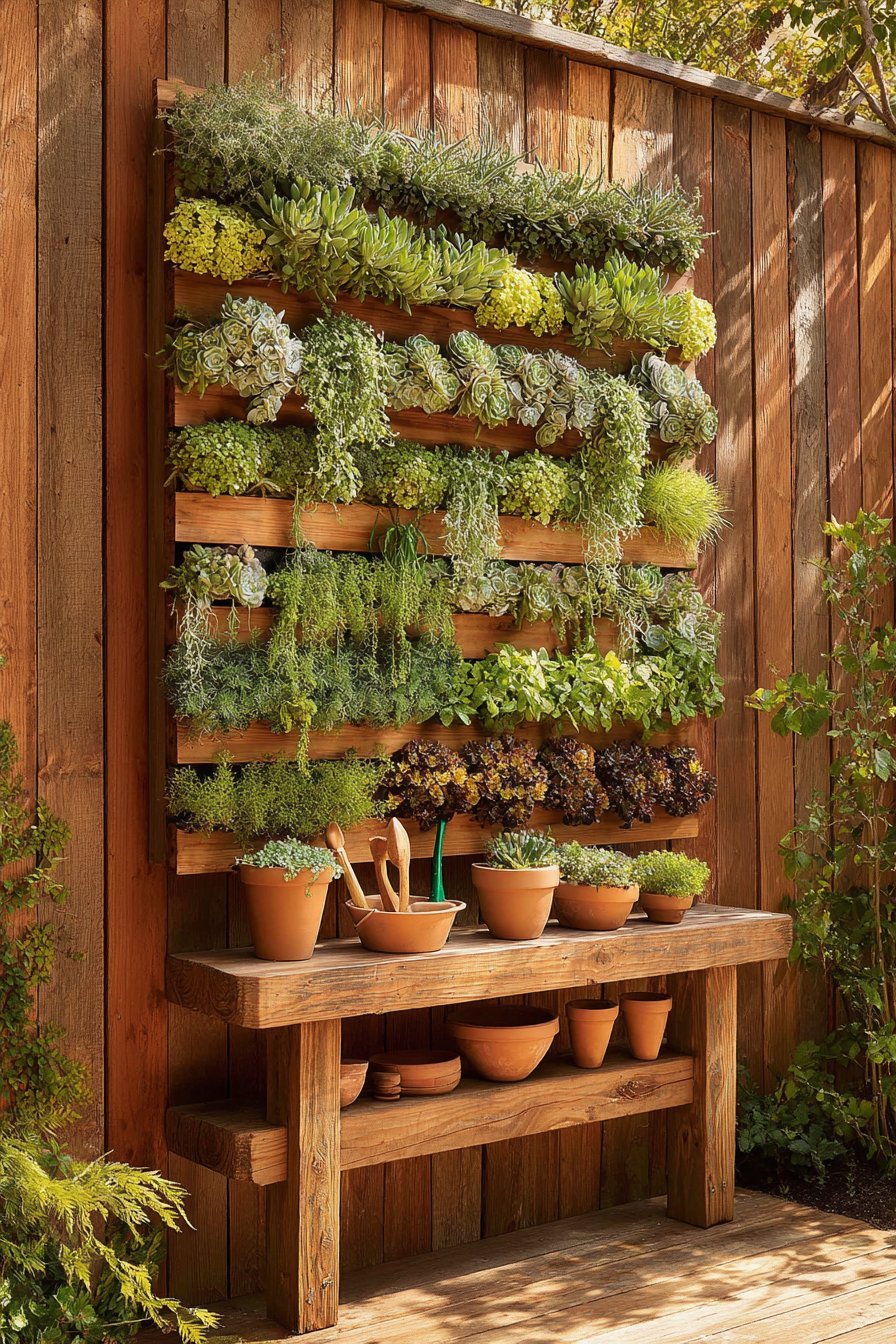
Below the living wall, a narrow potting bench made from reclaimed wood provides workspace. Terracotta pots, gardening tools, and watering accessories organize neatly. The warm cedar fence stain complements the natural materials. Realistic plant growth patterns show varied foliage colors and textures.
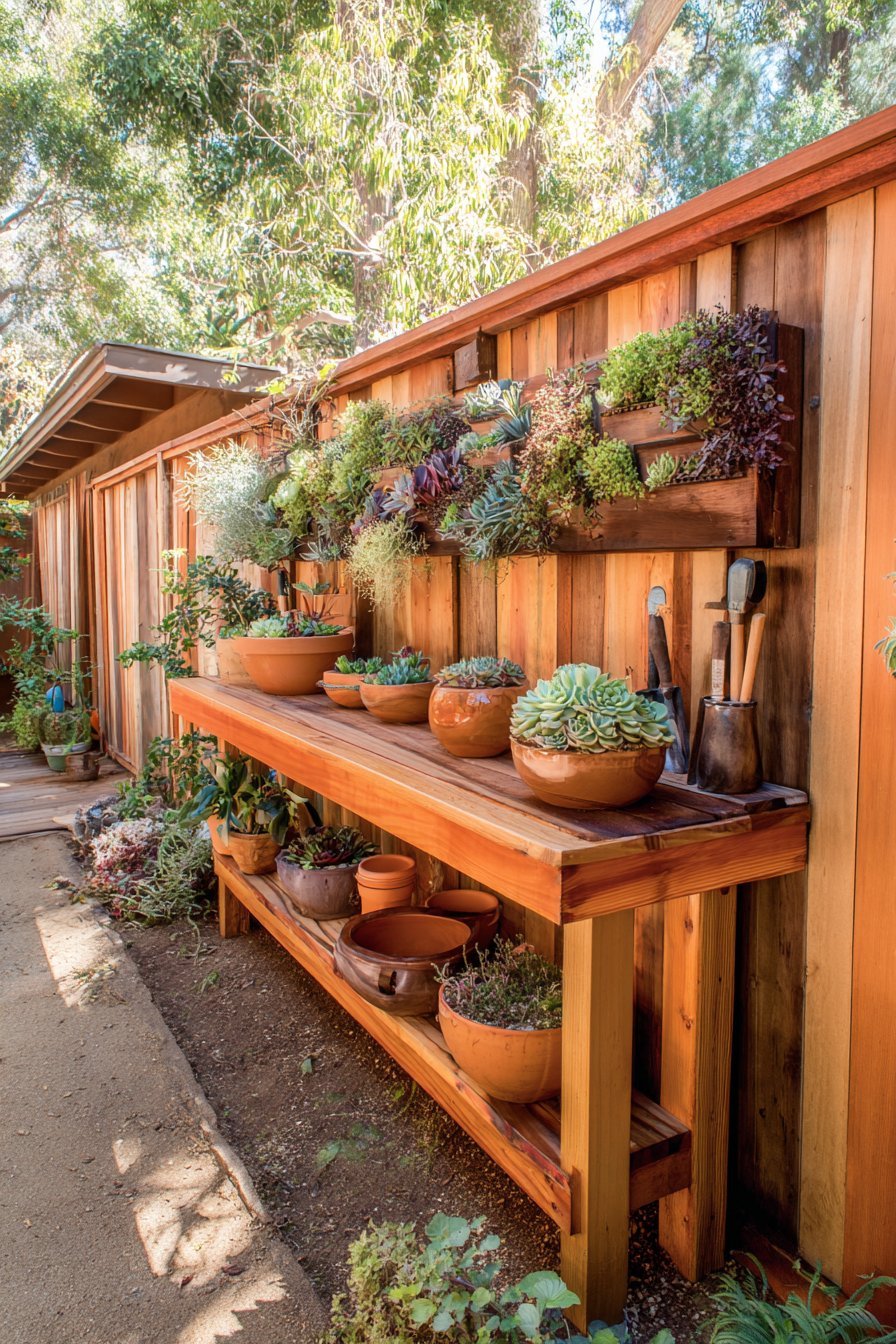
Natural daylight illuminates the wood grain and plant details beautifully. Soft shadows create depth across the vertical surface. The design demonstrates how small spaces can support abundant plantings. Functionality meets aesthetics in this practical setup.
Reclaimed wood adds character while supporting sustainability goals. The vertical format suits narrow yards or limited ground space. Mixed plantings provide opportunities for both ornamental and edible plants.
Key Design Tips:
- Install modular vertical planters for flexible growing arrangements
- Build potting benches from reclaimed wood for character and sustainability
- Stain fences in warm cedar tones to complement natural plantings
- Mix herbs, succulents, and vines for varied textures and colors
- Position work surfaces at comfortable heights for gardening tasks
4. Sage Green Storage Shed with Covered Porch
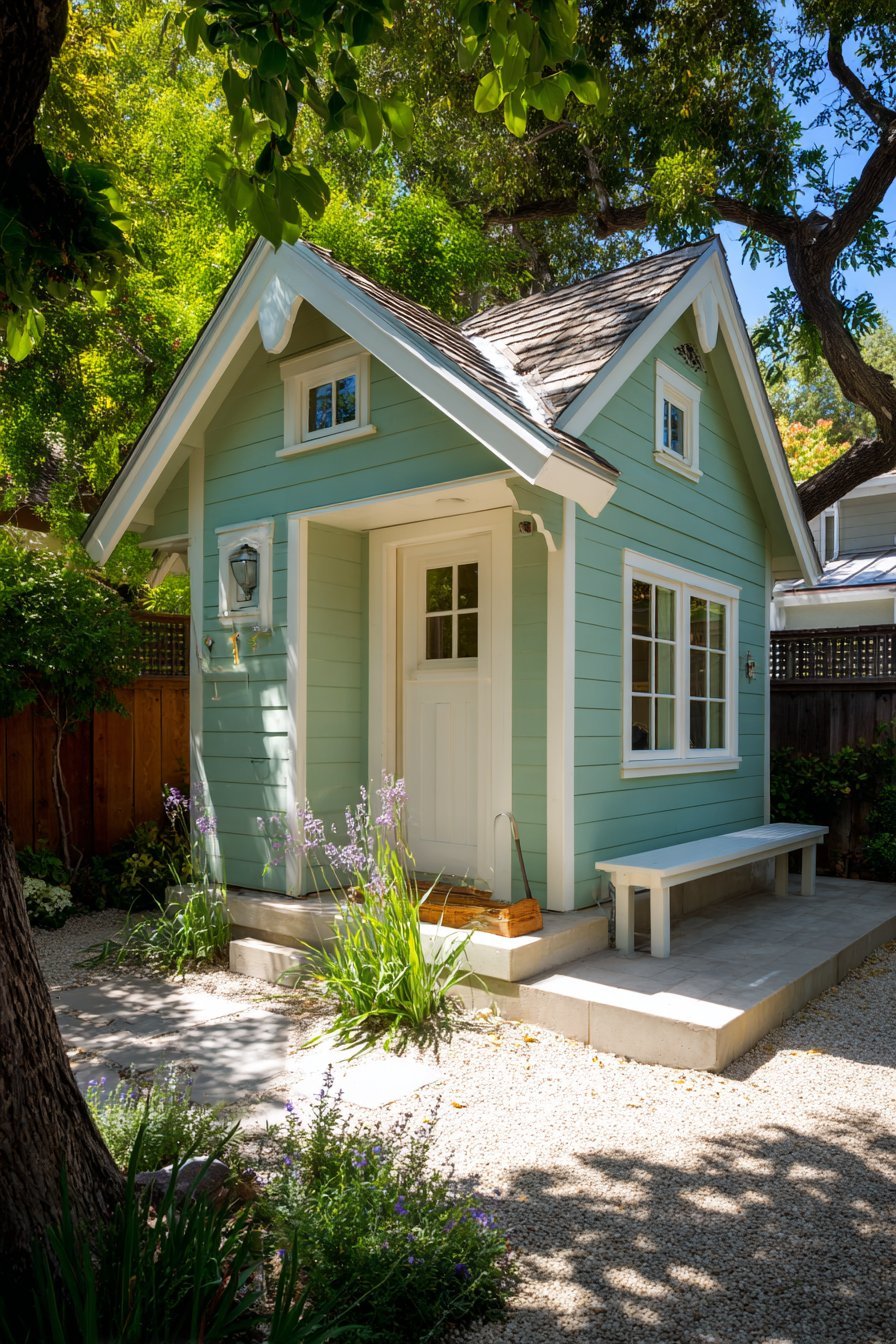
A custom-built shed features horizontal lap siding painted in soft sage green. White trim provides crisp contrast against the painted surface. The metal roof ensures durability and weather protection. This structure combines functionality with attractive design.
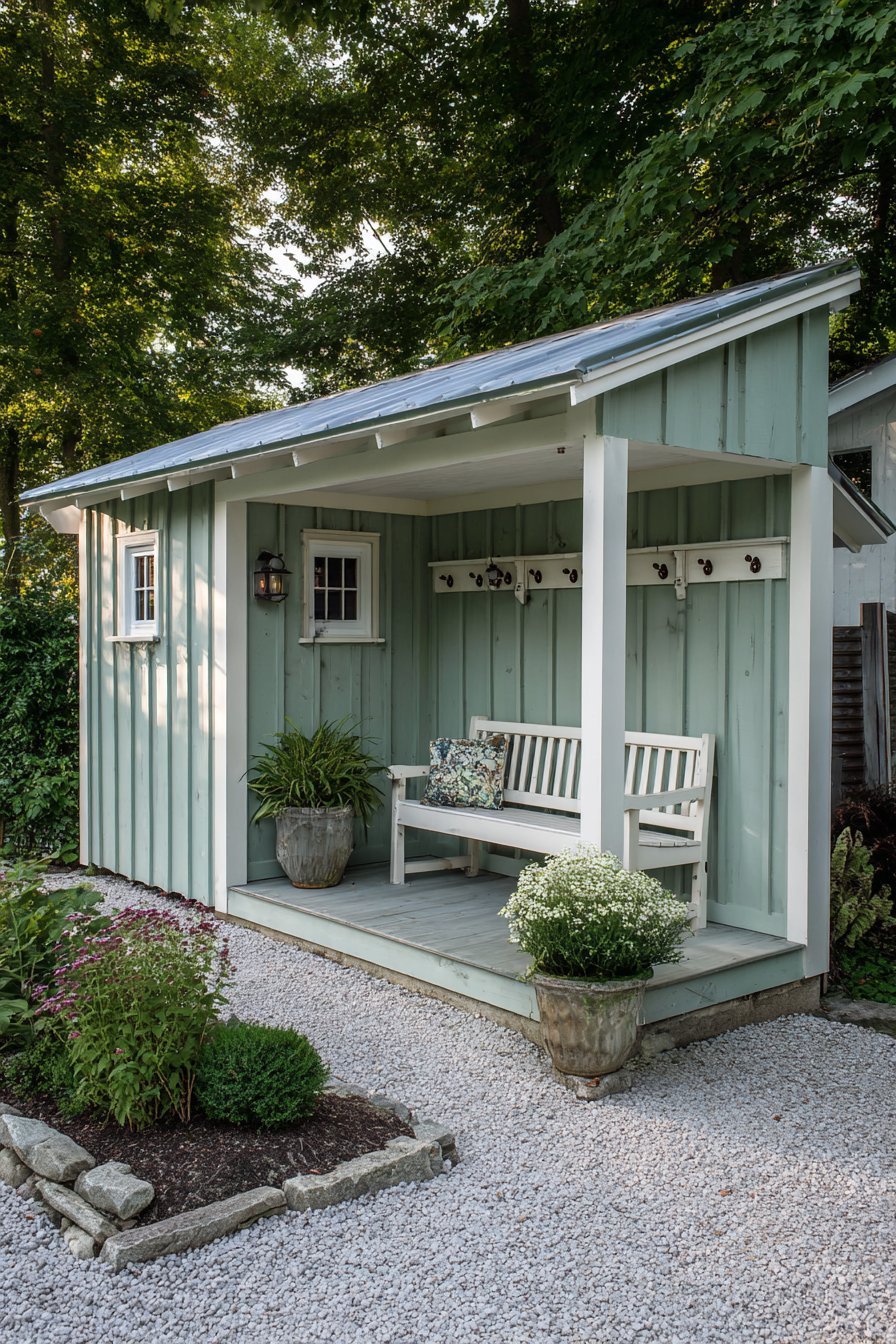
A small covered porch area attaches to the shed entrance. Hooks hold garden tools within easy reach. A bench provides space for removing muddy boots before entering. Gravel pathways lead to the structure through low-maintenance perennial plantings.
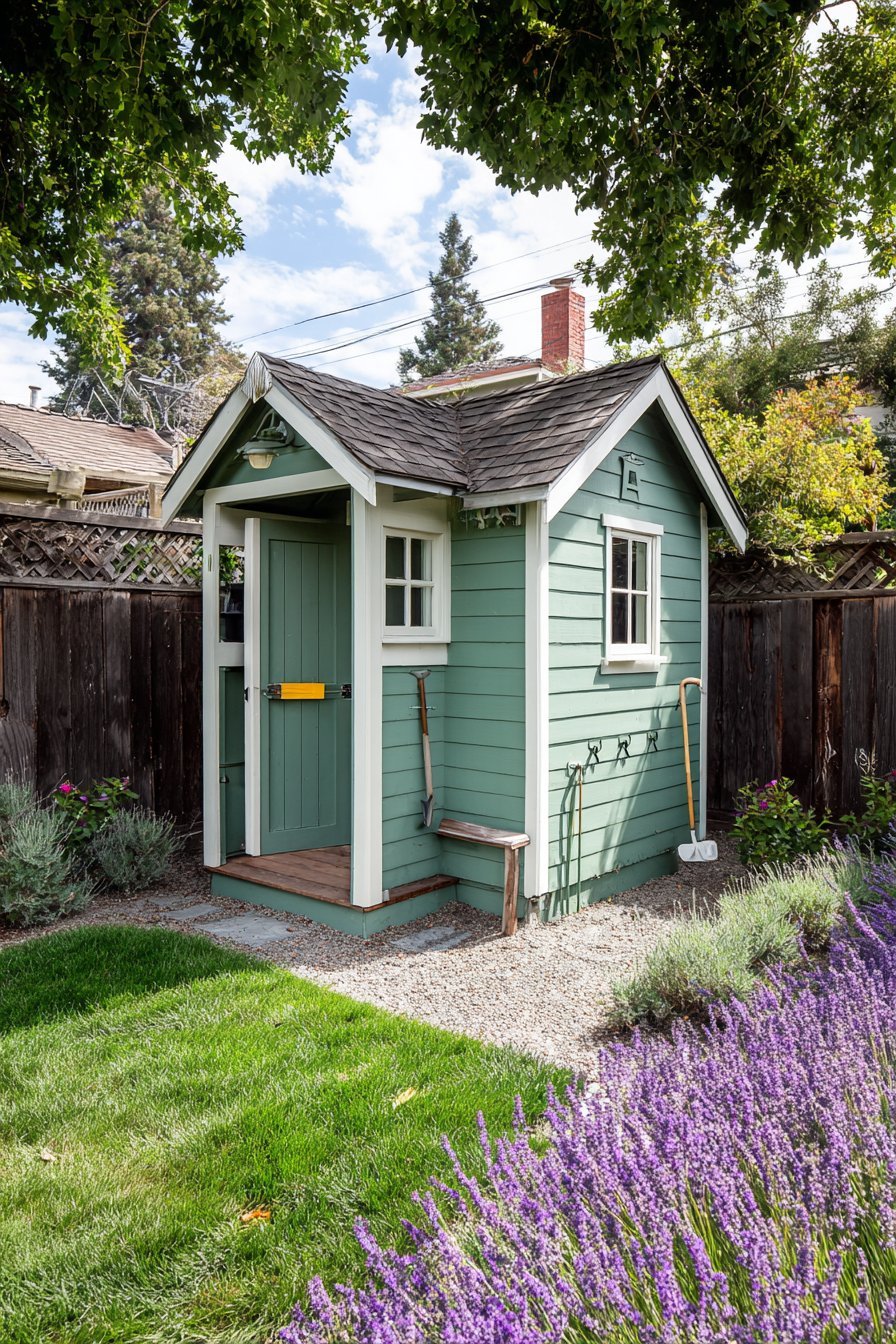
Afternoon light interacts beautifully with the painted surfaces. Realistic shadows demonstrate the dimensional quality of the lap siding. The sage green color harmonizes with surrounding landscape plantings. Organization and accessibility define this practical solution.
The covered porch extends functionality beyond basic storage. Weather protection keeps tools and equipment readily accessible. Perennial plantings soften the structure’s edges while requiring minimal care.
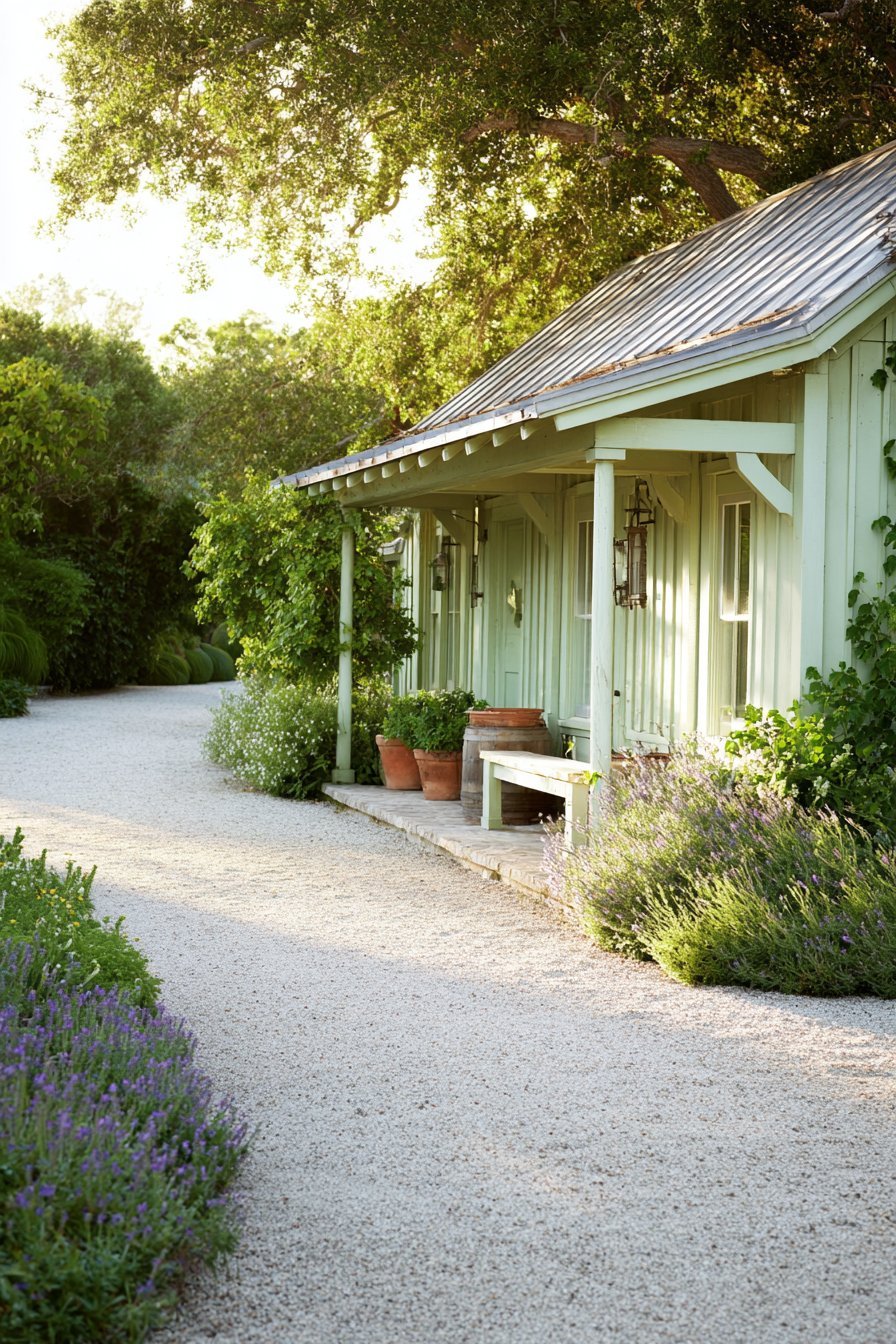
Key Design Tips:
- Paint storage structures in landscape-harmonizing colors like sage green
- Add covered porch areas to protect frequently used tools
- Install hooks and benches for functional outdoor gear organization
- Use gravel pathways for all-weather access to structures
- Frame buildings with low-maintenance perennial plantings
5. Cedar Pergola with Climbing Jasmine
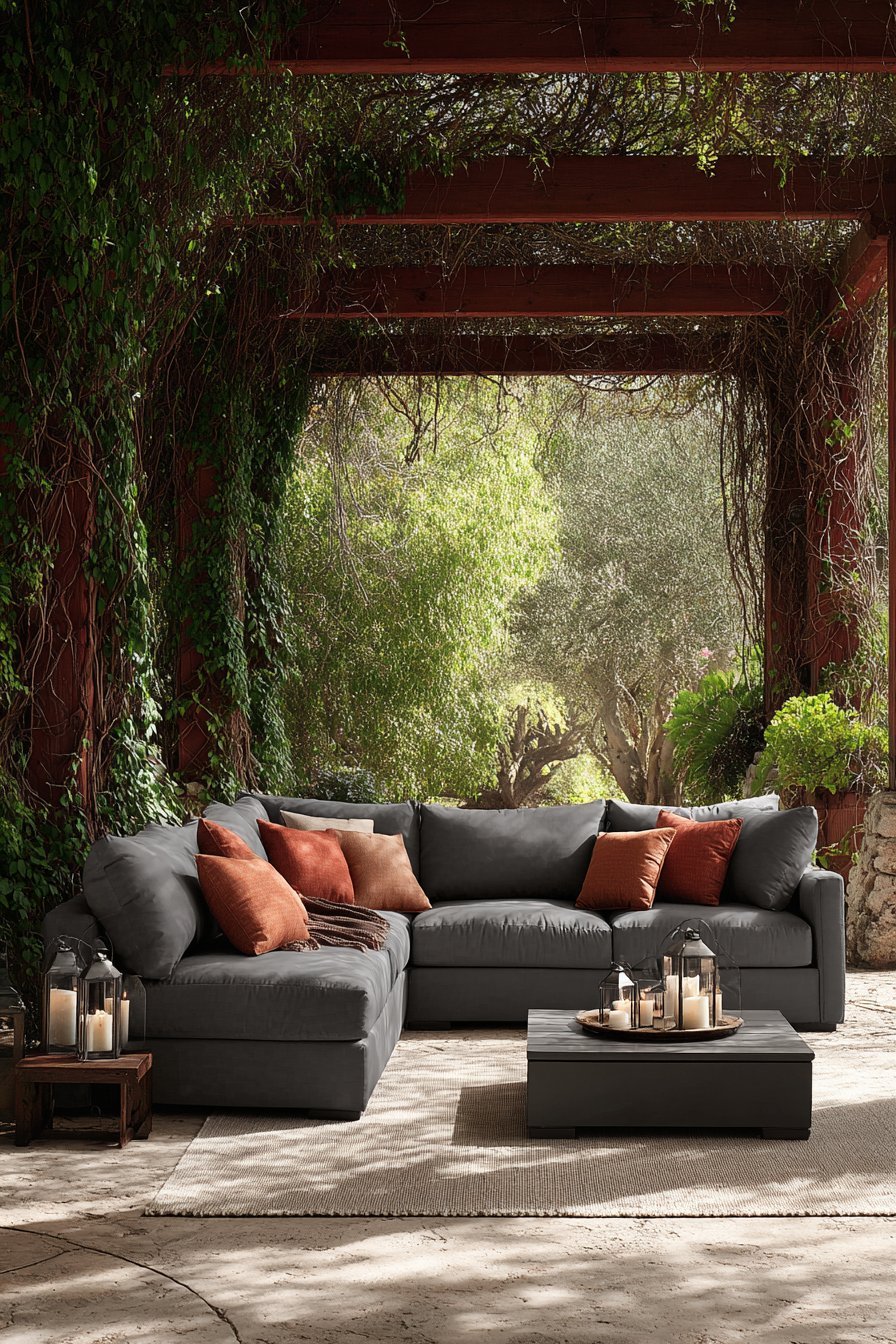
Natural cedar posts and beams create an architectural framework overhead. Climbing jasmine vines show realistic growth patterns across the structure. The partial coverage provides dappled shade during hot afternoons. This balance creates comfortable outdoor living space.
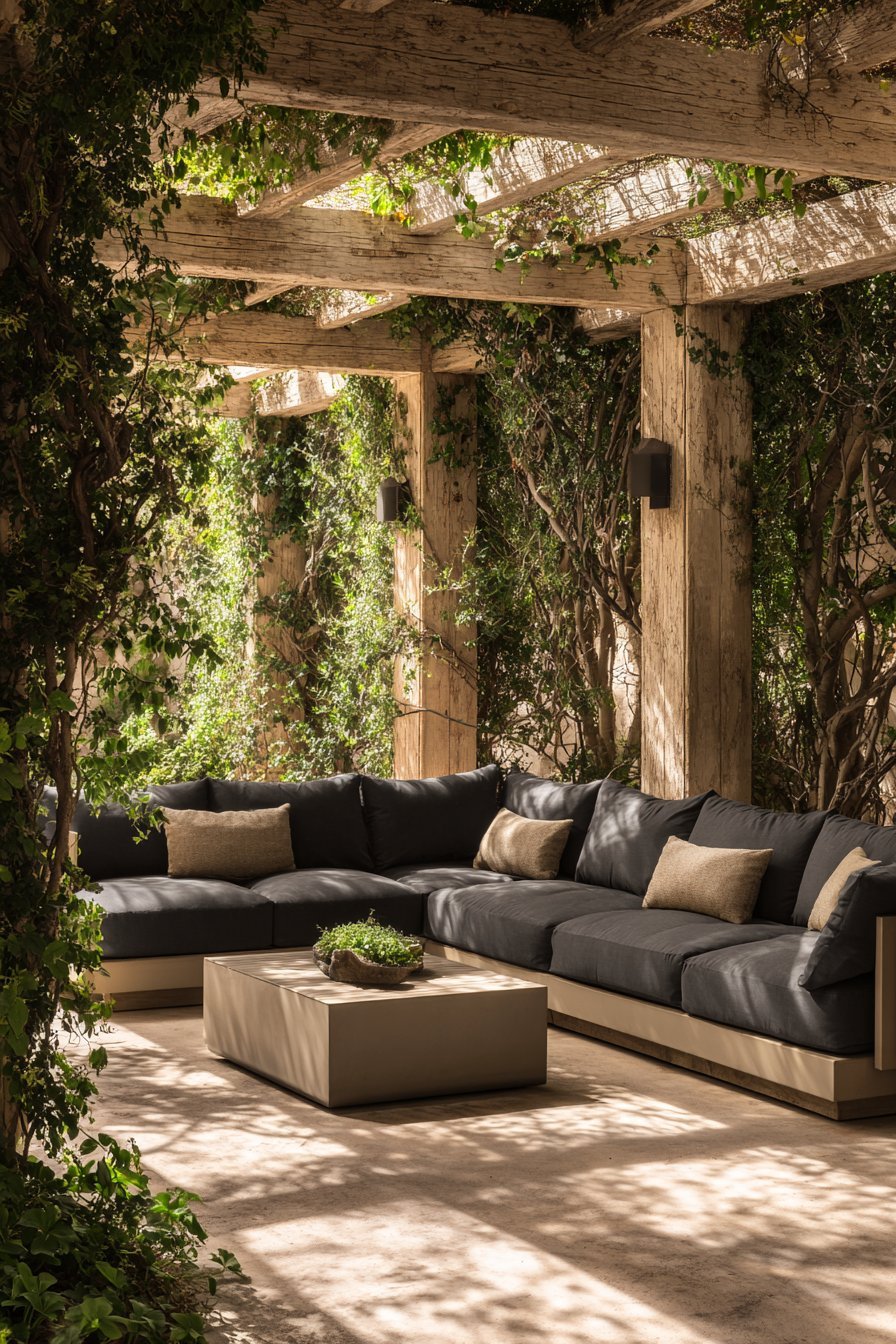
A sectional outdoor sofa in weather-resistant fabric offers generous seating. Deep grey cushions provide modern contrast to natural wood tones. A low rectangular coffee table in powder-coated aluminum anchors the arrangement. Outdoor pillows in coordinating earth tones add comfort layers.
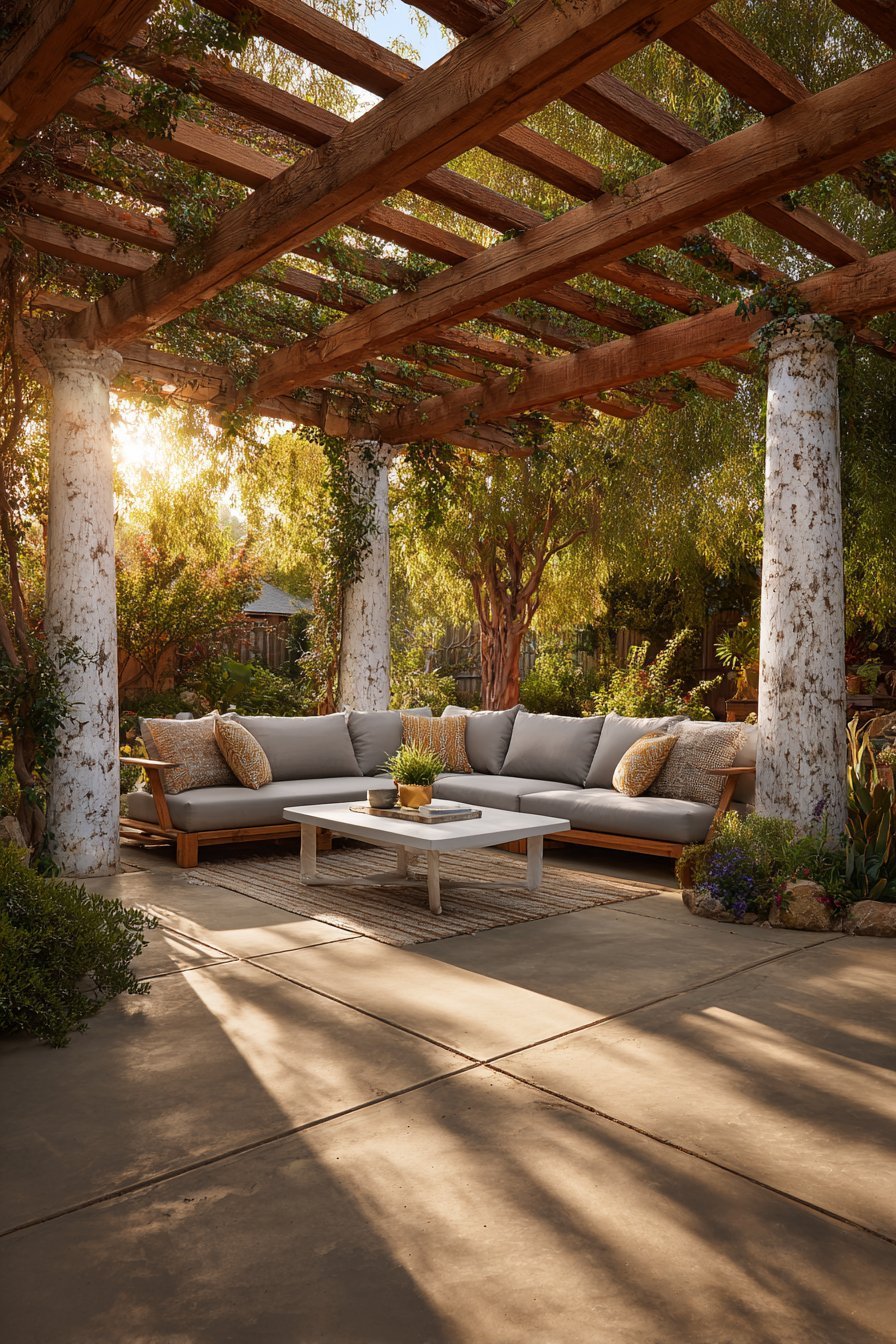
Poured concrete patio with light broom finish provides a clean foundation. Late afternoon light filters through pergola slats beautifully. The interplay creates dynamic shadow patterns across furniture surfaces. Comfortable and livable define this outdoor room.
Cedar naturally resists decay and insect damage. The pergola structure supports climbing plants while providing partial shade. Weather-resistant fabrics ensure cushions withstand outdoor conditions.
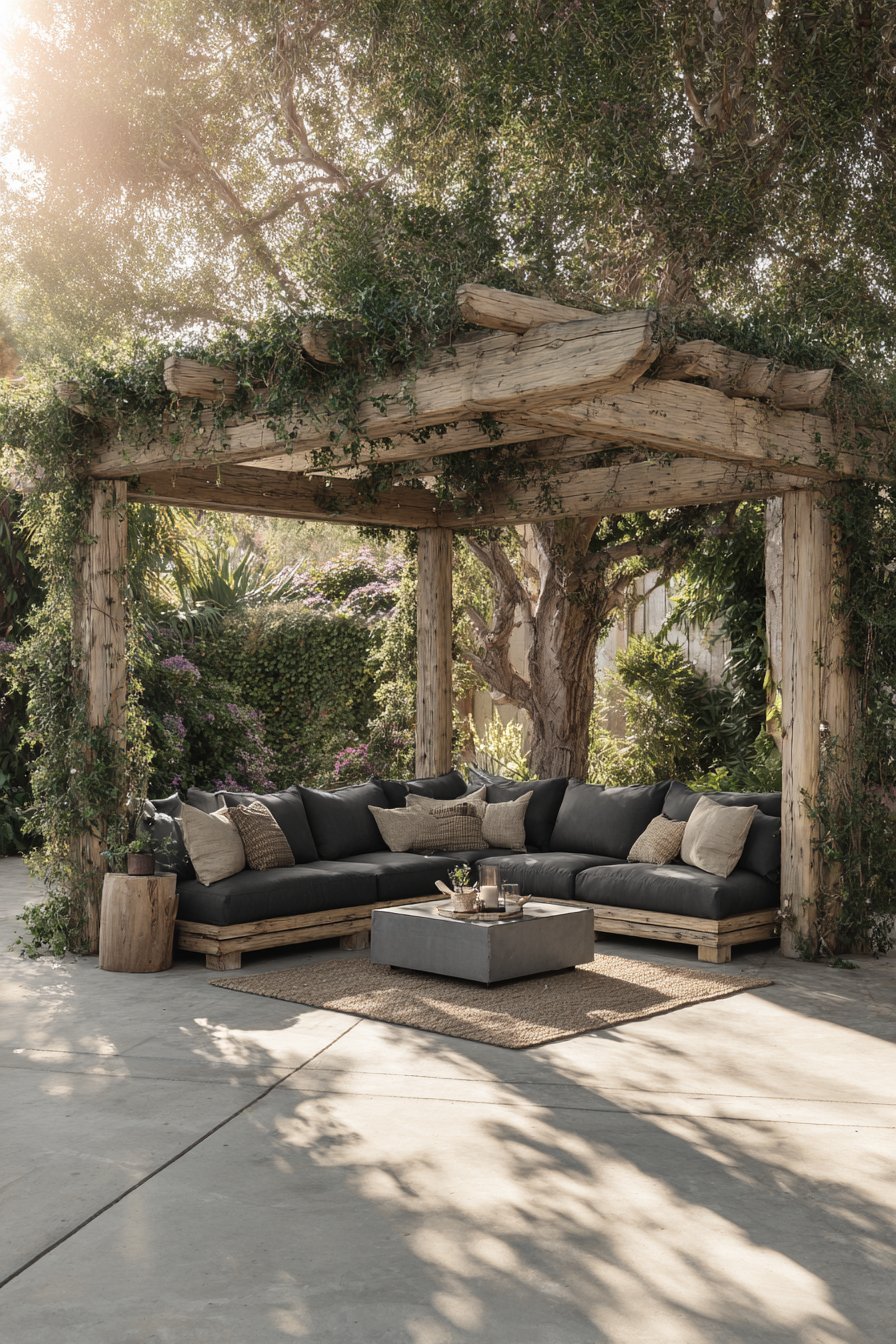
Key Design Tips:
- Build pergolas from cedar for natural weather resistance
- Train climbing vines like jasmine for fragrance and partial shade
- Choose weather-resistant fabrics in neutral tones for longevity
- Use powder-coated aluminum furniture for rust-free durability
- Create concrete patios with broom finish for slip resistance
6. Natural Stone Fountain with River Rocks
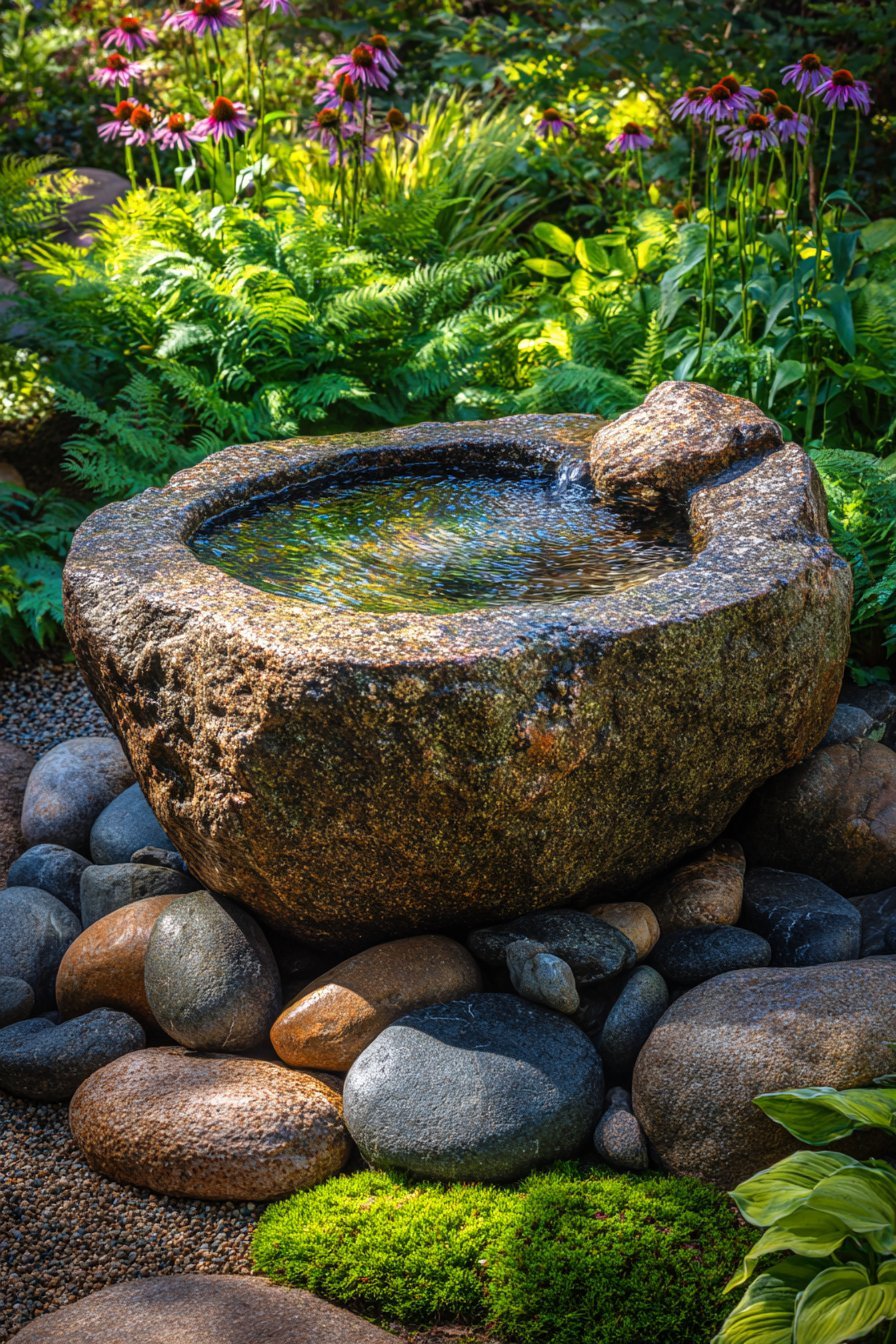
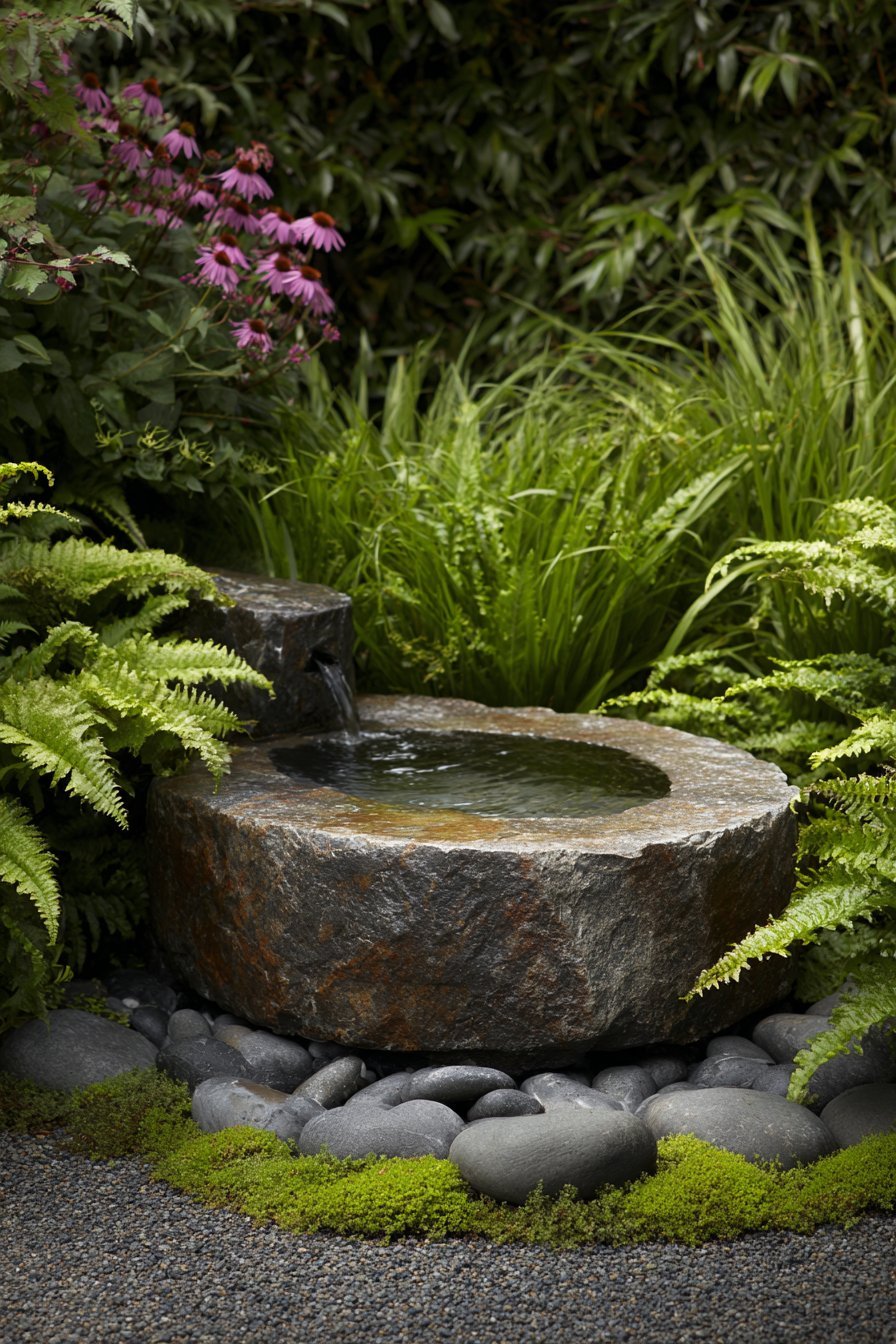
A natural stone fountain with simple basin design creates focal interest. Smooth river rocks surround the base naturally. Moisture-loving plants like ferns and hostas thrive in this environment. The recirculating pump system provides continuous water movement.
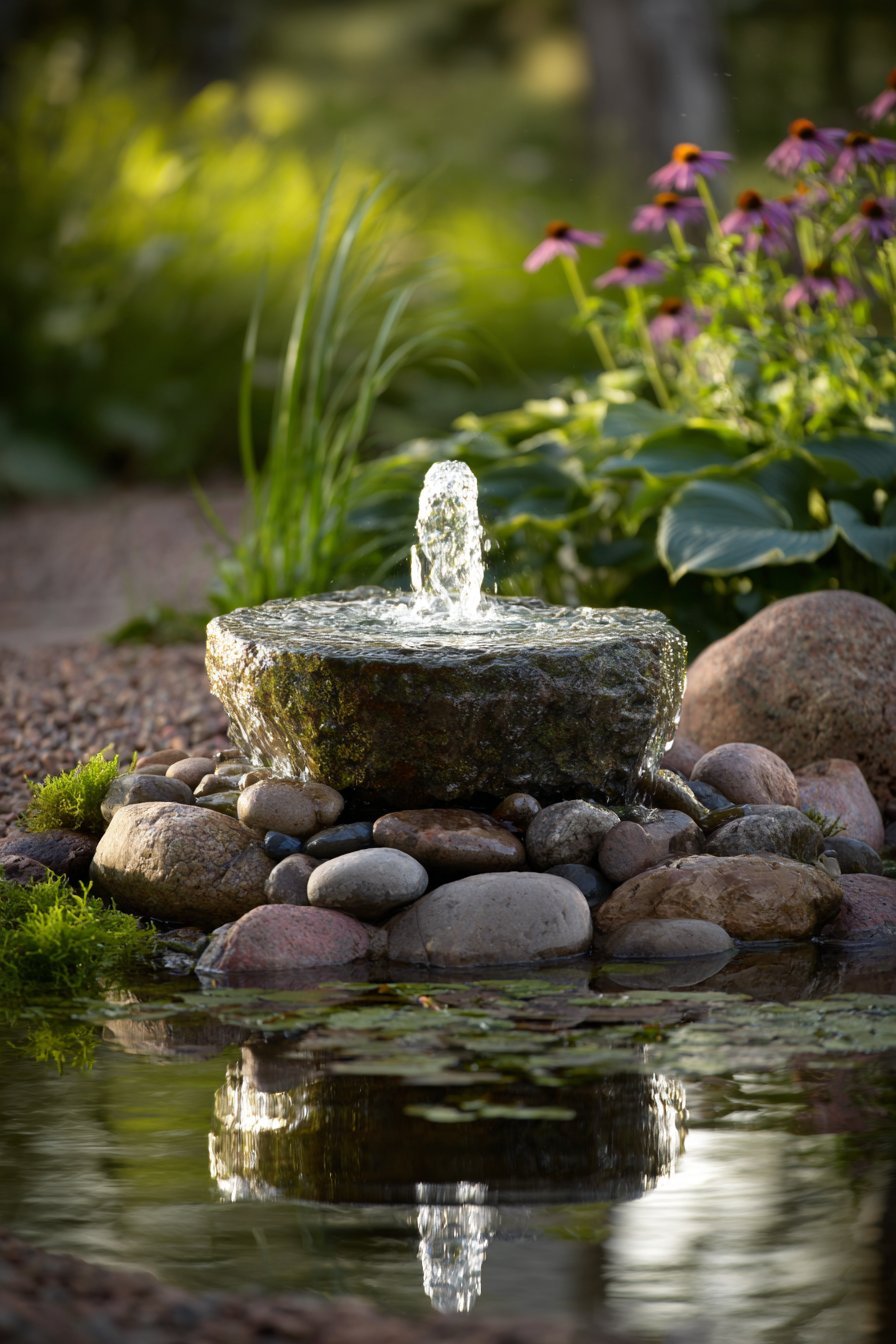
A small pea gravel pad provides drainage beneath the fountain. Native grasses and purple coneflowers create a naturalistic backdrop. Morning light captures realistic water flow and reflections. Subtle movement adds life to the garden setting.
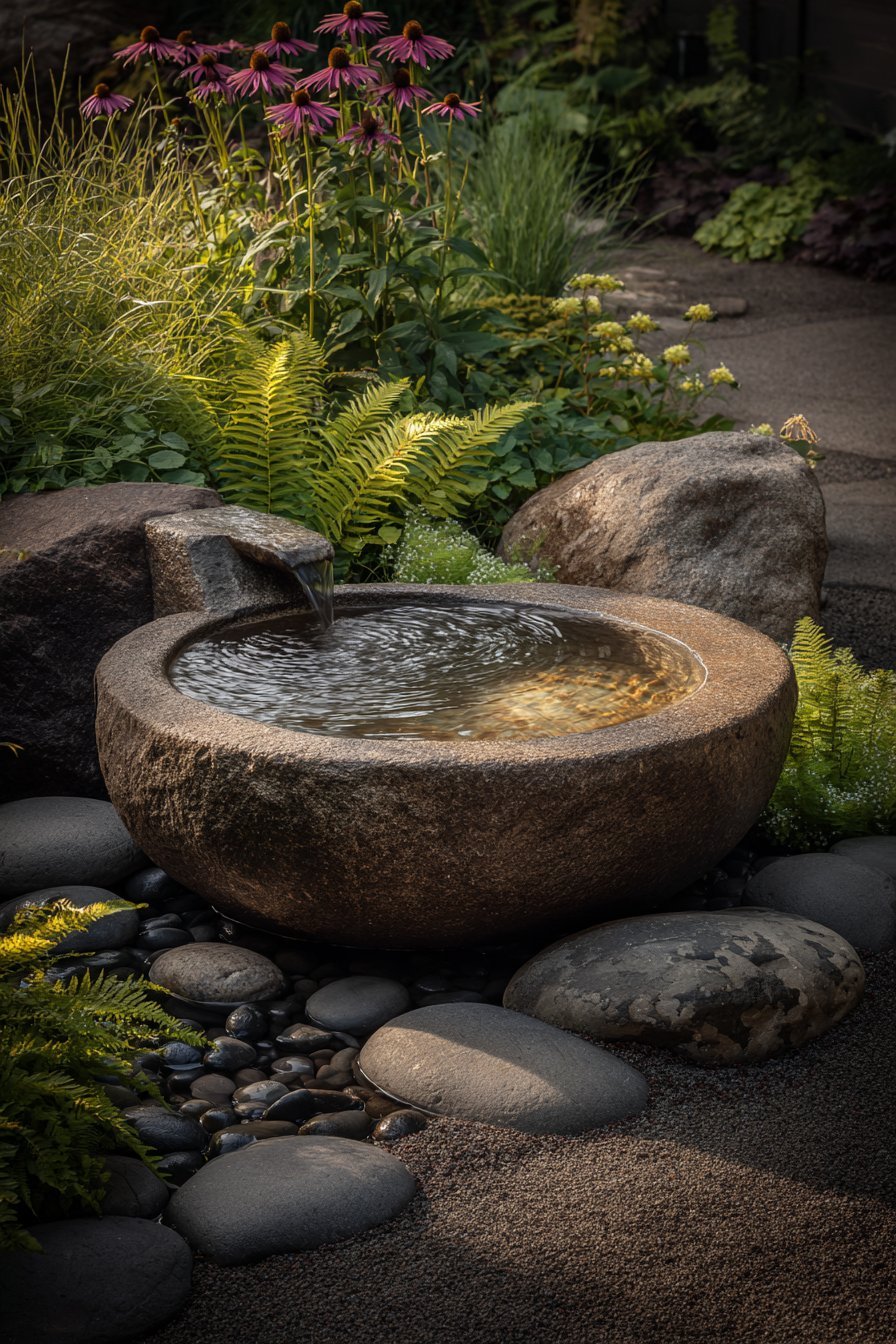
The design creates a serene atmosphere through natural elements. Water sounds mask neighborhood noise effectively. The fountain attracts birds and beneficial insects to the garden.
Recirculating systems conserve water while maintaining continuous flow. Native plantings around water features create natural habitat. Moisture-loving plants establish easily in fountain proximity.
Key Design Tips:
- Select natural stone fountains for timeless aesthetic appeal
- Surround water features with river rocks for natural transitions
- Plant moisture-loving species like ferns near water sources
- Install recirculating pumps to conserve water efficiently
- Position fountains where morning light enhances water reflections
7. Cedar Raised Garden Bed System
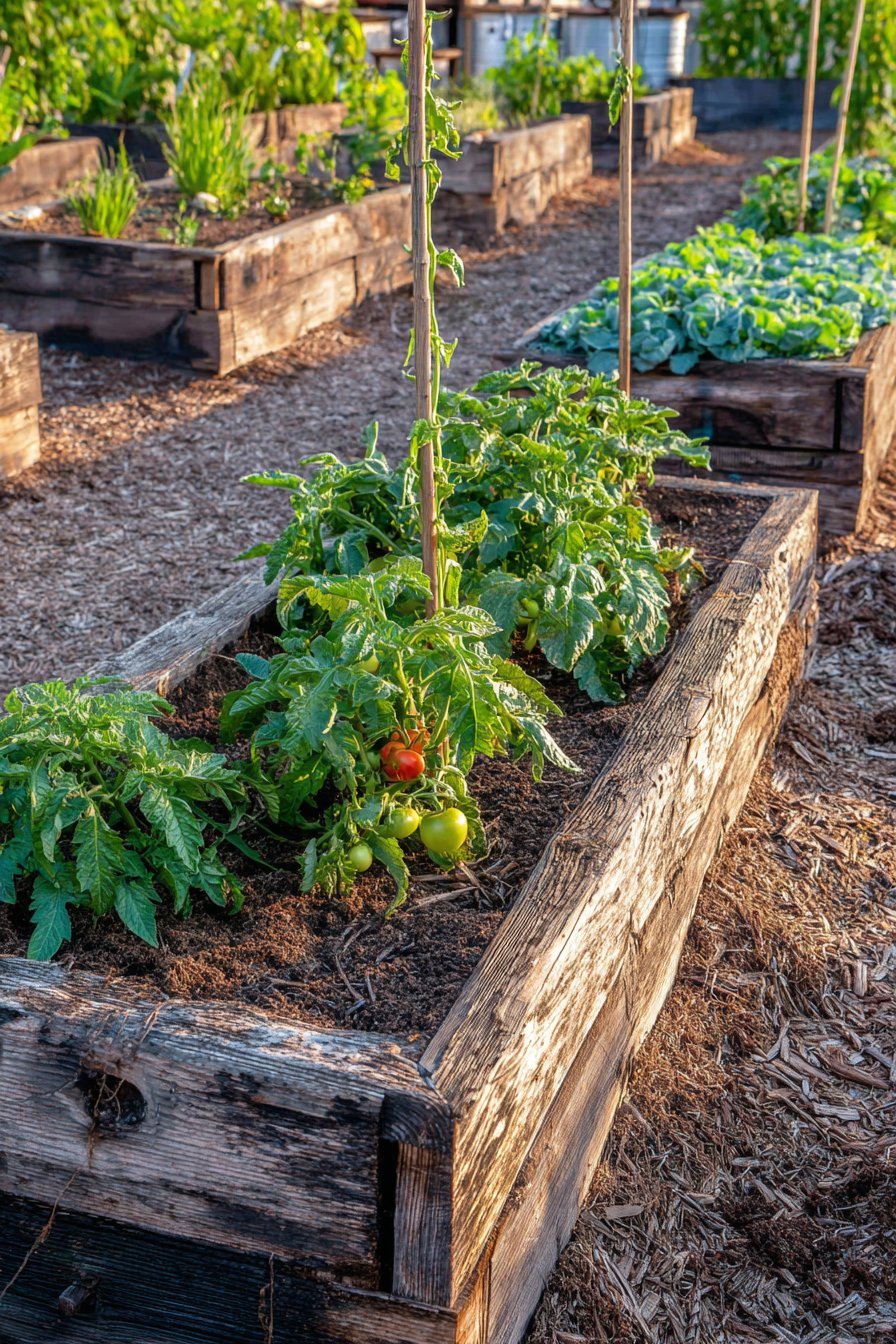
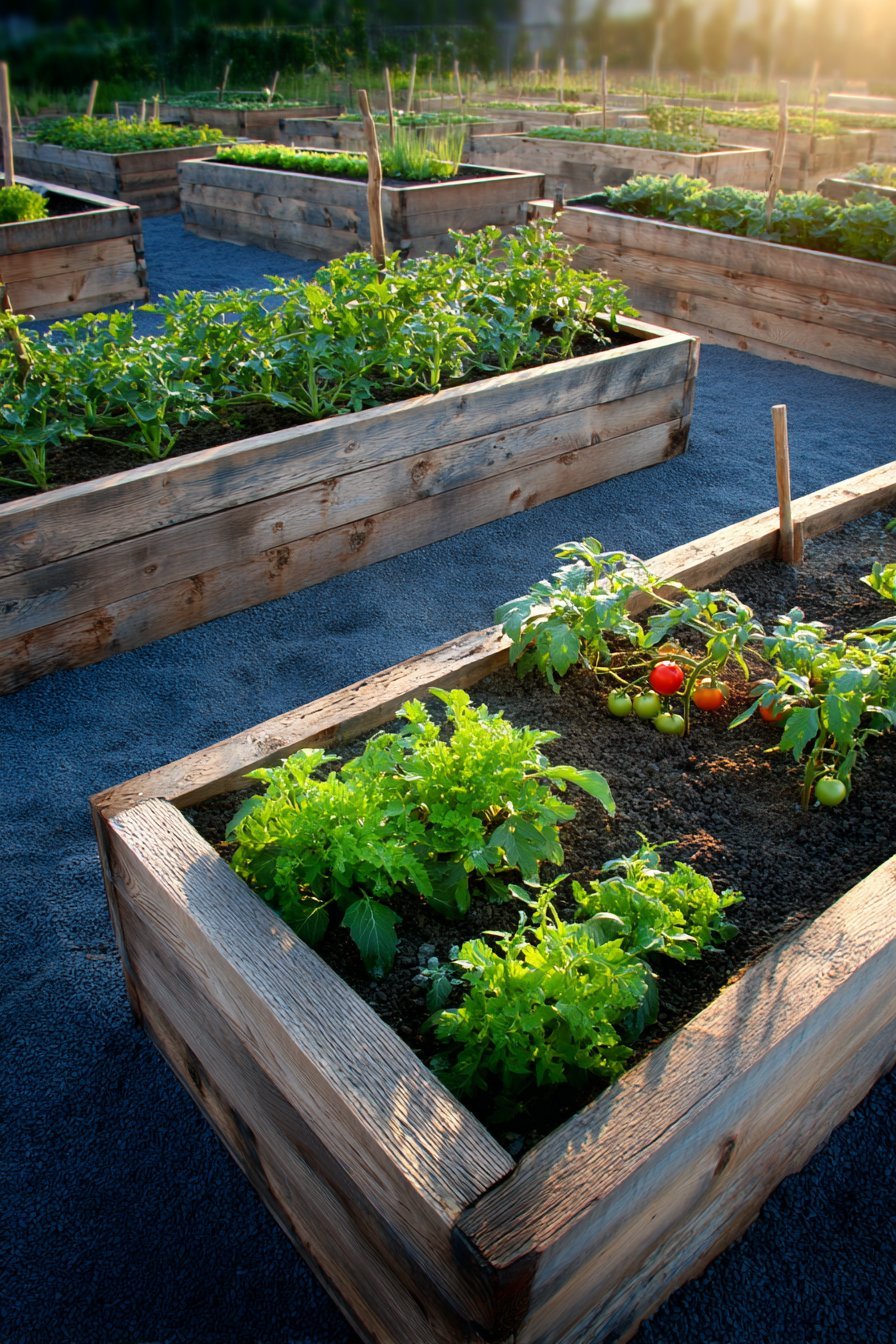
Four rectangular cedar planters arrange in a productive garden layout. Each bed contains vegetables at different growth stages. Tomatoes grow on simple stakes. Leafy greens and herbs fill remaining spaces. Mulched pathways between beds provide practical access.
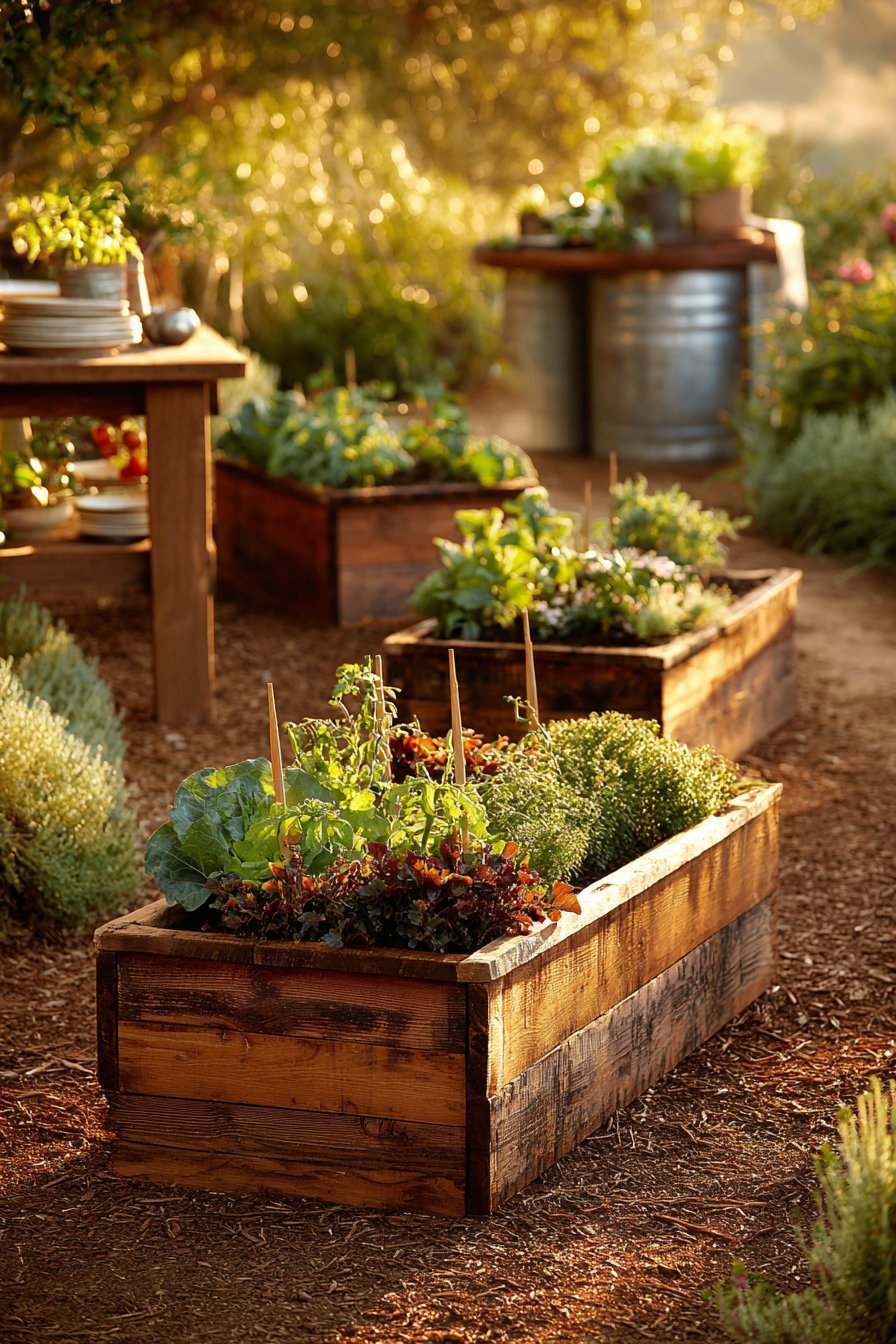
A small potting station with galvanized metal surface stands nearby. Outdoor photography shows realistic plant conditions and growth. Natural soil texture appears authentic and well-maintained. Afternoon sunlight creates shadows highlighting the functional design.
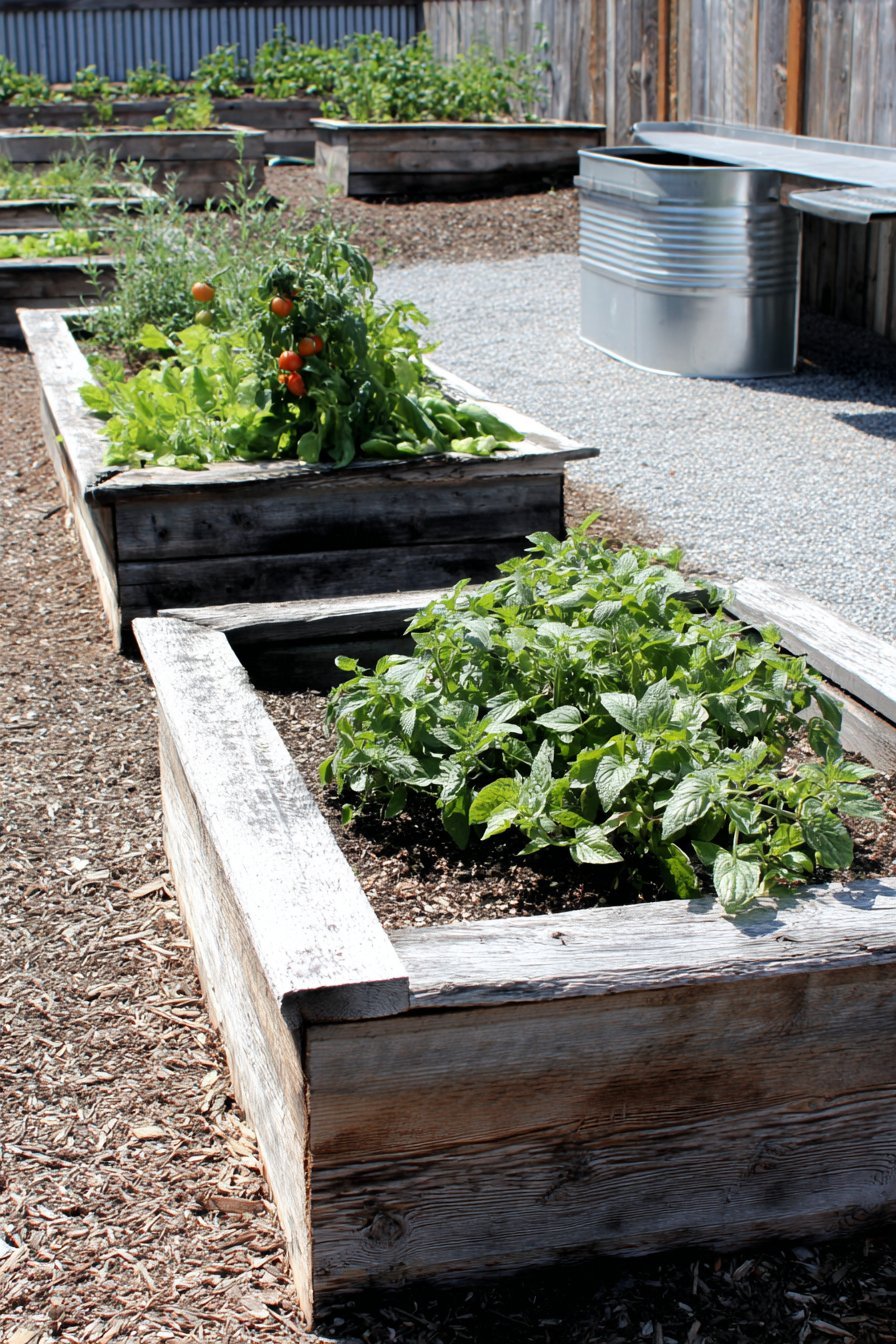
The raised bed system offers excellent drainage and soil control. Cedar naturally resists rot in ground contact. The organized layout makes maintenance and harvesting efficient.
Raised beds warm earlier in spring extending growing seasons. The contained system prevents soil compaction from foot traffic. Multiple beds allow crop rotation and succession planting.
Key Design Tips:
- Build raised beds from cedar for rot resistance and longevity
- Create mulched pathways between beds for all-weather access
- Stake tomatoes with simple supports for healthy vertical growth
- Position potting stations near beds for convenient workspace
- Plan bed heights at comfortable working levels to reduce strain
8. Wooden Play Structure with Safety Features
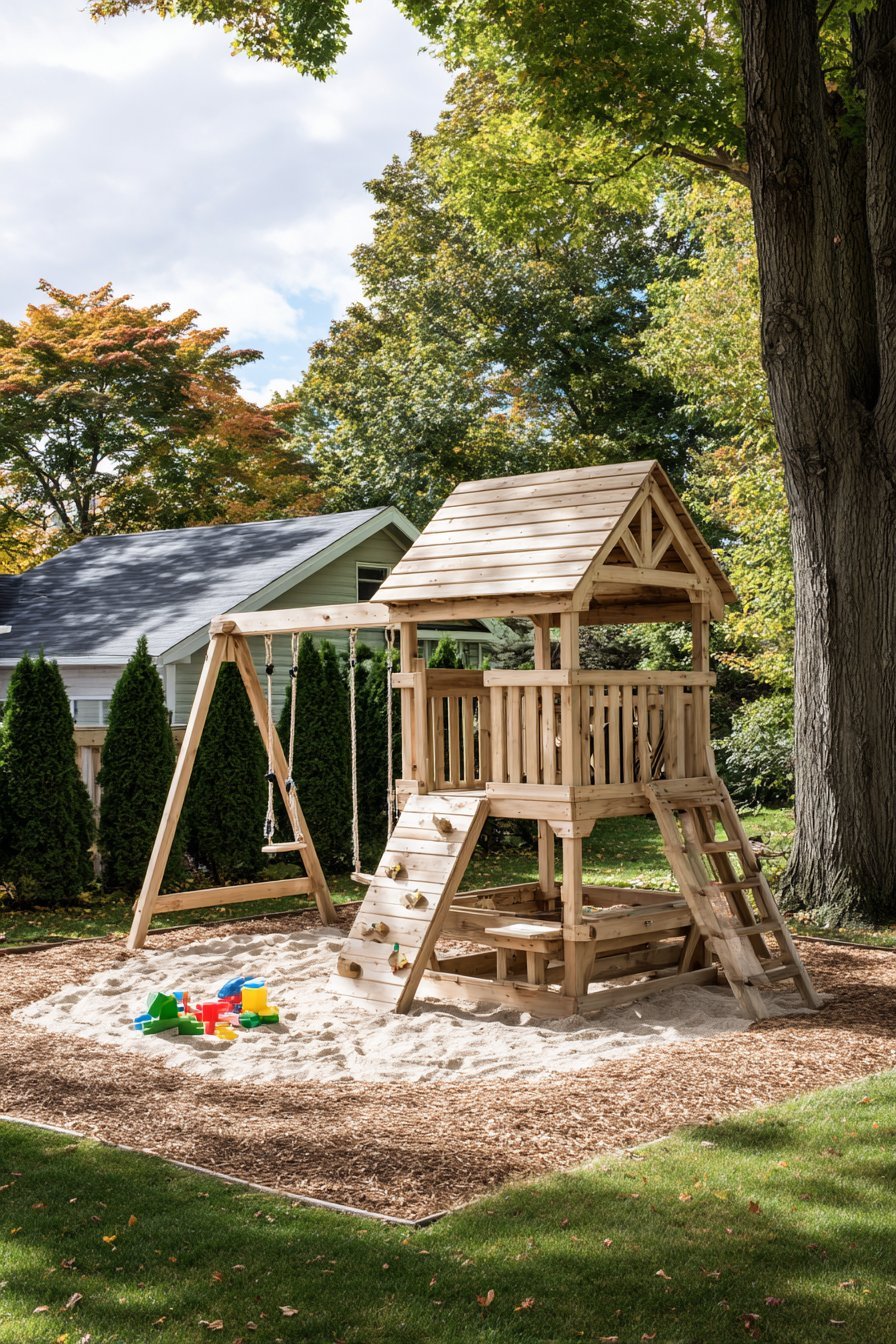
A sturdy wooden swing set features natural wood stain and multiple play elements. A rope ladder and platform deck with safety railings provide adventure. Thick wood mulch underneath ensures safe landing surfaces. This family-friendly area prioritizes both fun and safety.
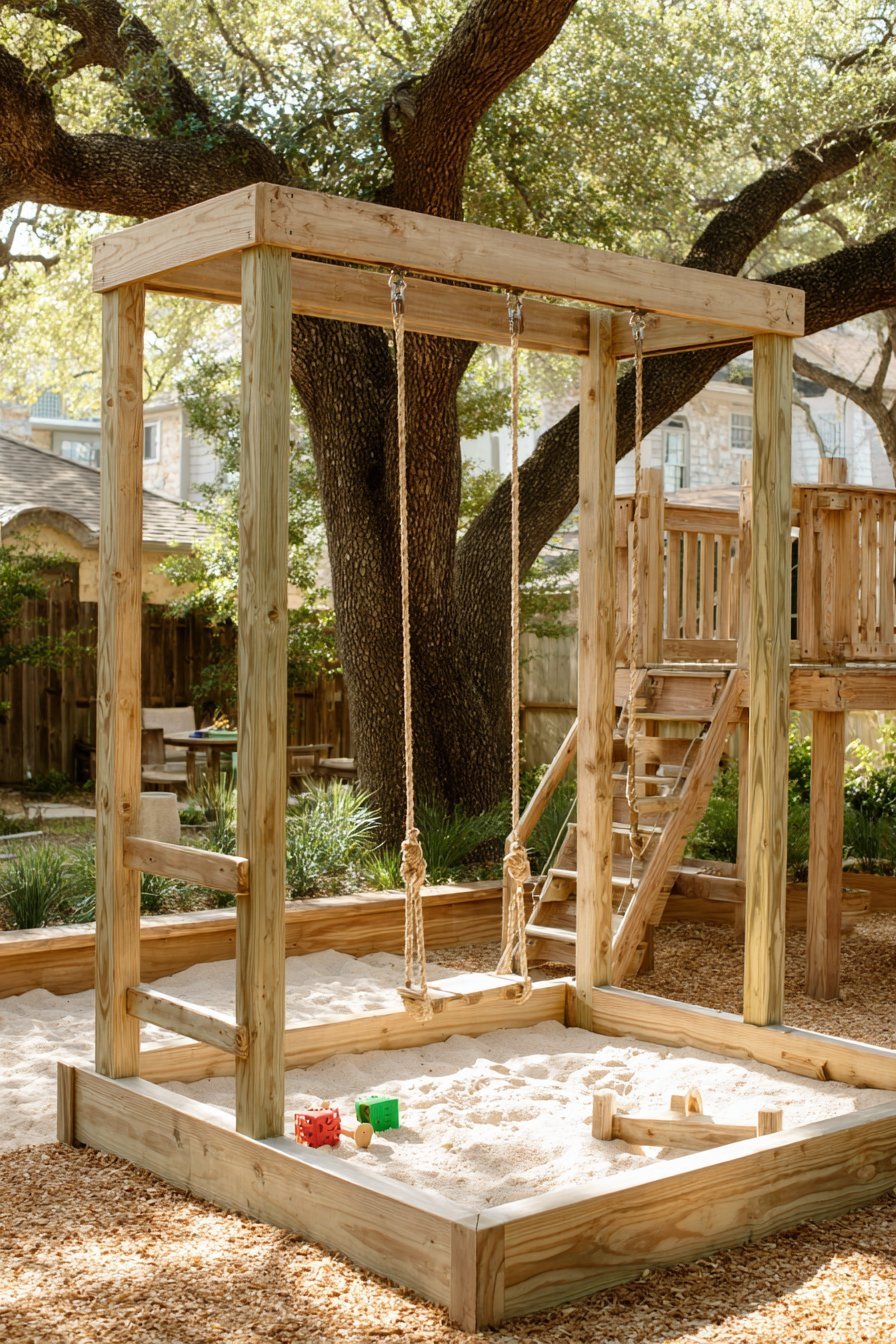
A simple sandbox with built-in corner seating uses weather-treated lumber. Clean play sand and colorful toys invite imaginative play. Partial shade from a mature tree protects from harsh sun. The complete play zone integrates thoughtfully into the backyard.
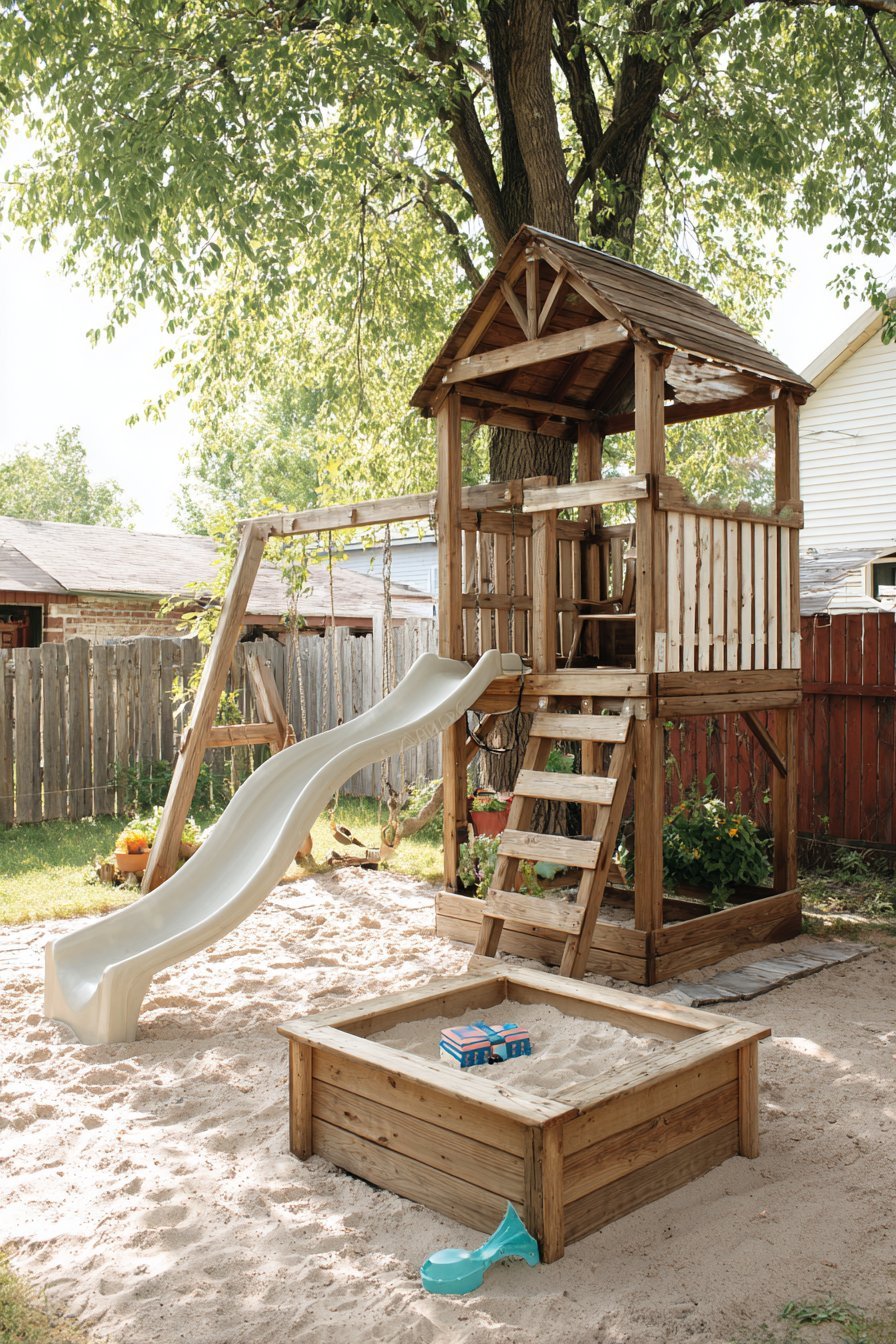
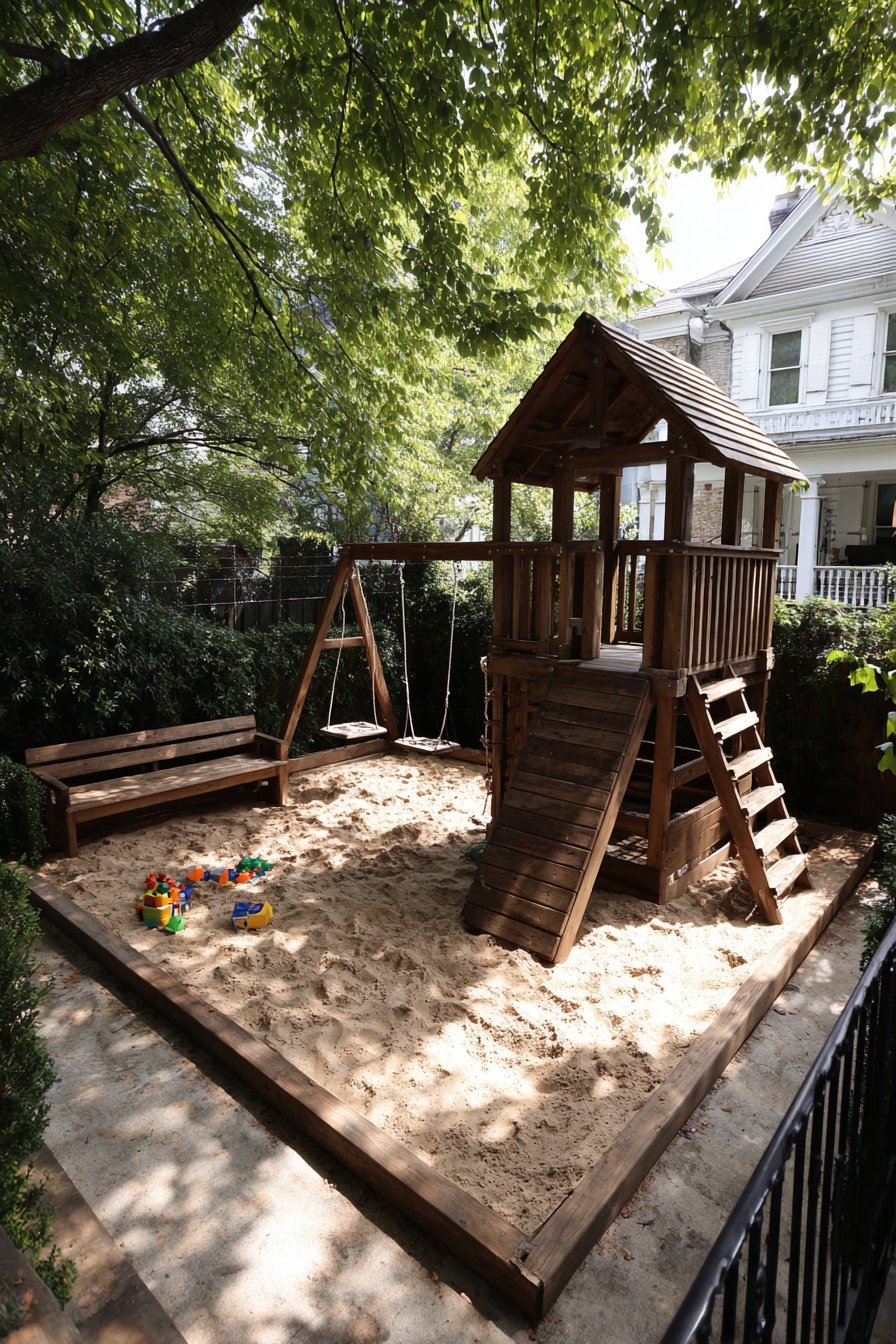
Natural daylight shows realistic material wear from regular use. Safety features meet modern playground standards. The design balances active play with practical parental oversight.
Wood mulch provides cushioning for inevitable falls. Built-in seating around sandboxes keeps adults nearby during play. Natural shade reduces sun exposure during peak hours.
Key Design Tips:
- Stain play structures with natural wood tones to blend with landscape
- Install thick wood mulch layers for impact absorption and safety
- Build sandboxes with integrated seating for adult supervision
- Position play areas under existing trees for natural shade
- Include varied play elements to suit different age groups
9. Natural Stone Outdoor Kitchen Station

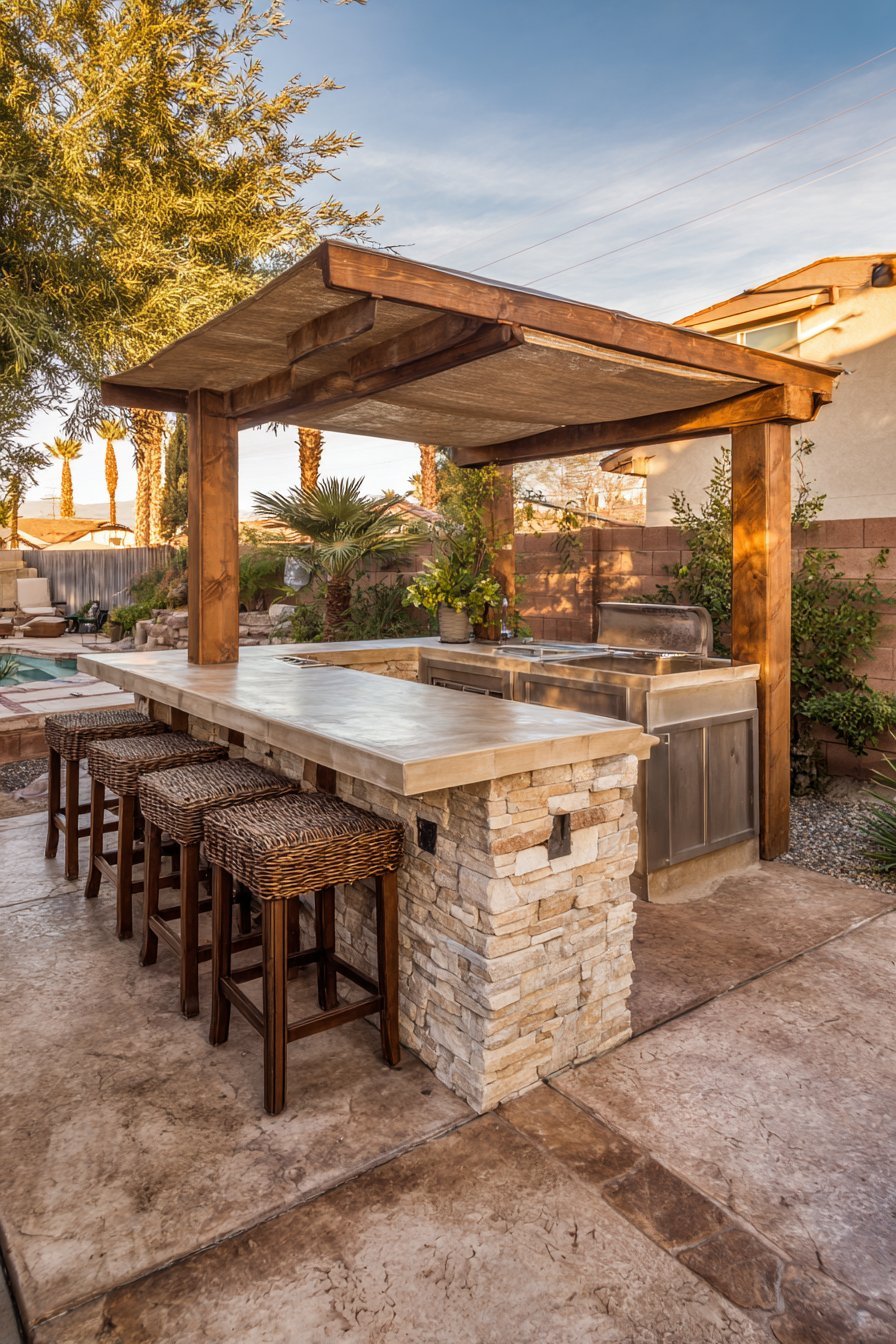
An L-shaped outdoor kitchen features natural stone veneer and concrete countertops. The built-in grill station includes storage cabinets with stainless steel doors. A small sink and prep area complete the functional workspace. Simple pergola overhead provides partial shade.
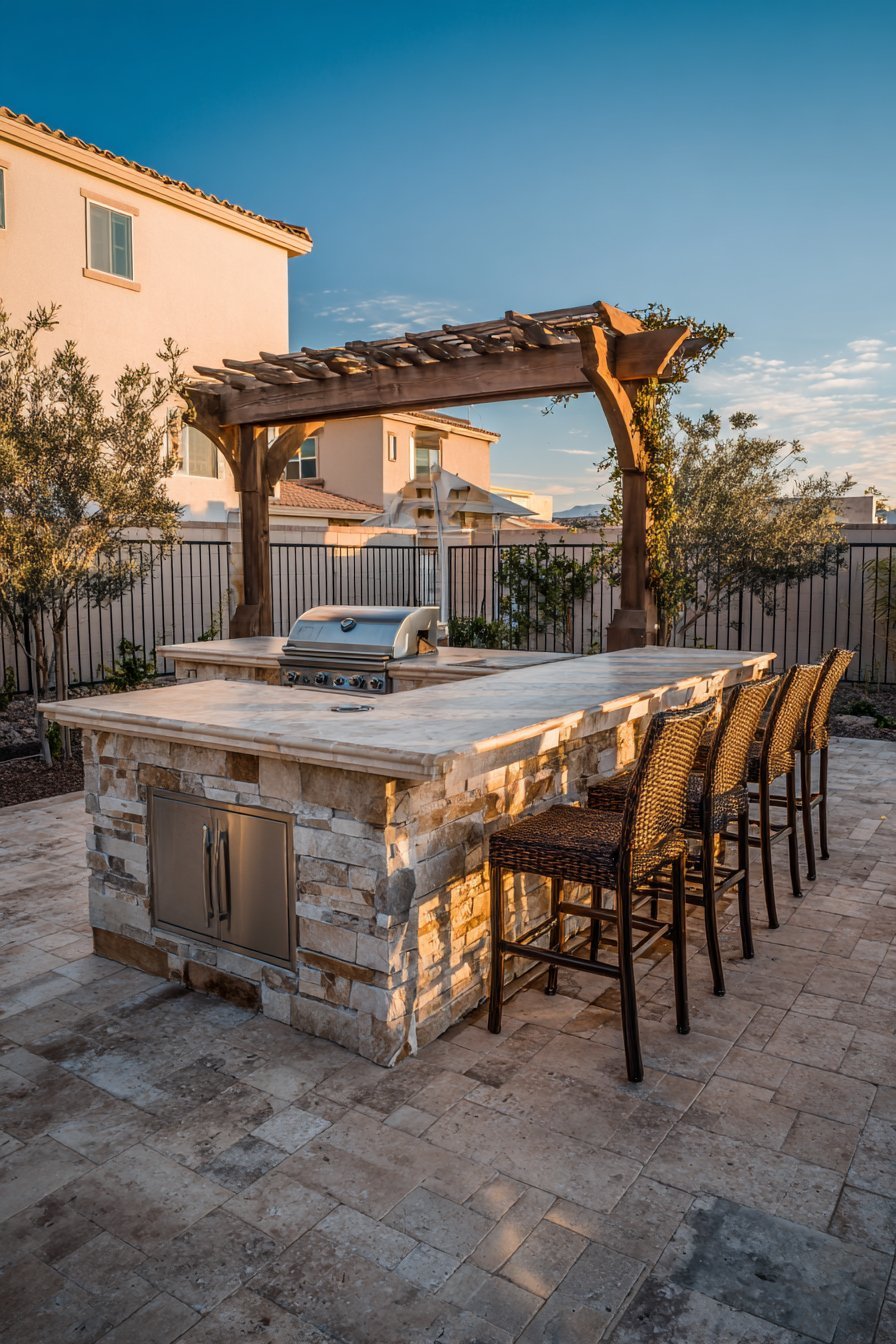
Bar-height stools with weather-resistant woven seats face the counter. Large-format concrete pavers create the surrounding patio surface. Natural color variations in pavers add visual interest. Golden hour lighting enhances stone texture and stainless steel finishes.
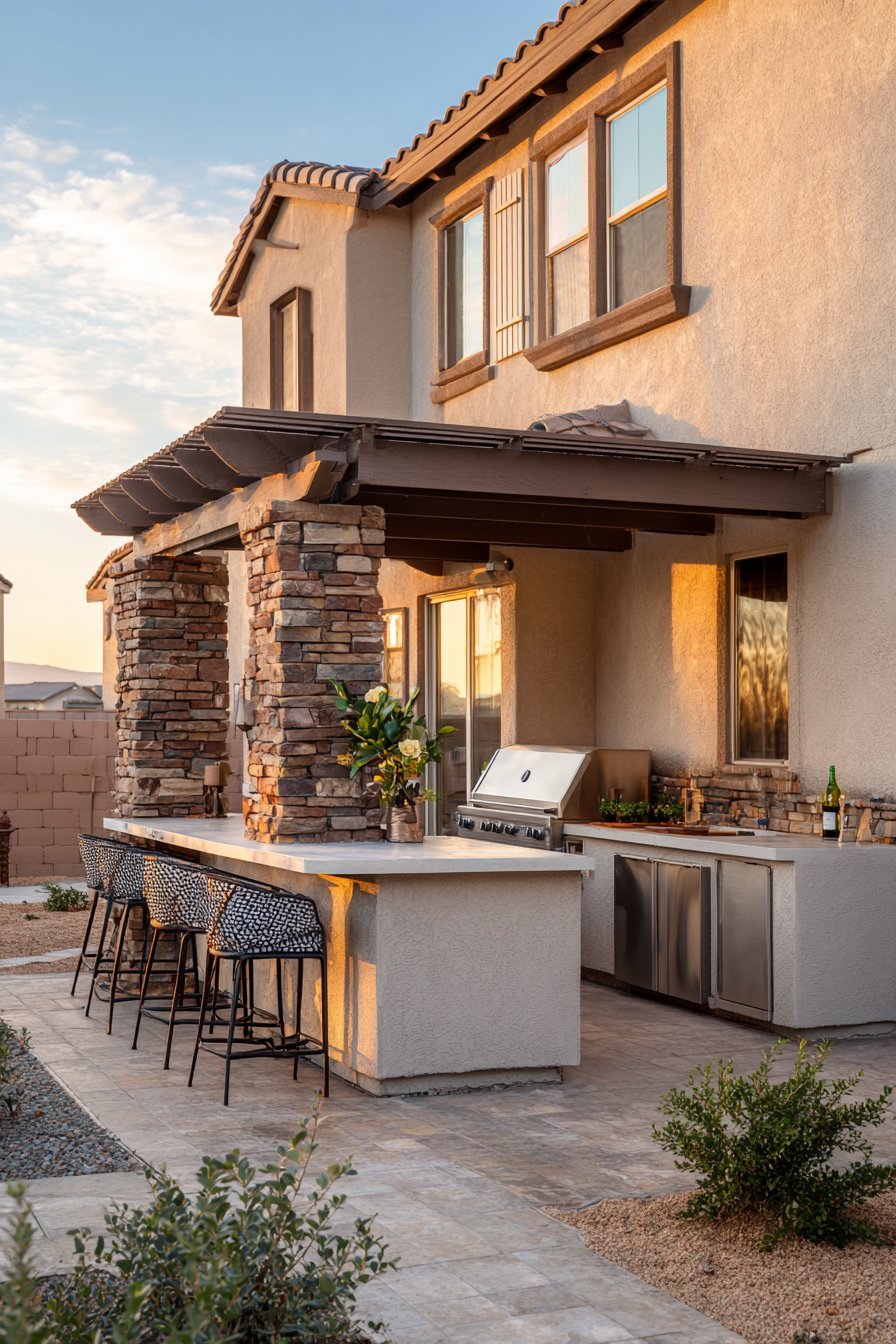
The design creates a complete outdoor cooking environment. Storage keeps utensils and supplies protected yet accessible. The setup encourages outdoor entertaining throughout warm seasons.
Concrete countertops withstand weather and high heat from grills. Stone veneer provides the appearance of solid stone affordably. Stainless steel elements resist rust in outdoor conditions.
Key Design Tips:
- Use natural stone veneer for authentic appearance with easier installation
- Install concrete countertops for heat resistance and durability
- Include adequate storage with stainless steel doors for weather protection
- Add pergolas over cooking areas for sun and light rain protection
- Choose large-format pavers to minimize grout lines and maintenance
10. Elevated Wooden Meditation Deck
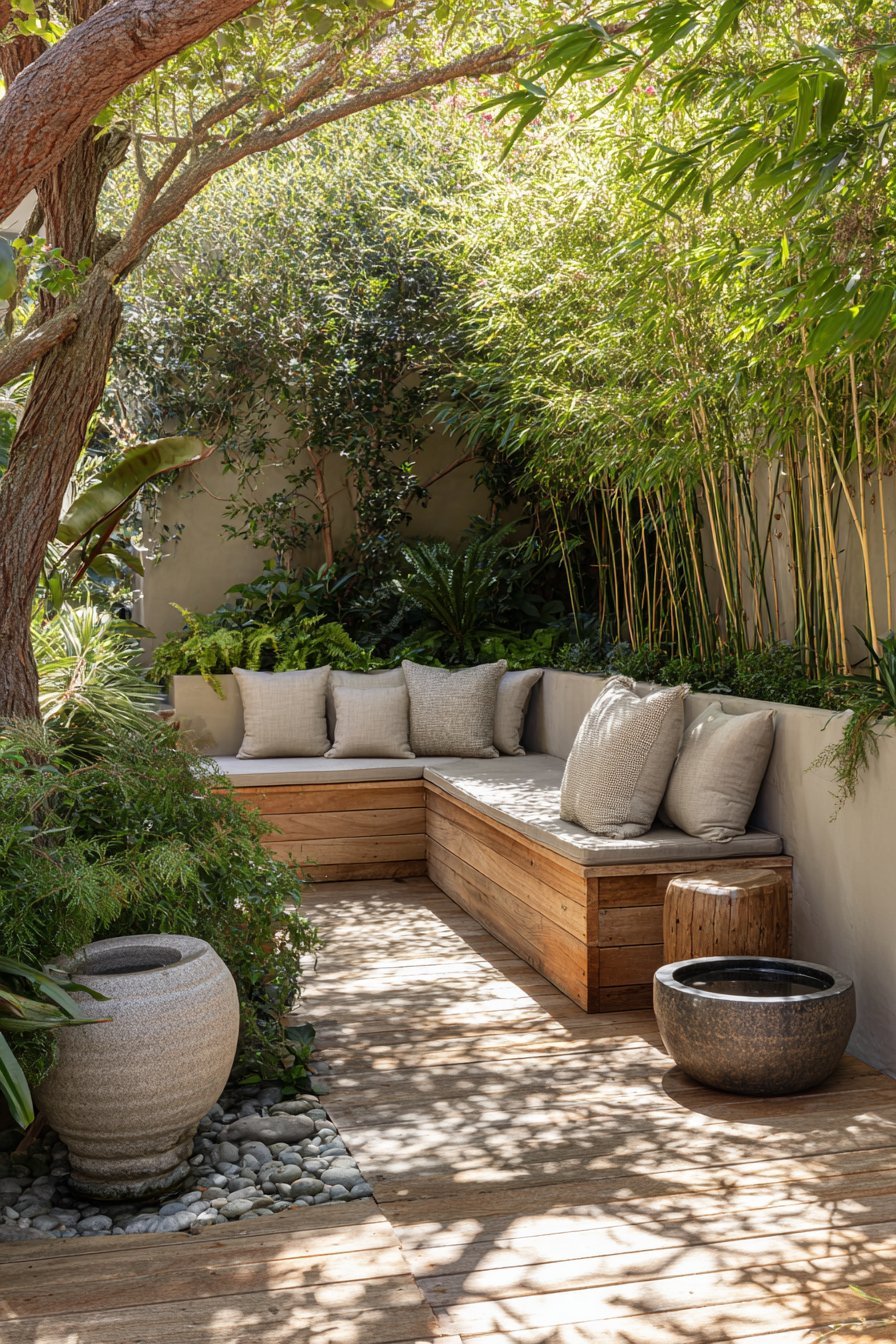
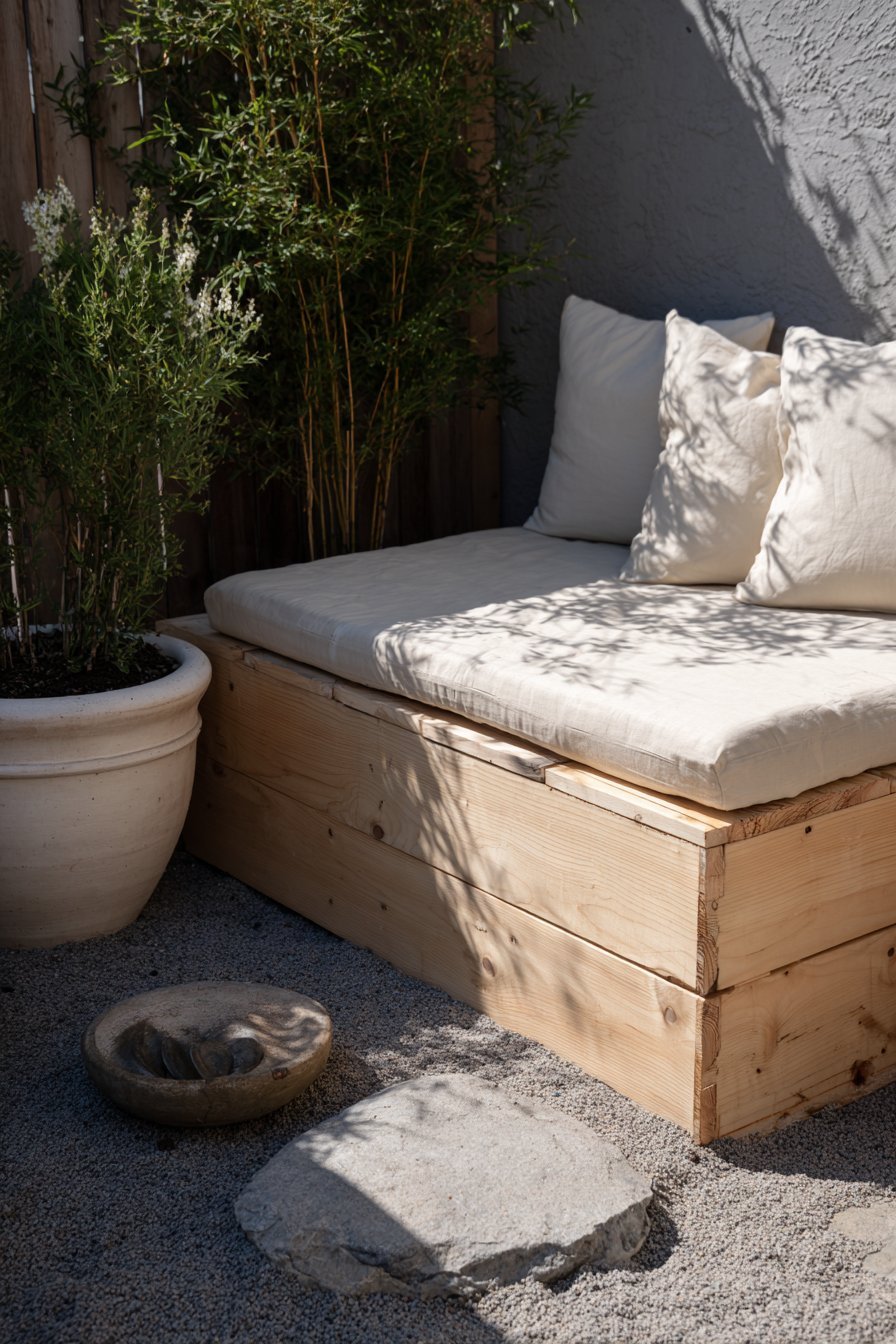
A simple wooden platform deck elevates slightly above ground level. Weather-resistant outdoor cushions in neutral linen fabric provide comfortable seating. Bamboo plants in large ceramic containers create natural privacy screening. The minimalist design promotes peaceful contemplation.
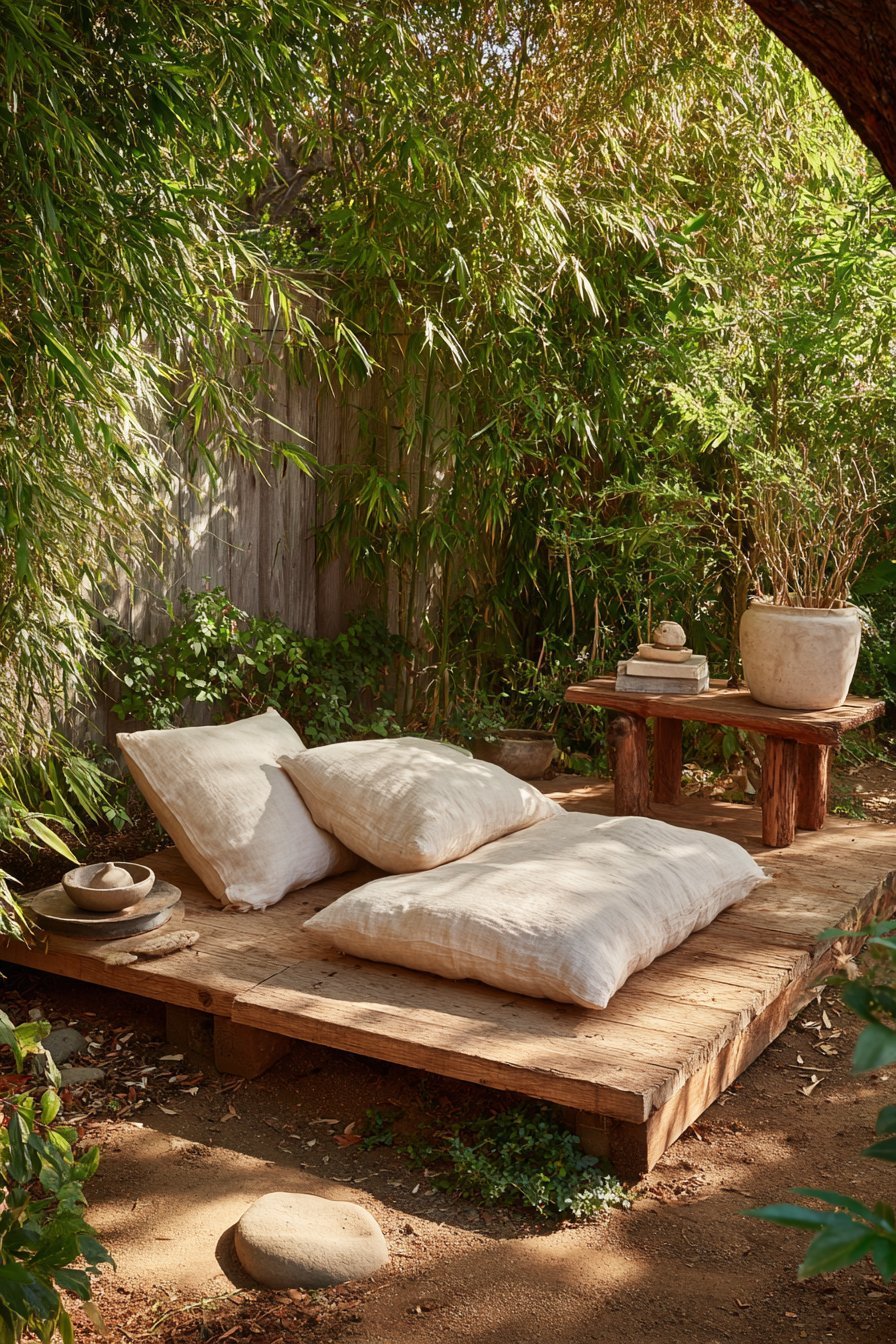
A small water bowl for birds sits on a flat stone nearby. This element connects the space to nature. A wooden storage bench holds yoga mats and meditation supplies. Soft morning light captures the peaceful atmosphere beautifully.
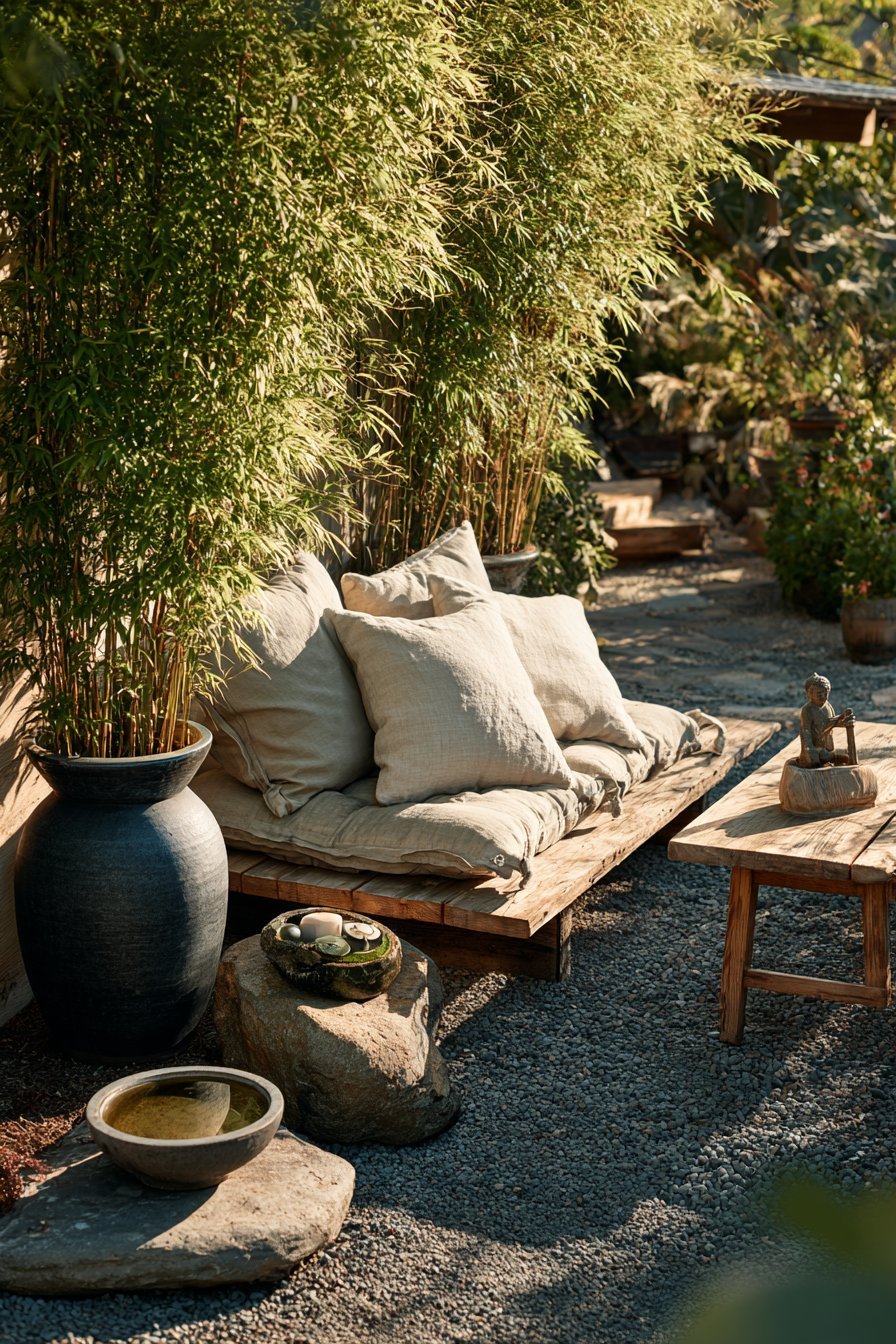
Realistic material textures show authentic outdoor wear patterns. Natural shadows add depth to the simple composition. The design demonstrates how less creates more in meditation spaces.
Elevated decks prevent moisture damage to cushions and supplies. Bamboo provides fast-growing privacy that moves gently in breezes. Minimalist approaches reduce visual clutter supporting meditation practice.
Key Design Tips:
- Elevate meditation decks slightly for drainage and dry surfaces
- Choose neutral linen fabrics for calming, natural aesthetics
- Plant bamboo in containers for controllable privacy screening
- Include simple storage for meditation and yoga supplies
- Position spaces to receive gentle morning or evening light
11. Shade Garden with Flagstone Paths
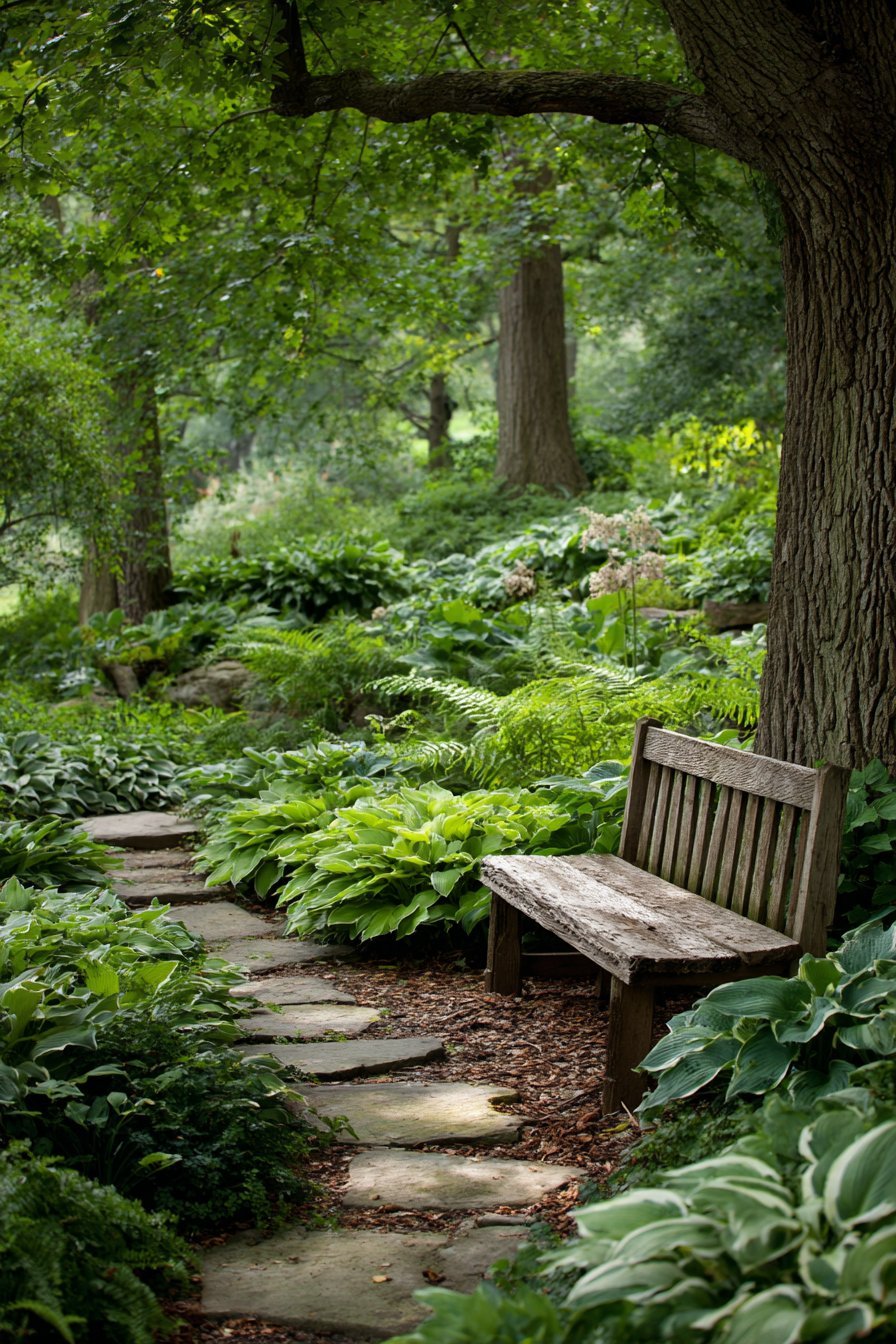
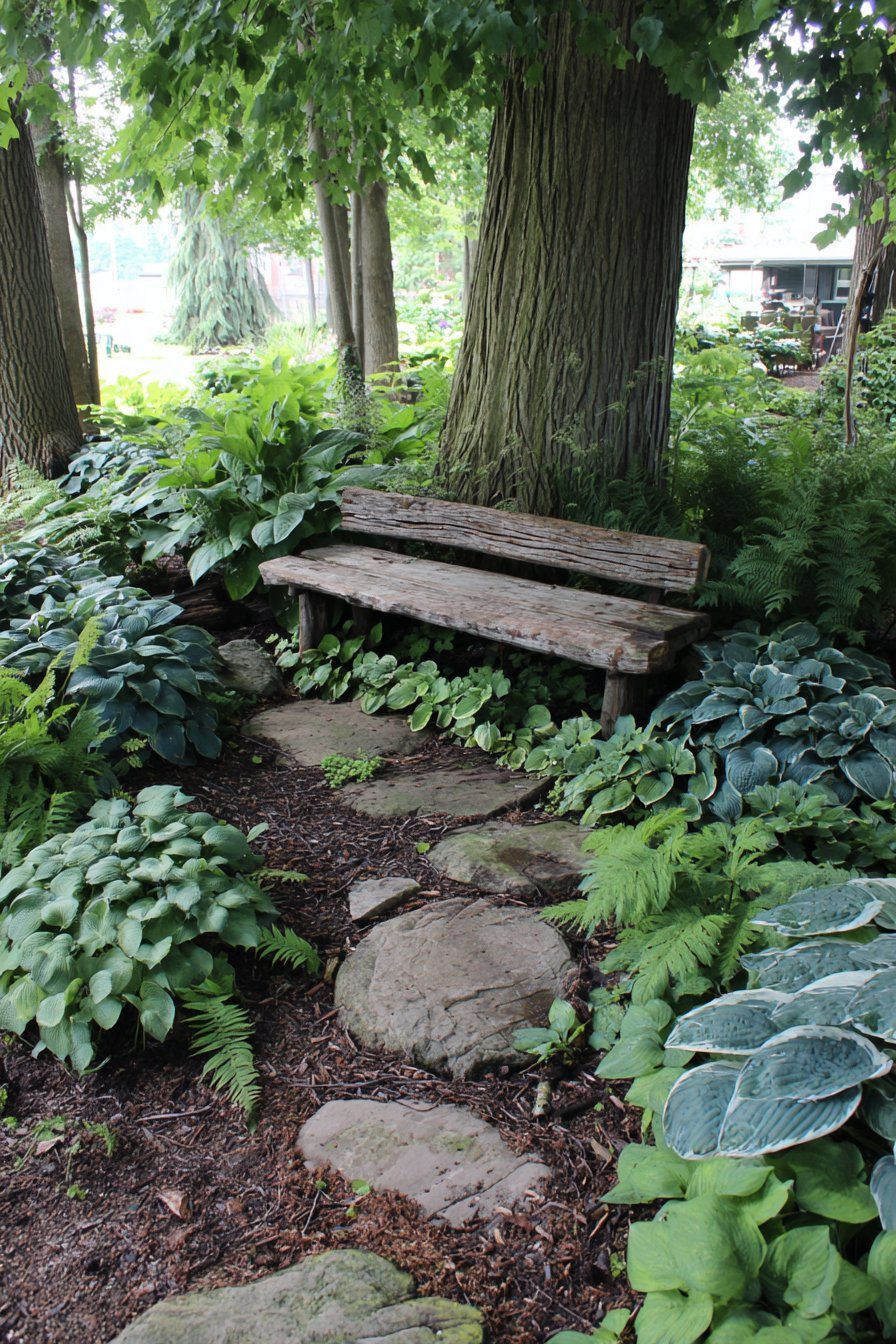
A shade garden under mature trees features varied foliage textures. Hostas display different leaf patterns throughout the space. Ferns and astilbe in bloom add vertical interest. Natural flagstone stepping stones wind through planted areas organically.
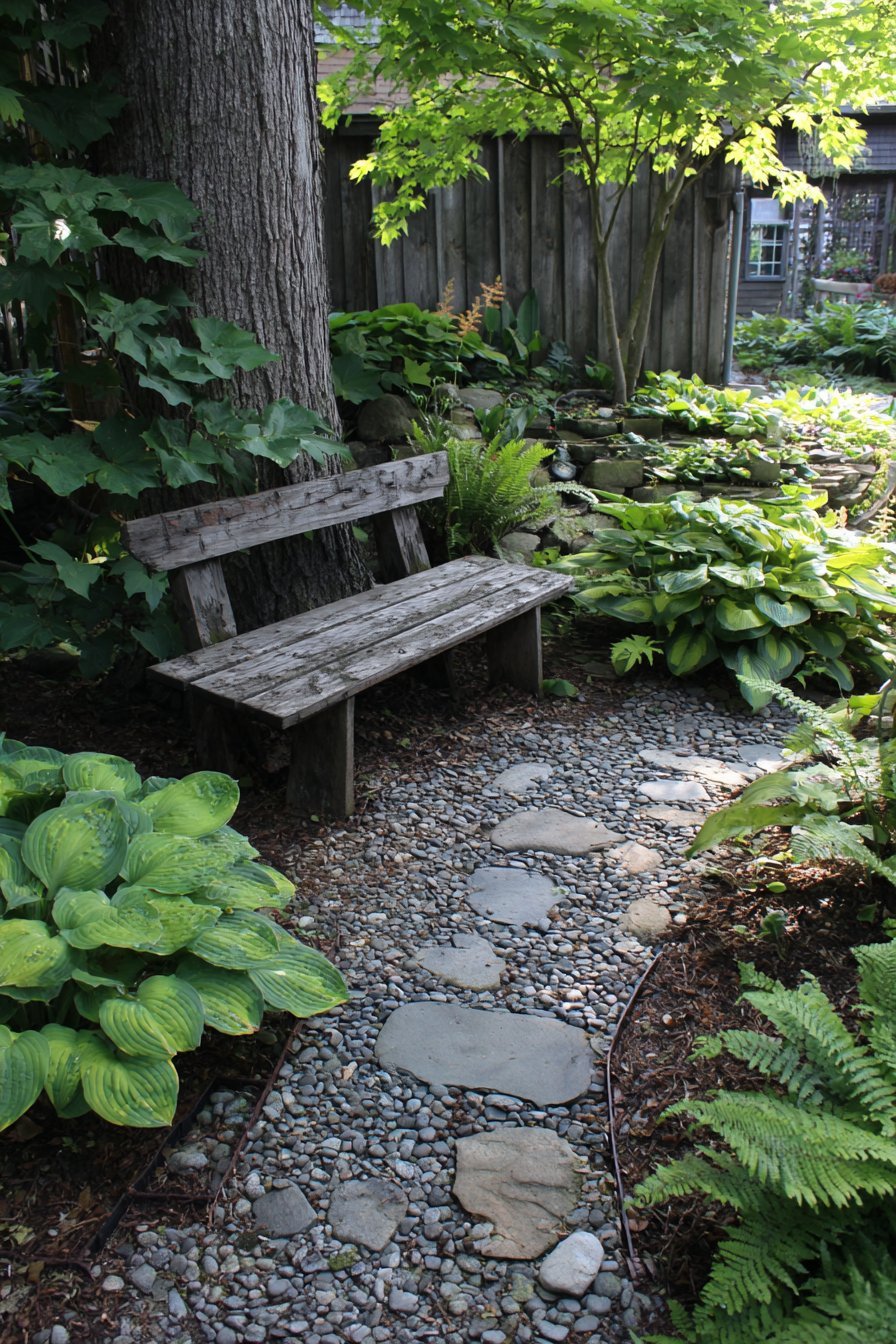
Simple metal landscape edging defines garden boundaries cleanly. A weathered wooden bench from reclaimed barn wood provides seating. Mulch pathways prevent weed growth while maintaining natural appearance. Dappled shade lighting creates authentic woodland atmosphere.
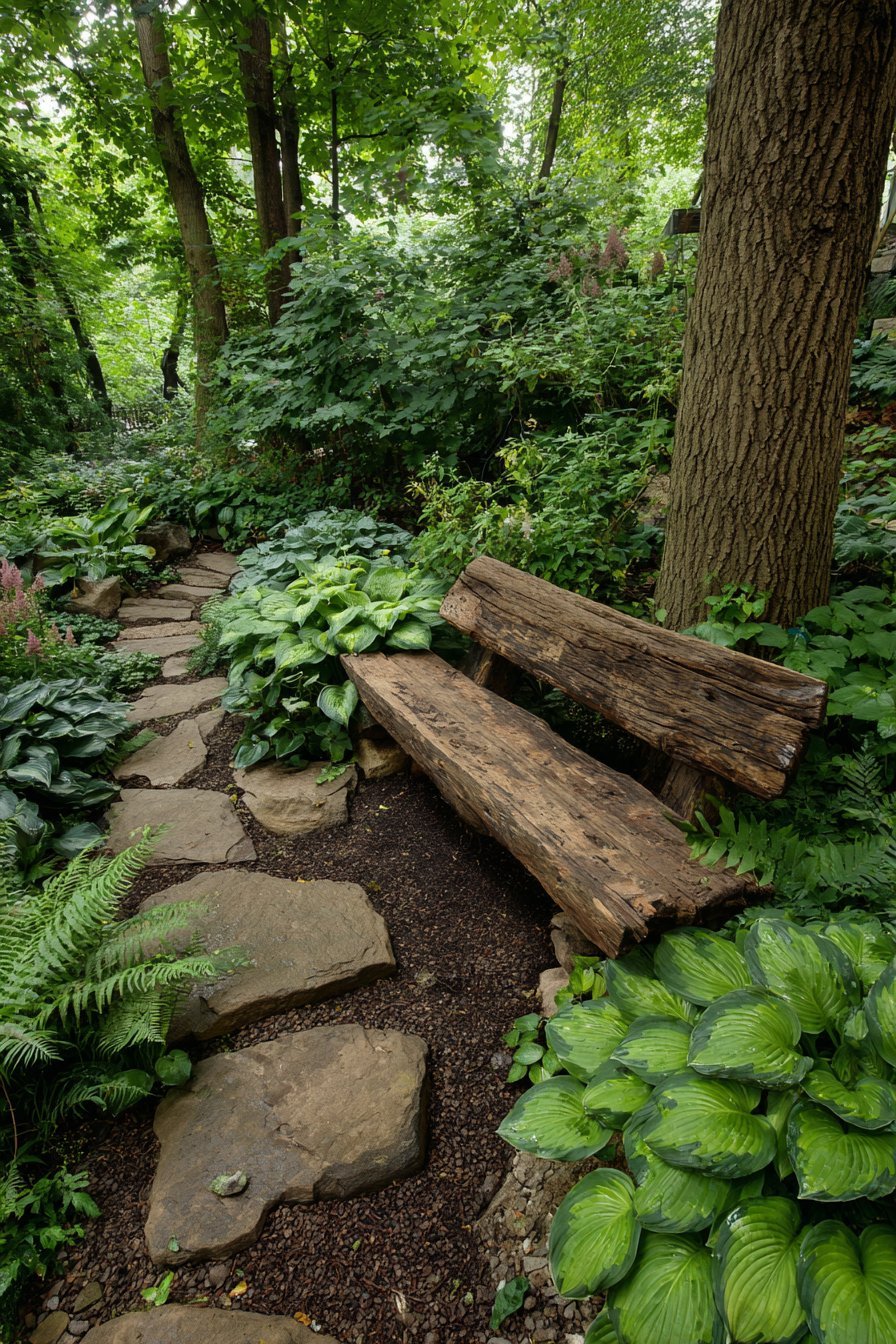
The photography captures how limited sunlight interacts with foliage. Varied textures create visual interest without relying on flowers. The design works with existing conditions rather than fighting them.
Shade gardens utilize spaces where lawn struggles to grow. Hostas and ferns thrive in low light conditions. Mulch conserves moisture and suppresses weeds naturally.
Key Design Tips:
- Select shade-tolerant plants like hostas and ferns for tree coverage
- Install flagstone paths to navigate gardens without soil compaction
- Use metal landscape edging for clean, maintenance-free borders
- Apply thick mulch layers to suppress weeds and retain moisture
- Include weathered wood seating to complement natural settings
12. Modern Horizontal Cedar Privacy Fence
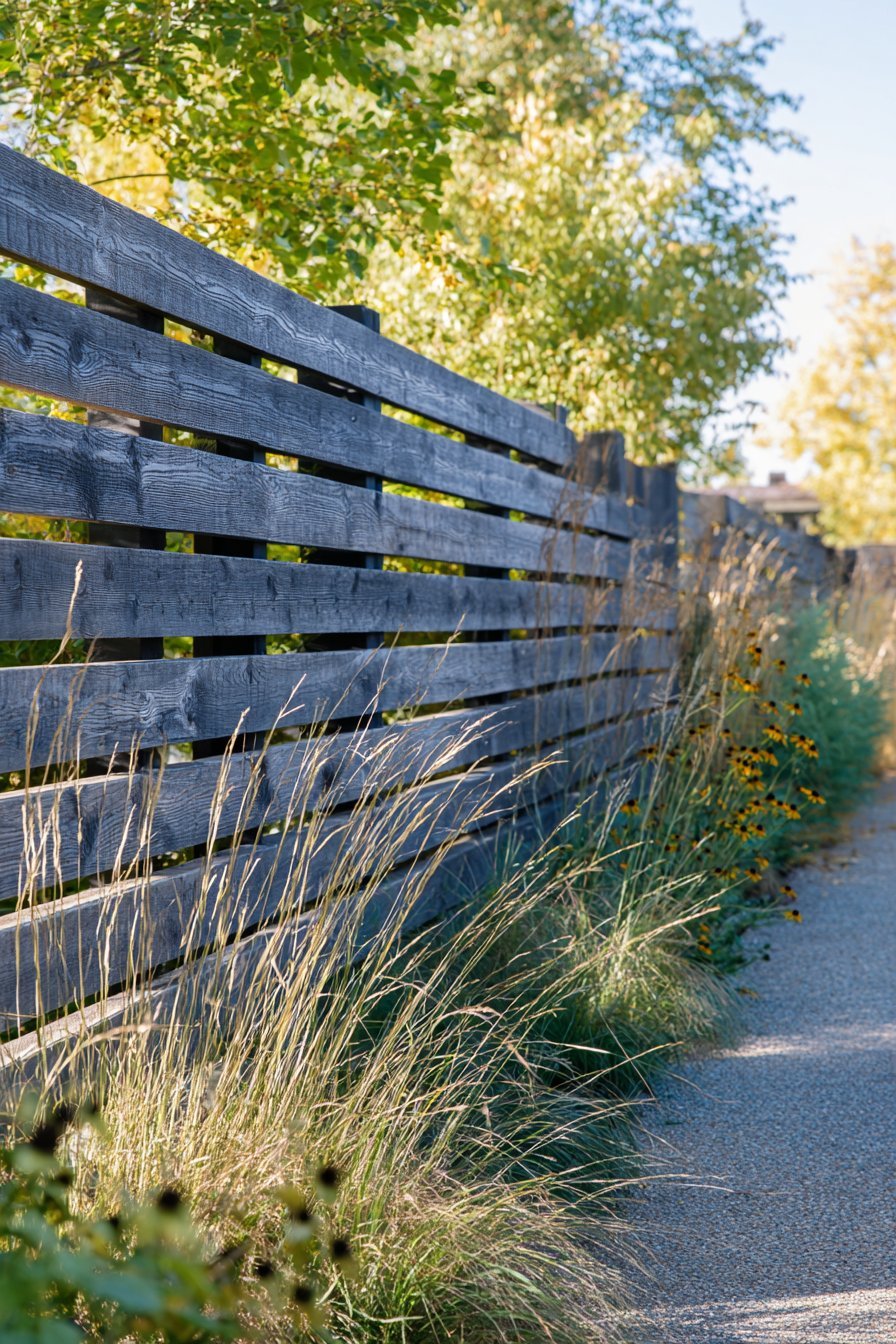
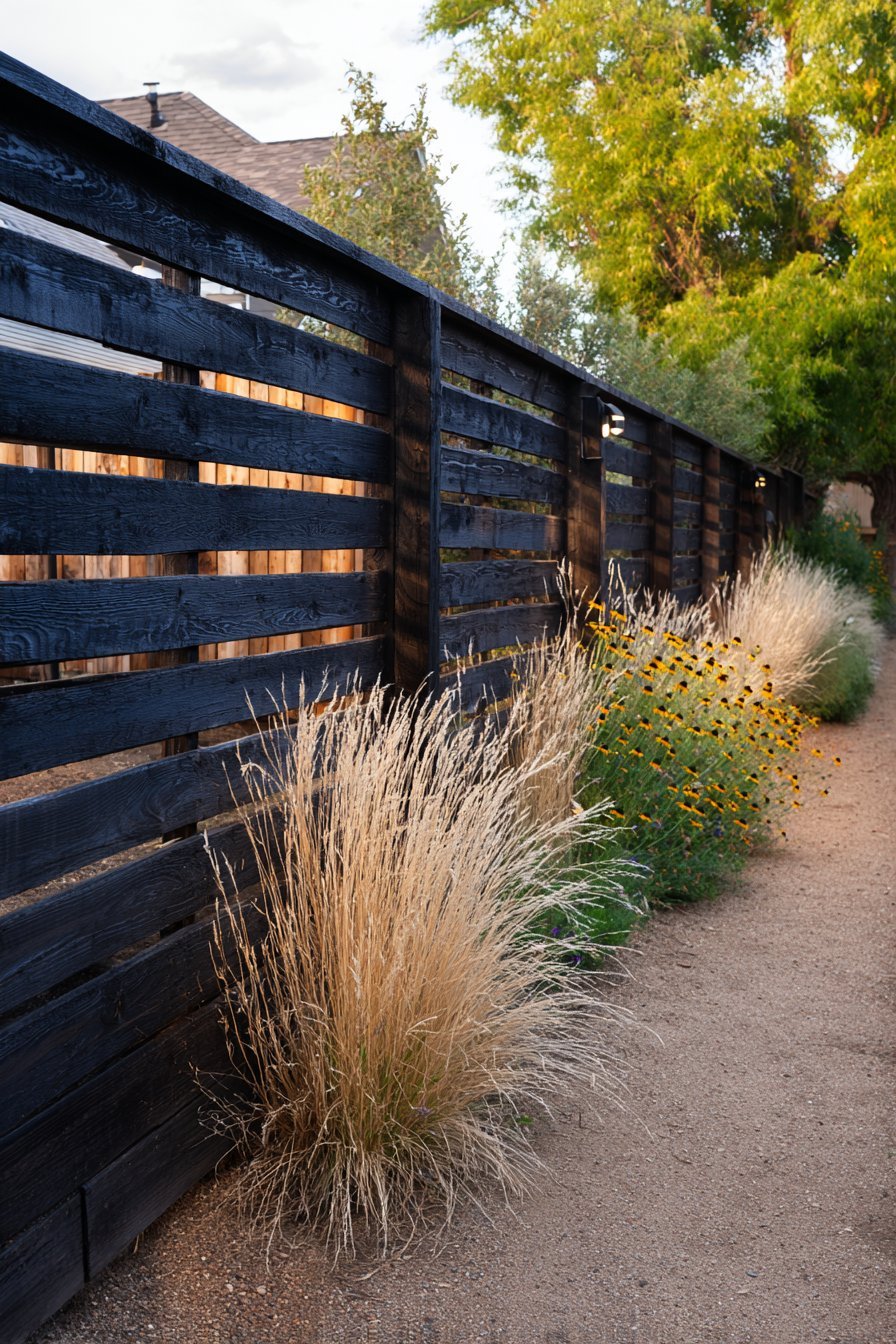
A contemporary privacy fence uses horizontal cedar boards with consistent spacing. Charcoal grey stain creates modern sophistication. Tall ornamental grasses and black-eyed Susans create layered plantings in front. A narrow gravel path runs parallel to the fence line.
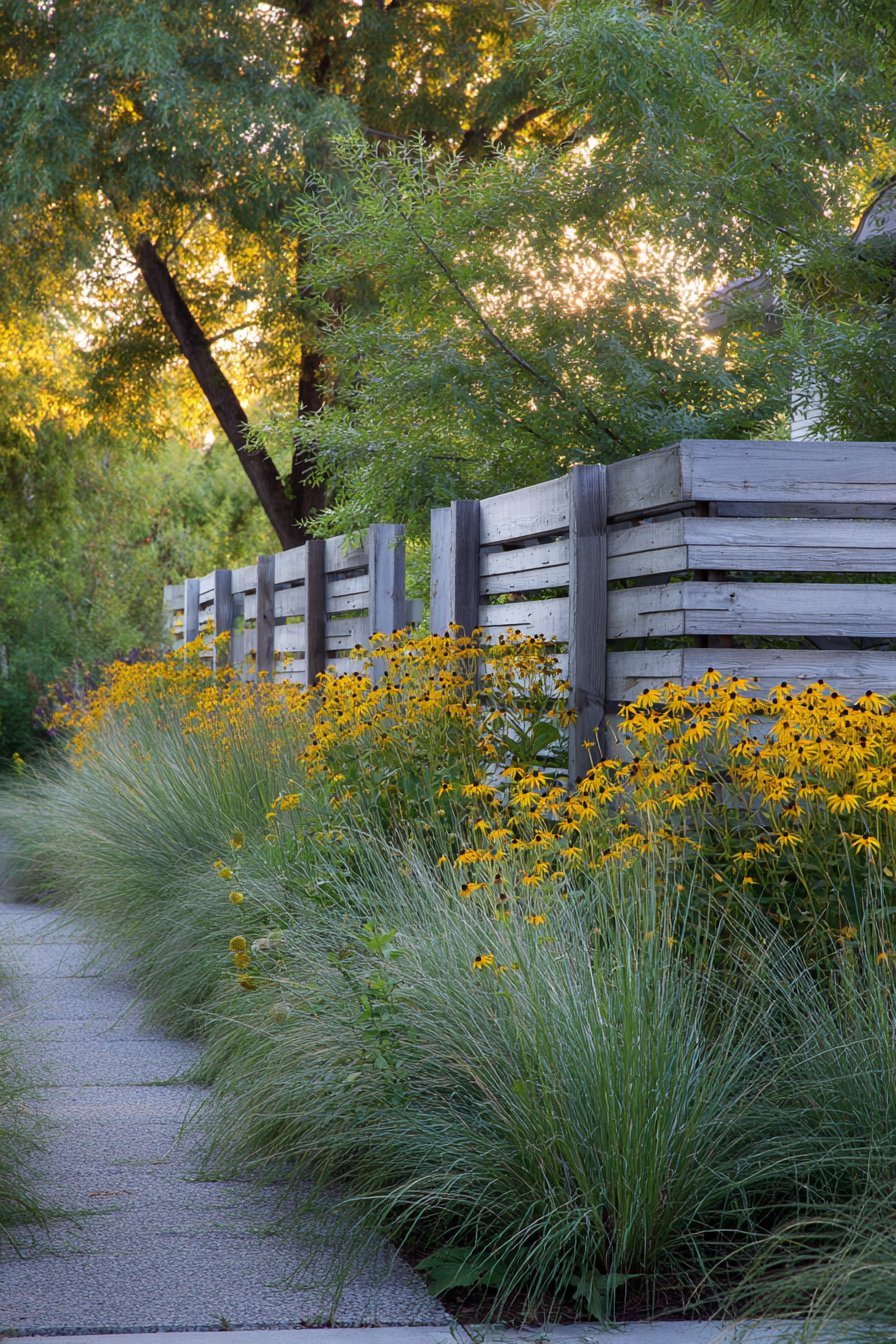
Simple solar post cap lights top fence posts for evening illumination. Professional photography shows realistic wood grain texture clearly. Afternoon lighting creates dimensional shadows across horizontal boards. Functional privacy fencing becomes an attractive design element.
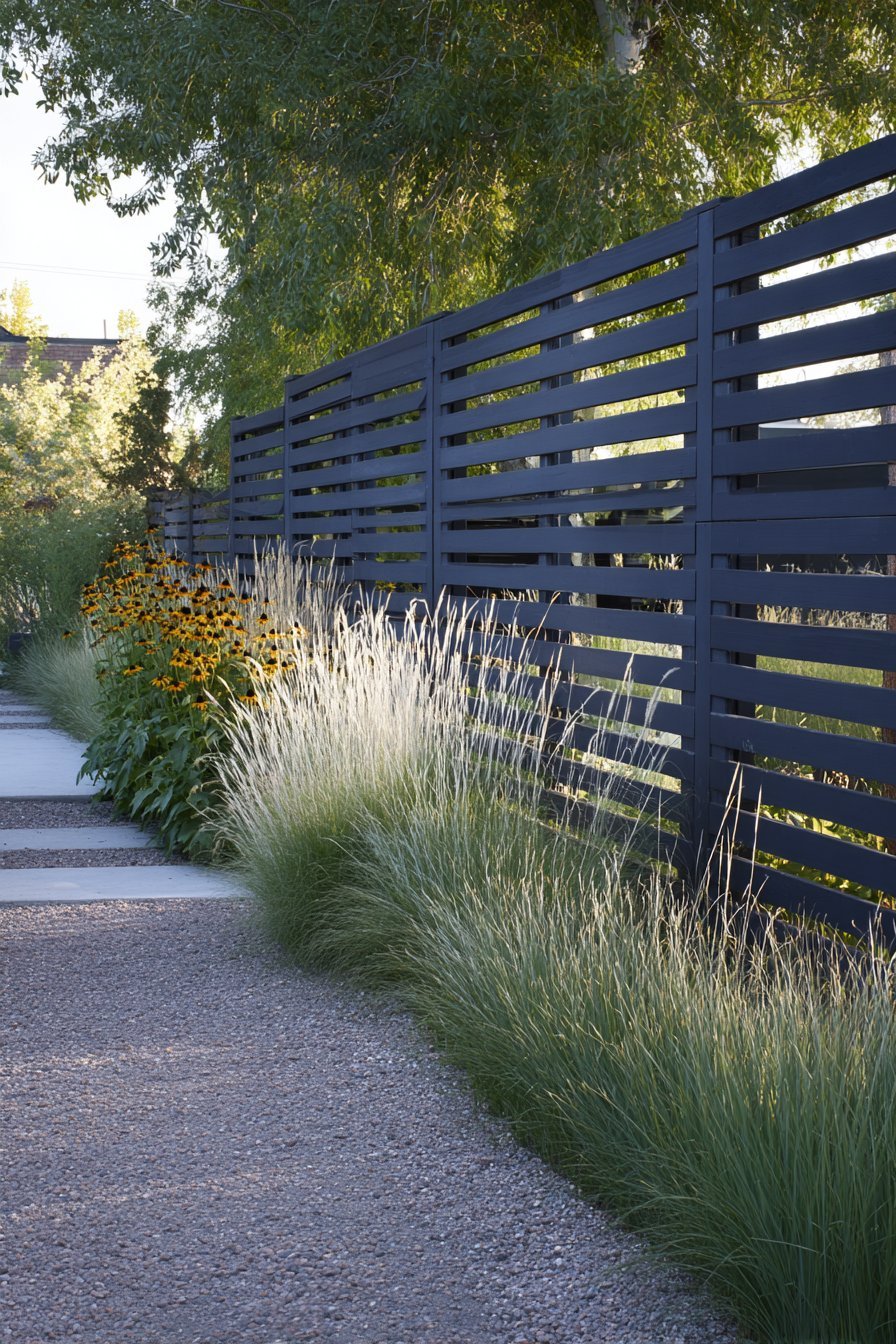
The horizontal orientation creates visual width in narrow yards. Consistent spacing allows air circulation while maintaining privacy. Solar lighting eliminates electrical installation complexity.
Cedar accepts stain beautifully while resisting decay naturally. The charcoal grey color provides contemporary contrast to traditional wood tones. Ornamental grasses soften hard fence lines with movement.
Key Design Tips:
- Orient fence boards horizontally for modern aesthetic and perceived width
- Stain cedar in charcoal grey for contemporary sophistication
- Plant ornamental grasses to soften fence lines with texture
- Install solar post cap lights for electrical-free illumination
- Maintain consistent board spacing for uniform appearance and airflow
13. Canvas Hammock Between Trees
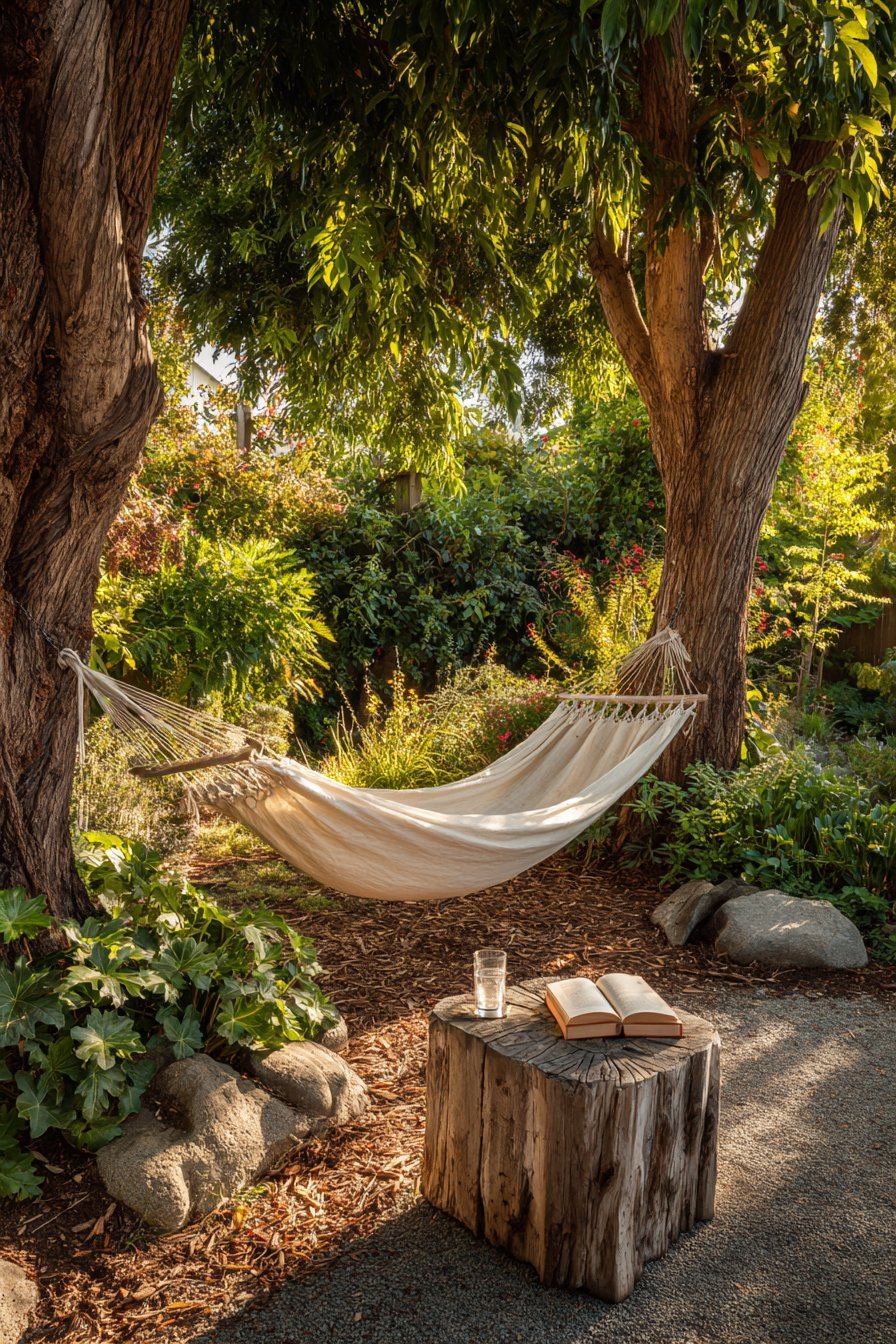
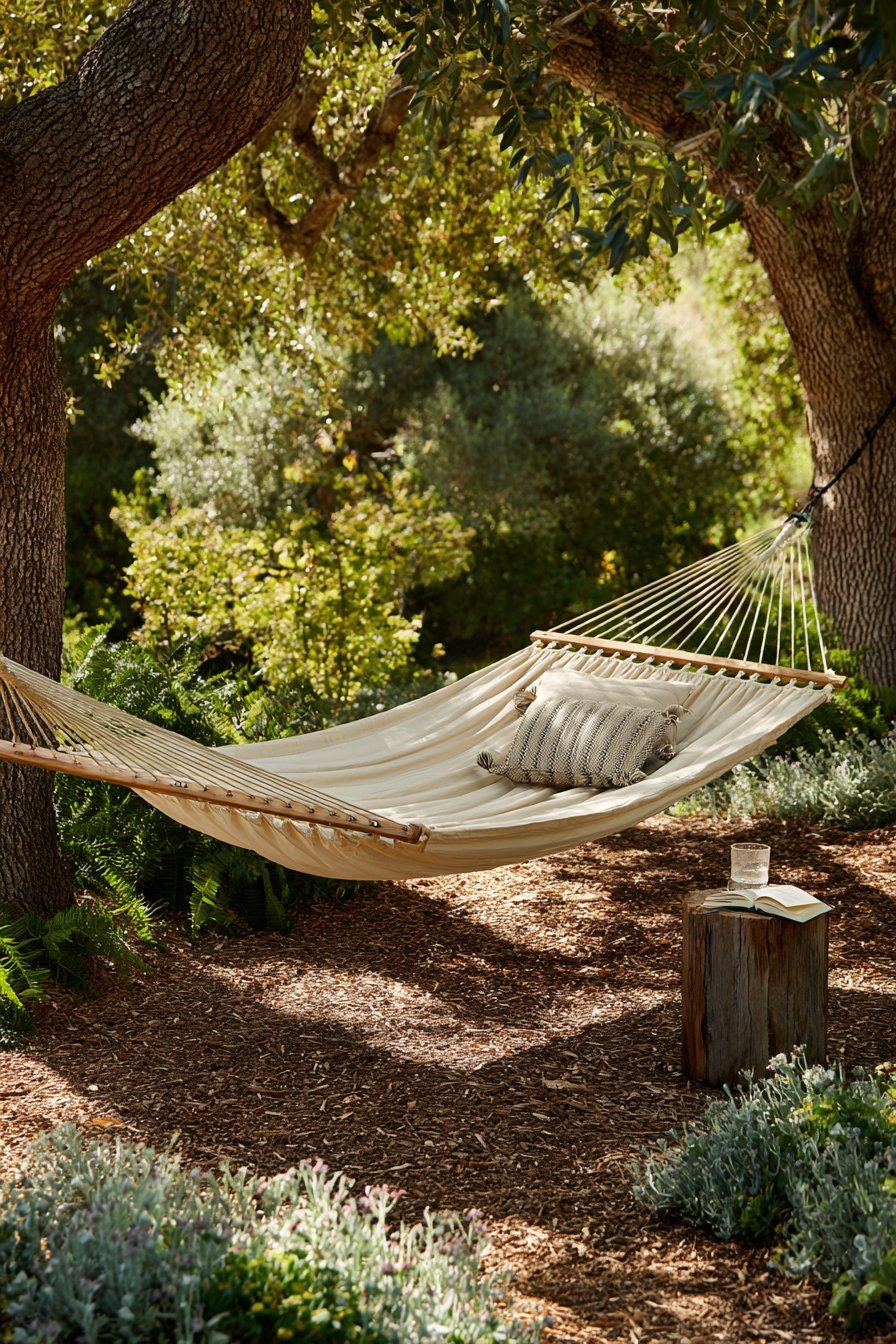
Two trees support properly installed hammock hanging hardware. A durable canvas hammock in natural cream displays visible weave texture. Level ground below is covered with soft wood chips for safety. The setup prioritizes both comfort and practicality.
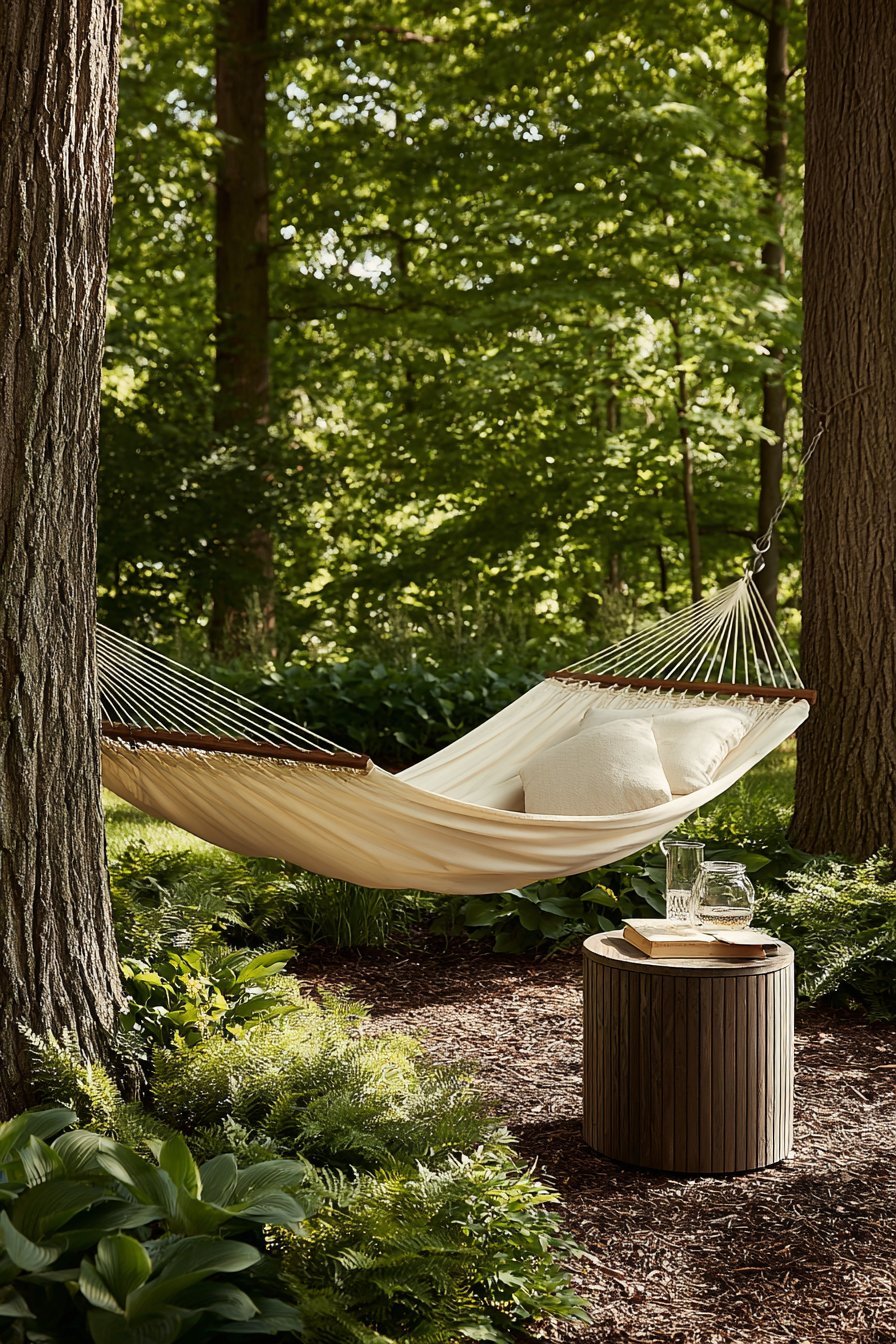
A simple side table made from a weathered tree stump holds essentials. Shade-tolerant groundcover plants fill surrounding areas. Late afternoon light filters through tree canopy naturally. Realistic fabric draping shows authentic hammock weight distribution.
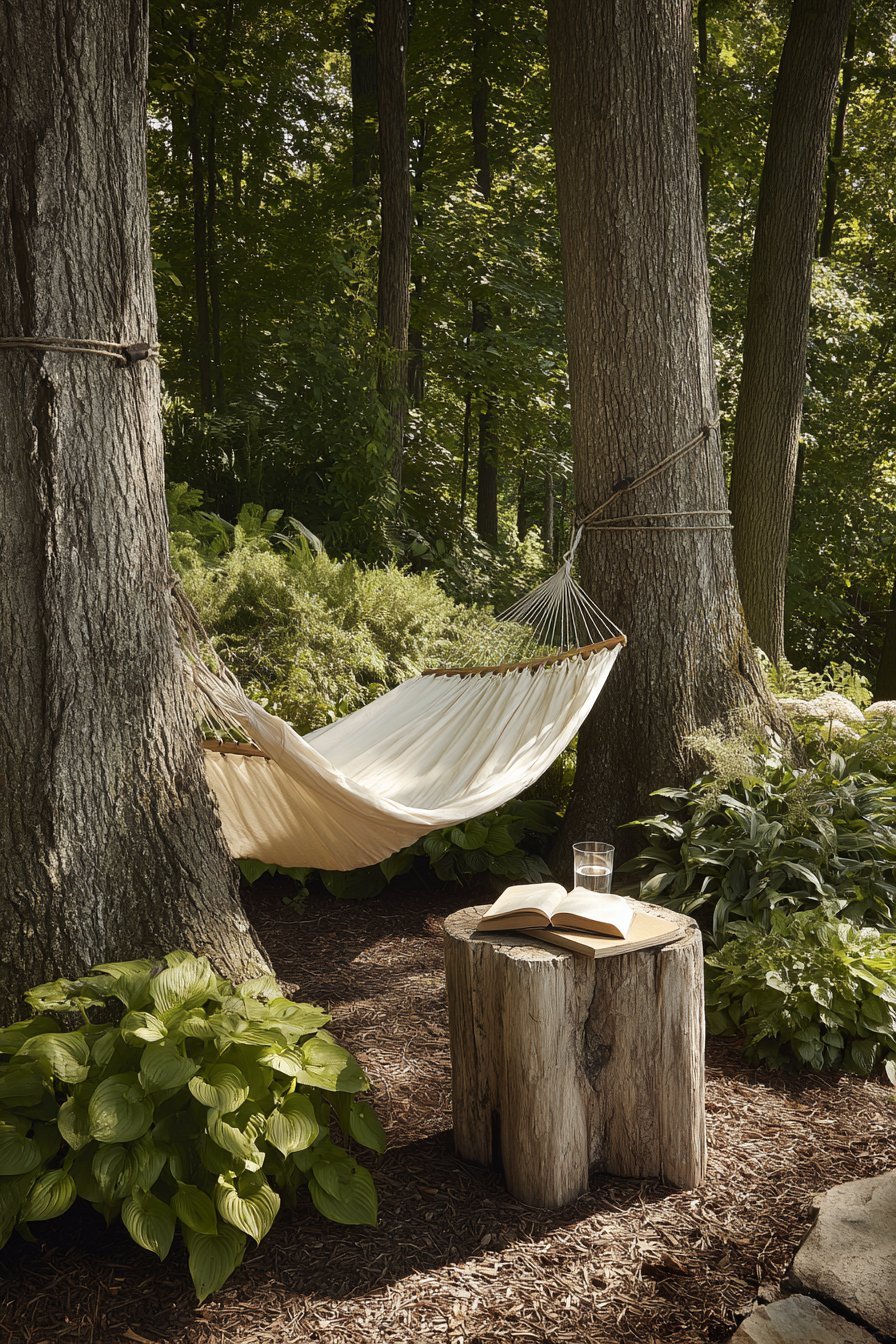
The design creates a relaxed atmosphere for reading or napping. Proper hardware installation protects tree health. Wood chip ground cover provides soft landing if needed.
Canvas hammocks offer superior breathability compared to nylon alternatives. Tree stump tables repurpose natural materials creatively. Groundcover prevents erosion and reduces maintenance needs.
Key Design Tips:
- Install proper hammock hardware to protect tree bark and ensure safety
- Choose canvas hammocks for breathability and natural aesthetic
- Cover ground beneath hammocks with wood chips for cushioning
- Repurpose tree stumps as natural side tables near hammocks
- Plant shade groundcovers to complete woodland atmosphere
14. Native Butterfly Garden with Birdbath
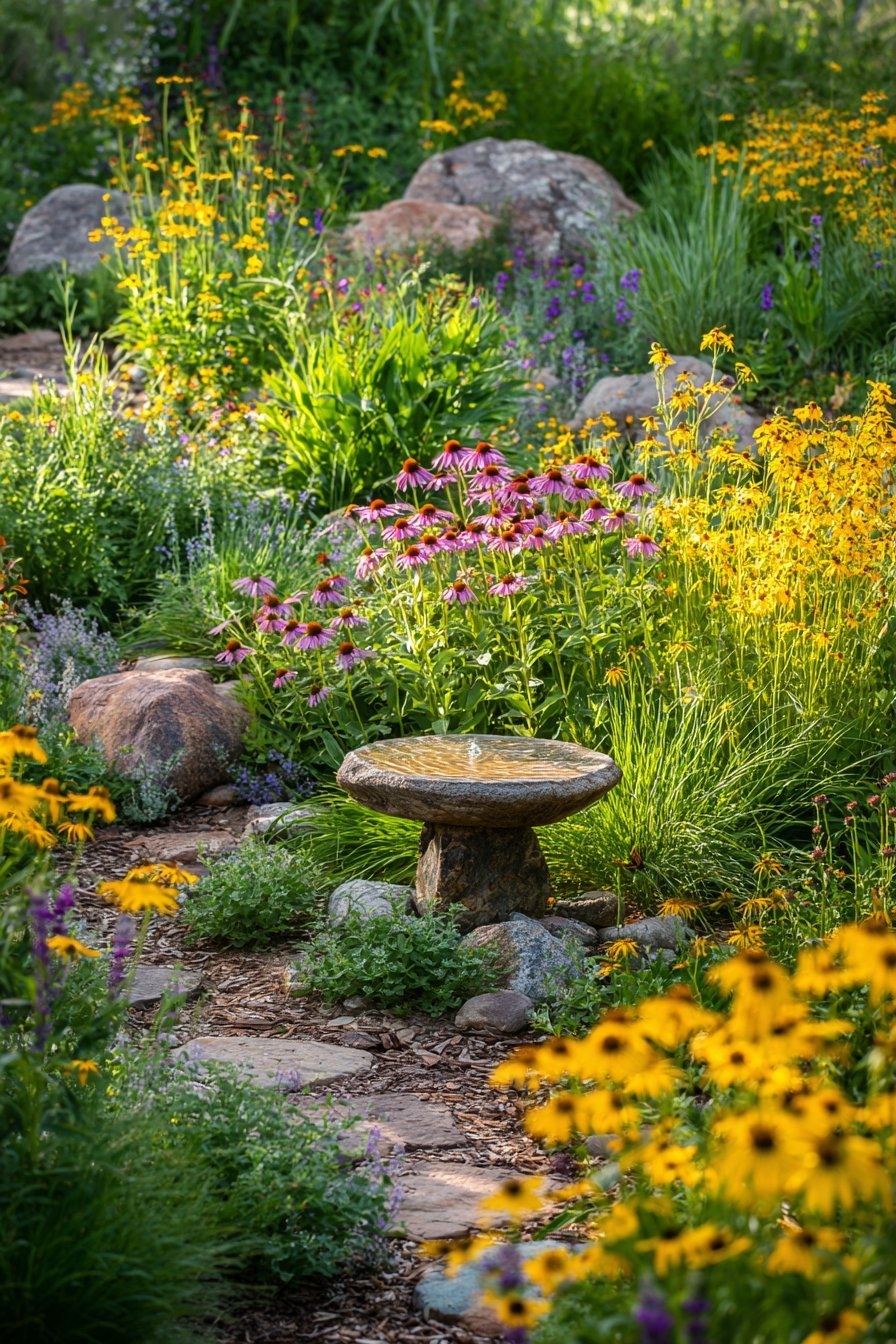
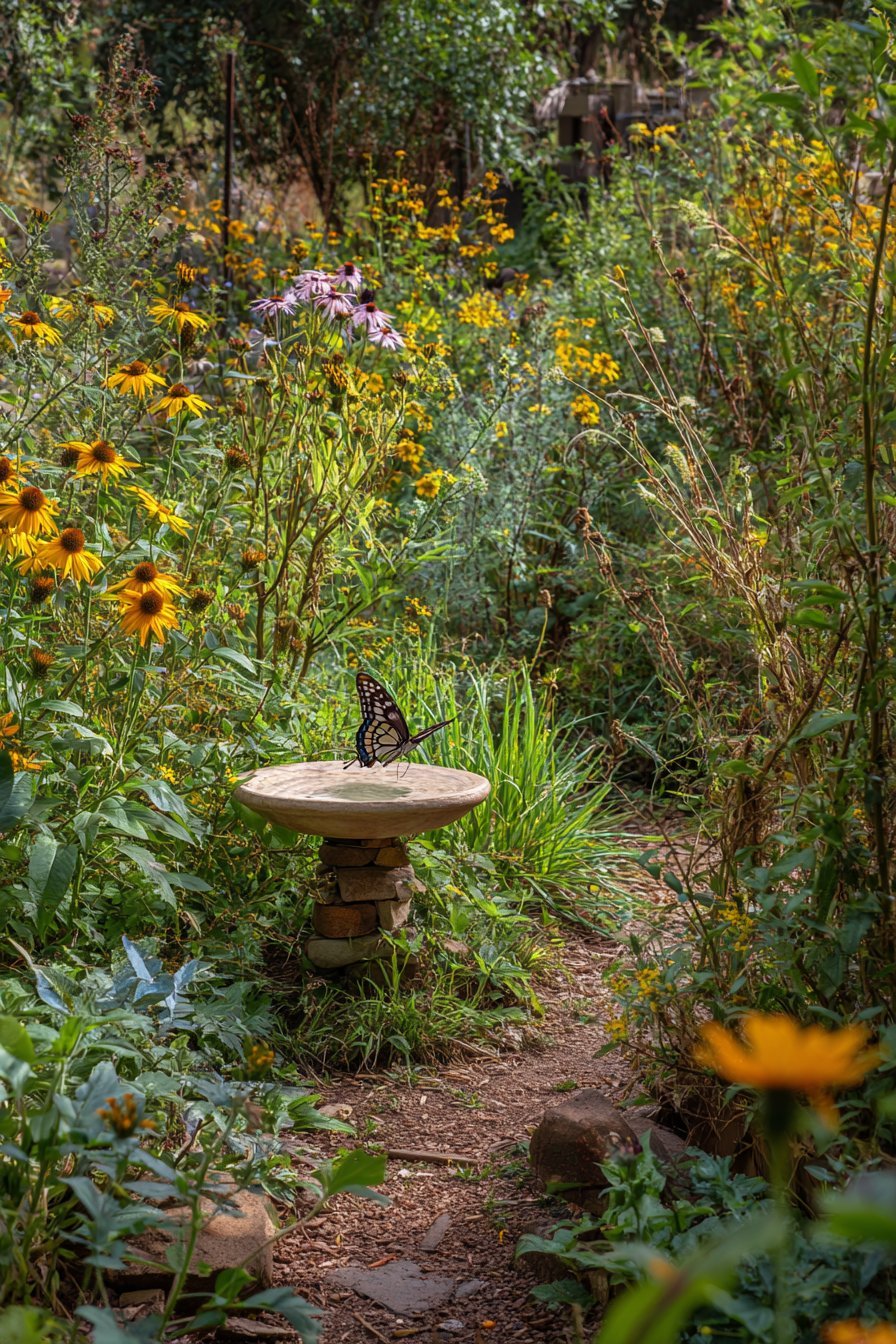
A butterfly garden features native flowering plants in naturalistic drifts. Milkweed, coneflowers, black-eyed Susans, and bee balm attract pollinators. A simple birdbath of stacked stone with shallow basin provides water. Mulched pathways allow maintenance access throughout the garden.
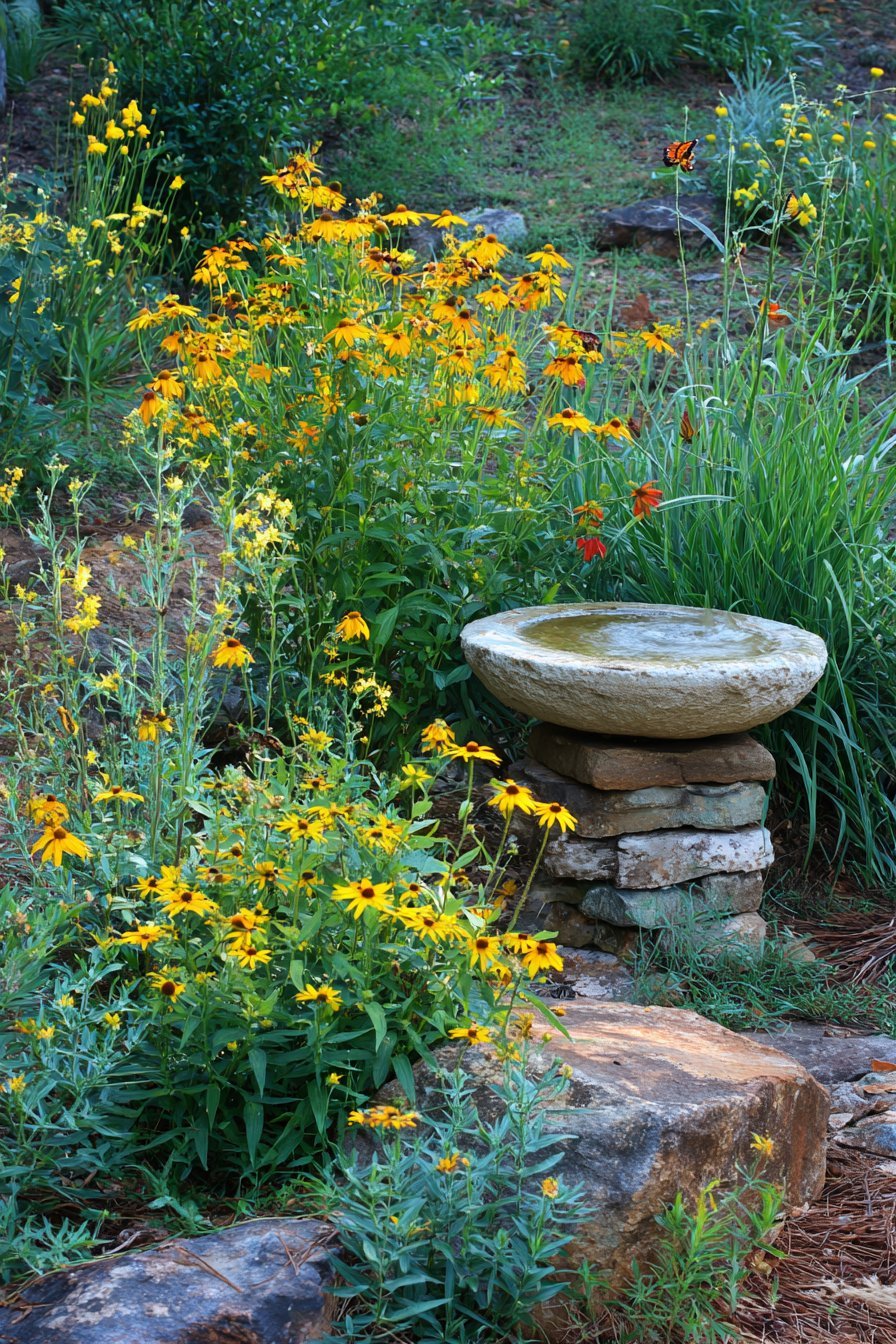
Small identification markers indicate plant species for education. Midday photography shows realistic flower colors accurately. Varied plant heights create dimensional interest. Actual butterfly visitors demonstrate the garden’s ecological success.
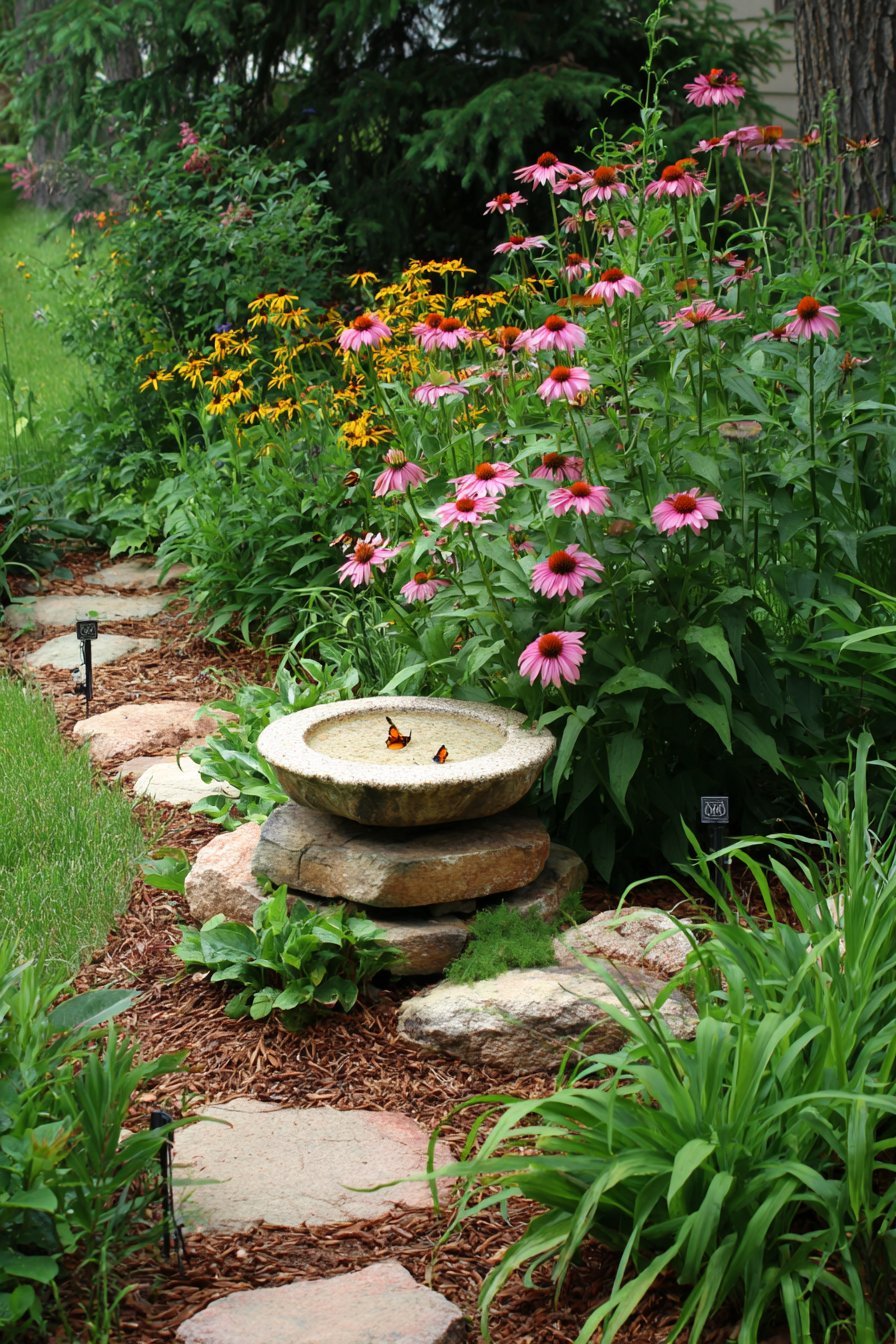
The design supports local ecosystems while creating beauty. Native plants require less water once established. Educational markers transform gardens into learning opportunities.
Native plantings provide essential habitat for butterflies and beneficial insects. Shallow birdbaths allow small creatures safe water access. Natural drifts mimic how plants grow in wild settings.
Key Design Tips:
- Plant native species to support local butterfly and pollinator populations
- Arrange flowering plants in naturalistic drifts rather than rows
- Install shallow birdbaths specifically for pollinator water access
- Create mulched pathways for maintenance without plant damage
- Add identification markers to create educational garden experiences
15. Regulation Bocce Ball Court
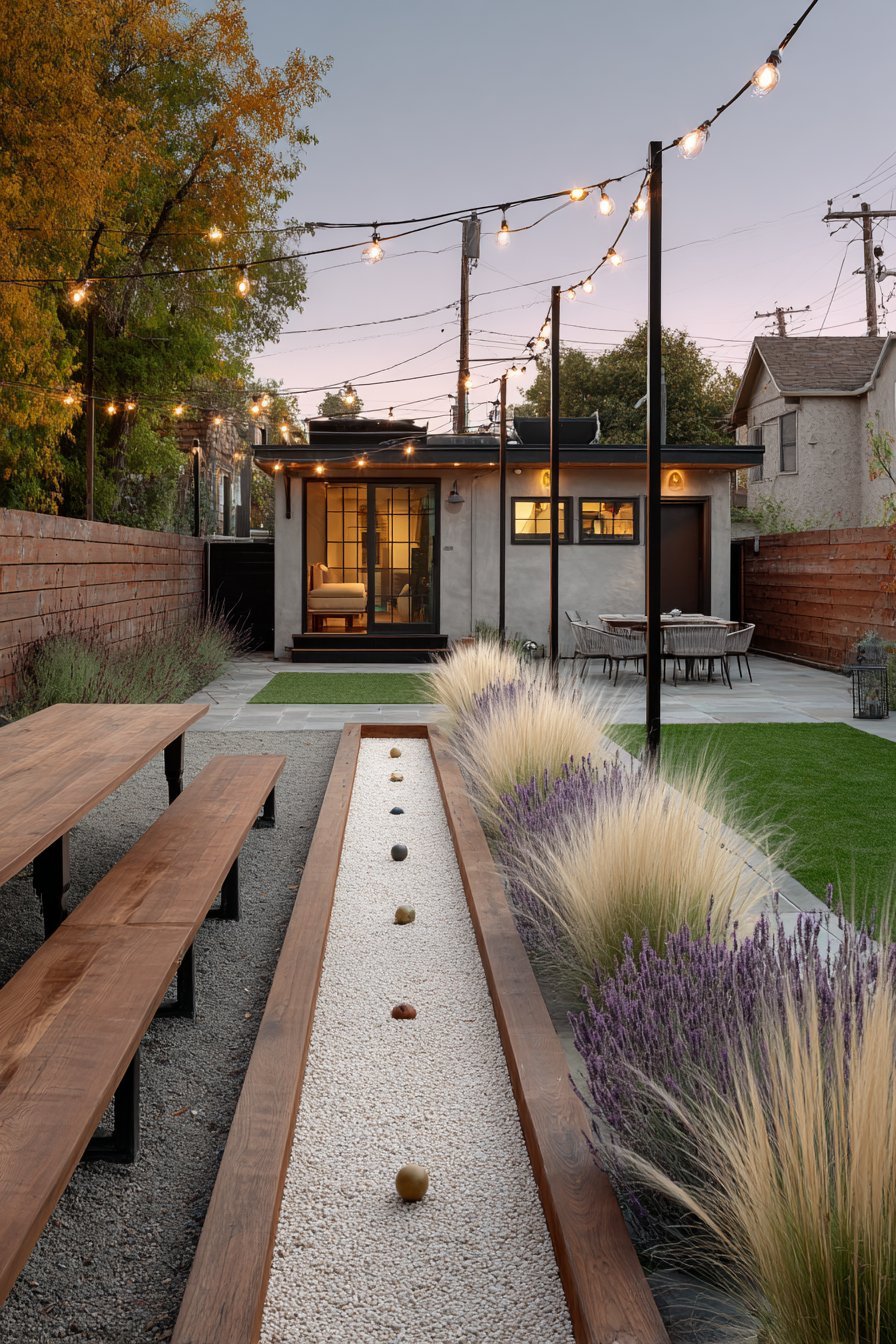
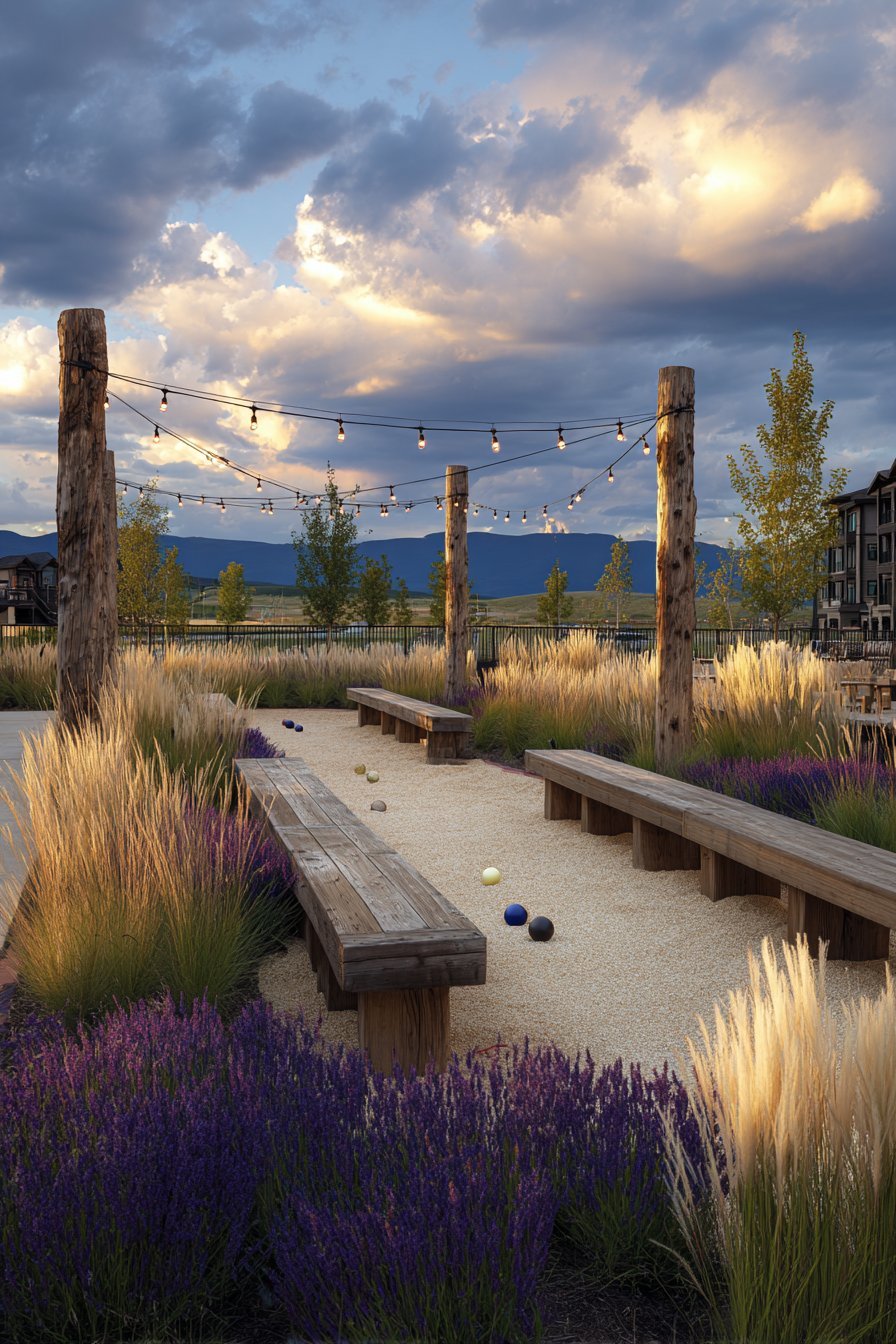
A regulation-size bocce court features crushed oyster shell playing surface. Pressure-treated timber edges contain the court dimensions properly. Simple wooden benches line one side for spectators. Low-maintenance landscaping includes ornamental grasses and lavender borders.

String lights on tall posts provide evening illumination for extended play. Golden hour photography captures complete court layout beautifully. Realistic surface texture shows proper court construction. The recreational feature integrates thoughtfully into overall backyard design.
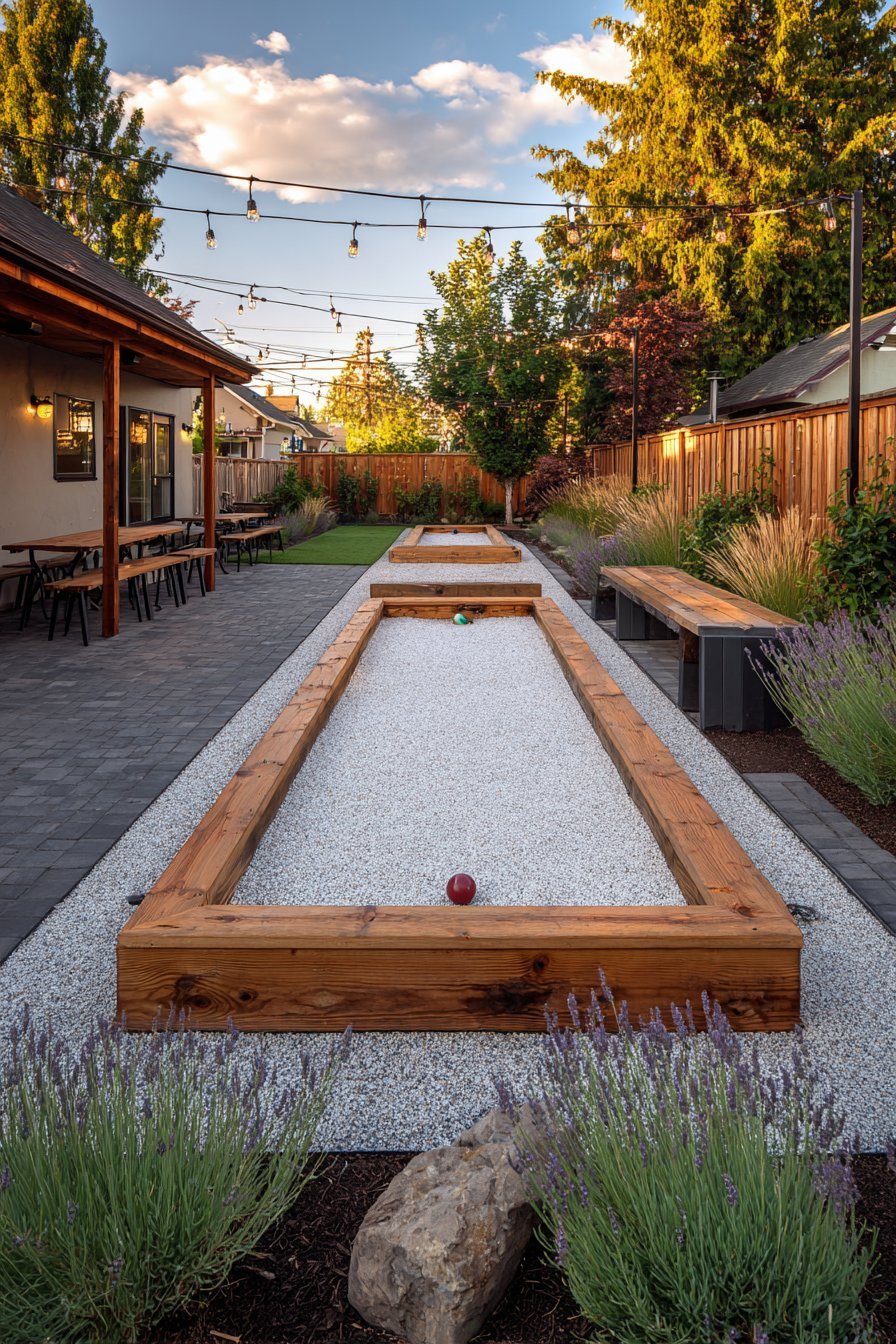
Natural shadows demonstrate the court’s dimensional elements. Proper dimensions ensure authentic gameplay experience. The design balances recreation with landscape aesthetics.
Crushed oyster shell provides ideal playing surface texture and drainage. Pressure-treated timbers withstand ground contact without rot. Evening lighting extends usability into cooler evening hours.
Key Design Tips:
- Build bocce courts to regulation dimensions for authentic play
- Use crushed oyster shell for traditional surface with excellent drainage
- Border courts with pressure-treated timber for longevity
- Add spectator benches to encourage social gathering during games
- Install string lighting on tall posts for evening play capability
16. Outdoor Movie Screening Area
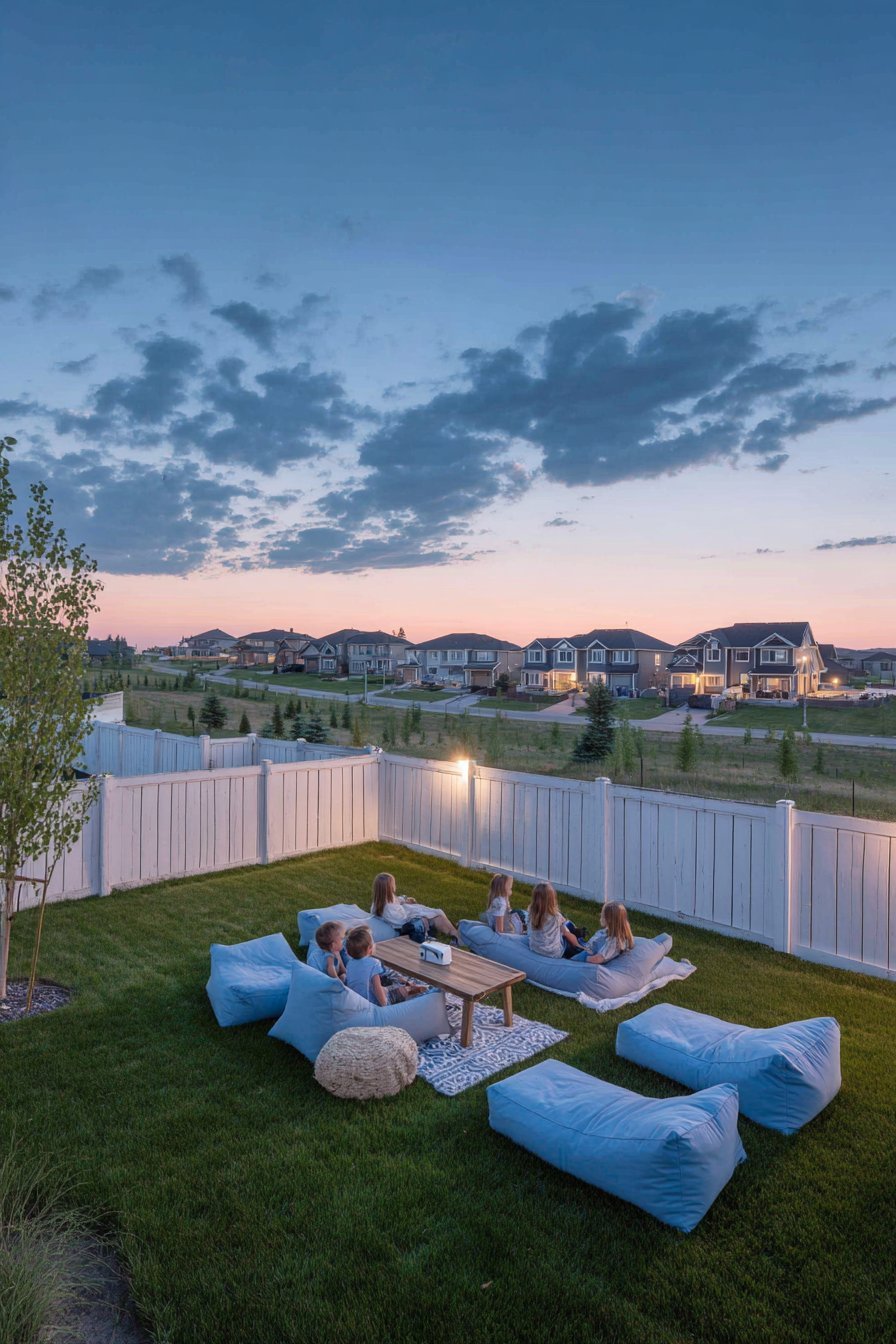
A white painted fence serves as the projection surface effectively. Outdoor bean bag chairs and low-profile blanket seating arrange on level lawn. Comfortable outdoor rugs define the viewing area. A portable projector sits on a simple table with concealed cables.
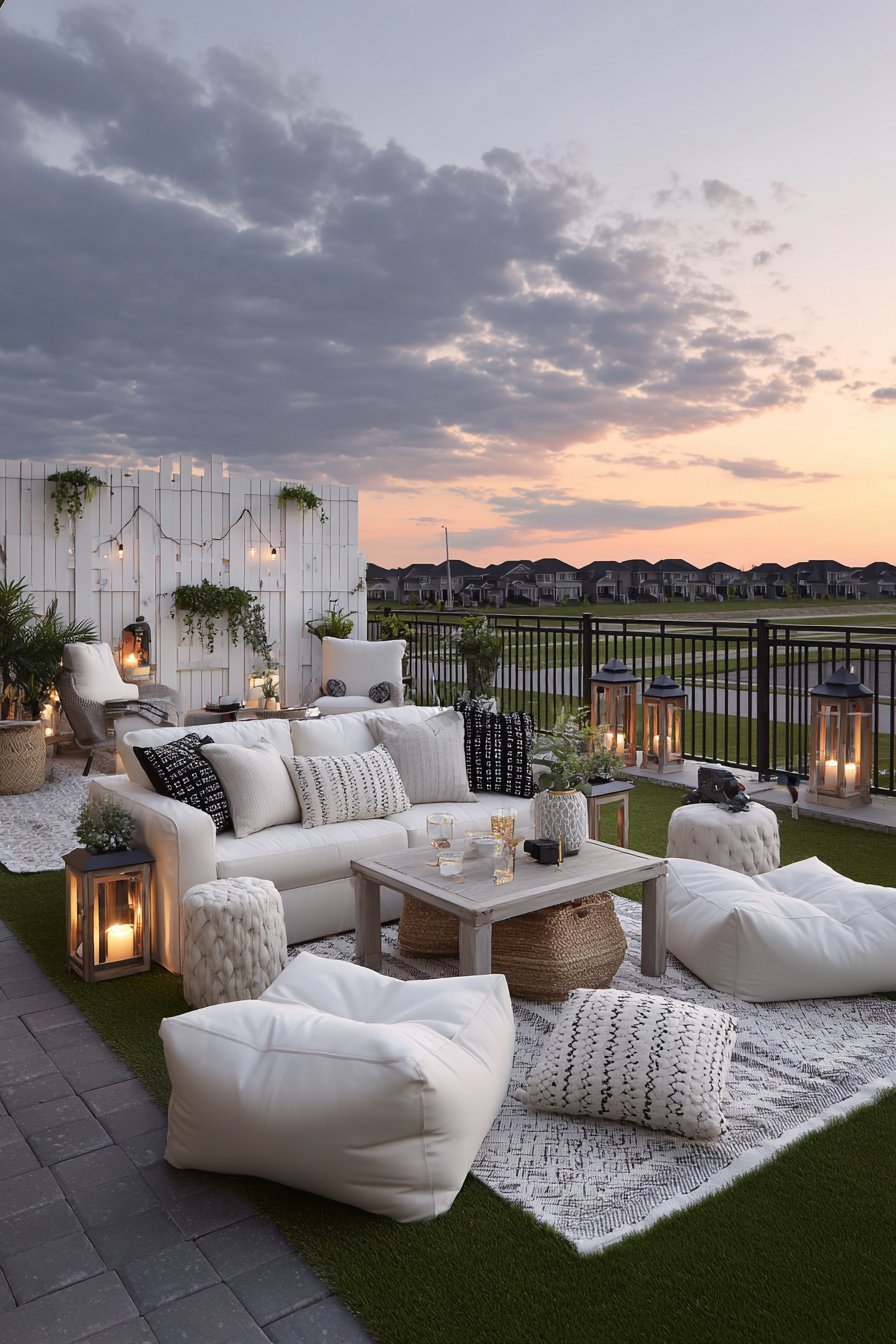
Solar-powered path lights mark the perimeter safely. Twilight photography shows the practical setup with balanced exposure. Both screening area and ambient landscape lighting appear clearly. The design offers family-friendly entertainment without permanent installation.
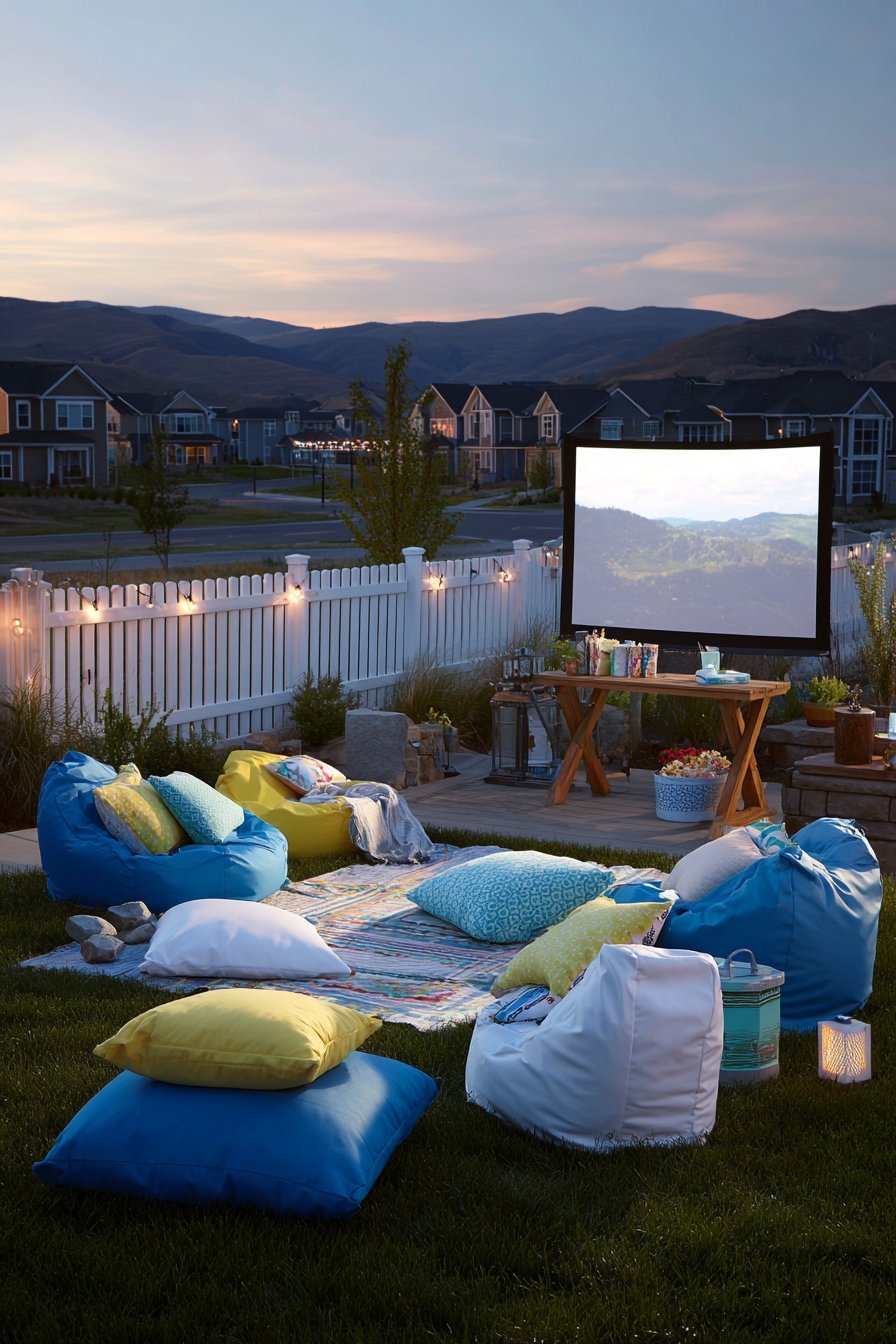
The setup transforms ordinary backyards into entertainment venues. Flexible seating accommodates various group sizes. Solar lighting eliminates electrical extension cord hazards.
Portable projectors allow easy storage when not in use. Bean bag seating provides comfort without formal furniture investment. White fence surfaces reflect projected images adequately.

Key Design Tips:
- Use existing white fences as projection surfaces to minimize costs
- Choose portable projectors for flexibility and easy storage
- Provide varied seating options including bean bags and blankets
- Install solar path lights to mark perimeter without electrical work
- Conceal cables thoughtfully to prevent tripping hazards
17. Polycarbonate Panel Greenhouse Structure
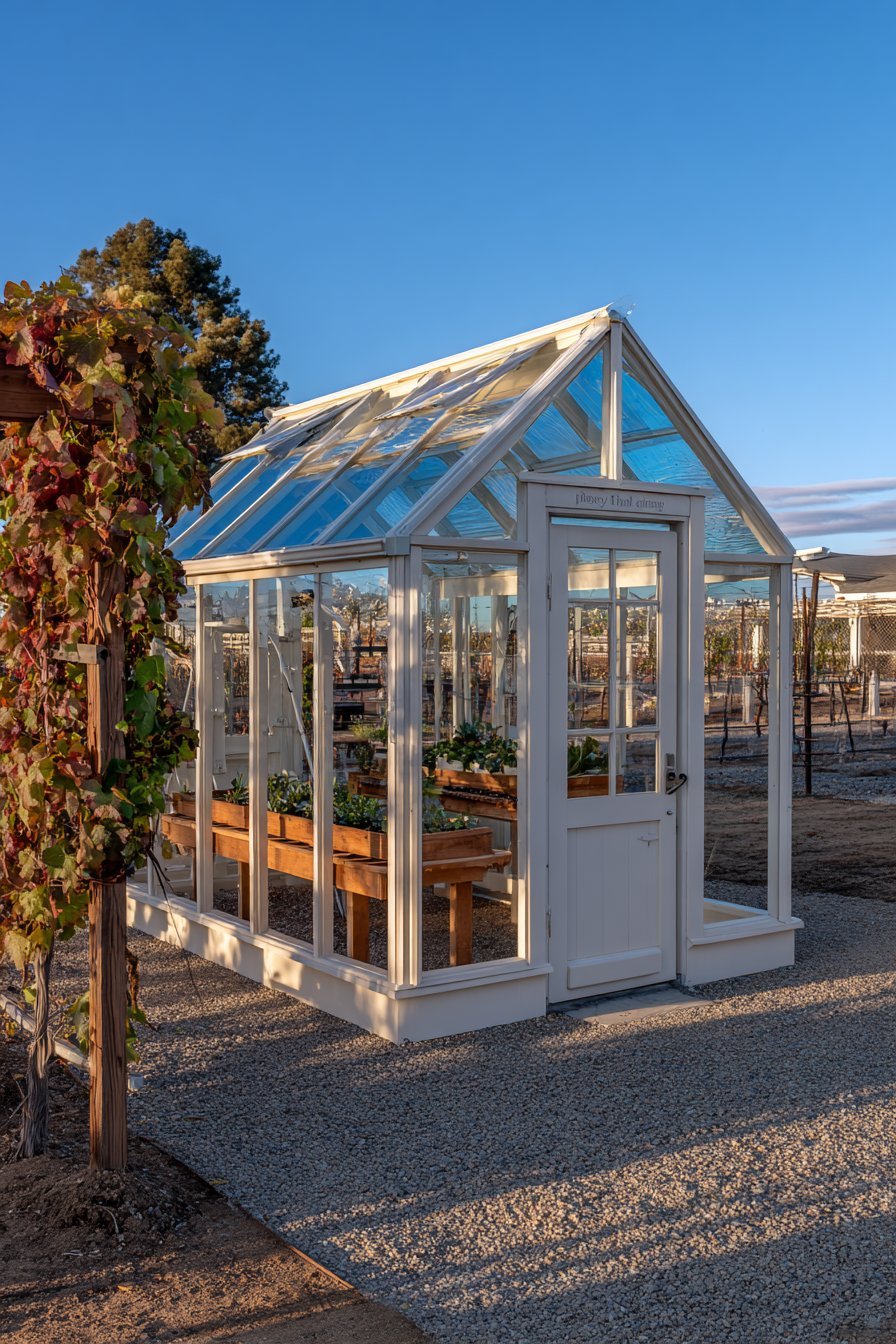
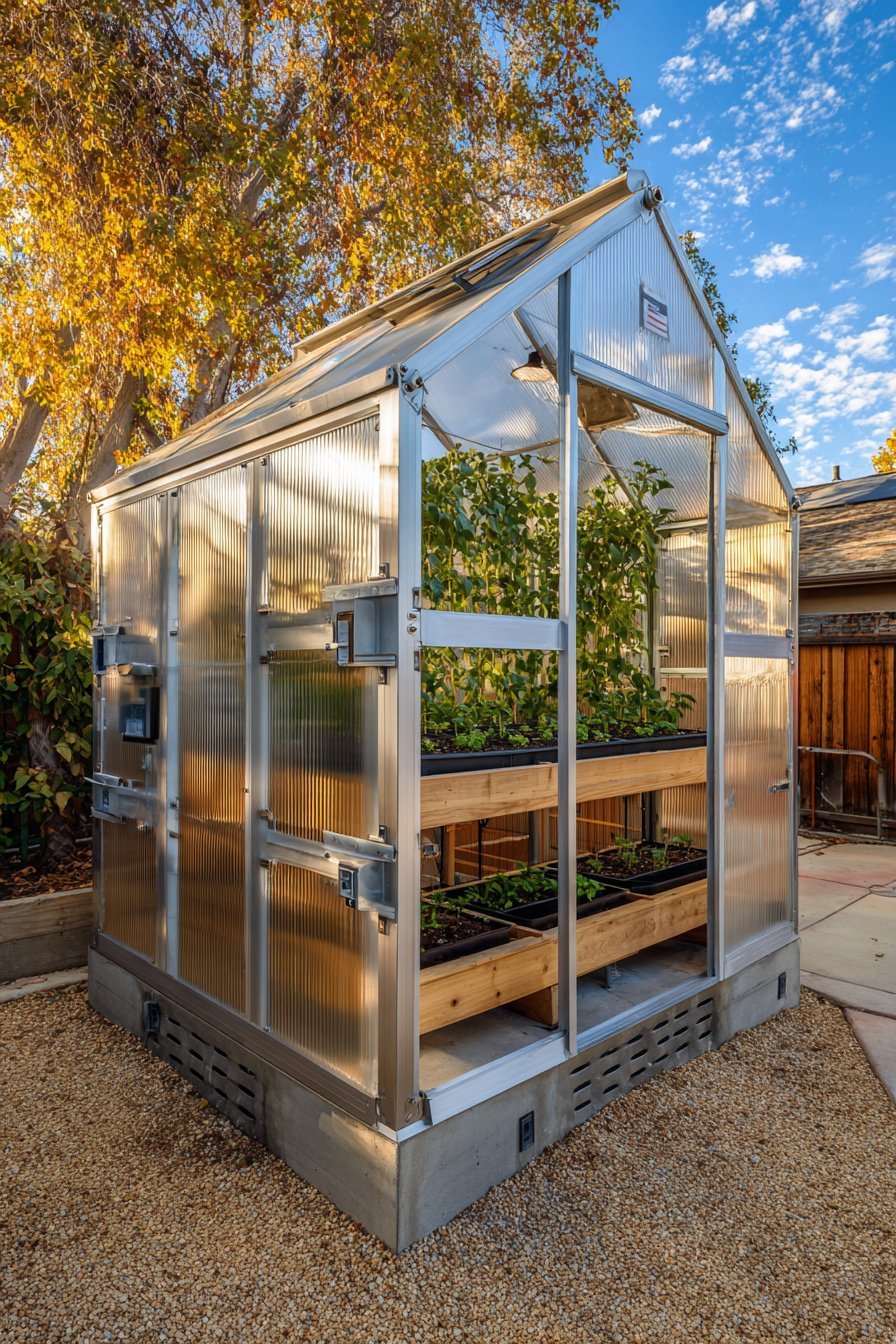
An aluminum frame greenhouse features clear polycarbonate panels and peaked roof. Dutch door entry provides ventilation control and accessibility. Inside, wooden potting benches hold seed starting trays and plants. The structure sits on a gravel foundation pad with visible drip irrigation.
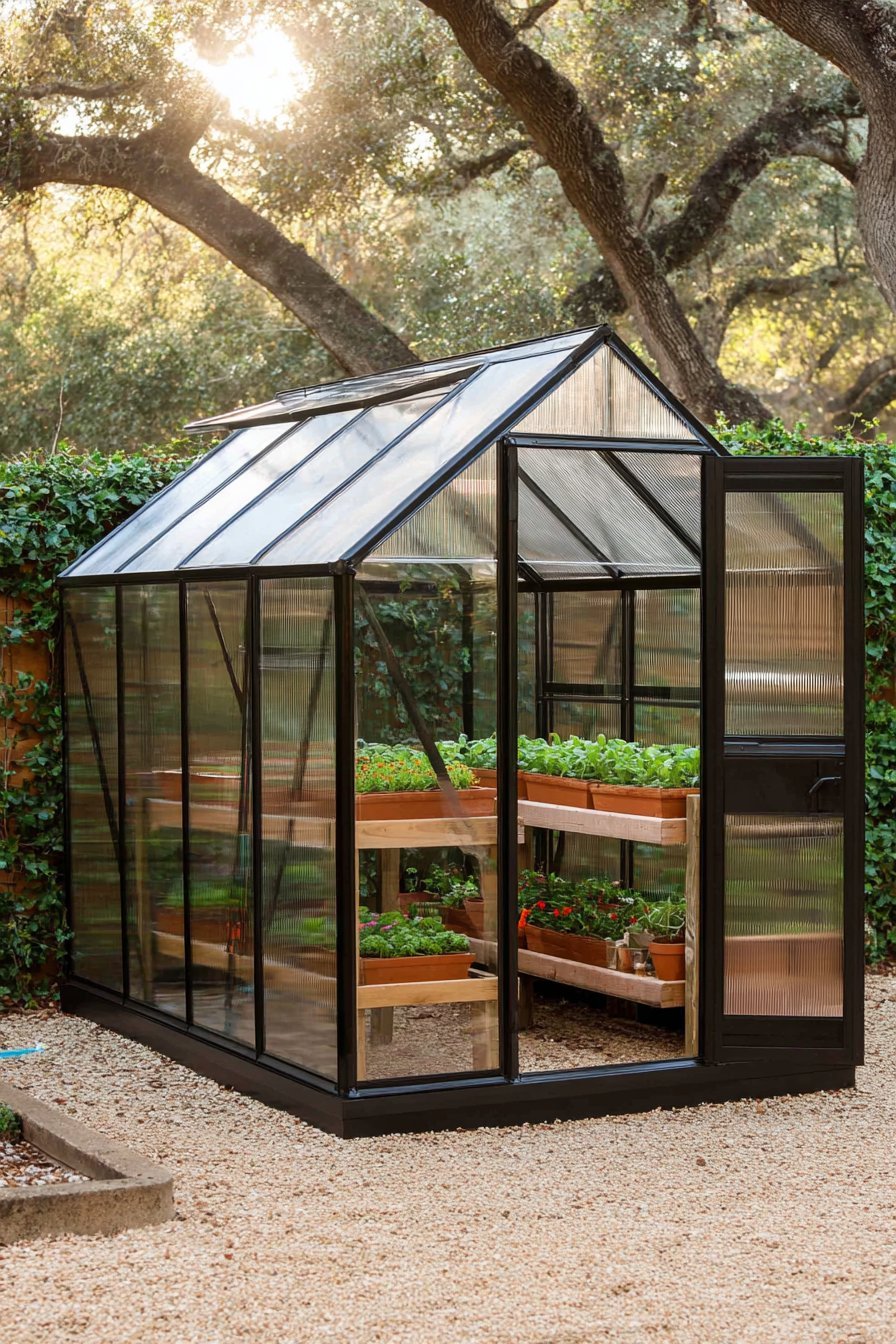
Climbing vines on a nearby trellis provide summer shading naturally. Morning light illuminates the interior through translucent panels. Realistic material translucency shows internal organization clearly. The practical structure serves serious garden enthusiasts.
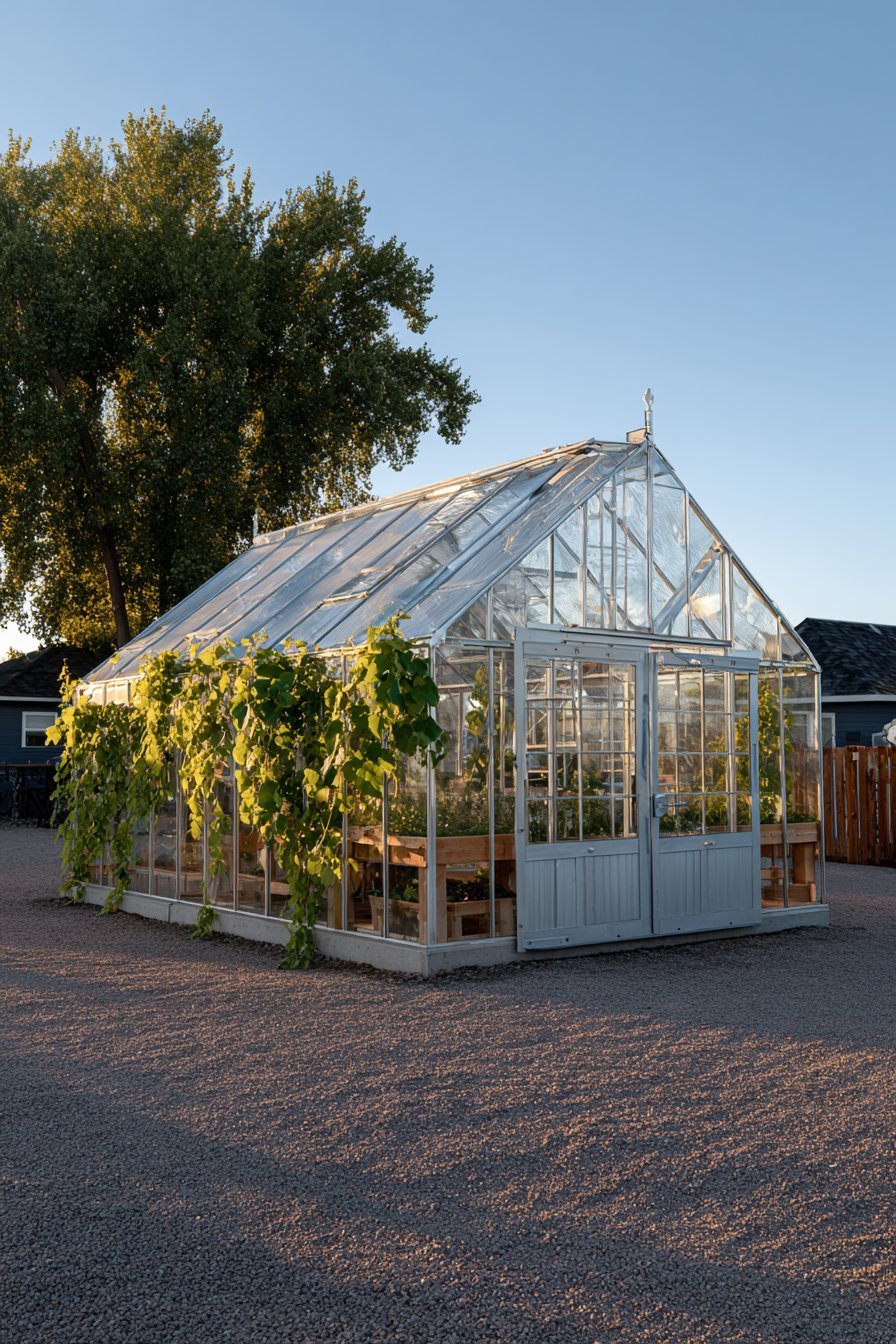
Professional photography captures how natural light interacts with the greenhouse. Internal organization demonstrates efficient space utilization. The design extends growing seasons significantly.
Polycarbonate panels provide insulation superior to glass. Aluminum frames resist rust in humid conditions. Gravel foundations ensure proper drainage around structures.
Key Design Tips:
- Choose polycarbonate panels for durability and insulation benefits
- Install Dutch doors for easy ventilation and material transport
- Build interior potting benches at comfortable working heights
- Use gravel foundations to prevent moisture accumulation
- Position climbing vines for natural summer shade without blocking winter light
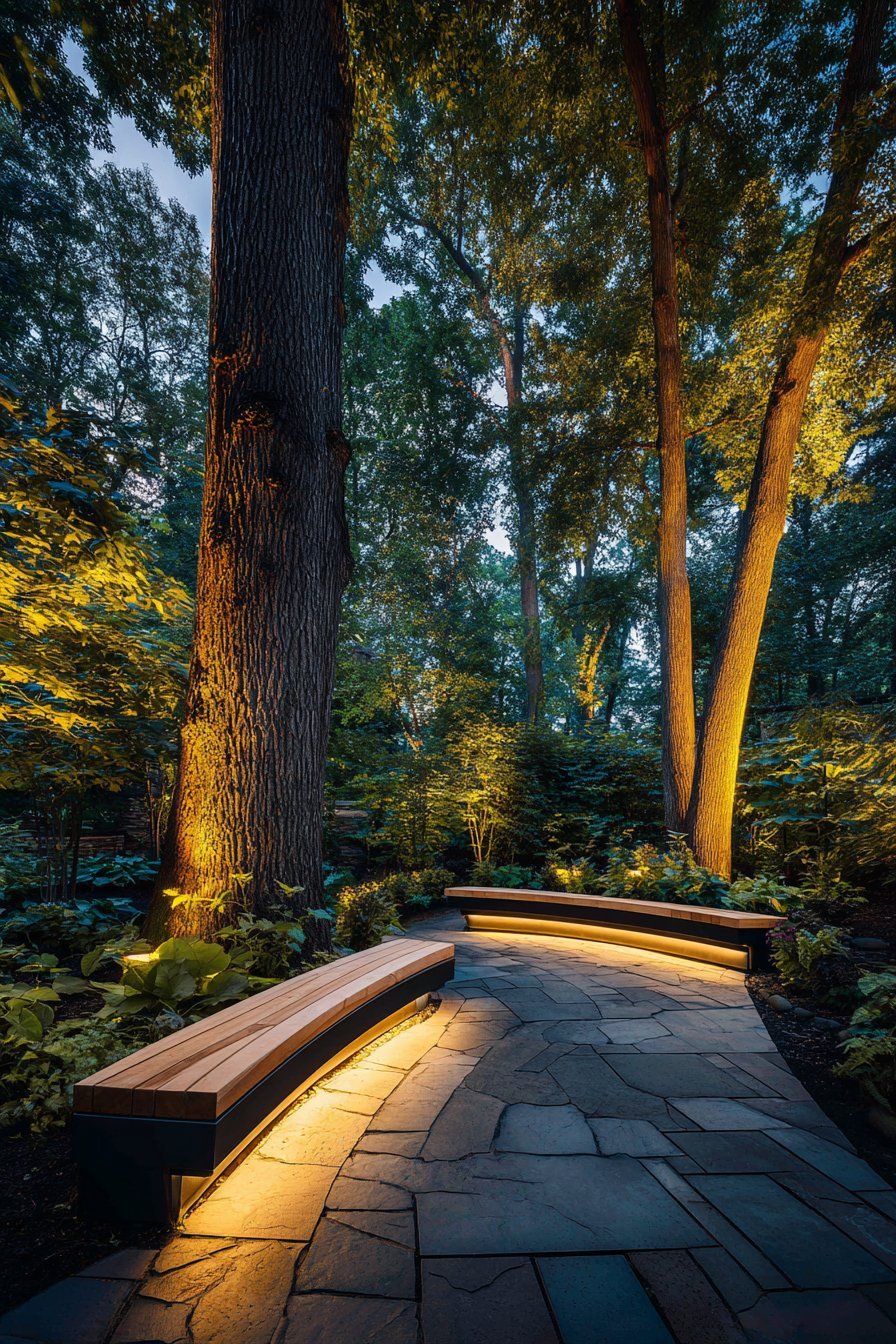
18. Layered Outdoor Lighting Design
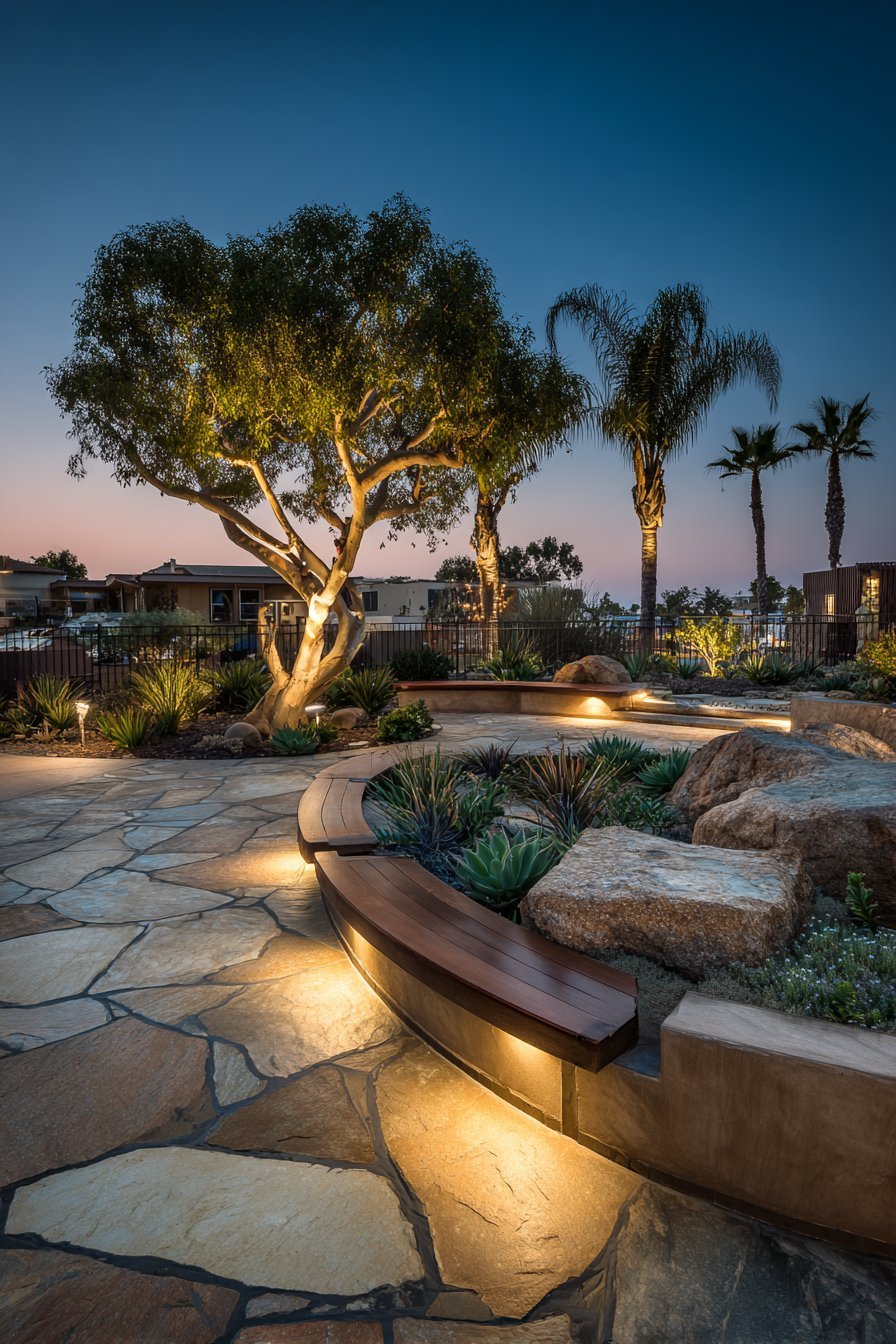
A contemporary lighting scheme creates depth and functionality. Pathway lights illuminate curved flagstone walkways safely. Uplighting on specimen trees highlights interesting bark textures. Low-voltage LED strips under built-in deck benches add ambient glow.
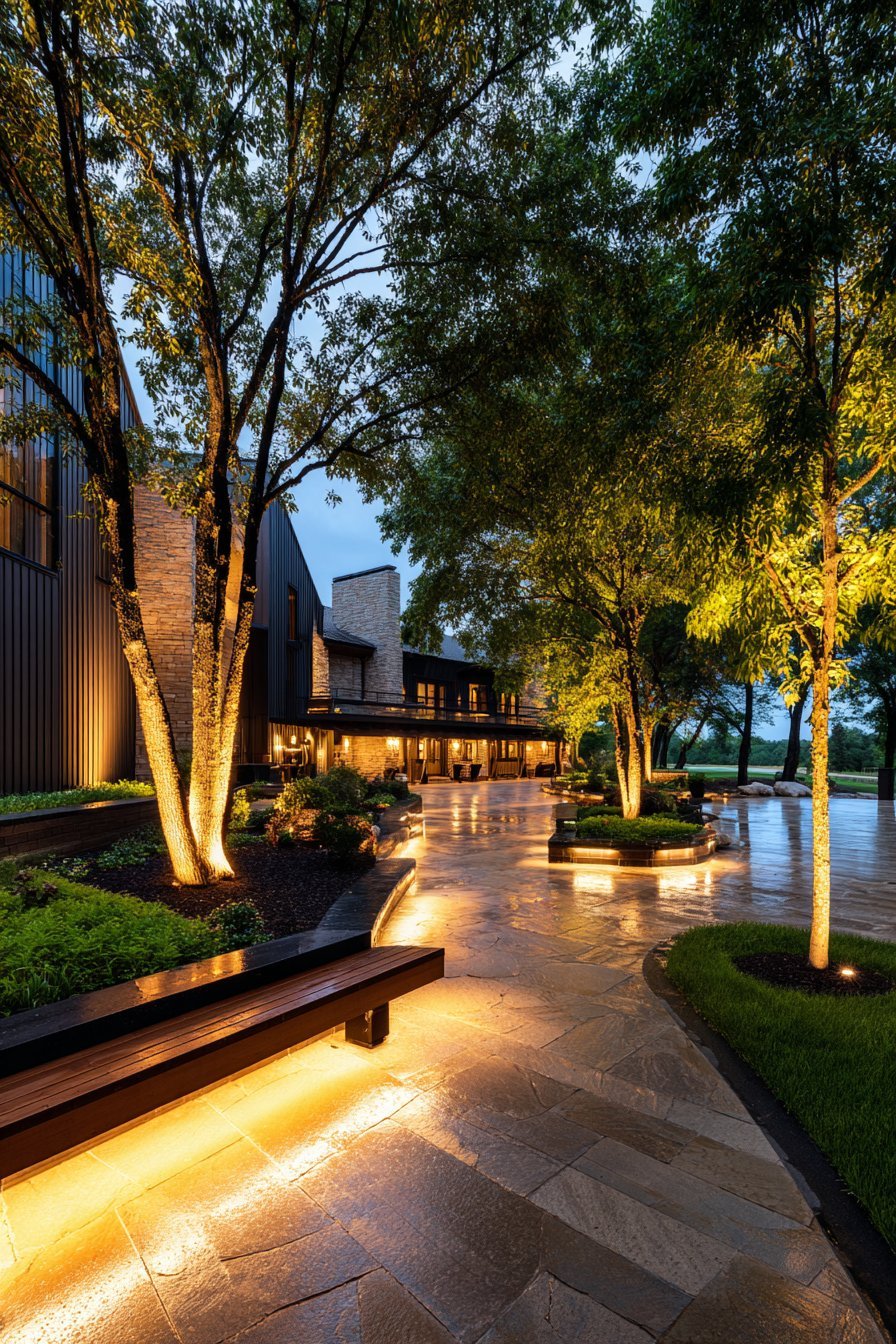
The layered approach creates both safety and ambiance. Dusk photography shows artificial lighting against darkening sky. Professional techniques balance ambient light with fixture illumination. Realistic light spread patterns demonstrate proper planning.
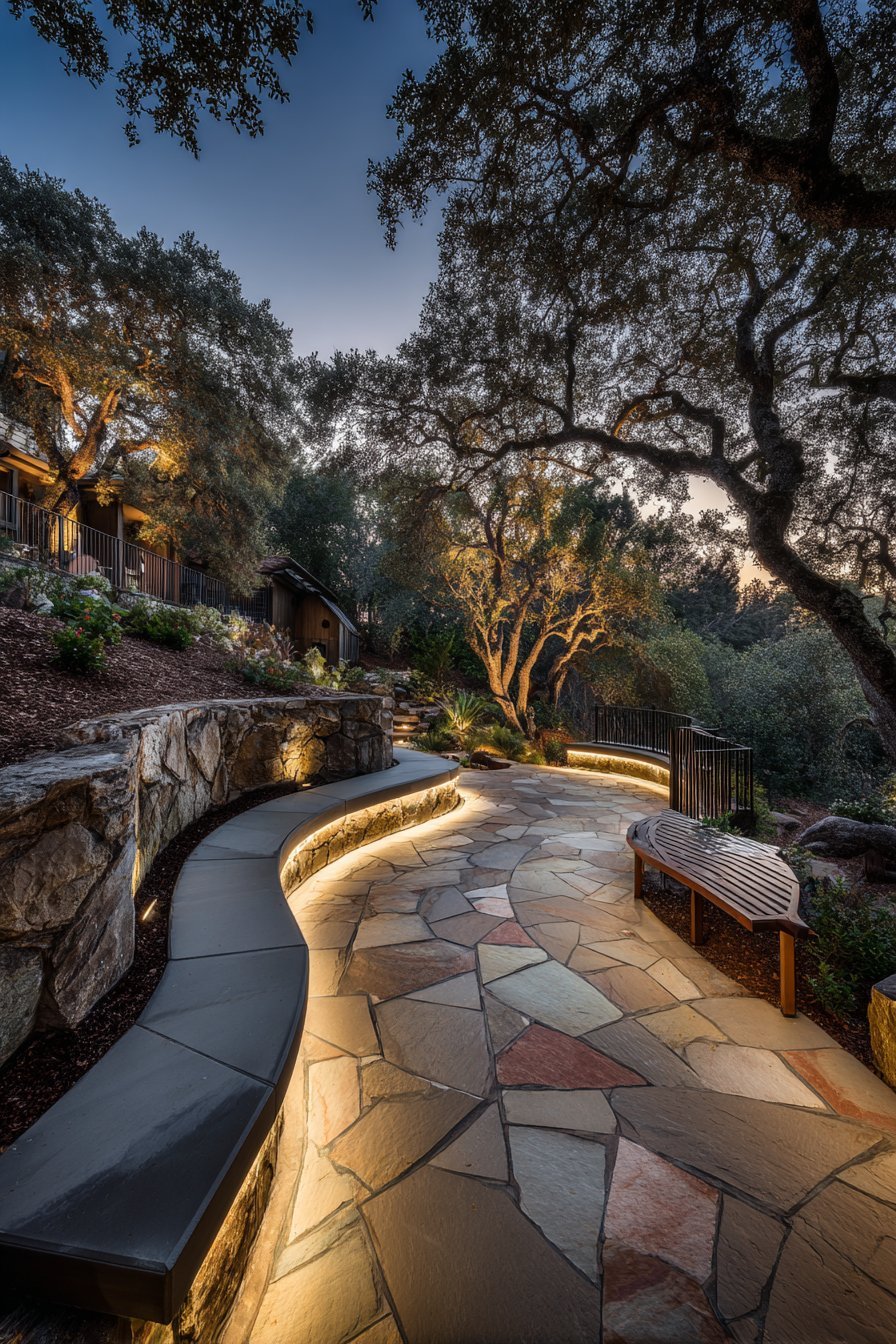
The design transforms outdoor spaces for evening enjoyment. Multiple lighting layers serve different purposes simultaneously. Energy-efficient LED fixtures reduce operating costs significantly.
Pathway lighting prevents trips and falls on irregular surfaces. Uplighting creates dramatic focal points on mature trees. Under-bench lighting provides gentle orientation without harsh glare.
Key Design Tips:
- Layer multiple lighting types for depth and functionality
- Install pathway lights along all walkways for safety
- Uplight specimen trees to create dramatic focal points
- Use LED strip lighting for energy-efficient ambient glow
- Choose low-voltage systems for safety and energy efficiency
19. Three-Bin Cedar Composting Station
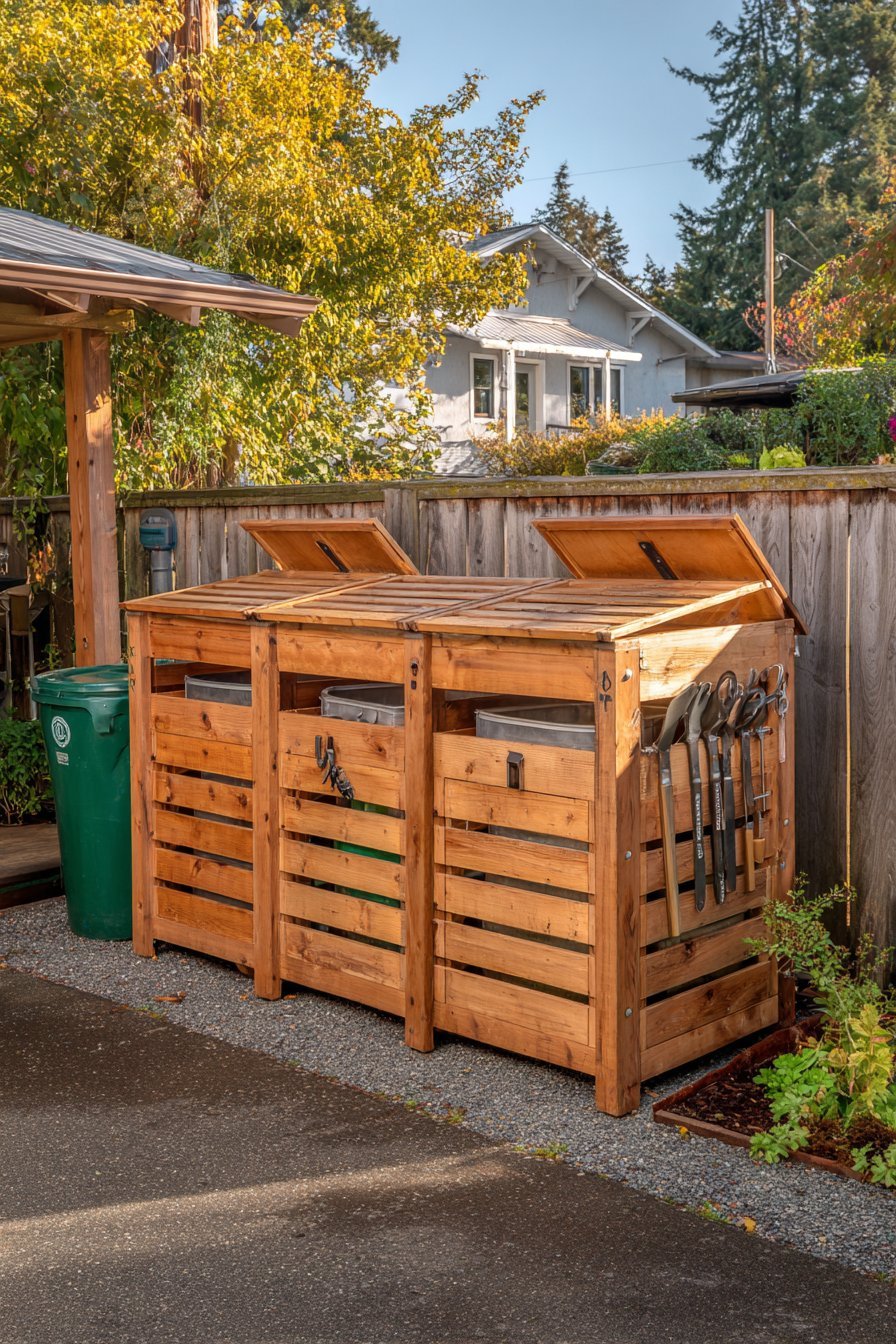
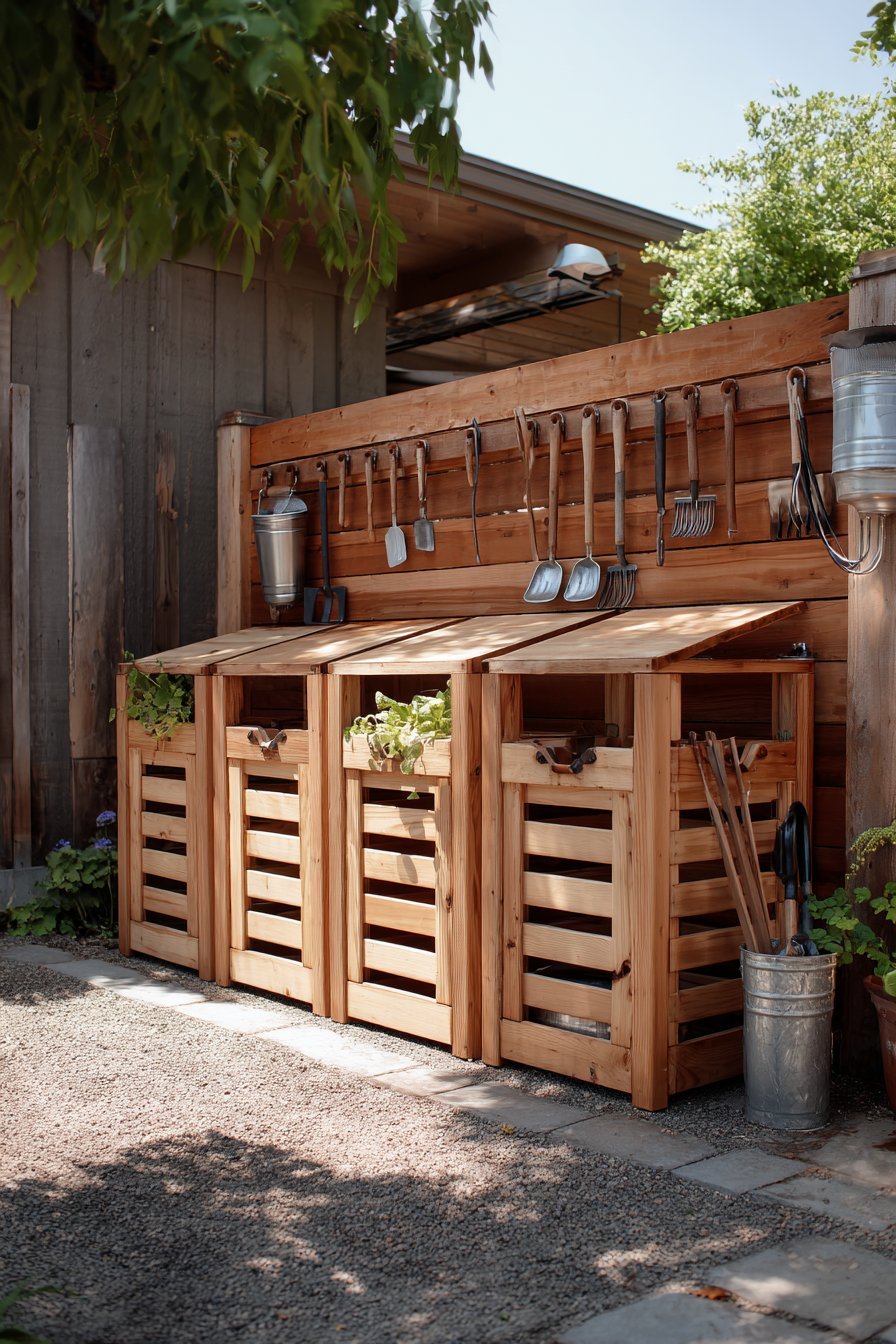
A composting station features three connected wooden bin compartments. Cedar slats with adequate spacing allow proper airflow. Each bin shows different decomposition stages. Hinged lids provide easy access for turning and removal.
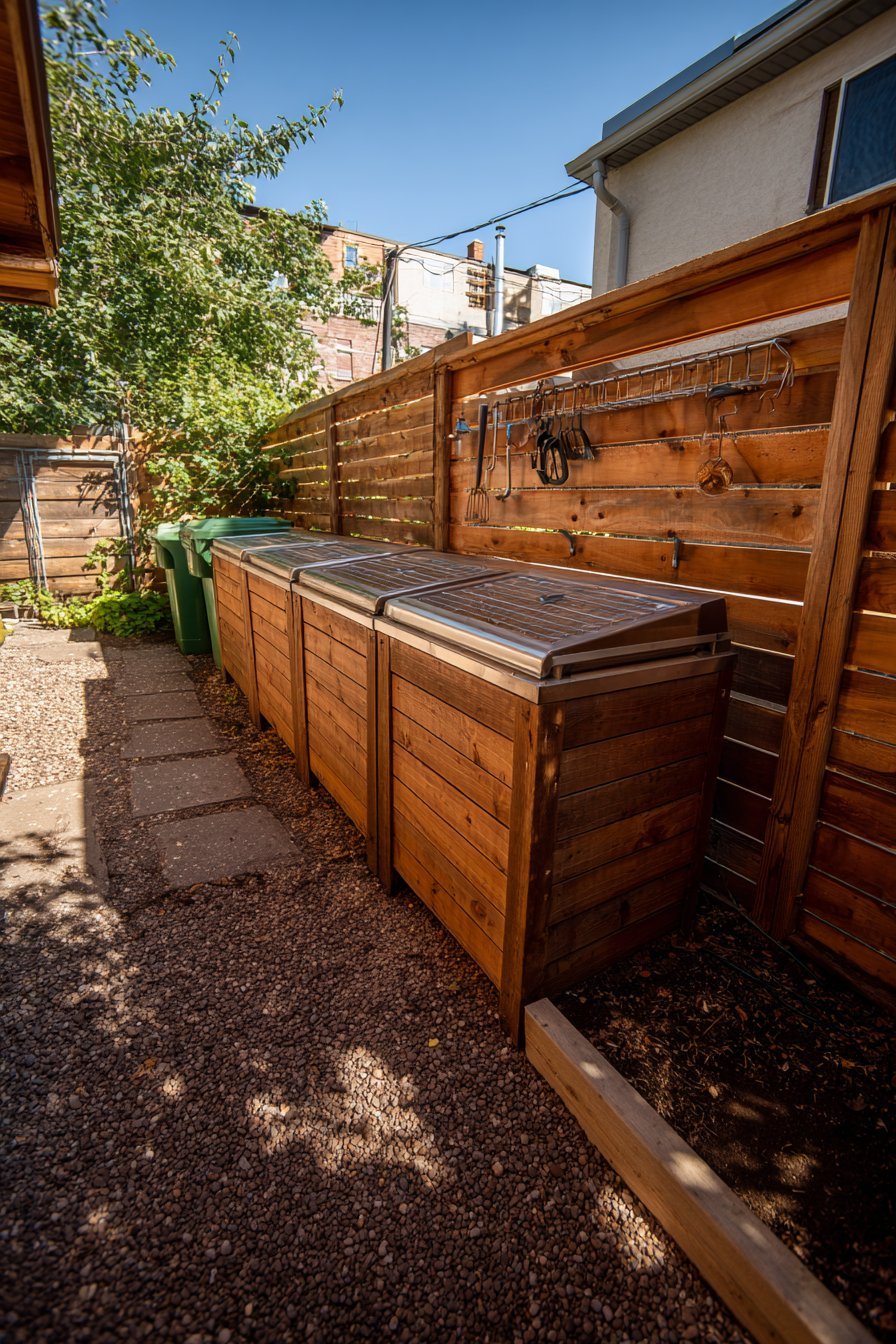
The bins sit on level ground with gravel base for drainage. Garden tools hang on hooks attached to the side panel. A rain barrel nearby collects downspout water. Natural daylight shows practical construction details clearly.
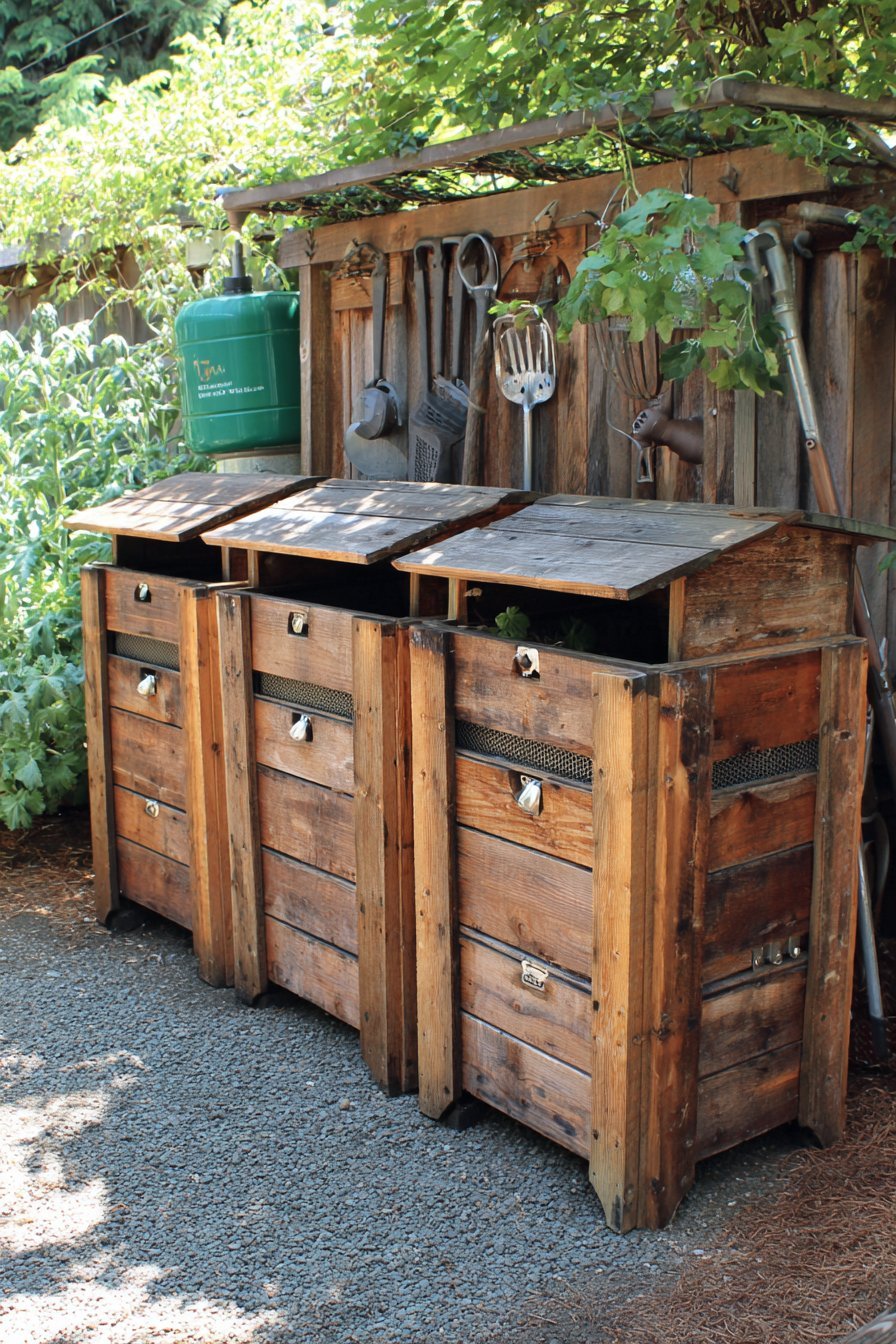
Realistic wood weathering demonstrates authentic outdoor aging. Functional organization makes composting simple and accessible. The sustainable design reduces waste while enriching soil.
Three-bin systems allow continuous composting at different stages. Cedar naturally resists decay even in moist conditions. Gravel bases prevent water accumulation beneath bins.
Key Design Tips:
- Build three-bin systems for continuous composting at different stages
- Use cedar slats with spacing for essential airflow
- Install hinged lids for easy access while containing odors
- Position on gravel bases to ensure proper drainage
- Add tool hooks for convenient access to turning forks
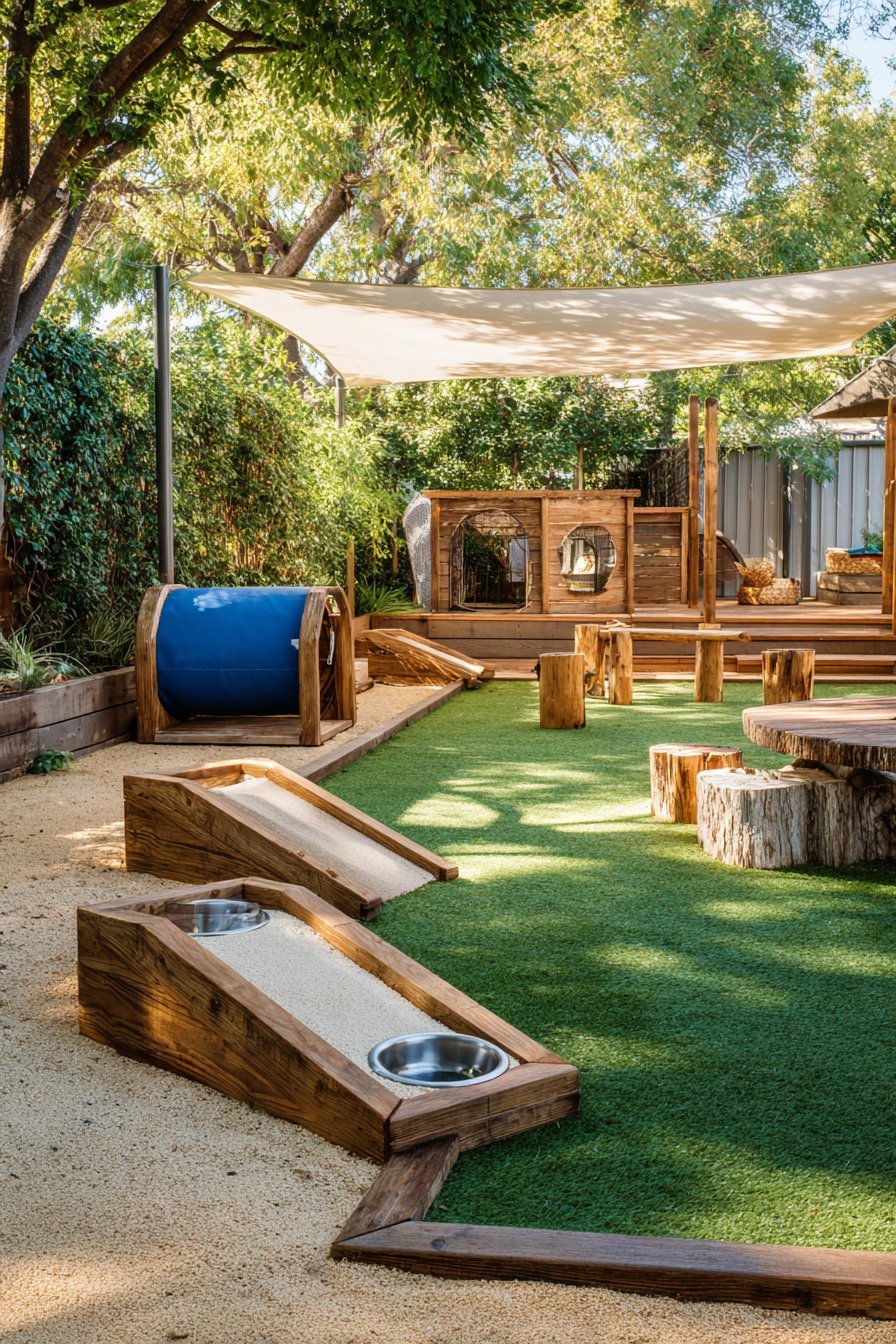
20. Dog-Friendly Play and Exercise Area
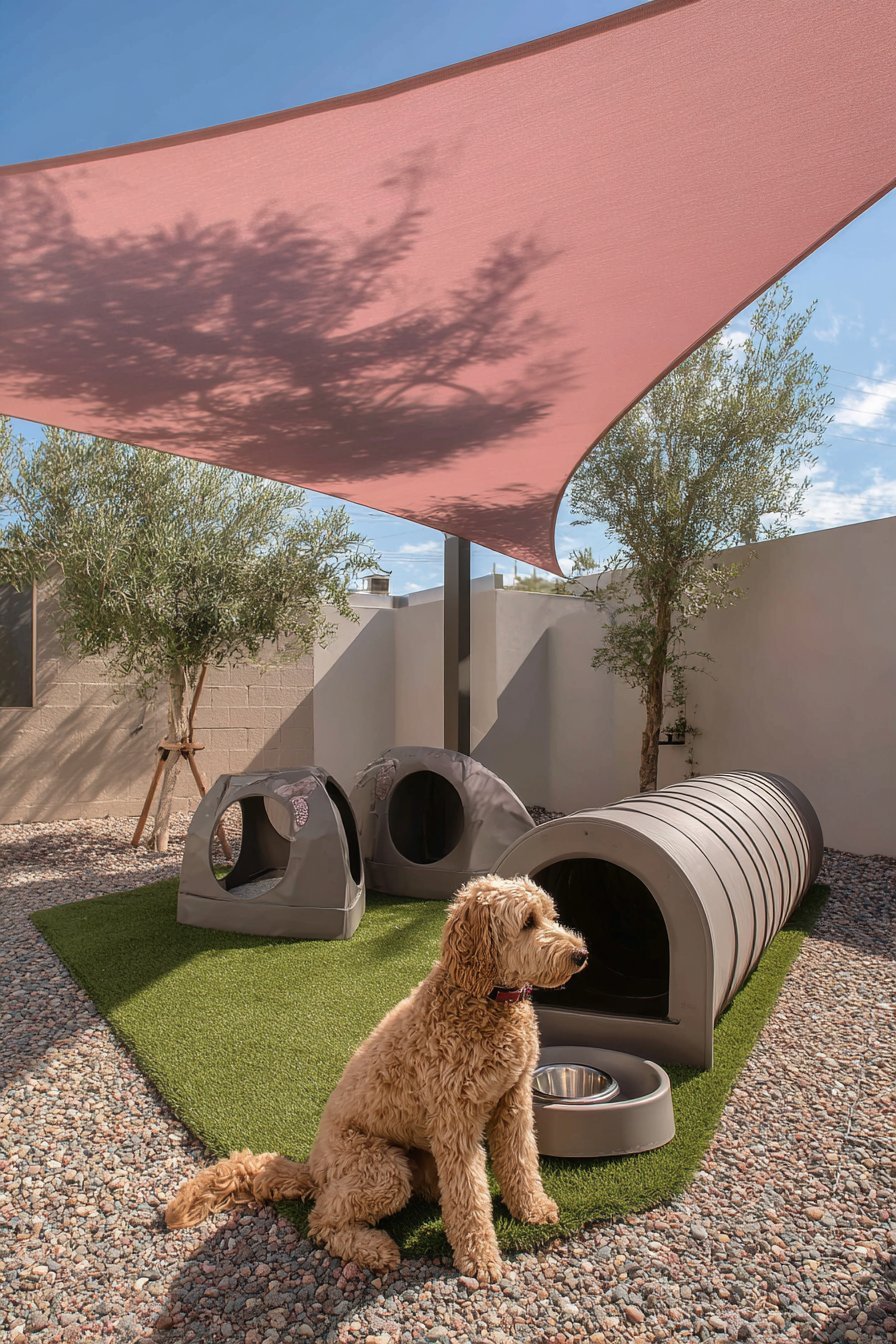
A designated pet space includes agility tunnel, weave poles, and raised platform. Artificial turf with proper drainage covers crushed stone base. A built-in water station with frost-free spigot provides constant access. Stainless steel bowls remain clean and rust-free.
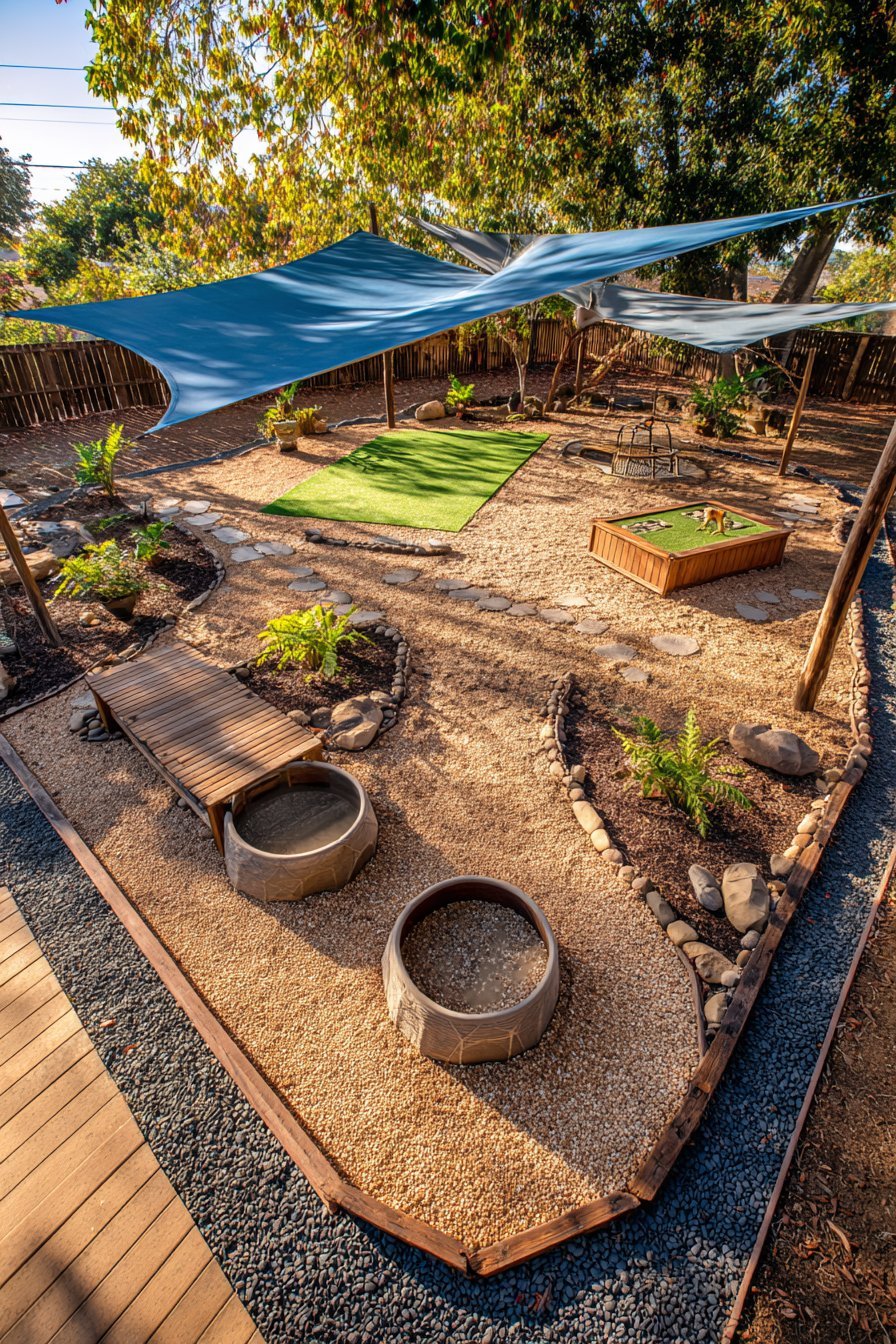
Shade sail fabric overhead protects from harsh sun exposure. Storage for toys organizes in a weather-resistant deck box. Natural lighting shows realistic material textures and practical functionality. The design thoughtfully integrates pet needs into backyard space.
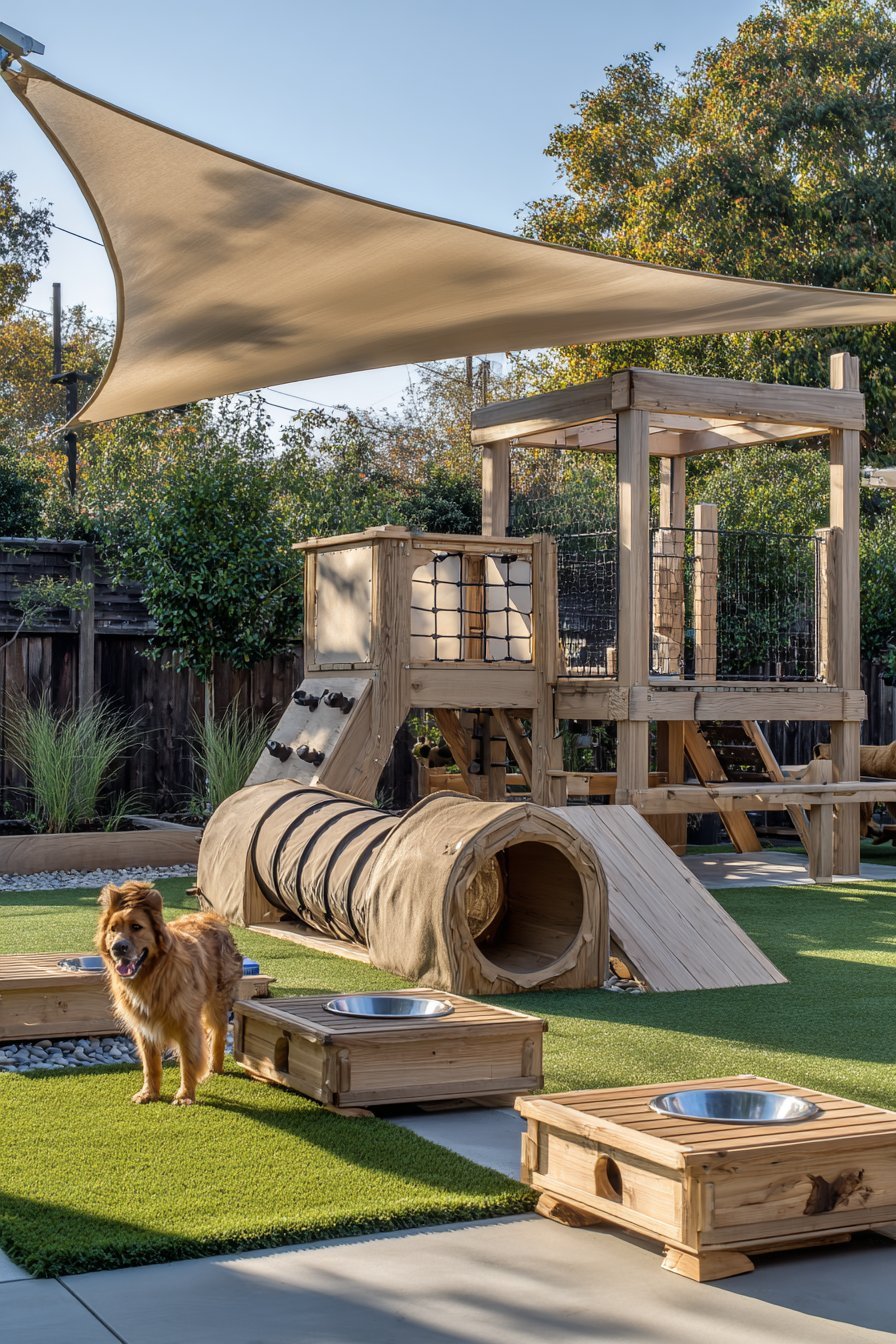
Complete pet-friendly zone encourages healthy activity for dogs. Drainage prevents muddy conditions after rain. Shade protection allows use during hot weather safely.
Artificial turf eliminates muddy paws while providing soft surface. Frost-free spigots prevent winter freezing issues. Dedicated toy storage keeps backyard organized.
Key Design Tips:
- Install artificial turf over crushed stone for drainage and cleanliness
- Include basic agility elements to encourage healthy pet activity
- Add frost-free water spigots for year-round functionality
- Provide shade sails to protect pets from sun exposure
- Store toys in weather-resistant containers to maintain backyard organization
Why These Backyard Decorating Designs Are the Best
These backyard designs excel because they address diverse functional needs while maintaining aesthetic appeal. Each concept demonstrates thoughtful material selection prioritizing durability and weather resistance. The designs balance immediate beauty with long-term practicality.
Natural materials like cedar, teak, and stone provide timeless appeal that improves with age. These choices reduce replacement frequency while developing attractive patina over time. Weather-resistant fabrics and finishes ensure furniture and structures withstand outdoor conditions without constant maintenance.
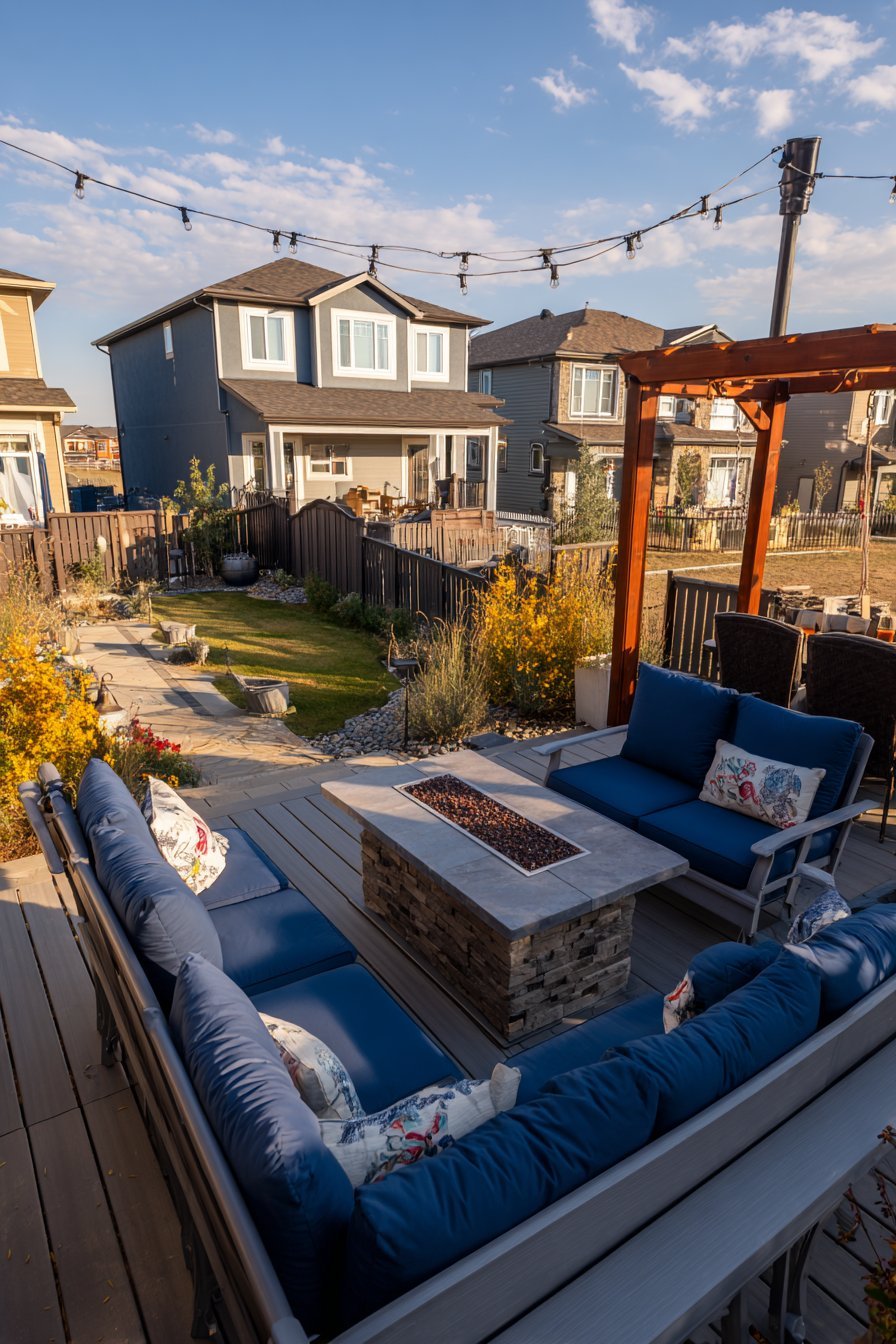
The versatility across these designs accommodates different lifestyle needs. Entertainment spaces support social gatherings. Play areas serve families with children or pets. Productive gardens provide fresh vegetables and herbs. Meditation corners offer peaceful retreats from daily stress.
Sustainability appears throughout these concepts. Native plantings reduce water consumption and support local ecosystems. Composting systems reduce waste while enriching soil. Rain barrels conserve water for irrigation. These elements demonstrate environmental responsibility without sacrificing beauty.
Spatial considerations make these designs adaptable to various yard sizes. Vertical gardens maximize limited space. Multifunctional zones create efficiency in smaller yards. The concepts scale appropriately whether working with compact urban lots or expansive suburban properties.
Color theory and material combinations create visual harmony. Natural wood tones complement green plantings naturally. Stone elements ground designs while providing textural contrast. Lighting layers transform spaces from day to evening use seamlessly.
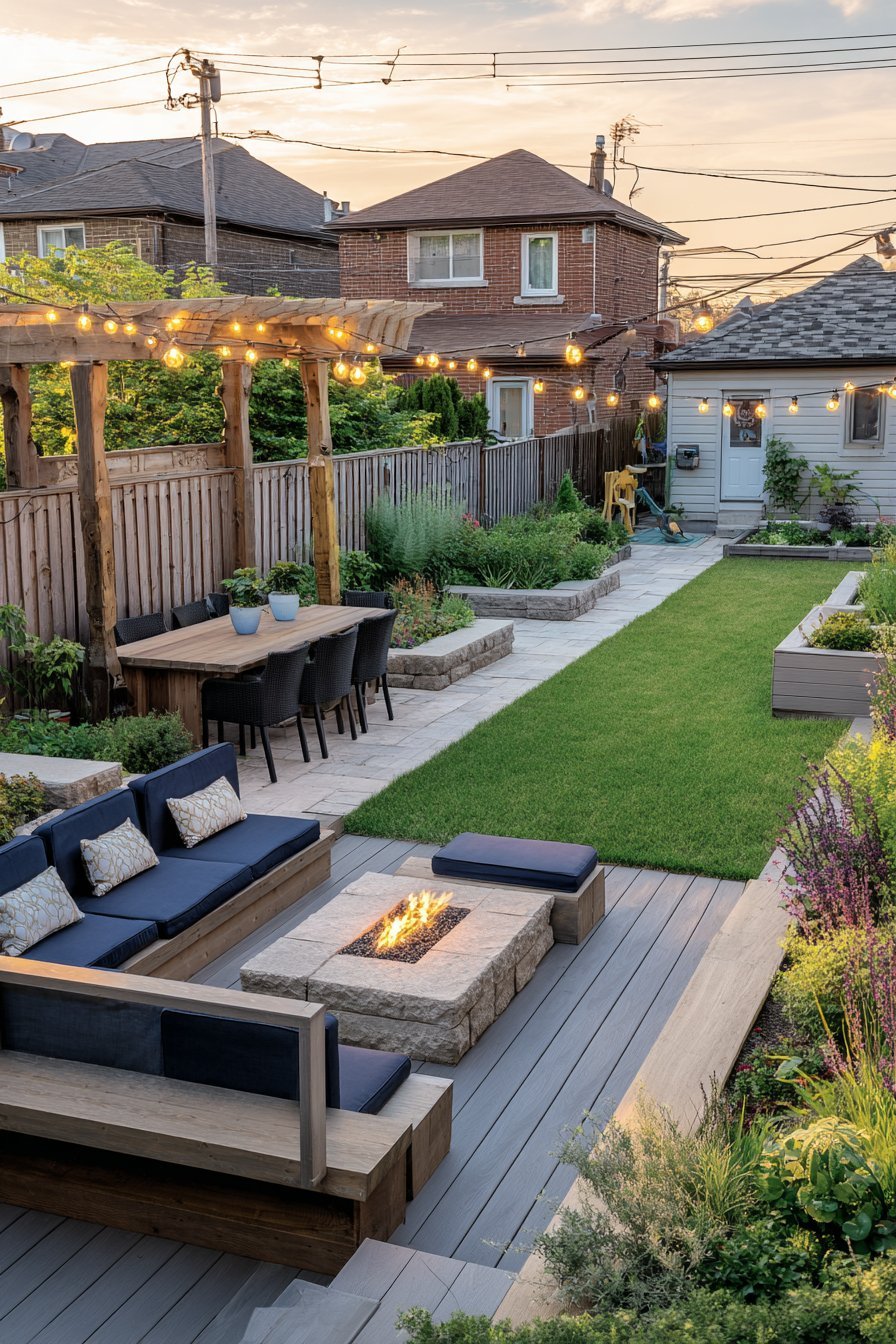
Practical functionality ensures these designs serve real-world needs. Storage solutions keep yards organized. Durable surfaces withstand regular use. Proper drainage prevents water accumulation issues. Safety features protect family members during active use.
The longevity of these design approaches provides excellent value. Quality materials resist weather damage and wear. Classic aesthetics remain appealing across changing trends. Proper installation ensures structures and plantings thrive for years.
Conclusion
These twenty backyard decorating ideas demonstrate that outdoor spaces deserve thoughtful design consideration. From dining areas to dog-friendly zones, each concept addresses specific needs while maintaining aesthetic appeal. Quality materials combined with practical layouts create yards that function beautifully for years.
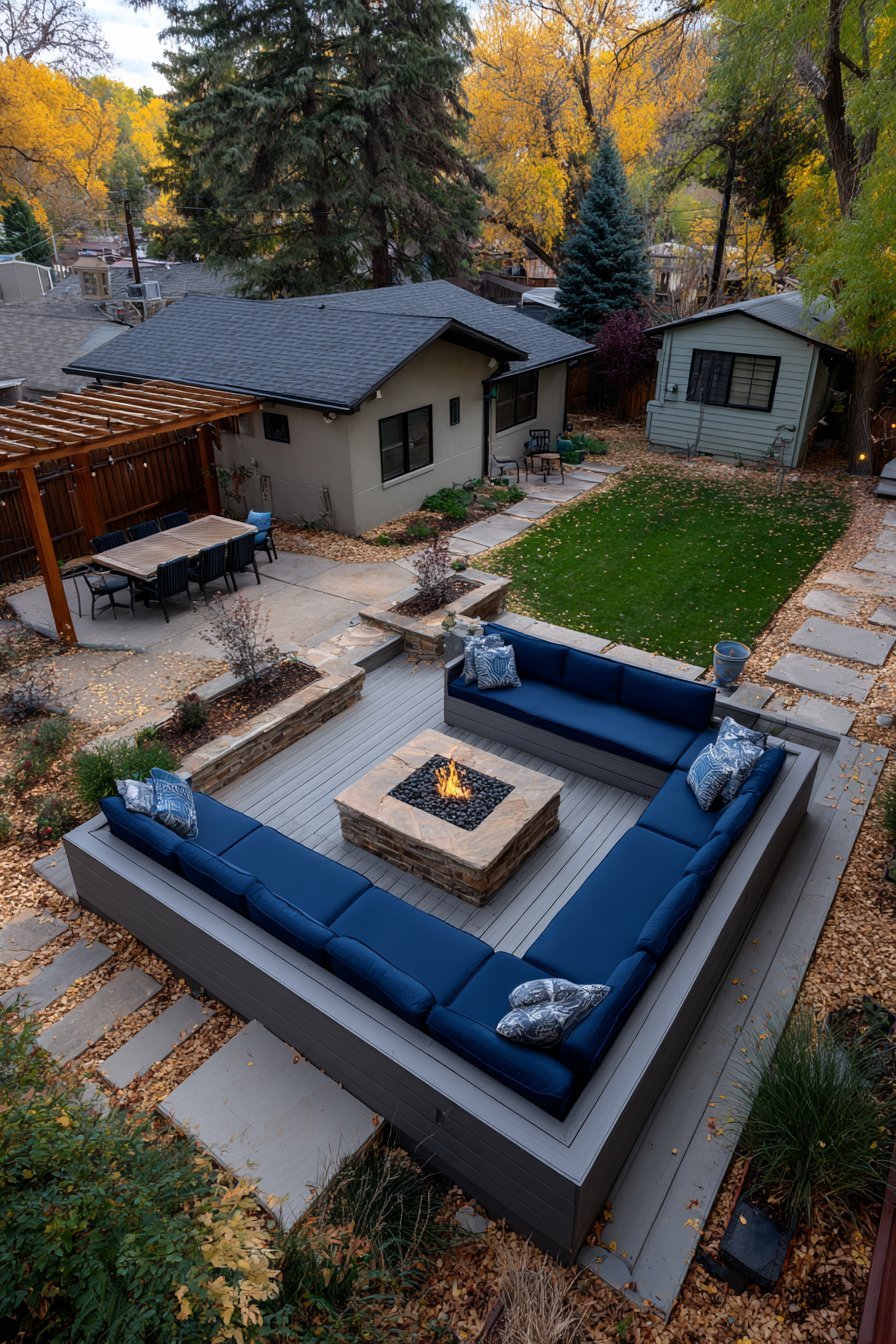
Successful backyard design balances multiple priorities simultaneously. Beauty, functionality, durability, and sustainability work together in these concepts. Start by identifying your primary needs and available space. Then select elements that align with your lifestyle and climate.
Transform your backyard into an extension of your home through strategic planning. Whether you implement one concept or combine several, these ideas provide a foundation for creating outdoor living spaces. Your ideal backyard awaits creation through thoughtful decorating choices and quality execution.
