

The 1960s revolutionized kitchen design with bold colors and innovative materials. This era embraced optimism through vibrant hues and space-age aesthetics. Homeowners discovered that kitchens could be both functional and visually exciting. The decade brought us avocado green appliances, laminate countertops, and geometric patterns that still captivate today.
Modern homeowners increasingly seek to recapture this distinctive style. The 60s kitchen aesthetic offers refreshing alternatives to contemporary minimalism. These designs celebrate personality and playfulness in everyday spaces. Whether you’re renovating a period home or adding retro charm to a modern space, these ideas provide authentic inspiration.
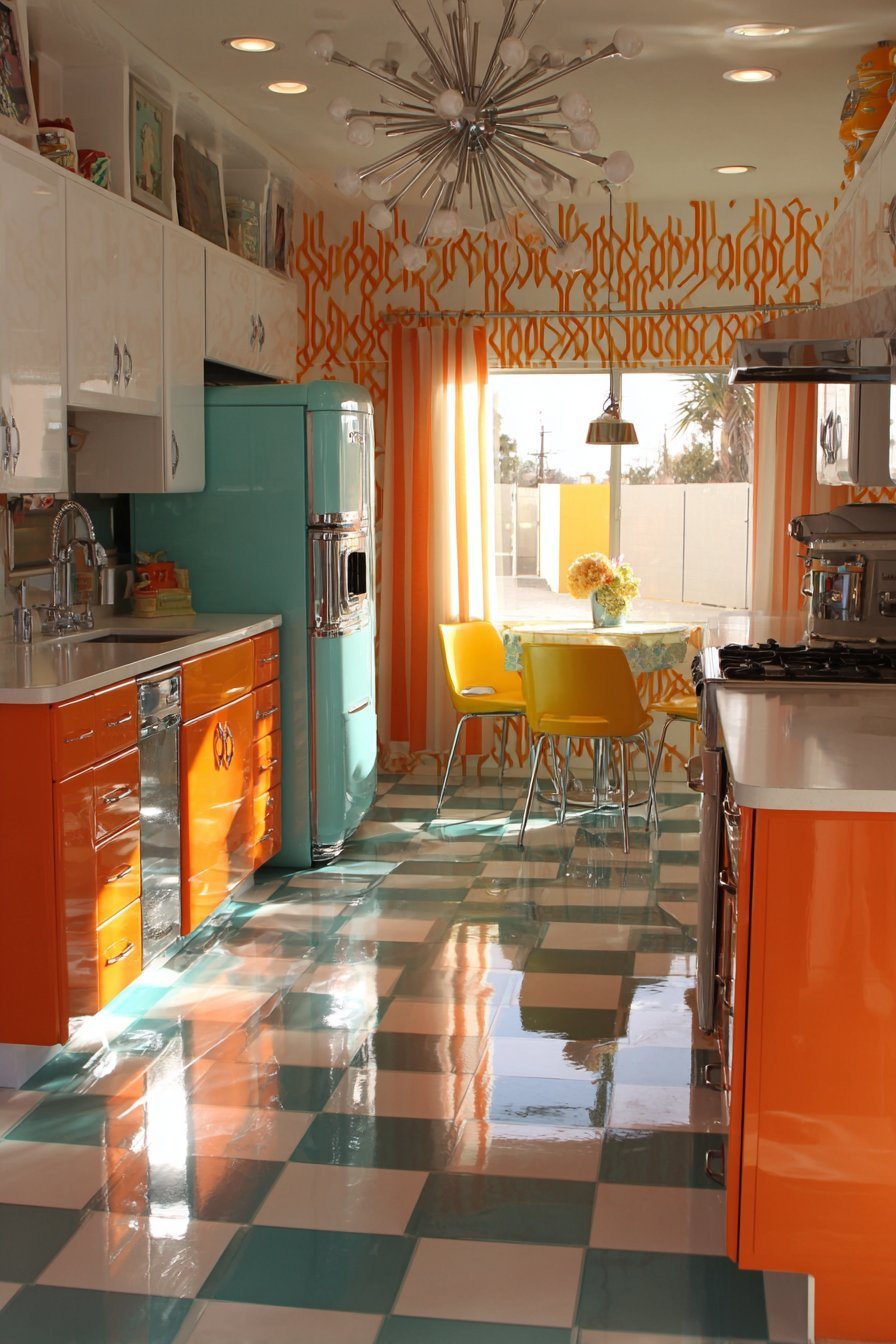
This article explores twenty unique 60s kitchen concepts. Each design showcases authentic materials, color palettes, and layout solutions. From compact galley kitchens to spacious family gathering spaces, you’ll discover how mid-century principles create timeless appeal. These concepts demonstrate that 60s design remains relevant and adaptable for today’s homes.
1. Bold Geometric Patterns Meet Chrome Accents
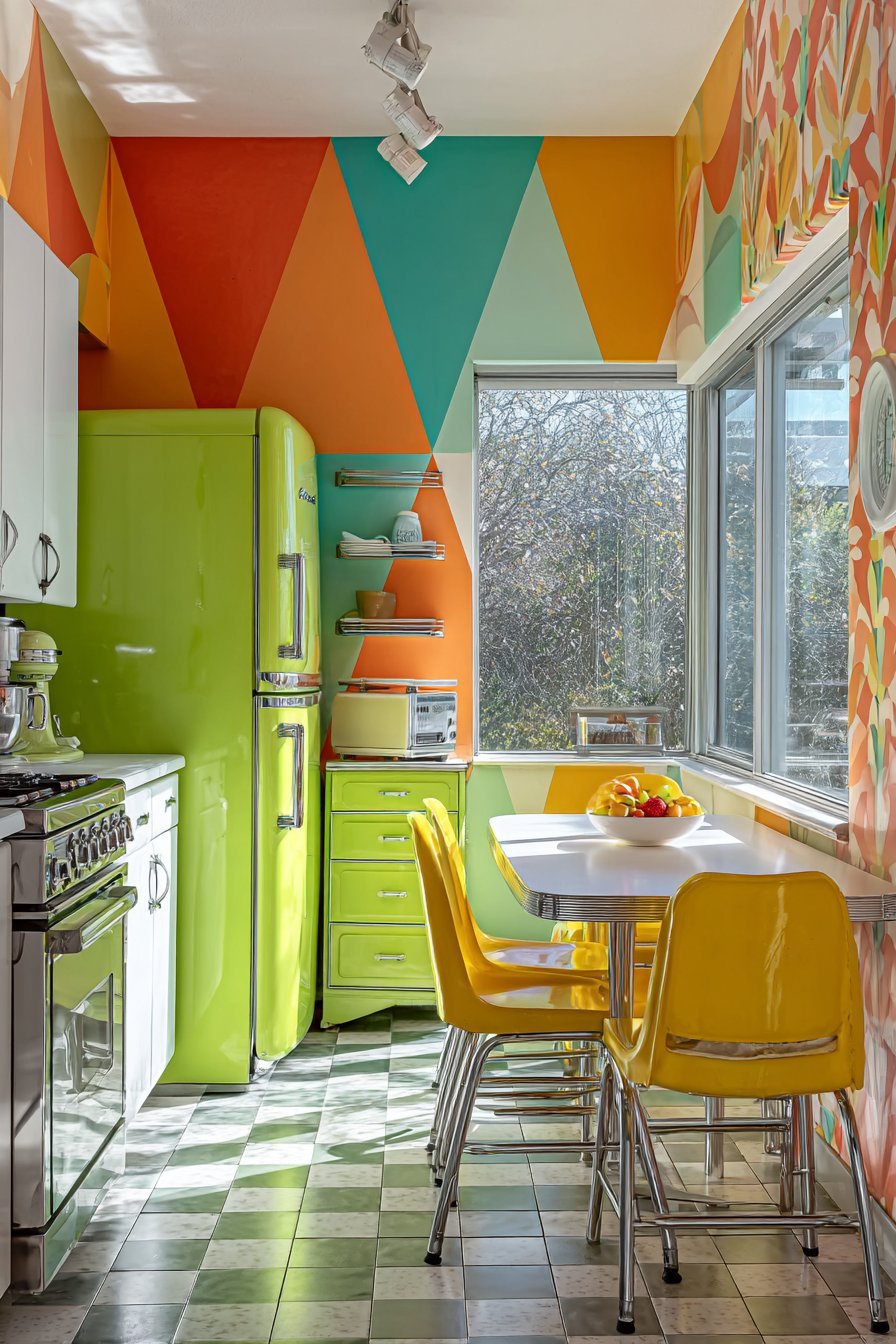
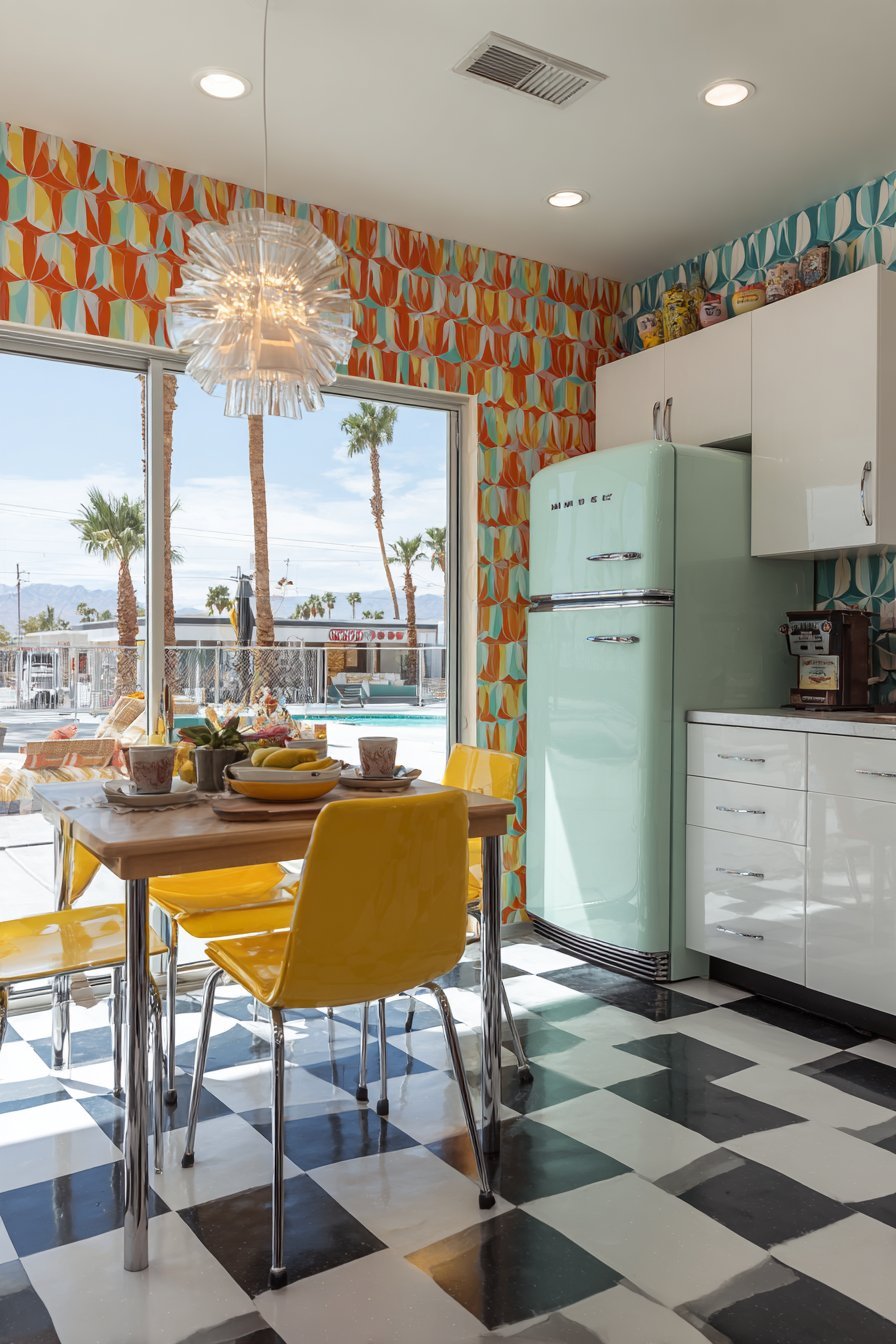
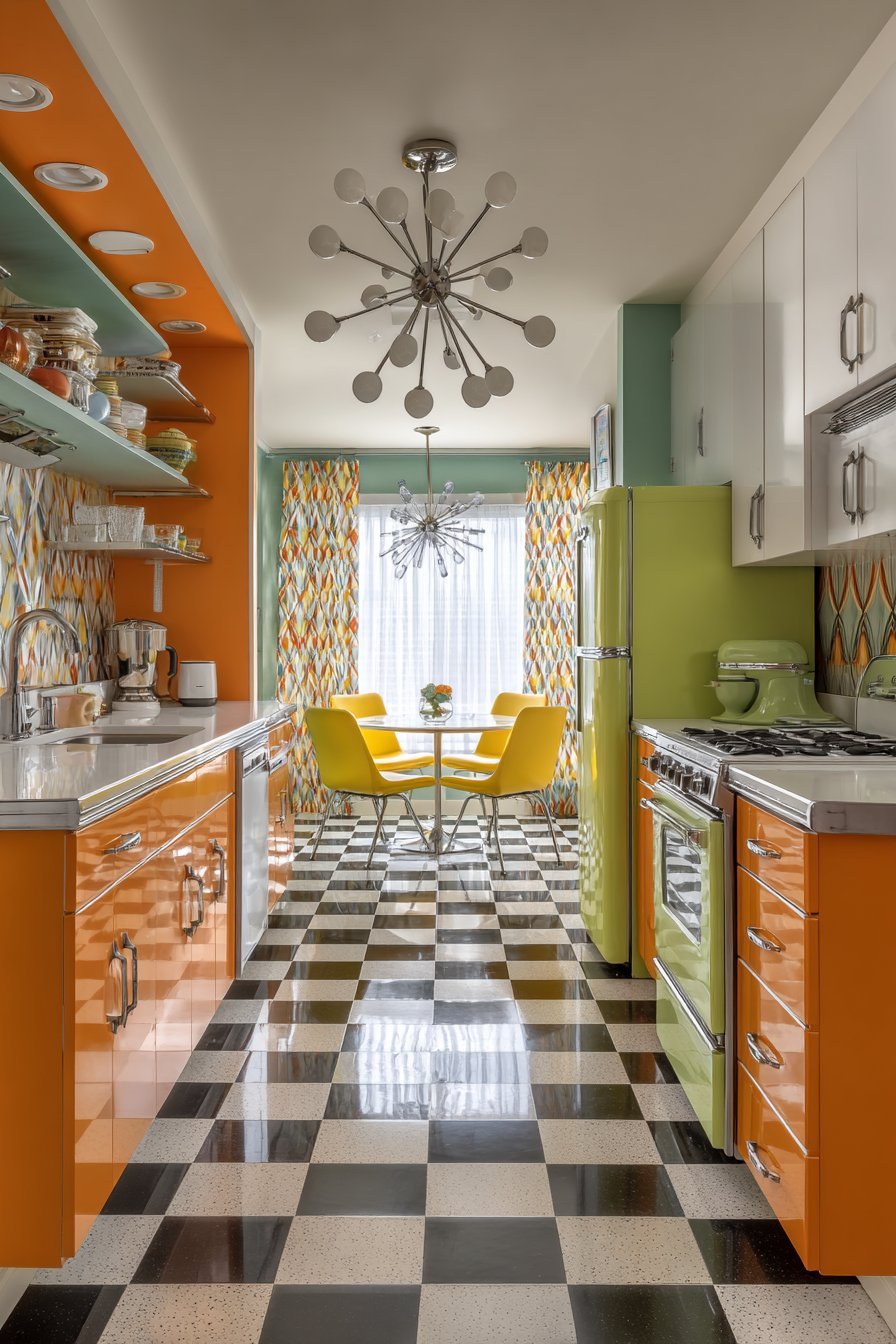
Picture a vibrant kitchen where bold geometric wallpaper commands attention. Orange and teal patterns dance across white walls. The breakfast nook features a chrome-legged Formica table. Sunny yellow vinyl chairs surround it, creating instant cheerfulness. An avocado green refrigerator stands proudly against white streamlined cabinets.
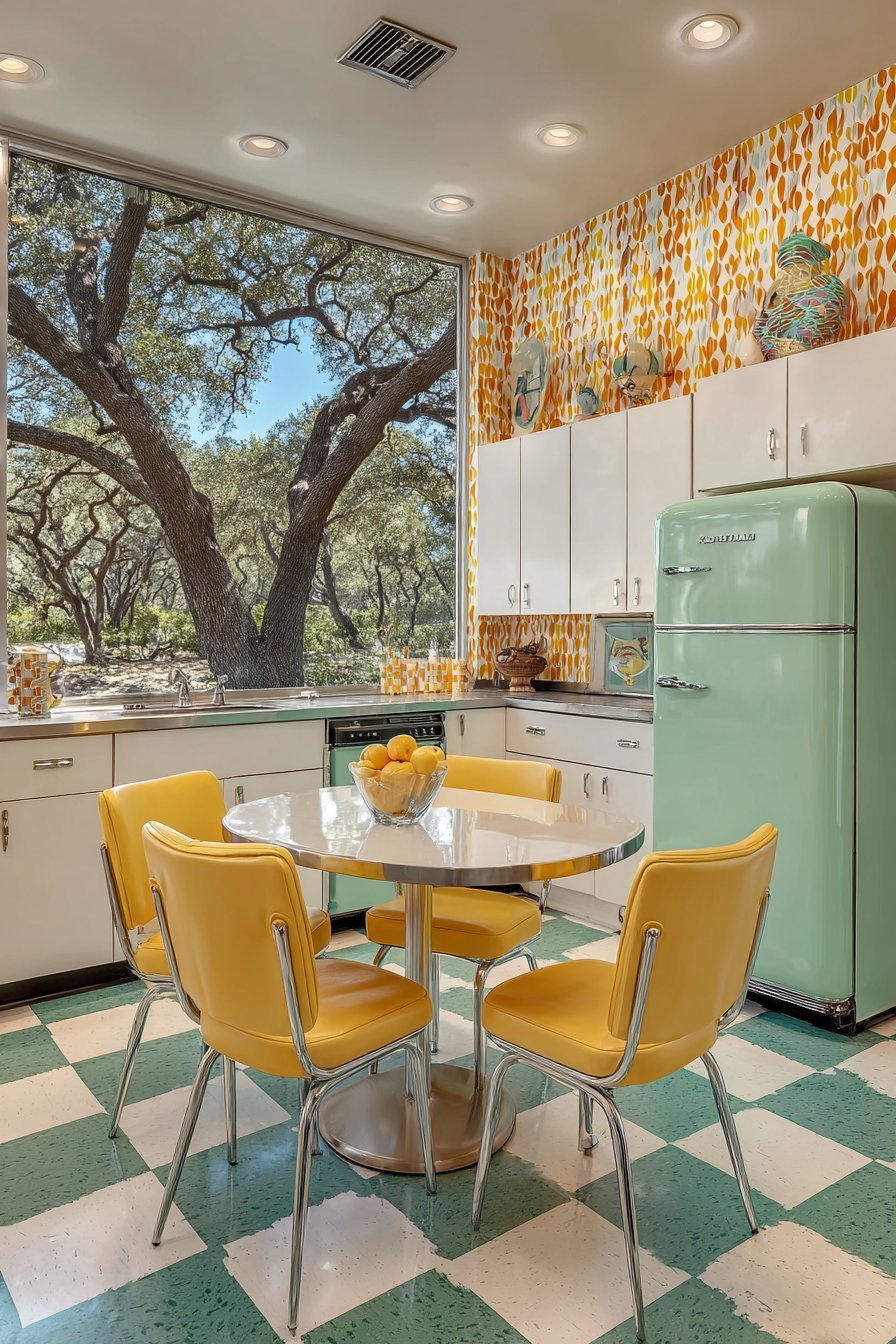
The flooring makes an equally strong statement. Classic black and white checkerboard vinyl tiles stretch across the floor. This pattern choice amplifies the playful mid-century aesthetic. Natural daylight streams through a large window. It highlights the glossy surfaces throughout the space. The chrome details catch light and create sparkling accents.
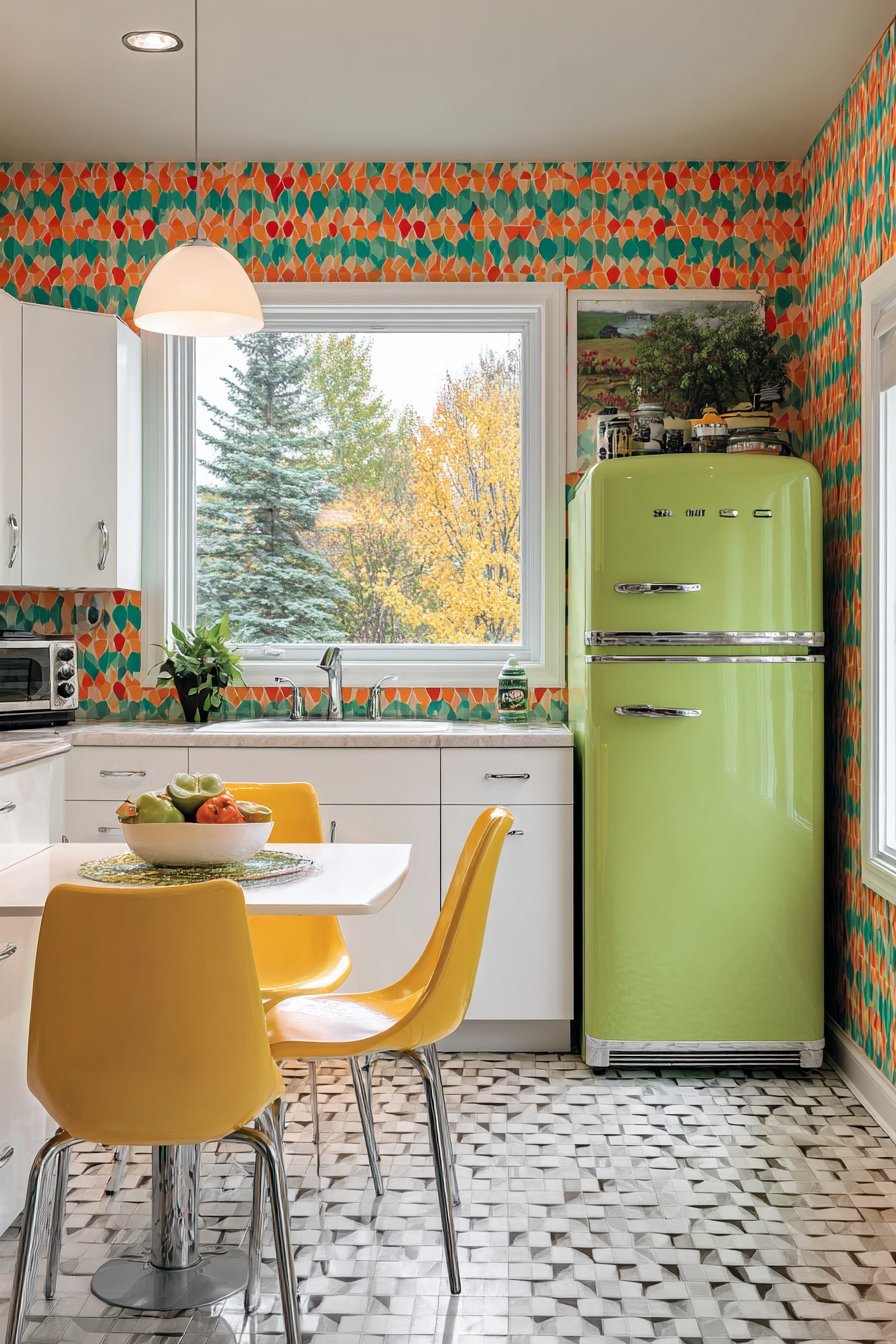
White cabinets provide necessary visual relief from the bold colors. Simple streamlined handles maintain the period-authentic look. The combination of geometric patterns and solid colors creates balance. Every surface reflects the optimistic spirit of 60s design. The space feels energetic without becoming overwhelming.
Key Design Tips:
- Limit bold patterns to one or two surfaces to maintain balance
- Use chrome accents sparingly for maximum impact and shine
- Choose period-accurate appliance colors like avocado or harvest gold
- Pair geometric patterns with solid colors for visual harmony
- Install vinyl flooring in classic checkerboard for an authentic appeal
2. Turquoise Laminate and Louvered Charm
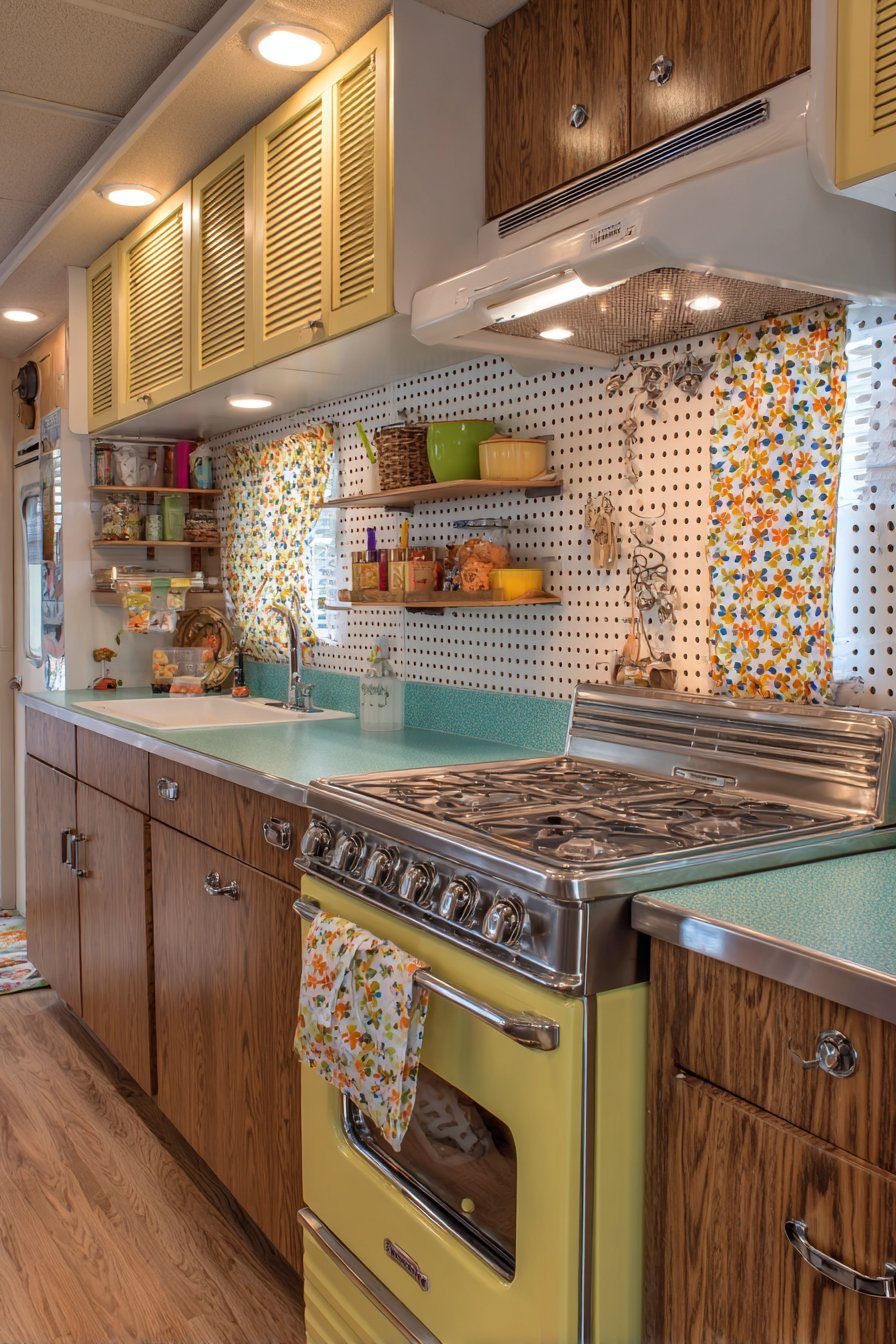
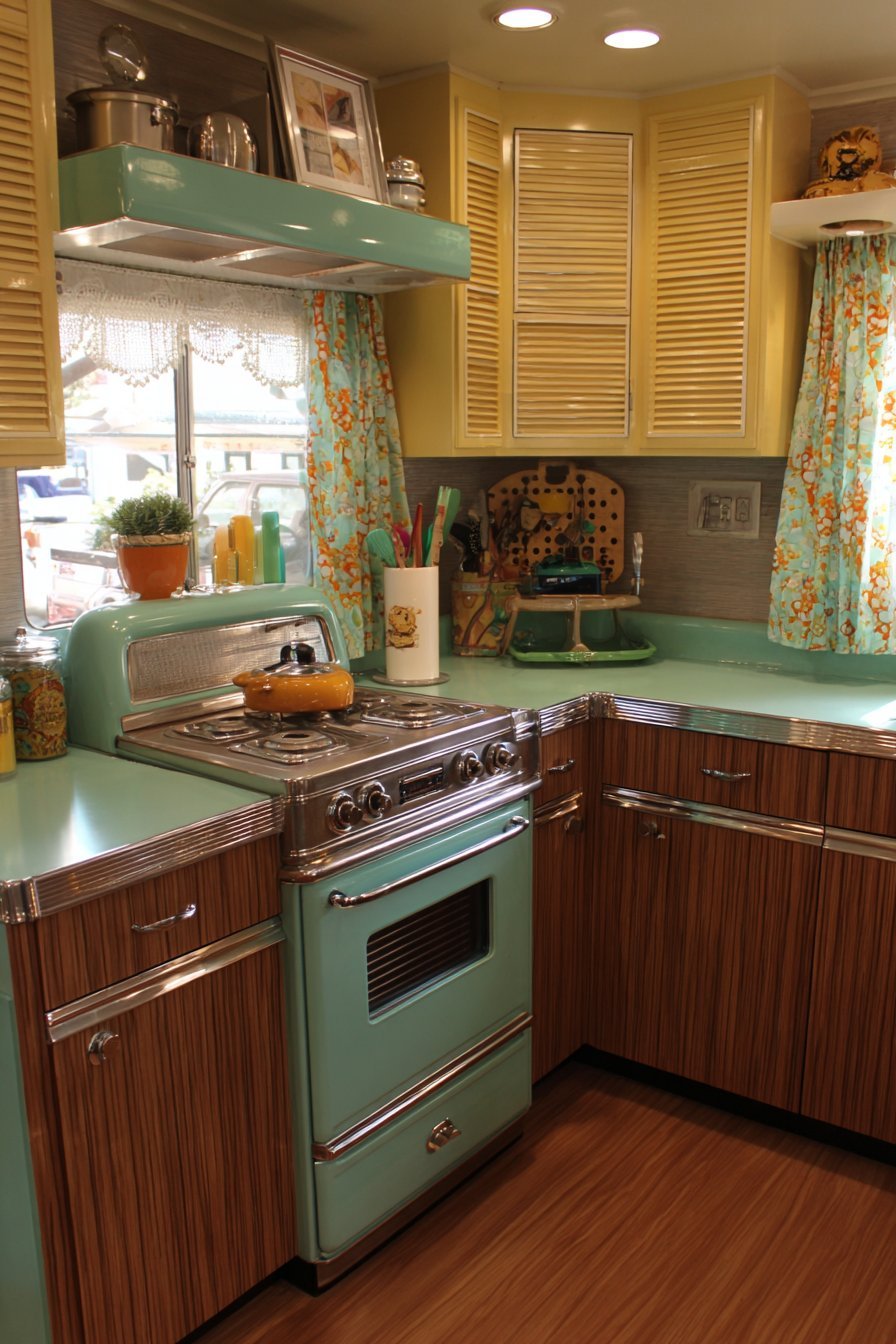
A compact kitchen showcases iconic turquoise laminate countertops. Stainless steel edge banding adds professional finishing touches. Upper cabinets feature louvered doors in pale yellow. Lower cabinets display wood grain laminate in warm walnut tones. The contrast creates visual interest in the small footprint.
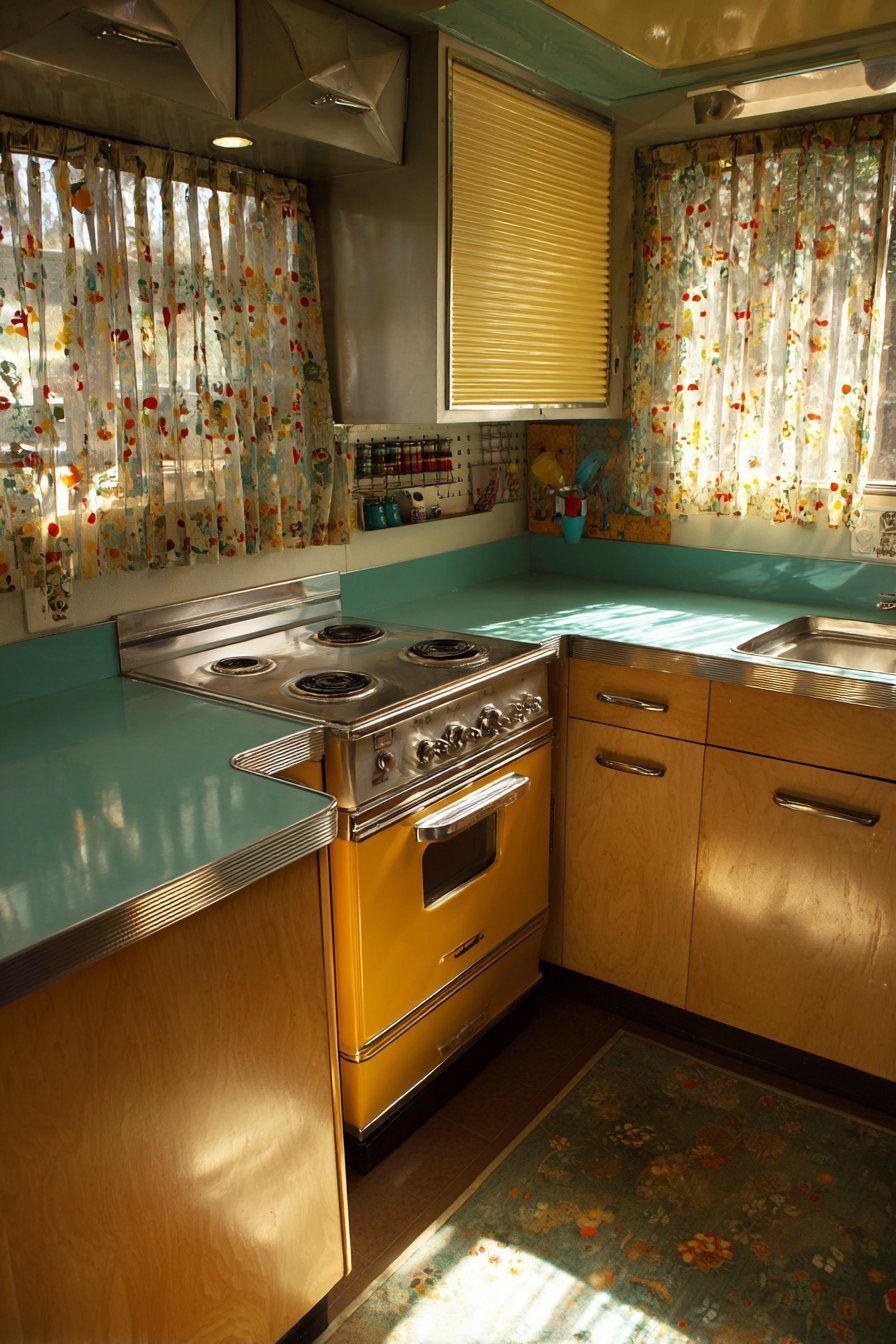
A harvest gold electric range anchors the cooking area. The matching range hood features geometric details typical of the era. Pegboard organizers display colorful accessories with functional purpose. Café curtains with atomic-era prints filter soft morning light. The prints create gentle shadows that emphasize authentic materials.
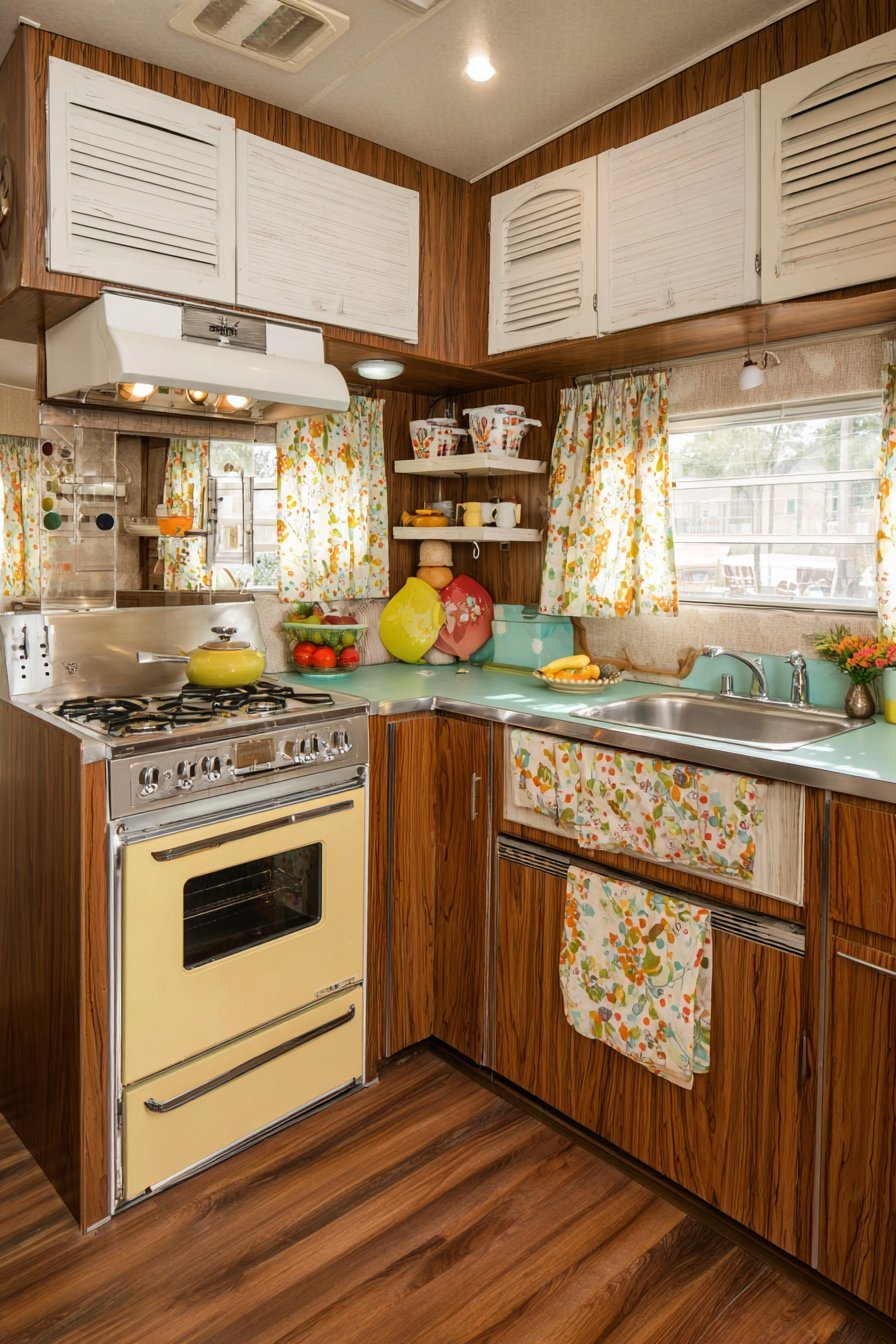
The color coordination demonstrates thoughtful planning. Turquoise countertops complement pale yellow upper cabinets beautifully. Wood grain laminate adds warmth without competing for attention. Every element serves both aesthetic and practical purposes. The layout maximizes efficiency within limited square footage.
Key Design Tips:
- Select laminate countertops with metal edge banding for durability
- Install louvered cabinet doors for ventilation and period authenticity
- Use pegboard for both storage and decorative display
- Choose café curtains with atomic prints for privacy and style
- Coordinate appliance colors with your primary palette
3. Curved Breakfast Bar Sophistication
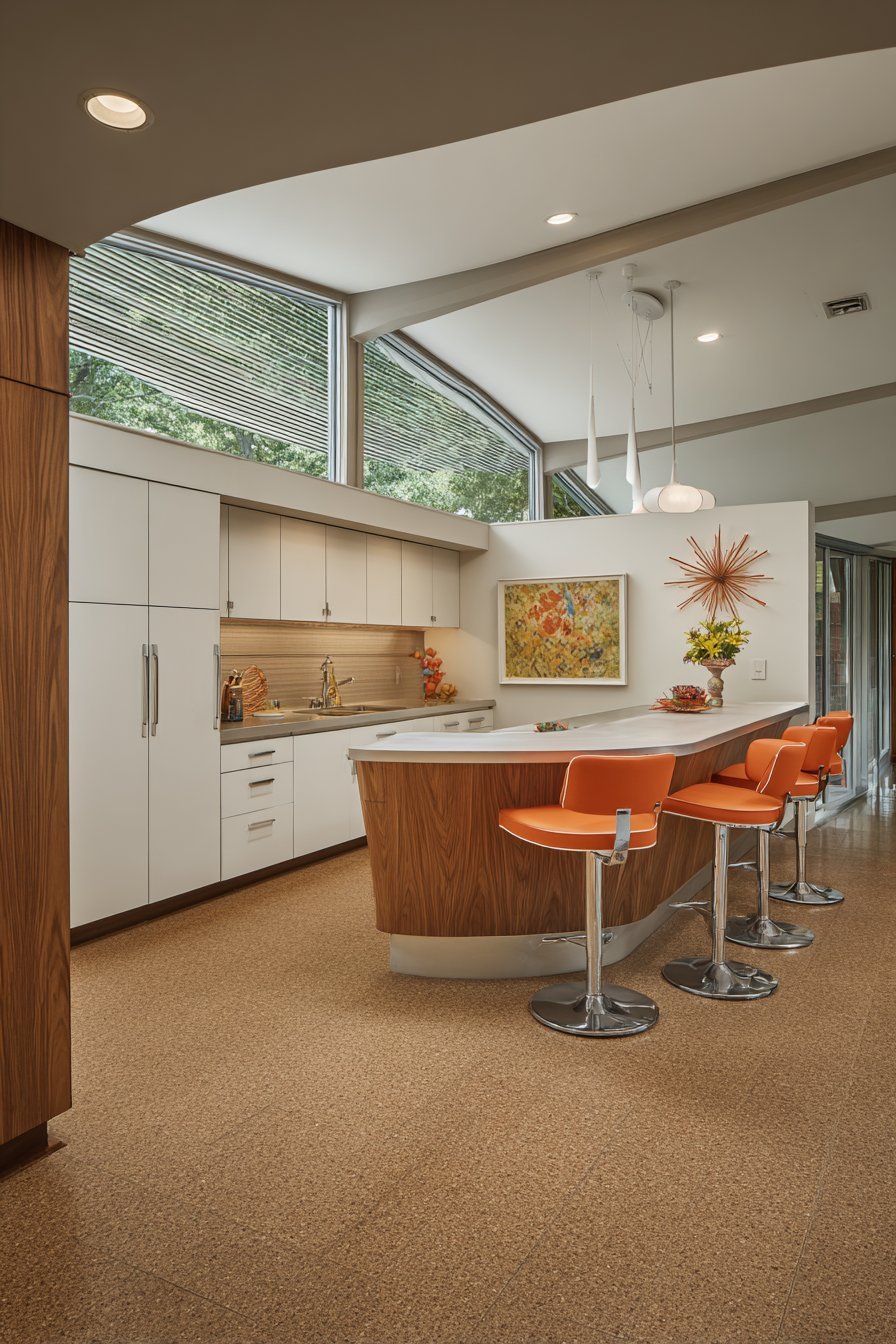
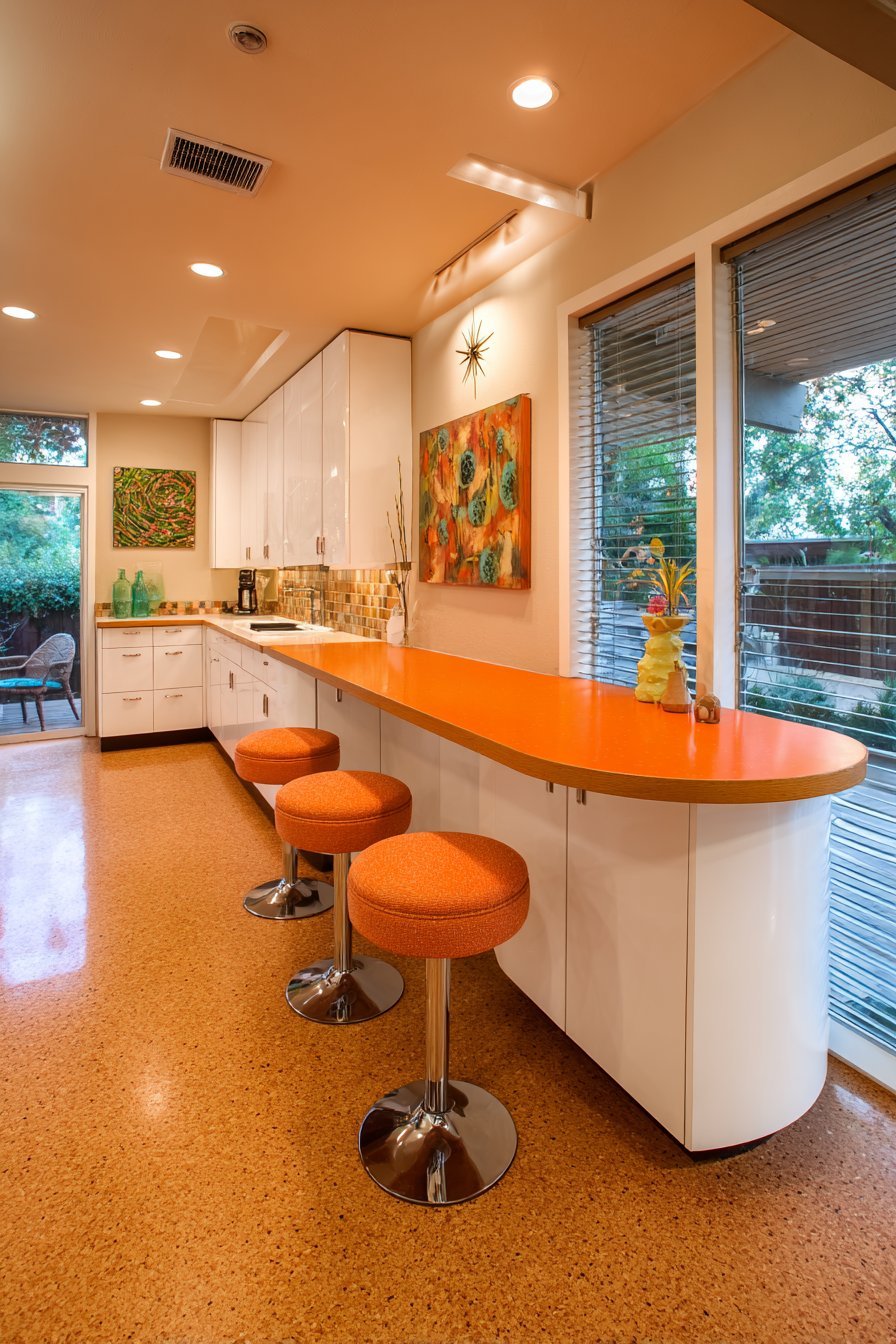
This sophisticated design centers around a curved breakfast bar. Burnt orange laminate tops the bar with smooth flowing edges. Upholstered swivel stools in coordinating fabric provide comfortable seating. Sleek white cabinets with recessed panels line the walls. Dark walnut cabinet bases create dramatic two-tone contrast.
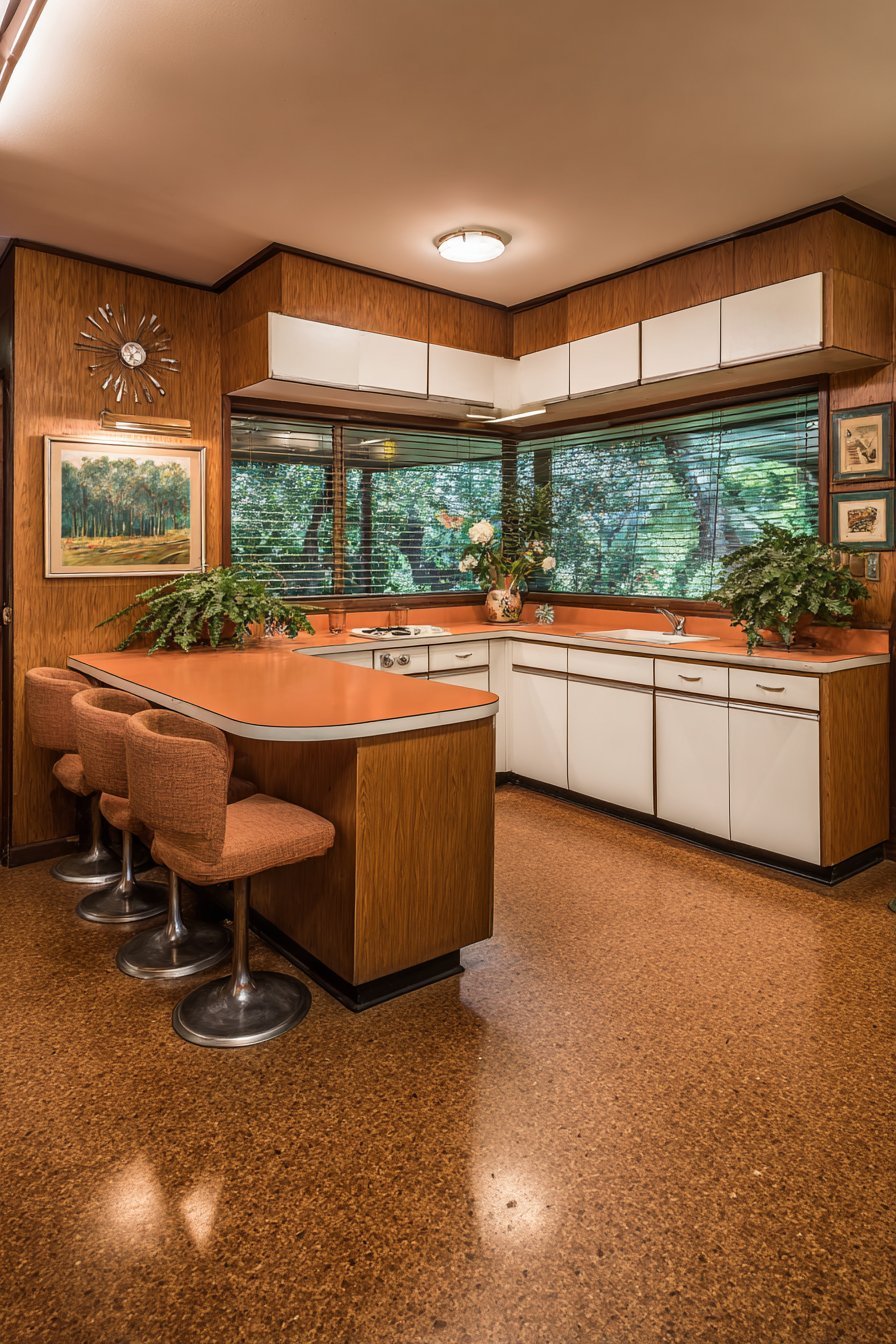
Decorative elements enhance the period atmosphere. A starburst clock adorns one wall as quintessential 60s art. Abstract prints add color and geometric interest. Cork tile flooring provides warmth and texture underfoot. The natural material offers comfort during meal preparation.
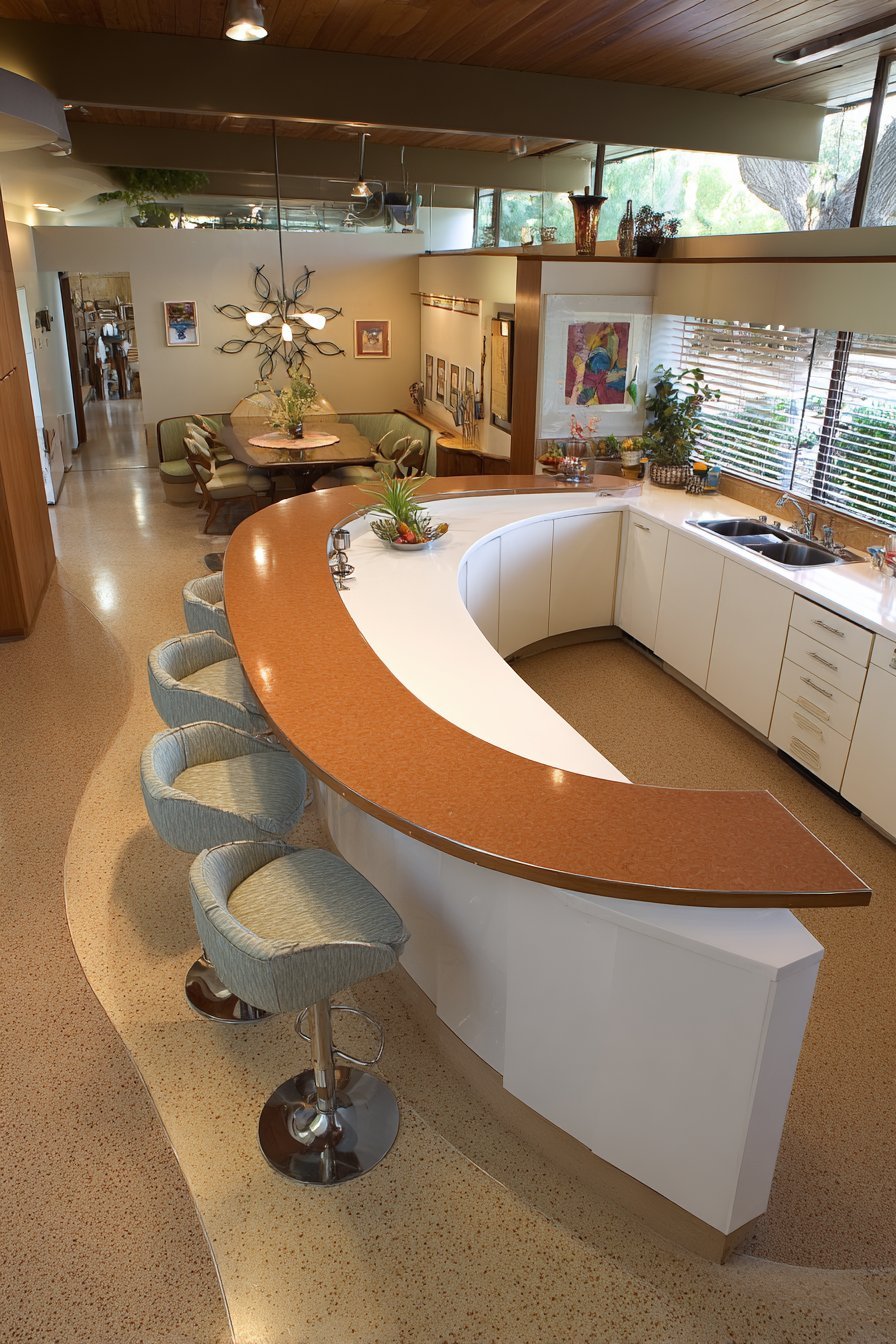
Large windows with horizontal blinds control natural light beautifully. The blinds filter sunlight across the space strategically. Clean lines define every element of the design. Chrome pulls on cabinets catch and reflect light. The overall effect feels refined and forward-thinking.
Key Design Tips:
- Design curved elements to soften angular kitchen layouts
- Create two-tone cabinetry with light uppers and dark lowers
- Add period-specific decor like starburst clocks for authenticity
- Install cork flooring for comfort and eco-friendly appeal
- Use horizontal blinds to control light while maintaining privacy
4. Pastel Pink Paradise
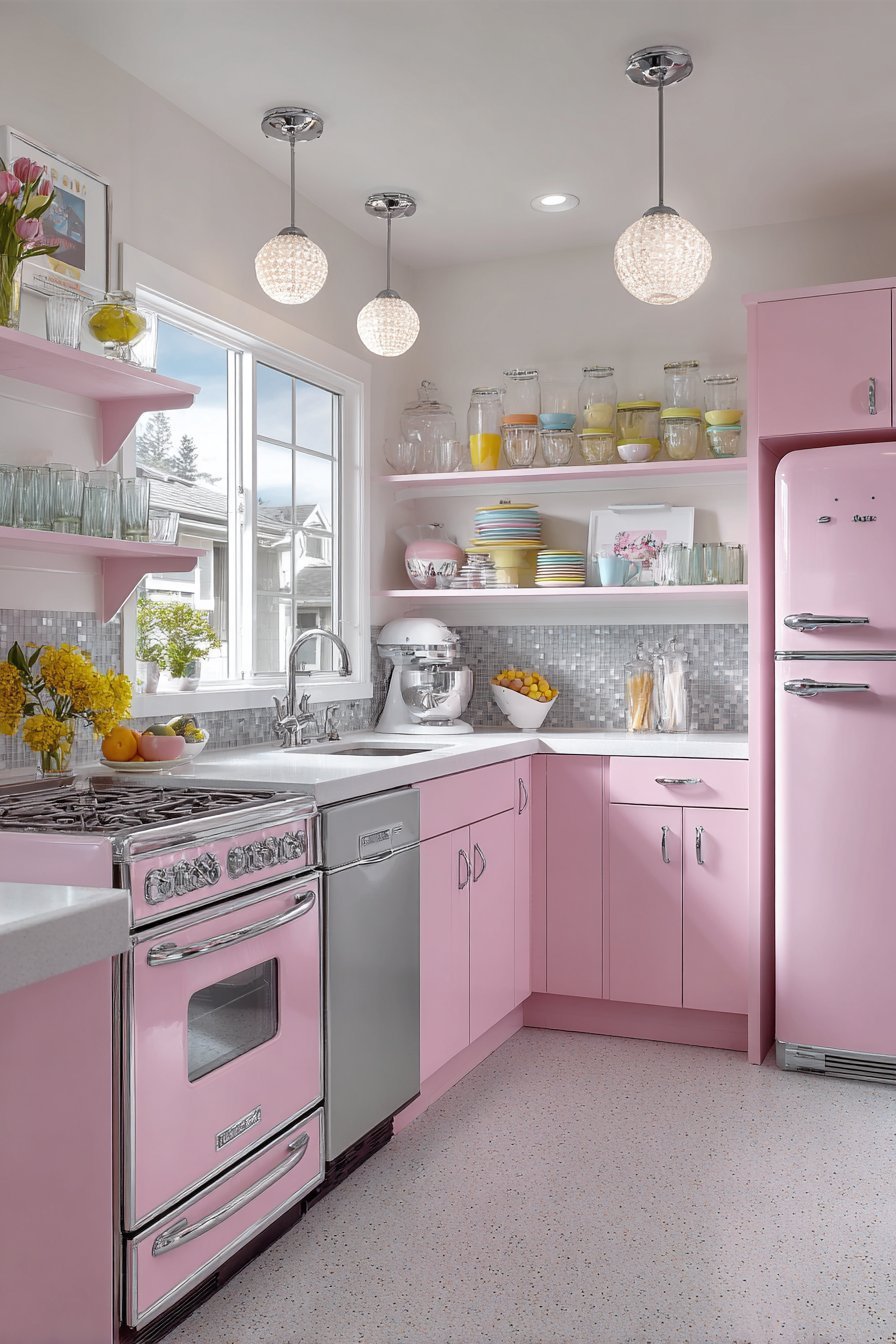
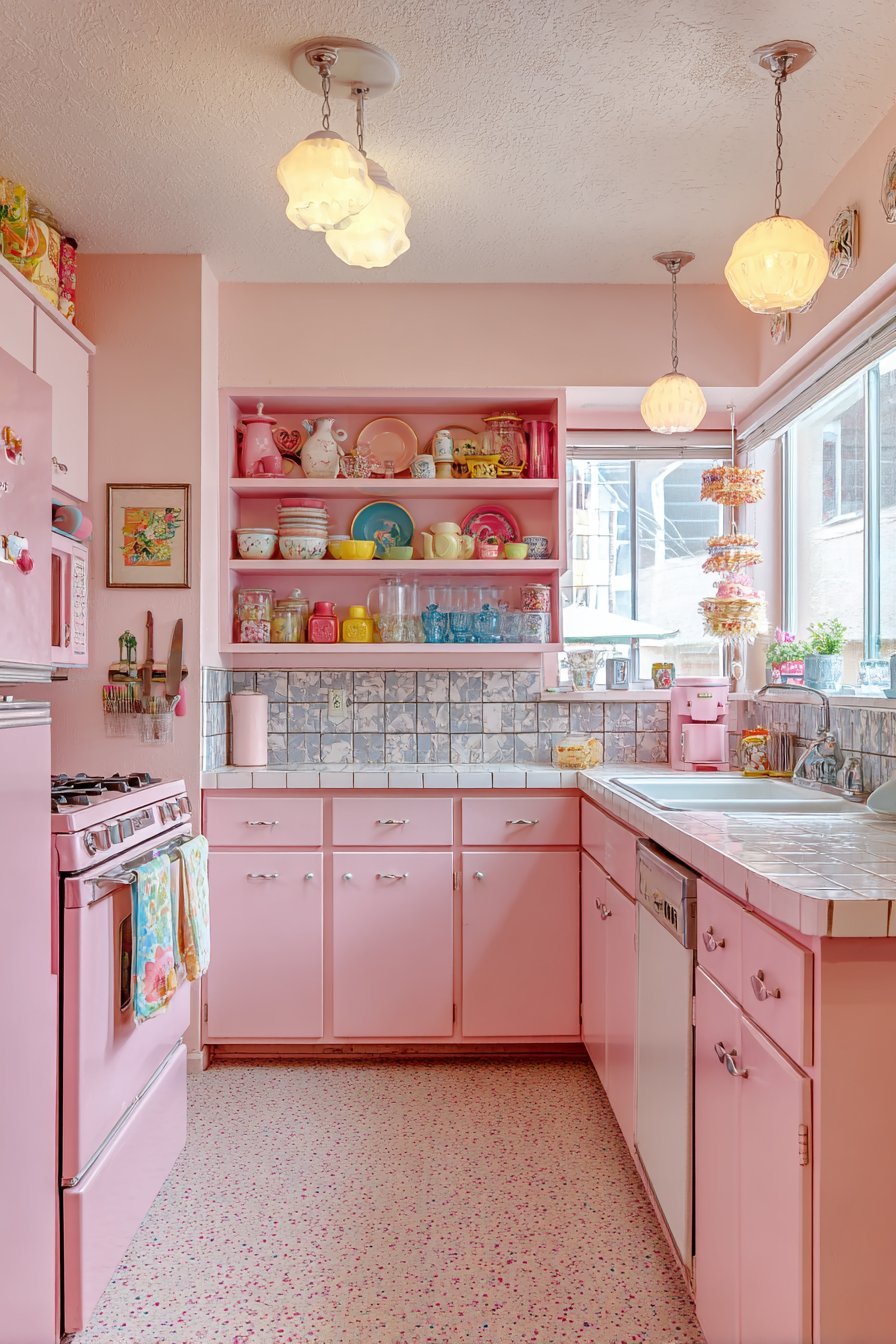
Cheerful pastel pink cabinets transform this kitchen into a joyful space. White laminate countertops provide clean work surfaces. Decorative tile backsplash combines pink and gray tones harmoniously. Vintage-style appliances in matching pink create cohesive color stories. Chrome accents on hardware and fixtures add necessary sparkle.
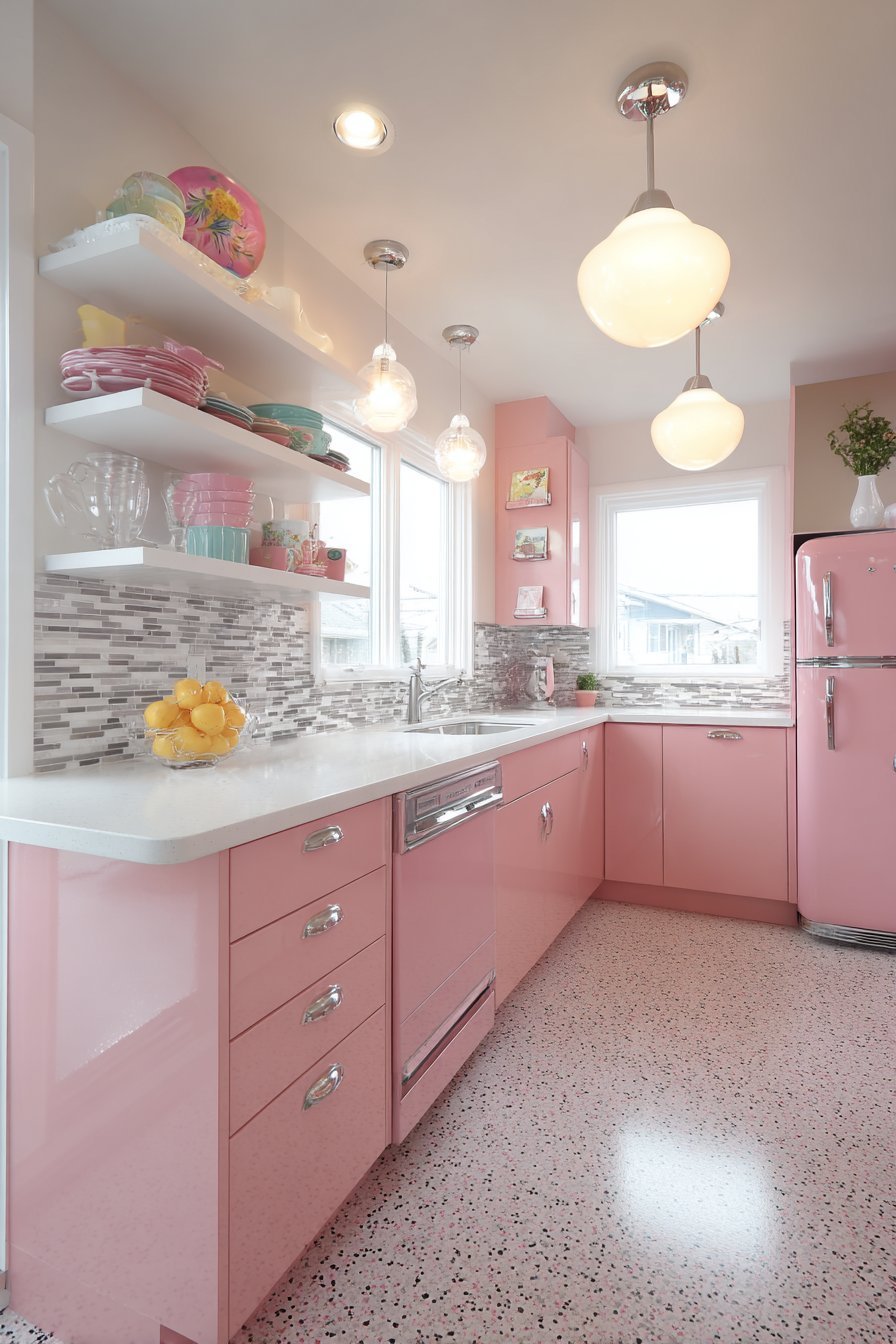
Open shelving displays colorful Pyrex dishes proudly. Atomic-era glassware catches light and adds visual interest. The display becomes functional decoration. Vinyl flooring features speckled patterns in pink, gray, and white. The pattern ties all color elements together seamlessly.
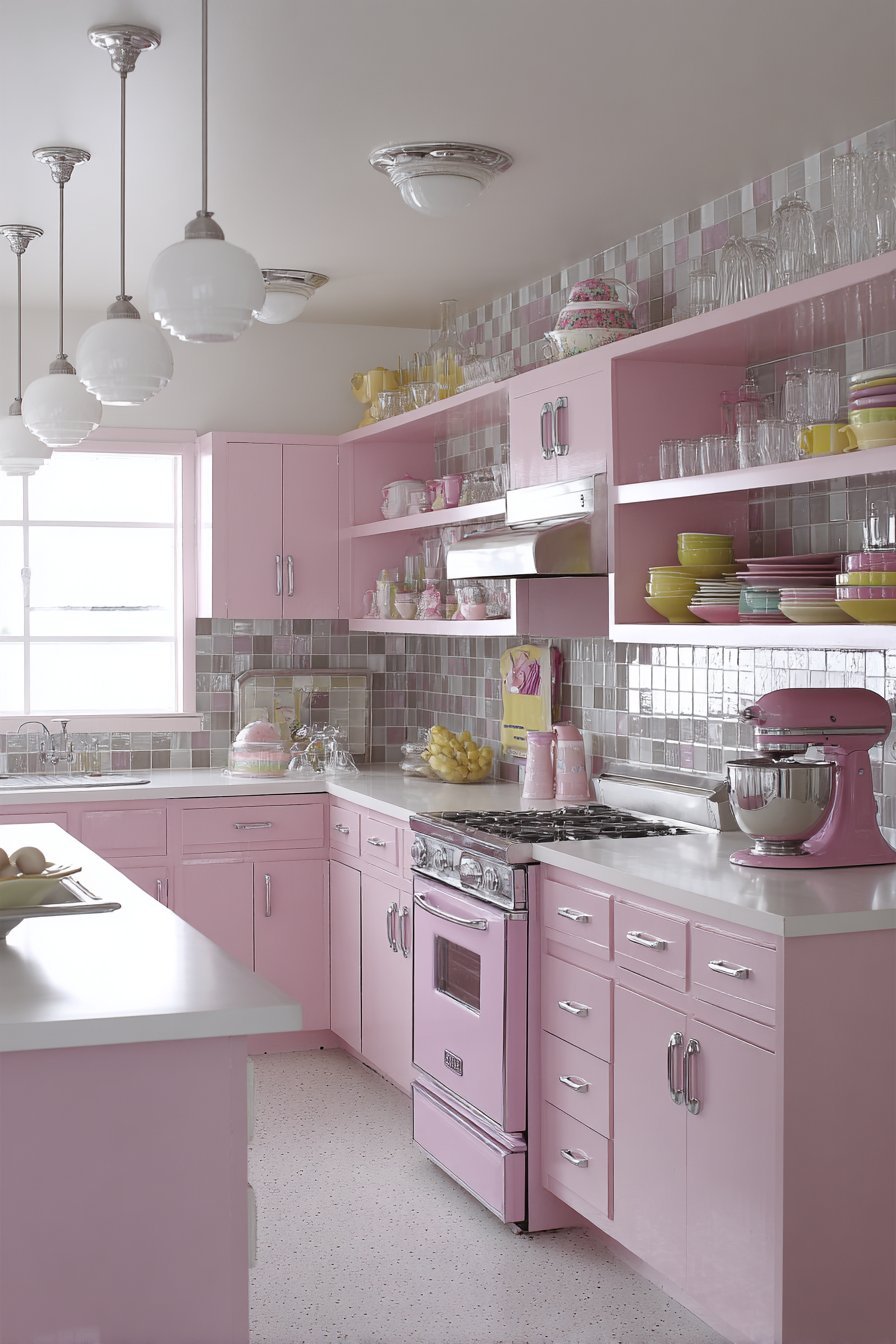
Pendant lights with frosted glass globes hang above work areas. They provide functional illumination with period-appropriate style. Natural light enhances the cheerful pastel palette throughout the day. The whimsical aesthetic maintains practical functionality. Every pink surface celebrates the era’s love of color.
Key Design Tips:
- Embrace pastel colors fully rather than using them sparingly
- Display vintage Pyrex and glassware as decorative elements
- Choose speckled vinyl flooring to hide wear and add texture
- Install frosted glass pendant lights for soft, even illumination
- Use chrome hardware to add contrast against pastel surfaces
5. Galley Layout Efficiency
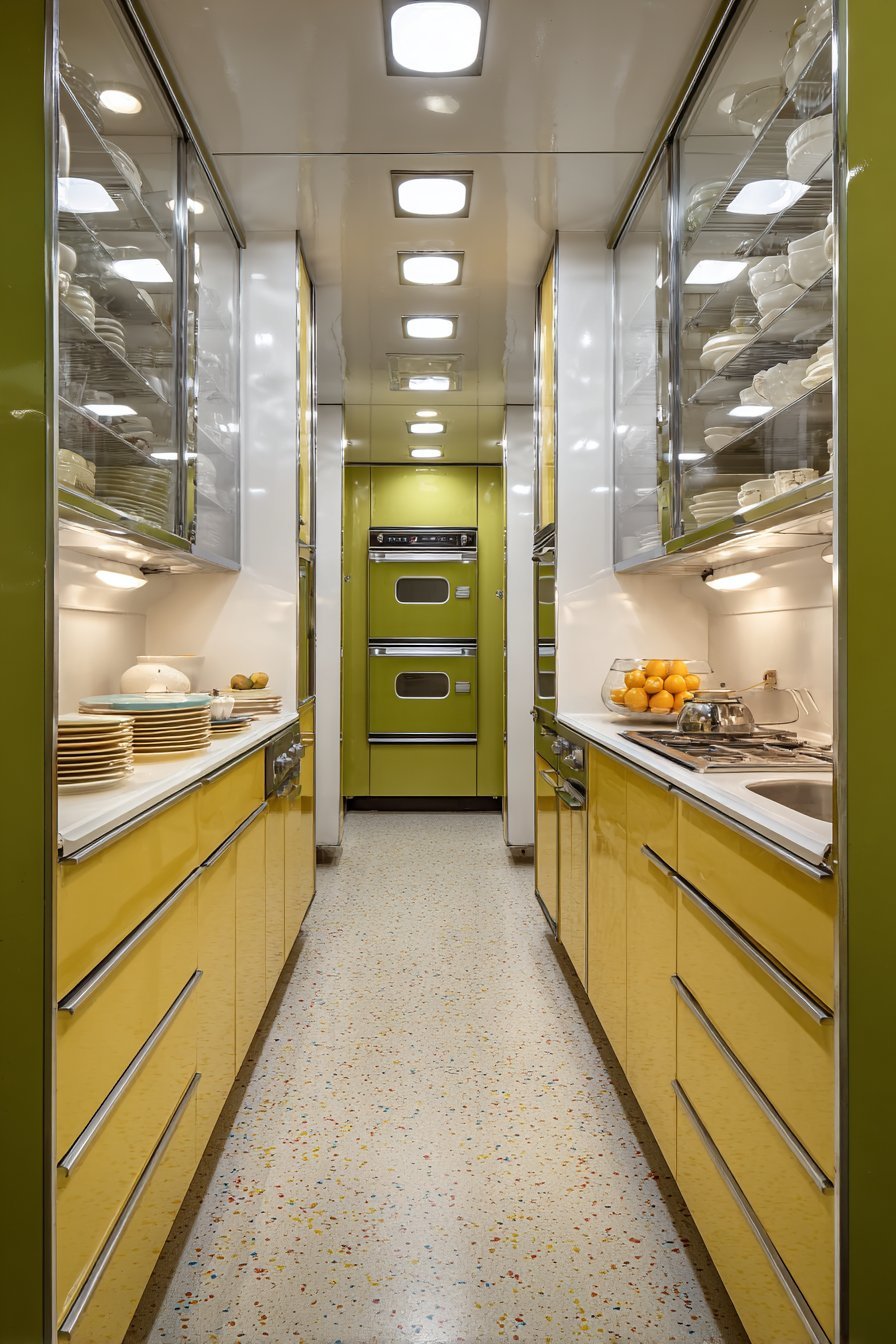
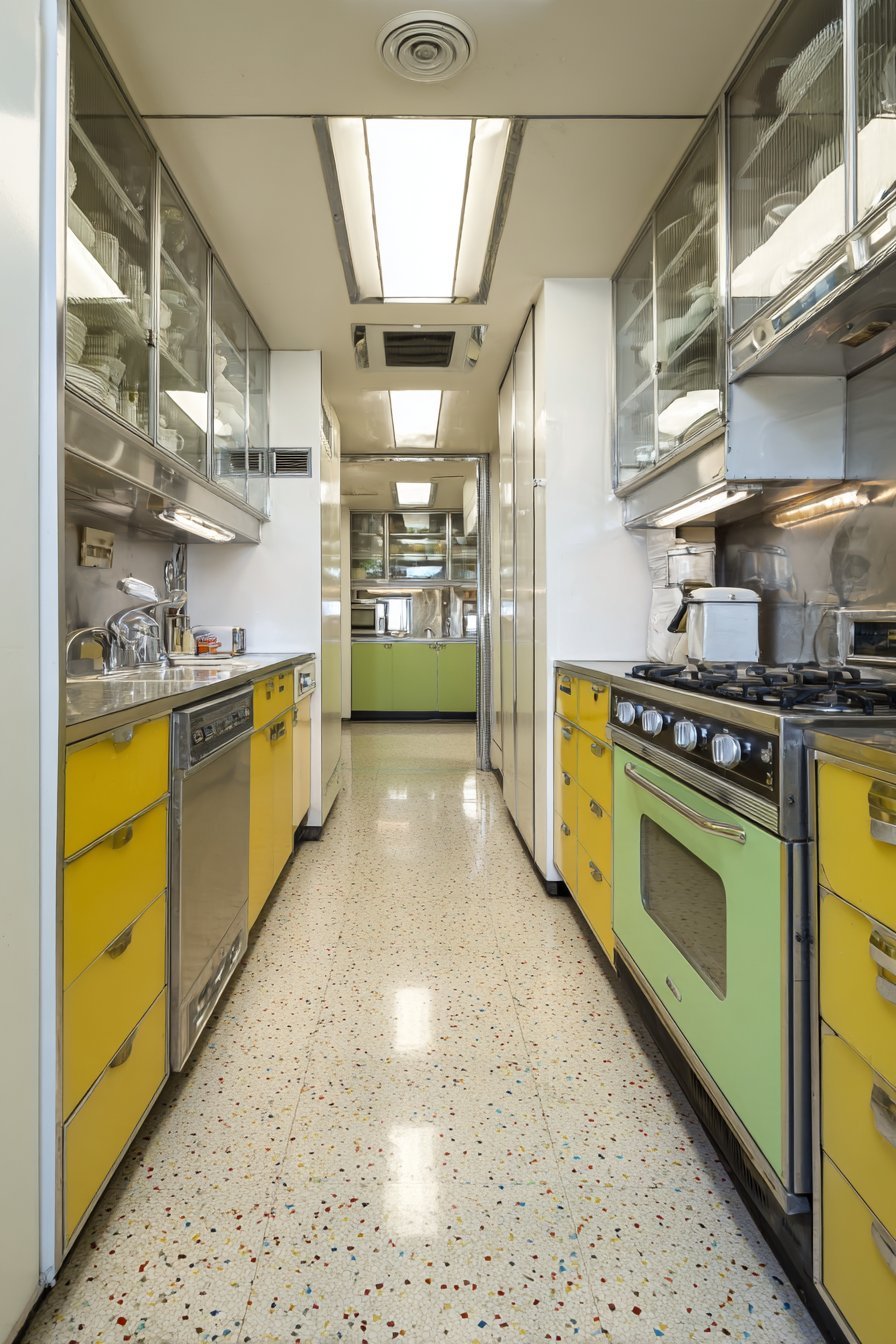
This practical galley kitchen emphasizes efficient workflow. Glossy white steel cabinets with magnetic catches flank both sides. Yellow laminate counters trimmed in chrome top the cabinets. Built-in electric cooktop and wall oven demonstrate period-typical integration. Avocado green appliances maintain color consistency throughout.
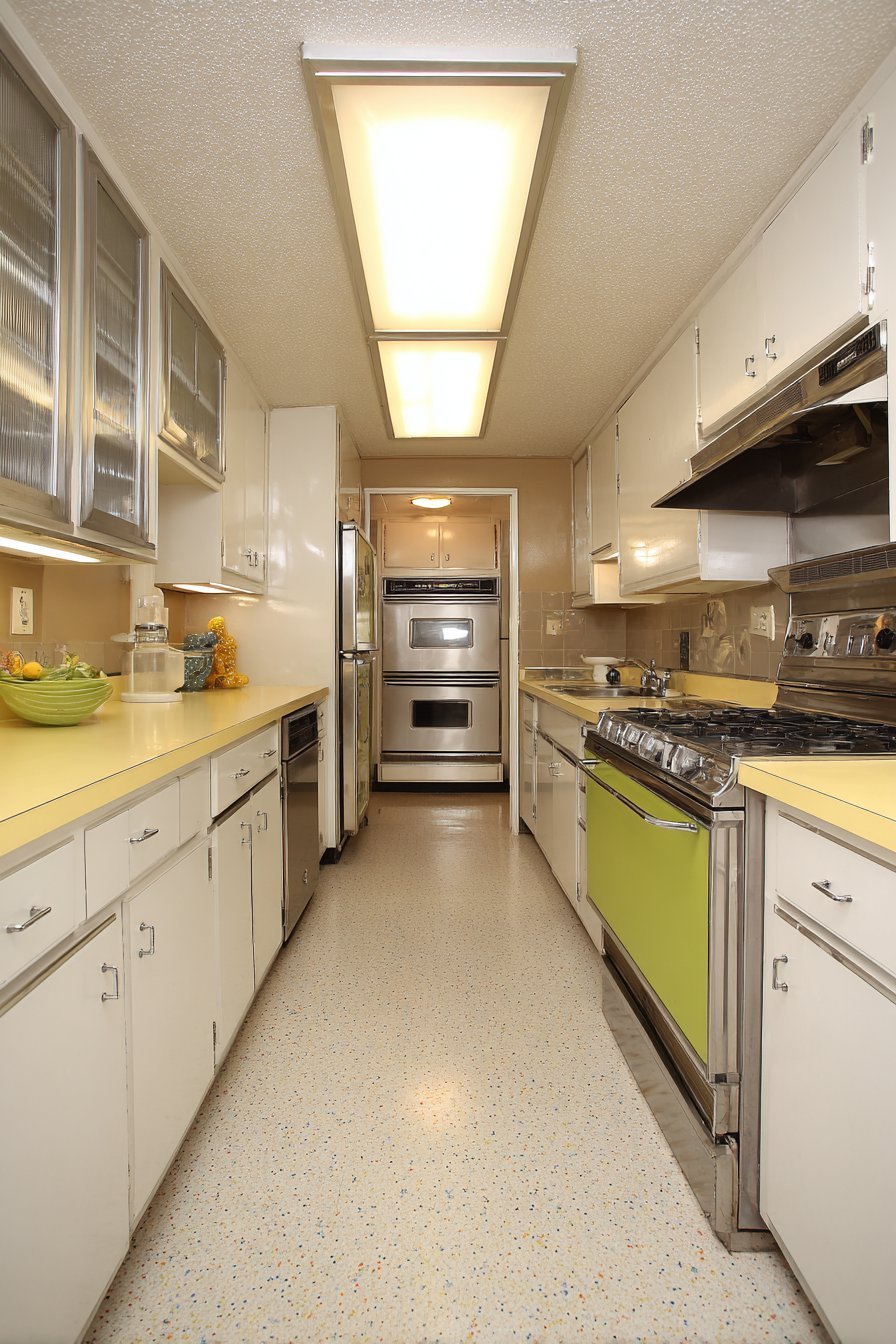
Upper cabinets feature sliding glass doors. They reveal neatly organized dishware inside. The transparency adds visual interest while keeping items accessible. Recessed fluorescent lighting provides bright, even illumination. Work surfaces receive optimal lighting for food preparation.
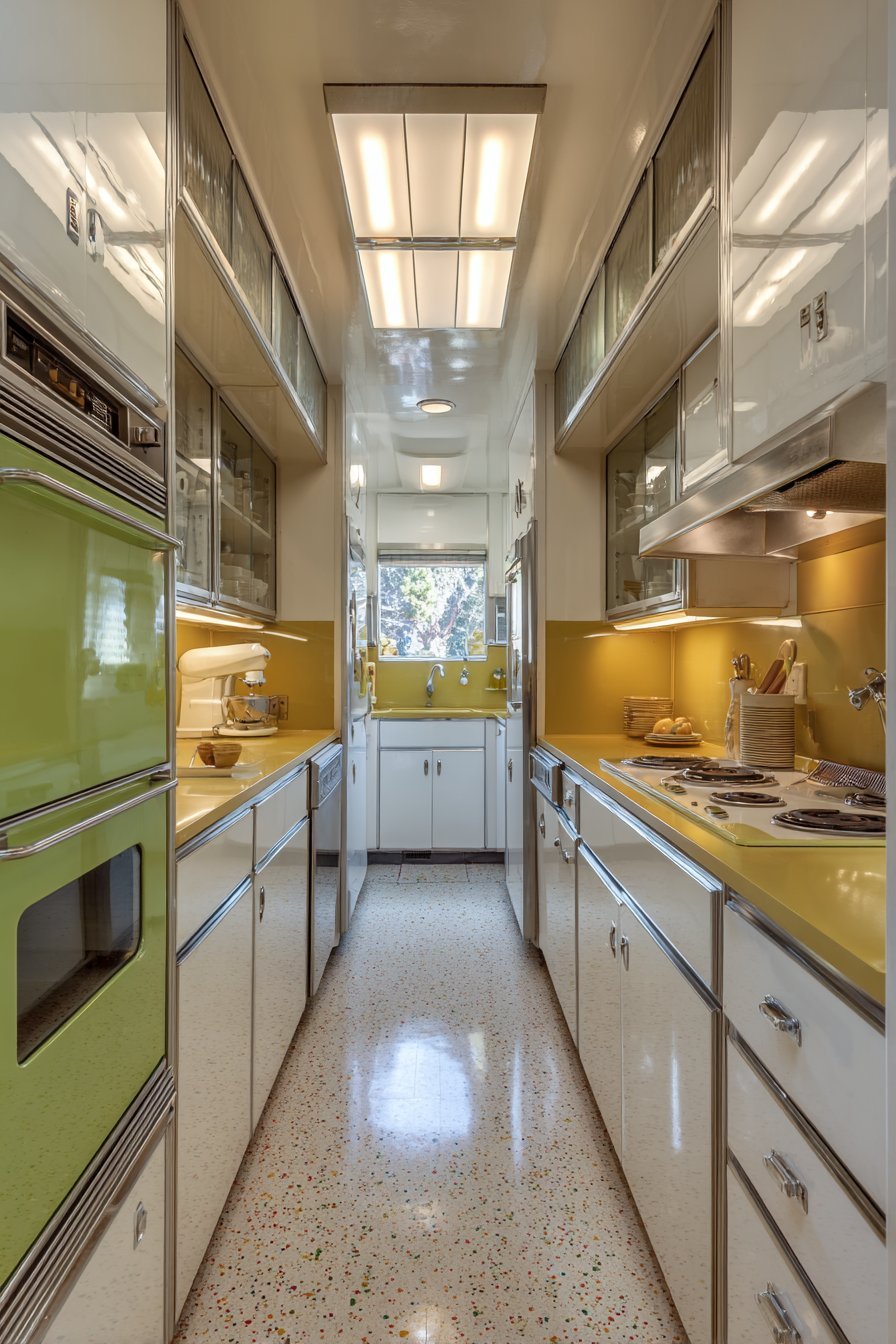
Terrazzo-style vinyl flooring adds subtle visual interest. Neutral tones with colorful flecks complement the yellow counters. The streamlined design maximizes every inch of space. Magnetic cabinet catches eliminate visible hardware. Space-saving innovations characterize this efficient layout.
Key Design Tips:
- Maximize galley layouts with cabinets on both walls
- Choose sliding glass doors to save space and display items
- Install recessed fluorescent lighting for shadow-free work areas
- Use terrazzo-style vinyl for durability and visual texture
- Integrate appliances into cabinetry for streamlined appearance
6. Cobalt Blue Statement Kitchen
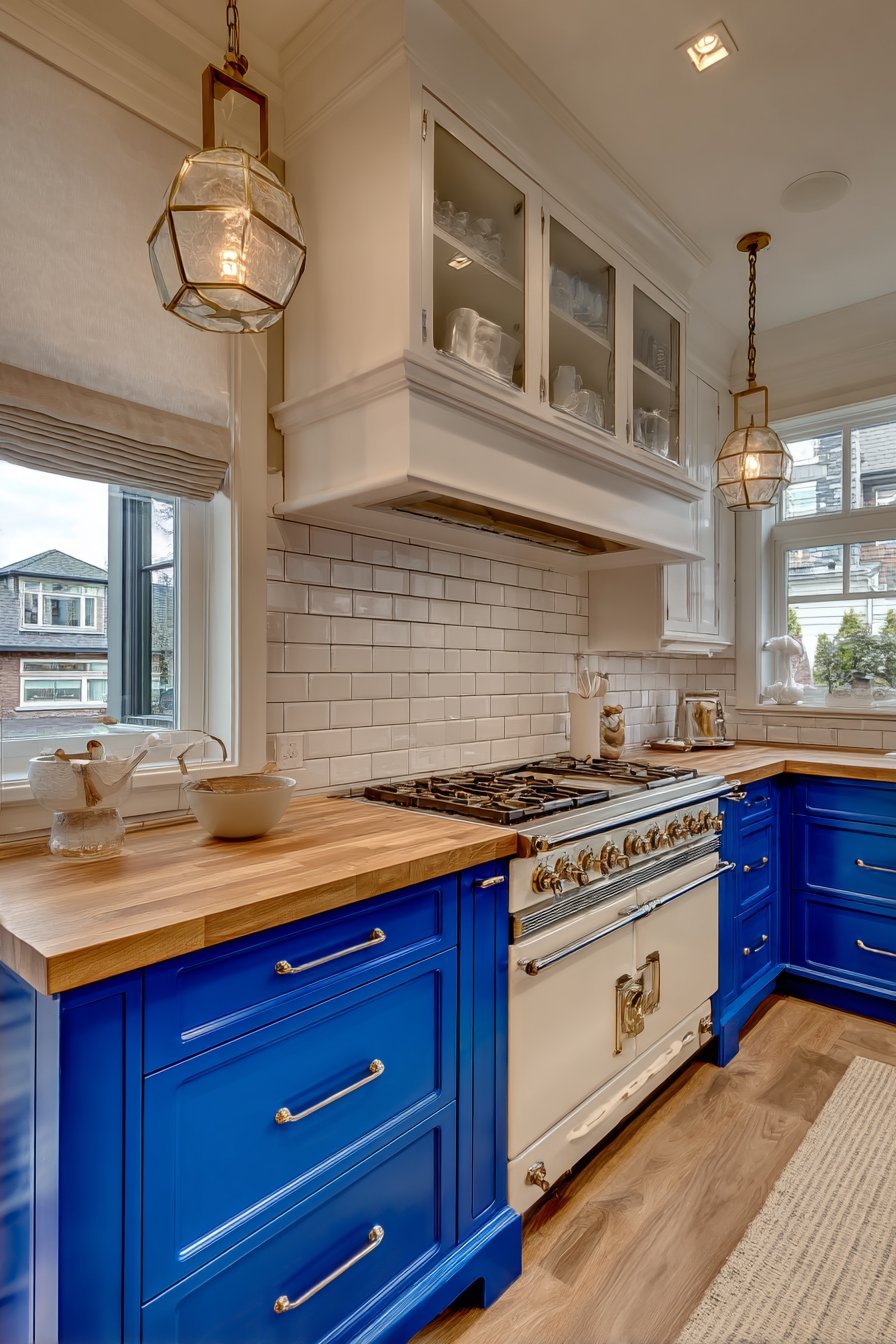
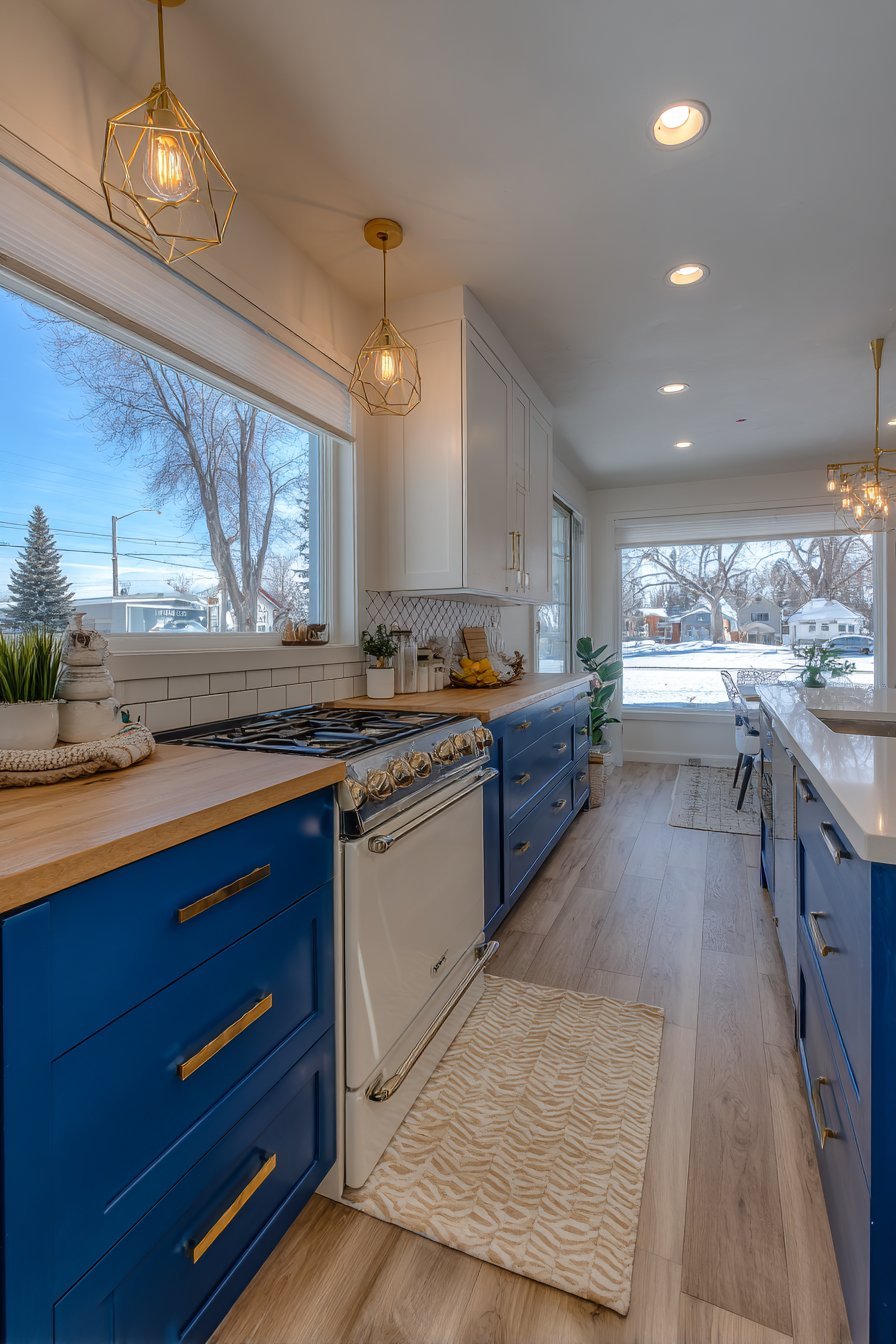
Bold cobalt blue lower cabinets anchor this striking design. Crisp white upper cabinets create dramatic contrast. Butcher block countertops add natural warmth between color zones. White subway tile backsplash maintains classic simplicity. A vintage-style white gas range serves as the functional centerpiece.
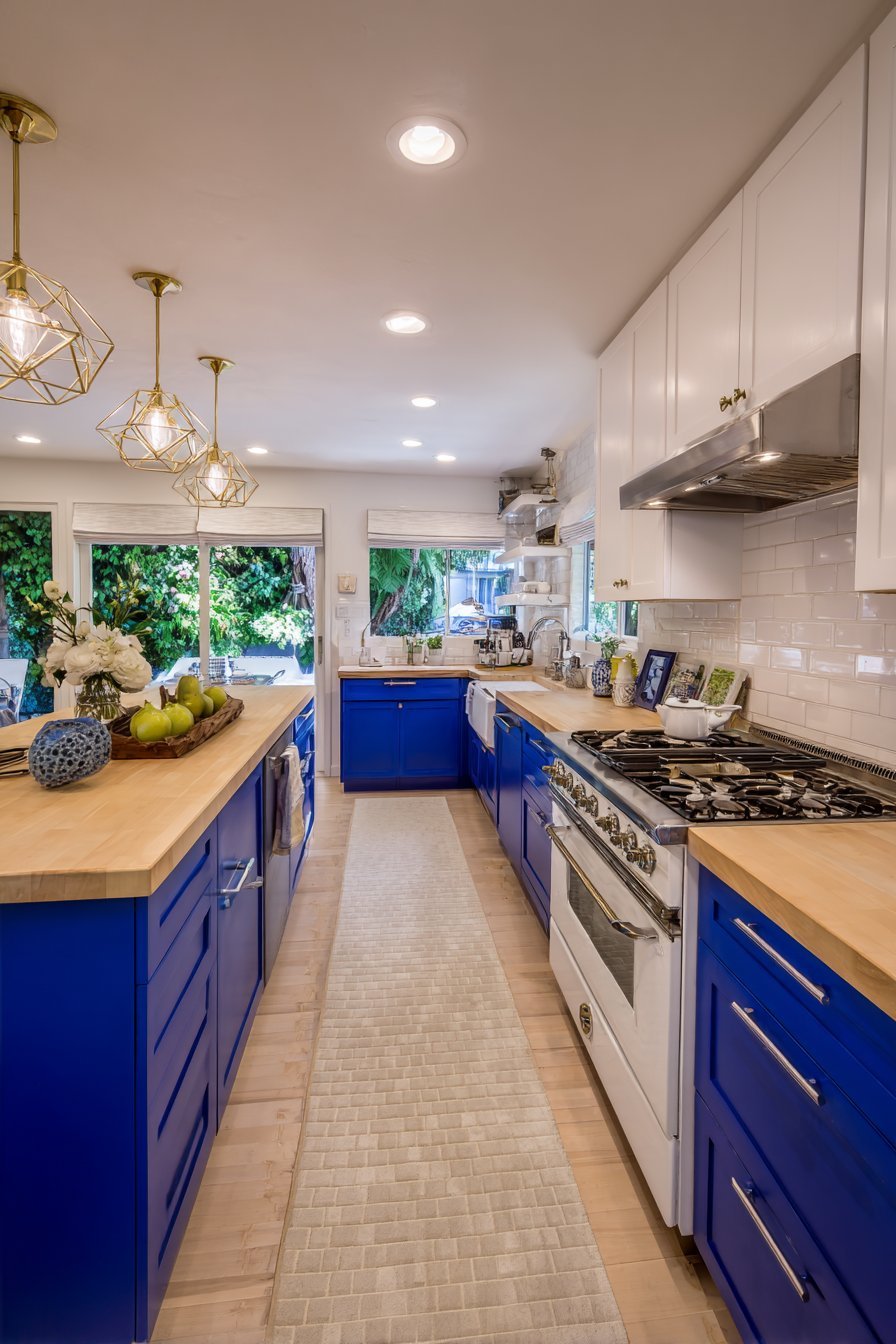
Geometric pendant lights in brass add metallic warmth. Opal glass shades provide soft task lighting below. The fixtures become sculptural elements in their own right. Cushioned vinyl flooring in warm beige offers comfort underfoot. The neutral floor color balances the vivid blue cabinetry.
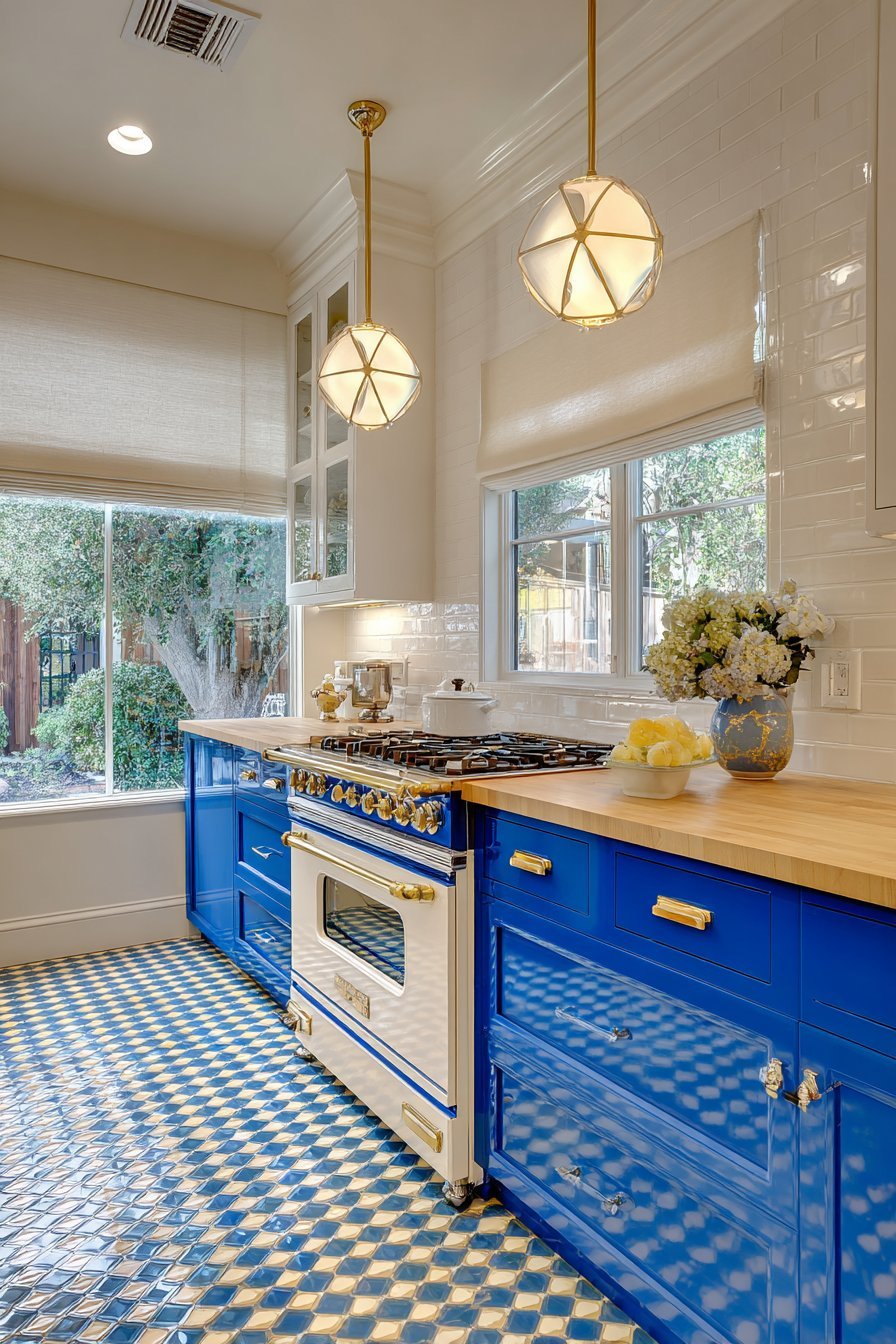
A large window dressed with a simple white roller shade invites natural light. The abundant illumination showcases the blue and white color scheme. Chrome details on the range add sparkle. The bold color choice demonstrates 60s confidence. Natural materials ground the vibrant palette beautifully.
Key Design Tips:
- Balance bold cabinet colors with neutral countertops and flooring
- Choose butcher block counters for warmth and natural contrast
- Install geometric pendant lights as functional sculpture
- Use cushioned vinyl flooring for comfort during extended standing
- Pair vivid colors with simple white elements for visual relief
7. Freestanding Island Focus
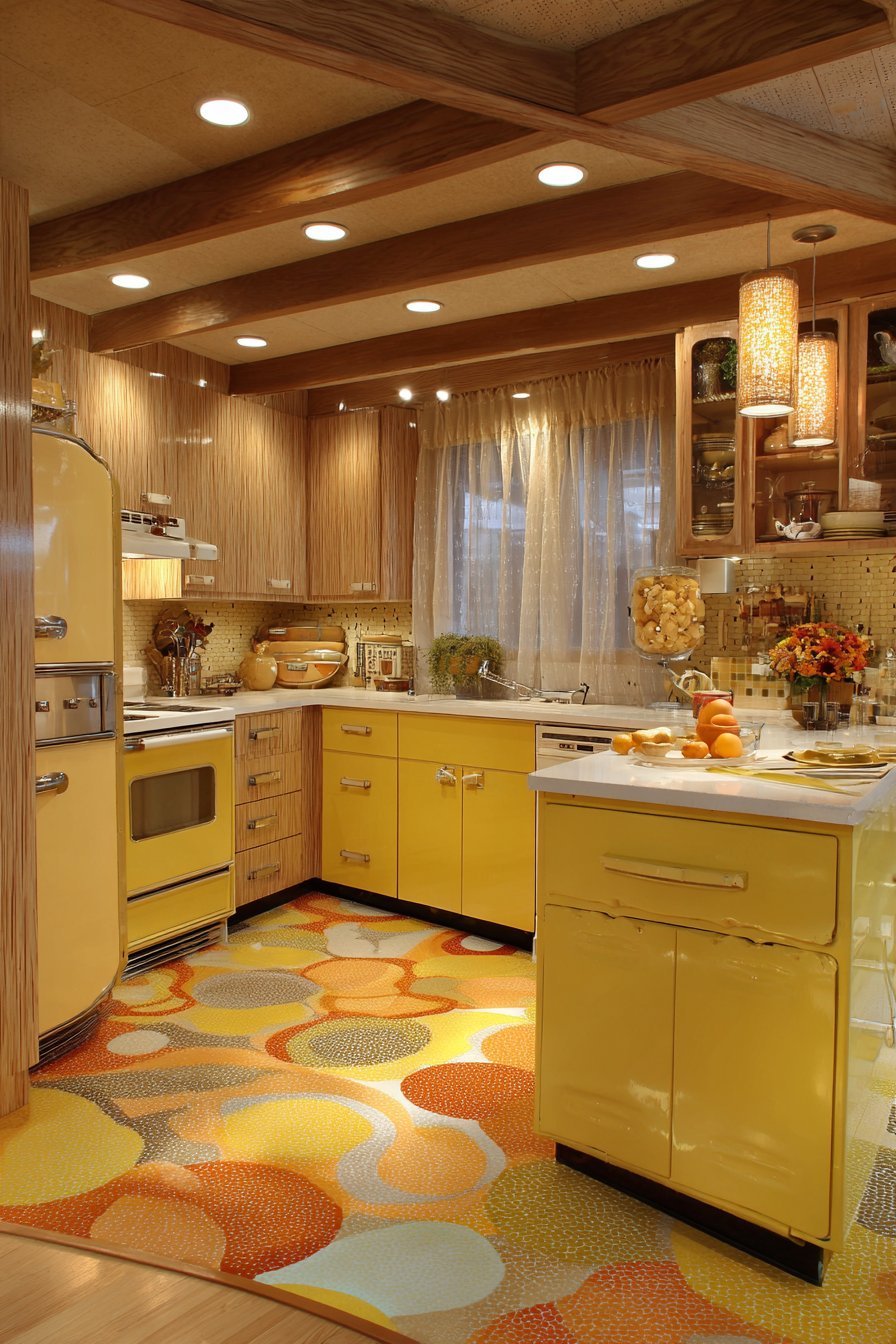
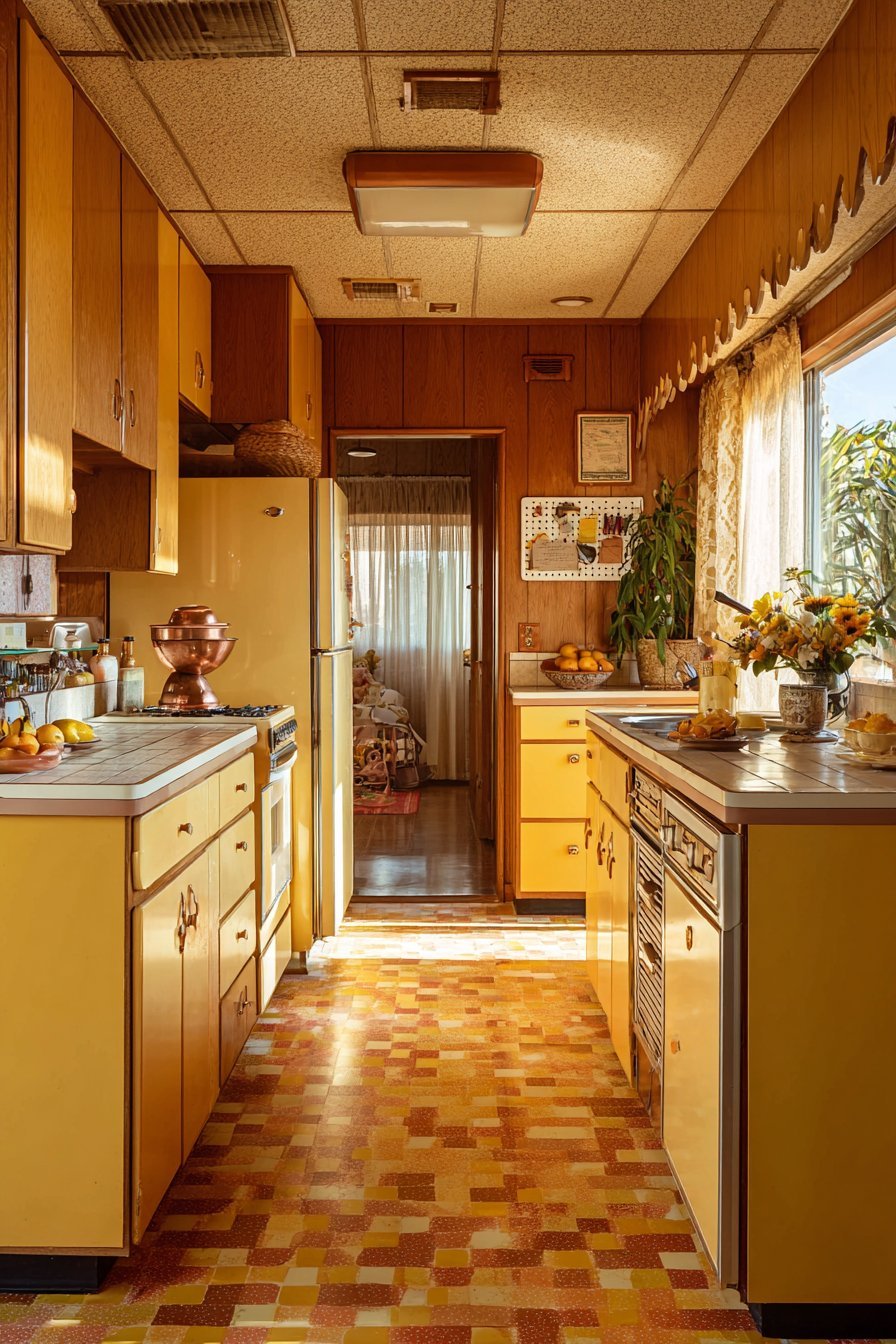
A freestanding kitchen island with buttery yellow laminate commands attention. Built-in storage below maximizes functionality. Surrounding cabinets feature natural birch veneer with horizontal grain. Simple round knobs in brushed brass complement the wood tones. Copper-tone appliances reflect the era’s metallic finish preferences.
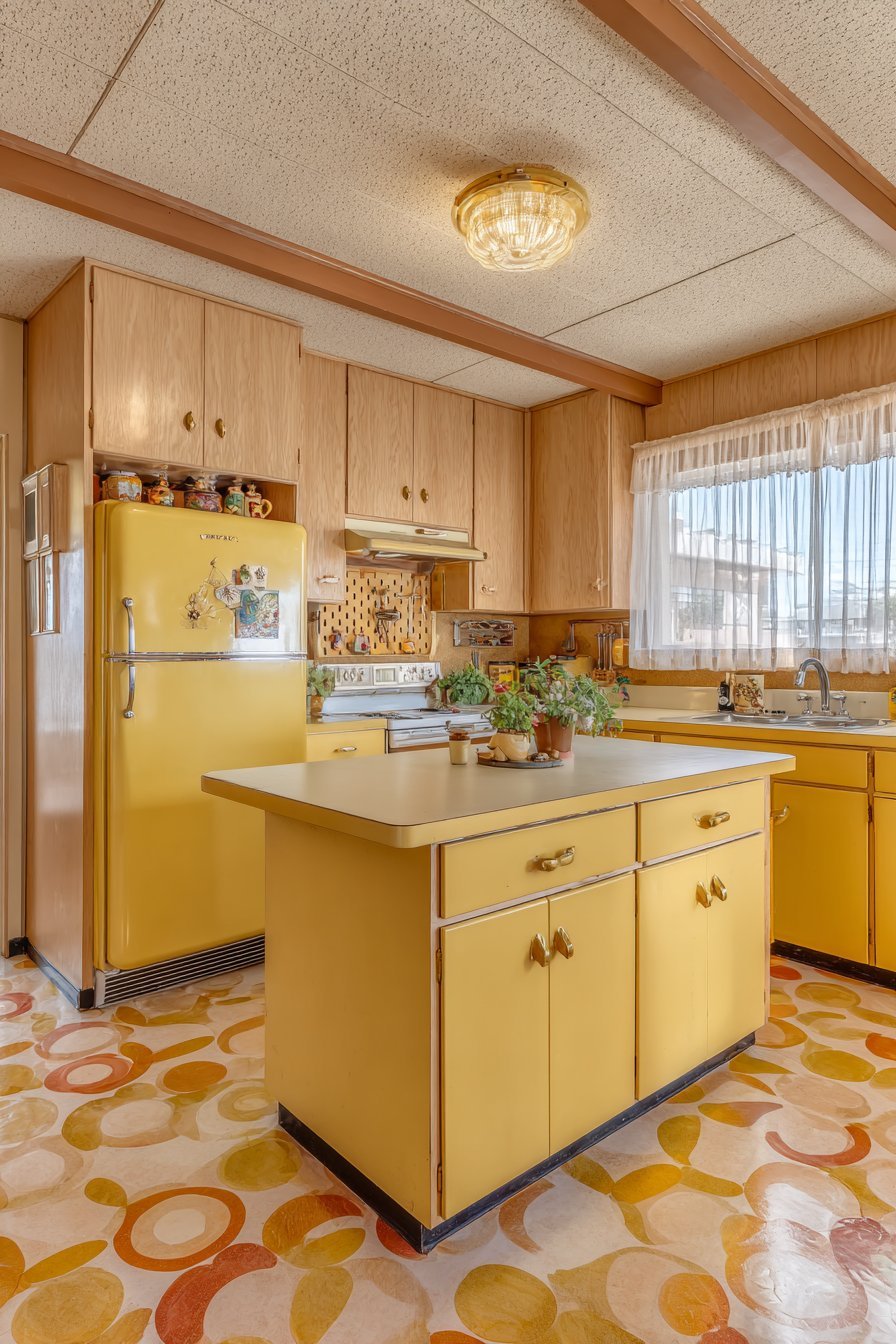
The acoustic tile ceiling serves dual purposes. It provides sound dampening and houses recessed lighting. Cork bulletin board and pegboard accessories add functional decoration. Linoleum flooring combines yellow, orange, and brown in abstract patterns. The pattern creates visual movement across the floor.
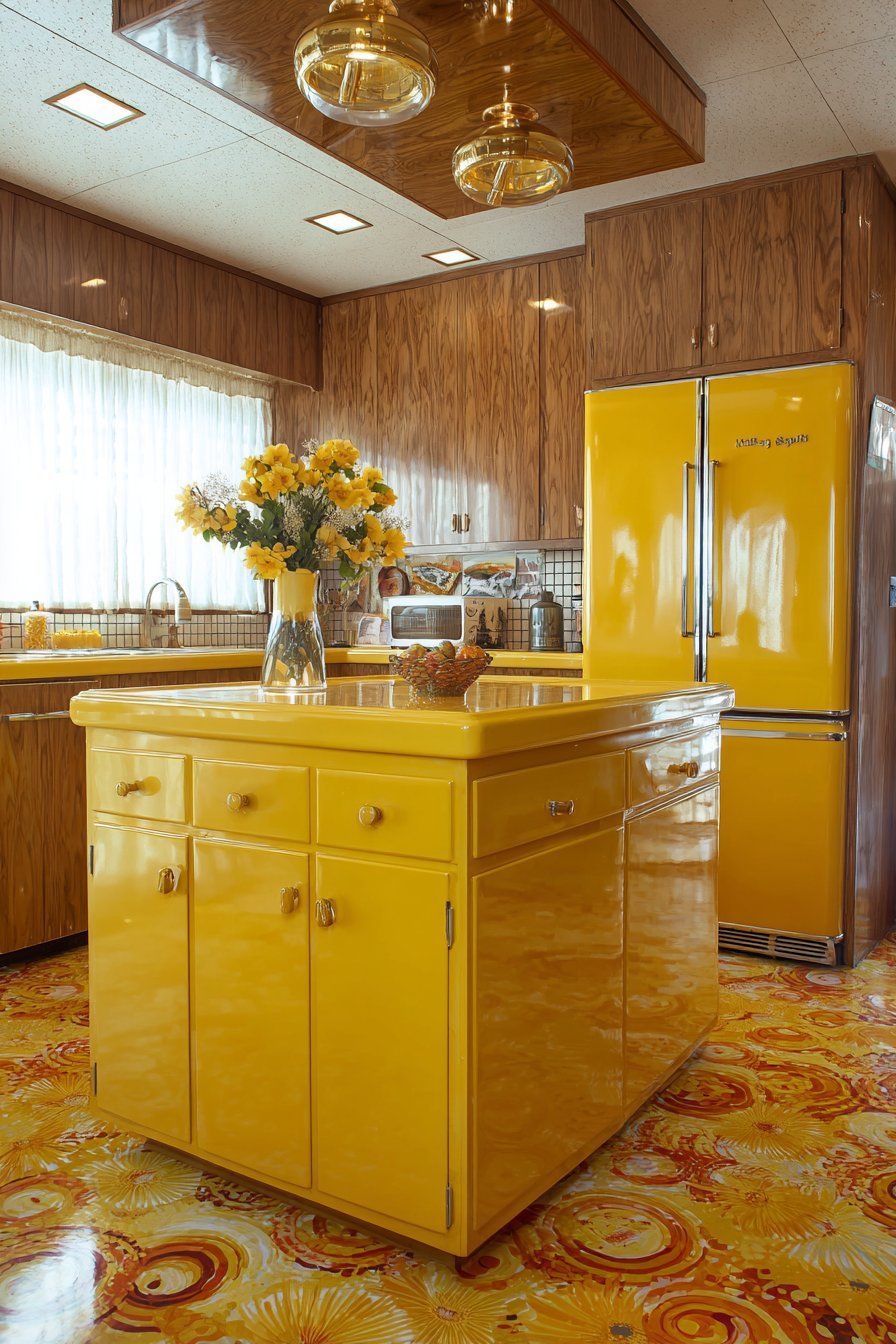
Golden hour sunlight filters through sheer curtains. The warm light creates inviting ambiance throughout the space. Copper cookware displayed on open shelving reinforces the metallic theme. Natural wood tones bring organic warmth. The family-friendly atmosphere encourages gathering and conversation.
Key Design Tips:
- Add freestanding islands for flexible workspace and storage
- Choose birch veneer cabinets for natural beauty and durability
- Install acoustic tile ceilings in open-plan spaces for sound control
- Display copper cookware as decorative and functional elements
- Use linoleum flooring for eco-friendly, period-authentic surfaces
8. Teak Wood Elegance
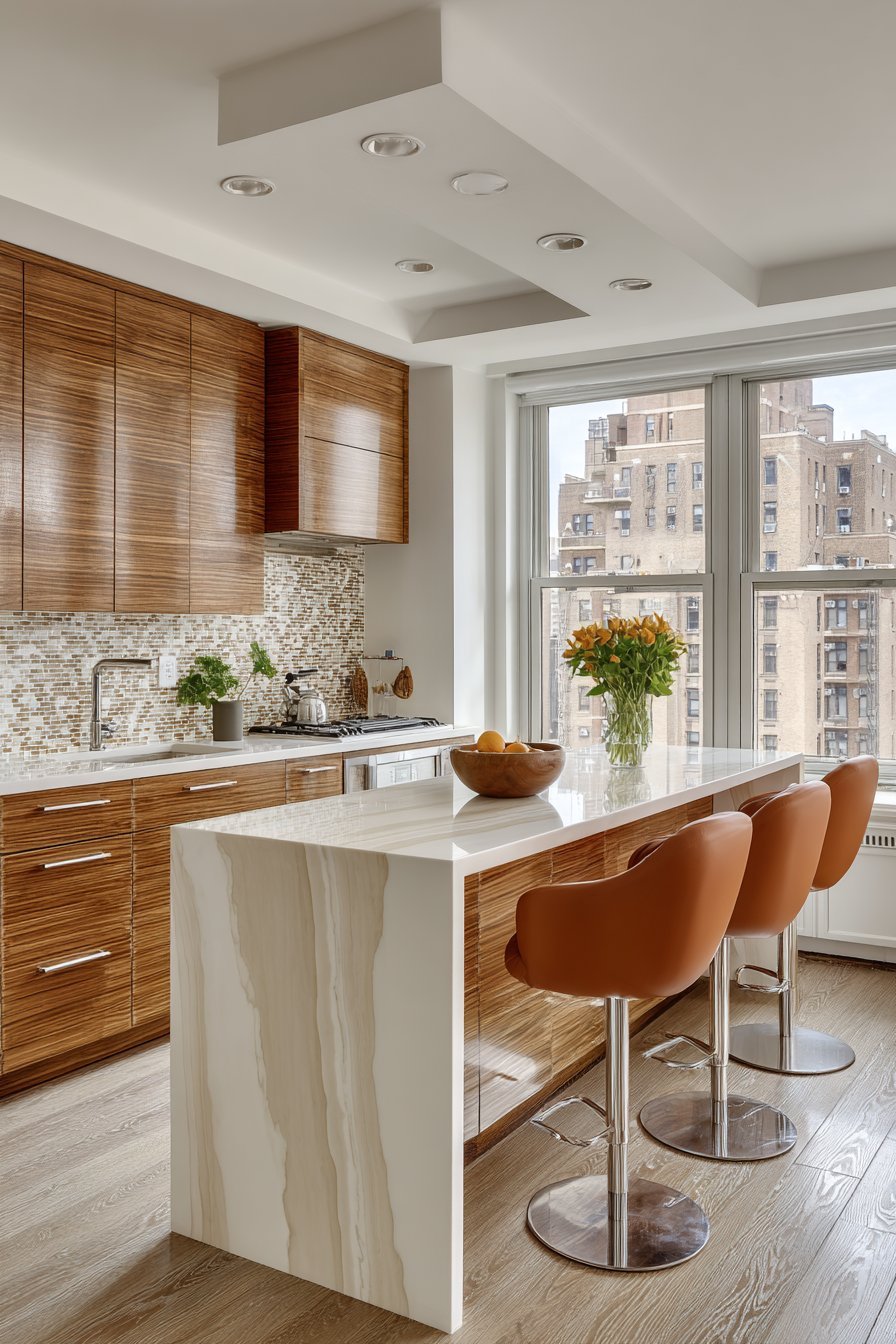
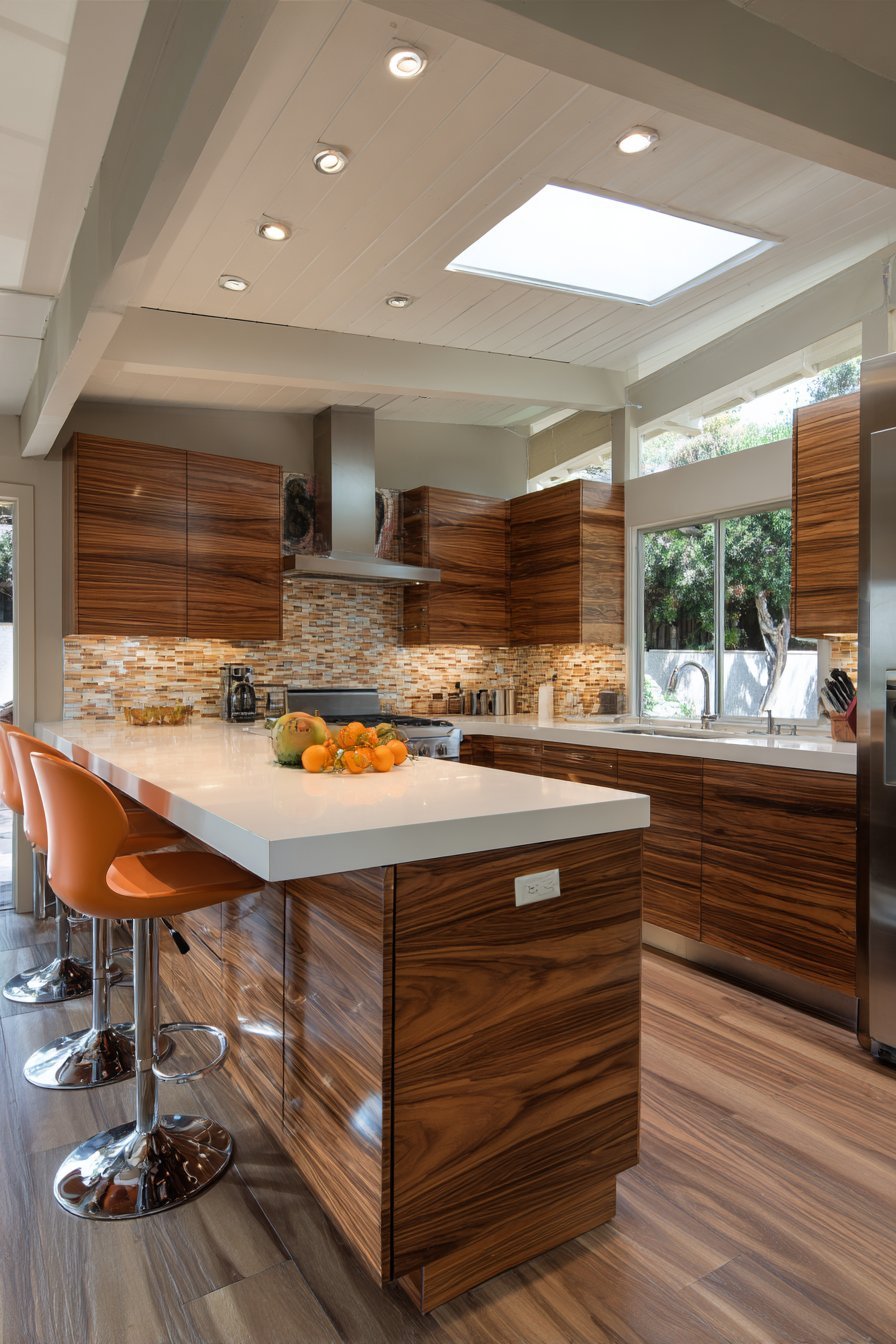
Sophisticated teak wood cabinets showcase sleek horizontal grain patterns. Integrated pulls maintain clean lines without visible hardware. White Corian-style countertops provide pristine work surfaces. Small square tiles in graduating brown and cream shades create subtle backsplash interest. Stainless steel appliances maintain refined aesthetic consistency.
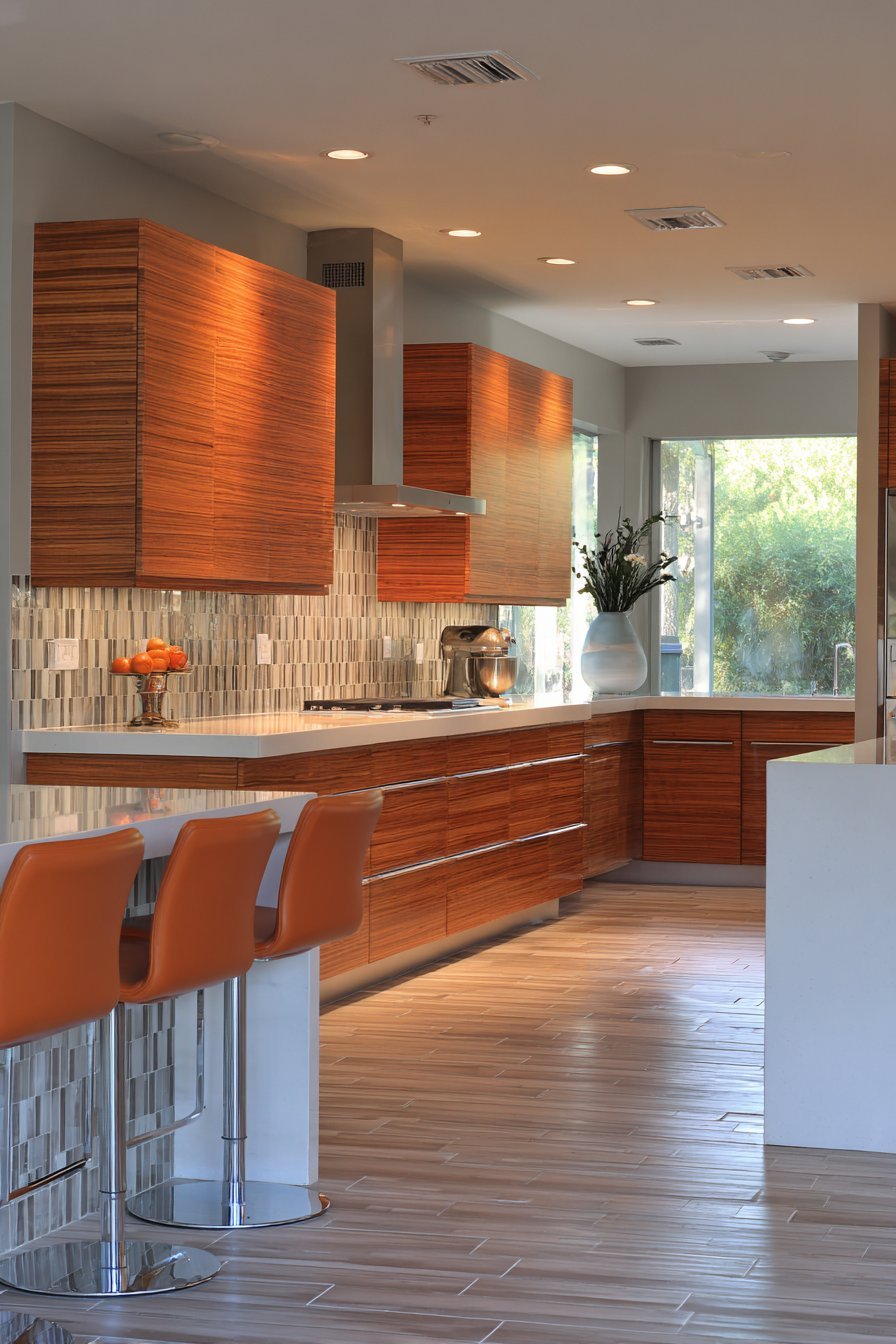
Bar-height seating features molded plastic chairs in burnt orange. Chrome pedestals support the sculptural seats. Recessed can lighting supplements natural light from clerestory windows. The high windows provide illumination without sacrificing privacy. Warm-toned vinyl plank flooring mimics natural wood grain convincingly.
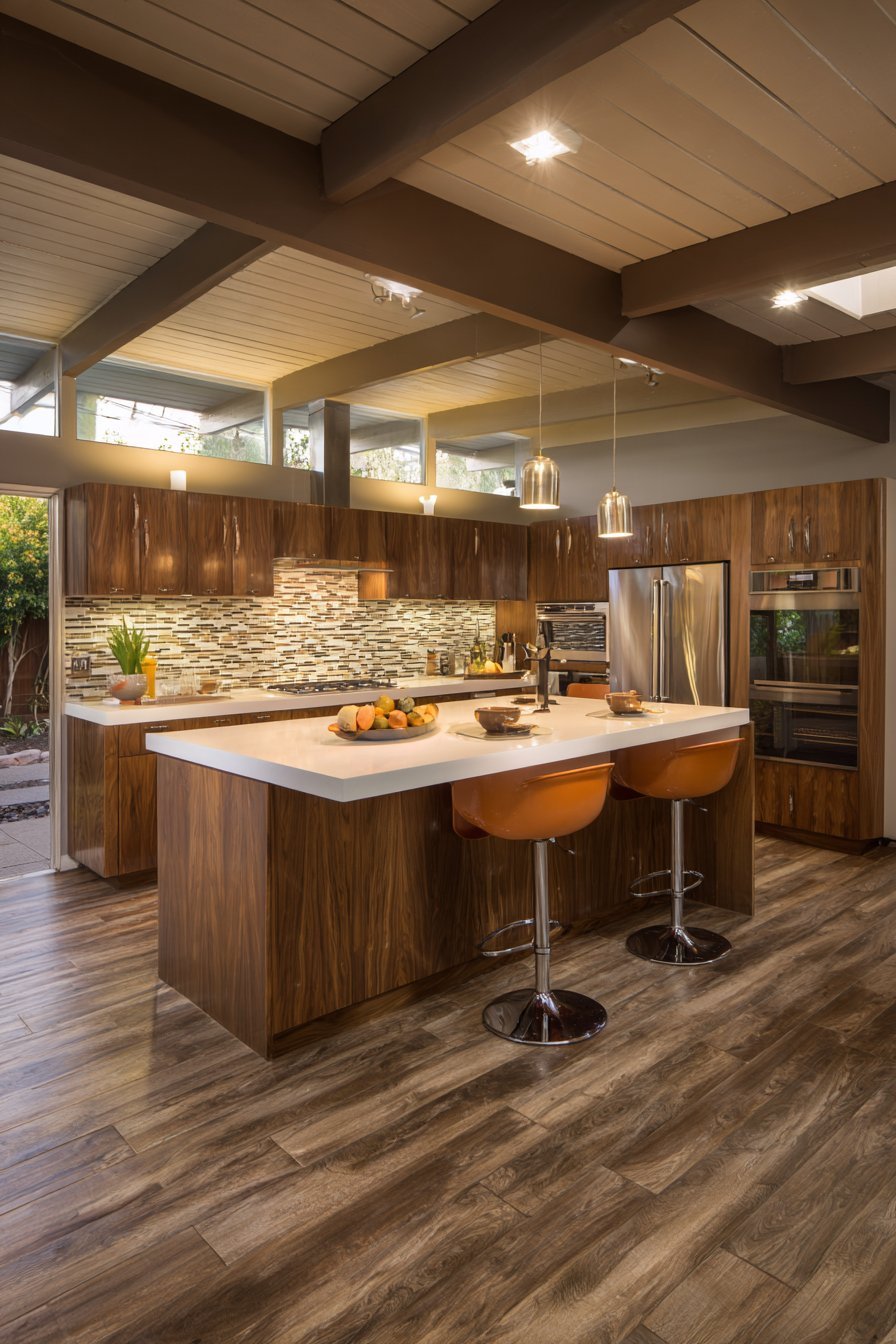
The elegant restraint characterizes upscale 60s kitchen design. Natural materials take center stage without competing patterns. Every surface demonstrates quality craftsmanship. The neutral palette with burnt orange accents creates sophistication. Professional-grade materials ensure lasting beauty and functionality.
Key Design Tips:
- Invest in teak cabinets for timeless beauty and durability
- Choose integrated cabinet pulls for sleek, modern appearance
- Install clerestory windows for natural light with privacy
- Add molded plastic chairs on chrome bases for authentic seating
- Select vinyl plank flooring that mimics wood for easy maintenance
9. Vertical Stripe Drama
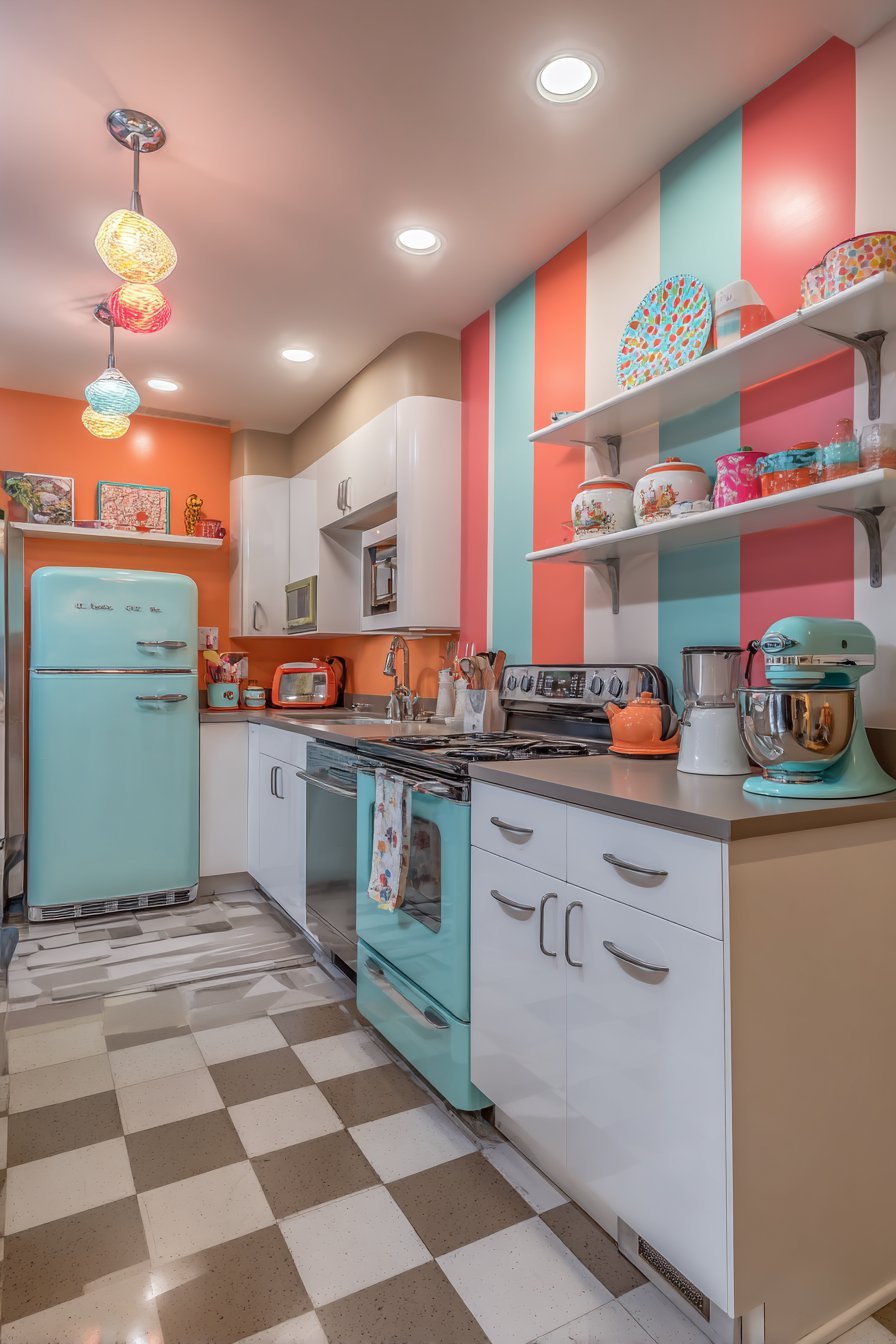
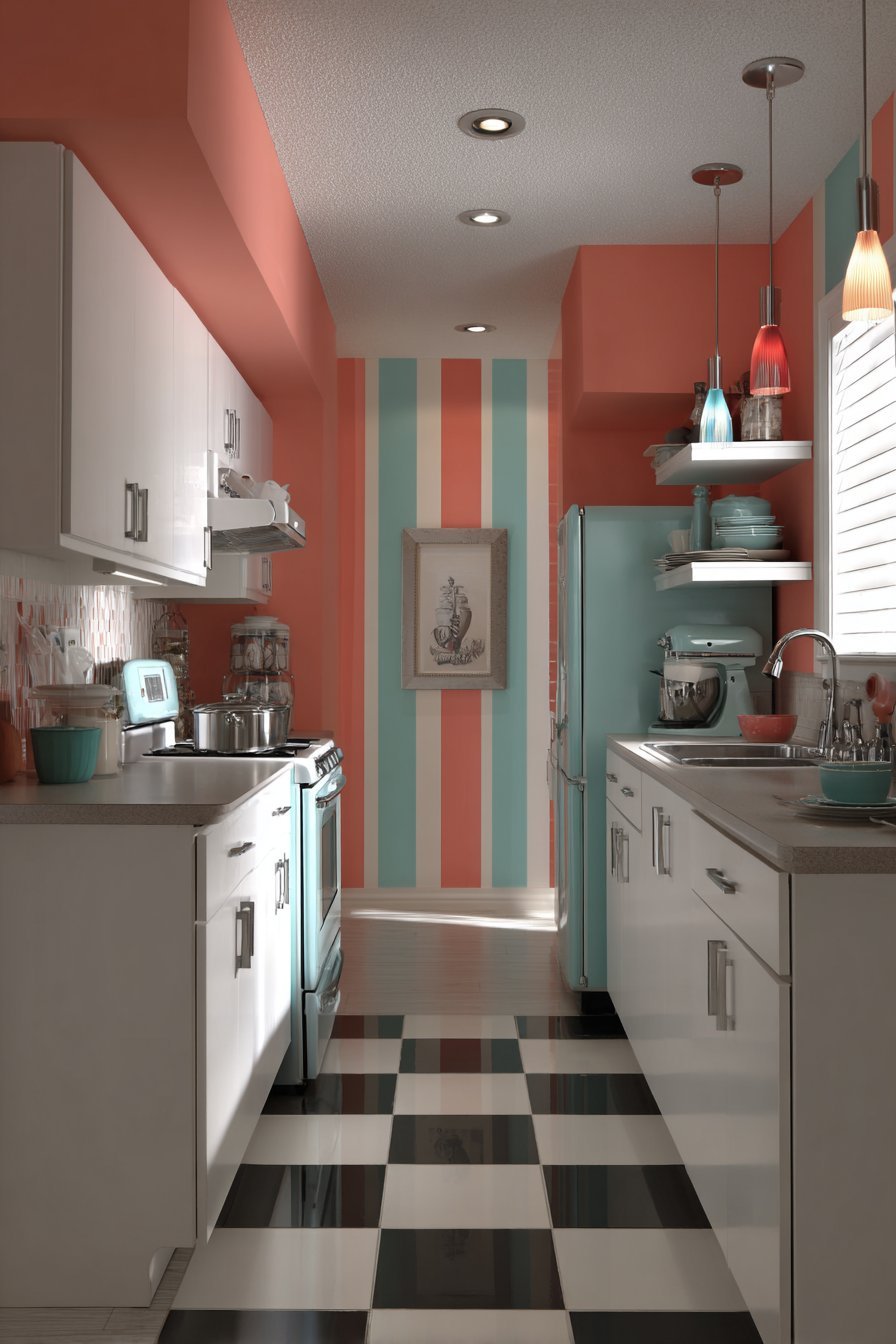
A bold accent wall features vertical stripes in varying widths. Coral, white, and turquoise alternate in eye-catching patterns. Glossy white cabinets with minimal hardware keep focus on the wall treatment. Soft gray laminate countertops provide neutral anchoring. Vintage-style turquoise appliances echo the accent wall colors.
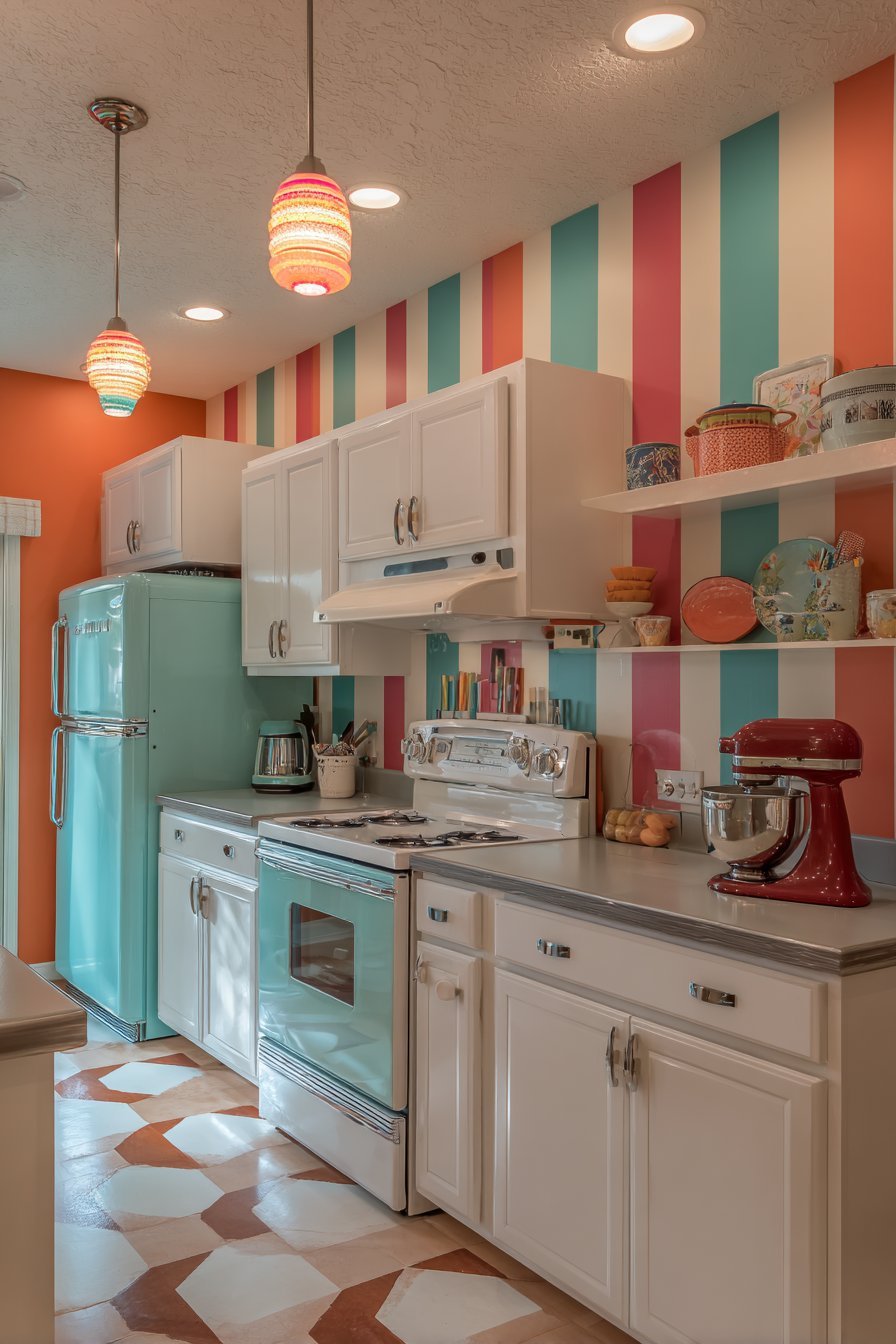
Open shelving displays period-appropriate canisters and cookware. Coordinating colors create intentional color stories throughout the space. Classic black and white checkerboard vinyl flooring grounds the cheerful palette. The high-contrast floor pattern balances the wall stripes. Pendant lighting with colored glass shades adds coral and turquoise accents.
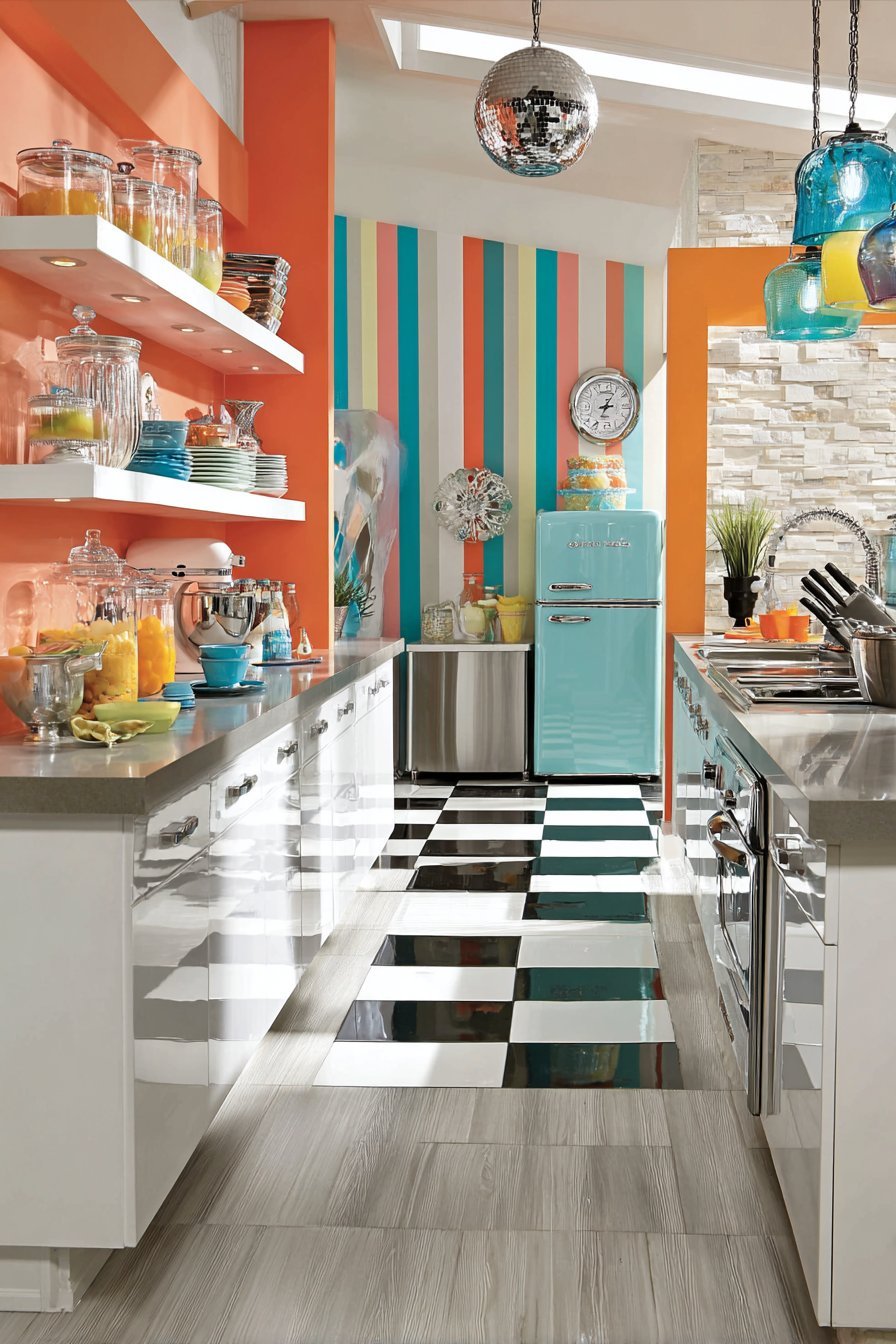
Natural daylight balanced with warm artificial lighting creates inviting atmosphere. The large window floods the space with brightness. Colored glass pendants cast subtle tinted light across surfaces. The combination of patterns requires careful balance. Vertical stripes make ceilings appear higher visually.
Key Design Tips:
- Use vertical stripes on accent walls to increase perceived height
- Vary stripe widths for dynamic visual interest
- Balance bold wall treatments with simple cabinet designs
- Coordinate open shelving displays with your color palette
- Mix natural and colored lighting for dimensional illumination
10. Floor-to-Ceiling Storage Innovation
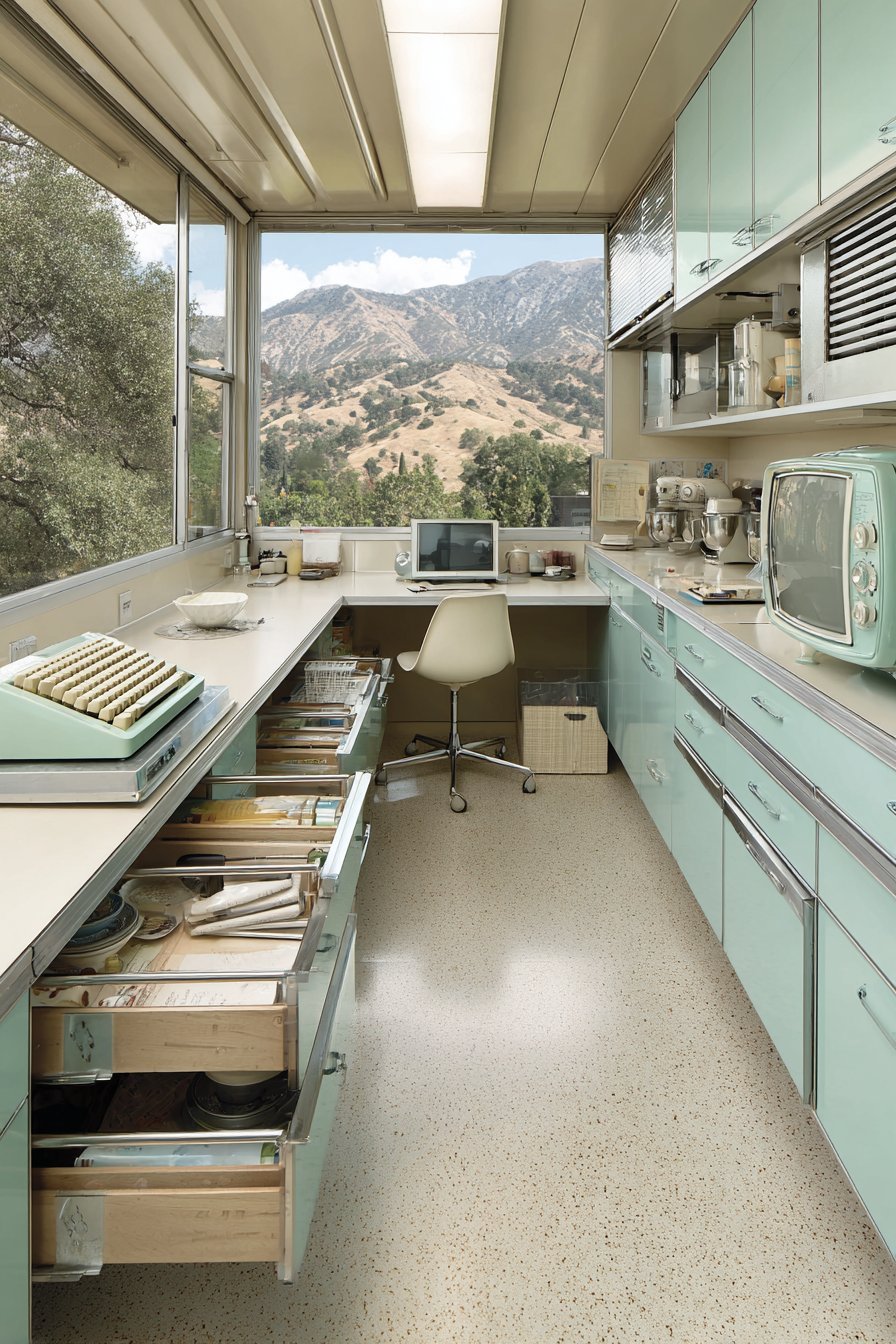
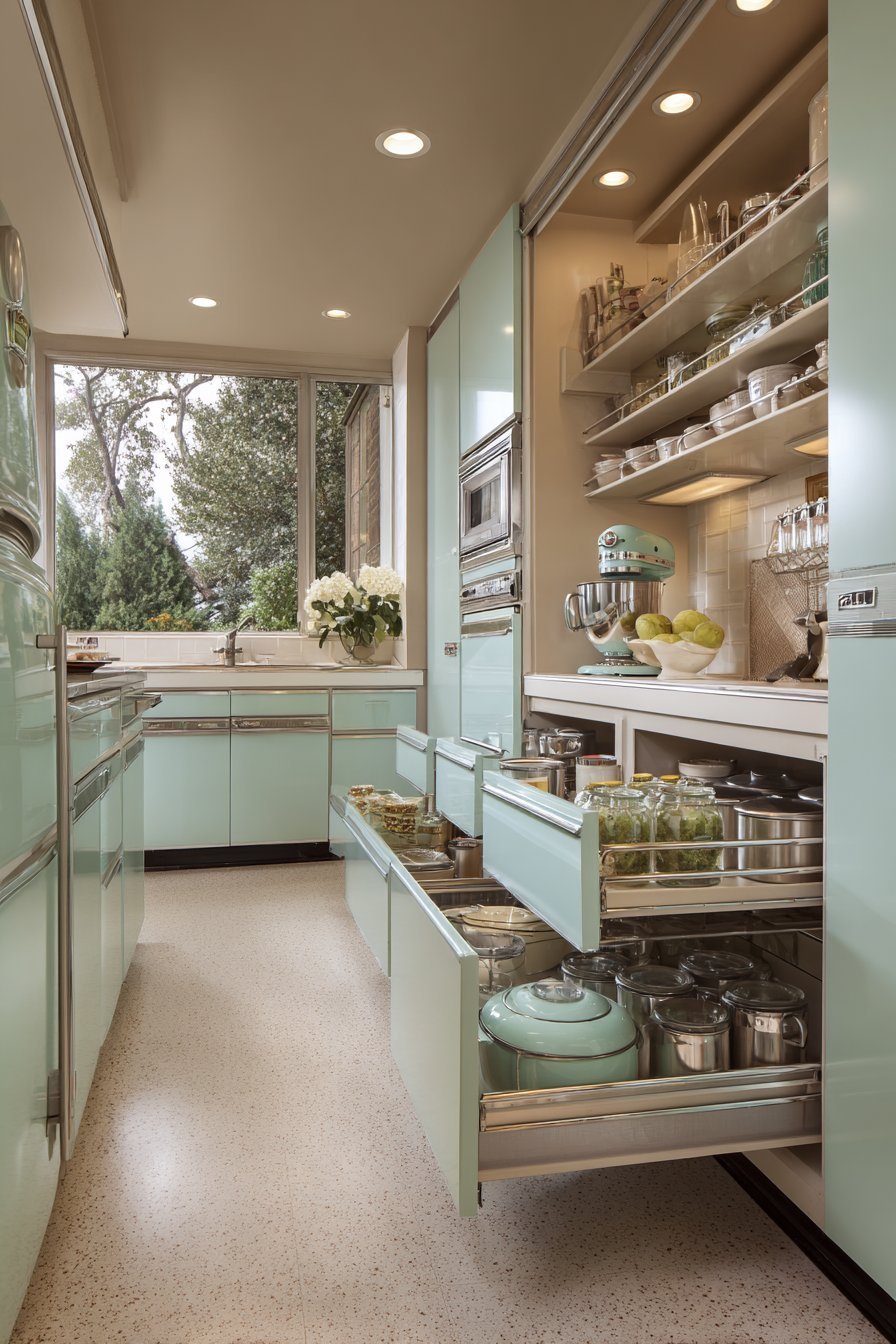
Pale aqua floor-to-ceiling cabinets maximize storage potential. Pull-out pantry units demonstrate era-appropriate organizational systems. Lazy Susans in corner cabinets eliminate wasted space. Drawer dividers keep utensils and tools perfectly organized. White laminate countertops with chrome edging provide durable surfaces.
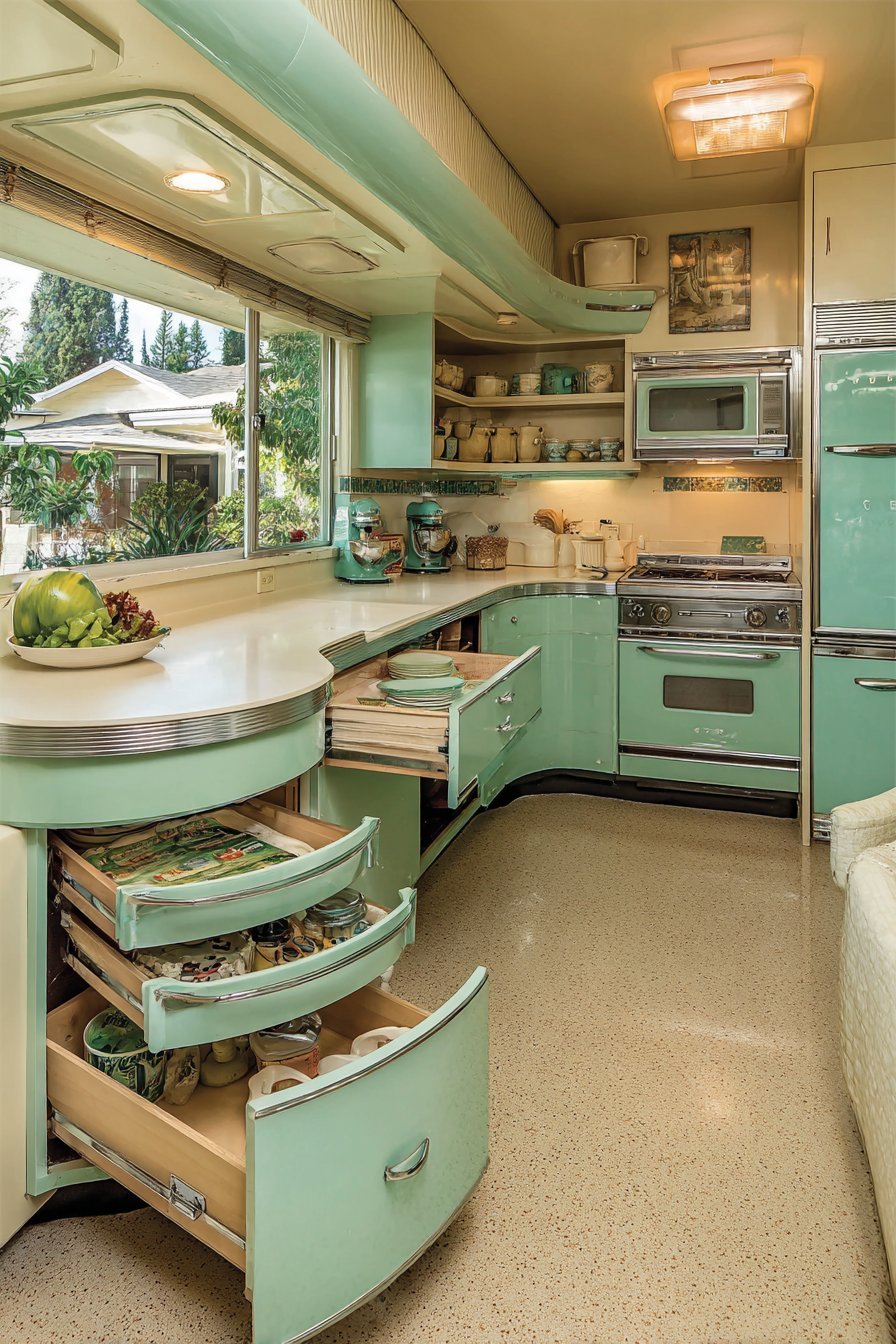
A built-in desk area features a tambour door cabinet. This demonstrates the 60s trend toward kitchen planning centers. Avocado green appliances maintain color continuity throughout. The coordinated approach creates visual harmony. Cushioned vinyl flooring in speckled neutral tones offers underfoot comfort.
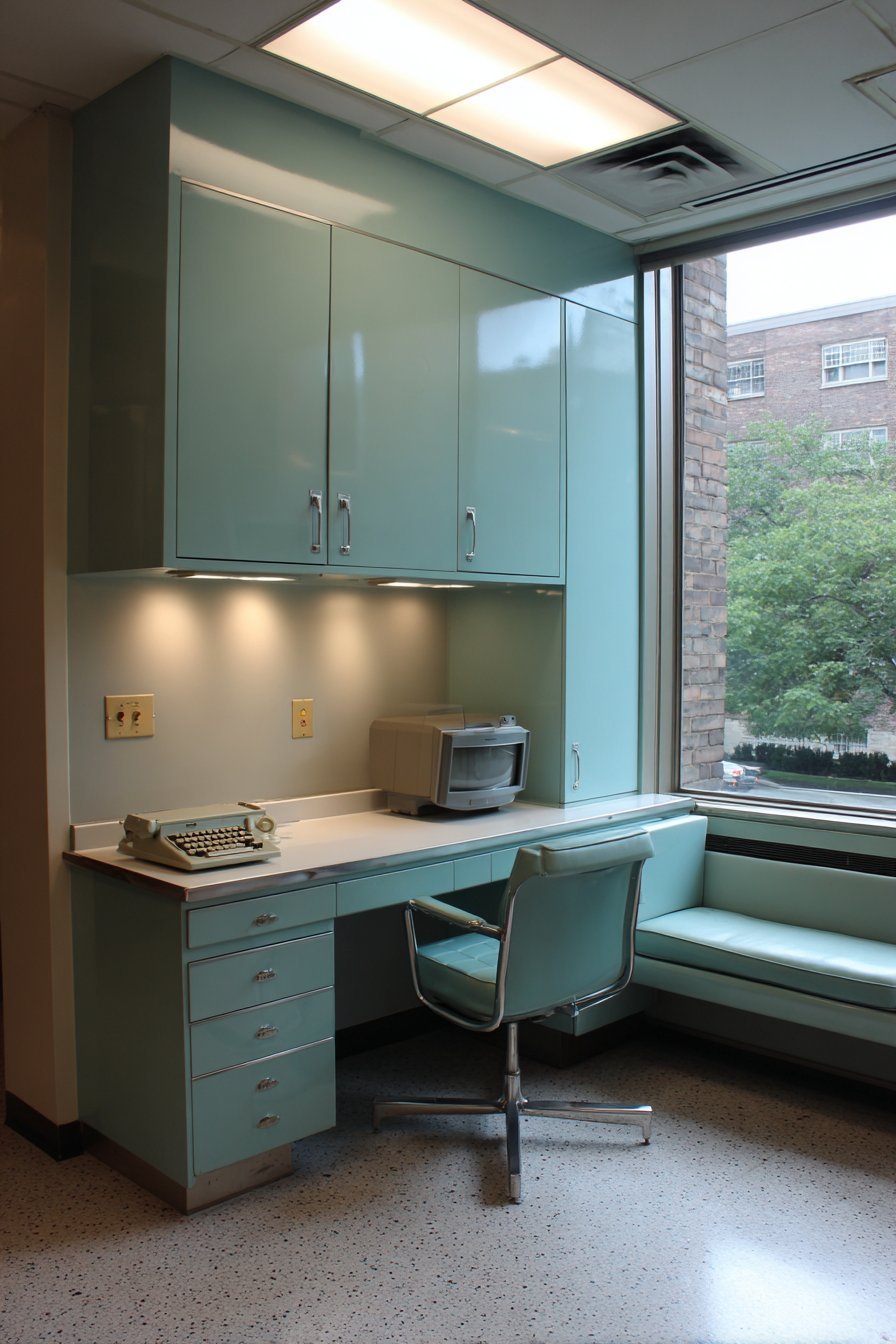
Task lighting under upper cabinets illuminates work areas effectively. Large windows provide abundant natural light for daytime activities. The thoughtful storage innovations maximize every cubic inch. Space-planning efficiency defines successful 60s kitchen design. Modern families still benefit from these organizational principles.
Key Design Tips:
- Install floor-to-ceiling cabinets to maximize vertical storage
- Add pull-out pantry units for easy access to stored items
- Include built-in desk areas for meal planning and paperwork
- Use under-cabinet task lighting for well-lit work surfaces
- Choose cushioned vinyl flooring for comfort during cooking sessions
11. Orange Peninsula Centerpiece
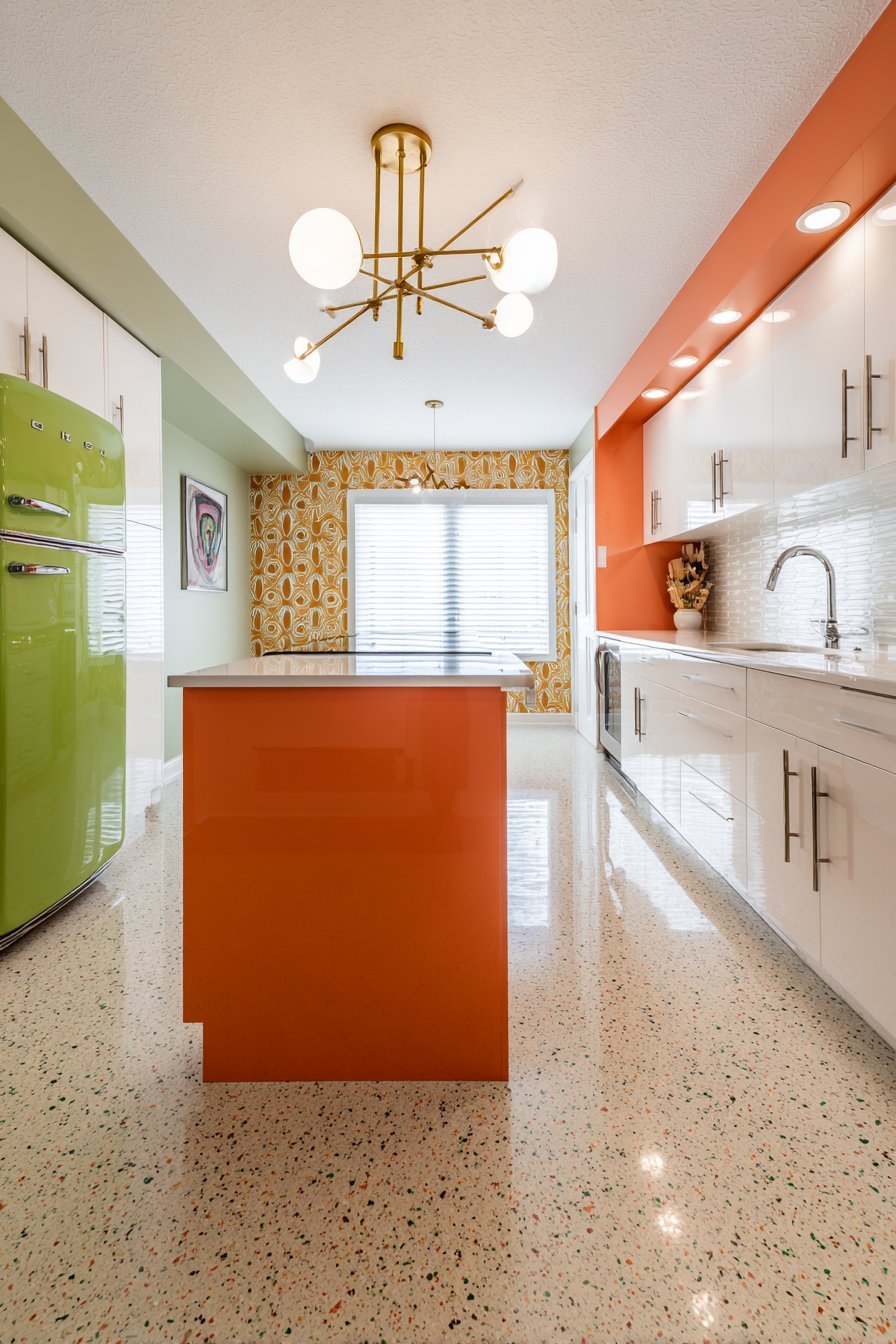
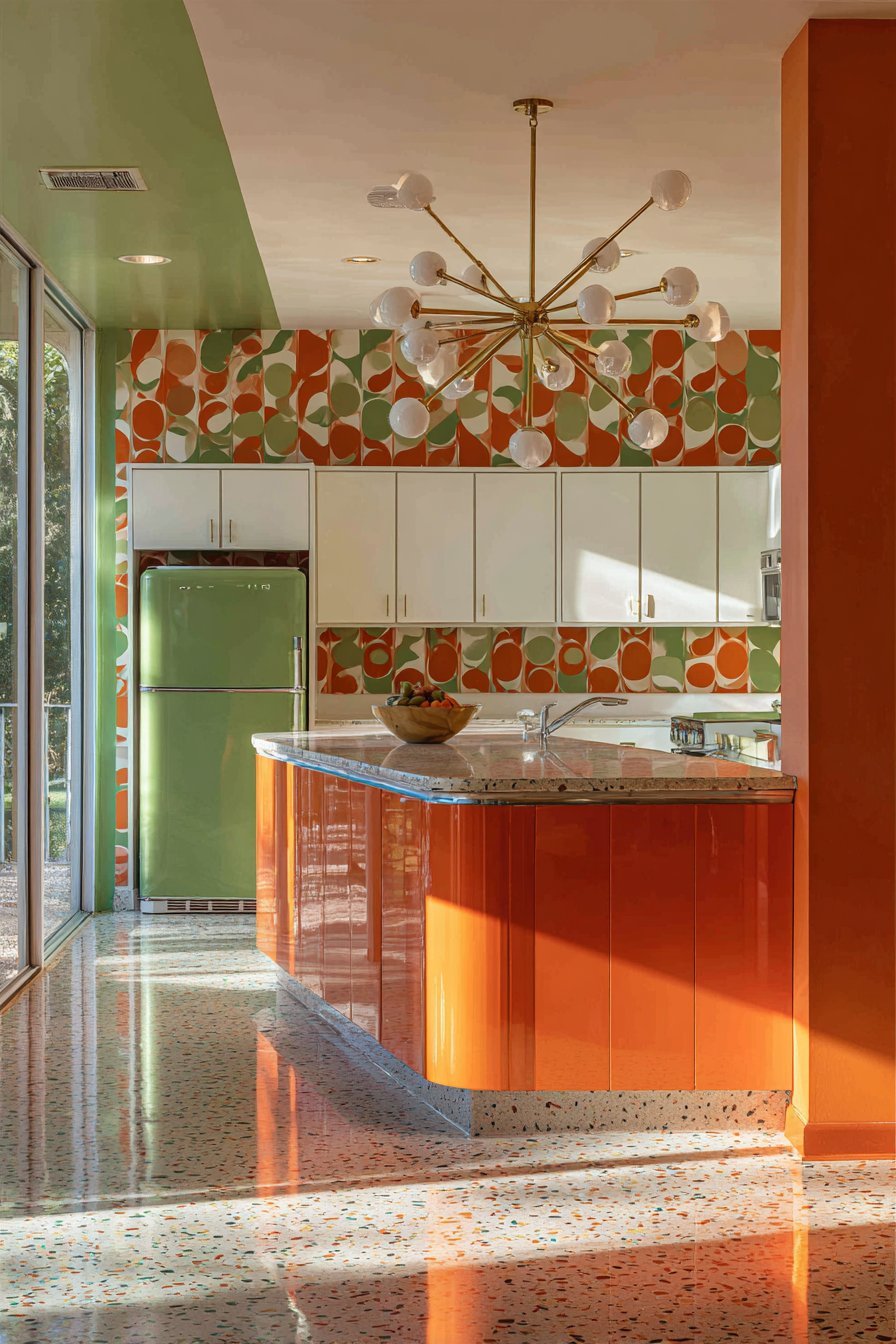
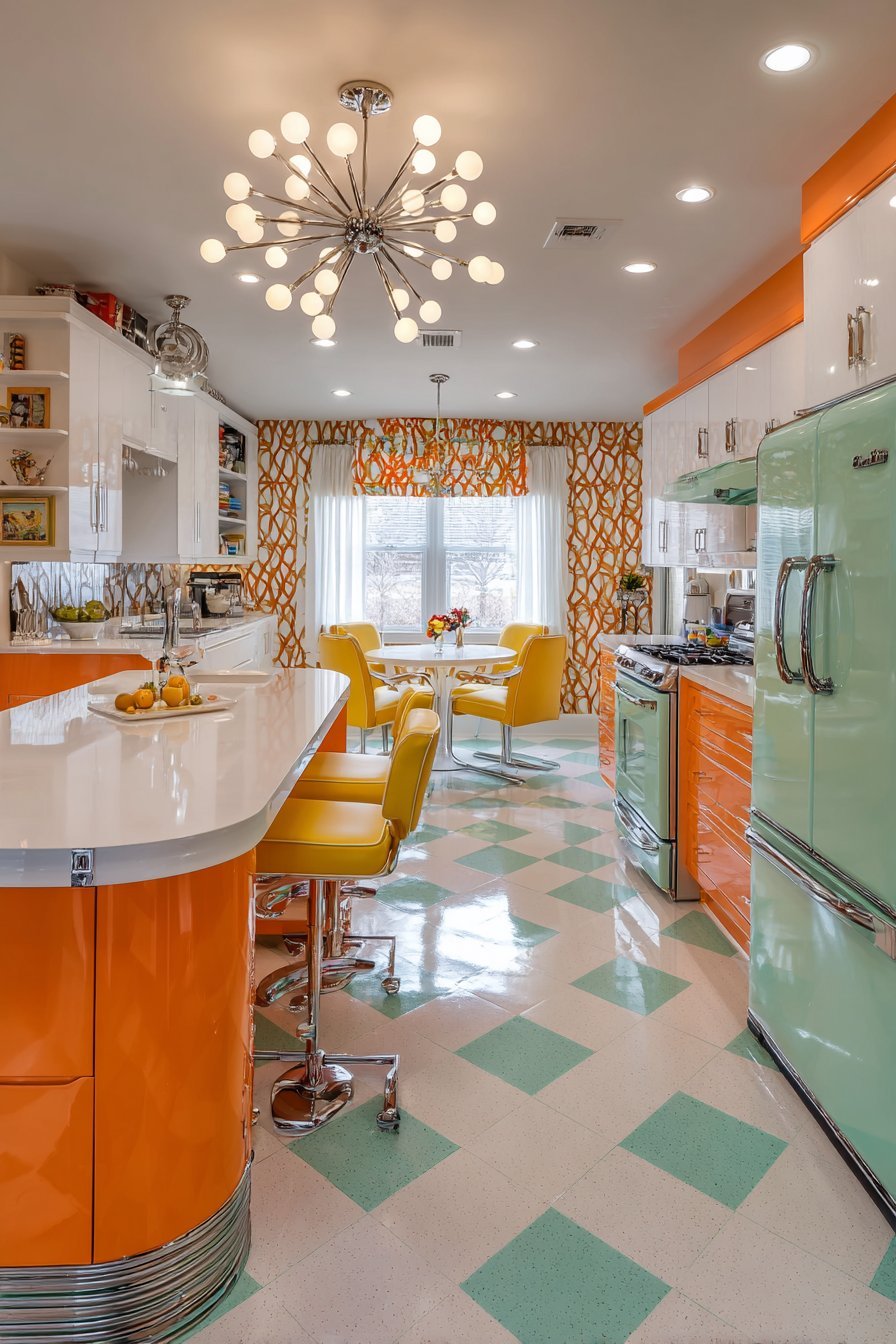
A dramatic orange laminate peninsula features waterfall edges. Chrome banding emphasizes the flowing edge details. White recessed-panel cabinets with aluminum handles line the walls. Avocado green range and refrigerator anchor opposite ends. Glossy white countertops with chrome trim provide bright work areas.
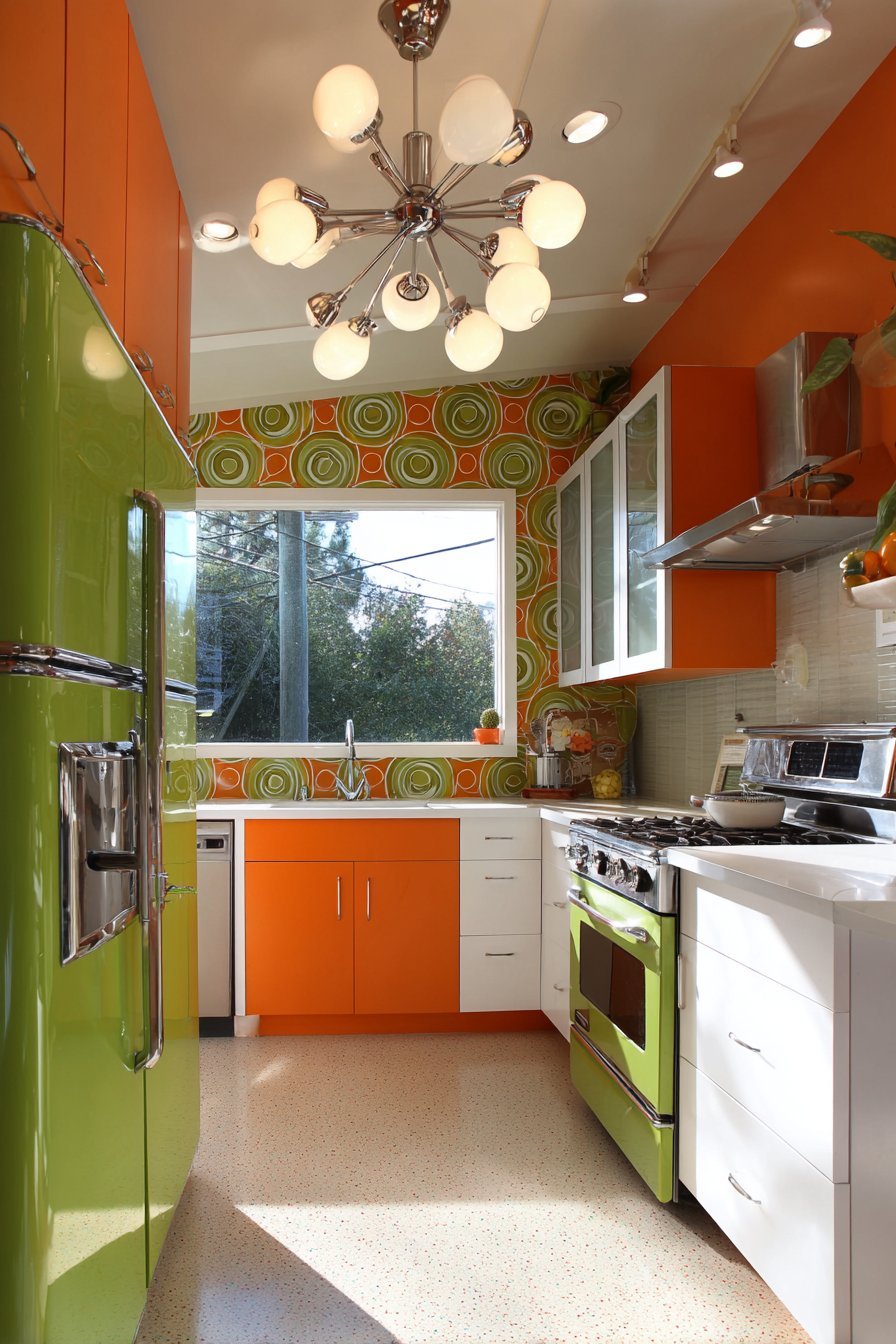
Geometric patterned wallpaper energizes one accent wall. Orange, green, and white patterns create visual excitement. Terrazzo flooring in neutral base with colorful aggregate adds texture. A Sputnik-style chandelier with brass arms becomes sculptural centerpiece. White glass globes provide ambient lighting from multiple points.
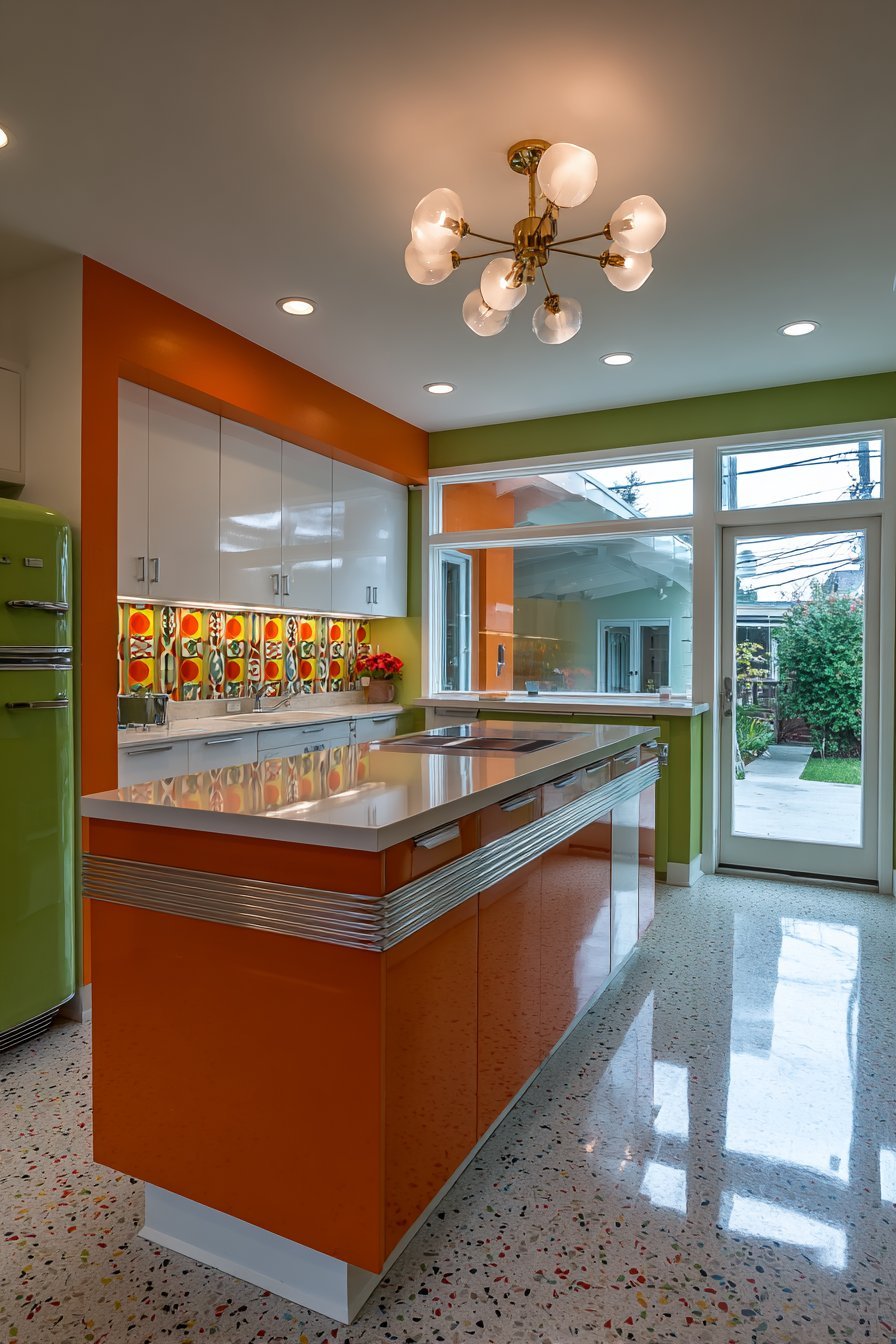
A large picture window with aluminum frame floods the space with natural light. The abundant illumination creates highlights on glossy surfaces. Bold color confidence typifies 60s kitchen aesthetics. The orange peninsula makes an unforgettable statement. Every element celebrates the era’s embrace of vivid hues.
Key Design Tips:
- Create waterfall edge details for dramatic contemporary appeal
- Balance bold peninsula colors with neutral surrounding cabinets
- Install Sputnik chandeliers as statement lighting fixtures
- Use terrazzo flooring for durability and visual interest
- Maximize natural light with large picture windows
12. Space-Saving Compact Solutions
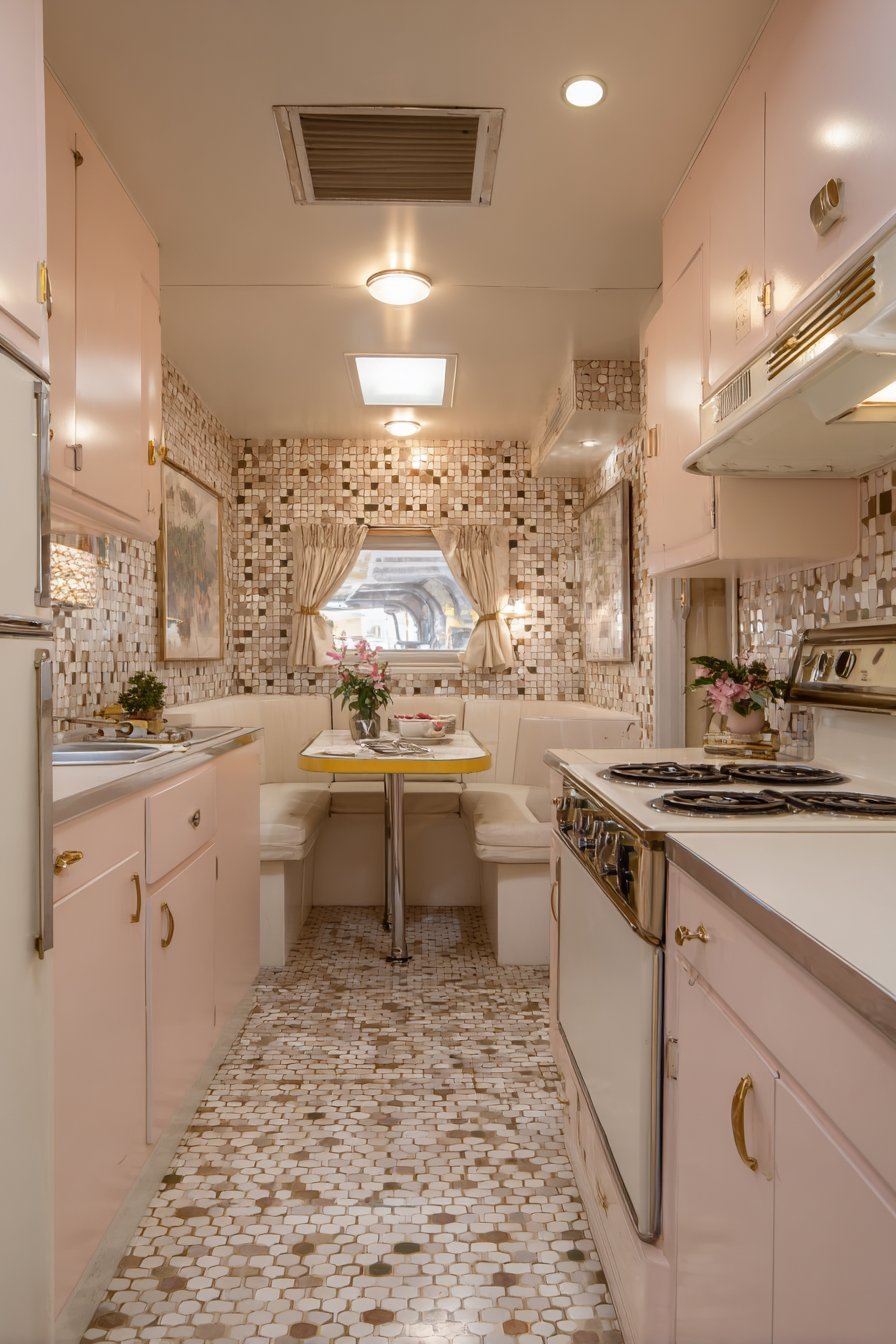
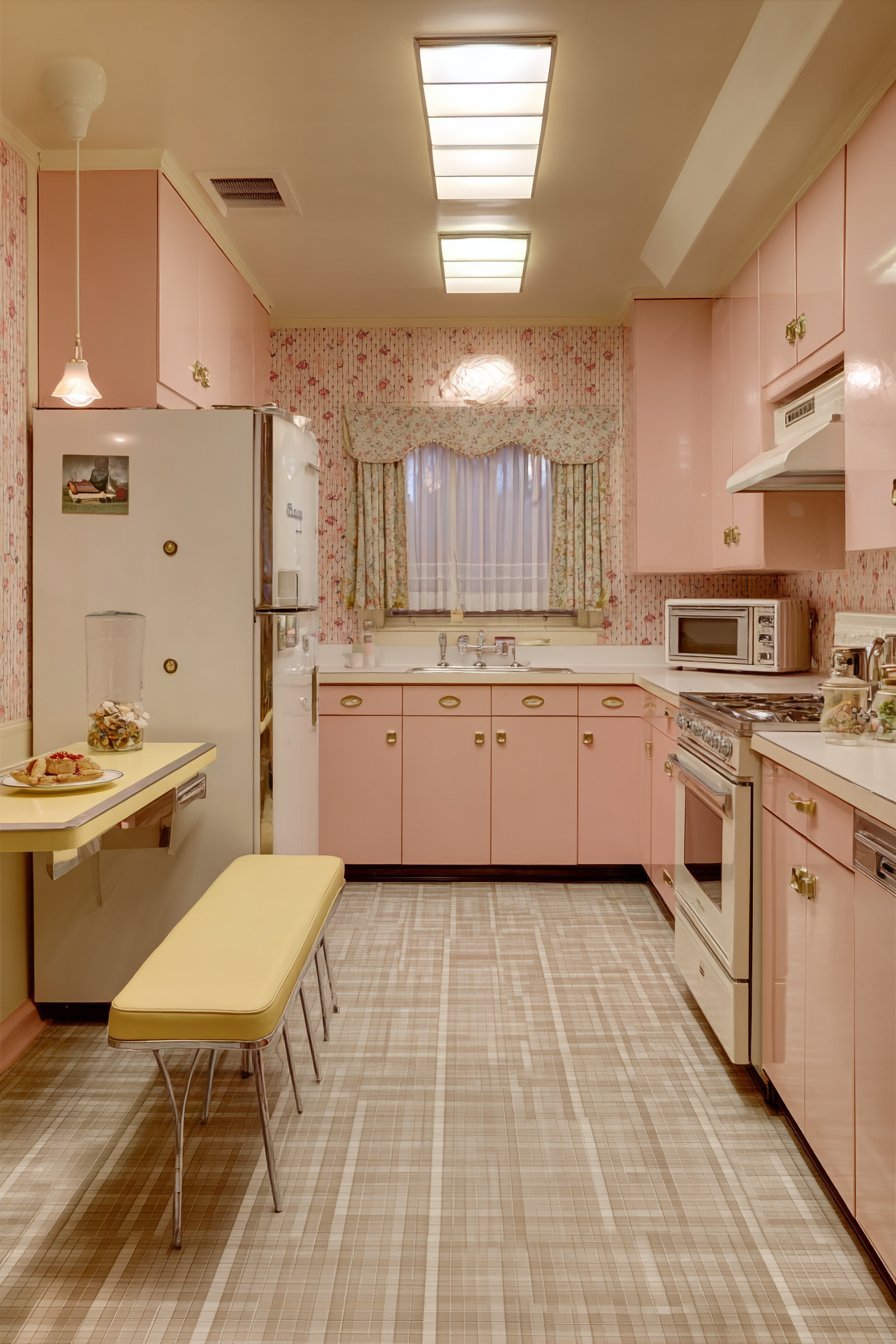
A fold-down breakfast table with yellow laminate top saves precious space. Chrome supports allow the table to tuck away when not needed. Pale pink cabinets with gold-tone hardware maximize storage capacity. White appliances with rounded corners demonstrate streamlined period design. Small geometric wallpaper motifs add pattern without overwhelming.
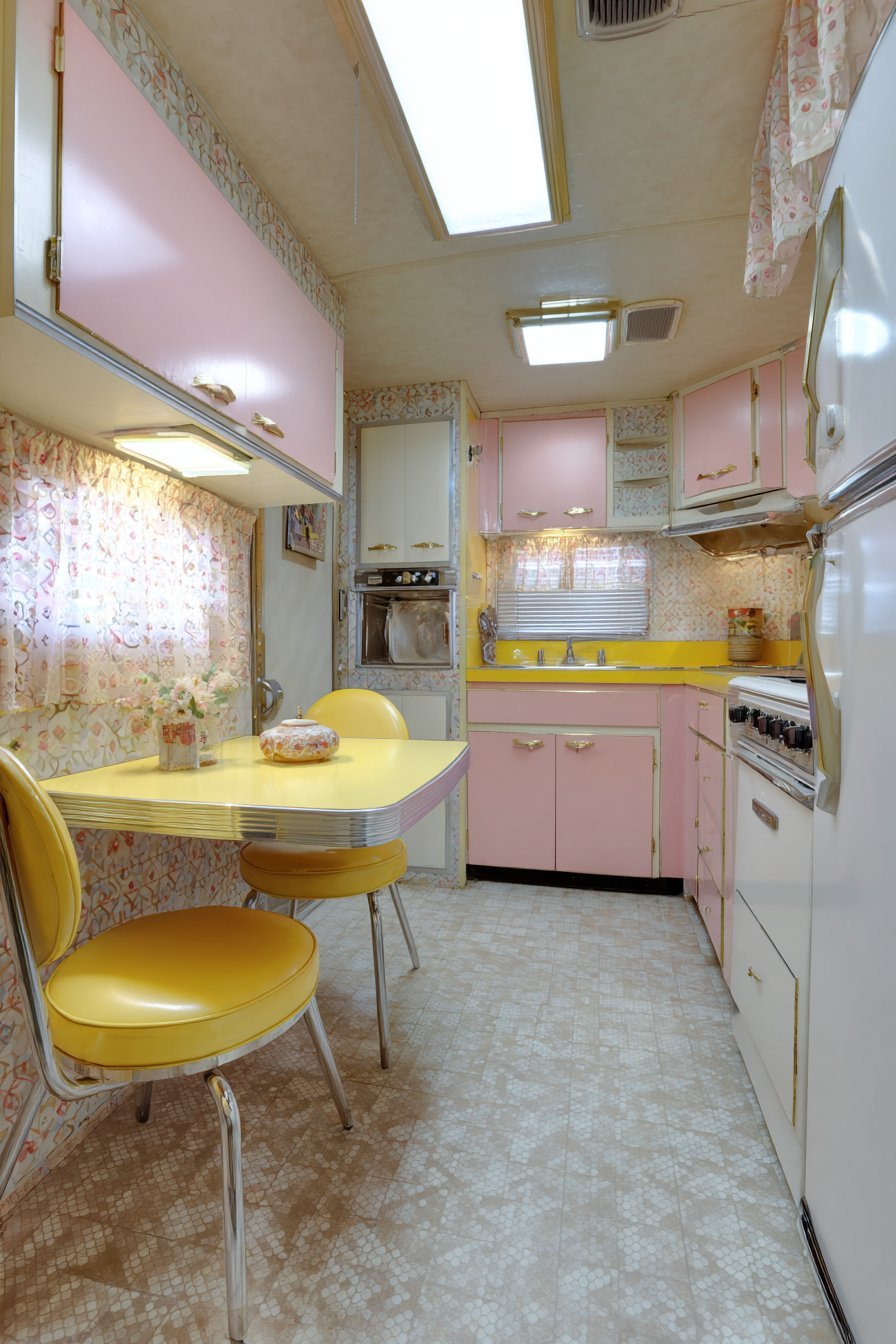
Vinyl tile flooring in neutral checkerboard pattern visually expands the floor area. Light colors reflect light and increase perceived spaciousness. Recessed fluorescent lighting provides bright, shadow-free illumination throughout. A small window with café curtains offers privacy while admitting natural light. The careful composition showcases small-space design principles.
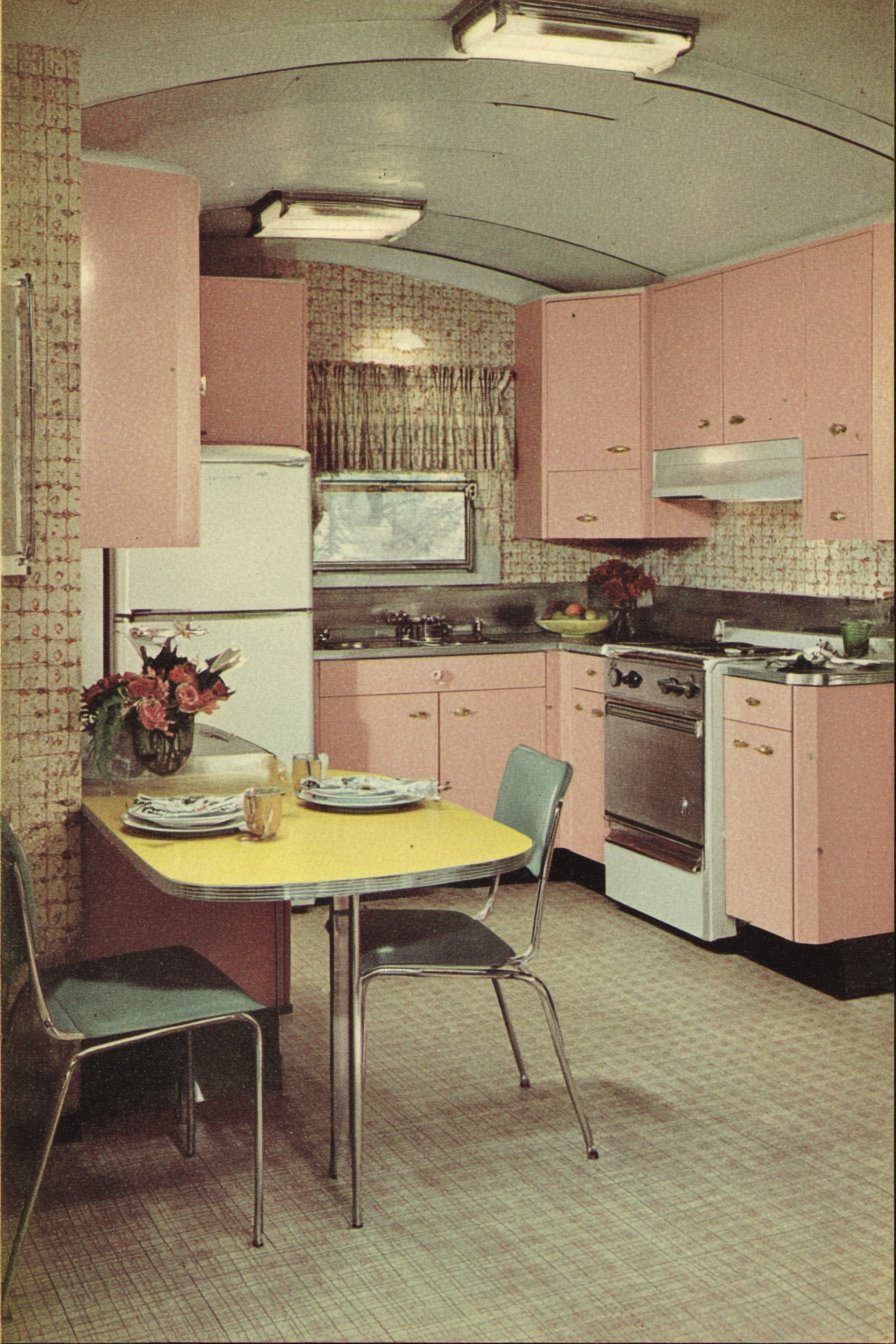
Every design decision addresses limited square footage challenges. The fold-down table provides dining space when needed. Storage maximization ensures efficient organization. Period-typical streamlined appliances fit compact spaces perfectly. The 60s offered innovative solutions for small-space living.
Key Design Tips:
- Install fold-down tables in compact kitchens for flexible space
- Choose light cabinet colors to maximize perceived spaciousness
- Use small-scale patterns to avoid overwhelming small rooms
- Select recessed lighting to preserve ceiling height visually
- Opt for rounded-corner appliances for safer traffic flow
13. Two-Tone Metallic Sophistication
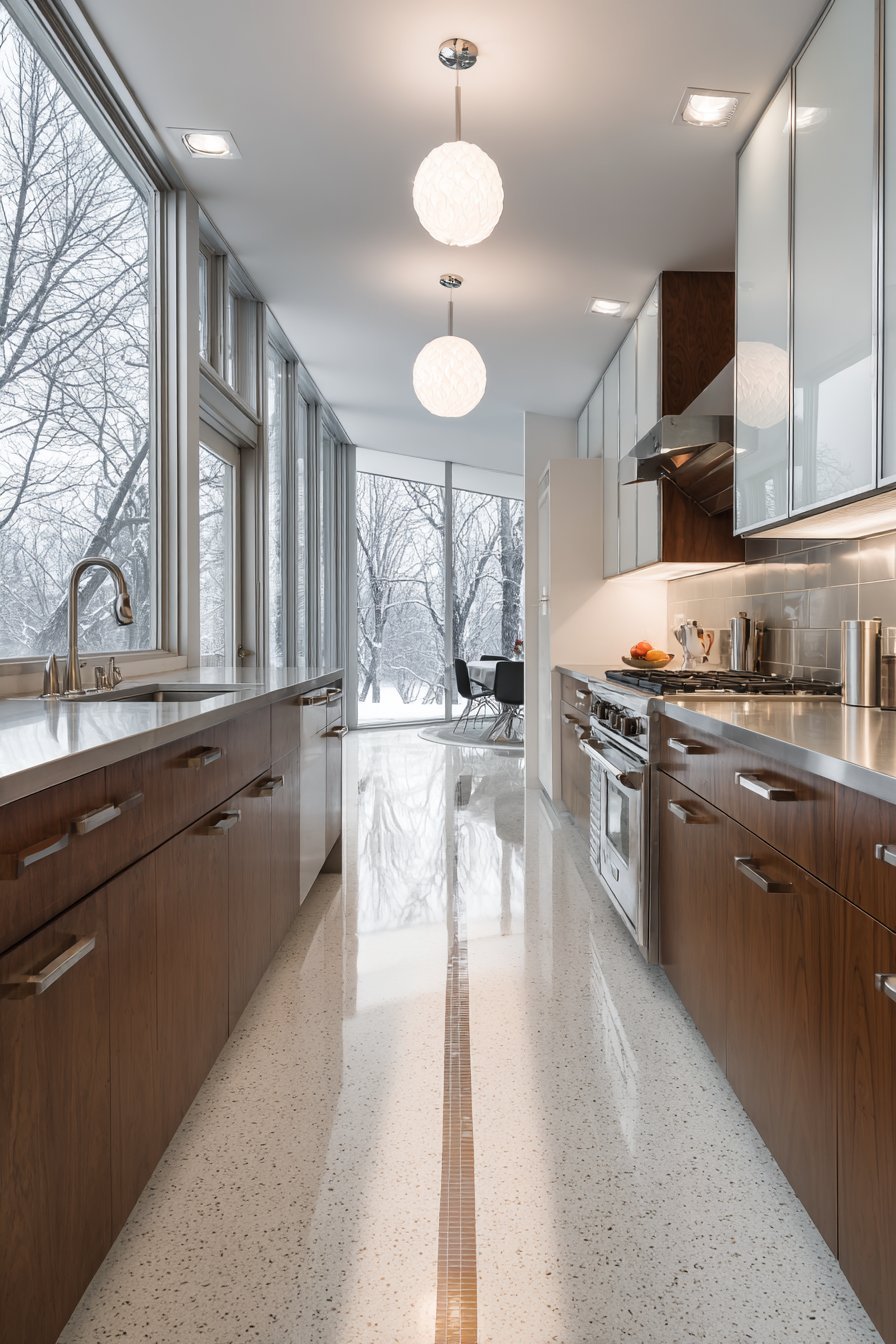
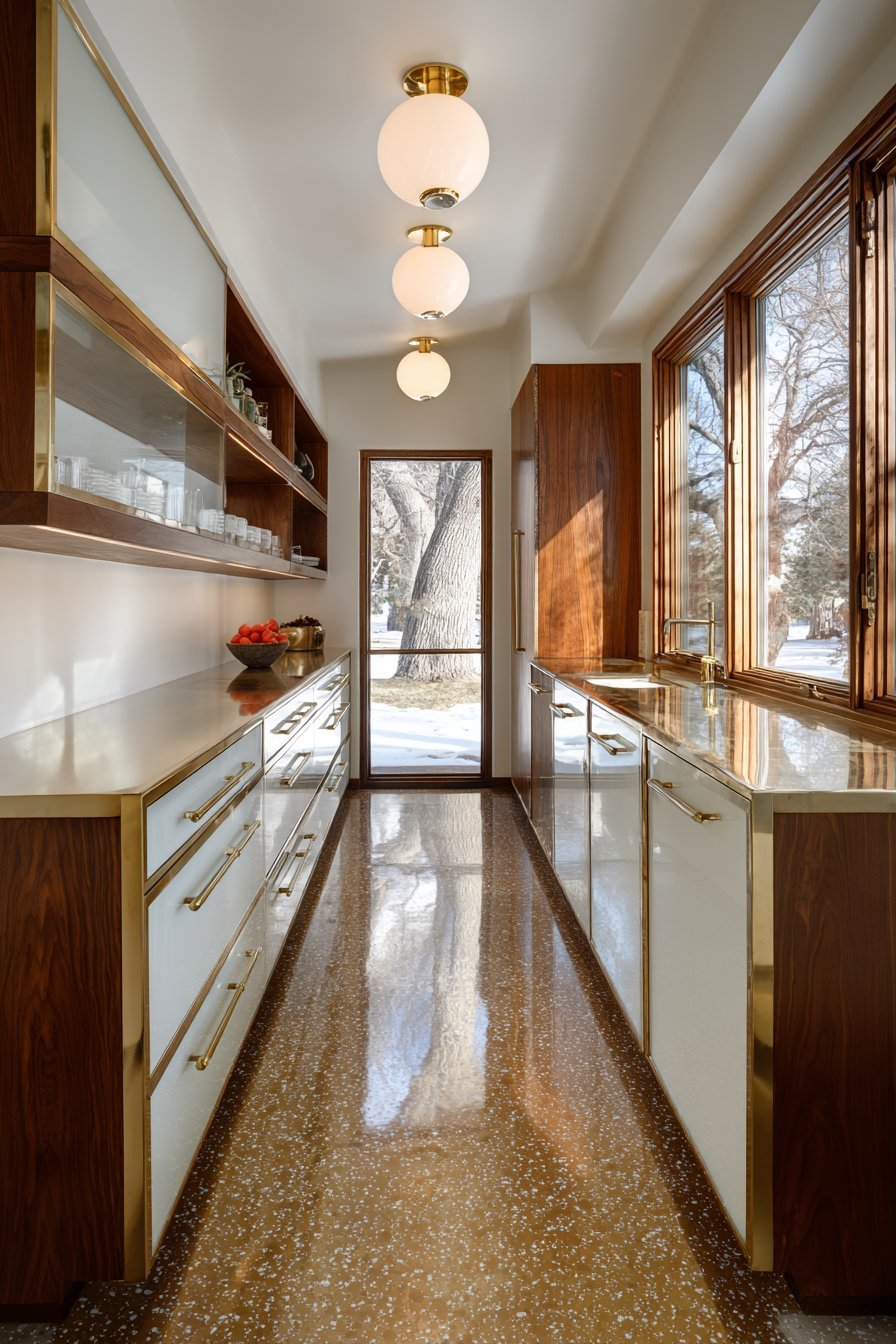
Dark walnut lower cabinets anchor this sophisticated design. Frosted glass upper cabinets with aluminum frames create lightness above. Stainless steel countertops and backsplash inspire professional kitchen aesthetics. Brushed chrome appliances maintain the metallic theme consistently. Floating walnut shelves display select items against white walls.
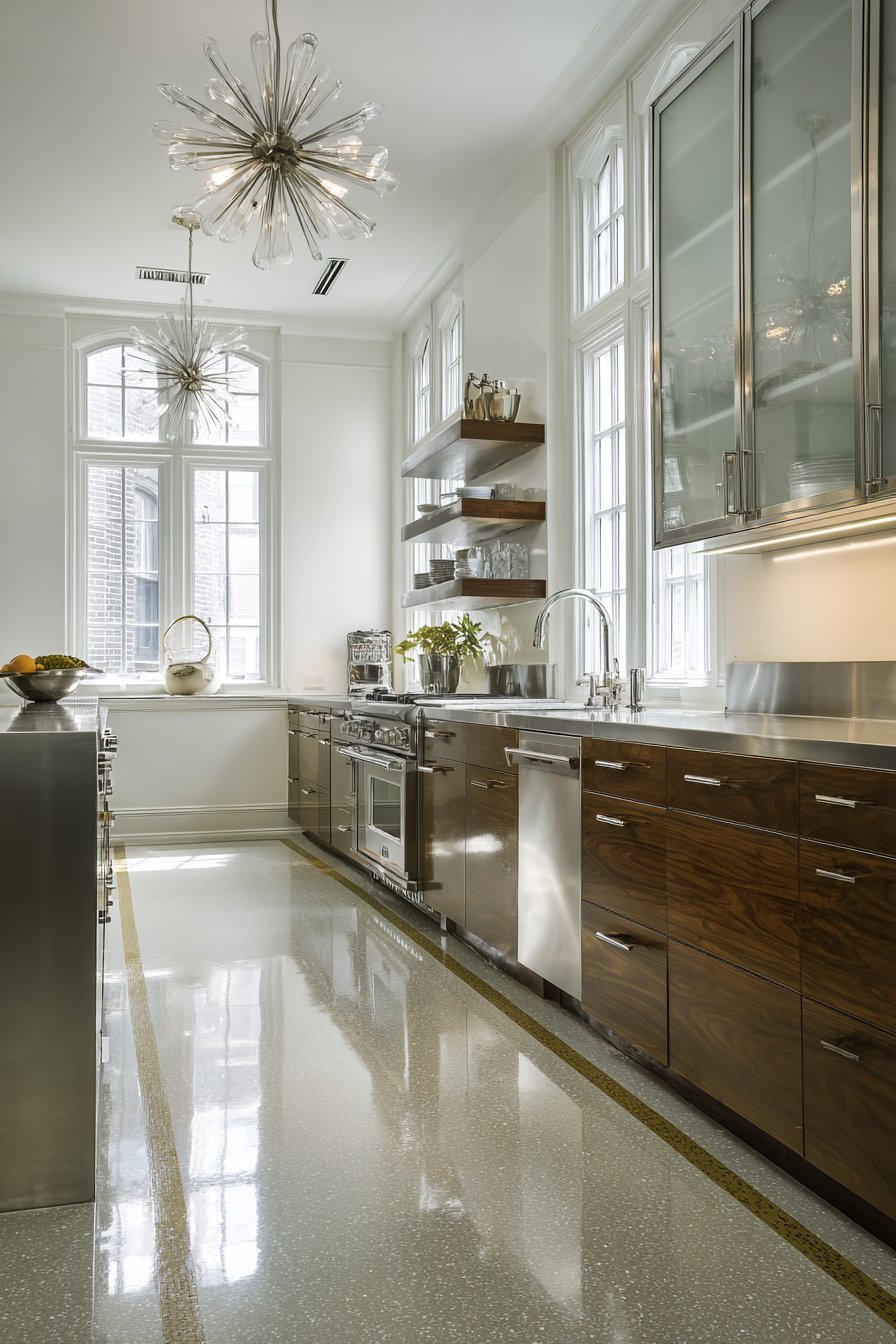
Terrazzo flooring features prominent brass divider strips. These luxurious details elevate the overall design. Modernist pendant lights with sculptural metal forms provide task lighting. Large windows with minimal trim allow natural light to reflect off metallic surfaces. The forward-thinking approach characterizes upscale 60s design.
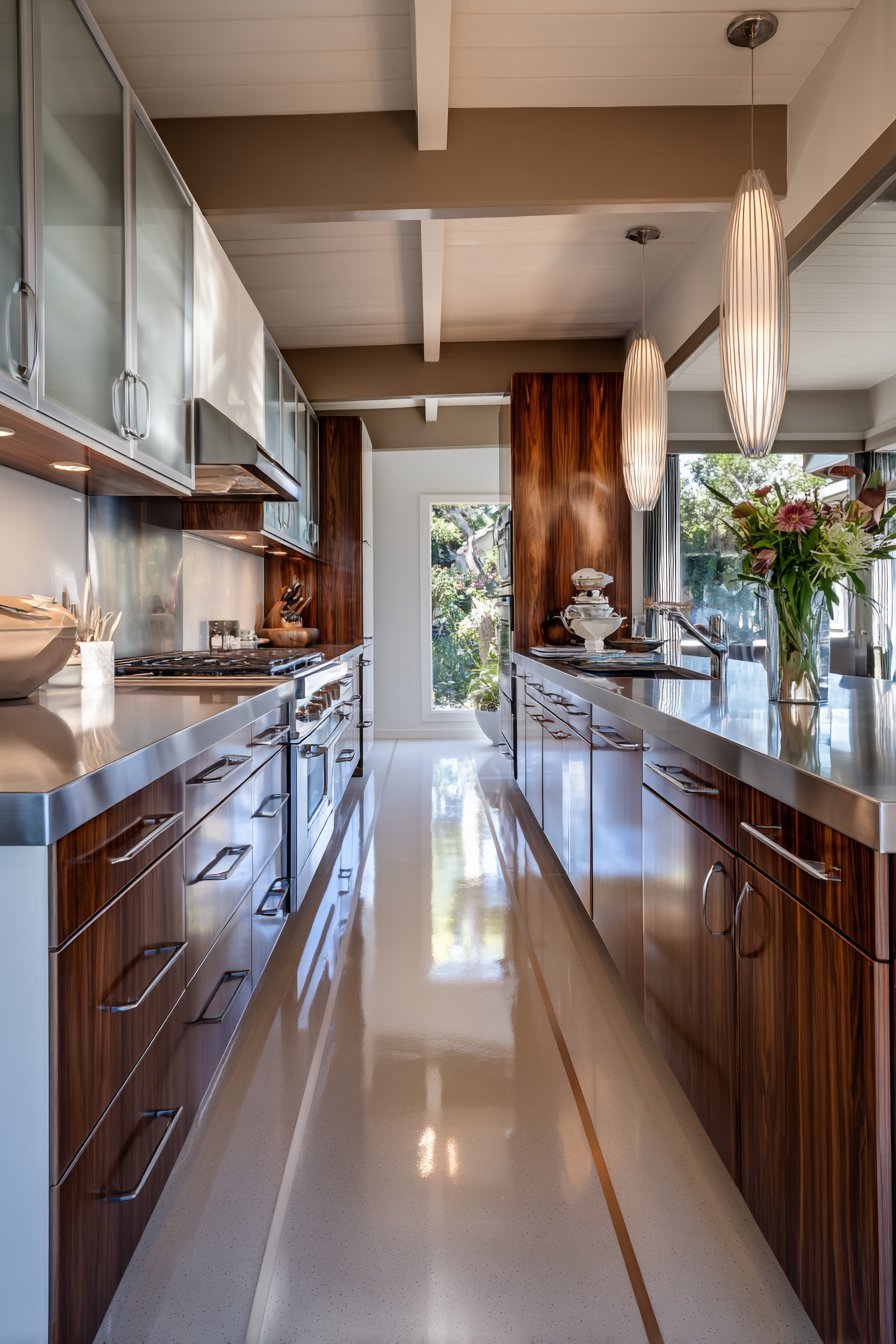
Material reflections create dynamic visual interest throughout the day. Stainless steel surfaces catch and bounce light beautifully. The restaurant-inspired aesthetic brings professional quality home. High-end materials ensure lasting value and performance. This design demonstrates that 60s style encompassed sophisticated restraint.
Key Design Tips:
- Combine wood and metal finishes for sophisticated contrast
- Choose stainless steel surfaces for professional kitchen aesthetics
- Install frosted glass cabinets to display items while diffusing light
- Use brass divider strips in flooring for luxurious detailing
- Select sculptural pendant lights as functional art pieces
14. Yellow and Wood Warmth
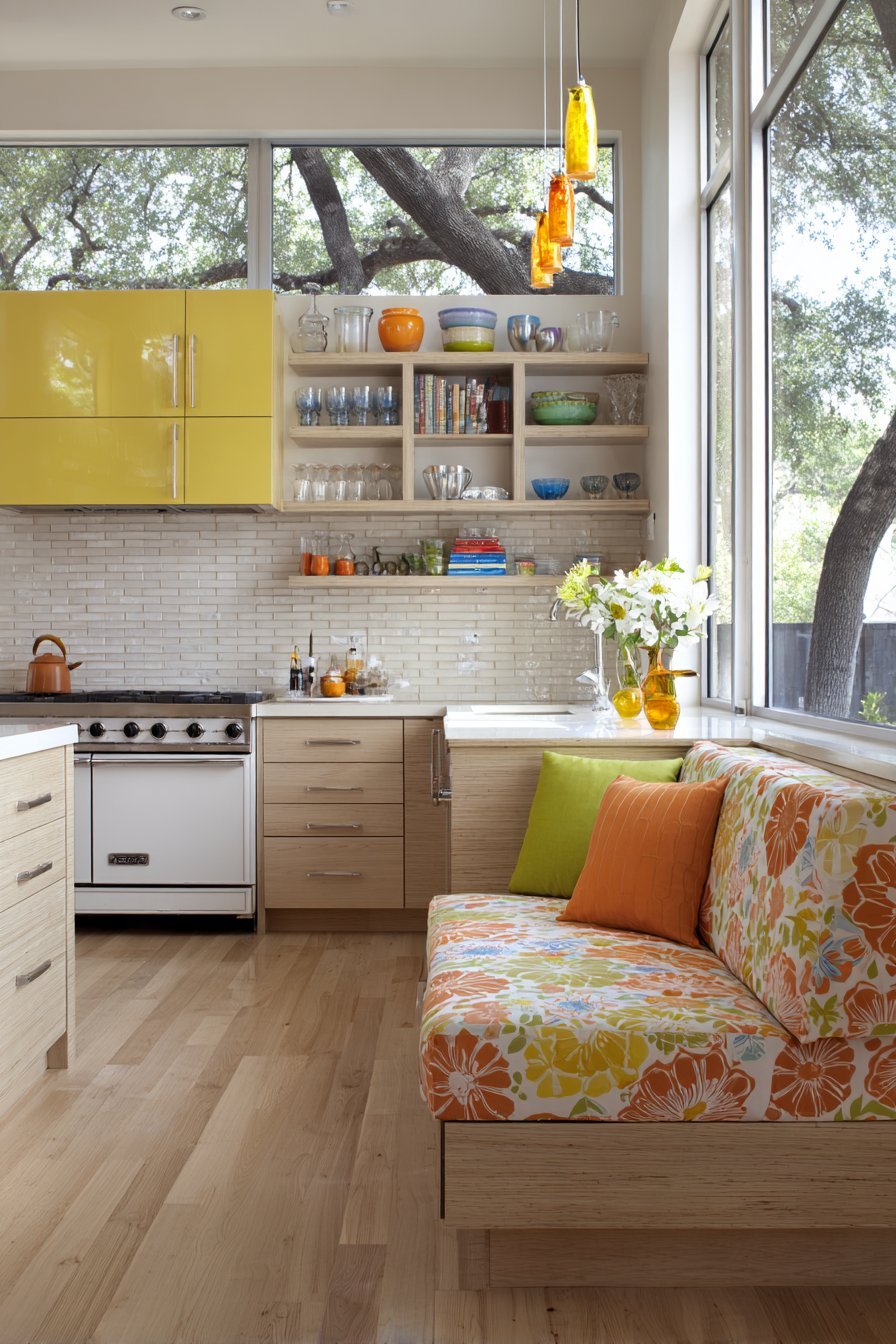
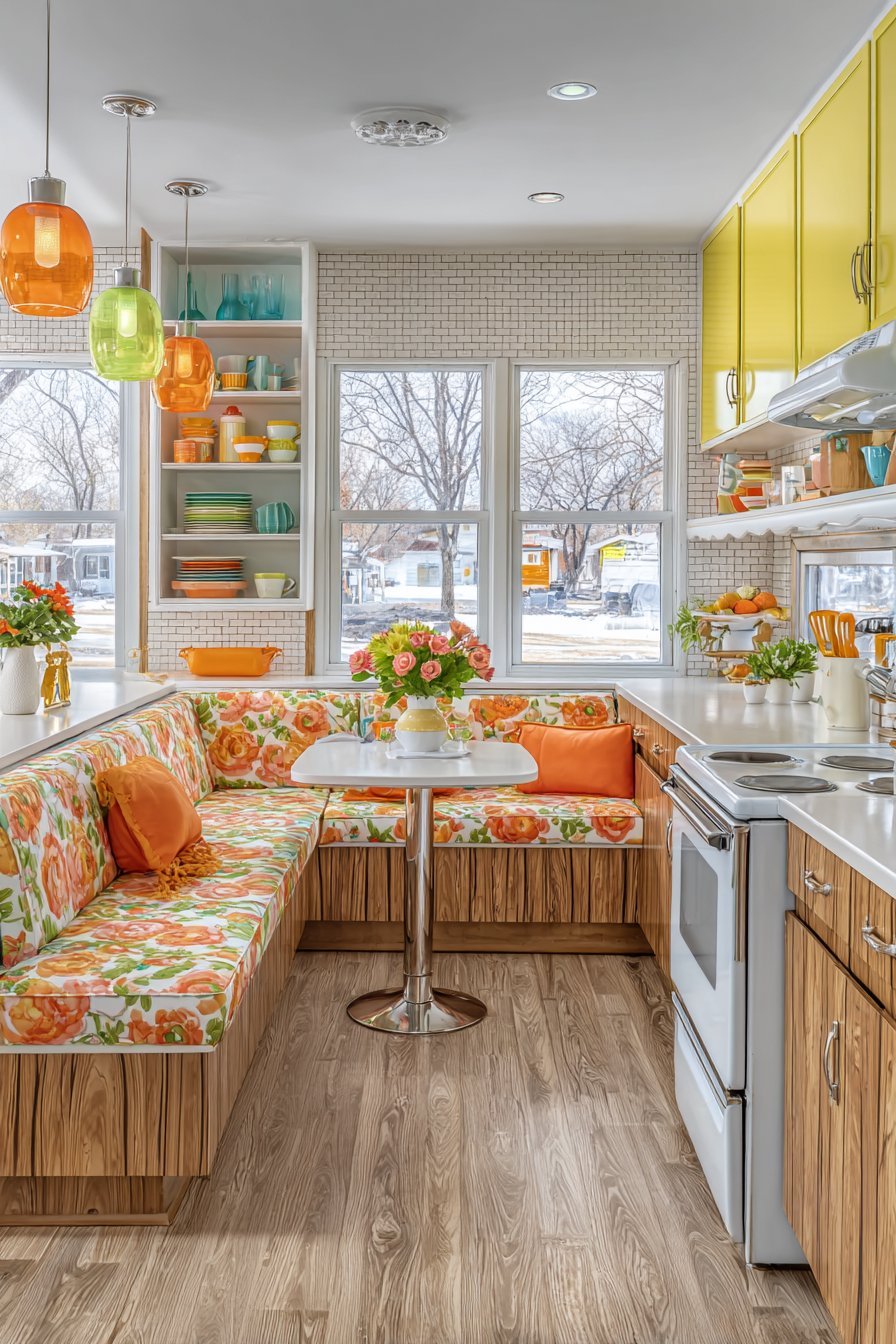
Sunny yellow upper cabinets brighten this cheerful kitchen. Open shelving displays colorful dishware as decorative elements. Natural wood lower cabinets with visible grain provide warm contrast. White tile backsplash features occasional yellow and orange accent tiles. Vintage-style white appliances with chrome details maintain clean aesthetics.
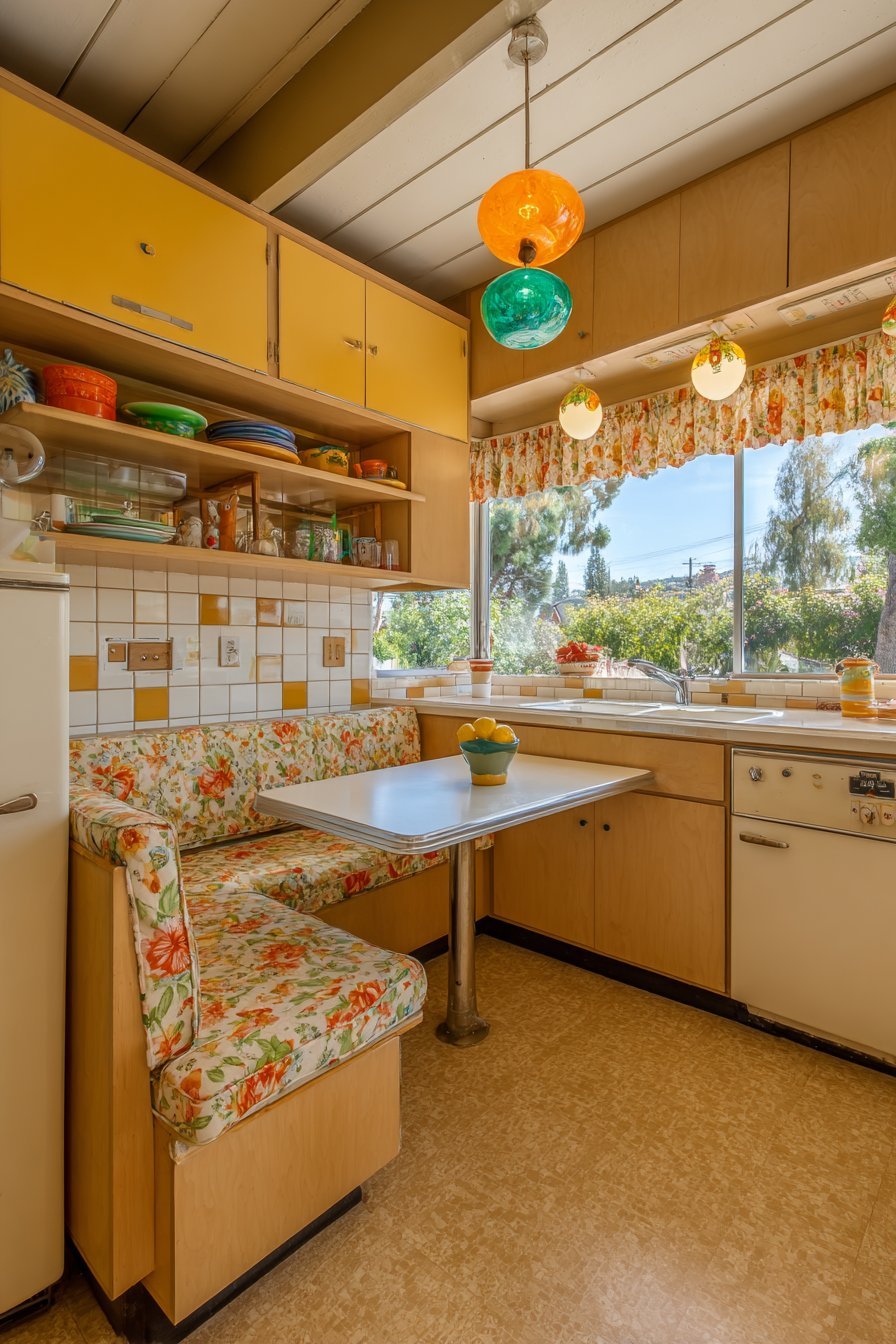
A built-in banquette seating area creates a cozy breakfast nook. Bold floral vinyl upholstery adds pattern and comfort. The nook encourages family gathering and casual meals. Vinyl sheet flooring in warm neutral tones offers easy maintenance. Pendant lights with colored glass shades coordinate with cabinet colors.
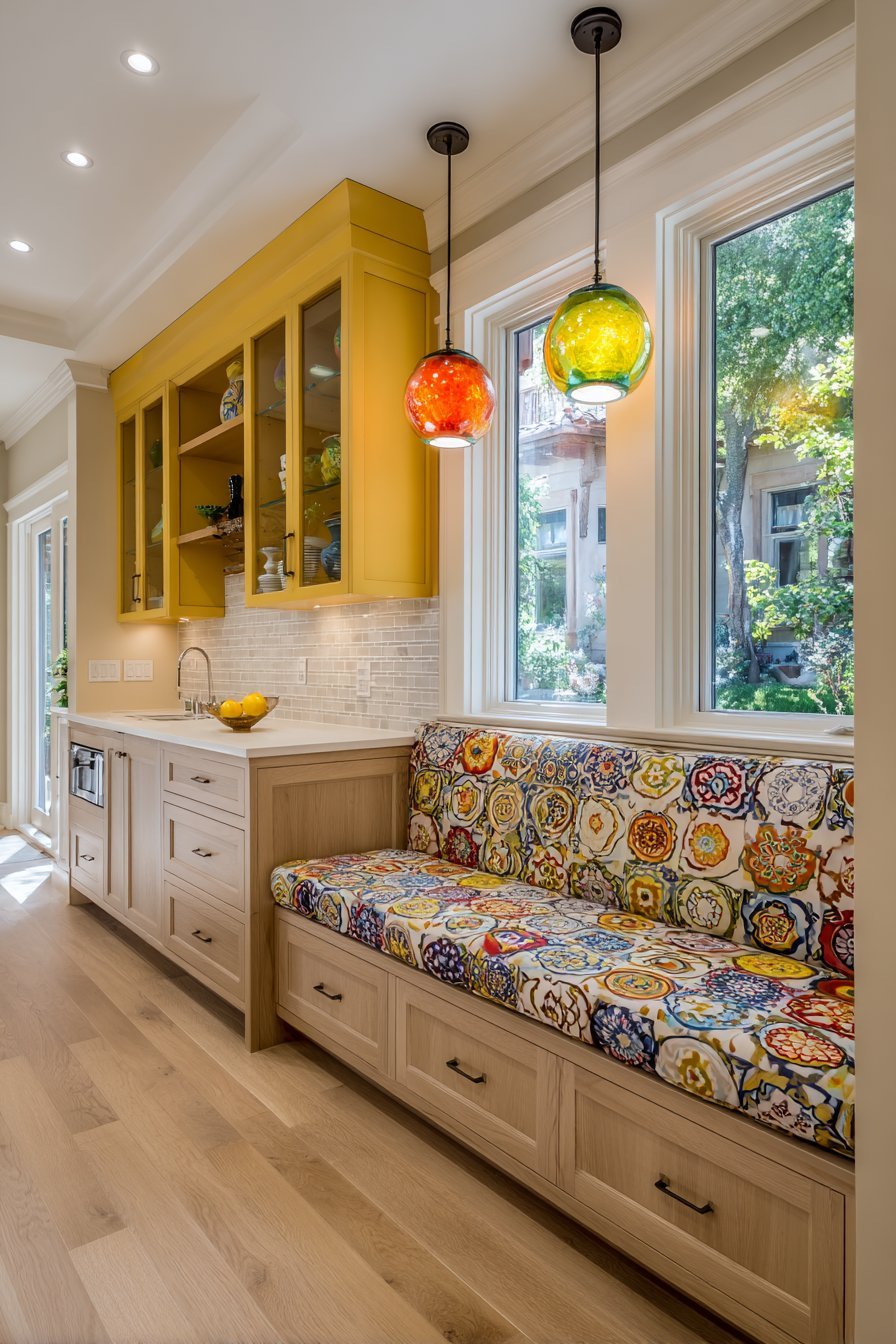
Soft morning light through large windows creates inviting family atmosphere. The mix of open and closed storage balances display and concealment. Colorful dishware becomes part of the design scheme. Natural wood tones ground the cheerful yellow palette. The space celebrates both beauty and functionality.
Key Design Tips:
- Mix open shelving with closed cabinets for balanced storage
- Add built-in banquette seating for space-efficient dining
- Display colorful dishware as part of your design scheme
- Choose vinyl upholstery with bold patterns for easy cleaning
- Install colored glass pendant lights to enhance color themes
15. Oversized Floral Statement
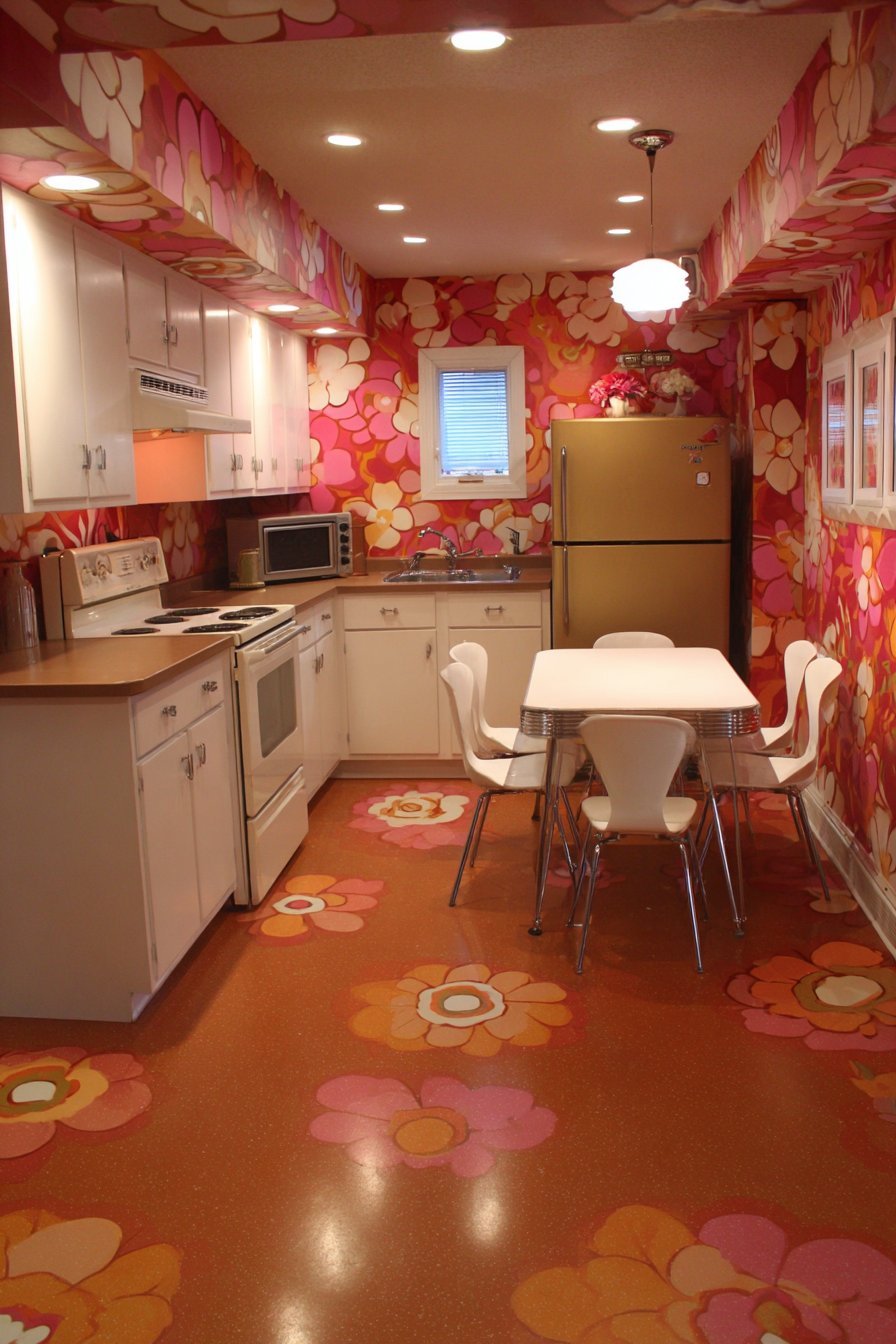
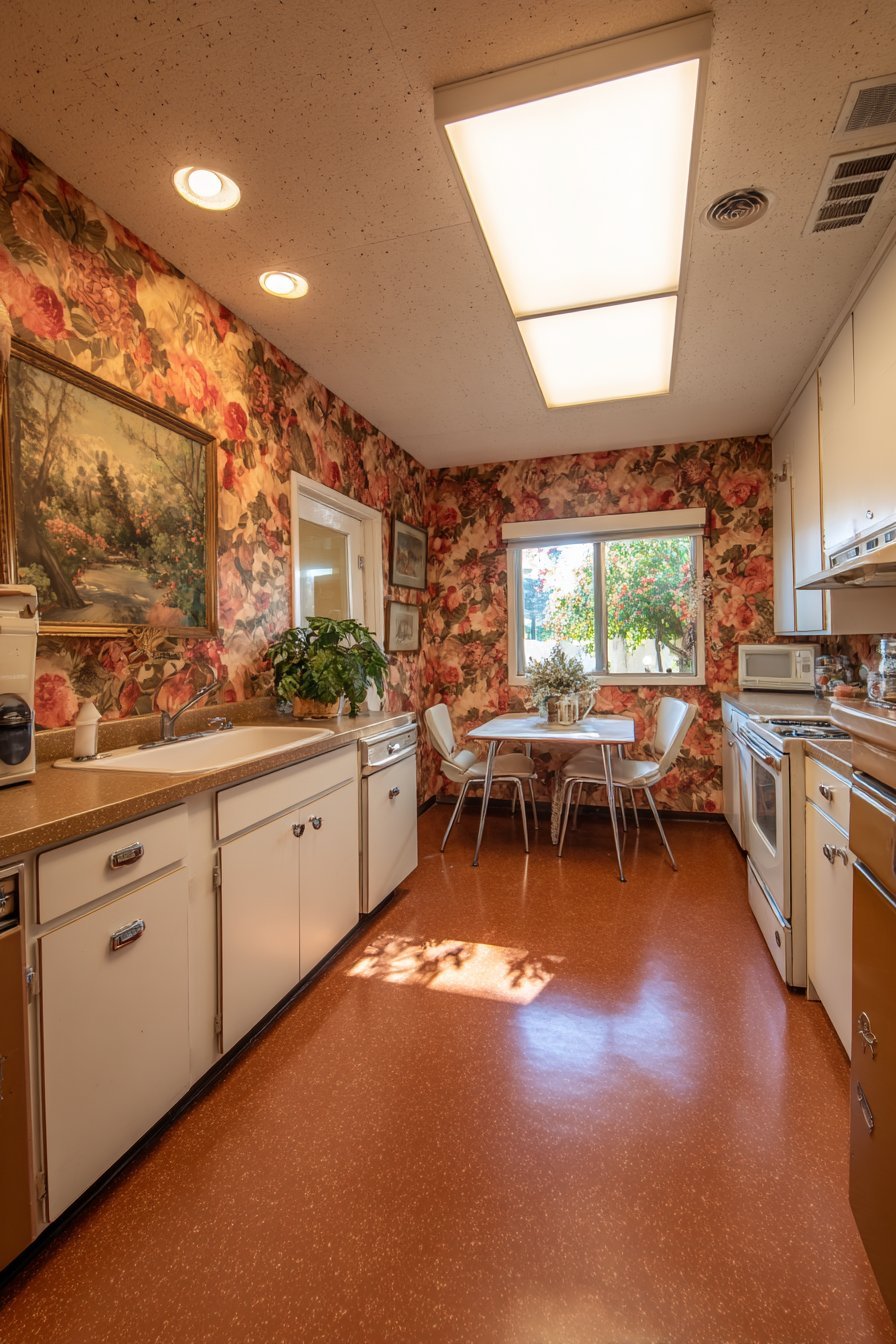
Statement wallpaper with oversized floral patterns dominates this design. Orange, pink, and brown flowers bloom across white backgrounds. Simple white cabinets with minimal hardware allow wallpaper to shine. Warm brown laminate countertops coordinate with wallpaper colors. Harvest gold appliances add period-appropriate color accents.
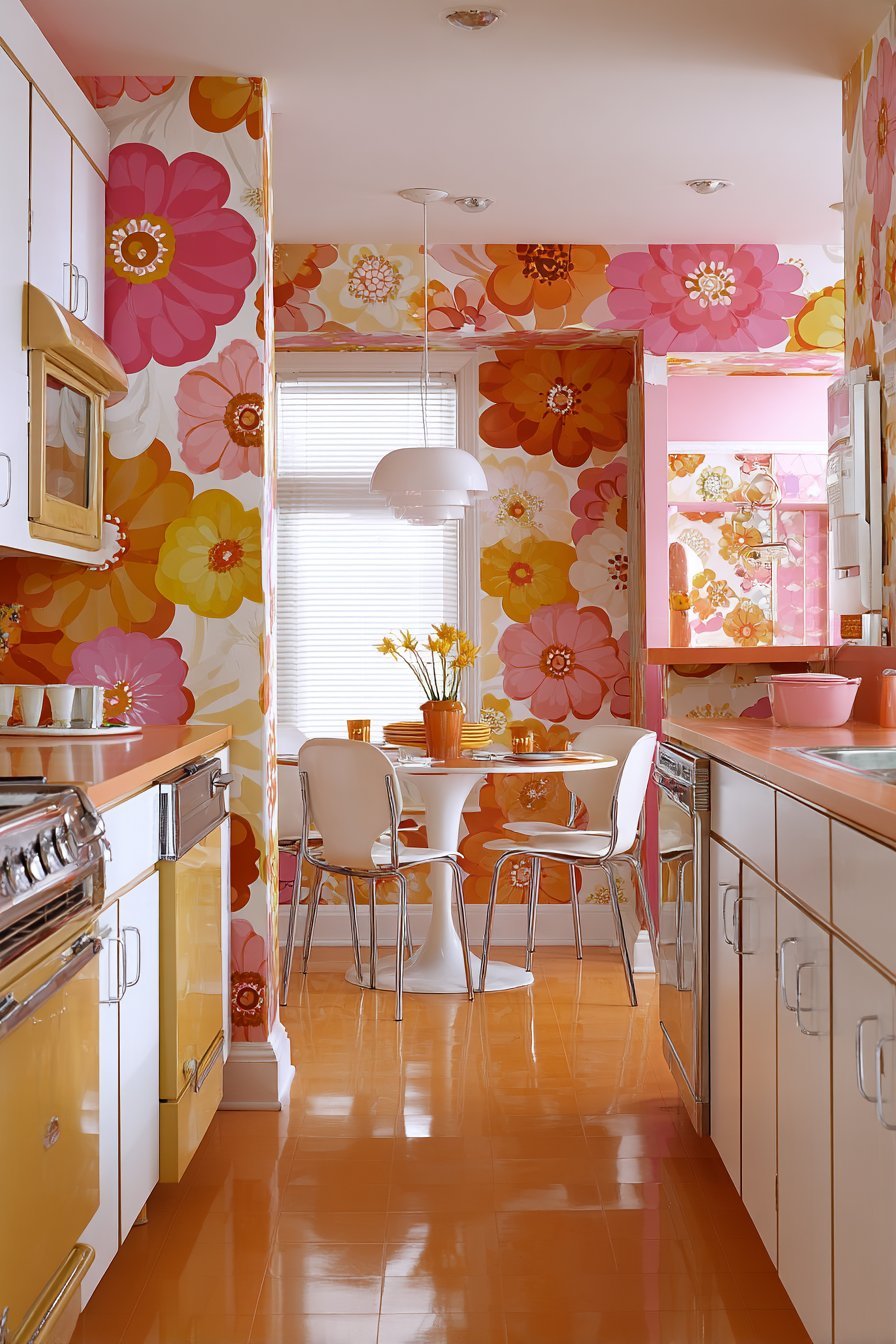
A chrome-legged table with white laminate top creates casual dining area. Matching chairs continue the chrome and white theme. Solid warm brown vinyl flooring complements the overall scheme. Recessed lighting supplemented by garden window light creates balanced illumination. The garden window brings nature indoors visually.
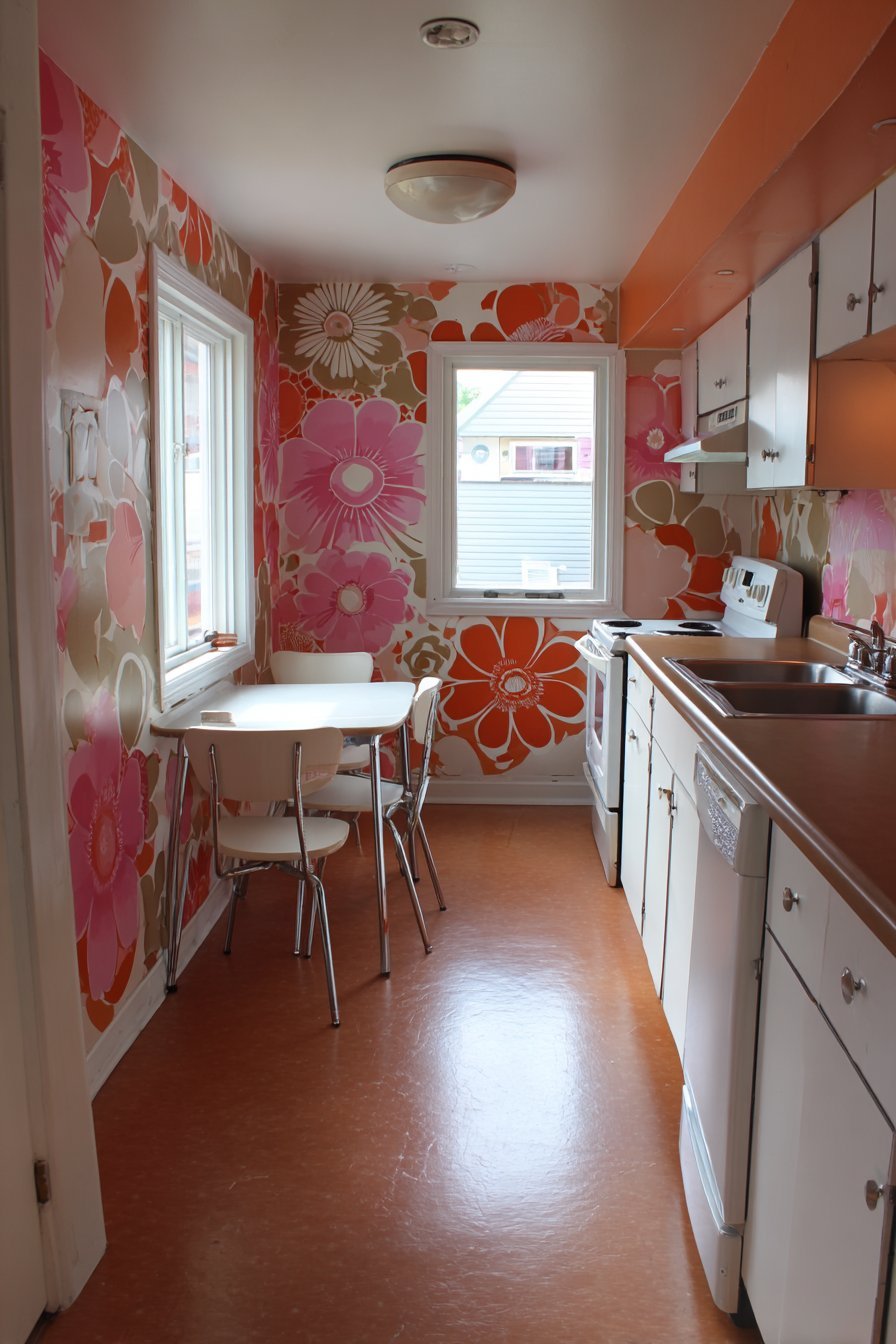
Confident pattern-mixing characterizes 60s kitchen style beautifully. The oversized floral makes an unforgettable impression. Bold color choices demonstrate design courage. Simple cabinet design prevents visual competition with dramatic wallpaper. Every element works together harmoniously despite strong patterns.
Key Design Tips:
- Use oversized patterns on single accent walls for maximum impact
- Keep cabinets simple when featuring bold wallpaper designs
- Add garden windows to bring in light and growing space
- Choose solid flooring colors to balance patterned walls
- Coordinate appliance colors with wallpaper accent hues
16. Turquoise Coordination Mastery
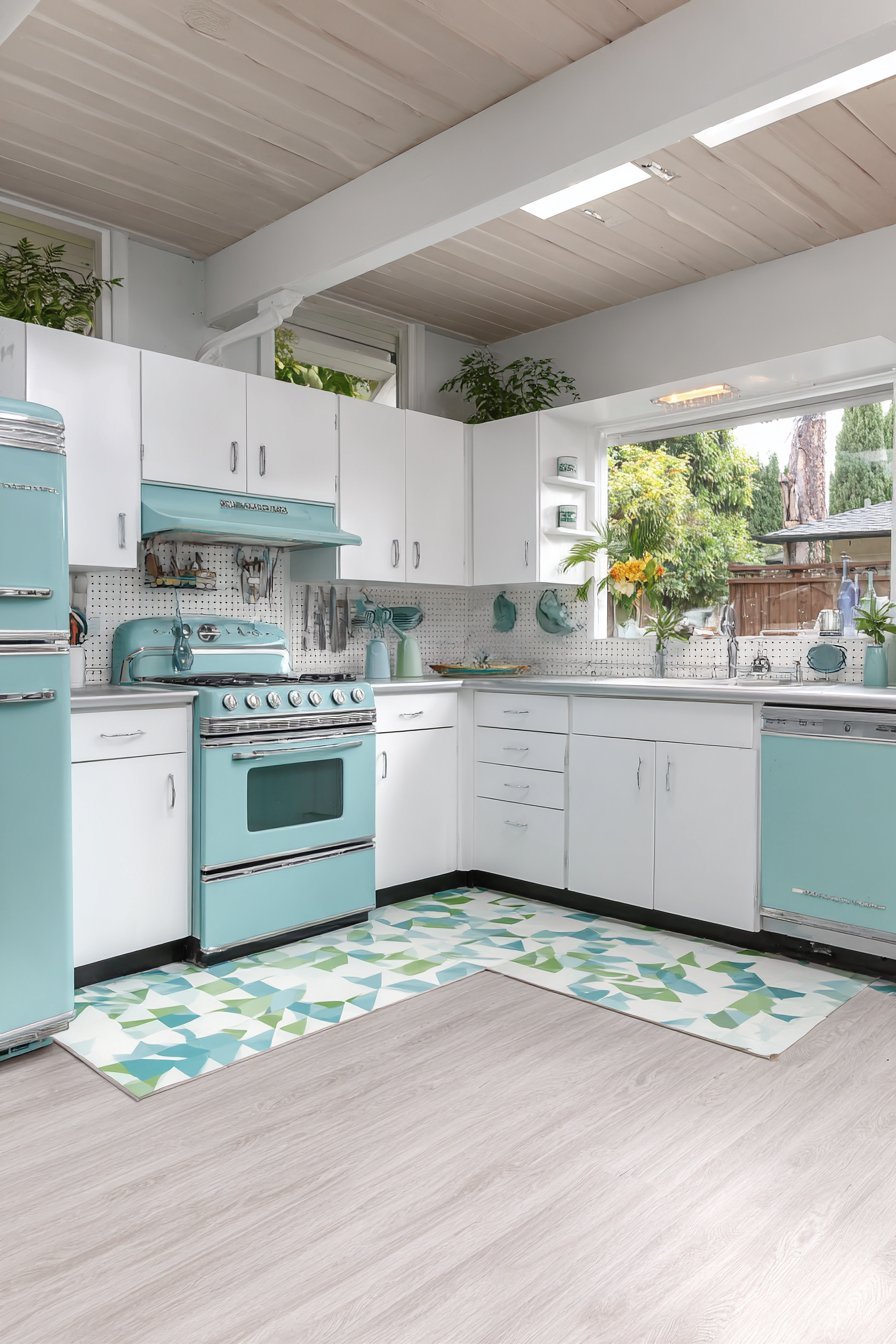
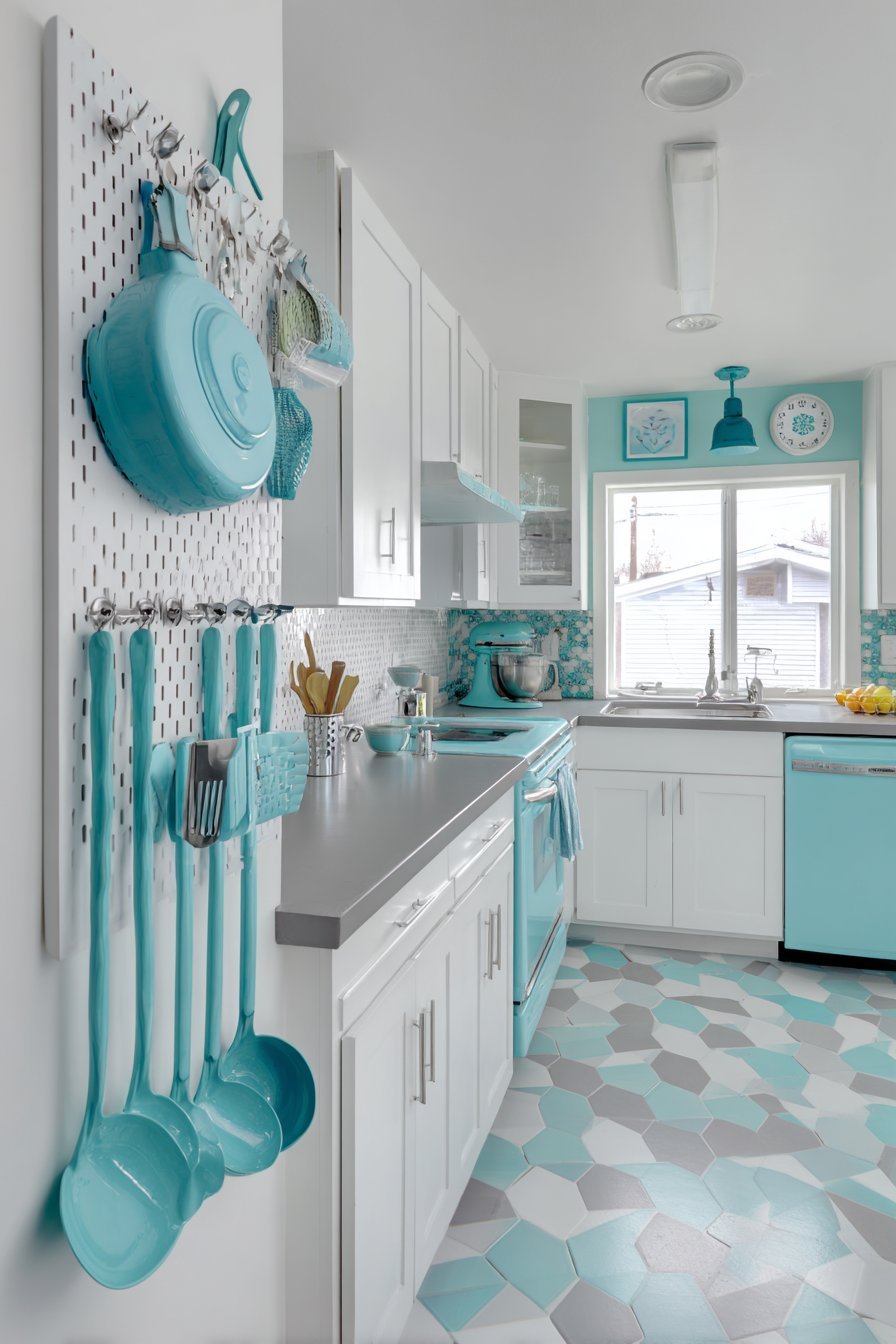
Matching turquoise appliances create perfect color coordination. Cabinet hardware and decorative accessories continue the turquoise theme. White recessed-panel cabinets provide neutral backdrop for colorful elements. Gray laminate countertops feature turquoise boomerang patterns authentically. Pegboard backsplash painted white holds coordinating turquoise utensils.
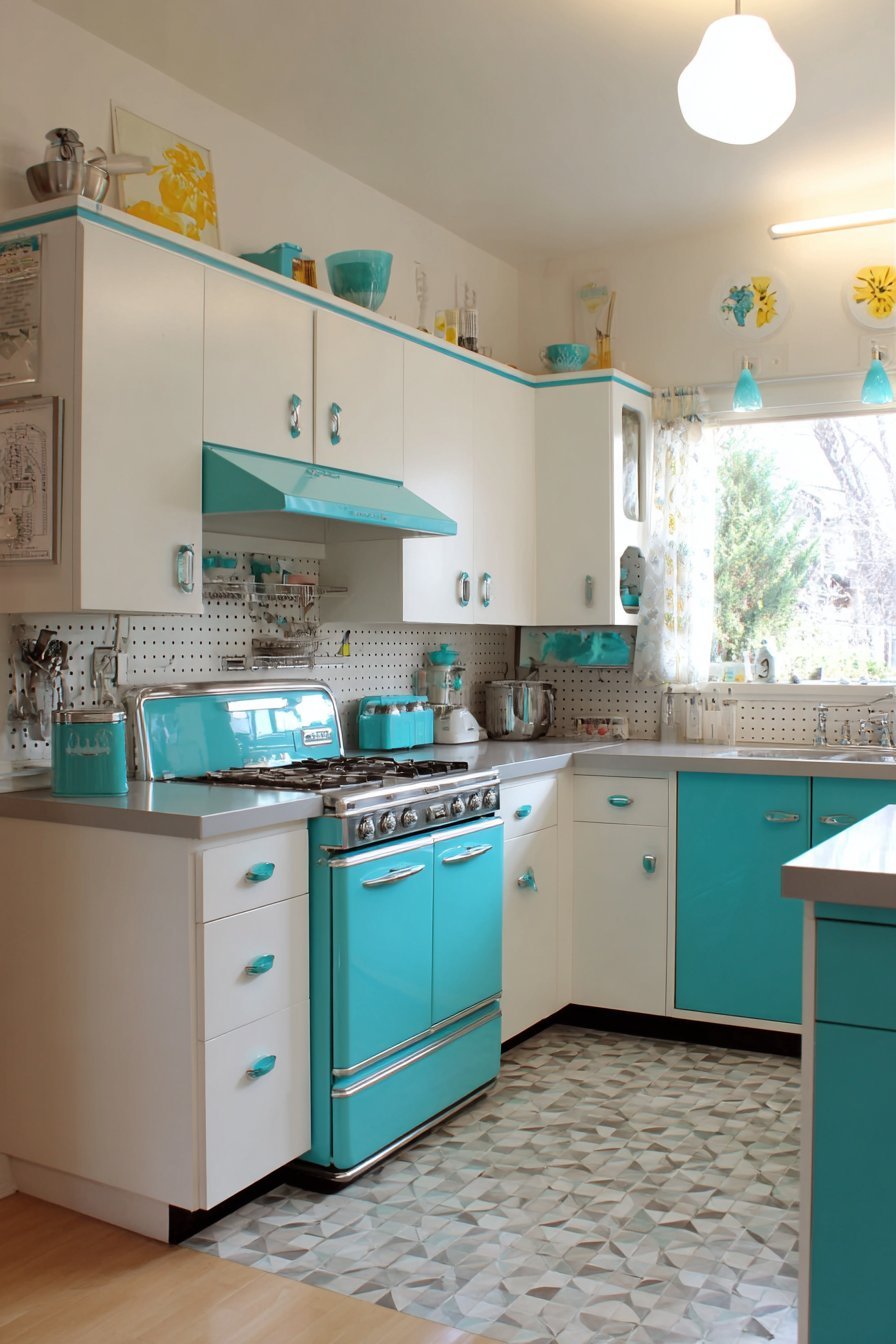
Vinyl flooring combines white, gray, and turquoise in geometric patterns. The thoroughly coordinated approach demonstrates 60s design philosophy. Under-cabinet fluorescent lighting illuminates work surfaces effectively. A pass-through window connects to the adjacent dining area. Natural light flows between spaces creating openness.
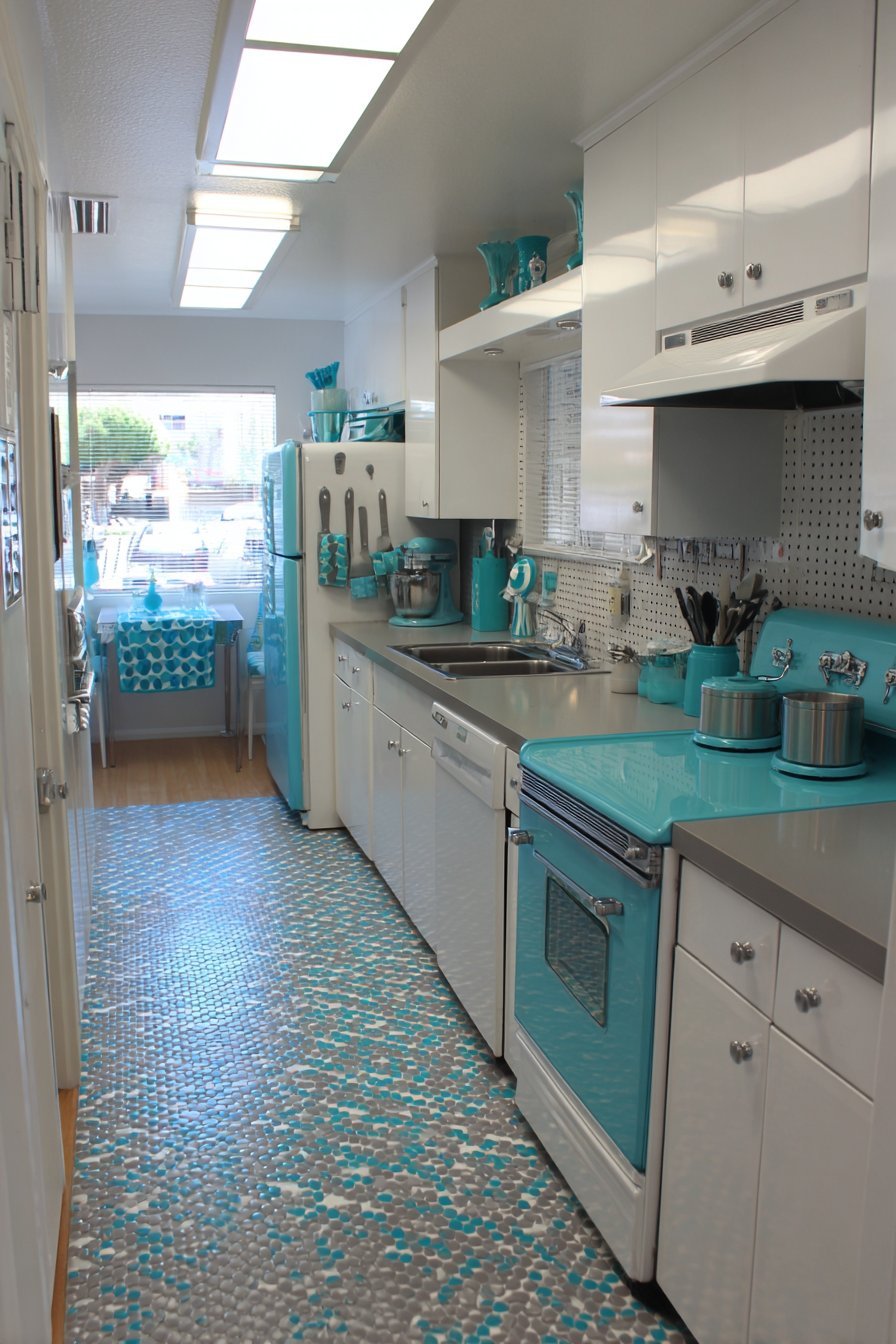
Color accuracy matters tremendously in coordinated schemes. Every turquoise element matches precisely for cohesive appearance. The attention to detail elevates the overall design. Functional pegboard storage keeps tools accessible and organized. The space demonstrates that coordination creates visual impact.
Key Design Tips:
- Coordinate appliances, hardware, and accessories in single accent colors
- Use pegboard backsplashes for functional decorative storage
- Choose countertops with period-appropriate boomerang patterns
- Install pass-through windows to connect kitchen and dining areas
- Match flooring patterns to your primary color palette
17. Natural Materials Renaissance
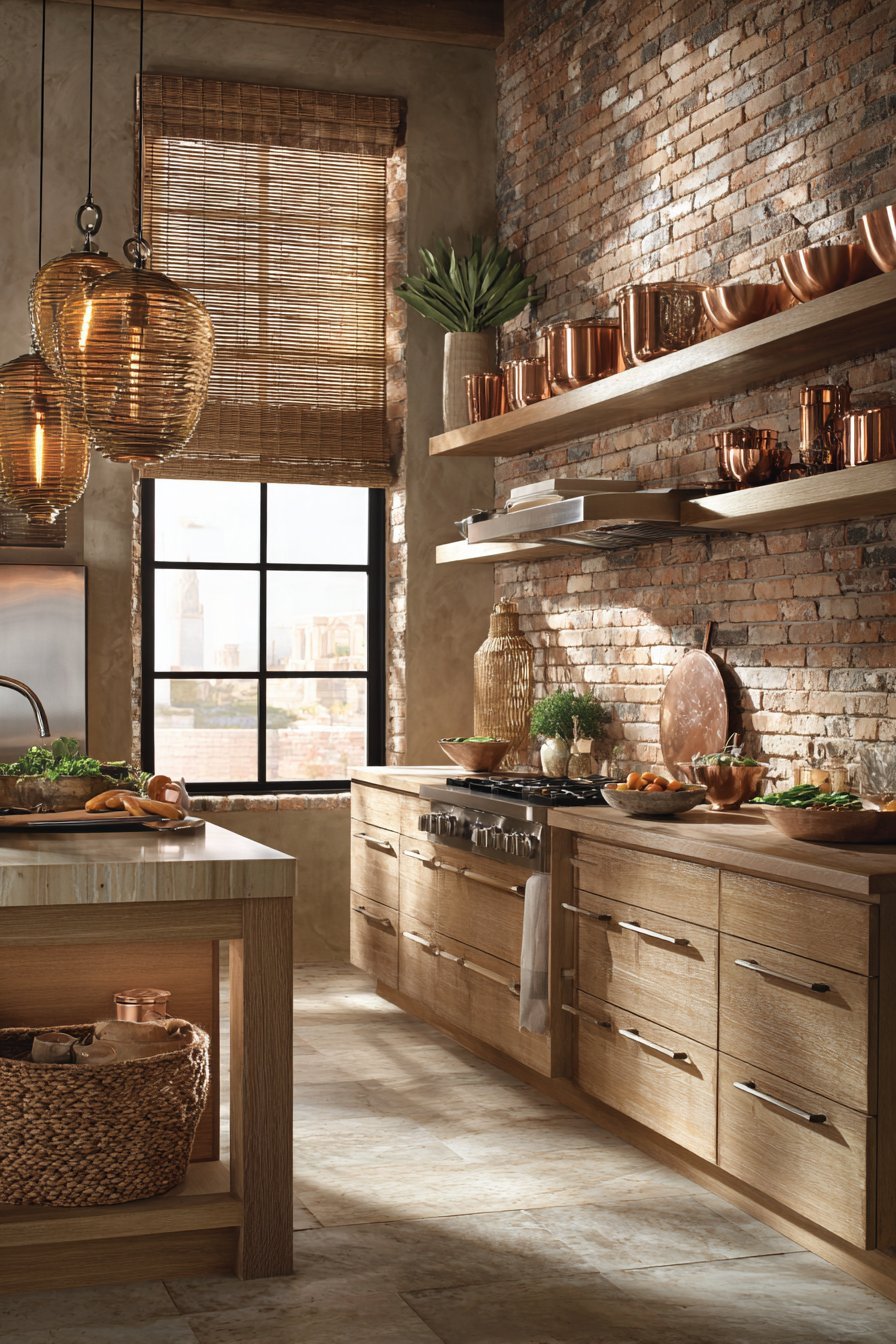
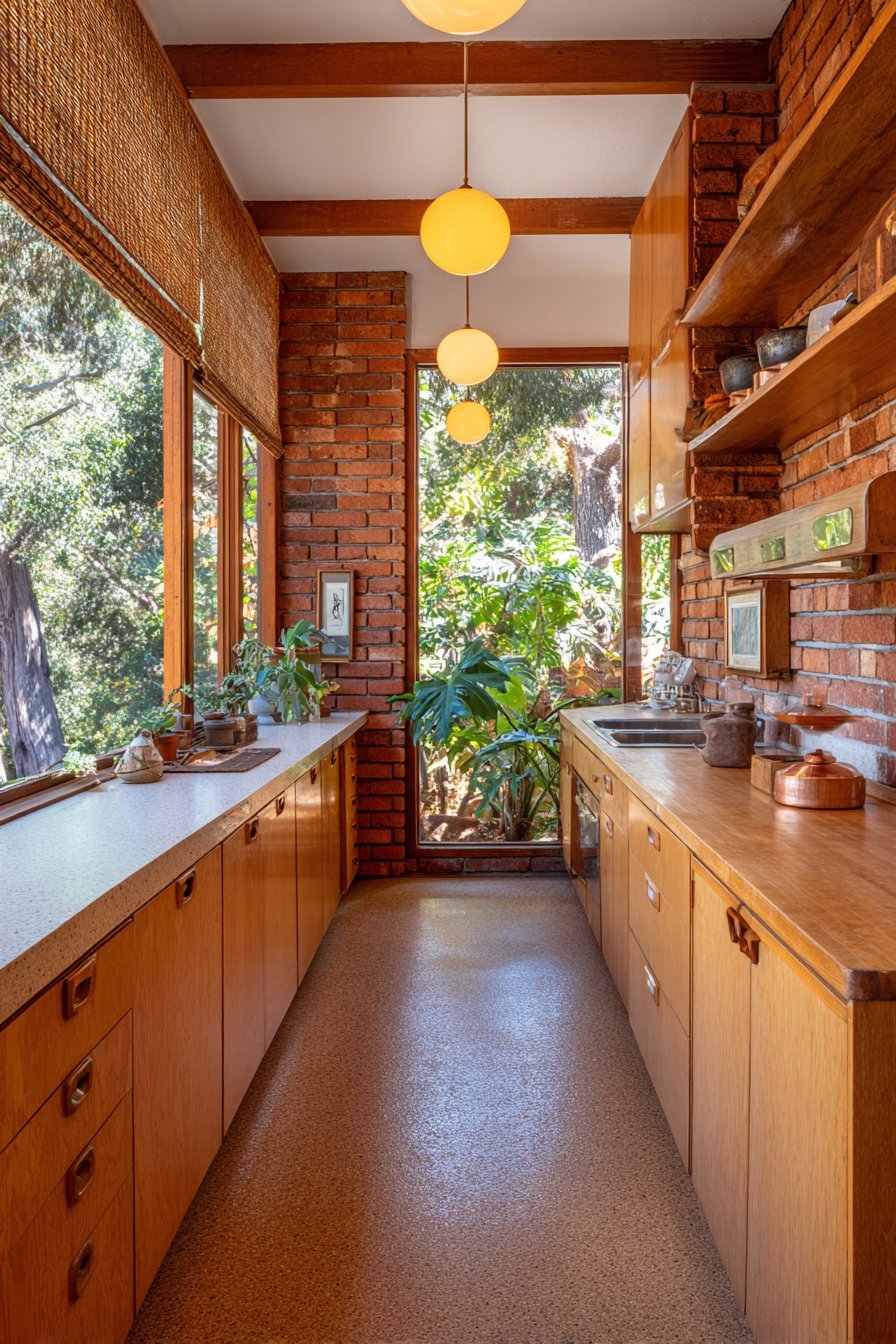
A brick accent wall in warm red tones brings organic texture. Honey oak wood cabinets with horizontal pulls complement the brick. Butcher block countertops add additional natural warmth and working surface. Copper-tone appliances and displayed copper cookware reinforce metallic warmth. Cork flooring provides comfortable standing surface with natural appeal.
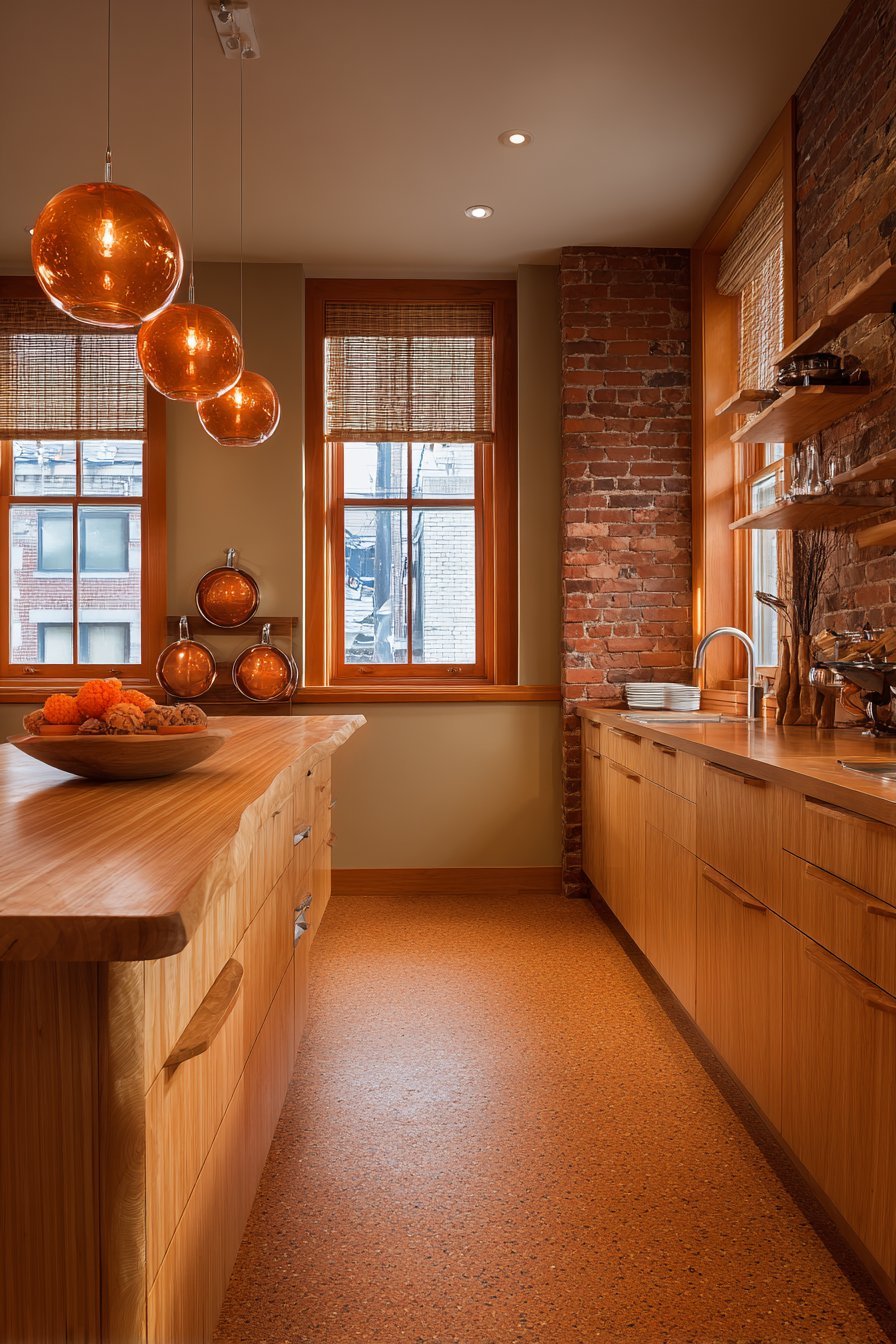
Large windows with natural wood frames allow filtered natural light. Woven shades add texture while controlling brightness. Pendant lights with amber glass globes create warm ambient glow. The shift toward organic materials reflects evolving 60s sensibilities. Natural elements bring timeless beauty and durability.
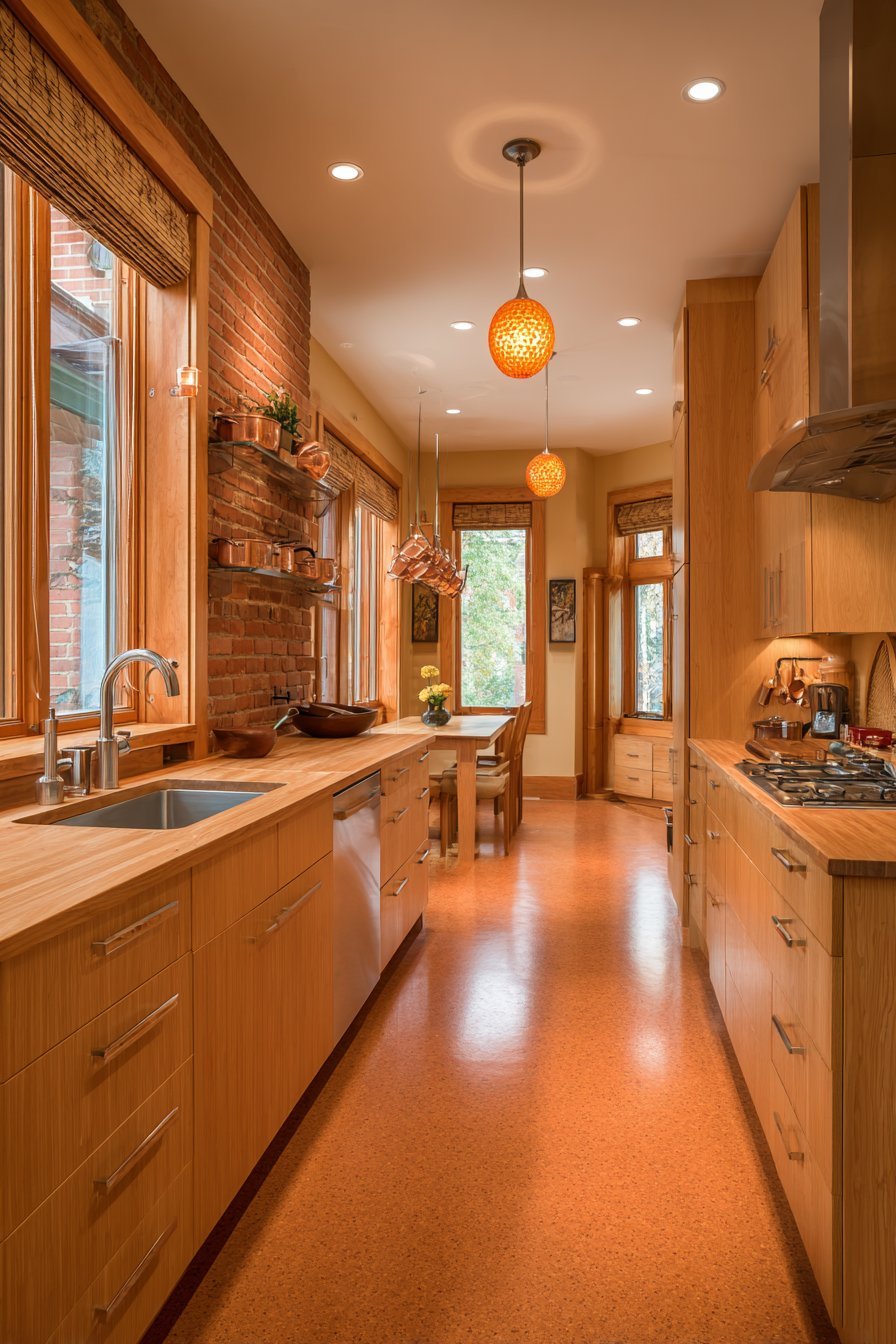
This design demonstrates the era’s growing environmental awareness. Real materials age beautifully rather than simply wearing out. Brick, wood, cork, and copper develop character over time. The warm color palette creates inviting atmosphere. Natural materials connect inhabitants to the earth aesthetically.
Key Design Tips:
- Add brick accent walls for warmth and textural interest
- Choose butcher block counters for natural beauty and functionality
- Display copper cookware as decorative and practical elements
- Install cork flooring for comfort and sustainable material choice
- Use natural wood window frames to complement organic materials
18. Sage Green Efficiency
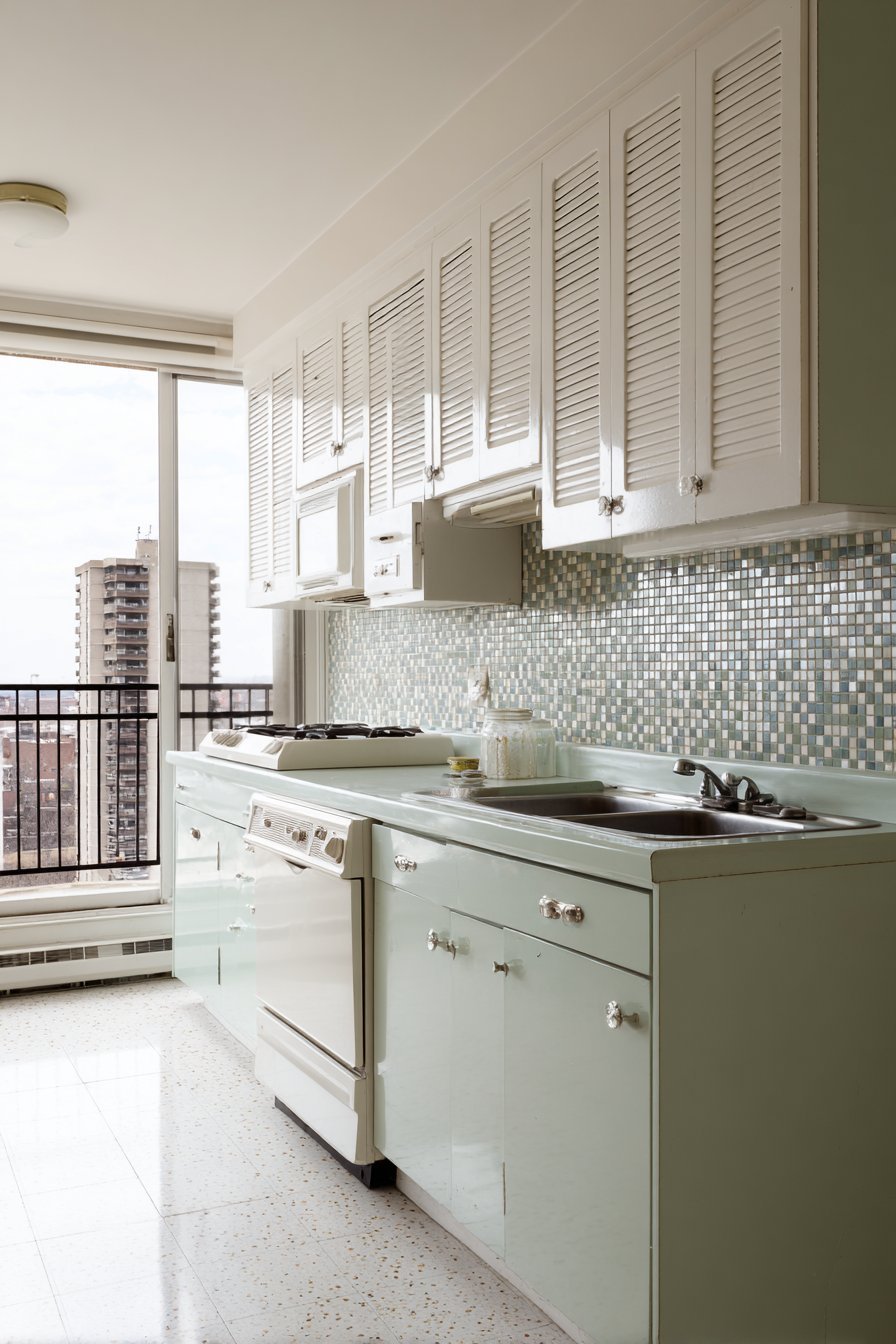
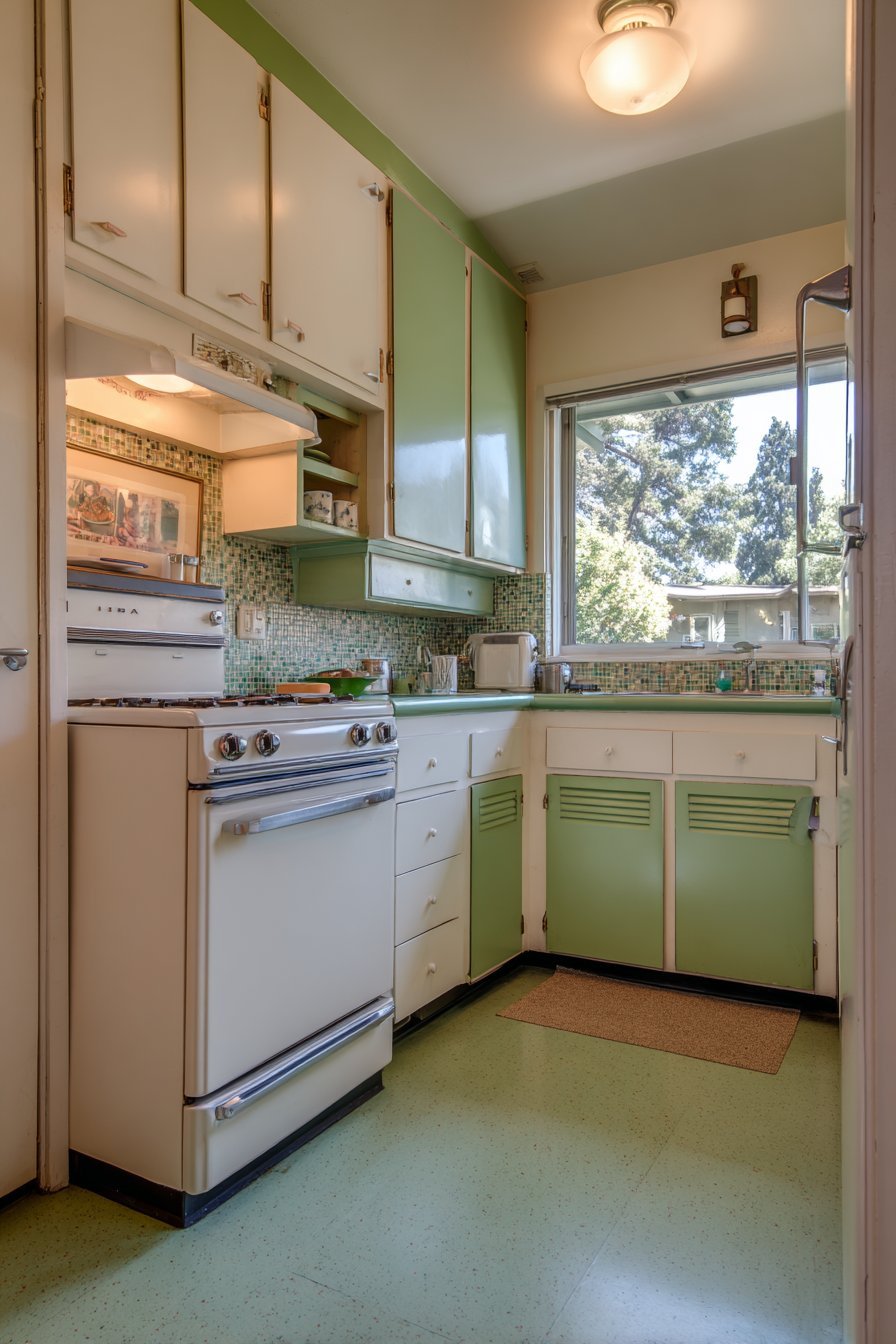
Continuous sage green laminate countertops wrap around three walls. The seamless surface maximizes work area in compact footprint. White louvered cabinet doors maintain visual lightness above and below. Built-in white appliances blend seamlessly with surrounding cabinetry. Small mosaic tiles in coordinating green and white create subtle backsplash pattern.
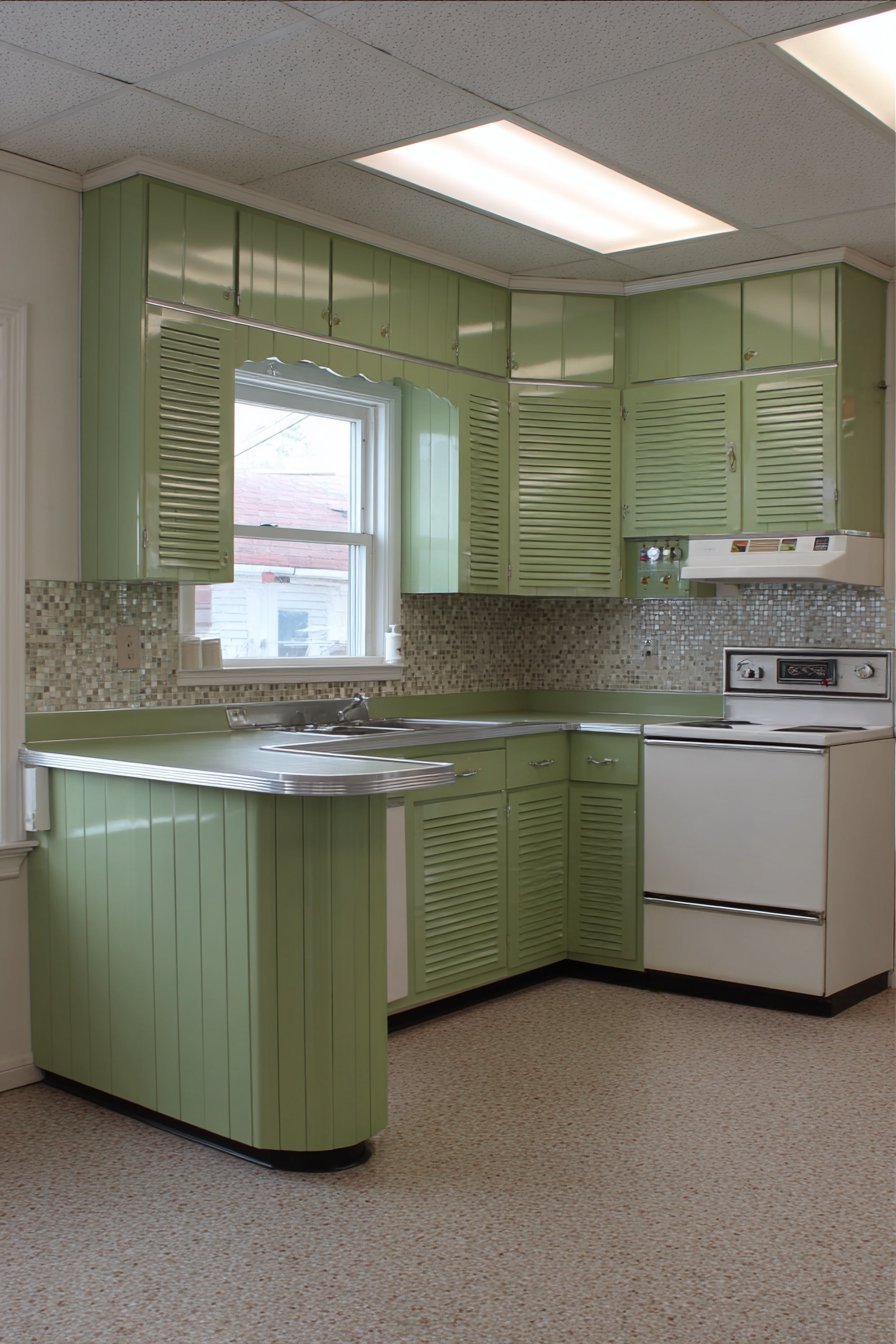
Neutral speckled vinyl flooring provides durable, low-maintenance surface. Task lighting under upper cabinets ensures well-lit work areas. A corner window adds dimension and natural light. The streamlined workflow demonstrates 60s kitchen planning efficiency. Every element serves practical purposes within limited space.
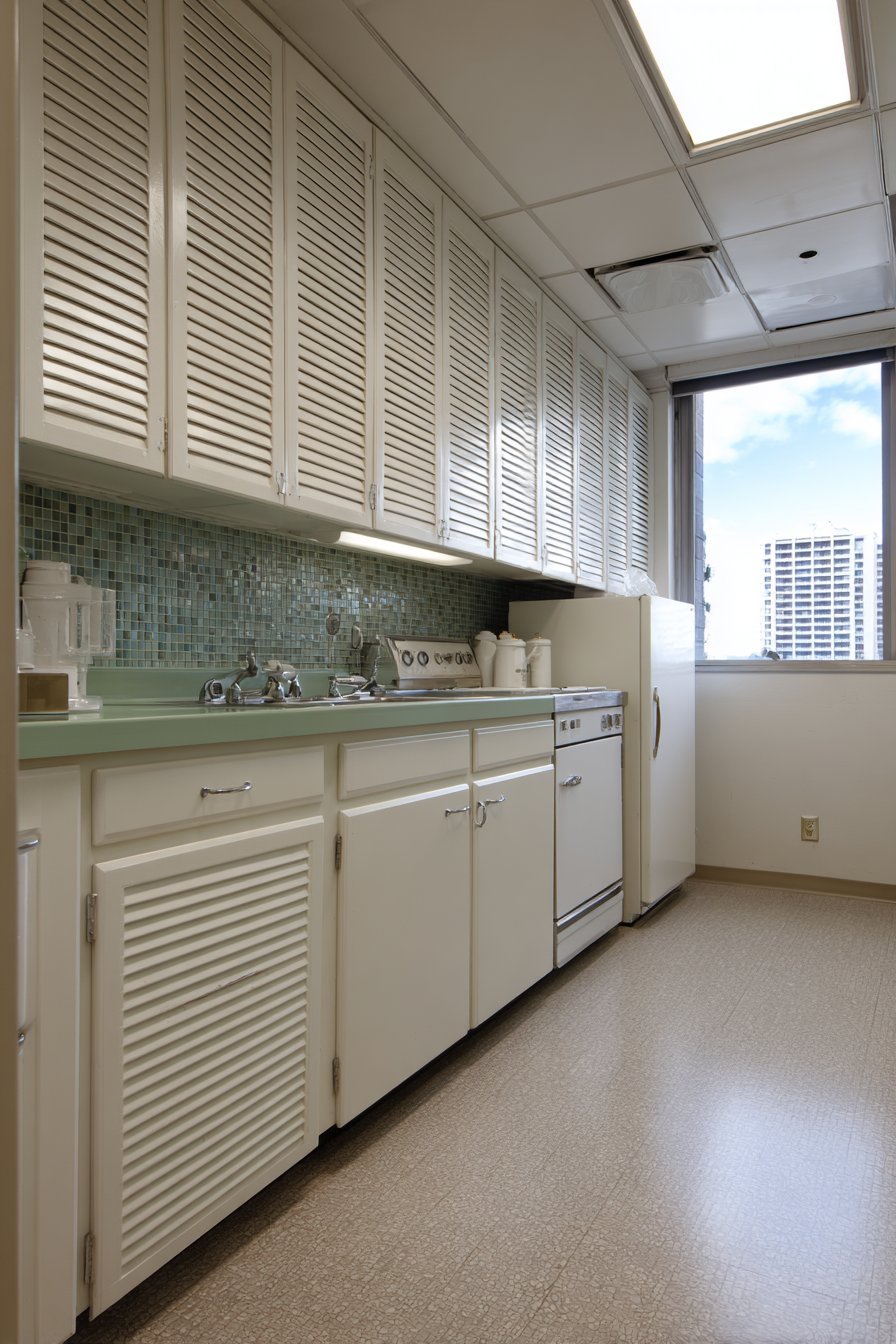
The sage green color creates calming atmosphere. Continuous countertops eliminate seams and simplify cleaning. Louvered doors provide ventilation while maintaining period authenticity. The efficient layout minimizes steps during meal preparation. Small mosaic tiles add visual interest without overwhelming.
Key Design Tips:
- Create continuous countertops around multiple walls for efficiency
- Choose louvered cabinet doors for ventilation and period style
- Use small mosaic tiles for subtle pattern and easy maintenance
- Install corner windows to maximize natural light in compact spaces
- Add under-cabinet task lighting for optimal work surface illumination
19. Pink and Orange Vibrancy
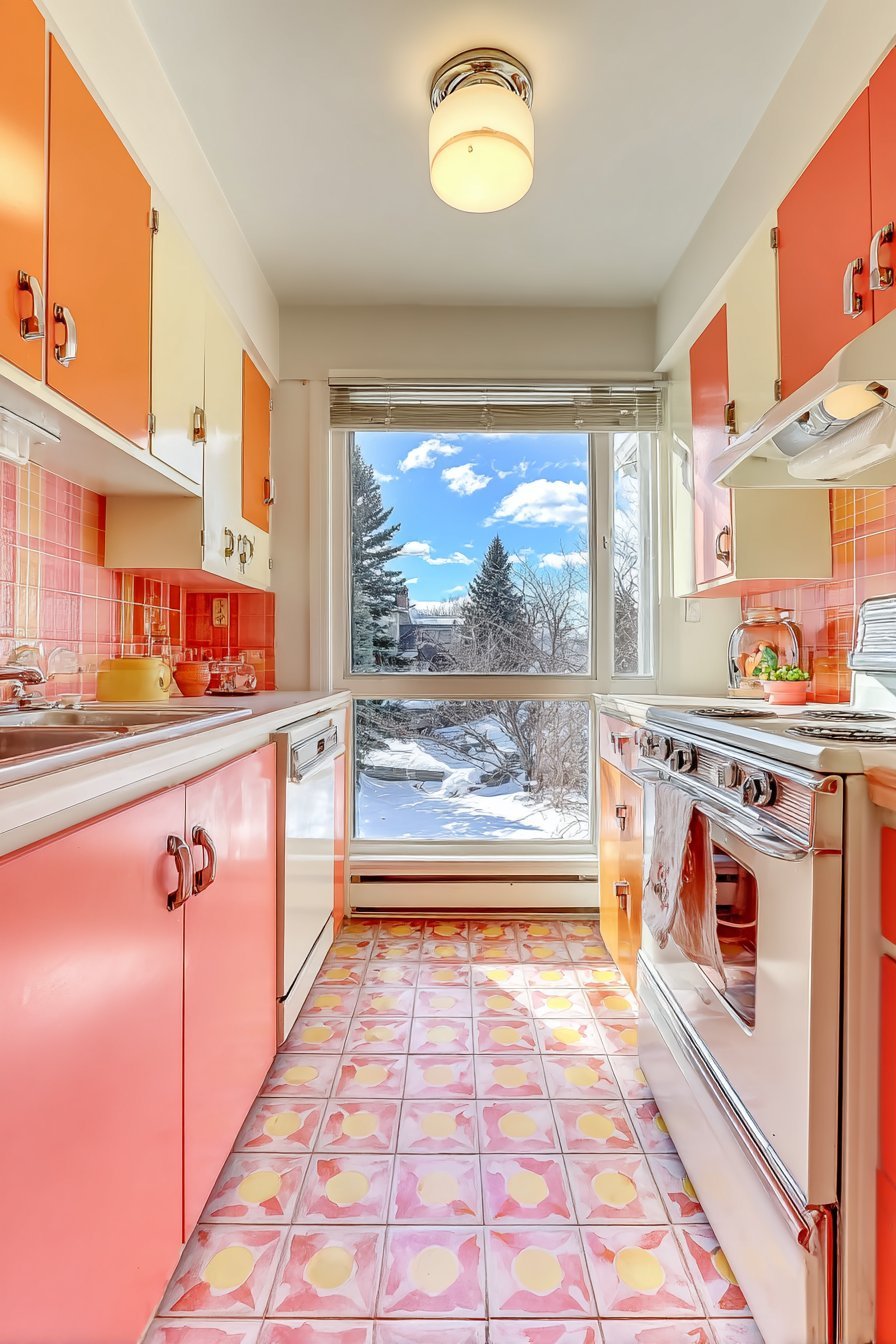
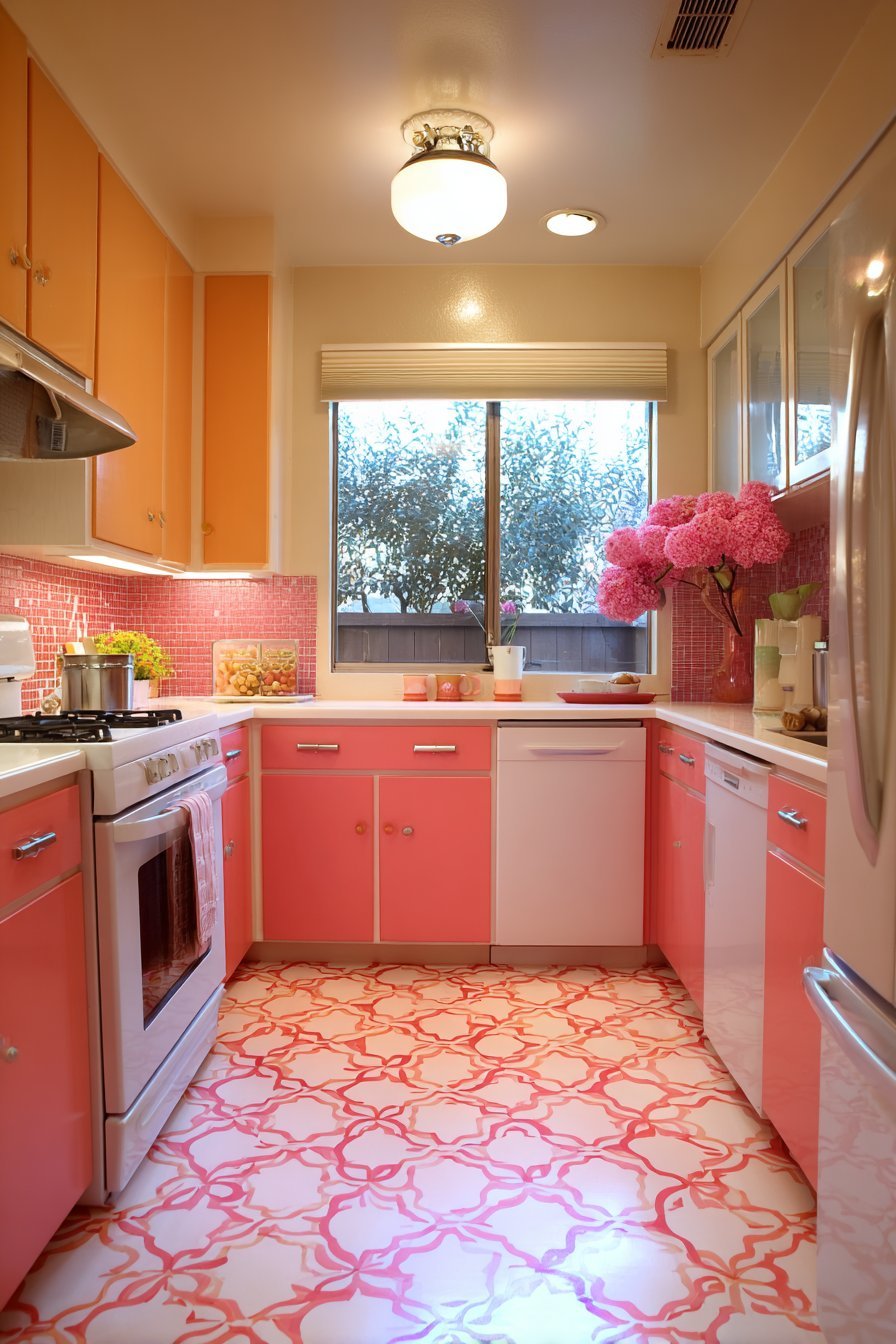
Coral pink lower cabinets make bold color statements. Soft peach upper cabinets complement without matching exactly. White laminate countertops and appliances provide visual relief. Glossy ceramic tile backsplash features graduating pink and orange tones. The dimensional color interest creates depth and movement.
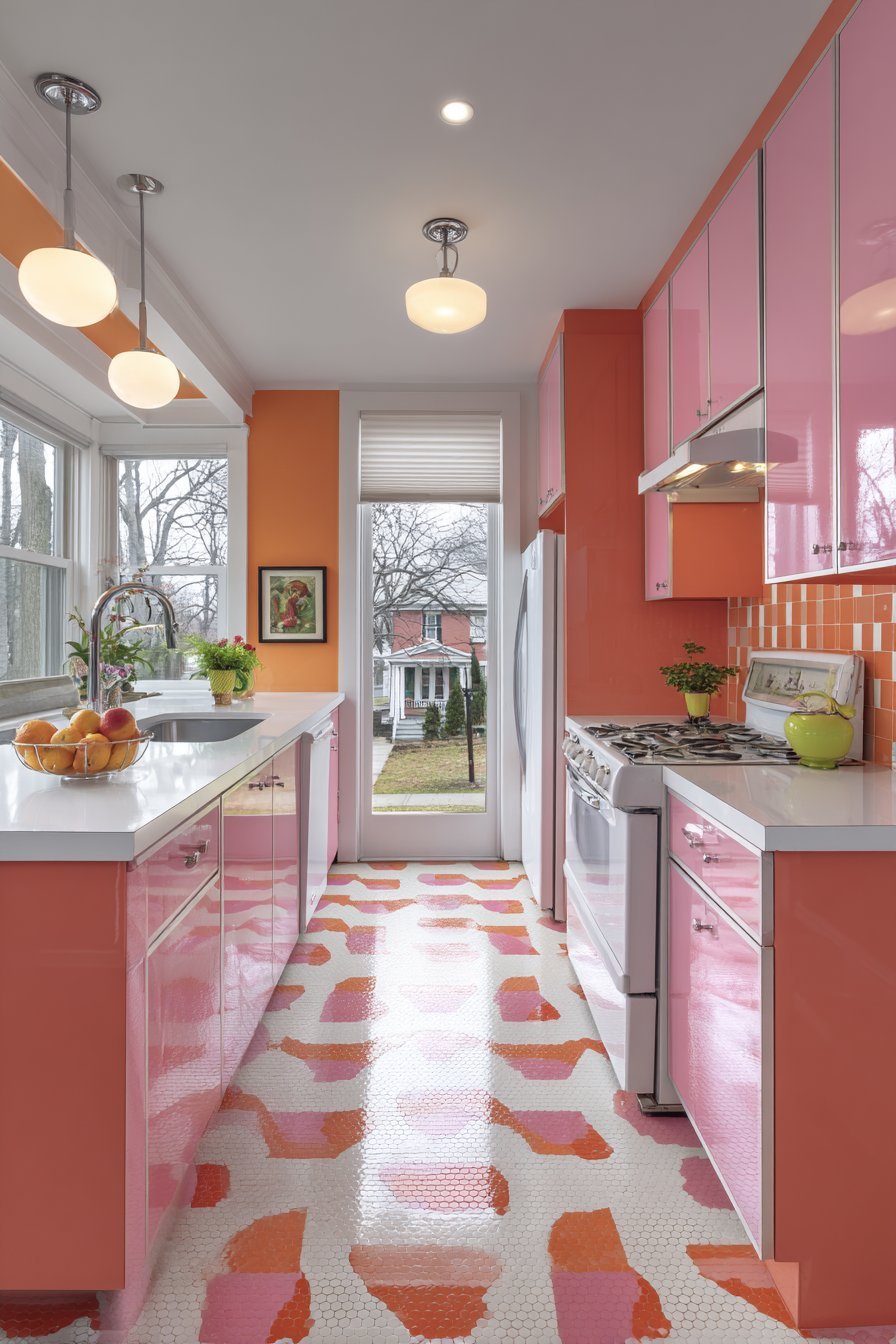
Chrome hardware and light fixtures add sparkle throughout. Period-appropriate shine enhances the cheerful color palette. Vinyl flooring in white with pink and orange geometric patterns ties elements together. A large aluminum-framed window floods space with natural light. The abundant illumination enhances the optimistic color scheme.
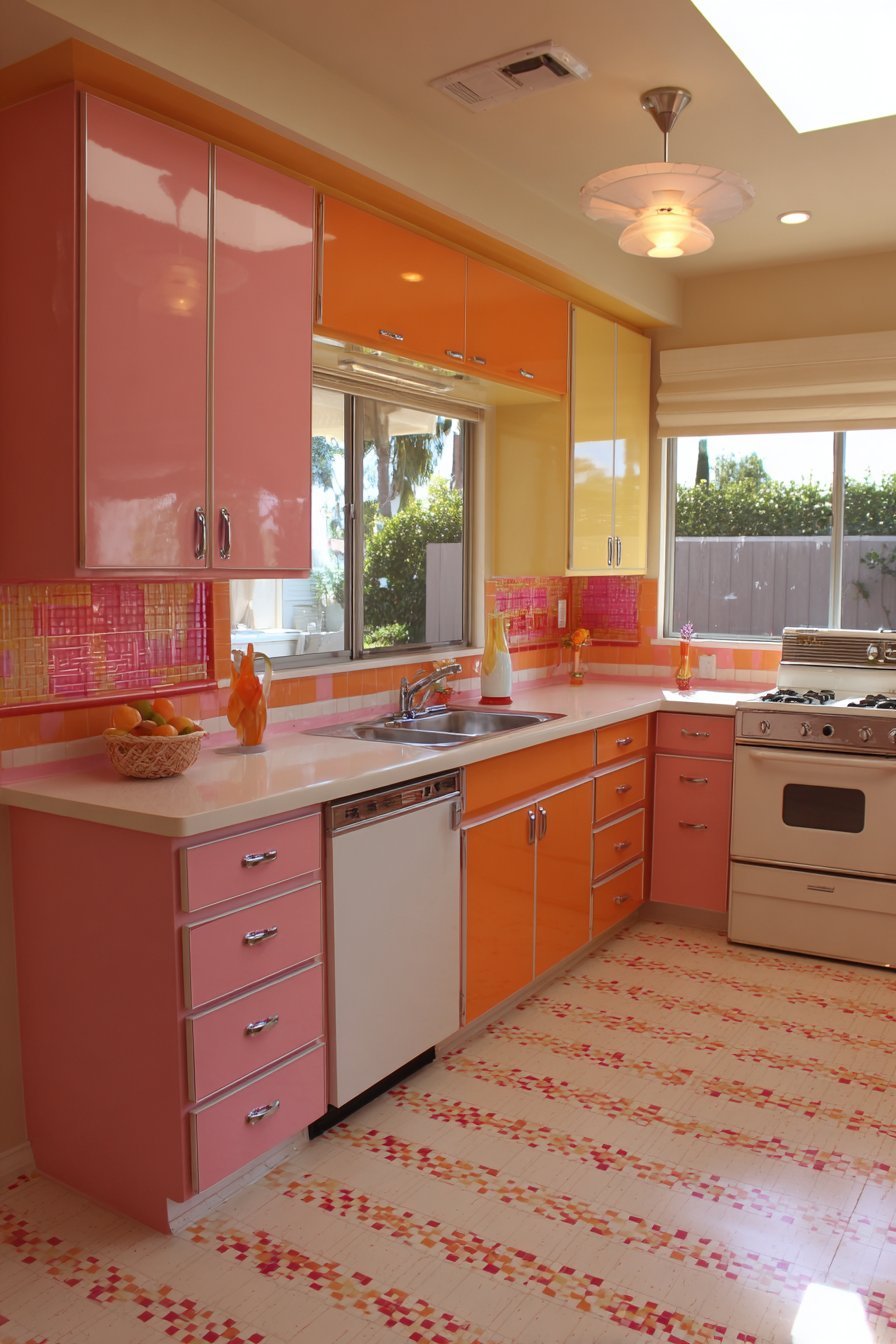
The color-confident spirit defines 60s kitchen design philosophy. Pink and orange combination demonstrates fearless approach to color. White elements prevent overwhelming saturation. The glossy surfaces reflect light and amplify brightness. Every surface celebrates the joyful optimism of the era.
Key Design Tips:
- Combine multiple warm hues for vibrant, energetic spaces
- Use white countertops and appliances to balance saturated colors
- Choose graduating tile colors for dimensional backsplash interest
- Add chrome fixtures for sparkle and light reflection
- Install geometric pattern flooring to unify color schemes
20. Family-Centered Gathering Space
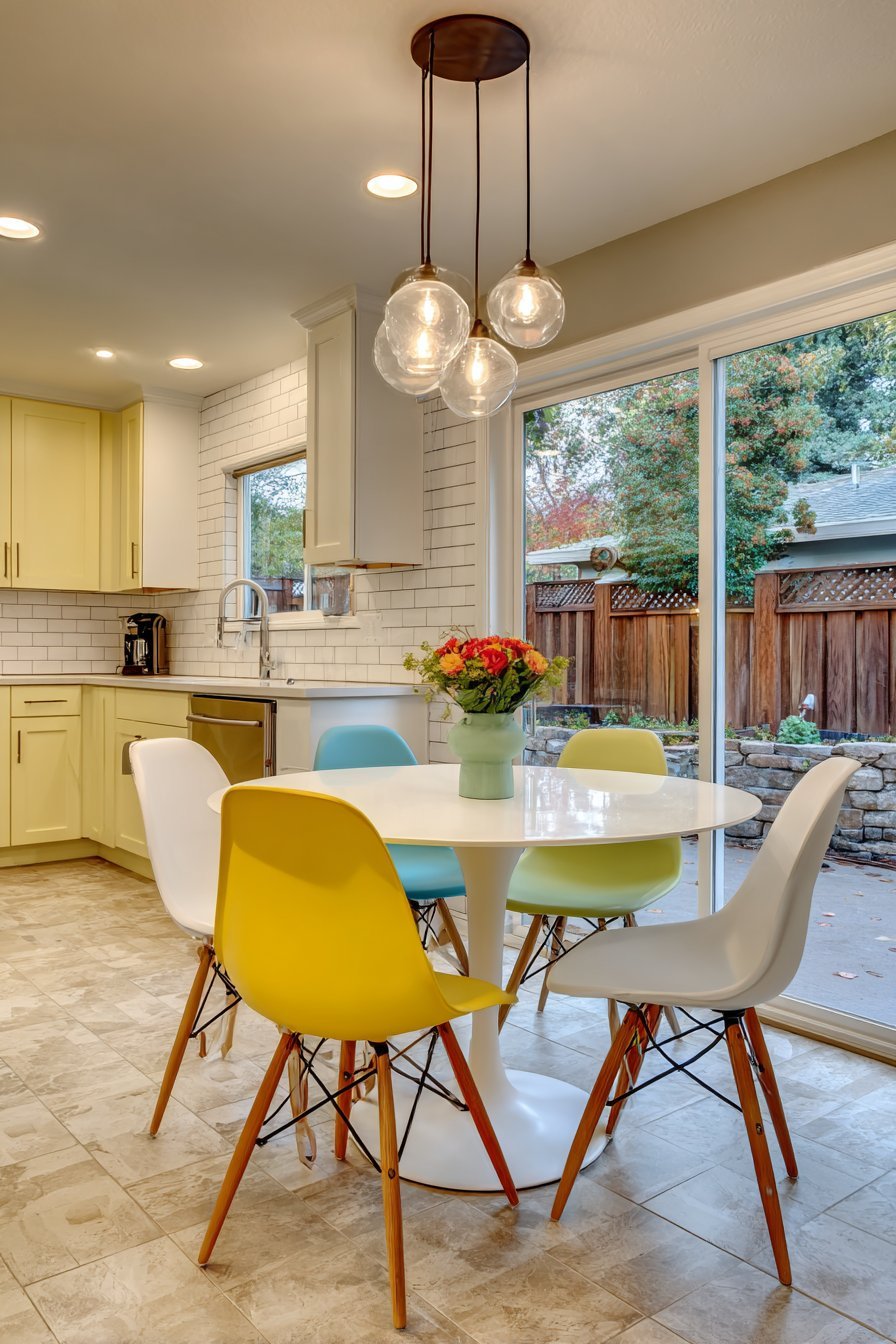
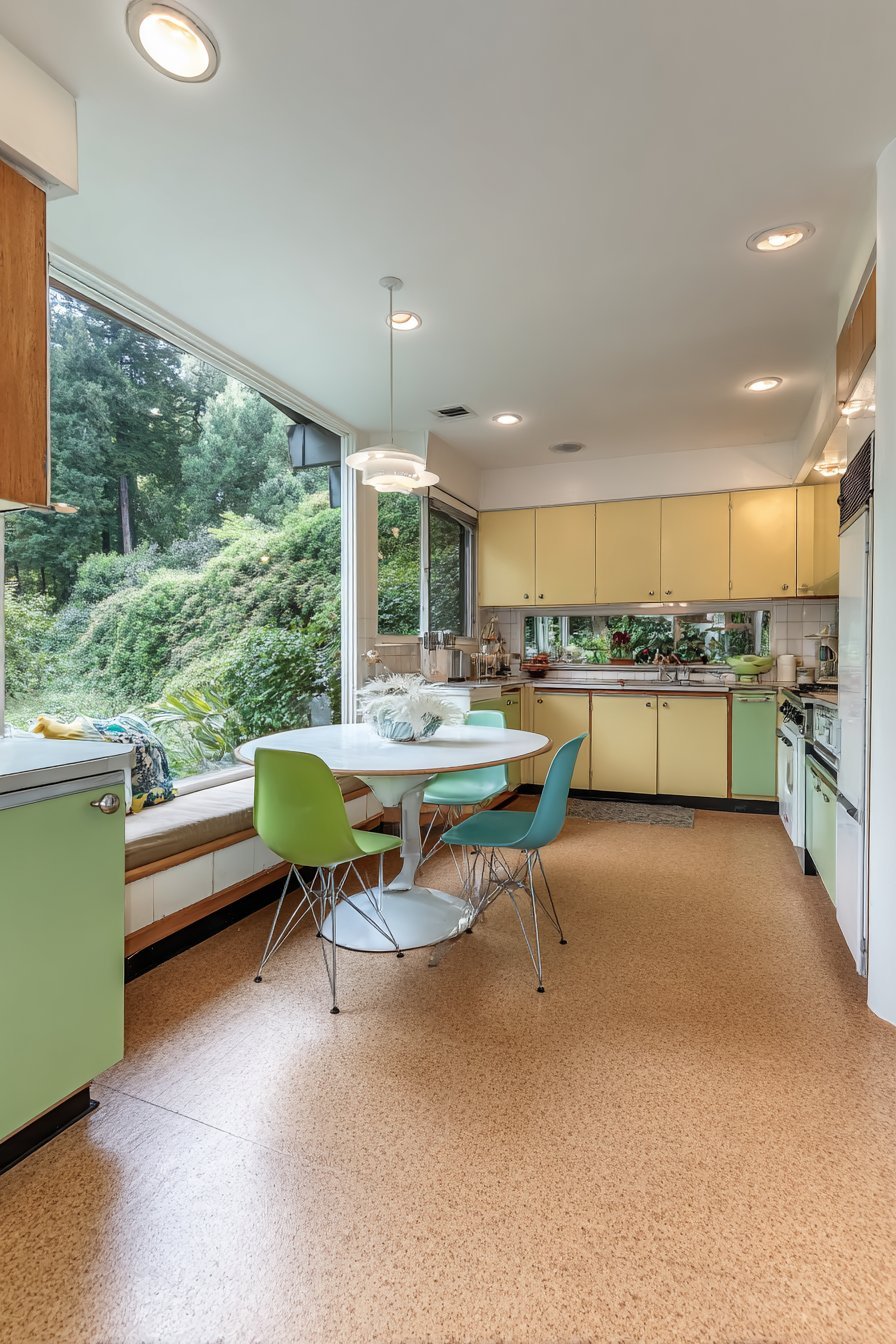
A large round pedestal table in white laminate centers this design. Molded plastic chairs in mixed bright colors surround the table. The dining area encourages family interaction and casual meals. L-shaped pale yellow cabinetry maximizes counter space efficiently. Avocado green appliances add classic 60s color accents.
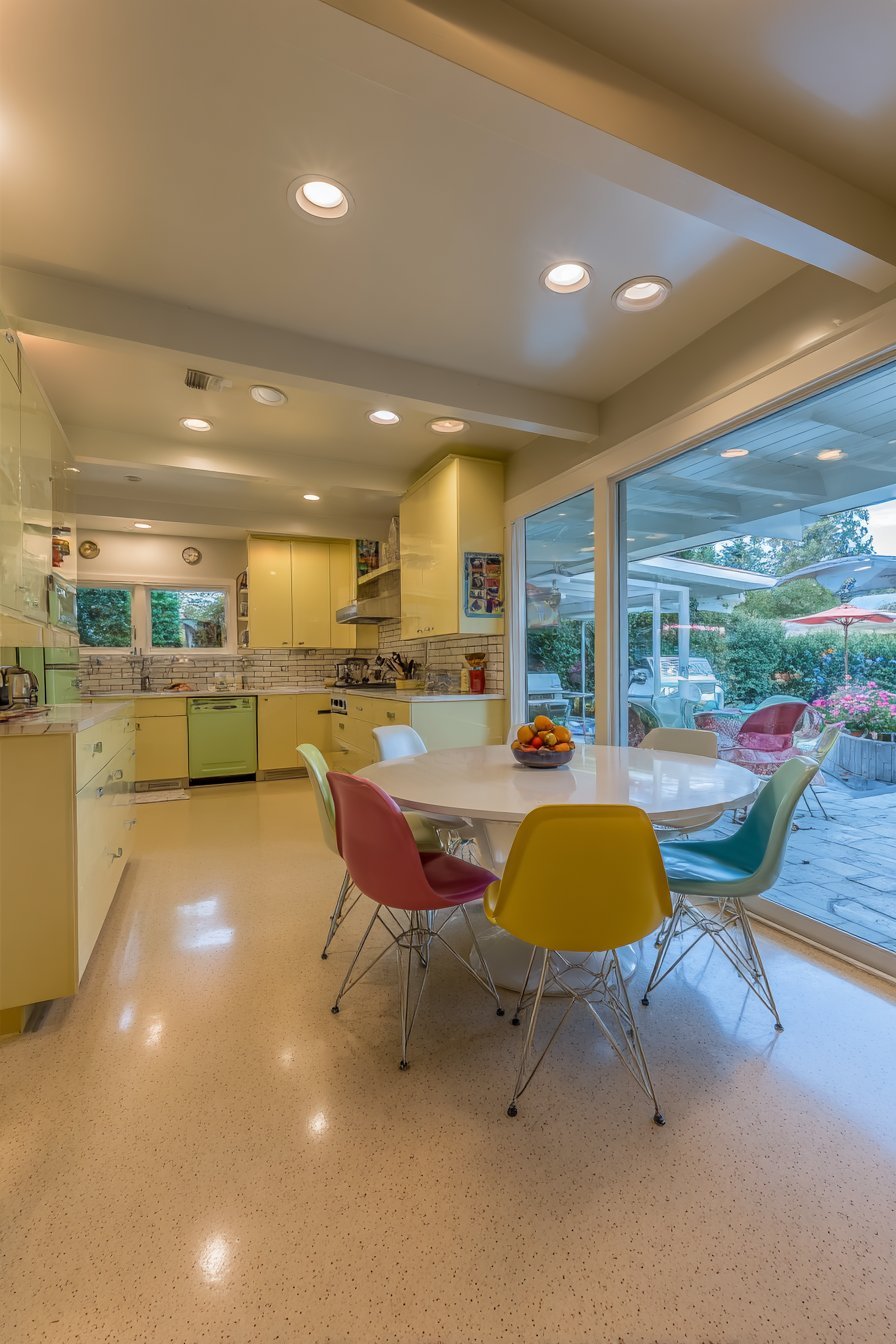
Simple white subway tile backsplash keeps focus on colorful elements. Neutral beige vinyl sheet flooring provides practical, easy-clean surface. A large picture window with backyard view connects indoor to outdoor. Natural light floods the space throughout the day. Recessed lighting provides even illumination for meal preparation and gatherings.
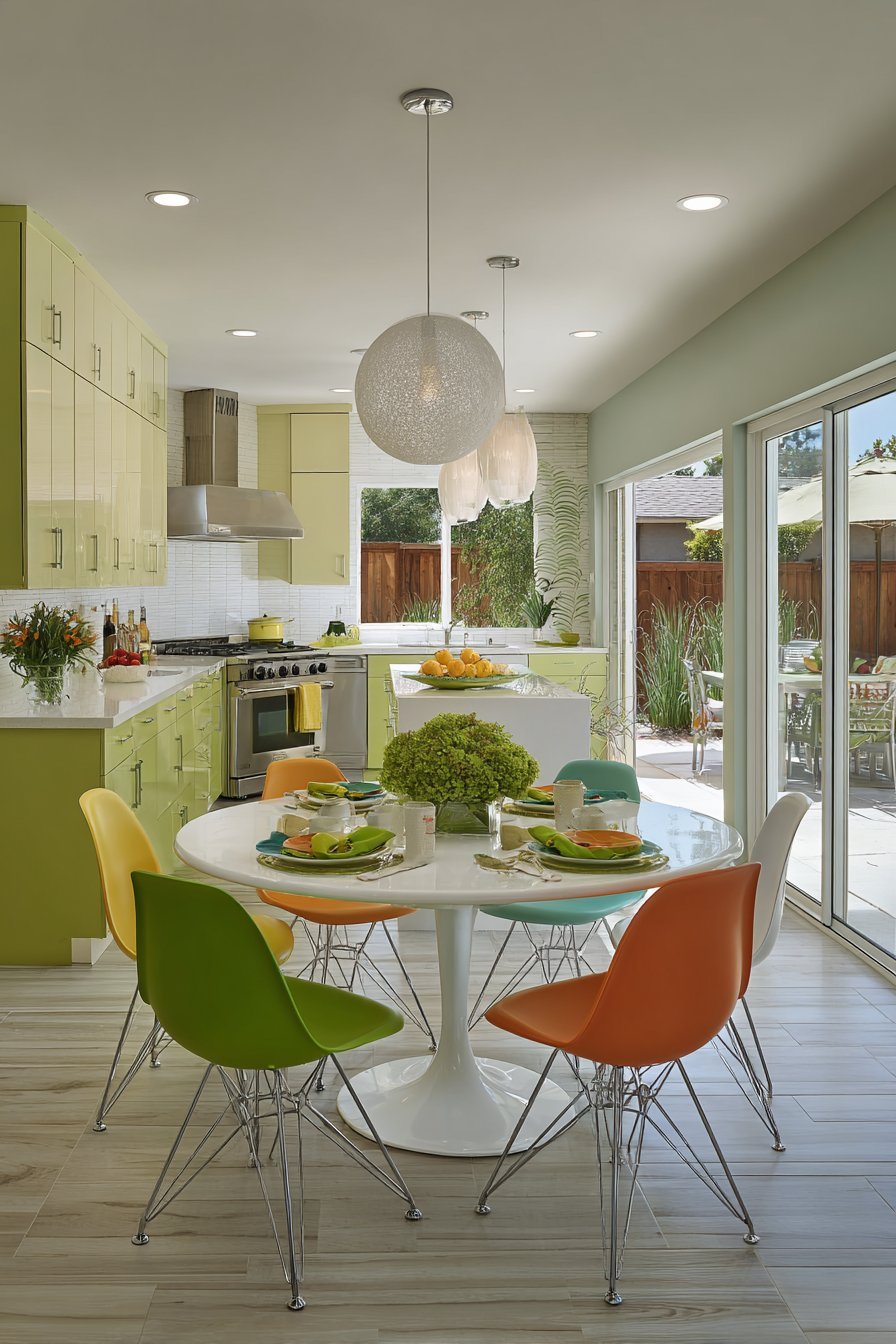
The sociable, family-centered approach defines this kitchen design. The round table facilitates conversation better than rectangular options. Mixed chair colors add playfulness and personality. The open layout allows supervision of children while cooking. This design demonstrates how kitchens became family hubs during the 60s.
Key Design Tips:
- Choose round pedestal tables for sociable family dining
- Mix chair colors for playful, personalized seating arrangements
- Install picture windows to connect kitchen to outdoor spaces
- Use L-shaped layouts to maximize counter space efficiency
- Provide even recessed lighting for both cooking and gathering activities
Why These 60s Kitchen Designs Are the Best
These 60s kitchen designs represent the pinnacle of mid-century residential design innovation. Each concept demonstrates thoughtful integration of color, material, and function that remains relevant today. The designs showcase remarkable versatility across different home sizes and architectural styles.
The bold color palettes offered homeowners unprecedented personal expression opportunities. Avocado green, harvest gold, turquoise, and coral pink brought joy to functional spaces. These hues proved psychologically uplifting during daily kitchen activities. Modern color theory validates the energizing effects of these saturated tones.
Material innovations from this era revolutionized kitchen durability and maintenance. Laminate countertops provided affordable, easy-clean surfaces in countless colors and patterns. Vinyl flooring offered comfort underfoot with waterproof performance. These practical materials democratized stylish kitchen design for middle-class families.
The space-planning innovations addressed real-world needs efficiently. Galley layouts maximized workflow in compact footprints. Built-in storage solutions included lazy Susans, pull-out pantries, and drawer dividers. These organizational systems remain valuable in contemporary kitchen design.
The 60s approach balanced aesthetics with functionality masterfully. Pegboard backsplashes provided attractive tool storage. Open shelving displayed colorful dishware as decoration. Every design element served multiple purposes. This efficient thinking suits today’s smaller urban living spaces perfectly.
Sustainability emerges as an unexpected benefit of 60s design principles. Quality materials like teak, butcher block, and cork offer longevity. These natural materials age beautifully rather than simply deteriorating. The era’s emphasis on built-in features reduced furniture consumption. Timeless design elements transcend temporary trends.
The family-centered philosophy created kitchens as social hubs. Breakfast nooks and peninsula seating encouraged gathering. Pass-through windows connected cooks to dining areas. These layouts facilitated supervision and conversation simultaneously. Modern open-concept designs owe debt to these 60s innovations.
Conclusion
These twenty 60s kitchen designs demonstrate enduring appeal through bold color confidence and material innovation. The key takeaways include embracing saturated hues, incorporating period-authentic materials, and maximizing storage efficiency. Quality laminate surfaces, vinyl flooring, and thoughtful layouts create both beautiful and functional spaces.
The designs prove that mid-century aesthetics adapt beautifully to contemporary lifestyles. Chrome accents, geometric patterns, and streamlined appliances still feel fresh today. Natural materials like wood, cork, and butcher block bring warmth and sustainability. Start your 60s kitchen transformation by selecting one signature color and building your palette around it. Your retro dream kitchen awaits creation through these timeless design principles.
